
out of Stock
Order now and we will order the item for you at our supplier.
27,69 €
Order now and we will order the item for you at our supplier.

Recently I was approached by my old friend Travis Millard to make some original music for Freedom Finger - a crazy space-shooter video game he had been developing with Jim Dirschberger and Wide Right Interactive game studio. I was able to land 6 instrumentals that pop up at various points throughout the gameplay.As the game was being rolled out, the idea arose to have me do 3 more tracks - this time fully fleshed out songs with lyrics mostly inspired by Freedom Finger's gameplay. These tracks would accompany some brand new levels that would be made available as downloadable content for the game.We have decided to release all of the music I have done for Freedom Finger as a 10" vinyl EP available through Rhymesayers Entertainment. This includes the 3 full length vocal tracks, as well as the 6 shorter beats that loop throughout the game. Some of these tracks also feature additional instrumentation from my friends and frequent collaborators, Grimace Federation.Furthermore, Jim has directed a video for the song Drums on the Wheel - featuring Freedom Finger gameplay, and some brand new visuals drawn by Travis and animated by Steven Gong.The game is an absolute blast, and I hope you enjoy this music. All relevant links below. <3Love,A.R.
expected to be published on 05.09.2025

Erstauflage auf farbigem "Red & Blue" Vinyl. Jubiläums-Edition zum 30. Jahrestag des Debütalbums von Six Finger Satellite, The Pigeon Is the Most Popular Bird, mit einer brandneuen, vollständig remasterten CD und einer Doppel-LP-Neuauflage. Die 1990 in Providence, Rhode Island, von J. Ryan (Sänger/Keyboard), John MacLean (Gitarre), Peter Phillips (Gitarre), Chris Dixon (Bass) und Rick Pelletier (Schlagzeug) gebildeten Six Finger Satellite wurden für die Weapon EP schnell von Sub Pop unter Vertrag genommen. Nach Weapon machte sich die Band daran, ihr Debütalbum mit Bob Weston (von Shellac, die später eine Single The Bird Is the Most Popular Finger zu Ehren von Six Finger Satellite benannten) zu produzieren. Das 1993 veröffentlichte The Pigeon Is the Most Popular Bird war die erste Veröffentlichung, die den abenteuerlichen, bissigen Geist und Sound von Six Finger Satellite wirklich einfing. Das Album ist ein Meilenstein des lauten, beunruhigenden Post-Punk, mit Einflüssen von Gang of Four, The Birthday Party und Wire, aber auch mit einer gesunden Dosis der eigenen, einzigartigen Klangfeindlichkeit der Band. Zwischen den spröden Rocktracks finden sich auf The Pigeon Is the Most Popular Bird einige Keyboard- und Studioexperimente, die auf den späteren Alben der Band stärker hervortraten und LCD Soundsystem, DFA Records und einen Großteil des Post-Punk-Revivals der frühen 2000er Jahre vorwegnahmen. Pitchfork bezeichnete The Pigeon Is the Most Popular Bird zu Recht als "eine der besten Noise-Rock-Platten der 90er Jahre" und schrieb, dass "die Übergänge von albern zu bissig den unvorhersehbaren und ätzenden Ansatz von Six Finger Satellite hervorheben - dies war das erste von mehreren Beispielen dafür, wie sie Underground-Trends verschmähten, und ihre aufregendste bittere Pille, die es zu schlucken galt".
expected to be published on 07.06.2023

Yellow Vinyl
"The Wrong Side of Heaven and the Righteous Side of Hell, Volume 2" ist das fünfte Studioalbum der amerikanischen Heavy-Metal-Band Five Finger Death Punch und das zweite von zwei Alben, die die Band im Jahr 2013 herausbrachte, wobei Volume 1 am 30. Juli und Volume 2 am 19. November 2013 veröffentlicht wurde
expected to be published on 02.06.2023

Order now and we will order the item for you at our supplier.

Wally Badarou was at the cutting edge musically with his fusion of African grooves with the emerging electro sounds of the early 1980s. His debut album 'Back To Scales' in 1980 has been long out of print and is considered a treasure by many connoisseurs.
Wally plays synthesizer, co-writing and performing Level 42 often considered their 'fifth member'. He also played with Robert Palmer, Talking Heads, Foreigner, Grace Jones and Manu Dibango. He also known for a later hit single Chief Inspector', and Mambo' from the same year (1984) was sampled by Massive Attack
This is a great album deserving appreciation by a wider audience with such an amazing collection of important songs. It was recorded in France, the country of his birth, originally released on French label, Barclay
Order now and we will order the item for you at our supplier.

12 track Album from Derrick Harriott released by Dub Store Records
Order now and we will order the item for you at our supplier.

We are Excited to announce - The Department of Almost with our first full-length LP - Second Office. The Album
will be released via WSNWG on October 9th.
„Developed over extended Berlin studio sessions in January 2026, the record brings together two artists whose
respective platforms, STOOR and WSNWG, have long embraced artistic exchange and open creative practice.
Moving between crafty dancefloor material and more reflective and exploratory compositions, the album
develops a shared sonic language that extends beyond their two unmistakable, longestablished artistic voices.
Across eleven compositions, deliberate dancefloor material is elegantly intertwined with calm and spacious
soundscapes. A propulsive current gives way to passages of suspension and introspection. While rhythm and
atmosphere gradually fold into one another, the record favours gradual transformation over dramatic gesture.
The album's quieter moments open up a more contemplative space, extending its emotional register without
departing from its forward motion. Beneath, a subtle and understated sense of distance evokes spacious
environments and glacial landscapes – topographies in cold light.“
We have setup a preorder with the first Single - Fingerprints - on Bandcamp. A limited special edition will be
released via WSNWG Bandcamp on September 4th - 12.00pm CET.
All Tracks Written, Produced & Performed by Speedy J & Rødhåd in January 2026 at WSNWG Studio in Berlin.
Mastered by Conor Dalton at Calyx Mastering Berlin Vinyl Cut by Lathesville Mastering Berlin
Cover Foto by Thomas Beutel
a A1 Cold Start 260114
b A2 Felt Temperature 260116.1
[c] A3 Fingerprints [260116.3]
[d] B1 Your Neighbours Dog [260123.1]
[e] B2 Double Shot (Floor Mix) [260119.1]
[f] B3 Borrowed Lime [260120.1]
[g] C1 Ulli’s Car [260125.2]
[h] C2 Series Of Events [260120.2]
[i] D1 Made In Finland [260123.2]
[j] D2 Wolken [260125.1]
[k] D3 Double Shot [260119.1]
[a] A1 Cold Start [260114]
[b] A2 Felt Temperature [260116.1]
[c] A3 Fingerprints [260116.3]
[d] B1 Your Neighbours Dog [260123.1]
[e] B2 Double Shot (Floor Mix) [260119.1]
[f] B3 Borrowed Lime [260120.1]
[g] C1 Ulli’s Car [260125.2]
[h] C2 Series Of Events [260120.2]
[i] D1 Made In Finland [260123.2]
[j] D2 Wolken [260125.1]
[k] D3 Double Shot [260119.1]
[a] A1 Cold Start [260114]
[b] A2 Felt Temperature [260116.1]
[c] A3 Fingerprints [260116.3]
[d] B1 Your Neighbours Dog [260123.1]
[e] B2 Double Shot (Floor Mix) [260119.1]
[f] B3 Borrowed Lime [260120.1]
[g] C1 Ulli’s Car [260125.2]
[h] C2 Series Of Events [260120.2]
[i] D1 Made In Finland [260123.2]
[j] D2 Wolken [260125.1]
[k] D3 Double Shot [260119.1]
[a] A1 Cold Start [260114]
[b] A2 Felt Temperature [260116.1]
[c] A3 Fingerprints [260116.3]
[d] B1 Your Neighbours Dog [260123.1]
[e] B2 Double Shot (Floor Mix) [260119.1]
[f] B3 Borrowed Lime [260120.1]
[g] C1 Ulli’s Car [260125.2]
[h] C2 Series Of Events [260120.2]
[i] D1 Made In Finland [260123.2]
[j] D2 Wolken [260125.1]
[k] D3 Double Shot [260119.1]
[a] A1 | Cold Start [260114]
[b] A2 | Felt Temperature [260116 1]
[c] A3 | Fingerprints [260116 3]
[d] B1 | Your Neighbours Dog [260123 1]
[e] B2 | Double Shot (Floor Mix) [260119 1]
[f] B3 | Borrowed Lime [260120 1]
[g] C1 | Ulli’s Car [260125 2]
[h] C2 | Series Of Events [260120 2]
[i] D1 | Made In Finland [260123 2]
[j] D2 | Wolken [260125 1]
[k] D3 | Double Shot [260119 1]
The item is already on it's way to us and is expected to be shipped from 09.10.2026.
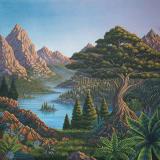
2027 marks two decades since musician and producer Paul ‘Mudd’ Murphy struck out on his own and launched Claremont 56, a label initially dedicated to “music by Mudd and friends” and named after the house he grew up in. To celebrate its 20th anniversary, Murphy has assembled the label’s first ever decades-spanning vinyl retrospective: a six-LP re-mastered collection bringing together key cuts, cult classics, personal favourites, hard-to-find gems and inspired remixes from across the catalogue.
Unlike the label’s previous 10th anniversary box set, which focused on unreleased material and never-before-heard remixes, 20 Years of Claremont 56 traces the musical story of the imprint to date. Across six records, it showcases the distinctive Claremont 56 sound in all its many forms: acoustic, electric and electronic instrumentation, Balearic sunshine, krautrock grooves, folk-inflected psychedelia, slow-burning chuggers and deeply considered dancefloor music.
The set comes housed in a custom box featuring cover art by long-term label illustrator Mark Warrington. Inside are six slabs of vinyl across three gatefold sleeves, accompanied by liner notes from music journalist and author Matt Anniss, Murphy himself, and many of the artists whose music features in the collection.
The journey begins with a selection of formative late-noughties releases, including Mudd & Pollard’s chugging, picturesque ‘Villa Stavros’, the folksy beauty of Smith & Mudd’s ‘Shulme’ and Murphy’s exotic reworking of Ahmed Fakroun’s ‘Drago’. From there, the collection moves freely through deep cuts, overlooked gems, album highlights and some of the most inspired remixes in the label’s catalogue.
Among those remixes is Murphy’s own über-Balearic rework of Zee Erf’s cover of ‘Southern Freeez’, a mix dedicated to his partner Emma; an extraordinary 22-minute, Manuel Göttsching-meets-ambient-dub revision of Smith & Mudd’s ‘Vegetable Square’ by friends-of-the-family Idjut Boys; Larry Heard’s typically deep and immersive house treatment of Jack Cutter’s ‘Serpent Strut’; and Quiet Village’s ambient-house ‘deep space dub’ of Mudd’s ‘Spielplatz’. Also included are lesser-celebrated but no less rewarding reworks by Recloose, Jex Opolis, Felix Dickinson and Deep88.
The collection represents every corner of Claremont 56’s self-contained musical universe, from the Murphy-assembled in-house collectives Hillside, Paqua and Bison - whose members famously included the late Holger Czukay and his life partner Ursula, to long-serving label artists such as Almunia and Hear & Now, as well as later additions and artists who took some of their first steps on the label through its much-loved Claremont Editions compilations.
That means the deeply cosmic krautrock of Bambi Davidson, the folk-meets-Americana of Torn Sail and the samba-electrofunk of Jpye sit alongside baggy Balearic sing-alongs such as Bel’s ‘Ready To Die’ and Sillyboy’s Ghost Relatives’ ‘In a Small Place’, recent high-profile guest releases such as Chaz Jankel’s ‘Rhumba Jam’, and string-laden ambient pieces such as Four Hands’ wonderful ‘Hizou’.
Packed with classic cuts, formative gems and overlooked treats, 20 Years of Claremont 56 is not only a fabulous label retrospective, but also an essential collection of timeless music from a label whose output has remained distinctive and unique for two decades.
expected to be published on 09.10.2026
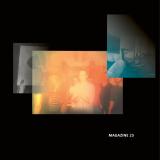
Cologne based DJ and producer Barnt has been bottling his own weather system since 2010: captivating techno where melodies flirt, rhythms evaporate, and structure is something to tease rather than obey. An attitude, that pierces the average definition of techno. With an album and endless EP’s, he turned club orthodoxy inside out. Barnt has sent his tracks out via labels like Cómeme, Mule Musiq, Hinge Finger, Hivern Discs, Kompakt, or Magazine from Cologne, the enterprise he co-runs with a bunch of friends.
After his 2014 debut album on Magazine, that came out as catalogue number 13, Barnt is back with number 25, a new album, titled “After completing the Hex”. Eleven tracks, each grinding lowkey skewed. This is techno for dramatic entrances. Dance music for confusion. Freely played chords oscillate with intention. Alluring melodies glide across stoic beats. Peaktime vibes stripped to the bone. An album that provides Barnt’s most complete release until today, displaying his unique sound world effortless assembled. Mastered by longtime accomplice, producer Matt Karmil, it features playful, seemingly unintentional, meandering club spirits. There are melodies made from 100 notes and hooklines fashioned from just one. In-between calmer electric enchanters, minimal, free-spirted, tempting. His slinky madness occasionally presents sublimely embedded environmental sounds or oral samples, taken from sources like Torn Hawk’s “Trustfall” TTT cassette album. There is a touch of sadness, that veils the recordings at times, always defied by lightness and optimism. A record made with true inspiration, that overrides all fears. Drawn frankly from emotions, bringing the ultimate flow state, that unlocks a new techno gate.
expected to be published on 09.10.2026

expected to be published on 14.10.2026
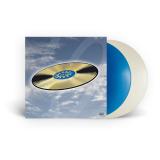
Reissued in 2026 for its 10th Anniversary on limited edition double vinyl 1 X Blue 1 X White, showcasing sought-after tracks from the catalogue.
Rebirth 10, a limited double CD released in 2016, celebrated the 10th anniversary of Rebirth Records. Curated by one of the greatest names in House Music, Larry Heard, aka Mr. Fingers, it featured key releases from the label's first decade.
Featuring original music and remixes from Larry Heard himself alongside further legends of the scene such as Motor City Drum Ensemble, Joe Clausell, Andrés, Jamie 3:26, Ripperton, and Mr Fingers himself. This compilation shines a light on forgotten classics from one of House Music’s most influential labels of the past 20 years. True house from THE house producer of the scene.
expected to be published on 16.10.2026
After decades contributing to records where a single riff could transform a dancefloor, Charlie May turns that instinct inward on Trusted Farms.
For over thirty years, Charlie has occupied a position that seems increasingly rare in electronic music: the musician’s musician, the person behind the machines, the extra pair of hands in the studio, and quite often, the person responsible for the melody you end up carrying around in your head for weeks on end.
Alongside Duncan Forbes as Spooky, Charlie helped shape some of the most important electronic music to emerge from the UK in the early ’90s. That partnership would also sow the seeds for one of Sasha’s defining records: the central riff behind Xpander began life in Spooky’s live material, before Charlie brought the idea into the studio with Sasha and helped transform it into one of electronic music’s most enduring anthems.
Listen closely to Charlie’s work and there’s a particular instinct that keeps returning: knowing when a simple synth line is enough. Knowing which note needs to change. Knowing when repetition stops being repetition and starts becoming the entire reason a track works. More recently, as one-third of Quiet Places on ASIP, he’s taken those same instincts somewhere looser — beatless, gridless and led by improvisation.
Trusted Farms puts those instincts front and centre.
Tiny melodic phrases appear and refuse to leave. Synth lines repeat just long enough to become lodged in your head. Parts rub against each other without being tidied into submission. There’s a sharpness and directness to it all amongst the purposeful analogue warmth.
Some of these tracks feel almost ridiculously simple at first. But simplicity is difficult when you’ve spent decades learning every possible way to complicate something. Many of the parts on Trusted Farms were performed live with minimal editing. A synth line might be doubled, distorted, re-recorded and pushed back through another piece of equipment, but it remains the same idea. Instead of filling the gaps, Charlie works on the weight and character of what is already there. The melodies become physical; slightly worn around the edges.
For someone whose fingerprints can be found across some genuinely monumental moments in electronic music, Charlie has spent decades knowing what to add.
Trusted Farms is about knowing exactly what to leave alone.
Available on black 12”, mastered by Andreas Lupo LOOP-O Lubich and featuring artwork by Peter Skwiot Smith,
expected to be published on 16.10.2026
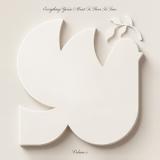
Over the last decade and a half, Rotation Sound System’s annual gathering in the Staffordshire countryside has become one of underground dance music culture’s true success stories – an intimate gathering of like-minded friends and partygoers, powered by a custom-built six-way sound system, with music provided by a carefully curated line-up of dusty-fingered diggers, selectors and hand-picked live performers.
At the heart of the collective’s unique and much-loved approach lies a dedication to finding and sharing lesser-known gems and audio obscurities – fantastic records whose charm and quality has long been overlooked.
Last year, the core members of the crew – founders Dean Meredith and Ben Shenton (renowned for their productions as Mind Fair), and Wrekin’ Havoc trio Rob J, Stuart Robinson and Rich Hall – offered a snapshot of their unique musical approach via debut compilation Everything You Are About To Hear Is True, Volume 1, in the process introducing a global audience to some of the countless unknown mid-tempo classics nestled in their collections.
Fresh from another sold out edition of their acclaimed micro-festival, they’re back with volume two, another must-have collection of slept-on classics, loved-up shufflers and wide-eyed Balearic beats, all of which have played a part in Rotation’s story over the last 13 years.
Appearing on gatefold double vinyl with extensive liner notes telling the stories behind the tracks, Everything You’re About To Hear Is True, Volume 2 is full to bursting with music that sounds mind-blowing on the crew’s high-end sound system.
For proof, check the analogue-rich intergalactic shuffle of Paul Atreides’ 2015 jam ‘Arrakis Walk’, the relaxed boogie-soul of Rocky Winters’ Chaz Jankel produced ‘Vicious Circle’, the easy-listening-jazz-rock bliss of Vincent Maclin’s ‘Should’ve Took a Chance’, the 80s soul squelch of ‘Ecstasy (Centurion Mix)’ by Endgames and the immersive British dub drift of Sigma’s ‘Remember (Dub Style)’.
Everywhere you look, you’ll find eye-opening and ear-pleasing delights. There’s Pinky’s lightly acid-flecked, breakbeat-fuelled, acid house-era street soul classic ‘I Wanna Be The One (Instrumental Groove)’, the 1992 new age downtempo seduction of Linda Myers (‘Shine On Me’), the Clavinet-and-synth sporting jazz-rock/space-rock fusion of Wolfhound (1984 gem ‘Another Moon Song’), the Gallic colour of Buzy’s ‘Keep Cool (Version Maxi)’ and the guitar solo-laden electrofunk explorations of mid-80s UK act Lifesighs (‘Get Serious’, here presented in its extended instrumental form).
expected to be published on 18.10.2026
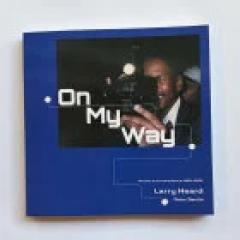
On My Way is a forthcoming photo memoir that follows Larry Heard to over 30 countries across 40 years, performing in Fingers Inc, The It, Mr. Fingers, and Larry Heard Live. Published independently by Alleviated Records, this 380 page book draws from Mr. Heard's extensive archive of thousands of photographs, event flyers, and historical documents, many of which have never been seen before. On My Way contains excerpts from over 8 hours of interviews, but the journey is primarily visual: the photographs taken by Mr. Heard and his collaborators serve as a personal and artistic odyssey, documenting almost every single one of the over 350 gigs Mr. Heard has performed in his career. On My Way also presents a history of technology in the arts. We see music equipment evolve, become sleeker, sexier, the studios housing the gear more grandiose. Personal cameras transition from 35mm to digital, first declining in quality as the world embraced the freedom of lightweight yet low resolution lenses, eventually arriving at the contemporary DSLR. The designs of rave flyers begin with photocopied images and hand drawn text, evolving with the genre through the 90s and 00s to take on a futuristic, utopian quality. We watch trends in fashion and art become referential as the 21st century embraces nostalgia. Institutions rise up to support this scene, most notably Red Bull Music Academy, a significant patron of electronic music in the 2010s that sought to connect new musicians to their roots by hosting visionary global festivals and panel discussions. Along this journey we see familiar faces: singers, DJs, club kids, and music industry professionals, as well as the enigmatic gaze of the man whose work has inspired millions.
expected to be published on 19.10.2026

Wax Digits keep rolling out the groovy jams with an eight instalment, and this time it is back to the Various Artists format. Fingerman is the label owner and he goes first here with 'Phunkee Party', a seductive sound with twanging bass riffs and chunky drums under soaring vocals. The talented I Gemin then drops 'Sambalike', a more nuance and subtle groove that worms its way under your skin and then the love gets dialled up on the flip side thanks to Chuggin Edits and 'Anita's Mystery', a blissed-out roller bathed in sun. Smokecloud Records boss Osmose shuts down with some bright, retro disco soul in the form of an edgy rework of 'Ur Luv.'
expected to be published on 19.10.2026
Deep, deep stuff on the debut album from K Wata. Long and dubwise, dark and detailed. With bass that fills and warms a space.
All noir. Cast shadows against the wall. Weight being shifted and distributed with singularly delicate poise, like a knife being balanced on the end of a finger.
There’s a silvery, loose flow state to this record that maybe reveals the way some tracks were first written to be deployed live at Sustain Release 2025. Then taken back to the lab and tightened up further into the album’s final form, with beautiful mixing work between Kenzo and Chris Botta.
With that in mind, Give U Space unfolds slowly and fluidly, giving the listener the chance to access and open up to the deepness of the sound, being led down a path. It rolls and builds momentum and groove, and ratchets tensions up toward peaks of energy "Whisper Dub" and "There Will Be Love".
The tunes feel architectural. Rooms to be in and settle into. Simultaneously stripped back and then etched with neat little details and characterful or atmospheric sound choices. The silhouette of slo mo Memphis and Houston trap is a leading influence, especially with the drums. Mixing with bits of click’n’cut sampling and psychoacoustic tricks, the penumbra of dub techno and drowsier dubstep, and SG’s soft vocals rising in the ether.
The presence and inspiration of the sound system is obvious in all of Kenzo’s work, the music can rattle when spun up louder or blended into the club. But K Wata’s uniqueness and signature comes from an often equally inward facing quality, touched by distance and longing and a sort of chiaroscuro incandescent light set up.
Written and produced by K Wata.
Mixed by K Wata and Christopher Botta at Fer Sound Studio.
Vocals on “Give You Space” and “Go” by SG.
Clarinet on “Radio Embrace” by Eugene Lai.
Mastered and cut by Mike Grinser at Manmade.
Art by S. Gong
expected to be published on 19.10.2026
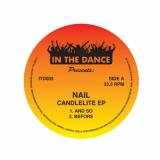
A former architect of the cult DiY sound in Nottingham, as well as being a member of downtempo outfit Bent, Nail is a house making machine whose own distinct fingerprint is all over everything he makes. His sound is raw but never hostile - he always finds a neat sample to bring some soul to his louche, loose drums. This EP for his In The Dance label starts with 'And So', a wonky sound infused with sensual whispers, while 'Before' blends woozy pad work with deep drums and prickly percussion. 'Grief' is a sombre affair with bluesy sax lines weaving between the dusty drums, and 'Size A Dat' gets choppy, playful, and funky. Another majestic EP.
expected to be published on 19.10.2026
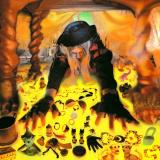
‘Unfindable Ring', out October 23 on Bayonet Records, is an adventurer’s epic. The arc of the journey, like any good Spirited Away or Neverending Story, lands its wide-traveled protagonist right back at home before bedtime. Grumpy, like many great hero tricksters before him, has always been a project of juxtaposition: upbeat radio-ready hits whose buoyant, goofy hooks belie the dark thoughts they describe. Much of this, Schmitt acknowledges, owes its due to the matter-of-fact morbidity of the trans experience in America. It’s from these experiences—personal, romantic, political, and existential—that the tale of ‘Unfindable Ring’ unfolds.
Ambition and play have always defined the Grumpy sound. Late last year, the Fader praised their “demented, hooky” EP, “Piebald,” whose innovative fuzz-pop confections earned them coverage in NPR and the New York Times. Stereogum heralded them as “wonderfully weird,” and Paste designated them “the best of what’s next.”” Through boisterous collaborations with the likes of Sidney Gish and Claire Rousay, they’ve effortlessly ingratiated themselves with the titans of DIY, and, more recently, Schmitt has become an unlikely favored collaborator of chart-topping country giant Zach Bryan, who named his new record––which prominently features Schmitt’s harmonies–– conspicuously, ‘With Heaven On Top.’
In Grumpy, Heaven Schmitt is joined by Anya Good, Ellie Long (Kid Lake), Austin Arnold, Diego Clare (D.A. Crimson), and Lane Rodgers, who each contribute to every step of the process—engineering and recording, mixing, drafting artwork, producing, and making music videos. A kind of interdisciplinary thieves’ guild, the project, while once Schmitt’s solo eponym, is a labor of communal love.
“We are living these happy lives, and there are people we come across who don’t know us at all who want us to die,” Schmitt, explains. Often the visibility of the joy itself is what prompts the vitriol––“I’m so happy I could die,” Schmitt belts over and over on the chorus (a familiar figure of speech, sure, but one which, upon any scrutiny, shows Schmitt’s hand in the macabre.) A middle finger to fate, Good started asking, “What are you going to do with your One Beautiful Life?” Grumpy is going to keep playing, touring, searching, finding.
expected to be published on 23.10.2026
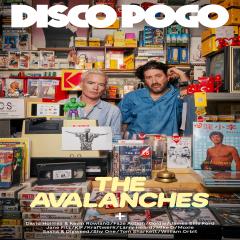
For Autumn/Winter 2026/2027 our tenth issue is possibly our best ever with three heavyweight cover stars in the shape of Goldie, Mike D and The Avalanches. Issue 10 also features: Kevin Rowland and David Holmes - Two of the most dapper chaps in music go for a walk through London. William Orbit - We pay tribute to the producer who was simply ahead of his time. Sasha and John Digweed - The Man Like and Diggers reflect upon 30 years of their seminal ‘Northern Exposure’ mix. Larry Heard - Can you feel the genius of the man with his Mr. Fingers in many musical pies? Kraftwerk and Sheffield - How a group of German futurists turned the Steel City on its head. The Warehouse Project - The revolutionary Mancunian clubbing institution turns 20. We bring the cake. They blow out the candles. Shy One - It’s been a long and winding road for the artist also known as Mali Larrington-Nelson. Tom Sharkett - The one-man disco has a groove machine and he’s going to use it. Moxie - Moxie by name; moxie by nature. All hail the On Loop leader. KiF - Teenage friends collate an album dedicated to the life of the passion flower. Plus… loads more across 192 pages.
expected to be published on 23.10.2026
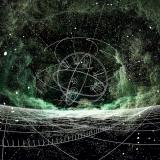
Earlier this year, Blue Hour released his debut album Selva, a record steeped in the imagery of lost and forgotten worlds. Now, rather than let that world stand still, Blue Hour opens it up, inviting a handpicked crew of fresh talent to step inside and make it their own.
The result is a remix companion that reimagines Selva through fresh eyes and ears. Each remix artist brings their own sonic fingerprint to the source material, some peeling back the original's dense atmospherics to expose skeletal rhythms underneath, others pushing further into the album's dreamlike haze. What emerges isn't a simple tribute, but a genuine dialogue: new talents in conversation with an album that was already asking questions about memory, erosion, and what gets left behind when a world disappears.
It's a fitting extension of Selva's original premise: if the debut album conjured ruins and jungles swallowed by time, this remix project treats those same soundscapes as living, mutable spaces, ready to be excavated, reinterpreted, and given new life by a new generation of voices.
expected to be published on 23.10.2026
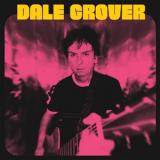
Limitierte Auflage von weltweit 666 Exemplaren. Dale Crover sieht Neil Young sehr ähnlich so sehr, dass Neil ihn selbst engagiert hat, um die, ähm, junge Version von sich selbst im legendären Harvest Moon"-Video zu spielen. Es ist schwer, sich jemanden vorzustellen, der besser geeignet wäre, den Song zu covern als Crover, dank seiner Präsenz im Video und seiner langen Karriere als Solokünstler sowie seiner 43-jährigen Zugehörigkeit als Schlagzeuger bei den Melvins, dieser Rock-Institution aus dem Pazifischen Nordwesten. Crovers Version von Harvest Moon" eröffnet seine neue EP Get Yer Ba-Ba's Out" und geht nahtlos über in eine Interpretation des Melvins-Klassikers The Bit" aus dem Album Stag", denn Crover hat den Gitarrenpart geschrieben er ist in der gleichen Tonart, und warum auch nicht? Die EP enthält außerdem Akustikversionen von drei Songs aus Crovers Soloalbum Glossolalia" (Doug Yuletide", Rings" und Jane"), einen aus dem 2021 erschienenen Rat-A-Tat-Tat!" (I Can't Help You There") und den brandneuen Titelsong. Diese intime Inszenierung von Crovers Songs steht hier im Kontrast zum elektrischen, mit Gastmusikern gespickten Glossolalia", aber man kann diese Musik kaum als ausgemustert" bezeichnen. Es fühlt sich eher wie eine Weiterentwicklung des glam-beeinflussten Power-Pop an, den Crover seit The Fickle Finger of Fate" aus dem Jahr 2017 produziert. Die Arrangements von Produzent Toshi Kasai füllen den verfügbaren Leerrum mit Slide-Gitarre, Maultrommel, verschiedenen Glocken und anderen Idiophonen. Der Geist von Crovers Musik war noch nie deutlicher ein rastloses Verlangen, Neuland zu erkunden, kombiniert mit einer tiefen Liebe zum Rock 'n' Roll, dieselbe, die die Melvins zu einer der interessantesten und einflussreichsten Bands ihrer Generation gemacht hat.
expected to be published on 23.10.2026

Canada's Demuir makes house music with the sort of feeling and character that defined the earliest days of the sound. Gospel, funk, jazz and much more all colour his grooves next to a superb array of samples, and all of that is on display across The Intersecting Virtues Of Love & Respect, a new album packed with jams. 'TIVLR - Moment Of Clarity has neat organ chords worked into a soulful, dusty groove; there is an infectious bubble to the drums and molten chords of 'Alone In Chicago' and 'Somethin 'Bout Respect' is smooth, free-flowing analogue house with jazzy fingers dancing across the keys. Elsewhere, 'Know They Value' is deeper and more heads down and 'Speak Power To Your (Black) Man' is a freewheeling and sunny sound anchored by more trademark Demuir drums.
expected to be published on 26.10.2026
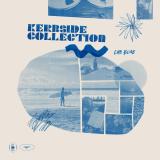
“Cue Blue”, the latest and fifth studio recording from Australian down under, gritty jazzfunk grooves ensemble Kerbside Collection sees a return to a more classic, stripped back, meat-and-potatoes, home-cooked, quartet formation sound of guitar, bass, drums and brass.
A sound formed on previous, recent recordings (incl. Golden Rules compilation tune “Fleet Streak” etc), seemingly harking back to the approach of the group’s first recordings (2013’s “Mind The Curb”, “Night in Tunisia” etc), whilst embodying inspirations from more ‘true school’, classic, bluesy New Orleans funk and soul groove flavours à la early Meters, Boogaloo Joe Jones, Melvin Sparks, Billy Butler etc. But it’s not all completely ‘retro’ and ‘looking back’, the album definitely taps into some of the current exponents and leaders of the contemporary deep funk sound – The Greyboy Allstars, Eddie Roberts, The New Mastersounds, The Mighty Mocambos, Breakestra and fellow Aussie funksters Cookin’ on 3 Burners, Lance Ferguson and The Bamboos etc.
The lead single and first tune “Shivers” gives us a clear, picture and definitive opening statement to the record with all the characteristics you’ve come to expect from the Kerbside gritty jazzfunk sound: silky guitar line phrasing, rubbery bass-lines, tight crusty drum breaks, and sweet brass arrangements. Then it’s straight into a frenetic, jangly, mod-funk workout complete with Northern Soul & Motown inflections in the surging B sections. “City Park Avenue” conjures up classic New Orleans funk flavours with its strutting brass, slinky guitar and swinging tambourine groove. There’s classic, b-boy funk territory covered in “Coffee Grinder” (a breakdance move) with its razor-sharp drum break groove and chunky riff complete with sizzling trombone solo. Before the pace of the record changes up with the finger-clicken’, hand-clappin’ boogaloo, reminiscent of early 60s Harlem x Puerto Rican Bronx sounds (à la Willie Bobo, Mongo Santamaria, Ray Barretto) loaded with a scintillating baritone sax solo from long standing part of the collection ‘Papa Joe’ Roberts.
“Sittin’ On The Porch” cools the temperature down even more, delving into slight Southern Louisiana Delta blues territory, while suggesting some of the hot and muggy atmosphere and imagery of their home town location in suburban Brisbane Australia, complete with kooky Casio percussion representing familiar yard sounds such as sprinklers (spinning lawn watering devices) and ‘mozzies’ (mosquitos), passing cars indicated by trombone, and guitarist TC Tyler, channelling some bluesy John Lee Hooker, R.L. Burnside guitar flavours - you can almost feel the humidity on your skin.
Then it’s time for a stroll down memory lane, with their version of a People Under The Stairs hip hop classic “San Francisco Knights”, bringing the tune full circle back into band mode, also with another tasty guitar solo. The album then enters its final stages with a mesmerising, soulful, jazz ballad “Shimmer”, complete with Elliott Parker’s sultry upright double bass, and trombone taking the melody for a gentle stroll down the street. The album finally closes and arrives at its title “Cue Blue”, a classic blue-eyed soul number (penned by bassist Parker), emitting the scent of true school, vintage R&B and soul (à la Donny Hathaway, Marvin Gaye).
An album of funky arrangements and refined compositions, mostly penned by recent new-ish member, guitarist Tyler (for fans of Tower of Power & John Scofield guitar playing) taking the ensemble through their paces with all the usual characteristics of the Kerbside sound, on top a groove that will take you round-the-block-and-back :P Gritty jazzfunk and rustic soul grooves with definite bluesy overtones, some classic 60s, 70s flourishes and down-home funk flavours.
expected to be published on 30.10.2026
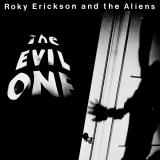
Black vinyl[29,62 €]
The seminal psych-rock classic The Evil One by Roky Erickson And The Aliens is reissued by Fire Records in a deluxe 15-track edition, restoring the original front cover from San Francisco’s 415 Records release for the first time since 1981. Presented across two LPs cut at 45 rpm for maximum sonic depth and clarity, the release brings together the complete recordings from the legendary 1978 and 1979 sessions. The package includes a collector’s booklet with liner notes by acclaimed Austin music journalist Joe Nick Patoski, who attended a recording session for The Evil One in 1979. Alongside rare photographs and archival images from the collection of Roky’s then manager, Craig Luckin.
Following his release from Rusk State Hospital in 1974, Erickson formed The Aliens and channelled his experiences and fascination with horror and science fiction into a singular new sound. Moving beyond the psychedelic garage blues of the 13th Floor Elevators, the band created harder, more ferocious rock built around jagged guitars, strange melodies and a propulsive rhythm section.
Produced by Creedence Clearwater Revival bassist Stu Cook, The Evil One includes some of Erickson’s most celebrated recordings, including ‘Two Headed Dog’, ‘I Walked With A Zombie’ and ‘It’s A Cold Night For Alligators’. Erickson’s unmistakable voice and surreal lyrics, populated by zombies, demons, vampires and atomic monsters, gave the album a character unlike anything else in rock. Both the LP and CD editions feature rare photographs and images from the archive of Erickson’s then manager and the sessions’ executive producer, Craig Luckin.
The Evil One has since become a landmark of cult rock, with its songs covered by generations of artists and its influence extending across punk, alternative and psychedelic music. As Craig Luckin recalls, “Roky considers The Evil One to be his favourite album that he ever recorded. He really loves that album.”
Austin music journalist Joe Nick Patoski, who attended one of the album’s 1979 sessions, contributes a new essay to the LP and CD packaging, exploring Erickson’s extraordinary career, enduring influence and place in Texas rock history.
More than a standalone reissue, this deluxe edition of The Evil One opens an exciting new series honouring Roky Erickson’s extraordinary body of work, with Gremlins Have Pictures and Don’t Slander Me to follow in 2027.
expected to be published on 30.10.2026
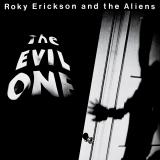
Black + White Splatter Vinyl[36,09 €]
The seminal psych-rock classic The Evil One by Roky Erickson And The Aliens is reissued by Fire Records in a deluxe 15-track edition, restoring the original front cover from San Francisco’s 415 Records release for the first time since 1981. Presented across two LPs cut at 45 rpm for maximum sonic depth and clarity, the release brings together the complete recordings from the legendary 1978 and 1979 sessions. The package includes a collector’s booklet with liner notes by acclaimed Austin music journalist Joe Nick Patoski, who attended a recording session for The Evil One in 1979. Alongside rare photographs and archival images from the collection of Roky’s then manager, Craig Luckin.
Following his release from Rusk State Hospital in 1974, Erickson formed The Aliens and channelled his experiences and fascination with horror and science fiction into a singular new sound. Moving beyond the psychedelic garage blues of the 13th Floor Elevators, the band created harder, more ferocious rock built around jagged guitars, strange melodies and a propulsive rhythm section.
Produced by Creedence Clearwater Revival bassist Stu Cook, The Evil One includes some of Erickson’s most celebrated recordings, including ‘Two Headed Dog’, ‘I Walked With A Zombie’ and ‘It’s A Cold Night For Alligators’. Erickson’s unmistakable voice and surreal lyrics, populated by zombies, demons, vampires and atomic monsters, gave the album a character unlike anything else in rock. Both the LP and CD editions feature rare photographs and images from the archive of Erickson’s then manager and the sessions’ executive producer, Craig Luckin.
The Evil One has since become a landmark of cult rock, with its songs covered by generations of artists and its influence extending across punk, alternative and psychedelic music. As Craig Luckin recalls, “Roky considers The Evil One to be his favourite album that he ever recorded. He really loves that album.”
Austin music journalist Joe Nick Patoski, who attended one of the album’s 1979 sessions, contributes a new essay to the LP and CD packaging, exploring Erickson’s extraordinary career, enduring influence and place in Texas rock history.
More than a standalone reissue, this deluxe edition of The Evil One opens an exciting new series honouring Roky Erickson’s extraordinary body of work, with Gremlins Have Pictures and Don’t Slander Me to follow in 2027.
expected to be published on 30.10.2026
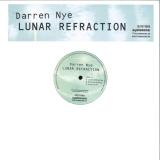
With nearly 20 albums & a similar amount of Eps & remixes, for labels such as Firescope, Exalt, Childhood Intelligence, Deeptrax, Fourier, Form@ out of Tokyo, Magnonic Signals and his own Spacetime Recordings, Darren Nye is one of the more prolific producers of the deep tech soul sound originated by B12, As One & Status in the early 90s Lunar Refraction is a 6 track exploration of intergalactic sounds, swirling pads, bubbling bass, analogue drum sounds & Detroit influenced synth riffs & stabs. Other influences shine through - the 70s Kosmiche Krautrock feel of Solar Drift, the Fingers style bass of Perception Shift & the ethereal acidic breakbeat What Is The Answer recalling early Plaid & Mo Wax era Stasis
Watch out for forthcoming radio show appearances on Kane FM & Soho Radio with Ross Allen. Radio spins from Colin Dale & Damo B.
System One. Bass Beats Pads & Bleeps
On Stock and ready to ship
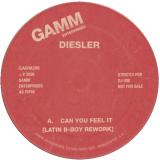
That infamous bassline from Mr Fingers timeless 'Can You Feel It' has been featured in various shapes and forms, over the years, but definitely never like this !
This rework by UK producer Diesler has been circulating as a secret weapon among a small circle of DJs for years, but it's never been available to the public until now.
Blending together percussive latin rhythms, B-Boy breaks and Chicago 4/4s...all put together, it becomes a serious DJ weapon.
For good measures there's also a highly percussive dub version on the flipside...if you wanna work the floor a bit deeper.
expected to be published on 30.10.2026

'Come Into My Life' is a deep vocal house spine-tingler from Nathalie Capello and Rose Lonegran that is the subject of three separate remix EPs on Jus-Ed's top drawer Underground Quality label. This one begins with German house head Damiano Van Erckert layering in some humid chord work, before Reggie Dokes's Jazzy Adlib has fingers dancing nimbly across the piano keys to bring a brighter sound and Machillado's House Again remix is pulled apart and rebuilt as a rough-edged and dusty beatdown. Kossi Emmanuel keeps things bouncy and chord-laced for the ultimate soulful release.
expected to be published on 30.10.2026
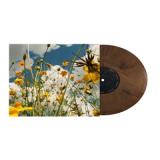
You are Spring!" beginnt mit einer gewundenen Klangwand, A-cappella-Stimmen, die sich in üppiger Harmonie überlagern und den halb-titelsgebenden Frühling besingen. Sofort entführt uns Tasha aus dem tristen, grauen Winter in eine Welt voller Bilder und Empfindungen von neuem Leben. Stell dir vor: ein Feuerwerk aus glockenförmigen Blüten; Rosa, Citrin und Buttergelb; der Himmel klar, eine Lunge voll Blau; Wärme, überall, die die über den Winter geheilte Haut küsst und sich nach Berührung sehnt; Leichtigkeit nach dem Leiden; ein tiefer Atemzug nach dem Ersticken. "Don't die now / There's life to be found now,", beginnt sie. In Texten, die von Gwendolyn Brooks' Gedicht "To The Young Who Want To Die" inspiriert sind, formuliert Tasha die These dieses Albums mit exquisiter Präzision. Es gibt Jahreszeiten der Härte, Jahreszeiten der Schwierigkeit, ja. Aber hier, in diesem Album, meditieren wir über den Frühling über eine Zeit des Feierns, die umso süßer ist, weil wir wissen, was man ertragen muss, um dorthin zu gelangen. "Alive now / It's spring now / Alive now / You're spring now" schließt sie, getragen von den samtigen Stimmen von Jamila Woods und Taja Cheek von L'Rain, die auf diesem Track zu hören sind, und lädt uns in die paradiesische Schatzkiste ein, die sie hier geschaffen hat. Für Tasha ist der Frühling ein Ort, an dem wir ankommen, aber auch ein Zustand, in dem wir uns befinden, eine Art, wie wir geworden sind. Wenn sie darüber spricht, was das Album ihrer Hoffnung nach vermitteln soll, erläutert sie die Bedeutung von "You Are Spring!" weiter und sagt: Es ist eine Art zu sagen, dass du das bist, worauf sich andere Menschen freuen; du bist das, worauf wir warten; du bist das Schöne." Wenn es im vorherigen Album um Sehnsucht ging, darum, sich nach einer Fülle zu strecken, von der du weißt, dass sie kommt, dann ist "You are Spring!" eine Gelegenheit, innezuhalten und alles in dich aufzunehmen, sobald du in deine Fülle eingetreten bist. Das heißt, You Are Spring!" ist in seiner Aufmerksamkeit für die Glückseligkeit so eindringlich wie sein Ausrufezeichen, aber es hat auch einen klaren Blick auf die Welt um sich herum. Die zweite Hälfte des Albums bewegt sich auf diesem schmalen Grat zwischen Wonne und Untergang. Sieh dir zum Beispiel "Actor" an und seine Auseinandersetzung mit den Gesten, die wir in einer Liebe machen, die hohl geworden ist, gefolgt von Special" und seinem aufwendig arrangierten Klangteppich, komplett mit Tashas Klarinetten-Debüt. Im letzten Titel, Quick!", steigt Tashas Stimme in einer fast Stephen-Sondheim-artigen Tonfolge empor und drängt uns singend: "Quick! See how this beauty rushes by?" Es gibt Dissonanzen im Klimpern der Akkorde, das Keuchen ihrer Finger, die über den Gitarrenhals gleiten, eine raue, fast wie von einer Kassette klingende Qualität der Produktion, wieder von Gregory Uhlmann. Aber wir werden noch nicht aus dem Garten vertrieben; der Song klingt langsam aus, zurück in den Glockenblumenhain von Tashas sanftester Stimmlage. "You Are Spring!" fordert uns heraus, uns an unserer Gegenwart zu erfreuen, uns selbst als die lang ersehnte Jahreszeit des neuen Lebens und Wachstums zu sehen. Und wenn der Winter wiederkommt, wie er es immer tun muss, die Trauer sich einschleicht, Herzschmerz vor der Tür steht, gibt Tasha uns etwas, an dem wir uns festhalten können. Die Gewissheit, dass der Frühling wiederkommen wird, selbst dann. Dass die Schönheit und Fülle, die uns jetzt umgibt, uns wieder umgeben wird, noch einmal.
expected to be published on 30.10.2026
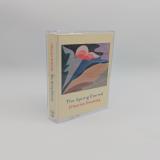
"The bad news is you're falling; the good news is there's no ground."
The second album from Glasgow's Effective Dreaming (Iain P. Ross), on Texas label Aural Canyon. Six long-form pieces that build slowly, looping and folding in on themselves: glistening synthesiser leads over shifting analogue drones, field recordings surfacing at moments, and fingerpicked acoustic guitar on the opening "Physis". Listening feels like being suspended in a current, gently buffeted, as edges and definitions blur. The follow-up to Dream Catalogue Vol. 1 (Fluere Tapes, 2025). Cassette, edition of 50.
expected to be published on 31.10.2026
Faitiche presents the debut solo album by cellist, sound artist, and composer Topu Lyo: “quiet scenes from tokyo” brings together sixteen miniatures for solo cello and tape echo that oscillate between abstracts drones and rhythmic pizzicato sketches – all recorded at Topu’s Tokyo apartment. The constant traffic noise from a nearby highway has become an accompanying soundtrack for his compositions and can be heard on the recordings. Topu’s playing is marked by a distinctive idiom oriented more towards abstract electronic studio effects than classical technique.
The artist spoke to Jan Jelinek about his work:
JJ: A solo cello album may seem like an odd fit for a label that has to date released only music that is electronic in the broadest sense. But I think “quiet scenes from tokyo” complements the Faitiche repertoire exceptionally well. Its sixteen miniatures showcase the cello in all its complexity: the bowed passages sometimes recall a tape feedback drone; the pizzicato playing conjures up the percussion recordings of Moondog; and the abstract textures might be mistaken for the product of a granular sampler rather than rapid finger work on the cello. I’m constantly surprised by just how rich and varied this album is – without ever losing the charm of its sketch-like quality. Could you say a few words about the making of your album – first of all, from a rather technical perspective: what production tools did you use, and why?
TL: My production tools were very sparse. Just a solo cello and my Roland 301 Space Echo, which I only used at the end, running everything through it during mixing, tape only. After years of working with electronics, pedals, and synthesizers, moving to Tokyo pushed me toward minimizing my setup. But my aesthetics shifted too, toward simplicity. I wanted to strip everything back to just the acoustic cello and see how far I could push it — replicating some of my favorite electronic effects through extended technique: slow portamento, LFOs, filters, detune, noise. I’d also been listening to a cassette of ocean sounds for years. When I moved to Tokyo I was horrified to find myself living directly across from a freeway. Eventually the freeway started sounding almost identical to the ocean — and that ended up playing a prominent part in the recording.
JJ: That’s super interesting: mimicking electronic production as a compositional idea for the cello! You say the sound of the freeway is crucial to the album: I, too, tend to interpret steady traffic noise as a positive soundscape – do we hear the freeway on the album? I can also hear other field recordings, for example on “a street car with announcements”. Can you say a bit about how these field recordings influence your playing?
TL: Yes, you can hear the freeway on the album! The freeway is most prominent in “old trees in lonely spring”, “yuyake koyake”, and “the moon” (you can clearly hear individual cars). When I first began recording I had my balcony door shut tightly, but after a while I began leaning into the highway sound and slowly opening the door little by little to control the amount of noise. “streetcar with announcements” was a moment I was recording and a car passed by making announcements in the background. I loved how it sounded! Same thing with “yuyake koyake”, and later I realized that every day at 5pm the same song plays to mark sunset, telling children it’s time to go home. Having this bedrock of sound puts less pressure on me to put music on top or to play more notes.
JJ: It’s astonishing how much this differs from what I’d imagined: I’d been picturing peaceful landscape recordings, but had never thought of a freeway. Which goes to show how open to interpretation traffic noises are. So the room by the freeway had a major influence on the album – how are you going to perform it live?
TL: The contrast between the freeway and the beautiful landscape in my head couldn’t have been starker. I too was imagining a beautiful landscape in which to create the album, but somehow it still worked out. I've been going back and forth a lot on live shows and I think the most honest way is to have it the most stripped down. I was thinking of using traffic samples etc., but I think the duet really comes from the background sounds from every unique venue/environment. So as it stands, I’ll just be doing acoustic solo cello.
expected to be published on 06.11.2026
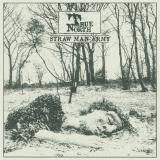
Following their self-proclaimed LP trilogy (2020-2024), Straw Man Army returns with a new songwriting experiment in the form of True North; a collection of 11 songs written for acoustic instruments over three 72 hour sessions at a cabin, isolated in the woods north of NYC. The result is a concept album in practice as opposed to subject alone. Attuned to both the spiritual and political dimensions of seeking refuge in our times, it asks what exactly we mean by “peace” in this era of increasing violence, incarceration, and skepticism towards a future worth living. Does it feel like relaxation, does it tend towards silence? Is it the cooling of our collective rage? Not here. On True North, peace is a spiritual contradiction; a chimera incorporating our innermost desires and the brutality of the world that surrounds us. The album’s central character is a “sleepwalker” trudging through the waking nightmares that have defined daily life since the release of 2024’s Earthworks. Because True North is music that dreams. Sonically, the band toys with the aesthetics of psychedelia, folk, and kosmiche music for contrast, creating a still pool into which their deepest anxieties ripple and flow and flower into ever darker shapes. And while the musical palette plays on tropes of peace—lush piano instrumentals, fingerpicking guitars, gong, vocal harmony—the subject remains steeped in environmental collapse, death, mental breakdown, and the rejection of our most closely held myths. The clash of these forces is the engine that turns the musical wheel. True North is the sound of music mourning a future that never took place and a bout of anticipatory grief for something that’s only just begun…
expected to be published on 06.11.2026

Nashville’s Jess Kerber focuses on the profound resonances of simple moments, pairing delicate acoustic guitar lines with her rich and captivating tenor. The World Is Dark, but I Want It to Be Funny, her second LP for Felte, is a deeply affecting collection of homespun poetry and natural artistry that finds the artists reflecting on personal history, the emotional intricacies of relationships, and the value of cosmic perspective. She explains,“These songs come from a space of feeling a little left behind, so a lot of the album is about realizing and accepting impermanence, and learning how to be good to yourself and to others.”
Opening with “Familiar Strangers”, Kerber gets to the heart of her greatest talents: fluid fingerpicking, emotive vocal cadences, feather-light touches of piano, and subtle harmonies. “Louisiana Song” positions a lyrical chain of childhood recollections up against the literal rising waters that will one day submerge a cherished place: “I think about being southern / and the sand on the gulf coast / When I think about returning / I am wading in a graveyard”.
Throughout The World Is Dark, Kerber navigates an emotional tightrope, fully aware of the ills of the world while trying to find connections and peaceful corners. Even with all their nuances and challenges, she suggests, our relationships are essential to staying grounded, even when we lose them. “Much of my writing is about facing the struggles head-on, balancing what you need to do to survive while remaining true to yourself,” she says. There are echoes of influences like Joni Mitchell, Gillian Welch, and Lomelda, though Kerber injects her own unique wit, wonder, and humility into every passage, allowing the listener into her head for a spell while quietly taking up residence in theirs.
expected to be published on 06.11.2026

A torrent of brilliance released from the fingertips. The art of the piano trio by a giant of arrangement.
In 1968, Norio Maeda, the genius arranger once described as being able to “write different scores with his right and left hands at the same time,” welcomed his close musical allies Takeshi Inomata and Tatsuro Takimoto and took on the piano head-on in his first piano trio work as a pianist. This album brings together the refined melodies of the new mainstream style that led the jazz scene at the time, experimental elements using prepared piano, and even a strikingly inventive recording approach in which as many as seven microphones were placed inside the piano. With the outstanding structural power of a composer and arranger and the sharp instincts of a performer woven together at a high level, this is an important work that deserves to be engraved in the history of Japanese jazz.
expected to be published on 06.11.2026
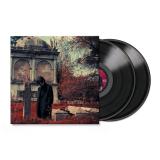
Dark Green Vinyl[34,03 €]
A haunting, cinematic journey into a village that exists beyond time and place, Requiem For A Village is Steven Wilson’s most intimate and imaginative work yet. Blending dark folk, rock and electronica, the album unfolds as a continuous 54-minute “film for the ears,” populated by strange archetypes and eerie folklore. The album is narrated by David Tennant and written with Andy Partridge (XTC).
expected to be published on 06.11.2026
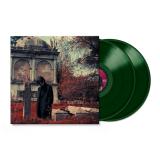
A haunting, cinematic journey into a village that exists beyond time and place, Requiem For A Village is Steven Wilson’s most intimate and imaginative work yet. Blending dark folk, rock and electronica, the album unfolds as a continuous 54-minute “film for the ears,” populated by strange archetypes and eerie folklore. The album is narrated by David Tennant and written with Andy Partridge (XTC).
expected to be published on 06.11.2026

2024 Repress
Alleviated Records is proud to present the new Mr. Fingers EP. After many years of the moniker being dormant and a long journey trying to get back into a creative mindset, we have a new offering. First up, "Outer Acid" delivers up a Minimal-Space-Acid flavor. Next, "Qwazars" continues the Space motif with a Minimal-Tech touch. "Nodyahed" moves toward a Dark Club Bounce with a dash of Tribal flavor. "Aether" offers up a more late-night Ambient-Space-House flavor. Hope you enjoy these selections at the club and at home for a long time to come. Musically Yours...
expected to be published on 16.11.2026
expected to be published on 16.11.2026

Those who’ve followed the career of Aussie disco don Dr Packer should be familiar with the Surgery Edits name – it was the series of mostly self-released re-edit EPs with which he launched his career back in the 2010s. Wax Digits boss Fingerman has not confirmed that this double 12-inch is the Australian’s work, but since he has released previous instalments in the series, it is likely to be. Either way, there’s plenty to set the pulse racing throughout, from a lolloping and loopy disco-house style rub of Chewy Rubs ‘Future Freak’ and a similarly chunky, house-style rush through V’s ‘Muzik Got Me’ (itself a take on an early 80s NYC classic), to the chugging, organ-rich disco-goes-deep house re-tweak of BO’s ‘Nites’ and a peak-time-ready bounce through the disco-funk edit excellence that is BC’s ‘Shake’.
expected to be published on 16.11.2026