What an unbelievable record. From the wild cover to the iconic breakbeats, Roots from Ian Carr’s Nucleus is one of the dopest albums we know. This is seriously thick, funky-prog jazz-rock heaven. Originally released on Vertigo in 1973, other than a couple of versions at the time for other territories, Roots was never re-pressed since so it’s gone on to become another one of those impossible to find records.
Maybe it was a little too out there for the time, but it’s aged very, very well indeed and this Be With re-issue, re-mastered from the original analogue tapes, shows off just why this deserves to be back in press.
Genius trumpeter and visionary composer Ian Carr was one of the most respected British musicians of his era. He was a true pioneer and saw the potential in fusing the worlds of jazz with rock, just as Miles Davis and The Tony Williams Lifetime did in the US. In late 1969, following the demise of the Rendell-Carr quintet, and tiring of British jazz, Carr assembled the legendary Nucleus. Regarding music as a continuous process, Nucleus refused to “recognise rigid boundaries” and worked on delivering what they saw as a “total musical experience”. We can get behind that.
Under bandleader Carr, Nucleus existed as a fluid line-up of inventive, skilled musicians. This constant evolution and revolution was all part of the continuous musical exploration and discovery that took jazz to new levels.
Working together with producer Fritz Fryer and engineer Roger Wake, the seven compositions by Carr, Brian Smith and Dave MacRae that make up Roots flirt with perfection, and Nucleus at that time made up of the cream of 1970s UK jazz with Brian Smith on tenor saxophones and flutes, Dave MacRae on piano and electric piano, Jocelyn Pitchen on guitar, Roger Sutton on bass, both Clive Thacker and Aureo De Souza on drums and percussion, Joy Yates delivering the vocals and of course Carr on trumpet.
The spellbinding title track immediately renders the album indispensable. Riding the illest of loping breakbeats, “Roots” is low-slung, doped-out heist-funk. An absolute monster. If it sounds familiar then that’s likely down to it being sampled by Madlib for Lootpack and Quasimoto’s “Loop Digga”, as well as by a whole host of beat manipulators. “Roots” conjures prime instrumental hip-hop / beat music, only 20 years ahead of its time. Truly, these are the roots. Through sinuous bass, twinkling keys and a hypnotic guitar riff, a smoky brass motif weaves its way into a gloriously deep haze around Carr’s solos. “Roots” is over 9 minutes long, but there’s not a single wasted second, not surprising given that this is a condensed version of an originally 40 minute long commissioned composition.
The soothing vocal fusion delight of “Images” follows. Meticulously constructed, with gorgeous flute work from Brian Smith, with Joy Yates’ silky vocals and Dave MacRae’s Rhodes never sounding better. The cool, driving “Caliban” closes out the first side. Originally the third movement in a four part commission to celebrate Shakespeare’s birthday it stands up on its own, all robust rhythms and blended brass. Keyboard colour and Carr’s trumpet are splashed across the funk drums and basslines (and there’s even some bamboo flute). This really is fusion: the elements of jazz and rock coming together in beautifully synthesis.
Side two opens in riotous fashion with the short, thrilling samba of “Wapatiti”. Next up, “Capricorn” forms a smoothed-out, jazzy constellation. Mellow and dreamy, its twinkling percussion and languid horns slowly build the vibe before head-nod drums and a killer bassline enter the fray. With a distinct heaviness that Black Sabbath would’ve envied, “Odokamona” is a venomous slice of riff-soaked jazz metal (yes, you read that right), elevated by Carr’s wah-wah horns.
The album closes with MacRae’s exceptionally cosmic “Southern Roots and Celebration”. Very much in conversation with Weather Report, it opens as a languorous, spiritual jazz of chiming keys and serene guitar that turns slowly, gorgeously into a mid-paced, brass-laced banger. It’s another sure-fire party starter and the sound of the band having a righteous blast, building an ecstatic chaos that ends with Yates screaming.
And of course we need to talk about Keith Davis’ cover for Roots. Perhaps the coolest record cover of all time? Certainly one of the most bonkers. Just your run-of-the-mill high-gloss, acid-tinged airbrush dystopian/utopian living-room party scene. Consider this your chemical flashback trigger warning.
Front-and-centre the hip-to-death green robot holds court with their giant ball of yellow barbwire wool, hooked up to… something(?) being teased out from under the stairs (probably best not to ask). A thoroughly zoned-out, long-legged Pop Art party-goer lounges half-plugged in to the painting behind her as a pair of legs flail into shot from the the top of the stairs opposite. We won’t even begin to guess what the chap’s up to in the middle, but the view out of the windows is rather nice, and someone’s already got the hoover out ready to tidy up. All of the Nucleus sleeves are something special, but this particular one? Crikey.
This Be With edition of Roots has been re-mastered from the original Vertigo master tapes, Simon Francis’ mastering working together with Pete Norman’s cut to weave their usual magic with these wonderful recordings. The crazy cover has been restored at Be With HQ as the finishing touch to this long overdue re-issue.
San Francisco electronic pioneers Darwin Chamber and DJ Spun head down the arcade for four tracks of the unmistakable flavour of modified 8 Bit sound chips from the 80s. 'LFO's Are Real' definitely nods to the Leeds duo that kicked the Warp Records revolution off, but that's just a starting point for some rough edged electro machinations and some spooky extra-terrestrial samplings. '8-Bit Phantasy' connects Chicago-style piano magic with acid undertows and gets brought to dancefloor life by a serious injections of funky ass breakbeatery. 'Intruder Alert' is the gnarliest of the lot, the bass end nothing if not speaker threatening, before 'We Gotta Get' is wonderfully disorientating disco dub delirium. Raw and direct, this will set the floor alight quicker than a can of petrol and lit match.
Follow up to Goodge's 2023 album Echoes Of Yesterday. Previous releases found on Hip Dozer and Cascade Records. Tracks found on the popular Spotify Mellow Beats playlist. 11th in 'Jet Set' Cold Busted series. Designed and manufactured similar to the vintage 60's style rice paper sleeves. In his latest EP, Sunday Soul, Goodge takes listeners on a four-track journey through the heart of funk, masterfully blending elements of R&B, jazz, and chilled lo-fi. Released as part of Cold Busted's Jet Set series, this four-song offering follows Goodge's 2023 album Echoes Of Yesterday and showcases his dedication to crafting timeless music. "Lights Out" kicks off the EP with heavy funk and stirring breakbeats, accompanied by a scratchy guitar that summons the revolutionary spirit of the '70s. Horns serve as a call to action, while a rollicking bass line and chunky electric piano might inspire listeners to go out and fight crime. "Promised Land" follows, featuring a formidable funk bass guitar and lead guitar chords that rhythmically play off the delightfully busy drums, creating an atmosphere reminiscent of the city's bustle. The title track, "Sunday Soul," is a rowdy affair with a speech-over-beats leading to crispy snare rolls and chiming electric piano. Shaker magic, staccato horn bleats, and spiral flute bits combine to create a swirling vintage-hued photograph of sound. The EP concludes with "Within Myself," a spacier sonic experience that could serve as the soundtrack for chasing someone across rooftops. It's funk spelled with a capital K. Sunday Soul is a must-listen for fans of of the heavier side of funk, solidifying Goodge's position as a master of his craft, creating a nostalgic yet fresh soundscape that keeps listeners grooving back for more.
180g Heavy double vinyl LP with liner notes by Tyran Grillo. Limited Japanese Obi for the first pressing. Original artwork by Russell Mills and photography by Jean-Baptiste Mondino.
The third Time Capsule is a body of dub reinterpretations by celebrated producer Bill Laswell of Ethiopian singer Gigi. Curated by Tokyo record collector, music researcher and seasoned reissue supervisor Ken Hidaka, it is the first time Illuminated Audio is pressed to vinyl after its CD release in 2003.
Ejigayehu Shibabaw was born in 1974 in Chagni, northwestern Ethiopia and by pursuing a career as a singer, went against her father’s strict, traditional gender roles. As Gigi, she embraced the same musical freedom she had strived for in her personal life, incorporating the Ethiopian church, funk, hip-hop, West and South African music into her work. She first settled in Nairobi, then Addis Ababa, where she quickly established herself as one of the city’s leading singers. A move to San Francisco in 1998 led to a long and fruitful creative partnership with bassist and producer Bill Laswell.
Around the same time, Chris Blackwell had stepped away from Island Records to start the art house film company and label Palm Pictures. He took an interest in Gigi and together with Laswell, pulled together an all-star cast of musicians for her self-titled US debut album, including Herbie Hancock, Pharoah Sanders and Wayne Shorter. It won international critical acclaim, not just for its musicianship but for making Gigi a “defining voice for the Ethiopian expatriate community”, as journalist Tyran Grillo praises in his Time Capsule liner notes. From the nation-defining 1896 victory over Italian invaders to the quiet revolutionaries who wear simple shemma garments, Grillo believes the themes in Gigi make it “a shower of sunlight on her homeland for those ignorant of its struggles.”
After its success, Blackwell encouraged them to go back into the studio to rethink the album and Illuminated Audio was born. “Anyone can make a voice sound worldly”, Grillo remarks, “but rare are those who can make one sound inner-worldly.” Gigi was clear with Laswell to give her vocals a minor role “because it’s already been done.” Instead her Amharic verse is fleeting, exhaling through the textures like ghostly fragments; soaring yet muted. Yet the album is still titled under her name, an assertion by Laswell of her central role in the album’s creation. Not only was it a fully endorsed project by Gigi, but she would be present throughout its development, giving feedback on half-finished ideas as Laswell played them back in the studio. “It works perfectly”, she reflected after the album’s release. “We wanted to capture the whole spirit of each track, and Bill’s remixes create a different music language that really puts you in a pleasant place”.
This new vocabulary takes its lead from a technical approach that Laswell had been perfecting during a furtive creative period at the turn of the millennium. Much like his ambient interpretations of Miles Davis (Panthalassa, 1998), Bob Marley (Dreams of Freedom, 1997), and Carlos Santana (Divine Light, 2001), Laswell approached Illuminated Audio by returning to the original multitrack masters. Gigi wasn’t just reworked, but recomposed into an expansive lattice of instruments, submerged in a watery ambience of dub and trance undercurrents.
Sonically, this new language that Gigi refers to, is manifested by the original album’s more understated parts being pushed to the fore. Explaining his contrasting methods, Laswell saw Gigi as being “put together in a way that fits”. Contrastingly, in Illuminated Audio, “a lot of things that I featured in the remix weren’t as audible in the original.” Instrumentation laying near-dormant, deep in the mix, are brought to the fore: the acid rock guitar and Wayne Shorter’s saxophone on ‘Tew Ante Sew’, Graham Haynes’ flugelhorn on ‘Nafekeñ’, Laswell’s bass on ‘Kahn’, the melodica in Mengedegna or the floating synths and talking drums in ‘Gud Fella’.
Brought to his attention by mentor DJ Nori, Hidaka describes Illuminated Audio as a “masterful sonic exploration into ethereal ambience and dub” and made sure this reissue also contained a full remaster to give its “deep musicality” much better dynamics and density in the overall sound. Hidaka admits that Laswell's music “is sometimes so out-there, it is often misunderstood” and, indeed, to dub album non-believers this might seem like a prolific producer imposing himself on another artist’s work; eternally developing rearrangements that never quite get to its destination. But that’s missing its true power and triumph. This is more than the reissue of a remix, but “a wholly unique musical entity”, as Hidaka describes. Illuminated Audio refers to the illuminated manuscripts that comprise the major part of Ethiopian art and its new compositions stand in proud solitude as a rare body of reworks that both informs and enhances their originals.
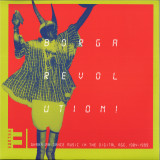
Kalita presents the fourth and final instalment of their groundbreaking ‘Borga Revolution!’ series, uncovering another selection of essential recordings from the rich and far-reaching world of Ghanaian highlife. Spanning deep, hypnotic highlife through to the vibrant electronic productions of 1980s Burger Highlife, Volume 4 captures a period of extraordinary musical change, as Ghanaian artists absorbed influences from funk, disco, boogie, and new synthesizer technology. With previous volumes championed by tastemakers including Gilles Peterson, Antal, Tom Ravenscroft, and Hunee, this final chapter turns its attention once again to the music of the Ghanaian diaspora.
Volume 4 brings together rare recordings from artists such as Rex Omar, Nat Fredua, and CST Amankwah, alongside the elusive, deeply hypnotic and beautiful sounds of the Abibifo Dance Band of Ghana (led by the legendary bassist Ralph Karikari) and Baffour Kyei. Unearthing recordings that have languished in obscurity for over forty years, the compilation moves between deep highlife, rhythmic dancefloor cuts, and pioneering digital productions, revealing yet more musical ingenuity of Ghanaian artists both home and abroad. The final instalment in the ‘Borga Revolution!’ series, it offers another vital collection of forgotten favourites and hidden treasures for DJs, collectors, and anyone drawn to the endlessly inventive sounds of Ghanaian music.
The 1970s and 80s saw Ghanaian musicians begin to incorporate Western sounds like funk and disco into their music, reflecting the changing global musical landscape. However, the country's political instability and economic hardships, marked by military regimes and curfews, forced many artists to leave Ghana in search of better opportunities abroad. In Europe and the U.S., these musicians fused their traditional highlife roots with emerging digital sounds, using cutting-edge technology like the DX7 synthesizer and drum machines to create the genre now known as Burger Highlife.
With ‘Borga Revolution!’ Kalita offers a vivid exposition of this musical transformation, using rare interviews, archival photos, and detailed liner notes to bring to life the pioneering spirit of both well-known icons and unsung innovators of Ghanaian Highlife, one of West Africa’s most exciting musical movements.
· The final installment in Kalita's 'Borga Revolution!' series, examining the development of Ghanaian dance music in the 1970/80s, and focussing on the phenomenon of Burger highlife (a blend of Ghanaian highlife with disco, boogie and synths).
· 2xLP in gatefold sleeve, with printed inner sleeves examining the stories of the artists featured on the volume.
· Includes 10 highly sought-after and under-the-radar recordings, including those by the phenomenal Rex Omar, Nat Fredua, CST Amankwah, Baffour Kyei, Chief Kofi Sammy, and the Abibifo Dance Band of Ghana.
Puerta Negra presents “Metafísica”, the third chapter in the project’s subversive and revolutionary sonic vision. Moving again through the outer edges of EBM, industrial funk, and mutant electronics, the new EP channels the raw physicality of contemporary American body music, aligned with acts such as High-Functioning Flesh or Spike Hellis, alongside the fractured futurism of late-’80s Cabaret Voltaire and its mutant new beat mutations. The result is tense, hypnotic, and deeply confrontational. At the center of the record are the stripped-down, unfiltered vocals of María Aguirre, moving through broken, hallucinogenic rhythms that continuously destabilize and reconstruct the groove. Mechanical yet visceral, cold yet intensely human, the tracks unfold like transmissions from a collapsing future. With “Metafísica”, Puerta Negra continues to push its singular language forward: radical avant-garde body music for the most restless corners of the underground — perfectly suited to ignite a revolution. Presented in ONE-OFF truly limited edition of 300 copies lacquered pressed on 180 gr. high quality solid BLACK vinyl. All tracks have been specially remastered and mastered for vinyl by Daniel Hallhuber at Young and Cold Studios (Germany).
Introducing the first reissue project on Rocky Hill with a compilation of Jozeph Sefian's hard to find tracks from the late 1970s into the early 1980s. A culmination of Armenian funk, soul, pop, and jazz. We're calling it "Melodies". Jozeph Sefian emerged as a distinctive voice in Armenian music, blending heritage with the evolving sounds of his generation. Beginning on drums and later embracing his voice, he crafted a versatile style rooted in Armenian, pop, jazz, and soul. Traditional melodies and emotional storytelling met familiar harmonies, expressive phrasing, and the rhythmic energy of funk, creating a sound that was both deeply Armenian and contemporary. During his years in Iran, Jozeph recorded with accomplished musicians and operated a music shop serving the Armenian musical community. Despite restrictions following the 1979 Iranian Revolution, he continued performing for Armenian audiences. His career took him across the Middle East, the United States, the UK, and Armenia, while writing his tracks in Iran and recording in LA. In 1977, Parseghian Records labeled him, "one of the most distinctive voices in Armenian music." We agree with Parseghian, as Jozeph's recordings continue to bridge generations, preserving Armenian culture through a uniquely soulful musical voice.
The label's co-founder and sound alchemist returns! Serving up his signature blend of heavy breaks and trippy ethereal atmospheres, plus a dash of outer-funky flair. All tracks were part of his livesets, including the featured special remix to PWOG.The label's co-founder and sound alchemist returns! Serving up his signature blend of heavy breaks and trippy ethereal atmospheres, plus a dash of outer-funky flair. All tracks were part of his livesets, including the featured special remix to PWOG.
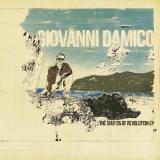
Originally released in the height of the underground disco revival, The Sounds Of Revolution EP has since become a sought-after modern classic. After years out of circulation — and with original copies now trading hands for €80-100 on the second-hand market — this long-requested EP finally returns to vinyl.
Italian producer Giovanni Damico (aka G-Machine / Ron Juan) delivers four timeless boogie cuts that perfectly bridge vintage Italo, cosmic disco and modern club energy. From the euphoric synth hooks of the title track to the robotic funk of “Italians In A Line”, this EP captures everything that made Damico a staple in DJ bags across Europe.
Carefully reissued for a new generation of selectors, this release is equal parts heritage and dancefloor weapon — essential for fans of Italo, nu-disco, boogie and anyone building a serious disco collection. Expected shipping: End of May/begin of June 26.
Bound to break the new year in with all our might, we are excited to unveil our new baby, RYCX. Expanding the scope of our main catalogue to bottle what we consider pure techno quality with its idiosyncrasies and inherent untamedness, RYCX will serve as our platform of choice to embrace the more minimalist, dubby vibe of techno, focussing on tracks that sound more like a rabbit hole, trippier, psychedelic, and immersive, yet still powerful enough to fill a dance floor. Kicking off the journey is 'RYCX01' by Ruben Ganev, up with his debut solo release after contributing a track to our 2023-issued 'Heimat' VA. The music here featured packs the very defining qualities RYCX aims to engage its audience with: a raw, inspired, quality-driven combination of force and thoughtfulness, ruggedly honest yet built to meet the expectations of the most picky dance floors and home listeners out there. Ganev's quartet of stormy churners, cut from the most hypnotic cloth and eerily vibrant machine funk, has us diving deep into a throbbing furnace of charred dubs, steely industrial reliefs and post-apocalyptic atmospheres. A most fitting manifesto in sound, telling the beads of the sonic revolution in march.
On October 2 1958, after over 60 years of colonial rule, Guineans voted overwhelmingly for their independence, and Guinea was declared a Republic with Sékou Touré as President. Guinea was the first of West Africa’s Francophone colonies to gain independence. To free Guinea from its colonial legacy, president Touré sought to restore dignity to his nation and give cause for Guineans to take pride in their culture, history and newfound freedom. To achieve this, he instructed his government to implement new cultural policies that were intended to revitalise and celebrate indigenous culture. The focus of these new policies was on music.
In 1961, President Touré launched authenticité, the name of his new cultural policy for Guinea. One of its first acts was to assemble the best Guinean musicians into a new state-sponsored orchestras that were tasked with presenting traditional Guinean music in a new and modern style. All musicians in Guinea’s orchestras were officially designated as members of the public service. During the years of Sékou Touré’s presidency (1958 – 1984), the government’s cultural policy of authenticité was applied strictly to the creative arts. Guinea’s sole political party, the Parti Démocratique de Guinée exercised complete authority over artistic production. The scale of the Guinean government’s commitment and efforts to invigorate its indigenous musical cultures was unmatched in Africa, and it presented a clear contrast to the minimal endeavours undertaken by Guinea’s former colonial rulers.
From 1967 to 1983, Guinea’s government presented selections of songs from the Voix de la Révolution catalogue on its own recording label, Syliphone. These recordings were described as ‘the fruit of the revolution’. Syliphone was revolutionary in many aspects: it was the first recording label to feature traditional African musical instruments such as the kora and balafon within an orchestre setting; it was the first to present the traditional songs of the griots within an orchestre setting; and it was the first government-sponsored recording label of post-colonial Africa. Syliphone represented authenticité in action, and over 750 songs were released by the recording label on 12-inch and 7-inch vinyl discs. All are highly sought after by collectors worldwide.
This is the second of a two-volume release which presents a selection of the best songs from Guinea's Syliphone recording label. This volume focuses on recordings from the 1970s, when Guinea’s authenticité policy had transformed the nation's music through a network of over 30 orchestras, each representing their local region, and each presenting Guinean musical traditions alongside the influences of Cuban music, jazz and funk.
Indiana Jones never dug this deep.
Church – the brainchild of Joe Washington – were a band both lucky and cursed to come up in the seventies. Lucky, because they rode a wave of community activism, uplifting messages and a moment when music truly mattered. Cursed, because those same times meant their tight, heartfelt output went overlooked.
Mid-sixties to circa 1980 soul and funk were extraordinarily rich. The era’s big releases have aged like fine wine, yet countless hidden gems remain buried. Church’s only single was one of them. Their hypnotic 1976 release “How Long” b/w “Da Da Song” arrived the same year as Stevie Wonder’s Songs in the Key of Life, Marvin Gaye’s I Want You, Diana Ross’s Diana, and at a time when Black mainstream music was shifting toward disco. Church, however, sounded like Sly & The Family Stone in an alternate timeline — gritty, focused, stripped of additives.
“Da Da Song” is pure grits and gravy: furious, tight drums and lyrics that sound like both a plea to DJs to play their record and an insistence to keep the party alive, noticed or not. It cooks from start to finish in just two and a half minutes.
“How Long” is its own universe. Where “Da Da Song” is skeletal, “How Long” blends key strands of Black music in under three minutes: touches of spiritual jazz with a Gary Bartz-like sax, gospel-blues undertones, and echoes of the era’s flower-power-tinged Black creativity — The Undisputed Truth, The Family Stone, even the poetic freedom of Nikki Giovanni. The lyrics are a timeless plea for love.
Church formed in the Bay Area in the early seventies, shaped by the movement, culture and activism of the time. Joseph Washington, based in San Jose, never chased a music career — for him, music was a way to bring people together. Before Church, he led a backing band called Wash, then added gospel singer Linda Williams (née Stephens) and New York–born Joel Como on xylophone to complete the group.
They rehearsed in Joe’s garage, spread through word of mouth and played every gig they could: Black colleges, opening slots for The Whispers, neighbourhood house parties. Some members studied at Nairobi Junior College in East Palo Alto, then a hotbed of Black community activism, with revolution in the air and messages woven naturally into the music.
This single is a message from that era, resurfacing at last — ready to be sampled just as another Joe Washington track, “Look Me in the Eyes”, was on Drake and J. Cole’s “First Person Shooter”. These rare, spirited tunes are begging for new life through samplers, again and again.
Compiled by Philip King “And then came the rise of synth pop : blokes with dodgy haircuts hunched over keyboard-operated machines stuffed with wires and do-it-yourself tone oscillators making sounds like a brood of geese passing gas in a wind tunnel. Whoopee! This is the way the ‘70s ended : not with a blood-curdling bang bang but with a cheap, synthesized, emasculating whimper.” NICK KENT, NME. All The Young Droids: Junkshop Synth Pop 1978-1985 is a new compilation that charts the underbelly of the epoch-defining sound of the synthesiser in 80s popular music. Compiled by Philip King (previously seen compiling All The Young Droogs, Glitterbest and Boobs - The Junkshop Glam Discotheque), the music here connects the dots between DIY synth enthusiasts grappling with new, cheap synthesisers at the tail-end of punk and wannabe, jobbing songwriters enthral to the new music pioneered by Gary Numan, Depeche Mode and Daniel Miller’s Mute Records. Featuring rare tracks of auto-didactic progressive pop music, proto-techno punk, shoot-for-the-stars-land-in-the-gutter chart flops and heralded, underground synth classics, School Daze paints a picture of beautiful failure. Complete with extensive sleeve notes written by King and never before seen imagery, all 24 tracks were remastered by RPM in-house engineer Simon Murphy, many from vinyl copies due to lost master tapes. The story told on All The Young Droids is one of the dawning opportunity presented by both the emergence to the market of cheaper analog synthesisers and the distribution networks plus indie labels that exploded with the advent of punk music in 1976. While the music that sprouted out all over the globe in the wake of these factors was decried as fake, plastic, a refutation of punk’s guitar-led revolution, it’s telling that much of the music on All The Young Droids.. was created in bedrooms, ramshackle studios and home-made set ups with often borrowed equipment. In the era of record labels jumping to capitalise on the success of The Sex Pistols, The Clash (both on major labels, of course) these artists struggled to stand out from a new gold-rush with next to no budget or PR team. With radio and labels desperate for the new Yazoo, what resulted was a testament to necessity being the mother of invention. At the time, the synthesiser was the music of the future, a shiny new machine that could paint like an orchestra with a single finger and a 4-track. In the hands of Manchester avant-pranksters Gerry & The Holograms it’s a pulsing, sardonic weapon.. the only instrument on the Messthetics classic lampooning of New Wave fashion. In Hamburg, a 16 year old Andreas Dorau used it to write and record (with his female classmates on vocals) a global smash in Fred Vom Jupiter (later licensed to Mute Records). The hard-to-find English version (Fred From Jupiter, natch) is included here. Many artists with alreadystoried careers caught the bug and recorded synthesiser-fuelled peons to space, computers, the future and, of course, love-interests. Harry Kakoulli, late of Squeeze, recorded a solo album in 1979 that included the incredible power-synth-pop smash-that-never-smashed I’m On A Rocket. Similarly, Ian North of Neo and American Power Pop stalwarts Milk ’n’ Cookies bought a Korg MS20 and used a tape machine to record We’re Not Lonely, an absolute lost-classic of minimal synth pop. We’re Not Lonely also features on the Junkshop Synth Pop sampler 7” twinned with John Howard unreleased track You Will See, released April 12th 2025. There are plenty of compilation debuts in evidence. Sole Sister were a mysterious trio who were featured on the Scaling Triangles compilation of female-fronted, queer-adjacent post-punk / underground music that also featured The Petticoats. Selwin Image were from San Francisco and featured members of the recently defunct power pop/punk group The Pushups. Their stupidly catchy The Unknown fizzes with New Wave energy - think XTC to Sparks but remains unreleased until now. Dream Unit’s A Drop In The Ocean is an early synth wave cut, positively teaming with Joy Division instrumentation, previously only released on a long-forgotten and super rare, self-released EP. Incandescent Luminaire’s Famous Names belies an archetypal struggle of a small-town trying to make it in a cruel industry but is a thrilling New Romantic-Synth Wave cross over with a OMD gloominess that’s a joy to hear. Feminist Minimal Wave track I Am A Time Bomb by performance artist Peta Lilly and Michael Chance is a revelation destined for new found cult status. It was released on 7” and lost until now. The flipside to the subterranean, never-made-it synth pop mentioned above are the ambitious, even fruity attempts at success that have a perennial elegance to their confidence. New Jersey-ite Billy London (real name Ed Barth) tried to cash in on the synth boom with Woman, released by a major label, a lurching new wave track built on the Louie Louie rhythm and a wonderfully camp Lou Reedstyle sleazy vocal before exploding in the synthesised chorus. The song bombed but with a chorus like this, you have to wonder why? Ex-Glitter Band member John Springate’s My Life is truly epic, with doomed chord progressions and massive sounding drums turning into at least 3 different songs in the course of the track. Before you wonder what’s going on the song resolves with a glorious return to the main refrain. The dry-ice-dressed dance floor is well catered for too. Design’s Premonition and Vision’s Lucifer’s Friend are stone-cold minimal synth bangers, well loved but given a new lease of life here. The Warlord’s The Ultimate Warlord was released in 1978, a homespun proto Hi NRG banger that was later re-recorded by The Immortals in Canada who had a club hit with it. One-man- band Disco Volante’s No Motion was re-issued by Synth wave label Medical in 2012 but makes its first vinyl compilation appearance here. Close your eyes and you can imagine what Lawrence of Felt would have sounded like with some cheap Korgs a little earlier in his career. Gibraltar-based trio The Microbes imagined a computer programming people to dance - how prescient - and ended up with a propulsive, robo-funk track with splendid rubbery bass playing over a tectonic drum machine. Previously picked up by Belgian label Stroom TV, Dee Jay Bert & Eagle’s heavily Euro-accented I Am Your Master demands the listener to “come to paradise!” In a frankly terrifying manner. All The Young Droids is the first compilation to peel away from the narrative that dour, Minimal Synth and Cold Wave were the only musical children of the first rush of synth pop. Philip King and School Daze Records describe a much more complicated world: along with the austere, Brutalist children of Daniel Miller (who produced Alan Burnham’s Bowie-Low-influenced Science Fiction here) was a plethora of desperate cash-ins, accidental mainstream hits, ambitious pop dramas and major label punts that went nowhere. Crucially, the compilation blurs the line between junk and treasure. What if the two things are interchangeable. What if it’s all science fiction?
Originally released in 1972, Toni Tornado's self-titled debut is a landmark in Brazilian soul and funk - a gritty, groovy record that helped define the sound of the Black Rio movement. Blending deep soul, psychedelic funk, and bold orchestration, this album channels the revolutionary energy of James Brown with the tropical swagger of Rio's streets. From the urgent rhythms of 'Torniente' to the undeniable strut of 'Mané Beleza' and 'Tornado,' Toni's music pulses with a fierce sense of pride and liberation. It's the sound of a new cultural identity taking shape - where African-American soul met Afro-Brazilian reality. Often compared to the legendary Tim Maia, Tornado brought his own explosive edge to Brazil's growing soul scene. By the 1970s, other Brazilian musicians, such as Banda Black Rio, Cassiano, Gerson King Combo, Jorge Ben and Gilberto Gil, began making soul records. DJs started throwing soul-only parties. Toni Tornado's voice carries grit and passion, his grooves hit hard, and his message is crystal clear - Black is beautiful, and the funk is real. Back on vinyl for a new generation, this reissue is more than a collector's gem - it's a time capsule from an era when music moved bodies and minds. Essential listening for fans of vintage soul, global funk, and revolutionary sounds. Reissue on 180g vinyl.
The latest release from the Villains Inc. camp delivers an Italian-made electro gem.
And as the saying goes: Villains do it better! After the soulful "Time To Go Back EP" back in 2022, the "Generation V EP" (limited to 300 copies) marks the arrival of fresh talents joining the collective. This new wave steps in after the tragic loss of some of the label key figures, carrying the torch and keeping the Villains Inc. spirit alive.
Side A opens with "Vaccin", a hypnotic yet funky electro-bass track by Deepvision and Lefka. Despite their young age, the duo U.A.G.L.I.O. shows remarkable musical maturity and delivers a powerful debut. Expect to hear much more from this awesome team in a near future.
Next comes "FM Resistance" by Jack Bags (half of Dr. Boomer). A synthetic ride of swirling URish style sequences, darkened by moody strings. Breakdance moves guaranteed on the dancefloor!
On the flip, Index Case teams up once again with the late X-Beat (RIP) to provide a furious "Against" anthem, calling for "revolution against the government, against the police". The frantic rhythm and unsettling atmosphere push the track into gloomier territory in a powerful way.
Closing the record, Antizer0’s founder Zora Neti concludes the 12" with "Stereocash_(Pt.2)", a downtempo storm built upon eerie voices and mental sororities. A haunting yet masterful finale.
The legacy of the original V members lives on. Special mention to Simonloop aka Urbanmagic, one of the OG Villains, whose artwork on the B-side captures the grit of the music and makes the vinyl worth owning on its own.
From start to finish, Generation V EP is a masterclass. Crafted with the unmistakable Villains Inc. sound by label owner Gab.Gato, it’s pure underground quality. This record is dedicated to the memory of X-Beat and Yo Flava. Once a Villain, forever a Villain. Support the underground!
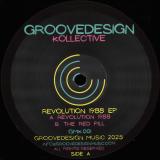
Revolution 1988 EP is an innovative interpretation of early House and Acid House vibes. Clocking in at 125 Bpm on the A side, it sets the mood for the sonic exploration of naturally expressed, impactful and upbeat classic house piano riffs and a tight rhythm section, contaminated with a punchy bassline and rich percussive elements. To complete the journey, it’s also worth mentioning the effortless contribution of well worked out vocals and dubby kind of FXs that will lift the dancefloor to the very last beat.
The Red Pill can’t be labelled as a B side, in that it is a dancefloor filler of its own. Creating an 80s feel, it’s driven by funky, low rumbling bassline, and an articulated, snappy, sharp percussions, it infuses pure dancefloor energy with disco vibes and organic grooves. It encapsulates the listener/dancer in an immersive sonic bubble of exquisitely full range textures, emotional layers and sound stage experience. Again, meaningful vocals and piano grooves intermix with reggae/dub FXs and delays. Stick around for the finale and get ready for the unexpected ....
After the great success of the 9 volumes, FullTime Production returns with a new vinyl in the "FullTime Factory" series!
Four gems from our catalogue by Rainbow Team, Michael Baker, Say When! and MA.GI.C. remixed by our artists Da Lukas, Massimo Berardi, Souls
Groove and Black Truffle, who revolutionise big hits through their musical experience with current sounds disco, nu-disco and funk! This vinyl can't miss into the collection!
** Includes fold out colour poster (40cm * 20cm), replicating the insert included in the original '76 release **
Only a decade ago Leong Lau remained a well-hidden Malaysian-Australian treasure, known only to small circles of Australian record collectors. In 2013 we met Leong in person at the Brisbane state library, where after a long and somewhat transcendental ‘conversation’, received his blessings to re-release his music.
In 2014, we reissued his sophomore album ‘That Rongeng Sound’ and later in 2021, his sole single ‘late Night Flyer. In 2024, we are going back to finish the triangle of Leong releases, with a repress of his debut 1976 album ‘Dragon Man’. A raw and electrifying album that continues to stand the test of time.
Dragon Man might best be described musically as psyc/rock, however the significant use of soul/funk and jazz melodies adds a unique musical depth that makes it hard to categorise. However, what truly sets Leong apart is his distinct vocal style, delivering half sung/half spoken lyrics in a stereotypical Aussie accent that comes across more like a sermon than what might be conceived as ‘traditional’ songs.
Moreover, in a time where the Australian music industry and its performers’ musical styles were dictated by major labels, Leong began to break down those barriers by self-releasing his music. This rewarded Leong creative control, where he was able to dictate the musical and cultural themes, with songs like ‘Dragon Man’ and ‘Deep In The Jungle’ that both pay homage to his unique Chinese/Malay heritage. That said, Dragon Man is both a significant musical and cultural statement that’s just as poignant today as it was then.
A holy grail for fans of French boogie, early hip hop, Arabic funk and Balearic bops,"Ettika" has been seriously sought after since Vidal Benjamin found it in the 1€ bin back in 2006. Teasing the ears of the underground via Vidal's 'Balearic Nightmare' mix for Noncollective, copies of the original were soon snapped up completely, and the later adopters were sated by a Blackdisco edit from Alexis Le-Tan (himself gifted Vidal's second copy), which is now also rare as hen's teeth. The fervour for the track is easy to understand. Underpinned by an endlessly buoyant bass groove, chanted female vocals dart out the speakers like a post- modern mantra while synth vamps flare in stuttering stereo.
Middle-Eastern motifs add an air of mystery, but this truly belongs in a dance floor utopia. That the track was the product of a 'back-to-work' scheme aimed at unemployed immigrant youth in Rouen only adds to the appeal. Led by teacher Bernard Guégan, a quartet of students delivered lyrics in French and Arabic inspired by their rejection letters, serving a little social commentary and a lot of funk. If you're mad on Ahmed Fakroun and Shams Dinn, or even those folks in the Bush of Ghosts, then this is a must have for you.
Archeology isn't just about excavation, there should be interpretation too, and in this case it comes from Italian duo Hear & Now and Leeds' The Veteran Delinquents. The former furnish the 12" with two radical takes, the dreamy downtempo stroll of their French Remix - all unhurried percussion, Gilmour-riffing and coastal élan - and the peaktime pump of their Arab Remix, which transports the original vocal into a land of desert new beat and Balearic trance with a little space left for some frazzled fretwork. If you've followed their work with Claremont you know the quality on show.
The Veteran Delinquents, the collaborative vehicle of Leeds stalwarts Craig Christon and Tim Hutton, condense a lifetime of club experiences into their remix, establishing the infectious groove of the original before subverting with chugging bass and winking acid, all augmented with their own slick synth work. The original was an all time classic at Craig's Joe's Bakery nights way back when, and this new interpretation is both respectful and revolutionary.
Created by musician and multi-instrumentalist Jorge Queijo, Nelembe emerged with some drum rhythms recorded at random and stored on a hard drive. From them, and in the middle of the pandemic, Jorge Queijo built a musical concept that goes beyond borders and styles, embracing afrobeat and highlife, without forgetting soul, funk and jazz all of which in constant confrontation.
In addition to the rhythmic and sound issue, with several latitudes within it, afrobeat translates into a revolutionary and combative behavioral DNA of the fight for freedom and social justice. Daniel Belo's vocals and saxophonist João Cabrita's arrangements defined what the band came to call dirty afrobeat - a musical celebration where the only rule is the absence of rules, and the desire to be free that only music gives us.
LRK proudly presents "All Of Me / Self Revolution" a limited edition Retro Soul 7" vinyl from Gary Beals.
Lyrically, "All of Me" playfully celebrates bringing one's "whole self" to the forefront as Gary playfully expresses his interest and openness, giving of himself to that someone, he is very much interested in exploring more with.
Gary Beals is an acclaimed Canadian singer-songwriter known for his soulful voice and captivating and heartfelt performances. Rising to prominence as a finalist on the first season of "Canadian Idol," Beals has continued to captivate audiences with his exceptional talent and genuine artistry. His music seamlessly blends R&B, pop, and soul, resulting in a timeless sound that resonates with listeners worldwide. With multiple successful albums and a dedicated fanbase, Gary Beals continues to inspire and uplift through his powerful music.
Craig Charles is a big supporter of Gary's Beals and spun "All Of Me" for weeks on his Soul and Funk show on BBC radio Six
Arp Frique returns to the scene with a new album after a string of releases, leaving the cratediggers and dancefloor tastemakers with underground classics like Nos Magia, Voyage and Nyame Ye. On ''Analog People Digital World' he embraces the digital coldness of Yamaha’s classic DX7 synthesizer to create a refreshing listening experience using only the FM synthesis-based sounds from this machine to find new heat for an analog world, reflecting on the digital revolution we are living through. The album features Ghanaian songstress Mariseya (Omampam, Jah Kingdom, Digital World, Roi Salomon), Cape Verdean OG Americo Brito (Go Now Wetiko) and Surinam funkstar Sumy, who joins the record on the opening track “Spiritual Masseuse”. Arp Frique closes the album with “Duncan Truffle”, a very intense and wobbling instrumental echoing Bootsy and Bernie Worrell on a solo exercise. Expect an analog-digital exploration of lofi funk, highlife, zouk and reggae. Does that DX7 sound hot or cold to you?
In the mid-70s, Bob Shad’s cult New York Jazz label Mainstream Records turned to the burgeoning underground Disco scene and released a handful of great singles produced by the likes of Tommy Stewart, Jimmy Roach or Bert DeCoteaux. Featuring artists from the early Disco hotbed including South Side Coalition, Chocolate Syrup and Three Ounces of Love, these singles, proving Shad's great flair, accompanied the rise of the New York club and block party culture that was going to revolutionise the musical landscape a few years later. Most of the singles are officially reissued here on vinyl for the first time, with Three Ounces of Love's "Disco Man" full mix previously unissued on vinyl. Remastered by Colorsound Studio in Paris, with liner notes by Charles Waring and artwork by Thomas C. Bradley
Funk and Soul in the early 70s were mutating to a new sound spearheaded by such labels as Philadelphia International Records (PIR), Scepter and Salsoul: Early Disco was taking off and Its sound was earthier and more urban, mixing the nascent Disco beat with strong funk and soul elements. New York was at the epicentre of the phenomenon, thanks to its thriving club scene and also to a new wave of DJs from the Bronx who started playing the music at block parties along with James Brown and Mandrill. bubbling under was a cohort of small independent labels that released some great music on 7" singles to meet the growing demand. Industry veteran Bob Shad and his label Mainstream Records started investigating this new scene and asked his circle of independent producers to bring him their latest production for release. For the occasion, he set up two sub labels, IX Chains and Brown Dog.
Among the producers who'd heard Shad's call were Tommy Stewart who came up with The South Side Coalition's funky '(Don't You Wanna) Get Down Get Down' in 1975 and Prophecy's 'What Ever's Your Sign' a year later. Seasoned arranger/producer Bert DeCoteaux (Patti Austin, Maxine Brown, The Main Ingredient) brought Lenny Welch's soulful 'A Hundred Pounds of Pain' and the superb mid-tempo instrumental 'Nothing Between Us' by The Electric Ladies. Arranger Jimmy Roach came with his latest single with The Dramatics ('No Rebate on Love') whom he'd worked with at Volt and with Three Ounces of Love on their aptly titled single 'Disco Man,' whose unissued long version merging Side 1 and 2 is released here on vinyl for the first time. The sister group would go on to sign with Motown in 1978 and release their sole album self-titled 'Three Ounces of Love.'
Other highlights on 'Mainstream Disco Funk' include The Grand Jury's 'Music is Fun To Me' with its languid funky rhythm arranged by Ted Bodnar, a producer and studio engineer who'd work with Sir Joe Quarterman, Blair and Al Johnson. Also featured on the set is Crystal Image's superb 'Gonna Have a Good Time (part 1 & 2) which typifies the blend of urban funk, glitzy strings and metronomic beat that were signature elements of early Disco.
The style would keep getting more commercial over the years and reach overkill in the late 70s but the block party scene which more than embraced this breakbeat-filled genre would soon morph into hip hop in the second half of the 70s with the help of a few key industry figures such as Sylvia Robinson (Sugar Hill Records). By that time, Bob Shad had ceased releasing records and relocated in Los Angeles but he left behind a small treasure trove of superb obscure singles which are now making their LP debut on 'Mainstream Disco Funk' for the delight of all funk and disco lovers.
11 track album by Patrick Cowley. Perhaps one of the most revolutionary and influential people in the cannon of disco music, Cowley created his own brand of Hi-NRG dance music coined 'The San Francisco Sound.' By the mid-70ies, Patrick's synthesizer skills landed him a job composing and producing songs for disco superstar Sylvester such as 'You Make Me Feel (Mighty Real)', 'Dance Disco Heat' and 'Stars.' This helped Patrick obtain more work as a remixer and producer. Of particular note was his 18-minute long remix of Donna Summer's 'I Feel Love'. By 1981 Patrick released a string of dance 12inch singles, like 'Menergy' and 'Megatron Man', creating the soundtrack for a generation. Prior to his passing on November 12, 1982, he recorded two more Hi-NRG hits, 'Do You Wanna Funk' for Sylvester and 'Right On Target' for Paul Parker. In 1981 Patrick was contacted by John Coletti, owner of famed gay porn company Fox Studio in Los Angeles. John had heard about Patrick's music from the legendary Sylvester and proposed he write music for his films. Patrick jumped on this offer and sent reels of his college compositions from the 70s to John in LA. Coletti then used a variable speed oscillator to adjust the pitch and speed of Patrick's songs in-sync with the film scene. 'School Daze' is a collection of Cowley's instrumental songs recorded between 1973 and 1981 found in the Fox Studio vaults. Influenced by Tomita, Wendy Carlos and Giorgio Moroder, Patrick forged an electronic sound from his collection of synthesizers, modified guitars and self-constructed equipment. The listener enters a world of dark forbidden vices, introspective and reflective of Patrick's time spent in the bathhouses of San Francisco. The songs on 'School Daze' range from sparse prototechno to high octane funk to somber post-punk to musique concrete, revealing the depth of Cowley's unique talent.
• Gil Scott-Heron’s “Pieces Of A Man” is one of the most important albums in the history of black American music. Although it didn’t set the charts alight, it stands as a masterpiece alongside contemporary works such as Marvin Gaye’s “What’s Going On”, Curtis Mayfield’s debut LP, Funkadelic's “Maggot Brain” and Isaac Hayes’ “Shaft”. All were brilliant in their way, but lyrically Scott-Heron was on a different level from almost every other writer.
• It was a landmark album with its bold, poetic lyrical content allied to progressive and melodic music, and it saw producer Bob Thiele help Gil and his musical partner Brian Jackson paint the picture they needed to get their message across. Thiele put Gil and Brian together with Ron Carter, Hubert Laws and Bernard Purdie, giving them the musical heft they wanted.
• For many years the focus was on ‘The Revolution Will Not Be Televised’, which was included in the Grammy Hall Of Fame in 2014, but this focus sometimes overshadowed the heights which Gil reached throughout the album. Today ‘Home Is Where The Hatred Is’ and ‘Lady Day And John Coltrane’ are also considered standards, whilst the album’s title track is a prescient and heart-breaking warning about the way in which big business dehumanises its workers.
• The album reached its landmark 50th year in 2021 and we decided that we would create this special edition to celebrate its incredible sound. The original master tape was taken to Frank Merritt at The Carvery in London, who cut it as a double disc 2 x 45 RPM record, in an all-analogue chain. The original record - especially side two - was long, and serving it up this way allowed the music a greater level of fidelity.
• The release is packaged in the original album’s gatefold sleeve.
Four Flies Records is proud to present its brand new imprint Edizioni Della Notte, which expands the label's musical range. The sound of Edizioni Della Notte is a sound of twilight atmospheres and moonlit nights, traversing genres from disco-funk to soft rock, jazz-fusion and city pop. It's the music that creeps out of smoky nightclubs and car cassette radios, breaking the silence of empty streets and offering an escape from metropolitan reality into cosmic-exotic dreamlands.
Quite fittingly, the first official release on Edizioni Della Notte is called By Night. It's the debut EP of Scerida, a solo project of musician and singer-songwriter Daniela Resconi, and a perfect match for the sound that the new imprint intends to represent.
Its four tracks explore the idea of night as a time of ecstasy and torment, as a land of freedom and imagination but also of delusion, as an accomplice, a friend and an enemy described through feelings and mental states that range from expectation and euphoria to disillusionment and resignation.
Resconi, who hails from Brescia, northern Italy, formerly released music under the moniker Cara and as part of the duo The Loud Vice. Her new alias Scerida, which combines the French term chérie with the Spanish word querida, signals both a revolution and an evolution. "Scerida is a dive into the exotic side of my imagination, into mischevious thoughts, into a crazy night where I lost and found myself again," she explains. "She is still me, Daniela, but she keeps her eyes wide open on this restless, troubled world to write songs that try to ward off the horror vacui of everyday life."
By Night celebrates the dark hours as magical and mesmerizing, even when mysterious or dangerous. It evokes images and scenarios cinematically – a taxi passing by and fading into the distance, ice-cold Martinis during a party, whirlwinds of emotion, psychedelic sunrises and neon sunsets – through a stream of consciousness filled with noir-inflected pop, lo-fi vibes, slow hypnotic rhythms, suspended grooves and swelling atmospheres.
A MAJOR EXPLORATION OF TOKYO'S CUTTING EDGE 80S SOUND THROUGH THE MUSIC OF CULT JAPANESE LABEL NIPPON COLUMBIA AND ITS BETTER DAYS IMPRINT, SELECTED BY BRITISH RADIO PRESENTER AND DJ NICK LUSCOMBE.
‘Tokyo Dreaming’ is a superb selection picked from the highly collectible Nippon Columbia label and its Better Days sub-label. For the occasion, we’ve teamed up with journalist and Japanese music expert Nick Luscombe who was granted rare access to the much-guarded Nippon Columbia's vaults for a masterful selection encapsulating the fascinating sound of Tokyo in the late 70s and 80s. The selection mixes electro, synth-pop, funk and ambient and features such artists as Ryuichi Sakamoto, Mariah, Shigeo Sekito, Juicy Fruits, Hitomi "Penny" Tohyama and Yumi Murata. The tracklist includes many sought-after rarities and hidden gems which have never been released outside of Japan and the set has been newly remastered by Nippon Columbia. The album has been designed by famed London-based designer Optigram and is annotated by Nick.
Nippon Columbia, one of Japan's oldest music labels is also one of its most collectible thanks to its sub-label Better Days which, in the late 70s, became a hotbed for Tokyo's new generation of pop artists eager to experiment with ambient, electro and funk. Armed with a string of new Japanese-made synthesizers and drum machines that would soon take the world by storm, they made cutting-edge music, which has since become highly sought-after by a new generation of Japanese music lovers. Nick Luscombe, who has long been a leading advocate of Japanese music from this era, has handpicked a selection of some of the sharpest music released on these labels at the time.
According to Nick, “Tokyo Dreaming is a look back to an incredible era of Japanese music, that still sounds and feels like the future. It was a moment when brand-new music tech from Japan helped forge new ideas and experiments that permeated pop, soul and jazz and helped create new forms of music including electro and techno. The perfect meeting point that would help create a new soundtrack for modern living.“
?The selection starts with "The End of Asia" by Ryuichi Sakamoto from his 1978 ground-breaking debut "Thousand Knives Of" (reissued last year by Wewantsounds). The track became a staple of Sakamoto's and YMO's live shows and was even re-recorded by the group for their 1980 album 'X Multiplies'. The track is followed by Mariah's cult Armenian folk flavoured synth pop classic "Shinzo No Tobira" (1983), which first spread outside of Japan when the Scottish DJ duo Optimo started playing the track regularly at their shows.
?Chika Asamoto's "Self Control" (1988) and Jun Fukamachi's "Treasure Hunter" (1985) are perfect songs in the synth-pop canon, while Yumi Murata's rendition of Akiko Yano's "Watashi No Bus" and Hitomi "Penny" Tohyama's "Rainy Driver" both from 1981, move closer towards the slicker, funkier sound of City Pop.
?'Tokyo Dreaming' superbly showcases the breadth of 80s Japanese music and the way electro pop was a playing ground for musicians to experiment with many styles, as showcased by Akira Sakata's dub-enfused "Room" from 1980, Kazumi Watanabe's discoid "Tokyo Joe" (1980) and Juicy Fruits' "kawai" robotic Techno pop song "Jenie Gets Angry".
?The selection flows effortlessly between many shades of synth and ends with two cult classics in the form of Yasuaki Shimizu's "Semi Tori No Hi" and Shigeo Sekito's ambient-jazz masterpiece "The Word II" from his highly sought-after album "Kareinaru Electone (The Word) Vol.2" which, although recorded in 1975, perfectly announces the synth revolution to come. Tokyo Dreaming showcases the groundbreaking sounds of a city turned giant sonic lab which was restlessly inventing the music of the future.
Nick Luscombe is a highly respected and in-demand music influencer who discovers great music from all over the world and shares it internationally through his many radio shows and DJ sets. He has been in charge of music selection for various radio programs since 1999, and from 2010 - 2019, was the DJ for the popular BBC Radio music program "Late Junction”. He has also curated and presented music shows for Monocle and British Airways radio stations. He has worked as both Chief Music Editor at iTunes and Director of Music at London’s Institute of Contemporary Art, and is the founder of MSCTY.
Dark Entries and Honey Soundsystem Records have teamed up again to release another volume of gay porn soundtracks by San Francisco-based musician and producer, Patrick Cowley. Perhaps one of the most revolutionary and influential people in the canon of disco music, Cowley created his own brand of Hi-NRG dance music, ''The San Francisco Sound.'' Born in Buffalo, NY on October 19, 1950, Patrick moved to San Francisco at the age of 21. He studied at the City College of San Francisco where he founded the Electronic Music Lab. During this time, Patrick, along with his classmates Maurice Tani and Art Adcock, would create radio jingles and electronic pieces using the school's equipment: first a Putney, then an E-MU System, and finally a Serge synthesizer. He would make experimental soundtracks by blending various types of music and adapting them to the synthesizer.
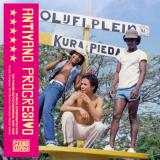
Between the late 1960s and the mid-1980s, musicians across the Dutch Caribbean islands of Aruba, Curaçao, and Sint Maarten created music that crossed stylistic boundaries, forming a close-knit network shaped by common histories and identities, while rarely receiving wider recognition.
From the psychedelic funk of local stars Sugar Ice Tea and Cryptus Confession to the Latin influences of visiting musicians like Puerto Rican star Mon Rivera via Surinamese-influenced soul and the garage rock of Los Honda, the islands nourished a huge array of styles and talent.
Antiyano Progresivo unfolds against the backdrop of a rapidly transforming Caribbean. During the twentieth century, oil industries, migration and tourism reshaped the islands, creating unparalleled cultural exchange while deepening social divisions. African, Latin American, North American and European musical traditions intertwined with local forms, producing a rich and distinctive musical landscape. Tambú, tumba, calypso and Caribbean dance music coexisted alongside soul, funk, psychedelic rock, reggae, Latin music and American and British pop. Musicians moved fluidly between these styles, developing sounds that were unmistakably local while remaining connected to wider currents across the Caribbean and beyond.
The period also coincided with growing movements for cultural and political self-determination. Events such as Curaçao's Trinta di Mei uprising in 1969, the emergence of Black Power movements and increasing calls for greater autonomy fostered renewed pride in African heritage, local languages and cultural expression. These ideas resonated through music, inspiring artists to challenge conventions and create work that reflected changing identities.
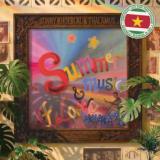
Previously unreleased jazz funk from Suriname, recorded in 1981 by keyboardist Sonny Khoeblal and his band Thalamus.
The music of Thalamus is a time capsule and the best kept secret of post-independent Suriname. During this turbulent time, the band used the language of jazz to express their desire for unity and freedom.
The generation of Thalamus envisioned a future beyond the ethnic divide their parents knew as social barriers. After independence, young people met at work or in universities and shared principles of unity and international solidarity. Jazz played an important role in translating tensions and experimenting with a sound of the future.
The band members of Thalamus shared interests in jazz-fusion from Weather Report, Chick Corea, Bob James and Carlos Santana. Compared to contemporaries with more pop appeal, their sound remained obscure in Suriname. Still, people listened to them bending conventional rules of jazz, pop, latin, rock and funk. This fusion reflected the band, its diverse members and their country: Suriname is a multi-ethnic country by colonial force. If diamonds are formed under pressure, love and solidarity emerge under oppression.
Thalamus is a unique recording of this revolutionary period, with new people finding each other based on a universal language: jazz-fusion. It culminated in six songs, two of which are 'Summer of Love and Music' and 'Lady Amazone'. This 7" vinyl brings you their story, their experimentation with jazz-fusion and tells the parallel history of Suriname.
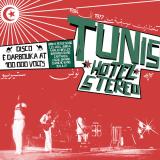
In the years after independence, Tunisia made an unlikely bet: tourism. Beach resorts rose along the coast, each one trying to outshine the next, and each one needing a band to entertain their guests. A whole generation of musicians grew up on those hotel stages - sharing bills with James Brown, Claude François and the Mingus Dynasty - and what came out of it was a small revolution. Funk played on Tunisian instruments. Disco with an oud in it. Reggae carried back from the island of Kerkennah. A "Third Language" the press didn't quite know what to do with.
Tunis Hotel Stereo gathers nine of those records. Most of them were pressed in tiny quantities, sold to tourists as souvenirs, censored before reaching the radio, or quietly slipped onto a 45 between two hotel sets. Some of these artists filled the Carthage amphitheatre. Some topped the Maghreb hit-parades. Most have been waiting, for forty years, for someone to play their music again.
This compilation is the result of years of work - collating memories, hunting down records, sitting with the artists who made them, and with the people who once danced to them. It is the third release on Shakshouka Records, and the first compilation of Tunisian music ever curated by Tunisians, in Tunisia.
SIDE A
The mysterious Les 4 Dés, who turned the national anthem into psychedelic pop on Ya Tounes - and then nearly vanished. Peace Band, hard rockers turned hotel professionals, recording as Omnya at Hammamet's legendary Topkapi club. Ridha Zalila, the eternal shape-shifter, in a rare instrumental of Tiou Tiou Tiou. And Sadok Gharbi's Noujoum - pulled from his sabotaged, near-lost masterpiece Souar.
SIDE B
Carthago, the impossible big band that married the elite of Tunisian jazz-rock with the stars of tourist entertainment, with the original Dhikrayet. Khaled Mellef, one of the great UFOs of his generation, with Wait Till the Morning Dew, recorded in the Netherlands. Marhaba Band's Baba Bahri, originally pressed only for hotel guests and now a cult artefact. Corniche Band's Dance, cut in Milan during a technical stop on a cruise ship. And Jomaa Bouzrara, the "Bob Marley of the Maghreb," with Now That, drawn from his landmark 1983 debut Sunset.
These weren't rebels without a cause. They were musicians who understood that modernity and heritage are not opposites - that a Tunisian could play funk and still be deeply, irreducibly Tunisian. They drew from every direction at once, and built something that belonged to none of those worlds entirely, and to all of them at the same time.
This compilation is one small act of remembering. The music does the rest.
Tropidelicos is the electrifying new album from Houston/Denver powerhouse duo Gio Chamba, a kaleidoscopic fusion of cumbia, psych-funk, and global bass. Fueled by hypnotic percussion and cosmic guitar lines , the record embodies the next wave of Latin futurism — rooted in tradition yet exploding into vibrant, genre-defying sound.
Pressed on limited-edition 1×LP “Mango Viper Swirl” colored vinyl, Tropidelicos captures the radiant heat and joy of Gio Chamba’s live energy—music made for movement, community, and spiritual release. From sweaty dance floors to desert sunsets, every groove invites you deeper into the tropidelic revolution.
Ever since the late 1950s bossa-nova revolution, Brazil’s influence on French music has been undeniable. Pierre Barouh, Georges Moustaki and a vast array of lesser known artists, all made the Musica Popular Brasileira (MPB) an axis of promotion at the service of a cool and metaphysical, modern and mixed Brazilian lifestyle. Some were seduced by the poetic languors of the bossa, some were looking for fun, and others just loved the American hybridization of jazz-bossa, jazz-samba.
What is bossa nova? One of its creators, Joao Gilberto said: "Its style, cadence, everything is samba. At the very start, we didn't call it bossa nova, we sang a little samba made up of a single note - Samba de uma nota so .... The discussion around the origins of bossa nova is therefore useless”. It is nevertheless useful to remember that these magnificent Brazilian songs, which the guitarist describes as samba, were shifted and balanced around improbable chords. "I like things that lean, the in-betweens that limp with grace," said Pierre Barrouh, quoting Jean Cocteau.
With emotion, arrangements for violin and supple guitar licks, bossa nova rapidly changed. A transformation that can be heard in the Tchic, tchic, French Bossa Nova 1963-1974 compilation, the result of a cultural reappropriation, which traveled through the United States and supplemented itself in France.
A musical revolution that has remained significant, bossa nova was born in Rio. From 1956 to 1961, Brazil lived through its golden years. In five years, the country had invented its modernist style. Elected president in 1956, Juscelino Kubitschek de Oliveira, an elegant man with a broad forehead, brandished a promising slogan: "Fifty years of progress in five years". He quickly got to work. Not worried about increasing debt, he launched the project for a new federal capital, Brasilia, designed by the communist architect Oscar Niemeyer. Volkswagen opened state-of-the-art factories and created the “fusquinha”, the Beetle. In Rio, the Vespa made its first appearance. The Arpoador Surf Club crew run into the “girl” from Ipanema, Helô Pinheiro - the tanned garota ("chick"), between a flower and mermaid, who at 17 walked by the Veloso bar, where the fiery author and composer, Tom Jobim and Vinicius de Moraes, were getting drunk on whiskey. From then on, bossa symbolized cool.
In 1958, Joao Gilberto recorded Chega de Saudade, which the directors of Philips denied, calling it "music for fagots". The marketing director, who believed in it, secretly pressed 3000 78-inch vinyls and distributed them at schools around Rio, creating a tidal wave.
American jazzmen then took over. In particular, trumpeter Dizzy Gillespie and guitarist Charlie Byrd. In November 1962, the Brazilian Ministry of Foreign Affairs funded a "Bossa-Nova" concert at Carnegie Hall in New York, inviting the genre’s pioneers. Unprepared, the show soon turned to disaster. But the troupe was invited to the White House by Jackie Kennedy. The first lady loved "the new beat" and in particular Maria Ninguem, a song by Carlos Lyra, later covered by Brigitte Bardot.
In Brazil, the 1964 military coup quickly ended this euphoria. The destructive atmosphere that ensued pushed many Brazilian musicians to leave, if not to exile. Thus, Tom Jobim, Sergio Mendes and Joao Gilberto arrived to the United States. In New York, Joao Gilberto met saxophonist Stan Getz. At the time, he was married to the Bahianese Astrud Weinert Gilberto, who had a German father. She had never sung before, but she knew how to speak English. Getz therefore asked her to replace her husband on The Girl From Ipanema. The Getz/Gilberto record with Tom Jobim on piano, was released in March 1964. Phil Ramone, the "pope of pop" was in charge of sound.
Bossa nova arrived in Paris through the classic “guitar-voice” channel (Pierre Barouh, Baden Powell, Moustaki…) But France loved jazz and Paris had already welcomed its American contributors. All these good people were to pass through Saint-Germain-des-Prés. The cabaret l'Escale became the Mecca of Latin American sound where one could find Pierre Barrouh and his friends, such as the Camara Trio, samba-jazz aces, whose only record was published by the Saravah label. With a band strangely called Les Masques (a band that included Nicole Croisille and Pierre Vassiliu, among others), the Camara Trio recorded an interesting Brazilian Sound, including the track Il faut tenir which is present on this tasty compilation of rarities.
Other enlightened musicians can also be found on the compilation, such as Jean-Pierre Sabar (songwriter for Hardy, Auffray, Leforestier ...) and the French pop rock organist Balthazar. In 1975, Sabar recorded Aurinkoinen Musiikkimatka on a Finnish label, which featured the crazy Vai, Vai, included on this record. We are now following the footsteps of Brazilian electronic musicians such as Sergio Mendes, Eumir Deodato or Marcos Valle who created funk and disco sounds on their keyboards and synthesizers. A style that influenced Véronique Sanson when she wrote Jusqu’à la Tombée de la nuit in 1969 for Isabelle de Funès, the niece of Louis and a great friend of Michel Berger - Sanson did end up singing this track on her 1992 Sans Regret record.
The pinnacle of exoticism and travel, Sylvia Fels’ Corto Maltese includes bongos, sea mist and ocean sounds. The title was taken from Jacky Chalard’s concept album written in 1974, Je suis vivant, mais j’ai peur (I am alive, but I am scared), based on Gilbert Deflez’s science fiction novel.
However, bossa nova extended the scope of popularity. "In the 1970s, I was a fan of Sergio Mendes, Getz / Gilberto. I fell in love with this music that I knew because I had been an orchestral singer, " explained Isabelle Aubret, who in 1971 delivered a composite record of covers by the very funky Jorge Ben, Orfeu Negro, Tom Jobim, Vinicius de Morais and Jean Ferrat. "I recorded this album for Meys Records in Paris, far from Brazil, with wonderful musicians, François Raubert, Roland Vincent, Alain Goraguer...". The latter wrote the arrangements for Casa Forte, a very percussive title borrowed from Edu Lobo, one of the initiators of the bossa who spent time in California. "Jazz and bossa came together and produced very rhythmic music. I love singing, it allows me to dream, to have fun, to feel a high on stage, and these songs brought me joy, made me swing, my singing felt like a dance.”
The world tours of French singers and their desire for the tropics, often brought them to Rio with its hills, forests, caipirinhas and tanned bodies. There are surprises though, like this Iemenja (Iemenja is the goddess of the sea in the Afro-Brazilian candomblé religion). Not unlike the composer and musician Jean-Pierre Lang, based in Sao Paulo, Claire Chevalier taught Brazil to Brazil. In 1970, the singer and painter published a 45-inch vinyl, Mon mari et mes amants (My husband and my lovers), under the improbable pseudonym of Clarinha (little Claire). She was then living in Rio, with her husband, Joël Leibovitz, who founded a band called Azimuth, and who owned a record label specialized in "sambas enredos" songs for samba school parades.
For its B side, she asked Pierre Perret to come up with lyrics for a song composed by Carlos Imperial: "Oh goddess of the sea, o goddess Iemenja, I bring a white rose to adorn your long hair ..." . "Perret came to see us, and we had fun, remembers Joël Leibovitz. We wrote Lemenja for fun, we recorded it at the Havaí studio, behind the Central do Brasil the central station. Erlon Chaves, the arranger who worked with Elis Regina, joined us" adding his share of Afro-Brazilian percussions and funky brass to the mix.
There is a common misunderstanding in Franco-Brazilian history: that bossa, admittedly hedonistic, is perceived as funny, even though the poets who wrote the texts are often philosophizing on the human condition. Its French interpreters pull it towards a carnival inspired universe, far removed from its fundamental essence. Thus, Jean Constantin covered the famous Samba da minha terra, an ode to the art of samba written by the classic Bahian composer Dorival Caymmi, renaming it with the enticing title of Pas tant de tchi tchi pompon: "On your pier there is no tchi tchi / when you arch your back, you know everything is alright ”(lyrics by Gérard Calvi). This expedited bossa aims for the absurd, but retains a certain elegance.
Indeed, Jean Constantin was not an idiot, the rather large man had a huge mustache and liked fantasy, (Les pantoufles à papa, Le pacha, inspired by cha-cha-cha-cha, salsa and jazz) but he was also the lyricist of Mon manège à moi interpreted by Edith Piaf, the composer of Mon Truc en plume by Zizi Jeanmaire and the soundtrack of François Truffaut’s 400 Blows. Le Poulpe, published in 1970, from which this bossa is extract, was arranged by Jean-Claude Vannier, an accomplice of Serge Gainsbourg’s Melody Nelson. In short: "There is enough of samba / By looking at the parasol / Because my poor cabeza / Is going to die in the sun".
Even the American actress Marpessa Down, who was at the heart of the bossa nova revolution with her role as Euridyce in Marcel Camus’ film Orfeu Negro, winner of the 1959 Cannes Palme d'or, fed the clichée with Je voudrais parler au petit cuica - "Tell me how you manage to always make people want to dance / It's true, I must admit that I cannot resist your magic" - in consequence, once can hear the cuica, a little drum inherited from the Bantu.
But bossa nova had many angles. Societal, of course, pushing actresses who were symbols of women's liberation like Brigitte Bardot, Jeanne Moreau, or Sophia Loren to engage in the exercise of accelerated bossa. In February of 1963, Sophia Loren made a record in French in Rome, Je ne t'aime plus, featuring the song De jour en jour, a bossa written by two Italians, Armando Trovajoli and Tino Fornai, which was released a little later by Barclay. Bossa accompanied the 1960s, a decade of moral liberation. Ann Sorel, who interpreted La Poupée des favellas, caused a sensation with L’amour à plusieurs, a provocative song written by Frédéric Bottom and Jean-Claude Vannier. As for the actress Andrea Parisy, she displayed her bourgeois cheekiness in Marcel Carné's Les Tricheurs before interpreting Les mains qui font du bien. And Magalie Noël, the friend of Boris Vian, who sung Johnny fais-moi mal, was hired to sing Une énorme Samba, composed by Alain Goraguer (arranger to Gainsbourg, Bobby Lapointe and Jean Ferrat) with lyrics by Frédéric Botton.
But in the end, of what wood is bossa nova made of? The answer is given by Christianne Legrand, daughter of Raymond the conductor, and sister to Michel the composer: "With me, with jà" - jà means "immediately" in Portuguese. In 1972, the singer, an expert in vocal jazz and a member of the Double Six, published Le Brésil de Christianne Legrand. Two songs included on the Tchic Tchic compilation that demonstrate how bossa, jazz, funk, rock, etc. work like a swiss army knife: the music is used to denounce broken systems, or miracles, HLM et ciné roman, Cent mille poissons dans ton filet, two songs from the O Cafona soundtrack, a successful telenovela broadcast, at the time in black and white, on TV Globo. The first was adapted in French by the fighter and friend of the Legrand tribe, Agnès Varda. The second is content with a play on words, jostling them into a summer fun.
Véronique Mortaigne
out of Stock
Last delivered 3 months ago available to reorder, subject to availability
Red "Eruption" Marble Blend" Doppel-Vinyl, inklusive 16-seitigem Booklet mit Texten und ausführlichen Liner Notes. Ursprünglich 1998 veröffentlicht, fing ,South Central Thynk Taynk" von Abstract Tribe Unique (Abstract Rude, Fat Jack, Zulu Butterfly Priest, Irie Lion King und DJ Drez) einen entscheidenden Moment in der Underground-Szene von Los Angeles ein - als junge schwarze Künstler den Hip-Hop von Grund auf neu erfanden. Mit einer Mischung aus jazzigen Beats, spiritueller Einsicht und einer äußerst unabhängigen Produktion wurde das Album zu einer Hymne auf Selbstständigkeit und kreative Rebellion. Jetzt wird dieser lange nicht mehr erhältliche Klassiker von Rhymesayers Entertainment als Deluxe-2xLP-Set mit einem Text-Booklet und einem Bonustrack neu aufgelegt und kehrt für eine neue Generation zurück. Im kulturellen Zentrum der Platte steht Project Blowed, eine legendäre Crew aus L.A., die von Abstract Rude und Aceyalone gegründet wurde und eine Reihe von Rap-Innovatoren hervorbrachte, deren Einfluss bis heute im globalen Hip-Hop zu spüren ist. Während der Mainstream-Rap den G-Funk-Boom der Westküste aufgriff, schlug die Blowed-Crew einen anderen Weg ein - geprägt von Jazz, radikaler Politik und afrozentrischem Futurismus. ,South Central Thynk Taynk" ist eine vielschichtige Zeitkapsel aus dieser revolutionären Zeit, die Ab Rudes tiefgründige Lyrik mit Fat Jacks genreübergreifendem Produktionsansatz verbindet und eine poetische Reflexion über Familie, Kampf und künstlerische Bestimmung schafft. Diese Neuauflage enthält den Titel ,L.A. Styles Back (Project Blowed Remix)" mit einer generationsübergreifenden Besetzung von Schwergewichten - Aceyalone, Myka 9, Medusa, Pigeon John, Blu, 2Mex, Ellay Khule, Riddlore und NGAFSH -, die unterstreicht, wie die Underground-Szene von L.A. seit Jahrzehnten ein kreatives Epizentrum geblieben ist. ,South Central Thynk Taynk" ist mehr als ein Kultartefakt; es ist ein lebendiges Dokument der Transformation, der Gemeinschaft und der künstlerischen Kraft.
BCUC – Bantu Continua Uhuru Consciousness – have been channeling the spirit of Soweto for over twenty years. Indigenous funk, hip-hop consciousness, and punk rock energy fused into something utterly original and deeply rooted. Their mantra: Music for the people, by the people, with the people. From humble beginnings rehearsing in a shipping container, a stone's throw from the church where Desmond Tutu organized the escape of the most wanted anti-Apartheid activists, they kept believing in their dream of self-empowerment. Today they command festival stages worldwide: Glastonbury West Holts, Roskilde, Afropunk Brooklyn, WOMAD, Fusion, Sziget, FMM Sines, Beaches Brew, Boomtown, Colours of Ostrava, Couleur Café – to name just a few. In 2023, BCUC were honoured with the prestigious WOMEX Artist Award, an accolade usually reserved for more established artists, in recognition of their fearless work and transcendent live performances.
THE ROAD IS NEVER EASY
The Road Is Never Easy is BCUC's fifth album and their debut on Outhere Records. On this new offering, BCUC take listeners on another Afro-psychedelic journey into the soul of Soweto. It feels like a gospel sermon colliding with a punk concert, "guaranteed to touch untapped corners of your soul" (OkayAfrica). BCUC's music is deeply rooted in history and echoes the voices of the ones who came before. The road was never easy for the people of Soweto who originally came to work in the mines of Egoli, the City of Gold, Johannesburg. When apartheid finally ended after a long struggle, it was hoped that life would improve. But more than 30 years later, many of those initial hopes and dreams are still waiting to be fulfilled. This album is about that struggle. The album contains 10 brand new songs – a record for BCUC, whose previous albums featured an average of 3 songs. It represents the culmination of more than two decades of performing together and building a reputation as a powerful live act. These ten songs encapsulate that same live energy, each one building gradually and drawing you into BCUC's Afro-psychedelic stream of consciousness. It's a seismic tour de force through life in Soweto today. Songs like Amakhandela (Breaking All the Chains) connect history to daily life: "How is this precious metal inflicting so much pain in us," sing BCUC, "this government has been telling us we are free, but we don't benefit from being free." The album also talks about all the hopes and dreams that remain: "I have too many wishes and dreams in my head," BCUC sing in Um duma khanda, "I think I am losing my mind". The album ends with the soothing Matla a rona ke Bophelo, "our strength is life", praising the spirits and thanking the elders for protection. The Road Is Never Easy is about the harsh reality of life in Soweto, where "people always carry heavy loads". BCUC are street poets trying to deal with that burden: sometimes revolutionary, sometimes soothing, but always hopeful and compassionate. "When you are from Soweto you can't retreat nor surrender." (Sebenzela)
RECORDING
The album was largely recorded in Munich, Germany during tour breaks over two sessions, each three days long. It took place in a small studio located in a German WW II bunker converted into rehearsal spaces. The songs were recorded in one take altogether in one room, with only a few overdubs added, mainly backing vocals, by BCUC at Fourways studio in Johannesburg. BCUC have created their own distinctive way of writing, or rather, finding and creating their songs. The recording process is like an improvised live performance. They bring their ideas into a zone where the music, the rhythm and the spirits take over until the song starts to form. In this Afro-psychedelic zone BCUC create their unique poetry that feeds on the dreams still dreamt, the hopes, the fears and the temptations lingering everywhere. BCUC's songs need to breathe and time to build. The right take was the one when the song took over, and just like their live performances, no one knew beforehand where the song would take them. During the recording, BCUC just let it all flow out: inner turmoil, cries of rebellion, but also resilience and a search for healing, love, unity and compassion. You don't have to be from Soweto to feel the deep meaning and impact of this music. In these times of so much hate and division, BCUC are like a campfire for people to gather around.
PRODUCTION & ARTWORK
"BCUC have a unique magic," says Outhere's Jay Rutledge, who produced the album. "It blew our minds. It's like punk and pure gospel at the same time. Their music can make you dance and it can make you cry, all at the same time. And when the song is over, you feel you're not alone in this world anymore. We felt compelled to do this." The album cover is based on a matchbox design, matches being a common household item in South Africa even today. "These were the matches people used to burn government buildings and cars," explain BCUC. Little messages, addresses, or phone numbers used to be scribbled on the back of these boxes; each one a reminder of the strength, resilience, and resistance that once drove the struggle for freedom in Soweto. BCUC keep this flame burning. The Road Is Never Easy is a heavy spiritual road trip, a deep dive into the subconscious of Soweto and a quest for truth, justice and sanity in this crazy world. BCUC tackle the harsh realities of the voiceless, guided by the spirit world of their ancestors. Rather than reinforcing stereotypes of poverty, BCUC's portrayal of Africa is one rich in tradition, rituals and beliefs. "We bring fun and Afro-psychedelic fire from the hood," says vocalist Kgomotso Mokone.
out of Stock
Last delivered 5 months ago available to reorder, subject to availability
The breakthrough album. Enrico Rava's second solo record, recorded in Milan in January 1973 and released on the German BASF label, is nothing less than a cornerstone of Italian jazz-rock - the record that caught Manfred Eicher's attention and opened the doors to ECM. Rava himself has called it his breakthrough, and history proved him right.
The lineup is killer: John Abercrombie on guitar, Bruce Johnson on bass, Chip White on drums. Four musicians operating at the absolute peak of early seventies fusion energy - electric, cosmopolitan, burning with that particular fire that only existed in that brief window when jazz met rock and nobody knew the rules yet. Abercrombie, already on his way to becoming one of the most distinctive voices in electric jazz guitar, delivers some of his most ferocious early work here. White's drumming is relentless, pushing the music forward with an intensity that never lets up.
If Miles' Bitches Brew-era speaks to you, if Ian Carr's Nucleus gets you moving, if you know Sun Ra's Lanquidity and Don Cherry's Relativity Suite by heart - this is essential listening. Rava's vision was already fully formed: South American rhythms, Mediterranean warmth, free jazz ferocity, rock power - all flowing together without borders or categories. By the early seventies, Rava had absorbed everything - the New Thing, the European free scene, the electric revolution coming out of Miles' studio - and forged something entirely his own.
The seven tracks cover serious ground. "Bunny's Pie" introduces the music with an almost cosmic atmosphere of suspense, hovering in that liminal space before it trails off into the up-tempo vibrant frenzy of "Trial N. 5" - Abercrombie and Rava trading swirling solos at full intensity, the rhythm section locked in tight. "Dimenticare Stanca" moves from Rava's expressive balladic intro into pure funk, guitar and trumpet steering over the rhythmic drive with absolute confidence. The title track carries the lyrical feel and cadence of an Incan-Peruvian folksong - that cosmopolitan spirit made audible. "Fluid Connection" rides a funky bass riff into fusion heaven, with standout trumpet and guitar solos that build and release with perfect tension. "Cheerin' Cherry" pays homage to the great Don Cherry - Rava's spiritual mentor and fellow traveler in world music - exploring a North African soundscape that points toward the global jazz to come. Johnson's "Peace" closes the album with a minute and a half of serene, blissful calm - a moment of stillness after the storm.
This audiophile reissue - cut from the original masters, pressed by Pallas in Germany on 180gm vinyl, housed in a thick laminated hand-glued gatefold - does full justice to an album that remains a collector's holy grail.
Atef Swaitat (yarghul) and Abu Ali (lead vocals) are popular Bedouin wedding musicians continuing a long family tradition in Jenin and the north of historic Palestine. The album is comprised of immersive field recordings from weddings across the Galilee in the 1970s.
Copyright of Majazz Project / Palestinian Sound Archive
Created by Mo’min Swaitat
***
Over several years, Mo’min Swaitat has amassed an archive of rare tapes and vinyl from Palestine and beyond, spanning field recordings of weddings to revolutionary tracks and synth-heavy 80s funk. Many of these were acquired from a former record label in Jenin in the north of the West Bank. The Majazz Project is a research project borne out of the archive, focused around sampling, remixing and reissuing vintage Palestinian cassettes. It is a collaboration between Arab and non-Arab DJs, producers and artists interested in shedding new light on the richness and diversity of Palestinian musical heritage.
Antibalas established themselves in the late 1990s as a burning, tough, horn, bass and drum driven Afrobeat ensemble cut from the Fela Kuti mold, who were politically savvy and socially conscious. Their live shows have been incendiary events where rhythm and perspiration from completely crazy, booty-shaking audience members shared something deeper and wider than the music itself. Security is Antibalas' fourth album. It was co-produced by the band with John McEntire from Tortoise.
The group, whose name means "bulletproof" in Spanish, has indeed proved they possess the mettle to not only survive but also thrive by employing a musical arsenal that has become known worldwide. Initially using the revolutionary blueprint of afrobeat as a launching pad, the dozen-strong members of Antibalas weave a rich tapestry of latin, jazz, classical, funk and soul into their horn-driven mix. Words fail in trying to describe the result: simultaneously polyrhythmic and political, independent and contagious, and the reason why many have credited the band for introducing afrobeat's framework to a new generation.
Security is available as a numbered limited edition of 500 copies on white vinyl and is packaged in a gatefold sleeve.
First Word Records are proud to bring you 'Penny Ballads', a 5-track EP from Royce Wood Junior. Royce Wood Junior is a Grammy & Mercury Award-nominated musician, songwriter and record producer from London, currently based in Brighton. As a multi-instrumentalist, he's collaborated with a litany of brilliant artists over the years, such as Jamie Woon, Nao, Disclosure, Jessie Ware, Olivia Dean, Joy Crookes, Jamie Lidell and Jordan Rakei, additionally to touring with the likes of the legendary Thomas Dolby. He's released two acclaimed solo albums to date ('The Ashen Tang' in 2015, and 'No Two Blue Ticks' in 2021). 'Penny Ballads' demonstrates RWJ's varied talents, with a collection of alternative soul compositions, each one as unique as the next. It includes the first two singles, the Poplife-Prince era flavoured 'Go Get Your Money', and the double-time future funk adrenaline shot, 'Clean Up', along with three previously-unreleased tracks. 'Beretta' is low-slung soul funk, beginning with quirky squelchy synths, before the soulful lead vocal of feature artist Lucey Way breezes in to melt everyone's hearts. 'Things' sweeps in next, an infectiously soulful midtempo heavy soul bop, with an instant earwork of a hook, like a modern-day Steely Dan / Doobie Brothers, complete with a head-nodding string section to end the track. The collection concludes on a more melancholy downtempo tip with 'Rolling'; an almost-folktronic anthem, with a key refrain that wouldn't be out of place on a 70's Stevie piece. RWJ (aka Jim Wood) says of this project… "Back in the 17 and 1800's Troubadours and minstrels would go from Tavern to Tavern selling Penny Ballads, single sheets of music and lyrics written quickly and frivolously to make a quick buck.. It strikes me that we're in a similar phase in the way we value music in 2025. An old Penny Ballad was cheap and dog-eared, ink-smudged, sung aloud by firelight, Now songs live in the digital ether, dissolved in the air, a ghostly breath paid in micro cents. The new era of Penny Balladry is here, and weird. This EP is a snapshot of my writing over a two year period. Focussed on minimal recording styles, one mic on the drums, generally first or second takes on parts and vocals, I wanted the music to feel like small moments with lyrics that talk about the weird nuances of being alive as a latter stage human on the cusp of the Ai revolution. Culturally so evolved, but physiologically still just a bunch of mammals walking about with primitive fears and needs. Just trying to reconcile it all moment to moment…" Previous support for Royce's music has included Radio 1's Future Sounds, BBC 6 Music's New Music Fix, Annie Mac, Clara Amfo, Jo Whiley (BBC Radio 2), Mary Anne Hobbs, Jamz Supernova, Tom Robinson, Huw Stephens (BBC 6 Music), Zane Lowe and MistaJam. There have been sessions previously for the likes of Red Bull and press from Huck, Line of Best Fit, Clash, Aesthetica & DIY magazine. Entirely self-written and self-produced, this EP gives a solid taste of RWJ's talents. A deeply funky diverse set of music from an immensely talented individual. 'Penny Ballads' is due to be released on vinyl & digital, 24th October 2025. The vinyl version also includes an exclusive additional mix of the first single 'Go Get Your Money'. TRACKLIST: 01: Clean Up (EP Mix) 02: Go Get Your Money 03: Beretta (feat. Lucey Way) 04: Things 05: Rolling 06: Go Get Your Money (B-Sharp Mix) Deconstructed Mixes
First Word Records are proud to bring you 'Penny Ballads', a 5-track EP from Royce Wood Junior.
Royce Wood Junior is a Grammy & Mercury Award-nominated musician, songwriter and record producer from London, currently based in Brighton. As a multi-instrumentalist, he's collaborated with a litany of brilliant artists over the years, such as Jamie Woon, Nao, Disclosure, Jessie Ware, Olivia Dean, Joy Crookes, Jamie Lidell and Jordan Rakei, additionally to touring with the likes of the legendary Thomas Dolby. He's released two acclaimed solo albums to date ('The Ashen Tang' in 2015, and 'No Two Blue Ticks' in 2021).
'Penny Ballads' demonstrates RWJ's varied talents, with a collection of alternative soul compositions, each one as unique as the next. It includes the first two singles, the Poplife-Prince era flavoured 'Go Get Your Money', and the double-time future funk adrenaline shot, 'Clean Up', along with three previously-unreleased tracks. 'Beretta' is low-slung soul funk, beginning with quirky squelchy synths, before the soulful lead vocal of feature artist Lucey Way breezes in to melt everyone's hearts. 'Things' sweeps in next, an infectiously soulful midtempo heavy soul bop, with an instant earwork of a hook, like a modern-day Steely Dan / Doobie Brothers, complete with a head-nodding string section to end the track. The collection concludes on a more melancholy downtempo tip with 'Rolling'; an almost-folktronic anthem, with a key refrain that wouldn't be out of place on a 70's Stevie piece.
RWJ (aka Jim Wood) says of this project… "Back in the 17 and 1800's Troubadours and minstrels would go from Tavern to Tavern selling Penny Ballads, single sheets of music and lyrics written quickly and frivolously to make a quick buck.. It strikes me that we're in a similar phase in the way we value music in 2025. An old Penny Ballad was cheap and dog-eared, ink-smudged, sung aloud by firelight, Now songs live in the digital ether, dissolved in the air, a ghostly breath paid in micro cents. The new era of Penny Balladry is here, and weird.
This EP is a snapshot of my writing over a two year period. Focussed on minimal recording styles, one mic on the drums, generally first or second takes on parts and vocals, I wanted the music to feel like small moments with lyrics that talk about the weird nuances of being alive as a latter stage human on the cusp of the Ai revolution. Culturally so evolved, but physiologically still just a bunch of mammals walking about with primitive fears and needs. Just trying to reconcile it all moment to moment…"
Previous support for Royce's music has included Radio 1's Future Sounds, BBC 6 Music's New Music Fix, Annie Mac, Clara Amfo, Jo Whiley (BBC Radio 2), Mary Anne Hobbs, Jamz Supernova, Tom Robinson, Huw Stephens (BBC 6 Music), Zane Lowe and MistaJam. There have been sessions previously for the likes of Red Bull and press from Huck, Line of Best Fit, Clash, Aesthetica & DIY magazine.
Entirely self-written and self-produced, this EP gives a solid taste of RWJ's talents. A deeply funky diverse set of music from an immensely talented individual.
'Penny Ballads' is due to be released on vinyl & digital, 24th October 2025.
The vinyl version also includes an exclusive additional mix of the first single 'Go Get Your Money'.
out of Stock
Last delivered 10 months ago available to reorder, subject to availability
Ein unverzichtbares Album von Roy Ayers, das soulige Jazz-Wurzeln mit knackigem 1970er-Jahre-Funk verbindet. Mit Ayers' charakteristischen Vibes, präzisen Arrangements und herausragenden Tracks wie "The Boogie Back" (gesampelt von NWA, 2Pac, De La Soul_) und "Change Up the Groove" ist diese LP ein Muss für jeden Fan von Jazz-Funk und Vintage-Grooves, ein etwas verstecktes Juwel aus Roy Ayers Ubiquitys frühen Polygram-Jahren. Dieses soulige Album, das oft zugunsten von Ayers' größeren Hits übersehen wird, ist eine Meisterklasse in Jazz-Funk-Fusion und fängt die Essenz von Ayers' sich entwickelndem Stil ein, als er die Lücke zwischen seinen Jazz-Wurzeln und dem rhythmischen Snap der Funk-Revolution der 70er Jahre überbrückte. Vom ersten Track an steht Ayers' charakteristischer Vibraphon-Sound im Mittelpunkt, der vor Emotionen und Groove nur so sprüht. Das Album besticht durch seine instrumentale Vielfalt, zu der Jazzgrößen wie der legendäre Bernard Purdie am Schlagzeug einen herausragenden Beitrag leisten. Streicher verweben sich subtil und unterstreichen Ayers' ohnehin schon tiefgründige und strukturierte Arrangements. Zu den Höhepunkten gehören der unverkennbare Funk von "The Boogie Back", ein Breakbeat-Favorit für Crate-Digger und DJs (der oft gesampelt wird, um andere Tracks zu garnieren), und eine üppige, elektrifizierte Interpretation von "Feel Like Makin' Love", die vor sanfter Soul-Musik nur so glüht. Der Titeltrack "Change Up the Groove" liefert den typischen, emotional aufgeladenen Funk, der diese Ära geprägt hat. "Change Up the Groove" ist nicht nur ein Album - es ist eine Momentaufnahme von Roy Ayers' künstlerischer Entwicklung, voller Rhythmus, Herz und zeitlosem Groove. Egal, ob Sie ein langjähriger Fan sind oder nun neun entdecken. Essential listening!
out of Stock
Last delivered 4 months ago available to reorder, subject to availability
“Daniele Baldelli: A Cosmic Life” is a documentary that tells the life and career of Daniele Baldelli, a pioneer of Italian and international dance music. The film pays homage to the creator of “cosmic sound,” a musical genre that revolutionized club culture in Italy and worldwide. It traces his career through archival footage and testimonies from artists and producers, showcasing how his vision influenced entire musical scenes.
The film, along with its soundtrack, highlights Baldelli’s ability to blend electronic, funk, Afro, rock, ethnic, and experimental music, creating a unique sound that has made four generations of young people dance in iconic venues around the world.
The record primarily includes new tracks specifically created for the film and the dancefloor, alongside his classics such as “Isotropo Funk,” “Funk Me Again,” and “Diffrazione” which are now difficult to find on vinyl. It also features an unreleased track produced for the film by his trusted collaborator Marco Dionigi.
– Lose yourself in the Cosmic Sound –
LP with insert.
out of Stock
Last delivered 6 months ago available to reorder, subject to availability
Spandau Ballet, one of the most influential bands in British music, announce the release of their definitive early years collection, "Everything Is Now – Vol 1: 1978-1982" - a comprehensive 9-disc box set featuring their groundbreaking first two albums alongside a wealth of previously unavailable material. It includes a beautiful 44 page book with original photos from fellow Blitz Kid Graham Smith and new commentary from the whole band.
Released September 12th on Parlophone, this meticulously curated collection captures the band's origins and meteoric rise from Blitz Club favourites to chart-topping innovators. The set includes their seminal albums "Journeys To Glory" (1981) and "Diamond" (1982) on vinyl, plus six CDs of singles, remixes, BBC sessions, demos, and a Blu-ray of Dolby Atmos mixes, videos and rare live footage.
This collection showcases the band's evolution through their formative and revolutionary period, from the electronic-infused new wave of early singles like "To Cut A Long Story Short" and "The Freeze" to the funk-influenced sophistication of "Chant No. 1" and "Instinction." They were simply the most cutting edge, futuristic band in the world, at the centre of a creative scene that defined the 1980s.
This box set features all the band's early classics including "To Cut A Long Story Short," "Chant No. 1," "Muscle Bound," "Paint Me Down," “Instinction” and "She Loved Like Diamond," and presents multiple versions of tracks that trace their development from initial demos to extended 12" club mixes.
The Blu-ray component includes Dolby Atmos and stereo remixes by acclaimed producer Steven Wilson, alongside original music videos, BBC TV appearances and the complete 56-minute concert from New York's Underground Club in 1981.
"Everything Is Now – Vol 1: 1978-1982" stands as the definitive document of Spandau Ballet's revolutionary early period, when they helped define the sound and style of a generation.
CD1: Journeys To Glory Era Singles, Remixes & Versions
CD2: Diamond Era Singles, Remixes & Versions
CD3: Diamond – 12” Singles Box Set
CD4: BBC Session 1981 / BBC In Concert Bournemouth 1982
CD5: BBC In Concert Paris Theatre 1982
CD6: Demos
Blu-Ray (Disc 7): Dolby Atmos, Promos & Extras
LP1 (Disc 8): Journeys To Glory
LP2 (Disc 9): Diamond
LA-based composer/arranger E. Lundquist (aka Eric Borders) returns with ‘Art Between Minds’. Having cut his teeth in the LA hip-hop and beats scene and explored realms of cosmic-funk under previous monikers, E. Lundquist’s music displays a rich tapestry of influences including the cinematic & experimental jazz-infused library music that influenced his previous LP ‘Multiple Images’. Now he is back with another ample helping of his hallucinogenic sonics, utilizing a bevy of vintage gear to replicate that warm glow of ’70s jazz-funk. From the Fender Rhodes MKI to the ARP Odyssey, to the Mellotron, the keys and synths he employs on these tracks display a genuine appreciation for the groove-driven music of The ‘Me” Decade.
The album plays like the score to a cult classic B-movie. The sun-drenched haze of “Soliloquy” could easily be what you hear during the calm before the storm in a Blaxploitation flick and the laidback crawl of “Euphoria” seems ripped right out of a fuzzy ‘70s blue movie. But there is a certain sophistication here, like the way the horn section, slinky guitar, and trippy synths combine on “Escape” to sound like liquid one moment and like a summer breeze the next.
While E. Lundquist’s artistry will eventually take him to new plateaus of sound, where he is right now is undoubtedly a high watermark in his career. He has become a torchbearer for jazz-funk in a new jazz revolution, updating the sub-genre with his delicate balance of digital and analog elements that will easily appeal to fans of Kamaal Williams, Surprise Chef, BADBADNOTGOOD, Khurangbin, Robohands and similar.
out of Stock
Last delivered 13 months ago available to reorder, subject to availability
A1 FORWARD
Was inspired by the revolution of the year of 1988 also referred to as the 2nd summer of love. Revolutions great and small are happening all around us all the time, and they take place in the minds of individuals.
A2 CHARANJIT DRIVE
Describes the revolution i 've got in mind, angelic bass-string harmonic notes flying left and right, Indian-vocals, sudden sped-up dancehall baselines and breaks. Imagine a hippie a homeboy and a funky dread, hugging and dancing and telling their mates how much they love each other in a nice green field while this plays.
B1 HONDA WANDERER
A man in a blue honda civic is traveling through a misty world at a high velocity. Seeking that which is just hiding behind the next bend. I made this after a beautiful misty, raining/sunshine rainbow ride on the autobahn. I had just picked up a cheap mutron bi-phase which was sitting beside me in the passenger seat. It was amazing.
B2 MISTY VALLEY
It's time to get a little bit serious, this one feels like the place where i made all of this music, the village of Ruigoord, covered in a thick winter fog. The remnants of a possible previous reincarnation of myself as an 80s new-beat producer are haunting this music.
all music & artwork by Mozes Meijer, mastering: Wouter Brandenburg, cut: Dubplates & Mastering a&r: Arne Cinema Royale Visser.
out of Stock
Last delivered 13 months ago available to reorder, subject to availability
Compiled by Philip King
“And then came the rise of synth pop : blokes with dodgy haircuts hunched over keyboard-operated
machines stuffed with wires and do-it-yourself tone oscillators making sounds like a brood of geese
passing gas in a wind tunnel. Whoopee! This is the way the ‘70s ended : not with a blood-curdling bang
bang but with a cheap, synthesized, emasculating whimper.”
NICK KENT, NME.
All The Young Droids: Junkshop Synth Pop 1978-1985 is a new compilation that charts the
underbelly of the epoch-defining sound of the synthesiser in 80s popular music. Compiled by Philip
King (previously seen compiling All The Young Droogs, Glitterbest and Boobs - The Junkshop
Glam Discotheque), the music here connects the dots between DIY synth enthusiasts grappling with
new, cheap synthesisers at the tail-end of punk and wannabe, jobbing songwriters enthral to the new
music pioneered by Gary Numan, Depeche Mode and Daniel Miller’s Mute Records. Featuring rare
tracks of auto-didactic progressive pop music, proto-techno punk, shoot-for-the-stars-land-in-the-gutter
chart flops and heralded, underground synth classics, School Daze paints a picture of beautiful failure.
Complete with extensive sleeve notes written by King and never before seen imagery, all 24 tracks
were remastered by RPM in-house engineer Simon Murphy, many from vinyl copies due to lost master
tapes. The story told on All The Young Droids is one of the dawning opportunity presented by both the
emergence to the market of cheaper analog synthesisers and the distribution networks plus indie labels
that exploded with the advent of punk music in 1976. While the music that sprouted out all over the
globe in the wake of these factors was decried as fake, plastic, a refutation of punk’s guitar-led
revolution, it’s telling that much of the music on All The Young Droids.. was created in bedrooms,
ramshackle studios and home-made set ups with often borrowed equipment. In the era of record labels
jumping to capitalise on the success of The Sex Pistols, The Clash (both on major labels, of course)
these artists struggled to stand out from a new gold-rush with next to no budget or PR team. With radio
and labels desperate for the new Yazoo, what resulted was a testament to necessity being the mother
of invention.
At the time, the synthesiser was the music of the future, a shiny new machine that could paint like an
orchestra with a single finger and a 4-track. In the hands of Manchester avant-pranksters Gerry & The
Holograms it’s a pulsing, sardonic weapon.. the only instrument on the Messthetics classic lampooning
of New Wave fashion. In Hamburg, a 16 year old Andreas Dorau used it to write and record (with his
female classmates on vocals) a global smash in Fred Vom Jupiter (later licensed to Mute Records).
The hard-to-find English version (Fred From Jupiter, natch) is included here. Many artists with alreadystoried careers caught the bug and recorded synthesiser-fuelled peons to space, computers, the future
and, of course, love-interests. Harry Kakoulli, late of Squeeze, recorded a solo album in 1979 that
included the incredible power-synth-pop smash-that-never-smashed I’m On A Rocket. Similarly, Ian
North of Neo and American Power Pop stalwarts Milk ’n’ Cookies bought a Korg MS20 and used a
tape machine to record We’re Not Lonely, an absolute lost-classic of minimal synth pop. We’re Not
Lonely also features on the Junkshop Synth Pop sampler 7” twinned with John Howard unreleased
track You Will See, released April 12th 2025.
There are plenty of compilation debuts in evidence. Sole Sister were a mysterious trio who were
featured on the Scaling Triangles compilation of female-fronted, queer-adjacent post-punk /
underground music that also featured The Petticoats. Selwin Image were from San Francisco and
featured members of the recently defunct power pop/punk group The Pushups. Their stupidly catchy
The Unknown fizzes with New Wave energy - think XTC to Sparks but remains unreleased until now.
Dream Unit’s A Drop In The Ocean is an early synth wave cut, positively teaming with Joy Division
instrumentation, previously only released on a long-forgotten and super rare, self-released EP.
Incandescent Luminaire’s Famous Names belies an archetypal struggle of a small-town trying to
make it in a cruel industry but is a thrilling New Romantic-Synth Wave cross over with a OMD
gloominess that’s a joy to hear. Feminist Minimal Wave track I Am A Time Bomb by performance artist
Peta Lilly and Michael Chance is a revelation destined for new found cult status. It was released on 7”
and lost until now.
The flipside to the subterranean, never-made-it synth pop mentioned above are the ambitious, even
fruity attempts at success that have a perennial elegance to their confidence. New Jersey-ite Billy
London (real name Ed Barth) tried to cash in on the synth boom with Woman, released by a major
label, a lurching new wave track built on the Louie Louie rhythm and a wonderfully camp Lou Reedstyle sleazy vocal before exploding in the synthesised chorus. The song bombed but with a chorus like
this, you have to wonder why? Ex-Glitter Band member John Springate’s My Life is truly epic, with
doomed chord progressions and massive sounding drums turning into at least 3 different songs in the
course of the track. Before you wonder what’s going on the song resolves with a glorious return to the
main refrain.
The dry-ice-dressed dance floor is well catered for too. Design’s Premonition and Vision’s Lucifer’s
Friend are stone-cold minimal synth bangers, well loved but given a new lease of life here. The
Warlord’s The Ultimate Warlord was released in 1978, a homespun proto Hi NRG banger that was
later re-recorded by The Immortals in Canada who had a club hit with it. One-man- band Disco
Volante’s No Motion was re-issued by Synth wave label Medical in 2012 but makes its first vinyl
compilation appearance here. Close your eyes and you can imagine what Lawrence of Felt would have
sounded like with some cheap Korgs a little earlier in his career. Gibraltar-based trio The Microbes
imagined a computer programming people to dance - how prescient - and ended up with a propulsive,
robo-funk track with splendid rubbery bass playing over a tectonic drum machine. Previously picked up
by Belgian label Stroom TV, Dee Jay Bert & Eagle’s heavily Euro-accented I Am Your Master
demands the listener to “come to paradise!” In a frankly terrifying manner.
All The Young Droids is the first compilation to peel away from the narrative that dour, Minimal Synth
and Cold Wave were the only musical children of the first rush of synth pop. Philip King and School
Daze Records describe a much more complicated world: along with the austere, Brutalist children of
Daniel Miller (who produced Alan Burnham’s Bowie-Low-influenced Science Fiction here) was a
plethora of desperate cash-ins, accidental mainstream hits, ambitious pop dramas and major label
punts that went nowhere. Crucially, the compilation blurs the line between junk and treasure. What if the
two things are interchangeable. What if it’s all science fiction?
out of Stock
Last delivered 14 months ago available to reorder, subject to availability
Compiled by Philip King
“And then came the rise of synth pop : blokes with dodgy haircuts hunched over keyboard-operated
machines stuffed with wires and do-it-yourself tone oscillators making sounds like a brood of geese
passing gas in a wind tunnel. Whoopee! This is the way the ‘70s ended : not with a blood-curdling bang
bang but with a cheap, synthesized, emasculating whimper.”
NICK KENT, NME.
All The Young Droids: Junkshop Synth Pop 1978-1985 is a new compilation that charts the
underbelly of the epoch-defining sound of the synthesiser in 80s popular music. Compiled by Philip
King (previously seen compiling All The Young Droogs, Glitterbest and Boobs - The Junkshop
Glam Discotheque), the music here connects the dots between DIY synth enthusiasts grappling with
new, cheap synthesisers at the tail-end of punk and wannabe, jobbing songwriters enthral to the new
music pioneered by Gary Numan, Depeche Mode and Daniel Miller’s Mute Records. Featuring rare
tracks of auto-didactic progressive pop music, proto-techno punk, shoot-for-the-stars-land-in-the-gutter
chart flops and heralded, underground synth classics, School Daze paints a picture of beautiful failure.
Complete with extensive sleeve notes written by King and never before seen imagery, all 24 tracks
were remastered by RPM in-house engineer Simon Murphy, many from vinyl copies due to lost master
tapes. The story told on All The Young Droids is one of the dawning opportunity presented by both the
emergence to the market of cheaper analog synthesisers and the distribution networks plus indie labels
that exploded with the advent of punk music in 1976. While the music that sprouted out all over the
globe in the wake of these factors was decried as fake, plastic, a refutation of punk’s guitar-led
revolution, it’s telling that much of the music on All The Young Droids.. was created in bedrooms,
ramshackle studios and home-made set ups with often borrowed equipment. In the era of record labels
jumping to capitalise on the success of The Sex Pistols, The Clash (both on major labels, of course)
these artists struggled to stand out from a new gold-rush with next to no budget or PR team. With radio
and labels desperate for the new Yazoo, what resulted was a testament to necessity being the mother
of invention.
At the time, the synthesiser was the music of the future, a shiny new machine that could paint like an
orchestra with a single finger and a 4-track. In the hands of Manchester avant-pranksters Gerry & The
Holograms it’s a pulsing, sardonic weapon.. the only instrument on the Messthetics classic lampooning
of New Wave fashion. In Hamburg, a 16 year old Andreas Dorau used it to write and record (with his
female classmates on vocals) a global smash in Fred Vom Jupiter (later licensed to Mute Records).
The hard-to-find English version (Fred From Jupiter, natch) is included here. Many artists with alreadystoried careers caught the bug and recorded synthesiser-fuelled peons to space, computers, the future
and, of course, love-interests. Harry Kakoulli, late of Squeeze, recorded a solo album in 1979 that
included the incredible power-synth-pop smash-that-never-smashed I’m On A Rocket. Similarly, Ian
North of Neo and American Power Pop stalwarts Milk ’n’ Cookies bought a Korg MS20 and used a
tape machine to record We’re Not Lonely, an absolute lost-classic of minimal synth pop. We’re Not
Lonely also features on the Junkshop Synth Pop sampler 7” twinned with John Howard unreleased
track You Will See, released April 12th 2025.
There are plenty of compilation debuts in evidence. Sole Sister were a mysterious trio who were
featured on the Scaling Triangles compilation of female-fronted, queer-adjacent post-punk /
underground music that also featured The Petticoats. Selwin Image were from San Francisco and
featured members of the recently defunct power pop/punk group The Pushups. Their stupidly catchy
The Unknown fizzes with New Wave energy - think XTC to Sparks but remains unreleased until now.
Dream Unit’s A Drop In The Ocean is an early synth wave cut, positively teaming with Joy Division
instrumentation, previously only released on a long-forgotten and super rare, self-released EP.
Incandescent Luminaire’s Famous Names belies an archetypal struggle of a small-town trying to
make it in a cruel industry but is a thrilling New Romantic-Synth Wave cross over with a OMD
gloominess that’s a joy to hear. Feminist Minimal Wave track I Am A Time Bomb by performance artist
Peta Lilly and Michael Chance is a revelation destined for new found cult status. It was released on 7”
and lost until now.
The flipside to the subterranean, never-made-it synth pop mentioned above are the ambitious, even
fruity attempts at success that have a perennial elegance to their confidence. New Jersey-ite Billy
London (real name Ed Barth) tried to cash in on the synth boom with Woman, released by a major
label, a lurching new wave track built on the Louie Louie rhythm and a wonderfully camp Lou Reedstyle sleazy vocal before exploding in the synthesised chorus. The song bombed but with a chorus like
this, you have to wonder why? Ex-Glitter Band member John Springate’s My Life is truly epic, with
doomed chord progressions and massive sounding drums turning into at least 3 different songs in the
course of the track. Before you wonder what’s going on the song resolves with a glorious return to the
main refrain.
The dry-ice-dressed dance floor is well catered for too. Design’s Premonition and Vision’s Lucifer’s
Friend are stone-cold minimal synth bangers, well loved but given a new lease of life here. The
Warlord’s The Ultimate Warlord was released in 1978, a homespun proto Hi NRG banger that was
later re-recorded by The Immortals in Canada who had a club hit with it. One-man- band Disco
Volante’s No Motion was re-issued by Synth wave label Medical in 2012 but makes its first vinyl
compilation appearance here. Close your eyes and you can imagine what Lawrence of Felt would have
sounded like with some cheap Korgs a little earlier in his career. Gibraltar-based trio The Microbes
imagined a computer programming people to dance - how prescient - and ended up with a propulsive,
robo-funk track with splendid rubbery bass playing over a tectonic drum machine. Previously picked up
by Belgian label Stroom TV, Dee Jay Bert & Eagle’s heavily Euro-accented I Am Your Master
demands the listener to “come to paradise!” In a frankly terrifying manner.
All The Young Droids is the first compilation to peel away from the narrative that dour, Minimal Synth
and Cold Wave were the only musical children of the first rush of synth pop. Philip King and School
Daze Records describe a much more complicated world: along with the austere, Brutalist children of
Daniel Miller (who produced Alan Burnham’s Bowie-Low-influenced Science Fiction here) was a
plethora of desperate cash-ins, accidental mainstream hits, ambitious pop dramas and major label
punts that went nowhere. Crucially, the compilation blurs the line between junk and treasure. What if the
two things are interchangeable. What if it’s all science fiction?
out of Stock
Last delivered 10 months ago available to reorder, subject to availability
ANORAX is privileged to issue a very special 7” single.
Piano virtuoso Gail Jhonson’s stunning reimagination of EXPANSIONS celebrates the 50th anniversary of LONNIE LISTON SMITH releasing his groundbreaking epic classic. His revolutionary fusion of Jazz Funk & Soul with a cosmic message is in the music was hailed as an instant classic when released in 1975. Since then after being adopted across diverse dance music genres it has become an anthem of anthems.
Gail grew up listening to Lonnie’s music on quiet storm radio in Philadephida. After attending his concerts she began jamming with the great man and they became friends. Now based in Los Angeles and leader of all female jazz outfit Jazz In Pink she came up with the idea of paying homage to and reinventing EXPANSIONS.
“I decide to cover one of his many compositions and EXPANSIONS spoke to my spirit. As a smooth jazz artist I was able to slow the tempo down and reharmonise some of the chord voicings and play his vocal melodies as a piano lead. The bass line is infectious and carries the groove, accompanied by a four on the floor beat, a little wah guitar and the reimagining began…”
Covering a song as sacred as EXPANSIONS could be regarded as herey but when it is recreated with such reverence as this it simply adds to the legend.
Cosmic Echoes indeed.
out of Stock
Last delivered 12 months ago available to reorder, subject to availability
Kalita is excited to present the third volume in their groundbreaking ‘Borga Revolution!’ compilation series, exploring the revolutionary phenomenon of ‘Burger Highlife.’ This unique style fused West African melodies with synthesizers, disco, and boogie, a sound that took Ghanaian airwaves by storm in the 1980s and beyond. With previous volumes receiving strong support by tastemakers such as Gilles Peterson, Antal, Tom Ravenscroft, and Hunee, Volume 3 takes a deeper dive than ever before into the world of Ghanaian digital dance music. This volume features rare, sought-after tracks from artists including Obibini Takyi, Osei Banahene, and Okyerema Asante, as well as Burger Highlife trailblazers George Darko and Lee Dodou. Borga Revolution! Volume 3 offers a curated mix of standout anthems and rediscovered gems, many of which are otherwise nearly impossible to find, making this collection a must-have for fans and collectors alike.
The 1970s and 80s saw Ghanaian musicians begin to incorporate Western sounds like funk and disco into their music, reflecting the changing global musical landscape. However, the country's political instability and economic hardships, marked by military regimes and curfews, forced many artists to leave Ghana in search of better opportunities abroad. In Europe and the U.S., these musicians fused their traditional highlife roots with emerging digital sounds, using cutting-edge technology like the DX7 synthesizer and drum machines to create the genre now known as Burger Highlife. With ‘Borga Revolution!’ Kalita offers a vivid exposition of this musical transformation, using rare interviews, archival photos, and detailed liner notes to bring to life the pioneering spirit of both well-known icons and unsung innovators of Burger Highlife, one of West Africa’s most exciting musical movements.
out of Stock
Last delivered 16 months ago available to reorder, subject to availability
Unter Präsidentschaftskandidaten und zukünftigen Astronauten, war die North Carolina Agricultural and Technical State Universität in Greensboro eine Brutstätte für schwarze Spitzenleistungen, Aktivismus und Talent. Unter einem halben Dutzend Labels versammelte der lokale Tölpel Walter Grady eine wechselnde Besetzung von Städtern, Homecoming-Queens und großen Männern auf dem Campus um einen schillernden Sound zu manifestieren, der sowohl einheimisch und revolutionär war. "Eccentric Soul: The Linco-Label" versammelt melodische Meilensteine aus dem Geburtsort der Bürgerrechtsbewegung.
Unter Präsidentschaftskandidaten und zukünftigen Astronauten, war die North Carolina Agricultural and Technical State Universität in Greensboro eine Brutstätte für schwarze Spitzenleistungen, Aktivismus und Talent. Unter einem halben Dutzend Labels versammelte der lokale Tölpel Walter Grady eine wechselnde Besetzung von Städtern, Homecoming-Queens und großen Männern auf dem Campus um einen schillernden Sound zu manifestieren, der sowohl einheimisch und revolutionär war. "Eccentric Soul: The Linco-Label" versammelt melodische Meilensteine aus dem Geburtsort der Bürgerrechtsbewegung.
Songs about the unity of Sudan, peace between Muslims and Christians and the fate of war orphans, backed by grooves equally taking influence from Arabic sounds, American funk as well as neighboring Ethiopia.
Kamal Keila was among the first artist we met in Sudan during our two trips to Khartoum and Omdurman last year. He is one of the key figures of the Sudanese jazz scene that was a vital part of the musical culture in Sudan from the mid 1960s until the islamist revolution in the late 1980s. When we meet Kamal he luckily presented us with two mold covered studio reels.
Each tape included five tracks. One with English lyrics and another with Arabic ones. Musically you can hear the influence of neighboring Ethiopia much more than on other Sudanese recordings of the time, as well as references to Fela and American funk and soul. His lyrics, at least when he sings in English which gave him more freedom from censorship, are very political. A brave statement in the political climate of Sudan of the last decades, preaching for the unity of Sudan, peace between Muslims and Christians and singing the blues about the fate of war orphans called "Shmasha".
A note inside one of the boxes specified the track titles, durations and the fact that the sessions were recorded on the 12th of august 1992. Both sessions stand as a hearable testament how Kamal Keila stuck to a sound aesthetic from decades ago, while incorporating current events into his lyrics.
Kamal Keila's album is the first in a series of releases covering the Sudanese jazz scene on Habibi Funk. Be on the lookout for albums by The Scorpions and Sharhabeel coming soon.
Googling “paradise house”, the first results to pop up are an endless list of European b&b’s with whitewashed lime façades, all of them promising “…an unmatched travel experience a few steps from the sea”. Next, a little further down, are the institutional websites of a few select semi-luxury retirement homes (no photos shown, but lots of stock images of smiling nurses with reassuring looks). To find the “paradise house” we’re after, we have to scroll even further down. Much further down.
It feels like yesterday, and at the same time it seems like a million years ago. The Eighties had just ended, and it was still unclear what to expect from the Nineties. Mobile phones that were not the size of a briefcase and did not cost as much as a car? A frightening economic crisis? The guitar-rock revival?! Certainly, the best place to observe that moment of transition was the dancefloor. Truly epochal transformations were happening there. From America, within a short distance one from the other, two revolutionary new musical styles had arrived: the first one sounded a bit like an “on a budget” version of the best Seventies disco-music – Philly sound made with a set of piano-bar keyboards! – the other was even more sparse, futuristic and extraterrestrial. It was a music with a quite distinct “physical” component, which at the same time, to be fully grasped, seemed to call for the knotty theories of certain French post-modern philosophers: Gilles Deleuze, Félix Guattari, Paul Virilio... Both those genres – we would learn shortly after – were born in the black communities of Chicago and Detroit, although listening to those vinyl 12” (often wrapped in generic white covers, and with little indication in the label) you could not easily guess whether behind them there was a black boy from somewhere in the Usa, or a girl from Berlin, or a pale kid from a Cornish coastal town.
Quickly, similar sounds began to show up from all corners of Europe. A thousand variations of the same intuition: leaner, less lean, happier, slightly less intoxicated, more broken, slower, faster, much faster... Boom! From the dancefloors – the London ones at least, whose chronicles we eagerly read every month in the pages of The Face and i-D – came tales of a new generation of clubbers who had completely stopped “dressing up” to go dancing; of hot tempered hooligans bursting into tears and hugging everyone under the strobe lights as the notes of Strings of Life rose up through the fumes of dry ice (certain “smiling” pills were also involved, sure). At this point, however, we must move on to Switzerland.
In Switzerland, in the quiet and diligent town of Lugano, between the 1980s and 1990s there was a club called “Morandi”. Its hot night was on Wednesdays, when the audience also came from Milan, Como, Varese and Zurich. Legend goes that, one night, none less than Prince and Sheila E were spotted hiding among the sofas, on a day-off of the Italian dates of the Nude Tour… The Wednesday resident and superstar was an Italian dj with an exotic name: Don Carlos. The soundtrack he devised was a mixture of Chicago, Detroit, the most progressive R&B and certain forgotten classics of old disco music: practically, what the Paradise Garage in New York might have sounded like had it not closed in 1987. In between, Don Carlos also managed to squeeze in some tracks he had worked on in his studio on Lago Maggiore. One in particular: a track that was rather slow compared to the BPM in fashion at the time, but which was a perfect bridge between house and R&B. The title was Alone: Don Carlos would explain years later that it had to be intended both in the English meaning of “by itself” and like the Italian word meaning “halo”. That wasn’t the only double entendre about the song, anyway. Its own very deep nature was, indeed, double. On the one hand, Alone was built around an angelic keyboard pattern and a romantic piano riff that took you straight to heaven; on the other, it showcased enough electronic squelches (plus a sax part that sounded like it had been dissolved by acid rain) to pigeonhole the tune into the “junk modernity” section, aka the hallmark of all the most innovative sounds of the time: music that sounded like it was hand-crafted from the scraps of glittering overground pop.
No one knows who was the first to call it “paradise house”, nor when it happened. Alternative definitions on the same topic one happened to hear included “ambient house”, “dream house”, “Mediterranean progressive”… but of course none were as good (and alluring) as “paradise house”. What is certain is that such inclination for sounds that were in equal measure angelic and neurotic, romantic and unaffective, quickly became the trademark of the second generation of Italian house. Music that seemed shyly equidistant from all the rhythmic and electronic revolutions that had happened up to that moment (“Music perfectly adept at going nowhere slowly” as noted by English journalist Craig McLean in a legendary field report for Blah Blah Blah magazine). Music that to a inattentive ear might have sounded as anonymous as a snapshot of a random group of passers-by at 10AM in the centre of any major city, but perfectly described the (slow) awakening in the real world after the universal love binge of the so-called Second Summer of Love.
For a brief but unforgettable season, in Italy “paradise house” was the official soundtrack of interminable weekends spent inside the car, darting from one club to another, cutting the peninsula from North to centre, from East to West coast in pursuit of the latest after-hours disco, trading kilometres per hour with beats per minute: practically, a new New Year’s Eve every Friday and Saturday night. This too was no small transformation, as well as a shock for an adult Italy that was encountering for the first time – thanks to its sons and daughters – the wild side of industrial modernity. The clubbers of the so-called “fuoriorario” scene were the balls gone mad in the pinball machine most feared by newspapers, magazines and TV pundits. What they did each and every weekend, apart from going crazy to the sound of the current white labels, was linking distant geographical points and non-places (thank you Marc Augé!) – old dance halls, farmhouses and business centres – transformed for one night into house music heaven. As Marco D’Eramo wrote in his 1995 essay on Chicago, Il maiale e il grattacielo: “Four-wheeled capitalism distorts our age-old image of the city, it allows the suburbs to be connected to each other, whereas before they were connected only by the centre (…) It makes possible a metropolitan area without a metropolis, without a city centre, without downtown. The periphery is no longer a periphery of any centre, but is self-centred”.
“Paradise house” perfectly understood all of this and turned it into a sort of cyber-blues that didn’t even need words, and unexpectedly brought back a drop of melancholic (post?)-humanity within a world that by then – as we would wholly realise in the decades to come – was fully inhuman and heartless. A world where we were all alone, and surrounded by a sinister yellowish halo, like a neon at the end of its life cycle. But, for one night at least, happy."
out of Stock
Last delivered 3 months ago available to reorder, subject to availability
We are thrilled to announce another underground gem on our label. This time, it's Collage's incredible 4-track EP "Mit den Puppen tanzen" (Dancing With The Puppets). Originally released in 1984 on the small FMusic label, the 12" EP is a true highlight in German Electro and NDW history, becoming a sought-after item among collectors. It features intense lyrics by singer Katrin A. Kunze, with music composed by Markus Kammann and Jürgen Grah.
Kammann and Grah, both originally from Solingen - a small city near Wuppertal - had previously collaborated on the new wave project Schwarze Bewegung with a different singer. Their self-titled LP was released in 1982 on Bacillus/Bellaphon. During this period, the electro sound pioneered by Kraftwerk evolved into electro-funk, sparked by the release of Afrika Bambaataa's groundbreaking track "Planet Rock", which achieved global acclaim. The iconic Roland TR-808 drum machine, masterfully employed by Arthur Baker's production team, revolutionized dance music with further hits like "Looking for the Perfect Beat" and collaborations with Planet Patrol. Markus Kammann cites these tracks, along with black music as a whole, as key influences on his work. In contrast, much of the electronic music emerging from Germany at the time rather leaned towards the styles of artists like Klaus Schulze and Tangerine Dream. Kammann's influences are evident in Collage's EP, which incorporates elements of early electronic hip-hop, such as the scratching sounds in the title track (created with tape rather than turntables) and short rap segments in "Niemals zurück".
By this time, Kammann and Grah had acquired their own Roland 808 as well as a JUNO-60 keyboard. Grah, originally a drummer, played keyboards and vibraphone, while Kammann, primarily a guitarist, also played bass. All the lyrics on the EP were written and performed by Kathrin A. Kunze, who hailed from Cuxhaven, a northern German city. She moved to Wuppertal around 1983 to study literature, and the group Collage was born.
Through Uwe Bauer, drummer of Fehlfarben, and their manager Horst Lüdge (of Profil), Collage connected with Werner Lambertz, a legendary sound technician from Düsseldorf. Lambertz's state-of-the-art studio featured custom-built sequencers capable of triggering the JUNO-60, as well as expensive equipment like a vocoder. Over the course of a week, the group completed all four tracks.
The EP's hard yet playful electro beats were complemented by Kunze's distinctive performance and introspective lyrics, which lent the songs a uniquely German and wavy touch. Her subtle songwriting conveyed a sense of paranoia and sorrow, as seen in lines like "Ich glaub mir selber nicht. Wer hält denn schon, was er verspricht?" ("I don't believe myself. Who stays true to their word, anyway?").
Unfortunately, the EP was never properly promoted and was distributed solely through the independent market via EFA. Despite this, Collage continued working on new material and pre-recorded an album that garnered label's attention. Polydor expressed interest but proposed using the compositions for a solo project with singer Inga Humpe (of Neonbabies), who was already signed to their roster. This would have required replacing Kunze as the vocalist, an idea the group firmly rejected. As a result, the album was never released. In 1987, Kammann, Grah, and Kunze launched another project called Cold End, which released another brilliant and highly sought-after 12" single, Metropolitan Jungle, originally issued on Tam Tam and recently re-released.
The first-ever reissue of "Mit den Puppen tanzen" is limited to only 400 copies - 200 on classic black vinyl and 200 on blue transparent vinyl. The cover art remains true to the original 12" release, designed by the aforementioned Uwe Bauer (aka Bimbo Art). This reissue is a must-have for DJs and collectors alike
out of Stock
Last delivered 18 months ago available to reorder, subject to availability
We are thrilled to announce another underground gem on our label. This time, it's Collage's incredible 4-track EP "Mit den Puppen tanzen" (Dancing With The Puppets). Originally released in 1984 on the small FMusic label, the 12" EP is a true highlight in German Electro and NDW history, becoming a sought-after item among collectors. It features intense lyrics by singer Katrin A. Kunze, with music composed by Markus Kammann and Jürgen Grah.
Kammann and Grah, both originally from Solingen - a small city near Wuppertal - had previously collaborated on the new wave project Schwarze Bewegung with a different singer. Their self-titled LP was released in 1982 on Bacillus/Bellaphon. During this period, the electro sound pioneered by Kraftwerk evolved into electro-funk, sparked by the release of Afrika Bambaataa's groundbreaking track "Planet Rock", which achieved global acclaim. The iconic Roland TR-808 drum machine, masterfully employed by Arthur Baker's production team, revolutionized dance music with further hits like "Looking for the Perfect Beat" and collaborations with Planet Patrol. Markus Kammann cites these tracks, along with black music as a whole, as key influences on his work. In contrast, much of the electronic music emerging from Germany at the time rather leaned towards the styles of artists like Klaus Schulze and Tangerine Dream. Kammann's influences are evident in Collage's EP, which incorporates elements of early electronic hip-hop, such as the scratching sounds in the title track (created with tape rather than turntables) and short rap segments in "Niemals zurück".
By this time, Kammann and Grah had acquired their own Roland 808 as well as a JUNO-60 keyboard. Grah, originally a drummer, played keyboards and vibraphone, while Kammann, primarily a guitarist, also played bass. All the lyrics on the EP were written and performed by Kathrin A. Kunze, who hailed from Cuxhaven, a northern German city. She moved to Wuppertal around 1983 to study literature, and the group Collage was born.
Through Uwe Bauer, drummer of Fehlfarben, and their manager Horst Lüdge (of Profil), Collage connected with Werner Lambertz, a legendary sound technician from Düsseldorf. Lambertz's state-of-the-art studio featured custom-built sequencers capable of triggering the JUNO-60, as well as expensive equipment like a vocoder. Over the course of a week, the group completed all four tracks.
The EP's hard yet playful electro beats were complemented by Kunze's distinctive performance and introspective lyrics, which lent the songs a uniquely German and wavy touch. Her subtle songwriting conveyed a sense of paranoia and sorrow, as seen in lines like "Ich glaub mir selber nicht. Wer hält denn schon, was er verspricht?" ("I don't believe myself. Who stays true to their word, anyway?").
Unfortunately, the EP was never properly promoted and was distributed solely through the independent market via EFA. Despite this, Collage continued working on new material and pre-recorded an album that garnered label's attention. Polydor expressed interest but proposed using the compositions for a solo project with singer Inga Humpe (of Neonbabies), who was already signed to their roster. This would have required replacing Kunze as the vocalist, an idea the group firmly rejected. As a result, the album was never released. In 1987, Kammann, Grah, and Kunze launched another project called Cold End, which released another brilliant and highly sought-after 12" single, Metropolitan Jungle, originally issued on Tam Tam and recently re-released.
The first-ever reissue of "Mit den Puppen tanzen" is limited to only 400 copies - 200 on classic black vinyl and 200 on blue transparent vinyl. The cover art remains true to the original 12" release, designed by the aforementioned Uwe Bauer (aka Bimbo Art). This reissue is a must-have for DJs and collectors alike
out of Stock
Last delivered 20 days ago available to reorder, subject to availability
As soon as Martin Circus was born in 1969, the band laid foundations for the French "Pop Musique" genre, deliberately turning its back on both French yéyés and rock'n'roll to better embrace psychedelia and the French language. In 1971, they were a pioneering, innovative group moving as fast as a speeding train, building upon everything they found on the way. However, faced with band members changing often, management issues and music evolution, Martin Circus ended up trying to fit in every style: soul, R&B, glam rock, disco, new wave, 80s mainstream music. To follow their journey is to listen to the world shifting along music charts. Behind the scenes, since the very first days of the band, one man had been pulling all the strings. Manager and artistic director Gérard Hugé used to work for both the band and the label - this has never been good news. What he cared about the most was getting records out, no matter who played on them. In the mid-70s, he registered the Martin Circus name, granting himself full power over the band. Deciding that it no longer had either a lyricist or a composer, he made the remaining musicians embark on a series of American 60s hits adaptations. As a result, they made tons of money : "Marylène" was a huge hit and gave them a new impulse. The Martins adopted a new look by wearing shiny Courrèges-style suits and platform boots, and on stage they performed dance moves choreographed by the eccentric Amadeo. They completely fit into the disco craze which was about to take over. Still, their music blended doo-wop and rockabilly with glam rock and funk music. They eventually hit disco with a soundtrack in the mannerof French disco groups such as Space and Voyage. Effortlessly, they released the epic 14- minute "Disco Circus", a track which was to become a real underground gem. DJ and remixer François Kevorkian then released it on the American Prelude label in a self-edited version, shortened to 7 minutes while retaining all the dazzling passages of the original track. It came to be a hit in the clubs of New York and Chicago, making a lasting impression on everyone who heard it. It got sampled on at least 40 tracks over the following decades and featured in dozens of bootlegs and prestigious compilations - by Laurent Garnier, Carl Craig, Juan Atkins, Joey Negro, The Beatnuts, The Rapture, and by Danny Krivit in the DJ culture film Maestro. As the 80s arrived, Martin Circus once again changed the way they looked and their style. Inspired by Devo and their cold dance music, by Buggles' synthpop and Plastic Bertand's postpunk. Throughout their career full of ups and downs, Martin Circus nonetheless managed to keep up with one stable element: contrary to what they seemed, the musicians never took the easy way out. Their playing and arrangements were consistently flawless and polished, they relentlessly dedicated themselves to playing quality music and this can only compel admiration. As Coco Chanel once said, "Fashion goes out of fashion, style never does."
Possessing lyrics heavily focused on political and social justice, inspired heavily by West Coast gang culture and Islam, Da Lench Mob made waves throughout the hip-hop scene when they first appeared on the track "Rolling With Da Lench Mob", off Ice Cube's famed 1990 solo record AmeriKKKa's Most Wanted. Initially, the titular "Lench Mob" of the track namesake referred to Ice Cube as well as the other participating rappers, but J-Dee, Shorty, and T-Bone would adopt the name for their own in time. Their standout appearance on the Ice Cube track would earn the trio critical interest, (as well as shout-outs on Ice Cube's 1991 follow-up Death Certificate) and generate palpable anticipation for a studio album of their own. Guerillas In Tha Mist, their 1992 debut record, was recorded in the wake of the Rodney King riots, taking its name from infamous comments made during the riots. The record was uncompromising and confrontational in its depictions of urban decay and an unjust system wreaking havoc on an economically disadvantaged Black population. It was starkly realistic (bordering on abrasive) in the content of tracks like the armed revolution-advocating "Freedom Got An A.K.", the kill-your-idols style of "You And Your Heroes", and the anti-pusher anthem "All On My Nut Sac." These harsh manifestos were made all the more smooth via Ice Cube's jazzy G-funk and Bomb Squad-influenced production, which sampled heavily from classic songs by Parliament, Kool & The Gang, The Incredible Bongo Band, and even Vangelis. Cube himself would make guest appearances throughout the record, as well as an appearance by B-Real of Cypress Hill on the track "Ain't Got No Class." Guerillas In Tha Mist was a Billboard success upon its release, reaching #24 on the Billboard 200, and rendering rap radio hits out of its title track and "Freedom Got An A.K.", but Da Lench Mob would fall into obscurity over the years, eventually going their separate ways after creative differences, financial rifts, and the life conviction of rapper J-Dee for suspected murder in 1993. Despite their loss of commercial fortunes, Guerillas In Tha Mist would develop a strong reputation as an unheralded gem among hip-hop heads, and would be considered one of the great lesser-known releases of the era among critics (in 2018 Complex would declare the title track as one of the 100 Best L.A. Rap Songs). Decades after its initial release, and in tribute to the memory of Da Lench Mob member Shorty, who passed in 2019, Get On Down now presents an exclusive LP reissue of Guerillas In Tha Mist, which previously was only released officially on wax in Europe. The LP is pressed on a deluxe Green and Orange Splatter-colored vinyl, and features remastered audio and a painstakingly recreated full color jacket.
Volume 1 of this expertly curated project of 90s Italian House - put together by Don Carlos.
If Paradise was half as nice… by Fabio De Luca.
Googling “paradise house”, the first results to pop up are an endless list of European b&b’s with whitewashed lime façades, all of them promising “…an unmatched travel experience a few steps from the sea”. Next, a little further down, are the institutional websites of a few select semi-luxury retirement homes (no photos shown, but lots of stock images of smiling nurses with reassuring looks). To find the “paradise house” we’re after, we have to scroll even further down. Much further down.
It feels like yesterday, and at the same time it seems like a million years ago. The Eighties had just ended, and it was still unclear what to expect from the Nineties. Mobile phones that were not the size of a briefcase and did not cost as much as a car? A frightening economic crisis? The guitar-rock revival?! Certainly, the best place to observe that moment of transition was the dancefloor. Truly epochal transformations were happening there. From America, within a short distance one from the other, two revolutionary new musical styles had arrived: the first one sounded a bit like an “on a budget” version of the best Seventies disco-music – Philly sound made with a set of piano-bar keyboards! – the other was even more sparse, futuristic and extraterrestrial. It was a music with a quite distinct “physical” component, which at the same time, to be fully grasped, seemed to call for the knotty theories of certain French post-modern philosophers: Gilles Deleuze, Félix Guattari, Paul Virilio... Both those genres – we would learn shortly after – were born in the black communities of Chicago and Detroit, although listening to those vinyl 12” (often wrapped in generic white covers, and with little indication in the label) you could not easily guess whether behind them there was a black boy from somewhere in the Usa, or a girl from Berlin, or a pale kid from a Cornish coastal town.
Quickly, similar sounds began to show up from all corners of Europe. A thousand variations of the same intuition: leaner, less lean, happier, slightly less intoxicated, more broken, slower, faster, much faster... Boom! From the dancefloors – the London ones at least, whose chronicles we eagerly read every month in the pages of The Face and i-D – came tales of a new generation of clubbers who had completely stopped “dressing up” to go dancing; of hot tempered hooligans bursting into tears and hugging everyone under the strobe lights as the notes of Strings of Life rose up through the fumes of dry ice (certain “smiling” pills were also involved, sure). At this point, however, we must move on to Switzerland.
In Switzerland, in the quiet and diligent town of Lugano, between the 1980s and 1990s there was a club called “Morandi”. Its hot night was on Wednesdays, when the audience also came from Milan, Como, Varese and Zurich. Legend goes that, one night, none less than Prince and Sheila E were spotted hiding among the sofas, on a day-off of the Italian dates of the Nude Tour… The Wednesday resident and superstar was an Italian dj with an exotic name: Don Carlos. The soundtrack he devised was a mixture of Chicago, Detroit, the most progressive R&B and certain forgotten classics of old disco music: practically, what the Paradise Garage in New York might have sounded like had it not closed in 1987. In between, Don Carlos also managed to squeeze in some tracks he had worked on in his studio on Lago Maggiore. One in particular: a track that was rather slow compared to the BPM in fashion at the time, but which was a perfect bridge between house and R&B. The title was Alone: Don Carlos would explain years later that it had to be intended both in the English meaning of “by itself” and like the Italian word meaning “halo”. That wasn’t the only double entendre about the song, anyway. Its own very deep nature was, indeed, double. On the one hand, Alone was built around an angelic keyboard pattern and a romantic piano riff that took you straight to heaven; on the other, it showcased enough electronic squelches (plus a sax part that sounded like it had been dissolved by acid rain) to pigeonhole the tune into the “junk modernity” section, aka the hallmark of all the most innovative sounds of the time: music that sounded like it was hand-crafted from the scraps of glittering overground pop.
No one knows who was the first to call it “paradise house”, nor when it happened. Alternative definitions on the same topic one happened to hear included “ambient house”, “dream house”, “Mediterranean progressive”… but of course none were as good (and alluring) as “paradise house”. What is certain is that such inclination for sounds that were in equal measure angelic and neurotic, romantic and unaffective, quickly became the trademark of the second generation of Italian house. Music that seemed shyly equidistant from all the rhythmic and electronic revolutions that had happened up to that moment (“Music perfectly adept at going nowhere slowly” as noted by English journalist Craig McLean in a legendary field report for Blah Blah Blah magazine). Music that to a inattentive ear might have sounded as anonymous as a snapshot of a random group of passers-by at 10AM in the centre of any major city, but perfectly described the (slow) awakening in the real world after the universal love binge of the so-called Second Summer of Love.
For a brief but unforgettable season, in Italy “paradise house” was the official soundtrack of interminable weekends spent inside the car, darting from one club to another, cutting the peninsula from North to centre, from East to West coast in pursuit of the latest after-hours disco, trading kilometres per hour with beats per minute: practically, a new New Year’s Eve every Friday and Saturday night. This too was no small transformation, as well as a shock for an adult Italy that was encountering for the first time – thanks to its sons and daughters – the wild side of industrial modernity. The clubbers of the so-called “fuoriorario” scene were the balls gone mad in the pinball machine most feared by newspapers, magazines and TV pundits. What they did each and every weekend, apart from going crazy to the sound of the current white labels, was linking distant geographical points and non-places (thank you Marc Augé!) – old dance halls, farmhouses and business centres – transformed for one night into house music heaven. As Marco D’Eramo wrote in his 1995 essay on Chicago, Il maiale e il grattacielo: “Four-wheeled capitalism distorts our age-old image of the city, it allows the suburbs to be connected to each other, whereas before they were connected only by the centre (…) It makes possible a metropolitan area without a metropolis, without a city centre, without downtown. The periphery is no longer a periphery of any centre, but is self-centred”.
“Paradise house” perfectly understood all of this and turned it into a sort of cyber-blues that didn’t even need words, and unexpectedly brought back a drop of melancholic (post?)-humanity within a world that by then – as we would wholly realise in the decades to come – was fully inhuman and heartless. A world where we were all alone, and surrounded by a sinister yellowish halo, like a neon at the end of its life cycle. But, for one night at least, happy.
out of Stock
Last delivered 80 days ago available to reorder, subject to availability
Special edition repress of the groundbreaking ‘Nigeria 70’ compilation, now available on translucent green vinyl 3LP to celebrate the label’s 25th Anniversary.
Originally released in 2001, the collection set the benchmark for a new generation of archive labels and releases mining the vaults for rare Afro funk and Afro jazz fusions and helped to paint the wider picture of the 1970s Lagos scene beyond Fela Kuti's catalogue for a legion of soul, funk and dance music enthusiasts. Check!
out of Stock
Last delivered 20 months ago available to reorder, subject to availability
It’s safe to assume no one in the audience at Carnegie Hall on March 30, 1974 anticipated what Miles Davis would play at the concert documented on Dark Magus: Live at Carnegie Hall. Recorded near the tail end of his electric period, the double album remains the darkest, most ferocious statement of Davis’ career — a visionary effort that foresaw developments in jungle, noise-rock, funk, and drum ‘n’ bass.
Initially issued in Japan in 1977, Dark Magus waited two decades for U.S. release. Now, more than 50 years after Davis and his ensemble blew minds at the famous New York venue, it gets its first-ever domestic issue on vinyl — and on a definitive-sounding pressing at that.
Mastered at Mobile Fidelity's California studio, housed in a Stoughton gatefold jacket, and pressed at Fidelity Record Pressing, this numbered-edition 180g 33RPM 2LP set of Dark Magus invites you to pull up a seat and wrap your head around an exhilarating performance that simultaneously functions as an audition, experiment, release, and magnificent explosion of jazz-rock fusion. We hope your turntable and speakers are up to the challenge.
This collectible reissue presents the improvisational magic that unfolded onstage — the skronking tonalities, wah-wah-pedal bluster, acid-washed effects, furious drumming, run-the-voodoo-down grooves, menacing riffs, crashing cymbals —with incredible detail, color, and pace. It also captures the band’s unbelievable energy, rendering both instruments and on-the-fly changes with revealing depth, definition, and dynamics. At its core, MoFi’s audiophile set takes you deep into the boundless mystery, promise, and uncertainty of Davis and company’s efforts like never before.
The story behind Dark Magus is nearly as unbelievable as the spur-of-the-moment compositions that resulted when Davis brought drummer Al Foster, bassist Michael Henderson, percussionist James Mtume, horn virtuoso Dave Liebman, and guitarists Pete Cosey and Reggie Lucas together, and, in a new twist for the concert’s second half, added guitarist Dominique Gaumont and tenor saxophonist Azar Lawrence to mix. That the latter two instrumentalists had never seen each other until that night adds to Davis’ legend — and penchant for bold, unorthodox moves.
Ditto Davis’ own actions that spring evening, which reportedly included showing up to the show an hour late and taking the stage with his back facing the crowd. The strategy worked. Davis inspired the group to play in a bold manner that few, if any, had heard before. Dark Magus is a rhythmic bonanza. Rooted in Afro-centrist techniques, avante-garde sensibilities, and exploratory moods, the songs eschew set arrangements and solos, and, for the most part, melodic devices.
For Davis, Dark Magus represented a personal triumph amid a period marked by health issues, addictions, and critical decline. The latter slight would be corrected, but not until decades later when Dark Magus saw Stateside release in 1997 via a CD reissue. Of course, the free-form patterns, unpredictable passages, dense structures, and distorted blues that course through the songs — titled after Swahili numerals — are not for everyone. And certainly not for the fainthearted. Though Dark Magus contains majestic moments marked by quiet restraint and something on the level of balladry, its rich and radical concoction of tormented thwacks, thumps, cracks, clatters, wails, bleeps, burbles, stomps, and enigmatic beats remains its adventurous heart and soul.
Primal and enigmatic, fierce and jagged, forceful and revolutionary, jolting and terrifying, Dark Magus seemingly attacks from any and all directions. Turn it up loud and let the prophetic brilliance of this inimitable and relentlessly funky album wash over you.
Die schwedischen Heavy Rocker GREENLEAF haben mit ihrem neunten Album "The Head & The Habit" den vorläufigen Gipfel ihrer langen Evolution erklommen. Die musikalische Handschrift und Virtuosität von Gitarrist Tommi Holappa, seit mehr als 25 Jahren einer der Vorreiter und tragenden Säulen der europäischen Stoner Rock Szene, zeichnen sich deutlich ab. Die Gitarren werden perfekt ergänzt durch den gefühlvollen, intuitiven Sinn für Melodien und die charakterliche Tiefe, die der klassisch ausgebildete Sänger Arvid Hällagård dem Sound von GREENLEAF verleiht. Neben den erstklassigen Gesangslinien sowie den massiven Fuzz-Power-Riffs hat sich der Frontmann intensive Gedanken zu seinen Texten für "The Head & The Habit" gemacht, die weit über den Standard des oft klischeebeladenen Genres hinausreichen. Wie bereits der Albumtitel ("Der Kopf & Die Gewohnheit") andeutet, sind die neuen Songs als symbolische Kurzgeschichten angelegt, die sich um das Ringen mit Gefühlen bis zu psychischen Erkrankungen drehen. In Hällagårds Lyrik spiegeln sich seine Erfahrungen aus der Arbeit mit Menschen wider, die mit Sucht und anderen psychischen Problemen zu kämpfen haben. Die Heavy Rock Liebhaber GREENLEAF wurden ursprünglich als informelles Privatprojekt unter Freunden gegründet. Alle spielten bereits in anderen Bands, worunter sich so klangvolle Namen wie DOZER, LOWRIDER und DEMON CLEANER finden. Die Schweden suchten einfach nur nach einem Ventil für ihre gemeinsame Liebe zum Hard Rock und Proto-Metal der 70er Jahre, das frei von den Erwartungen und dem Druck ihrer Hauptbands sein sollte. Trotz der Absicht, GREENLEAF nur zum Vergnügen zu betreiben, führte die ungetrübte Freude beim Erschaffen eingängiger Songs dazu, dass ihr gesamtes Umfeld nach Aufnahmen von diesem Material verlangte. Dies führte schließlich zur Veröffentlichung einer selbstbetitelten Debüt-EP im Jahr 2000, der nur ein Jahr später das erste vollständige Album "Revolution Rock" folgte. Die Jahre mit wechselnden Besetzungen waren vorbei. GREENLEAFs stabiler Fokus wurde durch ihr fünftes Album "Trails & Passes" (2014) gekrönt, auf dem erstmals Arvid Hällagård als Sänger zu hören war. Dieser Meilenstein markierte den endgültigen Beginn einer neuen Phase der Band. Mit "The Head & The Habit" verbinden GREENLEAF nun das Bewusstsein für vergangene Triumphe mit reifem Handwerk. Die Schweden wissen, wie sie mehr als je zuvor stärker, härter und auf den Punkt rocken. GREENLEAF verschmelzen donnernde Riff-Magie, mitreißenden und mit Soul getränkten Gesang, frenetische Rhythmen und treibende Takt-Attacken zu einer ohrwurmverdächtigen, funkelnden Legierung von Hardrock-Hymnen!
La Pointe debut on Damian Lazarus’ Secret Teachings with ‘Umbra’, featuring remixes from Nathan Fake and Jonny Rock. The experimental label opens its 2025 schedule on 24th January with the Geneva-based trio’s warping original backed by a pair of late-hours remixes from two of the best in the scene.
Emerging from a confluence of rave culture and artistic mastery, La Pointe make an impressive label debut on Damian Lazarus’ Secret Teachings imprint with the enigmatic ‘Umbra’. The release, set for 24th January, is accompanied by stellar remixes from revered producer Nathan Fake and the ever-versatile Jonny Rock, delivering a sonic journey that transcends the ordinary. La Pointe, a trio formed by Geneva-based techno pioneers Crowdpleaser and Entlet alongside New York City’s Jonny Sender, represents a fusion of cultural and musical legacies. Rooted in the dynamic after-hours scenes of Geneva and New York’s underground club culture, the trio creates music that is both innovative and steeped in tradition. Their studio, located in an old factory by the meeting point of the Rhone and Arve rivers, lends its name—and its industrial inspiration—to their project.
The original mix of ‘Umbra’ is a hypnotic exploration of light and shadow, blending atmospheric melodies with deep, pulsating rhythms—a testament to their ability to craft soundscapes that resonate emotionally and physically. Nathan Fake’s remix ventures into intricate, textural layers, marrying ethereal tones with electronic intensity. Jonny Rock injects a raw, off-kilter groove and late-hours energy into his reinterpretation, blending his eclectic influences from disco, funk, house, and beyond. The genesis of La Pointe is as captivating as its sound. Crowdpleaser and Entlet are celebrated architects of Geneva’s rave scene, running the legendary after-hours party The Shark for over a decade and hosting luminaries like Alexander Robotnik, Boo Williams, and Sonja Moonear. Jonny Sender, a stalwart of New York’s downtown music revolution in the 80s to 00s and bass player of post-punk band KONK, brought his unique perspective honed in venues like Mudd Club to the trio when he moved to France. This debut appearance on Secret Teachings is not just a collection of influences but a narrative woven from decades of underground culture and musical exploration - making it a perfect fit for Lazarus’ label as he continues to champion boundary-pushing artistry, curveball signings and inspired remix curation.
out of Stock
Last delivered 12 months ago available to reorder, subject to availability
Following his recent EP, The Circle of Life, on Pushmaster Discs, Milan's rising techno star Maike Depas returns with a brand-new release on his renowned The Innovation Studio Records. Titled “Sexy Devil Horse”, it is a powerful 10-track collection, featuring many iconic international artists from the Hard Techno space such as Etruria Beat’s headmaster Luca Agnelli, Dutch-based sensation OGUZ and the “Demon of hard techno” also known as Michael Katana, as well as Southern Italian talents CHRS and Gianni Di Bernardo.
This release marks a pivotal moment in Maike Depas’ journey to become one of the highest rated talents in the Hard Techno scene. It will also be followed by a key paradigm shift his label’s business model in 2025. For this occasion, Maike has lined up an amazing group of artists to celebrate those who have shared his musical vision along the way.
The title is meant to be provocative and captivating, just like its content: catchy and fresh enough to attract ravers and clubbers from around the world. Its artwork was created by the master Luden Works. It features a plastic female figure with an undefined appearance, yet with sensual curves and a powerful surge of energy, like a wave enclosed in a sphere, representing Maike’s and The Innovation Studio Records’ logos.
From the galloping rhythm of “Sexy Devil Horse” and “Hear The Sound” to the groovy and elegant “Ce Soir” there is an immediate feel about the artist’s singular touch and eclecticism. Same goes for the tangible contrasts which make a key element of this release, where the minimalistic mood of “StarKiller” and its maximalist counterpart “Dark Serenade” carry the listener through a full-spectrum emotional rollercoaster.
Hard Techno and Psy Trance vibes go hand in hand with ‘90s Trance and Rave echoes, creating a blend of recognisable and innovative samples that can resonate with many different types of audience and like-minded artists. This aspect is fundamental in the direction Maike and his team have decided to take.
It all comes from afar: starting with a classical musical background – playing the piano at Conservatory level for many years, including Berlin’s own Funkhaus. This theoretical and practical knowledge, mixed with a long-time passion for electronic music, made it easier for Maike to shape and cultivate his authentic sound since a very young age.
As part of its evolution, The Innovation Studio Records will officially open its doors to new talent and renowned artists starting in 2025. The team’s vision is to create an international reference point for quality and innovation, shaping a brand-new artistic movement based on combining the modern vision of our generation with our cultural heritage from the past, thanks to the team that we put together, both in terms of approach and technique.
It'll be a structure built from the ground up, combining the best of analogue technology in a modern workflow with the highest level of music hardware, audio monitoring and studio design. In their view, there are two types of productions: those that stay ‘inside the box’ and those that get into your heart.
The desire to unite instead of dividing, to join forces instead of competing, is the key to Maike’s success and a real drive to turn the studio lights on every single day. Despite playing a lot with dystopic, cyberpunk-like atmospheres throughout his artistic journey, music doesn’t feel like a means to escape reality for Maike. In fact, it’s quite the opposite.
The definition Maike uses the most to describe what The Innovation Studio Records wants to become is “a mysterious display cabinet”: a place where an artists will never know what emotion will arise or what direction will be taken next. Although hard work, professionalism and common inspiration will ultimately still be its main fuel, a true sense of community and empathy will be crucial to shape the future Maike and his team have in mind for it.
In a very romantic way, the idea is to re-create the same atmosphere from the Italian Renaissance masters’ workshops. Places where different artists - with opposite backgrounds and styles - could all mingle and inspire each other, in order to foster the creation of something unique. A collective effort for a greater good.
About MAIKE DEPAS
Young hard techno DJ-producer Maike Depas (born Michelangelo De Pasquale) has seen the future of music and it’s called metaverse: “In the future it will blow up,” he predicts. “And it’s going to revolutionize the way we experience music.” Bowled over by Skrillex and Martin Garrix by the age of eight, and DJing at smaller Milan clubs by the time he was eleven, Depas went on to study composition and piano at the prestigious
Milan Conservatory before learning ‘life- changing” lessons from the best in the business at Catalyst’s 4-week Advanced Sound Design course in Berlin’s Funkhaus . His production gets inspired by huge 90s trance synths as much as pounding hard techno from artists such as Kobosil, In Verruf and Amelie Lens.
2024 marked the launch of MAIKE DEPAS 2.0, a tectonic audio-visual shift that entails a wide array of content from DJ sets livestreamed from Berlin’s Teufelsberg and other dystopic locations around Europe to cyberpunk-inspired outfits designed by Demobaza, a cyberpunk-inspired casual couture brand best known for their sustainable Dune X Demobaza collection. Over the course of a developing metamorphosis from a flesh-and-bone individual to a mysterious CGI character, Depas is another step closer to revolutionize the dance music scene through the metaverse.
out of Stock
Last delivered 17 months ago available to reorder, subject to availability
Tommy Boy reissues exclusive limited edition pressing of Afrika Bambatta & Soulsonic Force's "Planet Rock” Considered one of founding fathers of rap, Afrika Bambaataa has long been considered a revolutionary, both within the music business and beyond. Raised in the South Bronx, Afrika Bambaataa made his name as a DJ, rapper and songwriter, eventually becoming the foremost DJ, event organizer and promoter of the large block parties that rocked the neighbourhood during the mid-to-late 70's. Leading into the 80's, Bambaataa had found acclaim for releasing countless genre-defining tracks, infusing Hip Hop and Electronic elements into a sound that would influence other artists for years to come. With the groundbreaking release of Soulsonic Force assisted, "Planet Rock," in 1982, Afrika Bambaataa forever cemented his place in the history books as one of the most revered and innovative artists of his time. Since its release, "Planet Rock" has gone on to be recognized as one of the earliest Hip Hop hits and remains one of the genres most pioneering recordings. A long-time favourite amongst break-dancers, DJ's and music lovers alike, "Planet Rock" was ranked by Rolling Stone magazine at #240 on its list of the 500 Greatest Songs of All Time and has received Gold certification by the RIAA. Originally released in 1986 as a collection of previous singles, this highly sought after record has long since been out of production, until now. Ranked at #84 by Slant Magazine on their "Best Albums of the 1980s" list and was also included in the book, "1001 Albums You Must Hear Before You Die".
out of Stock
Last delivered 22 months ago available to reorder, subject to availability
A hard rock mash up - Bandleader Paul Ngozi's split album with his drummer and co-vocalist Chrissy Zebby Tembo. The set includes an oversized 8 page booklet detailing Ngozi’s arc, rare photographs, discography and annotations.
"Zambia’s Zamrock movement that exploded in the 1970s...provided young musicians access to European and American music, and created a unique sound. At its root, Zamrock melded fuzz-toned psychedelia, chugging garage rock and roiling funk with a broad mix of African cadences and beats...enlivening a scene that included bands like Musi-O-Tunya, Amanaz and the Ngozi Family” - New York Times
Zamrock was a bona-fide rock scene: on the African continent, only Nigeria can claim one so comprehensive, and Nigeria’s was largely catalyzed and funded by subsidiaries of the European major labels. Zamrock was as independent as the newly-named country, formerly known as Northern Rhodesia. Zamrock is starting in its completeness, especially for a scene that emerged, unfurled and disappeared so quickly. From Musi-O-Tunyaís fusion of Fela’s Afro-beat, Hendrix’s rock, South African jazz and traditional Zambian melodies and rhythms to Salty Dog’s acid folk/rock, Zambia’s rock scene contained all of rock’s subgenres. Zamrock was much more than an imitation of American and European rock music: it quickly became a uniquely Zambian movement, befitting of its name. WITCH, Paul Ngozi and Amanaz sound nothing like other rock music from the African continent - or elsewhere. Zamrock came from a nation's youth carrying forth the momentum of a political and social revolution with a musical revolution that maintained the fiery power of early rock - in the mid-to late-70s. From that era, Zamrockís energy is matched only by the punk and hip hop scenes of England and America.
"New York Hip Hop revolutionaries Ced-Gee, Kool Keith, Moe Luv and T.R. Love, known as Ultramagnetic Mc’s dropped their seminal debut album Critical Beatdown in 198 Immediately grabbing the attention and pushing the boundaries of hip hop into new horizons, it was hailed as a masterpiece by the underground. Influential hip hop magazines The Source and Hip Hop Connection both listed Critical Beatdown in their Top 100 charts, naming it one of the best 100 hip hop albums ever. The 1986 single “Ego Trippin” is one of the first tracks to use the SP1200 drum machine (programmed by producer Ced-Gee), and the SP1200 would later become the golden standard for many hip hop producers. This expanded edition features not only the original album with the 15 tracks, but it also includes 6 bonus tracks: the original 12” versions of “Funky”, “Bait”, “A Chorus Line” featuring Tim Dog, “Mentally Mad” plus “Traveling at the Speed of Thought (Hip House Club Mix)” and “Ego Trippin (Bonus Beats)”. Don't miss out on the opportunity to catch them live as they are touring the globe again. Critical Beatdown (Expanded Edition) is available as a limited edition of 2000 individually numbered copies on green coloured vinyl. It also contains a 4-page booklet with interviews, rare photos and liner notes. "
Critical Beatdown by Ultramagnetic Mc's, released 23 February 2024, includes the following tracks: "Ego Trippin (Original 12” Version)", "Kool Keith Housing Things", "Feelin’ It", "Ain’t it Good to You" and more.
This version of Critical Beatdown comes as a 2xLP. This release comes with (a) Booklet & Insert(s).
The vinyl is pressed as a green disc. Another vinyl is pressed as a
out of Stock
Last delivered 13 months ago available to reorder, subject to availability
For the next reissue in Mr Bongo’s Cuban Classics series, we look to Raúl Gómez’s entrancing 1977 Instrumental album. Presenting a unique blend of orchestral disco and jazz-funk, with Afro-Cuban flavours and soundtrack influences, it’s rich with drum breaks, energy and evolving compositions. A record that forever keeps you guessing, powered by an exemplary orchestra at the top of their game.
Cuban composer and singer Raúl Gómez is most known for featuring in the groups Mirtha Y Raul and Los Bucaneros alongside producing the Cuban classic Los Reyes 73 album, amongst a whole host of other incredible productions over the years. Released on Cuba’s state-owned label Areito, Instrumental sees Gómez not only as an instrumentalist and author, but also as a producer and arranger.
It's an album that deftly evades pigeonholing. Floating between instrumental mood music and library/soundtrack mastery, followed by explosions of cosmic-Latin funk, psych guitar workouts and compositions that reflect the orchestrated disco coming out of the US at the time, from greats such as Love Unlimited or MFSB. Lace that together with a healthy serving of Afro-Cuban magic to underpin the tracks and it’s a recipe for a record that captivates from start to finish.
Predominantly an instrumental album as the title suggests, the record showcases the Orquesta EGREM in full flow, soaring strings and vibrant horns at every turn. Highlights include 'Mi Samba Carnaval' with its breathtaking drum break, bubbling synths and sublime arrangements and the romantic film music impressions of ‘Tema De La Sierra', that have been a sampling source for many a producer. Elsewhere, ‘6 Son’ is a mind-melding psych guitar powerhouse, with 'Dacapo', written by Gilberto Peralta, offering up a slice of atmospheric and energetic Latin shuffle. One of only a handful of tracks where scat vocals compliment the orchestral tones, a Brazilian percussion theme marries with dancefloor sensibilities for a dose of feel-good, brilliance.
A wide-ranging, multi-dimensional release, Instrumental exhibits musicianship, composition and creativity at its finest and demonstrates another key example of the rich output of music that flowed from the island of Cuba post revolution.
out of Stock
Last delivered 23 months ago available to reorder, subject to availability
Taken from the ultra-rare Japanese promo mix CD released in 2004 by madlib himself on his Mind Fusion label. Now on multi -coloured splater viny for the first time. Taking a selection of the best tracks, grooves and breaks from the legendary Mind Fusion Volume 2 mix CD here on vinyl for the first time ever are the entirety full length unmixed original versions. An amazing collection of extremely rare Jazz, Funk , Brazilian and Soul music from Madlibs eclectic and uber diverse record collection. The sleeve design is also a wonderful piece of contemporary art as first displayed on the Japanese mix CD now fully blown up to album cover size making this a must have for all rare art and music lovers.
The next album in our Cuban Classics series is a hard one to pigeonhole. It’s a real oddity, unique and not in keeping with the majority of Cuban albums we know, but it's all the better for this. Coming courtesy of Juan Almeida, the Fantasia LP is an eclectic and epic, instrumental ride through Latin jazz-funk, trippy electronics and orchestrated classical music. Sounding at points like a full-blown orchestrated score to a dusty animated film extravaganza, with phrases and passages repeating like the appearance of ghostly spectres throughout the recording. At others, it busts into exotic funk, psychedelic-trippiness and Afro-Cuban percussion.
As rich and varied as the record, so too was Juan Almeida's (Juan Almeida Bosque) life. A descendant of African slaves born in a poor neighbourhood in Havana in 1927, Almeida went from bricklayer to university law student, through which he would meet Fidel Castro. He played a key role in the Cuban revolution, becoming the only black commander and famously voicing “Aqui no se rinde nadie!” (“Nobody here surrenders!”) when outnumbered at the start of the offensive. Castro would later make him one of his vice presidents, but Almeida’s legacy does not stop there. He also became the composer of over 300 popular Cuban songs, many of them recounting his days as a guerrilla.
Produced, orchestrated and conducted by Rafael Somavilla, who worked on a vast array of Cuban recordings including Raúl Gómez's 'Instrumental' which we also reissued on Mr Bongo, the feel of Fantasia is big, luscious, grand and pop-classical. It has become a highly sought-after, cult Cuban rarity amongst collectors and like many great albums, every repeat listen brings with it new elements previously unnoticed. Such is its richness and depth. A truly mesmerising, off-the-beaten-track instrumental record.
The impact, influence, and importance of Run-D.M.C.'s self-titled debut – the album that invented hardcore hip-hop and bridged rap, rock, and funk in then-unparalleled ways – cannot be measured. The first full-length record released by Profile Records, the 1984 set permanently changed the sound of music, broadcast streetwise wisdom to every corner of the country, and made the notion of a one-man band a distinct reality. Bolstered by an incendiary blend of staccato deliveries, stark beats, aggressive exchanges, evocative hooks, and socially conscious messages, Run-D.M.C. still hits listeners in the jaw with the same intensity it did nearly 40 years ago when it could be heard booming from ghetto blasters carried around city blocks nationwide.
Sourced from the original master tapes, pressed on MoFi SuperVinyl, and strictly limited to 3,000 numbered copies, Mobile Fidelity's 180g SuperVinyl 33RPM LP is the definitive-sounding version of the groundbreaking work cited by Rolling Stone as the 378th Greatest Album of All Time. This reissue also represents the first time this gold-certified effort has been presented in audiophile quality. Benefitting from the ultra-low noise floor, superb groove definition, and dead-quiet surfaces of SuperVinyl, Run-D.M.C. now plays with a clarity, immediacy, punchiness, and directness worthy of the artistry, urgency, and intellect of the trio's material.
The brilliance of Russell Simmons and Larry Smith's production comes into view as if the music is being broadcast on a giant system in a small club — only more focused, lively, and unlimited. Free of dynamic constraints and fatiguing harshness, this LP invites you to turn up the volume and experience the raw, rough, invigorating songs that changed the look, sound, and feel of hip-hop overnight. Think the trio’s sparse framework of drum machines, tag-team rhymes, keyboard accents, and turntable scratches is stuck in the mid-80s? Spin MoFi’s SuperVinyl LP and gain new appreciation for the music, messages, and production on display on Run-D.M.C.
Recorded in the wake of two successful and pioneering singles, both included on the album, Run-D.M.C. effectively took a sheet of coarse-grit sandpaper to the polish, sheen, and linear presentation of all the hip-hop that preceded it. Stripped to bare-bones foundations, the songs grab your attention and shake you by the collar with a combination of industrial-leaning rhythms, staggered deliveries, dance drama, and hard, minimalist percussion. Then there are the lyrics.
The LP broadcasts a smart mix of boots-on-the-ground reports, uplifting advice, and then-nascent b-boy culture. In one fell swoop, its narratives and music rendered the scene’s proclivity toward glamor and softness passé. Run-D.M.C.’s tough, cool-minded fashion sense showed the trio walked its talk and gave fans — particularly those living in long-ignored urban areas — heroes which with they could identify. Kangol hats, black jeans, leather jackets, Adidas sneaks, and gold chains were the new currency.
In every regard, Run-D.M.C. signifies the birth of modern hip-hop. Never more obviously than on the groundbreaking “Rock Box,” where rap and rock were first fused. As the first hip-hop video to receive regular rotation on MTV, the track eviscerated racial and social boundaries, awakened musicians and listeners to new possibilities, and redefined both popular music and, ultimately, popular culture. As the Roots’ Questlove has stated, it “ knocked down many obstacles, enabling hip-hop to become the new gospel."
Such teaching includes the real-world scripture of “Hard Times,” utopian hopefulness of “Wake Up,” and observational truths of “It’s Like That.” Released as the group’s debut single well before its eponymous album, the latter tune established themes and outlooks Run-D.M.C. would embrace during its career. Namely, the keen awareness of various prejudices, economic ills, and disruptive violence as well as the knowledge that education, self-motivation, and hard work were the ways to escape disadvantages and disillusionment.
Inspired and inspirational, the song reflects the spirit and shrewdness that courses throughout Run-D.M.C. That includes a detailed account of the trio’s not-so secret weapon (“Jam-Master Jay”), purpose statement (“Hollis Crew (Krush-Groove 2)”), and a revolutionary hybrid autobiographical narrative-dis track (“Sucker M.C.’s (Krush-Groove 1)”) widely regarded as one of the best hip-hop songs ever created. The same can be said for every moment on Run-D.M.C.
MoFi SuperVinyl
Developed by NEOTECH and RTI, MoFi SuperVinyl is the most exacting-to-specification vinyl compound ever devised. Analog lovers have never seen (or heard) anything like it. Extraordinarily expensive and extremely painstaking to produce, the special proprietary compound addresses two specific areas of improvement: noise floor reduction and enhanced groove definition. The vinyl composition features a new carbonless dye (hold the disc up to the light and see) and produces the world's quietest surfaces. This high-definition formula also allows for the creation of cleaner grooves that are virtually indistinguishable from the original lacquer. MoFi SuperVinyl provides the closest approximation of what the label's engineers hear in the mastering lab.
out of Stock
Last delivered 2 years ago available to reorder, subject to availability
Dark Entries and Honey Soundsystem Records have teamed up once more to release the final volume of gay porn soundtracks by San Francisco-based musician and producer, Patrick Cowley. One of the most revolutionary and influential figures in the canon of disco, Cowley created his own brand of Hi-NRG dance music, The San Francisco Sound.' Born in Buffalo, NY on October 19, 1950, Patrick moved to San Francisco in 1971 to study at the City College of San Francisco. He founded the Electronic Music Lab at the school, where he would make experimental soundtracks by blending various types of music and adapting them to the synthesizer.
By the mid-70's, Patrick's synthesis techniques landed him a job composing and producing songs for disco superstar Sylvester, including hits like You Make Me Feel (Mighty Real)', Dance Disco Heat' and Stars.' This helped Patrick obtain more work as a remixer and producer. His 18-minute long remix of Donna Summer's I Feel Love' and his production work with edgy New Wave band Indoor Life were both of particular note. By 1981, Patrick had released a string of dance 12 singles, like Menergy' and Megatron Man'. He also had founded Megatone Records, the label upon which he released his debut album, Menergy'. Around this time Patrick was hospitalized and diagnosed with an unknown illness: that which would later be called AIDS. Throughout 1982, he recorded two more Hi-NRG hits, Do You Wanna Funk' for Sylvester, and Right On Target' for Paul Parker, as well as a second solo album Mind Warp'. On November 12, 1982, he passed away.
In 1979 Patrick was contacted by John Coletti, owner of famed gay porn company Fox Studio in Los Angeles. Patrick jumped on this offer and sent reels of his college compositions from the 70s to John in LA. Coletti then used a variable speed oscillator to adjust the pitch and speed of Patrick's songs in-sync with the film scenes. The result was the VHS collections Muscle Up' and School Daze' released in 1979 and 1980. Afternooners' is the third collection of Cowley's instrumental songs, recorded in May 1982. These recordings were culled from two 23-minute reels in the Fox Studio vaults. All songs were originally untitled, so we've used the titles from Fox Studio's 8mm film loops. This compilation also includes three bonus tracks found in the archives of fellow Megatone Records recording artist Paul Parker and the attic of teenage friend Lily Bartels. Influenced by Tomita, Wendy Carlos, and Giorgio Moroder, Patrick crafted a singular sound from his collection of synthesizers, percussion, modified guitars, and hand-built equipment. The listener enters a world of forbidden vices, evocative of Patrick's time spent in the bathhouses of San Francisco. The songs on Afternooners' reflect the advances of the equipment available at the onset of the 1980s. Cowley's unadulterated electronic forms are stripped down and dubbed up. Lush electronic percussion, soaring synthesizer riffs and low slung funk grooves comingle on these magnificent soundscapes.
Featuring 70 minutes of music never before released on vinyl. All songs have been remastered by George Horn at Fantasy Studios in Berkeley, CA. The vinyl is housed in a gatefold jacket designed by Berlin-based artist Gwenael Rattke, featuring black and white photos of Patrick in his studio that opens to a full color array of x-rated scenes from the Fox Studio vaults. Included is a fold-out poster featuring a handmade collage using photography and xeroxed graphics of classic gay porn imagery and an essay from Drew Daniel of Matmos. For Patrick's 67th birthday, Dark Entries and Honey Soundsystem Records present a glimpse into the futuristic world of a young genius. These recordings shed a new light on the experimental side of a disco legend who was taken too soon.
The follow up to the highly acclaimed reissue of the first volume Ethiopian Hit Parade. This 2nd volume features 'Ethiopian Hits' from 1972 to 1975. The track layout is Identical reissue to the original vinyl
"After releasing around fifty 45 rpm singles and his first 33 rpm album (Ethiopian Modern Instrumental Hits AELP 10, re-released by Heavenly Sweetness HS092VL), Amha Esthèté set about compiling his best 45s on a series of now legendary albums (the originals are impossible to find) in 1972. The first four volumes of Ethiopian Hit Parade were released in September and October 1972, with the fifth volume appearing in January 1973. You are the proud owner of Volume 2.
It is worth reminding ourselves that when Amha Esthèté set up his Amha Records label in 1968-69, it was in defiance of a state monopoly designed to regulate the imports and production of records by an imperial decree of July 1948. This extravagant state privilege had produced only 78s of traditional music , which though thrilling, excluded anything at all modern. To the best of our knowledge, only sixty-seven of these prehistoric discs were pressed in Great Britain between 1955 and 1961 and released by His Master’s Voice. They were supposed to be part of celebrations of Emperor Haile Selassie’s silver jubilee . . . even though 33s and 45s had existed since 1948 and 1949 respectively! Such incompetence and servility, combined with a rejection of an effervescent contemporary music scene, were symptomatic of the decadence surrounding the end of an era.
An audacious, funky outlaw, a music lover and an entrepreneur in tune with the baby-boomer generation, young Amha Esthèté (he was only twenty-four when he launched his label) will be remembered as the instigator of a peaceful revolution thick with soul and rock’n’roll.
After the acclaimed reissue of the first volume Ethiopian Hit Parade. Here is the second volume that include all the greatest Ethiopian Hits from 1972 to 1975. Identical reissue to the original vinyl which is extremely rare and expensive.
The opening track of the compilation is the song Tezeta Slow and Fast by GETACHEW KASSA were featured on the album Ethiopiques, Vol. 10: Ethiopian Blues & Ballads. and originally released on 1972. The other tracks on this second volume celebrate such pioneers of modern Ethiopian groove as Abayneh Degene, Tèshomè Meteku, Menelik Wossenachew Mulatu Astatqe and Muluken Melesse, alongside “tradi-modern” singers representing Amhara and Oromo culture, so rich and so long marginalized."
Marking sixty years of Bossa Nova, and twenty years since Marcos Valle’s first release for Far Out Recordings, what better time to bring back this era-defining classic from the Brazilian master composer?
Throughout his astounding six-decade career, infiltrating pop, bossa nova, samba, delicate psychedelia, jazz and funk, Marcos Valle has consistently shown a dogged determination to transcend the traditions and structures of bossa nova, whilst never veering away from the movement’s inherent, fundamental spirit. To some extent, his epithet ‘the original Rio beach boy’ is a handy one: it reflects the origin and character of his often sun-soaked sound, but expounding his importance in the lineage of Brazilian music, he is more discerningly known as ‘the renaissance man of Brazilian pop’. He is indeed one the very greatest and most important composers, arrangers, writers and performers in Brazil.
Up until Nova Bossa Nova, Marcos Valle hadn’t released an album for well over a decade. After 1983, he resented the way the music industry had changed with commercialisation and new demands curtailing his creative freedom. This was until 1994 when Marcos met Far Out boss Joe Davis and they recorded a track for Far Out’s first Friends From Rio album. This new collaborative partnership resulted in a new solo album, which commenced recording in 1996.
Nova Bossa Nova brought Marcos bouncing back into the 90s, slotting nicely in place alongside the acid jazz movement as well as a voracious new demand for Brazilian music on dancefloors from London to Tokyo. It was witnessing the London club scene’s growing appetite for Brazilian music, as well as a lack of new sounds coming out of Brazil at the time, that a young Joe Davis put in a proposal to record a new album with one of his musical idols. Joe wanted to facilitate an album which would combine the latest technologies and production techniques, with live to analogue tape recording: a Marcos Valle album tailor-made for London’s clubs. Always open to modern influences and possibilities, Marcos agreed to the project, and Joe and his production partner Roc Hunter flew to Rio in ‘96. The record wasn’t released until ’98, as the original ½ inch tapes were stolen from Far Out’s London studio, meaning parts of the album had to be re-recorded.
Nova Bossa Nova was unveiled at the peak of the of the Brazilian movement, the record would also prove to be something of a revolution, inspiring a new generation of artists like Bebel Gilberto, Sabrina Malheiros, Da Lata and Bossacucanova, who continued to fuse Brazilian influences with modern electronic sounds.
out of Stock
Last delivered 2 years ago available to reorder, subject to availability
A holy grail for fans of French boogie, early hip hop, Arabic funk and Balearic bops,"Ettika" has been seriously sought after since Vidal Benjamin found it in the 1€ bin back in 2006. Teasing the ears of the underground via Vidal's 'Balearic Nightmare' mix for Noncollective, copies of the original were soon snapped up completely, and the later adopters were sated by a Blackdisco edit from Alexis Le-Tan (himself gifted Vidal's second copy), which is now also rare as hen's teeth. The fervour for the track is easy to understand. Underpinned by an endlessly buoyant bass groove, chanted female vocals dart out the speakers like a post- modern mantra while synth vamps flare in stuttering stereo.
Middle-Eastern motifs add an air of mystery, but this truly belongs in a dance floor utopia. That the track was the product of a 'back-to-work' scheme aimed at unemployed immigrant youth in Rouen only adds to the appeal. Led by teacher Bernard Guégan, a quartet of students delivered lyrics in French and Arabic inspired by their rejection letters, serving a little social commentary and a lot of funk. If you're mad on Ahmed Fakroun and Shams Dinn, or even those folks in the Bush of Ghosts, then this is a must have for you.
Archeology isn't just about excavation, there should be interpretation too, and in this case it comes from Italian duo Hear & Now and Leeds' The Veteran Delinquents. The former furnish the 12" with two radical takes, the dreamy downtempo stroll of their French Remix - all unhurried percussion, Gilmour-riffing and coastal élan - and the peaktime pump of their Arab Remix, which transports the original vocal into a land of desert new beat and Balearic trance with a little space left for some frazzled fretwork. If you've followed their work with Claremont you know the quality on show.
The Veteran Delinquents, the collaborative vehicle of Leeds stalwarts Craig Christon and Tim Hutton, condense a lifetime of club experiences into their remix, establishing the infectious groove of the original before subverting with chugging bass and winking acid, all augmented with their own slick synth work. The original was an all time classic at Craig's Joe's Bakery nights way back when, and this new interpretation is both respectful and revolutionary.
out of Stock
Last delivered 2 years ago available to reorder, subject to availability
BALTHVS is THE premier eclectic & psychedelic world funk trio from Bogotá, Colombia, sparking a counterculture revolution in their home country.
Cause & Effect is BALTHVS's second record. An evolution from its initial chill psychedelic sounds portrayed in 2020's 'MACROCOSM'. Owing to its Colombian roots, the album has plenty of Latin American rhythms, as well as ventures into Deep House, Turkish Music, Vaporwave, Trip-Hop and Disco. Their signature psychedelic elements are always present, ready to engulf the listener in a hypnotic trip across time, space, cultures, and different eras.
The name of the album reflects an ancient hermetic axiom. Nothing is accidental, everything is invoked. Chance or fate are names for a cosmic law not comprehended. Everything you do, consciously or unconsciously will come back at you, nothing happens without reason.
out of Stock
Last delivered 2 years ago available to reorder, subject to availability
*REMASTERED ROUGH TRADE DEBUT LP LIMITED TO JUST 500 COPIES WITH EMBOSSED OUTER SLEEVE AND ORIGINAL INNER SLEEVE ON BLACK VINYL*
Dream POP, they called it. Given AR Kane’s Alex Ayuli once worked for advertising agency Saatchi & Saatchi, it’s no surprise that he and collaborator Rudy Tambala invented their own genre before critics could stick their oar in. It was a canny move, but more importantly, it was accurate: the music of AR Kane was made for dreamers, by dreamers, and its languor and longing made it particularly bewitching listening; their music is often smeared and blurry, happily lost in its own indefinable pleasures. “We wanted dream pop,” Tambala says, “that feeling of a dream where the rules are different. Dream logic.”
-UNCUT REISSUE OF THE MONTH
"A.R. Kane carved out a unique musical path, welding elements of pop, psych, dub, electronica, funk, noise, jazz, ambient and more in a way that had never been done before. Or since. Their debut in particular is a work of unbridled brilliance."
*Electronic Sound*
‘Sixty Nine’ the group’s debut LP that emerged in 1988 had critics and listeners struggling to fit language around A.R. Kane’s sound. As a title it was telling - the year of ‘Bitches Brew’, the year of ‘In A Silent Way’, the erotic möbius between two lovers - and as originally coined by the band themselves, ‘dream pop’ (before it became a free-floating signifier of vague import) was entirely apposite for the music A.R. Kane were making. Crafted in a dark small basement studio in which Tambala recalls the duo had “complete freedom - We wanted to go as far out as we could, and in doing so we discovered the point where it stops being music”. There was an irresistibly dreamy, somnambulant, sensual and almost surreal flow to ‘sixty nine’s sound, but also real darkness/dankness, the ruptures of the primordial and the reverberations of the subconscious, within the grooves of remarkable songs like ‘Dizzy’ and ‘Crazy Blue’. Alex’s plangent vocals floated and surged amidst exquisite peals of refracted feedback but crucially there was BASS here, lugubrious and funky and full of dread, sonic pleasure and sonic disturbance crushed together to make music with a center so deep it felt subcutaneous, music constructed from both the accidental and the deliberate, generous enough to dance with both serendipity and chaos. ‘sixty nine’ remains - especially in this remastered iteration - ravishing, revolutionary – Neil Kulkarni
"A.R. Kane made some of the most exciting, forward-thinking, and science fictional music of their era".s*
out of Stock
Last delivered 2 years ago available to reorder, subject to availability