"I Honestly Love You is the soundtrack to the Australian biographical miniseries Olivia: Hopelessly Devoted to You. The series was broadcast on Australian commercial television and tells the story of singer, songwriter, and actress Olivia Newton-John, who is played by Delta Goodrem. The soundtrack is performed by Goodrem, who covers iconic songs from Newton-John's career. Some of the songs on the album include “You’re the One That I Want”, ""Hopelessly Devoted to You"", and “Let Me Be There”. It also features collaborations with Dan Sultan, Georgia Flood and Olivia Newton-John who can be heard on this album. I Honestly Love You is available as a limited edition of 1500 individually numbered copies on translucent magenta coloured vinyl and includes an insert with photos."
I honestly love you by Delta Goodrem, released 26 January 2024, includes the following tracks: " Physical", " Hopelessly Devoted to You", " Let Me Be There (feat. Olivia Newton-John)", " Till You Say You'll Be Mine" and more.
This version of I honestly love you comes as a 1xLP. This release comes with (a) Insert(s).
The vinyl is pressed as a translucent, magenta disc.
"The Dive is a 2023 scuba-diving movie, starring Sophie Lowe (Medieval) and Louisa Krause (Billions), with much of the footage – underwater and topside – shot in the popular diving destination of Malta. Directed by Maximilian Erlenwein and written by Erlenwein with Joachim Heden, The Dive focuses on two sisters, Drew and May, whose dive together off the rocky shoreline is abruptly cut short when a landslide above water sends a cascade of boulders down on top of them, leaving May trapped down at 28m by the debris. With dangerously low levels of oxygen and cold temperatures, it is up to her sister to fight for her life. The score to The Dive is composed by Volker Bertelmann & Raffael Seyfried. Bertelmann is a German composer who is also known under the name Hauschka. In 2022, he won an Academy Award and BAFTA for his work on All Quiet on the Western Front. For the soundtrack for The Dive, he teamed up with Raffael Seyfried, who previously scored the acclaimed 2018 drama series Patrick Melrose. The Dive is available as a limited edition on turquoise coloured vinyl."
Dive by Various Artists, released 25 January 2024, includes the following tracks: "Do You Hear That", "Go To The Surface", "Ship", "Are You OK" and more.
A compilation of rare spiritual jazz and funk grooves culled from the archives of producer Bob Shad's Mainstream Records. Alice Clark's cult classic Never Did I Stop Loving You' features here alongside many gems uncovered for the first time.
Bob Shad worked with titans such as Charlie Parker and Lightnin' Hopkins in the 40s, founded the EmArcy jazz label in the 50s, and discovered Janis Joplin in the 60s, and started the Mainstream label in 1964.
From Afrique's classic House of the Rising Funk' and its funky wah wah frenzy, to Hadley Caliman's deep jazz Flute ode, From one of Clark Terry's famous Mumbles (Shad produced the original with Oscar Peterson) to Jack Wilkins' Red Clay' sampled by both A Tribe Called Quest and Chance the Rapper. A Soul Music lover, Shad also excelled in soul divas and produced Ellerine Harding, Maxine Weldon and of course the mighty Alice Clark. Carmen McRae, one of Shad's long time collaborators, gives a soulful, conga-led version of the classic Feelin' Good, originally made famous by Nina Simone
'The Neon Live' ist ein 24-Track-Erasure-Live-Album, aufgenommen bei zwei Shows im O2 Apollo in Manchester während der ausverkauften Tournee des achtzehnten Studioalbums des Synthpop-Erfolgsduos aus Vince Clarke und Andy Bell: 'The Neon', ein Album, das es in Deutschland auf Platz 11 in die Charts, in UK sogar bis auf Platz 4 gebracht hat.
Die 6-köpfige Londoner Band Tapir! veröffentlichen ihr multidisziplinäres Debütalbum via Heavenly Recordings.
Das Projekt ist eine fantastische Offbeat-Fabel, getragen von Grays kna-ckigem, herzlichem Gesang und den instinktiven, eigenwilligen Melodien der Band, und wirkt zuweilen wie das musikalische Äquivalent der Gemälde von Henry Darger, Henri Rousseau oder Philip Guston.
"Cross My Heart" is a tribute to the harmonica player and singer James Cotton, one of Boney Fields" heroes and companions on the road, is certainly the most representative track of this thrilling groove mood that authentic blues musicians know how to infuse. Boney Fields possesses that almost funk tone matured enough to tickle our ears and make us tap our feet. By revitalizing, for example, "The Thrill Is Gone" in the spirit of its original author (Roy Hawkins), Boney Fields perpetuates the tradition of spirited orchestras of yesteryears without compromising the modernity of its irresistible tempo. Much more personal than all his previous albums, "Just Give Me Some Mo" is also the expression of introspection, that of a man who remembers without drowning in dark nostalgia. He thinks of the courage of his mother bravely facing obstacles in an unequal America. "Back in the Day" is not a sad song. It makes one stronger and nurtures faith in the future. This melody is certainly the most touching of the six compositions written by Boney Fields. From "Control of you" to "Something" holding me" or "I know yes I Know" he invites us into his intimate biography, the story of a large family shaken by inevitable upheavals that must be faced, the destiny of a combative musician who resists adversity. Boney Fields chose to let his soul speak. This effort of truth had to be supported by the artistic direction of a master. By enlisting Sebastian Danchin for the production of this album, Boney Fields turns to a historian of African-American culture whose keen ear has already won over Little Milton, Mighty Mo Rodgers, Toni Green, and Jean-Jacques Milteau, among others... Their exchanges uncovered a perfect understanding of "Chicago Blues" the brassy vigor of which they experienced firsthand 40 years ago. Surrounding oneself with the right people is quite a challenge. Fortunately, Boney Fields knows how to spot true talents. He was convinced that the Senegalese guitarist Hervé Samb would also be a good musical director. Hadn"t he been the first to highlight the expressive power of this luminous composer and arranger? The enduring vitality of the blues, when narrated with precision and insight, always manages to find its legitimacy. The months of reflection, of questioning, will not have been in vain. They have given substance and depth to this thrilling record which, we wager, will be a milestone. Boney Fields has waited long enough. Does he want more? We will give him more! "Just Give Me Some Mo" will now be a shared leitmotif, that of an insatiable conductor and that of enlightened admirers.
Liverpool’s acclaimed sensual existentialist Brad stank today announces the release of his resolutely romantic new album In The Midst of You on January 26th via his new label Sunday Best Recordings. He launches the album alongside the quintessentially Brad ‘Natty Wine’ and its accompanying video. The new single ‘Natty Wine’ neatly encapsulates the many charms that emerge throughout the album. With Brad backed by soulful female vocal harmonies, the song’s jazzy psychedelia possesses a touch of twanging Americana, its warm and vibrant live instrumentation making for a song as relaxed as a Sunday afternoon in the sun. It’s also notable for featuring Brad’s favourite percussive instrument deep in the mix: a wooden frog. He adds, “This is a tongue-in-cheek song I wrote after being gifted a bottle of natural wine by a friend. I’m a working class boy who would much rather drink shitty lager at a party, like Stella or Holsten Pils. I’ve got no right to be writing a song about natty wine but I was feeling bougie. It’s a love song in disguise, I liked the imagery of lyrics like, ‘Your sweet loving just keeps dripping from the vine.’” In The Midst of You finds Brad in late night lothario mode, his previous seductive style now taking a more resolutely romantic and perhaps surprisingly spiritual direction. The phrase “in the midst of you” comes from the Bible, Zephaniah 3:17, “the full quote is something along the lines of “God is in the midst of you” - basically meaning that you have to look inward for peace or enlightenment, etc. the album is about that in parts and also, as always, I tried to put a romantic twist on it so that the “in the midst of you” is about being in love with somebody. It’s kind of a juxtaposition but I’ve always enjoyed taking spiritual messages and giving them a double meaning, explains Brad. “Hopefully it’s a positive message of prostrating yourself to somebody, or to spirituality or something - but giving yourself fully to something , being in the midst…”
Jakes was the commanding voice behind the Lonely The Brave sound. A master of melody, his lyrical talents enthralled audiences across Europe from supporting Neil Young in Belgium, to arenas with Biffy Clyro, to the main stage at Reading and Leeds festival. Jakes has always been uncomfortable with being the centre of attention; when playing live he would stand at the back of the stage, side on, barely saying a word to the audience between songs. A total juxtaposition to the anthemic tunes he wrote-songs that felt like they could move mountains. As Lonely The Brave grew in reputation and audience, so did Jakes' discomfort with attention and adoration. He left the band in March 2018. Fast forward five years and Jakes is back with Interlaker, a new musical project, with a new musical partner, Jack Wrench of Arcane Roots. Wrench, a skilled drummer, but also a multi-instrumentalist, became the perfect partner for Jakes. Jakes says: “Jack and I got chatting about doing some music over Instagram in the spring of2022. I'd seen Jack, a couple to times, playing with Arcane Roots, so I knew what an amazing drummer he was. It was when he started to send over fully instrumental pieces that he'd done-drums, guitar, bass and all-that I realised we could be onto a really good thing. I think the first demo we put down-we did all the demoing together over the airwaves on Logic Pro-was a track called 'Ghost ride'. So we thought we were off to a good start. It certainly wouldn't be for everyone-putting together music without being in the same room together (me in Cambridge and Jack in Brighton) but it worked out really well for the two of us. Around a year later we had 12 tracks ready to go and began the process go beginning to make a record...”
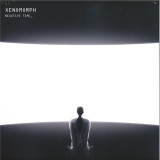
Negative Time! The new 12" vinyl EP of Xenomorph has a name that suits our global crisis. The best way to face these dark times is through the therapeutic powers of music. This 3-track 12" EP is the harbinger for the upcoming album "Netherverse" in early 2024. Fans of Mark Petrick know what to expect for sure. Goa-trance with a darker twist, but still filled with powerful melodies, unique kicks and psychedelic effects
The opening track, Negative Time, is a musical interpretation of zero point energy creation and quantum physics. Cutting, yet melodic goa-riffs take the listener on a journey backward in time through a mix of darkness leading to a positively melodic final. Danger on the High Seas is a deeper, more straightforward technoish track where light and dark are doing a wonderful mating dance between the crests of the high waves. The song was inspired by the mysterious vanishing of flight-19 in the bermuda triangle. The last track, Lost In An Old Junkyard, is known to the people that bought the Carpe Noctem compilation on Suntrip. But now it is available on vinyl as well as a different mix: the Tow Hook Mix! This track is the most classic Xenomorph track. Alienated tearing effects, mixed with exalted melodies.
out of Stock
Last delivered 8 months ago available to reorder, subject to availability
Who exactly is Sauce Walka? He is DAT BOY DEN. Often considered one of rap’s biggest enigmas for his larger than life personality yet equally sharp and grandiose pen game, the Houston based rapper aims to put a stamp on his name with his newest studio album, DAT BOY DEN. The 18 track album features appearances from popular artists such as Peezy, BIG30 & Freeway, as well as fellow Houston-based artist Money Man & The Sauce Factory labelmates Peso Peso, Sauce WoodWinnin, Sauce Gohan & 44 Mike Deezy. Previous notable collaborations include artists such as A$AP Rocky, Bun B, Chief Keef, Lil' Keke, Maxo Kream, Migos, Slim Thug, Travis Scott, Trinidad James, and XXXTentacion. pPressed on Red & White Split Vinyl, housed in a widespine jacket.
Key Marketing/Selling:
Sauce Walka is an incredibly versatile rapper and while his image may be more street leaning, he is an incredibly gifted lyricist with an unmatched pen game and can outrap some of the more lyrical rappers
Founder of the popular Houston based label, The Sauce Factory
Popularized the term “Drip”
Made headlines in 2015 for releasing a diss track aimed at Drake called, “Wack 2 Wack,” over appropriating Houston culture
Sauce Walka has over 1.3M monthly listeners on Spotify
Supporting Conway the Machine on the WON’T HE DO IT tour from September-October 2023 and recently collaborated on the standout single, “Dangerous Daringer”
Sauce Walka is an extremely viral personality and very active on social media, and willing to put in the work to support his products
Previous notable collaborations include artists such as A$AP Rocky, Bun B, Chief Keef, Lil' Keke, Maxo Kream, Migos, Slim Thug, Travis Scott, Trinidad James, and XXXTentacion
Limited 3LP-Set on Coloured Vinyl | Remastered | 13 Bonus-Tracks
FiXT is proud to bring you the Definitive Edition of Celldweller's groundbreaking debut album in a stunning 3LP set on colored vinyl!
Experience the debut album like never before: each of the original tracks has been remastered. The Definitive Edition also boasts an impressive lineup of 13 bonus tracks, including the re-imagining of the iconic track "Switchback" from The Browning.
xb F2 Shapeshifter (feat. Styles of Beyond) [TESSERACTS Remix]
Exocrine verschiebt weiterhin die Grenzen des Extrem- und Präzisionsspiels und schlägt die Brücke zwischen der Wildheit von Archspire und Cryptopsy und den kraftvollen progressiven Tendenzen von Obscura und Gorod. Auf ihrem neuen Album „Legend“ strebte die Band noch mehr danach, technischer und schneller zu werden, legte aber auch Wert auf die Epik ihrer Musik und erhöhte diese. Damit haben Exocrine ihrer Musik einen noch grandioseren Sound verliehen.
FFO: Archspire, Gorod, Fallujah
Dylan John Thomas’ self-titled debut album is set for release 26th January 2024 on Ignition Records. Includes fan favourites 'Jenna' & 'Fever' plus recently released 'Yesterday Is Gone.' The album also features 'Wake Up Ma' live at Barrowlands & the brand new single 'Rich Boy.'
Goatsnake was formed in 1996 by guitarist Greg Anderson (Engine Kid), vocalist Pete Stahl (Scream, Wool), and the mega rhythm section of Greg Rogers (drums) Guy Pinhas (bass) from underground heavy legends the Obsessed. Their now-classic debut album appropriately entitled: I (one) was originally released by Mans Ruin records in 1999. 8 songs that gracefully combine monolithic, Sabbathy riffs with soulful vocals to create a monumental album. It has now been reissued as a single vinyl lp as it was originally released for the first time since 1999.
"Hast du mich vermisst?" - mit dieser selbstbewussten Frage starteten ASP im Jahr 2000 ihre Karriere. Nun erscheint ihr Debütalbum auf Picture-Vinyl. Viel ist seitdem geschehen im Hause ASP. Viele Geschichten wurden erzählt, durch viele Jahre sind wir gemeinsam gereist, haben den Dunklen Turm besucht, sind als Raben durch die Lüfte geschwebt, haben im Kerker gesessen, an Klippen gehangen und im Horror-Hotel gewohnt, sind durch die Tiefsee getaucht und wieder an Land gespült worden. Und all dies begann mit der Frage, die nach über zwei Jahrzehnten aktueller scheint denn je: "Hast du mich vermisst?" - denn die Musiklandschaft braucht heute dringender als je zuvor einen musikalischen Geschichtenerzähler, der es schafft, mehr als nur Hintergrundbeschallung zu liefern, nämlich ein klangliches Refugium für alle, die mehr suchen als nur Oberflächlichkeiten und Wohlfühlgedudel.
Doch auch wenn der Stil der Band sich weiterentwickelt hat und die Themen- und Bilderwelten immer stärker ausgeweitet wurden - jedem Anfang wohnt ein Zauber inne, und Songs wie "Schwarzer Schmetterling" und "Und wir tanzten (Ungeschickte Liebesbriefe)" dürfen auch heute noch, nach über zwei Dekaden, auf kaum einer Setlist fehlen. Publikum und Musiker ergehen sich auf Konzerten gleichermaßen in Emotionalität und Bedeutsamkeit dieser Lieder. Und auch weitere Hits wie "Sing Child" oder "Where Do the Gods Go?" erfreuen sich nach all den Jahren - unter anderem ihrer ausgesprochenen Tanzbarkeit wegen - außerordentlicher Beliebtheit. Das belegt den Kultcharakter dieses Erstlingswerkes und des ersten Kapitels des Schmetterlingszyklus.
A tape with the rather factual title “Rosa Beton – Demo 83” gained currency in 1983, albeit among an inner circle, or as it says in a lexical note on the band: Rosa Beton “achieved beyond-regional fame in and around Berlin”. Unlike some other bands that were merely rumoured to exist, this name was widely recognized in the East Berlin punk scene and the demo tape was received with some delight. It had been made in the suburb of Hönow, or more precisely in music enthusiast Thomas Wagner’s childhood bedroom. The band was less a classic combo than a short-lived pro- ject run, for a brief underground season, by 16-yearold Wagner and Ronald Mausolf, who was known as “Mausi” and had just come of age. An old clunker of a four-track machine served as an impor- tant nutritional supplement for the duo, allowing bass and vocals to be overdubbed separately. For a project without a professional background, especially for an illegal punk band in the East, this conventional procedure was clearly exceptional. Punk bands would usually record vocals and instruments simultaneously and on a cassette recorder. Recording gear was not readily available in the GDR, and it was disproportionately or prohibitively expensive. The adversities that had to be overcome in starting up a punk band were certainly challenging for teenagers. Rooms for rehearsals were few and far between despite wide- spread vacancies, and public space was taboo thanks to the state. Concerts, whether in flats and studios or under the protection of the Protestant church, remained rare events and, moreover, risky; starting with the party-loyal neighbour alerting the People’s Police as if there were a war on, to the ever-present “digging activity” of the Stasi. The only planned appearance by Rosa Beton never materi- alised. Whether it was the goddesses of fate who averted a show or the Stasi who prevented it can no longer be reconstructed. In any case, Rosa Beton never played live and thus joined a long list of GDR punk bands that, in the early 1980s, did not make it out of illegality into a public sphere, not even into a conspiratorial one. ausi compensated for the band’s lack of live performances by at least distributing a few copies of the demo tape. Among others, at the Kult, the Kulturpark Plänterwald, which provided an initiation field for the Berlin punk scene and a hotspot with a pull beyond it. The punks adapted the Kulturpark to their understanding of an amusement park.
They would thrash about to Schlager music and pogo to third-rate Ostrock bands, make fun of overwhelmed provincials, hang out and exchange half-baked ideas as superior knowledge. In between, the punks liked to ride the chain carousel, there was a certain liking for chains. The Kulturpark management made quite a fuss about the riot the punks put on. Initially they were banned from the chain carousel, then, when the punks switched to bumper cars, they were banned from the bumper cars, then from the roller coaster, and finally from the ghost
Cam Cameron appears to be another one of those performers from an infinite list of Black American artists that cut a solitary 45 single and then disappear into obscurity never to be seen or heard from again. Couple this with the passing of any of the relevant protagonists from the time along with any of the surviving ones ever diminishing memories and the job of collating events and artists back stories from over 50 years ago becomes that much harder.
Cam Cameron appears to be one of those artists (although our investigations are ongoing). Therefore, from the information currently gleaned, the artist Cam Cameron was none other than Alvin Cameron the writer of the featured song “You Say”, with Cam being a kind of nickname. The string arrangements on both “They Say” and “I’m A Lonely Man” were provided by the late John Andrew Cameron a hugely respected arranger, producer and songwriter within the Chicago music scene of the 1960’s and early 70’s, more often credited as Johnny Cameron. Johnny’s credits can be found on many recordings of the time often working with fellow Chicago music scene producer Clarence Johnson, some of the highlights from this liaison being the song “I Really Love You” recorded by both Jimmy Burns (Erica) and Bobby James (Karol) and the girl group, ‘The Lovelites’, on their acclaimed album “With Love From The Lovelites” (Uni). Johnny’s involvement with the Scott Brothers goes as far back as 1965 when he provided the musical arrangements on The Howard Scott penned song “I’ve Got To Get Over” recorded by Syl Johnson for the TMP-Ting label. Although they share the same surname, Alvin (Cam) Cameron is believed to be of no relation to Johnny Cameron.
“You Say” would gain a release on the independent Capri label owned by Sephus Howard Scott who together with brother Walter Scott composed the 45’s flipside “I’m A Lonely Man”. Howard also featured as one of the songs producers alongside the mysterious Edgar Mullins (a name which has been found on a couple of other tape boxes, the investigations continue).
Musical accompaniment was provided by The Scott Brothers Band, with both songs being recorded at RCA Victor’s Chicago number 2 Recording Studio at 445 North Lake Shore Drive, in the Navy Pier section. on the 10th of August 1967 and released on Capri Records during the month of February 1968.
Cameron’s “You Say” was another 45 that was first introduced to UK Soul Collectors via those much lamented and fondly remembered soul packs, always regarded as a quality collector’s 45 the only regular turntable action remembered was provided by Northampton’s very own discerning DJ Cliff Steele at venues such as ‘Detroit Academicals’, ‘Bretby Country Club’ and later ‘Albrighton’ during the leaner days of the UK Rare Soul Scene?! Hopefully a wider appreciation of both sides of this soulful Windy City 45 beckons! The second release in Soul Junction’s Capri series.
Contradictory accounts of Miles Davis’ creation of the soundtrack to Louis Malle’s film noir Ascenseur pour l'Échafaud have all become part of its legend. Rarely has a soundtrack been so decisive. Nearly seventy years on, beyond the myth, this taut, feverish recording, imbued with extreme dramatic tension, remains one of the Miles’ finest records. The basic outline remains: Jean-Paul Rappeneau suggested to Malle asking Miles Davis to create the film's soundtrack who agreed to record the music after attending a private screening. Davis was performing at the Club Saint-Germain in Paris in November 1957 and on December 4, he brought his four sidemen to the recording studio without having had them prepare anything. Davis only gave the musicians a few rudimentary harmonic sequences he had assembled in his hotel room, and, once the plot was explained, the band improvised without any precomposed theme, while edited loops of the musically relevant film sequences were projected in the background. Bassist Pierre Michelot recalled in 1988 that “Miles just asked us to play two chords, D minor and C7, 4 bars of each, ad lib.” Typically, Miles planned very little but know exactly what he wanted. François Leterrier, the film’s Second Assistant Director picks up the story: “The session started at around ten o’clock and went on until dawn. The screen in the auditorium was showing the scenes for which Miles had devised some harmonies, and they were edited into a loop. And that’s what makes this music unique: it was entirely improvised in conditions that went back to the days of silent films, while watching frames shot in black and white by cinematographer Henri Decaë: tracking shots of Jeanne Moreau wandering down the Champs-Elysées at night, passing in front of lit window displays or going into bars, while looking for her lover/murderer alias Maurice Ronet … All of us there in the dark auditorium were aware that something extraordinary was taking place, something that had definitely never happened before. … In the small hours we all met up again at the Pied de Cochon in Les Halles, and Louis was looking at Miles with the disbelieving eyes of a child … as if he couldn’t believe the gift he’d just received. Even in his wildest dreams he had probably never imagined what his film would be like once it had been as if illuminated by the trumpet of Miles, incisive or wrapped softly in cotton.” The music was released on 10” by Fontana and received the Grand Prix from France’s Académie Charles Cros. It was released in the USA on Columbia as the A-side of the 12” LP Jazz Track, which received a 1960 Grammy nomination for Best Jazz Performance, Solo or Small Group. This beautiful re-issue of the original recording is pressed on 180g vinyl at GZ, and packaged in a deluxe gatefold tip-on jacket with Boris Vian’s original liner notes and Jean-Pierre Leloir’s iconic studio photo of Miles and Jeanne Moreau, and an essay on the circumstances that led to this out-of-the ordinary music by Franck Bergerot.
As the BBE Music J Jazz Masterclass Series hits its 19th title, the milestone is suitably matched by a collaboration between two giants of jazz brought together to deliver an exceptional album, working with a band of the very best Japanese jazz musicians. ‘Reminicent Suite’ by American pianist Mal Waldron and Japanese trumpeter Terumasa Hino was originally released in 1973 on the famed Victor label and was one of several Japan-only albums recorded and released by Waldron over a thirty-year period, most of which have never been available outside Japan. ‘Reminicent Suite’ comprises two extended tracks, both taking up a side each. The title track on Side A is composed by Waldron, and is a dark, brooding heavy groove typical of his early 70s sound. ‘Black Forest’ on side B is written by Hino and is a vivid and energetic piece, layered and textured with dense percussion and Hino’s signature trumpet tone. Mal Waldron started out in the early 1950s working extensively on the Prestige label with notable figures such as Gene Ammons, Jackie McLean and Charles Mingus. Most famously, he worked with Billie Holiday before leaving the States in the mid-60s and relocating to Europe where he established himself as a major figure working across many countries including France, Italy, and Germany, where he made his home in Munich. In 1969, Waldron recorded the first releases for two major European jazz labels, ECM and Enja, before visiting Japan on tour for the first time in 1970. Waldron instantly fell in love with Japan and, over the next three decades, extensively toured and recorded there for numerous labels. Terumasa Hino is one of the towering figures of post-war modern jazz in Japan. Coming to prominence via the Hideto Shiraki and Sadao Watanabe bands in the mid-60s, Hino soon emerged as one of the prime movers in new jazz generation that changed the direction of jazz in Japan. He explored a more open, freer, and improvised sound, mixing psychedelic and rock elements with freeform and post-bop jazz. Hino recorded for many of the leading jazz labels of the era including Columbia, Three Blind Mice, and East Wind and would go on to relocate to the US in the mid-70s, immersing himself with the leading fusion players of the New York scene including Larry Corryell, Mtume, Al Foster, Dave Liebman and many more. In the early 80s, Hino’s jazz funk tracks were dancefloor smashes on the UK jazz dance scene. Joining Waldron and Hino on ‘Reminicient Suite’ is a band made up of the very best Japanese jazzman of their day: Takeo Uematsu on sax, Terumasa’s brother, Motohiko Hino, on drums, and the legendary bass master, Isao Suzuki. Together, they deliver one of the very best albums of the era, a richly articulated and dynamic session that exemplifies the very best that the Japanese jazz scene was doing in the early 1970s. ‘Reminicent Suite’ is pressed on 200g vinyl presented in a gatefold sleeve plus obi strip, with new photos by Tadayuki Naito; translated original sleeve notes; and a 7500-word essay including interview with Terumasa Hino from Tony Higgins, co-curator of the J Jazz Masterclass Series. This is the first time this album has been available outside of Japan
With her captivating voice and richly detailed songwriting, Sarah Jarosz has emerged as one of the most compelling musicians of her generation. A four-time Grammy Award-winner and ten-time nominee at the age of 30, the Texas native started singing as a young girl and became an accomplished multi-instrumentalist by her early teens. After releasing her full-length debut Song Up in Her Headat 18-years-old, she went on to deliver such critically lauded albums as Follow Me Down, Build Me Up From Bones, and Undercurrent, in addition to joining forces with Sara Watkins and Aoife O’Donovan to form the acclaimed folk trio I’m With Her. Her fifth studio album, World On The Ground, produced by John Leventhal, went on to win the Grammy award for Best Americana Album. In 2021 Jarosz released the Grammy-nominated Blue Heron Suite, a much-anticipated song cycle which she composed after being the recipient of the FreshGrass Composition Commission.
The seventh album from Sarah Jarosz finds the highly decorated songwriter at the apex of change. A Texas native, she’s spent most of her adult life living in New York City, but shortly before writing the album Jarosz left her adopted home to join her soon-to-be husband in Nashville, TN. The geographic shake-up led to a sonic one as well for Polaroid Lovers. For the first time in her career she opened herself up to collaborators, leading to writing sessions with Daniel Tashian, Ruston Kelly and Natalie Hemby. The creative reorganization of her writing process evolved to include a much richer and more electric sound in the studio and being in Nashville meant access to a world of hot shot players. She tapped guitarist Rob McNelley (Miranda Lambert, Carrie Underwood), Tom Bukovac (Tom Petty, Vince Gill) on guitar and organ, her husband- bassist Jeff Picker (Nickel Creek), and drummer Fred Eltringham (Sheryl Crow, Lucinda Williams) for the album recording. Tashian took the helm as producer and the whole album was laid down at the legendary Sound Emporium.
As it goes with all change, Jarosz’s major life events had her feeling contemplative. While sitting on the precipice of adulthood, Polaroid Lovers finds her reflecting on past loves, childhood dreams, the places she lived in and all the versions of herself that she’s been. Although the listener experiences the sonic shift forward, the album’s subject matter is a photo album of the past. Jarosz has never sounded more assured. Polaroid Lovers is filled with the kind of confidence that comes from hard won life experiences and the conviction of someone who truly knows herself.
All true improvisation involves an element of chance: the coming together of a nexus of influences impulses and actions that result in spontaneous creation. Often in the world of jazz these creative sparks blaze briefly in performance, and then disappear as the sonic vibrations fade from the air, but sometimes chance intervenes again, and moments thought to be gone forever can resurface in unexpected ways. As master drummer Jeff Williams sorted through his archive of cassette tapes from his extensive international career, he had no idea that hidden within it would be a recording of a 1991 evening when he joined storied NYC legend David Liebman for a set of spontaneous performances. Reunited together fifteen years after the breakup of their seminal band Lookout Farm in 1976, the two players reaffirmed their deep musical bond with a set of free-flowing exploratory dialogues in front of a receptive audience. Believed lost for many years, these performances can now be experienced again, with all their fearless freshness and pure committed musicianship undimmed by the passage of time.
Jeff Williams has established a formidable reputation as a drummer, composer, educator and bandleader on both sides of the Atlantic. His relationship with Liebman was forged in the exciting, expansive atmosphere of the New York scene in the early 70s: the meeting of Williams, the laid back Midwesterner, and Liebman, the mercurial, quintessential New Yorker, was an inspired coming together of opposites that always made the creative sparks fly. Williams remembers the journey that led to the Bar Room 432 on that 1991 evening:
“Just as I was leaving my home town of Oberlin, Ohio to move to New York City in 1971, I was given David Liebman’s phone number by someone who told me that Dave had started an organisation for jazz musicians there. I knew of Dave, from Ten Wheel Drive and John McLaughin’s My Goals Beyond, but I couldn’t have imagined what a significant role he would play in my musical life. Shortly afterwards, Dave would leave Elvin Jones and Miles Davis to start his own band, with Richie Beirach, Frank Tusa, and myself, (later adding Badal Roy), naming it Lookout Farm. We released two albums on ECM and one on A&M to wide critical acclaim, and toured across Europe, Japan, India and the US.”
“Following the dissolution of Lookout Farm, Dave and I embarked on a short duo tour opening for Gary Burton. That would be the last time the two of us would play until the occasion of this recording, fifteen years later.”
“Fast forward to 1991 when I discovered an attractive bar located on the far West Side of 14th Street in Manhattan. Bar Room 432 would become a six night a week jazz club for a few years, providing me, and many others, with the opportunity to perform our music. Catching wind of this, Dave suggested we do a duo performance there.”
“Luckily, I recorded it.There was no preparation, no set music to be played - we simply improvised, picking up where we’d left off. David’s mastery of the soprano saxophone is in full bloom here, as well as his incredibly resourceful musical mind.”
The performances are revelatory, moving in pure improvisation from clear, songlike melody to furious density, from ambience to pulsing groove, from light into darkness and back again. Cleaned up and remastered by Alex Bonney, the sound of the tape captures the warm, wood-lined ambience of the room, allowing the full power and dynamics of William’s drums and the warmth and fullness of Liebmans’ soprano sax to sing out, engaging the contemporary listener just as it engaged the hip Manhattan crowd thirty three years ago.
The Bronx in the 1970s, marked by the presence of notorious gangs, presented a complex and challenging urban landscape. Amidst the crumbling infrastructure and economic decline, neighbourhoods bore the scars of disinvestment, reflected in abandoned buildings and neglected public spaces. The prevalence of street gangs, such as the Ghetto Brothers, contributed to an atmosphere of heightened tension and occasional violence. Graffiti adorned subway cars and buildings, expressing both social unrest and the vibrant creativity of the community. Despite the challenges, there was a resilient spirit among residents, evidenced by grassroots efforts to address social issues. The Bronx during this era was a dynamic yet tumultuous mix of cultural expression, social struggle, and the determined spirit of a community facing adversity. The Ghetto Brothers, originating from the Melendez family who moved from Puerto Rico to the South Bronx in the 1950s, faced challenges involving violence and crime. Despite this, Benjy, a key figure, directed the group towards community improvement. The Ghetto Brothers embraced music, crafting a potent, NYC-flavored musical fusion that caught the attention of record mogul Ismael Maisonave (Salsa Records). Their collaboration resulted in the recording of eight tracks in a single electrifying day at Manhattan's Fine Tone Studios, skillfully produced by Latin studio maestro Bobby Marin (Harvey Averne, La Lupe, Brooklyn Sounds…). This musical odyssey showcases the band's ability to seamlessly blend genres, creating a NYC-flavored stew that captivates listeners with its authenticity. The hypnotic rhythms, infectious guitar riffs, and impassioned vocals reflect the Ghetto Brothers' commitment to expressing their unique experiences and uplifting their community through the universal language of music. "Power-Fuerza" is not just an album; it's a sonic testament to the Ghetto Brothers' fusion of resilience, cultural richness, and musical innovation. Each track is a vibrant tapestry, weaving together the
raw energy of the South Bronx streets and the soulful melodies born from the trio's Puerto Rican heritage. Embrace the timeless resonance of the Ghetto Brothers’ “Power-Fuerza”, one of the best Latin funk albums ever recorded…
Gruff Rhys is pleased to announce his new album "Sadness Sets Me Free" which will be released by Rough Trade Records on 26.01.2024. This incredibly will be the 25th album he has released in his 35 year career individually, collaboratively and as a member of various bands. "Sadness Sets Me Free" is also the follow up to 2021"s "Seeking new Gods", his first solo top ten record. The album will be available in a range of formats including a unique Dinked edition on "honeycomb neo-neapolitan" vinyl, an LP sleeve with "container doors" and a bonus 7" with exclusive audio for the first 1500 copies. A gatefold soft pack CD also includes a pull out poster. Lead-off single "Celestial Candyfloss" is a telling four minute glimpse of the forthcoming album, revealing the heady wonders and classic pop sounds within. Soaring strings carry the sweet melodies along, anchored by just enough necessary melancholy to add emotional ballast. The eye-popping video was created by long-time collaborator Mark James and compliments the scope and style of the song on a galactic scale. "Celestial Candyfloss" is, Gruff says, "an attempted pocket symphony about the cosmic lengths that people will travel in the pursuit of love and acceptance. Mark James has brought the Sadness Sets Me Free album cover to life & managed to place me watching TV interference in a shipping container that"s lost in space. For what is apparently the 25th album I"ve had a hand in writing I"ve reverted to a rich seam of inspiration relating to shedding some light on sadness and the general terror of cosmic loneliness." And so it was that Gruff and his band - Osian Gwynedd (piano), Huw V Williams (double bass) and former Flaming Lips drummer turned Super Furry Animals archivist Kliph Scurlock (drums) piled into a van driven by the late, legendary tour manager "Dr" Kiko Loiacono and raced from Dunkirk, where they had just played the final show of a tour of Spain and France, to the outskirts of Paris in the early hours of a March morning in 2022. There, in La Frette Studios, a recording facility installed in a 19th-century house, Gruff and his road-hardened group tracked "Sadness Sets Me Free" in just three days. Backing vocals were added along the way by Kate Stables from This Is The Kit along with additional strings and orchestration and it was mixed between Marseille and Cardiff. What finally emerged from these intense bouts of cross-continental activity was Gruff"s most accomplished and beautiful record to date. In a career that has taken him from the slate-mining towns of north-west Wales, down to the expat communities of Patagonia, up to the Mandan tribe of the Great Plains of North America and across to the Tuareg rock groups of the Saharan Desert, Gruff Rhys, one of Britain"s most beloved and successful singer-songwriters, has always been willing to follow an opportunity, wherever it may lead him. "At this point I quite like working with serendipity," he says. "Not in a cosmic way, but I try and leave things open to chance encounters and chance geography. As I"m around 25 albums in I"m always looking for ways to make a different-sounding record".
Gruff Rhys is pleased to announce his new album "Sadness Sets Me Free" which will be released by Rough Trade Records on 26.01.2024. This incredibly will be the 25th album he has released in his 35 year career individually, collaboratively and as a member of various bands. "Sadness Sets Me Free" is also the follow up to 2021"s "Seeking new Gods", his first solo top ten record. The album will be available in a range of formats including a unique Dinked edition on "honeycomb neo-neapolitan" vinyl, an LP sleeve with "container doors" and a bonus 7" with exclusive audio for the first 1500 copies. A gatefold soft pack CD also includes a pull out poster. Lead-off single "Celestial Candyfloss" is a telling four minute glimpse of the forthcoming album, revealing the heady wonders and classic pop sounds within. Soaring strings carry the sweet melodies along, anchored by just enough necessary melancholy to add emotional ballast. The eye-popping video was created by long-time collaborator Mark James and compliments the scope and style of the song on a galactic scale. "Celestial Candyfloss" is, Gruff says, "an attempted pocket symphony about the cosmic lengths that people will travel in the pursuit of love and acceptance. Mark James has brought the Sadness Sets Me Free album cover to life & managed to place me watching TV interference in a shipping container that"s lost in space. For what is apparently the 25th album I"ve had a hand in writing I"ve reverted to a rich seam of inspiration relating to shedding some light on sadness and the general terror of cosmic loneliness." And so it was that Gruff and his band - Osian Gwynedd (piano), Huw V Williams (double bass) and former Flaming Lips drummer turned Super Furry Animals archivist Kliph Scurlock (drums) piled into a van driven by the late, legendary tour manager "Dr" Kiko Loiacono and raced from Dunkirk, where they had just played the final show of a tour of Spain and France, to the outskirts of Paris in the early hours of a March morning in 2022. There, in La Frette Studios, a recording facility installed in a 19th-century house, Gruff and his road-hardened group tracked "Sadness Sets Me Free" in just three days. Backing vocals were added along the way by Kate Stables from This Is The Kit along with additional strings and orchestration and it was mixed between Marseille and Cardiff. What finally emerged from these intense bouts of cross-continental activity was Gruff"s most accomplished and beautiful record to date. In a career that has taken him from the slate-mining towns of north-west Wales, down to the expat communities of Patagonia, up to the Mandan tribe of the Great Plains of North America and across to the Tuareg rock groups of the Saharan Desert, Gruff Rhys, one of Britain"s most beloved and successful singer-songwriters, has always been willing to follow an opportunity, wherever it may lead him. "At this point I quite like working with serendipity," he says. "Not in a cosmic way, but I try and leave things open to chance encounters and chance geography. As I"m around 25 albums in I"m always looking for ways to make a different-sounding record".
What I can say about TORRES is I think the music comes from a convicted place. Not convicted meaning a person is narrowly and foolishly committed to an ideal, or unshakably convinced of themselves, or a zealot, or stubborn. I mean dedicated, I mean: If TORRES' music gets weird, gets brainy, gets funny, gets defiant, provokes, deliberately scandalizes, employs the crass to undermine the austere, courts lofty philosophical truth-it's all done with the conviction of an artist with the (essential) belief in the worth of their task. I think you can hear it in the songs, someone reaching, leaning over the boundary between known and not, probing the almighty. After a decade and six studio albums and however many one-offs and tours and articles read and conversations had, the parts of this pursuit I've been able to observe are all marked by a dedication to creation that treats the act-ongoing-with as much preciousness as the evidence of the act that is left in a record. The modes of being are different: heartbroken, broke, furious (right- and unrighteously), awestruck by love, compelled by desire. sometimes resigned to death, sometimes fascinated by and reverent of the future. Sometimes viscerally present, other times suspended in heady awareness, poised on a fulcrum of observation and participation in the phenomenon that aliveness is. The tools are the same: instruments that growl and shriek and moan, a lyrical voice shouting, swooning, chuckling, snarling as the moment commands. TORRES' music-making is conducted in a melodic vocabulary unique to itself-methods, equipment, circumstances shifting around the impulse to affirm the self within the world, to make art that bears all these little artifacts of the divine and of the real and show it to people and know it is valuable. I think that's what Mackenzie's music does. And I think it's just incredibly good music to listen to. -Julien Baker TORRES is the pseudonym of Mackenzie Scott. She was born January 23, 1991, and lives in Brooklyn, New York, with her wife Jenna, stepson Silas, and puppy Sylvia. She has been releasing albums and performing as TORRES since 2013. What an enormous room is TORRES' sixth studio album (her third with Merge). It was recorded in September and October 2022 at Stadium Heights Sound in Durham, North Carolina. It was engineered by Ryan Pickett, produced by Mackenzie Scott and Sarah Jaffe, mixed by TJ Allen in Bristol, UK, and mastered by Heba Kadry in NYC. The album contains 10 songs. Mackenzie wrote all of them. Sarah played bass guitar, synths, drums, organ, and piano. Mackenzie sang vocals, played guitar, bass, synths, organ, piano, and programmed drums. Additional synth bass, tambourine, and shakers were played by TJ Allen.
What I can say about TORRES is I think the music comes from a convicted place. Not convicted meaning a person is narrowly and foolishly committed to an ideal, or unshakably convinced of themselves, or a zealot, or stubborn. I mean dedicated, I mean: If TORRES' music gets weird, gets brainy, gets funny, gets defiant, provokes, deliberately scandalizes, employs the crass to undermine the austere, courts lofty philosophical truth-it's all done with the conviction of an artist with the (essential) belief in the worth of their task. I think you can hear it in the songs, someone reaching, leaning over the boundary between known and not, probing the almighty. After a decade and six studio albums and however many one-offs and tours and articles read and conversations had, the parts of this pursuit I've been able to observe are all marked by a dedication to creation that treats the act-ongoing-with as much preciousness as the evidence of the act that is left in a record. The modes of being are different: heartbroken, broke, furious (right- and unrighteously), awestruck by love, compelled by desire. sometimes resigned to death, sometimes fascinated by and reverent of the future. Sometimes viscerally present, other times suspended in heady awareness, poised on a fulcrum of observation and participation in the phenomenon that aliveness is. The tools are the same: instruments that growl and shriek and moan, a lyrical voice shouting, swooning, chuckling, snarling as the moment commands. TORRES' music-making is conducted in a melodic vocabulary unique to itself-methods, equipment, circumstances shifting around the impulse to affirm the self within the world, to make art that bears all these little artifacts of the divine and of the real and show it to people and know it is valuable. I think that's what Mackenzie's music does. And I think it's just incredibly good music to listen to. -Julien Baker TORRES is the pseudonym of Mackenzie Scott. She was born January 23, 1991, and lives in Brooklyn, New York, with her wife Jenna, stepson Silas, and puppy Sylvia. She has been releasing albums and performing as TORRES since 2013. What an enormous room is TORRES' sixth studio album (her third with Merge). It was recorded in September and October 2022 at Stadium Heights Sound in Durham, North Carolina. It was engineered by Ryan Pickett, produced by Mackenzie Scott and Sarah Jaffe, mixed by TJ Allen in Bristol, UK, and mastered by Heba Kadry in NYC. The album contains 10 songs. Mackenzie wrote all of them. Sarah played bass guitar, synths, drums, organ, and piano. Mackenzie sang vocals, played guitar, bass, synths, organ, piano, and programmed drums. Additional synth bass, tambourine, and shakers were played by TJ Allen.
Studio One was founded by Clement "Coxsone" Dodd1 in 1954, and the first recordings were cut in 1963 on Brentford Road in Kingston.1[2] Amongst its earliest records were "Easy Snappin" by Theophilus Beckford, backed by Clue J & His Blues Blasters, and "This Man is Back" by trombonist Don Drummond. Dodd had previously issued music on a series of other labels, including World Disc, and had run Sir Coxsone the Downbeat, one of the largest and most reputable sound systems in the Kingston ghettos.
In the early 1960s, the house band providing backing for the vocalists were the Skatalites[3] (1964–65), whose members (including Roland Alphonso, Don Drummond, Tommy McCook, Jackie Mittoo, Lester Sterling and Lloyd Brevett) were recruited from the Kingston jazz scene by Dodd. The Skatalites split up in 1965 after Drummond was jailed for murder, and Dodd formed new house band the Soul Brothers (1965–66), later named the Soul Vendors (1967) and Sound Dimension (1967-). From 1965 to 1968 they played 9 a.m. to 5 p.m., 5 days a week, 12 rhythms a day (about 60 rhythms a week) with Jackie Mittoo as music director, Brian Atkinson (1965–1968) on bass, Hux Brown on guitar, Harry Haughton (guitar), Joe Isaacs on drums (1966–1968), Denzel Laing on percussion, and on horns (some initially and some throughout): Roland Alphonso, Dennis 'Ska' Campbell, Bobby Ellis, Lester Sterling, among others on horns during the era of Rock Steady. Headley Bennett, Ernest Ranglin, Vin Gordon and Leroy Sibbles were included among a fluid line-up, to record tracks directed by Jackie Mittoo at Studio One from 1966-1968.
During the night hours at Studio One from 1965-1968, singers like Bob Marley, Burning Spear, The Heptones, The Ethiopians, Ken Boothe, Rita Marley, Marcia Griffiths, Judy Mowatt, Alton Ellis, Delroy Wilson, Bunny Wailer[4] and Johnny Nash, among others, would put on headphones to sing lyrics to original tracks recorded by the Soul Brothers earlier each day. These seminal recordings included "Real Rock" (by Sound Dimension), "Heavy Rock", "Jamaica Underground", "Wakie Wakie", "Lemon Tree", "Hot Shot", "I'm Still In Love With You", "Dancing Mood", and "Creation Rebel".
Jackie Mittoo, Joe Isaacs, and Brian Atkinson left Studio One in 1968, recorded drums and bass for Desmond Dekker's and Toots' biggest hits at other Kingston studios, then moved to Canada. Hux Brown stayed in Jamaica to record on the soundtrack The Harder They Come, The Harder They Fall, and toured in Nigeria with Toots and the Maytals and Fela Kuti. The Soul Brothers (a.k.a. Sound Dimension) formed the basis of reggae music in the late 1960s, being versioned and re-versioned time after time over decades by musicians like Shaggy, Sean Paul, Snoop Lion, The Clash, String Cheese Incident, UB40, Sublime, and countless other Billboard originals and remakes trying to emulate their original Rock Steady sound at Coxsone's Studio One.
The label and studio were closed when Dodd relocated to New York City in the 1980s.
PRESSING OF 500 COPIES WORLDWIDE. INCLUDES POSTER.
The sound of today. A very strong statement. Yet, fifty years later, it remains undisputed. Today’s sound is Piero Umiliani's manifesto, his will to demonstrate to the world that he always has his finger on the pulsating vein of the world, ready to embrace the heartbeat of the future.
In the summer of 1973, Piero Umiliani, in his futuristic recording studio in Rome, much like Miles Davis for his 'Bitches Brew,' gathered an extraordinary collective of musicians, both old and new guard to measure themselves against some of his compositions.
Besides strongly emphasizing the backbeat, what stands out the most is the timbre provided by his 'electronic instruments,' as he liked to call them. Minimoog, Arp 2600, Fender Rhodes, EMS VCS3, Clavinet, Lowrey organ, Space Echo, self-built envelope filters—machines impossible to see all together in an Italian recording studio at the time and made available to the musicians.
The line-up is stellar; under the name 'Sound Workshoppers,' the 'Wrecking Crew all'Amatriciana' is hidden an impossible mix where Marc 4, Gres and Perigeo are blended, along with a brass section of veterans and pioneers of Italian jazz, all members of the RAI Symphonic Rhythm Orchestra.
Comparing the recordings from the original scores, one can also understand the space left by Piero Umiliani for his musicians. They are free to move, to contribute solutions, to enrich the maestro's music.
The perfectly preserved original masters, once transferred at the maximum possible sampling frequency, allowed for the recovery of many lost frequencies, restoring brilliance and the remarkable low end expertly captured in recording by engineer Claudio Budassi.
Today’s sound was extremely difficult to control and fully render with the mastering technology of that time.
Paradoxically, Today's sound could not sound as I have managed to make it sound today: urgent, majestic, more alive than ever.
Child of the Universe is the fourth studio album by Australian singer-songwriter Delta Goodrem. It includes the three singles “Sitting on Top of the World”, “Dancing with a Broken Heart” and “Wish You Were Here". The former achieved three times Platinum Certification in Australia. The album peaked at #2 on the Australian Albums Chart and at #1 on the Australian Artist Albums Chart. It went on to become Gold Certified. For this album, Goodrem explains that she experimented with different chord changes and different areas of music: "I feel I can do anything on this album, I'm relishing that. I feel like the sky's the limit but at the same time it's very raw." Child of the Universe is available on vinyl for the first time as a limited edition of 1500 individually numbered copies on silver coloured vinyl and includes an 8-page booklet with photos and lyrics.
Child Of The Universe by Delta Goodrem, released 25 January 2024, includes the following tracks: " Wish You Were Here", " Sitting on Top of the World", " Hunters and the Wolves" and more.
This version of Child Of The Universe comes as a 2xLP. This release comes with (a) Booklet.
The vinyl is pressed as a silver disc. Another vinyl is pressed as a silver disc.
nehan is a Japanese free improvisation & avant-garde rock quintet formed in August 2022. Their performances are initiated by a 9hz brain wave emitted from a testee who has been brought into a deep meditative state via either hypnosis or acupuncture - a very relaxed but very alert state. nehan doesn"t begin until the testee has gotten into the state of "nothingness." It is only then that the improvisation can begin. The role of improvisation has been key to all the musical projects of Masaki Batoh. In 2010, as Batoh was winding down the activity of his long-standing "heavy chamber folk" group, Ghost, he became involved in the design of a machine to generate sonic data based on brain waves. An acupuncturist as well as a musician by trade, his interest was spurred by the rhythms of the body and the brain, and a desire to access the "pulses" of brain waves to initiate improvisations. Following the release of Brain Pulse Music, Batoh toured Japan, the US and Europe, making demonstrations of his process using a local volunteer and guest performers, when available. Today, nehan arrive at their performance space prepared with a Brain Pulse testee, bringing a wide array of instruments including gongs, timpani, tabla and other drums and percussion, Crumhorn, bagpipes, mellotron, oscillators and additional sound effects. Their performance is a transformative electro-acoustic display that passes through the prism of music styles, from east to west, from traditional folk and classical to rock, jazz, and avant electronic. While nehan"s performance presentation invokes a sense of ritual, they understand their process as being far removed from any type of spiritual endeavor - it has nothing to do with eastern thinking or any kind of religious ceremony - this is an action of improvisation, occurring in reality between the five musicians on stage, in response to the brain waves of an individual. For the personnel of nehan, Masaki Batoh asked players with whom he had good previous experiences in improvisation: Futoshi Okano (Ghost, Acid Mothers Temple, The Silence), Haruo Kondo (Espvall & Batoh) and Junzo Tateiwa (Ghost), along with female Brain Pulse testee Gozen on oscillators. The performance here, recorded live in August of 2022 at GOK SOUND in Tokyo, demonstrates their communal dedication to the improvisation. The players act as listeners and musicians simultaneously, inspired to make extended pieces of music out of the "nothingness" of brain waves. The possibilities of nehans"s chosen approach are almost infinite; an evening with nehan is only the beginning of their journey.
Finnogun’s Wake is the delightful portmanteau of a band fronted by Shogun (vocalist of Royal Headache, and later Shogun and the Sheets) and newcomer Finn Berzin. Decades apart in age but united in tutelage and outlook, they have mitigated the Joycean tome of What To Do Now, and crafted the four debut songs of the Stay Young EP from the inside out, sharing the spotlight for a riveting, deafening smear of melodic pop and buzzsaw guitars.
Mourning the departure of his best mate to a life overseas, Shogun started hanging out with his friend’s younger brother, Finn. The two of them started spending their free time together, one having seen a fair chunk of the world through music, the other just starting to figure it all out. They went through the essential lessons that could be gleaned from Definitely Maybe and Hüsker Dü, Finn got himself a guitar, and the songs simply fell out of both of them, with this initial batch as the result. Shogun sings on “Blue Skies” and “Strawberry Avalanche,” and Finn takes the lead on “So Nice” and “Lovers All,” and while there’s no mistaking Shogun’s striking delivery and fatalistic lyrics, Finn proves himself as a carousing foil, holding his ground like the natural he’s become.
Taking into account the fevered, quick-burning success of Royal Headache, this group is the most likely candidate to do it all again, giving the sense that some people can write bounding guitar leads that stick to you like burrs from the brush, and sing so effortlessly you’re embarrassed and a little mad about how great it all sounds. Backed on these recordings by keyboardist Gabrielle De Giorgio (a longtime collaborator of Shogun’s from back in the Sheets era), bassist Campbell Troy (who was in Shogun’s first hardcore band Nintendo Police back in the mid ‘90s), and DMA’s drummer Liam Hoskins (on some COVID-enforced boredom with no tour-dom), Finn and Shogun stare down a changed world from two very distinct poles, and aim to fill it with glorious songs just like these.
The MENZINGERS are an absolute institution. The Philadelphia punk legends’ multi-decade reputation as road warriors with an unbeatable catalog is cemented as hard truth—and their seventh album, Some Of It Was True , stands as their most immediate-sounding and energetic record to date. The follow-up to 2019’s sensational Hello Exile accomplishes the daunting task of capturing The MENZINGERS’ distinctive live energy in the confines of the studio, resulting in a sound that’s both rich, raw, and complementary to the group’s increasingly prismatic songwriting approach. More than 15 years in, the MENZINGERS are still holding their listeners square in the immediate present, and Some Of It Was True documents that power in thrilling fashion. “We wanted to make a fun record and write songs that we wanted to play live, and that’s exactly what we did,” co-vocalist/guitarist Greg Barnett says “We’ve always said that we want every album to sound live, but we never recorded an album live before. This was the first time we committed to that idea. We wanted to sound like how our band sounds onstage.” Making the process easier: Grammy-nominated producer Brad Cook (Bon Iver, the War on Drugs, Waxahatchee), who joined The MENZINGERS in El Paso’s legendary Sonic Ranch studios and lent his incredible ear for raw, immediate sound to help the band achieve Some Of It Was True‘s in-the-room live feel. “ T H E M E N Z I N G E R S are as real as it gets,” Cook says on his time in the studio with the band. “I had an absolute blast working with these guys and was moved to tears many times. They are truly dedicated to artistic growth, and to each other, in ways I found both refreshing and beautiful. I am now a lifer.”
The MENZINGERS are an absolute institution. The Philadelphia punk legends’ multi-decade reputation as road warriors with an unbeatable catalog is cemented as hard truth—and their seventh album, Some Of It Was True , stands as their most immediate-sounding and energetic record to date. The follow-up to 2019’s sensational Hello Exile accomplishes the daunting task of capturing The MENZINGERS’ distinctive live energy in the confines of the studio, resulting in a sound that’s both rich, raw, and complementary to the group’s increasingly prismatic songwriting approach. More than 15 years in, the MENZINGERS are still holding their listeners square in the immediate present, and Some Of It Was True documents that power in thrilling fashion. “We wanted to make a fun record and write songs that we wanted to play live, and that’s exactly what we did,” co-vocalist/guitarist Greg Barnett says “We’ve always said that we want every album to sound live, but we never recorded an album live before. This was the first time we committed to that idea. We wanted to sound like how our band sounds onstage.” Making the process easier: Grammy-nominated producer Brad Cook (Bon Iver, the War on Drugs, Waxahatchee), who joined The MENZINGERS in El Paso’s legendary Sonic Ranch studios and lent his incredible ear for raw, immediate sound to help the band achieve Some Of It Was True‘s in-the-room live feel. “ T H E M E N Z I N G E R S are as real as it gets,” Cook says on his time in the studio with the band. “I had an absolute blast working with these guys and was moved to tears many times. They are truly dedicated to artistic growth, and to each other, in ways I found both refreshing and beautiful. I am now a lifer.”
Wings of the Wild is the fifth studio album by Australian singer-songwriter Delta Goodrem. It features the singles “Wings”, “Dear Life”, “Enough” and “The River”. Her lead single "Wings" became a hit and achieved two times Platinum Certification in Australia. For the single "Enough", Goodrem collaborated with American hip hop rapper Gizzle, who can be heard on the track. The album peaked at #1 on the Australian Albums Chart and continued to become Gold Certified. It also made the charts in New Zealand, Scotland, and the UK. Wings of the Wild is available on vinyl for the first time as a limited edition of 1500 individually numbered copies on white & black marbled vinyl and includes an 8-page booklet with photos and lyrics.
Wings Of The Wild by Delta Goodrem, released 25 January 2024, includes the following tracks: "Dear Life", "In the Name of Love", "Heavy", "The River" and more.
This version of Wings Of The Wild comes as a 1xLP. This release comes with (a) Booklet.
The vinyl is pressed as a marble, white & black disc.
Bob Balch from FU MANCHU here. The idea for the SLOWER project started around four years ago. I was teaching a student how to play "South Of Heaven" by SLAYER but she was a beginner so we slowed it down. I thought that sounded cool so I tuned down to B standard and tried it. I added some drums and thought "someone in the doom community should do this and name it SLOWER." A few years later I befriended Steven "Thee Slayer Hippy" Hanford, best known for his work as the drummer in the influential Oregon punk band Poison Idea. He was backstage at a FU MANCHU show. Oddly enough I was wearing a POISON IDEA shirt and he told me that my shirt sucks. I asked who he was and why he was in our backstage. He told me and I felt stupid. We started drinking whiskey and talking about music. We stayed in touch over the next year or so and during Covid I told him about my SLOWER idea. He asked me to send him tracks. I waited too long because the day I sent the tracks he passed away. Totally tragic. I'm glad I got to know him even for a few years. He was a monster musician with a giant heart. He will be greatly missed. I shelved the project for a while after that. One day Esben from MONOLORD posted about musical collaborations. I love MONOLORD so I thought what the hell. I sent him some tracks and he killed it on drums. So I sent more. Then more. Shortly after that we started reaching out other musicians to get them involved. That's how we ended up with this lineup. Everyone that contributed completely knocked it out of the park and I can't thank them enough. This project has been a long time coming and I'm beyond stoked on how it turned out. Without all of the players involved, Steven Hanford and my baritone Reverend guitar it wouldn't have happened. Thanks to everyone involved and I hope you dig it! I'm a giant SLAYER fan so it's been a treat to dig into these classic songs. Hopefully we can do another record in the near future. Look out for shows because they will happen! Esben Willems - When Bob first approached me with the idea and I heard his scratch guitars, my first thought was "This is genius". Those iconic tracks we all know by heart suddenly unveiled an unexpected dimension. I'm really proud of how this turned out. Peder Bergstrand - "This might be blasphemous considering the circumstances, but when Bob reached out and asked if I'd want to play bass on sludged-out Slayer covers, I had to admit some of these tracks were brand new to me. That made the experience even more special though, hearing and playing on the Slower version first, and then comparing to the original. Bob has really transformed these songs into something totally their own, and on a personal level I feel the rest of the band's insane performances pushed me to my most inspired playing to date. So incredibly stoked for people to hear this album."