Third solo studio album by American musician Lou Reed, released in July 1973 by RCA Records. The album is a tragic rock opera about a doomed couple, Jim and Caroline, the concept was created when producer Bob Ezrin mentioned to Lou Reed that although the stories told by Reed's songs had great beginnings - they never really had an ending. Specifically, Ezrin wanted
to know what happened to the couple from Berlin - a song from Reed's first solo album. Pressed on standard black vinyl.
quête:the good men
- A1: Les Masques - Il Faut Tenir (1969)
- A2: Isabelle Aubret - Casa Forte (1971)
- A3: Christianne Legrand - Hlm Et Ciné Roman (1972)
- A4: Jean Constantin - Pas Tant D'chichi Ponpon (1972)
- A5: Billy Nencioli & Baden Powell - Si Rien Ne Va (1969)
- B1-: Marpessa Dawn - Le Petit Cuica (1963)
- B2: Jean-Pierre Sabar - Vai Vai (1974)
- B3: Sophia Loren - De Jour En Jour (1963)
- B4: Isabelle - Jusqu’à La Tombée Du Jour (1969)
- B5: Sylvia Fels - Corto Maltesse (1974)
- C1: Frank Gérard - Comme Une Samba (1972)
- C2: Ann Sorel - La Poupée Des Favellas (1971)
- C3: Charles Level - Un Enfant Café Au Lait (1971)
- C4: Andrea Parisy - Les Mains Qui Font Du Bien (1970)
- C5: Audrey Arno - Quand Jean-Paul Rentrera (1969)
- C6: Aldo Frank - T’as Vu Ce Printemps (1970)
- D1: Christianne Legrand - Cent Mille Poissons Dans Ton Filet (1972)
- D2: Clarinha - Lemenja (1970)
- D3: Hit Parade Des Enfants - Aquarela (1976)
- D4: Jean-Pierre Lang - Tendresse (1965)
- D5: Magalie Noël - Une Énorme Samba (1970)
- D6: Françoise Legrand - La Lune
Ever since the late 1950s bossa-nova revolution, Brazil’s influence on French music has been undeniable. Pierre Barouh, Georges Moustaki and a vast array of lesser known artists, all made the Musica Popular Brasileira (MPB) an axis of promotion at the service of a cool and metaphysical, modern and mixed Brazilian lifestyle. Some were seduced by the poetic languors of the bossa, some were looking for fun, and others just loved the American hybridization of jazz-bossa, jazz-samba.
What is bossa nova? One of its creators, Joao Gilberto said: "Its style, cadence, everything is samba. At the very start, we didn't call it bossa nova, we sang a little samba made up of a single note - Samba de uma nota so .... The discussion around the origins of bossa nova is therefore useless”. It is nevertheless useful to remember that these magnificent Brazilian songs, which the guitarist describes as samba, were shifted and balanced around improbable chords. "I like things that lean, the in-betweens that limp with grace," said Pierre Barrouh, quoting Jean Cocteau.
With emotion, arrangements for violin and supple guitar licks, bossa nova rapidly changed. A transformation that can be heard in the Tchic, tchic, French Bossa Nova 1963-1974 compilation, the result of a cultural reappropriation, which traveled through the United States and supplemented itself in France.
A musical revolution that has remained significant, bossa nova was born in Rio. From 1956 to 1961, Brazil lived through its golden years. In five years, the country had invented its modernist style. Elected president in 1956, Juscelino Kubitschek de Oliveira, an elegant man with a broad forehead, brandished a promising slogan: "Fifty years of progress in five years". He quickly got to work. Not worried about increasing debt, he launched the project for a new federal capital, Brasilia, designed by the communist architect Oscar Niemeyer. Volkswagen opened state-of-the-art factories and created the “fusquinha”, the Beetle. In Rio, the Vespa made its first appearance. The Arpoador Surf Club crew run into the “girl” from Ipanema, Helô Pinheiro - the tanned garota ("chick"), between a flower and mermaid, who at 17 walked by the Veloso bar, where the fiery author and composer, Tom Jobim and Vinicius de Moraes, were getting drunk on whiskey. From then on, bossa symbolized cool.
In 1958, Joao Gilberto recorded Chega de Saudade, which the directors of Philips denied, calling it "music for fagots". The marketing director, who believed in it, secretly pressed 3000 78-inch vinyls and distributed them at schools around Rio, creating a tidal wave.
American jazzmen then took over. In particular, trumpeter Dizzy Gillespie and guitarist Charlie Byrd. In November 1962, the Brazilian Ministry of Foreign Affairs funded a "Bossa-Nova" concert at Carnegie Hall in New York, inviting the genre’s pioneers. Unprepared, the show soon turned to disaster. But the troupe was invited to the White House by Jackie Kennedy. The first lady loved "the new beat" and in particular Maria Ninguem, a song by Carlos Lyra, later covered by Brigitte Bardot.
In Brazil, the 1964 military coup quickly ended this euphoria. The destructive atmosphere that ensued pushed many Brazilian musicians to leave, if not to exile. Thus, Tom Jobim, Sergio Mendes and Joao Gilberto arrived to the United States. In New York, Joao Gilberto met saxophonist Stan Getz. At the time, he was married to the Bahianese Astrud Weinert Gilberto, who had a German father. She had never sung before, but she knew how to speak English. Getz therefore asked her to replace her husband on The Girl From Ipanema. The Getz/Gilberto record with Tom Jobim on piano, was released in March 1964. Phil Ramone, the "pope of pop" was in charge of sound.
Bossa nova arrived in Paris through the classic “guitar-voice” channel (Pierre Barouh, Baden Powell, Moustaki…) But France loved jazz and Paris had already welcomed its American contributors. All these good people were to pass through Saint-Germain-des-Prés. The cabaret l'Escale became the Mecca of Latin American sound where one could find Pierre Barrouh and his friends, such as the Camara Trio, samba-jazz aces, whose only record was published by the Saravah label. With a band strangely called Les Masques (a band that included Nicole Croisille and Pierre Vassiliu, among others), the Camara Trio recorded an interesting Brazilian Sound, including the track Il faut tenir which is present on this tasty compilation of rarities.
Other enlightened musicians can also be found on the compilation, such as Jean-Pierre Sabar (songwriter for Hardy, Auffray, Leforestier ...) and the French pop rock organist Balthazar. In 1975, Sabar recorded Aurinkoinen Musiikkimatka on a Finnish label, which featured the crazy Vai, Vai, included on this record. We are now following the footsteps of Brazilian electronic musicians such as Sergio Mendes, Eumir Deodato or Marcos Valle who created funk and disco sounds on their keyboards and synthesizers. A style that influenced Véronique Sanson when she wrote Jusqu’à la Tombée de la nuit in 1969 for Isabelle de Funès, the niece of Louis and a great friend of Michel Berger - Sanson did end up singing this track on her 1992 Sans Regret record.
The pinnacle of exoticism and travel, Sylvia Fels’ Corto Maltese includes bongos, sea mist and ocean sounds. The title was taken from Jacky Chalard’s concept album written in 1974, Je suis vivant, mais j’ai peur (I am alive, but I am scared), based on Gilbert Deflez’s science fiction novel.
However, bossa nova extended the scope of popularity. "In the 1970s, I was a fan of Sergio Mendes, Getz / Gilberto. I fell in love with this music that I knew because I had been an orchestral singer, " explained Isabelle Aubret, who in 1971 delivered a composite record of covers by the very funky Jorge Ben, Orfeu Negro, Tom Jobim, Vinicius de Morais and Jean Ferrat. "I recorded this album for Meys Records in Paris, far from Brazil, with wonderful musicians, François Raubert, Roland Vincent, Alain Goraguer...". The latter wrote the arrangements for Casa Forte, a very percussive title borrowed from Edu Lobo, one of the initiators of the bossa who spent time in California. "Jazz and bossa came together and produced very rhythmic music. I love singing, it allows me to dream, to have fun, to feel a high on stage, and these songs brought me joy, made me swing, my singing felt like a dance.”
The world tours of French singers and their desire for the tropics, often brought them to Rio with its hills, forests, caipirinhas and tanned bodies. There are surprises though, like this Iemenja (Iemenja is the goddess of the sea in the Afro-Brazilian candomblé religion). Not unlike the composer and musician Jean-Pierre Lang, based in Sao Paulo, Claire Chevalier taught Brazil to Brazil. In 1970, the singer and painter published a 45-inch vinyl, Mon mari et mes amants (My husband and my lovers), under the improbable pseudonym of Clarinha (little Claire). She was then living in Rio, with her husband, Joël Leibovitz, who founded a band called Azimuth, and who owned a record label specialized in "sambas enredos" songs for samba school parades.
For its B side, she asked Pierre Perret to come up with lyrics for a song composed by Carlos Imperial: "Oh goddess of the sea, o goddess Iemenja, I bring a white rose to adorn your long hair ..." . "Perret came to see us, and we had fun, remembers Joël Leibovitz. We wrote Lemenja for fun, we recorded it at the Havaí studio, behind the Central do Brasil the central station. Erlon Chaves, the arranger who worked with Elis Regina, joined us" adding his share of Afro-Brazilian percussions and funky brass to the mix.
There is a common misunderstanding in Franco-Brazilian history: that bossa, admittedly hedonistic, is perceived as funny, even though the poets who wrote the texts are often philosophizing on the human condition. Its French interpreters pull it towards a carnival inspired universe, far removed from its fundamental essence. Thus, Jean Constantin covered the famous Samba da minha terra, an ode to the art of samba written by the classic Bahian composer Dorival Caymmi, renaming it with the enticing title of Pas tant de tchi tchi pompon: "On your pier there is no tchi tchi / when you arch your back, you know everything is alright ”(lyrics by Gérard Calvi). This expedited bossa aims for the absurd, but retains a certain elegance.
Indeed, Jean Constantin was not an idiot, the rather large man had a huge mustache and liked fantasy, (Les pantoufles à papa, Le pacha, inspired by cha-cha-cha-cha, salsa and jazz) but he was also the lyricist of Mon manège à moi interpreted by Edith Piaf, the composer of Mon Truc en plume by Zizi Jeanmaire and the soundtrack of François Truffaut’s 400 Blows. Le Poulpe, published in 1970, from which this bossa is extract, was arranged by Jean-Claude Vannier, an accomplice of Serge Gainsbourg’s Melody Nelson. In short: "There is enough of samba / By looking at the parasol / Because my poor cabeza / Is going to die in the sun".
Even the American actress Marpessa Down, who was at the heart of the bossa nova revolution with her role as Euridyce in Marcel Camus’ film Orfeu Negro, winner of the 1959 Cannes Palme d'or, fed the clichée with Je voudrais parler au petit cuica - "Tell me how you manage to always make people want to dance / It's true, I must admit that I cannot resist your magic" - in consequence, once can hear the cuica, a little drum inherited from the Bantu.
But bossa nova had many angles. Societal, of course, pushing actresses who were symbols of women's liberation like Brigitte Bardot, Jeanne Moreau, or Sophia Loren to engage in the exercise of accelerated bossa. In February of 1963, Sophia Loren made a record in French in Rome, Je ne t'aime plus, featuring the song De jour en jour, a bossa written by two Italians, Armando Trovajoli and Tino Fornai, which was released a little later by Barclay. Bossa accompanied the 1960s, a decade of moral liberation. Ann Sorel, who interpreted La Poupée des favellas, caused a sensation with L’amour à plusieurs, a provocative song written by Frédéric Bottom and Jean-Claude Vannier. As for the actress Andrea Parisy, she displayed her bourgeois cheekiness in Marcel Carné's Les Tricheurs before interpreting Les mains qui font du bien. And Magalie Noël, the friend of Boris Vian, who sung Johnny fais-moi mal, was hired to sing Une énorme Samba, composed by Alain Goraguer (arranger to Gainsbourg, Bobby Lapointe and Jean Ferrat) with lyrics by Frédéric Botton.
But in the end, of what wood is bossa nova made of? The answer is given by Christianne Legrand, daughter of Raymond the conductor, and sister to Michel the composer: "With me, with jà" - jà means "immediately" in Portuguese. In 1972, the singer, an expert in vocal jazz and a member of the Double Six, published Le Brésil de Christianne Legrand. Two songs included on the Tchic Tchic compilation that demonstrate how bossa, jazz, funk, rock, etc. work like a swiss army knife: the music is used to denounce broken systems, or miracles, HLM et ciné roman, Cent mille poissons dans ton filet, two songs from the O Cafona soundtrack, a successful telenovela broadcast, at the time in black and white, on TV Globo. The first was adapted in French by the fighter and friend of the Legrand tribe, Agnès Varda. The second is content with a play on words, jostling them into a summer fun.
Véronique Mortaigne
BLUE & WHITE COLOUR IN COLOUR VINYL
In the culinary arts, it’s easy to overcomplicate the final product. Theme, presentation, texture…they’re important but should work to complement the raison d'etre of any food. At the end of cooking a dish, it should taste good and feed people. Some dishes, like barbeque or provoleta, resist the tendency towards hollow showmanship. One of their expressions can be more or less aesthetic, but the first purpose is to be simple and tasteful. Argentinian provoleta goes so far as to blur the line between ingredient and dish. It relies on the inherent flavor of provolone being heated at the right speed for the perfect amount of time. You can add garlic or chives or red pepper to the slice, but ultimately they serve to bring out an essence that’s already there.
Los Angeles’ Cousin Feo has developed his rapping acumen in the five years since releasing Provoleta, but returning to the project today shows that he always had the penmanship, grit and delivery that christens an emcee worthy of remembrance. Like the bubbles rising up in the appetizer that is the album’s namesake, Feo showed that true profundity is found in the simple gestures.
Since dropping the project in 2019, Cousin Feo has expanded his vision of a world where hip-hop and football, two proletarian art forms, mingle in creative and compelling ways. He has collaborated across multiple continents, chronicled football histories, aided in canonizing legends, kept the flames high in age-old rivalries and constantly forced his audience to search for the last time they heard bars this hard. In anyone else’s hands it would be too great a task.
The maturity he showed on Provoleta wasn’t nascent, it was an inherent quality forcing itself to the surface. The songs refract his experience as a working class Angeleno through the archetypes of Argentinian football legends. The kernel that unites the two worlds is hustle. When Feo was coming up, missteps had greater consequences than crashing out in the group stage and street deals had the weight of a Boca-River Plate match.
Each track uses slightly different ingredients to let Feo’s underlying talent shine. “Maradona” feels salvific, fitting for a football legend canonized from the Andes to the Alps and a Los Angeles rapper looking to inspire similar hope in the neighborhoods that raised him. On “Di Stefano” Feo massages the instrumental with the same composure of the late forward, until he pierces through the headphones like one of Di Stefano’s arrows. It’s also refreshing to hear a song celebrating Messi before his meme-ification, focusing on the universal truths contained in his footballing talent instead of using number 10 as a stand-in to make a point in a fruitless argument. And he still finds space to show deference to Batistuta, Kempes and other members of the Argentinian pantheon who’ve been erased from the popular imagination by the national team's contemporary success.
Real ones know that true players, true rappers, and true artists will always stand the attacks of time and consensus. In Provoleta’s first verse, Cousin Feo says he moves with the hand of God. Maybe one day he’ll tell the whole truth and let us know how he was able to wrestle the pen away too. Limited edition of 300 hand-numbered copies.
- A1: All My Love
- B1: Can't Get Over You
The world of discovering Soul music and artists can lead to sheer moments of jubilation. The thought of igniting a long lost sound, reviving the energy of a once exuberant individual . But not every story that's told is filled with joy. Some are peppered along the way with struggles and heartache. Over time artists have battled with over powering label owners, record executives who just don't back what you do. The story of Tommy Hill is one such story. Tommy along with friend and longtime collaborator Ricky Tarbo had a deal with Motown records back in the early 1980's which turned sour very quickly. His release "Flame"/"Super Star Of Love' was dropped pretty quickly with no promotion and record boss Sylvia Rhône calling the shots within the duo questioning skin colour within the group and even trying to get vocals wiped off the release to sabotage it.
This said the single didn't amount to much and nothing else was recorded for Motown records. The duo did record some 4 demo's in LA before Tommy headed to re-record them again in New York circa 1982.
The A side has never been released until now, which is such a crying shame as the quality is so damn good. It's an uptempo boogie cut called "All My Love" which we gave a sexy 45 mix so you get some slamming synth work half way in. Tommy Hill's vocal range is nothing but astonishing. Just check out the 2 step ballad of "Can't Get Over You", which was recorded and released back in 1980 by The James Simpson penetration Band written by Tommy Hill, who went back into the studio 2 years later to give the song much more depth not only within the production but also to his vocal range. Tommy Hill headed back to LA after not securing a record deal and a few years later tried to get this singing career back on track. Like many of the artists who have moved on to a higher place Tommy succumbed to his own mental health issues and took his life. We hope this record does you proud Tommy Hill
DJ Support: Kerri Chandler, Folamour, Louie Vega, Jazzy Jeff, Dimitri From Paris, David Morales, Dave Lee, The Shapeshifters, Brian Tappert, Quentin Harris, Michael Gray, Terry Hunter, Hector Romero, Tedd Patterson, Dr. Packer, Marcel Vogel, Dj Pippi and many others
Groove Culture main men Micky More and Andy Tee are once again at the controls as the label presents its' Third collection of “Groove Is In The Heart”. As with the popular imprint's various EPs, the focus is on joining the dots between organic house, revivalist disco, uplifting dancefloor soul and colourful jazz-funk. There's much to admire from start to finish, a very strong bunch including MM & AT,Gianni Bini and Angela Johnson celebratory cover of EWF swirling disco-funk ‘In The Stone', a wonderfully rolling and funky-House joint titled ‘Let The Rhythm’ from Ralph Session & Djfudge, Memi P. And Gisele Jackson tasty Feel Good Classic-house Tune “Make It On My Own” and the soulful-house warmth of Audiowhores ‘Touch The Ground' Feat. Angela Johnson.
- A1: Life Spark
- A2: (Mind Apple Intro)
- A3: Affinity (Cloud Four Four Mix)
- A4: Opening A Portal
- A5: Miracle Mile (Feat. Bikôkô)
- B1: Triton
- B2: Photographs That Don;T Exist
- B3: Throw The Ember Feat. Juga-Naut
- B4: We Move Feat. Ell Murphy
- C1: Big World Feat. Lou Hayter
- C2: Waterfall Reverse
- C3: Sickly, Sweetly, Summer Movie
- D1: Scattergun
- D2: Home Feat. Merry Lamb Lamb
- D3: Fruit Rots, Water Floats Downstream
- D4: Ascension.png
DJ Support: Paul Woolford, Machinedrum, Kettama, LDLDN, Sinistarr, A.Fruit, Machine Woman, Octo Octa, Paco Osuna, Bradley Zero, Tzusing, Lefto, Synkro, John Tejada, 12x12 and many more
BBC6Music - Gilles Peterson
NTS - LDLDN
BBC6Music - SHERELLE - DJ Mix and Interview
NTS - Ross Allen
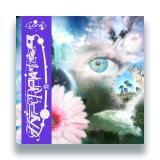
Enter the kaleidoscopic world of Lone - returning to Greco-Roman for his first album in five years, ‘Hyperphantasia’
An artist who has been soundtracking dancefloors since the early 2000s, Lonemade his production debut in 2008 with “Lemurian”, a hip-hop inspired release before moving into the vibrant future-facing soundscapes we have come to know. His back catalogue ranges through house, rave, ambient and electronica, and on ‘Hyperphantasia’, Cutler sets himself the challenge to bring all of those influences together for one body of work that he describes ‘like an album in my mind’. Referring back to the album title, the definition of hyperphantasia is a condition characterized by exceptionally vivid and detailed mental imagery and for this album he tested himself to see how close he could get the music to sound exactly like what he was hearing in his imagination.
On Hyperphantasia, Lone deepens his relationship with vocals. Having previously relied on vocal samples or more abstract live vocal treatments, this latest album marks a shift toward richer, more pop-leaning sensibilities. Cutler makes a clear lyrical statement, enlisting a diverse and carefully chosen cast of collaborators: London-based artists and fellow Greco-Roman affiliates Ell Murphy and Lou Hayter, Barcelona’s breakthrough singer Bikôkô, cult Nottingham rapper Juga-Naut, and Hong Kong-born, London-based musician Merry Lamb Lamb. Together, they contribute to what stands as a career-defining project.
The end result is a cinematic experience exploding full of colour. You are introduced to the album with an old school rave anthem ‘Life Spark’ and an interlude welcoming you into this musical world. Like chapters in a novel, the album ebbs and flows beautifully between stripped-back melodies ‘Opening A Portal’, ‘Photographs That Don’t Exist’, ‘Sickly, Sweetly, Summer Movie’ and ‘Fruit Rots, Water Floats Downstream’, bubbling feel-good house ‘Affinity (Cloud Four Four Mix)’, ‘Triton’ and ‘ Wemove’, the rap-influenced ‘Throw The Ember’ and epic future-pop tracks ‘Miracle Mile’, ‘Big World’, ‘Scattergun’ and ‘Home’. The album ends with a full circle moment, back to the early hardcore and jungle rave scene, on ‘Ascenscion.png’.
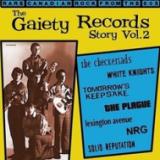
- Checkerlads - The Dreamer
- Checkerlads - Behind Ev'ry Man
- White Knights - There She Goes
- White Knights - Run Run Baby
- Tomorrow's Keepsake - Eat Your Hot Dog Boy
- Plague - Love And Obey
- Plague - We Were Meant To Be
- Lexington Avenue - Wendy Taylor
- Lexington Avenue - Flowing Kind Of Feeling
- Lexington Avenue - Good To Me
- Nrg - It All Comes Back To Me
- Solid Reputation - Things
Highlights include more terrific songs from the Plague and Lexington Avenue, bands whose members would be better known when they created the Jarvis Street Revue. Twelve tough tracks by the Checkerlads, White Knights, Tomorrow's Keepsake, NRG, and Solid Reputation . The Gaiety roster was rich in talent (the 49th Parallel, Jarvis Street Review, and Souls of Inspyration, not to mention the Checkerlads, White Knights, Dewline, Tomorrow's Keepsake, NRG, Merriday Park, and Portland Street South) -- but it was not rich in resources, which is why these singles are as relatively unknown as they are even today
- Wednesday Main Titles - Danny Elfman
- Thing Follows Rowen
- Morticia And Wednesday
- Secret Library
- Scorpion Flashback
- The Monster
- Family Day
- Burning Outcasts
- Wednesday On The Case
- Dress Shopping
- Gomez Accused Of Murder
- A Dove And A Raven
- Gomez’ Story
- A More Than Adequate Father
- It’s A Snood
- Morticia’s Yearbook
- Devious Plan
- I Will Find You
- Searching The House
- The Monster Is Here!
- Uncle Fester
- Annoying Distractions
- Fester And Wednesday Stakeout
- Let’s Roll
- Wednesday Packs Up
- Crackstone Rises
- Goody Heals Wednesday
- Enid To The Rescue
- The Hug
- The End…?
- End Credits
- Stabbed In The Back
- First Kiss
“Danny Elfman’s musical score was to die for, and
it was incorporated into ‘Wednesday’’s joyfully
bleak coming-of-age story so brilliantly.” -
Double LP on Purple Goth with Smoky Shadow
vinyl, with full colour gatefold sleeve and inner
sleeves.
Composed by four-time Oscar nominee, two-time
Emmy winner Danny Elfman (‘Milk’, ‘Big Fish’,
‘Men in Black’, ‘Good Will Hunting’, ‘Live from
Lincoln Center’, ‘Desperate Housewives’, ‘The
Simpsons’) and three-time Emmy nominee Chris
Bacon (‘The Tick’, ‘Bates Motel’, ‘Smash’,
‘Gnomeo & Juliet’, ‘Sherlock Gnomes’,
‘Immanence’).
Elfman also composed music for Tim Burton’s
‘Beetlejuice’, ‘Batman and Batman Returns’, ‘The
Nightmare Before Christmas’, ‘Mars Attacks!’, ‘Big
Fish’ (for which Elfman earned one of his four
career Oscar nods) and ‘Alice in Wonderland’,
among others.
Chris Bacon is a protege of the great James
Newton Howard, and won an HMMA for ‘Gnomeo
& Juliet’, which he shared with James and Bernie
Taupin (Elton John).
Online - Promoted through all Lakeshore Records social
media.
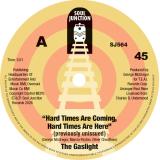
The earliest foundations of the Detroit Harmony group ‘The Gaslight’ came when future lead singer Oliver “Butch” Cheatham via an introduction by his sister Jackie joined a group known as ‘The Young Sirs’ who recorded, “There’s Something The Matter (With Your Heart/African Love” for Magic City during 1969. The group included Oliver’s future brother -in-law Allen Cocker (Jackie’s future husband).
Oliver and Allen went on to form a new vocal quartet with Curtis “Kippy” Anderson and Michael Eatmon. Under the group name of ‘The Gaslight’ they signed to Uptight Productions Incorporated, a local production company founded by local businessmen Marvin Figgins and Arnold Wright. The Gaslight were the only vocal harmony group signed to Uptight Productions and as such, it was they who made the most recordings across two label imprints Grand Junction and Black Rock. The Gaslight’s first single “I Can’t Tell A Lie/Here’s Missing You” was released on Grand Junction (GJ1001) in 1970, For the groups second single Figgin’s placed them under the guidance of legendary producer/songwriter, the late George McGregor under whom they recording “Drifting Away/If You See Her” Grand Junction (GJ1002) released in 1971 For their next release Figgin’s switched the group to his Black Rock label to record “Out Of My Hand/I’m Only A Man” Black Rock (2002) under the pseudonym of Butch & The Newport’s With “Butch” being Oliver’s nickname. A later, second release of “I’m Only A Man” but with a different flip side “I’m Gonna Get You” came out on Grand Junction (GJ1100) in 1973 with the performing artist credits reverting back to ‘The Gaslight’.
Upon leaving Uptight Production’s the group found a new home when George McCregor took them to a new fledgling label T.E.A.I (an abbreviation for “Tellin’ Everybody About It”) owned by ‘The Dramatics’ Road Manager Charles Underwood. ‘The Gaslight’s’ first and only release for T.E.A.I, was the mellifluous 1975 double sider “Just Because Of You/It’s Just Like Magic”. Underwood had precured a working relationship with Polydor Records who picked the release up for national distribution three months later. As good as the record was due to poor promotion it failed to make any notable noise and eventually sank with the group soon after breaking up.
During Soul Junction’s later dealings with the late Oliver Cheatham, respected UK Collector Andy Rix mentioned he owned a three track acetate containing the two mentioned T.E.A.I/Polydor tracks plus a third unissued dance track “Hard Times” which through a licensing deal with Charles Underwood Soul Junction now present to you on a three track 45, released under its full title “Hard Times Are Coming, Hard Times Are Here” backed with a previously unissued mix of “Just Because Of You” alongside the issued 45 version of “It’s Just Like Magic”.
This new Mysteries drop is pure Mental Neo Hard Trance! Bringing you 4 producers that at the moment are pushing their own style thereby referencing oldschool HardTrance and PsyTrance - in a good way minus the cringy cheese. Gateway tunnel vision stuff, mental in the true sense.
A: Eat Your Mind & L'Enfant D'La Plèbe – Up Into The Ether, 33 rpm; Pulse 160
A 15 Minute epic journey into the upper spheres of the ether with a superb break and a completely new track beginning, screams of ecstasy guaranteed. Sublime!
B1: Neurotribe – Thetra 6:41 Pulse 165
A driver to push the crowd forward, pure dancefloor energy! Stripped down for efficiency the track is building the tension and ascending the stairway to full Noom. Commander Tom would approve.
B2: Pneumatix – The Return Of Mich 7:05 Pulse 170
A driving minimal workout, heavily tinted with Psytrance swirls. Focusing on a few outstanding sound sculptures, bringing them to the front, holographic and vivid. A finely calibrated system will drive the audience crazy. Be careful with the minds of other people, license required.
12“ Vinyl release is limited to 300 copies, includes digi-codes and comes in a unique full cover artwork with 2 sided inlay /poster and sticker by Darkam and TDSiGNZ,
Mastering Stefan ZMK. Transparent blue vinyl.
Mastering: Stefan ZMK
Artwork: Darkam
Basically Ugly Edits 001 marks the debut edit collection from Basically Ugly Covers, the Rome-based half of the Pizza Club project. Zouk, afro, disco and funk—your dancefloor good vibes have served!
- It Gets So Hot
- Dancing On The Wall
- Eastside Girls
- Wannabeher
- On Call
- So What
- Party's Over
- Big Stick
- Mary Jane
- Girl's Girl
- Unless
- Why Do I Get A Good Feeling
- Buzzkiller
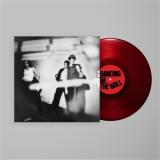
CLEAR RED VINYL[23,49 €]
Die Reise von MUNA war schon immer davon geprägt, Raum für die komplexen, chaotischen und ekstatischen Realitäten des Lebens zu schaffen, und mit ihrem vierten Album "Dancing On The Wall" sind sie so prägnant, düster und mitreißend wie nie zuvor. Ausgehend von den funkelnden, mit Konfetti übersäten Höhen ihres selbstbetitelten Albums aus dem Jahr 2022 kanalisieren sie nun die ängstliche, unsichere Energie des Lebens in einem Los Angeles, das von politischen Spannungen, Umweltzerstörung und dem stillen Druck der Prekarität der Millennials geprägt ist. Das Ergebnis ist ein Album, das sich sowohl intim als auch spektakulär anfühlt, eine Popwelt, die mit Biss, Witz und emotionaler Resonanz aufgebaut ist, ein Soundtrack für Herzen, die gleichzeitig in Flammen stehen und das Chaos um sie herum beobachten. Auf dem gesamten Album erkundet MUNA Sehnsucht, Intimität und Verbundenheit vor dem Hintergrund einer Welt im Wandel. Es gibt eine stille Auseinandersetzung damit, wie man weiterleben, lieben und sich gegenseitig erreichen kann, während man Zeuge politischer Brutalität und systemischer Gewalt wird, und wie Freude ohne Verleugnung überleben kann. Tracks wie "Wannabeher" fangen den schwindelerregenden Nervenkitzel ein, sich vollständig in die Fantasie eines anderen zu begeben, während "Why Do I Get A Good Feeling" noch lange nach dem Ende des Beats nachhallt, eine Meditation über flüchtige Freude und ausgesetzte Möglichkeiten. Das Album schließt mit "Buzzkiller", einer schonungslosen Auseinandersetzung mit Sehnsüchten und ihren Folgen, dem Schmerz, etwas erreicht zu haben, nur um festzustellen, dass neue Fragen, Zweifel und Sehnsüchte zurückbleiben. "Dancing On The Wall" wurde von Naomi McPherson produziert, wobei ihre charakteristische Liebe zum Detail mühelos mit der ausgefeilten Pop-Technik ihrer Bandkollegin Josette Maskin hinter den Kulissen verschmilzt, um lebendige, atmende Welten für die prägnanten Texte und die unverwechselbare Stimme der Leadsängerin Katie Gavin zu schaffen. "Dancing On The Wall" verbindet euphorische Klanglandschaften mit prägnanten, menschlichen Geschichten. Das Album spiegelt einen intensiven, selbstgesteuerten kreativen Prozess wider, der von Instinkt, Vertrauen und vollständiger künstlerischer Kontrolle geprägt ist. Es wirkt lebendig, eindringlich und filmisch und spiegelt eine Generation wider, die sich durch Unsicherheit navigiert und sich dennoch nicht von ihrer Freude abbringen lässt. Mit diesem Album beweisen MUNA erneut, dass Pop gewagt, intim und sozialbewusst zugleich sein kann: ein Album, das nicht nur den Moment einfängt, sondern ihn zu einer Welt destilliert, in der man leben möchte.
Yellow Vinyl[19,29 €]
Hey ! Uzi specialist start the record with his Tribe du sud killa !
Dismatik, phase neuralizer pure jus teknoidal.
John start the B side with an original ragga bomba, fire !
Trizia Close, a very good mental sound from another time, the file is closed
TRIBE DU SUD !
Poster & sticker
- Pure Comedy
- Total Entertainment Forever
- Things It Would Have Been Helpful To Know Before The Revolution
- Ballad Of The Dying Man
- Birdie
- Leaving La
- A Bigger Paper Bag
- When The God Of Love Returns There'll Be Hell To Pay
- Smoochie
- Two Wildly Different Perspectives
- The Memo
- So I'm Growing Old On Magic Mountain
- In Twenty Years Or So
Blue & White Corona Vinyl[32,35 €]
Schwarzes Vinyl! Doppel-LP im Klappcover. Ursprünglich 2017 rausgebracht und jetzt zum ersten Mal in Europa über Sub Pop erhältlich! Pure Comedy, das dritte Album von Father John Misty, ist eine komplexe, oft sarkastische und ebenso oft berührende Reflexion über die verwirrende Torheit der modernen Menschheit. Father John Misty ist das Projekt von Singer-Songwriter Josh Tillman. Wir könnten viel über Pure Comedy sagen, zum Beispiel, dass es ein mutiges, wichtiges Album in der Tradition amerikanischer Songwriting-Größen wie Harry Nilsson, Randy Newman und Leonard Cohen ist, aber wir denken, es ist am besten, wenn sein Schöpfer es selbst beschreibt. Los geht's, Mr. Tillman: Pure Comedy ist die Geschichte einer Spezies, die mit einem unvollständig entwickelten Gehirn geboren wurde. Die einzige Überlebenschance dieser Spezies, die sich auf einem grausamen, unberechenbaren Felsen wiederfindet, umgeben von anderen Spezies, die in dieser ganzen Sache viel geschickter zu sein scheinen (und für die sie eine Delikatesse sind), besteht darin, sich auf andere, etwas ältere, halb ausgebildete Gehirne zu verlassen. Diese Abhängigkeit bekommt im Laufe der Geschichte verschiedene Namen, wie ,Liebe", ,Kultur", ,Familie" usw. Mit der Zeit und da sich ihre Gehirne als bemerkenswert gut darin erweisen, Bedeutung zu erfinden, wo keine ist, wird die Spezies zum Lieferanten immer bizarrerer und raffinierterer Ironien. Diese Ironien sollen helfen, mit der abscheulichen Verletzlichkeit der Spezies fertig zu werden und zu versuchen, ihre Fantasie mit der Monotonie ihrer Existenz in Einklang zu bringen. So in etwa. Pure Comedy wurde 2016 in den legendären United Studios (Frank Sinatra, Ray Charles, Beck) in Hollywood, Kalifornien, aufgenommen. Produziert wurde es von Father John Misty und Jonathan Wilson, die Tonarbeit übernahm Mistys langjähriger Tontechniker Trevor Spencer und die Orchesterarrangements stammen vom bekannten Komponisten und Kontrabassisten Gavin Bryars (bekannt für seine umfangreichen Soloarbeiten und seine Zusammenarbeit mit Brian Eno, Tom Waits und Derek Bailey). Black Vinyl. Originally released in 2017 & now available for the first time in Europe via Sub Pop! Pure Comedy, Father John Misty's third album, is a complex, often-sardonic, and, equally often, touching meditation on the confounding folly of modern humanity. Father John Misty is the brainchild of singer-songwriter Josh Tillman. While we could say a lot about Pure Comedy including that it is a bold, important album in the tradition of American songwriting greats like Harry Nilsson, Randy Newman, and Leonard Cohen we think it's best to let its creator describe it himself. Take it away, Mr. Tillman: Pure Comedy is the story of a species born with a half-formed brain. The species' only hope for survival, nding itself on a cruel, unpredictable rock surrounded by other species who seem far more adept at this whole thing (and to whom they are delicious), is the reliance on other, slightly older, half-formed brains. This reliance takes on a few different names as their story unfolds, like "love," "culture," "family," etc. Over time, and as their brains prove to be remarkably good at inventing meaning where there is none, the species becomes the purveyor of increasingly bizarre and sophisticated ironies. These ironies are designed to help cope with the species' loathsome vulnerability and to try and reconcile how disproportionate their imagination is to the monotony of their existence. Something like that. Pure Comedy was recorded in 2016 at the legendary United Studios (Frank Sinatra, Ray Charles, Beck) in Hollywood, CA. It was produced by Father John Misty and Jonathan Wilson, with engineering by Misty's longtime sound-person Trevor Spencer and orchestral arrangements by renowned composer/double-bassist Gavin Bryars (known for extensive solo work, and work with Brian Eno, Tom Waits, Derek Bailey).
- 1: Break It Up
- 2: Suicide Bomber
- 3: Conquer The World
- 4: Up Against The Wall
- 5: Johnny Thunders Lived In Leeds
- 6: Where Did It Go?
- 7: Apathy
- 8: Waiting (For You To Call Me)
- 9: Government
- 10: Big Mistake
- 11: Just For You
- 12: The Kids Can't Be Trusted With Rock 'N' Roll
- 13: Hope You're Having Fun
- 14: Falling For You
- 15: Amalia
- 16: Second Best
- 1: Mail Order Bride
- 2: Stick 'Em Up
- 3: Black Lightning
- 4: Diagnosis
- 5: Lying Low
- 6: Shallow
- 7: Lock Up
- 8: Conspiracy Theory
- 9: Hooked On You
- 10: Hit It
- 11: My Baby's Become A Right Wing Extremist
- 12: I'm Celebrating
- 13: Do You Wanna Know?
- 14: Don't Tell Me Everything's Alright
- 15: I Don't Wanna Dance
- 16: My Mind's On Strike
- 17: New Love
"Singled Out" kommt als auf 1000 Stück limitierte Doppel-LP auf farbigem Vinyl (LP1 blau / LP2 kirschrot) im Klappcover oder als glänzende CD! Dreiunddreißig Tracks! Alle 7"-Singles der Band bis jetzt! Das sind alle ihre A- und B-Seiten! Mit dabei sind zwei bald erscheinende Singles, von denen eine als kostenlose 7" der nächsten Ausgabe des SAFETY PIN MAGAZINE beiliegt. Die andere gibt's als streng limitierte Lathe-Cut-7". Um Komplettisten zu begeistern oder zu ärgern, wird gleichzeitig eine dritte (Standard-)7"-Single veröffentlicht, deren A- und B-Seite hier nicht enthalten sind. Cyanide Pills veröffentlichten 2009 ihre erste 7"-Single ,Break It Up", gefolgt von weiteren 14 fantastischen 45er-Singles, zuletzt eine Split-Single mit den Schweizer Nasty Rumours Anfang letzten Jahres. Die meisten dieser Veröffentlichungen enthielten exklusive B-Seiten, die auf keinem Album zu finden sind und die Damaged Goods für ,Singled Out" zusammengestellt haben. Schön, sie alle an einem Ort zu haben, oder? Alle Tracks wurden im Billiard Room in Leeds mit dem Produzenten Carl ,Razorblade" Rosamond aufgenommen. ,Einflüsse? Hmm, nun, wir hören nicht nur Punkrock, das taten auch die frühen Bands nicht, weil es noch keinen gab", sagte Leadsänger Phil 2023 im Gespräch mit dem Magazin ,Vive le Rock". ,Wir mögen natürlich die üblichen Verdächtigen, unsere Favoriten sind die belgische Band The Kids, X-Ray Spex und Buzzcocks. Wir mögen Satan's Rats, The Tours, Knots, The Fingers, Panic, Kleenex, Crime, The Terrorways, Victims, Wipers, The Briefs, The Spits, The Plugz, Bad Nerves, Nasty Rumours, solche Sachen, jede Menge Sachen, Syd Barrett, The Kinks, MC5, Stooges, Bowie, Ruben and the Jets, Kim Fowley, John Lee Hooker, Howlin' Wolf. Die Liste geht weiter und weiter und weiter."
Rolando’s back in the game with Syncrophone Remixes Vol.2—flipping DJ Qu’s “Undescribed3,” Detect Audio’s “Synchronize,” and Anthony Shake Shakir’s “Arise.” Three exclusive remixes, pure underground techno for real heads. Detroit spirit, cop this 12” before it disappears!
DJ Feedbacks :
Honey Dijon : DJ Qu is the one for me. Will def support!
Raresh (ar:pi:ar) : super! thanks
Truncate : Thanks!
The Advent : Smooth bgrooves on here.. 3 - Anthony 'Shake' Shakir - Arise (Rolando Remix)
Anika Kunst (Symbolism / RSPX) : Cool release. Arise rmx is beautiful. Thanks!!
Harvey Sutherland (MCDE / PPU / Voltaire Records) : DJ Qu flip for me, thanks!
Scott Grooves : The Shake is the one
Satoshi Tomiie (Abstract Architecture) : Wooow hot hot hot
Roman Fluegel (Roman Fluegel, Dial, Cocoon, Playhouse, Robert Johnson) : The Remix for Shake is the one for me.
Erol Alkan (Phantasy Sound) : Downloading Thanks!
Enrica Falqui (ERIS, Plexus 4) : I like it!
Daniel Avery (Phantasy / Fabric) : Awesome
Laurent Garnier : cool release
Elisa Bee : Only love for Rolando, thanks x
Slam (Soma) : Brilliant - thanx
San Proper (Perlon / Rush Hour / Proper's Cult) : Totally what i needed to hear, Rolando remixing Shake & Q, my heroes lined up. I will enjoy playing all 3 mixes. One Love.
Axel Boman (Studio Barnhus) : killer remixes!
Terry Farley : DJ Qu mix my fave - heads down LETS GURN
D'Julz (Bass Culture) : great work !
gilbr (Dj Gilb'R / Chateau Flight (Versatile)) : Like the Shakir remix thanks for sending
Ben Sims : Now downloading... will check asap!
Lea Lisa (Phonica Records / Folklor Club) : mental, really good one
Dj Deep (Deeply Rooted) : Super nice package! Dj Qu's Undescribed3 remix for me here! Thank you
Mike Shannon (Cynosure) : Rrrrreeeeemix!! Thx
Efdemin (Dial) : Wonderful remix package!
Inland (Inland) : Hellooo. These are great. Qu and Shake versions both killer! Thanks
Kai Alce (Real Soon) : DJ QU remix bangin
Uncertain (RSPX, WRKTRX, Suara) : remix 1 for me
Harri (Sub Club) : very nice all three will play and support
Blasha & Allatt (Meat Free) : Thank you!
Marcel Dettmann : thx
Richie Hawtin (M_Nus) : downloaded for r hawtin
Luke Solomon (Classic / Freaks / Music For Freaks) : all killer
Luke Slater : Thanks Ro!
Ame (Innervisions) : thanks
Felix Dickinson (Futureboogie, Rush Hour, Cynic) : I like this
Geir Aspenes (G-Ha (Sunkissed)) : Thank u
Alienata (about blank) : Very nice remixes, all of them, thx!
Nat Wendell (Depth of My Soul, Courtesy of Balance, Love & Loops) : Dope remixes!
Dave Clarke (white noise radio) : Not my sound, but please keep them coming !
- Miss Wales 2012
- A Good Day For Dying
- Make It Count
- Cut To Black
- Full Range Of Motion
- Pretty As A Magazine
- Look Like Me
- How Can We Be Friends
- Every Single Muscle
- Shiny And Wet
- Semi-Automatic
- In My Short Life
- Watching The Omnibus
- It's Our Manager David
- Yours (If You Want Me)
- All My Clothes Fell Off
- Third Best Friend
- My Uncle Warren Drives A Passat
The Bug Club sind mit einem neuen Album zurück. Seit ihrem letzten Album sind ganze sieben Monate vergangen. Wo waren sie denn? Every Single Muscle, das fünfte Album der Band, ist das dritte, das von Sub Pop, dem angesehenen Label des walisischen Duos aus Seattle, veröffentlicht wird. Seit Very Human Features, das im Juni 2025 rauskam, sind die Lieblinge von BBC 6 Music und KEXP auf ihrer Nonstop-Tour quer über den Atlantik geflitzt, wie sie es früher auf der Severn Bridge gemacht haben. Verschiedene Festivalauftritte im Sommer haben sie davon abgehalten, Urlaub zu machen - wer braucht schon Urlaub, wenn man in Wales lebt? - bis es Zeit war, wieder ins Songwriting-Studio zu gehen. Das ist wahrscheinlich immer noch ein Schlafzimmer in Caldicott, das von einem Windhund namens Ted frequentiert wird (aufgepasst - er taucht in einem der Songs auf). Die Songwriter Sam (Gitarre, Gesang) und Tilly (Bass, Gesang) sind immer bescheiden und behaupten sogar, dass sie während des Songs ,It's Our Manager David" nur ,herumsassen und nichts taten". Das ist eindeutig eine Lüge. Every Single Muscle startet mit ,Miss Wales 2012" voll durch und bezieht sich dabei auf einen Wettbewerb, den sowohl Tilly als auch Sam tatsächlich gewonnen haben. Es ist der erste von vielen Tracks auf dem Album, die weniger als zwei Minuten lang sind, und gibt den Ton für das bisher punkigste Album von The Bug Club an, das sowohl an die kurzen, knackigen Snaps ihrer allerersten Singles als auch an das Grunzen ihrer jüngsten Veröffentlichungen erinnert. Das Album ist so vollgepackt mit Riffs und eingängigen Hooks, dass Sam tatsächlich um Erlaubnis bittet, im zweiten Track ,A Good Day For Dying" ein Solo einbauen zu dürfen. Er bekommt zwei Sekunden Zeit. Glücklicherweise fragt Sam später noch einmal und bekommt mehr Zeit. Auf achtzehn Songs gibt's genug klassisches Gitarrenspiel von Sam und Tilly, um selbst die lautstärksten Bug Club-Fans zufrieden zu stellen und die Behauptung der Band, sie seien ,nur technisch versiert auf ihren Instrumenten", klar zu widerlegen. Dieses Album ist ein Beispiel für effizienten Maximalismus - so wie wenn dein Vater das Auto für den Urlaub vollpackt. Bring mit, was du willst; der Platz ist knapp, aber sie kriegen es irgendwie rein. Zu den Texten: Während ,Very Human Features" hervorragend alltägliche Dinge aufzeigte und ihre Absurdität hervorhob, schauen The Bug Club auf ,Every Single Muscle" genauer auf sich selbst. Allerdings nicht so sehr auf introspektive Weise, sondern eher so, wie ein Außerirdischer ein gefangenes Exemplar auf einer intergalaktischen Trage untersuchen würde. Horrorfilme haben ihr ,Body"-Subgenre, jetzt bekommen auch Garage-Rock-Alben ihres. In einem völlig neuen Sinne des Wortes selbstbezogen, wird die menschliche Form und Verfassung im Laufe des Albums aus jedem Blickwinkel beleuchtet und untersucht. Wir spüren eine surreale Distanz zum Selbst, die den allgegenwärtigen, von Langeweile geprägten Humor hervorbringt; im letzten Song verkündet Sam, dass er ,es satt hat, ein Mensch zu sein". The Bug Club scheinen dem Konzept, ein Mensch zu sein, fast misstrauisch gegenüberzustehen - als wären sie in einem Kostüm aufgewacht, das sie nicht anziehen wollten und nicht ausziehen können. Ist drei die magische Zahl? Wahrscheinlich nicht. Aber Every Single Muscle - das dritte Sub-Pop-Album von The Bug Club - kommt dieser Vorstellung nahe genug, um den durchschnittlichen seltsamen Menschen davon zu überzeugen, dass es so sein könnte.