Island of the Hungry Ghosts is a hybrid documentary that moves between the natural, human and spiritual worlds. Located off the coast of Indonesia, the Australian territory of Christmas Island is inhabited by migratory crabs traveling in their millions from the jungle towards the ocean, in a movement that has been provoked by the full moon for hundreds of thousands of years. Poh Lin Lee is a trauma therapist who lives with her family in this seemingly idyllic paradise. Every day, she talks with the asylum seekers held indefinitely in a high-security detention centre hidden in the island's core, attempting to support them in a situation that is as unbearable as its outcome is uncertain. As Poh Lin and her family explore the island's beautiful yet threatening landscape, the local islanders carry out their "hungry ghost" rituals for the spirits of those who died on the island without a burial. They make offerings to appease the lost souls who are said to be wandering the jungles at night looking for home. This album presents the original score Aaron Cupples created for the film. Rich in texture and harmonics, the music is characterized by the bespoke instruments and recording techniques employed in its creation. The soundtrack also features sound recordist Leo Dolgan's vivid field recordings. All captured on Christmas Island, the four pieces recall insect choruses, strange and ominous bird calls, erupting blowholes, fire, ocean, and Buddhist prayers for the dead. The album is mastered by Rashad Becker, featuring design by N MRE 08. *LP comes with an obi strip, a booklet containing stills from the documentary & liner notes, as well as a postcard granting access to the full film*
Suche:the harmonics
Hot on the heels of our tentacular project "The Most Famous Unknown", Planet Phuture is proud to welcome rising French talent Cuften to the fold. A most fitting match for PP's phuture-facing vision, Damien Peltier has been pushing some of the finest techno around over the last couple of years, landing a handful memorable cuts via the likes of Parisian label Tripalium and his own imprint, Purusu. Cloaked in dim-lit atmospheres and open-ended post-apocalyptic narratives, his debut solo 12" blends in all of the elements that made his sound stand out from the crowd of releases coming up these days - traversed by dogged primitive rhythms and reassessed 303-infused Detroit'isms, but also stamped with his signature no-frills rave elegance.
Speeding up the cosmic highway like Deckard roams San Fran's neon-splattered alleys on the hunt for replicants, Cuften takes us on a full-immersion journey into dystopian electronic soundscapes. Full-beam on, "Solar Ashes" has us drifting amidst ruins of a devastated city - its lysergic bass languidly threading its way across brutalist concrete facades and cold ember set for reignition. A more martial affair, "The Black Rain Order" pulls out the rattling drums, slo-boiling arpeggios and moebius-strips of wistful acid to score a supremely tense crescendo, both optimally tasted on and off the dance floor.
Moving up closer to the free-spirited vibe of the '90s open-air raves, "Rise Of The Neo-Humans" unleashes a baroque firestorm of sucker-punchy toms and hyperventilating shuffle, woven against an endlessly expanding corolla of hallucinogenic shapes and fluttering harmonics. Sinking further deep into all-dark dubby grounds, "Lasttt Batttle" extrudes its obsessive melody out a thick gangue of squelchy chords and bleepin' engineering to form the kind of brain-washing hybrid pumper that'll roast your last remaining neurones. Trouble-brewing isn't over though and the droney "Kjhfskjoize" shall take you to places unknown through eleven minutes of envelope-shifting shamanism, thinking noise bake-off and gravity-defying arrangements. Bend your mind.
arbitrary presents the 2020 remaster & vinyl reissue of PM016 by Danish musician Mads Emil Nielsen, re-mastered and cut by Kassian Troyer, with cover artwork by visual artist Dane Patterson.
Originally released as limited edition C30 tape on Plant Migration Records in 2014, the four pieces on Nielsen’s first solo release are based on short orchestral and percussive samples manipulated by various synthesizer modules and effects processors. Variations are created by emphasizing different frequencies, harmonics, sections of short loops and the various surprises that result from the idiosyncrasies of each machine.
This vinyl reissue is part of the Black Box series of releases with music & audio originally made for theatre pieces, performances, installations, radio soundtracks, compilations and remix collaborations. The series showcases a more melodic side of Mads Emil Nielsen’s work, who, during recent years, has been focused on more abstract electronic/acoustic material – such as his collaboration with Andrea Neumann and Framework series (graphic scores & recordings).
Written & produced by Mads Emil Nielsen, Copenhagen, 2013. Originally released as limited edition C30 tape on Plant Migration Records (US), 2014.
WRWTFWW Records is feeling total bliss as it announces the full official reissue of two major works from the great Somei Satoh gathered into one LP: the mystic and meditative Emerald Tablet (1978) and Echoes (1981), sourced from original masters and available on vinyl with liner notes by passio-nate Japanese music connoisseur/collector/critic/dj Masaaki Hara.
Fall into the ambient vastness, let yourself go…
Originally released by highly respected label ALM, these pivotal pieces of late 70s / early 80s Ja-panese experimental music majestically showcase Satoh’s intuitive approach to composition and mastery of creating infinite worlds of sound from very, very little.
Emerald Tablet, recorded at the fabled NHK Studio of Electronic Music in 1978, is a spellbinding take on musique concrète meets tape music relying solely on sound harmonics from tubular bell, cymbals, and 'kin' (Buddhist standing bell) overdubbed endlessly, voyaging into vertiginous sonic depths.
Echoes was composed for the Mist, Sound, and Light Festival, a 10-day event organized by the hot spring tourist association of Kawaji, Tochigi Prefecture, held on May 20-29, 1981. It was played in the Kawaji hot spring's Ojika river valley, with 8 gigantic loudspeakers set up on hills surrounding the stream and connected to an octuple channel-tape system - thanks to a combined length of cables exceeding one kilometer - while artificial fog rose from a ravine and laser beams shot up on the mountains. Cinematic and resonating, this breathtaking piece from Somei Satoh is a transcending sonic experience.
Emerald Tablet / Echoes is reissued in conjunction with Somei Satoh’s Mandala Trilogy + 1 double LP, also available on WRWTFWW Records.
Fischgeist was recorded in a former water tank in Berlin-Prenzlauer Berg in August 2019. The nineteenth-century brick building consists of five layered circles, with a spiral staircase in the middle leading up to an exit to a hilltop. Inside, it’s humid and cold, the temperature always around 8–10 C°. The building’s acoustics produce a long reverberation that lasts up to 20 seconds.
‘One day between recording sessions, a man, a passerby, wanted to look inside the building. He told me that it used to be full of fish. For a second I imagined a huge round aquarium with loads of fish swimming around in circles. Then I realized that he meant dead fish were kept there, to be sold on markets during the GDR era. But the image of fish swimming in the space stayed with me.’
In conversation with the space of the water tank, Tomoko Sauvage searches beyond the limits of her self-invented ‘natural synthesizers’: porcelain and glass bowls, filled with water and amplified with hydrophones.
While she continues to develop some of the classic techniques heard on her previous album Musique Hydromantique (Shelter Press, 2017) – hydrophonic feedback (Kinetosis Study) and ‘fortune biscuits’ (porous pieces of terracotta that emit tiny singing bubbles) (Deluge) – here new elements are combined with delicate gestures to make curious noises: stroking bowls’ surfaces to imitate the voices of sea mammals (Metamorphosis), drawing dots and circles by rubbing stones against stones underwater (Exit) … The underwater amplification of quasi-inaudible sound is even more magnified in the air by the echo of the water tank. Not only tiny bubbles, but also micro-movements of the bones and veins of the hand holding the sonorous objects in the water, are intensely amplified – sounding like a tempest on the opening Deluge. Sauvage’s longtime research into hydrophonic feedback develops with her new obsession with natural harmonics and sympathetic resonance. In Flying Vessels, the percussive notes of struck bowls resonate and turn into feedback loops before decaying, fueled by electric signal gain. Kinetosis Study is a sonic etude on fluid dynamics – the flow velocity, pressure and density of manually shaped water waves directly controlling the aquatic synthesizer’s parameters.
August, when the mid-summer Ghost Festival is held, is traditionally known as the Ghost Month throughout East Asia. The spirits of the dead visit their living families, who welcome them with feasts, dancing and music. Miniature lantern-laden boats are released in rivers, to help lost ghosts find their way home.
Animated by formless matter – water, electricity, sound – Fischgeist celebrates a phantasmagoric journey, as the souls of aquatic lifeforms find their way out of the labyrinth of the water tank.
Credits
Composed, performed and mixed by Tomoko Sauvage
Recorded and produced by bohemian drips prior to ‘Speicher’ festival in Berlin, August 2019 (binaural recording with a KU-100 dummy head microphone)
Mastered by Andreas Kauffelt in Berlin
Cover drawings by Baien Mōri (1798-1851)
© Tomoko Sauvage and bohemian drips – all rights reserved
- A1: Crystal Drift (03:56)
- A2: Rainbow Ripples (04:08)
- A3: And Breathe (02:10)
- A4: Lost Oceans (01:34)
- A5: New Infinity (05:03)
- A6: White Mirror (02:54)
- B1: Peace Bells (02:40)
- B2: Revolving Evolving (03:34)
- B3: Mountain Dreaming (02:03)
- B4: Forest Motion (03:16)
- B5: Sleep Golden (03:16)
- B6: The Long Path (03:29)
Ocean Moon is a solo project from Jon Tye of Seahawks. A long time explorer of the sounds of spaciousness, having released the ambient classic LP iO in 1994 as MLO, Crystal Harmonics is a document of Jon’s latest discoveries. An ambient/new age/modern classical library suite for KPM, this is inter-dimensional music for mind, body and spirit.
Island Visions, the recent collection of music from Seahawks for KPM, touched on the deeper, more spatial side of music and led to Jon exploring this territory in greater depth, again for KPM, under his Ocean Moon alter ego. This time he brought along some of today’s most visionary musicians: Jon Brooks (The Advisory Circle / Ghostbox) for his intuitive melodic mastery, Seaming To (Graham Massey’s Toolshed) for her extraordinary vocal talents, Steve Moore (Zombi) for his sophisticated and inventive rhythmic sensibility and Richard Norris (The Grid) for his sensitive and deeply resonant ambience. The initial recordings were made at The Centre Of Sound in Cornwall, with the collaborators various contributions coming from London, Derbyshire and the US.
The supremely serene electronic flute and bells of “Crystal Drift” ease us into our journey and we take our next steps with “Rainbow Ripples” as it gently folds space with arpeggiated synth swells and delicate machine beats. Light vocal tones, bells and breath FX on “And Breathe” keep us going, accompanied by synth drones and billows of electric piano.
We travel through the synth-space-surf haze of “Lost Oceans”, with soft bass and warm ambience, to reach the “New Infinity” of revolving melody, spacious pads and light electronic beats. The celestial tone floats of “White Mirror” close out the first side.
Temple bells ring out to running water flowing together with deep resonant vocal tones as the second side opens with “Peace Bells”. “Revolving and Evolving” follows, a tranquil electronic meadow of lush pastoral synth tones where we rest for a while for “Mountain Dreaming”, a light rhythmic dance of zither and birdsong.
The undulating “Forest Motion” ripples with synth arpeggios, dreamy Solina strings and percussive modular electronics before allowing the crackling ambience and Cantonese whispers of “Sleep Golden” to wash over us. Finally we find ourselves on “The Long Path”, its warm temple ambience of drones and chants guiding us home.
Crystal Harmonics is inspired by four particular albums from KPM’s catalogue. There’s The Electronic Light Orchestra by Adrian Wagner from 1975 and then Temple Of The Stars, Breath Of Life and finally Keith Mansfield’s Circles, these last three coming from KPM’s mid-1980s run of modern classical/New Age gems. For Jon, “making library music can be very liberating. I really enjoyed the additional focus it brought to the music working on different facets of composition with each collaborator”.
But Crystal Harmonics is no mere exercise in vulger pastiche. As the past, present and future sound of paradise, this fresh exploration of mid-90s ambient and original New Age sounds exists outside of our linear experience of time.
The cover started as a collage Jon made a couple of years ago, a different expression of the same impulses that guided the music. As a nod to the records that provided seeds of inspiration, the collage was framed by KPM’s house style of the 1980s for the finished sleeve by Richard Robinson.
Mastered for vinyl by Be With’s sonic shaman Simon Francis, cut by the legendary Pete Norman and pressed in the Netherlands by Record Industry, Ocean Moon’s Crystal Harmonics is the tranquil balm for these turbulent times.
Notes From The Forest Floor was originally premiered in a different form in July 2015 at The ICA as part of an evenings event dedicated to the work of Italian composer Giacinto Scelsi. Played in almost pitch dark the hour long piece was played prior to a concert of work by and inspired by Scelsi. Chris responded to Scelsi's microtonal works using recording of insects and other wildlife/environmental sounds from La Selva tropical rain forest reserve in Costa Rica. An edited shorter piece from this installation was on the Scelsi Ep titled Invertebrate Harmonics which gathered great reviews from the Quietus to the Vinyl Factory. Whilst working with Chris again this year having had the stereo ICA installation version sitting on his hard drive for 5 years Adrian Corker asked Chris if he would be interested in releasing it.Chris was soon after heading back to Costa Rica working with David Attenborough and offered to make new recordings and develop the original piece.
Georgia Rodgers Line Of Parts was originally premiered at Huddersfield Contemporary Music Festival in 2019 as part of the Huddersfield Professional Development Programme for Female Composers of Electronic Music project. Originally having trained a an acoustician Rodgers work is concerned with" timbral detail". She has had work performed by ensembles such as Apartment House and The Riot Ensemble but for Line of Parts worked with the Huddersfield Immersive Sound System(HISS) using its network of 48 channels and 66 speakers.The piece and stereo mix down of this work is composed of field recordings made in the Cairngorms and North London, sine waves and voice.
Along with its sister imprint Fluid Electronics - dedicated to all things more muscularly 4x4 oriented, from house to techno via ambient, Fluid Funk will offer a platform of choice for creators and lovers of soulful house, hip-hop, jazz, funk, disco et al. The goal of the label is to bring a community of like-minded people together, cleared from the complexities that sometimes hamper the good course of the label-artist relationship.
First to grace Fluid Funk's dance floor-ready grooves is Rotterdam-based emerging talent Beau Zwart. Fresh off a choice inaugural sortie on INI Movements that hit the streets a few weeks ago, Beau steps in with his debut 12", "Beyond Two Souls" - an infectiously smooth and solarpowered six-track platter featuring Dutch duo Fouk on remix duty.
Expect lavishly orchestrated cascades of ankle-twisting breaks, prismatic synthwork and summer-flavoured melodies to wrap your ears around as your feet and body give in to the power of that funky bass. Brewing elements of fuzzy pop, pixelated soul and tropicalised rhythms, Beau Zwarts sound takes us on a wildly enjoyable ride across luxuriantly flowered scapes and fluttering cosmic house horizons. Interlaced with sugary Rhodes stabs and 8-bit harmonics a la "Floating Points", Sykes' warm vox intonations shows us the way into a pulsating heart of wonky, bop-infused boogie.
Expanding to further out-there, club-optimised bravura, Fouk's take on the title-track is the kind of track that'll make an impact in the sweatbox as well as in a more cabaret-like setting. Pulling out the weirdo harmonics and left-of-centre jazz aerobatics, "Ixodus" lets its free spirited sense of playfulness take over completely. Flip sides and here's "Marble Book" unbolts the spacious pads and whirling alien riffs as a sturdy sub-bass and gut-churning kicks beat time onto further estranged
dimensions.
A slightly more muscular but thoroughly sensuous workout, "Bustin Out" fuses classical two-step-indebted breaks with lascivious "P-Funk" tropes into one compelling club heater, before the EP's sluggish closer "Illustrate My Way" sends us into orbit for good with its slowed down romanticism and otherworldly piano fantasy.
Like the Grass documents and reimagines a warm summer's evening in Basel, Switzerland, in June 2018. Four musicians convened: Johannesburg composer and bow expert Cara Stacey, South African violinist and composer Galina Juritz, German harp player Antonia Ravens and Swiss guitarist and sonic explorer Beat Keller.
Together they improvised using a graphic score titled "Luhlata njengetjani" ("Green like the grass" in the southern African Siswati language), inspired by the rivers of eSwatini, blackbirds in the parks of Basel and the evocative, red-flowered umcinci or erythrina tree. The South African umrhubhe mouthbow's dense harmonics folded around skittering, fractal violin loops; temperate swells of guitar were punctuated by agitated harp pings and the hearty thuds of Ugandan and Mozambican lamellophones.
This joyous, unfettered outpouring criss-crossed between southern Africa and Europe, forwards and backwards, for the following two years. The fruits were unpicked and rewoven into new mosaics by Cara, Galina, and two of our favourite recording artists, Object Agency and Hello Skinny.
Recorded as part of Cara Stacey's studio residency in Basel, Switzerland, supported by ProHelvetia Johannesburg.
Following 2019’s New Atlantis LP under his experimental techno alias Efdemin, Phillip Sollmann’s Monophonie is a project dedicated to uniting different strands of utopian music. His approach: combining and recontextualizing rare historical instruments of sonic research of Hermann von Helmholtz (19th century) with the self-designed, microtonal instruments of Harry Partch and metal sound sculptures of Harry Bertoia.
The result is a psychedelic investigation into just intonation – alternative tuning systems that create unique sets of harmonics not found in conventional scales. Monophonie recasts these sounds into new rhythmic environments where epic kosmische, polyrhythms, acoustic techno and microtonal glow are interwoven into a rare music.
Over nine tracks, the album explores multiple forms of minimalism, from unwavering repetition to paired-down chords and sparse sonic environments. But it also seeks to expand the sound spectrum of Partch’s custom built organs and melodic percussion instruments as well as Bertoia’s sonambient singing metal rods into a atmospheric otherworldliness.
Monophonie was first composed in 2016 and premiered at Berlin’s Volksbühne theatre in 2017, before it went on to the renowned Ruhrtriennale and Kampnagel in Hamburg. It was performed by one of Germany’s premier neue musik collectives Ensemble Musikfabrik together with Sollmann himself on von Helmholtz’s original double siren, with set design by Michael Kleine and wardrobe by Peter Kisur of Honeysuckle Company.
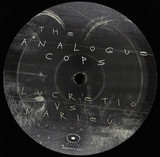
After the successful first volume of their split collection, Lucretio
and Marieu a.k.a. The Analogue Cops come back on Memento with a
breathtaking four tracks E.P..
Lucretio delivers two cuts written and produced with the extraordinary
Kyma workstation: “Ghetto Stab” is an heavy DanceMania influenced
party banger while “Any Idea” is a deep techno journey into the realms of spectral manipulation.
Marieu brings in all the hardware horsepower romanticism with “Tab and Rub” and “The Restored Text”; the first being acid excursion into the memories of the earl From days, the second interpolating massive kick drums and saturated harmonics with frantic vocal samples.
A record not to be missed!
Supported by: Rhadoo, Ame (Kristian), Dj Ralf, Marco Faraone, Arnaud Le Texier, Ilario Alicante, The Wasp, Shlomi Aber, Richie Hawtin, Joseph Capriati, Maceo Plex, Marco Carola, Francesco Farfa..
Exhilarating, previously unreleased recordings by Derek Bailey and his guests at Company Week in 1983: Jamie Muir, Evan Parker, Hugh Davies, Joëlle Léandre, John Corbett, Peter Brötzmann, Vinko Globokar, Ernst Reijseger and J.D. Parran.
What’s remarkable throughout this album is the respect and affection the musicians show for each other, exemplifying the dictionary definition of ‘company’ as ‘the fact or condition of being with another or others, especially in a way that provides friendship and enjoyment.’
It starts with Landslide, a brilliant, spiky, spluttering, twanging reunion of Music Improvisation Company members Evan Parker (tenor sax), Hugh Davies (electronics) and Jamie Muir (percussion). Next up, Seconde Choix, with Joëlle Léandre’s close-miked prepared bass and Bailey’s acoustic guitar seemingly heading in different directions before coming together miraculously in just four minutes.
The opening of First Choice, a duet between Bailey and Muir, is a revelation for those who moan that the guitarist plays too many notes. His patient and truly exquisite exploration of harmonics is beautifully counterpointed by Muir’s metallic percussion.
On Pile Ou Face (Heads Or Tails) Davies concentrates on his high register oscillators, carefully shadowed by Parker’s soprano until Léandre’s deft, springy pizzicato lures them into the playground. JD In Paradise is a surprisingly delicate wind quartet, with John Corbett’s trumpet, fragile and Don Cherry-like, punctuating the sinuous interplay between Peter Brötzmann and J.D. Parran (on sopranos, flutes and clarinet), while trombonist Vinko Globokar growls approvingly in the background.
Igor Stravinsky’s definition of music as the ‘jeu de notes’ comes to mind listening to Bailey’s duet with cellist Ernst Reijseger (executing fiendish double-stopped harmonics with staggering ease). Technical virtuosity has never sounded so effortless – it is, as its title Een Plezierig Stukje simply states, a fun piece.
On the closing La Horda, Bailey and Reijseger team up with the horns for what on paper looks like it could be rough and rowdy sextet but which turns out once more to be a thoughtful, spacious exchange of ideas, shapes and colours.
On October 4th Erased Tapes present Handfuls of Night — the highly anticipated follow-up to Penguin Cafe’s much applauded 2017 album The Imperfect Sea — inspired by the Antarctic, Arthur Jeffes’ journey following in Scott’s footsteps and our penguin friends that reside there. Using gut-stringed violins, viola, cello, bass, percussion, upright and grand pianos, synthesiser, harmonium and more, Arthur Jeffes and his cohorts have crafted a vivid series of panoramic sonic landscapes, that are as rich in cerebral poignancy as they are in emotional depth.
Bookended by the atmospheric ambient piano pieces ‘Winter Sun’ and ‘Midnight Sun’, the album traverses glacial minimalism with ease, combining their signature contemporary classical panoramas, such as the melancholic yet upbeat lead track ‘At the Top of the Hill, They Stood...’ and the colossal cinematic piece ‘Chapter’, with the crystalline folktronica on ‘Pythagorus on the Line Again’ — a re-visiting and continuation of the Penguin Cafe Orchestra’s 1993 Union Cafe song on the principles of harmonics.
At the start of the year, Rocafort Records treated us to it's first roots reggae outing in the form of 'The Circle of Confusion' featuring the legendary Studio #1 vocalist 'Cornel Campbell'. ... Warm, feel-good, socially conscious, intergalactic dub.
We hoped for more, and finally it's here! Although slightly more digital in production, "Yesterday was History" cannot be claim to differ enormously from its predecessor. But hey, why mess with the formular when the results are pure and damn-near perfect ... ?
'The Circle of Confusion' are a Swiss production duo: Seb.K (Shakedown productions) and Phil'eas (Black Diamond Sound).
Recorded at Addis records in Geneva on the day of Mandela's passing, this track is another slice of dubby humanity-driven peace and love that buoyantly skips along aided by the sweetest scatting voice in reggae, (not showing any signs of it's 73 years), and all the appropriate studio space-age sound effects, harmonics and vintage keys. Modern roots reggae at its best, where the dub version is as banging and cosmic as the A Side.
"The first series comprises six related movements, usually organised in pairs, electronic sounds with instrumental and more rarely, concrete sounds: Incidences/resonances brings into play controlled resonances akin to sounds of concrete origin in a process that helps to expand the variable electronic sound sources.
Here, 'incidents' are opposed to one-off 'accidents' in the second movement: Accidents/Harmoniques (Accidents/Harmonics). In the second movement, very short events of instrumental origin change the harmonic tone of the continuum they interrupt or overlap.
Moreover, the high notes are underplayed, which stimulates the attention given to other phenomena generally hidden by the melodic form applied to the instrumental play. Géologie sonore (Sound Geology) is similar to a flight over an area where different 'sound' layers come to the surface one after the other.
When seen from high above, instrumental and electronic sounds seem to fuse ... Dynamique de la resonance (Dynamics of Resonance) is a microphonic exploration of a single sound resonating through different forms of percussion. L'Etude élastique (Elastic Study) places together various sounds produced by 'touching' elastic or instrumental skins (baloons, doumbeks) or vibrating strings and a number of instrumental gestures close to this 'touch', using electronic processes to generate white noise.
Conjugaison du timbre (Conjugated Tone), the last movement in the series, uses the same substance to apply rhythmic forms onto a perpetually varying tone continuum. "The second series of movements draws its inspiration from concrete and electronic sources rather than instrumental ones. Incidences/battements (Incidences/Beatings) is a reminder of the first movement in the first series which then quickly moves into Natures éphémères (Ephemeral Natures): ephemeral play on instrumental and electronic sounds, singled out by their internal trajectory rather than by the material itself. Matières induites (Induced Matters): just as molecular effervescence triggers a changes of state, it seems that the different states of these sound materials can be generated by each other or through induction processes.
In Ondes croisées (Crossed Waves), the pizz vibrations interfere with somehow 'visible' water drops on the surface of a similar material. Pleins et déliés (Downstrokes and Upstrokes) can be listened to as the energies absorbed in the motion of bouncing bodies, while hollow 'bubbles' and points bring together some people's gravity and others' downwards movements. The work finishes with Points contre champs (Reverse Angle Points).
Here, the notion of perspective of the different sound threads weaving a kind of network, or field, traps the occasional iterative elements in the foreground and progressively absorbs them, giving more space for the angle - and the chanted sound - to grow." (B.P.).
Bathurst is pleased to announce the return of The Motion Orchestra with their new single Sonorous taken from their forthcoming album All One set for release in 2020.
Formed in 2017, this studio project consists of Alexander Bednasch on Double-Bass, Mark Matthes on Violins, Andy Sells on Drums and David Hanke on electronics and production. Though influenced heavily by Neo-Classical and Jazz sensibilities they occupy a musical space that sits in neither sphere, with a compositional style that deftly fuses the orchestral and electronic worlds.
Their debut single – All One was a gorgeous piece inspired by the notion that everything comes from the same source, the same starting point. And it was well received, garnering support from BBC 6Music and Bandcamp Weekly.
Second single Sonorous is just as elegant as their first offering and looks set to continue the upward trajectory the band are currently on. Starting witha repeated electronic motif, it incorporates piano chord harmonics, tasteful bass notes, and swirling jazz drum patterns that interplay wonderfully with beautiful string arrangements, altogether creating a truly captivating character.
The release is comprised of both the original version as well as a the arrangement without the drums. The Motion Orchestra is currently in the process of producing their live show for performances of the debut album.
Sound has the ability to heal. This is the primary tenet that has been driving Karma Moffett for over 35 years. Pure tones, resonant harmonics, the sounds of the earth. At the dawn of the 80’s, as the burgeoning movement of privately-issued New Age was taking hold, Karma Moffett was a pioneer. Eschewing the use of synthesizers and other increasingly-available electronic technology, Karma crafted his meditative, introspective music using ancient instruments. Primarily utilizing Tibetan Bells, and Singing Bowls, Karma Moffett crafted sounds that led the listener on an inward journey.
1982’s Sitting Still Within/Sitting Still Without s Karma Moffett’s earliest triumph. Combining the aforementioned Tibetan Bowls & Bells along with naturalistic field recordings, Karma’s first album is a testament to the power of minimalism and repetition. An ambient voyage that truly draws the listener inwardst, and outwards, Sitting Still Within/ Sitting Still Without is music for healing.
Recital publish the newest record by Canadian composer Sarah Davachi. Currently working on her PhD in Musicology at UCLA, her trajectory has been unorthodox. Hailing from Calgary, Alberta, which, if you've never been there, doesn't really scream "Avant-Garde" (Calgary is the rodeo capital of the world). From a young age, Sarah was a driven pianist (and figure-skater, although that's a story for a different time). It is important and interesting that she chose to study esoteric music; as Sarah could have easily been a cowgirl or a concert pianist had her ingrained love of synthesis and sonic phenomenology not taken the wheel.
Sarah is a considered person. I find few people that have the diligence and resolve to take their time with music... especially in a live context. I respect that about her. The first time I saw Sarah perform, I presumptuously told her that her music reminded me of my favorite Mirror albums (the exceptional project of Andrew Chalk and Christoph Heemann). Sarah was not familiar with Mirror, so the compliment was initially lost on her. Years back I was in the same situation when a review compared my music to Andrew Chalk, who was unknown to me at the time. So I felt a kinship in our magnetic drift towards unspoken and clustered beauty.
Let Night Come On Bells End The Day follows the release of her "sound-wheel" LP All My Circles Run, which examines the isolation of different instruments. Let Night Come On..., recorded mainly with a Mellotron and electronic organ, feels like a return to the nest. Burrowed in the studio, Davachi was the only performer on this album. She both splays her compositional architecture and re-contextualizes the essence of her early output. She chiseled careful and shadowed hymns; anchors of emotion.
Two pillars of this album are "Mordents", which to my ears drops hints of her love for Progressive rock music - and "Buhrstone," comparable to a sombre funeral march of piano and flutes. These two examine punctuations of early music, gently plucking melodies and movements. The three other compositions are tonal works, blowing slow jets of lapping harmonics.
Writing this description now, I find it hard to separate "At Hand" from filmmaker Paul Clipson, who made a melancholic film for this piece of Sarah's. A fitting title for Sarah and Paul's relationship - frequently working in orbit of each other, meticulous and tactile. I cherish this track as a memory of Paul.
This is a lovely album to fill an evening living room with. A blanket, a cup of wine, a dim bulb, a wide window.
Three beautiful photo-prints by Davachi are included with Let Night Come On Bells End The Day. Frames are not included.
- Sean McCann
lack Truffle present In Real Life, the latest in a flurry of releases from Berlin-based guitarist and composer Julia Reidy. Having drawn acclaim for solo performances on 12-string acoustic guitar that bridge microtonality, ‘American primitive’ stylings and classic minimalism, Reidy’s recent releases have utilised an increasingly broad sonic palette, fleshing out guitar-based composition with electronics, field recordings, and – most strikingly – heavily auto-tuned vocals. On In Real Life, Reidy pushes one step further, crafting an epic LP-length suite that moves from abstracted song to lush electronics and explorations in contemporary musique concrète. Beginning with a passage of eerie electronics and creaking percussive interjections, Reidy’s heavily auto-tuned voice quickly takes centre stage. Surrounded by explosions of electric guitar and synthesised arpeggios, the auto-tuned voice delivers a melancholic ode, bringing together poetic images to reflect on the instability of experience and mutability of identity in a contemporary world saturated by digital technology. This concern with the unsettled relationship between the physical and digital is reflected musically by the constantly shifts in emphasis between Reidy’s physically demanding guitar-picking and the various forms of synthesis deployed. Similarly, the dynamic imagery of cutting, shattering, and ‘racing streams’ present in Reidy’s lyrics also serves to characterise the structure of In Real Life, which ceaselessly shifts between distinct episodes. The song-based opening, long sequences of frenetic 12-string guitar shadowed and eventually overtaken by synth tones, passages of delicate chiming harmonics, electro-acoustic cut-ups – each flows seamlessly into the next, often recurring throughout the record’s duration, which lingers over interstitial moments between these episodes.
Mixed and mastered by Joe Talia at Good Mixture, Tokyo. Vinyl cut at 45rpm for maximum fidelity by Rashad Becker at D&M, Berlin. Artwork by Suze Whaites. LP desgn by Lasse Marhaug.
- A1: Friendly Fires
- A2: Dirty Disco
- A3: C.p
- A4: Loose Talk (Costs Lives)
- A5: Inside Out
- A6: Melt Close
- B1: Hit
- B2: Babies In The Bardo
- B3: Be Brave
- B4: New Horizon
- C1: Knew Noise
- C2: Up To You
- C3: Girls Don’t Count
- C4: After Image
- C5: Human Puppets
- D1: Charnel Ground
- D2: Haunted
- D3: Je Veux Ton Amour
- D4: One True Path
- E1: Loose Talk (Costs Lives) (Live)
- E2: Human Puppets (Live)
- E3: Knew Noise (Live)
- E4: Friendly Fires (Live)
- E5: Girls Don’t Count (Live)
- F1: New Horizon (Live)
- F2: Haunted (Live)
- F3: You’re On Your Own (Live)
- F4: One Step Backward (Live)
- G1: Always Now
- G2: Visitation
- G3: Regions
- G4: The Wheel
- G5: No Abiding Place
- G6: Once Before
- H1: There Was A Time
- H2: Wretch
- H3: Sutra
- I1: Fallen Monument
- I2: Are You There?
- I3: Virtually Everything
- I4: Tape Loop
- I5: Subferior
- I6: In The Garden Of Eden
- I7: Cry
- J1: Red Voice
- J2: Floating
- J3: Reading Uni Jam With New Order 1981
Factory Benelux is proud to present a deluxe 5 disc vinyl box set edition of Always Now, the debut album by cult Factory Records group Section 25, produced by legendary sonic architect Martin Hannett and sleeved by Peter Saville.
All tracks are newly re-mastered from the original quarter-inch tapes. The first 1000 copies of the box set are pressed in coloured vinyl: disc 1 (black); disc 2 (clear); disc 3 (yellow); disc 4 (red); disc 5 (silver). The outer case in printed in PMS 123 with spot varnish.
The 16 page booklet features unseen images by noted photographer Philippe Carly and texts by founder members Larry and Vin Cassidy. Also included is the first ever interview with guitarist Paul Wiggin, whose sudden departure in late 1981 saw Tony Wilson try (and fail) to recruit pre-Smiths teenager Johnny Marr as replacement.
Recorded as a trio at Pink Floyd’s Britannia Row studio in London in January 1981, Always Now combined austere post-punk rhythm and noise with elements of Can, Krautrock and modern psychedelia. Key tracks include Friendly Fires, Dirty Disco and New Horizon, along with C.P. (a collaboration with Hannett) and Hit (extensively sampled by Kanye West for the track F.M.L. on his 2016 album The Life of Pablo).
Disc 2 gathers together several non-album singles from 1980 and 1981, including Charnel Ground, Je Veux Ton Amour and debut EP Girls Don’t Count – the latter produced by mentors Rob Gretton and Ian Curtis (of Joy Division).
Disc 3 offers a complete live show professionally recorded at Groningen (Netherlands) on 26 October 1980, as part of a Factory package tour.
Disc 4 is part-improvised second studio album The Key of Dreams, recorded and produced by the band themselves a few months after Always Now, and released by Factory Benelux in June 1982.
Disc 5 consists of further experimental material recorded in 1981 and self-released on a cassette called Illuminus Illumina. This final disc closes with an extended (and previously unreleased) live encore jam recorded with all four members of New Order at Reading University on 8 May 1981.
“One of the best albums Britain's second city has unleashed” (Uncut);
“In 1980 their bass-driven mantras were thoughtlessly dismissed as second-rate Joy Division, but hindsight judges them more kindly. The wind-dried skeins of their blasted guitar harmonics and skimped electronics gauntly cling to the songs’ skeletal frames. With telltale titles like Babies in the Bardo their Buddhist interests hang heavy over these early stirrings. But, combining a bass-led drone with a characteristic groaning vocal, Charnel Ground succinctly pins down Section 25's pre-disco appeal” (The Wire)
incl. Download Code


![The Circle of Confusion - Yesterday Was History/Yesterday Was History (TCOC Yesterdub Mix) [feat. Cornel Campbell]](https://www.deejay.de/images/l/4/4/943844.jpg)