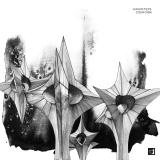
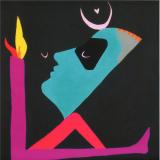
Long time label collaborator and dub maestro Havantepe is back on Berg Audio with yet another journey into the deeper, more atmospheric shades of techno, unfolding across four timeless tracks. This release marks the highly awaited come back of the imprint’s “Monument” series, featuring a full cover designed by Juli Jah.
Put your hands together and please welcome Linda Lo to Shall Not Fade's Time is Now imprint. The LA producer/DJ's new 12" EP "Masa" drops 23rd Oct 2026 and f**k is it sick.
Linda Lo fuses* mambo, samba, and salsa with UK garage, dubstep, and club rhythms to make guaranteed rewind material that is gonna light up the dance…
* imma talk about this fuses sh*t in a minute.. First we need to get a bit philosophical. Cos rewinds and fusions aside, this EP is alive. It's part of something bigger and cyclical, without a start or an end. It is music. It was part of someone else's music before and it will be part of other people's music in the future. Right now though, it's Linda Lo's music.
Too esoteric? Let me elaborate and, let's talk about fusion. There is the fusion that is – steal a bit of genre X and culture Y, chuck it on the grid and strut about professing fusion – and then there's actual fusion: Music that is something "new" and real and genuine. Music that you end up describing excitedly as a "fusion of" things (even if it inevitably ends up doing it a disservice). Music that is simultaneously one thing and not that thing, and also something else and not that something else too. Music that is just "music" to the creator but is also part of the progression and evolution of music for others. Mala wasn't making "dubstep". Skream & Benga ended up not making Garage. Like many before and after they were making their music and Linda Lo is making her music so let's hear from her about it. Big up Linda. This is real.
Notes from Linda:
-----------------
“Like Croydon by way of Havana”
“Masa, or corn-based dough used to make tortillas and tamales, is a traditional staple food for many in Mexico and throughout LatAm. In the Maya worldview, people's flesh is made out of masa. In order to make masa, corn must be dried, nixtamalized, ground, and mixed (often by hand) to create the right textured dough. I find much of my music work is a collision and a mixing of many elements, all worked into one product. In this way, I've worked these songs, transforming raw rhythms and sub bass into hand-mixed tunes. ‘Masa - EP' presents four delicious heaters. The title track explodes with a fiery double-time dubstep groove. Mambo horn stabs bite through a bass inferno. ‘Cenote' looks down upon a subterranean pool of sound—still on the surface but impossibly deep. ‘Minifalda', pure flirt and gyration, calls in cuica and other voices from a samba bateria. Finally, claves stitch across ‘Mestiza', a fusion of blooming lush orchestration and jagged 2step rhythm.
Around 1960, my grandparents were regular dancers at the Palladium in Los Angeles: young, Mexican, and falling in love to dance music, specifically big band mambo. My mom, consequently, is a fantastic dancer, and her mambo collection along with my dad's exotica records formed the base of my own vinyl collection. When I first discovered garage and dubstep, there was something indescribably familiar to me, something mambo-like about the syncopated offbeat hits and drama. Later, as I began stitching together mambo claves and 2step drums, I assumed I was trying out something totally new. The farther I go, the more I see that I was wrong.
Dubstep, garage and jungle share a parental lineage back to dub reggae, originating from Jamaica. Mambo hails from Cuba, and sister genres of salsa to NYC & PR, and bachata and meringue to the Dominican Republic. Yet, these musical genres of the Caribbean have not developed in isolation. Reggae, mambo, dancehall, salsa, even son jarocho from Veracrúz, Mexico (where my family is from), all developed together, influencing each other fundamentally. Ultimately, all musics of the Caribbean have come from West African polyrhythmic musical heritages. Garage, mambo, dubstep, and salsa are points in time along one musical continuum.
I feel very honored to be a selector working in Los Angeles (and elsewhere!). I hope I can share some music for the next generation of young people to fall in love to. "
-----------------
I'm moved by what Linda writes here. #1 Doing what you love, and finding you are part of something bigger. Creating for yourself freely and hoping to inspire others with healthy amounts of care, humility, freedom, self awareness and enjoyment. (It is inspiring and I'm honoured we are now a part of sharing Linda's music). #2 There's something wonderful about finding connection and a sense of place. A place physical, spiritual and in time. Music can help us all find connection and be part of a place. Wheel it up wherever you are.
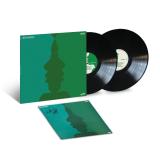
With her 3rd Blue Note album Synonym, Meshell Ndegeocello presents a remarkable album of duets on classic songs that are known, loved, and diverse in tone, “genre”, intent, and BPM. This is an album about joy, love, selfhood, individual representation and universal experience that explores expressions of desire, care, heartbreak, friendship, disappointment, and love in all the forms. All the songs feature two singers who identify as the same gender, wherever that might be on the continuum, and are musically matched for contrast or compliment including Cynthia Erivo, Cat Power, Robert Glasper, Chaka Khan, Madison Cunningham, Laura Lee (Khruangbin), Emily King, Lizz Wright, Lianne La Havas, Moses Sumney, Brandi Carlile, ANOHNI, WILLOW, Bill Callahan, Chris Thile, and more.
DALGA – A Selection of ’80s Pop Oddities from Turkey is the first compilation to bring together rare Turkish pop oddities from the 1980s, and the first compilation to explore how new studio technologies shaped the sound of 1980s Turkish pop and dance music. Features six tracks that were released only on rare cassette tapes.
In the aftermath of Turkey’s 1980 military coup, collective music-making gradually gave way to studio-based production, as drum machines, samplers, and synthesisers took centre stage. From the early 1980s onwards, these technologies became increasingly popular among Turkish musicians and producers. While some sought to emulate the global pop sound of the era, like Neriman’s “Sever Gibi” and Füsun Önal’s “Takma Kafana” others experimented by blending electronic elements with Arabesque, as heard in Mehmet Pekün’s “Anca Gidersin” and Zorbeyler’s “Bir Mumdur” or with Anatolian pop influences, such as the studio project Tele Tempo’s “Şu Samsunun Evleri” and “Havada Bulut”.
Let these waves carry you through the electrified tides of 1980s Turkey.
DALGA is compiled by Istanbul-based beat maker and digger extraordinaire Grup Ses.
The album that launched punk rock — raw, fast, loud, and utterly unstoppable!
Part of the Acoustic Sounds 40 Series
Releasing 40 titles to celebrate the 40th anniversary of Acoustic Sounds!
180-gram 45 RPM double LP
Mastered from the original master tape
Pressed at Quality Record Pressings
Tip-on old style gatefold double pocket jacket by Stoughton Printing
The Ramones ignited the punk-rock movement with their eponymous 1976 debut album, revitalizing rock and roll at one of it's lowest ebbs with attitude, energy and a loud, fast new sound. By cutting music down to it's bare essentials — four chords; a simple, catchy melody; a sped-up tempo and irresistibly inane lyrics, the Ramones blazed the trail for thousands of bands that followed, influencing everyone from The Clash and The Sex Pistols to Green Day and The Offspring.
Although The Ramones never achieved mainstream financial success, they released 21 live and studio albums, had a devoted fan base and were inducted into the Rock & Roll Hall of Fame in 2002. Other bands, such as the Stooges and the New York Dolls, came before them and set the stage and aesthetic for punk, and bands that immediately followed, such as the Sex Pistols, made the latent violence of the music more explicit, but the Ramones crystallized the musical ideals of the genre.
A landmark of 1970s Turkish psychedelic funk, Zafer Dilek’s Oyun Havaları returns to vinyl 50 years after its original 1976 release on the legendary Yonca Müzik label.
One of the defining figures of the 1970s Turkish studio scene, Zafer Dilek transformed Anatolian melodies through his distinctive microtonal electric guitar and groove-driven arrangements. Across twelve instrumental reinterpretations of regional Turkish melodies, psychedelic guitar, bağlama, heavy bass and tightly locked percussion meet in a sound deeply connected to the golden age of Yeşilçam cinema and embedded in Turkish collective memory.
The album’s influence reaches directly into today’s global Anatolian psychedelic movement: Altın Gün later reinterpreted two tracks from the record, while Khruangbin championed the cult dance-floor cut “Yekte.”
Long sought after by collectors in its scarce original pressing, Oyun Havaları is finally available again as an official archival reissue, restored from the original master tapes, mastered and lacquer cut by Frank Merritt at The Carvery, London, and pressed on 180g black vinyl at Record Industry, the Netherlands.
BERG AUDIO is happy to welcome back one of our favorite producers, Havantepe. In the past few years, the Turkish artist’s output has become rare, greatly increasing our excitement to finally share these masterfully crafted pieces on the label. The release includes a superb collaboration with Christopher Ledger, and a remix from one of Romania’s key artists, Cristi Cons – Artwork by Juli Jah.
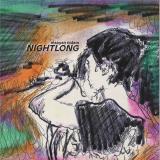
The roots of Nightlong can be traced back to Havana in early 2008, where a series of recordings captured some of the most compelling contemporary Cuban singers and musicians. These sessions yielded a striking collection of voices, woodwinds, and brass, all imbued with a distinctive warmth and vitality—material that called for a careful and inspired reinterpretation.
That reinterpretation came from Maayan Nidam. With remarkable intuition and precision, she distilled the essence of these performances and reshaped them into a work that feels both organic and forward-looking. Moving beyond her signature dance floor framework, Nidam explores a wider range of rhythms, textures, and tonal depth, crafting an album that unfolds with subtle complexity and emotional resonance.
The result is a fluid and immersive record—one that transforms its source into something entirely new, while preserving its expressive core.
Celebrating 30 years since ‘Buena Vista Social Club’ was released, this classic will be made available on limited edition pearl vinyl and features the remastered audio and bonus tracks released as part of the album’s 25th Anniversary in 2021.
Masterminded by the trio of Cuban bandleader Juan de Marcos González, American producer and guitarist Ry Cooder, and British producer and label owner Nick Gold, 'Buena Vista Social Club’ is both the name given to this extraordinary group of musicians and the album they recorded in just seven days in 1996 in Havana’s 1950s vintage EGREM studios. It was clear from the atmosphere of the recording sessions that something very special was taking place. However, no one could have predicted that Buena Vista Social Club would become a worldwide phenomenon – awarded a Grammy in 1997 and, at over 8 million copies, outselling any other record in the same genre.
The acclaim of the original album elevated the artists (including Ibrahim Ferrer, Rubén González, Eliades Ochoa, Compay Segundo and Omara Portuondo) to superstar status, inspired an award-winning film by Wim Wenders, a Tony Award-Winning Broadway Musical and contributed to popularising Cuba’s rich musical heritage. Produced by Ry Cooder and Executive Produced by Nick Gold for World Circuit, the timeless quality of the music and the sheer verve of the veteran performers have ensured that this album will go down as one of the landmark recordings of the 20th century.
Brand new tracks made from the Havana Sessions, recorded by Brian d'Souza aka Auntie Flo in downtown Havana around 2015.
'Havana City' is a joyous, summer anthem in the making, featuring Andrew Ashong on vocals and a host of Cuban musicians. Think Nuyorican Soul's classic 'I Am the Black Gold Of The Sun' with a Tony Allen-inspired drum beat, luscious string arrangements, triumphant horns and addictive keys - all given the space they deserve and fully justifying the 11.5 minutes run time.
The 2026 version of 'Die Bailando' re-invents the original minimal electro beat to a latin rhumba-influenced groover. Grammy-nominated singer Eric Alejandro aka Cimafunk's vocals are a huge highlight, now fused with new guitars from Ziggy Funk and drums from Ibibio Sound Machine's Jose Joyette.
Completing the package is a remastered version of 'Mother Theresa' - which has close to 2 million plays on Spotify but was never released on vinyl. Drift away to the sounds of the Malecon...
A State of Flo supports Earth Percent. 10% of the revenue generated from this release will be
paid to environmental charities.
In the beginning of the 1970’s, Guinea-Bissau was a country broken up into many ethnic groups and at the heart of a war for independence. By reviving traditional musical genres as Gumbé and singing in guinean Kriol, José Carlos Schwarz & Cobiana Djazz established an immediate affective bond with their audiences. Through its music and politically engaged spirit of the lyrics, the band played a significant role in shaping the social and political consciousness of the masses. As well as influencing local bands like Super Mama Djombo and giving back a deep sense of cultural identity to bissau-guineans.
The explosive birth of Cobiana Djazz brought about other kinds of detonation. Schwarz became involved in urban guerilla activities which resulted in several bombings in the centre of Bissau, leading to his imprisonment and torture. He remained in lockup for a total period of about 2 years, between 1972 and 1974.
The process of decolonisation, in the wake of the Portuguese revolution of 25 April 1974, led to the recognition, during the same year, of the sovereign nation of Guinea-Bissau.
Schwarz, a key figure in the fight for independence, played an important part in the transition to the democratic regime, profiting from his popularity as an artist. Soon, his criticism (underscoring opportunism and irresponsibility in high places) became a thorn in the side of the political elite. Uneasy with the disquieting effects of his work, government officials effectively separated the author from the masses by assigning him to the embassy in Havana.
José Carlos Schwarz met a tragic and untimely death at the age of 27, when his plane crashed on arrival at Cuba's José Martí International Airport, on May 271th 1977.
Hailed by african giants like Orchestra Baobab, Letta Mbulu or Miriam Makeba (with whom he recorded his first and only solo album), “Zé Carlos” and his poetry won a lasting position in the annals of Guinea-Bissau. However, this collection of songs remains relatively unknown outside the country and its diasporas.
We are proud to offer, in close collaboration with the Schwarz family, this first official reissue on vinyl. Remastered and pressed on heavyweight vinyl.
Introducing Sum Of Its Parts: A new collaborative music project led by Alex Nut. Featuring remixes by Boddhi Satva.
London, UK — A new musical project titled Sum Of Its Parts brings together a dynamic collective of musicians under the direction of DJ, curator and Eglo Records mainstay Alex Nut, who steps into a central creative role as the project’s musical director and producer.
Sum Of Its Parts is built on a fluid, collaborative model, featuring a rotating cast of musicians drawn from some of the UK’s most exciting contemporary music circles. Including Sam Crowe (Lianne La Havas) on Keys, Junior Ali-Balogun (Sault/Cleo Sol) on percussion and Duane Atherley (Kokoroko) on Bass.
Debut EP, The Message, introduces the project’s expansive sonic identity across two original compositions. The title track, The Message, is a 10-minute spiritual jazz odyssey—deep, meditative and expressive. In contrast, Hello High – which previously appeared on the Eglo Records Vol. 3 compilation – delivers a soulful, jazz-inflected house energy with dancefloor sensibility. Extending the release further, the B-side features two amazing remixes by revered House producer Boddhi Satva, who reinterprets the project’s sound through his unique Ancestral Soul lens.
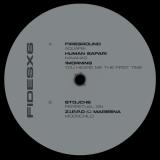
Fides Records proudly presents the second last chapter of its 10-year anniversary series: X6. Here, the narrative pivots toward groove and immersion between Detroit-rooted sounds, jazz-infused flair, glitchy futurism, and deep dub meditation. This chapter highlight the label’s love for movement, texture, and long-form atmosphere.
Side A opens with Fireground’s “Aquaria”, a sexy, bouncing techno cut carrying old-school Detroit spirit and harmonic fluidity: funky yet refined, shaped by the Italian duo’s live-set mentality, live improvisation and vintage synthesisers. Human Safari’s “Havanas” follows, merging jazz and techno through a standout trumpet solo and lush groove work, carving out a vibrant, genre-crossing mood that feels both bold and effortless. Closing the side, 1morning’s “You Heard Me The First Time” delivers early-2000s techno DNA with a modern edge: glitchy rhythms, unpredictable sequencing, and a playful sense of tension-and-release.
Flipping to Side B, Macedonian master Stojche leads with “Perpetual Sin”, a dub techno lesson in restraint: evolving through spacious layering and emotional subtlety until it fully envelops the room. The record closes with Z.I.P.P.O & Mareena’s “Moonchild”, a tribal, dub-infused deep techno immersion where percussive drive meets meditative energy—an internal journey built for big systems and late hours.
DJ Support: Sasha, Marco Faraone, Robin M, Just Her, FKA Mash, Paul Van Dyk, Adriatique and CamelPhat
Bedouin joins forces with vocalist Marieme for their latest release ‘Reason’, available now on the duo’s Human By Default label. The track marks part of the imprint’s fifth anniversary celebrations.
‘Reason’ blends Bedouin’s hypnotic grooves and emotive melodies with Marieme’s soulful, evocative voice. Her lyrics explore themes of identity, freedom, and self-perception, resulting in a collaboration that balances movement with emotional depth.
Comprised of Tamer Malki and Rami Abousabe, Bedouin has spent over a decade developing a genre-blending sound rooted in their Middle Eastern heritage and Western upbringing. Their music has appeared on Crosstown Rebels, Big Beat, and more, while their Ibiza residency SAGA—now at Chinios Ibiza—has become a staple of the island since 2017. The duo has also performed at Coachella, Tomorrowland, Kappa Futur, Burning Man, Ushuaïa, and Hï Ibiza.
Marieme, born in Mauritania and raised between Senegal and the US, brings a distinctive storytelling approach through her recent singles ‘Harmony’, ‘Tell Me’, and ‘Havana Nights’. Her work promotes self-love and liberation, expressed with a powerful vocal presence.
The black and white hoverbike flew out of the fog at breakneck speed and raced through the neon-lit urban jungle of the Havan metropolis. It manoeuvred steadily between the skyscrapers, trying to throw off the tail of the corporal's convoy, which was getting closer by the moment, preventing it from sneaking away with the seemingly easy-to-get Zero-G prototype. This weapon could create an anti-gravity field with a single shot and disable even the largest battle cruiser. That's why an elite squad of cyber-soldiers equipped with modified implants and gadgets was sent in pursuit not to allow them to ease off for a second.
With a sharp steering wheel jerk, Spacelunch turned off the main street and into a narrow alley. "Your turn!" – He shouted insistently over the engine's roar. Cat rose from the back seat, took aim, and deftly fired his blaster. In a pall of sparks and smoke, the pursuer's hoverbike spun out of control and crashed into the building. Gritting their teeth, the friends raced through the winding maze of obstacles and tight turns. All senses were heightened with excitement. They could see a gap ahead and a way out into the slums.
Suddenly, a heavily armed police drone blocked the road, aiming its red gun lights at them. Spacelunch decisively grabbed Cat and jumped into the so-fortunately spotted sewer manhole, barely managing to dodge the gunfire barrage. After landing in a pitch-dark narrow tunnel, they moved on, with every step feeling the growing tension in the air and realizing that they could be found out at any moment. The darkness seemed endless. The only consolation was that they had the prototype in their hands, and now all they had to do was get to the spaceship and get off this freaking planet.
сбор заказов
Заказать сейчас – как только наберется необходимое количество заказов, продукт будет отштампован.
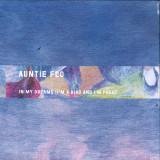
Brian d’Souza, better known as Auntie Flo, delivers his brand-new fourth studio album, ‘In My Dreams (I’m A Bird and I’m Free)’, set for release on 21st November. The album, a rich blend of electronic music, live instrumentation, and global influences features collaborations with the likes of Nicola Cruz, Joshua Idehen, Shingai Shoniwa, Yohan Kebede (Kokoroko) and even his Goan Auntie Florie, where the Auntie Flo moniker is derived from. Each track on the album transports you to a different location: Goa, Istanbul, Nairobi, Mexico City, Waiheke Island, Rio De Janeiro, Havana, Seoul are all destinations to nest in across its ten tracks. It will be available in both digital and vinyl formats on his own label, A State of Flo Records.
Auntie Flo’s latest body of work is the culmination of a five-year journey that has seen d’Souza expand both personally and musically. Known for his unique ability to fuse electronic sounds with rhythms and influences from across the globe, d’Souza takes his craft to new heights in this album, offering listeners an intimate look into the experiences, places, and stories that have shaped his artistic evolution. The groundbreaking DJ and producer presents an expansive, deeply personal exploration of global sounds, collaboration, and migration.
Following the success of the Afro-disco single Green City—a dynamic tribute to the legendary Fela Kuti and Luke Una’s ‘track of the year’—In My Dreams (I’m A Bird and I’m Free) ventures further into uncharted musical territory. The album, however, is more than just a continuation of Auntie Flo’s signature sound. It is a reflection of d’Souza’s life and career, capturing his exploration of identity, migration, and cultural fusion. With tracks that draw inspiration from field recordings collected around the world, the album resonates with a profound sense of place and memory.
In My Dreams (I’m A Bird and I’m Free) is not only a reflection of d’Souza’s creative journey but also a commentary on migration—both human and musical. The album draws on the freedom of birds to migrate across borders as a metaphor for artistic and personal freedom, juxtaposed with the challenges that political barriers impose on human migration. As d’Souza explains, “Birds have the freedom to migrate wherever they choose, while humans face constant barriers”.
A State of Flo supports Earth Percent. 10% of the revenue generated from this release will be paid to environmental charities.
Comprised of Clams Baker Jr., Benjamin Romans Hopcraft, Adam J. Harmer, Marley Mackey, Quinn Whalley, and Bleu Ottis Wright, Too Cold To Hold is undoubtedly their best and most ambitious album to date. Taking on board the repetitive and polyrhythmic grooves of gqom (an alluring South African take on house music), adding in a dash of hip hop flavours and even jazz, and then harnessing that to their punk-funk, disco pogo, it’s a spellbinding mix. The album is produced by the band’s Ben Romans Hopcraft alongside Jamie Neville.
Talking about the first track to be taken from the album, ‘Fashion Week’, which is a joyous account of fashion’s die-hard fans rather than the more visible arrivistes or dilettantes, Clams said: “Those that will do anything to become that thing. That creation. And live it. It’s real artistry when you don’t have the means and you’re doing it. You’re hustling to get on the guest list, you get in, you’re done up by means that you can’t really afford, whatever you do… It’s a celebration of people who will do whatever to look good and feel good and step above wherever they are in their own minds.”
With a reputation as one of the most exciting and mesmerising live bands out there right now, they have also today announced both details of a very special ‘Fashion Week’ launch show at London’s Lexington on 10th July and a run of U.K. / EU dates to coincide with the album release in November – the dates include their biggest London headline show to date at The Troxy. The full list of dates, which is as follows:
Open Space is proud to present our first ever full-length LP by LA’s newest 3-man band, Puli. Some words from our dear friend Matt McDermott below:
In recent years, a cadre of musicians from the east side of Los Angeles have reestablished the city of angels as the first city of Balearica. Alex Ho’s “Move Through It” followed in the lumbering footsteps of Project Sandro’s “Blazer.” Now, there’s a new landmark for the floating west coast sound. Swirling, the first album from LA supergroup Puli.
If you’ve got your ear to the ground you know the names involved here. Drummer and producer Damon Palermo’s pedigree stretches back a good 15 years or so, starting off with dub punks Mi Ami. Phil Cho is one of the busiest DJs, musicians and advocates for the deep stuff in LA, throwing legendary hillside parties under the Third Place banner. John Jones, the preternaturally talented guitarist and electronic tinkerer, records as AV Moves, is a key member of the Suzanne Kraft and Baba Stiltz live configurations and plays in The Trilogy Tapes-affiliated act Geo Rip.
But this listing of personnel and credentials puts too fine a point on it. Puli are three close friends who go to parties, DJ and get tacos together, repairing to their Chinatown studio a few times a week and coming out with remarkably textured, idiosyncratic downtempo jams. Building off the solid foundation of their 7-inch of heavyweight dubs for Melbourne’s Constant Delay, Swirling is an exploration of new horizons in chill out.
“Ramona” acts a statement of purpose—with halftime/double-time dub-tinged rhythms, hazy yet bright synth motifs and atmospheric guitar from Jones, not terribly far from the expansive approach of Japanese dub aesthetes Pecker. “Cloudy,” meanwhile, is a sort of deconstructed and bittersweet Balearic pop featuring Cho’s ethereal vocals. “Bongo Springs” is steppers’ house not far from close LA peer Benedek or the Mood Hut crew up north.
But what truly sets this record apart is the space and layers in the production—while it’s nominally an electronic record, Puli is a band that has slowly crafted these songs in the rehearsal space. “Havana Jam” cruises along a sliding roundwound bass guitar take with dubby chords and textural guitars. Palermo’s hand drums and live percussion enmesh perfectly with icy pads on “Leech Seed Dub.” Cho is back on the mic for the gorgeous closer, “C.S.B.”, underpinned by breakbeat and trunk-rattling sub bass. Puli doesn’t sound like anyone else, and is ultimately reflective of the city itself. Listening to Swirling feels like navigating a warren of side streets in the eternal sunshine. Take the drive and dive.
CoN and KwAkE are Confucius MC and Kwake Bass. They share long and entwined histories with saxophonist and Native Rebel label owner Shabaka Hutchings, and with many of the incredible London musicians and producers who have emerged over the last decade.
Eyes In The Tower, their debut album released one year ago, was the second release on Shabaka Hutchings’ Native Rebel Recordings, where he invites friends and family to RAK Studios improvise around sketches he’s written specifically for the invited artists. A uniquely London evolution of classic hip hop, it was brewed for over a decade before being made in three days.
Two tracks from the album have now been remixed to celebrate the one year anniversary of the album: 15 Minutes gets reworked by Daisuke Tanabe and Dance In The Dark by Anja Ngozi.
Confucius MC has been embedded in UK hip hop since the early 2000s. He was the support of choice for Mos Def, and recently toured with UK hip hop stalwart Jehst.
Kwake Bass is musical director for Sampha and Kae Tempest. Behind the kit he has become the player of choice for travelling US heavyweights, playing with MF DOOM, The Roots and Joey Bada$$, as well as UK major players Lianne La Havas and Mica Levi.
Introducing the latest vinyl gem from Adlibitum Tum Tunes, it's the highly anticipated release number 004 by the dynamic duo, Goose & Hosca. These two maestros aren't just DJs and producers, they're true sonic artisans, crafting mesmerizing soundscapes that resonate with the soul.
Their collaborative project emerged organically, sparked by countless sessions of impromptu jams fueled solely by hardware. From these creative depths sprung a unique sound, one that seamlessly blends elements of acid, electro, and dub into a tapestry of sonic delights. With each track, Goose & Hosca invite listeners on a journey through their musical universe, a realm where the boundaries between genres blur and the energy is palpable.
Track A1, "Gently Weeps," sets the tone with its hypnotic acid groove, while "Lost Hera" on A2 delves deeper into introspective territories with its mesmerizing breaks.
On the B side, "Rinkuuddo" (B2) brings the EP to a crescendo with its infectious energy and intricate rhythms.
And nestled between these originals lies the crown jewel of the EP, the B1 track, "Rinkuuddo (Havantepe Remix)." Renowned dub techno artist Havantepe lends his expert touch to the duo's work, transforming it into a mesmerizing sonic journey that will leave listeners spellbound.
Prepare to be enchanted, dear vinyl enthusiasts, as Goose & Hosca invite you to immerse yourself in their sonic world. This EP is not just a collection of tracks—it's a journey, a testament to the power of music to transcend boundaries and unite souls on the dancefloor.
Adlibitum Tum Tunes is a division of MixCult Records.
There’s something to be said for getting noticed, for standing out from the crowd. West London’s T.Williams is one of those people, having accomplished a full sweep of merited recognition over the years. Emerging onto the house scene in 2010, T.Williams instantly marked himself as a breakthrough artist with a difference; his unique take on house music turning heads.
Far from a newcomer, his path as a musical artist started in the grime scene as Dread.D. Signed at the tender age of 17 with grime anthem Invasion on Jon E Cash’s Black Ops label, Williams went on to have mass success in the grime and bass world selling thousands of singles worldwide. After a five-year reign, Williams found himself veering towards the world of house music. With a new found love for the sound and its sub-genres, T.Williams forged a signature sound influenced by his grime days, jungle, and garage. With a style that undoubtedly impacts, T.Williams’ crossover has been the catalyst for his success. Not only rife with groove and feeling but meticulously produced and engineered with deep rumbling basslines, the unapologetic bounce of grime and smooth vocals that bleed through African infused percussion work.
While in 2010 the industry took note when hit record ‘Heartbeat’ featuring vocalist Terri Walker made an impression, it was throughout 2011 that T.Williams defined himself - releasing solo works on his imprint Local Action and Pattern with remixes for Maya Jane Coles, Ben Westbeech and Skream. Not stopping at pricking the ears of fellow artists and those on the dancefloor, the end of 2011 saw Williams nominated for ‘Best Breakthrough DJ’ by DJ Mag, ‘DJ Stars of 2012’ by Time Out and featured in The Guardian.
Two relationships came to the forefront in 2012 that propelled Williams to greater heights. The first was his weekly show on legendary London station, Rinse FM and the second, Williams’ relationship with label PMR through his remix of Javeon McCarthy’s ‘Lost Time’. The remix was named Record of the Week by BBC Radio 1 and supported by tastemakers Annie Mac and Fearne Cotton. From here T. signed to the label exclusively releasing his debut EP for the label in September 2012, and in the process receiving further support from BBC Radio 1. Further remixes of Mikky Ekko, Wretch 32 and Lianne La Havas followed suit, as well as his biggest to date - Disclosure’s ‘Latch’. Powering dancefloors across the globe, T. went on to play three US tours, numerous festival stages, and deliver a second EP on PMR titled ‘Feelings Within’. The EP once again spanned a number of bases, from club bangers to heartfelt vocal driven tracks alike. Gaining his own monthly residency show with BBC Radio 1, 2013 ended with T. having played over 100 shows across four continents.
2017 marked the launch and release of the first collaborative EP with UK producer Julio Bashmore, via their joint independent Conch Records, a label aiming to push out more underground cross-genre music with heavy rotation from the likes of Moxie and Shy One. With an ever-expanding global tour schedule and further solo releases on the legendary NYC house label Strictly Rhythm turning heads, T.’s upward trajectory has never showed signs of slowing down. Selected to soundtrack the social media campaign for boxer Anthony Joshua in 2019 and now using his technical prowess as a musician to educate the next generation of rising stars at London’s respected Point Blank Music School has cemented his status as one of the UK music scene’s key players.
Hatıralar was Anadol's second album, originally composed between Berlin and Istanbul around 2012 and released years later only in digital form on the Istanbul based label Inverted Spectrum. The title Hatıralar ("Memories") turns out to be a self-fulfilling prophecy. Anadol recalled and revisited the music in 2023, gently editing and mixing the compositions for the newly mastered LP format in which they now see the light of day. Hatıralar represents an early version of the melodic, instrumental synth-pop that Anadol refined on her album Uzun Havalar (2019) before exploring the more free, krautrock-inspired musique concrète of her last album Felicita (2021). Here is the text that accompanied the original 2017 release:
Anadol, named after an old-fashioned Turkish automobile brand, is an instrumental synth-pop project by Gözen Atila, an artist, dj and keyboard player. She records with mini organs manufactured during the 70s and 80s, the built-in rhythms and arpeggios of these machines provide the backbone of her sound, and her melodies are influenced by pop music and soundtracks from France, Italy and Turkey from the same period. The music is awash with allusions to the moods of old Turkish and European cinema, from the erotic to the melodramatic, and with a reminiscence of the sound and spirit of so-called "tavern music" popular in Turkey's urban nightlife in the 1980s, a flexible pop style usually performed by a solo keyboardist-singer. Anadol is a continuation of the tradition of lone synth experimentalists like Bruce Haack and The Space Lady with their childlike curiosity for electronic sounds, and of the keyboardists pushing the boundaries of minimal equipment to entertain middle aged drunk couples in pubs and wedding parties of Istanbul.
Psychedelic Funk: this is the musical mood of the new Sexopolis. For those who enjoyed in the 70s or those who jus discover them today, will find in this last release internationa and very rare historical songs shuch as “Flute Salad” from JuPar Universal Orchestra, “Misty Purple” by Rolf Kühn, “Dove” by Cymande, and also some Italian gem
such as “Fall out” by The Braen's Machine (Alessandro Alessandroni ), “Nebbie misteriose” by Ugo Busoni.
16 tracks, 80 minutes of a music journey between the mystic and psychedelic, funk and afrofuturism, as always original versions gently remastered, and pressed on limited light blue splattered double vinyl.
"Things are looking better than ever for GENERATION STEEL! The quintet from Wetzlar/Germany, has reinvented itself on all fronts and is set to take the music world by storm with its upcoming third studio album, Steelmachine.
With the addition of guitar wizard and songwriter Thilo Herrmann - who made his debut in 1985 on the FAITHFUL BREATH classic “Skol” and has written heavy metal history throughout his career with RISK (including “Ratman”), RUNNING WILD (including “Black Hand Inn”, “Masquerade”), and GRAVE DIGGER (including “Ballads of a Hangman”) - bandleader and guitarist Jack the Riffer now has a living legend by his side.
There has also been a change behind the mic: from now on, Swedish vocalist Mike Stark - who currently sings for the Argentinian band FEANOR and the Swedish group STORMBURNER - is setting the tone. His powerful, high-pitched yet dynamic voice gives the new tracks an absolute seal of quality.
GENERATION STEEL stands for authentic, traditional, '80s-influenced heavy metal, combining the styles of ACCEPT and JUDAS PRIEST.
The ten neck-breaking tracks on the band's third full-length album were produced by Piet Sielck (IRON SAVIOR), who has previously refined classics by GAMMA RAY, GRAVE DIGGER, HEADHUNTER, STORMWARRIOR and BLIND GUARDIAN.
The cover artwork, designed by Gyula Havancsak (who has also created artworks for POWERWOLF, ACCEPT and BLIND GUARDIAN, among others), is equally eye-catching.
Anyone who loves honest, traditional German metal will quickly embrace “Steelmachine”, because the quintet not only takes us back to the '80s, but also shows just how timeless true metal is. Ten home runs, including the four singles “Steelmachine”, “Witches Cross”, “Wings of Fire” and “Fields of Pain”.
Stay Metal – Stay Steel!"
Ajo Se Po is the third album by alto-saxophonist and percussionist Kevin Haynes, released with his band Grupo Elegua. The album integrates musical elements with references to his deepening spiritual understanding. Haynes has created a modal harmonic language incorporating Afro-Cuban melodies and classical kora playing - his alto-sax, infusing the album with a personal 'voice'.
Yoruba spirituality is at the heart of Haynes' musical thinking which also includes both Nigerian and Cuban dimensions. This is especially reflected by the use of recitation and Cuban bata drumming being employed on all tracks, with each piece growing out of a particular bata rhythm. Each such rhythm is dedicated to a particular Orisha, or divinity.
As well as influences from Afro-Cuban, Native Nigerian and folkloric Bata, Haynes' music is a fusion of contemporary jazz incorporating Mandinga folk and praise songs and hard bop.
Kevin Haynes and Grupo Elegua have performed at renowned jazz festivals including Havana Jazz Festival, Cuba and Salamanca Jazz Festival, Spain. Haynes has also featured on Moses Boyd's hit album Displaced Diaspora.
Previously available on digital only, Ajo Se Po is now released on vinyl.
нет на складе
Последняя поставка 10 дней назад доступно для дозаказа без гарантии
Meshell Ndegeocello war schon immer für Überraschungen gut – jetzt erfindet die Bassistin, Sängerin und
Produzentin, die im Soul, Jazz und Funk immer wieder Zeichen gesetzt hat, einige der größten Popklassiker
als Duette neu neu!
Diese Coverversionen sind für Meshell Ndegeocello weit mehr als bloße Hommagen. Sie nimmt bekannte
Songs auseinander, legt ihre emotionale Substanz frei und setzt sie mit ihrer unverwechselbaren Handschrift
neu zusammen. Songs wie “Knew You Were Waiting (For Me)”, “Guilty” oder “Islands In The Stream”
hat man selten so cool und emotional packend gehört wie hier.
Das Repertoire reicht von den 1960er- bis in die 1990er-Jahre und verbindet Soul, Pop, Rock, Country
und R&B. Jeder der fünfzehn Songs entstand als Duett. Dafür versammelte Ndegeocello eine beeindruckende Riege prominenter Gäste, darunter Cynthia Erivo, Chaka Khan, Cat Power, Madison Cunningham,
Emily King, Lizz Wright, Lianne La Havas, Moses Sumney, Brandi Carlile, WILLOW, ANOHNI und Robert
Glasper.
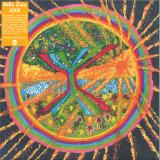
Mit"XXX" feiert die Istanbuler Kultformation BaBa ZuLa ihr 30-jähriges Bestehen und unterstreicht eindrucksvoll ihren Status als eine der innovativsten Stimmen der internationalen Psychedelic- und World-Music-Szene. Seit ihrer Gründung verbindet die Band anatolische Musiktraditionen mit Psychedelia, Dub, elektronischen Klangwelten, Improvisation und experimentellen Songstrukturen. Auf ihrem neuen Album schaffen BaBa ZuLa erneut einen unverwechselbaren Kosmos aus hypnotischen Saz-Klängen, treibenden Rhythmen und vielschichtigen Klanglandschaften. Inhaltlich widmet sich die Band Themen wie Natur, Erinnerung, gesellschaftlichem Wandel und kultureller Identität. Die kompromisslose künstlerische Haltung und die kontinuierliche Weiterentwicklung haben BaBa ZuLa weit über die Grenzen der Türkei hinaus zu einer prägenden Größe gemacht. XXX präsentiert die Band fokussierter denn je und dokumentiert eindrucksvoll, warum sie seit Jahrzehnten als Wegbereiter des modernen türkischen Psychedelic-Sounds gilt.
нет на складе
Последняя поставка 17 дней назад доступно для дозаказа без гарантии
Welcome to Somewhere Else Entirely – a cinematic road trip to the sea, picking up traces of Indie Folk, Dream Pop and Neo-Soul along the way.
Floatist's debut explores finding connection in uncertain times through playful yet driving grooves, cinematic strings and hazy analogue soundscapes - embracing the unknown with curiosity, courage and joy.
Somewhere Else Entirely brings together twelve tracks that drift between worlds. Gentle, intimate voices tell stories and merge into immersive choirs, floating on airy grooves. The music invites the listener to sink in, get comfortable, roll down the imaginary window and lean their head into the warm rush of air, while sun-drenched maritime landscapes pass by and the salty breeze announces the approaching sea.
For fans of: Helena Deland, Nick Hakim, Puma Blue, Feist, Konradsen, Clairo, Alice Phoebe Lou, Lianne La Havas, Lutalo, Klangstof, Sam Evian, Hannah Cohen, Rosie Lowe
Tommy McCook was not only a founding member of the legendary Jamaican Ska group The Skatalites, but also a brilliant musical arranger. His informed understanding of Jazz, R&B and in fact most music styles would always add another layer to any song put his way. This made him the go to guy for most of the Jamaican producers, who would use his arrangement skills to pepper up their latest tunes.
Tommy McCook, (b1927, Havana, Cuba) came to Jamaica with his mother from Cuba aged 11 and entered renowned Alpha Boys School for underprivileged children, a school that placed great emphasis on musical tuition. At the tender of 14, such was his talent he has left to join Eric Deans Orchestra and took on stints with other bands led by Don Hinchman and Roy Coburn. All the bands played in the Swing and Jazz style of the times. He relocated to the Bahamas in 1954 where he further developed his Jazz technique and upon his return to Jamaica in 1962 began working Coxsone Dodd’s Studio One and became involved in the development of Ska. His knowledge of Jazz, R& B and Jamaican musical forms helped set the tone for the group of musicians he was working with and would name the Skatalites. The group, consisting of Don Drummond (Trombone), Roland Alphonso (Tenor Saxophone), Jackie Mitoo (Piano), Lloyd Brevett (Bass), Lloyd Knibbs (Drums), alongside Tommy himself on Tenor Saxophone. The group would back all the major Ska vocalists pf the day and would also go on to cut a catalogue of instrumental music. The Skatalites split up in 1965 and Tommy McCook moved over to work with Duke Reid’s Treasure Isle Studios where he formed The Supersonics. A set of musicians under his guidance that consisted of Lynn Tait and Ernest Ranglin (Guitar), Neville Hinds and Winston Wright (Organ), Gladstone “Gladdy” Anderson (Piano), Hugh Malcolm and Arkland “Drumbago” Parks (Drums), Clifton “Jackie” Jackson (Bass), and Tommy and Hernon Marquis (Saxophone). The more laid back sounds from 1966-1968 would be given the name Rocksteady of which again McCook was at the forefront. The top producers like Bunny Lee would use the musicianship of Tommy McCook and his arrangement skills to enhance this new sound.
We have compiled a great selection of rhythms that featured McCook blowing over tracks stripped of their vocals and replaced with some fantastic lead lines played by Tommy and some of his fellow horns men.
We hope you agree like we do that they do this in fine style.
Brownswood Editions unearths another treasure from the catalogue, revisiting the Havana Cultura project. Initiated by DJ, broadcaster and curator Gilles Peterson in the late 2000s, Havana Cultura connected contemporary Cuban musicians with global audiences at a time when international perceptions of Cuban music were still largely rooted in the Buena Vista Social Club era.
Instead, the project spotlighted a new generation of Havana-based artists whose sound drew from contemporary diasporic influences - neo-soul, hip-hop and reggaeton - seen through a distinctly Afro-Cuban lens.
One of the project’s most explosive moments came with this Cuban reimagining of Fela Kuti’s classic Roforofo Fight, a track that quickly became a DJ favourite thanks to its live energy and deep rhythmic drive. The band features both Mayra Caridad Valdés (daughter of Chucho) - one of Cuba’s leading contemporary jazz and soul singers and internationally acclaimed pianist Roberto Fonseca.
This new 12" edition pairs the original version with a highly sought-after remix from house music legend Louie Vega, who brings his unmistakable New York Latin house touch, extending the groove for contemporary dancefloors while respecting the Afro-Cuban roots of the recording. The original remix pressing has since become highly sought after on discogs, making this long-awaited return to vinyl essential for DJs and collectors alike.
A meeting point of Afrobeat heritage, Cuban musicianship and club culture, the release reflects Brownswood’s long-standing mission to join the dots between scenes, sounds and generations.
нет на складе
Последняя поставка 67 дней назад доступно для дозаказа без гарантии
UK Balearic boss Pete Herbert has been dropping sounds inspired by his worldly travels for years and now gems from the last 20 years all make it on to this essential long player. These are all sounds for sunny spots, watery retreats and beach bliss-outs with Pete's signature touch everywhere. 'Back To Bahia' is a bubbly and loose house sound, 'Later That Night' has an edge that makes is suited to sundown dancing and 'South Seas' is a horizontal escape, while 'Legzira Sunrise' is dubby downtempo with tender chords that sink you in deep. This is the sort of record that elevates your collection with magical tunes for many different moments.
нет на складе
Последняя поставка 56 дней назад доступно для дозаказа без гарантии
The 12th studio album from Death Metal Veterans, JUNGLE ROT. DAVE MATRISE (Vocals/Guitars): "Let's start off by saying what an amazing accomplishment it is to hit 12 releases in my career. Never would I think I'd still be doing this 30+ years later. I guess be careful what you wish for I'm very grateful to all of our fans that have supported us for so many years and for never giving up on us. To my bandmates for all of their hard work and dedication to me and JRot over all these year’s. Cruel Face Of War will not disappoint. It's full of crushing grooves and violent hooks that will surely break anyone’s neck. We have stood the test of time. We are still here playing our trademark style of Oldschool Death Metal that has carved a legendary name for us in the underground scene today." Produced by Chris Djuricic at Bell City Sound Company. Mixed and Mastered by Dan Swano at Unisound Studio. Artwork and design by Gyula Havancsak
Ever since the late 1950s bossa-nova revolution, Brazil’s influence on French music has been undeniable. Pierre Barouh, Georges Moustaki and a vast array of lesser known artists, all made the Musica Popular Brasileira (MPB) an axis of promotion at the service of a cool and metaphysical, modern and mixed Brazilian lifestyle. Some were seduced by the poetic languors of the bossa, some were looking for fun, and others just loved the American hybridization of jazz-bossa, jazz-samba.
What is bossa nova? One of its creators, Joao Gilberto said: "Its style, cadence, everything is samba. At the very start, we didn't call it bossa nova, we sang a little samba made up of a single note - Samba de uma nota so .... The discussion around the origins of bossa nova is therefore useless”. It is nevertheless useful to remember that these magnificent Brazilian songs, which the guitarist describes as samba, were shifted and balanced around improbable chords. "I like things that lean, the in-betweens that limp with grace," said Pierre Barrouh, quoting Jean Cocteau.
With emotion, arrangements for violin and supple guitar licks, bossa nova rapidly changed. A transformation that can be heard in the Tchic, tchic, French Bossa Nova 1963-1974 compilation, the result of a cultural reappropriation, which traveled through the United States and supplemented itself in France.
A musical revolution that has remained significant, bossa nova was born in Rio. From 1956 to 1961, Brazil lived through its golden years. In five years, the country had invented its modernist style. Elected president in 1956, Juscelino Kubitschek de Oliveira, an elegant man with a broad forehead, brandished a promising slogan: "Fifty years of progress in five years". He quickly got to work. Not worried about increasing debt, he launched the project for a new federal capital, Brasilia, designed by the communist architect Oscar Niemeyer. Volkswagen opened state-of-the-art factories and created the “fusquinha”, the Beetle. In Rio, the Vespa made its first appearance. The Arpoador Surf Club crew run into the “girl” from Ipanema, Helô Pinheiro - the tanned garota ("chick"), between a flower and mermaid, who at 17 walked by the Veloso bar, where the fiery author and composer, Tom Jobim and Vinicius de Moraes, were getting drunk on whiskey. From then on, bossa symbolized cool.
In 1958, Joao Gilberto recorded Chega de Saudade, which the directors of Philips denied, calling it "music for fagots". The marketing director, who believed in it, secretly pressed 3000 78-inch vinyls and distributed them at schools around Rio, creating a tidal wave.
American jazzmen then took over. In particular, trumpeter Dizzy Gillespie and guitarist Charlie Byrd. In November 1962, the Brazilian Ministry of Foreign Affairs funded a "Bossa-Nova" concert at Carnegie Hall in New York, inviting the genre’s pioneers. Unprepared, the show soon turned to disaster. But the troupe was invited to the White House by Jackie Kennedy. The first lady loved "the new beat" and in particular Maria Ninguem, a song by Carlos Lyra, later covered by Brigitte Bardot.
In Brazil, the 1964 military coup quickly ended this euphoria. The destructive atmosphere that ensued pushed many Brazilian musicians to leave, if not to exile. Thus, Tom Jobim, Sergio Mendes and Joao Gilberto arrived to the United States. In New York, Joao Gilberto met saxophonist Stan Getz. At the time, he was married to the Bahianese Astrud Weinert Gilberto, who had a German father. She had never sung before, but she knew how to speak English. Getz therefore asked her to replace her husband on The Girl From Ipanema. The Getz/Gilberto record with Tom Jobim on piano, was released in March 1964. Phil Ramone, the "pope of pop" was in charge of sound.
Bossa nova arrived in Paris through the classic “guitar-voice” channel (Pierre Barouh, Baden Powell, Moustaki…) But France loved jazz and Paris had already welcomed its American contributors. All these good people were to pass through Saint-Germain-des-Prés. The cabaret l'Escale became the Mecca of Latin American sound where one could find Pierre Barrouh and his friends, such as the Camara Trio, samba-jazz aces, whose only record was published by the Saravah label. With a band strangely called Les Masques (a band that included Nicole Croisille and Pierre Vassiliu, among others), the Camara Trio recorded an interesting Brazilian Sound, including the track Il faut tenir which is present on this tasty compilation of rarities.
Other enlightened musicians can also be found on the compilation, such as Jean-Pierre Sabar (songwriter for Hardy, Auffray, Leforestier ...) and the French pop rock organist Balthazar. In 1975, Sabar recorded Aurinkoinen Musiikkimatka on a Finnish label, which featured the crazy Vai, Vai, included on this record. We are now following the footsteps of Brazilian electronic musicians such as Sergio Mendes, Eumir Deodato or Marcos Valle who created funk and disco sounds on their keyboards and synthesizers. A style that influenced Véronique Sanson when she wrote Jusqu’à la Tombée de la nuit in 1969 for Isabelle de Funès, the niece of Louis and a great friend of Michel Berger - Sanson did end up singing this track on her 1992 Sans Regret record.
The pinnacle of exoticism and travel, Sylvia Fels’ Corto Maltese includes bongos, sea mist and ocean sounds. The title was taken from Jacky Chalard’s concept album written in 1974, Je suis vivant, mais j’ai peur (I am alive, but I am scared), based on Gilbert Deflez’s science fiction novel.
However, bossa nova extended the scope of popularity. "In the 1970s, I was a fan of Sergio Mendes, Getz / Gilberto. I fell in love with this music that I knew because I had been an orchestral singer, " explained Isabelle Aubret, who in 1971 delivered a composite record of covers by the very funky Jorge Ben, Orfeu Negro, Tom Jobim, Vinicius de Morais and Jean Ferrat. "I recorded this album for Meys Records in Paris, far from Brazil, with wonderful musicians, François Raubert, Roland Vincent, Alain Goraguer...". The latter wrote the arrangements for Casa Forte, a very percussive title borrowed from Edu Lobo, one of the initiators of the bossa who spent time in California. "Jazz and bossa came together and produced very rhythmic music. I love singing, it allows me to dream, to have fun, to feel a high on stage, and these songs brought me joy, made me swing, my singing felt like a dance.”
The world tours of French singers and their desire for the tropics, often brought them to Rio with its hills, forests, caipirinhas and tanned bodies. There are surprises though, like this Iemenja (Iemenja is the goddess of the sea in the Afro-Brazilian candomblé religion). Not unlike the composer and musician Jean-Pierre Lang, based in Sao Paulo, Claire Chevalier taught Brazil to Brazil. In 1970, the singer and painter published a 45-inch vinyl, Mon mari et mes amants (My husband and my lovers), under the improbable pseudonym of Clarinha (little Claire). She was then living in Rio, with her husband, Joël Leibovitz, who founded a band called Azimuth, and who owned a record label specialized in "sambas enredos" songs for samba school parades.
For its B side, she asked Pierre Perret to come up with lyrics for a song composed by Carlos Imperial: "Oh goddess of the sea, o goddess Iemenja, I bring a white rose to adorn your long hair ..." . "Perret came to see us, and we had fun, remembers Joël Leibovitz. We wrote Lemenja for fun, we recorded it at the Havaí studio, behind the Central do Brasil the central station. Erlon Chaves, the arranger who worked with Elis Regina, joined us" adding his share of Afro-Brazilian percussions and funky brass to the mix.
There is a common misunderstanding in Franco-Brazilian history: that bossa, admittedly hedonistic, is perceived as funny, even though the poets who wrote the texts are often philosophizing on the human condition. Its French interpreters pull it towards a carnival inspired universe, far removed from its fundamental essence. Thus, Jean Constantin covered the famous Samba da minha terra, an ode to the art of samba written by the classic Bahian composer Dorival Caymmi, renaming it with the enticing title of Pas tant de tchi tchi pompon: "On your pier there is no tchi tchi / when you arch your back, you know everything is alright ”(lyrics by Gérard Calvi). This expedited bossa aims for the absurd, but retains a certain elegance.
Indeed, Jean Constantin was not an idiot, the rather large man had a huge mustache and liked fantasy, (Les pantoufles à papa, Le pacha, inspired by cha-cha-cha-cha, salsa and jazz) but he was also the lyricist of Mon manège à moi interpreted by Edith Piaf, the composer of Mon Truc en plume by Zizi Jeanmaire and the soundtrack of François Truffaut’s 400 Blows. Le Poulpe, published in 1970, from which this bossa is extract, was arranged by Jean-Claude Vannier, an accomplice of Serge Gainsbourg’s Melody Nelson. In short: "There is enough of samba / By looking at the parasol / Because my poor cabeza / Is going to die in the sun".
Even the American actress Marpessa Down, who was at the heart of the bossa nova revolution with her role as Euridyce in Marcel Camus’ film Orfeu Negro, winner of the 1959 Cannes Palme d'or, fed the clichée with Je voudrais parler au petit cuica - "Tell me how you manage to always make people want to dance / It's true, I must admit that I cannot resist your magic" - in consequence, once can hear the cuica, a little drum inherited from the Bantu.
But bossa nova had many angles. Societal, of course, pushing actresses who were symbols of women's liberation like Brigitte Bardot, Jeanne Moreau, or Sophia Loren to engage in the exercise of accelerated bossa. In February of 1963, Sophia Loren made a record in French in Rome, Je ne t'aime plus, featuring the song De jour en jour, a bossa written by two Italians, Armando Trovajoli and Tino Fornai, which was released a little later by Barclay. Bossa accompanied the 1960s, a decade of moral liberation. Ann Sorel, who interpreted La Poupée des favellas, caused a sensation with L’amour à plusieurs, a provocative song written by Frédéric Bottom and Jean-Claude Vannier. As for the actress Andrea Parisy, she displayed her bourgeois cheekiness in Marcel Carné's Les Tricheurs before interpreting Les mains qui font du bien. And Magalie Noël, the friend of Boris Vian, who sung Johnny fais-moi mal, was hired to sing Une énorme Samba, composed by Alain Goraguer (arranger to Gainsbourg, Bobby Lapointe and Jean Ferrat) with lyrics by Frédéric Botton.
But in the end, of what wood is bossa nova made of? The answer is given by Christianne Legrand, daughter of Raymond the conductor, and sister to Michel the composer: "With me, with jà" - jà means "immediately" in Portuguese. In 1972, the singer, an expert in vocal jazz and a member of the Double Six, published Le Brésil de Christianne Legrand. Two songs included on the Tchic Tchic compilation that demonstrate how bossa, jazz, funk, rock, etc. work like a swiss army knife: the music is used to denounce broken systems, or miracles, HLM et ciné roman, Cent mille poissons dans ton filet, two songs from the O Cafona soundtrack, a successful telenovela broadcast, at the time in black and white, on TV Globo. The first was adapted in French by the fighter and friend of the Legrand tribe, Agnès Varda. The second is content with a play on words, jostling them into a summer fun.
Véronique Mortaigne
нет на складе
Последняя поставка 3 месяца назад доступно для дозаказа без гарантии
This tidy joint release between Future Rootz and Luchando Music compiles rare recordings from 1970s and 80s Cuba, all sourced from private archives and reel-to-reel tapes. This is the sort of selection to get serious diggers hot under the collar as it explores funk-driven arrangements, jazz-informed horn sections and rhythm-led compositions contoured with Afro-Cuban percussion. There is plenty of tape saturation and analogue noise present throughout that reinforces the archival origins of the music and instrumentation centres on brass, keys and layered percussion, with grooves built from syncopated patterns and live ensembles. Alongside the music, restored credits and contextual research foreground the musicians and recording histories behind these previously unavailable works. Do not sleep on this one.
нет на складе
Последняя поставка 3 месяца назад доступно для дозаказа без гарантии
The album takes its name from the seaside neighbourhood of Havana, Cuba, where Maza was born. Written and composed by the Maza, Alamar unfolds through a singular dialogue between voice and cello, blending musical traditions from the Americas with a refined, modern sensibility. The album tells a coherent story - an artistic journey shaped by roots, departure, healing and joy. Sung in Spanish, French, Portuguese and English, Alamar reflects the international path of a world-class independent artist capable of transforming intimate history into a shared emotional experience.
Der mehrfach preisgekrönte Londoner Jazz-Saxofonist startet mit seinerm neuen Soloalbum sein eigenes Label.
Multiinstrumentalist, Produzent und Künstler Shabaka (Hutchings) veröffentlicht mit "Of The Earth" sein drittes Soloalbum, das gleichzeitig das erste ist, das über sein eigenes Label Shabaka Records erscheint und komplett von ihm selbst geschrieben und produziert wurde. Auf "Of The Earth" kehrt Shabaka zu seinem charakteristischen Saxophonklang zurück, ergänzt durch ausgefeilte Elektronik und Produktion sowie traditionelle Holzblasinstrumente und Perkussion aus aller Welt. Diese Kombination unterstreicht sein vielseitiges Talent und prägt den Gesamtklang des Albums. Hutchings genießt hohes Ansehen für seine Arbeit mit The Comet Is Coming, Sons Of Kemet, Shabaka And The Ancestors sowie für die beiden jüngsten Soloprojekte "Perceive Its Beauty, Acknowledge Its Grace" (2024) und "Afrikan Culture" (2023). Als Musiker arbeitete er bereits mit einer Vielzahl namhafter Künstler zusammen, darunter Andre 3000, Floating Points, Mulatu Astatke, The Sun Ra Arkestra, Lianne La Havas, Saul Williams und viele mehr. "Of The Earth" erscheint als schwarze Vinyl-LP, als limitierte kornblumenblaue Vinyl-Edition und als CD. Beide Vinyl-Formate enthalten ein Booklet mit Hutchings' eigenem Artwork.
For Record Store Day 2026, Brownswood Recordings mark two decades of boundary-pushing independent music with Twenty Years Deep, a limited-edition 3xLP vinyl compilation celebrating the label’s rich, global catalogue and enduring influence.
Founded in 2006 by broadcaster, DJ, and cultural tastemaker Gilles Peterson, Brownswood has spent the last 20 years championing forward-thinking artists who sit just left of centre: rooted in Afro-diasporic music, but never confined by genre. Twenty Years Deep is a snapshot of that journey: a carefully curated collection spanning the label’s early breakthroughs, cult classics, and defining moments.
Pressed exclusively for Record Store Day on 3 piece coloured vinyl Twenty Years Deep brings together tracks that reflect Brownswood’s long-standing commitment to artistic freedom, musical lineage, and future-facing sounds. From deep jazz explorations and dancefloor mutations to global collaborations and genre-defying hybrids, the compilation captures the connective thread that has defined the label since day one: trust in artists and belief in music that lasts.
Rather than a greatest-hits exercise, Twenty Years Deep functions as an archive and a statement documenting how Brownswood has maintained its own point of view. By following a highly instinctive approach to A&R the label has shaped music culture, introduced new voices, and built a catalogue that continues to resonate well beyond release cycles.
Twenty Years Deep will be available exclusively at participating independent record stores on Record Store Day 2026, pressed as a limited-edition 3 piece vinyl release.
нет на складе
Последняя поставка 67 дней назад доступно для дозаказа без гарантии
The 12th studio album from Death Metal Veterans, JUNGLE ROT. DAVE MATRISE (Vocals/Guitars): "Let's start off by saying what an amazing accomplishment it is to hit 12 releases in my career. Never would I think I'd still be doing this 30+ years later. I guess be careful what you wish for I'm very grateful to all of our fans that have supported us for so many years and for never giving up on us. To my bandmates for all of their hard work and dedication to me and JRot over all these year’s. Cruel Face Of War will not disappoint. It's full of crushing grooves and violent hooks that will surely break anyone’s neck. We have stood the test of time. We are still here playing our trademark style of Oldschool Death Metal that has carved a legendary name for us in the underground scene today." Produced by Chris Djuricic at Bell City Sound Company. Mixed and Mastered by Dan Swano at Unisound Studio. Artwork and design by Gyula Havancsak