Black Truffle is pleased to announce World in World, the latest solo offering from prolific Berlin-based guitarist-composer Julia Reidy. Where the recent trilogy of LP releases – brace, brace (Slip, 2019), In Real Life (Black Truffle, 2019), and Vanish (Editions Mego, 2020) – focussed on increasingly lush electronic settings for Reidy’s propulsive fingerpicking and auto-tuned vocals, arranged into wide-ranging side-long epics, World in World finds Reidy refocusing on the core elements of their approach while simultaneously pushing into challenging new areas. Comprising nine pieces ranging between two and seven minutes in length, the album’s opening title track promptly introduces the distinctive palette of just-intoned electric guitars, subtle electronic processing, and voice that is rigorously explored throughout. Where much of Reidy’s guitar work on previous recordings explored rapidly pulsed cycling figures, here notes often hang in the air in a more spacious, lyrical fashion. The elasticity of rhythm and non-linear repetition of pitches initially suggests improvisation until the listener becomes aware of the precise arrangements of spatialised lines. At times, World in World suggests classic bedroom electric guitar works of the 1990s such as Loren Connors’ Airs or Roy Montgomery’s Scenes from the South Island; like those works, Reidy’s possesses a wonderfully live ambience, with frequent pedal clicks adding to the music’s powerful sense of intimacy. In Reidy’s case, however, the yearning, melancholic mood of Connors or Montgomery is tempered by the unorthodox guitar tuning, which at points produces a unique and uncomfortable effect somewhere between the hyper-precision of Harry Partch or Lou Harrison and Jandek’s slack-stringed descent into the void. While World in World plots out its terrain with a bold single-mindedness that allows some pieces to appear almost as variations on a common theme, subtle changes in emphasis distinguish each track. Tactile percussive interjections skitter across the tremolo tones of ‘Paradise in Unrecognisable Colours’, while ‘Ajar’ ramps up the role played by the electronics, with glitching pitch-shifted and back-masked textures threaded through the guitars and thickly harmonised vocal layers. Ranging from autotuned melodic lines to buried murmurs, Reidy’s voice is a frequent presence throughout these nine pieces, at times creating the impression that a more conventional series of songs lurks underneath the chiming microtonal guitars. On the stunning ‘Poised’, whispers and distant, ghostly wails surround the layers of guitars, at times suggesting the foggiest outer reaches of Liz Harris’ Grouper. Both rigorously experimental and emotive, World in World is undoubtedly Julia Reidy’s finest work yet.
Buscar:the julia set
Julian Jeweil returns to Drumcode for his first EP in two years with the inspired six-tracker ‘Boreal’ split across two records.
The Frenchman has been a vital member of the extended Drumcode family since 2017 when he debuted with the fantastic ‘Rolling’ EP. Since then, highlights have included playing main stage at Drumcode Festival and dropping the critically acclaimed ‘Transmissions’ album in 2019.
His ‘Boreal’ EP marks his fifth outing on the imprint. Part I kicks off with the title track, a truly special record, striking the sweet spot between euphoria and melancholy, as airy pads and stirring waves of melody stamp it with a timeless feel.
On the flip, ‘Time’ is a propulsive weapon built around a steely industrial backbone and is a necessary tool for every set. ‘Reverse’ closes out part one in style - a low-slung beast that builds up intergalactic energy throughout.
wieder auf Lager Die Hamburger Band Faust gehört zu den großen Namen, die der Krautrock der 1970er-Jahre hervorgebracht hat. Als Jean-Hervé Péron und Zappi Diermaier 1971 ihr Debütalbum vorlegten, wollte das in Deutschland niemand hören, im Ausland jedoch verkauften sich "The Faust Tapes" über 100.000-mal. "There is no group more mythical than Faust", schwärmte der englische Musiker und Krautrock-Kenner Julian Cope Jahrzehnte später. Mit "Just Us" setzen Faust ihren musikalischen Weg fort. Während Diermaier seinem Handwerk - Schlagzeug und Perkussion - treu bleibt, integriert Peron allerhand unübliche Klangquellen in sein Bassspiel, verschiedene Streichinstrumente, Klavier und sogar eine Nähmaschine als Metronom. Tracks wie "Nur nous" und "Ich bin ein Pavian" zeigen, dass Faust nichts von ihrer Vorliebe für Avantgarde und Dadaismus verloren haben. Ausflüge ins folkloristische Gefilde ("Cavaqui-ho", "Gammes") runden das wahrhaft faustische Überraschungspaket ab.
Splash Blue is proud to present a brand new album borne from the latest collaboration between Jean-Paul ‘Bluey’ Maunick and Francisco Sales of Incognito – ‘The New Guitar Underground Vol 1’.
THE NEW GUITAR UNDERGROUND
The New Guitar Underground are Jean-Paul ‘Bluey’ Maunick and Francisco Sales of Incognito. Neither require introduction – Bluey – founder of the legendary Incognito, Inner Shade, CitrusSun and co-conspirator on the STR4TA project, solo artist, Composer and Record Producer & Francisco Sales, guitarist of Incognito and Citrus Sun, as well as being a solo artist in his own right, have come together to deliver a set of 10 highly crafted and accomplished tracks that lift the spirits and soothe the soul.
Inspired by the inspirational playing of the giants of the guitar world – Tony Mottola, Denis Budimir, George Benson, Bill Jennings & Melvin "Wah Wah" Watson to name but a few, the album reflects the deep love that Bluey and Francisco have for this multi faceted and beautiful instrument.
Guests on this album include bass players Francis Hylton, Hendrik Linder, Rui Pedro Pity and Julian Crampton, keyboardists Matt Cooper, James Berkeley and drummer Francisco Mendolia.
Of course the quality and depth of this musical composition should not be a surprise – given the pedigree of the artists involved, however, as Bluey says himself in the album notes, ‘’This is not a project seeking chart success. Just two guitar buddies having fun chasing musical waterfalls, and not sticking to the rivers and the lakes they’re used to.
We are just making ourselves happy. And if in doing so we make you happy too, then that, as they say, is "the payoff!" The result is an intoxicating fusion of guitars, samba, latin jazz, drum-driven beats, heavy bass lines - with some scratching and sampling thrown in for good measure!
The End Of The Affair is a 1999 romantic drama film written and directed by Neil Jordan. The screenplay stars Ralph Fiennes, Julianne Moore and Stephen Rea. It was based on the 1951 homonymous novel by British author Graham Green. The story is set in London during and just after World War II and is about a flourishing extramarital love affair between Maurice (Fiennes) and Sarah (Moore).
The score was composed and conducted by Michael Nyman, one of Britain’s most innovative and celebrated composers who is best known for his efforts for The Piano (1993) and Gattaca (1997). Dominated by the 24 violin players in the Michael Nyman Orchestra, his compositions perfectly reflect the full emotional range of Jordan’s film.
For the very first time, the Original Soundtrack of The End Of The Affair is available on vinyl. The record is available as a limited edition of 1000 individually numbered copies on flaming coloured vinyl and includes an insert.
Miles Davis Kind of Blue meets Analogue Productions' UHQR, the pinnacle of high-quality vinyl!
Best-selling album in jazz history; mastered from the original master tapes by Bernie Grundman
Pressed at Quality Record Pressings using Clarity Vinyl® on a manual Finebilt press
Purest possible pressing and most visually stunning presentation and packaging!
Dream team of Davis, Adderley, Coltrane, Evans, Kelly, Chambers, Cobb make history.
Legends have a way of sticking around. If there was ever an album awaiting a high-fidelity, custom-pressed vinyl treatment of the level you now hold in your hands, it is Miles Davis' Kind of Blue. The top-selling jazz album of all time, it has been lauded, entered into "Best Of" lists and Halls of Fame, and universally acknowledged as a landmark recording — a five-track masterpiece of melancholy mood and melody.
It continues to be one of the most listened-to and studied recordings of all time, a required primer for many young musicians, and one of the most transcendent pieces of music ever recorded. Davis played trumpet sublime with his ensemble sextet featuring pianist Bill Evans, drummer Jimmy Cobb, bassist Paul Chambers, and saxophonists John Coltrane and Julian "Cannonball" Adderley with Wyton Kelly playing piano on "Freddy the Freeloader."
Now Analogue Productions, together with Quality Record Pressings, is putting Kind of Blue where it belongs: the Ultra High Quality Record (UHQR) pressed on Clarity Vinyl on a manual Finebilt press with attention paid to every single detail of every single record.
The 200-gram records will feature the same flat profile that helped to make the original UHQR so desirable. From the lead-in groove to the run-out groove, there is no pitch to the profile, allowing the customer's stylus to play truly perpendicular to the grooves from edge to center. Clarity Vinyl allows for the purest possible pressing and the most visually stunning presentation. Every UHQR will be hand inspected upon pressing completion, and only the truly flawless will be allowed to go to market. Each UHQR will be packaged in a deluxe box and will include a booklet detailing the entire process of making a UHQR along with a hand-signed certificate of inspection. This will be a truly deluxe, collectible product.
Kind of Blue is more than Miles Davis's most enduring recording, it's a testament to Miles' experimental approach, drastically simplifying modern jazz by returning to melody unlike the chord complexity more often heard at the time. "The music has gotten thick," Davis complained in a 1958 interview for The Jazz Review. "... There will be fewer chords but infinite possibilities as to what to do with them." Kind of Blue is, in a sense, all melody — and atmosphere.
None of the musicians had played any of the tunes before heading into the first of two recording sessions in early spring of 1959. In fact Miles had written out the settings for most of them only a few hours before the session. Miles also stuck to his old recording procedure of having virtually no rehearsal and only one take for each tune.
Miles remained proud of the album, performing at least two of its tracks — "So What" and "All Blues" — for years after, until his musical path took him in a different direction.
History was on the side of Kind of Blue; it was born in 1959, at the peak of the golden age of high-fidelity, featuring innovations in studio equipment (magnetic tape, high-quality condenser microphones), matched by advancements in home audio reproduction (long-player records — LPs; high-end turntables, and other stereo components). Kind of Blue also benefited from Miles' being signed to the leading major record company of the day — Columbia Records, a part of the CBS media conglomerate. Columbia had the means and wisdom to invest in cutting edge recording technology, and their own professional recording studio.
A minor audio complication with Kind of Blue has been addressed with this UHQR edition. The motor on the studio's 3-track master recorder was running slowly the day of the album's first session. This speed issue affected the album's first three tracks, "So What," "Freddie Freeloader" and "Blue in Green," making them a barely perceptible quarter-tone sharp. Before now, it was only addressed in 1995 for the Classic Records edition and by Columbia Records — or their latter-day parent, Sony Music — on a CD reissue in the late '90s.
Sixty years have passed; this LP bridges that time span in the best way possible, struck from the master reel of Kind of Blue, free of speed issues and replete with all the instrumental detail, sonic environment and minimal noise. As we set out to make our UHQR series the world's best-sounding vinyl records, we have also used Clarity Vinyl, which is free of any carbon black pigment which might introduce surface noise. All-in-all this edition of Kind of Blue meets the highest audiophile standards and offers the truest sound for the most enjoyment.
All Them Witches are an American rock band from Nashville,
Tennessee. The band consists of drummer Robby Staebler,
vocalist / multi-instrumentalist Charles Michael Parks Jr.,
guitarist Ben McLeod and keyboardist Allan Van Cleave.
The band’s musical style incorporates elements from multiple
genres, such as hard rock, stoner rock, psychedelia, neopsychedelia, blues, folk and southern rock; however, Julian
Marszalek of The Quietus noted that: “... this isn’t blues of the
‘woke-up-this-morning’ variety but one of malaise, anxiety and
fear brought on a by world seemingly dead set on destruction;
nor is this an escapist variant of psychedelia wherein one form
of reality is jettisoned in favour of another for reasons of cheap
thrills.”
- A1: Pink Turtle - Money
- A2: Ulita Knaus - Have A Cigar
- A3: Gero Körner Trio - Another Brick In The Wall
- A4: Bird On A Wire - Wish You Were Here
- A5: Kirlian Camera - Julia Dream
- A6: Max De Aloe Quartet - See Emily Play
- B1: Nguyên Lê (Featuring Youn Sun Nah) - Breathe (In The Air)
- B2: David Neerman - Us And Them
- B3: Laurent Fickelson (Featuring Stéphane Belmondo) - Set The Control For The Heart Of The Sun (Edit)
- B4: Voices On The Dark Side - Any Colour You Like
- B5: Jordan Rudess - Grandchester Meadows (Edit)
Originally from Limerick, O’Brien’s work captures the everyday and the inbetween in a way that transcends any genre label. Writing from her own observations, O’Brien’s influences can be found in the realism of Mark E. Smith of The Fall, Patti Smith and The Slits, and the works of literary icons such Frank O’Hara, W.B. Yeats, Joan Didion and Albert Camus. Releases to date have drawn admiration from British and American outlets and radio stations as diverse as The FADER, Stereogum, The Guardian, Loud And Quiet, The Quietus, BBC Radio 1 and BBC Radio 6 Music, and more.
Speaking about the new single, O’Brien explains: “‘Most Modern Painting’ is about the creation and maintenance of ‘the self’ - the most epic task we are faced with in our lives. I wanted to work with structure in an unconventional way, linking the movements together using various voices from the narrative. The lyrics are voiced through a dialogue between the conscious and unconscious, through dream recall, memory, the individual and the ego.”
The accompanying music video for ‘Most Modern Painting’ was shot in a film-like manner on 16mm. Directed by Saskia Dixie, the movements are intrinsically linked to the lyrics; the choreography incorporates physical theatre, dance and elements of daily gestures and habits.
The chorus line on ‘Most Modern Painting’ birthed the title for the EP ‘Drowning In Blessings’ - “The more I said it, the more it meant. It’s an image which I find really cathartic; seeing the weight or build up of things as possibilities and opportunities instead of bearing their burdens. I approached the set of songs on the EP like a short album so the body of work feels full and tells a substantial story. Tracks allude and refer to one another and provide clues and hints to the future and to the past. It’s not only about language and music - it’s about energy, spaces, leaving room for other people to get in.”
A multifaceted artist, O’Brien’s writing has also been published by the esteemed London Magazine whose alumni include T.S. Eliot, Sylvia Plath and William Burroughs. Her unique fusion of spoken lyrics and art rock has piqued the attention of luminaries of both fields, seeing her perform with John Cooper Clarke and The Brian Jonestown Massacre at sold out theatres across the U.K. Playing live with her band and collaborators; Julian Hanson (guitar) and Oscar Robertson (drums), Sinead O’Brien’s transfixing performances are placing her at the forefront of a resurgent wave of independent British and Irish talent.
- 1: Intro
- 2: Messias
- 3: Königin Der Käfer
- 4: Unsterblich
- 5: Imperator Rex Graecourm
- 6: Dein Anblick
- 7: Kleid Aus Rosen
- 8: Das Elfte Gebot
- 9: Sieben
- 10: Kalte Winde
- 11: Minne (Faun Version)
- 12: Henkersbraut
- 13: Falscher Heiland
- 14: Tanz Auf Dem Vulkan
- 1: Drag Me To Hell
- 2: Island
- 3: Kein Meer Zu Tief
- 4: Arme Ellen Schmitt
- 5: Eisblumen
- 6: Sie Tanzt Allein
- 7: Ix
- 8: Veitstanz (2014 Version)
- 9: Grausame Schwester
- 10: Alles Was Das Herz Will
- 13: Outro
- 14: Julia Und Die Räuber
- 11: Aufgewacht
- 12: Ausgeträumt
Chart-breaking German folk rock institution SUBWAY TO SALLY have carved a unique live experience in stone with their upcoming release, Eisheilige Nacht: Back To Lindenpark, out on BluRay/DVD/CD on June 18, 2021 via Napalm Records. Since their foundation in the early ‘90s, SUBWAY TO SALLY have established themselves at the top of the scene. Having released thirteen studio records so far, the seven-piece featuring the remarkable Eric Fish on vocal duties never fails in surprising their devotees with an ingenious symbiosis of folk, heavy metal and rock. In the course of time, it became a tradition to celebrate every year with numerous fans and a final live show on December 30. What started as Eisheilige Nacht - with sold out solo-gigs in the band's hometown of Potsdam at the venue Lindenpark - turned into a whole annual festival tour shortly after, where top-notch bands heeded the call to join SUBWAY TO SALLY for some magical evenings. Due to the pandemic, 2020’s edition couldn’t take place in its usual form. As a result, the German folk rock unit decided to offer an unforgettable lockdown live event which they hope will be a unique way to fill the gap until they return to the stage. SUBWAY TO SALLY returned to Lindenpark and - supported by many great artists like Chris Harms (Lord Of The Lost), Joachim Witt, Feuerschwanz, Schandmaul, Saltatio Mortis, Major Voice and Patty Gurdy - created an extraordinary live experience. In an intimate setting, the recording starts with “Messias” and “Königin der Käfer” from the band’s latest chart-breaking full-length, Hey! (DE #5). SUBWAY TO SALLY then continue to not only travel through their own discography with songs like eerie “Unsterblich”, animated “Tanz auf dem Vulkan” and live-sensation “Grausame Schwester”, but also present a bunch of enchanting features as well: Don’t miss when highly talented Birgit Muggenthaler-Schmack and Saskia Forkert (Schandmaul) join SUBWAY TO SALLY for Schandmaul’s “Dein Anblick” and a premier version of “Kleid aus Rosen”, or when the band sets the exceptional stage on fire for an explosive performance with Saltatio Mortis on their hit “Sie Tanzt allein” - just to name a selection.
Hailed as one of the most prodigious guitarists of his generation, Julian Lage has spent more than a decade searching through the myriad strains of American musical history via impeccable technique and a spirit of infinite possibility. After notable Blue Note appearances on The Nels Cline 4’s Currents, Constellations (2018) and Charles Lloyd’s 8: Kindred Spirits (2020), the acclaimed GRAMMY-nominated artist is poised to make his own Blue Note debut with the June 11 release of Squint. Produced by Margaret Glaspy and Armand Hirsch, the dynamic 11-song set ,featuring 9 originals, showcases both Lage’s remarkable songcraft and adventurous sense of improvisation which takes flight in the company of his trusted trio with bassist Jorge Roeder and drummer Dave King (The Bad Plus).
Los Angeles-based harpist Mary Lattimore returns with Silver Ladders, the full-length follow-up to acclaimed album Hundreds of Days. Since 2018, Lattimore has toured internationally, released collaborative albums with artists such as Meg Baird and Mac McCaughan, and shared a friends-based remix album featuring artists such as Jónsi and Julianna Barwick. At one of her festival appearances, Lattimore met Slowdive’s Neil Halstead: “A friend introduced us because she knew how big of a fan I was and Neil and I had a little chat... The next day, I just thought maybe he’d be into producing my next record.” He was. Lattimore traditionally records her albums holed up by herself, so the addition of Halstead’s touches as a producer and collaborator leave a profound trace. “I flew on a little plane to Newquay in Cornwall where he lives with his lovely partner Ingrid and their baby. I didn’t know what his studio was like, he’d never recorded a harp, but somehow it really worked
Recorded over nine days at Halstead’s studio stationed on an old airfield, Silver Ladders finds Lattimore exercising command and restraint. Her signature style is refined, the sprawling layers of harp reigned in and accented by flourishes of low end synth and Halstead’s guitar. The music can feel ominous but not by compromising vivid wonder, like oceanic overtones that shift with the tides. This material is colored by specific memories for Lattimore; “Neil has this poster of a surfer in his studio and I’d look at it each day, looking at the sunlight glinting on the dark wave. In these songs I like the contrast between the dark lows and the glittering highs. The gloom and the glimmer, the opposites, a lively surfing town in the winter turned kinda rainy and empty and quiet.”
Lattimore and Halstead reformed three existing demos and improvised the remaining four songs. Among the batch she brought with her, the title track recalls a trip she took to Stari Grad, Croatia on the island of Hvar. “I spent some days there just swimming in the bay, silver ladders right into the sea.” The image stuck with her when she found herself performing at a cliffside wedding overlooking the Pacific. “Before anyone showed up, I had time to set up and play and this song came to me, ‘Silver Ladders (to the sea)’, so I made a little recording on my phone to remember it.” This sketch expanded; a delicately glittering harp melody comes over the horizon, swelling and rolling towards the shore on ebbs of synth and refractory delay.
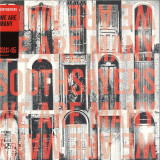
South London-based band Soothsayers are set to release their ninth studio album 'We Are Many'. Held together by heavy basslines, solid grooves, and socially and politically charged lyrics; the album takes the listener into different sonic spaces with elements of dub, Afrobeat, improvisational jazz and electronica.
The initial steps in recording 'We Are Many' came in January 2019 when the band's founders - saxophonist Idris Rahman and trumpeter Robin Hopcraft - set out on a journey to Brazil. With executive production in the Sao Paulo studio by renowned music journalist and author David Katz, they hooked up with bass player and producer Victor Rice who they'd met sharing the bill at Freedom Sounds festival in Cologne, Germany a year earlier. Victor organised a session in Studio Traquitana, home of acclaimed Brazilian band Bixiga 70, and invited a selection of local musicians. Percussionist and singer Ligia Kamara contributed lyrics and melodies written in the studio, and drummer Bruno Buarque, guitarist Joao Erbetta and bassist Victor provided some solid, personality-driven input. Fresh and vital, what came out was a fascinating blend of Soothsayers' dub and Afrobeat mixed with distinctly Brazilian inflections.
After arriving back in the UK, Idris and Robin set about creating the remainder of the album in a different, yet complimentary way, and called on the services of Wu-Lu and Kwake at their The Room studio in South London. Things started to take shape very quickly, Wu-Lu and Kwake combining Soothsayers' music with electronic elements, while also referencing elements of the current UK jazz scene.
When lockdown hit in March 2020, there was still a lot of work to do in order to complete a full album and Robin and Idris set about working on tracks with their musicians remotely. Having time to consider the album as a whole, they found strong connections between the music recorded in Brazil and the tracks recorded in London and they set about fusing and combining these elements further into a satisfying whole.
UK based Sengalese singer Modou Toure was enlisted to guest on one track while percussionists Satin Singh and Maurizio Ravalico were engaged to help affirm a sound-world where Brazilian flavours, such as the low-end Surdo drum, were combined with sounds more readily associated with reggae and Afrobeat.
Soothsayers' three part vocal harmony is a defining factor in this album. With strong references to the vocal styles of reggae legends such as The Gladiators, Mighty Diamonds, Heptones, and Abyssinnians; it has benefited from the long-standing friendship between Robin, Idris and Julia Biel. Lyrics, melodies and harmonies were presented, discussed, explored and recorded at Idris' and Julia's home studio in Streatham in a relaxed and positive way, with concepts from social and political commentary turned into powerful songs.
Themes cover political observations of Trump and beyond alongside Brazil's president Bolsanaro (Rat Race), speaking out against increasing levels of violence from the Brazilian government towards its native and indigenous people (Love And Unity) and keeping hopeful despite the impending horrors of a no-deal Brexit (We Won't Lose Hope).
Elsewhere they discuss striving to create space for meditation and reflection against the background noise of 24/7 news and social media (Move In Silence), the daily grind (No Sacrifice) and workers' rights (Slave), while highlighting those that fall through the cracks in society and end up without a permanent address, what led to this and how close we all are from this happening (One Step Away).
'We Are Many' represents a positive and uplifting statement in the face of challenging times - the overriding force, power and positivity of the music to continue forward, pushing the boundaries of musical concepts into the future.
"Whilst heavy questions of life and death and the future of our species surround us all, music is a guide that can help us perceive the challenges in a different way - a guide that can help us towards a deep inner peace. If we listen, music can help light the way. We hope you will listen, and we hope you will experience the joy, meditative power and beauty in the connection of different musical cultures that was experienced in the creation of this album."
South London-based band Soothsayers are set to release their ninth studio album 'We Are Many'. Held together by heavy basslines, solid grooves, and socially and politically charged lyrics; the album takes the listener into different sonic spaces with elements of dub, Afrobeat, improvisational jazz and electronica.
The initial steps in recording 'We Are Many' came in January 2019 when the band's founders - saxophonist Idris Rahman and trumpeter Robin Hopcraft - set out on a journey to Brazil. With executive production in the Sao Paulo studio by renowned music journalist and author David Katz, they hooked up with bass player and producer Victor Rice who they'd met sharing the bill at Freedom Sounds festival in Cologne, Germany a year earlier. Victor organised a session in Studio Traquitana, home of acclaimed Brazilian band Bixiga 70, and invited a selection of local musicians. Percussionist and singer Ligia Kamara contributed lyrics and melodies written in the studio, and drummer Bruno Buarque, guitarist Joao Erbetta and bassist Victor provided some solid, personality-driven input. Fresh and vital, what came out was a fascinating blend of Soothsayers' dub and Afrobeat mixed with distinctly Brazilian inflections.
After arriving back in the UK, Idris and Robin set about creating the remainder of the album in a different, yet complimentary way, and called on the services of Wu-Lu and Kwake at their The Room studio in South London. Things started to take shape very quickly, Wu-Lu and Kwake combining Soothsayers' music with electronic elements, while also referencing elements of the current UK jazz scene.
When lockdown hit in March 2020, there was still a lot of work to do in order to complete a full album and Robin and Idris set about working on tracks with their musicians remotely. Having time to consider the album as a whole, they found strong connections between the music recorded in Brazil and the tracks recorded in London and they set about fusing and combining these elements further into a satisfying whole.
UK based Sengalese singer Modou Toure was enlisted to guest on one track while percussionists Satin Singh and Maurizio Ravalico were engaged to help affirm a sound-world where Brazilian flavours, such as the low-end Surdo drum, were combined with sounds more readily associated with reggae and Afrobeat.
Soothsayers' three part vocal harmony is a defining factor in this album. With strong references to the vocal styles of reggae legends such as The Gladiators, Mighty Diamonds, Heptones, and Abyssinnians; it has benefited from the long-standing friendship between Robin, Idris and Julia Biel. Lyrics, melodies and harmonies were presented, discussed, explored and recorded at Idris' and Julia's home studio in Streatham in a relaxed and positive way, with concepts from social and political commentary turned into powerful songs.
Themes cover political observations of Trump and beyond alongside Brazil's president Bolsanaro (Rat Race), speaking out against increasing levels of violence from the Brazilian government towards its native and indigenous people (Love And Unity) and keeping hopeful despite the impending horrors of a no-deal Brexit (We Won't Lose Hope).
Elsewhere they discuss striving to create space for meditation and reflection against the background noise of 24/7 news and social media (Move In Silence), the daily grind (No Sacrifice) and workers' rights (Slave), while highlighting those that fall through the cracks in society and end up without a permanent address, what led to this and how close we all are from this happening (One Step Away).
'We Are Many' represents a positive and uplifting statement in the face of challenging times - the overriding force, power and positivity of the music to continue forward, pushing the boundaries of musical concepts into the future.
"Whilst heavy questions of life and death and the future of our species surround us all, music is a guide that can help us perceive the challenges in a different way - a guide that can help us towards a deep inner peace. If we listen, music can help light the way. We hope you will listen, and we hope you will experience the joy, meditative power and beauty in the connection of different musical cultures that was experienced in the creation of this album."
- Idris Rahman and Robin Hopcraft
As Midnight Sister, multi-disciplinary LA artists Juliana Giraffe and Ari Balouzian make motion pictures. Yes, sometimes with moving images _ but most often only with the music they create together. Balouzian's serpentine, string compositions are movie scenes that allow Giraffe, a brilliant character actor, to cloak herself in a new roles and voices. A bit of Jon Brion's score work; some old Hollywood strings; a solid dose of glam and outsider disco from 70s independent cinema. Any perceived artifice is always matched by an indelible human fingerprint, something perfectly off. Giraffe and Balouzian's respective work in fashion, visual art, video and film scoring _ along with the gang of virtuosos with which they surround themselves _ all wonderfully coalesce as Midnight Sister. And if 2017's `Saturn Over Sunset' was their collection of short films about outcast life in The San Fernando Valley, then their new album `Paining the Roses' is the inventive, meta motion picture that cements them as auteurs. `Painting the Roses' is in many ways a fairy tale -- not so much the sweet-and-happyending kind as something richer, packed with imagination and rooted in the complex human messiness beneath a story's artifice. Frontwoman Giraffe describes it as "this tightrope of being real yet synthetic, organic yet staged, light yet dark, logical yet irrational, beautiful yet dilapidated. Joyful nonsense." Here, disguises like masks and paint are not meant to hide but to liberate, to "set a part of us free", and Midnight Sister often embody this themselves, appearing highly stylized, curious, warm and inviting but a little askew. `Painting the Roses' is a story told through the looking glass, one where we examine ourselves in a funhouse mirror but find clarity in its twists. Giraffe traveled to visit family in Argentina during the making of the album and reconnected greatly with that part of her family history, art and culture. Balouzian created the core album opener "Doctor Says" during a session in the desert outside of LA. The guitar, which reminded Giraffe of South America, has a slow, sweltering surf-tango to it, like Dick Dale doing Carlos Gardel. And even though the song was inspired by Giraffe's reconnection with Argentina, the song is about the fading of some close friendships during the making of the album. "Man, you have changed," Giraffe sings, unclear if tis directed to a friend or to herself. Later on the album, "Wednesday Baby" _ named after Giraffe's rescue dog _ is patient, subtly baroque pop. It follows Giraffe through one of those gloomy days spent in tunnelvision doldrums from which only a sunbathing turtle or your canine companion can pull you out. By the time collaborator Max Whipple's saw comes beaming down from heaven in the song's 3rd part, we're hypnotized by the song's charming ennui. The song lands someplace both familiar and aloof, a little slice of timelessness taken straight from The Cake of Perfect Songcraft.
January 12th, 2020, a Sunday night in Toronto - Matthew Tavares and Leland Whitty (of BADBADNOTGOOD fame) are reunited at Burdock for a live improvised Jazz session. The pair are joined on stage by bassist Julian Anderson-Bowes and drummer Matt Chalmers as part of Burdock’s Piano Fest, an annual event at the city's brewery and music hall.
Two days later an email from Matthew hits Mr Bongo's inbox... "I think it turned out amazing, brought some really nice recording gear and it sounds almost like a studio record, thought I'd share. Moments definitely get to the jazzier side but there is some spiritual moments that are so far out". The Bongo office were all blown away by this free-flowing session, one which sounded like a well-rehearsed set at the end of a long tour, rather than a one-take improvised assembly. The chemistry between the musicians is magical. The tight friendship and musical connection between Tavares and Whitty are self-evident, however, Chalmers and Anderson-Bowes have a great contribution to make too. They act as the solid foundation that leaves Tavares and Whitty free to roam and explore moments of darkness and light, intensity and beauty. From the first time of hearing this intimate session, we knew this had to be shared.
The same quartet feature on Matthew Tavares & Leland Whitty's 2020 album 'Visions'. The plan to promote 'Visions' was to tour, with each night comprising a uniquely improvised set. Sadly due to world events, this couldn't happen, but for now 'January 12th' is a snapshot of the wizardry that would have been from four amazing musicians at the top of their game.
Vanish is Julia Reidy’s yearning, fat debut for Editions Mego. Since 2019, Julia’s bubbling 12-string guitar work - sighing streams of crystal plucks drawn closer or echoing on - has moored a tactile, ever-lusher sound. On ‘Guitar’, the Australian, Berlin-based musician melts down sharp synths; electric fuzz and flex; uncanny found sounds; and autotuned voice and harmonica in a heady, overpowering potion.
Reidy’s music sweeps you up. It’s restless, always travelling on. Lonesome tones into machine chorales into hesitant hum. The LP’s side-long cuts sway between scenes but are always rooted: Julia’s guitar and vocal lines seem mapped to the natural ebb and flow of breath and thought, they lull you as they push through vast and secret spaces.
Vanish completes a trio of releases begun with last year’s ‘brace, brace’ (Slip) and ‘In Real Life’ (Black Truffle). The delicious unease, the anxious burning of the preceding volumes has settled, becoming more wide-eyed and resolute. For all its poise, the album’s sense of build - electric licks rasping into glistening synths, punctured by distant kicks - feels freshest. When 'Oh Boy'’s smudged whistle comes, it has fought its way out of the thickets, and hits like heartbreak.
Award-winning bassist Daniel Casimir and vocalist Tess Hirst release their debut album via pioneering London-based record labe Jazz re:freshed. Following the success of Daniel Casimir's critically acclaimed debut EP 'Escapee' which featured Hirst on vocals and fellow rising stars on the scene Moses Boyd, Joe Armon-Jones and Shirley Tetteh, this album - 'These Days' is inspired by the duo's London surroundings, delivering thought-provoking lyricism, neo-soul and modern jazz
Casimir, a former Birmingham Conservatoire student, has collaborated with Julian Joseph, Jason Rebello, Benet McLean, Lonnie Liston Smith, Nathan Facey, Shane Forbes, Chihiro Yamanaka, Ashley Henry, David Lyttle, Nubya Garcia, The Tracey Quintet (Meantime Jubilation), Tom Harrison (Unfolding In Tempo), Jasmine Power (Stories And Rhymes), Camilla George and Art Blakey Jazz Messenger saxophonist, Jean Toussaint.
Named Young Jazz Musician of the Year by the Musicians' Company in 2016, Casimir has received plaudits for his arrangements and recital, while Hirst has made a name for herself with her vocals on the jazz circuit having moved between London, Leeds and LA to hone her craft. What sets Hirst apart as a musician is not only the originality of her music but her perspective of herself as an artist. She is an Ethnomusicology Graduate of SOAS and her writing style walks us through her upbringing in West London and down the halls of academia
Casimir and Hirst fuse traditional jazz sounds into beautiful compositions, narrating their way through a political and cultural landscape across these twelve tracks. The frenzied groove heavy'Security' addresses the need to trust one another and how we protect ourselves personally, while the rich atmospherics of 'Freedom' combined with Hirst's vocals, explore liberation and the rejection of duty - from a female perspective.
At the heart of 'These Days', Casimir plays with a passion and power that resonates throughout each composition. His knack for complex chord changes are highlighted in 'What Did I Do', bringing an energy and enthusiasm to the track while Hirst decries our changing capital. Elsewhere, references to John Agard's poem 'Listen Mr. Oxford Don' in 'The Magic Money Tree', explore the past and its relevance to now while a re-imagining of Charles Mingus' 'Fables Of Faubus' further ensures this theme remains central to the essence of the album.
Daniel Casimir and Tess Hirst have already received radio support from BBC Radio 3, BBC Music Introducing and Jazz FM, along with coverage in the London Evening Standard and Jazzwise Magazine
'Don't Let Them' interpolates elements of 'Fables Of Faubus' written by Charles Mingus (c) 1959. Published by Jazz Workshop Inc. Administered by BMG Rights Management (UK) Ltd. Used by permission. All rights reserved.
When acclaimed South African musician Guy Buttery first sought out Dr. Kanada Narahari in late 2016, it was as his patient.
“It was a dark time.” Buttery recalls, “I had been bedridden for months and had been suffering from debilitating bouts of fatigue which no diagnosis or medication could help me get to the bottom of. When I first met Kanada, I was at the stage where even picking up my guitar to make music had become a joyless and taxing exercise.”
As Buttery’s searched for a cure, a family member recommended he see Kanada an Ayurvedic doctor who had relocated to South Africa from India and set up a practice in Durban. It was during this consultation, that the musician first experienced how Narahari infused the healing properties of Indian Classical music into his practice. Rather than treating him with a smorgasbord of pharmaceuticals, Narahari played his sitar and set Buttery on a strict daily diet of Raga’s to fast track his recovery.
Buttery was not only struck by his doctor’s musical talents but by the powerful healing properties inherent in his sitar compositions. When he left Narahari’s doctors room that afternoon, he asserts he was feeling decidedly clearer, lighter and stronger.
“Diving into Kanada’s music was definitely one of the reasons I'm still here today.” he admits. “The consistent tonal centre at the heart of Indian Classical Music, literally became my support pillar over this period. A central core of sorts in which to fall back on, strengthen and discover.”
Narahari as it turned out, was not only a prominent music therapist (and one of the only Ayurvedic doctors practicing in South Africa) but like Buttery, a highly accomplished musician with a devoted following back in his homeland.
Born in a small village along the Western Ghats in Karnataka, India, Narahari, at the age of nine, had enrolled to study Carnatic classical vocal and developed an interest in Hindustani Classical music with a particular passion for the sitar. While Buttery had secured his reputation as one of South Africa’s musical treasures, a multi-instrumentalist who commands sold-out performances both locally and internationally and more recently had been awarded the prestigious 2018 Standard Bank Young Artist for Music.
From this consultation, a friendship developed between the two musicians with Buttery soon inviting Narahari to join him in his studio. But it wasn’t all plain sailing in the beginning. While Buttery and Narahari’s sensibilities were very much aligned, there were a range of cultural and musical influences, nuances and inflections that first needed to be navigated and understood.
“I suppose we had to find a common ground.” Buttery says, before adding, “Which in the end turned out to be pretty "uncommon ground" for the both of us.”
It was after a few intensive sessions together that something exhilarating began to emerge. What began as a few idle improvisations soon evolved into feverish and lengthier jams. Whenever time permitted, the musicians would meet, descending deeper into the emerging sounds, while reimagining the realms that existed between their African and Indian heritages.
Over the next few months, the duo would rack up over fifteen hours of recordings in studio, and it was up to Buttery to shape the material into an album which they collectively titled Nāḍī, which Narahari translates from the Sanskrit as "The Channel" or "An Internal River".
During this period, Narahari bestowed upon Buttery, the moniker Guruji while Guy would refer to him, in affectionate return, as Panditji. Each time the musicians would meet, the studio space would be cleared by an impromptu ritual, with Guruji burning African Imphepho while Panditji would chant a Sanskrit mantra dusting Indian Agarbatti clouds over their instruments.
Once the room had been made hazy with this aromatic alchemy (with the ancestors welcomed in) the musicians would pick up their instruments and plunge into shimmering tides of sound. Reflecting on these sessions, Narahari recalls the immense creative freedom he felt throughout: “Guy and I tried to wander as much as possible, without any speculative, preoccupied ideologies or limitations. Love remained at the forefront of our journey together.”
“Those evenings we spent together in the studio” adds Buttery, “felt incredibly rich with purpose and a profound sense of freedom. While improvising, anything could happen and mostly did.”
On a first listen, the tracks on Nāḍī emerge as salty, humid invocations to the inscrutable depths and misty myths of the Indian ocean-- that vast body of water that stretches between, and laps the shorelines, of the artists’ respective homelands.
When asked to describe the sound him and Narahari refined, Buttery prefers to relay a series of evocative images.
“For me” he explains, “Nāḍī is a lighthouse, a beacon that resides at the bottom of the ocean.” As Buttery envisions it, “what once offered light to guide ships to safety, has been submerged and re-purposed by marine life as a coral-reef temple. Similarly, this sunken lighthouse exists as a concealed cenotaph, memorializing the ancient sea-routes and passages that once connected the two distant lands.”
On paper this may sound obscure but listening to the songs, it serves as an apt metaphor.
Across each meditative movement, listeners are able to relive the journey, immersing themselves in a series of incantations, replete with high dynamics, delicate African-Indian inflections and virtuoso string playing of an entirely new order. Further complimenting the fusion of musical dialects are a range of guest artists including Shane Cooper on bass, Thandi Ntuli on vocals, Chris Letcher on organ, Ronan Skillen on tabla and percussion and Julian Redpath on guitar, synth and backing vocals.
Now like the submerged lighthouse, the recordings stand as a monument, a marker and snapshot of this fortuitous meeting, a tribute to the healing gifts of Guruji and Panditji in performance. It’s a process that already, both musicians look back on with reverence and nostalgia.
Buttery ruminates in closing, that when he first met Kanada his illness correlated with the biggest drought South Africa had experienced in many years “…for whatever reason, whenever we would connect and make music together, the sky would tend to open. Even if it was just a few drops. This went on for months, until finally the drought dissipated and my health had been restored.”
By the time the heavens did open across the East Coast, a deep friendship had been forged and with it abundant musical offerings poured down. A treasured sample of which we able to share in every time we press play and immerse ourselves in the sacrosanct musical universe that is Nāḍī.
* Emika releases a remix EP of her 6th studio album ‘Falling In Love With Sadness’, (Originally released on World Mental Health Day Oct 2018)
* The remix EP explores 4 sound worlds in electronic music today. Experimental bass music, hypnotic & dark techno, and electro.
About the remixers:
* Pinch, a pioneer of UK bass-driven music, is considered to be one of the most groundbreaking, explorative producers to emerge from the UK dubstep scene.
* Rising techno star Julia Govor is an artist doing things differently, paving her own way with her own label, receiving recognition from the global dance music scene.
* Rebekah needs no introduction, pioneering her own intense sound, now entering her 20th year in the business, she is a serious artist with some seriously heavy vibes.
* Underground Berlin talent Headless Horseman, all though shrouded in mystery, is in high demand world-wide to perform his unique live sets at some of the biggest clubs and festivals.
* Emika produced original album material with cult electro icon The Exaltics.
* Solid remixes from solid underground artists.
About the remixes:
* Pinch creates a seductive environment for a scene from which could have been from David Fincher's Fight Club, one which threatens to overload at any given time, but retains tension until the end.
* Julia’s mix transports us into the next part of our journey, beyond conflict and tension, she gives us the chance to breathe, open up, be free and to dance.
* Rebekah's remix brings us hurtling back down to Earth at a tremendous pace, with crystal clear drums that wake up the soul and synths that energize the mind, this version is more than a dark techno track, it has the spirit of a self-confident grown woman running through it.
* Headless Horseman brings Emika’s original into a beautiful new song space, revoicing the harmony and finding completely fresh chords and backing.
* The artwork hits the mark with a message important for Emika: Equality. With 3 female artists and 3 male artists all featured on the cover, this is a way in which Emika highlights her love for collaboration and sharing of the spot-light.
* Green coloured vinyl (1st edition) 500 copies pressed..
‘’We are moving into a new century where collaboration is going to bring music forwards and exclusivity is going to become a thing of the past.’’ - Emika
Hamburg-based Mireia Records is ecstatic toannounce their thirteenth release: Julian Stetter’s “Sensual EP”.
You’ve probably crossed paths with Julian in thelast couple of years. Not only because he’s the tallest guy in Cologne, but the producer and DJ has been actively shaping modern dance music
with his flourishing, melancholic sound. He’s been releasing music with Permanent Vacation, Kompakt, Correspondent and hometown labels Ancient Future Now and PNN.
It’s also not his first time on Mireia Records. Remember the beautiful “Porto” on “We’ll Sea
Pt.1?” Here, Julian presents two original tracks which are reinterpreted by SONNS and Matt
Karmil.
The title track “ Sensual ” manages to erase the mundane, the world’s vanishing around you.
It’s pitched shaker and airy bells evoke introspective tones. The bassline on the other hand
keep you steady - the dancefloor is still visible through the clouds!
“ Rumors ” picks up the pace. Kick drum and syncopated hi-hats set the stage for a serious
bassline, interwoven with fleeting melodies.
Bright and euphoric brushstrokes from Julian’s synth elevate the pace and catapult the track
towards a crescendo. Booming snares signal the peak.
New Release Information
Strobe lights, sweat and ecstasy.
SONNS opens up the B side with the first remix by whispering “ Rumors ” in your ear. A
brooding bass line takes you on a trip to the dark corners of the city. Hypnotically chugging
toms highlight the sights. Let’s get lost tonight!
With his releases on Kompakt and strong DJ Sets SONNS’ been a long time favored entrant
into Mireia Record’s catalogue.
Matt Karmil’s version of 'Sensual', although on B2 of the vinyl, doesn’t hide its assets.
Kicking off with frantic high hats and a distorted glitch, he pushes the track forwards
intriguingly. Arpeggiated melodies layered supremely over the percussion drive the track
forwards, the simplicity of the track and sharp cuts and drops create an interesting dynamic
to the single creating a perfect juxtapose to the other tracks on the release.
Matt’s also been on Mireia’s radar for a long time. His atmospheric adventures for Studio
Barnhus, Smalltown Supersound or Beats in Space always convey a spirit of living, breathing
leeway.
- A1: Episode 1
- B1: Episode 1
- C1: Episode 2
- D1: Episode 3
- E1: Episode 4
- F1: Episode 5
- G1: Episode 6A
- H1: Episode 6B
“He is Nigh.”
“He is? Already? How??”
When Aziraphale (Angel and part-time rare book dealer) and Crowley (an Angel who didn’t so
much Fall as Saunter Vaguely Downwards) learn that the Antichrist has been born on present day
Earth, they agree to work together to prevent the End of Days. Eleven years later, all bets are off
when innocent Adam Young discovers he has the power to bring about Armageddon. As the stage
is set for a showdown between the forces of Good and Evil, the prophecies of Agnes Nutter,
Witch may yet come true…
For the first time ever on vinyl, Good Omens is adapted and co-directed for BBC Radio 4 by the
award-winning Dirk Maggs (The Hitchhiker’s Guide to the Galaxy; Neverwhere; Stardust; Anansi
Boys; The X-Files; Alien; Batman; Superman). It is based on the novel by Neil Gaiman and Terry
Pratchett, now the basis for a major Amazon Prime TV series premiering in Summer 2019.
Starring Mark Heap as Aziraphale and Peter Serafinowicz as Crowley, with Josie Lawrence as
Agnes Nutter, Colin Morgan as Newton Pulsifier and Charlotte Richie as Anathema Device, the
cast also includes Phil Davis, Harry Lloyd, Paterson Joseph, Rachael Stirling, Jim Norton, Nicholas
Briggs, Neil Maskell, Steve Toussaint, Simon Jones, Julia Deakin, Mitch Benn, Louise Brealey, Mark
Benton and many more including cameo appearances by Neil Gaiman and Terry Pratchett.
The unique four 180g heavyweight heaven and hell split black and white vinyl — includes a laser
etched Side B — are presented in illustrated wallets inside a rigid, bound 16 page book, with
exclusive sleeve notes written by Neil Gaiman and Dirk Maggs.
“Heaven and Hell are preparing for war, and it’s going to be very messy.”
Always one to explore, Shipwrec have set sail and discovered a new isle of musical experimentation. Phainomena is a terrain for ambient introspection, dream-filled drone and stunning soundscapes. An old friend returns to the fold to inaugurate this venture, Julian Edwardes. Seven works of abstract immersion coalesce to create "Consonance." The Dutch artist journeys into far-flung realms and worlds, sweet silken synthlines and juddering noise being his transportation tools of choice. Off-centre echo and muted delay swirl in these audio planets. Mountains, oceans, unending skies are conjured as notes bulge, expand and disperse. Wildlife buzzes, chirps and trills in this land of sonic undulations, plants are given musical form with modulated ruffles as bleeps of cloud scud across an expanse of frequencies. An album of brilliant brightness, shifting shapes and unearthed undercurrents where expression is as ephemeral as it is eternal, a sentiment captured in Rob van Hoesel's sublime cover work.
Beyond the Pub is a collection of tracks for the after hours. From drunken treks to the filthy kebab shop to outer body experiences in the icy wonderlands, Cosmic Pint Glass tells the stories that happened after leaving the Social House.
In Vol 1. Mark du Mosch adds tension, FRAK takes you on that boozy journey to the Kebab Shop, Julian G reflects on the beauty of a frozen wonderland and Lie of the Land takes you on a introspective acid journey. Trip!
In July 2014, Jungle released their self-titled debut album. Featuring the singles 'Platoon', 'Busy Earnin'', 'Time', 'The Heat' and 'Julia', neo-soul classics all, it was the aspirational sound of young London, a soundtrack of escapism, an unmistakable Jungle sound and a unique, vivid, visual Jungle world. The whole thing was dreamed up by Josh 'J' Lloyd-Watson and Tom 'T' McFarland, a production and multi-instrumentalist duo who never expected to leave their bedroom studios, far less become the core of a talent-filled seven-strong collective that morphed into a killer live outfit. Cue online word-of-mouth and IRL buzz, rave reviews, a Mercury Music Prize nomination, songs of the summer (two summers, even), viral videos, Noel Gallagher declaring the album 'fucking amazing', half a million sales, burgeoning DJ careers, a global tour that lasted two solid years. It all just happened.
Today, Jungle announce news of the follow-up to that defining debut record. The album is titled For Ever and will be released on 14th September via XL Recordings. If Jungle's first album was their imaginary soundtrack to the places they had never been, For Ever is inspired by real life experiences of the places they'd dreamed of for so long. Swapping Shepherds Bush for the Hollywood Hills, J and T set up camp in Los Angeles to write and record the album. Over time however, their romanticization of The Californian Dream clashed with the reality of actually living it, the feeling of being adrift on the West Coast compounded by the collapse of long-term relationships. Returning home to London, they teamed up with highly regarded young producer Inflo where they sought to create a "post-apocalyptic radio station playing break up songs', whittling down loads of ideas this concept spawned into the core 13 tracks you have before you. That station and those songs and that journey are the sound of Jungle's second album For Ever. They had to go away to come home. And what J and T lost in love, they gained in music. For Ever is for real, deeper and higher, more intimate and more expansive, feelgood and, just occasionally, feelbad. It is, then, a proper second album.
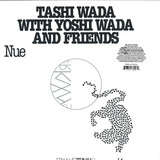
Composer Tashi Wada has performed for years with his father Yoshi Wada—artist, composer, and early member of the Fluxus movement. However, they have rarely appeared together in studio settings. Nue, the fourteenth entry in RVNG Intl.'s intergenerational FRKWYS series, finally brings Tashi and Yoshi, along with an eclectic group of close friends and extended family, together on tape.
Nue draws on aspects of Tashi's background for his widest vision to date—among them the minimalist bagpipe music of Yoshi, who co-composed three of the tracks, the psychoacoustic and perceptual explorations of his mentor, composer James Tenney, and reimagined forms of ancient and devotional music. The album, however, is not a tribute to the past or a recapitulation of familiar sounds. Instead, Nue is an intertwining of people and ideas as a means of growing, of looking inward to move outward, and of looking back to move forward.
To achieve this growth, Tashi assembled a core group of fellow travelers, including Yoshi, composer Julia Holter, producer Cole MGN, and percussionist Corey Fogel, to give life to this multifaceted suite. As an experience, Nue subtly navigates the interactions, intimacy and spaciousness of this group.
The album's title itself is a nod to Tashi's abiding interest in duality and the unknown: nue is a mythological Japanese chimera with the face of a monkey, the legs of a tiger, and a snake for a tail, a composite form, at once disturbing and otherworldly. But, as the composer points out, nue is also French for naked—stripped of complexity, bare and exposed, but also raw and essential.
From the doubling of tones—and the world of harmonic nuances such an action produces—to the rich interplay between individual musicians, all baring their own personalities and experiences through shared performance, Tashi's compositions allow space for these elements to join and grow. The multipartite creature that is an ensemble melds in the simplicity and purity of the music itself.
As explained by Tashi, each part was written with an individual in mind, not simply an instrument. And each individual performer makes their mark, from Holter's vocal performances on the cresting, oceanic 'Mutable Signs' and 'Ondine' with guest vocalists Simone Forti, Jessika Kenney and Laura Steenberge, to Fogel's resonant, precise percussion on 'Bottom of the Sky.' Producer Cole MGN, who has worked extensively with artists like Beck and Ariel Pink, helped to create a world of sound with minimal yet multi-dimensional materials. Like many of its influences, Nue uses deceivingly simple means to create complex, coherent worlds and narratives.
Tashi notes the influence of legendary Brazilian writer Clarice Lispector, whose work looked inward, investigating memory and emotion and dream, to understand the often overwhelming world outside the self. Like Lispector's classic novel Near to the Wild Heart, Nue cleaves these archetypal dualities—world/self, old/new, complex/simple—to create a work that allows them to coalesce into something singular.
As Tashi states in his liner notes: 'My desire was to create something both old and new sounding—ancient and futuristic—and ultimately something of its own world and other. Nue is a vision, an endless night of dreams, and a personal history of sorts, full of joys and demons.'
- A1: Setaoc Mass - Far Away From Yesterday
- A2: Juxta Position - Hexagon
- B1: Roman Poncet - Turn Down
- B2: Viers - Moomin Trash
- B3: Nocow - Metha
- C1: Kirilik - Batut
- C2: Lady Starlight - D5-12
- D1: Ubx127 - Vectors
- D2: Len Faki - Robot Evolution
- E1: Pablo Mateo - Anfang Ende Immer
- E2: Shlomi Aber - 3000 Reasons Why
- F1: Nocow - Run Far
- F2: Truncate - Bassline
- G1: Lewis Fautzi - Modern Humans
- G2: Jeroen Search - Rubidium
- H1: Amotik - Neela
- H2: Setaoc Mass - Silence
4x12" Set , Special 15th Anniversary Edition, with Special Deluxe 4 Gatefold, shrink wrapped incl Download Card
Celebrating its 15th anniversary as well as the monolithic catalogue 100, Figure releases a gem-packed compilation featuring 15 artists who are shaping the current sound of the label. Ranging from machine-driven stompers courtesy of Juxta Position, Kirilik or Lady Starlight, to punchy electro by Viers and UBX127, to Nocow's signature style wavey melancho-electronics, or the straight-up high-voltage-techno of Shlomi Aber, Lewis Fautzi and captain Len Faki himself, all adequately framed by Setaoc Mass' beautiful ambient pieces - this 4 LP-set encompasses everything Figure both past, present and future. Arriving in a unique gatefolded sleeve that carries the exclusive handmade visual art by Munich artist Julia Schewalie. Whether long time fan or newly recruited follower, this one is a must-have entry in every techno-lover's collection.
In search of the sublime, contemporary electronic musician Steve Hauschildt has designed grids and panoramas of sound across multiple releases through the rise and dissolution of his former band, Emeralds, an American touchstone of 2000s home-recorded psychedelic noise music. Consistent with his solo work is Hauschildt's ability to coil his craft in precise, varied, and distinctly physical forms. Gently spinning arpeggios converse with post-industrial decay. Sonic bers sway like pendulums from static melancholy to motorik bliss. Dissolvi, the artist's rst full-length with Ghostly International, engages sublimation from an ontological perspective: by dissociating the self. Hauschildt steps out from the singular path, for the rst time in a traditional studio, to compose and arrange contributions from friends. As a result, his most collaborative work to date extends a vast, vibrating framework in which to consider the state of being.
The album's title — a reference to cupio dissolvi, the Latin phrase meaning "I wish to be dissolved" — needn't be taken one-dimensionally or as purely solipsistic. It does, however, serve an apt reference. Physiological phenomena are of interest to Hauschildt. These back-of-mind ruminations nd their way out. Songs are cerebral in orientation, but beyond explanation, the music is truly visceral.
Involuntary eye movement inspires the serene, sanguine-nearing-suspicious "Saccade." Hauschildt feathers soft percussion beneath the echoed refrains of Los Angeles musician Julianna Barwick, together shaping a svelte suggestion of the anxieties brought about by modern-day surveillance; if everyone is being watched constantly, there is no individual, no self, only a broadly monitored and clumsily cataloged populous. The work of Chicago poet Carl Sandburg comes to mind: 'I am the people—the mob—the crowd—the mass.' The individual dissolves into the taxonomic crowd.
Minimalist techno impulses provide a stylistic through-line for Dissolvi. Understated synth phrases and drum grooves take hold in selective moments, like synchronistic structures onto which nebulous mists, like the rapturous voice of Gabrielle Herbst aka GABI on "Syncope," cling to and cloud, producing a dazzling rift in consciousness. The 7-minute centerpiece "Alienself" reiterates this creative logic, burbling like an amorphous body of water on a low-gravity planet, on the verge of dissolving, but never fully dematerializing.
The album was constructed in Chicago (where Hauschildt now resides) and partially in New York. "Much of it was recorded in a windowless studio which removed elemental or seasonal references to time in the music," says Hauschildt. "The focus this time was on mixing the album and incorporating a broader set of instrumentation. I describe my compositional approach as being quasi-generative." Embracing new methods and philosophical curiosities, and in turn, expanding the range of his repertoire, Hauschildt proposes a fascinating and profoundly rich experience in listening, being, and deliquescing.
Lucrecia Dalt's Anticlines is a volume of bodily and geological substrates within poetic theory and sound. It is a place where skins and minerals dissolve and commingle, where gaseous subterranean leaks inflate lungs, where brain cavities echo interplanetary waves bent from passing through atmospheres.
A former geotechnical engineer from Colombia currently residing in Berlin, Dalt's concern with boundaries and edges shape the lyrics and music of Anticlines, her sixth album. Paying careful attention to pace, breath, and texture, Dalt microtonally shifts the distance between speech and song while using traditional South American rhythms to support her contemporary electronic composition.
Lucrecia arrived at the atmosphere of Anticlines after several months of studying and creating new patches for the Clavia Nord Modular, forming a rhythmic feedback flow with it, a Moogerfooger MuRF, and her voice. The overall effect of cavernous space backdroping Dalt's intimate vocal phrasing rewards contemplation, supported in the physical formats of Anticlines by a lyric booklet documenting Lucrecia's collaboration with Australian artist Henry Andersen.
The album opens with Edge,' bordering on a pathological circlusion of self upon other. The lyrics depart from the Colombian myth of El Boraro, an Amazonian monster who turns its victims insides to pulp before sucking them dry and inflating their bodies like balloons to lifelessly float away. Tar' ponders human dependence on earth at the boundary of the heliopause, where to inhale might be like breathing tar. Dalt's distant and obscured vocals end with, we touched only as atmospheres touch.'
The sonic rise and fall of Analogue Mountains' is inspired by martian traces found in Antarctica embedded by meteorite ALH84001, suggesting that we might well be living in mountains transferred from Mars.' The steadily winding music on Concentric Nothings' descends with the lyrical exercise of dissolution let my touch be indistinct and instinctive.'
Interspersed with the lyrical pieces of Anticlines are instrumental interstitials that demonstrate preceding concepts — as if to say, this is what antiforms sound like, and this is what the universe's indifference sounds like.' Dalt's ongoing experiments with visual artist Regina de Miguel support these ideas, their practice allowing the objects of their attention to slip in and out of being.
Mystic of matter, Lucrecia Dalt has previously performed and worked with Julia Holter and Gudrun Gut, her slippery spoken word and performative nature recalling the work of Laurie Anderson, Robert Ashley, Asmus Tietchens, or Lena Platonos. While touching stones, The Thing by Dylan Trigg, Cascade Experiment by Alice Fulton, and Wretched of the Screen by Hito Steyerl are but a few formative scripts that support Dalt's exploration of the betwixt and between.
In preparing a live set for Anticlines, Dalt plans to stage an uninterrupted configuration, like a kind of alienated lecture, aiming for gestures that create tensions with non-existent objects.' Dalt intends to provide meaning and a place for the listener to meditate or relate to the concerns and ideas' she presents.
- Lucrecia Dalt is a Colombian recording artist, songwriter, and producer.
- After studying civil engineering in Colombia, Dalt worked at a geo-technical company for two years and has since lived in Barcelona and Berlin, where she currently resides.
- She has released five solo albums and has collaborated with musicians Julia Holter, Laurel Halo and Rashad Becker, to name a few.
- Dalt has composed for sound design installations and performance pieces for institutions such as the Santa Monica Art Centre, Reina Sofia Museum and the Maisterravalbuena gallery of Madrid, in collaboration with visual artist Regina de Miguel.
- Anticlines is Dalt's sixth solo record, and her first on RVNG Intl., following the release of 2015's Ou.
- Anticlines explores the boundaries and limitations of human consciousness. The album's poetic lyrics were written collaboratively between Dalt and Henry Andersen during a weekend in Brussels, Belgium.
"It was the most beautiful summer of my life."
Memories — places, vacancies, allusions — are fundamental characters in Mary Lattimore's evocative craft. Inside her music, wordless narratives, indenite travelogues, and braided events skew into something enchantingly new. The Los Angeles-based harpist recorded her breakout 2016 album, At The Dam, during stops along a road trip across America, letting the serene landscapes of Joshua Tree and Marfa, Texas color her compositions. In 2017, she presented Collected Pieces, a tape compiling sounds from her past life in Philadelphia: odes to the east coast, burning motels, and beach town convenience stores. In 2018, from a restorative station — a redwood barn, nestled in the hills above San Francisco's Golden Gate Bridge — emanates Hundreds of Days, her second full-length LP with Ghostly International. The record sojourns between silences and speech, between microcosmic daily scenes and macrocosmic universal understandings, between being alien in promising new places and feeling torn from old native havens. It's an expansive new chapter in Lattimore's story, and an expression of mystied gratitude. A study in how ordinary components helix together to create an extraordinary world.
Awarded a residency at the Headlands Center for the Arts, Lattimore spent two summer months living with 15 fellow artists — writers, playwrights, musicians, poets, painters, activists, curators — in a cluster of old Victorian military buildings on the Northern Pacic Coast. Days offered solitude, Lattimore set up in a spacious barn, able to arrange her instruments at will. Nights welcomed new perspectives. "Hanging out with a lot of accomplished artists with poetic ways of looking at the world was really inspiring. My heart was in a bit of a tangle after leaving Philadelphia. I was holding onto things instead of moving forward. My time there was a nostalgia detox, a way to press reset in a healthy way. Also breathing in the freshest air in America, straight off of the ocean, felt good."
Throughout the shifting locales there is one consistent companion Lattimore engages: a 47-string Lyon and Healy harp. The instrument wires directly into her psyche. Pitchfork's Marc Masters posits, "she can practically talk through it at this point, she's created a language." The space and stillness of the Headlands afforded Lattimore freedom to her expand her vocabulary, to stretch out and experiment with layers of keyboard, guitar, theremin, and grand piano. Lattimore's voice sweeps beneath the plucks and washes of opener It Feels Like Floating,' enraptured by the winding current, and reappearing in the second minute of the immense "Never Saw Him Again." The track elevates towards a shimmering apex of static and percussion before organ drone yields to signature halcyon utters. As with much of Lattimore's work, the track titles are telling, "Baltic Birch" is a somber windswept march that sways gracefully out of step, a remembrance of a recent trip to Latvia where she was struck by the abandoned resort towns along the Baltic Sea. Hello From The Edge of The Earth' is an earnest reection of Lattimore's love of the natural world, recognizing the thresholds of varying terrains.
The album's fth track borrows its name from Lattimore's favorite line in Denis Johnson's short story Emergency' from Jesus' Son. A character, lost in a blizzard, reassesses a disjointed universe, a clash between curtains of snow and angels descending out of a brilliant blue summer: it isn't an apocalypse, it is a drive-in movie, with stars hovering above the lot, off the screen, in the throes of the Midwestern storm. This mix-up is disorienting and existentially tragic, Lattimore's darkly strummed piece is a melancholic parallel, mimicking Johnson's elegant suture attaching two remarkably discontinuous spaces.
Micro-revelations, not quite as bright as torn skies but nonetheless enlightening, were everyday occurrences during Lattimore's residency. Living small days with small tasks — feeling little dramas within the arcadian universe of a national park — rendered her the sense that disjointed spaces can be interconnected no matter the enormity that divides them. It's in this elastic scale of perception that something as simultaneously simple and intricate as Hundreds of Days can ourish.
- Second solo album for Ghostly, past releases on Thrill Jockey
- Recently toured w/ Sharon Van Etten, Jarvis Cocker, Kurt Vile, Steve Gunn, Julia Holter, Iceage
- Mary Lattimore has been featured on Pitchfork, NPR, The Wire Magazine, and more
- A1: Band One - Stories / Cairo Wonk / Ballache Mansions
- A2: Band Two - Jazz Pact / Feelin Dank / Industrial Giant Colour
- A3: Band Three - Theme From The Tincleton Now / Man Next Door
- A4: Band Four - Now There's Pain / Art Slab
- B1: Band One - Teahead Of Time / Western Monk
- B2: Band Two - Carnaby St Caper / Gongs2Go / Turnintuit
- B3: Band Three - Bontempi Ventures / Speltre Flecks
- B4: Band Four - Kitten Kindred / Zvuk Poisk / Cimbolism
- B5: Band Five - Baked Tapes
Glyn Bigga Bush has been producing electronic and sample-based music since the early 90s when he formed Rockers Hi Fi, going on to release numerous albums. Since the turn of the century he has produced and DJ'd as BiggaBush as well as various side projects such as Lightning Head (Sonar Kollektiv), the Dandelion Set (Buried Treasure) and the Magic Drum Orchestral (Tru Thoughts).
Bigga's latest project 'Sunken Foal Stories' represents a departure from much of his other work in that it is not primarily based on beats. Instead, his working method was to go with fascinating samples, accidental juxtapositions and irregular loops - inspired by pioneers of sound such as Faust and the audio experiments of Julian House as well as early stereo test records, soundtracks and library music.
The 21 concise tracks of Sunken Foal Stories link into two 15 minute segments on the LP. Bush explores the random elements created by overlaying disparate samples, where chimes of baroque psychedelia clash with ascending classical strings, or a haunting Eastern European folk song is looped into an eternal cadence of longing. Various voices float over the speakers, lost poets, disturbing therapists, dreaming vampires, chuckling cabaret singers. Sourced almost entirely from charity shops and carboot sales, the source material speaks of a forgotten yet relatively recent period, when stereo was something new and exciting, when home entertainment first came into its own and suburban homes thrilled to the exotic sounds of home organs, primitive beatboxes, LPs bought in unusual holiday destinations and 'glamorous' soundtracks.
Air Lows is the debut solo album by Silvia Kastel. The Italian artist has been a fixture of the underground since her precocious teens, clocking up many miles in Control Unit with Ninni Morgia ('It's like Catherine Deneuve dumped two cases of post-Repulsion psychiatric notes over Pere Ubu's Dub Housing, lit the fuse and, ahem, stood well back" - Julian Cope), including collaborations with the likes of Smegma, Factrix, Gary Smith, Aki Onda and Gate (Michael Morley of The Dead C). Both solo and in her work with others, Kastel has explored the outer limits and inner workings of no wave, industrial, dub, extreme electronics, free rock and improvisation. Air Lows is both her fullest and most refined offering to date, a work of vivid, isolationist electronics which draws deeply on her past experience but assuredly breaks new ground. Prompted by a late-flowering interest in techno and club music, Kastel sought to create something which combines a steady rhythmic pulse with the otherworldly sonorities of musique concrete, and avant-garde synth sounds inspired by Japanese minimalism and techno-pop (Haruomi Hosono's Philharmony being a particular favourite). The formal artifice of muzak / elevator music, the intros and outros of generic popular songs, the extreme light-heavy contrasts of jungle, the creative sampling of hardcore, and the very 'human' synths in the jazz of Herbie Hancock's Sextant and Sun Ra: all were touchstones for Air Lows' conception and composition, and all strains of music addressing - or complicating - the relationship between the human and the technological. By extension, visual inspirations also proved important: anime, and the avant-garde fashion of Rei Kawakubo. What does that shirt or dress sound like Though used sparingly, Kastel's voice remains her key instrument, whether subject to dissociative digital manipulations as on 'Bruell', delivering matter-of-fact spoken monologues, or providing splashes of pure tonal colour. Recorded between her expansive Italy studio and a more compact, ersatz set-up in Berlin, Air Lows gradually takes on some of the character of the German capital: you can hear the wide streets and uninhabited spaces, the seepage of never-ending nightlife, the loneliness. Air Lows is The Wizard of Oz in reverse: the glorious technicolour J-pop deconstructions of its first half leading inexorably to the icy noir of 'Spiderwebs' and 'Concrete Void'. These later tracks are reminiscent of 2015's magnificent 39 12', Kastel in the role of numbed, nihilistic chanteuse stalking dank, murky tunnels of reverb and sub-bass. But in fact there is contradiction and emotional ambiguity to Air Lows from the outset, and throughout - a sense of both infinite space and acute claustrophobia; energy and inertia; fluency and restraint.
In early 2017, Public Release dropped a four-tracker by Brooklyn's Earth Boys, a duo comprisedof Julian Duron and Michael Sherburn, and now it's being followed by a collection of remixes by some formidable names from around the world.
Where the EP of originals fell squarely in the category of vibey, shuffling, laid-back house
grooves, Trail Remix is decidedly made for the after-midnight parts of club sets. The 12-inch begins with a T&P - that's Beats in Space's Tim Sweeney and Phillip Lauer's version of 'Trail Mix'. Acid-flecked and hard-edged, and tongue-in-cheek at heart yet seriously functional, it's the original red-lined and shot down the highway at ninety miles an hour. (Worth noting that this is
the transatlantic unit's first remix to be released.) After that is Earth Boys' own redo of 'Highway
1' a juiced-up re-imagining of the first version, filled out with chunkier kicks and fatter synth washes that completely envelope any sense of direction. The flip leans towards the ethereal, stretchy, abstract, though it, too, is tracky and driven. The B1 slot goes to Canadian wunderkind Khotin, of 1080p and Normals Welcome, who blows some stardust into the tune, enveloping it in a blanket of sharp drums and icy pads. NYC mainstay Mike Simonetti, formerly of Trouble Man and Italians Do It Better, currently of 2MR, caps the record with his beefy overhaul of 'Trail Mix' a compression of industrial percussion, tribal rhythms and sub-bass undulations.
Drumcode returns with its 6th installment of the internationally celebrated A-Sides series. Renowned for fostering a shared space between industry tastemakers and rising talent alike, the careful curation that goes into each volume is a fine example of why Beyer's brand continues to go from strength to strength.
Techno titan Adam Beyer has grown Drumcode into a force to be reckoned with; the label has become synonymous with forward-thinking, functional techno and even after 20 years, Drumcode continues to find new boundaries to push, and ways to solidify its legacy as the world's number one techno label.
2017 is no exception, with Beyer's imprint hosting it's first stage at Tomorrowland, not to mention the expansion of the critically acclaimed Junction 2 where the Drumcode stage is the centrepiece and Adam plays the key role of festival director. The Drumcode phenomenon continues to grow each week, chiefly fuelled by Drumcode Radio, Adam's radio show that's broadcast in 57 countries via 86 stations and to a global audience of 16 million techno fans per week.
The A-Sides series acts as a perfect vignette of Drumcode's cutting-edge sound; functional yet inspired techno, all tracks tried and tested by Beyer himself. Vol. 6 continues this tradition with a collection of 16 multi-faceted cuts from a mixture of both emerging artists and experienced label friends.
The heart-throbbing bass in Amelie Lens' electrifying piece 'In Silence' sets the tone for the dark and dance-floor-ready energy that Vol.6 carries the whole way through. Other standouts include Mars Bill's rough'n'ready 'Mohave'. Pulsating and precise, 'Mohave' has highlighted many of Beyer's sets recently as has Wehbba's monster track 'Fake', which fans have been anticipating the release of all year.
Label-favourites Dense & Pika also feature on 'A-Sides' Vol. 6 with their hard-hitting 'Just a Beat' and a huge track from Beyer himself who has joined forces with Enrico Sangiuliano to bring us their undeniably infectious 'Preset Heaven'.
With many more notable selections from the likes of Julian Jewell, Timmo, Tiger Stripes and Pig&Dan, A-Sides Vol. 6 is another impressive addition to the label's prolific release roster and a testament to why Drumcode remains at the forefront of the electronic world.
- A1: Tight Rope
- A2: For A Change
- A3: Cowboys Are My Weakness
- A4: No Show Jones
- A5: A World That Passed Me
- B1: One Day
- B2: Playing With Electric Trains
- B3: Lamas Fayre
- B4: Trafalgar Square
- B5: Parents
- C1: Come On Down
- C2: Broken Family
- C3: Battersea Boys
- C4: On My Own I'm Never Bored
- C5: Julian And Sandy
- C6: The Other Man In My Life
- C7: My Mother's Handbag
- D1: Fat As A Fiddle
- D2: The Gates Of Eden
- D3: Reverso
- D4: Never Coming Back
- D5: Good Life
- D6: The Party's Over
- E1: 1975
- E2: Like I Did
- E3: The Still And The Sparkling
- E4: Back In The Day
- E5: Sidney Street
- E6: Cotton Tops
- F1: Upgrade Me
- F2: Who'd Ever Want To Be
- F3: Passion Killer
- F4: Goldfish
- F5: Wrecked
- F6: Happy Once Again
- Chris Difford's place in the pantheon of great English songwriters is assured - surely nearly everyone can sing along to at
least one Squeeze song.
- So in anticipation of the new Squeeze album The Knowledge' (and extensiveUK and US tours this autumn), and following
Chris's autobiography and demos album as well as Edsel's CD box set of Difford's three solo albums (I DIDN'T GET WHERE
I AM (2002), THE LAST TEMPTATION OF CHRIS (2008) and CASHMERE IF YOU CAN (2011)), we now present all three albums on vinyl, with outer and inner sleeves, gathered together in a handsome rigid slipcase.
- Of these only the first album has appeared briefly on LP before - The Last Temptation...' and Cashmere...' make their
vinyl debuts.
- The inner sleeves feature all thealbum lyrics, track-by-track sleevenotes and brand new notes by Chris about the writing
and recording of each album.
New Yorks' Matuss returns with the eighth release on her Absence Seizure imprint this September, comprising three originals from the Ukrainian born artist.
Julia Matuss, better known as simply Matuss has been steadily carving out a name for herself over the past decade, initially finding her feet as a prominent DJ in the Ukrainian scene she grew up in before a move to New York saw thing progress and the launch of her Absence Seizure imprint shortly followed. Now eight releases deep the imprint has piqued the interested of DJ's such as D'Julz, DJ Deep, Derek Plaslaiko, TWR72 and Beaner.
Taking the lead on the package is 'Fairy Dust' setting the scene via warbling Rhodes chords, raw dub sweeps and a pulsating low-end drive before a spaced out, sinuous resonant synth lead ebbs and flows throughout the focal point of the composition.
'Baelfire' follows and strips things back to raw percussive feel, employing thunderous claps, a weighty kicks and sweeping filtered sample as the foundation before the latter half of the record works in a frenzied acid-tinged hook. 'Faramant' then closes the package with an amalgamation of organic percussion, natural bass licks and glitchy percussive chimes which all subtly evolve and retract throughout.
Julian Stetter might be best known as 'one half of the electronic pop duo VIMES', but he is no stranger to the Cologne club scene. His debut EP 'Insides' stems from a long history of djing and organising underground parties across the city. A resident DJ and collaborator at Cologne's famed JackWho club, it was these surroundings that drove Stetter to dive deep into producing. His first solo project is now set to be released on the label PNN. It features three tracks plus a remix by Beyou. Stetter's sound is polished and the precise production of each three tracks make this EP feel far from debut. 'Emily' is the first track set to be released this Friday. It draws you in on shimmering waves that rise and break into a deeper and spacier sound. Warm beats are interjected with random snippets of whale song. Listening to Emily feels like receiving a welcome hug at an after party.
In the lead up to their 5th year as a label Music is love celebrate by continuing their infamous VA series the 'LOVEBOX'. Sticking to the winning formula of a hefty double vinyl package comprising of 8 tracks from 8 top artists, this time they have some familiar people alongside new faces to the label.
Kicking off the package in fine form is South London's prodigy Wbeeza and his track 'Bodyman'. It's as if this track announces the the opening of the VA with its beat-less and thickly textured opening... when that beat drops you know your in it!
Label main stay Jamie Trench is up next with his track 'Oil Spill ', this sees Jamie veering away from his tech house roots, delivering a quirky house track laced with an almost footwork groove.
On the Flip we see more new additions to the MIL roster as Ingi Visions ( Samuel Deep & Julian Alexander ) drop Nauyaca, a deep druggy track, with the kind of hypnotic flow and delicate arrangement the pair have become known for. Liam Geddes finishes up the B side , fresh from dropping the previous release on Music is Love his track 'reach out' continues to stamp his unique sound on the label.
And it don't stop...
As we reach for the second vinyl in this double pack we are greeted with a familiar site in the shape of Dutch duo New Jack City. 'Pick Me up' is everything you want from a NJC track, big, bumpy and beautiful.
Mak & Pasteman counter with their very cool track 'U Said', the boys are in serious form at the moment and this track is no different. Slick drum workouts decked out with Juno licks, what's not to love.
The final side welcomes another new act to the stable. Am Unit present their track 'Bang Dat'. With 'Bicep' style production values echoing throughout this track and THAT break, this one will be big.
Closing out the final track is label boss, Oli Furness. 'Broken Summers'. A huge 808 rave workout. Broken beats and sub rattling kicks are the setting for this track, finely polished electronic music for those with a fondness for rave.
After These Hidden Hands re-surfaced earlier this year with the collaborative single These Moments Dismantled featuring Lucrecia Dalt, Tommy Four Seven and Alain Paul a.k.a. Shards are set to release Vicarious Memories, their second full length LP, on August 8th 2016. Vicarious Memories builds substantially upon the sound forged with their debut album and brings a considerable new level of detail, complexity, and musicality, which ranges from flowing mellifluous grooves, somber drones, to the outright bizarre and unexpected. Although loosely an instrumental electronic album, the album makes extensive use of guitar and vocals and features prominent guest vocal contributions from underground Berlin based musicians Julia Kotowski and Ale Hop. The album's preceding single, SZ31X71, a track which features on the LP is out July 11th, featuring a remix by revered Tri Angle artist, Roly Porter. Vicarious Memories will be released via the group's own imprint, Hidden Hundred available both digitally and as a 12 vinyl LP featuring gatefold cover art by Norwegian illustrator Anders Røkkum. Vital Sales Points: - Upcoming press: The Quietus, Thump, I-D Magazine, XLR8R, Future Music, Boiler Room, Mixmag, Resident Advisor, Ransom Note, Tsugi, Rockerilla & more - These Hidden Hands play Berlin Atonal, August 2016