After releasing her first project, ‘Magenta’, in August 2025, Ariane Bonzini gained recognition from a much wider audience thanks to a series of unreleased tracks posted on social media. These excerpts, combining vulnerability, poetry and enveloping melodies, went viral and established her signature style: intimate, minimalist music charged with emotion. This organic success confirmed the growing attachment of a community that recognised in her a rare approach, both contemporary and timeless.
The first extract, ‘J'ai besoin de toi’ (I need you), has just been unveiled by Colors Studio.
Her project of the same name will be released on 20 February on all streaming platforms and on vinyl on 24 April 2026.
Поиск:the l o v e project
Все
A few words for the album
Moment’s Aeternity:
a 12/8 composition celebrating the raw power of the “moment”, marked by whirling improvised moments between drums, bass clarinet and Harris P’s Armenian duduk.
Pajko, fire in the forest on the mountain:
in Sokratis own words: “I have a really vivid memory as a child. I was staring at the Djena mountain from my window in Archangellos which sits on the Pajko mountain. A little beam of light shone far in the horizon; it was a fire that in my little eyes looked as if the giants of Almopia were trying to communicate with each other using phryktoria (a way of contacting through fire in Ancient Greece).”
Footprints of some Giant Steps:
While the classic compositions of two true Jazz Giants- Wayne Shorter and John Coltrane- are certainly different, they do both connect in a mystical way. Rearranged in 5/8 combining half of each melody and half of each one’s chord progression, keeping the form of the piece for improvisation, still in 5.
Oson Zeis Fainou (Seikilo’s Epitaph):
found in a tomb stone in the Northeast of Greece, this is the only melody saved from the ancient times. It is accompanied by lyrics contemplating the meaning of life:
Ὅσον ζῇς φαίνου
μηδὲν ὅλως σὺ λυποῦ πρὸς ὀλίγον ἐστὶ τὸ ζῆν τὸ τέλος ὁ xρόνος ἀπαιτεῖ.
‘’While you live, shine
don’t feel blue for anything because our life is short and time demands an end.’’
Here is to Oghene K:
’’Hey man, where is the groove?’’, he would say, just to trigger another wave of inspiration for Sokratis. Oghene was a true force of nature, a well of kindness, a masterful artist that left this world too early. This one is for him.
Balkan Riff (for Milcho Leviev):
Milcho Leviev (1936-2019), was a long-time friend and collaborator and a true inspiration for expression, creativity and colorfulness. Expressing the deep sentiments evoked by the Balkan sound and history, this is a sorrowful dialogue between bass clarinet and contrabass.
Spirits of Djena:
one of the most esoteric and personal moments of the album. Composed and recorded during the challenging times of the COVID-era, you can hear the baritone and tenor saxophone firmly grounded on a crispy, hypnotizing contrabass groove.
Sokratis Votskos Quartet
Kostas Anastasiadis / Giorgos Klountzos - Chrysidis: Drums
Leandros Pasias: Piano
Vaggelis Vrachnos: Contrabass
Sokratis Votskos: Soprano Saxophone, Bass Clarinet and Compositions
Sokratis Votskos is a jazz saxophonist, clarinetist, composer, educator, and bandleader from Greece. Deeply invested in unearthing the folk sounds and heritage music of Greece and Eastern Europe, he weaves these into modern jazz compositions though the use of melodies, polyrhythms, and his reedy, timeless tone. He leads the Sokratis Votskos Quartet, he is one half of Kolida Babo and member of the Reggetiko Project. A highly regarded sideman and ensemble player, he has worked extensively with renowned jazz musicians with several highly acclaimed releases (MiC, Jazzman, Walt Disney and now Fair Weather Friends Records).
He has performed his music in numerous venues and festivals worldwide from Vinterjazz in Copenhagen, to the EFG London Jazz Festival where he performed at the legendary Ronnie Scott’s alongside Greg Foat.
He is also an archaeoacoustics researcher and enthusiast, having completed his Master studies on the field of ancient ritualistic caves of Greece research.
Leandros Pasias was born in Thessaloniki, Greece. At age 10 was introduced to piano, continuing his studies at the Modern Conservatory of Thessaloniki and later at the Conservatorium van Amsterdam in the department of jazz piano.Ηe holds a classical harmony diploma and a BA at the Department of Music Studies at the Aristotle University of Thessaloniki. In 2020 he received jazz improvisation lessons from Aaron Parks.
With a series of appearances in multiple international jazz festivals, Leandros has collaborated with a wide range of musicians from Nicolas Masson and James Wylie to Marina Osk, Ivo Papasov and Haris Lambrakis, among others.
A member of the Yako Trio, he released “OdesSea” on Fair Weather Friends Records (2021).
Vangelis Vrachnos was born in Thessaloniki, Greece, in 1989. While he started playing the bass at the age of 12, alongside his brother, his studies would commence a few years later. Introduced to double bass at the age of 23, he undertook jazz double bass studies at the Codarts Αcademy of Rotterdam. He has participated in several festivals such as the Technopolis and Odessa international jazz festivals. Since returning to his hometown, in 2015, he has been a founding member of Mordana and Yako Trio and has collaborated with a series of musicians like James Wyllie, Sokrates Votskos and Dimitis Agelakis, among others.
Kostas Anastasiadis is a tireless researcher, that has been diligently studying Tradition and its evolution, creating a fresh amalgam of sound moods. His mature improvisational virtuosity highlights a uniquely individual artistic expression and was recognized with the ̈Unique Individual Stylist" award by the PIT (Percussion Institute of Technology) in Los Angeles, California. He has been associated with various ensembles that have garnered significant interest in the global music scene. As an educator, he is the founder of "The Harmony of Rhythm" musical method, which aims to explore and establish the elements that constitute the concept of rhythm.
Giorgos Klountzos-Chrysidis was born in Thessaloniki in 1991. Following studies at the Modern Conservatory of Thessaloniki, he moved to France and the Conservatoire de Nice. With performances at well-known festivals like Nice Jazz Festival, Nuits du Sud and Jazz à Vienne, he had the opportunity to meet the American drummer Leon Parker, who encouraged him to move to Paris, where he spent the next two years under his tutoring and guidance.
In 2016, came a defining moment in his career as he traveled to New York for the first time. He participated in the quartet of saxophonist Diego Rivera for a series of performances and attended lessons by Rodney Whitaker and Randy "Uncle G" Gelispie at Michigan's State University.
Collaborations include Xavier Davis, Ricky Ford, Nicolas Masson, Diego Rivera, Craig Bailey, Baptiste Herbin, Marc Abrams, Pantelis Stoikos, Antonis Anissegos, David Lynch, Ziad Rajab and Ivo Papasov, among others.
Double 12" release
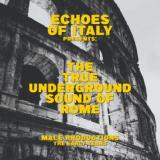
The Story — From the Streets of Rome to the Male Productions Label
In the early 1990s, Rome lived in a kind of suspended moment. The city was still tied to its historic clubs, yet in the outskirts—inside abandoned warehouses, quarries along the coastline, and the wooded parks north of the capital—something new was beginning to stir. A nocturnal, constantly shifting movement fuelled by a hunger for freedom and a sonic curiosity that reached far beyond the mainstream.
Moving through this ferment was Francesco “Chicco” Furlotti. First an organizer of unconventional parties and underground nights, he soon became one of the driving forces behind Rome’s itinerant rave scene. Furlotti sensed that a wave of change was about to sweep across the city. It wasn’t just about parties: it was the rise of a culture, a new way of thinking about music, community, and belonging.
It was within those nights—later held with official permits, properly built sound systems, and an ever-growing crowd—that Furlotti recognized the existence of a distinctly Roman sound, and the need to capture it, preserve it, and give it tangible form.
So, in 1991, he decided to take a bolder step: to found an independent record label—small, determined, and far removed from the commercial logic that dominated at the time.
That was the birth of Male Productions.
Male was not a label like any other: it was a workshop, a gathering point, a creative hub where DJs, producers, friends, and wanderers converged. Within that environment, an artistic core took shape—Stefano Di Carlo, Leo Young, and Mauro Tannino, along with other collaborators orbiting around Furlotti. From their synergy emerged a project whose very name declared its mission:
The True Underground Sound of Rome.
The collective did not simply aim to release music; it sought to tell a story of Rome through sounds that defied categorization: house, techno, ambient, electronic mysticism, psychedelic visions… a unique blend, instantly recognizable, emotional, and experimental. The sessions unfolded using essential yet razor-sharp gear: Roland drum machines, analogue synthesizers, Akai samplers, stripped-down mixers. Few tools, endless imagination.
The first result of this work was the 12” Secret Doctrine, released in 1991 in an extremely limited run—around 500 promotional copies, according to accounts. The record captured something that until then had floated only in the air of Roman raves: enveloping atmospheres, deep rhythms, melodies built to make the mind travel far beyond the dancefloor. A sound that did not imitate what was happening in Detroit, London, or Berlin, but absorbed those influences and re-sculpted them with a distinctly Roman sensibility.
Yet, precisely because it was independent and detached from commercial circuits, Male’s output remained sparse: few EPs, few copies, irregular distribution. Over time, those records became rare artifacts—almost mythical objects within the Italian electronic scene. The legacy of Male Productions seemed destined to survive only in the memories of those early years, in the stories told after raves, and in the private archives of a handful of collectors.
Many years later, thanks to the almost accidental rediscovery of a few original copies of the first two releases issued by Male Productions, it became possible to undertake a meticulous process of recovery and restoration of the audio etched into those grooves, with the aim of preserving as fully as possible the quality and character of that unrepeatable sound.
We are therefore able today to present — at last in a complete and faithful form — the first two mixes created for Male Productions, now released on a double vinyl that brings back into the present the exact moment when it all began: the nomadic nights of the raves, Furlotti’s vision, the creativity of Di Carlo, Young and Tannino, and the sonic identity of a Rome in the midst of transformation.
This is not merely a reissue.
It is a historical document.
A fragment of a culture that changed the city.
The authentic sound of the Roman underground, finally returned to the world.
- A1: Abay
- A2: Tew Ante Sew
- B1: Mengedegna
- B2: Kahn
- C1: Sew Argen
- C2: Nafekeñ
- D1: Abet Wubet
- D2: Guramayle
- D3: Gud Fella
- D4: Guramayle (Slight Return)
180g Heavy double vinyl LP with liner notes by Tyran Grillo. Limited Japanese Obi for the first pressing. Original artwork by Russell Mills and photography by Jean-Baptiste Mondino.
The third Time Capsule is a body of dub reinterpretations by celebrated producer Bill Laswell of Ethiopian singer Gigi. Curated by Tokyo record collector, music researcher and seasoned reissue supervisor Ken Hidaka, it is the first time Illuminated Audio is pressed to vinyl after its CD release in 2003.
Ejigayehu Shibabaw was born in 1974 in Chagni, northwestern Ethiopia and by pursuing a career as a singer, went against her father’s strict, traditional gender roles. As Gigi, she embraced the same musical freedom she had strived for in her personal life, incorporating the Ethiopian church, funk, hip-hop, West and South African music into her work. She first settled in Nairobi, then Addis Ababa, where she quickly established herself as one of the city’s leading singers. A move to San Francisco in 1998 led to a long and fruitful creative partnership with bassist and producer Bill Laswell.
Around the same time, Chris Blackwell had stepped away from Island Records to start the art house film company and label Palm Pictures. He took an interest in Gigi and together with Laswell, pulled together an all-star cast of musicians for her self-titled US debut album, including Herbie Hancock, Pharoah Sanders and Wayne Shorter. It won international critical acclaim, not just for its musicianship but for making Gigi a “defining voice for the Ethiopian expatriate community”, as journalist Tyran Grillo praises in his Time Capsule liner notes. From the nation-defining 1896 victory over Italian invaders to the quiet revolutionaries who wear simple shemma garments, Grillo believes the themes in Gigi make it “a shower of sunlight on her homeland for those ignorant of its struggles.”
After its success, Blackwell encouraged them to go back into the studio to rethink the album and Illuminated Audio was born. “Anyone can make a voice sound worldly”, Grillo remarks, “but rare are those who can make one sound inner-worldly.” Gigi was clear with Laswell to give her vocals a minor role “because it’s already been done.” Instead her Amharic verse is fleeting, exhaling through the textures like ghostly fragments; soaring yet muted. Yet the album is still titled under her name, an assertion by Laswell of her central role in the album’s creation. Not only was it a fully endorsed project by Gigi, but she would be present throughout its development, giving feedback on half-finished ideas as Laswell played them back in the studio. “It works perfectly”, she reflected after the album’s release. “We wanted to capture the whole spirit of each track, and Bill’s remixes create a different music language that really puts you in a pleasant place”.
This new vocabulary takes its lead from a technical approach that Laswell had been perfecting during a furtive creative period at the turn of the millennium. Much like his ambient interpretations of Miles Davis (Panthalassa, 1998), Bob Marley (Dreams of Freedom, 1997), and Carlos Santana (Divine Light, 2001), Laswell approached Illuminated Audio by returning to the original multitrack masters. Gigi wasn’t just reworked, but recomposed into an expansive lattice of instruments, submerged in a watery ambience of dub and trance undercurrents.
Sonically, this new language that Gigi refers to, is manifested by the original album’s more understated parts being pushed to the fore. Explaining his contrasting methods, Laswell saw Gigi as being “put together in a way that fits”. Contrastingly, in Illuminated Audio, “a lot of things that I featured in the remix weren’t as audible in the original.” Instrumentation laying near-dormant, deep in the mix, are brought to the fore: the acid rock guitar and Wayne Shorter’s saxophone on ‘Tew Ante Sew’, Graham Haynes’ flugelhorn on ‘Nafekeñ’, Laswell’s bass on ‘Kahn’, the melodica in Mengedegna or the floating synths and talking drums in ‘Gud Fella’.
Brought to his attention by mentor DJ Nori, Hidaka describes Illuminated Audio as a “masterful sonic exploration into ethereal ambience and dub” and made sure this reissue also contained a full remaster to give its “deep musicality” much better dynamics and density in the overall sound. Hidaka admits that Laswell's music “is sometimes so out-there, it is often misunderstood” and, indeed, to dub album non-believers this might seem like a prolific producer imposing himself on another artist’s work; eternally developing rearrangements that never quite get to its destination. But that’s missing its true power and triumph. This is more than the reissue of a remix, but “a wholly unique musical entity”, as Hidaka describes. Illuminated Audio refers to the illuminated manuscripts that comprise the major part of Ethiopian art and its new compositions stand in proud solitude as a rare body of reworks that both informs and enhances their originals.
- A1: Intro
- A2: The Soundtrack Of Life
- A3: Journey
- A4: World Of Love
- A5: Laurie's Theme
- B1: Emotion Heater
- B2: Dream
- B3: Tiki Mix
- C1: Travel Bug
- C2: Le Tunnel De L'amour
- C3: Stay
- D1: A Close Encounter
- D2: Relaxation Central
- D3: Journey (Reprise)
- D4: Outro
- E1: Space Bubble
- E2: Star
- E3: Sunny Day (Demo)
- F1: Journey (Aphex Twin Care Mix)
- F2: Journey (Gentle Instrumental
WRWTFWW Records is proud to present THE GENTLE PEOPLE - Soundtracks for Living (Expanded Edition), ?the ultimate Lounge/Chill Out classic from 1997, reborn! Available as a limited edition white vinyl 3LP in heavyweight 3-panel gatefold sleeve.
When The Gentle People first glided into the mid-90s on clouds of strings, sugar and sine waves, they sounded like visitors from another, more glamorous planet. Signed to Richard D. James and Grant Wilson-Claridge's cult label Rephlex, this multinational "E-Z-Core" lounge unit took the aesthetics of 50s/60s easy listening and exotica and gently smuggled them into 1990s club culture.
Soundtracks for Living was their defining statement: an album that "takes the lounge scene and runs away with it entirely… blissful and heavenly," as one contemporary review put it. Imagine KLF's Chill Out or Space growing up on French 60/70s pop, bossa nova, soundtracks, vocal harmony groups, library music and easy listening then slipping out for a late-night date with dub, ambient techno and bubble-bath pop. That's Soundtracks for Living: a record that can score cocktail hour, 4am taxi rides, and daydreams in headphones with the same effortless grace.
The Gentle People - Dougee Dimensional, Laurie LeMans, Valentine Carnelian and Honeymink - began in early-90s Brixton, throwing dress-up theme parties before taking their audio-visual universe into the studio. For them, music was "a way of life": soothing to the ear, rich in pop hooks, and pitched somewhere between the playfully idiotic and the hyper-intelligent. Their debut on Rephlex was the single "Journey", later blessed with a shimmering Aphex Twin remix that pushed their sugar-coated sound even further into outer space.
This Expanded Edition of Soundtracks for Living finally gives this glambient lounge-pop milestone the treatment it has always deserved. Spread lovingly across 3LP, it features new mastering from the original sources, allowing every harp glissando, string swell and analog squiggle to float in high-fidelity widescreen. The core album is complemented by a bonus 12" of unreleased and rare material, offering a deeper dive into the Gentle world: alternate takes, lost interludes, and secret soundtrack cues for lives not yet lived.
Crucially, "Journey" appears here in its original version, Gentle Instrumental and the cult Aphex Twin remix, reuniting band and labelmate in one place and underlining the quietly radical nature of the project: this was lounge music that could sit next to braindance, acid and IDM and still steal the scene.
Pressed on limited edition white vinyl, Soundtrack for Living (Expanded Edition) invites long-time fans and new listeners alike to step back into The Gentle People's universe - a place of fondue parties, bubble chairs, star-lit elevators and endlessly rewinding sunsets, where "the pathway to the stars" is never quite out of reach.
In an era that often reduces the 90s to big-room bangers and grunge guitars, Soundtracks for Living remains a quietly subversive reminder that the decade was also about imagination, camp, softness and utopian possibility. As later writers have noted, The Gentle People weren't just a curiosity on a weird label; they became unlikely icons of a whole loungecore moment, gracing TV, compilations and magazine spreads, and proving that tenderness could be as futuristic as any drum machine.
In conjunction with this release, WRWTFWW has also unearthed The Gentle People's Peel Sessions, a 4-track EP from their 1997 BBC on-air performance, available on vinyl for the first time ever !
Onna Last Live 1983 includes the final performance by the original line-up of Onna, the psych-rock project of revered Japanese manga artist, Keizo Miyanishi. Onna’s legend has largely rested, until now, on one self-released and self-titled seven-inch from 1983. Reissued by Holy Mountain in 2009, its rediscovery, along with several archival live and studio sets that leaked out across the 2000s, signalled to a wider audience the power of Miyanishi’s strikingly hypnotic songwriting. With Onna Last Live 1983, though, we hear the group’s perfect line-up performing at its peak.
While Miyanishi was the core member and conceptualist of Onna, the other members of the group would also go on to make significant contributions to the Japanese underground. Guitarist Michio Kurihara would eventually be known for his membership of YBO2, Ghost and White Heaven, and collaborations with the likes of Boris and Damon & Naomi. Drummer Ken Matsutani formed Marble Sheep & The Run-Down Sun’s Children and The Mickey Guitar Band, while also running the Captain Trip label. Joined by the late bass player Yasui Yutaka, to whom the album is dedicated, this quartet only performed live in 1983; the live set here was recorded at Silver Elephant.
It’s a different line-up to the Onna duo that’s documented on their single. After Miyanishi and fellow manga artist Mafuyu Hiroki recorded that material, Miyanishi decided he wanted to start playing gigs; Hiroki left, and Kurihara, Matsutani and Yutaka joined soon after. This line-up allowed Miyanishi to significantly expand Onna’s powers, leading to a sound that Kurihara once described to Ptolemaic Terrascope magazine as “repetitive and heavy, yet quite orthodox.”
The songs here are simple yet deeply effective in their repetitive power, generally revolving around two or three simply strummed chords for guitar. Bass and drums repeatedly lock into mantra-like grooves as Kurihara’s guitar scales the walls, with Miyanishi’s consumptive moans and sighs sent torquing through FX. The cumulative effect of the seven songs here is very heavy indeed; if the prologue “Always…” drifts beautifully through five minutes of placid, beseeching melancholy, the epilogue, “Never Seen A Light Like This”, spirals out into sixteen minutes of glazed-over psych-rock, completely monomaniacal and thrilling in its slow-motion tumult.
Throughout, you can hear Miyanishi and co. reaching for something ineffable, something beyond and between the notes. It’s a phenomenal performance; it’s also no surprise that the group disintegrated after this show, given its intensity. Matsutani and Yutaka left after the Silver Elephant show, with Miyanishi and Kurihara continuing through the first half of 1984 firstly as a duo, and then a trio with new drummer Yoshiki Ueonyama. Kurihara left soon after. But Onna Last Live 1983 is proof plenty of the powers of the original Onna quartet, sending their Rallizes/Velvets dream-mantras off into darkened, stormy skies.
- A1: Intro 0:50
- A2: Wordplay 3:17
- A3: Spontaneity 4:08
- A4: Rugged Ruff 3:08
- A5: Interlude 0:29
- B1: I Confess 4:06
- B2: Uknowhowwedu 3:35
- B3: Interlude 1:09
- B4: Total Wreck 3:26
- B5: Innovation 3:23
- C1: Da Jawn 5:19
- C2: Interlude 1:05
- C3: True Honey Buns (Dat Freak Sh*T) 3:41
- D1 3: Tha Hard Way 4:12
- D2: Biggest Part Of Me 4:51
- D3: Path To Rhythm 3:24
Bahamadia’s 1996 debut album Kollage is rightly regarded as one of the greatest rap albums of the 1990s. For the first time ever, Be With present the definitive double LP version of this eternal hip-hop classic, including the legendary "Path To Rhythm" which never appeared on the original LP or on vinyl, anywhere. An indelible VIBE from start-to-finish, Kollage presents Bahamadia's swirling rhymes delivered with an irresistibly butter flow and razor-sharp assuredness over a steady slew of smoothed-out, jazzed-up, blunted beats. Achingly cool and effortlessly funky throughout, it's an absolute must for true 90s hip-hop fanatics.
The entire Kollage project was recorded at D&D Studios and the ties to Gang Starr are keenly felt, with DJ Premier producing five tracks in addition to the killer songs Guru had already produced with her. Working with the cream of the mid-90s East Coast sound, Kollage is, accordingly, a record that demonstrates a varied musical taste with disparate influences, as Bahamadia has previously stated: “The title Kollage was a reflection of my state of mind. I first got interested in music from playing my parents’ and grandparents’ records, as well what I heard on the radio. I wanted Kollage to reflect that diversity both lyrically and sonically."
With intelligent, poetic lyricism and a laconic verbal style bursting with both warm texture and deceptive energy, Bahamadia’s flow was as inspired by Aretha and Nancy Wilson as it was Q-Tip, Schoolly D and Lady B. Swaggering out the gate, "WordPlay" finds Bahamadia confidently showcasing her considerable old-school battle-rhyme skills over a Guru beat that utilises an infectiously bouncy bassline with splashes of sultry jazz horns and a Jeru vocal snatch for the hook. Up next, the quietly shimmering and ruggedly beautiful "Spontaneity" is one of the most alluring on the record, Da Beatminerz crafting a brilliantly soulful and jazzy soundscape for Bahamadia's effortless vocals to float across. It's followed by "Rugged Ruff", where the rapper carefully constructs a swift off-beat flow over Premier's raw jazzy fire.
With smooth spacey synth vibes overseen by former Geto Boys producer N.O. Joe, "I Confess" is, without question, a fly love song and soothing (p)-funk groove. "UKNOWHOWWEDU" is an airy, chilled tribute to her hometown. Produced by Ski Beatz & DJ Redhanded, it rides a gloriously mellow break. It's a true Philly anthem, shouting out a who’s who of the entire city’s scene. Early banger "Total Wreck" follows, presenting a murky Guru instrumental elevated by jazzy horns. Bahamadia invokes the title's suggestion, firing her brilliant bars more aggressively than we’re accustomed to. More Beatminerz-brilliance comes in the way of "Innovation", an opportunity for the MC to invoke Freestyle Fellowship in her forward-thinking and literary verses. "Da Jawn" features hometown buddies The Roots, with Black Thought gliding into a back-and-forth with Bahamadia over ?uestlove’s warm, snapping percussion. With the strut club banger "True Honey Buns (Dat Freak Sh*t)", DJ Premier provides some laidback vibrant boom bap for Bahamadia to share a wild, cautionary tale about a night out with her girl, Kia.
Fan favourite "3 Tha Hard Way" is a hypnotically sinister cut, with Bahamadia, K-Swift and Mecca Star taking star turns to coast over DJ Premier’s raw beat whilst the tender "Biggest Part Of Me" is a heartfelt stunner dedicated to her son. Incredibly, only the European and Japanese CD versions of Kollage was released with the brilliantly breezy “Path To Rhythm”, featuring Ursula Rucker. Whilst ostensibly a "bonus track", it's anything but, to our ears. Very much in sonic conversation with KRS-One's stretched-out sleeper classic "Higher Level", it's absolutely essential so we had to include it, appearing on wax for the first time here, exclusively. Quite a coup.
Somewhat predictably, whilst Kollage was released to significant critical acclaim, it suffered from disappointing sales. In the intervening years - and for far too long - it was a criminally underrated record, an increasingly hidden gem. We hope this double LP reissue - which looks and sounds amazing - will go some way to correct this. This 2024 Be With double LP re-issue has been mastered for vinyl by Simon Francis, cut by Cicely Balston and pressed at Record Industry. It's too bold and beautiful to remain overlooked and underserved.
KITCHEN. LABEL is proud to present AGATE, the latest album by Japanese artist MEITEI, marking a deepening of the world he first shaped through his Kofū trilogy released between 2020 - 2023.
Named after the mineral agate, a stone formed through slow accumulation, pressure, and time, the album reflects MEITEI’s patient approach to sound. AGATE brings together extended and newly rearranged works from across the Kofū cycle alongside new compositions and passages, refining material developed through years of performance and sustained practice.
The album presents seven tracks:
HAŌ (Previously unreleased track)
SHIN-OIRAN (Remodeled from Oiran I, Kofū 2020)
SHIN-SADAYAKKO (Remodeled from Sadayakko, Kofū 2020)
SHIN-WAROSOKU (Remodeled from Wa-rōsoku, Kofū III 2023)
KYŪGEKI (Remodeled from Shinobi and Akira Kurosawa, Kofū II 2021)
SHIN-OIRAN II (Remodeled from Oiran II, Kofū 2020)
SHIN-EDOGAWARANPO (Remodeled from Edogawa Ranpo, Kofū III 2023)
Across these works, MEITEI expands the musical vocabulary first introduced in Kofū, a sound he once described as “lost Japanese mood.” While Kofū drew from fragments of folklore, theatre, ghost stories, and forgotten urban memory, it was never an act of historical reconstruction. Rather, it reflected a sensibility of the past observed from the present. With AGATE, this worldview is clarified as Shinpu, a process of discovery in which historical awareness becomes a foundation for contemporary creation rather than a constraint.
During five years of Kofū tours across Japan, Europe, and Asia, MEITEI performed this material in a wide range of spaces, from underground live houses and listening rooms to culturally significant sites. These environments influenced pacing, dynamics, and structure, shaping how the material evolved over time. AGATE is therefore not only a studio album, but the result of material refined through repeated performance.
If the Kofū albums were windows into forgotten eras, AGATE explores what lies beneath, sediment and strata formed through time and pressure. MEITEI’s approach to sound mirrors the nature of agate itself. Grains become texture. Texture becomes narrative. Voices drift through decaying layers of sound, while ancient instruments are used in non-traditional ways, forming distinctive percussive rhythms and melodies that appear and vanish without fixed resolution.
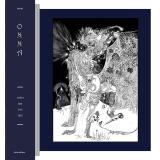
The album’s visual materials were developed under MEITEI’s direction through physical art-making processes. The cover artwork originates from a letterpress print created by Kamisoe, a Karakami atelier in Nishijin, Kyoto, using Kyo-karakami paper. The original artwork, produced through traditional woodblock techniques on handmade washi, was subsequently reproduced on print for the album edition. Kamisoe continues to reinterpret this historical Kyoto craft with a contemporary sensibility.
The title calligraphy was created by Bio Xie, whom MEITEI personally invited to participate in the project. During his performances abroad, MEITEI encountered in Taiwan a lingering atmosphere reminiscent of “Shitsunihon” — a sense of old Japanese memory that quietly endures beyond time. He was deeply drawn to Bio Xie’s distinctive use of Chinese characters, which resonated with this experience, and asked him to contribute to the visual expression of AGATE.
In parallel, MEITEI continues to reinterpret Japanese sensibility through his concept of “Shitsunihon,” presenting it as a contemporary musical language. The refined Kyoto motifs envisioned by Kamisoe and the distinctive calligraphic expression by Bio Xie intersect with MEITEI’s singular artistic direction, weaving together a newly articulated worldview.
The accompanying visual imagery, including the liner photographs, was created by photographer Hiroshi Okamoto, who was also responsible for the visual direction of MEITEI’s previous work, “Sen'nyū.” It draws from MEITEI’s lived experiences of winter seas, solitary cliffs, and breaking waves. These scenes symbolize the inner conflicts of the ten years he spent living in Hiroshima, and his confrontation with solitude and the sounds he creates.
AGATE will be released on 17 April 2025 via KITCHEN. LABEL on 180g vinyl, CD, and digital formats. The album is mastered by Kelly Hibbert, known for his work with Flying Lotus, Madlib, and J Dilla.
With AGATE, MEITEI returns to the material of Kofū with greater focus and discipline, continuing an ongoing process of working forward with inherited material.
- 01: Teacher
- 02: Transform Feat. Ayah Marar
- 03: One Heart
- 04: Better Watch Them
- 05: 33 Vertebrae
- 06: The Divine Feminine
- 07: Energy! Energy! Energy! Feat. General Levy
- 08: Floodlights
- 09: Who's The Saviour
- 10: Freedom? Feat. Coops
- 11: Do You Wanna See Feat. Da Flyy Hooligan
- 12: Dangerous Feat. Renelle 893, Jman, Harry Shotta, Ramson Badbonez, Sparkz, Farma G, Verbz, Dabbla, Truemendous, Coops, Leaf Dog
- 13: Tears In The Eyes Of Gaia
- 14: Chilling
- 15: Ups & Downs
- 16: Visionaries Feat. Frisco
- 17: Mighty Feat. Kamakaze
- 18: It Ain't Easy But I'm Surfing
- 19: I Be On My Way
LIMITED TO 350 COPIES! 2 x 12" Gold Vinyl w/ Gold Foil Embossed Cover, shrink wrapped.
‘Elevation’ is album eleven from High Focus Records founder and 1/4 of The Four Owls Fliptrix.
The latest instalment in a formidable run sees the lyricist further his vision of the world in the hope of elevating the collective mind and spirit of both artist and listener across 19-tracks.
Having worked with Forest DLG in some capacity across all of his records over the past fifteen years, from mixing and mastering, but also collaborating on multiple tracks as rapper / producer, it is surprising that it took so long for the pair to come together on a full-length collaborative project.
‘Elevation’ is that record.
Fliptrix reached out to Forest with a view to creating something completely different from his previous boom bap heavy outing ‘Dragonfly’, he is always looking to advance his craft and take things higher, and after Forest responded with a pack of 70+ instrumentals the direction of travel became crystal clear. The result is an album designed to lift the listener into a higher state of consciousness and trigger conversations about the state of the world, in the hope of enacting positive change during tumultuous times.
Fliptrix’s vision and Forest DLG’s style feel perfectly aligned. The album is truly collaborative; Forest going away and creating the artwork inspired by Fliptrix’s otherworldly experiences with the Shipibo tribe in the rainforests of Peru; from the single covers, to the album cover and merchandise as Fliptrix focussed on writing.
Having worked with all the greats in the UK hip hop scene, Fliptrix actively sought out new energies on ‘Elevation’, especially when it comes to the album features. Jungle forefather General Levy on lead single ‘ENERGY! ENERGY! ENERGY!’ Grime legend Frisco on ‘Visionaries’, Ayah Marar on ‘Transform’, Da Flyy Hooligan, Kamakaze, Coops, and a 19-strong HF posse cut in the shape of ‘Dangerous’ make this album a must-listen for anyone looking to elevate.
- A1: The Upsetters - Kentucky Skank
- A2: U. Roy* - Double Six
- A3: David Isaacs - Just Enough
- A4: The Upsetters - In The Iaah
- A5: The Upsetters - Jungle Lion
- A6: David Isaacs - We Our Neighbours
- B1: The Upsetters - Soul Man
- B2: U. Roy* - Stick Together
- B3: I. Roy* - High Fashion
- B4: The Upsetters - Long Sentence
- B5: The Upsetters - Hail Stones
- B6: The Upsetters - Ironside
- B7: The Upsetters - Cold Weather
- B8: The Upsetters - Waap You Waa
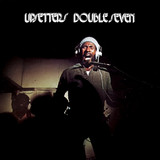
'Double Seven, released by Trojan in late 1973, was the last album Lee 'Scratch' Perry would release on the label for some considerable time, and it was essentially the final album project he put together before establishing his own Black Ark studio. Opening track 'Kentucky Skank' sets the tone with a slow creeper whose frying sounds underscore its role as a praise song to the Colonel's KFC recipes; the cosmic Moog blips come courtesy of Ken Elliott at Camden's Chalk Farm studio, also prominently featured on U-Roy's double-tracked, stereo-panned gambling ode 'Double Six.' David Isaacs' 'Just Enough' was cut a few years prior, which makes it slightly out of phase with the rest of the set, though the enigmatic 'In The Iaah' sounds mightily fresh, with its uncredited chorus said to come courtesy of the Wailers. Perry's own 'Jungle Lion' has hilarious roars from the maestro at the start, strangely grafted atop a reggae re-make of Al Green's 'Love and Happiness.'
'Overall, Double Seven melds the soul, funk, reggae and dub elements that were constant in Perry's work during this phase. His enhanced audio spectrum and endless reference points would keep his music continually apart from that made by his peers.'
—David Katz (excerpt from the liner notes)
Season 2 formed in late 2024, bringing together seasoned Melbourne musicians with previous and current projects including Parsnip, The Stroppies and Phil and the Tiles. The five piece, comprising Carolyn Hawkins, Claudia Serfaty, Charlotte Zarb, Freya McLeod and Matt Powell, quickly set to work writing winsome, DIY, shimmer-pop hits that careen through your mind in a gratifying dizzy rush.
With a clear collective vision and little time to waste, Season 2 spent 2025 writing and recording, appearing live only a handful of times. Finally, this April, the band are primed for their debut release, a full-length album entitled 'Power of Now'. ‘Power of Now ‘is a cerebral explosion of melody, hooks, drones and rhythm. In the vein of The Feelies, The Vaselines and The Clean, Season 2 have whipped up a sonic whirlwind. It's a giddy thrill of snappy slap, catchy gang vocals and crystalline guitar refrains.
'Abundance of Power' is a bittersweet bop of ponderous bass, crisp chord flashes and grounded vocals that dwell on slighted futures and bored realities. 'Becomes a Dream' is a delirious race of scrappy strumming and flying phrases that unsettle as much as they pinball endorphins - "pour the ink into the sand, watch the dog it bites the hand". "Tell me something, elbows on the table, I'll tell you nothing, leave you tugging at the cable" they sing on the peppy future single 'Tugging at the Cable', capturing a certain innocent, wide-eyed expressiveness. Season 2 do sparky well, their songs are instant rewards, tunnelling into your subconscious and testing the dance floor. They keep everything moving, the beat and the conversation. Season 2 sound barely controlled and all the better for it, you have no choice but to be swept up.
'Power of Now' was recorded by Alex Macfarlane (The Green Child, Chateau) and mastered by Mikey Young. It will be released digitally and on LP (black vinyl) on April 24th, internationally via Upset The Rhythm and locally in Australia by Spoilsport Records.
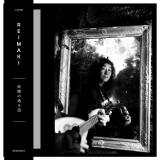
妖精の通る道 (The Path Where Fairies Pass) is the debut vinyl release by Reimaki, the duo of Rei Yokoyama (Triggers Flowers, Stakaidan, Lapiz Trio, 新井薬師自警団, and Fujio, Chiko Hige and Rei), and Maki Miura (Tsubamegami, Les Rallizes Dénudés, Shizuka, Fushitsusha, Ohkami No Jikan and Katsurei). The duo has been an understated presence in Tokyo, playing occasional under-the-radar shows and self- releasing a few CD-Rs, but they’ve recently started to break cover, with a recent cassette on UFO Creations, released in support of a late 2024 tour of China. It’s also a welcome reappearance on the scene for both musicians; Miura’s musical history, in particular, is being reevaluated thanks to a recent string of welcome Shizuka reissues.
But the music Reimaki make together is a different thing entirely, much as it shares some psychological and aesthetic interests with both Miura’s and Nokoyama’s other projects. Their sound is split between two main interests – an extension of glacial, deoxygenating psychedelic improvisations, and a deep interest in medieval European music. They’ve also been known to cover compositions by English prog/improv musician Fred Frith. These various elements of the Reimaki aesthetic are all present through 妖精の通る道, from the fragility of the opening “Novel Amor” through to the smeared, hazy textures of the three extended pieces that comprise the album’s flipside.
There’s a beautiful sympathy in these performances, and a generous simplicity, too; you can sense that this music is informed by decades of finding just the right way to say the right thing in the clearest manner possible. Yokoyama and Miura never overstate things; make the statement, play the song, let it hang in the air for a while, and then move on to the next essential expression. The music is unburdened by self- consciousness. Their take on medieval music cuts to the core of melody and melancholy; their psych- improv side is blurred and drifting without ever lapsing into rote generic gestures.
There’s some shared space with other artists who suspend the timeless within the kaleidoscopic possibilities of the psychedelic – Kendra Smith & The Guild of Temporal Adventurers; Emmanuelle Parrenin; Rosina de Peira – and a tangled folksiness that might put listeners in mind of Jan Dukes De Grey, Comus, Current 93, and Tower Recordings. Accompanied by beautiful photography from street photographer Takehiko Nakafuji, who was also personally chosen by Mizutani to document Les Rallizes Dénudés, 妖精の通る道 is a most unique and necessary trip.
- A1: The Last Opening (Feat. N’zeng)
- A2: So Good
- A3: I Need Scratch
- A4: Ain’t Goin’ Down
- B1: Sympathique & Sympa
- B2: Vem O Mar
- B3: Naked
- B4: She Worries
- C1: Love Is Blind (Feat. Miscellaneous)
- C2: Si Rien Ne Va
- C3: Savoir Danser
- C4: Ipanemax
- D1: Juanita Bonita
- D2: Ouh Baby !
- D3: Once I Was Alone (Feat. Chima Anya)
- D4: Enivrez-Vous
In 2026, the sample alchemist returns to his first love with his 11th album, Endless Smile 2. A 16-track project conceived as a tribute to his landmark 2015 album Endless Smile, which featured his iconic tracks “Betty” and “Qu’attendez-vous de moi”.
Born from a desire to return to the essentials, Endless Smile 2 focuses on instrumental compositions enriched with samples and organic textures inspired by the 70s. The album develops a warm and sun-soaked atmosphere, crossed by the melancholic touch that defines Degiheugi’s musical universe.
Recorded between 2023 and 2025 in his studio Endless Smile Records and mixed by his longtime collaborator Mr. Gib, the album opens with the trip-hop anthem “The Last Opening”. Far from being a simple introduction, it acts as a true gateway into Degiheugi’s new sonic journey. Keyboards set the tone, the horn section led by N’Zeng invites listeners into the groove, while guitars and organic keyboards immerse us fully into his musical world. The scene is set: he’s back.
Among the standout tracks, “Ain’t Goin Down” delivers a reggae-influenced groove driven by a message of hope, while “Vem O Mar” (feat. Hugo Kant) explores funk and tropical soundscapes. “Ipanemax”, a nod to the classic “The Girl From Ipanema”, and “Ouh Baby” extend this Brazilian atmosphere, while “Savoir Danser” leans toward oriental textures and “Juanita Bonita” ventures into a bold fusion of cumbia and dub.
The album also reveals Degiheugi’s signature melancholic side. An addictive loop settles deep into the listener’s mind as “Sympathique et sympa” balances nostalgia with urban groove. The haunting strings of “Naked” and the soul ballad “She Worries” respectively reflect on mortality and the fragility of romantic relationships. Guest artist Miscellaneous addresses gender-based violence on “Love Is Blind”, telling the story of a woman trapped in a toxic relationship.
Endless Smile 2 closes with “Enivrez-vous”, an outro inspired by Charles Baudelaire’s poem, bringing the album to a contemplative conclusion. With this release, Degiheugi masterfully completes a musical journey that began ten years ago.
- A1: Moonlight Feat. Elena Moroder
- A2: Side To Side
- A3: Darkness
- B1: Here For The Summer
- B2: Miraflores
- B3: It's Time For A Change
- C1: Fantasy Feat. Kučka
- C2: Believe In Yourself
- C3: Mesmerized Feat. Jessica Care Moore
- D1: Tryna Find A Way Feat. Leanne Louise
- D2: Keepin' Me High Feat. Tropics
- D3: Wide Awake Feat. Tom Did It
- E1: Linger (Interlude)
- E2: Distant Within
- E3: If You Doubt Me
- F1: Destination (Interlude)
- F2: What Makes You Feel
- F3: Set Sail On Another Ship
- F4: It Feels Natural
After years of shaping dancefloors worldwide and carefully curating the sonic and visual identity of Up The Stuss, Dutch favourite Chris Stussy presents his most expansive and personal statement to date with his debut album, ‘Lost, Found & Forgotten...’. Landing on 3rd April, the album unfolds across three interconnected chapters - ‘Lost’, ‘Found’, and ‘Forgotten’ - each revealing a different side of his creative world across 19 tracks while remaining tethered to a singular wider vision.
At its core, ‘Lost, Found & Forgotten...’ is an exploration of creative freedom. Visually and conceptually guided by the image of a kite, the album reflects movement, perspective, and balance. Floating freely yet always anchored, the kite mirrors Chris’s approach to music: unrestricted in emotion and imagination, but grounded in groove, craftsmanship, and intention. It’s a symbol that naturally extends the Up The Stuss identity; pointing skyward, embracing openness, and encouraging curiosity.
“This album has been a long time in the making, and I’m excited to finally share it with you. The process behind it - exchanging ideas with other artists and creating music outside of my comfort zone - has been an incredible experience. It gave me a true sense of freedom, allowing me to not think about boundaries or expectations. I’ve never been more proud of a project than this one. It’s deeply personal, and it represents my sound as a whole. I hope you listen with an open mind and find something in it that resonates with you.” - Chris Stussy.
The ‘Lost’ chapter opens the album by giving new life to music once left behind. These are tracks written across different moments in Chris’s journey, ideas that never quite found a home until now. Rather than relics of the past, they emerge re-discovered, refined, and fully realised. ‘
Found’ represents inspiration in motion. Sparked by collaboration, digging, and shared creative exchange, this chapter captures the moment when ideas connect, and colour floods the sky.
The album closes with ‘Forgotten’ - a nod to the deeper cuts, the B-sides, and the moments that reward patience. This chapter is for the heads and diggers; tracks that may not demand immediate attention but reveal their value over time.
REPRESSED !
Patrick Keel is a multi-instrumentalist, composer, producer, and performer. The Pool was his solo project, the sum of fifteen years of experience in live bands, studios, and home recording. Patrick was heavily influenced by the radio of the early and mid 1960's in Dallas. The British bands and Black soul of the era gave him a distinct style, and shaped his musical attitude. The New Wave/Punk/D.I.Y. attitudes of the late 1970s inspired him to express himself in a new way. 1980 saw the release of "Pool One," a sixty minute home-produced cassette. "Pool Two" followed in 1981, which received much praise and little distribution. In 1982 he released a 5-song self-titled vinyl EP of tight, skeletal, synthetic dance music.
In 1983, 'Dance It Down/Jamaica Running' 12' EP was released on Moment Productions. Based on response from D.J.'s in New York and the Bronx, Patrick went back in the studio and remixed two songs from the self-titled EP for rapping, scratching and break dancing. "Jamaica Resting" was sped-up, extended, and reconfigured as "Jamaica Running". The whirlpool synth-strut of 'Dance It Down' came out of the studio as 'Dance In Dub', with a heavier kick and extended dub outro. These spacious versions were optimal for DJ play, slotting regularly in sets at hip clubs like Danceteria. For this reissue we've added two bonus European remixes from the 1984 12' of 'Dance It Down/Jamaica Running', released on Nunk records from Belgium. Both songs employ the use of a Boss DR-55, Korg MS-20, Korg PolySix, and a Prophet 5, and were mixed on a 16- track Ampex recorder. The Pool's spartan, self-assured songs are experiments you can dance to.
All songs have been remastered for vinyl by George Horn at Fantasy Studios in Berkeley. The record comes housed in a newly designed jacket by Eloise Leigh, updating the magenta and blue grid and Pool logo of the Moment Productions release. Each copy includes a 12-page booklet with a never seen before photos, press clippings and notes.
The fifth release on Objekt’s Kapsela imprint is (re)weave, an EP of crystalline club tracks from Detroit-born, London-based producer Tristan Arp.
(re)weave was written during a prolonged period of flux for the artist. “When I started making this record, my life and the world felt like a maze,” he recounts. As he routed and re-routed through past and future homes – Mexico to New York to Detroit to Mexico and finally to London – his output bore the marks of this repeated uprooting. “I was thinking about making music that reflected these twists and turns, and the knotty pathways through them. I was also re-reading Borges around this time, which must have influenced my interest in labyrinths.”
Accordingly, the EP is a mycelial puzzle, a tangle of spidery, undulating ostinatos and earthy percussion, stitched through with syncopated kicks. Employing the sounds of multitudinous critters and kin – whales, insects, thunder, water, forests – the arrangements sum to a sentient mesh of organic matter, the compositions living and breathing like earthly beings. Kaleidoscopic tendrils explore in every direction but are always underpinned by a driving, percussive backbone. It’s not easily classifiable: it’s bass-driven, but to simply call it “bass music” would sell it short.
In keeping with the winding geographical paths traced over the EP’s creation, (re)weave saw Tristan Arp revisiting and reinterpreting unfinished sessions and incorporating them into newer ideas. Rhythms and sounds have been transplanted and self-recycled from previous projects and woven into the fabric of the record. In this way, (re)weave also describes a looping back over time, a recalibration of the self from past to present through interlocking rhythms, channeling and communing with versions of oneself from times gone by.
The closing track, Wish Server, slows the EP to walking pace and hints at tentatively emerging from the deepest jungle into a delicate, innocent light. Tristan Arp imagines it as a dialog with a baby-self. “Some of my earliest memories are of sitting at my mother’s loom,” he offers. “The sequence of these tracks traces these feelings and follows the thread back to the primordial soup… through mazes… to a feeling of levitation.”
- A1: Micah Shemaiah, The 18Th Parallel - To Be Free
- A2: Micah Shemaiah, The 18Th Parallel - Freedom Dub
- A3: Rod Taylor, The 18Th Parallel - Guiding Star
- A4: Rod Taylor, The 18Th Parallel - Shooting Dub
- A5: Var, The 18Th Parallel - Let Thy Kingdom Come
- A6: Var, The 18Th Parallel - Kingdom Dub
- B1: Keith Rowe, The 18Th Parallel - Love Gets Sweeter
- B2: Keith Rowe, The 18Th Parallel - Dub Gets Harder
- B3: Itral Ites, The 18Th Parallel - No More Will I Roam
- B4: Itral Ites, The 18Th Parallel - Roaming Dub
- B5: Hezron, The 18Th Parallel - Keep On Keeping On (Extended Mix)
Swiss powerhouse The 18th Parallel presents another slice of fine modern roots reggae! All Fruits Ripe is a heavyweight showcase album rooted in the foundations of reggae while firmly anchored in the present. Recorded between 2015 and 2025, the project brings together a powerful lineup of Jamaican vocalists — Micah Shemaiah, Keith Rowe (from rocksteady duet Keith & Tex), Rod Taylor, Var (Inna De Yard, Pentateuch), Hezron, and Itral Ites — each representing a different generation of conscious reggae music.
The album features six vocal cuts and five dub versions, highlighting both lyrical strength and sound system culture. Carefully mixed by master engineer Roberto Sánchez, All Fruits Ripe stands as a transnational reggae statement: Jamaican voices carried by a European band deeply connected to the roots with a profound respect for the culture that gave birth to reggae and dub. It features legendary guest Jamaican musicians Leroy ‘Horsemouth’ Wallace, Scully Simms, Dalton Browne, or Errol ‘Blacksteel’ Nicholson.
A mature and carefully crafted release where every track feels essential — like fruit finally ready to be harvested.
- A1: Tout Est Bizarre (Feat Agnès Hélène)
- A2: Abanije (Feat Nayel Hóxò)
- A3: Soy Dos (Feat Agnès Hélène)
- A4: Viv Li (Feat Olivya)
- A5: Laissez Passer (Feat Agnès Hélène)
- B1: Ta Logbe Jongo (Feat Nayel Hóxò)
- B2: Soulshine (Feat Nayel Hóxò)
- B3: En Synchro (Feat Agnès Hélène)
- B4: Aïshododo (Feat Nayel Hóxò)
- B5: L’or & Le Sang (Feat Agnès Hélène)
Ayô Dele — which means "joy comes to me" in Yoruba — is neither a slogan nor a promised miracle. It is a breath of fresh air. That of an album born in the interstices, where the word find their way between shadow and light, between the disorder of the worldand the impulse to be .
At the heart of the project, Julien Gervaix and Damien Tesson, multi-instrumentalist beatmakers, share a groove language that is both dense and airy, where every detail breathes and finds its place.
With background in Afrobeat, Dub, Funk, Soul, Roots Reggae, and Electronic Music, they treat the studio to be their playground. Their music is a hybrid groove that speaks to the body: round or bouncing basslines, brass oscillating between melodic warmth and funk energy, textured guitars, arpeggios, enveloping Rhodes, clavinet that slides, presses, and embraces. Everything comes together with precision and flexibility, in an inventive and warm composition. The meeting of their experiences and sensibilities gives rise to open, generous music, made for dancing and vibration.
With Ayô Dele , Ireke is embarking on a new chapter: the duo is refining its style,allowing the voices to breathe. The groove remains the driving force but opens up to intimacy. This intimacy is carried by two unique female voices: Nayel Hoxo, a Beninese-Nigerian singer/rapper, and Agnès Hélène, who has already made a name for herself on Tropikadelic with "Petit a Petit". They don't sing side-by-side; they coexist, respond to each other, and sometimes intersect. But each follows her own path: Nayel, with the power of her words in Yoruba, offers songs of elevation, healing, and resistance — a light born in the cracks Agnès explores these cracks themselves: what wavers within us, what reinvents itself in bonds, glances, and gestures.
For one track, Olivya (Dowdelin) joins this dialogue in Martinican Creole. Her sunny soul sketches the contours of gentle resistance and celebrates rediscovered light.
Ayô Dele embodies a quiet yet radical determination: to smooth nothing over, to let plurality, contradictory emotions, and mixed heritage live. An album that moves forward through vibrations, that speaks of emancipation without slogans, love without clichés, anger without uproar.
Two women, two inner worlds: a sensitive complicity, a shared breath. Music that seeks not effect, but echo, weaving a living soundscape between reinvented traditions and contemporary textures. An alchemy faithful to the spirit of Underdog Records, where music unites and brings people together. Ayô Dele : "joy comes to me." A lucid joy, crossed by shadows, patiently regained. Music that welcomes, releases, gives, and in doing so, makes us feel good.
In a saturated world, Ayô Dele chooses nuance: transmission without emphasis, joy without naivety. An album that vibrates more than it demonstrates, that connects more than it imposes, and which, in its quiet clarity, resonates with a deep desire to be fully alive.
After their recent LP Mirages (Kraak Records, 2025) with French turntablist Guilhem’All, the group continues to explore collaborations with artists and instruments from diverse musical traditions. Building on decades of uncompromising acoustic exploration, Razen delves deeper into their practice with five improvisational pieces that unfold slowly in time and space. The duo’s radical core - Brecht Ameel and Kim Delcour - finds in Van der Harst a longtime kindred spirit, united by the impact of sound, intonation, and the sheer joy of playing.
To be released on April 24 via VIERNULVIER Records, the artwork for Stained Glass Starling was created by American visual artist Robert Beatty (Oneohtrix Point Never, Christina Vantzou, The Weeknd, Tame Impala). The physical release comes with a 16-page booklet including artwork and an interview.
A long-standing artistic kinship lies at the heart of this project, with first encounters dating back to the early 2000s in Belgian musical improv theatre. Van der Harst’s lifelong experience in improvised music and music theatre, spanning back to the 1980s, combined with a vast arsenal of rare and historical instruments, opens new tonal territories within the Razen universe.
These explorations are not incidental: his family roots in the former Dutch East Indies — through his great-grandfather — provide a quiet backdrop to his enduring affinity for Asian musical traditions. Instruments such as erhu, Javanese kacapi, and others introduce timbres
that bring the music its most pronounced Asian inflections to date.
Yet despite this shift in colour, the underlying ethos remains unmistakably Razen. Working from sound rather than form, the ensemble approaches music as painters approach a canvas: adding layers, contrasts and shades with care. There is no soloist’s ego here; all voices are equal, echoing principles found in gamelan traditions.
Over the decades, Razen and Dick Van der Harst have crossed paths repeatedly, notably through cult theatre productions by Belgian theatre maker Eric De Volder, including Zwarte vogels in de bomen (2002) and Huis der Verborgen Muziekjes I–II (2000–2006). Recording an albumtogether had long been a shared aspiration — a wish that crystallised after a 2024 concert at Concertzaal Miry in Ghent, part of the Ruiskamer series by VIERNULVIER Art Centre.
- 1: 640 (Intro)
- 2: Days Of Doom
- 3: Rage Of The Conqueror
- 4: Winds Of Ash And Dust
- 5: Lese Majesty (Corpus De Sang)
- 6: Through Fire And Blood
- 7: Ready To Explode
- 8: By The Blood In Our Veins
- 9: Marching To Victory
DYING VICTIMS PRODUCTIONS is proud to present WHIRLWIND’s highly anticipated second album, 1640, on CD and vinyl LP formats. WHIRLWIND was originally conceived as a studio-project by Mark Wild, from Körgull The Exterminator among other extreme metal bands, to satisfy his will to make a classic heavy metal album, a style that changed his life during his childhood – influenced mostly by ‘80s German metal bands like early Running Wild, early Helloween, Accept, Heaven’s Gate, Gravestone, Tyrant, Grave Digger, Steeler, and Stormwitch among others, but also all kinds of classic heavy metal like Mercyful Fate, Manowar, Iron Maiden, and Judas Priest. In 2022, WHIRLWIND released their debut album, 1714, marking the band’s beginning. WHIRLWIND also established a live lineup to bring their songs to life onstage, with musicians from other known bands, like Redshark, joining as permanent members of the band. The album immediately generated a big buzz in the underground scene and led them to perform at some of the best-known festivals in Spain like Pounding Metal Fest and Skulls of Metal, alongside such bands as Visigoth, Attic, Omen, Tentation, Mindless Sinner, Witchtower, IRON CURTAIN, and Phantom Spell. Now arrives WHIRLWIND’s second album, 1640. Like its predecessor, the album is focused on historical and epic episodes of their homeland; specifically, this album revolves around the Thirty Years War that took place around Europe and the inner conflicts within Spain.
Musically, WHIRLWIND deliver a masterclass in cruising, classy Teutonic metal, running from more traditional-minded mid-tempo stompers to surging, up-tempo gallops of glory. Riff and lead form a lethal tandem, balancing both energy and color, while the rhythm section stays locked in no matter the dynamic. The production, too, of 1640 honors the mid ‘80s with authenticity – underground in spirit, Big League in execution. All told, the album is true heavy metal for true heavy metal people: no more, but definitely no less. By the blood in their veins, WHIRLWIND are marching to victory, ready to explode!