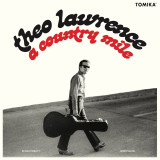
After supporting Alison Krauss & Robert Plant during summer '22 and going on tour alongside Charley Crockett across UK and Netherlands, French-Canadian singer-songwriter Theo Lawrence invites you to travel with him on the roads of Texas for an exclusive RSD release. Four performances captured on the spot, in a studio away from the city. Love songs flirting with bluegrass and rock'n'roll, straight out of a honky tonk where western waltzes follow one another. With this country hillbilly quartet (fiddle, lap steel and double bass), each of the instrumentalists is a reference. Together they form the beating heart of the Austin, TX music scene.
1981 SYNTH CLASSIC BY JAPANESE KEYBOARD WIZARD AND YMO PROGRAMMER HIDEKI MATSUTAKE REISSUED OUTSIDE OF JAPAN FOR THE FIRST TIME IN 40 YEARS. REMASTERED FROM THE ORIGINAL TAPES WITH STRIKING ORIGINAL ARTWORK BY LEGENDARY ILLUSTRATOR PATER SATO INCLUDING ITS STUNNING FULLY ILLUSTRATED
8-PAGE BOOKLET
His name may not be instantly familiar, but Hideki Matsutake has had a huge influence over Electronic music. Starting his career as the assistant of Japanese Electronic Music master Isao Tomita in the early 70s, he went on to work with Ryuichi Sakamoto and then Yellow Magic Orchestra as their keyboard programmer and unofficial fourth member. In 1981 he started his own Logic System project recording "Venus" that year in Los Angeles with Don Grusin, Nathan East and Michael Boddicker, brilliantly mixing Synth Funk, Ambient and Boogie with a touch of Fusion Jazz predating Vaporwave by a mere 30 years. Wewantsounds is delighted to reissue this visionary album, which
comes remastered from the original tapes and features Pater Sato stunning artwork including the rare beautiful 8-page insert with an exclusive interview of Hideki Matsutake by Hashim Kotaro Bharoocha.
The early 80s were prolific for Hideki Matsutake. As the go-to keyboard programmer for the tokyo music scene, he worked on Akiko Yano's "Gohan Ga Dekitayo", YMO's "BGM", Ryuichi Sakamoto's "B-2 Unit", Mkwaju Ensemble's "Mkwaju" and found time to record two Logic System albums in 1981. While the first album, "Logic" had a harder techno feel, the second one "Venus" was different affair. Recorded in Los Angeles at the new state of the art Yamaha Studio, it was loosely themed on the Greek goddess Venus and had a funkier more organic sound. For the album Matsutake had asked a handful of American musicians to provide songs he would then add his synth magic touch to. Michael Boddicker, Don Grusin, Nathan East and Roger Powell duly complied and also played on the album.
The updated sound was achieved by switching from the Moog III to the E-mu modular System (which Matsutake brought over to LA) and other synths like the Prophet 5, the Roland MC-8 and TR 808 and the Yamaha GS-1, a forerunner of the DX7.
The result is an amazing futuristic mix of electronic music and early 80s funk, announcing many genres to come, from techno and house to French electro and Vaporwave. From the breezy ambient synth of "I Love You" to the city pop edge of "Be Yourself" (originally written by Nathan East for Debra Laws) and the vocoder-led Daft Punk-ish "Take A Chance", Venus is a fascinating album that both pushes the boundaries of electronic music and is yet strangely accessible and beautiful.
The other key elements of Venus is the artwork designed by Japanese legendary illustrator Pater Sato. Sato had started in Japan in the early 70s doing many album covers for Japanese artists including Tatsuro Yamashita's cult Spacy LP before moving to New York in 1979 to pursue a career in fashion and advertising. His airbrush style became hugely influential over the years and in 2018, Stella McCartney dedicated a whole Men’s collection based on his Venus. Star make up artist Pat McGrath also regularly posts his artwork to her 3 million fans on her instagram.
The original album came with a beautiful 8-panel insert illustrated by Sato which Wewantsounds has reproduced on this deluxe reissue also featuring remastered sound, OBI strip and a second insert featuring credits and line up plus liner notes by Hashim Bharoocha. The notes will feature an exclusive interview with Hideki Matsutake reminiscing about the making of this visionary album which Wewantsounds is delighted to reissue.
out of Stock
Last delivered 6 years ago available to reorder, subject to availability
In 1995 the self-titled full-length debut of Die Anarchistische Abendunterhaltung (DAAU) was released. The band consisted of four young, 'classically derailed' musicians who played their own compositions with acoustic instruments such as violin, cello, clarinet and accordion. Their work contained influences from Roma music, Eastern European folk, klezmer and jazz, but was performed with the energy, rebellious spirit and Sturm und Drang of a bona fide punk band. DAAU was part of the fertile Antwerp scene, which also produced dEUS, Zita Swoon and Kiss My Jazz, and soon signed an international record deal with Sony Classical.
The group's influential first record, which has been out of print for a while, is now finally being released again and is available on vinyl for the very first time.
In those early days, DAAU consisted of four young, classically trained musicians who tackled their instrumental compositions with a true punk spirit. 'If we'd had guitars, bass or drums at that time, we would probably have been just another rock band', says accordionist Roel Van Camp, who, together with his schoolmates Buni Lenski on violin, the latter's brother Simon on cello and Han Stubbe on clarinet made up the Antwerp quartet. 'With our acoustic instruments we tried to create our own version of the music we loved listening to, from sixties rock and prog to new wave.'
The quartet, which initially played in streets and cafes, appealed to a diverse audience and sometimes joked that they were a classically trained unit that had 'gone off the rails'. 'As befits teenagers, we wanted to shake things up', Stubbe remembers, 'even though we always kept cherishing our classical backgrounds.' Van Camp: 'Our education was never supposed to feel like a straitjacket. We were free-spirited enough to ignore the laws and regulations of the music academy and to create our own sound. Our compositions were open to influences from Roma music, Eastern European folk, klezmer and jazz'. 'That eclecticism was a direct result of the zeitgeist', Han Stubbe adds. 'We loved different styles and happily mixed them together'.
The monniker Die Anarchistische Abendunterhaltung was derived from Steppenwolf, a novel by German writer Hermann Hesse about a character who was outside society. 'In the book, the narrator talks of a theatre', Van Camp explains. 'And at the entrance there is a warning sign sign that says: if you go in here, you are guaranteed to lose your mind. That was an apt description of the way our music worked'.
Almost all tracks on DAAU's first album were 'Drieslagstelsels' (or 'three-course rotations'). The term referred to an agricultural method of the early Middle Ages, but also to the fact that each song of the group consisted of three major movements. Van Camp: 'The titles of those pieces referred to our method of writing. We piled up a huge bunch of ideas, because we wanted to tell more than just one story. With each composition, we took the listener for a ride'.
In 1995 the self-titled full-length debut of Die Anarchistische Abendunterhaltung (DAAU) was released. The band consisted of four young, 'classically derailed' musicians who played their own compositions with acoustic instruments such as violin, cello, clarinet and accordion. Their work contained influences from Roma music, Eastern European folk, klezmer and jazz, but was performed with the energy, rebellious spirit and Sturm und Drang of a bona fide punk band. DAAU was part of the fertile Antwerp scene, which also produced dEUS, Zita Swoon and Kiss My Jazz, and soon signed an international record deal with Sony Classical.
The group's influential first record, which has been out of print for a while, is now finally being released again and is available on vinyl for the very first time.
In those early days, DAAU consisted of four young, classically trained musicians who tackled their instrumental compositions with a true punk spirit. 'If we'd had guitars, bass or drums at that time, we would probably have been just another rock band', says accordionist Roel Van Camp, who, together with his schoolmates Buni Lenski on violin, the latter's brother Simon on cello and Han Stubbe on clarinet made up the Antwerp quartet. 'With our acoustic instruments we tried to create our own version of the music we loved listening to, from sixties rock and prog to new wave.'
The quartet, which initially played in streets and cafes, appealed to a diverse audience and sometimes joked that they were a classically trained unit that had 'gone off the rails'. 'As befits teenagers, we wanted to shake things up', Stubbe remembers, 'even though we always kept cherishing our classical backgrounds.' Van Camp: 'Our education was never supposed to feel like a straitjacket. We were free-spirited enough to ignore the laws and regulations of the music academy and to create our own sound. Our compositions were open to influences from Roma music, Eastern European folk, klezmer and jazz'. 'That eclecticism was a direct result of the zeitgeist', Han Stubbe adds. 'We loved different styles and happily mixed them together'.
The monniker Die Anarchistische Abendunterhaltung was derived from Steppenwolf, a novel by German writer Hermann Hesse about a character who was outside society. 'In the book, the narrator talks of a theatre', Van Camp explains. 'And at the entrance there is a warning sign sign that says: if you go in here, you are guaranteed to lose your mind. That was an apt description of the way our music worked'.
Almost all tracks on DAAU's first album were 'Drieslagstelsels' (or 'three-course rotations'). The term referred to an agricultural method of the early Middle Ages, but also to the fact that each song of the group consisted of three major movements. Van Camp: 'The titles of those pieces referred to our method of writing. We piled up a huge bunch of ideas, because we wanted to tell more than just one story. With each composition, we took the listener for a ride'.
Occasionally, you find music outside the commercial mainstream, outside of everything – the music of visionaries, eccentrics, inventors, loners, the keepers of secrets, the path-finders. Moondog, Daphne Oram, Harry Partch are from this mould. And so too is Lori Vambe.
New on Strut, the first ever reissue of Vambe’s privately pressed original albums from 1982, Drumland Dreamland and Drumgita Solo. A self-taught drummer, inventor, and sonic experimentalist, Lori Vambe is a unique figure in British music. Creator of his own instrument, the drumgita (pronounced ‘drum-guitar’) or string-drum, Vambe intended to create a kind of music that had never been made in order to pursue access to the fourth dimension.
Vambe was born in Harare, Zimbabwe and his father, Lawrence Vambe, was a noted Zimbabwean journalist and author. Moving to London in 1959, Vambe immersed himself in the Brixton squat movement of the early 1970s, teaching himself to drum and creating a short-lived performance group, The Healing Drums of Brixton (Vambe, the sculptor Alexander Sokolov and outsider musician Michael O’Shea). Vambe later had a dream-vision involving a feeling of ecstasy while playing an unknown instrument that extended from his own umbilical cord; the instrument would manifest itself as the drumgita. In 1982, he privately produced a pair of home recordings, the diptych set Drumgita Solo and Drumland Dreamland, releasing them on his own label Drumony. On these records, he rejected any commercial aesthetic and employed tape effects, temporal shifts, reversed sound and overdubbing to investigate space-time and access the fourth dimension. Combining layered drums with the rhythmic throb of the drumgita and, on Drumland Dreamland, an improvised piano performance by Brazilian concert pianist Rafael Dos Santos, the albums are both hypnotic and perturbing.
Both albums were cut at Portland Studios by Chas Chandler and stand as a concealed monument of Black British experimental music. 500 copies of each record were originally pressed, and both were released together. The albums were never performed live.
For this first ever reissue of Drumland Drumland and Drumgita Solo, Strut presents the two albums in their original artwork, housed in a deluxe slipcase including an additional 8-page 12”-sized booklet featuring unseen photos, liner notes and an interview with Lori Vambe by The Wire magazine writer Francis Gooding. Both albums are fully remastered by The Carvery.
Martina Berther and Philipp Schlotter are prolific in their respective ways, having been active in pop and jazz music, respectively, as well as playing in bands and exploring the outer fringes of sound art or composing music for film. Their first joint album »Matt« was recorded over the course of four days in a church in the Swiss village after which the album was named. Berther and Schlotter worked with the buildingʼs organ as well as synthesizers and electric bass to follow an experimental approach that oscillated between composition and free improvisation. The five pieces, recorded directly to tape by Flo Götte without any additional overdubs, are characterised by an intimacy and rawness that calls to mind the introspective atmosphere of Hallow Ground label mateʼs FUJI||||||||||TA or mastering engineer Lawrence Englishʼs latest album for the Swiss label. »Matt« is the result of two versatile composers and musicians executing minimalist ideas by giving them plenty of space to unfold.
The album opens with »Unruhe,« a composition that is based on the twelve-tone technique. Using a stopwatch to ensure the adherence to the pre-determined temporal intervals between the individual notes, Berther and Schlotter used the church organ and synthesizers for an ominous piece that traverses different moods and levels of intensity throughout its 14-minute run time. »LFO1« and »LFO2« are different variations of the same concept: Based on a synthesizer preset and structured by an organ drone, two tone generators slowly fall silent, resulting in elegiac pieces that call to mind the work of Éliane Radigue. »Frachter« and »Gallia« put more emphasis on percussive elements. Again working with organ as well as Bertherʼs prepared electric bass, this improvisation comprises interlocking textures that sound almost menacing on »Frachter,« while they create a very different atmosphere on »Gallia.« These notable discrepancies in sound and mood are even more astonishing if you consider that the two pieces are based on the exact same recording, played at different speeds.
As two variations on the same idea with very different results, these two pieces perfectly represent how the duo effectively creates emotionally affective sound worlds with very few means. Berther and Schlotterʼs conceptual minimalism yields rewarding, multi-faceted aesthetic results. »Matt« is an intimate album, marked by a sense of vividness and spontaneity, but also the product of compositional conciseness.
This new double LP version restores the track “Deep Sky Objects” to the original running order of the album as it was left off of the original single LP version due to side length restraints. This is the first time this album has been available on vinyl in almost two decades, and the first time the Drop EP has been available in any format since original release in 1994.
At the same time, Kranky is making the CD version available once again for the first time in many years, with the Drop EP tracks also included.
The debut album from New York City’s Bowery Electric was released by Kranky in late summer 1995 after they came to the label’s attention via their self-released 2x7-inch Drop EP from the year previous. The first in a trio of albums released by the core duo of Lawrence Chandler and Martha Schwendener finds them in their most raw form.
“The perfect realization of their aesthetic, each word and chord tuned and focused for maximum impact.” — Pitchfork
“Genuinely hypnotic.” —The Wire
out of Stock
Last delivered 5 months ago available to reorder, subject to availability
Dirty Dollhouse is the multi-genre music of Philadelphia-based artist Chelsea Mitchell, a folk chanteuse with classical training and a retro-pop composer with a soft spot for country. After releasing her first lo-fi EP, Married in the Aviary, Mitchell received the Tri-State Indie Vocalist of the Year award and the lyrics to her song Nobody's Daughter were showcased in American Songwriter Magazine. Her follow-up EP, 25 Shades, saw a departure from traditional folk and embraced a Nashville vibe while 2017's full-length album Vinyl Child was a mixture of darkly contemplative pop songs and quiet, intimate confession. Drawing from many muses has produced a uniquely diverse catalogue, but it has also made it near-impossible to pin down who Mitchell sounds like. In sultry-toned moments you might hear Nicole Atkins, a soft bird-like peak could make you think of Kacey Musgraves, and a certain belt may summon Brandi Carlile. Though her vocals range from soft twang to unabashedly operatic, it would suffice to say that Mitchell's songs all fit under the same 'singer-songwriter' umbrella as her lyrics weave a diary page to life and her band expands on structural simplicity with subtle grace. As bassist Joshua Machiz, drummer Eric Lawry, and lead guitarist August John Lutz II are now full-time members, Dirty Dollhouse has found a new and exciting momentum, opening for rising stars like Nikki Lane and Amanda Shires and playing to a wider audience.
Antônio Carlos Jobim was a primary force behind the evolution of bossa nova and his 6th studio release Stone Flower is an absolute classic. The album is emblematic of 70’s bossa with it’s seductive samba beat fused with elements of modern jazz provided by a star-studded supporting cast of Ron Carter, Hubert Laws, Airto Moreira, and Joe Farrell. Stone Flower was recorded by Blue Note engineering virtuoso Rudy Van Gelder and arranged by fellow pianist and guitarist Eumir Deodato; the fidelity and musicality is so well cared for that it effortlessly carries listeners away.
Dirty Dollhouse is the multi-genre music of Philadelphia-based artist Chelsea Mitchell, a folk chanteuse with classical training and a retro-pop composer with a soft spot for country. After releasing her first lo-fi EP, Married in the Aviary, Mitchell received the Tri-State Indie Vocalist of the Year award and the lyrics to her song Nobody's Daughter were showcased in American Songwriter Magazine. Her follow-up EP, 25 Shades, saw a departure from traditional folk and embraced a Nashville vibe while 2017's full-length album Vinyl Child was a mixture of darkly contemplative pop songs and quiet, intimate confession. Drawing from many muses has produced a uniquely diverse catalogue, but it has also made it near-impossible to pin down who Mitchell sounds like. In sultry-toned moments you might hear Nicole Atkins, a soft bird-like peak could make you think of Kacey Musgraves, and a certain belt may summon Brandi Carlile. Though her vocals range from soft twang to unabashedly operatic, it would suffice to say that Mitchell's songs all fit under the same 'singer-songwriter' umbrella as her lyrics weave a diary page to life and her band expands on structural simplicity with subtle grace. As bassist Joshua Machiz, drummer Eric Lawry, and lead guitarist August John Lutz II are now full-time members, Dirty Dollhouse has found a new and exciting momentum, opening for rising stars like Nikki Lane and Amanda Shires and playing to a wider audience.
FINAL GASP unleash their debut album Mourning Moon! A harrowing journey through all things Hardcore, Metal, and Goth, Mourning Moon drags the listener through the dark in 12 thrilling tracks, and drives a stake right into the heart of 2023's most compelling releases. Opener "Climax Infinity" sets the tone for what's to come: the undeniable hardcore swagger of the Boston-based band is immediate as drums and guitars stomp and riff against one another, while FINAL GASP vocalist Jake Murphy howls - "watch as the way it falls, your loss of control, from whispered incantations, burnt down for your invocation!" Mourning Moon showcases expert songwriting and lyrical crafting, snarling and barking through the harsher, heavier punked out moments in "Blood and Sulfur" and "Frozen Glare" while flexing arena chops on the tremendous "Temptation" and utterly despairing "The Vanishing". Elsewhere, the hook-laden title track explodes out of the underground and aims straight for the moon. Lead single "Mourning Moon'' is downright catchy and showcases FINAL GASP's knack for excellent songwriting. A song professing eternal love through a lens clad in black and morbid as ever, "Mourning Moon" proves to be one of the most inventive journeys this side of the genre in recent times, recalling a prime period for luminaries Killing Joke and Danzig. With Mourning Moon, FINAL GASP emerge from the shadows, and step into the forefront of extreme music's new guard.
As for the music: no sophomore slumping to be
found here. Back then Matador wrote, “With
impossibly huge hooks and an innate
understanding of every pop trick in the book, this
follow-up to 2000’s breakthrough ‘Mass Romantic’
is the most exciting pop record we’ve heard in a
long while.”
For once, tastemakers of the day shared the
label’s enthusiasm: “The New Pornographers mix
the pop purism of the Beach Boys, the power
charge of Cheap Trick and the gentle psychedelia
of Syd Barrett,” wrote the New York Times, who
labelled ‘Electric Version’ “Some of the best pop of
the year.”
The first installment from Luv On Wax features four pieces of finely tuned house and break music in physical form. Dreamy soundscapes, slick rhythms, and a fresh infusion of minimal flavor.
out of Stock
Last delivered 2 years ago available to reorder, subject to availability
Still on and about after years of the most intense crate digging, gem mining, desperate head-scratching and avid schooling, thirsty as ever for the next musical thrill to wrap our ears and brains around, here comes the fruit of our life-long love story with Japanese electronics, Denshi Ongaku No Bigaku Vol. 1 and Vol.2. From the soul-fulfilling first crush felt upon hearing the iconic soundtrack of ‘Merry Christmas Mr. Lawrence’ by Ryuichi Sakamoto onto our release of Inner Science ‘Cosmo Tracks’, through the life-affirming sets of Laurent Garnier at Dijon’s seminal club, l’An-fer, which have at all times nurtured and expanded our taste for Easternmost delicacies, the influence of Japanese music on our vision and endeavours was paramount to the development of our catalogue, whether directly or indirectly.
This first volume gets the ball rolling with a fine assortment of mostly ambient, electronica and deep house-focussed joints. Draped in organic membranes and ASMR-like synth tapestries, K. Inoue’s nu-agey opener ‘Em Paz’ takes us on a ride across the most serene dreamscapes. Jazzing up these lush and oneiric coastal vibes, Gabby & Lopez ‘Drive form the Miracle’ merges a sense of Californian psychedelia with a straight out hard-bop swing. No stranger to our catalogue, Inner Science returns to serve up a crystalline slice of laid-back house on a mystique-imbued tip he holds the secret to. Flip it over and here comes Aquarium with the splendidly immersive ‘Rainy Night in Shibuya’, which very much feels like wandering amidst its neon-upholstered streets and swarming hallways in a bubble of your own.
Naohito Uchiyama treats us to a synth-drenched nocturnal ballad with the ‘80s-inflected vibes of ’Shugetsu’, whereas Keta Ra cuts a path of ethereal sublimation via the mischievously fun and bouncy balearic lounge of ‘equals’. Masterly crafted by Yuu Udagawa, ‘Infinite Possibility’ eases us in a realm where weightless pop and low-slung abstract hip-hop combine to further exhilarating effect. All in harp-driven brittleness and velveteen sub-bass stealth, Noah ‘Gemini - Mysterious Lot’ has us drifting to a lavishly orchestrated headspace, laying down an impressive work on textures and arrangements. All in on the sedated drip-tease flex, Sauce81 ’Sign of Secret Love’ is a blast of freaky hedonism, just as ready to cast its hypnotic spell down the sweatbox as it was upon its original release ten years ago.
Languid jacking house tune ’Tai+Dai’ from Keita Sano blows the winds of discoid luvin’ across the room with its impeccable balance of sharp, glimmering synthwork and driving bass onslaughts from the depths. An odd slice of reshuffled folk music, Waltz ‘Folkesta’ makes for some eerie invitation of sorts, enchanting and spookily haunting in equal measure. Back to a fevered, hip-swaying mindset, Kuniyuki hi-NRG jazz number ‘Free’ is an absolute wonder of piano and drums-driven boogie, cut from the same cloth as some of Blue Note’s finest Cuban jazz classics. Rounding off the package, Japanese legend Ken Ishii’s version of Larry Heard’s house Hall-of-Famer ‘Can You Feel It’ is pure bliss in a can, tailored to turn any crowd into a shapeless cloud of balmy euphoria and universal love, whatever the place or time.
out of Stock
Last delivered 19 months ago available to reorder, subject to availability
Still on and about after years of the most intense crate digging, gem mining, desperate head-scratching and avid schooling, thirsty as ever for the next musical thrill to wrap our ears and brains around, here comes the fruit of our life-long love story with Japanese electronics, Denshi Ongaku No Bigaku Vol. 1 and Vol.2. From the soul-fulfilling first crush felt upon hearing the iconic soundtrack of ‘Merry Christmas Mr. Lawrence’ by Ryuichi Sakamoto onto our release of Inner Science ‘Cosmo Tracks’, through the life-affirming sets of Laurent Garnier at Dijon’s seminal club, l’An-fer, which have at all times nurtured and expanded our taste for Easternmost delicacies, the influence of Japanese music on our vision and endeavours was paramount to the development of our catalogue, whether directly or indirectly.
This first volume gets the ball rolling with a fine assortment of mostly ambient, electronica and deep house-focussed joints. Draped in organic membranes and ASMR-like synth tapestries, K. Inoue’s nu-agey opener ‘Em Paz’ takes us on a ride across the most serene dreamscapes. Jazzing up these lush and oneiric coastal vibes, Gabby & Lopez ‘Drive form the Miracle’ merges a sense of Californian psychedelia with a straight out hard-bop swing. No stranger to our catalogue, Inner Science returns to serve up a crystalline slice of laid-back house on a mystique-imbued tip he holds the secret to. Flip it over and here comes Aquarium with the splendidly immersive ‘Rainy Night in Shibuya’, which very much feels like wandering amidst its neon-upholstered streets and swarming hallways in a bubble of your own.
Naohito Uchiyama treats us to a synth-drenched nocturnal ballad with the ‘80s-inflected vibes of ’Shugetsu’, whereas Keta Ra cuts a path of ethereal sublimation via the mischievously fun and bouncy balearic lounge of ‘equals’. Masterly crafted by Yuu Udagawa, ‘Infinite Possibility’ eases us in a realm where weightless pop and low-slung abstract hip-hop combine to further exhilarating effect. All in harp-driven brittleness and velveteen sub-bass stealth, Noah ‘Gemini - Mysterious Lot’ has us drifting to a lavishly orchestrated headspace, laying down an impressive work on textures and arrangements. All in on the sedated drip-tease flex, Sauce81 ’Sign of Secret Love’ is a blast of freaky hedonism, just as ready to cast its hypnotic spell down the sweatbox as it was upon its original release ten years ago.
Languid jacking house tune ’Tai+Dai’ from Keita Sano blows the winds of discoid luvin’ across the room with its impeccable balance of sharp, glimmering synthwork and driving bass onslaughts from the depths. An odd slice of reshuffled folk music, Waltz ‘Folkesta’ makes for some eerie invitation of sorts, enchanting and spookily haunting in equal measure. Back to a fevered, hip-swaying mindset, Kuniyuki hi-NRG jazz number ‘Free’ is an absolute wonder of piano and drums-driven boogie, cut from the same cloth as some of Blue Note’s finest Cuban jazz classics. Rounding off the package, Japanese legend Ken Ishii’s version of Larry Heard’s house Hall-of-Famer ‘Can You Feel It’ is pure bliss in a can, tailored to turn any crowd into a shapeless cloud of balmy euphoria and universal love, whatever the place or time.
out of Stock
Last delivered 2 years ago available to reorder, subject to availability
Producer Scrappy Jud Newcomb and Cleaves teamed up for the third time in early 2022 between Covid surges to record a new batch of songs, Slaid's first in five years.
Familiar themes of struggle and resilience will be a surprise to no one. As Scrappy puts it, "This album speaks to the hopeful, the hard working, the battered, confused, and the sad. But above all to the believers in the city of freedom that we heard in the stories of our youth and all those FM radio hits."
The first single, "Through the Dark," was co- written with Slaid's long- time collaborator and life- long friend, Rod Picott ("Broke Down," "Take Home Pay").
Slaid describes it simply as "a song about offering comfort in hard times."
Joseph Hudak of Rolling Stone calls Cleaves "a master storyteller, one influenced not by the shine of pop-culture but by the dirt of real life."
"More than 20 years into his career, Slaid Cleaves just keeps getting better . . .
There are few contemporaries that compare. He's become a master craftsman on the order of Guy Clark and John Prine." - Austin Chronicle
Structured chaos- perhaps the most fail-safe description of the ins and outs of being an artist. Between the peculiar highs and all too relatable lows, chaos follows art like houses in motion; all lofty ambitions, and fast-paced progress. For Brighton’s Porchlight, chaos, and the art of being a band, in all its complex commodities, is nothing more than mere childsplay, in the grand scheme of lawless artistry.
Loosely inspired by tales of small-town rural England- cottage villages with dark exteriors, ‘Wives Tales & Hymns of the Earth’ as a whole, is the outcome of five individual tales coming together to form a conceptually emphasised entity to end all conceptually emphasised entities. Completed by the poetic brood of ‘Blue Chalk’, the jagged anxieties of ‘Spin Doctor’ and Porchlight aficionado familiarities of opening track ‘From Monday’, in just short of twenty minutes ‘Wives Tales & Hymns of the Earth’ perfectly captures the sweeping emotions of a debut; a soul-stirring, ear-pounding documentation of a group taking their first steps into a whole new unknown of their own fine-crafted design.
Gilberto With Turrentine is an album by Brazilian samba and bossa nova singer Astrud Gilberto and American saxophonist Stanley Turrentine. It features performances recorded in 1971, originally released at CTI Records by Creed Taylor. The album can be described as a blend of jazz, pop, and tropicalia. It was arranged by Eumir Deodato and features appearances by A-list jazz performers including Airto Moreira, Ron Carter, Sam Brown, Hubert Laws, and Toots Thielemans.
Astrud Gilberto gained international fame in the mid-1960s following her recording of the famous bossa nova song "The Girl from Ipanema", while Stanley Turrentine was known for his distinctive work as a jazz musician and his earthy blues style.
Gilberto With Turrentine is available as a limited edition of 1500 individually numbered copies on translucent green coloured vinyl, housed in a gatefold sleeve.
Legendary 90's UK electronic reissue alert! Down By Law Records holy discogs grail + new unreleased material. Think The Beloved Vs. Orbital and you are half way there.. Highly recommended
out of Stock
Last delivered 2 years ago available to reorder, subject to availability
Clearlight returns, two years on from his DNO debut alongside regular collaborator Owl, with five otherworldly solo excursions.
What’s most striking about the Belgian’s work is the way he brings digital textures to life. Like an alien biosphere that doesn't abide by our own natural laws, his soundscapes are irregular and uncanny, but in a way that makes them feel all the more real.
Tracks like ‘Super Strong’ and ‘Heavy Feet’ sway and wobble to cumbersome beats, lumbering through swamps of croaking, chirping, fizzing things. The former eventually collapses into total abstraction, while the latter endures blasts of technoid bass, like the retrorockets of some hulking spacecraft coming in to land.
‘Spinning Head’ is powered by a buzzing oscillator that rolls back and forth across the stereo field. Paired with assorted clattering, clanking percussive debris, it’s an unnerving yet oddly pleasant experience, as if someone were rummaging around between your ears to help find a part that’s come loose.
Lead track ‘Water Willy’ is stranger still. Shifting from something akin to an exotica record played at the wrong speed to a melancholy whalesong lullaby, its twangs, chimes and plodding bass pulse create an eerie but beautiful ambience reminiscent of the deep ocean.
Only bonus track ‘Salt Cube’ is willing to break the spell, upping the pace to deliver the EP’s most traditionally dancefloor-friendly cut in the form of glitchy minimal d&b, with a heavyweight halftime switch post-breakdown.
Taking sounds from the club, but clearly not feeling forced to cater for it, Clearlight grows alternate realities that feel familiar, but offer wondrous, illuminating new experiences. Step inside and join him.
Rhythms of postmodern realism at the very bottom of the DNO.
out of Stock
Last delivered 2 years ago available to reorder, subject to availability
Until the End of Time is the seventh studio album, and third posthumous album by 2Pac. It follows his previous posthumous albums R U Still Down? (Remember Me) and Still I Rise. The album consists of material recorded while the rapper was on Death Row Records from 1995–1996. The album debuted at number one on the US Billboard 200 chart.
A majority of the music compositions were remixed from their original state. Highly anticipated, Until the End of Time was ultimately one of the best selling hip hop albums of 2001. There were only three times references to Death Row Records were not censored (“Until the End of Time” (both versions), “U Don’t Have 2 Worry”, and “All Out”). The core vocal tracks and some instrumentation was recorded during and after the All Eyez On Me and Makaveli: The Don Killuminati: The 7 Day Theory sessions.
This will be a 180 gram 4LP 20th anniversary reissue of the long out-of-print, 4x platinum, posthumous album.
out of Stock
Last delivered 2 years ago available to reorder, subject to availability
Rare Jazz-Funk album from 1978 by Headhunters founder.
Featuring an all-star line-up including Herbie Hancock.
Originally released in 1978 on Tobisha EMI Japan.
First vinyl reissue outside of Japan released in collab w/Totown Records. Comes with double side insert.
Paul Jackson (born in Oakland, California in 1947) needs little introduction. Paul began playing bass at the age of nine and was considered by many of his teachers to be a musical prodigy. Jackson was known as a “Musician’s Musician” and shaped a sound that launched a new direction in contemporary music: the so-called ‘Pulse Playing’, a trademark sound of close-meshed funk grooves combined with sensational rhythms. With this innovative approach, he influenced entire generations of jazz and funk musicians to come. Paul’s compositions were sampled by big acts from the likes of Prince, TLC, Mobb Deep and NWA…just to name a few.
Paul Jackson was a founding member of the Headhunters under Herbie Hancock (THE group responsible for their ground-breaking fusion and jazz-funk compositions that took the world by storm in the 70’s). The solid union between Hancock and Jackson has been especially evident in the many international tours they have made together…not to mention that he participated on most of the Headhunters albums and Herbie’s solo albums.
Paul has also worked as a producer and as a studio/live musician alongside acts such as Santana, Sonny Rollins and The Pointer Sisters. He was a frequent guest performer at renowned international festivals such as the Montreux and Newport events. Jackson’s composing has not gone without recognition and was nominated for Grammy Awards in 1974, 1975 and 1976. Like other highly talented, creatively motivated engineers of music, Paul has expanded his career to other mediums such as playing on blockbuster movie soundtracks such as “Death wish” and “Dirty Harry”.
Paul Jackson also wrote five solo albums worth listening to – including the monster of an album that is known as “Black Octopus” which is considered to be a kind of lost Headhunters album.
His debut album “Black Octopus” saw the light of day in 1978 and is a total piece of art filled with abstract sticky funky grooves, floating electric piano playing, strong thumping bass lines, raw heavy drums and amazing vocal acrobatics (Jackson himself takes vocals in 3 out of 5 songs, and his soulful singing voice strikes an emotional chord that does not go unnoticed).
On “Black Octopus” you’ll also find some of the best all-star musicians from the likes of Alphonse Mouzon (Roy Ayers, Betty Davis, Azar Lawrence)…and last but not least fellow Headhunters Bennie Maupin and Herbie Hancock himself.
With “Black Octopus” Paul Jackson wrote the book on how a jazz-funk-fusion album should sound like. The fact that the album was only distributed in Japan at the time (Jackson resided in Tokyo since the late 70’s, where he passed away in 2021) continues to increase its reputation as an album that is VERY hard to find. This is a must-have gem…not only for fans of jazz, funk and rare grooves, but also for DJs and collectors around the globe.
What started as a one off project for a bit of fun on the Fuzzbrain Records Compilation LP in 2019, quickly mutated into a fully fledged band made up of four UK heads with plenty under their collective belts: Ben Woolf (Blind Authority, Lawful Killing, Frame Of Mind, Stages in Faith, Layback), Bobby Cole (The Annihilated, Churchgoers), Jon Osbourne (Mastermind), and Ollie Hudd (Fortbragg Zine). When QC heard this ‘demo’ it was so in your face we just knew we had to put it on wax, because this blend of Krackdown and Outburst era NYHC with a still distinct London hardcore sound will blow your fuckin’ face off! Live expect some crazy energy and antics that’s hard as nails. Who else is gonna do a hardcore version of the James Bond theme? Stay warned, friends.
'Farewell to Faraway Friends' finds Lauvdal at her Wurlitzer, captured by two mics in the room, with no additional overdubs or edits. Her set of hushed, jazzy flourishes and pregnant pauses is so well realised that it’s hard to believe they were improvised, while the “kitchen feel” of the room recording (as Marhaug describes it) enhances a sense of brittle intimacy. Much in the same way that Dominique Lawalrée imbued his ostensibly naive music with glimpses into a multifaceted inner life, Lauvdal explores an ocean of feeling through the most humble components, transporting us through some alchemical act of emotional teleportation.
Lauvdal avoids meandering flights of fancy, instead exposing a filigree level of detail and beauty through the cracks of her spartan recordings. There are no arbitrary found sounds, no sound design or overdubs, just Lauvdal and her Wurlitzer, occasionally singing at a barely perceptible volume in the background. If there's melancholy, it's not self absorbed or effacing, but trapped behind sunny rays and poetic, romantic phrases.
One of those effortlessly impactful records we’ve not been able to stop listening to for a while now, ‘Farewell to Faraway Friends’ is apparently the first in an ongoing series. Here’s hoping.
Attarazat Addahabia & Faradjallah's album came to us as quite a mystery. Our friends from Radio Martiko got access to the studio archive of the Boussiphone label and a reel labeled “Faradjallah” was among the items they had found there. After listening to the selection of reels they borrowed, Radio Martiko felt it was not a fit for their label and helped us licensing it from Mr. Boussiphone instead. We knew nothing about the band. We just had the reel with the music but very little information. What we knew was that the music was incredible and very unique. Gnawa sounds were combined with funky electronic guitars, very dense layers of percussions and female backing vocals more reminiscent of musical styles further south than Morocco. We started asking around whether anyone knew the band with no immediate success until we asked Tony Day, a musician from Morocco who helped us during our search for Fadoul’s family. His sharp memory came through once again, remembering all the names of the Attarazat Addahabia band members and even how to contact the bands singer and leader Abdelakabir Faradjallah. After visiting him at his home in Casablanca with our Moroccan colleague Sabrina multiple times, he shared his personal story. His father arrived in Casablanca from Aqqa at the age of six and his mother came from Essaouira. Abdelakabir was born in the neighbourhood of Benjdia in 1942. Abdelakabir Faradjallah studied fine arts in Casablanca, graduating in 1962. He also played soccer in the second team of "Jeunesse Societe One". His brother-in-law Ibrahim Sadr worked for one of the biggest football teams of the time in Morocco called "Moroco Sportive Union", which allowed him to travel to France occasionally. While Ibrahim was never part of the band he brought along a few instruments from trips.
Yet the majority of the instruments they could not afford to buy were build by Faradjallah and Abderrazak, Faradjallah's brother who passed away early. For instance they had built a Spanish guitar and a drum made of wood barrel and sheepskin by themselves.During the 1950s Faradjallah was booked as a singer for surprise parties with friends. He started to write his first songs including "L’gnawi" in 1967 and wanted to make people discover Gnawa culture, or maybe rather his take on the culture to be more exact. Faradjallah recalls his first interaction with the genre in the streets of the Dern neighbourhood, where he used to go to elementary school. Gnawa is one of the essential musical genres of Morocco. It combines ritual poetry with traditional dances and music linked with a spiritual foundation. Musically a lot of influences originated from West Africa as well as Sudan. Gnawa is usually played by a selection of specific instruments such as the qaraqab (large iron castanets centrally associated with the music), the hajhouj (a three string lute), guembri loudaâ (a three stringed bass instrument) and the tbel (large drums). People would put shells on their clothes and instruments and use incense at their parties. "Sidi darbo lalla - lala derbo khadem..." came from Gnawa verses Faradjallah used to sing when he was 14. The lyrics tackle a global (im)balance of power and the question of social status in this course. The band Attarazat Addahabia was formed in 1968. The original line-up included 14 members, all from the same family. They played their first small concerts here and there starting in 1969. Later in 1973 they performed bigger shows for instance at the Municipal Theatre followed by the "Al Massira Show" at Velodrome Stadium in downtown Casablanca. Their first album "Al Hadaoui" (the one you are listening to) was recorded at Boussiphone studios in 1972 and was never released before. Nobody seems to remember the exact reason why Boussiphone ended up deciding not to put the album out. The album's title track also served as the basis for Fadoul's "Maktoub Lah", who frequented the same circles as the band for some time.
Their shows sometimes could go as long as 12 hours, starting at 5pm in the afternoon, with an occasional break here and there. In the 1980s the band took a brief break. Faradjallah recalled the reason for that break like this: "Zaki, the bands drummer, had fallen in love with a young girl from Mohammedia. Soon after, he fell very ill. The group members were convinced that the girl had given him ‘s'hor’ (a kind of local Moroccan version of "black magic"). For four years, the whole group stopped playing. It was unthinkable to find another drummer to replace Zaki, even temporarily." So they waited four years for Zaki to "get back on his feet" before going back on stage. Apart from very few gigs here and there Faradjallah stopped playing music in the mid 1990s. Some members from the younger generations formed a new band and still play frequently to this day. Faradjallah runs a television repair shop coupled offerings beverages and snacks in the Belevedere /Ains Sbaa district of Casablanca. While Faradjallah was primarily a musician, he would work for the local cinema and paint their posters for new movies by hand and he designed all artworks and cover posters of the band.
And this eventually led to him participating actively in our first exhibition dealing with Habibi Funk’s work in Dubai 2018. He helped us by creating calligraphic complementations on large photo prints for that show.
Factory Benelux presents a limited (500 copies only) orange vinyl edition of Retrofit, the seventh studio album from post-punk trailblazers Section 25, originally released in 2010. First time on vinyl.
Recorded before the untimely death of founder member Lawrence Cassidy in February 2010, Retrofit saw cult Factory Records group Section 25 revisit key tracks from their 1980s back catalogue, remade and remodelled for the 21 st century using an appropriate mix of new and old technology.
‘Gathered here is a selection of Section 25 faves, re-recorded and re-thought. The idea is born from their invigorating live set – compelling use of technology to lift them (almost) free from the familiar shards of 80s underground. Shockingly, this newattack works. All this tightening appears to have tugged the band into a sense of Now, gloriously at odds with the contemporary norm’ (The Quietus)
‘Audacious and innovative’ (Record Collector)
‘Section 25 might just be the best band in the world. Since 1980 they’ve been forging music that is as beautiful as it is challenging, from the monochrome psychedelia of their first album through Zen guitarscapes, electronic epiphanies, the arguable invention of Acid House, and on to an unexpected rebirth in 2006. Even within the narrative of such an unusual band, Retrofit is an odd confection: not a best-of or remix album, but a retrospective in which tracks are remodelled as gleaming technosculptures with the most human of hearts.’ (Glasgow Herald)
Now released on vinyl for the very first time, FBN 140 is limited to just 500 copies pressed on orange vinyl. The digital copy contains 5 bonus tracks, including a blistering re-boot of Looking From A Hilltop by Stephen Morris of Joy Division/New Order.
out of Stock
Last delivered 3 years ago available to reorder, subject to availability
This compilation takes us on a journey to the Colombian coast where the passion for African music burns bright.It's impossible to understand this love affair without first looking to San Basilio de Palenque - the first free town in colonial Latin America, established in 1691 as a place of refuge and autonomy for black slaves. It's a place where pride in African heritage and culture could be kept alive, just 50 km away from Cartagena de Indias.
The Afro Caribbeans' connection to their roots gave rise to the "picós" - artisanal, high-powered sound systems akin to those found in Jamaica. These music aficionados have a keen ear for African melodies, leading to a vibrant collector's scene that brought Afro sounds to the streets of Barranquilla, Cartagena, and Santa Marta. This compilation showcases the best of Kenyan Benga music - a unique style with a distinct guitar-picking method that draws from traditional instruments like the nyatiti and orutu. Learn everything about the history and stories behind these African tracks, from the carefully guarded "exclusives" to the piconema - the practice of renaming songs in Spanish based on their lyrics or the reaction of the dancefloor.
The project has been led by Spanish vinyl collector Joan Pujol aka Golfo De Guinea surrounded by a team of passionate music lovers including Don Alirio, a musicologist from Barranquilla who offered a coastal perspective, and George Ouma, a Kenyan DJ, collector, and Benga advocate who helped with track selection and securing rights. The result is a compilation that captures the joy and energy of sub-Saharan polyrhythm, bringing together a vibrant mix of genres that are sure to move your feet. So sit back, turn up the volume, and let yourself be transported to the vibrant streets of the Colombian coast and the shores of Lake Victoria.
out of Stock
Last delivered 20 months ago available to reorder, subject to availability
Established in 2020 by DUPLOC & 140 Plates owner Pieter Grauwels and producer Hebbe, Basskruit is a label set up with the sole focus of shining a light on Belgian & Dutch produced, explosive Dubstep & 140 music.
With previous incredible releases coming from the likes of 11th Hour, BunZer0 and Hebbe himself, the imprint is now set for their eagerly anticipated 17th outing.
It comes from Netherlands-based Crowley & Schim, two producers expertly carving their reputation into the underground ‘140’ scene with their stunning, bass-driven productions which have been released on labels such as DUPLOC, FKOF & Concrete Law.
Meticulously crafted and exploding with bassweight, BSSKRT017 is a four-track EP which boldly traverses the sonic plains of ‘140’, showcasing the variety in both artist’s sound, whether it be the stripped back & swinging Moraal, the reverberating & dubbed-out Skitta or the dark & breaks-laced Wervel, which provides inspiration for a deep & hypnotic remix from Belgian artist Zygos.
Release artwork provided by Joshua Hughes-Games.
out of Stock
Last delivered 16 months ago available to reorder, subject to availability
If your brain has a shortlist of bands that instantly evoke New Wave, Suburban Lawns deserve a slot right next to the likes of Devo, Talking Heads and the B-52’s. After putting out two singles on their own Suburban Industrial imprint, the Lawns signed to I.R.S. Records and released their debut LP in 1981. While the band gained cult status thanks in part to a Jonathan Demme-produced music video which aired on Saturday Night Live, their self-titled album would sadly be the five-piece’s only full-length statement. Suburban Lawns’ asymmetrical aesthetic is personified by co-vocalist Su Tissue, whose mesmerizing stage persona was at once childlike and terrifying. Her unique style embodies the awkward/arty female singer of the Reagan era, while the group’s male vocals—courtesy of Frankie Ennui, Vex Billingsgate and John McBurney—maintain the satirical themes of Southern California’s postwar mirage of limitless sprawl. Suburban Lawns’ catchiness can be attributed to their drum-tight performance and taut songwriting. Listen to the vocal trade-offs on “Anything,” which could have easily come out on any purely Punk label from LA at the time, while Tissue’s deadpan delivery on “Janitor” glides into the best art-warble this side of Lene Lovich, broaching the possibility of nuclear annihilation with a murmured “Boom, Boom, Boom, Boom.” From a West Coast scene dominated by 7-inch singles and EPs, the Suburban Lawns’ lone LP remains in a class with precious few. It’s not surprising that they found acceptance in the Hollywood punk scene, despite their Long Beach roots, and would influence other bands such as Minutemen. This is not a disc that will get parked in your collection hoping to get pulled once in a while; this is a record you will play.
The electric eels were the first punk band, full stop. They may not have “started” the genre, but they were the first to tick all the boxes. The eels rejected every 1970s rock convention—professionalism, virtuosity, subject matter, image. Dave E.’s caustic vocals, complete with an aggressive lisp and a head full of snot, would become de rigeur a few years after the group disbanded. Meanwhile, the songs’ focus on car crashes, suicide, neuroses, and generally hating people were as far out of the mainstream as possible. The two eels tracks that do approach the subject of romance couch it in terms of not really caring that much about it (“Jaguar Ride”) or placing it in the context of a grisly murder (“Silver Daggers”). Also consider John Morton’s signature guitar sound, a nails-on-chalkboard tone with brutally free soloing inspired more by Albert Ayler than the blues or aspirations to technical facility. Ditto Dave E.’s clarinet playing and affection for lawnmowers and vacuums during live performance. They were notoriously violent not only among themselves, but towards audiences, police, and anyone unfortunate enough to be around them when things went south. Then of course there are the leather jackets, the clothing festooned with rat traps or safety pins. And no bass player, why bother. There is simply no other “proto” band to have had all these pieces in place circa 1973- 1975. Yet it is a mistake to consider the eels exclusively in such a context. Yes, the eels could and did shock anyone who encountered them, but they also had great songs. While both Dave and John were visionary writers, they also had rhythm guitarist Brian McMahon, a melody and riff machine who wrote many of the band’s signature songs. And they were no one-trick pony. Although much of the band’s material is appropriately high-energy, there is also the downer eels—morbid, harmonically risky, and in full existential crisis. Although it’s not a focus of this compilation, the eels also had a penchant for completely free improvisation. Over the last forty plus years, there have been several electric eels compilations. Spin Age Blasters is quite simply the best one ever assembled, every single key track is here in its best version, properly mastered by John Golden, and sequenced with an eye towards both flow between tracks as well as individation between sides. A true monster of an album.
Known as ‘the Architect of Rock ‘n’ Roll,’ the flamboyant rhythm and blues extrovert, Little Richard, made an incredible impact with unorthodox piano playing and rasping, shouted vocals, yielding a series of pivotal hits in the mid-1950s, but he abandoned secular music for gospel following a tour of Australia in 1957. Lured back into rock by promoter Don Arden, his UK tour featuring The Beatles as support, Little Richard Is Back was his comeback set for Vee Jay, his voice now deeper and seasoned; the range of covers are tackled with plenty of pep, and original ‘Groovy Little Suzy’ was co-written by Harry Nillson. All hail the King!
First time on vinyl ever, remastered in 2023. Zeke- Live Tracks Uncensored LP. This LP shows Zeke live ... raw, wild, untamed and uncensored. If you’ve seen Zeke before, you know that these guys can be a total beast on stage. This LP offers a bunch of killer live recordings to make it sound like the band is playing in your kitchen: loud, fast and furious. You know that Zeke are the real purveyors of speed rock and roll and that can’t be better heard than here. The LP includes some of their best songs including tracks from ‘Super Sound Racing’, ‘Flat Tracker’, ‘Kicked in the Teeth’, ‘Dirty Sanchez’ and ‘Death Alley’ recorded in different venues from Seattle to Las Vegas to Minneapolis. One of the other special treats this LP offers is it includes two very rare studio tracks that are pretty hard to find. 26 tracks in all with top notch production. Genre: Alternative / Rock n Roll / Pun
First time on vinyl ever, remastered in 2023. Zeke- Live Tracks Uncensored LP. This LP shows Zeke live ... raw, wild, untamed and uncensored. If you’ve seen Zeke before, you know that these guys can be a total beast on stage. This LP offers a bunch of killer live recordings to make it sound like the band is playing in your kitchen: loud, fast and furious. You know that Zeke are the real purveyors of speed rock and roll and that can’t be better heard than here. The LP includes some of their best songs including tracks from ‘Super Sound Racing’, ‘Flat Tracker’, ‘Kicked in the Teeth’, ‘Dirty Sanchez’ and ‘Death Alley’ recorded in different venues from Seattle to Las Vegas to Minneapolis. One of the other special treats this LP offers is it includes two very rare studio tracks that are pretty hard to find. 26 tracks in all with top notch production. Genre: Alternative / Rock n Roll / Pun
King Arthur: Legend of the Sword is a 2017 fantasy film directed by Guy Ritchie and is loosely based on the Arthurian Legends. The film stars Charlie Hunnam as the title character, and co-stars Àstrid Bergès-Frisbey, Djimon Hounsou, Aidan Gillen, Jude Law and football star David Beckham. The film follows Arthur, who is robbed of his birthright and comes up the hard way in the back alleys of the city. But once he pulls the sword from the stone, he is forced to acknowledge his true legacy - whether he likes it or not.
The score is written and produced by Daniel Pemberton, an English Ivor Novello Award-winning, Golden Globe Award and multi-BAFTA Award-nominated composer. The soundtrack features Mercury Prize winner and folk musician Sam Lee.
Delicious new school, street soul from Freya Roy, self-released and limited to 100 pressings. Hailed as “Street Soul is back” by Gilles Peterson, British-German artist/producer Freya Roy is steadily making her mark on the nu-jazz and alternative soul scene. With the release of her 8 track LP ‘For Who I Have Become’, her engrossing vocals and production takes you through the dark and moody new school, and into a blissful, soulful soundscape, with glistening guitar lines and haunting backing vocals. Along with a handwritten insert, and bonus tracks including Roy’s 2020 release ‘Fantasies’ featuring a fiery vocal from Maya Law, this limited pressing is not one to sleep on.
[g] B3. Fantasies ft. Maya Law (Original) [Vinyl Bonus]
[h] B4. Day Is Done (Instrumental) [Vinyl Bonus]
High Roller Records, black vinyl, ltd 150, 4 page insert, A5 photo card, poster, bonus
CD Bonus CD: 14. The Joke´S On You (Studio 2011) 15. No House (Studio 2015) 16. World War Nine (Live 2012) 17. Gremlin´S Night (Live 2012) 18. Hard Target (Live 2012) 19. Streets Of Doc-Town (Live 2012)
High Roller Records, blue w/ white & mustard splatter vinyl, ltd 200, 4 page insert, A5 photo card, poster, bonus CD
CD Bonus CD: 14. The Joke´S On You (Studio 2011) 15. No House (Studio 2015) 16. World War Nine (Live 2012) 17. Gremlin´S Night (Live 2012) 18. Hard Target (Live 2012) 19. Streets Of Doc-Town (Live 2012)