Auf ihrem zweiten Album Breaking and Entering" legt GracieHorse mit ihrer direkten, unverblümten Art, Geschichten zu erzählen, noch eine Schippe drauf mit Songs, die die Details gut geschriebener Kurzgeschichten enthalten und Country, Soul, Americana und Rock nahtlos miteinander verbinden. Die weitläufige, detailreiche Produktion des Indie-Visionärs Chris Cohen unterstreicht GracieHorses Gesang mit einem gewitterten Charme, der diese neun Songs erst richtig zur Geltung bringt.
Turkey’s first stereo LP. A foundational recording of Anatolian psychedelia. Audio transferred from the original analog master tapes, mastered and lacquer cut by Frank Merritt at The Carvery, London, and pressed on 180g heavyweight black vinyl at Record Industry in the Netherlands.
Released by the legendary Yonca Müzik label in 1973 as Turkey’s first stereo LP, Türküz Türkü Çağırırız! now returns as the first official reissue. The album captures Mazhar Alanson and Fuat Güner at a pivotal moment before their later success with MFÖ, one of Turkish pop-rock’s most influential and enduring groups.
Mazhar and Fuat first met in 1966 through a shared love of The Beatles’ Rubber Soul. Inspired by the close vocal harmonies of The Beatles and Crosby, Stills & Nash, they initially believed this music could only work in English. Producer Ergin Bener encouraged them to develop their own musical language in Turkish.
Previously members of Kaygısızlar, the pioneering group that accompanied Barış Manço, Mazhar and Fuat explored a more intimate Turkish folk-rock sound on this album. Zafer Dilek’s arrangements bring his distinctive guitar and keyboard work to a recording in which acoustic guitars, organ and electric guitar touches frame Anatolian melodies. Country-rock influences and the English-language “Upside Down” add to its range.
The title roughly translates as “We are Turks, and we sing Turkish folk songs” — reflecting a search for a new, distinctly Turkish musical identity. The album draws on works by Âşık Veysel, a defining voice of Turkish folk poetry, and Yunus Emre, the great Anatolian Sufi poet.
“Adımız Miskindir Bizim” was sampled on Action Bronson’s “Easy Rider,” while Stones Throw producer Oh No sampled “Sür Efem Atını.”
In the evolving landscape of modern Southern hip-hop, the pairing of Starlito and Bandplay stands out as a unique bridge between street-level authenticity and refined, calculated musicality. Their collaborative project, Not The Country You Know, functions less like a standard release and more as a manifesto—a masterclass in the chemistry between a seasoned, introspective lyricist and a producer who possesses an intuitive grasp of the region's pulse. It is an exploration of legacy and adaptation, capturing the tension between where they came from and where the culture is currently headed.
Bandplay, long recognized for sculpting the sonic identity of Memphis icons, brings his signature, trunk-rattling 808s to the project, yet he manages to pivot here. The production feels remarkably expansive, masterfully blending the raw, stripped-back aesthetics of classic Tennessee rap with forward-thinking textures that refuse to be confined to a single sub-genre. Complementing this, Starlito operates with his trademark mix of cynical observation and genuine vulnerability. He navigates these beats with the weary grace of an artist who has weathered the music industry's relentless cycles, treating every bar like a necessary piece of a larger, ongoing story.
The album’s title serves as a direct commentary on these shifting tides. Across the tracklist, the duo investigates the growing disparity between the romanticized South and the cold realities of the streets, alongside the inevitable evolution of the music business itself. There is no frantic chasing of streaming-era trends or algorithmic bait here; instead, the project remains a stubborn, confident assertion of artistic identity. By weaving together Starlito’s "voice-of-reason" flow and Bandplay’s evolving, genre-bending sound, Not The Country You Know challenges the listener to abandon their preconceived notions of the region, offering instead a complex, urgent vision of a South that is as haunting as it is vibrant.
he all-time house music legend Roger Sanchez drops his brand new studio album ‘Spectrum’ - his first in twenty years. Previewed by three high-energy bangers - ‘Grinnin’ (with Fedde LeGrand), ‘Come My Way’ and ‘Temptation’ (with Low Steppa, featuring Ragdoll) - the record features the new focus track ‘How Do We Say Goodbye’, a collab with Karen Harding.
The globally celebrated and Grammy-winning DJ, producer and label head has been working on the album for years, much of it during his time in Shoreditch which has informed its euphoric UK summer sonic influences. But its diverse tracks reflect a spectrum of sounds, from pulsating club tracks to dancefloor fillers, through to more emotional moments and atmospheric elements. Lyrically it’s also the result of translating his personal experiences into song.
Roger says, “I’ve been working on this for the past six years, so it’s definitely a labour of love. During that time I got the chance to travel around the world and work with some amazing vocalists and songwriters to help me bring this project to life. I’ve got flavours from the UK, Spain, the US - all of this is part of the spectrum for. This project is about music and frequencies and light: so everything from the light to the soulful to the club-ready infrared, the emotionally-weighted ultraviolet. That’s what ‘Spectrum’ is all about for me.”
The new focus track ‘How Do We Say Goodbye’ was created with the topline extraordinaire and always in-demand collaborator Karen Harding, whose all-star credits include work with MNEK, Armand Van Helden, Rudimental, Wilkinson and many more. It’s a massive highlight of the album, with Karen’s soaring vocal class bringing both an irresistible hook and a touching sense of nostalgia, while Roger’s dynamic production ascends from a trance-like ambience into an electrifying drop.
Beyond the singles, ‘Spectrum’ also features a diverse array of other talents spanning multiple genres and nationalities. These include Melanic C, Kele Le Roc, Chico Castillo, Kelli-Leigh, Carnao Beats, Donae’O and more. It’s a guestlist which lives up to the anticipation for the record.
‘SPECTRUM’ is available as a special 3LP limited-edition pressed on red transparent vinyl.
After finding their feet with a couple of remixes for Before I Die, Talking Drums ditch their sea legs and swap the pirate booty of their cult edit series for a five-track EP of original productions, each swimming in LinnDrums, digital chimes and synth-vox sunshine. Summer sounds abound as the crew refract house, disco, ambient and dub through shimmering sea glass, bringing the beach to the bar, club, garden or grotto.
Inspired equally by tropical Sceneries (but Not Songs), Ecco the Dolphin and Echoes of Wally, as well as a few tall tales about trendy whales, this 16-bit caper makes a splash from wave top to bikini bottom. Written and produced as a cohesive EP over three sun-baked weeks in 2025, and stitched together with field recordings and found sounds from Sicily, rural France, Japan and Singapore, Pier Pressure sees each track flow into the next: distinct seas that make up one larger ocean.
Opener ‘Fashionable Whale’ surfaces with mystic motifs and dreamy pads arcing above the spray before a purring low end and drum-box shuffle plunge us into Balearic house depths. A rippling breakdown, bookended by insistent arps, provides respite from the rhythm before the low-tempo pulse returns to take us home. Sticking with Zone 2 cardio, ‘Salmon Hats’ serves wonky disco at Valium pace, its beatific vox and glittering sequences underpinned by a hip-swivelling bassline and topped with a future-primitive melody. After drifting into dream house for a sunset lull, it’s back to the beat and the enduring question of how best to dance on a lilo.
‘Mangrove’ offers an intertidal intermission as tuned percussion finds a place among the cicadas and lapping waves, gently unfolding into an RPGambient ode to humid languor. Refreshed, albeit ailed by a sunstroke haze, we’re back on the dance floor with the optimistic motifs and jolly polyrhythms of ‘Flutti Di Mare’, an uptempo, Afro-adjacent house workout designed to inspire mile-wide smiles. Then the EP sails off into the sunset with the fathoms-deep delight of ‘Squid Dub’, a Cousteau-coded cod-reggae stepper with digi-dub bass, pound-shop marimba and all manner of THCtinged FX. Don’t be deceived by the loose and limber opening: a solid sequencer emerging at the midpoint sees the Squid squeeze every bit of bump out of the finale.
Forget ATOL protection - Talking Drums deliver your summer holiday directly to your stereo.
Pioneering NYC house label Nu Groove Records is proud to unveil a four-track EP of originals from fellow NYC house legend Jovonn.
After nearly three decades without a release, the cult house label relaunched in 2021 spearheaded by none other than Jovonn with ‘Random / Get Over It’. Following his ‘Funn Houze EP’ released earlier in 2023, the Brooklyn native is back with his ‘Blaque Katt EP’, a masterful display of innate musicality combined with an affinity for roaring '90s-inspired club music.
For the lead, ‘The Piano Fix’, Jovonn creates a dichotomy between the delicate nature instrument and the heavy, sweaty feel of the dancefloor. This is followed by a harder pianistic technique in both ‘The Piano Fix Returns’ and ‘Let Me Tell You Somethin’, showcasing the producer’s flair for harmony and melody.
Closing the immersive collection is ‘Drop That Traxx’, a playful track featuring addictive, syncopated hooks over a pounding four-on-the-floor beat. Throughout the EP, Jovonn displays his talent for gritty, hard music made with tender care.
To mark 25 years of Tsunami Records, Wunsch delivers a landmark release that celebrates the label's legacy while looking firmly toward the future.
For this special anniversary project, Wunsch brings together a powerful lineup of artists who embody the spirit and evolution of the sound: Black Forests (Arcanoid and Wunsch), The Rare Breed (Regis and Wunsch), Broken English Club, Giving Ground (Function and Wunsch), Microcorps, Rumenige, and Sabotak. Each contribution reflects a distinct voice, yet together they form a cohesive statement - raw, uncompromising, and deeply rooted in the underground.
This release is more than a milestone; it's a testament to 25 years of dedication, vision, and sonic exploration. From driving, industrial textures to immersive and atmospheric moments, the record captures the essence of Tsunami's identity across decades.
A celebration of past, present, and future - this is Tsunami at full force.
Belgian label De:tuned once again dives into the innovative world of Luke Vibert, reviving his legendary Plug moniker with 'Variety Magic', the first new Plug album in nearly 15 years.
For this release, Vibert unearthed and hand-picked a collection of previously unreleased jungle and drum & bass gems, sourced straight from his original mid-90s DAT archive. The result is an 11-track ride through the raw energy and playful experimentation that made his early Plug work so distinctive, all infused with Vibert's unmistakable funk and mischievous flair.
Variety Magic is vibrant, bold, and delightfully off-kilter. A colourful homage to an iconic era, crafted for both deep listeners and the dancefloor. Stay tuned!
Visualised by the Variety Magi. Stencil Art by Pablo Fiasco and rewired by Openmind. Mastered by Matt Colton at Metropolis. A separate digital release will also be available at the usual digital shops.
Belgian label De:tuned once again dives into the innovative world of Luke Vibert, reviving his legendary Plug moniker with 'Variety Magic', the first new Plug album in nearly 15 years.
For this release, Vibert unearthed and hand-picked a collection of previously unreleased jungle and drum & bass gems, sourced straight from his original mid-90s DAT archive. The result is an 11-track ride through the raw energy and playful experimentation that made his early Plug work so distinctive, all infused with Vibert's unmistakable funk and mischievous flair.
Variety Magic is vibrant, bold, and delightfully off-kilter. A colourful homage to an iconic era, crafted for both deep listeners and the dancefloor. Stay tuned!
Visualised by the Variety Magi. Stencil Art by Pablo Fiasco and rewired by Openmind. Mastered by Matt Colton at Metropolis. A separate digital release will also be available at the usual digital shops.
Hotshot producer D*v*d J*cks*n heroically revives the legendary Puss label, home to some of the most enticing, scandalous and straight out illegal dance music released across the
last 13 years, all supposedly masterminded by K*rn*l K*v*cs of St*d** B*rnh*s fame. Three reasons for this sudden revival: One trancetastic take on a deep cut from the queen of
Swedish pop, an instantly engaging UKG flip of an eternal dance hymn and, lastly, a rugged faux-Baltimorean nugget for all the Kittenz out there.
“Beautiful. Feels like every corner has been lovingly created. Highly recommended" Jamie Cullum, BBC Radio 2
“Incredible. One of my albums of the year” Dom Servini, Jazz FM
“What a beautiful message” China Moses, Jazz FM
“Completely envelopes you” Soweto Kinch, BBC Radio 3
“An uplifting, articulate soundtrack which instils hope and uncontaminated warmth” Backseat Mafia
“Scrimshire delivers a superior example of the style thanks to his musicality and inventive imagination” Jazzwise
“He has stepped up: a stronger musician, and a braver one, with nothing here that plays as filler” UK Vibe
DJ Support: Cerys Matthews, Gilles Peterson, Gideon Coe, Zakia, Jamie Cullum, Patrick Forge, Maflada, Dom Servini, Tony Minvielle, China Moses, Yolanda Brown
Drawing on influences from Charles Stepney to David Axelrod, into expansive folk-soul and jazz from the 60s, Bring Our Light To Every Corner is a deep and enchanting masterpiece from Scrimshire.
With captivating features by Dwight Trible, Idris Rahman, Faye Houston and Indian classical legend Mahesh Kale, the album holds together a suitably diverse set of ideas in a seamless journey full of heart.
Originally released by Time Capsule in 2021 and long out of print, Stories From Another Time 1982-1988 returns in an upgraded edition following years of demand and rising collector prices on the secondhand market. Widely regarded as a modern cult classic, Mário Rui Silva’s visionary recordings blend acoustic folk, cinematic soul, spiritual jazz and saudade-filled Lusophone rhythm into a deeply timeless and universal work that transcends genre and geography.
This new edition features half-speed mastering cut at Metropolis alongside an expanded 4-page insert with a tribute essay and unseen photographs following Silva’s passing in 2024.
The roots of Angolan popular music explored in the meticulous guitar studies of Mário Rui Silva. For fans of Naná Vasconcelos, John Hassell’s Fourth World ambient, Eduardo Mateo’s psychedelic folk and Cameroonian electronic music visionary Francis Bebey.
Whether on mesmerising acoustic ballads or hypnotic groove-led tracks, the music of Angolan guitarist, researcher and intellectual Mário Rui Silva has a beguiling, melancholy quality, woven into the dynamics of his deft guitar playing.Rhythmically complex yet supremely effortless, the music collected here stems from three albums Mário released in Luanda in the 1980s that reflect his diverse range of influences, from traditional Angolan and West African rhythms to European jazz and classical instrumentation. It is united by a sense of low-key beauty, whether on the chugging opener ‘Kazum-zum-zum’, the jazz-funk keys of ‘Lembrança Dum Velho’, or the twinkling, late-night poly-rhythms of ‘Kizomba Kya Kisanji’.
Born in Luanda, Angola in 1953, Mário dedicated his life to Angolan popular music. His fifty-year career has seen him live between Angola and Europe, rub shoulders with Cameroonian musicians Francis Bebey and Ewanjé, record the seminal album Angola ’72 with fellow Angolan musician Bonga, and draw influence from Brazilian guitarist Baden Powell.
It was the teaching of Angolan legend and Ngola Ritmos co-founder Liceu Vieira Dias that Mário gained a technical, political and spiritual understanding of Angolan musical culture. In the hands of Liceu, the traditional Angolan semba and kazukuta rhythms of the 1940s and ‘50s helped create an emancipatory sense of national pride and collective agency that awakened its listeners to the racism and tyranny of colonial rule, underpinning the country’s push for independence in the process.
What might sound like the intonations of Brazilian influence are what Mário attributes to the “African rhythms taken by the slaves which gave rise to other musical cultures” around the globe. Instead, this music emerged from a collective instinct to assert a cosmopolitan Angolan identity free from the patronising falsehoods of Lusotropicalism.
“There was a need within me to contribute in doing new things,” Mário describes. “In the sense of solidifying the music of Angola that was the result of the meeting of two cultures, and wanting to value the Angolan part whenever possible.”A selection from Mário’s three 1980s albums, Sung’Ali (1982), Tunapenda Afrika (1985) and Koizas dum Outru Tempu (1988) have been compiled here as a 2xLP release by Time Capsule’s Sam Jacob and Kay Suzuki. Together, they provide a snapshot of one man’s journey to the core of his nation’s music, charged with the search for a culture uprooted by colonialism
RAWAX presents Basic Bastard aka Orlando Voorn!
Another great release from the dutch Legend, who teamed up on two tracks with Will B & Barksdale They delieverd here an beautiful hommage to Detroit. Worth to check!
Telling a tale of house music’s early days or roots without mentioning Tony Humphries as a club DJ, remixer and radio disc jockey would make it an incomplete, forged and most of all a bit of a yawn.
Born in Brooklyn in 1957, Humphries’ musical journey is synonymous with New York City’s dance music history and the evolution from uptempo soul music to house: from being a dancer at David Mancuso’s infamous Loft parties to becoming a mobile DJ and getting the call from Shep Pettibone to become his right hand at
the then new Kiss FM radio station, followed by countless remix offers and a legendary residency at Newark’s Club Zanzibar. Next to that one, is was especially his work as a radio disc jockey for said station during most of the 1980s until 1994 that gave him majestic clout. Breaking new records week in, week out,
putting New Jersey acts like Adeva and Jomanda or countless up-and-coming producers from there on the musical map, while simultaneously playing the hottest imports from Europe, trax from Chicago, dance classics and all things straight from New York’s music factory that never seemed to stop.
Going to his vast and almost complete archive of radio shows from way back when he graced those airwaves, we at Running Back Records have pickedNew Release Information original recordings that symbolize his importance as an industry giant and ambassador of this style of music.
„But one thing I would like to point out is that, as a DJ, the music I play is not my music. I want to make it perfectly clear that it is music that is released, and it’s everyone’s music. I do not take any other credit than being the middle person exposing this music.“
(Tony Humphries in: What Kind of House Party Is This?, Jonathan Fleming, 1996)
Grammy award-winning titan of dance music Purple Disco Machine joins the illustrious list of Defected House Masters with a celebratory compilation. The German producer, DJ and global household name Tino Pointek, AKA Purple Disco Machine, is the blueprint for what makes a successful dance music artist in the modern age; respected on the underground scene while achieving major crossover success with remixes for the likes of Sir Elton John, Dua Lipa and Mark Ronson. The crate digging kingpin of house and disco first landed on Defected over a decade ago, and has since delivered remixes of iconic tracks like Fatboy Slim’s ‘Praise You’ and the London label’s top tracks including Shakedown’s ‘At Night’ and ‘Coma Cat’ by Tensnake – as well as striking originals like ‘Beat Fantasy’. From edits of the classics to remixes of the modern, as well as uplifting originals, Purple Disco Machine has birthed a distinct sound that is instantly recognisable, one that is not afraid to reference or not reference and is always bursting with joy. Across Defected presents House Masters: Purple Disco Machine, the full breadth of the iconic German selector’s sound is felt from the 2019 smash hit ‘Dished (Male Stripper)’ to deep cuts like his re-work of Fallout’s ‘The Morning After’ as well as remixes of legendary tracks like ‘Lola’s Theme’ by The Shapeshifters and Spiller’s ‘Groovejet’ featuring Sophie Ellis-Bextor. Defected presents House Masters: Purple Disco Machine is here to showcase the sound of a bona fide electronic maverick in full.
Zero Idea makes a resounding debut on AnalyticTrail with The Rush, a sprawling six-track EP (plus digital bonus) that captures the high-velocity spirit of the modern underground. Following in the footsteps of the label's Neapolitan heritage, this release is a masterclass in tension and groove, blending raw analog energy with sophisticated, peak-time precision.
As AnalyticTrail continues its relentless evolution, The Rush serves as a bridge between the classic warehouse aesthetic and the future of the genre. Zero Idea delivers a versatile toolkit for the dancefloor, further bolstered by two high-profile reinterpretations that elevate the EP into an essential piece of wax for the 2026 season.
The A-side opens with the title track, The Rush, a driving, percussion-led anthem designed for maximum impact. Italian duo Fireground take the reins for the A2, injecting their signature soulful yet industrial flair into a masterful rework, followed by the syncopated, high-energy rhythms of Funk Is Back.
On the flip, On Sight plunges into deeper, hypnotic territory before Mezer The Architect provides a sophisticated, architectural remix that reconstructs the original into a brooding, late-night weapon. The vinyl journey concludes with Body Language, a rhythmic workout of sharp hi-hats and undulating bass, while the digital-exclusive Go Higher offers a final, soaring peak-time moment.
A comprehensive exploration of modern techno, The Rush is a definitive statement from Zero Idea and a powerful addition to the AnalyticTrail legacy.
Seven - a number steeped in mystery and meaning, woven into the very fabric of time and space. Throughout history, the number seven has stood as an immutable symbol: from the days of the week to the alchemical metals, from the kings of Rome to its seven hills. An archetype that unites astronomy, myth, and ancient civilizations, finding its deepest expression in Rome.
According to legend, the Eternal City guarded seven sacred relics, the Pignora Imperii, objects whose possession ensured divine protection, prestige, and political authority. Ovid referred to them as the "pledges of power": testimonies of Rome's Trojan heritage and its connection with peoples such as the Sabines, Etruscans, and Greeks. These artifacts, now lost, were:
I. Lo scettro di Priamo
II. Il velo di Iliona
III. Il Palladio
IV. Le ceneri di Oreste
V. Lo scudo ancile
VI. La quadriga di Veio
VII. L'ago di Cibele
From this mythology emerges the new project by Lykos Records: a narrative journey in seven chapters, each dedicated to one of these relics, unfolding through the various artists releases corresponding to catalogue numbers 7, 14, 21... up to LYKOS-XLIX.
Chapter I, "Lo scettro di Priamo" LYKOS-VII, is dedicated to the symbol of Troy's power, brought to Latium by Ilioneus on Aeneas' command as a pledge of alliance and reconciliation. It is said to have been kept on the Palatine Hill.
To inaugurate this journey, seven Roman artists - PixFoil, DJ Red, Brando Lupi, Luigi Tozzi, Feral, Sunday Bath, and Worg - will give life to a sonic mosaic celebrating the musical heritage of the capital. Their tracks will form a collective work that bridges generations and diverse artistic visions.
Each double vinyl will feature an original illustration by Roberto Mulliri, wrapping the entire front and back cover and included inside as a poster.
Within the Pignora Imperii lies the strength and power of Rome, witnesses of the city's epic saga; likewise, Lykos Records weaves its destiny into the history of these sacred Roman objects, becoming a messenger of their enduring legends.
Celebrating a decade since its live debut, Detroit-based artist Rebecca Goldberg announces the first-ever vinyl release of her original score for A Trip to the Moon, the iconic 1902 silent film by Georges Méliès. Composed in 2016, Goldberg’s reimagining of the groundbreaking film—originally titled Le Voyage dans la Lune—translates early cinema fantasy into a minimalist electronic soundscape shaped by synthesis, texture, and composed foley.
Goldberg’s approach honors the wonder and theatricality of Méliès’ vision while grounding it in Detroit’s lineage of forward-thinking electronic music. The score premiered in Paris in 2016 with live performances at Silencio, the club founded by David Lynch, and at Bar à Bulles, located above the legendary Moulin Rouge. The Paris events were produced by Why So Serious Productions and marked a rare convergence of experimental electronic performance and historic cinematic space. Goldberg also presented the live score in her native Detroit, reinforcing the transatlantic bridge that has long shaped her conceptual record projects.
Now, ten years later, the score will be released for the first time on vinyl in a limited edition of 300 copies. The pressing captures the nuance of the original live compositions while offering listeners a new way to experience the interplay between silence, rhythm, and sonic illusion. As with Goldberg’s previous conceptual 12" releases, the vinyl format serves not only as a medium but as an artifact that preserves and reframes cultural memory.
Telling a tale of house music’s early days or roots without mentioning Tony Humphries as a club DJ, remixer and radio disc jockey would make it an incomplete, forged and most of all a bit of a yawn.
Born in Brooklyn in 1957, Humphries’ musical journey is synonymous with New York City’s dance music history and the evolution from uptempo soul music to house: from being a dancer at David Mancuso’s infamous Loft parties to becoming a mobile DJ and getting the call from Shep Pettibone to become his right hand at
the then new Kiss FM radio station, followed by countless remix offers and a legendary residency at Newark’s Club Zanzibar. Next to that one, is was especially his work as a radio disc jockey for said station during most of the 1980s until 1994 that gave him majestic clout. Breaking new records week in, week out,
putting New Jersey acts like Adeva and Jomanda or countless up-and-coming producers from there on the musical map, while simultaneously playing the hottest imports from Europe, trax from Chicago, dance classics and all things straight from New York’s music factory that never seemed to stop.
Going to his vast and almost complete archive of radio shows from way back when he graced those airwaves, we at Running Back Records have pickedNew Release Information original recordings that symbolize his importance as an industry giant and ambassador of this style of music.
„But one thing I would like to point out is that, as a DJ, the music I play is not my music. I want to make it perfectly clear that it is music that is released, and it’s everyone’s music. I do not take any other credit than being the middle person exposing this music.“
(Tony Humphries in: What Kind of House Party Is This?, Jonathan Fleming, 1996)
“Nimm die rosa Brille … sag was Du siehst … alles viel besser”
44 years after its original release, one of the most idiosyncratic DIY minimal electronics / synth / new wave records of the early ’80s returns: the legendary 7” by German group DEUTSCHE SCHÄFERHUNDE (engl. German shepherds)—now remastered and reissued for the first time as a one-sided 12” on Anna Logue Records. Recorded in the winter of 1981/82 between rehearsal space, provincial disco and bar nights, and a humble four-track setup, these tracks capture the raw spirit of a generation that simply started creating—no formal training, but plenty of attitude. Minimalist, uncompromising, and inspired by krautrock, punk, new wave, electronic music and dub, the songs move between raw electronics, percussive noise, new wave experimentation, and sharp social commentary. „Rosa Brille“ (rose coloured glasses) in particular feels as urgent today as it did back then—a track that has lost none of its relevance, „Gasmasken“ tells of gas masks dancing in the woods to the sound of sirens, and a timeless Holger Czukay/Jah Wobble inspired „Mein Herz“ (my heart).
Originally pressed in a small run of just 500 copies and later becoming a sought-after collector’s item now worth 200€, the record now returns in a carefully crafted edition featuring a laser-printed reverse side and additional materials such as original lyric sheets and articles, postcard and poster. DEUTSCHE SCHÄFERHUNDE thrived on paradox—a provocative name paired with a clear stance, and lyrics that still resonate today. Shaped by Cold War tension, political unease, and youthful rebellion, their sound refused to fit into any neat category. Only few other bands, such as Der Musikant, Im Namen des Volkes, Thorax Wach, Klinisch Sauber oder Stephan Eicher spielt Noise Boys come to mind.
This release is more than a reissue—it’s a document of its time that still hits with full force.
12″ features: limited to 400 copies, hand-numbered, one-sided 180g black vinyl, laser-etched B-side, outer sleeve printed on reverse side of the board, printed inner sleeve with original lyrics sheets and original articles, DIN A3 poster, double-sided postcard
And here it is!
The third brand‑new vinyl on K.N.O.R. Records:
A pure underground throwback, pressed on wax for the real ravers and collectors who still feel the pulse of the oldschool days.
K.N.O.R. continues its revival, and Cardassia pushes the legacy even further
Dexstar recordings returns for its 4th release, with Acid techno legend DDR. Prepare you self for a journey through pounding dark acid techno finishing with a hard techno staple.
A highly sought-after compilation drawn from the legendary Sade reinterpretations — presented in its original white label form. Nearly unobtainable today. Inside: a carefully curated spectrum of lush, emotive reinterpretations, drifting from atmospheric slow burners to elegant club-ready house cuts. Built for deep diggers, discerning collectors, underground DJs, and journalists tuned into the culture, this record captures a rare intersection of mood, craft, and dancefloor sensibility. Extremely limited pressing — once gone, gone for good.
LIMITED TO 150 COPIES! 2 x 12" Black Vinyl w/ Gold Foil Embossed Cover, shrink wrapped.
‘Elevation’ is album eleven from High Focus Records founder and 1/4 of The Four Owls Fliptrix.
The latest instalment in a formidable run sees the lyricist further his vision of the world in the hope of elevating the collective mind and spirit of both artist and listener across 19-tracks.
Having worked with Forest DLG in some capacity across all of his records over the past fifteen years, from mixing and mastering, but also collaborating on multiple tracks as rapper / producer, it is surprising that it took so long for the pair to come together on a full-length collaborative project.
‘Elevation’ is that record.
Fliptrix reached out to Forest with a view to creating something completely different from his previous boom bap heavy outing ‘Dragonfly’, he is always looking to advance his craft and take things higher, and after Forest responded with a pack of 70+ instrumentals the direction of travel became crystal clear. The result is an album designed to lift the listener into a higher state of consciousness and trigger conversations about the state of the world, in the hope of enacting positive change during tumultuous times.
Fliptrix’s vision and Forest DLG’s style feel perfectly aligned. The album is truly collaborative; Forest going away and creating the artwork inspired by Fliptrix’s otherworldly experiences with the Shipibo tribe in the rainforests of Peru; from the single covers, to the album cover and merchandise as Fliptrix focussed on writing.
Having worked with all the greats in the UK hip hop scene, Fliptrix actively sought out new energies on ‘Elevation’, especially when it comes to the album features. Jungle forefather General Levy on lead single ‘ENERGY! ENERGY! ENERGY!’ Grime legend Frisco on ‘Visionaries’, Ayah Marar on ‘Transform’, Da Flyy Hooligan, Kamakaze, Coops, and a 19-strong HF posse cut in the shape of ‘Dangerous’ make this album a must-listen for anyone looking to elevate.
Jazz-fusion, disco-funk, Latin jazz and batucada rhythms get the Filipino treatment onAfter Midnight, the sublime second album from keyboardist Boy Katindig. Originally released in 1980, After Midnight draws heavy influence from soul and funk contemporaries in the US as well as Latin America, in particular the famed Brazilian percussionist Paulinho da Costa.
It’s a testament to his musical prowess that Katindig weaves effortlessly between styles and tempos. His reverence for Paulinho da Costa extends far, with covers of several songs from the latter’s 1979 Happy People album. This includes slow-burner ‘Déjà Vu’ written by Isaac Hayes originally for Dionne Warwick; on the Filipino instrumental version, local legends Jun Regalado and Roger Herrera (from Regalado’s ‘Pinoy Funk’ single) are reunited on drums and bass respectively.
But Katindig’s original compositions hold just as much weight and unique personality: title track ‘After Midnight’ opens with a sultry funk serenade reminiscent of The Isley Brothers, and quickly transforms into a catchy, blistering, saxophone chorus that brims with swagger. Hidden B-side gem ‘Got The Need’ is an uptempo tribute to batucada that would not be out of place in a jazzy house set, and boasts increasingly elaborate and psychedelic solos from Katindig on keys and Ben Concepcion on soprano sax.
Meanwhile, ‘Love Till the End of Time’ is a masterclass in instrumental disco funk, penned by the prolific Greg Phillanganes who at that same time was writing for many of the greats including Chaka Khan, George Benson, Stevie Wonder, The Jacksons and Cheryl Lynn.
This album is lovingly reissued by Sama Sama Records, a boutique label from DJ and collector Norsicaa, who ran the esteemed Soundway Records for 8 years and released the compilation Ayo Ke Disco in late 2024.
A founding member of the legendary Wu-Tang Clan, Ghostface Killah is Hip Hop’s masked poet — known for his cinematic storytelling, gritty slang, and razor-sharp delivery. With classic albums like Supreme Clientele and Fishscale, Ghostface carved his name into rap history as one of the most original and consistent voices in the game. The Wait is Over. Supreme Clientele 2 is FINALLY here. The highly anticipated album is a vivid- late-night noir where every bar brought Ghost’s inner thoughts to life. From Staten Island to sold out stages worldwide.
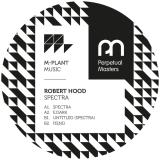
M-Plant's Perpetual Masters series continues throughout 2026 with Robert Hood's "Spectra" EP up next. Remastered once again by legendary German producer, Thomas Heckmann, the individual tracks have been dropping digitally through April and are now followed by a full vinyl release in June.
Robert Hood's "Spectra" EP, originally released in 2001, stands as a defining example of his stripped-back, conceptual approach to techno. It sees Robert Hood operating at his most stripped-down and hypnotic, built from tightly looped drum patterns and shadowy synth fragments that slowly evolve. Hood's precision is evident in every detail, as he balances repetition with crisp percussion and a tightly controlled groove.
More deep, immersive and hard-hitting minimal techno from the master.
Slip My Soul Where A Sweet Sunday brings together four versions by Fundación Tony Manero in charge of three projects from the Catalan jazz scene: The Gramophone All Stars Big Band, The Changes and ·I·. At the hands of these interpreters, the songs by Manero (all taken from “Sweet Movimiento”, their second studio LP) wander through different spectrums of jazz. From the Jamaican-tinged ska of the Gramophone to the dragging, hip-hop groove of ·I· through the swing -more classical or more avant-garde depending on the subject- of The Changes, these four pieces prove that jazz and disco music are family. Or what is the same: that jazz has always been dance music. Slip My Soul Where A Sweet Sunday celebrates the legacy on the one hand, the Fundación Tony Manero, which is retiring from the stage after more than 25 years paving the way for new generations and new projects. Among others, those who now take the baton in this EP.
Spaceships on the Blade is the 2022 solo album from San Francisco legend, entrepreneur and rapper, Larry June. The 20-track album features the singles, “Private Valet,” & “In My Pockets,” and sees production from a wide range of producers such as, The Alchemist, Jake One, DJ Khalil, Cardo, DJ.Fresh, Chuck Inglish, Turbo & more. Enlisting the help from fellow rap luminaries such as 2 Chainz, Babyface Ray, Curren$y and more, Spaceships on the Blade shows that Uncle Larry always has an eye on expanding and diversifying income steams and will continue to do numbers for a long time. Good Job, Larry. 2xLP, Black Vinyl, Widespine Jacket, Printed Sleeves.
Mit dieser exklusiven Best Of Vinyl wird der legendäre Italo-Disco-Künstler Alan Ross gebührend gefeiert. Erstmals erscheint eine umfassende Sammlung seiner größten Hits auf einem einzigen Album – ein echtes Highlight für Sammler und Liebhaber des Genres.
Freuen Sie sich auf zeitlose Klassiker wie „Valentino Mon Amour“ und „The Last Wall“, die bis heute zu den bekanntesten Tracks der Italo-Disco-Ära zählen. Das Besondere: Alle Titel sind in verschiedenen Versionen enthalten – von Original-Mixen über Extended Versions bis hin zu seltenen Varianten.
Diese Vinyl bietet nicht nur nostalgischen Hörgenuss, sondern auch einen spannenden Einblick in das musikalische Schaffen von Alan Ross. Ein unverzichtbares Album für alle Fans von Italo Disco und 80er-Sound – und für alle, die es noch werden wollen
Past Tense returns with a second helping of buried treasure: three previously unreleased tracks from 90s and early 2000s written by US legend John Howard. Made between two millenniums, these cuts blend house, techno, and tech house into a hypnotic, time-warped trip. How they stayed in the vault for over 20 years is anyone's guess.
For its eleventh installment, Raw Soul continues to carve out its place in the deeper end of the house spectrum, this time welcoming Stuttgart-based DJ and producer Jakob Mäder to the fold.
Titled "House Your Feeling", the five-track EP captures Mäder's wide-ranging musical language-rooted in house, yet drifting effortlessly into ambient textures, disco-tinted warmth, and subtly experimental structures. It's a body of work that feels both intimate and expansive, equally suited for late-night listening and early-morning dancefloors.
The collaboration has been a long time in the making. Built over months of close exchange, the project reflects not only a shared musical vision but also a genuine personal connection. That sense of trust and patience resonates throughout the record-carefully crafted, unhurried, and deeply felt.
Across the EP, Mäder explores different shades of house music: from reduced, dreamy cuts to more groove-driven moments, always maintaining a distinct emotional core. One of the highlights comes in the form of a collaboration with Markus Phillip, adding another layer of depth to an already rich release.
Known for his work with the Midnight Service crew and his eclectic productions spanning ambient, deep house and breakbeat, Mäder brings a refined yet playful touch to Raw Soul's catalogue. With "House Your Feeling", he delivers a timeless contribution that feels grounded in the present while nodding to the genre's enduring legacy.
Mystic Letter K presents Occulimus. Behind this alias stands Cari Lekebusch, one of Europe’s most respected and prolific techno figures, with an undeniable legacy and historic releases on labels such as Missile, Hybrid, and Planet Rhythm, among many others.
With Mystic Letter K, Lekebusch steps into a parallel, more mature and conceptual universe—one where he fully explores a mental, tribal, deeply hypnotic and highly danceable strain of electro. His sound is built on constantly shifting patterns: elements that repeat, reconfigure, and sequence themselves in multiple ways, creating a continuous sense of motion that drives the listener into states of trance and altered perception. Occulimus captures this essence with surgical precision: an unmatched groove, raw yet refined, designed for the dancefloor but equally suited for full immersion. Each side of this double vinyl acts as a powerful and versatile tool, allowing any DJ to build, sustain, and transform energy with a single record in the bag.
A direct, functional, and absorbing work that reaffirms Lekebusch’s forward-thinking vision and his unique ability to sculpt sound in motion.
For his sixth solo album, Ezéchiel Pailhès returns with a new collection of songs infused by a sunny wandering spirit.
Within each of the twelve songs on SOL is a thread of melancholic happiness that has permeated much of Pailhès’ music and songwriting. He addresses love, the passing of time, hope, lost illusions, fleeting moments of grace, the temptation of forgetting, a need to escape, and desire. All this is
insulated by understated orchestrations that blend acoustic and electronic instrumentation with deft confidence.
The Portuguese and Brazilian concept of saudade—a form of melancholic longing and nostalgia— pervades, thanks in part to Pailhès decision to record the album in Rio de Janiero and to reinterpret some of the finest works of Música Popular Brasileira (MPB). In particular, he revisits a handful of
lesser known classics from the mid-century samba and bossa nova era—originally written or performed by talents including Vinícius de Moraes, João Gilberto, Tom Zé, Dorival Caymmi, João Donato, Os Tincoãs, and Ataulfo Alves.
The shift from Brazilian Portuguese to French and the decision to adapt rather than perform a straightforward cover versions, allows Pailhès to invent a form of prosody and euphony (the musicality and harmonious combination of words) that feels vibrant and unlike anything else in today’s French
chanson landscape.
“Some lyrics are simple translations from Portuguese, in what I’d call an expanded version. For others, I started from a single word or a single phrase and embroidered an entirely new text that carried me elsewhere,” explains Pailhès. “I allowed myself great interpretive freedom, while preserving the humanist dimension of the original songs. I’ve always been deeply moved by the way Brazilians transfigure reality through heightened emotion. I love this visceral and spontaneous country, which always seems to live through emotion. And above all, I love its music both popular and unifying,
bringing together all social classes. In that sense, it’s very political music, but even more so utopian, made by the people and for the people.”
On this new album, however, the French artist was keen to avoid cliché. Each song is therefore built around a carefully balanced interplay between Pailhès’ piano and synthesizers, alongside restrained arrangements of percussion, brass, bass, and cavaquinho (a small four-string plucked guitar). These parts were recorded in Rio de Janeiro with two musicians who regularly perform alongside the legendary Caetano Veloso—Kainã Do Jêje and Alberto Continentino—joined by Thomas Harres, Antônio Neves, Eduardo Neves, and Gabriel Loddo.
Since the 1960s, France and Brazil have shared a long-standing cultural and musical relationship. Some Brazilian artists, most famously Gilberto Gil, took refuge in France during the dictatorship years (1964–1985). But above all, French chanson quickly fell in love with the richness and ingenuity of
bossa nova and samba, translating and reinventing them in the language of Molière. Throughout the 1960s and 1970s, albums and hits by Henri Salvador, Georges Moustaki, Pierre Barouh, Pierre Vassiliu, and Claude Nougaro all drew from the MPB repertoire.
Fifty years later, with SOL, Ezéchiel Pailhès reinvents this rich Franco-Brazilian musical legacy, bringing to it a personality and modernity that stand confidently alongside those of his forbears.
Born from a demo session originally recorded in 2011, “I Like” finally came to life when Daniele “Shield” Contrini and Piero Pirupa reunited in late 2025 to complete the track, transforming an early idea into a powerful new collaboration featuring two legendary voices of house music: The Egyptian Lover and Paris Brightledge.
Daniele “Shield” Contrini, founder and creative force behind Rebirth Records, joins forces with globally respected DJ and producer Piero Pirupa to deliver a record designed to fire any dancefloor.
Blending Italo disco influences, classic house grooves and a powerful bassline, “I Like” carries a warm, uplifting energy while paying tribute to the golden era of club music. The track is driven by the unmistakable vocal presence of The Egyptian Lover, the pioneering American artist, producer and DJ Greg Broussard. Widely recognized as one of the architects of West Coast electro and early hip-hop, he helped shape the sound of 1980s Los Angeles electronic music through his groundbreaking use of the Roland TR-808.
Adding further depth to the record is the distinctive voice of Chicago house legend Paris Brightledge, whose haunting and melodic tone became iconic through classics such as “It’s Alright” and “Paris Dub 1”. Over the years he has collaborated with some of the most important names in house music including Joe Smooth, Frankie Knuckles, Marshall Jefferson, Ron Hardy, Mike Dunn, Farley “Jackmaster” Funk and Byron Stingily, while also appearing on projects with Pet Shop Boys, Paranoid London and Groove Armada.
With its blend of electro heritage, Chicago house soul and contemporary club production, “I Like”connects different generations of dance music in a single record, a collaboration that bridges eras, styles and scenes. Set for an official release on 22nd May, the track marks another chapter in the label’s ongoing story and its commitment to celebrating the roots of club culture while pushing it forward.
Little Beat More welcomes a new 7” from Conjunto Media Luna, a release that moves along the deep axis connecting Colombia and Mexico where cumbia mutates, and projects itself into new dimensions.
On the A-side, “Kumbia Tequendama” sees the group joined by rebajada pioneer Amantes del Futuro, a key figure in shaping the futuristic vision of cumbia across generations and geographies. Born between Mérida, Medellín, and the legendary Mambo Negro studios in Bogotá, the track reflects years of friendship and shared sonic research. Hypnotic accordion lines intertwine with dense low-end pressure, channeling an energy rooted in tradition but fully tuned to the present, built for dancefloors, sound systems, and the growing decentralized community of modern cumbia.
On the flip side, French producer La Dame reshapes “No es Moda”, originally featuring La Terrorista del Sabor, into a forward-leaning DnB and Future Bass reinterpretation. Faster, sharper, and more weightless, the remix opens a new perspective on the original while preserving its nocturnal spirit and emotional depth.
The artwork is signed by Bogotá’s own Mateo Rivano, whose unmistakable visual language has defined the aesthetic of some of the most visionary projects in contemporary cumbia.
Part of the wider sonic universe of Sociedad Internacional de la Kumbia, Conjunto Media Luna’s upcoming album, this 7” captures the group’s ongoing exploration of cumbia as a shared space, where distance disappears, traditions remain in motion, and new frequencies emerge from collective memory.
Made with Love by Little Beat More 2026
“We Dance We Think”
Berlin-based label Ascension on Wax continues its deep, jazz-inflected trajectory with the forthcoming release A Quiet Storm EP from DFRA, arriving June on 12" vinyl and digital formats (Cat No: AOW005). Available to buy and pre-order from May 15, the EP showcases DFRA's refined blend of soul, jazz, and classic house sensibilities, enriched further by a remix from Detroit's Jon Dixon.
Hailing from Colombia and now based in Buenos Aires, DFRA (Diego Ruiz) brings a deeply musical approach shaped by formal studies in composition and a lifelong immersion in hip-hop, gospel, soul, and disco. His productions balance two complementary sides, lush, jazz-rooted musicality and the raw, driving energy of Detroit and Chicago house. This duality is fully realised across A Quiet Storm EP, marking another step in his evolving sonic identity.
The title track, "Quiet Storm," opens the record with a deep, rolling groove elevated by exquisite saxophone work, setting an introspective yet dancefloor-ready tone. "Strings" follows with a dreamy atmosphere, rich piano textures, and a warm jazz undercurrent that highlights DFRA's compositional finesse. On "Charlene," soulful vocals intertwine with chord progressions reminiscent of early Motor City Drum Ensemble, delivering a nostalgic yet forward-looking house cut.
Completing the package, Jon Dixon reimagines "Charlene" through a distinctly Detroit lens. Stripping the track back and rebuilding it with deeper textures and signature keys, Dixon channels the spirit of Underground Resistance while pushing into more meditative territory, bridging jazz improvisation with machine-driven rhythm.
Founded in Berlin, Ascension on Wax continues to honour the legacy of jazz within house music, pairing contemporary producers with a strong visual identity and limited vinyl releases. With A Quiet Storm EP, the label reinforces its commitment to soulful, authentic club music rooted in the traditions of the 90s US scene while looking firmly ahead.
As the so-called “Latin boom” becomes a new anchor for hard-swung club sounds, it is crucial to recognize that the region’s musical culture extends far beyond dembow edits and the pop-trap hybrids that have edged into the mainstream. Monterrey-born, New York City-based producer and DJ Delia Beatriz, aka Debit, returns to NAAFI with Potpourri, a generous and kinetic collection of dancefloor-oriented tracks filled with percussive flourishes, squelching 303 basslines, and rhythmic mutations that actively challenge the status quo. Rather than rebuilding “Latin sounds” as a fixed category, the album rethinks their internal logic, tracing the evolution of techno and house in cities like Detroit, Chicago, and New York alongside parallel innovations emerging in Mexico, Colombia, and across the wider Latin world. Positioned on the bridge between Mexico and the US, Potpourri does not seek synthesis as a gesture of smooth fusion, but as a site of disruption.
The album can be heard as a loose follow-up to System (2018), Debit’s NAAFI-released EP that expanded the sonic potential of tribal guarachero through triplet-driven rhythms, industrial pressure, and noisy reconstruction. Potpourri retains guaracha as a structural backbone while drawing further influence from veteran DJ and producer Javier Estrada—who also appeared on System—and particularly from his fast-paced, nonlinear style of mixing. That approach becomes a formal principle here: canonical structures are dismantled, repetition is avoided, and tracks evolve without sacrificing propulsion. Coming after the introspective temporal inquiry of Desaceleradas and the speculative historical acoustics of The Long Count, Potpourri arrives as a deliberate surge of energy. As Beatriz explains: “It’s a manifesto for rethinking form and sound in dance music. By stepping outside traditional structures and embracing the potpourri approach, I’m creating new meaning with familiar rhythms. I’ve also been applying this to my DJ sets, using it as a tool to break free from established norms and explore new narrative possibilities.”
Years in the making, Potpourri imagines an alternate timeline in which the psychedelic squelch of acid—echoing pioneers such as DJ Pierre and Mr. Fingers—and the dub-inflected atmospheres of Basic Channel entered into direct and sustained contact with Latin American club mutations. Those references are legible, but never merely quoted. Instead, they are folded into syncopated hi-hats, overdriven kicks, and unstable arrangements that absorb both the intensity of the parties Beatriz remembers from Monterrey and the abrasive edge she sharpened at DIY noise shows in New England. The result is unmistakably a dancefloor record—heard in tracks as forceful as “Pero like” and the peak-time pressure of “tuvesuerte”—but one saturated with grotesque, psychedelic atmospheres, where sounds dissolve into hoarse croaks, acidic smears, and anxiety-inducing growls. Here, the rave becomes not simply a site of release, but a platform for navigating identity, hybridity, and artistic formation across borders. Moving through peaks and ruptures, Potpourri reveals a party narrative that is not linear but multidimensional.
By folding together the fluidity of DJ culture, the experimental charge of acid, and the rhythmic vitality of guaracha, Potpourri proposes a space of formal and political innovation within Latin America’s rapidly expanding electronic music landscape. It is a record that refuses containment, pushing against the templates through which Latin electronic music is often consumed, and insisting instead on friction, instability, and transformation as generative conditions for the dancefloor.
"MODEM - In itself, as a name invented for a band, it's significant. MO comes from "MOdulazione." DEM comes from ''DEModulazione'', logical functions in analog and digital transmissions. And the signal that the Bologna duo AMIN-PECK want to give us is that "Your Fun" and "Valerie" contain artistic and musical information, especially avant-garde, created in an electronic style with strong new wave tendencies, but absolutely ahead of its time. Among the Italian discos of end 70s that represented a cultural phenomenon that has remained in the collective imagination, ''Picchio Rosso'' stands out. Besides serving as an entertainment venue for thousands of young people, it served as a bridge between DJs and many talented young musicians. The discotheque was the laboratory for 4 Italo-Disco productions, all recorded at the Amin-Peck studios in Bologna, under the direction of Giancarlo Meo, who, after the successes of Easy Going and Vivien Vee and other Claudio Simonetti productions such as Capricorn and Kasso, enjoyed great esteem and prestige. This is how excellent Italo-Disco songs like "Another Song" by Music Service, "Eve of Destruction" by Vivien Vee, "Boogaboo" by The Jugglers, and "Running Straight" by Amin-Peck were born, the latter being the true musical architects of Peecker Melody, including the one-off project MODEM.. What can be said about "Your Fun" and the instrumental "Valerie"? Simple, slightly hypnotic, wellconstructed, and catchy songs. Just as the two songs were mixed by various Picchio Rosso DJs of the time--Luca Zanarini and Silver were the most legendary--Best Record has reissued them, with the same cover designed by Leonard Parker and featuring Claude Gorial, the man who 40 years ago designed the original cover and the current reissue. Same names, same success !!!"