pre-order now19.06.2026
expected to be published on 19.06.2026
15,55 €
Last In: 14 years ago
expected to be published on 19.06.2026
In spring 2025, Abul Mogard and Rafael Anton Irisarri created the source material for their second album, Where Light Pauses in the Silence of the Sun, during a three-day residency at Morphine Raum in Berlin. Functioning as both recording studio and performance venue, the space has no stage, with the audience gathered around the performers. Working within an open framework, the duo reshaped the music each evening while recording the performances live to multitrack. Rotary speakers, modular synthesizers and bowed guitar formed the core of their sonic language, captured through a 1970s mixing console and microphones placed around the room.
Back in Mogard’s studio in Rome, the material was further crafted as motifs were stretched, fragments isolated, and tempos dissolved. Irisarri recorded additional guitar textures and treatments in New York, while passages recorded by Martina Bertoni and Andrea Burelli in Berlin reinforced the harmonic centres and brought breath, refinement and a new sensibility to their compositions. The process continued as Mogard’s layering and subtraction reassembled everyone’s parts into the final arrangement.
The album opens with “In the Eastern Wild,” building from a sparse outline into a monumental formation of low-frequency weight, its internal motion shaped by the rotating Leslie speaker. “Over the Domes” widens into a broader acoustic field, where sustained modular tones meet waves of softly plucked guitar. The music then turns inward with “A Blue Descent,” centred on Bertoni’s cello, whose growling timbre introduces a melancholic depth.
At the album’s centre, “In a Quiet Radiance” unfolds around a slow guitar ostinato, its luminous stillness opening into a more expansive and reflective state. Across its ten-minute span, Burelli’s violin lines and Bertoni’s lower cello phrases gradually surface, weaving through the harmonic field. Mogard brings Burelli’s processed voice to the fore, its emotive, operatic presence becoming one of the record’s pivotal moments. “Of Blessed Ages” suspends the sonic flow, shifting between parallel major and minor chords as lingering, slowly decaying melodies shape the music’s internal drift. The closing “Among Shadows” settles into a darker resonance as layered textures recede.
Mogard and Irisarri’s shared language balances restraint and maximalism. UK magazine Crack describes the music as “a tidal wave held in suspension,” while Dutch newspaper de Volkskrant writes, “What a colossal sound, and how this music strikes at the emotions.” Reflecting on the residency sessions, Irisarri recalls: “At moments I genuinely couldn’t tell if a sound was coming from me or from Abul. It stopped feeling like two people making decisions and began to feel like we were inside a system moving on its own."
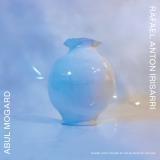
Marja de Sanctis’ cover artwork revisits the vessel sculpture from the duo’s first album, Impossibly Distant, Impossibly Close. There it appeared as raw, unfired clay. Here it has been fired in the kiln and finished with a glaze. Light gathers on its polished surface and spills into the surrounding space. As she explains, “I wanted to convey the idea of continuity within the duo, and the vessel became a kind of container for that idea. However, their music felt different this time, and with the collaboration of Martina and Andrea, I felt it should have a sleeker, softer, more glamorous look, very distant from the first raw appearance.” The transformation of the vessel from raw clay to fired form suggests a passage from immediacy toward permanence, mirroring the music’s gradual expansion.
expected to be published on 26.06.2026
In spring 2025, Abul Mogard and Rafael Anton Irisarri created the source material for their second album, Where Light Pauses in the Silence of the Sun, during a three-day residency at Morphine Raum in Berlin. Functioning as both recording studio and performance venue, the space has no stage, with the audience gathered around the performers. Working within an open framework, the duo reshaped the music each evening while recording the performances live to multitrack. Rotary speakers, modular synthesizers and bowed guitar formed the core of their sonic language, captured through a 1970s mixing console and microphones placed around the room.
Back in Mogard’s studio in Rome, the material was further crafted as motifs were stretched, fragments isolated, and tempos dissolved. Irisarri recorded additional guitar textures and treatments in New York, while passages recorded by Martina Bertoni and Andrea Burelli in Berlin reinforced the harmonic centres and brought breath, refinement and a new sensibility to their compositions. The process continued as Mogard’s layering and subtraction reassembled everyone’s parts into the final arrangement.
The album opens with “In the Eastern Wild,” building from a sparse outline into a monumental formation of low-frequency weight, its internal motion shaped by the rotating Leslie speaker. “Over the Domes” widens into a broader acoustic field, where sustained modular tones meet waves of softly plucked guitar. The music then turns inward with “A Blue Descent,” centred on Bertoni’s cello, whose growling timbre introduces a melancholic depth.
At the album’s centre, “In a Quiet Radiance” unfolds around a slow guitar ostinato, its luminous stillness opening into a more expansive and reflective state. Across its ten-minute span, Burelli’s violin lines and Bertoni’s lower cello phrases gradually surface, weaving through the harmonic field. Mogard brings Burelli’s processed voice to the fore, its emotive, operatic presence becoming one of the record’s pivotal moments. “Of Blessed Ages” suspends the sonic flow, shifting between parallel major and minor chords as lingering, slowly decaying melodies shape the music’s internal drift. The closing “Among Shadows” settles into a darker resonance as layered textures recede.
Mogard and Irisarri’s shared language balances restraint and maximalism. UK magazine Crack describes the music as “a tidal wave held in suspension,” while Dutch newspaper de Volkskrant writes, “What a colossal sound, and how this music strikes at the emotions.” Reflecting on the residency sessions, Irisarri recalls: “At moments I genuinely couldn’t tell if a sound was coming from me or from Abul. It stopped feeling like two people making decisions and began to feel like we were inside a system moving on its own."
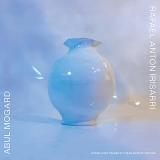
Marja de Sanctis’ cover artwork revisits the vessel sculpture from the duo’s first album, Impossibly Distant, Impossibly Close. There it appeared as raw, unfired clay. Here it has been fired in the kiln and finished with a glaze. Light gathers on its polished surface and spills into the surrounding space. As she explains, “I wanted to convey the idea of continuity within the duo, and the vessel became a kind of container for that idea. However, their music felt different this time, and with the collaboration of Martina and Andrea, I felt it should have a sleeker, softer, more glamorous look, very distant from the first raw appearance.” The transformation of the vessel from raw clay to fired form suggests a passage from immediacy toward permanence, mirroring the music’s gradual expansion.
expected to be published on 26.06.2026
In spring 2025, Abul Mogard and Rafael Anton Irisarri created the source material for their second album, Where Light Pauses in the Silence of the Sun, during a three-day residency at Morphine Raum in Berlin. Functioning as both recording studio and performance venue, the space has no stage, with the audience gathered around the performers. Working within an open framework, the duo reshaped the music each evening while recording the performances live to multitrack. Rotary speakers, modular synthesizers and bowed guitar formed the core of their sonic language, captured through a 1970s mixing console and microphones placed around the room.
Back in Mogard’s studio in Rome, the material was further crafted as motifs were stretched, fragments isolated, and tempos dissolved. Irisarri recorded additional guitar textures and treatments in New York, while passages recorded by Martina Bertoni and Andrea Burelli in Berlin reinforced the harmonic centres and brought breath, refinement and a new sensibility to their compositions. The process continued as Mogard’s layering and subtraction reassembled everyone’s parts into the final arrangement.
The album opens with “In the Eastern Wild,” building from a sparse outline into a monumental formation of low-frequency weight, its internal motion shaped by the rotating Leslie speaker. “Over the Domes” widens into a broader acoustic field, where sustained modular tones meet waves of softly plucked guitar. The music then turns inward with “A Blue Descent,” centred on Bertoni’s cello, whose growling timbre introduces a melancholic depth.
At the album’s centre, “In a Quiet Radiance” unfolds around a slow guitar ostinato, its luminous stillness opening into a more expansive and reflective state. Across its ten-minute span, Burelli’s violin lines and Bertoni’s lower cello phrases gradually surface, weaving through the harmonic field. Mogard brings Burelli’s processed voice to the fore, its emotive, operatic presence becoming one of the record’s pivotal moments. “Of Blessed Ages” suspends the sonic flow, shifting between parallel major and minor chords as lingering, slowly decaying melodies shape the music’s internal drift. The closing “Among Shadows” settles into a darker resonance as layered textures recede.
Mogard and Irisarri’s shared language balances restraint and maximalism. UK magazine Crack describes the music as “a tidal wave held in suspension,” while Dutch newspaper de Volkskrant writes, “What a colossal sound, and how this music strikes at the emotions.” Reflecting on the residency sessions, Irisarri recalls: “At moments I genuinely couldn’t tell if a sound was coming from me or from Abul. It stopped feeling like two people making decisions and began to feel like we were inside a system moving on its own."
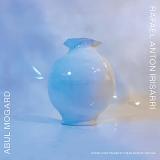
Marja de Sanctis’ cover artwork revisits the vessel sculpture from the duo’s first album, Impossibly Distant, Impossibly Close. There it appeared as raw, unfired clay. Here it has been fired in the kiln and finished with a glaze. Light gathers on its polished surface and spills into the surrounding space. As she explains, “I wanted to convey the idea of continuity within the duo, and the vessel became a kind of container for that idea. However, their music felt different this time, and with the collaboration of Martina and Andrea, I felt it should have a sleeker, softer, more glamorous look, very distant from the first raw appearance.” The transformation of the vessel from raw clay to fired form suggests a passage from immediacy toward permanence, mirroring the music’s gradual expansion.
expected to be published on 26.06.2026

- Die allererste Vinyl-Neuauflage und definitive Ausgabe von Nancys Album ,Movin' with Nancy" aus dem Jahr 1967 - Wunderschön gestaltete und erweiterte Gatefold-LP mit 20-seitigem Booklet sowie eine CD-Ausgabe mit 32-seitigem Booklet - beide enthalten ein neues Interview mit Nancy und dem GRAMMYr-nominierten Co-Produzenten Hunter Lea sowie bisher unveröffentlichte Fotos aus Nancy Sinatras persönlichem Archiv - Mit Audio, das vom GRAMMYr-nominierten Toningenieur John Baldwin frisch von den originalen Analogbändern remastert wurde - Enthält 4 bisher unveröffentlichte Bonustracks: ,It's Such A Pretty World Today" (Movin'-Version), ,Let's Get Movin'", ,This Town" (Film Intro) und ,RC Cola" (It's A Mad Mad Cola) - Mit Gastauftritten von Frank Sinatra und Dean Martin - LP gepresst auf violettem ,Some Velvet Morning"-Vinyl Beschreibung: Light in the Attic präsentiert stolz Nancy Sinatras Album ,Movin' With Nancy" aus dem Jahr 1967. Diese definitive Neuauflage und erste Vinyl-Wiederveröffentlichung überhaupt feiert Nancy auf dem Höhepunkt ihres 60er-Jahre-Coolness. ,Movin' with Nancy" ist eines der ambitioniertesten kreativen Projekte in Nancy Sinatras Karriere. Das einstündige Fernseh-Special von 1967 und das dazugehörige Soundtrack-Album fangen die kreativen, groovigen und schönen Zeiten der 1960er Jahre ein. Das Projekt wurde von RC Cola finanziert, aber das war kein reiner Geldsegen. Es war ein Herzensprojekt für Nancy, die ihren Vater, Dean Martin, Sammy Davis Jr. und andere Familienmitglieder und Freunde bat, im Film mitzuwirken. Sie nutzte auch ihre eigenen Autos, Kleider und ihr Haus und schminkte sich selbst. Eine echte DIY-Produktion. Auf dem Album ist Frank Sinatra mit ,Younger Than Springtime" zu hören und Dean Martin im Duett mit Nancy bei ,Things". Produzent Lee Hazlewood singt mit Nancy im Duett bei ,Some Velvet Morning" und ,Jackson"; außerdem steuert er die Songs ,I Gotta Get Out Of This Town", ,Friday's Child", ,This Town" und ,See The Little Children" bei. Zu den Bonustracks gehören der bisher unveröffentlichte Outtake ,It's Such A Pretty World Today (Movin' Version)", zwei unveröffentlichte Musikstücke aus dem Film und der unglaublich eingängige Werbespot ,RC Cola (It's A Mad Mad Cola)".
[m] 13IT'S SUCH A PRETTY WORLD TODAY (MOVIN' VERSION) [PREVIOUSLY UNRELEASED] LET'S
[n] 14GET MOVIN' [PREVIOUSLY UNRELEASED]
[o] 15THIS TOWN (FILM INTRO) [PREVIOUSLY UNRELEASED]
[p] 16RC COLA (IT'S A MAD MAD COLA) [PREVIOUSLY UNRELEASED]
expected to be published on 26.06.2026

Color Vinyl[54,58 €]
Light in the Attic präsentiert die lang erwartete Neuauflage von ,Synthesizing: Ten Ragas to a Disco Beat", dem revolutionären Album von 1982 vom Komponisten und Musiker Charanjit Singh. Er hat klassische indische Ragas mit den damals modernsten Roland-Synthesizern und Drumcomputern kombiniert und so ein elektronisches Meisterwerk geschaffen, das seiner Zeit weit voraus war. Bei den Live-Aufnahmen in den HMV-Studios in Mumbai verband Singh die Vergangenheit mit der Zukunft - er mischte die alte indische Tradition der Ragas (ein melodisches Gerüst, ähnlich einer Tonleiter, aus dem Musiker improvisieren oder komponieren können) mit pulsierenden elektronischen Dance-Beats. Das Album wurde ohne großes Aufsehen veröffentlicht, geriet in Vergessenheit und Singh zog sich aus dem Musikgeschäft zurück, um sich auf private Konzerte zu konzentrieren, aber damit fängt die Geschichte erst richtig an...
expected to be published on 26.06.2026

"Black & 'Pearlescent Transcendent Future'"-farbiges Vinyl. Light in the Attic präsentiert die lang erwartete Neuauflage von ,Synthesizing: Ten Ragas to a Disco Beat", dem revolutionären Album von 1982 vom Komponisten und Musiker Charanjit Singh. Er hat klassische indische Ragas mit den damals modernsten Roland-Synthesizern und Drumcomputern kombiniert und so ein elektronisches Meisterwerk geschaffen, das seiner Zeit weit voraus war. Bei den Live-Aufnahmen in den HMV-Studios in Mumbai verband Singh die Vergangenheit mit der Zukunft - er mischte die alte indische Tradition der Ragas (ein melodisches Gerüst, ähnlich einer Tonleiter, aus dem Musiker improvisieren oder komponieren können) mit pulsierenden elektronischen Dance-Beats. Das Album wurde ohne großes Aufsehen veröffentlicht, geriet in Vergessenheit und Singh zog sich aus dem Musikgeschäft zurück, um sich auf private Konzerte zu konzentrieren, aber damit fängt die Geschichte erst richtig an...
expected to be published on 26.06.2026
Onyx Marble Vinyl[30,04 €]
expected to be published on 26.06.2026
Spiritual Obliteration Marble Vinyl[30,04 €]
expected to be published on 26.06.2026
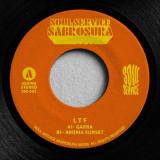
Intriguing Siberian B-Boy roots informed Anton LTF's first solo album last year and its mix of funk, hip-hop and early turntablism influences really worked. He's back now with a tidy two-tracker on Soul Service Sabrosura that leans into Latin funk. It's raw, direct and charged up tackle for once again getting under the skin of b-boys and girls thanks to the killer breaks. 'Garra' is lit up with shuffling percussive keys and rhythms and big brass horns, while 'Aroma Sunset' is more pared back and loose. There's a celebratory vibe that's smoother and more languorous, with sunny flutes leading the way and irresistible Latin charm in the ways the keys dance.
expected to be published on 13.07.2026

Anlässlich des diesjährigen 20-jährigen Jubiläums des Albums Passover", dem legendären Debütalbum von The Black Angels, freut sich Light in the Attic, eine besondere limitierte Auflage des Albums präsentieren zu dürfen: eine Doppel-LP in einem wunderschönen Gatefold-Cover mit Silber- und Goldfolienprägung. Diese Jubiläums-Vinyl-Edition ist auf weißem, schwarzem und goldenem Vinyl gepresst und enthält eine von vier verschiedenen Flexi-Platten mit einem Track, der 2006 live bei KEXP aufgenommen wurde.
expected to be published on 17.07.2026

Erweiterte Vinyl-Edition mit Gatefold-Hülle und 20-seitigem Booklet mit seltenen Fotos, Songtexten und neuen Liner Notes von Danielle Maggio, die Betty interviewt hat. LP gepresst auf Pearl Flip / Horizon Color Vinyl. Das 1974 erschienene zweite Album ,They Say I'm Different" der Punk-Funk-Provokateurin Betty Davis besticht durch ein futuristisches Cover, das es wert ist, eingerahmt zu werden, und das David Bowies Science-Fiction-Funk mit echtem rockigem Soul-Feuer herausfordert. Den Auftakt bilden die wild-sexuellen ,Shoo-B-Doop" und ,Cop Him" (später von Ice Cube gesampelt), dazu gesellen sich Klassiker wie ,Don't Call Her No Tramp" und der urkomische, harte, tiefe Funk von ,He Was A Big Freak".
expected to be published on 17.07.2026

Musuq Nuna presents its second vinyl release.
Amid electric pulses and suspended atmospheres, this record unfolds a journey where shadow meets light.
Droove traces three paths of precise, nocturnal energy, where techno breathes with a synthetic soul and time seems to bend upon itself.
On the reverse side, Alquimic, together with the ethereal voice of Brunella, opens a luminous rift, a chant that drifts between light and mystery, between reason and ecstasy.
Each groove of Light in the Darkness holds a small ceremony: the alchemy of sound transforming darkness into a gleam, rhythm into a spell.
On Stock and ready to ship
2026 Repress
Desert planet house from inner spaces - the mountain people‘s premiere full EP outside their own imprint. Featuring sand shattering subbasses alongside vintage stabs, wobbling chords and otherworldly chanting. Something you will not dig up easily from your discogs collection and which will further enchant the children of the light.
Play or face the Gom Jabbar.
This item has not yet been released. You can pre-order the product now.

LTF began as a 90s b-boy who was raised on funk and hip-hop before he even knew the names of the music he was hearing. Under the influence of early greats like DJ Shadow, Beat Junkies and Cut Chemist, he dove into turntablism and spun breaks across Siberia while digging for records. Once he discovered the sampler, his world shifted to loops, chops, basslines and scratches. His debut project Dapdown earned local buzz and global connections, including France's Black Milk Music crew, and a decade ago, while armed with Soviet synths, double bass, and dusty vinyl, he dropped his first solo album, Light The Fuse. It's truly raw, expressive, beat-lover's soul with a heavy groove that has been remastered for this reissue via Tunes Delivery.
On Stock and ready to ship

JTQ Return to Acid Jazz… At the very birth of Acid Jazz there was the James Taylor Quartet. Hammond player extraordinaire James Taylor was fresh from the split of The Prisoners when he recorded Herbie Hancock’s ‘Theme From Blow Up’ and signed with Eddie Piller’s Re-Elect The President label, the precursor of Acid Jazz. Then, in 1993, after albums for Polydor and Big Life, Acid Jazz and James hooked up again and released ‘In The Hand Of The Inevitable’, for many the finest JTQ album. In March this year James found himself backstage at the Royal Albert Hall - The Brand New Heavies were about to take the stage - with Acid Jazz’s Eddie Piller and Dean Rudland and a plot was hatched... James returns to the label with this brand new 7-inch single: ‘Wildflower’ b/w ‘Guiding Light’.
The A-side is Bossa-nova tinged slice of sunshine pop featuring James’ vocals. It sounds like an old private-press 45, unearthed in a dank warehouse basement in Oregon, and is another JTQ classic. The flip takes us into jazz funk territory. Presented in a one-o^ version of the latest Acid Jazz house-bag, with classic labels.
On Stock and ready to ship

The Rising Wave marks the debut collaboration between singer-songwriter Marlene Ribeiro (of psychedelic band GNOD) and electronic producer Shackleton under the name Light Space Modulator. The album will be released via AD 93.
On Stock and ready to ship
On Stock and ready to ship

NEW LP PRESSING on Opaque Yellow Wax
Released in September 1978, a mere two months before YMO’s debut, Cochin Moon is a clear precursor to the groundbreaking synth and sequencer-dominated sounds that would come to define the iconic trio. Huge tip!
Credited to Hosono and Pop Art legend Tadanori Yokoo (who created the cover art), Cochin Moon is a fictional soundtrack to a journey into unknown worlds, inspired by Hosono and Yokoo’s trip to India.
The unbelievably prolific Haruomi Hosono is one of the major architects of modern Japanese pop music. With his encyclopedic knowledge of music and boundless curiosity for new sounds, Hosono is the auteur of his own idiosyncratic musical world, putting his unmistakable stamp on hundreds of recordings as an artist, session player, songwriter and producer. Born and raised in central Tokyo, his adolescent obsession with American pop culture informed his early forays into country music, which he would revisit later in his career. Hosono made his professional debut in 1969 as a member of Apryl Fool, whose heavy psychedelia was somewhat at odds with his influences, which leaned towards the rootsy sounds of Moby Grape and Buffalo Springfield. The latter was one of the main inspirations for his next group, Happy End, whose unique blend of West Coast sounds with Japanese lyrics proved to be highly influential over the course of three albums. After the band’s amicable break up in 1973, Hosono began his solo career with Hosono House, an intimate slice of Japanese Americana recorded inside a rented house with recording gear squeezed into its tiny bedroom. Hosono’s solo career would take many twists and turns from this point forward, with forays into exotica, electronic, ambient, and techno, culminating in the massive success of techno pop group Yellow Magic Orchestra (YMO).
Released in September 1978, a mere two months before YMO’s debut, Cochin Moon is a clear precursor to the groundbreaking synth and sequencer-dominated sounds that would come to define the iconic trio. Credited to Hosono and Pop Art legend Tadanori Yokoo (who created the cover art), Cochin Moon is a fictional soundtrack to a journey into unknown worlds, inspired by Hosono and Yokoo’s trip to India. Initially the album was to be a kind of ethnographic musical document, using found sounds and field recordings made by Hosono himself. Instead, after Yokoo introduced Hosono to the sounds of Kraftwerk and krautrock during the trip, Cochin Moon became something much stranger. Created almost entirely on synthesizers and sequencers with the help of future YMO collaborators Ryuichi Sakamoto and Hideki Matsutake, the music on the album is the perfect encapsulation of Hosono’s concept of “sightseeing music,” transporting the listener to an exotic place that may or may not exist. This highly sought-after album sees its first-ever official release outside of Japan.
On Stock and ready to ship

On Stock and ready to ship
