Her sound remains vast and yearning, with gut-punch drums pushing through explosions of colored powder; her voice is a chrome-plated sigh, and her agile melodies soar effortlessly. - Pitchfork *BEST NEW MUSIC*
she achieves some serious cinematic grandeur. - Stereogum
Simply too sublimely crafted to ignore. - Consequence of Sound
A catchy ethereal piece of pop - Brooklyn Vegan
Rose's layered, reverb-laden vocals hit like waves of sunlight, warming her lines almost to the point of wordlessness. - Paste Magazine
"Hila. A record about loss. What persists beyond the range of ordinary perception? The place mourning keeps returning to - not quite transcendence, not quite doubt. The edge of what we can see."
Frankie Rose has spent fifteen years building one of the most quietly distinctive bodies of work in American independent music. Bursting out of the shackles of her legacy on 2024's Love As Projection, 2026's Hila builds on the muscular, dance-ready songwriting and transcendent melodies to result on Rose's most exploratory and affecting record of her career. Imbued with yearning melodies and brooding post-punk dynamics, Hila is Frankie Rose at her most impressionistic and expansive.
Self-produced at her home studio featuring collaborations with drummer Justin Welch (Elastica/Lush), Hila was recorded following extensive touring with The Jesus & Mary Chain and Swervedriver. The result is the most confident, searching music Rose has produced; muscular in its production yet emotionally vulnerable in its diffracted neon glow. A record informed by loss and the way grief mutates our senses, it's fitting that Rose channels the nuanced darkness of later Coil, at times the pounding EBM-production of Skinny Puppy and the near-spiritual alien-ness of Cocteau Twins. On Hila, the doors of perception are constantly melting, revealing the porous nature of the seen and unseen. The result is a synesthesia that flips the senses.
If Love As Projection was an outward-looking record looking to embrace the world, Hila brings the dark cosmos into inner space. Rose's love for 80s production and soaring melodies remain, they're cornerstones to her craft after all, but there's something more assured and gothic underneath the massive waves of sound. Opener Olo shimmers into a pulsating, cinematic brooder, Rose's vocal transcending and swan diving between registers in the chorus breakdowns. First single Cant Be Wrong serves as a transition from the optimistic pop of Rose's previous album, introducing a thumping 80s funk rhythm track under the soaring vocal performance. The ebullient Shadow Twin is that song's sibling, recalling major label-era Strawberry Switchblade melancholy mixed with Robin Guthrie's twinkling guitar work.
Hila blossoms darkly from here on in, blowing out into a glacial wide-screen sonic dynamic. On Rainman and the title track the listener is transported to a rain-soaked, nocturnal cityscape ridden with desire, moonlight cutting through blinds, intoxicating chasms without bounds. Rose's use of saxophone and digital synthesis recalls the nightmusic of Hats-era Blue Nile or the more ambient end of Emeralds' catalog. Indeed, in the towering synthetic cello sounds that climb into the mind on Hila, there's a distinct flavour of the instrumentals on Bowie's Low. This is musick to play in the dark, to light the way a little, just enough to trick the senses.
Leading into the strobe-filled haze, single Manifest pounds forward with a massive Industrial 4/4 beat and post-punk/goth musicality, an exercise in unlit ecstasy. For Best Of Times, the liberal saxophone passages feel like a suppressed, 80s Michael Mann soundtrack with Frankie Rose's effortless, melodic vocal performance probing, searching for connection. Navigating through the dry, iced landscape into a rising sun, closer Velvet Refrain flips the melancholy of the preceding passages. With a massive sound dripping with harmony, the clanging guitar and vocal duet feels they're sound-tracking an unexpected happy ending after bouts of darkness."
The follow up to her UK number 1 album This Is How Tomorrow Moves, the stark and striking fourth album by beabadoobee is named for the electricity towers that dot every major artery in the world—the strong, spindly structures that reminded Beatrice Laus of her connection to friends and family at home while she was staring down extreme disconnection and isolation on tour over the past few years.
The title can also be read as an allusion to Laus’ spiky, forceful new sound—the waves of distortion that crash and shatter across this record’s 14 songs mirroring the intense crackle you hear when walking under power lines. The pylon is also a fitting symbol for an album that reckons with the repetitive anxieties of your mid-twenties: What if I’m always going to be this way? What if life is just pylon after pylon on the road?
The album’s first single is available to stream and buy from today: “Sun Has Set” introduces Pylon as, in essence, a set of songs that began as diary entries, words that Laus thought she’d never be able to say out loud. “A lot of the songs on this record are things I wish I could have said to someone,” she says. “This song has this petty tunnel vision—it’s like, I hate you. You’re gonna stay here and listen to how much I hate you. Because I never got to say that.” The single comes accompanied by a striking first person video directed by Bea’s partner and longtime visual collaborator Jake Erland.
Ever a devotee of pure rock music—both as something to be cherished and something to be played with—Laus casts these feelings in songs that touch on classic grunge, midwest emo and ‘90s radio rock, zeroing in on a sound that is both harsher and more direct than any of her previous records. She says the music she’s loved has “always been an influence” on her music, and so for B4 she went straight to the source. A fair few of Beabadoobee’s composite influences contributed to Pylon, a fact that speaks to the goodwill and respect Laus has amassed over the course of her relatively brief career.
Hayley Williams sings on “Nothing to Prove,” a deeply anthemic indie-rock song about getting your power back from fairweather friends who just want a bit of your success. The moody “Powerlines” features a verse from Turnstile singer Brendan Yates, a master of matching vocal force with emotional nuance. Elsewhere, you’ll find contributions from Pinegrove’s Evan Stephens Hall, Deftones’ Chino Moreno, and Title Fight’s Shane Moran, as well as, on “Write Me A Letter”, production work from Laus’ longtime friends and collaborators Matty Healy and George Daniel of The 1975.
Beabadoobee will debut songs from the record on the Powerlines Tour, her first ever arena shows and biggest tour to date, taking in shows across North America, the UK and Europe this autumn-winter. The Powerlines Tour kicks off 1 October and includes stops at Madison Square Garden, The Kia Forum, The O2 and more (full routing below). Support comes from Wisp in the US, Canada and UK and Violet Grohl in France, The Netherlands, Belgium and Germany.
Born in the Philippines and raised in London, Beatrice Laus emerged as a British alternative music icon across three acclaimed albums and five EPs. She has garnered multiple BRIT Award and BBC Sound Of nominations, and won NME’s Radar award, whilst amassing over 10 billion streams worldwide and more than 12 million followers across her social channels.
This Is How Tomorrow Moves became her first record to reach number 1 on the UK Official Album Chart in 2024, following her Top 10 albums Fake It Flowers (which reached number 8) in 2020 and 2022’s Beatopia (#4). Earlier this year, beabadoobee released the one-off single ‘‘All I Did Was Dream Of You,” teaming up with Grammy-nominated best New Artist The Marías, the result of a longtime mutual creative admiration between María Zardoya and Bea.
out of Stock
Last delivered 31 days ago available to reorder, subject to availability
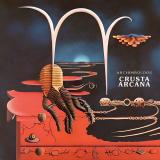
Archimboldos have clawed their way out of the starcaves of their primordial past and into the tranquil light of a coral garden on their third full length album, Crusta Arcana, a gumbo stewpot of transcendent electronica suffused with tribal rhythms and liquid ambience. Across a stereo field smeared with tolling bells, post-industrial folk percussion, and tinkling keys, Archimboldos soundtrack a science fictional journey, not into the depths of space, but deep beneath the waves.
In the past the Chilean duo of Nicolás Carcavilla and Felipe Crocco have described their music as “liminal shrimp folk.” Here they continue this strange exploration when they visit the court of the prawns, producing stately electronic chamber orchestrations. Perhaps these are the frequencies used for ritual dream initiation into the mystery schools of drowned Atlantis. Weaving an ancient sacred science, Archimboldos take listeners on a mystic vovage into their singular crustacean mythology, the crusta of their hidden arcana.
Archimbolodos are masters of conjoining cyclonic and centrifugal lines of electricity into spellbinding incantations. These deep-sea transmissions envelope the listener into aquamarine forcefields that are as hallucinatory as they are hypnotic. Navigating these strange fantasias could lead one to getting lost at sea, but the work is buoyed by the somnolent melodies of lonely harpsichords and swelling synth pads whose sustained tones reach towards distant shores. Sailing across a vast expanse of oceanic harmonies and percolating percussion, these pieces are as precise as the hand of a sailor on the rudder, moving with the tide.
Casting their net wide across eight pieces, Archimboldos have made a big catch. From the emotive electronic counterpoint found on “Bursting Armor” to the blocks of seaweed tangled sonic sculpture trawled up from the ocean floor on “Aphelion IX.” Other songs are like samples of biological ambience collected from luminous tide pools: resplendent tones placed into a Petri dish of sound, swirled, cultured and fermented until it undulates with the rhythmic movement of microscopic lifeforms. Alternating between rippling minimalist sonority and pounding, progressive, synth-heavy entrancement, Crusta Arcana charts its own idiosyncratic itinerary of instrumental invention.
All the while light is down streaming from the heavens to pierce the waters, here calm, there choppy. The intrepid musical captains commanding Archimboldos have laid a course for new archipelagos of the imagination, guided by heavenly constellations.
-Justin Patrick Moore, author of The Radio Phonics Laboratory, Telecommunications, Speech Synthesis and the Birth of Electronic Music
Spiral code is the second album released on An’archives by the Japanese trio archeus, after 2023’s Kusōzu: Nine Death Stages, and their seventh release altogether. It’s also the most staggering evidence yet of the single-minded pursuit of group-sound explored by Keiko Higuchi (voice, drums, percussion, trombone), Shizuo Uchida (4 strings), and TOMO (hurdy gurdy). For two tracks, “awakening, beyond recurrence” and “where points and lines intersect”, they’re joined by Kiyotaka Moriuchi, an improviser who’s played with the likes of Shoko Numao and Ensemble Shippolly, on percussion and darbuka (a goblet-shaped drum played widely across South East Asia).
Always able to scour magic from both their relationships with their instruments, and their non-idiomatic interplay, on spiral code they’ve widened their net further; the results oscillate from humid and claustrophobic blocks of noise to rivulets of tone coursing across post-volcanic landscapes, and on into simple gestures suspended in arctic space. Spiral code was recorded in a single day, on March 20 th 2025, at a studio in Koenji, Tokyo, the morning session with the original trio, and afternoon and evening session with Moriuchi – the first time archeus have played with a guest musician.
When asked about the music archeus makes together, TOMO is quick to isolate the singular characteristics of their collaboration: “we are trying to explore some new, unknown musical vocabulary every time we play. And what we are trying to achieve from every session is something unique, an interesting chemistry or, I should say, alchemical reaction among the three of us.” You can certainly hear that alchemy in the dynamic arc of their performances, the way they seem to be able to switch on a dime and push the music into unexpected terrain, all while sounding intimately archeus. “We have been playing for many years,” TOMO continues, “so I think that among three of us, we can telepathically sense, feel and understand what each of us is trying to express while we are playing.” It’s telling that guest musician Moriuchi fits so effortlessly into the archeus soundworld, able to hitch a ride on the intimate telepathy of Higuchi, Shizuo and TOMO; “I think he gave us some fresh air to our music,” the latter smiles. But that telepathy extends, even, to the name of the album itself, with all members pointing toward spiral imagery when naming the title track, whether TOMO’s evocation of Kundalini serpent imagery and Caduceus, to the spiral shape of DNA, what TOMO calls “the code of life.” It’s certainly deeply entwined music: spiral code is a helix of sound, a cylindrical coiling of possibility.
Lummer is the Swedish name for the now protected family of vascular plants (Clubmoss/Lycopodiaceae). Lummer grows slowly and the spores with which it reproduces can take 12—20 years to develop. These spores, known as Nikt in Swedish, were once ground into an extremely flammable light yellow “old woman’s gunpowder” that was used for early theatrical pyrotechnics. Volatile and explosive, Lummernikt requires careful handling.
There is something of the small scale dangerous in Finn Loxbo’s Lummernikt, too. A not-at-all-risk-free traversal at the limits of technique: building, blowing up and working through a band’s worth of harmonic scaffolding. Eight songs on a stage. Dramatic, breath-taking. At the same time the wild, flickering rush of tones spins up a centrifugal force that suspends a certain calm or sitting still at the music’s core.
On Lummernikt, Loxbo’s guitar often sounds more like a concert harp or the West African kora as he shifts a set of melodic fragments and extended lines through rapid-fire arpeggiated permutations with a spontaneous energy that is countered only by his extraordinary touch on the instrument and an undeniable sensitivity to his material’s dynamic potential.
It’s a glorious extension of the chiming chords and experimental preparations heard in his contributions to Magnus Granberg's Skogen (Another Timbre) or via his own ensemble Kommun (Fönstret, Thanatosis) and in striking contrast to the distorted wail he contributes to Anna Högberg Attack’s Ensamseglaren (Fönstret) or his all-in-the-red trio Kyosaku (Corbett vs Dempsey).
It’s now several years ago that Finn sent me the first recording of his new band Kommun and asked if I had suggestions for a label that might want to release it. I played that recording on repeat until I couldn’t shake the idea that I needed to start a label to put it out myself. Lummernikt is the spark that keeps that fire alive.
Anders Hajem makes his space•lab debut with four cuts primed for dark rooms, deep forests and open skies.
Opening the EP, E44Z is a driving techno cruncher, pairing serrated riffs with soaring synth lines and relentless momentum. X66Y follows with a growling, psy-infused workout, weaving sci-fi textures through its propulsive groove. On the flip, A44Z tunnels deeper, its hypnotic groove rising and falling through the journey. Closing the release, the title track Absorbe strips things back with spacious, eerie sound design, understated percussion and a deep, rolling bassline that lingers long after the final beat.
out of Stock
Last delivered 6 days ago available to reorder, subject to availability
A deep cut from the extensive back catalogue of South African group Splash, significant artists in the narrative of the country’s fiercely independent Gallo Record Company, CWPT presents two uplifting mixes of 1990’s ‘An Eye For An Eye’, arranged by a modern day hero of the craft, Lipelis.
Originally released in parallel with the official beginning of the end of South Africa’s decades-long Apartheid, lead vocalist Daniel Tshanda dispels the philosophy of the track’s title, instead offering a still poignant call for unity; “An eye for an eye is no good… Let’s live together as one.”
Lipelis’s carefully crafted take retains this sentiment front and centre, while nudging the arrangement toward contemporary dancefloors, enriching a steady and bubbling mix of colourful keys, bubblegum percussion and a lifting backing chorus that includes another Gallo sensation, Dalom Kids.
These same voices form the spiritual centre of Lipelis’s 12” dub version, which further demonstrates the track’s irresistible rhythm, making space for complimentary piano melodies from Lipelis, alongside collaborator Eugene Piankov. Here, sunsetting piano lines dance with the analogue techniques of Lipelis’s own production instincts, forging a blissful tribute to a potent moment in South African musical history.
out of Stock
Last delivered 29 days ago available to reorder, subject to availability
This release is more than just a collection of tracks—it’s a statement of identity. Rooted in the raw energy of acid, techno, and house music, every sound, groove, and hypnotic sequence reflects a commitment to authenticity and creative freedom. In a world that constantly pushes artists to follow trends, staying true to who you are is one of the most powerful things you can do.
This project was created without compromise, driven by a genuine passion for underground electronic music and the belief that honest expression always resonates the deepest. The acid lines cut through with intensity, the techno rhythms drive relentlessly forward, and the house elements bring soul and movement to the journey.
We truly believe in this release because it represents exactly what we stand for as artists: originality, integrity, and a dedication to the music that inspires me. This isn’t about fitting in—it’s about creating something real. Turn it up and experience the sound of staying true to your identity.
Windy & Carl Meet Optigan Conservatory is a purposefully misleading title for the first collaborative work from four friends who met close to thirty years prior. All active participants in Michigan independent music circles since the early ’90s, Windy & Carl are well-known for their foundational contributions to drift and guitar-born ambient sounds, with songs characterized by deep connections to the natural world and a hard to pin down yet impossible to miss emotional vulnerability.
Optigan Conservatory is another duo, made up of Frank Rotondo (leader of Detroit area free music ensemble Laughing Gas) and Fred Thomas (songwriter and producer most often associated with his band Saturday Looks Good To Me), who have been making minimalistic and time-defiant electro-acoustic sounds since 2016. The album came together almost effortlessly in a very short timeframe, but the idea had been building steam for many a year.
In the last days of 2024, Windy & Carl and Optigan Conservatory got together, falling into a mode of sound creation that was almost hyper-natural. Without any discussion outside of the usual stream of jokes and chatter, the quartet set up and started communicating. Added to Windy & Carl’s hovering augmented chord voicings and vaporous guitar drones were electric piano and synth bedding from Frank & Fred. After the initial sessions, all involved parties took time to consider what they’d made, adding new layers and editing the pieces into more definitive articulations.
A beautiful and hermetic energy larger than the sum of its parts is captured in the process. There are echoes of the earliest releases from Windy & Carl as well as refractions of the same opacity that surfaced in the early kranky catalogue.
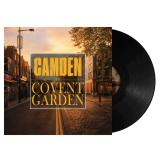
Funky DL returns with Camden to Covent Garden, an eight-track instrumental journey through two of London’s most culturally influential locations. Camden’s history of independent music, fashion and creative expression meets Covent Garden’s legacy as a centre for performance and the birthplace of a defining era of UK Hip-Hop culture. Built through the foundations of hip-hop production after digging, sampling, chopping and rearranging, the album transforms fragments of sound into a cohesive musical journey. Featuring titles inspired by the spirit and character of these locations, including “Lock Keeper,” “Chalk Lines,” “Amy’s Dream,” “Connaught Jazz” and “Acres Long” A refined, atmospheric and deeply crafted jazz hip-hop instrumental vinyl release from one of the UK’s respected independent Hip-Hop producers.
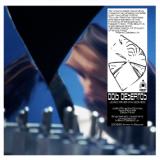
Recorded in Los Angeles over the course of a single day at a studio in the Eagle Rock neighborhood, Dois Desertos was produced by Mario Caldato Jr. and emerged without a predetermined plan or schedule. The project took shape during Portuguese musician João Pimenta Gomes' stay in Los Angeles with his family. During that time, through Rodrigo Amarante, João met Mario and Samantha Caldato, as well as musicians Abe Rounds (drums and percussion) and Gabe Noel (bass and cello). From those encounters, the album began to unfold organically.
Working from simple scores—some containing little more than chord progressions—the sessions left plenty of room for improvisation. Every performance was captured live, in a single take, with no overdubs. The mixing process, also carried out live by Mario Caldato Jr., followed the same philosophy: effects and level adjustments were performed in real time and printed directly to the final two-track master.
At the heart of the album's sound is the Cristal Baschet, a rare instrument played by rubbing glass rods with the hands, causing metal resonators to vibrate and produce an ethereal, resonant tone. João describes its sound as "a trace, almost like a shadow." Rather than taking the lead, the instrument serves as a textural foundation, while the bass and cello carry the melodic lines. Some of these melodies are original compositions, while others draw from traditional Portuguese fado, reimagined through an open and exploratory approach.
The album has a dreamlike atmosphere, reflecting the perspective of someone experiencing Los Angeles from the outside—not in a rush to belong, but fully receptive to the city's unique energy. Two films helped shape this imaginary landscape: Model Shop (Jacques Demy, 1969), in which the French filmmaker uses Los Angeles as a pretext to simply observe and inhabit the city, and Thom Andersen's Los Angeles Plays Itself. The result is Dois Desertos, an album that, in João's own words, "could never have been made anywhere else."
With Dois Desertos, João Pimenta Gomes invites listeners into a deeply immersive experience, revealing a more exploratory side of his artistic practice while reinforcing Amor in Sound's commitment to releasing original works that engage with the many languages of contemporary music.
Tommy McCook was not only a founding member of the legendary Jamaican Ska group The Skatalites, but also a brilliant musical arranger. His informed understanding of Jazz, R&B and in fact most music styles would always add another layer to any song put his way. This made him the go to guy for most of the Jamaican producers, who would use his arrangement skills to pepper up their latest tunes.
Tommy McCook, (b1927, Havana, Cuba) came to Jamaica with his mother from Cuba aged 11 and entered renowned Alpha Boys School for underprivileged children, a school that placed great emphasis on musical tuition. At the tender of 14, such was his talent he has left to join Eric Deans Orchestra and took on stints with other bands led by Don Hinchman and Roy Coburn. All the bands played in the Swing and Jazz style of the times. He relocated to the Bahamas in 1954 where he further developed his Jazz technique and upon his return to Jamaica in 1962 began working Coxsone Dodd’s Studio One and became involved in the development of Ska. His knowledge of Jazz, R& B and Jamaican musical forms helped set the tone for the group of musicians he was working with and would name the Skatalites. The group, consisting of Don Drummond (Trombone), Roland Alphonso (Tenor Saxophone), Jackie Mitoo (Piano), Lloyd Brevett (Bass), Lloyd Knibbs (Drums), alongside Tommy himself on Tenor Saxophone. The group would back all the major Ska vocalists pf the day and would also go on to cut a catalogue of instrumental music. The Skatalites split up in 1965 and Tommy McCook moved over to work with Duke Reid’s Treasure Isle Studios where he formed The Supersonics. A set of musicians under his guidance that consisted of Lynn Tait and Ernest Ranglin (Guitar), Neville Hinds and Winston Wright (Organ), Gladstone “Gladdy” Anderson (Piano), Hugh Malcolm and Arkland “Drumbago” Parks (Drums), Clifton “Jackie” Jackson (Bass), and Tommy and Hernon Marquis (Saxophone). The more laid back sounds from 1966-1968 would be given the name Rocksteady of which again McCook was at the forefront. The top producers like Bunny Lee would use the musicianship of Tommy McCook and his arrangement skills to enhance this new sound.
We have compiled a great selection of rhythms that featured McCook blowing over tracks stripped of their vocals and replaced with some fantastic lead lines played by Tommy and some of his fellow horns men.
We hope you agree like we do that they do this in fine style.
Brighton’s Moon Attendant team up with Go! Team's leader and drummer Ian Parton for new LP ‘Dum Evol’. Following their debut ‘One Last Summer’ with this incendiary, heart-pounding, drum-led masterwork full of untutored surf-guitar, Scarlet Rivera style fiddle, psychedelic orchestration and sharp-playful lyrics, all within just over 30 thrilling minutes.Since their debut, Paul Blewett and Nick Holton had been knee-deep in experimental music and needed something or someone to smash the shit out of the new songs. Instead of making heavier music, the result left lofty but wobbly structures teetering on fractured Giacometti-like frames, exposed, more arresting. Paring back the Musical palette from previous wash of synths and reverb to surf guitars, Moog, and violin, leaving Blewett's vocal (often compared to Colin Bunstone) leaning into an unvarnished, direct sound like Jimmy Campbell. Thematically, Dum Evol turns inward. Where their debut asked questions, this record sits with the answers, exploring love, conflict, and growth as experiences that must be lived first hand - “It’s such dumb evolution, you still have to learn the hard way”. Their lyrics get under the skin and under The Establishment in a wistful worm like way. Nudging at the truths. Smiling but always ready to bare some fangs.The fantastic instinctive violinist, Roger Proctor, joined as fourth member, bringing raw fragile beauty to ‘Look The Other Way’ & ‘Difficult Ifficult’, blending swooping string lines with the monster-surfing-Sonic Youth racket elsewhere. They explain - “We kept to a first take policy generally as it keeps everything just fresh and daisy like.” Dum Evol’s restraint allows the band’s more experimental instincts to land with greater weight. Musically, the record occupies a space somewhere between the slacker-rock nonchalance of Pavement and the gypsy swagger of Dylan - 'Desire' through a lens that is consciously, almost defiantly, English. It’s a sound that channels the 60's pastoral folk tradition alongside the sharp-edge of The Auteurs, an honest version of England, one to be proud of, existing in stark contrast to the hollow jingoistic nationalism of flag-shaggers climbing lamp posts. Jagged, lived-in, and entirely vital, Dum Evol is a record that feels fully realised, yet remains dangerously built to unravel in a hair's breadth.“Psychelelic grungy synth-pop - Moon Attendant marry analogue electronics to a lovely burbling pop sound, like Felt exploring the recesses of krautrock. Trippy, ramshackle and a cult in waiting.” Shindig!
Brighton’s Moon Attendant team up with Go! Team's leader and drummer Ian Parton for new LP ‘Dum Evol’. Following their debut ‘One Last Summer’ with this incendiary, heart-pounding, drum-led masterwork full of untutored surf-guitar, Scarlet Rivera style fiddle, psychedelic orchestration and sharp-playful lyrics, all within just over 30 thrilling minutes.Since their debut, Paul Blewett and Nick Holton had been knee-deep in experimental music and needed something or someone to smash the shit out of the new songs. Instead of making heavier music, the result left lofty but wobbly structures teetering on fractured Giacometti-like frames, exposed, more arresting. Paring back the Musical palette from previous wash of synths and reverb to surf guitars, Moog, and violin, leaving Blewett's vocal (often compared to Colin Bunstone) leaning into an unvarnished, direct sound like Jimmy Campbell. Thematically, Dum Evol turns inward. Where their debut asked questions, this record sits with the answers, exploring love, conflict, and growth as experiences that must be lived first hand - “It’s such dumb evolution, you still have to learn the hard way”. Their lyrics get under the skin and under The Establishment in a wistful worm like way. Nudging at the truths. Smiling but always ready to bare some fangs.The fantastic instinctive violinist, Roger Proctor, joined as fourth member, bringing raw fragile beauty to ‘Look The Other Way’ & ‘Difficult Ifficult’, blending swooping string lines with the monster-surfing-Sonic Youth racket elsewhere. They explain - “We kept to a first take policy generally as it keeps everything just fresh and daisy like.” Dum Evol’s restraint allows the band’s more experimental instincts to land with greater weight. Musically, the record occupies a space somewhere between the slacker-rock nonchalance of Pavement and the gypsy swagger of Dylan - 'Desire' through a lens that is consciously, almost defiantly, English. It’s a sound that channels the 60's pastoral folk tradition alongside the sharp-edge of The Auteurs, an honest version of England, one to be proud of, existing in stark contrast to the hollow jingoistic nationalism of flag-shaggers climbing lamp posts. Jagged, lived-in, and entirely vital, Dum Evol is a record that feels fully realised, yet remains dangerously built to unravel in a hair's breadth.“Psychelelic grungy synth-pop - Moon Attendant marry analogue electronics to a lovely burbling pop sound, like Felt exploring the recesses of krautrock. Trippy, ramshackle and a cult in waiting.” Shindig!
A first-generation Nigerian-American hailing from Katy, TX, singer-songwriter Blessing Jolie creates pop music that straddles the line between introspective indie-folk and R&B. Like Tracy Chapman and Alanis Morissette before her, her songs are stories steeped in the vulnerability and messiness of a young woman growing up– from experiencing love for the first time to the effects of imposter syndrome to finding your place in between cultures and expectations. "I watched all my old friends graduate college while I was still chasing a dream. I wondered who I would’ve been if I took the same four-year route—but I’m learning to stand by myself through clarity, mistakes, and every detour. My life is mine to build and experiment with however my heart leads." - Blessing Jolie on Software Developer "Software Developer" is the third single leading up to Blessing Jolie's debut album with Thirty Tigers, 20Teens.
Source Code Memory is a deep and hypnotc house journey built around rhythm, memory and reconnecton. With this new EP, Marcus Raute explores the point where body, mind and dancefoor energy meet, shaping four tracks that move between spiritual refecton, raw groove and soulful release.
Opening track “Reconnect” features legendary Detroit visionary Abu Qadim Haqq, whose spoken words bring a symbolic and cosmic dimension to the record. Hypnotc percussion, warm organ textures and jazzy piano lines create a deep house atmosphere where storytelling and rhythm become one.
“Body Code” moves into a more direct dancefoor space, driven by stripped-back drums, rolling grooves and old-school house energy. On the B-side, “Inner Transmission” brings a warmer and more emotonal tone, with rich chords, vocal cuts and live Rhodes and organ improvisatons inspired by the depth of 90s deep house.
Closing the EP, Giomini reworks “Inner Transmission” into a powerful, tmeless house remix, keeping the soulful spirit of the original while pushing it further into club territory.
out of Stock
Last delivered 34 days ago available to reorder, subject to availability
This all French affairs finds the eponymous Politics Of Dancing label head hook up with deep house head Djebali for a quartet of kicking minimal tech sounds. The swirling, circular bass of 'The Moment' soon gets your fists pumping, then 'Question' is a little more loose and wobbly - the fleshy bass and snappy snares contrasting one another nicely. On the flip, 'Ball Lightning' starts off with ascending synth lines and urgency in the grooves that will ensure plenty of locked-in dancers with withering sci-fi motifs adding a little cosmic escapism. The closer 'Whip' is the most fun sound - characterful synths and drums that duck and dive make for fresh house with a relentless groove.
out of Stock
Last delivered 24 days ago available to reorder, subject to availability
The record is pressed on 160 gram ultra clear vinyl, housed in a high gloss printed heavy sleeve, limited to 999 copies. The new release by the UK duo known as The KVB via the Minimal Wave sublabel Cititrax. Combining shoegaze guitars, minimal synth melodies, hypnotic drum machine rhythms and reverb drenched vocals, The KVB was first formed in 2010 as the solo project of Klaus Von Barrel.
Cosada Records returns with its third release “Blue Hour”, crafted by label founder Laseech. Moving deep into the warm twilight of the Adriatic, this EP delivers a beautiful blend of mature underground sounds and soulful grooves. Side A opens with “Blue Hour”, a cut filled with pure, classic deep house sweetness. It is followed by “The Orient”—co-produced by Julian Grgorovic—which guides listeners on an unpredictable journey powered by flowing flutes and hypnotic synth lines. Flipping over to Side B, Chicago luminary Vick Lavender brings a brilliant new dimension to the release. Created alongside Justin Dillard, his “2AM Time Traveler Remix” delivers late-night house exploration at its finest. Distributed worldwide by Mother Tongue.
out of Stock
Last delivered 16 days ago available to reorder, subject to availability
The next WOLF Music EP is here, and once again it comes courtesy of a new addition to the label roster. New York-based DJ and producer DJ Alone Again is a natural fit for what we do at WOLF, delivering a sound that hits that sweet spot where deep meets soulful, with the raw, understated energy of the authentic New York underground running through every track.
With a growing catalogue of original productions and edits, DJ Alone Again has released music through labels including YORE Records, House Salad Music, Dobro, Fantin Zoo Records, and Dealt With Records. His musical roots extend beyond house, too. Earlier work with the band Vain Pursuit, alongside a wealth of SoundCloud mixes and underground edits, reveals an artist with a deep appreciation for melody, songwriting and the emotional side of dance music.
Opening the EP is ‘Freedom of House’, a sublime take on the classic NYC-meets-Chicago deep house sound. Warm, soulful and hypnotic chords sit at the heart of the track, surrounded by intricate, skippy percussion and a deep, driving bassline. Carefully placed female vocal snippets drift in and out of the groove, while a spoken-word ode to the freedom and self-expression that house music offers provides the track with its emotional centre. It’s a celebration of movement, individuality and that unspoken connection forged on the dancefloor.
On the A2, ‘State of Flux’ keeps those warm, evocative chords front and centre, building an infectious groove around an instantly memorable melody courtesy of the vibes. Subtle synth strings add depth and atmosphere, bringing a touch of late-night melancholy to the arrangement, while the rhythm rolls steadily underneath. Everything is expertly layered without ever feeling crowded, giving the chords, melody and percussion room to breathe whilst pulling the listener deeper into the track.
‘Horizontal Patterns’ takes the winning formula of ‘State of Flux’, adding a beautifully understated vocal hook that sums this track up perfectly: deep in the groove.
Closing out the EP is ‘In Your Orbit’, a serene, dream house number with a deeply hypnotic edge. Ethereal flute lines drift through the arrangement, weaving around vocal phrases that seem to lift the consciousness somewhere beyond the dancefloor. There’s a sense of weightlessness and escape in the arrangement, but the dance floor pulse courtesy of the warm chord stabs never lets you float too far away. Dreamy yet deeply rooted, it’s a meeting point between introspection and movement; music to lose yourself in.
If this EP had landed on Guidance 30 years ago, it would probably be changing hands for a small fortune on Discogs by now.
Brixton Heights Records proudly presents the brand new single “Sweet Things”, a radiant lovers reggae release that blends classic roots, soulful warmth and contemporary finesse into a timeless feel‑good anthem.
Fronted by the legendary Keith Coley from The Silvertones, this masterfully crafted track features a heavyweight lineup of musicians and producers: Mafia & Fluxy on drums and bass, The Ital Horns on brass, Gavin Tate-Lovery on Saxophone and Gaudi on Piano and backing vocals, co-production and mixing. The track delivers a smooth, romantic groove rooted in classic Jamaican sound while feeling fresh and modern, making it equally at home on sound systems, radio playlists and summer sessions.
The Silvertones’ vocals remain rich, melodic and instantly recognisable, carrying the emotional warmth that has long defined their sound. The arrangement is layered with a bubbling organ, deep bass and tasteful percussions, guitars and keyboard, making The Brixton Heights Orchestra come together to create an irresistible groove.
Mixed and co‑produced by Gaudi at Metatron Studio in London (UK) and mastered at Anchor Studios in Kingston, Jamaica, “Sweet Things” is a celebration of romance, rhythm and authenticity.
In the B‑side the Brixton Heights Orchestra shines through in a full instrumental version of “Sweet Things”. The brass section takes centre stage throughout, weaving into the fabric of the song soaring trumpet lines, expressive saxophone melodies and rich trombone passages.
With the vocal removed, Gaudi shifts the focus on brass work, rhythm section and layered instrumentation, creating a continuum of different phrases, solos and riffs, carefully carved together into a reggae-jazz theme that executes in a cohesive and coherent way.
Originally unleashed in October 2004, Ape to Angel took the momentum of Pitch Black’s preceding albums to new levels, with the sound becoming fuller and the bass more driving. The duo tweaked the sounds of club culture around the dub heart of the album, blending sinuous bass lines, simmering rhythms and echoing acidic synths to electrifying effect. They also wrote their first fully vocal song, Elements Turn, with singer Sandy Mill, and sampled Estonian satellite transmissions for Lost in Translation.
Critically acclaimed, with DJ Mag awarding it five stars, the release of Ape to Angel led to a 42 date tour round the world which included their North American debut. Tracks from the album were also picked up for use in CSI: Miami and HBO¹s True Blood, the latter featuring Freefall in a vampire orgy scene - perfect.
out of Stock
Last delivered 2 years ago available to reorder, subject to availability
Rasco are Eden Atiya on guitar and vocals, Gaya Wajsman on bass and vocals, and Itay Hamudi on drums. Named after Charlie Megira’s “At the Rasco”, the trio draw on the melodic language of sixties surf, garage rock and pop, alongside the heavier textures of shoegaze and psychedelia. Influenced by artists including The Cramps, The Beach Boys, Elvis Presley and April March, their music is defined by electric guitar lines, close vocal harmonies and direct, melodic songwriting. The contrast between urban life and the natural world remains central to their work, reflected in songs that move between raw rhythmic energy and more intimate, atmospheric arrangements. Following their debut album Dmaot, Rasco’s forthcoming second album develops this sound through a broader dynamic range, more spacious production and a more focused approach to songwriting, while retaining the warmth and immediacy at the core of the band.
raum…musik welcomes Jaffa Surfa back for its 121st release with ‘Tribal Diesel EP’, a four-tracker moving through progressive techno, industrial-tinged minimal, house and broken beat. Rather than treating these as fixed genres, Surfa reshapes them into something uncanny and unmistakably tribal, while keeping the groove firmly at the centre.
That approach is clearest on the A-side. “Diggers Diesel” has a ritual pull and, as the EP’s title suggests, finds Jaffa Surfa at his most tribal. Processed drums and splintered voices gradually lock into a hook while murky synths shift beneath them. “Lidl Sin” takes a leaner, slightly industrial but definitely understated route. Its reduced arrangement leaves enough room for each detail to register, with drums, synth stabs and sequenced lines appearing to exist in a state of constant mutation. On the b-side, “NGLZ” is the EP’s most direct house cut, driven by heavy low end, syncopated rhythms and flashes of phased samples. Breakbeat accents and old-school vocal fragments nod towards US house, though the track’s restless movement keeps it from settling into anything conventional. “Upstarz Galeri” closes on a wider screen, carrying traces of krautrock and decades-old sci-fi and cyberpunk soundtracks without ever feeling nostalgic. Airy and expansive, it pairs breakbeats and growling basslines with densely layered samples, giving its machine funk an unexpectedly emotional charge.
'Tribal Diesel EP' never overstates the contrast between its parts. Jaffa Surfa holds everything together through texture, rhythm and an almost cybernetic atmosphere. It is clearly built for the club, but carries enough personality and ambiguity to reward closer listening.
out of Stock
Last delivered 6 days ago available to reorder, subject to availability
Fresh off of their 2020 offering Adult Themes, El Michels Affair is back with a new full-length release. Titled Yeti Season, this newest album has everything we've come to expect from EMA's patented cinematic style of instrumental soul music. Where Adult Themes inspired a soundtrack to an imaginary film, Yeti Season brings us to a different place in time_with new inspirations. Taken with Turkish-styled funk and an almost Mumbai-esque take on soul, El Michels Affair offers us a different kind of drama and imagination with Yeti Season. If you've been following along, this shouldn't be viewed as too far a departure for El Michels Affair. The first single off of Yeti Season showed their hand back in 2018. A double-sided banger, that release brought the musical textures to the fore that dominate this record. The first song, titled "Unathi," is fully realized with the beautifully haunting-yet-hopeful vocals of Piya Malik, formally of 79.5_another Big Crown artist. Singing in Hindi, Piya's ethereal voice is telling us to work and strive together toward progress. Even if you don't understand her language, you can still hear the urgency of purpose, creating a lasting vibe that sits on top of it all. Leon Michels explains that Piya had a vital influence on this record: "When Piya started singing in Hindi, she had a different voice, a different tone. I knew we had to do something together." And so Piya appears on three other songs on Yeti Season: "Zaharila," "Murkit Gem," and "Dhuaan." Each providing particular signatures to the album. "Zaharila" is a building and changing love song punctuated by blaring trumpets, driving drums, and Piya's pleading lyrics. While the more upbeat "Murkit Gem" opens with a fuzzed out, Wu-Tang-esque baseline that buoys Piya's stylings. The psychedelic guitar and Piya's changing tones and textures singing about an all-consuming love are what pushed "Dhuaan" on to the second single from Yeti Season. There is also a vocal appearance from Shannon Wise of The Shacks, yet another Big Crown artist. Her song called "Sha Na Na," lies more in the familiar EMA vein: melodic, hypnotic, soulfully visual. But between Shannon's airy singing, the jumpy baseline, moody vibes, the active drum lines, it sounds like a pensive walk home after a strangely dramatic night. So what is Yeti Season? It could be more of a feeling than an actual place or time of year. It's a heavy album_as evidenced by the signature musicianship and dramatic vocal expressions. But it's also a hopeful record, with phrasings, textures, and chord changes that hint at something better_or fuller_coming our way. You hear it in songs like "Ala Vida," with its stabby, pulsing chords laying a bedrock for EMA's bright, atmospheric horn lines. Or even in "Fazed Out," which leaves you with a feeling of determination, a striving for resolution even though the driving, march-like song structure should accompany some conquering army. This persistence has to come from the fact that Leon Michels and company finished this record during the lockdown. It was a tough and troublesome time. But look at what has come of it: Yeti Season_a record of high and heavy drama, but also one of hope and promise. It may take a year like 2020 behind us to find hope in a winter big footed creature like a Yeti, but that's where we are.
out of Stock
Last delivered 43 days ago available to reorder, subject to availability
Ty Segall, precleared for flight in full rock congress with the band (Ben Boye/Evan Burrows/Mikal Cronin/Emmett Kelly), shifts Chrome. Songs of massive riffs, swung, tightly arrayed lines of fuzz & distortion, twin-guitar attack-and-parry, endopic keyboards kicking, precise & thudding power, a rhythmic core on the march in full BAND energy. The songs are lyrically allusive trips, dark passages in the labyrinth, everything in the air bristling collectively, as minds collide.
a1 Hospital
a2 Running to Nowhere
a3 Black Paint
a4 Glass
a5 Play Cowboys
b1 Everything You've Been
b2 Let Go
b3 Separation
b4 Chrome
out of Stock
Last delivered 43 days ago available to reorder, subject to availability
“La Conga Vieja” channels the spirit of the Nickodemus, Quantic and Tempo’s evergreen hit “Mi Swing Es Tropical” - a driving 4/4 groove built on Afro-Latin percussion, salsa piano, and punchy horn lines. What started as an improvised moment at a Puerto Rico show playing a borrowed, decades-old conga became the foundation for this uptempo dancefloor cut. Featuring vocals from Puerto Rican poet Flaco Navaja and trumpet from Carlos Sarduy, the track blends classic Latin rhythms with modern club sensibility. Perfect for DJs moving between tropical, house, and global sets. Includes a bonus beat, radio edit, and instrumental.
This release pairs 'In the Heights' standout Flaco Navaja with Grammy Award–winning trumpeter Carlos Sarduy (Chucho Valdés), delivering a globally rooted, crossover-ready sound. The track comes from internationally respected producer/DJ Nickodemus, whose catalog spans five albums and 11 Turntables on the Hudson compilations, backed by strong digital metrics (52k+ followers, 704k+ monthly listeners, 300M+ streams), including “Mi Swing Es Tropical” (63M+) and multiple other high-performing tracks. The release also features Italian percussionist Gabriele Poso, whose catalog has surpassed 10M+ streams. Nickodemus tours globally to consistent demand, with strong listenership across the USA, France, Spain, Germany, UK, Netherlands, Mexico, Italy, Canada, and Australia. Supported by press in Billboard, Rolling Stone, Complex, The FADER, and Paste, plus global radio (BBC 6, FIP, RFI, KCRW, KEXP).
c 03: La Conga Vieja (Radio Edit) feat. Flaco Navaja & Carlos Sarduy
[d] 04: La Conga Vieja (Rado Edit Instrumental) [feat. Flaco Navaja & Carlos Sarduy]
[c] 03: La Conga Vieja (Radio Edit) [feat. Flaco Navaja & Carlos Sarduy]
[d] 04: La Conga Vieja (Rado Edit Instrumental) [feat. Flaco Navaja & Carlos Sarduy]
out of Stock
Last delivered 45 days ago available to reorder, subject to availability
John Tchicai (1936 – 2012) was one of the most important free improvising saxophonists of the 20th Century: an artist of rare vision and aptitude whose lines soared and stood out even in the most hallowed company, and whose body of work as a leader / composer is among the most singular and distinct within the entire canon of that music. But Tchicai’s importance doesn’t end there. Born in Copenhagen, Denmark, to a Danish mother and a Congolese father, his life and career represent a crucial bridge between the European and American traditions of free jazz. Initially trained on violin as a child, Tchicai shifted his focus to the clarinet and alto saxophone during his mid-teens, and began touring Europe as a professional musician by his early 20s, which landed him at a socialist youth festival in Helsinki, Finland, where he met the trumpeter Bill Dixon and saxophonist Archie Shepp. Impressed by what they heard, Dixon and Shepp encouraged the young saxophonist to move to New York, and in so doing changed the history of jazz forever.
Tchicai’s arrival in New York marks the rare occurrence of a European player joining the intimate circle that was first wave of American free jazz. Following his landing in the city in November of 1962, in addition to regularly sitting in with Don Cherry’s group, Tchicai began playing with Bill Dixon's band alongside Archie Shepp and Roswell Rudd, forming the nucleus of the foundation of the New York Contemporary Five - one of the most important groups of the era - which counted Tchicai, Shepp, Cherry, Don Moore, and J. C. Moses as its members. From the ashes of this group, Tchicai would go on to found the legendary ensemble, New York Art Quartet, with Roswell Rudd, Milford Graves, and Lewis Worrell, as well as working within Albert Ayler's band, recording “New York Eye and Ear Control”, Shepp’s band, recording “Four for Trane”, the ensemble that recorded John Coltrane's “Ascension”, and the Jazz Composer's “Orchestra”.
By the time he decided to return to Denmark in 1966, had Tchicai chosen to record little else, his legacy within the history of music would have been ensured. Incredibly ambitious, his arrival home marked the beginning of an incredible period of activity which saw him radically expanding his creative explorations, which by the end of the decade would include becoming a founding member of Amsterdam's Instant Composers Pool and helping to record John Lennon and Yoko Ono's “Unfinished Music No.2: Life with the Lions”. This, however, was proceeded the formation of a new orchestra, Cadentia Nova Danica, led by Tchicai, dedicated to radical cross-disciplinary exploration. Remaining together between 1966 and 1971, the group and its shifting membership regularly fell into collaboration with artists and composers, notably Musica Elettronica Viva, who existed beyond the realms of jazz, as well as participating within multi-media events that incorporated the visual realms.
Cadentia Nova Danica’s only two LPs - “Cadentia Nova Danica” (Polydor, 1968), and “Afrodisiaca” (MPS, 1969) - are effectively Tchicai recorded efforts as a leader, and are legendary. There’s little mystery, once heard, why the later landed on Thurston Moore’s iconic “Top Ten from the Free Jazz Underground”, published by Grand Royal in 1996. Sadly, despite playing extensively during their five year run, with exception of a CD documenting a performance at Jazzhus Montmartre, in 1966, until now there has been no other publicly available recordings that allow us to capture a glimpse of this astounding band at work. Alga Marghen / Formalibera’s vinyl pressing of a never before released body of recordings, made in Copenhagen between 1969 and 1970, changes that in the most exciting of ways.
Comprising three pieces - “Mc Gub Gub, (I–VIII)”; “Ode to Skt. John”; and “Pladepip” - the material on this stunning LP comes from two specific events. The first, which encompasses the first side, “Mc Gub Gub, (I–VIII)” was recorded by Cadentia Nova Danica - in this instance, Tchicai, Sune Weimar, Theo Rahbek, Christian Kyhl, Niels Holt, Jørgen Thorup, Michael Schou, Morgens Bollerup, Allan Gregersen, Ole Matthiessen, Pierre Dørge, Willy Jaegert, Anthony Barnett, and Jon Finsen - on May 29th, 1969, at the ABC-Theatre in Copenhagen. Penned by Tchicai, the piece is a sprawling, evolutionary composition at the outer reaches of free jazz, rooted in large blocks of colliding tonality and rhythm - a sound only accessible to larger ensembles - that push territories explored by Charles Mingus to previously unimagined heights, threaded by moments of hard blown fire. Writhing like a stormy sea - skronking and devilish - “Mc Gub Gub, (I–VIII)” is a work of profound complexity that singlehandedly illuminates not only Tchicai’s singular vision as a composer, but also the power and uniqueness of Cadentia Nova Danica during the band’s most vital period.
The two pieces - “Ode to Skt. John” and “Pladepip” - taking up the flip side, were recorded on February 21st, 1970, at the Danish Broadcasting Corporation’s Radio House, and are the outcome of Cadentia Nova Danica’s extended residency there between 1969 and 1970. In many ways, these two recordings offer some of the best insights into the broad collaborative approaches that defined the band, in this case encountering them working with Danish experimental composer, Svend Erik Werner, who was among the earliest in his country to embrace stylistic pluralism and the use historical forms within a modern context. “Ode to Skt. John” - based on aspects of Gregorian music - was penned by Werner, incorporating heady improvisation by the members of Cadentia Nova Danica, this time made up by Tchicai, Sune Weimar, Hugh Steinmetz, Theo Rahbek, Christian Kyhl, Michael Schou, Morgens Bollerup, Ole Kühl, Torben Enghoff, Mauritz Tchikai, Kjeld Ipsen, Willy Jaegert, Ole Matthiessen, Ole Thilo, Pierre Dørge, Steffen Andersen, Jon Finse, and Clause Bøje. The piece is a fascinating binary of the composed and improvised, utilising the band’s large scale to introduce a remarkable sound within its slow progressions and furious, driving free moments, in this incredible meeting of worlds.
The album’s final piece, “Pladepip”, is arguably its most historically significant: an entirely singular piece, unlike anything in Tchicai’s recorded canon as his foray into musique concréte. Drawing upon two recordings of full-band improvisations by Cadentia Nova Danica, for its creation Tchicai also gouged the surfaces of 78rpm records in his collection to skip and create repeated phrases and patterns, creating a stunning sound collage of hard angles and abrupt phrase, that creates a striking counterpoint to the band’s flowing improvisations that bookend those passages. The result is an engrossing listen and easily one of the most unique and culturally important gestures in the entire history of musique concréte.
Truly incredible, Alga Marghen / Formalibera’s vinyl pressing of this never before released body of recordings, made by John Tchicai’s Cadentia Nova Danica, in Copenhagen between 1969 and 1970, offers an unprecedented window into one of the most important groups working in Europe during that period, significantly expanding their rare and slim discography to date. Accompanied by extensive exploratory liner notes by veteran jazz writer, Ed Hazell, this is easily one of the most historically important archival releases of the year and is impossible to recommend enough. Absolutely essential on every count.
Son Volt’s latest album, Sound Signal Serenades, will be released as a Record Store Day exclusive. Featuring twelve originals, Son Volt return to the elemental strengths that have long defined their sound—restless guitars, melodic clarity, and songs rooted in the lived experience of American landscapes. Anchored by Jay Farrar’s steady, unvarnished voice, the record balances reflection and resolve, drawing lines between personal memory and the wider currents of history, change, and endurance. The songs move fluidly between stripped-down intimacy and full-band drive, blending folk-rock, country, and electric grit with the confidence of a band that knows exactly who they are. There’s a sense of forward motion throughout the album—never nostalgic for its own sake, but deeply aware of where it’s been. Lyrically, Farrar explores themes of connection, resilience, and place, finding meaning in both the ordinary and the unsettled. This album stands as another chapter in Son Volt’s enduring catalog: honest, grounded, and quietly powerful, reaffirming their role as one of America’s most consistent and thoughtful rock bands.
Formed in 1981 by two Rockford, Illinois, and two Brookfield, Wisconsin, natives in the midpoint of Milwaukee, Die Kreuzen (pronounced dee kroyt-zen) chose their name specifically to avoid stereotyping because “no one knows what it means. 'Die Kreuzen' roughly translates out of German meaning 'to intersect' or 'to hybridize,' which is exactly what they did on their five LP's for Touch and Go. Their self titled debut is considered one of the most seminal hardcore records of the early 80’s. As far as October File is concerned, remember that flannel shirt movement in the 90's? This is what those guys were listening to.
Ty Segall, precleared for flight in full rock congress with the band (Ben Boye/Evan Burrows/Mikal Cronin/Emmett Kelly), shifts Chrome. Songs of massive riffs, swung, tightly arrayed lines of fuzz & distortion, twin-guitar attack-and-parry, endopic keyboards kicking, precise & thudding power, a rhythmic core on the march in full BAND energy. The songs are lyrically allusive trips, dark passages in the labyrinth, everything in the air bristling collectively, as minds collide.
En Direct presents “No More Spectacles”, the fourth release from one of the finest electro EBM projects worldwide. With this new work, En Direct leans further into a sharper and more emotionally charged EBM sound while making clear they do not renounce their roots as the driving force behind the influential electro imprint Clear Memory. The record is infused with strong post- punk overtones, somewhere between the cold intensity of classic body music and the melancholic tension of post-punk reimagined through EBM structures. No More Spectacles delivers a sound that feels both immediate and deeply atmospheric. Drill-like kicks hammer through the mix while distorted basslines split the tracks wide open, locking into martial and commanding vocal lines that push the energy forward with relentless precision. Mechanical yet deeply human, the record balances darkness, groove, and emotional weight with remarkable control. Built for strobe-lit floors and restless bodies, “No More Spectacles” confirms En Direct as masters of a sound where post- punk sensibility and EBM functionality collide at full force. Presented in ONE-OFF truly limited edition of 300 copies lacquered pressed on 180 gr. high quality solid BLACK vinyl. All tracks have been specially remastered and mastered for vinyl by Daniel Hallhuber at Young and Cold Studios (Germany).
out of Stock
Last delivered 51 days ago available to reorder, subject to availability
Berlin’s Phil Berg, one of techno’s most distinctive rising names, debuts on Mutual Rytm with his ‘Dārin’ EP. First invited as the debut guest DJ for Mutual Rytm’s inaugural label night back in 2022, Berlin’s Phil Berg has maintained a close relationship with the imprint ever since. Known for his shadowy, immersive sound, Berg has carved out a singular position within the scene - equally respected for his high-impact DJ sets, his improvisational live performances, and a production style defined by clarity, tension, and a deeply recognisable sonic identity. While his live shows remain a vital part of his artistic DNA, often shaping the raw ideas that later evolve in the studio, his work extends far beyond the club floor, marking him out as a fully formed and increasingly essential voice in contemporary techno. That connection between stage and studio is fully realised on ‘Dārin’, where Berg delivers a darker, more driving statement for his Mutual Rytm debut, with the title track already becoming a standout in the sets of label founder SHDW. The title cut opens the EP with great urgency, as flaming drums and machine-gun synths are fired across the night sky, with sensuous whispers and sonar pulses adding the pull of the groove. Next, ‘Tempest’ brings big, banging hits, nailing down the kicks while rising tension appears through the backlit synths and distant bass rumbles. ‘Tanoo’ releases the pressure with a more luminous synth line that locks you in a trance as linear drums race on, while ‘Mephisto’ keeps you on edge with twitchy motifs and a burrowing bassline that drills down deep into a moody underworld. The EP closes with ‘Destiny Bond’, which rises with undulating, tactile lines, sleek synth smears, and a cosmic sense of travel. As digital bonus cuts, ‘Seiko’ and ‘Nyx’ bring anxiety and foreboding to the fore with two more muscular and physical deep techno hitters crafted for maximum impact.
out of Stock
Last delivered 14 days ago available to reorder, subject to availability
It’s no disrespect to the man to not believe, in part or in whole, every word that Ray Wylie Hubbard writes, sings, or speaks — and frankly, he’d probably respect you a little less if you did. As celebrated songwriters of the outlaw poet/down-home-country-blues persuasion go, Hubbard’s credibility is unimpeachable. And to be fair, even as a somewhat notorious raconteur, his overall truthiness is a lot more bankable than your average politician or fundamentalist grifter.
But fold your cards every time he goes all in across a table from you, or swallow as fact every nugget of wisdom he sharpens into verse or stretches into a yarn without catching the gleam in his eye or wry tell between the lines, and odds are you’ve been played. But honestly, that’s all just part of what makes Hubbard so damn fun. “You know, a lot of artists when they put out a record, they go, ‘This is the best record I’ve done up to this point,’” the Americana legend considers sagely after a pause when asked how to best sum up Reel 2 Reel 4 Real, his 20th album in a recording career stretching back to the mid-70s. “But I’m not going to say this is the best record I’ve done. I’ll say it’s the best record I’ve ever heard.” No matter how many awards and Hall of Fame inductions others might honor him with (he’s a member of both the Austin Music HOF and the Texas Heritage Songwriters HOF), Hubbard never swaggers or sings his own praises without keeping his tongue planted firmly in cheek.
But after brushing aside his bluff with a chuckle, Hubbard gets real. “I am very proud of it,” he answers sincerely. “Everybody that played on it put a lot of work into it, and it just felt right doing it. I’m very grateful.” Set for release August 21, 2026 (with the first taste, “Cassette Mix Tape,” dropping May 29, followed later this summer by a second single, “Dog or Wolf”), Reel 2 Reel 4 Real marks Hubbard’s return after a two-album major-label joyride on Nashville’s Big Machine Records. “They treated me great, and did everything they could,” he says, “but it was kind of limited because I’m an old guy. I’m no longer a country hunk, you know?”
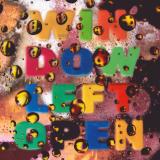
Keith Freund’s music occupies a space where careful musicianship and homebrewed experimentation meet and shake hands. On “Window Left Open,” spacious melodies drift through dense fields of electronic activity: saxophone lines rise above buzzing circuitry, percussion flickers at the edges of the frame, and clustered glitch textures dart through the music like insects in tall summer grass. Every sound feels vividly animated, a charged part of the same mercurial ecosystem.
Freund’s talent lies in balancing warmth and unpredictability with remarkable ease. Patient motifs recall the exploratory spirit of early folktronica, while bit-reduced textures, degraded loops, and idiosyncratic synthesis techniques continually reshape the terrain beneath them. Rather than treating acoustic and electronic elements as opposing forces, Freund allows them to intermingle until distinctions dissolve, creating compositions that reward close listening while retaining immediate warmth. This record finds Freund working with a fully formed vocabulary that is truly his own, transforming glitch, melody, improvisation, and atmosphere into songs that are both fundamentally curious and disarmingly engaging.
Seductive jazz-rooted polyrhythms, deeper than deep house: Italian DJ and producer Nico Lahs lines up a five-track EP, painted in blue notes and soulful, hypnotic grooves. Dedicated to the love of the drums, Mistress 19 is filled with tension, release, and the space to feel something real.
out of Stock
Last delivered 31 days ago available to reorder, subject to availability
Archaic Vaults is proud to present »Ley Lines«, the debut album by St Circul.
Concise collection of folkloric grime instrumentals to rise from a new moniker taken on by the elusive First Circle. A breadcrumb trail of effortlessly crafted early 2000s-era grime, trap and drill instrumentals can be found on a fairly sparse Soundcloud account and numerous NTS shows spanning the last ten years, on which he is known to play almost entirely his own material. Now a different energy takes hold on »Ley Lines«: ten tracks by the enigmatic producer to be released both on a label and in physical format for the first time.
»Ley Lines« was born from a meandering quest through South London’s more leafy dwellings. These cherished regions became a place of refuge in which to ruminate on the hopes that love and community can outlast the dwindling state of Britain’s social and political climate. Photo documentation was made which would later form the genesis for each track, and a return to the studio resulted in something which could not be fitted into the existing First Circle discography.
Harpsichord and brass samples (»A Plan Is Formed«, »Hilly Fields«) are underpinned by murky bass loops and tight militaristic percussion – motifs recognisable amongst white label grime’s most influential producers (Wiley, Skepta, Lewi White etc.) that push the formula into far more rapturous territories than any of FC’s previous productions. The more introspective moments of the album (»Wares at the Ivy House«, »Blythe Vision«) put local field recordings and devotional reverberant ambience to the forefront, alluding to St Circul’s proto-dungeon synth influences and giving the whole album a unique world all its own.
Archaic Vaults is proud to host an album which shares intrinsic roots with the label’s own South London birthplace. »Ley Lines«’ ten tracks of psychogeographic drifting are available in digital and limited cassette format via Archaic Vaults.
Mastered by Owen Pratt Design by Severin Black Artwork image by St Circul