Clear Vinyl
Eugene Synegal's early career as a teenager was the guitarist of Sam & The Soul Machine before moving to Los Angeles to join the group Sage and later in the 1970s recording on Lee Dorsey's Night People and The Neville Brothers records.
These previously unreleased recordings were birthed in the early 1970s, sometime during Eugene's trips back and forth between Los Angeles and New Orleans. A couple years after these recordings were immortalized onto 1/4" reel-to-reel tape an unusual crime scene involving Eugene and his girlfriend reads as if it was a chapter taken directly out of a pulp fiction novel. An Australian socialite named Patrica Galea, remained unsolved for 30 years. The robbers took $400, two diamond rings, a $1,400 cigarette lighter and two mink coats. They failed to collect Galea's $6,402 which was hidden in her freezer. This money was sent from Australia and was being used to fund Eugene's album as well as starting a new music publishing company in Hollywood. This was the life of Eugene. Playboy extraordinaire, jet-setter and guitar chops that would turn the head of Hendrix!! Around 2006 the owner of the West Hollywood apartment expressed a desire to learn more about its history and met with detectives who were unable to locate the file since it was buried in the cold cases section. The files were found, the case was reopened, solved and two men were arrested in 2007.
These recently unearthed 1970s recordings by Eugene are a reflection of his pure soul as well as a blend of psychedelia and funk that the band Sage was experimenting with in Los Angeles during that time period.
From a historical sense, these two recordings are significant because it bridges the historical and influential New Orleans music scene during the early 70's with the psychedelic rock and folk scene that was emerging just walking distance from the West Hollywood apartment that Eugene was living in with Galea during that time.
Eugene's unique guitar style paired with a deep-rooted gospel sensibility is a window into the artistry and songwriting capability of this incredibly talented man.
Search:the living
Thirty years after his disappearance, Miles Davis, both the man and his character, is still a subject for debate and controversy. And haven’t we heard that before with all artists? But when it comes to the importance of his contribution to music in the 20th century there is only unanimity.
Everyone says, sure, he was the greatest trumpeter. Other opinions are that he left the world of jazz behind him in 1965. It’s also said he was the catalyst of every decade from 1949 to 1989; that he revolutionised jazz, and brought it out of the ghetto; that he buried jazz; that he was the most important musician of his century... Each of those statements has its share of truth. Whichever way
you look at him, he remains a major figure in jazz and in 20th century music overall. Miles surpassed (or at least equalled) the importance of both Louis Armstrong and Duke Ellington for the simple reason that he addressed not only the jazz world but all worlds of music, and that he created (among other things) a fusion of the spheres people knew as jazz, blues, rock and pop, and spoke to every audience, either in turn or collectively.
There was a dinner at the White House during which a perfectly respectable lady, married to a politician no doubt, asked Miles what he did for a living. With some annoyance Miles replied, “Well I’ve changed music five or six times, so I guess that’s what I’ve done ... now tell me what have you done of any importance, other than be white? [...] You tell me what your claim to fame is.” The provocative tone in Miles’ words lifted the veil over his refusal to be hassled, his revulsion against America’s treatment of Black people, and Miles’ awareness of his own importance in the world of music. Even when speaking, Miles maintained the art of synthesis.
In the beginning – this was 1944 – there was a concert in St Louis, Missouri where Miles heard Charlie Parker and Dizzy Gillespie for the first time. “Man, that shit was terrible, I mean Dizzy Gillespie, Charlie ‘Yardbird' Parker, Buddy Anderson, Gene Ammons, Lucky Thompson and Art Blakey, all together in one band [...] that shit was all up in my body and that’s what I wanted to hear [...] and me up there playing with them.1” Miles was 18, he’d been playing trumpet for years and now he knew that this was what he wanted to play, and nothing else: to play with Bird! A year later he’d turned 19 and he was in New York, where he learned it all, up there alongside Bird and Dizzy.
Madrid's Roll Dann keeps up the high quality of his first few releases with a new EP on his Opera 2000 label that offers four fine cuts.
Roll Dann has already impressed with outings on Modularz, Soma and PoleGroup. It is the direct nature of his floor facing techno that appeals, and it comes infused with the inspirations he has picked up from a stint living in Berlin, as well as with the legacy of his teenage love of hardtechno-schranz. The start of Roll Dann & _asstnt's Opera 2000 marks a shift Roll Dann's creative direction where he focuses on an aggressive yet beautifully emotive style which is displayed wonderfully in his first solo release on the imprint entitled "Oppression Dance".
Big opener "When The Hate Goes Away" is a frazzled, over driven techno monster with slamming kick drums and fizzing synths that will rewire any dance floor. The brilliant "Break The Dance" then hammers you over the head with its brutal drums and big synth walls, but a more thoughtful pad also smears over the groove to bring some tenderness. "Oppression" is quick and slick, with a kinetic sense of techno funk getting you on your toes. Last of all "The Club" is another winner, this time with its eerie pads, acerbic textures and rusty hits all racing along on powerful drum programming as a distorted voice is trapped in its midst.
Pink Sweat$ has finally arrived with the unveiling of his highly anticipated debut album, PINK PLANET via Atlantic Records. PINK PLANET is a 16-track testament (plus 2 bonus tracks) to the Philadelphia rising superstar’s sonic abilities, luring in fans with ballads about his highs and lows, many successes and a heart-warming number from Pink along with family members. For his heartwarming debut, production credits include D Mile (Lucky Daye, H.E.R.), John Hill (Khalid), Rogét Chahayed (Drake, Miguel) and Michael Keenan.
PINK PLANET CD and vinyl will be available on 9th July. “Pink Planet is about love, it’s about inclusivity, and it’s about creative freedom. “As an artist you should have the ability to make whatever music feels good to you, and that’s what I tried to do with this album. Top to bottom, I’m giving a glimpse into my creative world; and I hope there’s a little something for everybody in it.” – Pink Sweat$
The new album includes eight brand new songs alongside six stellar tracks released in 2020 as THE PRELUDE EP, a token to fans adjusting to a new landscape surrounding the pandemic. His debut embodies a world that we aren’t living right now, with a purpose to heal and gift fans with a stellar project that speaks to listeners’ daily experiences. PINK PLANET further includes such captivating tracks as “Icy,” “17,” and the powerful “Not Alright,” all joined by official music videos streaming now at YouTube.
In 2021, Pink Sweat$ welcomes the year with a brand new remix to “At My Worst” featuring Kehlani, along with today’s release of his debut album, Pink Planet. Ultimately, Pink Sweat$ makes a statement by unapologetically bringing love to the forefront.
DEATH's landmark Spiritual Healing record is nothing short of genre-defining. Originally released in 1990, Spiritual Healing marked a new turn in the DEATH discography, one which ushered in cleaner production, a new level of boundary pushing musicianship and songwriting skills that were previously unimaginable from a metal band. Spiritual Healing sets the standard for riffs, insane time changes and of course mainman Chuck Schuldiner's masterful guitar solos. Includes Digital Download
- A1: Eat Static - Kothluwalawa
- A2: Magic Mushroom Band - Aravinda
- A3: The Ullulators - Zulu Proons
- B1: Ozric Tentacles - Secret Names
- B2: Revolutionary Dub Warriors - Dread V1
- B3: Junkwaffel - Substrata
- C1: The Ullulators - Simply Conscious Dub
- C2: Magic Mushroom Band - Squatter In The House
- C3: Ozric Tentacles - Sploosh!
- D1: Divine Soma Experience - Music Is Magic
- D2: Extremadura - Epsilon
Musique Pour La Danse is proud to present SPACED OUT!, a compilation curated by Belgian artist and producer DJ Athome (Front de Cadeaux) which focuses on psychedelic dub, space rock, and early electronica created in the UK's festival scene between 1986 and 1996, the result of a life long passion and 30 years of following artists from the festival scene.
It was a loosely organized British musical movement born in the early 80s and focused on free festivals in Stonehenge and other countercultural sites across the country. It represented a continuation of the psychedelic spirit of the 60s, with altered states of consciousness, dub production techniques, non-Western influences as well as instruments featuring heavily, along with a desire to side-step mainstream venues, labels, and attitudes.
Musically, it took on many forms, from mind-expanding space rock to third eye-opening electronica to shattering psychedelic dub. Visually, the zines, cassettes, LPs, and CDs created by this scene also displayed heavy influences from 60's psychedelia, updated for the late 80s and early 90s.
In the 90s, the zines and cassettes reached the eyes and ears of DJ Athome, then a young DJ living in Liège. After meeting a group of like-minded individuals organizing local gigs which was single-handedly responsible for putting Liège on the map for many British bands, he dived headfirst into the sights and the sounds of this festival scene, gathering as many albums as possible and joining local collectives involved in the organization of events.
This compilation is in equal amounts an introduction for newcomers and a confirmation for those who already know that this was without a doubt one of the trippiest and most compelling psychedelic musical movements of the last decades, notable for its hybridity, its sincerity, and above all its wonderfully life-changing effects for listeners and performers alike.
The compilation is presented in 2LP format, along with a limited edition Riso printed scene which features a foreword by acclaimed philosopher Timothy Morton, along with liner notes by David Borsu, one of the key players of Liège's musical collectives in the 90s and illustrations by designer Andrew Beltran.
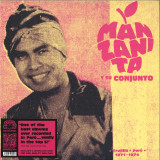
Following the 70s Peruvian cumbia compilation by Ranil last year, Analog Africa returns to Latin America to highlight the work of one of Perú’s undisputed masters of the electric guitar: Manzanita. This 13th release in the Limited Dance Edition Series includes 14 mostly instrumental compositions of electrifying Peruvian cumbia and guaracha. Manzanita's unique guitar lines rest on confident foundations that shifts gears effortlessly. Limited Edition LP in Gatefold Cover pressed on 180g high quality virgin vinyl
"I was in Lima, hanging out with collector-extraordinaire Victor Zela, who had spent the previous few years pouring his passion for Peruvian Cumbia into the blog „la cumbia de mis viejos“, a trove of incredible music. But after the birth of his first child, his priorities shifted and he decided to part with some of his rarest LPs. I was one of the lucky few given an early chance to examine his treasures, and when I picked up the album Manzaneando com Manzanita, Victor said: “Take it! its one of the best LPs ever recorded in Perú … easily in the top five”. That was all the encouragement I needed … two years later many of the songs from that masterpiece have made it onto Manzanita y su Conjunto, a compilation of electrifying Cumbia sides from Manzanita’s golden era.
Berardo Hernández – better known as Manzanita – first surfaced during the psychedelic Cumbia craze. At the head of the scene were the magnificent Los Destellos, whose leader, Enrique Delgado, was such a six-string wizard that other guitarists found it impossible to escape his shadow. But when Manzanita arrived, his electric criollo style sent shockwaves through Lima’s music scene and posed a serious threat to Delgado’s dominance as king of the Peruvian guitar.
Manzanita had come to Lima from the coastal city of Trujillo, five hundred miles up the coast – a place where Spanish, African and indigenous populations had been living and making music together for centuries – and came of age at a time when the first wave of psychedelic rock from the US and UK was starting to sweep the airwaves. But the sounds of Cream and Hendrix disappeared from the radio just as quickly in 1968 when Juan Velasco seized control of the country in a military coup. The new regime, which favoured local traditions over cultural ‘imports’ from the north, was a blessing in disguise for the Peruvian music scene.
Record labels flourished as new bands, raised on a hybrid diet of electric guitars and Cuban rhythms, rushed in to fill the vacuum created by the lack of imported rock. A new genre, known as Peruvian cumbia, was born and Manzanita quickly became one of its most original voices.
Starting in 1969, Manzanita y su Conjunto released a steady stream of singles that used Cuban guaracha rhythms as the foundation for dazzling electric guitar lines. After countless 45s and several years on the touring circuit, the band signed to Virrey, an important Peruvian label, and recorded two LPs acknowledged as masterpieces among aficionados of tropical music. Most of the songs on Analog Africa’s new compilation Manzanita y su Conjunto are drawn from those legendary sessions of 1973 and 74.
Although he scored a few more hits in the later 70s, his dissatisfaction with the music industry caused him to withdraw from the scene for several years; and when he finally retired for good, the golden age of Peruvian cumbia was a distant memory. But when Manzanita was at the top of his game he had few equals. Victor Zela was right: this is some of the best music ever recorded in Perú."
Primal Scream frontman Bobby Gillespie, alongside solo artist and Savages vocalist Jehnny Beth, presents this stunning debut solo project collection - exploring loss, miscommunication and emotional inarticulacy that a married couple experience as they realise that their relationship is breaking down.
‘Utopian Ashes’ draws on the tradition of country soul classics, such as Gram Parsons and Emmylou Harris’s ‘Grievous Angel’ and George Jones and Tammy Wynette’s ‘We Go Together’, to deal with the heavy realities of love turning sour. It’s an album for people who have dealt with the inevitable sadness that comes with age and acknowledged the realities of life. There is no sweetening of the pill, but it does achieve what should be the goal of all good art: to make us feel less alone. And while it’s not autobiographical, it channels heartfelt truth from the songwriters’ own experiences.
In addition to Bobby Gillespie and Jehnny Beth, the album features Johnny Hostile (bass) alongside Primal Scream trio Andrew Innes (guitar), Martin Duffy (piano) and Darrin Mooney (drums).
Nimbus West spirit jazz essential: the Creative Arts Ensemble's classic debut One Step Out. One of the most sought after and highly-regarded titles to have appeared on Tom Albach's celebrated Nimbus West imprint, One Step Out is a timeless work of spiritualized jazz. A true gem from the Los Angeles jazz underground, the album was pianist and composer Kaeef Ruzadun Ali's first recording as leader of the Creative Arts Ensemble, the only large ensemble group that emerged directly from Horace Tapscott's legendary Pan Afrikan Peoples Arkestra community jazz group. A Los Angeles native, Kaeef was introduced to the Tapscott circle in the late 1970s. His first experience of the Arkestra's ethos was through PAPA tenorist Michael Session, who took him to the famous "Great House" at 2412 South Western Ave., LA -- a large mansion house which members of the Arkestra had taken over as a space for communal living. Life in the Great House was a continuous stream of music, dance and community events. "When I walked in there," recalled Kaeef, "it was like this whole rush came over me, just from going in the front door -- It was like a very, very warm feeling of love. I went and I came out with 'Flashback Of Time', and that was my first arrangement." Kaeef quickly became a significant contributor of compositions to the Arkestra's songbook -- his piece "New Horizon" would be recorded by Horace Tapscott for the latter's Tapscott Sessions series. But "Flashback Of Time" would eventually appear on One Step Out, played by the new group he had put together from stalwart Arkestra members. Inspired by both Tapscott's example and by the Art Ensemble of Chicago, Kaeef had wanted to follow their lead by assembling a larger unit. Featuring seasoned Arkestra regulars including reedsman Dadisi Komolafe, drummer Woody "Sonship" Theus and altoist Gary Bias, with veterans Henry "The Skipper" Franklin on bass and George Bohannon on trombone, One Step Out is a key document of the Los Angeles radical jazz underground. Featuring the sanctified vocals of Kaeef's sister, B. J. Crowley, the album is a tour de force of spiritually energized independent jazz music.
Cosmic traveller Herman ‘Sonny’ Blount became Sun Ra after an alien abduction, proclaiming that he came from Saturn and using music to point to human failure on earth, offering space as ethereal alternative. Supersonic Jazz was released in 1957 on Ra’s Saturn label and regularly reissued, even making it onto Impulse in 1974, its blend of bop, avant-garde and galactic well ahead of its time. More melodic and cohesive than many subsequent titles, ‘Advice To Medics’ is a troubling Ra piano diversion, and ‘Super Blonde’ a big-band stomp; ‘Soft Talk,’ by trombonist Julian Priester, is one of the vehicles for John Gilmore’s tenor sax and ‘Kingdom Of Not’ has uncommon swing. A must for all Sun Ra scholars!
- A1: Never (A Perpetual Transhumanist Curse)
- A2: Demons (Conditioned Noosphere)
- A3: Necropolitics (Loose Remembrance)
- A4: Alucard And Alive Again (Melancholic Rage)
- B1: Sacrificing Your Heart (It Could Be Bloody Marvellous)
- B2: Crossed Realities (Drained Vectoralisation)
- B3: Demons Ii (Wardrums And Noises Of An Attention Crisis)
- B4: Silent Together (Somewhere Alone)
- B5: Necrorose For The Illdisciplined Void (Dark Euphoria)
- C1: Nicola Kazimir - 9 Eternities In Doom Ep (7Inch) - Midnight Fury (9 Eternities In Doom)
- D1: Nicola Kazimir - 9 Eternities In Doom Ep (7Inch) - Maniac (Resentment Of The Alienated)
In Post-Heretic Dracula X Chronicles II the Dracula figure functions as a part fictive and part autobiographical metaphor. Dracula mirrors certain systematic (therefore also internal) conditionings and attributes in its whole ambivalent fluctuations. This character represents the complex relationships of a loving/living person in a neo-liberal capitalist system while oscillating between melancholia & rage, facing the preservation or loss of his love and standing in an alienated position towards the ruling order. The eleven featured compositions and their respective song names (both of them are riddled with references) playfully touch on conflicts between love, life and system-critique, without being too upfront about the subject-matter.
Nicola Kazimir (*28.05.1990 in Zürich, Schweiz)
A DJ, producer, musician, artist, space-owner, record label owner and party organizer, Nicola Kazimir works freely across platforms and communities. For Kazimir, these numerous positions are not static, and they can actfluidly and reciprocally as a whole, or as separate entities. His artistic and acoustic productions are mostly based on topics that include the institutionalization of techno, copyright, dividualism and the human perception of repetitive rhythm patterns mixed with aesthetic codes of b-movie horror movies or occultism. He is one of the founders and still part of the labels Les Points/ Gentrified Underground / Infoline and the offspace Mikro Zürich. Other projects include a supporting role in the organization of Zentralwäscherei Zürich and being part of the Clubbüro-team at Rote Fabrik.
The Turbo Guidance quest keeps going on. Our musical roughnecks decided to seek help from a wizard. They needed to empower their earing sense and their dancing skills like mutant elves. Luckily the mighty Mali-I was living in the nearby forest and had something special to share...
In his hightower, it took Mali-I years to find and cook secretly the delicate mixture. It's forbidden to name the ingredients, but once you taste it you immediately feel the bouncy chords and dub delays rising. Play the mighty sound of the "Fallow Tales" and enter into the blue magic power. Full versatility to expand your mind and to reach a parallel astral plane. Exactly what our heroes need to face the coming storm. Next step is going to be darker...
*Sprinkle your ears with the red powder to increase the musical experience*
Vinyl sweetly pressed in 400 limited copies (no repress business) with a riso insert printed in two colors (blue and black) on a Munchen Pure Rough paper 150g/m2 (at Studio Fidele, Paris).
The original versions were released (digital only) some years ago, but stayed under the radar, until some dj's rediscovered it a while ago. It only started living then, and has continuously gained momentum ever since, with streamings now over half a million and counting fast. All involved agreed: it had to be turned into a vinyl release. It's mostly the original of "She Knows" that's been getting all the love, even though the DJ Rocca & Italian Cosmic legend Daniele Baldelli is an equally impressive showstopper in its own right. Throw in a new and exclusive deep (tech)house mix of "The Sound" by Hugo Ballistik, and you've got a release that merits curtsying and hats off. Limited to 400 copies, and remastered for top quality sound.
Kojaque follows his critically acclaimed cult concept record, ‘Deli Daydreams’, with an
expansive, urgent debut album. In this landmark debut, Kojaque mines both his
emotional interior as an artist, and the external forces of a love triangle barrelling
towards chaos. ‘Town’s Dead’ is a mind-bending, explosive and expansive trip,
documenting a tumultuous love triangle that unfolds across New Year’s Eve in a
place where gentrification poses as much a threat as the violence of street dealers.
Sonically, the record smashes any previous expectations, stretching an aural palate
that leaps from rage to solace, from clattering musical combustions to tender
ruminations. The tremendous scope and scale of ‘Town’s Dead’ demonstrates an
artist utterly untethered to assumptions about what a particular voice or genre should
be, and instead explores radical musical territory. Dark corners of parks, bedrooms,
clubs, streets and psyches are excavated and pouring over the rubble is an artist
who refuses to conform, unafraid of the vulnerabilities that are exposed when the
voice rings true, because there’s just no point in being anything else.
Kojaque is part of a new wave of Irish artists flooding the world with blistering and
sophisticated literature, film and music - ideas and work that emerged from a social
revolution stonewalled by late-stage capitalism. Welcome to that state of mind, where
the path less travelled is the only one worth taking.
On the announcement of his debut album Kojaque has said: “‘Town’s Dead’ comes
from the potential that I see in Dublin and in the people I’m surrounded by day in and
day out. There’s nothing but talent and ambition among young people, I’m constantly
reminded of that through the art and music that I see being made but I think so often
the city grinds you down, it takes your hope and your ambition. I know that it can
change because so many of my friends express the exact same wants, desires and
frustrations with living in Ireland. If so many of us are on the same page then I know
that things can change, there just needs to be some sort of catalyst to kick start that
change and for me that’s always been art and music. Time and time again, amazing
art continues to be made in spite of the struggles and setbacks that are presented
when living here. The title track and the album is a fight against what can sometimes
feel inevitable, it’s a rejection of what people tell you is your destiny as a young
person in the city, Town’s NOT dead it’s just Dormant.”
CD housed in digisleeve containing 12-page lyric and photo booklet.
Black double vinyl housed in 5mm wide spine single sleeve with 12-page lyric and
photo booklet.
“Hints of Odd Future and its offspring... Kojaque is not your average rapper” - i-D
“Dublin’s hip-hop community are making waves right now... an intimate introduction
to the world this bold artist inhabits” - Clash
“Social realist rhymes set to silky hip-hop” - NME
“Likeable and funny” - Trench
“The Dublin MC forcing us to face real life; both the gory and the glory” - Wonderland
“Ireland’s freshest hip-hop hope, Kojaque, serves ‘soft hip hop’ with a side order of
poetry and performance art” - Notion
Heavy music’s evolution has always been a murky swamp of sub-genres. So, combining Thin Lizzy’s glistening twin guitar harmonies with Melvins- grade sludge and a hearty dose of proto-metal psych probably shouldn’t sound so revolutionary as it does in the hands of L.A. quartet Deathchant. But theirs is a special, transcendent sound.
Waste, the band’s sophomore album and first for RidingEasy Records, is anything but. The 33-minute, 7-song blast flows seamlessly from song to song, aided by droning segues, while simultaneously slithering between genres and moods. Rumbling noise, chiming guitar melodies, bluesy boogie, NWOBHM thrash, COC grunge and punk fury all rear their head at times, sometimes all at once.
Though you wouldn’t be able to tell by the concise structures and well- crafted songs, a lot of Deathchant’s music is improvised, both in the studio and live. That’s not to suggest their songs are jammy — they’re very tightly organized compositions. But the four musicians have that special musical telepathy that allows them to keep the song structures open-ended.
“Improv is a huge things for us and always has been,” singer/guitarist T.J. Lemieux says. “The musical freedom to look at the other dudes in the band and be able to take things wherever we want to go is magical. I like the feel of flying off the hinges.”
Likewise, the band itself is similarly amorphous in its membership. “We run the band with an open door. No lineup is definitive,” Lemieux explains. On Waste, the lineup is: Lemieux, George Camacho on bass, Colin Fahrner on drums, and John Belino on second guitar.
Waste was recorded live in a rented cabin in the mountains of Big Bear, CA. “We packed a big-ass van and set up in the living room and kitchen,” Lemieux says. “Tracked it live, with overdubs after.” The whole album was recorded over two separate weekends, engineered by Steve Schroeder, who also recorded the band’s 2019 self-titled debut album.
“I’d say it has sort of a DIY LA punk aesthetic,” he adds. “Very ironically going hand in hand with a classic metal vibe: Thin Lizzy, Judas Priest, classic Deep Purple, Uriah Heep and other melodic heavy rock bands.”
Heavy music’s evolution has always been a murky swamp of sub-genres. So, combining Thin Lizzy’s glistening twin guitar harmonies with Melvins- grade sludge and a hearty dose of proto-metal psych probably shouldn’t sound so revolutionary as it does in the hands of L.A. quartet Deathchant. But theirs is a special, transcendent sound.
Waste, the band’s sophomore album and first for RidingEasy Records, is anything but. The 33-minute, 7-song blast flows seamlessly from song to song, aided by droning segues, while simultaneously slithering between genres and moods. Rumbling noise, chiming guitar melodies, bluesy boogie, NWOBHM thrash, COC grunge and punk fury all rear their head at times, sometimes all at once.
Though you wouldn’t be able to tell by the concise structures and well- crafted songs, a lot of Deathchant’s music is improvised, both in the studio and live. That’s not to suggest their songs are jammy — they’re very tightly organized compositions. But the four musicians have that special musical telepathy that allows them to keep the song structures open-ended.
“Improv is a huge things for us and always has been,” singer/guitarist T.J. Lemieux says. “The musical freedom to look at the other dudes in the band and be able to take things wherever we want to go is magical. I like the feel of flying off the hinges.”
Likewise, the band itself is similarly amorphous in its membership. “We run the band with an open door. No lineup is definitive,” Lemieux explains. On Waste, the lineup is: Lemieux, George Camacho on bass, Colin Fahrner on drums, and John Belino on second guitar.
Waste was recorded live in a rented cabin in the mountains of Big Bear, CA. “We packed a big-ass van and set up in the living room and kitchen,” Lemieux says. “Tracked it live, with overdubs after.” The whole album was recorded over two separate weekends, engineered by Steve Schroeder, who also recorded the band’s 2019 self-titled debut album.
“I’d say it has sort of a DIY LA punk aesthetic,” he adds. “Very ironically going hand in hand with a classic metal vibe: Thin Lizzy, Judas Priest, classic Deep Purple, Uriah Heep and other melodic heavy rock bands.”
- A1: The Dutch Benglos - Shabi-Bi-Di-Do
- A2: Pat Thomas Kwashibu Area Band - Yamona - Dam Swindle Rmx
- A3: Pupkulies Rebecca - Saude
- A4: La Gran Banda Calena - Que Quieres Que Haga
- B1: Martina Camarguo - Me Robaste El Sueno
- B2: Mackjoss - Mounadji 76
- B3: Voilaaa - Limye-A Ft David Walters Lass Pat Kalla
- B4: Jobby Valente - Mi Moin Mi Ou
- C1: Luis Dias - Liborio
- C2: Bande-Gamboa - Pe Di Bissilon - Dam Swindle Rmx
- C3: Ngalah Oreyo - Aye
- C4: Alcione - Nzambi-Muadiakime
- D1: Ismail Sixu Toure - Utammada
- D2: Pat Kalla Le Super Mojo - Canette - Bosq Rmx
- D3: Aurelio - Nando
- D4: Chucho Pinto - Cumbia De Sal Y Azucar
"Guts finest selection from his DJ sets. Some dancefloor classics and some discoveries"
Any DJ set tells you, unconsciously or not, about its author.
Through the record choices and the way they are organized, one can feel the DJ’s state of mind and find out a bit more about the musical deposit discovered that is being shared and dug through by him or her at the moment.
The appetite for diggin’, the quest for a novelty or a forgotten rarity is what makes a DJ set a true organic living matter constantly fueled although not always, unfortunately, respected.
Time stretching. Too many DJ’s made a pact with this diabolical creature. A true digital steamroller that runs over the rhythm to fix the tempo while leaving behind an agonizing drummer whose sole crime was to have been carried away by his energy and having moved forward the BPM. At the end, everything that gave charm and life to the track, its imperfections and the peculiar fact that it makes you dance faster towards its end… all these along with all the lively movements contained within the track are reduced to nothing.
My conception of music and DJ sets is the exact opposite. Since the first volume of Straight From The Decks, my DJ sets have been redesigned, refreshed and improved. However, there was no preexisting plan, they evolved naturally following my new desires.
The famous core of my indispensable musical choices started to morph little by little into something different without losing sight of its center of gravity which remains undoubtedly afro-tropical.
No matter which track, its style and its origin, the quality of the music that is brought to my ears is always my sole and primary concern.
In this selection, you’ll find 7” vinyl records available to everyone sitting proudly next to some rarities found online and acquired through nerve-raking auctions battles. There are indeed exclusive remixes along with titles that until now were only available in their digital formats. Now for the first time they are available here in vinyl format. Obviously, if you have chosen the CD format, that precision doesn’t really matter…
Sixteen titles which have become the heart of my sets throughout this past year.
A heart which in a year will beat to a certainly different drum…
Pura Vida
Gutsto attend the next one..."
Lisa Milberg and Jon Bergström started their band Miljon over a pitcher of margarita in Mexico City and have since kept busy writing gorgeous little pop-songs in makeshift studios in and around their hometown of Stockholm, Sweden – mostly in their bedrooms and various cabins in various woods surrounding the city, never staying too far from the pine trees.
Having assembled a collection of 13 pieces of proper flaskpost-disko, these demos were passed on to Studio Barnhus’ in-house mixmaster Matt Karmil, who worked his studio magic on the recordings, turning them into a seductively warm and spacious debut album. “Until then, our only expenditures for the album were wine bottles and taxis”, says the band.
This isn’t the first time Miljon has teamed up with Studio Barnhus, the ever-explorative Stockholm dance label. The band collaborated with Barnhus co-founder Axel Boman on the wistful piano-house ballad “Forgot About You” in 2018 (“a summer anthem … a marvel of simplicity” - Pitchfork) and the label’s core personnel are all regulars at Arranging Things, the design store (“Stockholm’s coolest” - Vogue) that Lisa runs with another friend.
Going further back, Miljon isn’t the first musical project of neither Lisa’s nor Jon’s – the former enjoyed her fair share of 00's indie rock success as drummer and eventually lead singer of The Concretes, while Jon has earned a reputation as the hardest working man in several Swedish music scenes, bringing energy and expertise to punk stages around the country as well as Stockholm’s electronic underground.
With Miljon, the two friends make sure to keep it short and sweet, happily celebrating imperfections. “We believe in ‘first thought, best thought’ and try to work on the songs as little as possible, instead trusting a good melody and a nice vibe, not overthinking it. We dare you to find a bridge on this album!”
With “Don’t They Know”, the duo presents not only 13 beautiful songs (perfect for shower-humming, living roomshuffling and warm summer night boombox-blasting alike) but also an album that turns into something grander than the sum of its parts.
“We made it because it’s the kind of album we’ve been wanting to hear ourselves. It’s all quite song-centric these days and it feels rare to find a whole album to step into and stay inside, you know? We hear great songs all the time, but we wanted an album that was its own little universe, with its own mayor, own happy hour, its own yard sales and extramarital affairs.”
“Don’t They Know” is released through Studio Barnhus as a vinyl LP June 18.
- A1: Invitation To Jamaica – Lord Tanamo
- A2: Fat Man – Derrick Morgan
- A3: Tell Me Darling – Jackie Edwards
- A4: Running Around – Owen Gray
- A5: Miss Jamaica – Jimmy Cliff
- A6: Housewife’s Choice – Derrick And Patsy
- A7: Give Me All Of Your Love – The Continentals
- A8: Darling Patricia – Owen Gray
- B1: Rough And Tough – Stranger Cole
- B2: Man To Man – Kentrick Patrick
- B3: Uno-Dos-Tres – Stranger & Ken
- B4: Slow Boat – Al T. Joe
- B5: Rude Boy – Duke Reid’s Group
- B6: Gone Is Yesterday – Higgs & Wilson
- B7: I'm In The Mood For Ska – Lord Tanamo
- B8: Virginia Ska – The Baba Brooks Band
- B9: Satan – Justin Hinds & The Dominoes
- C1: One Eyed Giant – Baba Brooks & His Band
- C2: Every Night – Joe White And Chuck
- C3: King Size – Baba Brooks & His Band
- C4: Syncopate – The Astronauts
- C5: Keep The Pressure On – Winston & George
- C6: Oh Babe – The Techniques
- C7: Train To Skaville – The Ethiopians
- C8: Rudy, A Message To You - Dandy Livingstone
- D1: Dreader Than Dread – Honey Boy Martin & The Voices
- D2: It's Raining – The Three Tops
- D3: The Whip – The Ethiopians
- D4: Pretty Africa – Desmond Dekker & The Aces
- D5: Rock Steady – Alton Ellis & The Flames
- D6: Rock Steady Train – Ewan & Jerry
- D7: King Without A Throne – Sugar Simone
- D8: Perfidia – Phyllis Dillon
- E1: Musical Train – Roy Shirley
- E2: Do The Beng Beng – Derrick Morgan
- E3: Way Of Life - Lynn Taitt & The Jets
- E4: Second Fiddle – Tommy Mccook & The Supersonics
- E5: People Funny Boy – Lee ‘Scratch’ Perry
- E6: I've Got To Get You Off My Mind – The Tennors
- E7: Do The Reggay – The Maytals
- E8: Nana – The Slickers
- F1: Tell Me Baby – Delano Stewart
- F2: Mama Look Deh – The Reggae Boys
- F3: Hong Kong Flu – The Ethiopians
- F4: Pressure Drop – The Maytals
- F5: Them A Laugh And A Ki Ki – The Soul Mates
- F6: Walking In The Rain – The Melodiansf
- F7: Satisfaction – Carl Dawkins
- F8: Black And White – The Maytones
- F9: Rasta Never Fails – The Charmers
One of the most significant collections in Trojan’s immense catalogue, the ‘The Trojan Story’ album dramatically changed the perception of Jamaican music among the general British public outside of the country’s Afro-Caribbean population.
Prior to its release in 1971 there had never been an attempt to present a comprehensive anthology of the island’s musical development, with vintage ska, rock steady and reggae widely regarded as obsolete and of precious little merit.
The treble disc set, which became an instant best-seller, had been the brainchild of Trojan’s label manager and Black Music fan, Rob Bell, who, assisted by Trojan stalwarts, Dandy, Webster Shrowder and Joe Sinclair, produced arguably the most significant Jamaican music retrospectives of all time.
Now, 50 years following its original release, this hugely influential album has been revisited by Bell, along with reggae musician, Rusty Zinn, who have succeeded in improving what was already an almost perfect collection.
Presented in the original eye-catching artwork, the set is further enhanced by a highly illustrated 50-page booklet in which Bell relates the stories behind the release and the 50 tracks featured on the compilation.
Question everything. Consider your sources. Be wary of ulterior motives, insidious media narratives and even your own unconscious bias. Trust sparingly and try to make smart, informed choices. As the world slides further into ruin, it’s more important than ever to be vigilant and fight back. Luckily, Hacktivist are back to help cut through the noise and bullshit, tooled-up and ready to attack with renewed vigour and reinforced ranks. With Jot Maxi and J. Hurley now sharing the vocal and lyrical load, drummer Rich Hawking and bassist Josh Gurner bringing the beats and rhythms, and guitarist and production don James Hewitt fleshing out the group’s genre-fluid muscle, new album Hyperdialect arrives less like a mission statement and more as a flaming musical Molotov, declaring all-out war. “Hyperdialect isn’t an album for people to just casually listen to,” J insists, “we’ve taken things to the next level, which I didn’t even think was possible. We spit the truth. *We are the truth.*” In 2016, when Hacktivist initially set sights on their enemies with debut album Outside The Box, the world wasn’t fully equipped to heed their warnings and pay attention to its timely rallying cries. They return into a very different one, however – a world that’s sadly now all-too-finely-attuned to the horrors they first forecasted four years ago. “It’s becoming clear that we are on the brink of some type of revolution,” says Jot, with no small dose of conviction or optimism. “Hacktivist are here to bring truth and positivity – the silver lining of a society clouded in poisonous fear. Hacktivist also represents a voice that isn’t afraid of saying what needs to be said. We’re already living in the future. We have the choice to either be shaped by it or to stand up and shape it ourselves. Which path will you take?” It was with those battle lines clearly drawn and ambitions duly set that Hacktivist entered into the creation of Hyperdialect. Starting almost two years ago and developing on the acerbic sonic filth introduced by 2019 singles Reprogram and Dogs Of War, the five-piece felt fired up by their new working dynamic and the collective process involved, with each member actively encouraged to contribute ideas until the best outcome was reached. Unusually, for such a group of bloody-minded insurrectionists, this democratic approach worked wonders – a testament to how much they were all on the same page on these 12 tracks.