Tobias started his musical career back in 2009 on Johannes Heil´s and Daniel Schlender´s label called Metatron Recordings. After a few years as a resident DJ at Munich´s famous club Harry Klein he´s back with more melodic techno under his real name Tobias Wagner.
We are delighted to welcome him to our small `Future Romance´ family and proud to present his wonderful debut EP with three impulsive but dreamy tracks full of shimmering synths, crisp beats and epic highlights. As if these Originals were not enough we could win the cutting-edge Tel Aviv-based producer ´Stereo Underground´ as a remixer. Wellknown for his impressive releases on labels like Guy J´s Lost & Found or iconic australian imprint Balance Music, he added some more atmospheric work on "Emilia" and created a deep & melodic masterpiece in his typical unique style!
Early DJ support by Guy J, Dave Seaman, Eelke Kleijn, Nick Warren, D-Nox, Kevin De Vries, Raphael Mader, Magdalena, Markus Kavka and more.
On the A side with ‘Joy’, Bruise head in a jubilant direction. Chanting vocal chops ride along deep cut kick grooves and vivid piano riffs; modernising the classic house sound and forming a track that would as likely go off in a club in the UK as it would on the sun-soaked beaches of Ibiza.
In ‘The Theme’, Bruise switches things up and offers up a weighty, bass-driven progressive techno heater; bolstered with rattling break chops and polyrhythmic analogue synth arpeggios. As the track progresses, rip-roaring, squelching acid-lines are introduced at the crescendo; creating a versatile club record; primed and ready for the clubs reopening.
On this single ‘When Pianos Attack’, the vibe is instantly recognisable. Piano chords lead the charge of yet another dancefloor destroyer, with that signature sound of swinging beats, layered pianos, lashings of strings, and hosts of heavenly soulful choirs. Just close your eyes, look up, feel the rush, and dance.
+ Includes the unreleased vinyl exclusive ‘Akiba Choirs’. A new school dance anthem!
Huge support from: Annie Mac, Pete Tong, Laurent Garnier, Severino / Horse Meat Disco, Sasha, A Trak, Andhim, Spiller, Graeme Park, DJ EZ, John Digweed, Fatboy Slim, Sam Devine, Laurence Guy, Gilles Peterson, Fred Everything, Soul Clap, James Lavel, Basement Jaxx, Francois K, Luke Solomun.
'Joy'
- Pete Tong’s Essential New Tune + Tong asked Bruise to record a Joy themed Essential Mix for BBC Radio 1.
- Premiered by leading dance authority Mixmag.
- Featured in Defected / Faith’s behind the counter.
‘When Pianos Attack’
- Played by Blessed Madonna as an artist to watch 2022!
- Played at Warehouse Project by Graeme Park, and then again by Terry Farley.
- Magnetic Magazines Best of Month
Bruise appeared in Faith Magazines taking a full page for interview with a heavy focus on When Pianos Attack.
Baby Buddha is David Javelosa and musical partner Charles Hornaday playing instruments and providing their own whacked-out vocals. Baby Buddha really was less of a band than a project; a side project in fact, for some members of another group, Los Microwaves. Baby Buddha would eventually record and release an album, 1981's provocatively-titled Music for Teenage Sex on Robbie Fields' L.A.-based Posh Boy label.
Happily, the project's guiding creative light, David Javelosa has recently seen to a vinyl reissue of the now-40-year-old record, mystifyingly retitled Music for Teenage Sects. Definitely among the stranger releases of the new wave era, Music for Teenage Sex/Sects could perhaps only have been created when and where it was made. But on the occasion of its 40th anniversary, the music sounds as weirdly wonderful as ever. "We Are Not" sounds like Human League stuck in a car with The Residents. And their cover of "All Shook Up" sounds like a musical kin to those inscrutable eyeball guys too; it wouldn't be out of place on Meet the Residents. "Little Things" is a house-of-mirrors, scary track, with spoken-word vocals by Los Microwaves' Meg Brazill and label head Fields.
The album cover is slightly different as well: it displays a bedroom scene like the original LP, but with the young female model absent. The new release (on Javelosa's own Hyperspace Communications label) is pressed on beautiful translucent blue vinyl and comes in a gatefold sleeve with a lively collage of photos, buttons, gig posters. Limited to 500 copies.This playfully titled release features David Javelosa (on synth and vocals) along with Meg Brazill (on bass and vocals) plus drummer Todd "Rosa" Rosencrans. Side One features five studio tracks, none of which were included on the band's 1981 Posh Boy LP, Life After Breakfast. Three of these tracks were recorded in '82; there's no information regarding the provenance of the other two songs. The records' second side collects five live recordings, capturing Los Microwaves onstage in New York City (The Peppermint Lounge) and Boston as well as at San Francisco's own I-Beam, a venue that often played host to the band. Those tracks date form roughly the same ear, 1980-83. Sonically the songs variously recall Blondie, Flying Lizards, Gang of Four and a far less dour Human League. Importantly, the band rocks, even when it's employing a spare drum kit, solid but elemental bass, and monophonic analog synthesizers. The stripped down aesthetics of the group – necessitated by its minimalist instrumental approach – are nonetheless thrilling. Even if you weren't there in 1980, this'll take you back.
SAXON GO FULL CARPE DIEM WITH THEIR LATEST STUDIO RELEASE
Saxon, those seminal British Heavy Metal Heroes hailing from Barnsley, UK, will release Carpe Diem on February 4th 2022 through Silver Lining Music. Ten titanic tracks bristling with still-clad riffery and proud intent, Carpe Diem is the statement which reminds heavy metal fans worldwide who the true masters of British Metal are, drawing on a variety of ingredients from their career to forge what is Saxon’s most dynamic release in many a year.
"It all starts with the riff,” says frontman and co-founder Biff Byford, "if the riff speaks to me, then we’re on our way. It’s a very intense album, and that’s all down to the fact that the essence of a great metal song is the riff that starts it, and this album has loads of them."
From the title track’s roll-back attack to the incessant speed and power of “Super Nova”, this is Saxon at their purest and most definitive, aggressively parading the pure metal flag and imploring fans old and new to gather and celebrate the very best of both Saxon and the genre itself. “All for One” has the stomp and pure power of a “Princess of the Night” while “The Pilgrimage” is classic “Crusader”-era Saxon. Produced by Andy Sneap (Judas Priest, Exodus, Accept and Richie Faulkner) at Backstage Recording Studios in Derbyshire with Byford with Sneap mixing and mastering, Carpe Diem strikes the ear as one of the most essential British Metal statements of the last few years, one which will ignite the joy in stalwart supporters and attract a whole new legion to the Saxon fold.
“I love that sort of fast metal. I love Princess of the Night and 20,000 FT and I try and bring that style of Saxon into the music now but in a bit more modern style” affirms Byford “but it’s the same five guys playing it and singing it, so I think we don’t really sound like an old band on records because we’re not really sitting back on our past success. We’re always trying to make a great album.”
“We want every album we make to go platinum,” says Byford defiantly. "We never make an album that we don’t expect to be fantastic because there are no laurels around here, only a commitment to the best songs and riffs we can write.” Saxon have certainly made sure to Seize the Day; be sure you join them.
Richmond's IRON REAGAN returns with their original lineup for the thrashing new EP, DEMONETIZATION. 6 blistering tracks clocking in at just 10 minutes, DEMONETIZATION shows the band (Tony Foresta, Ryan Parrish, Dr. Guitar, Phil Hall, and Adam Guilliams) crushing through the Punk, Hardcore, Fastcore, Thrash Metal, and more that have made IRON REAGAN a mainstay since their original 2012 demo. IRON REAGAN's most Punk lineup returns to deliver breakneck music at breakneck speeds. "Very excited to release new music with the original Iron Reagan lineup," says Foresta. "This is the first time we've released something with Paul since 2014 (Exhumed Split). This is some of our strongest/heaviest material we've done to date. Looking forward to getting back on the road with these guys and seeing everybody." Reactivated and ready to roll, IRON REAGAN promises that DEMONETIZATION is just a taste of things to come! Short: Richmond's IRON REAGAN returns with their original lineup for the thrashing new EP, DEMONETIZATION. FFO: D.R.I., Power Trip, Iron Age, The Accused, Nuclear Assault, Anthrax
Tommy McCook was not only a founding member of the legendary Jamaican Ska group The Skatalites, but also a brilliant musical arranger. His informed understanding of Jazz, R&B and in fact most music styles would always add another layer to any song put his way. This made him the go to guy for most of the Jamaican producers, who would use his arrangement skills to pepper up their latest tunes.
Tommy McCook, (b1927, Havana, Cuba) came to Jamaica with his mother from Cuba aged 11 and entered renowned Alpha Boys School for underprivileged children, a school that placed great emphasis on musical tuition. At the tender of 14, such was his talent he has left to join Eric Deans Orchestra and took on stints with other bands led by Don Hinchman and Roy Coburn. All the bands played in the Swing and Jazz style of the times. He relocated to the Bahamas in 1954 where he further developed his Jazz technique and upon his return to Jamaica in 1962 began working Coxsone Dodd’s Studio One and became involved in the development of Ska. His knowledge of Jazz, R& B and Jamaican musical forms helped set the tone for the group of musicians he was working with and would name the Skatalites. The group, consisting of Don Drummond (Trombone), Roland Alphonso (Tenor Saxophone), Jackie Mitoo (Piano), Lloyd Brevett (Bass), Lloyd Knibbs (Drums), alongside Tommy himself on Tenor Saxophone. The group would back all the major Ska vocalists pf the day and would also go on to cut a catalogue of instrumental music. The Skatalites split up in 1965 and Tommy McCook moved over to work with Duke Reid’s Treasure Isle Studios where he formed The Supersonics. A set of musicians under his guidance that consisted of Lynn Tait and Ernest Ranglin (Guitar), Neville Hinds and Winston Wright (Organ), Gladstone “Gladdy” Anderson (Piano), Hugh Malcolm and Arkland “Drumbago” Parks (Drums), Clifton “Jackie” Jackson (Bass), and Tommy and Hernon Marquis (Saxophone). The more laid back sounds from 1966-1968 would be given the name Rocksteady of which again McCook was at the forefront. The top producers like Bunny Lee would use the musicianship of Tommy McCook and his arrangement skills to enhance this new sound.
We have compiled a great selection of rhythms that featured McCook blowing over tracks stripped of their vocals and replaced with some fantastic lead lines played by Tommy and some of his fellow horns men.
We hope you agree like we do that they do this in fine style.
Celebrate the 10th anniversary of 21 Savage & Metro Boomin’s Savage Mode! Including “No Heart,” “X” (featuring Future), “Savage Mode,” and “Ocean Drive”.
Limited purple vinyl. KICKIN VALENTINA return with a sensational new full-length album, "Anthems From The Underground", set for worldwide release in August 2026. The highly-anticipated record will be released via Mighty Music and delivers a crushing, no-compromise statement of modern underground hard rock. Formed in 2013, Kickin Valentina quickly built momentum in the U.S. and internationally, first signing with Atlanta indie label Highway 9 Records before moving to Mighty Music in 2015. Since then, the band has released a steady run of acclaimed records including "Super Atomic", "Imaginary Creatures", "Revenge of Rock", "Star Spangled Fist Fight", and "Raw Trax, B-Sides and Bootlegs", as well as the EP "Chaos in Copenhagen", earning a strong reputation for raw, high-energy rock'n'roll rooted in a take-it-or-leave-it attitude.
With her new album Trespasser, Grace Potter introduces a beautifully unruly cast of characters who step into forbidden spaces with absolute abandon. As the spiritual sequel to 2023’s Mother Road, the four-time Grammy nominee’s seventh studio LP continues the kaleidoscopic storyline shaped by her many road trips from her Topanga Canyon home to her part-time residence in her native Vermont (a journey she’s made eight times in the last five years, usually on her own). But while Mother Road was born from a desperate need for solace in the midst of emotional freefall, Trespasser reveals an artist firmly anchored in her singular vision.
The latest chapter in a career marked by endless transformation and elite recognition—including sharing stages with rock & roll icons like the Rolling Stones & Robert Plant and earning praise from legends like Bob Dylan and Bonnie Raitt—Trespasser ultimately lights the way toward a more unbound and expansive means of moving through the world. Produced by her husband and frequent collaborator Eric Valentine (Queens of the Stone Age, Weezer, Slash) and recorded in a cross-country journey beginning at her home in Topanga with Benmont Tench, continuing in Nashville with Mother Road session players (members of Cage the Elephant, Kings of Leon, and Train), and completed in Vermont with members of her longtime live band, the album echoes its origins with a wayward sound that spans from stripped-bare soul to cosmic country to hellraising rock & roll—all while orbiting Potter’s force- of-nature voice and lavishly imagined storytelling. “We’ve always been taught that the trespassers are the bad guys, but to me it’s not about reckless rebellion,” says Potter. “It’s about exploring, physically and mentally and emotionally, and being willing to step outside the narratives we’ve accepted. Because in my experience, the places we’re told not to go are exactly the ones that show us who we really are.”
With her new album Trespasser, Grace Potter introduces a beautifully unruly cast of characters who step into forbidden spaces with absolute abandon. As the spiritual sequel to 2023’s Mother Road, the four-time Grammy nominee’s seventh studio LP continues the kaleidoscopic storyline shaped by her many road trips from her Topanga Canyon home to her part-time residence in her native Vermont (a journey she’s made eight times in the last five years, usually on her own).
But while Mother Road was born from a desperate need for solace in the midst of emotional freefall, Trespasser reveals an artist firmly anchored in her singular vision. The latest chapter in a career marked by endless transformation and elite recognition—including sharing stages with rock & roll icons like the Rolling Stones & Robert Plant and earning praise from legends like Bob Dylan and Bonnie Raitt—Trespasser ultimately lights the way toward a more unbound and expansive means of moving through the world. Produced by her husband and frequent collaborator Eric Valentine (Queens of the Stone Age, Weezer, Slash) and recorded in a cross-country journey beginning at her home in Topanga with Benmont Tench, continuing in Nashville with Mother Road session players (members of Cage the Elephant, Kings of Leon, and Train), and completed in Vermont with members of her longtime live band, the album echoes its origins with a wayward sound that spans from stripped-bare soul to cosmic country to hellraising rock & roll—all while orbiting Potter’s force- of-nature voice and lavishly imagined storytelling. “We’ve always been taught that the trespassers are the bad guys, but to me it’s not about reckless rebellion,” says Potter. “It’s about exploring, physically and mentally and emotionally, and being willing to step outside the narratives we’ve accepted. Because in my experience, the places we’re told not to go are exactly the ones that show us who we really are.”
Handpicked by MoBlack, here are eight tracks that lended the dynamic vision and artistic stimulation for what is now a bastion of Afro House. Collected from the label's artists, friends and inspirations of past and present, "House of Mo'" comprises musical snapshots from Mimmo Falcone's journey as a DJ, producer and label head. Reverberating rhythms and grooves attached to memories made on and off dancefloors, these sonic wonders are part and parcel of the House the label built, go-to jams that speak of the spirit that binds its growing family.
Tread lightly, listen hard, and feel at home.
out of Stock
Last delivered 6 days ago available to reorder, subject to availability
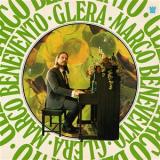
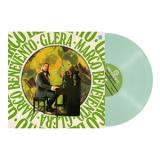
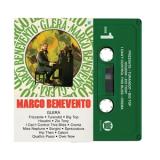
Big Crown Records freut sich, Glera zu präsentieren, Marco Beneventos Debütalbum auf dem Label. Marco Benevento hat sich schon immer wie jemand bewegt, der das Studio als eigenes Instrument begreift - nicht bloß als Raum, in dem das Spielzeug herumsteht. Lange bevor er auf Bühnen mit Freddie Gibbs und Madlib auftauchte oder in den Liner Notes von Alben von Clairo und Leon Bridges erwähnt wurde, dachte Benevento bereits wie ein Produzent: Er hörte auf Texturen, Spannungen und Negativräume - und auf jene seltsame emotionale Alchemie, die entsteht, wenn Groove und Neugier aufeinandertreffen. Sein neues Album Glera schärft diesen Instinkt und rückt Benevento nicht nur als virtuosen Keyboarder und Bandleader ins Licht, sondern als Komponisten, der aus Rhythmus, Klang und Gefühl ganze Welten formt.Glera ist ein genreübergreifendes Jazzalbum, das Soul und das elastische Low-End des Reggae mit einem offenen Sinn für Möglichkeiten verbindet. Das Projekt begann vor drei Jahren als eine Art privates Experiment: Benevento schrieb intuitiv, inspiriert von italienischen Filmmusiken und Melodien. Mit der Zeit entwickelten sich diese Skizzen zu etwas Größerem und Kraftvollerem - und mündeten schließlich in die hier zu hörende majestätische Ausformung.Entstanden ist Musik mit filmischer Bewegung, ohne dabei kostbar oder überladen zu wirken. Die Stücke fühlen sich mal wie Verfolgungsjagden, mal wie langsame Überblendungen an - manchmal sogar innerhalb desselben Songs. Jazz-Improvisation teilt sich den Raum mit Reggae-Grooves, orchestralen Elementen und einer psychedelischen Pop-Atmosphäre. Explorativ, aber geerdet; komplex, doch stets klar groove-orientiert.Der Album-Opener ,Frizzante" ist eine reine musikalische Feier - ein energiegeladener Feel-Good-Banger, auf Band gebannt, in dem Marco über einem unnachgiebigen Groove Melodien mit sich selbst austauscht. Auf ,Turandot" wird Benevento von Italiens Marianne Mirage am Gesang begleitet; der düstere, cineastische Track bewegt sich mühelos zwischen den Welten von Portishead und Serge Gainsbourg.Mit ,Big Top" erweitert sich die klangliche Palette noch weiter: ausgestattet mit Sprachaufnahmen und Pfauengeräuschen lässt sich der Song am treffendsten als ,Zirkus-Funk" beschreiben. Ein Pfiff - und das Spiel beginnt mit ,Houdini", einem jazz-fusionhaften Dancefloor-Füller, der vom ersten Schlagzeugschlag an die Tür eintritt. Auf ,I Can't Control This Bliss" mischt Benevento Dream Pop unter und bittet Dream Crease ans Mikrofon - für eine Dosis lo-fi-getränkter Schönheit. Elizabeth Steiner steuert ihre renommierte Harfenarbeit zu ,Miss Neptune" bei, getragen von einem tief vibrierenden, reggae-inspirierten Fundament.Mit Vollgas prescht ,Sprezzatura" wie eine Hochgeschwindigkeitsverfolgung durch enge Straßen, während ,Quattro Passi" das Tempo drosselt und zum entspannten Schlendern einlädt - mit Jazzsängerin Chiara Civello als Feature.Marco Benevento agiert hier auf höchstem Niveau, formt Klang mit Zielstrebigkeit und Neugier. Dieses Album kündigt sich laut an - zugleich nach außen gerichtet und zutiefst intim. Es ist Musik in Bewegung: zwischen Genres, Tempi und Registern, stets verankert in der Freude am Entdecken. Ein Album, das Bewegung verkörpert, die Vergangenheit mitnimmt und doch niemals stehen bleibt.
Big Crown Records freut sich, Glera zu präsentieren, Marco Beneventos Debütalbum auf dem Label. Marco Benevento hat sich schon immer wie jemand bewegt, der das Studio als eigenes Instrument begreift - nicht bloß als Raum, in dem das Spielzeug herumsteht. Lange bevor er auf Bühnen mit Freddie Gibbs und Madlib auftauchte oder in den Liner Notes von Alben von Clairo und Leon Bridges erwähnt wurde, dachte Benevento bereits wie ein Produzent: Er hörte auf Texturen, Spannungen und Negativräume - und auf jene seltsame emotionale Alchemie, die entsteht, wenn Groove und Neugier aufeinandertreffen. Sein neues Album Glera schärft diesen Instinkt und rückt Benevento nicht nur als virtuosen Keyboarder und Bandleader ins Licht, sondern als Komponisten, der aus Rhythmus, Klang und Gefühl ganze Welten formt.Glera ist ein genreübergreifendes Jazzalbum, das Soul und das elastische Low-End des Reggae mit einem offenen Sinn für Möglichkeiten verbindet. Das Projekt begann vor drei Jahren als eine Art privates Experiment: Benevento schrieb intuitiv, inspiriert von italienischen Filmmusiken und Melodien. Mit der Zeit entwickelten sich diese Skizzen zu etwas Größerem und Kraftvollerem - und mündeten schließlich in die hier zu hörende majestätische Ausformung.Entstanden ist Musik mit filmischer Bewegung, ohne dabei kostbar oder überladen zu wirken. Die Stücke fühlen sich mal wie Verfolgungsjagden, mal wie langsame Überblendungen an - manchmal sogar innerhalb desselben Songs. Jazz-Improvisation teilt sich den Raum mit Reggae-Grooves, orchestralen Elementen und einer psychedelischen Pop-Atmosphäre. Explorativ, aber geerdet; komplex, doch stets klar groove-orientiert.Der Album-Opener ,Frizzante" ist eine reine musikalische Feier - ein energiegeladener Feel-Good-Banger, auf Band gebannt, in dem Marco über einem unnachgiebigen Groove Melodien mit sich selbst austauscht. Auf ,Turandot" wird Benevento von Italiens Marianne Mirage am Gesang begleitet; der düstere, cineastische Track bewegt sich mühelos zwischen den Welten von Portishead und Serge Gainsbourg.Mit ,Big Top" erweitert sich die klangliche Palette noch weiter: ausgestattet mit Sprachaufnahmen und Pfauengeräuschen lässt sich der Song am treffendsten als ,Zirkus-Funk" beschreiben. Ein Pfiff - und das Spiel beginnt mit ,Houdini", einem jazz-fusionhaften Dancefloor-Füller, der vom ersten Schlagzeugschlag an die Tür eintritt. Auf ,I Can't Control This Bliss" mischt Benevento Dream Pop unter und bittet Dream Crease ans Mikrofon - für eine Dosis lo-fi-getränkter Schönheit. Elizabeth Steiner steuert ihre renommierte Harfenarbeit zu ,Miss Neptune" bei, getragen von einem tief vibrierenden, reggae-inspirierten Fundament.Mit Vollgas prescht ,Sprezzatura" wie eine Hochgeschwindigkeitsverfolgung durch enge Straßen, während ,Quattro Passi" das Tempo drosselt und zum entspannten Schlendern einlädt - mit Jazzsängerin Chiara Civello als Feature.Marco Benevento agiert hier auf höchstem Niveau, formt Klang mit Zielstrebigkeit und Neugier. Dieses Album kündigt sich laut an - zugleich nach außen gerichtet und zutiefst intim. Es ist Musik in Bewegung: zwischen Genres, Tempi und Registern, stets verankert in der Freude am Entdecken. Ein Album, das Bewegung verkörpert, die Vergangenheit mitnimmt und doch niemals stehen bleibt.
Big Crown Records freut sich, Glera zu präsentieren, Marco Beneventos Debütalbum auf dem Label. Marco Benevento hat sich schon immer wie jemand bewegt, der das Studio als eigenes Instrument begreift - nicht bloß als Raum, in dem das Spielzeug herumsteht. Lange bevor er auf Bühnen mit Freddie Gibbs und Madlib auftauchte oder in den Liner Notes von Alben von Clairo und Leon Bridges erwähnt wurde, dachte Benevento bereits wie ein Produzent: Er hörte auf Texturen, Spannungen und Negativräume - und auf jene seltsame emotionale Alchemie, die entsteht, wenn Groove und Neugier aufeinandertreffen. Sein neues Album Glera schärft diesen Instinkt und rückt Benevento nicht nur als virtuosen Keyboarder und Bandleader ins Licht, sondern als Komponisten, der aus Rhythmus, Klang und Gefühl ganze Welten formt.Glera ist ein genreübergreifendes Jazzalbum, das Soul und das elastische Low-End des Reggae mit einem offenen Sinn für Möglichkeiten verbindet. Das Projekt begann vor drei Jahren als eine Art privates Experiment: Benevento schrieb intuitiv, inspiriert von italienischen Filmmusiken und Melodien. Mit der Zeit entwickelten sich diese Skizzen zu etwas Größerem und Kraftvollerem - und mündeten schließlich in die hier zu hörende majestätische Ausformung.Entstanden ist Musik mit filmischer Bewegung, ohne dabei kostbar oder überladen zu wirken. Die Stücke fühlen sich mal wie Verfolgungsjagden, mal wie langsame Überblendungen an - manchmal sogar innerhalb desselben Songs. Jazz-Improvisation teilt sich den Raum mit Reggae-Grooves, orchestralen Elementen und einer psychedelischen Pop-Atmosphäre. Explorativ, aber geerdet; komplex, doch stets klar groove-orientiert.Der Album-Opener ,Frizzante" ist eine reine musikalische Feier - ein energiegeladener Feel-Good-Banger, auf Band gebannt, in dem Marco über einem unnachgiebigen Groove Melodien mit sich selbst austauscht. Auf ,Turandot" wird Benevento von Italiens Marianne Mirage am Gesang begleitet; der düstere, cineastische Track bewegt sich mühelos zwischen den Welten von Portishead und Serge Gainsbourg.Mit ,Big Top" erweitert sich die klangliche Palette noch weiter: ausgestattet mit Sprachaufnahmen und Pfauengeräuschen lässt sich der Song am treffendsten als ,Zirkus-Funk" beschreiben. Ein Pfiff - und das Spiel beginnt mit ,Houdini", einem jazz-fusionhaften Dancefloor-Füller, der vom ersten Schlagzeugschlag an die Tür eintritt. Auf ,I Can't Control This Bliss" mischt Benevento Dream Pop unter und bittet Dream Crease ans Mikrofon - für eine Dosis lo-fi-getränkter Schönheit. Elizabeth Steiner steuert ihre renommierte Harfenarbeit zu ,Miss Neptune" bei, getragen von einem tief vibrierenden, reggae-inspirierten Fundament.Mit Vollgas prescht ,Sprezzatura" wie eine Hochgeschwindigkeitsverfolgung durch enge Straßen, während ,Quattro Passi" das Tempo drosselt und zum entspannten Schlendern einlädt - mit Jazzsängerin Chiara Civello als Feature.Marco Benevento agiert hier auf höchstem Niveau, formt Klang mit Zielstrebigkeit und Neugier. Dieses Album kündigt sich laut an - zugleich nach außen gerichtet und zutiefst intim. Es ist Musik in Bewegung: zwischen Genres, Tempi und Registern, stets verankert in der Freude am Entdecken. Ein Album, das Bewegung verkörpert, die Vergangenheit mitnimmt und doch niemals stehen bleibt.
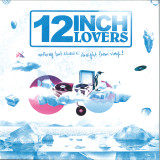
Since 2020, 12 Inch Lovers have been releasing new samplers every year, eagerly anticipated by collectors. These samplers have now become a staple and are easily added to vinyl collections across Europe. They offer timeless classics and rare tracks that are often hard to find elsewhere.
With Samplers 9 & 10, they surprise again with a mix of modern classics and tracks that have never been released on vinyl or are difficult to find. By adding unique and exclusive tracks, the 12 Inch Lovers samplers remain innovative and high-quality. They are a must-have for DJs, collectors, and fans of contemporary classics!
Released in 2014 on the German label KOMPAKT, this remix by Maceo Plex features Ten Walls-like horns, vocals, and pumping drums, making it a true Ibiza floorkiller. The vocals are by Konstantin Sibold. This remix was only released as a white label (Kompakt Exclusive) and has yet to have an official vinyl release. Despite this, it remains a favorite among DJs and clubbers worldwide, regularly played at festivals and clubs.
A2) Plaything - Into Space (Original Release 2001)
This groovy track, released in 2001, contains a sample from Sheila & B. Devotion's Spacer, with Nile Rodgers as one of the producers. The original trackSpacer is an iconic disco hit from the 1970s, and Plaything put a contemporary spin on this classic. The track was a hit in Belgian clubs in the early 2000s, often played by prominent DJs. It has since been released on various labels and remains a timeless favorite in the electronic music scene.
B1) Ion - W.B. (Original Release 2002)
This trance classic by DJ Ion was first released in 2002 on the Belgian label B². The track quickly became a beloved classic within the trance community. Danny Casseau, the producer behind this track, is also known for other legendary works, including the trance classic Ion 98 - Tructure, which had a significant impact on the trance scene. W.B. is a pure, old-school trance track, crafted in the way only tracks from that era were!
This vinyl is extremely rare and hard to find, making it a sought-after item for collectors and trance lovers. It is still played in the sets of DJs who cherish the older trance sound, and it fits perfectly in contemporary sets as well!
This club banger was released in 2007 on the French label Voices Records and was a popular track in well-known Belgian clubs like Illusion and La Rocca. The Ledge Remix added an energetic, infectious vibe that made it a true hit on the dancefloor. It received an official vinyl release in 2007, but it is now difficult to obtain. Subaltern's Forever remains an unforgettable club classic still appreciated by electronic music lovers.
C1) Lykke Li - No Rest For The Wicked (Joris Voorn Remix) (Original Release 2014)
Swedish singer-songwriter Lykke Li scored a worldwide hit with I Follow Rivers, but also had great success with the powerful track No Rest For The Wicked. The Dutch producer Joris Voorn gave his own tech-house spin to the track in his known style!
Voorn's remix keeps the atmospheric mood of the original but adds a new, dancefloor-friendly dynamic that makes it suitable for the electronic music world.
This is the first time this remix is being released on vinyl since the original release in 2014, making it a rare and desirable item for both collectors and DJs. Thanks to the powerful mix of melody and rhythm, this remix of No Rest For The Wicked remains a timeless favorite that has found its place both in clubs and in vinyl collections of music enthusiasts and DJs.
C2) The Roc Project feat. Tina Arena - Never (Filterheadz Luv Tina Remix) (Original Release 2002)
This Spanish dance track hit Europe in 2003, thanks in part to the legendary remix by the Belgian techno duo Filterheadz. Brothers Bert and Maarten Wilmaers, known for their distinctive techno sound, gave the track their own twist with strong beats and an uplifting bassline, creating a timeless club hit that was heard everywhere in the early 2000s.
The vocals by Tina Arena add an emotional layer, while the Filterheadz Luv Tina Remix has stood the test of time and still gets everyone moving. At 12 Inch Lovers parties, this track never goes unnoticed and often brings the night to a high point. This track is a must-have for both collectors and DJs who love a mix of emotion, energy, and a solid techno sound.
D1) Soul Syndicate - Inside Of Me (Steel Union Remix) (Original Release 1995)
Speaking of a trance classic, this one is a true gem! Inside Of Me was released in 1995 during the golden years of Belgian trance music on the legendary Belgian label Aquatic Records. The Steel Union Remix by Zzino is an absolute favorite among trance lovers.
With its iconic sound and unmatched energy, this track is a true ode to the Belgian trance scene. It remains an unadulterated classic that still makes an irresistible impact, not only at retro trance events but also in the sets of contemporary DJs. Since its release, this remix has been hard to find, making it an even rarer piece of trance history. A track that has stood the test of time and is a must-have for collectors and fans of old-school trance.
D2) Ken Laszlo vs. Disco Dice - Hey Hey Guy (House Dub) (Original Release 2003)
Ken Laszlo, the Italian singer who became globally famous in the 1980s with the iconic Italo-disco hit Hey Hey Guy, received a re-release in 2003 on the house label Dubmental. This version was reimagined by Disco Dice, who gave the track a fresh house vibe with a more modern sound. Belgian DJ Jean, known for his influence on the Belgian nightlife scene, introduced this track into the clubs and transformed it into a club classic.
This release, although released in 2003, is now very rare and hard to find on vinyl. It's a hidden gem that continues to withstand the test of time, making it a valuable collector's item for lovers of both Italo-disco and house.
The Australian band Icehouse released the iconic track Hey Little Girl in 1982 on the British label Chrysalis. This synth-pop track was a big hit and still remains one of the classics from the 1980s. The original track was later included in the remix album Meltdown in 2003, where the Australian duo Infusion created a contemporary electronic remix that gave the track a new dimension.
The Infusion Remix adds a modern, danceable twist to the original synth-pop sound. This version surprised both fans of the original hit and lovers of electronic music, remaining a sought-after track in DJ sets.
This track has been unavailable on vinyl since its original release in 2003, making it a rare collector's item.
out of Stock
Last delivered 3 months ago available to reorder, subject to availability
‘MASH DOWN BIRMINGHAM: THE EARLY RECORDINGS OF MUSICAL YOUTH’ NEWLY UNEARTHED EARLY RECORDINGS BY THE FIRST LINE-UP OF MUSICAL YOUTH Mastered from the original tapes by Guy Davie at Electric Needle Mythology, the label founded by music writer, author and broadcaster Pete Paphides, is thrilled to announce ‘MASH DOWN BIRMINGHAM: THE EARLY RECORDINGS OF MUSICAL YOUTH’ – an album of rare and unheard early recordings by Musical Youth, the Birmingham reggae group propelled to worldwide fame with the release of their chart-topping single PASS THE DUTCHIE. ‘MASH DOWN BIRMINGHAM: THE EARLY RECORDINGS OF MUSICAL YOUTH’ combines songs from Musical Youth’s first John Peel session, recorded in 1981 with newly unearthed recordings taken from quarter-inch reels stored for over 40 years by the group’s mentor and producer Toney Owens. The project was seeded as early as 2020, when Paphides sent a speculative message to Owens, after he saw his producer credit on the group’s independently released 1981 single Generals/Political. Paphides wanted to know if Owens had made more recordings of the group in a similar heavier roots reggae vein to those on their debut single. Happening upon the message by chance three years later, Owens allowed Needle Mythology access to his archive of quarter-inch tapes, dating back as far as 1978. The recordings gathered together on ‘MASH DOWN BIRMINGHAM: THE EARLY RECORDINGS OF MUSICAL YOUTH’ shine a light on the exceptional musicianship inculcated into the group by their first frontman Frederick Waite, formerly singer with revered Jamaican rocksteady group The Techniques. Backing Frederick Waite in the early lineup of Musical Youth (originally billed by Toney as Cultural Musical Workshop Youths, were two pairs of brothers) Patrick and Junior Waite, and Kelvin and Michael Grant.
'The Endless Dance' is the first collaborative album from Northern Irish producer and composer Hannah Peel and Chinese percussionist Beibei Wang. The record is grounded in the strength of ancient concepts, but comes alive with the joy and freedom of play as together, Peel and Wang travel through the 24 solar terms of the Chinese calendar with a cornucopia of sound in tow – synths and prepared piano alongside traditional and unconventional percussion.
The album is collaged together from recordings made over five days at legendary rural studio Real World, a setting which aligned with the duo’s inspiration from the natural world creating a permanent record of their shared musical landscape, informed by the flora and fauna that emerge and retreat through the seasons.
Both genre-defying, storied artists in their own right, Peel and Wang met while working on Manchester Collective’s 2023 album NEON and 'The Endless Dance' certainly represents a step-change from the duo’s shared classical backgrounds – but their knowledge and training is also the foundation of its freewheeling audacity, giving them the confidence to trust their instincts.
The album is produced by Mike Lindsay LUMP, Tunng, Guy Garvey, Jon Hopkins who, with free rein, brings added energy and creativity to the album, whilst Peel & Wang are also joined by Hyelim Kim on Daegeum, a Korean flute with “colourful overtones on every note”.
Track to track, 'The Endless Dance' is unpredictable and unexpected, which is in part due to the genuine curiosity and outside perspectives that each player brought to the sessions. “I am so familiar with Chinese heritage, but I don't see how it can present in electronics, for instance,” says Wang. “Hannah comes in with that direction, to imagine what the sounds could be together.” The characterful richness of the album stems from the commonalities they found in the sessions. “We both come from cultures where story is really important,” explains Peel. “The attention to detail comes from telling a story, and one note can set that off in a different direction.”
'The Endless Dance' is a major work from two accomplished, singular artists - but it’s also the sound of mutual curiosity and shared fun, or as Wang puts it: “Two women talking in totally different language that had a wonderful chat.”
Just as you were getting your head straight coming off the 21st Trip … Brown Acid dose # 22 drops, continuing to fry your mind in a revolving trap-door Twilight Zone alternate world of early hard rock… populated by real life characters so far out they can look like a cheesy wedding band but sound like Blue Cheer! Uncanny! This music comes at you from many angles. Teens in a garage colliding with booze, drugs and girls for the first time, lounge lizard hustlers with snazzy stage clothes and fuzz boxes… gnarly backwoods troublemakers meet blow dried glam rock wannabes here, seamlessly clobbering your head with sound rather than each other! An electric post-psychedelic bar brawl for your mind awaits, unfasten your seat belt, crank it up and fly! Sounds Synonymous "Babylon" out of Flint, Michigan 1969 rip the devastating Blue Cheer classic a new one, immediately swarming you with organ swells and distortion before collapsing into a tuff funk groove, a psychedelic James Brown vibe shot through with dirty howling fuzz guitar, vocals nailing the messed up but confident relaxed sneering attitude of the original Cheer eruption. The Bumps "Shining" from Seattle 1969 resides right at the transition of ‘60s psych into early prog, well constructed, no diluting things artsy fartsy style, a compelling heavy riff, spacious vocal harmony hook floating above a turbulent take on getting your shit together and shining like a star. Fat chance, but you can dream, the band did and their dreams kick ass across time to right now or you wouldn’t be here.
Coulda been a hit back then, definitely a hit now. Riverside "Farmer" explodes out of Austin, Texas 1974, economical but brilliantly structured riffs and power chords, intense dynamic tension/release, fantastic screaming leads over shifting angles of attack during the middle break… it’s all here with a detached confidence in the vocal that swaggers back in time to the late ‘60s in its proto-heavy psych adjacent assault. Cincinnati Joe & Mad Lydia "Get It Together" for real in Cincinnati, Ohio 1970. The song says everything you need to know: “You may think that you’re the very best, miles and miles ahead of the rest, but be sure when you’re put to the test you get it together!” These words are deployed in a manner similar to Peter Green’s “Oh Well”, intermittently stated between killer gnarly guitar and gushy organ attacks. Bar band heaven and hell rolled up into one big ball, the vocals get all the way out there! Straight Up "Fire" takes the monster 1968 Crazy World Of Arthur Brown hit into faithfully executed but surreally minimalist territory, Minneapolis, Minnesota 1974. Genius version of a key song that presciently cuts to the chase regarding Brown Acid’s incinerations of psychedelic idealism, you’re gonna burn, burn, burn… as that moment climaxes you can gawk at their preposterous flashy lounge band stage outfits and realize side one must end because everything is totally scorched into eternity. Scrap Iron "Poopsie" is a primitive two chord stomper with spiraling fuzz and organ riffs, singer marking his territory caveman style. “Poopsie, you’re my woman” he commands, but gets weirdly insecure she’ll blow him off at the altar by the end of each verse. Snarly wah-wah ices this toxic cake out of Carteret, New Jersey 1973. Focused delivery so single-mindedly crude it creates an inescapable instant brain-worm. Lady "Live Show Tigers" is amongst the most potently life affirming trash rockers you’ll ever hear, one outrageously triumphant but fiercely sloppy anthem about living it up like a star, strutting the stage glammed up New York Dolls drag style but with a Dictators sense of humor. Tasty slightly off kilter guitar leads all through, going serendipitously berserk on the fade. Picture disc single out of L.A. 1980. Fantastic fun rock star rock at a very raw local street level where any time is party time.
Killer Frog "Hard Times" on Masochist Records from Chicago, Illinois 1972 takes less than two minutes, an action packed James Gang style bar band rocker with a bit of punky sneer in the face of misfortune. These guys never even heard of flower power. They are killer frogs. Good Humore "Killer" does kill in stripped down hard rock trio style, Warren, Michigan 1976. No frills guitar, bass and drums groove tight, snaky primordial riff, snarly licks. “She’s a killer of a woman, knows just what she’s doing…” The singer knows she’s a femme-fatale roadhouse predator but she’s so hot the inevitable wreckage seems a bargain. Ride it out like the extended jam on the fade knowing she’ll be back for more! Sarawest "Space Rider" winds up the 22nd Trip lost in a twisted two chord space adventure from the point of view of an alien visiting our planet seeking knowledge but finding out we are stupidly destroying ourselves, so he gotta split sneering back at us like we wasted his time “I got no time for loving… I wanna be a space rider, space rider”. Toronto, Canada 1974, a vibe lurking in some strange but funny void between late ‘60s outsider garage psychedelic rock complete with reverb-y acid guitar leads and late ‘70s retro-futuristic D.I.Y wisecracking from inner space… taking the piss out of outer space!
Just as you were getting your head straight coming off the 21st Trip … Brown Acid dose # 22 drops, continuing to fry your mind in a revolving trap-door Twilight Zone alternate world of early hard rock… populated by real life characters so far out they can look like a cheesy wedding band but sound like Blue Cheer! Uncanny! This music comes at you from many angles. Teens in a garage colliding with booze, drugs and girls for the first time, lounge lizard hustlers with snazzy stage clothes and fuzz boxes… gnarly backwoods troublemakers meet blow dried glam rock wannabes here, seamlessly clobbering your head with sound rather than each other! An electric post-psychedelic bar brawl for your mind awaits, unfasten your seat belt, crank it up and fly! Sounds Synonymous "Babylon" out of Flint, Michigan 1969 rip the devastating Blue Cheer classic a new one, immediately swarming you with organ swells and distortion before collapsing into a tuff funk groove, a psychedelic James Brown vibe shot through with dirty howling fuzz guitar, vocals nailing the messed up but confident relaxed sneering attitude of the original Cheer eruption. The Bumps "Shining" from Seattle 1969 resides right at the transition of ‘60s psych into early prog, well constructed, no diluting things artsy fartsy style, a compelling heavy riff, spacious vocal harmony hook floating above a turbulent take on getting your shit together and shining like a star. Fat chance, but you can dream, the band did and their dreams kick ass across time to right now or you wouldn’t be here.
Coulda been a hit back then, definitely a hit now. Riverside "Farmer" explodes out of Austin, Texas 1974, economical but brilliantly structured riffs and power chords, intense dynamic tension/release, fantastic screaming leads over shifting angles of attack during the middle break… it’s all here with a detached confidence in the vocal that swaggers back in time to the late ‘60s in its proto-heavy psych adjacent assault. Cincinnati Joe & Mad Lydia "Get It Together" for real in Cincinnati, Ohio 1970. The song says everything you need to know: “You may think that you’re the very best, miles and miles ahead of the rest, but be sure when you’re put to the test you get it together!” These words are deployed in a manner similar to Peter Green’s “Oh Well”, intermittently stated between killer gnarly guitar and gushy organ attacks. Bar band heaven and hell rolled up into one big ball, the vocals get all the way out there! Straight Up "Fire" takes the monster 1968 Crazy World Of Arthur Brown hit into faithfully executed but surreally minimalist territory, Minneapolis, Minnesota 1974. Genius version of a key song that presciently cuts to the chase regarding Brown Acid’s incinerations of psychedelic idealism, you’re gonna burn, burn, burn… as that moment climaxes you can gawk at their preposterous flashy lounge band stage outfits and realize side one must end because everything is totally scorched into eternity. Scrap Iron "Poopsie" is a primitive two chord stomper with spiraling fuzz and organ riffs, singer marking his territory caveman style. “Poopsie, you’re my woman” he commands, but gets weirdly insecure she’ll blow him off at the altar by the end of each verse. Snarly wah-wah ices this toxic cake out of Carteret, New Jersey 1973. Focused delivery so single-mindedly crude it creates an inescapable instant brain-worm. Lady "Live Show Tigers" is amongst the most potently life affirming trash rockers you’ll ever hear, one outrageously triumphant but fiercely sloppy anthem about living it up like a star, strutting the stage glammed up New York Dolls drag style but with a Dictators sense of humor. Tasty slightly off kilter guitar leads all through, going serendipitously berserk on the fade. Picture disc single out of L.A. 1980. Fantastic fun rock star rock at a very raw local street level where any time is party time.
Killer Frog "Hard Times" on Masochist Records from Chicago, Illinois 1972 takes less than two minutes, an action packed James Gang style bar band rocker with a bit of punky sneer in the face of misfortune. These guys never even heard of flower power. They are killer frogs. Good Humore "Killer" does kill in stripped down hard rock trio style, Warren, Michigan 1976. No frills guitar, bass and drums groove tight, snaky primordial riff, snarly licks. “She’s a killer of a woman, knows just what she’s doing…” The singer knows she’s a femme-fatale roadhouse predator but she’s so hot the inevitable wreckage seems a bargain. Ride it out like the extended jam on the fade knowing she’ll be back for more! Sarawest "Space Rider" winds up the 22nd Trip lost in a twisted two chord space adventure from the point of view of an alien visiting our planet seeking knowledge but finding out we are stupidly destroying ourselves, so he gotta split sneering back at us like we wasted his time “I got no time for loving… I wanna be a space rider, space rider”. Toronto, Canada 1974, a vibe lurking in some strange but funny void between late ‘60s outsider garage psychedelic rock complete with reverb-y acid guitar leads and late ‘70s retro-futuristic D.I.Y wisecracking from inner space… taking the piss out of outer space!
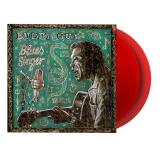
The album is all acoustic and dedicated to John Lee Hooker with the line, "In Memory of John Lee Hooker. You are missed."
Not known for his acoustic work, Buddy Guy unplugs on Blues Singer for a rare album-length excursion into folk blues. The guitarist gets down and dirty with 12 tracks that sound like they were recorded after hours in his living room or on his back porch.
Guy’s stinging leads are still evident as is his emotive voice, but both are less flamboyant in the unplugged setting. Accompanied by spare stand-up bass and brushed drums, Guy sounds nearly supernatural on covers from Skip James ("Hard Time Killing Floor"), Johnny Shines ("Moanin’ and Groanin’"), Son House ("Louise McGhee"), and John Lee Hooker ("Sally Mae") among others. It’s a low-key, low-down affair made for late nights, rainy days, and the saddest of moods.
Buddy Guy is just as convincing here, arguably more so, as on his barnstorming electric albums, making Blues Singer one of the bravest and most poignant albums in his catalogue.
Blues Singer is available as a limited edition of 1500 individually numbered copies on red vinyl and includes a 4-page booklet.
A century-old grand piano, a secluded house surrounded by the greenery of Brittany, no internet connection, and a reel-to-reel recorder.L'Écho de Bretagne, the new EP by Niklas Paschburg, set for release from fall 2025 via Nettwerk Music Group, is a solo piano record as essential as it is intense. An album made of silences, space, slowness. A music that doesn't chase impact, but truth.
the album release is march 26th - 2026.
If his previous work, Mexican Alps (2025), marked the first time the German composer and producer created an ambient-electronic album without his instrument of choice, the piano, L'Écho de Bretagne emerges as a direct response to that absence. "It was exactly the lack of piano that brought about the need for this new record, which instead puts that instrument, so vital to me, at the very center, stripping everything else away," Niklas explains.
Born in 1994, Paschburg has shaped over the years a musical path deeply connected to travel, nature, and introspection. From his debutTuur Mang Welten(2016) toOceanic(2018),Svalbard(2020),Panta Rhei(2023), and the aforementionedMexican Alps— alongside soundtracks, remixes, and collaborations with artists like RY X, Hania Rani, Ásgeir, and Bryan Senti — his sound bridges neoclassical, electronic, ambient, and pop-driven composition.
WithL'Écho de Bretagne, the Hamburg-born, Berlin-based musician continues his exploration by seeking solitude in nature, much like he did onSvalbard, but this time with an even more radical choice: disconnecting completely from the internet, and switching off both computer and smartphone for a while, in order to fully immerse himself in his new music. "I rented an old cottage in Paimpol, Brittany, where I knew there was a grand piano," he recounts. "When I got there, I discovered that not only was the piano more than a hundred years old, but it was also of an unknown brand, never restored, and quite difficult to play. But that gave it a unique character, and I didn't give up. Sure, it was an instrument left to its own fate, I couldn't play anything too fast. But how fascinating was that? I'm convinced that setting limits, instead of giving yourself total freedom when composing, can become an extraordinary source of inspiration."
As for the decision to temporarily detach from a life that demands we stay constantly connected, Niklas describes it as both a creative and human experiment. "I had my laptop and phone with me, just in case, but I kept them turned off. That choice made me wantL'Écho de Bretagneto be a fully analog work, even in how it was recorded." A way of clearing the mind. "I don't think I've ever been as calm as I was during those days in Paimpol. Even though I was working on a very specific project and didn't have much time, that period was more relaxing than any vacation."
Not that it was free of hiccups. "I'd borrowed a reel-to-reel recorder small enough to travel with me, but after recording a session on the piano, I realized it wasn't working properly, the sound was distorted, full of crackles. I got worried, because I wasn't near any big city where I could find a technician. Luckily, I figured out the problem was the old tape reels I had brought along. That was the only time I had to go online, to order new ones. But it was just for a moment. I shut everything off again right after." At that point, Niklas was waiting for the new tapes to arrive. He found out, completely by chance, from a local UPS courier that they had been delivered to a nearby village. "Since my phone was off, I couldn't track the shipment. So one day I asked this delivery guy, who didn't know anything about it. But from that point on, we'd see each other daily and talk… That's what being disconnected also means: reconnecting with people around you, even strangers. It was thanks to that courier that I found out where the tapes had ended up. And he even helped me get them back, writing directions for me on a scrap of paper."
But there's another element that makes this new EP unique.L'Écho de Bretagnewas recorded entirely live; its tracks are all improvised, complete with their imperfections. This approach leads to a sound that is pure, profoundly organic, and deeply authentic, intentionally preserved to give the listener the feeling of a live performance happening in their own living room. The touch of fingers on the keys, the breath of the wood, the tension of the vibrating string, all become part of the music. There is no construction, only expression. "Even now, when I listen back to it, I feel that moment I gave myself to step away from everything: from reality, from words, from noise." The result is a collection of suspended melodies and atmospheres, reflecting a state of the soul. A refuge from the rush of time. A pause from the world.
Always a dancefloor friendly act, The Remixes (originally issued 25 years ago) is the sound of the Roses biggest tunes revisited by many of the foremost names in UK dance music at that time – including legends such as Paul Oakenfold and Steve Osborne and fellow Mancunians 808 State and A Guy Called Gerald. With fully restored artwork, including notes from the remixers, this 2LP set features some tracks that have really stood the test of time. “808 State turns ‘Made of Stone’ into an aggressive, high-pitched piece of electro-pop. Rabbit in the Moon earns points simply for…. making over ‘I Wanna Be Adored’ into a slow acid house excursion. Elephant dares to twist ‘She Bangs the Drums’ into an echoing, spooky vocoder workout.”
out of Stock
Last delivered 6 months ago available to reorder, subject to availability
Writings on the topic that go off in all directions, mind-numbing lectures given by academics, and testimonies, most of them heavily doctored, from those who “lived through that era”: so many people today fantasize about the early days of punk in our country… This blessed moment when no one had yet thought of flaunting a ridiculous green mohawk, taking Sid Vicious as a hero, or – even worse – making the so-called alternative scene both festive and boorish. There was no such thing in 1976 or 1977, when it wasn’t easy to get hold of the first 45s by the Pistols or the Clash. Few people were aware of what was happening on the fringes of the fringes at the time. Malcolm McLaren was virtually unknown, and having short hair made you seem strange. Who knew then that rock music, which had taken a very bad turn since the early 1970s, would once again become an essential element of liberation? That, thanks to short and fast songs, it would once again rediscover that primitive, social side that was so hated by older generations? Who knew that, besides a few loners who read the music press (it was even better if they read it in English) and frequented the right record stores? Many of these formed bands, because it was impossible to do otherwise. We quickly went from listening to the Velvet Underground to trying to play the Stooges’ intros. It’s a somewhat collective story, even though there weren’t many people to start it.
The Guilty Razors were among those who took part in this initial upheaval in Paris. They were far from being the worst. They had something special and even released a single that was well above the national average. They also had enough songs to fill an album, the one you’re holding. In everyone’s opinion, they were definitely not among the punk impostors that followed in their wake. They were, at least, genuine and credible.
Guilty Razors, Parisian punk band (1975-1978). To understand something about their somewhat linear but very energetic sound, we might need to talk about the context in which it was born and, more broadly, recall the boredom (a theme that would become capital in punk songs) coupled with the desire to blow everything off, which were the basis for the formation of bands playing a rejuvenated rock music ; about the passion for a few records by the Kinks or the early Who, by the Stooges, by the Velvet mostly, which set you apart from the crowd.
And of course, we should remember this new wave, which was promoted by a few articles in the specialized press and some cutting-edge record stores, coming from New York or London, whose small but powerful influence could be felt in Paris and in a handful of isolated places in the provinces, lulled to sleep by so many appalling things, from Tangerine Dream to President Giscard d’Estaing...
In 1975-76, French music was, as almost always, in a sorry state ; it was still dominated by Johnny Hallyday and Sylvie Vartan. Local rock music was also rather bleak, apart from Bijou and Little Bob who tried to revive this small scene with poorly sound-engineered gigs played to almost no one.
In the working class suburbs at the time, it was mainly hard rock music played to 11 that helped people forget about their gruelling shifts at the factory. Here and there, on the outskirts of major cities, you still could find a few rockers with sideburns wearing black armbands since the death of Gene Vincent, but it wasn’t a proper mass movement, just a source of real danger to anyone they came across who wasn't like them. In August 1976, a festival unlike any other took place in Mont-de-Marsan – the First European Punk Festival as the poster said – with almost as many people on stage as in the audience. Yet, on that day, a quasi historical event happened, when, under the blazing afternoon sun, a band of unknowns called The Damned made an unprecedented noise in the arena, reminiscent of the chaotic Stooges in their early adolescence. They were the first genuine punk band to perform in our country: from then on, anything was possible, almost anything seemed permissible.
It makes sense that the four+1 members of Guilty Razors, who initially amplified acoustic guitars with crappy tape recorder microphones, would adopt punk music (pronounced paink in French) naturally and instinctively, since it combines liberating noise with speed of execution and – crucially – a very healthy sense of rebellion (the protesters of May 1968 proclaimed, and it was even a slogan, that they weren’t against old people, but against what had made them grow old. In the mid-1970s, it seemed normal and obvious that old people should now ALSO be targeted!!!).
At the time, the desire to fight back, and break down authority and apathy, was either red or black, often taking the form of leafleting, tumultuous general assemblies in the schoolyard, and massive or shabby demonstrations, most of the time overflowing with an exciting vitality that sometimes turned into fights with the riot police. Indeed, soon after the end of the Vietnam War and following Pinochet’s coup in Chile, all over France, Trotskyist and anarcho-libertarian fervour was firmly entrenched among parts of the educated youth population, who were equally rebellious and troublemakers whenever they had the chance. It should also be noted that when the single "Anarchy in the UK" was first heard, even though not many of us had access to it, both the title and its explosive sound immediately resonated with some of those troublemakers crying out for ANARCHY!!! Meanwhile, the left-wing majority still equated punks with reckless young neo-Nazis. Of course, the widely circulated photos in the mainstream press of Siouxsie Sioux with her swastikas didn’t necessarily help to win over the theorists of the Great Revolution. It took Joe Strummer to introduce The Clash as an anti-racist, anti-fascist and anti-ignorance band for the rejection of old-school revolutionaries to fade a little.
The Lycée Jean-Baptiste Say at Porte d’Auteuil, despite being located in the very posh and very exclusive 16th arrondissement of Paris, didn’t escape these "committed" upheavals, which doubled as the perfect outlet for the less timid members of this generation.
“Back then, politics were fun,” says Tristam Nada, who studied there and went on to become Guilty Razors’ frontman. “Jean-Baptiste was the leftist high-school in the neighbourhood. When the far right guys from the GUD came down there, the Communist League guys from elsewhere helped us fight them off.”
Anything that could challenge authority was fair game and of course, strikes for just about any reason would lead to increasingly frequent truancy (with a definitive farewell to education that would soon follow). Tristam Nada spent his 10th and 11th unfinished grades with José Perez, who had come from Spain, where his father, a janitor, had been sentenced to death by Franco. “José steered my tastes towards solid acts such as The Who. Like most teenagers, I had previously absorbed just about everything that came my way, from Yes to Led Zeppelin to Genesis. I was exploring… And then one day, he told me that he and his brother Carlos wanted to start a rock band.” The Perez brothers already played guitar. “Of course, they were Spanish!”, jokes their singer. “Then, somewhat reluctantly, José took up the bass and we were soon joined by Jano – who called himself Jano Homicid – who took up the rhythm guitar.” Several drummers would later join this core of not easily intimidated young guys who didn’t let adversity get the better of them.
The first rehearsals of the newly named Guilty Razors took place in the bedroom of a Perez aunt. There, the three rookies tried to cover a few standards, songs that often were an integral part of their lives. During a first, short gig, in front of a bewildered audience of tough old-school rockers, they launched into a clunky version of the Velvet Underground's “Heroin”. Challenge or recklessness? A bit of both, probably… And then, step by step, their limited repertoire expanded as they decided to write their own songs, sung in a not always very accurate or academic English, but who cared about proper grammar or the right vocabulary, since what truly mattered was to make the words sound as good as possible while playing very, very fast music? And spitting out those words in a language that left no doubt as to what it conveyed mattered as well.
Trying their hand a the kind of rock music disliked by most of the neighbourhood, making noise, being fiercely provocative: they still belonged to a tiny clique who, at this very moment, had chosen to impose this difference. And there were very few places in France or elsewhere, where one could witness the first stirrings of something that wasn’t a trend yet, let alone a movement.
In the provinces, in late 1976 or early 1977, there couldn’t be more than thirty record stores that were a bit more discerning than average, where you could hear this new kind of short-haired rock music called “punk”. The old clientele, who previously had no problem coming in to buy the latest McCartney or Aerosmith LP, now felt a little less comfortable there…
In Paris, these enlightened places were quite rare and often located nex to what would become the Forum des Halles, a big shopping mall. Between three aging sex workers, a couple of second-hand clothes shops, sellers of hippie paraphernalia and small fashion designers, the good word was loudly spread in two pioneering places – propagators of what was still only a new underground movement. Historically, the first one was the Open Market, a kind of poorly, but tastefully stocked cave. Speakers blasted out the sound of sixties garage bands from the Nuggets compilation (a crucial reference for José Perez) or the badly dressed English kids of Eddie and the Hot Rods. This black-painted den was opened a few years earlier by Marc Zermati, a character who wasn’t always in a sunny disposition, but always quite radical in his (good) choices and his opinions. He founded the independent label Skydog and was one of the promoters of the Mont-de-Marsan punk festivals. Not far from there was Harry Cover, another store more in tune with the new New York scene, which was amply covered in the house fanzine, Rock News (even though it was in it that the photos of the Sex Pistols were first published in France).
It was a favorite hang-out of the Perez brothers and Tristam Nada, as the latter explained. “It’s at Harry Cover’s that we first heard the Pistols and Clash’s 45s, and after that, we decided to start writing our first songs. If they could do it, so could we!”
The sonic shocks that were “Anarchy in the UK”, “White Riot” or the Buzzcocks’s EP, “Spiral Scratch” – which Guilty Razors' sound is reminiscent of – were soon to be amplified by an unparalleled visual shock. In April 1977, right after the release of their first LP, The Clash performed at the Palais des Glaces in Paris, during a punk night organised by Marc Zermati. For many who were there, it was the gig of a lifetime…
Of course, Guilty Razors and Tristam were in the audience: “That concert was fabulous… We Parisian punks were almost all dressed in black and white, with white shirts, skinny leather ties, bikers jackets or light jackets, etc. The Clash, on the other hand, wore colourful clothes. Well, the next day, at the Gibus, you’d spot everyone who had been at this concert, but they weren’t wearing anything black, they were all wearing colours.”
It makes sense to mention the Gibus club, as Guilty Razors often played there (sometimes in front of a hostile audience). It was also the only place in Paris that regularly scheduled new Parisian or Anglo-Saxon acts, such as Generation X, Siouxsie and the Banshees, the Slits, and Johnny Thunders who would become a kind of messed-up mascot for the venue. A little later, in 1978, the Rose Bonbon – formerly the Nashville – also attracted nightly owls in search of electric thrills… In 1977, the iconic but not necessarily excellent Asphalt Jungle often played at the Gibus, sometimes sharing the bill with Metal Urbain, the only band whose aura would later transcend the French borders (“I saw them as the French Sex Pistols,” said Geoff Travis, head of their British label Rough Trade). Already established in this small scene, Metal Urbain helped the young and restless Guilty Razors who had just arrived. Guitarist for Metal Urbain Hermann Schwartz remembers it: “They were younger than us, we were a bit like their mentors even if it’s too strong a word… At least they were credible. We thought they were good, and they had good songs which reminded of the Buzzcocks that I liked a lot. But at some point, they started hanging out with the Hells Angels. That’s when we stopped following them.”
The break-up was mutual, since, Guilty Razors, for their part, were shocked when they saw a fringe element of the audience at Metal Urbain concerts who repeatedly shouted “Sieg Heil” and gave Nazi salutes. These provocations, even still minor (the bulk of the skinhead crowd would later make their presence felt during concerts), weren’t really to the liking of the Perez brothers, whose anti-fascist convictions were firmly rooted. Some things are non-negotiable.
A few months earlier (in July 1978), Guilty Razors had nevertheless opened very successfully for Metal Urbain at the Bus Palladium, a more traditonally old-school rock night-club. But, as was sometimes the case back then, the night turned into a mass brawl when suburban rockers came to “beat up punks”.
Back then, Parisian nights weren’t always sweet and serene.
So, after opening as best as they could for The Jam (their sound having been ruined by the PA system), our local heroes were – once again – met outside by a horde of greasers out to get them. “Thankfully,” says Tristam, “we were with our roadies, motorless bikers who acted as a protective barrier. We were chased in the neighbouring streets and the whole thing ended in front of a bar, with the owner coming out with a rifle…”
Although Tristam and the Perez brothers narrowly escaped various, potentially bloody, incidents, they weren’t completely innocent of wrongdoing either. They still find amusing their mugging of two strangers in the street for example (“We were broke and we simply wanted to buy tickets for the Heartbreakers concert that night,” says Tristam). It so happened that their victims were two key figures in the rock business at the time: radio presenter Alain Manneval and music publisher Philippe Constantin. They filed a complaint and sought monetary compensation, but somehow the band’s manager, the skilful but very controversial Alexis, managed to get the complaint withdrawn and Guilty Razors ended up signing with Constantin with a substantial advance.
They also signed with Polydor and the label released in 1978 their only three-track 45, featuring “I Don't Wanna be A Rich”, “Hurts and Noises” and “Provocate” (songs that exuded perpetual rebellion and an unquenchable desire for “class” confrontation). It was a very good record, but due to a lack of promotion (radio stations didn’t play French artists singing in English), it didn’t sell very well. Only 800 copies were allegedly sold and the rest of the stock was pulped… Initially, the three tracks were to be included on a LP that never came to be, since they were dropped by Polydor (“Let’s say we sometimes caused a ruckus in their offices!” laughs Tristam.) In order to perfect the long-awaited LP, the band recorded demos of other tracks. There was a cover of Pink Floyd's “Lucifer Sam” from the Syd Barrett era – proof of an enduring love for the sixties’ greats –, “Wake Up” a hangover tale and “Bad Heart” about the Baader-Meinhof gang, whose actions had a profound impact on the era and on a generation seeking extreme dissent... On the album you’re now discovering, you can also hear five previously unreleased tracks recorded a bit later during an extended and freezing stay in Madrid, in a makeshift studio with the invaluable help of a drummer also acting as sound engineer. He was both an enthusiastic old hippie and a proper whizz at sound engineering. Here too, certain influences from the fifties and sixties (Link Wray, the Troggs) are more than obvious in the band’s music.
Shortly after a final stormy and rather barbaric (on the audience’s side) “Punk night” at the Olympia in June 1978, Tristam left the band ; his bandmates continued without him for a short while.
But like most pioneering punk bands of the era, Guilty Razors eventually split up for good after three years (besides once in Spain, they’d only played in Paris). The reason for ceasing business activities were more or less the same for everyone: there were no venues outside one’s small circuit to play this kind of rock music, which was still frightening, unknown, or of little interest to most people. The chances of recording an LP were virtually null, since major labels were only signing unoriginal but reassuring sub-Téléphone clones, and the smaller ones were only interested in progressive rock or French chanson for youth clubs. And what about self-production? No one in our small safety-pinned world had thought about it yet. There wasn’t enough money to embark on that sort of venture anyway.
So yes, the early days of punk in France were truly No Future!
out of Stock
Last delivered 6 months ago available to reorder, subject to availability
Pariah’s cult debut re-issued! “The Kindred” brings you pure old school Thrash Metal fury! Satan changed their name to Pariah in 1988-1989. Satan’s evolution for the time being came to an end here with this band, Pariah, in 1988. What Satan were going for with “Suspended Sentence”, could definitely be seen as a hint to the direction they would take as Pariah. That raspy, ill-tempered, aggressive Michael Jackson (indeed) is still here on vocals and these guys really wanted to tear things apart with this album. The main lineup here is entirely the same from Satan and Blind Fury (vocalists aside).
Simply put, one could easily say they took “Suspended Sentence”’s interesting idea of “NWOBHM meets Thrash Metal” and basically focused on being even more aggressive this time. We might be throwing out the obvious here again, but if you are new to Pariah or perhaps Satan, familiarize yourself with the fact that guitarists Russ Tippins and Steve Ramsey are truly an insane duo. For the most part with “The Kindred” their guitar work is pretty thrashy and extremely melodic. Then out of nowhere those classic NWOBHM solo’s, dual harmonies, and majestic melodies come into play all over the place and they manage to make it work incredibly well in between the thrashy antics. The production and mix seems to be an improvement over “Suspended Sentence” and here the guitars tend to have more of a sharper edge, Jackson’s vocals are constantly in the clear and never overpowered by anything else, and overall there is a tougher vibe surrounding this.
Everything here is pretty damn heavy. While Tippins and Ramsey are really out there in a realm of their own, there’s great performances again by Graeme English on bass and Sean Taylor on drums. Overall you’ve got a whole package of virtuous musicians here that really mastered the beauty of balance. All in all “The Kindred” goes all the way with every track being fast and aggressive. Satan and Pariah are all typically made up of the same core members and definitely created some timeless and unique Heavy Metal.
For Sofia Kourtesis, joy is a living practice. It"s evident in her effervescent stage presence and bombastic sets, which confidently traverse through house, electro-pop and melodic techno. The Peruvian DJ and producer has forged a vibrant and illustrious career that has taken her to all corners of the globe. Kourtesis"s debut DJ-Kicks mix is a potent blend of the beautiful, complex emotional soup that has made her connect so deeply with her fans.
out of Stock
Last delivered 6 months ago available to reorder, subject to availability
Field Green Vinyl. Big Crown Records is proud to present the instrumental version of El Michels Affair's 2025 instant classic 24 Hr Sports. The roster of vocal features on 24 Hr Sports is amazing, Clairo, Norah Jones, Florence Adooni, Shintaro Sakamoto, two different choirs, and even some singing from the man himself, Leon Michels. The background vocals contributions are amazing; Lady Wray and Kevin Martin from Brainstory to name a few. But alas, there's a new energy that shows up in the listen when you pair it down to the impeccable musicianship and Leon's tried and true "Midas Touch" production. Leon plays a ton of instruments across the album and is joined by the regular cast of heavy hitters; Homer Steinweiss, Nick Movshon, Dave Guy, Marco Benevento, Hether, and more. There is even a saxophone solo by the late, great Rahsaan Roland Kirk.Some would argue this is some of the best music being made by some of the best musicians of our time. We wouldn't argue with anyone...we let the music do what it does.
Born in Douarnenez, at the far edge of Brittany (France), Komodor has quickly established itself as one of the most vibrant names in the French rock landscape. Their high-energy rock, fueled by fuzz, sweat, and vocal harmonies woven in the spirit of MC5 and T. Rex, immediately drew attention: Rolling Stone, Rock & Folk, Libération and Rock Hard Germany all praised the fiery impact of their debut album Nasty Habits (which sold over 2,000 vinyl copies). Since then, the quintet has mostly lived on the road: a long European tour, followed by the larger-than-life saga of Komodrag & The Mounodor, carrying them to stages such as Hellfest, Les Vieilles Charrues, and the Francofolies de La Rochelle, among many others.
Their second album, Time & Space, reveals a band in full metamorphosis. Without abandoning the explosive force that defines them, Komodor widens its scope: volcanic riffs, more sinuous grooves, mist-laden harmonies, psychedelic flashes… The energy is still wild, but more inhabited, more liberated, almost ceremonial at times. The record opens with two telling bursts: Bliss & Joy, a libertarian charge with the feel of a manifesto, and Soul Tricker, a rock incantation where trance overtakes sheer electric assault. Two sides of the same coin, pulled taut between urgency and enchantment.
On stage, Komodor remains a true shockwave, forged across European festivals (Freak Valley, Motocultor, Fête du Bruit, and more) and now awaited at the legendary Desertfest London. Their music feels made for such spaces: a visceral, flesh-and-amp kind of rock, drawing from the seventies’ heritage to speak even more vividly to the present. A band moving forward at full volume, without nostalgia or calculation, carried by a simple conviction: as long as the amps are hot, rock can still burn.
In short: Komodor is the band of friends from Douarnenez bringing pencil-and-paper rock into the streaming age while preserving its analog soul (with the album mastered at the legendary Miraval Studios), the smell of warm tubes, the grain of vinyl. With this second album, they hit harder, truer, and more vividly than ever.
Time & Space stands as a “must-have French rock record”, a tangible piece worth cherishing in any collection.
Born in Douarnenez, at the far edge of Brittany (France), Komodor has quickly established itself as one of the most vibrant names in the French rock landscape. Their high-energy rock, fueled by fuzz, sweat, and vocal harmonies woven in the spirit of MC5 and T. Rex, immediately drew attention: Rolling Stone, Rock & Folk, Libération and Rock Hard Germany all praised the fiery impact of their debut album Nasty Habits (which sold over 2,000 vinyl copies). Since then, the quintet has mostly lived on the road: a long European tour, followed by the larger-than-life saga of Komodrag & The Mounodor, carrying them to stages such as Hellfest, Les Vieilles Charrues, and the Francofolies de La Rochelle, among many others.
Their second album, Time & Space, reveals a band in full metamorphosis. Without abandoning the explosive force that defines them, Komodor widens its scope: volcanic riffs, more sinuous grooves, mist-laden harmonies, psychedelic flashes… The energy is still wild, but more inhabited, more liberated, almost ceremonial at times. The record opens with two telling bursts: Bliss & Joy, a libertarian charge with the feel of a manifesto, and Soul Tricker, a rock incantation where trance overtakes sheer electric assault. Two sides of the same coin, pulled taut between urgency and enchantment.
On stage, Komodor remains a true shockwave, forged across European festivals (Freak Valley, Motocultor, Fête du Bruit, and more) and now awaited at the legendary Desertfest London. Their music feels made for such spaces: a visceral, flesh-and-amp kind of rock, drawing from the seventies’ heritage to speak even more vividly to the present. A band moving forward at full volume, without nostalgia or calculation, carried by a simple conviction: as long as the amps are hot, rock can still burn.
In short: Komodor is the band of friends from Douarnenez bringing pencil-and-paper rock into the streaming age while preserving its analog soul (with the album mastered at the legendary Miraval Studios), the smell of warm tubes, the grain of vinyl. With this second album, they hit harder, truer, and more vividly than ever.
Time & Space stands as a “must-have French rock record”, a tangible piece worth cherishing in any collection.
Yet another solid gold modern reimagining of the mighty Loleatta Holloway, this time her infamous 1977 smash 'Hit & Run' goes under the knife and is tweaked to devastating effect by 2 of Chicago's finest modern day editors - Jamie 326 & Cratebug. Anyone with even a passing interest in Disco or House will be more than familiar with these 2 guys names. Having edited and remixed numerous cuts in their own original ways, they take this all-time Salsoul classic and strip it right back to the essence, to the very basics, and in the process create a total dancefloor weapon. This edit originally came out a few years ago (2013) on a compilation that showcased the new wave of contemporary talent emanating from the Windy City and naturally it was one of the cuts that stood out, finding favour with a wide variety of DJ's across the board from Motor City Drum Ensemble, Todd Terry, Jeremy Underground Paris, Theo Parrish and more. Drawing comparisons with Paperclip People's anthemic 'Throw' from 1994 in the way it snatches a killer loop from 'Hit & Run's' bassline, 'Hit It & Quit It' is a monster, a record you'll literally play over and over and over again, a relentless Disco juggernaut that oozes power. It made perfect sense for this legit single-sided reissue 12" to come out on Salsoul Records, the home of Loleatta Holloway's finest material and all of her classics. This limited reissue has been made in conjunction with Jamie 3:26 & Cratebug and Salsoul Records, 100% sanctioned and lovingly re-presented for your dancing pleasure. This one is HOT. Sleep at your peril!
Well. Where do we start with 'Deep Inside' Originally released in the golden NYC House era of 1993, this 5 tracker literally smashed everything in sight. And still does now! The epitome of an evergreen, all-time classic release. Masters At Work Louie Vega and Kenny Dope were on a major roll in this era, producing, remixing, dj-ing and everything in-between, these guys put in ridiculous work. They are joined on this EP by a roll-call of names and collaborators, Erick Morillo engineering the title track Check. Maurice Joshua on co-production duties You got it. Vocals by Ms. Barbara tucker They're there. Killer, rock hard drums Stacks of Soul Masterfully chopped up Disco samples All present. Serious stuff. Sometimes a record just manages to capture and distill the true essence of what this is all about and 'Deep Inside' is one such record, it bears all the hallmarks of golden era MAW, all the signposts of what was happening in NYC's clubs in the early to mid 90's were there within it's grooves. You know a record is good when it's still being, quite literally, hammered nearly 25 years later! Now, remastered, and reissued with the full involvement of Strictly Rhythm this seminal piece of NYC House history is made available again with all original, full sleeve artwork intact as per the 1993 original. This one's a straight up essential for any self-respecting dance aficionado. You know what to do!
Der postklassische Komponist, Klangkünstler und Kurator Matthew Patton ist mit seinem zweiten Album als Those Who Walk Away zurück. "Afterlife Requiem" ist eine Elegie für seinen Freund und Kollegen Jóhann Jóhannsson. Drones, Elektroakustik und fast vollständige Stille, extrahiert aus unvollendeten Aufnahmen auf Jóhannssons Festplatten, bilden die Grundlage für zwei Streichquintette - Ghost Orchestra (Reykjavík) und Possible Orchestra (Winnipeg) -, die in einem traurigen, langatmigen Werk verarbeitet und ausgelöscht werden. Patton hat auch wieder mit Andy Rudolph (Guy Maddin) und Paul Corley (Sigur Rós, Ben Frost) an der Koproduktion und dem Sounddesign gearbeitet, um eine brodelnde Körperlichkeit zu schaffen, die brodelnde Tiefen mit eindringlichen Bewegungen gespenstischer Streicher kontrastiert. ,Alles, was ich je geschrieben habe, ist ein Requiem. Alles ist ein Ende. Der Tod ist überall in dieser Musik präsent. In meinen Werken geht es um das Verschwinden - der Gegenwart, der Vergangenheit, von allem. Afterlife Requiem wird im Laufe seiner Dauer immer langsamer, es ist ein einziges großes Ritardando, die Zeit verlangsamt sich nicht nur, sie verschwindet. Ohne dass ich darüber nachgedacht hätte, ereigneten sich zwei miteinander verbundene Tragödien, die während des Schreibens, Aufnehmens und Arbeitens organisch an die Oberfläche kamen: der Tod meiner Mutter und der Tod des Komponisten und Freundes Jóhann Jóhannsson. Wenn ich mit dem Schreiben anfange, denke ich an nichts Bestimmtes, ich schreibe einfach, komponiere, nehme auf und höre zu ... aber irgendwas macht sich immer auf unvorhergesehene Weise bemerkbar oder drängt sich in den Vordergrund. Nach dem medizinisch assistierten Tod meiner Mutter wurde mir beim Ausräumen ihrer Wohnung klar, dass ich auch die physische Manifestation ihrer Welt auslöschte - und dass ich genau dasselbe mit der Musik tat, die ich schrieb und aufnahm. Während dieser Zeit wurde mir auch Jóhanns Tod immer wieder bewusst. Für Afterlife Requiem habe ich kurze, verlassene Fragmente aus Jóhann Jóhannssons Festplatten genommen und diese körperlosen Audio-Geister abwechselnd in meine eigene Musik eingebaut, wobei ich sie unrein gelassen habe - und dabei die Grenze zwischen Schaffen und Zerstören verwischt habe. Nach seinem Tod hatte ich diese Festplatten aus Jóhannssons Berliner Studio zum Anhören bekommen. Diese Musik war aufgegeben worden, in verschiedenen Stadien der Entstehung und Auflösung: ein Verzeichnis zerfallener und toter Erinnerungen, vergessen und jetzt nur noch in einer Reihe ineinandergreifender mechanischer Teile vorhanden, die mit der Zeit selbst versagen und verschwinden werden, wie alles andere auch. Monatelang hörte ich mir diese Überreste von Jóhanns Musik obsessiv an und versuchte, Hinweise auf Jóhann vor seinem Tod zu finden. Oft stellte ich fest, dass er das Aufnahmegerät noch lange nach Ende der aufgenommenen Musik laufen gelassen hatte. Er schien nicht zu bemerken, dass die Musik aufgehört hatte, oder registrierte nicht, dass dies das Ende der Musik war, oder vielleicht war er durch etwas anderes abgelenkt. Aber ich fand diese langen Stillephasen zutiefst emotional und berührend. Die verschwindenden Elegien von Afterlife Requiem sind weniger Musik als vielmehr Überreste von Musik. Auf diese Weise arbeite ich immer auf die Subtraktion von Bedeutung hin. Die Musik ist fern und verschwommen, beschädigt, geisterhaft und gespenstisch und deutet nur wie eine halb vergessene Erinnerung an das, was einmal existierte, eine verdichtete Darstellung von Verfall und Auslöschung. Ich habe dieses neue Stück von Anfang bis Ende mit diesen körperlosen Stillephasen aus Jóhanns eigenem Werk, Raum und Zeit unterlegt. Jetzt für immer verschwunden, bleibt seine aufgezeichnete Stille zurück; eine monumentale Leere, die der Welt verloren gegangen ist. Im gesamten Stück, insbesondere in den Abschnitten ,Memorial Environment", habe ich auch unzählige Geräusche aus der Natur integriert, von vulkanischer Lava über Lastenaufzüge bis hin zum menschlichen Blutfluss, dem Zischen von Turbinen und Selbstmordinjektionen. Der Künstler Robert Smithson sagte vor Jahrzehnten: ,Es ist die Dimension der Abwesenheit, die es noch zu finden gilt." Für mich misst diese Musik auch, wie die Zeit abläuft. Tatsächlich ist die Zeit bereits abgelaufen. Die Ewigkeit hat bereits begonnen." - Matthew Patton (Those Who Walk Away)
Brooklyn duo The Still Brothers is a musical project of childhood friends Evan Heinze (The Shacks/Big Crown) and Andrew LeCoche (Ula Ruth). Heinze has toured with the likes of Khraungbin, Lee Fields and Cut Chemist, while LeCoche’s old band once opened for Paul Simon and Edie Brickell. A former student of Madlib’s uncle Jon Faddis, LeCoche has scored music for Netflix and Patagonia and sound design for Twitter, Patron, and Marvel. Signing to Lewis Recordings in 2020 the band’s first single ‘The Deep’ was instantly picked up by Steve Lamacq on BBC 6 Music who regularly plays it to this day. ‘Wake Up’ featuring the vocals of Marina B. spent six weeks on the BBC 6 Music playlist gaining support from Lauren Laverne, Gilles Peterson, Mary Anne Hobbs, Craig Charles, Huey Morgan, Cerys Matthews, Don Letts, Tom Ravenscroft and Guy Garvey. Lockdown didn’t slow down the band’s creativity with many tracks on their self-titled debut EP recorded remotely. Two such tracks were the collaborations with London based singer/songwriter Shauna Kelly aka Shoshy. ‘It’s Not Over’ and ‘Crazy’ were released on 7” and both received BBC radio support. Marina B stepped back on the mic with the upbeat hit ‘I Wanna Be With You’, a dancefloor filler mixed by St. Frances Hotel (producer for Michael Kiwanuka). The b-side ‘Sungalz’ is a hazy dream pop number that started life as an instrumental jam
End of Us, ist das 13 Tracks umfassende Debütalbum von TX2, mit Features von DeathbyRomy, Ekoh, Magnolia Park, Ice Nine Kills und Black Veil Brides. Die Wahrheit ist simpel: TX2 polarisiert. Es gibt Kräfte in dieser Welt, die versuchen, das zu zerstören, wofür gekämpft und was hart erkämpft wurde, und zu einer Zeit zurückzukehren, in der die Menschen ihr wahres Ich versteckten. Es gibt Künstler wie TX2 - den Anti-Ronald Radke -, die dir zeigen wollen, dass du in diesem Kampf gegen den Hass nicht allein bist. TX2 hat Politiker namentlich genannt, schwenkt auf der Bühne eine Trans-Flagge, thematisiert in seinen Songs Waffengewalt, Essstörungen, Trauer und Depressionen und verspottet die Gatekeeper, die offensichtlich noch nie einen Punk-Song gehört haben. Der Sänger ist bereit, mit seiner Musik ein wenig Chaos zu verursachen, wenn es nötig ist, um die Aufmerksamkeit auf wichtige gesellschaftliche Themen zu lenken. So hat TX2 unter seinen Fans eine Bewegung ins Leben gerufen, die als ,X Movement" bekannt ist und deren Ziel es ist, das Bewusstsein für psychische Gesundheit zu schärfen und einen sicheren Raum für diejenigen zu schaffen, die jemanden zum Reden brauchen. In den letzten 24 Monaten tourte TX2 um die Welt, trat mit Ice Nine Kills, Hail the Sun, Dark Divine, tiLLie, In This Moment, Magnolia Park, Warped Tour & Summer of Loud Tour auf, wurde auf SiriusXM Octane gespielt, erreichte über 1 Million monatliche Hörer, gab über 50.000 Autogramme und erhielt 42 Millionen Likes auf Tik Tok. End of US ist ein lauter, unverblümter Aufruf zum Handeln. Beherzigen Sie den Aufruf oder treten Sie beiseite.
Back on vinyl for the first time since 2015! New remastered version with alternative cover art. Unlike all DJ Yoda’s artist albums, ‘Breakfast Of Champions’ features the same collaborators on every track effectively putting together a band. The genesis of the project was in Manchester, where the legendary Band On The Wall venue asked him to host an artistic residency. He put a call out for local musicians, did auditions, and selected three rappers. Two were local to Manchester - Truthos Mufasa and Sparkz. They were local legends making up parts of The Mouse Outfit and LVLZ. And the third was Rex Domino from down south, who was a British MC who Yoda thought would gel well with the other guys. They wrote, rehearsed and recorded intensively in Manchester - performed a memorable series of live shows (including an epic Glastonbury show), and Yoda put the finishing touches to the album back in London after the fact. “It was such an enjoyable experience” says Yoda. “Lifelong friendships were made, and most excitingly two of the band members got together (James Breen, drummer, and Claire Northey, violinist) and had two kids! So there are Breakfast of Champions humans out there too!”
This new pressing features alternative artwork that was never used at the time of the album’s original release.
We have made Enormous Mouse 005 available once again as the original 2006 release is currently for sale at £35 a copy of Discogs. But for this release we have taken it from a two tracker to a four tracker by adding the two recent remixes by the guys that we gave away as WAVs with the previous bundles.
out of Stock
Last delivered 7 months ago available to reorder, subject to availability
When Guy J launched his new label, Early Morning, it was clear each release would carry his signature intensity. Now, with this third release, Guy J continues to prove that Early Morning is an intimately personal venture.
Comprising nearly 15 minutes of music, the material presents a hypnotic experience through two meticulously crafted tracks. The opener, Silver Lake, showcases the hallmarks of his style, building layer upon layer until the arrangement transforms into a dynamic fusion of deep emotion and unbridled energy. With a controlled balance of musical motifs, frequency shifts, and refined arrangements, the track oscillates between moods, culminating in an exhilarating high made to ignite the dance floor.
The second track, Evo, opens with a melody-infused bassline that nods to the 1980s, interwoven with synths reminiscent of early Frankfurt's electronic scene. Overlaid with vocal elements evoking meditative depth, Guy J uses every technique in his repertoire, shifting unexpectedly between structured sequencing and bursts of psychedelia. The track takes listeners on an immersive, unexpected journey.
This third release from Early Morning solidifies the label's vision, promising a bright future for dance floors worldwide.
For its 25th anniversary, Cocoon Recordings returns to its roots with an elaborate vinyl LP box set, marking the first part of a two-volume anniversary project. 25 Years Cocoon Recordings – Volume
One brings together exclusive contributions from international artists who have defined the sound and diversity of the label over the past two decades, complemented by fresh talents who are helping to shape its future.
Over the span of 25 years, Cocoon Recordings has created a catalog that now comprises hundreds of releases, 12-inches, albums, mix CDs, and iconic compilation box sets, always bridging past, present, and future. While firmly rooted in techno and house, the label has also provided space for electronica,
ambient, and other evolving genres.
25 Years Cocoon Recordings – Volume One is more than just a compilation. It is both a homage to the label’s history and a glimpse into what lies ahead. With exclusive tracks that embody the Cocoon sound in all its depth and complexity, this release marks a milestone in the legacy of one of electronic
music’s most influential labels, arguably the strongest compilation in Cocoon’s history. To mark this special occasion, Sven Väth’s label presents the first of two carefully curated volumes, uniting 15 exclusive tracks from international artists in celebration of nearly three decades of Cocoon
Recordings. The luxurious 5x12" box set features a spectral-reflective foil finish and includes contributions from renowned names such as Butch, Robag Wruhme, Josh Wink, Guy J, and Dino Lenny, alongside longtime companions of the label including Extrawelt, Harvey McKay, Johannes
Volk, and Raxon. New discoveries of recent years, Jonathan Kaspar and Riccardo De Polo, enrich the release in their own distinctive ways. The compilation is completed by the unmistakable talents of Damiano von Erckert, Fedele, and ja:ck, who provide the perfect conclusion to the first of two parts.
This release sets the stage for what's next: a daring diptych where musical voices emerge, shining with originality and passion, carrying the spirit forward. The story is just beginning. Something special is on the horizon. One can only wonder which artists will shine on the second chapter.
out of Stock
Last delivered 83 days ago available to reorder, subject to availability
The song titles on Van Halen's aptly titled Fair Warning don't lie. The likes of "Unchained," "Mean Street," "Push Comes to Shove," "One Foot Out the Door," and more indicate the mood the band channels on its double-platinum 1981 record — the nastiest, darkest, and fiercest album of the group's storied career. For the fourth time in four years, Van Halen throws down the gauntlet to all challengers and emerges victorious.
Sourced from the original analog tapes, pressed on MoFi SuperVinyl at Fidelity Record Pressing, and strictly limited to 5,000 numbered copies, Mobile Fidelity's UltraDisc One-Step 180g 45RPM 2LP set plays with unfettered clarity, dynamics, and immediacy. Benefitting from superb groove definition, an ultra-low noise floor, and dead-quiet surfaces, this vinyl edition captures what went down in the studio with tremendous realism and involving presence.
Taking a more controlled approach in the studio and still completing everything in less than two weeks, Van Halen and producer Ted Templeman relied on studio amplifiers to direct the sound. Further diverging from the live-on-the-floor approach of its earlier albums, the ensemble also employed overdubs to great effect. The result: Dense, stacked architecture that underlines the hard-hitting tenor of the songs — and which comes alive like never before on this reference edition that looks as good as it sounds.
The premium packaging and gorgeous presentation befit the reissue's select status. Housed in a deluxe slipcase, it features special foil-stamped jackets and faithful-to-the-original graphics that illuminate the splendor of the recording. Aurally and visually, it is made for listeners who want to immerse themselves in everything involved with the album, including the iconic cover art adopted from William Kurelek's haunting painting, "The Maze."
Isolated frames from Kurelek's childhood-inspired work — including a man bashing his head into a brick wall, a guy pinning down an adversary as he delivers bare-fist blows to his face and others watch with apparent glee, a boy tied down on a conveyer belt and being sent through the equivalent of a meat saw — adorn the front and back covers. The sunnier visual disposition of Van Halen's prior efforts gives way to something sinister and tortured, traits reflective of the music within. The band members, too, are visually depicted not in glamorous shots but in a serious black-and-white portrait in which the quartet is clad in black leather jackets.
Tough, aggressive, stark: Fair Warning comes on like a series of bare-knuckled punches to the solar plexus and boasts lyrical narratives to match. Though not a concept record, the concise album revolves around themes of roughing it on the streets and struggling to survive amid dim prospects. Singer David Lee Roth reportedly penned many of the initial lyrics after traveling to Haiti and observing extreme poverty. The characters and situations populating Fair Warning reflect hardscrabble existence, last-chance desperation, and underlying danger.
Witness the crazies, poor folks, and hunters of “Mean Street”; the former prom queen turned pornographic actress on “Dirty Movies”; the menace and vice of “Sinners Swing!”; the streetwise hustle of “Unchained”; the isolation and alienation of “Push Comes to Shove”; the desire for escape on “One Foot Out the Door”: A carefree California beach party Fair Warning is not.
Having said he felt angry and frustrated during the sessions, guitarist Eddie Van Halen uses the forceful arrangements as a playground for his seemingly unlimited arsenal. Supported by a crack rhythm section and a hyped-up Roth, he performs with an almost impossible combination of punk-like intensity, technical finesse, lyrical fluidity, and unbridled emotion. The virtuoso was increasingly butting heads with Templeton and seeking a freedom in the studio he believed denied him.
No wonder he plays like a bat out of hell. Listen to the rapid-fire manner in which he slaps the high and low E strings on the 12th fret of his instrument on “Mean Street,” instilling the tune with funk flair and metal-spiked sharpness. For the pouty strut of “Dirty Movies,” Eddie Van Halen contributes slide guitar magic made possible after he sawed off the lower portion of a Gibson SG so he could reach further down the fretboard.
Related intensity, urgency, and daredevil momentum punctuate the surging “Sinner’s Swing!” A heavily flanged, delicately melodic introduction frames the attitudinal “Hear About It Later,” among the most creative arrangements of Van Halen’s career. And do riffs come any bigger or magnetic than those on the high-wire kick of “Unchained”? As for the out-of-left-field “Sunday in the Park,” an instrumental composed on an Electro-Harmonix micro-synthesizer: Who but Eddie Van Halen to supply creep factor in such an ingenious way?
Despite selling fewer quantities than Van Halen’s prior efforts, Fair Warning remains for many diehards the record that epitomizes all of the band’s immense strengths —Roth’s manic energy and tongue-wagging humor, Alex Van Halen’s rhythmic heartbeat-in-your-chest bombast, and Michael Anthony’s lucid bass lines included. Arriving when the New Wave of British Heavy Metal and new-wave movements were taking flight, it signaled a shot across the bow from a band determined to stay a step ahead and provide proof nobody could touch what it delivered.
More than four decades later, Fair Warning still sounds that alarm.
Freddie Mercurys Debüt-Soloalbum „Mr Bad Guy“ war der erste Schritt des legendären Frontmanns von
Queen in Richtung Solokarriere. Es enthielt vier Singles und erreichte Platz 6 der britischen Albumcharts.
Auf diesem Album griff Freddie auf Einflüsse aus Disco, Dance und Pop zurück. Daraus entstanden
Songs wie „I Was Born To Love You“ und „Living On My Own“.
Mit „Made In Heaven“ und „Love Me Like There’s No Tomorrow“ lieferte Freddie außerdem zwei grandiose
Rock Balladen.
Anlässlich seines 40-jährigen Jubiläums wird „Mr Bad Guy“ auf 180 g schwerem, durchschimmernden
grünem Vinyl aufgelegt.
Transparent Purple vinyl. Sometime in 2005, a lone box of master tapes escaped an estate sale and made its way through a network of collectors, record dealers, and "junkers" into the hands of leading Ohio soul expert Dante Carfagna, who linked them to Columbus, Ohio's mysterious Prix label (See: Eccentric Soul: The Prix Label). A bit of research turned up Prix proprietor George Beter, who identified most of the unlabeled material. All it took was an endless series of phone calls and letters and two fields trips in Columbus. But one complete mystery wended its way onto our final Prix compilation. "You and Me," a simple but irrepressible demo credited only to Penny & the Quarters, was found tacked onto a mixed studio reel. Our survey of every willing lifer left on the Columbus soul scene, including retired DJs, producers, and important local artists, produced not so much as a glimmer of recognition at the name Penny & the Quarters. Though we loved the song from the first play, it may've ended up a bit buried on our original compilation, as #18 of 19 tracks.Four years later, Eccentric Soul: The Prix Label hadn't exactly become a huge seller, although listeners had repeatedly told us that the unfiltered studio demos that fill out the record's back half were true diamonds in the rough. But neither Penny nor her Quarters had appeared to claim credit for their efforts. Then, completely out of left field, we heard from respected screen actor and avowed Numero fan Ryan Gosling that Penny's piercing bit of stripped down doo-wop was being considered for inclusion in Derek Cianfrance's indie-weeper film Blue Valentine. What we didn't know was that "You and Me" had won a major role in what became an indie circuit hit, and that Penny & the Quarters would instantly assume the role of world's most famous unknown doo-wop group.Every week is a slow news week in Columbus, Ohio, and early January 2011 found the city recovering from the thrill of elevating Ted Williams_the formerly homeless guy with the awesome voice for radio_into a national news sensation. But both major daily newspapers in town, as well as the city's alternative weekly, also ran stories about how a lost and unknown Columbus soul group had become the musical centerpiece of a film already garnering Oscar buzz. That mainstream spotlight aimed at Blue Valentine and Penny & the Quarters did the trick: we finally made contact with the widow of Jay Robinson, lead Quarters' singer and songwriter. Robinson, it turned out, had also been the leader of Columbus doo-wop pioneers The Supremes (later known as "The Columbus Supremes," for reasons which should be obvious). Jay Robinson never did give up on the dream of writing a hit record; even so, the posthumous realization of his dream is cold comfort for his widow and daughter. With their blessings, we returned to those estate sale masters and pulled down another neglected track ("You Are Giving Me Some Other Love") from the still-unknown Penny and her now-partly-known Quarters. "You and Me" is a song that could not be suppressed: not when Prix failed to release it; not when Penny & the Quarters were forgotten; not when Numero stuck it at the bitter end of a much overlooked compilation. Its evolution from estate sale trash to silver-screen gold has finally returned it to big-hole 45, where it probably should have lived all along.