"Victory of Bad Taste is the second solo album by Barry Hay. It was originally released in 1987, fifteen years after his first solo album release. Victory of Bad Taste includes two singles: ""Draggin' The Line"" and ""Jezebel"". The album contains original songs and a few covers from, amongst others, Frankie Miller and Tommy James. Hay gained worldwide fame in the 70s as lead vocalist and frontman of the popular rock band Golden Earring. Together with band member George Kooymans, Hay wrote the massive hit ""Radar Love"", released in 1973. Victory of Bad Taste is available as a limited edition of 750 copies on gold coloured vinyl and includes an insert with lyrics."
The Official “Forever” Versions of Less Than Jake’s first full lenght album, Pezcore and Losing Streak are here! There have not been many pressings of "Pezcore" over the career of Less Than Jake. Now, with a fresh look to the classic "Pezcore" art, this special 30th anniversary version will celebrate the history of this seminal album for years to come.
Music Brokers’ exploration into legendary Progressive Rock keeps expanding now on vinyl format. We return to the rock sub-genre that combined complex arrangements and improvisation with fantasy aesthetics and lyrics. Krau- trock & Progressive: The Definitive Era digs deep into some of its lesser known artists like Hammer, Harmonia, One, and Agitation Free and combines them with many of the most essential names of the ‘60s and ‘70s like East Of Eden, Mogul Trash, Egg, La Dusselford and Beggars Opera. With fantastic artwork and remastered sound, Krautrock & Progressive: The Definitive Era is another essential addition to your collection on vinyl format; and remember that the album is not available on streaming platforms!
Ein verspieltes Album mit klangschönen Träumereien, komponiert für Mandoline und Akkordeon, poetisch und unbändig zugleich. Es ist das erste Mal, dass der stets kreative Komponist speziell für die Mandoline geschrieben hat. Auf dem Album ist auch Vincent Beer-Demander zu hören, dessen Mandoline zu einem Orchester multipliziert wird, um eine einzigartige Klangpalette zu schaffen, die sorgfältig mit dem Akkordeon von Grégory Daltin kombiniert wird.
Mike Patton, der mit Vannier an dem 2019 erschienenen Album 'Corpse Flower' gearbeitet hat, sagt über die Veröffentlichung seines neuen Albums auf Ipecac: „Jean Claude ist ein guter Freund, Mentor und ein wunderbar talentierter und exzellenter Komponist. Eine Legende. Es ist eine große Ehre, mit ihm gearbeitet zu haben. Seine Texte und Arrangements haben eine Vielzahl von Künstlern beeinflusst, und ich kann mich zu den Glücklichen zählen, die seinen Weg gekreuzt haben. Er hat schon bahnbrechende Sachen geschrieben, bevor ich überhaupt geboren wurde. Er hat mich tief beeinflusst und ich bin ihm für immer dankbar und voller Ehrfurcht“.
Jean Claude Vannier, der von der Presse als „the rare bird“ bezeichnet wird, hat in den letzten 60 Jahren unter anderem mit Serge Gainsbourg und Jane Birkin sowie mit Künstlern wie Beck und Sean Lennon zusammengearbeitet. Er hat an unzähligen Soundtracks mitgewirkt, sechs Soloalben veröffentlicht und ist eine Ikone der französischen Popkultur, die für den Eurovision Song Contest komponiert, Videos gedreht, Gemälde ausgestellt, Radiosendungen moderiert und Kurzgeschichten veröffentlicht hat.
Released in 1971, Get Off in Chicago captures the essence of an energetic concert featuring Harvey Mandel and key figures from the Chicago blues scene. Alongside Mandel, known for his innovative guitar playing, are renowned musicians such as John Bishop and Gregory E. Stinson, who contribute their talents on guitar. The rhythm section, with Peter Milo on drums and Nick Tountas on bass, anchors the tracks in a powerful groove. The album shows blazing solos, bold improvisations, and a collaborative spirit that transcends genres. This unique blend of blues, rock, and jazz highlights the collective genius of these talented artists.
After several wildly popular singles out on Penrose Records, alongside labelmates Thee Sacred Souls, The Altons gear up to release their debut album on Daptone Records. With lead vocals shared between Adriana Flores and Brian Ponce the interplay between their unique timbres brings a romantic quality to the music that is absent in many of today's soul offerings. Steeped with moody ballads, soulful, tejano-kissed duets and Bond theme psychedelia-Heartache in Room 14 is poised to be the "must have" album of 2025.
After several wildly popular singles out on Penrose Records, alongside labelmates Thee Sacred Souls, The Altons gear up to release their debut album on Daptone Records. With lead vocals shared between Adriana Flores and Brian Ponce the interplay between their unique timbres brings a romantic quality to the music that is absent in many of today's soul offerings. Steeped with moody ballads, soulful, tejano-kissed duets and Bond theme psychedelia-Heartache in Room 14 is poised to be the "must have" album of 2025.
Celebrating over ten years in the game, Seth Troxler and The Martinez Brothers' carefully cultivated Tuskegee Music imprint returns with a deeply rooted collaboration between West Coast-based talents Late Delivery and BL SUEDE. Reinterpreting a club classic from Sheila E. and Prince, blending soul, deep tech house and freestyle influences at 130 bpm, ‘Glam Life’ lives up to the prosperous vibe of its title.
Originally from Washington D.C. and New Orleans respectively, Late Delivery have been refining their shared love of house culture since meeting in 2008. Collaborating with Inglewood, CA raised producer and vocalist BL SUEDE, this ode to a iconic time in Black music culture is imbued with the same sense of musicality, with BL’s fluid vocals in a heavenly posture amid joyous horns and irresistible percussion.”
Kenny Glasgow’s smooth, restrained take presents a champagne room mirror perspective on this particular ‘Glamorous Life’, with the former Art Department man and US rave scene lifer tapping directly into sensual, minimal pleasure. Afriqua meanwhile takes BL SUEDE's versatile vocals in a bright, diverse direction, conjuring fresh elements from an archive of breaks and bubbling basslines, landing between modern Amapiano and vintage EBM.
out of Stock
Last delivered 19 months ago available to reorder, subject to availability
Vinyl Only / Original artwork / Black Vinyl / 400 mcn paper / 30x30 cm insert with notes by Tony Higgins and graphic elaboration printed on 250 gram G.F. Smith Colorplan / PVC outers
Notes:
Jorge López Ruiz is one of most versatile of musical talents to emerge from Argentina. As a bass player, composer, performer and arranger he has worked across many genres including jazz, pop as well as stage productions and feature films.
BA Jazz was originally released in 1961 on Vik Records as the debut album from Lopez Ruiz featuring a mix of covers and original material. Alongside Ruiz Lopez are Roberto Fernandez on trumpet, Ruben Lopez Furst on piano, Pichi Mazzei on drums and a young musician called Leandro Barbieri on tenor sax. Leandro became better known at Gato Barbieri, who went on to build an international reputation working with Charlie Hayden, Don Cherry, Dollar Brand and Carla Bley and recording for Impulse! Records, Flying Dutchman and A&M Records.
The BA Jazz album has been a rarity for years and original pressings attract huge amounts from collectors. It's rarity is matched by the fantastic music contained with its grooves. It's a genuinely important record in the development of jazz in South America. (Tony Higgins)
"Twilight" ist die kleine Schwester von "Daylight" und laut Produzent Hifi Sean und Sänger David McAlmont ihr bislang bestes Album. "Twilight" ist eine 12 Tracks umfassende Nachtfahrt von der Dämmerung bis zum Morgengrauen, mit allen Momenten dazwischen. Der Opener "The Comedown" ist eine Zusammenarbeit mit The Blessed Madonna, der Titeltrack eine Klangwand mit Chören und das herausragende "Sorry I Made You Cry" ein verzerrter, von Doo-Wop inspirierter Torch-Song.
- Sean: "Ich wollte, dass sich dieses Album so anfühlt, als wäre man in einer dunklen Gedankenwelt und würde gleichzeitig von seinem Lieblingsmenschen umarmt."
- David: "Ich weiß nur, dass wir uns vorgenommen haben, eine kleine Schwester für Daylight zu machen, und am Ende unser bisher bestes Album herausgebracht haben."
"Twilight" ist die kleine Schwester von "Daylight" und laut Produzent Hifi Sean und Sänger David McAlmont ihr bislang bestes Album. "Twilight" ist eine 12 Tracks umfassende Nachtfahrt von der Dämmerung bis zum Morgengrauen, mit allen Momenten dazwischen. Der Opener "The Comedown" ist eine Zusammenarbeit mit The Blessed Madonna, der Titeltrack eine Klangwand mit Chören und das herausragende "Sorry I Made You Cry" ein verzerrter, von Doo-Wop inspirierter Torch-Song.
- Sean: "Ich wollte, dass sich dieses Album so anfühlt, als wäre man in einer dunklen Gedankenwelt und würde gleichzeitig von seinem Lieblingsmenschen umarmt."
- David: "Ich weiß nur, dass wir uns vorgenommen haben, eine kleine Schwester für Daylight zu machen, und am Ende unser bisher bestes Album herausgebracht haben."
Originally released through Peacock Records in 1958 after her stint with Lionel Hampton’s band, Out There is a snapshot and early gem in Betty Carter’s broad career. Supported by a quality cast including Benny Golson (tenor saxophone), Wynton Kelly (piano) and Kenny Dorham (trumpet) among others, Carter glides through standards such as “Something Wonderful” as well as her first-penned track “I Can’t Help It” which would go on to become a performance staple. This Verve By Request title is pressed on 180-gram vinyl at Third Man in Detroit.
Hailed by Galore Magazine as "A Queer Icon", 80's inspired popstar Caroline Kingsbury releases her latest EP "I Really Don't Care!" on pink 10" vinyl. "I Really Don't Care!" was produced by Charlie Brand (Minature Tigers), and features the song "Take My Phone Away" co-written with Justin Tranter.
Kingsbury has been featured in influential playlists such as Spotify's Fierce Femmes, Fresh Finds, and Apple Music's Alt Pop, and New Music Daily. She's toured the US multiple times over supporting artists like Alex Lahey, St Lucia, Arlie, and has garnered praise from Pitchfork, the New Yorker, Gay Times, Rolling Stone, and many more."
Mit Rausch Against the Machine kehren Schmutzki zu ihrer Brutstätte zurück: Die verregneten und mit Licht verklebten Straßen ihrer Stadt, wo sie einst in jenem verschimmelten Bunker die ersten 3 1/2 Akkorde in den feuchten Stahlbeton rotzten. Doch vieles hat sich geändert: Gute Freunde sind fort, die alte Liebe fast vergessen und von den damals grandiosen Nächten nur noch Schemen übrig. Sind wir erwachsen geworden_? Schmutzki stemmen sich mit aller Kraft und diesem Album dagegen! Sie beschwören die alten Geister und reanimieren die Nacht und den guten, alten Wahnsinn. Und plötzlich ist alles wieder da: Der Rausch, die Liebe und die alte Gang, die heute alles in Schutt und Asche legen wird. So wie früher. Aber diesmal für immer!
Nach ihrem Debüt und den zwei EPs "In Theory Depression" und "twotwentytwo" veröffentlicht Thala nun ihr bemerkenswertes zweites Full Length Album ,Avalanche" auf Fire Records. Diese Songs, die sich an die zerebralen Emotionen des Shoegaze und Indie-Rock der frühen 90er Jahre anlehnen, sind musikalische Manifeste von tiefen und verwirrenden Gefühlszuständen. "Avalanche" zeigt Thala in dem Moment, in dem der Indie selbstbewusst in einen rauschenden Panorama-Rock ausbricht, ein Statement zum Erwachsenwerden und eine deutliche Weiterentwicklung ihrer bisherigen Arbeit. Das Eröffnungsstück ,1st of the year" ist ein berauschendes Stück der Erkenntnis, dass nicht alles so laufen wird wie geplant, und ist ein Gefühlsausbruch, der eine dunklere Seite ihrer Musik offenbart. Thala ist eine Performerin, die das Leben mit all seinen Abenteuern lebt und mit den Rückchlägen umzugehen weiß. "i don't want u to die" ist eine ehrliche Parabel voller moderner Melancholie, ein befreiendes Stück Indie-Rock, das mit dramatischer Wucht und punktgenauer Präzision daherkommt; "spit it out" ist eine flüchtige Chronik der Rache, die kalt serviert wird, während "tongue-tied & starry-eyed" (featuring Communion-Künstler Sfven) die Einsicht vermittelt, dass man manchmal einfach weiterziehen muss. Thala nimmt uns mit auf ihre persönliche Reise, wenn "drive song" in ein schlafwandlerisches Plädoyer mit Vintage Cure-ähnlich klingenden Gitarren gleitet, während 'body to you' mit einem herrlich triumphalen Refrain von "it's alright, it's alright" den Einsatz erhöht. Das ist Popmusik, Emo-Pop vielleicht, welche von Strophe zu Refrain aufblüht, ähnlich wie Sharon Van Etten oder hymnische Phoebe Bridgers, mit einem Klangbild, welches zu Weilen an Ethal Cain oder Wolf Alice erinnert. Für Fans von beabadoobee, boygenius, Sharon Van Etten, Wolf Alice und Phoebe Bridgers Ltd 'Avalanche White' Vinyl-LP mit DLC
Die Doves melden sich nach über 4 Jahren zurück mit ihrem neuen Album „Constellations For The Lonely“,
ein neues, intensives, filmisches und doch klassisches Doves-Album. Es enthält zehn neue Tracks des
mehrfach für den Mercury-Award nominierten Trios aus Manchester, die mit ihrer akribischen Stimmungsmanipulation in die Zukunft blicken.
Sonny Rollins and the Contemporary Leaders“ wurde ursprünglich 1959 vom Westküsten-Jazzlabel Contemporary Records veröffentlicht. Rollins wird von einem Who’s Who der Musiker des Labels unterstützt, darunter Hampton Hawes (Klavier), Barney Kessel (Gitarre), Leroy Vinnegar (Bass) und Shelly
Manne (Schlagzeug). Diese Ausgabe, die als Teil der Acoustic Sounds Series erscheint, enthält (AAA)-
Lackierungen, die von den Original-Masterbändern von Bernie Grundman geschnitten wurden, und wird
bei RTI auf 180-Gramm-Vinyl gepresst und in einem Tip-On-Jacket präsentiert.
Erhältlich ab dem 14. Februar !
Einige werden diesen Moment kennen: Plötzlich ist alles klar. Als sich Lulu (Electric Moon) und Oli (ex-Urlaub in Polen) bei einem Konzert im legendären Vortex Surfer Musikclub in Siegen über den Weg laufen, wissen beide noch am selben Abend: Wir sind eine Band. Sie erzählen es Falko, der gerade mit seiner instrumentalen Post-Metal-Band Sarkh den Club verwüstet hat. Wenige Monate später entstehen bei den ersten Proben die ersten Songs - von Oli geschriebene Gedichtfragmente und Wortspiele, Melodielinien und Ideen, die von der Band aufgegriffen und an den jeweiligen Instrumenten verfeinert wurden. Das Debüt WHITE CLOUDS entstand in weniger als einem Jahr - aufgenommen, gemischt und gemastert in Falkos Underground-Tonstudio Institut Für Angewandten Krach. Während dieser Zeit besucht die Band eines der letzten Konzerte der wunderbaren Noise-Post-Math-Rock-Band Shellac in Amsterdam. Alle drei sind gleichermaßen tief beeindruckt und bewegt von dieser Show und lassen den Geist von Steve Albini in ihr Debüt einfließen, dass sie ihm schließlich widmen. Hinzu kommt ihr ganz eigener Drift - Schmerz und Hoffnung, der unbedingte Wille zum Rock'n'Roll, Tiefgang und Steilflug, hochdynamische, verspielte, hypnotisch treibende Passagen und immer wiederkehrende Melodien mit Nachhall sowie die Verbindung zwischen den drei Musikern versprechen ein Debüt und Live-Konzerte mit Yeah-Faktor.
Das neue Album von Rizzle Kicks,Competition Is For Losers, enthält eine dynamische Sammlung von 14
Titeln, darunter die Singles „Javelin“, „Gumdrops“ und „New Sport“, die den neu verfeinerten Sound des
Duos präsentieren. Auf dem ersten Album seit über einem Jahrzehnt vertiefen sie sich in Themen wie
Entwicklung, Wachstum und Reife.
half•alive ist eine amerikanische Indie-Pop / Rockband aus Long Beach, Kalifornien. Die Band wurde
2016 gegründet und besteht aus Leadsänger Josh Taylor, Schlagzeuger Brett Kramer und Bassist J. Tyler
Johnson. Mit der 2017 erschienenen EP 3 erweckten sie offziell das Leben und sorgten für einen spürbaren
Hype. Die mit RIAA-Gold ausgezeichnete Single „still feel.“ erreichte die Top 10 bei Alt Radio und wurde
weltweit 300 Millionen Mal gestreamt.
Ihr drittes Album ”Persona” zielt darauf ab, ein mutiges, zusammenhängendes und kompaktes Werk zu sein,
das Liebe, Wut, Sehnsucht, Krise und Entfremdung berührt. In 11 Tracks geht half•alive auch der Frage
nach, was es bedeutet, ein Mensch zu sein – wie sich Identität entwickelt und wie man von der Außenwelt
wahrgenommen wird. Die Band, die für ihre dynamische Optik und fesselnde Produktion bekannt ist, ließ
sich im Studio von Produzent Tommy King (HAIM, The 1975, Vampire Weekend) inspirieren. Am Ende
des Ganzen fordern sie dich heraus, die Frage zu beantworten: Schaust du oder siehst du?
GRAMMY-Gewinnerin Alessia Cara bringt ihr mit Spannung erwartetes Album “Love & Hyperbole” am
14.02 heraus! In ihrem vierten Studioalbum beweist die Ausnahmekünstlerin mit Hits wie “Dead Man”
oder “(Isn´t It) Obvious” erneut ihr Songwriting Talent. “Love & Hyperbole” markiert nach ihrem letzten
Album “In the Meantime” (2022) ein neues Kapitel in ihrer musikalischen Karriere.
Bereits 2015 gelang der charismatischen Sängerin aus Kanada mit der Anti-Party-Hymne “Here” der Durchbruch, die weltweit die Charts stürmte. Seither begeistert die 28-Jährige Pop & RnB Künstlerin mit Hits wie
“Scars To Your Beautiful” die Musikwelt. Alessia Cara hebt sich in der Popwelt durch ihre reflektierenden
Songtexte über Selbstliebe und ihre bodenständige Persönlichkeit als authentische Künstlerin hervor.
Das selbstbetitelte Debütalbum von Creedence Clearwater Revival aus dem Jahr 1968 machte die Welt mit
den gitarrenspielenden Brüdern John und Tom Fogerty, dem Schlagzeuger Doug Clifford und dem Bassisten Stu Cook bekannt, vier jungen Männern aus El Cerrito in der San Francisco Bay Area. Obwohl sie
an einem Ort und in einer Zeit auftauchten, in der trippige psychedelische Visionen an der Tagesordnung
waren, widersetzten sich CCR den Trends und stießen stattdessen auf eine reiche, traditionelle Nahtstelle
der amerikanischen Musik, die mit Blues, Country, Rockabilly, Gospel, Folk und R&B verbunden war.
Während ihrer kurzen Zeit als Band erlebten Creedence eine beispiellose Kreativitätsphase, zwei ihrer sieben
Studioalben landeten auf Platz 1, sie spielten über 150 Tourneen in der ganzen Welt, einschließlich eines
Auftritts als Headliner in Woodstock, und erzielten 14 Top Ten-Singles. Jetzt erscheinen alle grandiosen,
sieben Studioalben auf farbenfroher Colour Vinyl.
Classic RootsReggae is the definitive influence on the music of Vibronics .. so it has been a true labour of love to bring together the powerful voice of Jospeh Lalibela, the intricate playing of the Mafia & Fluxy Band and the deep production skills of Vibronics to make this homage to classic Jamaican Roots Dub Reggae music.
This 7” is the first release .. soon to be followed but the full album ‘Ancient Breeze’
Vibronics is one of the most established names in UK Dub/Reggae music achieving millions of views on YouTube, millions of Spotify streams and many tens of thousands of vinyl record sales. Collaborators include Michael prophet, Macka B, Iration Steppas, Soom T, Aba-Shanti and more.
Joseph Lalibela is a Birmingham born UK vocalist who found fame through his work with OBF & King Earthquake
Mafia & Fluxy are the UK’s leading Reggae riddim section and recording artists working with Eek-A-Mouse, Jah Shaka, Luciano and the cream of worldwide Reggae artists.
out of Stock
Last delivered 20 months ago available to reorder, subject to availability
In Todmorden, the oddly-named market border town in West Yorkshire with a habit for embracing the weird and wonderful, a burst of sunshine is a precious thing. Through the thick of Winter, through every season in fact, the town’s folk are used to the wind and rain, fog and mist. As much a part of the town as the trademark deep valley it sits in, here the lay of the land invites the weather in, just as it does the many musicians, artists, and unique characters that have come to call the place home over the centuries.
Bridget Hayden is one such soul who found a home among these hills. The experimental musician, who invites the ghosts in for the classic folk songs that make up her stunning new album, knows only too well about such weather, how rare and treasured the breaks from it are. Her favourite thing to do in the valley, she says, is “to make the most of every tiny minute of sunshine.”
Such aspirations nearly derailed the recording of Cold Blows the Rain, her new eight-song collection released via the Todmorden- based label Basin Rock. Having hired the town’s Oddfellow’s Hall to record these new songs in the late summer of 2022, Hayden says the weather was so good she ended up basking in every second of it, only moving inside to begin recording when the sun was setting, working deep into the night to make up the time.
There’s a good chance, however, that it had to be this way. The songs that make up Cold Blows the Rain are not made for the sunlight. They come, instead, wrapped in mist and coated with drizzle, those elements shaping the album as much as the voice and the instruments held within, as real but ambiguous as the ghosts that linger in the shadows. The sound of the dark valley floor.
Mostly centred around meditative and experimental improvisation, Bridget’s work to-date has seen her spend more than two decades recording and performing on the underground music scene. She’s also toured internationally both as a solo artist and as part of bands such as Schisms and The Telescopes, while working on various side-projects with the likes of Folklore Tapes.
For all of this sonic exploration, so much of her work has been formed around elements of traditional folk aesthetics and, over time, she began to piece together a collection of reinterpreted traditional songs that she absorbed as a child from her mother: through The Dubliners and Muddy Waters, to Bessie Smith and The Leadbelly Songbook. Harvesting her love for Nina Simone, Karen Dalton, Margaret Barry, and more, Bridget takes these traditional songs and transforms them into something uniquely evocative
"It goes back to the womb,” Bridget says of that connection. “I would not call it a memory as it is so deep within my blood and bones. My mum was the source, she sang all the time, as part of life. So it was a very lulling and natural introduction. It seemed common to hear her singing – unbeknownst to her – in time with a raindrop dripping at the window,” Bridget continues. “I’ve always wanted to do a folk record as I love these songs so much. It comes much more naturally to me to sing other people’s words, especially when they’re as beautiful as these old verses.”
Underpinned by waves of analogue reverb, and led by Bridget’s stirring and weather-beaten voice, the songs on Cold Blows the Rain drift and crawl like low heavy clouds on flat-top hills, shaped by the land. The backdrop is equally as arresting, all subtle gloom cast in shadow, a gentle but pronounced swirling of textures, crafted from harmonium and violin courtesy of The Apparitions (Sam Mcloughlin and Dan Bridgewood-Hill).
“The weather speaks the most eloquently about human loss,” Bridget says, articulating such sentiments. “It’s good to feel enveloped by something so much vaster than ourselves. The rain and the tears all become one.”
out of Stock
Last delivered 20 months ago available to reorder, subject to availability
Emmanuel Mario returns to Karaoke Kalk with his third album under his Astrobal moniker for the Berlin-based imprint. »L’uomo e la natura« (»Man and Nature«) sees the prolific drummer and producer, who has worked with artists such as Laetitia Sadier and label mate Pink Shabab, take a different musical route than before. The French electronic music composer pays homage to the spirit of library music while also making concessions to different strains of pop and even classical music. With only two of the ten songs putting words to the music, »L’uomo e la natura« is a masterful exercise in the evocation of atmospheres: expressing much while saying very little outright—show, don’t tell.
The album was born out of a desire to push the envelope. »I wanted to make music that was both pop and ambitious in its chord progressions as well as surprising in its construction,« explains the Paris-based artist. Taking inspiration from library music artists such as Alessandro Alessandroni or Bruno Nicolai as well as the more cosmic strains of electronic instrumental music, he strove »to create a soundtrack that would immediately bring to mind outer space.« The first of the three singles released ahead of the full album, »L’abeille pourpre,« captures this spirit with funky rhythms and an overjoyed interplay of different melodies, all tied together by wordless yet terminally catchy vocals.
The second single, »Miami 2064,« traverses through many different moods in its six-minute run-time: Starting off as neo-noir synth-wave piece, it then proceeds to pay its dues to the masters of the cosmic music tradition such as Tangerine Dream or, of course, Jean-Michel Jarre before slowly descending back to Earth with guitars and dreamy synthetic vocals, playfully punctuated by a plethora of wistful melodies. It is the perfect encapsulation of the open-ended approach Mario follows throughout the entire album, taking full creative licence in regards to songwriting and arrangements. »I wanted to surprise myself,« he shrugs. He succeeded.
»L’uomo e la natura« rewards multiple listens not only emotionally, but also intellectually. »I also wanted to talk about politics and ecology, because it’s impossible not to,« Mario notes. Some of the track titles express this more openly than others and the two title tracks sung by Mario and Nina Savary use French and Italian lyrics, respectively. However, as a whole the album leaves things open to interpretation. Does »The End of Capitalism« sound elegiac or triumphant? And what do you actually make of this musical vision of the Floridian metropolis, whose mere existence is threatened by climate change already today, four decades from now? Mario doesn’t necessarily answer these questions—he doesn’t tell, he shows.
out of Stock
Last delivered 9 months ago available to reorder, subject to availability
Watch out! You are holding the 125th (one-hundred-and-twenty fifth!) album on Tramp Records in your hands! We are honored to celebrate this impressive anniversary with the tenth volume in the Praise Poems series. This time, too, we go on a journey to discover previously unheard regions of jazz, folk and AOR from the 1970s and 80s.
Praise Poems Vol.10 presents sixteen (almost) forgotten rare groove gems, all released between the years 1970 and 1984. One of the many highlights is the opening track: "Fields of Laughter" by Color Me Blu - originally released on an acetate only of which two copies exist worldwide. But there is much, much more to discover. This brandnew volume features a wide range of genres, from AOR (Whiz Kids, Ross Miller, and another previously unreleased track by Harve & Charee) to Latin-Rock a'la Santana (Color Me Blue, Tribal Sinfonia, and Apple) to Soul-Jazz (Ernie Lewis Trio, Joe Bozzi Quintet or Dutch saxophonist Frits Kaatee). Right at the end, one track in particular stands out: the wonderful "It's Good Not To Forget" by George Melvin and his quintet - a fabulously dreamy, thoughtful instrumental piece in the style of Ramsey Lewis with catchy tune potential.
Not many compilation series make it to a tenth edition. And if they do, then you often notice that the quality of the songs goes in the opposite direction to the increasing number of series: namely decreasing. Not so with Praise Poems Vol. 10, which the creators prove in an impressive new way. They have found tracks that were originally either a) pressed by the musicians themselves in very small editions or b) released by small, regional labels. It is understandable that neither the musicians nor these small labels had the necessary knowledge or budget to market their albums or singles professionally. The majority of the bands therefore did not manage to reach a large audience - although they certainly had the potential for the big stage.
"Praise Poems 10 - A journey into soulful jazz and funk from the 1970s" makes these almost 50-year-old treasures accessible to a new audience. We hope that you enjoy discovering your personal favorite song(s) and we are already looking forward to many more releases!
out of Stock
Last delivered 17 months ago available to reorder, subject to availability
As Jess Sylvester finished his Hardly Art debut as Marinero in the fall of 2020, he realized it was time for a change. Sylvester grew up in Marin County, on the doorstep of San Francisco. It was a nurturing community for a high-school punk with a pompadour and, later, for a sober songwriter with a proclivity for moody psychedelia. But he wanted to be challenged and inspired by a new setting and scenario around strangers who prompted him to approach his music in unexpected ways. So in September 2020, as the world continued to reel in lockdown, Sylvester headed several hours south to Los Angeles, a city that, despite the relative proximity, the film buff knew largely from classic and cult films situated there. When he arrived, he kept digging into that cinematic past-Robert Altman's The Long Goodbye, with John Williams' classic theme, or classic 90s movies about East LA, many featuring Edward James Olmos. They shaped his understanding of his new town just as it began to open. This is one pillar of the multivalent and endlessly lush La La La, Marinero's new album about sobriety, identity, and fantasy that is playfully named both for the city that helped shape it and the sophisticated pop it contains. Sylvester wrote about characters outside of himself, whether considering the heroine reckoning with her own version of keeping clean or the screenwriters whose work was deemed communist simply as a political convenience. He linked those songs with motivational anthems about self-acceptance and playful numbers about flirting through food, shaping a 12-song set rich with humor, empathy, and encouragement. Sure, La La La is a continuation of the slippery genre play Sylvester started with 2021's Hella Love, 2019's Trópico de Cáncer, or even before that. But it also feels like a fresh beginning for Marinero, as Sylvester realizes how boundless this project can be. He began to think about the music of his childhood, how his mother is from San Francisco with Mexican roots, and how he'd heard so much salsa growing up as an impetuous teenager. So he wrote "Taquero," a red-hot salsa tune that uses tacos and their trappings as a source of endless metaphors for come-ons. And then there was the Ray Barreto or Santana-inspired "Pocha Pachanga," with organ gliding and percussion pulsing beneath his yearning vocals, warped as if by desert winds. In Los Angeles, he found a wealth of players who spoke this music like language itself (including Chicano Batman's Eduardo Arenas), all ready to play with and push these familiar forms. Sylvester has also been sober for 21 years, since a cross-country sojourn to attend college in Boston ended in a chemical haze. Today, he sees friends facing the same decisions he made two decades ago, and he brings bits of that experience to bear in songs that feel like self-help anthems. Recorded with a musical hero (and labelmate) of his, Chris Cohen, "Sea Changes" feels like sunshine breaking through dark clouds, as Sylvester acknowledges the newfound confidence and clarity in a friend who has stepped away from destructive habits. In the past, Sylvester has been intractably linked to his identity as a Mexican-American, born to parents from Mexico and Irish- American descent who settled in San Francisco. That can be limiting, of course, tying him to notions of sound and style that aren't always correct. On La La La, he simultaneously steps into and out of those preconceptions, singing tracks above salsa in joyous Spanish or pondering the dynamics of the Hollywood Ten and blacklists above mysterious lap steel and teasing trumpet. His identity, then, should now be clear: He is a Californian, making music shaped by the diversity of encounters and experiences that are a central part of that state's fabric. Never before has he presented himself so fully and unabashedly on tape as with La La La, an album Sylvester built with new inspirations to deliver new charms.
"Langt Fra Jorden" ("Lejos De La Tierra", in Spanish, for the book) is the result of the dialogue between the Spanish photographer and artist Irene Zottola and the Danish musician and artist øjeRum initiated by IIKKI, between June 2024 and November 2024.
øjeRum is Copenhagen based musician and collage artist Paw Grabowski. In his øjeRum guise, he plucks and strums his treated acoustic instruments, sounding at times like church bells, at times like angelic harp, at time like drones, and suspends the listener in the magic of his melodies.
With a deep back-catalogue of releases since 2014 - spanning labels such as eilean rec., Room40, Line, Opal Tapes and many more - he continues exploring his minimal, textural and deeply personal style of ambient music.
Irene Zottola is a Spanish photographer and artist who explores the limits of analog photography to generate a world of dreamlike and poetic character, often accompanying her images with text.
She has been self-taught in Madrid in the laboratory of the Slow Photo collective since 2016. In 2017 she is a finalist in the Rfotofolio Grant.
Her work has been exhibited in Spain, Italy and Morocco. She has published with editorials such as La Bella Varsovia and Lumen (Spain) and magazines such as She shoots film (Australia), Fisheyemagazine (France) and Vostmagazine (Korea).
In 2021 she received one of the Grants to Creation granted by VEGAP with which she began a new project in Paris and was part of the artistic residence ART(e)gileak of the BBK with a participatory photography project. She is one of the 33 authors of the Mission Region project organized by the Community of Madrid and is part of the platform of the National Image Centre in Spain. Winner in 2020 of the V Edition of the Photochannel Contest, she has published with Ediciones Anómalas her first photobook, "Icarus", which has been a finalist in PhotoEspaña and in Les Photobook Awards of Les Rencontres d'Arles 2022.
"Lejos De La Tierra’’ is her second book.
Fine Art Book, Ltd. to 500 copies:
Hardcover book printed on Munken Print Cream 115g/m2 // 80 pages, 17cm x 23cm, 42 photos // Logo and slot embossed // Hot gold stamping // Visible seam and cutting cover pages // Hand-numbered, hand-stamped.
out of Stock
Last delivered 19 months ago available to reorder, subject to availability
Moshe Fisher-Rozenberg returns to Altin Village & Mine with his second album as Memory Pearl. »Cosmic-Astral« reimagines a music programme used by psychotherapists in the 1970s in combination with LSD. While the original album was designed to take the listener on a cosmic journey of personal discovery through classical music, Fisher-Rozenberg draws on the sounds of electronic instruments and a collage-like approach: he converted the scores of the original pieces by Richard Strauss, Alexander Scriabin, and others into MIDI files, manipulated those into entirely new shapes and sounds using a variety of techniques, while also combining them with improvisational input from artists such as Sam Prekop, Joseph Shabason, Moritz Fasbender, Alec O’Hanley, Bram Gielen, and Brandon Valdivia.
Besides his work as a multi-instrumentalist, producer and collaborator of bands such as Alvvays as well as a member of the group Absolutely Free, Fisher-Rozenberg is also a registered psychotherapist and certified music therapist. »Cosmic-Astral« is hence marked by his expertise in both fields while also displaying the conceptual rigour and aesthetic playfulness that had already been in full effect on his Memory Pearl debut, 2021’s »Music for 7 Paintings« for Altin Village & Mine. Aiming to create his own version of the »Cosmic-Astral« programme, but making it more »delicate and tender,« as he puts it, Fisher-Rozenberg combines the ethereal with the terrestrial, abstraction and concretion, synthesization and the organic across these nine tracks.
As a whole, the resulting album is quite literally trippy. »Each piece is meant to bring the listener deeper into their journey,« explains the Toronto-based artist. »You can think of it in terms of space travel, with each tune taking you further out of yourself and deeper into a cosmic realm.« Think about »Cosmic Astral« as a map through which you can find your way towards sonic healing.
out of Stock
Last delivered 19 months ago available to reorder, subject to availability
Hardanger is a collaboration by Mariska Baars (aka Soccer Committee), Niki Jansen, and Rutger Zuydervelt (aka Machinefabriek). The title refers to the instrument played by Jansen, the Hardanger fiddle. It’s a fresh addition to the established musical chemistry from regular collaborators Baars and Zuydervelt.
The music on Hardanger started with improvisations by Niki Jansen, guided by Mariska Baars, who responded with vocal and guitar recordings. Rutger Zuydervelt used this material as the building blocks for the two long-form pieces found on the album. These tracks are like two sides of the same coin, one a collage-like electro-acoustic piece, the other more drawn-out and contemplative.
--
Mariska Baars is probably better known as soccer Committee, creating an experimental blend of ambient rooted in folk music, with minimal arrangements. She has been releasing albums since 2005. In addition to her solo output she is part of improvisation ensemble Piiptsjilling and Fean (Laaps, 2020) and has worked on several duo albums with Rutger Zuydervelt. On other occasions she collaborated with a.o. Annelies Monseré, Wouter van Veldhoven, Peter Broderick and Greg Haines.
Niki Jansen is a violinist who plays both the regular and a hardanger fiddle.She specializes in folk music, especially old Dutch folk music. She plays in various ensembles like Twee violen en een bas (with Jos Koning and Willem Raadsveld), and country quartet Daisy Chain. In addition to music, she also works as a sustainability advisor for governments and institutions and manages a food forest in a cooperative.
Rutger Zuydervelt is perhaps better known as Machinefabriek, the alias under which he releases music since 2004. The stream of releases since is vast, many of them collaborations (with Peter Broderick, Gareth Davis, Chantal Acda, Dirk Serries, and many many more). He regularly works with Mariska Baars, with whom he also plays in Piiptsjilling and Fean (Laaps, 2020). Zuydervelt is an avid composer of scores for film and dance performances, and also works as a graphic designer.
out of Stock
Last delivered 20 months ago available to reorder, subject to availability
The music of Green Cosmos makes us realize that our never- ending quest for love can find fulfillment. You take a long, slow breath and feel the magic of transcendent wisdom. There is not one note too many, and everything gets to the heart of the matter. A saxophone that sails ahead on a world- map of sound, driven by the beat of Kalimba and drums, sometimes fraternizing with a bass that‘s now insistent and then shy, and closely listens to a reassuringly omniscient piano until the music merges into a unit that‘s greater than its parts and sees us through the night.
out of Stock
Last delivered 20 months ago available to reorder, subject to availability
The influence of the UK’s Steel City on electronic music is well documented and undisputed and continues to push the envelope with key figures such as Winston Hazel (Forgemasters, The Step), DJ Parrot/Crooked Man, Richard Benson (RAC, SWAG, Altern 8), Chris Duckenfield (RAC, Popular Peoples Front, SWAG, All Ears Distribution), a thriving underground club scene and the likes of Synaptic Voyager reinforcing the city’s rich musical legacy.
Matt White and Paul Baines have been making off-kilter, emotive, late night electronic jams since meeting in the early 90’s and while life took them on different paths for a while, they have recently blown the thick layer of dust from their synths and drum machines and got busy in the studio to create some amazing new music which draws influence from that classic UK techno sound which played such an important part in the development of dance music culture around the world. With recent releases on Frame Of Mind, Acquit and Telomere Plastic the duo are clearly on a roll, wearing the heritage of their city on their sleeve and delivering what can only be described as heartfelt, authentic machine music made with love and soul.
From the opening beats of lead track Dawn Till Dusk we are drawn in to another place which feels comfortably familiar yet organic, fluid and loose in a way that tugs on the heartstrings. A million miles from cookie-cutter tech house, this is two guys in a bedroom studio, digging deep on hardware machines to create a sound to get completely lost in. Lonely Promontory takes things deeper still with immersive pads, taught electro beats and blissed-out melodic lines which give just hint of optimism and recall those beloved sounds of B12, Redcell and Likemind.
Flipping over we have Stellar Engine which goes a littler heavier on the beats and bass whilst still retaining a floating quality, once again highlighting the hardware jam workflow that Synaptic Voyager utilise in their studio. Once Exposed takes us back to those heady days of the early 90’s when techno, house and ambient electronics combined to create a heady blend of deep atmospherics and driving beats which could work on both dance floors and car stereos alike. Rounding off the EP we have Cognitive Network which goes for a straighter four on the floor techno groove and a killer bassline to lose yourself in. These recordings were delivered to the label in unedited long form (some tracks totalling 15 minutes or more in length!) which Jimpster lovingly edited into the versions which you hear on this release.
out of Stock
Last delivered 19 months ago available to reorder, subject to availability
Far Out Recordings proudly presents Argentinian guitarist Agustín Pereyra Lucena’s 1980 album La Rana. Recorded in Oslo, La Rana features Agustín’s stunning takes on compositions by Ivan Lins, Antonio Carlos Jobim and Agustín’s friend and musical hero Baden Powell. In addition to these, and a number of Agustín’s own compositions including the fifteen-minute masterpiece “Encuentro De Sombras”, the album’s title track is an idiosyncratic version of Joao Donato’s “A Rã” (Eng: The Frog/ Esp: La Rana) from his 1973 album Quem É Quem.
Forming the rest of the quartet are two fellow Argentinians who were also Agustin’s bandmates from the group Candeias: bassist and multi-instrumentalist Guillermo Reuter and flautist Ruben Izarrualde; with Norweigan drummer Finn Sletten on drums and percussion.
Throughout La Rana we hear not only Agustín’s fabled guitar playing, which ascended him to share stages with the likes of Vinicius de Moraes, Dorival Cayymi, Toquinho, Maria Bethania, Chico Buarque and Quarteto Em Cy, but also his talent as a vocalist. He also provided the heartening illustration for the cover art, which perfectly fits the cordial, inviting tone of the music. Inspired in equal measure by South American rhythms and Norweigan glaciers, mountains and waterfalls, La Rana is filled with the warmth, humility and sincerity of a man seizing a joyful moment in life through music.
out of Stock
Last delivered 20 months ago available to reorder, subject to availability
‘Ice Cream Dream Boy’ serves as a celebratory anthem, an ode to manifesting dreams into reality, and a testament to Shanti's knack for creating infectious and uplifting dance music as she explains: “I wanted to make a happy and uplifting vocal summer tune and I just so happened to be in the peak honeymoon romance period with my now partner (The Ice Cream Dream Boy). He had discovered my love for soft plush toys and decided to buy me a cute little fluffy Jellycat Ice Cream so when I made the instrumental I felt insecure and unsure about what lyrics to write, so I just decided to sing about what I was currently experiencing in my life. I had been a fan of Shivum Sharma for a while and I had just done a remix for his amazing song '7am', so after establishing a cute lil connection I thought I’d ask him to help me write the song as I was very new to writing lyrics!”
This limited edition Vinyl features 5 varied remixes, perfect for any scenario.
out of Stock
Last delivered 4 months ago available to reorder, subject to availability
Volume 1 of this expertly curated project of 90s Italian House - put together by Don Carlos.
If Paradise was half as nice… by Fabio De Luca.
Googling “paradise house”, the first results to pop up are an endless list of European b&b’s with whitewashed lime façades, all of them promising “…an unmatched travel experience a few steps from the sea”. Next, a little further down, are the institutional websites of a few select semi-luxury retirement homes (no photos shown, but lots of stock images of smiling nurses with reassuring looks). To find the “paradise house” we’re after, we have to scroll even further down. Much further down.
It feels like yesterday, and at the same time it seems like a million years ago. The Eighties had just ended, and it was still unclear what to expect from the Nineties. Mobile phones that were not the size of a briefcase and did not cost as much as a car? A frightening economic crisis? The guitar-rock revival?! Certainly, the best place to observe that moment of transition was the dancefloor. Truly epochal transformations were happening there. From America, within a short distance one from the other, two revolutionary new musical styles had arrived: the first one sounded a bit like an “on a budget” version of the best Seventies disco-music – Philly sound made with a set of piano-bar keyboards! – the other was even more sparse, futuristic and extraterrestrial. It was a music with a quite distinct “physical” component, which at the same time, to be fully grasped, seemed to call for the knotty theories of certain French post-modern philosophers: Gilles Deleuze, Félix Guattari, Paul Virilio... Both those genres – we would learn shortly after – were born in the black communities of Chicago and Detroit, although listening to those vinyl 12” (often wrapped in generic white covers, and with little indication in the label) you could not easily guess whether behind them there was a black boy from somewhere in the Usa, or a girl from Berlin, or a pale kid from a Cornish coastal town.
Quickly, similar sounds began to show up from all corners of Europe. A thousand variations of the same intuition: leaner, less lean, happier, slightly less intoxicated, more broken, slower, faster, much faster... Boom! From the dancefloors – the London ones at least, whose chronicles we eagerly read every month in the pages of The Face and i-D – came tales of a new generation of clubbers who had completely stopped “dressing up” to go dancing; of hot tempered hooligans bursting into tears and hugging everyone under the strobe lights as the notes of Strings of Life rose up through the fumes of dry ice (certain “smiling” pills were also involved, sure). At this point, however, we must move on to Switzerland.
In Switzerland, in the quiet and diligent town of Lugano, between the 1980s and 1990s there was a club called “Morandi”. Its hot night was on Wednesdays, when the audience also came from Milan, Como, Varese and Zurich. Legend goes that, one night, none less than Prince and Sheila E were spotted hiding among the sofas, on a day-off of the Italian dates of the Nude Tour… The Wednesday resident and superstar was an Italian dj with an exotic name: Don Carlos. The soundtrack he devised was a mixture of Chicago, Detroit, the most progressive R&B and certain forgotten classics of old disco music: practically, what the Paradise Garage in New York might have sounded like had it not closed in 1987. In between, Don Carlos also managed to squeeze in some tracks he had worked on in his studio on Lago Maggiore. One in particular: a track that was rather slow compared to the BPM in fashion at the time, but which was a perfect bridge between house and R&B. The title was Alone: Don Carlos would explain years later that it had to be intended both in the English meaning of “by itself” and like the Italian word meaning “halo”. That wasn’t the only double entendre about the song, anyway. Its own very deep nature was, indeed, double. On the one hand, Alone was built around an angelic keyboard pattern and a romantic piano riff that took you straight to heaven; on the other, it showcased enough electronic squelches (plus a sax part that sounded like it had been dissolved by acid rain) to pigeonhole the tune into the “junk modernity” section, aka the hallmark of all the most innovative sounds of the time: music that sounded like it was hand-crafted from the scraps of glittering overground pop.
No one knows who was the first to call it “paradise house”, nor when it happened. Alternative definitions on the same topic one happened to hear included “ambient house”, “dream house”, “Mediterranean progressive”… but of course none were as good (and alluring) as “paradise house”. What is certain is that such inclination for sounds that were in equal measure angelic and neurotic, romantic and unaffective, quickly became the trademark of the second generation of Italian house. Music that seemed shyly equidistant from all the rhythmic and electronic revolutions that had happened up to that moment (“Music perfectly adept at going nowhere slowly” as noted by English journalist Craig McLean in a legendary field report for Blah Blah Blah magazine). Music that to a inattentive ear might have sounded as anonymous as a snapshot of a random group of passers-by at 10AM in the centre of any major city, but perfectly described the (slow) awakening in the real world after the universal love binge of the so-called Second Summer of Love.
For a brief but unforgettable season, in Italy “paradise house” was the official soundtrack of interminable weekends spent inside the car, darting from one club to another, cutting the peninsula from North to centre, from East to West coast in pursuit of the latest after-hours disco, trading kilometres per hour with beats per minute: practically, a new New Year’s Eve every Friday and Saturday night. This too was no small transformation, as well as a shock for an adult Italy that was encountering for the first time – thanks to its sons and daughters – the wild side of industrial modernity. The clubbers of the so-called “fuoriorario” scene were the balls gone mad in the pinball machine most feared by newspapers, magazines and TV pundits. What they did each and every weekend, apart from going crazy to the sound of the current white labels, was linking distant geographical points and non-places (thank you Marc Augé!) – old dance halls, farmhouses and business centres – transformed for one night into house music heaven. As Marco D’Eramo wrote in his 1995 essay on Chicago, Il maiale e il grattacielo: “Four-wheeled capitalism distorts our age-old image of the city, it allows the suburbs to be connected to each other, whereas before they were connected only by the centre (…) It makes possible a metropolitan area without a metropolis, without a city centre, without downtown. The periphery is no longer a periphery of any centre, but is self-centred”.
“Paradise house” perfectly understood all of this and turned it into a sort of cyber-blues that didn’t even need words, and unexpectedly brought back a drop of melancholic (post?)-humanity within a world that by then – as we would wholly realise in the decades to come – was fully inhuman and heartless. A world where we were all alone, and surrounded by a sinister yellowish halo, like a neon at the end of its life cycle. But, for one night at least, happy.
out of Stock
Last delivered 85 days ago available to reorder, subject to availability
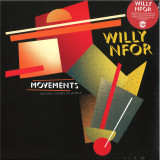
This compilation is more than a selection of songs from Willy Nfor’s solo career in Nigeria—it’s the story of a man’s determination to live his dreams. Known as Willy Ngeh Nfor, he was a founding member of the Mighty Flames. One morning, Willy and his bandmates packed their instruments, grabbed a few clothes, and headed from Cameroon to Nigeria. Crossing the border on foot, they made their way to Onitsha.
“We left Cameroon with no contacts in Nigeria—it was an adventure. We’d heard about the FESTAC Arts Festival and felt we had to be part of it. Our first band in Nigeria was Pentagon Funk Band, sponsored by the 5th Brigade in Port Harcourt. Later, we moved to Onitsha and signed with Right Time Stores, recording Sweet Love (RTLPS 011) as The Mighty Flames. The sessions were at Decca Studios in Lagos, with a 16-track analog system. It was intense—no room for mistakes. We rehearsed endlessly before recording each take.” (Vincent Ekedi, Drummer, Mighty Flames)
Willy’s journey was shaped by his resilience and talent. Losing his mother early and facing family struggles, music became his escape. Inspired by funk and jazz-rock greats like Bootsy Collins, Jaco Pastorius, and Stanley Clarke, he honed his skills on bass and composition, playing with local bands alongside musicians like Vincent Ekedi. Together, they refined their grooves, dreaming of brighter futures.
After his time in Nigeria, Willy moved to Paris, becoming a session bassist for legends such as Manu Dibango, Mory Kanté, Tony Allen, Akendengue, Ray Lema, Jean-Luc Ponty, and Kanté Manfila. Touring extensively, he lived the “Star Life” (Star Life, Cornerstone Records, Feel So Fine, 1981), playing funk grooves with giants in grand venues, fulfilling his dream of the spotlight.
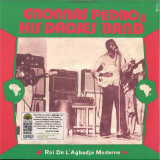
Analog Africa is back with a dedicated project celebrating Gnonnas Pedro, the king of Modern Agbadja, and they press it up on a marvellous double album that includes an eight-page booklet with a ton of extra info. Although four tracks of his have previously appeared on the 2009 Legends of Benin compilation, this bumper pack features 16 of Pedro's best works, all of which captivated Africa at the time. His vibrant blend of Agbadja, Cuban fon, jerk, highlife and more unique styles, all of which come with vocals sung in Fon, Mina, Yoruba, French, English and Spanish, add up to one hell of a rich sound. This is a great testament to the artist's extraordinary legacy.
out of Stock
Last delivered 15 months ago available to reorder, subject to availability