Post-war musical history was written in Germany with the MPS label: noble music productions with many international greats come from the Black Forest and are timelessly legendary. Some treasures from the label's archive are released by HGBSBlue on highquality vinyl.
More than 20 top-class jazz musicians met in July 1965 for a jazz workshop at the Ruhr Festival in Recklinghausen and recorded a total of 17 pieces. Nine tracks from the live recording were to be released the same year as the first double LP on the young Villingen jazz label SABA (the forerunner of MPS). Everything was prepared for this, but it never happened.
It is not really clear why, because everything was technically ready for release.
With Hans Koller, Rolf Kühn, Leo Wright, Benny Bailey, Tubby Hayes, Ronnie Ross, Stuff Smith and others, many leading players of the jazz scene at the time were involved. However, the two music tapes were not pressed onto record and slumbered unheard for many years in the MPS archive in Villingen. In 2018, on the 50th anniversary of the MPS label, this was made up for: the double LP, which was to be released as "Junges Forum 65" by SABA, was released by HGBSBlue in a limited edition and is now also available here. The music of the workshop formation is still full of sparkling creativity today, almost 60 years after it was recorded.
You can hear first-class jazz on a bebop basis, which was played in Europe at that time by an immensely creative generation of musicians full of commitment. A listening pleasure for every jazz fan on the one hand, but also a wonderful documentation captured on this double LP.
Belgium based band formed by BEAR & Cobra The Impaler guitarist James Falck, alongside his Set Things Right bandmate Kristof Du Jardin, with Strains drummer Simon Janssen & bassist Lieven Casters.
Integrity is the word of choice when describing this new project. Initially created by the former Set Things Right guitarist alongside fellow STR bandmate and current BEAR & Cobra The Impaler guitarist James Falck, the pair set out to create music close to their hearts, with the intention of spilling them in the process. Something that has proven both cathartic and painful.
Digging up certain memories and emotions that, in some cases, would normally be better off buried, resulted in the pair spending a number of years writing an exuberant amount of music together. Their close and deep friendship, combined with their previous work together in their previous band, provided their work ethic with a strong foundation for the music they had dreamed of making ever since meeting, 10 years ago.
The line-up was subsequently completed by Strains drummer Simon Janssen & bassist Lieven Casters, who bring their own influences and tastes to the table to create something intrinsically unique. This can be seen clearly, not only from a musical perspective, but also visually and aesthetically. Together they form the musical collective now known as MANKIND. An expression of catharsis, a light in the tunnel, a way out of the darkness through confrontation.
Soul Jazz Records’ Holy Church of the Ecstatic Soul: Gospel, Funk and Soul at the Crossroads 1971-83 draws upon the extensive links between black American gospel music and soul music, showing how the sensibilities of gospel artists such as Shirley Caeser, Dorothy Norwood, Andrae Crouch and others crossed over into secular soul music during this period.
The album was first available as a (sold out) ltd.edn. coloured vinyl for RSD23 and is now available as a black double vinyl + download edition and also for the first time on CD.
Many of the most successful soul artists - from Aretha Franklin to Al Green, The Staple Singers to Sam Cooke - all drew upon their upbringing in the church for their musical inspiration. This album discusses how important the links between the black church and soul music were in creating soul music and spotlights some of the many important (and also little-known) gospel artists who walked this line between sacred music and soul, funk and disco in the 1970s and early 1980s.
Holy Church of the Ecstatic Soul shows how sacred gospel music was at home with Stevie Wonder, Blaxploitation-style funk and produced music celebrated both in New York’s underground discos (The Paradise Garage, Studio 54, etc) and later sampled by the likes of Jay-Z, Snoop Dogg and Mary J Bilge.
out of Stock
Last delivered 2 years ago available to reorder, subject to availability
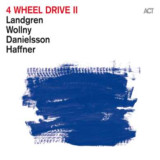
The eponymous debut disc from German-Swedish supergroup 4
Wheel Drive went straight to the top spot as Best-Selling Jazz Album
In Germany For 2019. And the media didn’t hold back with their
praise either: “Four first-league jazz musicians with pure joy of playing
and a love of good pop music,” said ZDF’s ‘heute-journal’ about this
spirited and enjoyable group that combines trombonist / singer Nils
Landgren, pianist Michael Wollny, bassist / cellist Lars Danielsson
and drummer Wolfgang Haffner.
For ‘4 Wheel Drive II’, it is evident that things have shifted up a gear
right from the start, with the rocky, pulsating opening track, ‘Chapter
II’, straight from Wollny’s compositional workbench. Landgren likes to
let his trombone roar like a sports car engine. In similarly dynamic
vein are pieces like Danielsson’s final track of the album, ‘The
Wheelers’, which, thanks to Haffner’s nimble brushwork, makes you
think you’re on a high speed train.
Compared to the first album, there has been another change, an
increase in the proportion of original compositions written by all of the
participants, as Lars Danielsson, who has contributed a sensitive,
poppy ballad to the new album, ‘Just Another Hour’, remarks.
“Interpretations of worldwide hit songs were a factor behind the huge
success of the debut album, but the ratio to original compositions
here is getting closer to 50:50. That said, the fuel powering 4 Wheel
Drive has remained the same: this band is all about creating music
from deep within, and with like-minded people whom you can
absolutely and implicitly trust to be in the driving seat.”
“It just flows,” enthuses drummer Haffner, “we’re a group of close
friends with nothing we need to prove, we can just go for it. I've had
so many magic moments with this band, it really is incredible!”
On the new album, listeners are treated to several new moments of
pure magic, continuing 4 Wheel drive’s illustrious story. For example,
their new instrumental version of the Simon & Garfunkel classic,
‘Sound of Silence’, has something mysteriously Nordic about it. Or
their newly-cast version of the surprisingly infrequently covered
Genesis ballad, ‘Hold On My Heart’, putting it into a jazz context. The
courage to approach pop tunes that have become so ingrained in
many people’s minds from a completely different perspective pays off
in full. Within 4 Wheel Drive are four originals at work, each of whom
can be recognised from the very first note they play or sing.
The Capitols were an American, Detroit, Michigan-based soul trio, widely known in 1966 for their Billboard hit single "Cool Jerk". After playing predominantly small gigs, they were discovered by former Ann Arbor radio DJ Ollie McLaughlin after performing at a local dance.
The mid-1960s saw many dance crazes; one of the most popular ones was a dance called "the jerk". Seeking to capitalize on the popularity of the dance, and dance songs in general, The Capitols member Donald Storball wrote the song "Cool Jerk", which was later recorded in Detroit with Motown house band The Funk Brothers. The single was released late March 1966 and became a hit, reaching number 7 on the Billboard Hot 100. Ever since, it has been used in many movie soundtracks, including More American Graffiti, Home Alone 2: Lost in New York, and Madagascar 3. The group released eight additional singles after "Cool Jerk".
So, let's crank up the stereo and Dance The Cool Jerk!
Dance The Cool Jerk is available as a limited edition of 750 individually numbered copies on red coloured vinyl.
It's a pertinent start-point because, in many ways, God Is Luck exists firmly within that realm, many of the songs pulled directly from improvisation before being twisted into the mysterious shapes we find here on the finished record.
Recorded between the summer of 2020 and the summer of 2022, God Is Luck is an exercise in artistic freedom. The songs came quickly and easily by design, the whole point of the record and the approach to simply let go.
The third Bad History Month LP - following the Pitchfork-championed Old Blues (2020) - where aspects of the new album mirror the shape of Sprecher's previous work, its creation was an altogether different experience for the Philadelphia-viaBoston songwriter. He describes it as a collaboration with 'luck', the freeform nature of the recording resulting in a process that felt "fun and easy and fearless in a way that recording had never been."
"God is Luck means you can control reality by choosing your perspective to always see the luck, which makes you the god of your own reality," Sean Sprecher says of his latest record. With that notion at its core, Bad History Month's latest adventure finds twisted new ways to tell age-old tales. Even in its most fearless compositions, buried within dense fog, it strives for goodness; freedom from fear, love for friends, surrounding yourself with those who inspire.
For more than a decade, Bert Dockx has been one of the most prolific and versatile musicians in Belgium. A masterful guitarist, gifted songwriter, and innovative composer, crossing boundaries between avant-garde rock, customized blues, and instrumental jazz, with bands such as Flying Horseman, Dans Dans, and Ottla, singing in his native Dutch as Strand, or solo under his birth name, and now as the Bert Dockx Band. Ghosts is his fifteenth (!) album on the Ghent-based label Unday Records.
Two years after the crash, Bert Dockx presents his new Bert Dockx Band and Ghosts, an album of rebirth and transgression, one of many firsts. Dockx never dedicated this much time to meticulously crafting each song. For the first time, he entrusts a finished record to a complete outsider. Never before has he reached out so far into the outside world.
The relaxed and positive atmosphere during the recordings is magnified in what Dockx calls 'my best guitar playing ever', and the deep, powerful use of his voice in its natural range. 'I had fun making this album,' says Dockx, 'and I really hope it shows'.
'There's no escape now/ I'm inside of the storm', Bert Dockx sings on his new album, the first with the Bert Dockx Band. 'I smile, I cry/ I die, I'm born/ I'm in love'. Ghosts is the culmination of a two-year odyssey, from hitting rock bottom to flourishing into new heights. An album of rebirth and transgression, a record of milestones and many firsts. Never before has Dockx turned so deep inside in order to reach out to a world beyond himself.
The album is mastered by US producer Philip Weinrobe. Weinrobe previously worked with Arianne Lenker, Indigo Sparke, and Kings of Convenience, and is praised by Dockx for his 'infallible intuition and great inventiveness'. This occasion marks the first time he hands over a finished record, permitting an outsider's perspective during the final mix.
Sinead was born in Dublin in 1966, and was discovered by Paul Byrne, drummer of U2 proteges In Tua Nua, while singing wedding covers in the city. After cowriting the first In Tua Nua single, she left school to focus on music, studying voice and piano at the Dublin College of Music before relocating to London in 1985.
Released in November 1987, Sinead's striking debut album The Lion and the Cobra was met with critical and commercial success. The album synthesises several of Sinead's influences into a diverse array of sounds and styles, from the hushed, atmospheric 'Troy' and 'Jackie' to the pop-rock hit single 'Mandinka', and the hip-hop inspired 'I Want Your (Hands on Me)'. The album also includes 'Drink Before The War', a song written by Sinead about her experiences at the Catholic reform school she attended, and was recently featured in the HBO series Euphoria.
Having been deck slaying as near their London headquarters as Germany and as far as Canada, goth techno prodigy Lesser Of is steadily approaching double digit release count. With an established residence at queer x trans focused, revolutionary event series Subverted, their efforts have been welcomed to a formidable list of industrial electronic labels and remixed by a tidy sum of high profile scene icons.
Here at Depth.Request our sonars are attuned to emanant potential, and so we conscript Lesser Of to hammer out our fourth acetate offering to date. To this, harsh noise and drone music inspirations are declared, alongside an artistic secret of the trade: lights-off sessions in live room of a recording studio vibrating with the pulse of a bass guitar ran through a freeze pedal were what begot the tracks, and they are well intent on assaulting your headphones with noise. Reeko on the remix - yes, this record fucks.
Prolonged, ominous intro? Nah. Have a face full of Crude Manifestation Of Power instead, as an insatiable, 10-minute long opener braces your ears for a week of ringing with a sonic equivalent of metallic thrashing one could expect from being a sinful, rave-lusting scoundrel. On title-diverting continuation Within My Fragility the words "strength in fragility" are truly alliterated as the pace, abrasiveness and intensity of pummelling are all ramped up fiercely, with linear open hats thrown against them from time to time for good measure. Having reached 140 BPM and concrete mean, Masked proceeds in a well anticipated ra(n)ge: infernal atmosphere, sandy hats and layered tectonic tremors achieved with increasingly undefined low end consisting of a rumble line and rolling kick morphing into abrasive haze. Winding the tempo back a notch, a halftimearranged contemplation Our Descent grows in direct, hyperborean vector: glassy drones and sharp syncopulsation first - atonal reverberations, distorted arpeggios and punchy stabs endwise. Reeko's analog reinvention of Masked convolves the drum structure by borrowing from breakbeat narratives and authorizes the dystopian ambiance to rise and fall on more gradual, panning, confined terms; adding, however, more disorder to the mix with spectrum slicing, high-range chaos.
As you would have learned to expect from Depth.Request, Within My Fragility EP is not an easy listening five-tracker. If by the end of it you find yourself feeling as if you just stepped out of a pounding warehouse at 3AM and you don't know what day it is, you wouldn't have been experiencing this mindspace alone.
out of Stock
Last delivered 2 years ago available to reorder, subject to availability
GER SMILE zeigen mit ihrem hervorragenden Debut PRICE OF PROGRESS leichtfüßig auf, dass Post Punk im Jahre 2023 noch immer erfrischend klingen kann. Sie nehmen ihre Referenzen nicht als Dogma, bleiben experimentell, eigensinnig. Erzählerisch, eingängig, rough und anschmiegsam verschmelzen dabei die feinsinnigen, poetischen Beobachtungen von Sängerin Rubee True Fegan (USA) mit dem versierten Sound einer Band, die von Produzent Olaf Opal genau dahin gebracht wurde, wo sie hingehört: an den Startblock innovativer, kluger und sinnlicher Gitarrenmusik. In PRICE OF PROGRESS manifestiert sich das Zusammenspiel aus musikalischem Sturm und Drang und der Reife einer reflektierten Erzählperspektive. Was hier entstanden ist, klingt nun, 2023, in seiner jugendlichen Frische durchaus nach einem Debut - gleichzeitig aber nach dem Werk einer erfahrenen, über lange Zeit gewachsenen Band. Nur deutsch klingt es nicht, was sicher im Wesen von Sängerin Rubees True Fegans Heimat Albuquerque (New Mexico) begründet liegt, gleichsam aber in der Vielseitigkeit, die sich SMILE erlauben - und ihrer einhergehenden Virtuosität an den Instrumenten. SMILE versuchen sich dabei - einem Post-Punk britischer Machart folgend - durchaus in homogener Geradlinigkeit (Herrengedeck), lassen Kühle zu (Machine Dreaming) und folgen einem düsteren Ernst (Säge). Diese Facetten aber vermengen sich mit einer heiteren Experimentierfreude (Stalemate, Produce, Hungry Ghosts), mit Humor (Doohickey), mit verträumter Beschwingtheit (Commuter) und Genresprengender Pop-Af finität (Protection). So zeigt sich dieses stilsichere Album in einer Vielseitigkeit, die heute selten zu finden ist - und klingt trotzdem wie aus einem Guss. Auch die ersten drei Singles zeigen gut das Panorama, das SMILE mit ihrem Debut aufmachen: Dog In The Manger erinnert zunächst an Talk Talks Happiness Is Easy, wechselt aber nach dem Drum-Intro schnell die Spur. Der Opener der Platte stellt Rubee als Sängerin vor, die, trotz einer gewissen Gelassenheit in der Performance, von Wut und Traurigkeit getrieben ist. Der Text ist eine politische Reflexion, ausgelöst vom gekippten Abtreibungsrecht in den USA, das sich mit einer alten griechischen Fabel verbindet. So startet das Album mit einem Rätsel und offenbart, das Musik noch immer eine Waffe sein kann - aus Sound, Herz und Verstand. In Doohickey, einem der beschwingtesten Songs der Platte, kramt Rubee in ihrer Erinnerung, besucht ihre verstorbene Großmutter, eine unfreundliche alte Frau, die in ihrem Haus hortete, was sie fand. So entsteht eine Kurzgeschichte über die weirdest person alive und zeigt SMILE als Band, in der Text und Musik nicht konkurrieren, sondern stets Symbiose feiern. Zackig und temporeich wie das erzählte Leben kommen auch Gitarren und Rhythmussektion daher, finden zu einer soghaften Dynamik, ohne mit billigen Sing-alongs zu arbeiten. Protection, die dritte Single, ist wohl das eigensinnigste Stück der Platte, erzeugt, gesanglich pendelnd zwischen Blood Orange und Bands wie Siouxsie & The Banshees oder Bow Wow Wow, eine breite und intensive Palette, bringt einen The Fall-artigen Witz ein und wird zwischen den vermittelten Gefühlen zur Achterbahnfahrt. Das Stück schrieb Gitarrist Lars Fritzsche, mit dem Ziel, einen klassischen Hit zu schaffen (gelungen, wenn auch nicht klassisch!) - und schuf in der Offenheit des Songs dabei eine perfekte Fläche, die nun gleich mehrere Stimmen der Band versammelt. Im Zentrum: Rubee, die hier einen Text performt, der zwischen Traum und Cut-up ihren poetischen Glanz scheinen lässt. Die aus der Hüfte geschüttelte Dramaturgie ist dabei Paradebeispiel für die Innovation einer der spannendsten neuen Gitarrenbands, die nun auf dem Indielabel Siluh (Wien) eine Heimat zwischen Köln, Bonn und Albuquerque gefunden hat. Wahnsinn! (Hendrik Otremba)
ENG SMILE IS A POST-PUNK BAND WITH A SINGER, WHO PREFERS NOT TO SING. INSTEAD, SHE INTONES HER POETIC STORIES SPIKED WITH PERSONAL REFLECTIONS. With their excellent debut PRICE OF PROGRESS, SMILE light-footedly show that post punk can still sound refreshing in 2023. They don't take their references as dogma, remain experimental, stubborn. Narrative, catchy, rough and cuddly, the subtle, poetic observations of singer Rubee True Fegan (USA) merge with the accomplished sound of a band that producer Olaf Opal has put exactly where it belongs: on the starting block of innovative, clever and sensual guitar music. In PRICE OF PROGRESS, the interplay of musical Sturm und Drang and the maturity of a reflective narrative perspective manifests itself. Ltd pink vinyl LP!
Limited Grey Vinyl 2xLP. 18 klassische Songs aus dem Katalog von Velvet Underground, gespielt von The Feelies in der White Eagle Hall/ Jersey City, NJ - 13. Oktober 2018. Enthalten sind die VU-Standards "Sweet Jane", "Rock & Roll" und "I'm Waiting for the Man" sowie selten gecovertes Material wie "I Heard Her Call My Name" und "That's the Story of My Life".
Black Sabbath wurde 1968 in Birmingham von Ozzy Osbourne (Leadsänger), Tony Iommi (Gitarre), Geezer Butler (Bass) und Bill Ward (Schlagzeug und Percussion) gegründet. Ursprünglich als Heavy-Blues-Rock-Band namens Earth gegründet, begann die Band, okkulte und Horror-inspirierte Texte mit heruntergestimmten Gitarren einzubauen, änderte ihren Namen in Black Sabbath und veröffentlichte in den 1970er Jahren mehrere Gold- und Platinplatten.
Die Ultimate Collection wurde von den Bandmitgliedern zusammengestellt. Das Ergebnis ist eine 17-Track-Sammlung mit den Klassikern der Band wie "Paranoid", "Iron Man", "War Pigs", "N.I.B." und "The Wizard" sowie ausgewählten Ausschnitten aus ihren klassischen Alben. Remastered von dem renommierten Toningenieur Andy Pearce (Motörhead, Deep Purple, Lou Reed, Iggy & The Stooges) im Jahr 2009.
Die Sammlung ist die ultimative Begleitung für alle Sabbath-Fans und alle, die Hardrock lieben.
TufStuf Records is a Jungle, Hardcore & Jungle Techno vinyl and digital record label from London UK. Run by head honcho Arkyn. The sounds of the label are heavily influenced by the authentic 1992 - 1994 rave vibes. But have a modern and cutting edge take on the original energy of the early 90's. Expect raw and hard hitting drum breaks, low pressing sub bass and ravey and emotive synths.
out of Stock
Last delivered 2 years ago available to reorder, subject to availability
FIRST E.P FROM THE VOODOO MAN / INCLUDING INSERT WITH PIC / INCLUDING TIM CURRY cover: Ain’t No Love On The Street. Eric McFadden is back with his first 4-track vinyl, ahead of his new album in autumn/winter 2023 and has taken advantage of this release to complete a frenzied summer tour of France (Avignon, Cavalaire, Saint Cyr Sur Mer…) that he has a secret for. His recent acoustic tributes to AC/DC and Alice Cooper have introduced him to a much rockier audience, and his performance at Patrimonio (Corsica) in July 2019 and 2023 with Pat McManus did not go unnoticed. On the menu for this new opus: blues and rock and a cover of a Tim Curry song (No Love On The Street), all wrapped up in a dark, Tom Waits-style voice and a unique guitar style with high flights of fancy. Thrills guaranteed!
Auf ihrem umfangreichen neuen Album "Water Made Us" stellt die Chicagoer Musikerin und Dichterin Jamila Woods die Frage, was es bedeutet, sich der Liebe voll und ganz hinzugeben. Auf "Water Made Us" umarmt Jamila neue Genres, verspielte Melodien und hypnotisierende Wortspiele, während sie durch die berauschenden Turbulenzen von Liebeswracks und Zuflucht watet. Während Jamila auf "HEAVN" (2017) ihre Community innerhalb der schwarzen feministischen Bewegung feierte und auf "Legacy! Legacy!" (2019) ihre Lebenserfahrungen durch die Geschichten schwarzer und brauner Künstlerinnen und Künstler verarbeitete, ist "Water Made Us" eine völlig neue Art der Selbstoffenbarung und damit ihr bisher persönlichstes Album. "Water Made Us", das sie zusammen mit dem in LA ansässigen Produzenten McClenney aufgenommen hat und auf dem langjährige Freunde aus Chicago wie Saba und Peter CottonTale zu hören sind, ist ein weitläufiges und intimes Porträt der Selbstreflexion, das geschickt die verschiedenen Phasen einer Beziehung widerspiegelt: Die Anfänge, in denen man leicht Kompromisse eingeht, kokettiert und Spaß hat; das vorsichtige Aushandeln von Momenten des Konflikts oder der Verletzung; die Trauer über etwas Verlorenes; und die zärtliche Erkenntnis am Ende von allem, dass die Person, die gegangen ist, einen nie wirklich verlässt, sondern bei einem bleibt, während man bereit ist, es noch einmal zu versuchen, erfrischt und beruhigt. Der Titel des Albums - eine Zeile aus dem Highlight des Albums "Good News" - ist eine subtile Anspielung auf das berühmte Toni-Morrison-Zitat "All water has a perfect memory and is forever trying to get back to where it was". Es ist dieses Gefühl - der Erinnerung, des Ortes und der Rückkehr - das als Pfeiler für den Bogen des Albums dient. "Water Made Us" erinnert uns daran, dass die Liebe im besten Fall ein warmer, stiller Ozean ist. Tief, schimmernd und endlos in seinem Wunder. Und im schlimmsten Fall kann die Liebe ein reißender Strom sein, der uns so weit von uns selbst entfernt, dass wir kaum den Weg zurückfinden, ja nicht einmal mehr wissen, wie wir schwimmen sollen. Und doch ergibt sich Jamila dieser Brandung - jeder Welle und jedem Sog - weil vielleicht sogar die schmerzhaftesten Enden eine Einladung sein können, die sie zurück nach Hause ruft, zurück ans Ufer, zurück zu sich selbst.
Auf ihrem umfangreichen neuen Album "Water Made Us" stellt die Chicagoer Musikerin und Dichterin Jamila Woods die Frage, was es bedeutet, sich der Liebe voll und ganz hinzugeben. Auf "Water Made Us" umarmt Jamila neue Genres, verspielte Melodien und hypnotisierende Wortspiele, während sie durch die berauschenden Turbulenzen von Liebeswracks und Zuflucht watet. Während Jamila auf "HEAVN" (2017) ihre Community innerhalb der schwarzen feministischen Bewegung feierte und auf "Legacy! Legacy!" (2019) ihre Lebenserfahrungen durch die Geschichten schwarzer und brauner Künstlerinnen und Künstler verarbeitete, ist "Water Made Us" eine völlig neue Art der Selbstoffenbarung und damit ihr bisher persönlichstes Album. "Water Made Us", das sie zusammen mit dem in LA ansässigen Produzenten McClenney aufgenommen hat und auf dem langjährige Freunde aus Chicago wie Saba und Peter CottonTale zu hören sind, ist ein weitläufiges und intimes Porträt der Selbstreflexion, das geschickt die verschiedenen Phasen einer Beziehung widerspiegelt: Die Anfänge, in denen man leicht Kompromisse eingeht, kokettiert und Spaß hat; das vorsichtige Aushandeln von Momenten des Konflikts oder der Verletzung; die Trauer über etwas Verlorenes; und die zärtliche Erkenntnis am Ende von allem, dass die Person, die gegangen ist, einen nie wirklich verlässt, sondern bei einem bleibt, während man bereit ist, es noch einmal zu versuchen, erfrischt und beruhigt. Der Titel des Albums - eine Zeile aus dem Highlight des Albums "Good News" - ist eine subtile Anspielung auf das berühmte Toni-Morrison-Zitat "All water has a perfect memory and is forever trying to get back to where it was". Es ist dieses Gefühl - der Erinnerung, des Ortes und der Rückkehr - das als Pfeiler für den Bogen des Albums dient. "Water Made Us" erinnert uns daran, dass die Liebe im besten Fall ein warmer, stiller Ozean ist. Tief, schimmernd und endlos in seinem Wunder. Und im schlimmsten Fall kann die Liebe ein reißender Strom sein, der uns so weit von uns selbst entfernt, dass wir kaum den Weg zurückfinden, ja nicht einmal mehr wissen, wie wir schwimmen sollen. Und doch ergibt sich Jamila dieser Brandung - jeder Welle und jedem Sog - weil vielleicht sogar die schmerzhaftesten Enden eine Einladung sein können, die sie zurück nach Hause ruft, zurück ans Ufer, zurück zu sich selbst.
A resurgent Dog Meat Records is thrilled and proud to release a new album by a resurgent rock'n'roller and an old friend, PAT TODD and his band THE RANKOUTSIDERS. The seventh album by LA's finest rock'n'roll band comes some 36 years after the label's first dalliances with Pat, back when he fronted the legendary Lazy Cowgirls. The new album shows that Pat has lost none of his spark, that his voice and songwriting have only gotten stronger, and that he's got another killer band behind him, one that mixes classic '70s punk rock roots with country, blues and rock'n'roll in a manner that sits somewhere between Exile on Main Street and LAMF. The new album is highlighted as usual by Pat Todd's fantastic songs. A prolific writer with an eye on life in the margins - whether they be in small towns or the big sprawling city he has called home for 40 years - Todd routinely hits the mark where youth and the advancement of age find common ground in alienation and wilfulness. Pat knows that rock’n’roll is not necessarily a young person's game, and nor is it a glamourous one; the name he gave this band accurately points to where he and they are coming from. New originals like 'All We Have To Show', the horn-riffing rocker 'Living In A World of Hurt' and the raucous country-folk punker 'Goodbye to the World' are up there with anything he has ever written, and the Rankoutsiders play them even better than ever. Indeed, a couple of choice covers - a version of 'Hi Ho Silver Lining', sung by guitarist Nick Alexander and cut before Jeff Beck's unfortunate passing, and a version of David Johansen's old heartbreaker 'Donna' cut before word of Martin Scorsese’s Johansen documentary got out - shows by comparison to the original versions just how well these guys can crank it out. *** For over 20 years - from the early 80s to the early 00’s- Pat Todd fronted the undisputed Los Angeles roots-punk kings: THE LAZY COWGIRLS. Having landed in LA from the mid-west-meets-the south outpost of Vincennes, Indiana early in the decade, the Cowgirls sparked a new LA punk scene; their live album Radio Cowgirl was the first release on scene prime mover SFTRI -and ultimately inspired a resurgence of classic 1976 Ramones/Saints/ Heartbreakers-style punk that stretched across the US into Europe, Japan and elsewhere, inspiring bands like the New Bomb Turks, Oblivions, Teengenerate, Onyas and countless others. THE LAZY COWGIRLS were but a memory in 2006 when PAT TODD and the RANKOUTSIDERS’ 28 song double-disc debut, The Outskirts of Your Heart was released. Where most bands would have exhausted their creative gas to fumes with such an ambitious first release, this was only the beginning for the RANKOUTSIDERS. Prior to the new album Sons of the City Ditch, the RANKOUTSIDERS have released six full-length albums (yes, some are double discs) and over a dozen singles and EPs and have more releases queued up. Each and every one of them is a testament to Pat’s personal vision of raw, high energy rock’n’roll infused with elements of country and rhythm & blues, and documentary proof that the RANKOUTSIDERS are one of the hottest rock'n'roll bands on the planet. Indeed, it must be said the RANKOUTSIDERS truly are a band: energetically flanking Pat stage left is long-time guitarist and vocalist Kevin Keller; to the right is guitarist and founding member, Nick Alexander- the cool, calm and collected eye of the storm; bassist Steven Vigh holds the lower frequencies in check with steadfast authority, pushing the chorus to the next harmonic level, while drummer Walt Phelan drives the engine hard while keeping the band on the rails.
A resurgent Dog Meat Records is thrilled and proud to release a new album by a resurgent rock'n'roller and an old friend, PAT TODD and his band THE RANKOUTSIDERS. The seventh album by LA's finest rock'n'roll band comes some 36 years after the label's first dalliances with Pat, back when he fronted the legendary Lazy Cowgirls. The new album shows that Pat has lost none of his spark, that his voice and songwriting have only gotten stronger, and that he's got another killer band behind him, one that mixes classic '70s punk rock roots with country, blues and rock'n'roll in a manner that sits somewhere between Exile on Main Street and LAMF. The new album is highlighted as usual by Pat Todd's fantastic songs. A prolific writer with an eye on life in the margins - whether they be in small towns or the big sprawling city he has called home for 40 years - Todd routinely hits the mark where youth and the advancement of age find common ground in alienation and wilfulness. Pat knows that rock’n’roll is not necessarily a young person's game, and nor is it a glamourous one; the name he gave this band accurately points to where he and they are coming from. New originals like 'All We Have To Show', the horn-riffing rocker 'Living In A World of Hurt' and the raucous country-folk punker 'Goodbye to the World' are up there with anything he has ever written, and the Rankoutsiders play them even better than ever. Indeed, a couple of choice covers - a version of 'Hi Ho Silver Lining', sung by guitarist Nick Alexander and cut before Jeff Beck's unfortunate passing, and a version of David Johansen's old heartbreaker 'Donna' cut before word of Martin Scorsese’s Johansen documentary got out - shows by comparison to the original versions just how well these guys can crank it out. *** For over 20 years - from the early 80s to the early 00’s- Pat Todd fronted the undisputed Los Angeles roots-punk kings: THE LAZY COWGIRLS. Having landed in LA from the mid-west-meets-the south outpost of Vincennes, Indiana early in the decade, the Cowgirls sparked a new LA punk scene; their live album Radio Cowgirl was the first release on scene prime mover SFTRI -and ultimately inspired a resurgence of classic 1976 Ramones/Saints/ Heartbreakers-style punk that stretched across the US into Europe, Japan and elsewhere, inspiring bands like the New Bomb Turks, Oblivions, Teengenerate, Onyas and countless others. THE LAZY COWGIRLS were but a memory in 2006 when PAT TODD and the RANKOUTSIDERS’ 28 song double-disc debut, The Outskirts of Your Heart was released. Where most bands would have exhausted their creative gas to fumes with such an ambitious first release, this was only the beginning for the RANKOUTSIDERS. Prior to the new album Sons of the City Ditch, the RANKOUTSIDERS have released six full-length albums (yes, some are double discs) and over a dozen singles and EPs and have more releases queued up. Each and every one of them is a testament to Pat’s personal vision of raw, high energy rock’n’roll infused with elements of country and rhythm & blues, and documentary proof that the RANKOUTSIDERS are one of the hottest rock'n'roll bands on the planet. Indeed, it must be said the RANKOUTSIDERS truly are a band: energetically flanking Pat stage left is long-time guitarist and vocalist Kevin Keller; to the right is guitarist and founding member, Nick Alexander- the cool, calm and collected eye of the storm; bassist Steven Vigh holds the lower frequencies in check with steadfast authority, pushing the chorus to the next harmonic level, while drummer Walt Phelan drives the engine hard while keeping the band on the rails.
If you were to ask for a defining Habibi Funk track, there are a few that come to mind: from Fadoul’s “Sid Redad,” Dalton’s “Soul Brother” to Ahmed Malek’s “Omar Gatlato.” However, none are as widely connected with us at this point as Hamid Al Shaeri’s “Ayonha.” We heard the track for the first time when we were working on selecting tracks for your first compilation and we instantly loved it. We obviously had heard of Hamid El Shaeri’s music before, but only material from his Al Jeel phase when he was already the full-blown
superstar he is now.
Listening to his releases from the early 1980’s opened a whole new door for us. At the time, Hamid had just left Libya to pursue his career in Egypt via a detour in London, where he recorded his first album. Hamid’s distinct sound of the sound is quintessentially reliant on heavy synths and so it was particularly important to purchase these synths in a timely manner. “Whenever a new one synthesizer would come out, we would have to buy it immediately, otherwise someone else would get their hands on that sound.” London also played an important role for Hamid as a musical epicenter.
He fondly reminisces about the many live shows he attended there, including some of the biggest international musicians like Freddie Mercury and Michael Jackson. After returning to Cairo where he also recorded his following albums, he connected with SLAM! for the
release of his debut, laying the foundation of a collaboration that lasted for 5 albums. Luckily, we were able to connect with Hamid through our friend Youssra El Hawary, whose extensive network has opened many doors for us within the Egyptian music scene. We met Hamid for the first time probably in 2016 at his office / rehearsal studio in the outskirts Cairo. We were expecting a larger-than-life
character in-line with his status as a certified superstar, yet the actual person turned out to be very approachable and super easy to connect with. He liked the idea of an effort to amplify his early works again,
which, when originally released, were far from an economic success.
While he was down to assist with an interview and his blessing for the project he also told us that for any license we needed to speak with the original label SLAM! who released these songs, still held the rights and also remained in business over the decades though they didn’t actively release any new music. Hany Sabet had started SLAM! records in the early 1980s and focused on cassette tape releases, the
format that expedited the success of a new generation of record labels in Egypt. By the mid 1980’s, SLAM! had become one of the most successful and economically dominant record labels in Egypt, with Hamid El Shaeri being just one of their key artists, alongside Mohamed Mounir, Hanan, Hakim, Mustafa Amar and many more. Luckily, Hany Sabet turned out to be a friend of our colleague Malak Makar’s father, which probably helped to warm him to the idea of licen- sing “Ayonha” to this - in the scale of his world - tiny label
from Germany. Eventually “Ayonha” ended up becoming a widely successful release and either Hany or we brought up the idea of a full album dedicated to Hamid El Shaeri’s work on SLAM!.
"Maktoub Aleina” is the first single and will be released January 14th. Following the massive success of "Ayonha,” “Maktoub Aleina” is another mid-tempo groover with a beautiful, synth-forward melody, that brings together a lovely combination of soul, disco and Arabic pop music of the highest order, giving a taste of full album. The second single, “Yekfini Nesma Sotak” will be released January 28th and combines Hamid’s unique formula of soul and pop, held together by a catchy synth melody. “Yekfini Nesma Sotak” picks up the
pace a bit, making the uplifting mood of the track even more powerful. Third single, arriving February 11th, is “Dari Demou’ek,” one of the stand out tracks of Hamid’s early recordings done for SLAM! in the early 1980s. Dominated by a disco infused bassline, the track offers a lot of space of the funky production to shine while Hamid inserts his vocals at all the right moments. A masterpiece of disco touched by Arabic pop music.
Full album arrives February 25th. This release is dedicated to Hany Sabet, the founder of SLAM! and his wife Rosemary Jane Sabet (who
took the photos we used for the cover and the booklet), who sadly passed away during the time it took us to prepare the release.
Vinyl comes with an extensive booklet with an interview with Hamid as well as unseen photos
out of Stock
Last delivered 18 months ago available to reorder, subject to availability
We are thrilled to kick off our label endeavors with one of the rarest and simultaneously best-recorded independently released German new wave singles in history: "Jede Nacht derselbe Traum" ("The Same Dream Every Night") by Total.
Back in late 1983, Total found themselves in a pivotal rendezvous with CBS Records in a Frankfurt hotel lobby. The entire band was present, along with the esteemed NDW manager Jim Rakete, who had played a role in launching Nena to national and international stardom. Also in attendance were the A&R representatives from CBS. It was on this day that Total was presented with the opportunity to ink an album deal with CBS. However, since they had only recorded the titular song thus far, negotiations hit a snag. CBS insisted on a full album rather than a standalone single.
Ultimately, the band decided to independently issue a limited 7" run of "Jede Nacht derselbe Traum" under Günther Mannschreck's Schreckschuss label in January 1984. These vinyl copies became the band's currency for pursuing record deals and promotional prospects. However, despite the potential to achieve commercial success and garner radio airplay, the song and the "Total" project gradually waned from the music landscape. Regrettably, only a few vinyl copies have managed to endure over time. This NDW "holy grail" may have prompted a fair share of dreams for serious vinyl collectors, as to this day, not a single physical copy has been put up for sale on platforms like eBay or Discogs. Interestingly, Maisenbacher has even fielded an offer of over 400 Euros for an original copy, although he regretfully couldn't fulfill the request due to possessing just a single copy himself.
The song itself is a fusion of diverse musical styles. Crafted using the Oberheim OB8 system, complete with the DMX drum machine and a bassline woven from a Jupiter 8 keyboard, it carried a groove reminiscent of New York's electro hip-hop sound in "The Message," setting it apart from typical German new wave productions. Additionally, a Korg Polysix was integrated, and guitar effects were layered to finalize the infectious synth-pop instrumental. Newcomer to the band, Andrea Ströbel, laid down a flawless vocal layer that steered the song towards a straightforward NDW direction, giving it a resonance that surely resonated with mainstream and radio audiences. To complete a B-side for the original vinyl single, the legendary state-of-the-art L480 Lexicon reverb was used. In the more experimental "Maxi Mix," now known as the "Dub Mix," Mannschreck expertly manipulated the machine. The outcome stands as a historical example of incredible studio craftsmanship and the cutting-edge techniques of the 80s.
For the new 12" release, Mannschreck unearthed an alternative mix of the song on the original tapes, featuring a distinct introduction, break, and exciting edits. In addition, DJ Friction, who contributed to the transfer and mastering for the release, treated us to a superb edit that cleverly melds all versions of the song while incorporating a few extra bassline groove elements.
The captivating reissue cover spotlights vocalist Andrea Ströbel, who gazes with determination. A hand reaches out to grab her shirt, attempting to pull her down. Symbolizing the song's theme, it embodies the unsettling dream conveyed by the lyrics-yet she steadfastly resists.
In summary, we are elated to present a significant gem for vinyl enthusiasts: a splendid mid-tempo tune that dances on the boundary of synth-pop, new wave and electro. The new 12" single underwent meticulous mastering, and the outcome is nothing short of astounding, surpassing the sonic quality of the original pressing.
out of Stock
Last delivered 2 years ago available to reorder, subject to availability
Johnnie Taylor was an accomplished soul artist despite having little instrumental skill and he rarely wrote any of his own material. He was known variously as the ‘Blues Wailer’ and the ‘Philosopher Of Soul’ and recorded over 30 albums and 120 singles throughout a career that cemented his status as one of the leading male soul vocalists during the late sixties and throughout the seventies.
He started his recording career mid-50s with the doo-wop group The Five Echoes and gospel groups The Highway Q.C.’s and then in 1957, The Soul Stirrers, replacing Sam Cooke who had left the group for a solo career. Taylor followed that path a few years later signing for Cooke’s SAR label. and had a minor hit in 1962 with “Rome Wasn’t Built In A Day”.
in 1964 he moved to Stax Records where he started as a blues artist enjoying many fruitful years, most notably with “Who’s Making Love” selling more than a million copies. Following the unfortunate demise of Stax in 1976 he moved to Columbia Records where he went platinum with the hit “Disco Lady” (ironically not a disco track at all) and the album from which it came ‘Eargasm’ (1976) was a commercial peak he would never scale again. However, he continued with many collectable releases before moving to Beverly Glen Music in the early eighties and then Malaco Records in 1984, where his style became the more soul-blues based sound that was synonymous with the label. He remained with them until he died of a heart attack in Dallas aged 66 in 2000.
“Let’s Get Back On” Track comes from the CD ‘Gotta Get The Groove Back’ (1999) produced (and co-written with Charlie Brooks) by Frederick Knight, who also used the same backing track some 7 years later with his production of the David Sea track “Stay In My Arms” which was a modern soul favourite and will help to register the significance of this earlier production. It is now available as a vinyl release for the first time. It was taken from his final album although Malaco released ‘There’s No Good In Goodbye’ posthumously in 2003.
Robert Calvin Brooks, known professionally as Bobby “Blue” Bland spent his early career in Memphis, developing a sound that mixed gospel with blues and R&B and was known as the ‘Lion Of The Blues ‘and the ‘Sinatra Of The Blues’. His father abandoned the family not long after his birth and he acquired his name from his stepfather, Leroy Bland. His formative musical years were centered around the Beale Street scene and he was scouted by Ike Turner for Modern Records.
His progress was interrupted by a two year stint in the US Army and when he returned to Memphis he signed for Duke Records, run by Don Robey. Bland was illiterate and Robey helped him sign his contract which only gave him half a cent per record sold instead of the industry standard of 2 cents. He had his first hit in 1957 and continued a successful run of R&B chart entries without breaking through into the mainstream markets and was ranked number 13 of the all time chart-topping artists in Joel Whitburn’s “Top R&B/Hip-Hop Singles: 1942-1995”.
Duke Records sold out to ABC and with them he managed to return to the R&B charts but he still couldn’t succeed in the pop charts. In 1985 Bland signed for Malaco who were specialists in the Southern black music sound and he recorded many albums and toured for them, frequently with B.B. King, and was inducted into the ‘Rock And Roll Hall Of Fame’ in 1992.
Whilst “Heart Open Up Again” was a vinyl release in 1985 it was not chosen to be the single release from the Tommy Couch & Wolf Stephenson produced album Members Only (1985). This beautiful ballad, penned by George Jackson/Robert Miller/Michael Wooten, was never before released as a single and is a fabulous pairing with the topside – two of the best from two of the all-time greats.
Works for the Ever Present Orchestra Vol. II continues Black Truffle’s documentation of the late work of legendary American experimental composer Alvin Lucier, who sadly passed away in 2021 at the age of 90. Like the first volume of the series, the two works recorded here were written for The Ever Present Orchestra, an ensemble founded in Zürich in 2016 to perform Lucier’s work exclusively. At the core of the music Lucier wrote for the ensemble is the electric guitar, an instrument he began to explore in 2013. Played with e-bows, in these works electric lap steel guitars take on roles akin to the slow sweep pure wave oscillators heard in many of Lucier’s works since the early 1980s. This strikingly elegant pair of compositions would serve as an ideal introduction to Lucier’s late music for a listener as yet unfamiliar with its graceful exploration of beating patterns and other acoustic phenomenon.
The two pieces have quite different characters, exemplifying Lucier’s ability to harvest a remarkable range of musical results from closely related compositional procedures and concerns. In Arrigoni Bridge (2019), Lucier uses a technique familiar from earlier works such as Still Lives (1995), where sine waves traced the shapes of household objects. Here, three lap steel electric guitars (played by Oren Ambarchi, Bernhard Rietbrock, and Jan Thoben) follow the form of the Arrigoni Bridge that connects Middletown and Portland, Connecticut. The bridge’s two enormous steel arcs become slowly sweeping pitches, alongside which alto saxophone (Joan Jordi Oliver Arcos), violin (Rebecca Thies) and cello (Lucy Railton) sustain long tones, creating a variety of audible beating patterns depending on their distance from or proximity to the guitars. With its stately pacing, warm middle register tones, and rich timbral variety in the sustaining instruments, Arrigoni Bridge is a beautiful example of compositional reduction producing immersive results. Flips (2020), on the other hand, is more austere. Scored for two lap steel electric guitars (Rietbock and Thoben), double bass (Ross Wightman) and glockenspiel (Trevor Saint), the two acoustic instruments played with bows, the piece zooms in on the range of a major second (two semitones). The two guitars sweep in opposite directions within the range, crossing every four minutes; the double bass and glockenspiel sustain long tones, producing beats of different speeds determined by their distance from the guitar tones. This limitation of the tonal range means the music is often dissonant and forces the phenomenon of audible beating to the surface, resulting in a paradoxical music composed entirely of long tones yet alive with pulsating rhythm. Exemplifying Lucier’s ability to uncover near-infinite complexity within seemingly simple materials, Works for the Ever Present Orchestra Vol. II is a fitting tribute to one of the major figures of the experimental music tradition and a testament to the continuing power of his work.
out of Stock
Last delivered 3 years ago available to reorder, subject to availability
The debut recording by Setting, a trio comprising Nathan Bowles (solo/trio, Pelt, Black Twig Pickers); Jaime Fennelly (Mind Over Mirrors, Peeesseye); and Joe Westerlund (solo, Califone, Sylvan Esso, Jake Xerxes Fussell). Deluxe LP edition features 140g black virgin vinyl and a reverse board jacket with art by Timothy Breen. Deluxe CD edition features a gatefold jacket with art by Timothy Breen. RIYL: Popol Vuh, Brian Eno’s Ambient 4, Harmonia, The Necks. Setting, befitting its name which can be read as noun or verb, and simultaneously suggests the sun, or any star in the firmament from our earthbound perspective; a story and its surroundings, its scenic context or mise en scène; or a psychedelic experience, as in the prescription to mind one’s “set and setting” arose outdoors, uncontained and unconstrained by architecture. The group’s debut recording Shone a Rainbow Light On traverses textural, phosphorescent topography with a certified organic folk-engine. Kosmische correspondences are inevitable and valid, but also somewhat deceptive, given this meditative music’s terrestrial rootedness in the familiar natural world, more in native humus and humidity than in outer space. Fuelled by a vibratory hybrid of acoustic and electronic instrumentation, these four stately longform pieces sound like a UFO slowly sinking into a peat bog (or, as we call it in North Carolina, a pocosin). An instrumental trio comprising Nathan Bowles (solo/trio, Pelt, Black Twig Pickers) on strings, keys, and percussion; Jaime Fennelly (Mind Over Mirrors, Peeesseye) on harmoniums, synthesizers, and piano zither; and Joe Westerlund (solo, Califone, Sylvan Esso, Jake Xerxes Fussell) on drums, percussion, and metallophones, Setting established its own setting and found its footing in regularly scheduled improvisational sessions outside Westerlund’s home in Durham, North Carolina, beginning in 2021. The three players began as two, in the context of occasional Bowles and Westerlund percussion duo performances dating back to 2018. Fennelly provided the initial impetus to gather and play together with intentionality and discipline, as well as an harmonic adhesive and thickening agent in the grain and gravity of his harmonium and synthesizer. As always, Bowles’s background as a pianist and drummer informs his approach to banjo, imparting a woodiness, a piney verticality and resinous tang. Westerlund’s training with Milford Graves is apparent in his polyrhythmic flow and its correspondences to human circulatory and corporeal rhythms. They recorded their collective discoveries with engineer Nick Broste in the spring of 2022.The record begins, like the group’s name, and like the language of its unique instrumental interplay, with ambiguous grammar: “We Center,” the first and longest track at thirteen and a half minutes, builds patiently to a percolating climax of tidal heaving, with ceremonial connotations. “Zoetropics,” the shortest piece, follows, offering a more diaphanous counterpoint to the density of its predecessor. The zithery, shivering “A Sun Harp,” its title redolent of Sun Ra, showcases Westerlund’s unfettered drumming, which skitters restlessly until anchored, at its conclusion, by a minor bass progression. Finally, “Fog Glossaries” exhales through the maritime and meteorological evocations of its title, distant buoys clanging. Although certainly elements and strategies of so-called ambient and drone musical traditions are invoked and deployed, those diffuse terms feel inadequate to describe everything else happening here: the devotional valences, the minimalist rigor, and even submarine jazz inclinations perceptible beneath the surface. Throughout this four-movement program, which invites deep listening, it is often difficult to differentiate individual instruments from the massed choir of the group’s unified sonic presence. At times what sound like field recordings cicadas, birds, wind, water splash out of this slow but powerful current, only to be revealed as overtones produced by harmonium, banjo, or cymbals. Setting’s sound is fundamentally synthetic in the sense of synthesis, not artifice—in a manner remarkable for its almost entirely acoustic arsenal of instrumentation, often registering as the product of a single alien technology, perhaps the rainbow lights of that bog-marooned UFO. (“Setting,” of course, can also refer to a machine’s variable operational amplitude its temperature, volume, speed, elevation, etc.) Sometimes the most seemingly extraterrestrial lifeforms are in fact our unfamiliar earthbound neighbors. Despite the destruction of many such habitats, the coastal plains of eastern, tidewater North Carolina is home to more pocosins freshwater, evergreen wetlands with deep, acidic, sandy, peat soils than anywhere else in the world. These threatened peat-bog ecosystems are the only native environment to sustain the carnivorous Venus flytrap, among other oddities. The sonic ecosystem of Setting similarly deep, acidic, and boggy contains equivalent wonders, savage and delicate, for listeners willing to take the time to sink.
Lucky number 17? You better believe it. We here at Brown Acid have been scouring the highways and byways of America for even more hidden stashes of psych/garage/proto-punk madness from the so-called Aquarian Age. There’s no flower power here, though—just acid casualties, rock stompers and major freakouts. As always, the songs have been officially licensed, and all the artists get paid. Kicking off this trip, Grapple’s “Ethereal Genesis” is a heavy psych gem from 1969 written by J. Bruce Svoboda, a.k.a. Jay Bruce, formerly of The Hangmen and The Five Canadians (who were actually the same San Antonio band). The latter’s 1966 garage favorite “Writing on the Wall” has been endlessly covered, but Grapple were never heard from again. With a guitar riff that blatantly rips off Sabbath’s “Black Sabbath,” Image’s mostly instrumental lysergic obscurity “Witchcraft ’71” (originally unveiled that very year) also boasts a horror-movie organ intro, a voodoo drum break and some championship chanting. Private press heads might recall late Image drummer John Beke from his ’80s reemergence with country rockers Crossfyre. Stone Hedge were a seven-piece rock band out of Michigan with a penchant for Creedence and anthropomorphism. “Smokey Bear” is their 1972 tribute to the official mascot of the U.S. Forest Services—not to mention the A side of their sole single—and it recalls the kind of organ-drenched swamp jam that soundtracked many a Burt Reynolds flick back in the day. If you think being a Southern rock band from Milwaukee doesn’t make much sense, that’s probably why Crossfire changed their sound along with their name—to Bad Boy—after signing with United Artists. Bad Boy’s severely underappreciated second album, Back To Back, is a 1978 hard rock jewel, but you can hear their boogie-woogie roots on this rare 1975 single. With a band name like Primevil and song title like “Too Dead To Live,” you probably expect some gnarly proto-metal riffage. Instead, you a get a harmonica-drenched, soul-infused rock rave-up from 1972. Primevil would release their sole LP two years later: Entitled Smokin’ Bats at Campton’s, it’s a reference to their trusty singer, harp player (and bat smoker?), Dave Campton. Brown Acid regulars already know Pegasus from their appearance with “The Sorcerer” on our Seventh Trip. “Ready to Rave” is the flipside to that 1972 single, in which they explain how they like their whiskey cold and their women hot. It’s another killer glimpse of what might have been if these one-and-done Baltimore hard rockers had been able to keep it together. One of two obscure singles released by Texas musician Bobby Mabe in 1969 (the other appears under the name The Outcasts), “I’m Lonely” delivers a heavy dose of vocal soul to the otherwise psych-garage presentation. Fans of fellow Houstonians the Moving Sidewalks—whom Bobby and his Outcasts may well have gigged with—will especially dig this one. Cedar Rapids, Iowa, may not be known as a cultural mecca, but they did give us Truth & Janey. This deadly hard rock trio delivered their holy grail full-length, No Rest for the Wicked, back in 1976. “Around and Around” is a Chuck Berry cover that originally appeared on a 1973 single the band released under the earlier name Truth. Originally released in 1973, “High School Letter” is the debut single from San Diego rock squad Glory. This infectious bonehead cruncher features future Beat Farmer Jerry Raney and the original rhythm section of Iron Butterfly in bassist Greg Willis and drummer Jack Pinney. Glory is what they got up to after their former bandmates left for L.A.’s garden of Eden. “Jack the Ripper” is a mercilessly bootlegged Cleveland classic from 1978 with a serrated punk edge and vocals that recall Mick Blood of Aussie savages the Lime Spiders. Or maybe it’s the other way around—the Lime Spiders formed the year after Strychnine carved off this lethal paean to the infamous Whitechapel slasher of olde.
In celebration of the 25th Anniversary of this seminal album, Belle & Sebastian are releasing If You’re Feeling Sinister on coloured vinyl for the first time. Originally released on November 18th 1996, it will be available on transparent red vinyl through Jeepster on November 26th 2021 and included as part of the Black Friday sales event. The album is released on gatefold vinyl and is distributed by Republic of Music
The album was recorded in Glasgow at CaVa Studios in August 1996 over just 10 days and was the first album released by Jeepster. There were no singles released from the album which was a famous Belle & Sebastian trait of the time. In line with this, there were also no interviews given and promotion involved a three gig tour over London, Manchester and Glasgow.
For the recording of this album, the band consisted of the six original members but this time also included Sarah Martin as the seventh member in her debut for the band. This was the second album released by Belle & Sebastian and all songs were written by Stuart Murdoch. The session produced 11 songs of which 10 made it to the album and the other became the single ‘This Is Just A Modern Rock Song’. Although there were no videos made for any of the album tracks, Sarah Martin recorded a video for this eleventh track.
The album cover features Ciara MacLaverty, a great friend of Stuart’s, beside a copy of Franz Kafka’s ‘The Trial’. The inside cover features some members of the band with friends in their impression of The Last Supper.
The dual forces of shadow and light, despair and hope, frustration and catharsis are at play in the music of Cupid & Psyche, the Los Angeles-based indie rock duo of Michael Vidal and Juan Velasquez. First gaining recognition in the late aughts as members of the punk band Abe Vigoda, whose 2010 album Crush was named one of the "Best 50 Albums of the 2010s" by Pitchfork, the two have reunited as collaborators for the first time in a decade. Cathartic jam sessions would birth the emotionally resonant songs that appear on their debut album, Romantic Music. Though they pull from a wide array of `80s and `90s influences, Cupid & Psyche bring together these disparate moods and genres through their own esoteric lens on Romantic Music_making for a singular sound that at once feels familiar and alluringly hypnotic. Listeners will detect the gloom of post-punk and goth, the haziness of dream-pop and shoegaze, the bittersweet guitar melodies of second-wave emo, and the manic electronic rhythms of trip-hop and big beat. The immersive soundscapes on Romantic Music are sometimes agitated and driving, while other times ethereal and transcendent. This duality matches the album's lyrics of looking for a divine escape from the grim realities of existence, as well as the darkest parts of one's psyche. "The thesis of the album is trying to transcend the limits of life and the struggle therein," Vidal says. "There's a lot of lyrics about feeling trapped or frustrated, and then trying to find a way out. There's a lot of times I sing of hope and grasping towards love. But maybe in trying to escape, you take the wrong door, be it substance abuse or other vices." Now as Cupid & Psyche, Vidal and Velasquez return to a friendship that creatively feels like home_except this time, with more experience, self-knowledge, and less pressure to make anything other than the music that emerges naturally. The LP's title Romantic Music is tongue-in-cheek, since there are no love songs proper on the project, and the phrase itself can imply a kind of light listening. But it befits that deep bond that the members have, as friends who understand and empathize with each other's worst, so they're capable of bringing out each other's best.
No Future, No Past – Svart Records set to release a compilation of the lost treasures of Finnish speed and thrash metal in October The roots of speeding thrash metal stretch out to the early and mid 80’s. It did not take long for the waves arising from the shores of California, central Europe and the United Kingdom hit Finland hard as well. The guiding light of Finnish thrash metal from that era was Stone from Kerava, but the entire scene that was bubbling beneath the surface was surprisingly vivid for such a small country. As the old saying goes, in the late 80’s there was not a single town in Finland without a speed metal band. These dozens – or hundreds, to be more precise – of vivacious bands formed by the long-haired youth didn’t just stay in the basements of their parents’ houses. Soon the youth centres of every county and open-minded venues such as the legendary Lepakko in Helsinki would arrange wild speed and thrash metal gigs. Studios run by more experienced musicians such as Timo Tolkki from Stratovarius were fully booked by hungry young bands eager to record their future metal classics. Many bands released 7” singles and demo tapes by themselves or with support from a record company, yet most of them permanently stayed at the demo stage through the golden era of the eighties. Svart Records is set to release a compilation of the absolute top tunes culled from these sought-after, long-lost demo tapes and singles on vinyl and CD in October. No Future, No Past – Finnish Speed & Thrash Metal Explosion combines the strongest, rarest, and most obscure Finnish metal tracks from the years 1986-1992. Backgrounds of the bands presented on the compilation differ a lot from one another. Vendetta and Damage were born from the ashes of the members’ previous hardcore and punk bands. A.R.G. and Catalepsy got their feet in the door fast of record companies such as Poko Records and Megamania, while other metal acts from that time simply faded away. After a few decades passed, some bands saw it fit to restart their careers, Sacred Crucifix and The Hirvi being examples of such comeback artists. No Future, No Past – Finnish Speed & Thrash Metal Explosion 1986–1992 will be released on October 13th on a limited 2LP vinyl edition and CD version. The compilation is packed with 18 remastered tracks of pure Finnish metal mayhem and accompanied by a booklet that contains band histories, photos, and song details. The compilation’s predecessor Real Delusions: Finnish Speed & Thrash Metal Explosion 1987-1991 was released in 2018 and its limited vinyl edition was sold out in a heartbeat, so get this rare gem now before it’s too late!
The best I can tell, we thought we'd get this album done in 2016. Roughly (not exaggerating) 60-70 songs later, we've whittled and worked and reworked the songs into 'After the Gold Rush Party.' Danny and I started this album while we lived in different cities (I was in DC and Danny was in OKC), then wrote some of them in the same city (OKC), and then the rest of them in different cities (I was in OKC and Danny was in Costa Rica and then Seattle). And weirdly, some of our most generative times happened when we weren't living in the same city. We've both grown up quite a bit and have real life jobs and families. In these songs we were grappling with trying to be punk rock (which we've never really been) while putting on a suit for work (hence, the Mr. Downtown character). But at the same time, punk rock has all but disappeared as a thing that exists - where are the punks, anyway? (See: Speed Racer). The songs read a bit like a travel guide. Part of the growing up process is coming to terms with one's own escapist tendencies - or embracing them, as you'd hear in a track like "Mexico" or "Culebra". Other times, the escapist themes come out musically, not lyrically, like in "She's a Betty" or "Tijuanarevor" maybe. Other times, we play around with just the idea that people are entitled to anything at all (Ms. Universe). And while Danny mixed most of the album, we have much to thank Chad Copelin for - he mixed four of these tracks, and we learned a ton from getting to spend time working with the man who recorded and mixed BRONCHO, Sufjan, Sports, and others. The time last summer we spent honing those four tracks were kind of the catapult for finishing up the rest of the tracks. So, to conclude, After the Gold Rush Party kind of represents us at this phase of the creative process. Big dreams, absurdly ambitious timelines, put into contradiction with the realities of family life, the challenges of the everyday, the mundanity of the workweek. "After the Gold Rush Party" is a nonsensical phrase, but it's exactly what we wanted to name the album. A frenzy of ambition, and then, the lull that lingers afterward.
South London ne-er-do-wells Meatraffle make huge strides forward with this third album of funky trumpet-laced street pop combining a caustic wit with a tender heart. “The best band in the country bar none!” Fat White Family // “A collective of individuals who refuse to be pigeonholed…..they conjure a rich, imaginative and often simply funny world” The Quietus // “Humorous alt-punk…potent…surreal” CLASH // “Their direct and confrontational attitude has not been seen since punk really grabbed England by the balls” FAR OUT // “Your mind will be liberated” Louder Than War // Meatraffle are thrilled to announce they will be releasing 'Base and Superstructure', their third studio album on Blang Records on 29.09.2023. Recorded during lockdown, produced & mixed by Meatraffle keyboardist Chris OC, Dante Traynor (SWEAT, Fat White Family 'Feet'), additional mixing by Angelica Björnsson (Hi - Texas feat. Wu Tang Clan) and mastered by Dean Honer (Eccentronic Research Council, I Monster, The Moonlandingz), ‘Base and Superstructure’ marks a new sonic departure for the band rightly acknowledged as godfathers of the now infamous South London scene, centred around the Windmill in Brixton. The band will be touring in support of the new album later in the year. Founded in 2014, Meatraffle have toured extensively across the UK and Europe as both a headline act and support to the likes of Fat White Family, Sleaford Mods and Warmduscher. Festival appearances include SXSW, Green Man and Liverpool Psych Fest. In addition to their previous two LPs ('Hi Fi Classics' and 'Bastard Music'), the band have released singles on Dan Carey's Speedy Wunderground and Moshi Moshi, plus numerous remixes including 'Meatraffle on the Moon' by the one and only Andrew Weatherall. The band have also played sessions for Marc Riley (BBC 6Music) plus regular plays from other 6Music DJs including Iggy Pop, Gideon Coe and Amy Lamé. “We were looking for labels for a while, sending out demos to small ‘indie’ labels to which we often had the response, “we really like it but we’re not signing anyone at the moment”, which feels like the new “don’t call us we’ll call you!”... We knew we had a good record so didn’t get knocked back and knew it would be a climb as many of these small and large ‘indie’ or ‘alternative’ labels can be even more conservative than the mainstream, I guess having less money and therefore having to ‘play it safe’. We bumped into Blang one night at The George Tavern and instantly had a good feeling about them…and guess what? They loved the music!” - Meatraffle frontman, Zsa Zsa Sapien. Genre-bending independent label Blang Records is a wildly non-commercial label firmly rooted in the DIY/anything goes attitude of punk and antifolk, and has remained consistent in its commitment to releasing outsider music by the likes of David Cronenberg's Wife, Jack Medley's Secure Men, Brix & The Extricated, Milk Kan, Thomas Truax and many more. Live Dates: 13th July 2023 - Peckham Audio, London w/SLEAZE, Brian Destiny, Neuro Placid (headline show).
South London ne-er-do-wells Meatraffle make huge strides forward with this third album of funky trumpet-laced street pop combining a caustic wit with a tender heart. “The best band in the country bar none!” Fat White Family // “A collective of individuals who refuse to be pigeonholed…..they conjure a rich, imaginative and often simply funny world” The Quietus // “Humorous alt-punk…potent…surreal” CLASH // “Their direct and confrontational attitude has not been seen since punk really grabbed England by the balls” FAR OUT // “Your mind will be liberated” Louder Than War // Meatraffle are thrilled to announce they will be releasing 'Base and Superstructure', their third studio album on Blang Records on 29.09.2023. Recorded during lockdown, produced & mixed by Meatraffle keyboardist Chris OC, Dante Traynor (SWEAT, Fat White Family 'Feet'), additional mixing by Angelica Björnsson (Hi - Texas feat. Wu Tang Clan) and mastered by Dean Honer (Eccentronic Research Council, I Monster, The Moonlandingz), ‘Base and Superstructure’ marks a new sonic departure for the band rightly acknowledged as godfathers of the now infamous South London scene, centred around the Windmill in Brixton. The band will be touring in support of the new album later in the year. Founded in 2014, Meatraffle have toured extensively across the UK and Europe as both a headline act and support to the likes of Fat White Family, Sleaford Mods and Warmduscher. Festival appearances include SXSW, Green Man and Liverpool Psych Fest. In addition to their previous two LPs ('Hi Fi Classics' and 'Bastard Music'), the band have released singles on Dan Carey's Speedy Wunderground and Moshi Moshi, plus numerous remixes including 'Meatraffle on the Moon' by the one and only Andrew Weatherall. The band have also played sessions for Marc Riley (BBC 6Music) plus regular plays from other 6Music DJs including Iggy Pop, Gideon Coe and Amy Lamé. “We were looking for labels for a while, sending out demos to small ‘indie’ labels to which we often had the response, “we really like it but we’re not signing anyone at the moment”, which feels like the new “don’t call us we’ll call you!”... We knew we had a good record so didn’t get knocked back and knew it would be a climb as many of these small and large ‘indie’ or ‘alternative’ labels can be even more conservative than the mainstream, I guess having less money and therefore having to ‘play it safe’. We bumped into Blang one night at The George Tavern and instantly had a good feeling about them…and guess what? They loved the music!” - Meatraffle frontman, Zsa Zsa Sapien. Genre-bending independent label Blang Records is a wildly non-commercial label firmly rooted in the DIY/anything goes attitude of punk and antifolk, and has remained consistent in its commitment to releasing outsider music by the likes of David Cronenberg's Wife, Jack Medley's Secure Men, Brix & The Extricated, Milk Kan, Thomas Truax and many more. Live Dates: 13th July 2023 - Peckham Audio, London w/SLEAZE, Brian Destiny, Neuro Placid (headline show).
Even as a little boy, Johnny Cash has a feeling he was going to be famous one day. It wasn’t the kind of premonition he could go about telling people. They’d have thought dreams of fame and riches pretty far removed from the Cash’s barely-productive 40-acre cotton farm in Arkansas. Especially since Johnny had no idea how he was going to make his mark.
Johnny left the farm to go into the Air Force — and in his travels he acquired first, a wife — and secondly, a guitar. Assigned to Germany and forced to leave his wife behind, Johnny found a faithful companion in his guitar. The boys in his barracks seem to like his “pickin’ and singin'” and gradually the plan for a career began to take shape. He would be a singer — a country singer.
When he got back from service, Johnny was not so modest about his plans for the future. He let his Memphis friends know he was going to be a singer — a good singer, a famous singer — a singer who would revolutionize country music. No matter how long it took — he was determined!
As it happened, Lady Luck inclined her face toward Johnny almost immediately. His releases on the Sun label were instantly acclaimed, and in 1956, one year after Johnny Cash launched his recording career, he was named the most promising country and western artist of the year in four separate polls.
After the success of “I Walk the Line” as a simultaneous C & W and popular hit, it was indicated the course Johnny’s career should take. Though always identifying himself as a singer for the country fans — a favorite entertainer on the Grand Ole Opry — Johnny Cash with “Ballad of a Teen-Age Queen” came to be a top selling artist in the pop recording field.
Almost reluctantly, Johnny evolved a pop-county style in arrangement and instrumentation, evident in such hits as “Guess Things Happen That Way” and “The Ways of a Woman in Love” to supply the demand for Cash records by fans of both types of music. It is ironic that Johnny Cash caused more of a revolution in pop music than in country music, as was his aim, by being one of the first C & W artists exposed on national “general entertainment” TV shows; and the first C & W artist to capture the LP market with one great release (Sun 1220).
Johnny Cash — in his voice, looks and demeanor — carries a certain aura of “specialness.” He is a very dramatic figure — tall, muscular, with blue-black hair. He looks the part of a folk singer — a 20th century wandering minstrel. And his fatalistic style, both in composing and singing, has a quality of monotone, but of “emotional monotone” that defies analysis, but which is genuinely powerful.
Johnny Cash is one of those persons endowed with an exceptional talent which has to express itself. And being expressed, his talent has been uniquely recognized and applauded by many loyal fans, who will enjoy this reminiscent album of the songs which to date are landmarks in the career of the one and only Johnny Cash.
Second Second Coming', Mary Vision’s sophomore LP, is a pastiche of many of Alex Fippinger’s influences, from Lou Reed to Spacemen 3. It is an effort to maximalize the minimal, and to create sound that is at once layered and clear. With that, the lyrics also touch on many subjects with an overarching general thesis: the exploration of self and culture under duress. The album allows you to tune into these explorations via different sonic sounds. You’ll find the pop sound in the first single, 'Fantasy (Ba Ba Ba)', for instance, right before you find yourself indulged in the psychedelic swirl of 'Love Drone'.
The writing experience was one initially based in home recordings. Alex Fippinger would manifest these recordings in his Brooklyn apartment and show them to the 7-piece band who always added a flavor not imagined by Alex himself. Yukary Morishima, who played bass on the record, is very prominent throughout. Aaron Peart found himself to be an integral piece to the writing as well, providing a specific flavor to the songs via lead guitar. Jack Dawson played keys for the first time on a Mary Vision record, adding a playful vibe that Mary Vision fans haven’t heard before. Guido Colzani added drums that are full, yet simple, giving the simple song structures a meaningful foundation. Max Braun held it down on the rhythm guitar, the crux of the songs. Mark Perro was a utility man, adding major guitar licks throughout as well as playing harmonium and providing next level backup vocals. Paul Blackwell engineered and produced this record to where it is now. From the opening chords of 'Window Pane' all the way to the come down of 'Riding Into the Sun', the album is a novel, an unforgettable night out on the town that you won’t forget. If a record could have a character-arc, 'Second Second Coming' would be the textbook example.
Have you heard of the Nurse With Wound List? If you are a fan of creative-experimental-unlikely music, certainly. You would therefore be aware that amongst the recommendations that Steven Stapleton slipped into the first album of his group Nurse With Wound, were to be found a few restless frogs: Jef Gilson, Luc Ferrari, Jacques Thollot, Urban Sax, Horde Catalytique and last but not least Jean-Jacques Birgé and Francis Gorgé. Stapleton admired their album Défense de. The two Frenchmen just had to conceive of a fabulous precursor to the channel tunnel (check out the inside of the record, you’ll see) to enable Stapleton to come to France in 1980. The Englishman was looking for contributions to a compilation to be released on his United Dairies label that he had created with John Fothergill, and he naturally called on Birgé and Gorgé, who were then playing with Bernard Vitet in ‘Un drame musical instantané’.
It was a done deal and the compilation would be named In Fractured Silence. Alongside Nurse With Wound and Un drame musical instantané, could be heard Hélène Sage (whom Birgé introduced to Stapleton) and Sema, a project from the experimental British musician Robert Haigh who had participated in key records in the Nurse With Wound discography, such as Homotopy to Marie and Spiral Insana.
The curtain is raised and it is Un drame musical instantané who start the ball rolling. Mystery abounds; synthesisers lurk, percussion clatters and the sounds (creaks, whistles, vocal insertions...) fire in all directions. For the piano, it’s a debacle, the Drame won, Hélène Sage can take over. Heading up a quintette including Gorgé and Vitet, she creates a cushioned chamber music with strings and many silences.
On the B side, it’s the other side of the channel. Sema’s piano first off, which dares everything, even melody, before spilling out its darkest ideas in a raucous requiem. Finally, Stapleton appears, delving into his collection of female voices to devote himself to an iconoclastic transformation and concoct a song which collapses under the assault like Marianne at Agincourt. After having listened to In Fractured Silence, you will simply have to choose sides.
Alan Abrahams aka Portable returns to the label in fine form with his latest full-length LP, Augmented Dreams. The title refers to the use of everyday technological advancements to achieve what were once
only dreams or visions of past generations, making this an explorative concept album that is equal parts not-too-distant science fiction, and about as topical as it gets.
From the gorgeous opening string layers of “The Pull of Time” to the classy 4/4 grooves of “Begin Again” or lead single “Guiding Me”, into the apropos and angular sci-fi broken beat feels of “Parallax” and “The Color of Static”, fitting Detroit-influenced love taps like “Beacon” and “The Mycorrhizal Network”, the politically-inspired “Are We Not Above It?” referencing the lingering effects of colonization featuring NiQ E from South Africa on vocals and L_cio from Brazil on flute, through to the futurist pop elegance of the dreamy duet recorded with Alexey Kochetkov “I Need You” and the conclusive titular track, it is clear that both the in-depth concept and immaculately-crafted musical content in Portable’s inimitable style are balanced in significance and expressive effect. This also functions as a timely statement in itself, as today’s iceberg-tip evolution of AI technology is currently impending over the arts and many of our existing realities.
This ten-song album serves as an imaginative yet hyperrealist narrative on how humanity’s fascination with and reliance on ever-advancing technology defines the times we find ourselves in, while the skillful sonic displays and present-era production techniques along with Abraham’s knack for timeless emotive songwriting offer up this solid soundtrack for the ages.
out of Stock
Last delivered 2 years ago available to reorder, subject to availability
I feel a deep sense of loss listening to this music, but at the same time the possibility of going beyond it through sound. It doesn't want to illustrate anything, but I would like it to be transformative, even of a feeling that sounds like death. It is an elegy." — Furtherset
The Infinite Hour is a shattered elegy synthesized in electronics. Furtherset's music does not explain, settle or justify, it rather simply manifests the grip of anguish. As a whole, the album's six compositions resemble the labored breathing of one who mourns a disappearance and fears oblivion. A feeling like having one's chest weighed down by a stone, while still being attentive to one's breath, and aware of what remains. From this dimension The Infinite Hour arises and transfigures loss into a space that is always extending: the hour is infinite, the melody is circular, and even stasis has its own measure that is exceeded into eternity.
The album was created between 2020 and 2022, in a slow process of writing and continuous refinement parallel to the previous EP, Auras. The compositions found their final form during the mixing process carried out together with composer & sound artist Bienoise (Mille Plateaux). They were later named based on references to authors who influenced and are dear to Furtherset: Amelia Rosselli, Vladimir Chlebnikov, Hubert Damisch, Dante Alighieri. Each track, composed with its live rendition in mind, manifests itself to the listener as a possible variant of a path that is never definitive. Their live performance, an increasingly distinctive moment within Furtherset's work, is a gesture of concentration and extension, where every composition is developed through meticulous variations of each singularity.
The Infinite Hour is one possible manifestation of an ever-changing musical landscape, a universe with unmistakable sounds but always on the verge of disintegrating, collapsing, and opening up spaces, times, infinities.
Furtherset is the musical project of artist and musician Tommaso Pandolfi (1995). His compositions' distinctive traits are stratifications and recursive shifting modulations, synthetic clusters and sampling, alongside rhythmic and embracing harmonies. The project is envisaged as formal research that follows a path towards saturation and layering, but is always capable of generating voids in which the listener can take their place and fill them according to their own focus.
A live recording from 1977! First time on vinyl! Previously only available on CD as part of the Past & Future Landslide 3CD box set! LIVE AT THE QUEENS HOTEL MARGATE 1977 It was 1977 and things were progressing extremely well. We had signed to Beggars Banquet and our first single ‘Shadow’ b/w ‘Love Story’ had been released. John Peel had been playing both sides of the single most nights on his radio show, so we were getting heard by a lot of people. But we didn’t yet have a "proper" tour bus, so we all piled into a transit for the trip down to Margate with our tour manager Mike Stone in the driving seat. The Queens Hotel turned out to be a pretty good venue. There was a nice high stage which we much preferred over the low-slung platforms of some of the places we played. It meant that the crowd wasn’t totally swamping us the whole time, although there would still be a constant stream of people jumping on and off stage, bumping us, knocking equipment over and so forth. We weren’t sure if many people would turn up on a cold and windy night so close to Christmas, but it was a good turnout, and they were out for a good time too. There was none of the aggro stuff which would become a problem later on at our shows. The actual gig was typical of a Lurkers show at that time, being fairly chaotic with a lot of crowd "interaction". There is a recklessly fast version of ‘Pills’ on the recording, and I think we were playing ‘It’s Quiet Here’ for the first time live. Howard was on good form too; it would be his birthday on Christmas Day. My favourite quip from him is towards the end of the show when he says "eat your heart out Hank Marvin" after one of my more eccentric Shadows guitar intros. PETE STRIDE 2022
The first track of Godcaster's fervid self-titled album, Diamond's Shining Face, is a reentry, a display of a band metamorphosed into a harder, more devastating form.
Their previous releases and euphoric live demonstrations have established Godcaster as an unstoppable Promethean force, always moving towards their next conquest. For their self- titled second full- length, they have set out, armed with a new certainty, to communicate the feeling of overwhelming light they experience while performing "a brightness that moves beyond its common properties of health and guidance to become a force that burns and ravages.
There is a clear maturation from the group on Godcaster. Many of the brighter, bouncier elements fiercely executed on Long Haired Locusts and the Saltergasp EP have been all but buried and traded in for something heavier. The angular sass and joviality in the troupe's past have been stripped of frivolity, rounded out, dirtied, and stretched to create a more expansive, full-bodied practice.
Each of the songs are emotional, narrative vignettes showcasing a more deliberate and sincere lyrical and sonic turn. Nowhere is Godcaster's newfound immensity better demonstrated than on the album's two anchoring, ten- plus minute epics "the relentless Didactic Flashing Antidote, and the kinetic Draw Breath Cry Out.
The shorter pieces further demonstrate the dynamism and versatility of the group, with equally hypnotic and roaring pieces (Vivian Heck and Death's Head Eyed Hawkmoth), alongside gentle, welcome respites (Albino Venus and Pluto Shoots His Gaze).
It requires significant confidence in the work to release an eponymous album.
Trust that Godcaster is an immense declaration of self- actualization by the magnificent juggernaut known by the same name.