Поиск:the master of drums

Стили
Все
CODEINE - FRIGID STARS (TAPE)

CODEINE

FRIGID STARS (TAPE)

CassetteNUMCASS916
Numero Group
10.07.2025

The drowsiest and earliest inklings ofthe slowcore movement can be traced to Codeine's 1991 debut. Combining theLouisville scene's relaxed tempo withdoom metal's distorted slurry, the albumis a depressing masterpiece of hushedvocals, noisy guitar, and punishing drums.Remastered from the original analog tapesand recreated in painstaking detail,FrigidStars LPis the NYC trio's fuzziest andmost affecting work."A deft musical approximation of thesound of water turning to ice, the guitarsare so weighed down with distortion thatthey struggle to march from one chord tothe next."-Pitchfork

Сделать предзаказ10.07.2025

он должен быть опубликован на 10.07.2025

14,08
Chet Baker & Bobby Jaspar - I Get Chet LP
  • A1: How About You
  • A2: Once In A While
  • A3: Chekeetah
  • A4: Alone Together
  • A5: Chet
  • B1: Dinah
  • B2: Tasty Pudding
  • B3: Anticipated Blues
  • B4: V Line
  • B5: Exitus

This album released in 1957 showcases Chet Baker's trumpet skills alongside Bobby Jaspar on tenorsaxophone. The recordings for the album took place between October 25, 1955, and February 10, 1956, at Studio Pathe-Magellan in Paris and features a mix of cool jazz and bop styles with tracks like "How About You," "Once in a While," and "Alone Together." The ensemble of musicians on this album includes notable names such as Jean-Louis Viale on drums, and Benoit Quersin on bass; the album highlighting Baker's distinctive trumpet tone and his collaboration with talented European musicians: "I Get Chet" is a significant work in his discography and reflect his mastery in the cool jazz and bop genres. The tracks are characterized by its relaxed tempos and lighter tone, and bop, known for its complex rhythms and harmonies, it is praised for its lyrical and cool jazz elements. For this and other reasons and considered a gem from Chet Baker's Paris sessions, showcasing his talent during a pivotal time in his career.

Сделать предзаказ10.07.2025

он должен быть опубликован на 10.07.2025

20,13
AGUSTIN PEREYRA LUCENA - PUERTOS DE ALTERNATIVA

Far Out Recordings continues its reissue campaign of the late Argentinian guitarist Agustin Pereyra Lucena's work with the first-ever vinyl reissue of his singular 1988 private press album, Puertos De Alternativa, now his most sought-after LP. The album features some of Agustin’s most uniquely beautiful compositions, including “Luces de Valeria” and “Preparativos Maritimos,” alongside Baden Powell's “Pequeño Vals” and “O Cego Aderaldo (Nordeste...),” and “Tema Barroco” by his longtime collaborator, Guilhermo Reuter.

By 1988, Agustín had established himself as one of Argentina’s foremost interpreters of Brazilian music. The seventies saw success with his group Candeias, and he gained recognition in Brazil, forming friendships and collaborations with luminaries such as Vinicius de Moraes, Baden Powell, Dorival Caymmi, Toquinho, and Maria Bethania. Following the era of dictatorship in South America, Agustín spent the late seventies and early eighties, living and touring in Norway as part of his European travels with his group Agustín Pereyra Lucena quartet.

Recorded after returning to his native Buenos Aires, Agustin Peyera Lucena’s Puertos de Alternativa emerged from this confluence of diverse experiences and influences, revealing an artist deeply connected to his environment. The album's title, meaning "Alternative Harbours," reflects Agustín's particular affinity for water. He observed that much of his favourite music originated from places with rivers and seas nearby, noting, "There is a flow near water that influences guitar playing for sure."

With a profound connection to both instrument and environment, Agustín’s music is often difficult to place. The album begins rooted deeply in South American soil, drawing clear inspiration from Brazilian guitar masters like Heitor Villa Lobos, Garoto and Baden Powell. But, as it progresses, a sense of journey unfolds, evoking new landscapes and horizons – from the crystalline beauty of glacial Norway to the gentle currents of the Rio de la Plata.

The ensemble on Puertos de Alternativa features notable Argentinian musicians, including drummer Osvaldo Avena, flautist Rubén Izarrualde, and saxophonist Bernardo Baraj.

Mastered by Stuart Hawkes at Metropolis Studios from the original master tapes which had been lovingly kept by Agustin’s nephew José Lucena Perreyra


Tracklist & Credits:

A1. Luces De Valeria (Agustin Pereyra Lucena)
Guitar, Vocals – Agustin Pereyra Lucena
Piano, Bass, Drums, Vocals – Guillermo Reuter
Tamboril – Julio Said

A2. Pequeña Valsa (Baden Powell)
Arranged By Flute – Lucho González
Drums – Osvaldo Avena
Flute – Alejandro Santos
Guitar – Agustin Pereyra Lucena
Tambora – Eduardo Avena

A3. Planicie (El Llano) (Agustin Pereyra Lucena)
Arranged By Flute – Lucho González
Flute – Rubén Izarrualde
Keyboards, Acoustic Bass, Percussion, Arranged By Keyboards – Guillermo Reuter
Guitar – Agustin Pereyra Lucena

A4. Tema Barroco (Guillermo Reuter)
Guitar – Agustin Pereyra Lucena
Percussion – Guillermo Reuter

A5. O Cego Aderaldo (Nordeste...) (Baden Powell)
Guitar – Agustin Pereyra Lucena

B1. Tres Que Quedaron (Agustin Pereyra Lucena, Andrés Laprida)
Drums – Osvaldo López
Flute – Rubén Izarrualde
Piano, Keyboards, Bass, Directed By – Guillermo Reuter
Soprano Saxophone – Bernardo Baraj
Electric Piano, Arranged By – Andrés Laprida
Guitar, Electric Guitar, Vocals – Agustin Pereyra Lucena

B2. Preparativos Maritimos (Andrés Laprida, Agustin Pereyra Lucena, Guillermo Reuter)
Guitar, Vocals – Agustin Pereyra Lucena
Keyboards, Acoustic Bass, Percussion, Arranged By – Guillermo Reuter

B3. Puertos De Alternativa (Agustin Pereyra Lucena)
Guitar, Effects – Agustin Pereyra Lucena

B4. Casi-Numbe (Luis González Cárpena, Agustin Pereyra Lucena)
Bass – Lucho González
Bass Flute – Rubén Izarrrualde
Berimbau – Horacio Veros
Keyboards, Piano, Vocals, Drums, Arranged By – Guillermo Reuter
Guitar, Vocals, Arranged By – Agustin Pereyra Lucena

нет на складе

Закажите сейчас, и мы закажем товар для вас у нашего поставщика.

23,11

Последний логин: 9 мес. назад
MIRO - LUCKY GUY

MIRO

LUCKY GUY

12inchDSM027
Disco Segreta
08.07.2025

Disco Segreta is incredibly excited to introduce you a truly astonishing disco treasure from the vaults of Mario Baldoni aka Miro (Pat & Pats, Phil Sun, Govindo).

Originally recorded in June 1979 and previously unreleased, “Lucky Guy” was a demo track recorded by Miro in two versions (italian and english) with the creme de la creme of the session musicians of the era: Derek Wilson (drums), Ken Stage (guitar), Mike Logan (keyboards), plus the heavenly backing vocals of Nora Orlandi e i 4+4, to be considered for a release which was then mysteriously cancelled.

“Lucky Guy” is a display of the incredibly overlooked talent of Miro and a perfect time capsule of the 1979 “rosko” sound, when disco was mutating to incorporate rock elements, in the same vein of coeval productions such as Mauro Malavasi’s “Revanche” or Daniele Besquet’s Giants “Backdoor Man” projects.

The first-ever release of “Lucky Guy” will feature the English and Italian original demo versions plus a contemporary remix of “Lucky Guy” by italian mastermind Marcello Giordani (Italo Deviance, Circle Point Circle / Marvin & Guy, Maurizio & Dandolo, Marcelo).

Continuing its authenticly deep italian disco archaeology work, Disco Segreta offers you the incredible opportunity to own an authentic piece of the true Italian disco sound, exactly 45 years after its original recording! Don’t miss this thermonuclear dancefloor bomb!

нет на складе

Закажите сейчас, и мы закажем товар для вас у нашего поставщика.

15,34

Последний логин: 77 дн. назад
Joyfull Family - Wait A Minute EP

With Wait A Minute EP, Italian trio Joyfull Family (Chico Perulli, Guido Nemola and Cristian Carpentieri) lay down a proper slice of timeless house, laced with modern flair and proper dancefloor heat.

The Original Mix of "Wait A Minute" is pure deep-house goodness – lush grooves, fat basslines and silky vocal cuts stitched together into a classy, late-night roller. A real warm-up weapon for heads who know.

G&D’s Remix (Gino Grasso and Dino Angioletti flexing their chops) roughs it up with a raw, funk-fuelled twist – dusty drums, elastic bass and chopped-up vox that slap just right. Proper vintage vibes without sounding played out.

Relative’s Peaktime Mix takes the tune up a gear: chunkier kicks, clever delay work and pressure-cooker build-ups that scream peaktime weapon, all while keeping the original’s soul intact. Certified floor-filler.

Closing the EP is "The Prince" (GN Mix) – a deeper, more heads-down affair packed with hypnotic grooves and a cheeky, slinky bassline that’ll keep the afterhours crowd bubbling nicely.

In a nutshell:A rock-solid EP that tips the hat to 90s house roots while keeping the production crisp and forward-thinking. Groove is the name of the game here, and each remix brings its own spice without losing the heart of the original. Whether you're warming up the floor or setting it ablaze, there’s plenty to pull from here.

Credits:

Tracks A1, B2 produced by Joyfull Family (Chico Perulli, Guido Nemola, Cristian Carpentieri)

Track A2 remixed by Gino Grasso & Dino Angioletti

Track B1 remixed by Simone Guerra aka Relative

Mastered by Francesco Brini at Spectrum Studio, Bologna.

Design by Matteo Pozzi

Words by Matteo Garavini

нет на складе

Закажите сейчас, и мы закажем товар для вас у нашего поставщика.

14,71

Последний логин: 7 мес. назад
Peter Cat Recording Co. - Bismillah LP 2x12"

REPRESS

New Delhi-based Peter Cat Recording Co. will release their debut album, ‘Bismillah’ on June 14, 2019 via French independent label Panache Records. Debut UK live shows are soon also to be announced by the band.


Peter Cat Recording Co. could almost have a question mark on the end of its name. Not least as founder & frontman Suryakant Sawhney refuses to explain where that name really comes from or what it means (perhaps a reference to the Tokyo jazz club owned by Haruki Murakami), but also since the very existence of the band itself raises a raft of questions. When was the last time we fell for an indie rock band for the right reasons? Not because the band in question nostalgically imitate a perceived ‘golden age’ but because they innately embody the fundamentals of such music: fantasy, sincerity and the freedom to make music without rules or career aspi- rations. And when was the last time this kind of band sounded like Sinatra, Barry White, the sweetest doo-wop, humid fanfares and a psychedelic wedding band, all at once? And all of this coming from India?
In truth, the story of Peter Cat Recording Co. was written within the triangle of San Francisco, Delhi and Paris.
In the first of these cities, Sawhney (a native of Delhi) pitched up to study film-making. More distracted by the city’s peaking live scene of the early noughties, this is where he started to make music and to sketch out an idea for the band.“
The people I lived with supported my idea of writing music, they introduced me to great mu-
sic. There used to be a great garage scene in San Francisco, like The Oh Sees also Ty Seagall, Mikal Conin, all those bands. This is a world I had never seen in my entire life. A big inspiration from San Francisco was that you could record yourself. You don’t need to be in a studio and spend a lot of money to make an album. You can do it”.


At the end of the 2000s, Suryakant returned home to New Delhi, and started his band for real, more or less the same band that plays today. “I wasn’t so concerned about will we be performing, will we be the greatest band, will we be trendy. I just wanted to make something that was consequential and important for us, I think. Something which would last, something people could listen to and be like « this is life changing ». It was for the sake of beauty”.


For the first few years and in India alone, this is exactly what Peter Cat Recording Co. did, in total indifference to the rest of the world. This was until young Parisian label Panache stumbled across the band online via Vice’s THUMP subsidiary, stupefied by the band’s cosmic video for seven-minutes-and-counting track, ‘Love De- mons’. And so in spring of 2018, ‘Portrait Of A Time: 2010-2016’ was released on Panache - making the first international release from Peter Cat Recording Co., bizarrely enough, an anthology of re-mastered, hidden gems from the band’s ramshackle back catalogue, previously recorded in Suryakant’s own living room. With Peter Cat’s off-kilter charm hitherto unheard of beyond the fringes of India, the release provided a gateway op-
Whilst the title track found its way onto Tracks Of The Year lists at the Guardian & NME, it was tricky for new PCRC enthusiasts to get a firm grip on the startling push/pull between the immediate, uncanny music this release gathered, and the cultural backdrop of New Delhi at which it was so startlingly at odds.


Opportunity for a wider fanbase to fall in love with their cloud-like, drunken songs for the first time.
If discovering your favourite new band via a ‘Best Of’ feels a curious premise, then ‘Bismillah’ does more than hint towards the promise of Peter Cat Recording Co’s future. Blending gypsy jazz, psychedelic cabaret, space disco, bossa supernova, Bollywood and uneasy listening with kaleidoscopic ease, in many senses, the band’s knack hasn’t altered. Always different, paradoxical, unpredictable yet somehow familiar. The new album opens to the strains of bird chatter, the whisper of a city’s soundscape and the first few notes from an instrument which seem to be calling us to the departure lounge, a fore-shadow of the flight ‘Bismillah’ launches its listener
on. Suryakant sings with the detached, rueful elegance of Sinatra marooned on a desert island, whilst his band create small space-time capsules which navigate their way through genres and eras – including the future – and between nostalgia and eccentricity.


Peter Cat recently trailed ‘Bismillah’ with the release of ‘Floated By’, an appositely titled musing on failure & missed opportunities, punctuated by the fulsome brass section which weaves through so much of the album.


The languid, blue quality to the track is offset by the attendant music video, created with footage shot, implau- sibly enough, at Suryakant’s own marriage ceremony (needless to say, the wedding band hired for the day was of course, Peter Cat Recording Co.) Sawhney dryly notes; “Hopefully it’s not a many-a-times-in-a-lifetime event. You can’t fake that set, those people actually having a good time, being really emotional and intense.” ‘Bismillah’’s colour-drenched album cover also captures Suryakant’s father-in-law making his wedding toast on that same day - a nod back towards the cover of ‘Portrait Of A Time’, itself a black & white image taken at the wedding ceremony of Suryakant’s own father.


A stumbling but gracious collection of songs rooted in a kind of drunken soul music, the melancholy nature of some of the songs on ‘Bismillah’ renders them almost liquid, before they develop into more dance-like shapes. Suryakant’s rangy voice swoops from the falsetto glide of ‘I’m This’ to the beat-up baritone blown along by the warm breeze of ‘Soulless Friends’. The elliptical structure of album opener ‘Where The Money Flows’ also al-
lows for the use of brief bursts of autotune effect on his vocal without feeling incongruous, whilst the desultory lyrics of ‘Heera’ (a Hindi word for diamond) - sharing something with the Morricone school of grand storytelling - have an emotional weight that would impress even coming from a native English speaker. Perhaps the most gleefully unpredictable moment on ‘Bismillah’ comes with the illusory, vocal loops on the intro to ‘Memory Box’, errupting into 8 exhilarating minutes worth of unbridled, string-backed disco joy. A cat might have nine lives, but on ‘Bismillah’ and beyond, Peter Cat Recording Co. are hinting towards an un- knowable multitude of dimensions. Throw them all together, and it equates less to a listening experience and more to an out-of-body experience.


Peter Cat Recording Co. are: Suryakant Sawhney (vocals/guitar/organ), Dhruv Bhola (bass), Kartik S Pillai (organ/guitar/electronics), Rohit Gupta (horns), Karan Singh (drums)

нет на складе

Закажите сейчас, и мы закажем товар для вас у нашего поставщика.

26,26

Последний логин: 44 дн. назад
Various - Gabriele Poso presents: Ritmo Italiano 'Unspoken sounds of Italian Tamburo' LP

Mr Bongo proudly presents Ritmo Italiano ‘Unspoken Sounds of Italian Tamburo’ a captivating compilation of percussive-driven, Italian gems curated by Sardinian multi-instrumentalist, percussionist and producer, Gabriele Poso. A journey into the heart of Italian musical history, it celebrates Italy’s rich rhythmic traditions, showcasing a selection of genre-traversing, Italian treasures from the ‘60s to the early ‘90s. Honouring the timeless rhythms of Italian percussion masters, alongside a brand-new exclusive composition by Gabriele, ‘Ritmo Italiano’ shines a light on the universal, primal language of the drum.

A connection sparked from an early age; percussion has always deeply resonated with Gabriele. It led to years of studying percussion traditions across Cuba, Puerto Rico, and Brazil, crafting his own songwriting skills in the process. An acclaimed producer and compiler, his releases on Yoruba Records, BBE and Soundway Records have garnered global support. Yet a growing need to rediscover the essence of his country’s cultural heritage laid the foundations for this new compilation.

In Gabriele’s own words, “Italy has always been a crossroads of civilizations, with influences from the Mediterranean, North Africa, the Middle East, and Europe converging over centuries. Ports like Naples, Genoa, and Venice played a crucial role as gateways for musical exchange, a melting pot of sounds and cultures brought by sailors, merchants and travellers. These influences blended with Italy’s own folk and religious traditions, creating Italy’s unique and emotionally resonant rhythms.”

Across the 12 absorbing tracks, there’s jazz influences, Italian library music aesthetics and experimental beats mixing with Afro-Cuban and Mediterranean rhythms. It’s a broad selection anchored by the drums. The synth-heavy, ‘80s jazz funk flavours of Gegè Munari's ‘Police Man’, sit side-by-side with the samba-infused ‘Napulitano D' 'O Brasil’ by Don Marino Barreto Jr. Tribal, earthly energy radiates from Naco’s ‘Volando Con Milton’, with Tullio De Piscopo serving up cosmic disco brilliance, and blistering jazz funk mastery coming courtesy of Agostino Marangolo. Taking the name of the compilation, a new original track by Gabriele, ‘Ritmo Italiano’, blends traditional rhythms with contemporary energy, Afro-Latin influences with Italian jazz essence. Recorded live in one take, it captures a raw, unfiltered vibe.

“Each track tells a story, connecting the past with the present, and highlighting the deep-rooted traditions that shape Italy’s rhythms. The collection also offers a glimpse into the diversity of Italian music with a variety of styles from the organic, earthy beats to the more experimental and modern takes on traditional rhythms. It’s a reflection of how these rhythms have not only shaped Italian culture but also influenced global music.”

Сделать предзаказ30.06.2025

он должен быть опубликован на 30.06.2025

27,31
Eva Novoa Trio - Novoa, Kamaguchi, Cleaver Vol. 2

Novoa/Kamaguchi/Cleaver Trio Delivers Electrifying Second Volume
A Bold, Experimental Fusion of Density and Dialogue

"The wait is over. If you’ve been holding your breath since hearing Novoa/Kamaguchi/Cleaver Trio, Vol. 1, it is time to let it out. Vol. 2 is almost here! The group has returned to 577 Records once more, serving a heaping second helping of addictive musical brilliance that comes out in May.

Even The Wire magazine celebrated the trio's first album, calling it “a deep and thoughtful release” – and Vol. 2 is no different. Eva Novoa is the Barcelona-born pianist/composer taking the world by storm with her creativity and talent. And she is back to wow us again on the piano, Fender Rhodes, Chinese gongs, and a little whistling.

To complete the trio, she chose her longtime comrade and collaborator of some fifteen years, bassist Masa Kamaguchi, and Detroit drum wizard Gerald Cleaver. The group has performed live in NYC since 2017. They made their first record (Vol. 1) with 577 Records in 2024. Their highly anticipated Vol. 2 marks Eva's fourth album with the label.

In their upcoming release, Novoa steers the trio through elegant experimentation of its full potential, confidently grasping golden threads from great masters of music to shape her own melodic universe. The multi-instrumentalist says it’s where melodic density meets contrapuntal dialogue, a free interplay of rich textures and riveting, masterly improvisation. This smooth complexity is what gives rise to the group’s uniqueness.

Like Vol. 1, the album cover art features the work of Novoa’s friend and collaborator, popular street photographer Richard Sandler."

Eva Novoa - Piano, Fender Rhodes, Chinese Gongs & Whistling.
Masa Kamaguchi - Bass.
Gerald Cleaver - Drums.

Recorded on January 19, 2020 at Oktaven Audio, Mount Vernon, NY by Jeremy Loucas.
Mixed and mastered by Jeremy Loucas at Sear Sound, New York City.
Photography by Richard Sandler.
Graphic design by Sergio Vezzali.
Graphic support by Mark Smith.

Сделать предзаказ30.06.2025

он должен быть опубликован на 30.06.2025

22,65
Exotic Sin & Julian Sartorius - In Session

“Recorded at BBC Broadcasting House and partially aired on BBC Radio 3’s Late Junction, the first studio encounter between London-based duo Exotic Sin and Swiss percussionist Julian Sartorius is now published in full on this album from Sagome.

Winding through six distinct and interconnected paths, the trio effortlessly create a shared language in this expansive improvised session.

Listening back two years later — the session was recorded on March 24, 2023 — it’s evident how they build at a relaxed pace, offering space for the listener to enter into their evolving sound. Anchored by piano, delicate wood, metal, and air instruments, a fluid system of interactions develops: repeating, deepening, but not fixating. The direction of travel is not cyclical or linear and the pace insists on forward confidently, avoiding the trap or comfort of recurring motifs.

Percussion is not a timekeeper, but a key element, introducing new textures that even on the final track Path 6, trace out a horizon that feels more like a blurred beginning than a definitive end.

In Session, Exotic Sin moves into a lighter, perhaps more playful language for improvisation than on their debut album Customer’s Copy. This could be influenced by Sartorius’ tactile approach to sonic materials or the more stripped-back nature of the improvised session, with less emphasis on synthesised and electric sounds. While the emotional imprint from their debut album—murkier and insistent—remains, it has been aired out to dry. In Session, their sound-world is broad and moves with levity.”

Andrea Zarza Canova – April 2025


Music by
Kenichi Iwasa (electric and acoustic percussion, trumpet, horns, thumb piano, effects).
Naima Nefertari (piano, Yamaha keyboard, flute, bells, percussion).
Julian Sartorius (drums, percussion).

Recorded and mixed live for Late Junction at BBC Broadcasting House, London, on the 24th of March 2023 by Joe Yon and John Boland.
Mastered by Giuseppe Ielasi.
Produced by Silvia Malnati at Reduced Listening for BBC Radio 3.
Extracts from the session were played on Late Junction on the 14th of April 2023.
Artwork by Josef William Back.
Graphic design by Nicola Tirabasso.

Сделать предзаказ30.06.2025

он должен быть опубликован на 30.06.2025

24,58
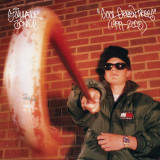
Stimulator Jones - Cool Green Trees (1999-2005) (LP)

"Chasing the funky symphonies that filled my head and my dreams..."

December 25th, 2023 - an Instagram post. Stimulator Jones shared half a dozen FIRE tracks from his beat tape archive. We were immediately drawn to the rough hewn boom bap.

"I'd release that", Rob commented.

Hours of material was shared and the result is this: Cool Green Trees (1999-2005). A collection of beats and loops Stimulator Jones created between the ages of 14-20 at home in his basement, bedroom and computer room in Roanoke, Virginia.

You will not believe the profound soulful genius contained within these naive schoolboy melodies.

December 25th, 1998 - 25 years ago to the day and his much-coveted Yamaha SU10 sampler was finally bestowed upon young Stimmy AKA Sam Lunsford: "I immediately hooked up a CD Walkman to the input jack and looped the beginning two bars of Grover Washington Jr.'s "Mercy Mercy Me". I don't know what exactly was so thrilling about hearing two measures of music repeating over and over but it was so infectious and hypnotizing and enthralling to me. I'll never forget that ecstatic rush of making my first loop - an uncontrollable, gleeful smile plastered all over my face." When you hear the pocket breakbeat symphonies featured here on Cool Green Trees, you'll feel the same sense of frisson.

In the wake of his Stones Throw breakthrough - Exotic Worlds & Master Treasures - Stimulator Jones was pegged by many as a 90s throwback artist. However, he literally IS a 90s artist. He's been recording music most of his life and he's now 40. He created the bulk of Cool Green Trees as a teenager. Everything before 2004 was recorded when Sam was still in school. He was in 8th grade when he made the 1999 tracks - he didn't even have his learner's permit. This album is a snapshot of a young man in a simpler time. Things were still mysterious back then and he was flying blind, relying on his ears and having to figure things out for himself: "I had no road map for becoming a beatmaker. I have been collecting music since I was a kid, I am a lifelong digger and seeker of cool and interesting sounds. I was there in the golden age of Hip Hop, and while I may have been a suburban white kid in Roanoke, Virginia, I was tuned in and I bought so many classic albums when they came out. I was attracted to Hip Hop because of the musical and poetic quality. I was hypnotized by the rhythms, partially because I was a drummer. I didn't brag about collecting my breakbeat records or making beats - it was something I did in isolation. It wasn't something I generally wanted to bring attention to and it didn't really score me any cool points. I certainly wasn't flexing on social media about it."

Hell, he can do that now!

Opener "Pharoah Jones" was inspired by Yesterday's New Quintet and Madlib's ability to capture that classic 70s sound whilst playing all the instruments. Sam created this one stoned afternoon by laying down a 2 bar loop and a shaker loop on his Yamaha SU700 sampler. He hung a microphone from the ceiling and played his Yamaha Stage Custom drum kit over the top before adding ender Rhodes and playing his dad's Selmer tenor sax through an Electro Harmonix Memory Man echo pedal. Yes! Up next, "Ghost Gospel" utilises a dope loop from a gospel record and adds some soul-funk drums overtop, whilst working that filter knob. Says Sam: "The loop reminded me of something Ghostface would rap over. The sample was in 3/4 waltz time but I flipped it for a 4/4 groove, a technique I picked up from RZA. "Ill Feeling" uses sped-up pieces from a dusty old funk record and putting them over a classic NOLA drum loop; gain chopping up a slow, bluesy 3/4 time signature and bending it to a 4/4 groove. Classy shit. "Capital Punishment" features drums tapped in live, inspired by MF Doom's Special Herbs series. "Do Not Adjust" consists loops found on a compilation of 70s French music at Happy's Flea Market, a classic Roanoke digging spot.

The sublime, evocative title track, "Cool Green Trees" was created when Sam was still living at home. He dumped samples off his SU10 into the family desktop and arranged them in a demo version of Pro Tools: "This track was sort of my ode to the DJ Shadow style of sample based production. Super spacey, slow, and moody. The heavily filtered drums were inspired by Alec Empire's 'Low on Ice' album. I later added some scratches and sounds from a Spider Man storybook record." "Chill Scratch" snags the final bit of a bossanova record and pairs it with a drum loop before adding experimental scratching run through an Electro Harmonix Memory Man echo pedal. "Poisonous Fumes" was made using a sampler, mixer and a turntable; a kind of mixtape beat collage with added scratches and sounds from various records. Using dialogue from superhero records was a nod to Madlib. "Welcome Aboard The Starship" is dark, downtempo trip-hop with a spooky bent. Sam paired a slow, hard drum loop with a guitar sample grabbed off a psychedelic rock record. To finish, he added various backwards sounds and weird atmospheric effects and a little scratching. Swoon.

Side B opens with "Keep On Runnin", made on a borrowed Roland SP202 sampler. Having always loved the sound of the Lo-Fi filter on those machines, reminiscent of the Emu SP1200, Sam always imagined Del or another of the Hieroglyphics crew rapping over this beat. You can certainly hear why. "Sounds Impossible" sees Sam experimenting with layering multiple kick samples at different volumes to create patterns similar to those heard by Showbiz and Lord Finesse during their God-level 1995 period. "Painted Faces" was made by chopping up a REDACTED record which he had gotten from Happy's Flea Market and paired it with a REDACTED drum loop. By the time Sam recorded "The Knew Style", he had acquired a shitty old 1960s portable turntable off eBay. It didn't function properly when he bought it but his brother opened it up, cleaned it out and got it working: "I remember he told me that there was a bunch of sand inside of it when he opened it up, as if its previous owner had taken it to the beach. I would take that turntable on my Happy's Flea Market digs so I could preview records...that's how I found this loop."

"Chicken Wing Blues Sauce" loops up a classic blues joint and pairs it with some REDACTED drums. A bit of filtering and arranging et voilà! "Kool Breeze", from 1999, is one of Sam's oldest surviving beats, as is "Sexx Bullets". The Roots sampled the same record, leaving Sam frustrated yet vindicated. "Soul Child" was an early SU10 creation, looping a dusty old Soul Children 45 and pairing it with 70s rock drum loops to great effect. "Take Off Runnin" was another loop found digging with a portable turntable. Paired with some boom bap drums it makes for a hypnotic head-nod groove. "Centurian" was intended to be a little beat interlude a la Pete Rock. The sample is from a sun-dappled soft-psych record and it's paired with a Robin Trower drum loop that just happens to fit perfectly. Sometimes you slap things together kind of haphazardly and magic happens. "Bozack" was the first beat Sam made using Pro Tools, his first foray into using chopped sounds instead of loops, an exciting new world. "Church" is beat interlude using a Phil Upchurch loop with the "Long Red" drums - a favourite break of Dilla et al. Sam was really on a tear in late 2004, probably because he was unemployed and phoneless and able to just make beats all day. He made "Splash One" on a borrowed Yamaha SU700 and again was experimenting with tapping the drums in live with his fingers, instead of using a loop or sequenced pattern. Channeling 9th Wonder, Sam used a water splash sound effect from a Batman record as a percussive element, hence the title (also a 13th Floor Elevators reference). The main loop is a backwards portion of one of his favourite Roy Ayers songs.

"Hank" is another fun little beat interlude thing, created on a borrowed Roland SP202 sampler with the fantastic Lo-Fi effect that resembled the Emu SP1200 at a fraction of the price. "73 goatee", from 99, is another of his oldest surviving beats, created in his bedroom with his Yamaha SU10 and his brother's Vestax MR-300 4-track recorder: "This one will always feel special. I can remember having a feeling all the way back then on the night that I created it that this was a solid beat with a catchy loop. There was something in the Fender Rhodes melody that resonated with me emotionally, and I had never heard a producer sample that portion before. I felt like I had found my own unique sound, my own unique loop. It came from an Ahmad Jamal '73. I actually even recorded myself rapping and scratching over this beat way back then, I still have that version in all its imperfect sloppy glory."

Sam explains just how much these tracks mean to him: "They all have immense historical and sentimental value and I'm proud of them. These beats come from an innocent, simple time when I was just figuring out how to craft these sounds. They're something very personal to me. They are the initial part of a journey that I really was taking *alone*. There was no YouTube. I couldn't Google shit. I didn't even know any other beatmakers, producers or DJs in my town that could teach me anything. It was always just me, alone, in a room with some equipment - chasing the funky symphonies that filled my head and my dreams. What I was doing wasn't cool. Most of my peers thought I was a weirdo and couldn't care less. Creating these sounds was an anti-social endeavour. In a sense, I felt like it was me against the world, and all I had to instruct and assist me were the recordings produced by my heroes - RZA, DJ Premier, Erick Sermon, Beatminerz, Showbiz, Diamond D, Beatnuts, Prince Paul, The Bomb Squad, Pete Rock, Q-Tip, E-Swift, Mista Lawnge, DJ Shadow, Cut Chemist, Peanut Butter Wolf, El-P and so many more...I dedicate this collection to them, and to my older brother Joe who has always been a musical and technical guiding light for me.

This was a time before every kid was a self-described producer and beatmaker, before everyone had a DAW, before Kanye and "chipmunk soul", before Red Bull beat battles, before there was any social media beyond chat rooms and AOL Instant Messenger, before Soundcloud, before SP-404 mania, before lo-fi beats to study to, before Splice, before targeted ads for MIDI chord packs, etc. In 99 when I told people that I had a sampler and made beats I was mostly met with bewildered confusion and indifference. Kids and adults alike would wonder why I got this weird machine for Christmas instead of something worthwhile like a Playstation or a mountain bike or even a guitar for that matter because at least that could be used to make "real music". Back then, sampling was still not widely respected as an art form - it was seen as lazy, talentless and unoriginal at best and outright criminal theft at worst. I had gotten respect for playing drums and guitar and things of that nature but this was a step in the wrong direction in the eyes of many."

The cover photo is a picture of Sam standing on his back porch in the latter part of 1998, just before he got his first sampler. He was 13 years old, in 8th grade. His dad took the picture with his 35mm film camera: "I actually wanted to be pointing my dad's .22 pistol at the camera lens but he wouldn't let me. He gave me an old walking cane to use instead. The Tommy Hilfiger puffer jacket came from the lost and found at William Fleming High School where my mom worked as a secretary. I was thrilled when she brought it home because we never spent money on expensive name brand clothing like that - we were for the most part strictly a sale rack, bargain bin, thrift store, yard sale, flea market kind of family when it came to clothes. My watch is some cheap off-brand fake gold department store watch." Mastering for this vinyl edition was overseen by Be With regular Simon Francis and it was cut by the esteemed Cicely Balston at Abbey Road Studios to be pressed in the Netherlands by Record Industry.

нет на складе

Закажите сейчас, и мы закажем товар для вас у нашего поставщика.

25,63

Последний логин: 10 мес. назад
ML BUCH - SKINNED

ML BUCH

SKINNED

12inchANY15
ANYINES
27.06.2025

Skinned' ( released digitally in 2020) - the debut album from Danish composer, producer and singer ML Buch.
Comes with lyrics printed the inner sleeve.

After releasing her debut EP Fleshy in 2017 - Skinned that takes her expansive guitar work and catchy melodies to another territory.

With her unique experimental pop and vocals that seem to slide into your ears as fluorescent liquid, ML Buch portrays the reality of intimacy in a digital era. Working primarily with synthetic midi sounds, the general love of songwriting and guitar music is ever present.

As if in search for something real, ML Buch takes the listener on the other side of the skin. Led by tender love songs like I’m A Girl You Can Hold IRL and Can’t Get Over You With You we journey through her throat and into her intestines, discovering a fascinating realm of shiny mucus and bile in flesh and yellowish colors. Panoramic images were captured by a small pill camera travelling through the body of ML Buch and act as extensions of the architecture of the music. This literal way of internalizing modern technology is symbolic of Skinned where eclectic instrumental compositions share the space with strong hooks and ML Buch’s spherical voice.

credits

All songs composed, arranged and produced by ML Buch
All lyrics by ML Buch
‘Touching Screens’, ‘O’ and ‘I Feel Like Giving You Things’ co-written by Oliver Nehammer
Bass on Can You Hear My Heart Leave, Touching Screens and Mw by Johan Polder
Drums on Touching Screens and Mw by Kristof Gasior

Viola on Stone Bridge by Astrid Sonne

Midi drums and keys on Touching Screens by Oliver Nehammer
Mix by ML Buch, Oliver Nehammer & Jacob Brøndlund
Mastered by ET Mastering
Cover photo by David Stjernholm
Artwork by Aske Zidore and ML Buch

Any15 - Anyines 2020

Сделать предзаказ27.06.2025

он должен быть опубликован на 27.06.2025

22,27
JOE MEEK - I HEAR A NEW WORLD

The first and most independent of all independent producers, Joe Meek needs little introduction. He was the first to chart in both the UK and the USA with an independently produced song -which was actually recorded in his home’s kitchen- when The Tornados' Telstar took the world in 1962. Meek was, of course, one of the most in vogue producers of the first half of the 1960s, providing the soundtrack to the evolution of UK Rock’n'Roll to Swinging London, scoring hits with actors like John Leyton (Johnny Remember Me), showmen like Screaming Lord Sutch and bands like The Outlaws and The Tornados. He also produced a wide stream of R&B and freakbeat 45s that are nowadays hardly sought after by the collectors with the biggest bank accounts.

Joe Meek experimented with all kinds of recording techniques in his home studio, his tricks and gimmicks won his productions chart placement and critical and public acclaim, but none of his projects was so advanced and way out as the avantgarde experimentation showed in his I Hear a New World electronic symphony from 1960. Aided by The Blue Men formed by Rod Freeman (group leader, guitar, vocals), Ken Harvey (tenor sax, vocals), Roger Fiola (Hawaiian Guitar), Chris White (guitar), Doug Collins (bass), Dave Golding (drums) -also known as Rodd-Ken and The Cavaliers- who provided a tight base to his electronically produced sounds, Meek came up with what he envisioned as the soundtrack of the future, the sounds he envisioned were to be heard in outer space. It was too way out for its time, certainly. To the point that of all the opus, only four tracks saw the light of day on a 7" EP released on Triumph, Meeks very own label. It wouldn’t be until 1991 that the whole recordings from the I Hear a New World sessions would see the light of day on a CD issued by the RPM label.

Wah Wah offers a new reissue of this now classic early electronics masterpiece, housed in a beautiful front-laminated back-flapped sleeve and offered as a limited 400 copies only black vinyl version and an ultra-limited 100 copies only transparent purple vinyl. Get yours before they fly!

RIYL : Delia Derbyshire and The BBC Radiophonic Workshop, Louis and Bebe Barron’s soundtrack to Forbidden Planet, Raymond Scott, Tom Dissevelt & Kid Baltan, Morton Subotnick…

Сделать предзаказ27.06.2025

он должен быть опубликован на 27.06.2025

30,13
JOE MEEK - I HEAR A NEW WORLD

The first and most independent of all independent producers, Joe Meek needs little introduction. He was the first to chart in both the UK and the USA with an independently produced song -which was actually recorded in his home’s kitchen- when The Tornados' Telstar took the world in 1962. Meek was, of course, one of the most in vogue producers of the first half of the 1960s, providing the soundtrack to the evolution of UK Rock’n'Roll to Swinging London, scoring hits with actors like John Leyton (Johnny Remember Me), showmen like Screaming Lord Sutch and bands like The Outlaws and The Tornados. He also produced a wide stream of R&B and freakbeat 45s that are nowadays hardly sought after by the collectors with the biggest bank accounts.

Joe Meek experimented with all kinds of recording techniques in his home studio, his tricks and gimmicks won his productions chart placement and critical and public acclaim, but none of his projects was so advanced and way out as the avantgarde experimentation showed in his I Hear a New World electronic symphony from 1960. Aided by The Blue Men formed by Rod Freeman (group leader, guitar, vocals), Ken Harvey (tenor sax, vocals), Roger Fiola (Hawaiian Guitar), Chris White (guitar), Doug Collins (bass), Dave Golding (drums) -also known as Rodd-Ken and The Cavaliers- who provided a tight base to his electronically produced sounds, Meek came up with what he envisioned as the soundtrack of the future, the sounds he envisioned were to be heard in outer space. It was too way out for its time, certainly. To the point that of all the opus, only four tracks saw the light of day on a 7" EP released on Triumph, Meeks very own label. It wouldn’t be until 1991 that the whole recordings from the I Hear a New World sessions would see the light of day on a CD issued by the RPM label.

Wah Wah offers a new reissue of this now classic early electronics masterpiece, housed in a beautiful front-laminated back-flapped sleeve and offered as a limited 400 copies only black vinyl version and an ultra-limited 100 copies only transparent purple vinyl. Get yours before they fly!

RIYL : Delia Derbyshire and The BBC Radiophonic Workshop, Louis and Bebe Barron’s soundtrack to Forbidden Planet, Raymond Scott, Tom Dissevelt & Kid Baltan, Morton Subotnick…

Сделать предзаказ27.06.2025

он должен быть опубликован на 27.06.2025

28,19
Outside - The Rough And The Smooth LP 2x12"
  • 1: The 29/8 Steps
  • 2: Moodswing
  • 3: The Plan
  • 4: To Forgive But Not Forget (Lim’chol V’lo Lishkoach)
  • 5: The Lower We Fly
  • 6: Journeyman Part 1
  • 7: The Big ‘F’ Reunion
  • 8: Flowers Aren't Iv Picking
  • 9: Journeyman Part 2
  • 10: Minty (Dedicated To Minty)
  • 11: Remembrance

“The Rough And The Smooth” was the highly anticipated 2nd album from Outside. Written, produced, mixed and engineered by a 22 year old Matt Cooper, who journeyed through dub, jungle, hip hop and latin rhythms and vibrant, modal jazz. Playing much of the instrumentation including keys and drums, Matt was joined by some of the scene’s finest players from Jhelisa, Imaani, Greg Osby, Cleveland Watkiss, Byron Wallen, Tony Remy and Gary Crosby.

Upon release, ‘The Rough And The Smooth‘ received huge acclaim and was hailed as a masterpiece by the music press from GQ, MOJO, The Face and Mixmag and fans alike, taking Outside to another level.

From the complex funk of ‘Journeyman‘ parts 1 and 2, to the Nu Yorican hit of ‘The 29/8 Steps‘, to the powerfully emotive violin led jungle of ‘To Forgive But Not Forget‘ and the epic jazz and beats fusion that is ‘Moodswing‘, the album was impossible to pigeonhole and influenced a generation of music heads and artists.

Сделать предзаказ27.06.2025

он должен быть опубликован на 27.06.2025

37,40
Nuke Watch - "Wait For It..."

Nuke Watch

"Wait For It..."

12inchPTNC009
Patience
27.06.2025

Nuke Watch stretch out and zone in on “Wait For It…”, two side-long jaunts that run their freeform M.O. to their own illogical ends. Following on from recent excursions on The Trilogy Tapes and Impatience, they revel in the long format for Patience, crafting a steady assault of haywire rhythms and swampy, off-world ambience.

On the A-side’s Supersonic Percussion Anagram, a battery of electronic and sampled drums - from window-shaking subs to melodic subcontinent percussion - shift from one bar to the next, a continuously morphing, snake-charming ruckus confirming their status as Bushwhick’s finest rhythm purveyors.

For the B-side Nuke Watch mind-meld with fellow NYC phreq Bryce Hackford for Think Peace, a disorienting lurch through the knotty depths of free associative modular synthesis, unraveling spools of intrigue that goes deep into the unknowable.

Nuke Watch is Aaron Anderson and Chris Hontos.. They’ve released records as Nuke Watch on The Trilogy Tapes, Commend, Impatience and Moon Glyph. As Beat Detectives they’ve released records on Not Not Fun, 100% Silk and their own studio imprint NYPD Records.

“Wait For It…” was written and produced by Aaron Anderson and Chris Hontos. Electronic drum pads on Supersonic Percussion Anagram by William Statler. Additional instrumentation on Think Peace by Bryce Hackford. It was mixed by Chris Hontos and Justin Randel, and mastered by Justin Randel. Art and design by Luca Schenardi..

RIYL - tabla, meandering, beat tapes, swamp jazz.

нет на складе

Закажите сейчас, и мы закажем товар для вас у нашего поставщика.

22,06

Последний логин: 10 мес. назад
AMAZING SPACE - PARALLEL DREAMS LP
  • Parallel Dreams
  • Ode To You
  • Surrounded By The Absence
  • I'm In Reverse
  • Go Easy On Me
  • Common Ground
  • The Solid Might Recede
  • My Rubicon

Amazing Space is a new indie all-star band from the west coast music capital of Norway. With a solid foundation rooted in Americana songwriting, the band also draws inspiration from shoegaze, synthwave and krautrock to make music that feels remarkably fresh, energetic and uplifting. Their debut album "Parallel Dreams" consists of eight brilliant tracks featuring rich vocal harmonies, airy guitar solos, dreamy analogue synths, and a touch of lush 80s/90s shoegaze. The lyrics are written by vocalist Emil Nordtveit, and the album has been mixed by Fredrik Vogsborg and mastered by Anders Bjelland. Charlie Hall (drums) from The War on Drugs and Thomas Nokling (saxophone) also contribute to the album.

Сделать предзаказ20.06.2025

он должен быть опубликован на 20.06.2025

41,60
Mark Ernestus' Ndagga Rhythm Force - Khadim

Khadim is a stunning reconfiguration of the Ndagga Rhythm Force sound. The instrumentation is radically pared down. The guitar is gone; the concatenation of sabars; the drum-kit. Each of the four tracks hones in on just one or two drummers; otherwise the sole recorded element is the singing; everything else is programmed. Synths are dialogically locked into the drumming. Tellingly, Ernestus has reached for his beloved Prophet-5, a signature go-to since Basic Channel days, thirty years ago. Texturally, the sound is more dubwise; prickling with effects. There is a new spaciousness, announced at the start by the ambient sounds of Dakar street-life. At the microphone, Mbene Diatta Seck revels in this new openness: mbalax diva, she feelingly turns each of the four songs into a discrete dramatic episode, using different sets of rhetorical techniques. The music throughout is taut, grooving, complex, like before; but more volatile, intuitive and reaching, with turbulent emotional and spiritual expressivity.

Not that Khadim represents any kind of break. Its transformativeness is rooted in the hundreds upon hundreds of hours the Rhythm Force has played together. Nearly a decade has passed since Yermande, the unit's previous album. Every year throughout that period — barring lockdowns — the group has toured extensively, in Europe, the US, and Japan. With improvisation at the core of its music-making, each performance has been evolutionary, as it turns out heading towards Khadim. “I didn’t want to simply continue with the same formula," says Ernestus. “I preferred to wait for a new approach. Playing live so many times, I wanted to capture some of the energy and freedom of those performances.” Though several members of the touring ensemble sit out this recording — sabar drummers, kit-drummer, synth-player — their presence abides in the structure and swing of the music here.

Lamp Fall is a homage to Cheikh Ibra Fall, founder of the Baye Fall spiritual community. The mosque in the city of Touba is known as Lamp Fall, because the main tower resembles a lantern. Soy duggu Touba, moom guey séen / When you enter Touba, he is the one who greets you. After a swift, incantatory start Mbene sings with reflective seriousness. Her voice swirls with reverb, over a tight, funky, propulsive interplay between synth and drums, threaded with one-two jabs of bass. Cheikh Ibra Fall mi may way, mo diayndiou ré, la mu jëndé ko taalibe... Cheikh Ibra Fall amo morome, aboridial / Cheikh Ibra Fall shows the way forward, he gives us strength, he gathers his disciples... Overflowing with grace, Cheikh Ibra Fall has no equal.

Interwoven with Wolof proverbs, Dieuw Bakhul is a recriminatory song about treachery, lies, and back-biting. Over moody, roiling synths and ominous, lean bass, Mbene throws out fluttering scraps of vocal, as if re-running old conversations in her head. The music shadows her despair to the verge of breakdown, at one moment seemingly so lost in thought and memories, that it threatens to disintegrate. Bayilene di wor seen xarit ak seen an da ndo... Dieuw bakhul, dieuw ñaw na / Stop judging your friends and companions... A lie is no good, a lie is ugly.

Khadim is a show-stopper; currently the centrepiece of Ndagga Rhythm Force live performances. The song is dedicated to Cheikh Ahmadou Bamba, aka Khadim, founder of the Mouride Sufi order. Serigne Bamba mi may wayeu / Serigne Bamba is the one who makes me sing. The verses name-check revered members of his family and brotherhood, like Sokhna Diarra, Mame Thierno, and Serigne Bara. Though Islam has been practised in Senegal for a millennium, it wasn’t until the start of the twentieth century that it began to thoroughly permeate ordinary Senegalese society, hand-in-hand with anti-colonialism. The verses here recall Bamba’s banishment by the French to Gabon, and later to Mauritania, in those foundational times. During exile, his captors once introduced a lion to his cell: gaïnde gua waf, dieba lu ci Cheikhoul Khadim / the lion doesn’t budge, it gives itself over to Cheikh Khadim. Deep, surging bass, steady kick-drum, and simple, reverbed chords on the off-beat lend the feel and impetus of steppers reggae. A reed plays snatches of a traditional Baye Fall melody; the dazzling polyrhythmic drumming is by Serigne Mamoune Seck. Mbene compellingly blends percussive vocalese, narrative suspense, exultant praise, introspection, and grievance.

Nimzat is a devotional tribute to Cheikh Sadbou, a contemporary of Bamba, buried in a mausoleum in Nizmat, in southern Mauritania. Way nala, kagne nala... souma danana fata dale / I call upon you and wonder about you... If I am overwhelmed, come to my aid. The town holds special significance for Khadr Sufism. An annual pilgrimage there is conducted to this day. The rhythm is buoyantly funky; the mood is sombre, reined-in, foreboding. Punctuated by peals of thunder, Mbene sings with restrained, intense reverence; huskily confidential, steadfast. Nanu dem ba Nimzat, dé ba sali khina / Let us go to Nimzat, to seal our devotion.

Mbene Diatta Seck: vocals.
Bada Seck: bougarabou, thiol, mbeung mbeung bal, tungune.
Serigne Mamoune Seck: bougarabou, khine, mbeung mbeung, tungune.
Text by Mark Ainley (Honest Jons).
Mastered by Rashad Becker.
Everything else by Mark Ernestus.

нет на складе

Закажите сейчас, и мы закажем товар для вас у нашего поставщика.

22,65

Последний логин: 3 мес. назад
Sahib Shihab & The Danish Radio Jazz Group - OKTAV
  • A1: Di-Da (Sahib Shihab) 5’10
  • A2: Dance Of The Fakowees (Sahib Shihab) 4’14
  • A3: Not Yet (Sahib Shihab) 3’25
  • A4: Tenth Lament (Sahib Shihab) 6’20
  • B1: Mai Ding (Sahib Shihab) 4’50
  • B2: Harvey’s Tune (Sahib Shihab) 3’07
  • B3: No Time For Cries (Sahib Shihab) 3’52
  • B4: The Crosseyed Cat (Sahib Shihab) 3’34
  • B5: Little French Girl (Sahib Shihab) 2’35”

Recorded August, 1965, Copenhagen, Denmark.

Original LP issue: OKTAV – OKLP 111


Sahib Shihab (Edmund Gregory) played with many of jazz’s finest musicians. Shortly after he became one of the first jazz players to change their names due to an Islamic conversion, he joined Thelonious Monk for his Blue Note sessions. He also played with Art Blakey, Dizzy Gillespie, Oscar Pettiforn and Quincy Jones. A unique musician, he was at home in every musical style, from the experimentalism of Thelonious Monk to the more direct hard bop of Art Blakey. Sahib Shihab’s distinctive sound was rooted in his modernist compositions and arrangements, complemented by an intense, soulful playing style.


In 1959 he toured Europe with Quincy Jones after getting fed up with racial politics in USA and ultimately settled in Scandinavia. He worked for Copenhagen Polytechnic and wrote scores for television, cinema and theatre. He remained there until 1973. During this period, he recorded several albums as leader for European labels such as Vogue, Storyville and Futura.


In 1961 he joined The Kenny Clarke-Francy Boland Big Band and remained a key figure in the band for the 12 years it ran. He married a Danish lady and raised a family in Europe, although he remained a conscious African-American still sensitive to racial issues.


This record, on the Danish Oktav label, his second as a leader and also his rarest is a true masterpiece !!!


Personnel :

Sahib Shihab (Baritone saxophone, Flute, Cowbell)

Poul Hindberg (Alto saxophone, Clarinet)

Ib Renard (Baritone saxophone)

Bent Nielsen (Baritone saxophone, Flute, Clarinet)

Niels-Henning Ørsted Pedersen (NHOP) (Bass)

Alex Riel (Drums)

Allan Botschinsky (Trumpet)

Fritz von Bülow (Guitar)

Bent Axen (Piano)

Bent Jædig (Tenor saxophone, Flute)

Niels Husum (Tenor saxophone)

Svend Åge Nielsen (Trombone, Bass trombone)

Torolf Mølgaard (Trombone, Euphonium)

Palle Bolvig (Trumpet)

Palle Mikkelborg (Trumpet)

Poul Kjældgård (Tuba)

Louis Hjulmand (Vibraphone)

Сделать предзаказ13.06.2025

он должен быть опубликован на 13.06.2025

30,88
NAT BIRCHALL - Drums In Dub

A new vinyl album from Nat Birchall, this is the Dub version of his Dimension of the Drums LP, a roots reggae instrumental set that was very enthusiastically received last year, ending up on many best Of The Year lists.
For this album Nat has remixed the tracks in classic early to mid - 1970s style. Inspired by the classic Dub LPs like Keith Hudson’s ‘Pick A Dub’ and Winston Edwards’ ‘King Tubby Meets The Upsetter at the Grass Roots of Dub’ the tracks have been reimagined in Roots Dub fashion, some with new horn lines and all with hand drums, giving the album a very authentic Rootsy sound. Additionally there are two different mixes of a new rhythm track that wasn’t on the previous album.
Once again Nat plays all the instruments and did all the recording, mixing and mastering.
Drums in Dub features eight tracks of instrumental Dub delight, specially designed for the 1970s Dub connoisseur.

нет на складе

Закажите сейчас, и мы закажем товар для вас у нашего поставщика.

34,03

Последний логин: 10 мес. назад
JOŚE JAMES - 1978: Revenge of The Dragon

José James just can’t leave the ’70s alone. Or maybe it’s the other way around. The singer, songwriter, bandleader, and producer was born in 1978, after all, but over his past 17 years of fundamentally forward-looking, blessedly mercurial music, he keeps getting pulled back in. His 2013 Blue Note breakthrough No Beginning No End revisited the hooky, funky, jazz-streaked songcraft of the time through a modern crate-digger’s ears. On 2020’s No Beginning No End 2 — James’ debut on his own Rainbow Blonde Records — he went back through the portal with a small army of fellow celebrated eclecticists. Just last year, there was the album 1978, a richly layered love letter to said year that felt deep, luxe, and cool. It’s as if — vested with the restless fluidity of jazz, the tuned-in sensitivity of soul, and the revisionist grit of hip-hop — he is trying to play his way into the exact moment when, culturally speaking, everything was about to change.

“I'm still so fascinated by the tension in that era of all these seemingly clashing things happening at once,” says James. “The loft scene, the jazz scene, Elton and Billy, Bob Marley, the Isleys, Funkadelic, disco being this behemoth in a way I don't think we even understand today… And then there’s where everybody went from there — into hip-hop, into punk rock, exploding jazz. It's like a summation of the ’70s, and it's about to transform. It's the peak of the rollercoaster.”

Literally breaking into history is impossible, of course, but James’ new LP, 1978: Revenge of the Dragon, does feel like breaking through or bursting out. In loving contrast to its predecessor, the fresh set plays hot, like a Friday night out at the Mudd Club in its prime. Though he’s dreamt up albums with collaborator counts approaching the dozens, James gathered a tight crew for this one. Himself and Taali on vocals. BIGYUKI on keys and analog synth. Jharis Yokley on drums. Bass split between David Ginyard (Blood Orange, Terence Blanchard) and Kyle Miles (Michelle Ndgeocello, Nick Hakim). And an all-star brass lineup: Takuya Kuroda on trumpet, young lion Ebban Dorsey on alto sax, and genre-spanning ronin Ben Wendel on tenor sax. They set up in Dreamland Studios near Woodstock, a restored 19th century church, and recorded live to tape, two tracks, drums pushed to the max — “a small homage to the rise of punk,” says James.

In that place out of time, the band laid down a handful of choice covers and some wild originals, like the single “They Sleep, We Grind (for Badu),” a decades-collapsing cut powered by an ugly groove. Steeped in dub, funk, and sampledelia, James chants an artists’ mantra (“They sleep, we grind / Man, f--- your nine to five”), makes lyrical callouts to Marley and Nas, and channels everything from George Clinton to J Dilla, not to mention the earthy mysticism of Erykah Badu. In 2023, James released and toured his Badu covers LP, On & On. “Living in her musical house for a year was transformative,” he says. “This is my summary of everything I learned through her, tying it to this idea that artists move differently. We are in society but we are outside, too, looking out and in at the same time. Our hours are different, our schedules are different.”

To that point, James and co. actually began each day in the woods, filming the album’s visual companion piece, Revenge of the Dragon, an honest-to-God kung-fu short complete with bad overdubs, training montages, camera tricks, and plot twists. The film pays tribute not only to the genre’s greatest year (1978, of course), but also its cinematic exchange with Blaxploitation, plus James’ own recent Shaolin training and admiration for Bruce Lee as a culture-bridging force (the LP’s cover recreates an iconic shot of Lee). On top of that, says James, “We had this immediacy in the studio. Live, one take, no overdubbing. I feel like that's where the martial arts piece comes in, where it's about being relaxed but also aware, and there's immediacy in your movements.”

Across the project, tribute takes that refracted, multifaceted form. From his personal late-’70s playlist, James chose four covers reflecting the era’s disco-fied churn: the MJ-meets-Quincy dancefloor masterpiece “Rock With You”; Herbie Hancock’s prescient vocoder fever dream, “I Thought It Was You”; and a pair of Black-radio hits from two bands whose fans typically wouldn’t have been caught dead in the same stadium: “Miss You” by the Rolling Stones and the Bee Gees’ “Inside and Out.” All of it gets filtered through a contemporary Black (and beyond) lens, coming out loud, free, funky, and buzzing — dynamic, yes, but also of a joyous piece.

1978: Revenge of the Dragon transports you to a crowded room where all this is playing out in real time. That feeling is helped out by opener “Tokyo Daydream,” a bass-driven swan dive into a neverending night of boutique bar-hopping and neon revelry. Later, “Rise of the Tiger” finds James bringing rare braggadocio to a propulsive track with growling synth lines and a hunger for whatever comes next. And then there’s the closer, “Last Call at the Mudd Club,” which with its upbeat energy and string of Stevie-inspired pickup lines, evokes the sort of unabashedly elated track the DJ throws on at 3:56 a.m. before everyone is kicked out. “I wanted to leave the album on that note,” says James. “If this was a night out in New York, this would be the last thing you hear before you get in that taxi and go back to your apartment.” Or, perhaps, back to 2025.

нет на складе

Закажите сейчас, и мы закажем товар для вас у нашего поставщика.

32,35

Последний логин: 10 мес. назад
Продуктов на странице:
N/ABPM
Vinyl