Back in soon, note new price. The second Silver Mt Zion album featured an expanded band, with a similarly expanded band name. The addition of cello, second violin and second guitar allowed SMZ to develop richer, denser arrangements while preserving live ensemble playing. The opening instrumental pieces picked up where the debut left off, with found-sound loops and treatments introducing repeated melodic themes that move slowly through various counter-melodies the greater breadth of instrumentation brought extra subtlety, complexity and harmonic range to bear on these neo-classical dirges. Guitars and vocals moved to the fore on the album’s centerpiece tracks. “Take These Hands And Throw Them In The River” is an astounding juxtaposition of rhythmic thrust and ricocheting vocals, driven by a battered lyrical paranoia that conjures equal parts fear and rage. The calm after this storming piece comes by way of another vocal tune, this time fragile and near-whispered, with dual lines that alternately mask and reinforce each other. A piano and cello interlude prefaces the last side of the record, which features two guitar-driven songs, the first a blazing rock piece that builds to an exuberant distorted climax, the second as close to a pop masterpiece as this band is likely to craft, highlighted by a lovely arpeggio guitar riff and the defiant refrain “musicians are cowards”. While remaining anchored in an underlying sadness and mourning over this failed world, this album reveals an angrier, more urgent face as this unique ensemble charted ever-widening sonic and emotional terrain.
Josh Hughes (Cub\cub) returns for his second album of a long hot summer, Radiant Crush. Following the glimmering enchantments of his previous outing, Nothing New Under The Sun, this latest chapter brings things to a dizzying climax. While Josh's palette champions the lo-fi, it's his ability to unveil rich melody, seemingly spilling through ever shifting sliding doors, that leads the listener on a merry dance of intangible delights. As Radiant Crush continues to build, we increasingly discern hazy voices coming through the divide: Through a Narrow Window resonates like a lost gem from This Mortal Coil; until Drift finally breaks through with Louisa Osborn's blissful vocal performance, pulling everything into focus to stand as the album's glorious centre piece. While Radiant Crush is very capable of speaking for itself, when pressed Josh describes his work as "music for an incurably ambiguous world", and we can see how nothing is quite what it seems when he goes on to describe this latest album in similarly evasive terms: "Radiant crush is a series of nebulous concepts designed to make the listener think about the way in which we as human beings can idealise a past that never existed. The album focuses on the fragility of the human brain and the power emotions have over recollection through tracks that leave you with a feeling of longing, for something you can’t quite put your finger on. I think more than any other work I’ve made, this album feels the most human. Vocals feature quite prominently throughout the record, most of them are distorted, veiled or fragmented in keeping with the theme of a loss of connection and meaning. Drift is the only track on the album with intelligible vocals, this was intentional as it honestly and tenderly deals with the theme of living in an incurably ambiguous world." Radiant Crush will be released on 2nd September, via digital platforms and limited edition pressed vinyl. Genre: Electronic / Ambient
Singer/Songwriter-Kunst aus UK, prominent mit dabei Paul Weller! In Zusammenarbeit mit Paul Weller als Produzent und Co-Autor seines 5. Studioalbums veröffentlicht der Liverpooler Troubadour Steve Pilgrim das schmerzhaft melancholische ,Beautiful Blue" auf Ltd Vinyl und CD. Auf dem Album wirken Paul Weller, Steve Craddock und Rachael Jean Harris mit Streicherarrangements von Hannah Peel mit. Ein Text von Paul Weller war die einzige Inspiration, die Steve Pilgrim brauchte, um die Arbeit an seinem mit Spannung erwarteten sechsten Album ,Beautiful Blue" zu beenden. Er spielt seit mehr als einem Jahrzehnt Schlagzeug und singt mit der lebenden Legende Paul Weller. Skizzen von Liedern, Melodien und Akkordfolgen wurden der Anfang einer gemeinsamen Schreibrichtung von Pilgrim und Weller und brachten das Material an einen neuen Ort, der den sanftmütigen Scouser auf eine Art und Weise anspornte, die nur Weller hervorrufen konnte. Stücke wie ,Test of Faith", ,Don't Let The Mirror Break You", ,One With All", ,Universe" und ,Where Our Love Goes" erinnern an Pilgrims frühere Arbeiten, sind aber mit einer Wärme und Klassik versehen, die man auf dem gefeierten Album ,True Meanings" seines Co-Autors findet. Mit der Unterstützung des Toningenieurs und Klangzauberers Charles Rees und den Streicherarrangements der renommierten Hannah Peel ist Beautiful Blue" das Werk eines Künstlers, der seine Stärke im Stillleben findet und am lautesten schreit, wenn er flüstert. Die Songs auf diesem Album sind stromlinienförmig, ohne Fett und bieten ein komplexes akustisches Gitarrenspiel, das sich in und aus einprägsamen Melodien ('New Sky'), wogenden (das wunderschöne Titelstück) und umwerfend zarte Gesangsharmonien ('Everyday') einfügt.
The long-running Kompakt imprint will release an EP by German DJ and producer Sascha Funke in September. Sharing five tracks that traverse quirky house and techno, Treets marks Funke’s monumental return to Kompakt since his Zug um Zug two-tracker in 2014.
Speaking about Treets, Funke says he is "very happy to be back on the mothership Kompakt" after an eight-year break. As one would expect with Funke, the EP fits the cosmic world of Kompakt to a tee. The title track conveys a weird, tripped-out atmosphere as an alien-like vocal burbles between an acid bassline and squeaky percussion. It's a tantalising glimpse of Funke's freaky underworld. E_Plus follows a similar wonked-out vein, only this time, the vibe is ominous. Funke pairs an orchestral vocal with bleepy pads and signature acid-drenched melody — a solid offering oddball of energy. On Alles Paletti, a 2-step drum pattern and string of bright claps create a sunny soundscape, complemented by a robust bassline and ethereal synth notes. It's fairytale house music, the kind only Funke can produce. The penultimate track Haus More is subdued, as chugging drums slither between a wobbly melody. The Other Version feels futuristic, as Funke goes full-force electro. Extra-terrestrial vocals return, but the pace is cranked up by strident sound FX and thudding drums. An eccentric end to an eccentric EP.
Sascha Funke is a Berlin-based producer and DJ with two decades' worth of releases building his back catalogue. BPitch Control, Turbo Recordings, Endless Flight, Running Back, and several more esteemed imprints have released his work. Today, he continues to create sleek sounds that weave various genres from house, techno, disco, Krautrock, wave, electro and unclassified anomalies. As a DJ, Funke is just as free-wheeling as his productions. He's played E1 in London, Caos in São Paulo and Renate in Berlin, amongst others, displaying his sweeping sound to a worldwide audience. Having been exposed to euro-dance pop as a youngster, you can hear flashes from the genre stitched throughout his work but blended in a way that's quintessential to Funke. Never one to change his sound according to the latest trend, Funke stays true to his creative vision — one of the most significant challenges for producers today.
Das traditionsreiche Kompakt-Imprint wird im September eine EP des deutschen DJs und Produzenten Sascha Funke veröffentlichen. Mit fünf Tracks, die sich durch schrulligen House und Techno auszeichnen, ist “Treets” Funkes monumentale Rückkehr zu Kompakt seit “ Zug um Zug” im Jahr 2014.
Im Gespräch über Treets sagt Funke, er sei "sehr glücklich, nach acht Jahren Pause wieder auf dem Mutterschiff Kompakt zu sein". Wie bei Funke nicht anders zu erwarten, passt die EP hervorragend in die kosmische Welt von Kompakt. Der Titeltrack vermittelt eine seltsame, abgedrehte Atmosphäre, wenn eine außerirdisch anmutende Stimme zwischen einer Acid-Bassline und quietschenden Perkussionsinstrumenten dahinplätschert. Es ist ein verlockender Einblick in Funkes freakige Unterwelt. “E-Plus” geht in eine ähnliche Richtung, nur dass dieses Mal die Stimmung bedrohlich ist. Funke paart einen orchestralen Gesang mit bleepigen Pads und seiner typischen Acid-getränkten Melodie - ein solides Angebot voller Energie. Auf “Alles Paletti” schaffen ein 2-Step-Drum-Pattern und eine Reihe heller Claps eine sonnige Klanglandschaft, die durch eine robuste Bassline und ätherische Synthesizernoten ergänzt wird. Das ist märchenhafte House-Musik, wie sie nur Funke produzieren kann. Der vorletzte Track Haus More ist zurückhaltend, da tuckernde Drums zwischen einer wackeligen Melodie schlittern. “Treets (The Other Version)” fühlt sich futuristisch an, weil Funke hier voll auf Elektro setzt. Der außerirdische Gesang kehrt zurück, aber das Tempo wird durch schrille Soundeffekte und stampfende Drums angezogen. Ein exzentrisches Ende für eine exzentrische EP.
Sascha Funke ist ein in Berlin ansässiger Produzent und DJ mit einem Backkatalog von zwei Jahrzehnten an Veröffentlichungen. BPitch Control, Turbo Recordings, Endless Flight, Running Back und einige andere angesehene Labels haben seine Arbeiten veröffentlicht. Heute kreiert er weiterhin geschmeidige Sounds, die verschiedene Genres wie House, Techno, Disco, Krautrock, Wave, Electro und unklassifizierte Anomalien miteinander verweben. Als DJ ist Funke genauso freizügig wie seine Produktionen. Er hat unter anderem im E1 in London, im Caos in São Paulo und im Renate in Berlin aufgelegt und seinen mitreißenden Sound einem weltweiten Publikum vorgestellt. Da er schon als Jugendlicher mit Eurodance in Berührung kam, sind in seiner Arbeit immer wieder Anklänge an dieses Genre zu hören, die aber auf eine Art und Weise vermischt werden, die ganz typisch für Funke ist. Niemals verändert Funke seinen Sound nach dem neuesten Trend, sondern bleibt seiner kreativen Vision treu - eine der größten Herausforderungen für Produzenten heutzutage.
out of Stock
Last delivered 8 months ago available to reorder, subject to availability
(Cargo Collective Title) RIYL: Silver Mt Zion, Rachel’s, Grails & Do Make Say Think. 180g LP, custom window-cut letterpress jacket with artworked 300gsm inner + DL. Esmerine presents Everything Was Forever Until It Was No More, its first album in five years, following a celebrated run of Juno Award winning and nominated records throughout the preceding decade. Founded by ex-Godspeed You! Black Emperor percussionist Bruce Cawdron and cellist Rebecca Foon (Saltland, Silver Mt Zion, Set Fire To Flames), the acclaimed instrumental music ensemble and has long embroidered emotive chamber works using threads of post-classical, post-rock, Minimalism, neo-Baroque, jazz, pop and a wide array of folk traditions. Esmerine conjures a distinctive and immediately identifiable sound that consistently defies the trappings of “fusion”, forging emotive cinematic soundtracks under the overriding sonic sensibilities of postpunk grit, Wall-of-Sound, drone and dark ambient. Recorded by longtime co-producer Jace Lasek (The Besnard Lakes), the new album manifestly carries on in this fine tradition. Everything Was Forever Until It Was No More completes Esmerine’s “Anthropocene” triptych: a series of album-length meditations that began in 2015. The album title itself has minor meme status in eco-artistic circles, appropriated from its original context Alex Yurchak’s 2005 book about the collapse of Soviet Russia by several exhibitions and works interrogating artistic production in the age of environmental crisis. (Foon is also well-known for her climate activism as co-founder of Pathway To Paris.) The album grapples with existential tensions between atmosphere and airlessness, seclusion and claustrophobia, forbearance and satiation, scarcity and abundance; it is one of Esmerine’s most restrained and wistful works. Instrumental densities ebb and flow, melding into each other with gauzy timbral warmth, sometimes tracing fleeting tendrils outwards, but always rotating around the saturnine gravitational force of a darkly glowing sonic center. Everything Was Forever Until It Was No More is like a somber forest lit by a closely-orbiting opalescent planet; it could be the alternate score to Von Trier’s Melancholia or Cormac McCarthy’s The Road.Esmerine planted these compositional seeds before pandemic rooted everyone in place, under the auspices of a grant from the Canada Council for the Arts and a 2019 residency at Le Château de Monthelon in France. Lasek then began documenting the band between lockdowns in various stripped-down configurations with spartan remote equipment at the rural Québec homesteads of Cawdron and Foon, culminating in final sessions at Foon’s converted barn in summer/fall 2021, notably with extensive use of the barn’s resonant acoustic piano. Brian Sanderson appears on his fourth Esmerine album since joining in 2012, continuing to expand the ensemble’s ethnomusicological sensibility and melodic sound palette with guitars, ngoni, ekonting, hulusi, and brass horns of all sorts. Everything Was Forever… also signals the full integration of bassist Philippe Charbonneau, who joined Esmerine as a touring member pre-pandemic and plays throughout the new album, along with sound design contributions via synth, tape echo and other processing. Everything Was Forever Until It Was No More features the pandemic collage artwork of Maciek Sczcerbowksi, in a second Esmerine album art collaboration following their Juno award for Album Package of the Year for Lost Voices in 2015.
Deluxe 180gram vinyl edition comes in a foil-embossed and die-cut cardstock jacket with printed inner sleeve and additional 12x12 art cards featuring the collages of Maciek Szczerbowski. All the art interacts with the die-cut jacket framing. Edition of 300. Rooted in a distinct and immediately identifiable sound_with the cello of Rebecca Foon (Saltland, Set Fire To Flames, Thee Silver Mt Zion) and the marimba of ex-Godspeed You! Black Emperor percussionist Bruce Cawdron at its core_Esmerine has long embroidered emotive chamber works using threads of post-classical, post-rock, Minimalism, neo-Baroque, jazz, pop and a wide array of folk traditions. Multi-instrumentalist Brian Sanderson, who joined the group in 2012, has furthered Esmerine's melodic and ethnomusicological sensibility ever since, expanding the ensemble's palette as its third core member with guitars, ngoni, ekonting, hulusi, brass horns of all sorts, and more. Since 2003, six stately and filmic instrumental albums have inscribed compositional landscapes through epigrammatic miniatures, longform multi-movement chronicles, and all manner of evocative musical prosody between. Marked by an inimitably turbid yet tempered pastoralism, alternately lit by dappled dawn and disquieted dusk, Esmerine's musical narratives balance asceticism and romanticism, melancholy and hope, stillness and wanderlust. Esmerine now shares Everything Was Forever Until It Was No More, its seventh full-length album and first in five years. The band surprise-dropped the full album digitally on 06 May 2022, with the CD and Deluxe 180gram LP editions hitting stores on official release date 26 August 2022. Following an acclaimed run of mid-career records on Constellation through the 2010s_the last three of which have all been finalists or winners of Juno Awards for Instrumental Album of the Year and/or Album Packaging of the Year_Esmerine began working on new music at decade's end. Under the auspices of a grant from the Canada Council for the Arts, and a summer 2019 residency at Le Château de Monthelon (an artist commune in France where the band has cherished long-standing spiritual, creative, and personal connections), compositional seeds were planted_and then pandemic rooted everyone in place. In between lockdown waves, at the respective rural Québec homesteads of Cawdron and Foon, longtime co-producer Jace Lasek (The Bernard Lakes) began capturing the band in various stripped-down configurations with spartan remote equipment. More fulsome arrangement and overdub sessions at Foon's converted barn during the summer of 2021 brought the album to full fruition_where a notable increase in the use of acoustic piano also poured forth, with just about every band member having a go. The record also signals the definitive integration of bassist Philippe Charbonneau_having joined Esmerine as a touring member pre-pandemic, he plays throughout the album on upright and electric bass, with turns on piano and synth, as well as sound design contributions via tape echo and other processing. Everything Was Forever Until It Was No More grapples with the existential tensions between atmosphere and airlessness, seclusion and claustrophobia, forbearance and coalescence. In many ways it is one of Esmerine's most restrained records. Only a few passages are driven by full percussion. There is palpably less Sturm and Drang or overt crescendos compared to its recent predecessors. The new album roils with a different sort of dynamic intensity, where instrumental densities ebb and flow within an overtonal centre, melding into each other with gauzy timbral warmth, sometimes tracing fleeting tendrils outwards, but always rotating around a saturnine gravitational force. Everything Was Forever Until It Was No More is like a dark forest lit by a closely-orbiting opalescent planet; it could be the alternate score to Von Trier's Melancholia or Cormac McCarthy's The Road.
This previously unreleased album by the Horace Tapscott Quintet was unearthed from master tapes in the Flying Dutchman archives. Recorded in 1969 and was intended to be a follow-up album to the classic 'The Giant Is Awakened' which was released that year.
The iconic pianist and composer Horace Tapscott was one of the most unique and important figures in LA’s jazz world. This lost recording was produced by one of the pivotal figures in jazz, Bob Thiele, a leading behind-the-scenes star who worked with many of the greats in jazz, such as Quincy Jones, Duke Ellington, John Coltrane, Della Reese, Shirley Scott, Gil Scott-Heron, the list goes on. His name can be seen gracing, arguably the best, Impulse! releases and those released on his own Flying Dutchman imprint set up in 1969.
Joining Horace for this three-track, deep, heavy, avant-garde session is the same stellar cast featured on 'The Giant Is Awakened'; Arthur Blythe on Alto Sax, Everett Brown Jr on Drums, with David Bryant and Walter Savage Jr. on Bass. Kicking things off we have 'World Peace’, which starts with an almost baroque-esque melody, leading to an eruption in sound, it then ends in the same manner it began. The beautiful 'Your Child' is the jewel in the crown, skirting modal, deep jazz and introducing elements of free jazz. 'For Fats' with its bow bass and piano intro takes you on a journey, dropping into, at times dark, stormy melodies and developing a driving energy as the composition progresses.
After recording this album, Horace was said to be wary of the music industry, so he retreated and distanced himself from this world, recording only for the independent labels UGMAA, Interplay Records, and Nimbus West Records. He set up The Pan-Afrikan People’s Arkestra and reintroduced the pan-African-roots sound back into the heart of jazz. He also developed and promoted the art form through performances and recordings.
Thankfully, this session from these wonderful musical pioneers was preserved and finally has its time to shine.
Featuring brand-new artwork by the illustrious artist/designer/musician Raimund Wong (Total Refreshment / Floating World Pictures)
Baton Rouge sludge band Thou have released over a dozen LPs worth of music, collaborated with divergent artists like Emma Ruth Rundle and The Body and released covers that run the full gamut of genres. Continuing their practice of bucking typical metal tradition, their latest record, a split release with composer Gewgawly I, is a soundtrack created for the highly anticipated new video game NORCO.
Gewgawly I has created a master work of ambiance, not only reminiscent of some of the best game soundtracks from the 80s and 90s but also a stunning work of contemporary experimental music pushing the genre forward in exciting ways. Thou have rounded out the game’s grit with a wash of downtuned doom and drone. The band has previously been described as “For fans of: alienation, absurdity, boredom, futility, decay, the tyranny of history, the vulgarities of change, awareness as agony, reason as disease,” and these themes
come to life vividly in Thou’s collaboration with the richly illustrated world of NORCO.
“Thou represents an aspect of Louisiana that’s close to my heart. The members know the suburbs of New Orleans and Baton Rouge well. They capture a kind of strange irreverence in their sound and visuals that’s specific to the region and has influenced the game NORCO,” says Yuts from Geography of Robots. ”We’ve been trying to collaborate for a while, and I’m just stoked it’s finally happening!”
Over the past decade, the mysterious, London-based artist Moiré has perfected a syrupy, addictive brand of dance music via labels like Actress's Werk Discs and illustrious imprints like Ghostly and Rush Hour. For most of this period, Moiré seemed pramarily concerned in creating alternative universe club tracks. The beats were hypnotic, if wonky. The pads were deep before they were refracted through an oblique filter. In a discography bearing a surfeit of leftfield high points, Circuits, Moiré's latest album for the Berlin-based Avenue 66 (Lowtec, John Frusciante, Joey Anderson) is a massive creative leap that fully breaks with the strictures of a "conventional" dance music.
While there are still nods to the low-slung, slow house style Moiré's perfected in the past ("Circuit 1"), as well as the looming shadow of hardcore ("Circuit 8), Moiré's style now billows into a liminal, cinematic zone that recalls the canonical SAW albums, BOC or even Seefeel's enduring, genre-free experiments. Rhythms come and go at all tempos, from Hauntological four-on-the-floor to flickering downtempo and ambient house approximations. But the emphasis lies with the melodies. From the queasy orchestral style of "Circuits 1" to the glacial, "end credits"-style synths that close out the album, these motifs bear an uncanny familiarity, as though they always existed. You recognize them, not from a previous listen, but rather, some half-remembered dream, or, perhaps, a previous lifetime.
out of Stock
Last delivered 3 years ago available to reorder, subject to availability
Mo Troper is truly one of a kind, and that’s never been more apparent than on his fifth full-length, the winkingly titled MTV. Arriving hot on the heels of his 2021 full-length, Dilettante, the album finds the Portland, OR-based power pop extraordinaire diving further into home-recorded immediacy to make a record that feels like a strikingly direct conduit to the world of Mo–where heartbreak, hilarity, and hooks all go hand-inhand.
MTV hurtles through 15 songs in just 31 minutes, with most of the tracks never even coming close to the three-minute mark. The sequence feels like a combination of a fever dream and a travel diary, intertwining tales of romantic longing with the ups and downs
of cross-country touring. Songs like “Across The USA,” “Royal Jelly,” or “Coke Zero” unravel the headaches and heartbreaks, often alternating between unflinching emotional details and legitimately funny one-liners. “I feel like I’m just in this mode of rebelling against the expectation for artists to be emotionally or aesthetically cohesive,” Troper says. “I think about all my favorite records and songwriters, and they’re often these people who would have really depressing stuff and then insane moments of levity that don’t get talked about as much. I want to make music that’s emotional but also campy or sarcastic or resonates in other ways. I’m like, ‘you know what, it’s all me.’”
Danish Artist Troels Hammer has released 5 albums to date, with his sixth House of Memories due out later this year. As yet there has only been a sampler 12” on vinyl. Therefore ‘An introduction’ LP is a compilation of tracks exclusive to Vinyl for fans and new listeners to enjoy.
Troels was discovered by the Danish producer Kenneth Bager in 2012 and has already gained great recognition for his music on both the Danish and the international scene
The style is instrumental and moving in the area between nu-classical, lounge, dance, ambience and electronica. When Troels Hammer sits down at the piano, the music flows through him and brings the audience in a mood that is both relaxed and intense. He himself says that he creates music you can go in and out of –and get carried away by.
Eltons 28. Soloalbum „The Captain And The Kid” erscheint am 2. September erneut.
Das Album wurde im Jahr 2006 veröffentlicht und war eine direkte Fortsetzung des Albums „Captain Fantastic And The Brown Dirt Cowboy“ von 1975, welches als eines der besten seiner Karriere gilt. „The Captain And The Kid“ beschreibt das Leben von Elton und Bernie Taupin in den dazwischen liegenden Jahren. Da Elton zu Beginn des 21. Jahrhunderts eine künstlerische Wiederbelebung erlebte, kehrte er zum Sound und Gefühl seiner frühen Soloalben zurück.
Das Album erscheint als 1LP und enthält zwei Booklets mit Lyrics und Scraps.
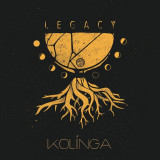
"I wanted to talk about what I know best, which life from my perspective" Rébecca M’Boungou is not unaware of the universal part of her mixed race life so many upheavals, splendors, melancholies, pleasures or pains present in this century.Kolinga tells much more than the musical adventure of a dark-skinned country girl from southwestern France who expresses herself in French, English and Lingala on a music which drawsfrom pop, Congolese rumba, jazz, soul, song, hip hop...
Big City - "Liquid Times". A Recurring Daydream on zero gasoline Pixelating to exaltation on a big city night cantaloupe runs hard in the dungeoun then car home at 6am. "Firestarter walk with me" you like saxophones I like the kinks a guitar virtuoso and a big bass bliss. 5 songs 45 RPM. BIg City is the love child of guitar mastermind Katayoon Yousefbigloo (Puzzlehead, Hotline TNT) and underground dance instigator Davey Biddle (Copyright Linda Fox).
Telfort makes a return with a fifth stellar EP via TLFT, comprising three potent and sophisticated deep house cuts.
‘Phantasmata’ provides that wholesome rhodes deepness of Telfort’s, placing itself firmly in the middle of the floor with its driving grooves and tight bass stabbery, while it’s sprinkled with elegantly phrased euphoric plucks, unfolding into earworm territory.
On the flip, the machine-heavy ‘Instruction Through Metaphor’ elevates you into the stratosphere with its astral textures and discordant rhythmic slap. Classy as ever, deft dusty sample cutting and alluring melodic warmth radiates for the journey.
Title track ‘Basic Trajectory’ pulls no punches and closes out the EP with a reduced and self-assured sound. It’s a fast-acting dose of stomping house that evolves into a blissful and uplifting trip—a restorative place you will want to return to enough times that you might consider it a classic in time.
Since 2015 and with an ostensible sense of precision, Telfort continues to subtly modify the house music blueprint with this sporadic yet impactful emblem.
out of Stock
Last delivered 3 years ago available to reorder, subject to availability
After her stunning release on our deeper House focused Karakul label, we are over the moon to welcome back Swiss producer Lea Lisa on our main Phonica imprint.
The ‘Love To The End EP’ takes influence and inspiration from a particular early 90s UK Techno rarity by Mark Goddard titled ‘The End’ (The Truth EP), a beautiful and emotive take on the classic sound of UK Techno that’s been much loved and highly sought after for decades, even being a particular favourite of Aphex Twin. It’s an ode to the original, rather than a remix or cover. The two mixes re-imagine the sound of soulful and deep Techno, combining driving basslines and drum machine grooves with atmospheric and nostalgic synth lines.
On the A-Side’s ‘Manchester Club Mix’, the focus is laser focused on peaktime dancefloors with a slowly building level of euphoria matched with rolling drums until the breakdown chills the mood and the plucky, earth shaking bassline returns before the tension is released and the melodies float effortlessly around the pounding rhythm.
Over on the B-Side, the ‘Sunset Mix’ jacks up the drums with kicks and claps that shake your spine. The bassline rolls steadily throughout the mix but the melodic lines this time are more restrained, introspective and subtle, echoing and harking to past rave memories with ease...
out of Stock
Last delivered 3 years ago available to reorder, subject to availability
The Hammond Organ is lead singer on this soulful and orchestral journey about industrial decay and the death of the steel town. Deep from the rusted steel mills of Youngstown Ohio, we bring you the much-anticipated reissue of the melting debut from the Scone Cash Players. It's the same organist that brought you the screaming organ on all those Daptone favorites from The Sugarman Three. Scone was behind that organ bench on the modern classics as follows. "Sugar's Boogaloo", "Soul Donkey", "Pure Cane Sugar", and "What the World Needs Now." Adam Scone entered the studio on Dunham Street in Brooklyn. He was wearing a blue Adidas jump suit. The studio had just opened. At the helm were his old compadres from The Dap-Kings. Namely Thomas Brenneck, Eric Kalb, Homer Steinweiss and lan Hendrickson-Smith. They make up the "Bliss Machine" behind Scones's groove. It was a truly rare moment to catch these masters of music and taste in between tours of Sharon Jones and Charles Bradley. Tommy put the mics around. Scone powered up the organ. The analog tape machine turned and turned until they couldn't turn any more. These songs were recorded. We worked all day and all night. Tears were shed. Espresso was made. There was beer on tap. 3 days of life were taken to make this album. We will never get them back. They were distilled to 40 minutes of pure emotion. It's a tale of woe. It's a tale of leaving art for responsibility. It's a farewell to an era. It's a journey that the Hammond B3 organ wasn't accustomed to. You can't compare this album to any other organ record. Don't expect to hear what you want. Free your mind. Be open. Your world is going to feel the heat of the BLAST FURNACE! It never quite feels how you want it to. Don't get burned... FOR FANS OF: Delvon Lamarr Organ Trio, The Sure Fire Soul Ensemble, New Mastersounds, Soulive, Jimmy Smith, Khruangbin
In 2021, Los Angeles trio Gabriels arrived in a whirlwind with the loose-limbed vintage soul jam of ‘Love & Hate In A Different Time’, a song that could have dropped in almost any era. A stone-cold classic, it introduced a band so much more than just the sum of their supremely talented parts.
For the first time, ‘Love & Hate In A Different Time’ is now getting a special 7 Inch release with a previously unreleased live version of ‘Spanish Harlem’ recorded at BBC Maida Vale studios for a Gilles Peterson 6 Music session.
Just a handful of live shows deep, the spotlight swings and lands squarely on vocalist Jacob Lusk. A man who demands attention with a presence and voice of a gospel choir. That rich vocal swoops and soars through the pitches effortlessly matched by an on-stage persona that’s intensely likeable.
A bonafide star by anybody’s reckoning. Two acclaimed EPs deep and yet barely out of second gear, Gabriels have moved beyond mere promise to become one of 2022’s most essential new acts.
Press / PR:
“One of the most spectacular voices you will hear this year... Set to be 2022’s word-of-mouth hit” - The Guardian
“A sound that’s unlike anything else out there” – The Times
SOLD OUT every headline live show in 2021 and 2022 so far in seconds. Gabriels will also support Celeste on her sold out UK tour in the spring of 2022.
Love And Hate In A Different Time was playlisted at 6Music Arielle Free’s TOTW on Radio 1, other supporters included Annie Mac, Nick Grimshaw and Adele Roberts
Grammy nominated, Love Scenes features Diana's mastery of the romantic ballad in an intimate piano trio setting with Russell Malone on guitar and Christian McBride on bass.
"When my producer, Tommy LiPuma, and I were deciding on the songs for my newest album, it never occurred to me that the songs we ultimately chose would be all about love. I selected songs that I personally liked, and that had a special meaning for me. However, as is often the case during the creative process, a connection among the songs just seemed to organically appear. The songs are indeed about romance. But to me there is a broader and more personal attachment to each of the songs than the standard definition of romantic love might imply. I think that these songs represent the strength of love, including the love of family and friends. But rather than describing my own thoughts about each song, it is my hope that all of you who listen to the music and read the lyrics will discover and imagine your own personal "love scenes" among the mountains, oceans, rain and gardens of these songs." - Diana Krall
300 transparent green vinyl 12” albums / 400 black vinyl 12”. In their relatively brief lifetime, between 1996 and 2002, Hefner enjoyed an incredibly productive four-album, multi-EP career. Their beautiful, concise, intelligent songs earned a fiercely loyal, cult audience and the long-term support of legendary DJ John Peel, for whom they recorded innumerable sessions. Originally released in 2001, their final album, Dead Media, found Hefner reaching out and taking risks. Keen to break free of their indie-folk roots, they cocooned themselves in a home studio with broken analogue synthesizers, antique drum machines and battery-powered amplifiers. The band’s naivety and guile produced some curiously engaging music, with frontman Darren Hayman’s precise, economic, poetic dissections of quotidian romance draped over awkward, fuzzy beats: something like Cat Stevens covering Warm Leatherette. Dead Media caused confusion at the time and ultimately lead to the band’s break up. However, the songs like ‘Junk’, ‘The Night’s Are Long’ and ‘When The Angels Play Their Drum Machines’ are among Hayman’s most adult and affecting essays and stand out among the finest of Hefner’s achievements. Tracks: 1 Dead Media 2 Trouble Kid 3 Junk 4 When The Angels Play Their Drum Machines 5 Union Chapel Day 6 China Crisis 7 Alan Bean 8 Peppermint Taste 9 The Mangle 10 The King Of Summer 11 The Nights Are Long 12 Treacle 13 Half A Life 14 Waking Up To You 15 Home
300 transparent green vinyl 12” albums / 400 black vinyl 12”. In their relatively brief lifetime, between 1996 and 2002, Hefner enjoyed an incredibly productive four-album, multi-EP career. Their beautiful, concise, intelligent songs earned a fiercely loyal, cult audience and the long-term support of legendary DJ John Peel, for whom they recorded innumerable sessions. Originally released in 2001, their final album, Dead Media, found Hefner reaching out and taking risks. Keen to break free of their indie-folk roots, they cocooned themselves in a home studio with broken analogue synthesizers, antique drum machines and battery-powered amplifiers. The band’s naivety and guile produced some curiously engaging music, with frontman Darren Hayman’s precise, economic, poetic dissections of quotidian romance draped over awkward, fuzzy beats: something like Cat Stevens covering Warm Leatherette. Dead Media caused confusion at the time and ultimately lead to the band’s break up. However, the songs like ‘Junk’, ‘The Night’s Are Long’ and ‘When The Angels Play Their Drum Machines’ are among Hayman’s most adult and affecting essays and stand out among the finest of Hefner’s achievements. Tracks: 1 Dead Media 2 Trouble Kid 3 Junk 4 When The Angels Play Their Drum Machines 5 Union Chapel Day 6 China Crisis 7 Alan Bean 8 Peppermint Taste 9 The Mangle 10 The King Of Summer 11 The Nights Are Long 12 Treacle 13 Half A Life 14 Waking Up To You 15 Home
Philadelphia's Sweet Pill write eruptive emo songs that embrace the
edges of pop and hardcore
The kind of band whose members are fully immersed in their local scene-through
a handful of notable side projects and the show- promoting Philly staple 4333
Collective- the quintet's sound takes wide- spectrum influence from its
environment. The result is an amalgam of complex song structures and
flourishes of technical acumen, wholly unconcerned with genre, yet evoking the
specific styles of touchstones such as Paramore and Circa Survive.
On their debut longplayer Where the Heart Is, Sweet Pill's unbound, raucous
energy presents through ten autobiographical tracks that hinge on singer Zayna
Youssef's elastic, enrapturing voice- at times belting and controlled, at others
textural and guttural. Supporting Youssef are guitarists Jayce Williams and Sean
McCall, bassist Ryan Cullen, and drummer Chris Kearney. Their blistering lead
single "Blood" sees Youssef exploring a deteriorated friendship over Williams and
McCall's trudging riffs and tactful counterpoint, with Cullen and Kearney rumbling
nimbly in the song's foundations.
Second single "High Hopes" counters with introspective, melodic punk that
reshapes anxiety rather than succumb to it. But third single "Diamond Eyes"
momentarily slows the pace, with McCall joining Youssef on vocals for a breakup
lament laden with acoustic sentimentalism and an emotive flurry from guest
flutist Jill Ryan. Such range is the central facet of Where the Heart Is, where
Sweet Pill's penchant for combining punkish tropes enlivened with the vibrance of
math- rock and the aggression of post- hardcore sweetened with pop sensibility
compound into something stylistically new yet still familiar. Pressed on 180-gram
Red color vinyl
A partner album to the previous Miles release "Decoy," this album released in 1985 is also produced by Miles and loaded with the synths of Robert Irving. This LP has some surprising new looks at pop tunes by Micheal Jackson and Cyndi Lauper and also features the return of John McLaughlin on guitar, and a guest performance from Sting. This is the final installment of the prolific and brilliant collaboration between Miles and Columbia Records. Also featured on this album are Al Foster, Kenny Garret, and Daryl Jones.
"After 11 pm, you stop hearing regular rock on the classic hits radio
station and start hearing more strange stuff, one-hit wonders from 1976,
or really minor singles from artists I thought I didn't like because I just
hadn't heard this one weird song before," says Bloomington, Indianabased singer-songwriter Damion - Rather than let those offbeat classics
fade into the twilight on his late-night drives, Damion returned home and
went straight to the Tascam cassette machine - Inspired by both the
sound and the bleary-eyed ambiguity, the result of that late-night
recording is the bronzy Special Interest, a record bathed in memory and
the antigravity of '70s AM radio
Once he had finished demoing songs at home, Damion brought the nine tracks
that would make up the album to his preferred studio, Russian Recording, and
worked with Ben Lumsdaine and Lewis Rogers to polish them up. Aesthetically,
Damion aimed to fit within the limits of the era that inspired the songs.
"Recording to cassette tape, you either have to play the part right or learn to love
the way it sounds wrong, so even in the studio we abided by those same
limitations," he says. Rather than limitations, the structures and styles of vintage
rock perfectly suit the album's lithe falsetto, eerily familiar melodies, and hazy
storytelling--the listener immersed in a soup of poetic fragments, Damion himself
always at a beguiling arm's length. On lead single and opener "Company Man",
resonant acoustic guitar and Super Ball bass provide a platform for Damion's
knowing ability to split the difference between confident swagger and laid-back
charm. The singer-songwriter pulls joy out of musical echos and lyrical wordplay,
in part coming from his love of classic songwriters and long history as a
performer. "I am mostly inspired by singer- songwriters like Carole King, Todd
Rundgren, etc.
There have been many great Jazz Pianists, but foremost amongst them is Bill Evans.
Accepted by all fans as being supremely influential for defining the format and scope of the
Jazz trio, Evans entered his first purple patch in the mid to late fifties and refined his playing
with a series of album. Over the years he recorded many trio albums with frequent changes
of members, with the most lauded being his first and second line-ups. By May 1962 Evans
cut what would be his seventh album for Riverside . New Bassist, Chuck Israels, joined the
group, and together this second classic line-up cut two albums in the same sessions. The
first was Moon Beams which contained ballads, while the second one, How My Heart Sings,
had the up-tempo numbers. These were recorded as a mixture during the sessions as
producer Orrin Keepnews wanted to release an album of just ballads from Evans, and so
made up the album from the varied session tracks. During the recordings, Evans only
revealed the tracks to his trio at the session itself. Fans and critics alike were more than
appreciative of Chuck Israels' ability to meld into the trio with his punchy lines, meshing in
especially well with Motian
JON GOMM'S 'THE FAINTEST IDEA' WILL BE REISSUED ON VINYL FOR
THE FIRST TIME SINCE 2020.Jon Gomm, the UK based acoustic guitar
virtuoso, finds new emotional depths in immense melodic pop
landscapes, with his 'The Faintest Idea'
As one of the pioneers of the modern fingerstyle sound, Jon Gomm has a rare gift
for turning one instrument into what feels like an entire orchestra. The singersongwriter's 2003 home- recorded debut, 'Hypertension', was nothing short of a
musical revelation. Things changed for Jon when landmark single 'Passionflower'
racked up millions of views on YouTube & other media platforms in 2012 – with
British legend Stephen Fry describing him on mainstream television as someone
"playing the guitar in a way I'd never seen it played before" & "an all-round genius".
The Faintest Idea's title is based on the notion that all of us, to some extent, are
just 'The Faintest Idea', "It's an enigmatic title," says Gomm. "There's a fine line
between a metaphor & a pun, so I guess it dances on that" & explores the
contrasts between the warmth of Gomm's acoustic articulation with more icy
affairs, thanks to the synth parts & production work from Australian musician
Andy Sorenson, together they have created a contemporary masterpiece.
The Faintest Idea's immersive & emotional 11 tracks see a musician coming to
terms with the talents that got him recognised & choosing to evolve into the
unexpected. This album just boils down to the magic of one man with his guitar &
voice. And what a powerful magic it is.
The album is complemented by the delicate hand drawn pen & ink cover art
created by Lee Zimmerman. 'The Faintest Idea' is issued via Kscope on Black LP.
The iconic US blues-rock guitarist Walter Trout is set to release his 30th
solo album, Ride on 19 August via Provogue/Mascot Label Group.
However fast or far a man travels, he can never truly outrun his past
On his new album he found himself eyeing the horizon and the green shoots of
his triumphant late career. There was a new record deal with Mascot/Provogue. A
move from California to Denmark with his beloved family. Even now, aged 70,
Trout was still writing fresh chapters of his life story.
The last time we saw Trout stepping out, he was on the road in support of 2020's
Ordinary Madness. The campaign ended in frustration, when Covid rendered live
work too dangerous, both for this liver- transplant survivor and his fans,
condemning Trout to an enforced downtime in Denmark that he hadn't known in a
half- century. "I've been at this since '69, when I started out in the New Jersey
bars," he reflects. "Suddenly, I'm sat on my ass for sixteen months, although I did
still practice guitar every day. My wife and manager Marie knew I needed to make
music. So her present to me for my 70th birthday was a brand-new record deal
she had negotiated. My producer, Eric Corne, scoped out a new studio in LA, and
my plan was to fly home to make a new album."
The result is Ride, providing an emotional release-valve – both for its creator and
his loyal listeners – perhaps this veteran artist can reconcile with his past, accept
his future and live in the present as it unfolds. "I think you can interpret this album
title a few different ways," he concludes. "I mean, this album is definitely a
musical ride and I certainly tried to cover a lot of ground. But, really, life is kind of
a ride too, isn't it? And I want to live mine to the fullest."
Produced mainly by Jerry Corbetta (Sugarloaf) and Dolenz, “Demoiselle” features solo recordings
made between 1981-1992 and includes previously unreleased material. Originally planned for release
in the early 1990s, the album never received a record deal for a number for reasons. Dolenz privately
released nine of the recordings in 1998, but they were only available for a short period of time via mail
order. This new and definitive version of Demoiselle has been remastered from the original master
tapes. It includes 3 previously unreleased bonus tracks and presents the material in a different
sequence. Available on CD and Vinyl, the CD comes in a deluxe digisleeve and features a big 32 page
CD booklet with extensive liner notes, lyrics and previously unseen photos. The LP version comes in a
gatefold sleeve and is pressed on 180g Red Vinyl.
Truly one of the great trumpeters of the bop era, Howard McGhee suffered with drug addiction his whole career which meant his band-leading recorded output was minimal. Although the 1950s had largely been a waste for McGhee, Dusty Blue, recorded in 1960, marked a strong return-to-form and is credited amongst fans as some of his best recordings. Featuring an all-star band of Bennie Green, Pepper Adams, Tommy Flanagan, Roland Alexander as well as the ever-touring Ron Carter, this is a collective of musicians at their very best. Mastered from the original tape transfers by Kevin Gray, this is a sublime recording from start to finish.
Features:
180g Vinyl
Remastered from the Original Analog Tape Transfers by Kevin Gray
Printed & Pressed at Pallas
12" Insert Featuring a Photographic Print
Deluxe Reverse-Board Jacket
Officially Licensed from Bethlehem/BMG
Musicians:
Pepper Adams baritone saxophone
Ronald Carter bass
Walter Bolden drums
Tommy Flanagan piano
Roland Alexander tenor saxophone
Bennie Green trombone
Howard McGhee trumpet
Cool Hand Flex was an original Suburban Base artist since 1993 and published with Subbase Music ever since, with influential releases on both Subbase and his own labels run together with his brothers out of De Underground Records Store in London’s East End.
Such was its influence on the evolution of Jungle and DnB, introducing to the world the talent that is DJ Randall and releasing seminal works such as We Are i.e. that the location of that store now carries a heritage plaque. Flex now brings you De Underground EP as an incredible collectible picture disc, carrying the iconic first-generation logo, it is a must have for all vinyl collectors and those that love and respect the origins of this music.
This is much more than a piece of memorabilia though, with 4 slamming tracks to trouble your speaker system. Starting off with two brand new slices of Flex awesomeness on the Future Flex side – ‘The Bass’ and ‘Let The Music’ distinctively Cool Hand Flex production with deep subs and crashing breaks which still seem to roll into smooth yet hard DnB.
Then on De Underground side you find two highly collectible tracks ‘Ralph’ and ‘Jungle’, that have never received a repress since their initial pressing run back in 1993 despite being in high demand. Expertly remastered and sounding as fresh as ever all packaged on a beautiful 12” vinyl picture disc.
Once again this is an extremely limited pressing & we can only advise you to grab them now before they disappear. Buy now and treasure forever!!
out of Stock
Last delivered 4 years ago available to reorder, subject to availability
The experimental legends BASTARD NOISE and MERZBOW present their new collaborative album, RETRIBUTION BY ALL OTHER CREATURES. A lashing out against man-made institutions that perpetuate animal cruelty, every second of BASTARD NOISE's contribution to this collaboration is simply put - pitch-black, palpable fury. Elsewhere, the iconic MERZBOW's influence creeps in with a two part concept - the ZooNOsISE tracks, firing off MERZBOW's calling card - grainy, unsettling distortion that builds and builds, set against wretched technological wailing and alarming constants.
The record's intent is both a call to action, and a foreboding signal of end times. "Stand up against any form of animal abuse you witness at all cost," BASTARD NOISE mastermind Eric Wood writes in his liner notes. "Be part of positive, compassionate change and spit on the grave of the status quo." MERZBOW/Masami Akita's message is simple, but hits hard - "TIME IS RUNNING OUT. NOISE IS MUSIC"
out of Stock
Last delivered 4 years ago available to reorder, subject to availability
Alexandra Sauser-Monnig and Amelia Meath have been yodeling together for upwards of fifteen years – in the backseat of a Prius while on their first cross-country tour, on back porches and backstages. It’s what led them to Fruit, their debut release as The A’s – a joyous ten-song collection spanning genre and decades, with interpretations of traditionals, lullabies, and an original song, it weaves between the weird and the wonderful. “Why I’m Grieving,” originally recorded by the DeZurik Sisters, was the inspiration for the A’s existence. The A’s reach into the past to hold hands with the DeZurik Sisters, two farm girls from rural Minnesota who taught themselves to yodel amongst all their animals, in a continuing celebration of the tradition of folk eccentricity and whimsy. The A’s played their first show together in 2013 after Sauser-Monnig first moved to North Carolina, where Meath had been living at the time, but it wasn’t until summer 2021 that they thought seriously about making Fruit. They decamped to Sylvan Esso’s Chapel Hill studio, Betty’s, for two weeks in the midst of a balmy and blooming Carolinian summer. They rehearsed during the day, deconstructing yodeling parts phonetically and staring absurdly into each other’s eyes as they practiced tongue twisting harmonies - and recorded in the nighttime, candles lit, a flickering glow against the windows framing the violet twilight outside. “There was a lot of giggling during the session,” Sauser-Monnig explains. “At one point I was getting a tangle out of my hair and was like, oh, my God, that sounds really cool – the sound of my hands in my hair. And then I thought, what if we recorded hair for a percussion track? And then it just sort of snowballed.” Across the record, the A’s employ a bizarre-o ghost orchestra of strange noises that are percussive and melodic. The credits include nylon shorts, string (singular), hair, shoes, ice chunk, gravel, frog sample, and shoelace, among other unexpected makeshift instrumentation. The backing band is built out by a more traditional group of players: saxophone from Sam Gendel on “Copper Kettle,” backing vocals from Jenn Wasner (Flock of Dimes, Wye Oak) on “When I Die,” string arrangements from Gabriel Kahane on “He Needs Me,” and more. Fruit is made up simply of songs the A’s love to sing – there are lullabies and love songs; “He Needs Me,” written by Harry Nilsson and first released by Shelley Duvall in the 1980 Popeye film; traditional ballads like “Swing and Turn Jubilee,” “Copper Kettle” and closer “Buckeye Jim,” a multiplying song about frogs and nature. The sole original track to appear on the album is the penultimate “When I Die,” written by Meath. It contains both wishes and instructions for the celebration of her death, a low synth bubbling beneath Sauser-Monnig and Meath’s voices. It’s a collection of ten seemingly incongruous songs, but with the throughline of Sauser-Monnig and Meath’s vocals and sense of humor working in tandem, they fit together into a cosmic yodeling-folk masterpiece. Fruit feels like blowing the dust off a precious artifact of decades past, but also winking and modern. Sauser-Monnig sums up their ethos on the project succinctly: “If it doesn’t make you cackle or cry, it doesn’t belong.”
Mid-summer, 2021, Waleed quietly released his debut single 'Se Rompen'. The response was anything but, with the track immediately taking hold as a sleeper hit that summer, being played out by the likes of Four Tet, Floating Points, Daphni, DJ Boring, DJ Seinfeld, Tourist and more. With word already spreading, an inclusion in Ben UFO's winter Essential Mix solidified the desire for more from this surprising new producer.
Last month, Waleed announced his signing to City Slang (Caribou, Gold Panda) with a re-release of 'Se Rompen', offering the track on ultra-rare test pressings (50 / sold out already) for the first time.
Today, we announce the pre-order of a white label 12” with “Se Rompen” and his new single “SuenÞos”, limited to 300 units worldwide.
Born in Washington DC to Iraqi/Puerto Rican parents, Waleed works in coding by day. Built around ready-made for the dancefloor kick and chopped vocals, 'Se Rompen' is an ambitious debut that showcases his focus on sound design. Waleed’s meshing of cultures and references gives 'Se Rompen' a unique perspective on dance music. At once melancholic and high energy.
“A beautiful euphoric/melancholy fusion of cut-up vocals, soft electronics and two-step beats.” The Guardian
“Highly refreshing, 'Se Rompen' has a rare immediacy, a feeling that it has always been a part of your life." Clash
out of Stock
Last delivered 4 years ago available to reorder, subject to availability
"Art is awe, art is mystery expressed," writes Kaitlyn Aurelia Smith. "Art is somatic, even if it is experienced cerebrally. It is felt." The central mysteries of Smith's ninth studio album, Let's Turn it Into Sound, have to do with perception, expression, and communication: How can we communicate when spoken language is inadequate? How do we understand what it is we're feeling? How do we translate our experience of the world into something that someone else can understand? For Smith, a self-described "feeler," the answers are inspired by compound words in non-English languages, translation, sculptural fashion, dance, butoh, wushu shaolin, and other forms of sensory and somatic experience. Just like fashion uses lines, shapes, colors, textures, and silhouettes to communicate on a sensual level separate from the conscious mind, Let's Turn it Into Sound strives to use sound to communicate what words alone cannot. "The album is a puzzle," Smith says. "It is a symbol of receiving a compound of a ton of feelings from going out into a situation, and the song titles are instructions to breaking apart the feelings and understanding them." The energized "Is it Me or is it You" comes from traversing the gaps between how you see yourself and how another might see you, through a filter of their own projections. The hushed sense of revelation that brackets "There is Something" refers to the feeling of walking into a room and being subconsciously aware of the dynamic present. All the while, Smith interprets these feelings through sound. This auditory interpretation process, driven by earnest curiosity, led Smith to record some thoughts and questions that popped up along the journey in Somatic Hearing_a booklet which accompanies the album. Over three frenzied months, recording alone in her home studio, Smith allowed herself to pursue new experiments to accompany her usual toolkit of modular, analogue, and rare synthesizers (including her signature Buchla), orchestral sounds, and the voice. She created a new vocal processing technique, and gave herself permission to pursue a pacing that felt intuitive, rather one that followed typical song structures. She walked around in the windiest season with a subwoofer backpack and an umbrella, listening to the low end of the album amidst 60mph gusts. She listened to herself, and, in doing so, to an inner community which suddenly opened to her. Underlying the album is a dynamic relationship between what Smith describes as six distinct voices, each a multifaceted storyteller. By acknowledging these characters, she was acknowledging her whole being: the woven plurality of self, the complex process of noticing and resolving inner conflicts, and the joy of finding harmony in flux. "I started to feel so embodied by all of these characters. This is all the felt, unsaid stuff my inner community wants to communicate but it doesn't have the English language as its form of communication, and so this album was a form of giving space to let it talk and not judge it and just let it play." By not adhering to expected song structures, each song feels even more like a conversation, with each character getting to express themselves in full.
"Art is awe, art is mystery expressed," writes Kaitlyn Aurelia Smith. "Art is somatic, even if it is experienced cerebrally. It is felt." The central mysteries of Smith's ninth studio album, Let's Turn it Into Sound, have to do with perception, expression, and communication: How can we communicate when spoken language is inadequate? How do we understand what it is we're feeling? How do we translate our experience of the world into something that someone else can understand? For Smith, a self-described "feeler," the answers are inspired by compound words in non-English languages, translation, sculptural fashion, dance, butoh, wushu shaolin, and other forms of sensory and somatic experience. Just like fashion uses lines, shapes, colors, textures, and silhouettes to communicate on a sensual level separate from the conscious mind, Let's Turn it Into Sound strives to use sound to communicate what words alone cannot. "The album is a puzzle," Smith says. "It is a symbol of receiving a compound of a ton of feelings from going out into a situation, and the song titles are instructions to breaking apart the feelings and understanding them." The energized "Is it Me or is it You" comes from traversing the gaps between how you see yourself and how another might see you, through a filter of their own projections. The hushed sense of revelation that brackets "There is Something" refers to the feeling of walking into a room and being subconsciously aware of the dynamic present. All the while, Smith interprets these feelings through sound. This auditory interpretation process, driven by earnest curiosity, led Smith to record some thoughts and questions that popped up along the journey in Somatic Hearing_a booklet which accompanies the album. Over three frenzied months, recording alone in her home studio, Smith allowed herself to pursue new experiments to accompany her usual toolkit of modular, analogue, and rare synthesizers (including her signature Buchla), orchestral sounds, and the voice. She created a new vocal processing technique, and gave herself permission to pursue a pacing that felt intuitive, rather one that followed typical song structures. She walked around in the windiest season with a subwoofer backpack and an umbrella, listening to the low end of the album amidst 60mph gusts. She listened to herself, and, in doing so, to an inner community which suddenly opened to her. Underlying the album is a dynamic relationship between what Smith describes as six distinct voices, each a multifaceted storyteller. By acknowledging these characters, she was acknowledging her whole being: the woven plurality of self, the complex process of noticing and resolving inner conflicts, and the joy of finding harmony in flux. "I started to feel so embodied by all of these characters. This is all the felt, unsaid stuff my inner community wants to communicate but it doesn't have the English language as its form of communication, and so this album was a form of giving space to let it talk and not judge it and just let it play." By not adhering to expected song structures, each song feels even more like a conversation, with each character getting to express themselves in full.
ITS 25 YEARS Since the first Heads album was released.. .so.. for 2021..Rooster has decided to get the album back in print on vinyl.. but changing the artwork. With some silver foiling and bordering, the single sleeve has been boosted to a sweet gatefold, Rooster also got the Radio 1 sessions from the time remastered, and re-cut along with the huge b-side to their Television 7” “Jellystoned Park”.
So there you have it, a double vinyl silver jubilee reissue of a fantastic debut album!
From the original reissue sales notes:
“The Heads had self-released a couple of 7"', and then Cargo Uk's inhouse label Headhunter UK got to release a further 7", and then the Debut album in 1996. Amidst a world suffocating in Britpop smarm, the Heads cut a timely swathe with their unkempt rock psychedelique. The album contained 10 tracks of guitar driven, amp destroying rock, with cues taken straight from the US underground, Stooges, MC5, Mudhoney, Pussy Galore, early Monster Magnet too but with a disitinctly British stamp, some of the drone and fuzz from Loop / Spacemen 3, some of the attitude of the Fall, Pink Fairies and Walking Seeds and overlaid with the spaced rock of early Hawkwind. It was obvious that the four members of the Heads were music obsessives. The debut album was recorded at Foel studios (owned by Dave Anderson from Hawkwind) and engineered by Corin Dingley, it was mastered by John Dent at LOUD.”
We’ve asked for some new appraisal of the Heads for the Silver Jubilee edition from good friends....
Stewart Lee February 2021
“The Halley's Comet victory orbits of historic heavy artefacts from Detroit, like The Stooges or The MC5, leave grateful onlookers aghast. But, hidden away in Bristol, The Heads are still with us now, our homegrown acid-garage godfathers, an ongoing thirty-two year old concern with a back catalogue arguably more consistent than the super-dense psyche-rock groups that inspired them. The Heads arrived fully formed and have spent three decades becoming more like themselves, a musical black hole that sucks in all surrounding matter. I love The Heads “
Phil Alexander February 2021
“The Heads make music for freaks in the know. If you were there in 1996, you’ll know just what that means…
Back then, they were gloriously out of step with the pop-cheese of the time and geezerly lumpiness of Britpop. Theirs was an altogether different take on music – a take inspired by the glorious burn-out of the ‘60s, the sonic overdrive of the ‘70s and the axis of joy created by the combination of excess volume and repetition.
We could name-check some inspirations and kindred spirits: The Stooges, Hawkwind, Floyd, Loop, Sabbath, Amon Düül II, Spacemen 3, Walking Seeds, Mudhoney, Monster Magnet among them... But in all honesty, The Heads have always existed in a world of their own, surfacing as and when the mood takes them, before returning to their subterranean rehearsal room to jam their way through yet more mind-altering riffs and mood-altering rhythms.
Relaxing With The Heads is their first defining statement. It is also possibly their most straight-forward release, the sound of a band attempting to find structure in their playing rather than abandoning themselves to their wildest impulses. That would come later…
And yet, 25 years on, this album blasts forth like few records from that time, its slacker charm welded to super-fuzzed riffs that propel its 10 tracks ever onwards. Righteous is probably the only word for it…”
This mega-rare 1969 album pays tribute to the Bronx and Brooklyn neighborhoods where young Latinos had invented the boogaloo a few years earlier. This record highlights the quality of Peruvian boogaloo and the talent of musicians such as pianist Otto de Rojas and percussionist Coco Lagos. First time reissue. In the mid-sixties, when young Latino musicians in New York fused Afro-Cuban rhythms with rock, soul and jazz, they had no idea that their boogaloo bang bang would reverberate just as strong and loud in a distant South American country. From 1955, La Sonora Macedo, took Cuban music to every corner of Peru, backed the leading musicians of the Peruvian tropical universe, such as Ñiko Estrada, Joe di Roma, the double bass player Pepe Hernández, and the trumpet players Tito Chicoma and Charlie Palomares. All diehard fans of Cuban music, always alert to any new artist arriving from the island. In the early sixties, light rock, doo-wop, ballads, Italian songs and bossa nova paraded across Lima's stages, making performances by Cuban bands, previously so frequent, a thing of the past. Moreover, the unanimous success of the Beatles from 1964 onwards, gave the impression that music from the English-speaking world would dominate the rest of the decade. But this was not the case. In large part because of Manuel Guerrero's good relations with U.S Latino labels, such as Alegre Records, which released the initial recordings by Johnny Pacheco and Charlie Palmieri, allowing listeners in Lima to follow the development of the salsa movement almost from the beginning. MAG was undoubtedly the best representative of these new sounds. In 1969, the LP "Acabo con Lima, huyo pa' Nueva York" was released on this label, a project which brought together three figures from Lima's show business world: Manuel Antonio Guerrero, owner and founder of MAG, who wasn't shy of joining in on the chorus and percussion during recordings, Pablo Villanueva "Melcochita", a multifaceted artist from a talented musical family from the popular district of La Victoria, was responsible for the vocals and percussion on the album. And the third Lima show business figure in this project was the musician, singer and comedian Alberto Montroy Laostervened, who gained fame in the sixties while still in his twenties for his imitation of Cantinflas, the Mexican actor. Alberto bore a devilish resemblance to Cantinflas, not only in his gestures but also physically. Under the name of Pepe Moreno "Karamanduka" he also went on to record songs abroad such as "El boogaloo de Cantinflitas". "Acabo con Lima, huyo pa' Nueva York" was immediately re-released in other countries, highlighting the quality of Peruvian boogaloo and talent of musicians such as pianist Otto de Rojas and percussionist Coco Lagos, who feature prominently on the album. Songs such as 'Vuela mi descarga', 'Peruvian boogaloo' and 'Peruvian guajira', pay tribute to the Bronx and Brooklyn, neighborhoods where young Latinos had invented the boogaloo a few years earlier.
out of Stock
Last delivered 4 years ago available to reorder, subject to availability