- A1: Bonobo - Cirrus
- A2: Kid Francescoli Feat Julia Minkin - Prince Vince
- A3: Kiddy Smile - Be Honest
- A4: Irène Drésel - Victoire
- A5: Laurent Garnier - Wake Up
- B1: Myd - The Sun
- B2: Feat Woodkid - Clear
- B3: Etienne Jaumet & Laurent Bardainne - Blurry Neon
- B4: Hvob - Capture Casa
- B5: Marcel Dettmann - Juper
- C1: Kazam - Delicate
- C2: Mo Laudi Feat Flavia Coelho - Por Cima
- C3: Maud Geffray Feat Flavien Berger - In Your Eyes
- C4: Rival Consoles - Odyssey
- C5: Romane Santarelli - Like A Mantra
- D1: Fakear - Morning In Japan
- D2: Pantha Du Prince - Pius In Tacet
- D3: Thylacine - Polar
- D4: Rone - Bye Bye Macadam
- D5: Justice - Phantom
quête:the medium
Dutch pioneer Sp@sms returns to U-TRAX with 'From A 20th Century Box' LP, backed with remixes from Bloody Mary and Cosmic Force
On 'From the 20th Century Box' Arno Peeters, aka Sp@sms, returns to U-TRAX with his debut full-length album. Showcasing years of sonic exploration stemming from his time in various groups including Random XS and Voltage Control amongst others, the LP also draws from his experience studying and teaching music at the Centre for Electronic Music as well as his work in project-based sound design.
Filled to the brim with pulsating arpeggios, crunchy drums and dark, moody atmospheres, the LP is marked by a retro yet timeless feel. Inbetween its snaking, squelchy synth lines and old school electro grooves Sp@sms masterfully incorporates playful textures and elements from found recordings and unused projects, resulting in a vastly versatile and experimental album fusing all things techno, acid and EBM.
An expert lesson in sound design and composition taught by one of the Netherlands' most trusted and experienced artists, the LP also contains remixes from Dame Music's Bloody Mary and Utrecht electro stalwart Cosmic Force and arrives via heavyweight, colored double vinyl, digital, CD and cassette mediums.
As is typical for a U-TRAX release, each physical version has its own set of tracks. The vinyl and CD versions also come with a in-depth interview with Arno Peeters, as well as extensive background notes for each track (on the album's inner sleeves and a 24 page booklet, respectively).
NEW 45 BY DEEP-FUNK PIONEER LUCKY BROWN RECORDED DURING THE MYSTERY ROAD SESSIONS!
"Funk is a living, breathing, creative and generative entity and The New Lucky Seven celebrate its life with a mysterious and authentic sonic snapshot from the iconic Mystery Road sessions: WOODHEAD!"
Woodhead is a steady medium groover built around an acute chanky guitar part that Joel Ricci aka Lucky Brown composed while living in the "Woodhood" district of Bellingham Washington, USA in the fallout shadow of an industrial area on the outskirts of town. The Woodhood was so named because the streets were all named after different kinds of trees; Cottonwood, Alderwood, Birchwood, etc. Though members of the band had been performing Woodhead since as early as 2004, it had never been officially committed to tape. So during the 2013-2014 span of living room "Magik Carpet" sessions at drummer, Oliver Klomp's house in West Seattle, the combo dubbed by Lucky as "The New Lucky Seven" casually hit the head a couple times before calling it a night as Lucky rolled tape.
Opening with the now world-famous guitar player, Jabrille "Jimmy James" Williams dropping deftly into his rhythmic part, Lucky chants in the background the words "don't stop" as the tension builds up into the moment the whole band comes in. With Bob Heinemann on bass, Marc Hager on Rhodes and Oliver Klomp on drums, the thick but honest groove is instantly palpable. Trombone player Mars Lindgren and Sax player Thomas Deakin, along with Lucky on Trumpet lay down the 'head' to the tune right off the bat with everyone in the band giving that hard hit on the 4 count of the last bar of the repeated figure. This 'hit' returns again to form the breakpoint between soloists Jimmy James, Marc Hager, and on side B, Thomas Deakin, and Lucky Brown on the flute. The horn section microphone was situated on the dining room table and Lucky just had to lean over to reach it with his instrument! Michael Iris of Bell Creek Studio transferred and mixed these two tunes from Lucky Brown's cassette machine.
This tune was left off of the Mystery Road compilation album but comprises one of the last tracks created during those sessions therefore the concept, vibe, style, and intention should resonate and be interchangeable with the rest of the 45s from that epic Box Set TR-9043 released by Tramp Records on May 4, 2015.
As you spin and interact with the Mystery Road recordings, you are invited to allow Woodhead to take its rightful place specifically alongside the other "The New Lucky Seven" recordings and generally as a part of the suite of crude and naive living-room "Magik Carpet" funk of the rest of the Mystery Road.
As illuminated before in Lucky's artist statement regarding the Mystery Road sessions, the music contained therein was always intended to put emotion, vibe, feeling, and spirit before technical, spatial, or even performance constraints and to serve as a gift of discovery to lovers and aficionados of the deep funk idiom and the rare 45rpm format. Funk is a living, breathing, creative and generative entity and The New Lucky Seven celebrate its life with a mysterious and authentic sonic snapshot from the iconic Mystery Road sessions: WOODHEAD!
Emerging Netherlands-based pairing Parallells will land on Damian Lazarus’ Crosstown Rebels imprint for the first time next month. Gifting us an emotive offering in Ashes of Snow (The Rebirth Of The Phoenix), it acts as a tribute to their favourite Portuguese beach club, Yamba, which was tragically destroyed by a fire last year.
The title track hits a wonderful sweet spot between electronic elements and organic instrumentals. It feels raw and authentic, blending saxophone segments, electric guitar tones and a jazzy-like backbone to form a cut that feels ripe for both sunrise or sunset. On The Banks of The River comes next, manifesting as a more toughened dance music number thanks to deep bass components whilst still retaining the boys’ natural sound. Rounding off proceedings is Clive Henry, who’s remix of Ashes of Snow flies the flag for contemporary minimal. Weighty kicks reside next to delicate hats before ethereal synths are brought in, creating a romanian-inspired piece that you can’t help but dance to.
Parallells are two Amsterdam-based brothers hailing from the south of France. Multi-instrumentalists, composers, producers and label owners (Klassified), their music cuts across electronica, electro-jazz and underground dance music. Their live, hybrid and DJ sets have graced some of the world’s most esteemed stages, including DGTL, Robot Heart, Mayan Warrior, The Gardens of Babylon, Wonderfruit and many more besides. Their music is also heavily influenced by world culture, a feat that led them to launch their video series concept A Day In. Through this, they immerse in diverse cultures around the world, capturing sounds from their day-to-day life and unfold the story through the medium of music. Clive Henry is a linchpin of house music as we know it today. Cutting his teeth as one half of the tribal house duo Peace Division, he has held a long-term residency at Circoloco, Ibiza and has racked up bookings at standout venues and festivals including Printworks and Houghton to name a few.
Marc Romboy presents his upcoming album "Voyage de la planète' his first solo full-length production in over eight years. Released on his newly launched Hyperharmonic label, Voyage de la Plantète signifies an exciting new chapter for Marc as he experiments with his sound - pushing the boundaries between classical and electronic music to create both an emotional and atmospheric experience.
The first impression of this new sound can be heard on album opener forerunner 10" "Monde futuriste" (February 17th 2017) which blends together beautiful strings and soft flittering synths. "Jules Verne" named after the French science fiction writer, combines echoing arpeggios and a subtle woodwind harmony to create a cosmic soundscape. Whilst "Atome de danse", "Symphonie oblique" and "La machine du temps" use elegant strings to further enhance an unearthly effect, title track "Voyage de la planète" mixes the two mediums together with fluttering synths and somber strings before "La lune et l'étolie" builds introduces the bustling sound of the piano to create an upbeat melody.
Whilst there is a strong classical influence, there are tracks on the album that reference Marc's electronic background. This can be heard in
"L'univers étrange", which has an ambient sound, whilst pitched-down chords take "L'universe parallèle" to a dark and moody space.
"Phénix" is a bass-driven track, layered with crashing synths, taking the journey to a high before the celestial experience draws to a close on an uplifting note with "Nocturne" a laid-back soothing track that exudes optimism and wonderment.
Inspired by a concert with the Dortmund Philharmonic Orchestra where he performed Claude Debussy works in a contemporary way, "Voyage de la planète' signifies the start of a new chapter for Marc Romboy. Combining the strange, fascinating sounds of electronic music with the sublime beauty of classical music to create an extraordinary sonic experience for the listener.
How can music be violent when it's not loud? When is malice beautiful? Amidst the gloom, listening to Chalk is a restorative experience. Neophobia is a meditative saga which, despite the name, radically embraces the aesthetics and methods of post-modernity. In between identical gamelan pieces, Chalk weaves an abrasive collage of sounds and musics that touch on peace punk, musique concrete, & American primitive. Neophobia explores the schizophrenia and horror of living in the contemporary era, an odyssey with an indeterminate point of departure or return. Chalk is an amorphous musical project orchestrated by Barry Elkanick (Institute, Blue Dolphin) While this is Barry's 'solo project' he regularly invites friends, other musicians and artists to accompany him. Under 'Chalk' Barry has self-released 8 cassettes since 2015. While wildly ranging in recording techniques & approach, the cassettes have informed and culminated in the final sound present on "Neophobia" which is his first LP for Post Present Medium. Barry wrote and recorded "Neophobia" independently out of his home in Houston, TX on computers and tape machines. LP limited to 300 copies, includes poster.
It is to the detriment of our understanding of musicality that we mostly measure it by the capacity to produce, and much less by the capacity to receive some sort of acoustic information or event. The virtuosity of listening, of understanding the sonic situation and its potential, is, however, that which defines one's capacity to interact – with other musicians, with the audience, and with the environment. This could also be taken to mean that an ethical act is implied in the situation of listening – the decision to relate, to be attentive to, to actively position oneself in relation to what is heard.
Rarely is this capacity so thoroughly pronounced and ethically conscious as in the case of Manja Ristić, the Belgrade-born and Royal Academy of Music-schooled musician, composer, sound and multimedia artist (the list could go on), who currently lives on the island of Korčula in the Croatian part of the Adriatic. Ristić’s recent, field recording-based work, is indeed all about attentiveness, most of all towards the environment and the acoustic traces of the endangered ecological layers of her old-new Mediterranean surroundings. With that in mind, it is indeed no wonder that her newest album draws from Milton’s Paradise Lost, which could easily be the anti-slogan of the endangered Croatian coast, eaten up by the pressures of touristification and the usurpation and privatization of once common space. More precisely, the album is inspired by one of the fifty Gustave Doré illustrations of Milton’s epic, Him, fast sleeping, soon he found, In labyrinth of many a round, self-rolled, from which it draws its title. The verses and the scene are from Book IX, and depict the moment Satan inhabits the Serpent, the beginning of his subversion of God’s autocratic rule, as some interpretations would have it.
For Ristić, the actual Paradise she introduces us to is in a state of imbalance – the idyllic soundscapes of her island surroundings overlain with sonic anxiety, such as on the album’s first track, The Flies, with its unrelenting, nervous buzzing evoking the ominous Biblical entity of Beelzebub, or The Lord of the Flies. The next track, Whales, which beautifully utilizes archival whale recordings, could also be taken to establish an intertextual relation to Milton through Melville, whose Moby Dick was strongly influenced by Paradise Lost. The middle track of the album, dedicated to the Croatian-American painter and muralist Maksimilijan Vanka, uses to great, unsettling effect what to my ears sounds like a buried hydrophone, a technique often employed by Ristić in her work, giving us a rough, grinding impression of water beating the pebbles over a high-pitched drone. But perhaps the most ominous, pessimistic image is painted in The Flag Pole, in which the symbol of revolutionary victory (I’m thinking of the Yugoslav modernist Tin Ujević and his proto-avant-garde sonnet Farewell from 1914) becomes a source of terrifying sonic unease, as we are listening to the incessant sound of its rope hitting the metal pole. However, with Dlana Night comes relief – the drones become airier, calmer; there is a distant notion of people, dogs, everyday life, all shrouded in the calming sound of the crickets on the island of Silba. Ristić, ultimately, serves us some hope on this wonderful new album, showing us that something has been lost, but that something can also be gained through the thoughtful attention with which she listens to the world around her.
„My recording techniques all boil down to one thing – intuition. I do not use expensive or highly sensitive equipment nor do I employ special techniques. On the contrary, I believe that the information regarding a space or an object can be recorded well enough on an average device. My personal guideline when recording sound is the positioning of myself as the listening medium, active and with the intention of establishing a connection that is sometimes intellectual, sometimes conceptual, and sometimes phenomenological.” - Manja Ristić, in an interview for Kulturpunkt.hr
In the late 90’s and early aughts, internet video capabilities like Real Video and Quicktime were expanding, proving the early prophecy that ‘anyone would be able to have their own television channel on the internet’ was indeed coming true. After the critical success of Mulholland Drive, director David Lynch doubled down on the medium, funneling virtually all of his time into personally animating, filming, and scoring content for his own internet destination: davidlynch.cm. It was fertile and limitless ground for a creative like Lynch, allowing him to return to the days of his experimental film roots, where it was actually possible for him to have his hands on every element of the process.
It was out of this newfound digital freedom that the early seeds of Inland Empire were born, evolving and fissuring from an internet-bound experiment itself, into something much more expansive. The film collated a variety of ideas and working methods that the recent web paradigm had nurtured in Lynch, one of which was an increased frequency of his own solo music productions. Having finished constructing his own personal recording studio in 1998, he was no longer tethered to the scheduling and high premiums of rented studio time and was free to accelerate his musical experimentation without constraint. As a direct result of this was a unique shift in Lynch’s musical trajectory; a shift that would eventually bear multiple albums and a short film featuring a lounge-crooning monkey. In the first weeks of 2005, Lynch would record a blues instrumental and instead of getting someone else to sing on the song, he would sing, via a formant and pitch-altering piece of equipment known as the Boss VT-1. It was because of the davidlynch animated series “Dumbland” that the director had discovered the device that would enable him to be ‘any character he needed.’ With “Ghost of Love,” Lynch was experimenting with bringing those ‘characters’ into his own musical compositions. Intrue Lynch fashion, it’s difficult to know which inspired which: did “Ghost of Love” birth a scene in Inland Empire, or did the film’s ideas birth the song? Just as “In Heaven” had served to encapsulate Eraserhead, “Ghost of Love” managed to encapsulate Inland Empire allowing its listener to close their eyes and immediately channel the film’s images and mood onto the screen of the mind.
“Ghost of Love” is backed with “Imaginary Girl,” originally released via CD single in 2006 are now finally seeing their vinyl and digital release for the first time in celebration of Inland Empire’s 2022 theatrical re-release. Both are signature cinematic Lynchian classics that feature Lynch on guitar and vocals, accompanied by his long-time collaborator and Sacred Bones staple Dean Hurley on bass.
Richmond, VA-based harsh industrial metal deconstructors Hold Me Down reanimate their design for total sonic retaliation through their latest creation, "Powerless", a debut full-length offering of caustic post-industrial punishment and complete sensorial undoing which follows brilliantly in the steps of their transformative 2019 Sentient Ruin-issued self-titled demo tape. As is now commonplace with bands and their releases associated with Sentient Ruin, an aura of ambivalence, reverence and transformation enshrouds this work, with the echoes of legendary industrial acts like Skinny Puppy, Ministry, Godflesh and Swans reverberating from the past and undergoing a future-projecting metamorphosis, as present time contaminants (power electronics, blackened noise, death industrial) enter the picture in an aberrant recombination of stylistic DNA, paving the way to groundbreaking and grim sonic transfigurations. Throughout its ten cold bursts of synthetic mechanized dissolution Hold Me Down explore concepts of withdrawal, personal failure, societal fracture and emotional unravelling through a bleak post-industrial disassociation where disorienting drum machines, vitriolic metal guitars, bleak soundscapes and oppressive electronics instigate a depersonalizing collapse within the listener. As the album's title suggests, the medium of harsh and sensorially annihilating industrial synthesis is the centerpiece to this new work, wielded by the band as a dissociative means, or as a schematic to the dismantling of the listener, who ultimately must be rendered powerless, nothing more than an empty reflection of its surroundings and existence, with the music acting as its cold and implacable ruiner. A bleak projection of reality emerges from this design, boring through consciousness with surgical precision to destroy it from within, leaving nothing but a smoldering wreckage in its wake.
- 1: Prologue / Monumental Mass Theme
- 2: Faster Than The Flame
- 3: Venom Of Venus
- 4: Stossgebet
- 5: Demons Are A Girl‘s Best Friend
- 6: Monumental Mass Theme - Sin
- 7: Dancing With The Dead
- 8: Cardinal Sin
- 9: Resurrection By Erection
- 10: We Drink Your Blood
- 11: Glaubenskraft
- 1: Monumental Mass Theme - Confession
- 2: Fire & Forgive
- 3: Beast Of Gévaudan
- 4: Incense & Iron
- 5: Where The Wild Wolves Have Gone
- 6: Monumental Mass Theme - Forgiveness
- 7: Amen & Attack
- 8: Army Of The Night
- 9: Blood For Blood (Faoladh)
- 10: Armata Strigoi
- 11: Epilogue / Monumental Mass Theme
"At the end of 2021, POWERWOLF – the most successful German metal band to date – fascinated with a streaming event of unprecedented dimensions. Those who thought they had seen everything in the live sector were instantly proven wrong with unmatched audio production and visuals that can only be described as simply breathtaking. This summer, on July 8, 2022, this new benchmark for music streaming events will finally be available to view any time you crave. THE MONUMENTAL MASS - A CINEMATIC METAL EVENT will be unleashed on DVD, BluRay and many other physical formats! POWERWOLF have stood at the peak of superlative, epic metal moments for years, but what they present with this streaming event surpasses anything seen before. After months of detailed work, a story was crafted and presented in several chapters based on the stunning music and elaborately staged cinematic scenes. All show effects, actors and stage settings work hand in hand with each other and bring the medium of live music to a level never seen before. From battles with clergy to stories of nuns, monks and burning angels, cinematic images immediately capture the viewer. Each song has its own stunning set designed and is perfectly staged - the production and size alone are unparalleled. One live premiere of a POWERWOLF classic follows the next, one after another – all with impressively produced sound design.
- A1: Number One In Hell
- A2: Clocklords
- A3: But I Don't Believe You
- A4: Labor Board
- A5: Radical Document
- B1: Babbling Brook
- B2: Log Me Out
- B3: Old Skin
- B4: Fall On The Floor
- B5: Ice Cream Sandwich
Baby? are Erin Allen (Violence Creeps, High
Castle) and Max Nordile (Preening, Violence
Creeps, Uzi Rash).
This collaboration sprang from a singular epic
recording session. “Even though we hang 11 times
weekly, shouldn’t we remotely pile on overdubs ad
infinitum for havoc injection?” Did they really say
that? Did they really do all this on purpose?
For fans of Wild Man Fischer, Minutemen, Electric
Miles, Contortions, The Fugs, Preening.
Punked-up no-wave improv skronk to get you
going all night.
Includes poster insert.
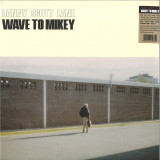
Wave to Mikey, the fourth album from the Los Angeles-based actor, musician and photographer Danny Lane is a nocturnal, neon-lit ode to the friendships that shape us. “I made this album for my friend Mikey from back home,” Danny explains. “We were pretty much inseparable for a large part of our lives, and our musical and social minds were always in sync in a special way. Then with age, we drifted apart, especially since I moved to Los Angeles. This album is just a little wave hello to an old friend and a kindred spirit.”
Equal parts avant-garde composition, instrumental city-pop, ambient, Kankyō Ongaku (environmental music) and Fourth World music, Wave to Mikey is an impressionistic and reflective cycle of eleven richly detailed memory portraits. Throughout the album, the influence of Jon Hassell, Arthur Russell, Hiroshi Yoshimura and Yellow Magic Orchestra hangs in the air like late-night mist, adding character but never overshadowing the rhythmic ambience of Danny’s musical visions.
Wave To Mikey began as a series of sketches on analog synthesisers, guitar, sample and found percussion sketches, initially recorded in Danny’s home studio. Once he’d located the vibe, Danny called on his friends E Talley II, Solange collaborator John Carroll Kirby and Destroyer session musician Joseph Shabason, who respectively added flute, spiritual synth textures and saxophone to the record.
For Glossy Mistakes founder Mario G.R., who originally discovered Danny through his photography, Wave To Mikey captures a vivid feeling of melancholy and peace. “He's able to encapsulate emotions in a very straightforward way, either in his portrait or songs,” Mario says. “I think that's a kind of virtue or skill given to talented artists, no matter the field.”
Born and raised in Staten Island, New York, Danny began playing music with his friends when he was thirteen, before putting that passion on pause to study Fine Arts (Theatre) at Rider University in Lawrence Township in pursuit of an acting career. Acting led him to photography, after playing a photographer in a film, he was inspired to pursue the medium. Danny began shooting photos on film for magazines and lifestyle brands, spent a stint living in New York’s Chinatown neighbourhood, and eventually relocated to Los Angeles in 2017.
Four years ago, Danny started recording and releasing music under his own name, leading to the trilogy of releases that preceded Wave To Mikey, How To Empty A Cup (2019), Memory Record (2019) and CAPUT (2021). Over the course of these releases, he’s revealed himself to be a sophisticated composer and producer with a studied ear from years spent digging through record bins for ambient, experimental, new age, jazz and electronica records from around the globe, with a particular emphasis on Japan.
“Music is something that’s always been involuntary for me,” Danny reflects. “It’s unconditional, always there. It’s something I just have to do. I’ve taken breaks and it’s always gloomy when I’m not playing. I just want to get better and better and understand more and more.”
Here at Glossy Mistakes, Wave To Mikey marks our second contemporary album release, following on from Evenings by Japanese composer Metoronori. We’re proud to be able to present Danny, Metoronori and other modern musicians' work alongside reissues of classic works from Stevia aka Susumu Yokota, Akira Ito, Yuji Toriyama & Ken Morimura, and Takashi Kokubo.
Mastered by Damian Schwartz, Wave To Mikey will be released on Vinyl LP Glossy Mistakes on June 27 2022. Besides the regular black vinyl, a limited clear vinyl will be available in an edition of 100 copies. Both editions come packaged with original cover art photography shot by Danny.
‘4-Vesta’ is the brightest asteroid visible from Earth. Measuring around 500km in diameter, it’s one of the four largest objects in the asteroid belt between Jupiter and Mars. Fragments of Vesta have been found on Earth, as meteorites that were ejected into space after two collisions that left huge craters on its surface. These fragments show that Vesta was probably once a planet itself, made of the same material as the four terrestrial planets (Mercury, Venus, Earth and Mars).
It was an encounter with one of these fragments that inspired the name for Azu Tiwaline’s latest EP for I.O.T Records, ‘Vesta’, which features tracks that were written and recorded around the same time as ‘Magnetic Service’, her break-through EP for Livity Sound. Holding a piece of Vesta that had been found in the Saharan Desert - already a place of deep significance for her - she felt a sense of wonder, on a cosmic scale. In her hands, was an object so apparently familiar, of the same age and made of the same fundamental materials as the Earth on which she stood, yet from somewhere else entirely. A perfect name for the four tracks that make up ‘Vesta’. And also the perfect source material for the EP’s cover, an electron microscope image of a razor-thin slice of that same cosmic fragment that Azu held in her hand.
‘Vesta’ is familiar, yet distinct. It’s recognisably Azu Tiwaline from the very start, yet the unexpected always finds a way in. A booming, echoing kick opens ‘Low’, followed by the rattling, shivering sound of a tanbur hand-drum, courtesy of his regular collaborator, Franco-Iranian percussionist and producer Cinna Peyghamy. But then, tentatively at first, a jazzy synth line emerges, and disappears again, only to reappear later. An another colour to add to Azu Tiwaline’s already rich palette?
Azu Tiwaline’s music has always explored the dynamics between space and depth, and the contrasts between light and density. ‘Vesta’ often feels like a high-wire act, an exercise in finding space even as the air fills with drum patterns and synth lines. ‘Medium Time’ builds from a chorus of buzzing insects into a thick percussive track across eight minutes, without ever losing that initial wide-open sound of the dusk. ‘Into The Void’ pays homage to her well-worn collection of Rhythm & Sound and Basic Channel 12-inch singles, all swaying dub echoes and languid kick drums. Then mid-track, it pivots in intensity, each element suddenly expanded and magnified: a psychedelic shift. Those who’ve had the chance to see Azu Tiwaline perform in the past few years might get a few flashbacks - it’s been a key part of her live set.
But it’s the final track ‘Deep Theko’ that best fits the EP’s cosmic title. A shape-shifting ‘ambient’ track that never seems to settle, it drifts restlessly, sporadic percussion and synth washes injecting random bursts of activity. A sonic representation of planetary debris floating through space? Here, as with the airless void of space, emptiness enables a certain perspective. If the distances between the stars weren’t so enormous, we wouldn’t be able to gaze upon them in their entirety, after all.
A spellbinding tribute from one multi-faceted artist to another. New York-based artist Aki Onda (b. 1967) conjured a transduction to the Korean multi-media pioneer Nam June Paik (1932-2006). Aki himself describes the project:
“Nam June’s Spirit Was Speaking to Me occurred purely by chance. In 2010, I was spending four days at Nam June Paik Art Center in South Korea for a series of performances and had plenty of free time to wander. The building was packed with Paik’s artwork and related material. I have always felt a close kinship with him as an artist, and so it was a great opportunity to immerse myself in his works and ephemera.
It was that night I made the first contact, via a hand-held radio in a hotel room in Seoul. It was literally out of the blue. Scanning through the stations, I stumbled upon what sounded like a submerged voice and I began to record it in fascination. I concluded this was Paik’s spirit reaching out to me.
The project continued to grow organically as I kept channeling Paik’s spirit over long distance and receiving cryptic broadcasts/messages. The series of séances, conducted in different cities across the globe, began in Seoul in 2010, and continued in Köln, Germany in 2012, Wrocław, Poland in 2013, and Lewisburg, USA in 2014. The original recordings were captured by the same radio which has a tape recorder, with almost no editing, save for some minimal slicing and mastering.
Paik is known for his association with shamanism, a practice that constantly surfaces in his works all through his career. In an interview, he stated “In Korea, diverse forms of shamanism are strongly remained. Even though I have created my work unconsciously, the most inspiring thing in my work came from Korean female shaman Mudang.” Paik himself was a master shaman and vividly used shaman rituals and symbols for staging his performances and installations.
These recordings also became a way for me to explore the mythic form of radio—a medium which is full of mysteries. The transmissions captured may be “secret broadcasts” on anonymous radio stations. There are in fact hundreds of those stations around the world, although the numbers dwindle as clandestine messages can now be sent via encrypted digital channels. Some of these stations were likely for military use or espionage or relics of the Cold War. But many others continue without apparent explanation. These are just some of the questions that remain unanswered.”
Commissioned in 2017 by documenta 14's radio program “Every Time A Ear di Soun,” these recordings were continually broadcast on eight radios stations around the world that year. Nam June’s Spirit is a beautifully formed homage, I cannot think of any other like it. An intimate, flickering language discovered through the air. The LP comes replete with a booklet of photographs of Paik on the set of Michael Snow’s unreleased film Rameau’s Nephew (1974).
Sean McCann, 2020
Aki Onda, 2017
20-page art booklet including rare photographs of Nam June Paik from the set of Michael Snow’s film Rameau’s Nephew (1974), two essays on radio-wave phenomenon (by Onda and Marcus Gammel), and a remembrance of Paik by Yuji Agematsu
Alex the Fairy is an artist based in Berlin producing music with an emphasis on electronic and concrete methods. Alex the Fairy is also part of the 3Ddancer trio, a live act focusing on improvisation and expression using electronics.
Alex The Fairy writes: "I had sent The Tapeworm tracks before, but I was being difficult so was asked to send a new bunch, with a deadline. I sent the new bunch, a fairly odd collection expecting perhaps some of them to be combined with the older stuff but not seeing any coherence in them. I figured The Tapeworm would find at least something. To my surprise the suggestion that came back was exclusively the tracks I had sent the second time, and, re-listening through the tracks in this new order after returning from a Christmas dinner lying on the floor of my nephews bedroom gave them a completely new context. Despite them being quite varied in terms of age (one had been flung together a few days earlier on the train while another was approaching Schulreife) they seemed to meld together in such a way that I hardly recognised them…
Last year my grandmother died. My last grandparent. I had put off seeing her during corona, as I thought it best not to put her at risk and had almost left to visit her days before her death but had delayed my departure because of a medical appointment. My failure to her weighs heavy on my mind - fates grimacing grin: too little, too late. The approaching march of death, one generation closer was a confrontation I wasn't prepared for.
While clearing out her flat in the following weeks I had kept some of my grandfathers cassettes, live recordings of jazz greats, Pink Floyd, Sade and some classical among them, none originals, several presumably from the radio e.g. a church organ rendition of Bach. At the time I wasn't sure why I was hanging on to them, other than the urge to hoard, and that it felt wrong not at least to keep some. Half a year later, half way through mixing this cassette, suffering from my first bout of COVID, I had the insatiable urge to hook up the cassette player I had received from my grandfather after his death around nineteen years earlier and had been dragging along with me since. I stuck a cassette in only to immediately return to the safety of my covers. I began to work my way into what I had saved, hearing the fruits of my grandfathers labour decades before. It felt like quite an intimate interaction with someone I had long lost contact to/was long gone. Quite a wonderful thing, these time traveling cassettes.
I returned to the tracks to mix them shortly before my corona/cassette experience, with a new mixing console at hand. I had been looking for one for several years, but nothing had ever clicked, until I found this old broadcast desk 30 minutes from my place (it also coincided with a payment from a job the sum of which matched the price identically… fates return). Installing became a massive hassle and I doubted my decision continuously, but the further it was implemented the more it made sense. The first track I recorded with the mixer is on this cassette. Shortly before the mixing I was introduced to an Effektgerät by a friend, Rapha. Another good friend Art lent me their one, and I ended up using copious amounts of it throughout mixing, alongside my usual space creators. All the tracks on this release were mixed again on this mixer and are in a sense all a bit of a dub of the originals. I wouldn't have worked this way without the mixer, and the effect gave me a dimension I hadn't had before, so, from a technical perspective, the mixer and this effect define this release, giving it a coherence, at least for me. Emotionally of course the chaos and turbulence of the preceding year and my newfound appreciation for the medium give it a meaning I will struggle to formulate." – Alex The Fairy, Berlin, 9 May 2022
"Don’t be afraid, old son, it’s only me,
though not as I’ve appeared before,
on the battlements of your signature,
or margin of a book you can’t throw out"
~ Michael Donaghy
Whytwo is a young, enigmatic artist from Scotland, UK. A talented multi-instrumentalist and performer with an extraordinarily broad range.
First coming to Blu Mar Ten's attention after entering their 2017 remix competition, Whytwo created a wildly different take on their track 'Titans', bending it into a skittering, menacing groove while somehow maintaining a playful edge.
Fast-forward a little and we've now arrived at Whytwo's debut LP, 'Ghost', an exhilarating and elasticated take on Drum & Bass that exists in the hinterland between elation, melancholy and longing.
Mirroring Whytwo's music, the album's title, 'Ghost', is richly layered word, meaning, in different places and at different times; a memory of something or someone; to disappear without communication; to move quietly and quickly; to secretly do work for another; and, of course, a being caught between worlds.
From the old English, 'Gast', meaning 'breath' or 'spirit', the word eventually transformed into 'Ghost' coming to describe "a slight suggestion, mere shadow or semblance". All of these definitions relate, in some way, to the album now before us.
In conversations with Whytwo, he describes how his Jazz musician Grandfather was the person responsible for first giving him music-making software, and whose clarinet features on some of the album tracks. At the same time that 'Ghost' was being created, Whytwo was looking after a young child and some of the drums on 'Ghost' are recordings of the child hitting things. Whytwo describes the feeling of existing between these two extreme states, young & old, naive & experienced, primitive & advanced, and taking the role of a medium 'caught between worlds' whose task was to stitch together this generational fabric.
The result is nothing less than spectacular. Despite having its roots in Drum & Bass, the rules and conventions of the style are ruthlessly disobeyed resulting in glittering cascades of melody, harmony and rhythm that somehow burst with both sadness and joy, hope & loss, memory and anticipation. The music swoops and dips, briefly casting shadows before blasting them away with sunlight, evoking memories both personal and collective. This is 'Lost Soul Music' that manages to speak to all of us.
Despite being deceptively listenable, Whytwo insists this is not relaxing background music. Listeners should fully engage with the music beyond its attractive surface and absorb it at the same deep human level where it was created. 'Ghost's production levels are astoundingly high but focussing on those would be a mistake. They only serve to carry the spiritual content of the music across to the audience and unlock the valves of feeling. The beauty here is not the machine, but the ghost in the machine.
140g Black vinyl LP – Printed inner sleeve – Sealed plastic sleeve
In Trux We Pux is an editorial project organized by the Porto based label and collective Favela Discos. Focusing on the city’s thriving experimental and improvised music scene, it sets out to portrait in a series of four volumes some of the characteristic sounds and collaborative practices that have been in development in Porto during the last few years.
Milteto is an informal orchestra born out of the Favela Discos collective somewhere in 2014. The idea, that had been around for a while, was materialized for a concert in one of the first events hosted by Favela, in the extinct Picadilly Pub in Porto, a small strip club turned underground venue. It was one of those wet pre-covid nights where the condensation dripped down the mirrored walls, in a loud endurance contest that resulted in a fainted audience member.
For a very large number of reasons, it would be hard to define Milteto’s whole “career” in an album: the band has always inhabited the live context, trying to create massive immersive sound experiences for both the listeners and the musicians, subconsciously seeking to achieve transcendence by volume.
So, in reality this is a momentary reflection of an always mutating entity, instead of trying to define the several years of drastically different experiences in just 45 minutes, they took to the album as just another live presentation where they adapted to the idea of what a record could be as if they would adapt to a venue.
Faced with the idea of creating an album that reflected the project’s mutability, the band looked at the medium itself for inspiration, as the vinyl record has two sides, they thought that maybe it would be a good idea to reflect that on the music. So the recording sessions were split into two days, with two different groups of guests. One side set to recreate a more physical manifestation of the band, the other a more mental side, the first teeming with percussion, the other with electronic devices and synthesisers.
- A1: Toxic Shock - Big Print
- A2: This
- A3: The Happy Medium
- A4: Nothing But Trouble
- A5: The Bending End
- A6: Lower Than Ever
- B1: Insurance
- B2: Why’s Of Acknowledgement
- B3: Bachelor Land
- B4: Crafty Fag
- B5: Ponces All
- C1: How To Age
- C2: Urban Ospreys
- C3: Cakehole
- D1: The Crunch
- D2: All Talk
- D3: Look Satisfied
- D4: Not Man Enough
- D5: Bachelor Land
Back on vinyl for the first time in 3 decades, Hysterics is pressed on double silver vinyl LP. As essential vinyl reissue from the recently revived King Rocker stars. Following the release of the critically acclaimed King Rocker documentary (staring Stewart Lee), Robert Lloyd’s cult post-punk are selling out tours and receiving the long-overdue recognition they deserve. Long out of print, rarity-packed deluxe edition of their second album is a worthy follow-up to that of their debut and a harbinger of great things to come.
Kicks & Hugs, a multi-disciplinary platform established in 2017 to hold space for like-minded creators, now launches its own label showcasing emerging sonic spheres that reach beyond momentary hype and trends alike. Based in Berlin, the foundation of Kicks & Hugs lies at intersectional crossroads of music and art, with their first record establishing a definite attitude towards contemporary artistry. Kicks & Hugs celebrates an immersive spectrum of talent across different mediums and promotes ideas composed of color to challenge a steady current of long exhausted black & white patterns within the realm of electronic music. The debut EP available on black & limited edition colored marble vinyl assorts a kinetic flow of ideas produced by a seemingly divergent roster. Completely ecstatic & exhilarating maze of rhythm by The Lone Flanger, additionally reworked with Varg2TM versus contrasting yet innovative dancefloor mechanics by Bertrand., ending with a hypnotic mix by Dasha Rush, the record is an absorbing material of dynamics that subtly surprise and leave nothing but an ambitious statement for what’s yet to come. KH01 is dedicated to a musical shape-shifter, a paramount figure, ephemeral talent & a dear friend – Andrew Smith. To end in his own words, Keep It Fungki. The Lone Flanger was an audio-visual project from the artist Jasen Loveland also known as Andrew Smith (1980-2021). Dedicated to exploring the intersection of music and visual arts in the expanded dimension, the work of TLF picked up where Loveland’s eponymous acid-based project left off, aspiring for a kind of transcendence that takes the listener beyond the previously known concepts to experiments with the possibility of creating a resonant bridge between frequencies, worlds and dimensions. The work of TLF questions, obfuscates and complexifies notions of rhythm, melody and musical genre… even our ability to rely on our senses for accurate information about the work in question Varg2TM also known as Jonas Rönnberg casts a cryptic shadow from the North over contemporary aesthetics, continuing to create in his largely collaborative and always thrilling approach. Tempering a caustic rhythmic sensibility with a pneumatic palette for high definition synthesis, his unique embrace of risk tests the reliability of the forms he works in as well as the genre borders he surveys. Bertrand.’s work as a producer incorporates a wide spectrum of influences and aims to create beyond the common means of electronic dance music. Bertrand.’s restless nature and desire for technical perfection bleed into his productions of bass-heavy futuristic soundscapes often juxtaposed with playfully intense dancefloor fundamentals. Dasha Rush constructs a rather wide assortment of electronic music and arts projects. She sees the genre as a starting place, not a destination. Rush brings up a mixture of rather rare electronic experimentation more akin to the brief movement of underground music. Credits: Mastering and mastercut by Andreas LUPO Lubich at Loop-O Cover artwork by Fredrik Altinell Graphic Design by Marta Braga Inner label artwork by Tommy Dwane Vocals by Kawala Bravo
In November 2014 The Jesus and Mary Chain celebrated three decades of their incendiary cult-classic debut album, 'Psychocandy', with a run of tour dates in which the infamous Scottish group played the album in full for the very first time in the band's history. As part of the 'Psychocandy' tour, the Mary Chain descended on Glasgow's Barrowland Ballroom - a legendary venue down the road from where the Reid brothers grew up in neighbouring East Kilbride - and tore through the songs that would propel them to worldwide acclaim upon 'Psychocandy's release in 1985. The Barrowland performance - an equal-parts deafening and blinding assault on the senses - was cut to vinyl by engineer Noel Summerville and originally released in 2015. Fast forward to 2022 and the 'Live at Barrowland' album is now being reissued by Fuzz Club Records. Due for release April 22nd, the 2022 reissue comes with new artwork and on 180g vinyl in a gatefold jacket with a booklet glued inside that features pages of photos from the tour as well as an interview with the Reid brothers and Alan McGee. The influence that 'Psychocandy' and its pioneering sonic belligerence had on popular music cannot be overstated. Taking bittersweet pop melodies and tearing them up apart through the medium of buzzsaw guitars, ear-piercing feedback and an unapologetic hostility towards their listeners, the band's breakthrough album experimented with noise in a way that had never been done before and would inspire for generations to come. The 'Live At Barrowland' LP captures 'Psychocandy's complete 14 tracks in a live setting and in all their boundary-pushing and feedback-ridden glory. The CD and digital versions of the reissue - including the download card that comes with the vinyl - also feature seven bonus tracks taken from the prelude set on the night, including such fan-favourites as 'April Skies', 'Head On' and 'Reverence'.
With their duo debut, Dean Spunt and John Wiese invite you to experience
the frenzy of percussive space and discreet sound found inside ‘The Echoing
Shell’.
This is the first official collaboration between the two veteran music-makers,
though their connection goes back to 1999. As John recalls, “Dean was in a
high school arts program at CalArts. A friend and I were recording the first
Sissy Spacek demo in the design studios there, and taking a tape to my car
over and over again to check the mix. Dean was walking through the parking
lot with a Locust shirt on, we said hello, and he immediately got into a car
with two strangers to ‘listen to a tape’.”
The tape-listening ended well, apparently. Dean and John became friends
and fellow travellers in LA circles and beyond: in 2005, John did a remix for
Dean’s first band, Wives; in 2007, Dean played percussion with Sissy
Spacek’s 13-Tet Los Angeles; John toured with No Age several times and
collaborated live with them in 2010.
Under the Sissy Spacek name as well as his own, John’s recordings for his
own Helicopter label and many others kicked things off for him around the
end of the century; since then, he’s been constantly engaged in solos and
collaborations on record, performances, and installations around the world.
In addition to Dean’s ever-growing discography with No Age, he curates his
own label, Post Present Medium. In 2018, Radical Documents released
Dean’s solo debut ‘EE Head’, which explored concrète and experimental
techniques in a four-part, album length piece.
‘The Echoing Shell’ is born of Dean and John’s shared understanding, using
John’s process common to Sissy Spacek: elaborate sound-collage works
using source material originating from punk, hardcore and improvised music.
A series of impositions, tape manipulation and edits recompose the material,
cracking open the crust of the source, freeing its implied guts to steam forth
in gushes of extreme noise. On ‘The Echoing Shell’, this is as often noise as
it is extreme intimacy, seeming at times to be sourced from within Dean’s
drumkit, at other times appearing to emanate from the capsules of
microphones and the circuits of the signal path itself.
One may read these collaged sounds as abstraction, but there is a unique
language conveyed in their assembly, forming something like word-shapes
and meaning. And intention: the two side-long pieces, comprised of many
short sections, form a linear whole, creating alternately ripping and
discriminating music - and meaning - in the process.
‘The Echoing Shell’ is a fantastic conception in contemporary musique
concrète, combining incendiary post-rock power, dry humour and astonishing
depth of field. Whether projecting the sound through headphones, ear buds,
bookshelf speakers or your own personal amp stack, crank up ‘The Echoing
Shell’.
Like many of his favorite songwriters (John Hartford, Lucinda Williams, Jeff Tweedy), Izaak Opatz is an ungulate in life’s winter pasture, chewing on and metabolizing disappointment, heartbreak, and the other tough stuff into enjoyable musical carbohydrates. A compulsive metaphorager (and inveterate wordplayboy), Opatz breaks it all down with enzymes of wry humor, thoughtful simile and close observation - a therapeutic process of narrativizing his own life that, almost as a byproduct, turns out savory nuggets of literate, confessional pop. Where 2018’s 'Mariachi Static' drew from Opatz’s fragmented love life as a seasonal Park Service employee and resonated especially with the sensitive dirtbag set, 'Extra Medium', his latest release, splits time between romantic Hindenburgs across his native Montana, up the East Coast, and in faraway Los Angeles. Montana and LA especially decorate the album, supplying wells of metaphor and scene-making, and as characters in their own right - LA’s alternately charming (“In the Light of a Love Affair”) and discomfiting (“East of Barstow”), and, in “Big Sandy”, Montana evolves from setting to subject as the girl’s feelings he traverses it to see prove less than his own feelings for the state. In LA, Opatz learned from and worked alongside Jonny Fritz at Dad Country Leather, and met bandmates and 'Extra Medium' collaborators Malachi DeLorenzo (drums, producer, engineer) and Dylan Rodrigue (multi-instrumentalist, producer). He now lives in Missoula, Montana, where he runs his own custom leather shop, is writing the next album, and getting ready to pursue a Journalism degree at the U of M.
You probably heard it before, several times. The opening number ‘Hungry, So Angry’ is to be considered one of the most infectious white funk anthem of the era. The Glitterhouse was released in 1981 on british imprint Cherry Red and soon was hailed as an instant classic for the post-punk generation close to dancefloor. In the same league of A Certain Ratio and newyorkers Bush Tetras the band originally from Nottingham moved behind obscure numbers and twisted grooves showing a revolutionary take on the up and coming new wave scenario. Here’s an unmissable collection with tracks from their three singles, sole studio album, live recordings but also unreleased tracks from an October 1982 demo tape.
Toro y Moi’s seventh studio album, ‘MAHAL’, is the boldest and most fascinating journey yet
from musical mastermind Chaz Bear. The record spans genre and sound - encompassing the
shaggy psychedelic rock of the 1960s and ‘70s, and the airy sounds of 1990s mod-post-rock -
taking listeners on an auditory expedition, as if they’re riding in the back of Bear’s Filipino
jeepney that adorns the album’s cover. But ‘MAHAL’ is also an unmistakably Toro y Moi
experience, calling back to previous works while charting a new path forward in a way that only
Bear can do.
‘MAHAL’ is the latest in an accomplished career for Bear, who’s undoubtedly one of the
decade’s most influential musicians. Since the release of the electronic pop landmark ‘Causers
of This’ in 2009, subsequent records as Toro y Moi have repeatedly shifted the idea of what his
sound can be. But there’s little in Bear’s catalogue that will prepare you for the deep-groove
excursions on ‘MAHAL’, his most eclectic record to date.
The second the album begins we’re immediately transported into the passenger seat, jeep
sounds and all, ready for the ride Chaz and company have concocted for us. Seeds of some of
‘MAHAL’s 13 songs date back to the more explicitly rock-oriented ‘What For?’ from 2015.
‘MAHAL’ was mostly completed last year in Bear’s Oakland studio with the involvement of a
host of collaborators, Sofie Royer and Unknown Mortal Orchestra’s Ruban Neilson to Neon
Indian’s Alan Palomo and the Mattson 2.
“I wanted to make a record that featured more musicians on it than any other record of mine,”
he explains. “To have them live on that record feels grounded, bringing a communal
perspective to the table.” As a result, ‘MAHAL’ is lush and surprising at every turn, from the
cool-handed ‘The Loop’, which recalls Sly and the Family Stone, to the elastic psych rock of
‘Foreplay’ and the dizzying Mulatu Astatke-recalling of ‘Last Year’.
Lyrically, the album zooms in on generational concerns, picking up where the ‘Outer Peace’
standout ‘Freelance’ effectively left off. Bear seems to be surveying the ways in which we
connect with technology, media, each other, and what disappears as a result. Cuts like the
squishy ‘Postman’ and ‘Magazine’ take a deep dive into our relationship with media in a
changing digital world. “It’s interesting to see how we adapt to this new age. We’re so
connected, but we’re still missing out on things,” Bear ruminates while discussing the album’s
themes.
It’s not all introspection. Bear cools things down near the album’s end with the Mattson 2-
featuring ‘Millennium’, a laid-back jam with tricky guitar licks about ringing in new times even
when everything else seems upside down. “It’s about enjoying the new year, even when it’s
been shitty,” Bear explains. “There’s nothing else to do.”
Finding a sense of joy in the face of adversity is embedded in ‘MAHAL’s DNA, right down to the
jeepney that literally and figuratively brings the music out into the community. “We know that
touring is messed up for now, and large gatherings are a fluke,” he explains. “It’s about the
notion of us going out to the people and bringing the record to them.” And with the wide-open
atmosphere of ‘MAHAL’, Toro y Moi stands to connect with more listeners than ever before.
Toro y Moi siebtes Studioalbum MAHAL ist die bisher wohl kühnste und faszinierendste Reise des musikalischen Masterminds Chaz Bear. Mit einer weiten Spannbreite zwischen Genres und Sounds - vom zotteligen Psychedelic Rock der 1960er & 1970er hin zum luftigen Sound des Mod-Post-Punks der 90er-Jahre - nimmt das Album die Hörer*innen mit auf eine musikalische Expedition, in der sie im Rücksitz von Bears philippinischen Jeepney, der auch das Albumcover ziert, Platz nehmen können. So ist MAHAL ein unverwechselbares Toro y Moi-Erlebnis, welches in Verbindung zu seinen vorigen Werken steht und dennoch einen ganz neuen Weg einschlägt, wie es nur Bear tun kann. Seit der Veröffentlichung des bahnbrechenden Electronic Pop-Albums Causers Of This 2009, hat Toro y Mois Alben stets die Idee, was sein Sound sein könnte, weiterentwickelt. Dennoch findet sich in Bears Backkatalog nur wenig, das einen auf die Deep Groove-Exkursion auf seinem bisher vielfältigsten Album MAHAL vorbereiten könnte. Mit den ersten Tönen des Albums werden wir direkt in den Beifahrersitz gesetzt, umgeben von den Motorengeräuschen des Jeeps und bereit für die Fahrt, die Chaz und seine Gefährten für uns geplant haben. Einige der 13 Tracks auf MAHAL - das Wort für Liebe in der auf den Philippinen gesprochenen Sprache Tagalog - finden ihre Anfänge in der Zeit um das deutlich rockigere What For? aus dem Jahr 2015. So liefert das neue Album eine ganz klare Antwort und spannt den Bogen: What For? - For Love. MAHAL wurde größtenteils letztes Jahr in Bears Studio in Oakland in Kollaboration mit Künstler*innen wie Sofie Royer, Unknown Mortal Orchestras Ruban Neilson, Alan Palomeo von Neon Indian sowie The Mattson 2 fertiggestellt. "I wanted to make a record that featured more musicians on it than any other record of mine," erklärt Bear. "To have them live on that record feels grounded, bringing a communal perspective to the table." Im Resultat ist MAHAL üppig und voller Überraschungen - sei es durch das locker lässige "The Loop", das an Sly and The Family Stones erinnern lässt oder dem elastischen Psych-Rock bei "Foreplay" sowie der schwindelerregenden Mulatu Astatke-Anlehnung bei "Last Year".
"I Can't Let Go" ist das erste Album der britischen Sängerin und Schauspielerin Suki Waterhouse und wurde von dem Grammy-nominierten Produzenten und Songwriter Brad Cook (Bon Iver, The War On Drugs, Snail Mail, Waxahatchee) produziert. Neben ihrer Tätigkeit als Schauspielerin (The Bad Batch, Assassination Nation, Misbehaviour) und Model (Burberry, Ferragamo, Tommy Hilfiger) katalogisiert die Britin ihre intimsten, prägendsten und bedeutendsten Momente ihres Lebens am liebsten in Songs. Die in London geborene und aufgewachsene 30-Jährige fühlte sich schon früh zur Musik hingezogen und sah das Medium immer als eine Möglichkeit, Kreativität auszudrücken und Geschichten zu erzählen. Bis heute haben Bands wie Oasis einen ganz besonderen Platz in ihrem Herzen, Suki hört aber auch gerne Songwriterinnen wie Sharon Van Etten, Valerie June oder Lou Doillon. Bevor sie sich mit dem angesehenen Produzenten Brad Cook für ihr Sub Pop-Debüt zusammengetan hat, erschienen bereits die auf eigene Faust veröffentlichten Singles "Brutally", "Good Looking" und "Valentine", die auch ohne großes Label im Rücken bis heute fast 20 Millionen Mal gestreamt wurden.
Tephra is the latest mesmerizing, propulsive EP by Philadelphia-based rave conjurer Furtive. With captivating woozy arpeggios, high-pressure textural progression, and sharp scintillating sound design, Furtive’s release is a fresh and powerful entry on Mild Fantasy - the brainchild of NYC-based DJ/producer Elle Dee.
Furtive is a full-gonzo rave rat, intractably committed to the dancefloor as a producer, DJ, and DIY event organizer. Tephra showcases a canny approach to creative techno dynamics most familiar to die-hard dancefloor supplicants who’ve both been in the booth and worshiping in front of the speaker stacks.
The EP kicks off with its namesake track: Tephra is a pressure-building whirlwind of dense, textural progression and explosive tension-and-release dynamics. Mounting from a muscular low-end pattern up to a dramatic break, Tephra is a proper warp-drive weapon.
With Strobe Bubble Romance, Furtive dives into pedal-to-the-metal rave acceleration with jagged arpeggio interplay and sharper sound design. In gentler, more romantic contrast, Iris Blur brings back a dizzying melodic progression to even out the blistering pulse of the former.
Question Accelerator (No Answers) is a trippy twist in the EP, comprising a high-torque psychedelic drum and bass journey. As a digital-only bonus, Furtive closes the release with Lullaby, a haunting ambient exploration.
A ferociously productive producer with over a decade of experience bending sounds, Furtive cut their teeth as a DJ and promoter in Washington, DC’s warehouses, where they also played a turnkey role in putting on some of the District’s zaniest techno parties. They’ve supported internationally celebrated non-nonsense acts and held court in dingy watering holes with eclectic selections and a steadfast focus on pacing, dynamics, and surprises. Beyond the fog and strobe lights, Furtive creates art in various mediums, including linocuts, render art, inky drawings, and tattooing.
Repress
Growing Bin burst into 2018 with a bang, crash and symbol splash, uniting a premier pair of per-cussion obsessives for a supernatural mission into the heart of the rhythm.
Dressed in the pitch black of Du¨sseldorf stands Wolf Mu¨ller, master of the tropical drums and seven time Salon Des Amateur breakdance champion. Repping Cologne and Berlin is Niklas Wandt, Germany's funkiest drummer and a mixed musical artist as adept in experimental jazz as demen- ted Euro dance. Standing toe to toe in a no holds barred, no drum unstruck groove contest, these two titans will make you swing your pants like a Crash Bandicoot victory dance...so stretch out and step in to ‚Instrumentalmusik von der Mitte der World'.
Taking to their task with the joyful abandon of two big kids getting creative with the Kindergar- ten music tray, Mu¨ller & Wandt marry dripping electronics, Froesean pads and rubber-limbed basslines with tribal polyrhythms, C2 claps and Indonesian shakers - and that's only on the A1. Comprising of three trance-inducing epics, a handful of medium-sized movers and a couple of freeform interludes, this dynamic double pack could almost pass as a lost Library masterpiece, but our mind guides go Furthur, fusing esoteric funk and free-jazz freak-out a truly transportive experience. Prepare to enter a world of techno totems and neon skulls, shades of Yello and excel- lent birds. Within these grooves lies a transdimensional pathway between the Temple of Doom, the Twilight Zone and De Palma's Paradise, brought to life in a shamanic rite.
Forget the healing frequencies of Growing Bin's ambient outings, this time we're dancing for mental health.
(words by Patrick Ryder)
With an increasingly vibrant Norwegian Indie Rock scene on the rise, Lazy Queen - as founded by Colombian-Norwegian Henrik García Søberg (they/them) - have made their mark with a sound inspired by the rich traditions of the Brooklyn DIY scene that birthed the band, ambitious and effervescent releases, coupled with their unique ability to convey personal and relatable experiences through García Søberg's lyrics
The Oslo- based outfit effortlessly blends harmonic and discordant elements together with an instinctive ear for melody into a playful, innovative and vibrant sound, which affixes both context and contrast to lyrics that often explore life's more maladjusted corners. It's immediate. It's urgent. It impatiently demands your attention.
Previous release received widespread support and critical acclaim from renowned outlets such as Wonderland Magazine, Under The Radar, NYLON, Red Bull Music, Earmilk, Indietronica, Impose Magazine, Medium and more.
A new hub solely for the Icelandic talent’s unreleased material, BJARKI will also serve as a platform to launch a wealth of forthcoming audiovisual projects in the coming months, with the label logo designed by Paul Nicholson, NUMBER 3, and all artwork designed by Thomas Harrington Rawle - the creative behind the Care More project. Operating and creating its own storyline with every release, intertwining projects between Harrington Rawle and Bjarki across various mediums, the imprint will also drop a series of offshoot white label releases while being reactive and unveiling random drops across its upcoming schedule. Delivering his first solo release since ‘Oli Gumm’ on трип in 2018, late-February marks the first release on the new label as he unveils his four-track ‘I Wanna Go Home’ EP.
“I want to share more of my unreleased works, especially the tracks that I have created specifically for parties in each city I play. People impact my work a lot, and I would like to share this music directly before or after the show. I don’t see any other way than to set up my own channel or label where I can share all these ideas. Next year will be a lot about sharing stuff and being in direct contact with the audience.” - Bjarki
Opening the label with authority, ‘I Wanna Go Home’ welcomes a quartet of cuts showcasing the genre-spanning polymath at his best, delivering a medley of serious yet playful productions which arc back to previous material while also looking ahead to the future. A creative force with an unrelenting swathe of experimental ideas, influences and directions, this new eponymous imprint looks set to home some of Bjarki’s finest and most unpredictable material to date.
‘Free World’ is the first full-length issue from an
ongoing collaboration between Behavior (Bedros
Yeretzian, Evan Burrows, Justin Tenney, Robbie
Cody) and Mayako XO (Sara Gernsbacher). It was
tracked between 2019 and 2020 and assembled
over the course of the last year in Los Angeles.
The album reflects its creation under open-ended
yet intent circumstances. What’s recorded is a
tangled pas de deux between discredited and
demonstrative characters, singing through shifting
voices over a living, melancholic music rendered
legible by surveillance.
Mastered by Sarah Register.
For fans of Sonic Youth, Velvet Underground,
Dead C, Blonde Redhead.
As the tides change and the majesty of the moon once more begins to illuminate our forgotten domain, the hotly-tipped Incus has made the jump to hyperspace and determined that now is the time to unleash his neoteric creation into the macrocosm of music. At the behest of the sonic social masters, "INC.AUDIO" will be deemed a passion project, but in reality it will rip the very fabric of what it means to have a personal creative outlet, curtailing boundaries and expectations alike. Based on the creed of freedom of experimentation, the label will allow Incus and close friends within the industry to share their creative expressions within a familial and contemporary framework free from third-party limitation.
For now we start at the first chapter of the INC.AUDIO narrative, and the inaugural release which comes from the architect himself. His first solo EP contains 4 tracks conceived at home during lockdown, combining new sound design techniques developed through the mediums of trusty Korg Hardware and Ableton live. The end product is a consummate representation of the benefits of free time, reckless abandon and zero red tape.
Kicking off with "Design Your Mind", Incus draws on his longstanding influences collected via years of crate-digging and supporting underground idols in the UK and Ibiza. Shuffling percussion, jittering stabs and percolatin' chords wax and wane, submitting us to the will of its deep, minimal groove with a sultry sensibility. Next is "New Dog Old Tricks", the one with "that" bassline. No holding back from the get-go, the punching percussion is waylaid sporadically by erratic tones and steadied by placid, ambient chords. The charming breakdowns are peculiarized by a haunting saxophone sample, firmly establishing the clear-cut level of advancement and attention to detail achieved by the creator.
"Calm in the Chaos" steps back from straight-up grooving, inviting an equatorial temperature to come and play. Tantalising acid-inclined bass notes perforate the horizon, aiding the insistent percussion and creating a sunny, party-ready disposition infectious as they come. Feel like you're on a beach or in a rainforest? Snap. After the party we finish in the "Morning Haze". Alien-like frequencies and UFO bleepology steer the good ship Incus on this extra-terrestrial journey through the tech-house heavens to its final resting point. The seductive vocal cut adds a beautiful edge to the track, creating a minimal yet also expansive soundscape perfect for disembarkment. So, now you see what INC.AUDIO is all about, why wouldn't you stick around? Fight the bureaucracy and become who you need to be today, not tomorrow.
A few years back I had this dream: I was walking through vast grasslands
towards a solitary hill
On top of the hill was a movie house. On the marquee: History of Jazz.I kept
thinking about it. What was in the movie house? What happened before? What
followed? Why was I going there? Why "History of Jazz"? To reach some kind of
insight, I began a film script, extending the dream tenfold. The script morphed
into a novella-sized book, a series of songs, and finally, a "mind-movie" podcast,
forming this labyrinthine, multi- medium story – equal parts dream, film and
waking life. Figuring out how to transcend the traditional parameters of the album
to create a more panoramic story- vision is something I've been unconsciously
trying to do for some time. I've been pushing against the edges – toying with
narrative, characters and visuals with Easterween and Niagara, a weird children's
book Daydreams for Night – but the scope of life behind Rialto felt too
irrepressible and expansive to be boxed in an album. The book and podcast have
kicked open the doors – allowing the album to lead or serve where it should.In
Rialto's extended narrative, Klaus (loner, insomniac) is working a stint as a driver
for a small town writer's festival. Following a series of unsettling paranormal
events, he finds himself agreeing to a strange request - to deliver a film reel in
time for its premiere at a secluded movie house - the Rialto. The journey leads
him through a circuit of strangely located, oracular movie houses, screening a mix
of dreams, fantasies, memories and prophecies - numinous films of personal
revelation. Inhabiting the movie houses are underworld characters and spirits
with ambiguous motivations, some helping and some hindering Klaus's quest. It's
a Dantesque, deep cleanse pilgrimage to untangle bitterness and trauma,
rediscover a lost clairvoyance, ancestry, and ultimately, the medicinal source of
eternal youth. A metaphysical noir. A hyperstition.Rialto's album stars seven
singer-artists playing characters alongside mine: Tamara Lindeman (The Weather
Station), Daniel Knox, Thom Gill (Owen Pallet, Beverly Glenn- Copeland), Ryan
Driver (Jennifer Castle), Felicity Williams (Bahamas), Robin Dann (Bernice) and
Martin Tielli (Rheostatics). All Toronto- based like me except Daniel (Chicago).
Performed by the Venuti String Quartet with arrangements by Andrew Downing.
Produced by Jean Martin (Tanya Tagaq). It's my 13th album and fourth on Tin
Angel - previous releases on Tin Angel: Miracle In The Night (2019), Small Town
Water Tower (2016), and Niagara (2014). Each of Rialto's eight podcast episodes
features a chapter from the book performed by a cast of twenty five - made up
almost entirely of musicians – including the speaking voices of the
aforementioned singers, as well as Meg Remy (U.S. Girls), Claudia Dey, Veda Hille,
Devon Sproule, Luka Kuplowsky and others. Rialto is available as a 101-page eBook (illustrations by David Ouimet) on Sud de Valeur Press. Premiere
performances begin fourth quarter 2021. Happy Rialto listening, reading,
watching, dreaming...
Reissue of violinist Jean-Luc Ponty's 1967 album 'Sunday Walk', originally
released on the SABA label (which later was renamed MPS), featuring an
all-star group that includes pianist Wolfgang Dauner, bassist NielsHenning Örsted-Pedersen and drummer Daniel Humair
Legendary drummer Kenny Clarke compared Jean- Luc Ponty to Dizzy Gillespie.
Fellow violinist Stuff Smith marvelled, "He plays violin like Coltrane plays
saxophone." Born in 1942, the French violinist transported jazz violin playing into
the world of modern jazz. On Frank Zappa's urging, Ponty moved to the States in
1973. Over the next years he toured with Zappa as well as the Mahavishnu
Orchestra. In 1975 he founded his own band and became one of the most
prominent figures of the jazz- fusion movement in the USA, selling millions of
albums that all reached the top of the U.S. charts.
On the 1967 'Sunday Walk' the band saunters through two blues, a waltz, and a
standard before reaching "Suite for Claudia", which begins at a blistering pace
with Ponty's saxophone- like "brilliance and fire" playing. It then settles into a
medium swing groove with Wolfgang Dauner's infectious piano play followed by a
smouldering Ponty. Daniel Humair's crisp drum solo segues into a heart- felt
waltz. After all, this was written for Ponty's wife. Ponty is here with a group of
Europe's finest at their youthful best. The way they play, it's all a walk in the park.
Beside Dauner and Humair, legendary bass player Niels-Henning Ørsted Pedersen
completes Ponty's quartet.
"The re-issue of this album by MPS makes me extremely happy as I consider it to
be one of my best recordings from the 60s. " - Jean-Luc Ponty
Array expresses the experience of a remote Antarctic research station through the convergence of sound, site and performance. The result is an immersive and affective experience of the spaces, protocols and conditions comprising the bracing polar environment. Array is a companion piece to Polar Force, a performance-installation work by Philip Samartzis and Eugene Ughetti, presented by Speak Percussion.
Array features recordings of radar and scientific instrumentation used for upper atmospheric research and terrestrial communication. These sounds reveal the sophisticated technology and architecture used and heard within the Australian Antarctic Territory. Many of the recordings focus on the way the built environment is transformed through stress and fatigue caused by extreme climate and weather events including freezing temperatures and high velocity winds.
Together with the field recordings are layers of live performance using custom built instrumentation to produce a unique series of textures, rhythmic cycles, resonances and timbral phenomena. The application of tension and pressure upon the assorted instruments recalls the distressed state of highly specialised infrastructure found within the perimeters of a research station.
A polar research station comprises many types and volumes of prefabricated space. In dialogue with this are the unique spaces used to record the instrumental performance. By merging different spaces Array brings into focus various industrial resonances, spatial characteristics, timbres of metal and concrete, and sonic artefacts produced by hard and permeable materials and surfaces.
In three parts, Array presents Antarctica as a liminal space oscillating between representation and abstraction to challenge often repeated tropes. The intent is to blur the relationship between the recorded and performed to produce a hyper-realistic encounter of the powerful forces that operate at the margins of our planet. One hears the precariousness of a remote research station contorted by unrelenting stress, compressed air forced through waterborne fipples and the volatility of weather events.
Life on remote research stations is progressively resembling the broader contemporary experience, in which strict protocols are used to govern and preserve life. The resilient communities who live and work in these places have learnt how to co-exist with an increasingly hostile environment, along with its unknowns and necessity for hyper-vigilance. Rather than consider it as a place on the edge of elsewhere, Antarctica and its assemblage of durable, super modern colonies provides an archetype for an uncertain future in anticipation of the volatility that awaits.
Introducing jazz harpist Amanda Whiting. From Wales, the home of the harp, Amanda has taken her classical roots and forged them in the path of jazz harpist Dorothy Ashby.
She has toured extensively with Matthew Halsall and the Gondwana Orchestra performing at Jazz festivals around the world. More recent collaborations have included recording with DJ Yoda and Chip Wickham and touring Wickham's latest album including appearances at Ronnie Scotts and Le Petit Halle, Paris.
Whiting's first album was recorded as a trio for CD in 2013, and pays tribute to Coltrane and Ashby with her own take on standards. She's joined by Deej Williams (bass) and Tony Robinson (drums). Here we've taken a selection of tracks for inclusion on vinyl, the best medium for serious music lovers.
Just 500 copies pressed and housed in a beautiful bespoke flip-back sleeve.
- 1: Street Fighting Man
- 2: The Last Time
- 3: Get Off My Cloud
- 4: Paint It Black
- 5: Play With Fire
- 6: No Expectations
- 7: Dead Flowers
- 8: Salt Of The Earth
- 9: You Gotta Move
- 10: Moonlight Mile
- 11: Time Waits For No One
- 12: Sway
- 13: Doo Doo Doo Doo Doo (Heartbreaker)
- 14: (I Can't Get No) Satisfaction
- 15: Sympathy For The Devil
- 16: You Can't Always Get What You Want
Lu's Jukebox is a six-volume series of mostly full-band performances recorded live at Ray Kennedy's Room & Board Studio in Nashville, TN. Each volume features a themed set of songs by other artists curated by the multi-Grammy award winner, Lucinda Williams. The series aired as ticketed shows through Mandolin in late 2020 with a portion of ticket sales benefitting independent music venues struggling to get by through the pandemic. Like thousands of artists, Williams cut her teeth and developed her craft by playing in small, medium and large clubs throughout the country, and the world. These venues are vital to the development of artists and their music. Williams has never forgotten her roots, and often performs special shows in some of her favorite halls. This year, the Lu's Jukebox series will be made widely available on vinyl and CD. Volume 2, Southern Soul: From Memphis to Muscle Shoals, features covers of Al Green, Percy Sledge, Bobbie Gentry, Ann Peebles, Tony Joe White & more. It is scheduled for a July 9th, 2021 release.