,White Van Music" ist das Debüt-Studioalbum des amerikanischen Hip-Hop-Produzenten Jake One. Es erschien am 7. Oktober 2008 bei Rhymesayers Entertainment. In den USA erreichte es Platz 10 der Billboard Heatseekers Albums-Charts, Platz 49 der Independent Albums-Charts und Platz 94 der Top R&B/Hip-Hop Albums-Charts. Der Superproduzent aus Seattle und selbsternannte ,perfekte Beat-Writer" Jake One tritt aus dem Schatten des Mischpults hervor, um sein eigenes Debütalbum ,White Van Music" zu präsentieren. Jake One hat seine Produktionskünste im Laufe des letzten Jahrzehnts verfeinert und die musikalischen Klangwelten für Künstler wie De La Soul (,Rock Co. Kane Flow" feat. MF DOOM) bis hin zu 50 Cent (,All Of Me" feat. Mary J. Blige) gestaltet. Mit einer beeindruckenden und vielfältigen Diskografie ist es Jake One gelungen, seinen Sound aus dem Underground in die Billboard-Top-10-Charts zu bringen. Mit einer spannenden Mischung aus aufstrebenden Underground-Künstlern sowie einigen der angesehensten Mainstream-Acts des Hip-Hop wird Jake Ones ,White Van Music" die sogenannten Grenzen zwischen Underground- und Mainstream-Hip-Hop verwischen _ genau wie es seine herausragende Karriere als Produzent bereits getan hat.
Roy Montgomery, a key figure in the experimental underground rock scene, lives in Christchurch, New Zealand, just a short drive from the sea. Avant-garde vocalist and songwriter Martha Skye Murphy is based in London. Though geographically worlds apart, the pair inhabit an intimate and almost tactile shared sonic world. Their collaboration feels transformative, like the gradual shifting spell from night to day.
What draws them together is the emotional force of each other’s music. Montgomery’s cyclical, decaying compositions are shaped through intricate guitar and piano work, blending post-rock, folk, and drone. Murphy, meanwhile, possesses a rare gift for transformation, from the intimate cracked whispers of 'At Dawn' to the hypnotic drift of 'The Play of Dark and Light'. On the latter, she evokes old maritime folk tales of fishermen lured into the darkness by the sea’s siren call. The song both seduces and warns, finding something magical and frightening in the temptation of drowning. Though her vocals often resemble fragments of words, consonants, or vowels, they frequently function as pure sound, drawing on glossolalia and prioritising feeling over any ‘learnt’ language.
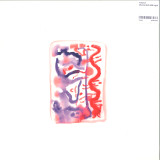
Emotion and intuition are the driving forces behind Nebular, an album that oscillates between the intimate with the unknown. This spirit is reflected in its artwork. Murphy shared a painting by Irish artist Simon English depicting a solitary house bathed in dusky blue light, and the pair quickly settled on it as the cover image. Both were captivated by its atmosphere. Montgomery related it to the isolated, seemingly uninhabited houses he encounters while travelling through rural New Zealand—places that inspire a desire to knock on the door and discover what lies beyond. “Terra incognita springs to mind. A search into the unknown,” Murphy agrees.
The nocturnal and remote nature of the artwork mirrors the process of making Nebular. With Montgomery in New Zealand and Murphy in London, the album was created entirely through remote correspondence, with stems exchanged via email. Their messages were often written and read at different times of day, and, because of the time difference and the demands of daily life, replies usually were sent late at night and the music too often composed at nocturnal hours. Their exchanges took on the quality of pen pals sending letters across great distances. This suspended sense of time is echoed in Nebular’s sound, with its feeling of temporal drift and timelessness.
On Nebular, Montgomery and Murphy have harnessed raw emotion and launched it into a time capsule bound for the stars. It allows you to drift, to be present, and to feel; creating something timeless.
The fifth installment in the acclaimed Killed By Hardcore series dives deep into the global underground of early hardcore punk, collecting 35 raw and obscure tracks from 1981-1988. Featuring rare cuts from legendary and cult bands across North America, South America and Europe, Killed By Hardcore Vol. 5 captures the speed, aggression and DIY spirit that defined hardcore's formative years. From the chaotic attack of Confuse (Japan) and the pioneering hardcore of Olho Seco (Brazil) to forgotten gems from Belgium, Italy, Poland, Sweden, Yugoslavia, Norway and the USA, this volume shines a light on some of the most uncompromising records ever committed to vinyl.
Parisian label Chuwanaga announces the upcoming release of Inner Circle Vol. 1, the first installment in a series of house music releases bringing together artists from the label’s close circle. Available on limited 12" vinyl (300 copies) and digital.
The VA opens with “We All Got To Feel” by Argentine producer J. Koen (Nervous Records / Nite Grooves), a track that encapsulates the essence of deep house. Classy, colorful stabs, refined melodies, and a warm, funky bassline come together in a club-ready cut. It's exactly what you expect when you need a track that delivers — just drop it.
It is followed by “Sunny California” from French producer Kaffe Crème (Floors Records), an ode to the sun — both a celebration and a form of incantation recalling the spiritual energy of Ron Trent and Joe Claussell. The track builds toward a break filled with deep, jazz-inflected harmonies before returning with an electrifying melody carried by layered percussion, leading to an emotional climax.
On the flip side, “It’s A Feeling (House Music)” by the French duo Milk & Honey (Chuwanaga) draws clear inspiration from the Chicago lineage, in the vein of Boo Williams. A looping bassline, deep silky chords, and steady drums create a hypnotic, flowing texture with a myriad of ear candy. It's a feeling, it's a vibe!
The record closes with “The Gatekeeper” by French producers Saint-James (Chuwanaga) & KX9000 (Pont-Neuf Records), a track influenced by the London boogie sound and its broken beat scene. Fans of Dego and Kaidi Tatham will recognize its syncopated grooves and percussive depth, bridging house and broken beat aesthetics.
out of Stock
Last delivered 70 days ago available to reorder, subject to availability
The monumental 2006 live recording of mama!milk, which laid the foundation for their current performance style, is now available on CD and LP!
mama!milk, hailed worldwide as “Japanese New Exotica,” praised for their “music that entices you on a journey” and “soundtracks to unseen films.”
This site-specific, one-day-only performance, unique to the 21st Century Museum of Contemporary Art, Kanazawa, is packaged here.
Sad Daddy emerges straight out of the Ozark hills in 2026 with their fourth studio album, Ozark Shine, highlighting the band's songwriting and harmony vocals Their 2022 release, Way Up in the Hills, took the nation by storm with its down- toearth, raw old- time country and jug band vibes, paired with relevant subject matter. Carrying a similar sentiment and back-to-the-country message, Sad Daddy once again captures the pulse of America and proves they are ahead of their time with this new collection of original material. The songs range from stocking up for the next weather disaster, to buying a peaceful piece of land with a cabin, to playful tales of returning home to check if the stove was left on, and even digging a backyard hole to bury a lame partner--offering a diverse palette of stories that feel real and relatable today
Originally conceived as a massive multi-band, multi-volume covers project, this album saw Streetlight tackle eleven songs that influenced Kalnoky’s musical development. The tracklist is a genuinely eclectic mix, ranging from Radiohead and Bad Religion to Paul Simon and a 1950s Louis Jordan number. Rather than simple recreations, the band fully transforms each song through their own lens, making the covers feel like natural extensions of their catalog. Only one volume was ever released, leaving the larger 99-song concept permanently unfinished.
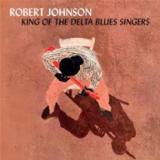
Robert Johnson , the legendary blues guitarist, sold his soul at the crossroads in Clarksdale, Mississippi, for musical greatness. Ryan Coogler's latest film, Sinners , resonates with that story, exploring ambition and sacrifice. His 'King of the Delta Blues Singers' LP epitomises that story
Auf "What's This?" liefern CS Cleaners 11 Tracks verzerrten, neonfarbenen Art-Punk, der gegen die Absurdität des modernen Lebens wettert. Die Band ist beeinflusst von der Downtown-Musik New Yorks von der ersten vielfältigen Welle des CBGB über die Mutationen und Dekonstruktionen des No-Wave. Doch auch wenn der Sound von CS Cleaners in einer Musik verwurzelt ist, die manchmal ziemlich hart sein kann, nehmen sie sich selbst keineswegs ernst: "What's This?" ist in erster Linie Tanzmusik, wenn auch in einer Form, die wild genug für diese extremen Zeiten ist. Die Charaktere, die auf What's This?" porträtiert werden, sind oft in Momenten der Selbstzweifel und Panik gefangen. Wie der narzisstische Musiker auf der Vorab-Single "Come & Go", der total ausflippt, weil er befürchtet, das Rampenlicht zu verlieren. Ben Petrosor vermittelt Pathos in Zeilen wie "if I swallow my pride, I'll split in two", die Mitgefühl für einen unsympathischen Charakter in einer nachvollziehbaren Situation wecken. Wir erleben eine Vielzahl solcher Panikattacken auf "What's This?". Sie entspringen dem Überwachungsstaat der sozialen Medien, dem Druck, in einer zunehmend feindseligen Stadt zu leben, und natürlich der Überlastung.
Strut presents the second studio album from Brian Auger’s Oblivion Express and a firm favourite with Auger aficionados, the “little known masterpiece” A Better Land from 1971. Marking a clear evolution from their more jazz-rock leaning debut, the band shifts into a mellower direction on these tracks, echoing the feel of Befour released in the Trinity's later years. A Better Land embraces warmer, more melodic and understated compositions, primarily written by guitarist Jim Mullen. With its languid and spacious approach, the album brings an grounded message to make the most of the simple pleasures in life with a hopeful, but wary, eye to the future. Musically, Auger brings acoustic guitars, country rock melodies and three-part vocal harmonies into his musical palette. Key tracks include the groove-driven title track ‘A Better Land’, the sparse ‘Dawn of Another Day,’ (sampled by Air and Black Milk among others) while ‘Fill Your Head With Laughter’ returns to Auger's trademark driving Hammond-led sound, akin to early Traffic.
The record features the Brian Auger’s unique sound on organ and electric piano, joined by Jim Mullen on guitar, Barry Dean on bass and Robbie McIntosh on drums and percussion, with Auger, Mullen and Dean all contributing vocals. Mullen co-wrote seven of the album’s nine tracks, with additional contributions from Alan Gorrie (later of Average White Band). These songwriters should take immense pride in their work as Auger’s favourite singer of all time, Sarah Vaughan, recognised the quality of these compositions by covering three of them; ‘Trouble’, ‘On “Thinking It Over’, and ‘Tomorrow City’ for her 1972 album A Time in My Life. This new official Strut reissue is curated by Greg Boraman of Impressive Collective in collaboration with Brian and Karma Auger. Fully remastered by Cosmic Audio, it is presented as a high-quality single LP replica edition.
Kreng transports us through the swirling darkness and into the unknown with “Wormhole”, his first album in over a decade.
What does a trip towards another world sound like? We’re about to find out. The master of tension, melancholy, and the deranged is back after a long period working in the worlds of theatre and cinema. Last seen on Miasmah with the grief stricken The Summoner, Kreng now returns with Wormhole, following closer in the footsteps of the cult classics L’Autopsie Phénoménale de Dieu and Grimoire.
Starting with “You Are Here”, the listener travels through a vacuum of spacious minimalism and edge-of-your-seat tension. Within the journey, we are pulled and lured towards a mystic inner core and beyond, encountering drifting fragments of old-world nostalgia on the way: echoes of empty jazz bars sit alongside hellish, Hieronymus Bosch-like scenarios.
Surrendering to the album reveals a surprisingly reflective beauty beneath its darkness; it's a true home-listening gem that unfolds like a Lovecraftian cosmic horror-mystery in the way only Kreng could deliver. Forget everything you know and enter the secret door…
out of Stock
Last delivered 3 months ago available to reorder, subject to availability
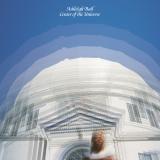
Spiritual World presents: Ashleigh Ball — Center of the Universe, a transcendental flute journey from the singer and flutist of Teal. Center of the Universe is a 32-minute improvisational odyssey recorded inside the Dominion Astrophysical Observatory (DAO), a National Historic Site on Vancouver Island, in British Columbia Canada..
Inspired by the pioneering work of Paul Horn and his Inside series, the recording channels a similar spirit of reverent exploration within a space rich in history and resonance. Completed in 1918, the observatory is home to the Plaskett Telescope - once among the largest and most powerful in the world - playing a key role in mapping the Milky Way.
Following months of coordination, three hours of private access were granted on the morning of August 25, 2025. Beneath the observatory’s towering telescope, Ball performed a wordless meditation, moving between alto flute and soprano concert flute, allowing each note to merge with the chamber’s vast natural reverb. Tones bloom, linger, and return, carried along the massive curved steel walls.
Captured using a minimalist recording approach, Center of the Universe preserves the purity of the moment—its warmth, stillness, and the architecture’s subtle mechanical resonance. Here, the observatory itself becomes an instrument, shaping the sound into something elemental, timeless, and deeply human. Center of the Universe will be released as a limited-edition vinyl LP (300 copies) with a printed insert on May 15, 2026, via Rubadub, Forced Exposure, and HiFi in Sheep’s Clothing.
out of Stock
Last delivered 4 months ago available to reorder, subject to availability
Writing of Blues and Yellows is the highly acclaimed debut studio album by the British folk singer-songwriter Billie Marten, who wrote the album at the age of 16. At the end of 2015, the prodigy was nominated for BBC’s Sound of 2016 award. Marten’s thoughtfully crafted debut is a collection of tales, retrospect, and self-examination. It spawned four singles, “Milk & Honey”, “La Lune”, “Lionhearted”, and “Live”, which remain some of her most popular tracks to date.
The deluxe album of Writing of Yellows and Blues is now again available on vinyl. It includes a bonus D side which features demos, the bonus track “Out of the Black”, and an alternative version of her hit “Milk & Honey”.
The Deluxe 10th Anniversary Edition of Writing of Blues and Yellows is released as a limited edition of 1000 individually numbered copies on transparent vinyl, and includes a 4-page booklet
MILK is the new EP born from the collaboration between Brussels-based producers Alex Lesage and Eekway. The project marks the convergence of two complementary approaches to contemporary electronic music, united by a shared vision: creating music with strong physical impact, designed for the club while maintaining depth and high production standards.
Developed in Brussels, the project's home base, MILK sits at the crossroads of Drum & Bass, Jungle, and IDM, combining the heritage of UK bass traditions with a distinctly modern sonic research. The EP explores sharp rhythmic structures, massive low-end pressure, and detailed sonic architecture, driven by extensive work in sound design, sampling manipulation, and spatial composition.
STINGRAY returns three years after Fortress Britain. Back with a new line up and an ever more savage sound, massive sounding on a 5 track 12” EP.
ENEMY is London on a plate. Stench-tinged hardcore punk born of the ever reaching infinity of Britain’s complex and confusing capital. Nihilistic acid burns in the style of NEUROOT, DEATH SIDE and DOOM, under a few minutes per piece, peppered with prosciutto-dipped VAN HALEN style solos Ala later WRETCHED or SHOTGUN SOLUTION. Vocal visitations by Ciara Savage bring frightening melodic elements into the occasional foray into truly irresistible mosh, not far from the barbed wire trailblazing of GASTUNK, SOD, and SACRILEGE before flying back into fast paced passages of “Scandinavian Jawbreaker” worthy velocity.
Recorded at Fuzzbrain by Jonah Falco. Mixed and mastered by Chris Corry at the Paincave. Draped in a Tin Savage sleeve, and released on the ever eternal home of musical suffering, La Vida Es Un Mus Discos.
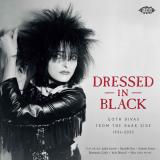
“Dressed In Black” was curated and annotated by Cathi Unsworth, author of the book Season Of The Witch: The Book of Goth – a woman who considers herself fortunate to have had Siouxsie Sioux, Lydia Lunch and Diamanda Galàs for role models while she was growing up. For further illumination in Cathi’s own words, read on.
“The music gathered here is an aural manifestation of turbulent times, made by women possessed of supernatural abilities. The music I fell in love with emerged from the dark end of the 1970s: The Winter of Discontent of 1978-79, when intractable industrial action left the dead unburied and mountains of rubbish in the streets. All the promise of punk came to a brutal end with the deaths of Sid and Nancy in New York; IRA bombs exploded in central London and a seemingly uncatchable ripper roamed West Yorkshire with 13 murders under his belt. Ill omens that augured badly for the events of 3 May 1979, when Margaret Thatcher became our first woman prime minister. Dressed in blue and ready to whip the country to her heel.
“But at night, malcontent youth were united by forces of opposition, whose dissenting voices were aired across the land on John Peel’s Radio 1 show, set to the sound of slasher guitars, swirling fairground keyboards, loping basslines and percussion that recalled the echo of jackhammers or the march of insect feet. Here, punk’s unruly offspring distilled the dissonance of the times into a new kind of music. Flirting with the fetishist and taboo, drawing upon horror and science fiction imagery, they were the outlaw leaders of the greatest style tribe of the decade: the goths. Dressed in black, these kohl-eyed women voiced the alienation of their generation during the decade of the Cold War, the Miners’ Strike, privatisation and AIDS.
“To make sense of the absurd is genius enough. But to then cast the glamour of sublime music around those insights – I come back to my point about supernatural abilities. I hope you will find illumination within. You know the dress code.”
Robert Johnson was an American blues musician whose 1936 and 1937 recordings heavily influenced many, many future generations of artists. Despite the fact his recording career spanned a mere seven months, he is universally recognized as a master of the Delta blues style, one of the earliest-known styles of blues emerging from the Mississippi delta in the early twentieth century.
This second compilation of the King of the Delta Blues collects sixteen recordings previously available on the 78 rpm format and includes recordings of two Johnson songs that have since become blues standards: "Sweet Home Chicago" and "I Believe I'll Dust My Broom." In contrast to the deeply emotive songs released on the 1961 album, many of the tracks on this volume display Johnson's lighter side. In 2003 the record was ranked #424 on Rolling Stone's list of 500 Greatest Albums of All Time.
Whether he really needed to sell his soul to the devil at the crossroads to reach these great heights, we'll never know...
King Of The Delta Blues Singers, Vol.2 is available as a limited edition of 1000 individually numbered copies on yellow vinyl and includes an insert with liner notes by Pete Welding.
On the new concept album Honest Work, ten songs tell stories from the adult lives of working people in the middle and lower classes. They work night shifts in hospitals, pump breast milk in storage rooms, wonder whether they should get a prescription for Ritalin, are summoned to the boss’s office for wearing the wrong clothes, or take a day off just to walk barefoot by a lake. Lyrically, Honest Work can best be described as “petty-bourgeois surrealism.” It’s an album about people trying – and often failing – to navigate systems that reduce them to anonymous data points, employees, and consumers. The album is full of desperate prayers: “Doctor, I think that I’ve got a disease” (Focus Disease), “Taking a day off… don’t even remember my own name” (Remind Me), “I serenade on company time” (Lean Dreams). In these lines, you can feel the dull ache of a generation whose emotional lives are filtered through corporate HR language and online shopping carts.
Anenon's tenor saxophone breathes an emotive contemplation on loss, meshed with sustained piano and field recordings. 'Moons Melt Milk Light' is a hyper-personal statement contained in a visceral beauty.
LA native Anenon returns with a highly anticipated new album 'Moons Melt Milk Light' on Tonal Union, bearing his most personal, expressive, and arresting works to date. Anenon is the ongoing solo studio and live project of Brian Allen Simon, whom since 2010 has released multiple albums and EPs to critical acclaim, including the highly revered 'Tongue' (2018) and 'Petrol' (2016).
'Moons Melt Milk Light' is direct, efficient, and unwavering in its immediacy. Anenon departs from the electronics of previous works, and embarks on a reductive, almost entirely acoustic approach consisting of piano, tenor saxophone, bass clarinet, and field recordings. All of the music was improvised with everything recorded as either a first or second take with no edits. Any layering happened fast and in the moment, and yet the sonic architecture of the whole feels both planned and refined.
"I feel a kinetic and messy honesty that doesn't exist in any of the other music I've ever made. There is also a sense of being settled, of calm. There is no faking it here."
out of Stock
Last delivered 17 months ago available to reorder, subject to availability
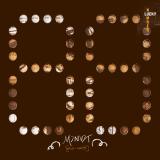
No-one could have predicted the success of The 88, the first album from Minuit
(minwee), or how warmly it would be received. Equally no-one could have predicted that the band would return to the live arena a decade after their final fling or consider pressing their debut on vinyl for the first time.
Formed in Nelson, NZ in 1997, the trio cut their teeth playing regularly around the South Island’s underground club and festival scene. After a hiatus overseas, they began recording The 88 in 2002 in Ryan’s home studio. The lyrics were influenced by their travels around Europe and Ruth's time working for the UN in Kosovo and East Timor; the beats by The Prodigy, Portishead and the UK’s trip-hop and breakbeat scenes.
Signed to indie label Tardus, their tunes were eagerly picked up by the bNet student radio network, which then ballooned into high rotates on TV station C4, helped along by Alyx Duncan’s stunning video for Except You. A busy summer playing live every weekend for three months and seemingly universal praise from the music press led to them swiftly gaining gold sales.
Now 22 years later, with live shows looming, the trio have decided to revisit their debut, completing two previously unfinished tracks from the period to add a bonus to this inaugural vinyl release.
Saxophonist, producer and composer Brian Allen Simon explores darker hues, transposing waking and altered states under his studio veil Anenon. On the deeply evocative new album 'Dream Temperature', he shifts electronic processing to the foreground, introducing digitized wind instruments and unworldly atmospherics, not heard since his innovating mid-late 2010s output.
A longtime Los Angeles resident, born and raised, Brian Allen Simon has expressively operated under the moniker Anenon, releasing the highly revered 'Petrol' (2016), 'Tongue' (2018) and the viscerally beautiful 'Moons Melt Milk Light' (2023), in a line of unwavering musical dialogues. While the penultimate album was a deliberate, reductive, entirely acoustic detour that was born out of a want to unplug, 'Dream Temperature' sees Brian primed with a newly discovered wind synthesizer as his central compositional tool, alongside acoustic piano and tenor saxophone. The entirety of the album's electronics are triggered by Brian's lungs, generating otherworldly synths modulated by expressive breath control, channelled through the laptop as the core processing chamber for added textural components and field recordings.
A free floating and heavy emotional resonance marks 'Dream Temperature' from beginning to end, invoking the feeling of waking up, still heavy from a night of half-remembered dreams, and continuing one's day in this state. Simon maps out the album's spatial voice early on the statement title track, a deep, yet compact cut, generated from digital saxophone rasps that whistle by in close proximity, along with haze filled textures and sub bass. There is a sonic oscillation of urban grit and pastoral drift throughout as tracks pass by like introspective thoughts, fueling both a tense and ethereal quality that underpins the album. Interluding solo and part-solo piano improvisations 'Last Sun 1' and '2' are positioned adjacent to the buffering digital soundscapes. Their softer, still processed timbres pierce the melancholic exterior, offering a contrasting tenderness that could echo the grace of Ry?ichi Sakamoto, the spiritualist rigor of ECM's Keith Jarrett and a touch akin to Aphex Twin's piano miniatures. 'Nulle Part 1+2' signals the first appearance of an acoustic wind instrument, as tenor saxophone flourishes are juxtaposed against noisy drones, all shouting at the void, with notes resurfacing like lost digital data.
The album was recorded at home during either sunset or nocturnal hours between September of 2024 and October of 2025, a period in which Brian found himself craving more lengthy and intimate studio time as he searched for more pronounced textural qualities amidst his new sonic ambitions. 'When The Light Appears, Boy' shows further evidence of this deeper universe, revealing a grittier edge as the album's essential blueprint is sonically inked. A sprawling expanse of wind synths rhythmically encircle the listener before a dreamy, ghostly ambience blankets 'Toyama'. The sound is evocative of the productions of post dubstep era luminaries such as Burial or the productions of HTRK's Nigel Yang. More isolating and enveloping than the previous all acoustic record, this is music both disorienting and yet warmly inviting all at once. A sonic diarist at heart, personal field recordings were also taken from Sardinia, Japan, Big Sur and LA which intersect at unexpected moments throughout the album's 31-minute play time.
'Dream Temperature' is a vital coalescence of both Simon's electronic and acoustic practices with repositioned electronics akin to earlier works, both haunting and elegant, yet still profoundly personal. Simon continuously resonates as an experimental outlier treading an enthralling, non-linear musical path. This music resolutely glows with an unknowing aura, like an untapped energy source waiting to be discharged.
Psychedelic MasterpieceOriginally released on Capitol Records in 1969, Euphoria’s debut album A Gift From Euphoria is an unsung album; one with incredible sonic radiance, masterful songwriting, and everlasting harmonies—with their fantastical combination of psychedelic, folk, country, and hard rock. The 15 songs set up a journey through the best of what had been happening within modern music by 1969. Comparisons to The White Album are apt as it leaps from genre to genre with shocking confidence, as if they knew this was their only chance to say it all on a record. But it was too good to last as this was the only album Euphoria made, one that is critically championed in hindsight and highly sought after nowadays, and it is Jackpot Records honor to be able to bring it to you. Now reissued from the original analog master tapes with the original cover artwork exclusively for RSD 2026.
Time Out, a pause, like an injunction to suspend the course of events in order to project oneself into a more serene future, is the title of Malted Milk's eighth album. From the haunting Afro beat of the title track to the decadent boogaloo of "I Feel Numb", via the ballad "What a Night" and the funky "It's Alright" , the band demonstrates i ts mastery of arrangements, its creative ability and its talent for revisiting the soul/funk genre. As with the previous album, 1975, Marco Cinelli is back on writing and production duties, bringing undeniable added value to the band's sound and aesthetic. The live translation of this album bears Malted Milk's trademark precision, energy, instrumental talent and group cohesion. Malted Milk once again demonstrates its musical strength and affirms the special place the band occupies on the current soul scene.
Febuary & Summer Shade haben sich zusammengetan, um die neueste EP der Band ,Run Like a Girl" auf 10-Zoll-Vinyl zu pressen. Diese limitierte Auflage kommt mit erweitertem Artwork, einschließlich eines brandneuen Texthefts, und ist auf pinkfarbenem ,Strawberry Nesquik"-Vinyl erhältlich. ,Run Like a Girl" wurde 2025 online veröffentlicht, mit einer limitierten CD- und Kassettenauflage vom DIY-Label Milkcrate Merch. Die fünf neuesten Songs der Emo-Band aus Las Vegas wurden von Medien wie Stereogum als ,die heftigste und eindringlichste" Emo-Veröffentlichung des Jahres gefeiert. Nach einem arbeitsreichen Jahr mit Tourneen mit Bands wie Midrift und First Day Back startet Febuary 2026 mit Auftritten bei Coachella, Something in the Way und Outbreak.
Dutch symphonic metal band Delain released their third studio album We Are the Others in 2012 to positive reviews from music critics. The album title was inspired by the murder of 20-year-old Sophie Lancaster, whose death was likely a hate crime due to her being part of the goth subculture.
Two singles were released: “Get The Devil Out of Me” and the title track "We Are The Others", for which the band shot a music video that included many well-known people from the metal scene, including George Oosthoek, Sharon den Adel, Robert Westerholt and Rob van der Loo. The album features guest contributions by the likes of Burton C. Bell (ex-Fear Factory) and Marko Hietala (ex-Nightwish) and was produced by Jacob Hellner (aka Tripod), who is best known for producing most of Rammstein’s albums.
This release of We Are the Others contains an insert and is limited to only 750 individually numbered copies on orange & black marble vinyl.
Taking the exploratory spirit of groups like Polar Bear and Malija (both also featuring Mark Lockheart ) the trio move together through a common language of jazz, rock, classical and free improvisation exploring dark textures and dramatic musical shifts as they revel in the unexpected. High energy jazz improvising combined with spatial and ambient sounds gives this trio its unique and bold concept. The music shifts effortlessly moment to moment, gracefully and spontaneously stitching together sound landscapes and grooves. The subtle use of electronics (particularly on the saxophone), fat rich bass lines and tantalising drum rhythms give his band a unique sound that although firmly rooted in jazz has rock, folk and classical influences too. The album's specially commissioned artwork by Tim Edgar perfectly reflects the shifting shapes of Shapeshifter
Formed in Southend in the late 90’s, Beatglider’s tale is a familiar one taking in early acclaim only for momentum and promise to be dashed by major label statis and indifference.
After the release of the debut long-player, ‘40 Days Of Summer’, in 1999 the band signed to Sony subsidiary Lakota and decamped to LA to record its follow-up, ‘Dreaming Of Roads’, an album that was never to see the light of day.
And now, over 20 years later, ‘Dreaming Of Roads’ eventually gets a deserved release on 28th February via the Arlen label. A beautiful 11-track understated delight which musically falls somewhere between the likes of Elliott Smith, Grandaddy, Yo La Tengo and Sparklehorse, the album has not only stood the test of time, but arguably sounds as fresh as ever in 2026.
The tracklisting of the album - recorded in Los Angeles at the famed Sound City studios - is as follows:
Impatience is thrilled to present Leaving Memory, the latest album-length work by Piper Spray and Lena Tsibizova. Leaving Memory is a searing distillation of the duo’s ouevre - it’s eleven prismatic electronic seances combining for a mind warping wormhole with it’s own internal (il)llogic, where pop, ambient, and industrial music convene beneath a rugged HD of digital processing and brain fog. Equally rosy with nostalgia as it is ominously forward looking, Leaving Memory defies easy categorization and makes for an astounding, confounding listen.
By turns violently abrasive and disarmingly touching, Piper and Lena deploy sounds that fracture and disintegrate, burn up and explode, synthetic supernovas that give the record an unmistakable, inimitable texture. Song structures often abide by their own blueprint - heading in one direction before making an abrupt dive elsewhere. Bursts of vibrant colour lurk below layers of grayscale noise. Unidentifiable voices deliver secret messages from the murk. When rhythm’s emerge they ground the tracks to some unknown terrain and invigorate.
Lame Line veers towards the sweeter end of their spectrum, a hazy plaintive repetition increasingly lashed with friction, before Exit erupts with clanging rhythm and shards of distortion. Diagnosis is an almost sweet alt-pop song, Lena’s vocals yearning beneath a dubby shuffle, while Keeper Of The Void’s possessed incantations open up to a ripping, fried climax. Beryl Grey releases the pressure gauge, a gently lilting drift arpeggiating as the sun sets, and Lost Cars sweats through claustrophobic drones and bird song before the clouds part on a serene scene. Leaving Memory closes with Shin, offering a genuinely sweet resolution and a gentle landing back down to earth of either footsteps or fireworks, swelling synthesized horns and woodwinds, a kiss on the cheek for making it out the other side.
On Leaving Memory, Piper Spray & Lena Tsibizova share their uniquely discordant take on freaky music for unsettled minds, an intensely energized set that offers a deeply evocative, unimaginable otherworld for adventurous ears.
Piper Spray and Lena Tsibizova have been producing music together since 2020. Leaving Memory is the first to be presented in the LP format. Piper has previously released music via Orange Milk, Hausu Mountain and Gost Zvuk, as well as his own Singapore Sling Tapes label. Lena works predominantly as a photographer, and together Piper and Lena have released music via radio.syg.ma and Kartaskvazhin. Both make music as part of Air Krew, who have released music on the Echotourist and Motion Ward labels. They’re both currently based nowhere.
Leaving Memory was written, produced and mixed by Piper Spray and Lena Tsibizova, and mastered by Sergey Podluzhniy. Cover photo by Lena Tsibizova, design and layout by Justin Sloane.
out of Stock
Last delivered 7 months ago available to reorder, subject to availability
West Mineral returns with lushly amorphous actions by Shiner, Pontiac Streator & Ben Bondy aka Shinetiac; together fused for an immersive flux of vapoured dub, chopped and droned Billie Eilish, and fidgety algorithmic jams.
There's not a single, specific sound you can peg to the West Mineral axis at this stage in the label’s evolution - it's rather a set of shared aesthetics that freely bend into various interconnected shapes. Shinetiac's contemptuous, critic-baiting gear is the ideal example; on their last album, 2023's 'Not All Who Wander Are Lost', skittery, ketamized IDM sparkled over Spice Girls samples and the Foo Fighters' 'Everlong' was transmuted into Sneaker Pimps-style trip-hop. 'Infiltrating Roku City' might be a little less blatant with its out-and-out poptimism, but it takes a similarly dim view of conservative "big ambient" snobbishness. Just a few minutes of 'Bluemosa' should be enough to let you know what's up; the overall character of the sound is hazed, with frozen pads and garbled, dubbed-out voices smudged into a mess of effects and samples. But it sups up different nuances as it wriggles, absorbing scampering breaks, dizzy acoustic guitar strums and half-heard wordless vocals, flipping in the third act to emerge from its shell as minimalist balearic folk-pop - something like Bon Iver doing 'Electric Counterpoint'.
Brooklyn's Shiner, Philly's Pontiac Streator and Berlin-based Ben Bondy navigate the labyrinthine streaming landscape, guided by their own private experiences of mindless doom-scrolling and cruising the darkest corners of YouTube. They formulated 'Infiltrating Roku City' while they were rehearsing last year and spent the winter stitching together various recordings and jams into a layered, dry-witted commentary on our algorithmic reality. Laden with inside jokes and refried memes, it's surprisingly elegant gear; handling the most unseemly elements like sonic recyclers, earnestly repurposing pop and nostalgia to create an atmospheric echo of contemporary reality.
Screwing Chief Keef's enduring 'Citgo', 'Clublyfe (hulu)' emphasises the original's AFX-pilled euphoria with Robert Miles-style piano hits, replacing Young Ravisu's brittle 128kbps trap rhythm with a glitchy rattle that picks up dembow spikes as it rolls. 'I Hate Being Sober' vaporises the Chicago drill pioneer's 'Hate Bein' Sober', blocking out his voice with glitchy, downsampled interference and elasticated Rhodes. The trio team up with Orange Milk's goo age on the sublime 'Crisis Angel', catching a ray of Malibu's sunshine in the process, and reduce Billie Eilish's voice to a Romance-does-Celine cinder on 'Billie', stretching it to fit next to gassed Future ad-libs and swooping 808 Mafia sub womps. And although the album takes a murky diversion on 'Roku Axes Ultra’, and a cloud-stepping centrepiece ‘Purelink’ in homage to the eponymous dubbed ambient dynamos, it's back on course with 'Jiafei (NETFLIX)', taking aim at TikTok bot videos and welding screams from Florida metal band Underoath to AI-strength vocal curlicues.
out of Stock
Last delivered 7 months ago available to reorder, subject to availability
Pem is a multidisciplinary artist, songwriter, and gardener whose work fuses organic and stylized elements. Her music is rooted in nature, shaped by long days tending gardens and observing seasonal cycles. Initial ideas emerge as “pocket sketches” — spontaneous melodies recorded while gardening — later evolving into full compositions.
Her EP other ways of landing emphasizes textural depth, world-building, and her distinctive vocal agility. Themes of belonging and rootlessness permeate her work, inspired by her transient lifestyle and connection to gardens.
Pem’s sound blends ethereal alt-balladry with soul and folk influences, underpinned by raw singer-songwriter foundations. Her hypnotic tremolo vocal technique adds an uncanny, esoteric quality. Live, she delivers arresting performances marked by stylized detachment and emotional tension, complemented by self-made costumes and lyrical motifs of fabric and fragility.
Influences range from Nick Drake and Vashti Bunyan to Cocteau Twins, Mazzy Star, and Björk. Her music explores cyclicism, mythology, and planetary themes, merging her real-world gardening experience with mystical undertones.
Best known as the frontman of the influential indie rock trio Dinosaur Jr., J Mascis has also been a solo artist, producer, and film composer. Getting his start as a founding member of the hardcore band Deep Wound, Dinosaur Jr. was founded in 1984 and the group emerged among the most highly regarded alternative rock. By introducing volume and attack in his songs Mascis shed the strict limitations of early 1980’s hardcore, becoming an influence on the burgeoning grunge movement. Mascis’ body of work continues to inspire a generation of guitar players and songwriters today.
In 1997, Dinosaur Jr. disbanded and Mascis released More Light, his first recording under the moniker J Mascis + The Fog. Members and collaborators of The Fog have included Mike Watt (Minutemen / fIREHOSE), Ron Asheton (The Stooges), Robert Pollard (Guided By Voices), Kevin Shields (My Bloody Valentine), Dave Schools (Hard Working Americans / Widespread Panic) and Kyle Spence (Harvey Milk).
Best known as the frontman of the influential indie rock trio Dinosaur Jr., J Mascis has also been a solo artist, producer, and film composer. Getting his start as a founding member of the hardcore band Deep Wound, Dinosaur Jr. was founded in 1984 and the group emerged among the most highly regarded alternative rock. By introducing volume and attack in his songs Mascis shed the strict limitations of early 1980’s hardcore, becoming an influence on the burgeoning grunge movement. Mascis’ body of work continues to inspire a generation of guitar players and songwriters today.
In 1997, Dinosaur Jr. disbanded and Mascis released More Light, his first recording under the moniker J Mascis + The Fog. Members and collaborators of The Fog have included Mike Watt (Minutemen / fIREHOSE), Ron Asheton (The Stooges), Robert Pollard (Guided By Voices), Kevin Shields (My Bloody Valentine), Dave Schools (Hard Working Americans / Widespread Panic) and Kyle Spence (Harvey Milk).
The strongest Japanese cover of Jackson Sisters and Dan Hartman's signature song is now available on 7" for the first time!
Side A, "Milk Suki" is a soul number that boldly covers the Jackson Sisters' very famous song, "I Believe In Miracles," and explains the importance of milk. The B-side is a cover of Dan Hartman's "Relight My Fire," a dance classic. The gap between the humorous lyrics and the tasteful arrangement is sure to get you hooked!
out of Stock
Last delivered 8 months ago available to reorder, subject to availability
Detroit producer-MC Black Milk’s breakthrough album Popular Demand makes its long-awaited return to vinyl. Originally released in 2007, this project introduced Black Milk’s signature balance of warm soul chops, crisp drum programming, and sharp lyricism — earning praise from XXL, Pitchfork, and Okayplayer as one of the defining independent hip-hop releases of its era.
Unavailable on wax for several years and long sought after by collectors, Popular Demand now returns fully remastered for vinyl with updated packaging, making it available to new audiences and longtime fans alike.
The journey through French-speaking pop archives continues with this fifth volume, packed with fuzz, gimmicks, and dissent. Far from the charts, the selected tracks display a great creative freedom, often backed by corrosive humor. Welcome to the surprising, kaleidoscopic, and colorful world of the late sixties and early seventies, Wizzz!
Born in Montauban, Robert Pico stumbled into music by chance when he met René Vaneste, then artistic director at Pathé-Marconi. René brought him to Paris to record his first 45 RPM EP in 1964. A year later, Pierre Perret introduced him to Vogue, where he recorded his second album with Claude Nougaro’s orchestra. Sylvie Vartan then introduced him to RCA, where he recorded four singles, including the astonishing "Chien Fidèle," a track backed by a hair-rising fuzz guitar. Alongside his solo career, he also composed for other artists like Alain Delon (the song was recorded but remains unreleased), Magali Noël, Bourvil, and Georges Guétary. In the Paris of the sixties, he mingled with Mireille Darc, Elsa Martinelli, Marie Laforêt, France Gall, Françoise Hardy, Petula Clark, Régine, Dani, Serge Gainsbourg, Joe Dassin, Franck Fernandel, Charles Level, and Roland Vincent. Despite his efforts and winning a Grand Prix Sacem for his final record, Robert Pico didn’t achieve the expected success in show business and decided to leave Paris and return to the Southwest, where he devoted himself to writing. He is the author of 23 books (including Delon et Compagnie, Jean-Marc Savary Editions 2025, a memoir about his youth and his many encounters). Today, he is relieved to never have become a celebrity and devotes himself to his work with passion.
In 1969, the Franco-Italian movie Erotissimo was released, directed by Gérard Pirès (who later directed Taxi in 1998, written and produced by Luc Besson). This pop comedy features Annie Girardot, Jean Yanne, Francis Blanche, Serge Gainsbourg, Nicole Croisille, Jacques Martin, and Patrick Topaloff. The soundtrack was written by Michel Polnareff and William Sheller, with lyrics by Jean-Lou Dabadie. "La Femme Faux-cils," performed by Annie Girardot. It recounts the feelings of a rich CEO's wife who seeks to develop her sex appeal under the influence of advertisement and magazines. Groovy, sparkling and light, this track, with ITS lush arrangements humorously critiques consumer society and feminine beauty standards.
“Je suis l’Etat” (1967) is the flagship track of the first EP by singer-songwriter Spauv Georges, aka Georges Larriaga, better known as Jim Larriaga (1941-2022). Born into a family of bakers, the young man was initially planning to become a hairdresser when he discovered English-speaking music through Elvis Presley and the Beatles. After this revelation, he decided he would become a songwriter and gave himself five years to succeed. He recorded his first two EP’s independently for RCA under the pseudonym Spauv Georges; meaning “that poor George”, a nickname given to him by the mother of her friend Jean-Pierre Prévotat (future drummer of the Players, Triangle, or Johnny Hallyday). Portraying a depressed and eccentric young man, Spauv Georges created corrosive and amusing songs that didn’t reach a wide audience, despite a TV appearance with Jean-Christophe Averty.
Supported by his loyal friend and fellow songwriter Jean-Max Rivière, Georges Larriaga met the future singer Carlos in the early '70s, then Sylvie Vartan’s assistant. He wrote songs for Carlos, including the popular "La vie est belle," "Y’a des indiens partout," and "La cantine", which went onto become a huge hit in 1972. He also composed for Claude François (“Anne-Marie”, 1971), Charlotte Julian (“Fleur de province”, 1972), helped launch child singer Roméo (who sold 4 million records), and later wrote the hit "Pas besoin d’éducation sexuelle" (1975) for the young Julie Bataille. In 1971, Jim recorded an album for Disc'Az: “L’univers étrange et fou de Jim Larriaga”, which featured pop gems like “La maison de mon père”.
The story of the song "Zoé" began when Pierre Dorsay, artistic director at Vogue Records, asked Swiss singer and musician Pierre Alain to write a song for a new female singer. The inspiration came when he realized that Zoé (the artist's name) was also the name of France's first atomic battery, created in 1948, which consisted of uranium oxide immersed in heavy water! The lyrics reflect a bubbling energy that must be handled with caution, while the instrumentation echoes this atomic theme, notably with the use of a theremin.
Zoé’s career lasted only as long as a single 45 RPM, but it seems Christine Fontane was the vocalist behind this pseudonym, who is known for several EPs, a good "popcorn" album in 1964, and a handful of children’s singles in the '70s. Regardless, the photograph on the cover is of a different girl entirely.
Later, Pierre Alain continued his career, writing songs for himself, Marie Laforêt, Danièle Licari, Alice Dona, Arlette Zola (3rd place in Eurovision 1982), and achieving multiple gold and platinum records in Canada. Also an inventor with several patents, president of the Romande Academy, and head of the French Alliance in Geneva, he now composes atonal music, books, and poetry. Moreover, he is also the host of "Les Mardis de Pierre Alain" at "Le P'tit Music'Hohl" in Geneva.
Filled with oriental choruses and fuzz guitar, "Fou" is from Jacques Da Sylva's only EP released by Vogue in 1967. Despite the quality of this recording, all traces of this singer disappear after this first effort.
Valentin is a baroque pop singer born in Belgium. He is the songwriter and composer of most of the tracks on his three singles released in the late 60s in Canada. A legend says that he reincarnated himself as Jacky Valentin during the 1970s for a rock'n'roll revival career in Belgium, but his older brother sadly debunked this story. Valentin's first two singles were arranged by Claude Rogen, a Parisian session pianist who had come to Canada to promote the song “Mister A Gogo”, a cover of David Bowie’s “Laughing Gnome”, adapted by singer Delphine, his wife at the time. Far from his usual network, Claude Rogen arranged music for Polydor, including the arrangements for “Je suis un vagabond” in 1969, a jerk tune with string arrangements and a furious optimism.
Jacques Malia wrote, composed, and recorded his only 45 EP for Festival in 1966. “Histoire de gitan” is an incredible beat track with bohemian scat that tells the story of a gypsy musician who came to Paris to make it in the Music-Hall, to no avail. The hero of the song and its author probably shared a similar fate, as Jacques Malia faded into anonymity after this remarkable attempt.
Bernard Jamet recorded two EPs for Barclay in the late sixties and co-wrote several songs with Christine Pilzer, Pascal Danel, and prolific songwriters Michel Delancray and Mya Simile. The track “Raison Légale” (1968), his masterpiece, immerses the listener in a courtroom right when a murderer is being judged, with jerk rhythm and free arrangements. A unique, paranoid, judicial, and psychedelic oddity.
Jean-Pierre Lebrot-Millers started his career in show business in 1967 as a singer and songwriter for the Philips label. After three singles, he wrote several songs of a new kind with his friend Pierre Halioche, in the midst of the sexual liberation movement and the democratization of drugs. With provocative lyrics, “Les filles du hasard” and “Barbara au Chapeau Rose” were released on a Philips singles in 1968. The character of Barbara was inspired by a queen of Parisian nightlife during the psychedelic years: model Charlotte Martin, who dated Eric Clapton from 1965 to 1968, then Jimmy Page from 1970 to 1983. Jean-Claude Petit’s arrangements, with a table-filled intro, soul brass, and Hendrixian guitar, emphasize the flamboyance of a hedonistic and sexy character, whose dog is named Junkie because “Junkie est un nom exquis”! The track was recorded live in three takes with a full orchestra.
Upon its release, the record was censored by Europe 1 and RTL due to its references to drug use. Jean-Pierre Lebrot was then banned from the airwaves and later dismissed by his record label. He changed his artist name to Jean-Pierre Millers, while his companion Pierre Halioche became D. Dolby for a new dreamy composition, “Chilla”, which Jean-Pierre produced himself with arrangements by Jean Musy. Once again, the song was immediately censored everywhere. After this setback, he decided to stop singing and started taking on odd jobs to support his Swedish wife and their son until the day he met Jean-Pierre Martin, then production manager at Decca, who had worked with Manu Dibango. Martin offered Jean-Pierre Lebrot-Millers, then employed at Rank Xerox, the position of artistic director at Decca. He accepted and became, a year later, promotion director (radio, press, TV). He worked on Julio Iglesias’s first album for Decca, which became a massive hit and allowed him to meet Claude Carrère. The latter asked him to write new songs and find their performers, much like a “talent scout.” It’s through him that Jean-Pierre discovered Julie Pietri and Corinne Hermès. He composed “Ma Pompadour” for Ringo, Sheila’s husband, and took the microphone again for the syncope hit “Rendez-Vous” in 1982.
That same year, Jean-Pierre Lebrot-Millers tried to release a track for which he had heavily gone into debt: “Si la vie est un cadeau”. Having recorded it in London, he presented it to numerous professionals, all of whom refused to get involved. The same thing happened with Antenne 2 and the Sacem when he proposed the song as France’s entry for Eurovision. He then met Haïm Saban, who was producing cartoon soundtracks and had just launched the Goldorak theme song. Saban, having listened to the song, declared it had the potential to become a hit. He sent Jean-Pierre and Corinne Hermès to meet the CEO of the Luxembourg radio and television network. The latter received them, asked to hear a verse and chorus a cappella in his office, and immediately hired them to represent Luxembourg at Eurovision 1983. They reworked the arrangements and recorded a new version with Haïm Saban as co-producer. The song ended up winning Eurovision 1983, a great comeback for our hero. He continued producing and hung out with the band Nacash in Belgium when a couple came to introduce their daughter for an impromptu audition in a hotel room. The girl sang “Les démons de minuit” while dancing to a radio cassette. Impressed, he had her take singing lessons for a year and composed a song for her (for which he had the melody and title, but no lyrics). This required him to go on the hunt for a lyricist, who ended up being Guy Carlier. They recorded the song, which was initially a ballad, at Bernard Estardy’s CBE studio, and gave the singer a new name: Melody. They showed the song around their industry network without success. Later, Estardy called Jean-Pierre to suggest changing the rhythm and making it pop-rock. Orlando, Dalida’s brother, liked the result and decided to co-produce the track. “Y’a pas que les grands qui rêvent » became a classic hit. The song has since been covered by Juliette Armanet (as a ballad, like the original) and Valentina.
Born into an aristocratic Breton family, Hervé Mettais-Cartier worked as a DJ at Queen Kiss, a nightclub in Poitiers, where he formed the band Les Concentrés with Michel (an actor) and Christian (a radio technician). Together, they created a repertoire of whimsical songs (“Ma bique est morte”, “J’suis un salaud”, “Fils de dégénéré”...) that they performed on stage dressed in white (in homage to “concentrated milk”). They performed at Bliboquet and Olympia in 1968 for the 10th edition of the “Relais de la chanson Française” organized by L’Humanité-Dimanche and Nous les Garçons et les Filles, sponsored by Pepsi Cola. Winners in the author-composer category, alongside Danish singer Dorte, their visibility allowed them to record a 45, and appear on television in Jean-Christophe Averty’s show. The A-side of the disc features Bruno le ravageur, a casatchok dedicated to Bruno Caquatrix, the director of Olympia, nicknamed in the song “Coq Atroce” or “croque-actrices”. The B-side is dedicated to “Fils de dégénéré”, a quirky tribute to Hervé's aristocratic roots, mixing absurdity with sophisticated vocal harmonies.
After Les Concentrés, Hervé Mettais-Cartier formed the duo La Paire et sa Bêtise with his friend Olivier Robert. They performed in Parisian cabarets and toured with Pierre Vassiliu. In the late 1970s, Hervé began a solo career. He recorded two albums for the Motors label in 1978 and 1979, which did not achieve their anticipated success due to lack of promotion. In 1980, he met Bernadette, with whom he started a family and created a “Chansons à voir” (songs to see) show that he performed until his death at the end of 2024.
Publicité comes from the final EP by the Missiles (Ducretet Thomson, 1966), a disc that also includes “La (nouvelle) guerre de cent ans”, featured on Volume 4 of our Wizzz! series. Please refer to the booklet for the story of the band.
“He’s 1.82 meters tall, 28 years old, weighs 135 kg, is black and Belgian”: this is the description of singer Hegesippe on the back of his sole single (Decca, 1967). He appears on the album cover wearing a Greek toga, like a hippie gag – we are at the end of the year 1967. In “Le crédo d’Hegesippe”, this former bodyguard of Antoine and the Charlots plays the delightful card of the thick brute converted to Flower-Power and non-violence, with arrangements by Jean-Daniel Mercier, aka Paul Mille.
“Ethéro-disco” was released on a promotional record for clients of the Maréchal company (Liège, Belgium) for the New Year 1979. Over a funky rhythm, celebrity impersonations (Brigitte Bardot, Jacques Dutronc, Fernandel…) deliver an enigmatic text about pharmaceutical products like ether, bismuth, and aspartate. The track was composed by Dan Sarravah (responsible for Joanna's “Hold-up inusité” featured on Wizzz! Volume 3) and Tony Talado, who was also a singer (one 45 in 1967), songwriter (with over a dozen credits between 1964 and 1985 in various styles from surf music to disco), author (Devenez Végétarien, Dricot Editions, 1985), ad designer, and psychologist.
Décollez-les is on the A-side of Mamlouk's only single, a pseudonym for Marsel Hurten, who is known for his work on several EPs in the late sixties, as well as composing music for Hervé Vilard’s “Capri, c’est fini”, Claude Channes' “La Haine”, Annie Philippe’s “On m’a toujours dit”, and Nancy Holloway’s “Panne de Cœur”.
This strange song, with Afrobeat horns and absurd dialogues between a chef and his kitchen staff, is the result of a collaboration between Marsel Hurten and one of his neighbors, a photographer from Pavillon-sous-Bois (93), where the musician settled after returning from the Algerian War. A music video was shot to promote the record.
Marsel Hurten was born in Tourcoing (59) into a musical family. At a young age, he joined the brass band founded by his grandfather, playing the piston before studying trumpet at the conservatory, as well as teaching himself how to play the guitar. As an orchestra musician, he toured in France, Belgium, Germany, and England. He released a series of solo 45’s between 1965 and 1968 for the DMF and Az labels before stopping recording to focus on working for other artists (Gilles Olivier, Noëlle Cordier…).
“L’amour nu” (Vogue, 1971) is the work of the short-lived Belgian band Mozaïque. The track, written by singer Jacques Albin, closely resembles another of his compositions, “Carré Blanc”, which he recorded in 1969 for Disc’AZ.
Represented by the Lumi Son micro-label based in Marignane (Côte d'Azur), Jean-Marc Garrigues released two 45 RPMs in the late sixties, defending the French jerk sound. The song “Je dis Non” is a short, joyful ode to youth, pop music, and rebellion.
Songwriter and performer Jacques Penuel released three singles. The first one, “Astronef 328” (Fontana, 1969), features a dizzying series of chords punctuated by sound effects, a sci-fi story, and arrangements by Jean-Claude Vannier.
We would like to sincerely thank Pierre Alain, Moon Blaha, Marsel Hurten, Bastien Larriaga, Jean-Pierre Lebrot-Millers, Bernadette Mettais-Cartier, Robert Pico, Olivier Robert, Claude Rogen, Micky Segura.
out of Stock
Last delivered 8 months ago available to reorder, subject to availability
Clammbon, who have performed numerous tribute albums for artists such as Yasuyuki Okamura, Fishmans, and YMO, have released their first covers album, including
all of their classic covers. From Akiko Yano to Bow Wow Wow, the selection and arrangements show the band's depth, and the loose and casual recordings of
the Magokoro Brothers' "Summer Nude" and the Beatles' "Across the Universe" featuring Takashi Nagatsumi are particularly captivating.