The eighth and latest slate of refined retro-futuristic synth-pop by Liz Wendelbo and Sean McBride aka Xeno & Oaklander is named after and inspired by "the study of what not to do, a negative image of a positive, the other side, the other:" Via Negativa (in the doorway light). Recorded in the fall of 2023 at their modernist Connecticut home fashioned into a two-story synthesizer laboratory and mixing studio, the album is uniquely visionary in spirit yet precision in execution, a contrast central to the duo's enduring chemistry. Embryonic piano sketches were translated to nuanced modular systems, which McBride weighted with "harmonic padding," tuned percussion, and a spectral transfer device capable of "rendering spasms of rhythmic overtonal filigree." Despite the technological complexity of their craft, emotively the songs require no deciphering - these are technicolor widescreen anthems of the cybernetic age. The eponymous opening track sets the pace, soaring sleekly over glittering synths and call-and-response vocals about arias, shattered light, and faces in stereo. From there the record expands and contracts, cycling through a gallery of moods and masks, animated by the band's fascination with drama, "the idea of personae," and theatrical characters. Track by track, a murky, tragic backstory reveals itself: forlorn figures navigating a treacherous mercury mine, alternately poisoned by fumes or buried in collapsing caverns. The tension between Teutonic, utopian synthetic pop and lyrical narratives of ghosts in silos, ruined mills, and the traumas of mineral excavation creates a compelling friction, alternately futurist and obsolete, elevated and subterranean. Wendelbo describes the music's polarities perfectly: "The heavy machinic din of extraction in contrast with the enchantment of the mined precious gems and metals." From bilingual odes to bloodstones ("O Vermillion") to cosmic chrome dance floor classics ("Lost & There" "The present tense can never feel real / So many pasts conspire in the burning sun") to strutting EBM sensualities ("Actor's Foil"), Xeno & Oaklander re-prove themselves masters of the axis of technology and poetry, snaking cables and synesthesia, mining melodies and myths across 15 years of focused artistry. Theirs is a muse still gilded and gleaming, burnished red and silver, attuned to "the unobservable, the unfamiliar, that which you don't see directly."
quête:the modernist
The eighth and latest slate of refined retro-futuristic synth-pop by Liz Wendelbo and Sean McBride aka Xeno & Oaklander is named after and inspired by "the study of what not to do, a negative image of a positive, the other side, the other:" Via Negativa (in the doorway light). Recorded in the fall of 2023 at their modernist Connecticut home fashioned into a two-story synthesizer laboratory and mixing studio, the album is uniquely visionary in spirit yet precision in execution, a contrast central to the duo's enduring chemistry. Embryonic piano sketches were translated to nuanced modular systems, which McBride weighted with "harmonic padding," tuned percussion, and a spectral transfer device capable of "rendering spasms of rhythmic overtonal filigree." Despite the technological complexity of their craft, emotively the songs require no deciphering - these are technicolor widescreen anthems of the cybernetic age. The eponymous opening track sets the pace, soaring sleekly over glittering synths and call-and-response vocals about arias, shattered light, and faces in stereo. From there the record expands and contracts, cycling through a gallery of moods and masks, animated by the band's fascination with drama, "the idea of personae," and theatrical characters. Track by track, a murky, tragic backstory reveals itself: forlorn figures navigating a treacherous mercury mine, alternately poisoned by fumes or buried in collapsing caverns. The tension between Teutonic, utopian synthetic pop and lyrical narratives of ghosts in silos, ruined mills, and the traumas of mineral excavation creates a compelling friction, alternately futurist and obsolete, elevated and subterranean. Wendelbo describes the music's polarities perfectly: "The heavy machinic din of extraction in contrast with the enchantment of the mined precious gems and metals." From bilingual odes to bloodstones ("O Vermillion") to cosmic chrome dance floor classics ("Lost & There" "The present tense can never feel real / So many pasts conspire in the burning sun") to strutting EBM sensualities ("Actor's Foil"), Xeno & Oaklander re-prove themselves masters of the axis of technology and poetry, snaking cables and synesthesia, mining melodies and myths across 15 years of focused artistry. Theirs is a muse still gilded and gleaming, burnished red and silver, attuned to "the unobservable, the unfamiliar, that which you don't see directly."
The eighth and latest slate of refined retro-futuristic synth-pop by Liz Wendelbo and Sean McBride aka Xeno & Oaklander is named after and inspired by "the study of what not to do, a negative image of a positive, the other side, the other:" 'Via Negativa (in the doorway light)'. Recorded in the fall of 2023 at their modernist Connecticut home fashioned into a two-story synthesizer laboratory and mixing studio, the album is uniquely visionary in spirit yet precision in execution, a contrast central to the duo’s enduring chemistry. Embryonic piano sketches were translated to nuanced modular systems, which McBride weighted with "harmonic padding," tuned percussion, and a spectral transfer device capable of "rendering spasms of rhythmic overtonal filigree." Despite the technological complexity of their craft, emotively the songs require no deciphering – these are technicolor widescreen anthems of the cybernetic age.
The eponymous opening track sets the pace, soaring sleekly over glittering synths and call-and-response vocals about arias, shattered light, and faces in stereo. From there the record expands and contracts, cycling through a gallery of moods and masks, animated by the band’s fascination with drama, "the idea of personae," and theatrical characters. Track by track, a murky, tragic backstory reveals itself: forlorn figures navigating a treacherous mercury mine, alternately poisoned by fumes or buried in collapsing caverns. The tension between Teutonic, utopian synthetic pop and lyrical narratives of ghosts in silos, ruined mills, and the traumas of mineral excavation creates a compelling friction, alternately futurist and obsolete, elevated and subterranean. Wendelbo describes the music’s polarities perfectly: "The heavy machinic din of extraction in contrast with the enchantment of the mined precious gems and metals."
From bilingual odes to bloodstones ("O Vermillion") to cosmic chrome dance floor classics ("Lost & There" "The present tense can never feel real / So many pasts conspire in the burning sun") to strutting EBM sensualities ("Actor's Foil"), Xeno & Oaklander re-prove themselves masters of the axis of technology and poetry, snaking cables and synesthesia, mining melodies and myths across 15 years of focused artistry. Theirs is a muse still gilded and gleaming, burnished red and silver, attuned to "the unobservable, the unfamiliar, that which you don’t see directly."
The eighth and latest slate of refined retro-futuristic synth-pop by Liz Wendelbo and Sean McBride aka Xeno & Oaklander is named after and inspired by "the study of what not to do, a negative image of a positive, the other side, the other:" 'Via Negativa (in the doorway light)'. Recorded in the fall of 2023 at their modernist Connecticut home fashioned into a two-story synthesizer laboratory and mixing studio, the album is uniquely visionary in spirit yet precision in execution, a contrast central to the duo’s enduring chemistry. Embryonic piano sketches were translated to nuanced modular systems, which McBride weighted with "harmonic padding," tuned percussion, and a spectral transfer device capable of "rendering spasms of rhythmic overtonal filigree." Despite the technological complexity of their craft, emotively the songs require no deciphering – these are technicolor widescreen anthems of the cybernetic age.
The eponymous opening track sets the pace, soaring sleekly over glittering synths and call-and-response vocals about arias, shattered light, and faces in stereo. From there the record expands and contracts, cycling through a gallery of moods and masks, animated by the band’s fascination with drama, "the idea of personae," and theatrical characters. Track by track, a murky, tragic backstory reveals itself: forlorn figures navigating a treacherous mercury mine, alternately poisoned by fumes or buried in collapsing caverns. The tension between Teutonic, utopian synthetic pop and lyrical narratives of ghosts in silos, ruined mills, and the traumas of mineral excavation creates a compelling friction, alternately futurist and obsolete, elevated and subterranean. Wendelbo describes the music’s polarities perfectly: "The heavy machinic din of extraction in contrast with the enchantment of the mined precious gems and metals."
From bilingual odes to bloodstones ("O Vermillion") to cosmic chrome dance floor classics ("Lost & There" "The present tense can never feel real / So many pasts conspire in the burning sun") to strutting EBM sensualities ("Actor's Foil"), Xeno & Oaklander re-prove themselves masters of the axis of technology and poetry, snaking cables and synesthesia, mining melodies and myths across 15 years of focused artistry. Theirs is a muse still gilded and gleaming, burnished red and silver, attuned to "the unobservable, the unfamiliar, that which you don’t see directly."
On this new LP Harry Bertoia shows why he may have been the first industrial musician. Bertoia often referred to his sound sculptures as a "collaboration with industry" and on this LP Bertoia is intentionally creating heavy, rhythmic music he described as "mechanized," "mechanical" and "factory like."
Recorded in 1971, percussion and repetition emulate the pounding rhythms of machinery on this unique pair of conceptual Bertoia compositions. Bertoia utilizes innovative performance techniques to create new sounds unheard in his ouevre. Even in the busy factory of Bertoia's mind, distant stillness rises up as Bertoia exhibits the massive amount of control he possesses over his many looming sculptures.
"Mechanization" is just one of the many sonic directions Bertoia took while composing and recording between the late 1950's and his death in 1978. He documented all of his ideas and directions in notes accompanying the hundreds of tapes discovered in his barn.
Bertoia's recordings are as much a celebration of sustained tones, intervallic relationships, healing vibrations, deep listening and shimmering harmonics as Indian Classical music, singing bowls, The Well Tuned Piano or Benjamin Franklin's glass armonica. Through these rich harmonics and pulsing pure tone, Bertoia was able to more clearly articulate his inner spirit than he could with sculpture alone – a point he made himself many times in interviews.
Harry Bertoia first came into artistic prominence in the late 1930s and his sculptural, ergonomic chairs, produced by Knoll Furniture beginning in 1952, were soon modernist furniture classics. Inspired by the resonant sounds emanating from metals as he worked them and encouraged by his brother Oreste, whose passion was music, Harry restored a fieldstone "Pennsylvania Dutch" barn as the home for this experiment in sounding sculptures which he had begun in the 1950s. Bertoia was an obsessive composer and relentless experimenter, often working late into the night and accumulating hundreds of tapes of his best performances; Oreste, too, would explore and record the sculptures' sounds during his annual visits to his brother's home in rural Pennsylvania.
Learning by experimentation was common for Bertoia and he mastered the art of tape recording, turning the Sonambient barn into a sound studio with four overhead microphones hanging from the rafters in a square formation. He would experiment with overdubbing by performing along to previous recordings, sometimes backwards, constantly improving his methods while also honing his performance skills. Bertoia was a careful editor of his own work and only chosen recordings remained, each with a date and carefully considered observations written on a note included with each tape. Through these pieces of paper a greater logic can be uncovered, a careful approach to composition, ideas, feelings and forms. The story of Sonambient barn collection will slowly be told through the release of recordings from the archive as well as installations and performances built from Bertoia's own recordings, lectures and a book.
- A1: Zwischen Planeten
- A2: Stimme Des Wegelagerers
- A3: Aus Dem Feuer, Aus Dem Licht
- A4: Immer Wieder Im Kreis
- A5: In Den Tiefen
- A6: Hinein, Hinaus, Hinüber
- A7: Fantasiegebilde
- A8: Der Verwunschene Hain
- A9: Blick Nach Drüben
- B1: Innerlich Außerhalb
- B2: Schimmernde Chimäre
- B3: Gemeinsam Hindurch
- B4: Mit Verbundenen Augen
- B5: Purpur-Trank
- B6: Im Sternstrom
- B7: Schlingerling
- B8: Endstation Sehnsucht
Turning their gaze to the buoyant culture of wyrd, modernist German folk music, Quindi welcome a spectacularly idiosyncratic offering from Johannes Schebler, aka Baldruin. Bewildering narrative twists, high drama and intricate delicacy make Mosaike der Imagination an engrossing listen from the outset, as baroque atmospheres and tumbledown drums intertwine with tactile string plucks and needlepoint synthesis in an authoritative bridging of ancient and hypermodern sonic sensibilities.
Schebler's catalogue as Baldruin is extensive, reaching back to the late 00s and covering a lot of ground through cassette albums on respected underground labels like SicSic, A Giant Fern and Lullabies For Insomniacs. Meanwhile, his work has been recognised as part of a broader movement of experimental electronic music in Germany taking inspiration from folk traditions, as documented on last year's essential Bureau B compilation, Gespensterland. Beyond his solo work, Schebler also works with Jani Hirvonen as Grykë Pyje (mappa), and both collaborate with Paul Wilson as Yayoba (Not Not Fun). Christian Schoppik of leading dark folk project Brannten Schnüre joins him as Freundliche Kreisel (STROOM). It's a tangled, fascinating and evocative sound world which Mosaike der Imagination offers a compelling window into.
No two tracks on the album follow the same pattern or palette, whether gliding through the Giallo synth undulations and post rock tonal arcs of 'Stimme des Wegelagerers' or spelling out miasmic incantations through flickering flames on 'Aus dem Feuer, aus dem Licht'. 'Hinein, hinaus, hinüber' revolves around meditative drum mantras and cascading melodic phrasing, densely layered and evolving with purpose. 'Gemeinsam hindurch' flicks between swooping strings and pizzicato plucks in a purely romantic expression of orchestration, 'Mit verbundenen Augen' is a bewildering choral voice study and 'Im Sternstrom' revels in ecstatic synth arpeggios. Nothing can be predicted except the vibrancy and clarity of Schebler's vision.
It's a vision which extends to the front cover artwork for Mosaike der Imagination — a glorious tapestry created by Finnish artist Jan Anderzén, with a responding design and layout from Schebler adorning the rear sleeve.
Stepping to the side of the cosy daydream reveries that inhabit much of the Quindi output, Mosaike der Imagination indulges the label's penchant for sophistication in a freakily fascinating new framework from the heart of an exciting movement in experimental folk music.
The debut recording from the duo of multi-award-winning Scottish author David Keenan and Bruce Russell, the guitarist from the greatest underground rock band of the late 20th century, New Zealand’s The Dead C, was recorded live in Christchurch, NZ, as part of the WORD festival in August 2023. A series of live improvised settings that pair readings from Keenan’s monolithic and critically-acclaimed modernist masterpiece, Monument Maker (White Rabbit 2021), with guitar and electronics from Russell, the music takes off on the kind of post-VU fantasy of punk-primitive free music posited by Russell in projects like A Handful of Dust while expanding on Russell’s no-technique blues w/scalpel sharp riffs and aformal blats of pure electricity that match the religious eroto-mania of the text. Keenan reads w/shamanistic intensity and with a sonorous, incantatory rhythm, while Russell conjures the very ghost of the book straight out of the air. Think the early Patti Smith/Lenny Kaye spoken word/guitar jams informed by religious painting, Bach cantatas, Pierre Reverdy, Goya, Charles Olson, Arthur Doyle and Rudolph Grey. Features full colour photography by musician and artist Heather Leigh taken in-situ during the writing of Monument Maker in France in 2018. Bruce Russell is a practitioner in sound, who for forty years has been a member of The Dead C and A Handful of Dust. He mixes rock, electro-acoustics, noise and improvisation in equal measures. Also directed two of New Zealand’s vanguard independent labels, Xpressway and Corpus Hermeticum. His solo guitar practice reconfigures the blues as a form of improvisational auto-destruction. He is also a writer and his next book is titled ‘Rock’n’roll: my part in its downfall’. David Keenan is the author of six novels; This is Memorial Device (Faber & Faber) which won the London Magazine Prize for Debut Fiction and was shortlisted for the Gordon Burn Prize; For the Good Times (Faber & Faber), which won the Gordon Burn Prize and was shortlisted for the Encore Award for Second Novels; Xstabeth (White Rabbit), which was shortlisted for the Dublin Literary Prize; The Towers The Fields The Transmitters (White Rabbit); Monument Maker (White Rabbit), which was a Rough Trade Book of the Year; and Industry of Magic & Light (White Rabbit). Edna O’Brien has said of him “I sometimes think David Keenan dreams aloud. His prose has the effortless, enigmatic, unsettling quality of dreams… reading him feels like being cut open to the accompanying sound of ecstatic music.”
Gerry Mulligan mit der Night Lights Band auf Europatournee 1959. Das großartige Quartett besteht aus Gerry Mulligan am Baritonsaxophon und Klavier, Art Farmer an der Trompete, Bill Crow am Bass und Dave Bailey am Schlagzeug. Die Band war auf dem Höhepunkt ihres Könnens, und diese atemberaubenden Aufnahmen trugen entscheidend dazu bei, Mulligans Band als eine der angesagtesten Bands jener Zeit zu bestätigen.
In Zusammenarbeit mit dem Swedish National Radio Archive und dem Gerry Mulligan Estate ist es uns gelungen, die Original-Masterbänder im Tresor von Sveriges Radio ausfindig zu machen und sie Kevin Gray zur Verfügung zu stellen, der mit seiner gewohnten Magie beim Mastering und Editing diesen bisher unveröffentlichten Aufnahmen eine unglaubliche klangliche Bandbreite verliehen hat. Das neu gestaltete Cover wurde von Two To Tango entworfen, die regelmäßig mit New Land zusammenarbeiten, und bietet einen großartigen modernistischen Look.
Hergestellt bei Pallas und gedruckt auf 180g Vinyl im Reverse-Board-Sleeve, ist dies eine wichtige Ergänzung für jede Sammlung. Der Baritonsaxophonist Gerry Mulligan war eine wahre Ikone des Jazz und von den 1950er Jahren bis zu seinem Tod 1996 eine der herausragenden Persönlichkeiten der Westcoast-Szene. Mulligan, der vom Downbeat Magazine 42 Jahre in Folge zur Nummer eins auf seinem Instrument gewählt wurde, war einer der wichtigsten Musiker seiner Zeit und ein Aushängeschild, das den Sound des Jazz mitgeprägt hat. Gerry Mulligan spielte sowohl in der Miles Davis Formation der Birth Of The Cool-Ära als auch im pianolosen Quartett mit Chet Baker und war immer an vorderster Front, wenn es darum ging, was in Amerikas einzig wahrer Kunstform angesagt war und ist.
Blue[28,99 €]
Still just 19-years-old, Toby Lee is already a three-time winner of Young Blues Artist of the Year at the UK Blues Awards - yet the virtuoso guitarist is only getting started. Praised as a remarkable talent by the likes of Jools Holland and Joe Bonamassa, 2024 represents a big breakthrough year as Toby releases his first album of all-original material ‘House On Fire’ on October 4th via 100% Records. As you’d expect from someone that The Times hailed as, “One of the best guitarists in Britain,” his six-string talents dazzle throughout with a rich tapestry of scorching leads, evocative melodies and swaggering grooves. Yet his vocals have come on leaps-and-bounds, his maturity and emotional expression providing a voice strong enough to front a band regardless of his guitar skills. His songs and stylistic scope have expanded too, with a set that moves seemingly effortlessly between classic blues jams, punchy hard rock, intimate acoustic moments and a modernist approach to classic soul and Stax-style R&B. It’s all played with a winning combination of youthful abandon and undeniable accomplishment. Toby Lee’s talents have been recognised by an array of legends. When he was 10, a get well soon video that he made for BB King went viral, leading to an invitation from the blues legend’s family to play at his club in Memphis, while the late Bernie Marsden was an early mentor and champion. He subsequently shared the stage with the likes of Buddy Guy, Joe Bonamassa, Slash, Billy Gibbons and Peter Frampton, while enjoying other high profile moments, such as starring in a West End production of ‘School of Rock’, performing with McFly on ‘Tonight at the London Palladium’ and featuring in ‘The Ellen DeGeneres Show’. Toby has now exceeded 500 million views on social media. His ability has been recognised with numerous endorsements. He has been a Gibson artist since the age of 10, and a recent highlight came when he helped launch Gibson’s custom Jeff Beck ‘YardBurst’ 1959 Les Paul Standard alongside fellow guests including Jimmy Page, Johnny Depp and Graham Coxon. Blackstar Amplification issued his own signature amp, the St James Toby Lee 50 6L6 head and cab, and he is also endorsed by D’Addario Strings.
Black[28,78 €]
Still just 19-years-old, Toby Lee is already a three-time winner of Young Blues Artist of the Year at the UK Blues Awards - yet the virtuoso guitarist is only getting started. Praised as a remarkable talent by the likes of Jools Holland and Joe Bonamassa, 2024 represents a big breakthrough year as Toby releases his first album of all-original material ‘House On Fire’ on October 4th via 100% Records. As you’d expect from someone that The Times hailed as, “One of the best guitarists in Britain,” his six-string talents dazzle throughout with a rich tapestry of scorching leads, evocative melodies and swaggering grooves. Yet his vocals have come on leaps-and-bounds, his maturity and emotional expression providing a voice strong enough to front a band regardless of his guitar skills. His songs and stylistic scope have expanded too, with a set that moves seemingly effortlessly between classic blues jams, punchy hard rock, intimate acoustic moments and a modernist approach to classic soul and Stax-style R&B. It’s all played with a winning combination of youthful abandon and undeniable accomplishment. Toby Lee’s talents have been recognised by an array of legends. When he was 10, a get well soon video that he made for BB King went viral, leading to an invitation from the blues legend’s family to play at his club in Memphis, while the late Bernie Marsden was an early mentor and champion. He subsequently shared the stage with the likes of Buddy Guy, Joe Bonamassa, Slash, Billy Gibbons and Peter Frampton, while enjoying other high profile moments, such as starring in a West End production of ‘School of Rock’, performing with McFly on ‘Tonight at the London Palladium’ and featuring in ‘The Ellen DeGeneres Show’. Toby has now exceeded 500 million views on social media. His ability has been recognised with numerous endorsements. He has been a Gibson artist since the age of 10, and a recent highlight came when he helped launch Gibson’s custom Jeff Beck ‘YardBurst’ 1959 Les Paul Standard alongside fellow guests including Jimmy Page, Johnny Depp and Graham Coxon. Blackstar Amplification issued his own signature amp, the St James Toby Lee 50 6L6 head and cab, and he is also endorsed by D’Addario Strings.
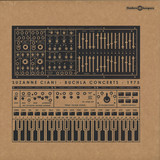
The very first Buchla synthesiser performance by revolutionary composer Suzanne Ciani finally makes its fifty year journey from its switch-on New York art gallery to its long deserved and discerning global phonographic audience.
With this previously unheard vinyl pressing, Finders Keepers Records are proud to present an archival project of ‘art music’ that not only redefines musical history but lays genuine claim to the overused buzzwords such as pioneering, maverick, experimental, groundbreaking and esoteric, while questioning social politics and the evolution of music technology as we have come to understand it. To describe Italian-American composer Suzanne Ciani’s resurrected Buchla concert records as genuine gamechangers would be a gross understatement. These records represent a musical revolution, an artistic revelation, a scientific benchmark and a trophy in the cabinet of counterculture creativity. This sonic installation album, alongside her recently liberated WBAI/Phill Niblock 1975 sessions (FKR082), are triumphant yardsticks in the synthesiser space race and the untold story of the first woman on the proverbial musical moon. While pondering the early accolades attached to these golden era New York recordings it’s daunting to learn that these records were in fact not even records at all.
What exists on this disc now was a manifesto and a one-time gateway to a new world, which somehow was only partially pushed ajar. Captured here is a genuine live act exploring new territories with a fully performable music instrument. If the unfamiliar, modernistic, melodic pulses, tones and harmonics found on these 1970’s artistic gallery collaborations/ live presentations (then soon to be followed by academic grant applications and educational demonstrations) had been placed in a phonographic context alongside the widely marketed work of Morton Subotnick, Walter Carlos or Tomita, then the name Suzanne Ciani and her infectious influence would have already radically changed the shape, sound and gender of our record.
With the light of Buchla and Ciani’s initial flame Finders Keepers continues the journey through the vaults of this increasingly celebrated music legacy, illuminating these ‘non-records’ that evaded the limelight for almost half a century. You can’t write history when you are too busy making it. With fresh ink in the bottomless well, let’s start at the beginning. Again
2024 Repress
Finders Keepers invite you to witness the incredible first ever Buchla synthesiser concerts/demonstrations providing a distinctive feminine alternative to The Silver Apples Of The Moon if they had ever been presented in phonographic form. This is history in the remaking.
This spring Finders Keepers Records are proud to release an archival project that not only redefines musical history but boasts genuine claim to the overused buzzwords such as pioneering, maverick, experimental, groundbreaking and esoteric, while questioning social politics and the evolution of music technology as we've come to understand it. To describe this records as a game-changer is an understatement. This record represents a musical revolution, a scientific benchmark and a trophy in the cabinet of counter culture creativity. This record is a triumphant yardstick in the synthesiser space race and the untold story of the first woman on the proverbial moon. While pondering the early accolades of this record it's daunting to learn that this record was in fact not a record at all... It was a manifesto and a gateway to a new world, that somehow never quite opened. If the unfamiliar, modernistic, melodic, pulses, tones and harmonics found on this 1975 live presentation/grant application/educational demonstration had been placed in a phonographic context alongside the promoted work of Morton Subotnick, Walter Carlos or Tomita then the name Suzanne Ciani and her influence would have already radically changed the shape, sound and gender of our record collections. Hopefully there is still chance.
In short, Suzanne was a self-imposed twenty-year-old employee of the Buchla modular synthesiser company, San Francisco's neck and neck contender to New York's Moog. Buchla was run by a community of festival freaks and academic acid eaters whose roots in new age lifestyles and the reinvention of art and music replaced the business acumen enjoyed by its likeminded East Coasters. In the eyes of the consumer the creative refusal to adopt rudimentary facets like a piano keyboard controller rendered the Buchla synthesiser the more obscure stubborn sister of the synth marathon, steering these incredible units away from the mainstream into the homes and studios of free music aficionados, art house composers and die-hard revolutionaries. Championed and semi-showcased by composer Morton Subotnick on his albums The Bull and Silver Apples Of The Moon, Buchla's versatility began to open the minds of a new generation, but the high-end design features and no-compromise modus operandi was often confused with incompatibility and, in the pulsating shadow of Moog's marketing, the revolution would not be televised nor patronised. Suzanne Ciani, as one of the very few female composers on the frontline (and also providing the back line) did not lose faith.
These concerts' are the epitome of rare music technology historic documents, performed by a real musician whose skills and academic education in classical composition already outweighed her male synthesiser contemporaries of twice her age. At the very start of her fragile career these recordings are nothing short of sacrificial ode to her mentor and machine, sonic pickets of the revolution and love letters to an absolutely genuine vision of and 'alternative' musical future. In denouncing her own precocious polymathmatic past in a bid to persuade the world to sing from a new hymn sheet, Suzanne Ciani created a bi-product of never before heard music that would render the pigeon holes ambient' and futuristic' utterly inadequate. Providing nothing short of an entirely different feminine take on the experimental records' of Morton Subotnick and proving to a small, judgmental audience and jury the true versatility of one of the most radical and idiosyncratic musical instruments of the 20th century. These recordings have not been heard since then.
The importance of these genuinely lost pieces of electronic musics puzzle almost eclipses the glaring detail of Suzanne's gender as a distinct minority in an almost exclusively male dominated, faceless, coldly scientific landscape. Those familiar with Suzanne's work, a vast vault of previously unpublished non-records', will already know how the creative politics in her art of being' simultaneously reshaped the worlds of synth design, advertising and film composition before anyone had even dropped a stylus in her groove. Needless to say this record, finally commanding the archival format of choice, courtesy of the Ciani and Finders Keepers longstanding unison, was not the last first' with which this hugely important composer would gift society, and the future of a wide range of exciting evolving creative disciplines.
You have found a holy grail of electronic music and a female musical pioneer who was too proactive to take the trophies. With the light of Buchla and Ciani's initial flame Finders Keepers continues to take a torch through the vaults of this lesser-celebrated music legacy shining a beam on these non-records' that evaded the limelight for almost half a century. You can't write history when you are too busy making it. With fresh ink in the bottomless well, let's start at the beginning. Again. You, are invited!
There are two versions of Perennial: the adventurous art-punk modernists, layering British Invasion pop, 60s soul, 90s Dischord post-hardcore, electronic music, and free-jazz, and the live three-piece whose bombastic 20 minute sets have become a “must-see” in the New England music scene. What started in 2015 as an all-encompassing art project has since grown into an honest-to-goodness word-of-mouth phenomenon, with over 300 shows played in the last six years (including shows with Guerilla Toss, Bully, Calvin Johnson, Jon Spencer, Sheer Mag, Teenage Halloween, and Downtown Boys) and multiple pressings of both of their full-length records. Perennial formed the band they always wanted to hear, and when they play, they're the band they always wanted to see. Perennial’s breakthrough 2022 LP, In The Midnight Hour, was their first time working with producer Chris Teti (The World Is A Beautiful Place & I Am No Longer Afraid To Die), a collaboration that garnered rave reviews from BrooklynVegan, Under The Radar, Post-Trash, Pop Matters, NPR Music and more, and marked a new creative benchmark. Feeling inspired, the band once again worked with Teti on 2023’s 7” EP The Leaves Of Autumn Symmetry, which earned more high praise from Stereogum, Paste, Consequence, Alternative Press, and Bandcamp Daily. Their latest release is the adventurous, experimental mod punk LP Art History, available June 7 via Ernest Jenning Record Co. and Safe Suburban Home.
BLUE NOTE CLASSIC VINYL EDITION: Stereo, komplett analog, von Kevin Gray von den OriginalMasterbändern gemastert, bei Optimal auf 180g-Vinyl gepresst. LPs im Single-Sleeve-Cover. Der Tenorsaxofonist Stanley Turrentine begann seine lange Zusammenarbeit mit Blue Note 1960 mit einem grandiosen Doppelschlag, als er gleich zwei exzellente Alben mit souligem Hardbop für das Label einspielte: “Look Out! und “Blue Hour”. Auf letzterem kam es zu einem besonders fruchtbaren musikalischen Austausch mit dem von dem Pianisten Gene Harris geleiteten Trio The Three Sounds, das sich mit seinen eigenen Aufnahmen für Blue Note bereits als eine der besten Hardbop- und Soul-Jazz-Formationen etabliert hatte. Als den “Mittelgewichts-Champion des Tenorsaxofons” hatte der Kritiker Leonard Feather einst den 1986 verstorbenen Hank Mobley bezeichnet. Das klingt zunächst nicht sonderlich schmeichelhaft, sollte aber nur zum Ausdruck bringen, dass Mobley mit seiner Phrasierung zwischen zwei anderen Tenorsax-Champions rangierte: dem “Schwergewicht” John Coltrane und dem “Leichtgewicht” Stan Getz. Auf “Workout” präsentierte sich Mobley 1961, sekundiert von einem Quintett junger Modernisten, in bestechender Höchstform.
nit is the genius underdog of the current French chanson scene. After playing along with Sébastien Tellier or Juliette Armanet (a huge success in France), after remixing Phoenix, Myd, Dita Von Teese, Cola Boyy, Tony Allen or Jane Birkin, here he comes with his debut album. The balearic sound is always a big nit influence, feel good electronics & lush acoustic chords.
Spotted by French label Record Makers (Sébastien Tellier, Kavinsky, AIR, Cola Boyy) with his 2017 “Dessous de plage” first EP, nit has since grown from funky DIY library music to a lush and complex groovy sound. The magic of this debut album “Big Bang Puzzle” is a keen sense of composition and an innate affinity for 90’s European electronica.
It’s a playful album, the work of an artist at the peak of his craft, determined to twist styles and references (Daft Punk, Ennio Morricone, Robert Miles, Vangelis...) in order to give them a new form.
“Big Bang Puzzle” is a tangle of psychedelic and cartoon-esque pieces, an abstract modernist painting of sounds inspired by vintage pop music. The cover, created by Swiss artist Flora Mottini, offers a first glimpse of his brand new universe.
But it’s also by collaborating with French iconic design studio H5 that nit suddenly enters the French Touch genealogy. nit takes the shape of an n that grows legs and arms to become a cheeky cartoon character traveling through a real space-time continuum. Parisian H5 studio has been involved since the end of the ‘90s in the design of strong visual concepts for French Touch’s elite (Etienne de Crécy, AIR, Mirwais). French music at its best from which nit is a direct descendant. And one who expands and opens even further: pop, italo-disco, trip-hop impulses, Morriconian cavalcades, lo-fi aesthetics, Caribbean music. Producer and mixer Lucien Krampf (Oklou, Ascendant Vierge, Casual Gabberz, CRYSTALLMESS) was the person in charge of mixing this ambitious record.
nit is both a question and an answer, and a musical enigma that pushes us to explore the far reaches of our imagination…
Wolfgang Tillmans’ latest album, Build from Here, is driven by a desire to explore and to expose. It navigates joy and heartbreak amid ruin and rebuilding, embodying hopeful defiance in uncertain futures. The songs vary in style, from propulsive and catchy to contemplative, featuring lush instrumentals transitioning into danceable beats. Tillmans’ voice, whether growling and confrontational or tender and stripped down, maintains its prominence throughout, serving as the album's core.
- Concrete Barges On The Banks Of The Thames
- Lab Coats
- When Do We Start Fighting?
- We Can Still Win This
- In A Magic World, Then Yes
- John X Kennedy
- Consistent Effort
- The Dogs Are Barking Again
Dog Unit sind eine Post-Rock-Band, zu der man tanzen kann, und ihre Debüt-LP 'At Home' ein betörendes Amalgam aus bezauberndem Drone, taktilen Strukturen, Zeitlupen-Polyrhythmen und Skewiff-Riffs. Dog Unit sind Henry Scowcroft und Sam Walton an Gitarren, die zwischen heulendem Feedback und souveräner Melodik wechseln, Pop-Dub-Bass-Maestro James Weaver, dessen minimalistischer Stil ein Genie für Prägnanz und Motorik offenbart, und Schlagzeugerin Lucy Jamieson, die zuverlässigste Zeitnehmerin diesseits einer Atomuhr. Gemeinsam auf der Bühne oder auf Platte hat man das Gefühl, es handelt sich hier nicht um vier Musiker, sondern um ein 16-gliedriges Geschöpf, das seine Zuhörer auf eine hügelige Reise eleganter modernistischer Wunder führt, wie ein Hochgeschwindigkeitszug, der wunderschön durch die japanische Landschaft fährt.
Best known for ‘Gonna Hang On In There’, its storming Northern Soul flip side, the more subtle ‘Night Bloomin’ Jasmin’’ also has admirers on the rare soul scene. Modernists, in particular, will go for the suave jazz-elegance of this recording which is even scarcer than its original A side - due to being one of two different flips.
The unrelated, bar the LA source of origin, ‘Tricky Too’ by pianist Gus Jenkins is a laidback instrumental groove, written as a sequel to his 1956 smash hit ‘Tricky’. Completed with a hip brass section, it failed to get a release until Ace bought the catalogue, unearthed the tape and slotted it into the 2012 “Mod Jazz Forever” CD
Post-Punk (Originally Called New Musick) Is A Broad Musical Genre That Emerged In 1977 In The Wake Of Punk Rock. Post-Punk Musicians Moved Away From Punk's Traditional Elements And Raw Simplicity, Adopting Instead A Broader, More Experimental Approach That Included A Variety Of Avant-Garde Sensibilities And Non-Rock Influences. Inspired By Punk's Energy And DIY Ethos, But Determined To Break With Rock Clichés, Artists Experimented With Styles Such As Funk, Electronic Music, Jazz And Dance Music; Dub And Disco Production Techniques; And Ideas From Art And Politics, Including Critical Theory, Modernist Art, Film And Literature.
These Communities Have Produced Independent Record Labels, Visual Art, Multimedia Performances And Fanzines. These Three Compilations Are By No Means 'Best Of' Or Collections Of Chart Hits. They Are Compilations That Endeavour (And We Think They Do Well) To Take A Wide-Ranging Look At The UK And American Post-Punk Scene In The Years From 1978 To 1984, But Here Almost Everything Stops In 1981, Giving Space To Bands And Artists That Almost Always Didn't Make It Beyond The 45 Rpm Mark. A Representation Of The True 'Outside Of Everything' Of The Era.
Producer / composer / multi-instrumentalist Angel Marcloid records music under the moniker Fire-Toolz. Though Marcloid’s output emerges in a litany of aliases and projects — from the jazz fusion / new age of Nonlocal Forecast to the vaporous nostalgia of MindSpring Memories — the Fire-Toolz catalog remains the central focus of the prolific artist’s musical universe and a home for Marcloid’s most ambitious work.
"I am upset because I see something that is not there.", the fifth Fire-Toolz album to join the Hausu Mountain catalog since 2017, follows 2021’s sprawling double-album Eternal Home and 2022’s self-released EP I will not use the body’s eyes today. I am upset… offers listeners a prismatic cross-section of juxtaposed genres and compositional contortions to explore, maintaining Fire-Toolz’s signature density and complexity while tightening the scope of Marcloid’s experimentation into the project’s most focused song cycle to date.
Perhaps more than any previous Fire-Toolz album, I am upset... presents some form of pop music, carried in Marcloid’s passages of clean vocals, in the bright synth tones that animate its tracks, in the yearning saxophone lines that pour into view and whisk the narrative onto a new path. The format of a one-person “band” carries a different weight in a landscape of solo artists crafting modernist productions that don’t allude in the slightest to various twentieth-century rock-related traditions. Fire-Toolz exists on both sides of this divide. The music of Fire-Toolz draws energy on a moment-to-moment basis from the constant fluctuation between seemingly disparate styles, yet Marcloid repeatedly pulls off the impossible feat of making chaotic deviations and improbable jump-cuts between ideas sound holistic, as if such compositional gambits were already logical to begin with. Bursts of harsh textural noise cut into drifts of new age synth bliss, while screamo verses bookend passages of hyper-technical jazz fusion.
Recorded August, 1965, Copenhagen, Denmark.
Original LP issue: OKTAV – OKLP 111
Sahib Shihab (Edmund Gregory) played with many of jazz’s finest musicians. Shortly after he became one of the first jazz players to change their names due to an Islamic conversion, he joined Thelonious Monk for his Blue Note sessions. He also played with Art Blakey, Dizzy Gillespie, Oscar Pettiforn and Quincy Jones. A unique musician, he was at home in every musical style, from the experimentalism of Thelonious Monk to the more direct hard bop of Art Blakey. Sahib Shihab’s distinctive sound was rooted in his modernist compositions and arrangements, complemented by an intense, soulful playing style.
In 1959 he toured Europe with Quincy Jones after getting fed up with racial politics in USA and ultimately settled in Scandinavia. He worked for Copenhagen Polytechnic and wrote scores for television, cinema and theatre. He remained there until 1973. During this period, he recorded several albums as leader for European labels such as Vogue, Storyville and Futura.
In 1961 he joined The Kenny Clarke-Francy Boland Big Band and remained a key figure in the band for the 12 years it ran. He married a Danish lady and raised a family in Europe, although he remained a conscious African-American still sensitive to racial issues.
This record, on the Danish Oktav label, his second as a leader and also his rarest is a true masterpiece !!!
Flying Wig is an album of recurrent dualities; a can of paradoxes, a box of worms. The redwood and pine-surrounded cabin studio where Banhart was “constantly listening to The Grateful Dead” somehow birthed something slick, modernist, city pop-adjacent and Eno-esque. Banhart's eleventh record, it's the actualisation of a “precious friendship” with the acclaimed solo artist, multi-instrumentalist, producer and Mexican Summer stable-mate Cate Le Bon — a coming together prophesied by the mirror-image titles of their early solo albums (Banhart’s 2002 Oh Me Oh My to Le Bon’s 2009 Me Oh My) and a tenderness built on crude haircuts (“we finally met, soon after she was cutting my hair with a fork and that was that”) and home-made tattoos — but never previously translated into the recording studio. “It’s about transmuting despair into gratitude, wounds into forgiveness, and grief into praise,” - the product of a ritualistic creative practice that melts down and re-casts as it mulls, the stuff of sadness beautified as it changes shape — culminating in a record that “sounds like getting a very melancholic massage, or weeping, but in a really nice outfit… if I’m going to cry, I wanna do it in my best dress.”
Much has been written about Young Marble Giants' small, perfect catalogue, which contained roughly two-dozen songs, nearly each one a perfect gem. Less is known about his long wilderness years after the break-up of his first professional band. His next project, The Gist, chopped YMG's minimalism into a new sound. This Is Love, Public Girls and Fool For A Valentine showed his songs to be razor-sharp, but the album's fragmented pieces were a step too far for some, though even the strangest, Carnival Headache, when cast in sunlight by Alison Statton's combo Weekend, was as fine a song as any he'd written - and Love At First Sight became a million-seller when covered by Etienne Daho. Then Stuart disappeared. A rmid-90s resurgence led to fine albums done on low budgets, before more silence followed. The Gist's 2018's release Holding Pattern - unexpected and then quickly followed by YMG singer Alison Statton's first new album with her accompanist Spike in two decades, adding fuel to public interest. The Devil Laughs, recorded a few years back, is a compelling addition to the canon of the 21st century songwriting. Stuart's generally unadorned musical presentation does not hinder his appreciation for the skills of Louis Philippe, whose iconic arrangements across an array of Él label albums inspire the fierce devotion of aficionados around the world. Nor does the unvarnished solidity of Stuart's arrangements deter Louis from hearing possibilities for their presentation in styles which take inspiration from the perfection of 1960's studio technology that led to the rise of Brian Wilson, Burt Bacharach, along with less-recognised names such as Bones Howe and Roy Halee. Tidy Away is Young Marble Giants redux, though the backing vocals hint at maturity which band didn't live to see. Fighting To Lose, written with producer Ken Brake, would pass as a worthy b-side to Bridge Over Troubled Water, and although the songs are otherwise Stuart's, Louis fans will delight at several, like Love Hangover and Sky Over Water, which display his style and production genius as succinctly as anything on his own albums. The Devil Laughs is as out of its time as Colossal Youth was - its subtle but immediate beauty, devoid of "rock", is a recording best understood in the light of those obscure groundbreakers who inspired it - the faux barbershop vocals of Smile-era Beach Boys, the studio lustre of Tom Wilson's work with Simon & Garfunkel, a dash of The Swingle Sisters and French chanson - along with enough hints of Young Marble Giant's modernist folk abstraction to satisfy longtime fans. The Devil Laughs is a small masterpiece of pure expression.
- A1: The Bo Street Runners – Bo Street Runner (Single Version)
- A2: The Others – Oh Yeah
- A3: David John And The Mood – Bring It To Jerome
- A4: Mickey Finn And The Blue Men – I Still Want You
- A5: Ronnie Jones And The Night-Timers – I Need Your Loving
- A6: The Second Thoughts – Seventh Son
- A7: James Royal – Work Song
- A8: Alexis Korner’s Blues Incorporated – Taboo Man
- A9: The Trendbender Band – Unchain My Heart
- B1: The Syndicats – Crawdaddy Simone
- B2: The In Crowd – Things She Says
- B3: The Boys Blue – You Got What I Want
- B4: The Rocking Vicars – It’s Alright
- B5: The Artwoods – I Take What I Want
- B6: The Favourite Sons – That Driving Beat
- B7: The Moody Blues – And My Baby’s Gone
- B8: The Stormsville Shakers – Number One
- B9: The Union – See Saw
- C1: Rod Stewart – Shake
- C2: Laurel Aitken And The Soul Men – Last Night
- C3: Barry St John – Gotta Brand New Man
- C4: The Soul Brothers – Good Lovin’ Never Hurt
- C5: Lucas & The Mike Cotton Sound – Ain’t Love Good, Ain’t Love Proud
- C6: J.j. Jackson – But It’s Alright
- C7: Carl Douglas & The Big Stampede – Something For Nothing
- C8: Wynder K Frog – Turn On Your Lovelight
- D1: The Spencer Davis Group – Looking Back
- D2: Double Feature – Baby Get Your Head Screwed On
- D3: Scots Of St. James – Tic Toc
- D4: The Attraction – She’s A Girl
- D5: John’s Children – But She’s Mine
- D6: The Drag Set – Day And Night
- D7: Rupert’s People – Hold On
- D8: The Action – Look At The View
Modernists loved the latest R&B, blues and soul sounds coming from US cities such as Chicago, Memphis and Detroit and when British groups started playing their own interpretations in clubs and dancehalls they gained their own mod followings, their music remaining popular on the mod scene today.
Side 1 of this bespoke collection spotlights the British R&B scene and features a founding father of British blues Alexis Korner with the rare ‘Taboo Man’ alongside ace mod tracks from The Bo Street Runners, The Others, Mickey Finn and The Blue Men (featuring a youthful Jimmy Page on harmonica) and more.
Side 2 starts with British R&B groups developing their own sound by turning up their guitars, employing distortion, feedback and fuzz pedals to take the music in a new direction. Highlights include the Joe Meek produced ‘Crawdaddy Simone’ by The Syndicats (described as proto punk because of its ferocity), The In Crowd’s snarling ‘Things She Says’ and The Artwoods’ fuzz drenched mod favourite ‘I Take What I Want’ featuring future Deep Purple organist Jon Lord on organ.
Denny Laine (later of Wings) sings with The Moody Blues calming things down with some soulful beat.
Side 3 focuses on UK soul music - Rod ‘the mod’ Stewart backed by The Brian Auger Trinity takes on Sam Cooke’s ‘Shake’, the godfather of ska Laurel Aitken proves he’s also a natural soul man with his floor filling version of The Mar-Keys’ ‘Last Night’ and the amazing Barry St. John sings the funky ‘Gotta Brand New Man’. Popular club acts Lucas & The Mike Cotton Sound and Carl Douglas & The Big Stampede would regularly bring the house down at mod clubs and also feature.
Side 4 includes mod club dancefloor smashes from The Spencer Davis Group and Rupert’s People (AKA mod group Fleur De Lys) while mod heroes The Action go psychedelic with ‘Look At The View’. A moonlighting Jeff Beck of The Yardbirds plays on John’s Children’s ‘But She’s Mine’ and there are brilliant singles revered by freakbeat and psych collectors such as Double Feature’s ‘Baby Get Your Head Screwed On’ and The Drag Set’s ‘Day And Night’.
Rarities from The Trendbender Band and The Union (featuring Elmer Gantry) appear on vinyl for the first time.
Jeder, der genau hinschaut, kann erkennen, dass Cincinnati, OH, derzeit eine wahre Brutstätte musikalischer Kreativität ist, und die drei Mitglieder von The Serfs - Dylan McCartney (Gesang, Perkussion, Gitarre, Bass, Elektronik), Dakota Carlyle (Elektronik, Bass, Gitarre, Gesang) & Andie Luman (Gesang, Synthesizer) - und ihre jeweiligen Nebenprojekte (The Drin, Crime of Passing, Motorbike) sind unbestreitbar im Zentrum der New-Underground-Szene von Cincinnati. Nach der Veröffentlichung von Alben auf dem Berliner Minimal-Synth-Label Detriti und dem in Seattle ansässigen DREAM Records im Jahr 2018 bzw. 2022 macht die Band für ihr drittes und bisher bestes Album den Schritt zu Trouble In Mind. "Half Eaten By Dogs" gibt dem modernistischen Twitch von Future-Forward-Bands wie Total Control oder Cold Beat sowie dem post-industriellen Dancefloor-Grime von Skinny Puppy, Dark Day, This Heat oder Factrix einen entschiedenen Midwestern-Spin. "Half Eaten by Dogs" ist ein Blick durch ein Fernrohr in eine dystopische Vision, in der eisverkrustete Synthie-Harmonien triefende chemische Rhythmen und aufgebohrte elementare Rockformationen beherrschen. Die Musik ist eine Mischung aus düsterem Drum- und Synthesizer-Industrial und stygischen Gitarreninstrumenten, mal mit vorsichtiger Paranoia, mal mit melodischem Trotz und Ausgelassenheit (und in manchen Momenten mit Mundharmonika, Saxophon oder Flöte). "Half Eaten By Dogs" fasst erfolgreich alles zusammen, was The Serfs bisher erreicht haben, aber mit weitaus größerer Absicht und Zielsetzung als ihre vorherigen Alben. Es gibt Songs zum Tanzen und Songs, die man während eines Sturms oder beim Fahren durch die Straßen der Welt in sich aufnehmen kann. Es mag für die Band ein weiterer Schritt hinunter in die Katakomben sein, dabei aber auf dem Weg zu etwas Höherem.
The heralded Minneapolis-based band Barbaro forges an exhilarating
new musical path on 'About the Winter', their inaugural outing for
StorySound Records
Featuring guitarist Kyle Shelstad, bassist Jason Wells, and violinist Rachel
Calvert, the dynamic young group developed a strong following for their
modernist bluegrass sound on their 2020 debut, 'Dressed in Roses'. Their new
album, however, represents a "coming of age" for Barbaro, according to Shelstad,
as it more authentically reflects the band's adventurous musical evolution over
the past few years. All three band members point to the title tune, "Let's Talk
About the Winter" as the song that established the tone for the album. The song,
Wells explains, "fully captured the soundscape that now defines us as a band."
The ten tracks on 'About the Winter' provide a wonderful showcase for the unique
dynamic created from Shelstad's string band roots blending with Calvert's and
Wells' backgrounds in classical music. The album also finds Barbaro expanding
its sound by having Shelstad share vocal duties with Calvert for the first time,
along with weaving electric instrumentation into the group's acoustic- based
music. The bandmates all agree on the key contributions of producer Brian
Joseph (Bon Iver, Sufjan Stevens). "His production," Calvert revealed, "elevated
these tracks to an entirely different level." Together they have fashioned a
captivating pastoral Americana sound on 'About the Winter' that is both
traditional and progressive.
The new album adds to what has been already exciting time for Barbaro, who
were selected by the U.S. government to perform concerts and conduct music
workshops in Qatar, Turkey, and Bulgaria as part of its 2023 American Music
Abroad program.
The story of the phenomenon that is Kraftwerk, and how they revolutionised our cultural landscape
'We are not artists nor musicians. We are workers.' Ignoring nearly all rock traditions, experimenting in near-total secrecy in their Düsseldorf studio,
Kraftwerk fused sound and technology, graphic design and performance, modernist Bauhaus aesthetics and
Rhineland industrialisation - even human and machine - to change the course of modern music.
This is the story of Kraftwerk the cultural phenomenon, who turned electronic music into avant-garde concept art and created the soundtrack to our digital age.
German post-punk band Onyon scrambled our brains when we heard them for the first time last year, so much so that we signed them & reissued their eponymous debut cassette EP (originally co-released in limited quantities by the Flennen/U-Bac labels) in June of '22. "Last Days On Earth" is the band's latest & first proper full-length for Trouble In Mind. The oddball, synth-soaked world of Onyon is disorienting at first - the band's herky-jerky rhythms may operate in a familiar fashion to bands like Devo, Kleenex/Liliput or label-mates LITHICS, but Maria Untheim's woozy synth squiggles that populate & punctuate the band's songs keeps everything at arms-length. Flirting with the primitive cool of 80's minimal-synth and the wire-haired cretinism of 60s garage, especially on tunes like the manic `Dogman' or first single `Alien, Alien'. Guitarist Ilka Kellner's six-string salvos rage unpretentiously with edges torn & frayed, rarely (if ever) soloing, but never afraid to unleash a spindly lead-line over Florian Schmidt's rubbery bass lines & Mario Pongratz's stuttering drum patterns that phase in & out of time imperceptibly like drunks doing their best to seem sober. Kellner & Untheim share vocal duties (in both English & German - sometimes in the same song), but the real magic comes when the two sing together, voices merging in loosely harmonic gang vocals; one deadpan, the other slightly unhinged. The group's beguiling lyrics add to the mystique - inscrutable neu-world fables about egg machines, ghosts, worms that talk, and urges to consume newspaper that ooze a rural, old-world understanding of life & the imperceptible spaces in between reality & fiction, transmuted thru a modernist sci-fi lensflare. Recorded, mixed & mastered in late 2022 by Martin Müller, "Last Days On Earth" is released on CD, black vinyl & limited purple vinyl (while supplies last) as well as streaming via most digital platforms.
Trumpeter, bandleader and composer Matthew Halsall announces landmark new album An Ever Changing View, an expansive, immaculately conceived project which presents Halsall’s signature blend of jazz, electronica, global and spiritual jazz influences.
An Ever Changing View will be released on September 8th on Gondwana Records (the label Halsall founded 15 years ago) ahead of a landmark show at The Royal Albert Hall in London on September 21st and UK and EU tour dates.
Halsall who has been hailed as one of the leading figures of the UK jazz renaissance has never seen himself as part of any one sound or scene: he builds his own sonic universe instead. An Ever Changing View finds him at his most experimental yet, once again expanding his sound and production techniques to create his unique brand of deeply meditative music.
During the album's creation, he was staying in both a beautiful architect’s house with breath-taking sea views and a striking modernist house, where he composed what he saw “like a landscape painting”. In these new environments, Halsall wanted to capture “the feeling of openness and escapism” and to approach making music again from scratch. “I hit the reset button and wanted to have complete musical freedom,” he says. “It was a real exploration of sound.”
It was hearing jazz on the dancefloor as a teenager that first opened up new possibilities in Halsall’s mind and his music has long drawn on his love for the spiritual jazz of Alice Coltrane and Pharoah Sanders and contemporary electronica from the likes of Warp Records and Ninja Tune. An Ever Changing View melds those forms in a way that feels heady and, at times, even otherworldly. One of the album’s starting points was Halsall’s ever-expanding box of percussion, from congas and kalimba to various clusters of seeds, bells and chimes, which he sampled and looped to use as a foundation for the songs – a first for him and his band. Elevating, charming, totally modern jazz tracks jostle with deft warm magic realism; and laid back grooves with hand percussion, deep bass and the gorgeous glisten of the Fender Rhodes meet hip-hop beats. Halsall himself sparkles, illuminating his beautiful tapestries of sound with lithe, glistening elegiac trumpet.
Trumpeter, bandleader and composer Matthew Halsall announces landmark new album An Ever Changing View, an expansive, immaculately conceived project which presents Halsall’s signature blend of jazz, electronica, global and spiritual jazz influences.
An Ever Changing View will be released on September 8th on Gondwana Records (the label Halsall founded 15 years ago) ahead of a landmark show at The Royal Albert Hall in London on September 21st and UK and EU tour dates.
Halsall who has been hailed as one of the leading figures of the UK jazz renaissance has never seen himself as part of any one sound or scene: he builds his own sonic universe instead. An Ever Changing View finds him at his most experimental yet, once again expanding his sound and production techniques to create his unique brand of deeply meditative music.
During the album's creation, he was staying in both a beautiful architect’s house with breath-taking sea views and a striking modernist house, where he composed what he saw “like a landscape painting”. In these new environments, Halsall wanted to capture “the feeling of openness and escapism” and to approach making music again from scratch. “I hit the reset button and wanted to have complete musical freedom,” he says. “It was a real exploration of sound.”
It was hearing jazz on the dancefloor as a teenager that first opened up new possibilities in Halsall’s mind and his music has long drawn on his love for the spiritual jazz of Alice Coltrane and Pharoah Sanders and contemporary electronica from the likes of Warp Records and Ninja Tune. An Ever Changing View melds those forms in a way that feels heady and, at times, even otherworldly. One of the album’s starting points was Halsall’s ever-expanding box of percussion, from congas and kalimba to various clusters of seeds, bells and chimes, which he sampled and looped to use as a foundation for the songs – a first for him and his band. Elevating, charming, totally modern jazz tracks jostle with deft warm magic realism; and laid back grooves with hand percussion, deep bass and the gorgeous glisten of the Fender Rhodes meet hip-hop beats. Halsall himself sparkles, illuminating his beautiful tapestries of sound with lithe, glistening elegiac trumpet.
If "Forgiveness of Blood" | KR3.009 was marked by a modern vision of techno voiced by Tensal's sound, this remixes EP chronicles the tension that shapes the sound of the artists involved: SHED, Anthony Linell, Alessandro Adriani and Tensal himself. Static and hypnotic waves of strain recur, even though the 4 tracks represent 4 different major expressions of what techno explicitly and implicitly stands for.
Forgiveness of Blood Remixes - is a distillation of the modernist and nostalgic sound capable of impacting both on the dancefloor and mentally.
Four strongly evocative tracks that narrate not only the artists' but also the label's path.
We are glad to introduce you to our new vinyl project on Agora Records : AG009. This one is the next LP project of BXTR : Shadow of The Bronze Giant.
Including collaboration with Trudge, Öspiel and a remix from Blame The Mono.
BXTR offers us a hybrid and forward-thinking journey between aerial and powerful melodies, modernist rhythms and breaks with IDM influences.
- A1: Difficult Machinery (Sonic Boom Remix)
- B1: Honesty (I Don't Wanna Know) (Vanishing Twin Remix)
French electronic post-punk/krautrock trio Veik recruit Sonic Boom and Vanishing Twin to reimagine tracks from their 2021 debut album, 'Surrounding Structures'. Both remixes have been pressed to wax by Fuzz Club, due out June 9 2023 on a heavy clear-blue 7" limited to 250 copies. On the A-side Sonic Boom (aka Pete Kember of Spacemen 3 and Spectrum) takes album-opener 'Difficult Machinery' and deconstructs it into a spaced-out, oscillating drone. Shifting gear on the B-side, 'Honesty (I Don't Wanna Know)' was already a piece of throbbing and discordant proto-punk and on this remix London psych-pop experimentalists Vanishing Twin turn it into an even more abrasive and unpredictable beast. Now being revisited via these remixes, Veik's 'Surrounding Structures' album was rooted in avant-garde krautrock and 70s no wave and inspired by brutalist and modernist architecture. It came highly praised by the likes of Loud & Quiet, Line of Best Fit, Louder Than War, BBC 6 Music, KEXP, France24, France Inter and more.
African Singer-songwriter Blick Bassy is back with a fifth album, again sung in the Baasa language of Cameroon. Madíbá brings together twelve songs in the form of fables, dedicated to the theme of water, in which his high and angelic voice dominates, carried by delicate guitar, synthesizer melodies, and sober brass arrangements. The cuts are diaphanous and nevertheless modernist songs, which testify to a contemporary and poetic Africanity at the crossroads of soul, folk, and electro.
Blick Bassy’s albums have a humanist and universal dimension. His fifth and new solo album, titled Madíbá, which means water in the Douala language of Cameroon, comes in the form of songs close to the fable, in which Bassy explores "a theme shared by all” of water, the source of life.
The fables of the album, all born in the imagination of Blick, explore in a more concrete way different themes related to water, its rarity, its necessity, its energy or its vital power. The twelve songs all bring together a series of figures, animals, or various characters, embodied in turn by Blick Bassy. "I have fun stepping into the shoes of a bird, a cat conversing with an elephant, a flower worrying about its declining beauty, a monkey looking for a spring or a storyteller with his grandchildren. In these texts, water can even take on a human appearance.”
Beyond the tale, the texts of the album also refer to our climate crisis, or to the problems of access to water, a way for the artist to approach serious subjects through a poetic form which avoids didactic or moralizing speeches.
(2022 REISSUE)
"...some of the most delightful electronica to arise in Britain since Aphex Twin, the Black Dog and Global Communication." - Bethan Cole, The Sunday Times
"...electronica rarely comes as intriguing and atmospheric and laden with weirdly unshakable tunes" - Alexis Petridis, The Guardian
The first in a complete series of Ghost Box re-issues, starts with the 2004 EP Farmer’s Angle by Belbury Poly. The very first release for label co-founder Jim Jupp was joyfully naïve yet oddly sinister electronica. It very much set out Ghost Box’s stall with its strong roots in library music, TV soundtracks, folk and psychedelia.
Farmer’s Angle is issued on 7inch vinyl, CD and all digital channels. Packaged in the original sleeve art by Julian House that was to establish the label’s strong visual identity. Drawing influences from library music albums and Penguin books of the 60s and 70s with a classic British modernist aesthetic, House’s work for Ghost Box predated the eventually ubiquitous use of paperback book visuals in popular commercial graphic design. Farmer’s Angle was included in an Electronic Sound magazine feature, A History of Electronic Music in 75 Records.
Belbury Poly
Jim Jupp has released EPs, singles and seven albums on Ghost Box under the name of Belbury Poly. He is also a member of The Belbury Circle along with Cate Brooks (of The Advisory Circle) and occasional collaborator, John Foxx. In 2019 he co-wrote and produced the music and spoken word album Chanctonbury Rings with Justin Hopper and Sharron Kraus. He has recorded library tracks for KPM, BMG and Lo-Editions. He has remixed tracks for several artists including John Foxx and Bill Ryder-Jones (The Coral) and co-written a song with Paul Weller for his 2020 album On Sunset.
Still rooted in these early influences and with a consistent and strong visual identity, the label has developed over the years and now has a more international roster with a broader range of musical styles. But each new release continues to be a unique fit into the label’s distinctive parallel universe.
- A1: Model | Minority (Live From Unlimited Nation Summer 2020)
- A2: Wake Up Thoughts
- B1: Lust In The Times Of Love
- C1: The Cliff Of Cancun (Live From Unlimited Nation Summer 2020)
- C2: Lando’s Revenge (Try Me)
- D1: End Of Times
- D2: Tandem Beat 2
- E1: Black Poetry
- E2: Sweet Children (Live From Unlimited Nation Summer 2020)
- E3: Southside Sue
- F1: Shake Ya Body *Cover*
- F2: The Savage Lurks
- G1: Lend Me An Ear
- G2: 1000 Truths
- H1: Little Kenny Broooke
- H2: The Things We Do For Affection
4x LP and Zine (ft. photos, historical text and track narrations by the artist) set. Nation bring it.
An essential delve in to the retrospective works of SSPS. Limited edition. No repress. HUGE TIP ON THIS!
" You can't fake the funk, as they say and SSPS is pure funk embodied in all he does, the man oozes the funk 24-7!
One of my earliest encounters with SSPS was at one of the infamous Rubulad parties out in Brooklyn....
the man was decked out extravagantly...a cross between Blowfly and some futuristic being zapped
down to earth directly from the P-Funk mothership. Who was this masked man?
The disco vampire, was beating fast disco tracks relentlessly while slamming in his 707 over the records in real time...
not an easy feat, the beauty of the imperfections making it that much more exciting hearing the gallop and wild energy
he was bringing to the crowd, we were eating it up. This is SSPS, fearless in his approach and execution,
a modernist looking to the future but rooted in the past, an artist committed to his art...
all presented with unhinged emotion. It's all or nothing...everything on the table....do or die...the true epitome of style!!!!
Declaring someone a "cult figure" or a "legend" is a huge weight to carry and is often a term that is carelessly thrown around,
but those of us who have dwelled in this "underground" over the last 30 years can say with confidence that SSPS is just that
to many of us, no questions asked, it's not up for debate.
Now, many years later we see the culmination of his electronic works from 2002-2021 committed to record in this 4xlp,
16 track boxed set (plus 45 page booklet) titled SSPS, "The Life and Times of GiGi Black" thus solidifying
Mr. Nicholson's place in the secret world of dance not dance music.
The only way to describe this offering is "full spectrum electronic musical madness" not to be categorized,
never to be pigeonholed, full of surprises and straight from the gut with a direct hit to the heart.
We could go on about the production processes, about his Furr City studio space or his cross country excursions
for work with a truck packed with paintings (but also his music equipment) plugging in and recording during his
pit stops in Motel 6's across the US. But again it doesn't do justice to simply have a small peek inside the man's mind...
the music is beyond the mind. The process is the process and nothing has or can stand in the way of what the SSPS
has done in his long musical life. Punk Rock, Hardcore, House, No-Wave, Industrial, Jakbeat/Slow-Beat and Noise.
it's all there for the taking, it's all intertwined. If you want it, you will find it within SSPS's works.
Nicholson's path is the embodiment of true culture within "dance music" cultivated from years of learning, experimenting,
and pushing the limits with total commitment and immersion. "The Life and Times of GiGi Black" is true life experience,
it is a reflection of someone delving deep into his craft and presenting it with care in opposition to the fast, disposable,
self gratifying click bait culture we see dominating the pages today. The proof is here, drop the needle, enter the world of SSPS.
n G2 1000 Truths Balearic Inaugural Mix
After a devastating opening salvo of 19 modernist rave mutations on a double tape pack for Sneaker Social Club, Minder lands on Hypercolour with another 19 cybernetic fever dreams still reeling from the open season NRG of hardcore.
If you need to understand where Minder wants to take you, strap in for the labyrinth narrative of ‘Knotted’, a smudged, 15-minute breakbeat suite barrelling through lurid dystopian street scenes with only a blown-out bass sprite as a guide. Throughout Sanctuary, bass is the constant when all else is chaos. It comes in thick, warped Reese tones on ‘Simulated Hunt’, gets twisted out through angry filters on ‘Popcorn Lover’, comes on wobbly in true 2-step style underneath grimey garage anti-anthem ‘Ard’.
There’s a lot to take in across the spread of Sanctuary. It’s the sound of every rave genre slowly digested over 30-plus years, until the lactic acid metabolises every snare rush, every searing lead line, every chipmunk vocal lick, and everything gets mashed up and spat back out into a gnarly signal chain at the flash point of inspiration. The time taken is key – this is the sound of a life in front of the speaker stack manifesting in something too wild and weird to be derivative. You’ll hear snatches of familiarity thrown into unfamiliar contexts, but for all the detectable lineage, Minder’s sound is unsettling in its originality.
Dislodged ragga jungle techno, muffled hardcore nightmares, hard n’ haggard acid trance, junked up jump up – you could write an essay on the sounds you can spot and the way they’ve been twisted. Aside from the omnipresent low-end, it’s the unflinching honesty of Korron’s repeat appearances on the mic throughout which bring Minder’s disturbing patchwork into focus. For all the futurism attached to these sounds, it’s also caked in a very human filth which can only come from this earth. The roots run deep, and the fruit is rotten, and isn’t that how it should be?
BLUE NOTE TONE POET EDITION: produziert von Joe Harley, komplett analog von Kevin Gray von den Originalbändern gemastert, RTI-Pressung (180g), stabiles Tip-on-Gatefold, wattierte Innenhülle.
Der Pianist und Komponist Andrew Hill gehörte in den 1960er Jahren zu den visionärsten Musikern im Blue-Note-Stall. Tatsächlich waren einige der 12 Alben, die er zwischen ’63 und ’70 für das Label einspielte, ihrer Zeit so weit voraus, dass sie erst Jahrzehnte später veröffentlicht wurden.
So wie das brillante Album “Dance With Death”, das 1968 entstanden war, aber erst 1980 das Licht der Welt erblickte. Zu hören ist Hill hier mit sechs höchst orginellen Eigenkompositionen zwischen Post-Bop, modalem Jazz und Avantgarde.
Exzellente Unterstützung erhielt er bei der Einspielung von gleichgesinnten Modernisten wie Trompeter Charles Tolliver, Saxophonist Joe Farrell, Bassist Victor Sproles und Drummer Bill Higgins.
24 Jahre jung war der Trompeter Carmell Jones, als er 1960 von seiner Geburtsstadt Kansas City nach Los Angeles ging. Schon kurz nach seiner Ankunft erhielt der vielversprechende Youngster, den manche
mit Clifford Brown verglichen, dort einen Plattenvertrag bei Pacific Jazz.
1961 konnte er für das Label sein phänomenales Debüt “The Remarkable Carmell Jones” aufnehmen. Im Zusammenspiel mit Tenorsaxophonist Harold Land, Pianist Frank Strazzeri, Bassist Gary Peacock und Schlagzeuger Leon Pettis präsentierte er auf dem Album eine hochinteressante Mischung aus Cool Jazz und Hardbop.