Bathurst is pleased to announce the debut album 'All One' by The Motion Orchestra.
The group formed in 2017 in Hamburg as a studio project and outlet for lead writer and bandleader - David Hanke (Keno, Renegades Of Jazz) to explore his Neo-Classical and Jazz sensibilities in a new setting.
Comprising of the US-based Andy Sells on Drums, with Germans Alexander Bednasch on Double-Bass, Mark Matthes on Violins, and David Hanke on electronics and production, as well as a one-off guest appearance from other long term Hanke collaborators - Tristan de Liege on clarinet (for the track 'Maylight'), David Nesselhauf on electronics (for the track 'All One') and Ingo Möll on additional Bass (for the track 'Everything We Are').
Strangely, when considering the intimacy of the album the group has never actually fully met in person, with live recordings taking place over 4 years across studios in Seattle, Los Angeles and Hamburg. With Hanke and Matthes contributing the majority of the writing and arranging, the wonderful musicianship of the group as a whole is obvious to hear in the record, which expertly showcases the performers rare understanding of musical space and compositional balance, yet still allowing for flashes of individual brilliance.
As the first tracks were arranged it became clear that The Motion Orchestra occupy a musical space that sits aside from their obvious stylistic influences, instead bearing a compositional style that deftly fuses the orchestral and electronic worlds more akin to that of modern cinematic composition than most commercial releases. Matthes' lush string arrangements are a beauty to behold, layered elegantly upon the muscular and oftentimes swinging rhythm section low end, all the while Hanke's cerebral sound design and production elements interplay with all throughout, providing an eclectic array of wonderful foils and musical partners to the palette.
With only a small clutch of singles and tracks being released so far they have already turned the heads of Huey Morgan on BBC 6Music and Bandcamp Weekly, as well as closing in on 500,000 streams on Spotify. Exploring themes as time and space, transience, life and death – their music is delightfully relevant, timeless and contemplative in comparison to much of today's disposable music culture.
''All One' is a collection inspired by the notion that everything comes from the same source, the same starting point. And throughout its play time it builds out this concept from the reserved, poignant strings and ambience beginnings of opener 'From Dust', through to the delicate pitter-patter rhythm and memorable melodies of 'Threadspin', before picking up in tempo and dynamics ahead of the epic penultimate track - Sonorous' and its piano chord harmonics, tasteful bass notes, and swirling jazz drum patterns. Indeed by the last notes of title track 'All One' there is a real sense of having mentally journeyed some distance to arrive exactly where you are for the listener. It's a truly atmospheric audio experience that is constantly engaging and inspiring both feelings and thought throughout.
Perhaps the mastermind of the project - David Hanke, sums it up best himself:
"It begins where it ends. Turning these subjects into sounds, creating an emotional sound journey with a deeper note is the idea."
quête:the motion orchestra
Bathurst is pleased to announce the return of The Motion Orchestra with their new single Sonorous taken from their forthcoming album All One set for release in 2020.
Formed in 2017, this studio project consists of Alexander Bednasch on Double-Bass, Mark Matthes on Violins, Andy Sells on Drums and David Hanke on electronics and production. Though influenced heavily by Neo-Classical and Jazz sensibilities they occupy a musical space that sits in neither sphere, with a compositional style that deftly fuses the orchestral and electronic worlds.
Their debut single – All One was a gorgeous piece inspired by the notion that everything comes from the same source, the same starting point. And it was well received, garnering support from BBC 6Music and Bandcamp Weekly.
Second single Sonorous is just as elegant as their first offering and looks set to continue the upward trajectory the band are currently on. Starting witha repeated electronic motif, it incorporates piano chord harmonics, tasteful bass notes, and swirling jazz drum patterns that interplay wonderfully with beautiful string arrangements, altogether creating a truly captivating character.
The release is comprised of both the original version as well as a the arrangement without the drums. The Motion Orchestra is currently in the process of producing their live show for performances of the debut album.
Some tracks are just too good to only feature on a compilation, even if it is a significant and celebratory set like Leng’s 15 Year anniversary album from late last year. That’s certainly the case with Payfone’s brilliantly atmospheric ‘Dime Algo’, a seductive slab of slow-motion Balearic disco featuring ‘I Feel You’ vocalist Kyd Nereida, along with Sofi Hardoy and Ludmila Rodriguez.
For this single release Black Science Orchestra, one of Britain’s most storied production collectives, deliver some truly exceptional remixes. Initially making their name with a series of sensational house jams on Junior Boy’s Own across the 1990s, BSO became renowned for the quality of their remixes as well as an ever-evolving trademark sound that put soul, organic instrumentation and references to dance music’s rich and varied past front and centre.
Comprised of Rob Mello, Ashley Beedle and Darren Morris, Black Science Orchestra work has been rare in recent years but here they deliver some magical takes on ‘Dime Algo’, blending Payfone’s original instrumentation with their own low-tempo magic. The Vocal Mix begins with sparse drums, Kraftwerkian bleeps and heavy sub-bass, building the action in waves with 303 lines, electro synths, warm chords and Nereida’s superb lead vocals combining to re-frame ‘Dime Algo’ as a deep, far-sighted slice of chugging 21st century acid-disco. The Dub Mix stretches things out with effects-laden instrumentation, acid lines and vocal snippets. Deeper and woozier, with more prominent use of the trio’s 303 trickery and Payfone’s superb original elements, it’s a heady, intoxicating and loved-up interpretation that subtly gains intensity throughout its seven-minute duration.
Boutique-pressed 7" vinyls A-side: "Wonderin'" / B-side: "Dream"
Drawing influence from the likes of CAN, Faust, Mahavishnu Orchestra, and David Vorkhaus, Shakti Soundsystem traverses the borderlands of psychedelic rock, Krautrock, jazz fusion, and ritual improvisation. But this isn't a retro trip—this is future folklore.
Each track is a trance in motion, built on hypnotic basslines, spiraling melodies, and moments of ecstatic dissonance. The instrumentation is as unconventional as the process: Bulbul Tarang, modular synths, guitars, drums, and vocals that oscillate between invocation and surrender.
Their first singles have already made waves across tastemaker blogs and listener-curated Spotify playlists, includingNeo-Psychedelia, Psych Rock Melting Pot, Rock for when 26 King Gizzard albums aren't enoug and Psychedelic & Space Rock.
"Wonderin',"described by Analogue Trash (UK) as "an absorbing, psychedelic jam that thrives on hypnotic repetition and a raw, live energy,"introduced their trance-infused sound to a wider audience.
"Silver," hailed by RMAS (Mexico) as"a hypnotic journey between Krautrock and spoken word... a sonic delirium that recalls CAN and the free spirit of the European underground," cements their place in the modern psych scene.
Unlike the main Magic Wand label, the imprint's offshoot 'Special Editions' series is a little more fluid about what it releases, with some EPs sporting original productions - many of which are admittedly sample-heavy - as well as re-edits. That's the case for this second missive from Matsoaka (real name Matt Lundgren). So, while the EP begins with a genuinely gorgeous and Balearic original cut (the dreamy and slow-motion folk-rock of 'Butterflies', featuring the emotive and harmonic vocals of Butterflies), much of the rest falls into the "Balearic re-arrangement" category. In this camp you'll find the immersive, trip-hop style dreaminess of 'Faith', the mid-80s Yellow Magic Orchestra-style Fairlight-sporting electro of 'Gin Yuzu', and the dollar bin brilliance of 'Sheriff' (a take on a Japanese city-pop cover of a reggae favourite).
“Lonesome for a Storm” is the result of a felt sense in the summer of 2024.
A fleeting feeling in the body meditated on and played through a restrained pallette of instruments and found sound . LFAS is Gustav Kemps’s first solo album under his own name, but he’s been a frequent behind the scenes coll- aborator in various other bands (if you can connect the dots, there’s a lot to find). Mystery can be fun, but this album of his feels tender and generous in what it conveys.
RIYL: Empress, Loren Connors, Penguin Cafe Orchestra, The Humble Bee, Yo La Tengo, Taku Sugimoto...
- A1: Design - Premonition
- A2: Vision - Lucifer’s Friend
- A3: Richard Bone - Alien Girl
- A4: John Howard - I Tune Into You
- A5: Ian North - We’re Not Lonely
- A6: Selwin Image - The Unknown
- B1: Harry Kakoulli - I’m On A Rocket
- B2: Rich Wilde - The Lady Wants To Be Alone
- B3: Billy London - Woman
- B4: Alan Burnham - Science Fiction
- B5: The Microbes - Computer
- B6: The Goo-Q - I’m A Computer
- C1: Gerry & The Holograms - Gerry & The Holograms
- C2: The Warlord - The Ultimate Warlord
- C3: Die Marinas - Fred From Jupiter
- C4: Dee Jay Bert & Eagle - I Am Your Master
- C5: Peta Lily & Michael Process - I Am A Time Bomb
- C6: Sole Sister - It’s Not What You Are But How
- D1: Alasdair Riddell - Do You Read Me?
- D2: Karel Fialka - Armband (The Mystery Song)
- D3: John Springate - My Life
- D4: Idncandescent Luminaire - Famous Names
- D5: Disco Volante - No Motion
- D6: Dream Unit - A Drop In The Ocean
2025 REPRESS ON TRANSPARENT GREEN VINYL
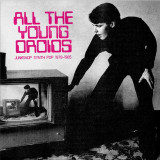
Compiled by Philip King “And then came the rise of synth pop : blokes with dodgy haircuts hunched over keyboard-operated machines stuffed with wires and do-it-yourself tone oscillators making sounds like a brood of geese passing gas in a wind tunnel. Whoopee! This is the way the ‘70s ended : not with a blood-curdling bang bang but with a cheap, synthesized, emasculating whimper.” NICK KENT, NME. All The Young Droids: Junkshop Synth Pop 1978-1985 is a new compilation that charts the underbelly of the epoch-defining sound of the synthesiser in 80s popular music. Compiled by Philip King (previously seen compiling All The Young Droogs, Glitterbest and Boobs - The Junkshop Glam Discotheque), the music here connects the dots between DIY synth enthusiasts grappling with new, cheap synthesisers at the tail-end of punk and wannabe, jobbing songwriters enthral to the new music pioneered by Gary Numan, Depeche Mode and Daniel Miller’s Mute Records. Featuring rare tracks of auto-didactic progressive pop music, proto-techno punk, shoot-for-the-stars-land-in-the-gutter chart flops and heralded, underground synth classics, School Daze paints a picture of beautiful failure. Complete with extensive sleeve notes written by King and never before seen imagery, all 24 tracks were remastered by RPM in-house engineer Simon Murphy, many from vinyl copies due to lost master tapes. The story told on All The Young Droids is one of the dawning opportunity presented by both the emergence to the market of cheaper analog synthesisers and the distribution networks plus indie labels that exploded with the advent of punk music in 1976. While the music that sprouted out all over the globe in the wake of these factors was decried as fake, plastic, a refutation of punk’s guitar-led revolution, it’s telling that much of the music on All The Young Droids.. was created in bedrooms, ramshackle studios and home-made set ups with often borrowed equipment. In the era of record labels jumping to capitalise on the success of The Sex Pistols, The Clash (both on major labels, of course) these artists struggled to stand out from a new gold-rush with next to no budget or PR team. With radio and labels desperate for the new Yazoo, what resulted was a testament to necessity being the mother of invention. At the time, the synthesiser was the music of the future, a shiny new machine that could paint like an orchestra with a single finger and a 4-track. In the hands of Manchester avant-pranksters Gerry & The Holograms it’s a pulsing, sardonic weapon.. the only instrument on the Messthetics classic lampooning of New Wave fashion. In Hamburg, a 16 year old Andreas Dorau used it to write and record (with his female classmates on vocals) a global smash in Fred Vom Jupiter (later licensed to Mute Records). The hard-to-find English version (Fred From Jupiter, natch) is included here. Many artists with alreadystoried careers caught the bug and recorded synthesiser-fuelled peons to space, computers, the future and, of course, love-interests. Harry Kakoulli, late of Squeeze, recorded a solo album in 1979 that included the incredible power-synth-pop smash-that-never-smashed I’m On A Rocket. Similarly, Ian North of Neo and American Power Pop stalwarts Milk ’n’ Cookies bought a Korg MS20 and used a tape machine to record We’re Not Lonely, an absolute lost-classic of minimal synth pop. We’re Not Lonely also features on the Junkshop Synth Pop sampler 7” twinned with John Howard unreleased track You Will See, released April 12th 2025. There are plenty of compilation debuts in evidence. Sole Sister were a mysterious trio who were featured on the Scaling Triangles compilation of female-fronted, queer-adjacent post-punk / underground music that also featured The Petticoats. Selwin Image were from San Francisco and featured members of the recently defunct power pop/punk group The Pushups. Their stupidly catchy The Unknown fizzes with New Wave energy - think XTC to Sparks but remains unreleased until now. Dream Unit’s A Drop In The Ocean is an early synth wave cut, positively teaming with Joy Division instrumentation, previously only released on a long-forgotten and super rare, self-released EP. Incandescent Luminaire’s Famous Names belies an archetypal struggle of a small-town trying to make it in a cruel industry but is a thrilling New Romantic-Synth Wave cross over with a OMD gloominess that’s a joy to hear. Feminist Minimal Wave track I Am A Time Bomb by performance artist Peta Lilly and Michael Chance is a revelation destined for new found cult status. It was released on 7” and lost until now. The flipside to the subterranean, never-made-it synth pop mentioned above are the ambitious, even fruity attempts at success that have a perennial elegance to their confidence. New Jersey-ite Billy London (real name Ed Barth) tried to cash in on the synth boom with Woman, released by a major label, a lurching new wave track built on the Louie Louie rhythm and a wonderfully camp Lou Reedstyle sleazy vocal before exploding in the synthesised chorus. The song bombed but with a chorus like this, you have to wonder why? Ex-Glitter Band member John Springate’s My Life is truly epic, with doomed chord progressions and massive sounding drums turning into at least 3 different songs in the course of the track. Before you wonder what’s going on the song resolves with a glorious return to the main refrain. The dry-ice-dressed dance floor is well catered for too. Design’s Premonition and Vision’s Lucifer’s Friend are stone-cold minimal synth bangers, well loved but given a new lease of life here. The Warlord’s The Ultimate Warlord was released in 1978, a homespun proto Hi NRG banger that was later re-recorded by The Immortals in Canada who had a club hit with it. One-man- band Disco Volante’s No Motion was re-issued by Synth wave label Medical in 2012 but makes its first vinyl compilation appearance here. Close your eyes and you can imagine what Lawrence of Felt would have sounded like with some cheap Korgs a little earlier in his career. Gibraltar-based trio The Microbes imagined a computer programming people to dance - how prescient - and ended up with a propulsive, robo-funk track with splendid rubbery bass playing over a tectonic drum machine. Previously picked up by Belgian label Stroom TV, Dee Jay Bert & Eagle’s heavily Euro-accented I Am Your Master demands the listener to “come to paradise!” In a frankly terrifying manner. All The Young Droids is the first compilation to peel away from the narrative that dour, Minimal Synth and Cold Wave were the only musical children of the first rush of synth pop. Philip King and School Daze Records describe a much more complicated world: along with the austere, Brutalist children of Daniel Miller (who produced Alan Burnham’s Bowie-Low-influenced Science Fiction here) was a plethora of desperate cash-ins, accidental mainstream hits, ambitious pop dramas and major label punts that went nowhere. Crucially, the compilation blurs the line between junk and treasure. What if the two things are interchangeable. What if it’s all science fiction?
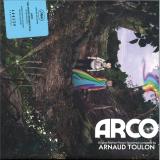
The soundtrack for the animated film Arco (directed by Ugo Bienvenu, winner of the Annecy 2025 Crystal Award for Best Feature Film, also presented at the Cannes Film Festival) was composed by Arnaud Toulon. Between orchestral flourishes and delicate electronic touches, he composes immersive, sensitive, and luminous music that evokes the great scores of Joe Hisaishi while asserting a resolutely contemporary identity.
Conceived as a true sonic journey, the soundtrack accompanies Arco's temporal wanderings with rare cinematic intensity. Each piece oscillates between poetry and dramatic tension, making this work an experience in its own right, to be discovered far beyond the images.
Awarded the Sacem Prize for original music for feature films in Annecy, this soundtrack is already establishing itself as a landmark piece of contemporary animated cinema.
Vibe Ride is the sixth release of Adam Rudolph's Hu Vibrational project and marks his 60th release as a leader or co-leader. Comes with insert and download code.
“With every record, the goal is to explore new creative territory,” explains Rudolph. Vibe Ride continues a deeper exploration of a trance-like groove and a conceptual framework known as Sonic Mandala. This album marks the most complete realization of that idea, partly due to the group's experience touring beforehand. That time on the road helped to refine ideas and strengthen musical chemistry. The recording process unfolded organically—likely due to the long-standing collaboration within ensembles like Go: Organic Orchestra and Moving Pictures, where the musicians have developed a deep familiarity with the shared musical language.
Sonic Mandala refers to a musical approach distinct from traditional linear structures of theme and development. Found in cultures across the globe, it may represent one of the oldest forms of musical expression—predating written history by tens of thousands of years. Today, it is most vividly preserved in the music of the Ituri Forest peoples (Aka, Baka, Ba Benzele, Mbuti), whose sound traditions revolve in cyclical, orbit-like patterns. Vibe Ride seeks to bring that ancient sense of circularity into a contemporary—and perhaps even futuristic—context.
The ensemble of Vibe Ride—Alexis Marcelo, Jerome Harris, Harris Eisenstadt, Neel Murgai, Tim Kieper, and Tripp Dudley—brings exceptional creativity and skill to the project. While grounded in the sonic languages of today, their performance channels an ancient vibrational lineage, connecting with ancestral sound makers who were attuned to the rhythms of the sun, moon, stars, and seasons. Human beings have always been deeply responsive to natural cycles.
Like a mandala, where the circle reveals itself as a spiral—always returning, but never to the exact same point—the Sonic Mandala musical experience spirals through motion. Refined signal patterns emerge through overtone-rich instrumentation. The groove becomes a threshold, shifting the listener from passive observation into active, even transcendent, participation. With open ears and an open mind, the sound spirals inward—toward a primal center—and outward into the cosmos. When this elevated state is shared among participants, it creates what mystics describe as resonance.
Vibe Ride thrives on the distinctive sonic voices of its players, interwoven with care and nuance into the compositions. Hu Vibrational merges elements of world music, electronica, and improvised jazz into something both funky and spiritual, intense and soothing.
Using signature techniques of organic orchestration, layered arrangement, and electronic processing, the compositions are sculpted from percussion, electronics, and ethereal textures. Rhythmic foundations drawn from diverse traditions serve not as endpoints, but as building blocks. As the saying goes, “Orchestration is the key.” In shaping the sound, the aim was to discover fresh ways of balancing structure and sonic color. As Don Cherry once said: “The swing is in the sound.”
The audiophile LP was carefully recorded, mixed, and mastered by James Dellatacoma—longtime engineer for both Bill Laswell and Rudolph—at Laswell’s Orange Studio.
“This crew artfully blends together to create a seamless tapestry of rhythm… the end results are mesmerizing. Hu Vibrational is all about communing with the groove spirits and creating worlds where earthy rhythms and other-worldly sounds are one.”
— Dan Bilawsky, All Music Guide
“You can be sure that when Adam Rudolph and an ensemble of breathtaking drummers get together mystical and wonderful things will happen.”
— Raul da Gama,
“A stunning effort, enjoyable and grows with repeated listening.”
— Stefan Wood, Freejazzcollective
- A1: Design - Premonition
- A2: Vision - Lucifer’s Friend
- A3: Richard Bone - Alien Girl
- A4: John Howard - I Tune Into You
- A5: Ian North - We’re Not Lonely
- A6: Selwin Image - The Unknown
- B1: Harry Kakoulli - I’m On A Rocket
- B2: Rich Wilde - The Lady Wants To Be Alone
- B3: Billy London - Woman
- B4: Alan Burnham - Science Fiction
- B5: The Microbes - Computer
- B6: The Goo-Q - I’m A Computer
- C1: Gerry & The Holograms - Gerry & The Holograms
- C2: The Warlord - The Ultimate Warlord
- C3: Die Marinas - Fred From Jupiter
- C4: Dee Jay Bert & Eagle - I Am Your Master
- C5: Peta Lily & Michael Process - I Am A Time Bomb
- C6: Sole Sister - It’s Not What You Are But How
- D1: Alasdair Riddell - Do You Read Me?
- D2: Karel Fialka - Armband (The Mystery Song)
- D3: John Springate - My Life
- D4: Incandescent Luminaire - Famous Names
- D5: Disco Volante - No Motion
- D6: Dream Unit - A Drop In The Ocean
MB Crystal Vinyl[32,73 €]
LTD Trans Pink Vinyl[32,82 €]
LTD Trans Pink Vinyl[27,69 €]
Compiled by Philip King
“And then came the rise of synth pop : blokes with dodgy haircuts hunched over keyboard-operated
machines stuffed with wires and do-it-yourself tone oscillators making sounds like a brood of geese
passing gas in a wind tunnel. Whoopee! This is the way the ‘70s ended : not with a blood-curdling bang
bang but with a cheap, synthesized, emasculating whimper.”
NICK KENT, NME.
All The Young Droids: Junkshop Synth Pop 1978-1985 is a new compilation that charts the
underbelly of the epoch-defining sound of the synthesiser in 80s popular music. Compiled by Philip
King (previously seen compiling All The Young Droogs, Glitterbest and Boobs - The Junkshop
Glam Discotheque), the music here connects the dots between DIY synth enthusiasts grappling with
new, cheap synthesisers at the tail-end of punk and wannabe, jobbing songwriters enthral to the new
music pioneered by Gary Numan, Depeche Mode and Daniel Miller’s Mute Records. Featuring rare
tracks of auto-didactic progressive pop music, proto-techno punk, shoot-for-the-stars-land-in-the-gutter
chart flops and heralded, underground synth classics, School Daze paints a picture of beautiful failure.
Complete with extensive sleeve notes written by King and never before seen imagery, all 24 tracks
were remastered by RPM in-house engineer Simon Murphy, many from vinyl copies due to lost master
tapes. The story told on All The Young Droids is one of the dawning opportunity presented by both the
emergence to the market of cheaper analog synthesisers and the distribution networks plus indie labels
that exploded with the advent of punk music in 1976. While the music that sprouted out all over the
globe in the wake of these factors was decried as fake, plastic, a refutation of punk’s guitar-led
revolution, it’s telling that much of the music on All The Young Droids.. was created in bedrooms,
ramshackle studios and home-made set ups with often borrowed equipment. In the era of record labels
jumping to capitalise on the success of The Sex Pistols, The Clash (both on major labels, of course)
these artists struggled to stand out from a new gold-rush with next to no budget or PR team. With radio
and labels desperate for the new Yazoo, what resulted was a testament to necessity being the mother
of invention.
At the time, the synthesiser was the music of the future, a shiny new machine that could paint like an
orchestra with a single finger and a 4-track. In the hands of Manchester avant-pranksters Gerry & The
Holograms it’s a pulsing, sardonic weapon.. the only instrument on the Messthetics classic lampooning
of New Wave fashion. In Hamburg, a 16 year old Andreas Dorau used it to write and record (with his
female classmates on vocals) a global smash in Fred Vom Jupiter (later licensed to Mute Records).
The hard-to-find English version (Fred From Jupiter, natch) is included here. Many artists with alreadystoried careers caught the bug and recorded synthesiser-fuelled peons to space, computers, the future
and, of course, love-interests. Harry Kakoulli, late of Squeeze, recorded a solo album in 1979 that
included the incredible power-synth-pop smash-that-never-smashed I’m On A Rocket. Similarly, Ian
North of Neo and American Power Pop stalwarts Milk ’n’ Cookies bought a Korg MS20 and used a
tape machine to record We’re Not Lonely, an absolute lost-classic of minimal synth pop. We’re Not
Lonely also features on the Junkshop Synth Pop sampler 7” twinned with John Howard unreleased
track You Will See, released April 12th 2025.
There are plenty of compilation debuts in evidence. Sole Sister were a mysterious trio who were
featured on the Scaling Triangles compilation of female-fronted, queer-adjacent post-punk /
underground music that also featured The Petticoats. Selwin Image were from San Francisco and
featured members of the recently defunct power pop/punk group The Pushups. Their stupidly catchy
The Unknown fizzes with New Wave energy - think XTC to Sparks but remains unreleased until now.
Dream Unit’s A Drop In The Ocean is an early synth wave cut, positively teaming with Joy Division
instrumentation, previously only released on a long-forgotten and super rare, self-released EP.
Incandescent Luminaire’s Famous Names belies an archetypal struggle of a small-town trying to
make it in a cruel industry but is a thrilling New Romantic-Synth Wave cross over with a OMD
gloominess that’s a joy to hear. Feminist Minimal Wave track I Am A Time Bomb by performance artist
Peta Lilly and Michael Chance is a revelation destined for new found cult status. It was released on 7”
and lost until now.
The flipside to the subterranean, never-made-it synth pop mentioned above are the ambitious, even
fruity attempts at success that have a perennial elegance to their confidence. New Jersey-ite Billy
London (real name Ed Barth) tried to cash in on the synth boom with Woman, released by a major
label, a lurching new wave track built on the Louie Louie rhythm and a wonderfully camp Lou Reedstyle sleazy vocal before exploding in the synthesised chorus. The song bombed but with a chorus like
this, you have to wonder why? Ex-Glitter Band member John Springate’s My Life is truly epic, with
doomed chord progressions and massive sounding drums turning into at least 3 different songs in the
course of the track. Before you wonder what’s going on the song resolves with a glorious return to the
main refrain.
The dry-ice-dressed dance floor is well catered for too. Design’s Premonition and Vision’s Lucifer’s
Friend are stone-cold minimal synth bangers, well loved but given a new lease of life here. The
Warlord’s The Ultimate Warlord was released in 1978, a homespun proto Hi NRG banger that was
later re-recorded by The Immortals in Canada who had a club hit with it. One-man- band Disco
Volante’s No Motion was re-issued by Synth wave label Medical in 2012 but makes its first vinyl
compilation appearance here. Close your eyes and you can imagine what Lawrence of Felt would have
sounded like with some cheap Korgs a little earlier in his career. Gibraltar-based trio The Microbes
imagined a computer programming people to dance - how prescient - and ended up with a propulsive,
robo-funk track with splendid rubbery bass playing over a tectonic drum machine. Previously picked up
by Belgian label Stroom TV, Dee Jay Bert & Eagle’s heavily Euro-accented I Am Your Master
demands the listener to “come to paradise!” In a frankly terrifying manner.
All The Young Droids is the first compilation to peel away from the narrative that dour, Minimal Synth
and Cold Wave were the only musical children of the first rush of synth pop. Philip King and School
Daze Records describe a much more complicated world: along with the austere, Brutalist children of
Daniel Miller (who produced Alan Burnham’s Bowie-Low-influenced Science Fiction here) was a
plethora of desperate cash-ins, accidental mainstream hits, ambitious pop dramas and major label
punts that went nowhere. Crucially, the compilation blurs the line between junk and treasure. What if the
two things are interchangeable. What if it’s all science fiction?
The UK's Robin Lee is one of the members of much-loved disco gang Faze Action but also he's behind Andromeda Orchestra who return here with an album that offers a cosmic fusion of jazz-funk and disco. It's been put together with Moogs, clarinets, Rhodes and rich analogue textures that make for a mix of nostalgia and sonic richness that sinks you in deep. Blending nostalgia with innovation, Lee creates deep, immersive soundscapes. There are widescreen odysseys like 'Mythical', loved-up bunkers such as 'Thinking About Your Love' and a rare Nick The Record remix of 'Get Up & Dance' that overflows with cosmic melodies and lush, life-affirming strings.
DJ Feedback
Tigerbalm (Razor n Tape):
"Loving the Nick The Record mix of Get Up Dance."
Willie Graff (Music for Dreams):
"An excellent collection of disco tunes! Will be playing for sure."
Jacques Renault (Lets Play House):
"Epic album as expected, tune after tune, will be playing these for sure. "
Ilya Santana (Astrolead Recordings):
"Andromeda is always a sure shot!"
Pete Herbet (Music For Swimming Pools):
"HUGE!! – Great album!"
The album’s title deftly gestures to the sheer vastness of astronomical dimensions, while simultaneously capturing the musical breadth within, where the eight planets are imagined as the eight notes of an octave. The work draws inspiration not only from earlier compositions —most notably Gustav Holst’s The Planets—but also from the rich astronomical and cultural contexts surrounding these celestial bodies. Here, the focus transcends direct citation of melodic motifs, instead embracing an intriguing conceptual approach on a meta level, unfolding in a series of vividly contrasting soundscapes. These contrasts shape a sweeping sonic journey, one that fully embraces the album format with both arms, inviting the listener to venture into realms both strange and wondrous, feeling the immensity of the interstellar space that lies between them. Contrast, after all, is the brushstroke that enriches our world.
Embarking on an auditory voyage, "Astral Guide" establishes the sonic framework that propels us into the boundless expanses of the cosmos. Its ethereal tones evoke the vastness of space, crafting a mood ripe for exploration within the realms of sci-fi. The subsequent tracks unfold like constellations, weaving a rich tapestry of sound that seamlessly marries cinematic soundscapes with pulsating, club-oriented rhythms. This album invites listeners to traverse its immersive landscapes, whether nestled in the comfort of home or dancing under the starlit sky, each note a guide through the transcendent experience of a nocturnal journey.
"Solar Flares" draws its inspiration from the awe-inspiring expanse of solar phenomena, capturing the majestic power of the sun as it reaches into the cosmos. This track resonates with the idea that energy, while vital, can also be a force of destruction when unleashed with overwhelming intensity. The composition beautifully mirrors the sun’s duality, where brilliance and devastation coexist, inviting listeners to reflect on the delicate balance between creation and annihilation. Through its rich textures and dynamic shifts, "Solar Flares" serves as both a homage to the celestial and a poignant reminder of nature's formidable power.
"Mercury – The Winged Messenger" embodies a meticulously crafted soundscape where artistry meets astronomy. The tempo of 173.6 BPM, derived from precise astronomical data, propels the composition into a vibrant realm that resonates with cosmic energy. Synthwave sound design intertwines seamlessly with the fluid rhythms of Drum’n’Bass, imbuing the piece with an uplifting dynamism that evokes the ethereal grace of Mercury itself. In this sonic exploration, listeners are invited to ascend on wings of sound, navigating the celestial tapestry of the universe with each invigorating beat.
"Venus, The Bringer of Peace" strikes a decidedly cozy note, presenting a poignant contrast to the more tempestuous themes often found in cosmic narratives. This composition evokes a nostalgic vision of an optimistic era, one in which humanity transcended borders and embraced the infinite possibilities of space exploration, where no destination felt too distant. The dense, languid atmosphere envelops the listener, creating a tangible sense of serenity that unfolds gradually, allowing for a meditative journey through sound. Each note serves as an invitation to linger in this tranquil embrace, reflecting on the harmonious potential of our collective aspirations and the beauty of connection in a vast universe.
The central theme of „Gaia, The Bringer of Life“ —originally not part of the planetary cycle— is the profound enabler of life on Earth. The arrangement delicately mirrors the slow, tentative unfolding of this potential, marked by an initially sparse orchestration that gradually builds in momentum. This progression crescendos, embodying the explosive dynamism of the Cambrian burst of life, ultimately culminating in a euphoric fanfare—a triumphant, celebratory flourish echoing life’s victorious emergence.
"Blue Moon" unfolds as a contemplative reverie on the tranquil clarity of a night sky, now seldom glimpsed in its natural purity, unclouded by the relentless haze of urban light. The listener is drawn into the vast embrace of the star-strewn firmament, a journey that sways between euphoric awe at nature’s sublime beauty and a profound melancholy for its fragile and imperiled state. Musically, this duality finds expression in the delicate interplay of modal mixtures, while an ever-shifting triplet groove, poised at the intersection of Outrun and melodic house, lends a pulse that is both nostalgic and forward-looking—echoing the beauty and transience of a world on the brink.
Rather than replicating the original composition of „Mars, The Bringer of War“, this interpretation seeks to evoke its profound, foreboding atmosphere. Cyberpunk emerges here as an ideal genre, channeling the dark, relentless march synonymous with Mars, the ancient god of war. The piece reverberates with intensity, as distorted vocalizations rise, embodying the anguish and visceral torment that shadow war’s violent crescendo. This auditory descent into conflict captures the relentless pulse of warfare, where sound itself becomes an embodiment of suffering and fury.
Majestically, "Jupiter, the Bringer of Jollity" emerges on the celestial stage, sweeping away the somber tones with its radiant vigor. Drawing inspiration from the triumphant strains of the original, and borrowing a melodic motif in the refrain, the piece expresses joy and buoyancy through a shift to a major key and the lilting sway of a danceable 12/8 meter. Spirited and exuberant, it leaps boldly from major to minor and back again, playfully shifting time signatures to capture a mood of unbridled festivity and jollity.
Here, a more conciliatory concept is chosen than in the original inspiration. „Saturn“ aligns with the number six, being the sixth planet from the Sun and bearing the iconic hexagonal pattern at its northern pole. What, then, could be more fitting than to render this piece in a 6/8 time signature? The arrangement unfolds with a multifaceted richness, mirroring the countless stones and ice fragments that form the foundations of Saturn’s majestic rings.
„Uranus“ adopts the theme of a light-footed, dancing instrumentation, giving the impression of perpetual motion, never quite settling. This musical choice harmonizes with the planet’s own orbit, as it spins with breathtaking velocity, teetering and swaying, seemingly unable to attain rest or stability.
The chill and vastness of the cosmos find expression in „Neptune, The Mystic“. At its core, an electronic soundscape envelops a classical arrangement, its unreachability intensified by an ethereal, otherworldly choir. Hovering at the outermost boundaries of the solar system, where warmth is but a distant memory, the composition lingers in a slow, contemplative tempo, evoking a realm where space for speculation stretches wide and silence reigns supreme.
Though Pluto may have lost its planetary status, and its companion Charon never achieved one, this shift in classification subtly aligns with the cosmic scale invoked here—one that mirrors the musical tradition of an eight-note sequence. Fittingly, the album closes with „Kuiper Belt“, a composition emblematic of the turbulence and vitality of countless smaller
celestial bodies that, though diminutive, find their rightful place within the vast architecture of the solar system.
They say nature is the greatest composer, shaping the universe with a symphony of chaos and order, beauty and danger. It is this duality that fuels the artistic vision of Edictum—a producer who, armed with a doctorate in chemistry, delves as deeply into the mysteries of molecules as he does into the depths of sound. In the tension between the vastness of the cosmos and the microscopic processes that dictate life’s rhythm, Edictum creates sonic landscapes that dissolve the boundaries between science and art.
His music is a story of contrasts—a sonic tale where the raw forces of nature clash with the intricate structures of human culture. Opposites intertwine to form a harmonious whole: the primal rhythms of the earth meet the celestial melodies of the cosmos, the rigid laws of physics blend with the boundless freedom of art. Edictum explores these polarities with meticulous devotion, each composition an expedition into uncharted soundscapes—a quest to give voice to the unfathomable.
With over 20 years immersed in the realms of electronic music, Edictum has honed a keen sense for rhythm and movement. His driving beats compel both body and mind into a hypnotic flow. Yet beyond the pulse of dance lies a complex framework of conceptual thought. Today, his creative focus revolves around holistic album projects—self-contained worlds with overarching narratives that embrace contrast and complexity. Each track stands alone as a fragment of the whole, but together, they weave a cohesive tapestry, much like the chapters of a novel that guide the listener on an emotional and sonic journey.
Edictum’s distinctive musical signature has earned him international recognition. With over 150 releases, many on prestigious platforms like the iconic *NewRetroWave* label, and collaborations with artists such as Jan Johnston, Azumi Inoue, Powernerd, and Turbo Knight, he has solidified his place in the global electronic music scene. His latest work, *A Cosmic Scale*, marks his seventh vinyl album and is released under his own label, *Echoes of Expanse*. The label’s name is no coincidence—it captures the essence of his art: echoes of infinity, the vibrations of the universe distilled into a singular sonic experience that carries the listener ever further into the boundless expanse of sound and space.
Inspired by "slow and quiet life on the southern coasts of England", the debut from CVOIA - a new collaboration between producers and Captured Visions label founders Adam O'Hara and Tom Parker - offers gorgeously lolloping, lazy beats and expansive, cinematic orchestration. There's the brittle, slow motion breakbeats and woozy instrumentation of the duo's original, then remixes from four of their favourite acts: Awakened Souls, Inhmost, Jack Lever and Synkro. All the tracks are about as strenuous as an afternoon on the beach, and equally nourishing, with Synkro's rich, synth-soaked near-ambient mix a dramatic, undisputed highlight. Jack Never's Northern Mix, meanwhile, wouldn't sound out of place nestled somewhere in Mo'Wax's first dozen or so releases. High praise indeed, but much deserved.
microCastle’s second offering of 2024 welcomes Upercent back to the label for a new EP. Since first appearing in 2011, Valencia based sound architect Upercent has developed a distinct brand of electronic futurism. An enthusiastic attitude towards experimentation, coupled with extraordinary creative vision has made the Spaniard one of the more unique artists to emerge in the last decade. Upercent’s first microCastle project, 2018’s 'Vuit', not only served as the imprint's second ever vinyl release, but continued the Valencia resident’s mission to create contemporary club tools and destabilizing sound explorations. Seemingly in constant motion moving forward, Upercent would go on to record projects for Diynamic, Kompakt and Watergate, amongst others, firmly establishing his place amongst the underground’s premiere talents. Now more than five years on from this elusive string of projects, it has been Habitat, Innervisions, Sum Over Histories and TAU which have been vehicles for his creative swell over the last two calendar years, reminding us of the niche he carved out during his initial rise, as he continues to maneuver himself through the confines of electronic music. With 2024 being highlighted by ‘Falling’, a two-track collaborative project with Germany’s Adana Twins, Upercent now returns to microCastle with ‘Persevere’.
Beginning with the organic monochromes of ‘Oracle’, Upercent’s craftsmanship reveals itself across the slow-burning piece, one where funked-up beats and rubbery basslines get peppered with skittering rhythms, thought provoking vocal samples and glitched-out electronics. Its subdued yet swing-heavy suspense while perfect for an astute dancefloor, also acts as an ideal segue into the hopeful qualities of ‘As It May See’. Paul Brenning’s vocals feature here, falling like raindrops atop woody kick drums and clustered sonics, eventually giving way to an interlude of soulful phrasing, coaxing beautifully with granular textures and ghostly swirls of wind, before tastefully moving forward as panoramic arps emerge for a mesmerizing finale.
Upercent’s distinct aesthetic continues on the fourth selection ‘Cult’. Perhaps the most direct composition on the EP, its six-minute running time quickly sets you adrift in a techno-inspired wasteland of deconstructed vocals and retro chord stabs. Both intimate and wide-ranging, it's a series of crystal-like drones which engulf your attention whole, creating a sombre, ceremonial backdrop for misty glitches and fog-like swells to create a scenic storyboard. Reverberating hits and twitchy rhythms fill the space of closer ‘Blau Cel’, a production where Upercent crafts a trek through mountainous dancefloor trails. Unbound by gravity, orchestral gestures sweep across mossy plains and frost-filled sighs, offering listeners another immersive journey into the uncharted realms of musical expression.
- A1: World Standard - Fellini & Rota
- A2: Masumi Hara - Your Dream
- A3: Normal Brain - M.u.s.i.c
- A4: Hiroyuki Namba - Who Done It? (Part 2)
- B1: Yasuaki Shimizu - Crow
- B2: Hiroyuki Namba - Tropical Exposition
- B3: Imitation - Exotic Dance
- B4: Pecker - Sha La La
- C1: Ep-4 - Db
- C2: Earthling - You Go On Natural
- C3: Masumi Hara - Camera
- D1: Geinoh Yamashirogumi - Rinne Kohkyogaku Meikei
- D2: D-Day - Ki·ra·i
- D3: Ryuichi Sakamoto - A Wongga Dance Song
Ever since he made his first trip to Japan to DJ, Optimo Music founder JD Twitch has been bewitched by Japanese music, and particularly the vibrant, imaginative, and often far-sighted sounds which emerged from the island nation during the 1980s. Now he’s put years of digging in Japanese record shops to good use on Polyphonic Cosmos, the latest release on his compilation-focused Cease & Desist imprint.
Subtitled ‘A Beginners Guide to Japan In The ‘80s’, the collection offers a personal selection of Japanese gems recorded and released between 1981 and ’86 – a period when advances in recording and musical technology offered the nation’s artists and producers a whole new tool kit to employ. When combined with the unique musical culture of Japan, where local traditions are frequently fused with Western styles to create timeless, off-kilter aural fusions, this embrace of locally pioneered music technology had spectacular, often unusual results.
Eight years in the making, Polyphonic Cosmos provides an endlessly entertaining musical snapshot of Japanese music of the early-to-mid ‘80s with all of the open-minded eclecticism and sonic twists that you would expect from the Glasgow-based DJ.
Compare and contrast, for example, the gently breezy, morning-fresh folk-plus-electronics bliss of ‘ばら二曲 Baranikyoku (Fellini&Rota)’ by World Standard – the most familiar alias of long-serving musician/producer Sohichiro Suzuki – and the hallucinatory, slow-motion tribal rhythms, post-punk rhythms and tape delay-laden electronics of Imitation’s ‘Exotic Dance’. Or, for that matter, the tipsy mid-‘80s electronic reggae of Pecker’s ‘Sha La La’, the grungy but melodic post-punk strut of ‘You Go On Natural’ by Earthling (a track Twitch accurately describes as “sheer unrelenting groove”), and the unearthly, swirling sonics, new age instrumentation and flotation tank vocals of prolific (and seemingly mysterious) act Geinoh Yamashirogumi’s ‘Rimme Kohkyogaku Meiki’.
It’s a credit to JD Twitch’s curatorial skills that the quality never dips, and sonic surprises lurk around every corner. Consider for a moment the hard to describe, far-sighted audio immersion of D-Day’s ‘Ki-Ra’ – all languid post-pop guitar, enveloping chords, spoken word vocals, shuffling 808 beats and marimba melodies – and the two contributions from video games soundtrack specialist (and driving instrumental synth-pop specialist) Hiroyuki Namba.
The collection naturally includes some selections that have long been favourites in Twitch’s DJ sets – see Masumi Hara’s ‘Your Dream’ – as well as a handful of tracks from artists who may be more recognisable to those with only rudimentary knowledge of Japanese musical culture. The great Yasuaki Shimizu, whose work as Mariah has become far better known in recent years thanks to reissues of some of his most magical albums, is represented via ‘The Crow’, a picturesque chunk of horizontal, hard-to-define jazz-not-jazz smokiness, while the collection fittingly concludes with a sublimely funky, oddball electronic workout from Yellow Magic Orchestra legend Ryuichi Sakamoto (the frankly incredible ‘Wongga Dance Song’).
Matt Anniss
A lavish four chapter chronicle that imagines an alternative evolution of mankind through sound, VIS (Latin for energy or force) is the result of a lengthy process of self-discovery, collaboration and research for Italian-German composer David August. The son of a classical pianist, August slipped from the academic music world into an early career as a dance music producer and DJ before he felt his artistic outlook shifting considerably. He established the adventurous 99CHANTS label in 2018, and has since used it as an output for his most progressive notions, collaborating most recently with jazz-noise vocalist Cansu Tanrikulu and Carnatic singer Sushma Soma on last year"s acclaimed "Imaginary Landscapes" compilation. VIS then is a chance for August to reconcile his personal narrative, leveling it with concepts that touch on history, transformation and metaphysics. He wrote the album"s 13 pieces to play like a linear storyline, tracking the development of culture from its illusory beginnings in Plato"s cave into the wider world and observing its progression and adaptation.
August represents these themes with levitational orchestral drones, choirs and bells that slowly bend to long-forgotten ancestral rhythms, inevitably colliding with the digitized chaos of the information age. Motion guides everything, whether it"s shadows on a wall projected by dancing flames, or dramatic, overlayed rhythms that vibrate the air and excite the feet. VIS is a dynamic attempt to show the movement of time on a macro scale, looking backwards in order to move forwards. It charts mankind"s journey from its cosmic beginnings through the awe-inspiring world of flora and fauna, grounding the experience in rhythmic expression and dance before we"re returned to the stars in transcended form. Crucially, it"s a hopeful articulation of ideas and concepts that continue to echo throughout history, inviting us to imagine greater and cherish the teeming landscape that surrounds us.
- A1: David Holmes & Raven Violet - It’s Over If We Run Out Of Love (Hardway Bros Live At The Ssl Dub)
- A2: Unloved - Mother’s Been A Bad Girl (Horse Meat Disco Remix)
- A3: Pip Blom - Keep It Together (Ludwig A F. Under Pressure Mix)
- B1: Confidence Man - Holiday (Erol Alkan Ooo Remix)
- B2: Toy - You Won’t Be The Same (Dan Carey Dub)
- C1: Audiobooks - The Doll (Bruise Remix)
- C2: The Orielles - The Room (Shy One Remix)
- C3: Eyes Of Others - Once Twice Thrice (The Orielles Remix)
- D1: Fever The Ghost - Source (Leo Zero Dub)
- D2: Working Men’s Club - The Last One (Forgemasters Remix)
Heavenly Recordings release the next two volumes in their series of remixed classics and unreleased versions. ‘Heavenly Remixes 7 & 8’ sees the label going back into the archive, as well as picking off some more recent remixes, and both albums primarily feature either previously unreleased versions or re-workings available for the first time on vinyl and CD.
Heavenly have always seen immense value in the remix, a value way beyond what it might bring commercially. Since their first release in 1990 (where Andrew Weatherall overhauled a one-off single by club kids Sly and Lovechild) Heavenly remixes have been carefully curated and treated as a key part of the A&R process. It’s an opportunity to view an artist through a different prism, to play out a musical ‘what if’ scenario. It’s the kind of exploration that’s happened consistently through the thirty plus years the label has released music.
The ‘Heavenly remixes’ series continues to showcase the very best remixes, versions, meditations, re-rubs and dubs from all around the world of artists right across the roster of the country’s most exciting record label. In most cases, the albums offer the first physical release for a remix, elevating them from streaming playlists to their rightful, spiritual home on super heavy vinyl (or shiny, super-packed compact disc).
‘Heavenly remixes 7’ heads to Belfast, where David Holmes - a producer who first appeared on Heavenly in 1994 amping up the acid on Saint Etienne’s ‘Like A Motorway’ - appears as solo artist and as one third of Unloved, who get a lift right to the heart of a Vauxhall sweatbox by Horse Meat Disco. It draws a line between Amsterdam and Frankfurt as Ludwig A.F. amps up the electronics on Pip Blom’s ‘Keep It Together’. It stops off in a south London studio where super producer Dan Carey plays the desk with Toy, then relocates LA psych rock band Fever The Ghost to an Ibizan shoreline as the sun sets on the horizon. It cements Sheffield’s reputation as the home of modern British techno with the return of true originators Forgemasters. And it pitches up in front of a renegade soundsystem late night at Glastonbury as Erol Alkan’s mighty rework of Con Man gets its third rewind of the night.
‘Heavenly remixes 8’ opens with Space Afrika’s lush, ambient reimagining of the Orielles’ ‘BEAM/S’ before Justin Robertson stretches Amber Arcades’ ‘Turning Light’ into eight minutes of electronic dub. Elsewhere, Baxter Dury’s peerless ‘Miami’ becomes a string-laden electro skank in the hands of French producer Pilooski; Edinburgh’s bedroom techno genius Eyes of Others’ ‘Safehouse’ turns into an East End bathhouse courtesy of disco deviants Decius; Ashley Beedle’s Black Science Orchestra turns Unloved’s heartworn torch song into seven minutes of glimmering dreamlike percussive house and Katy J. Pearson’s freak flag is flown high thanks to The Umlauts’ throbbing filtered electro mix. It ends similarly to how it began as TONE takes
Fran Lobo’s ‘All I Want’ on a gorgeous slow motion spacewalk.
The train hurtled forward, rocking side to side as field after field rushed by under an unmoving sky. Her gaze was transfixed on the blurred landscape that passed her by. Behind her, she had left a city with lifelong memories, and as her mind cast back to thoughts of home, a salty tear welled in her eye. It did not fall. She yearned to go back, but her heart knew that this would never again be possible. Inhaling, she held her breath for a moment, almost unexpectedly. A nostalgia was within her, but she knew she must continue, direct her own life and maintain this motion before it dwindled into inertia. She exhaled and the tear rolled down. Looking out toward the horizon she dabbed her cheek, then gently sat upright. Her journey was only just beginning.
Tübingen born, then Frankfurt raised Berlin artist - Johannes Klingebiel, unleashes a potent and untiringly emotive work for the fourth imprint on Amsterdam’s Bloomer Records. A man of many disciplines, he combines his background in jazz drumming with an insatiable appetite for all varieties of electronic music.
Beginning with fond nostalgia that is juxtaposed by the driving motion of organic breakbeats, one is immediately engulfed. Rich synth leads play on minor chord variations to begin and work towards complex and richly cinematic compositions. After the first four tracks, ‘Break Something’ stutters in with a club-ready feel. Capable of both at-home and party environments, this thought-provoking release cannot be boxed into clear-cut categories.
Johannes Klingebiel uses delicate percussion skills to speak to his electronic orchestra. His lust for crisp, clean breaks results in an often inexorable motion that punctuates pensive chords and crescendos. Beginning with breakbeat variations the release ebbs towards half-time drum structures, IDM and experimental expressions later on. Among these quirky and often nostalgic gems, one can find a few driving and noticeably danceable numbers, offering glimpse of familiarity amidst emotive and inquisitive soundscapes.
- A1: Ekonda Musicians - Généalogie De La Walé (Rumba Rules Edit)
- A2: Brigade Sarbati - Rando
- A3: Lumumba Ya Muana - Tozozela Ba Ancêtres
- A4: Brigade Sarbati - Edenda
- A5: Église La Résurrection - Nzambi Ya Babo
- A6: Werrason - Block Cadenas
- B1: Brigade Sarbati (Choeur) - Ma Descendance
- B2: Brigade Sarbati - Tshouna Baby
- B3: Papa Wemba - Excuse Me (Live Au New Morning, 2006, Rumba Rules Edit)
- B4: Franco Et Le Tout Puissant O K. Jazz - Kinshasa Makambo (Live From Télé Zaïre, 1982, 2022 Remaster)
- B5: Lumumba Ya Muana - La Vie Est Belle
The official soundtrack of the 2021 'Rumba Rules, New genealogies' documentary movie by Congolese artist Sammy Baloji and Quebec filmmaker David Nadeau-Bernatchez. A deep dive into Kinshasa’s vibrant Rumba scene, including remastered classics by Brigade Sarbati, Werrason, Papa Wemba, Franco & le Tout Puissant O.K. Jazz
Rumba Rules, New genealogies is about contemporary rumba in Kinshasa, but this music has deep historical roots nevertheless. Born in the interstices of the colonial world and thriving during the three decades of the Mobutu era in Zaïre, Congolese rumba has been iconic and popular all over Africa for decades. The roots of Rumba are even deeper, and the many paths it evokes trigger the imagination. The story goes that this music came with the migration of the ‘Kumba’ drum and dance in previous centuries, African slaves having carried it all around the Americas and giving birth to Cuban ’Rumba’, Colombian ‘Kumbia’ and many others. With its varied rhythms, guitars and horns, through LPs and radio stations, Rumba came back to (re)conquer Africa throughout the 20th century, paving the way for new practices. One could say this music is a sort of palimpsest, a memory in itself of Atlantic migrations and histories.
Rumba is nowadays discussed all around the world, igniting many debates among the Congolese diaspora. Being the constant talk of the town sometimes overloads public debate, and many people get tired of this broken record. Thus, over the last decade, enterprising producers have worked hard to promote Kinshasa’s musical diversity and tried to emulate new sounds to reach worldwide attention. But Kin’ locals and urban dwellers will not be fooled : new shoots cannot hide the forest. Despite some difficulties to innovate, despite the pastoralist sermons and the diaspora fighters pushing for concert cancelations, rumba is still at the core of the Congo today. Talented artists such as Fally Ipupa, Ferré Gola, Brigade Sarbati and others are leading the fifth generation, and the religious world has also proven to be a nurturing environment for the cultural and economic dynamism of this music.
Focusing on the music of Brigade Sarbati and his Orchestra, this record offers a deep dive into Kinshasa’s rumba scene. Halfway between professional studios and Zoom H4 field recordings, the rumba herein is about today’s youth: dense, full of energy and breakdowns, insights and name-dropping. The cavacha rhythm, the solo and bass guitar’s playing style, the singing style and numerous dedications all resonate with the history of Rumba. In an era where digital sound is taking over, it is interesting to highlight the instrumental and live performance compositions of this music. Digital technology is indeed used during the recording and mixing phases, but Congolese rumba still relies strongly on instrumental playing. There is all that but also, many other things to hear on this record… It’s time to let it be. A big thanks to Étienne Tron for making it possible: it is on his initiative and through his patience that this album is in your hands today. (David Nadeau-Bernatchez, december 2021)
All comes together to present the 3rd release on La Rama Records. Nahash provides five pieces of varied influence for a cohesive effect, downtempo dance steppers to cinematic breaks for raw human motion.
After releases on Shanghai’s SVBKVLT and Lyon’s POLAAR, Nahash goes local with brick and mortar operation La Rama. Working with New Jack samples and obscure orchestral Jazz, ‘Stockpiling’ is Nahash in a dance floor style, providing discerning DeeJays a tune for every moment of the night.
- 1: =
- 2: Sovay
- 3: A Nervous Tic Motion Of The
- Head To The Left
- 4: Fake Palindromes
- 5: Measuring Cups
- 6: Banking On A Myth
- 7: Masterfade
- 8: Opposite Day
- 9: Skin Is, My
- 10: The Naming Of Things
- 11: Mx Missiles
- 12: =/=
- 13: Tables And Chairs
- 14: The Happy Birthday Song
In 2003 Andrew Bird removed himself from the noise of city life in Chicago to work on his music in a barn in rural Illinois. The result was a career-defining record exploring childhood, creativity, and science with wit, precision, and ambition. The Mysterious Production of Eggs crystallized Bird’s signature style and introduced the live-looping ingenuity that would define his performances for decades.
Two decades later, its influence still resonates throughout the indie world, inspiring artists and audiences alike. This year, Bird marks the milestone with a limited edition boxset, a re-issue of the original album, and anniversary tour, performing Eggs in full alongside the world’s foremost symphony orchestras proving that some mysteries only grow richer with time.
Alongside the 3LP deluxe boxset, Bird is re-issuring the beloved album garnished with deluxe reimagined artwork by longtime collaborator Jay Ryan, whose whimsical artwork graced the original and is a crucial part of its lore.
- 1: Lost Future
- 2: Slow Deep Dive (Intro Version)
- 3: Lonely Choice
- 4: In Motion
- 5: Twisted Plans (Car Park Version)
- 6: Grief Process
- 7: Distorted Idea (Maxi In Prague Version)
- 8: Absent Mind
- 9: Acceptance
- 10: Event Flow
- 11: Slow Deep Dive (Alex Version)
- 12: Deep Dive (Jsk Version)
- 13: Twisted Plans (Red Club Version)
- 14: Strange Love
Political thriller Je Suis Karl, produced by German director Christian Schwochow, has a strong Czech connection. The soundtrack has been created by Czech musician and composer Tomáš Dvořák, a.k.a. Floex, who joined forces with British composer and pianist Tom Hodge. The soundtrack for Je Suis Karl will be released on September 16, 2021.
"In this project, Tom and I built on music that we wrote together three years ago for the album A Portrait Of John Doe. While this was the first feature film for me, Tom has extensive experience with composing music for movies and series," commented Dvořák.
Co-produced by the Czech company Negativ and filmed in part in the Czech Republic, the movie features characters played by Czech actresses Anna Fialová and Elizaveta Maximová. The picture makes use of the story of a young German girl, Maxi, and her family to draw attention to rising extremism among right-wing nationalists. Je Suis Karl was premiered during this year's Berlinale film festival in the Berlinale Special section.
At the director's initiative, music for Je Suis Karl was composed based on the script before the emergence of the COVID-19 pandemic. “Christian Schwochow asked for a demo, but when Tom and I set to work in Prague, we came up with a huge amount of inspired stuff within a short time, and the music became the foundation of the soundtrack. Because of the pandemic, the music itself was created on a long-distance basis. It was a game of ping pong of sorts," Dvořák added.
The soundtrack for Je Suis Karl features a unique timbre, far from the traditional symphonic sound. Instead, the sonic design relies on a fusion of dark, discordant, dirty sounds that present the symphony orchestra in a novel fashion.
Floex and Hodge created a database of loops, sounds, soundscapes, and sonic experiments with no specific compositional context. In composing music for individual scenes, they used this musical database, remixed themes and versions of compositions, and worked with vintage equipment, such as the Yamaha MT4X cassette player. Considering the large quantity of music recorded, the album contains 14 compositions from the movie itself, plus bonus tracks that did not make it into the film.
Tomáš Dvořák, a.k.a. Floex, is a Czech clarinetist, composer, producer, and multimedia artist, the recipient of multiple Anděl Music Awards. His discography includes two long-play records, Pocustone and Zorya, soundtracks for the games Samorost 2, Machinarium, Samorost 3, Pilgrims, and Papetura, remix albums, and extended-play records. In 2018, he joined forces with Tom Hodge to release the album A Portrait Of John Doe.
British composer, pianist, and clarinetist Tom Hodge challenges the boundaries of contemporary experimental music. He composes music for film, series, documentaries, advertising, and ballet. His most recent projects include the soundtrack for Je Suis Karl and music for the movie The Mauritanian filmed by director Kevin Macdonald. He has released several solo albums, including Piano Interrupted and Second Moon of Winter, and has pursued a long-term collaborative partnership with musician Max Cooper.
- 1:
- 2:
- 3:
- 4:
- 5:
- 6:
- 7:
- 8:
The Sludge Of The Land is the new album by digital folklore and post-exoticism Italian duo Babau. Their first full length since 2023’s Flatland Explorations Vol. 2, with The Sludge Of The Land Babau lands on Impatience with their signature audio-prestidigitation at it’s most disorientingly pungent and zonked, a uniquely contemporary approach described as the sound of a continent moving; animals, plants and minerals included.
As part of a residency at Casa degli Artisti, Milan, in 2022, Babau turned their atelier into a recording studio and performing venue thanks to Francesco Piro, who produced the entirety of the album. There, the duo improvised with different acoustic and digital instruments for several hours a day. Returning after ten years to a sound more akin to a band or small orchestra, Babau re-explores tropes and themes of exotica and jazz from their unique and off-kilter perspective of terminally-online diggers-dwellers of the internet flatland.
An homage to digital content consumption and dopamine-infused sensory overloads, The Sludge Of The Land imagines itself as an abstract sonic wunderkammer of online detritus. By diving into the world of ‘sludge content’: audiovisual chaos produced by mixing different content using split screens or dizzying patchworks of videos, Babau celebrates the formless, viscous goo, spam, chum and slop of out-of-context moving image, fast paced digital videos and lo-fi mp4 artifacts. By endlessly spiraling into the non-spaces of The Net, Babau explore the uncharted parageographies of lavacasts, mysterious Chinese anthropozoomorphic legendary beings, vampiric doomscrolling glides and doppelganger, ctrl+c & ctrl+v spiritualism. These ghosts of pointless microevents and traveling-without-moving bedroom boredom are stuffed by Babau with the epic tone and compositional approach of exotica and world music 2.0 reveries, resulting in an absurd, playful narrative of the dangers and allures of the web.
Bringing together the sound of Richard Hayman and Black Dice, Korla Pandit and Sun Araw, Tony Scott and Carl Stone, once again the duo crafts a compelling audio-textual hallucination of transglobal chimera. A multi-fi, extremely layered treasure of fifth world music.
RIYL - Sun Araw, the strangest corners of the internet, Senyawa, digital wind instruments, Nuke Watch, Black Dice, exotica, hallucinating.
Babau is the pantropical project of Artetetra founders Matteo Pennesi and Luigi Monteanni, where their fascination with exotica, world music 2.0, and field recordings merges with the compositional and improvisational techniques of computer music.
Their latest work, All the Gurls were at the Women’s Archo Ashinto, was recently released by Bamboo Shows, while the previous Stock Fantasy Zone and Flatland Explorations Vol.2, were released by Discrepant. They were selected as SHAPE+ artists in 2023, and the duo has performed at various festivals in Italy and beyond, including Fusion, Club to Club, Terraforma, Nextones, Outernational Days, Camp Cosmic, and Saturnalia. For years, they have been striving to synthesize what has been described as the sound of a continent in motion—people, animals, plants, and minerals included.
The Sludge Of The Land was produced and mixed by Francesco Piro at Casa degli Artisti, Milan, and co-produced by Babau
Drums by Giovanni Todisco, bass by Francesco Piro and piano on A4 by Vittorio Cosmo.
Master by Nick Foglia.
Art by Luca Schenardi.
- A1: Maddie
- A2: Main Theme (From Weapons)
- A3: Who's There?
- A4: Following
- A5: Don't You Find It Odd?
- A6: What Could've Happened
- A7: Nightmares
- A8: Snip
- A9: Daybreak
- A10: Troubled Person
- A11: Where Are You?
- A12: Map
- A13: Waiting Game
- A14: Gasoline
- A15: Stop Right There
- A16: Serious Hot Water
- B1: James
- B2: What Did I Tell You?
- B3: On A Mission
- B4: Drag
- B5: I Think She Cut My Hair
- B6: Gasoline Ii
- B7: Campbell’s
- B8: If I Got Better
- B11: Into The Lair
- B12: One Shot
- B13: I Found You
- B9: Nametag
- B10: The Flight
cassette[24,33 €]
Waxwork Records is thrilled to announce the exclusive release of the WEAPONS Original Motion Picture Soundtrack, in proud collaboration with New Line Cinema and WaterTower Music. Scored by Ryan Holladay, Hays Holladay, and director Zach Cregger, this haunting and immersive album accompanies the highly anticipated mystery-horror film WEAPONS.
Written, produced, and directed by Zach Cregger (Barbarian), WEAPONS tells the chilling story of seventeen children from the same classroom who vanish into the night—each fleeing their homes at 2:17 AM, drawn by an unseen force toward an unknown destination. Their simultaneous disappearance baffles authorities and sets the stage for one of the year’s most unsettling cinematic experiences.
The WEAPONS soundtrack captures the eerie atmosphere and emotional intensity of the film with original compositions from the Holladay brothers and Cregger. From minimal ambient textures to deeply unsettling orchestral crescendos, the score is both gripping and unforgettable.
- A1: Maddie
- A2: Main Theme (From Weapons)
- A3: Who's There?
- A4: Following
- A5: Don't You Find It Odd?
- A6: What Could've Happened
- A7: Nightmares
- A8: Snip
- A9: Daybreak
- A10: Troubled Person
- A11: Where Are You?
- A12: Map
- A13: Waiting Game
- A14: Gasoline
- A15: Stop Right There
- A16: Serious Hot Water
- B1: James
- B2: What Did I Tell You?
- B3: On A Mission
- B4: Drag
- B5: I Think She Cut My Hair
- B6: Gasoline Ii
- B7: Campbell’s
- B8: If I Got Better
- B11: Into The Lair
- B12: One Shot
- B13: I Found You
- B9: Nametag
- B10: The Flight
red coloured vinyl[46,43 €]
Waxwork Records is thrilled to announce the exclusive release of the WEAPONS Original Motion Picture Soundtrack, in proud collaboration with New Line Cinema and WaterTower Music. Scored by Ryan Holladay, Hays Holladay, and director Zach Cregger, this haunting and immersive album accompanies the highly anticipated mystery-horror film WEAPONS.
Written, produced, and directed by Zach Cregger (Barbarian), WEAPONS tells the chilling story of seventeen children from the same classroom who vanish into the night—each fleeing their homes at 2:17 AM, drawn by an unseen force toward an unknown destination. Their simultaneous disappearance baffles authorities and sets the stage for one of the year’s most unsettling cinematic experiences.
The WEAPONS soundtrack captures the eerie atmosphere and emotional intensity of the film with original compositions from the Holladay brothers and Cregger. From minimal ambient textures to deeply unsettling orchestral crescendos, the score is both gripping and unforgettable.
Multi-faceted musician and co-founder of the Hungry Music label, Worakls, has unveiled the full tracklist for his stunning production 'Orchestra', an ambitious project filled with 10 brand-new productions, including recent single 'Cloches.'
Allowing his musical film influences to fully express themselves by incorporating them into his music, 'Orchestra' combines the grandiose feeling of album opener 'Nikki' with the melodic rhythms of 'By The Brook', and wistful yet percussive tones of tracks like 'Detached Motion.' Packed with cinematic elements throughout, Worakls explains his creative process, stating:
'Along the years, I have become more sensible to the emotions of film music, and I wanted to lead my universe into that direction. My aim is to mix in the emotions of this music with the freedom and energy of electronic music.'
With the original music composed to be specifically played with an orchestra, the album is accompanied by a tour of the most prestigious venues in Europe where Worakls will be accompanied by an orchestra formed of 20 musicians. Having recently kickstarted the schedule in Paris, the tour will take in a further 9 sold-out dates across France and Belgium throughout February, March, and April.
Spending the last ten years travelling the globe's most prestigious concert halls and festivals, Worakls' journey into composition started at the age of 3, learning the piano amidst his family of musicians. However, it was the 2015 launch of his 'Hungry Band' group alongside fellow frenchman N'to and Joachim Pastor which earned the French producer widespread acclaim. Proving his skills in composing film scores as well as electronic and orchestral productions, Worakls recently scooped the 'Best Original Soundtrack' prize at the Deauville Green Awards for Ushuaia and InFocus. The accolade was awarded to Worakls for his work on 'Une Oasis d'Espoir' alongside Nicholas Van Ingen & Jean Baptiste-Puchain.
More than a first album, more than a show, 'Orchestra' is the culmination of an inimitable artist whose inspirations touch all generations of music lover. After more than a decade of waiting, 'Orchestra' marks the first solo album from Worakls, and is set for a physical release in Spring 2019.
Enjoy The Ride Records, in partnership with Paramount Music, proudly presents Beverly Hills Cop III Original Motion Picture Score, Music by Nile Rodgers.
Eddie Murphy and Judge Reinhold return for the third installment of the series, and the franchise was graced with some new faces behind the scenes: Director John Landis (Animal House, Thriller, Coming To America), and Musician, Producer, and Songwriter Nile Rodgers (Chic, David Bowie, Coming To America).
Homage is paid to Faltermeyer's beloved Axel F, with a funky and fun rendition performed by Rogers and Richard Hilton, but with the addition of an orchestra to the band and synths, the action-packed score takes a fun, dynamic direction that suits the film perfectly.
Beverly Hills Cop III Original Motion Picture Score is available for the first time on 2xLP vinyl. It contains the full score, plus alternate score tracks, unused demos, and bonus tracks. Housed in a gatefold jacket (which features a WonderWorld theme park map, recreated by Dan Goldwasser) and red poly-lined inner sleeves, the pressing is limited to 1,000 copies across four colorful themed variants.
- A1: Creation Of Tron ( 46)
- A2: Only Solutions (Journey) (3 15)
- A3: We’ve Got Company (2 16)
- A4: Wormhole (2 27)
- A5: Ring Game And Escape (2 55)
- A6: Water Music And Tronaction (2 22)
- A7: Tron Scherzo (1 44)
- A8: Miracle And Magician (2 38)
- A9: Magic Landings (3 41)
- A10: Theme From Tron (1 32)
- A11: 1990’S Theme (Journey) (2 25)
- B1: Love Theme (2 05)
- B2: Tower Music - Let Us Pray (3 45)
- B3: Light Sailer (2 34)
- B4: Sea Of Simulation (3 21)
- B5: A New Tron And The Mcp (5 08)
- B6: Anthem (1 37)
- B7: Ending Titles (5 11)
A reissue on black vinyl of the cult 1982 soundtrack to Tron by legendary electronic pioneer and composer Wendy Carlos (The Shining, Clockwork Orange). The music, which was the first collaboration between Carlos and her partner Annemarie Franklin, featured a mix of an analogue Moog synthesizer and GDS digital synthesizer, along with non-electronic pieces performed by the London Philharmonic Orchestra. Two additional musical tracks (“1990’s Theme” and “Only Solutions“) were provided by the American band Journey. This is the first reissue of the black 18 track 1 LP vinyl. 2022 will mark the 40th anniversary of the Tron Franchise. The original film tells the story of computer engineer Kevin Flynn who finds out that an executive at his company, has been stealing his work. Flynn tries to hack into the system but instead is transported into the digital world of The Grid , where he has to battle Sark, and the imposing Master Control Program. Helped by Tron (a security program) and Yori , Flynn becomes a freedom fighter for the oppressed programs of the grid. The soundtrack perfectly captures the geometrically intense landscapes of cyberspace and the virtual gladiatorial computer game.
- A1: Design - Premonition
- A2: Vision - Lucifer’s Friend
- A3: Richard Bone - Alien Girl
- A4: John Howard - I Tune Into You
- A5: Ian North - We’re Not Lonely
- A6: Selwin Image - The Unknown
- B1: Harry Kakoulli - I’m On A Rocket
- B2: Rich Wilde - The Lady Wants To Be Alone
- B3: Billy London - Woman
- B4: Alan Burnham - Science Fiction
- B5: The Microbes - Computer
- B6: The Goo-Q - I’m A Computer
- C1: Gerry & The Holograms - Gerry & The Holograms
- C2: The Warlord - The Ultimate Warlord
- C3: Die Marinas - Fred From Jupiter
- C4: Dee Jay Bert & Eagle - I Am Your Master
- C5: Peta Lily & Michael Process - I Am A Time Bomb
- C6: Sole Sister - It’s Not What You Are But How
- D1: Alasdair Riddell - Do You Read Me?
- D2: Karel Fialka - Armband (The Mystery Song)
- D3: John Springate - My Life
- D4: Idncandescent Luminaire - Famous Names
- D5: Disco Volante - No Motion
- D6: Dream Unit - A Drop In The Ocean
Compiled by Philip King
“And then came the rise of synth pop : blokes with dodgy haircuts hunched over keyboard-operated
machines stuffed with wires and do-it-yourself tone oscillators making sounds like a brood of geese
passing gas in a wind tunnel. Whoopee! This is the way the ‘70s ended : not with a blood-curdling bang
bang but with a cheap, synthesized, emasculating whimper.”
NICK KENT, NME.
All The Young Droids: Junkshop Synth Pop 1978-1985 is a new compilation that charts the
underbelly of the epoch-defining sound of the synthesiser in 80s popular music. Compiled by Philip
King (previously seen compiling All The Young Droogs, Glitterbest and Boobs - The Junkshop
Glam Discotheque), the music here connects the dots between DIY synth enthusiasts grappling with
new, cheap synthesisers at the tail-end of punk and wannabe, jobbing songwriters enthral to the new
music pioneered by Gary Numan, Depeche Mode and Daniel Miller’s Mute Records. Featuring rare
tracks of auto-didactic progressive pop music, proto-techno punk, shoot-for-the-stars-land-in-the-gutter
chart flops and heralded, underground synth classics, School Daze paints a picture of beautiful failure.
Complete with extensive sleeve notes written by King and never before seen imagery, all 24 tracks
were remastered by RPM in-house engineer Simon Murphy, many from vinyl copies due to lost master
tapes. The story told on All The Young Droids is one of the dawning opportunity presented by both the
emergence to the market of cheaper analog synthesisers and the distribution networks plus indie labels
that exploded with the advent of punk music in 1976. While the music that sprouted out all over the
globe in the wake of these factors was decried as fake, plastic, a refutation of punk’s guitar-led
revolution, it’s telling that much of the music on All The Young Droids.. was created in bedrooms,
ramshackle studios and home-made set ups with often borrowed equipment. In the era of record labels
jumping to capitalise on the success of The Sex Pistols, The Clash (both on major labels, of course)
these artists struggled to stand out from a new gold-rush with next to no budget or PR team. With radio
and labels desperate for the new Yazoo, what resulted was a testament to necessity being the mother
of invention.
At the time, the synthesiser was the music of the future, a shiny new machine that could paint like an
orchestra with a single finger and a 4-track. In the hands of Manchester avant-pranksters Gerry & The
Holograms it’s a pulsing, sardonic weapon.. the only instrument on the Messthetics classic lampooning
of New Wave fashion. In Hamburg, a 16 year old Andreas Dorau used it to write and record (with his
female classmates on vocals) a global smash in Fred Vom Jupiter (later licensed to Mute Records).
The hard-to-find English version (Fred From Jupiter, natch) is included here. Many artists with alreadystoried careers caught the bug and recorded synthesiser-fuelled peons to space, computers, the future
and, of course, love-interests. Harry Kakoulli, late of Squeeze, recorded a solo album in 1979 that
included the incredible power-synth-pop smash-that-never-smashed I’m On A Rocket. Similarly, Ian
North of Neo and American Power Pop stalwarts Milk ’n’ Cookies bought a Korg MS20 and used a
tape machine to record We’re Not Lonely, an absolute lost-classic of minimal synth pop. We’re Not
Lonely also features on the Junkshop Synth Pop sampler 7” twinned with John Howard unreleased
track You Will See, released April 12th 2025.
There are plenty of compilation debuts in evidence. Sole Sister were a mysterious trio who were
featured on the Scaling Triangles compilation of female-fronted, queer-adjacent post-punk /
underground music that also featured The Petticoats. Selwin Image were from San Francisco and
featured members of the recently defunct power pop/punk group The Pushups. Their stupidly catchy
The Unknown fizzes with New Wave energy - think XTC to Sparks but remains unreleased until now.
Dream Unit’s A Drop In The Ocean is an early synth wave cut, positively teaming with Joy Division
instrumentation, previously only released on a long-forgotten and super rare, self-released EP.
Incandescent Luminaire’s Famous Names belies an archetypal struggle of a small-town trying to
make it in a cruel industry but is a thrilling New Romantic-Synth Wave cross over with a OMD
gloominess that’s a joy to hear. Feminist Minimal Wave track I Am A Time Bomb by performance artist
Peta Lilly and Michael Chance is a revelation destined for new found cult status. It was released on 7”
and lost until now.
The flipside to the subterranean, never-made-it synth pop mentioned above are the ambitious, even
fruity attempts at success that have a perennial elegance to their confidence. New Jersey-ite Billy
London (real name Ed Barth) tried to cash in on the synth boom with Woman, released by a major
label, a lurching new wave track built on the Louie Louie rhythm and a wonderfully camp Lou Reedstyle sleazy vocal before exploding in the synthesised chorus. The song bombed but with a chorus like
this, you have to wonder why? Ex-Glitter Band member John Springate’s My Life is truly epic, with
doomed chord progressions and massive sounding drums turning into at least 3 different songs in the
course of the track. Before you wonder what’s going on the song resolves with a glorious return to the
main refrain.
The dry-ice-dressed dance floor is well catered for too. Design’s Premonition and Vision’s Lucifer’s
Friend are stone-cold minimal synth bangers, well loved but given a new lease of life here. The
Warlord’s The Ultimate Warlord was released in 1978, a homespun proto Hi NRG banger that was
later re-recorded by The Immortals in Canada who had a club hit with it. One-man- band Disco
Volante’s No Motion was re-issued by Synth wave label Medical in 2012 but makes its first vinyl
compilation appearance here. Close your eyes and you can imagine what Lawrence of Felt would have
sounded like with some cheap Korgs a little earlier in his career. Gibraltar-based trio The Microbes
imagined a computer programming people to dance - how prescient - and ended up with a propulsive,
robo-funk track with splendid rubbery bass playing over a tectonic drum machine. Previously picked up
by Belgian label Stroom TV, Dee Jay Bert & Eagle’s heavily Euro-accented I Am Your Master
demands the listener to “come to paradise!” In a frankly terrifying manner.
All The Young Droids is the first compilation to peel away from the narrative that dour, Minimal Synth
and Cold Wave were the only musical children of the first rush of synth pop. Philip King and School
Daze Records describe a much more complicated world: along with the austere, Brutalist children of
Daniel Miller (who produced Alan Burnham’s Bowie-Low-influenced Science Fiction here) was a
plethora of desperate cash-ins, accidental mainstream hits, ambitious pop dramas and major label
punts that went nowhere. Crucially, the compilation blurs the line between junk and treasure. What if the
two things are interchangeable. What if it’s all science fiction?
- A1: Design - Premonition
- A2: Vision - Lucifer’s Friend
- A3: Richard Bone - Alien Girl
- A4: John Howard - I Tune Into You
- A5: Ian North - We’re Not Lonely
- A6: Selwin | Image - The Unknown
- B1: Harry Kakoulli - I’m On A Rocket
- B2: Rich Wilde - The Lady Wants To Be Alone
- B3: Billy London - Woman
- B4: Alan Burnham - Science Fiction
- B5: The Microbes - Computer
- B6: The Goo-Q - I’m A Computer
- C1: Gerry & The Holograms - Gerry & The Holograms
- C2: The Warlord - The Ultimate Warlord
- C3: Die Marinas - Fred From Jupiter
- C4: Dee Jay Bert & Eagle - I Am Your Master
- C5: Peta Lily & Michael Process - I Am A Time Bomb
- C6: Sole Sister - It’s Not What You Are But How
- D1: Alasdair Riddell - Do You Read Me?
- D2: Karel Fialka - Armband (The Mystery Song)
- D3: John Springate - My Life
- D4: Incandescent Luminaire - Famous Names
- D5: Disco Volante - No Motion
- D6: Dream Unit - A Drop In The Ocean
Compiled by Philip King
“And then came the rise of synth pop : blokes with dodgy haircuts hunched over keyboard-operated
machines stuffed with wires and do-it-yourself tone oscillators making sounds like a brood of geese
passing gas in a wind tunnel. Whoopee! This is the way the ‘70s ended : not with a blood-curdling bang
bang but with a cheap, synthesized, emasculating whimper.”
NICK KENT, NME.
All The Young Droids: Junkshop Synth Pop 1978-1985 is a new compilation that charts the
underbelly of the epoch-defining sound of the synthesiser in 80s popular music. Compiled by Philip
King (previously seen compiling All The Young Droogs, Glitterbest and Boobs - The Junkshop
Glam Discotheque), the music here connects the dots between DIY synth enthusiasts grappling with
new, cheap synthesisers at the tail-end of punk and wannabe, jobbing songwriters enthral to the new
music pioneered by Gary Numan, Depeche Mode and Daniel Miller’s Mute Records. Featuring rare
tracks of auto-didactic progressive pop music, proto-techno punk, shoot-for-the-stars-land-in-the-gutter
chart flops and heralded, underground synth classics, School Daze paints a picture of beautiful failure.
Complete with extensive sleeve notes written by King and never before seen imagery, all 24 tracks
were remastered by RPM in-house engineer Simon Murphy, many from vinyl copies due to lost master
tapes. The story told on All The Young Droids is one of the dawning opportunity presented by both the
emergence to the market of cheaper analog synthesisers and the distribution networks plus indie labels
that exploded with the advent of punk music in 1976. While the music that sprouted out all over the
globe in the wake of these factors was decried as fake, plastic, a refutation of punk’s guitar-led
revolution, it’s telling that much of the music on All The Young Droids.. was created in bedrooms,
ramshackle studios and home-made set ups with often borrowed equipment. In the era of record labels
jumping to capitalise on the success of The Sex Pistols, The Clash (both on major labels, of course)
these artists struggled to stand out from a new gold-rush with next to no budget or PR team. With radio
and labels desperate for the new Yazoo, what resulted was a testament to necessity being the mother
of invention.
At the time, the synthesiser was the music of the future, a shiny new machine that could paint like an
orchestra with a single finger and a 4-track. In the hands of Manchester avant-pranksters Gerry & The
Holograms it’s a pulsing, sardonic weapon.. the only instrument on the Messthetics classic lampooning
of New Wave fashion. In Hamburg, a 16 year old Andreas Dorau used it to write and record (with his
female classmates on vocals) a global smash in Fred Vom Jupiter (later licensed to Mute Records).
The hard-to-find English version (Fred From Jupiter, natch) is included here. Many artists with alreadystoried careers caught the bug and recorded synthesiser-fuelled peons to space, computers, the future
and, of course, love-interests. Harry Kakoulli, late of Squeeze, recorded a solo album in 1979 that
included the incredible power-synth-pop smash-that-never-smashed I’m On A Rocket. Similarly, Ian
North of Neo and American Power Pop stalwarts Milk ’n’ Cookies bought a Korg MS20 and used a
tape machine to record We’re Not Lonely, an absolute lost-classic of minimal synth pop. We’re Not
Lonely also features on the Junkshop Synth Pop sampler 7” twinned with John Howard unreleased
track You Will See, released April 12th 2025.
There are plenty of compilation debuts in evidence. Sole Sister were a mysterious trio who were
featured on the Scaling Triangles compilation of female-fronted, queer-adjacent post-punk /
underground music that also featured The Petticoats. Selwin Image were from San Francisco and
featured members of the recently defunct power pop/punk group The Pushups. Their stupidly catchy
The Unknown fizzes with New Wave energy - think XTC to Sparks but remains unreleased until now.
Dream Unit’s A Drop In The Ocean is an early synth wave cut, positively teaming with Joy Division
instrumentation, previously only released on a long-forgotten and super rare, self-released EP.
Incandescent Luminaire’s Famous Names belies an archetypal struggle of a small-town trying to
make it in a cruel industry but is a thrilling New Romantic-Synth Wave cross over with a OMD
gloominess that’s a joy to hear. Feminist Minimal Wave track I Am A Time Bomb by performance artist
Peta Lilly and Michael Chance is a revelation destined for new found cult status. It was released on 7”
and lost until now.
The flipside to the subterranean, never-made-it synth pop mentioned above are the ambitious, even
fruity attempts at success that have a perennial elegance to their confidence. New Jersey-ite Billy
London (real name Ed Barth) tried to cash in on the synth boom with Woman, released by a major
label, a lurching new wave track built on the Louie Louie rhythm and a wonderfully camp Lou Reedstyle sleazy vocal before exploding in the synthesised chorus. The song bombed but with a chorus like
this, you have to wonder why? Ex-Glitter Band member John Springate’s My Life is truly epic, with
doomed chord progressions and massive sounding drums turning into at least 3 different songs in the
course of the track. Before you wonder what’s going on the song resolves with a glorious return to the
main refrain.
The dry-ice-dressed dance floor is well catered for too. Design’s Premonition and Vision’s Lucifer’s
Friend are stone-cold minimal synth bangers, well loved but given a new lease of life here. The
Warlord’s The Ultimate Warlord was released in 1978, a homespun proto Hi NRG banger that was
later re-recorded by The Immortals in Canada who had a club hit with it. One-man- band Disco
Volante’s No Motion was re-issued by Synth wave label Medical in 2012 but makes its first vinyl
compilation appearance here. Close your eyes and you can imagine what Lawrence of Felt would have
sounded like with some cheap Korgs a little earlier in his career. Gibraltar-based trio The Microbes
imagined a computer programming people to dance - how prescient - and ended up with a propulsive,
robo-funk track with splendid rubbery bass playing over a tectonic drum machine. Previously picked up
by Belgian label Stroom TV, Dee Jay Bert & Eagle’s heavily Euro-accented I Am Your Master
demands the listener to “come to paradise!” In a frankly terrifying manner.
All The Young Droids is the first compilation to peel away from the narrative that dour, Minimal Synth
and Cold Wave were the only musical children of the first rush of synth pop. Philip King and School
Daze Records describe a much more complicated world: along with the austere, Brutalist children of
Daniel Miller (who produced Alan Burnham’s Bowie-Low-influenced Science Fiction here) was a
plethora of desperate cash-ins, accidental mainstream hits, ambitious pop dramas and major label
punts that went nowhere. Crucially, the compilation blurs the line between junk and treasure. What if the
two things are interchangeable. What if it’s all science fiction?
Lela Amparo's debut album for Past Inside The Present is a smooth fusion of ambient guitar, IDM, trip-hop rhythms, orchestral arrangements and poetic vocals that draw from her American Southwest roots, international travels, and life in Gothenburg, Sweden. Amparo crafts a raw, worldly sound from these inspirations and mixes cinematic grandeur with tender grace, gorgeous melodies and head-nodding drum programming. Highlights include 'Space Us Out' with its emotional beat and piano loop, and 'You Say You Love' which combines harp and choral voices. 'Rose & Honey' reflects on isolation in Tokyo, while 'Wrong Thing' offers a Burial-style rhythm. Keep Your Soul Young is all about finding home within yourself.
Enjoy The Toons Records in partnership with Paramount
Pictures proudly presents Teenage Mutant Ninja Turtles:
Out of the Shadows (Music from the Motion Picture),
Score by Steve Jablonksy. Michelangelo, Donatello,
Leonardo, and Raphael are back to battle bigger, badder villains,
alongside April O’Neil (Megan Fox) and a newcomer:
the hockey-masked ally Casey Jones (Steven Amell).
After supervillain Shredder (Brian Tee) escapes custody,
he joins forces with two dimwitted henchmen, Bebop
(Gary Anthony Williams) and Rocksteady (WWE's Sheamus),
to unleash a diabolical plan to take over the world. As the Turtles
prepare to take on Shredder and his new crew, they find themselves facing an even greater threat with similar intentions: the notorious Krang (Brad Garrett). Teenage Mutant Ninja Turtles: Out of the Shadows (Music from the Motion Picture) features music by Steve Jablonsky (Transformers film series, The Sims 3, Gears of War 2). Jablonsky's signature sound is present, with a unique call-back to the original theme and fun, exciting orchestration for the 2016 film score. Teenage Mutant Ninja Turtles: Out of the Shadows (Music from the Motion Picture) is a 2xLP, housed in a gatefold jacket and pressed on colorful themed vinyl. The pressing is limited to 750 copies across 3 color variants. –
Impressed proudly presents the soundtrack to Memoir of a Snail, a 2024 Australian stop-motion animated film directed by Academy Award-winning animator Adam Elliot, on a very special golden swirl picture disc.
The film follows the story of Grace Pudel, a quirky, book-loving misfit with a passion for collecting snails, whose world unravels when she is separated from her twin brother, Gilbert. As she faces challenges, Grace finds unexpected hope and inspiration in a heartwarming friendship with Pinky, an eccentric and wise elderly woman. Together, they embark on a journey of self-discovery, proving that even in the most difficult times, connection and courage can shine through.
Composed by Elena Kats-Chernin, and performed by the Australian Chamber Orchestra, the soundtrack masterfully blends classical, contemporary, and emotionally dynamic arrangements to mirror the film's emotional journey. This 42-track record is both delicate and powerful, with soft piano passages, rich strings, and an overall mood that is whimsically bittersweet.
Critics have lauded the soundtrack for how it beautifully captures the heart of the film through its effortless flow between reflective intimate moments and dramatic passages.
- 1: Timp X
- 2: G In Motion
- 3: ‘Howl & Freeze’
- 4: ‘Hunt’
- 5: ‘The Centre Of The Universe’
- 6: ‘Pulp’
- 7: ‘1 Minute 1 Life’
- 8: ‘France’
- 9: ‘Joy’
- 10: ‘ Two Weeks’
- 11: ‘How We Rise’
- 1: ‘Scars’
- 2: ‘Haunt’
- 3: ‘Slay’
- 4: ‘Present Danger’
- 5: ‘Mary Chopper’
- 6: ‘Release An Angel’
- 7: ‘Pig Mob’
- 8: ‘Butoh Baby 2’
- 9: ‘La Badinage Marias With Outside Sustain’
- 10: ‘Burning’
- 11: ‘Androgyny, Lie In Bed’
- 12: ‘Regicide’
- 13: ‘He Shall Ascend’
Preeminent cellist / composer Oliver Coates follows his scores for
‘Aftersun’ and ‘Foe’ with a stately string and electronic orchestration for Tudor and Stuart-era period drama ‘Mary & George’. Coate’s score draws on his roots in classical, electronic and club music to accompany an adaptation of the non-fiction book ‘The King’s Assassin’ by Benjamin Woolley, which outlines the romantic affair between King James VI and I and George Villiers, 1st Duke of Buckingham.
The score sees Coates reaching for a suitably lavish palette of strings, from symphonic to puckered chamber arrangements, sometimes underlined with Burial-esque beats and choral pads, as in ‘France’, or alloying the two in a way recalling Nicholas Britell’s ‘Succession’ soundtrack. There’s enough harpsichord to make the ruffed-necks swoon, and Coates takes the license to distort sounds to taste when necessary, resulting a clear highpoint in his work, both solo and for film
- Memoir Of A Snail
- The Potatoes
- Grace's Collection
- Grace And Sylvia
- How Long Before I Die
- Twins Connection
- Family Outing
- Ooh La La
- Percy's Waltz I
- Percy's Waltz Ii
- Percy's Waltz Iii
- Percy's Farewell
- Look Gracie
- Gilbert's Magic
- Till The Day I Die
- Gilbert's Tears
- Gilbert's Sorrow
- Gilbert's Letter
- Ready Set Go
- Laughter Club
- Magic Shop
- Our Little Baby
- Narelle And Ian
- Pinky's Legacy
- The Wisdom Of Snail
- Pinky At The Library
- Pinky's Driving
- Nice Hairdo
- Pinky's Shenanigans
- Ken's Theme
- Ken's Cooking
- Ken Leaves
- Talking In Tongues
- Ruth's Stare
- Look An Angel
- Fire And Brimstone
- Mini Golf
- Fireworks
- Family Memories
- Memoir Of A Snail (Reprise)
- Grace Out Of Her Shell
- Alouette
Impressed präsentiert den Soundtrack zu "Memoir Of A Snail" (2024), einem australischen Stop-Motion-Animationsfilm des Oscar-prämierten Animators Adam Elliot, auf einer extravaganten 180g Golden-Swirl-Picture Disc mit nummeriertem Obi-Strip. Der von Elena Kats-Chernin komponierte und vom Australian Chamber Orchestra eingespielte OST mischt meisterlich klassische und zeitgenössische Arrangements, die in ihrer Dynamik die emotionale Reise des Films widerspiegeln. Die 42 Tracks sind sowohl zart wie kraftvoll, mit sanften Klavierpassagen, satten Streichern und einer insgesamt skurril-bittersüssen Stimmung. Kritiker loben den Soundtrack dafür, wie schön er durch seinen mühelosen Wechsel zwischen nachdenklichen, intimen Momenten und dramatischen Passagen das Herz des Films einfängt.
- 1: Leap Of No Faith
- 2: Ask The River
- 3: Way Too Long Goodbye
- 4: Spleen On Speed
- 5: You Got It All Wrong So Did I
- 6: Fake Af
- 7: Slowdown Attempts
- 8: Nothing I Can Do But Flow
- 9: Everything Sideways
- 10: Us As Ghosts
Sometimes records reflect life with an unsettling precision, your own breath sticking to a mirror, confounding or transforming reality. J.H. Guraj, real name Dominique Vaccaro, is back with ‘The Flip Side’, an accomplished work of grace and sprawling elegance documenting struggle and a near-death experience that summons ghosts of Western primitive masters, rollicking free folk, minimalist orchestrations, weeping guitars and smooth psychedelics.
Time stopped for J.H. Guraj in 2021 following a brush with mortality, extensive forced recovery and subsequent hints of depression after an almost fatal bike crash, leaving our wandering soul, once again, at the edges. While his previous record ‘Introspection / Migration’ hinted at Middle-Eastern influences and merged the artists’ Arbëreshë upbringing with stoic ecstasis, free-form structures and guitar wizardry under sepia tone curtains, ‘The Flip Side’ twists, turns, falls down and rises to new heights, the widescreen breadth of Dominique Vaccaro’s cinematic vision projects new colours, a stark contrast of pastoral emerald green and pitch black asphalt, urban decay and mercurial mystery.
Like passages from some archaic songbook what astonishes is how detailed the new compositions are, a warm embrace like ‘Way To Long Goodbye’, counterpoint pianos leading the way down a Gershwin avenue; ‘You Got It All Wrong So Did I’ with its Van Dyke Parks arrangement; the 9 minute epic ‘Us As Ghosts’ a haunting ballad that resolves into kosmische landscapes; the muted symphony of ‘Fake Af’ and the spectral disorientation of ‘Nothing I Can Do But Flow’. Gentle drumming from collaborator Gianluca Panici augment the eeriness of ‘The Flip Side’, motions that create a sense of suspension and yearning.
- A1: Inni
- A2: Kyrrð
- A3: Ókyrrð
- A4: Var
- B1: Í Ösku Og Eldi
- B2: Ólga
- B3: Gráminn
- B4: Flækjur
“Eerie, wailing sounds over distorted feedback drones… Vibrato-heavy harmonies chirrup and throb in agonisingly slow motion.”
The Guardian, Album of the Month
“Cinematic...carefully orchestrated...delicately explores unfamiliar territory with uncanny finesse.”
The Wire
Acclaimed Icelandic theremin musician Hekla returns with Turnar, her third album of devastatingly heavy, spectral soundscape-songwriting, entering a sublime paranormal plane of haunting dread.
Now augmenting her virtuosic solo theremin work with cello, voice, and the sacred church organ of Icelandic master Kristján Hrannar, the evolution of Hekla’s unique magic summons new worlds with Turnar. The album was recorded partly in (and named after) a medieval castle tower in rural France, its ruinous black broken in spare beams of angelic stained-glass light. But, writes Hekla, “the sound of theremin kind of opens up a portal into a new realm that both looks into a dark old world and to the future.” The record is an alternately beautiful and crushing space voyage into a glacial underworld cascading with phosphorescence and cave drip, conjuring ancient choral ritual just as readily as redolent sci-fi gloam.
Opener “Inni” begins with swooning and shimmering lines of theremin that shiver with electrified energy before subfrequency bass elevates them into a glowing plasma, hovering above a crystallised surf. Key moment “Gráminn” wails with ghostly harmonics while distorted drones crash together in a stormy and blackened netherworld sea. It traces a neat progression from Hekla’s last album - the acclaimed Xiuxiuejar - while also welcoming an expanded timbral palette and flourishing compositional confidence. At the end of side A, “Var” delicately places sonic artefacts about a desolate negative space, creating a dense inverse gravity. As with the rest of the record, a claustrophobic gauze hangs over music that could otherwise be called subverted songwriting, aligning Hekla’s sonics with avant-garde, musique concréte and sound-art.
A lost paradise, a lost innocence, and a lost culture; these are the dominant themes presented in Nicolas Roeg's 1971 masterpiece Walkabout, a survival story of two children lost in the scorched Australian wilderness. Together with other seminal Australian surrealistic outback films, (e.g. Wake In Fright) Walkabout was a film that reshaped the Australian film industry and defined the country's New Wave. On the cusp of the film's 45t h anniversary it is pertinent to observe that for decades the film's original soundtrack has also been considered lost. Composed and conducted by the acclaimed British film composer John Barry, the score is a hallucinogenic mix of exotic romanticism, children's nursery rhyme and potent psychedelic experimentation. For decades, the consensus among soundtrack circles was that the master tapes were officially missing with little chance that the music would ever see a legitimate release, but The Roundtable is pleased to announce that this is no longer the case. The complete soundtrack to one of cinema history's most visually spellbinding films has now finally been re-discovered, sourced from the original stereo master tapes and prepared to the guidelines of the original ill-fated 1970s LP release.
The premiere soundtrack release to Nicolas Roeg's 1971 New Wave Masterpiece.
Lost hallucinogenic orchestral score from acclaimed film composer John Barry.
12-track LP re-mastered from the original stereo master tapes.
180g vinyl and deluxe packaging including archival film stills and original press material.
6 Panel digipack CD.
"In celebration of its 20th Anniversary, Waxwork Records is proud to present THE RING Original Motion Picture Music by Hans Zimmer! This long anticipated release marks the first time that The Ring will be available on vinyl. The Ring is a 2002 supernatural horror film directed by Gore Verbinski and starring Naomi Watts and Brian Cox. It is a remake of Hideo Nakata’s 1998 Japanese horror film Ringu, based on Koji Suzuki’s 1991 eponymous novel. The plot follows a journalist who investigates an urban legend of a cursed videotape that seemingly kills the viewer seven days after watching it. The Ring was released on October 18, 2002 to positive reviews praising its atmosphere, visuals, and Watt’s performance. It is one of the highest grossing horror remakes and paved the way for English-language remakes of other Asian horror films such as The Grudge and Dark Water. The score by composed by Hans Zimmer is a dark symphonic orchestration that shifts from ghostly and melancholic to frightening and terror stricken. Constructed from a base of a piano, violins, synthesizer, and two cellos, Zimmer’s score is thoroughly effective in bringing the listener into the haunting space that is The Ring with dreadfully anxious strings, mournful keys, and rolling percussion. Zimmer creates a shadowy ambience that pulls you into the gripping ghost story. Waxwork Records is thrilled to present the full score to The Ring composed by Hans Zimmer for the very first time on vinyl as a deluxe double LP for the film’s 20th Anniversary. Featuring 180 gram “Samara & The Well” Green & Black Marbled Vinyl and “Cursed VHS Tape” Black with White Splatter Colored Vinyl, heavyweight gatefold jackets with matte satin coating, new art and design by Matt Needle, exclusive liner notes by director Gore Verbinski, a 12”x12” printed insert, and enthusiastic album packaging approvals from director Verbinski and composer Hans Zimmer.
- A1: A Monologue 2 50
- A2: Jin-Roh - Main Theme - Opening Version 2 37
- A3: Dark Star 2 06
- A4: Sting 0 37
- A5: Mad Black 0 47
- A6: Damp 0 19
- A7: Gray Black 0 36
- A8: Blue Clouds 3 10
- A9: Silence & Wind 1 19
- A10: Fragrance Rain 1 09
- A11: Latest Flame 3 01
- A12: Curse 2 50
- A13: Pride 2 51
- A14: Unit One 1 57
- B1: Long Destiny 0 57
- B2: The Force 3 41
- B3: Keel 3 12
- B4: Angel 1 34
- B5: Shadow Of Rainbow 1 36
- B6: Seal 2 41
- B7: The Top 4 37
- B8: Grace ~ Jin-Roh - Main Theme ~ Omega 7 18
WRWTFWW Records is overjoyed to present the first ever vinyl release for the outstanding soundtrack of 1999 Japanese action-political-thriller anime Jin-Roh: The Wolf Brigade by Hajime Mizoguchi. The epic full-lenght album is available as a limited-edition LP cut at Emil Berliner Studios and housed in a heavyweight 350gsm sleeve.
Legendary animation film Jin-Roh was penned by Palme d’Or and Leone d’Oro award winning filmmaker, television director and writer Mamoru Oshii whose filmography includes Ghost in the Shell, Patlabor 2: The Movie, and Angel’s Egg – critically acclaimed works praised worldwide, notably by luminaries such as James Cameron, Steven Spielberg and The Wachowskis. The film was directed by leading studio Production I.G. affiliate Hiroyuki Okiura (Record of the Lodoss War, A Letter to Momo…)
The film’s score, courtesy of famed anime and tv score composer, cellist and arranger Hajime Mizoguchi, evokes the dystopian world in which Jin-Roh takes place and captures the Little Red Riding Hood theme that carries the story – a dark, atmospheric, and immensely emotional soundscape that takes you on a grand and immersive journey and stays with you forever. It blends classical, orchestrated ambient, and poignant melodies carried by ominous strings.
This new project by WRWTFWW Records follows previous Japanese soundtracks from the catalogue: Ghost in the Shell, Patlabor 2, Evil Dead Trap, Violent Cop and precedes the upcoming release of Takeshi Kitano’s Sonatine soundtrack by Joe Hisaishi.