To mark its 20th birthday, Lisbon-born label Enchufada is releasing A Lisbon Club Story - 20 hand-picked tracks bridging bass, trap, grime and rave with baile funk, kuduro, batida, Afro-house and more dance-oriented styles. A mix of 12 archive selections and eight fresh cuts, the LP unites some of the boldest champions of Afro-diasporic and global bass music today, from household names in Portugal such as Buraka Som Sistema - back with their first track in 12 years, DJ Marfox and Shaka Lion to newgen dynamos like Vanyfox and international stars like Dengue Dengue Dengue and Mina.
Forever – Jazz steht für zeitlose Eleganz und die Essenz eines Genres, das Generationen geprägt hat. Diese stilvolle Vinyl-Ausgabe vereint ausgewählte Meisterwerke und schafft eine Atmosphäre zwischen sanfter Melancholie, swingender Leichtigkeit und virtuoser Improvisation.
Mit unvergesslichen Interpretationen von Nina Simone, Louis Armstrong und Ella Fitzgerald uvm, entfaltet sich ein Klangbild, das sowohl entspannt als auch inspirierend wirkt. Instrumentale Höhepunkte von Miles Davis und Dave Brubeck runden das Hörerlebnis ab.
Forever – Jazz ist mehr als eine Sammlung – es ist ein stilvoller Begleiter für besondere Momente und ein Muss für alle, die echten Jazz in seiner schönsten Form genießen möchten.
Das neue Album von Slippers-Mastermind Madeline BB ist ein Meisterwerk. Als hätte man die Beatles mit Sprühdose und Wachsstift bemalt. Das letzte Album von Slippers trug den Titel ,Do You Like Slippers?". Passender wäre ,Do You Like Pop Music?" gewesen. Denn wenn die Antwort auf eine der beiden Fragen ,Nein" lautet, was machen wir dann hier überhaupt?
Das Debütalbum ,Good To Go" von Occrasy wurde auf analogem 8-Spur-Tonband aufgenommen - eine bewusste Entscheidung, um alles Überflüssige wegzulassen und sich auf das Wesentliche zu konzentrieren: rohe Energie, live und hautnah. Gemeinsam mit Produzent Niklas Berglöf, bekannt unter anderem durch seine Arbeit mit Hurula und Linn Koch-Emmery, nahm die Band elf Songs auf, die schrill aufschreien, unkontrolliert verzerren und der schwedischen Rockszene neue Energie verleihen. Das Ergebnis ist ein Hexengebräu musikalischer Einflüsse - von Boogie-Grooves und Rock im Stil von Primal Scream bis hin zu liebevollen Verbeugungen vor dem Debütalbum von The Strokes.Musikjournalist Fredrik Strage beschreibt Occrasy als ,den besten Garage-Krach aus Borlänge seit Mando Diao - oder vielleicht sogar seit Sator."
In 1979, the Soviet label Melodiya released a record that immediately stood apart from most Soviet jazz of its time and perhaps for that very reason never became widely known. Oriental Suite by Oleg Gotskosik Quintet is a rare example of jazz, Eastern musical tradition, and compositional thinking coming together not as an exotic stylization but as a fully formed artistic statement.
This is not “Oriental colour” used as decoration, nor folklore treated as an ornament. Oriental Suite grows from within another musical tradition, with its monody, modal logic, slow unfolding of form, and focus on inner states rather than outward effect. The music is calm and concentrated. It does not try to impress, but gradually draws the listener into its own space.
Oleg Gotskozik was born in Tashkent in 1951, a city where Eastern music was part of everyday life rather than something distant or exotic. That may explain why his engagement with traditional material sounds so natural. He does not quote or stylize; he thinks in the same musical categories. By temperament, he was closer to a composer than to a jazz musician in the conventional sense. For him, jazz was not a style but a way of working with form and improvisation.There is no standard “theme and solos” logic in Oriental Suite. Improvisation is woven into the fabric of the music itself and unfolds in the same way as in oral traditions, gradually, with rising tension and a clear sense of arrival. Individual sections refer to traditional Uzbek genres such as lullabies, lyrical songs, and funeral laments, but these are not genre sketches. They are states of being. The music unfolds slowly, avoiding familiar harmonic drama and relying instead on modal scales and subtle internal movement.
A special role is played by trumpeter Yuri Parfyonov. His approach, with delayed vibrato, micro-glissandi, and melismatic phrasing, sounded unexpected at the end of the 1970s and still feels remarkably fresh today. This is not expressive jazz virtuosity but a focused, almost meditative voice, where improvisation becomes a form of inner speech.
It is also important to note that the original recording was not without technical flaws. Like many Soviet jazz releases of the time, Oriental Suite was captured under far from ideal conditions, and the master contained audible imperfections that were never part of the music itself. For this edition, the restoration was approached with great care and respect, working through the recording moment by moment to remove unwanted artifacts while preserving the character and atmosphere of the original. The aim was simple: to make sure nothing stands in the way of fully experiencing the music.
In the early 1980s, Oleg Gotskozik left the Soviet Union, and after that his name virtually disappeared from Soviet music journalism and literature. There were no official bans or public statements. He was simply no longer mentioned. Oriental Suite continued to exist on its own, without an author and without context. The record never entered the canon, received no continuation, and was never officially reissued. It seemed to fall out of time.
The original vinyl pressing was released in a run of around 32,000 copies, but most of them remained within the republic and never reached wide circulation. Today, original copies are hard to find and have long become objects of interest for collectors. There have been no official reissues, only attempts that never went beyond test pressings.
Today, Oriental Suite sounds surprisingly contemporary. It is music that can be described as deep ethno-jazz and even, in a certain sense, spiritual jazz. There is no exoticism here, no decorative borrowing, only a complete immersion in another musical way of thinking. It does not require explanations and does not need to be justified by its time.
This is not a forgotten curiosity revived for collectors’ sake. It is music that simply waited for the moment when it could be heard without ideological filters or genre expectations. Now it is returning quietly, without noise or hype, but with the clear sense that this is not an artifact of an era, but a living and genuinely rare artistic statement.
Maqom Soul Launches Its Reissue Series with a Cult Classic from Uyghur Ensemble “Yashlik”.
Maqom Soul, a newly founded Uzbek label dedicated to reviving rare and overlooked music from Central Asia, proudly announces its debut release: a vinyl reissue of the seminal album by the Uyghur vocal-instrumental ensemble Yashlik, originally recorded and released in 1978.
Founded in 1973 as part of the Uyghur Music and Drama Theater in Almaty, Yashlik (which translates from Uyghur as Youth) quickly emerged as a groundbreaking force in the regional music scene. Though born out of a theatrical setting, the group transcended those boundaries with a unique blend of Uyghur folk melodies, jazz influences, Soviet estrada, and traces of psychedelic rock.
The ensemble’s founder and artistic director was Murat Akhmadiev, a prominent figure in both the musical and cultural-political life of Kazakhstan. The album being reissued is one of the rare recordings where synthesizers, electric guitars, and drums appear side by side with traditional Uyghur instruments. More than a musical experiment, it stands as a cultural document of its era a creative attempt to preserve identity through the language of modern sound. Originally recorded at the Melodiya studios in the late 1970s, the album’s initial pressing was distributed only within the Soviet Union. Now, over four decades later, listeners finally have the opportunity to experience this music in a lovingly remastered and reimagined edition.
According to the team at Maqom Soul, beginning the label’s journey with Yashlik was a conscious and symbolic choice: “This was a group that embodied youthful energy, deep respect for tradition, and a genuine thirst for innovation. Their music once played at festivals and on television, and then quietly disappeared. We’re bringing it back — not out of nostalgia, but as a living piece of art.”
Maqom Soul is committed not just to reissuing rare records but to restoring the presence of culturally significant music that helped shape the sonic identity of Central Asia. Forgotten music is also part of the future. Maqom Soul brings it back to the stage.
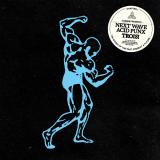
Starting in 2021 the critically acclaimed Next Wave Acid Punx series has seen Luca Venezia, aka Curses, celebrate the music that has shaped both his life and career. Across the first two compilations Luca took usfrom the industrial and post-punk sounds of the late 70s, through the emergence of EBM, new beat and freestyle in the 1980s and onto the music he both makes and plays himself in clubs today. Bringing the series to a close Next Wave Acid Punx TROIS sees the Berlin-based musician and DJ return full circle, this time exploring the sounds that first initiated him into Brooklyn's rave scene and the music that, in some way, continues to embody its eclectic spirit today.
Spread across three 2LPs and 3CDs Next Wave Acid Punx TROIS captures a moment whose influence can still be heard reverberating around clubland today. With the nascent rave scene obliterating boundaries, this was a moment where the darker, harder industrial electronic sounds of the mid 1980s were crashing headfirst into the ecstatic wave that was washing over clubland creating thrilling juxtapositions. Whether in the clubs and warehouses of New York, London, Frankfurt, Valencia and beyond, electronic music would never be the same again as countless new genres we take for granted today were born from the chaos and energy that had been unleashed.
Featuring 46 hard-to-find, new and exclusive tracks, Next Wave Acid Punx TROIS both documents that fertile period and shows how, despite rumours to the contrary, that early anarchic spirit can still be found today. From the Detroit Techno of Model 500 to Nitzer Ebb's EBM and the proto-Trance of Age of Love and onto brand new tracks from some of today's best producers such as Zaatar, Italo Deviance and Leona Jacewska, this compilation closes out a series that has to date revelled in exploring the darker corners of clubland in uplifting style.
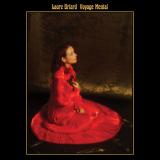
Every so often in music, we come across voices that achieve a certain timelessness, so naturally do they encapsulate both past and present. Laure Briard is one of these voices, retro in form but contemporary at heart, spanning a career rich in aesthetic twists and turns, never without her signature magic, a special kind of eternal filter. Her first album, Révélation (2015), reveals her yé-yé influences, a testament to her love for ‘60s French pop music. Her second studio album, Sur la piste de danse (2016), follows in this vein and finds Laure accompanied as always by her long-time bandmates who share an affinity for warm, catchy arrangements that never lose their appeal. Her tour of Brazil marks a turning point in her career, introducing her to the local indie scene and thus launching her collaboration with the band Boogarins, as well as inspiring the release of multiple EPs composed and performed in Portuguese. Today, her music is embellished by touches of bossa nova and a folk sensibility, boasting increasingly intricate arrangements, as exemplified by her 2019 release, Un peu plus d'amour s'il vous plaît. Several years later, the Californian desert captures the musician’s imagination with Ne pas trop rester bleue, a poignant musical journey inspired by the rich history of Western legends and the role they play in shaping our collective consciousness.
In Voyage Mental, Laure Briard draws upon an inner energy unearthed during a new stage in her life, where the thrill of spontaneous adventure is not accessible in quite the same way. The result is a collection of sophisticated, introspective songs, narrating a young mother’s quest for balance in the face of routine. The album, nostalgic but always tethered to the present moment, is also the fruit of her collaboration with Gaëtan Nonchalant, a talented musician known for coaxing poetry out of the mundane. The two of them co-wrote and recorded five tracks at Studio Nocturne, accompanied by her long-time sidekick Pieuvre, aka Vincent Guyot, Léo Blomov, Pierre-Louis Vizioz, and Hedi Bensalem. The gentle pop opener “Rocking Chair” sways steadily to the rhythm of dynamic drums, followed by “Train,” a ballad that extends an invitation to set sail and daydream alone. The folk escapade continues with “Golden Sun,” a duet featuring the 1960s cult American musician F.J. McMahon, who Laure contacted via the internet on a whim. “Golden Sun” is an unlikely encounter between two generations and two cultures, giving new life to an old forgotten demo on the other side of the Atlantic. And while Laure sings of wide open spaces, cowboys, and sunsets sinking into the sea, we feel the city surrounding her in “Miroir,” a song composed by Hedi Bensalem that laments the suffocation of living in a crowded metropolis where the sky is a distant gray smudge. This pressing need for air, this search for rest and total disconnection, is one of the album's central themes. It may also explain the ever-present sense of nostalgia that pervades the songs, a welcome respite in our current era of doomscrolling and darkness. Along the way, Laure soothes us with melancholy guitar, delivers poetry set to scattered piano notes, and takes us by the hand during lively, uptempo passages. We climb onto her wings, never straying too far from the ground, soaring joyfully above her moods.
On her new album, Neon Summer Skin, Bedouine, the project of Azniv Korkejian, explores this feeling of safety long before one can fully understand the concept. Written with vivid, honest and intimate imagery after visiting her family in Saudi Arabia, it tells the story of family and upbringing, and mourns the end of her childhood. There is a singular resonance and newfound heft in this music previously unheard in Bedouine’s discography. Bedouine is known for making gentle, lilting folk songs that build fingerpicked guitar melodies into tsunamis of emotion. Her masterful songwriting and timeless melodies have earned her praise from publications like Pitchfork, who said her music “boasts a surreal calm and lived in glow,” and Rolling Stone, who lauded her “humble folk-pop brilliance,” plus an NPR Tiny Desk Concert, and tours with the likes of Fleet Foxes and Father John Misty. While working on the record, Bedouine realized the pain of displacement, of searching for home, has been a throughline in her family history. Other relatives have also experienced this sense of loss as they’ve migrated between Armenia, Syria, and Saudi Arabia. “I felt so frustrated about the places that I'm from becoming war torn or difficult to return to,” she says. “My family has been split apart time and time again.” This realization prompted her to document and honor her parents’ lives and stories. On a family trip to Houston, Bedouine recorded a conversation with her mother and sampled the introduction to “Canopies.” The song tells the story of her mother’s time in an orphanage. She was put there by her own mother as a way of escaping her abusive father. Nearby, her mother would sing about feeling her daughter’s essence in the air: "The waves of Beirut's beaches flutter, and how sweetly they blow my darling's air." It’s a story of profound yearning told with the quiet profundity of a flower blossoming.
On her second album, Sawt El Doumouh (The Sound of Tears), Beirut-based Sandy Chamoun summons flickers of light from sadness. Influences from the Arabic tradition of Tarab – one of the first styles Chamoun learnt to sing – and polyphonic Cantu are reinterpreted and reimagined through her voice and electronics, synths from her SANAM and Ghadr bandmate Anthony Sayhoun, and live percussion from Ali Hout.
Marked by its times, the record isn’t what Chamoun had planned. “I wrote the lyrics between October 2023 and September 2025,” she explains. “The plan was to write about nature, since the album’s concept was inspired by Cantu, a tenor Sardinian ritual that celebrates humanity’s victory over nature. I intended to visit several places and regions in Lebanon and write a track for each, but after the genocide and the war in Lebanon, everything changed.”
“I chose the title because many mornings during this period I woke up crying silently. I remember a dark story from school: a teacher yelled at a small boy while he was crying and told him to cry without making any sound. I feel we are still living in that condition in the region — forced to die or suffer without making any noise.”
Sawt El Doumouh is a gorgeous refusal to be silent. It opens with a booming drum. Over keening autotune Chamoun’s pure voice cuts through, burying the despair to illuminate rays of hope. On “Ward W Shok” a shuffling swing gives way to a righteous organ interlude. The title track sees a choir of Chamoun’s vocals lull and lap. Drums arrive and indignation stirs, what’s mournful begins to stride.
Chamoun’s tracks are as beautiful as they are defiant. Why write songs in the face of horror? Perhaps because music can hold onto something better. By turning to song, Chamoun catches the hopeful glints and sparks that persist and strive outside the terror. In SANAM and Ghadr she often borrows lyrics from Arabic writers through the centuries, listening to what their words say in the present while reminding us the world can and has been different to how it is now. Solo she writes her own words, and the way her songs alternately soar and sigh evokes hopeful pluralities and suggestions of other, kinder realities. Even hearing someone cry is a connection to humanity.
It’s a possibility conveyed in the album’s most jubilant moments. “Shahed” is an incandescent dance of percussion and levitating synths. “I wrote it after I saw a photo of a small boy on a horse on the beach in Gaza,” Chamoun recalls. “I imagined a fantasy where the boy lives in the water and watches the terrifying reality on the shore, trying to bring water to put out the fire. Shahed is the witness who lives far from the shore, enjoying the water and trying to help. You can hear this duality: the percussion is desert-like, while the vocals and synths evoke the feeling of water.”
Although it comes from darkness, in Chamoun’s music we can hear faith in something beyond it.
Filmmaking and music-making share a common element of worldbuilding. Whole cloth, environments are raised in which a perspective can be placed; the viewer, the listener, is taken on a ride into the unknown for a time. Movie, the newest album by DMV-based duo Lifted, is like a film shot with microphones rather than cameras, using the pacing, spatialization, and semiotics of cinematic sound design to lead us through a surreal soundworld that draws as much from Foley artistry as dub, jazz, and electronic music. Musical elements and field recordings shift in and out of focus, collaged in spontaneous improvisation sessions on CDJs by the core duo of Andrew Field-Pickering (Max D, Dolo Percussion, Beautiful Swimmers) and Matt Papich (Co La, Ecstatic Sunshine). We may not see where we are, but our ears give us all the information we need.
We open on a pedal steel, played by More Eaze, but it’s been warped and slowed, gradually pitching upward until it's met by drums and electronics. Imagine the THX logo emerging onscreen. Movie is bookended by two related themes, “The Ice Chewers (Opening Credits), ” and “Midnight Snack (End Credits), ” giving the spatial experiments at the heart of the record form and focus. If there’s a broader narrative to latch onto, it’s in the transition moments, the juxtaposition of various field recordings that indicate movement of characters through space and life happening at its own pace. Tracks are defined by other thematic elements: a wandering piano in "Repossessed, " the drone of Duncan Moore’s bagpipe on “Melts Very Nasty, ” the delicate dance of Dustin Wong’s guitar over Jeremy Hyman’s drums on “Midnight Snack. ” Even with such an expansive ensemble cast, the focus remains squarely on the flow from one scene to the next.
Robert Altman’s use of sonic perspective shifting, as well as Apichatpong Weerasethakul’s intricate construction of environmental ambience and aural representations of the unknown, were both inspirational for Lifted’s focus on sound as a way to establish set and setting in film. We hear Altman especially in the way dialogue emerges and recedes: as Papich puts in a sandwich order, as Field-Pickering browses the grocery store. These techniques have been a part of the duo’s arsenal in Lifted and their own projects for years, but here, without the mandate to make something overtly musical, they are foregrounded and placed in crisp focus. Here is another way to listen to the world, to understand how time, place, and personality are communicated through sound as Lifted closes the gap between artforms. What you can’t see only drives the imagination to more brilliantly invent.
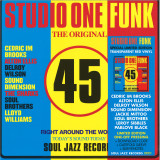
Soul Jazz Records’ long out of print classic ‘Studio One Funk’ collection is being re-released in three new one-off limited-edition coloured pressing 18th anniversary format editions!
Firstly, a heavyweight special limited edition one-pressing only red 2xLP vinyl + download. Secondly, there is also a new special limited-edition one-off pressing edition red-pressed CD enclosed in jewel case and slipcase. And thirdly there is a very limited unique new one-off pressing red-cased cassette format (200 copies only)! 18 years on from its original release Studio One Funk remains one of our Studio One releases most in-demand titles and like all our earlier special coloured editions is sure to sell out fast!
Studio One Funk is made up of rare and unreleased Reggae Funk from the vaults of Studio One. Ever since the birth of Funk in America, the sound has been an ever-present ingredient in the melting pot of Studio One’s musical output.
The music on this release is a combination of originals, US covers and versions of existing Studio One cuts. Jackie Mittoo shows his appreciation for Booker T and The MGs, the studio group at Memphis’ famous Stax Records with ‘Hang Em High’, itself a cover of a film soundtrack by Dominic Frontiere. Incredibly this version has never before been released. Booker T’s super-funky ‘Melting Pot’ is also covered by the little-known Underground Vegetables.
Other versions include Isaac Hayes’ classic Blaxploitation soundtrack ‘Shaft’ again by Cedric Im Brooks track - another unreleased gem, straight from the tape master. Motown gets a look in with Alton’s stripped-down version of the Spinners classic ‘It’s A Shame’, written by Stevie Wonder and Syreeta.
James Brown is apparent in spirit with the JBs-inspired groove on the super rare cut “Now” by Lee Arab. Lloyd Williams similarly does a fine Kingston-style version of the hardest-working man in showbusiness on ‘Reggae Feet’.
Version-wise, we have ‘Idleberg’, Cedric Im Brooks tough instrumental cut on Horace Andy’s seminal ‘Skylarking’. The little-known Prince Moonie gives us a rare DJ cut of another Horace Andy classic, ‘See A Man’s Face’.
Pablove Black’s cut of Sidewalk Doctor (A/K/A Poco Tempo) is one of a handful of Studio One releases featuring Augustus Pablo’s trademark instrument, the melodica, played by Black himself.
Add to these original cuts from Studio One’s heavyweight session players including Leroy Sibbles, Jackie Mittoo, Leroy Sibbles, Eric Frater, Leroy ‘Horsemouth’ Wallace, Richard Ace, Vin Gordon and more and you have one of the finest selections of reggae and funk you will ever hear.
"This collection goes deep into the Brentford Road vaults and unearths a rake of previously unreleased gems alongside hard to find classics. Heavy and inspirational, totally unique and essentially timeless." Straight No Chaser
"An absolute treasure trove for the collector as well as being great for the ears and feet. Jackie Mittoo's 'Hang Em High' is worth the price of the album on its own." Echoes
"A superb collection that shows how much many Jamaican musicians were influenced by the heavy funk belting out of American studios from the early seventies onwards.” Touch
"The most satisfying listening experience so far in the Studio One series." The Wire
"Rare and unreleased grooves from Jamaica's house of excellence." Mojo
out of Stock
Last delivered 3 years ago available to reorder, subject to availability
Shape of the Moon is the California based duo of Benjamin Burke and Bear Glass that explores existential headspaces beyond mundane frames of thought. Following streams of consciousness that contemplate the stardust that forms us to the very first human sound that reverberated through a cave, Shape of the Moon intertwines language and music into ambient dream-weaving narratives.
When the land is laid bare forms a collection of recordings composed of Burke reciting his introspective poems and Glass improvising gripping modular synth and string patterns. Burke brings a wealth of experience working between an impressively vast range of written and visual mediums to Glass’s live electronics and acoustic instrumentation mirroring the spoken word. The pieces on the album consist of excerpts from live outdoor performances under the night sky in the Mojave desert as well as sessions in Glass’s off-grid solar powered studio. Burke drapes vivid vocal narration over deeply immersive textures and melodies conjured up by Glass on Buchla, bass and sitar, painting peaks and valleys that live score the storytelling. The duo tread their own path fusing poetry with undulating electroacoustic instrumentals, arriving at meditative and ASMR territories that draw inspiration from ambient and electronica. Often joined on stage by guest musicians playing anything from Rhodes, percussion, jaw harp and saxophone, the recordings edge towards blues and spiritual jazz.
Benjamin Burke is a poet, writer, performer, and visual artist who spends his time lending a hand to unusual artistic expeditions around the world. Most recently, he helped to launch Dhun and Dhun School, a humanist eco-township and progressive education center on a 500 acre biopreserve in Rajasthan, India. He has written and performed countless unusual shows, experimenting widely and, through that, witnessing firsthand what makes ideas resonate for his audiences. This work evolved over time into an approach he refers to as Applied Poetics which he employs to help communities set intentions, scientists present their findings, and humanitarian organizations find their footing.
Bear Glass is a sound artist, multi-instrumentalist, music teacher, live sound engineer, and founding member of Mobius Acoustics who build innovative sound systems and host events on the West Coast (utilizing a quadraphonic setup for live performances and immersive drone bath sessions). Glass is involved in various collaborative projects with a couple of releases under different pseudonyms as well as a solo tape featuring a track with prolific producer Carlos Niño. For most of the year, Glass lives sustainably off-grid with his family on a plot of land outside Joshua Tree, a mini utopia infamous for his well curated private campouts and artist residencies. Wide skies, magnificent climates, and being surrounded by the love of family and friends inform Bear’s musical output and artistic practice.
Shape of the Moon present their debut album for Marionette’s 30th title, channeling an inquisitive yet playful state of mind that marvels at the mysteries of the universe.
Budapest based concept label Blue Sun welcomes formerly independent local afrobeat-jazz ensemble to its catalogue with a nuanced 4 tracker EP. The release not only marks the beginning of the collaboration, but a definite new musical direction in the band’s life.
Written in a one week jam session retreat in the Hungarian countryside, and recorded at one of the highest peaks of Hungary after a year of global touring, The Garden becomes an amalgamation of the band's personal and artistic experiences. The material conveys a more jazzier approach, with complex harmonies, and an almost cinematic, dreamlike atmosphere, somewhat distancing from (but not completely forgetting) the previously emphasized, dance-oriented Afro- and Latino roots. Song for Ramon serves as the EP’s emotional climax inspired by the passing of a close friend and local underground chef pioneer.
Formed in 2019 in Budapest, Hakumba is a staple of the Hungarian festival circuit, with a growing international presence (SXSW London, SHIP, PIN Music Showcase). They’ve recently finished a tour in Australia this January.
The groove-driven ensemble blends afrobeat, jazz, and various strands of world music into a sound that is both rhythmically powerful and harmonically adventurous. With an eleven-piece lineup featuring an expansive horn section, multiple vocalists, percussion, and keys, the band moves effortlessly between dancefloor energy and more intricate, jazz-influenced musical ideas.
Like the band’s previous album, the EP was again recorded, mixed, and mastered by András Weil, the producer behind The Qualitons, the only hungarian band ever performed Live at KEXP. This continuity preserves Hakumba’s recognizable sonic identity while giving space for new colors and more complex musical ideas to emerge.
Written & performed by:
Soma Számel – drums
Endre Szép – bass
Imre Hegedűs – guitar
Zalán Bendegúz Huff – guitar, vocals
Csongor Mari – keys
Noel Nagy – percussion, vocals
Dorka Foster – flute, vocals
Kristóf Szabó – alto sax
Alpár Sikó – tenor sax
Gáspár Simon – trumpet
András Téglásy – baritone sax
Produced, recorded, mixed and mastered by Andras Weil
Artwork by Eszter Lukács
Graphic design by Péter Tóth
Manufactured by AD Records
Distributed by Rush Hour
Soul Jazz Records celebrate 25 years of working in partnership with Studio One with brand new editions of FIVE of their bestselling CLASSIC Studio One collections all released on limitededition one-off pressing coloured double vinyl. Also available in new limited-edition card wallet CD editions. The new edition featured albums are Studio One Funk, Studio One Dub, Studio One Ska, Studio One Roots and Studio One Classics. Studio One Roots set the standard for Soul Jazz Records’ long-standing series and features many of the classic artists from Clement 'Sir Coxsone’ Dodd’s mighty roster of reggae. This album includes Freddie McGregor, Willie Williams, Cornell Campbell, Alton Ellis, Devon Russell alongside some of the defining in-house groups of Jamaican reggae history - The Sound Dimension, Brentford All-Stars, The Skatalites, New Establishment and more. The album is filled with a mixture of seminal cuts and super-rarities from the vast vaults of 13 Brentford Road.
Stand-out tracks include Alton Ellis’s ‘Blackish White’, a surreal and powerful Afro-centric dream, Count Ossie’s Rastafarian drummers’ genre-defying interpretation of Booker T and The MGs ‘Meditation’, Willie Williams aweinspiring versioning of the Skatalites' seminal Rastafari anthem ‘Addis Ababa’ and many, many more. Original sleevenotes by Lloyd Bradley (author of When Reggae Was King), compiled by Mark Ainley (Honest Jons), high-quality Soul Jazz mastering, wicked images of Count Ossie and the Mystic Revelation of Rastafari on the cover, and a rare image of Clement Dodd and musicians inside the studio at Studio One on the full colour inner sleeves. “There isn't a weak number across these 16 tracks, from the Gaylads’ ode to ‘Africa’ and Devon Russell's version of the heavyweight ‘Drum Song’ rhythm, to stunning instrumentals such as Jackie Mittoo and the Cyclones with nyahbinghi drummer Count Ossie on ‘Meditation’, Lenny Hibbert’s sparkling vibe work over Mittoo's ‘Ghetto Organ’ and The Sound Dimension’s ‘Congo Rock.” Pitchfork “The music of this compilation is of a rare, rare beauty and is essential to anyone's reggae collection.” All Music
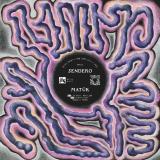
Bliss Point is proud to welcome the Bogotá born, New York based Matük to the label with Sendero, a collection dripping with life, with lust, with joy in the face of it all.
Birthed from weekend-long studio sessions in the heat of New York summer, Sendero is luscious and visceral party music, crackling with the spontaneous possibility that runs through city streets as temperatures peak, asses throw and emotions run high.
Hailing from Colombia and deeply immersed in the New York underground, Matük’s influences collide into an ecstatic tapestry on Sendero, blending the rich traditions of Afro-Caribbean musics with experimental and club sonics, long the sounds of joy as defiance from deep within the imperial core.
Many paths cross on Sendero. “Ricotta” features vocals from BRAVA, the Basque DJ and MC whose raw, infectious spirit has injected new energy into the international bass and footwork scene. She is joined by Argentinian-Colombian artist FEDRA on synth and vocals, transforming voice notes the trio sung into their phones over a long weekend of dancing into a party anthem of their own. “Lio”, the EP opener, pairs Mexico’s Renn Loop with Matük himself, trading sultry, heated frustrations over latinx futurist production. Things slow down on “De; Dioses y Pantallas”, a yearning, introspective plea to the night sky, before returning to the party with the bouncing, acid-fueled remix of “Ricotta” from Mexico City’s Soos.
Sendero is a snapshot of a scene in motion, a document of serendipity and collaboration, music made in the long tradition of enjoyment as a revolutionary act.
out of Stock
Last delivered 4 months ago available to reorder, subject to availability
A founding member and keyboardist of acclaimed jazz
groupBADBADNOTGOOD,Tavares has gone from being an in-demand
producer with some of the biggest names in music to a songwriter and
artist in his own right, having touched corners of the globe and cemented
twoGRAMMY Awardsand five nominations
Between collaborations with Kendrick Lamar , Ghostface Killah , MF DOOM , Tyler
the Creator , Kali Uchis , Tavares has also played with Frank Ocean ,
soundtracked Virgil Alboh 's landmark S/ S 2019 runway show for Louis Vuitton,
and penned songs for Post Malone , Rosalia , Travis Scott , Kodak Black , Justin
Beiber,Camilla Cabello,Jack Harlow amongst others.
With a sound that fuses his nostalgia for the golden era of blogs with the
eclecticism of the late 2000s, the combination of the internet crossed with an
isolated suburban upbringing has laid the groundwork for Matty's genre-bending
artistry. Embracing a raw creative output with an aversion to following the norms
of the industry reverberates across his discography,Matty has found success in
previous releases including 'Clear' and 'I'll Gladly Place Myself Below', which push
the boundaries of sonic creativity and knowledge.
Now with his upcoming album POPS , Matty relinquishes his lowkey and
understated style for something larger than life, while maintaining a level of
honesty and openness that has defined his past work to make for a dynamic
release that constellates around music's greatest subject - love.
"I decided to just let myself go," Zzzahara says of their new record, 'Spiral Your Way Out' "I think I finally came to this acceptance that I don't have to be perfect. I want to be a good role model to my fans and stuff like that, but I also don't want to hide who I am." Zzzahara's music wades into the deep waters of love, lust, and self-discovery in a part of the world where artifice and authenticity co-exist. Emerging from the heart of LA's alternative music scene, their sound is raw in feeling and rebellious by nature.
Their 2022 debut album, Liminal Spaces, chronicles a coming- of- age in Highland Park, following painful childhood memories through to late- night, live- fast coping mechanisms, and the changes the neighbourhood has endured over the same period of time. Their 2023 follow- up, Tender, marked a period of slowing down, looking inward, and embracing a softer side of being. 'Spiral Your Way Out' sees Zzzahara evolve again. Emotionally, its foundations are built on scorched earth.
The album finds Zzzahara in the aftermath of a relationship spent trying to fit someone else's mould, being jerked around by indecision, and then hitting "emotional rock bottom." Made in a three-month burst that let all their pent-up frustrations loose, 'Spiral Your Way Out' is in part a work of self-reclamation, swapping there 2nd album Tender's meditative state for something fiery and more assertive. The new album marks another sonic evolution as much as an emotional one. Zzzahara's songs have always come wrapped in a warm glow that reflects how they were written -namely at home in their bedroom.
That glow remains on 'Spiral Your Way Out', but it also packs an ambitious streak and a gutsy punch. Taking a more collaborative approach than usual, Zzzahara worked with a range of producers including Jorge Elbrecht (Japanese Breakfast, No Joy, Sky Ferreira), Sarah Tudzin (boygenius / Cloud Nothings / The Armed), former Ducktails guitarist Alex Craig (Jelani Aryeh / re6ce) and Halsey tour drummer Franco Reid, who helped harness their intimate style of writing and blow it up into something more panoptic. After a year of upheaval, Zzzahara finally feels "calm." The musical equivalent to going several rounds on a punching bag, 'Spiral Your Way Out' finds solace between extremes. It licks its wounds in a place where pain and love, healing and abandon, sit side-by-side. If it has a message, it's one of standing tall in your own shoes - scuffs and all.
"Nusa" is the last part of a trilogy started in 2020 with Masao Yamamoto and Akira Uchida. A project that began with light (“Sasanami”, 2020), moved through darkness (“Kurayami”, 2023), and returned to the ambivalence of the two (“Nusa”, 2026), which ultimately sustain and complement one another in all their variations and complementarities. Both in terms of tones and in the humanity that runs through us in these times of such stark contrast.
For this last part of the trilogy, Masao Yamamoto and Akira Uchida travelled to the island of Hokkaido at the beginning of 2026 to supplement the project with photographs and audio recordings of the ice and the surrounding landscapes.
Graduated in saxophone from Senzoku Gakuen College of Music, Akira Uchida explores sound through tuning, medieval music, and acoustics, supporting jazz pianists as a piano tuner. After training under instrument maker Masahiro Adachi, he became an independent clavichord builder. In 2020, he created an instrument for Ryuichi Sakamoto. In 2021, he crafted one using reclaimed wood from Kiyomizu-dera Temple (FEEL KIYOMIZUDERA). His work focuses on making, tuning, and performing instruments.
The Scottish singer Donovan embraced the folk-music boom during the sixties that swept both England and America.
In 1965 Fairytale was released, his second studio album which planted the seed of what was yet to come. It foreshadowed the jazzy feel and descriptions of life in urban London that Donovan would continue to explore over the next two years. Fairytale features his hits “Colours”, “Universal Soldier” and “Jersey Thursday”.
Fairytale is available as a limited edition of 750 individually numbered copies on transparent vinyl.
It's been a busy 3 years since Danny Berman aka Red Rack'em released on his own Bergerac imprint.
Since then he's toured relentlessly, released a whole album of live music based disco/punk funk for Sonar Kollektiv as Hot Coins, managed to completely update his biggest track 'In Love Again' to make it a hit the second time around plus released spaced out, wonky party smashers on Wolf Music, Phonica, City Fly and Telefonplan.
While all this was going on Bergerac was largely on ice but now Berman is turning his energy back to the label with a vengeance.
Wonky Bassline Disco Banger is accurately titled. An uplifting intro breaks down into a slamming disco house number and just when you think you know what's going on...
Then the trademark Red Rack'em wonky bass drops in. 150% Guaranteed party smasher... Jazzy House Extension is super vintage Red Rack'em from around 2004 - something for the jazz heads out there - cracked out piano and far too loud double bass come together to birth a euphoric yet banging snapshot of a producer learning his chops. Destined is a slightly demented leftfield house number featuring mangled, pitch shifting fretless bass and vocals samples discussing someone's destiny.
A woozy end to the EP.
The new recordings from The Dengie Hundred unfurl on Tain Records after a busy year releasing a solo tape on Sagome and a collaborative LP and tape with Japan Blues on Demdike Stare's DDS imprint.
Lammas Land is an album which meditates on the Walthamstow Marshes, an ever-changing watery landscape, rich with history and wildlife. The Dengie Hundred writes:
"I am sitting at my table overlooking the marshes listening to Lammas Land in November 2023, watching crows fight a never-ending aerial battle with the gulls. In summer, you can see bats from here every evening, fluttering around the windows as the light begins to fade, but today it is colder so there is smoke rising from the boats on the River Lea and the dog walkers are wrapped up tight against the wind.
Most of Lammas Land was made sitting right here, playing guitar and recording the sounds passing by. I would hang a microphone out of the window to capture the ‘putput’ boat which delivers provisions, or the trains that rattle along the tracks that cut across the marshes and up to Stanstead, carrying passengers to the airport and away.
I wonder what tourists make of the marshes as they cross them, the landscape opening up for a moment between the urban sprawl of the East End and the rampant development of Tottenham. They offer a jarring pause of green and sky. I feel very lucky to be living in that pause, a resident, for now…
The album contains a whole year of found sounds recorded from the window and while out walking. It is full of bird song and radio sounds, singing, life.
Many others have been inspired by this space, this pause. The author Esther Kinsky who wrote River, published by Fitzcarraldo Editions, captures this area so perfectly. I borrowed the two track names for this album from her book. I hope she doesn’t mind.
Also, the photographer Paul Fuller whose work reflects the atmosphere I feel here precisely. On hearing the music he wanted to collaborate on the Lammas Land project, He spent a year filming the marsh through the seasons. Some of his images are included with the vinyl release, and there is an accompanying film close to completion. I am so pleased this project is continuing in new forms.
The vinyl also contains a piece of writing, ‘Sound Fishing’, by Gemma Blackshaw, an author, art historian and curator who in a twist of fate also found herself spending time on the marshes, but that is her story, for another day."
The Dengie Hundred
Lammas Land
LP, with essay insert + five photographic prints
Cat No: TAIN02
Price: £14.49
Due next week
A: A hand full of ever thickening twilight
(Sample clips 1 / 2 / 3)
B: A string of pearls pulling
the night away
(Sample clips 1 / 2 / 3)
Indiana Jones and the Last Crusade original motion picture soundtrack, now available on sand colour vinyl, featuring music composed and conducted by John Williams.
Shooting Daggers are a band that never seems to stop. Sal, Bea and Raquel are one of the hardest working outfits out there, constantly playing shows and lending their support to myriad causes all around the U.K. and Europe. So, it’s always an exciting prospect when the band takes some time out from the maelstrom to write and record new material. And 2 years on from the release of their acclaimed debut album ‘Love & Rage’ the band have been in Bear Bites Horse Studio with Wayne Adams (Big Lad, Green Lung) at the controls to come up with the goods once again. ‘The Real Life Thing’ is the latest hardcore sonic missive from one of London’s must-see bands, and it absolutely does not disappoint. Shooting Daggers are the real deal; the best, and most exciting and adventurous hardcore-inspired band in the country. A ‘mini album‘. 7 songs and 20 minutes of driving rocket fuelled punk meets melody picking up from their debut to go further into their own space. A selection of songs that are marked by a fierce energy, variety and cool musical nous, but always with a message firmly at its core. The band says … ‘It's a crucial time to focus on what really matters. Be present, be aware of real things happening in the world, with integrity and love we can make a difference as a community. There is hope out there, and if we all start treating nature, people and animals with respect and empathy we will be able to become better humans and coexist. In this mini album, we express the full range of our emotions through various sounds and genres. From cheerfulness to anger and hopefulness.
From hardcore punk, to shoegaze, to post hardcore and riot grrrl. We embrace our authentic self, with sensitivity in response to injustice, we act out, and all the while savouring every moment, being unapologetically yourself, empowering ourselves and each other’. With the help of some very special guests in the form of ‘The Menstrual Cramps' and Dennis Lyxzén from Refused, that message is driven home ‘big time’. ‘Adrenaline’ is as full on and heavy as Daggers have ever been, all buzzsaw riffs and rousing vocals, it’s a smart and catchy punch in the face to kick off proceedings. ‘My Oh My’ sweetens the vibe if only a bit with its layered post shoegaze guitars and anthemic vocals, exquisitely arranged we may add. It really shows how Daggers have taken the 90’s elements from Love & Rage and expanded it into something all their own. ‘T.R.L.T.’ back to ‘in yer face’ Daggers trademark off kilter punk, chants, fast bit, slow bits all straight into your head. ‘We just Wanna Play’ is, as Daggers put it ... ‘Empowering playground song for girls and queers to sing and play’. The perfect intro to … ‘Loud Mouths’ the first track to feature bestie guesties ‘The Menstrual Cramps’. A riotous call to arms. We are united with our sisters and queer folks in punk and hardcore, queercore is strong and more alive than ever. Together we will denounce problematic behaviours unapologetically, we won't shut up. Things must change and it’s happening when problems are pointed out and sorted. The scene is for everybody, and we are making it happen’. ‘Le Soleil’ is another step forward … a left field, almost dubby vibe with a dreamy melodic swirling vocal performance from Sal.
When Daggers decide to step outside the box, they do it seductively in style. ‘Glow’ is the second collaboration; this one featuring Dennis Lyxzén from Refused on dual vocal duties. A no brainer it seems … ‘Refused has been a band that never wanted to fit in with a specific sound, they are pioneers of experimental punk while still being rooted in hardcore. They believe in what we believe in, antifascism, veganism, social justice and Dennis on stage is anything but a generic hardcore singer’. It’s a celebration. It’s fuzzy, it's hooky and it’s heavy with, dare we say it, a bit of My Bloody Valentine in there too, generic hardcore it is not. And that pretty much sums up ‘The Real Life Thing’. This album and this band are anything but ‘generic’. They never stand still and continue to push the boundaries of what is ‘hardcore’ or ‘punk’ or whatever people think they are. T.R.L.T. is a delight and a surprise from start to finish, refreshing, abrasive, melodic and with a true beating heart. Embrace it.
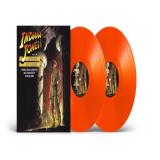
Indiana Jones and the Temple of Doom original motion picture soundtrack, now available on orange vinyl, featuring original music composed and conducted by John Williams.
1. numbered 100 copies of limited black 180g vinyl made in collaboration with U JAZZ ME Records
2. transparent orange 180g vinyl
LINER NOTES:
" When AJ Lee stepped back into the ring in September 2025 - after a ten-year break - she introduced herself to a new generation of fans with the words: 'If you haven't heard of me, I am your favorite wrestler’s favorite wrestler.' That is exactly what came to my mind as a lead for this blurb when Pokusa asked me to write it. Because that’s what they are: your favorite indie darlings' favorite indie darlings (even though no one uses that term anymore, let alone identifies as such). They are your favorite cool jazzcats’ favorite jazzcats. And they are probably your favorite young jazz act - if you don’t usually (or ever) listen to jazz.
This, I always thought, is their greatest strength. Half the battle (in my eyes) is recording a sick jazz album - one that a jazz magazine would fawn over. The real win is getting someone wearing a heavy metal T-shirt into it; someone who’s never listened to jazz and has never stepped foot in a place like Pardon, To Tu, but heard Pokusa and decided to change that. I am such a person. I didn't learn about jazz because of them, but they’re definitely the reason I started rating it.
Głowy (Heads) is, in a way, a classic album. If someone played it for me and - relying on my lack of knowledge and gullibility - tried to convince me that it was recorded in the Polish Radio Studios in 1975, at Akwarium Club in Warsaw in 1985, at Club Rura in 1989, somewhere in Tri-City in '94, or at Mózg in Bydgoszcz, I would probably believe it. Its 'classicness' goes hand in hand with its timelessness. I could write about how the album fits into the catalogs of Lado ABC, GOWI, or Biodro Records. I could dig for connections to Yass, Tzadik, or a number of other things.
But what Teo, Natan, and Tymek create here is as important in its experience as it is in its music. For me - an artist active in a similar time - each Pokusa album, including this newest release, is a record of a period of time and the experiences hidden between the notes. The Indian spices in food served before a show in Mózg. A headache from all the cigarettes smoked listening to tapes in Eufemia. Marveling at the graffiti over the sink in Młodsza Siostra. The narrow steps at Chłodna 25. The wider but slippery steps to Pogłos. The quirky and uncomfortable steps in Ziemia. The mosquitoes at Ladomek. The dilemma of whether to wear a nice polo instead of a T-shirt to SPATiF. The wonder of turning off Monciak into Dwie Zmiany. Why is a club like this on such a strip? Why is Pokusa playing here? And why do they sound so good?
On one hand, you can find journalists writing that Pokusa grew out of the classic free jazz of the 1960s; some might mention Albert Ayler. On the other hand, there’s Unsound Festival and young critics writing about 'post-jazz.' All of them are correct. This is universalism. This is that timelessness. Whether you pick up this album the day it comes out or in the year 2046, it will be good. In twenty years, people will still reach for it. Of that, I am certain."
Michał Turowski
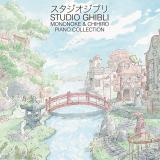
Immerse yourself once again in the worlds of Princess Mononoke and Spirited Away, the two Studio Ghibli masterpieces created by Hayao Miyazaki and set to music by Joe Hisaishi, in this new original production for solo piano!
Based on the official piano scores by the original composer of the Studio Ghibli films, Joe Hisaishi, this album is a new journey of discovery into the two beloved worlds of Hayao Miyazaki, performed by pianist Nicolas Horvath, a Steinway & Sons artist renowned as a first-rate interpretor of composers such as Philip Glass, Franz Liszt, Claude Debussy, and Eric Satie.
The album features a total of 26 tracks from the two cult films Princess Mononoke (Mononoke Hime) and Spirited Away (Sen to Chihiro no Kamikakushi), composed by Joe Hisaishi.
These days – on the new, ninth Fink album – Greenall is operating within a lineage of authentic, quietly revolutionary artists from England’s verdant southwestern toe. Artists like Michael Chapman. In 1970, the elusive acoustic guitar wizard released an album called Fully Qualified Survivor. The cult-classic served as a lodestar for Greenall – along with bandmates Tim Thornton and Guy Whittaker – as he began jigsawing together The City Is Coming to Erase it All, the follow-up to 2024’s Beauty In Your Wake. He even considered covering a song from it, but in the process, inadvertently stumbled into what became the album’s opener. ‘Wishing For Blue Sky’ circles a universal teenage ache: waiting for life to start. “No point dying of patience” goes the first lyric as crunching footsteps cue a resonant, open-tuned acoustic swaying into view. By 18, Greenall was fed up with waiting, so he left suburban Bristol and saw the world, sending postcards from the edge, waiting tables, squirreling away tips for the next flight. Thornton had similar experiences when the guitarist/drummer busked across Eur
This is nowstalgia more than nostalgia, though; there’s a parallel between these 18-year-olds and Fink’s autumn-aged family men. “You’re expected to be boring and settling down at this age,” Thornton says. “But we’ve still got this tremendous wanderlust. We want to go and discover, and also achieve things. It’s a nice life – home and family – but fuck, I can’t wait to get back out there.” City is a product of this hunger for discovery, and idolatry of the album as a form – like we had in 1974. City’s cover mirrors its interior, the first song is the greeting, the instrumental closer the conclusion. It’s a story. It’s a record for people who, like its creators, are curious. People who happily face a little cold for music, who light a crackling fire back home, who sit with these songs until they’re ready to chase after their own blue sky
Hot on the heals of their spectacular self-titled debut album, The Handover is back with their second long form composition, New Old Medicine. Aly Eissa (oud), Ayman Asfour (violin), and Jonas Cambien (vintage organ/synth) have been cutting their teeth on the international touring circuit for the past two years, landing from town to town in their seductive spaceship to blow people's minds and then dematerialize into the void. An outline for a new piece began to emerge along the route and late last year during a stop in Berlin, this metamorphosis of the trio's sound was recorded in pristine form by Rabih Beaini at Morphine Studios.
Attempting to define the music is not as important as allowing it to define itself - from person to person, village to village. All we can do is suggest what may resonate to lure you into the arena; psychedelic, folkloric, Egyptian, etc., as these excerpts from the liner notes suggest: "Though one long piece, New Old Medicine moves through several unofficial chapters. It originates in the psychic depths with a pensive melody. Gradually solidifying, the organ’s first solo ushers the piece into a swaying, reverent dance. This dance nears its end with a vigorously percussive section on oud, handing it off to the violin for a climactic solo. A momentary pause, then the rhythm thickens, and the musicians ride untethered through the midnight. This frenzy is followed by a calm repose on placid water. But this calm is merely a deep inhale before the final charged ascent into cosmic rapture."
Don't sleep on this one!
The Dwarves return to their punk roots with a fun, energetic record. Standout tracks include: Damned If I Do, We Are The Scene, Psychosis Tripping. Jenkem finds The Dwarves returning to the raw, confrontational energy that defined their early work, delivering a fast, irreverent blast of punk rock that blends melody, aggression, and their trademark shock humor. Packed with short, high-impact tracks like "We Are The Scene," "Damned If I Do," and "Psychosis Tripping," the album balances tight songwriting with the band's chaotic, anything-goes attitude, moving effortlessly between hardcore punk bursts and hook-driven rock moments. Formed in the mid-1980s and long led by founding member Blag Dahlia, The Dwarves have built a reputation as one of punk's most provocative and unpredictable acts. Emerging from the underground with releases like Blood Guts & Pussy, they became notorious for their explicit artwork, confrontational lyrics, and myth-making persona that blurred fact and fiction. Over decades, the band has shifted fluidly between garage rock, hardcore punk, and pop-inflected punk, while maintaining a consistent identity rooted in speed, satire, and rebellion. Their ever-changing lineup has included notable musicians such as HeWhoCannotBeNamed and members connected to acts like The Queers and Zeke, reinforcing their deep ties within the punk scene. With Jenkem, The Dwarves reaffirm their core strengths--brevity, intensity, and attitude--while delivering a record that feels both nostalgic and immediate. The songs hit quickly and leave an impression, driven by sharp riffs, pounding rhythms, and Dahlia's biting vocal delivery. As a continuation of their long-standing ethos, the album stands as a reminder of the band's enduring ability to provoke, entertain, and channel punk's most unfiltered spirit.
Heartbreak Station, released in 1990, is the third studio album by American rock band Cinderella. The record climbed to No. 19 on the Billboard 200 and earned platinum certification the following year. VH1 described the album’s shift in direction as “bluesy and brawny,” a fitting summary for a project that produced three Billboard Hot 100 singles; “Shelter Me,” “Heartbreak Station,” and “The More Things Change.”
The album marked a deliberate move away from the glam‑metal sound that defined Night Songs and Long Cold Winter. Instead, Cinderella embraced a rawer, more stripped‑down blues approach. Speaking to the Los Angeles Daily News shortly before release, frontman Tom Keifer explained the evolution: the band aimed for a “rawer, simpler approach,” reducing reverb and overdubs to let the songs breathe. Keifer also noted that blues played a major role in shaping his songwriting during this period.
Adding to the album’s depth, former Led Zeppelin bassist John Paul Jones arranged the string sections for two tracks. The band sought him out after being impressed by his orchestral work for artists like The Rolling Stones and Donovan.
Heartbreak Station includes an insert with lyrics and is available on black vinyl.
Based in Manchester but individually from all over the UK, the five piece's debut is intelligent, political and acutely aware of what it means to be in a band in 2026. Built around driving guitars and wiry rhythms, tracks like 'Too Much Fun' and 'The Seeds' brim with the tangible energy of their live shows. These are songs written with the energy of a packed room in mind. Having built their reputation the old fashioned way; relentless rehearsals, constant gigging and self releasing music wherever they could afford to, Martial Arts' dedication has shaped both the band's identity and their sound. Across the Craig Silvey-produced (Arctic Monkeys, R.E.M., Florence & The Machine) EP, Martial Arts balance personal reflection with broader political ideas, often turning the lens back on themselves as much as the world around them. The result is a band that combines the urgency of the UK's current guitar underground with a selfawareness and critical thought that feels increasingly rare.
Pianist and bandleader Linus Rebmann, together with Gabriel Widmaier on double bass and Johnny Walker on drums, shapes a transparent and powerful sound characterized by great joy in playing and a palpable sense of familiarity. The album's ten original compositions tell of observations, inner movements, and moments whose depth is better expressed through music than words. The three young musicians met in the Baden- Wurttemberg Landesjugendjazzorchester, and after winning the "Jugend jazzt south- west" competition in 2024, the trio was awarded the prestigious Deutschlandfunk Studiopreis at the national meeting. This made it possible to produce the album in the legendary Kammermusiksaal of Deutschlandfunk in Cologne - a space that has been among the country's finest recording venues for decades. The band members deliberately chose an intimate setting for the recordings. Everything was played through a single main microphone, without subsequent corrections to individual instruments. A working method that demands absolute presence and mutual trust. It is precisely this immediacy that shapes the sound of "Listen To The River": the album is transparent, organic, flowing, almost breathing.
Definition of spin doctor: a spokesperson employed to give a favorable interpretation of events to the media, especially on behalf of a political party. Spin Doctors weren't part of a political party but spread the word about romance.
The band was formed in New York City, best known for their early 1990s hits "Two Princes" and "Little Miss Can't Be Wrong". Those 2 songs were hits all over the world, and are still big hits in the streaming era. Pocket Full of Kryptonite is the first studio album (and second release) by the Spin Doctors, and originally released in August 1991.
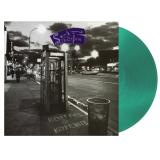
The album was a top 10 hit in many countries, including the UK, Denmark, Germany, Norway and Sweden. It was the band's bestselling album and was certified 5x Platinum in the US. Not to be confused with the 3 Doors Down song 'Kryptonite' from 2000, the Superman theme was all over the Spin Doctors' album, with the title, a song called "Jimmy Olsen's Blues" and the album cover showing a phone booth (referring to Clark Kent frequently ducking into a nearby phone booth to change into his Superman attire).
This pressing of Pocket Full of Kryptonite is a limited 35th anniversary edition of 4,000 individually numbered copies on green vinyl. The jacket has a deluxe leather-texture laminate finish.
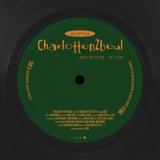
Summer is around the corner and what a perfect timing to introduce you to Admo’s latest musical project - Charlottenzbeul Science Club. After three years since his last solo EP, many live acts around the globe and releases on Limousine Dream, Haws and Ordinateuf, the mad bassist is back at it again with his first release on his new label - Two-Headed Fish Records - which he co-runs with his wife. Definitely an EP that stays in the family.
It’s another four-tracker - you know the kind of vinyl that keeps on giving. A celebration of his time in the vibrant German capital, Berlin (West is the best). A1 opens the ball : bassy, catchy and this infectious chromatic melodic line. The recipe for a summer hit. Now onto A2 (and we’re not talking about his German language skills here): a regular laidback approach where acid sounds mesh together with this high-energy baseline. A classic in the making. If you’ve seen him live, you must’ve recognised B1 as it used to be his closing. A dreamy touch, where storytelling is the key word. You will have your head bopping from the first minute - mellow moment guaranteed. And B2 wraps it up - it takes you by the hand, you hop onto the next U-bahn and straight to the dance floor. The analogic bass keeps on bringing the track higher, progressively transforming into this groover that gets your feet stomping. It’s a proper farewell and a perfect conclusion to this beautifully crafted record.
out of Stock
Last delivered 4 months ago available to reorder, subject to availability
PAUL WALKER: Paul Walker is the debut studio album by American post-hardcore band, Drug Church. It features 10 tracks, including "Thinking About Joining Drug Church", "Reading Youtube Comments", and "Clifton Country". SWELL: Drug Church, monsters of alt-rock, have weathered a year of dope shows and fan adoration since the release of their seminal punk masterpiece Paul Walker. Now, the chickens have come home to roost. The band has dedicated itself fully to a true ‘sophomore slump’ EP full of indulgent missteps and overreaching stabs at pop crossover. All that being told, they’re “the sickest band ever” has yielded real results. On Swell, Drug Church push their idiosyncratic blend of punk and alt to new heights of sick. Recorded with J. Robbins (every band, ever) in a big, professional studio, Swell delivers the biggest Drug Church sound to date. It’s pretty much the life-changer you assumed it would be. This new repress of the album includes remastered tracks. HIT YOUR HEAD: Drug Church is the logical limit of heavy alt. Like the Bee Girl from the Blind Melon video pitting hard for Helmet. Hit Your Head, recorded with Jay Maas, fully embraces the futureless aesthetic the band hinted at on previous records. This is worst-body-on-the-beach music. These are fired-from-your-window-tinting-job songs. An album for people on probation for crimes that aren't even cool. Big riffs and petty concerns.
"It's about being really ambitious, and seeing enhanced beauty in the world, and knowing that seeing things in that way isn't unrealistic," she continues. "It's about striving for that ultimate freedom." Recorded in a joyful stay at Wales' residential StudiOwz, 'Tell Me It's A Dream' rings with the audible fizz of friends hanging out and having fun. Though many of its lyrics began during a complicated time for Walton, the record itself is a testament to choosing life and pleasure and the people that make it all worthwhile. "A lot of the record is about stretching outwards and acknowledging how far love can take you; about expressing how I feel about the people I love through music in ways that words can't," she says. "It was important to capture that lightness from the recording, because that spirit is in a lot of the songs." Frequently euphoric and brightly emotional, the songs themselves aim heavenwards. 'Heart To Heartbreak' cracks through the clouds of a break up, taking influence from emotionally-rich bands like The Cure and Prefab Sprout to translate the feeling at its core. "This is a song about feeling like everything in your life has shattered but realising that relationship was holding you back and the world is opening up," she says. "I wanted this song to feel really visual, like things are starting to sparkle and look colourful again.