Emerging from the sun-drenched haze of their previous releases, the Belgo-Italian duo descend into the shadows with Trabajando El Flex, their third record to date. This is their gloomiest strike yet, a mutant wave manifesto built on a raw DIY ethos. Imagine pulsing basslines and ghostly vocals soundtracking your deepest, most illicit desires. Channeling the spirit of a major influence which is Coil, this album could have been called "Music to Play in the Dark(rooms)." It's a lethal fusion where New Beat, EBM, Dub, Italo, and New Wave lock into a singular, hypnotic atmosphere. Their world is a wild ride from Bear-Santa Claus Fantasms to Burning Churches and Amphetamine rooms, reflected in both their playful - not-to-be-taken-seriously - lyrics and a genre-shattering sound. Their debut was a a lost reel; their second, a dream, Trabajando El Flex is the raw, slow-burning, and beautifully unclean night that consumes both. It's a flawless fit for the after-hours ruin of the Pinkman universe.
out of Stock
Last delivered 62 days ago available to reorder, subject to availability
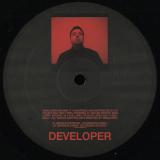
Developer returns to his personal vinyl imprint Developer Archive with the label’s 17th release, continuing a focused exploration of raw, hypnotic techno built for physical spaces. Known globally as the driving force behind Modularz, Developer uses the Archive series as a more direct and uncompromising outlet—stripped back, functional, and deeply immersive.
This latest release locks into groove-based cuts powered by tension and restraint, where repetition becomes ritual and subtle shifts create sustained drama. The rhythms are dense and forward-moving, designed to work equally well in the pressure of a warehouse or the precision of a darkened club.
With Developer Archive 17, Developer reinforces his commitment to vinyl as a medium and to techno as a tool for controlled intensity—music that doesn’t chase trends, but instead sharpens its purpose with each release.
out of Stock
Last delivered 75 days ago available to reorder, subject to availability
The first resonant space Zosha Warpeha played in was the Emanuel Vigeland Museum in Oslo, Norway. Built as a mausoleum, its walls reach up into a gradual archway, creating an environment where sound expands and reverberates for twelve seconds before decaying into silence. Warpeha was greeted only by dim lights when she entered, and it wasn’t until she had spent several minutes listening that she was able to make out the frescoes that covered every inch of the room: graphic depictions of the cycle of life from conception through death. As the sound of her Hardanger d’amore encountered the walls and these slowly emerging scenes, they obscured its point of origin in both time and space, augmenting its own life cycle. The experience sat in the back of her mind over the next several years as she developed her own patient style of composition and performance, one that comes into full bloom on her new album I grow accustomed to the dark.
When Warpeha was selected as an artist in residence at Brooklyn’s ISSUE Project Room in 2025, she saw it as an opportunity to more intentionally explore how her music might fill a room with ample natural reverb. I grow accustomed to the dark documents two single-take solo performances for Hardanger d’amore and voice at IPR, with both pieces composed in a unique tuning system developed to interact with the space itself. Listeners can trace resonance from the contact of the bow on gut strings into the body of the instrument, its five sympathetic strings offering another layer of refraction, before the sound is thrown about the cavity of the room. The echoes emerge like a photographic double exposure, or wisps of smoke that linger in the air, creating ghostly harmonic convergences that blur the line between what is there and not-there. Sound begins to act like light, a synesthetic alchemy that transforms drones into beams and ornamental trills into flickers.
Both side-long compositions, “filament” and “visual purple,” exemplify a duality that animates Warpeha’s music: an expressive, individualistic style that draws on extensive knowledge of her instrument’s history in folk traditions, and an austere, devotional quality maintained by focus and precision. Though very different in character and structure, both pieces evolve slowly through numerous repetitive phrases, passages of stillness, and bursts of intensity. “filament” opens with a cycle of delicate melodic fragments played and sung around a drone before blossoming into an outpouring of swooping arpeggios, harmonics flying from the strings like sparks off a bonfire. The disorienting pulsation of harmonic beating forms the core of “visual purple,” the close-tone dissonance building to a swarm of open strings ringing boldly throughout the space. After the knotty tones reach their climax, the piece collapses into studied quietude, hushed, but without any drop in intensity.
When Warpeha first visited the Vigeland Museum in 2019, she was in Oslo to deepen her relationship to the Hardanger fiddle through the study of Norwegian traditional music, which is primarily passed down aurally. The experience of learning songs by ear, not only internalizing the tune but also absorbing the techniques and tonalities by listening, was a crucial step in her development as a composer. The years since have seen her sharpen those skills as a prolific member of the New York avant-garde and improvised music communities. Warpeha’s music encourages listeners to join her in this journey, to listen closely with each repeated phrase and through each dramatic shift. Like the frescoes on Vigeland’s walls, with time and intention, the depth of I grow accustomed to the dark comes on like a revelation.
out of Stock
Last delivered 7 months ago available to reorder, subject to availability
France's near-revolution of May '68 was the zenith of that generation's struggle for a new kind of life. It kicked the country's small, but vibrant, counter-culture into overdrive, and birthed a local underground music scene. The bands it spawned made music with much less rock purity than groups from the UK and US. Their musical and cultural influences foregrounded improvisation, disjunction, and genre-blending: Soft Machine, Pink Floyd, Frank Zappa, free jazz, and radical politics. The introduction of the synthesiser in the early 1970s added fuel to the fire.
This collection of French underground music inaugurates a series to accompany "Synths, Sax & Situationists", the first English-language book to investigate this movement. It focuses on the music of the second wave of bands that emerged in 1972/3, which saw radicalised psychedelic and jazz influences merge with the future-music possibilities offered by new technology. The next volume will investigate the politically-charged bands that erupted in immediate aftermath of May '68.
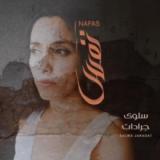
Thawra Records and Tiny House Music are proud to announce Nafas, the debut original album by Palestinian vocalist, researcher, and composer Salwa Jaradat, set for release in March 2026.
Rooted in a traditional Arabic singing practice yet shaped by a layered and deeply personal artistic journey, Nafas marks a powerful first statement from an artist whose work moves between heritage, research, and lived experience. The album emerges from years of musical and feminist inquiry, giving renewed breath to voices, emotions, and histories that have long existed on the margins.
Salwa Jaradat’s artistic formation is grounded in classical Arabic music and oral tradition, with studies at the Edward Said National Conservatory of Music in Palestine and later in musicology in Lebanon. Alongside her work as a performer, researcher, and archivist, she has developed a practice that treats music as a space of memory, resistance, and continuity. These threads converge in Nafas—an album that does not seek to modernize tradition, but rather to inhabit it differently, allowing it to speak in the present tense.
Developed through an intensive artistic residency in Lebanon, Nafas brings together a core ensemble of regional musicians, with Jaradat’s voice at its center—measured, expansive, and deeply intentional. Across six compositions, the album unfolds patiently, moving between stillness and momentum, intimacy and collectivity, breath and release.
Nafas will be released digitally and on vinyl, reinforcing Thawra Records and Tiny House Music’s ongoing commitment to long-form artistic statements and physical formats as vessels for care, depth, and listening.
I Made It All Up For You is the new record by Hugo Race Fatalists, their 6th studio album, set for release March 20, 2026 thru Gusstaff Records / Helixed on LP/CD and digital.
"In his 40-year career, Hugo Race has lived a thousand lives and played the role of songwriter, producer, musician, performer, head of a record label (Helixed). His music went from folk to lounge, from "trance industrial blues" to psychedelia, from world music to electronics. Starting from post-punk Melbourne in the 1980s, he took fascinating paths that led him from Africa to Turkey, from Berlin to Romagna…"
Hugo Race returns after highly successful collaborative albums with Michelangelo Russo (100 Years), The Church frontman Steve Kilbey (Speed of the Stars) and Gianni Maraccolo (The Vigil, winner of the prestigious Premio Ciampi) with I Made It All Up For You, an epic album with his Italian band Fatalists - existential songwriting framed by the band's signature fusion of roots music, electronica, Italian soundtracks and desert rock.
"I wanted to create something melodic and beautiful in defiance of our current reality. The songs started as bare acoustic sketches written in a remote mountain cabin in Italy where I had two weeks off during a solo tour. The weather turned into a raging blizzard, the days a struggle to keep the wood fire lit and the smoke out of the house. I wrote about twelve songs, threw them all away, started again with an unplugged electric guitar in front of that
damp fire, searching for the album's theme. When the smoke cleared, I was at the crossroads of a long term relationship unraveling under a blazing antipodean sun.
Fatalists recorded the basic tracks at the floating studio on the Puccini lake an hour out of Florence - Giovanni Ferrario (Scisma, PJ Harvey) on guitars and synth, Francesco Giampaoli (Brutture Moderne) on bass and Diego Sapignoli (Sacri Cuori) on percussion.
Violinist Massimiliano Gallo met me in Sicily for a short tour to learn the new songs, adding layers of his Calabrian magic to the mix. Jennifer Charles (singer of New York band Elysian Fields) and I had been talking for a long time about making new music and this was the occasion when we made it happen. Jennifer's distinctive voice graces this
album on the songs I Collide and Broken Love, the lyrics of which were written by author and designer Alannah Hill. My longtime road brother Michelangelo Russo also dusts the tracks with his otherworldly electric harmonica on Against The World, Born To Fly and Open Field. A lot of joy and pain and reflection went into the making of this album and I hope that comes across; this is about the darkness yes, but also the light. Everything changes and every ending is a new beginning but it's how we experience transformation that really matters. I hope you love this album. I made it all up for you."
Hugo Race, Naples, 2025
Igor Tamerlan is a stranger in his own land. Born in 1954 the Hague and spent most formative years in Paris, Igor suddenly had the urge to relocate to Bali in 1986. “I want to settle in Indonesia and marry a local girl,” he told his sister shortly before flying out.
His next journey would be as audacious as his time in the Fifth Republic. Born from a prominent Indonesian expatriate family in Paris with ties to Indonesia’s first prime minister Sutan Sjahrir, Igor earned a degree in architecture at Ecole nationale supe´rieure d’architecture de Paris-La Villette.
He could have been a brilliant architect or a political scientist (he was accepted to Sciences Po), but his passion for music distracted him from his academic works. He was after all named after Russian composer Igor Stravinsky.
During his brief stint at Sciences Po, Igor spent most of times hanging out at recording studios and rub shoulders with the likes of singer-songwriter Jean-Jacques Goldman and Michel Polnaref. He had a brief encounter with The Rolling Stones at the Cha^teau de Thoiry studio in the early 1970s.
But Igor’s musical education and his occidental eyes appeared to be ill-suited for Indonesia. His first record, titled Langkah Pertama (First Step) on the mainstream label Musica was met with a shrug and was a commercial dud. An experimental record blending the influence of Spanish motifs, Francophile production and a whiff of hip hop and ska was seen by critics as being too alien. His sarcasm-laden lyrics and his biting critique of excessive materialism among the upper tier of Indonesia’s nouveau riche in the album was met with confusion from the audience. He was just too far ahead of his time.
He left the label Musica – or may had been dropped – soon after Langkah Pertama and decided to go independent. He then relocated to Bali and set up a state-of-the-art recording studio in Sanur, across the street from Southeast Asia’s first boutique hotel where luminaries like Mick Jagger, David Bowie, Sting, Yoko Ono and Ringo Starr stayed for their holiday.
From the studio, Igor recording everything from the sounds waterfalls, geckos, minibuses to motorized rickshaw and mix them with hip hop, jazz, electronica, dub and Balinese gamelan. A visionary, Igor was the first musician to use MIDI, which started to be available globally in the early 1980s.
On paper, songs like “Bali Vanilli” should not work, a mish mash of disparate elements mentioned above, sung in three languages, Balinese, English and Bahasa Indonesia while tackling the subject of overtourism. The song was also the first to introduce rap to an unsuspecting audience. But for some strange reason “Bali Vanilli” became a sensation and overnight Igor became household name. And in 1987, long before overtourism was an issue, Igor broached the subject to a national audience in Indonesia on the possible destruction of nature and culture from tourism.
Ever an iconoclast, Igor decided to step out of the limelight following the success of “Bali Vanilli” and in early 1990s he relocated to Indonesia’s cultural capital, Yogyakarta. Here, he worked on some more experimental music while juggling as music video director. He passed away in 2018 at the age of 64.
The 10 songs in this compilation, Bali Vanilli: Experimental Pop from Paradise Island (1987-1991), are some of Igor’s best works, music that would have gone into obscurity had it not been for the diligent work of film director Alfred Pasifico Ginting, who managed to track down some of the master tapes while researching on a documentary on the musician.
These recordings have never before been released outside of Indonesia. Igor would have been proud with this reissue project.
With two deeply cherished compilations already in the bag, Luke Una steps up for the third volume in his É Soul Cultura series on Mr Bongo. A love letter to the dancefloor and its power to unite people from all corners of society amid growing division and extremist politics. Genre-spanning in nature, the 15 tracks travel between cosmic soul, boogie, proto-house, slo-mo technoid grooves, drum machine afro, astral bass-bugging futurism, jazz funk, dance, and disco. Each having the ability to move the body as much as the heart.
From his formative years in Sheffield to co-founding Manchester’s much-fabled Electric Chair with Justin Crawford, through to helming the iconic LGBTQ institutions of Homoelectric / Homobloc, Luke has spent 40 years immersed in dance music. His latest outlet, É Soul Cultura, has grown from a label to a globe-spanning events series with Luke holding residencies and embarking on tours across the world from Japan and Australia to America and Europe.
“For me, the dancefloor was never about a one-dimensional, thudding, 130 BPM beat only. It's a much more dynamic, broader vision than that. I cut my teeth in an era where a 100 BPM record had as much impact, excitement, and energy as a 134 BPM dancefloor jazz funk or techno record”, Luke mentions. É Soul Cultura Volume 3 is the perfect embodiment of that notion: “It’s about four decades in the trenches playing dance music, the late-night afters, the shebeens, the basements, warehouse parties, the eight-hour journeys in East London, through to festival sets at Houghton and We Out Here. It’s music unconstrained by genre or tempo and more about making your body move”.
But this isn’t simply a collection of disparate dance tracks; they carry meaning and soul. “It’s less about escapism, more about reconnection. My experience of post-covid has been the coming together of all the clans in various clubs and gatherings. A reaction to a very toxic world out there, where the aggro rhythms of division have sought to divide us, and people don't meet as often. The coming back together face-to-face in clubs has encouraged a real love in the air, there's a real togetherness and collective spirit”.
Opening up the compilation is a track that channels that very message, the transcendental, soul-rousing Harris & Orr ‘Spread Love’. Joining the dots from there, to the low-slung deep house closer of Fatdog ‘Remember’, you’ll find electronic drum machine Nigerian funk, sitting side by side with dancefloor Cape Verdean brilliance, a post-punk cover of Fela Kuti, rubbing shoulders with cosmic electro, and an Una-championed, 8-minute, kickless DJ Harvey remix. There’s jazz funk in various guises moving from boogie synth to astral travelling, slo-mo acidic raw techno, and a ‘79 soul stepper, alongside swirling percussive Italo disco and tribal-charged house. All infused with an innate ability to bring people together.
As society becomes increasingly fractured, É Soul Cultura Volume 3’s message is more than movement. It’s about dance music’s power to unify people from all walks of life and break down the barriers that divide us.
out of Stock
Last delivered 36 days ago available to reorder, subject to availability
New “Inversions” of drone rock pioneers Earth’s debut release. A collaboration between Dylan Carlson and Black Noi$e (Armand Hammer, Danny Brown, Earl Sweatshirt) formed in mutual respect and appreciation for one another. Both artists were intrigued by the creation of vast musical landscapes and the connection of music, with its ability to transport the listener. The music of Earth was recognised and celebrated for moving at a glacial pace and yet this new collaboration surprisingly saw Black Noi$e slowing things down even further.
The debut, which originally came out in 1991, notably featured Kelly Canary and Kurt Cobain on vocals on the tracks “A Bureaucratic Desire for Revenge Part 2” and “Divine and Bright”. Black Noi$e reimagines the original recordings with his experimental sensibility and innovative multi-instrumental, cross genre exploration. Applying contemporary electronics to the heavy droning bass and guitars and languid rhythms, this inversion oscillates and reverberates with a different kind of energy whilst simultaneously highlighting the much loved low slow and distorted properties of the original.
‘Extra Capsular Extraction’ was the first music Dylan made with Earth and his first time in a recording studio, which he recalls at the time as being “terribly exciting”. It also marked the first time collaborating with others and seeing it reified into a tangible object or product, a spirit that Dylan has carried through to the present. The original album is a document of a specific period and Dylan’s creative development. These inversions of Extra Capsular Extraction are, to quote Dylan, “an exciting way to reintegrate them into the present time and with my more expanded conceptions of musical endeavours”.
"Doom-metal innovators" Pitchfork.
"With guitars ramped up to the nth degree, but tuned to gut-wrenchingly low frequencies, Earth carved out a veritable canyon of pure molten drone, one which would have a profound influence on modern metal music." The Quietus
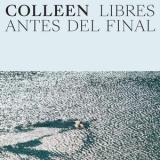
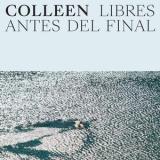
The compositions of Colleen, aka multi-instrumentalist CeIücile Schott, are as richly varied as they are precise. Each of Colleen"s albums are shaped by her predetermined distinct instrumentation and parameters, including works composed entirely of music boxes, pocket synthesizers, and antiquated stringed instruments. The connective essence of Schott"s music is in her ability to create pieces within this transcendent specificity that are both expansive and imbued with profound emotions. Libres antes del final is an album that reaches for the hope and desire to be truly freed from unnecessary suffering and harmful thoughts before reaching the end of one"s life cycle. Schott composed and performed Libres on the Moog Matriarch, centering the record on a pulse-driven, bubbling energy with constant momentum. She then reamped the music in one of her favorite spaces in Barcelona, Casa Montjuic, accentuating the album"s sense of movement. The reamping process adds a literal physicality to the album, as carefully chosen and placed microphones (including the famous Neumann KU100 binaural head) capture both the venue"s PA sound itself and the venue"s acoustics. Colleen"s music translates snapshots of Schott"s life into singular pieces, often instrumentally transmuting a dense web of sensations into wondrous sonic terrain. Schott"s deft manipulation of the Moog Matriarch makes each subtle adjustment feel monumental.
The compositions of Colleen, aka multi-instrumentalist CeIücile Schott, are as richly varied as they are precise. Each of Colleen"s albums are shaped by her predetermined distinct instrumentation and parameters, including works composed entirely of music boxes, pocket synthesizers, and antiquated stringed instruments. The connective essence of Schott"s music is in her ability to create pieces within this transcendent specificity that are both expansive and imbued with profound emotions. Libres antes del final is an album that reaches for the hope and desire to be truly freed from unnecessary suffering and harmful thoughts before reaching the end of one"s life cycle. Schott composed and performed Libres on the Moog Matriarch, centering the record on a pulse-driven, bubbling energy with constant momentum. She then reamped the music in one of her favorite spaces in Barcelona, Casa Montjuic, accentuating the album"s sense of movement. The reamping process adds a literal physicality to the album, as carefully chosen and placed microphones (including the famous Neumann KU100 binaural head) capture both the venue"s PA sound itself and the venue"s acoustics. Colleen"s music translates snapshots of Schott"s life into singular pieces, often instrumentally transmuting a dense web of sensations into wondrous sonic terrain. Schott"s deft manipulation of the Moog Matriarch makes each subtle adjustment feel monumental.
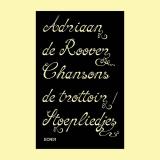
This is a special work by acclaimed composer and musician Adriaan de Roover, who has released records on Dauw, VIERNULVIER, PIAS, and Consouling Sounds. Chansons de trottoir / Stoepliedjes documents his relationship to sampling in the form of a radio play.
Originally created as a radio piece for Resonance FM in Manchester, the album is a sonic portrait of a walk through Brussels. It is constructed from two field recordings: one made during a walk from Metro Midi towards Adriaan’s home, and another recorded on a walk towards Flagey. Rather than foregrounding recognizable landmarks, the piece focuses on the pavement underfoot: the steady, repetitive rhythm of footsteps on sidewalk tiles.
The recordings are mixed with samples from the music of the Brussels hip-hop group STIKSTOF. Their music became the soundtrack to a period in which Adriaan’s desire to move from Antwerp to Brussels began to take shape. Through repeated listening, the city of Brussels gradually revealed itself to him. This experience echoes that of countless music fans who, while listening to The Beatles, imagine what Liverpool might be like: a city revealed through sound and myth, often crystallized in lukewarm Hard Rock Café–style projections.
Chansons de trottoir / Stoepliedjes is an exercise in sampling and an exploration of how one might find a personal place within the music of others. It frames appropriation as an attentive and considered act. Suspended between memory and imagination, the piece exists closer to a dream state than to reportage.
“Tectonic” is a concise portrait of SIMON BERZ’s geological sound explorations across continents over the last 15 years: drums, electronics, and a set of electronically manipulated basalt stones from Iceland.
SIMON BERZ is a transdisciplinary drummer, sound artist, and music educator based in Switzerland and Berlin. Working at the intersection of improvised music, sound art, and performance, and deliberately crossing boundaries between disciplines, his aesthetics are shaped by a sustained engagement with natural materials, particularly stone, and their sonic transformation through electronic manipulation. Beyond his performance work, BERZ founded BADABUM as an art label and a music school.
For the last 30 years, BERZ has been performing in Japan, China, Russia, the USA, Cuba, Iceland, Turkey, and across Europe. He has collaborated with artists including BILL LASWELL,BABY SOMMER, DAMO SUZUKI (CAN), JAMES TURRELL, JIMI TENOR, JOHN SINGLAIR, JOJO MAYER (NERVE), KONDO TOSHINORI, KIDD JORDAN, LAUREN NEWTON, LEE “SCRATCH“ PERRY, MAURO PAWLOWSKI (dEUS), NILS PETTER MOLVÆR, NIKI GLASPIE, NORBERT MÖSLANG, PAUL LOWENS, PFADFINDEREI, ROB MAZUREK, SKÚLI SVERRISSON, and he was the live drummer for APPARAT. As BERZ understands artistic practice as energy emerging from nature and through dialogue with people, his recorded output is intentionally selective, with one highlight being “Beats versus Breath” with KONDO and LASWELL (2023). Alongside a regular drumkit and electronics, he has developed his own instruments such as the “Lithophon” in which resonating stones are turned into amplified sound through water drops, and “Tectonic”, a set of Icelandic basalt stones shaped through electronic manipulation. These self- built instruments form the material basis for his performances, installations, and sound recordings.
“Tectonic” is also the title of BERZ’s latest work: a summary of his geological sound explorations across continents. From Iceland to Indonesia and Bali, from New Orleans to China, in caves and at shores, BERZ carried his millions-of-years-old basalt stones as both instrument and collaborator. On Java, he met Baron, a builder of stone gamelan instruments. At the Pacitan Tabuhan Cave (Indonesia) he performed with MISBACH BILOK and WUKIR SURYADI (SENYAWA) who work with corals as instruments. BERZ brought these encounters and “field recordings” to the Stöðvarfjörður studio in Iceland, where he recorded with his “Tectonic” set-up, drums, and electronics. The music was later mixed in Berlin by DIRK DRESSELHAUS (SCHNEIDER TM). The resulting album moves from club-driven tracks to ambient passages, from gamelan-inspired textures to HipHop-like beat patterns. It resists easy categorization while staying direct and physical in its impact.
out of Stock
Last delivered 7 months ago available to reorder, subject to availability
The Buenos Aires–based producer’s second album on Umor Rex can be read on at least two levels. The most direct traces its origin to the influence of environmental music, as well as to some pioneers of electronic music. The album was recorded in a single session, making extensive use of loops that were later edited and condensed into the six pieces that make up Pequeño clima doméstico. This working method responds to a playful approach that runs through Entidad Animada’s musical intentions, which often start from a specific genre or aesthetic and then filter it through his own language.
From a more conceptual perspective, the record proposes music as a tool capable of modifying the perception of a moment. Rather than closed songs, the album functions as a device that allows one to tune a state, transform a space, or alter a mood. In this sense, it engages with the idea of functional music not as a utilitarian background, but as a means to equalize time, slow the pace, and reconfigure the listener’s emotional climate.
All songs written and performed by Entidad Animada. Recorded in August 2025 in Buenos Aires, Argentina.
Field recordings and processed textures by Guazuncho.
Mastered by José D’Agostino at Moloko Estudio, Frankfurt, Germany. Cover photo by Diego Berruecos. Layout by Daniel Castrejón.
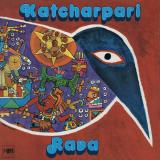
The breakthrough album. Enrico Rava's second solo record, recorded in Milan in January 1973 and released on the German BASF label, is nothing less than a cornerstone of Italian jazz-rock - the record that caught Manfred Eicher's attention and opened the doors to ECM. Rava himself has called it his breakthrough, and history proved him right.
The lineup is killer: John Abercrombie on guitar, Bruce Johnson on bass, Chip White on drums. Four musicians operating at the absolute peak of early seventies fusion energy - electric, cosmopolitan, burning with that particular fire that only existed in that brief window when jazz met rock and nobody knew the rules yet. Abercrombie, already on his way to becoming one of the most distinctive voices in electric jazz guitar, delivers some of his most ferocious early work here. White's drumming is relentless, pushing the music forward with an intensity that never lets up.
If Miles' Bitches Brew-era speaks to you, if Ian Carr's Nucleus gets you moving, if you know Sun Ra's Lanquidity and Don Cherry's Relativity Suite by heart - this is essential listening. Rava's vision was already fully formed: South American rhythms, Mediterranean warmth, free jazz ferocity, rock power - all flowing together without borders or categories. By the early seventies, Rava had absorbed everything - the New Thing, the European free scene, the electric revolution coming out of Miles' studio - and forged something entirely his own.
The seven tracks cover serious ground. "Bunny's Pie" introduces the music with an almost cosmic atmosphere of suspense, hovering in that liminal space before it trails off into the up-tempo vibrant frenzy of "Trial N. 5" - Abercrombie and Rava trading swirling solos at full intensity, the rhythm section locked in tight. "Dimenticare Stanca" moves from Rava's expressive balladic intro into pure funk, guitar and trumpet steering over the rhythmic drive with absolute confidence. The title track carries the lyrical feel and cadence of an Incan-Peruvian folksong - that cosmopolitan spirit made audible. "Fluid Connection" rides a funky bass riff into fusion heaven, with standout trumpet and guitar solos that build and release with perfect tension. "Cheerin' Cherry" pays homage to the great Don Cherry - Rava's spiritual mentor and fellow traveler in world music - exploring a North African soundscape that points toward the global jazz to come. Johnson's "Peace" closes the album with a minute and a half of serene, blissful calm - a moment of stillness after the storm.
This audiophile reissue - cut from the original masters, pressed by Pallas in Germany on 180gm vinyl, housed in a thick laminated hand-glued gatefold - does full justice to an album that remains a collector's holy grail.
The definition of the word 'fado' is technically 'fate', though the Portuguese meaning bound up with this term is more complex. The music itself can be fairly closely compared with that of Greek rebetika - also the American blues or the original working-class tango music of Argentina and Uruguay - and similarly takes it's common subject matter from the various cruel realities of the world. Though perhaps what distinguishes fado in character is it's often poised acceptance of the pains of life rather than protestation or resistance - as writer Paul Vernon says "It speaks with a quiet dignity born of the realisation that any mortal desire or plan is at risk of destruction by powers beyond individual control"
Death Is Not The End compile here a spine-tingling collection of fado recordings, taken from records issued in the mid 1910s through to the 1930s. The fado's Lisbon and Coimbra variants are presented here by some of the music's earliest recorded stars - spanning a time period leading up to the emergence of the fado's all-conquering star, Amália Rodrigues.
Jards Macalé’s biography is a testament to the electrifying energy of music and the unwavering spirit of artistic rebellion. Macalé has remained true to his vision, unapologetically embracing the unconventional and challenging the status quo. His music, a conduit of emotion and a mirror to society, continues to weave a sonic tapestry that resonates with the souls of listeners.
In 2022, Macalé celebrated the momentous 50th anniversary of his debut solo album, a groundbreaking masterpiece released by Philips in 1972. This iconic record gifted us timeless tracks such as “Vapor Barato”, “Mal Secreto”, “Farinha do Desprezo”, “Revendo Amigos”, and “Hotel das Estrelas”. Its sheer brilliance united the realms of Brazilian music, infusing samba and bossa nova with the fiery essence of rock, classical harmonies, and the improvisational spirit of jazz. As the years passed, a new generation of musicians and fans discovered this gem, fueling its resurgent popularity and inspiring fresh collaborations.
Last year, Jards Macalé assembled a formidable new band, igniting stages across Brazil with a tour that now sets its sights on Europe. Together with Gui Held on guitar, the Paulo Emmery on bass, and Thomas Harres on drums, Macalé conjures an exhilarating homage to his illustrious body of work. This live performance embodies the untamed spirit and boundless musical freedom that define this visionary artist, transporting audiences to a realm where the past intertwines with the present in a breathtaking display of artistic prowess.
Two percussionists, one sound universe. With “All you can BEAT,” Double Drums serve up an energetic and surpri-singly versatile percussion album. The two exceptional musicians have been performing together on stage for 20 years now. In addition to numerous concerts in Germany, they have also performed throughout Europe and Asia.
Now Alex Glöggler and Philipp Jungk are celebrating their anniversary with a work that showcases their entire musi-cal range: from driving rhythms to a multifaceted soundscape to moments of great emotion. “All you can BEAT” is a tribute to everything percussion can be: powerful, delicate, wild, and touching at the same time.
On the one hand, there are rousing original compositions such as “One More Time” and “Hydra,” about which the rhythm artists say: "The music is inspired by the many-headed monster Hydra from Greek mythology. When it loses a head, two new ones grow back. Musically, new patterns or rhythmic elements are constantly being added, overlap-ping each other and pushing others into the background. The result is minimal music based on an energizing flow with a focus on the marimba."
,Music for Intersecting Planes" ist die erste gemeinsame Veröffentlichung der Cellistin Leila Bordreuil und der Organistin Kali Malone. Minimalistisch in den Mitteln, aber groß in der Wirkung, entfaltet sich die Musik wie Perlen auf einer Schnur, unterbrochen von Stille und tiefen Atemzügen. Aus der manuell gepumpten Orgel kommen wechselnde Luftströmungen, die durch die fein gezeichneten Obertöne des Cellos bereichert werden und eine mikroskopische und körnige Perspektive des Klangs ergeben. Interferenzmuster versetzen die Klangmasse in Bewegung, während Malone und Bordreuil gegen die Stille der Sinuswellen spielen. In der Ferne läuten Kirchenglocken. Wellenförmiges Feedback lässt eindringliche Rufe der Orgel erklingen, bevor es einem tragischen Cello-Motiv weicht. Das Album endet dann mit dem kurzen und jubelnden Pizzicato-Ausruf ,Endless Dance of Eternal Joy". Aufgenommen bei Kerzenschein im Temple de Saint-Théoduoe in La Tour-de-Peilz in der Schweiz, schafft die Musik ein Gleichgewicht zwischen Geduld und Intensität, Komposition und Zufall, Strenge und Zärtlichkeit. In dieser Zusammenarbeit kommen neue Facetten beider Künstler zum Vorschein: Bordreuils Spiel mit erhöhter klanglicher und formaler Klarheit und Malones Orgelspiel in seiner rohesten und strukturiertesten Form. ,Music for Intersecting Planes" ist ein Zusammentreffen von Geistern, das die zeitlose Faszination akustischer Phänomene würdigt.
,Music for Intersecting Planes" ist die erste gemeinsame Veröffentlichung der Cellistin Leila Bordreuil und der Organistin Kali Malone. Minimalistisch in den Mitteln, aber groß in der Wirkung, entfaltet sich die Musik wie Perlen auf einer Schnur, unterbrochen von Stille und tiefen Atemzügen. Aus der manuell gepumpten Orgel kommen wechselnde Luftströmungen, die durch die fein gezeichneten Obertöne des Cellos bereichert werden und eine mikroskopische und körnige Perspektive des Klangs ergeben. Interferenzmuster versetzen die Klangmasse in Bewegung, während Malone und Bordreuil gegen die Stille der Sinuswellen spielen. In der Ferne läuten Kirchenglocken. Wellenförmiges Feedback lässt eindringliche Rufe der Orgel erklingen, bevor es einem tragischen Cello-Motiv weicht. Das Album endet dann mit dem kurzen und jubelnden Pizzicato-Ausruf ,Endless Dance of Eternal Joy". Aufgenommen bei Kerzenschein im Temple de Saint-Théoduoe in La Tour-de-Peilz in der Schweiz, schafft die Musik ein Gleichgewicht zwischen Geduld und Intensität, Komposition und Zufall, Strenge und Zärtlichkeit. In dieser Zusammenarbeit kommen neue Facetten beider Künstler zum Vorschein: Bordreuils Spiel mit erhöhter klanglicher und formaler Klarheit und Malones Orgelspiel in seiner rohesten und strukturiertesten Form. ,Music for Intersecting Planes" ist ein Zusammentreffen von Geistern, das die zeitlose Faszination akustischer Phänomene würdigt.
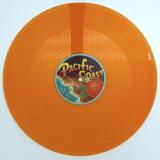
Introducing the 4th instalment of the Pacific Coast House rebirth. We bring back another much sought-after 12” from The Coastal Commission & Jesse Outlaw. “Bring down the Walls” was a nod to Raze’s “Break for Love”, Robert Owens “Bring Down the Walls” and Ritchie Hawtin’s use of the Roland 606 throughout “Sheet One”. Long out of reach and fetching $100+ on Discogs, Atjazz’s freshly remastered editions are finally available .. “Let it Go” was never mastered & only ever cut to dub-plate. It has now been mastered & available in all it’s glory.
Coastal Commission “Bring Down the Walls” “Bring down the Walls” was a nod to Raze’s “Break for Love”, Robert Owens “Bring Down the Walls” and Ritchie Hawtin’s use of the Roland 606 throughout “Sheet One.” We gave the tune a Californian psychedelic twist with conga laden drums, a moody synth, low pulsing 303 patterns + Benjamin Zephaniahs patois call to “Move the Body Rhythmwize!” The first PCH releases had dropped Worldwide to International acclaim from DJ’s far and wide across the Globe with support in London, Paris & New York. However the local scene here in L.A that preached “Love, inclusion & Unity” was anything but that. L.A at that time was very tribal & divided up into 3 camps. If you weren’t affiliated with any of them (aka independent) then you were pretty much locked out of getting any kind of gig support or the Dj’s from those camps actually playing the music. The local feedback from Dj’s was that what we were making wasn’t “house,” but “Techno” which was absurd to me. “Bring Down the Walls” was a mantra to “move the bod”y and in doing so “bring down the walls” of separation not just in L.A but throughout society in general. Thank goodness for support from people like Terry Francis, Eddie Richards, DJ Deep & Philly Stalwart King Britt. After years of copies going for upward of $100+ on Discogs the now freshly remastered copies by At Jazz’s Martin Iveson are finally hitting the platters this Spring.
Jesse Outlaw “Let it Go” I met Jesse at Beatnonstop Records on Melrose Ave with Miguel Placencia in the late 90’s. Miguel (RIP) was a mainstay in the Underground scene and had always been very supportive of my endeavors. He had had success with a huge release on Yellow Orange and was working with Jesse under the moniker “When Worlds Collide.” I signed “Brighter Days” & “Set you Free” from them and released the tracks on my Seductive imprint. They told me that they were making the tracks on a Sony Playstation “Music Now” program and I was like FFS “What.s more Underground than that!?” Later Jesse gave me some of his solo work. The track “Let it Go” was never mastered & only ever cut to Dub-plate and featured on my 1st PCH mix “Pacific Coast House Sounds.” It has now been mastered by Martin Iveson and is available in all it’s glory. The dreamy vocal “You need to let it go” beckons over the top of driving percussive Latin beats and church organ which is a great compliment to the flip side of “Bring down the Walls.” All in all two West Coast stompers now finally available remastered on PCH in Orange vinyl.
out of Stock
Last delivered 8 days ago available to reorder, subject to availability
When Saracen released their debut album ‘Heroes, Saints & Fools’ back in 1981, the UK Rock scene certainly took notice. Their combination of Magnum-like melodies and Uriah Heep intensity and vocal stylings immediately endeared them to fans of the NWOBHM scene, and fans of classic British Rock in general.
All songs and lyrics were written by lead guitarist Rob Bendelow, who left prior to the release of their second album, ‘Change Of Heart’, in 1984. While this sophomore effort still contained a few Bendelow songs, the band had changed direction, moving away from the almost Pomp and NWOBHM of the debut for a more polished and Melodic Rock direction.
Unfortunately, this new direction didn’t resonate with the fans, and the band broke up not long after.
However, Bruce Mee of Now & Then Records had always been a massive Magnum and Saracen fan. Having already convinced Bob Catley to start a solo career in the late 90s, he also had very productive talks with Rob Bendelow. This great friendship resulted in the band reforming and the release of ‘Red Sky’ in 2003. Rob Bendelow and Saracen were back.
Later signing to Escape and releasing several more great albums, Rob Finally retired from the music scene a few years ago, but the band gamely soldiered on, keeping his songs and legacy alive for their many adoring fans.
In an instance of total cosmic kismet, that same Bruce Mee was also co-organiser of the inaugural ‘Tower of Fire’ UK festival, and in 2024 invited Saracen to play the event along with other well recognised names of the scene such as Nitrate, Remedy, Atack, White Skies and Gabrielle de Val. The event was multi-track recorded, and the results of the Saracen set were so good that it was decided to release a very first live album.
The title of the live album is taken from the name of their crushing opening song: ‘Crusader’. And in a further act of unbelievable karma, the magnificent album artwork and design are created by Sebastian Kozak, the very same creative artist responsible for the brilliant artwork on the band’s come-back album ‘Red Sky’ back in 2003.
All but one of the songs that day were from that incredible debut and those 5 songs, along with 3 others previously recorded live by the band, make up this totally amazing live album. For fans of Saracen and NWOBHM, this is a moment we never thought we’d ever see: a brilliant live Saracen album with vocalist Steve Bettney sounding as incredible as he did over 40 years ago.
Sun Wukong (The Monkey King) is a monkey born from a heavenly stone who acquires supernatural powers. After rebelling against heaven and being imprisoned under a mountain for 500 years, he later accompanies the monk Xuanzang on a journey to India. Thus, according to legend, Buddhism is brought to ancient China. This much beloved story, is as much a part of Asian culture as The Iliad and The Odyssey or The Wizard of Oz are to the West.
The 2014 action-fantasy film Monkey King - Havoc In Heaven's Place was directed by Soi Cheang, Starring Donnie Yen as the titular protagonist Sun Wukong. A Hong Kong-Chinese co-production, Yen also serves as the film's action director. The film co-stars Donald Chow, Aaron Kwok, Joe Chen and Peter Ho. The music was composed by Christopher Young.
Funfact; the drums on this soundtrack was done by none other than Dave Lombardo (ex- Slayer)
In China, The Monkey King was highly succesful and became only the third Chinese film to earn more than a billion yuan at the Chinese box office.
The soundtrack of Monkey King - Havoc In Heaven's Place is available for the first time on vinyl as a limited and numbered 2LP of 500 copies on gold vinyl, and includes an insert.
When High Tone Live dropped on Jarring Effects, it wasn't just another live album - it was a statement. Captured in the spring of 2003, the Lyon-based collective condensed years of experimentation into an 11-track journey that redefines what live dub can be. Since their formation in 1997, High Tone have stood at the crossroads of dub, electronic music, rock, and urban culture. With Jarring Effects as their home base, they built a reputation for transforming the stage into a laboratory - a place where basslines mutate, beats deconstruct, and every frequency breathes. High Tone Live draws from four key releases - Low Tone, Opus Incertum, Bass Température and ADN - Acid Dub Nucleik - revisiting them through the raw energy of the stage. Classics like "Dehli Katmandou" and "Enter the Dragon" are stretched, twisted, and reborn in extended, improvisational forms. Two unreleased tracks, "112 Dub" and "Onew Dub," complete the set, adding a dose of fresh material to a disc that feels both retrospective and forward-looking. As with any live recording, there are rough edges: the mix shifts, some moments feel caught mid-explosion. But that's the beauty of High Tone Live. The imperfections add warmth, immediacy - a reminder that this music is made by humans pushing machines to their limits. High Tone Live stands as one of the strongest documents of Europe's post-dub explosion. It's a record that bridges continents and genres - a sonic travelogue where analog grit meets digital hypnosis. More than a live set, it's a manifesto of independence and sound exploration, stamped with the unmistakable seal of Jarring Effects.
Field Green Vinyl. Big Crown Records is proud to present the instrumental version of El Michels Affair's 2025 instant classic 24 Hr Sports. The roster of vocal features on 24 Hr Sports is amazing, Clairo, Norah Jones, Florence Adooni, Shintaro Sakamoto, two different choirs, and even some singing from the man himself, Leon Michels. The background vocals contributions are amazing; Lady Wray and Kevin Martin from Brainstory to name a few. But alas, there's a new energy that shows up in the listen when you pair it down to the impeccable musicianship and Leon's tried and true "Midas Touch" production. Leon plays a ton of instruments across the album and is joined by the regular cast of heavy hitters; Homer Steinweiss, Nick Movshon, Dave Guy, Marco Benevento, Hether, and more. There is even a saxophone solo by the late, great Rahsaan Roland Kirk.Some would argue this is some of the best music being made by some of the best musicians of our time. We wouldn't argue with anyone...we let the music do what it does.
From the cold North of Sweden, NORNA and LEGBITER deliver a six-track document of contrast, convergence, and uncompromising heavy music. Bringing together two distinct voices, the release explores the many shapes heaviness can take_stretching from crushing, slow-moving atmospheres to sharp, volatile bursts of aggression. Formed by musicians with deep roots in the European underground, Norna approach heaviness as a vehicle for emotional gravity. Their sound is expansive and deliberate, built on massive low-end, tectonic rhythms, and an acute sense of restraint. Legbiter approach heavy music as direct, confrontational, and unrelentingly physical. Rooted in hardcore and metal's most ferocious intersections, the band thrives on immediacy and impact. Legbiter compress time, delivering short, explosive bursts that hit with the force of a live wire. Their sound is lean, aggressive, and unapologetically raw. "Even though we sound very different sonically I think we all have a lot of common ground, not only in being parts of the 90's scenes, but also musically in the somewhat dissonant and harsh guitar parts", says Legbiter guitarist (Rickard Nordström. "Personally, I love splits with bands that don't sound exactly the same, but share some common traits and vibes." "Contrast is everything, we have always tried to flow between despair and beauty. Dynamics are important to us. This split will give you that contrast", comments Norna guitarist and vocalist and former Breach vocalist Tomas Liljedahl. FOR FANS OF Handsome * Quicksand * Fireside * Breach * Helmet * Superheaven * Narrowhead * Metz
Rom Com is the debut album from Disco In Sochi; a Liverpoolborn duo injecting full-throttle glam rock theatrics into modern pop. Built on strutting guitars, neon synths, & unapologetically huge hooks, their sound is loud, glossy, and engineered for the spotlight. Drawing from the lineage of glam’s excess and pop’s instinct for spectacle, Disco in Sochi trade subtlety for swagger. Their songs are designed to hit hard and fast — all attitude, amplification, and choruses made to be yelled back from the front row. It’s music that treats the stage like a catwalk. Disco in Sochi make pop music for outsiders who dress loud, move louder, and don’t believe in playing it cool. Equal parts flash and force, they arrive with the confidence of a band ready to turn volume into a statement.
Benefit compilation with exclusive tracks from live performances & installations at eavesdrop festival 2024. All revenues go to charities providing medical aid and food sovereignty in Gaza.
In november 2024, eavesdrop festival presented its 3rd edition of contemporary electronic music and sound art, taking place in the striking architectural setting of silent green’s Betonhalle in Berlin. ”to eavesdrop” - is invoked as a mode of listening intently, attentively and with curiosity. With its ongoing commitment to adventurous listening cultures, the festival brought together a top-notch line-up of Berlin based and international artists, who share a common practice in electronic sound composition whilst spanning a diversity of inter-related contemporary tendencies. Whether it’s multi-award winning Mariam Razaei’s exceptional turntablism, Ilpo Väisänen’s legendary DIY analogue electronics, Jasmine Guffond’s generative sound installation, Nina Garcia’s extraordinary electric guitar manipulations, Lottie Sebes’ AI voice synthesis or Rashad Becker’s idiosyncratic synthesizer explorations, to name a few, eavesdrop invited listeners to consider, from multiple perspectives, new social and technical developments in international music and sound cultures.
This compilation documents those 2 nights with 9 exclusive tracks - 7 live performances and 2 stereo mixes from multi-channel installations, edited by the festival’s curator / organizer Jasmine Guffond, with a total running time of approx. 78 minutes. All revenues will go to charities providing medical aid and food sovereignty in Gaza: Medical Aid For Palestinians & Thamra.
out of Stock
Last delivered 7 months ago available to reorder, subject to availability
London quartet The Leaf Library return with their bold new album After The Rain, Strange Seeds. A luminous collection of pastoral indiepop, drawing inspiration from suburban isolation, unreliable memories and the surreality of the weather. Their most immediate and melodic work to date, the richly evocative songs brim with chiming guitars, buzzing organs and warm, dulcet strings, evoking Yo La Tengo’s more contemplative moments, The Clientele’s autumnal jangle pop and early Stereolab’s motorik melodicism. The sound of the album is defined by mixer John McEntire, whose work with Stereolab and Yo La Tengo (as well as a member of Tortoise/The Sea And Cake) have been major inspirations to the band.
The album explores themes of memory and place, albeit through an abstract haze – returning again and again to specific moments frozen in time: midsummer bright hot days in the Chilterns (“Sun In My Room”), meteorology and the strange movement of the weather (“Colour Chant”), red kites circling over suburban motorways (“Some Circling”), and the uncanny feeling of dusk and nighttime creatures on “The Reader’s Lamp” (titled by celebrated film director Peter Strickland). The lyrics are vivid yet elliptical, strung with abstract ideas and imagery, conjuring a gently unsettling, though never unwelcoming atmosphere. Not quite trusting your own recollection of things, while marvelling at the oddness of the natural world, the album’s title a good summation of the mix of strangeness and hope contained within.
As on past albums the band - founded by singer Kate Gibson and ex-Saloon guitarist Matt Ashton in the mid 2000s, and now completed by drummer Lewis Young and bassist Gareth Jones - have involved their extended musical family, including guitarist Mike Cranny (of fellow drone pop travellers Firestations) and keyboardist Irina Shtreis, both members of the Leaf Library live band. The album also sees the return of James Underwood’s Iskra Strings, a quartet that features on 4 tracks, with sumptuous arrangements by Daniel Fordham, as well as regular contributor Melinda Bronstein on vocals and Will Twynham (Dimorphodons) on harpsichord. They also welcomed Paddy Milner (on Hammond organ) and Scott McKeon (guitar) – both current members of Tom Jones’ band – for a startlingly delicate rolling crescendo to closing track “There Was Always A Golden Age”.
After The Rain, Strange Seeds is their 4th studio album. The result is The Leaf Library’s most accomplished and affecting work, John McEntire’s mix bringing a bold clarity to the band’s meticulous arrangements – closer to how they sound live than anything they’ve done before.
On his second album for Bruk, hoyah חיה continues to take an unflinching look at his Jewish identity while confronted with the heinous actions of the Israeli state. Echoing the name of his Refuge Worldwide radio show, he examines the shared histories of the Jewish diaspora across the Middle East and North Africa — from Morocco to Uzbekistan and everywhere in between. Can I Get A Chayah? is an honest attempt to explore what Judaism could become at a time when the culture faces an existential crisis.
The sonic approach hoyah חיה takes on Can I Get A Chayah? is central to the album's theme, as hard-gated processing on every sound creates a disorienting effect aiming for a kind of 'functional transcendentalism'. From the opening strains of preceding single '808s n Trance Gates' the jagged stop-start intensity of the samples sets a head-spinning tone for the album. The source material comes from across the aforementioned Jewish diaspora, challenging the nationalist idea of the single Jewish state.
Balancing beauty and aggression, hoyah חיה also reaches to a strong cast of collaborators to round out his cultural explorations. Principle among these is the late David German, the US-born guitarist and songwriter behind Silver Jews, whose repeated, bewildered mantras on 'Shalom Aleichem' embody hoyah חיה's own struggles with faith in the face of current horrors. Internationally celebrated Turkish-descent German musician Derya Yıldırım graces 'Talmuds' with her haunting vocal — a tribute to ancient Jewish mysticism that gets passed through the album's unrelenting sonic framework. On 'The Lock' Muha tackles African transcendentalism, while Rael pulls no punches with the questions he poses on the barbed 'This Song Has A Different Title But It Can't Be Published Here Because Of "Reasons"'.
With further prayer recitals on 'Lekha Dodi' and 'The Nose' and videos examining the psychedelic nature of reading the talmud and repetitive prayer movement shuckling, hoyah חיה has taken his research deep into the spirituality of his heritage at a time of crisis for Jewish identity. Naturally, Can I Get A Chayah? is not an easy listening experience, but neither is it a bleak one. There is beauty, mystery, complexity and nuance woven within the stark approach — an intentional, considered statement on a culture much deeper and wider than the barbaric acts of an unrepresentative group of twisted ethno-nationalists.
Born in Douarnenez, at the far edge of Brittany (France), Komodor has quickly established itself as one of the most vibrant names in the French rock landscape. Their high-energy rock, fueled by fuzz, sweat, and vocal harmonies woven in the spirit of MC5 and T. Rex, immediately drew attention: Rolling Stone, Rock & Folk, Libération and Rock Hard Germany all praised the fiery impact of their debut album Nasty Habits (which sold over 2,000 vinyl copies). Since then, the quintet has mostly lived on the road: a long European tour, followed by the larger-than-life saga of Komodrag & The Mounodor, carrying them to stages such as Hellfest, Les Vieilles Charrues, and the Francofolies de La Rochelle, among many others.
Their second album, Time & Space, reveals a band in full metamorphosis. Without abandoning the explosive force that defines them, Komodor widens its scope: volcanic riffs, more sinuous grooves, mist-laden harmonies, psychedelic flashes… The energy is still wild, but more inhabited, more liberated, almost ceremonial at times. The record opens with two telling bursts: Bliss & Joy, a libertarian charge with the feel of a manifesto, and Soul Tricker, a rock incantation where trance overtakes sheer electric assault. Two sides of the same coin, pulled taut between urgency and enchantment.
On stage, Komodor remains a true shockwave, forged across European festivals (Freak Valley, Motocultor, Fête du Bruit, and more) and now awaited at the legendary Desertfest London. Their music feels made for such spaces: a visceral, flesh-and-amp kind of rock, drawing from the seventies’ heritage to speak even more vividly to the present. A band moving forward at full volume, without nostalgia or calculation, carried by a simple conviction: as long as the amps are hot, rock can still burn.
In short: Komodor is the band of friends from Douarnenez bringing pencil-and-paper rock into the streaming age while preserving its analog soul (with the album mastered at the legendary Miraval Studios), the smell of warm tubes, the grain of vinyl. With this second album, they hit harder, truer, and more vividly than ever.
Time & Space stands as a “must-have French rock record”, a tangible piece worth cherishing in any collection.
Here we find ourselves, among the Canadian miscreants Egregore whereupon they return from whence the wind howls like a damned choir and the Earth knows no master, to chart a broader sonic wilderness via ‘It Echoes In The Wild’. And much as sea-rogues and freebooters sought fortune upon blackened waters, so too does Egregore venture musically into diabolic and ungoverned lands. Presenting something more expansive, elemental and untamed on ‘It Echoes In The Wild’, the early occult Black Death Metal lunacy embraces atmospheric breadth equally alongside primitive force to delve deep into not only geographic wilds, but the psychological, esoteric and spiritual hinterlands at the edges of complete madness. Dark invocations and secret tongues draw forth echoes from forest and fen, cave and cliff, tempting the temporally tethered to receive the curse, all the while driven by a primal, unknowable sardonic menace. Though the voyage be perilous, to succumb to ‘It Echoes In The Wild’ is to become ensconced in a lawless dominion of the soul in service of a higher call. Mirroring nature’s unbridled forces and the hidden echoes that dwell within, Egregore’s second album takes the band’s mystical insanity and magickal perversion to the edge of the abyss and plunges forward.
It's hard to fathom Martin Bramah's trajectory from his beginnings as a guitarist/writer behind two crazily influential postpunk albums - The Fall's Live At The Witch Trials and Blue Orchids' The Greatest Hit (Money Mountain) (vocalist on the latter too, of course) - then nearly three decades of sporadic-at-best activity, offering releases just frequently enough to remind fans of his peculiar brilliance . . . before another stay in the void. Chalk it up to what you want - Mark E. Smith's utter usurpation of The Fall, his split from partner Una Baines after Blue Orchids' debut, the vague collapse of rash experimentation in `underground' music as early `80s nu-pop and American college rock diluted any real spirit, a few failed attempts at working with with Mark again . . . and maybe just life getting in the way. A sense of lost opportunities isn't tough to justify. Inasmuch as Martin was originally the singer for The Fall - Mark began as guitarist but couldn't play! - and given that the group's mythology was born in an era before that gang of Mancunian misfits had even thought of playing, it's high irony that 49 years after The Fall began, Martin has both become wildly prolific and the leader of a band with more rights of inheritance to The Fall's credibility than any other living person could justify . . .yet the band isn't remarkable for that as it is for the range and wealth extent of their collective powers and talent: two great and original guitarists, three of the UK's most daringly-skilled drummers, a genuine bass legend, and a brilliant spare Blue Orchid guitarist. Four albums in, the HOUSE Of ALL is getting ambitious, with each album a subtle improvement on the last, forging a path away from their pasts without denying a thing. Inklings differs from the first three for not having being largely improvised at first, with sounds, rhythm, groove and melody later forged into songs. They rehearsed! They had fun doing it! They're going on an extended tour! There were even extra tracks! We'll leave it to fans and critics to sit down and analyse the specifics of it all, but Steve, Si, Pete, Phil, Karl and Martin have made a bold and powerful album unlike any other you'll hear in 2026 . . . stately, majestic, bold and worthy of a group of real survivors. In perverse form, the album will be officially announced and preceded by a song not on the album!
"Love, Peace & Harmony - The Best of Bow Wow Wow is a compilation of the iconic new wave group Bow Wow Wow, released in 2008. The band was formed by Malcolm McLaren, the manager of the Sex Pistols. McLaren recruited members of Adam and the Ants to form the band, featuring 13-year-old Annabella Lwin on lead vocals. Over the next four years, the band dominated the British charts, with nine singles entering the UK Top 100. ""Go Wild in the Country"" and ""I Want Candy"" even made it into the top 10. Their success didn't stop in the UK; they also enjoyed success in Australia, the US and the rest of Europe. This version of the compilation includes the song “The Man Mountain”, which reached the top 10 in Belgium and the Netherlands. Love, Peace & Harmony - The Best of Bow Wow Wow is available as a limited edition of 1000 individually numbered copies on slightly gold coloured vinyl. "
What's the first thing you think of when someone mentions Thee Oh Sees? Probably their riot-sparking live show, right? Visions of a guitar-chewing, melody-maiming John Dwyer careening across your cranium, rounded out by a wild-eyed wrecking crew that drives every last hook home like it's a nail in the coffin of what you thought it meant to make 21st-century rock 'n' roll? Yeah, that sounds about right. But it misses a more important point-how impossible Thee Oh Sees have been to pin down since Dwyer launched the project in the late '90s as a solo break from such sorely missed underground bands as Pink and Brown and Coachwhips. (While Dwyer still records songs on his own, Thee Oh Sees is now a five-piece featuring keyboardist / singer Brigid Dawson, guitarist Petey Dammit, drummer Mike Shoun and multi-instrumentalist / singer Lars Finberg.) That restlessness extends to everything from the towering, thirteen-minute title track of 2010's Warm Smile LP to the mercurial moods of 2008's The Master's Bedroom Is Worth Spending a Night In. Now, Thee Oh Sees chase the home-brewed symphonies of Castlemania with the scrappy, high-wire hooks of Carrion Crawler / The Dream. Originally envisioned as two EPs, it was cut live to tape in less than a week at Chris Woodhouse's Sacramento studio in June, reflecting the battering-ram bent of the band's live show better than any bootleg ever could. "As I'm sure most would agree," explains Dwyer, "Castlemania was more of a vocal tirade. This one's meant to pummel and throb." That it does, whether one blasts the slow, speaker-bruising build of "The Dream," the sunburnt organs and dovetailing guitars of "Crack in Your Eye" or the interstellar instrumental "Chem-Farmer," a perfect example of what happens when one takes a well-oiled machine-a gang of rabid road warriors, really-and adds a second, groove-locked drum set to the mix. To listen is to realize that Dwyer's music is as manic as the underground comic inclinations of his artwork; colorful and confusing in a way that's more than welcome. It's downright refreshing, like a slap in the face at 5:00 in the morning. Or, as Dwyer puts it, "You have to leave a mark somehow."
Baptized with a name derived from astrophysical theories about dark matter and black holes, THE HOLEUM was formed in 2014 in Alicante, Spain. Founded by former members of NahemaH, Demised, quantumXperience, Hela, Neptunian Sun, and Priest of Dawn, the quintet set out to push the boundaries of heavy music and to intensify the emotional impact of darkness in sound. Their concept is both cosmic and sonic: “THE HOLEUM is related to the dark matter that forms the black holes in the universe. THE HOLEUM is not a black hole, but black holes are formed by The Holeum. That is the idea from which we extract our concept – we are a sonic and cosmic vision of the sublime.” With their third album “Ensis” (2025), the band continues its journey through experimental metal, death doom, melodic metal, and post-metal. This work is more than a continuation – it is a condensation and expansion of their previous soundscape. “Ensis” reveals itself as finely nuanced, challenging, yet at the same time profoundly sensitive and multifaceted. The songs unfold like cosmic landscapes where heaviness and melancholy meet subtle emotionality. The intensity remains palpable, but it is complemented by a deeper sensitivity that draws the listener into a fragile balance between harshness and delicacy. “Ensis” is an album that demands and touches at once – a work that makes the complexity of human existence audible in the mirror of the universe.
Calvin Love is a Canadian singer-songwriter, composer, and producer from Edmonton, Alberta, now based between Edmonton and Los Angeles. With a sound that blends noir-tinged folk‑pop, crooning rock ’n’ roll, and cinematic storytelling, Love has become a distinctive voice in the international indie landscape. His music has drawn comparisons to Roy Orbison, Leonard Cohen, and Bryan Ferry, with Aquarium Drunkard describing his work as “a crestfallen soundtrack of near‑escape… like Chris Isaak trapped in a David Lynch film.”
Since his debut New Radar (2012), Love has released a run of acclaimed records including Super Future (Arts & Crafts, 2015), Highway Dancer (2018), Night Songs (2020), and Lavender (2021). Along the way, he has collaborated with renowned producers and artists such as Gus Seyffert (Beck, Roger Waters, Black Keys) and the late Richard Swift (The Shins, Damien Jurado), while earning coverage from outlets including SPIN, The Fader, Interview Magazine, and Stereogum.
A seasoned live performer, Love has toured extensively across North America, Europe, and Asia, appearing at festivals such as SXSW, Pop Montréal, Strawberry Festival (China), Endless Daze (South Africa), and Sled Island. He has shared stages with Morrissey, Mac DeMarco, Courtney Barnett, Jonathan Wilson, The Divine Fits, and Jim James, performing in iconic venues like Carnegie Hall, The Troubadour, and Hollywood Forever Cemetery.
In early February 2026, Love releases his seventh studio album, Throw My Shadow To The Sun — a bold, visceral statement that captures him at a new creative peak. Self‑produced and recorded by Reverend Baron at The Ladder Factory in East Los Angeles, the album channels raw, unfiltered energy into a late‑night rock ’n’ roll atmosphere built on moody grooves, gritty textures, and Love’s unmistakable croon.
The sessions brought together a formidable live band: Josh Da Costa (Drugdealer) on drums, Brent Randall (Vanity Mirror) on bass, Davey Chegwidden (De La Soul, Ghostface Killah, Raekwon, Too Short) on percussion, Jeremy Brian Gill (Curtis Harding) on tenor saxophone and flutes, Daniel E. Garcia (Reverend Baron) on lead guitars, and multi‑instrumentalist Laena Myers (White Fence, Orville Peck, El Mariachi Bronx) on violin.
From the hypnotic sway of “Underneath It All,” to the reverb‑drenched sax of “Forever Feels,” to the heavy sludge‑rock crush of “Setting Sun,” Throw My Shadow To The Sun draws from the lyrical storytelling of Dire Straits, the laid‑back blues of JJ Cale, and the timeless melodic drama of Roy Orbison. The result is a cohesive, lived‑in record that transforms fleeting moments and late‑night impressions into something enduring and cinematic.
The Lost Highway of Hank Williams and the Highway To Hell of AC/DC are indeed the same damn road. Featuring 12 classic outlaw country songs done in their own inimitable style, the album was recorded completely live in the studio. The bad are supporting the release of the album as well as their 25th Anniversary with extensive live touring and festival throughout the UK, Ireland, and Western Europe throughout 2026. Full UK Tour starting FEB 11 Nerve Centre Londonderry. 12th Whelan's Dublin. 13th The Empire Music Hall Belfast. 14th Liquid Room Edinburgh. 15th PJ Molloys Dunfermline. 17th The Georgian Theatre Stockton-on-tees. 18th Docks Academy Grimsby. 19th Pocklington Arts Centre. 20th The Hairy Dog Derby, 21st Picturedrome Holmfirth. 22nd The Drill Lincoln. 24th 53 Degrees Preston. 25th Queens Hall Narberth, 26th HAYSEED DIXIE Cardiff. 27th Sin City Swansea. 28th Crickhowell. MAR 1st HAYSEED DIXIE Merthyr Tydfil. 3rd The Fleece Bristol, 4th Roadmender Northampton. 5th The Factory Live Worthing. 6th The Harlington Fleet. 7th MK11 Milton Keynes. 8th Hertford Corn Exchange.
E The Artist presents Six, his debut album for Nyahh Records; an incendiary opus of blown-out electronics and daring sonic abstractions, inspired by the seven seals, that posits E as a daring force within the Irish underground.
Garnering a fierce reputation both in Ireland and abroad despite minimal recorded output, the artist known as E instead boasts his infamy on the live circuit. The Nigerian-born, Dublin-based musician impressed over the years with a slew of memorable performances inspired by AfroPunkism, recontextualising contemporary black club genres into their loudest and most intense iterations. Following a brief side quest to Vienna early in 2025, E returned to Dublin relieved by the tangibility in familiarity of his surroundings. This inspired a period of personal reflection on self, mortality and religion in his cramped studio; from these sessions emerged his most substantial body of work to date in Six.
Inspired by the opening of the seven seals in the Book of Revelation, Six acts as a radical departure for E. Opener IDTYEK signals this change, a freak folk oddity that ill-prepares you for the road ahead. From MANTRAS’ obtuse techno through to RISE’s power electronics, E fulfils a listening experience intent on submission rather than interpretation. Dynamic contrasts temper the parameters of its sonic catharsis, a crescendo of geometric flow that challenges convention.
Six also extends the artist’s circle of collaborators. Ruby Eastwood and Mel Keane lend BRIDGE their poetry and creative instability respectively, frequent live collaborator Julia Louise Knifefist douses BLACKOUT with his signature guttural cries while KRAF’s obscured lyrics gives LINT a wayward edge. Bulgarian Umbrella offers the record its most substantial contribution on DROGO, a twenty minute meditation on life and death which forms the core inspiration for the album as a whole.
Six exists as a world obsessed with rationalising finality, a disorienting space between certainty and myth that stands as E The Artist’s most ambitious and strangely beautiful work to date.