Bondage-Music proudly welcomes back Mihai Popoviciu with his latest EP, “Pick Up The Phone.” A familiar name on the label, Popoviciu returns with another refined selection of deep, groove-driven house music, combining his trademark rolling rhythms, warm basslines and subtle atmospheric elements.
With a sound that effortlessly balances depth, hypnotic grooves and dancefloor energy, Mihai Popoviciu has established himself as one of the distinctive voices of contemporary house music. “Pick Up The Phone” continues this signature approach across four tracks, delivering a focused and timeless club release.
For this edition, Bondage-Music presents the EP as a Limited Splatter Edition on 180G vinyl. Adding to its collectability, two tracks are available exclusively on vinyl, making BOND12086 a special release for DJs and vinyl enthusiasts alike.
And the Glass Handed Kites is the fourth album by Danish quartet Mew and marked a highlight in their career. It has won several music prizes in Denmark, including four Danish Music Awards. Gaffa named And the Glass Handed Kites the best Danish album of 2005. Mew also won the 2005 MTV Europe Music Award for Best Danish Act. Pitchfork Media ranked the single "The Zookeeper's Boy" #92 on its list of top 100 tracks of 2006.
This reissue is the expanded edition on vinyl containing 10 bonus tracks, including the Mogwai remix of “Why Are You Looking Grave”, “Dark Design (red version)”, “Animals Of Many Kinds”, the unreleased song “Wherefore Are You Not There”, and many more.
And the Glass Handed Kites is available as a limited edition of 1500 individually numbered copies on white vinyl and includes a 12-page booklet.
This collection compiles all of Crow's studio albums with their original '69-'71 lineup. Crow Music, Crow By Crow and Mosaic are each individually packaged with a liner note insert - all contained in a pizza box style package!
Crow Music gives listeners organ-laden funk wonderment! Combining gritty blues with nasty, hard-charging garage rock, this album includes their Billboard Hot 100 hit "Evil Woman (Don't Play Your Games With Me)."
Crow By Crow sees the band really turning up the heat! Their sophomore release spawned two minor hits, the Larry Williams cover “Slow Down” and an original, “Cottage Cheese.”
Mosaic carried early ‘70s rock to new heights, blending a new mixture of country and blues. With heavy steel pedal on “Watching Can Waste Up The Time,” Mosaic was Crow’s last effort to make it big before vocalist David Wagner departed the group.
Volume 2: Unreleased Jack opens the vault for the first time, presenting previously unheard material from the formative mid-’80s period. These recordings reveal the experimental edge of a young innovator pushing the limits of emerging technology and redefining what club music could be.
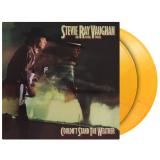
Hailed as one of the greatest guitarists of all time, Stevie Ray Vaughan's second album with his band Double Trouble did everything a second album should do. Couldn't Stand The Weather confirmed that Vaughan was no fluke and cemented his status as one of the modern blues giants.
This double album release of Couldn't Stand the Weather also includes original takes, outtakes and alternate takes of songs from the posthumously released The Sky Is Crying. In 1995, Q-Music wrote of the late Texan bluesman: 'Vaughan's post-Hendrix Stratocasting still sparkles... a reminder of the wit that often informed his phrasing and his willingness to torch the boundaries'.
Couldn't Stand The Weather is a limited edition of 3000 individually numbered copies on yellow marble vinyl.
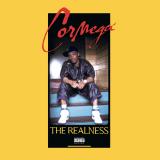
To celebrate the 25th anniversary of Cormega's landmark debut, we're proud to present a special anniversary edition of The Realness, one of the defining releases to emerge from Queensbridge and East Coast hip-hop.
Originally released in 2001, The Realness features production from Havoc (Mobb Deep), The Alchemist, Ayatollah, Sha Money XL, Godfather Don, J-Love, Jae Supreme, Cormega and others, with guest appearances by Prodigy (Mobb Deep) and Tragedy Khadafi.
This 25th anniversary edition features brand new, reimagined artwork by Mr. Krum and includes "The Saga (Remix)" as an exclusive bonus track, making it the definitive collector's edition of this timeless classic.
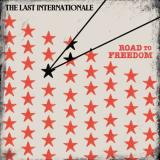
With ‘Road to Freedom’, The Last Internationale
deliver a powerful, visceral new album that is
resolutely driven by a desire for freedom.
Led by Delila Paz’s intense vocals and Edgey
Pires’s guitars, the band delivers ten tracks that
blend fiery rock, blues-rock and hard rock energy.
From anger and resistance to love, grief and hope,
‘Road to Freedom’ captures a world in motion and
the need to stand strong in the face of everything
that seeks to silence us.
A politically engaged yet deeply human album, it
transforms the tensions of our world into organic,
direct music made for the stage.
Still Music & Jerome Derradji Present - Chip E – The Architect Of House: Chicago 1984–88 (Volume 1)
Still Music, under the guidance of Jerome Derradji, proudly announces a landmark archival release celebrating one of house music’s true originators: Chip E.
Titled The Architect Of House – Chicago 1984–88, this definitive series spans three double LP volumes, documenting the raw foundations and forward-thinking vision that helped shape an entire genre.
Revisiting a classic is no easy feat, but Lello Di Franco (aka L.D.F.) breathes new life into the original elements with a fresh groove. Approved by Johnny D and Nicky P, it lands on the legendary Henry Street Music as a special 10" single-sided vinyl release!
With »The Future Is Futuristic«, the fifth album for Haleiwa (and third with Morr Music), Stockholm’s Mikko Singh draws from a deep well of nostalgic feeling, while making music that feels razor-sharp, on point, and full of hazy dream-pop pleasure. After 2019’s »Cloud Formations« and 2022’s »Hallway Waverider«, which imagined psychedelic post-shoegaze and mantric pop songs into being, »The Future Is Futuristic« feels like both consolidation and magnification; the noise-drenched songs feel thicker, heftier; the electronic interludes playful and kinetic; the rhythms boundless. It’s as though Singh has truly found his metier, his voice, a place from which he’s comfortable to indulge in the kind of home-recorded worldmaking that has always marked Haleiwa out as something special.
»The Future Is Futuristic« passes by in a rush of whiteout tones and scurrilous energy; the whole thing is over within half an hour, Singh ensuring his songs say exactly what they need to say – no more, no less – before bustling through into the next ecstatic pop moment, pushing the music further into the zone. While his music often has a similar, drenched quality to shoegaze, on »The Future Is Futuristic«, Singh seems to be settling in alongside other spirits – there are touches of the experimentation of both A.R. Kane and Flying Saucer Attack here; the more motoric tunes recall New Zealand’s Snapper; the glitchtronics have a City Centre Offices sensibility, while the sparkling folksiness of the melodies can recall Bristol bands like Light or AMP.
But it’s ultimately not about influence, beyond perhaps Haleiwa nestling alongside some like-minded souls in perceptive listeners’ minds. Instead, thrill to the rush of rhythms that float between jungle and punk on »Flourishing« and »96«, the latter a reference, from Singh, to moments of early revelation – »it’s about being thankful for having found punk rock and skateboarding at a young age, in 1996.« There’s also the hypnotic dream-rush of the opening »Smoke Will Rise«, the beautiful Cure-esque guitars swimming through »Sunset Street« and »Strange Notes«, the tumbling rhythms and heady, elated chord changes that grant lift-off to »Wave Chaos«… A real panoply of pleasures, in fact.
»The Future Is Futuristic« was recorded solely by Singh on four- and eight-track in his home studio, with a quick trip to Telefonstudion to record drums. Recording at home grants a certain intimacy to »The Future Is Futuristic«, even as the songs, at times, bliss their way off into the skies; there’s something both expansive and intimate about the music here, as though Singh is grappling immensities into intimacies. It also feels deeply personal for Singh, a summation of much of what he’s done over the years; as he says, simply and clearly, »The album is in my interpretation a mix between punk, electronic music, and dream pop.« The threads that connect these creative phenomena? Energy, texture, melody, tone, sensuality; pure pop pleasure.
With Sunrise and the Life We Live, John Beltran returns to his ambient techno roots, the sound that garnered him global appeal in the 1990s.
Through ten tracks, the album journeys through lush, aerated textures and beatless expanse. Hypnotic grooves deepen and bloom in a flow of shapes and colors, creating a sound that is both meditative and full of life.
Thirty years after the release of his seminal Ten Days of Blue, Beltran's musicianship, vision and desire to produce remain at a fever pitch. With Sunrise and the Life We Live his gift of extracting emotion from the universe and turning it into
a unique musical experience puts him in a class of his own.
Step back to the mid-1960s with NOW Yearbook Presents – The 60s – Volume 3: 1965–1966, featuring 54 essential tracks across a 3LP set, pressed on beautiful blue vinyl.
LP1 opens with some of the decade’s most iconic vocal performances; Dusty Springfield leads with ‘You Don’t Have To Say You Love Me’, a UK No.1 hit that also reached the US Top 5, followed by The Righteous Brothers’ classic ‘You’ve Lost That Lovin’ Feelin’’, a chart-topper in both the UK and US. The Walker Brothers’ ‘The Sun Ain’t Gonna Shine Anymore’ was a UK Top 3 hit, while The Beach Boys follow with ‘God Only Knows’, widely regarded as one of their finest moments. Huge chart hits from The Moody Blues, Manfred Mann, Small Faces, The Kinks and The Animals with ‘We’ve Gotta Get Out Of This Place’ completes the first side…and flip the LP over for The Mamas & The Papas with ‘California Dreamin’, a major hit on both sides of the Atlantic and The Byrds and capturing the rise of folk-rock with ‘Mr. Tambourine Man’, another US No.1. Cher announced one of the most successful and enduring careers in music with ‘I Got You Babe’ – a #1 duet with Sonny, and is followed by the pop brilliance of Sandie Shaw with ‘Long Live Love’. Following The Mindbenders and The Fortunes, LP1 closes with a pair of soul standards: ‘My Girl’ from The Temptations was a US No.1(and eventually a UK #2 in 1992), and Percy Sledge’s ‘When a Man Loves a Woman’, another US chart-topper and a UK Top 5 hit in 1987 when it featured in a TV ad campaign.
LP2 opens with the explosive sound of 60s soul and crossover pop. Ike & Tina Turner kick us off with the timeless ‘River Deep – Mountain High’, a UK Top 3 hit. Frankie Valli & The Four Seasons had a huge hit with ‘Let’s Hang On’ and Motown is strongly represented with The Four Tops, whose ‘Reach Out I’ll Be There’ hit the US No.1 spot, alongside The Supremes, who scored another US chart-topper with ‘You Can’t Hurry Love’, plus Martha Reeves & The Vandellas, Stevie Wonder and a future Northern Soul Classic from Gloria Jones. Following James Brown, the side closes with the enduring soul classic ‘What Becomes Of The Broken Hearted’ from Jimmy Ruffin… while over on the other side Horst Jankowski’s instrumental smash ‘A Walk In The Black Forest’ leads in to pop classics from Tom Jones with ‘It’s Not Unusual’, a UK No.1, alongside Georgie Fame & The Blue Flames’ UK chart-topper ‘Yeh Yeh’ and Chris Montez with ‘The More I See You’. Sophisticated easy listening pop from Andy Williams and Frank Sinatra’s iconic ‘Strangers In The Night’ come ahead of Elvis Presley’s ‘Crying In The Chapel’, with LP2’s closer’s coming from Roy Orbison and Roger Miller, with the essential ‘King Of The Road’.
The Righteous Brothers’ undeniable ‘Unchained Melody’, a hit on release and a #1 in 1990 following it’s feature in the film ‘Ghost’ opens LP3 ahead of a wealth of huge pop hits from The Walker Brothers, Cilla Black and Cher – and rock oriented chart-toppers from The Troggs with ‘Wild Thing’ and The Spencer Davis Group with ‘Keep On Running’. The Everly Brothers’ ‘The Price Of Love’ leads into era-defining hits from Barry McGuire and Bob Dylan’s hugely influential ‘The Times They Are A-Changin’ reflecting the growing social awareness and changing approach to songwriting…and over to the final side opened by The Supremes with ‘Stop! In The Name Of Love’ ahead of The Toys with ‘A Lover’s Concerto’ and The Shangri-Las’ legendary ‘Leader Of The Pack’. Classic singles from Marianne Faithfull, Petula Clark and Sandie Shaw feature before the collection closes with a trio of timeless tracks: The trans-Atlantic top 5 ‘Sloop John B’ from the Beach Boys is alongside The Mamas & The Papas’ ‘Monday, Monday’ (a US No.1 and UK Top 5), whilst the aptly titled ‘Homeward Bound’ from Simon & Garfunkel – their first UK hit - signs off this superb collection.
NOW Yearbook Presents – The 60s – Volume 3: 1965–1966 – a snapshot of a rapidly evolving pop era where pure pop, soul, rock, beat, easy listening and songwriting sophistication converged.
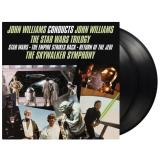
In 1990, John Williams created the compilation album John Williams Conducts John Williams – The Star Wars Trilogy, which features 13 of his most memorable tracks from the original Star Wars Trilogy. All performed by the Skywalker Symphony Orchestra, it features the iconic “Main Theme” and “Throne Room / Finale” from Episode IV – A New Hope, “The Imperial March” from Episode V – The Empire Strikes Back, and “Luke And Leia”. The album brings together some of the best-known themes from the original trilogy in one collection. The result is a varied selection of music from across the three films.
John Williams Conducts John Williams – The Star Wars Trilogy is available on black vinyl. This 2LP package includes an insert with liner notes by the creator of the Star Wars franchise, George Lucas.
A staple of the ’80s electro-funk and disco scenes, On The Shelf by The B.B. & Q. Band is a classic 1985 disco-funk track. Remixed by legendary Dutch producer and DJ Ben Liebrand. (“BL” stands for Ben Liebrand), who created several extended and “Finest” mixes for the group’s seminal 1986 Genie album. Now remastered and reworked, these mixes are on point: electro drums, punchy keys, and really warm, subtle bass. A very sexy slice of mid-80s disco funk with soul.
2026 Repress in White Vinyl
There are few people across the globe, who will have not been touched by the work of Frankie Knuckles. Forever regarded as ‘The Godfather of House’. A Grammy Award winner, Frankie had a street in Chicago named after him where the old Warehouse once stood to commemorate the first ever Frankie Knuckles Day on 25th August 2004. Five years ago, Frankie passed away in Chicago on 31st March 2014 leaving behind one of the greatest house music legacies spanning almost four decades.
Now he is commemorated once again by long time writing and production partner Eric Kupper who will release part II of the special commemorative album on vinyl around this date. Eric, himself a seasoned DJ producer and writer, working side by side with Frankie on many his seminal classics, as well as personally working on over 116 Billboard #1 Dance Records. Having both worked together for many years they established themselves at ‘Director’s Cut’ from 2011 and set about producing original releases and remixes based on the classic ‘Def Mix’ sound while sharing equal credits for their creations.
The album features some of Directors Cut’s best works with the Re-Directed version of the seminal classic ‘Baby Wants To Ride’ plus their re rubs of Inaya Day, Sybil, Hardsoul and Lou Rawls - You’ll Never Find Another Love Like Mine (Kenny Summit, Frankie Knuckles & Eric Kupper Unreleased Anthem).
This album is to be released in collaboration with The Frankie Knuckles Foundation who work to continue Frankie’s legacy whilst focusing on music in schools, LGBTQ youth homelessness, AIDS research / prevention & diabetes research / education.
Often credited as the father of multi-media theatre, Alwin Nikolais (1910-1993) took complete creative control over his productions - including cutting-edge approaches to lighting and costume that transformed human bodies into shifting sculptural shapes, while also composing wildly innovative electro-acoustic and synth-based audio as accompaniment.
After initially experimenting with musique concrète and tape manipulation (as demonstrated on the 1959 LP Choreosonic Music of the New Dance Theatre of Alwin Nikolais) Nikolais became the first owner of Robert Moog's synthesizer at the Audio Engineering Society convention in New York in late 1964. Relying heavily on the Moog and later the Synclavier synth/sampler, these 21 tracks document Nikolais' highly-prescient compositions across the mid 1960s through to the late 1980s - existing not only as extensions of his other-worldly choreographic productions, but standalone pieces of foundational mid-century American electronic and experimental music.
"Born in Southington, Connecticut in 1910, Nikolais’s early years and early career were in acting, music and puppetry. It was not until the late 1930s that he began his work as dancer/choreographer in Hartford, Connecticut, where he was commissioned by the Avery Memorial Theatre, a part of the Wadsworth Atheneum, to create an evening-length work to the music of Ernst Krenek. Previously his work and study as a pianist-organist found him accompanying silent films. This sort of accompaniment required from the musician not only a playing skill but also a versatility in improvisation, matching movement to sound, and evoking mood to situation.
Nik was drawn initially to dance by his involvement with the percussion scores used by the illustrious early twentieth century German dancer Mary Wigman. In trying to learn more about percussion, he was lured into dance class and thus his career began. His development of music and dance occurred simultaneously. His introduction to the twelve-tone technique opened his mind to the expanding areas of atonal music, and his dealing with music as sound per se. In 1948, after being appointed director of the Henry Street Playhouse in New York, Nikolais formed the Playhouse Dance Company, later known as the Nikolais Dance Theater, and began his aesthetic orientation toward dance as a study of motion. By the 1950s, he had ceased creating literal dances and began his explorations and eventual milieu as an abstractionist.
Sound became an important part of his abstract theatre. For his first dances, which involved his new thinking of dance as both a visual and kinetic art, he used live percussion scores in which he directed his dancers to play instruments of all nature. There was a combination of children’s toy instruments as well as harsh and resonant automobile brake drums, and other pitched auto parts which he also used to accompany classes. Once he installed his own tape recording machines, he quickly used the limited range these instruments provided in a new way, slowing and increasing speed and reversing sound. He also made the sounds adhere to the choreographic structure (not the other way around), thereby giving the dance its independence from the musical phrasing. But the real need remained: the search for new sound. Nik made a sound library, recording noises and percussion and vocal sounds, which the French aptly called musique concrète. Needless to say, he became a master at splicing bits and pieces.
From 1956 to 1962 Nikolais composed eleven major scores for his theatre pieces using such techniques. In 1963, James Seawright, who at the time was assisting Nik in his productions and also working at the Columbia-Princeton Center for Electronic Music, recorded a sound bank for the production Imago (1963). With this material, Nikolais created his first synthesizer score. Imago won the Paris Grand Prix in 1968 and launched the Nikolais Dance Theatre towards its national and primarily international acclaim.
During the same period, Seawright came to Nik and told him of a young man who had invented and constructed a simplified synthesizer and insisted that Nik visit the electronic fair currently being held in New York. Nik did so and met Robert Moog. He was completely taken by the new machine and after making some suggestions to Moog, (which Moog made), Nik bought the inventor’s first machine with the aid of a Guggenheim Fellowship. Moog himself was astonished by what his machine could produce for Nik. This machine was later acquired by the Museum of Musical Instruments at the University of Michigan at Ann Arbor as the first Moog synthesizer. The Synclavier was Nik’s next source of sound and since the mid-1970s remained the major instrument in the Nikolais soundroom.
Alwin Nikolais has been honored and awarded throughout the world. He has received the French Legion of Honor, the Kennedy Center Honors, National Medal of the Arts, two Guggenheim Fellowships, as well as Mellon, Ford, and Rockefeller grants. He has been a recipient of NEA grants since 1966, been awarded five honorary doctorates, all for his remarkable achievements in Dance Theater. His genius has influenced several generations of artists."
—Murray Louis
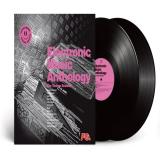
Mit The Techno Session setzt die renommierte Electronic Music Anthology-Reihe aus dem Hause Wagram ihre Reise durch die wichtigsten Strömungen elektronischer Musik fort. Nach House- und Deep-House-Ausgaben widmet sich diese neue Edition nun konsequent dem Techno - in all seinen hypnotischen, treibenden und zeitlosen Facetten. Die Auswahl stammt von FG Radio, einer der angesehensten Institutionen für elektronische Musik in Frankreich und seit Jahrzehnten eng mit der internationalen Club-Kultur verbunden. Die Compilation versammelt prägende Künstler und Produzenten, die Techno von seinen frühen, funktionalen Wurzeln bis zu modernen, melodischen und atmosphärischen Ausprägungen definieren. Pulsierende Grooves, repetitive Strukturen, reduzierte Eleganz und eine klare Fokussierung auf den Dancefloor stehen im Mittelpunkt dieser sorgfältig kuratierten Zusammenstellung. The Techno Session richtet sich gleichermaßen an DJs, Sammler und Liebhaber elektronischer Musik, die Techno nicht als kurzlebigen Trend, sondern als eigenständige, langlebige Musiksprache verstehen. Eine hochwertige Anthologie, die die Essenz des Genres einfängt - kompromisslos, fokussiert und cluberprobt.
A flash of light hits your eyes. Your ears hear muffled bass. As bright white fades to amber, you find yourself in a familiar place. A place you have been to many times. Though the edges of your memory are no longer sharp, the shape of it all is in your DNA.
The smell of rusted metal, dirt-covered floors that once hosted workers, machines and industry mixed with spilled beer and the sweat of a thousand bodies moving to syncopated music. As your vision comes into focus, you’re back there.
A warehouse in the former industrial part of town. You’re surrounded by hundreds of strange but familiar faces, each of you dancing into a frenzy countless times under the moonlight — moving, jumping, laughing and connecting.
Sunlight pours through warehouse windows or appears over a distant horizon.
The DJ plays a song that completes the journey you all just shared. You are desperate to hold on to the feeling of the last song that lands you safely from the night and into a new day. The feeling is deep. Pure.
Especially when communal ecstasy is juxtaposed against the edges of the warehouse floors, the intimacy of city lofts, the spiritual nature of open fields or forests.
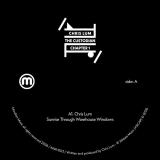
The Custodian
I spent just shy of two decades in spaces like that — as a raver in early 1990s Los Angeles, then a DJ, producer, label owner and head of Moulton Studios in San Francisco.
The Custodian Project is a memoir of a life lived deep inside the culture and business of house music from 1990 to when I stepped away from music as a full-time life in 2015 — told through music, stories and DJ events.
Each release of new music draws inspiration from feelings, emotions and memories of that life — different rooms, different eras. It is an exploration to understand and capture what those feelings were, and in some cases still are.
The Music
This EP is the beginning. 1990. When I first found the rave and re-ordered my DNA based on the sounds, songs and feelings of that era that can be summed up in the title track — Sunrise Through Warehouse Windows.
All three tracks here are an attempt to reach back and touch those mornings again. To put the listener back in the warehouses or open spaces where we would dance as the sun rose over the horizon.
To capture what I felt back in 1990 when the night transitioned into daybreak. Bodies moving in unison. People, places and music all connect. An era before algorithms.
(tracklisting)
A1 — Sunrise Through Warehouse Windows — 7:51
B1 — *Truly Amazing — 8:16
B2 — Sunrise Through Warehouse Windows (Floating Beatless Mix) — 4:20
Written and produced by Chris Lum for Abitare Music (ASCAP)
* Written and produced by Chris Lum - Abitare Music (ASCAP) & Jay-J Hernandez Stopped in Time (ASCAP). Originally released on Leaf Recordings 2000
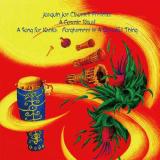
An exciting announcement - The Return Of Cosmic Ritual by Joaquin Joe Claussell.
The Return of Cosmic Ritual
Kanita- Forgiveness is a Beautiful Thing Featuring a Cosmic Tribute to Nujabes
Cosmic Ritual, the early recording alias of Joaquin Joe Claussell, emerged during the formative years of his journey-with at the time the young and visionary Spiritual Life Music label. From those beginnings came For The Loft in You, a composition whose atmospheric language would travel far beyond its original moment-helping shape a sonic vocabulary that continues to resonate throughout the deeper realms of contemporary dance music.
Its influence can still be felt today: in the spaces between rhythm and silence, in the textures of deep house, ambient soul, spiritual jazz, and in productions created by artists who continue to explore the unseen dimensions of sound.
Now, after its long journey through the cosmos, Cosmic Ritual returns.
At the heart of this new chapter is “Kanita (Forgiveness Is a Beautiful Thing)”, a composition that journeys even further inward-toward the more atmospheric, introspective, and soundscape-oriented side of Joaquin Joe Claussell’s musical spirit.
It is music for the inner traveler.
And as another celestial passage, the release also offers a special Cosmic Tribute to Nujabes Titled "Heaven", Nujabes is a deeply admired artist whose work transcended boundaries and whose musical spirit continues to inspire generations across cultures and continents-even after his untimely departure.
This tribute is more than an acknowledgment. It is a meeting of frequencies, a quiet conversation between kindred spirits who understood that music could exist beyond genre, beyond geography, and beyond the limitations of ordinary perception.
And Finally " Myths Across Tribes " A Trance Dance Percussion number that takes the listener into the jungles of Africa.
As with all of Joaquin Joe Claussell’s work, The Return of Cosmic Ritual l invites the listener to go deeper.
For those who seek mind travel.
For those who listen between the notes.
For those drawn toward cosmic ambience, spiritual resonance, and the deeper dimensions of sound.