
Поиск:the new dance affair
Стили
Все

- A1: Les Masques - Il Faut Tenir (1969)
- A2: Isabelle Aubret - Casa Forte (1971)
- A3: Christianne Legrand - Hlm Et Ciné Roman (1972)
- A4: Jean Constantin - Pas Tant D'chichi Ponpon (1972)
- A5: Billy Nencioli & Baden Powell - Si Rien Ne Va (1969)
- B1-: Marpessa Dawn - Le Petit Cuica (1963)
- B2: Jean-Pierre Sabar - Vai Vai (1974)
- B3: Sophia Loren - De Jour En Jour (1963)
- B4: Isabelle - Jusqu’à La Tombée Du Jour (1969)
- B5: Sylvia Fels - Corto Maltesse (1974)
- C1: Frank Gérard - Comme Une Samba (1972)
- C2: Ann Sorel - La Poupée Des Favellas (1971)
- C3: Charles Level - Un Enfant Café Au Lait (1971)
- C4: Andrea Parisy - Les Mains Qui Font Du Bien (1970)
- C5: Audrey Arno - Quand Jean-Paul Rentrera (1969)
- C6: Aldo Frank - T’as Vu Ce Printemps (1970)
- D1: Christianne Legrand - Cent Mille Poissons Dans Ton Filet (1972)
- D2: Clarinha - Lemenja (1970)
- D3: Hit Parade Des Enfants - Aquarela (1976)
- D4: Jean-Pierre Lang - Tendresse (1965)
- D5: Magalie Noël - Une Énorme Samba (1970)
- D6: Françoise Legrand - La Lune
Ever since the late 1950s bossa-nova revolution, Brazil’s influence on French music has been undeniable. Pierre Barouh, Georges Moustaki and a vast array of lesser known artists, all made the Musica Popular Brasileira (MPB) an axis of promotion at the service of a cool and metaphysical, modern and mixed Brazilian lifestyle. Some were seduced by the poetic languors of the bossa, some were looking for fun, and others just loved the American hybridization of jazz-bossa, jazz-samba.
What is bossa nova? One of its creators, Joao Gilberto said: "Its style, cadence, everything is samba. At the very start, we didn't call it bossa nova, we sang a little samba made up of a single note - Samba de uma nota so .... The discussion around the origins of bossa nova is therefore useless”. It is nevertheless useful to remember that these magnificent Brazilian songs, which the guitarist describes as samba, were shifted and balanced around improbable chords. "I like things that lean, the in-betweens that limp with grace," said Pierre Barrouh, quoting Jean Cocteau.
With emotion, arrangements for violin and supple guitar licks, bossa nova rapidly changed. A transformation that can be heard in the Tchic, tchic, French Bossa Nova 1963-1974 compilation, the result of a cultural reappropriation, which traveled through the United States and supplemented itself in France.
A musical revolution that has remained significant, bossa nova was born in Rio. From 1956 to 1961, Brazil lived through its golden years. In five years, the country had invented its modernist style. Elected president in 1956, Juscelino Kubitschek de Oliveira, an elegant man with a broad forehead, brandished a promising slogan: "Fifty years of progress in five years". He quickly got to work. Not worried about increasing debt, he launched the project for a new federal capital, Brasilia, designed by the communist architect Oscar Niemeyer. Volkswagen opened state-of-the-art factories and created the “fusquinha”, the Beetle. In Rio, the Vespa made its first appearance. The Arpoador Surf Club crew run into the “girl” from Ipanema, Helô Pinheiro - the tanned garota ("chick"), between a flower and mermaid, who at 17 walked by the Veloso bar, where the fiery author and composer, Tom Jobim and Vinicius de Moraes, were getting drunk on whiskey. From then on, bossa symbolized cool.
In 1958, Joao Gilberto recorded Chega de Saudade, which the directors of Philips denied, calling it "music for fagots". The marketing director, who believed in it, secretly pressed 3000 78-inch vinyls and distributed them at schools around Rio, creating a tidal wave.
American jazzmen then took over. In particular, trumpeter Dizzy Gillespie and guitarist Charlie Byrd. In November 1962, the Brazilian Ministry of Foreign Affairs funded a "Bossa-Nova" concert at Carnegie Hall in New York, inviting the genre’s pioneers. Unprepared, the show soon turned to disaster. But the troupe was invited to the White House by Jackie Kennedy. The first lady loved "the new beat" and in particular Maria Ninguem, a song by Carlos Lyra, later covered by Brigitte Bardot.
In Brazil, the 1964 military coup quickly ended this euphoria. The destructive atmosphere that ensued pushed many Brazilian musicians to leave, if not to exile. Thus, Tom Jobim, Sergio Mendes and Joao Gilberto arrived to the United States. In New York, Joao Gilberto met saxophonist Stan Getz. At the time, he was married to the Bahianese Astrud Weinert Gilberto, who had a German father. She had never sung before, but she knew how to speak English. Getz therefore asked her to replace her husband on The Girl From Ipanema. The Getz/Gilberto record with Tom Jobim on piano, was released in March 1964. Phil Ramone, the "pope of pop" was in charge of sound.
Bossa nova arrived in Paris through the classic “guitar-voice” channel (Pierre Barouh, Baden Powell, Moustaki…) But France loved jazz and Paris had already welcomed its American contributors. All these good people were to pass through Saint-Germain-des-Prés. The cabaret l'Escale became the Mecca of Latin American sound where one could find Pierre Barrouh and his friends, such as the Camara Trio, samba-jazz aces, whose only record was published by the Saravah label. With a band strangely called Les Masques (a band that included Nicole Croisille and Pierre Vassiliu, among others), the Camara Trio recorded an interesting Brazilian Sound, including the track Il faut tenir which is present on this tasty compilation of rarities.
Other enlightened musicians can also be found on the compilation, such as Jean-Pierre Sabar (songwriter for Hardy, Auffray, Leforestier ...) and the French pop rock organist Balthazar. In 1975, Sabar recorded Aurinkoinen Musiikkimatka on a Finnish label, which featured the crazy Vai, Vai, included on this record. We are now following the footsteps of Brazilian electronic musicians such as Sergio Mendes, Eumir Deodato or Marcos Valle who created funk and disco sounds on their keyboards and synthesizers. A style that influenced Véronique Sanson when she wrote Jusqu’à la Tombée de la nuit in 1969 for Isabelle de Funès, the niece of Louis and a great friend of Michel Berger - Sanson did end up singing this track on her 1992 Sans Regret record.
The pinnacle of exoticism and travel, Sylvia Fels’ Corto Maltese includes bongos, sea mist and ocean sounds. The title was taken from Jacky Chalard’s concept album written in 1974, Je suis vivant, mais j’ai peur (I am alive, but I am scared), based on Gilbert Deflez’s science fiction novel.
However, bossa nova extended the scope of popularity. "In the 1970s, I was a fan of Sergio Mendes, Getz / Gilberto. I fell in love with this music that I knew because I had been an orchestral singer, " explained Isabelle Aubret, who in 1971 delivered a composite record of covers by the very funky Jorge Ben, Orfeu Negro, Tom Jobim, Vinicius de Morais and Jean Ferrat. "I recorded this album for Meys Records in Paris, far from Brazil, with wonderful musicians, François Raubert, Roland Vincent, Alain Goraguer...". The latter wrote the arrangements for Casa Forte, a very percussive title borrowed from Edu Lobo, one of the initiators of the bossa who spent time in California. "Jazz and bossa came together and produced very rhythmic music. I love singing, it allows me to dream, to have fun, to feel a high on stage, and these songs brought me joy, made me swing, my singing felt like a dance.”
The world tours of French singers and their desire for the tropics, often brought them to Rio with its hills, forests, caipirinhas and tanned bodies. There are surprises though, like this Iemenja (Iemenja is the goddess of the sea in the Afro-Brazilian candomblé religion). Not unlike the composer and musician Jean-Pierre Lang, based in Sao Paulo, Claire Chevalier taught Brazil to Brazil. In 1970, the singer and painter published a 45-inch vinyl, Mon mari et mes amants (My husband and my lovers), under the improbable pseudonym of Clarinha (little Claire). She was then living in Rio, with her husband, Joël Leibovitz, who founded a band called Azimuth, and who owned a record label specialized in "sambas enredos" songs for samba school parades.
For its B side, she asked Pierre Perret to come up with lyrics for a song composed by Carlos Imperial: "Oh goddess of the sea, o goddess Iemenja, I bring a white rose to adorn your long hair ..." . "Perret came to see us, and we had fun, remembers Joël Leibovitz. We wrote Lemenja for fun, we recorded it at the Havaí studio, behind the Central do Brasil the central station. Erlon Chaves, the arranger who worked with Elis Regina, joined us" adding his share of Afro-Brazilian percussions and funky brass to the mix.
There is a common misunderstanding in Franco-Brazilian history: that bossa, admittedly hedonistic, is perceived as funny, even though the poets who wrote the texts are often philosophizing on the human condition. Its French interpreters pull it towards a carnival inspired universe, far removed from its fundamental essence. Thus, Jean Constantin covered the famous Samba da minha terra, an ode to the art of samba written by the classic Bahian composer Dorival Caymmi, renaming it with the enticing title of Pas tant de tchi tchi pompon: "On your pier there is no tchi tchi / when you arch your back, you know everything is alright ”(lyrics by Gérard Calvi). This expedited bossa aims for the absurd, but retains a certain elegance.
Indeed, Jean Constantin was not an idiot, the rather large man had a huge mustache and liked fantasy, (Les pantoufles à papa, Le pacha, inspired by cha-cha-cha-cha, salsa and jazz) but he was also the lyricist of Mon manège à moi interpreted by Edith Piaf, the composer of Mon Truc en plume by Zizi Jeanmaire and the soundtrack of François Truffaut’s 400 Blows. Le Poulpe, published in 1970, from which this bossa is extract, was arranged by Jean-Claude Vannier, an accomplice of Serge Gainsbourg’s Melody Nelson. In short: "There is enough of samba / By looking at the parasol / Because my poor cabeza / Is going to die in the sun".
Even the American actress Marpessa Down, who was at the heart of the bossa nova revolution with her role as Euridyce in Marcel Camus’ film Orfeu Negro, winner of the 1959 Cannes Palme d'or, fed the clichée with Je voudrais parler au petit cuica - "Tell me how you manage to always make people want to dance / It's true, I must admit that I cannot resist your magic" - in consequence, once can hear the cuica, a little drum inherited from the Bantu.
But bossa nova had many angles. Societal, of course, pushing actresses who were symbols of women's liberation like Brigitte Bardot, Jeanne Moreau, or Sophia Loren to engage in the exercise of accelerated bossa. In February of 1963, Sophia Loren made a record in French in Rome, Je ne t'aime plus, featuring the song De jour en jour, a bossa written by two Italians, Armando Trovajoli and Tino Fornai, which was released a little later by Barclay. Bossa accompanied the 1960s, a decade of moral liberation. Ann Sorel, who interpreted La Poupée des favellas, caused a sensation with L’amour à plusieurs, a provocative song written by Frédéric Bottom and Jean-Claude Vannier. As for the actress Andrea Parisy, she displayed her bourgeois cheekiness in Marcel Carné's Les Tricheurs before interpreting Les mains qui font du bien. And Magalie Noël, the friend of Boris Vian, who sung Johnny fais-moi mal, was hired to sing Une énorme Samba, composed by Alain Goraguer (arranger to Gainsbourg, Bobby Lapointe and Jean Ferrat) with lyrics by Frédéric Botton.
But in the end, of what wood is bossa nova made of? The answer is given by Christianne Legrand, daughter of Raymond the conductor, and sister to Michel the composer: "With me, with jà" - jà means "immediately" in Portuguese. In 1972, the singer, an expert in vocal jazz and a member of the Double Six, published Le Brésil de Christianne Legrand. Two songs included on the Tchic Tchic compilation that demonstrate how bossa, jazz, funk, rock, etc. work like a swiss army knife: the music is used to denounce broken systems, or miracles, HLM et ciné roman, Cent mille poissons dans ton filet, two songs from the O Cafona soundtrack, a successful telenovela broadcast, at the time in black and white, on TV Globo. The first was adapted in French by the fighter and friend of the Legrand tribe, Agnès Varda. The second is content with a play on words, jostling them into a summer fun.
Véronique Mortaigne

Punctuality presents its ninth release, Night Time, a potent four-tracker from Irish born, Berlin based producer New Members. Positioned on the spriitzzier end of the label’s canon, the record is a refined exercise in restraint, channeling classic, deep leaning house through a starry eyed, nocturnal lens.
The arrangements are unrushed and uncrowded, with each track built from a small selection of elements deployed for maximum impact. Evoking the deep cuts of early Balance and Global Underground mixes, the EP deftly weaves golden era progressive influences with neoteric production aesthetics. The result is polished, punctual tech house for late nights that stretch seamlessly into the morning light.
Title track Night Time carries a closing track sensibility: cute, catchy vocals glide over bubbling synths, blossoming pad washes, and jazzy chord stabs, recalling the finest Canadian Riviera house releases of the late 2010s: Total eyes closed on the dancefloor energy. Whisper In the Dark comes in trackier and toolier, with a rolling bassline resplendent with attitude and key changes, while trance and euro referencing stabs add a subtle touch of euphoria to the late night feel of the track.
Wishing Well maintains the afterhours feel with subtle atmospherics, gentle pads, and dubbed out acid wiggles, while chopped vocals and a pulsing low end push the groove forward. Hovering between genres, the result is a sleek, highly playable track for savvy selectors. The EP rounds off with Jealousy, a moodier affair with a dub techno feel that maintains the restraint New Members demonstrates throughout the release. Echoed whispers, delayed stabs, and a barely audible sub meld with delicate pad work and beguiling FX to striking effect. The piece as a whole is a luscious meditation on the hours after dark before light arrives.
As the EP suggests, this is once again not to be slept on. More A grade material from Punctuality HQ.

10
Loud Ambient 2 picks up directly from where Loud Ambient left off. After picking the drum machines back up, we returned to the colourfield ideas that shaped the first record. Rothko remained a key reference, along- side a strong recommendation to spend time with the work of Josef Albers. We did exactly that, and it paid off.
Alongside the music, we created 50 new pieces of artwork for Loud Ambient 2. These became tools rather than decorations. Working this way felt open and rewarding, and brought a real sense of play back into the process. We already understood what a Loud Ambient track could be, so slipping back into that headspace felt natural. The tracks came together quickly, full of energy, movement and that familiar noodle quality.
The creative side landed easily this time. There is some- thing about working with colourfields that frees you up and pushes you further into abstraction. It removes hesitation and keeps the focus on instinct and response.
With the drum machines and synths loaded, we kept our heads down and made the kind of music we want to hear on a dance floor. Loud Ambient 2 is the result.

SY3 (pronounced ‘sigh’) is a new project from LA-based Chinese-American artists Kelly Guan, Alex Ho, and Phil Cho. The trio started working on music together in 2023 after connecting over a shared love of Hong Kong New Wave cinema, Cantonese pop songs, r&b, and melody-driven dance music. Singer Kelly Guan aka Jia Pet has been independently releasing ‘bubbly’ pop music since 2022, and recently toured with the genre-bending indie artist Sasami. Multi-instrumentalists Ho (keyboards, saxophone) and Cho (guitar, bass) have collaborated frequently over the past decade, most notably on Ho’s 2021 debut album 'Move Through It' for Music From Memory.
Lead single ‘Tell Me,’ the track that initially caught the ears of MFM's Jamie Tiller and Tako, nods to the hazy downtempo explored by Chinese pop stars like Faye Wong and Zhou Xun in the ‘00s, while also recalling Japanese producer Yoshinori Sunahara’s iconic album 'Lovebeat'. Beyond musical influences, SY3’s neon-drenched pop songs draw from a cinematic language, particularly y2k-era films like Made in Hong Kong and Suzhou River, which speak to a generation of disillusioned youth in an increasingly fast-paced world. Guan’s lyrics depict characters caught in bittersweet love affairs (‘dial tone, when I’m alone, you promised we’ll be in touch') forever looking towards an escape from their current realities (‘I know the walls are high, these graceless hands are slipping’). Title track ‘梦游 Sleepwalker’ features a Cantonese spoken-word story about a sleepwalking young girl who sits alone on a balcony wondering where she might have gone the night before. The drifting ambient production loosely references a traditional Chinese folk melody, and closes out the EP with a delicate, layered saxophone solo from Ho.
Balancing intimacy with a wider emotional and visual language, SY3’s debut unfolds as a series of nocturnal pop vignettes shaped by memory, cinema, and place. Released digitally and on vinyl through Music From Memory on March 25th. Sleeve art and design by Michael Willis.

4
Frequencies Rhythm Life proudly presents the new release from Berlin-based DJ Merci. The Orbit EP is a powerful journey through deep grooves and Brazilianinspired rhythms, featuring three original tracks crafted for the dancefloor.
Completing the release is an outstanding remix by Chicago house legend Glenn Underground, who injects his unmistakable acid-driven touch into ‘Test’, pushing the track into a bold new dimension.

5
Audience’ was a 14-track record that signalled a shift back to Hayes Bradley's dancefloor roots. It was a collision of breakbeats, trip-hop, and ambient textures that perfectly balanced nostalgia and forward-thinking sounds, and now it gets spun into all new worlds by some of the scene's most acclaimed contemporary stars.
Special Request, aka UK powerhouse Paul Woolford, has shaken up the scene with his thrilling mix of jungle, bass, techno, rave, and hardcore in recent years. The hugely prolific producer knows exactly how to blow up the club and does that here with two reworks of '& I Love U'. The Special Request Extended Mix is a meticulously crafted jungle workout, featuring precision drums, rising synth tension, and gorgeous melodies that dart throughout and will appear on the vinyl release only. The VIP version focuses more on celestial memories for a heavenly escape.
Next is Shanti Celeste, a house and garage favourite who crafts emotional, high-impact sounds on her own Peach Discs. Her remix of 'Play It As It Lay' is a bubbly, soft-focus, late-night sound with earworm synth motifs and rich bass that sinks you in deep for a nice, heady trip.
Piori is an alias of Canadian musician Francis Latreille, who has built a sprawling discography full of hyper-detailed techno steeped in science fiction and fantasy. He flips 'Awareness' into a zoned-out affair, with broken beats and cosmic synth waves over a bold bassline that shows, once again, why his productions are in such demand.
Last but not least is Kaifeng-born sound artist, DJ, and producer Yu Su, whose truly unique sound has made her a cult underground star. She flips 'Dear Treasure' into a slow motion and sleazy chugger with dark disco energy and raw live drums, shady vocal loops and otherworldly melodies that seep into your consciousness.
3
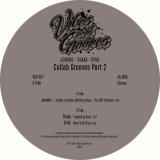
After a short break, Vibes and Grooves is back with Collab Grooves Part 2. Following the success of our initial collaborative venture, we continue our mission of uniting visionary producers under a single sonic umbrella. This time Jemaho, Shaka and DFRA come together for another deep collaboration.
With “Joudia’s Groove (Drifting Away – The DAT Version)” on the A side, we are delighted to have Jemaho on board. He delivers an outstanding, warm and soulful vocal house cut driven by a smooth, uplifting groove and rich musical depth. With its unique tape sound aesthetic, a true masterpiece. Certainly a future club classic.
The B side opens with „Sparkling Soul“ from label resident Shaka. A jazzy house affair that blends vibrant piano melodies, a hypnotic lead synth line, and a tight bassline. It radiates warmth, sophistication, and an ever-present sense of romance.
The second track comes from DFRA, the man from Buenos Aires, who is already well known on the label for his outstanding tracks from the latest Collab Grooves. With “New York Style”, DFRA delivers a deep house tune shaped by warmth, restraint, and a steady underground groove. Subtle textures and raw rhythms create a smooth, flowing atmosphere that feels natural and unforced.
Timeless in feel and refined in production, Collab Grooves Part 2 captures an effortless flow that speaks directly to both the heart and the dancefloor.
Spectral Bounce’s latest offering comes direct from Norway, courtesy of Anders Hajem — co-founder of Boring Crew Records. To date, the Oslo producer’s previous releases have been vessels for the exploration of myriad dance musics, seeing the artist fluently turn his hand to soulful house, dub techno and 2-step.
SPEC07 — the Myr EP — is a much more focused affair, finding Hajem in techno mode across 4 potent cuts typified by undulating drums and swelling echoes. Despite its emphasis on percussion, atmosphere has not been sacrificed for rhythm: vivid FX and meticulous attention to detail bring these tracks to life beyond the context of the dancefloor. This is music that can be stepped into and explored, productions that reward repeat listens.
Opening at full throttle, “Myr” is a jackin’ percussive workout, harnessing punchy drums for maximum effect. Its pulsating low-end runs in tandem with trembling synths that perpetually reflect and refract in the stereo field. Atop its rolling drums, hardgroove-inflected “Sprett” utilizes timestretched vocals, cavernous reverb and ecstatically quivering tones, elevating this 2000s-era framework to new heights. “Existence” brings things to a deeper and more hypnotic place: delays are turned up, siren calls reverberate and timbres ebb and flow. Hajem goes more chasmic still on “Concussion”, hitting the brakes for a much slower cadence and allowing space for a truly expansive listening experience. Heady and mystical, entrancing and otherworldly — listen close enough; beneath the dizzyingly shifting pulses and rattling drums you’ll hear incantations, while bass tones pulse in the depths.
SPEC07 — immerse yourself!
Credits:
Art by Susanne Janssen
Mastering & Cut by Marco Pellegrino @Analogcut
Words by Cameron Leaf
5
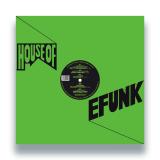
EFUNK Volume V is the fifth installation of the annual VA compilation featuring music from a curated collection of artists set to perform at Soul Clap’s House Of EFUNK touring party series. This release date on wax and digital is right in time for the official Movement Festival afterparty @ TV Lounge in Detroit that spans 2 days with 3 areas of sound. This year’s compilation features music from Soul Clap alongside long time friend and Baltimore favorite Baronhawk Poitier who present “Set The Scene”, a futuristic earthshaking groove with Baronhawk’s spoken vocals backed by Charles Levine’s vocoder and a Moog topline played by Baronhawk that won’t quit. Hercules & Love Affair makes a debut on the label with “Stay Ready” a chugging tracky / acid infused banger which should absolutely induce a dancefloor sweat. Kai Alce shares a discofied sample-licious crowd pleaser called “Boogie” with the help of additional keys by Byron Blaylock better known as Byron The Aquarius. Detroit’s new school starchild JMT joins with the hard hitting peaktime soul powered “Black Magic Touch” and last but certainly not least, Lauren Flax adds an edge of danger while calling for “Revolution” featuring vocals from Liz Wight. These tracks are sounding warm and round thanks to the mastering expertise of Caserta and have been dancefloor approved by Soul Clap!

6
Kicking off 2026 in style! Here we have volume 5 of the annual Razor-N-Tape Family Affair series. As always a wide-ranging collection of vibes and grooves from the extended international Razor-N-Tape network, this year’s vinyl sampler includes label newcomers and veterans across 6 tracks. Recloose, Medlar & Daisybelle, Misiu, Saucy Lady, Anoraak and Marina Trench deliver in their respective signature styles, taking us on a genre-bending tour of genres and sounds. From House to Disco, Dub to Breaks, and Chuggers to Pumpers, there’s bit of something for everyone here…fun for the whole Family!
- A1: Liminal – Tzatziki Bay
- A2: Joe Harvey-Whyte & Bobby Lee – Smoke Signals (Flying Mojito Bros Refrito)
- B1: Intrallazzi & Piana – Plutos
- B2: Tigerbalm – Mexicana Feat. Joi N’juno (Pete Herbert Remix)
- B3: Lex (Athens) – Stolen Dance
- C1: Payfone – Dime Algo
- C2: Emperor Machine – Eumig
- D1: 40 Thieves – Such A Great Trip
- D2: Bo Wosticz – Bs As
- Bonus | 10”
- A1: Tigerbalm - Mexicana Feat. Joi N’juno (Original)
- B1: Emperor Machine & Mudd – Road To Nikko
12
When Leng Records founders Paul ‘Mudd’ Murphy and Simon Purnell marked the imprint’s 10th birthday, they did so via a celebratory compilation that mixed classic catalogue cuts, remixes and exclusives. Five years on, and with the label’s 15th birthday upon us, they’ve decided to look to the future via a compilation made up entirely of fresh productions from Leng’s roster of current and new artists. Presented on limited-edition gatefold double vinyl with a bonus 10” single, the collection offers an updated showcase of Leng’s much-loved trademark sound, a distinctive fusion of mid-tempo sleazy-disco, Balearica and chugging house interspersed with elements of electronic psychedelia and synth-powered space disco. Fittingly for a compilation that wholeheartedly looks to the future, you’ll find first contributions from a handful of label newcomers.
Fast-rising duo Flying Mojito Bros give their spin on ‘Smoke Signals’ by label debutants Joe HarveyWhyte and Bobby Lee, turning in a heady and inspired revision that sits somewhere between dusk-ready cosmic disco and flash-fried desert blues. There’s also an appearance from Swedish producer Bo Wosticz with the dreamy and ultra-deep nu-jazz of ‘Bs As’. Naturally, you’ll also find plenty of heat from those who have already proved their mettle through prior releases on Leng. Danish duo Liminal, who made their debut earlier this year with the much-played ‘Keep Coming Back To Me’, open proceedings with the tactile, slow-disco flex of ‘Tzatziki Bay’ where sweet synth melodies and a heady electric piano riff ride a warming groove.
Roberto Intrallazzi and Dario Piana from Italy’s original Afro-cosmic movement return with ‘Plutos’, a typically deep dubbed-out cosmic chugger. Then there’s Rose Robinson AKA Tigerbalm, whose ‘Mexicana’ featuring singer Joi N’Juno is presented across the package in two different forms. Pete Herbert, who contributed to some of the earliest Leng releases, drops a driving dub disco take on the main compilation, while Robinson’s original mix – a more organic, percussive and horn-heavy affair blessed with plenty of hallucinatory intent – opens the bonus 10”.
There’s a welcome return to Leng for the brilliant Payfone, whose ‘Dime Algo’ is a typically classy, analogue-rich affair in which attractive Rhodes riffs, atmospheric female vocals and pitched-down house pianos rise above shuffling drum machine beats and a slow-motion bassline. Long-serving label contributor Lex (Athens) delivers the loose-limbed nu-disco breeze of ‘Stolen Dance’, while the imprint’s San Francisco connection – the ever-brilliant 40 Thieves collective – drop the dubbed-out Bay Area brilliance of ‘Such A Great Trip’.
Then there are the contributions of the label’s most storied artist, Andrew Meecham AKA Emperor Machine with ‘Eumig’, a deliciously slow, synth-rich chugger full of colourful chords, bubbly electronic melodies and jaunty electronic bass. Then, to round off the bonus 10” single, Meecham joins forces with Paul Murphy (as Mudd) on ‘Road To Nikko’, an extended, Japanese musical culture-influenced slab of pitched-down alien-funk packed to the rafters with squelchy synth sounds, effects-laden percussion, chiming melodies and rubbery bass guitar.

- A1: Savage - Magic Carillon (Also Playable Mono Remix) Zyx55910-1
- A2: Italove - At The Disco (Also Playable Mono Remix) Zyx55910-1
- A3: Carino Cat - Passion Of Love (Extended Version) Zyx55910-1
- A4: Excitations And Fred Ventura - State Of Confusion (Italoconnection Remix) Zyx55910-1
- B1: Italoconnection - Metropoli Zyx55910-1
- B2: Francesca E Luigi - Watch Me Dance Tonight (Zyx Remix) Zyx55910-1
- B3: Stockholm Nightlife Feat Nathalie Hanberg - Stay One Day (Cliff Wedge Special Zyx Remix 2018) Zyx55910-1
- B4: Mike Kremlin - The Years (Go By) (Flemming Dalum Remix) Zyx55910-1
- A1: Savage - Italodisco (Flemming Dalum Remix) Zyx55917-1
- A2: Bunny X - Words Feat Fred Ventura (Original 12“ Version) Zyx55917-1
- A3: Moderno - Waves Of Light (Night Mix) Zyx55917-1
- A4: D White - One Wish (Zyx Extended Version) Zyx55917-1
- B1: P Lion - Happy Children (Flemming Dalum Remix) Zyx55917-1
- B2: Tam Harrow - Your Love Is So Nice (1St Extended Mix) Zyx55917-1
- B3: Brian Ice - On The Moon (Vocal Version) Zyx55917-1
- B4: Mode One - Man On The Moon (Extended Mix) Zyx55917-1
- A1: Flexx - Forever Starts Today (Also Playable Mono Remix) Zyx55929-1
- A2: Savage - Lonely Night (Flemming Dalum Remix) Zyx55929-1
- A3: D White - Don‘t Be Shy (Ryan Benson Remix) Zyx55929-1
- A4: Ken Laszlo - Forever Young (Flashback Remix) Zyx55929-1
- B1: Victor Ark Feat Matt Doll - Dark Affair Zyx55929-1
- B2: Also Playable Mono - Love Is In Your Heart (Extended Mix) Zyx55929-1
- B3: Alex Valentini - See You Again (Extended Mix) Zyx55929-1
- B4: Plastic Mode - Me Amor (Flemming Dalumn Remix) Zyx55929-1
- A3: Simon Bennett – I Wanna Tokyo'u (Flemming Dalum Remix) Zyx55934-1
- A4: George Aaron – Midnight Love (Extended Version) Zyx55934-1
- B1: Tom Hooker & Tam Harrow – You And I (Extended Version) Zyx55934-1
- B2: Flemming Dalum – Don't Take Your Time (Special Zyx Remix) Zyx55934-1
- B3: Some Bizarre – Don't Be Afraid (Also Playable Mono Remix) Zyx55934-1
- B4: Wish Key – Orient Express (Flemming Dalum Remix) Zyx55934-1
- A1: Flexx - Break You Down (Vocal Version) Zyx55955-1
- A2: Tom Hooker & Tam Harrow - Love Me Tonight (Extended Version) Zyx55955-1
- A3: Linda Jo - Keep Trying (Flemming Dalum Remix) Zyx55955-1
- A4: Fred Ventura & Dj Tintin - Come On (Flemming Dalum Remix) Zyx55955-1
- B1: Joe Yellow - Flash In The Night (Extended Version) Zyx55955-1
- B2: Flemming Dalum - Walking In The Neon (Special Zyx Remix) Zyx55955-1
- B3: Agf - Loved By You (Flemming Dalum Remix Edit) Zyx55955-1
- B4: Italove - Viva La Victoria (Royal Flashback Remix) Zyx55955-1
- A1: Den Harrow – Always (Flemming Dalum Remix) Zyx55934-1
- A2: The Sweeps – Voices (Extenden Version) Zyx55934-1
40
ZYX Italo Disco New Generation – Limited 5LP Box
Ein echtes Sammlerstück für alle Italo Disco Fans!
Diese streng limitierte 5 LP Box vereint gleich fünf Alben aus der erfolgreichen „ZYX Italo Disco New Generation Vinyl Serie“ – erstmals als exklusives Box-Set erhältlich. Auf insgesamt 5 hochwertigen Vinyl erwartet dich eine einmalige Zusammenstellung von Klassikern und modernen Hymnen im typischen Italo-Disco-Sound, der weltweit Fans begeistert. Tauche ein in die Welt des Italo Disco – mit dieser Box sicherst du dir ein Stück Musikgeschichte zum unschlagbaren Preis!

This exciting 45, features two previously unheard 60s, New York soul, dance tracks.
Big Apple session singer and occasional composer, Doris Willingham, first had a rare release on the Hi- Monty label in 1966 and then in 1968 cut four sides for drummer Bernard “Pretty” Purdie. All were produced by Richard Tee and co-written with Doris. They were licensed to Ed Kassner who launched his Jay Boy label with ‘You Can’t Do That’ in both the UK and the USA. A change of strategy caused the US label to be discontinued after two releases and the UK then switched primarily to home-produced recordings. The two best Willingham sides lay dormant at President’s tape library until Ace released the killer ballad ‘Too Much To Bear’ in 2005. The fourth track is this superb dance number featuring the great Purdie band, no doubt featuring his usual bassist Jimmy Tyrell, who arranged the Hi-Monty 45.
The Taylor Brothers ‘Holding On’ is a much grittier affair, produced by Maxine Brown’s husband at the time, Mal Williams. The duo were Bennie “Earl” Bunn and Sam “The Man” Taylor and they wrote this, the third track recorded at the session that produced the ‘People In Love’ single on Joy. Sam had been a major mover in NYC black music circles since the 50s with his own bands and had fingers in many pies. The duo gave a performance worthy of some of the great 60s male soul couplings.
![Various - Neon Affair [Remixes]](https://www.deejay.de/images/l/4/6/1162246.jpg)
4
HARMONY020— One year from Ayū’s debut on Harmony—Neon Affair, four artists closely connected to the release were invited to remix their favorite track from the record. The result is a new remix EP featuring a dancefloor-driven A-side, crafted for peak-time energy, and a B-side dedicated to closing sets and trippy storytelling.
Side A opens with Maara’s remix of “Space to Come”- a progressive, sexy spacey journey with muttered vocals and a blissed-out groove, blended with her iconic sound. Keeping up with the dance-floor energy, Spray delivers a dreamy yet bubbly take on “Point Nemo.” Spray’s take showcases his distinctive musical patterns and fuzzy textures.
The B-side remix by Harmony’s Alfred Czital and Jeku sends the record to the late hours of the party. Jeku’s version of “Neon Affair” brings driving drumlines and euphoric prog beats, layered with hypnotic, trippy touches – sweet, yet dirty. Alfred Czital closes the record with his Dream Mix of “Space to Come,” an exciting and misty journey through sound – playful, metaphysical, and the perfect closing track for extended parties.

Placid aka Paul Wise is the chief in command at ‘We’re Going Deep’ – an online community and record label, born out of a lifelong affair with the many shades of electronic rhythm and obsession for collecting records since 1988.
Known to many in underground House and Techno circles, he’s spent the last 3 decades moving heads and feet at select venues, parties and fields across the UK and beyond. On a mission to share and release new music via his imprint: you’ll find only the best in Acid, Electro, IDM, Techno and Deep House for the dance floor, front room or even just your headphones.
For the latest solo series edition, Paul reaches out to the talents of UK based songwriter and producer James Shinra, for a heavyweight 4 track EP of 303 fuelled excursions. Hitting the floor head on with the muscular tones of “Jaunt” on A1 – punchy 808 percussion builds with jarring rave-etched synthesis, before rushing into the roar of a 303 grabs you by the scruff of the neck and unleashes a rolling groove that jacks hard until the twisted end. Do not be fooled by the calmer overtures of A2 “Venture”, Shinra unleashes another rolling 4 to the 4 floor workout. Balancing airy leads and shifting pads to precision programmed beats, the TB saws its way through to maximum frequency exposure over the course to brazen effect.
On the B-Side, B1 “WASP” takes control via deeper bass tones, squelching tweaks and A-A-Acid vocal chants, all paced at a solid mid-tempo groove that really brings things to the boil: just when you need it. Signing off with the stunning IDM inflected melodies of “Flexion” on B2 – Shinra shows his mastery of space and warmth with this beautifully balanced slice of Electronica that really is the icing on the cake.

We all remember with mixed feelings the past two years of domestic isolation: a temporary anomaly in which the world had to adjust to a new routine, a new rhythm. In these daunting yet precious circumstances, Italian producer Markeno has found his rhythm back, dusting off old records and re-approaching his past musical love affairs that he believed to be long forgotten. Here, in the fertile limbo that connects past and future, “Dock lown (exploring)” is born: a 3-tracker release with a chameleonic nature and an undeniable groove, in which Markeno is able to tactfully combine different genres such as indie, post-rock, African mu- sic, electro and funk.
In the contemporary music scene, overly saturated with catchy melodies and seductive lyrics, it is refreshing to encounter a composition like “Fase 01”, which starts from a purely percussive structure. Just when the ear is settled and well inserted into the tangle of drums, here comes the melodic twist, no less than at the fourth minute, injecting an unexpected groove and chalking out the contours of a track with multiple personalities: a little esoteric, a little synth-wave, quirky and badass. The temperature rises with “Zona Ros- sa”, in which the electro hint sketched in “Fase 01” becomes more pronounced, opening the doors to a dense psychedelic scenario. A shamanic loop accompanies the electric bass and escorts us through the smoke of the bonfire, veils swayed by the wind and colored lights that sparkle in the night. The ritualistic humming of ‘’Zona Rossa”’ is still hearable, floating in the rarefied atmosphere, while the last track “Limbo” makes its entrance and confirms once again the poliedric but congruous essence of this release, whose percussive attitude lures you in and whose hypnotic and groovy body makes you stay. At least for one more dance.
Sara Berton

8
With an intrigue for a particular niche of old UK hardcore which takes cues from Sheffield bleep ambience, heady rave futurism and soft, almost new age synth pads, Blank Mind presents ‘Lost Paradise: Blissed Out Hardcore 91-94’. Though the records gathered for the compilation span a short three-year period and bridge the gap between scenes, the collection manages to find a sweet spot where the influence of Warp’s Artificial Intelligence, back room chill out sonics and the nascent jungle boom meet with elements of Italian piano house and slower breakbeat cuts.
Opting to focus on atmosphere to highlight shared connections; in this case the duality of often serene and calming soundscapes with frenzied breaks and bass (see Hedgehog Affair’s ‘Parameters’ and Luxury’s ‘Twirl’ respectively); Lost Paradise is a formidable collection of tracks plucked from a thriving time for British dance music experimentation. The general themes of ascension and escapism channelled through digital samplers are also inescapably linked to a turbulent time in politics, beginning in the post-Thatcher years and culminating in the year the harshest anti-rave Criminal Justice Act came into force.
Initially building the compilation around DJ Mayhem’s track ‘Inesse’, Blank Mind label founder Sam Purcell and Amsterdam based producer Tammo Hesselink began a process of swapping favourites and deep cuts to spread across this 2x12” doublepack. The compilation avoids any obvious centrepieces through masterful sequencing, allowing for moments of refrain and tempo changes in a way that helps add to their overall vision of what this music is and can be; “We wanted to frame hardcore in a different light, looking at this idea of ecstasy through the traditional meaning of the word and exploring that symbolism”. By drawing from what some might consider the softer edges of the movement, the pair offer a look into the relevance of these tracks in the contemporary era, where the past years have seen both an explosion in popularity of old ambient/new-age music and a certified jungle revival.

- A1: Vajolet (Feat Lukas Lauermann, Wolfgang Pfistermüller & Flip Philipp)
- A2: Autostrada Del Brennero (Feat Diggory Kenrick)
- A3: Latzfonser Kreuz (Feat Mamadou Diabate & Hamidou Koita)
- A4: Lago Di Garda (Feat Roger Robinson)
- A5: Alfa Romeo 145 (Feat Kwame Yeboah)
- A6: Feltuner Hütte (Feat Osman Murat Ertel)
- A7: Avrupa Köprüsü (Feat Osman Murat Ertel)
- A8: Europabrücke (Feat Susanna Gartmayer)
- B1: Ancient Atoll (Feat Reinhilde Gamper, Martin Mallaun & Flip Philipp)
- B2: Latemar (Feat Reinhilde Gamper & Martin Mallaun)
- B3: Brennerautobahn (Feat Taka Noda)
- B4: Echoes Part I (Feat Flip Philipp)
- B5: Echoes Part Ii (Feat Flip Philipp)
- B6: Transit Tribe (Feat Didi Kern)
- B7: Latemar (Reprise)
15
также имеющийся в продаже
12"[23,49 €]
Ulrich Troyer has been producing music now solidly for over twenty years within a largely genre free framework, but whilst navigating forms such as avant-garde, techno, leftfield, field recording, electronica, glitch and ambient it is the aesthetics of dub that guide his creative direction. Not really recognisable in an orthodox form as remixed versions of roots reggae songs but in the way sonics are manipulated with space, the application and layering of delay, reverb and echo that fixes his output well within the scope of what might be called futurist dub.
The nearest comparisons to his new album TRANSIT TRIBE can only be established by a synthesis of some of the more adventurous explorations in modern music such as African Head Charge, Jon Hassell, Pole (Stefan Betke), Bill Laswell or even Miles Davis; featuring a diverse selection of artists and friends not only from Vienna and environs but also from around the world, sounds are not so much fused but allowed to float along the continuous flowing tide of warm waves of bass.
Rather than to allow the names of Ulrich Troyer's collaborators be merely listed in the album credits, what they bring to this joyful affair needs to be outlined, albeit briefly: Co-producer credits go to Osman Murat Ertel from Istanbul, who employed a variation on the old foolproof Nick Lowe method for checking out the impact quality of his own sound productions by playing tracks through his car sound system speakers!
Murat is a member of the electro-psych-folk group Baba Zula where he plays electric saz, oscillators and theremin and played a key part in the creative development of the album. Mamadou Diabate, the balafon master originally from Burkina Faso and now resident in Vienna, has developed his own unique technique of playing solos that replicate the sound of three instruments playing in unison; however the multi-talented Mamadou is engaged here on singing and playing the talking drum. From South Tyrol Reinhilde Gamper is a member of the experimental trio Greifer who are bringing the sound of the zither into the twenty-first century using new playing techniques and electronic gadgets. Susanna Gartmayer is an Austrian composer and bass clarinetist specialising in improv and multimedia sound research. Diggory Kenrick has been engaged with creating new dub fusions and also re-energising classic rocksteady and roots reggae classics, renowned for his interventions on flute. Didi Kern is an electronic dance musician and drummer from Vienna with a focus on free improvised music. Hamidou Koita, a singer and multi-instrumentalist, is from a traditional Griot family in Burkina Faso but now resident in Vienna and a regular musical partner of Mamadou Diabate playing drums and calabash. Austrian Lukas Lauermann is both a studio and live musician playing cello, also working on electronic sound design and writing string arrangements. He has recorded extensively and appeared on stage with both Mark Lanegan and Hans-Joachim Roedelius. Martin Mallaun is a Tyrol-born specialist in both the development of the zither in modern music and also as a researcher in the effects of climate change on the vegetation of Alpine ecosystems. Mystica Tribe is the musical alias of Tokyo-based dub/techno producer Taka (Takafumi) Noda. He collaborated with Vienna's own Vegetable Orchestra on 2020's "Transplants (Mystica Tribe Version)". After studying classical percussion Flip Philipp is now a jazz vibraphone player and member of the Vienna Symphony Orchestra. Wolfgang Pfistermüller is a member of the Vienna Trombone Quartet and the developer of the incredible bass-trombone Aurora with its uniquely warm and resonant sound. Roger Robinson is a renowned British poet, winner of many contemporary poetry prizes and member of the experimental music group King Midas Sound. Kwame Yeboah is a Ghanaian born UK based keyboard wizard who tours regularly with Yusuf / Cat Stevens, Ms. Dynamite and Pat Thomas.
So contained on the album is an astonishing mix of musicians and instruments: sounds of cowbells recorded in the South Tyrolean alps processed by modular synthesizers and heavy analogue bass synths combined with instruments such as zither, bass-zither, electro saz, flute, talking drum, trombone, cello, vibraphone, marimba, djembe, contra-alto clarinet, melodica, Farfisa - all bound together by organic live-drums and dub effects.
Liner notes by Steve Barker

- A1: Vajolet Feat Lukas Lauermann, Wolfgang Pfistermüller & Flip Philipp
- A2: Autostrada Del Brennero Feat Diggory Kenrick
- A3: Latzfonser Kreuz Feat Mamadou Diabate & Hamidou Koita
- A4: Lago Di Garda Feat Roger Robinson
- A5: Alfa Romeo 145 Feat Kwame Yeboah
- B1: Feltuner Hütte Feat Osman Murat Ertel
- B2: Avrupa Köprüsü Feat Osman Murat Ertel
- B3: Europabrücke Feat Susanna Gartmayer
- B4: Ancient Atoll Feat Reinhilde Gamper, Martin Mallaun & Flip Philipp
9
также имеющийся в продаже
Cassette[14,92 €]
Ulrich Troyer has been producing music now solidly for over twenty years within a largely genre free framework, but whilst navigating forms such as avant-garde, techno, leftfield, field recording, electronica, glitch and ambient it is the aesthetics of dub that guide his creative direction. Not really recognisable in an orthodox form as remixed versions of roots reggae songs but in the way sonics are manipulated with space, the application and layering of delay, reverb and echo that fixes his output well within the scope of what might be called futurist dub.
The nearest comparisons to his new album TRANSIT TRIBE can only be established by a synthesis of some of the more adventurous explorations in modern music such as African Head Charge, Jon Hassell, Pole (Stefan Betke), Bill Laswell or even Miles Davis; featuring a diverse selection of artists and friends not only from Vienna and environs but also from around the world, sounds are not so much fused but allowed to float along the continuous flowing tide of warm waves of bass.
Rather than to allow the names of Ulrich Troyer's collaborators be merely listed in the album credits, what they bring to this joyful affair needs to be outlined, albeit briefly: Co-producer credits go to Osman Murat Ertel from Istanbul, who employed a variation on the old foolproof Nick Lowe method for checking out the impact quality of his own sound productions by playing tracks through his car sound system speakers!
Murat is a member of the electro-psych-folk group Baba Zula where he plays electric saz, oscillators and theremin and played a key part in the creative development of the album. Mamadou Diabate, the balafon master originally from Burkina Faso and now resident in Vienna, has developed his own unique technique of playing solos that replicate the sound of three instruments playing in unison; however the multi-talented Mamadou is engaged here on singing and playing the talking drum. From South Tyrol Reinhilde Gamper is a member of the experimental trio Greifer who are bringing the sound of the zither into the twenty-first century using new playing techniques and electronic gadgets. Susanna Gartmayer is an Austrian composer and bass clarinetist specialising in improv and multimedia sound research. Diggory Kenrick has been engaged with creating new dub fusions and also re-energising classic rocksteady and roots reggae classics, renowned for his interventions on flute. Didi Kern is an electronic dance musician and drummer from Vienna with a focus on free improvised music. Hamidou Koita, a singer and multi-instrumentalist, is from a traditional Griot family in Burkina Faso but now resident in Vienna and a regular musical partner of Mamadou Diabate playing drums and calabash. Austrian Lukas Lauermann is both a studio and live musician playing cello, also working on electronic sound design and writing string arrangements. He has recorded extensively and appeared on stage with both Mark Lanegan and Hans-Joachim Roedelius. Martin Mallaun is a Tyrol-born specialist in both the development of the zither in modern music and also as a researcher in the effects of climate change on the vegetation of Alpine ecosystems. After studying classical percussion Flip Philipp is now a jazz vibraphone player and member of the Vienna Symphony Orchestra. Wolfgang Pfistermüller is a member of the Vienna Trombone Quartet and the developer of the incredible bass-trombone Aurora with its uniquely warm and resonant sound. Roger Robinson is a renowned British poet, winner of many contemporary poetry prizes and member of the experimental music group King Midas Sound. Kwame Yeboah is a Ghanaian born UK based keyboard wizard who tours regularly with Yusuf / Cat Stevens, Ms. Dynamite and Pat Thomas.
So contained on the album is an astonishing mix of musicians and instruments: sounds of cowbells recorded in the South Tyrolean alps processed by modular synthesizers and heavy analogue bass synths combined with instruments such as zither, bass-zither, electro saz, flute, talking drum, trombone, cello, marimba, djembe, contra-alto clarinet, Farfisa - all bound together by organic live-drums and dub effects.
