Search:the new jazz men

Styles
All
Bardino - Memória da Pedra Mãe LP

Bardino

Memória da Pedra Mãe LP

12inchJAZZEGO009
Jazzego
08.04.2024

Diogo Silva, Nuno Fulgêncio and Rui Martins collectively go by the name Bardino. With their sound consisting of an inventive mix of
electronica, rock, jazz, the Porto-based trio are pushing their sound into unchartered waters. A feeling that will be reinforced after
experiencing their new album, ‘Memória da Pedra Mãe’.
Their enthralling music draws upon the imagery of the beautiful and rugged scenery of their home country. ‘Centelha’ , their previous
album (released by Saliva Diva in 2020) was recorded in Chaves,
in the very remote region of Trás-os-Montes. Their 207 EP of the same name was created in the rustic heart of Serra das Meadas. In this
latest offering, the mention of "Pedra Mãe" (Mother Stone), refers to a rare geological phenomenon popularly known as "breeder stones"
found in isolated, deserted, and inhospitable places. On the inspiration of the new album, they explain that they want to refer to "the
importance of collective memory in the cohesion and identity of communities and the process of creating new memories, a process that
is both natural and conflicting, since it mirrors a tension between past, present and future".
The album was recorded in the summer of 2023 at Arda Recorders in Porto and produced by João Brandão and Rui Martins. In this
new material, Bardino's resources expand: Nuno Fulgêncio's drums, Diogo Silva's bass and Rui Martins' veritable arsenal of keyboards
(acoustic and electric piano, various synthesisers) are augmented by the alto and tenor saxophones of Brian Blaker (who stands out in
"Memória" and "Black Mica"), the guitar of Leonardo Outeiro (who features on "Punctum No 2") and, already indicating their affiliation
with the Porto label Jazzego, Hugo Oliveira, who records as Minus & MRDolly (and is a guest on "Pedra Mãe") and Sérgio Alves, aka
AZAR AZAR (who plays piano and Moog on "Tília"). Bardino's entry into the increasingly unavoidable Jazzego catalogue also reinforces
their obvious links to a new wave of projects that have been experimenting with different tangents to the notion of "jazz", taking this
music as part of a wider set of coordinates.
Over the course of eight tracks, and clearly benefiting from the distinct imprint of the recognised quality work of João Brandão, one of
Portugal's current best producers, Bardino presents dense, deeply cinematic music of the highest definition, in which the different
instruments translate a broad emotional and visual landscape, with solos of enormous elegance arranged over grooves that induce the
idea of movement. All the musical coordinates mentioned earlier are present, but perhaps in this new material you can feel a greater
fluidity, certainly the result of honing the vision of the central trio through a vast experience collected on stages all over the country. And
there are even echoes of a decidedly Portuguese songbook, as is so clearly felt in "O Semeador", something new in the range of aesthetic
references embraced by Bardino. This is, in fact, music that thrives on a benign tension between past, present and future, in the sense
that it embraces traditions and history, seeks a new framework in this diverse now and dares to project itself forward. Because the future
is the best of all locations.

In Stock

On Stock and ready to ship

Last In: 10 months ago
25,00 €
José Cabrera - Le Bateleur LP 2x12"

Accomplished Spanish artist José Cabrera enters a fresh creative chapter with the new album Le Bateleur. The storytelling and hugely personal record arrives on his own A Harmless Deed label and is a deep dive into the house music he has always loved.

Over the last two decades and under several aliases, Madrid- born Cabrera established himself as a leading techno producer. He has released on influential labels like Fred P's Soul People Music, Tresor, Deeply Rooted and Ron Moreli`s' L.I.E.S. records and co-runs A Harmless Deed with friend Damian Schwartz. As a DJ he has toured Europe, Asia, North and South America and proven himself to be an experimental DJ with a long-standing residency at Tresor in Berlin.

When the pandemic hit in 2020, Cabrera felt detached from the techno world so used his time at home to explore new sounds. He has always had a love of house so set work on making a proper house record in the mold of greats who went before. He worked with other musicians and vocalists, made use of an array of Roland drum machines, Juno synths and Casio keys to cook up a raw and authentic sound and drew from a wide range of the back music that has soundtracked his life. The resulting album is packed with life and energy, skits from friends and timeless grooves.

The album opens up with cosmic synths radiating warmth and jazzy melodies then 'Endless Dream' is a steamy house thumper with aching r&b vocal fragments next to swirling pads. It's a passionate house cut followed by 'Live Your Life' feat Jae. This one brings classic piano energy and another gorgeous female vocal that explores dancers to cut loose and live. Following a dusty downbeat skit that features spoken word encouragement from former collaborator Fred P, 'Track For Clau' is hyper-speed future house with bumping kicks and busy synth arps bringing the light.

A prog rock guitar rings out in the cosmos during 'K-Brain Tribute' feat. NBlue and Damian Schwartz, and 'I Thought You Were the One' feat. Jae & Persa layers up booming kicks and claps with a spine tingling vocal and fat bassline. 'RL Stadium 92' taps into classic Chicago house and 'Halftime Report (For Little José)' gets down and dirty with a menacing bassline and dusty 909 sounds. Another US house heavyweight in DJ Qu features on the atmospheric ''Friends and Family Skit' alongside some of Jose associates and 'For Princess L (I Love You)' feat Jae is an exquisite deep house cut with crisp snares and a heart swelling that is loved up and blissed out. Another skit leads into the outro which is a melancholic ambient synth excursion that sends you off feeling utterly calm.

Le Bateleur is another captivating entry into the ever-evolving discography of José Cabrera.

In Stock

On Stock and ready to ship

Last In: 2 years ago
14,08 €
Jackie Mittoo and The Soul Brothers - Last Train To Skaville LP 2x12"

Jackie Mittoo is one of the most important artists in the history of Jamaican music. As founding member of the legendary Skatalites, as in-house arranger/producer at Studio One and as a solo artist in his own right leading groups such as The Soul Brothers, Sound Dimension and Soul Vendors.

These classic and rare recordings were made in the mid 1960's at Studio One. The Soul Brothers bridged the gap between Ska and the arrival of Rocksteady mixing it all up with Funk, Jazz and Latin styles. The Soul Brothers recorded at Studio One between 1965-1967. This was the transitionary period between Ska and Rocksteady where the music was a mixture of Funk, Latin and Jazz sometimes with a reminder of Ska and the hint of Rocksteady.

The previous era of Ska had been dominated by the Skatalites, the first in-house band at Studio One who created classic hits such as "Guns of Navaronne", "Man in the Street", "El Pussy Cat" and many more. Unfortunately the strong personalities in the group meant that The Skatalites stayed together for less than two years. It was also around this time that the mentally unwell Don Drummond was arrested for the murder of his girlfriend, the dancer Margerita.

In August 1965, barely a week after the demise of the original Skatalites, The Soul Brothers (featuring ex-Skatalites members Jackie Mittoo, Roland Alphonso, Johnny Moore and Lloyd Brevitt) were up and running as the new house band at Studio One.

The Soul Brothers were essentially a collective, releasing material under their own name or under a nominal leader (usually Jackie Mittoo or Rolando Alphonso). The group line-up changed over time with Bobby Ellis (trumpet), Bryan Atkinson (bass), Dennis Campbell (Sax), Harry Haughton (guitarist) and Joe Isaacs (drummer) replacing various members alongside the ever present Jackie Mittoo.

REVIEWS

"Jackie Mittoo was a true star of Jamaican music; a founder member of The Skatalites, a prolific composer and the keyboard powerhouse behind many a classic tune. His simple, often hypnotic approach, to ska, rocksteady and reggae made him one of the most distinctive sounding musicians of the era." BBC.

"Jackie Mittoo was one of the great names in Jamaican music, manning the keyboards for the Skatalites, the Soul Vendors, and Sound Dimension-- three of the greatest house bands of the 60's
(and I mean anywhere, not just in Jamaica)." PITCHFORK.

In Stock

On Stock and ready to ship

Last In: 2 years ago
31,89 €
And Is Phi - Double Pink LP

andIs Phi

Double Pink LP

12inchALBFLP015
Albert's Favourites
14.11.2023

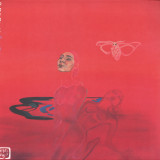
‘Double Pink’ is the debut album by And Is Phi (Andrea Isabelle Phillips), a multidisciplinary artist from Norway and the Philippines now based in South East London. ‘Double Pink’ is a nuanced world that draws on colours and texture; with influences of Joni Mitchell and Frank Zappa, 90's R&B and Madlib’s ‘Shades Of Blue’ blending languidly to produce a base for uncovering layers of self, a deep release, and fragile new form.

Written by Andrea and co-produced with Fiona Roberts and Lorenz Okello over a nine month period; ‘Double Pink’ thematically explores the many movements of internal change, speaking from a deep inner voice inside the body. The title track is an invitation to be as unapologetically hungry as you please after a long absence of life giving passion and trust in oneself. ‘White Noise’ is a recovery song playing in your soul the first time you made it back out to the dance floor after a heart break so massive it laid rest to the person you used to be. Songs like ‘Working’ and ‘Staaar’ come from a candid and contemplative aspect. Stages of grief and resilience and wonder and wisdom are all touched upon.

“The album explores metamorphosis, liminal spaces, and the multiple faces of love”, says Andrea. “I mention love as a key ingredient, because anyone who has had to push and pull and hold and yield themselves through great loss and transformation knows it ain’t gonna happen without love. Tough times ask for double love, a stronger heart, something like a double pink”.

Andrea’s story dots between periods spent living in Norway, the Philippines and England - experiencing joy and beauty battling corruption and violence in Manila, DJing in Oslo, losing her sizable record collection in a warehouse fire before making friends and family in the jazz scene in London. Every story needs a scene, a landscape, an environment; all things Andrea visualises when writing songs.

“At my heart I am emotional and imaginative, searching for freedom for my spirit. What grounds it all is coming from a family of storytellers. My father played drums and percussion, he was a great dancer and a true collector and connoisseur of music from everywhere. My wise mother instilled in me a sense of faith and grace”.

Andrea is far from new to the scene, having performed with Steamdown, Emma Jean Thackray, Hector Plimmer, Scrimshire, William Florelle and many more as a valuable and inspiring creative force within the South London music scene. Andrea also created the album’s artwork and music videos: musicality and painting evolved from her initial creative languages of drawing and dance. All aspects are dialects of her common language: singing what can’t be painted and painting what can’t be sung.

In Stock

On Stock and ready to ship

Last In: 2 years ago
17,44 €
Kon Faber - Weberwiese EP

Kon Faber

Weberwiese EP

12inchKAMAI026
Kamai Music
25.10.2023

Kamai Music’s 26th release comes from the Electronic producer duo and live act Kon Faber.

A1: “Ambiguity” is a bouncy, groove- and percussion-heavy collaboration between established producer Iorie,
including a vocal duet.

A2: “Cheer” is an emotional, atmospheric track with a mesmerizing interplay of synth lines and jazzy melodic
licks from professional jazz saxophone player Marius Dick.

A3: “Weberwiese” is a large space with choirs and wide synth pads. The track opens up through a virtuous,
acoustic lead guitar embedded into a hypnotic and bouncy groove.

B1: South African producer Fka Mash gives a deep Afro House twist including a rich bass lead synth.

B2: Kamai’s own Jacob Groening shows a simplistic interpretation of “Cheer” and adds a new depth through a
non-metrically played lead synth.

B3: “Weberwiese” is remixed by Joep Mencke, who adds trance-like melodies and creates a melodic house
spin for the big stage.

In Stock

On Stock and ready to ship

Last In: 3 months ago
13,87 €
BLURT - CRY / I'LL BE THERE NOW

Blurt

CRY / I'LL BE THERE NOW

7"-VinylACB7X1
All City
20.09.2023

Following on from the recent Elegiac release - a meeting of two mavericks Blurt's Ted Milton and Wire's Graham Lewis we have teamed up with Blurt for a double sided 45 featuring two new tracks "Cry" & "I'll Be There Now".

Milton is a poet, with several volumes under his belt, as well as an avant-garde puppeteer. Yet he's probably best known as vocalist/saxophonist with psycho-funk afro punk fake no-wave pogo jazz trio Blurt. Milton's group has produced an impressive string of albums, not to mention his numerous solo recordings. Brimming with the pogo punk energy the band are known for, the lead side "Cry" is a mesh of raw drums and piercing sax slowing down on the flip side to a head nodding pace with Milton's echoing refrains backed by the raw bounce of the band.

In Stock

On Stock and ready to ship

Last In: 3 years ago
10,04 €
Azzurro 80 - Notte Inchiesta

Azzurro 80

Notte Inchiesta

7"-VinylFLIES4546
Four Flies
17.04.2023

After the successful 7-inch release of Agip, Roman producer and composer Azzurro 80 is back on Four Flies with another triple-single that continues his love affair with dreamy synth-pop and Italian Eighties culture and society.

"Notte Inchiesta", on side A, could be the title music to an imaginary '80s investigative/true-crime program broadcast on late-night television. Clearly reminiscent in mood and texture of the soundtracks of late-70s/early-80s Italian detective-action films, it brings back the jazz-funk, post-prog and fusion overtones that characterized the music of those films. In short: a contemporary-retro sound nestled somewhere between Goblin's funk-oriented recordings, Azymuth's "Jazz Carnival", and electronic disco with a sprinkle of new wave.

Side B opens with "Equilibrio", which could serve as additional, more dynamic music for the same TV program mentioned above. The style is once againelectronic jazz-funk, but here we have abreak built upon a trail of notes chasing each other.

In contrast, "Sambuca", the single's closer, is deliberately nostalgic and melancholy. Perfectly suitable for visual narratives of an Italy that no longer exists, it sounds like one of those great Italian soundtrack themes that are able to convey tension and calm at the same time. The track is titled after the anise-flavoured liqueur that Italians often drink after their espresso, because "making references in my music to things that are part of our national popular culture is really important to me", as the artist has explained.

In Stock

On Stock and ready to ship

Last In: 3 years ago
16,60 €
Rosanna & Zélia - Baiao Da Luna

Rosanna&Zélia

Baiao Da Luna

7"-VinylWJ075002
WE JAZZ
03.04.2023

A lost MPB gem from rural Finland! We Jazz presents the first ever reissue of this rare 1990 local release by Brazilian duo Rosanna & Zelia. 7" EP with inside out 3mm spine sleeve. RIYL: Gilberto Gil, Joyce, Musica Popular Brasileira, bossa nova, bossa jazz

Liner notes by Mikko Mattlar:

"Rosanna & Zélia were a Brazilian duo of singers and musicians Rosanna Guimarães Tavares and Zélia Nogueira da Fonseca. They moved from Minas Gerais, Brazil to Europe in 1988, released five albums in Germany between 1993–2004 and featured vocals on an Ian Pooley house track Coração Tambor before Rosanna died of cancer in 2006. Zélia still continues her career in Germany, touring actively and releasing new music.

The duo's journey from Brazil to Germany also included two brief visits to Finland. In the years 1989–1990, they spent time in the small town of Seinäjoki in Ostrobothnia. Rosanna & Zélia performed Brazilian music in Finnish clubs and festivals and recorded a 7" EP for local label Maumau Music. The record was distributed mostly in the Seinäjoki area, but the three songs are well-performed and authentic Brazilian MPB, so the largely unknown record now gets its first reissue for a wider audience on We Jazz Records.

But how did two Brazilian women find their way to a small Finnish town to record an EP? The main reason for this was music journalist and promoter Risto Vuorinen, who was on a holiday in Albufeira, Portugal, where a friend of his lived. The streets were almost empty that evening, but Vuorinen and his friend heard fine guitar playing and singing from a bar. There were Rosanna and Zélia performing on a small stage, and the two Finnish men happened to be the only customers. When the artists ended their performance, Vuorinen's friend, who spoke Portuguese, went to talk to them. Rosanna and Zélia told him they had recently come from Brazil and are trying to gain ground in Europe with their music.

Because Rosanna and Zélia didn't know where they would head next, and because Vuorinen liked their music, he thought of bringing the duo to his hometown, Seinäjoki. They immediately liked the idea, and in the autumn of 1989 they arrived in Finland. The national Finnish jazz festival was held in Seinäjoki, and Vuorinen thought Rosanna & Zélia's Brazilian music would fit right in. They performed at the festival and in November 1989, also made recordings in a local studio with backing musicians from Seinäjoki.

Music enthusiast Pertti Hakala had a record shop and label Maumau Music in Seinäjoki releasing music from local artists. He released a three-track EP from the sessions. with two tracks written by Rosanna & Zelia themselves and their cover version of Extra (Brazilian Reggae), written and originally performed by Gilberto Gil in 1983. A small pressing was made for the Finnish market, and Hakala also sent a box of records to Brazil, but for some reason it was sent back.

After their first visit to Finland, Rosanna & Zélia headed back to central Europe, but Vuorinen decided to organize more performances for them for the next summer. Maybe he also wanted to show them the beautiful Finnish summer, as Rosanna and Zélia had so far seen the country only during the darkest autumn. The duo came back to Finland for the summer of 1990 and performed at the Womad world music festival organized as a part of local Provinssirock. They also played in Nummirock and Puistoblues, both respected music festivals, and performed on TV in Helsinki.

Rosanna and Zélia lived in a small apartment in Seinäjoki and played two to three gigs per week all summer. Because there were only two of them, even small pubs could afford to book them, and in 1990 the economic situation in Finland was good. It was before a major economic depression hit the country. The duo travelled by bus or train, and because they were an acoustic duo, they could easily carry their instruments in public transport. Vuorinen got excellent feedback from organizers. Rosanna and Zélia were good performers, but also really nice people.

With the income from their summer gigs, Rosanna and Zélia could buy a PA mixer and other musical equipment. When the summer 1990 turned to autumn, they continued their journey from Seinäjoki to Germany where they settled down."

In Stock

On Stock and ready to ship

Last In: 3 years ago
10,80 €
Sven Väth - What I Used To Play (12x12" boxset)
 
36

For this uniquely personal retrospective spread over twelve vinyl discs, Sven Väth takes us back to the early days of his DJ career. On What I Used To Play we meet great pioneers of electronic music, gifted percussionists, obscure wave bands, and innovative producers of a bygone 'new electronic' era. Rough beats and irresistible grooves from the identification stage of house, techno, and acid remind us not just how far electronic music has evolved over the past four decades, but how great it was to dance to EBM, techno, and house for the very first time.

If there is one protagonist of the electronic music scene who has remained curious, innovative and at the very cutting edge of music for over four decades, it's Sven Väth. His multi-layered artist albums and Sound of the Season mix compilations have been defining the genre for over two decades, and even today, he is constantly on the lookout for the next top tune to add to the highlights of his next set. At least, that's the case when he's not producing them himself as an artist or remixer. "Actually, it's always been part of my DNA to think ahead," and nothing had been further from his mind than looking back at his past, but when in spring of 2020 the international DJ circuit had to be scaled down to virtually zero, the 'restless traveler' suddenly had time. Time to stop and reflect on "how it actually was back then, at the very beginning of my career..."

"It was a great trip and with every track, beautiful memories came flooding back".
In the London apartment, he had just moved into, Sven has set up a "little music room", where he cocooned himself for several days, "to look way back for the first time and review my musical journey through the eighties, so to speak."

The interim result was six thematically oriented playlists with a grand total of 120 tracks from 'early 80s' to 'Balearic late 80s', together with excursions into afrobeat, European new wave, and EBM sounds and a few epochal techno/house tracks from the USA in between. From these 'Best of Sven Väth's favorites', the project What I Used To Play crystallized. Sven remembers how the Cocoon team reacted to his proposal: "They found the idea of making a compilation out of it MEGA from the beginning and everyone said 'Sven, go for it', but then, of course, the work really started, namely, to clear the rights and to get clean sounding masters of the up to 40-year-old tracks. There was also disappointment, of course. We couldn't clear certain titles because the rights holders in the USA had fallen out with each other or simply disappeared from the scene. In short, it wasn't easy, but now I can safely say we got the most important tracks."

Finally, after two years of research, curation, design, and administrative fine-tuning, the "little retrospective" from 1981 to 1990 is available. The exquisitely packaged, and three-kilo heavy box set is not only physically impressive, WIUTP is also the definitive record of Sven Väth's musical development. On each of the twenty-four sides of vinyl, you can trace track by track, what influenced him during which phase, and how he took off as a DJ from his parents' Queen's Pub straight into the spotlight at Dorian Gray. There and at Vogue (later OMEN), Sven became the style-defining player in the DJ booth that he still is today.


1981 - 1990: Future Sounds of Now

In the early eighties, the crowd in clubs like Vogue and Dorian Gray danced to what nowadays we call 'dance classics' - mainly disco, funk, soul, and chart pop. It was up to a new generation of DJs, including Sven Väth, the youngest protagonist in the Rhine-Main area at the time, to create their own club-ready music mix. Good new tracks and potential floor-fillers were rarities that had to be sought out and found, in order to prove oneself worthy.
Without MP3s, internet streaming, or other digital download possibilities, music didn't just gravitate to the DJ, instead, it had to be tracked down. In well-stocked record stores in Frankfurt and Wiesbaden or even in Amsterdam, London, or New York, Sven and friends sourced the material for countless magical nights. On WIUTP we can follow Sven's very personal journey through this wild, innovative era in which synth-pop, funk, hip-hop, and disco were successively replaced as 'club music' by house, techno, acid, and breakbeat. By the end of the decade, it was clear to see that these once exotic 'fringe' phenomena would soon become 'mass' phenomena.


Early 80s

Dirty Talk by the Italian-American duo Klein & M.B.O. represents the most innovative phase of the Italo-disco genre in the early eighties like no other track. Mario Boncaldo (I) and Tony Carrasco relied entirely on the original synthetic drum and percussion sounds of the Roland TR-808, coupled with the raunchy vocals of Rossana Casale and guitar accents of Davide Piatto. Of course, other tracks from this period were also influential in style, most notably Unit by Logic System, which worked as the perfect soundtrack to the laser lighting system at the legendary Dorian Gray club. With stomping beats and robotic rap interludes, Bostich by Yello also belongs on Sven's eternal playlist - after all, it caught the attention of Afrikaa Bambaataa, who invited the Swiss duo to perform at the Roxy in New York in 1983.


EBM Wave - Mid 80s

From today's point of view, the almost ten-minute-long, downtempo track Giant by Matt Johnson's band project The The, would probably not be considered an obvious club classic. However, a closer (re)listen reveals the rhythmic intricacies of the percussion overdubs by JG Thirlwell (aka Foetus) on Johnson's composition, and it becomes clear why this exceptional piece of music is one of Sven's absolute favorites. Other classics from this phase include Kaw-Liga by the mysterious The Residents, the hypnotic-synthetic Our Darkness by Anne Clark (and David Harrow), and last but not least, the somber, monotonous anthem Where Are You? by 16Bit, one of Sven Väth's projects together with Michael Münzing, Luca Anzilotti from 1986.


US House - Late 80s

You certainly can't talk about Chicago house without mentioning Frankie Knuckles. The resident DJ at the Warehouse not only gave the name to an entire genre, but also produced epochal floor fillers on the Trax label like the timeless Your Love, sung (and moaned) by Jamie Principle. Acid house protagonists Phuture also hail from Chicago, and on We Are Phuture (also released on Trax) we hear the chirping acid sounds of the legendary Roland TB-303 in full effect. Another featured classic is No UFO's by Detroit's Model 500 aka Juan Atkins, who is rightly considered the 'Godfather of Techno' even if the genre-defining track from 1985 still breathes with the spirit of hip-hop and electro from the first breakdance era.


Afrobeat

Le Serpent, by Algerian-born Abdelmadjid Guemguem, is a track that sounds completely different from everything else on WIUTP. Made in 1978, it's a monumental, rousing groove created without bass or synths, just with five congas! Even though Guem sadly passed away in 2021, his immortal, acoustic beats are understood all over the world and will continue to enrich many thousands of DJ sets for years to come. Another classic that not only Sven appreciates beyond measure is Hugh Masekela's Don't Go Lose it, Baby. In addition to being one of the most important jazz pioneers, the trumpeter and freedom fighter from Johannesburg was very experimental, integrating electronic sounds into his music in later years, in a similar vein to Miles Davis and Herbie Hancock. Dutch jazz pianist Jasper van't Hof's afrobeat project Pili Pili has also aged well. The trance-like, almost sixteen-minute-long track of the same name, manages to fill a whole side on the seventh of twelve vinyl discs in the WIUTP box.


UK-US-Euro - Late 80s

Time for a change of scene, in the truest sense of the word, and from a musical perspective, this section is like landing on another planet. First up is Andrew Weatherall's classic remix of Primal Scream's Loaded, featuring the iconic Peter Fonda sample (lifted from the 1966 biker film Wild Angels) that came to personify the mood triggered by the British Second Summer of Love in the late eighties: "We wanna be free to do what we wanna do, and we wanna get loaded...". This period also saw the emergence of M/A/R/R/S whose only single, 1987's Pump Up The Volume, became a club classic with support from DJ legend CJ Mackintosh. In this most eclectic of sections, we also encounter New York house and reggae producer Bobby Konders and his seminal Nervous Acid.


Balearic - Late 80s

Those who know him, know that Sven had already lost his heart to the 'magic island' of Ibiza as a teenager, so with that in mind, the WIUTP project couldn't end without a Balearic chapter. Inspired by Manuel Göttsching's E2-E4, the immortal, eponymously titled Sueño Latino belongs in there without question. Equally popular on the island was, and still is Break 4 Love by Raze, which thinking about it, would also fit perfectly into the house chapter. Last, but not least, there's an overdue reunion with Sven Väth himself, in his role as frontman of the successful Frankfurt trio OFF. Together with Michael Münzing and Luca Anzilotti (later of Snap!) this 'Organization For Fun' created the off-the-wall club hit Electric Salsa in 1986 which incidentally turned into an international chart smash, putting Sven in the enviable position of having to decide between pop stardom and a DJ career. Well, we all know how that decision turned out and the rest, as they say, is history. A not insignificant part of his story is What I Used To Play. Enjoy!

In Stock

On Stock and ready to ship

Last In: 31 days ago
184,83 €
Philippe Maté & Jef Gilson - Workshop

In October 1974, the first number of “L'Indépendant du Jazz”, a small self-produced magazine DIY -before punk supposedly invented the concept- was launched by Jef Gilson, Gérard Terronès, Jean-Jacques Pussiau and a few other specialists of a different kind of jazz in France, it looked at the already long career of Jef Gilson and in detail at the album with saxophonist Philippe Maté:
“The ‘Workshop’ is, with Philippe Maté (alto-sax), an undeniable success. Maté is genuinely ‘the’ most inventive French saxophonist since Michel Portal burst onto the jazz scene (who has also worked with Jef Gilson on both “Enfin” and “Gaveau”).”

Even though the author of the article is a mysterious I.H. Dubiniou, and it is difficult to know if it is a real person or a pseudonym used by one of the merry bunch, it is also tempting to hear it as what Jef Gilson really thought about his new discovery. Even more so as the two men would work together over a long period, as Maté became one of the key figures of Gilson’s Europamerica orchestra up until the 1980s.

Philippe Maté had started to make a name for himself with the Acting Trio when they released an album on the BYG label in 1969, and he was also one of the regular sidemen for the Saravah studios (he can notably be heard on albums by Higelin, Fontaine or his cult duo album with Daniel Vallancien).

The album was recorded on 4 February 1972, at the Foyer de Montorgueuil, where Gilson had set up his studio, with more or less the same team found on “La Marche Dans Le Désert” by Sahib Shihab + Gilson Unit (recorded ten days later). This was drummer Jean-Claude Pourtier and pianist Pierre Moret (regular Gilson accomplices since “Le Massacre Du Printemps”), alongside Maurice Bouhana and Bruno Di Gioa on various percussions and/or wind instruments. On bass is Didier Levallet, of the now mythical Perception, (Jean-François Catoire would replace him with Shihab) and Philippe Maté who took top billing, rather than the American saxophonist afterwards. The two albums are however quite different. This “Workshop” is more abrasive, more free. Made up of two long improvisations each of over 22mn, “L'Œil” on side A and “Vision” on side B (Gilson specialists would recognise the nod to one of his albums from the 60s), the album plunges you into the depths, attempting to drown you in electronic waves, dragging you back to the surface by the collar, giving you a good shakedown, before showing you the light, leaving you breathless on the shore after 46mn of the most intense music French has to offer. “An undeniable success”, they said. (by Jérôme "Kalcha" Simonneau)

In Stock

On Stock and ready to ship

Last In: 3 years ago
17,02 €
Joyce with Mauricio Maestro - Natureza LP

(Produced, Arranged and Conducted by Claus Ogerman)

Not long after the dawn of her career, as a teenager in Rio de Janeiro, Joyce was declared “one of the greatest singers” by Antonio Carlos Jobim. Yet despite reputable accolades and the fact that she has since recorded over thirty acclaimed albums, Joyce never quite achieved the international recognition of the likes of Jobim, João Gilberto and Sergio Mendes, all of whom became global stars after releasing with major labels in the US.

There was a moment when it seemed she might be on the cusp of an international breakthrough. While living in New York, Joyce was approached by the great German producer Claus Ogerman. Ogerman had already played a pivotal role in the development and popularisation of Brazilian music in the 1960s, recording with some of the all-time greats like Jobim and João Gilberto, as well as North American idols like Frank Sinatra, Billie Holiday and Bill Evans.

"I met him in New York City, in 1977”, recalls Joyce. “I was living and playing there, and João Palma, Brazilian drummer who used to play with Jobim, introduced me to Claus. We had an audition, he liked what we were doing and decided to produce an album with us.”

Featuring fellow Brazilian musicians Mauricio Maestro (who wrote/co-wrote four of the songs), Nana Vasconcelos and Tutty Moreno, and some of the most in-demand stateside players including Michael Brecker, Joe Farrell and Buster Williams, the recordings for Natureza took place at Columbia Studios and Ogerman produced the album, provided the arrangements and conducted the orchestra.

But mysteriously, Natureza was never released, and what should have been Joyce’s big moment never happened. As Joyce remembers, “I returned home, but Claus and I remained in contact, by letters and phone calls. He was very enthusiastic about the album and tried to hook me up with Michael Franks. He wanted me to go back to NYC in order to re-record the vocals in English with new lyrics, which I actually wasn’t too happy about. But then I got pregnant with my third child and could not leave Brazil. And little by little our contact became rare, until I lost track of him completely. And that was it. I never heard from him again."

While Claus was known to be something of an elusive character, the album’s disappearance might also have been a result of timing. The Brazilian craze was coming to an end, making way for disco and new wave at the end of the seventies, and Ogerman struggled to find a major label interested in a new Brazilian sensation. Additionally, as Joyce mentions, it wasn’t quite finished. Ogerman wanted to add finishing touches to the mix and to record alternative English lyrics for the US and international markets - a critical artistic difference between Joyce and Ogerman.

As the military dictatorship’s grip on Brazil began to subside in the 1980s, Joyce had a handful of hits in her home county, including a tribute to her daughters ‘Clareana’, and the iconic ‘Feminina’ - an intergenerational conversation between mother and daughter about what it means to be a woman. But already a feminist pioneer, these successes were hard fought. Joyce had caused controversy as a nineteen-year-old when she became the first in Brazil to sing from the first-person feminine perspective, and the institutional sexism she faced was worsened by the dictatorship who would often censor her music. Even once the Junta was out of the way, Joyce found herself up against the male-dominated major record companies in Brazil, who sought to dictate her career and sexualise her image, before dropping her for refusing to play along.

A few years after the success of her albums Feminina and Agua E Luz in Brazil, Joyce’s music began to find its way to the UK, Europe and Japan, and “Feminina” and “Aldeia de Ogum” became classics on the underground jazz-dance scenes of the mid to late-eighties and early-nineties.

The full-length version of “Feminina” from the Natureza sessions was first heard on a Brazilian Jazz compilation in 1999 and “Descompassadamente” was licensed for a CD compiling the work of Claus Ogerman in 2002. Following these, word began to get out about an unreleased Joyce album with Claus Ogerman and the legend of Natureza grew.

Forty-five years since it was recorded, Natureza finally sees the light of day, as Joyce intended: with her own Portuguese lyrics and vocals. Featuring the fabled 11-minute version of ‘Feminina’, as well as the never before heard ‘Coração Sonhador’ composed and performed by Mauricio Maestro, Natureza’s release is a landmark in Brazilian music history and represents a triumphant, if overdue victory for Joyce as an outspoken female artist who has consistently refused to bow to patriarchal pressure.

***Disclaimer! While “Feminina” and “Descompassadamente'' were mixed by legendary engineer Al Schmitt and mastered from the original master tapes, the remaining five tracks are unmixed. Due to significant deterioration of the master-tapes, the best audio source for these tracks was an unmixed tape copy Joyce had kept of the recordings. The best care has been taken in the restoration and mastering of this release, but the sound quality may differ from other releases on Far Out Recordings. We advise listening to sound clips before buying where possible.

In Stock

On Stock and ready to ship

Last In: 3 years ago
27,52 €
Scerida - By Night

Four Flies Records is proud to present its brand new imprint Edizioni Della Notte, which expands the label's musical range. The sound of Edizioni Della Notte is a sound of twilight atmospheres and moonlit nights, traversing genres from disco-funk to soft rock, jazz-fusion and city pop. It's the music that creeps out of smoky nightclubs and car cassette radios, breaking the silence of empty streets and offering an escape from metropolitan reality into cosmic-exotic dreamlands.

Quite fittingly, the first official release on Edizioni Della Notte is called By Night. It's the debut EP of Scerida, a solo project of musician and singer-songwriter Daniela Resconi, and a perfect match for the sound that the new imprint intends to represent.

Its four tracks explore the idea of night as a time of ecstasy and torment, as a land of freedom and imagination but also of delusion, as an accomplice, a friend and an enemy described through feelings and mental states that range from expectation and euphoria to disillusionment and resignation.

Resconi, who hails from Brescia, northern Italy, formerly released music under the moniker Cara and as part of the duo The Loud Vice. Her new alias Scerida, which combines the French term chérie with the Spanish word querida, signals both a revolution and an evolution. "Scerida is a dive into the exotic side of my imagination, into mischevious thoughts, into a crazy night where I lost and found myself again," she explains. "She is still me, Daniela, but she keeps her eyes wide open on this restless, troubled world to write songs that try to ward off the horror vacui of everyday life."

By Night celebrates the dark hours as magical and mesmerizing, even when mysterious or dangerous. It evokes images and scenarios cinematically – a taxi passing by and fading into the distance, ice-cold Martinis during a party, whirlwinds of emotion, psychedelic sunrises and neon sunsets – through a stream of consciousness filled with noir-inflected pop, lo-fi vibes, slow hypnotic rhythms, suspended grooves and swelling atmospheres.

In Stock

On Stock and ready to ship

Last In: 3 years ago
20,13 €
Twardowski - One Coin Clear LP

Made in two versions - classic black and limited multicolor vinyl. Limitied Surprise Edition was pressed in 200 copies and has got an OBI.

After a six year hiatus Twardowski returns with his fourth album on U Know Me Records. The newest outing is a retrofuturistic trip to the author's two biggest influences: instrumental hip-hop and… video games. The new album eschews Twardowski's previous synth-heavy style in favor of multiple layers of chopped and mended together samples, topped off by cuts from U Know Me's own jazz guitarist/turntablist Żyńy. The album invokes video games with the track titles, the LP's title being a homage to coin-ops and via the overall sound: wonky, heavily shuffled, almost-out-of-sync rhythms sounding almost as if the tracks were done sampler in one hand gamepad in the other, over a lengthy, laid back gaming/sequencing session. Maybe if a gamepad was a sampler and instrumental hip-hop was a game, "One Coin Clear" could have been its soundtrack.

In Stock

On Stock and ready to ship

Last In: 4 years ago
34,24 €
Various - Sleep Not Found 2x12"

Various

Sleep Not Found 2x12"

2x12inchTRP008
TRIP
17.01.2022

repressed !

Some people are just not destined to have enough sleep.When you don't sleep enough the world appears to be a different place, compared to the way it is when the mind is fully rested. In such cases very different scenarios may occur.
Starting with a dreamy melody of Roma Zuckerman's 'Sleep not found', which inspired the entire 008 album, and ending with a thirteen minute live recording by a_000, the side project of Alex Backdrop, the entire record has a dreamy and tripped out flow. 008 continues the tradition of gatefold double EPs as conceptual album.All tracks are selected around a particular story, a trip, and presented as a continuous sonic landscape.All tracks are structured in a way that they can be mixed one with another an endless amount of times making a continuous loop, a trip, that needs only end when the party stops. Kraviz works without release dates or deadlines, enabling her to achieve a certain sound bank to shape the story, unmasking the thoughts and unravelling like a dream. A1. Roma Zuckerman - Sleep Not found (North Edit) Apart form the fact that he leaves in Krasnoyarsk in the middle of Russia, very little is known about Roma (short version of the name Roman). But listening to his music and engaging in random short conversations late at night makes it clear that there are really a lot of things going on Romas mind... Minimalistic yet emotionally complex, his music always stands out with it's murkiness and signature moodiness that Roma creates like nobody else.
A2. Deniro - G Deniro continues the record's journey with his new live cut that like pretty much everything he did so far is a beautiful sparse atmospheric groover. He says he wanted it to be angry and it its done with triggering synths from the tr909 and tr808.
B1. Maayan Nidam - Infinite Rattle
Maayan was born in Tel-Aviv. She does not like computers and prefers to record her music live using hardware only. In order to do so she built her incredible studio in Berlin where she recorded "Infinite Rattle'.There is much more to come from Maayan on
B2. Bbbbbb - Prins Polo Caramel milkshake.
Side project by Bjarki-bbbbbb. Like any other normal Icelander, Bjarki really likes ice cream. In Iceland they are absolutely crazy about it.They walk the streets, ice cream in hand, even when its freezing cold outside. But even more than that Icelanders like Milkshakes with all sorts of added cookies and candies. Bjarki's favourite is called Prince Polo after the name of a chocolate bar. He always believed Prins Polo was an Icelandic brand but a couple of months ago somebody proved him wrong.
C1. Exos- dub jazz
In Iceland Exos is a legend. Everybody knows him there. He's been playing incredibly powerful and technically advanced techno sets since the late 90s and releasing delicious dub techno on Icelandic label Thule. Nina always appreciated his subtler, dubbier side, and this short recording a the continuation of it.
C2. Maaayn Nidam - Justice for some
This second live recording was a perfect fit for this album. Maayan has managed to create a particular mysterious night time dreamer here. Sound wise it's even more unique. It took a few times to get the master right, because we wanted to keep the original breathing of the machine that has captured a seriously freaky vibe. Maayan has always been one of Nina's favourite DJs as they share a similar attitude towards music. But after this tune she has also reserved a place in Nina's collective of favourite producers. D1. A_000
This is a side project of Italian native Alessio Meneghello (Alan Backdrop) & Enrico Voltan. . A beautiful 13-minute sonic journey.

In Stock

On Stock and ready to ship

Last In: 29 days ago
20,46 €
Various: Jordan Rakei - Late Night Tales: Jordan Rakei 2x12"

“I wanted to try and showcase as many people as I knew on this mix. My idea of Late Night Tales was to distil a series of relaxing moments; the whole conceptual sonic of relax- ation. So, I was trying to think of all the collaborators and friends that I knew, who’d recorded stuff with this horizontal vibe. Plus, I was also trying to help my friends' stuff get into the world. I know the story of Khruangbin blowing up after appearing on the series (in fact, I think that's how I discovered them). So, the main idea was to create a certain atmosphere, but also to help some of my favourite collaborators and bud- dies to give their songs a little push out into the world. Hope you like it” Jordan Rakei


Due for release on 9th April, Late Night Tales celebrate their 20th anniversary with the release of multi-instru- mentalist, vocalist and producer Jordan Rakei’s majestic compilation. The 28-year-old modern soul icon effortlessly stamps his own jazz and hip-hop driven sound all over this gorgeous array of handpicked tracks. A beautifully layered blend that is mirrored in the music he’s made, itcomes as no surprise that such a supremely gifted songwriter should deliver a mix that is all about the song.


Rakei, born in New Zealand, but raised in Australia, moved to the UK in 2015; he released his debut album, Cloak, with Oz label Soul Has No Tempo, but his two subsequentLPs, Wallflower and Origin, came out on Ninja Tune, the former#2 in Album Of The Year for Gilles Peterson’s Worldwide poll, while Origin was nominated for Best Album at the AIM Awards. Jordan had this to say on his upcoming mix:


As Jordan says,there’s so much more to the song selection on Late Night Tales’latest outing than a random collection of artists. Many have some sort of personal connection, so just as Bonobo provided a platform for the breakout of Khruangbin on a previous LNT, this may have the same ef- fect for Rakei’s friends. After a soothing opener from Fink, good friend and big influence Alfa Mist (part of the Are We Live collective) delivers ‘Mulago.’ “I want to champion their sound and show the world how good he is, and I thought it’d be fitting to start the mix with family,” says Jordan.


Next up is Charlotte Day Wilson with ‘Mountains,’ followed by ‘Count A Heart’ from Moreton, an exclusive collab- oration with Jordan, who grew up on the same street in Brisbane, Australia. “She was the first artist I ever collabo- rated with, and one of the first artists to be involved in mycareer,” he explains. Elsewhere we hear Scottish producer and multi-instrumentalist C Duncan’s haunting ‘He Came from the Sun,’ Barcelona collective Oso Leone deliver a dreamy ‘Virtual U’ and Bill Lauren’s ‘Singularity,’ which evokes a striking sense of time and place.


Snowpoet’s ethereal ‘Evitenity’ is a “long mediative nar- rative over a beautiful soundscape,” which at times seems chaotic, nicely juxtaposed with undeniable beauty, and Maro’s kooky songwriting shines on ‘Always And Forever.’ Long-time buddy Armon-Jones contributes ‘Idiom,’ and Jordan’s exclusive cover version is a two-for-one, Radio- head’s ‘Codex’ merging with ‘Lover, You Should’ve Come Home’ by Jeff Buckley and another exclusive,original com- position by Jordan, ‘Imagination.’ The latter works as a piece with the spoken (Spanish) word voiced by movie director Alejandro González Iñárritu (Babel, Birdman, and The Reve- nant,) who is a big fan of Jordan’s. “He messaged me when I went to L.A and asked to come to my show. I was in such shock and we hung out after. I thought it would be nice to get him to do this in his native tongue, because I don’t think that’s been done yet on the series.” It certainly is a familyaffair. Not theblood is thicker than water kind, but certainly musical kindred spirits.

In Stock

On Stock and ready to ship

Last In: 2 years ago
20,80 €
BRIJEAN - FEELINGS

Brijean

FEELINGS

12inchGILP378
Ghostly International
23.02.2021

"Do you feel what I feel too?" Brijean Murphy floats the question at the start of Feelings, the full-length Ghostly International debut from Brijean, her collaborative project with Doug Stuart. Guided by a lush mix of charismatic keyboard chords, grooving bass lines, and radiant bongo-driven rhythms, the "Day Dreaming" lyric doubles as an invitation and a statement of intention. Brijean want you to move, physically, mentally, dimensionally; this is dance music for the mind, body, and soul. With Feelings, they've manifested a gentle collective space for respite, for self-reflection, for self-care, for uninhibited imagination and new possibilities. The album cultivates a specific vibe, a softness Murphy has come to call "romancing the psyche." Growing up in a family immersed in jazz, Latin and soul music, Murphy would become an accomplished DJ, session and live player in Oakland's diverse music scene and one of indie's most in-demand percussionists (Poolside, Toro Y Moi, U.S. Girls). In 2018, she began recording songs with multi-instrumentalist and producer Doug Stuart, who shares a background in jazz and pop in bands such as Bells Atlas, Meernaa, and Luke Temple. Following their first sessions, which resulted in the mini-album Walkie Talkie (released in 2019 on Native Cat Recordings), the duo continued freeform hangs in Oakland, inviting friends Chaz Bear, Tony Peppers, and Hamir Atwal. "We improvised on different feels for hours," says Murphy. "Nothing quite developed at first but we had seeds. We re-opened the sessions a couple months later, after returning from tours, and spent a month developing the songs in a little 400 square foot cottage." Aforementioned album opener "Day Dreaming" is a dynamic celebration of newness: the excitement in finding deeper understandings of yourself as you get to know someone, something, or somewhere new. "Wifi Beach" drops a pin in pure psych-pop exotica. With Atwal on drums, Stuart on bass, Peppers on keys, and Bear engineering, the group improvised the track's intro sequence based on the vision of a lavish 1970s pool party. Establishing the scene is a mid-frequency drum kit disco shuffle augmented by tight congas and timbale effect, as Murphy sings in spurts: "I want to be / Deep in love / I want to be / Say you love me too / I want to be / Honey." The stanzas cut between "reflective moments of wants and being overwhelmed by feelings of the present," she explains. "A lot of the `love songs' I write are to my psyche, self-reflections on how to encourage tender perspectives and make more time for the sweet stuff." Though there is a loose, dance-oriented motif throughout, the material gives way to somnolent turns. On "Ocean," Brijean's anodyne lyrics, reminiscent of Astrud Gilberto's airy croon, float atop a brushed drum pattern, sparkling rhodes lines, and pittering and softly funky woodblock bops. The opening line sets up the rest, "In this gentle space we lay" _ among the album's propensity for movement, tracks like "Ocean" stand out by leaning back for momentary sways of blissful introspection. Murphy calls the charming "Hey Boy" a "psychedelic guide _ the exploration of finding what feels good _ through sorrow, anxiety, apathy." This mentality applies to Feelings on the whole: in these nebulous and verdant worlds of hazy melodies, feathery hooks, and percussive details, the songs simply want us to feel alive. They radiate in wonderful abandon and with a sense of devotion to the self. RIYL: Stereolab, Astrud Gilberto, Air, Little Dragon, Broadcast, Khruangbin, Poolside.

In Stock

On Stock and ready to ship

Last In: 50 days ago
22,27 €
Kölsch - Now Here No Where LP 2x12"

2025 Repress

On his fourth album proper, Now Here No Where, Danish producer Kölsch (aka Rune Reilly Kölsch) is charting new terrain. Fans of his ‘years trilogy’ – 1977, 1983 and 1989, released on Kompakt over the past decade – were privy to a kind of sonic diary, an autobiography, tracking the artist’s early years through three albums of superior, meticulously rendered techno. Calling in collaborators where needed – most notably, the strings of Gregor Schwellenbach – there was still something deeply personal going down, not quite hermetic, but internally focused; the albums proved not only Kölsch’s mastery of his chosen form, but also his capacity to make techno personal, individual, and to trace histories of the self through music. But on Now Here No Where, Kölsch finds his feet firmly planted in the present. Reflecting on his new album, he notes, “It is fascinating to write about memories and feelings that have had years to manifest and develop, but how would I approach current emotions?” It’s a good question: our past coheres through the narratives we build around memories, but the moment we’re in, the newness of the now-ness, is harder to navigate; this story is as yet untold. For Kölsch, this makes Nowhere Now Here “an album about life in the year 2020. A time defined by confusion, misinformation and environmental challenges. It is an emotional interpretation of personal and mental challenges, observations and personal growth.” Kölsch does this with music that effortlessly balances emotional heft with the dancefloor’s brimming desires. It’s a space that Kölsch has navigated for a while now – one of techno’s breakthrough acts, an in-demand DJ across the globe and a prolific and restlessly creative producer, he’s also Kompakt’s biggest-selling act – but Now Here No Where ratchets up the lushness, making for a delirious drift across twelve tracks that are at once perfectly poised and deeply trippy. “Great Escape” is an elegant swoon, an opener that pivots on a sigh and a prayer; then “Shoulder Of Giants” bustles into view, subliminal clatter and an aching violin line giving way to a riff that glows with fluorescence and iridescence. “Remind You” combines an odd ECM jazziness with notes from a twenty-first century torch song; “Sleeper Must Awaken” mines huge buzzing synths and lets them float, in and out of sync, with reduced, ticking beats; “Traumfabrik” (dream factory – there’s a giveaway) is oddly lush, the tones malleable and plastic, morphing across a glitching undertow. There are sad, emotional washes of strings throughout the penultimate “While Waiting For Something To Care About”, while “Romtech User Manual”’s patterns twist and shape in the light. Throughout, Kölsch never keeps his eye off the dancefloor, and you can tell this is his still his home. “The amount of energy and joy I experience every time I perform, has a profound effect on me. It has inspired me so much of late and has become an integral part of my musicality.” “The way we join in expressing our hope for the future every weekend has given me so much,” Kölsch concludes. The club as a temporary autonomous zone, as a space both of freedom and of politics; somehow, that’s all here, Now Here No Where. “Most of all, it is an album about hope.”

Auf seinem vierten Album “Now Here No Where” betritt der dänische Produzent Kölsch (alias Rune Reilly Kölsch) neues Terrain. Seine Trilogie mit den Jahreszahlen 1977, 1983 und 1989, die in den letzten zehn Jahren bei Kompakt erschienen war, hatte seine Fans durch eine Art akustisches Tagebuch, eine Autobiografie geführt, die die frühen Jahre des Künstlers über die Länge von drei großartig produzierten Techno-Alben nachgezeichnet hatte. Wo es nötig war, wurden Kollaborateure hinzugezogen - allen voran für die Streicher, arrangiert von Gregor Schwellenbach -, dennoch zeichnete die Musik immer auch etwas zutiefst Persönliches aus, etwas nicht Hermetisches, auf eine bestimmte Art immer auch nach Innen fokussiert. Die Alben bewiesen nicht nur, wie sehr Kölsch die von ihm gewählte äußere Form beherrscht, sondern auch seine Fähigkeit, Techno zu etwas Persönlichem und Individuellem zu machen und der eigene Geschichte durch Musik näher zu kommen.

Auf “Now Here No Where” steht Kölsch nun mit beiden Beinen fest auf dem Boden der Gegenwart. Mit Blick auf sein neues Album stellt er fest: "Es ist faszinierend, über Erinnerungen und Gefühle zu schreiben, die Zeit hatten, sich zu manifestieren und zu entwickeln, aber wie nähere ich mich meinen aktuellen Emotionen?”. Eine gute Frage: Unsere Vergangenheit wird im Innersten zusammengehalten durch Geschichten, die aus Erinnerungen entstehen, aber der Moment, in dem wir uns befinden, die Neuheit des Neuen, ist schwieriger zu beschreiben; die Geschichte ist noch nicht erzählt. Für Kölsch ist “No Here Now Where” daher "ein Album über das Leben im Jahr 2020. Eine Zeit, die von Verwirrung, Desinformation und ökologischen Herausforderungen geprägt ist. Es geht dabei um die emotionale Interpretation von persönlichen und mentalen Herausforderungen, von Beobachtungen und der eigenen, individuellen Weiterentwicklung".

Kölsch tut dies mit Musik, die mühelos kleine Gefühlsausbrüche mit den großen Sehnsüchten der Tanzfläche in Einklang bringt. Es ist dieser Zwischenraum, in dem sich Kölsch schon seit einiger Zeit bewegt, als weltweit gefragter und gefeierter Live Act, DJ und so unermüdlicher wie kreativer Produzent (nicht umsonst ist Kölsch der “biggest-selling-artist” bei Kompakt), doch “Now Here No Where” treibt all das noch weiter auf die Spitze: ein enormer Sog entsteht, der uns über zwölf Tracks hinweg gefangen hält wie ein perfekt ausbalancierter Trip. Der Opener "Great Escape" ist pure Eleganz, ein Track, der irgendwo zwischen Seufzer und Gebet hin und her schwankt; dann drängt "Shoulder Of Giants" ins Blickfeld, ein unterschwelliges Geklapper, eine wehende Geige, schließlich ein schillernder Riff, der in der Dunkelheit zu leuchten und zu glühen scheint.

"Remind You" kombiniert seltsamen ECM-Jazz mit einem sentimentalen Liebeslied des 21. Jahrhunderts; "Sleeper Must Awaken" schürft im Bergwerk riesiger Synthesizer, mal im Takt, mal aus dem Takt ticken die minimalen Beats; "Traumfabrik" ist ungewöhnlich “lush”, die einzelnen Töne, geschmeidig und modelliert, zerfließen in einem glitzernden Abgrund. Das vorletzte Stück "While Waiting For Something To Care About" wird von traurigen, emotionalen Strings untermalt, während sich die Strukturen von "Romtech User Manual" im Licht drehen und immer wieder neu formieren. Die ganze Zeit über behält Kölsch die Tanzfläche im Auge, und man merkt ihm an, dass sie immer noch sein Zuhause ist: "Die Menge an Energie und Freude, die ich bei jedem Auftritt erlebe, hat eine tiefe Wirkung auf mich. Sie hat mich gerade in letzter Zeit stark inspiriert und ist zu einem integralen Bestandteil meiner Musik geworden.”

"Die Art und Weise, wie wir an jedem Wochenende gemeinsam unsere Hoffnung auf eine bessere Zukunft zum Ausdruck bringen, hat mir viel gegeben", so Kölsch abschließend. Die Vision des Clubs als eine temporäre autonome Zone, als ein Raum von großer Freiheit aber auch von politischen Ideen, das ist irgendwie alles hier drin, Now Here No Where. "Es ist vor allem ein Album über Hoffnung."

In Stock

On Stock and ready to ship

Last In: 8 days ago
24,33 €
opo - 666ridims (2020 - 2026)

opo

666ridims (2020 - 2026)

12inchMEA066
Meakusma
29.09.2026

opo’s 666ridims (2020 - 2026), compiled by J.TRIPP, brings together tracks from his 666ridims netlabel, reflecting on the singular sound worlds of some of his solo work. Like a discovery made by neutrino sensors, opo’s tracks research the transformation of rhythm, swing, and structure, aiming for a new grid. Sketchy and raw, processing emotions and experiences, regaling stories, and asking questions, opo relates in trance verse. All tracks here breathe his focus on improvisation, experimentation, and collaboration. Some of the beats featured on 666ridims (2020 - 2026) are outlines for freestyles and songwriting ideas, a practice formed during a long-distance music conversation with illustrator, printmaker, painter, designer, and maker Billy Bigwood. Other tracks are more club-oriented, like speculative genres programmed in odd meters. Japanese Barcelona-based DJ Hanakito contributes to one track, using samples and chops sourced from her vinyl imports.

Through Afroelectronic experimentation and diasporic narratives, opo encodes his soul's past and future through his music. Encoded, activated, returned. Initiate only when you receive permission from all your mental fragments. Keep transmissions in mind and dislodge and follow the command cluster's trail. Strongly influenced by sci-fi, ancestral afro musics, jazz, performance art, and food, as musical lines and shards of meaning cascade, 666ridims (2020 - 2026) is a minimalist dive into strange meters, polyrhythm, and the transcendence of ideas. Fast, slow. Exhilarating. We don’t discover physical laws; we just collaborate on them.

out of Stock

Order now and we will order the item for you at our supplier.

Last In: 2 days ago
22,65 €
Trá Pháidín - Cloch 's Claí LP
  • 1: Tí Mhichael Phaddy
  • 2: An Béal Bocht
  • 3: Garbhóg
  • 4: Fidín
  • 5: Seachtain na Gaeilge
  • 6: Anglicize Everything
  • 7: Fothrach an Cheirtleáin
  • 8: To Hell or to Connacht
  • 9: Dance Paddy Dance
  • 10: Mionnán

Trá Pháidín are a mutable collective of musicians who are geographically, culturally and mentally torn between Conamara Theas, Cathair Chorcaí, Ciarraí, Uíbh Fhailí, Sligeach and Port Láirge, active in one form or another since 2019. The music they make, which to date has mostly been self-released, is of an ambitious breadth, embracing traditional Irish absurdity, jazz, folk and krautrock influences, whilst remaining tantalisingly beyond any one specific understanding of either the world around them or even themselves. More defined however, is their overall conceptual approach, focusing upon original Gaelic music and what lies beyond simply “conas atá tú?”.

Cloch ‘s Claí (trans. Stone & Wall), their first record to be released by World of Echo, develops their established interests into more adventurous waters (and walls!) than ever. Based on the historical significance embedded into dry-stone walls, the album presents a satirical view of Éire’s relationship with her native tongue and the Gaeltacht (regions where Gaeilge - Irish Gaelic - remains the primary language). Constructed of ten tracks, each representative of a stone in a metaphorical stone-wall, Cloch ‘s Claí draws from styles of improvisation in Irish traditional music, exploring avenues of ornamentation and accompaniment in the tradition. As such, the arrangement changes in every performance, a new stone-wall articulated each time - the recording on this album represents just one such arrangement in one such performance. Inspired by Myles na gCopaleen’s An Béal Bocht, the wall comes to embody a variety of themes scattered across the landscape and psyche of na Gaeltachtaí - tokenism, housing, gentry politics, ribbon developments and so on. The result is a music expressive of regional styles in traditional music, krautrock, free jazz, post-rock, minimalism and drone presented in a way that feels instinctively fluid and reflective of a hushed existentialism from the west of Ireland.

On Cloch ‘s Claí, Trá Pháidín are: Conal Ó hAinmhuighe, Ultan Ó Labhradha, Peadar-Tom Mercier, Micheál Fitzgerald, Pól Ó Lionáird, Ruairí De Búrca. Cloch ‘s Claí will be released digitally and as a limited edition LP on 25th September via World of Echo. This record was created through the support of the DEIS Recording Grant & Ealaín na Gaeltachta.

pre-order now25.09.2026

expected to be published on 25.09.2026

23,95 €
SPACE AFRIKA - QUIET STORM

SPACE AFRIKA

QUIET STORM

12inchDAISLP1232
Dais Records
25.09.2026

Space Afrika, das in Manchester und Berlin ansässige Duo aus Joshua Tarelle Reid und Joshua Inyang, schafft rohe, detailreiche und eindringliche Musik mit Anklängen an Ambient, Trip-Hop, Techno und moderne Klassik, wobei es aus den Konturen seiner Stadt weitläufige urbane Dub-Landschaften entwirft. ,Quiet Storm" erweitert ihren Klang und ihre Bandbreite zu einer weitläufigen, kollaborativen Vision, die mit tiefer Geduld und Absicht geformt wurde und ihre eigene Coming-of-Age-Geschichte in eine bewegende Suite kathartischer Abstraktion einbettet. Die Songs spielen auf Spiritualität und die conditio humana an, auf die Spannung zwischen Kühnheit und Sanftheit, Ehrgeiz und hartnäckigen inneren Dämonen. ,Quiet Storm" ist eine Antwort auf den Werdegang des Duos seit der Veröffentlichung von ,Honest Labour" im Jahr 2021. ,Wir haben uns selbst und unsere eigenen Vorstellungen von Identität herausgefordert, insbesondere in Bezug auf Klasse und Diaspora, und wie dies in verschiedenen Musikgenres dargestellt wird. Wir wollten die Charakteristika unseres Projekts durch die Menschen zeigen, mit denen wir zusammenarbeiten wollten", sagt Reid. Inyang merkt an: ,Bei der Entstehung dieses Albums haben wir keine Kompromisse gemacht. Die Idee begann als eine Hommage an die Kunst der Schwarzen. Unsere Kooperationen waren sehr bewusst gewählt, als wir die Grundpfeiler der Geschichte entdeckten." Von der multidisziplinären Natur des Projekts zeugt die Beteiligung des gefeierten Künstlers Glenn Ligon, dessen Werk sich mit schwarzer Identität und Queerness befasst. Ligon, der zu Beginn der Aufnahmen eine zentrale Inspirationsquelle darstellte, stellte sein Werk ,Figure #30" (2009) für das Cover-Artwork zur Verfügung und erklärte sich nach Abschluss der Aufnahmen bereit, dem Projekt seinen Namen zu geben - eine beispiellose Geste dieses wegweisenden Künstlers. Beim Anhören der endgültigen Fassung dachte Ligon an ,Quiet Storm", das Radioformat der 1970er Jahre, das für seine sanfte Late-Night-Programmgestaltung mit Themen rund um Leben und Liebe bekannt war. ,Quiet Storm" führt den Hörer durch verschiedene Szenen, Zwischenspiele und Handlungsbögen, geprägt von dem Gefühl, dass seine Bewegung fließend und seine Figuren flüchtig sind. Monologe vor dem Spiegel setzen sich mit dem Existentiellen und dem Unmittelbaren auseinander: Überleben, Autonomie, Sinn. Das Album beginnt mit dem explosiven, von Streichern begleiteten ,Vanity", bei dem die Grammy-Preisträgerin Axelle Fanyo zu hören ist. Zunächst auf die Spalten eines stillen Raumes fixiert, entfaltet sich ,Vanity" unter Fanyos ausdrucksstarkem Sopran und durchläuft ein breites emotionales Spektrum von erhabener Kontemplation bis hin zu ergreifendem, herzzerreißendem Schmerz. Auf dem gesamten Album werden gesprochene und gesungene Worte sparsam eingesetzt, um eine kraftvolle Wirkung zu erzielen. Die Schönheit und Katharsis von ,MLN" ist ein kollektiver, langsamer Marsch, bei dem der britisch-nigerianische Künstler Tony Njoku mitwirkt, begleitet von Gabriel Evans an Gitarre und Lead-Bass, PIKE aus London am Schlagzeug und GB aus Kopenhagen an Keyboards und Streichern. Der letzte Satz verleiht ,Quiet Storm" seinen krönenden Höhepunkt. ,If This Is Hell" ist in einem einzigen Take als Bewusstseinsstrom des New Yorkers Deuén aufgenommen, dessen nachvollziehbare Spirale geistiger Aktivität von jazzigen, frenetischen Percussion-Klängen begleitet wird. Das Druckventil öffnet sich, als die phasenverschobenen Drums und die scharf beobachtenden, dialogartigen Phrasen abrupt nach der Zeile ,I wonder if that's what heaven's like?" abbrechen. Wir bleiben in der Behaglichkeit des Album-Closers ,Regards" zurück. Regentropfen treffen auf Orgel, Drone, Streicher und Keyboards, während das Nachladen von Waffen dem ruhigen Summen gegenübergestellt wird. Schwer und doch hoffnungsvoll erinnern Joshua Tarelle Reid und Joshua Inyang an ihre bisherige Reise. Als passend geheimnisvolles und mitreißendes Outro für ihr offenes Opus ist ,Quiet Storm" ein Meilenstein: selbst produziert, selbst finanziert und aus purer Tatkraft und Überzeugung entstanden. Durch verzerrte Zeit und schummrigen Dunst ist Space Afrika zweifellos angekommen

out of Stock

Order now and we will order the item for you at our supplier.

Last In: 2 days ago
23,49 €
SPACE AFRIKA - QUIET STORM

SPACE AFRIKA

QUIET STORM

12inchDAISLP232
Dais Records
25.09.2026

Space Afrika, das in Manchester und Berlin ansässige Duo aus Joshua Tarelle Reid und Joshua Inyang, schafft rohe, detailreiche und eindringliche Musik mit Anklängen an Ambient, Trip-Hop, Techno und moderne Klassik, wobei es aus den Konturen seiner Stadt weitläufige urbane Dub-Landschaften entwirft. ,Quiet Storm" erweitert ihren Klang und ihre Bandbreite zu einer weitläufigen, kollaborativen Vision, die mit tiefer Geduld und Absicht geformt wurde und ihre eigene Coming-of-Age-Geschichte in eine bewegende Suite kathartischer Abstraktion einbettet. Die Songs spielen auf Spiritualität und die conditio humana an, auf die Spannung zwischen Kühnheit und Sanftheit, Ehrgeiz und hartnäckigen inneren Dämonen. ,Quiet Storm" ist eine Antwort auf den Werdegang des Duos seit der Veröffentlichung von ,Honest Labour" im Jahr 2021. ,Wir haben uns selbst und unsere eigenen Vorstellungen von Identität herausgefordert, insbesondere in Bezug auf Klasse und Diaspora, und wie dies in verschiedenen Musikgenres dargestellt wird. Wir wollten die Charakteristika unseres Projekts durch die Menschen zeigen, mit denen wir zusammenarbeiten wollten", sagt Reid. Inyang merkt an: ,Bei der Entstehung dieses Albums haben wir keine Kompromisse gemacht. Die Idee begann als eine Hommage an die Kunst der Schwarzen. Unsere Kooperationen waren sehr bewusst gewählt, als wir die Grundpfeiler der Geschichte entdeckten." Von der multidisziplinären Natur des Projekts zeugt die Beteiligung des gefeierten Künstlers Glenn Ligon, dessen Werk sich mit schwarzer Identität und Queerness befasst. Ligon, der zu Beginn der Aufnahmen eine zentrale Inspirationsquelle darstellte, stellte sein Werk ,Figure #30" (2009) für das Cover-Artwork zur Verfügung und erklärte sich nach Abschluss der Aufnahmen bereit, dem Projekt seinen Namen zu geben - eine beispiellose Geste dieses wegweisenden Künstlers. Beim Anhören der endgültigen Fassung dachte Ligon an ,Quiet Storm", das Radioformat der 1970er Jahre, das für seine sanfte Late-Night-Programmgestaltung mit Themen rund um Leben und Liebe bekannt war. ,Quiet Storm" führt den Hörer durch verschiedene Szenen, Zwischenspiele und Handlungsbögen, geprägt von dem Gefühl, dass seine Bewegung fließend und seine Figuren flüchtig sind. Monologe vor dem Spiegel setzen sich mit dem Existentiellen und dem Unmittelbaren auseinander: Überleben, Autonomie, Sinn. Das Album beginnt mit dem explosiven, von Streichern begleiteten ,Vanity", bei dem die Grammy-Preisträgerin Axelle Fanyo zu hören ist. Zunächst auf die Spalten eines stillen Raumes fixiert, entfaltet sich ,Vanity" unter Fanyos ausdrucksstarkem Sopran und durchläuft ein breites emotionales Spektrum von erhabener Kontemplation bis hin zu ergreifendem, herzzerreißendem Schmerz. Auf dem gesamten Album werden gesprochene und gesungene Worte sparsam eingesetzt, um eine kraftvolle Wirkung zu erzielen. Die Schönheit und Katharsis von ,MLN" ist ein kollektiver, langsamer Marsch, bei dem der britisch-nigerianische Künstler Tony Njoku mitwirkt, begleitet von Gabriel Evans an Gitarre und Lead-Bass, PIKE aus London am Schlagzeug und GB aus Kopenhagen an Keyboards und Streichern. Der letzte Satz verleiht ,Quiet Storm" seinen krönenden Höhepunkt. ,If This Is Hell" ist in einem einzigen Take als Bewusstseinsstrom des New Yorkers Deuén aufgenommen, dessen nachvollziehbare Spirale geistiger Aktivität von jazzigen, frenetischen Percussion-Klängen begleitet wird. Das Druckventil öffnet sich, als die phasenverschobenen Drums und die scharf beobachtenden, dialogartigen Phrasen abrupt nach der Zeile ,I wonder if that's what heaven's like?" abbrechen. Wir bleiben in der Behaglichkeit des Album-Closers ,Regards" zurück. Regentropfen treffen auf Orgel, Drone, Streicher und Keyboards, während das Nachladen von Waffen dem ruhigen Summen gegenübergestellt wird. Schwer und doch hoffnungsvoll erinnern Joshua Tarelle Reid und Joshua Inyang an ihre bisherige Reise. Als passend geheimnisvolles und mitreißendes Outro für ihr offenes Opus ist ,Quiet Storm" ein Meilenstein: selbst produziert, selbst finanziert und aus purer Tatkraft und Überzeugung entstanden. Durch verzerrte Zeit und schummrigen Dunst ist Space Afrika zweifellos angekommen

out of Stock

Order now and we will order the item for you at our supplier.

Last In: 6 days ago
22,27 €
Voice Of Jamaica - The Deejays Meet Down Town 1975-1980 LP

2026 Repress

The late sixties and early seventies spectacle of Jamaican Deejays taking their live performances out of the dance halls and translating them into hit records, not only marked the beginning of forty years of dance hall driven music on the island but also provided the original inspiration and template for the global dominance of rap and hip hop.
The art of deejay was now rightly recognised and the toasters or talk over artists advanced from introductions and interjections to stringing complete sets of lyrics together and riding the rhythm for the entire length of the song.
Deejays including U Roy, I Roy, Dennis Alcapone, Big Joe ,Little Joe and Prince Jazzbo who built their reputations working live on sound systems,now went one step beyond and moved on to become recording deejays with entire catalogues of hit singles and albums to their credit.
Throughout the seventies a whole host of mic men followed in their wake including Dillinger,Dr.Alimando,Clint Eastwood and Jah Stitch.
Talking records were not new, but 'talk over' records were...the repercussions of this uniquely Jamaican phenomenon would go on to reverberate worldwide...

out of Stock

Order now and we will order the item for you at our supplier.

13,40 €
TEODROS MAKONNEN - Teodros Makonnen With His Organ LP 2x12"

Some recordings herald the future in ways that are impossible to see in real time. Teodros Makonnen With His Organ (ቴዎድሮስ መኮንን ከኦርጋኑ ጋር), by the artist Teodros Makonnen, also known as Teddy Mak, is one of those. Today, electronic sounds, synthesizers, and digital production are taken for granted in Ethiopian music, but in the early 1980s, they were novelties that polarized opinion. Even to this day, the story of Teodros Makonnen’s legacy has never been properly told. He played a decisive role in defining the sound of the digital era of Ethiopian music that emerged in the 1980s and beyond, both as a keyboard player and as a producer, songwriter, performer, and sound designer.

Ethiopian music was at a crossroads in the early 1980s. Much like music in the rest of the world, technology and automation heralded either a quantum leap in musical development or the annihilation of musicianship, depending on who you’d ask. The changes were incremental nonetheless, but with the benefit of hindsight one can clearly see that the changes meant different things in different contexts. Drum machines and electric organs came to replace many hotel bands because, all of a sudden, one musician could control drums, melody, and accompaniment. Teodros was one of the first musicians in Ethiopia to explore the possibilities this opened up.

Teodros’ father, Captain Makonnen Beri, was a chief pilot at Ethiopian Airlines and a music enthusiast at that. This would prove important to his development, as Makonnen brought back a piano from Germany, which would lead to the first steps in Teodros’ long musical career. Captain Makonnen’s work as Head of Flight Operations and as a pilot exposed him to the wider world that was far from commonplace for most Ethiopians. In a house where music captivated the whole family, the piano gave Teodros’ talent an outlet. Not only was a piano at home rare in Ethiopian households, his father also brought an Indian teacher to their home to teach Teodros and his brother, Captain Samuel Makonnen, music theory (solfeggio or ear training) and piano. Teodros and his youngest brother, the late great Dereje, a member of both the legendary Ibex Band and the Ethiopian reggae group Dallol, took up music from that point onward, with Teodros beginning to develop his proficiency at the age of eight. His father encouraged him to practice tirelessly at home, and Teodros later received musical schooling at the German School in Addis Ababa.

His obvious talent led to studies and formal education at the Yared School of Music, followed by continued studies in American jazz at Northern Virginia Community College in Virginia. Teodros cut his teeth professionally in his mid-teens, not only as a keyboardist, but also as an arranger for the Wabi Shebelle and Dahlak bands in the 1970s. He mastered electronic sequencing early, rising to prominence through the midnight recording sessions held during the military curfew. The pressures imposed by the curfew required precise and disciplined recordings, and Teodros delivered just that. This, in turn, led to collaborations with iconic artists such as Mulatu Astatke, Aster Aweke, Menelik Wossenachew, Tilahun Gessesse, Mahmoud Ahmed, and Alemayehu Eshete.

In those days, he sat in as a keyboardist with the Dahlak Band when Dawit Yifru took a hiatus to study in Russia, and also with the Ethiostar Band. He secured a residency at the Wabi Shebelle Hotel with the Shebele Band, together with Zelalem Tadese (drums), later succeeded by Elias Bekele, Mulugeta Hailu (bass), Teferi ‘Bibisha’ Mengesha (guitar), Kumelachew G/Selassie (trumpet), and Teshome Deneke (saxophone). A friendly competition developed between the bands associated with the Ras Hotel (the Ibex Band), Ghion Hotel (the Dahlak Band), and Wabi Shebelle Hotel (the Shebele Band). The music scene at Wabi Shebelle saw teenagers commanding the spotlight in an industry otherwise dominated by musicians of an older generation.

At the Wabi Shebelle Hotel, Teodros met a diplomat from Saudi Arabia and later visited him at his home in Addis Ababa, a meeting that had unexpected musical consequences. The man owned a Yamaha double-deck keyboard. That evening, they recorded Teodros Makonnen With His Organ (ቴዎድሮስ መኮንን ከኦርጋኑ ጋር) in one take. This recording, a cornerstone in the early digital sound of Ethiopian music, came about almost by chance, simply because Teodros got the opportunity. Traditional Ethiopian songs were cast in a wholly electronic style.

Once freed from backing duties, Teodros’ keyboards could explore dreamlike soundscapes that took Ethiopian music in new directions. Even though the cassette contained well-known Ethiopian songs, they were given highly original arrangements, performed on an electric organ with drum machine backing and rhythm patterns that left the listener with suggestive, lingering sounds. “Libesh Kabashen” (also known as “Anchi Bale Game”) and “Odu Gol Golesa” wrap you in the very stuff that dreams are made of.

Originally released on cassette only, this recording exudes a mystique that surpasses even some of the most obscure Ethiopian recordings of the day. It remained more or less unknown outside of Ethiopia until now. Some of the tracks, like “Addis Fikir,” are permeated with an almost naive buoyancy, free-floating sounds that lost contact with the ground the moment they were conceived. Others, like “Meche New Hageren Yemayew” and “Lelitu Alnega Alegn,” carry a moodier, quirkier timbre, with pulsating rhythms in the background. Yet even the darker pieces contain an unmistakable wave, something essentially Ethiopian. If most recordings of Teodros’s contemporaries at the time were teeming with atmosphere, his songs seem instead at home in the stratosphere, almost ethereal. Some of the music here could be filed under “lullabies,” were it not for the recurring, almost brooding feeling that engulfs the listener on the aforementioned tracks. You could easily be forgiven for drifting into a blissful haze as the music washes over you.

Up to the advent of electronic music production, Ethiopia was totally dominated by big bands on the one hand, and small groups on the other. The former were tied to large institutions such as the military, the latter emerged from the entertainment industry, in hotel bars and nightclubs. These groups were commercially driven, and bands ultimately had to foster a mercenary approach to employment, albeit not to the passion for music. In the light of this, Teodros’ musical legacy can be seen in two ways. On the one hand, he is a key player in Ethiopian music from the 1970s onwards, leaving an indelible mark through hundreds of compositions and arrangements, including soundtracks for numerous documentary films and advertisements for different companies. On the other hand, the way he and others employed electronics brought Ethiopian music onto a fork in the road.

The replacement of traditional instruments with electronic equipment was seen as impending doom by some. Others, like Teodros, saw new avenues for performance, production, and creativity. Just as later producers like Abegasu Shiota of Admas, Teodros was a trailblazer who opened paths that it took Ethiopian music as a whole more than a decade to rush into. The hotel scene had already been pushed toward electronic music by financial necessity and cost-cutting. Today’s revived global interest in Ethiopian music from the seventies and eighties, alongside a broader resurgence, has changed the reasons for using digital means of music production. They have become tools for musical dreaming. This is where the dreaming began.

out of Stock

Order now and we will order the item for you at our supplier.

Last In: 9 days ago
24,16 €
TOMMY McCOOK & FRIENDS - Horns Man Dub' LP
  • Track 1 MURDEROUS HORN DUB – Rocking Jamboree Rhythms
  • Track 2 WREAKING HORNS DUB – Wreak Up My Life Rhythm
  • Track 3 NATTY CONGO DUB – Roots Natty Congo Rhythm
  • Track 4 TRIBULATION HORN DUB - Tribulation Rhythm
  • Track 5 EVERYBODY NEEDS DUB – Everybody Needs Love Rhythm
  • Track 6 AMBITIOUS DUB – Breaking Up Rhythm
  • Track 7 FINDING DUB – You’ll Never Find Another Love Like Mine Rhythm
  • Track 8 CATCHING HORNS DUB – You Have Caught Me Baby Rhythm
  • Track 9 SPRINGTIME IN DUB – In The Springtime Rhythm

Tommy McCook was not only a founding member of the legendary Jamaican Ska group The Skatalites, but also a brilliant musical arranger. His informed understanding of Jazz, R&B and in fact most music styles would always add another layer to any song put his way. This made him the go to guy for most of the Jamaican producers, who would use his arrangement skills to pepper up their latest tunes.

Tommy McCook, (b1927, Havana, Cuba) came to Jamaica with his mother from Cuba aged 11 and entered renowned Alpha Boys School for underprivileged children, a school that placed great emphasis on musical tuition. At the tender of 14, such was his talent he has left to join Eric Deans Orchestra and took on stints with other bands led by Don Hinchman and Roy Coburn. All the bands played in the Swing and Jazz style of the times. He relocated to the Bahamas in 1954 where he further developed his Jazz technique and upon his return to Jamaica in 1962 began working Coxsone Dodd’s Studio One and became involved in the development of Ska. His knowledge of Jazz, R& B and Jamaican musical forms helped set the tone for the group of musicians he was working with and would name the Skatalites. The group, consisting of Don Drummond (Trombone), Roland Alphonso (Tenor Saxophone), Jackie Mitoo (Piano), Lloyd Brevett (Bass), Lloyd Knibbs (Drums), alongside Tommy himself on Tenor Saxophone. The group would back all the major Ska vocalists pf the day and would also go on to cut a catalogue of instrumental music. The Skatalites split up in 1965 and Tommy McCook moved over to work with Duke Reid’s Treasure Isle Studios where he formed The Supersonics. A set of musicians under his guidance that consisted of Lynn Tait and Ernest Ranglin (Guitar), Neville Hinds and Winston Wright (Organ), Gladstone “Gladdy” Anderson (Piano), Hugh Malcolm and Arkland “Drumbago” Parks (Drums), Clifton “Jackie” Jackson (Bass), and Tommy and Hernon Marquis (Saxophone). The more laid back sounds from 1966-1968 would be given the name Rocksteady of which again McCook was at the forefront. The top producers like Bunny Lee would use the musicianship of Tommy McCook and his arrangement skills to enhance this new sound.

We have compiled a great selection of rhythms that featured McCook blowing over tracks stripped of their vocals and replaced with some fantastic lead lines played by Tommy and some of his fellow horns men.
We hope you agree like we do that they do this in fine style.

pre-order now11.09.2026

expected to be published on 11.09.2026

13,40 €
Sees (Michael J. Blood) - Ampersand Curve

»Ampersand Curve« initiates a brilliant new phase of work by North Manchester’s most elusive artist, best known as Michael J. Blood. His string of ruffkut club bangers, as well as jams with Rat Heart & Samizdat over the past seven years, have made his records a true cult property, and now find him signed to one of the UK’s most foundational techno imprints – more of which later this year.

But under the Sees aegis, he swims in very different waters, following his instincts to use the studio-as-instrument to produce his most impressive, deep-minded work, made from – and for – the heart. Where MJB was all about off-the-cuff club jams cooked for immediacy, his new stylistic switch reveals myriad worlds of influence swirling under the hood, where interrelated spheres of spiritual jazz, dub, ambient, and concrète more clearly light up his rich inner world.

As the story goes, MJB was burgled a few years back and lost most of his studio just as the project was hitting its stride. It prompted a personal review of his practice, re-learning new kit, allowing him to bend the rules. Adopting a sort of first-thought, best-thought approach to composition, the new methodology fuelled a renewed imagination in flux, or what he identifies as Sees: a personalised way of conveying complex emotions. That undoing of musical and mental conditioning opens the walls of his music to vast new horizons. Opener »Ithaca« fathoms sonorous midnight jazz with 10 mins of a plangent, searching sax solo in HD widescreen, like some alternate version to the Blade Runner Love Theme, while a resonant vocoder soliloquy, »Unseem«, reaches into space harmonised between Alvin Lucier and Ron Trent, and »Sheer« chases the devil out of labyrinthine dub dimensions.

The floating dream architecture of »Caprices« caps the LP’s underlying narrative and painterly qualities with a romantic conclusion of blushing pads and shivered, metallic echoes of the subtropical that suggest a coming-to-terms with worries, refreshed and good to go again.

out of Stock

Order now and we will order the item for you at our supplier.

Last In: 29 days ago
31,72 €
JOHARI SALLEH - JAZZ DARI ANGKASAPURI

Special gatefold LP + 12-page booklet attached to the sleeve with extensive liner notes and previously unpublished archival photographs documenting Salleh’s career. Fully licensed from the Johari Salleh.

Habibi Funk’s new sister label Audible Beauty Records second release: A landmark collection retelling the untold story of Malaysian jazz featuring 9 songs from the legendary composer, arranger and trumpet player Johari Salleh. Salleh played a crucial role in shaping the sound of modern Malaysian music across radio, television, film and live performance and has composed dozens of popular songs in his decades long career. His personal musical passion always was jazz, reflected in this deep selection of jazz works that were previously unavailable unless you had one of the few dozen copies pressed locally in the 1970s. The album doesn’t only highlight his musical statue as a composer but also as a outstanding trumpet soloists bringing together jazz, spiritual undertones and Malaysian folkloric themes balancing slower pacing deep, modal grooves with more upbeat jazz funk leanings. For fans of Salah Ragab, Ahmed Malek, Mulatu Astatke, Dollar Brand and co.

out of Stock

Order now and we will order the item for you at our supplier.

Last In: 37 days ago
22,90 €
OPEN MIKE EAGLE & KENNY SEGAL - DOOMED!

Es sind fünf hektische, chaotische, zermürbende, völlig durcheinander gewirbelte Jahre. Es sind all die mühsamen Missverständnisse einer fünfjährigen Beziehung, verzerrt und zu einer absurden schwarzen Comedy-Miniserie auf Vinyl gedehnt. Es ist der Klang all unserer Streitgespräche, die gleichzeitig erklingen. Es sind mehrere aufeinanderfolgende Sprachnachrichten, die nicht angehört, sondern stattdessen als Transkript gelesen wurden. Es sind fünfzehn Songs des ikonoklastischen Rappers Mike Eagle und des innovativen Produzenten Kenny Segal. Es ist das weltweit erste halb skurrile Trennungsalbum. Es ist "DOOMED!", es ist auch LA. Vielleicht nicht in erster Linie, aber Los Angeles ist tief in der Gegenwart und der Geschichte dieses Albums verwurzelt. Die Geschichte jeder Großstadt ist auch eine Geschichte von Zugezogenen. DJ Premier in New York, Tupac in Kalifornien. Wenn man es aufbaut, werden sie kommen. Mike und Kenny kamen beide als junge, aufstrebende Künstler nach LA, angezogen von der Szene rund um die bahnbrechende Rap-Crew Project Blowed. Sie sind seit fast zwanzig Jahren befreundet - und arbeiten gelegentlich zusammen. Trotzdem ist "DOOMED!" das erste Mal, dass die beiden ein komplettes Werk gemeinsam geschaffen haben. Aber alles geschieht zu seiner Zeit, und das Schicksal hat sie genau in dem Moment zusammengeführt, der es dem Duo ermöglichte, etwas Außergewöhnliches zu schaffen. Mike, der gerade eine Reihe von Alben mit mehreren Produzenten hinter sich hatte und das Ende einer turbulenten Beziehung verarbeitete, brauchte eine kreative Katharsis. Kenny hingegen hatte sich nach einer Reihe von hochgelobten Kollaborationen - nicht nur mit Rappern wie billy woods und K-the-I??? - sondern auch mit dem Jazz-Trio Human Error Club und dem bluesigen Indie-Rocker Benjamin Booker - auf seine nächste Herausforderung festgelegt. "In den letzten Jahren machte Kenny sehr deutlich, dass er nicht einfach weiterhin ein oder zwei Beats für meine Projekte beisteuern wollte; er wollte etwas aufbauen", erklärt Open Mike Eagle. "Ich konnte ihn davon überzeugen, mir ein paar Beats für Neighborhood Gods Unlimited zu überlassen, mit der Maßgabe, dass wir uns als Nächstes auf unser gemeinsames Projekt konzentrieren würden. Dann zerbrach meine Beziehung, gerade als wir mit der Arbeit begannen, und ich dachte mir: Perfekt, dazu habe ich eine Menge zu sagen."

out of Stock

Order now and we will order the item for you at our supplier.

Last In: 14 days ago
32,35 €
OPEN MIKE EAGLE & KENNY SEGAL - DOOMED! (TAPE)

Es sind fünf hektische, chaotische, zermürbende, völlig durcheinander gewirbelte Jahre. Es sind all die mühsamen Missverständnisse einer fünfjährigen Beziehung, verzerrt und zu einer absurden schwarzen Comedy-Miniserie auf Vinyl gedehnt. Es ist der Klang all unserer Streitgespräche, die gleichzeitig erklingen. Es sind mehrere aufeinanderfolgende Sprachnachrichten, die nicht angehört, sondern stattdessen als Transkript gelesen wurden. Es sind fünfzehn Songs des ikonoklastischen Rappers Mike Eagle und des innovativen Produzenten Kenny Segal. Es ist das weltweit erste halb skurrile Trennungsalbum. Es ist "DOOMED!", es ist auch LA. Vielleicht nicht in erster Linie, aber Los Angeles ist tief in der Gegenwart und der Geschichte dieses Albums verwurzelt. Die Geschichte jeder Großstadt ist auch eine Geschichte von Zugezogenen. DJ Premier in New York, Tupac in Kalifornien. Wenn man es aufbaut, werden sie kommen. Mike und Kenny kamen beide als junge, aufstrebende Künstler nach LA, angezogen von der Szene rund um die bahnbrechende Rap-Crew Project Blowed. Sie sind seit fast zwanzig Jahren befreundet - und arbeiten gelegentlich zusammen. Trotzdem ist "DOOMED!" das erste Mal, dass die beiden ein komplettes Werk gemeinsam geschaffen haben. Aber alles geschieht zu seiner Zeit, und das Schicksal hat sie genau in dem Moment zusammengeführt, der es dem Duo ermöglichte, etwas Außergewöhnliches zu schaffen. Mike, der gerade eine Reihe von Alben mit mehreren Produzenten hinter sich hatte und das Ende einer turbulenten Beziehung verarbeitete, brauchte eine kreative Katharsis. Kenny hingegen hatte sich nach einer Reihe von hochgelobten Kollaborationen - nicht nur mit Rappern wie billy woods und K-the-I??? - sondern auch mit dem Jazz-Trio Human Error Club und dem bluesigen Indie-Rocker Benjamin Booker - auf seine nächste Herausforderung festgelegt. "In den letzten Jahren machte Kenny sehr deutlich, dass er nicht einfach weiterhin ein oder zwei Beats für meine Projekte beisteuern wollte; er wollte etwas aufbauen", erklärt Open Mike Eagle. "Ich konnte ihn davon überzeugen, mir ein paar Beats für Neighborhood Gods Unlimited zu überlassen, mit der Maßgabe, dass wir uns als Nächstes auf unser gemeinsames Projekt konzentrieren würden. Dann zerbrach meine Beziehung, gerade als wir mit der Arbeit begannen, und ich dachte mir: Perfekt, dazu habe ich eine Menge zu sagen."

pre-order now14.08.2026

expected to be published on 14.08.2026

17,23 €
Various - Future Sounds Of Jazz Vol. 14 (4x12")
 
26

2026 Repress

Future Sounds Of Jazz Vol. 14 - Compiled By Permanent Vacation Benjamin Fröhlich & Tom Bioly!

28 Tracks By Move D, Roman Flügel, Slowdive, Isolée, Cobblestone Jazz, Luke Abbott, Remixes By Avalon Emerson, Russ Gabriel, Kassem Mosse, I:cube A.m.o. Including 3 Exclusive And Previously Unreleased

Wow, A New Chapter Of This Legendary Series. This And The Very First Time It's Not Compiled By Michael Reinboth, Rather By Benjamin Fröhlich And Tom Bioly, The Founders And Masterminds Behind Permanent Vacation.

Why Simply Because They Both Are Very Close Friends Of The Compost Famlee, With An Amazing Musical And Dj-like Tastefulness, With The Knowledge-based Trust Of Music In The Vein Of Vibrant, Jazzy Electronica Hybrids. And They Are From Compost Records' Hometown Munich, Too.

Maybe Volume 14 Differs Slightly To What The Previous 13 Brought Up Music-wise, But That's The Score, Idea And Open Mindedness Of This Series, As It Was By The Compilers, And Last But Not Least A Great Time For A Change, Too. So We Welcome This, We Very Much Appreciate And Like Their Selection. We Are Sure, This Will Convince You.

28 Tracks, 3 Exclusive Tracks. Enjoy!

The Exciting Package Comes As 2-cd / 4-lp Vinyl
Cd 1 Is Bit More Clubby, Cd 2 Is Bit More Sublime Downbeat/electronica Or Relaxed Feel, Well Both Are True Listening Pleasure Anyway.

Several Magazines Voted Fsoj As One Of The Best Compilation Series Of All Time. With This Series, Starting In 1995, The Term Future Jazz Became A Genre Landmark.

out of Stock

Order now and we will order the item for you at our supplier.

36,93 €
SKYJACK - LET THE SKY OPEN UNDER YOUR FEET LP 2x12"

Skyjack — the borderless five piece band spread across South Africa and Switzerland — announce their fourth studio album, Let The Sky Open Under Your Feet, out 3rd July.

Recorded in December 2025 at a secluded studio outside Stellenbosch, South Africa, the album captures the vibrant live energy of the band at its most expansive — drawing together free improvisation, South African jazz traditions, chamber music, kinetic groove, and ecstatic collective interplay into a singular body of work.

“This record is a very articulate representation of our sound, having grown deep roots into the earth with high branches reaching upward and outward”, says bassist Shane Cooper. “My desire is always to create sonic universes that can envelope the listener.”

The album’s title comes from a line in a poem by the 13th-century Persian poet Rumi, reflecting the music’s balance between groundedness and transcendence. Here, Skyjack move fluidly between meditative improvisation and lush orchestration across twelve tracks of free-spirited, cosmic journeying. Inspired both by the cultural traditions and natural environments of South Africa, Let The Sky Open Under Your Feet is a testament to the band’s intuitive connection and innate musical curiosity.

It arrives just over a year after Light Cycle (2024), a short gap that reflects the momentum built on tour. After exchanging sketches remotely across two continents, the band reunited in Johannesburg in late 2025, workshopped the new material onstage across South Africa, and then headed directly into the studio, where much of the album was recorded live in first takes — preserving the looseness and unpredictability central to Skyjack’s sound.

Comprised of Kyle Shepherd (piano), Shane Cooper (bass), Jonno Sweetman (drums), Andreas Tschopp (trombone), and Marc Stucki (saxophones), Skyjack first formed in Cape Town in 2013 during a fertile moment in South African jazz, as a new generation of musicians pushed against rigid genre definitions and opened the music outward toward broader sonic possibilities. Over the past decade, the band has built a singular sound drawing equally on South African groove traditions and European improvisation.

Individually, the members move between jazz, electronic music, film scoring, rock, hip-hop and experimental composition, with collaborations spanning artists including William Parker, Lionel Loueke, Zim Ngqawana, Ben LaMar Gay, Jorge Rossy, Shabaka Hutchings, William Kentridge, Makaya McCraven and Sylvie Courvoisier.

Since their self-titled debut in 2015, followed by The Hunter (2019) and Light Cycle (2024), the group has developed a reputation for immersive live performances and music that continuously reshapes itself in motion — rooted in what they describe as “warm menacing African grooves,” while refusing fixed stylistic borders.

out of Stock

Order now and we will order the item for you at our supplier.

Last In: 55 days ago
25,17 €
I Marc 4 - Silver Music

The legends of the golden era of Italian soundtracks and library music go by many names, but the backbone of that era’s definitive sonic identity is most often identified as I Marc 4 (also known as Marc 4 or I Marc Quattro). While the moniker might be less familiar to the uninitiated, it is a simple acronym derived from its founding members: Maurizio Majorana (bass), Antonello Vannucchi (organ), Roberto Podio (drums and percussion), and Carlo Pes (guitar). The number "4" serves to highlight the core synergy of these four master musicians. Their journey began in Rome’s vibrant jazz scene of the 1950s and early 1960s, where they honed their craft as members of the RAI national orchestra and collaborated with the most prominent jazz and pop icons of the day. However, it was their pivotal role in defining the Italian cinematic sound of the 1960s and 1970s that secured their legacy. Their unmistakable style was an eclectic fusion of beat, jazz, classical, and Latin influences—textured with early synthesizers, experimental sound effects, and a blend of electronic and baroque instrumentation. Consequently, their initials are etched into the credits of countless landmark recordings by legendary composers such as Nino Rota, Armando Trovajoli, Gianni Ferrio, Alessandro Alessandroni, Piero Umiliani, and Ennio Morricone.

Beyond their work as session luminaries, they produced a vast body of library music under their own name at the legendary Telecinesound Studios in Rome. These recordings were released through prestigious library labels like Sermi, Ricordi, and Fonit Cetra, as well as through their own imprints: Nelson Records, Silver Men, and Silver Music, spanning a definitive series of sixteen albums. Ten of these volumes were issued on Nelson Records during the 1970s, featuring the now-iconic military stencil design. Each release was color-coded: red (G.L.P. 1001), dark blue (G.L.P. 1002), gold (G.L.P. 1003), light green (G.L.P. 1004), brown (G.L.P. 1005), black (G.L.P.1006), light blue (G.L.P. 1007), yellow (G.L.P. 1008), orange (G.L.P.1009), and cool green (G.L.P. 1010). The series was completed by two elusive companion releases: S.M. 2001 on Silver Music and S.M. 2002 on Silver Men, both presented in the same distinctive brown sleeve. Rediscovered in the 1990s and 2000s, these Nelson releases have since achieved cult status among collectors, producers, and DJs worldwide. The final two installments, S.M. 2001 and S.M. 2002, remain the rarest and most enigmatic of the set.

Often overlooked, they contain some of the most profound "hidden gems" in the group’s catalog. The tracklist traverses a wide stylistic spectrum: from the rare groove and proto-hip hop energy of "Trama Nella Metropoli", "Beat Morbido", and "Candy", to the lush cinematic atmospheres featuring the ethereal vocals of Edda Dell'Orso on "Summer In Love", "On The Rain", and "Arcobaleno". The collection is rounded out by sophisticated jazz pieces like "Flauti Ensemble", "Passeggiata", and "Atmosfere Dolci”. Sonor Music Editions has meticulously curated the finest moments from these two rare albums for this first-ever dedicated reissue. Bringing together the best of Silver Music (S.M. 2001) and Silver Men (S.M. 2002), this release retains the iconic stencil artwork but introduces a striking silver finish. This design choice honors the original ten-album sequence while shedding new light on these outstanding recordings—works that remain, in every sense, golden.

out of Stock

Order now and we will order the item for you at our supplier.

Last In: 56 days ago
26,85 €
Mukqs - Juckport

Mukqs

Juckport

CassetteCS-HAUSMO-155C
Hausu Mountain
24.07.2026

Hausu Mountain co-founder Maxwell Allison returns to the label under his moniker Mukqs with an hour-long progressive ambient statement entitled Juckport. Performed live on a solitary sampler in a single take, the album shifts from warp-speed blasts of glitch to iridescent jazz fusion piano sketches to expanses of ecstatic synthesis. Allison's improvised approach to live sound collage blends innumerable layers of texture and oblique harmony into a continually thrilling electro-acoustic mosaic. Each track begins as a bank of samples sourced from Allison’s collection of synthesizers, drum machines, and field recordings, arrows pointing in a direction but without established counterpoint. Spontaneity, and the sometimes chaotic juxtapositions it engenders, undercut any traces of machine logic in the music as it expands and contracts organically. It is the product of hands moving in real space, in real time, for an extended period. Juckport is animated by a duality of glitched-out abstraction and intangible bliss. Synthesizer pads stretch beyond the imagination’s horizon line, counterbalanced by a churn of clipped samples that scatter across the stereo field like rapidfire psychedelic flashbacks. Cohesion emerges through textural continuity and development rather than repetition or pattern-making. Blink and innumerable details might slip by unnoticed, and the landscape might have shifted entirely. Still, as more viscous sounds enfold the listener, they communicate a calm, settled mindset, reflecting the motion of a creative mental state; large amounts of information are synthesized into a focused stream that reacts intuitively with the introduction of each new complicating element.

pre-order now24.07.2026

expected to be published on 24.07.2026

16,60 €
LOS RETROS - ODISEA LP 2x12"

LOS RETROS

ODISEA LP 2x12"

2x12inchSTH2522LP
Stones Throw
20.07.2026
  • A1: ODISEA
  • A2: THE WORLD
  • A3: SHAPE OF THINGS TO COME
  • A4: CIELOS
  • B1: DOVES (FT HIKARI)
  • B2: SOBRE LAS RUINAS
  • B3: OUTSKIRTS
  • C1: JUST US
  • C2: JOVEN POBRE Y SABIO
  • C3: MONTE CALVARIO
  • D1: SECRET ADMIRER
  • D2: THINGS THAT BURST" (FT HITOMITOI)

Odisea is the new album, actually the real debut from Los Retros, out in April on Stones Throw. It draws inspiration from 1980s Japanese City Pop, and marks a new creative chapter from Mauri Tapia shaped by growth, reflection, and renewed purpose. It's been a journey since Tapia first captured hearts with the lo-fi magic of "Someone To Spend Time With", recorded at the age of 17 on a humble four-track in his parents' living room. Now 25, the Oxnard native has stepped into an entirely new season of life - he married his high school sweetheart, became a father to two daughters, and embraced spiritual faith. Earlier this year, he revisited his start with Early Days (2016-2019), a compilation of unreleased music from Mauri's teen years. "Jazz fusion has become my favorite genre and greatest inspiration of all time," Mauri says. "I made this album for the version of me that first fell in love with music. It's my full-circle moment - a sonic hat tip to my beginnings - as well as a nod to the forefathers of jazz fusion and city pop for leaving us with great music." Through it all, he's kept the same DIY spirit, writing and recording every note himself, only now in a home studio of his own. On Odisea, Tapia blends neon-lit City Pop with the melodic sensibility of Latin American soft rock. Mauri's deep love for 70s and 80s jazz fusion records anchors the album, yet Tapia filters those influences through a modern lens. Odisea features two Japanese vocalists, - Hikari and HITOMITOI. Also check out Los Retros new compilation "Early Days" released simultaneously. RIYL soul, bedroom pop, indie, modern jazz, downtempo, soft rock, Mac DeMarco, Thee Sacred Souls, Skinshape, Men I Trust

out of Stock

Order now and we will order the item for you at our supplier.

Last In: 73 days ago
34,03 €
LOS RETROS - EARLY DAYS 2016-2019
  • A1: DEEP SLEEP
  • A2: ROOM GLOOM
  • A3: SOMEONE TO SPEND TIME WITH
  • A4: WITHOUT YOU
  • A5: OLD TIMES
  • A6: TO MY FRIENDS
  • B1: WAVE THE BLUE
  • B2: ROUNDABOUT
  • B3: AMERICAN SPIRITS
  • B4: DIABLA
  • B5: TO A LOVER
  • B6: WITHIN THIS LOVE

Early Days (2016-2019) is a new collection of previously unreleased songs from Mauri Tapia a.k.a Los Retros. From a young age, Tapia has been a prolific songwriter, spending his teenage years writing and recording song after song. Influenced by soft rock and left-field South American pop, Early Days (2016-2019) captures the sound of this formative era Streaming everywhere today, Early Days consisting of 15 tracks, recorded from Mauri's parents' living room using nothing more than an old four-track recorder, that only existed in low quality online, now mastered, sequenced, and physically released for the first time. It was during these sessions that Los Retros created the song "Someone to Spend Time With", now certified Gold. Early Days comes with a companion visual for "Without You", edited by close friend and collaborator Ross Harris from found footage of early Los Retros tour stops. Check out Los Retros proper debut "Odisea" released simultaneously too. FFO soul, bedroom pop, indie, modern jazz, downtempo, soft rock, Mac DeMarco, Thee Sacred Souls, Skinshape, Men I Trust, Too Slow To Disco

out of Stock

Order now and we will order the item for you at our supplier.

Last In: 73 days ago
28,36 €
Kelela - new avatar LP

Kelela

new avatar LP

12inchWARPLP405
WARP
10.07.2026

Nach der Veröffentlichung von „idea 1“, kündigt Kelela ihr neues, drittes Album an, das am 10. Juli bei Warp Records erscheint – und veröffentlicht die zweite Single „linknb“, produziert von Oscar Scheller.

Der Track entstand in einer Phase der Schreibblockade und begann als Mantra, das Kelela schrieb, um sich wieder an die Arbeit zu bringen. Angeführt von einem labyrinthischen Gitarrenriff über treibenden Metal-Drums ist „linknb“ ein Song über Selbstvertrauen, das man sich durch Schwierigkeiten erarbeitet hat, darüber, sich nicht klein machen zu lassen. „Es ist nicht schwer, mutig zu sein / Es ist leichter, zu viel preiszugeben / Ich weiß nur, dass ich den Weg geebnet habe, unterbezahlt.“

Das von Mischa Notcutt inszenierte Video versetzt Kelela in die Mitte einer urbanen Traumlandschaft. Als enger Freund und Kelelas ehemaliger Kreativdirektor war Notcutt die naheliegende Wahl. Das Video lässt Realismus und Abstraktion ineinanderfließen und verwandelt eine einsame Reise in eine Meditation über Selbstfindung und Erneuerung.

Mit „new avatar“ rückt alles, worauf Kelela hingearbeitet hat, in den Fokus. Sie begann ihre ersten Songs in der Indie-Szene von Washington, D.C. zu schreiben, bevor die Clubmusik und die elektronische Produktion, die ihre frühe Karriere prägten, die Oberhand gewannen. Mit „new avatar“ schließt sie den Kreis: R&B, unterlegt mit verzerrten Gitarrenklängen, trifft auf neue Schnittstellen in der Tanzmusik und gipfelt in einem Sound, der aus all den musikalischen Einflüssen schöpft, die sie je geprägt haben. Das Album enthält zudem Kollaborationen mit PinkPantheress, A. K. Paul und Fousheé.

„Dieses Album findet Trost in der Konfrontation“, sagt Kelela. „Ich möchte nicht, dass die Musik von dem ablenkt, was wirklich in der Welt vor sich geht; ich möchte, dass sie in dieser verrückten Zeit Sinn ergibt und den Menschen gleichzeitig hilft, mit der Schönheit und Freude in Kontakt zu kommen, die sie ebenfalls erleben.“

Das Album setzt sich mit einer Welt auseinander, die aus allen Nähten auseinanderfällt, und mit der Klarheit, die das Überleben erfordert.

„Die Leute sollten auch wissen, dass meine Freunde und ich ständig lachen und dass Humor kein Abwehrmechanismus ist; er ist Ausdruck dafür, wie scharfsinnig wir die Dinge einschätzen und wie klar wir die Welt sehen.“

Im Kern schildert „new avatar“ eine vielschichtige Erfahrung, und obwohl die Außenwelt präsent ist, schwächt sie Kelelas Entschlossenheit zu keinem Zeitpunkt.

About Kelela: Throughout her globally revered, boundary-pushing career, Kelela has established a lane of her own in R&B and electronic music. On her long-awaited third album, new avatar, the singer/songwriter (through the versatility of the guitar) challenges perceptions of these genres, while weaving together fragments of lived experiences to shape a world of connection and resilience during times of unrest.

The songs journey through Black femme rage, joy as resistance, Gotham City-esque dystopia, misogynoir, romantic tension, and more. It’s anchored by production that demands a broader rethink about alternative, rock and indie music.

Kelela’s defiant nature has propelled her so far already — from her hometown of Washington, D.C to world stages. In 2013, she released her debut mixtape, Cut 4 Me. She continued solidifying her revolutionary R&B sound with 2015’s Hallucinogen EP, with The New York Times naming its single, “Rewind,” one of the “25 Songs That Tell Us Where Music Is Going”. By 2017, she released her electric debut album Take Me Apart (which was followed by 2018’s TAKE ME A_PART, THE REMIXES), building upon her intimate storytelling.

After a nearly five-year hiatus, she returned in 2023 with her groundbreaking second album, Raven, and its critically-acclaimed counterpart, RAVE:N, The Remixes in 2024. Raven has been hailed as one of the ‘Best Albums of 2023’ by Pitchfork, Billboard, Vulture, Variety, and more, while the remixes solidified her as a leader in the dance music space.

In 2025, Kelela showcased yet another innovative side of her artistry with her live album In The Blue Light, which hit #5 on the Contemporary Jazz chart and #20 on the Jazz Albums chart. Now, with new avatar, Kelela displays the masterful intention she puts into forming new sonic cityscapes. But don’t confuse it with escapism: “I don't want the music to be a distraction from what's really going on in the world; I want it to help you get into it.”

out of Stock

Order now and we will order the item for you at our supplier.

Last In: 41 days ago
27,94 €
Various - Tchic Tchic: French Bossa Nova 1963-1974  Colored Edition LP 2x12"
 
22

Ever since the late 1950s bossa-nova revolution, Brazil’s influence on French music has been undeniable. Pierre Barouh, Georges Moustaki and a vast array of lesser known artists, all made the Musica Popular Brasileira (MPB) an axis of promotion at the service of a cool and metaphysical, modern and mixed Brazilian lifestyle. Some were seduced by the poetic languors of the bossa, some were looking for fun, and others just loved the American hybridization of jazz-bossa, jazz-samba.


What is bossa nova? One of its creators, Joao Gilberto said: "Its style, cadence, everything is samba. At the very start, we didn't call it bossa nova, we sang a little samba made up of a single note - Samba de uma nota so .... The discussion around the origins of bossa nova is therefore useless”. It is nevertheless useful to remember that these magnificent Brazilian songs, which the guitarist describes as samba, were shifted and balanced around improbable chords. "I like things that lean, the in-betweens that limp with grace," said Pierre Barrouh, quoting Jean Cocteau.


With emotion, arrangements for violin and supple guitar licks, bossa nova rapidly changed. A transformation that can be heard in the Tchic, tchic, French Bossa Nova 1963-1974 compilation, the result of a cultural reappropriation, which traveled through the United States and supplemented itself in France.

A musical revolution that has remained significant, bossa nova was born in Rio. From 1956 to 1961, Brazil lived through its golden years. In five years, the country had invented its modernist style. Elected president in 1956, Juscelino Kubitschek de Oliveira, an elegant man with a broad forehead, brandished a promising slogan: "Fifty years of progress in five years". He quickly got to work. Not worried about increasing debt, he launched the project for a new federal capital, Brasilia, designed by the communist architect Oscar Niemeyer. Volkswagen opened state-of-the-art factories and created the “fusquinha”, the Beetle. In Rio, the Vespa made its first appearance. The Arpoador Surf Club crew run into the “girl” from Ipanema, Helô Pinheiro - the tanned garota ("chick"), between a flower and mermaid, who at 17 walked by the Veloso bar, where the fiery author and composer, Tom Jobim and Vinicius de Moraes, were getting drunk on whiskey. From then on, bossa symbolized cool.

In 1958, Joao Gilberto recorded Chega de Saudade, which the directors of Philips denied, calling it "music for fagots". The marketing director, who believed in it, secretly pressed 3000 78-inch vinyls and distributed them at schools around Rio, creating a tidal wave.

American jazzmen then took over. In particular, trumpeter Dizzy Gillespie and guitarist Charlie Byrd. In November 1962, the Brazilian Ministry of Foreign Affairs funded a "Bossa-Nova" concert at Carnegie Hall in New York, inviting the genre’s pioneers. Unprepared, the show soon turned to disaster. But the troupe was invited to the White House by Jackie Kennedy. The first lady loved "the new beat" and in particular Maria Ninguem, a song by Carlos Lyra, later covered by Brigitte Bardot.

In Brazil, the 1964 military coup quickly ended this euphoria. The destructive atmosphere that ensued pushed many Brazilian musicians to leave, if not to exile. Thus, Tom Jobim, Sergio Mendes and Joao Gilberto arrived to the United States. In New York, Joao Gilberto met saxophonist Stan Getz. At the time, he was married to the Bahianese Astrud Weinert Gilberto, who had a German father. She had never sung before, but she knew how to speak English. Getz therefore asked her to replace her husband on The Girl From Ipanema. The Getz/Gilberto record with Tom Jobim on piano, was released in March 1964. Phil Ramone, the "pope of pop" was in charge of sound.

Bossa nova arrived in Paris through the classic “guitar-voice” channel (Pierre Barouh, Baden Powell, Moustaki…) But France loved jazz and Paris had already welcomed its American contributors. All these good people were to pass through Saint-Germain-des-Prés. The cabaret l'Escale became the Mecca of Latin American sound where one could find Pierre Barrouh and his friends, such as the Camara Trio, samba-jazz aces, whose only record was published by the Saravah label. With a band strangely called Les Masques (a band that included Nicole Croisille and Pierre Vassiliu, among others), the Camara Trio recorded an interesting Brazilian Sound, including the track Il faut tenir which is present on this tasty compilation of rarities.

Other enlightened musicians can also be found on the compilation, such as Jean-Pierre Sabar (songwriter for Hardy, Auffray, Leforestier ...) and the French pop rock organist Balthazar. In 1975, Sabar recorded Aurinkoinen Musiikkimatka on a Finnish label, which featured the crazy Vai, Vai, included on this record. We are now following the footsteps of Brazilian electronic musicians such as Sergio Mendes, Eumir Deodato or Marcos Valle who created funk and disco sounds on their keyboards and synthesizers. A style that influenced Véronique Sanson when she wrote Jusqu’à la Tombée de la nuit in 1969 for Isabelle de Funès, the niece of Louis and a great friend of Michel Berger - Sanson did end up singing this track on her 1992 Sans Regret record.


The pinnacle of exoticism and travel, Sylvia Fels’ Corto Maltese includes bongos, sea mist and ocean sounds. The title was taken from Jacky Chalard’s concept album written in 1974, Je suis vivant, mais j’ai peur (I am alive, but I am scared), based on Gilbert Deflez’s science fiction novel.


However, bossa nova extended the scope of popularity. "In the 1970s, I was a fan of Sergio Mendes, Getz / Gilberto. I fell in love with this music that I knew because I had been an orchestral singer, " explained Isabelle Aubret, who in 1971 delivered a composite record of covers by the very funky Jorge Ben, Orfeu Negro, Tom Jobim, Vinicius de Morais and Jean Ferrat. "I recorded this album for Meys Records in Paris, far from Brazil, with wonderful musicians, François Raubert, Roland Vincent, Alain Goraguer...". The latter wrote the arrangements for Casa Forte, a very percussive title borrowed from Edu Lobo, one of the initiators of the bossa who spent time in California. "Jazz and bossa came together and produced very rhythmic music. I love singing, it allows me to dream, to have fun, to feel a high on stage, and these songs brought me joy, made me swing, my singing felt like a dance.”


The world tours of French singers and their desire for the tropics, often brought them to Rio with its hills, forests, caipirinhas and tanned bodies. There are surprises though, like this Iemenja (Iemenja is the goddess of the sea in the Afro-Brazilian candomblé religion). Not unlike the composer and musician Jean-Pierre Lang, based in Sao Paulo, Claire Chevalier taught Brazil to Brazil. In 1970, the singer and painter published a 45-inch vinyl, Mon mari et mes amants (My husband and my lovers), under the improbable pseudonym of Clarinha (little Claire). She was then living in Rio, with her husband, Joël Leibovitz, who founded a band called Azimuth, and who owned a record label specialized in "sambas enredos" songs for samba school parades.


For its B side, she asked Pierre Perret to come up with lyrics for a song composed by Carlos Imperial: "Oh goddess of the sea, o goddess Iemenja, I bring a white rose to adorn your long hair ..." . "Perret came to see us, and we had fun, remembers Joël Leibovitz. We wrote Lemenja for fun, we recorded it at the Havaí studio, behind the Central do Brasil the central station. Erlon Chaves, the arranger who worked with Elis Regina, joined us" adding his share of Afro-Brazilian percussions and funky brass to the mix.

There is a common misunderstanding in Franco-Brazilian history: that bossa, admittedly hedonistic, is perceived as funny, even though the poets who wrote the texts are often philosophizing on the human condition. Its French interpreters pull it towards a carnival inspired universe, far removed from its fundamental essence. Thus, Jean Constantin covered the famous Samba da minha terra, an ode to the art of samba written by the classic Bahian composer Dorival Caymmi, renaming it with the enticing title of Pas tant de tchi tchi pompon: "On your pier there is no tchi tchi / when you arch your back, you know everything is alright ”(lyrics by Gérard Calvi). This expedited bossa aims for the absurd, but retains a certain elegance.

Indeed, Jean Constantin was not an idiot, the rather large man had a huge mustache and liked fantasy, (Les pantoufles à papa, Le pacha, inspired by cha-cha-cha-cha, salsa and jazz) but he was also the lyricist of Mon manège à moi interpreted by Edith Piaf, the composer of Mon Truc en plume by Zizi Jeanmaire and the soundtrack of François Truffaut’s 400 Blows. Le Poulpe, published in 1970, from which this bossa is extract, was arranged by Jean-Claude Vannier, an accomplice of Serge Gainsbourg’s Melody Nelson. In short: "There is enough of samba / By looking at the parasol / Because my poor cabeza / Is going to die in the sun".

Even the American actress Marpessa Down, who was at the heart of the bossa nova revolution with her role as Euridyce in Marcel Camus’ film Orfeu Negro, winner of the 1959 Cannes Palme d'or, fed the clichée with Je voudrais parler au petit cuica - "Tell me how you manage to always make people want to dance / It's true, I must admit that I cannot resist your magic" - in consequence, once can hear the cuica, a little drum inherited from the Bantu.


But bossa nova had many angles. Societal, of course, pushing actresses who were symbols of women's liberation like Brigitte Bardot, Jeanne Moreau, or Sophia Loren to engage in the exercise of accelerated bossa. In February of 1963, Sophia Loren made a record in French in Rome, Je ne t'aime plus, featuring the song De jour en jour, a bossa written by two Italians, Armando Trovajoli and Tino Fornai, which was released a little later by Barclay. Bossa accompanied the 1960s, a decade of moral liberation. Ann Sorel, who interpreted La Poupée des favellas, caused a sensation with L’amour à plusieurs, a provocative song written by Frédéric Bottom and Jean-Claude Vannier. As for the actress Andrea Parisy, she displayed her bourgeois cheekiness in Marcel Carné's Les Tricheurs before interpreting Les mains qui font du bien. And Magalie Noël, the friend of Boris Vian, who sung Johnny fais-moi mal, was hired to sing Une énorme Samba, composed by Alain Goraguer (arranger to Gainsbourg, Bobby Lapointe and Jean Ferrat) with lyrics by Frédéric Botton.

But in the end, of what wood is bossa nova made of? The answer is given by Christianne Legrand, daughter of Raymond the conductor, and sister to Michel the composer: "With me, with jà" - jà means "immediately" in Portuguese. In 1972, the singer, an expert in vocal jazz and a member of the Double Six, published Le Brésil de Christianne Legrand. Two songs included on the Tchic Tchic compilation that demonstrate how bossa, jazz, funk, rock, etc. work like a swiss army knife: the music is used to denounce broken systems, or miracles, HLM et ciné roman, Cent mille poissons dans ton filet, two songs from the O Cafona soundtrack, a successful telenovela broadcast, at the time in black and white, on TV Globo. The first was adapted in French by the fighter and friend of the Legrand tribe, Agnès Varda. The second is content with a play on words, jostling them into a summer fun.


Véronique Mortaigne

out of Stock

Order now and we will order the item for you at our supplier.

Last In: 84 days ago
27,31 €
Various - Jazz Sexiest Ladies Volume 1 2x12"

MPO is thrilled to announce the release of Jazz Sexiest Ladies, a two-LP compilation that masterfully blends the elegance of jazz with the charm of iconic pop hits from the last five decades. This unique collection features a selec- tion of sultry, jazz-inspired renditions of beloved songs, all brought to life by some of the most evocative female voca- lists in the genre. Each track offers a fresh, soulful interpretation, transforming these well-known hits into intimate, lounge-style performances.
Highlighting this compilation are stellar contributions from renowned artists such as Sarah Menescal, Karen Souza, Eve St. Jones, and Cassandra Beck. Their distinct voices and captivating styles infuse each song with warmth and sophistication, creating an experience that bridges the worlds of jazz and pop. These talented performers bring depth and allure to classics, offering listeners a new way to appreciate the enduring appeal of these hits.
Available on vinyl, Jazz Sexiest Ladies is a must-have for collectors, jazz aficionados, and anyone looking to experien- ce pop classics through a new, refined lens. This double LP promises to be a captivating addition to any music collec- tion, ideal for setting a relaxing ambiance or enhancing a lively gathering with its rich, evocative soundscapes.

out of Stock

Order now and we will order the item for you at our supplier.

Last In: 85 days ago
34,03 €
Sun Ra - Somewhere Over The Rainbow LP

Sun Ra

Somewhere Over The Rainbow LP

12inchSTRUTLP505
STRUT
01.07.2026

Strut Records proudly presents the first definitive expanded reissue of Somewhere Over The Rainbow, Sun Ra’s 1977 session recorded at the Bluebird in Bloomington, Indiana, presented across three Vinyl LPs or as a two CD set.

The Arkestra were at the peak of their powers in 1977, releasing revered albums like The Soul Vibration Of Man and My Favorite Things with Arkestra regulars Marshall Allen, Danny Ray Thompson, Michael Ray and Luqman Ali among the core musicians. Ra also continued his touring in Europe with historic gigs in Italy. During this period, Arkestra live performances were often loosely structured into thematic blocks that moved from reflections on jazz history to cosmic “space narrative” sections featuring collective chants, extended Africa/Egypt-inspired grooves and selections from the Great American Songbook. This recording brings in all of these features with re-imagined versions of standards like ‘Take The “A” Train’, ‘St. Louis Blues’ and title track ‘Over The Rainbow’ alongside rarely recorded Ra compositions like ‘Make Another Mistake’ and ‘Amen Meni Many Amens’. Ra conducted improvisations to guide the listener seamlessly from one musical scene to the next. As Sun Ra himself described it: “It’s like a party—we enjoy ourselves and everybody’s invited to enjoy it with us.”

The original version of Somewhere Over the Rainbow assembled a handful of clearly delineated tracks drawn from the flow of two complete concert recordings, re-arranged out of sequence. Strut’s new edition restores previously excised material and preserves more of the natural transitions between pieces, offering a fuller glimpse into the distinctive aesthetic of Sun Ra and his Arkestra.

This definitive reissue is pressed across two CDs, or three vinyl LPs housed in a triple gatefold sleeve, newly remastered by Technology Works from the original source tapes and features extensive new liner notes by Chris Cutler alongside video stills from the original concert.

out of Stock

Order now and we will order the item for you at our supplier.

Last In: 3 months ago
36,56 €
Various - Timeless Presents From The Archives 1974-1994 (2x12")
  • A1: Pharoah Sanders - Moon Child
  • A2: George Adams - City Of Peace
  • A3: Ronnie Mathews Trio - Selena's Dance
  • B1: Rodney Jones - Articulations
  • B2: Art Blakey & The Jazz Messengers - Oh By The Way
  • B3: John Lee & Gerry Brown feat. Gary Bartz - Rise On
  • C1: Joe Gilman feat. Joe Henderson - Non Compos Mentis
  • C2: Joanne Brackeen - Haiti B
  • C3: Woody Shaw & Tone Jansa Quartet - Boland
  • D1: Carter Jefferson - Why
  • D2: Pharoah Sanders - You've Got To Have Freedom

Antal, founder of the Amsterdam-based Rush Hour Records & Store and renowned for his global DJ touring and eclectic sets spanning house, techno, rare funk, soul, and jazz, curates a personal selection from the historic label Timeless Records.

For Timeless Presents From The Archives, he handpicked highlights from 1974–1994 by jazz luminaries such as Art Blakey and the Jazz Messengers, Pharoah Sanders, Carter Jefferson, Gary Bartz, Woody Shaw, and more. “I want to thank the Wigt family for allowing me to dig deeper into their catalog to compile a selection of personal jazz favorites. Their passion for jazz and independent labels has inspired me as a DJ and record store owner. A great song is a great song, no matter when or where it was made,” Antal reflects. For this double album, Antal shares his love for modal and spiritual jazz, celebrating a pivotal era in jazz and creating a must-have for collectors, selectors, and new explorers.

Timeless Presents From The Archives 1974-1994 is packed in a gatefold sleeve, featuring notes by Antal and artwork by Dirk-Jan Deckwitz. Affixed on the protective sleeve is the 50th Anniversary Timeless Jazz sticker.

pre-order now26.06.2026

expected to be published on 26.06.2026

40,29 €
Gipsy Rhumba - The Original Rhythm of Gipsy Rhumba in Spain 1965-74 (2x12")
  • 1: Rabbit Rumba – Nuestro Ayer
  • 2: El Noi – Labios Morenos
  • 3: Los Gitanos Polinais – En El Fondo Del Mar De Lima
  • 4: Antonio González – Sarandonga
  • 5: Peret – La Fiesta No Es Para Feos
  • 6: El Gitano Portugués – Fui A Bahía
  • 7: Maruja Garrido – Ché Camino
  • 8: Juncal Y Sus Calistros – Tequila
  • 9: Moncho Y Su Wawankó Gitano – Orisa
  • 10: Peret – Voy, Voy
  • 11: Dolores Vargas "La Terremoto" – Anana Hip
  • 12: Chango – El Guapo
  • 13: Ramonet Y Sus Rumberos – Bacalao Salao
  • 14: Lola Flores Y Antonio González – Meneíto Men
  • 15: Dolores Vargas "La Terremoto" – A-Chi-Li-Pú
  • 16: El Noy – El Loco
  • 17: El Noi – Sí, Compay
  • 18: Chacho Y Sus Rumbas – El Pan Y Los Dientes
  • 19: Maruja Garrido – Amanecí En Tus Brazos
  • 20: Antonio González – Levántate

Newly remastered and repackaged, Soul Jazz Records’ Gipsy Rhumba was first released to much-critical acclaim around the world in 2012, the album is a stunning mix of Latin, Funk, Flamenco and Rhumba rhythms. The album is being released on deluxe double vinyl, complete with large text and lush photography across two inner sleeves. Also new limited-edition new-card sleeved CD, out of print for more than ten years. The album is like no other and remains the first album ever outside of Spain to seriously focus on the history of Gipsy Rhumba, one of the most interesting musical culture clashes ever that first took place in the early 1960s.

In the Catalan region of Spain, Gypsies primarily known as the creators of Flamenco, came up with a fascinating hybrid style – Gipsy Rhumba – which blended together Latin and Rhumba music of Cuba and the Caribbean together with their own Flamenco as well as the emerging Rock and Roll from America. The album tells this unique story of how this Latin-tinged music came about in the heart of Spain's gypsy community. The album comes with extensive sleevenotes, exclusive and stunning photography from the celebrated French photographer Jacques Leonard. The album is put together by two of Spain's most important Gipsy Rhumba specialists - compiler David El Indio and sleevenotes by Jose Manuel Gómez (Gufi).

pre-order now12.06.2026

expected to be published on 12.06.2026

29,83 €
Items per Page:

Language