New album by Gonçalo F Cardoso's Hannibal Chew moniker.
Tenerife, 2054: The parrots of a local zoo inexplicably go mad, spreading a deadly virus that only affects humans. Unable to contain the disease, authorities were forced to isolate the island completely, sealing its fate in a perpetual quarantine.
Over time, the island transformed into a sanctuary for wildlife that now roams freely across its territories. Orcas and dolphins claimed the surrounding waters, while gorillas found their home in the mountains around Teide, once a popular tourist destination. The population of parrots and birds multiplied, filling the air with a cacophony of colours and sounds.
The remaining humans on the island adapted to their new reality, living in isolated communities and learning to survive in a world where they are the minority. Meanwhile, the virus continues its advance in the outside world, pushing humanity to the brink of extinction.
Big Sigh brings together the best of Marika's previous works as an indie musician and adds a new layer of epic sounds and full-bodied production. Big Sigh is the "hardest record" Marika has ever made. As the title suggests, it is a relief of sorts - of sadness, of stress and lust, but mostly relief. Co-produced with Sam Petts Davies (Frank Ocean, Radiohead, Red Hot Chilli Peppers) & Charlie Andrew (Alt J, Wolf Alice, London Grammar). Lyrically there's always romance a longside grief, with elements of vulnerability and feeling trapped. "This album took a long time I got to the end of it I was quiet. I wanted to be away from it and let it sit in its own space. Now the dust has settled and I've got to re-enter the world of big sigh, and I'm excited." Stepping into a new world, moving forward, chipping away. Breath in, breath out. Big sigh."
out of Stock
Last delivered 2 years ago available to reorder, subject to availability
Finally the 5th album of the imaginary German quartet - as always via Denovali. Although the title ""Systeme"" suggests a perhaps rather distant-cool album, it is the most personal and concentrated soundtrack so far created by Thomas Bücker from Münster in his ""E-Smog-Playground"" studio. In 2008, the quartet still flirted with cyrillic-mysterious melancholy and red wine-swilling trakl melancholy. 15 years and four albums later, it seems almost cynical to simply continue at this point. Because: late modernity delivers its very own complex tragedies - in real time.
This feeling of ""Something's not right here"" runs like a thread through the entire new album. While it still sounds popularly symphonic here and there, there are also many soundscapes that have an observing, almost unmasking effect. Microtonal shifts, polyrhythmic structures, tempo fluctuations and sound aesthetics torn out of context create a fragile, unpredictable foundation - as if Talk Talk, Tim Hecker and Skrillex were making music together and challenging our tolerance for ambiguity.
Typical of the Bersarin Quartet: sparks of optimism shimmer through everything. However, sitting back and enjoying doesn't really want to work - necessarily. Because that makes it exciting without freezing in escapism - fortunately.
Suburban Architecture continue their series of now highly collectible 4 track EP releases with their 6th offering, 'Inside / Outside'. This new collection of tracks once again draws heavily on influences from the jazzier, atmospheric strains of mid to late 90s Drum & Bass. Putting a contemporary spin on sounds rooted in this golden era of dance music, the latest 4 tracker is split into two parts: Inside / Outside. Each track appears in two parts, delivering similar themes at different tempos.
Opening track 'Inside Part 1' will please followers of Suburban Architecture's previous work - lush pads, deep atmospherics, Jazz fusion flute licks and smashing Amens are all present in the mix. Inside Part 2 lowers the tempo without compromising the energy: Slo-mo Amens interspersed with complimentary breaks sit on top of huge pads, Reece style bass and rousing vocals. Outside also appears in two similarly styled parts. This time Part 1 comes in at the lower tempo, a light vocal-led slow motion rolling number with classic Apache elements, while Part 2 applies the same sonic template to a tough, jazzy roller.
out of Stock
Last delivered 18 months ago available to reorder, subject to availability
Der Raum zwischen dem Alten und dem Neuen, dem Klassischen und dem Modernen, dem Erbe und dem Fortschritt haben Martin Rott schon immer fasziniert. Mit 11 hatte der Sohn klassischer Musiker seinen ersten Gig als Drummer, seitdem hat er als Live- und Studiomusiker, Arrangeur und Komponist in den verschiedensten Genres und Ecken des Musikbusiness gearbeitet, von Indie-Künstlern bis hin zu großen Pop-Bands und TV-Shows. Auf seiner Solo-Debüt-LP verschmilzt der in den USA geborene, in Berlin lebende Komponist und Multi-Instrumentalist die Ideen der neoklassischen Filmmusik mit spielerisch detaillierten Beats und Soundscapes, eine Filmmusik zu einer Reise, die noch nicht auf Film gebannt wurde.
EP compilation of essential UK house cuts recorded between 1987 - 1990. TIP!
Before British house and techno found its’ distinctive groove at the turn of the 1990s, one act led the way: Bang The Party, a trio who emerged from London’s vibrant underground party scene in the mid 1980s and proved, beyond any doubt, that UK producers could make music every bit as magical as the pioneering productions put forward by their counterparts in Chicago, Detroit and New York.
By the time long-running DJs and party promoters Kid Batchelor and Leslie Lawrence joined forces with trained engineer Keith Franklin at legendary North-West London reggae studio Addis Ababa in 1987, they’d spent years as DIY dance music activists in Britain’s capital city. They channelled these experiences and their love of imported house and techno sounds into a new project, Bang The Party, in the process becoming the first British act to appear on Transmat, a reflection of the quality and authenticity of their music.
The latest Rush Hour Reissue Series release offers a snapshot of some of the numerous gems nestled in the Bang The Party catalogue, delivering a much-deserved celebration of one of Britain’s most significant early acid house collectives. It features four fully remastered cuts recorded and released between 1987 and 1990 – on-point and far-sighted club workouts that sound as fresh and timeless now as they did when Britain was sweltering under its infamous ‘second summer of love’.
Fittingly, the EP begins with ‘I Feel Good All Over’, the group’s ground-breaking debut single. Dedicated to their home city and one of the earliest UK interpretations of house music, the track exists in the grey area between Chicago house and New York ‘garage house’ – all jaunty organ stabs, jacking Windy City beats, restless bass and soulful vocalizations. ‘Jacques Theme’, which follows, originally nestled on the B-side of that single release. An early, acid-flecked expression of hip-house with a British twist, breakdance-friendly bongo patterns and a dose of Larry Heard-inspired deep house dreaminess, the track remains an under-appreciated classic whose rap verses reflect the popularity of hip-hop in London at the time.
1988’s ‘Release Your Body’, Bang The Party’s most celebrated early release, was reissued in the United States by Transmat, reflecting the strong working relationship between Derrick May and Kool Kat Records’ Neil Rushton. A hypnotising affair propelled forwards by sweat-soaked drum machine beats, jacking fills and an addictive bassline, the track offers another near perfect distillation of the band’s Black American musical influences while delivering something genuinely new and fresh.
Rounding off the EP is a choice cut from Bang The Party’s sought after 1990 album Back To Prison. Doused in the star-lit synth sounds of the Motor City with jaunty organ stabs inspired by the kind of New Jersey jams championed at East Orange institution Club Zanzibar, ‘Let It Rip’ is a superb slice of deep house soul featuring a lead vocal every bit as emotive as anything laid down by Robert Owens. Like the rest of Bang The Party’s output, it has stood the time better than anything laid down by their London contemporaries.
out of Stock
Last delivered 84 days ago available to reorder, subject to availability
Four essential cuts from Ghana & Cape Verde, compiled by Arp Frique...
Music is a great connector, bringing people together in many ways. On his journey in music so far, Arp Frique has been fortunate to meet many beautiful artists. The songs on this first edition of "Radio Familia" are deeply connected to the musicians he performs with. Join the music family on a trip through exciting sounds from Ghana and Cape Verde and listen to their story in both words and music.
Arp Frique never played a show without including Americo Brito’s epic song “C’est Dudu”. The song originally appeared on his album “Fidjo Di Mizeria” from 1989 but he had been performing his anthem for years and it came in many shapes and forms. After spending a lot of time in Paris, he (like many others in those days) got inspired by new records from Guadeloupe and Martinique, especially “kadans”. Incorporating latin piano motifs borrowed from salsa and merengue and a bold choice to sing in French, the song and album became an instant success for Americo in and outside the clubscene (note: DJs were not the primary source of dance music in those days, bands played all night to keep the dancers moving). The addition of C’est Dudu to this compilation became especially relevant since Americo recently passed away. Fortunately, his anthem just like all his other music will remain with us for decades to come.
While going through the archives with Americo Brito for the Radio Verde compilation, he introduced Arp Frique to a band called Imilux Star, of course again well connected with Americo. This Cape Verdean band residing in Luxemburg (where there is a substantial Cape Verdean community) definitely added a different flavor to the musical pallet the islands are famous for: heavy syncopated rhythms coming from the drum computer. They released two albums which both became very popular in their scene and the track “Yolanda” from their 1988 album “Jota Dê” got to Arp Frique’s attention too late to add to the Radio Verde comp. The band is still performing to this day in the Luxemburg-Cape Verdean live circuit.
While Arp Frique was on the road with his lead singer Mariseya, they talked much and deep about Ghanaian music (especially highlife) and he learned a lot about the community from Ghana in the Netherlands, mostly in Amsterdam and The Hague. Mariseya’s dad, Nana Adomako Nyamekye, came to see their liveshow while in the UK which was very special to them considering he is one of the highlife artists Arp Frique has grown to be very fond of. His deeply funky and bubbly bass driven song “Obra Twa Owuo” is about life and death, telling us we should all love each other as we still have life to live. Originally released on “Ano Plan” from 1982, the album is filled with philosophical advice. In his own words: “A message to all humans that something awaits us all at the end of life. Let’s live together with love.
Bnnyhunna, from the Ghanaian community in the Netherlands, joined Arp Frique’s live experience several times playing keyboards and synthesizers. His dad Elvis Kwasi Ankomah, just like him, developed a high level of musicianship while performing regularly in church. The song “Fa Wokoma Mame” (give me your heart) from his only studioalbum “Mfa Menko” released in 1995 is about showing his love to a lady but only if she puts her trust in him completely. The album talks about love, pain, relationships and life. Having worked with artists like Daddy Lumba, Nana Ampadu, Amakye Dede and many other hiplife and highlife legends, he still plays in church every week and has been doing so ever since he was 15 years young.
out of Stock
Last delivered 2 years ago available to reorder, subject to availability
Seasoned UK producer, Darren Nye, is set to captivate listeners with his exciting new album, "Thoughts And Emotions," released on Deeptrax December 1st, 2023. The long-player delves deep into the realms of techno, harking back to the golden era of the 90s and channeling influences not just from Detroit, but also the electronic waves that emanated from the UK, Belgium, and the Netherlands.
'Thoughts And Emotions' is a labor of love, where Nye masterfully explores and curates a rich collection of sounds, all bearing his distinct signature. Across twelve tracks, the listener is treated to an exceptional journey that encompasses bubbling electronica, down-tempo jazzy flourishes, and cosmic string-laden soundscapes. Darren’s socially conscious titles also add an extra layer of meaning to the listener's experience, creating a soothing and moving soundtrack that speaks to the soul.
out of Stock
Last delivered 13 months ago available to reorder, subject to availability
Following the release of the first volume of Music 4 Tesla last April, Kaba and Hyas (ex-residents of Le Sucre & Rinse FM) continue their musical exploration between rap and UKG/electronic music, going even further on volume 2.
While the influences already present on the first album are still present: UK Garage, Acid House, Ghetto House and 2step, Kaba and Hyas experiment with new sounds. Incisive flow is joined by more sung, almost r&b vocals (10 Machines, Facts, Coup du sort), new textures with crunchy sounds (Mood 4 A Classic), and sampling (Lick It).
The 7 tracks that make up "Music 4 Tesla Vol.2", including a featuring with Detroit trio HiTech (the latest signing to Omar-S's label), are a blend of pervasive house influences and bouncy basslines borrowed from the sounds of funk. Over the course of 20 minutes, they depict a captivating gradation of festive ambiences, proving once again that the marriage of rap and house is definitely made to last.
After a first festival tour, including a notable appearance at Grünt in September, the Kaba x Hyas duo will be in concert at Point Éphémère on December 16, 2023.
out of Stock
Last delivered 2 years ago available to reorder, subject to availability
Known for his viral video series Sexta dos Crias, Ramon Sucesso is a virtuosic DJ who crushes, reimagines, and rearranges songs to such a degree that the original tracks become virtually unrecognisable. He has turned his controller into a particle accelerator, creating firework-like bursts of classic funk carioca samples, his own productions, mainstream tracks, nonsense TikTok sound bites, and tons of his trademark beat bolha. All contained within an unparalleled, mischievously non-linear rhythmic flow.
‘Ramon’s social network profiles are as outrageously unpredictable as his mixes. He posts interactive emoji games, bountiful fast-food feasts with his family, comments about the Flamengo football team, and videos of him playing FIFA. He has a prolifically restless mind, constantly riffing and improvising; he does whatever it takes to get by, to navigate the reality of life in Brazil and overcome the daunting challenges of the music industry.
‘Sexta dos Crias is the culmination of Ramon’s DJ work. A LP that embodies the newest in funk carioca, a faithful transposition of the bailes to vinyl. Ramon has unpretentiously ushered in a new age of experimentation for the genre – making a daring and unprecedented foray into a territory where extreme and radical sounds abound.’
out of Stock
Last delivered 2 years ago available to reorder, subject to availability
2023 markiert den Beginn einer neuen Ära für IN FLAMES mit der Veröffentlichung des vierzehnten Studioalbums Foregone - ein neues Meisterwerk einer Band, deren kreativer Output den Kurs und die Richtung des modernen Metals verändert hat.
Um den Aufwärtstrend fortzusetzen, markiert 2023 auch die Wiederveröffentlichung von vier bahnbrechenden Titeln aus dem umfangreichen Katalog der Band, nämlich A Sense of Purpose (2008) (15th Anniversary Edition inc. The Mirror's Truth EP, die noch nie auf Vinyl erhältlich war), Reroute to Remain (2002), Come Clarity (2006) (mehr als 400.000 verkaufte Exemplare weltweit + Gewinner des schwedischen Grammis-Preises für das beste Hard Rock-Album 2017) und Sounds of a Playground Fading (2011), die alle vergriffen und bei alten und neuen Jesterheads gleichermaßen sehr gefragt waren.
Die Wiederveröffentlichungen von 2023 enthalten alle Original Artworks mit einigen wenigen, sorgfältigen Retuschen. Alle Veröffentlichungen wurden von Justin Shturtz im legendären Sterling Sound Studio in Nashville, Tennessee, speziell für Vinyl neu gemastert. Alle Platten werden auf schweres 180g-Vinyl gepresst und sind mit dem unverkennbaren Jesterhead-Logo auf Seite D (z.B. A Sense of Purpose) versehen.
out of Stock
Last delivered 15 months ago available to reorder, subject to availability
I see lucid blue flames moving before my eyes.
I hear voices melting. Voices somewhere from within.
Speaking words I do not know but feel connected to, almost as if I have known the meaning once..
Noises that obscures the multiple pictures hidden in these digital compositions.
Iku Sakan have created a set of five tracks that takes the listener on a
trip deep into the human psyché. Emotional flickering movements that twists and turns. The albums have a darker, much more intense feel than some of Ikus earlier magical and often hypnotic music. A myriad of different voices creates pulsing patterns and constantly morphing pictures for my inner eye. It's an album that might work as a hack to our lingual structures, pushing limits, pushing possibilities of meaning.
A pool of over-saturated information boils and out of the vapor new contours take form.
The magical and hypnotic is not gone, I still recognise the softer aspects of Ikus highly detailed hybrid sound design. But I no longer see where it takes me. It excites me. It feels like the world is expanding again, breathing. The sounds on the album asks us questions and points in several directions at once. In the shadows, weeds of lucid dreams grow deeper roots, reaching for my inner ear.
The faint sounds on the track Nature Morte reminds me of expeditions to the local witch house ruins as a child. Something almost not there, something felt. History, Memories and the connection between the two seems to have played a part in these compositions. Emotional reactions that plant reactions in other people, all around creating soft movements on the face of our planet.
Whether our collective psyché is an open field or an impenetrable dark forest, is of less concern with a key like Omnitopoeia, that works like an enhanced mirror, reflecting the dreams of the words we speak everyday, reflecting the emotional charges of significant places. Unrecognisable but still remembered.
In the 1950s Chicago was the blues capital of the world. But by 1966 musical tastes had changed. R & B had morphed into hard soul and newer soft soul musical stylings had coalesced from earlier doo wop motifs, with bigger and more sophisticated productions. This was the era of the small independent owners / producers, all vying for airplay and sales in a hugely competitive marketplace. This landmark LP showcases many of the best of this output – the sounds that hit music listeners and buyers straight from the street. The mix here is a perfect blend of the tough hard soul style and the softer soul sounds. Just right for the feet and the heart. Enjoy!
The official new edition from this rare and great Afrobeat & Soukous masterpiece from Nigeria !
"Vibro Success Intercontinental Orchestra was an extraordinary group from the Central African Republic, founded by the sax player Rodolphe 'Beckers' Bekpa, also known as Master Békers, in the late 60's. The band achieved surprising domestic success after Beckers introduced the first drums to the Congolese Rumba rhythm. His innovation proved to be wildly popular so they were hired as the resident band of “ciel d’Afrique au Km5”, a night club in Bangui. The club was renowned as the temple of the Olympic Réal football team's fans and that visibility propelled them into becoming the official national orchestra.
1970 marked beginning of the band's international fame . Their fame spread beyond national borders until they became so popular that invitations began to arrive from nearby countries like Cameroon and Chad, the former of which the band would then tour that same year. The success of their performances prompted a further tour in 1972. According to Rodolphe Bépka, the audience enthusiasm Vibro encountered was bewildering. "We filled the old military stadium in Yaoundé in 1970, in 1972 the new Amadou Haïdjo stadium ... We are running with great success in the cities.” Their popularity was also growing in Chad, where they would tour several times through the early and mid 70's.
Towards the end of 1976, Vibro Success decided to take their music global and introduce Central African music to listeners worldwide. It worked. The turning point came in Nigeria. There the group achieved extraordinary success, with live performances followed by contracts with local labels like Scottie and Ben/Clover resulting in hit releases. Most of their LP's were originally released on this later label, Ben Limited, owned by Ben Okonkwo.
Ben, also known as Clover Sounds, brought a great number of the biggest bands from the country to market, bands like The Apostles, Akwassa,The Doves, Aktion, The Visitors, Mansion, Folk 77 and many others. Nearly all those groups started their recording careers in the label's studios based in the commercial heart of Aba, Abia State, one of Southeastern Nigeria’s largest cities. Aba at that time was a flourishing city, an important crossroads of people and culture with an intensive and active and cutting edge live music and nightlife.
But after that golden era the group began to lose its popularity. In the 1980's they returned to Bangui and resumed their old-time gigs in dance halls there - only to realize that their music didn't have the appeal it used to. Making matters worse, the domestic economic downturn accelerated, forcing the orchestra to slowly end its activities . Vibro Succès Intercontinental Orchestra disappeared at the end of the 80s and most of its members died in the 90s.
We discovered this LP during our first trip to Nigeria in 2016. While traveling in the east to meet up with a musician, we stopped for a night in a village. As often happens in Nigeria, information has a way of traveling fast. The news that a couple of white guys looking for records had arrived in the village the day before spread like light. When we awoke, we found a couple of elderly music lovers in the hall of our hotel with a little pile of records for sale. The nice cover of the “Drunkard” album was right on top!
At first we thought it was just another really good soukous album made by Vibro Success but after we heard “Drunkard” - we knew we had stumbled onto something very special. That was the “easy” part. Soon after, we had the idea of reissuing this LP and that was a bit harder. There were no credits on the cover and not much information about Vibro Succès. We started to ask to our friends to ask around, see if somebody knew them or the producer. That's when sadly we discovered that Ben Okonkwo had passed. So with no leads to follow and seemingly without any possibility of making progress on the matter, we "gave up" and returned to Italy.
A couple years later, in the summer of 2019, we found ourselves again in Aba. This time we had the chance to meet Nnamdi Okonkwo, the eldest son of the late Ben Okonkwo. After Nnamdi's mother and family agreed, he was glad to cooperate with us for the re-release of this special album."
Colbie Caillat is a master storyteller whose breezy SoCal folk-pop songs laced with a country shimmer speak truth to both the pain of endings and hopefulness of what’s to come when you’re brave enough to follow your wild, wild heart. Along The Way, Caillat’s solo country debut, embodies the positivity in heartbreak’s wake. Though her move to Nashville was done as one-half of a romantic partnership - a personal and professional adventure to the southern city for this west coast girl - she thrived in all of life’s changes. In her musical journey and experimentation with new sounds, Caillat vividly captured a moment in her life through song. The California-raised, Nashville-based girl delivered songs with gratitude for having known this love, learned so many lessons and the joys shared along the way. “The love that you shared shouldn’t be wasted: you help each other grow and become a wiser and more evolved person. We needed to be together to become who we are today, even if we didn’t end up together.” If Joni Mitchell’s quintessential Blue is the deep dive into the caverns of grief following a break-up, Along The Way is a bright, shiny compass Caillat offers to guide people through the tough times and raw feelings that accompany any dissolution. Lover, leaver, left, the woman who’s sung at the Nobel Peace Prize Concert wants to sow compassion for all parties involved.
Since the release of Foodman’s debut album Shokuhin in 2012, the music of this Japanese artist has found ever larger audiences, developing along its own inimitable path, as heard on a growing pile of albums and single releases, as well as at concerts all around the world. Now, more than ten years later, it is worth going back to the fascinating beginning, which sounds as refreshingly weird today as it did back then. While Foodman’s music has often been described as a sort of lopsided relative of the Chicago-based footwork, it doesn’t really resemble anything else, and this idiosyncratic approach was evident right from the start. Here, by being cut and diced into strange rhythmic structures, samples gain a dreamlike life of their own, simultaneously alien and charming, and without any resemblance to the real world from which they came. With this re-release of Shokuhin, the album is not only being reintroduced to new Foodman fans, it is also being released on LP for the first time, in a collaboration between Orange Milk and the new label Xtroplast, which is focusing on vinyl releases of electronic music hitherto not available on that format.
Trailblazing instrumental synth pop experiments created to soundtrack Japan’s booming 1980s cartoon and comic industries. The brightly futuristic instrumentals on this collection reflect the mindset of composers and musicians who believed in a technological future where everything was possible.
In the late 1980s Japan experienced a brief but heady period where societal changes combined with new-found wealth to open up a world of possibilities. A huge influx of cash - artificially created by slashed interest rates after an agreement with the US to weaken the dollar relative to the yen - resulted in the inflation of real estate and stock market at a rapid pace. While the economic bubble it created was unprecedented and impossible to sustain, for a while money was in plentiful supply.
The musical genre City Pop reflected the aspirations of the country’s booming leisure class. Video games flourished with Nintendo's 1983 launch of their Family Computer (or FamiCom). Studio Ghibli was founded 1985 to later became one of the most famous and respected animation studios in the world, and Anime and Manga were established as major forms of entertainment for all generations of the Japanese public.
Music was no mere footnote to the anime and manga boom: the two forms of media often went hand in hand, and not simply through the presence of background melodies. With generous budgets available, even two-dimensional static manga comics could be released with an accompanying soundtrack of original music known as an ‘Image Album’.
Composer and arranger Kazuhiko Izu was one such beneficiary of this open budget approach. Written to accompany artist Katsuhiro Otomo’s manga comic Domu, the composer and arranger took advantage of the world-leading (and wallet-busting) Japanese synthesiser technology available at King Records’ fully equipped studio. Featured on this compilation, A3: Act 2 Scene 26 reflected the story’s sci fi themes with a blazingly futuristic yet warmly funky slice of synth pop that presents a joyful celebration of synthesisers and their seemingly endless possibilities.
Kan Ogasawara was another composer who made early mastery of the litany of synthesisers, drum machines and sequencers that had become available. Two tracks written to accompany the 1985 period manga Yume No Ishibumi are featured here; Honowo’s experimental electronic textures add spice to a jaunty electro pop melody that recalls the Rah band’s 1983 hit Messages From Stars; the jazz-tinged Utage rounds out Ogasawara’s shimmering synth textures with beautifully crafted backing from legendary musicians Yuji Toriyama (guitar), Pecker (percussion) and Jun Fukamachi (piano).
Before becoming one of the pioneers of Japanese Kankyo Ongaku (Ambient Music), Takashi Kokubo worked on the proto techno track Kiki (Jungle At Night). It was put together for the 1984 anime film Shonen Keniya (Kenya Boy) using some of the most expensive music technologies available at the time. This Africa-Inspired dance track offers a contemporary parallel to the early techno music that young Detroit based producers were then creating using cheap Japanese Roland drum machines and synthesisers.
This is the first compilation of Japanese anime and manga soundtracks curated by Kay Suzuki and Rintaro Sekizuka from Vinyl Delivery Service (a Tokyo based online record shop which also operates in East London's renowned wine and hifi shop Idle Moments). With a cover by artist Kazuki Takakura and two pages of liner notes, this vinyl only compilation of music never before released outside of Japan, captures a vital aural snapshot of an era whose forward-thinking sounds went hand in hand with cutting edge technology.
The Church’s Starfish is a dreamy, atmospheric masterpiece, guitar-driven alt-rock before alt-rock was a term. It includes the timeless smash hit “Under the Milky Way,” and “Reptile,” both First Wave staples.
Intervention's 2X 180-Gram LP, Artist-Approved Expanded Edition is 18-tracks total, including 8 amazing bonus tracks that were not on the original LP. These bonus tracks kick off with wonderful acoustic versions of “Under the Milky Way” and “Antenna.” The other tracks are so strong that it’s very apparent that Starfish could have been a potent double LP.
Starfish is 100% Analogue Mastered with the original repertoire cut directly from THE Original Master Tapes by Ryan K. Smith at Sterling Sound. Intervention's cut expands the original 10-song repertoire to three vinyl sides opening up the already massive soundstage and presenting this amazing recording with FULL bass extension and dynamic power. All of the 8 bonus tracks are 100% Analog Mastered from separate tape reels assembled by Ryan K. Smith.
The 180-gram LPs are ultra-quiet, pressed at boutique press, RTI in Camarillo, CA. Intervention replaces its stampers every 500 copies so every pressing is is a hot stamper.
Starfish’s album art was lovingly restored by Intervention's Art Director Tom Vadakan, and the original inner sleeve here is printed as the interior of a gorgeous gatefold jacket. The jacket is an “Old Style” gatefold made by wizards at Stoughton printing in LA. It's printed on heavy stock and film-laminated for superior colour depth, beauty and durability. The centre labels are printed by Dorado.
Mastering Notes
Starfish is 100% Analog Mastered from THE Original Master Tapes by Ryan K. Smith at Sterling Sound. Intervention's cut expands the original 10-song repertoire to three vinyl sides for maximum bass and dynamics. Even the bonus tracks were mastered 100% Analogue from tapes assembled by Ryan K. Smith.
Analogue Productions (Atlantic 75 Series)
Celebrating the 75th Anniversary of Atlantic Records!
Hello, I Must Be Going! — Phil Collins' second solo studio album
Featuring "You Can't Hurry Love" and "I Cannot Believe It's True"
180-gram 45 RPM double LP release
Mastered by Chris Bellman at Bernie Grundman Mastering and cut to lacquer from a 1/4" EQ'd Dolby tape copy of the original master tape
Pressed at Quality Record Pressings and RTI
Tip-on old style gatefold double pocket jackets with film lamination by Stoughton Printing
On his first solo album, 1981's Face Value, Genesis drummer-singer Phil Collins showed that he wasn't about to be left behind in the mire of classical-rock sludge. That LP boasted shorter songs and demonstrated that Collins had a true pop sensibility. Hello, I Must Be Going! continues that trend, with some familiar patterns emerging, wrote Rolling Stone's John Milward.
"First, there are the dramatic rock dirges that use drums as a lead instrument; 'I Don't Care Anymore,' with Collins' one-man band playing alongside Daryl Stuermer's atmospheric guitars, wins in this category. Then there are the buttery ballads, of which "Don't Let Him Steal Your Heart Away" is the best by virtue of a Beatles-like melody that buoys Collins' anonymously sweet voice. Both of these styles were already Genesis staples; it was Collins' uptempo soul tunes on Face Value and Genesis' Abacab that surprised old fans and found new ones. 'I Cannot Believe It's True,' with Earth, Wind and Fire's Phoenix Horns casting out clean lines, clobbers the other soul contenders on Hello, I Must Be Going!, especially his remake of the Supremes' 'You Can't Hurry Love.' Collins took the golden-oldie route on that song and the result isn't soulful, it's superfluous. Despite its trend-bucking boast of an 8-track recording, the album's rich luster is of the old classical-rock school. In fact, the LP sounds like stripped-down Genesis, ornamental but not too ostentatious. — John Milward, Rolling Stone (3 Stars)."
This Analogue Productions (Atlantic Series) reissue of Hello, I Must Be Going! has the essential elements that make it a standout for your collection. First, we turned to Chris Bellman at Bernie Grundman Mastering to cut lacquers from a 1/4" EQ'd Dolby tape copy of the original master. Pressing on 180-gram vinyl is by Quality Record Pressings and RTI, and the album is housed in tip-on old style gatefold double pocket jackets with film lamination by Stoughton Printing.
Hello, I Must Be Going! was a triple-platinum-selling hit in the U.S. for Collins in the 1980s and it stayed on the U.K. album charts for more than a year, peaking at No. 2. For the fans it is a drummer's album, a record that expresses rage and desperation as well as loneliness and longing. Not an album for every day, but one that really speaks to you when you need it, wrote Martin Klinkhardt, in a review for genesis
Northern Minimalism 3, the latest album from Mat Handley performing as Pulselovers, is a deeply personal “love letter to South Yorkshire, or at least to Doncaster and Sheffield”, not just the urban environment but the region’s post-punk and electronic-pop legacies.
Inspired by the concept of spreading a project over multiple formats taken from Virgin Prunes’ ‘A New Form of Beauty’, this is the first full album in Pulselovers’ on-going ‘Northern Minimalism’ series following a 7” and 10” release on other labels over the past few years.
Taking a different approach than the rurally-inspired ‘Cotswold Stone’ album, ‘Northern Minimalism 3’ delivers a sprawling, genre-hopping release that is less focused on melody but explores suburban drones and industrial rhythms.
“The term “Northern Minimalism” was coined by Simon Berkovitz of Sensory Leakage, who released my “Live at Doncaster College” tape in 2020,” adds Handley.
“I loved the description and wanted to use it to pay tribute to the early electronic and post-punk sounds I was listening to in the first two or three years of the 1980s, particularly The Human League (mk1), Cabaret Voltaire, John McGeoch (Magazine) and Eric Random.”
Minneapolis' Chris Bartels aka Blurstem, and Philadelphia's Andrew Tasselmyer of the likes of Hotel Neon and Gray Acres have hooked up once more for a second collaborative album Midnight Letters. This album's starting point was original concepts played out on guitar which were then processed and experimented with through an ages-old analog tape machine. Add in an array of iPad audio processing apps, samplers, and Ableton software and you have a perfect mix of tools to serve up a sonic journey that perfectly merges the old with the new. The resulting ambient soundscapes are immersive and sparse but packed with subtle details that convey all manner of emotions.
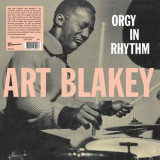
When Billy Eckstine’s band dissolved in the mid-1940s, adventurous drummer Art Blakey spent two years in Africa, where he briefly converted to Islam; back in New York, he gigged with Miles and Monk, before fronting his own Jazz Messengers. 1957’s Orgy In Rhythm drew on the sounds of North Africa and the Middle East, Blakey’s unfettered drumming accompanied by Latin percussionists such as Potato Valdez and Evilio Quintero, with Herbie Mann on flute. The musical arrangement is stunning, at times melodic or primordially rhythmic, but never short of pure brilliance. Overall, an excellent and astounding release!
Sparky Deathcap AKA Los Campesinos! multi-instrumentalist R N Taylor is the first to admit he’s an unlikely candidate for viral stardom. And yet, almost 15 years on from his final EP, Taylor’s alt-folk solo project is now getting a much-deserved reappraisal, entrancing a whole new generation of listeners. Championed by prominent Twitch streamer/YouTuber Wilbur Soot, his beautifully bruised pocket symphony ‘September’ has racked up over 36m streams on Spotify and soundtracked more than 750,000 creations on TikTok. Now, Los Campesinos!’s own indie imprint Heart Swells are delighted to release a newly mixed edition of its parent EP, Tear Jerky. Musically, you can trace the influence of Phil Elverum’s Microphones, of Magnolia Electric Co and Sufjan Stevens, and of Ys-era Joanna Newsom. From the beautifully lo-fi baroque-pop of ‘Glasgow Is A Punk Rock Town’ to ‘Send It To Oslo’s’ maximalist mix of analogue sounds, these ambitious yet intimate compositions prove the perfect foil for deeply autobiographical tales of heartbreak and recovery.
Ever wondered what a Brian Wilson solo album
from 1969 would sound like?
Look no further. (No A.I. needed...)
Exquisitely arranged by ex-Animal Vic Briggs and
featuring several Wrecking Crew musicians who
also played on Pet Sounds, MARK ERIC’s A
Midsummer’s Day Dream is a unique blend of
Beach Boys/Four Freshmen sensibilities coupled
with wistful, lush surf psychedelia.
Defiantly soft, the 1969 LP captured the tail end
of L.A.’s pop innocence perfectly, just as it
slipped into infinity. First time on vinyl since its
original release.
Coming this summer! Our 2002 & 2009 CD reissues
of A Midsummer’s Day Dream caught the soft pop
collector’s world entirely off guard: Very few
were aware of the LP’s existence, and the
reaction was united: A masterpiece was
unleashed and a new generation of daydreamers
was born! The result was glowing reviews in MOJO
and UNCUT, a Japanese edition, as well as soaring
prices for the original long out-of-print vinyl
pressing. The full-colour gatefold jacket includes
EXCLUSIVE, rare photos, and UPDATED and
EXPANDED liner notes that feature the
participation of Mark Eric himself. Reissue
produced, annotated, and designed by STEVE
STANLEY.
A real soul gem from 1970 on the James Brown affiliated Deluxe label, the first and only album by this mysterious singer: Marie Queenie Lyons.
It is perhaps apropos that Queenie Marie Lyons’s best known song is titled ‘See And Don’t See.’ For all the acclaim that song has accrued, and all the times it has been compiled, reissued and, yes, bootlegged — for all the times it has been seen — Queenie herself has somehow remained unseen. How did a singer from Ashtabula, Ohio record one of the great female-led soul albums and then simply fall off the map, never to record or perform again? Queenie was a natural performer and a gifted singer. At the age of fifteen, she was doing three shows a week at a local venue. In early 1962, Queenie moved to Queens and was soon playing gigs across the city — an early engagement was with Gene Krupa at the famous Metropole Café in Times Square — as well as touring with established acts like Fats Domino and Ray Charles. The following year, Queenie made her debut recording, for a subsidiary of RCA called Groove, credited to an entirely fictitious “Shelley Shoop and the Shakers.” It remained Queenie’s only presence on wax until early 1968, when a Nashville-based label called Sims gave her her first accurately attributed single, “A Minute Of His Goodtime / Good Soul Lovin’.” Although the 45 is now a highly collectible part of the Northern Soul and Lowrider Oldies pantheons, it made no impact at the time, as Sims was focused on more typical Nashville sounds. A few months later Queenie was back in New York City, performing R&B and pop covers with her band when a man passed her his business card at a performance. The card read James Brown Enterprises. James Brown “was my idol,” she says, and someone whose business acumen and stage presence she strove to emulate. Although Queenie ended up on tour with James Brown for only a month or so, when the group reached Cincinnati in mid-’68 she entered the King Records studio there to record what would become the
album you hold in your hands. The songs were a combination of covers, some of which she’d been doing in her live shows, like ‘Fever’ and ‘Try Me,’ and originals written by producer Henry Glover and pianist Don Pullen, who was the bandleader on the session. The album opener, ‘See And Don’t See,’ was also recorded by the veteran R&B singer Maxine Brown, but Queenie’s version blows hers away. “Soul Fever” is a supremely funky and soulful affair, with Queenie’s powerful and captivating voice magnetically attractive, with an urgency that is impossible to ignore. ‘Your Thing Ain’t No Good Without My Thing,’ ‘Your Key Don’t Fit It Anymore,’ and ‘I Don’t Want Nobody To Have It But You’ are as funky and soulful as the best of Tina Turner and Aretha — a statement not to be made lightly!
The album was critically acclaimed — the October 10, 1970, issue of Billboard listed it as their sole “four star” pick in the Soul category — but perhaps due to the tumult at Starday-King, whose stewardship had turned over several times in only a few years, it never seemed to be able to break through to a larger audience.
Top-rated West Coast garage sounds from the vaults of maverick genius Gary S Paxton. Acknowledged classics, tantalising obscurities and several previously unheard gems, all from the original master tapes, including tracks by Limey & The Yanks, The Avengers, The Whatt Four, The Buddhas_ among many others. Vintage garage rock is only one of the many tributaries of popular music that the maverick Gary S Paxton recorded and produced in his 1960s heyday, and compared to other genres, the off-kilter genius behind 'Alley Oop' and 'Monster Mash' was hardly prolific with it. But for a producer-engineer of his repute, it was inevitable that Paxton would cross paths with the sudden surge of teenaged rock groups that emerged in the wake of the British Invasion. We've gathered the best of them on "Lost Innocence", and for any aficionado of the genre, a treat is in store. As well as a brace of acknowledged Californian punk classics present and correct for the first time direct from master tape, this rockin' little disc also shares further booty from the Garpax vaults, including some obscurities well worthy of re-appraisal, along with completely unreleased nuggets of note. Counting among the well-known are the Avengers, Bakersfield's top dogs in the punk bracket thanks to snot-nosed missives such as 'I Told You So' and the controversial 'Be A Cave Man'. Ken & the Forth Dimension and Limey & the Yanks serve up the highly regarded items 'See If I Care' and 'Guaranteed Love' respectively, with a trio of ear-opening unissued tracks from the latter as a bonus. Riverside's Whatt Four weigh in with the popular ear-burners 'Our Love Should Last Forever' and 'You're Wishin' I Was Someone Else'. And the Buddhas' title cut is still the most eloquent ode to carnal knowledge in the entire 60s punk pantheon. Compiled by genre expert Alec Palao and originally released by Big Beat/ACE on CD only a few years back, it is now available on vinyl for the first time.
out of Stock
Last delivered 2 years ago available to reorder, subject to availability
Originally released as a hand-numbered CD on New Year's Eve of 2004, Last Light captures Tor Lundvall 's hushed songcraft at its most ghostly and grayscale, stripped bare like branches bracing for winter. Initially conceived of as "a piano album with sparse electronics" (with the working title November), Lundvall's palette steadily expanded, incorporating synthesizer, samples, bass, metronomes, and his signature spectral vocals. A journal entry from the spring of 2002 proved formative to his evolving vision: "I remember watching the blueish-grey light shimmering outside and hearing distant sounds echoing far away, eventually sinking into silence and stillness." The album's 12 tracks are steeped in this sense of autumnal transience, of bearing witness to what fades. The music moves in whispered swells, between dirge, drift, and devotional. Synths chime like slow-tolling bells; percussion shuffles and shivers, icy and isolated; bass traces a low-lidded plod - it's a mode both austere and seductive, lulling the listener into its landscapes of deepening dusk. Lyrically, Lundvall's language skews observational and depressive ("through lace curtains / grey light falls / dark clouds gather / in my soul" ), with each song like a gauzy glimpse into a different tableau framing winter's descent: rust - colored leaves, frozen ponds, cold crescent moons. Lundvall has long considered Last Light a "personal favorite" in his discography, and it's easy to hear why. In texture, finesse, and pacing, it vividly evokes the rare mood of fragile, frosty pastoral noir depicted in his iconic oil paintings. His is an art of the half-seen and half-remembered, of fleeting figures, shapes and shadows, and gathering darkness. Of all that disappears, and the ghosts that never leave: "So I wait / as the years / slowly drain the magic and the light / and the girl / I never loved / haunts me through the dark roads of my life."
out of Stock
Last delivered 2 years ago available to reorder, subject to availability
On Rock Island, their second LP, Palm produces evidence of a distinct musical language, developed over time, in isolation, and out of necessity. On the island, melodies are struck on what might be shells or spines. Rhythms are scratched out, swept over, scratched again. Individual instruments, and sometimes entire sections, skip and stutter. There is the sense of a music box with wonky tension or a warped transmission in which all the noise is taken for signal.
Like other groups so acclaimed for their compulsive live show, Palm has been burdened by the constant comparison between their recorded material and their touring set. On Rock Island, they render this tired discussion moot, using the album form to present that which could never be completely live, reserving for performance that which could never be completely reproduced.
Despite appearing behind the instruments typical of rock music, Palm trades in sounds of their own making. On these songs, one of the guitars and the drum kit are used as MIDI triggers, producing an index that can be combed through later and replaced with new information. The percussion is sometimes augmented so as to suggest a multiplication of limbs. The strings are manipulated to choke, crack, and hum like other instruments, or other bodies, might.
Working again with engineer Matt Labozza, the band spent the better part of a month in a rented farmhouse in Upstate New York. With the benefits of time and space, Palm recorded the various elements piecemeal, only rarely playing together in groups larger than two or three. While some members tracked, others holed up in the next room, experimenting with quantization, beat replacement, and other methods borrowed from electronic music. Even accounting for the many labors that brought them to be, these materials seem produced by an organic logic. Their complex friction forms a habit of thought, scores a network of grooves on the floor of the mind.
This is music with dimensionality. Sonic objects are deployed, developed, and dissected in various states of mutation. The listener flits about between the field and the lab. The tone is warm in a way only the sun could make, the pace as forceful and as variable as a gale. Whether one locates Rock Island in a sea or in a refinished attic (as in Greg Burak's album cover), whether one escapes to there or is banished, its psychic environs are charted clearly enough. Only at this remove from the mainland can we sense the conditions necessary for such a strange species of sound.
Music On Hold's second album raises to its climax an altogether well-cultivated ambiguity between new ambitions and the waiting posture of a band which has never lived up to its name so well. Produced in a cellar in the 7th arrondissement of Paris, supported by Ray Jane and "surrounded by a group of people who manage to concentrate on something for more than 15 minutes", "MOH4Ever" is one of the most personal things that Emile Cartron-Eldin delivers today, "from the salt-dough workshops in kindergarten". Opening, "His Master Voice" transforms the tribute to a recently deceased loved one into a sad clown's dancing homily. With no surprise follows "Wander" and roaming in a Paris traveled up and down at least ten thousand times already. "Music On Hold 4 Ever" then releases the title of this album in a cry accompanied by an invitation to "unplug" his singer. We hear a bit of the group's very first single, "Bread", taken through the prism of Beck's "Up all night". "Citadel", 6'30" end of side A, loudly proclaims as a chain-breaking the nostalgia of truant school and a desire not to die (at least not like Darby Crash). Mixed in - like this entire album - are the versatile ingenuity of LCD Soundsystem and Gorillaz with Italo-disco arrangements from Roberto Zanetti (aka Savage). With "Over", "Home", "Taming a Tiger" and "Last Laugh", side B prolongs the tightrope walker's delirium by summoning in no specific order, memories in Vienna, resumption of excessive consumption, the fact that "the director of the US Federal Reserve is a real fake-ass" and the cynical humo(u)rous swings of a guy overwhelmed by them in an everlasting after-party. From the first LP, "30 Minutes Of..." and its already delayed release, its chopped tour, "Music On Hold 4 Ever" digs a refined pop, no longer as "solar" as some could have described it when everything seemed to be going quickly. Retaining a semblance of immediacy, the 8 pieces of this second album open up new perspectives with their elegant sophistication, in a quite French and truly original touch of DIY and experimentation that the group can pride themselves on. " I'm twenty-nine, and i don't wanna die ".
Listen Here Limited-edition double green/ red vinyl. 12 tracks spread across three sides and a screen-printed fourth side. We are very pleased to announce a special 10th anniversary vinyl version of this classic Dean Wareham live album, recorded over two nights in London back in December 2013 and featuring a mix of songs by Galaxie 500 and Luna as well as solo material. It is pressed on double red and green vinyl, with the 12 tracks spread across three sides and a screen-printed fourth side. The recordings were mixed by Britta Phillips and have been remastered especially for this release by Mikey Young (of Eddy Current Suppression Ring, Total Control and others). The new artwork by Marc Jones includes a printed insert featuring photos from the shows, which almost didn’t happen at all after Dean and his band got stuck on a train between Manchester and London. “We left Piccadilly Station at 12:15 but stopped rolling after just 20 minutes,” he recalls. “A voice informed us that a tree had fallen on the track somewhere up ahead, and this tree was on fire. We sat there for a couple of hours and started to think about alternate ways to get down to London, someone sent out a plea on Twitter and one kind fan did offer to drive us, if only there was a way to get off the train. But at around 3 o’clock the train lurched forward at last, we made it to Euston and cabbed it straight to St Pancras Old Church. “I’m not a believer but there’s something special about playing in churches, especially one that dates to the 12th century; the cavernous spaces and wooden pews make you speak softly and play quietly too – if you play too loud the sounds will just bounce all over the place. And the engineer doesn’t need to add reverb to your vocals – it is there already. “Nat from Sonic Cathedral promoted the shows and had the presence of mind to record them to multi-tracks, and I’m so glad he did. When we got back to Los Angeles, Britta mixed the live tracks, and the result is this record
A1 - Synergy
A long-awaited release for seasoned fans of the label familiar with ASC's DJ sets since creating Spatial, Synergy has been requested for release many times and is finally here - and it hasn't aged a bit. A track which lifts you gradually through a true journey of escalating, dynamic atmospheric soundscapes with crisp detailed break patterns that ebb and flow to an intricate collage of synths, keys and vocal hits to an inquisitive melody. A
stunning piece which somehow has something new to offer each time you hear it.
A2 - Suspended Animation
Conjuring an ethereal feeling with grand atmospheric backdrops reminiscent of early Intense, Suspended Animation is a calming yet suspenseful track which slowly builds with expressive break patterns and minimal kickdrums as subtle basslines rumble below. Long echoing effects and melodies gently nudge the proceedings forward, ASC once again showcasing the diversity of his production toolset.
AA1 - Repetition
It's been a while since a pure two-step drum loop has had this much impact - make no mistake - the breaks of Repetition will bore their way into your brain like Pulp Fiction did in the mid 90's with a thumping kickdrum and stabbing snare tweaked to perfection. While the beats drive the track along, a collage of audio texture surrounds them with a signature female vocal sample closing out phrases filled with finely tuned synthwork.
AA2 - Pharaoh
Landing with immediate impact and building the mood with a subdued urgency, the Hot Pants breaks of Pharaoh surf the dunes of sound to an abundance of sheer atmosphere as ASC crafts a stunningly evocative track which is aptly titled, transporting the listener to mystical Egyptian sands, the synths and horns whispering like the echoes of of a bygone era demanding their timely reprise through the medium of Spatial.
Epic.
Words by Chris Hayes
out of Stock
Last delivered 2 years ago available to reorder, subject to availability
INTRODUCING OAKS23, FROM HAVEN'S LABEL BOSS KEEPSAKES. AFTER YEARS OF PLAYING HIS RECORDS, I AM PROUD TO INTRODUCE THIS SPECIAL RELEASE FROM HIM. IT DIVERGES FROM HIS USUAL INDUSTRIAL CONTEXT AND BRINGING IT MORE TO THE OAKS STYLE, SURE WEAPON FOR DISC-JOCKEYS.
EXPLORING NEW DIMENSIONS TO HIS SOUNDS WITH A FOCUS ON FUNK AND GROOVE, SPRINKLES OF EUPHORIA, ZANY ACID AND HIS USUAL DARK ATMOSPHERES.
out of Stock
Last delivered 16 months ago available to reorder, subject to availability
Kallaikoi is the term used to refer to all the Celtic clans settled in ancient Gallaecia (northwest of the Iberian Peninsula). They were skilled in metallurgy and the production of tools and weapons, and worshiped a variety of deities, some of them related to nature
and war. Although they disappeared as an ethnic group in antiquity due to Romanization and subsequent consequences, their cultural legacy and Celtic influence in Galicia persist until today. Somehow, that ancestral legacy lingers between the grooves of this
release you have in your hands.
The double EP opens with The Transhumans: Techno, syncopated bass drums and industrial nuances appear in 'Ánima'. Ian Axide proposes robust and percussive Techno in 'Antro', while Obseth lets arpeggios fly in 'Pink Pills'. These tracks are indebted to that
Techno reminiscent of the late 90s golden years monolithic sound.
Side B opens with the local heroine and co-founder of Archaic, Proyecto Inopia, who opts for resounding rhythms and synth sequences sharp like shark teeth, seemingly paying homage to earlier decades in 'Hécate'. Mist Gasp also follows a metallic monotrax line in 'Standarte'. And the first 12” closes with Brai’s '75', where he unleashes Techno meets New and Synth Wave with a nod to the 80s.
The second EP lowers the intensity and tempo, opening with the calm and nostalgic Electro from Synth Alien in 'Pakhum'. Local artist Lefrenk raises the tempo and intensity in arpeggios in a propulsive Electro-Techno wave in 'Fenix'. And also from A Coruña, Roi controls the beats in an electro base that advances later towards obsessive and lacerating synths in 'Melusa'.
The last side of the double album is opened by David Karro with 'Ionosphere', a track with unsettling synths that doesn't need beats to shape its hypnotic and nebulous character. 27 003 delves into the sounds of classic Electro drum machines in 'Sweet', also with clear IDM and dreamy evocations. Corrosivo continues in that vein, with marked Sheffieldier echoes in 'Fast Food'. The EP is closed by Death Whistle with one of his usual opuses where darkness, beauty and epic coexist.
out of Stock
Last delivered 2 years ago available to reorder, subject to availability
"Dance My Hurt Away" is the first single from the debut album by The Faithful Brothers from Tel Aviv/Israel.
Is there a Northern Soul scene in Tel Aviv? The surprising answer is – yes, there is. If you're a soulie and in town, look for the Tel Aviv Soul Club, and you might find yourself swaying across a talcum-powder covered floor to Tel Aviv's own unique blend of classic Northern Soul 45s and early 1960s R&B sounds.
Chances are that those 45s will come out of the record boxes of one of the brothers Neeman, Johnnie and Bin. Tel Aviv Soul Club, aka TASC, is the brainchild of Yashiv Cohen, a DJ who, in 2006, lured the brothers Neeman, whose massive soul collections been hitherto confined to their respective living rooms, into playing their records to the Tel Aviv public. Yashiv is also the lead singer of Men of North Country (MONC), a Tel Aviv band with a distinct sound, blending rock, British pop and soul. Since Neeman means Faithful in Hebrew, Yashiv woke up one morning with the crystallization that MONC must create a spin-off, a more puristic soul band, called the Faithful Brothers. It took a few more years, but gradually the brothers succumbed to their fate, to continue their musical progression, from collectors to DJs to musicians. Johnnie took his guitar, Bin took to the piano, and the brothers began pouring out some of their influences, creating new songs. It is finally all coming together now.
out of Stock
Last delivered 2 years ago available to reorder, subject to availability
After her stunning and well acclaimed debut album 'For Trainspotters Only' Ann Eysermans now releases 'Moonlight Shadoh', a tribute to her dog Shadoh. A record on which she explores the bond between herself and her faithful canine friend, Shadoh, through an extraordinary musical odyssey.
Ann Eysermans masterfully weaves together a tapestry of field recordings, candy-like harmonies,and Shadoh's distinctive houndly expressions. Creating otherworldly compositions that transcend genres which include recorded and integrated snarling feedback sounds. From the hauntingly beautiful melodies to the experimental sonic landscapes, every track tells a story that resonates deep within your soul.
Feel the heartbeat of Shadoh as his barks, whimpers and playful antics merge seamlessly with Ann's soothing vocals,harp and viola da gamba. These evocative arrangements will transport you to a realm where the bond between human and dog is translated into an aural spectrum swaying between desolate harp sounds, recollecting the eerie Jandek spirit lacing with doomy, and catchy as hell, new beat vibes.
Moonlight Shadoh is an exceptional journey blending acoustic instruments, phonic melancholy, analogue tape footage of Ann's personal sound archive and audio poetry.
RIYL:
Cross dressed Jandek in a vegan mood, Claire Rousay on expired XTC, Andy Stott with a hangover, William Bassinski on a happy moment, Kali Malone discovering new beat, Mica Levi in a dog shelter and other excellent music.
out of Stock
Last delivered 11 months ago available to reorder, subject to availability
It’s rare to come across new talent that hits the spot with their music at just the right time. But then again you never know when it will happen, when that right one comes along, and for Vega Records that time is now. Mr. X a young new talent from Northern Jersey, USA takes it to the raw underground with driving electronic stabs and a deep pulsating bassline with swinging beats and unique perc sounds that pop in and out abruptly within the arrangement on the track entitled “The Curse” on Side A1.
Early distribution of the track to impacting djs in the dance scene, Honey Dijon, Kenny Dope, Anané, Luke Solomon, Melvo Baptiste, Joseph Capriati, & Louie Vega have all been championing the new hot track entitled “The Curse”. Side A2 “The Underground” has a hooky flip flop keys action happening with vocals saying “Thank You” creating a hypnotizing groove ala Mr. X Style. The B-side of the 12” starts with a steaming revisit to “The Curse” giving it another life on the dance floor along with the sample hits and catchy groove on “B-Side Only” created only in the way Mr. X can to make you jump on the dance floor. All hot club bombs, CATCH THE FIYAAAH
out of Stock
Last delivered 2 years ago available to reorder, subject to availability
Gaucho — Steely Dan's Grammy-winning seventh studio album now on UHQR!
Definitive reissue Ultra High Quality Record, the pinnacle of high-quality vinyl!
45 RPM LP release limited to 20,000 numbered copies
Mastered by Bernie Grundman from a 1980 analogue tape copy originally EQ'd by Bob Ludwig
Pressed at Quality Record Pressings using 200-gram Clarity Vinyl®
Purest possible pressing and most visually stunning presentation and packaging!
Tip-on old style gatefold double pocket jackets with film lamination by Stoughton Printing
Gaucho — the iconic seventh studio album by Steely Dan, released in November 1980 — and Grammy-winner for Best Engineered Non-Classical Recording, was also Grammy-nominated for Album of the Year and Best Pop Performance by a Duo or Group with Vocals. The album represents the band's musical evolution towards a more polished and sleek sound, featuring a collection of meticulously crafted songs that blend jazz, rock, and pop music, while exploring themes of decadence, longing, and disillusionment.
Gaucho opens with the title track, a jazzy instrumental piece that sets the tone for the rest of the album. The standout tracks on the album include "Hey Nineteen," a catchy and upbeat tune that features a memorable saxophone riff and lyrics about an older man's attraction to a young woman, and "Babylon Sisters," a funky and groovy track that showcases the band's impeccable sense of rhythm and melody.
The sessions for Gaucho represented the band's typical penchant for studio perfectionism and obsessive recording technique. To record the album, the band used at least 42 different musicians, spent more than a year in the studio, and far exceeded the original monetary advance given by the record label. Still, the album features multiple layers of instrumentation, carefully crafted arrangements, and the use of top-notch session musicians to create a lush and sophisticated sound that is uniquely Steely Dan.
Despite its critical and commercial success, Gaucho was a challenging album to make. During the two-year span in which the album was recorded, the band was plagued by a number of creative, personal and professional problems. MCA, Warner Bros. and Steely Dan had a three-way legal battle over the rights to release the album. After it was released, jazz musician Keith Jarrett was given a co-writing credit on the title track after threatening legal action over plagiarism of Jarrett's song "'Long As You Know You're Living Yours."
Gaucho marked a significant stylistic change for the band, introducing a more minimal, groove- and atmosphere-based format. The harmonically complex chord changes that were a distinctive mark of earlier Steely Dan songs are less prominent on Gaucho, with the record's songs tending to revolve around a single rhythm or mood, although complex chord progressions were still present particularly in "Babylon Sisters" and "Glamour Profession." Gaucho proved to be Steely Dan's final studio album that Donald Fagen and Walter Becker would make together until the year 2000.
Gaucho reached No. 9 on the U.S. album chart and was certified platinum-selling. "Hey Nineteen" reached No. 10 on the U.S. Singles Chart and went to No. 1 in Canada. Pitchfork, in its review, describes the almost "pathologically overdetermined production" as elegant, arid and a little forbidding. "Every last tinkling chime sounds like it took 12 days to mix, because chances are, it did." The New York Times deemed Gaucho the best album of 1980, beating out Talking Heads' Remain in Light and Joy Division's Closer.
Founded by core members Walter Becker (bass) and Donald Fagen (vocals, keyboards), Steely Dan's popularity rose throughout the late 1970s on, and their seven albums throughout that period of time blended elements of jazz, rock, funk, R&B, and pop. Steely Dan created a sophisticated, distinctive sound with accessible melodic hooks, complex harmonies and time signatures, and a devotion to the recording studio. Becker and Fagen, with producer Gary Katz, gradually changed Steely Dan from a performing band to a studio project, hiring session musicians to record their compositions. The duo didn't perform live between 1974 and 1993. But their popularity nevertheless grew throughout the '70s as their albums became critical favorites and their singles became staples of Adult Oriented Radio and pop radio stations.
After a brief battle with esophageal cancer, Walter Becker died on September 3, 2017 at the age of 67. Steely Dan has sold more than 40 million albums worldwide and were inducted into the Rock and Roll Hall of Fame in March 2001. VH1 ranked Steely Dan at No. 82 on their list of the 100 Greatest Musical Artists of All Time. Rolling Stone ranked them No. 15 on its list of the 20 Greatest Duos of All Time.
This stereo UHQR reissue will be limited to 20,000 copies, with gold foil individually numbered jackets, housed in a premium slipcase with a wooden dowel spine.
Gaucho remains a testament to Steely Dan's enduring musical legacy and their ability to create timeless music that transcends genre and style.
The A side of this 45, a brand new track from Aaron Frazer, is about how pressure makes diamonds. The last couple years have been really challenging, especially for those navigating relationships amidst the chaos. This song celebrates the connections of love that are strong enough to weather any storm, and the certainty that comes from making it through together. The B side features a track from Aaron's first solo LP, Introducing. Lyrically, Frazer sounds lovesick; the imagery he paints of demons "so close behind" and the repetition of these lyrics emphasize his longing. The song starts with piercing guitar, dark bass, and chime piano and Frazer himself drums throughout the song. The orchestration is swell while the strings and voices blend well with the transcendent feel of the music.
out of Stock
Last delivered 2 years ago available to reorder, subject to availability
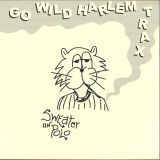
NYC's Sweater on Polo delivers a hammering six track mini lp for L.I.E.S. indebted to the sounds of early-90s psychedelic Chicago house, names like Gherkin and Pierre come to mind but the young producer tastefully and effectively puts his own vision to the forefront with this release.
In the confused world of modern dance music production, Sweater on Polo, throws all trends aside and sticking to the bare essentials...letting the 808s,303s,727s do the job and making this one of the most crucial modern House records to come out of New York City in many years. Many producers these days stake a claim to this music and it falls short, plain and simple, Sweater on Polo is the most promising young producer in the city these days and this record puts it on display. Highly recommended!
out of Stock
Last delivered 2 years ago available to reorder, subject to availability
Seven Steps to Heaven arrived at a crucial junction in Miles Davis' career. Recorded at two separate locations in spring 1963, it served as Davis' first release in more than a year – a layoff that was then unprecedented for the jazz visionary who had issued at least one LP a year since debuting in the early '50s. Equally notable, Seven Steps to Heaven marks the point at which the core of Davis' Second Great Quintet started to assemble. The twice Grammy-nominated effort is also Davis' final studio record to blend standards with originals. And it happens to be one of the expressive, well-played albums in the jazz canon.
Sourced from the original master tapes, pressed at RTI, and housed in a Stoughton gatefold jacket, Mobile Fidelity's 180g SuperVinyl LP of Seven Steps to Heaven adds yet another step (or more) towards the bliss suggested by the album title. Playing with standout clarity, detail, tone, and balance, this audiophile reissue pulls back the curtain on the instrumentalists. Afforded the tremendous advantages of SuperVinyl – including a nearly inaudible noise floor, dead-quiet surfaces, and superb groove definition – this numbered-edition version presents Davis and Co. amid a wide, deep soundstage whose dimensions and solidity help bring the record's historical importance and musical merit into focus. Warm, organic, and present, the SuperVinyl LP of Seven Steps to Heaven is what great-sounding hi-fi is all about.
And there's nary a passage on this 1963 landmark that isn't great. That Davis manages to make it feel so cohesive and seamless is a testament to the inspired performances and engaging compositions. Davis didn't draw it up the way it unfolded. No matter. He held trump cards that stayed up his sleeve for the next three decades: A drive to be nothing less than superb, a refusal to settle for mediocrity, and standards to which nearly no other composer or player could match. "The toughest critic I got, and the only one I worry about, is myself," Davis wrote in the liner notes. "The music has to get past me."
Davis' demanding approach partly explains why he switched up his band between the first and second sessions – and underscores how fast his mind was racing with new ideas. Seven Steps to Heaven acts as the stable bridge between the transitional period that followed the dissolution of his First Great Quintet and formation of the Second; without it, Davis perhaps doesn't invite then-23-year-old Herbie Hancock and a still-teenage Tony Williams into the fold. The trumpeter not only got his men – he preserved in amber for the only time (well, magnetic tape anyway) the chemistry and vibe he achieved with pianist Victor Feldman, drummer Frank Butler, tenor saxophonist George Coleman, and bassist Ron Carter.
That line-up gels for half of the six songs on Seven Steps to Heaven. Captured in Los Angeles April '63, the quintet stretches out on a luxurious reading of the late '20s New Orleans staple "Basin Street Blues"; lays on the romance for a candlelit stroll through the '40s standard "I Fall in Love Too Easily"; and explores the rounded contours and melodic crevices of the early blues "Baby Won't You Please Come Home." The performances are refined, elegant, emotional; the band lets the feelings linger and gives the listener time to absorb the colours and textures.
A month later, Davis returned to New York City with Coleman and Carter, and partnered them with Hancock and Williams. Tellingly, the quintet tried its collective hand at the title track and "Joshua" – Feldman-penned songs already recorded in Los Angeles – as well as the yearning "So Near, So Far." Those are the tunes that comprise the other piece of Seven Steps to Heaven, with the revised quintet's liquid pulse, articulate dynamics, and timing shifts a harbinger of things to come.
It's also worth mentioning that the interpretations of the bounding "Seven Steps to Heaven" – a showcase for Davis' trumpet – and interlocking "Joshua" netted considerable radio airplay and attracted the attention of other contemporaries who covered the songs. Keeping Carter and Williams as the rhythmic engine, and Hancock as the anchor between solo flights and structural motifs, Davis would soon soon welcome Wayne Shorter into the family and transform jazz. Again. The aptly – and, in hindsight, perhaps prophetically titled Seven Steps to Heaven – is how he got there.