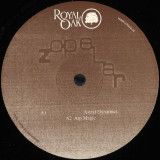
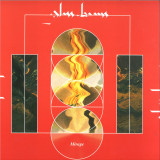
"Zopelar makes his debut on the Clone Royal Oak series with a 4 track Ep, delivering some of his unique blend of house grooves firmly rooted in the 90's Chicago, New York and Detroit house traditions. Pedro Zopelar is a musical wizard from Sao Paulo and is twisting the classic sounds and production methods into a fresh sonic Brazilian Caipirinha cocktail."
out of Stock
Last delivered 16 months ago available to reorder, subject to availability
Roll up Roll up! We have a very tasty package for APPIAN019 and have reverted to a Various Artist format for this one. Here we share 4 sets of artists that have been on our radar for some time - some new joiners to Appian and some old friends : ) We think each track stands out from their past discographies and offers something special.
Audio alchemist Damian Lazarus continues to redefine the boundaries of electronic music with his fifth studio album, ‘Magickal’.
Renowned for his unparalleled ability to craft transformative sonic journeys, Damian Lazarus is a master of rhythm, melody, and vibration—a true pioneer among his generation’s visionary artists. Damian’s broad depth of experience encompasses a variety of disciplines: tastemaker, selector, label owner, A&R and a Grammy-nominated artist in his own right - each informed by his unique ear for sound. He is chief wizard of the hugely influential and culture-defining Crosstown Rebels label, a globally renowned DJ with a penchant for exotic outdoor locations and a highly regarded recording artist with four albums and a plethora of solo cuts, collaborations and remixes in his sprawling discography.
With his fifth album, ‘Magickal’, Damian steps into his next evolutionary phase, combining his newly found sobriety with a more mature outlook while still pushing boundaries and creating unforgettable moments. At the root of it all is the magical power of togetherness and human connection that only music can facilitate. Driven by this core ethos, Damian continues on his mission to share his heartfelt music, taking the dance floor into unexplored realms of experience, facilitating moments of transcendence, bliss and pure, unadulterated magic.
Damian Lazarus, the avant-garde architect of spiritually nourishing sounds, is joined by a stellar lineup of collaborators on his latest excursion. It’s imaginative and mystical, rhythmically captivating and daring in its own way, as is typical of Damian’s approach. Taking consideration of his past, the album references his previous work to create a tapestry of compositions that tap into the energy of key moments from his discography. Drawing on his existing catalogue creates cohesive through lines and thematically serves as a continuation of previous stories. November’s single, ‘Sunrise Generation’, for instance, works as a companion to ‘Vermillion’, which was recorded by Damian with his band The Ancient Moons and vocalist Moses Sumney back in 2015. ‘Sunrise Generation’, featuring the beautiful vocals of Fink, was Damian’s first major release since his Grammy-nominated 2021 collaboration ‘Don’t Be Afraid’ with Diplo and Jungle, and continues to take inspiration from global gatherings at solstice and those moments of collective awe at sunrise.
Indeed, the album’s themes of mental elevation and psychedelic sonic journeys are evident throughout. Damian channels this energy through tracks like the soulful ‘So Low’, featuring the incredible Zoe Kypri, and the luminous ‘Searchin’, with Jem Cooke, whose collaboration with Damian dates back to ‘Flourish’ (2020) and lead single ‘Into The Sun’. Uplifting is the operative word here, as Damian aims straight for our hearts and inner selves, stripping away the layers to take us on a trip inwards, and out into the ether all at once. There’s a clear nod to Damian’s appreciation of amapiano when he teams up with Ghanaian interdisciplinary healer Jojo Abot on ‘Warrior Dance’. Old friend and inspirer Mathew Jonson brings his virtuoso touch to ‘Are You Dreaming?’, while TEED and A-Trak form an awesome alliance for ‘Falling Down’ with its heartrending vocals. ‘Alive’ features the Bloom Twins, and also additional production from acclaimed producer Mark Ralph, who incidentally worked on Damian’s debut album ‘Smoke The Monster Out’ in 2009 and forms another throughline to the past. ‘Alive’ blends pop sensibilities and song structure with Damian’s inimitable sound - and could become one of Damian’s biggest moments to date. ‘La Hija De Juan Simon’ delves into the Latin energy synonymous with vibrancy and self-expression as Damian teams up with acclaimed Spanish flamenco-influenced duo Mëstiza. On a solo tip, he rolls out with the eight-minute-plus soulful funk flex ‘Why Don’t U’.
In a suitably aligned instance of serendipity, the arrival of ‘Magickal’ comes at a pivotal period in Damian’s life, just as it has been with previous album concepts. Albums made and released during big shifts in his life speak to the correlation between growth, personal evolution, creativity, catharsis and sharing that process musically. The last album ‘Flourish’, for instance, was recorded and released in the space of a few months during the first summer of the global pandemic. As a result, there’s a kind of vulnerability in the music, a subtle story that’s being told with emotional touchpoints that will be relevant to anyone listening. The universal human experience and spectrum of emotions are things almost everyone can relate to. With the enhanced clarity of his sobriety, Damian’s compositions embody the uplifting nature of simply being alive, connected and unified in our love for music and one another.
Day Zero, Damian’s iconic annual festival, is intrinsically linked to ‘Magickal’. It’s the setting for his imagination when producing the music, it’s the launchpad for each year’s kaleidoscopic adventures around the world, and this year’s edition will be the backdrop to the release of ‘Magickal’. As the pinnacle of Damian’s annual experiences, Day Zero marks a vital milestone for his artistry, an extension of his inner realm, carefully curated and created for his global family of lovers and dancers to revel in the awe-inspiring beauty of Mother Nature. Central to the ethos of Day Zero is its sustainability practices and deep consideration for the locality within which it is held. Connections with local elders embolden its depth, cultivating a strongly aligned purpose with the ritual, customs and energy of the land and its people.
‘Magickal’ will be released in the same week as Day Zero, tying the two projects together in a neat dovetail. 12 years since it started, Day Zero continues to play a significant role in the music Damian makes, curates and plays. For him, it’s the epitome of his vision: a stunning natural setting, the very best party people from around the world, an unparalleled lineup of friends and family, high production values, eco-centric policies and music from another dimension. With these interdimensional transmissions, Damian channels his inner alchemist, which, in turn, permeates into the vibrational framework of ‘Magickal’.
Never one to adhere to convention, Damian has opted for a disruptive album release. ‘Magickal’ is to be kept under wraps and then announced and released on Crosstown Rebels on 8th January 2025, bypassing the modern trend of prolonged single drops and ‘tombstone’ album releases. ‘Magickal’ is the embodiment of Damian and his intentional, against-the-grain approach and reinforces the album as a complete artistic statement, offering listeners the full cohesive experience from the very beginning. This is a return to the album as the pinnacle moment and not the afterthought. Singles, edits and remixes will follow the ‘Magickal album’ release, and, of course, there will be a world tour to promote the album (including Glastonbury and Coachella) and a chance to present the album in exciting, innovative and unique ways.
Forever dreaming, a sincere student of magic, new and old, social sorcerer, lover of nature and master of musical wizardry, Damian Lazarus is a potent force. With ‘Magickal’, he reaffirms his place as one of electronic music’s most influential figures, taking listeners on a profound journey into sound, spirit, and connection.
out of Stock
Last delivered 6 months ago available to reorder, subject to availability
Lascelles Perkins was one of the first stars of the Jamaican music scene. Studio One's leading balladeer and one of the most underrated singers from that time. Lascelles Perkins sang sentimental ballads and he scored massive local hits for Coxsone Dodd's Studio One label. Songs like 'Lonely Moments' and 'Together Forever' other big hits followed 'The Mighty Organ' song as a duet with Hortense Ellis, Alton Ellis' sister, 'Destiny' and a whole catalogue of standards or foreign songs as they were called. Lascelles could sing any song, make it seem effortless and at the same time address it in his own unique style.
Lascelles Perkins was present at the birth of Studio One, at the initial sessions carried out in 1959 alongside the other big singers of the day, Alton Ellis and Basil Gabbidone. The session took place at Federal Studios and as was the method of recording at the time, the studio would have one mic hanging down in the middle of the room. The singer would be nearest to the mic and the musicians, depending on how loud their instrument was, would place themselves accordingly in the room. Everything was one take or you would have to record the whole song again. The singers and the musicians would have to be at the top of their game and would be paid for each side they cut. Doing things over would mean less songs finished, time and money was tight but this discipline made the great records we know today.
We have captured Mr Perkins on some lost tapes from producer Bunny Lee's archive that capture Lascelles singing some of the big Studio One hits of the day.
'Rain from the Skies', 'Stick By Me', 2Love me Forever' and 'No Man is an Island'. Alongside other great tunes from the time like 'Dancing Mood', 'Pledging My Love', 'Take My Hand', 'Never Never' and 'Dinner For One'. Let's hope this set gets Lascelles Perkins back on the musical map and listened to by a whole new audience. Top tunes performed in a style that seems effortless yet is only possible if one has the taken tot pull it off and Mr Perkins has it in bundles. Hope you enjoy the set.......
out of Stock
Last delivered 18 months ago available to reorder, subject to availability
Enigmatic producer ANiML returns to the freeform Los Angeles-based label StrataSonic to release a six-track mini album, Star Walk. The new body of work, which comes alongside a new music video for “Bruv” (directed by Spanish visual artist YZA Voku), is out now.
Picking up where ANiML left off with “Breather” and “Bruv,” Star Walk elaborates further on that woozy-yet-sophisticated psychedelia, materializing as cinematic trip-hop, cavernous dub, and other unique genre concoctions across its six tracks. “Cherry,” with its free-spirited, delay-soaked guitar riffs, depicts a colorful, post-rock-inspired soundscape. “BabyD,” in step with “Bruv,” features a mischievous marimba melody among ghostly vocal samples, a punchy drumkit, and a slackened bassline.
These scenes are brought to life thanks to YZA Voku, a groundbreaking visual artist who is at the forefront of AI-assisted filmmaking in the animation space (see his work for The Weeknd, Swedish House Mafia, Hï Ibiza, and XG). The new music video for “Bruv,” out today, unfolds in stark black, white, and red, evoking a noir-inspired aesthetic steeped in mystery and intrigue. Shadowy figures move rhythmically through dimly lit alleys and smoke-filled ballrooms, blending calculated steps with hypnotic dance sequences.
The production blended real-life recordings with digital effects like blur, negatives, masks, analog textures, and AI-driven transformations using Runway’s video-to-video tools. AI-generated sequences created with Midjourney and Runway were merged to contrast real footage with synthetic imagery. This type of work is a rejection that AI is simply used as a shortcut in art and comes at a time when musicians are beginning to embrace such tools for the visual components of their products.
out of Stock
Last delivered 18 months ago available to reorder, subject to availability
DJ Support: Alix Perez, Kasra, DJ Flight, Fabio, Grooverider, Simula, Bou, G Jones, Of The Trees, SHY FX, Enei, Workforce, Visages
A new various artists series from Gemini Gemini, focusing on a wide range of styles from established names as well as emerging talents. Part one is a 12 track compilation that moves through the soulful sounds of you'd come to expect from the likes of Halogenix, Monty, Satl, Verbz & Zar, plus soulful contributions from typically dancefloor artists like En:vy and Azotix, as well as music from fresh talents Archangel and Fonts. Moving through to the more ominous club sounds of Halogenix, Quartz and Koherent, and finishing off with the VIP of 2023's dubstep anthem, PFTD by Halogenix and Strategy.
out of Stock
Last delivered 7 months ago available to reorder, subject to availability
The tenth release represents a long and true friendship between us from Club Vision and Atimpuri, the producer of the EP “Epic Wave”.
On the A-side, the opening track “Critical moments” gives an instant message of what is to come, a positive energy a light breath of house bringing the dance floor into a state of euphoria. “Epic Wave” the trance journey, energetic drums, hypnotic leads, a rif that keeps playing in your head.
On the B-side “Morning Crying” recalls from the beginning the 90s house sound, pads that transport to another dimension, the bass line gives that aggressive touch and makes the track complete. “Smwm” is a timeless break track, an arrangement of sweet sounds, string pad and deep fx conclude this fantastic EP
Atimpuri managed to capture elements from the past and present giving them a new perspective through his sound. Club Vision records will release this EP at the end of February 2025
out of Stock
Last delivered 13 months ago available to reorder, subject to availability
Portland's Paul Dickow, the man behind the Strategy alias, is back with a new album that has been created with a 1989 model sampling keyboard. Exploring its limitations, he plays the sampler by hand and abandons sequencers for a more organic approach which apes a guitarist's connection to their instrument. The record delves into glacial, pensive soundscapes where experimental, ambient and dance music elements all come together with deliberate intention. Though Dickow crafts a sound rooted in ambient techno futurism it is one open to serendipitous, experimental outcomes which makes it a gently unpredictable listen and otherworldly charmer.
Electronic music at its best offers a tantalising glimpse of the future, capturing the moment of conception where new worlds and genres are brought into being. Amsterdam-via-Berlin label Q1E2 (standing for “quality first, ego second”) embodies this expansive promise on their new various-artists compilation, a thrilling speed-run through the cosmic outer-reaches of contemporary club sounds that highlights the work of essential emerging producers from around the globe.
Milan producer Jack Bags opens the proceedings with “Natural Thing”, an astral deep-dance immersion with zero-gravity synthesizer pads and skeletal dub percussion that echo out through the void, sensuous vocal samples arriving like scattered transmissions from the stereo of some long-lost spacecraft. datSIM’s “Influx” races through kaleidoscopic sci-fi spacescapes, presenting a futuristic reimagining of UK bass sounds with dextrous organ melodics and widescreen atmospherics. Mike Riviera and Marco Ohboy bring us back down for a more earthly kind of ecstatic experience, cranking up the humidity and coaxing out the endorphins with the appropriately-titled “Euphoria” - a rugged, rave-adjacent heater that cleverly rearranges elements of classic house and garage into a decidedly modern club workout.
Elsewhere there’s a distinctive undercurrent of jazz flowing through the compilation, mapping out thrilling new evolutions of the music on and off the dancefloor. Dr Sud’s mesmeric rhythm excursion “Zaffiro” unfurls like the coils of a cosmic serpent, tessellating percussion and slinking subs tracing intricate beat geometries. A Soft Mist Production’s “Upside Down Rainbows” settles in for the afters with smoked-out soulful atmospherics, syrupy vocals curling and turning in the air like smoke vapors from the last vestiges of a still-lit cigarette. The Rabbit Hole’s “Tail Groove” closes out the proceedings with a surprising bait-and-switch - opening on lustrous lounge piano that could have been comped straight from a Bill Evans record, the track quickly gives way to interstellar bass ‘n’ breaks. The producer’s canny use of cello licks adds a grounded, organic feel, jazz futurism that recalls Photek or LTJ Bukem’s sampling experiments.
Taken together, the label’s new compilation provides a snapshot of a scene in constant evolution, taking the temperature of the modern electronic scene and finding it to be in rude health.
Written by Matthew Fidler
out of Stock
Last delivered 18 months ago available to reorder, subject to availability
Kneading dough is tricky – you should know how it’s supposed to feel. If you try too hard you could make it worse. It’s a beautiful practice – creation with a gentle touch, to work at something so it can be left alone. “If it’s too drawn out it’s awful. It’s easy to give too much.” Dance in the mirror. Contemplate your veiny hands. Who do they remind you of?
You begin by mixing flour and water. “What happens when your people die? Why’d they move the rock to the other side of Ulster Park?” Eliza Niemi asks two seemingly unrelated questions in a rising melody with guitar accompaniment, like fingers playing spider up to the nape of your neck. Gentle pressure. Strands of gluten form to bind the mix. A new question lingers in the binding. When she admits “but I don’t know how to tell if I’m feeling it or not,” that question surfaces through the text. It is reiterated throughout the album. When I’m working with dough I think the same thing to myself.
On Progress Bakery, her second album as a solo artist, Eliza knows to leave some questions alone – to let juxtaposition and tension be the proof. It doesn’t have to be hard. The feelings and revelations they provoke rise in the heat. The smell is sweet. Crispy on the outside and soft all the way through. She playfully slip-slides through words and sounds and images, delighting in surprise, skimming ideas like stones cast across clear water, touching down briefly with uncommon grace.
The question provoked between those opening lines resurfaces in the strands between songs – “Do U FM” is fully formed and beautifully layered, while “Novelist Sad Face” is a short, acapella rendering of gentle curiosity. What is holding these ideas together? Some songs demand more, seem to carry a whole load – eventually the skipping stone will halt to sink and resume its idle duty – while others drift in and out of focus, the way thoughts and dreams become interwoven before the mind is sunk into true sleep.
Music and words don’t always have to interact. Where she decides to keep them apart gives a new contour to where and how she puts them together. The kind of thing you’re supposed to take for granted with songs and their singers comes alive in Eliza’s hands – the little miracle of mixing, kneading, stretching, and stopping.
So often on Progress Bakery, Eliza teases out truth and meaning by asking questions. “Do I wanna be crying?” “Do you want me good or do you want me bad?” “Do I need an eye test?” “I’m writing songs in my head while you’re going over stuff with me — is that cruel??” In “Pocky” Eliza ends with a question that feels to me like the actual biography, succinct and revealing:
I don’t wanna be made to see
I just wanna ask “what’s that?”
Grace that ought to be rare, but in its care and precision is offered humbly, with great generosity, and without announcing itself. Eliza’s simple, miraculous music is given further form and shape by a group of collaborators – invaluable guest musicians Jeremy Ray, Evan Cartwright, Steven McPhail, Kenny Boothby, Ed Squires, Carolina Chauffe, Dorothea Paas, Louie Short, and Avalon Tassonyi. Together with Louie Short, who recorded, mixed, and produced the album along with Jeremy Ray and Lukas Cheung, Eliza has cultivated a richness in sound and texture that prods and provokes the ticklish ear. Barely audible guitar tinkering, a brief lo-fi field recording of trumpets, the harmonic clicking of a looped synthesizer, a flourish of reeds, a child’s conversation, each uncanny sound perfectly placed, rippling out under a soft breeze.
Lay in bed alone at night and ask aloud to the stillness,
“What were you doing at the Albuquerque Airport?
What were you doing there??”
And hear your question answered by a dream of swelling, undulating cellos. Try to grasp at the melody and structure. It’s not an answer (if there could be one), but it moves deeper, closer to the weird layer of fleeting moments and disconnected images, barely perceptible at its core. Wait for the dream reel to click into place.
Eliza took me for a ride in Nicole (her beloved Dodge Grand Caravan) and told me she’d been thinking of the album as an embodiment of transition – and I think every transition, known or unknown, carries the weight of new meaning, skittering off the surface tension of life as you know it, creating ripples, sometimes bouncing off and sometimes breaking through. There is a trick you can use to tell if a dough is glutinous enough. You’re supposed to stretch it out as thin as you can without breaking it and hold it up to the light. If you can see through, even if it renders the world murky and uncertain, you should leave it alone. I love this trick. It’s one that Eliza seems to know intuitively: work gently and ask questions and don’t always expect answers, and when you can, take a glimpse at something new, and then leave.
Kneading dough is tricky – you should know how it’s supposed to feel. If you try too hard you could make it worse. It’s a beautiful practice – creation with a gentle touch, to work at something so it can be left alone. “If it’s too drawn out it’s awful. It’s easy to give too much.” Dance in the mirror. Contemplate your veiny hands. Who do they remind you of?
You begin by mixing flour and water. “What happens when your people die? Why’d they move the rock to the other side of Ulster Park?” Eliza Niemi asks two seemingly unrelated questions in a rising melody with guitar accompaniment, like fingers playing spider up to the nape of your neck. Gentle pressure. Strands of gluten form to bind the mix. A new question lingers in the binding. When she admits “but I don’t know how to tell if I’m feeling it or not,” that question surfaces through the text. It is reiterated throughout the album. When I’m working with dough I think the same thing to myself.
On Progress Bakery, her second album as a solo artist, Eliza knows to leave some questions alone – to let juxtaposition and tension be the proof. It doesn’t have to be hard. The feelings and revelations they provoke rise in the heat. The smell is sweet. Crispy on the outside and soft all the way through. She playfully slip-slides through words and sounds and images, delighting in surprise, skimming ideas like stones cast across clear water, touching down briefly with uncommon grace.
The question provoked between those opening lines resurfaces in the strands between songs – “Do U FM” is fully formed and beautifully layered, while “Novelist Sad Face” is a short, acapella rendering of gentle curiosity. What is holding these ideas together? Some songs demand more, seem to carry a whole load – eventually the skipping stone will halt to sink and resume its idle duty – while others drift in and out of focus, the way thoughts and dreams become interwoven before the mind is sunk into true sleep.
Music and words don’t always have to interact. Where she decides to keep them apart gives a new contour to where and how she puts them together. The kind of thing you’re supposed to take for granted with songs and their singers comes alive in Eliza’s hands – the little miracle of mixing, kneading, stretching, and stopping.
So often on Progress Bakery, Eliza teases out truth and meaning by asking questions. “Do I wanna be crying?” “Do you want me good or do you want me bad?” “Do I need an eye test?” “I’m writing songs in my head while you’re going over stuff with me — is that cruel??” In “Pocky” Eliza ends with a question that feels to me like the actual biography, succinct and revealing:
I don’t wanna be made to see
I just wanna ask “what’s that?”
Grace that ought to be rare, but in its care and precision is offered humbly, with great generosity, and without announcing itself. Eliza’s simple, miraculous music is given further form and shape by a group of collaborators – invaluable guest musicians Jeremy Ray, Evan Cartwright, Steven McPhail, Kenny Boothby, Ed Squires, Carolina Chauffe, Dorothea Paas, Louie Short, and Avalon Tassonyi. Together with Louie Short, who recorded, mixed, and produced the album along with Jeremy Ray and Lukas Cheung, Eliza has cultivated a richness in sound and texture that prods and provokes the ticklish ear. Barely audible guitar tinkering, a brief lo-fi field recording of trumpets, the harmonic clicking of a looped synthesizer, a flourish of reeds, a child’s conversation, each uncanny sound perfectly placed, rippling out under a soft breeze.
Lay in bed alone at night and ask aloud to the stillness,
“What were you doing at the Albuquerque Airport?
What were you doing there??”
And hear your question answered by a dream of swelling, undulating cellos. Try to grasp at the melody and structure. It’s not an answer (if there could be one), but it moves deeper, closer to the weird layer of fleeting moments and disconnected images, barely perceptible at its core. Wait for the dream reel to click into place.
Eliza took me for a ride in Nicole (her beloved Dodge Grand Caravan) and told me she’d been thinking of the album as an embodiment of transition – and I think every transition, known or unknown, carries the weight of new meaning, skittering off the surface tension of life as you know it, creating ripples, sometimes bouncing off and sometimes breaking through. There is a trick you can use to tell if a dough is glutinous enough. You’re supposed to stretch it out as thin as you can without breaking it and hold it up to the light. If you can see through, even if it renders the world murky and uncertain, you should leave it alone. I love this trick. It’s one that Eliza seems to know intuitively: work gently and ask questions and don’t always expect answers, and when you can, take a glimpse at something new, and then leave.
Berlin based Greek artist Georgios Papamanoglou returns to his Deep Series imprint with the ‘Instan Bliss’ EP this March, accompanied by two remixes from Iron Curtis.
Georgios Papamanoglou has been been involved in the underground House and Techno scene since the turn of the millennium, making him mark through his multiple imprints Diaphan Music and Deep Series with releases from himself and other artists such as Nekes and Ekkohaus among others. After a few years hiatus 2023 saw Georgios return to relaunch his Deep Series label with the ‘Dark Path’ EP, featuring a remix from fellow Greek Techno stalwart, XDB. Here he returns with his new project ‘Instant Bliss’ made up of two originals and two remixes from the much loved Office Recordings and Hudd Traxx regular, Iron Curtis.
‘Millions Of Sounds’ opens the release and sees Georgios lay down a bubbling arpeggio lead line, shimmering analogue drums and intricately oscillating synth lines all dynamically evolving and unfolding throughout. Iron Curtis’ ‘Drama Mix’ of ‘Instant Bliss’ follows and sees the German artist employ hypnontic atmospherics, cinematics strings and a choppy bass sequence alongside stripped back drums.
Opening the b-side is Iron Curtis’ second remix the ‘Supersorry Mix’ of ‘Instant Bliss’, this time round laying focus on squelchy 303 licks, crisp breakbeats and an underlying textural tension. Papamanaglou’s original of ‘Instant Bliss’ then completes the package, a nine minune cinematic journey through enchanting strings, polyrhythms and robotic glithes.
out of Stock
Last delivered 38 days ago available to reorder, subject to availability
Scowl is a band that sounds exactly like their name implies. Venomous, fierce, antagonistic. A sneer not to be crossed. Over the last five years, the Santa Cruz, California, band has firmly planted their flag in the hardcore scene with their vicious sound and ripping live show, sharing stages around the world with Circle Jerks, Touché Amoré, and Limp Bizkit, and filling slots at prominent festivals like Coachella, Sick New World, and Reading and Leeds. But with their new album, Are We All Angels (Dead Oceans), Scowl is aiming to funnel all that aggression through a more expansive version of themselves. Much of Are We All Angels grapples with Scowl’s newfound place in the hardcore scene, a community which has both embraced the band and made them something of a lightning rod over the past few years. Standout single “Not Hell, Not Heaven” outright rejects the narratives cast onto them by outsiders. “It’s about feeling victimized and being a victim, but not wanting to identify with being a victim,” explains vocalist Kat Moss. “It’s trying to find grace in the fact that I have my power. I live in my reality. You have to deal with whatever you're dealing with, and it ain’t working for me.” The band breaks from a sense of disassociation to seek deeper connections on “Fantasy.” “It’s incredibly challenging to try to balance my love for the scene while also feeling, in some spaces, extremely alienated and hated,” Moss says. “‘Fantasy’ is about feeling like I don't know how to connect with these people anymore, because I have shelled myself away so hard.” The album ends in a philosophical place on the closing, titular track, “Are We All Angels,” asking questions like, “Is this all there is?” and ultimately putting it on the listener to decide. “It’s about the personal struggle between good and evil. It doesn’t matter how ‘good’ or ‘bad’ you are, there are systems that will try to rewrite your narrative no matter what you actually do,” explains Moss, noting that punctuation on “Are We All Angels” has been deliberately omitted in an attempt to leave the statement open-ended. Are We All Angels is the highly anticipated follow-up to Scowl’s debut, 2021’s How Flowers Grow, a 16-minute primal scream over punishing riffs. But amidst the pounding chaos, it was the record’s sonic outlier, a cleaner interlude called “Seeds to Sow,” that, true to its name, planted the seed for what was to come for the band. “It kind of laid out this destiny for us, and I feel like now we’re fulfilling that,” says drummer Cole Gilbert. The band continued to expand their sound on 2023’s widely acclaimed Psychic Dance Routine EP, incorporating more pop hooks and favoring gentler singing over heavy screaming, paving the way for what would come next. Scowl’s growth got a huge boost from producer Will Yip (Turnstile, Title Fight, Code Orange, Balance and Composure), who broadened the band’s scope. “Will would say, ‘Everything you have here is correct, but it’s in the wrong place,’” says Gilbert. Moss adds: “Will really helped restructure a lot of the material. Some songs he tore apart to make more space for the really good hooks and choruses.” But even through this more eclectic approach, Scowl loses none of their edge, and still manages to convey the anger and frustration that lies underneath. They are deeply committed to carrying the ethos of punk and its sense of community. “Hardcore and punk have sculpted how we operate, what we want to do as a band, and how we participate,” says guitarist Malachi Greene. “At our core, we are a punk and a hardcore band, regardless of how the song shifts and changes.
Scowl is a band that sounds exactly like their name implies. Venomous, fierce, antagonistic. A sneer not to be crossed. Over the last five years, the Santa Cruz, California, band has firmly planted their flag in the hardcore scene with their vicious sound and ripping live show, sharing stages around the world with Circle Jerks, Touché Amoré, and Limp Bizkit, and filling slots at prominent festivals like Coachella, Sick New World, and Reading and Leeds. But with their new album, Are We All Angels (Dead Oceans), Scowl is aiming to funnel all that aggression through a more expansive version of themselves. Much of Are We All Angels grapples with Scowl’s newfound place in the hardcore scene, a community which has both embraced the band and made them something of a lightning rod over the past few years. Standout single “Not Hell, Not Heaven” outright rejects the narratives cast onto them by outsiders. “It’s about feeling victimized and being a victim, but not wanting to identify with being a victim,” explains vocalist Kat Moss. “It’s trying to find grace in the fact that I have my power. I live in my reality. You have to deal with whatever you're dealing with, and it ain’t working for me.” The band breaks from a sense of disassociation to seek deeper connections on “Fantasy.” “It’s incredibly challenging to try to balance my love for the scene while also feeling, in some spaces, extremely alienated and hated,” Moss says. “‘Fantasy’ is about feeling like I don't know how to connect with these people anymore, because I have shelled myself away so hard.” The album ends in a philosophical place on the closing, titular track, “Are We All Angels,” asking questions like, “Is this all there is?” and ultimately putting it on the listener to decide. “It’s about the personal struggle between good and evil. It doesn’t matter how ‘good’ or ‘bad’ you are, there are systems that will try to rewrite your narrative no matter what you actually do,” explains Moss, noting that punctuation on “Are We All Angels” has been deliberately omitted in an attempt to leave the statement open-ended. Are We All Angels is the highly anticipated follow-up to Scowl’s debut, 2021’s How Flowers Grow, a 16-minute primal scream over punishing riffs. But amidst the pounding chaos, it was the record’s sonic outlier, a cleaner interlude called “Seeds to Sow,” that, true to its name, planted the seed for what was to come for the band. “It kind of laid out this destiny for us, and I feel like now we’re fulfilling that,” says drummer Cole Gilbert. The band continued to expand their sound on 2023’s widely acclaimed Psychic Dance Routine EP, incorporating more pop hooks and favoring gentler singing over heavy screaming, paving the way for what would come next. Scowl’s growth got a huge boost from producer Will Yip (Turnstile, Title Fight, Code Orange, Balance and Composure), who broadened the band’s scope. “Will would say, ‘Everything you have here is correct, but it’s in the wrong place,’” says Gilbert. Moss adds: “Will really helped restructure a lot of the material. Some songs he tore apart to make more space for the really good hooks and choruses.” But even through this more eclectic approach, Scowl loses none of their edge, and still manages to convey the anger and frustration that lies underneath. They are deeply committed to carrying the ethos of punk and its sense of community. “Hardcore and punk have sculpted how we operate, what we want to do as a band, and how we participate,” says guitarist Malachi Greene. “At our core, we are a punk and a hardcore band, regardless of how the song shifts and changes.
Almost as soon as Σtella Chronopoulou began writing Adagio, her fifth album as Σtella, she knew the time had finally come to sing in Greek, her native tongue. It would be a first. She started the record almost by accident in 2019, during an 11-hour boat ride to the island of Anafi. Σtella had recently gone through a patch of personal turmoil and needed a break from home. On the ferry, she pulled out her cell phone as the boat clipped through the Mediterranean and began with a simple melody, steadily piecing together a rough instrumental. As psychedelic keyboards twinkled and swayed above staccato drums, the track suggested some deep exhalation, as if Σtella were letting go of long-unnecessary baggage. For a spell, she set the instrumental aside. She wasn’t ready yet, or in a rush. Σtella, after all, grew up in a slow place. During her youth in a relatively rural suburb of Athens, Greece, she and her friends played unfettered in empty streets, not worried about cars or permission, and living felt easy. But in the last decade life has steadily become busier for Σtella, now based in the heart of Athens. She has become one of modern Greece’s most popular musical exports, with three sophisticated, playful pop albums rendered with international élan. After her Sub Pop debut, Up and Away, in 2022, she catapulted beyond three million monthly Spotify listeners. That success was a blessing, but Σtella sometimes found herself pining for the slower pace of her youth. That longing is the thread that loosely binds together her fifth album, the entrancing Adagio. Borrowing its name from the term for music that’s meant to be played slowly, Adagio is a pop record that feels like a very warm blanket, its nylon-string guitars and featherlight percussion swaddling its listeners for three minutes at a time. Written and recorded over the span of five years, with a consortium of international collaborators including !!!’s Rafael Cohen and British songwriter Gabriel Stebbing, Adagio is a 27-minute meditation on love and desire, rest and time. Though the bulk of it is sung in English, Σtella delivers her first two songs in Greek here—“Omorfo Mou,” the one that began on the boat, and a cover of a 1969 cult classic of the Greek New Wave, Litsa Sakelariou’s “Ta Vimata.” It is a sign of the self-assurance that radiates throughout these tender and smitten little tunes. Start to finish, Σtella sounds more at ease and comfortable than she’s ever been on Adagio. These fetching songs will not slow her career or grant her that title track’s wish. But, for half an hour, Adagio adds a measure of warmth to the world, with time loosening its grip even if it doesn’t slow down.● Athens, Greece-based Σtella’s new album Adagio is a pop record that feels like a very warm blanket, its nylon-string guitars and featherlight percussion swaddling its listeners for three minutes at a time.● Features Rafael Cohen and British songwriter Gabriel Stebbing.• Σtella’s breakout hit “Charmed” from her 2022 album Up and Away has nearly 100 million streams, and was recently featured in the hit Max show Industry.• On Spotify, Σtella has 3.4 million followers, 66k monthly listeners.
Definitive Recordings is proud to announce the reissue of deep house classic "Liferaft" by Juicy Fruit (aka Meredith Ledger), fully remastered and set to breathe new life into one of the 90s' most iconic releases. Originally dropped in 1993, this EP features the original as well as remixes by John Acquaviva and The Stickmen.
The standout title track, "Liferaft", is a rich and soulful deep house gem, built around a captivating piano house theme that harks back to the golden era of house music. The track's groove is driven by a classic house beat and a funky, rhythmic guitar lick that perfectly complements its melodic core. The fresh remaster brings new clarity to its timeless warmth, elevating it for modern sound systems while keeping the vintage charm intact.
House music legend John Acquaviva takes the funky guitar lick and pushes it further into the groove, layering it with a robust and simplistic bassline. His remix evolves into a deep yet vibrant soundscape, showcasing Acquaviva's signature house influence.
The "The Stickmen Dub" intensifies the original's foundation by supplementing it with a hypnotic organ sound. This remix enriches the track with subtle but powerful layers, creating a mood that's both dancefloor-ready and deeply immersive.
Definitive Recordings is excited to share this release with long-time fans and newcomers alike. Whether you're a die-hard house aficionado or just discovering the classics, the "Liferaft" EP is a must-have addition to any collection.
out of Stock
Last delivered 17 months ago available to reorder, subject to availability
Introducing the vinyl reissue of "Defective Breakdown" by The Defects, a cornerstone album in the history of Irish punk. Originally released in 1982, this album captures the raw energy and rebellious spirit of Belfast’s punk scene during a turbulent period. Known for their uncompromising lyrics and driving rhythms, The Defects became anthems for youth discontent and anti-establishment sentiments. Fronted by the powerful vocals of Buck Defect, with infectious guitar work from Geoff "Duke" Gilmore, the band brought a visceral sound that resonated with audiences far beyond Northern Ireland. Tracks like "Survival" and "Brutality" showcase their fast-paced, no-holds-barred approach to punk, combining aggressive instrumentals with direct, hard-hitting lyrics. This vinyl edition brings "Defective Breakdown" back to life with enhanced clarity and depth, giving both long-time fans and new listeners the chance to experience The Defects’ iconic sound as it was meant to be heard.
Introducing the vinyl reissue of "Defective Breakdown" by The Defects, a cornerstone album in the history of Irish punk. Originally released in 1982, this album captures the raw energy and rebellious spirit of Belfast’s punk scene during a turbulent period. Known for their uncompromising lyrics and driving rhythms, The Defects became anthems for youth discontent and anti-establishment sentiments. Fronted by the powerful vocals of Buck Defect, with infectious guitar work from Geoff "Duke" Gilmore, the band brought a visceral sound that resonated with audiences far beyond Northern Ireland. Tracks like "Survival" and "Brutality" showcase their fast-paced, no-holds-barred approach to punk, combining aggressive instrumentals with direct, hard-hitting lyrics. This vinyl edition brings "Defective Breakdown" back to life with enhanced clarity and depth, giving both long-time fans and new listeners the chance to experience The Defects’ iconic sound as it was meant to be heard.
Every so often an album of such deceptive genius, of such aesthetic clarity, comes across our desk and transfixes us. Thought Leadership's III Of Pentacles is one such work of art. It's an instant classic and glides into the pantheon of timeless guitar-soul totems. Originally out on cassette only, we present the first ever vinyl issue. It's a hideously limited pressing of 300 for the world, so don't sleep on this.
Thought Leadership has already garnered big support from such tastemakers as Ruf Dug, Jason Boardman, Nathan Gregory Wilkins, J Walk, Evan Woodward, Justin Robertson and Heavenly's Jeff Barrett. The first time we heard III Of Pentacles, we nearly wept at the thought that something so beautiful, so bursting with real hope, could even exist in this brutal world. To quote the Quietus, "imagine if Stockport was situated somewhere along the Pacific Coast Highway rather than the M60, and you’ll have some idea of the coordinates to the post-industrial, sunburnt dream space opened up here."
So, who is Thought Leadership? What do we know about them? They reside in Stockport and are obsessed with ethereal guitar records. That’s about it. That and these X ideas shared with you, the listener.
Captured on a multitrack recorder in a terraced house in Stockport, this is as DIY as it gets. Glaringly obvious is a love for classic Factory and early 4AD. Perhaps it is the proximity to the River Mersey where the ideas arrived, and there being but three miles between where this and the Durutti Column’s classic “LC” was recorded, as the two operate across a familiar aural plain. Be it geographic or otherwise, limited by a true economy of means, namely guitar, pedals and drum machine, the fruit borne from these humble tools has been indelibly shaped by the perma-gloom that hangs low over the Manchester and Stockport environs.
Ushered in on 808 kicks, “I” opens the record as a beautiful Sketch for Stockport; a chiming maj7 chord dripping in chorus and delay sets us on our way. The Vini Reilly comparisons are unavoidable. “II” is all John McGeoch, with its trippy goth-psyche arpeggiated pattern cascading across the stereo image. Do those drums swing? But goths don’t swing?! They do here. We’re treated to a bit of crunch on the lead guitar part and some really lush reverb. We even step forth into shoegaze territory, albeit briefly, for the middle eight. “III”, a firm Be With favourite, continues the dreamy psyche leanings of the previous track, with an even bigger melody this time. We’re hearing The Teardrop Explodes on quaaludes here. A proto-dream pop cut soaked in melancholy. But watch out! The coda finds Johnny Marr has gotten into the ‘ludes and gatecrashed the final bars with some incredibly ignorant B minor pentatonic noodling.
“IV” ditches the drum machine for the first in a suite of three beatless electric guitar duets. The first of these semi-improvised rubato ideas is a striking departure from the earlier playful pieces, coming over emo and moody. Greyscale sulking for Stratocaster. Sign us up. “V” contains some really lyrical phrasing; a gorgeous conversation between two guitars. Real Stopfordian Primitive; meditative, crude, rain-soaked. We cycle through the same feels, then end on an alluring chord that breaks the pattern. Sometimes thoughts are like this. “VI” creeps in all plaintive, then a huge reverberating descending guitar line comes tumbling in like something off those classic Dif Juz 12”s. There’s some Maurice Deebank in there too, for sure, and the coda nods to early Meat Puppets.
“VII” rounds out the A Side, and succinctly presents a summary of all ideas explored thus far on our journey. The drum machine is back, this time with some wispy delay, before both guitars enter together playing interlocking lines. As we start, we end, with the delayed 808 guiding us out.
Opening Side B, “VIII” sees us embark on the other side of our journey as we slow down and space out. The drum machine is here, but the guitars are different now. Think Sensations Fix or Göttsching at his most peeled out. Drones, ambient drifts of broken chords and distorted lead lines all swirl round the mix. Side B is one for headphones for sure. “IX” is almost too exquisite for words. A New Age Mixolydian voyage through the cosmos. If you’re unmoved by the end you’ve probably got no pulse. We were left blunted ineffable by this one, such is the smudged elegance radiating from this idea. All hail the Thought Leader.
“X” is a full circle moment, and a fitting end. If you’ve not already elsewhere across the platter, you will be getting heavy Robin Guthrie vibes from this piece. Like the rest of Side B, this improvised jam sticks within a framework of related chords but the celestial energies channelled might invite us to wander “outside”, especially when the Tubescreamer is engaged.
RIYL Durutti Coulmn, Cocteau Twins, Dif Juz, Sensations Fix, Spike and adjacent guitar musicks – but, ultimately, this is just its own thing; such is the strength of ideas presented. "It’s good music to chill out to." (??)
Be With is honoured to present the first ever vinyl release of III Of Pentacles, carefully remastered by Be With's engineer Simon Francisco to ensure it sounds better than ever after its initial tape release. Cicely Balston's expert skills have made sure nothing is lost in the cut whilst the records have been pressed to the highest possible standard at Record Industry, in Holland. The original tape cover artwork, so crucial to Thought Leadership's striking visual aesthetic, has been rejigged for vinyl issue here at Be With. Its stark presentation befits the music contained within. They inform us that they shuffled their tarot deck to ask what the album should be called and the card you see on the cover popped out. The III Of Pentacles tarot card represents teamwork, shared vision and the ability to achieve goals through collaboration. We like to think Thought Leadership and Be With have nailed this one.
out of Stock
Last delivered 18 months ago available to reorder, subject to availability
Entering its 26th year of activity, the morphing, Los Angeles based experimental outfit, Sissy Spacek, joins Shelter Press with Entrance, among the project's most captivating outings to date. Encountering the duo of John Wiese and Charlie Mumma joined in various configurations by an incredible cast of collaborators - Tim Barnes, Marco Fusinato, Aaron Hemphill, Brad Laner, Katsura Mouri, Ralf Wehowsky, and C Spencer Yeh - collectively transformed into a series a deeply intimate and delicate gestures of musique concrète, Entrance radically repositions the possibilities presented by group improvisation outside of time and place. Founded at the end of the last millennium, the Los Angeles based project, Sissy Spacek, initially emerged from the knotted, fiery context 1990s American noise and grindcore, producing sheets of visceral sonority that quickly set the scene on its head. Going through numerous evolutions, before eventually settling as a duo of John Wiese and Charlie Mumma - joined by a rotating and often recurring cast collaborators - over the last 25 years the band has continuously entered states of evolution that have defied the expectations of its own context, seeding the sonic extremes noise with subtle and sophisticated approaches to free improvisation and musique concrète. Fiercely positioning its efforts within the outer reaches of contemporary experimental music, while resisting the constraints of a singular sound or proximity, Wiese regards Sissy Spacek as being primarily centred around the practice of musique concrète and the pursuit of extremes. From its earliest releases - collage treatments of material gathered from the band's full throttle practice sessions - the project's conceptual framework has continuously evolved within a deeply engaged process of experimentation, not only reworking tactical approaches, but also definitions and perception regarding the location and action of their work. In recent years, this has led to an increasingly varied and diverse output. Percolating within, is a thread marked by a striking sense of delicacy and intimacy, driving forward while doubling as an unexpected challenge, in real time, to perceptions connected to the band's past. Entrance is the most recent of these. Embarking upon the four compositions that comprise the finalized four sides of Entrance, Wiese and Mumma enlisted longstanding collaborators, Tim Barnes, Marco Fusinato, Aaron Hemphill, Brad Laner, Katsura Mouri, and C Spencer Yeh, as well as new initiate, Ralf Wehowsky (of the seminal German electronic noise collective P16.D4), requesting a contribution of sounds from each, determined by a general set guidelines that dictated certain qualities the given sonorities, while allowing for the expression of each player's distinct creative voice. The sets of resulting recordings were then chopped, harvested, manipulated, and reassembled as the four tape compositions that make up the album - Web Of Unfolding Appearance, Figure Of Reflected Light, Trancher And The Inheritors, True Dimension (From The Opaque - Spike) - each blurring the lines of authorship and clear creative proximity in remarkable ways. Where historical gestures of musique concrète tend to draw upon non-instrumental sound sources - regarding its sonorous material as raw elements, unburdened by inherent meaning or association, to be transformed and imbued with musicality - Sissy Spacek turns this position on its head. Entrance comprises works of musique concrète that not only draw upon instrumental sound sources, with all their possible meanings or associations, but also individual characters and personalities of their players, crediting each resulting piece to its respective configuration of contributors. As such, Entrance is an effort of sound collage defined by a rare sense of intimacy and humanity: four pieces that often take on the resemblance of group improvisation, but have, in fact, been assembled outside of time and place. Bent under the ever-present hand of Wiese's tape treatments and manipulation, each of the album's four compositions unfurl startling states of sonic abstraction and percolating texture, marked by a striking sense of hard-shifting structure, that culminate as tense, driven manifestations of ambient music: scrapes, squeals, rattles feedback, rolling drums, bouncing tones, whispers, bent electronics, electric artefacts, and seemingly everything else under the sun, configured into immersive, sublime mediations in sound from the most improbable events.
'Wherever You Are' is a new solo piano album, played and composed by John Foxx. Most of the recordings were made at home and in the early hours of morning in the weeks following his rare live performance at Kings Place, London in October 2023, as part of the BBC Radio 3 'Night Tracks' event. 'Around dawn is the best time to play piano,' says Foxx. 'Self-critical mechanisms mostly dormant, so I'm free to invent and enjoy for a while. The piano faces a window overlooking a valley surrounded by hills, where the sun comes up. There's often an early mist in the valley - and quite often, it rains. Some notes and sounds resonate with remembered experiences and you get glimpses of times and people. It's valuable. Quiet. Free association, myriad moments orbiting - and off you go.' He adds: 'Lately I'm realising how we get formed by other people. Everyone we know or knew, who affects the way we think and the way we see things - even in a small way, has a voice, and all those voices remain in a sort of lifelong conversation. I hear them all the time. It's not at all frantic, it's more oceanic - calm and pleasant and it eventually makes us the way we are. Luckily, I seem to have met - and meet - mostly good, generous, bright people and I'm still learning a great deal from all of them. They give you the touchstones, the maps, the weather. It's how we find our way. So - simply, thanks. Wherever you are.'
Long and intermittent running duo of Discrepant head honcho Gonçalo F Cardoso and Angela Valid's Alex Jones, with sometime collaborator Phil Laney aka Kenny Hosepipe joining in somewhere along the way, Hair & Treasure crossover from Sucata Tapes to Discrepant wax via 'Disc Rot'. Described by the duo, in their cryptic and scatological fashion, as "a fetid spread from the buttery catacombs of Hair & Treasure", one can only speculate on the mindset, if not for the scenario, for these file swap recording sessions. As if decaying throughout this back & forth process, the synthscapes, field recordings, voices from who knows where? and subliminal pulses assembled in these 11 pieces all coalesce into this out-there murk where invocations of "a" real are mangled into unhinged, squinting eyes moments of near- consciousness.
Compared to previous Hair & Treasure ventures like 'Two Fucking Tapes' or 'Forked Piss Blues', 'Disc Rot' forgoes side-long tapestries by focusing on shorter and clearer transmissions from the netherworld. Still, the feeling of pieces of discarded hardware and sound hubris lying around and turned music of the duo remains unscathed, filtered through a newfound precision. After the opening feverish threat of 'Warm Night', the suspended synth pads and working machinery of 'Byzantine Turd Skirt' actually comes as a relief, pulling away (a bit) of the dread to resurface with the Texas Chainsaw Massacre OST ambience of 'Amateur Depravity' and 2004-ish Midwest noise stylings of 'Busy Hubby's Flight to Gstaad' and 'Tit Ale'. 'Roads Gonad Today' and 'Just Jerkers' are not that far removed from a lower fidelity take on Black Dice circa 'Creature Comforts', while -'Professional Babies' goes back a couple of years to their collabs with Wolf Eyes, bust mostly, all of this sounds like nothing but Hair & Treasure themselves. If you know, you know.
On April 4th, Brighton-based Australian vocalist, producer, and multi-instrumentalist Penelope Trappes will release her fifth full-length album ‘A Requiem’. It comes alongside news of her signing to London imprint, One Little Independent Records. ‘A Requiem’ collects ten haunting, ambient soundscapes - incantations of dreams and nightmares, of death and grief, as well as power and autonomy. Carnal, transcendent cello drones are used to exorcise historical and generational traumas in an evocative and macabre piece of gothic experimentalism.
Seeking solitude for what she knew would be an intense and cathartic writing experience, Trappes travelled to Scotland and isolated completely. Amidst meditative and psychedelic states, she channeled demons and accessed parts of herself she’d long desired to cleanse. During candle-lit recording sessions she found herself drawn to cello, an instrument she has no formal training in, she explains, “I always felt an affinity toward the cello, I embraced it, held it, and became one with it as a way to accompany my voice. The nerve-like strings of the cello became external chords of my vocal folds… I scratched on them, leaned into them, and conjured all of the textures I could muster”.
‘A Requiem’ is a musical service in honour of the dead, a sanctuary Trappes built for herself to explore familial chaos and history. “I was looking for an equilibrium between a ‘heaven' and a ‘hell’” she explains, “screaming out to the wisdom of our foremothers - surfacing and leading me into true strength and beauty. I listened to the sorrow closely. Death is a part of our reality. Inevitable. Omnipresent. But nightmares can be beautiful”.
She continues, “This album is my personal requiem for my parents, my ties to the land where I was born, along with all of my epigenetically connected ancestors before them. The songs helped me summon up the strength to move through my own awareness of mortality, death, and impending loss. This album is a living funeral. It’s a ceremonial collection of music. It’s an externalising of the power and strength to fight the generations of abuse and darkness that my parents self-admittedly played out in their parenting and to keep it away from my own social patterns and my psyche. It’s not an uncommon thing in the world and this lamented warcry goes out to everyone to help exorcise patriarchal, political, and religious systems of abuses of power”.
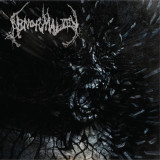
Mechanisms of Omniscience - a brutal and unrelenting journey through technical death metal, returns to the market as a special vinyl reissue, brought to you by our newly established record label. Originally released by Abnormality in 2016, this album has left a lasting mark on the genre with its punishing riffs, precise technicality, and intense lyrical content. Abnormality explores profound and provocative themes in every track, addressing existentialism, corruption, and the darker side of human nature. This is an album that defies genre expectations, marrying complex arrangements with raw aggression. Abnormality, a force hailing from Massachusetts, has carved a niche within extreme metal for its signature blend of technical prowess and relentless heaviness. Led by the fierce vocals of Mallika Sundaramurthy, the band is complemented by the exceptional talents of guitarist Jeremy Henry, bassist Josh Staples, and drummer Jay Blaisdell. Together, they create a sound that is as precise as it is punishing, offering fans a visceral experience in each performance. This reissue celebrates the lasting impact of Mechanisms of Omniscience while paying homage to Abnormality’s powerful contribution to metal.
Mechanisms of Omniscience - a brutal and unrelenting journey through technical death metal, returns to the market as a special vinyl reissue, brought to you by our newly established record label. Originally released by Abnormality in 2016, this album has left a lasting mark on the genre with its punishing riffs, precise technicality, and intense lyrical content. Abnormality explores profound and provocative themes in every track, addressing existentialism, corruption, and the darker side of human nature. This is an album that defies genre expectations, marrying complex arrangements with raw aggression. Abnormality, a force hailing from Massachusetts, has carved a niche within extreme metal for its signature blend of technical prowess and relentless heaviness. Led by the fierce vocals of Mallika Sundaramurthy, the band is complemented by the exceptional talents of guitarist Jeremy Henry, bassist Josh Staples, and drummer Jay Blaisdell. Together, they create a sound that is as precise as it is punishing, offering fans a visceral experience in each performance. This reissue celebrates the lasting impact of Mechanisms of Omniscience while paying homage to Abnormality’s powerful contribution to metal.
Brand new repress of the Gentlemans Pistols legendary album. Hustler's Row is Gentlemans Pistols third album after the self-titled Gentlemans Pistols (2007) and the critically acclaimed At Her Majesty's Pleasure (2011). Hustler's Row is a solid melodic hard rock release with a strong 70's classic rock vibe and we would definitely recommend it to the fans of the genre.
Brand new repress of the Gentlemans Pistols legendary album. Hustler's Row is Gentlemans Pistols third album after the self-titled Gentlemans Pistols (2007) and the critically acclaimed At Her Majesty's Pleasure (2011). Hustler's Row is a solid melodic hard rock release with a strong 70's classic rock vibe and we would definitely recommend it to the fans of the genre.
Das fünfte, den Durchbruch für Evan Dando bringende, Lemonheads-Album 'It's A Shame About Ray', wird zum 33-jährigen Jubiläum wieder als Single Vinyl in klassisch schwarz mit der Original-Tracklist nachgepresst (mit Download Card für die zusätzlichen Bonustracks der Deluxe Edition von 2022). Beschrieben von Musikjournalist und Autor Everett True als "Ein 30-minütiger Einblick in das, was es heißt, hart und schnell und locker und glücklich mit gleichgesinnten Kumpels zu leben, angetrieben von einer gemeinsamen Liebe zu ähnlichen Bands und Drogen und Alkohol und Freiheit". It's A Shame About Ray" hatte in jenen berauschenden, sorglosen Tagen des Jahres '92 eine beträchtliche Wirkung. Die Platte fängt perfekt Dandos Fähigkeit ein, die Sehnsucht und Lust der Teenager mühelos in einem zweiminütigen Popsong zu verpacken. Singles wie "My Drug Buddy" und der luftig-perfekte Pop des Titeltracks mögen herausstechen, aber die eigentliche Stärke des Albums liegt in den Tracks dazwischen; das wirklich fantastische 'Confetti' (über die Scheidung von Evans Eltern) und die atemberaubend lässige Akustik-Coverversion von 'Frank Mills' (aus dem Hippie-Musical Hair), eine Version, in der jedes Quäntchen Pathos und Gefühl für die verlorene Generation der 1960er mitzuschwingen scheint. Wenn Evan Dando Zeilen wie "I love him/but it embarrasses me/To walk down the street with him/He lives in Brooklyn somewhere/And he wears his white crash helmet" singt, weiß man erst richtig zu schätzen, wie wunderbar und verlockend Popmusik sein kann. Und dann gibt es da noch den Ansturm von Aufsässigkeit und Unverfrorenheit im wunderbar verkürzten 'Bit Part'; das aufgedrehte 'Ceiling Fan In My Spoon'... das war Jungs/Teenager-Popmusik mit Stil auf einem Niveau mit The Kinks, den frühen Undertones und den Wipers. "Ray sounds revelatory in its restlessness, mixing college pop with country flair and relocating Gus Van Sant's Portland atmosphere to New England." Pitchfork *****½ (Download only adiitional extras: 1 Mrs Robinson 2 Shakey Ground 3 My Drug Buddy (KCRW Session, 1992) 4 Knowing Me, Knowing You (Acoustic) 5 Confetti (Acoustic) 6 Alison's Starting To Happen (Acoustic) 7 Divan. Demo Recordings - Download only. 8 It's A Shame About Ray (Demo) 9 Rockin' Stroll (Demo) 10 My Drug Buddy (Demo) 11 Hannah & Gabi (Demo) 12 Kitchen (Demo) 13 Bit Part (Demo) 14 Rudderless (Demo) 15 Ceiling Fan In My Spoon (Demo) 16 Confetti (Demo))
Chris Ryan Williams (trumpet & electronics) and Lester St. Louis (cello & electronics) work together as HxH (H by H). Their skills have seen them move smoothly across various situations, constantly carving out new terrain and working in new configurations of musicians at a rapid pace. While worth reading, their biographies capture only a part of their complex rhizome.
HxH started about three years ago. The project is a direct response to all their activity with others and more importantly all their future leaning sonic desires. Their debut album STARK PHENOMENA is both their first studio recording and their first physical release. The album is appropriately set to be released by KMRU on his growing label OFNOT. It’s an ideal introduction to their sound world and their approach.
HxH describe their music as “electroacoustic,” but until recently the presence of Black musicians in this field has been greatly overlooked and largely ignored, making this phrase only partially appropriate. What HxH do really is to always be unpredictable. Every gig is a new soundscape. Sometimes you might hear echoes of Autechre or Robert Hood but then the sound-field will open up into a new terrain all their own. Chris and Lester bring together techniques from across the sound spectrum of electronic music and also draw on their deep backgrounds in Jazz, Improvisation, Classical and Noise scenes to create a sound that is true to them. After all, these two have worked with the likes of Bennie Maupin and the music of Black Fluxus artist Ben Patterson. Their rhizome is deep.
One of the ways that their unique approach manifests is in their merging of both acoustic instruments and electronic instruments in real time. This is something few have managed to do – but their spontaneous leanings work in both complex and accessible ways because of their deep understanding of landscape crafting. You can hear this clearly on the track “Pyrex Vision.” Their approach makes it tempting to compare their music to Sun Ra jamming with Laurel Halo – a comparison that would be only partly accurate.
Chris and Lester note that the sounds on STARK PHENOMENA are “imbued with such hopeful, gracious care; one that is far flung from obsessive carefulness or fuck the world carelessness, but more a caring embrace without the fuzziness of nostalgia.”
They note that when they began working together, they would “always come back to speaking on our concepts of an architecture of the expanse,” noting that their live sets often take on the joyfully noisy task of “dreaming big.” For HxH it was essential that STARK PHENOMENA have a quality that is “almost sculptural.” They consider the album “an object to be viewed from all sides.” This kind of thinking has resulted in them directly engaging with numerous sculptors and artists including Torkwase Dyson. Shape wise HxH’s sound fields work in a parallel to Dyson’s black architectural works.
They also note that the opening cut “BEACH” (the opening and longest track from the album) was “written weeks after our first gig in a studio session donated to us by our dear friend jaimie branch.” And that Pyrex Vision “was continually being edited months after sending our ‘final mixes’ to KMRU.” Their sound sources and samples come from studio sessions, live gigs, durational installations, 3am improvised downloads and more.
KMRU notes: "I think there is an in-between layer on this record. I was first caught by the Pyrex Vision track which organically flows between monologue, subtle field recording, and instrumentation. It's such a beautiful track, evoking deep emotion through simplicity. STARK PHENOMENA effortlessly glides in between imaginative mosaics of sounds — free yet complex — unlocking memories within its layers."
out of Stock
Last delivered 5 months ago available to reorder, subject to availability
Hüma Utku returns to Editions Mego with her new album. The title Dracones makes reference to the mediaeval latin term "Hic sunt dracones" (Here be dragons), marking the unexplored, dangerous places on world maps, expressing the fear of chaos, the unexpected and the unknown.
This new work by the Istanbul sound artist is a sonic journal of an expedition into uncharted territory, one which occupies self and domesticity. Inspired by Utku’s experience of matrescence, Dracones explores the themes of familial demonology, metamorphosis and homecoming as well as human relationship to the experience of love woven layers of euphoria, alienation and consumption.
Musically, Dracones traverses a wide array of sonic tools whereby industrial sounds are imbedded with certain psychological angles, this is an album where, all matter meshes into a sly snapshot of the human experience with a tension and release exposure occurring frequently with dark corners opening up to bright layers of electronic experimentation.
The haunting opening track ‘A World Between Worlds’ tackles pregnancy, of which Utku was experiencing when making this record. The emotional, physical, spiritual and mental experience of this journey is all documented here.. This track features the ‘Lyraei’, an electromagnetic string instrument and modern interpretation of the ancient lyre, that was built and played by Mihalis Shammas. ‘Comfort of The Shadows’ moves from within to without, what was once hidden is now exposed. Utku’s ability to conjure the visual in the sonic is at the forefront as howling electronics give a distinct impression of movement. ‘A Familial Curse’ presents a desire to break the cycle of generational trauma with a creeping sense of dread that rolls into an industrial rhythm prior to landing in a beautiful place represented with shimmering guitar tones. ‘Here be Dragons’ is a rich and dark evocation, a spooked surrender to the themes of the record whereby Utku’s wildly distorted voice beckons all manner of phantasmagoria over cello and recordings of her ultrasound. ‘Care in Consume’ engages in further sonic exploration as a means of conjuring ‘matriphagy’, with its unique psychic energy coursing through electronic veins. ‘A House within a House’ could also be read as a body within a body as the pulse of ultrasound audio rattle amongst a cage of thudding rhythms and swirling electronics, one also ending in optimism as an exquisite melody is born from the prior fire. The striking journey ends with the more soothing ‘Ayaz’a’, a track embracing love and all the hardships that a period of fundamental metamorphosis brings, this is a heartfelt dedication to her son and concludes an album draped in life, experience, joy and pain.
Dracones is a deeply visual journey through inner and outer worlds, a space where symbolic evocation is supreme and passive listening is not an option.
All tracks composed,performed and recorded by Hüma Utku
Buchla 100, vocals, cello, electric guitar performed by Hüma Utku
‘’A World Between Worlds’’ features the ‘Lyraei’ built, played and recorded by Mihalis Shammas
Buchla 100 recorded in EMS Stockholm 2022-2023
Mixed by Enyang Urbiks
Mastered by Heba Kadry, NYC
Cover Artwork by Marco Ciceri
Design by Tina Frank
out of Stock
Last delivered 18 months ago available to reorder, subject to availability
Perila returns with a contemplative spiritual successor to her album »7.37/2.11«, which was also released on Vaagner’s sister label A Sunken Mall back in 2022.
Featuring a collection of 8 pieces produced between 2021 and 2023, the album carries a serene vulnerability that underpins each work, drawing the listener in while gently grounding them amidst a drifting, ephemeral motion of echoing voices, droning guitars and sonorous soundscapes. Like a whispered conversation in the quiet moments of the day.
Perila has once again created a world unto itself, one that doesn’t need to be understood but simply felt. If anything, it’s an album that brings us back to the present, reminding us that the chaotic disarray of the world outside can be addressed and mitigated through our internal landscape. By embracing imperfection and forging new paths, »The Air Outside Feels Crazy Right Now« is a testament towards Perila’s ability to turn fragility into a powerful form of strength.
out of Stock
Last delivered 18 months ago available to reorder, subject to availability
Velasco’s Moving In Silence label kicks off with four heavy hitters. An exciting time as the Berlin based New Yorker embarks on this solo label project, uncovering underground sounds from all corners of the globe. Landed kicks off the project with gritty peak-time action from the producer on the rise, crammed with an abundance of rave textures throughout the “Enigma” EP. Expect 4 live recorded rolling techno tunes to keep you stuck in a loop.
300 Limited copies
out of Stock
Last delivered 10 months ago available to reorder, subject to availability
DJ Support: Gilles Peterson (BBC Radio 6 Music), Tom Ravenscroft/Deb Grant – New Music Fix (BBC Radio 6 Music), Huey Morgan (BBC Radio 6 Music)
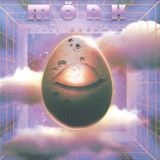
From Budapest, Mörk (pronounced Merk) play on the boundaries of jazz and soul music. After meeting as students, they created a band that not only toyed with sounds but the methods of delivering them too. They’ve played in kindergardens, climbing halls, tea rooms and living rooms, countering expectations of where and how you find music.
Following April's much loved ‘Astral Visions’ EP, played across Bandcamp Weekly, BBC 6 Music, FIP, Jazz FM and KCRW, their upcoming album ‘Still Dreamin’’ delivers even more soul and uplifting choruses, coupled with the synchronicity of a band that has been through so much together.
out of Stock
Last delivered 18 months ago available to reorder, subject to availability
During their short but prolific career, A2L released two albums & numerous EPs on labels such as 1st Bass / Big One and Force Inc between 1988 and 1990. This is a collection of early and rare underground British psychedelic house gems from 1989, blending the trippy, mind-expanding sounds of machine funk, new beat, industrial/ebm, samplers and turntables techniques, with the birth of acid house wonderlandand and captures the raw energy of the UK rave scene.
During their short but prolific career, A2L released two albums, one of which strangely landed on a South African label. They also dropped numerous EPs on labels such as 1st Bass / Big One (home to acts like Deskee, Longsy D, and King Bee) and the German label Force Inc (which hosted artists like Alec Empire, Porter Ricks, and Mike Ink), between 1988 and 1990.
While Acid House is synonymous with the Roland 303, A2L is unlikely an acid house act. Instead, they stand as one of the finest examples of British psychedelic house music from the late 80s, falling between the likesof S-Express, Funtopia, Eon, and Acid Angels. With standout tracks like "Even Though It's Make Believe" and "Come On," A2L delivers infectious grooves over strobelight sample jams.
This here is a collection of early and rare underground British psychedelic house gems from 1989, blending the trippy, mind-expanding sounds of machine funk, new beat, industrial/ebm, samplers and turntables techniques, with the birth of acid house wonderlandand and captures the raw energy of the UK rave scene.
This is one testament to the creative freedom and experimental nature of that era.
For fans of the burgeoning British psychedelic and acid house scene.
out of Stock
Last delivered 10 months ago available to reorder, subject to availability
After a 30-year interstellar silence, the enigmatic producer Alien Signal—pioneering alias of Italian electronic composer Alex Silvi—reemerges with Whispers from Distant Suns, a transcendent odyssey that bridges retro-futurism and modern electronica. Hailed as a magnum opus, this album transcends genre boundaries, captivating ambient purists, downtempo aficionados, and even experimental listeners with its hypnotic fusion of analog warmth and digital precision.
Cosmic Tapestry of Sound
Drawing comparisons to Vangelis’ Antarctica and Alpha—but reimagined through a 21stcentury lens—Whispers from Distant Suns marries nostalgic synth textures with cuttingedge production. Silvi’s mastery of melody shines through in tracks like “Stardust
Memories” and “Fragile Eden” where shimmering arpeggios and celestial pads drift over robotic, glitch-infused drum patterns and sparse, meditative percussion. The result is a paradox: a retro-futuristic soundscape that feels simultaneously ancient and alien, familiar yet unexplored.
Listener Testimonials
Fans and critics have flooded forums with praise:
“An auditory revelation! It’s like Vangelis met Jon Hopkins in a nebula—vintage soul with a futuristic heartbeat.”
“The textures are gorgeously cinematic. Closing your eyes, you’re adrift in a Tarkovsky film scored for the Andromeda galaxy.”
The Vinyl Experience
Pressed on heavyweight vinyl, the album’s physical release amplifies its immersive qualities. The gatefold sleeve, adorned with surrealist astrophotography and metallic
foiling, mirrors the music’s cosmic ethos. Side A leans into Balearic serenity, with sundappled grooves and aquatic synth ripples, while Side B delves into darker, more
experimental terrain—think Aphex Twin’s Selected Ambient Works colliding with the organic rhythms of Jon Hopkins.
Maturity in Motion
This album is a testament to Silvi’s evolution. Tracks like “Seeds Of Light” and “Message from Andromeda Galaxy” showcase his refined ear for dynamics, balancing silence and sound with surgical precision. Vintage drum machines spar with glitches, while field recordings of crashing waves and interstellar static blur the line between Earth and cosmos. The closing track, “The Star Charts We Shared” crescendos into a 6-minute ambient requiem, leaving listeners suspended in a state of weightless awe.
Final Transmission
Whispers from Distant Suns is more than an album—it’s a transcendent odyssey. Spanning time, space, and the artist’s own creative evolution, this immersive work invites listeners to lose themselves in its ebb and flow. Designed for moments both intimate and expansive, its balearic-tinged atmospheres resonate equally through dawnlit Mediterranean terraces or the solitary glow of headphones in darkness. These are compositions that pulse, morph, and haunt the air long after the final note fades. A living soundscape meant to accompany life’s quiet revelations and clandestine joys—a soundtrack to your most personal moments, crafted as what the artist calls ‘private dance music.’
Tailored for the Discerning Listener
Whispers from Distant Suns is designed with the true connoisseur in mind. This album is a must-have for:
Vinyl Collectors & Audiophiles: Those who value the warmth and tactile experience of heavyweight, limited edition pressings
Electronic Ambient and Downtempo Fans: Listeners who appreciate immersive soundscapes that merge retro analog charm with modern digital innovation.
Retro-Futurism Enthusiasts: Fans of pioneering artists like Vangelis, Boards of Canada, and early Warp Records who seek music that bridges nostalgic synth textures with futuristic experimentation.
Experimental Music Explorers: Individuals drawn to sonic narratives that invite deep, contemplative listening—perfect for both introspective moments and immersive listening sessions.
This release is not just an album; it’s a curated experience for those who desire music as a multidimensional art form, merging the vintage allure of analog sound with a contemporary, cosmic vision.
For fans of: Vangelis, Biosphere, Jon Hopkins, early Warp Records.
out of Stock
Last delivered 16 months ago available to reorder, subject to availability
Bugge Wesseltoft has long been a shaper of his own jazz idioms, through his diverse solo albums, his group projects such as New Conception of Jazz, OKWorld! and RYMDEN, and collaborations with artists such as Sidsel Endresen, Henning Kraggerud or Henrik Schwarz.
"Am Are" features special constellations of superb musicians that spans both generations and styles, and is an exploration of sonic textures, dynamic contrasts of mood and style, and ranges from sparse arrangements through to complex layers of dubs and loops and improvisational interplay.
The album begins with Bugge alone on "How?" with layers of undulating atmospheric synth, brought into focus by Bugge's piano at the forefront, creating a minimalist miniature that is both emotive and serene. For "Villrein" Bugge is joined by Elias Tafjord on drums, beginning with a santur-like synth figure, floating over ominous formant sci-fi bass synths bubbling and pulsing, and overlaid by phrenetic piano that only stops to lock into the santur figure before relaunching on its own journeys, all underpinned by Elias Tafjord's expressive drumming. "Is Anyone Listening?" demonstrate's Bugge's songcraft, layering muted percussive piano behind Rohey's distinctive and beautiful vocals punctuated by Martin Myhre Olsen's tenor saxophone, creating a soulful mood tinged with desperation.
"BAG" presents the first classic piano trio of the album - Bugge on piano and synths, Arild Andersen on bass, and Gard Nilssen on drums - announcing itself with an insistent riff, chattering drums, breaking into a progressive rock-style passage of bass and piano in unison. "Reel", the second track from this trio, is a mellow soundscape that evolves to become hazy urban downbeat jazz.
The second piano trio of Bugge (Rhodes and Korg MS20 synth), Sveinung Hovensjø (Electric Bass), and Jon Christensen (Drums and Bells) offers a completely different perspective. The first track "Render" features Bugge's Zawinul-esque Rhodes and monosynth leads, Sveinung's fuzz bass in something of a leading role, all carried with chattering gusto by Jon Christensen's dynamic drumming that brings texture and space as well as rhythm to the piece. "Vender" begins as an atmospheric piece, with reed organ-like synth washes, and octave-processed bass with a somewhat sitar-like tone, meandering until the track breaks down into drums and bass weaving around an insistent drum machine loop, dripping with synth pads and monosynth lead.
"JazzBasill" introduces the third piano trio - featuring Bugge (Piano), Jens Mikkel Madsen (Acoustic Bass) and Øyunn (Drums) - and offers a classic piano trio style with urban sophistication, that is lyrical, and interspersed with staccato cadences, giving a feeling of broken swing, slightly staggered yet driving forwards. The title track "AM ARE" is late night jazz, with baroque whispers, and distinctly melodic.
The final track, "Think Ahead" features the non-standard trio of Bugge (Piano/Organ), Oddrun Lilja (Guitar) and Sanskriti Shrestha (Tablas/Harp). Beginning with a minimalist piano figure, table, and sustained guitar, the track breaks down to a noise surge and ambient windscape, with guitar birds and abstract grinding, before returning to minimalist melodicism.
The shifting personnel across the album, as well as the three different studios in which it was recorded - Village Recording in Copenhagen, Rainbow Studios in Oslo, and his own Buggesroom Studio - creates a feeling of dynamic change and musical variety that is unified by Bugge's piano and keyboards. His playing moves between foreground, where he allows the music to elevate him, and background, where he move gently like a beneficent presence, tending to the demands of the spirit of the musical moments he has captured. It is an album powered by restless exploration and shaped by distinctive musical personalities; it is a journey through different moods, illuminated and brought into focus by Bugge's measured approach and guiding hand.
out of Stock
Last delivered 15 months ago available to reorder, subject to availability
Research Records indicate their inclination for cosmic instrumentation and kraut pervaded polyrhythms once again with an introduction to newcomer Glass Beams. Recorded at the beginning of 2020, Mirage is the first release from the artist, issuing four compositions that lend from a profusion of sounds and influences.
The album's opener and title Mirage arrives with a coiling vocal mantra that conspires with a sliding bassline and transcendent synthwork, reminiscent of early 70's prog jams yet inverted and futuristic. Taurus is a brisk arrangement, steeped with spaghetti-western elements and space-jazz to pave the way for the agile Kong. Rife with psych-fusion guitar phrases and instrumentation, Kong unfolds like a forecast lysergic voyage. The finale Rattlesnake nudges the serpent with intergalactic scales and spellbinding riffs. We may not know much about the enigmatic Glass Beams but Mirage is one epic inauguration, leaving the listener with more questions than answers.
out of Stock
Last delivered 70 days ago available to reorder, subject to availability
Googling “paradise house”, the first results to pop up are an endless list of European b&b’s with whitewashed lime façades, all of them promising “…an unmatched travel experience a few steps from the sea”. Next, a little further down, are the institutional websites of a few select semi-luxury retirement homes (no photos shown, but lots of stock images of smiling nurses with reassuring looks). To find the “paradise house” we’re after, we have to scroll even further down. Much further down.
It feels like yesterday, and at the same time it seems like a million years ago. The Eighties had just ended, and it was still unclear what to expect from the Nineties. Mobile phones that were not the size of a briefcase and did not cost as much as a car? A frightening economic crisis? The guitar-rock revival?! Certainly, the best place to observe that moment of transition was the dancefloor. Truly epochal transformations were happening there. From America, within a short distance one from the other, two revolutionary new musical styles had arrived: the first one sounded a bit like an “on a budget” version of the best Seventies disco-music – Philly sound made with a set of piano-bar keyboards! – the other was even more sparse, futuristic and extraterrestrial. It was a music with a quite distinct “physical” component, which at the same time, to be fully grasped, seemed to call for the knotty theories of certain French post-modern philosophers: Gilles Deleuze, Félix Guattari, Paul Virilio... Both those genres – we would learn shortly after – were born in the black communities of Chicago and Detroit, although listening to those vinyl 12” (often wrapped in generic white covers, and with little indication in the label) you could not easily guess whether behind them there was a black boy from somewhere in the Usa, or a girl from Berlin, or a pale kid from a Cornish coastal town.
Quickly, similar sounds began to show up from all corners of Europe. A thousand variations of the same intuition: leaner, less lean, happier, slightly less intoxicated, more broken, slower, faster, much faster... Boom! From the dancefloors – the London ones at least, whose chronicles we eagerly read every month in the pages of The Face and i-D – came tales of a new generation of clubbers who had completely stopped “dressing up” to go dancing; of hot tempered hooligans bursting into tears and hugging everyone under the strobe lights as the notes of Strings of Life rose up through the fumes of dry ice (certain “smiling” pills were also involved, sure). At this point, however, we must move on to Switzerland.
In Switzerland, in the quiet and diligent town of Lugano, between the 1980s and 1990s there was a club called “Morandi”. Its hot night was on Wednesdays, when the audience also came from Milan, Como, Varese and Zurich. Legend goes that, one night, none less than Prince and Sheila E were spotted hiding among the sofas, on a day-off of the Italian dates of the Nude Tour… The Wednesday resident and superstar was an Italian dj with an exotic name: Don Carlos. The soundtrack he devised was a mixture of Chicago, Detroit, the most progressive R&B and certain forgotten classics of old disco music: practically, what the Paradise Garage in New York might have sounded like had it not closed in 1987. In between, Don Carlos also managed to squeeze in some tracks he had worked on in his studio on Lago Maggiore. One in particular: a track that was rather slow compared to the BPM in fashion at the time, but which was a perfect bridge between house and R&B. The title was Alone: Don Carlos would explain years later that it had to be intended both in the English meaning of “by itself” and like the Italian word meaning “halo”. That wasn’t the only double entendre about the song, anyway. Its own very deep nature was, indeed, double. On the one hand, Alone was built around an angelic keyboard pattern and a romantic piano riff that took you straight to heaven; on the other, it showcased enough electronic squelches (plus a sax part that sounded like it had been dissolved by acid rain) to pigeonhole the tune into the “junk modernity” section, aka the hallmark of all the most innovative sounds of the time: music that sounded like it was hand-crafted from the scraps of glittering overground pop.
No one knows who was the first to call it “paradise house”, nor when it happened. Alternative definitions on the same topic one happened to hear included “ambient house”, “dream house”, “Mediterranean progressive”… but of course none were as good (and alluring) as “paradise house”. What is certain is that such inclination for sounds that were in equal measure angelic and neurotic, romantic and unaffective, quickly became the trademark of the second generation of Italian house. Music that seemed shyly equidistant from all the rhythmic and electronic revolutions that had happened up to that moment (“Music perfectly adept at going nowhere slowly” as noted by English journalist Craig McLean in a legendary field report for Blah Blah Blah magazine). Music that to a inattentive ear might have sounded as anonymous as a snapshot of a random group of passers-by at 10AM in the centre of any major city, but perfectly described the (slow) awakening in the real world after the universal love binge of the so-called Second Summer of Love.
For a brief but unforgettable season, in Italy “paradise house” was the official soundtrack of interminable weekends spent inside the car, darting from one club to another, cutting the peninsula from North to centre, from East to West coast in pursuit of the latest after-hours disco, trading kilometres per hour with beats per minute: practically, a new New Year’s Eve every Friday and Saturday night. This too was no small transformation, as well as a shock for an adult Italy that was encountering for the first time – thanks to its sons and daughters – the wild side of industrial modernity. The clubbers of the so-called “fuoriorario” scene were the balls gone mad in the pinball machine most feared by newspapers, magazines and TV pundits. What they did each and every weekend, apart from going crazy to the sound of the current white labels, was linking distant geographical points and non-places (thank you Marc Augé!) – old dance halls, farmhouses and business centres – transformed for one night into house music heaven. As Marco D’Eramo wrote in his 1995 essay on Chicago, Il maiale e il grattacielo: “Four-wheeled capitalism distorts our age-old image of the city, it allows the suburbs to be connected to each other, whereas before they were connected only by the centre (…) It makes possible a metropolitan area without a metropolis, without a city centre, without downtown. The periphery is no longer a periphery of any centre, but is self-centred”.
“Paradise house” perfectly understood all of this and turned it into a sort of cyber-blues that didn’t even need words, and unexpectedly brought back a drop of melancholic (post?)-humanity within a world that by then – as we would wholly realise in the decades to come – was fully inhuman and heartless. A world where we were all alone, and surrounded by a sinister yellowish halo, like a neon at the end of its life cycle. But, for one night at least, happy."
out of Stock
Last delivered 3 months ago available to reorder, subject to availability
“… it was dance music, it had lyrics, it had songs, it wasn’t all instrumental, it was basically uptempo soul music, to be exact.”*
This quote from Timmy Regisford already sums up everything you need to know about his remix of Basic Black’s “Don’t Make Me Fall In Love.” Signed to Motown during Regisford’s reign as vice president and A&R, their self-titled debut album from 1990 is a testament to the massive popularity of new jack swing at the time. In his remix, the co-founder, resident DJ, and key figure of Club Shelter reconfigures the song’s structure with the signature sounds of New York’s prime dance floor scene, while preserving the heartfelt storytelling of the lyrics and the group’s voices on top of an irresistible groove and a bassline to die for.
At the time, it was only available in the record crates of the Big Apple’s DJ elite and later on as a white label in specialist shops. This soulful, yet driving piece, however, never saw an official single release—until now. Lifted from a DAT tape in Tony Humphries’ archive and carefully and faithfully restored, it now even features a condensed, never-before-released instrumental version of the remix, as well as a bass-and-beats-only edit for mixing purposes by yours truly. New jack swing transformed into New York club music by a king. This remix is a testament to Timmy Regisford’s prowess in the studio, but also honors the roots of the music he loves and grew up on—serving as a perpetual piece of the city’s vast history in underground dance music.
Gerd Janson
out of Stock
Last delivered 13 months ago available to reorder, subject to availability
MMOTTORR is a new collaborative project between Tr One and New Jackson and the 1st EP marks an exciting fusion of both artists' sounds combined with a fresh take on machine music, blending influences from Chicago and ghetto house, deeper acid textures, techno and use of classic samplers and voice modulation to create 4 dancefloor orientated tracks.
EP 1 features four tracks from the Irish artists that push the boundaries of hardware based production, offering a captivating exploration of sound and influences from both artists.
The lead track U LIKE IT RAW (RED HOT) offers a ghetto house influenced track with a booming low end and persistent bassline containing a dual pitched vocal to devastate dancefloors.
Following that is RED EYE DRIVE a high tempo 4/4 drum machine and tom driven track with hints of hi tech soul and classic acid.
On the B side we have WANNADO - A booming 808 and snare combination contains a powerful yet melodic acid line which ups the heat and energy with a crescendo of sampled sound and fizzing low end.
Finally on a deeper level HEADZ VOL.3 takes it back to a classic "plus 8" and Detroit influenced track with a recurrent wave of sound and synthesis building and weaving towards the end of the record.
The EP will be available on limited vinyl and digital starting exclusively with bandcamp. Thanks for supporting underground music. "
out of Stock
Last delivered 18 months ago available to reorder, subject to availability