Bear's Choice, das erste echte Archivalbum von The Grateful Dead, wurde als Tribut an Pigpen kurz nach dessen Tod von keinem Geringeren als dem ursprünglichen Tonmann und Wohltäter der Dead, Owsley Stanley, alias Bear, liebevoll produziert. Bear's Choice basiert auf Liveshows, die Bear drei Jahre zuvor im Fillmore East in New York City aufgenommen hatte, und fängt die Dead in einem entscheidenden Moment ihrer Geschichte ein, als sie gerade Workingman's Dead (und
kurz darauf American Beauty) aufnahmen und sich zu Americana-Pionieren entwickelten, dabei aber nie den Kontakt zu ihren psychedelischen Improvisationswurzeln verloren.
Drei der acht Songs auf dem Album werden von Pigpen gesungen, wobei Seite 1 das definitive Beispiel für die frühen Acoustic Dead ist und Seite 2 aus elektrischem Blues und Rock 'n' Roll besteht, wobei Pigpen bei beiden Stücken auf der zweiten Seite den Ton angibt.
Dieses Album wurde von David Glasser mit Plangent Processes
von den originalen analogen 2-Spur-Bändern, die von Bear live aufgenommen wurden, neu gemastert und hat noch nie besser geklungen.
Suche:the new york
I met Sérgio Alves when he was playing with the Groovelvets. I immediately felt I was dealing with a special musician. It wasn’t easy to find a keyboard player that could embody the different expressions of African- American music, and its characteristicgroove in Portugal among the musicians of my generation.
Even though I had been A&R for over twenty years, I just came across with the special João Gomes, and little else. Sharing the love for the African- American sounds, straightened our relationship, and I had the privilege of having all the keyboards on my mini-LP Bonfim, played by Sérgio. I was also able to see the development of the initial demos, the raw material that was in the origin of Azar Azar, the musical adventure in which, for the first time, he fully exposes his artistic personality.
He debuted the project with an E.P., on the brand new andadmirable Jazzego, in 2020.
Although only two of the five songs, that make up the EP, are original work (the remaining three are remixes by K15, Minus + MRDolly and Esa), the record was a beautiful calling card, but it hadn't prepared me for the piece of work that was about to come to my hands.
Like other musicians of his generation, Sérgio Alves grew up in the midst of the development of Hip Hop, House, Techno, Broken Beat and many other expressions of the most modern dance music. He even has 20 years of a consistent career as a Dj. And that seems to have contributed to the way he consolidates his musical personality, allowing him to control an immensity of musical impulses.
It is true that his compositions are settled in Jazz Funk, but, throughout the eight tracks of his debut LP, we can feel the inspiration of huge figures such as Roy Ayers, George Duke or Donald Byrd that are intersected by the presence of a kaleidoscopic variety of genres that have filled dance floors, from Detroit to New York or London, in such a way that allows the creation of piece of music that can be seen as autonomous, intense, stimulating, personalized and relevant in any place of the planet.
Fresh off his explosive Boiler Room performance in Liverpool, the dust is yet to settle from the electronic eruptions caused by GTOWN head-honcho and energy inducer, KETTAMA. Namely, the damage caused by his latest armoured artillery; ‘GTOWN004’, a radioactive EP with devastatingly euphoric consequences.
‘Samba Soccer 2001’ is the track that opens the door to ‘GTOWN004’, as we’re welcomed by an anonymous voice that insults the listener; a perfect introduction to a project that is wildly unapologetic in its character, and utterly ruthless in its delivery. Released as the first single from the ‘GTOWN004’ EP, ‘Samba Soccer 2001’ has already been greatly received by the GTOWN faithful, and sets the tone for what is arguably KETTAMA’s most complete, and anticipated project yet.
The EP starts as it means to go on, as KETTAMA drops another bombshell with ‘Blitz Zuruck.’ With a euphoric soundscape which the producer partners with a punishing bassline, this track is deeply nostalgic, embodying a time-capsule in the thick of a modern rave-renaissance. Further elements of revamped rave-nostalgia are seen in ‘Slaap Lekker’, before we’re taken deep into the belly of the Galway beast with the atomic ‘GTOWN IN EFFEKT’, and finally killed off with the ‘Rock Da Cliffe Mix’ of ‘Blitz Zuruck.’
‘GTOWN004’ features an ungodly blend of sounds, and in the process, creates an atmosphere that is both ecstatic enough for heaven, and sinister enough for hell. Purpose built for dance-floor destruction, KETTAMA’s infusion of stomach-churning bass, hypnagogic synthesisers, soulful vocals and contagious drum patterns result in an utterly pure, addictive sound.
From Galway to Vienna, Liverpool to New York, the track will be road tested amongst an armoured artillery of records, with dance-floor devastation an inevitable outcome. With his name boldly imprinted on the lineups for the likes of AVA Festival in Belfast, CRSSD in Miami, 121 Festival in New Zealand and Terminal V Festival in Edinburgh, KETTAMA’s worldwide domination of sound-systems continues.
- Introduction By David Kapralik / My Name Is Barbra
- Much More
- Napoleon
- I Hate Music
- Right As The Rain
- Cry Me A River
- Value
- Lover, Come Back To Me
- Band Introductions
- Soon It's Gonna Rain
- Come To The Supermarket (In Old Peking)
- When The Sun Comes Out
- Happy Days Are Here Again
- Keepin' Out Of Mischief Now
- A Sleepin' Bee
- I Had Myself A True Love
- Bewitched, Bothered And Bewildered
- Who's Afraid Of The Big Bad Wolf?
- I'll Tell The Man In The Street
- A Taste Of Honey
- Never Will I Marry
- Nobody's Heart Belongs To Me
- My Honey's Lovin' Arms
- I Stayed Too Long At The Fair
Every Aspect of the Production Personally Supervised by Barbra Streisand
Mixed by Jochem van der Saag from the Original Analogue Session Tapes & Mastered in 24 bit/96 kHz by Paul Blakemore
Lacquer Pressing Master Created by Bernie Grundman
Pressed at RTI
Tip-On Gatefold Jacket
Deluxe 12-Page Booklet Featuring Barbra's Recollections, the Recording's History & Production, and Performance Photos
The Premiere New York City Nightclub Event of 1962! The Most Anticipated Live Album of 2022!
In the fall of 1960, New York City wasn't the same urban mecca it is today. Neither was eighteen-year old Barbra Streisand, who emerged on the Greenwich Village club scene at a small, cozy venue on West 8th Street called the Bon Soir, where she received rave reviews and wooed the crowd with her incredible performances. Within two years Streisand, whose magnificent interpretations of both standards and quirky, obscure cabaret tunes was a nationwide sensation, was knocking audiences dead with her nightly performance as Miss Marmelstein in David Merrick's I Can Get It For You Wholesale on Broadway.
Sixty years, multiple Grammy, Emmy, Oscar, Tony and Golden Globe awards and nearly two hundred million record sales later, Barbra has for the first time authorized the release of a major portion of her Bon Soir performances, as captured in 1962 by Columbia Records. IMPEX Records - in conjunction with Sony Music Entertainment - is proud to present the audiophile 180-gram vinyl LP and SACD editions of the most sought-after recordings in Barbra's legendary career: Live at the Bon Soir: Greenwich Village, NY - November 1962. This gorgeous album features twenty-four brilliant performances personally selected by Barbra Streisand from the original Bon Soir master tapes and expertly mixed and mastered by Paul Blakemore and Jochem van der Saag, under the supervision of producers Barbra Streisand, Martin Erlichman and Jay Landers.
IMPEX RECORDS has created two versions of this noteworthy release: a two-LP vinyl edition and a 24 bit / 96 kHz SACD. To achieve the best fidelity possible, engineer Paul Blakemore transferred the original three-track session tapes to high-resolution 96/24-bit digital files, which were then mixed by Jochem van der Saag. For mastering, Blakemore used an all-analog signal-processing chain in order to maintain the warmth of the original analogue recordings. To master the vinyl LP edition, IMPEX engaged Bernie Grundman, who has mastered many of Barbra's albums over the last sixty years, to create the lacquer pressing master.
Rich with the club's atmosphere, these historic, essential recordings present a warm, charming portrait of a truly important moment in New York City history and American pop culture. Several years removed from Manhattan's flourishing jazz nightclub scene, tiny clubs such as the Bon Soir began popping up, and served as both a forum and launching pad for some of the finest vocalists and musicians the east coast had to offer.
Because of Barbra's success there, Columbia Records A&R rep David Kapralik decided that the first album from his newly-signed artist would emanate from a setting in which she had become most comfortable: the small stage at the Bon Soir. Producer Mike Berniker and recording engineers Roy Halee and Adjutor "Pappy" Theroux set up the mics and recorders, and for three nights harnessed the electrifying show that Barbra had crafted.
"The recordings we did at the Bon Soir were so authentically 'Barbra.' I produced her first three albums at Columbia, and while they were wonderful accomplishments, I thought that what she did each night at the Bon Soir transcended anything we ever did in the studio." - Mike Berniker
Columbia ultimately decided to bring Barbra into the studio to record her first album, and except for the inclusion of several tracks on compilations through the years, the Bon Soir tapes laid dormant in the vault. Now, through this extraordinary release, everyone can at last enjoy the early sound and style of an icon in-the-making: the same brilliant artist whose performances at the Bon Soir were lauded by everyone from actress Helen Hayes to lyricists Alan and Marilyn Bergman. We invite you to join us for an evening at the fabled Bon Soir. Take a seat, order a drink and revel in the magic that is Barbra. You will not be disappointed!
ULTRADISC ONE-STEP BOX SET OF BRUCE SPRINGSTEEN'S 1973 DEBUT PLAYS WITH AUDIOPHILE SOUND: LIMITED TO 7,500 NUMBERED COPIES.
1/4" / 15 IPS analogue master to DSD 256 to analogue console to lathe
Teeming with identifiable characters, youthful romanticism, vivid narratives, and sophisticated arrangements, Greetings from Asbury Park, N.J. is a personal postcard from the heart, soul, and mind of a rock ’n’ roll lifer bent on discovering his world and what lays beyond it. The 1973 album establishes many of the signature themes and sounds Bruce Springsteen would embrace throughout his unparalleled career. No wonder a majority of the songs — “Blinded by the Light,” “Lost in the Flood,” “Spirit in the Night” included — remain staples of the New Jersey native’s fabled concerts.
Sourced from the original analog master tapes, pressed at RTI on MoFi SuperVinyl, and strictly limited to 7,500 numbered copies, Mobile Fidelity's UltraDisc One-Step 180g 33RPM LP set is the definitive-sounding version of Springsteen’s daring debut. Afforded the benefits of SuperVinyl’s nearly non-existent noise floor, Greetings from Asbury Park, N.J. plays with a clarity, directness, and emotionalism that practically whisks you into the New York office in which Springsteen — accompanied by then-manager Mike Appel — played a few originals for legendary Columbia Records executive John Hammond and earned a record deal.
That solo-centric aspect of Greetings from Asbury Park, N.J. — credited only to Springsteen and featuring only a handful of accompanying musicians — helps make it unique in his catalogue. So do the acoustic-based frameworks, revealed on this pressing with newly exposed detail, nuance, and immediacy. The music emerges with an openness that gives flight to the Boss’ storytelling. His words flow with unbridled, stream-of-conscious pacing and vibrant imagery; they pay homage to and update a tradition established by Bob Dylan, Woody Guthrie, and Jack Kerouac. Equally important, Springsteen’s still-underrated vocal performances can now be appreciated in full-range fidelity. Earnest, transparent, and sincere, his singing comes across with an urgency that distinguishes him from the era’s singer-songwriter mold and a raw energy that underlines his unflinching belief in rock ’n’ roll.
Recorded in just three weeks, Greetings from Asbury Park, N.J. also stands out by way of its insightful artwork. Designed by Grammy winner John Berg, the inviting cover is appointed with images of the local landmarks, beachfronts, and geography that provide the backdrops for some of the songs. Those graphics are complemented by the beautiful packaging of Mobile Fidelity’s UD1S edition. Tucked in a sleek slipcase, the LP is housed in a special foil-stamped jacket with faithful-to-the-original graphics. In every way, this reissue is made for listeners who prize sound quality and who want to engage themselves in everything involved with this invigorating album.
An aspirational declaration by a then-23-year-old musician who was already a seasoned veteran of the Jersey Shore bar-band scene, Greetings from Asbury Park, N.J. can in many ways be seen as a semi-fictional autobiography released more than four decades before Springsteen penned his official tome. Elaborate, descriptive, and absorbing, Springsteen’s lyrics spark with the enthusiasm and exuberance of a wide-eyed adventurer ready for possibility, excitement, and fun — but who is also mindful of loss, pain, and disappointment. Words often tumble and collide like dice spilling from a jar; shaken and fully intact, they pour forth with purpose and without self-conscious concern.
One of two songs composed after label president Clive Davis cited the need for a radio-friendly single, the opening “Blinded by the Light” provides an unforgettable introduction. It flares with a blend of confidence, fun, and poetry that helps define Greetings from Asbury Park, N.J. Crackling with wiry guitars, funky chords, Clarence Clemons’ cool-toned saxophone, and action-packed lyrics, the shuffle simultaneously expands and contracts — and establishes Springsteen as a master of rhyme, alliteration, and breathless expression. The thread continues on “Growin’ Up.” Steered by ascending piano lines, soulful grooves, and frisky rhythms, the coming-of-age confessional is at once rebellious and controlled, fearless and vulnerable, honest and boastful. It is a tale to which multiple generations still relate.
Such universality has always been a Springsteen trademark. It surfaces throughout Greetings from Asbury Park, N.J., as does another Boss hallmark: the importance of friendship and tight bonds. These concepts relate to the fact many of the songs — see the feverish “Does This Bus Stop at 82nd Street?,” strutting “It’s So Hard to Be a Saint in the City,” and tender “For You,” the latter complete with brilliant Hammond organ shading — are directly tied to the friends, acquaintances, places, and happenings he knew. “Lost in the Flood,” whose cinematic drama and epic scope hint at the directions Springsteen would pursue on his next LP, extends that familiarity while addressing the kind of socially conscious issues with which he’s forever been associated.
Balancing the label’s vision of him as a folk-based singer-songwriter and his own desire to play rock ‘n’ roll with a full band, Springsteen never again made a record like Greetings from Asbury Park, N.J. One of the most captivating debuts in history, it heralds the start of a legacy whose import Springsteen seemingly foretells on “Blinded by the Light”: “He’s gonna make it tonight.” And how.
- A1: Captain Clark Welcomes You Aboard
- A2: The Saints Go Marching Through All The Popular Tunes
- A3: Summer Will
- A4: Outside The Pier Prowed Like Electric Turtles
- A5: The Total Taste Is Here - News Cut-Up
- A6: Choral Section, Backwards
- A7: We See The Future Through The Binoculars Of The People
- A8: Just Checking Your Summer Recordings
- B1: Creepy Letter - Cut-Up At The Beat Hotel In Paris
- B2: Inching - Is This Machine Recording
- B3: Handkerchief Masks - News Cut-Up
- B4: Word Falling - Photo Falling
- B5: Throat Microphone Experiment
- B6: It's About Time To Identify Oven Area
- B7: Last Words Of Hassan Sabbah
Clear Vinyl[24,79 €]
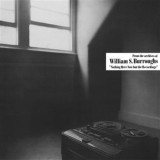
In 1980, Genesis P-Orridge and Peter 'Sleazy' Christopherson (then of Throbbing Gristle renown) travelled to New York City to meet up at the fortified apartment, known as The Bunker, of famed beat writer and cultural pioneer William S. Burroughs and his executor James Grauerholz to starting the daunting task to compile the experimental sounds works of Burroughs, which, up until that point, had never been heard. During those visits, Burroughs would play back his tape recorder experiments featuring his spoken word 'cut-ups', collaged field recordings from his travels and his flirtations with EVP recording techniques, pioneered by Latvian intellectual Konstantins Raudive. Throughout the next year, P-Orridge, Christopherson and Grauerholz would spent countless hours compiling various edits, each collection showcasing Burroughs sensitive ear and keen experimental prowess for audio anomaly within technical limitations. By the time 1981 came through, Burroughs had relocated to Lawrence, KS in which to escape the violence and mania of New York City life. It is in Lawrence that P-Orridge and Christopherson put the finishing touches on the record that would be known as 'Nothing Here Now but the Recordings'. The album would come out in the Spring of 1981 as the final release for the shuttering Industrial Records, brought about by the dissolution of Throbbing Gristle. The album remained out of print until 1998 when John Giorno and the Giorno Poetry Systems included the album on a multi-disc retrospective CD box set compiling the majority of Burroughs seminal recordings.
- A1: Captain Clark Welcomes You Aboard
- A2: The Saints Go Marching Through All The Popular Tunes
- A3: Summer Will
- A4: Outside The Pier Prowed Like Electric Turtles
- A5: The Total Taste Is Here - News Cut-Up
- A6: Choral Section, Backwards
- A7: We See The Future Through The Binoculars Of The People
- A8: Just Checking Your Summer Recordings
- B1: Creepy Letter - Cut-Up At The Beat Hotel In Paris
- B2: Inching - Is This Machine Recording
- B3: Handkerchief Masks - News Cut-Up
- B4: Word Falling - Photo Falling
- B5: Throat Microphone Experiment
- B6: It's About Time To Identify Oven Area
- B7: Last Words Of Hassan Sabbah
Black Vinyl[26,01 €]
In 1980, Genesis P-Orridge and Peter 'Sleazy' Christopherson (then of Throbbing Gristle renown) travelled to New York City to meet up at the fortified apartment, known as The Bunker, of famed beat writer and cultural pioneer William S. Burroughs and his executor James Grauerholz to starting the daunting task to compile the experimental sounds works of Burroughs, which, up until that point, had never been heard. During those visits, Burroughs would play back his tape recorder experiments featuring his spoken word 'cut-ups', collaged field recordings from his travels and his flirtations with EVP recording techniques, pioneered by Latvian intellectual Konstantins Raudive. Throughout the next year, P-Orridge, Christopherson and Grauerholz would spent countless hours compiling various edits, each collection showcasing Burroughs sensitive ear and keen experimental prowess for audio anomaly within technical limitations. By the time 1981 came through, Burroughs had relocated to Lawrence, KS in which to escape the violence and mania of New York City life. It is in Lawrence that P-Orridge and Christopherson put the finishing touches on the record that would be known as 'Nothing Here Now but the Recordings'. The album would come out in the Spring of 1981 as the final release for the shuttering Industrial Records, brought about by the dissolution of Throbbing Gristle. The album remained out of print until 1998 when John Giorno and the Giorno Poetry Systems included the album on a multi-disc retrospective CD box set compiling the majority of Burroughs seminal recordings.
Over the course of a nearly 50 year romantic and creative partnership sound artist Annea Lockwood and the late pioneering electronic composer Ruth Anderson have shared space on a number of significant releases of early electronic and tape music, including Charles Amirkhanian’s trailblazing 1977 anthology of women electronic composers New Music for Electronic and Recorded Media, a 1981 split LP on Opus One, a 1997 CD for Phill Niblock’s XI imprint, and 1998’s Lesbian American Composers compilation on CRI. The couple additionally taught a course on the history of women’s music-making, at Hunter College, called Living Women, Living Music. Throughout their time together, they co-authored a number of Hearing Studies designed for people with no formal musical training, which were collected for a 2021 book publication by Open Space Music. They spent most of their private life between Crompond, NY and the house they built themselves at Flathead Lake, Montana. Although Ruth passed away in 2019, the composers’ dialogue continues today with Tête-à-tête, a collection of unreleased archival and new material spread across an LP and a single-sided 10” record.
It all began with a telephone call. In 1973, Ruth Anderson was seeking a substitute to cover a yearlong sabbatical from her position as the director of the Electronic Music Studio she had founded at Hunter College in New York City. Her friend Pauline Oliveros too was on sabbatical, but recommended Ruth call Annea Lockwood—then living in London—about the post. Already drawn to America by the work of the visionary composers with whom she would soon be labelmates on Lovely Music, Annea jumped at the opportunity and within days of meeting in person the pair were, in her words, “joyously entangled.”
Over the next nine months, while Ruth was living in Hancock, New Hampshire, the couple would speak daily by phone in between visits. Ruth recorded these phone calls and, in 1974, surprised Annea with a cassette containing “Conversations,” a private piece she composed by dexterously collaging fragments of their conversations alongside slowed and throwed snatches of old popular songs: “Yes Sir, That’s My Baby”; “Oh, You Beautiful Doll”; and “Bill Bailey.” The centerpiece of Tête-à-tête, this side of intimate musique concrète extends to its listeners a rare invitation to eavesdrop on the halcyon phenomenon of two people falling in love. Tender and playful throughout, “Conversations” comes to its zenith with a cut-up of relentless laughter of a contagious beauty that is, for once, properly convulsive.
“For Ruth” is Annea’s elegy to her life partner. In 2020, Annea returned to Hancock as well as to Ruth’s resting place at Flathead Lake to make field recordings, which she wove together with further excerpts of the couple’s 1974 conversations for a commission presented as part of the 2021 Counterflows Festival in Glasgow. A consummate field recordist, Annea imbues the simple sounds of church bells, birds, wind, and the bodies of water that permeated her time alongside Ruth with an otherworldly depth and sense of narrative akin to that of her celebrated sound maps of the Hudson, Danube, and Housatonic rivers. An oneiric, subtly tonal evocation of a meeting at the shores of existence.
The collection opens with “Resolutions,” Ruth’s last completed electronic work, from 1984. A meditation for the individual listener composed as the result of her study of Zen, it’s a rigorous, process-driven piece that charts the very slow, smooth descent of a 5th from the octave above middle C down to sub-bass frequencies. Minimalist in execution, yet powerful in effect, it glides by almost imperceptibly, with new tones arriving and hovering or levitating upwards, seemingly out of nowhere. A healing piece, it harnesses the highly focused energy of pure tones as a means to, in Ruth’s words, “further wholeness of self and unity with others.”
Tape transfers by Maggi Payne, master by Giuseppe Ielasi and lacquers cut at Dubplates & Mastering, with domestic photos and liner notes provided by Annea Lockwood.
- A1: Up Song - Live At Bush Hall
- A2: The Boy - Live At Bush Hall
- A3: I Won’t Always Love You - Live At Bush Hall
- A4: Across The Pond Friend - Live At Bush Hall
- A5: Laughing Song - Live At Bush Hall
- B1: The Wrong Trousers - Live At Bush Hall
- B2: Turbines/Pigs - Live At Bush Hall
- B3: Dancers - Live At Bush Hall
- B4: Up Song (Reprise) - Live At Bush Hall
Nach der Veröffentlichung des von der Kritik hochgelobten Konzertfilms, „Live At Bush Hall“, haben Black Country, New Road heute das entsprechende Live-Album zum Konzert angekündigt, das das Set ihrer drei aufeinanderfolgenden, ausverkauften Shows in der historischen Bush Hall im Dezember 2022 enthält.
Anfang 2022 veröffentlichten Black Country, New Road ihr chartsstürmendes neues Album, „Ants From Up There“, das in Deutschland sensationell auf #10 der Albumcharts und in England sogar auf #3 (ihre zweites Top-5Album Veröffentlichung in UK innerhalb von 12 Monaten, nach ihrem für den Mercury Prize nominierten Debüt „For The First Time“), das von Fans und Kritiker:innen gleichermaßen gelobt wurde, zahlreiche 5-Sterne-Rezensionen erhielt und auf Jahresendlisten auf der ganzen Welt auftauchte, einschließlich der Wahl zur Nummer 1 durch Fans auf r/indieheads, Rate Your Music und Nummer 3 durch Pitchfork-Leser:innen. Und das, obwohl das Album nur wenige Tage nach der Bekanntgabe des Ausstiegs von Frontmann Isaac Wood aus der Band veröffentlicht wurde. Nach dem Erfolg von „Ants From Up There“ und mit einem vollen Tourneeplan im Jahr 2023 vor Augen, beschlossen die verbliebenen Mitglieder Lewis Evans, May Kershaw, Georgia Ellery, Luke Mark, Tyler Hyde und Charlie Wayne, die nun zu sechst sind, komplett neues Material zu schreiben und aufzuführen. Sie spielten auf Festivals vor großen Zuschauer:innenzahlen, darunter triumphale Auftritte auf dem Primavera, dem Green Man und dem Fuji Rock, und traten in eine neue musikalische Phase ein, in der sie Songs, die erst wenige Wochen alt waren, weiterentwickelten. Außerdem tourten sie mit Black Midi durch die USA und spielten zwei ausverkaufte Konzerte in New York. Die Band hat sich dafür entschieden, die Idee einer Frontperson komplett aufzugeben und teilt sich stattdessen die Gesangsaufgaben mit Tyler Hyde, die bei einer Reihe von Tracks den Gesang übernimmt, darunter „Up Song“, der die Freundschaft und den Erfolg der Band mit dem Text „Look at what we did together, BC,NR friends forever“ feiert. An anderer Stelle übernimmt May den Gesang bei „The Boy“ und „Turbines/ Pigs“, einem umgehenden Fan-Liebling und einem der verletzlichsten Stücke der Band bis heute. Lewis hingegen singt bei „Across The Pond Friend“ und „The Wrong Trousers“. Mit diesem Schritt hat sich der Sound der Band weiter verändert, so dass weitere Einflüsse und Vielfalt in ihr Songwriting einfließen konnten. Als sich die Songs während des stetigen Tourens weiterentwickelten, beschlossen sie, konventionelle nächste Schritte zu vermeiden. Die Leute, die auf neues Material warten, bekommen acht neue, hervorragende Songs zu hören, aber nicht so, wie sie es vielleicht erwartet hätten. „Wir wollten kein Studioalbum machen.“, sagt BC, NR-Pianistin May Kershaw. „Wir haben die neuen Stücke speziell für Live-Auftritte geschrieben und dachten, es wäre eine gute Idee, eine Performance zu veröffentlichen.“
Das Ergebnis ist eine gefilmte und aufgenommene Live-Performance, bei der Greg Barnes Regie führte und John Parish, ein langjähriger Kollaborateur von PJ Harvey, die Musik abmischte, die an drei Abenden in der Londoner Bush Hall stattfand. „Es geht darum, den Moment einzufangen.“, sagt der Saxophonist und jetzige Teilzeit-Sänger Lewis Evans. „Eine kleine Zeitkapsel dieser acht Monate, in denen wir diese Songs auf Tour gespielt haben.“
Ace Records is proud to announce the purchase of the Shrine label and Eddie Singleton’s independent productions.
To celebrate we have compiled an album of the very best dance recordings the label made in 1965 and 1966, primarily in Washington DC.
The business’s failure made this music incredibly hard to find for record collectors and Shrine is rightly known as the rarest soul label.
It is much more than that though. The music was made by some one of the original founders of Motown, Raynoma Liles Gordy and her Motown-schooled cousin Mike Ossman, New York music business luminaries Eddie Singleton and Harry Bass and the up-and-coming talents of Washington’s Keni St Lewis and Maxx Kidd. The acts included the hugely respected Ray Pollard and fellow New Yorker J.D. Bryant, talented and established Washington and Baltimore acts Eddie Daye & The 4 Bars, Bobby Reed and the Enjoyables. Importantly, they discovered and developed the local talent of the area in the shape of the Cautions, Les Chansonettes, the Prophets and Shirley Edwards.
It took decades for UK Northern Soul fans to realise the significance of the label. It finally clicked for Stafford’s Top Of The World all-nighter DJs who searched out the incredibly hard to find later releases and played them to the cult-following of the rare soul scene. The scarcity was caused by Shrine pressing up a batch of fourteen future singles but only getting a handful released before they folded. The vast majority of the later releases were destroyed in a warehouse fire or simply binned as stillborn commercial failures.
Such was the scarcity that when the first Shrine compilations were issued in 1990, the Prophets tracks from Eddie Singleton’s master tapes were assumed to be unreleased - until Shrine sleuth Andy Rix later obtained one from a group member.
First Two Pages of Frankenstein" ist ein spannendes neues Kapitel in der belebten Diskografie der Band. Die 11 Songs wurden von The National in den Long Pond Studios in Upstate New York produziert und beinhalten Gastauftritte von Taylor Swift, Phoebe Bridgers und Sufjan Stevens. Der Nachfolger des 2019 erschienenen "I Am Easy To Find" geriet zunächst ins Stocken als Leadsänger Matt Berninger "eine sehr dunkle Phase durchlebte, in der mir überhaupt keine Texte oder Melodien einfielen, und diese Phase dauerte über ein Jahr. Obwohl wir schon immer ängstlich waren und uns oft stritten, wenn wir an einer Platte arbeiteten, war dies das erste Mal, dass es sich so anfühlte, als ob die Dinge wirklich zu einem Ende gekommen wären". Stattdessen haben es The National "geschafft, wieder zusammenzukommen und alles aus einem anderen Blickwinkel anzugehen, und dadurch sind wir in einer gefühlten neuen Ära für die Band angekommen", so Gitarrist/Pianist Bryce Dessner, zu dessen Bandkollegen auch sein Bruder Aaron (Gitarre/Piano/Bass) sowie die Brüder Scott Devendorf (Bass, Gitarre) und Bryan Devendorf (Schlagzeug) gehören. "First Two Pages of Frankenstein" synthetisiert die neue Chemie in der Band. Entstanden ist ein Album, das eine wunderbare Balance zwischen dem eleganten Sound und den eigenwilligen Impulsen von The National hält. Tracks wie "Grease in Your Hair" und "Ice Machines" wurden 2022 auf Tour gespielt bevor sie aufgenommen wurden, so dass die Band das Material in Echtzeit auf der Bühne während der Konzerte verfeinern konnte. "Für mich hat die Kraft dieser Platte mit der Absicht und der Struktur der Musik zu tun, die auf eine Menge zufälliger Magie trifft", sagt Aaron Dessner.
- A1: Once Upon A Poolside (Feat Sufjan Stevens)
- A2: Eucalyptus
- A3: New Order T-Shirt
- A4: This Isn't Helping (Feat Phoebe Bridgers)
- A5: Tropic Morning News
- A6: Alien
- B1: The Alcott (Feat Taylor Swift)
- B2: Grease In Your Hair
- B3: Ice Machines
- B4: Your Mind Is Not Your Friend (Feat Phoebe Bridgers)
- B5: Send For Me
Black Vinyl[29,03 €]
Strictly Limited Red Coloured Vinyl Edition
First Two Pages of Frankenstein" ist ein spannendes neues Kapitel in der belebten Diskografie der Band. Die 11 Songs wurden von The National in den Long Pond Studios in Upstate New York produziert und beinhalten Gastauftritte von Taylor Swift, Phoebe Bridgers und Sufjan Stevens. Der Nachfolger des 2019 erschienenen "I Am Easy To Find" geriet zunächst ins Stocken als Leadsänger Matt Berninger "eine sehr dunkle Phase durchlebte, in der mir überhaupt keine Texte oder Melodien einfielen, und diese Phase dauerte über ein Jahr. Obwohl wir schon immer ängstlich waren und uns oft stritten, wenn wir an einer Platte arbeiteten, war dies das erste Mal, dass es sich so anfühlte, als ob die Dinge wirklich zu einem Ende gekommen wären". Stattdessen haben es The National "geschafft, wieder zusammenzukommen und alles aus einem anderen Blickwinkel anzugehen, und dadurch sind wir in einer gefühlten neuen Ära für die Band angekommen", so Gitarrist/Pianist Bryce Dessner, zu dessen Bandkollegen auch sein Bruder Aaron (Gitarre/Piano/Bass) sowie die Brüder Scott Devendorf (Bass, Gitarre) und Bryan Devendorf (Schlagzeug) gehören. "First Two Pages of Frankenstein" synthetisiert die neue Chemie in der Band. Entstanden ist ein Album, das eine wunderbare Balance zwischen dem eleganten Sound und den eigenwilligen Impulsen von The National hält. Tracks wie "Grease in Your Hair" und "Ice Machines" wurden 2022 auf Tour gespielt bevor sie aufgenommen wurden, so dass die Band das Material in Echtzeit auf der Bühne während der Konzerte verfeinern konnte. "Für mich hat die Kraft dieser Platte mit der Absicht und der Struktur der Musik zu tun, die auf eine Menge zufälliger Magie trifft", sagt Aaron Dessner.
Dial D for Digitalism. The return of Hamburg’s most prolific and bewitching production duo is a two-sided one. Back To Haus is their second outing for Running Back after Reality 2 in 2020. And on top of that, it does what it says on the tin. Based on the roots of house, which was the sound that Ismail Tuefekci and Jens Moelle started their DJ careers with, their modern day interpretation of it is far from nostalgic, boring or conservative.
Take the title track for instance. Now a track-id favorite, it was meant to be a sound test. It’s recipe is as simple as it is infectious. Mix some Roland drum machines with a few piano chords and expertly arrange the rest with a marathon intro and a corresponding break down. Voilá! Patience might be bitter, but its fruits are sweet.
Chicagostrasse is not only an existing street in the warehouse district of Hamburg’s harbor, but also a nod to all-time heroes Johnny D and Nicky P of Henry Street fame and their samplers-and-beats approach. Heavy hypno house.
4TH Floor sees the duo sampling themselves (again) for a fast paced and open-airy party jam the references one of their favorite New York labels, when they met at Hamburg’s late house music record store institution Underground Solution beginning of this millennium. Happiness is just a state of mind.
Closing it all off, but not winding it down is Warehaus and its convoying beat tool Empty Warehaus. Like Todd Terry visiting a Summer of Love rave in the UK. Descriptive and positively destructive. All in all, a worthy double, a DJ’s delight and a dancer’s delight.
- A1: Tales Of Girls, Boys & Marsupials
- A2: Kill The Director
- A3: Moving To New York
- A4: Lost In The Post
- A5: Party In A Forest (Where's Laura?) (Where's Laura?)
- A6: School Uniforms
- A7: Here Comes The Anxiety
- B1: Let's Dance To Joy Division
- B2: Backfire At The Disco
- B3: Little Miss Pipedream
- B4: Dr Suzanne Mattox Phd
- B5: Patricia The Stripper
- B6: My First Wedding
Die Stimmung ist Jazz. Die Ikone ist Rickie Lee Jones. Die Stimme wird einfach immer besser. Rickie Lee Jones' neuestes Album Pieces of Treasure (BMG Modern) ist ein Wiedersehen mit ihrem lebenslangen Freund, dem legendären Produzenten Russ Titelman, der Jones' Star-Alben mitproduziert hat, ihr Debüt Rickie Lee Jones
von 1980 und das bahnbrechende Pirates. Großartiger Jazz imitiert nie das, was bereits gemacht wurde. Im Laufe ihrer Karriere hat die mit einem Grammy ausgezeichnete Singer-Songwriterin eine außerordentlich breite Palette von Songs interpretiert, oft auf ein und
demselben Album (David Bowie lobte öffentlich ihre Interpretation von "Rebel Rebel"). Sie hat gefeierte Alben mit Jazz-Bezug aufgenommen, darunter "Girl at Her Volcano" und "Pop Pop", aber bis jetzt hatte sie dem American Songbook noch nie ein ganzes Album gewidmet.
Pieces of Treasure - der Titel ist eine Anspielung auf Pirates - wurde fünf Tage lang im Sear Sound in New York City aufgenommen und von einem Quartett bestehend aus Rob Mounsey am Klavier, dem Gitarristen Russell Malone, dem Bassisten David Wong und dem
Schlagzeuger Mark McLean begleitet. Es ist ein elegantes, einfaches und gefühlsbetontes Werk, das aus Jones' eigenem Leben und ihren Erfahrungen stammt.
It’s been a while since Toronto based Hi Bias Records and Crash Records left their indomitable mark on house music, and although not noted for being as musically productive as its North American counterparts of Chicago, Detroit, New York and Jersey, there is none the less a bubbling underground scene there, of which Brother Charles is at the vanguard of. Yogi literally stumbled across Charles on social media and called Roual up right away to make him aware of this prolific producer’s talent, and to explore the possibilities of a vehicle to drop Charles’ incredible, Afro, deep, soulful music on the street. Roual was in agreement with Yogi after viewing Charles’ numerous online videos, all of which feature Charles’ urban freestyle street dancing friends and his skater lovin’ crew too. Is it too early to compare Brother Charles’ deepness to the likes of Kerri Chandler, Larry Heard, Roland Clark, or Osunlade? We think not, and we believe that Toronto is ‘bout to be put back on the musical map, where it belongs.
Space Lady Recordings is a brand new label born out of an irrational musical passion harboured by two industry hardened cronies. Roual Galloway is the A&R man behind Cordial Recordings, was also one of the proprietors at Love Vinyl and he is a man with a wealth of knowledge in the vinyl and CD manufacturing business. Yogi Haughton has worked in A&R at several labels over the years, including one of the U.K.s first modern soul labels, Move Records, as well as numerous respected house labels. He is also one of the U.K.s most influential tastemaker DJs and a record producer, and a former scribbler at DJ Magazine (16 years).
New York painter and musician exploratory industrialist Tor Lundvall initially envisioned his 14th album, Beautiful Illusions, as an entirely instrumental affair, "inspired by memories of sitting in a church or cathedral watching the shifting sunlight through stained glass." Although he ultimately chose to wreath the majority of the tracks with hushed, poetic vocals, his original muse still resonates. These are certainly songs of shadowplay and vaulted skies, the quiet grandeur of dusk deepening on the horizon. Lundvall characterizes the lyrical subject matter, too, in ways both specific and surreal, exploring "the doubts, the anxieties and even the bleak fantasies the mind spirals into during moments of isolation, separation and distance." Tricks of the eye, mind, and ear, magnified by silence and the looming long winter. Shivering pulses and muted bass lines tread the twilight while icicle synths and wiry guitar map the melody until the voice enters, narrating oblique moods of essence and absence, tenderness and truth. Glimpses of dark humor flicker in the wordplay but the greater sonic landscape is one of falling leaves and failing light, small gestures rendered as revelation, cloaked in reverb and spatial fog. Lundvall's mastery of nuance and negative space continues to heighten, whispered brushstrokes of the invisible and the unsaid, what lies beneath and what lies beyond: "Behind the shields and false fronts is usually a sadness. The heartbreaking reflections of what might have been."
The second in Jazz Room's occasional Pure Latin releases this Underground Masterpiece first emerged in 1980 and is an outstanding example of the Classic Era Nu Yorican El Barrio Underground Sound! If you dig the Tata Vasquez LP on Jazz Room then this is for you.
Featuring the Afro-Cubano Salsaero Jazz Heavyweights of the day including Chocolate Armenteros, Jose Mangual, Mauricio Smith and Orestes Vilato and a huge seven man Percussion Section it really blasts out the Afro-Latin message.
A part history of the Afro-Cuban Music Journey from the Hinterlands of Cuba via Havana and eventually arriving in Jazz Age New York it is a welcome addition to the Jazz Room Catalogue (as well as being Jazz Room Head Honcho's favourite albums).
Floor filler cuts for Latin Lovers with "Esa Brujeria" always turning up the heat.
"The Concert" is the first discographic collaboration between percussionist Alexandre Babel and visual artist Latifa Echakhch. The record is intimately linked to the eponymous exhibition presented at the Swiss Pavilion during the 59th Venice Art Bienniale.
For her exhibition in the Swiss Pavilion, Latifa Echakhch created an orchestrated and enveloping experience, a rhythmic and spatial proposal that allowed the visitor a complete perception of time and of his own body. What is the origin of rhythm? How does the body perceive time? How does the mind rearrange it? Can we substitute one perception for another, the visual for the sound? Can fragments of memory go back in time and recreate a different story?
Her proposal entered a dialogue with the building around it, designed by Bruno Giacometti. The artist revisited its architectural programme as well as the prototypical progression of these exhibition spaces, originally defined for the display of classical art. She appropriated the entirety of the spaces, simultaneously exploring continuity, movement and sequence. Their relationship to light, and the different sounds that emerge from them. Yet the exhibition was entirely silent and the musical composition "The Concert" functions as its sound rendering, by following a similar path.
This one-sided vinyl is a complementary and inseparable partner piece to the exhibition and its eponymous catalogue, the latter having been published in April 2022 by Sternberg Press. The music features field recordings made at the Swiss Pavilion itself as well as pre-recorded percussion sounds and significant contributions by the Berlin-based musicians Jon Heilbronn, Rebecca Lenton, Theo Nabicht, Nikolaus Schlierf.
The record, available only after the closing of Latifa Echakhch’s exhibition offers a concluding phase to the project. The resonance of its sensory score. It reactivates the experience of the physical journey of the installation, without imposing itself as a transcription or an illustration. Through texture, temporality and its totality, the record stands as a resonance of the rhythms that have structured the pavilion, the harmonies that have composed it and the sounds that have inhabited it.
Latifa Echakhch Lives and works in Vevey, Switzerland. She graduated from the École nationale supérieure d’arts in Cergy-Pontoise and the École nationale des beaux-arts in Lyon. Galleries representing her include kamel mennour (Paris and London), kaufmann repetto (Milan and New York), Dvir Gallery (Tel Aviv/Brussels) and Pace (New York). She took part in the main exhibition of the Venice Biennale Arte in 2011 and was awarded the prix Marcel-Duchamp in 2013 and the Zurich Art Prize in 2015. Through her interdisciplinary installations, Latifa Echakhch is recognized for the fine balance between forcefulness and fragility of her visual language, inserting surrealist and conceptual elements, and her use of symbols that–in her own words–are both "political and poetic".
Alexandre Babel Lives and works in Berlin. He is a drummer, composer, and curator. His projects redefine the boundaries of musical convention, confounding listener expectations in the conquest of new contexts. Babel has been the artistic director of the contemporary percussion group Eklekto 2013–2022. In 2020, the monographic Festival Les Amplitudes in La Chaux-de-Fonds focused on Babel’s compositional and curatorial work. He is a laureate of the Swiss Music Prize from the Federal Office of Culture 2021.
- A1: B.e.f. Ident (0.34)
- A2: The Optimum Chant (4:11)
- A3: Uptown Apocalypse (3:11)
- A4: Wipe The Board Clean (3:47)
- A5: Groove Thang (4:07)
- A6: Music To Kill Your Parents By (1:26)
- B1: The Old At Rest (5:37)
- B2: Rise Of The East (2:53)
- B3: Decline Of The West (7:11)
- B4: A Baby Called Billy (4:02)
- B5: Honeymoon In New York (2:16)
- B6: B.e.f. Indent (0:36)
The first reissue of seminal early 1980's electronic recordings from the British Electric Foundation (B.E.F.), aka HEAVEN 17 / ex-THE HUMAN LEAGUE's Martyn Ware and Ian Craig Marsh, with Adi Newton (CLOCK DVA / THE FUTURE), and John Wilson (HEAVEN 17), originally a cassette-only release (1981).
Following two groundbreaking albums ('Reproduction' and 'Travelogue'), the original line-up of Sheffield-based The Human League split in half in late 1980. The two primary musicians in the group, Martyn Ware and Ian Craig Marsh, formed a new production company - the British Electric Foundation (B.E.F.) - and signed a deal with Virgin Records to write and produce up to six albums a year. The artists they were to produce would include Heaven 17, their own new band formed with vocalist Glenn Gregory.
B.E.F. would also release their own material, commencing with the music on this collection, which was issued in various permutations in 1981-82. Its initial release in March 1981 was a limited edition numbered eight song cassette entitled 'Music for Stowaways', with 'Stowaways' being a reference to the original name for the then-new Sony portable cassette player - later renamed the Walkman - of which B.E.F. were great fans. 'Music for Stowaways' was intended to be listened to on such a device. The cassette was followed by a seven song LP, 'Music For Listening To', which had a slightly different tracklisting, while other B.E.F. music was utilised for B-sides of early singles by Heaven 17.
This music was among the first recorded by Martyn and Ian directly after their departure from The Human League. Some tracks had evolved from other recordings they were working on at the time, such as 'Groove Thang' - an instrumental version of the debut single by Heaven 17 - and 'The Old At Rest', which derived from a version of 'Wichita Lineman' by Jimmy Webb, their very first recording with Glenn that would subsequently appear on B.E.F.'s 'Music of Quality and Distinction, Volume One' covers album in 1982.
Supporting musicians on 'Music For Stowaways' included Adi Newton of Clock DVA (who had been a member of The Future with Martyn and Ian pre-Human League) on the track 'Uptown Apocalyse', with John Wilson (who provided incredible guitar and bass for Heaven 17) appearing on Groove Thang.
The innovative sounds heard on 'Music For Stowaways' were an inspiration to many aspiring electronic artists. In 2015, Uncut magazine included it in a list of the '50 Greatest Lost Albums of All Time'.