Search:the other side of the city

Styles
All
The Black Keys - El Camino

The Black Keys

El Camino

3x12inch0075597914382
Nonesuch
05.11.2021
  • A1: Lonely Boy
  • A2: Dead And Gone
  • A3: Gold On The Ceiling
  • A4: Little Black Submarines
  • A5: Money Maker
  • B1: Run Right Back
  • B2: Sister
  • B3: Hell Of A Season
  • B4: Stop Stop
  • B5: Nova Baby
  • B6: Mind Eraser
  • C1: Howlin’ For You
  • C2: Next Girl
  • C3: Run Right Back
  • C4: Same Old Thing
  • C5: Dead And Gone
  • D1: Gold On The Ceiling
  • D2: Thickfreakness
  • D3: Girl Is On My Mind
  • D4: I'll Be Your Man / Your Touch
  • D5: Little Black Submarines
  • E1: Money Maker
  • E2: Strange Times
  • E3: Chop And Change
  • F1: Tighten Up
  • F2: Lonely Boy
  • F3: Everlasting Light
  • F4: She’s Long Gone
  • F5: I Got Mine
  • E4: Nova Baby
  • E5: Ten Cent Pistol
also available

Box[162,48 €]


The Black Keys release a special tenth anniversary edition of their landmark seventh studio. El Camino (10th Anniversary Deluxe Edition) will be available in several formats including a Super Deluxe edition of five vinyl LPs or four CDs, featuring a remastered version of the original album, a previously unreleased Live in Portland, ME concert recording, a BBC Radio 1 Zane Lowe session from 2012, a 2011 Electro-Vox session, an extensive photo book, a limited-edition poster and lithograph, and a ‘new car scent’ air freshener. A three-LP edition, which includes the remastered album and the live recording, will also be available. The Super Deluxe version will also be available digitally.

El Camino was produced by Danger Mouse and The Black Keys and was recorded in the band’s then-new hometown of Nashville during the spring of 2011. The Black Keys won three awards at the 55th annual GRAMMY Awards for El Camino – Best Rock Performance, Best Rock Song, and Best Rock Album – among other worldwide accolades. In the UK, the band was nominated for a BRIT Award (Best International Group) and an NME Award (Best International Band). The week of release, the band performed on Saturday Night Live, The Colbert Report, and the Late Show with David Letterman, and later that year, went on to perform their first Madison Square Garden show.

Rolling Stone, which featured the band on their cover around the release, hailed El Camino for bringing ‘raw, riffed-out power back to pop’s lexicon,’ and called it ‘the Keys’ grandest pop gesture yet, augmenting dark-hearted fuzz blasts with sleekly sexy choruses and Seventies-glam flair.’ The Guardian said, ‘They sound like a band who think they've made the year's best rock'n'roll album, probably because that's exactly what they've done.’

In the newly written liner notes for El Camino (10th Anniversary Deluxe Edition), David Fricke says:

The story of the Black Keys' seventh album, named after an automobile, long out of fashion and featured nowhere in the artwork, begins on a sidewalk in the middle of a blizzard. On the afternoon of January 9, 2011, singer-guitarist Dan Auerbach and drummer Patrick Carney stood on the pavement outside the Bowery Hotel in New York City, saw the weather turning vicious, looked at each other and came to the same decision: They had to get off the road.

The night before, the duo scored another first in a season getting crowded with them: The Black Keys' debut appearance on Saturday Night Live, performing ‘Howlin' for You’ and ‘Tighten Up’, the breakout singles from their latest release, Brothers. Two days earlier, Brothers – the Keys' first Top 5 album, released in May 2010 – became their first Gold record, passing a half-million in sales thanks to heavy FM rotation and a near-year of gigging, now set to run deep into 2011 including a prestige slot at Coachella and victory laps in Europe and Australia.

The Keys "tried to settle down" after cancelling the tour, Carney says. But that didn't last. "I said, 'We should just make another record.' And I asked Dan if we should get Danger Mouse" – the hip-hop and modern-rock producer, real name Brian Burton, who worked on the Keys' 2008 record, Attack & Release, and co-produced ‘Tighten Up’. Auerbach and Carney did not have any new songs, but as the drummer notes, "Most of our records – we don't have material when we start. Brothers was made up in the studio."

In the UK, the record gave the band their first top 10 hit, and in the US it debuted at #2 on the Billboard Top 200. The band was also the #1 most played artist at Alternative and AAA radio formats for 2012 in the US. The album’s first single, ‘Lonely Boy’: reached #1 on the Alternative and AAA charts; it also entered the top 10 at Rock radio. The second single, ‘Gold on the Ceiling’, also reached #1 on Alternative radio and the third single, ‘Little Black Submarines’, reached the top 3 at Alternative radio.

El Camino has been certified Double Platinum in the US; Platinum in the UK, Belgium, France, Ireland, and the Netherlands; Triple Platinum in Australia and New Zealand; Quadruple Platinum in Canada; and Gold in Austria, Denmark, Finland, Italy, Mexico, Norway, Spain, and Switzerland. Of the album’s singles, ‘Lonely Boy’ was certified Double Platinum in the US, nine-times Platinum in Canada, Triple Platinum in Australia, Platinum in New Zealand, and Gold in Denmark and the UK. ‘Gold on the Ceiling’ was certified Platinum in the United States, Australia, and Canada. ‘Little Black Submarines’ was certified Platinum in the United States. The Black Keys also were nominated for an MTV European Music Award in 2012.

Recently, the band announced their World Tour of America. The Black Keys will perform three intimate shows in Oxford, MS, Athens, GA, and St Petersburg, FL, surrounding their September 25 headlining set at Pilgrimage Fest in Tennessee.

The Black Keys recently released their tenth studio album, Delta Kream, which was recorded at Easy Eye Sound studio in Nashville. The album takes its name from William Eggleston’s iconic Mississippi photograph that is on its cover.

Formed in Akron, Ohio in 2001, The Black Keys, who have been called ‘rock royalty’ by the Associated Press and ‘one of the best rock ‘n’ roll bands on the planet’ by Uncut, are guitarist/singer Dan Auerbach and drummer Patrick Carney. Cutting their teeth playing small clubs, the band have gone on to sell out arena tours and have released nine previous studio albums: their debut The Big Come Up (2002), followed by Thickfreakness (2003) and Rubber Factory (2004), along with their releases on Nonesuch Records, Magic Potion (2006), Attack & Release (2008), Brothers (2010), El Camino (2011), Turn Blue (2014) and, most recently, “Let’s Rock” (2019), plus and a tenth anniversary edition of Brothers (2020). The band has won six Grammy Awards and a BRIT and headlined festivals in North America, South America, Mexico, Australia, and Europe.

pre-order now05.11.2021

expected to be published on 05.11.2021

43,07
Pamela Z - Echolocation

Pamela Z

Echolocation

12inchFTS24LPC1
Freedom to Spend
05.11.2021

Echolocation is the debut album by Pamela Z, the pioneering Bay Area intermedia composer and performance artist. Written and recorded over three years, and self-released and distributed on cassette in 1988, Echolocation is genre-defying document of Z’s earliest experiments with live voice and delay, and the impetus of an artist’s three decade search for sounds yet unfelt.

Born and raised in Buffalo, New York, Z traded one snowy backdrop for another to attend the University of Colorado in Boulder at the tail end of the 70s, where she pursued a degree in music while taking local gigs covering Joni Mitchell and Malvina Reynolds b-sides on an acoustic guitar. While a host at KGNU, Z discovered a vast world of avant-garde music in the community radio station’s library, and was inspired to create towards, and alongside, the fringe sounds she pulled from the stacks and broadcast. This revelation intersected with a new era of accessible and affordable instruments and home recording technology, and a diversifying community of artists self-releasing music on cassette and finding an audience through underground publications.

Z moved again to San Francisco in 1984, legally changed her last name, and furthered her practice of vocal processing in live environments. A city simultaneously nurturing and stratifying the free spirit of the two decades prior, Z assumed an immediate role in the Bay Area’s interdisciplinary performance art scene, and began curating Z Programs, her own concert and event series.

pre-order now05.11.2021

expected to be published on 05.11.2021

29,37
Various - BROWN ACID: THE THIRTEENTH TRIP

The forthcoming latest edition of the popular compilation series featuring long-lost vintage 60s-70s proto-metal and stoner rock singles, Brown Acid: The Thirteenth Trip will be available on Halloween 2021. Check out the first single "Run Run", released in 1970 by Montreal hard rockers Max is available to hear & share via Metal Injection HERE. (And, direct YouTube and Bandcamp)

The Brown Acid series is curated by L.A. label RidingEasy Records and retailer/label Permanent Records. Read interviews with the series curators via Paste Magazine HERE and LA Weekly HERE.

About The Thirteenth Trip:

Max, from Montreal, QC — originally known as Dawn, before Tony Orlando & Dawn forced a name change — kick things off with “Run Run” from their lone 1970 single. It’s a hard-hitting rocker with scale climbing crunching guitars and powerful Bonham-esque drumming. Sadly, the band didn’t last long due to poor management and various other factors, so this is the only surviving document according to guitarist Gerry Markman. And what a document it is, paired with the A-side “The Flying Dutchman.”

You might remember Ralph Williams and the Wright Brothers from their track “Never Again” on Brown Acid: The Tenth Trip. Here they make their return to the series with the A-side of their 1972 Hour Glass Records 45, which sounds like Blue Cheer mangling Roy Orbison’s “Pretty Woman” (that’s right, several years before Van Halen actually did so.) Alas, Ralph and these Wright Brothers soon disappeared from terrestrial airspace.

“Feelin’ Dead” is extremely heavy blues from this also extremely rare 1974 single by Detroit, MI’s Master Danse, which was only released as a promo 45. Think Led Zeppelin’s “Since I’ve Been Loving You” and you’re on the right track. A little dose of Hendrix acid blues and a heartfelt groove, and you’ll wonder why this single never even made it to official release. The unavoidable tell in the lyric, “help me get this damn thing out of my arm” hints at the post-Vietnam heroin epidemic as a potential clue why we never heard more from Master Danse.

Folks, Gary Del Vecchio is “Buzzin’” hard on this one, and from what sounds like an in-studio party of yelps and chatter at the start of the song, it seems that the whole band was in on the festivities. The funky blues riff, reminiscent of Led Zeppelin’s “Heartbreaker” and rollicking rhythmic changes certainly keep the buzz a rollin’.The recording is technically credited as Gary Del Vecchio with Max, though not the same band as the one that kicks off this Trip.

John Kitko’s 1973 heavy psychedelic rager “Indecision” is the only recording known to exist by the mysterious artist. The Twin Record Productions release features a different artist, Tom Poff on the B-side, which is truly a shame, considering the smoldering ashes Kitko leaves of the turntable by song’s end. It starts out more like a late 60s Acid Rock jam before leaping into a blazing double-time gallop, whipped into a frenzy by wailing, neck-pickup guitar squeals and Kitko’s barely audible howls.

Tampa, FL’s Bacchus made their Brown Acid debut way back on the very first Trip with “Carry My Load.” This 1972 B-side, “Hope” is a huge sounding swinging rocker replete with roadhouse piano bolstering the chunky riffs and confident vocals. After relocating to Southern California a few years later, the band morphed into Fortress, an 80s melodic metal act whose Hands In The Till album of Pomp Rock on Atlantic Records still draws chatter today.

Orchid’s “Go Big Red” is perhaps the most garage-y sounding offering here, with loose rhythms and straightforward stop-and-start riffing. Nonetheless, the stomping energy and fried-amp guitar tone make this one a charming skull thwack. The band’s 1973 single on American records, backed with a cover of Johnny Russell and Voni Morrison’s “Act Naturally” (popularized by Buck Owens and the Buckaroos) is their only release, so the world never did see this Orchid fully blossom.

By the title alone of Dry Ice’s “Don’t Munkey with the Funky Skunky” you know you’re in for a good time. The 1974 barnstormer seems aimed to the novelty tunes crowd, with its kooky lyrics and silly-voiced spoken catchphrase break, “peeyew, you’ll be sorry if you do.” But, the Ohio band’s maniacal drumming, crunching guitars and, of course, drug euphemistic lyrics make it a shoo-in for the Brown Acid series of erudite rock’n’roll.

Good Humore’s swaggering 1976 rocker “Detroit” is a slick and smooth paen to the Motor City. It most likely doesn’t predate “Detroit Rock City” by Kiss, also released in 1976, and it has more rock’n’roll swing, but it could fit comfortably alongside the era’s arena anthems. Not much else is known about the one-off release on P.V. Records, but songwriter Mike Moats is noted to also have been a recording engineer in later years and this well produced track sounds like a labor of love.

pre-order now29.10.2021

expected to be published on 29.10.2021

25,59
Various - BROWN ACID: THE THIRTEENTH TRIP

The forthcoming latest edition of the popular compilation series featuring long-lost vintage 60s-70s proto-metal and stoner rock singles, Brown Acid: The Thirteenth Trip will be available on Halloween 2021. Check out the first single "Run Run", released in 1970 by Montreal hard rockers Max is available to hear & share via Metal Injection HERE. (And, direct YouTube and Bandcamp)

The Brown Acid series is curated by L.A. label RidingEasy Records and retailer/label Permanent Records. Read interviews with the series curators via Paste Magazine HERE and LA Weekly HERE.

About The Thirteenth Trip:

Max, from Montreal, QC — originally known as Dawn, before Tony Orlando & Dawn forced a name change — kick things off with “Run Run” from their lone 1970 single. It’s a hard-hitting rocker with scale climbing crunching guitars and powerful Bonham-esque drumming. Sadly, the band didn’t last long due to poor management and various other factors, so this is the only surviving document according to guitarist Gerry Markman. And what a document it is, paired with the A-side “The Flying Dutchman.”

You might remember Ralph Williams and the Wright Brothers from their track “Never Again” on Brown Acid: The Tenth Trip. Here they make their return to the series with the A-side of their 1972 Hour Glass Records 45, which sounds like Blue Cheer mangling Roy Orbison’s “Pretty Woman” (that’s right, several years before Van Halen actually did so.) Alas, Ralph and these Wright Brothers soon disappeared from terrestrial airspace.

“Feelin’ Dead” is extremely heavy blues from this also extremely rare 1974 single by Detroit, MI’s Master Danse, which was only released as a promo 45. Think Led Zeppelin’s “Since I’ve Been Loving You” and you’re on the right track. A little dose of Hendrix acid blues and a heartfelt groove, and you’ll wonder why this single never even made it to official release. The unavoidable tell in the lyric, “help me get this damn thing out of my arm” hints at the post-Vietnam heroin epidemic as a potential clue why we never heard more from Master Danse.

Folks, Gary Del Vecchio is “Buzzin’” hard on this one, and from what sounds like an in-studio party of yelps and chatter at the start of the song, it seems that the whole band was in on the festivities. The funky blues riff, reminiscent of Led Zeppelin’s “Heartbreaker” and rollicking rhythmic changes certainly keep the buzz a rollin’.The recording is technically credited as Gary Del Vecchio with Max, though not the same band as the one that kicks off this Trip.

John Kitko’s 1973 heavy psychedelic rager “Indecision” is the only recording known to exist by the mysterious artist. The Twin Record Productions release features a different artist, Tom Poff on the B-side, which is truly a shame, considering the smoldering ashes Kitko leaves of the turntable by song’s end. It starts out more like a late 60s Acid Rock jam before leaping into a blazing double-time gallop, whipped into a frenzy by wailing, neck-pickup guitar squeals and Kitko’s barely audible howls.

Tampa, FL’s Bacchus made their Brown Acid debut way back on the very first Trip with “Carry My Load.” This 1972 B-side, “Hope” is a huge sounding swinging rocker replete with roadhouse piano bolstering the chunky riffs and confident vocals. After relocating to Southern California a few years later, the band morphed into Fortress, an 80s melodic metal act whose Hands In The Till album of Pomp Rock on Atlantic Records still draws chatter today.

Orchid’s “Go Big Red” is perhaps the most garage-y sounding offering here, with loose rhythms and straightforward stop-and-start riffing. Nonetheless, the stomping energy and fried-amp guitar tone make this one a charming skull thwack. The band’s 1973 single on American records, backed with a cover of Johnny Russell and Voni Morrison’s “Act Naturally” (popularized by Buck Owens and the Buckaroos) is their only release, so the world never did see this Orchid fully blossom.

By the title alone of Dry Ice’s “Don’t Munkey with the Funky Skunky” you know you’re in for a good time. The 1974 barnstormer seems aimed to the novelty tunes crowd, with its kooky lyrics and silly-voiced spoken catchphrase break, “peeyew, you’ll be sorry if you do.” But, the Ohio band’s maniacal drumming, crunching guitars and, of course, drug euphemistic lyrics make it a shoo-in for the Brown Acid series of erudite rock’n’roll.

Good Humore’s swaggering 1976 rocker “Detroit” is a slick and smooth paen to the Motor City. It most likely doesn’t predate “Detroit Rock City” by Kiss, also released in 1976, and it has more rock’n’roll swing, but it could fit comfortably alongside the era’s arena anthems. Not much else is known about the one-off release on P.V. Records, but songwriter Mike Moats is noted to also have been a recording engineer in later years and this well produced track sounds like a labor of love.

pre-order now29.10.2021

expected to be published on 29.10.2021

27,35
CHRIS FORSYTH WITH GARCIA PEOPLES - PEOPLES MOTEL BAND

Over the past decade or so, Chris Forsyth has produced a series of perennially year-end list haunting studio albums of expansive art-rock, from 2013’s Solar Motel to 2019’s All TimePresent , in the process becoming one of the leading lights of the so-called “indie jam” scene, musicians combining omnivorous influences with post-Dead sprawl.

These critically lauded albums have established Forsyth as one of today’s most unique and acclaimed guitar player/composers - a forward thinking classicist synthesizing cinematic expansiveness with a pithy lyricism and rhythmic directness that makes even his 20-minute workouts feel as clear, direct, and memorable as a 4-minute song.

Pitchfork has called his music “a near-perfect balance between 70s rock tradition and present day experimentation,” NPR Music named Forsyth “one of rock’s most lyrical guitar improvisors,” and the New York Times calls him “a scrappy and mystical historian… His music humanizes the element of control in rock classicism (and) turns it into a woolly but disciplined ritual.”

But the studio records are just the tip of the iceberg.

You see, in a live setting Forsyth’s music is never really finished.

He hasn’t had a fixed band in years and plays with a rotating cast of characters. Regulars in Forsyth’s bands have included bassists Doug McCombs (Tortoise) and Peter Kerlin (Sunwatchers), and drummer Ryan Jewell (Ryley Walker, too many others to mention), among others - basically, whoever is available for the given gig or tour.

These are not groups that rehearse, exactly. Operating more like a jazz band, Forsyth and his players treat the songs as frameworks that remain identifieable but morph based on who’s playing them, like weather to a landscape.

Embracing this flux has become a cornerstone of Forsyth’s live sets, rendering every performance special and thereby catching the attention of tapers from his home base in Philly to New York City, Chicago, and Minneapolis. In fact, most of his live performances over the last few years are recorded and posted on the Live Music Archive site.

But the taper recordings, though many are high quality and full of character, are not professionally recorded and mixed multi-tracks.

Which brings us to Peoples Motel Band , the new live LP culled from a set that Forsyth played with NY-based group Garcia Peoples as his band, and is self-releasing on his own Algorithm Free label in a limited pressing of 500 copies.

Recorded September 14, 2019 before a packed and enthusiastic hometown crowd at Johnny Brenda’s in Philadelphia, Peoples Motel Band catches Forsyth and Garcia Peoples (plus ubiquitous drummer Ryan Jewell) re-imagining songs from Forsyth’s last couple studio albums with improvisatory flair.

Forsyth and Garcia Peoples played a number of 2019 shows together, beginning with a semi-legendary jam set at Nublu in NYC in March, through a couple dates on Forsyth’s month-long weekly residency at Nublu in September and concluding with a five-date tour of the Northeast in December. The chemistry between the players is tangible.

As is often the case with Forsyth shows, the gloves come off quickly and the players attack the material - much of it so well-manicured and cleanly produced in the studio - like a bunch of racoons let loose in a Philadelphia pretzel factory.

Recorded and mixed with clarity by Forsyth’s longtime studio collaborator, engineer/producer Jeff Zeigler, the record puts the listener right in the sweaty club, highlighted by an incredible side-long take of the chooglin’ title track from 2017’s Dreaming in The Non-Dream LP (note multiple climaxes eliciting wild shouts and ecstatic screams from the assembled).

This is not the new Chris Forsyth album, exactly, but then again, it kinda is because whenever he sits down to play, something new comes out.

pre-order now29.10.2021

expected to be published on 29.10.2021

29,03
DJ Spinna & Kai Alce present: “Foundations” - Classic House 45 Series Part 5: Ralphi Rosario ft Xaviera Gold - You Used To Hold Me

After a two year hiatus, DJ Spinna and Kai Alce return to BBE Music with the 5th instalment of their 7” vinyl series ‘Foundations’, this time showcasing Ralphi Rosario &Xaviera Gold’s undisputed club classic: ‘You Used To Hold Me’. With global interest in ‘45s on the rise, ‘Foundations’ aims to fill those frustrating gaps in all our collections by releasing specially crafted edits of classic house tracks on 7” vinyl for the very first time.

The youngest member chosen for Chicago’s ‘Hot Mix 5’ on WBMX back in 1981, Ralphi Rosario is nothing less than House Music royalty, and 1987 smash ‘You Used To Hold Me’ is surely his most enduring hit. Featuring fellow WBMX DJ and vocalist Xaviera Gold, the song has seen several cover versions, remixes and reissues over the years, but has surprisingly never before appeared on ’45. Spinna and Alce have chosen to create special edits of the ’87 ‘Riviera’ version and the ‘(You Used To Beat Me Black and Blue) Bonus Beats’ for this double-sided slice of Dance Music history.

“This is the blueprint to vocal House music and how it should be delivered” says Kai Alce, “and to have the opportunity to present it on 7" for the first time with Ralphi's blessing is overwhelmingly gratifying!”

“You Used To Hold Me seems like one of those anthemic jams that you pretty much heard everywhere- it was massive” recalls DJ Spinna. “I remember hearing it at the Paradise Garage in 1987, but it may have already been a hit on NY radio by that time. It’s one of those classic vocal tracks that impacted the House world as hard as Ten City ‘Devotion’ and ‘Move Your Body’ by Marshall Jefferson. The Bonus Beats on the 12” was a great tool for the DJ. You often heard it used in blends with other tracks.”

out of Stock

Order now and we will order the item for you at our supplier.

16,18

Last In: 18 days ago
Various - Join The Future - UK Bleep & Bass 1988-91 (Yellow Vinyl Repress)

Yellow Vinyl

The first release on Optimo Music founder JD Twitch’s new compilation-focused label Cease & Desist will be a collection of pioneering turn-of-the-90s British “Bleep & Bass” techno tracks curated by author and music journalist Matt Anniss.

Join The Future: UK Bleep & Bass 1988-91 is a partner product to Anniss’s critically acclaimed book on the foundations of British dance music’s ongoing love affair with sub-bass, Join The Future: Bleep Techno and the Birth of British Bass Music. The book, which was published by Velocity Press in December and features a foreword by JD Twitch, documents in vivid detail the previously untold story of the Yorkshire-pioneered style and the impact it had on the development of UK dance music.

The compilation is the first to focus on Bleep & Bass since the sound’s heyday in the late 1980s and early ’90s. It features a mix of historic cuts, period classics, overlooked gems and unreleased material. It was mastered for release by Warp Records co-founder and Forgemasters member Rob Gordon, a producer, remixer and studio engineer who arguably did more than anyone else to define the sub-heavy sound of the style.

Gordon also contributed a previously unheard version of Alfanso’s “Dub Feels Nice”, a near mythical track he produced in 1991 that has never received a proper commercial release. The cut has been a secret weapon for a handful of Sheffield DJs for almost 30 years, most notably Gordon’s fellow Forgemasters member Winston Hazel. Fittingly, the compilation also includes the original unreleased instrumental version of Tuff Little Unit’s Steel City classic “Join The Future”.

Many of the other tracks on the compilation are rare, hard to find or have not been issued on vinyl or digital since their initial release. It opens with Unique 3 and the Mad Musician’s “Only The Beginning” – the 1988 A-side of the first ever Bleep record – and also includes tracks and remixes from fellow scene pioneers Ital Rockers (an early alias of dub hero Iration Steppas), Nightmares on Wax, Cabaret Voltaire and DJ Martin and DJ Homes, the previously unheralded Chapeltown duo behind the influential Leeds-based studio and record label BASSIC.

Elsewhere on the compilation you’ll find Birmingham producer Demonik’s sought-after debut single “Layrinthe”, a hard-to-find cut from Bedford-based men of mystery Original Clique, two classic cuts from the vaults of influential Midlands label Network Records and a glassy-eyed slab of Bleep/deep house fusion from 100 Hz.

Join The Future: UK Bleep & Bass 1988-91 will be released on double vinyl and digital download. The 10-track vinyl version features an insert with extensive liner notes by Matt Anniss. It also comes with a code to download the 12-track digital download version. The compilation will be released by Cease & Desist on March 25th 2020.

out of Stock

Order now and we will order the item for you at our supplier.

25,42

Last In: 4 months ago
JW Francis - WANDERKID

"Future indie classics that reek of modern New York City Charm” – DIY Magazine
"Captures honest-to-god truths in a new light’ – The Line of Best Fit
“A nostalgia-tinged hit, filled with jangly guitars and contagious melodies” – Wonderland
‘WANDERKID’ is the sophomore album from New York’s next lo-fi legend, JW Francis, and will be released whilst its creator is in the middle of trekking 2000 miles along the Appalachian Trail in the US. The follow up to JW’s critically acclaimed debut album ‘We Share A Similar Joy’, ‘WANDERKID’ will be released on 3rd September by Sunday Best Recordings. “WANDERKID is an album about escape. It’s supposed to be a gut punch of a record about an anti-hero named WANDERKID who wants to get OUT: out of his living situation, out of his head, out of his life. This album is like looking out the car window with an urgent desire to be on the other side. It was finished during the most recent global pandemic, so hopefully folks find it relatable.”
JW is fast making a name for himself as one of the most exciting new artists around. Born in Oklahoma, JW landed in New York City at 19 to study Economics at Columbia University, but not before making stops, stays and stints in Vermont, aged 12 and Paris, aged 13. Whilst at Columbia, the troubadour started music blog Rare Candy and founded student-run recording studio CU Records. Musically, JW takes his lead from the greats of the Downtown scene - Patti Smith, The Velvet Underground, Television, Talking Heads, The Strokes, Yeah Yeah Yeahs - and is fast emerging at the forefront of the next generation.

pre-order now01.10.2021

expected to be published on 01.10.2021

25,17
Public Service Broadcasting - Bright Magic

Nearing 100,000 UK sales for their breakthrough album ‘The Race
For Space’, indie phenomenon Public Service Broadcasting return
with their fourth album, ‘Bright Magic’, the follow up to 2017’s ‘Every
Valley’, which entered the chart at Number 4 on release.  Inspired by the Rory McLean book ‘Berlin: Imagine A City’ and named
after a collection of short stories by Alfred Döblin, the record
celebrates one of the greatest cultural capitals of the world, Berlin.  Written and recorded entirely at Hansa Studios in Berlin, the album is
split into three parts - Building A City / Building A Myth / Bright Magic
– and Side B of the album is a homage to Side B of David Bowie’s
‘Low’. Side A of the record includes the singles ‘People, Let’s Dance’
and ‘Blue Heaven’.  The album features guest appearances from Berlin legend Blixa
Bargeld (The Bad Seeds, Einsturzende Neubauten), Andreya
Casablanca of Berlin band Gurr and Berlin Based artist EERA.  Hansa is world renowned as the studio responsible for classic albums
including ‘Low’ and ‘Heroes’ by David Bowie, ‘The Idiot‘ and ‘Lust For
Life’ by Iggy Pop and Depeche Mode’s third, fourth and fifth albums
‘Construction Time Again’, ‘Some Great Reward’ and ‘Black
Celebration’.  The artwork is designed by Berlin artist Torsten Posselt, who has a
long relationship with the Erased Tapes label, designing art for the
likes of Nils Frahm, Olafur Arnalds and Rival Consoles, among
others.

pre-order now24.09.2021

expected to be published on 24.09.2021

25,42
Willie Williams - Give It All I Got / Do You Understand

Blind, Chicago soul singer Willie Williams was first discovered performing in clubs in and around the Windy City. He was signed to ABC records by their A&R Director for the Midwest Johnny Pate a former Jazz bassist, independent producer, arranger and songwriter in his own right. Pate was a friend and colleague of fellow musician, songwriter and founding member of one of ABC’s prolific vocal groups The Trends, Tom Dorsey. Pate and Dorsey would contribute heavily as writers and producer throughout Willie’s recording career, beginning with his first ABC 45 release in 1966 “Have You Ever Been Played For A Fool/With All My Soul”. The release’s b-side became a popular radio play at the time with Willie becoming known as Willie “Soul” Williams for a while. Two further ABC releases were to follow “It Doesn’t Pay/Just Because” (1967) and “I’m Through With You/Strung Out” (1968).

Willie’s next 45 release although recorded in Chicago under Johnny Pate’s supervision found it’s way to another major label, RCA, although credited as a GWP Production (Gerrard W. Purcell). The 45 in question being the excellent Tom Dorsey penned songs “Just To Be Loved By You/Name It” released during 1969.

Two Willie Williams 45 releases did appear on the Gamma label but I’m unsure if one or both of these are by the same Willie Williams in question.

Throughout his recording career Willie continued to work the clubs with his own band which was led by his bass guitarist and confidant Bradley (Brad) Bobo a man who featured as a session musician on many recording sessions including the creation of The Notation’s album of the same name for Curtis Mayfield’s Curtom subsidiary label Gemigo.

On the 22nd of December 1970 a recording session was held in RCA’s Studio B, on North Wacker Drive, Chicago with sound engineer Russ Vestuto. The session was financed by Tom Dorsey who amongst other song writing gratuities had been paid handsomely for the 3 songs “Love Machine”, “My Baby’s Love” and “How Are You Fixed For Love” which he had wrote and contributed to the blue-eyed hit group, The O’Kaysion’s “Girl Watcher” ABC album. The result of this session yielded four Willie Williams tracks. Brad Bobo played bass guitar on the session, the composer of the four songs Tom Dorsey supplied the arrangements and Tom’s wife Carolyn (also a former group members of The Trends) joined both he and Brad on backing vocals.

The four songs were then offered to Eddie Thomas who chose two of them to release on a 45 single. The two songs being “Must Mean Love” which was later renamed “The Baa Baa Song “and “Psyched Out” which Eddie then released on his own Lakeside label, thus leaving the two other songs to remain unissued in the can.

Willie has now sadly passed away but in his later life once the opportunity’s for performing artists began to dwindle he chose a different path in his life, gaining a Doctors degree, he went on to become a College Lecturer. Tom Dorsey too turned his back on the music industry apart from his publishing company to concentrate on his family life as well as founding a very successful business involving one of his other great life passions, photography. Luckily for us he never lost the master tape of Willie’s sessions and after several years of tentative enquiries he graciously relented to my request to put them out. So now before you we have the two excellent previously unissued Willie Williams songs that Eddie Thomas passed on, the delightfully soulful “Give It All I Got” backed with the funky, social conscience themed “Do You Understand”, lost early 1970’s Chicago Soul at its finest.

pre-order now24.09.2021

expected to be published on 24.09.2021

13,91
Laura Nyro - Christmas And The Beads Of Sweat

Laura Nyro's third Columbia effort is easily the equal of her previous two. The overwhelming strength of her song writing and distinctive arrangements fuel Christmas and the Beads of Sweat. Her unmistakable style of delivery maintains the continual examination of herself as a performer. The results are uniformly interesting and provocative as she continues to draw upon her love of jazz, folk, and R&B. Conceptually, this album is as potent as her previous effort, New York Tendaberry, but in a much different way. Rather than hanging together thematically, Christmas and the Beads of Sweat features two inclusive and distinctive sides of music -- with different musicians and producers for each. The first five tracks feature Nyro backed by the Swampers from Muscle Shoals, AL, and include the talents of Roger Hawkins (drums), Eddie Hinton (guitar), Dave Hood (bass), Barry Becket (vibraphone), and Jack Jennings (percussion), with Arif Mardin producing. While this pairing might seem initially incongruous, the quintet had been concurrently working with the likes of Dusty Springfield and Cher and had gained a rightful reputation as a consummate backup band. The final four pieces are steeped in noir more atypical of her previous efforts. The all-star cast of New York City session heavyweights are led by Felix Cavaliere (producer) and features fellow Rascals member Dino Danelli (drums), Ralph McDonald (percussion), Chuck Rainey (bass), Cornell Dupree (guitar), Duane Allman (guitar), and Alice Coltrane (stringed harp), among others. As with all of Nyro's recordings, at the heart of this effort are her ageless compositions and arrangements. A motif connecting such disparate tunes as the upbeat "When I Was a Freeport and You Were the Main Drag" to the hauntingly beautiful "Christmas in My Soul" and "Beads of Sweat" is the aching hollowness that came with the disillusionment that Vietnam, Kent State, and racial relations brought upon America in 1970. As she had done with "Save the Country" some four years earlier, Nyro's cathartic expressionism is captured at its most fervent on this album.

pre-order now10.09.2021

expected to be published on 10.09.2021

29,87
Branko - Nosso

Branko

Nosso

12inchENLP102
Enchufada
06.08.2021

The first thing that strikes you when hearing 'Nosso' is its feeling of intimacy and warmth. The title, which means 'Ours' in Portuguese, is apt since he sees the record as the result of letting a wild variety of people into his world. João notes that 'I didn't know most of the collaborators before meeting up with them in a studio somewhere in the world, so most of these songs are coming from a very immediate and honest sense of collaboration where you spend an afternoon with someone learning about each other at the same time as you're making music. It's a shared experience, a moment where two or more people came up with ideas together, that they probably wouldn't have had if they were in their comfort zone.' These meetings were turned into songs at home in Lisbon once the main ideas were created collaboratively elsewhere. 'On this album, like in everything else I did so far, the focus on the instrumental side of things was experimenting with rhythmic patterns and genres from the Portuguese-speaking universe while applying them to songs created with other artists from completely different backgrounds and places.' There's something in this process that has left the album sounding super fresh as this is a sound without borders that pulls you in. It's music everyone can be a part of, where even the most rugged up-tempo cut sounds welcoming. It's an overwhelmingly positive and joyous experience to immerse yourself in 'Nosso.' It's no wonder that the central motif of the album artwork shows a less common view of Lisbon, one where instead of looking at the historic city centre we face the suburbs, where these musical and cultural experiments have been and still are occurring, undeniably shaping the musical and cultural landscape of Lisbon in the process. As much a soul record as it is a record infused with the beats of the Portuguese-speaking world, 'Nosso' is a reflection of Branko's ongoing musical explorations and his vision of Lisbon as a privileged cultural hub for the Portuguese-speaking world and beyond. Branko fuses local rhythms from kizomba to baile funk and afrohouse through European electronic genres with a clear accessible pop sensibility and the aim of creating a unified sound that puts all these individual musical expressions in perspective as part of a greater whole. For João, this is the logical next step in his musical evolution.

out of Stock

Order now and we will order the item for you at our supplier.

20,13

Last In: 4 years ago
French 79 - Joshua

French 79

Joshua

12inchAK129
ALTER K
05.08.2021

Joshua is the follow-up album to Olympic. While the second album, typically, often shows what critics call “maturity”, here Simon has released instead an album of adolescence. The musician opened up his own memory box to contemplate his childhood souvenirs, and dust them off of all nostalgia. At that time, he would VHS-record movies from TV and tape record soundtracks directly from the TV speaker, so he could listen to them in his bedroom. This is when he “discovered the power of music, the way it makes you enter another world, far from reality. I wanted to pay tribute to the era I shaped myself in – the ’80s and ’90s”. Tangerine Dream, Kraftwerk and Soft Machine. Logically, these are the sonic signatures that seem to haunt the album. The timeless pioneers of synthetic music constitute the sound references, without any established chronological timeline, that blend with the atmosphere of typically “French Touch” movie soundtracks – long before the term was even coined. “I use a musical palette that acts as a flashback to my favourite teenage movies: the synth sounds of Close Encounters of the Third Kind; the synth pads in Jean-Jacques Cousteau’s fascinating documentaries about the sea world; the melodies in the manner of François De Roubaix; the themes that evoke the soundtracks of late-night TV sessions (those by Verneuil, those with Belmondo, Depardieu, etc.); and the sci-fi ambiences like in Blade Runner.” In short, an aesthetic was decided on by Simon very early on: French analog synths instead of North American symphonic orchestras.

The name Joshua has two meanings for French 79: one is linked to the idea of nostalgia, the other to adventure. On the one hand, the computer in the 1983 movie Wargames, and on the other, the boat of French sailor Bernard Moitessier.

The track titled Joshua synthesizes the spirit of the album – an odyssey, a neverending crossing of the world in search of oneself, a spontaneous escape into the future, under the benevolent eye of the past. This epic invites everyone of us to a specific place in our imagination, which is also the source of an indescribable pleasure for French 79: a gust of wind, a sailboat ride, a skateboarding trick, the smell of freshly fallen snow, or the dull roar of an impatient audience.

The same aesthetic preferences are found in the videos that illustrate Joshua’s first tracks: for Hold On, the skateboarder chose to recall the cult ’90s skate videos that he would watch on repeat as a teenager, while Hometown hints at Close Encounters of the Third Kind. Although he now calls Marseille home, Simon continuously draws with passion from the anachronic contemporaneity of his childhood in the Eastern French region.

“I need escape to be able to create. A two or three-day sailing trip gives me enough inspiration to lock myself in the studio for a week when I’m back on dry land.” His boat takes him far away from everything, far from the Old Port where she moors, the rest of the time Simon would escape by walking the streets of his city or climbing the Alpine mountains.

Not only does the new version French 79 reveal a few biographical pieces of Simon henner's history, but it also inaugurates the first vocal track for the musician. One feels a guilty pleasure when hearing him take the lead on the first track, The Remedy. The electronic fugue that opens the album sets the tone: Simon has found the cure for his inner turmoil and wants us to discover our own treatment too. Hold On is a sonic explosion that celebrates the feeling of freedom - what's more of a teenage dream than this feeling - and it eventually command one to feel the same way too. Echoing Olympic, the electronic argonaut invites his muse again, singer Sarah Rebecca. On By Your Side and Touch The Stars, the native of Ocean Springs, Mississippi, now based in Paris, hoisted the mainsail of dream pop. First, though a dialogue that surfaced their unfailing attachment to the bonds of friendship, then through the light hearted atmosphere that leaves us with no choice but to believe in our own dreams and do anything possible to fulfill them. The quest for peace in the midst of the daily din is heard in both Code Zero and the title track Joshua, two majestic journeys in search of hedonism, combined with introspection.

out of Stock

Order now and we will order the item for you at our supplier.

18,87

Last In: 3 years ago
HOLLIE KENNIFF - The Quiet Drift

Director David Lynch once said "I long for a kind of quiet where I can just drift and dream. I always say getting inspiration is like fishing. If you're quiet and sitting there and you have the right bait, you're going to catch a fish eventually. Ideas are sort of like that. You never know when they're going to hit you." Inspired by this quote in both name and spirit, Hollie Kenniff's The Quiet Drift is an ambient gallery of cloudlike synths, seraphic strings, echoing guitars, and other celestial textures guided to cohesion by Hollie's own wordless singing. Though the album certainly creates (and originates from) the kind of space where Lynch's proverbial "fish" can be caught, The Quiet Drift is a fitting title for Hollie's own history, both recent and distant. During the course of the album's creation, Hollie and her family moved cross-country from an island in Washington state, to an island in Maine before ultimately relocating to Canada. "As a child I visited Ontario year-round," she explains in her own words. She continues "More than any other landscape, I think the lake, rivers, and woods there left the most enduring impression on me. The landscape and pace of life of these places will always stay with me." But the reverberant spaces Hollie crafts need no physical headquarters. Instead of conjuring views of nature at the ground level, her sound more readily evokes a top-down perspective, with the distinct features of the land shrinking underfoot as the listener becomes untethered from geography altogether. The Quiet Drift belongs more to the liminal spaces between life and afterlife, memory and fantasy, landscape and dreamscape, than any mappable locale. Describing her formative years, Hollie says "As a dual US/Canadian citizen who spent my childhood in a rural town-- one that I haven't returned to in many years - I have a sense of not entirely belonging anywhere. When I was a teenager my close friends were male musicians, so I was also an outsider to the degree that they were wild and anarchic in a way that I wasn't. I was a quiet book reader and avid music listener who enjoyed being around a creative group. I was also a radio DJ for alternative and punk music throughout high school." In this light, The Quiet Drift attests that creativity is placeless, and calls into question the stereotype of artists as scene-centric city dwellers. Having come of age in the absence of metropolitan sensory overload, Hollie learned to spot the muse in nature, and within herself, instead of the echo chamber of a frenzied peer group. On The Quiet Drift Hollie Kenniff wholly escapes from such pop-culture feedback loops into transcendent, shimmering realms, and she brings the listener along with her. In this age in which we have all been called to reevaluate our relationship to indoor spaces, and seek refuge in the great outdoors, The Quiet Drift provides an apt soundtrack for such rebalancing.

out of Stock

Order now and we will order the item for you at our supplier.

22,48

Last In: 4 years ago
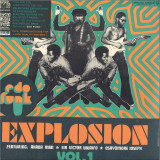
Various - EDO FUNK EXPLOSION VOL. 1

Analog Africa Presents Edo Funk Explosion Vol. 1, available on
2xLP/Gatefold LP with 20-page booklet / CD with 36-page booklet. It was
in Benin City, in the heart of Nigeria, that a new hybrid of intoxicating
highlife music known as Edo Funk was born.
It first emerged in the late 1970s when a group of musicians began to experiment with different ways of integrating elements from their native Edo culture
and fusing them with new sound effects coming from West Africa s night-clubs.
Unlike the rather polished 1980 s Nigerian disco productions coming out of the
international metropolis of Lagos Edo Funk was raw and reduced to its bare
minimum.
Someone was needed to channel this energy into a distinctive sound and Sir
Victor Uwaifo appeared like a mad professor with his Joromi studio. Uwaifo
took the skeletal structure of Edo music and relentless began fusing them with
synthesizers, electric guitars and 80 s effect racks which resulted in some of the
most outstanding Edo recordings ever made. An explosive spiced up brew with
an odd psychedelic note known as Edo Funk.
That’s the sound you’ll be discovering in the first volume of the Edo Funk Explosion series which focusses on the genre’s greatest originators; Osayomore
Joseph, Akaba Man, and Sir Victor Uwaifo: Osayomore Joseph was one of the
first musicians to bring the sound of the flute into the horn-dominated world
of highlife, and his skills as a performer made him a fixture on the Lagos scene.
When he returned to settle in Benin City in the mid 1970s - at the invitation of
the royal family - he devoted himself to the modernisation and electrification
of Edo music, using funk and Afro-beat as the building blocks for songs that
weren’t afraid to call out government corruption or confront the dark legacy of
Nigeria’s colonial past.
Akaba Man was the philosopher king of Edo funk. Less overtly political than Osayomore Joseph and less psychedelic than Victor Uwaifo, he found the perfect
medium for his message in the trance-like grooves of Edo funk. With pulsating
rhythms awash in cosmic synth-fields and lyrics that express a deep personal
vision, he found great success at the dawn of the 1980s as one of Benin City’s
most persuasive ambassadors of funky highlife.
Victor Uwaifo was already a star in Nigeria when he built the legendary Joromi
studios in his hometown of Benin City in 1978. Using his unique guitar style as
the mediating force between West-African highlife and the traditional rhythms
and melodies of Edo music, he had scored several hits in the early seventies,
but once he had his own sixteen-track facility he was able to pursue his obsession with the synesthetic possibilities of pure sound, adding squelchy synths,
swirling organs and studio effects to hypnotic basslines and raw grooves. Between his own records and his production for other musicians, he quickly established himself as the godfather of Edo funk.
What unites these diverse musicians is their ability to strip funk down to its
primal essence and use it as the foundation for their own excursions inward to
the heart of Edo culture and outward to the furthest limits of sonic alchemy.
The twelve tracks on Edo Funk Explosion Volume 1 pulse with raw inspiration,
mixing highlife horns, driving rhythms, day-glo keyboards and tripped-out guitars into a funk experience unlike any other.

out of Stock

Order now and we will order the item for you at our supplier.

25,59

Last In: 4 years ago
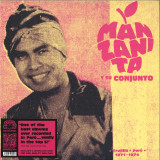
MANZANITA Y SU CONJUNTO - TRUJILLO, PERU 1971 - 1974

Following the 70s Peruvian cumbia compilation by Ranil last year, Analog Africa returns to Latin America to highlight the work of one of Perú’s undisputed masters of the electric guitar: Manzanita. This 13th release in the Limited Dance Edition Series includes 14 mostly instrumental compositions of electrifying Peruvian cumbia and guaracha. Manzanita's unique guitar lines rest on confident foundations that shifts gears effortlessly. Limited Edition LP in Gatefold Cover pressed on 180g high quality virgin vinyl

"I was in Lima, hanging out with collector-extraordinaire Victor Zela, who had spent the previous few years pouring his passion for Peruvian Cumbia into the blog „la cumbia de mis viejos“, a trove of incredible music. But after the birth of his first child, his priorities shifted and he decided to part with some of his rarest LPs. I was one of the lucky few given an early chance to examine his treasures, and when I picked up the album Manzaneando com Manzanita, Victor said: “Take it! its one of the best LPs ever recorded in Perú … easily in the top five”. That was all the encouragement I needed … two years later many of the songs from that masterpiece have made it onto Manzanita y su Conjunto, a compilation of electrifying Cumbia sides from Manzanita’s golden era.

Berardo Hernández – better known as Manzanita – first surfaced during the psychedelic Cumbia craze. At the head of the scene were the magnificent Los Destellos, whose leader, Enrique Delgado, was such a six-string wizard that other guitarists found it impossible to escape his shadow. But when Manzanita arrived, his electric criollo style sent shockwaves through Lima’s music scene and posed a serious threat to Delgado’s dominance as king of the Peruvian guitar.

Manzanita had come to Lima from the coastal city of Trujillo, five hundred miles up the coast – a place where Spanish, African and indigenous populations had been living and making music together for centuries – and came of age at a time when the first wave of psychedelic rock from the US and UK was starting to sweep the airwaves. But the sounds of Cream and Hendrix disappeared from the radio just as quickly in 1968 when Juan Velasco seized control of the country in a military coup. The new regime, which favoured local traditions over cultural ‘imports’ from the north, was a blessing in disguise for the Peruvian music scene.

Record labels flourished as new bands, raised on a hybrid diet of electric guitars and Cuban rhythms, rushed in to fill the vacuum created by the lack of imported rock. A new genre, known as Peruvian cumbia, was born and Manzanita quickly became one of its most original voices.

Starting in 1969, Manzanita y su Conjunto released a steady stream of singles that used Cuban guaracha rhythms as the foundation for dazzling electric guitar lines. After countless 45s and several years on the touring circuit, the band signed to Virrey, an important Peruvian label, and recorded two LPs acknowledged as masterpieces among aficionados of tropical music. Most of the songs on Analog Africa’s new compilation Manzanita y su Conjunto are drawn from those legendary sessions of 1973 and 74.

Although he scored a few more hits in the later 70s, his dissatisfaction with the music industry caused him to withdraw from the scene for several years; and when he finally retired for good, the golden age of Peruvian cumbia was a distant memory. But when Manzanita was at the top of his game he had few equals. Victor Zela was right: this is some of the best music ever recorded in Perú."

out of Stock

Order now and we will order the item for you at our supplier.

24,83

Last In: 4 years ago
Melvin Taylor & The Slack Band - Dirty Pool

Re-mastering by: Cicely Baston at Alchemy/Air Mastering, London

Electric blues guitarist Melvin Taylor had been sporadically recording solo albums for 20 years when Dirty Pool arrived — and was somehow just beginning to find fame. Already a hit in Europe, it had taken a steady run of performing in Chicago’s famed blues clubs to slowly earn Taylor a well-deserved reputation as an equal talent among the giants before him, such as Otis Rush, Albert King and Stevie Ray Vaughan.

While early records like Melvin Taylor Plays the Blues For You show off an equally amazing jazz side, Taylor traded away his Wes Montgomery-inspired runs for more Luther Allison/Jimi Hendrix attacks with the formation of the trio Melvin Taylor and the Slack Band in the mid ’90’s.

The title song of the second album by that outfit, “Dirty Pool,” is actually more the balls-to-the-wall, no-compromise, hard-rockin’ electric Texas blues of Vaughan and Johnny Winter than the sweet Chicago soul of Buddy Guy.

Indeed, three tracks on this 1997 release, including “Dirty Pool,” were SRV tunes. Other standards, like “Kansas City” and “Floodin’ in California” also have more of a Lone Star State approach to them. But the Jackson, Miss.-born Taylor’s guitar is cleaner than his forebears and technically, he even surpasses them, yet the anger and sorrow of the blues is readily evident in his playing.

This rare combination of qualities really comes out in a slow blues tune like his solo in “Dirty Pool,” which after repeated listens, still makes me head shake in disbelief when I hear it.

“Too Sorry” is a good example of how well Taylor fares when he treads in Jimi Hendrix territory, whereas his rhythm work is the best I’ve heard from a lead guitarist since Vaughan; listen to “I Ain’t Superstitious,” “Born Under A Bad Sign” and the funky “Telephone Song” for your proof.

It also helps that Taylor’s drummer James Knowles is well in synch with him, while Ethan Farmer completely owns the low end of the sound. Farmer’s peppering bass lines in and “Floodin’ in California” is the textbook way electric blues bass should be. Overall, a tight little band.

Taylor’s vocals certainly won’t draw any comparisons to the Wide-Brimmed–Hatted One but he holds his own just fine until it’s cuttin’ time. This is right at the top of my list of best blues guitar playing on record over the last couple of decades. If you decide to give this one a listen, prepare to be blown away.

pre-order now30.06.2021

expected to be published on 30.06.2021

29,37
Birds of Maya - Valdez

Birds Of Maya

Valdez

12inchDC835
DRAG CITY
25.06.2021

 Eight years passes like nothing for Birds of Maya. Their fourth
album kicks out the Philly jams with every bit as much fervour
as their earlier releases - in fact, as it was recorded in 2014, it
kind of is one of their earlier releases.
 A long era of dull ringing and nothing else in our ears is over.
Once again, winds of warm guitar and humid thunderheads of
bass and toms rumble all around. With ‘Valdez’, Birds of Maya
are back in flight. And like the first song title explicitly states, this
latest is a soaring blast of riffers, rife with punk rock abandon,
sludge, treble, distortion, neck-throttling rock ‘n’ roll solos,
pummelling drums and bass and half-shouted/half-gargled
vocals, all of it half on and half off the mic.
 ‘Valdez’ was recorded in 2014 at Black Dirt Studios in otherstate New York. After a Purling Hiss session there, Birds of
Maya got a bunch of tunes they liked into shape - that is,
different shapes on different days. But nice shapes. Once they
got to the studio, they loaded in and set up, curious to see how
they felt playing in a different room. Pretty good as it turned out
- running through the songs that first night, they accidentally
recorded the whole album. Then they finished up the next day,
mostly. Trading the crushed harmonics of their basement tapes
for studio-grade mics, overdubs in the mix and only slightly lessbruised harmonics, their roiling essence not only survives but
thrives, non-stop, on ‘Valdez’, stuttering, screaming and
stomping through six circuitous numbers.
 At the time this was recorded, Birds of Maya were standing on
the other side of ten years kicking around town, suddenly far
away from the primordial ooze they’d flopped forth from. The
streets where all this had happened on were changing, with new
money rolling in, but they were the same old Birds, content with
their libations and ear-splitting variations on old favourite
Stooges chords. The cover art of Valdez is a couple of images
from those days, glimpses at the old grass roots before they
were ripped up by developers to build condos. But nothing ever
really goes away. ‘Valdez’ is a totem of the wildness that refuses
be tamed

pre-order now25.06.2021

expected to be published on 25.06.2021

26,01
BILLY HARPER - Black Saint

Billy Harper

Black Saint

12inchWELLE107
Our Swimmer
28.05.2021

Billy Harper is one of the great tenor saxophonists in the post-Coltrane mold. Originally from Houston, TX and with a degree from the venerable University of North Texas College of Music, Harper emerged on the New York City jazz scene in the late 1960s performing with Art Blakey, Max Roach, Lee Morgan and others. Known for his soulful and propulsive tone, Harper was already a highly regarded and prolific session man before the release of his debut album as a leader on the cult favorite Strata-East label in 1973.

Recorded in 1975, Black Saint was the second album for Billy Harper as bandleader and is the most acclaimed and fully realized of his long career. The inaugural release of the Italian label Black Saint – to which the album lent its name – is comprised entirely of Harper compositions; the peaceful and subdued opener “Dance, Eternal Spirits, Dance!,” the swinging and fiery “Croquet Ballet” and the side-long epic “Call Of The Wild And Peaceful Heart.” Harper’s group features trumpeter Virgil Jones - a graduate of Roland Kirk’s mid-60s groups and session player for McCoy Tyner, Charles Tolliver and others - along with Joe Bonner on piano, David Friesen on bass and Malcom Pinson on drums.

Black Saint is too melodic and swinging to be free jazz but too forward-thinking to be described as modal post-bop; Harper’s advanced compositional sense and galvanic tenor work make this an album of pure fire music. This is a beautiful album back into print on its original format for the first time in over 40 years.

pre-order now28.05.2021

expected to be published on 28.05.2021

31,89
GROUND - JIN 03 EP

Ground

JIN 03 EP

12inchJIN03
禁 JIN Records
21.05.2021

JIN 03 EP presents a 4 track EP from Osaka's Ground. True to his unique soul that's reminiscent of a nomad, traversing the planet, befriending kindred spirits found in humans and various environments, this EP presents 4 pieces of unique grooves that ranges from the more euphoric vibe to both daytime & night time of a winter season surrounding a temple.

On A side "Osakacid" comes in two versions : A1 original version is a slow motion acidic tripper under the winter street of Osaka city lights. Long Flight Version features Mayuko, 1/2 of ambient, electronica duo Synth Sisters. Soothing melody layered with Ground's goofy acidic flavor compliments perfectly with each other.

B1 turns to the pure creative side of Ground. "Stone Bridge" is based on a local bridge that connects to a temple nearby his country side home outside of Osaka. Mystic and minimalistically punchy, this cut digs deep into the soulful side of Ground's ever nomadic approach. B2 comes in a complete shock: Ground's longtime friends in Thailand - Mogambo twists up "Stone Bridge" into a psychedelic, GOA fused floor shaker that takes you to an imaginary zone of raving inside the temple late into early morning.

out of Stock

Order now and we will order the item for you at our supplier.

10,46

Last In: 3 years ago
Items per Page:
N/ABPM
Vinyl