The Bees are a textbook case of the chew and spit cycle that was the late 80’s South African music industry. Although their unknown story is likely unique, it is just as likely that it is no different to that of many other young artists who dreamed of getting their music heard at the time.
By 1988, the independent record label was no longer as uncommon as it had been at the beginning of the decade. As the 80s went on, more seasoned A&R reps and Producers that had gained experience and connections from their work under major labels would be trying to cash in on a market they helped create. Without the need of big rooms or expensive recording equipment, the digital advancements allowed many Producers to open or work in smaller studios and promote unknown artists under their own imprints. They would then have their catalogs marketed and distributed by the same major labels they had been working for just years prior. This would open up the possibility of a new era of stars as potential talent no longer had to be pitched to major labels in hopes of them taking a chance on a new signee over their already established artists. With the market growing and a struggle to keep up with the demand for new sounds this agreement would allow the major labels to put new emerging artists or groups on their catalog with little investment and high reward if it happened to be a hit.
ON Records was just one of the independent players at the time. Ronnie Robot had just signed the unlikely trio The Bees in hopes of adding a hit group to his label roster that consisted of solo acts. Despite the debut’s fresh house inspired sound, it failed to catch on was outsold by the bubblegum disco the label was known for. Over the years unsold back stock and promos would build up with the distributor. Luckily this allowed sealed copies from the label’s catalog to survive into the 90s when the distributor’s stock was unloaded and picked up by legendary Johannesburg jazz shop Kohinoor. Here sealed copies of the Bees first attempt sat under appreciated for over 20 years before becoming a hot title after they started circulating online and became club staples. This is how the first album of an unknown group with no success was able to become a collectors item and earn a reissue over 25 years later.
With their first record behind them The Bees were ready move forward and get back into the studio. A suggestion from producers had the trio change camps and go work with the newly formed Creative Sound Recordings, the label that promised “Music for the Future” and ended up being an essential studio in the early years of Kwaito. They would work with producer Chris Ghelakis and guitarist George Vardas, while a young Marvin Moses sat behind the desk. Musically the sophomore album was as good as a follow up as you could get. Building on the first album, Mashonisa delivers catchy melodies backed by heavy drum programming that would score points with any Pantsula. The Black Box inspired “ Never Give Up” was one of two tracks chosen to be pressed as the promo for the album, hoping to trick listeners with their catchy version of the hit( A year later the label would release their first volume of Black Box covers sang by neo soul diva BB, it would be a great seller). The label printed up an unknown amount of these in a last attempt to push the release in Shabeens and on Radio. The cheaper route of flooding the market with promo copies would only pay off 25 years later when unplayed copies started being rediscovered and had survived the years in a quantity that original run of the full album could not. Once again it was clear that with no mainstream appeal, the quality of the music on its own was not enough to garner any success at the time. The album flopped worse than their first and failed to make it past it’s initial run, making it one of the harder titles to get from the CSR catalog.
Mashonisa would be the last attempt from the Bees. They would disappear from the scene as quickly as they appeared. Of the three members it is only known that lead Singer Solomon Phiri continued in music fronting a wave dance group before he mysteriously vanished in 1993, never to be heard from again. Through a combination of luck and circumstance the group, which is unknown in South Africa to even the most plugged in musicians, producers and radio hosts of the time, managed to finally get some of the recognition they deserved 30 years later. Unfortunately this small blip of fame would happen with none of the band members present to give their side of the story, or even aware of how their two albums became popular enough to be printed on different continents in a new millennia. The Bees suffered the same fate as countless other artists of the time, who thanks to emerging independent labels and willing producers were given an opportunity to have a short career, only to be replaced by the meat grinder of the music industry when they failed to produce a hit.
Search:the pants
- A1: Steve Colt - Dynamite
- A2: The Soul Tornados - Crazy Legs
- A3: The Memphians - Breakdown
- A4: Cal Green - Revolution Rap (Part 1)
- A5: The Xplosions - Wait A Minute
- A6: Smokey Johnson & Company - The Funky Moon
- A7: Soul Combination - Soul Combination
- B1: E Gaunichaux & The Skeptics - Afro Bush
- B2: Mickey & The Soul Generation - Football
- B3: Darnell Simpkins & The Family Tree - The Whip (Part 1)
- B4: Charles Mintz - Give A Man A Break
- B5: Zeke Strong & The Ladyetts - I Laugh & Talk (But I Don't Play) (But I Don't Play)
- B6: Diety - The Kuri Kuri
- B7: Jimmy Bee - Hot Pants
The impact and influence of music of (Afro) Cuban origin has spread from Cuba to the far corners of the world. Its fingerprint can be found through salsa, jazz, funk, soul, hip hop and everything in between. Cuba has an incredibly rich culture of music and dance which is ingrained in its people from birth. With this release we celebrate two compositions by one of Cuba's finest songwriters: Silvestre Méndez.
Here at Rocafort Records we are delighted to serve up two of Méndez's biggest compositions at their finest. "Mi Bomba Sonó" featuring the emblematic Celia Cruz and her explosive vocals over La Sonora Matancera's inimitable pulsating rhythms! On the flip side we have Joey Pastrana's thundering rendition of 'A Bailar Oriza', a funky reinterpretation of one of Méndez's most covered compositions.
Disclaimer: We will not be held responsible for any turntables, dance floors or pants catching on fire! We hope you enjoy this little tribute to Silvestre Méndez as much as we have delighted in putting it together!
Producer duo Hudson Mohawke and Lunice stare at the moon for too long, get abducted and return just in time to deliver their second EP ‘II’. Following the release of the mysterious ‘Serpent’, a lunar chart that was decrypted by fans in minutes and a dangerous Radio 1 Essential Mix, TNGHT’s crescent moon is appearing once again from behind heavy clouds. It has been seven years since Hudson Mohawke (Ross Birchard) and Lunice’s (Lunice Fermin Pierre II) prodigious debut which accidentally changed the sound of the pop music caught in its wake. The pair of bedroom-producers-cum-superproducers hail from Glasgow and Montreal and have aligned once again on a record which aims to chew up and spit out every influence across a single 12”.
The debut album from the American female trio, originally released in 1973 on the Philly Groove Label
Classic Philadelphia sound featuring the disco anthem and title track that peaked at #28 on the Billboard Hot 100 and #16 UK charts. Other highlights include the hit singles ‘Smarty Pants’ (UK #9), ‘Newsy Neighbors’ and Northern Soul Classic ‘This Is The House’
Demon Music are proud to reissue this soul classic on 180g heavyweight vinyl, with printed inner sleeve and original artwork
- A1: Penny Penny - Shilungu
- A2: Alaska - Accuse (Instrumental)
- B1: Ze Spirits Band - Tucheza (Esa Extended Mix)
- B2: Nonku Phiri - Sîfó (Feat. Dion Monti)
- B3: Os Panteras - Melo Do Anjo (Outra Edit)
- C1: Pascal Latour - Lague Yo (Boulo Edit)
- C2: Masalo - Yera (Feat. Doussou Koulibaly)
- D1: Esa - Pantsula Traxx
- D2: Narchbeats - Cheeks
- D3: Dj Spoko - #Justsnares
Esa's compilation Amandla: Music To The People holds diverse dancefloor tracks from over the world. The first compilation in 2019 for Soundway and a comprehensive picture that connects the dots of Esa’s musical journey.
Growing up in Cape Town, South Africa, during the last days of Apartheid, Esa recalls the immense power that music had in resisting oppression and division. “Amandla, Awethu”, which literally means “the power is ours”, was an ubiquitous chant echoing throughout the politically charged atmosphere of the time – a call to unite, and a call from which this release derives not only its title, but its intention as well.
“Music was a crucial way of bringing people and communities together”, reflects Esa, “and it’s what I hope to achieve with this compilation, too”. For Esa Williams is not only a musical polymath but also passionate about connecting people through music – be it as a skilled DJ, an educator in production, a band leader reigniting the legendary Ata Kak band from Ghana, or a collaborator with the likes of Tanzanian artist Mim Suleiman. A firm favourite on the DJ circuit, he held a monthly residency at Phonox London for over 6 months - bringing guests such as Nu Guinea to Brixton audiences - as well as delivering memorable sets at Dekmantel, Atlas Festival, Boiler Room and more.
The last few years have seen a recent surge in interest in South African music from the 80s and 90s, including bubblegum, which was recently showcased on Soundway’s critically acclaimed 2018 compilation Gumba Fire: Bubblegum Soul & Synth Boogie in 1980s South Africa, put together by DJ Okapi. It was only natural that the label looked to delve deeper into the country’s rich musical legacy and tap another of its esteemed ambassadors for the role of compiler.
The result is a rainbow of complementary electronic styles hailing from not only South Africa but further afield, including zouk from Brazil and the French Antilles, as well as Afro-futurism. Together, they form a comprehensive picture that connects the dots of Esa’s musical journey – from growing up in South Africa, to artists he has encountered in his worldwide travels who have helped develop his identity as a musician.
Eagerly awaited debut album from oft-cited UK's most out-there band, features in the works with The Quietus and Wire already.
180GM PRESSING - 500 COPIES ONLY.
Difficult times required difficult music, my Yarns, that's why we had Guttersnipe; with its own sort of energy-kind there then.Reiner: A singular yield, a singular yield now.Barns: A whot
Reiner: A singular yield mate! Rich guitar strang, flow motive pounding underneath.Vox like Death come winding through the fields. Barns: Hell of a way to describe a vocal style.
Me: Nah but for real my Donny, Have you read a presser 1 sheet lately It's the most
They say the PR era, circa late 80's killed the golden age of music journalism:
They say Guttersnipe have continuously melted all the forms that they come up against. They are right. Because Guttersnipe is not part of a tradition we know well. You will identify the departure from it though, immediately, upon hearing My Mother The Vent. This LP, the promotional version of which, likely sits in your hands (disk, whatever). The innovation here is a FIRM commitment to the flowmotive polyrhythm underwriting the seared, nay fried, tonal rainbow and de-reasoned vox.
Not Nate Nelson, nor John the masseuse dude from Sightings but TIPULA CONFUSA. Don't want to put the captain obvious pants on so tight I can't jump around the yard because why waste a good yard hang. I'll put on my blighty nighty instead. UROCERAS GIGAS has bridged so many gaps, finally unlocked the AxeWeld CODE and is really playing the thing. Not to mention bringing forth a world-view so utterly unique. Good luck finding anything like it.
Finally some REAL disjunction in the music; clear and intended. In an age when most computer music composers use stochastic systems and still manage to drop some linear pathground shit, the brawler drums and slanky guitar constructions on My Mother The Vent are a genuine treat. I've spent too much of my adult life so far hearing too much of this shit to not recognize REAL GAME. And here it crawls out of the grey shadows of ol' BLIGHTY.
Our post-music age: after the fine human endeavour known as music, the result of letting the cybernetic run ITS horrible game on us. I'm not waxing confusingly in a rarefied tone here. Nor running the boring sci-fi script. I really think that is were we is. We left the human-music-on-a-human-scale behind and much to our detriment. Here we sit in our crumbling reality. But Guttersnipe come paleo, like the rhapsodes with long ass memories rattling off Homeric verse well into the age of manuscript culture, but here, with future tones. Luckily. Otherwise, me and the record label here wouldn't be wasting our time and yours with a 1 sheet for My Mother The Vent.
So a proper first time on wax for these amazing creatures is a welcome addition to the world of things. These drums and these guit-lines are so cranké, as they say here in my odd neighborhood. These voices are so utterly expressive without even the damn language at hand ; like the great horns. We'll rinse this record out, I'll put on my old blighty nighty and go dance in the street. Alex Moskos, Montreal, August 2018Guttersnipe is:UROCERAS GIGAS - Guitar, Analog Synth, VoxTIPULA CONFUSA - Drums, Drum Synth, Vox
The Splinta Experience was made entirely by hand. And a foot. The record is the result of Splinta's turntable tricks and layering. It's simply drumming and scratching arranged on the fly with a loop pedal, with added effects from a basic, pocket-size bass module. Low in fidelity and high in humming, buzzing and hissing. No SP-404 effects needed.
This is scratch music that takes us to the Electric ScratchHappyLand. It might as well be a tribute record celebrating 50 years of Jimmy Hendrix Experience's last album. And 22 years of Kid Koala's greatest mix-tape of all time.
Splinta's a Slovenian. He's been deejaying & juggling for more than a while. This is his debut on plastic.
Sleeve illustration, design and print all also hand-made by Splinta. Really wholesome hiphop shit.
It's remix time! We open our vaults to let our favourite producers from 'round the globe play around with our releases. This is the first of 3 remix EPs, with fantastic reworks by the hanseatic hedonism force of RSS DISCO, the Australian psychedelic vibes of DREEMS, the Austrian psychedelic vibes of TIGHT PANTS and the Mexican dreams of SAINTE VIE.Tune in, drop out!
Backstock
With Situational Awareness, post-punk legends Crash Course In Science deliver a ten track album consisting entirely of brand new material. The songs on Situational Awareness sound crisp and ultra-fresh, while the band from Philadelphia, USA, maintains their distinctive DIY sound created by toys, kitchen appliances and self-built synths. Far beyond new wave, the music is experimental and danceable at the same time - science and art, together hand in hand.
As BPMF started making techno again, he surveyed his techno friends asking them what it was about his music they found the most annoying. The answers TR-606 hi-hats and portamento.
He proceeded to focus on these aspects of his music and today the results are here: "Abide the Glide Volume 4" wherein BPMF is pushing all the right buttons to get the DJ thinking about the sounds their pumpin. Jamie Morris provides an excellent DJ freindly remix of "Even Straighter", taking BPMF's idea and going even straighter.Old Man Raver Pants" proves that a 50 year old man can still party, so long as he's wearing his raver pants and while there's been alot of talk about alternative facts, "Alt-Slacks" is a dub inspired jam that seems like it's narrative might fall apart at anytime.Schmer label head BPMF has been making electronic music since 1984. As Free World released cassettes, was entered by WFCS into CMJ's Best Unsigned Bands competition and in 1985 earned the duo a spot on an Epic Records compilation. In 1986 they released "Amagi", an eclectic collection of experimental electronica inspired by underground new wave and industrial music of the 80s.BPMF and Taylor Deupree formed Decameron and released two cassettes on Havoc Music. Some tracks would appear on early techno CD compilations under pseudonyms. Havoc Music's own compilation "Techno Criminal Sub Cultures" is where BPMF first appeared in 1991.
With Dietrich Schoenemann and Taylor Deupree, BPMF assembled classic early 80s analog gear and as Prototype 909 they released "Acid Technology" on Instinct records; performed their first live show, met Abe Duque who invited all of his techno friends to the legendary Limelight Club in NYC. BPMF brought records and gear jammed live with them. The Rancho Relaxo All-Stars would release three albums and tour Europe together even destroying the original Ultraschall in Munich, quite literally tearing the place down. With John Selway, BPMF channeled early electro and new wave sounds forming Synapse and creating Serotonin Records to bring the funk back and help give birth to the electro revival scene.Prototype 909 recorded four albums and played 70+ shows. Synapse was the first American electro group to play live in Moscow. BPMF released tracks on Serotonin, Schmer, Instinct, Analog/EMF, Tension/Rancho Relaxo Records. His approach to electronic music is hands on and experimental, so more than having a "sound" his music reflects his values: spontaneity and a sense of urgency.
the label say: What is soul really The answer to that is a various as the music that claims it. We here at WPH HQ do not know the answer either, but we do know an exceptional piece of music when we hear it. Enter Fabrice Lig, Belgian techno legend with his roots in our little country and his ears definitely in that place called Detroit.
Respected by his techno peers and his Detroit inspirations alike, Fabrice's music is always full of funk and emotion. These two qualities are very much in demand in WPH circles, so it was only a matter of time before Fabrice joined the family.
On 'Border 2 Border' Fabrice brings us two tracks, the title track funkin' and swingin' like nothing else and with a big dose of Motor City chords, making for a true mental dancefloor anthem. Word has it that label boss Red D wrote lyrics on the spot when he heard this one out loud...so who knows what's coming in the near future... On the flip side 'Ocean Rising' goes for arpegiatted bliss and a bass line to rumble you out of your bras or pants. Welcome to WPH Mr Lig!
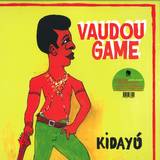
When faced with the decision to take a different direction at the risk of getting lost in a synthetic sound or to further explore the same musical path, Vaudou Game didn't need to consult the oracle for very long when putting together their new album. Since their first acclaimed album, Apiafo and its irresistible single "Pas Contente", these Lyon natives never turned down the heat on over 130 stages across Europe, Africa, America and Asia. Peter Solo has displayed his amulets, charisma and yellow pants around the globe.When time came for them to harness their Afro-Funk sound for the second time, they turned their attention once again to their analog strengths. Vintage material, instruments produced in the 70's and cassette tapes were the "grigris" (or lucky charms) which proved most effective to ward off digital corruption of their music and return them to a tight-knit group with a solid groove.This unbeatable trance rhythm, inherited from James Brown and Fela, icons of Funk and Afrobeat, becomes trident when joined by Mawu, the creative voodoo divinity hidden in each of the group's notes. This inspiration transcends their spirit of communion, plunges them deeply into Mother Earth and results in the telepathic trance which is directly connected to Togo Peter's native Togo.Each song then becomes a celebration where the listener becomes the group's voodoo doll, embraced by the rhythm, submitting itself to the mercilessly metronomic cutting of guitars, struck by the copper-colored flashes of lightning forged by the African voodoo deity Hevioso, pierced by the psychedelic visions generated by the organs and a six-string guitar, cheerful songs, and hypnotic incantations.KIDAYU means "sharing" in Kabye, the language spoken in northern Togo. Sharing, is the philosophy of Vaudou Game - both in their recorded music and on stage.Vintage African funk tinged with voodoo chanting: Togolese Peter Solo and his fellow musicians from Lyon electrify us in a frenzied ceremony" - Télérama
- A1: Actress - Xoul Particles (Prins Thomas Version)
- A2: Blacknecks - Don't Dream It Be It (Prins Thomas Version)
- B1: Box Saga - Zen And The Art Of Deadlines (Prins Thomas Edit)
- B2: Joachim Holm & Alejandro Mosso - Tre Melodi (Prins Thomas Version)
- C1: Hieroglyphic Being - Imaginary Soundscapes 9 (Prins Thomas Version)
- C2: Blacknecks - Don't Dream It Be It (Prins Thomas Short Version)
- D1: Ü - The Subdubba Beat (Stockholmia Glue Mix - Prins Thomas Edit)
Dear Vinyl Enthusiast / DJ,
The tracks on this 2 X 12" received some special individual treatment which I hope you'll enjoy listening to or playing in your local disco as much as I did making the. Box Saga has been a firm favourite of mine for a good 20 years already and although it's baggy pants and loose groove is exactly why I love it so much I thought it would be fun to do a slightly different take on it.
Ü is a recent fave of mine but as the record is super long and has a very DJ-unfriendly ambient intro, I gave it a couple of chops and hope you're brave enough to bring it to the dancefloor where it belongs. The tracks by Joachim Holm & Alejandro Mosso, Actress, Hieroglyphic Being and Blacknecks are all quite sparse to begin with and with the approval of all involved you can now smile or cringe at these "Versions" where I "join the band" on some of my recent favourite records. Thanks to the artists and labels involved for letting me use their music.
a highly regarded producer and musician who used to be in the midst of the NY metro breeding reactor that spectatuclarely revived and modernized disco and italo disco since the turn of the century and added some hotliped live brass to their platters and whose sought after releases under his own appear appear much to rarely dons his house cloak and dagger for 3 sneaky new chapters on story. not wasting any time on unnecessary nicety the a-side track will send up a whole colony of ants right up your pants riding on a steamrolling percussive disco groove garnished with cut up vocals and fx trickery. B2 is another chicago style wedding of disco and house with a jubilant, string backed female vocal snippet tweaked over a heavy groove while the first track on the flip is a subterrenean, groaning dub house affair that reminds of a slowed down John Ciaffone banger. no matter which chapter you jump to here it puts you right into the action.
Prolific Seattle producer Jon McMillion returns to Nuearth Kitchen with another crucial chapter in his epic tale of haunted house-music subversions. This EP offers four variations on a bizarre and engrossing theme. Don't It Make You (edit 1)' is a work of extremes: By some miracle of aural physics, it's at once one of McMillion's strangest tracks and one of his most accessible. He sets into motion a staunch, relentless house rhythm bolstered with congas, massed claps, synth-bass raspberries, and a badass male singer intoning, Don't it make you feel good, if you wanna get down/Just say it, say it again,' over which a miasma of enigmatic tones bubbles and swirls. Like Bohannon's disco-funk classics from the '70s, Don't It Make You' seems like a tease, even at 10 minutes duration, you wish it would roll on for at least 30. On Don't It Make You (edit 2),' McMillion strips things down to dance-floor essentials and erases some of the free-floating background weirdness.
The two remixes are revelatory. New York house icon Fred P. (aka Black Jazz Consortium) slides the track into a tighter pair of pants, but that just makes it swivel harder and slyer. He emphasizes Don't It Make You''s mysterious drones and then loops a female vocalist singing He keeps me' while dropping in some echoed male chatter to gently disorient. What a dreamy, soulful trip Fred P. conjures here. And rising German wunderkind Orson Wells layers and pitches up the original's cascades of bleeps, which becomes the dominant motif, and then subtly modulates said bleeps over the tune's seven minutes, while keeping that irrepressible rhythm strutting. McMillion's raw materials prove to be fertile ground for these two maverick remixers to flaunt their own fascinating quirks while maintaining the original cut's club-darkening and ass-moving functionality.
Kill Frenzy, our Belgian booty-loving Jean-Claude Van Damme look-alike returns with his latest ode to the female form. It never ceases to amaze us that the crew member with the tightest pants consistently turns in some of nastiest ghetto funk.
Whilst radio producers will be quaking in their boots, fans of his crunkin' creations will be singing 'Tongue n Lick' for months to come. A summer hit for the dirtybird crew its now set to make your winter walls sweat. Taking an even heavier path, Kill Frenzy brings together classical piano, lazer-edged synth, marching snares and a bulbous bassline on the epic, Naked Piano.