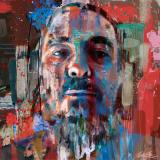
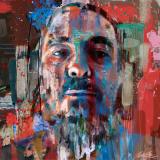
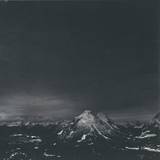
This album was born from a long-held, quiet ambition. I always wanted to navigate the entire journey of a record – from the first written note to the final mix. Winterglare is the result of finally stepping into that journey. Recorded in my home, the process was inextricably linked to the life happening just outside the door. Being surrounded by the daily routine and family created a unique tension; time felt precious, limited, and often fleeting. At first, finding mental stillness felt impossible. Yet as the winter deepened, a shift occurred. I found a place of unexpected calmness, where the music began to float, and the domestic noises around me became an accompaniment rather than an interruption. What began as an idea for a piano album expanded to include the Wurlitzer electric piano and the Gigster vibraphone. Some pieces evolved into experiments with percussion, accordion, and finally, the Roland tape echo and field recordings. Throughout this growth, the vision remained: to preserve a sense of space and time, allowing the true ambience of the moment to breathe. My hope is that these compositions find a place in your own quiet moments. I hope they offer your mind and soul the same sense of peace they eventually granted me during those cold months.— Volodja Brodsky
Ron Trent’s Primitive Arts originally released on Peacfrog Records in 1999 is a triple LP collecting some of Trent’s most beloved tracks released on his own label, Prescription Records, and rounds it off with a few new cuts that easily assimilate with Trent’s best material.
Dutton Ranch is a Paramount+ series set in the world of the Dutton family, expanding the story and legacy of the family-owned ranch first introduced in Yellowstone. The series takes viewers back to Montana, where the Duttons face new challenges as they fight to protect their land and their way of life. The first season introduces a new chapter in the Dutton story, bringing together a new generation of characters and further exploring the world of the Yellowstone universe.
The original score is composed by Brian Tyler and Breton Vivian. Tyler is a well-renowned Hollywood composer, known for blockbuster scores including Iron Man 3, Avengers: Age of Ultron, The Mummy and several films in the Fast & Furious franchise. Together with Vivian, he also created the music for Yellowstone, 1883 and 1923. Vivian has become closely associated with the Yellowstone universe, having co-composed the scores for the series.
The soundtrack of Dutton Ranch is available as a limited edition on brown vinyl and includes an insert with liner notes by the composers.
Futuristica is 20!
This independent imprint has been producing and releasing music for friends and family for 20 years, so what better way to celebrate than by releasing a 2xLP limited edition 20 track compilation of rare and never before released on vinyl recordings exclusively selected by label manager Simon Skolfield.
This is a beautifully varied selection of deep soul, jazz and hip-hop music from a group of like-minded independent artists creating their own brand of soulful gems. From the early electro soul of Electric Conversation, the multi layered jazz samples of Kira Neris to the lush vocal harmonies of Deborah Jordan, production and remix class from Marc Rapson and the contemporary spiritual soundtracks of The Peter Franks Group.
Over the years there has been generous support from Gilles Peterson, Tony Minvielle, Marc Mac, Patrick Forge, Kev Beadle and so many more worldwide. Artists like As Valet, Emanative, LaNote and Georgie Sweet have gone on to produce fine work with several different independent labels with our artists garnering fine remixes and production work from the likes of DJ Spinna, Nostalgia 77, Kev Bown, Mr Beatnick, Nicolay, Kaidi Tatham, Atjazz, Simbad, K15, Domu, Mecca:83 and so many others. And all of this organically grown since the release of Low Budget Soul, the label’s debut project back in 2006.
RAWAX welcomes Caruan to the artist family! We are very happy to present you this great artist, who already released on iconinc PERLON. Gaetano delivered here a fantastic mixture of genres. Each track is diffrent and the whole ep tells a story from Minimal to Techno, from House to Jazz and that makes Gaetanos debut for us so special.
All tracks are written and produced by Gaetano Caruana aka Caruan
Piano on "Diaphragm Jazz" by Stefano Onorati , trumpet by Andrea Guzzoletti
Piano on "La Vida Siempre Puede" by Stefano Onorati
Big Sausage is written and produced by Gaetano Caruana and Marzio Aricò.
Fresh from the success of his debut solo LP ‘How To Kill A Butterfly’ out last year on High Focus Records, Farma G returns with the anticipated full-length follow up ’Nearly Nothing’s Enough’.
An album anchored in his notorious musical adventures as 1/2 of Task Force, Bury Crew and Mud Family, but very much informed by the state of 2026 Britain and beyond, Farma’s new body of work is fuelled by equal parts venom and deep introspection across 12-tracks courtesy of Brighton based producer Relense.
With one eye on following ‘How To Kill A Butterfly’ with something of equal standing, Farma revisited the fundamentals in the hope of better understanding what he really wants to say with the music he makes. By channelling feelings of familiarity and seeking out emotional connections to his past he created a record that feels both concise and expansive.
With the help of Relense’s gritty analog instrumentals, Farma found himself journeying across subjects and bandwidths; from exploring the mind of a conspiracy theorist on ‘X-Files’, to being a zen master with a mountain on his back on ‘Sun Wukong’, before returning to earth for a typical day in the life on ‘Mr Moany’, ‘Nearly Nothing’s Enough’ is an album that took Farma home and he is delighted to welcome you on the journey.
May 2026 marks the arrival of TYGAPAW (aka Dion McKenzie)’s first full-length album on Tresor Records, entitled Together You Gather All Power Applied Worldwide. An acronym of its creator’s name, TYGAPAW’s third studio album is a deeply personal collection of music building worlds where Black queer and trans siblings can thrive, while unifying dancefloors worldwide. A proposition that collective wisdom liberates us from the matrix of domination we live within. The album unfolds as the latest chapter in TYGAPAW’s ongoing techno opera opus, continuing to center the voices of Black women, which surface as layered incantations rather than lyrics - powerful, haunting, sensual, activating.
With the process of creating the album starting in 2023, as TYGAPAW (Dion McKenzie) was in the first year of their transition, the music reflects the intensity of that period, where they were experiencing deplatforming as a response to the shift in their physical appearance: Tracks like ‘M32 Riddim’ and ‘Helicopter hovers over my Crown Heights Apartment’ feature high-paced rhythms intersecting with intense siren-like synths to form demanding compositions echoing a heightened sense of alert. Yet throughout the album, relief comes in the form of TYGAPAW’s vocal features, co-conspirators, and chosen family, whose voices are treated with reverb and echo, a sonic fingerprint that leads back to the pioneers in the legendary studios of TYGAPAW’s native land, Jamaica, an important reminder that the past will always inform the future. It is an album for dancers first and foremost, where joy, defiance, and integration with the natural body coexist, and every drop feels less like a climax than a transformation. Expect a bass that permeates your soul and melodic synthesized sequenced phrases echoing the dancehall eras of TYGAPAW’s youth, reshaped into hypnotic melodies that glow over industrial kicks designed to command attention, reasserting Jamaica's pioneering yet often overlooked contribution to electronic music.
In the opening track, ‘Can I Live’, Precious Okoyomon’s words feel like the beginning of a ritual; setting the intentions for the rest of the proceedings. As McKenzie puts it, their “work is about regeneration, resetting, getting integrated into nature, and about rebirth. That’s the tone I wanted to set at the outset of the album.” Ms Carrie Stacks continues this thread of support in ‘Don’t Panic’ with heavily processed vocals on top of a beat that takes inspiration from another important ingredient in the antidote to the oppression of isolation: Ballroom culture. “ I feel like I found my queerness in Ballroom, that’s why this track is very important to me.”
Echoes of NYC Black queer nightlife scene also permeate in the energetic drums of ‘Exorcise the Language of Domination’, in which Julianna Huxtable’s spoken performance complements the various movements and tones of the music. “My producer brain thought this was the one that Juliana’s vocals would be best suited for. I hinted: ‘what do you think of this one?’ She just went into her notes and picked some passages to go with the first section of the track. From there, it was a year-long process of development. It required time and space for this thing to evolve, but I think it’s one of the most powerful tracks on the album.” London’s SUUTOO contributes the album’s only musical collaboration on ‘B2B’, a track that emerged from sessions in McKenzie’s New York studio where the real objective was to connect and have fun; a time out from the demands of life outside.
The album closes out with a double hit of emotion in the form of ‘Effects of Resistance and Black Trans Masculine Experience’. The former features South African scholar Khanyisile Mbongwa drawing connections that exist between Africa and the Black diaspora, whilst looking to the future and calling for a shared sense of community.
The latter piece, an instrumental version of the piece which featured on the IMMIGRANT E.P. of 2025 is a gentle and deeply affecting end to the record, a place of peace and acceptance. This end-of-cycle tone is mirrored in the sleeve photography, which also ties back to IMMIGRANT by finally revealing what was hidden: a portrait of the artist fully self-actualized; a step towards true inner liberation. TYGAPAW is sonically defiant across this album; bass frequencies feel tactile — less heard than inhabited — infectious lead synth melodies remain with you long after the track ends. An overall sound that leaves asserting an urgent need for connection. From Detroit to New York to Berlin to Jamaica, despite geographic distance, this album reminds us that we remain in solidarity, recognising that meaningful world-building requires collective input and action, both personal and communal, if we are to move toward liberation.
Tripmode made a superb start to life with its first EP and is now back with more goodness, this time from family member Daniele Temperilli. We're told he is inspired by 'love, freedom and matured childishness' and he brings some big bass and bouncy minimal house to this 12". 'Beatback Haze' is tight and clipped in its tech funk, then 'Peace What?!' Brings more low-swinging drums and a prying bassline topped with big hits and warped pads. 'BeesTreb' taps into a darker vibe with gritty drum textures and more rapping, farting bass that's perfect for a darkened room. Last of all is 'Pachyderm', which bounces and swings, with macho drums but a sense of lithe energy that keeps you on your toes.
The Éthiopiques series returns! Essential archive recordings from an extremely fruitful period in Ethiopian music.
Before “Swinging Addis” took over the world, there was Moussié Nerses Nalbandian — the Armenian-born composer who shaped modern Ethiopian music. Mentor, arranger, and pioneer, he laid the foundations of Ethio-jazz.
This Éthiopiques volume revives his forgotten legacy, recorded live by Either/ Orchestra First issue ever with new exclusive photos and in depth liner 8-page insert.
“Ethiopian jazzmen are the best musicians that we have seen so far in Africa.
They really are promising handlers of jazz instruments.”
Wilbur De Paris
(1959, after a concert in Addis Ababa)
አዲስ፡ዘመን። *Addis zèmèn* **A new era.**
The time is the mid-1950s and early 1960s, just before "Swinging Addis" bloomed – or rather boomed – onto the scene. Brass instruments are still dominant, but the advent of the electric guitar, and the very first electronic organs, are just around the corner. Rock’n'Roll, R’n’B, Soul and the Twist have not yet barged their way in. Addis Ababa is steeped in the big band atmosphere of the post-war era, with Glenn Miller's *In the* *Mood* as its world-wide theme song, neck and neck with the Latin craze that was in vogue at the same period. Life has become enjoyable once again, with the return of peace after the terrible Italian Fascist invasion of Ethiopia (1935-1941). The redeployment of modern music is part and parcel of the postwar reconstruction. *Addis zèmèn* – a new era – is the watchword of the postwar period, just as it was all across war-torn Europe.
The generation who were the young parents of baby boomers** were the first to enjoy this musical renaissance, before the baby boomers themselves took over and forever super-charged the soundtrack of the final days of imperial reign. Music is Ethiopia's most popular art form, and very often serves as the best barometer for the upsurge of energy that is critical for reconstruction. Whether it be jazz in Saint-Germain-des-Prés or the *zazous* who revolutionised both jazz and French *chanson* after the *Libération*, be it Madrid's post-Franco Movida, or Dada, the Surrealists and *les années folles* that followed World War I, the periods just after mourning and hardship always give rise to brighter and more tuneful tomorrows. Addis Ababa, as the country's capital, and the epicentre of change, was no exception to this vital rule.
**Two generations of Nalbandian musicians**
Nersès Nalbandian belonged to a family of Armenian exiles, who had moved to Ethiopia in the mid-1920s. The uncle Kevork arrived along with the fabled "*Arba Lidjotch*", the** "*40 Kids*", young Armenian orphans and musicians that the Ras Tafari had recruited when he visited Jerusalem in 1924, intending to turn their brass band into the official imperial band. If Kevork Nalbandian was the one who first opened the way of modernism, pushing innovation so far as to invent musical theatre, it was his nephew Nersès who would go on to become, from the 1940s and until his death in 1977, a pivotal figure of modern Ethiopian music and of the heights it. Going all the way back to the 1950s. Nothing less. And it is Nersès who is largely to thank for the brassy colours that so greatly contributed to the international renown of Ethiopian groove. While the younger generations today venture timidly into the genealogy of their country's modern music, often losing their way amidst a distinctly xenophobic historiographical complacency, many survivors of the imperial period are still around to bear witness and pay tribute to the essential role that "Moussié Nersès" played in the rise of Abyssinia's musical modernity.
Given the year of his birth (15 March 1915), no one knows for sure if Nersès Nalbandian was born in Aintab, today Gaziantep (Turkiye/former Ottoman Empire) or on the other side of the border in Alep, Syria... What is certain is that his family, like the entire Armenian community, was amongst the victims of the genocide perpetrated by the Turks. Alep, the place of safety – today in ruins.
Before Nersès then, there was uncle Kevork (1887-1963). For a quarter of a century, he was a whirlwind of activity in music teaching and theatrical innovation. *Guèbrè Mariam le Gondaré* (የጎንደሬ ገብረ ማርያም አጥቶ ማግኘት, 1926 EC=1934) is his most famous creation. This play included "ten Ethiopian songs" — a totally innovative approach. According to his autobiographical notes, preserved by the Nalbandian family, Kevork indicates that he composed some 50 such pieces over the course of his career. This shows just how much he understood, very early on, the critical importance of song as Ethiopia's crowning artistic form. Indeed, for Ethiopian listeners, the most important thing is the lyrics, with all their multifarious mischief, far more than a strong melody, sophisticated arrangements or even an exceptional voice. (This is also why Ethiopians by and large, and beginning with the artists and producers themselves, believed for a long time — and wrongly — that their music could not possibly be exported, and could never win over audiences abroad, who did not speak the country's languages).
Last but not least, one of Kevork's major contributions remains composing Ethiopia's first national anthem – with lyrics by Yoftahé Negussié.
Nersès Nalbandian moved to Ethiopia at the end of the 1930s, at the behest of his ground-breaking uncle. Proficient in many instruments (pretty much everything but the drums), conductor, choir director, composer, arranger, adapter, creator, piano tuner, purveyor of rented pianos,... he was above all an energetic and influential teacher. From 1946 onwards, thanks to Kevork's connexion, Nersès was appointed musical director of the Addis Ababa Municipality Band. In just a few years, Nersès transformed it into the first truly modern ensemble, thanks to the quality of his teaching, his choice of repertoire, and the sophistication of his arrangements. It was this group that would go on to become the orchestra of the Haile Selassie Theatre shortly after its inauguration in 1955, which was a major celebration of the Emperor's jubilee, marking the 25th anniversary of his on-again-off-again reign.
At some point or other in his long career, Nersès Nalbandian had a hand in the creation of just about every institutional band (Municipality Band, Police Orchestra, Imperial Bodyguard Band, Army Band, Yared Music School…), but it was with the Haile Selassie Theatre – today the National Theatre – that his abilities were most on display, up until his death in 1977. To this must be added the development of choral singing in Ethiopia, hitherto unknown, and a sort of secret garden dedicated to the memory of Armenian sacred music, and brought together in two thick, unpublished volumes. Shortly before his death (November 13, 1977), he was appointed to lead the impressive Ethiopian delegation at Festac in Lagos, Nigeria (January-February 1977).
His status as a stateless foreigner regularly excluded him from the most senior positions, in spite of the respect he commanded (and commands to this day) from the musicians of his era. Naturally gifted and largely self-taught, Nerses was tirelessly curious about new musical developments, drawing inspiration from the very first imported records, and especially from listening intensely to the musical programmes broadcast over short-wave radio – BBC *First*. A prolific composer and arranger, he was constantly mindful of formalising and integrating Ethiopian parameters (specific “musical modes”, pentatonic scale, and the dominance of ternary rhythms) into his “modernisation” of the musical culture, rather than trying to over-westernise it. It even seems very probable that *Moussié* Nerses made a decisive contribution to the development of tighter music-teaching methods, in order to revitalise musical education during this period of prodigious cultural ferment. Flying in the face of all the historiographical and musicological evidence, it is taken as sacrosanct dogma that the four musical modes or chords officially recognised today, the *qǝñǝt* or *qiñit* (ቅኝት), are every bit as millennial as Ethiopia itself. It would appear however that some streamlining of these chords actually took place in around 1960. It was only from this time onward that music teaching was structured around these four fundamental musical modes and chords: *Ambassel*, *Bati*, *Tezeta* and *Antchi Hoyé*. A historical and musical “details” that is, apparently, difficult to swallow, especially if that should honour a *foreigner*. Modern Ethiopian music has Nersès to thank for many of its standards and, to this day, it is not unusual for the National Radio to broadcast thunderous oldies that bear unmistakable traces of his outrageously groovy touch.
Soul Jazz Records’ new Soul Jamaica brings together a wicked selection of
reggae funk and soul tracks from the legendary Studio One stable, featuring
a stellar line-up of artists including Jackie Mittoo, The Heptones, The
Gladiators, Sim Smith, Peter Tosh and The Wailers, Cedric ‘Im’ Brooks and
many more.
For a short period of time at the end of the 1960s and early 1970s, nestled
between the end of rocksteady and the arrival of roots reggae, Studio One
released a small stream of superb soul and funk reggae tunes – covering
everyone from Sly and The Family Stone, Diana Ross and The Supremes,
Nina Simone, Gene Chandler, Tyrone Davis and more.
Most of the tracks featured on Soul Jamaica were only ever released on
Studio One’s UK-subsidiary label Bamboo in small-run pressings and are
now consequently extremely hard to find.
The cover photograph features images of Air Jamaica, the new airline
created by the Jamaican government at the end of the 1960s, showing how
in the years following independence the
country assumed its place on the world
stage, with reggae music playing a key
role in creating the island’s new
cultural identity.
Breve is the new album by Stefan Paul Goetsch aka Hainbach.
"After a ceaseless amount of work and family struggles, 2023 had left me empty and tired. Instead of the many hats I usually wear, I shifted my focus exclusively on my music. For two weeks every day I sat down behind a few modular synths, a toy piano and an Ondioline, recording tape after tape. I did not lock myself in though - my kids were playing around me, commenting, touching knobs, adding oscillations. What in „deadline times“ can be disrupting, became restorative. I was with my family, just drifting on waveforms. I hope some of that atmosphere shines through, and the album can help you to find peace as it did for me.
Thanks to Forgotten Futures for the loan of the Ondioline and technician Daniel Kitzig for the beautiful restoration work." - Hainbach
Based out of Berlin, Germany, electronic music composer and performer Hainbach creates shifting audio landscapes THE WIRE called "One hell of a trip". His music has been released on Opal Tapes, Seil Records, Spring Break Tapes, Limited Interest and Marionette. He has been fascinated with sine tones, noise and FM since he discovered the dial on the radio. Never losing his childhood wonder, he still searches for the sounds in between on modular synths and other devices.
As the tenth candle flickers atop the torta alla panna, Archeo Recordings play the Uno reverse card, breaking with tradition to give us a gift in celebration of its birthday: the first in a series of exquisite EPs on which the label's favourite contemporaries pay homage to past masters. Each re-polished gem is plucked either directly from the beatific back catalogue of the fine Florentine label or is at least Archeo-adjacent, perhaps a sign of future wonders to come. Like a musical version of Janus, who can be found at the heart of Bertoldo di Giovanni's frieze in the Medici villa, Archeo Recordings will continue to look forwards and backwards to provide sublime sounds for us all.
Pepe Maina officially joined the Archeo family in 2019 with the much-needed reissue of his 1979 masterpiece Scerizza (AR015), but his astounding music has been a constant companion to label head Manu for much longer. An inter-dimensional, multi-instrumental maverick, Maina weaves the frayed edges of prog rock, new age, organic jazz and global minimalism into a shimmering tapestry all of his own. The results are spread across fifty years and almost as many albums, largely self-released and always absolutely untarnished by commercial concerns.
Based in a small village in the hills of Brianza, just north of Milan, Maina translates the beauty of his surroundings into transformative tone poems, and the folkloric fusion of "The Infinite", originally released on his 2014 CD Tales From The Hill, is the perfect example of his practice. It opens with a recitation of Giacomo Leopardi's 1825s poem "L'Infinito" by famed Italian actor Vittorio Gassman. A leading figure in the romantic movement, Leopardi explores the idea of time and space within the natural world, and the peace that comes with an appreciation of the immensity of eternity. Manu, longtime digger and now a burgeoning producer, expands upon the original with tribal percussion, chirping electronics and a spheric bassline, folding Maina's elegant strings and gossamer pads into a new arrangement suited for a slow dance under the stars.
Unless you had a well-trained ear tuned to Italy's avant-jazz scene, chances are your first encounter with innovative flautist Roberto Aglieri came via the 2017 Archeo reissue of hisalmost untraceable LP Ragapadani (AR011). It's a true testament to Manu's digging credentials that he snatched this masterpiece out of the esoteric atmosphere and brought it attention it so richly deserved. A delicate union of digital synthesis and versatile flute - be it soft and silvery or
brilliant and clear - the 1987 album was a shapeshifting masterpiece, replaying scenes from Virgil, Verdi, Visconti and Pasolini with a neon glow. Quintessentially Italian, but uncanny and previously unimagined - Penthouse and Portico perhaps. Powered by a percolating prototechno sequence, cascading keys, hallucinogenic vocal snippets and a variety of tonal timbres from Roberto's reed, "Danza N. 1" long deserved the praise reserved for Jean-Luc Ponty's pinnacle, so many thanks to Manu for our collective introduction. The tall task of reinterpreting this particular paragon falls to Perugian polymath Daniele Tomassini AKA Feel Fly, whose peerless skills as both producer and musician have delighted DJs and dancers alike. Hot on the heels of his diverse and definitive remixes of Tony Esposito for AR027, Daniele delivers a radical rework of "Danza N. 1" perfect for both day rave sunshine and full moon party alike. Enhanced by snapping breaks and a rattling kick, the bassline gurgle emerges as a progressive powerhouse, laying the foundation for the trilling flute and circular keys to cast a psychedelic spell. As the slow-Goa revival picks up pace, this one is way ahead of the pack.
Archeo take us all the way back to the start of its story here - well almost. Though it bore the stamp AR001 (2015), this Radio Band reissue actually hit shelves months after Tony Esposito's "Je-Na' / Pagaia"; a false start perhaps but a true classic all the same. Radio Band were a group of DJs from Florence who all sailed the airways of Radio Fantasy in 1984 and whose one and only release was this super groovy slice of Italo-boogie. Following the example of Milanese DJs Band of Jocks but far surpassing their formulaic funk fizzle, Radio Band employed an intergalactic bassline, cosmic keys and that undeniably Italian style of rapping to deliver a sophisticated party-starter which even found its way to disco deity Ron Hardy. Back to the here and now, and if you've found yourself pumping an ecstatic fist to a supercharged Italian epic of late, chances are its from the mind of the mysterious Radiomarc. Operating on the ascendent Popcorn Groove imprint, this shadowy figure steers his country's lost classics into peaktime territories, finding a sweet spot between late Italo-disco, early Italo-house and contemporary cool. Pushing the tempo with a club-ready 4/4, setting the sequencer to stun and supplementing the original melodies with a series of synth riffs, the mystery producer send this one into orbit. Radio Band - Radio Rap - Radiomarc, the circle is complete.
Few have done more to develop cross-cultural musical exchange than Futuro Antico. A collaborative venture from musician, archeologist and ethnomusicologist Walter Maioli, keyboardist and tonal theoretician Riccardo Sinigaglia and multi-disciplinary artist and composer Gabin Dabiré, Futuro Antico formed in Milan in 1979, combining ancient international folkloric traditions with otherworldly electronics. The result is an arresting melange of Mediterranean, African and Asian instrumentation, mimicked by esoteric synth tones and hypnotic minimalism, which the group perfected on their acclaimed 1990 LP Dai Primitivi All'Elettronica. The meditative and transportive "Pan Tuning" belongs to their largely overlooked 2005 CD only release Intonazioni Archetipe, and has been amongst Manu's most loved tracks from the first moment he heard it. Who else is better placed to reshape this evocative opus into an immersive, transcendental dance floor journey than label favourites Mushrooms Project? The duo sows the original elements into a sprawling fifteen minute fusion of séance and science, at times propulsive with a ritualist rhythm of tuned percussion and crunching drum machine at others drifting off into ethereal ambience. Mushrooms Project continue to push the boundaries of the Afro-cosmic style, and this remix marks a new zenith.
Hardcover Book which includes a 208-page book documenting Louisville's rich Black Gospel music legacy and access to a comprehensive digital archive.
In the mid-20th century, Louisville gospel music was occasionally recorded when members of the local gospel community pressed 45rpm records and LPs, and released them through grassroots record labels such as Sensational Sounds, Grace, Blessed, and D.J.S. Over the years, a substantial body of work was produced in our city, but those recordings are in danger of being lost forever.
The Louisville Story Program has been working with dozens of people in the local gospel music community to locate, digitize, and preserve hundreds of these recordings and to develop a book that documents and honors the legacies of the people and communities that produced them.
For decades, the passion, hard work, and support of countless people across dozens of Black church communities in Louisville have nurtured and sustained a rich gospel music ecosystem. This music has served as a central part of people's religious practice and as an expression of Black pride, joy, affirmation, love, dignity, determination, and hope. This legacy continues to this day.
With support from The Owsley Brown II Family Foundation and Owsley Brown III Philanthropic Foundation, LSP has partnered with members of the gospel community and a local advisory group of local gospel historians and luminaries:
To locate, clean, and digitize gospel records of local artists released by small local labels
To accompany the local Black gospel music community in developing a 4 CD box set that includes a 200+ page hardcover book with first-person documentation of their rich history
To create an accompanying double LP featuring 26 of those songs
To create and maintain a public-facing digital archive of 1,000 songs and 1,000 photographs
To celebrate the final release with a large concert at the Brown Theatre (September 28, 2024)
We’re teaming up with ELUCID and Fat Possum for a limited edition of 300 copies of a Rush Hour black ice coloured edition.
E L U C I D, one half of the illustrious duo Armand Hammer, is here with the full-length follow-up to 'I Told Bessie'. Further experiments in the sonic, expanding on the 'live' side of music paired with the embracing of chaos. Something you haven't heard, or not so for a very long time. E L U C I D is here to reveal the bleakness of reality.
''There is never time in the future in which we will work out our salvation. The challenge is in the moment; the time is always now.''
James Baldwin
A raw, crackling urgency runs through rapper-producer ELUCID’s new album REVELATOR like an underground power line. There is no space here for sepia-toned reminiscences or indulgent self-mythologizing. Intellectual rabbit holes have been filled in with concrete and rebar ; there is nowhere to hide and no off ramp from the audio Autobahn that ELUCID has fashioned—a renegade Robert Moses with gold fronts, bulldozing the homes of the powerful and the complicit. REVELATOR brims with the energy of now, with a refusal to look away. Carpe diem in a murder one mask.
Born in Jamaica, Queens, ELUCID has been on the cutting edge of New York’s underground scene since the mid-2000s. From the beginning, he has defied both convention and expectation. He ran with Okayplayer darlings Tanya Morgan, but his own music eschewed their throwback charm for glitchy noise experiments and bass-swamped culture jamming. His 2016 debut studio project Save Yourself (re-released in a deluxe edition last year) announced him in earnest. But in recent years, his Armand Hammer releases with partner-in-crime billy woods have received significant attention and acclaim. Serving as a followup to his last solo album—2022’s comparatively balmy I Told Bessie—ELUCID hoped to “re-distinguish” himself with REVELATOR, setting himself apart amidst the increasing attention around the music he and his friends are making together.
For ELUCID, this meant setting bold new challenges for himself. One of these was diving further into live instrumentation than ever before—”getting my Quincy Jones on,” as he puts it. The testing ground for this approach was Armand Hammer’s most recent project, 2023’s We Buy Diabetic Test Strips’ Möbius strip soundscapes, warmed with instrumental flourishes and skin-shedding beat progressions. With REVELATOR, though, ELUCID strove to create an atmosphere of chaos, embracing experimental electronics and atonal sample bursts. He worked on much of the album with co-producer Jon Nellen, who comes from a background in avant-garde and Indian classical music. “I wanted to get as freaky as I could at this moment. I wanted people to hear things, maybe for the first time, or in a way they haven’t for a long while,” the rapper explains.
ELUCID arrived at the studio with a collection of noise sources: non-referential samples, glitches and noises. Together he, Nellen, and others created forms out of them and, as ELUCID recalls, “just started playing drums with it.” Their fried, distorted sound was directly inspired by Miles Davis at his most uncompromising—specifically, the tone-clustering funk track “Rated X” from his 1974 double LP Get Up With It. At times, the pairing of rap with avant-fusion sounds also brings Emergency! from The Tony Williams Lifetime to mind, perhaps in an alternate timeline where the late drummer was listening to Ice Cube’s AmeriKKKa’s Most Wanted.
“The World is Dog,” REVELATOR’s lead single, functions as the album’s aesthetic thesis statement. Like the Davis track, the textures are punishing, the tonality is in free-fall, and the driving breakbeat of a groove cuts in and out unceremoniously. Avant-jazz bassist Luke Stewart, who appears throughout the record, holds the whole thing together just long enough for ELUCID to tightwalk over the beat. This tension is exactly where REVELATOR sets itself apart; in a time of drumless loops, and safe soul samples, this is a high-wire act with no safety net. Similarly, the song announces the themes of the album within just a few phrases, evoking the way societies accept and adjust to new levels of debasement and brutality while suffocating under the weight of history: “Can’t clock the kill, all a mystery/Forced past will eating everyone eventually/The world is dog.”
Many of the songs on REVELATOR grapple obliquely with dissolution and disenfranchisement in America and across the world—the grim realities of our domestic sociopolitical climate and our involvement in foreign conflicts. “Much of my artistic and political sensibility comes from the Black arts movement here in New York,” ELUCID explains. “Recognizing the interconnected global struggles against oppression, artists and thinkers created works and actions in solidarity with freedom movements in South Africa and Palestine.” ELUCID cites intellectuals like Amiri Baraka, Kwame Nkrumah, Audre Lorde, Sonia Sanchez, and Nikki Giovanni among his heroes. (One track on the album is specifically inspired by Lorde’s work, “SKP,” citing the scholar’s paper “Uses of the Erotic: The Erotic As Power.”) Songs like REVELATOR’s insistent closer “ZIGZAGZIG,” find ELUCID applying up-to-the-minute messaging, making explicit reference to the conflict in Gaza: “Feed a war machine…from river to sea, in lieu of peace.”
Despite ELUCID’s preference for cacophonous system overload here, the rapper also provides moments of respite. Recorded at The Alchemist’s Los Angeles studio, the laid-back, wheezing “INSTANT TRANSFER” is a collaboration with billy woods, which crystallizes their shared sense of creative determination. “With much momentum behind us and even more on the horizon, I knew a purpose, and that every step was ordered to that purpose,” ELUCID said of the experience. Meanwhile, the jittery “HUSHPUPPIES” is a playful anomaly on the track list, providing a snapshot of ELUCID watching his grandparents in the kitchen while preparing for Friday night fish fry dinners.
“Love still rules over on this side,” ELUCID says. ”I’m raising a family. We are making meaning and finding joy in the midst of all the fucked up-ness of everything around us because the alternative is cowardice and slow death. We remain rooted. We celebrate our people and our wins. Struggle is necessary.”
“IKEBANA” is one of ELUCID’s strongest statements of purpose on the record, blending the record’s heaviest themes with its most hopeful sentiments. supported by a shoutalong refrain and an urgent prog-funk groove. Breaking away from images of dissolution and crumbling societal systems that populate REVELATOR, ELUCID notes that the only way to navigate life’s bleakest landscapes is to cling to love and believe in those around you—to look forward toward something better that may or may not be possible. For the rapper, one of the album’s most trenchant lines comes during a centerpiece of a beat drop: “Being alive/I must look up.”
“The lyric ‘being alive I must look up’ is important especially in the context of this album. Much of the album imagery is harsh and reflects the actual doom some of us experience. But still I/we exist,” ELUCID explains.
Every artist is, in one way or another, the product of their time, bound by life’s leaden gravity to operate within the space of that which is already known. But there are some who are able to shake free of these ties, to shape the culture as it unfolds, to make the present their own.
Revelation, as a concept, points to the scales falling from people’s eyes—something that has been hiding in plain sight becoming clear. “The revelator relates to things that have been talked about, things that have been forecasted,” ELUCID adds. “And now they’re really here, and everyone sees it. And there’s no escaping.” REVELATOR plays out with the unmitigated power of those storms, laying waste to any genre conventions in pursuit of a certain physicality. Here, ELUCID develops a wholly distinctive musical language to explore our fractured modernity.
REVELATOR's packaging was designed by longtime Armand Hammer / Backwoodz art director, Alexander Richter.
A collection of music for the various films and theatre plays by Mirko Krsticevic, Croatian and Yugoslavian composer and musician active since 1970s. All and Nothing at All (Film and Theatre Music 1978 - 1988) focuses on his work for the underground and avantgarde cinema from the era: directors Ivan Martinac, Svemir Pavic, Lordan Zafranovic, Aleksandar F. Stasenko and Vanca Kljakovic are all part of the Split Cinema Club association; their work explores art, death, sexuality and eroticism. Pavic's portrait of surrealist painter Ljuba Popovic, made in the same year as its counterpart by Walerian Borowczyk, features scenes form Beaubourg Gallery in Paris and Udo Kier as a guest. Side B of the record is all about theatre: plays by Sam Shepard, Rainer Werner Fassbinder and Jean Giraudoux were all produced in Sarajevo and Split in the 1980s, with the rare electronic takes by Mirko Krsticevic and his subtle minimalist soundings of the themes from the Cold War era. This unique and diverse compositions by founder of the rock band Metak and sound studio Tetrapak from Split, are document of the time that is, especially in the closing Chernobyl theme, relevant again. Composer, musician and musical arranger Mirko Krsticevic was born in 1948 in Sibenik. He graduated in music theory at the Pedagogical Academy in Split and then at the Music Academy in Sarajevo. He studied composition with Josip Magdic, Mladen Pozajic and Miroslav Spiler. He is the co-founder of the Tetrapak music studio in Split, where numerous performers and musicians have recorded (Animatori, D'Boys, Haustor, Oliver Mandic, Gibonni, Srdjan Marjanovic, Stil, Trotakt Projekt and others). The first group he founded was the rock group Che, which performed his own songs, in which he played bass guitar. It was founded in the summer of 1969. Together with Ranko Boban and Momcilo Popadic, he founded the Metak group in the spring of 1978 in Prigradica on Korcula. In the group, he is the author of songs and lyrics, and he also plays the bass guitar. "Da mi je biti morski pas" is the group's most successful single, which in 1980 became one of the most played songs on radio and television. Metak performed in Belgrade in front of 70,000 people, and the media declared them the best group along with Macedonian Leb i sol. In compositional work and arrangements for other pop and rock artists, Krsticevic had high commercial success with Tutti Frutti Balkan Band, Biljana Petrovic, Seid Memic Vajta, Pepel in kri, Osmi putnik, Oliver Dragojevic , Djordji Peruzovic, Henda and others. Parallel to his pop and rock career, Krsticevic composed stage and film music for 45 films, mostly collaborating with the circle of experimental and amateur directors of the Split Cinema Club (Kino klub Split) as well as the rest of the local underground scene. He is the author of stage music for 130 theatre plays, and also records his own compositions in the field of contemporary music. He wrote over 30 works for solo instruments, chamber and symphonic music. At the end of 2007, he founded the Split society for contemporary music and the contemporary music ensemble Splithesis. In 2015, he founded his own orchestra The Highway to Well Family, composed of fourteen musicians and three singers. In 2021, he founded Arthesis, an artistic organization for contemporary music and visual arts. He is the author of four operas: "Krvava svadba" (1997), "Halugica" (1999), "Atlantida - Legenda o Dan'zoru" (2018) i "Atlantida II - Lu'blis Kaoamos" (2020). He is the winner of numerous awards, lives and works in Split. Gatefold LP with extensive liner notes, Direct Metal Mastering (DMM) from original tapes, pressed at Record Industry. File under: Soundtrack, Stage, Electronica
Creole Culture is the triumphant return of Dawn Richard’s King Creole era. Steeped in history but with its flag planted firmly in the future, Creole Culture pulls elements from Richard’s heritage as a Black and Native American woman who has spent a lifetime making and engaging with music. Following New Breed (2019) and Second Line (2021), Creole Culture is akin to a panel of a triptych: a fully-realized sonic and narrative universe in which Richard, as King Creole, rebuilds her hometown of New Orleans in her image. She not only honors her city for what it was or what it gave her, but stakes a claim for it as a cradle of global culture now and for all time.
Creole Culture follows two acclaimed avant-garde R&B albums with composer Spencer Zahn — the later of which, 2024’s Quiet in a World Full of Noise, found Richard exorcising the specters of grief and trauma in the wake of her father Frank Richard’s health struggles and the killing of her cousin Cisco. It is a softer take on the brass-soaked swagger of Richard’s previous King Creole efforts, an evolution brought about when she realized she had left a crucial viewpoint out of her exploration of New Orleans: her own. “New Breed was the story of New Orleans through my father’s eyes,” Richard explains. “I used his samples, his music, his cultures, his work with Chocolate Milk, his side of the family. Second Line was my mom — her interludes riddled the album with her depiction of what is meant to be a Creole woman in New Orleans. The masculine and feminine sides of King Creole had expressed themselves through them, but the story felt unfinished, like my version of the story was untold.”
That story is, for lack of a better word, complex: at turns triumphant and tragic, sexy and mournful, braggadocious and contemplative. Creole Culture presents Richard’s New Orleans as a utopian soundscape — an intoxicating blend of R&B, soul, hip-hop, pop, and jazz — that’s survived and thrived despite the dystopian circumstances visited upon it. Richard presents the melange of influence and artifact on Creole Culture with the care of a botanist nurturing new hybrids in a rose garden.
What emerges from that care is at once delightful and unexpected, enlisting a crew of guest stars including Big Freedia, Anjelika “Jelly” Joseph, Tarriona “Tank” Ball, and Durand Bernarr for features that play against type. Tank’s turn at spoken word verse on “l v r” serves to add dimension to King Creole’s New Orleans, as does Joseph’s undeniable voice on “chuuuurch.” “I’m not normally a features girl,” says Richard, ”but King Creole can’t build a world from scratch without help. What’s beautiful about the features here — which is also true of my band and producers — is they come from people who understand the materials of the world they’re from, they’re people I love, and they’re people who are just extraordinary at what they do. They’re part of the atmosphere of this place. You need them for the record to breathe.”
In the end, that’s what King Creole creates: a space where Dawn Richard can breathe, can be at peace with herself, and let loose with others. From finding love in opening single “enough” to relishing in the Afrocaribbean futurism of “fiesta,” Creole Culture is a tremendous, freeing breath of fresh air. It captures the resolve of a woman and a place who’ve survived the unimaginable and sees the future not as something to be endured, but as something to be created. Dawn Richard has been making that future one album at a time over the course of her career. Creole Culture is her most stunning one yet.
Creole Culture is the triumphant return of Dawn Richard’s King Creole era. Steeped in history but with its flag planted firmly in the future, Creole Culture pulls elements from Richard’s heritage as a Black and Native American woman who has spent a lifetime making and engaging with music. Following New Breed (2019) and Second Line (2021), Creole Culture is akin to a panel of a triptych: a fully-realized sonic and narrative universe in which Richard, as King Creole, rebuilds her hometown of New Orleans in her image. She not only honors her city for what it was or what it gave her, but stakes a claim for it as a cradle of global culture now and for all time.
Creole Culture follows two acclaimed avant-garde R&B albums with composer Spencer Zahn — the later of which, 2024’s Quiet in a World Full of Noise, found Richard exorcising the specters of grief and trauma in the wake of her father Frank Richard’s health struggles and the killing of her cousin Cisco. It is a softer take on the brass-soaked swagger of Richard’s previous King Creole efforts, an evolution brought about when she realized she had left a crucial viewpoint out of her exploration of New Orleans: her own. “New Breed was the story of New Orleans through my father’s eyes,” Richard explains. “I used his samples, his music, his cultures, his work with Chocolate Milk, his side of the family. Second Line was my mom — her interludes riddled the album with her depiction of what is meant to be a Creole woman in New Orleans. The masculine and feminine sides of King Creole had expressed themselves through them, but the story felt unfinished, like my version of the story was untold.”
That story is, for lack of a better word, complex: at turns triumphant and tragic, sexy and mournful, braggadocious and contemplative. Creole Culture presents Richard’s New Orleans as a utopian soundscape — an intoxicating blend of R&B, soul, hip-hop, pop, and jazz — that’s survived and thrived despite the dystopian circumstances visited upon it. Richard presents the melange of influence and artifact on Creole Culture with the care of a botanist nurturing new hybrids in a rose garden.
What emerges from that care is at once delightful and unexpected, enlisting a crew of guest stars including Big Freedia, Anjelika “Jelly” Joseph, Tarriona “Tank” Ball, and Durand Bernarr for features that play against type. Tank’s turn at spoken word verse on “l v r” serves to add dimension to King Creole’s New Orleans, as does Joseph’s undeniable voice on “chuuuurch.” “I’m not normally a features girl,” says Richard, ”but King Creole can’t build a world from scratch without help. What’s beautiful about the features here — which is also true of my band and producers — is they come from people who understand the materials of the world they’re from, they’re people I love, and they’re people who are just extraordinary at what they do. They’re part of the atmosphere of this place. You need them for the record to breathe.”
In the end, that’s what King Creole creates: a space where Dawn Richard can breathe, can be at peace with herself, and let loose with others. From finding love in opening single “enough” to relishing in the Afrocaribbean futurism of “fiesta,” Creole Culture is a tremendous, freeing breath of fresh air. It captures the resolve of a woman and a place who’ve survived the unimaginable and sees the future not as something to be endured, but as something to be created. Dawn Richard has been making that future one album at a time over the course of her career. Creole Culture is her most stunning one yet.
Danielle Ponder is done waiting for a future version of herself to arrive. Now, the Rochester-born, Atlanta-rooted singer-songwriter is unapologetically living in the moment. This realization powers Everything Has Changed, Ponder's anticipated sophomore album (and debut on Dead Oceans in partnership with Phoebe Bridgers). The LP is Ponder’s most self-assured statement to date: it was crafted through a period of immense transformation as the beloved vocalist propelled from being a lawyer to a full-fledged musical powerhouse. That artistic freedom threads the album, as heard on lead single, “Power”, which serves as both a declaration and an affirmation for the Black diaspora. Other highlights include the revelatory “Sun and Moon”, the towering blues ballad “God of You”, and the devastatingly vulnerable “Open Windows”. Everything Has Changed dismantles the stories Ponder once told herself and finds peace in what remains—all themes that have shaped much of her journey. Music was always a constant presence throughout her life, but practicality initially took over in adulthood. While performing with her family’s band and later developing her own projects, Ponder pursued a legal career focused on criminal justice reform.
It wasn’t until her late 30s that she allowed herself to seriously imagine music as more than a side pursuit. In 2021, at age 39, she finally took the leap, leaving law behind to pursue her artistry full-time. The gamble paid off: she signed her first record deal in 2022, becoming a trailblazer on her own unusual path to worldwide renown. Her debut album Some of Us Are Brave introduced Ponder as one of soul music’s most compelling new voices, thanks to singles like “Someone Like You”, “Roll The Credits,” and the empowering title track. The LP earned critical acclaim along with dozens of major sync placements, including the latest Apple campaign for the iPhone 16 Pro. She’s since had four major TV appearances, including Jimmy Kimmel Live! Ponder has also sold out shows across North America and Europe, including festival appearances at Bonnaroo, Lollapalooza, Afropunk, and the Montreux Jazz Festival.
But if that album documented her arrival, Everything Has Changed documents her evolution.
Danielle Ponder is done waiting for a future version of herself to arrive. Now, the Rochester-born, Atlanta-rooted singer-songwriter is unapologetically living in the moment. This realization powers Everything Has Changed, Ponder's anticipated sophomore album (and debut on Dead Oceans in partnership with Phoebe Bridgers). The LP is Ponder’s most self-assured statement to date: it was crafted through a period of immense transformation as the beloved vocalist propelled from being a lawyer to a full-fledged musical powerhouse. That artistic freedom threads the album, as heard on lead single, “Power”, which serves as both a declaration and an affirmation for the Black diaspora. Other highlights include the revelatory “Sun and Moon”, the towering blues ballad “God of You”, and the devastatingly vulnerable “Open Windows”. Everything Has Changed dismantles the stories Ponder once told herself and finds peace in what remains—all themes that have shaped much of her journey. Music was always a constant presence throughout her life, but practicality initially took over in adulthood. While performing with her family’s band and later developing her own projects, Ponder pursued a legal career focused on criminal justice reform.
It wasn’t until her late 30s that she allowed herself to seriously imagine music as more than a side pursuit. In 2021, at age 39, she finally took the leap, leaving law behind to pursue her artistry full-time. The gamble paid off: she signed her first record deal in 2022, becoming a trailblazer on her own unusual path to worldwide renown. Her debut album Some of Us Are Brave introduced Ponder as one of soul music’s most compelling new voices, thanks to singles like “Someone Like You”, “Roll The Credits,” and the empowering title track. The LP earned critical acclaim along with dozens of major sync placements, including the latest Apple campaign for the iPhone 16 Pro. She’s since had four major TV appearances, including Jimmy Kimmel Live! Ponder has also sold out shows across North America and Europe, including festival appearances at Bonnaroo, Lollapalooza, Afropunk, and the Montreux Jazz Festival.
But if that album documented her arrival, Everything Has Changed documents her evolution.
Twenty-five years after his debut album I’m Serious permanently altered the DNA of Southern hip-hop, Tip "T.I." Harris is officially closing this chapter with KILL THE KING, his twelfth and final studio album. For a man who has spent over two decades as the self proclaimed “King," the project’s title speaks volumes. This is not a surrender of the crown to a rival, but rather a symbolic death of the ego. T.I. is choosing to dismantle the moniker on his own terms, trading the battlefield for peace, legacy, and the freedom to step out of the booth and into the next phase of his life as an actor and family man.
Rather than leaning on pure nostalgia, KILL THE KING proves T.I. is walking away while his pen is still razor-sharp. The project is anchored by the certified gold lead single "LET 'EM KNOW," produced by long-time collaborator Pharrell Williams, which sets an immediate tone of veteran-level precision and polished bravado. Across the 18-track album, T.I. pulls together a masterclass of multi-generational talent that bridges the gap between his trap origins and modern dominance. The album boasts heavy-hitting Southern anthems like "DOPE BOYS ACADEMY” featuring 2 Chainz, Jeezy, and T-Pain, alongside soulful reflections from the Dr. Dre produced track "WHERE I’M FROM" with Anderson .Paak, Atlanta eloquence with Usher on "GORGEOUS," and moody, atmospheric cuts featuring Summer Walker and YoungBoy Never Broke Again.
Ultimately, KILL THE KING is designed to leave nothing unsaid, directly addressing the trials, tribulations, triumphs, and the undeniable imprint he’s left on global hip-hop culture. To mark the end of this historic era, T.I. isn't just letting the music speak for itself; he will be taking his final bow on the road with The King Succession Tour, bringing his sons Domani and King along to officially pass the musical torch. With this final statement, T.I. ensures that the trap music foundation he helped lay the framework for what will endure long after he sets down the mic. The King is dead; long live the legacy.
IMPRESS!VE Collective & BBE Music present: Terry Callier – Live Peace. There was no one quite like Terry Callier, and Live Peace captures the rare magic of his live performances in their most intimate and spiritual form. Recorded live in Leeds in the late 1990s and early 2000s at shows run by Lubi Jovanovich & Gip Dammone of The DIG! Family, this release documents an artist whose music transcended genre, era, and expectation, offering truth, compassion, and deep emotional connection rather than spectacle. Recorded live by renowned sound engineer Martin Dixon at The Yardbird Suite / The Underground in Leeds in 1998 and 2001), these performances feature Terry alongside his hand-picked ‘Family Band’; which included legendary guitarist Jim Mullen, Chris Kibble on keys and famed percussionist Bosco D’Oliveira. Painstakingly restored from the only surviving source using modern AI-assisted audio tools, the aim was never to polish away the grain, but to let Terry’s voice, message, and band shine once more. Sparse, soulful, and profoundly human, the recordings preserve the immediacy of nights where packed rooms fell into pin-drop silence, hanging on every word and note. From the aching beauty of “What Colour Is Love” to the cinematic power of “Lazarus Man,” this album reminds us what a master storyteller and spiritual presence Terry Callier was. Live Peace stands as a powerful reminder of why Terry Callier remains one of music’s most revered and influential voices, whose songs of love, justice, and humanity resonate as strongly now as ever. This project is fully endorsed by Terry's daughter Sunny Callier - and the cover photo and sleeve images are all suitably also previously unseen visual treasures.
Themes of birds and flying are woven throughout the album, which includes traditional songs such as "Peace Like a River" and "Little Bird, Little Bird," as well as favorites by Bob Marley, Lou Reed, Vashti Bunyan, and Woody Guthrie. Joined by her family, including her daughter Storey and husband and Ida bandmate Daniel Littleton, Mitchell crafts an inviting, homespun sound that draws young listeners in with its warmth and tenderness. To celebrate the landmark album's 20th anniversary in 2026, it has been reissued by Smithsonian Folkways on LP for the first time.
Antal, founder of the Amsterdam-based Rush Hour Records & Store and renowned for his global DJ touring and eclectic sets spanning house, techno, rare funk, soul, and jazz, curates a personal selection from the historic label Timeless Records.
For Timeless Presents From The Archives, he handpicked highlights from 1974–1994 by jazz luminaries such as Art Blakey and the Jazz Messengers, Pharoah Sanders, Carter Jefferson, Gary Bartz, Woody Shaw, and more. “I want to thank the Wigt family for allowing me to dig deeper into their catalog to compile a selection of personal jazz favorites. Their passion for jazz and independent labels has inspired me as a DJ and record store owner. A great song is a great song, no matter when or where it was made,” Antal reflects. For this double album, Antal shares his love for modal and spiritual jazz, celebrating a pivotal era in jazz and creating a must-have for collectors, selectors, and new explorers.
Timeless Presents From The Archives 1974-1994 is packed in a gatefold sleeve, featuring notes by Antal and artwork by Dirk-Jan Deckwitz. Affixed on the protective sleeve is the 50th Anniversary Timeless Jazz sticker.
New album by french rapper Sheldon, including featurings with Chilly Gonzales, Jazzy Bazz, Tuerie, Asfar Shamsi...
Monsters are never where we expect them to be. They take shape in silences, in vague fears, in the baggage we carry without always understanding it. Sometimes, we also encounter them along the course of a life. On this new album, Sheldon chooses to dance with them, to tame them with wit, grace, and a sense of peace.
Following a powerful return with Grünt 75, an iconic format to which the 75e Session collective brought particularly ambitious visual staging, Sheldon unveils a fourth album that unfolds across fourteen tracks like a chiaroscuro landscape, revealing the full depth of his emotional and musical range. Through intimate narratives, the record explores identity (Être une fille), family and fatherhood (La Fenêtre and Les Monstres, the title track), as well as friendship (Eh le reuf). These are themes that run through all of us, approached here with writing that is vivid, demanding, and deeply sensitive.
Driven by a strong narrative arc, the album features songs like Être une fille, which challenges and questions us. On it, Sheldon reflects on his relationship to gender, his doubts and discomfort with the codes of masculinity, and the idea that he has sometimes imagined himself elsewhere. Tracks like La Fenêtre and Avec ça illuminate the album like moments of communion, sincere, warm, and unifying, carried by a childlike lightness that makes tomorrow disappear.
True to his open minded and ever curious artistic approach, Sheldon draws from a wide range of musical genres while keeping rap as the album’s guiding thread, giving each song its own singular identity and contributing to the balance of the whole. To shape the project, Sheldon surrounded himself with a new generation of musicians and beatmakers whose influences span rap, indie rock, pop, and experimental music. Among them are Johnny Ola, who has notably composed for Zamdane, Jazzy Bazz, and Edge, Rodolphe Babignan, Carbonne’s flamenco guitarist, and Jeune Oji, an artist signed to Friends of Friends Music. Together, they bring melodic and acoustic richness, as well as a collective generosity that deepens the album’s intimacy.
This new album also opens the door to new collaborations.
On L’école primaire, Chilly Gonzales joins Sheldon for an unconventional piano and vocals piece, driven by cinematic, deeply intimate storytelling. Using his primary school as a point of reference, Sheldon retraces his path from childhood to adulthood, somewhere between nostalgia and serenity.
On Cowgirl, Tuerie joins Sheldon for a soft, melodic ballad with an 80s tint, capturing the weightlessness of a sunlit summer.
On Sidequest, Sheldon reunites with Asfar Shamsi, who had already appeared on his Grünt. Over a delicate cloud trap production, the two artists open up about everyday pain, finding in introspection a way to put things into perspective.
Finally, Vol de nuit brings Jazzy Bazz and Sheldon together for an intimate exchange over an ethereal, mysterious production, as both artists look back on their journeys with calm and clarity.
Conceived alongside Sheldon’s closest circle, the project celebrates family, friendship, and love as its founding pillars. Sheldon chooses to step away from the images, allowing his story to be embodied instead through the faces and gestures of those around him. This approach runs through all of the project’s visuals. Rejecting the excess of spectacular image making, he chose instead to hand a camera to his loved ones so they could offer their own vision of a song from the album. By opening a small window onto his intimacy, and that of the people closest to him, Sheldon finds a way to say a great deal with very little, turning deeply personal trajectories into something universal.
Like the music videos, the album cover is rooted in a deliberately simple approach, where the fantasy of childhood disrupts reality. Designed by Tenzin, the graphic designer behind Sheldon’s recent projects, Ptite Sœur, and also work for Jul, it is based on an archival photograph taken during a traditional carnival in Tenzin’s native village. With no staging involved, the image captures children in costume mid parade, caught in a spontaneous burst of movement, embodying the free innocence of childhood.
Les Monstres marks a new chapter in Sheldon’s journey. Like a rainbow after the storm, this fourth album reveals new colours in the artist’s discography, as he delivers a record that is both demanding and accessible, intimate and open, one in which music becomes a love letter to friendship and to love itself. Set for release on April 24, 2026, the album will be followed by a tour culminating at La Cigale in Paris on December 3, 2026.
Fresh from the success of his debut solo LP ‘How To Kill A Butterfly’ out last year on High Focus Records, Farma G returns with the anticipated full-length follow up ’Nearly Nothing’s Enough’.
An album anchored in his notorious musical adventures as 1/2 of Task Force, Bury Crew and Mud Family, but very much informed by the state of 2026 Britain and beyond, Farma’s new body of work is fuelled by equal parts venom and deep introspection across 12-tracks courtesy of Brighton based producer Relense.
With one eye on following ‘How To Kill A Butterfly’ with something of equal standing, Farma revisited the fundamentals in the hope of better understanding what he really wants to say with the music he makes. By channelling feelings of familiarity and seeking out emotional connections to his past he created a record that feels both concise and expansive.
With the help of Relense’s gritty analog instrumentals, Farma found himself journeying across subjects and bandwidths; from exploring the mind of a conspiracy theorist on ‘X-Files’, to being a zen master with a mountain on his back on ‘Sun Wukong’, before returning to earth for a typical day in the life on ‘Mr Moany’, ‘Nearly Nothing’s Enough’ is an album that took Farma home and he is delighted to welcome you on the journey.
Fresh from the success of his debut solo LP ‘How To Kill A Butterfly’ out last year on High Focus Records, Farma G returns with the anticipated full-length follow up ’Nearly Nothing’s Enough’.
An album anchored in his notorious musical adventures as 1/2 of Task Force, Bury Crew and Mud Family, but very much informed by the state of 2026 Britain and beyond, Farma’s new body of work is fuelled by equal parts venom and deep introspection across 12-tracks courtesy of Brighton based producer Relense.
With one eye on following ‘How To Kill A Butterfly’ with something of equal standing, Farma revisited the fundamentals in the hope of better understanding what he really wants to say with the music he makes. By channelling feelings of familiarity and seeking out emotional connections to his past he created a record that feels both concise and expansive.
With the help of Relense’s gritty analog instrumentals, Farma found himself journeying across subjects and bandwidths; from exploring the mind of a conspiracy theorist on ‘X-Files’, to being a zen master with a mountain on his back on ‘Sun Wukong’, before returning to earth for a typical day in the life on ‘Mr Moany’, ‘Nearly Nothing’s Enough’ is an album that took Farma home and he is delighted to welcome you on the journey.
When Niko Moon broke out with his triple-platinum hit “GOOD TIME,” the Texas-born, Georgia-raised singer/songwriter lit up the country scene with his larger-than-life energy and message of radical positivity. Since then, he’s earned a passionate following, major TV performances, and praise from outlets like Holler and American Songwriter. With AMERICAN PALM Deluxe, arriving right before his headline AMERICAN PALM Tour, Niko expands his latest LP with
two new tracks, “BREATHE” and “BARE FEET IN THE SAND,” furthering his mission of creating music that feels like a“mental vacation” filled with sun-soaked serenity and coastal escape.
“Breathe is all about finding that place where you can take a deep breath and let your worries drift away,” says Niko. “I find peace by the water, and I wanted the song to be a mantra of positive self talk and a celebration of the coast.”
Niko partly grew up in Georgia, spending summers on Florida beaches, an influence that shapes the concept-driven AMERICAN PALM. Written during his THESE ARE THE NIGHTS tour with producer Danny Majic and songwriter David J, the record blends coastal sounds—ukuleles, nylon-string guitars, ocean waves—with organic beats and a touch of ‘90s hip-hop, nodding to his Atlanta roots. The result is a seaside getaway in album form, equal parts carefree, romantic,and life-affirming.
Tracks like “I LOVE THIS BEACH” and “YOU, ME & A BEACH” capture that spirit. The latter, a love song linking his wife and the beach as his grounding forces, helped cement the record as his first concept album. “SANDBAR” delivers a euphoric summer vibe, while “SANDCASTLES” reflects on life’s impermanence. “KING OF THE ISLAND” is a family
milestone—co-written and sung with his father, Cris Cowan.
Niko’s journey began early, inspired by his dad, a truck driver and drummer who introduced him to John Prine and Emmylou Harris. Niko picked up drums at eight, guitar at fifteen, and started playing in bars while working construction. A chance encounter with Zac Brown led to songwriting cuts like “Homegrown,” before Niko launched his solo career with “GOOD TIME,” a No. 1 hit on both Billboard Country Airplay and Hot Country Songs charts. From the start, he committed to making only positive music: “In a way a song is like a mantra, and I want mine to carry optimism and encouragement.”
Since his debut, Niko has sold out the Ryman, played major festivals like Stagecoach, and performed on The Tonight Show Starring Jimmy Fallon and Jimmy Kimmel Live!. Beyond music, he and his wife Anna founded the Happy Cowboy Foundation to support mental health and addiction recovery, and launched Happy Himalayan water and the American Palm clothing line, both of which benefit the foundation.
On November 7, 2025, the Belgian label Sdban Records will release a reissue of the mythical Open Sky Unit (1974) by the eponymous jazz fusion group featuring Micheline and Jacques Pelzer, Steve Houben, Ron Wilson, Janot Buchem and Michel Graillier. The album returns on vinyl, highlighting a pivotal moment in Belgian jazz history, where soul, funk, and free improvisation came together in a vibrant and family-driven project.
Formed in the early 1970s as a homage to Dave Liebman's group Open Sky, Open Sky Unit grew out of informal jam sessions in Liège, Belgium, into a unique collective. One of the central figures was Jacques Pelzer, father of drummer and vocalist Micheline Pelzer, alongside his second cousin, saxophonist/flutist Steve Houben, bass player Janot Buchem, percussionist Michel Graillier and American pianist/composer Ron Wilson.
Their 1974 debut album was released on the Duchesne classical music label, run by Pelzer's brother-in-law. The group's sound carefully balanced jazz and soul and was largely directed by Wilson, a Californian pianist and singer who settled in Liège and nearby Maastricht after his army service. Wilson composed the entire repertoire. Open Sky Unit was recorded live at Jazzland club in Liège, and the band made several short tours in Belgium and abroad (including Tunisia) until around 1975-1976, when Houben left for Boston to study at the Berklee College of Music.
Although the original live recording from 1974 was not technically perfect, the group succeeded in capturing their heartfelt live energy. Tracks such as Open Sky, Sunshine Star, and Passion and Compassion are striking examples of this. Years later, the album version of Sunshine Star found its way onto Funky Chicken (2014), the compilation that not only brought the track back into the spotlight but also marked the beginning of Sdban Records.
In addition to the standard reissue, a limited edition of 200 copies will be released for collectors, featuring a 7" single of Ron Wilson's Sunshine Star as a special bonus. This single was originally released in 1973 with the acoustic version of Sunshine Star (piano and vocals) on the B-side, recorded a few months before the longer jazz-funk version later featured on the LP Open Sky Unit. The A-side, Peace Is The Answer, was only released on that single at the time and is now being reissued for the very first time. The 7" is thus a faithful and long-awaited reissue of a rare piece of Belgian jazz history, it's intimate, soulful, and an ideal complement to theexisting and well-known LP.
Although the band never achieved a major international breakthrough, they were highly valued in progressive European jazz circles and later secured a place in anthologies such as Utopic Cities: Progressive Jazz in Belgium 1968-1979. The reissue of Open Sky Unit brings their music back into the spotlight and reaffirms their role as key figures in the Belgian jazz scene of the seventies.
On November 7, 2025, the Belgian label Sdban Records will release a reissue of the mythical Open Sky Unit (1974) by the eponymous jazz fusion group featuring Micheline and Jacques Pelzer, Steve Houben, Ron Wilson, Janot Buchem and Michel Graillier. The album returns on vinyl, highlighting a pivotal moment in Belgian jazz history, where soul, funk, and free improvisation came together in a vibrant and family-driven project.
Formed in the early 1970s as a homage to Dave Liebman's group Open Sky, Open Sky Unit grew out of informal jam sessions in Liège, Belgium, into a unique collective. One of the central figures was Jacques Pelzer, father of drummer and vocalist Micheline Pelzer, alongside his second cousin, saxophonist/flutist Steve Houben, bass player Janot Buchem, percussionist Michel Graillier and American pianist/composer Ron Wilson.
Their 1974 debut album was released on the Duchesne classical music label, run by Pelzer's brother-in-law. The group's sound carefully balanced jazz and soul and was largely directed by Wilson, a Californian pianist and singer who settled in Liège and nearby Maastricht after his army service. Wilson composed the entire repertoire. Open Sky Unit was recorded live at Jazzland club in Liège, and the band made several short tours in Belgium and abroad (including Tunisia) until around 1975-1976, when Houben left for Boston to study at the Berklee College of Music.
Although the original live recording from 1974 was not technically perfect, the group succeeded in capturing their heartfelt live energy. Tracks such as Open Sky, Sunshine Star, and Passion and Compassion are striking examples of this. Years later, the album version of Sunshine Star found its way onto Funky Chicken (2014), the compilation that not only brought the track back into the spotlight but also marked the beginning of Sdban Records.
In addition to the standard reissue, a limited edition of 200 copies will be released for collectors, featuring a 7" single of Ron Wilson's Sunshine Star as a special bonus. This single was originally released in 1973 with the acoustic version of Sunshine Star (piano and vocals) on the B-side, recorded a few months before the longer jazz-funk version later featured on the LP Open Sky Unit. The A-side, Peace Is The Answer, was only released on that single at the time and is now being reissued for the very first time. The 7" is thus a faithful and long-awaited reissue of a rare piece of Belgian jazz history, it's intimate, soulful, and an ideal complement to theexisting and well-known LP.
Although the band never achieved a major international breakthrough, they were highly valued in progressive European jazz circles and later secured a place in anthologies such as Utopic Cities: Progressive Jazz in Belgium 1968-1979. The reissue of Open Sky Unit brings their music back into the spotlight and reaffirms their role as key figures in the Belgian jazz scene of the seventies.
Chris Menist pares his sound right back for A book of imaginary beings, his fourth Awkward Corners outing with a project of electronic and abstracted global grooves. Experimenting with simple melodies and uncluttered arrangements, as well as taking inspiration from the Borges' short stories alluded to in the title, the project took shape in the early part of 2025, in the shorter days and dark evenings of January.
The initial challenge was to knock a basic track into shape each evening after work, then refine it later. There's a melancholy in the air in late winter, compounded by the creeping threat of national and geopolitical instability. Ulla, Natural Information Society, Jabu, Torso and Dawuna formed some of the background soundtrack as each tune took shape.
The track titles came after sitting with the sounds for a while, giving shape to images of people, creatures and their stories for a book that is yet to be written.
Two former friends sets the tone for the album perfectly as a minimal electronic piece with a slowly simmering synth bassline underpinning the groove whilst the trademark Awkward sound of the Shahi Baaja enters drenched in effects. It's the first demonstration of Chris' unique ability to create a world from apparently very little.
Dance of the silver beetles is completely unique in that we can hear chopped up Illimba samples seemingly playing backwards and forewords sometimes alone, sometimes together in duet with Chris' conga rhythms. Add to that a more conventional Illimba melody and added shaker percussion and you have one of A book of imaginary beings most curious chapters.
Anxious shadow puppets is closer to the Awkward Corners sound from previous albums as electronic pulses move around the arrangement with the urgency that the track title suggests. Chris' percussive roots move to the fore with the congas that tie down the Paradise Bangkok Molam International Band's sound. Here, the bassline is more playful and works together with one of Chris' many African Illimbas.
Fans of Chris' adventures on his Roland 808 will dig A leopard with no spots, although the minimal mood continues to flow through on this track. The lolloping, but hard-hitting rhythm track provides the grounding for strange and twisting feedback-sounding tones to work the soundscape.
Abandoned boy (left in charge of the family business) is Awkward Corners at his atmospheric best. Drift off to the sublime sounds of Chris exploring the Shahi Baaja, whilst a soft, repetitive synth line and abstracted pads give the listener that feeling of meditation and peace.
Flamingo with bandaged neck is A book of imaginary beings' perfect coda and is exclusively Shahi Baaja draped in reverbs and delays. It feels like the resolution and the closing of a book that – as of yet – remains unwritten.
Awkward Corners is Chris Menist, a musician, DJ and writer. It started life as a small project in Islamabad, where Chris was living at the time. Initial recordings were made with local musicians in Pakistan and then subsequently in Thailand. This culminated in the Sweet Decay LP that came out on Finders Keepers' Disposable Music in 2014, and in turn led to a limited tape release on Boomkat/Reel Torque of original compositions and re-edits of Thai 45s the same year. Chris released – Dislocation Songs – his second LP proper with Shapes of Rhythm in May 2020, collaborating on many of the tracks with award-winning performer Sarathy Korwar. The LP was picked up by many radio stations including NTS, Resonance FM, BBC 6 Music, Balamii and many more. It made Tom Ravenscroft's LPs of 2020. Amateur Dramatics, Chris' second LP arrived just a year later in 2021 and was a more ambitious project featuring more jazz-focussed compositions and featuring Tamar Osborn and Kitty Whitelaw. Shortly after that came another pivot with the heavier, dancefloor-friendly EP Somebody Somewhere. Somebody Somewhere is Dancing in a Field brought the House (yes House!) vibes, whilst Hector Plimmer turned in a remix of No Words in the same club mood.
As one of NTS Radio's longest-standing presenters, Chris continues to hold down the Paradise Bangkok show. Playing drums and percussion since he was a kid, Chris is the percussionist for The Paradise Bangkok Molam International Band as well as co-founding the record label of the same name. Chris has curated compilations for labels such as Finders Keepers, Soundway and Dust-To-Digital. He has been featured on the Boiler Room, Vinyl Factory Collections, played at the Four Tet curated Nuits Sonores festival, and has put together an edition of Volumes which featured unreleased Awkward Corners compositions.
[d] 04: All the Goodbyes (You Tried to Defer) [Original]
[j] 10: Abandoned Boy (Left in Charge of the Family Business) [Original]
Following the success of the first season’s release, the official soundtrack to Vikings Season 2 returns to vinyl with another immersive chapter in the saga. Composed by Emmy Award-winner Trevor Morris (The Tudors, The Borgias, Dragon Age: Inquisition), this score continues to build the series' signature atmosphere. From pulse-pounding battle themes to introspective, ambient textures, the music reflects the growing scale and complexity of Ragnar's world as alliances shift and empires collide. For this second season of Vikings, Trevor Morris collaborated with Einar Selvik from the band Wardruna. The soundtrack features original music by Einar as well as co-compositions together with Trevor. Vikings (Music From Season Two) is available as a limited edition of 750 numbered copies on red coloured vinyl. This 2LP package includes a 4-page booklet with pictures and liner notes by Trevor Morris.
LP comes with 24 page 8.5x11 full color booklet. In the blurred and memorial hallways of bygone time, to remember is to wander between the rooms of our own experiences, to appear and disappear, like a play of overlapping shadows. In music set drifting through the architecture of his own memories, Moses Brown weaves a story that oscillates between the past and the present, like a mason turning over stones to reconstruct his childhood home in this beautiful and disquieting soundtrack to growing up. On Stone Upon Stone, Moses' first solo LP attributed to his given name after several releases under the brilliant and despondent "Peace de Resistance" moniker, he moves sidelong into the realm of soundtracks with this score to the construction of his childhood home in a story spanning 1993-2023. Laid out in lush and provocative minimalist instrumentals, the album unfolds a story about the planning, partial construction, and dissolution of a home in constant state of becoming through the lens of its only child, coming of age under flux. Influenced by the approach of friends and collaborators Straw Man Army's OST to Charles Darwin's Voyage of the Beagle, Stone Upon Stone was originally intended as a soundtrack to a novel of the same name by Wieslaw Mysliwski, an epic set in Poland about a family's construction of a mausoleum. Struck by the story's parallels with his own family's project, he got the idea to complete the work as a personal narrative. Created from layers of different mellotron voices then separated, re-amplified, and recorded as if they were a sitting chamber orchestra, the music eerily blurs the line between human and synthetic, giving way to something akin to a memory with it's blurriness of fact and fiction. In the same spirit of association, this record is certainly influenced by other minimalists working within the confines of "soundtrack", like Philip Glass' North Star and the film work of Michael Nyman. But Brown's soundtrack works within its own peculiar depth of field, living in the listener's imagination, thriving in its own sense of loneliness, aspiration, and confusion that only childhood can evoke. Listeners will feel the entropy of aging in Stone Upon Stone, like a memoir in cascading tones, that sets it apart from so much else in DIY music, and rewards with repeated listens. For Fans of Philip Glass, Kali Malone, Julius Eastman, Mica Levi, Roedelius.
Tamako Kitashirakawa is a secondary school pupil. She divides her time between her badminton club and the family shop, where mochi (rice cakes) are made and sold.
Her quiet life is disrupted by the arrival of a strange talking bird who moves in with Tamako...
The vinyl includes the credits from the anime as well as the most memorable BGMs*. The music is very peaceful, relaxing and almost nostalgic for fans of the series, with a strong piano presence on many of the BGMs.
The second album on Ilian Tape comes again out of Munich city. Skee Mask doesn't spend a day without making music and the dedication, attention to detail and architectural approach really make this album an absolute trip to listen to. It's the sound of a peaceful and energetic place. It's smoky and cosy. It's where Skee Mask spends most of his time. He lives for the music and we are really happy that this freak became a core member of the Ilian Tape family. This album is made for true lovers and hustlers. Turn it up loud!
nicht am Lager
Zuletzt vor 27 Tagen geliefert unverbindlich nachbestellbar
“Wrecking Ball” was one thing. Now comes the long-awaited anti-austerity blast-a-thon with the teeth, venom and one-of-a-kind music of Jello Biafra. The second full-length from Jello Biafra and the Guantanamo School of Medicine picks up where last fall’s SHOCK-U-PY! left off. Covered in gruesome detail this time are corruption (“The Brown Lipstick Parade”), “Werewolves of Wall Street,” “Road Rage,” and corporate McMedia making pop stars out of small-time crooks to shield the big ones (“John Dillinger”) or tabloid pop stars to lobotomize everyone else (“Hollywood Goof Disease”). The title track shines a light on our never-ending foreign policy disasters in ways even Jello’s spoken word albums never did. “Crapture” is the perfect song to play for those lovely End Times believers, pointing out how much better the world would be for everyone else left behind—replete with melodies on the scale Biafra hasn’t really touched since “Moon Over Marin.” Above all, White People and the Damage Done rocks! No pop punk here, just Jello and crew taking punk fire in unexplored directions, with wallof-sound, in-your-face production from Marshall Lawless and Matt Kelley (lots of Jello projects, Hieroglyphics, The Coup, Digital Underground, Zen Guerrilla). Lineup retains the double-barreled guitar attack of Ralph Spight (Victims Family, Freak Accident) and Kimo Ball (Freak Accident, Griddle, Mol Triffid), joined by bassist Andrew Weiss (Rollins Band, Ween, Butthole Surfers, more) and drummer Paul Della Pelle (Helios Creed, Nik Turner’s Space Ritual, and Philly HC legends Ruin)
“Wrecking Ball” was one thing. Now comes the long-awaited anti-austerity blast-a-thon with the teeth, venom and one-of-a-kind music of Jello Biafra. The second full-length from Jello Biafra and the Guantanamo School of Medicine picks up where last fall’s SHOCK-U-PY! left off. Covered in gruesome detail this time are corruption (“The Brown Lipstick Parade”), “Werewolves of Wall Street,” “Road Rage,” and corporate McMedia making pop stars out of small-time crooks to shield the big ones (“John Dillinger”) or tabloid pop stars to lobotomize everyone else (“Hollywood Goof Disease”). The title track shines a light on our never-ending foreign policy disasters in ways even Jello’s spoken word albums never did. “Crapture” is the perfect song to play for those lovely End Times believers, pointing out how much better the world would be for everyone else left behind—replete with melodies on the scale Biafra hasn’t really touched since “Moon Over Marin.” Above all, White People and the Damage Done rocks! No pop punk here, just Jello and crew taking punk fire in unexplored directions, with wallof-sound, in-your-face production from Marshall Lawless and Matt Kelley (lots of Jello projects, Hieroglyphics, The Coup, Digital Underground, Zen Guerrilla). Lineup retains the double-barreled guitar attack of Ralph Spight (Victims Family, Freak Accident) and Kimo Ball (Freak Accident, Griddle, Mol Triffid), joined by bassist Andrew Weiss (Rollins Band, Ween, Butthole Surfers, more) and drummer Paul Della Pelle (Helios Creed, Nik Turner’s Space Ritual, and Philly HC legends Ruin)
Teal’s debut LP, Original Watercolour, is an album that feels like a canvas come to life. A sonic blend of street-soul, digi-dub, and downtempo. Original Watercolour explores the complexities of love, oneness, and intuition — themes that resonate deeply within the context of the history women have shared with what was once known as the “ladies’ medium.”
The bi-coastal family trio—Ashleigh and Melissa Ball, better known as the Ball Sisters, alongside producer N1_SOUND—bring a fresh, genre-defying sound to the table with their latest 6-track album. Running just under 30 minutes, this immersive collection weaves together skipping beats, addictive bass lines, three-dimensional flute textures & emotional vocal melodies. This musical portrait is as ethereal as it is powerful, inviting the listener to get lost in its depths while celebrating the beauty of self-expression.
The opening track, “Original Watercolour,” takes you on a psychedelic trip-hop journey. From the first reverberous snare hit, you’re whisked away to a sonic wetland — lush and euphoric. The soft yet poignant soundscapes set the tone for the album, inviting us into a world where the boundaries between earth and music, reality and imagination, automatically seem to blur.
“Locked In 2 Love” offers a boogie-fueled bassline that pushes Teal into dance-floor territory with soaring flutes and rhythmic intricacies that make it impossible not to move — it’s a track that exemplifies the magic of Teal’s ability to craft both intimate and expansive musical landscapes. And then, there’s the hypnotic flow of “One In The Same,” where stacked vocal harmonies and mantra-esque lyrics transport you to a place that could easily be mistaken for a lost Soulquarians demo. It’s gentle yet unrelenting in its depth.
The second side of the album opens with “Sleep on It,” a track that immediately grabs attention with its dancehall-driven rhythm. Ashleigh Ball's vocals set the stage for a song that’s both introspective and emotionally charged, yet unmistakably rooted in groove. The phased-out bassline creates an almost hypnotic atmosphere. Pulling the listener into a mood of contemplation—matching the restless, sleepless night that Ball describes. As the song progresses, this groove builds in intensity, culminating in an explosive ending that mirrors the emotional release of a long-held frustration.
Original Watercolour is more than just an album — it’s a meditation on the interconnectedness of life and art. “Frog Kingdom,” the longest and only instrumental track creates a contemplative space that builds upon the themes introduced earlier. It feels like a sequel to their earlier work, Frog Legacy from their debut Bluish Green 2024 12”, expanding on the familiar sound with even more complex layers.
Yet the real emotional power of the record lies in its closing track, “Can’t Shake the Feeling.” Simple in structure but profound in impact, this song captures a deep yearning and understanding — that everything, from the ecosystems we inhabit to the relationships we nurture and the art we create, is fundamentally interconnected. As the track crescendos in a falsetto peak, it becomes clear that the album is a reflection of both the world around us and the personal journey each member of the band has embarked upon to get to this point.
Just as the medium of watercolor has been traditionally linked to women artists, Teal carries this legacy into the modern musical landscape, blending the richness of history with a unique forward-thinking perspective. The album feels like both a celebration of the past and a bold declaration of a path forward — one that welcomes anyone ready to join in and shape the future of the art form.
The beauty of Teal’s work is that it feels familiar, while simultaneously offering something new and refreshing. Original Watercolour doesn’t just push musical boundaries; it redefines them, offering a lush and textured soundtrack for those willing to listen closely.
In a world that often feels over-saturated, Original Watercolour stands as a reminder of the power of simplicity, intuition, and connection. Teal’s debut album invites you to experience something both deeply personal and universally understood. The landscapes they create are vivid, yet soft, grounding yet expansive. With each track, Teal’s music reflects the interconnectedness of all things — a truly unique piece of work in the world of experimental soul and dub adjacent electronic music.
Rising and falling. We all live in the same pond. Peace to all.
nicht am Lager
Zuletzt vor 15 Monaten geliefert unverbindlich nachbestellbar
past present (tone poems across time)" is Mark de Clive-Lowe's exquisite new solo album and his debut for Greg Boraman's Impressive Collective label in partnership with BBE Music. Previously the pair released the Pharoah Sanders tribute album 'Freedom', and the equally lauded 'Hotel San Claudio' in collaboration with Shigeto & Melanie Charles. A deeply personal sonic exploration by Mark, "past present" is a reflection on family, heritage, and healing which was created in tandem with retracing his late father’s journey across Japan 70 years ago. The project is a collection of ambient jazz, emotional cinematic soundscapes that weave analog synths with field recordings from Japanese sacred sites and nature locations. "past present” partially came into existence thanks to the perseverance of producer, percussionist and Mark’s friend Carlos Niño, who after experiencing Mark's multi-layered motifs in the studio and in live contexts over many years explains, "I kept hearing him make an album like this, I kept telling him that he needed to, and that it would be his best album yet. Subtle, poetic, solo, texturally rhythmic, expressive, full of rippling layers, and arrangements representing such profound thoughts, feelings, relationships, and memories". Mark also took on board Carlos' recommendation of recording the bulk of "past present" at Ken Barrientos’ analog synth studio, 'The Breath' in Pomona, California - where he utilized no less than 22 different keyboards to create the ethereal and engaging soundscapes across all 11 tracks, also intertwining his own field recordings made during a long, explorative stay in Japan. Being such an individual and personal concept, it was only correct that Mark wrote the extensive album liner notes, to fully illustrate the decades-long backstory to this stunning collection. Mark completes the album's presentation using archive images from his family's private photo collection - an entire process he likens to time travel and signs off to the listener by stating that he hopes "it takes you on your own journey of imagination and reflection, leading to unexpected places, just as it has for me
• Collector Crystal Clear LP deluxe packaged – the very First reissue of the cult 11 track EP – Street Album from year 2000 by DJ Mehdi collecting his Espionnage adventures
• “DJ MEHDI : Made in France” : an Arte 6 episode exclusive serie about DJ Mehdi from September 12th ! DJ Mehdi was the one building bridges between french hip hop and electro, and becoming a key composer,producer and DJ. He was a game changer in himself, helping both french rap & electro scenes to rise in the late 90’s & early 200’s . 13 years after DJ Mehdi’s sudden death, his long-time friend and Director Thibaut de Longeville imagined & directed the serie, with archives materials & exclusive interviews and words from big names from Rap & Electro about their collaborations & relationships with DJ Mehdi.
SHORT BIOG
“Rather than a compilation, this record is a summary of what Espionnage has done in the past two years, from the rap 12”s, the instrumental 12”s to the remixes I was given the opportunity to do. The members of The Espionnage Sound System, Yvan from Double Pact included (even if he only appears here on the interlude betweeen “Camille Groult Starr (rmx)” and “Si Tu Savais (rmx)”), have been essential to the label’s development as a whole. The Chronowax Distribution staff has been equally vital to a structure primarily dedicated to independent vinyl production. By the way, I have to thank Ulysse Genet who, on top of lending his name to a track title, suggested the name “Espionnage” instead of “Le Cirque Disques” (which was my initial idea) and drew the first logo. Many thanks to my team : Olivier Rosset, Charlotte Dutoit, Thibaut de Longeville, Alexander Wise, the 360 Creative & Marketing teams, as well as X2N, Tom Kan, DJ Gilb’R, Roulé, Crydamoure, Benoît Blue Boy and his daughters Ludella and Amadine ; who have all contributed on one level or another to what this record is. Of course I can’t forget my family: the Essadis, Faveris, Gassamas, Majira (and their many relations) as well as my other family, the 113 Clan and the whole African Mafia and most particularly my group, Idéal J, for the respect and freedom with which they’ve let me express the somewhat unusual ideas I had about all of this”.
Peace, DJ Mehdi, NYC, March 29th 2000.
nicht am Lager
Zuletzt vor 18 Monaten geliefert unverbindlich nachbestellbar