Born and raised in the deep outskirts of Mexico City, the Gama brothers are keeping alive the rich legacy of marimba music running through their family with their latest project, Son Rompe Pera. While firmly rooted in the tradition of this historic instrument, their fresh take on the folk icon challenges its limits as never before, moving it into the garage/punk world of urban misfits and firmly planting it in the 21st century.
quête:the plan
In 1972, left-wing intellectual film critic Uwe Nettelbeck suggested to Anthony Moore that he might write some straight songs (relatively speaking), which in turn prompted Moore to invite his old schoolfriend Peter Blegvad over to Hamburg to form the band Slapp Happy.
Dagmar Krause, a young singer from Hamburg and Moore‘s girlfriend, joined them both on their trip to Wümme to record what was to become this album, Sort of, using Faust as their rhythm section. In honour of this album ́s 50th anniversary the album will get a nicely remastered reissue with the newly founded Week–End Records –the fetsival‘s inhouse label who managed to get the band together for a final reunion shows in November of 2016 and Spring of 2017.
- 1: Bone Machine
- 1: 2 Nimrod's Son
- 1: 3 The Holiday Song
- 1: 4 Caribou
- 1: 5 Broken Face
- 1: 6 Gigantic
- 1: 7 Vamos
- 1: 8 Hey
- 1: 9 Monkey Gone To Heaven
- 1: 0 Debaser
- 1: Gouge Away
- 1: 2 Wave Of Mutilation
- 2: 1 Here Comes Your Man
- 2: Tame
- 2: 3 Where Is My Mind?
- 2: 4 Into The White
- 2: 5 Velouria
- 2: 6 Allison
- 2: 7 Dig For Fire
- 2: 8 U-Mass
- 2: 9 Alec Eiffel
- 2: 10 Planet Of Sound
- 2: 11 Winterlong
Im Jahr 1986 erschien in der Bostoner Times eine Anzeige, in der Charles Thompson (alias Black Francis) und Joey Santiago einen Bassisten und einen Schlagzeuger suchten, die sowohl Hüsker Dü als auch Peter, Paul & Mary mögen sollten. Kim Deal (auf den ersten beiden Platten noch als Mrs. John Murphey) und David Lovering meldeten sich auf die Anzeige, und die Pixies waren komplett. Mit ihrem ungestümen Rock, den brachialen Tempowechseln und den sägenden Gitarrenriffs wurden sie zu der Indierockband überhaupt. Kurt Cobain gab zu, dass er einen Song wie "Smells Like Teen Spirit" ohne die Inspiration durch die Pixies nicht hätte schreiben können: "I was trying to write the ultimate pop songs, I was trying to rip off the Pixies". Ob es ihm gelungen ist, sei dahingestellt. Fest steht, dass die Pixies mit "Debaser", "Here Comes Your Man", "Monkey Gone To Heaven" und "Where Is My Mind?" Indieklassiker produziert haben. (aus laut.de)
- A1: Hero
- A2: Patricia's Rendezvous
- A3: Alien Opera (Hurry, Hurry)
- A4: Tugboat Opera (She Came To Me)
- A5: Patricia At The Convent
- A6: Trey's Plans
- A7: Julian And Tereza
- A8: I Love Cleaning
- A9: Falling (Night On The Tug)
- A10: Breakthrough
- A11: Falling (Tension)
- B1: Grew Up On This Tug
- B2: Stoking The Fire
- B3: Trey's Demands
- B4: Rising Strings (We Just Have To Keep Reminding Each Other)
- B5: Get Lost Steven
- B6: Panic Mirror
- B7: Escape
- B8: I Love Cleaning (Solo Piano)
- B9: Falling (Pizzicato)
- B10: Addicted To Romance
Erstmals und endlich auf Vinyl erhältlich - das Solodebüt des Musikers und Produzenten Tobias Kuhn aka Monta aus dem Jahr 2004. Erscheint als weißes 180g Vinyl im Gatefold-Sleeve. "Wir unterteilen das Leben gerne in künstlich voneinander getrennte Kapitel, sprechen von "Neuerfindung" oder "zweiter Geburt", wenn jemand nun plötzlich etwas scheinbar ganz anderes macht als zuvor. Tatsächlich aber ist das Neue immer schon im Alten angelegt, die meisten Übergänge sind fließend. Nehmen wir zum Beispiel Tobias Kuhn: Natürlich ist Kuhn heute vor allem als einer der renommiertesten und besten deutschen Musikproduzenten bekannt. Kuhn hat mit Clueso, Udo Lindenberg und den Toten Hosen gearbeitet. Man kennt ihn als Produzenten und Co-Songwriter so unterschiedlicher Künstler wie Feine Sahne Fischfilet, Mark Forster, Alec Benjamin, Alice Merton, Noah Kahan, Lost Frequencies, Gurr und Milky Chance, er schrieb für den "Tatort" die Musik, man könnte die Liste endlos fortsetzen. Aber vor dieser Geschichte, vor der Geschichte des Top-Produzenten Tobias Kuhn gab es eben noch eine andere - und wenn man genauer hinguckt, gehören beide untrennbar zusammen. Begonnen hatte sie in Würzburg. Es sind die Neunzigerjahre, Familie Kuhn hatte in Cambridge und in Peking gewohnt und war nun ausgerechnet nach Unterfranken gezogen: Das malerisch gelegene, architektonisch reizvolle Würzburg mag bedeutende Universitäten haben, mit 130.000 Einwohnern knapp als Großstadt gelten und das sogenannte "Herz der Weinregion Franken" sein, als Popmetropole ist die Stadt eher nicht bekannt. Aber natürlich kommt der beste Pop traditionell ja genau aus solchen Orten, aus der Provinz, von den Hochschulen, aus den Fabriken. Eben dort, in Würzburg, gründet Tobias Kuhn mit 15, 16 Jahren die Band Miles gemeinsam mit Gilbert Hartsch zunächst als klassische Schülerband. Der Schlagzeuger Andreas Wecklein und René Hartmann (Bass) komplettieren das Line-up, letzterer wird später durch Nina Kränsel ersetzt. Wie gesagt, es sind die Neunzigerjahre: In den USA initiiert der Sänger und spätere Pop-Impressario Perry Farrell die erste Ausgabe der heute weltweit erfolgreichen Festivalreihe Lollapalooza als grellen Rock'n'Roll-Zirkus und Abschiedstournee seiner Band Jane's Addiction. Das gefällt Kuhn und seinen Freunden natürlich, also schmieden sie in der bayerischen Provinz den einigermaßen größenwahnsinnigen Plan, in Deutschland etwas ähnliches aufzuziehen. Spoiler: es gelingt. Auf diese Weise entstanden drei Alben, bis der Gitarrist ausstieg und irgendwie allen klar wurde: alles erlebt, alles erzählt, mehr geht nicht. Kuhn schrieb sich daraufhin für Medizin ein, doch die Musik ließ ihn nicht los. So begann das zweite musikalische Kapitel im Leben des Tobias Kuhn. Unter dem Namen Monta wendete er sich einem intimeren, Folk-grundierten Ansatz zu und nimmt so zwei Alben auf, deren Veröffentlichung er selbst übernimmt. Bald gab es ein weltweites Netzwerk kleiner Indie-Labels, die die Monta-Musik vertrieben und sogar die "Sunday Times" machte "Where Circles Begin" zum Album der Woche. Und so begann die dritte, bis heute andauernde musikalische Karriere von Tobias Kuhn: die des Produzenten und Songschreibers. Kuhn wäre nicht Kuhn, wenn nicht auch dieser Abschnitt wieder von einer Reihe scheinbarer Zufälle und Begegnungen befeuert worden wäre, die sich eben nahtlos aus allem, was davor war, ergaben." Torsten Groß
- A1: Dvd 2 16
- A2: In Your Eyes 3 28
- A3: F1 Racer 2 26
- A4: Heat On, Lips On 1 48
- A5: End Of The Road 2 16
- A6: Somehow She's Still Here 2 47
- B1: Kissing 3 00
- B2: Say That 3 49
- B3: Need U Tonight 0 46
- B4: If And When 3 58
- B5: Tender Hearts Meet Sky 3 06
- B6: A Deities Encore 2 47
- C1: Q 2 02
- C2: Quartz 3 26
- C3: Transit Map (Flattened) 2 59
- C4: Satellite 7 1 57
- C5: Satellite 9 3 01
- C6: Satellite 6 (Corrupted) 2 21
- D1: Zone 3 (City Limits) 1 32
- D2: Zone 2 (Last Connection) 1 11
- D3: Zone 1 (24 Hours) 5 26
- D4: Industry 1 34
- D5: Human Voices
Black Vinyl[38,03 €]
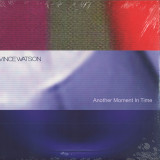
We’ve waited over 20 years and finally Vince Watson is releasing the follow up to his seminal ‘Moments In Time’ album released on Ibadan and Alola, entitled ‘Another Moment In Time’. Over the twenty years since the release of ‘Moments In Time’, Vince has put out more than ten LPs of various flavours. Here he returns to the vibe and feel of those early works. ‘Another Moment in Time’ wastes no time in exploring those rich, melancholic tones with his stunning piano chords and an essence of nostalgia that is both thought provoking and deeply satisfying. This album takes Vince Watson ever further into his original sound but with a pristine quality and finesse that his early work was yet to benefit from.
There are many highlights, from the opener with its rich acid deepness and subtle keys, to the energetic and deeply fulfilling ‘Flashback’ that gives a nod to Funk d’Void’s Diablo or KiNK. ‘Peace Of Mind’ features the incredible talents of the hallowed Underground Resistance ‘Timeline’ keyboard master Jon Dixon as co-writer, this combination of both musicians is an ear to behold; the piano and Rhodes playing is straight up high-tech jazz. ‘Lost In the Deep’ takes its cues from Detroit but hits different with twisting chords and grooves. ‘Whispers’ delivers the most melancholic deepness on the LP, whereas ‘Sunshine’ is pure out and out happiness with its twisting chords and a firm foundation in Detroit. Written on the first sunny day after the winter, you can hear the breath of relief within the track.
‘Rendezvous Finale’ is the 3rd and final version of a cut that’s had a long and satisfying journey. Originally released on Carl Craig’s Planet E in 2006, it was then formatted into Afro House for Osunlade’s Yoruba Records in 2018, and in ‘22 this new version was debuted for Carl Cox’s Birthday at DC10 in Ibiza for Vince’s live set. The reaction sealed the deal! ‘Forever’ and ‘Make A Wish’ are straight up club cuts that featured on a single also in ‘22. The album closes out with the peacefully beautiful ‘Sleep’ that rounds things off to sonic perfection.
20 years is a long time to wait, and it would do ‘Another Moment in Time’ no justice to simply say it was worth the wait. This feels like the next evolution in Vince Watson. The finesse, the musicality, musicianship, and the production levels are of the highest level. ‘Peace of Mind’ and ‘Flashback’ may well be two of the biggest tracks that Watson has released to date.
g D1 Rendezvous Finale
Formed in 1992, Boris boldly explores their own vision of heavy music, where words like "explosive" and "thunderous" barely do justice. Using overpowering soundscapes embellished with copious amounts of lighting and billowing smoke, Boris has shared with audiences across the planet an experience for all five senses in their concerts, earning legions of zealous fans along the way. This is the highly-requested, unbelievably-anticipated official vinyl and streaming release of Boris's 2002 album and first dive into the stoner rock idiom, originally released in Japan on CD only. Heavy Rocks (2002) is heavy, sure, but fuses sludge, noise, stoner rock and hardcore all together for a deeply bone-shaking and unforgettable trip. For fans of: Melvins, Kyuss, Fu Manchu, BORIS
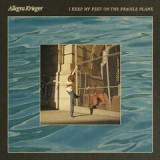
It contains all the signatures of her best lyricism: delicate and precise phrasings, moments that flicker between beauty and banality, meaning that forms through the accretion of observations, memories, and unexpected adages. This is an album that is at once post-theistic and devoted to a relationship with the divine, each song blinking in and out of "the fragile plane," a place Krieger describes as "a middle ground in the universe," both abstract and peaceful, where time, bodies, and names don't exist.
Krieger initially collaborated with Luke Temple and Jeremy Harris to record her vocals and guitar to tape at Panoramic Studios in West Marin, CA. As the album continued to form, Krieger envisioned instruments - like the French and English horn (Nancy Ranger and Priscilla Reinhart), electric guitar (Jacob Drab), and pedal steel (Kevin Copeland) - as characters which would walk in and out of the soundscape. What emerged from conversations with composer Sammy Weissberg, are brass parts that have a dark, almost surreal logic: horns arise to emphasize a word or phrase, fall out completely, only to rush back with dissonant orchestrations that gesture simultaneously toward deterioration and generation.
While Krieger takes inspiration from Elliot Smith's honesty, Judee Sill's cosmic reaching, and Joni Mitchell's sharp noticing, the dream-like association, harmonic dissonance, and angular melodic ascensions in each song are singularly and delightfully Krieger's.
"I Keep My Feet on the Fragile Plane" is a daring collection of songs by an artist who scries with both the cold glass eye of truth and the beating heart of empathy; who portrays life in all its twisted complexities.
For their fourth album, »Bear In Town«, indie avant-pop supergroup Spirit Fest made a virtue of distance, with group members split across Europe, and recording sessions taking place after a brief 2021 tour of Europe. It’s an object lesson in perseverance and commitment, as the music here is some of Spirit Fest’s most moving yet. The six songs on this album illuminate different aspects of the transnational quintet’s character – lovely, heart-rending pop songs; melancholy chants; the joys of simple repetition – with the group’s guitar pop tended by gentle flourishes of piano and electronics.
Some of those flourishes were spirited onto »Bear In Town« across the waves, with Mat Fowler (Bons, Jam Money) contributing from Britain, while the body of the music was recorded in a small apartment studio in Munich by the other members of Spirit Fest: Saya and Ueno (Tenniscoats), Markus Acher (The Notwist) and Cico Beck (Joasinho, Aloa Input). »Bear In Town« is concise and powerful, the infectious joy of the spirit communicated, beautifully, by melodies that balance the heartfelt with the melancholy. Reflecting on those sessions, Acher says, »I think the album captures how well we played together at that time.« It’s all the more impressive given this material was put down live in the studio, with a few vocal overdubs. The depth of feeling at the core of Spirit Fest’s music is evident from the opening notes of »Bear In Town«.
»Kou-Kou Land«, the first song on the album, recalls several earlier Tenniscoats songs, like »Baibaba Bimba«, in the way the musicians weave gentle complexity around a simple, repeated chant; the stop-start structure of »Kou-Kou Land« builds anticipation, while Saya’s simple melody is lovely, delivered in an absent-minded hum that’s deeply affecting. »Lost & Found« revolves around a delightful descending chord change that breaks up the swaying, folksy verses, gorgeous electronic whirrs and purring winds floating through the song. The following »In Our House« possesses such sweet sadness, it’s one of Spirit Fest’s most moving songs yet.
»Like A Plane« repurposes a song that Markus Acher originally wrote and recorded for his solo EP of the same title, released on a 2022 10-inch single on Morr Music. The original was a gentle, introverted lament, but the version on »Bear In Town« has a widescreen tenderness, its melancholy framed by raindrop piano. The album concludes with two moments of playful splendour, the bossa-inflected »Hill Blo«, and the driving title track, both led by Saya, who is in stunning voice on this album; on »Bear In Town«, her awestruck wonder perfectly captures the sense of possibility in the song’s capacious chords. Like the rest of the album, it’s full of kindness, rich with psych-pop splendour… a balm for troubled times.
- 1: Hello
- 2: A Love From Outer Space
- 3: Crack Up
- 4: Timewind
- 5: What's All This Then?
- 6: Snow Joke
- 7: Off Into Space
- 8: And I Say
- 9: Yeti
- 10: Conundrum
- 11: Honeysuckleswallow
- 12: Long Body
- 13: In A Circle
- 14: Fast Ka
- 15: Miles Apart
- 16: Pop
- 17: Mars
- 18: Spook
- 19: Sugarwings
- 20: Back Home
- 21: Down
- 22: Supervixens
- 23: Insect Love
- 24: Sorry
- 25: Catch My Drift
- 26: Challenge
A.R. Kive collates the three most astonishing works from that most miraculous of duos - A.R. Kane - comprising the ‘Up Home’ EP from 1988 that signified the band’s dawning realisation of their own powers and possibilities, their legendary debut LP ‘sixty nine’ (1988) and its kaleidoscopic, prophetic double-LP follow up ‘i’ (1989).
In founder-member Rudy Tambala’s new remastering, the music on these pivotal transmissions from the birth of dream pop, have been reinvigorated and re-infused with a new power, a new depth and intimacy, a new height and immensity. Vivid, timeless and yet always timely whenever they’re recalled, these records still force any listener to realise that despite the habits of retrospective myth-making and the
safe neutering effects of ‘genre’, thirty years have in no way dimmed how resistant and dissident to critical habits of categorisation A.R. Kane always were. Never quite ‘avant-pop’ or ‘shoegaze’ or ‘post-rock’ or any of those sobriquets designed to file and categorise, A.R. Kive is a reminder that those genres had to be coined, had to be invented precisely to contain the astonishing sound of A.R. Kane, because
previous formulations couldn’t come close to their sui generis sound and suggestiveness. This is music that pointed towards futures which a whole generation of artists and sonic explorers would map out. Now beautifully repackaged, remastered and fleshed out with extensive sleeve notes and accompanying materials, ‘A.R. Kive’ reveals that 35 years on it’s still a struggle to defuse the revolutionary and inspirational possibility of A.R. Kane’s music.
A.R. Kane were formed in 1986 by Rudy Tambala and Alex Ayuli, two second-generation immigrants who grew up together in Stratford, East London. From the off the pair were outsiders in the culturally mixed (cockney/Irish/West Indian/Asian) milieu of the East End, with Alex and Rudy’s folks first generation immigrants from Nigeria and Malawi, respectively. The two of them quickly developed and fostered an innate and near-telepathic mutual understanding forged in musical, literary and artistic exploration. Like a lot of second-generation immigrants, they were ferocious autodidacts in all kinds of areas, especially around music and literature. Diving deep into the music of afro-futurist luminaries such as Sun Ra, Miles Davis, Lee Perry and
Hendrix, as well as devouring the explorations of lysergic noise and feedback from contemporaries like Sonic Youth and Butthole Surfers, they also thoroughly immersed themselves in the alternate literary realities of sci-fi and ancient history (the fascination with the arcane that gave the band their name), all to feed their voracious cultural thirsts and intellectual curiosity.
It was seeing the Cocteau Twins performing on Channel 4 show the Tube that spurred A.R. Kane into being - “They had no drummer. They used tapes and technology and Liz Fraser looked completely otherworldly with those big eyes. And the noise coming out of Robin’s guitar! That was the ‘Fuck! We could do that! We could express ourselves like that!’ moment”, recalls Tambala - and through a mix of
confidence, chutzpah, ad hoc almost-mythical live shows and sheer innocent will the duo debuted with the astonishing ‘When You’re Sad’ single for One Little Indian in 1986. Immediately dubbed a ‘black Jesus & Mary Chain’ by a press unsure of WHERE to put a black band clearly immersed in feedback and noise, what was immediately apparent for listeners was just how much more was going on here - a
tapping of dub’s stealth and guile, a resonant umbilicus back to fusion and jazz, the music less a conjuration of past highs than a re-summoning of lost spirits.
The run of singles and EPs that followed picked up increasingly rapt reviews in the press, but it was the ‘Up Home EP’ released in 1988 on their new home, Rough Trade that really suggested something immense was about to break. Simon Reynolds noted the EP was: Their most concentrated slab of iridescent awesomeness and a true pinnacle of an era that abounded with astounding landmarks of guitar-reinvention, A.R. Kane at their most elixir-like.
If anything, the remastered ‘Up Home’ that forms the first part of ‘A.R. Kive’ is even more dazzling, even more startling than it was when it first emerged, and listening now you again wonder not just about how many bands christened ‘shoegaze’ tried to emulate it, but how all of them fell so far short of its lambent, pellucid wonder. This remains intrinsically experimental music but with none of the frowning orthodoxy those words imply. A.R. Kane, thanks to that second generation auto-didacticism were always supremely aware about the interstices of music and magic, but at the same time gloriously free in the way they explored that connection within their own sound, fascinated always with the creation of ‘perfect mistakes’ and the possibilities inherent in informed play.
‘sixty nine’ the group’s debut LP that emerged in 1988 had
critics and listeners struggling to fit language around A.R. Kane’s sound. As a title it was telling - the year of ‘Bitches Brew’, the year of ‘In A Silent Way’, the erotic möbius between two lovers - and as originally coined by the band themselves, ‘dream pop’ (before it became a free-floating signifier of vague import) was entirely apposite for the music A.R. Kane were making. Crafted in a dark small basement studio in which Tambala recalls the duo had “complete freedom - We wanted to go as far out as we could, and in doing so we discovered the point where it stops being music”. There was an irresistibly dreamy, somnambulant, sensual and almost surreal flow to ‘sixty nine’s sound, but also real darkness/dankness, the ruptures of the primordial and the reverberations of the subconscious, within the grooves of remarkable songs like ‘Dizzy’ and ‘Crazy Blue’. Alex’s plangent vocals floated and surged amidst exquisite peals of refracted feedback but crucially there was BASS here, lugubrious and funky and full of dread, sonic pleasure and sonic disturbance crushed together to make music with a center so deep it felt subcutaneous, music constructed from both the accidental and the deliberate, generous enough to dance with both serendipity and chaos. ‘sixty nine’ remains - especially in this remastered iteration - ravishing, revolutionary.
The final part of this ‘A.R. Kive’ contains 1989’s astonishing double-LP ‘i’ which followed up on ‘sixty nine’s promise and saw the duo fully unleash their experimental pop sensibilities over 26 tracks, plunging the A.R. Kane sound into a dazzlingly kaleidoscopic vision of pop experiment and play. Suffused with new digital technologies and combining searingly sweet and danceable pop with perhaps the duo’s strangest and boundary-pushing compositions, the album did exactly what a great double-set should do - indulge the artists sprawling pursuit of their own imaginations but always with a concision and an ear for those moments where pop both transcends and toys with the listeners expectations. Jason Ankeny has noted that “In retrospect, ‘i’ now seems like a crystal ball prophesying virtually every major musical development of the 1990s; from the shimmering techno of ‘A Love from Outer Space’ to the liquid dub of ‘What’s All This Then?’, from the alien drone-pop of ‘Conundrum’ to the sinister shoegazer miasma of ‘Supervixens’ — it’s all here, an underground road map for countless bands to follow.” Perhaps the most overwhelmingly all-encompassing transmission from A.R. Kane, ‘i’ bookended a three year period in which the duo had made some of the most prophetic and revelatory music of the entire decade.
After ‘i’ the duo’s output became more sporadic with Tambala and Ayuli moving in different directions both geographically and musically, with only 1994’s ‘New Clear Child’ a crystalline re-fraction of future and past echoes of jazz, folk and soul, before the duo went their separate ways. Since then, A.R. Kane’s music has endured, not thanks to the usual sepia’d false memories that seem to maintain interest in so much of the musical past, but because those who hear A.R. Kane music and are changed irrevocably, have to share that universe which A.R. Kane opened up, with anyone else who will listen. Far more than other lauded documents of the late 80s it still sounds astonishingly fresh, astonishingly livid and vivid and necessary and NOW.
RIYL: PJ Harvey, Sonic Youth, Dead Can Dance, Black Sabbath, Depeche Mode. In Blood is the group’s 14th album and the follow-up to 2020’s critically acclaimed Dances/Curses (Album Of The Year – The Quietus, Top 10 International Albums – Irish Times). It was typical of a band so well-known for stellar live performances to release their most successful album at a time when they were unable to back it up on the road. As was the case for many, lockdown changed the band’s lives in unexpected ways. Some felt a form of cabin fever at not being able to continue to make music (diverting their energies elsewhere - founding Wrong Speed Records for starters) whereas others relished the peace and quiet, perhaps questioning whether they wanted to return to the life they had before. Gigs (so long the lifeblood of the band) were booked, postponed, and cancelled. Things began to unravel and perhaps for the first time since the band formed in 2003 it was hard to see how it could continue. A plan was hatched to attempt to re-energise and reassemble the band: they would begin work on a new album. They would approach this as though a Somerset version of The Desert Sessions – members old and new and guests would contribute as and when time and restrictions allowed. Lyrically, British folk and ghost mythology provided the starting position for the song themes ranging from mutated stories of grief and loss written in the 14th Century (Perle), spiritual reawakening by ancient apparitions (Avalon) to the growth of nature after devastation (Can’t Feel Around Us, Over Cedar Limb), a metaphor also for spirit and body renewal and rebirth after trauma. The results sound free of any genre shackles and it suits Hey Colossus. They have taken the expansive anything-goes approach that made Dances/Curses so successful and fine-tuned and shaped it into an 8-song single album that never treads water or fills time. The prominent vocals steer the listener through the music, defining it as opposed to punctuating it (or being buried by it). The album is a calling card for the band in their 20th anniversary year. As odd and challenging as long-term fans would expect or hope for, but somehow more accessible and to the point than ever before. It is the closest the group have ever come to a pop record, radiating positivity through the murk like a small ray of light in some very dark and very weird times. Music can never entirely negate these feelings but, like the natural world referenced in the lyrics and sleeve, it invisibly bonds people together, lifting us up if we choose to let it.
After 25 years of living his dream as one of hip hop’s most respected producers, Hi-Tek is digging back into his roots with a brand new trio of instrumental vinyl LPs in 2023. “Beatbox Studios (1995 MPC 60II)” is the first of the series, each featuring a selection of restored and remastered beats, carefully chosen from an archive of DAT tapes. These LPs manage to both provide a window into Tek’s development and to shine light on the work of an already enormously-talented musician whose beats would’ve sounded right at home on classic releases from the mid-1990s.
Having learned to make beats off of borrowed equipment as a teenager, the aspiring DJ/producer born as Tony Cottrell achieved a break of sorts when he was hired in 1995 to manage one of the rooms at Beatbox Studios, a sprawling complex in the Clifton neighborhood in Cincinnati. It became the go-to-spot in town for emerging talent, giving him a chance to learn about the intricacies of recording and to sharpen his communication skills with artists to maximize their performance The gig also gave Tek plenty of down time to practice on and to master the studio’s Akai MPC 60II while making his own music. It was around this time he began to collaborate with the top rap talent in Cincinnati, and he started regularly visiting New York City to plant seeds for new relationships in the industry.
Though his work eventually evolved far beyond the styles present on “Beatbox Studios,” here you’ll find many signature elements of that era’s contemporary New York sound: some snappy drums reminiscent of A Tribe Called Quest or Easy Mo Bee, plenty of horn stabs a la Pete Rock or Lord Finesse, and the kind of dark pianos and filtered bass lines that producers like the Beatminerz were steadily employing. These were his biggest influences at the time, and that was the sound of 1995. As it turns out, that classic sound remains in demand today, and while Hi-Tek was not a well-known name in hip hop circles at that time, the calibre of beats on “Beatbox Studios” prove that he was a talent to be reckoned with, even then.
"We never even planned to release a full-length album, and here we are with our second! "Deities of Deathlike Sleep" was conceived and recorded with the same mindset and the same team as our previous recordings, keeping it quick, spontaneous and enjoyable. This time it turned out a bit more dynamic, with the pummeling fury interspersed with some doom, gloom and darkness. But still, it's simply ten tracks of Swedish Fucking Death Metal, the way we love it"
The vocalist Mikael Stanne is also active in "Dark Tranquility" and highly popular band "The Halo Effect".
Other members from Dark Tranquility, Novarupta, Pagandoom, Vordor, Novarupta, Ex-Katatonia and more!
The previous album "Into The Maw of Death" was well received and topped the charts in Sweden when released!
- A1: Cash And Carry– Low Down
- A2: Richard Powell– The Cisco Kid
- A3: Family Tree – Come And Get Your Love
- A4: Deep Heat– Do It Again
- A5: Mark & Suzann Farmer– Dreams
- A6: Joeven– I Am I Said
- B1: Summer Madness – Leaving On A Jet Plane
- B2: Lenny Roybal– By The Time I Get To Phoenix
- B3: Ginny Reilly– I Second That Emotion
- B4: Alejandro Bravo – Superstar
- B5: Joan Brooks – The Letter
- B6: Babalade Olamina– Pure Imagination
Heat Red Vinyl[25,63 €]
The ninth installment in Numero's Cabinet of Curiosities is 100% chart smashes. Culled from the depths of the private press, Super Hits gathers 12 magical adaptations from the Me Decade's introspective songbook. Pop this oversized 8-Track into your Fleetwood Weltron and enjoy a motley crew of lounge singers, wedding bands, synth enthusiasts, trailer park dreamers, accountants, gym teachers, and more as they bring their own unique energy to classics by Steely Dan, War, Boz Scaggs, Neil Diamond, John Denver, Smokey Robinson, The Carpenters, Redbone, The Box Tops, Fleetwood Mac, and more. Tape warble not included.
This song, co- written and produced by Jamie Safir (Kylie, Birdy, Will Young) is from the brand-new collection 'Greek Street Friday' released later this year on all formats. With an ace band, which includes drummer Ian Thomas (George Michael, Van Morrison, Celine Dion) and guitarist David Preston (Melody Gardot, Curtis Stigers), this collection will also feature, on a beautiful new take of Rickie Lee Jones' 'Blinded By The Hunt', the world-renowned saxophonist Iain Ballamy (Everything But The Girl, Hermeto Pascoal, Loose Tubes). 'To Be Held' is a lullaby for our times. The title, inspired by a Truman Capote interview, with Dick Cavett, expands into a beautiful tribute to lost friends, the power of connections, imperfections and navigates the strangeness and beauty of being alive 'on this beaten-up planet of ours'.
Ian Shaw is back with force and with 'the quirks and character tics of every day living, . . . brought into euphoric focus Shaw tours his smart and soulful show' (The Guardian)
This unusual trio album combines electronic musician and tape loop specialist BlankFor.ms with MacArthur fellow pianist Jason Moran & the wizardry of drummer Marcus Gilmore. The electronics interact with the piano and drums in real time, by spontaneously recording loops grabbed on the fly and re-infusing the sonic planes with various effects, resulting in sounds and energies rarely heard before.
Back in early 2020 I was trying to get in touch with Austin to see if he had any unreleased tracks from the 90's. My mate John Vinyl Junkie has been friends with Austin for years so was able to introduce me. Turned out Austin didn't have any unreleased tracks. However, he was up for repressing one of his early vinyl releases, The Austin EP. Sadly this was one I was missing from my collection so Austin sent me a couple of Near Mint copies I was able to get really good rips from. With the help some superb CEDAR mastering we got these tracks sounding better than ever! So with some amazing 2021 mastering we got this EP sounding better than the original. Due to issues with pressing plants (I should write a book!) this release suffered from delay after delay.
"Life Plans and Parallel Side Tracks" by Ismael Zouaoui (aka Ish) is the highly anticipated album on Libertine Records. Spanning Electro, Drum 'n' Bass, Dark-Wave, and Ambient, Ish's versatile production shines. Inspired by diverse influences like Brave New World, Japanese Anime, and early Techno/Trance, the album's contemporary, textured sound captivates.