This is Mulatu Astatke’s protege and Ethiopian saxophonist and composer Jorga Mesfin’s debut album. It’s a long foray into Ethio-jazz that takes this courageous syncretism further by fusing spiritual experimentation with bits from all kinds of situations in Ethiopian music, jazz music, and specifically Ethiopian jazz music that precedes it.
Jorga Mesfin is widely regarded as one of the most talented contemporary musicians and composers in Ethiopia. He started his professional career at the young age of 17 and has since collaborated with numerous renowned artists, including Tsegaye Gebremedhin, Carolyn Beard Withlow, The Last Poets, Vijay Iyer, Wayna Wondossen, Kirk Whalum, Takana Miyamoto, Gizze Reggae band, Dionne Farris, Aster Aweke, Mahmoud Ahmed, and Mulatu Astatke. Additionally, Mesfin was a resident at Astatke's legendary African Jazz Village in Addis Ababa every Thursday.
Jorga Mesfin is the founder of the Ethio-jazz group called Wudasse. He composed the music for the epic Ethiopian film "Teza" directed by Haile Gerima. His work on the film earned him the Best Music Award at the 22nd Carthage Film Festival and Best Composition at the 5th Dubai International Film Festival.
Muzikawi is a record label, music publisher, studio, artist management, and event organizer based in Addis Ababa and Stockholm. With extensive experience in curating and representing artists from all regions, Muzikawi has a deep understanding and appreciation of Ethiopia's culture.
Search:the poets
2024 edition of the single that marked the return of Joe Bataan in 2004. A dancefloor favourite by the King of Latin Soul!
Back in 2004, Vampisoul was extremely honoured to play a role in the return to recording of the legendary Joe Bataan, which fully materialized in the lauded 2005 album "Call My Name", written and produced by Daniel Collás. But first came out the preview 45 'Chick-A-Boom' / 'Cycles Of You', which quickly became a DJ favourite and guaranteed dancefloor filler, long out of print until now. Let's hear Collás explain how it all happened:
"This whole project grew out of a song called 'Cycles of You', which I had written around 2000-2001 with the guitarist and bassist of my band at the time, Easy. The chord progression and vocal melody really reminded me of Bataan, and it occurred to me that it wouldn't be impossible to get him into the studio to do a guest vocal if we ever recorded it. I had met Bataan a few years before at a small, family-reunion style show at the Nuyorican Poets Cafe in my neighborhood, where he not only still sounded great, but was also gracious and easy to talk to.
"By the time we got around to recording with Easy, the band was about to break up but we still had the studio booked. We all agreed that we didn't want to continue as a band, but at the same time, it would be a shame to never record what we had been working on. Around this time Bataan was playing out again, so I went to the show to see him and find out if he'd be interested in doing some vocals with us. He was agreeable, so we decided to turn it into a Joe Bataan session and do 'Cycles of You'. The funny thing is, 'Chick A Boom', a live favourite with Easy, was hastily added so we could have a B-side, but it ended up chosen to be the A-side of the single."
It’s been a few years since Captain Mustache took a ride with Kompakt – 2021, to be exact, when he released the “Everything” single, and subsequently made an appearance on that year’s entry in the Total series. But this visionary French producer has been busy, indeed fiercely productive, ever since, appearing on Helena Hauff’s Return To Disorder and John Digweed’s Bedrock, collaborating with Dave Clarke, Popof, The Advent, Paris The Black Fu, Keith Tucker from AUX88... and two beautifully eloquent albums, Tourbillon Nocturne and Indigo Memories. But with The Super Album, Captain Mustache returns to Kompakt with his most sublime collection yet. On The Super Album, the Captain soundtracks an imagined “whole day for party people.” He welcomes friends old and new on board: opening with the poetic club banger of “About Love”, with guest appearance from Speakwave (aka dynArec), The Super Album shifts gears into the lush, sunny “Shifting Basslines”, where Captain Mustache’s pulsing electro-disco is the perfect fit for a third collaboration with electroclash pioneers Chicks on Speed. After the deep techno pulsations of “Laser Me” and the glitzy pop shine of “Gimme Ya Mustache”, more guests arrive: Arnaud Rebotini of Black Strobe on the slinky “I Love Watching U”, and then a spoken cameo from the truly legendary French disco diva Amanda Lear on “Mustache Of The Universe”, a glitzy glitterball of a song that’s shrouded in ghostly synths. All those tracks appear on the 12” version of The Super Album – download the digital version and you get six more slices of Mustache magic. Here, the narrative turns more insular, more dancefloor focused – the party people have moved through the daytime and they’re in their element, diving deep into the night-time economy. The album spirals, beautifully, into stark electro, driving techno, with great moments of beauty and melancholy – see the pointillist arpeggios of “Everything” (which features Play Paul), the disco stomp of “Acapulco Citron”, and a breath-taking double-bill of stripped back psychedelic electro on “Pulsions Organiques”, and the layered, luscious, swooning “Clair-Obscur”. From there, it’s an astral glide into the Dopplereffekt-ish “Galaxian Symbiosis” before Foremost Poets join Captain Mustache to wave the night goodbye with the brittle, brilliant “Floorwax”. It’s a day in the life, but all in service to the pleasures of nightlife; the dancefloor is The Super Album’s beacon, your body the pliable material moulded into evocative new shapes by this dense, hypnotic, brilliantly pop album.
Black Magic Woman, birthed out of the production outfit of Ron Trent featuring Harry Dennis most known for his previous work with Larry Heard. Harry Dennis one of the leading poets to come out of house and contemporary music in the 80's and 90's.
Being on the forefront of songs by storefront groups powered by both Larry Heard and Marshall Jeffereson The IT and Jungle Wonz critically acclaimed dance classics "Donnie" and "Time Marches on" helped revolutionize dance inteligenca world wide . Together with Trent's production they weave a spell with this ode to the power of the feminine form " Black Magic Woman".
Previously released and powering dance floors globally, Sacred Medicine brings you a set of revisions by production and DJ master Joe Jouquin Claussell who's edit and revision has been highly sought after for the past 4 years along with our young and upcoming talent producer and DJ Coflo. By the introduction of Casmena from Ocha records Coflo first approached us with his remix 4 years ago and now under our direction we are putting it to work. These magical forms are now ready for you to explore and generate power into your world.
'The album is composed by Cerys Matthews with Hidden Orchestra and features 10 UK poets: MA.MOYO, Raymond Antrobus, Lemn Sissay, Liz Berry, Anthony Anaxagorou, Adam Horovitz, Cia Mangat, Imtiaz Dharker, Kim Moore and Kayo Chingonyi “We are living in extraordinary times, I wanted to respond but had the urge to offer more than one voice, more than one perspective. Not an echo chamber” – Cerys Matthews. In February 2020 Abbey Road studios welcomed each of the 10 poets to record pieces from their collections. Then lock down hit…. But remotely and with the additional help of field recordists and musicians around the world, Cerys and Joe Acheson (Hidden Orchestra) created a sound journey for these poems with the theme of: Genesis: Birth, heritage, a journey about to begin.
- A1: Les Masques - Il Faut Tenir (1969)
- A2: Isabelle Aubret - Casa Forte (1971)
- A3: Christianne Legrand - Hlm Et Ciné Roman (1972)
- A4: Jean Constantin - Pas Tant D'chichi Ponpon (1972)
- A5: Billy Nencioli & Baden Powell - Si Rien Ne Va (1969)
- B1-: Marpessa Dawn - Le Petit Cuica (1963)
- B2: Jean-Pierre Sabar - Vai Vai (1974)
- B3: Sophia Loren - De Jour En Jour (1963)
- B4: Isabelle - Jusqu’à La Tombée Du Jour (1969)
- B5: Sylvia Fels - Corto Maltesse (1974)
- C1: Frank Gérard - Comme Une Samba (1972)
- C2: Ann Sorel - La Poupée Des Favellas (1971)
- C3: Charles Level - Un Enfant Café Au Lait (1971)
- C4: Andrea Parisy - Les Mains Qui Font Du Bien (1970)
- C5: Audrey Arno - Quand Jean-Paul Rentrera (1969)
- C6: Aldo Frank - T’as Vu Ce Printemps (1970)
- D1: Christianne Legrand - Cent Mille Poissons Dans Ton Filet (1972)
- D2: Clarinha - Lemenja (1970)
- D3: Hit Parade Des Enfants - Aquarela (1976)
- D4: Jean-Pierre Lang - Tendresse (1965)
- D5: Magalie Noël - Une Énorme Samba (1970)
- D6: Françoise Legrand - La Lune
Ever since the late 1950s bossa-nova revolution, Brazil’s influence on French music has been undeniable. Pierre Barouh, Georges Moustaki and a vast array of lesser known artists, all made the Musica Popular Brasileira (MPB) an axis of promotion at the service of a cool and metaphysical, modern and mixed Brazilian lifestyle. Some were seduced by the poetic languors of the bossa, some were looking for fun, and others just loved the American hybridization of jazz-bossa, jazz-samba.
What is bossa nova? One of its creators, Joao Gilberto said: "Its style, cadence, everything is samba. At the very start, we didn't call it bossa nova, we sang a little samba made up of a single note - Samba de uma nota so .... The discussion around the origins of bossa nova is therefore useless”. It is nevertheless useful to remember that these magnificent Brazilian songs, which the guitarist describes as samba, were shifted and balanced around improbable chords. "I like things that lean, the in-betweens that limp with grace," said Pierre Barrouh, quoting Jean Cocteau.
With emotion, arrangements for violin and supple guitar licks, bossa nova rapidly changed. A transformation that can be heard in the Tchic, tchic, French Bossa Nova 1963-1974 compilation, the result of a cultural reappropriation, which traveled through the United States and supplemented itself in France.
A musical revolution that has remained significant, bossa nova was born in Rio. From 1956 to 1961, Brazil lived through its golden years. In five years, the country had invented its modernist style. Elected president in 1956, Juscelino Kubitschek de Oliveira, an elegant man with a broad forehead, brandished a promising slogan: "Fifty years of progress in five years". He quickly got to work. Not worried about increasing debt, he launched the project for a new federal capital, Brasilia, designed by the communist architect Oscar Niemeyer. Volkswagen opened state-of-the-art factories and created the “fusquinha”, the Beetle. In Rio, the Vespa made its first appearance. The Arpoador Surf Club crew run into the “girl” from Ipanema, Helô Pinheiro - the tanned garota ("chick"), between a flower and mermaid, who at 17 walked by the Veloso bar, where the fiery author and composer, Tom Jobim and Vinicius de Moraes, were getting drunk on whiskey. From then on, bossa symbolized cool.
In 1958, Joao Gilberto recorded Chega de Saudade, which the directors of Philips denied, calling it "music for fagots". The marketing director, who believed in it, secretly pressed 3000 78-inch vinyls and distributed them at schools around Rio, creating a tidal wave.
American jazzmen then took over. In particular, trumpeter Dizzy Gillespie and guitarist Charlie Byrd. In November 1962, the Brazilian Ministry of Foreign Affairs funded a "Bossa-Nova" concert at Carnegie Hall in New York, inviting the genre’s pioneers. Unprepared, the show soon turned to disaster. But the troupe was invited to the White House by Jackie Kennedy. The first lady loved "the new beat" and in particular Maria Ninguem, a song by Carlos Lyra, later covered by Brigitte Bardot.
In Brazil, the 1964 military coup quickly ended this euphoria. The destructive atmosphere that ensued pushed many Brazilian musicians to leave, if not to exile. Thus, Tom Jobim, Sergio Mendes and Joao Gilberto arrived to the United States. In New York, Joao Gilberto met saxophonist Stan Getz. At the time, he was married to the Bahianese Astrud Weinert Gilberto, who had a German father. She had never sung before, but she knew how to speak English. Getz therefore asked her to replace her husband on The Girl From Ipanema. The Getz/Gilberto record with Tom Jobim on piano, was released in March 1964. Phil Ramone, the "pope of pop" was in charge of sound.
Bossa nova arrived in Paris through the classic “guitar-voice” channel (Pierre Barouh, Baden Powell, Moustaki…) But France loved jazz and Paris had already welcomed its American contributors. All these good people were to pass through Saint-Germain-des-Prés. The cabaret l'Escale became the Mecca of Latin American sound where one could find Pierre Barrouh and his friends, such as the Camara Trio, samba-jazz aces, whose only record was published by the Saravah label. With a band strangely called Les Masques (a band that included Nicole Croisille and Pierre Vassiliu, among others), the Camara Trio recorded an interesting Brazilian Sound, including the track Il faut tenir which is present on this tasty compilation of rarities.
Other enlightened musicians can also be found on the compilation, such as Jean-Pierre Sabar (songwriter for Hardy, Auffray, Leforestier ...) and the French pop rock organist Balthazar. In 1975, Sabar recorded Aurinkoinen Musiikkimatka on a Finnish label, which featured the crazy Vai, Vai, included on this record. We are now following the footsteps of Brazilian electronic musicians such as Sergio Mendes, Eumir Deodato or Marcos Valle who created funk and disco sounds on their keyboards and synthesizers. A style that influenced Véronique Sanson when she wrote Jusqu’à la Tombée de la nuit in 1969 for Isabelle de Funès, the niece of Louis and a great friend of Michel Berger - Sanson did end up singing this track on her 1992 Sans Regret record.
The pinnacle of exoticism and travel, Sylvia Fels’ Corto Maltese includes bongos, sea mist and ocean sounds. The title was taken from Jacky Chalard’s concept album written in 1974, Je suis vivant, mais j’ai peur (I am alive, but I am scared), based on Gilbert Deflez’s science fiction novel.
However, bossa nova extended the scope of popularity. "In the 1970s, I was a fan of Sergio Mendes, Getz / Gilberto. I fell in love with this music that I knew because I had been an orchestral singer, " explained Isabelle Aubret, who in 1971 delivered a composite record of covers by the very funky Jorge Ben, Orfeu Negro, Tom Jobim, Vinicius de Morais and Jean Ferrat. "I recorded this album for Meys Records in Paris, far from Brazil, with wonderful musicians, François Raubert, Roland Vincent, Alain Goraguer...". The latter wrote the arrangements for Casa Forte, a very percussive title borrowed from Edu Lobo, one of the initiators of the bossa who spent time in California. "Jazz and bossa came together and produced very rhythmic music. I love singing, it allows me to dream, to have fun, to feel a high on stage, and these songs brought me joy, made me swing, my singing felt like a dance.”
The world tours of French singers and their desire for the tropics, often brought them to Rio with its hills, forests, caipirinhas and tanned bodies. There are surprises though, like this Iemenja (Iemenja is the goddess of the sea in the Afro-Brazilian candomblé religion). Not unlike the composer and musician Jean-Pierre Lang, based in Sao Paulo, Claire Chevalier taught Brazil to Brazil. In 1970, the singer and painter published a 45-inch vinyl, Mon mari et mes amants (My husband and my lovers), under the improbable pseudonym of Clarinha (little Claire). She was then living in Rio, with her husband, Joël Leibovitz, who founded a band called Azimuth, and who owned a record label specialized in "sambas enredos" songs for samba school parades.
For its B side, she asked Pierre Perret to come up with lyrics for a song composed by Carlos Imperial: "Oh goddess of the sea, o goddess Iemenja, I bring a white rose to adorn your long hair ..." . "Perret came to see us, and we had fun, remembers Joël Leibovitz. We wrote Lemenja for fun, we recorded it at the Havaí studio, behind the Central do Brasil the central station. Erlon Chaves, the arranger who worked with Elis Regina, joined us" adding his share of Afro-Brazilian percussions and funky brass to the mix.
There is a common misunderstanding in Franco-Brazilian history: that bossa, admittedly hedonistic, is perceived as funny, even though the poets who wrote the texts are often philosophizing on the human condition. Its French interpreters pull it towards a carnival inspired universe, far removed from its fundamental essence. Thus, Jean Constantin covered the famous Samba da minha terra, an ode to the art of samba written by the classic Bahian composer Dorival Caymmi, renaming it with the enticing title of Pas tant de tchi tchi pompon: "On your pier there is no tchi tchi / when you arch your back, you know everything is alright ”(lyrics by Gérard Calvi). This expedited bossa aims for the absurd, but retains a certain elegance.
Indeed, Jean Constantin was not an idiot, the rather large man had a huge mustache and liked fantasy, (Les pantoufles à papa, Le pacha, inspired by cha-cha-cha-cha, salsa and jazz) but he was also the lyricist of Mon manège à moi interpreted by Edith Piaf, the composer of Mon Truc en plume by Zizi Jeanmaire and the soundtrack of François Truffaut’s 400 Blows. Le Poulpe, published in 1970, from which this bossa is extract, was arranged by Jean-Claude Vannier, an accomplice of Serge Gainsbourg’s Melody Nelson. In short: "There is enough of samba / By looking at the parasol / Because my poor cabeza / Is going to die in the sun".
Even the American actress Marpessa Down, who was at the heart of the bossa nova revolution with her role as Euridyce in Marcel Camus’ film Orfeu Negro, winner of the 1959 Cannes Palme d'or, fed the clichée with Je voudrais parler au petit cuica - "Tell me how you manage to always make people want to dance / It's true, I must admit that I cannot resist your magic" - in consequence, once can hear the cuica, a little drum inherited from the Bantu.
But bossa nova had many angles. Societal, of course, pushing actresses who were symbols of women's liberation like Brigitte Bardot, Jeanne Moreau, or Sophia Loren to engage in the exercise of accelerated bossa. In February of 1963, Sophia Loren made a record in French in Rome, Je ne t'aime plus, featuring the song De jour en jour, a bossa written by two Italians, Armando Trovajoli and Tino Fornai, which was released a little later by Barclay. Bossa accompanied the 1960s, a decade of moral liberation. Ann Sorel, who interpreted La Poupée des favellas, caused a sensation with L’amour à plusieurs, a provocative song written by Frédéric Bottom and Jean-Claude Vannier. As for the actress Andrea Parisy, she displayed her bourgeois cheekiness in Marcel Carné's Les Tricheurs before interpreting Les mains qui font du bien. And Magalie Noël, the friend of Boris Vian, who sung Johnny fais-moi mal, was hired to sing Une énorme Samba, composed by Alain Goraguer (arranger to Gainsbourg, Bobby Lapointe and Jean Ferrat) with lyrics by Frédéric Botton.
But in the end, of what wood is bossa nova made of? The answer is given by Christianne Legrand, daughter of Raymond the conductor, and sister to Michel the composer: "With me, with jà" - jà means "immediately" in Portuguese. In 1972, the singer, an expert in vocal jazz and a member of the Double Six, published Le Brésil de Christianne Legrand. Two songs included on the Tchic Tchic compilation that demonstrate how bossa, jazz, funk, rock, etc. work like a swiss army knife: the music is used to denounce broken systems, or miracles, HLM et ciné roman, Cent mille poissons dans ton filet, two songs from the O Cafona soundtrack, a successful telenovela broadcast, at the time in black and white, on TV Globo. The first was adapted in French by the fighter and friend of the Legrand tribe, Agnès Varda. The second is content with a play on words, jostling them into a summer fun.
Véronique Mortaigne
BCUC – Bantu Continua Uhuru Consciousness – have been channeling the spirit of Soweto for over twenty years. Indigenous funk, hip-hop consciousness, and punk rock energy fused into something utterly original and deeply rooted. Their mantra: Music for the people, by the people, with the people. From humble beginnings rehearsing in a shipping container, a stone's throw from the church where Desmond Tutu organized the escape of the most wanted anti-Apartheid activists, they kept believing in their dream of self-empowerment. Today they command festival stages worldwide: Glastonbury West Holts, Roskilde, Afropunk Brooklyn, WOMAD, Fusion, Sziget, FMM Sines, Beaches Brew, Boomtown, Colours of Ostrava, Couleur Café – to name just a few. In 2023, BCUC were honoured with the prestigious WOMEX Artist Award, an accolade usually reserved for more established artists, in recognition of their fearless work and transcendent live performances.
THE ROAD IS NEVER EASY
The Road Is Never Easy is BCUC's fifth album and their debut on Outhere Records. On this new offering, BCUC take listeners on another Afro-psychedelic journey into the soul of Soweto. It feels like a gospel sermon colliding with a punk concert, "guaranteed to touch untapped corners of your soul" (OkayAfrica). BCUC's music is deeply rooted in history and echoes the voices of the ones who came before. The road was never easy for the people of Soweto who originally came to work in the mines of Egoli, the City of Gold, Johannesburg. When apartheid finally ended after a long struggle, it was hoped that life would improve. But more than 30 years later, many of those initial hopes and dreams are still waiting to be fulfilled. This album is about that struggle. The album contains 10 brand new songs – a record for BCUC, whose previous albums featured an average of 3 songs. It represents the culmination of more than two decades of performing together and building a reputation as a powerful live act. These ten songs encapsulate that same live energy, each one building gradually and drawing you into BCUC's Afro-psychedelic stream of consciousness. It's a seismic tour de force through life in Soweto today. Songs like Amakhandela (Breaking All the Chains) connect history to daily life: "How is this precious metal inflicting so much pain in us," sing BCUC, "this government has been telling us we are free, but we don't benefit from being free." The album also talks about all the hopes and dreams that remain: "I have too many wishes and dreams in my head," BCUC sing in Um duma khanda, "I think I am losing my mind". The album ends with the soothing Matla a rona ke Bophelo, "our strength is life", praising the spirits and thanking the elders for protection. The Road Is Never Easy is about the harsh reality of life in Soweto, where "people always carry heavy loads". BCUC are street poets trying to deal with that burden: sometimes revolutionary, sometimes soothing, but always hopeful and compassionate. "When you are from Soweto you can't retreat nor surrender." (Sebenzela)

RECORDING
The album was largely recorded in Munich, Germany during tour breaks over two sessions, each three days long. It took place in a small studio located in a German WW II bunker converted into rehearsal spaces. The songs were recorded in one take altogether in one room, with only a few overdubs added, mainly backing vocals, by BCUC at Fourways studio in Johannesburg. BCUC have created their own distinctive way of writing, or rather, finding and creating their songs. The recording process is like an improvised live performance. They bring their ideas into a zone where the music, the rhythm and the spirits take over until the song starts to form. In this Afro-psychedelic zone BCUC create their unique poetry that feeds on the dreams still dreamt, the hopes, the fears and the temptations lingering everywhere. BCUC's songs need to breathe and time to build. The right take was the one when the song took over, and just like their live performances, no one knew beforehand where the song would take them. During the recording, BCUC just let it all flow out: inner turmoil, cries of rebellion, but also resilience and a search for healing, love, unity and compassion. You don't have to be from Soweto to feel the deep meaning and impact of this music. In these times of so much hate and division, BCUC are like a campfire for people to gather around.
PRODUCTION & ARTWORK
"BCUC have a unique magic," says Outhere's Jay Rutledge, who produced the album. "It blew our minds. It's like punk and pure gospel at the same time. Their music can make you dance and it can make you cry, all at the same time. And when the song is over, you feel you're not alone in this world anymore. We felt compelled to do this." The album cover is based on a matchbox design, matches being a common household item in South Africa even today. "These were the matches people used to burn government buildings and cars," explain BCUC. Little messages, addresses, or phone numbers used to be scribbled on the back of these boxes; each one a reminder of the strength, resilience, and resistance that once drove the struggle for freedom in Soweto. BCUC keep this flame burning. The Road Is Never Easy is a heavy spiritual road trip, a deep dive into the subconscious of Soweto and a quest for truth, justice and sanity in this crazy world. BCUC tackle the harsh realities of the voiceless, guided by the spirit world of their ancestors. Rather than reinforcing stereotypes of poverty, BCUC's portrayal of Africa is one rich in tradition, rituals and beliefs. "We bring fun and Afro-psychedelic fire from the hood," says vocalist Kgomotso Mokone.
Scupltures is composer and pianist Derek Hunter Wilson’s third solo album, an ode to the ancient and contested shorelines of the Pacific Northwest. Deeply embedded in place, the six longform pieces that make up the album reflect the artist’s journey through grief (including losing his father) and the passage of time, each one built upon loops created from extended sessions with harpist Joshua Ward. Like the foggy, moss-encrusted locations that inspired the album, Sculptures has a timeless feel to it, shadowed by the rumblings of a colonial system in decay.
Award-winning poet Mathias Svalina composed a poem for the album, entitled “A Dream for Sculptures”. It is reproduced on an insert that accompanies each LP.
Derek Hunter Wilson is a composer and multi-instrumentalist based in Portland. He has released two solo albums on Beacon Sound (Travelogue, 2017; Steel, Wood, & Air, 2019), as well as a collaborative album with Location Services entitled Wake (2022). In 2018 he collaborated with visual artist Gregory Euclide for his Thesis Project label, resulting in a split 10" with Spanish musician Rauelsson. He has additionally worked with poets Zachary Schomburg and Brandi Katherine Herrera for several sound and performance pieces, and has performed live on the West Coast and in Berlin, sharing the stage with artists such as Colleen, Amulets, Patricia Wolf, Pulse Emitter, and Liima.
Notti Senza Fine is the second album by the post-avant-garde theater company Magazzini Criminali, released in 1983 on the independent label Riviera Records and now reissued for the first time by Soave Records in a very limited edition of 200 copies. This work breaks away from linearity and meaning, creating a dizzying collision of voices and sounds that blend theater, punk, and experimental elements. Through montage and collage techniques inspired by the visual arts and poets such as Antonin Artaud, the album explores a dense and layered soundscape.
Composed by Federico Tiezzi, Sandro Lombardi, and Marion d'Amburgo, “Notti Senza Fine” uses sounds and fragments to create an experience that transcends conventional music. The song titles evoke geographical spaces without clear definition, while the sound textures, which include tribal percussion and synthesizers, intertwine without resolution. The album is a “meaningful object,” a musical vehicle that challenges conventions and rejects institutional distribution channels, remaining a rarity appreciated by collectors for over forty years.
The cover, designed by Mario Schifano, adds another layer of meaning to the work, making it a timeless sonic and visual experience.
- A1: Megan Cope & Isha Ram Das– Untitled (Death Song) 3 39
- A2: Milena Bonilla– Angustia (Papaver Somniferum – A Artaud – Amapola Mix) 3 21
- A3: Aloardi*– La Belleza Del Miedo Es Despertar 3 33
- A4: Dani Reynolds– Burning Hot Chunk 3 55
- A5: Cannach Macbride– All Of The Lungs 3 04
- A6: Dean Bowen– Solemn Simulacrum 4 15
- B1: Ogutu Muraya– The Bee, The Glass & Me 5 14
- B2: Karin Iturralde Nurnberg– Nos Persigue La Luna 3 08
- B3: Isabel Marcos– Freezing Mud 3 02
- B4: La Leche Travesti– Haunt These Motherfuckers 12 07
- B5: The Postpeople– Dear Colleague 3 41
- B6: Angela Schilling– One Of Seven Or More Pieces 3 41
'Triple Pocket Napkin Fold' brings together the work of 12 artists, poets, musicians and theatre makers, facilitated by GHOST, a DIY nomadic platform working between Rotterdam, NL, and Marseille, FR.
- A1: Secret Harbour
- A2: The Harvest Is Not Here
- A3: Days Of Assembly
- A4: On Sorrow’s Embankment
- A5: The Chalice And The Blade
- B1: When Light Be Gone
- B2: The Great White Hopeless
- B3: My Frail Ambassador
- B4: The Gods Are Slow To Forgive
- B2: Apollo Of Hyperborea
At the end of the project’s 20th anniversary celebrations, ROME tolls in the next era of the band with two fresh and visionary albums: ‘The Hierophant’ and ‘The Tower’. Whatever the great poets have affirmed in their finest moments is the nearest we can come to an authoritative religion or truth. It is in this spirit that ROME welcomes the listener into the temple of ‘The Hierophant’, ROME’s final album of its second decade of existence.
‘The Hierophant’ represents the enigmatic accompanying piece to the more introspective and seclusive recent work (of ‘The Tower’). Starting its journey during ‘Days of Assembly’, from the opening ‘Secret Harbour’ along ‘On Sorrow's Embankment’ to its logical finale in the mythical North with ‘Apollo of Hyperborea’, ‘The Hierophant’ is a spiritual travelogue seeking out the word and world of this ‘My Frail Ambassador’, the proclaimer of the sacred truce, interpreter of the ancestral laws and our guiding light through these darkened times.
Elations Recordings presents "Return of the Airpoets", an exploratory recording from longtime collaborators Reuben Lewis (I Hold The Lion's Paw) & Adam Halliwell (Mildlife, IHTLP), occupying a unique space between contemporary experimental music and avant jazz. Engineered and mixed by Reuben Lewis in 2023, and featuring guest appearances from acclaimed Australian drummer Ronny Ferella.
"Return of the Airpoets" continues a conversation begun with 'Cygon Dance', an extended duo between Lewis and Halliwell from Halliwell's 2023 LP "Freedom Lapse"; a dialogue that stems from a shared love and respect for Jon Hassell's Fourth World music. Sonic pioneer and adventurer, Hassell's futuristic vision advocated possible musics, stressing plurality and multiplicity. Faithful to his vision, Adam and Reuben, as trailblazers rather than imitators, delight in boundless musical possibilities, adopting Hassell's futurism as stock-in-trade, making it their own while augmented with neo noir hues and hints of the tilted electro-funk of Miles Davis' collaborations with Marcus Miller.
These nine tracks flow together as a unified suite, their shadowy presence stitched from fractured narratives: imaginary crimes, murders, dreams, the unspoken. At the same time, you can detect the artists' meticulous attention to sonic detail, feel the undercurrents, the complex layering. This music has been distilled, winnowed, from extended improv sessions, with the artists - as producers - zeroing in on offcuts, shards, and splinters, seamlessly patching together fragments in post-production to construct intricately layered sound collages, taking a leaf out of Tao Macero's book, building from the ground up.
Who are these airpoets? Their mystifying trial suggests the travails of Joseph K, sentenced for unspecified crimes. But I prefer to see them as fugitives escaped from Robert Bolaño's novel, "Savage Detectives". In Bolaño's book, poet Juan Garcia Madero is granted admission to the shadowy group of poets, the Visceral Realists, whose movement has no clear aims, and whose members "walked backward . . . gazing at a point in the distance, but moving away from it, walking straight toward the unknown." Like the visceral poets, these airpoets, Reuben Lewis and Adam Halliwell, set their sights on a point on the distant horizon, setting off without map or compass, drawing nearer and moving away, towards the unknown.
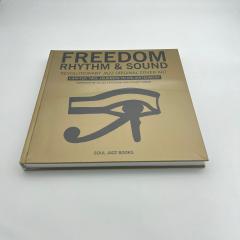
Freedom, Rhythm and Sound showcases the stunning graphic works of independently published jazz record cover designs in the 1960s, 70s, 80s and beyond, from radical jazz musicians such as Sun Ra, John Coltrane, Pharoah Sanders, The Art Ensemble of Chicago and others. This second Freedom, Rhythm and Sound book is a new ‘chapter’, featuring hundreds more unique, rare and beautiful jazz record cover designs.
This book documents the continued development in jazz as African-American artists set out on new journeys to enlightenment, heading out into Europe at the end of the 1960s. The artwork of these (often self-produced) record cover designs during this era reflected their radical agenda, spiritual awareness and singular search for musical and personal freedoms. From raw, DIY aesthetics to lyrical and poetic illustrations, sometimes containing futuristic worlds and ancient landscapes, the designs are always bold, strikingly graphic, and most importantly capture the spirit of the music, giving them a unique beauty. The book also includes sections on African-American poets and writers, Civil Rights and Black Power Movement leaders (Martin Luther King, Malcolm X) and early musical pioneers (Yusef Lateef, Max Roach, Art Blakey and others), all of which helped influence and shape the world of radical and spiritual jazz from the 1960s and onwards to its rebirth today. Since the 1980s, Gilles Peterson has been a pivotal figure in the club scene, renowned for his genre-defying approach to music with jazz at its core. As one of the UK’s most iconic DJs, he has spent over 40 years shaping music trends as a radio presenter, club DJ, producer, and festival curator.
He hosts a flagship show on BBC Radio 6 Music and, in 2016, launched Worldwide FM. He is founder of the Worldwide Festival in the South of France and We Out Here festival in the UK. He runs the label Brownswood Recordings, dedicated to discovering and promoting new talent and bringing fresh voices to the global stage. Stuart Baker founded Soul Jazz Records in 1992. For more than 30 years the record company has released over 500 records covering a genre-defying array of non-mainstream musical worlds – Jazz, Reggae, Punk, Latin, Brazilian, Disco, African, Gospel, Acid House and more.
In 2017, part of Stuart Baker’s jazz record collection (much of which appears in Freedom, Rhythm and Sound) was featured and displayed as part of the Soul of a Nation: Art in the Age of Black Power exhibition at Tate Modern in London, and subsequently at The Broad in Los Angeles (2019) and Brooklyn Museum (2019). Soul Jazz Books launched in 2007, a similarly diverse and critically acclaimed publishing house with graphic art, culture and photography titles that include ‘Voguing and The House Ballroom Scene of New York’, ‘Dancehall – The Rise of Jamaican Dancehall Culture’, ‘Yo! The Early Days of Hip-Hop’, ‘Freedom, Rhythm and Sound – Revolutionary Jazz Cover Art 1965-83’, ‘Punk 45 – The Singles Cover Art of Punk 1976-80’ and others. Reviews of the first Freedom, Rhythm and Sound: “A remarkable book” The New Yorker “If there can be such a thing as a revolutionary coffee table book, Freedom Rhythm & Sound is it―a chance to wallow in the Afrocentric visual language of the non-mainstream black jazz vinyl of this extraordinary fertile and creative period.” Eye “Like the uncompromising music they represent, all the covers broadcast a sense of bold, brazen ideology” Pitchfork “A definitive account of a complex passage of cultural upheaval.” The Independent “For decades, no one was sure how to refer to this extraordinary music.
Calling it ‘fire music’ does justice to its incandescent spirit, still burning from the pages of a book that preserves the memory of a special time.” The Guardian “These sleeves are the original independent legacy to America’s premier art form – Jazz. In terms of African-American cultural expression they are part of a long line of thought that was charged in the 1960s by John Coltrane, Martin Luther King, Ornette Coleman, Malcolm X and others” The Wire “A hefty compendium of radical jazz cover art” Mojo
Compiled of interviews, features, opinion pieces and contributions from
across the local independent Brighton scene, this magazine offers an
accessible new perspective into the incredible music and art present in the
city
Featuring local staples such as: Bones Ate Arfa, Cordelia Gartside, Trip Westerns,
Hutch, Big Long Sun and many more; as well as containing unique insight into the
multidisciplinary art scene inside the city through pieces with local promoters, poets,
record labels and venues. The magazine also contains a digital download for a
compilation of Brighton indie music that features in the back pages.
- A1: Walking Memory
- A2: Remaining Ft. Dakn & Aquiles Navarro
- A3: Fishnets Ft. Bbymutha & Sha Ray & August Fanon
- A4: Lifelike Ft. Moor Mother & 700 Bliss
- A5: Voyeur
- A6: Do U Love Me Ft. Kayy Drizz
- A7: Stenography Ft. Armand Hammer
- B1: Idgaf Ft. Abdul Hakim Bilal
- B2: Badass Ft. Carmen Nebula
- B3: Loneliness Epidemic
- B4: Sahel Ft. El Kontessa
- B5: Distress Tolerance
- B6: Who Needs Enemies When These Are Your Allies?
- B7: Deep Breath (An Ending)
DJ Haram's debut album “Beside Myself” is about the survival of the spirit in day to day struggle. Following on from her collaboration with Moor Mother as 700 Bliss on “Nothing to Declare”, here she is joined by a swarm of collaborators, collectively navigating pain and rage, and in occasional moments of joyful respite, mocking the strife. Haram describes herself as a “multidisciplinary propagandist, contemporary anti-authoritarian Arab, gendered labor class, god fearing atheist” who makes “anti-format, audio propaganda, anti-lifestyle, immersive sonics”. Her music attests to this, as she brings in friends and collaborators, from MC's Armand Hammer, Bbymutha, SHA RAY, Moor Mother, and Dakn, through to co-producers August Fanon, Egyptian producer El Kontessa, and Jersey Club producer Kay Drizz, trumpeter Aquiles Navarro, and guitarist Abdul Hakim Bilal. It's immediately identifiable as her work, but simultaneously unclassifiable, finding equal space in its dusty live production for Jersey Club, punk noise, Central Asian and Middle Eastern Percussion, synths, 808's and lurking, rumbling bass. Often central to this is her own performance of unflinching sorrowful verses, comparable to the poets Audrey Lorde or Ai in tone and Kim Gordon in context, examining the material and the abstract in equal measure. Her grungy futurism offers no easy resolutions, yet the drama and catharsis it presents is rarely so defiantly delivered.
Dune Castle presents - From A Darebin Cave by Cantrips, an acid folk odyssey. Recorded live with a 7-piece band over two days, "From a Darebin Cave" features members from Surprise Chef, Don Glori, Karate Boogaloo, and more.
Centered around the nylon guitar and voice of Patrick Ryan (Cantrips), this album draws inspiration from late 60s/early 70s acts like Nick Drake, Terry Callier, and Donovan. The album also incorporates string arrangements reminiscent of Frank Sinatra's "Watertown" and late 60s psychedelic pop. This unique sound was crafted by two keyboardists emulating a string quartet with synthesizers, complemented by drums, percussion, double bass, and pedal steel guitar.
The lyricism delves into themes of isolation, loneliness, regret, and joy, inspired by the natural beauty of the Darebin Parklands surrounding the Dune Castle studio, and takes influence from Romantic poets such as Mary Oliver, William Blake, and Pablo Neruda.
- A1: (Petri Alanko) - Vertical Reflections
- A2: Slaughtering A Nightingale
- A3: Driving To The Spot
- A4: Manuscript Page
- A5: Saga
- A6: Rose
- A7: Bathtub
- A8: Evil Is Contagious
- A9: The Attack, A Ceiling Fan And Lots Of Blood
- B1: (Petri Alanko) - Fbc Arrives
- B2: Wake Shoots Wake, Scratch Scores An Escape
- B3: Wake Shoots Casey
- B4: Into The Static
- B5: The End(S)?
- B6: End Credits - Welcome Again To Bright Falls
- B7: End Credits - Awash Unknown
- C1: This Road (The Dark Chamber) – Poe
- C2: Herald Of Darkness – Old Gods Of Asgard
- C3: The Poet And The Muse – Old Gods Of Asgard
- C4: Yötön Yö – Petri Alanko Feat. Martti Suosalo
- D1: (Chapter Songs By Fried Music & Nordic Music Partners) - Follow You Into The Dark – Rakel
- D2: Wide Awake – Jaimes
- D3: Superhero – Mougleta
- D4: Lost At Sea – Jean Castel
- D5: Dark, Twisted And Cruel – Paleface
- D6: No One Left To Love – Roos + Berg
Remedy Entertainment und Laced Records präsentieren die wegweisende, unvergessliche Musik des preisgekrönten Videospiels 'Alan Wake 2' auf Vinyl.
Remedy und sein Creative Director Sam Lake sind wohl unübertroffen in ihrem Engagement für die Musik in ihren Spielen. Für den Soundtrack verfolgten sie vier kreative Hauptstränge: Der langjährige Mitarbeiter Petri Alanko (Alan Wake, Quantum Break, Control) kehrte als leitender Komponist zurück und lieferte einen bissigen und doch gefühlvollen dramatischen Horror-Score sowie die bei den Fans beliebte Hausmeister-Ballade „Yötön Yö“, gesungen von Martti Suosalo (Ahti).
Der Musikkünstler POE und Sam Lake haben sich zusammengetan, um vier Teile des spiralförmigen, melancholischen Epos „This Road“ zu schaffen, das das Ende von Wakes Reise durch den Dark Place darstellt.
Die Poets of the Fall schlüpften erneut in die Rolle der alten Götter von Asgard und schufen mehrere Prog-Opera, darunter das monumentale „Herald of Darkness“ mit dem Gesang von Matthew Porretta (Alan Wake) und David Harewood (Mr. Door).
Schließlich versammelte die Musikproduktionsfirma Fried Music in Zusammenarbeit mit Nordic Music Partners eine kleine Armee außergewöhnlicher Songwriter-Talente, um die vielseitigen, atmosphärischen und im Universum angesiedelten „Chapter Songs“ zu komponieren.
Multi-instrumentalist and composer J.H. Burch gives new intensity to a neglected ethnographic and folklore reality: the rural Amazigh poets of the Ait Bouguemez valley of Morocco. His vision of cultural exchange led him to the vocal repertoire of the all-female Troupe Asnimer, whom for decades have been amongst the most important custodians of the various Amazigh oral art forms in the region. The Asnimer women recite in chorus songs written by numerous anonymous authors, some dating back centuries, making their tradition and a fluid and constantly evolving collective oeuvre. Each of the tribal forms has its own time and place, some like Tamawayt are poems of travel and lamentation, Timnadin of daily labour, others are sung as Sufi rites. From the Asia and the Pacific, J.H. Burch succeeds here through his knowledge of different sound traditions and a varied use of instrumentation (baglama, santur, tanpura, kamanche, organ, deyurey, electronics, percussion), and in becoming a conduit for Asnimer, frames the collaboration without distorting its ancestral and rural physiognomy. On the contrary, the songs of the Amazigh tribes of the Haut-Atlas are colored through afro-asiatic spiritual arrangements of meditative sensitivity. Limited to 200 copies.
2025 Repress.
Originally released in limited formats in 2017 and having since been repressed several times, 2025 sees
a new pressing to acknowledge the enduring legacy of this recording. In 2024, the song Trees & Flowers
became an unexpected hit on Tik Tok and introduced a new generation to these timeless songs.
“1982 4-Piece Demo” is the first official, fully-licensed and unreleased material to be released under the name
Strawberry Switchblade in 30 years. Since disbanding amid major record label acrimony and personal differences
in 1986, the already-cult band have since grown in stature and legend. Trailblazers in many ways, the band’s
mythology justifiably centers around the charismatic duo of Jill Bryson and Rose McDowall, but that isn’t a
complete picture.
Bryson and McDowall’s growing friendship, having met some years earlier on the punk scene, became a creative
partnership: Bryson’s art school background and McDowall’s history in avant-punk group The Poets meant
Strawberry Switchblade was a band pitted against many established norms. The band’s very first incarnation,
an all-female 4 piece, recorded one demo at Glasgow’s Hellfire Club and played a handful of gigs. Friends
Janice Goodlett and Carole McGowan completed the line up on bass and drums respectively. Strawberry
Switchblade would eventually pair down to a duo and go on to chart success but it’s in these raw, passionate
recordings that the songwriting and vocal elements were being hammered out and explored in real time.
“Spanish Song” is a previously unreleased song. With Rose McDowall’s instantly recognizable lead vocal
dovetailing with Bryson’s harmonies and lead guitar, it’s the first glimpse at an alternative history of Strawberry
Switchblade. This incarnation could easily have been featured on a Nuggets compilation or a precursor to the indiepop revolution that would take over British bedrooms a couple of years later. Trees & Flowers is instantly
recognizable, a bona fide classic that would earn the band its first record deal. Here it’s given a more forceful rhythm
section: Goodlett and McGowan’s playing is in fact accomplished and doesn’t hint at the bands’ youth. Go Away
would also surface later on the band’s debut LP but here it is a moody-garage stomper with a psychedelic, haunting
refrain.
These 3 songs point to a tantalizing future of the band that was never realized.
Remastered and restored by Sean Pennycook from the original cassette, with artwork based on a single
photographic contact sheet (the only visual evidence of the band in this form) and with a booklet of photographs and
new text from contemporary Stephen Pastel.
Spanish Song' is a previously unreleased song. With Rose McDowall's instantly recognizable lead vocal dovetailing with Bryson's harmonies and lead guitar, it's the first glimpse at an alternative history of Strawberry Switchblade. This incarnation could easily have been featured on a Nuggets compilation or a precursor to the indie-pop revolution that would take over British bedrooms a couple of years later. "Trees & Flowers" is instantly recognizable, a bona fide classic that would earn the band its first record deal. Here it's given a more forceful rhythm section: Goodlett and McGowan's playing is in fact accomplished and doesn't hint at the bands' youth. "Go Away" would also surface later on the band's debut LP but here it is a moody-garage stomper with a psychedelic, haunting refrain. These 3 songs point to a tantalizing future of the band that was never realized.
Remastered and restored by Sean Pennycook from the original cassette, with artwork based on a single photographic contact sheet (the only visual evidence of the band in this form) and with a booklet of photographs and new text. Pa
Coke Bottle Clear Vinyl + Book[14,71 €]
1982 4-Piece Demo' is the first official, fully-licensed and unreleased material to be released under the name Strawberry Switchblade in 30 years. Since disbanding amid major record label acrimony and personal differences in 1986, the already-cult band have since grown in stature and legend. Trailblazers in many ways, the band's mythology justifiably centers around the charismatic duo of Jill Bryson and Rose McDowall, but that isn't a complete picture. Bryson and McDowall's growing friendship, having met some years earlier on the punk scene, became a creative partnership: Bryson's art school background and McDowall's history in avant-punk group The Poets meant Strawberry Switchblade was a band pitted against many established norms. The band's very first incarnation, an all-female 4 piece, recorded one demo at Glasgow's Hellfire Club and played a handful of gigs. Friends Janice Goodlett and Carole McGowan completed the line up on bass and drums respectively. Strawberry Switchblade would eventually pair down to a duo and go on to chart success but it's in these raw, passionate recordings that the songwriting and vocal elements were being hammered out and explored in real time.
Spanish Song' is a previously unreleased song. With Rose McDowall's instantly recognizable lead vocal dovetailing with Bryson's harmonies and lead guitar, it's the first glimpse at an alternative history of Strawberry Switchblade. This incarnation could easily have been featured on a Nuggets compilation or a precursor to the indie-pop revolution that would take over British bedrooms a couple of years later. "Trees & Flowers" is instantly recognizable, a bona fide classic that would earn the band its first record deal. Here it's given a more forceful rhythm section: Goodlett and McGowan's playing is in fact accomplished and doesn't hint at the bands' youth. "Go Away" would also surface later on the band's debut LP but here it is a moody-garage stomper with a psychedelic, haunting refrain. These 3 songs point to a tantalizing future of the band that was never realized.
Remastered and restored by Sean Pennycook from the original cassette, with artwork based on a single photographic contact sheet (the only visual evidence of the band in this form) and with a booklet of photographs and new text. Pa
A Chaos Of Flowers is an album that builds on their ferocious 2023 album nature morte. BIG|BRAVE"s music has been described as massive minimalism. Their fusillades of textural distortion and feedback emphasize their music"s frayed edges as much as its all-encompassing weight. The potency of the trio"s work is their singular artistry combining elements of traditional folk techniques and a modern deconstruction of guitar music. Gain, feedback, and amplitude are essential. For A Chaos Of Flowers guitarist/vocalist Robin Wattie drew heavily on the poems of artists whom Wattie found kinship in, their words resonant with experiences of those often sidelined by cultural norms. "I discovered that most poems from folk traditions or in the public domain seem to be by men - to which I could not quite relate. In my search, I rediscovered some of my favorite works and poets," says Wattie. Guitarist Mathieu Ball and drummer Tasy Hudson help Wattie shape poetry into pieces as dense and impenetrable as they are vulnerable. BIG|BRAVE achieve their colossal sound through minimalist approaches, a deft understanding of dynamics and an inventive employment of percussion and distortion. The trio reconceptualize what it is to be heavy or minimal, challenging perceptions with their illumination of painfully overlooked perspectives. Guest guitarist Marisa Anderson lends earthen, blues-inflected atmospheres to the album, where guitarist Tashi Dorji and saxophonist Patrick Shiroishi amplify the squall. Working closely with frequent collaborator and producer/engineer Seth Manchester, the internal tumult of Wattie"s voice rings out in warbles, haunting echoes, and unearthly harmonies across bold immense walls of distortion. BIG|BRAVE have collaborated with metal monsters The Body on a previous Thrill Jockey release, Leaving None But Small Birds, and have toured internationally with bands like SUMAC, Godspeed You! Black Emperor, SUNN O))), and Lingua Ignota. As they continue to ascend in their journey as pioneers in the contemporary metal scene, it"s safe to say that BIG|BRAVE are here to stay.
A stellar collaboration between composer Michael Cashmore (Current 93) and vocalist Marc Almond of Soft Cell fame. Two complementary creative sensibilities in intimate interlock; supreme compositional and vocal talents fusing to make uniquely dramatic musical and vocal interpretations of searing beauty and insight. Specifically, this suite of songs feature the heightened lyricism of a stunning array of cult poets, both contemporary and of yesteryear. 'Feasting With Panthers' is a stellar collaboration between composer Michael Cashmore (Current 93) and vocalist Marc Almond of Soft Cell fame, in the nearest thematic echo and nod, in the latter's vast back catalogue, to the darker gothic influences of his celebrated Marc And The Mambas period and his acclaimed 'L'Absinthe' and 'Jacques' twisted chanson solo albums. This album's defining aesthetic is the setting of outsider poems to music. Poems by Count Eric Stenbock plus unique lyrical translations - by celebrated poet Jeremy Reed - of works by Jean Genet, Jean Cocteau, Arthur Rimbaud, Paul Verlaine, as well as Reed's own poetry. The emphasis throughout is on 'decadent' poems of thwarted love, ill-fated romance, self-destruction and death: many poems are woven with homo-eroticism, laced with opium dreamstates and all are accompanied by Michael Cashmore's haunting and melancholic music that lends the verses a deft yearning for beauty and a bittersweet, melancholic longing for lost innocence and youth. Originally released in 2011 and long since deleted, 'Feasting With Panthers' is now restored to back catalogue availability as a double vinyl album - it's first ever vinyl edition - with a variant of the original album artwork and two printed, full colour inner sleeves complete with lyrics and pictures and featuring four bonus tracks. The album was recorded over several years by the artists sending music files back and forth by e-mail and post; the artists never once recording together in the studio. Berlin based Michael Cashmore worked at home composing the music, playing all of the instruments and adding Marc's vocals from files recorded in London. The resulting album is a glorious union of sensual talents, both in voice and music, complementing the intriguing and evocative poetic texts. The project began after Current 93's David Tibet gave Marc a book of poems by the Baltic German poet Count Stanislaus Eric Stenbock. Marc was instantly attracted to the dark eroticism and the melancholic yearning of the verse and, so, contacted Michael Cashmore, whom he had previously worked with on Current 93's reading of 'Idumea'. He felt Michael would have the right understanding of the verse with his intricate, beautiful musical compositions. From this, the project developed to include many of Marc's favourite poems by some of his favourite 'outsider' poets with common thematic ground.
Web Web mit ihrem sechsten Album in sieben Jahren und mit einem neuen Touch. Mehr psychedelisch, mitunter krautiger als zuvor.
Dazu haben sich WEB WEB diesmal (wieder) in Originalbesetzung (ohne Max Herre) einen besonderen Gast ausgesucht: JJ Whitefield (The Poets Of Rhythm / Karl Hector & The Malcouns / Syrup), der den fantastischen Gitarrensound beisteuert. Seine Riffs sind manchmal funky wie bei den Poets Of Rhythm oder Syrup, oder psychedelischer wie bei Karl Hector & The Malcouns oder seinen vielen Live- und Studioaufnahmen mit Embryo. Die Soundfarbe seiner Gitarre gibt dem Album den Schub in die wunderbare Atmosphäre spaciger Jazz-Kraut Bands der Siebziger. Das Konzept des Albums sollte das exakte Gegenteil zum vorigen WEB MAX Album (WEB MAX II) darstellen: Wieder zurück zu den (WEB WEB-) Wurzeln, mit spontanen, improvisierten Stücken, Fragmenten, Ideen, die größtmögliche Freiheit und Live Spirit bedeuten. Und genauso unvorhersehbar und improvisiert war auch die Idee, JJ Whitefield mit ins Boot zu holen: Einen Tag vor der Session dachte sich Roberto Di Gioia: "JJ und ich leben seit jeher in München. Wir sind uns aber leider nie wirklich über den Weg gelaufen. Ich bin ein großer Bewunderer seiner Kunst, seiner Musik, seiner Art zu spielen. Er ist so inspirierend, weil er keine Kompromisse eingeht. Er spielt auf seine so eigene Art und Weise, er ist keine Kopie von irgendwem und irgendwas."
Die 14 Kompositionen entstanden an zwei Tagen, aufgenommen von Jan Krause (Beanfield) in München. Die energetische Live-Session ging über zweimal 10 Stunden, und alle - Roberto Di Gioia (Rhodes, Fender Precision Bass, Moog, Mellotron, Percussion), Christian von Kaphengst (Fender Precision Bass, Rhodes), Peter Gall (Drums, Percussion, Fender Rhodes), Tony Lakatos (Tenorsaxophon, Querflöte) - waren bis ins Mark "on fire". Dabei wechselten die Musiker die Instrumente, um einen vollkommen anderen Gesamtklang zu erzeugen: Kaphengst am Fender Rhodes klingt anders als Roberto, sein Spiel hat einen anderen harmonischen Aufbau, und Roberto am Bass kennt man von zahlreichen Max Herre Aufnahmen, oder von Till Brönners Album "Till Brönner", und natürlich auch bei dem von ihm produzierten "Let Yourself Be Loved" von Joy Denalane, das auf Motown Records erschienen ist.
- A1: Cycles (Feat James Mollison)
- A2: Obelisk (Feat Natty Wylah & Brother Portrait)
- A3: Reverie
- A4: Boomerang (Feat Native & Wilf Petherbridge)
- A5: Surrey Canal Road (Feat James Mollison)
- B1: Folding (Feat Allysha Joy)
- B2: Here To Learn (Feat Andre Espeut)
- B3: Sermon (Feat Sara El Harrak)
- B4: Parc De Belleville (Feat Wilf Petherbridge)
- B5: What You Saw (Feat Ma.moyo & Mahon)
Footshooter is the moniker of Barney Whittaker, a south London-based producer and DJ. His production style takes in influences from broken beat, jazz, house and more, working with rappers, poets and vocalists to create a soulful sound referencing the past while being firmly future-facing in its approach. His records as Footshooter and SAUL have earned airplay and support on BBC Radio 1 & 1xtra, BBC 6 Music, NTS Radio, Jazz FM and Rinse FM, from the likes of Gilles Peterson, Bradley Zero, Errol (Touching Bass), Alex Nut (Eglo Records) Shy One, Virgil Abloh, Zakia, Jyoti, Nabihah Iqbal, Bonobo, Jamz Supernova, Maryanne Hobbs, Mr Scruff and more.
His musically diverse live band sets and DJ sets over the past seven years have taken him to Boiler Room London, Tate Modern, Alexandra Palace, The Jazz Cafe and the Barbican Centre, as well as performances at Brainchild, We Out Here and Love Supreme Festivals. A Balamii Radio resident for the past 5 years with his monthly show 'Sonic Fruits', Footshooter's DJ sets are as versatile and wide ranging as his production credits, spanning the finest soulful house, broken beat, UK Rap, soul, jazz and beyond.
"This is the sound of London right now, and it is fantastic" - Juno Records
- A1: Dialogue 1
- A2: Number 11 To The World’s End
- A3: Dialogue 2
- A4 43: 0 King’s Road (Punk Meets Rock’n’roll)
- A5: Dialogue 3
- A6: You’re Gonna Wake Up One Morning…
- A7: Dialogue 4
- A8: Dangerously Close To Love
- A9: Dialogue 5
- A10: Walking
- A11: Dialogue 6
- A12: Someone Dropped A Bomb In The Uk
- B1: Dialogue 7
- B2: The Ballad Of Johnny Rotten
- B3: Dialogue 8
- B4: Tomorrow Is Gonna Be Aa Very Different Day
- B5: Dialogue 9
- B6: The Revolutions Coming
- B7: Dialogue 10
- B8: Punk Rock Clothes For Heroes
- B9: Dialogue 11
- B10: Where Have All The Punk Poets Gone
- B11: Dialogue 12
- B12: Punk Rock Pictures On My Wall
- B13: Dialogue 13
Some time back just after then and before now, i was approached to work up a rough working script for a Punk Rock film, based on a boys entre into the whole Punk Arena and how it would affect his life. A loosely updated tale somewhere along the lines of a ‘Punk Quadrophenia’.
After many stop / starts and we are waiting for funding… etc, etc... and changing of ideas. I thought I better just get on with it. I worked up twelve tracks and put an opening script together for approval. Like some of the best made plans, as time moved on, so did the theme and the initial rush of enthusiasm rolled on to somewhere else.
A shame but lurking in the back of Punk Art studios the tapes were found and a bent up copy of the working introduction script. So here it is in all its rough and ready glory. Who knows what might have been but here is some of what could have been… hope you enjoy the idea.
Mal-One
Wie Hip-Hop nach Hamburg kam
Die Compilation ist als Zeitreise zu den Anfängen der Hamburger Hip-Hop-Kultur konzipiert und umfasst über 100 weitgehend unveröffentlichte Songs und Skits. Begleitet wird das Triple-Vinyl von einem 96-seitigen Booklet, das von den frühen Jahren von Hip-Hop, Rap und DJing in Hamburg erzählt. Präsentiert wird das Werk von den Herausgebern des Buchs und den Kuratoren der Museumsausstellung EINE STADT WIRD BUNT.
Kennt eigentlich noch jemand Easy Business? Was wie ein Ratgeber Video auf YouTube klingt, ist der Name einer der ersten Hamburger Rap-Gruppen. Die vierköpfige Formation aus Steilshoop gründete sich schon in den späten 1980er Jahren und begann bald erste englischsprachige Texte zu schreiben. 1989 nahmen sie gemeinsam mit Mario von Hacht den Song „Money“ in einem Jenfelder Jugendzentrum auf.
Als House-Produzent verfügte Von Hacht über ein vergleichsweise schon recht ansehnliches Produktions-Equipment. Selbst die legendäre Roland TR-808, analoger Drumcomputer und Allzweckwaffe von Hip-Hop-Produzenten, war bereits 1989 Teil seines Maschinenparks. Nur hatte er sie eben nicht für Rap genutzt – bis Easy Business anklopften. Und so öffnete ein Musik-Nerd und Technik-Freak dem Hip-Hop eine Tür in Hamburg. Von Hachts Offenheit für den neuen Musikstil sollte sich auszahlen: 1995 produzierte er mit „Nordisch by Nature“ den ersten Chartstürmer von Fettes Brot.
Es sind Geschichten wie diese aus der Gründerzeit des Rap in Hamburg, um die sich die 3-Vinyl-Compilation EINE STADT WIRD BUNT dreht. Unter den über 100 Songs und Skits aus den frühen Jahren des Rap in Hamburg finden sich neben dem Song „Money“ von Easy Business auch ein Mitschnitt eines Auftritts der Gruppe in der Fabrik im Mai 1991.
Von frühen Aufnahmen von MC Africa True, der später unter dem Namen Nana einige Hits landen würde, bis zu den Britcore-Veteranen von Readykill, von 2 Ruff, deren Mitglied Simple Simon zu den ersten Hip-Hop-Produzenten der Stadt gehörte, bis zu den Reim Banditen, die als eine der ersten hiesigen Bands mit einem Majorlabel-Vertrag als Hamburger Antwort auf die Fantastischen Vier positioniert werden sollten, vereint das Triple-Vinyl eine einzigartige Sammlung musikhistorischer Zeitdokumente. In Kombination mit dem begleitenden Booklet vermitteln sie ein authentisches – und überaus unterhaltsames – Bild von den Anfängen des Rap in Hamburg.
Nach dem preisgekrönten, 2021 erschienenen Buch „EINE STADT WIRD BUNT. Hamburg Graffiti History 1980-1999“ und der gleichnamigen Ausstellung, die bis Anfang Januar 2024, als eine der erfolgreichsten aller Zeiten, im Museum für Hamburgische Geschichte gezeigt wurde, folgt mit der Compilation nun also eine weitere Dokumentation Hamburger Subkultur Geschichte der 1980er und 1990er Jahre. Im Fokus diesmal: die Pioniere des Rap in der Hansestadt.
Zum Team hinter dem Triple-Vinyl gehören neben den vier Herausgebern von EINE STADT WIRD BUNT. Oliver Nebel, Frank Petering, Mirko Reisser und Andreas Timm drei ausgewiesene Kenner der deutschen Hip-Hop-Szene. Oliver Herbst, einst DJ der Hip-Hop-Band City Nord, betreibt heute ein Musiklabel, auf dem die Platte erscheint, und konnte im Zuge der Recherche an viele alte Kontakte anknüpfen. Ebenfalls mit an Bord: der langjährige Chefredakteur des Hip-Hop-Magazins Backspin Dennis Kraus und der Musikjournalist und Moderator Falk Schacht.
Über einen Zeitraum von über zwei Jahren hinweg hat sich das Team auf Recherche begeben. Sie nahmen Kontakt zu Bands, Rapper*innen, DJs und Produzenten auf, die in den 1980er und 1990er Jahren in und um Hamburg aktiv waren. Sie sichteten und archivierten unzählige Stunden von Radio-Shows, Tapes, Demo-DATs und Live-Mitschnitten und führten Interviews mit Hip-Hop-Pionieren aus der Hansestadt. „Unser Ziel war es, ein kaum beleuchtetes Kapitel Hamburger Subkulturgeschichte zu erzählen“, sagt Mirko Reisser.
Begleitet werden die Platten deshalb von einem rund 80-seitigen, reich bebilderten Booklet im Vinyl-Format, das in aufwändig recherchierten Texten nachzeichnet, wie der neue Musikstil ab Mitte der 1980er Jahre in Hamburg langsam heimisch wurde. Zu den zentralen Themen dieser Erzählung gehört die Abwesenheit von technischem Equipment – und der Umgang der jungen Szene mit diesem Mangel.
Ein Vierspur Kassettenrekorder musste für die ersten Aufnahmen im Kinderzimmer reichen. Und wer DJ werden wollte, übte Scratchen mit dem Plattenspieler der Eltern. Anders als heute, wo man mit einem Smartphone in der Hand theoretisch ein Millionenpublikum erreichen kann, stellte die Aufnahmetechnik damals eine große Hürde dar. Wer jedoch über die technischen Voraussetzungen verfügte, Songs aufzunehmen, wurde schnell zur Anlaufstelle für die junge Rap-Szene.
Parallel zu dieser Ära der Technik-Autodidakten, öffneten die Rapper*innen der frühen 1990er Jahre ebenfalls ein Fenster in eine neue Welt: Indem sie anfingen, auf Deutsch zu rappen, grenzten sie sich bewusst von den amerikanischen Vorbildern ab und schufen ein ganz neues Selbstbewusstsein der jungen Subkultur. Und ganz nebenbei auch ein ganz neues Bewusstsein für die Möglichkeiten der deutschen Sprache. „Hier wurde etwas gänzlich Neues erschaffen“, sagt Oliver Herbst.
Viele Künstler, die auf der Compilation vertreten sind, dürften heute nur noch echten Hip-Hop-Nerds bekannt sein. Doch es finden sich auch bekannte Namen auf der Tracklist. Jan Eißfeldt etwa, der heute solo als Jan Delay oder als Teil der Beginner Konzerthallen füllt. Oder Fettes Brot, die von einem Hip-Hop-Trio aus dem Hamburger Umland zu einer der erfolgreichsten deutschen Popbands der Gegenwart heranwuchsen. Oder Deichkind, die zu einem massentauglichen Universal Kunstprojekt avanciert sind.
Wie schon das gleichnamige Buch und die Museumsausstellung, so blickt auch die Compilation EINE STADT WIRD BUNT. hinter die Kulissen einer jungen Subkultur – und erzählt parallel spannende Kapitel Musik-, Technik- und Stadtgeschichte aus der Hip-Hop-Hochburg an der Elbe.
INTERPRETEN
Fettes Brot, Absolute Beginner, Deichkind, Das Bo, Ferris MC, Mr. Schnabel, Sleepwalker, Kastrierte Philosophen, Mellow Mark, David Fascher, Easy Business, Reim Banditen, Readykill, TobiTob, I.L.L. Will, City Nord, MK Cram (Poets of Peeze), Dialektik, 2 Ruff, Nina, Flashmaster Ray, Dennis Deutschland, 2BIAS, MC Africa True alias Nana, Vers Chaoten, Die Erstausgabe, THC (Ter Hartchor), R.A.F. (Reimende Antifaschisten), Direkt Aktion, Fogmoor, Syren, Mental Disorda (Crime Code Barets), Dennis the Menace, Selma, 08/15, Hamburg Royal, Skunk Funk, B-Low, Gizmo, AJ, SMG, Phantom Black, Leon Le Pro alias EL’OMC, Paolo 77, Monti, Hanseknaller, Schlechta Umgang u.v.a.
ZITATE VON
André Luth, Jan Eißfeldt, Mathias Arfmann, Ale Dumbsky, David Fascher, Fatih Akin, Carsten Bohn, Schiffmeister (Björn Beton), Pasha Kamber (DJ MPK), Boris Ekambi, Sleepwalker, Mr. Schnabel, Nana Abrokwa, Simon Vegas u.a.
PRODUCER
Mario von Hacht (Super Mario), Sleepwalker, B-Base, Bubblez, TobiTob, X-Ray, Simple Simon
Repressed for the first time in 2 years, Note price change. Sermonizing Black Nationalism, Pan-Africanism and the benefits of a healthy and just lifestyle during the height of the Bad Boy/Roc-AFella era of nihilistic excess in the late 90's, Dead Prez also signed to a major label (Loud/Columbia) despite leaning much more towards the burgeoning indie aesthetics of the day. But this was a good thing – using major label muscle to wake up righteous hip-hop fans who might have fallen asleep at the wheel. The group itself – consisting of MCs stic.man and M-1, who produced or co-produced most of the duo’s music – was formed in Tallahassee, Florida in the early 1990's.
By later that decade, the duo had started making significant waves, having their music heard on the soundtracks to “Soul In The Hole” and “Slam,” as well as appearing on albums by Big Pun and The Beatnuts. By 1998, they released their first official single, the serious, stark “Police State,” on Loud, appropriately brought to the label by Lord Jamar of Brand Nubian. After building a solid rep over the next two years with fiery live performances, in 2000 they unleashed their debut album, Let’s Get Free.
The album was a welcome return to provocative and often radically political rhetoric that hearkened back to hip-hop forebears including The Coup, Public Enemy and KRS-One (as well as poetic descendants like the Last Poets and Watts Prophets). Let’s Get Free was critically acclaimed and benefited from multiple singles, including the infectious, thick analog drive of “Hip-Hop” “It’s Bigger Than Hip-Hop,” with a remix co-produced by a young Kanye West; “Mind Sex” (with Abiodun Oyewole of the Last Poets); and the poignant “I’m An African.”
But the singles weren’t the only worthy songs, as just about every cut here has deeper meaning than most full albums by their early 2000's peers. Highlights: the thought-provoking, anti-drug album opener “Wolves”; “We Want Freedom” “They Schools” and “Propaganda” . All in all, this is one of the more underrated and possibly Top 5 fully-realized political hip-hop albums of all time.
- A1: Of One Skin
- A2: Open Sound
- A3: Confusion
- A4: Night And Day
- A5: Tv Stars
- A6: Dossier Of Fallibility
- A7: Hope And Glory
- B1: Six Times
- B2: The Saints Are Coming
- B3: Summer
- B4: Hang On To The Shadows
- B5: Zit
- C1: Walk On The Wildside
- C2: War Poets
- C3: Withdrawal Symptoms
- C4: Hymns From A Haunted Ballroom
- C5: Masquerade
- D1: Filming In Africa
- D2: An Incident In Algiers
- D3: Circus Games
- D4: Snakes And Ladders (Instrumental)
- D5: All The Young Dudes
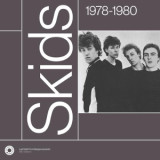
In early 2025 the Skids complete BBC Sessions are compiled onto CD by Scottish label Last Night From Glasgow - The double album features the five sessions the Skids recorded for John Peel with the BBC between 1978 and 1980 - The release includes the BBC session recordings of fan favourites The Saints Are Coming, Masquerade and Circus Games - The legendary Scottish punk band remain as influential as ever, even 45 years on. Legendary punk and new wave band Skids formed in Dunfermline in 1977. They rose to fame with 1979 single Into The Valley and 1980 album The Absolute Game. With almost 50 years under their belt the group, led by Richard Jobson, remain as thrilling as ever, as evident with their latest album Destination Dusseldorf in 2023. The Skids continue to boast over 80,000 monthly Spotify listeners and have been featured extensively across media and press throughout their career. In recent years they have partnered with label Last Night From Glasgow to reissue on vinyl albums Scared To Dance and Days In Europa, and release new album Destination Dusseldorf.
- A1: Of One Skin
- A2: Open Sound
- A3: Confusion
- A4: Night And Day
- A5: Tv Stars
- A6: Dossier Of Fallibility
- A7: Hope And Glory
- B1: Six Times
- B2: The Saints Are Coming
- B3: Summer
- B4: Hang On To The Shadows
- B5: Zit
- C1: Walk On The Wildside
- C2: War Poets
- C3: Withdrawal Symptoms
- C4: Hymns From A Haunted Ballroom
- C5: Masquerade
- D1: Filming In Africa
- D2: An Incident In Algiers
- D3: Circus Games
- D4: Snakes And Ladders (Instrumental)
- D5: All The Young Dudes
China Crisis BBC Sessions have been compiled onto vinyl by Scottish label Last Night From Glasgow, released in early 2025. The release features the band's two John Peel sessions recorded with the BBC in March 1982 and January 1983, now remastered and available on vinyl and CD. The album includes the BBC session recording of hit single Wishful Thinking. The Complete Sessions follows on from recent album China Greatness released in May 2024, a collection of the band's best tracks now newly arranged and mixed. China Crisis remain one of the UK's most beloved pop bands. Formed in Merseyside in 1979, the core duo of Gary Daly and Eddie Lundon remains unchanged 45 years on. They rose to fame in the early 80s with chart success single Christian and single Wishful Thinking, album Difficult Shapes & Passive Rhythms reached No.21 in the UK album charts in 1982. China Crisis continue to tour extensively and boast over 325,000 monthly listeners on Spotify.
Heavyweight Black Vinyl / Original glued prints on Thick Cardboard 700 gram / 2 Separated parts hand-glued / Glossy lamination / PVC outer sleeve / Insert with 10 pages Booklet 30 x 30 cm printed on Gmund Colro Felt Red Purplea d 90 Gram Favini papers with detailed interview between Tony Higgins and Mustafa's family (his sisters and children are all musicians), as well as an insight into the recording of the album with Gregory Bufford, the drummer for the session, lyrics and exclusive pictures.
Colored Vinyl Details:
Heavyweight "A side - B side solid purple + transparent blue" vinyl / Original glued prints on Thick Cardboard 700 gram / 2 Separated parts hand-glued / Glossy lamination / PVC outer sleeve / Insert with 10 pages Booklet 30 x 30 cm printed on Gmund Colro Felt Red Purplea d 90 Gram Favini papers with detailed interview between Tony Higgins and Mustafa's family (his sisters and children are all musicians), as well as an insight into the recording of the album with Gregory Bufford, the drummer for the session, lyrics and exclusive pictures.
Peronnel:
Mustafa Abdul Rahman - Tenor Saxophone, Percussion, Producer
Ahmed Abdullah - Trumpet
Malachi Thompson - Drums
Gregory Bufford - Bass
Richard Radu Williams - Piano
Rafik Abdur Rahim
Tony Smith - Guitar
Larry Banks - Synthesizer
Khalil Abdullah - Congas
Babafumi Akunyon - Percussions
Odell Grier Backing Vocals – Fred Harley, Hilda "Asia" Richbow , Linda Hall
Notes:
In the course of our deep research, we sometimes discover a hidden thread that unites musicians, songwriters, artists, and poets linked by music. Mustafa's 'Polygamy' is no exception. Apart from the music - the main reason we decided to work on this first ever re-press, a jewel at the crossroads between jazz funk, spiritual jazz and proto rap - are the many other things that make Mustafa an intriguing and fascinating character. For starters, he was a childhood friend of the Ayler brothers with whom he played in different formations. He also played with other beloved figures such as Noah Howard and Charles Tyler, on a still unreleased album recorded for Amiri Baraka's Jihad label, and worked with The Legendary Master Brotherhood and Steve Reid. This and much more will be revealed in a detailed interview between Tony Higgins and Mustafa's family (his sisters and children are all musicians), as well as an insight into the recording of the album with Gregory Bufford, the drummer for the session.
Gatefold Sleeve and on sea blue 180 GSM vinyl. Recorded as an instrumental by Tractor in Rochdale in 1971 and originally released on LP in 1972 “Shubunkin” has now been sampled by LA band Broken Bells (Danger Mouse/ Brian Burton and James Mercer, the lead vocalist and guitarist for the indie rock band The Shins) as the basis of their track “To Anyone a Ghost”. Julian Cope writes about the Tractor track “Shubunkin” : ...“Then, one night in mid 1972, John Peel played a track that was more mysterious than almost anything I had ever heard. It was the music I thereafter wanted played at my funeral and was most certainly the sound of a soul approaching the canopy of heaven as it left the earth for the last time.” ..“without the proper printed Dandelion label there to guide me, I left a blob of marker pen on the side that began with ‘Shubunkin’ and that became the ultimate beginning to any LP in my collection.” Originally Issued in late 2019 as a vinyl LP as a protest against Rochdale Boroughwide Housing’s plans to knock down four of the Seven Sisters/College Bank Flats- these blocks of flats were home to Tractor’s drummer in the 1970s as well as their manager Chris Hewitt and Andy and Liz Kershaws’ dad and a whole host of poets, musicians, tv producers etc. Many Tractor numbers were worked out in these flats prior to recording at various studios around Rochdale and Heywood. All songs written by Jim Milne and Steve Clayton. Jim Milne -vocals guitar (and bass most tracks), Steve Clayton -Drums and Percussion, Dave Addison- bass on Northern City. The album now starts the way Julian Cope always wanted to run.
- Asphodels
- O Fortune Teller
- The Ladder
- The Dream Of Life
- Mortal Wound
- The Sum
- Melancholy Moon
- Concrete After Rain
- A Land Beyond
Asphodels, the seventh studio album from The Veils, was recorded live to tape over five days at Roundhead Studios in Aotearoa New Zealand, in the spring of 2023. The album takes its name from the Ancient Greek flower of the Underworld, and lyrically, Andrews draws more from the great poets than he does from the well of more traditional rock and roll songwriters. Asphodels will be released on 24-01-2025 by V2 (World) and Banished From The Universe (New Zealand)
- Let The Night Begin
- Firefly
- Etude No. 1
- Silhouette
- Livin' The Dream
- Rendezvous
- Neon Highways
- Green Fields
- Midnight Fun
- The Blue One
- Sleek Machine
Silver coloured double vinyl. Guitarist Olli Tukiainen, known as Ollie T, will release his solo album Lost Within the Fire on December 13. Composing and releasing instrumental music has been a long time aspiration for the internationally successful guitarist. With Poets of the Fall on a brief break, the opportunity finally arose. "When I released my first single in 2017, I knew I wanted to release a full album of songs someday. During Poets of the Fall's short break in 2024, I had the chance to work full-time on my own music. Some of the oldest tracks date back to the '90s, while the newest were composed during last year's tour," Ollie T explains.
- Intro
- Won1
- Postal
- Tour Stories
- Skit
- Proper Aim
- You Got It
- Hiero Hq
- Poets Skit
- Poets
- Mr. Freeman Skit
- Fourmation
- Dead Man Walkin
- For Real Y'all
- Lickity Split
- Home Game
- Outro
- La La La
Souls Of Mischief, the Oakland, CA quartet and members of the mighty Hieroglyphics Crew, are proud to announce the first-ever vinyl release of their fifth album "Montezuma's Revenge." Notably, the album’s striking cover featured a fifth member of the group: the legendarily innovative producer Prince Paul, who executive produced the LP, handling most of the beats and overseeing the musical direction of the album from start to finish.
Emcees A-Plus, Opio, Phesto, and Tajai take turns showing off the multisyllabic flows, witty similes, and smooth lyrics that have made the crew a household name in rap for over 30 years. Souls' trademark juxtaposition of complex, multi-syllabic lyricism against laid-back Cali flow remained as strong as it was in 1993 on “Montezuma’s Revenge,” and Paul’s magic touch on production took the Souls’ sound to a new level.
While the aforementioned and unmistakable SOM sound remains very much intact, Paul's vision and risk-taking come through on the finished product. Tajai was comfortable from the start in working with the visionary producer: ”Paul is a perfectionist and so are we so we took time with the beats and subject matter. This album to me is a great insight into who we are as people and how important it is to progress stylistically, yet it retains a classic, timeless feel."
Transcendental poetry meets Southern Nightmare Jazz on the third album by Alabama-based artist Johnny Coley Mister Sweet Whisper is the meeting of poet & artist Johnny Coley and the band Worst Spills, led by guitarist & arranger Joel Nelson. (Imagine "King Tubbys Meets Rockers Uptown," but more like "William Burroughs Meets Lounge Lizards in Ghost Swamp"). Joined by vibraphone player and recordist of the group, Jasper Lee, Mister Sweet Whisper centers Coley as a gifted writer and unique elder voice, supported by an eclectic cast of friends & collaborators. Tapping into French surrealism and transgressive American poets such as John Ashbery, the songs in Mister Sweet Whisper evolve, cinema-like, with Coley as an uninhibited, almost mystical, narrator. Textural, jazz-like playing complements Coley's decadent landscapes, which glide by like cigarette-inspired invocations. Echoing, and at times, dissonant notes of saxophone, crystalline tones of vibraphone, and jagged guitar arrangements punctuate Coley's dreamlike visions, populated by ballet dancers, haunting nightclubs, and ghostly car drivers. Wistful and expansive, the songs in Mister Sweet Whisper speak of Coley's talent and natural ability to channel his poetic world into songs. A remarkable follow-up to Coley's first two albums_Antique Sadness, from 2021, and Landscape Man, from 2022_which were praised as "exquisitely haunting, sublime, hilarious" and falling "somewhere between Robert Ashley, David Wojnarowicz, and Intersystems," Mister Sweet Whisper arrives in full form: unpredictable and brilliant. LP comes with a 4-page booklet featuring artwork and writing by Johnny. Pressed in black vinyl.
Was the lesson intended?
It hangs like mist in the air
And now the throne is upended
And the lesson is the son and the heir
Was the lesson intended?
It resonates in the sky
A shockwave in the heavens
Visible to the naked eye
Was the lesson intended?
It has soaked into the ground
It is felt in every movement
And is audible in every sound
Was the lesson intended?
It cannot be denied
It rings loud like thunder
Leaving our poets tongue-tied
Was the lesson intended?
Camelot, the legendary seat of King Arthur's court in Early Middle Ages Britain, was probably not a real place. A corruption of the name of a real Romano-Briton city, the word "Camelot" accumulated symbolic, mythic resonances over centuries, until achieving its present usage as a near-synonym of "utopia." In the mid-20th century alone, Camelot inspired an explosion of representations and appropriations, among them the violent, affectless Arthurian court of Robert Bresson's 1974 film Lancelot du Lac and the absurdist iteration of Monty Python's 1975 Holy Grail, both of which feature armored knights erupting into fountains of blood; the mystical Welsh world of novelist John Cowper Powys's profoundly weird 1951 novel Porius, with its Roman cults, wizards and witches, and wanton giants; and the nationalist nostalgia of President John F. Kennedy's White House. Unsurprisingly there are fewer Camelots in more recent memory. Camelot, Canadian songwriter Jennifer Castle's extraordinary, moving 2024 chronicle of the artist in early middle age, charts a realer, more rooted, and more metaphorical place than the fabled Camelot of the Early Middle Ages (or its myriad depictions), but it too is a space more psychic than physical. In Castle's Camelot, the fantastic interpenetrates the mundane, and the Grail, if there is one, distills everyday experience into art and art into faith, subliming terrestrial concerns into sublime celestial prayers to Mother Nature, and to the unfolding process of perfecting imperfection in one's own nature. Co-produced by Jennifer and longtime collaborator Jeff McMurrich, her seventh record is at once her most monumental and unguarded to date, demonstrating a mastery of rendering her verse and melodies alike with crisply poignant economy. For all their pointedly plainspoken lyrical detail and exhilarating full-band musical flourishes, these songs sound inevitable, eternal as morning devotions. "Back in Camelot," she sings on the lilting, vulnerable title track, "I really learned a lot / circles in the crops and / sky-high geometry." The album opens with a candid admission of sleeping "in the unfinished basement," an embarrassing joke that comes true. But the dreamer is redeemed by dreaming, setting sail in her airborne bed above "sirens and desert deities." If she questions her own agency_whether she is "wishing stones were standing" or just "pissing in the wind"_it does not diminish the ineffable existential jolt of such signs and wonders. This abiding tension between belief and doubt, magic and pragmatism, self and other, sacred and profane, and even, arguably, paganism and monotheism, suffuses these ten songs, which limn an interior landscape shot through with sunstriped shadows of "multi-felt dimensions" both mystical and quotidian. The epic scale and transport of "Camelot," with its swooning strings, gives way dramatically to "Some Friends," an acoustic-guitar-and-vocals meditation in miniature on Janus-faced friends and the lunar and solar temperatures of their promises_"bright and beaming verses" versus hot curses_which recalls her minimalist last album, 2020's achingly intimate Monarch Season. (In a symmetrical sequencing gesture, the penultimate track, the incantatory "Earthsong," bookends the central six with a similarly spare solo performance and coiled chord progression, this time an ambiguous appeal to _ a wounded lover? a wounded saint? our wounded planet?) Those whom "Trust" accuses of treacherous oaths spit through "gilded and golden tooth"_cynics, critics, hypocrites, gurus, scientists, doctors, lovers, government, the so-called entertainment industry_sow uncertainty that can infect the artist, as in "Louis": "What's that dance / and can it be done? What's that song / and can it be sung?" Answering affirmatively are "Lucky #8," an irrepressible ode to dancing as a bulwark against the "tidal pools of pain" and the "theory of collapse," and "Full Moon in Leo," which finds the narrator dancing around the house with a broom, wearing nothing but her underwear and "big hair." But the central question remains: who can we trust, and at what cost faith, in art or angels or otherwise? Castle's confidence in her collaborators is the cornerstone of Camelot. Carl Didur (piano and keys), Evan Cartwright (drums and percussion), and steadfast sideman Mike Smith (bass) comprise a rhythm section of exquisite delicacy and depth. This fundamental trio anchors the airiness of regular backing vocalists Victoria Cheong and Isla Craig and frames the guitars of Castle, McMurrich, and Paul Mortimer (and on "Lucky #8," special guest Cass McCombs). Reprising his decennial role on Castle's beloved 2014 Pink City, Owen Pallett arranged the strings for Estonia's FAMES Skopje Studio Orchestra. On the ravishing country-soul ballad "Blowing Kisses"_Pallett's crowning achievement here, which can be heard in its entirety in the penultimate episode of the third season of FX's The Bear_Jennifer contemplates time and presence, love and prayer_and how songwriting and poetry both manifest and limit all four dimensions: "No words to fumble with / I'm not a beggar to language any longer." Such rare moments of speechlessness_"I'm so fucking honoured," she bluntly proclaims_suggest a state "only a god could come up with." (If Camelot affirms Castle as one of the great song-poets of her generation, she is not immune to the despairing linguistic beggary that plagues all writers.) Camelot evinces a thoroughgoing faith not only in the natural world_including human bodies, which can, miraculously, dance and swim and bleed and embrace and birth_but also in our interpretations of and interventions in it: the "charts and diagrams" of "Lucky #8," a daydreamt billboard on Fairfax Ave. in LA in "Full Moon in Leo," the bloody invocations of the organ-stained "Mary Miracle," and all manner of water worship, rivers in particular. (Notably, Jennifer has worked as a farmer and a doula.) The album ends with "Fractal Canyon"'s repeated, exalted insistence that she's "not alone here." But where is here? The word "utopia" itself constitutes a pun, indicating in its ambiguous first syllable both the Greek "eutopia," or "good-place"_the facet most remembered today_and "outopia," or "no-place," a negative, impossible geography of the mind. Utopia, like its metonym Camelot, is imaginary. Or as fellow Canadian songwriter Neil Young once sang, "Everyone knows this is nowhere." "Can you see how I'd be tempted," Castle asks out of nowhere, held in the mystery, "to pretend I'm not alone and let the memory bend?"
. For Fans Of: The Weather Station, Weyes Blood, Adrianne Lenker, Phoebe Bridgers, Joan Shelley, Lana Del Rey, Cass McCombs, Angel Olsen & Neil Young. Camelot, the legendary seat of King Arthur’s court in Early Middle Ages Britain, was probably not a real place. A corruption of the name of a real Romano-Briton city, the word “Camelot” accumulated symbolic, mythic resonances over centuries, until achieving its present usage as a near-synonym of “utopia.” In the mid-20th century alone, Camelot inspired an explosion of representations and appropriations, among them the violent, affectless Arthurian court of Robert Bresson’s 1974 film Lancelot du Lac and the absurdist iteration of Monty Python’s 1975 Holy Grail, both of which feature armoured knights erupting into fountains of blood; the mystical Welsh world of novelist John Cowper Powys’s profoundly weird 1951 novel Porius, with its Roman cults, wizards and witches, and wanton giants; and the nationalist nostalgia of President John F. Kennedy’s White House. Unsurprisingly there are fewer Camelots in more recent memory. Camelot, Canadian songwriter Jennifer Castle’s extraordinary, moving 2024 chronicle of the artist in early middle age, charts a realer, more rooted, and more metaphorical place than the fabled Camelot of the Early Middle Ages (or its myriad depictions), but it too is a space more psychic than physical. In Castle’s Camelot, the fantastic interpenetrates the mundane, and the Grail, if there is one, distills everyday experience into art and art into faith, subliming terrestrial concerns into sublime celestial prayers to Mother Nature, and to the unfolding process of perfecting imperfection in one’s own nature. Co-produced by Jennifer and longtime collaborator Jeff McMurrich, her seventh record is at once her most monumental and unguarded to date, demonstrating a mastery of rendering her verse and melodies alike with crisply poignant economy. For all their pointedly plainspoken lyrical detail and exhilarating full-band musical flourishes, these songs sound inevitable, eternal as morning devotions. “Back in Camelot,” she sings on the lilting, vulnerable title track, “I really learned a lot / circles in the crops and / sky-high geometry.” The album opens with a candid admission of sleeping “in the unfinished basement,” an embarrassing joke that comes true. But the dreamer is redeemed by dreaming, setting sail in her airborne bed above “sirens and desert deities.” If she questions her own agency whether she is “wishing stones were standing” or just “pissing in the wind” it does not diminish the ineffable existential jolt of such signs and wonders. This abiding tension between belief and doubt, magic and pragmatism, self and other, sacred and profane, and even, arguably, paganism and monotheism, suffuses these ten songs, which limn an interior landscape shot through with sunstriped shadows of “multi-felt dimensions” both mystical and quotidian. The epic scale and transport of “Camelot,” with its swooning strings, gives way dramatically to “Some Friends,” an acoustic-guitar-and-vocals meditation in miniature on Janus-faced friends and the lunar and solar temperatures of their promises—“bright and beaming verses” versus hot curses which recalls her minimalist last album, 2020’s achingly intimate Monarch Season. (In a symmetrical sequencing gesture, the penultimate track, the incantatory “Earthsong,” bookends the central six with a similarly spare solo performance and coiled chord progression, this time an ambiguous appeal to … a wounded lover? a wounded saint? our wounded planet?). Those whom “Trust” accuses of treacherous oaths spit through “gilded and golden tooth” cynics, critics, hypocrites, gurus, scientists, doctors, lovers, government, the so-called entertainment industry sow uncertainty that can infect the artist, as in “Louis”: “What’s that dance / and can it be done? What’s that song / and can it be sung?” Answering affirmatively are “Lucky #8,” an irrepressible ode to dancing as a bulwark against the “tidal pools of pain” and the “theory of collapse,” and “Full Moon in Leo,” which finds the narrator dancing around the house with a broom, wearing nothing but her underwear and “big hair.” But the central question remains: who can we trust, and at what cost faith, in art or angels or otherwise? Castle’s confidence in her collaborators is the cornerstone of Camelot. Carl Didur (piano and keys), Evan Cartwright (drums and percussion), and steadfast sideman Mike Smith (bass) comprise a rhythm section of exquisite delicacy and depth. This fundamental trio anchors the airiness of regular backing vocalists Victoria Cheong and Isla Craig and frames the guitars of Castle, McMurrich, and Paul Mortimer (and on “Lucky #8,” special guest Cass McCombs). Reprising his decennial role on Castle’s beloved 2014 Pink City, Owen Pallett arranged the strings for Estonia’s FAMES Skopje Studio Orchestra. On the ravishing country-soul ballad “Blowing Kisses” Pallett’s crowning achievement here, which can be heard in its entirety in the penultimate episode of the third season of FX’s The Bear Jennifer contemplates time and presence, love and prayer and how songwriting and poetry both manifest and limit all four dimensions: “No words to fumble with / I’m not a beggar to language any longer.” Such rare moments of speechlessness “I’m so fucking honoured,” she bluntly proclaims suggest a state “only a god could come up with.” (If Camelot affirms Castle as one of the great song-poets of her generation, she is not immune to the despairing linguistic beggary that plagues all writers.) Camelot evinces a thoroughgoing faith not only in the natural world including human bodies, which can, miraculously, dance and swim and bleed and embrace and birth but also in our interpretations of and interventions in it: the “charts and diagrams” of “Lucky #8,” a daydreamt billboard on Fairfax Ave. in LA in “Full Moon in Leo,” the bloody invocations of the organ-stained “Mary Miracle,” and all manner of water worship, rivers in particular. (Notably, Jennifer has worked as a farmer and a doula.) The album ends with “Fractal Canyon”s repeated, exalted insistence that she’s “not alone here.” But where is here? The word “utopia” itself constitutes a pun, indicating in its ambiguous first syllable both the Greek “eutopia,” or “good-place” the facet most remembered today and “outopia,” or “no-place,” a negative, impossible geography of the mind. Utopia, like its metonym Camelot, is imaginary
Saxophonist and musical omnivore Benjamin Herman has been one of Holland’s most productive musicians of his generation for over three decades. Aside from thousands of gigs, Benjamin has released over 50 albums as a solo artist and as frontman of his groove-orientated ensemble New Cool Collective. His wonderfully diverse musical output includes straight-ahead jazz, Gypsy jazz, punk jazz, film scores, Afrobeat, Latin music and postmodern interpretations of pieces by Dutch composer Misha Mengelberg, as well as collaborations with vocalists, poets, pop stars, hip-hop artists, and instrumentalists from all over the world. The common thread is his quest for a recognizable, personal sound on the alto saxophone. As usual, his latest album finds him exploring new territory.
With his Bughouse project, he fulfills his long-standing desire to blend his old loves of punk and jazz. The latest Bughouse album, "Bughouse: The ERUS / ARC Sessions”, displays the versatility of Benjamin Herman's Bughouse, covering a wide range of styles from jazz-punk to noise, free jazz, and beyond.
Emerging from the same circle of musicians that spawned Squirrel Bait and Slint, Rodan formed in 1992 out of a failed high school rap project. Guitarists Jason Noble and Jeff Mueller enlisted Tara Jane O’Neil on bass and a couple drummers before Kevin Coultas came aboard permanently. After a couple 7”s and self-released cassettes, Quarterstick Records released the band’s first and only full-length Rusty in 1994. The band broke up at the end of the year, aiding their growing cult following. Jason went on to form Rachel's, Jeff started June of 44, and Tara began a solo career after recording with Retsin, and The Sonora Pine. Jason and Jeff later reunited in The Shipping News. Rodan was Quarterstick’s indie rock super group that spawned numerous other intriguing projects. “(Thirty years ago) a Louisville band called Rodan released the only record they’d make in their two year tenure. Rusty would become one of those records that launched a thousand very f**king good bands in the 90’s, an historical moment in real need of poets and punks and beautiful freaks who could render some sense and beauty out of the cultural grey water”. Joe Manning // “Whatever scene or geographical associations Rodan dealt with by being from Louisville, KY, in the early '90s, setting those aside and looking at the music straight up reveals one key fact: this was an amazing band, one with clear roots but also one with a sense of its own strong fusion… this is an album to readily get lost in”.