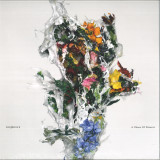
A Chaos Of Flowers is an album that builds on their ferocious 2023 album nature morte. BIG|BRAVE"s music has been described as massive minimalism. Their fusillades of textural distortion and feedback emphasize their music"s frayed edges as much as its all-encompassing weight. The potency of the trio"s work is their singular artistry combining elements of traditional folk techniques and a modern deconstruction of guitar music. Gain, feedback, and amplitude are essential. For A Chaos Of Flowers guitarist/vocalist Robin Wattie drew heavily on the poems of artists whom Wattie found kinship in, their words resonant with experiences of those often sidelined by cultural norms. "I discovered that most poems from folk traditions or in the public domain seem to be by men - to which I could not quite relate. In my search, I rediscovered some of my favorite works and poets," says Wattie. Guitarist Mathieu Ball and drummer Tasy Hudson help Wattie shape poetry into pieces as dense and impenetrable as they are vulnerable. BIG|BRAVE achieve their colossal sound through minimalist approaches, a deft understanding of dynamics and an inventive employment of percussion and distortion. The trio reconceptualize what it is to be heavy or minimal, challenging perceptions with their illumination of painfully overlooked perspectives. Guest guitarist Marisa Anderson lends earthen, blues-inflected atmospheres to the album, where guitarist Tashi Dorji and saxophonist Patrick Shiroishi amplify the squall. Working closely with frequent collaborator and producer/engineer Seth Manchester, the internal tumult of Wattie"s voice rings out in warbles, haunting echoes, and unearthly harmonies across bold immense walls of distortion. BIG|BRAVE have collaborated with metal monsters The Body on a previous Thrill Jockey release, Leaving None But Small Birds, and have toured internationally with bands like SUMAC, Godspeed You! Black Emperor, SUNN O))), and Lingua Ignota. As they continue to ascend in their journey as pioneers in the contemporary metal scene, it"s safe to say that BIG|BRAVE are here to stay.
Search:the poets
A stellar collaboration between composer Michael Cashmore (Current 93) and vocalist Marc Almond of Soft Cell fame. Two complementary creative sensibilities in intimate interlock; supreme compositional and vocal talents fusing to make uniquely dramatic musical and vocal interpretations of searing beauty and insight. Specifically, this suite of songs feature the heightened lyricism of a stunning array of cult poets, both contemporary and of yesteryear. 'Feasting With Panthers' is a stellar collaboration between composer Michael Cashmore (Current 93) and vocalist Marc Almond of Soft Cell fame, in the nearest thematic echo and nod, in the latter's vast back catalogue, to the darker gothic influences of his celebrated Marc And The Mambas period and his acclaimed 'L'Absinthe' and 'Jacques' twisted chanson solo albums. This album's defining aesthetic is the setting of outsider poems to music. Poems by Count Eric Stenbock plus unique lyrical translations - by celebrated poet Jeremy Reed - of works by Jean Genet, Jean Cocteau, Arthur Rimbaud, Paul Verlaine, as well as Reed's own poetry. The emphasis throughout is on 'decadent' poems of thwarted love, ill-fated romance, self-destruction and death: many poems are woven with homo-eroticism, laced with opium dreamstates and all are accompanied by Michael Cashmore's haunting and melancholic music that lends the verses a deft yearning for beauty and a bittersweet, melancholic longing for lost innocence and youth. Originally released in 2011 and long since deleted, 'Feasting With Panthers' is now restored to back catalogue availability as a double vinyl album - it's first ever vinyl edition - with a variant of the original album artwork and two printed, full colour inner sleeves complete with lyrics and pictures and featuring four bonus tracks. The album was recorded over several years by the artists sending music files back and forth by e-mail and post; the artists never once recording together in the studio. Berlin based Michael Cashmore worked at home composing the music, playing all of the instruments and adding Marc's vocals from files recorded in London. The resulting album is a glorious union of sensual talents, both in voice and music, complementing the intriguing and evocative poetic texts. The project began after Current 93's David Tibet gave Marc a book of poems by the Baltic German poet Count Stanislaus Eric Stenbock. Marc was instantly attracted to the dark eroticism and the melancholic yearning of the verse and, so, contacted Michael Cashmore, whom he had previously worked with on Current 93's reading of 'Idumea'. He felt Michael would have the right understanding of the verse with his intricate, beautiful musical compositions. From this, the project developed to include many of Marc's favourite poems by some of his favourite 'outsider' poets with common thematic ground.
Web Web mit ihrem sechsten Album in sieben Jahren und mit einem neuen Touch. Mehr psychedelisch, mitunter krautiger als zuvor.
Dazu haben sich WEB WEB diesmal (wieder) in Originalbesetzung (ohne Max Herre) einen besonderen Gast ausgesucht: JJ Whitefield (The Poets Of Rhythm / Karl Hector & The Malcouns / Syrup), der den fantastischen Gitarrensound beisteuert. Seine Riffs sind manchmal funky wie bei den Poets Of Rhythm oder Syrup, oder psychedelischer wie bei Karl Hector & The Malcouns oder seinen vielen Live- und Studioaufnahmen mit Embryo. Die Soundfarbe seiner Gitarre gibt dem Album den Schub in die wunderbare Atmosphäre spaciger Jazz-Kraut Bands der Siebziger. Das Konzept des Albums sollte das exakte Gegenteil zum vorigen WEB MAX Album (WEB MAX II) darstellen: Wieder zurück zu den (WEB WEB-) Wurzeln, mit spontanen, improvisierten Stücken, Fragmenten, Ideen, die größtmögliche Freiheit und Live Spirit bedeuten. Und genauso unvorhersehbar und improvisiert war auch die Idee, JJ Whitefield mit ins Boot zu holen: Einen Tag vor der Session dachte sich Roberto Di Gioia: "JJ und ich leben seit jeher in München. Wir sind uns aber leider nie wirklich über den Weg gelaufen. Ich bin ein großer Bewunderer seiner Kunst, seiner Musik, seiner Art zu spielen. Er ist so inspirierend, weil er keine Kompromisse eingeht. Er spielt auf seine so eigene Art und Weise, er ist keine Kopie von irgendwem und irgendwas."
Die 14 Kompositionen entstanden an zwei Tagen, aufgenommen von Jan Krause (Beanfield) in München. Die energetische Live-Session ging über zweimal 10 Stunden, und alle - Roberto Di Gioia (Rhodes, Fender Precision Bass, Moog, Mellotron, Percussion), Christian von Kaphengst (Fender Precision Bass, Rhodes), Peter Gall (Drums, Percussion, Fender Rhodes), Tony Lakatos (Tenorsaxophon, Querflöte) - waren bis ins Mark "on fire". Dabei wechselten die Musiker die Instrumente, um einen vollkommen anderen Gesamtklang zu erzeugen: Kaphengst am Fender Rhodes klingt anders als Roberto, sein Spiel hat einen anderen harmonischen Aufbau, und Roberto am Bass kennt man von zahlreichen Max Herre Aufnahmen, oder von Till Brönners Album "Till Brönner", und natürlich auch bei dem von ihm produzierten "Let Yourself Be Loved" von Joy Denalane, das auf Motown Records erschienen ist.
- A1: Cycles (Feat James Mollison)
- A2: Obelisk (Feat Natty Wylah & Brother Portrait)
- A3: Reverie
- A4: Boomerang (Feat Native & Wilf Petherbridge)
- A5: Surrey Canal Road (Feat James Mollison)
- B1: Folding (Feat Allysha Joy)
- B2: Here To Learn (Feat Andre Espeut)
- B3: Sermon (Feat Sara El Harrak)
- B4: Parc De Belleville (Feat Wilf Petherbridge)
- B5: What You Saw (Feat Ma.moyo & Mahon)
Footshooter is the moniker of Barney Whittaker, a south London-based producer and DJ. His production style takes in influences from broken beat, jazz, house and more, working with rappers, poets and vocalists to create a soulful sound referencing the past while being firmly future-facing in its approach. His records as Footshooter and SAUL have earned airplay and support on BBC Radio 1 & 1xtra, BBC 6 Music, NTS Radio, Jazz FM and Rinse FM, from the likes of Gilles Peterson, Bradley Zero, Errol (Touching Bass), Alex Nut (Eglo Records) Shy One, Virgil Abloh, Zakia, Jyoti, Nabihah Iqbal, Bonobo, Jamz Supernova, Maryanne Hobbs, Mr Scruff and more.
His musically diverse live band sets and DJ sets over the past seven years have taken him to Boiler Room London, Tate Modern, Alexandra Palace, The Jazz Cafe and the Barbican Centre, as well as performances at Brainchild, We Out Here and Love Supreme Festivals. A Balamii Radio resident for the past 5 years with his monthly show 'Sonic Fruits', Footshooter's DJ sets are as versatile and wide ranging as his production credits, spanning the finest soulful house, broken beat, UK Rap, soul, jazz and beyond.
"This is the sound of London right now, and it is fantastic" - Juno Records
- A1: Dialogue 1
- A2: Number 11 To The World’s End
- A3: Dialogue 2
- A4 43: 0 King’s Road (Punk Meets Rock’n’roll)
- A5: Dialogue 3
- A6: You’re Gonna Wake Up One Morning…
- A7: Dialogue 4
- A8: Dangerously Close To Love
- A9: Dialogue 5
- A10: Walking
- A11: Dialogue 6
- A12: Someone Dropped A Bomb In The Uk
- B1: Dialogue 7
- B2: The Ballad Of Johnny Rotten
- B3: Dialogue 8
- B4: Tomorrow Is Gonna Be Aa Very Different Day
- B5: Dialogue 9
- B6: The Revolutions Coming
- B7: Dialogue 10
- B8: Punk Rock Clothes For Heroes
- B9: Dialogue 11
- B10: Where Have All The Punk Poets Gone
- B11: Dialogue 12
- B12: Punk Rock Pictures On My Wall
- B13: Dialogue 13
Some time back just after then and before now, i was approached to work up a rough working script for a Punk Rock film, based on a boys entre into the whole Punk Arena and how it would affect his life. A loosely updated tale somewhere along the lines of a ‘Punk Quadrophenia’.
After many stop / starts and we are waiting for funding… etc, etc... and changing of ideas. I thought I better just get on with it. I worked up twelve tracks and put an opening script together for approval. Like some of the best made plans, as time moved on, so did the theme and the initial rush of enthusiasm rolled on to somewhere else.
A shame but lurking in the back of Punk Art studios the tapes were found and a bent up copy of the working introduction script. So here it is in all its rough and ready glory. Who knows what might have been but here is some of what could have been… hope you enjoy the idea.
Mal-One
Wie Hip-Hop nach Hamburg kam
Die Compilation ist als Zeitreise zu den Anfängen der Hamburger Hip-Hop-Kultur konzipiert und umfasst über 100 weitgehend unveröffentlichte Songs und Skits. Begleitet wird das Triple-Vinyl von einem 96-seitigen Booklet, das von den frühen Jahren von Hip-Hop, Rap und DJing in Hamburg erzählt. Präsentiert wird das Werk von den Herausgebern des Buchs und den Kuratoren der Museumsausstellung EINE STADT WIRD BUNT.
Kennt eigentlich noch jemand Easy Business? Was wie ein Ratgeber Video auf YouTube klingt, ist der Name einer der ersten Hamburger Rap-Gruppen. Die vierköpfige Formation aus Steilshoop gründete sich schon in den späten 1980er Jahren und begann bald erste englischsprachige Texte zu schreiben. 1989 nahmen sie gemeinsam mit Mario von Hacht den Song „Money“ in einem Jenfelder Jugendzentrum auf.
Als House-Produzent verfügte Von Hacht über ein vergleichsweise schon recht ansehnliches Produktions-Equipment. Selbst die legendäre Roland TR-808, analoger Drumcomputer und Allzweckwaffe von Hip-Hop-Produzenten, war bereits 1989 Teil seines Maschinenparks. Nur hatte er sie eben nicht für Rap genutzt – bis Easy Business anklopften. Und so öffnete ein Musik-Nerd und Technik-Freak dem Hip-Hop eine Tür in Hamburg. Von Hachts Offenheit für den neuen Musikstil sollte sich auszahlen: 1995 produzierte er mit „Nordisch by Nature“ den ersten Chartstürmer von Fettes Brot.
Es sind Geschichten wie diese aus der Gründerzeit des Rap in Hamburg, um die sich die 3-Vinyl-Compilation EINE STADT WIRD BUNT dreht. Unter den über 100 Songs und Skits aus den frühen Jahren des Rap in Hamburg finden sich neben dem Song „Money“ von Easy Business auch ein Mitschnitt eines Auftritts der Gruppe in der Fabrik im Mai 1991.
Von frühen Aufnahmen von MC Africa True, der später unter dem Namen Nana einige Hits landen würde, bis zu den Britcore-Veteranen von Readykill, von 2 Ruff, deren Mitglied Simple Simon zu den ersten Hip-Hop-Produzenten der Stadt gehörte, bis zu den Reim Banditen, die als eine der ersten hiesigen Bands mit einem Majorlabel-Vertrag als Hamburger Antwort auf die Fantastischen Vier positioniert werden sollten, vereint das Triple-Vinyl eine einzigartige Sammlung musikhistorischer Zeitdokumente. In Kombination mit dem begleitenden Booklet vermitteln sie ein authentisches – und überaus unterhaltsames – Bild von den Anfängen des Rap in Hamburg.
Nach dem preisgekrönten, 2021 erschienenen Buch „EINE STADT WIRD BUNT. Hamburg Graffiti History 1980-1999“ und der gleichnamigen Ausstellung, die bis Anfang Januar 2024, als eine der erfolgreichsten aller Zeiten, im Museum für Hamburgische Geschichte gezeigt wurde, folgt mit der Compilation nun also eine weitere Dokumentation Hamburger Subkultur Geschichte der 1980er und 1990er Jahre. Im Fokus diesmal: die Pioniere des Rap in der Hansestadt.
Zum Team hinter dem Triple-Vinyl gehören neben den vier Herausgebern von EINE STADT WIRD BUNT. Oliver Nebel, Frank Petering, Mirko Reisser und Andreas Timm drei ausgewiesene Kenner der deutschen Hip-Hop-Szene. Oliver Herbst, einst DJ der Hip-Hop-Band City Nord, betreibt heute ein Musiklabel, auf dem die Platte erscheint, und konnte im Zuge der Recherche an viele alte Kontakte anknüpfen. Ebenfalls mit an Bord: der langjährige Chefredakteur des Hip-Hop-Magazins Backspin Dennis Kraus und der Musikjournalist und Moderator Falk Schacht.
Über einen Zeitraum von über zwei Jahren hinweg hat sich das Team auf Recherche begeben. Sie nahmen Kontakt zu Bands, Rapper*innen, DJs und Produzenten auf, die in den 1980er und 1990er Jahren in und um Hamburg aktiv waren. Sie sichteten und archivierten unzählige Stunden von Radio-Shows, Tapes, Demo-DATs und Live-Mitschnitten und führten Interviews mit Hip-Hop-Pionieren aus der Hansestadt. „Unser Ziel war es, ein kaum beleuchtetes Kapitel Hamburger Subkulturgeschichte zu erzählen“, sagt Mirko Reisser.
Begleitet werden die Platten deshalb von einem rund 80-seitigen, reich bebilderten Booklet im Vinyl-Format, das in aufwändig recherchierten Texten nachzeichnet, wie der neue Musikstil ab Mitte der 1980er Jahre in Hamburg langsam heimisch wurde. Zu den zentralen Themen dieser Erzählung gehört die Abwesenheit von technischem Equipment – und der Umgang der jungen Szene mit diesem Mangel.
Ein Vierspur Kassettenrekorder musste für die ersten Aufnahmen im Kinderzimmer reichen. Und wer DJ werden wollte, übte Scratchen mit dem Plattenspieler der Eltern. Anders als heute, wo man mit einem Smartphone in der Hand theoretisch ein Millionenpublikum erreichen kann, stellte die Aufnahmetechnik damals eine große Hürde dar. Wer jedoch über die technischen Voraussetzungen verfügte, Songs aufzunehmen, wurde schnell zur Anlaufstelle für die junge Rap-Szene.
Parallel zu dieser Ära der Technik-Autodidakten, öffneten die Rapper*innen der frühen 1990er Jahre ebenfalls ein Fenster in eine neue Welt: Indem sie anfingen, auf Deutsch zu rappen, grenzten sie sich bewusst von den amerikanischen Vorbildern ab und schufen ein ganz neues Selbstbewusstsein der jungen Subkultur. Und ganz nebenbei auch ein ganz neues Bewusstsein für die Möglichkeiten der deutschen Sprache. „Hier wurde etwas gänzlich Neues erschaffen“, sagt Oliver Herbst.
Viele Künstler, die auf der Compilation vertreten sind, dürften heute nur noch echten Hip-Hop-Nerds bekannt sein. Doch es finden sich auch bekannte Namen auf der Tracklist. Jan Eißfeldt etwa, der heute solo als Jan Delay oder als Teil der Beginner Konzerthallen füllt. Oder Fettes Brot, die von einem Hip-Hop-Trio aus dem Hamburger Umland zu einer der erfolgreichsten deutschen Popbands der Gegenwart heranwuchsen. Oder Deichkind, die zu einem massentauglichen Universal Kunstprojekt avanciert sind.
Wie schon das gleichnamige Buch und die Museumsausstellung, so blickt auch die Compilation EINE STADT WIRD BUNT. hinter die Kulissen einer jungen Subkultur – und erzählt parallel spannende Kapitel Musik-, Technik- und Stadtgeschichte aus der Hip-Hop-Hochburg an der Elbe.
INTERPRETEN
Fettes Brot, Absolute Beginner, Deichkind, Das Bo, Ferris MC, Mr. Schnabel, Sleepwalker, Kastrierte Philosophen, Mellow Mark, David Fascher, Easy Business, Reim Banditen, Readykill, TobiTob, I.L.L. Will, City Nord, MK Cram (Poets of Peeze), Dialektik, 2 Ruff, Nina, Flashmaster Ray, Dennis Deutschland, 2BIAS, MC Africa True alias Nana, Vers Chaoten, Die Erstausgabe, THC (Ter Hartchor), R.A.F. (Reimende Antifaschisten), Direkt Aktion, Fogmoor, Syren, Mental Disorda (Crime Code Barets), Dennis the Menace, Selma, 08/15, Hamburg Royal, Skunk Funk, B-Low, Gizmo, AJ, SMG, Phantom Black, Leon Le Pro alias EL’OMC, Paolo 77, Monti, Hanseknaller, Schlechta Umgang u.v.a.
ZITATE VON
André Luth, Jan Eißfeldt, Mathias Arfmann, Ale Dumbsky, David Fascher, Fatih Akin, Carsten Bohn, Schiffmeister (Björn Beton), Pasha Kamber (DJ MPK), Boris Ekambi, Sleepwalker, Mr. Schnabel, Nana Abrokwa, Simon Vegas u.a.
PRODUCER
Mario von Hacht (Super Mario), Sleepwalker, B-Base, Bubblez, TobiTob, X-Ray, Simple Simon
Repressed for the first time in 2 years, Note price change. Sermonizing Black Nationalism, Pan-Africanism and the benefits of a healthy and just lifestyle during the height of the Bad Boy/Roc-AFella era of nihilistic excess in the late 90's, Dead Prez also signed to a major label (Loud/Columbia) despite leaning much more towards the burgeoning indie aesthetics of the day. But this was a good thing – using major label muscle to wake up righteous hip-hop fans who might have fallen asleep at the wheel. The group itself – consisting of MCs stic.man and M-1, who produced or co-produced most of the duo’s music – was formed in Tallahassee, Florida in the early 1990's.
By later that decade, the duo had started making significant waves, having their music heard on the soundtracks to “Soul In The Hole” and “Slam,” as well as appearing on albums by Big Pun and The Beatnuts. By 1998, they released their first official single, the serious, stark “Police State,” on Loud, appropriately brought to the label by Lord Jamar of Brand Nubian. After building a solid rep over the next two years with fiery live performances, in 2000 they unleashed their debut album, Let’s Get Free.
The album was a welcome return to provocative and often radically political rhetoric that hearkened back to hip-hop forebears including The Coup, Public Enemy and KRS-One (as well as poetic descendants like the Last Poets and Watts Prophets). Let’s Get Free was critically acclaimed and benefited from multiple singles, including the infectious, thick analog drive of “Hip-Hop” “It’s Bigger Than Hip-Hop,” with a remix co-produced by a young Kanye West; “Mind Sex” (with Abiodun Oyewole of the Last Poets); and the poignant “I’m An African.”
But the singles weren’t the only worthy songs, as just about every cut here has deeper meaning than most full albums by their early 2000's peers. Highlights: the thought-provoking, anti-drug album opener “Wolves”; “We Want Freedom” “They Schools” and “Propaganda” . All in all, this is one of the more underrated and possibly Top 5 fully-realized political hip-hop albums of all time.
- A1: Of One Skin
- A2: Open Sound
- A3: Confusion
- A4: Night And Day
- A5: Tv Stars
- A6: Dossier Of Fallibility
- A7: Hope And Glory
- B1: Six Times
- B2: The Saints Are Coming
- B3: Summer
- B4: Hang On To The Shadows
- B5: Zit
- C1: Walk On The Wildside
- C2: War Poets
- C3: Withdrawal Symptoms
- C4: Hymns From A Haunted Ballroom
- C5: Masquerade
- D1: Filming In Africa
- D2: An Incident In Algiers
- D3: Circus Games
- D4: Snakes And Ladders (Instrumental)
- D5: All The Young Dudes
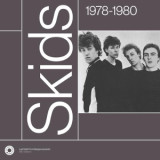
In early 2025 the Skids complete BBC Sessions are compiled onto CD by Scottish label Last Night From Glasgow - The double album features the five sessions the Skids recorded for John Peel with the BBC between 1978 and 1980 - The release includes the BBC session recordings of fan favourites The Saints Are Coming, Masquerade and Circus Games - The legendary Scottish punk band remain as influential as ever, even 45 years on. Legendary punk and new wave band Skids formed in Dunfermline in 1977. They rose to fame with 1979 single Into The Valley and 1980 album The Absolute Game. With almost 50 years under their belt the group, led by Richard Jobson, remain as thrilling as ever, as evident with their latest album Destination Dusseldorf in 2023. The Skids continue to boast over 80,000 monthly Spotify listeners and have been featured extensively across media and press throughout their career. In recent years they have partnered with label Last Night From Glasgow to reissue on vinyl albums Scared To Dance and Days In Europa, and release new album Destination Dusseldorf.
- A1: Of One Skin
- A2: Open Sound
- A3: Confusion
- A4: Night And Day
- A5: Tv Stars
- A6: Dossier Of Fallibility
- A7: Hope And Glory
- B1: Six Times
- B2: The Saints Are Coming
- B3: Summer
- B4: Hang On To The Shadows
- B5: Zit
- C1: Walk On The Wildside
- C2: War Poets
- C3: Withdrawal Symptoms
- C4: Hymns From A Haunted Ballroom
- C5: Masquerade
- D1: Filming In Africa
- D2: An Incident In Algiers
- D3: Circus Games
- D4: Snakes And Ladders (Instrumental)
- D5: All The Young Dudes
China Crisis BBC Sessions have been compiled onto vinyl by Scottish label Last Night From Glasgow, released in early 2025. The release features the band's two John Peel sessions recorded with the BBC in March 1982 and January 1983, now remastered and available on vinyl and CD. The album includes the BBC session recording of hit single Wishful Thinking. The Complete Sessions follows on from recent album China Greatness released in May 2024, a collection of the band's best tracks now newly arranged and mixed. China Crisis remain one of the UK's most beloved pop bands. Formed in Merseyside in 1979, the core duo of Gary Daly and Eddie Lundon remains unchanged 45 years on. They rose to fame in the early 80s with chart success single Christian and single Wishful Thinking, album Difficult Shapes & Passive Rhythms reached No.21 in the UK album charts in 1982. China Crisis continue to tour extensively and boast over 325,000 monthly listeners on Spotify.
Heavyweight Black Vinyl / Original glued prints on Thick Cardboard 700 gram / 2 Separated parts hand-glued / Glossy lamination / PVC outer sleeve / Insert with 10 pages Booklet 30 x 30 cm printed on Gmund Colro Felt Red Purplea d 90 Gram Favini papers with detailed interview between Tony Higgins and Mustafa's family (his sisters and children are all musicians), as well as an insight into the recording of the album with Gregory Bufford, the drummer for the session, lyrics and exclusive pictures.
Colored Vinyl Details:
Heavyweight "A side - B side solid purple + transparent blue" vinyl / Original glued prints on Thick Cardboard 700 gram / 2 Separated parts hand-glued / Glossy lamination / PVC outer sleeve / Insert with 10 pages Booklet 30 x 30 cm printed on Gmund Colro Felt Red Purplea d 90 Gram Favini papers with detailed interview between Tony Higgins and Mustafa's family (his sisters and children are all musicians), as well as an insight into the recording of the album with Gregory Bufford, the drummer for the session, lyrics and exclusive pictures.
Peronnel:
Mustafa Abdul Rahman - Tenor Saxophone, Percussion, Producer
Ahmed Abdullah - Trumpet
Malachi Thompson - Drums
Gregory Bufford - Bass
Richard Radu Williams - Piano
Rafik Abdur Rahim
Tony Smith - Guitar
Larry Banks - Synthesizer
Khalil Abdullah - Congas
Babafumi Akunyon - Percussions
Odell Grier Backing Vocals – Fred Harley, Hilda "Asia" Richbow , Linda Hall
Notes:
In the course of our deep research, we sometimes discover a hidden thread that unites musicians, songwriters, artists, and poets linked by music. Mustafa's 'Polygamy' is no exception. Apart from the music - the main reason we decided to work on this first ever re-press, a jewel at the crossroads between jazz funk, spiritual jazz and proto rap - are the many other things that make Mustafa an intriguing and fascinating character. For starters, he was a childhood friend of the Ayler brothers with whom he played in different formations. He also played with other beloved figures such as Noah Howard and Charles Tyler, on a still unreleased album recorded for Amiri Baraka's Jihad label, and worked with The Legendary Master Brotherhood and Steve Reid. This and much more will be revealed in a detailed interview between Tony Higgins and Mustafa's family (his sisters and children are all musicians), as well as an insight into the recording of the album with Gregory Bufford, the drummer for the session.
Gatefold Sleeve and on sea blue 180 GSM vinyl. Recorded as an instrumental by Tractor in Rochdale in 1971 and originally released on LP in 1972 “Shubunkin” has now been sampled by LA band Broken Bells (Danger Mouse/ Brian Burton and James Mercer, the lead vocalist and guitarist for the indie rock band The Shins) as the basis of their track “To Anyone a Ghost”. Julian Cope writes about the Tractor track “Shubunkin” : ...“Then, one night in mid 1972, John Peel played a track that was more mysterious than almost anything I had ever heard. It was the music I thereafter wanted played at my funeral and was most certainly the sound of a soul approaching the canopy of heaven as it left the earth for the last time.” ..“without the proper printed Dandelion label there to guide me, I left a blob of marker pen on the side that began with ‘Shubunkin’ and that became the ultimate beginning to any LP in my collection.” Originally Issued in late 2019 as a vinyl LP as a protest against Rochdale Boroughwide Housing’s plans to knock down four of the Seven Sisters/College Bank Flats- these blocks of flats were home to Tractor’s drummer in the 1970s as well as their manager Chris Hewitt and Andy and Liz Kershaws’ dad and a whole host of poets, musicians, tv producers etc. Many Tractor numbers were worked out in these flats prior to recording at various studios around Rochdale and Heywood. All songs written by Jim Milne and Steve Clayton. Jim Milne -vocals guitar (and bass most tracks), Steve Clayton -Drums and Percussion, Dave Addison- bass on Northern City. The album now starts the way Julian Cope always wanted to run.
- Asphodels
- O Fortune Teller
- The Ladder
- The Dream Of Life
- Mortal Wound
- The Sum
- Melancholy Moon
- Concrete After Rain
- A Land Beyond
Asphodels, the seventh studio album from The Veils, was recorded live to tape over five days at Roundhead Studios in Aotearoa New Zealand, in the spring of 2023. The album takes its name from the Ancient Greek flower of the Underworld, and lyrically, Andrews draws more from the great poets than he does from the well of more traditional rock and roll songwriters. Asphodels will be released on 24-01-2025 by V2 (World) and Banished From The Universe (New Zealand)
- Let The Night Begin
- Firefly
- Etude No. 1
- Silhouette
- Livin' The Dream
- Rendezvous
- Neon Highways
- Green Fields
- Midnight Fun
- The Blue One
- Sleek Machine
Silver coloured double vinyl. Guitarist Olli Tukiainen, known as Ollie T, will release his solo album Lost Within the Fire on December 13. Composing and releasing instrumental music has been a long time aspiration for the internationally successful guitarist. With Poets of the Fall on a brief break, the opportunity finally arose. "When I released my first single in 2017, I knew I wanted to release a full album of songs someday. During Poets of the Fall's short break in 2024, I had the chance to work full-time on my own music. Some of the oldest tracks date back to the '90s, while the newest were composed during last year's tour," Ollie T explains.
- Intro
- Won1
- Postal
- Tour Stories
- Skit
- Proper Aim
- You Got It
- Hiero Hq
- Poets Skit
- Poets
- Mr. Freeman Skit
- Fourmation
- Dead Man Walkin
- For Real Y'all
- Lickity Split
- Home Game
- Outro
- La La La
Souls Of Mischief, the Oakland, CA quartet and members of the mighty Hieroglyphics Crew, are proud to announce the first-ever vinyl release of their fifth album "Montezuma's Revenge." Notably, the album’s striking cover featured a fifth member of the group: the legendarily innovative producer Prince Paul, who executive produced the LP, handling most of the beats and overseeing the musical direction of the album from start to finish.
Emcees A-Plus, Opio, Phesto, and Tajai take turns showing off the multisyllabic flows, witty similes, and smooth lyrics that have made the crew a household name in rap for over 30 years. Souls' trademark juxtaposition of complex, multi-syllabic lyricism against laid-back Cali flow remained as strong as it was in 1993 on “Montezuma’s Revenge,” and Paul’s magic touch on production took the Souls’ sound to a new level.
While the aforementioned and unmistakable SOM sound remains very much intact, Paul's vision and risk-taking come through on the finished product. Tajai was comfortable from the start in working with the visionary producer: ”Paul is a perfectionist and so are we so we took time with the beats and subject matter. This album to me is a great insight into who we are as people and how important it is to progress stylistically, yet it retains a classic, timeless feel."
Transcendental poetry meets Southern Nightmare Jazz on the third album by Alabama-based artist Johnny Coley Mister Sweet Whisper is the meeting of poet & artist Johnny Coley and the band Worst Spills, led by guitarist & arranger Joel Nelson. (Imagine "King Tubbys Meets Rockers Uptown," but more like "William Burroughs Meets Lounge Lizards in Ghost Swamp"). Joined by vibraphone player and recordist of the group, Jasper Lee, Mister Sweet Whisper centers Coley as a gifted writer and unique elder voice, supported by an eclectic cast of friends & collaborators. Tapping into French surrealism and transgressive American poets such as John Ashbery, the songs in Mister Sweet Whisper evolve, cinema-like, with Coley as an uninhibited, almost mystical, narrator. Textural, jazz-like playing complements Coley's decadent landscapes, which glide by like cigarette-inspired invocations. Echoing, and at times, dissonant notes of saxophone, crystalline tones of vibraphone, and jagged guitar arrangements punctuate Coley's dreamlike visions, populated by ballet dancers, haunting nightclubs, and ghostly car drivers. Wistful and expansive, the songs in Mister Sweet Whisper speak of Coley's talent and natural ability to channel his poetic world into songs. A remarkable follow-up to Coley's first two albums_Antique Sadness, from 2021, and Landscape Man, from 2022_which were praised as "exquisitely haunting, sublime, hilarious" and falling "somewhere between Robert Ashley, David Wojnarowicz, and Intersystems," Mister Sweet Whisper arrives in full form: unpredictable and brilliant. LP comes with a 4-page booklet featuring artwork and writing by Johnny. Pressed in black vinyl.
Was the lesson intended?
It hangs like mist in the air
And now the throne is upended
And the lesson is the son and the heir
Was the lesson intended?
It resonates in the sky
A shockwave in the heavens
Visible to the naked eye
Was the lesson intended?
It has soaked into the ground
It is felt in every movement
And is audible in every sound
Was the lesson intended?
It cannot be denied
It rings loud like thunder
Leaving our poets tongue-tied
Was the lesson intended?
Camelot, the legendary seat of King Arthur's court in Early Middle Ages Britain, was probably not a real place. A corruption of the name of a real Romano-Briton city, the word "Camelot" accumulated symbolic, mythic resonances over centuries, until achieving its present usage as a near-synonym of "utopia." In the mid-20th century alone, Camelot inspired an explosion of representations and appropriations, among them the violent, affectless Arthurian court of Robert Bresson's 1974 film Lancelot du Lac and the absurdist iteration of Monty Python's 1975 Holy Grail, both of which feature armored knights erupting into fountains of blood; the mystical Welsh world of novelist John Cowper Powys's profoundly weird 1951 novel Porius, with its Roman cults, wizards and witches, and wanton giants; and the nationalist nostalgia of President John F. Kennedy's White House. Unsurprisingly there are fewer Camelots in more recent memory. Camelot, Canadian songwriter Jennifer Castle's extraordinary, moving 2024 chronicle of the artist in early middle age, charts a realer, more rooted, and more metaphorical place than the fabled Camelot of the Early Middle Ages (or its myriad depictions), but it too is a space more psychic than physical. In Castle's Camelot, the fantastic interpenetrates the mundane, and the Grail, if there is one, distills everyday experience into art and art into faith, subliming terrestrial concerns into sublime celestial prayers to Mother Nature, and to the unfolding process of perfecting imperfection in one's own nature. Co-produced by Jennifer and longtime collaborator Jeff McMurrich, her seventh record is at once her most monumental and unguarded to date, demonstrating a mastery of rendering her verse and melodies alike with crisply poignant economy. For all their pointedly plainspoken lyrical detail and exhilarating full-band musical flourishes, these songs sound inevitable, eternal as morning devotions. "Back in Camelot," she sings on the lilting, vulnerable title track, "I really learned a lot / circles in the crops and / sky-high geometry." The album opens with a candid admission of sleeping "in the unfinished basement," an embarrassing joke that comes true. But the dreamer is redeemed by dreaming, setting sail in her airborne bed above "sirens and desert deities." If she questions her own agency_whether she is "wishing stones were standing" or just "pissing in the wind"_it does not diminish the ineffable existential jolt of such signs and wonders. This abiding tension between belief and doubt, magic and pragmatism, self and other, sacred and profane, and even, arguably, paganism and monotheism, suffuses these ten songs, which limn an interior landscape shot through with sunstriped shadows of "multi-felt dimensions" both mystical and quotidian. The epic scale and transport of "Camelot," with its swooning strings, gives way dramatically to "Some Friends," an acoustic-guitar-and-vocals meditation in miniature on Janus-faced friends and the lunar and solar temperatures of their promises_"bright and beaming verses" versus hot curses_which recalls her minimalist last album, 2020's achingly intimate Monarch Season. (In a symmetrical sequencing gesture, the penultimate track, the incantatory "Earthsong," bookends the central six with a similarly spare solo performance and coiled chord progression, this time an ambiguous appeal to _ a wounded lover? a wounded saint? our wounded planet?) Those whom "Trust" accuses of treacherous oaths spit through "gilded and golden tooth"_cynics, critics, hypocrites, gurus, scientists, doctors, lovers, government, the so-called entertainment industry_sow uncertainty that can infect the artist, as in "Louis": "What's that dance / and can it be done? What's that song / and can it be sung?" Answering affirmatively are "Lucky #8," an irrepressible ode to dancing as a bulwark against the "tidal pools of pain" and the "theory of collapse," and "Full Moon in Leo," which finds the narrator dancing around the house with a broom, wearing nothing but her underwear and "big hair." But the central question remains: who can we trust, and at what cost faith, in art or angels or otherwise? Castle's confidence in her collaborators is the cornerstone of Camelot. Carl Didur (piano and keys), Evan Cartwright (drums and percussion), and steadfast sideman Mike Smith (bass) comprise a rhythm section of exquisite delicacy and depth. This fundamental trio anchors the airiness of regular backing vocalists Victoria Cheong and Isla Craig and frames the guitars of Castle, McMurrich, and Paul Mortimer (and on "Lucky #8," special guest Cass McCombs). Reprising his decennial role on Castle's beloved 2014 Pink City, Owen Pallett arranged the strings for Estonia's FAMES Skopje Studio Orchestra. On the ravishing country-soul ballad "Blowing Kisses"_Pallett's crowning achievement here, which can be heard in its entirety in the penultimate episode of the third season of FX's The Bear_Jennifer contemplates time and presence, love and prayer_and how songwriting and poetry both manifest and limit all four dimensions: "No words to fumble with / I'm not a beggar to language any longer." Such rare moments of speechlessness_"I'm so fucking honoured," she bluntly proclaims_suggest a state "only a god could come up with." (If Camelot affirms Castle as one of the great song-poets of her generation, she is not immune to the despairing linguistic beggary that plagues all writers.) Camelot evinces a thoroughgoing faith not only in the natural world_including human bodies, which can, miraculously, dance and swim and bleed and embrace and birth_but also in our interpretations of and interventions in it: the "charts and diagrams" of "Lucky #8," a daydreamt billboard on Fairfax Ave. in LA in "Full Moon in Leo," the bloody invocations of the organ-stained "Mary Miracle," and all manner of water worship, rivers in particular. (Notably, Jennifer has worked as a farmer and a doula.) The album ends with "Fractal Canyon"'s repeated, exalted insistence that she's "not alone here." But where is here? The word "utopia" itself constitutes a pun, indicating in its ambiguous first syllable both the Greek "eutopia," or "good-place"_the facet most remembered today_and "outopia," or "no-place," a negative, impossible geography of the mind. Utopia, like its metonym Camelot, is imaginary. Or as fellow Canadian songwriter Neil Young once sang, "Everyone knows this is nowhere." "Can you see how I'd be tempted," Castle asks out of nowhere, held in the mystery, "to pretend I'm not alone and let the memory bend?"
. For Fans Of: The Weather Station, Weyes Blood, Adrianne Lenker, Phoebe Bridgers, Joan Shelley, Lana Del Rey, Cass McCombs, Angel Olsen & Neil Young. Camelot, the legendary seat of King Arthur’s court in Early Middle Ages Britain, was probably not a real place. A corruption of the name of a real Romano-Briton city, the word “Camelot” accumulated symbolic, mythic resonances over centuries, until achieving its present usage as a near-synonym of “utopia.” In the mid-20th century alone, Camelot inspired an explosion of representations and appropriations, among them the violent, affectless Arthurian court of Robert Bresson’s 1974 film Lancelot du Lac and the absurdist iteration of Monty Python’s 1975 Holy Grail, both of which feature armoured knights erupting into fountains of blood; the mystical Welsh world of novelist John Cowper Powys’s profoundly weird 1951 novel Porius, with its Roman cults, wizards and witches, and wanton giants; and the nationalist nostalgia of President John F. Kennedy’s White House. Unsurprisingly there are fewer Camelots in more recent memory. Camelot, Canadian songwriter Jennifer Castle’s extraordinary, moving 2024 chronicle of the artist in early middle age, charts a realer, more rooted, and more metaphorical place than the fabled Camelot of the Early Middle Ages (or its myriad depictions), but it too is a space more psychic than physical. In Castle’s Camelot, the fantastic interpenetrates the mundane, and the Grail, if there is one, distills everyday experience into art and art into faith, subliming terrestrial concerns into sublime celestial prayers to Mother Nature, and to the unfolding process of perfecting imperfection in one’s own nature. Co-produced by Jennifer and longtime collaborator Jeff McMurrich, her seventh record is at once her most monumental and unguarded to date, demonstrating a mastery of rendering her verse and melodies alike with crisply poignant economy. For all their pointedly plainspoken lyrical detail and exhilarating full-band musical flourishes, these songs sound inevitable, eternal as morning devotions. “Back in Camelot,” she sings on the lilting, vulnerable title track, “I really learned a lot / circles in the crops and / sky-high geometry.” The album opens with a candid admission of sleeping “in the unfinished basement,” an embarrassing joke that comes true. But the dreamer is redeemed by dreaming, setting sail in her airborne bed above “sirens and desert deities.” If she questions her own agency whether she is “wishing stones were standing” or just “pissing in the wind” it does not diminish the ineffable existential jolt of such signs and wonders. This abiding tension between belief and doubt, magic and pragmatism, self and other, sacred and profane, and even, arguably, paganism and monotheism, suffuses these ten songs, which limn an interior landscape shot through with sunstriped shadows of “multi-felt dimensions” both mystical and quotidian. The epic scale and transport of “Camelot,” with its swooning strings, gives way dramatically to “Some Friends,” an acoustic-guitar-and-vocals meditation in miniature on Janus-faced friends and the lunar and solar temperatures of their promises—“bright and beaming verses” versus hot curses which recalls her minimalist last album, 2020’s achingly intimate Monarch Season. (In a symmetrical sequencing gesture, the penultimate track, the incantatory “Earthsong,” bookends the central six with a similarly spare solo performance and coiled chord progression, this time an ambiguous appeal to … a wounded lover? a wounded saint? our wounded planet?). Those whom “Trust” accuses of treacherous oaths spit through “gilded and golden tooth” cynics, critics, hypocrites, gurus, scientists, doctors, lovers, government, the so-called entertainment industry sow uncertainty that can infect the artist, as in “Louis”: “What’s that dance / and can it be done? What’s that song / and can it be sung?” Answering affirmatively are “Lucky #8,” an irrepressible ode to dancing as a bulwark against the “tidal pools of pain” and the “theory of collapse,” and “Full Moon in Leo,” which finds the narrator dancing around the house with a broom, wearing nothing but her underwear and “big hair.” But the central question remains: who can we trust, and at what cost faith, in art or angels or otherwise? Castle’s confidence in her collaborators is the cornerstone of Camelot. Carl Didur (piano and keys), Evan Cartwright (drums and percussion), and steadfast sideman Mike Smith (bass) comprise a rhythm section of exquisite delicacy and depth. This fundamental trio anchors the airiness of regular backing vocalists Victoria Cheong and Isla Craig and frames the guitars of Castle, McMurrich, and Paul Mortimer (and on “Lucky #8,” special guest Cass McCombs). Reprising his decennial role on Castle’s beloved 2014 Pink City, Owen Pallett arranged the strings for Estonia’s FAMES Skopje Studio Orchestra. On the ravishing country-soul ballad “Blowing Kisses” Pallett’s crowning achievement here, which can be heard in its entirety in the penultimate episode of the third season of FX’s The Bear Jennifer contemplates time and presence, love and prayer and how songwriting and poetry both manifest and limit all four dimensions: “No words to fumble with / I’m not a beggar to language any longer.” Such rare moments of speechlessness “I’m so fucking honoured,” she bluntly proclaims suggest a state “only a god could come up with.” (If Camelot affirms Castle as one of the great song-poets of her generation, she is not immune to the despairing linguistic beggary that plagues all writers.) Camelot evinces a thoroughgoing faith not only in the natural world including human bodies, which can, miraculously, dance and swim and bleed and embrace and birth but also in our interpretations of and interventions in it: the “charts and diagrams” of “Lucky #8,” a daydreamt billboard on Fairfax Ave. in LA in “Full Moon in Leo,” the bloody invocations of the organ-stained “Mary Miracle,” and all manner of water worship, rivers in particular. (Notably, Jennifer has worked as a farmer and a doula.) The album ends with “Fractal Canyon”s repeated, exalted insistence that she’s “not alone here.” But where is here? The word “utopia” itself constitutes a pun, indicating in its ambiguous first syllable both the Greek “eutopia,” or “good-place” the facet most remembered today and “outopia,” or “no-place,” a negative, impossible geography of the mind. Utopia, like its metonym Camelot, is imaginary
Saxophonist and musical omnivore Benjamin Herman has been one of Holland’s most productive musicians of his generation for over three decades. Aside from thousands of gigs, Benjamin has released over 50 albums as a solo artist and as frontman of his groove-orientated ensemble New Cool Collective. His wonderfully diverse musical output includes straight-ahead jazz, Gypsy jazz, punk jazz, film scores, Afrobeat, Latin music and postmodern interpretations of pieces by Dutch composer Misha Mengelberg, as well as collaborations with vocalists, poets, pop stars, hip-hop artists, and instrumentalists from all over the world. The common thread is his quest for a recognizable, personal sound on the alto saxophone. As usual, his latest album finds him exploring new territory.
With his Bughouse project, he fulfills his long-standing desire to blend his old loves of punk and jazz. The latest Bughouse album, "Bughouse: The ERUS / ARC Sessions”, displays the versatility of Benjamin Herman's Bughouse, covering a wide range of styles from jazz-punk to noise, free jazz, and beyond.
Emerging from the same circle of musicians that spawned Squirrel Bait and Slint, Rodan formed in 1992 out of a failed high school rap project. Guitarists Jason Noble and Jeff Mueller enlisted Tara Jane O’Neil on bass and a couple drummers before Kevin Coultas came aboard permanently. After a couple 7”s and self-released cassettes, Quarterstick Records released the band’s first and only full-length Rusty in 1994. The band broke up at the end of the year, aiding their growing cult following. Jason went on to form Rachel's, Jeff started June of 44, and Tara began a solo career after recording with Retsin, and The Sonora Pine. Jason and Jeff later reunited in The Shipping News. Rodan was Quarterstick’s indie rock super group that spawned numerous other intriguing projects. “(Thirty years ago) a Louisville band called Rodan released the only record they’d make in their two year tenure. Rusty would become one of those records that launched a thousand very f**king good bands in the 90’s, an historical moment in real need of poets and punks and beautiful freaks who could render some sense and beauty out of the cultural grey water”. Joe Manning // “Whatever scene or geographical associations Rodan dealt with by being from Louisville, KY, in the early '90s, setting those aside and looking at the music straight up reveals one key fact: this was an amazing band, one with clear roots but also one with a sense of its own strong fusion… this is an album to readily get lost in”.