The first chapter of a new series exploring identity, temporality and the many dialects of contemporary techno. Four tracks, four distinct approaches, yet bound by a shared pursuit of tension, texture and transcendence.
Chronicles Diary introduces its identity with WAYF VOL1, the first entry in a series asking when, not where, this music belongs. The answer comes in four club pieces that favour impact over ornament, tracing tension, texture and a sense of forward movement.
Boyd Schidt & Uvall's "Bullet Train" is tensile 4/4, serrated hats and a tunnelling bassline pulling the room into a tight zone. Commissar Lag's "Battle Rites" ups the pressure, all offline bass and percussive rhythm. MMSS pares things back on "Aion_01," a looping, hypnotic figure that blurs time without dropping energy. Time Traveller (UK) closes with "Stud," glitched and driving, a roughcast groove that breathes between the hits. Four perspectives, one intent: functional, underground Techno that works.
You‘re feeling great, just bought new records and you’re ready to toss ‘em on the decks and let ‘em spin. Nevermind your bank account has you on a strict diet of yum yum noodles instead of that expensive, slow, regional stuff you normally get. „Anyway it was a good choice, I love records. It’s an investment..“ you are telling yourself while sliding the record out of its sleeve. „Cheap Fast Worldwide“ — black letters on a white background. You put the needle on the disc.
Punchy drums bathe in lush chords and you’re pulled into a smooth, lounge vibe. Tonight it’s caviar, not yum yum noodles. A playful bassline bounces in, with a nod towards disco roots and a modern twist. An unmistakable cheesy 90s melody is the cherry on top.
Aptly named, the inner track on this side greets you when a „One, two, three, quattro“ rings out over a tight, breaky groove. Meanwhile, rather deep, monotonous pads carve out space for your mind to wander…
As you flip it over, things start to shift. Strange melodies and dirty drums tease the unknown. Out of nowhere, the pitch drops, and a low, driving bassline takes hold. It pushes forward with a relentless energy that keeps you on the edge, unsure of what’s coming next.
A highly sophisticated fade out leads you to the last track — a raw and infectious drum groove laced with choppy vocal snippets and warm crackles. Stripped back, yet the beautiful chords slice through, adding depth and the right sense of movement, taking you deeper into the night.
After a short break, CEP Records is back and opens a new chapter with the X-Series. An imprint dedicated to raw club energy and oldschool-inspired sounds that redefine the label's identity. Leading the way is riko, the head of the label, with a four track release.
'Whoa 55' on A1 pulls you in with its striking vocal and weighty bassline, delivering a perfect balance of groove and drive. 'Le Bom Bom' follows with a deeper feel, clean drums and little sound bits that play nicely around the low end. On the B side, 'Drum God' goes all out and hits the hardest, made for late nights and busy rooms. Closing it off, 'Phrygian' opens things up again with a mix of catchy melodies and deep frequencies that stick with you.
We’re back on PANORAMA Records with a stone cold cult classic from Danser’s Inferno, lifting “Sombre Guitar” off their elusive 1973 LP Creation One and giving it a fresh run on 7inch. Long treasured by jazz heads and deep-digging DJs, it’s one of those records that has been in the bags of discerning music lovers for years, moving dancers.
Musically, “Sombre Guitar” sits in that sweet spot between Latin jazz and jazz-funk – rolling congas, driving kit, tight horn lines and that drifting, melodic guitar figure that pulls everything together. It’s lively and percussive enough for the dancefloor, but still has that slightly cinematic, reflective feel that rewards proper listening too. A true jazz dance cut that works just as well at home as it does in a warm-up or end-of-night moment.
This PANORAMA edition brings it back into reach, cut loud and clear so it can do what it was always meant to do: move a room.
As ever, PANORAMA Records is about unearthing and reintroducing rare and essential music to new ears. From German jazz and Brazilian fusion to Latin-leaning grooves like this, the focus is on records with real soul and longevity, remastered with care and treated with the respect they deserve.
As Poorly Knit completes it's first arc of the Sun, it's children become four, as a new mini LP is born.
Tending to his crop with dreams of rotation, Bruce sows and scythes four new grains in the porky mill. Of this strange fruit, that further explores his increasingly familiar, hyper-real and sonically surreal work within this current “movement,” he finds his foothold once more in a wild world intensity: fear and fury grappled in equal measure.
What's more, in celebration of the plentiful harvest thus far, (let alone in the interest of seed diversity), Bruce invites four fellow reapers to the farm, offering their recipe from the spoils of the label's yield:
Vancouver based Brit-abroad, dj_2button pulls apart 'The Hand,' with his 'Accidental Mood Mix,' to be reborn as an Odyssian 13 minute stomper: "a fight of emotions, of light and dark; in quiet protest to the incessant fear mongering that slowly numbs us on a global scale." Balearic shores can be seen glimmering in the distance, whilst you are dragged by part man part (very horny) bull into the depths of dancefloor madness.
re:ni proves she is the captain of her own ship as sweet SSRI numbness billows in the sheets and fraying, dubwise halyards tether and tear through her devilishly elegant 'sertraline queen mix'. polyrhythms plotted and percussion plundered; the vocal from 'Golden Water Queen' sounds oh so sweet in the claws of its new Regina.
Hotly titted deep house reviver, fka boursin empties clips with their bubblegum 'boomkat mix,' of 'The Price,' swivelling the original's brash and bawdy bonce, to face a 120 reality we all need to wake up and start sniffing. Sprinkled with trauma on an icing of a bassline more than a little rood, boursin is packing enough cake for the whole function to take home in (dreadful) goody bags (and even allowed compression in the mastering - mental).
Last and indubitably not least, from lying somewhat dormant in the depths of UK dance music legend, none other than flippin' Untold (!?) rises to seal the release with typically megalithic prowess. Proving he was just resting his eyes for a bit, his 'A1 Mirabelle Mix,' weaves and whips an otherworldly beauty, technically tantalising 'Dham's Jam' in adornments both sour and sweet. It's nothing short of a cloaks and daggers banger, primed for the darkest of dancefloor cosmic moments, and serving as a little less-than-warm-reminder that Untold’s presence in the world of dance music is crucial as ever.
Frankly, if you couldn't tell from all the verbose waffle, they have all absolutely smashed and finessed it: they were all approached after expressing a real resonance from the previous releases and it's such an honour to have them and their fantastic visions on the label.
Available digitally or on high quality cassette, the final chapter of the Poorly Knit's first act has been woven whimsically into the fraying folds.
a A1. It Ain’t Over Till… 04:37
b A2. Wesley’s Sniped All Our Bleeding’ K (Re-Vamped) 05:40
c A3. Rockfall 05:06
[d] A4. You Were Right [10:00
[e] B1. The Hand (dj_2button's accidental mood mix) [13:07]
[f] B2. Golden Water Queen (re:ni's sertraline queen mix) [05:36]
[g] B3. The Price (fka boursin's boomkat mix) [08:30]
[h] B4. Dham's Jam (Untold's A1 Mirabelle Mix) [09:42]
[a] A1. It Ain’t Over Till… [04:37]
[b] A2. Wesley’s Sniped All Our Bleeding’ K (Re-Vamped) [05:40]
[c] A3. Rockfall [05:06]
[d] A4. You Were Right [10:00
[e] B1. The Hand (dj_2button's accidental mood mix) [13:07]
[f] B2. Golden Water Queen (re:ni's sertraline queen mix) [05:36]
[g] B3. The Price (fka boursin's boomkat mix) [08:30]
[h] B4. Dham's Jam (Untold's A1 Mirabelle Mix) [09:42]
Sublunar is proud to present Pareidolia IV, the fourth chapter of the saga written by its founder Sciahri.
With this new LP, the journey continues and reaches its most complete sonic expression to date a statement of evolution, depth and identity, featuring a special collaboration with Temudo.
The record opens with "Just 30 Seconds", driven by powerful low-end foundations balanced by warm, enveloping textures that immediately pull the listener in. "Groundbound" follows, deep and immersive, built around a memorable synth and arrangement designed to linger in the mind.
The voyage continues with "2014", a melodic and transportive track that drifts effortlessly into "Silent Embers", where raw power and mysticism merge into a uniquely intense atmosphere.
The second half opens with "Anime", propelled by a massive rumble beneath a delicate groove and finely crafted stabs. "Essenza" dives into darker, hypnotic territory, defining its own distinct mood and tension.
The only collaboration on the LP, "Encontro", sees Sciahri and Temudo blending their respective visions into something truly memorable, where both styles converge naturally and with purpose.
The journey closes with "Offset", a reflective and emotional piece that encapsulates a sense of travel and quiet melancholy a final moment designed to resonate long after the record ends.
WOLF proudly welcomes the return of Tom Esselle to the label. Fresh from his latest release on Rhythm Section, Tom follows up his 2022 Praise Bes EP on WOLF with a new four-track collection of deep, dancefloor-ready cuts.
Opening track Livewire sets the tone immediately, pulling you in with a heads-down, UK garage influenced groove. A-side follow-up Don’t Have To is a strong contender for standout moment, pairing luscious keys with a sweet vocal for peak-time soulful impact.
On the flip, Small Talk delivers a quirky vocal sample over an undeniable groove, before EP closer Spaced Out dives deeper, unfolding beautiful, emotive chords. Another standout release that oozes quality from a producer hitting their stride and firmly establishing himself as one to watch.
TLC’s iconic album Fanmail is now available on a 2LP vinyl. Featuring chart-topping hits like “No Scrubs” and “Unpretty,” this reissue delivers the full original tracklist across two beautifully pressed records.
Sie bevorzugen Ihren Lo-Fi-Dreamgaze so, wie Sie Ihre Partner bevorzugen: geboren in den 90er Jahren und mit ihrer College-Freundin in einem Schlafzimmer in einem Vorort zusammenlebend. Hier erstmals zusammengestellt: Shoulds Debütalbum ,Feed Like Fishes" aus dem Jahr 1998 plus 10 Bonus-Tracks aus dieser Zeit, zum ersten Mal auf Vinyl erhältlich. Es klingt, als würde man den Kopf aus dem Autofenster hängen, während man drei Stunden nach der Ausgangssperre an einem Schultag mit hoher Geschwindigkeit eine Landstraße entlangfährt. Bitte schalten Sie die Scheinwerfer aus.
a1 FISH FOURTEEN
a2 SARAH MISSING
a3 ASIDE
a4 SPANGLE
a5 IT STILL WOULD
a6 LULLEN
b1 MEMDRIVE
b2 ITS PULL IS SLIGHT
b3 INST2
b4 IN NINE
b5 BOTH EYES OPEN
c1 THINGS ARE THE SAME (IN NINE)
c2 FADED
c3 THIS HOUSE I'M LIVING IN
c4 MYSELF
c5 SINGE
d1 FEED LIKE FISHES
d2 OCEAN WARM
d3 SOOTHED (RERECORDED)
d4 MERGER
d5 THESE DAYS
GIOVANNI DAMICO strikes it hot again with his cult classic "NIGHT TIME" inspired by Italian and Nigerian interpretations of 70s-80s American disco and boogie. DAMICO pulls the band together for major vibes here on STAR CREATURE RECORDS. Vocal on A, Instrumental on B.
Following the last blend of four timeless cuts compiled into TRIX002 (2023), Party Tricks returns with a new VA that maps the outer edges of UK breaks and garage on the A-side, and a US-tinged psychedelic journey on the B-side.
Stitched with fleeting lines from The Usual Suspects (“The greatest trick the devil ever pulled…”), A1 Trick or Treat - Trip To The Dark Side dives into the darker shades of the UKG spectrum, setting the opening tone with a mysterious heavy stepper.Continuing down this road, Sheethanger – Discostep flips the energy with a dubby, and irresistibly groovy breakbeat workout, complete with spicy vocoders and a kinetic drive engineered to lift every dancer off the floor.
On the B-side, the focus shifts toward the psychedelic zone of the US niche. A Terran Collective - Mercury Uno rolls out in low gear under acidic, foggy tension, gradually accelerating as it climbs toward a hazy, hypnotic eruption.Finally, Earth Trance Interlude - Moonshine delivers an after-hours breaks masterpiece - the right anthem to close the record on a bright and uplifting-melodic-tribal note.
Second Phase (aka Joey Beltram and Mundo Muzique) are 2 legendary producers whose output shaped an entire generation of ravers, DJs and producers minds.
'Mentasm / Mind To Mind' is one such influential release, literally creating new styles, new directions and impacting on dance music for decades to come. Unique programming and fresh sounds made their records stand out head and shoulders above everyone else's output. 'Mentasm' particularly broke ground with it's now infamous 'hoover sound', influencing house, techno and trance music to come and even spilling over into the nascent hardcore, jungle and D&B scenes where it was often imitated or sampled by producers who wanted that ruff, visceral feel for their own tracks, but didn't know how to create it themselves. A new energy was born and it emanated from this milestone 12". 'Mind To Mind' on the flipside is equally as deadly, but in a deeper, more spaced out realm it maneuvers and pulls into a trippy early morning space, the yin to 'Mentasm's yang. This is a quintessential techno record, a glimpse of innovation from back in the day. File under 'classic'.
This special 2021 edition is reissued by R&S Records from original master sources, remastered by Curve Pusher.
Tresydos welcomes Italian magician Nativo for the label's 15th release, who pulls 4 tricks out of his hat. For this instalment Nativo maintains funky stability throughout the EP to keep you engaged on the stage, closing curtains with Midolio to end on a melancholic note.
Another DINTE tape curated by cult WFMU show and blogger Bodega Pop; Gary Sullivan's long-running project rooted in a passion for digging for music in bodegas and cell-phone stores across NYC's boroughs. This edition focuses in on late 1990s and early 00s hip-hop & rnb from across Southeastern Asia.
"While on a work trip to Chicago in the mid-2000s, I was craving a bowl of pho. A bit of sleuthing led me to hop on the red line "L" up to Argyle Street, ground zero of Chicago's Little Saigon. In the 1960s, Chicago restaurateur Jimmy Wong invested in property on Argyle Street with a vision to build the city's new Chinatown, a kind of mall with pagodas, trees, and reflecting pools. In 1971, the Hip Sing Association, a labor/criminal organization, established itself in the area, and along with Wong, they bought up 80% of the buildings on a three-block stretch of the street. Wong reportedly broke both hips in an accident, leaving his dream to wither; in 1979, Charlie Soo of the Asian American Small Business Association brought it back to life.
Soo expanded the area into a vibrant mix of Chinese, Vietnamese, and other Southeast Asian businesses, pushing for renovations, including an Argyle station facelift and the Taste of Argyle festival. At the time I exited the station and crossed the street to get a better look at a shop with a poster for A Vertical Ray of the Sun in the window, the area was home to some 37,000 Vietnamese residents.
Opening the door, I was gobsmacked by a cavernous Southeast Asian media store, bigger than any I'd been to in Dallas, Montreal, New York, or Seattle. I spent some time at the bins, pulling out collections by some of my then-favorite singers — Giao Linh, Khánh Ly, Phương Dung — before approaching the register to ask the young woman behind the counter if the they carried any Vietnamese rap. It was a longshot, I knew, but if such a thing existed on physical media and anyone carried it, it would be this place.
'Have you heard Vietnamese rap?' she replied, her tone of voice and facial expression betraying a comically exaggerated level of distaste. I admitted my ignorance but assured her that I had long cultivated a high threshold for cheesy pop music of all kinds and genuinely tended to like hip hop from around the world.
She rolled her eyes and pointed to an area I had missed. I walked toward a far corner of the store and knelt over a small box on the floor sparsely populated with CDs, VCDs, and cassettes. I pulled out half a dozen Vietnamese hip hop compilations and a strange-looking CD with a cavalcade of odd typefaces in a queasy multitude of colors: THAILAND RAP HIT, it boasted, with 泰國 "燒香" 勁歌金曲 below it. The information on the back provided an address in Kuala Lumpur and the titles in Thai and English translation. The first track included three simplified Chinese characters after the English-language version of the title, "The Chinese Association": 自己人.
WTF was going on here? Walking back to the register, I waved the CD, asking "What's up with this one?" She gave me a look. I placed it on the counter so she could bask in the cover's full glory. She shrugged. "I'm guessing it's Thai rap?" She looked disappointed in me when I said I'd take it.
It turned out to be a Malaysian pressing of half-Chinese Thai hip hop artist Joey Boy's third album, Fun Fun Fun from 1996, and it completely changed my sense what the genre could sound like. The rapper's self-assured, effortless, silly-but-cool rapid-fire delivery weaved in and out of the most bizarre, antic beats I'd ever heard. The six Vietnamese hip hop CDs were a mixed bag, mostly "serious" sounding mimicry of US rapping over predictable production, but the highs were very high. When I got home and listened to it all, I made a point to find as much hip hop from this part of the world as I could.
The tracks collected here provide a limited but potent reflection of the two-decade ascendency
and ultimate world-takeover of hip hop, as it displaced rock and its endless variants for millions of listeners. This not a fair and balanced overview of regional production: I've only included tracks from Cambodia, Indonesia, Myanmar, Philippines, Thailand, and Vietnam. Nor is this a biggest or most important artists collection; instead, I've tried to recapture the pure visceral thrill of that first time I heard Joey Boy, choosing bangers that sound like nothing else, from nowhere else."
A truly “Not Normal” label is finally here to unveil its concept of split releases.
The A-side takes you on a transcendental journey led by Balinsky, where melancholic echoes of 90s rave culture intertwine with modern rhythms and carefully sculpted basslines, forming a mysterious and captivating soundscape.
The B-side invites you into the fiery, groovy world of Javier Carballo. Refracted rhythms collide with deep, enveloping sound design, pulling you into a pulsating and uncharted adventure.
Together, the two artists create a delicate balance — their distinctive yet seamlessly blended visions deliver a luminous spectrum of tracks for you to enjoy.
“I've always dreamed of making an album where I could bring together artists I deeply admire, curating voices, energies, and sensibilities that have inspired me,” says Brussels-born producer and multidisciplinary artist ShunGu of his new record, Faith in the Unknown. “It took time, and it grew into something very human, rooted in trust, patience, and creative risk. These songs are conversations, not just between me and the artists, but between worlds, eras, and ways of feeling.”
That spirit of dialogue and discovery is what defines Faith in the Unknown. Emerging from years of steady, meticulous work in the underground, the album is both a bold statement of identity and an invitation into Shungu’s world. Across 14 tracks, each a self-contained vignette, ShunGu guides the listener through shifting moods and perspectives- moments of intimacy, defiance, reflection and release, coalescing into a much larger story.
His distinct touch threads through the surefire cast of collaborators - Pink Siifu, Liv.e, Fly Anakin, Chester Watson, Fatima, Maxo, Navy Blue, Dreamcastmoe, Ruqqiyah, Zekeultra and Goya Gumbani — each track unfolding as a new dimension in the same universe.
ShunGu has long been a boundary-pusher, known for weaving jazz-inflected samples, skilfully constructed textures, and MPC-driven grooves into production that feels timeless yet untethered. With Faith in the Unknown he pushes further still: a project as much about collective energy as it is about personal vision. It’s a leap into uncertainty, carried by trust in the process and the people involved.
From the lo-fi beat tapes that first won him a cult following, to collaborations that span the globe, Shungu has forged a body of work rooted in exploration and community. Faith in the Unknown crystallises those qualities into his most ambitious statement yet; a record that doesn’t just blur boundaries between genres, but asks what happens when vulnerability and experimentation are treated as shared ground.
The result is a record that trades in subtlety. Each artistic contribution adds its own shade to the larger mosaic, pulling the listener deeper into an expanding narrative. If Faith in the Unknown has a message, it’s that art can thrive in uncertainty - that in the spaces where trust, risk, and vulnerability intersect, something entirely new can emerge.
“I've always dreamed of making an album where I could bring together artists I deeply admire, curating voices, energies, and sensibilities that have inspired me,” says Brussels-born producer and multidisciplinary artist ShunGu of his new record, Faith in the Unknown. “It took time, and it grew into something very human, rooted in trust, patience, and creative risk. These songs are conversations, not just between me and the artists, but between worlds, eras, and ways of feeling.”
That spirit of dialogue and discovery is what defines Faith in the Unknown. Emerging from years of steady, meticulous work in the underground, the album is both a bold statement of identity and an invitation into Shungu’s world. Across 14 tracks, each a self-contained vignette, ShunGu guides the listener through shifting moods and perspectives- moments of intimacy, defiance, reflection and release, coalescing into a much larger story.
His distinct touch threads through the surefire cast of collaborators - Pink Siifu, Liv.e, Fly Anakin, Chester Watson, Fatima, Maxo, Navy Blue, Dreamcastmoe, Ruqqiyah, Zekeultra and Goya Gumbani — each track unfolding as a new dimension in the same universe.
ShunGu has long been a boundary-pusher, known for weaving jazz-inflected samples, skilfully constructed textures, and MPC-driven grooves into production that feels timeless yet untethered. With Faith in the Unknown he pushes further still: a project as much about collective energy as it is about personal vision. It’s a leap into uncertainty, carried by trust in the process and the people involved.
From the lo-fi beat tapes that first won him a cult following, to collaborations that span the globe, Shungu has forged a body of work rooted in exploration and community. Faith in the Unknown crystallises those qualities into his most ambitious statement yet; a record that doesn’t just blur boundaries between genres, but asks what happens when vulnerability and experimentation are treated as shared ground.
The result is a record that trades in subtlety. Each artistic contribution adds its own shade to the larger mosaic, pulling the listener deeper into an expanding narrative. If Faith in the Unknown has a message, it’s that art can thrive in uncertainty - that in the spaces where trust, risk, and vulnerability intersect, something entirely new can emerge.
Bangalore-based producer Chaz (IN) makes a striking debut on KUJE002 with Soul Contract, a four-track EP that marks a shift from his industrial roots into mental techno with a driving edge. These tracks aren't just meant to be heard; they're body music, built to be felt as much as listened to.
The EP opens with Hardwired, a percussion-heavy trip that builds tension through progressive hihat patterns, bleeps, and raw energy. Sling Hook follows with a composition that's both driving and mind-bending.
On the B-side, Wiggle Room taps into an almost animalistic dimension; a jungle of percussive textures that breathe, shift, and pull you in. The record closes with Retroactive, where shimmering synths and ghostly, wailing tones sketch out a post-human vision of Bangalore.
Soul Contract is mental techno with a pulse, designed to inhabit your body while captivating your mind.
‘Get A Life, Listen To Autumns’ is a statement that tells you everything you need to know about the quality and attitude of the Irish producer’s latest EP. His DNO debut presents five tracks of steel-studded EBM and industrial run through with his trademark dub aesthetics.
A1 ‘100 Ways To Get Fucked’ — another bold title — struts its stuff to a methodical stomp; strained vocals pulled out of shape and fed back into macabre forms; low-end chugging like some smoke-billowing, grease-slicked machine.
‘Let It Melt’ picks up the pace, making judicious use of the reverse function, while subtle acid chirps and woozy arpeggios provide a chaotic, though not unpleasant, dissonance that induces a feeling of headrush.
‘Petted’ swaggers like sex incarnate, alongside snatches of diva vox and the kind of sweeping space-age pads that Holst might have used had he been born a century later, seemingly taking cues from the hot and sweaty nights of ’80s Chicago.
Over on the B-side, ‘LDRO’ sets its kicks and snares thrusting at full tilt over an inexorable bassline; Autumns’ favourite effect, delay, keeping things squelching like the jellified flesh of a ballistics dummy.
And to finish, ‘God’s Gift’ drops down to a sludgy rhythm — though with surprisingly spritely percussion — to match its tortured guitar, shrieking horns, and deadly subs. A fever dream of twisted metal and hot breath, like the gradual slowing after the climax of debauchery.
Marking a sultry new route for DNO, Autumns’ first for the label is confident, confrontational, and
not to be missed.
Rhythms of postmodern realism at the very bottom of the DNO.
After following Luke Blair's work for approaching two decades from his 2007 debut as Lukid on Actress' Werk Discs, we're humbled to present a new album on Death Is Not The End. Following relatively hot on the heels of 2023's Tilt (his first in 11 years, not counting his work with Jackson Bailey under the Rezzett guise) Underloop brings Blair's innate knack for building loops and sound structures further to the surface, while allowing his ear for emotional expression to be dialled up a notch. Those fortunate enough to be familiar with Lukid's work as a DJ will be aware of how distinct his ability is to seamlessly disappear into loop-based abstraction and back again seemingly without blinking, and often Underloop feels much like a collection of the sludgey interludes and foggy sketches that underpin his sets. Blending apparently ramshackle melodies and textures and pulling them together into an undeniable whole, Blair's tendency for pairing the simple and the indescribable with an understated vigour is fully on show here.
Written and produced by Luke Blair. Mastered by Giuseppe Ielasi.
For the first time, Endrik Schroeder and The Hacker have joined forces. Their unique sounds and styles have combined seamlessly to produce a 12” that draws on their own musical histories. The title track pulls the listener into a darkened sweaty basement, a space where neon lights leer and quivering speakers vibrate. Melting elements of new beat and rave revelry, the track is bawdy and bold. Robotic samples cut through siren blasts, clean snare rolls skidding in thick basslines and creamy breaks.
Two remixes follow, both care of fellow French producer: Back From The Wave. First up is the “Breaky Remix”. Adhering to the club origins of the source material, this remake sends melodies ever higher as drums lift elated lines to the stern refrain of “Emergency”. The “Indie Remix” closes. The glowsticks are sheathed in this version, instead it is the soaring keys that are given the limelight with beats bolstered for extra bite. Three tracks set to delight and ignite dancefloors.
Finally out is this eagerly-awaited release of SUNANDBASS Recordings, Hits Me In Waves EP by Mark System. Friends and close members of the SAB family know it's been brewing for the last decade, appearing in bits in aftermovies and we are beyond excited to now share it with the world.
'Hits Me In Waves' unveils three currents at once, the surging pull of inspiration, the sweep of new love, and the beautiful embrace of La Cinta's waters, all washing over in unison. Thus, each track of the EP explores a wide range of emotions and moods, expressed in multiple styles within drum & bass; the lead single 'On An Island', sets the tone with unmatched sound design, rich musical elements, and raw, uncompromising production. Next comes 'Point Of Reference', built for the dancefloor and eternally young in its refined appeal. 'Celebration' follows, a powerful track that ties the listening journey together, pairing heavy low-end weight with slick musicality to keep it both melodic and full of energy. 'Where's The Dog' stands out for its playability and tough bass synthesis, making it the hardest-hitting cut on the record. Closing the EP is the beautiful and introspective 'Started At The End', a deep dive into Mark's musical mind, offering a classic, emotive finale.
Hits Me In Waves is more than just a collection of tracks, it's a reflection of Mark's long-standing relationship with SUNANDBASS and our shared vision for music that speaks to the soul and stands the test of time. Spanning from Ibiza, this release embodies the SAB spirit: pushing the boundaries of drum & bass while fostering connection through rhythm, movement, and community.
Uluru is back with another Dibba production!
Italian dj and producer Dj Dibba open up to different sounds and surprise us with a contagious Uk Garage Remix.
On the flip, the producer from Albano Laziale (known as the italian Kingston) confirm himself as one of the reggae-hip hop raising stars with “Ego Skank”.
Pull up guaranteed!
Pressed on high quality black and transparent red vinyl (48 gr.)
Edition of 250, cut it loud and fat, highly recommended for big sound systems.
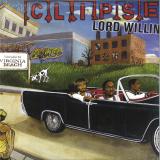
The first act signed to The Neptunes' newly formed Star Trak label was a Virginia based duo known as the Clipse. The first single “Grindin’” impacted the streets with its bare boned but infectious drum beat in the same way that “Sucker MC’s” did almost 20 years earlier. These brothers - Pusha T and Malice combined with The Neptunes groundbreaking production sent a clear message to the rap world – “we are not the same” (as rapped by Malice on his opening verse on “Cot’ Dam”). Clipse brings an authentic Virginia sound into the game and created a movement, with not only their darkly layered raps but The Neptunes as well. Pharrell Williams and Chad Hugo were able to combine their cyberpunk production with just the right group to create a street masterpiece. Following in the footsteps of such rap criminologists as Kool G Rap, Nas, Jay-Z, and Mobb Deep, the Clipse offer the Virginia hustler's viewpoint with clever, hard-hitting lyrics that is sprinkled throughout the entire album. With so many standout tracks on Lord Willin’ the album starts pulling no punches. On Track 1 simply (or maybe not) titled “Intro” you get a very personal and deep testament of crack and the drug game, a theme that is throughout this album…HEAVY. Songs like “Virginia” or “I’m Not You” (featuring Jadakiss, Styles P and Roscoe P Coldchain), have lyrics that play as a musical notes alongside The Neptunes tailored beats. “Young Boy”, “Comedy Central”… all fit perfectly alongside “When the Last Time” and “Cot Dam” as each song plays its part as chapters to the Lord Wilin’ masterpiece. “Gangsta Lean” (another one of the albums standout tracks) features a slightly lighter feel while paired with Pharrell's trademark falsetto hook. The truth of it is, it’s hard to just pick one track, or point out which is the albums star. Each song on Lord Willin’ is essential to making it the classic that it is. The Neptunes (who were busy turning out every other Pop hit on the radio) crafted an album that was deemed an instant classic, and cemented Clipse as Rap’s newest superstars.
Default Mode by Raleigh & Takenaga continues the newly established X series – Harmony’s platform for new voices and limitless exploration. Hailing from Prague, the duo embodies the next wave of adventurous sound design and musical talent from the imprint’s home town.
Incentive Program opens the EP’s A side with a drifting, trance-tinged flow wrapped in sweeping pitch movements and fractured vocals. The track sets a shadowy, almost sinister atmosphere, pulling all witnesses into its slow-burn gravity. It’s a steady build, tipping the floor over the edge. Stiff Envelope pulls you into its depths as it continues to build tension with resonating synth hits that quiver over a powerful trance foundation. With a few moments of silence that let its unsettling atmosphere settle across the stereo field before swinging back in at full force, this one is tailor-made for big systems.
B side’s Ground Floor carries on with metallic swells and shimmers that ring underneath the surface as the tension built on the A side bursts, settling into a grounding four-on-the-floor moment and leaving just enough time to breathe before Raleigh stirs up a concoction of devious vocals, snappy percussion, and a seductive bassline that lifts the mood tastefully. Takenaga wraps up the record with Head Count, a razor-sharp blend of crisp percussive cuts and stuttered crumbles that are seeking the perfect pitch all the way, climbing up and down. Heads are counted on a lively groove that radiates playful momentum and commands the dance floor to get in formation, keeping a tight rhythmic focus. Infused with the pulse of UK club culture, this track delivers a fresh and forward-thinking sound perfect for adventurous turntables.
‘The Jamaican Recordings Allstars’ have gone back to the Reggae heydays of 1968 / 1969 as a strong influence on their snappy instrumental track. The flash points of Harry J Allstars ‘The Liquidator’ and Dave and Ansell Collins ‘Double Barrel’ come to mind. No reggae 7” single would be the same without its version b-side, so please flip the single over for part two where the beat is pulled up to the fore. Hope you enjoy rocking to this future classic !!!!
In 1978 a newly formed Augusta, Georgia group Marshall, Donovan and Broomfield chose to record cover versions of two songs previously recorded in 1973 and 1974 respectively by Florida siblings group Cornelius Brothers and Sister Rose. These Eddie Cornelius penned songs “Let me Down Easy” and “Since I Found My Baby” would form both sides of Marshall, Donovan and Broomfield’s first 45 single, released on group founder John Marshall’s own Augusta label. The flipside “Since I Found My Baby” would eventually gain popularity across the pond with aficionados of the UK modern soul scene of the early 1980’s and beyond.
John Marshall began his musical career in a high school group called The Fabulous Gardenias who recorded the doowop ballad “It’s You, You, You” backed with the up-tempo R n B mover “What’s The Matter With Me” released on Tommy Brown’s local Liz label (named after his wife future Motown recording artist, Liz Lands) in 1961.The Fabulous Gardenias featured John Marshall, the late Atlanta alumni Calvin Arnold, “Little” Joe Jones Jr (later of the Tams) and a fourth guy only remembered as Harold. John Marshall later sang with another Atlanta group The Tams of “Hey Girl Don’t Bother Me” fame from 1970 through to 1978.
Later in 1978, John Marshall having relocated to Augusta, GA the previous year was casually emptying the contents of his mailbox outside his home when a car suddenly pulled up. The driver called out “Hey I recognize you, you’re John Marshall you used to be with the Tams!” The driver continued to introduce himself as John Donovan stating that he too was a singer, followed by an impromptu performance, and hey! sure enough he could sing! A later introduction to Charles Broomfield (John Marshall’s next-door neighbour at that time) would lead to the formation of the group Marshall, Donovan, Broomfield with the addition of Mary Marshall and Pat Donavan (the then, two John’s respective wives) as backing vocalists. The previously mentioned group’s first release the John Donovan led “Let Me Down Easy/Since I Found My Baby” was recorded at the now defunct Jam Studio’s in Atlanta. Upon release, the “Let Me Down Easy “side received considerable local radio play but only led to the group performing a handful of local shows. On the strength of the group’s first release a second 45 release followed in 1980 “Let’s Dance/That’s Love” both sides of this 45 were penned by Charlston, South Carolina native, Harold Thomas who John Marshall knew from his time with the Tams, Thomas having once been part of Bill Pinkney &the Original Drifters and later the Tams management teams. This second 45 never gained the same local attention of “Let Me Down Easy” and after three years together the Marshall’s, Donovan’s and Charles Broomfield went their separate ways. John Marshall lost contact altogether with his former group members and left the music business taking up employment at International Paper Mill until his retirement in 2013.
Due to the current resurgence in popularity of “Since I Found My Baby” with copies regularly selling for four figure sums, Soul Junction have reacquainted ourselves with John Marshall to you bring you “Since I Found My Baby” backed with “Let Me Down Easy” with the addition of the excellent and lesser, known stepper “That’ Love” making this an excellent value 45 release.
The Loon EP by Rubinskee unfolds like a lucid dream — a surreal voyage through shifting moods, hidden meanings, and subconscious awakenings. Each track opens a portal into a distinct emotional landscape, weaving hypnotic rhythms with deep introspection. The journey begins with “The Loon” (ft. DJ Raw), a haunting call from the subconscious — disorienting at first, then transformative once you surrender to its pull. Soos’ XTC Mix elevates this awakening into euphoria, turning chaos into clarity in a moment of pure transcendence. With “Zona Roja,” the listener descends into a feverish groove — a jungle where rhythm devours reason. “El Siguiente Paso” pulses with momentum and resolve, a reminder that evolution demands movement. Finally, “Estás Engañada (Niterói Mix)” closes the trip like a cinematic crossing — nostalgic, unrestrained, and beautifully alive in motion.
It's been a long time coming, but finally the Berlin duo New Frames makes their debut onto PRSPCT Recordings with a powerful four-track EP: PRSPCT332
Built by Mathis Mootz (The Panacea) and David Frisch, New Frames have become a driving force in the darker corners of modern electronic music. Their sound pulls from the roots of techno-rave culture, from its earliest sparks to its current state, by fusing those classic sounds with completely new twists.
Their music blends the intensity of industrial and hardcore but by holding up the momentum of techno and drum & bass. This EP is the perfect example of genre-bending music, hard to keep in just one simple box, but held together by a focused, contemporary sound: Expect this EP to be tense, layered, and engineered with precision.
PRSPCT332 captures all of that energy in four heavy tracks:
A1 Mono Tone
A2 The Killing
B1 Moon 44
B2 The Masterpiece
Out at the end of November on vinyl and digital via PRSPCT Recordings.
New Frames show how it's done once again, proving that genre and BPM boundaries don't really exist.
Punching in with his debut vinyl EP for Fluid Funk, Chilean house producer Massiande follows up to a string of head-turning releases on an array of labels, including Jimpster’s Freerange Records. His much anticipated new offering, “Essential”, packs all the attributes of his vivid, floor-focussed vision, taking us on a bouncy ride across densely forested coastal house scapes and heavy-lidded electronics. Draped in washed-out pads and cottony textures, Massiande’s tracks have us floating in a chromatic daze of sorts, light-hearted and somewhat nostalgic, but above all hopeful and resilient.
A textbook slab of Massiande’s ever-expanding palette of woozy house tropes and silken disco touch, A1 “Tears” (also presented in bare instrumental form on the flip side B2) has it all, from the euphonic synths arrangements to the no-nonsense, club-igniting jack and irresistible footwork, via the infectious bass and Chicago-style soulfulness of its vocals. Proper fiery number and absolute weapon for any DJ seeking either impactful elegance in a peak-time context or to rekindle the flame when the after gets a bit too prosaic and requires that extra funky boost to get back on tracks. Grooviness exemplified.
More of a straightforward affair, A2 “Essential” unflappably beckons us on the path of utter vaporous escapology with its pulsating tableau of FX-soaked machine talk, semi-acidic bass and zero-G synthwork painting the sky all shades of pastel. The result is a rather captivating piece of weightlessly intuitive though carefully engineered sonic daydream. Injecting further oomph to the groove, B1 “Come On” pulls out a symbiotic collage of Sino-flavoured melody, Stax-ian vox sampling and straight out Detroit house-indebted propulsion, neatly showcasing both Massiande’s broad spectrum of influences and that idiosyncratic take of his on the said genres’ tried-and-tested leitmotivs.
We started the label in 2015 as a home for our own productions and for tracks from artists and friends we appreciate. From the beginning, the goal was simple: to release music we'd want to hear ourselves on the dancefloor - the kind that makes us pull off strange, unrhythmic dance moves. In the same spirit, the fifth Sammelwerk compilation brings together familiar label artists and new contributors, all delivering tracks we'd be excited to rave to ourselves.
Dot / Stephan Bazbaz - Split EP Vol. 2 (Depthful002)
Depthful returns with its second release, following the success of the first release by label owner and artist Dotan Bibi aka Dot.
In the second release, Dot returns to collaborate with his close friend and artist Stephan Bazbaz for their second split EP, following the great success of the first one released back in 2017 on Stephan's label, "No waves"
A1. opening With Dot's track 'Hoag’s Object'. is an intriguing fusion of house and dub influences, balancing the pulsating energy of house with the relaxed, spatial vibes of dub. From the start, listeners are greeted with a deep, groovy bassline and lovely acid line, that immediately establishes a rich foundation for the track.The rhythm section and congas is tight and persistent, with the signature rolling beats of Dot's sound laying the perfect backdrop for the track's sonic landscape.
A2. 'Fading Fast' isn't just a track; it's an experience. If Hoag’s Object laid down the groove with subtlety, 'Fading Fast' fully submerges you in its rich, atmospheric depths. From the very beginning, there’s a sense of movement - like something slowly emerging from the mist, with deep, resonating bass frequencies that pull you into the track.The rhythm section feels almost submerged, like you’re hearing it from underwater. The inclusion of short, scattered vocal samples in 'Fading Fast' adds an extra layer of intrigue and emotional depth, without pulling focus from the track's atmospheric core. Rather than traditional, lyrical verses, these vocals appear like fleeting whispers - fragments of a larger story, almost like half remembered phrases.
B1. opening with Stephan's track 'Overload' and it feels like an immediate shift in energy, where the vibe ramps up with pure house power. This track is all about the rhythm, the groove, and, most importantly, that bassline that keeps you locked in.
From the first beat, it’s clear 'Overload' isn’t messing around. The drums hit with a sharp, punchy attack, but it’s the bassline that truly makes this track shine. Deep, low, and relentless, the bassline pulses in a way that feels almost like it’s driving the entire track forward. There’s something about the way the low end sits in this track that makes it feel alive especially with the warmth of the lovely deep pad Holding the whole track underneath.
B2.'Better in Space' is the closing track of the record, it feels like a natural continuation of the vibe that’s been built, but also a final statement that allows the listener to fully sink into the deep, spacious world Stephan is known for. With this track, we’re stepping into a place where dub and deep house collide seamlessly, creating an atmosphere that's both expansive and intimate - taking us out there but also pulling us inward. From the very first moment, 'Better in Space' sets the stage with a warm, enveloping bassline that instantly grounds you.
Bringing together the elder statesman of the Zulu guitar Madala Kunene and internationally acclaimed Sibusile Xaba, kwaNTU pulls two generations of South African guitar mastery into a single point of focus. Under-represented on recordings outside of South Africa, Madala Kunene (b. 1951), the ‘King of the Zulu Guitar’, is revered as the greatest living master of the Zulu guitar tradition. Sibusile Xaba, whose collaboration with Mushroom Hour Half Hour reaches back to his first recording in 2017 (Open Letter To Adoniah/Unlearning), has garnered international acclaim for his unique voice and virtuoso guitar stylings, which bring together multiple South African guitar lineages in an original, spiritualised fusion. Collaborating with Mushroom Hour and New Soil for kwaNTU, the two players come together to weave a filigree sonic fabric which reaches down to the heartwood of Zulu guitar music but moves resolutely outward, building on the past to create a deeply rooted statement about present conditions and future travels. kwaNTU – which can be roughly translated ‘the place of the life-spirit’ – is also conclave of teacher and student, as Xaba has been taught by Kunene for the last decade. Meditative, rich and sonically sui generis, kwaNTU finds these two musicians linking up within the inimitable space of sound and spirit that they share through Kunene’s teaching.
The great masters of South African music have not all had equal exposure. For many years the generation of musicians who were exiled during apartheid took centre stage, as the regime made it very difficult for those at home to be heard. More recently, a new cohort of important voices, especially in jazz, has broken through to international consciousness. But for the generation of musicians in between – those who shone like beacons in the most difficult final years of apartheid and immediately afterward – international recognition has been slow in coming.
Madala Kunene, ‘the King of the Zulu Guitar’, is among this number. A revered figure for current generations of South African musicians, Kunene began his recording career in 1990, at the bitter end of apartheid, with a now classic self-titled LP for David Marks’ storied Third Ear imprint. Born in 1951 in Cato Manor, near Durban, he had determined to be a musician from early childhood, and by the time he first entered a recording studio he had already had a long career as a popular performer. His virtuoso absorption and transformation of the venerable Zulu maskanda guitar tradition and his richly spiritualised approach to music immediately marked him out as someone special, and in the years that followed, Kunene cemented his position as one of South Africa’s musical elders. He is without doubt the grand master of the Zulu guitar tradition, but his sound and sensibility ranges far beyond it into varied sonic terrain, and he has collaborated with a wide range of musicians both at home and abroad. Now in his mid-seventies, he remains a shining light for those that are making music in contemporary South Africa.
‘He is really an amazing person,’ says the guitarist Sibusile Xaba, who has been mentored by Kunene for over a decade, and now invites a collaboration with him on kwaNTU. ‘As a mentor, he's really powerful in showing us the way. For us to have this opportunity to make music together and have a project together is really a blessing to me.’
Xaba himself grew up in Newcastle, KwaZulu-Natal, where his mother had been in a band and his father sang in a church choir, and from early childhood Xaba played homemade tin guitars. He only later realised that music was his calling. ‘I just loved music. I was fortunate. My parents loved music. And when it was time for me to leave home and go to study outside Newcastle, I knew that music was what I wanted to do. There was no second option. It was just music.’ Moving to Pretoria to study music formally, Xaba committed himself to his craft, developing a unique style that draws on both US jazz masters such as Wes Montgomery and Jim Hall, and the rich and varied heritage of the South African guitar, from inspirational jazz players such as Allen Kwela and Enoch Mthalane, to the music of the Malombo groups and Dr. Philip Tabane (Xaba has previously collaborated with Dr. Tabane’s late son, Thabang), and the Zulu guitar tradition embodied by Kunene.
‘I was really in love with the jazz guitar, I really admired it, and I was digging a lot in that direction,’ says Xaba, recalling his first encounter with Kunene’s music, over a decade ago. ‘And then one day on my timeline, Kunene popped up, and I was like – “What's this sound?” I was so connected to it. It really touched me deep. I started checking out his records, and then I found out he's from the same region as I am, which is Zululand.’ After Kunene played a show at the Afrikan Freedom Station in Johannesburg, Xaba make contact with him, and visited him at home in Durban. They struck up a friendship, and Xaba became the elder’s student, as Kunene began to pass on his knowledge and his inimitable way of playing.
kwaNTU is a tribute to this relationship and the deep learning that has defined it. The album was recorded in Zululand in the town of Utrecht, at a cultural centre called Kwantu Village, which gives its name to the album. ‘It's such a broad word,’ Xaba says, ‘but the elders teach us that Ntu is basically an energy, almost chi, an energy, a force that all living beings have within them. It's a living energy, so kwaNTU is like, almost the place of this energy.’ The two men sequestered themselves for five days of jamming, improvising and planning, and then the session was recorded in one take over a single night, with Gontse Makhene joining on percussion and backing vocals and Fakazile on vocals. Other voices and overdubs were later added in the studio in Johannesburg.
The result is a rich and meditative recording that finds two generations in a deeply engaged dialogue. Teaching and passing on his knowledge, the elder Kunene has brought Xaba into a space of sound and knowledge that they now share; Xaba’s own practice of deep communion with nature and his dedication to his musical craft make him the perfect interlocutor for Kunene. The result is an album that foregrounds the two musicians engaged at the highest levels of responsive listening, sympathetic unity, and collaborative concentration. Bringing an elder statesman of South African music to an international listening audience for the first time in decades by pairing him with one of South Africa’s most important new voices, kwaNTU is a meeting of generations and a powerful demonstration of musical lineage and continuity.
‘Before music, there is sound,’ Xaba observes, speaking of Kunene’s unique approach to music. ‘And sound is like a common compartment…it's not restricted to particular people or particular geographic places, you know what I mean? It's sound. Everybody can hear it. So when he constructs that sound into music, I think everybody resonates with the energy behind his construction of sound into song. Here at home, we really love him for preserving our history through the guitar, through his stories as well the music, the songs that he writes. We really, really admire him.’
For their first album as Gilla Band (formerly Girl Band), the
foursome have redrawn their own paradigm. ‘Most Normal’ is like
little you’ve heard before, a kaleidoscopic spectrum of noise put in
service of broken pop songs, FX-strafed Avant-punk rollercoaster
rides and passages of futurist dancefloor nihilism.
Lockdown robbed Gilla Band of any opportunity to try the new
material out live, but the pandemic also incinerated any idea of a
deadline for the new album. They were free to tinker at leisure, to
rewrite and restructure and reinvent tracks they’d cut, to, as
drummer Adam Faulkner puts it, “pull things apart and be like,
‘Let’s try this. We could try out every wild idea.’”
The group also fell under the spell of modern hip-hop, “where
there’s really heavy-handed production and they’re messing with
the track the whole time,” says Fox. “That felt like a fun route to go
down, it was a definite influence.”
‘Most Normal’ opens with an absolute industrial-noise banger that
sounds like a manic house party throbbing through the walls of the
next room as a downed jetliner brings death from above. What
follows is unpredictable, leading the listener through a sonic house
of mirrors, where the unexpected awaits around every corner.
The common thread holding ‘Most Normal’’s ambitious Avant-pop
shapes together is frontman Dara Kiely. Throughout, he’s an antic,
antagonistic presence, barking wild, hilarious, unsettling spiels,
babbling about smearing fish with lubricant or dressing up in binliners or having to wear hand-me-down bootcut jeans (“It was a
big, shameful thing, growing up, not being able to afford the look I
wanted and having to wear all my brother’s old clothes,” says
Kiely).
‘Most Normal’, then, is a triumph, the bold work of a group who’ve
taken the time to evolve their ideas, to deconstruct and reconstruct
their music and rebuild it into something new, something
challenging and infinitely rewarding. It’s a headphone masterpiece.
It’s a majestic exploration of the infinite possibilities of noise. It’s a
bold riposte to your parochial beliefs on whatever a pop song can
or should be. It’s the best work these musicians have put to
(mangled) tape.
Comes with DL card & 2P insert / wrapped in shrink + a sticker
At long last, Takao is back with his long-awaited second album, seven years in the making. His 2018 "Stealth" was (and still is) a much-loved set, mixing elements of ambient and environmental music; with this new release Takao breaks free of the gravitational pull of these earlier influences and strides confidently forward. "The End of the Brim" jettisons some of the more abstract elements of his previous work, embracing a “universal listenability” and a more concrete intensity, with a focus on supple rhythms and strengthened senses of melodic development and harmonic sophistication. This musical growth can be linked with Takao’s admiration of composers Ken Muramatsu and Toshifumi Hinata, who are generally associated with commercial “production music” and easy listening. Another contributing factor is his private study with veteran keyboardist Ichiko Hashimoto of Colored Music. The ten tracks here include three vocal tracks, with three different singers (Yumea Horiike, Cristel Bere, Atsuo Fujimoto of Colored Music) and seven keyboard-led pieces. The vocal pieces are integral parts of the album’s flow, rather than typical “songs” driven by the name and personality of the singer. All of these factors, plus the veteran presence of engineer Hiroshi Haraguchi, known for his work with Haruomi Hosono, who mixed half of the album's tracks, along with the use of excellent old-school synths, aligned with Takao’s forward-looking vision, have combined to give us an album with a unique sense of timelessness. A spotlight illuminating future paths for pop music, available on CD/Vinyl LP/Digital, with English/Japanese lyrics, and liner notes by Yuji Shibasaki.
East Kilbride’s Scott Fraser finally comes good on a 25 year promise to his younger self with his debut solo album on his own label DX Recordings out of London. This record represents the closing of this chapter and the opening of a new one.
A truly international and collaborative project pulling together the help and talent of friends around the world with mastering by Radioactive man Keith Tenniswood, cut by Frank Merritt at The Carvery and world class US visual art and design legends, Tim Saccenti and Nick Martin on photography, artwork and design.
Limited to 300 solid red heavyweight vinyl copies, brown kraft sleeves; individually hand stencilled and numbered by the artist, printed inserts feature a collection of moments and images from the last 25 years - the studio, the equipment, the people and the places that came together to make this release. Japanese rice paper inner sleeves.
Limited edition hand printed screen print by Niall Greaves at Newbridge Print Studios in Newcastle on the first 30 copies exclusively available via the DX Recordings Bandcamp page.
Musically diverse, crossing styles, flavours and moods, threaded meticulously with razor sharp Roland TR606 programming and glued together with a Space Echo, Expanded opens with the sub aquatic funk of ‘Eden And After’. Side one takes you through banging electro on ‘Energy In Constitution’, the dark dub techno of ‘To The Letter Of My Oath’, leaves you disappearing through a black hole on ‘The Path Of Helium Rain’ and the sound of aliens talking through FM synthesis on ‘Collected Stills’. On side two: a slice of dark, heavy instrumental hip hop gets things started with ‘Where Is That Perception? ‘. Next we get into some straight 4/4 club techno with cut up drums and bumping baseline in ‘Mi Dominante’ before moving through some blissed out Detroit vibes on ‘Earth Looking Inwards’, a rough as you like TR606 driven experimental electro groover ‘Object of Life’ and finally closing out with the Ectomorph inspired stark electro of ‘Steel (NB_BLOOD cut)’.
Mastered by: Keith Tenniswood at Curve Pusher, Hastings
Cut By: Frank Merritt at The Carvery, London
Distributed by: Rubadub, Glasgow
Artwork by: Timothy Saccenti, Nicholas Martin, Scott Fraser
Photography by: Kate Green, Javier Gonzalez, Scott Fraser, Timothy Saccenti
Solid red vinyl (300 copies), 30 coming with a limited edition screen print designed by Timothy Saccenti, Nicholas Martin and Scott Fraser, hand screen printed by Niall Greaves at Newbridge Print studios in Newcastle.
"Waxwork Records is proud to announce the next entry into their collection of FRIDAY THE 13th soundtrack releases on vinyl, FRIDAY THE 13th PART 3. Waxwork and composer Harry Manfredini re-visited the original analog tapes in an effort to faithfully master the complete soundtrack for vinyl. FRIDAY THE 13TH PART 3 includes every musical cue featured in the film and encompasses two 180 gram LP's clocking in at nearly one hour of chilling audio which serve as a dark musical backdrop to one of the most beloved franchises for horror fans. Originally released in 1982 and in 3-D, FRIDAY THE 13TH PART 3 is the first film to feature the legendary slasher, Jason Voorhees, wearing his signature hockey mask. This image of a machete wielding, hockey masked killer became the trademark for the franchise, as well as an iconic image in American cinema and horror films in general. To keep in tune with the original 3-D theatrical release of the film, Waxwork created a deluxe quality 3-D lenticular mounted album cover for the heavyweight old-style tip-on gatefold jacket which houses two LP's featuring the complete score.
Waxwork Records incorporated the lost, deleted final scene of the film into the inner gatefold illustration. This deleted scene from the film depicted an unmasked Jason Voorhees violently beheading the “final girl"". Deemed too graphic by the film studio, the scene was cut from the movie altogether. Here's your chance to see it up close and personal through the artistic vision of Gary Pullin.
And yes, this soundtrack release includes the now famous “Disco Theme"" from FRIDAY THE 13TH PART 3's opening credits!
Originally a jewel from Sunnyview Records (born from the legendary TK Productions). Dolos’ Night So Right was a slick blend of electronic funk and soul with an unmistakable boogie-disco swagger. Hailed by fans as a “lush, echo-drenched boogie monster” with a “pre-house” edge, it was already dancefloor gold.
Now, Dr Packer breathes new life into the classic, delivering a silky, tension-charged rework steeped in his trademark disco-house finesse. A warm, rolling bassline locks the groove as percussion pulls back, letting Rhodes chords, filtered strings, and subtle guitar licks shine. The result? A masterclass in dancefloor tease and release, pure, modern-classic disco magic.
What makes チトチック/クラクラ (CHITOTIHC/KULA-kura) so fascinating is that, in some weird way, it’s a meeting of minds and musical language of disparate artists at the forefront of a new kind of groove. There might be no “L” in the Japanese language but that doesn’t stop it from trying to find a working substitute. Similarly, Chito enlisted members from his Asiabeat and East Pulse, others from Mu-Project, K2, and Adi, and brought in Haruomi Hosono to play mercurial bass. In the great expanse of experimental Japanese-made pop music all of them might have gone in “out-there” in separate directions but on this record it was Chito who pointed their focus all on the same track.
“Bayou (バイヨー)” presents this floating idea of dance music with beats and rhythms that hover among the ethereal. Other like “Scribble Dance (らくがき)” use Harry’s acid bass lines to dig cavernous grooves that only come up for air via adrenaline-fueled jumps by Haruo Kubota’s quite Adrian Belew-esque guitar lines. Perhaps, Discipline-era King Crimson is an apt comparison to what Chito and his crew pull off here.
Where Discipline signaled a way to reconcile the most out-there polymeter music of prog with the more satisfying parts of post-punk and the new electronic wave, so to do I think チトチック/クラクラ (CHITOTIHC/KULA-kura) has that bit of heart/spirit in mind. This is the out-there of Japanese experimental music satisfying the best parts of the, then, new electronic wave. It takes a certain degree of proficiency and sheer chutzpah to go from “11” to the wonderfully impressionistic, ambient minimalism of a track like “Sanghyang (サンヤン)”.
It’s the joy of not knowing what each new track will hold and just letting yourself follow the hard-working hands of such learned musicians that brings the most out of Chito’s vision. It’s this very liquid music that keeps you on your toes on tracks like “Astral Lamp (無影灯)”. Tracks like “Jagg-chagg (ジャグチャグ)” and “Filament (フィラメント)” present a fourth world music bifurcated in exponential parts by the glitch of newer, modern, electronic modalities, intersected by expressions by differing voices. Every track you switch to presents a new way to get lost in the many phases and places Chito wants you to travel to.
In the end, as always, it’s not the destination but the journey through it that plants this album in your memory. – Diego Olivas