Duncan Forbes returns to 49North with a super fresh sounding 4 track EP, all killer no filler !
First up is ‘Moods Shift And Flicker’ which eUortlessly fuses Duncan’s love of Detroit and dub techno with his love of Chicago house music and spoken word all underpinned by an infectious disco bass line. Following on and taking things up a level or two we are treated to the uplifting peak time monster that is ‘Time Is Now !’. Peak time melodic techno that will be just as at home in any large open-air space as it will in a dark basement. Third on the menu is Spectra, a no holes barred sonic battle weapon that will take you to the stars and back as it builds and builds. Desert is served up in the form of ‘I Wanna Know’ a solid 808 electro workout with one foot in the 80’s and the other somewhere in the future which asks the questions ....How Come The Quantum ? How Come The Universe ? ....... I Wanna Know !
Search:the quest
Members of Papir & Causa Sui travel through new musical realms. 3 musicians with their own compass: Martin Rude & Jakob Skøtt have shared a wide range of musical quests: from Causa Sui’s “Bitches Brew of Stoner Rock” crossing the folk meditations of Sun River and arriving most recently as members of the pre-fusion electric dealings of the London Odense Ensemble. Papir guitarist Nicklas Sørensen is not merely adding a new layer to an established duo, but his presence to the party have brought it into more meditative dwellings. These pieces move slowly, evolving like the slow growth underneath the ground. Whereas Causa Sui & Papir have always excelled at blistering panoramic and often sundrenched sounds, Edena Gardens take a dive inwards and downwards rather than outwards. But there’s also an electrically charged ecstatic rawness to the dealings. Like Æther, the 10 minute opener’s 2 guitars-and-a-drum kit improv, finding it’s way from tumbling drones into monolithic slow riffage. Elsewhere, we find trails of electronic vapors, misfiring bursts of noise and slow drones stretched out. Edena Gardens is a thing to be experienced first hand - it’s not for everyone, but those who decide to stay are greatly rewarded. It’s a debut unlike any other record on El Paraiso, perhaps unlike any you’ve ever heard. Welcome to Edena Gardens. Tracklist: 1. Aether 2. Sliding Under 3. The Canopy 4. Hidebound 5. Now Here Nowhere 6. Iod 7. An t-eilean Dubh
2024 Repress
Thomas Fehlmann remains as one of the most endearing and respected artists on Kompakt. He has inspired generations of fans and musicians over the course of his 30+ year career. From his early days as part of the legendary band Palais Schaumburg, and the pioneering Detroit/Berlin act 3mb (With Juan Atkins and Moritz Von Oswald), to his longstanding membership with The Orb, combined with his contributions as a solo artist to esteemed imprints R&S, Plug Research and of course Kompakt, where we have proudly released two full length solo albums: Visions Of Blah (Kompakt CD 20/Kompakt 67) and Honigpumpe (Kompakt CD 59 / Kompakt 157), his musical works have been prolific, not to mention four singles and a full serving of tracks found on our Pop Ambient and Total collections. Now, after 3 years, Fehlmann returns with 'Gute Luft'…
'Gute Luft' is the result of months of work scoring the hit German TV film 24h Berlin - the longest documentary film in history which featured 80 camera teams following the lives of berliners over a 24 hour period. Obviously a huge challenge for Fehlmann, beyond the scope of the project and hours of music involved in a 24 hour film, there was dealing with the decision making process that went with working with such a large production team. As he shared scoring duties with another musician (separately), inevitably a lot of his music ended up not making the final cut. 'Gute Luft' is about re-tweaking and editing material from the countless hours of recording he had created. In a sense, 'Gute Luft' is Fehlmann's ideal soundtrack to the 24h Berlin documentary.
“while scoring the film and subsequently shaping it into a album, i found myself questioning what holds it all together in Berlin. I figured that 'Air', the good old 'Berliner Luft', is something that is guaranteed to touch everyone and everything in the city. Also with that Berlin is very green, the combination with the unavoidable city dirt makes for a distinctive blend which seems to infuse its vibrant scene unknowingly with a constructive drive. Besides that, 'Gute Luft' was also the title of a song from my old band Palais Schaumburg, of which I have very fond memories. Also (as he says with a wink) “Gut” is one word I have a profound relation to…”
Fans shall rejoice as Thomas Fehlmann doesn't feer far from his signature path of trailblazing the finer links of classic Detroit House and Techno with the submerged beauty of Berlin Dub. One will immediately recognize the classic scoring techniques Fehlmann brings to 'Gute Luft' - various themes and sounds resonate in various forms and versions throughout the tracks. As Thomas states, “There are also More Subtle Connections That Should Give An Overall Feel To The Score. I Also Brought In Elements From Tunes From My Previous Albums In recognition of the fact that I often feel that there would be so many more ways to explore and experiment with certain ideas than just on a single track”. Fehlmann clearly succeeds in synergizing the best of the past 20 years of Berlin's expansive history of electronic and dance music with 'Gute Luft'. A recreational album in every way in which he hopes will make you “Feel at peace with you and your environment, inspire you to lush, imaginative dinners, make babies, or just walk your own way with open eyes”. Well put Thomas!
This is a re-release of " Gute Luft " orginally released in 2010 on Kompakt.
Thomas Fehlmann ist nach wie vor einer der liebenswertesten und gleichzeitig angesehensten Künstler bei Kompakt. Im Laufe seiner über 30-jährigen Karriere hat er Generationen von Fans und Musikern inspiriert. Von seinen frühen Tagen als Teil der legendären Band Palais Schaumburg und dem bahnbrechenden Detroit/Berlin Act 3MB (mit Juan Atkins und Moritz von Oswald), bis hin zu seiner langjährigen Mitgliedschaft bei The Orb, kombiniert mit seinen Arbeiten als Solokünstler für Imprints wie R&S, Plug Research und natürlich Kompakt: Sein musikalisches Gesamtwerk ist beeindruckend. Wir sind stolz, bereits zwei seiner Soloalben veröffentlicht zu haben: “Visions Of Blah“ (KOM CD 20/KOM 67) und “Honigpumpe“ (KOM CD 59 / KOM 157). Ganz zu schweigen von vier Singles und jeder Menge Tracks, die sich auf diversen Pop Ambient- und Total-Sammlungen finden lassen. Jetzt, nach drei Jahren, kehrt Fehlmann mit “Gute Luft“ zurück ...
“Gute Luft“ ist das Ergebnis monatelanger Arbeit für den deutschen Fernsehfilm “24h Berlin - Ein Tag im Leben“ - der wohl längste Dokumentarfilm der Geschichte. 80 Kamerateams verfolgen das Leben der Berliner*innen über einen Zeitraum von 24 Stunden. Die größte Herausforderung stellte für Fehlmann dabei nicht die Komposition für einen solchen Film dar; vielmehr waren es die Entscheidungsprozesse im großen Produktionsteam, die ihm die meiste Arbeit abrangen. Da er sich die Aufgabe mit einem anderen Musiker teilte, endete es unweigerlich so, dass einige seiner Tracks nicht in den Final Cut kamen. Bei “Gute Luft“ ging es nun darum, Material aus den unzähligen Stunden an Aufnahmen neu zu bearbeiten und zu editieren. In gewissem Sinne ist “Gute Luft“ Fehlmanns eigentlicher Soundtrack zum 24-Stunden-Dokumentarfilm.
"Während ich den Film vertonte und anschließend zu einem Album geformt habe, habe ich mich gefragt, was hier in Berlin alles zusammenhält. Ich habe mir gedacht, dass 'Luft', die gute alte Berliner Luft, etwas ist, das garantiert jeden und alles in der Stadt berührt. Die Tatsache, dass Berlin sehr grün ist; gleichzeitig die Kombination mit dem unvermeidlichen Dreck einer solchen Stadt – das ergibt eine unverwechselbare Mischung, die ihrer lebendigen Szene unterbewusst einen bestimmten Drive zu verleihen scheint. 'Gute Luft' war übrigens auch der Titel eines Liedes meiner alten Band Palais Schaumburg, an das ich mich sehr gerne erinnere. Außerdem (das sagt er mit einem Augenzwinkern) ist ‚Gut‘ ein Wort, zu dem ich eine enge Beziehung habe ..."
Seine Fans können sich freuen, denn Thomas Fehlmann entfernt sich nicht weit von seinem charakteristischen Sound, mit dem er die feinen Verbindungen von klassischem Detroit House und Techno mit der versunkenen Schönheit des Berliner Dubs aufspürt. Man wird sofort klassische Soundtrack-Techniken erkennen, die Fehlmann auf “Gute Luft“ verwendet - bestimmte Themen und Sounds durchziehen in unterschiedlichen Formen und Versionen die einzelnen Tracks. Thomas sagt dazu: "Es gibt subtile Verbindungen, die der Erzählung ein zusammenhängendes Gefühl geben sollten. Ich habe Melodie-Fragmente aus früheren Alben einbezogen, um der Tatsache Rechnung zu tragen, dass ich oft das Gefühl habe, es gäbe so viele weitere Möglichkeiten, bestimmte Ideen weiterzuverfolgen und mit ihnen zu experimentieren, als nur in einem einzigen Track.” Fehlmann gelingt es hier, das Beste aus den vergangenen 20 Jahren Berliner Elektronik- und Tanzmusik-Geschichte zu bündeln. Ein wohltuendes Album in jeder Hinsicht, von dem er sich selbst erhofft, dass es seinen Hörer*innen "ein Gefühl des Friedens mit sich selbst und ihrer Umgebung vermittelt, sie zu phantasievollen Abendessen inspiriert, zum Babys machen oder sie einfach nur mit offenen Augen Ihren eigenen Weg gehen lässt." Gut gesagt, Thomas!
Dies ist die Wiederveröffentlichung von “Gute Luft“, erstmals erschienen 2010 auf Kompakt.
Slave To Society (ex AnD) returns to Natural Selection with a white-hot industrial Techno EP, entitled 'Ai Invasion', accompanied by an IDM-infused remix from hard electronica duo; Somatic Responses.
Format : 12" Vinyl / Digital
Mastered by Dadub Studios, Berlin. Cut by Simon at The Exchange Vinyl.
After a decade of redefining techno dance floors as AnD, Andrew Bowen returned to his experimental, hardware-focused roots as Slave To Society in October 2019. Since then he has seen his music released by highly revered institutions in the world of hard techno, noise, breakcore, IDM and industrial electronica, such as PRSPCT, Pure Hate, Ohm Resistance and BANK Records NYC. After forming a close connection to Natural Selection in recent years, Slave To Society returns to the London based imprint after releasing via their VA compilation 'NSUKR' with his track 'Tundra', followed by his remix of Kamikaze Space Programme's 'Dust To Dust' from his physical EP entitled, "Ashes to Ashes, Dust To Dust", released on Natural Selection in 2022.
In the form of a 4-track physical and digital EP, 'Ai Invasion' is a sonic exploration of the symbiotic relationship between humanity and technology.
Slave To Society uses carefully designed futuristic soundscapes and atmospheric textures, layered with AI generated vocals, combined with heavy and fiercely unpredictable drum elements.
Expect advanced, experimental hard techno and noise, fused with powerful low-end muscle, raging hi-hats, fragmented percussion and augmented amens.
The release also features a razor sharp and well-placed remix of track B1 - 'Robot Dementia', courtesy of legendary hard industrial electronica duo; Somatic Responses.
In true Slave To Society fashion, all rules and boundaries are smashed to pieces and all tracks are equally suitable for blasting through the world's biggest club systems and rigs as they are for home listening.
'Ai Invasion' challenges listeners to question the impact of artificial intelligence on our society and the implications of our relentless pursuit of technological advancement.
- A1: Everything Forgotten Flows
- A2: Silicate Tusks
- A3: Learn To Fly (Feat Sabola)
- A4: Segue
- B1: Ruins
- B2: Like It Shouldn’t
- B3: Thick Air
- B4: Eternal (Feat Ex-Terrestrial)
- C1: Wake (Feat James K)
- C2: Grimoire
- C3: Basalt Tones (Feat Jesse Osborne-Lanthier)
- C4: Moonstone (Feat Ben Bondy)
- D1: Frayed
- D2: To See Our Secret Die (Feat Sabola)
Acclaimed Canadian electronic producer Francis Latreille, known as Priori, unveils his new singles "Learn To Fly" and “Segue” today, marking the first releases from his upcoming third album, This But More. "Learn To Fly" offers a taste of the album's lush, dubby techno soundscapes, while "Segue" showcases the album's ambient side. Arriving May 24th via NAFF, This But More marks a sonic departure for the artist, exploring a richly textured landscape of electroacoustic compositions inspired by literature, cinema, and the transformative power of nature.
Priori delved into This But More from September 2023 to March 2024, drawing upon archival recordings and fresh ideas. "This album is about healing," Priori explains. "Not necessarily 'music that heals', but about the process in its ups and downs, its beauty and uncertainty." Themes of protection, healing, sleep, and decay naturally emerged during the creative journey.
To craft this immersive world, Priori collaborated extensively. Writer and musician Devon Hansen penned a series of "Suggested Stories" to accompany the album, adding depth to its lore. Musically, Priori teamed up with James K, Ben Bondy, Sabola, Adam Feingold, and Jesse Osborne-Lanthier, infusing the album with diverse instrumentation, including violin, guitar, software instruments, and field recordings.
This collaborative spirit extends to the album's striking visuals. Jesse Orsborne Lanthier designed the main and single artworks, while Ulysse De Lezenne crafted a unique jewel, both pieces seamlessly connected to the album's narrative.
The intricate world-building sets This But More apart. "It's the biggest collaborative project I have tackled so far," Priori notes. This spirit of exploration extends to the second single, “Wake”, featuring Priori's first vocal collaboration with close friend Jamie Krasner (James K).
Priori's artistic process is grounded in self-awareness and intuition, asking vital questions about how each element serves the greater purpose of the music. Swimming sessions between studio work provided clarity and focus throughout the album's creation. These meditative moments reflect in the music, inviting listeners into a contemplative, dreamlike state.
Beyond music, Priori draws inspiration from the literary worlds of Gene Wolfe, Ursula K LeGuin, China Mieville, Brian Caitlin, the evocative games of Hidetaka Miyazaki and Yoko Taro, as well as the ever-evolving beauty of myths and nature.
Ruby Red - Transparent - Galaxy effect vinyl in dub style jacket (jacket sleeve with center hole cut out so label of LP shows through) a black paper inner sleeve and poly bag.
PART ONE’ METAL HAMMER - 8/10 review. FOR FANS OF : Lustmord, Om, Sunn O))) . “An exercise in freeform ambience, ritualistic repetition and the rapturous, womb-like power of bass…strange and affecting. We remain lucky to share in the great man’s vision.”
At its heart, music has always been a questioning of inheritance – a dialogue with predecessors and forebears, the forging of one’s own perspective in relation to what has come before, and for some, a plunge into the boundless realms between. For Steve Von Till, that process has always taken on an added dimension to become the most sacred of tasks. Whether through the apocalyptic uprising of Neurosis, the sonic deconstructions of their sister project, Tribes of Neurot, the invocatory intimacy of his eponymous solo albums or his instrumental psychedelic reveries in the guise of Harvestman, that dialogue has never just been with musical influences, but with what underpins them: the primordial, elemental forces now banished to the peripheries of our contemporary consciousness, yet still broadcasting a signal for all who will listen.
Drawn to the megaliths, ruins and ancient sites mapped out along the British and European mainland’s geographical and psychic landscapes, the folklore and apocrypha forever resurfacing as portals from a rational world, “Triptych” is a meditation forged from traces and residues, and an hallucinatory recollection of artists who have tapped into that enduring otherworldliness embedded within us all. It’s a dream diary narrating a passage through Summer Isle where Flying Saucer Attack are wafting out of a window, a distant Fairport Convention are being remixed by dub master Adrian Sherwood, celestial scanners Tangerine Dream are trying to drown out Bert Jansch and Hawkwind are playing Steeleye Span covers, all prised out of time yet bound to its singularity.
Woven together from home studio recordings that span two decades, this latest outing as Harvestman finds parallels with nature’s cycles not just in its release dates but in the repeated structure that binds each album, like an imprint refracted through three separate strata. As with April’s “Part One” and the forthcoming “Part Three”, “Part Two”, starts on a collaboration with Om bassist and long-term friend of Steve’s, Al Cisneros, with a dub take opening the B-Side. Here, the opening track, “The Hag Of Beara Vs The Poet”’s languid, tribal groove expands into a chromatic wash, like an endless drip of oil spreading out under a midsummer haze.
A filtering of the alpha-state travelogues of its predecessor, “Part Two” reaches even deeper into primal yet pristine states. It journeys from the undulating drone and slow-thawing wonder of “The Falconer”, as if the Myst soundtrack were being broadcast from outer space, through “Damascus”’s perpetual-motion, dreamtime bazaar and “Vapour Phase”s seismograph frequencies measuring supernatural tremors to “The Unjust Incarceration”s distorted bagpipes, sounding a noise-frayed lament
If “Triptych” is a multi- and extra-sensory experience, it extends to the remarkable glyph-style artwork of Henry Hablak, a map of correspondences from a long-forgotten ancient and advanced civilization. As with “Triptych” itself, it’s an echo from another time, an act of binding, a guide to be endlessly reinterpreted, and a signpost to the sacred that might not indicate where to look, but how.
Make The Ting is a project born out of my writing on creativity that lives online as post it style notes known as the ‘Yellow Squares’ found across Instagram and Twitter. The first square was posted on July 31st 2021, as covid-19 restrictions were lifting in the UK and I was thinking about what the music scenes and wider creative communities are after 18 months of lockdown. The idea’s developed into lectures presenting them in real life, but the platform felt right to explore my own creativity more broadly to challenge my own ideas in real time. My history as a DJ, Label Owner and Promoter in the Grime scene wasn’t at the forefront of these ideas, but I wanted to reconnect back to the ecosystem that inspired and gave me a creative career in the first place. Blay Vision’s ‘Cammy Riddim’ in the summer of 2022 inspired an idea to translate the ideas in the squares into song form. I approached Grime MC Jammz about the idea, and the first song ‘Yellow Square’ was done with the core principles that I had written about so far. 6 months passed, and while on a Muay Thai retreat in Thailand in February 2023 I thought about expanding the musical side of the Yellow Squares further. I text Jammz about turning this idea into an album, that we make as quickly as possible using my writing as a guide, and his voice and creativity to turn them into songs. We gave ourselves two weeks, set up a shared notes in iPhone did two zoom meetings, one phone call, exchanged messages on iMessage and he wrote 7 songs in a week, then recorded them all in one day at Ten 87 Studios in Tottenham, London. Jammz wrote all of the songs to one of his own beats, then we selected the final instrumentals we liked that we thought fit the ideas from both our camps the day before recording. The speed forced our hands creatively and it would have been a completely different project if we worked on it for months. Time is the creative director. Albums don’t have to be blockbuster projects with big budgets and huge campaigns behind them. Albums are just collections of ideas. Removing the pressure of trying to make a perfect one meant it got done and released with the least stress possible. Even the business of the album took 5 mins to handle. An equal revenue split on each song between me, Jammz, and the producer. Everyone gets paid quarterly into their own account automatically by our distributor. On announcement of the album in March 2023, we released the acapellas, for people to do their own versions, before most of the original songs had been heard by anyone. We encouraged people to Remix The Ting, and I did custom artwork for everyone that sent me a complete remix before the album came out on the 30th June 2023. The front covers are drawn individually by me. I wanted to make the record an extension of what I do with the yellow squares themselves and capture the energy of where my head is at in 2023. If it’s blank, it’s space for you to draw your own yellow square. Maybe what you think about the album, what it’s inspired for you, or just a snapshot of where your creative brain is at on the day you are picking up this record. This could be the first of many albums, this could be a one off. Nobody knows what is going to happen next. It all may make sense in the end – Elijah
Operating under the moniker Eat Them, Johannes Hofmann ravenously ingests and rearranges pretty much everything of interest that electric guitar music has produced over the last 50 years. King Crimson, Dinosaur Jr, Talking Heads or Germany's Tocotronic all resonate in Hofmann's expansive oeuvre. Having begun to record music as a 13-year-old for the main purpose of burning compilation CDs of his work for his grandma, the Eat Them catalogue now spans around 20 Bandcamp albums.
Chosen from these, a selection of 12 tracks will be released via Fun In The Church on March 1st. Entitled "All" in keeping with the holistic aspect of the project - and, of course, complementing the band's name - the album covers everything from Sonic-Youth-with-drum-machine-style mashups to nervous post-funk and anthemic lo-fi indie rock, recorded and sung entirely by Hofmann himself.
The first single, out today, is "Do You Love Me When I'm Dead?", a DIY pop diamond whose sonics are lovingly and firmly rooted in a garage-cum-teenage practice space. The track reflects the project's live line-up, which has been expanded to include bass and drums. However, Hofmann transcends the suburbs with urgent echoing vocals expressing an emotional need to stay on the move, to resist being pinned down.
This is framed by guitar arpeggios that actually point in a more introspective direction. This penchant for contrast and movement can be found in many Eat Them pieces - they are snapshots of an ongoing development, a work that you listen to as it grows and lives. To rephrase the question posed in this single's title: Would we love it if it was already dead?
There may already be 20 albums on Bandcamp - and that CD at Grandma's - but the journey has only just begun. Bon appétit!
For an aesthetic of (dis)obedience. The impressions Richard Siegal and his company Ballet of Difference gathered on a trip to Japan in September 2022 now find their way into a full-length dance evening. Siegal and his team had set off for Tokyo to learn the practice of Shuudan Koudou, also known as "Japanese Precision Walking". The strictly synchronised group choreographies are astonishing in their radical stringency and have become a secret YouTube hit, not least because of their peculiar subtle humour. Siegal recognises in the extreme disciplining of the bodies an analogy to the training practice of classical ballet. In the mutual exchange of these movement cultures, questions are raised about individual and collective thinking, about personal decision-making power and social responsibility. For this extraordinary project, Richard Siegal has invited a special guest: Nazareth Panadero, long-time companion of Pina Bausch, who has long since become an icon of Wuppertal dance theatre and will be on stage with the BoD ensemble.
The production BALLET OF (DIS)OBEDIENCE is sponsored by Goethe Institut, with the kind support of Sissel GmbH.
CHOREOGRAPHY & STAGE: RICHARD SIEGAL
COSTUME: FLORA MIRANDA
LIGHT & VIDEO: MATTHIAS SINGER
MUSIC: ALVA NOTO
DRAMATURGY: TOBIAS STAAB
more info to: Shuudan koudou
'Shuudan koudou' Shuudan Koudou Is the Japanese #art of Synchronized Precision ...YouTube · Boson TV: Tech Marvels & Cool Discoveries22 Dec 2022
Kottke.org https://kottke.org › shuudan-koud...Shuudan Koudou Is the Japanese Art of Synchronized Precision Walking
On the other hand, hybrid 3 is inspired by Noh Play - Japanese performances and deals with the refusal of rules musically, hybrid three continues the two previous albums and weaves both rhythmic and beatless musical pieces into a holistic work.
The idea for me has always been that these albums are not only perceived as individual tracks, but as a whole piece, which is why I find the possibility of experiencing and listening to these albums in the right order and as a whole particularly important. For me, the pieces are not only closely related to the ballet that was created for them, but also function as individual pieces as pure, musical pieces and mark a new quality for me, which is very strongly focussed on producing electronic sounds and structures in such a way that they can develop a sculptural quality.
Ten years after his first full-length effort ‘Man Is Deaf’ landed him firmly in the runnings for DJ Mag’s album of the year, prodigal son Michael Anthony Wright AKA Brassica returns to Civil Music with a deeply accomplished, painstakingly whittled LP of hydraulic electro slickness, rich synthscapes, and hooky, peak-time tearjerkers for the most discerning front-left lifers. ‘Tribeless Gathering’ is a barnstorming testament to Brassica’s stylistic and timbral deftness, touching down in the elusive epicentre of the club/home listening venn diagram with ease.
From the elastic, neon acid pointillism of opener ‘Hop Kweng’ to the mardy, miasmic plod of closing chugger ‘Changa Hill’, Brassica seamlessly segues between avenues of influence, his notoriously omnivorous musical knowledge roadmapping each turn. Raised on a diet of everything from early rave standards to metal, and schooled in avant garde sonics as a student of sound design at LCC, Brassica does a peerless job of sublimating his countless influences into a record of refined, heterogeneous, and most crucially, catchy, club moods.
Less spartan than his more recent oeuvre on Feel My Bicep, and less baroque than his technicolour experiments in postmodern synth pop with vocalist Stuart Warwick, Tribeless Gathering represents Brassica’s triumphant return to the main room, replete with rushy hooks primed for the planet’s finest soundsystems, and passages of heads-down tension bound to draw listeners right to the edge of their seats. Overall it is a concise and refined testament to Wright’s command of spectral sonics and effortless ability to pressurise a dancefloor. It is no surprise that he has also worked as a prolific mastering engineer, tuning music from a plethora of dance disciplines for maximum club impact. This work extends to his own projects (including this one), cementing them as rare expressions of complete artistry from studio to turntable.
As we delve deeper into the record, we are ushered through a series of accomplished and varied club moods, each channelling a unique cocktail of influences, but retaining a warm, ebullient analogue sensibility unique to Brassica’s work. This playful scope of influence calls to mind James T Cotton or Machinedrum’s experiments in dance music form, but Wright manages it all under one roof, wrangling everything from sashaying wub-laden two step to snarling Dillinja-esque FM damage into something inherently his.
Choice cut ‘Change Yourself’ layers an almost Cerrone-like piano refrain over radiant surges of saturated bass, dubby, strobing chords and a jagged, driving break, building to a jaw-clenching apex of dancefloor elation, while the rude, playful half-step of ‘Elevation’ breaks down the vintage speed garage formula into linear fragments, utilising a tight palette of resonant bass slugs, infectious synth leads and Papua New Guinea-style vocal strobes. The aptly named ‘Hold Tight’ fuses heart-in-mouth UK ‘ardkore pads with glissando acid disturbance and surgical snare fills in a formula which recalls the ethereal grit of Nubian Mindz’ 00s experiments in big-smoke break science, while the questing melodic arcs and arpeggiated squarewaves of ‘Pinball Marinara’ could easily have soundtracked an 80s sci-fi epic, beset with sparkling, bare-bones drum programming and hazy beds of sub sediment.
With ‘Tribeless Gathering’, Brassica both irreverently fuses and pays homage to the many unique and weird permutations of UK dance music. The short lived gathering of junglists, ravers and house hotsteppas of a similar name may have long since dissipated, along with the tribes themselves, but across these 11 tracks, he lays a blueprint for a new sound of togetherness.
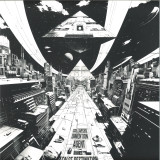
LIMITED Quantity. Deep dive into the realm of electro music. Hypnotic multi-layered baselines, unpredicted drops and bursting beats would make precise, nevertheless not full definition of this EP. Following the
debut of the sequel with an exhibition showcasing artwork’s creation and conceptualization, we face SEQ002: False Destination, a new chapter where the story continues in an unexpected way. It holds the question, to which unknown territory did the agent headed from his collapsed dimention? – Side A takes you on a journey that echoes the spirit of interdimensional travel, a recurring theme in electro music. Impact One throws you into a captivating sonic environment, grabbing your attention with distinct sonic events, all layered over a foundation of subtly shifting rhythmic patterns. A2 is another mention of wrong dimention, hard alterations on early 90s Rave revivalism with peculiar artifacts and touch of blue note with breakbeat burst out conclusion. –
On the flip, a couple of heavyweights. Thick kicks jumping from 4 tothe-floor to broken beat, uncertain breakdowns and unexpected amen breaks driving audience on the edge. Hypnotic bassline for B1 was characterized as Giorgio Moroder on steroids. Last track is a calm blend in ending on a hybrid cosmic breaks combined with Yamaha DX7. – ABOUT ARTWORK This time comic-like backside artwork has an insert accompaniment to immerse within the world created by the artist behind the record. AI has been used to create artwork, generating imagery as a way to bring ideas to life. It offers a cryptic clue, a fragmented piece of the puzzle that complements the music to tell the story
DJ Support: Jamie Jones, Reboot, Dennis Cruz, Raresh, Reelow, Dimmish, Fabe, Archie Hamilton, Rich NxT, Chicks Luv Us, Christian Burkhardt, Terry Francis.
This EP is inspired by love and dreams and continues her quest to find the perfect blend of emotional yet minimal melodic beats. Opener 'L'Amour' radiates Lazic's signature sounds with a slick bassline and melodic chords that convey meaningful emotions under female spoken words. It's a seductive world of warm pads and silky beats that cast a hypnotic spell. The fantastic 'Todo El Universo' features the vocals of Lazic's Spanish friend Monica. The title translates as 'all the universe' and is a favourite line from Paulo Coelho's novel The Alchemist about accomplishing your dreams. It's a deep and comforting groove with soft drums and pillowy pads that soothe the soul and are perfect for more intimate dance floors.
Remixer Nu Eau is a pivotal part of Romania's minimal scene with a meticulously crafted sound that has taken him to the likes of Gettraum and Memoria Recordings and he also co-founded the Uvar imprint. His version of ‘L'Amour' is more up tempo but no less heady, with lush cosmic synths doing an elegant dance over the compelling beats.
Spanish pair Los Suruba have done it all over the last 20 years - released hundreds of tracks, played thousands of gigs, established their own network of record labels, held residencies everywhere from Ibiza to London and crafted countless underground hits. Their remix of ‘L'Amour' is serene and cerebral with paranoid voices drifting through the mix and rippling chords keeping you afloat in the cosmos.
Through the medium of a distinctly synthesised, sustained ambience, seasoned artist and composer Jasmine Guffond arrives on OOH to explore the tension between technology and human creativity in an increasingly ambiguous playing field.
Alien Intelligence came into being during Guffond's residency at fabled Parisian institution GRM in 2021. While learning how to generate sound and make music with the in-house Serge modular synthesiser, the Australian artist noticed the typical role of human input for machine output was being subverted by the behaviour of certain electronic elements, which came to exercise their own influences on the direction of the music.
Taking this idea one step further, Guffond proceeded to explore the programming environment MaxMSP, a customisable interface which allowed her to blur the lines between human input and machine directives even further. Across the three extended pieces which make up Alien Intelligence you can hear the results of Guffond's inquisitive approach as she coaxed the machines into bringing their own ideas to bear on the music.
The tension inherent in this thematic duality is mirrored by the contrast between glacial ambience and chaotic interference across the album. On 'Serge & Maxine Variation One' the presiding mood is a slow and patient one, as undulating waveforms rich with harmonic overtones spill out over one another across 10 minutes. The track's latter passage, driven by steadily intensifying oscillations, is then interrupted with an unexpected flurry of pitch shifting. This kind of complex technical movement features more prominently at the start of 'Serge & Maxine Variation Three', which then gradually shifts into a gentler ebb and flow of rising and falling frequencies.
Angled slightly differently and residing on the B side of the album, 15-minute quiet epic 'Serge & Maxine Variation Two' bookends a louder passage of synth work with serene, sustained notes that ring out a sort of hymnal melody. Throughout, the movement in the music evolves in subtly modulating, hypnotic, ways, but there are also unexpected turns or melodic diversions which feel much more incongruous. In its closing stretch, the notes dart around more freely as though played by hand, but it's hard to be sure whether these shifts in the otherwise delicate tonal music were a human conceit or a programming by-product. In the end, the two inputs logically become one.
As Guffond says herself, "More-than-human logics emerge, a kind of alien intelligence that questions an assumed central position of human subjectivity in socio-technical assemblages and considers the philosophical, socio-political and cultural implications beyond music practice in an increasingly technologically mediated world."
As AI creeps into art as much as other aspects of modern life, Guffond applies her playful instinct to the theme of these works by re-considering machine intelligence as 'alien', crediting its contributions with a more robust yet enigmatic identity in the creative process, leading to an end result which is far from artificial.
►Mastered by Giuseppe Ielasi, cover art by Ilan Katin, layout by incepBOY, photo by Camille Blake, words by Oli Warwick
Artwork by Taychin Dunnvatanachit.
Siamese Twins embarks on its 10th release milestone with the acclaimed Thai performance artist Tul Waitoonkiat. In หนึ่งคำถาม (One Question), Waitoonkiat's poetry is conjoined into a versatile sonic meeting of minds, created in collaboration with producers Black Merlin, Sapphire Slows, and Sleep D. Aligning seamlessly with Siamese Twins' trademark ethos of cultural reflection and interdisciplinary exploration.
Waitoonkiat, known for his socio-political work "2553," which reflects on the 2010 military crackdown in Thailand, has presented his novel "Silence is Violence" through multidisciplinary art exhibitions across Bangkok. One of these collaborations with Siamese Twins’ Khun Fluff in 2022 established a profound connection and laid this release's foundational recording layer. The recorded poem explores existential themes, pondering the endless cycle of questioning and the dichotomy between silence and imagination, darkness and light, with its contemplative imagination setting the stage.
The A-side unveils George Thompson's universe, known in the terrestrial realm as Black Merlin, with two noirish cinematic explorations that compose Waitoonkiat’s trademark expressive and enigmatic voice into the release's fabric. Showcasing Thompson’s ability to create hypnotic, depth-charged soundscapes that captivatingly feed into a broader story rather than claiming center stage.
The B-side begins with a delicate approach to sound design, crafted through the Buchla synthesizer by Japanese modular artist Sapphire Slows. The charm of this version lies within the sustained notes that gently inhale and exhale between enigmatic vocoder effects and layers of beauty, nature, and technology.
B2 closes with a seven-and-a-half-minute peak timer revolving around a pulsating bassline and driving force of drum energy. One craving for packed warehouses and bush raves by the Australian wizards of OZ and Butter Sessions label owners, Sleep D, aka Corey Kikos and Maryos Syawish.
OPUS is a fusion of visual brilliance and pulsating beats that transcends the boundaries of traditional experiences. This emerging project is the epitome of synergy between art and electronic music, where every stroke of the brush and every sonic pulse are meticulously orchestrated to create an immersive journey. OPUS invites you to step into a world where each note resonates with the vibrant strokes of artistic expression. Join us in this extraordinary celebration of the interconnected realms of art and electronic music, where every moment turns into piece of art.
Yes, *that* Al Hirt record. Featuring the godlike "Harlem Hendoo", looped unforgettably by De La Soul for the legendary Buhloone Mind State cut, "Ego Trippin' (Part Two)"!
Al Hirt's infamous Soul In The Horn is inextricably tangled up in crate-digger lore. Originally released in 1967, the album has been in heavy, heavy demand for over 30 years, entirely down to the majestic soul-jazz fire of "Harlem Hendoo". And it's a song so good, so vital, so timeless, that it will always tower above everything else in its proximity. This one track alone is worth the price of admission - even if the cost of entry were $100 or even $1000.
However, it would be an error to dismiss this record as merely a one tracker, loaded as it is with dope samples for adventurous beat makers. Certainly the funkiest Al Hirt record, it definitely lives up to the "soul" in the title. Thanks to composer Paul Griffin and arranger Teacho Wiltshire, Hirt got uncharacteristically free and groovy throughout. It comes on more like an obscure KPM library funk record than the easy listening Al was notorious for.
A Louisiana trumpeter and band leader who made Allen Toussaint’s “Java” famous, Al Hirt was also known for TV themes, Dixieland, Swing and being a minority owner of the New Orleans Saints. Unlike every other Al Hirt record - and despite most "diggers" claiming otherwise - this here gem is genuinely hard to come across "in the wild". Normally, you can't give Al Hirt records away, except this particular one, which raises pulses in the crate digging community to life-threatening levels. For every owner claiming to have found their copy for a dollar, there's scores more claiming to have *never* unearthed one in the field. So, paradoxically, you can consider this the most tricky-to-pull "thrift store record", ever. This is why we're finally making it available for everyone, not just those with endless hours to spend scouring the global goodwills!
Soul In The Horn represented an expressive detour into authentic soul-jazz for Al Hirt. Throughout, we're struck by a fierce, fiery energy that's otherwise absent from his typically easy listening work. Without question, the slinky, magical "Harlem Hendoo" is the standout, here. It's also the reason why the record is so scarce and commands awe among crate diggers, sounding like something from an obscure and deeply revered spiritual jazz record. As is often the case, the true genius of the song is tricky to do justice to; it's like a minor miracle of songwriting and performance that simply swooned down from the heavens on the back of horns, bells and harpsichord. It's one of the sweetest musical compositions ever recorded inside a studio - it's only failing is that it's just too short. Sampled brilliantly by De La Soul, it has also been used by The Roots for "Stay Cool" and Nightmares On Wax for "Damn".
The rest of the record makes for a mighty fine listen. From the opening cover of Booker T. & The MG's "Honey Pot", to the propulsive, ultra-funky "Mess Around", it's nothing but a good time. Given its title, the elegant stepper "Calypsoul" sounds exactly as you'd hope whilst the melancholic, wistful "Long Gone" hurts so good. Truly, this is just dying to be looped up, Al's muted playing capturing a soulful longing only horns can often achieve. The bluesy, slo-mo swing of "Sweetlips" oscillates between cool disaffection and swelling pride whilst the graceful, low-key funky "Girl" closes out the A-Side in the fine style. Ushering in the B-Side, the brief but brilliant strut of "Love Ya' Baby" shines brightly before the skipping funky-jazz of true highlight "Sunday-Goin' To Meetin' Time" demands both your attention and your dancing shoes. The mellifluous piano-funk of bass and horn-drenched "Snap Back" serves as the sumptuous prelude to "Harlem Hendoo"'s main character energy before the irrepressible, upbeat R&B of "Ludwig" closes out this quite remarkable album. An album deserving of a place in every serious record collection.
The audio for Soul In The Horn has been carefully remastered by Be With regular Simon Francis, ensuring it sounds better than ever. Cicely Balston's expert skills have made sure nothing is lost in the cut whilst the records have been pressed to the highest possible standard at Record Industry in Holland. The original sleeve has been restored here at Be With HQ as the finishing touch to this long overdue re-issue. This is after-hours music. Let it speak for itself. Listen. Listen to the soul in Al Hirt's horn.
"Deep Dancefloor Jams of African Disco, Funk, Boogie, Reggae & Proto Electro Music 1977-1986reggWhen a passionate DJ and crate digger intuitively selects music for a DJ compilation, without artistic compromise and without the burden of trends, AfroMagic vol.1 emerges from the depths of his soul. Herewith we present the new favorite phonomancer’s tool for all the DJs who experience the dance floor as a sanctuary and a source of freedom and love.
The most fundamental thing that defines African music is that it was created for dancing. In African dance, there is often no clear distinction between ritual celebration and social recreational entertainment – one can seemlessly merge with the other. Because dance and rhythm have more power than gesture and more richness than words, and because they express the deepest experiences of human beings, dance is in itself a complete and self-sufficient language. It is truly an expression of life with all of its emotions – joy, love, sadness and hope – without which there is no African music and dance. For the African people, dance and music are integral parts of the body and soul, thus depicting the expression of life, current emotional states, visions or dreams. Through hypnotic repetitive music and dance, people communicate with each other and with the souls of the dead, the animals, the plants, the stars, the Gods… They free the body and the spirit through ecstatic states, reaching a healing sense of freedom, happiness, and satisfaction.
Throughout history, this transcendental perception of rhythm and dance originating from Africa, influenced popular music worldwide, thus creating new living and breathing forms of musical genres – freeing them from their industrial mold. Funk, disco, soul, boogie, reggae, dancefloor jazz etc., developed in parallel all over the world. It is foolish to perpetually discuss where they originated from and who were the creators of all these fiery dance floor genres – being obvious that they directly or indirectly originate from the African continent and its people who were as well, over the centuries, influenced by disturbing socio-cultural factors of colonialism. However, no one can enslave the soul. The seeds of free and uninhibited dance and rhythm, true to their original form, initially first sprouted onto the USA’s fertile fields of clubbing and popular music while later evolving in other parts of the world.
The disco funk club culture manifested itself as a phenomenal explosion of artists and grooves in the second half of the 70s in the USA. Shortly it spread around the world continually reigning over charts in its various forms – to this day. Clubs emerged where the DJ is an almighty shaman and the dancers are a tribe united under one roof. This urban ritual had and still has a single goal: togetherness, freedom, and love. Clubs have evolved into temples where we free ourselves from the burden of a consumerist lifestyle and suppressed emotions – a place where we receive love and give love – to be who we really are.
Disco funk clubbing was such an influential global phenomenon that its influence can be observed in various other genres from the disco funk era i.e. progressive rock, which mutated by layering complex rock arrangements with a disco funk groove resulting in hybrids, highly sought by today’s diggers, producers and collectors. The profit-hungry music industry of the 80s very quickly commercialized the original disco funk sound by amputating of its original Afro groove to be able to easily ‘sell’ it globally. So, the original disco funk groove became underground again, and it has remained so until this day. Today, for a DJ to unearth that ravishing groove that will lead the dancers to the stars, he must dig passionately like a true musical archaeologist in search of that groove that picks you up after just a few initial beats. That groove which forces the atoms in your body to vibrate, that groove which unites the body and releases the burden.
The AfroMagic compilation series is created as a tool for real DJs who stick to the aesthetics and essence of clubbing.
This continuation of the Afromagic compilation by DJ Borovich was created in a private jam session which served as an escape route from intense and complex love problems.
Unconsciously driven by intuition and emotion and following a live mix tape framework where many tunes are arranged instantaneously, Borovich narrates his story with a strong rhythm that cuts loose even the most blocked off energy nodes and restores happiness to the spirit and the body.
The musical experience of the groove is completed by the lyrics of the songs, which symbolically give DJ Borovich universal answers to his questions arising from questioning the boundaries, nuances and other forms of love.
When considering that Borovich’s selection was created to facilitate an escape from the burdens of reality through rhythm and dance, we can be sure that Afromagic Vol. 2 will have a 100% uplifting, energized and spaced-out effect on the listeners.
The intro to A1, “Feeling Happy” by the Apostles, introduces us to an experienced and slow, cool and irregularly tight groove containing a confidently sung chorus that instantly gives a sense of freedom and hints at the remainder of Afromagic Vol. 2: “I’m gonna feel happy, ´cause I know I’m gonna be myself.” After the anthemic song mantra of the Apostles, Aigbe Lebarty uncompromisingly continues with a dirty disco rhythm. Acidified by accented synths that elevate it to shamanic levels and held together by a female tribal choir, we embark on an uncompromising ritual disco journey. Without a moment to take a breather the prog funk band Mighty Flames and their Road Man launch a highly vicious and raw, thick funk groove spiced with acid synths and dirty RnR breaks, raising the bar for the A side. Jimi Hendrix himself would surely praise it given the ultimate freedom and virtuosity in the solo sections. With the last tune on A side DJ Borovich decides to burn the floor with Geraldo Pino’s psychedelic, acid furious groove and lyrics which describe this HEAVY part of love problems: “The way she walk, the way she talk, the way she does a funky dances, she is really really heavy – that woman”.
While the A side represents a compact intoxicating afro groove machine that separates us from reality and lifts us up to the stars in over 23 minutes, the B side is a treasure trove of proto sub-genres gems. This selection represents the mission of the Afromagic: to find singular events in African recorded discography of popular music from the 70s and 80s that give evidence to the birth of new modern genres on the Dark Continent even before they emerged in the U.S.A. or Europe. The beginnings of electronic music influenced genres are represented back to back with 80s synth jazzy pop, all painted in African colours.
The B side opens big with Jake Sollo and a huge reggae blues number singing about the humiliation of a man – goosebumps guaranteed! “You think I’m nobody that’s why, you don’t know the way for me, I’m somebody I know, I found myself at last”. Adolf Ahanotu then enters the scene with a hard sliding tackle at B2 and an exotic rare disco funk dancefloor napalm. A ‘Sensation’ that would ignite even the coldest of introverts. While we approach the end of the compilation the narrative revolves again and takes a different turn. No less and no more than to the proto-electro that Baad John Cross serves us in “Give Me Some Lovin´”. The fat and repetitive broken electro synth groove, championing many early 90s electro tracks, is presented here without hesitation and with constant tension accompanied by a mantric chorus “Gimme some, gimme some, gimme some looooovin’, EVERBODY!!!”. Finally, we’re guided to the end of Afromagic Vol. 2 by Eji Oyevole’s 80s synth pop style presented in an authentic afro manner, giving us a glimpse at yet another released Afromagic edition, as well as giving an answer to DJ Borovich’s love problems. A smoothly broken electronic rhythm resembling electrified highlife sounds, carried on the wings of a virtuoso dreamy saxophone on top of which Eji presents the most intimate parts of himself. Finalizing the track with a symbolic chorus, on the surface referring to the dancefloor and simply having fun, but in actuality referring to the skill and happiness of living: “I´m a dancer, I can dance”. So, get up and dance among the stars with DJ Borovich and Afromagic.
Eight years after the critically acclaimed Alien Cartoon, Senegalese producer IBAAKU returns with a new project an alchemy of jazz, electronic sounds and Casamance music in the tradition of Touré Kunda and Xalam in their day.
The album is also accompanied by a short film
a manifesto of resilience in the face of the sound poet's personal history but also a questioning of the way in which technologies technologies and cultures come together to reinitialize our imaginary.
Identity: The meeting point of electronics, jazz and the musical tradition of Casamance.
The realization of this new project is associated with a research approach to traditional Casamance rhythms, vocals and instruments.
A reference to Spiritual Jazz is present, through stories and approaches ; while the skeleton of IBAAKU's tracks remains experimental,
with strong influences from the emerging african club scene.
After a long absence, Forbidden Teachings returns with a new vinyl
release from artist Mind I Matter. This EP can be interpreted as a
reflection of the current era, where inequality and injustice have
become the norm. As hope begins to fade, the artist proposes a
journey into the heart of the workings of the human mind which could
relate to the origins of this situation. Is humanity imperfect at its core, or is our condition the direct consequence of an imperfect world? Could it be that, in the midst of all this pain and suffering, we all have an individual responsibility? With four cutting-edge tracks, Mind I Matter offers a window into what these questions might imply. Ultimately, this EP testifies to the label's commitment to offering experiences that transcend our earthly senses