ME LOST ME led by Newcastle-based artist Jayne Dent announces a new album RPG via Upset The Rhythm on 7th July, and is touring across the UK including support dates with Pigs x7. RPG (recorded in Blank Studios with Sam Grant of Pigs x7) is ME LOST ME’s fourth outing as a collective, having transitioned from an ambitious solo project in 2017, Jayne now regularly collaborating with acclaimed North-East jazz musicians Faye MacCalman and John Pope.
ME LOST ME delights in experimenting with songwriting and storytelling, creating a beguiling mix of soaring vocals and atmospheric electronics that playfully weave together disparate genres, drawing influence from folk, art pop, noise, ambient and improvised music. Hauntological in part, RPG is concerned with tales and with time - are we running out of it? Does insomnia cause a time loop? Do the pressures of masculinity prevent progress? Jayne Dent asks these questions and more on RPG, her homage to worldbuilding and the story as an artform, calling back to those oral traditions around a campfire, as well as modern day video games - bringing folk music into the present day as she does so.
ME LOST ME presents sound reaching in opposite directions, straddling time towards the archaic and timeless traditions of folktales, and towards the possible and potential futures of pastoral Britain and the world at large. Part speculation, part reminiscence, what results on the new album RPG is music that sounds ultimately displaced and yet omnipresent, adjacent to a hapless Vonnegut hero whose life is scattered throughout time and history, but full of wonder and curiosity rather than fear.
On track “The Oldest Trees Hold The Earth”, we see time stretched out between the branches of impossibly old beings in the woods. This track was co-written in Aarhus, Denmark with fellow Newcastle folk musician (with Danish heritage) Ditte Elly. The pair wordlessly passed a sheet of paper between each other to write the lyrics, inspired by Højbjerg and Mosegård, the woods they were sitting in. “How long should I wait/Before the moss grows?/On my skin, on my outstretched arms,” the lyrics are sung in a round, the close harmonies delicate and detailed.
A central thesis of this album is the joy of creation, something which is paid homage to in the album’s final track, “Science And Art” (Not because we need it to last/just because we needed to make it - so we invented the words/this language). It is also reflected in the definition that Jayne gives for “folk” itself. She comments, “To me, folk is quite an expansive idea. I think of it as creative work that's often made ad-hoc, with things that are at hand and more often than not it's born of a DIY ethos. It is songs and stories of the people, as in the traditional sense, but also creative coding, game design etc. Whatever outlet someone has for their creative expression could be described as folk. It's the things we make because humans need to make things, and the stories we tell about ourselves and the world around us.”
Crucially, on latest album RPG, Dent expands her songwriting and looks towards the unreal locations of worldbuilding in video games for inspiration. She comments, “I think the main similarity is the importance of a song's setting/environment to inform its narrative and textures, I'm often most inspired when out walking in the natural landscape, in cities and travelling to places I've never been before - the environment I'm in really impacts the work I make. While writing this album, however, I found myself inspired by imaginary landscapes, those in video games, paintings, etc. I was writing stories into these unreal locations instead. Even the songs inspired by real places, like The Oldest Trees Hold the Earth, have a very surreal quality to them in the songs, like they're being warped and turned into something not of this world. I think that's the main difference for me in terms of the thematic content and inspiration behind this album - I've been getting more and more interested in balancing surreal and fantastical environmental elements with ordinary and everyday settings.”
RPG upends the concept of the eternal return - we may be in the midst of inevitable repetition, but we tell stories whilst awaiting the passage of time.
"Being familiar with, and a fan of Jayne's earlier work, it was great to get the opportunity to work with her on the production of her new record. I had in mind a sense of what the record might be, but what came of the sessions, led by the vision Jayne had for the record, totally exceeded my expectations. As far as albums go, it has a breadth of writing and a sonic depth that made it a truly brilliant record. Having Jayne join us on a leg of the Pigs x7 tour in April is going to be ace. The creative nature, the sincerity and bold strokes of ME LOST ME put it in that space outside of any genre pigeonholes, and between our two sets I imagine the audience is going to have a proper sonic bath..."
Sam Grant, Pigs Pigs Pigs Pigs Pigs Pigs Pigs, 2023
“The music of Me Lost Me is beguiling, idiosyncratic and cinematic - or should that be video-game-omatic? This suite of songscapes often hits the sweet spot between ancient and modern with its masterful blend of stark folk, neon electronic burbling and unusual arrangements. Jayne's singing is refreshingly straightforward and nuanced - it's exquisite! - and perfectly punctures the nebulae of synths and brass which billow around the old wooden frames of the songs. Whilst listening I had images in my mind of what Northumberland might look like through the eyes of Simon Stalenhag - foggy moors, a robot looking across the sea to Lindisfarne, twinkling lights on metal towers.... that sort of thing. It's a really great album.”
Richard Dawson, 2023
Search:the quest
Catorce reflexiones sobre el fin (Fourteen Reflections on the End) originated from an installation exhibited at the Museo de Arte Contemporáneo de Oaxaca, Mexico, in 2019. Fourteen magnetic bodies of tape that dialogued with the fourteen pieces of electroacoustic music now contained in this album composed from the sound anthology of Angélica Castelló. Thus, Catorce reflexiones sobre el fin is a complex piece consisting of multiple parts that, although articulated with each other, hold a life of their own.
Like every body, these have a unique history made up of mixed fragments spun by Angélica, ranging from field recordings, references, and self-references to previous pieces, experiences, and voice recordings made specifically for these compositions re-recorded in various formats, from lo to high fidelity, analog and digital, composed, decomposed and recomposed (Castelló, A., 2019). Likewise, as any body, they also reflect on their end, whether absolute or temporal, of the many ways of being finite and of saying goodbye.
During the Catorce reflexiones sobre el fin, Castelló takes you on a journey that is difficult to locate. An ethereal space between shattered glass, stridulation of cicadas, war drums, murmurs in French, Italian maledictions, and soft recitations in Spanish. From uproar to solace, all wrapped in a soft abstraction that only allows access to the subtle whisper of these expressions. A gesture between invitation and sharing because who does not recognize oneself in this emotional storm?
First, the approach of the winds, the first breeze that caresses the body. Then the bewilderment announced by the scent of uncertainty condensed in the air’s humidity. The prelude to the storm, to something that will shake you from head to toe, something from which there will be no return.
To the acceleration of the winds comes the percussions, the tremor of the storm with its lightning. la Ira (1). A vibration running through the whole body, unstoppable. This reverberating sound, resulting from its re-percussion with our body acoustics, owes its tones and echoes to the cavities and organs of different masses. From what is hollow and what is full; what is void and what is matter. There is no turning back. It is a dive into the void; to fight and resist because there is no other way to go. It is a matter of survival.
Ma fin est mon commencement Et mon commencement ma fin (2)
After this, the cicada resumes at the crack of dawn, a gentle breeze, and solitude, that temporarily musical silence of embraces (3) with hints of harpsichord and bells.
The breaking of the waves in Sicily is accompanied by the antenna that picks up radio transmissions that already invite other tastes. The Mediterranean and its currents mingle and divide tense routes of escape, exchange, and struggle between Blutorangen, tides, and birdsongs.
An immersion into deep waters.
And in the end, we all commit sins! Queste maledette! (4)
Lorena Moreno Vera, 2023
"Existences" is the highly anticipated first album by Neurocore, a talented French artist known for his thought-provoking compositions. This album is a culmination of years of introspection and exploration into the complexities of human existence. During the Covid lockdown, Neurocore found himself with the precious gift of time, allowing him to delve deep into his creative process and tackle profound questions through music.
Each of the 13 tracks on the album tells a story, evoking emotions and painting vivid sonic landscapes. The cover art, meticulously crafted by URRU, captures the essence of the album's concept - a mesmerizing blue vortex symbolizing the unknown and the powerful energy that draws us towards it.
Neurocore breaks free from the confines of being labeled solely as a "speedcore producer." Instead, he presents a diverse array of electronic compositions that transcend trends and embrace the full spectrum of human emotions. Rejecting the notion that hardcore music is only dark and brutal, Neurocore sees it as a representation of the inner beauty within every human being.
"Existences" invites listeners to interpret and create their own stories, as music has the power to evoke personal experiences and emotions. With this remarkable album, Neurocore celebrates the diverse facets of existence and invites us to embark on a profound sonic journey.
3x12" album + digital release
Including an A5 insert with a personal note from Neurocore
The cheeky yet sophisticated “Manzo Edit” calf returns with a fresh assortment of four lushly revisited cuts. First on the menu is “Digestif”, a laid-back Disco House track ideal for setting the dance floor groovin.
“Get It” also falls into the downtempo realm with its smoky acid beat, while “Dancecraft” hits you head-on with a load of robotic funk. Lastly, “Forneria Moderna” pays a festive homage to the Latin side of Jazzy House.
Bunker New York luminary Abby Echiverri joins the Patterns of Perception imprint with her Deformation EP, a diverse collection of playfully psychedelic techno tracks infused with a radiant cosmic energy.
Produced in 2021-22, Abby drew inspiration from the captivating physics simulations her partner was working on at the time, ultimately imbuing the music with an ethereal atmosphere that permeates the entire EP, and from which the tracks derive their names.
PTN03 presents a cohesive yet diverse collection of tracks, blending psychedelic energy with delicate and profound moments. Abby's music carries an almost hopeful quality, with drum programming that leans towards groove and shuffle, and the incorporation of diminished chords and progressions that pose questions to the listener. The Deformation EP is an intricate record that showcases Abby Echiverri's distinctive, three-dimensional approach to techno: one that never feels oppressive, but calls to mind a sense of exploration and freedom.
Marc Richter aka Black To Comm released his debut record 20 years ago. In 2023 he is still busy releasing music under various disguises and is currently signed to the Thrill Jockey label. To celebrate this anniversary his own Cellule 75 label is re-releasing some classic out-of-print vinyl albums that originally came out on the defunct Type and De Stijl labels. The LP will feature a full-colour printed inner sleeve exclusive to this edition.
In 2009 the Type Recordings label run by John Twells had just released seminal records by Grouper, Jóhann Jóhannsson and Yellow Swans when they signed Richter and put out his breakthrough Alphabet 1968 album. The LP sold out within two weeks, receiving a glowing full-page review in The Wire Magazine by the late Mark Fisher (later reprinted in his book Ghosts Of My Life), was selected for Boomkat's Top 10 releases of the year (alongside debut albums by Leyland Kirby, Demdike Stare and Oneohtrix Point Never) and was greeted with universal praise in the underground blog network as well as established magazines such as The New Yorker and Pitchfork.
The music itself played with the notion of nostalgia without being nostalgic itself. It's the sound of half-remembered dreams, a surreal distorted vision of the past, an aural polaroid of long forgotten musics, a ghostly voice from a non-existent era.
From the original Type one-sheet:
"The mission statement for Alphabet 1968 was to write an album of "songs" for want of a better word. Short tracks which represented genre points, the milestones which stuck in Richter's mind when he thought back to his favorite records. What we arrive at is a breathtaking 10-track album which, over the course of 45 minutes, explores world music, techno, noise, avant-garde, ambient music and even exotica. Each track is linked with a loose thread of radio static or environmental sound, dragging you through the album, as if tuning in to a stray broadcast or a particularly adventurous mix. Richter has pieced the album together from hours of recordings made at his studio with home made gamelan, small instruments and loops gathered from a collection of ancient vinyl and 78 records. The scope of the album is admirable, but ignoring this, it is simply a shockingly arresting collection of experimental oddities, with references ranging from Moondog to Basic Channel by way of Bernard Herrmann. It's not hard to fall in love with Alphabet 1968, far harder would be to place exactly where the record should fit into your collection."
Mark Fisher in The Wire:
"But what if we were to take Richter's provocation seriously - what would a song without a singer be like? What would it be like, that is to say, if objects themselves could sing? It’s a question that connects fairy tales with cybernetics, and listening to Alphabet 1968, I’m reminded of a filmic space in which magic and mechanism meet: JF Sebastian’s apartment in Blade Runner. The tracks on the LP are crafted with the same minute attention to detail that the genetic designer and toymaker brought to his miniature automata, with their bizarre mixture of the clockwork and the computerised, the antique and the ultramodern, the playful and the sinister. Richter’s musical pieces have been built from similarly heterogeneous materials - record crackle, shortwave radio, glockenspiels, all manner of samples, mostly of acoustic instruments. ….. JF Sebastian's apartment was itself an update of older spaces in which science and sorcery co-existed: the workshops of ETA Hoffmann's inventor-magicians, or of Pinocchio's creator, Geppetto. I think, too, of Auguste Villiers de l'Isle-Adam's astonishing 1886 tale The Future Eve in which Edison, using the expertise he has recently acquired from inventing the phonograph, sets himself the task of constructing an artificial woman. But if there are songs here, they are sung by the gramophone and other recording and playback machines. Richter so successfully effaces himself as author that it is as if he has snuck into a room and recorded the objects as they played (to) themselves. Rather than simply automating his music, as in the case of Pierre Bastien and his mechanical machines, Richter makes us feel that he has merely recorded the unlife of objects. ….. Indeed, the impression of things winding down is persistent on Alphabet 1968. Entropy has not been excluded from Richter's enchanted soundworld. It feels as if the magic is always about to wear off, that the enchanted objects will slip back into the inanimate again at any moment."
A kind of hush pervades throughout Standards Vol VI, the latest release by The National Jazz Trio of Scotland, the ironically named project helmed by Falkirk’s musical polymath, Bill Wells, that is neither a trio, nor a jazz band. If this collection of ten covers probably comes closest to the latter in its late night renditions of actual standards, the presence of long-term NJToS member and collaborator Aby Vulliamy as the record’s lone vocalist adds to its solitary air. This follows Standards Vol IV (2018), which featured fellow NJToS co-founder Kate Sugden as primary vocalist, while Gerard Black, a member of the group since 2016, took centre stage in similar fashion on Standards Vol V (2019). Wells has long been a fan of Vulliamy, both of her work as a viola player with numerous collaborators, and as a singer.
Vulliamy played viola on Everything’s Getting Older, Wells’ 2011 collaboration with Arab Strap vocalist Aidan Moffat. Wells went on to play melodica on Vulliamy’s solo record, Spin Cycle, released on Karaoke Kalk in 2018. With the intent of producing the saddest heartbreak record ever made, Wells sourced a back catalogue of miniature epics, reinterpreting each tale of everyday yearning to make a canon of melancholy loungecore designed for nights in alone, if not always lonely. Beyond the concept of isolation behind Standards Vol VI, practical concerns added to the affair, with Wells recording backing tracks at home in Glasgow, while Vulliamy added her voice from her home in Yorkshire. The result on Standards Vol VI is a thing of quiet beauty that sees Wells and Vulliamy reimagine a panoply of pop classics in their own aloof sounding image.
Shades of Margo Guryan and Claudine Longet abound in Vulliamy’s delivery over Wells’ woozy, low-slung guitar and piano, with samples culled from a session with Teenage Fanclub’s Norman Blake. Little electronic percussive clicks and hisses lend things an even more otherworldly air on a record bookended by opener, Donovan’s proto hippy classic, Catch the Wind, and Dixieland miniature, Careless Love. The eight points in between take in a first half led by The Beatles’ normally jaunty We Can Work it Out, flipping the loveable mop-tops’ perky optimism for something more soul searching. This is followed by I Wish You Love, Albert Beach’s English language version of French songwriter Charles Trenet’s evergreen, Que reste-t-il de nos amours. The Bee Gees lost classic, To Love Somebody, is up next, with more impossible to answer questions coming in Why Can’t I?
The latter is a Rodgers and Hart composition that first appeared in the duo’s 1930 Broadway musical, Spring is Here, in which the show’s two heroines commiserate each other over their shared loneliness. Wells stumbled on the song in a tatty Rodgers and Hart songbook, which, like its subjects, had been left on the shelf before he and Vulliamy brought it in from the cold. The second half of Standards Vol VI leads with Matchmaker, Matchmaker, Jerry Bock and Sheldon Harnick’s much covered evocation of a pre dating app era from their 1964 hit musical, Fiddler on the Roof. This is followed by Billy Rose and Dave Dreyer’s showbiz staple (with Al Jolson also taking a credit), Me and My Shadow. While made famous by showbiz double acts ranging from Frank and Sammy to Robbie and Jonathan, here it flies decidedly solo. Johnny Mercer and Hoagy Carmichael’s Skylark comes next, a song inspired by Mercer’s yearning for Judy Garland. We hear ya, bub. The most downbeat take on Bacharach and David’s The Look of Love you’re ever likely to hear comes next, ushering in the short farewell of Careless Love, before the lights are turned out forever. Yeah, well. Whatever gets you through the night…
Available for the first time since originally released in 2006 via Stones Throw, Dudley Perkins & Madlib are pleased for the reissue of their sophomore collaborative LP, Expressions (2012 A.U.), their acclaimed follow-up to their 2003 debut effort, A Lil’ Light. And albeit the former can be accused of being excessively avant-garde, it’s Expressions where both Perkins and the Beat Konducta find a more fluid symmetry.
In everything from his collaborations with MF Doom and the late Jay Dee to his more recent pairing with Freddie Gibbs, Madlib is easily one of hip-hop's golden revolutionaries. At times his production has been accused of being sparse, but that's not the case with Expressions. This time around, Madlib's production is hitting all the funky corners with layered grooves that evoke the attitudes and emotions of A Tribe Called Quest's The Low End Theory.
Perkins's objective to keep the grooves flowing on Expressions is laid down with first lines of opener "Funky Dudley": "A little bit of funk and a dash of soul/ A little bit of George borrowed from my Ol' gran' pappy's stack of old school/ One nation under a groove." From there on the funk samples dance famously with Dudley's vocal style, which cross-pollinates the worlds of D'Angelo and Ol' Dirty Bastard. From "Get on Up" to the James Brown vocal sample in "Dolla Bill," Expressions uses Perkins's voice as if it were a sample itself, incorporating it in the production and the rhythms.
Madlib's production works flawlessly, his semi-psychedelic influence on R&B, soul and hip-hop keeping Perkins's style fresh and original. All the parts seem to be in place on Expressions as producer and emcee work side-by-side to create a cohesive sound that not only represents the creativity of the underground but could also awaken the tired ears of the mainstream.
American Football (LP3) is the third album from the scene giants - American Football. American Football’s original triumph, on their 1999 self-titled debut, was to reunite two shy siblings: emo and post-rock. It was a pioneering album where lyrical clarity was obscured and complicated by the stealth musical textures surrounding it. Like Slint’s Spiderland, or Codeine’s The White Birch, even Talk Talk’s Laughing Stock, American Football asked far more questions than it cared to answer. But there wasn’t a band around anymore to explain it, anyway. The three young men who made the album – Mike Kinsella, Steve Holmes, and Steve Lamos – split up pretty much on its release. Fifteen years later, American Football reunited (now as a four-piece, with the addition of Nate Kinsella). They played far larger shows than in their original incarnation and recorded their long-anticipated second album, 2016’s American Football (LP2). The release was widely praised, but the band members still felt like their best work was yet to come. ‘I feel like the second album was us figuring it out,’ says Nate. ‘For me, it wasn’t quite done. I knew there was still more.’ Enter American Football (LP3). ‘We put a lot of time and a lot of energy into it,’ says Mike. ‘We were all thoughtful about what we wanted to put out there. Last time, it was figuring out how to use all of our different arms. This time, we were like – Ok we have these arms, let’s use them.’ The band used the same producer, Jason Cupp, and recorded the album at the same studio (Arc Studios in Omaha, Nebraska) as its predecessor – yet they approached it in a markedly different way. There was a determination to let the songs breathe, to trust in ideas finding their own pace. The final result is a definite, and deliberate, stretching of the band.
- 01: Introduction / Purple Haze Feat. Zdechly Osa
- 02: Slayaz / Elf Island
- 03: Fifi Feat. Lil B
- 04: House On The Hill
- 05: Pet Cemetery
- 06: The Cheshire Cat
- 07: Wipeout
- 08: Afro Samurai / Quest
- 09: Cat Kingdom
- 10: Magic Carpet
- 11: Pinocchio Feat. Jehst
- 12: The Horsemen
- 13: Ice King Feat. Lealani
- 14: Cat In Oz
- 15: Heaven's Gates
- 16: Outsiders
- 17: Psychosis City
- 18: Age Of Aquarius
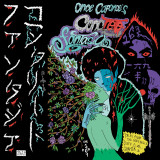
Psych-rap enigma Onoe Caponoe returns with his fifth studio album ‘Concrete Fantasia’ on High Focus Records. In crystal clear communication with the mothership; littered with striking references to fantastical realms and uncommon lore, but very much anchored in the inner city blocks and smoggy roadsides that inform his everyday, ‘Concrete Fantasia’ is a dark fantasy tape that expertly blurs the lines between genres, tones, moods and character profiles.
Of this world and out-of-this-world perfectly poised; Onoe offering up escape portals, before quickly pulling the listener back in with wave-upon-wave of catdelix riptides. ‘Concrete Fantasia’ is something of a tug-of-war; peppering movie samples, vignettes and complex go-betweens tickling the senses, combining with a cacophony of mind-bending lyricism resulting in a singular journey, with Onoe confidently filling the shoes of both author and narrator.
Pinocchio ducking feds in the hood, an Ice King ruling over a frostbitten kingdom, The Cheshire Cat trying to clean up Alice’s act, sweet serenades to off-shore mermaids, the trials and tribulations of life in a haunted trap house, big booty witches, flying carpets and beyond, ‘Concrete Fantasia’ is a real trip through the imaginative mind of Onoe Caponoe. With an eclectic line-up of featured artists and productional talent propping up the fictional cast, ‘Concrete Fantasia’ has all the makings of an alt-rap odyssey for the ages.
- 01: Introduction / Purple Haze Feat. Zdechly Osa
- 02: Slayaz / Elf Island
- 03: Fifi Feat. Lil B
- 04: House On The Hill
- 05: Pet Cemetery
- 06: The Cheshire Cat
- 07: Wipeout
- 08: Afro Samurai / Quest
- 09: Cat Kingdom
- 10: Magic Carpet
- 11: Pinocchio Feat. Jehst
- 12: The Horsemen
- 13: Ice King Feat. Lealani
- 14: Cat In Oz
- 15: Heaven's Gates
- 16: Outsiders
- 17: Psychosis City
- 18: Age Of Aquarius
Psych-rap enigma Onoe Caponoe returns with his fifth studio album ‘Concrete Fantasia’ on High Focus Records. In crystal clear communication with the mothership; littered with striking references to fantastical realms and uncommon lore, but very much anchored in the inner city blocks and smoggy roadsides that inform his everyday, ‘Concrete Fantasia’ is a dark fantasy tape that expertly blurs the lines between genres, tones, moods and character profiles.
Of this world and out-of-this-world perfectly poised; Onoe offering up escape portals, before quickly pulling the listener back in with wave-upon-wave of catdelix riptides. ‘Concrete Fantasia’ is something of a tug-of-war; peppering movie samples, vignettes and complex go-betweens tickling the senses, combining with a cacophony of mind-bending lyricism resulting in a singular journey, with Onoe confidently filling the shoes of both author and narrator.
Pinocchio ducking feds in the hood, an Ice King ruling over a frostbitten kingdom, The Cheshire Cat trying to clean up Alice’s act, sweet serenades to off-shore mermaids, the trials and tribulations of life in a haunted trap house, big booty witches, flying carpets and beyond, ‘Concrete Fantasia’ is a real trip through the imaginative mind of Onoe Caponoe. With an eclectic line-up of featured artists and productional talent propping up the fictional cast, ‘Concrete Fantasia’ has all the makings of an alt-rap odyssey for the ages.
- 01: Introduction / Purple Haze Feat. Zdechly Osa
- 02: Slayaz / Elf Island
- 03: Fifi Feat. Lil B
- 04: House On The Hill
- 05: Pet Cemetery
- 06: The Cheshire Cat
- 07: Wipeout
- 08: Afro Samurai / Quest
- 09: Cat Kingdom
- 10: Magic Carpet
- 11: Pinocchio Feat. Jehst
- 12: The Horsemen
- 13: Ice King Feat. Lealani
- 14: Cat In Oz
- 15: Heaven's Gates
- 16: Outsiders
- 17: Psychosis City
- 18: Age Of Aquarius
Psych-rap enigma Onoe Caponoe returns with his fifth studio album ‘Concrete Fantasia’ on High Focus Records. In crystal clear communication with the mothership; littered with striking references to fantastical realms and uncommon lore, but very much anchored in the inner city blocks and smoggy roadsides that inform his everyday, ‘Concrete Fantasia’ is a dark fantasy tape that expertly blurs the lines between genres, tones, moods and character profiles.
Of this world and out-of-this-world perfectly poised; Onoe offering up escape portals, before quickly pulling the listener back in with wave-upon-wave of catdelix riptides. ‘Concrete Fantasia’ is something of a tug-of-war; peppering movie samples, vignettes and complex go-betweens tickling the senses, combining with a cacophony of mind-bending lyricism resulting in a singular journey, with Onoe confidently filling the shoes of both author and narrator.
Pinocchio ducking feds in the hood, an Ice King ruling over a frostbitten kingdom, The Cheshire Cat trying to clean up Alice’s act, sweet serenades to off-shore mermaids, the trials and tribulations of life in a haunted trap house, big booty witches, flying carpets and beyond, ‘Concrete Fantasia’ is a real trip through the imaginative mind of Onoe Caponoe. With an eclectic line-up of featured artists and productional talent propping up the fictional cast, ‘Concrete Fantasia’ has all the makings of an alt-rap odyssey for the ages.
After performing at the same Boiler Room a cool decade ago and connecting through a love of the same genre-blurring sonics that have defined their respective careers to date, King Kashmere and Letherette were always destined to make music together.
It was only a matter of time.
And space.
As an artist who champions a dozen or so sounds, rooted in gripping pop culture aesthetics, genre-smashing production and impeccable versemanship, King Kashmere’s quest to perfect the unperfectable has seen him carve out a unique (and ever-shifting) point on the rap map.
Letherette are a duo; two school friends from Wolverhampton, with a rich release history spanning Ninja Tune and beyond, however, their current form fluxes and shifts with each creative endeavour (depending on where either they find themselves at any given fork in the road).
King Kashmere x Letherette’s collaborative EP represents something of a distillation process; avenues of thought and feeling presented as ‘TR3B’; a 7-track EP that feels more like a tapestry than a record, weighted in the experiments of the aforementioned decade, expertly presented for 2022 and beyond.
Glitching through pop music, cruising around the borders of the avant garde, passing by the edge of coldwave and tumbling into dance and club vibes: after her debut Bad Woman Céline Gillain is back with her second album: 'Mind is Mud'.
On Mind is Mud' Gillain let herself sink in the swamp of emotional confusion, the perpetual brain fog caused by a post Covid-world asking herself: do we have to get used to paradox as a way of life from now on?*
A musical dissection in nine songs of the mudflow, a flow which reveals its rich complexity the more Gillain dived into it: from the demanding intro 'Together' Céline opens up her highly personal and unique vision, shifting between high definition lost dimensions and emotionsthe mud slowly transfers in a crackling and sparkling stream of consciousness.
The mud is well alive in all its weirdness and unclarity. At times, it even glows in the dark.
The answer to that question is yes. The story of Mind is Mud by Céline Gillain: "Music is a place where intuiting is a work in itself. For me, it's the one place where I'm in charge, free to think and do what I want. Mind is Mud is the fruit of a collaborative practice with a DAW, a research around the palliative power of rhythm and the dancefloor, music as a space where emotions and ideas merge, storytelling, the comic potential and imaginative nature of sound. I don't really write, I copy paste and then I arrange and rearrange. Every sound I use comes from software, field recording, Instagram, movies and midi scores I collect here and there. In the hierarchy of sounds, you might call them cheap sounds. The lyrics are collages as well, made of pieces of texts from various contradictory sources. In addition to using the voice as a vehicle for ideas, I investigate its percussive and polyphonic potentialities, the possibility to have more than one voice/mouth."
- A1: Avalon - Linked (Move D Remix)
- A2: Alegria - Danger (It's For Real) (Alien Remake)
- A3: Gemini - 7 15 Pm
- B1: Solar Quest - Acid Nation
- C1: Modulate - Dreams
- C2: Nu Era - Pisces
- C3: Hans G - Anything You Like (B2)
- D1: Q-Burn's Abstract Message - Mess Of Afros (Glenn Underground Remix)
- D2: Hector Zazou & Harold Budd - The Light Gave Us Away (House Mix By Herbert)
Hi Scores is beyond excited to present SSR Records: In Retrospect. This 2LP compilation album presented in a beautiful gatefold sleeve and through all digital platforms, wishes to highlight the immense and hard to grasp legacy of the Brussels based label. SSR Records was founded in 1988 by Marc Hollander as a sub label of his Crammed Discs and spanned the nascent years of house, acid, rave, trance, new beat, hip-hop, future jazz and broken beat, collaborating internationally and racking up close to 200 releases until it was put to sleep in 2002. Far ahead of their time, SSR Records released music of both European and North American artists that hadn’t broken through yet, such as those collected on this compilation: Move D, Nu Era, Gemini, Bjørn Torske, Glenn Underground or Matthew Herbert.
SSR Records was run by Crammed Discs chief Marc Hollander and Minimal Compact singer Samy Birnbach aka DJ Morpheus. SSR Records: In Retrospect comes with extended liner notes, exploring the pivotal milestones in the history of the adventurous label and zooming in on the origins of all records featured on the compilation.
All nine tracks on SSR Records: In Retrospect were selected by Hi Scores’s head honcho Kong DJ and have been remastered. Created between 1990 and 1996 and in the at the time pioneering spheres of house, breakbeat, electro and trance music, these treasures from the vast SSR catalog today stand as a stunning testimony to a truly remarkable and timeless musical legacy. Kong DJ: ‘While collaborating with Crammed Discs on the releases of Aksak Maboul in 2016 and Zazou / Bikaye in 2018 on Ensemble, I began to grasp the impressive catalog of the label and its sub labels, including SSR. Surprised by the tiny footprint SSR had left on the world wide web - often the case for labels ceased before the internet revolution - I wrote an article for British website The Vinyl Factory.
This would later prove to be the first step towards this compilation album, collecting favorites from the label as a kid in a giant candy store.’
- A1: 20
- A2: Little Love (Ft Roland Faunte)
- A3: I Looked Into Her Eyes (Ft Ural Thomas & The Pain)
- A4: Bonxair
- B1: Nomadics
- B2: See You Dancing In The Dark
- B3: Emotional
- B4: Don’t Smoke
- C1: Thinking Of
- C2: Memories (Ft Lord Apex)
- C3: Dreams
- C4: Mo1994By
- D1: Cuzratatat
- D2: Aye
- D3: When My Heart In Your Heart
- D4: Outro (End Of The Part 1)
Three years after his last album ‘I Need Space’, Mounika. is back on his favorite playground: electronic music, which arouses his curiosity since his beginnings. He is now ready to unveil ‘Don't Look At Me’, a new opus that takes us, by other paths, to his unique universe. Recorded during the confinement in the intimacy of his home studio, the French artist reveals little by little another facet of his artistic personality, more raw and affirmed, without totally abandoning the cottony sounds already proposed on titles like ‘Cut My Hair’ (diamond single) or ‘Tender Love’ (gold single). We discover sensitive compositions, still inspired by his love for trip-hop, piano and artists who made his musical culture during his youth: Moby, Ratatat, Air or Bonobo. After all, a Mounika. album without a tribute to these figures is not really an album...
But something new was needed to distinguish this opus from the previous ones. From the very first tracks, we can clearly feel this need for exploration that has always guided the French producer. ‘BonXair’ or ‘Nomadics’ take us, for example, in a more straight electronic, more heady than usual. In the same spirit, the rhythms close to the deep house of a track like ‘See You Dancing In The Dark’ offer to the album a new direction, and yet is quite representative of the work undertaken by Mounika. these last years.
In this new record that will also satisfy the fans of the first hour (a sample loop well felt, as on ‘Little Love’ or ‘I Looked Into Her Eyes’, always makes its effect), the French artist has also opened to collaborations of choice. Mounika. works on the heart, and thus wished to welcome those who have particularly marked him during his more or less recent discoveries. The American artist Roland Faunte lends his voice to the effective ‘Little Love’, while Ural Thomas & The Pain (discovered notably on the series ‘It's Bruno’) takes care of the chorus of ‘I Looked Into Her Eyes’. The British rapper Lord Apex delivers a spellbinding performance on ‘Memories’.
Finally, if you listen carefully, you can even hear Mounika. singing on some tracks... like ‘20’ or ‘Don't Smoke’. Put together, these appearances perfectly complement the energy transcribed by Mounika. throughout ‘Don't Look At Me’.
And what could be better than an amazing graphic universe to open the doors of this album like no other? Meet Carl & TJ, two cartoonish characters created in collaboration with Berlin-based artist Joe Taylor, who take care of guiding the listener through this new adventure. One is dreamy and contemplative, the other asks himself a lot of questions... and between them, they form a colorful duet illustrating with tenderness the universal emotions that punctuate this third opus, and that Mounika. will notably defend in the first part of Wax Tailor's French tour starting next April.
The successive pianos composing the productions of ‘When In My Heart In Your Heart’ then ‘Outro’ come, at the end of the record, to conclude the setting in orbit proposed by this ‘Don't Look At Me’. One more step in the sensory journey that Mounika. is committed, from the intimacy of her room to the international success, to build relentlessly.
- Asking Is There Anything You Believe That You Would Be Willing To Die For, And The Difference Between The Way That Most Beliefs Have Been Accepted/Tolerated And
- A1: Broken And Beaten In 5/8 Time Part 1. Beaten 6:34
- 2: What's It All For?10:39
- 3: Broken And Beaten In 5/8 Time Part 2. Broken 7:6
- 4: Mass Exodus (A Hymn)
- Acceptance Is Not Respect Part One: The Revolution Of Defiance(23:19)
- 1: Anthem For A New Beginning
- 2: Slide Down To Power Off
- 3: What Failure Looks Like
- 4: And So We Rise Again Part Two: Three Martyrs: Pressing, Stoning And Saltire 1/St. Stephen 6:29
- 2: St. Andrew 7:7
- 3: St. Margaret 7:50
In August 2020, following some typical delays at the plant, Fourth Dimension Records released the limited edition 2LP (and now sold out) set of Kleistwahr's This World Is Not My Home and Over Your Heads Forever albums, originally released by the same label in 2014 and 2016 respectively. Packaged together in a single sleeve with printed inners reproducing all the artwork found on the original CDs, the 2LP was always designed to represent the first volume in a series of them. This next volume gathers everything on the next two albums, Down But Defiant Yet and Acceptance is Not Respect, both also initially released on CD in, respectively, 2017 and 2018, and presented in the exact same way. 2017's long sold out at source album, Down But Defiant Yet, collects four lengthy cuts which catch Gary Mundy (also known for Ramleh, Breathless and Broken Flag Records) furrowing his distinct and recognisable take on a kinda contemporary psychedelia with dystopian leanings. Each piece nods towards the fug generated by certain ‘krautrock’ groups whilst retaining threads of those uncompromising power-noise surges he built his reputation on, this is music guaranteed to take you to new spaces before forcing you to nervously look over your shoulder. 2018's Acceptance is Not Respect collects two lengthy pieces themselves broken down into seven parts often tempered to the point restraint assumes new, often disturbed (and disturbing) psychedelic or even filmic, properties, this music arrives like a spitting and foaming scream into the insanity of the void and the myriad challenges and questions it inexorably keeps hurling at us. Whereas Ramleh captures the sound of at least two people dealing as best they know how with the constantly rising rivers of shit around us, Kleistwahr is akin to one man having scaled a great height poking out of an infinite chasm and wondering why he bothered. This is uneasy listening sometimes renderedvirtually elegiac by dint of a prowess rarely found in such realms. Of this, Gary himself quite prophetically, in light of how events have shaped the world since said, “I was trying to make the music more spiritual sounding this time as the album is about belief. The first half is about personal and political belief and the second half about religious belief. I was wondering about whether in the 21st Century, you can seriously get anyone to completely change their beliefs and [am] asking is there anything you believe that you would be willing to die for, and the difference between the way that most beliefs have been accepted/tolerated and [are] supposedly respected in recent times in [the UK]. Now our society is starting to break down, it becomes clear that that acceptance tends not to actually be the same thing as respect at all.”
Angel Deradoorian and Kate NV are Decisive Pink - Ticket To Fame is their highly anticipated debut. After teasing the single 'Haffmilch Holiday' the duo amassed a rapturous response, with The Guardian calling it "a space-age-dancefloor swoon that brings to mind Kate Bush's Waking the Witch" and the New York Times highlighting the single as "substantive and thoroughly hypnotic". On their first LP they do not disappoint, calling on Kate NV's experimental pop leanings and Angel Deradoorian's taste for atmosphere and otherworldliness, Decisive Pink have created a playful and abstract album designed for escape and enchantment. Electronic pop at it's finest, the debut points to the fact that life is a puzzle, but you can still get a lot from living it. 'Destiny' is a smart take on the nature of belief, built on a question-and-answer format, where Angel plays a role as the seer, and Kate the enquirer. The poppy beat is reminiscent of Talking Heads' 'The Great Curve', from Remain in Light. There again, it could be a sinister take on Will Powers' 'Kissing with Confidence'. The synth squeaks, squelches and toots sound like the timid affirmation of the initiate. Ticket to Fame is also unashamedly romantic in atmosphere and tone. Romance is to be found in the simple pleasures, such as listening to a blackbird on the instrumental 'Rodeo', where warm synths, a melancholic guitar pattern and hissing rhythm combine with some vocal snippets to form a soothing contemplation. Then there is 'Ode to Boy'; a perfect pop track. The walking into the room of "more than just an ordinary boy" (doubtless "drunk with fire") allows a set of initially different, and shortened synth patterns to build to a glorious affirmation of the power of love. "Perfect pop music" Marc Riley, BBC6 Music And guess what? The vinyl comes in pink!
Über Iris aus dem Raum Stuttgart/Esslingen ist nicht viel bekannt. 1981 hat die siebenköpfige Band ihr einziges Album für das kleine Label PEAK aufgenommen, die natürlich nicht die finanziellen Mittel hatten, Iris zu etablieren. Zudem klang das anspruchsvolle und dennoch teils hart rockende Material nach dem, was man allgemein als Krautrock bezeichnet, oder bezeichnen kann. Somit war ein Drängen in die damals angesagte NDW-Richtung absolut ausgeschlossen.
Der Übergang von den späten Siebzigern zu den frühen Achtzigern war musikalisch auch in Deutschland extrem spannend. Iris hielten stilistisch eher an den Siebzigern fest, was ihnen heute mit dieser Wiederveröffentlichung posthum neue Fans bringen wird. Auch in der Hardrock- und Heavy Metal-Szene gibt es immer mehr junge Bands, die mit der Klangästhetik spielen, die auch auf „Iris“ zu hören ist. Ein
„veralteter Sound“ wird wieder modern.
Die CD und LP kommt mit Liner Notes von Fachmann Michael Lörber. Ausserdem wurden alle Komponenten des Albums, also auch das Textblatt, gescannt und hinzugefügt. Den Audiotransfer hat Patrick Engel (Sony Music, High Roller, etc.) vorgenommen, das Remastering erfolgte durch Neudi.
Ein in Zukunft nicht mehr vergessenes Stück deutscher Rockgeschichte!
Not much is known about Iris from the Stuttgart / Esslingen area.
In 1981, the seven-member band recorded their only album for the small label PEAK, which of course did not have the financial means to mainstream Iris. In addition, the sophisticated yet sometimes hard rocking stuff sounded like what is generally called, or can be called, Krautrock. Thus, a push towards the NDW style that was in vogue at the time was absolutely out of the question.
The transition from the late seventies to the early eighties was musically extremely exciting, even in Germany. Iris stuck stylistically more to the seventies, which will bring them new fans posthumously today with this re-release. Also in the hard rock and heavy metal scene there are more and more young bands playing with the sound aesthetics that can also be heard on „Iris“. An „outdated sound“ is becoming modern again.
The CD and LP comes with liner notes by expert Michael Lörber. In addition, all components of the album, including the lyric sheet, were scanned and added. The audio transfer was done by Patrick Engel (Sony Music, High Roller, etc.), the remastering was done by Neudi.
A piece of German rock history that will not be forgotten in the future!
Next up is an overdue reunion with a familiar face. After his outstanding contribution to Cocoon Compilation S and his first solo EP on Cocoon Recordings, Raxon is back with a more than equally fascinating sound. The Egyptian-born and now Barcelona-based artist is back on it again, delivering two tracks that will take you on a journey through the depths of robotic soundscapes.
Intricate beats, hypnotic synthesizer melodies, deep bassline grooves, and distinctive EFX sounds create Raxon’s very special signature sound.
Straight drum programming paired with chirping percussions takes us away to embark on a travel through space and time while distinctive claps poke through a futuristic nebula of floating and shifting sequences. The twisted melody of “Robotalia” carries us to a parallel dimension of machine sound and if you listen closely, you can hear the robots’ screwing and sawing. Warping bleeps and mechanical effects complete the robotic feeling. Raxon’s understanding of structures and architectural abilities are reflected through the arrangement, slowly increasing to ecstasy.
“Kryptonite” scores with alien soundscapes. Stuttering vocals are the questions, while futuristic and dramatic chord stabs are the direct answer. A straight, radiant sound appears as an electronic trombone from outer space, offensively supporting the driving bassline. The symbiotic interplay between the euphoric synthesizer hook line and the relentless beat with pushing sharp hi-hats visualize powerful images in one's mind's eye. Suddenly the beat stagnates and results in a morphing break going head over heels developing a start-stop pitch effect that not only builds up tremendous tension but also bears an increased risk of melting your brain. We just love tape delay!