A classic retold: Dystopian’s latest EP goes way back to 1996 when the track “Interplugreaction“ was released as part of Beroshima’s “Lost Freakquencies Vol. 1“ EP on Tanjobi Records a sublabel of Acid Orange. More than 20 years later the track has proven to be timeless and still creates that unique mood on dance floors.
Dystopian’s “Interplugreaction Remixes“ EP bridges the gap between then and now by combining the original track with remixes by Rødhåd, Marcel Dettmann, Tijana T and Somewhen on two 12 inches each having an individual cover design.
Continuing to push forward and blur the boundaries with the same energy and vision that he had in the 1990s, Beroshima, remains a key character in the story of underground electronic music.
out of Stock
Last delivered 3 years ago available to reorder, subject to availability
Having previously collaborated with the likes of Shafiq Husayn, Chester Watson and Foreign Beggars, electronic space funk outfit Paper Tiger return from an explorative journey to the dark edges of the cosmos with their long-awaited third album ‘Rogue Planet’.
The Leeds and London-based outfit (whose collective playing credits include Yellow Days, Werkha, Nubiyan Twist, Cinematic Orchestra & more) once again seamlessly combine elements of live recording and improvisation, their emphasis on blending organic sounds with electronic production techniques. The result is music which is interesting and technically proficient, but remains vibrant, colourful and funky -captivating both in headphones and on the dancefloor.
Just like the journey from debut long-player ‘Laptop Suntan’ to sophomore album ‘Blast Off’, and in-keeping with the band’s space travel fascination, ‘Rogue Planet’ is a cosmic leap from its predecessor. Band leader Greg Surmacz explains: ‘There is still humour and a sense of playfulness hopefully -largely provided by our MC Raphael Attar -but the overall sound is much more lush, jazzy and soulful. We wanted to make something that fits into our universe but hits a deeper emotional nerve’.
With diverse guests ranging from the legendary Steve Spacek on lead single ‘The Cycle’ to Olivia Bhattacharjee (the vocalist of Gondwana Records-signed Noya Rao) on the shuffling, leftfield beats of ‘Bioluminescent’ and Chicago-born but LA-based MC Lando Chill’s quick-fire delivery on the ironically titled ‘Slow Motion’ the album is a rich and varied listen. It’s a record drenched in futuristic soul, brimming with textured samples and intriguing progressions demonstrating the enviable musicianship on show here. G-Funk-esque melodies run throughout, joined by reverberating celestial horns and scattered drum patterns.
out of Stock
Last delivered 7 years ago available to reorder, subject to availability
* Version excursion on Partial's rootsy `Free Again' rhythm, featuring Amelia Harmony, Jah Marnyah - both based in the UK, Berlin-based rising star Saralène and Partial Crew aka Liam Partial.
* As well as the three vocal cuts, the 12' includes three dub versions.
* Produced by Liam Partial, and mixed by Dougie Wardrop at Conscious Sounds studio, London.
* Other cuts on the `Free Again' rhythm appeared on the 7' (PRTL7064) - Ital Horns - `Remains Of The Day'.
out of Stock
Last delivered 7 years ago available to reorder, subject to availability
The sensitive mountain » (la montagne sensible) is the nickname Alain Bashung came up with for Arnaud Rebotini. At the height of his fame, after the success of Fantaisie Militaire in 1998, Bashung readily agreed to create an album with Rebotini. The two men didn’t know each other; their record label had introduced them. Bashung brought in “Mortel Battement” and “Nocturne,” two poems by Jean Tardieu, which he recited in a voice simultaneously warm and flat, and Arnaud produced an impressionist soundscape that ended with an apocalypse of metal. Bashung was so proud of their collaboration that he offered to give several interviews to promote the record. Today, listening back to this moving Léo Ferré influenced "talking singing" exercise, it’s hard not to hear the template for L'Imprudence, the album that Bashung went on to record with Rebotini two years later. In a similar way, the album Organique sparked a productive partnership between Rebotini and filmmaker Robin Campillo, which resulted in their being awarded a César for Best Original Music in 2018. The director, who trusted Rebotini to create the soundtracks for his films Eastern Boys and 120 Beats per Minute, never kept his love for the 2000 record a secret.
Yet it’s an understatement to say that when it was released, Organique was not in the spirit of times. That year was all about the French touch. The funky samples of Modjo’s “Lady” and Superfunk’s “Lucky Star” ruled the sweaty dancefloors. Although Rebotini was familiar with the electronic scene, he had something else in mind when he set about creating Organique. Under his own name or under the pseudonyms Aleph, Avalanche, Black Strobe, Maison Laffitte, and of course Zend Avesta, he had already released several quite bizarre and experimental techno, house, or jungle maxi singles on pioneering labels like P.O.F., Source, and Artefact, run by his friend Jérôme Mestre’s, whom he had met back when both were working as record salesmen at Rough Trade’s ephemeral Parisian store. It was at Artefact, still financed at the time by Barclay and Universal, that he naturally proposed this record project, which was a bit "different." It was his first real album.
Arnaud Rebotini has never hidden his love-hate relationship with the electronic scene. He’s a fan of rave music, Rex, and later Pulp, but he listens mostly to metal and contemporary music, mainly American minimalists such as Terry Riley, Philip Glass, Steve Reich. He wanted to mix this genre with a more French aesthetic inspired by Debussy, whose unconventionality fascinates him. From the first suspended guitar note of Organique, you can pick up another influence, possibly poppier. In the style of Mark Hollis, the erratic leader of Talk Talk, whose only solo album’s silences and dissonances left their mark two years earlier, we hear the fingers touching the keys of the clarinet on “Ondine.” The instruments have presence, character. Nothing is smooth. Everything is organic.
Although it’s sometimes labeled as electronica because of Rebotini’s career, there’s nothing digital about Organique. No "pro tools" editing or samples, only programmed drums and some synth layering. And his guest vocalists. Playing the role of electro producer, he invited Bashung, of course, to join him on the album, but also Roya Arab, who Rebotini first spotted while she was playing in Archive, and her sister Leila, Gus Gus alum Hafdis Huld, Kat Onoma’s Philippe Poirier on the “Samuel Hall” inspired track “Qu’est ce qui m’a pris,” and former KaS Product member Mona Soyoc.
The frustration of a tour where he had "little to do on stage," the desire to sing himself, and the creation of the Black Strobe project, a haunting mix of blues and rock, stopped Zend Avesta from putting out another album. Eighteen years later, the Organique we rediscover today has lost nothing of its strangeness, nor beauty. When it came out, Bashung said, "What is interesting for a musician is to feel that you have a piece of wasteland in front of you, something to clear.” That remains true today.
out of Stock
Last delivered 7 years ago available to reorder, subject to availability
Always driven by his search for balance, Crayon delivers here his most personal work.
«Post Blue» presents a digital soul, both contemplative and rousing, where acoustic and electronic sounds mingle. This taste of paradox is essential from the beginning, and remains throughout all the EP. One feels at once relaxed and anguished, optimistic and melancholic.
Creatively, the approach is, again, both instinctive and purposeful. The instrumentation is thought like a traditional group, but never at the detriment of the possibilities o ered by cur- rent technologies.
Beyond the work of introspection, the Parisian composer ex- plores new sound and emotional horizons throughout a love story, rst banal, but nevertheless rich and complex.
out of Stock
Last delivered 7 years ago available to reorder, subject to availability
Rivertones - the recorded music of Caught by the River - have repressed their classic 2012 Dylan Thomas-in-dub 7" Under Dubwood by the Dubwood Allstars.
Although Under Dubwood might seem an incongruous mix - the words of Dylan Thomas, the voice of Richard Burton and the studio sounds of King Tubby - the resulting single actually makes perfect sense - a gloriously woozy psychedelic skank that places Llareggub somewhere just outside downtown Kingston, JA. Since its release five years ago, Under Dubwood has been a staple on BBC6 Music and was used as soundbed music for the BBC's coverage of Dylan Thomas' centenary in 2014. It remains hugely in demand from the Caught by the River shop and has been sold out for the last eighteen months. The identity of the Dubwood Allstars remains a mystery to all at Rivertones.
On the B-side of the Under Dubwood 7" is River Theme by the Time and Space Machine (aka acid house stalwart Richard Norris of the Grid and Beyond the Wizard's Sleeve). River Theme is a hypnotic, fuzzed-up garage groove that's equal parts Dirty Water Club and Trash.
out of Stock
Last delivered 7 years ago available to reorder, subject to availability
Serenace, a mysterious duo based in Chicago and Berlin joins the Shaw Cuts squad with 'The Flying Guillotine' - a weapon shaped like a hat with a blade rim and chain attached.
The weapon serves to brutally quash any defiance against the ironfisted Emperor Yung and his regime. The enforcers are twelve specially trained fighters, The Flying Guillotine squadron. 'Sheltered In Absence', its pushing drums and energetic synth elements, chimes to the cruel deeds of the squadron.
The guard Ma Teng flees when he witnesses the brutality unleashed by the men and the lethal weapon. The raging emperor commands his fighters to capture him, but Ma has disappeared into thin air. - Vitrine', a diverse groove combining swinging percussions and warm melodies circles over head, helping Ma to stay undercover.
The slaughter continues as the squadron relentlessly search for Ma. Ma turns back and confronts the army. Equipped with his own deadly weapon, he joins forces with Kreggo and his - 2in1' remix version, wiping out the squadron one by one.
- Spun Coral' sweeps in, drowning out the sound of guillotines gliding through the air until the last member falls. Silence reigns over the battlefield. But the myth of the fatal weapon remains.
Emotional Rescue and Mountains In The Sea are thrilled to team up to revive a lost rarity of American ambient music: Chris Spheeris and Paul Voudouris' 1982 album 'Passage'.
Living and recording in Milwaukee, Wisconsin, Chris and Paul composed and released several albums of folk-rock and album-oriented synthpop before their attentions turned towards sound healing music in the early 1980s. The duo was approached by a company doing biofeedback therapy and asked to create an aural component for patients looking to regain control of nervous disorders. After extensive preparations and just one day of studio time, 'Passage' was the result, recorded live with no additional overdubs.
The LP consists of 3 long tracks which flow together as a single piece. Opener 'Prism' contains the album's most frenetic moments, glittering guitar and synth tones designed to draw the listener out of their distressed state. Next comes the soaring 'Mosaic', a renewing sunrise of warm chords that beckons slowly towards the album's summit, the over-20 minute title track which contains a sonic ecosystem of it's own. The album concludes in a state of pure serenity, in which the passage of time has seemed to slow to a halt, and the outside stresses of the world eradicated.
Over 3 decades since its initial conception, 'Passage' still retains all of its inestimable healing power, but remains incredibly difficult to find. It's an album that belongs in discussions of landmark early American ambient works, alongside names like Michael Stearns, Constance Demby, Kerry Leimer and Pauline Anna Strom. ER and MITS have worked with original cover artist Vinayak to render the album artwork as originally intended, in even greater detail than on its first release. We're overjoyed to be able to share this
In 2011 composer Ramin Djawadi was first asked to score a new TV series called Game of Thrones. In its first season much of the music was written for a small string ensemble, and filled out with synthetic pads and percussion. Over the course of the next six seasons the music budget got bigger and bigger to match the ever-increasing viewing figures the show was enjoying. This release celebrates the rich tapestry of music over the six series with the full firepower of an 80-piece symphony orchestra and choir.
Game of Thrones really is a television phenomenon. HBO's epic small screen adaptation of George R.R. Martin's series of fantasy tomes continues to draw in record audiences around the world and shows no signs of slowing down. Indeed some 8.9m people tuned in to the Season Six finale in the US and with repeats, recordings and on-demand viewings taken into consideration, it is estimated that Game of Thrones enjoys an average of 23m viewers per instalment. With a whopping thirty-eight Emmy Awards (and counting), this series remains the darling of prime-time pay TV.
With so much music created for the sixty episodes so far broadcast, this album can of course only take in so much. The particular cues and themes it does highlight, though, lend themselves beautifully to this symphonic re-imagining.
Right here, right now ADF are the most important band in Britain. NME 1997
Rafis Revenge originally peaked at number 20 on the UK Albums Chart and was shortlisted for the 1998 Mercury Music Prize, with Bobby Gillespie hailing them at the time as the best live act in Britain. This 21 year anniversary reissue includes a limited edition, coloured 2xLP plus expanded digital & CD editions with bonus tracks selected by Adrian Sherwood. To celebrate the release the band are playing at Rich Mix, London on 28th March.
By the time they recorded Rafis Revenge in 1998, Asian Dub Foundation were primed to explode. Having initially emerged from East Londons grassroots Community Music project as a largely studio-based collective, the band had galvanised themselves into a riotously exciting touring machine by the late Nineties. Their extraordinary live shows around this period were electrifying to witness, kinetic and dynamic, incendiary and euphoric, confrontational yet celebratory. For sheer roof-raising energy, they were unrivalled. ADF have evolved enormously over the last two decades, of course, but their breakthrough album remains a fascinating chapter in the real, complex, unwritten history of Britpop. Expanded and enlarged for this anniversary edition, these multi-layered musical treasures still dazzle and delight with their grandiose ambition and riotous energ
The B-52's The B-52's on Numbered Limited Edition LP from Mobile Fidelity Silver Label
Ranked at #152 on Rolling Stone's List of the 500 Greatest Albums of All Time Delightfully Campy, Intentionally Goofy, Lyrically Kitschy: 1979 Set Is Nothing But a Good Time
Mastered on Mobile Fidelity's World-Renowned Mastering System and Pressed at RTI (America's Best Record Plant): LP Bursts Forth With the Color and Vibrancy of the Brilliant Pop Within
The B-52's' Wild Planet and Cosmic Thing Also Available on Silver Label LP Boffo! Beehive hairdos, goofy sci-fi humor, lava-lamp kitsch, thrift-store fashions, party-starting tunes, unconventional perspectives, and the unique blending of the underground aesthetic with mainstream accessibility: The B-52's mix all this and more into a dizzying cocktail on their self-titled debut, which remains one of the most ahead-of-its-time, endlessly enjoyable, and vividly colorful albums ever released.
Ranked at #152 on Rolling Stone's list of the 500 Greatest Albums of All Time, The B-52's has its roots in the band's improbable genesis, itself reflective of the record's gleeful moods and quirky charms. The five members first played after sharing a tropical alcoholic beverage at a Chinese restaurant, the ironic silliness and spontaneous irreverence indicative of the music on its breakthrough record. Not to mention how it mirrors the unusual hodgepodge of instrumentation: organs, walkie talkies, bongos, glockenspiels, tambourines, toy pianos, smoke alarms, and more!
Musically, the band proves just as adventurous and whimsical. Using pleasant harmonies as a backdrop and Kate Pierson's squealing organ as a starting point, the B-52's draw upon surf-rock grooves, beach-bound soul-pop, herky-jerky funk riffs, minimalist rhythms, and Ricky Wilson's unusual guitar lines to craft songs that tower above the sarcastic suggestiveness and campy declarations. Of course, the latter are plenty entertaining on their own, but there's no denying the dance-bound persuasiveness and melodic shimmy associated with the classic cult single 'Rock Lobster' and splendid cover of the ubiquitous Petula Clark standard 'Downtown.' You've never heard anything like this.
Indeed, the B-52s were about a decade ahead of the alt-rock revolution when they recorded this delightfully campy, intentionally goofy, lyrically tawdry, and undeniably harmonic 1979 new-wave set that comes off as the best dance party you might ever hear. This is 40 minutes of nothing but a good time.
Mastered on Mobile Fidelity's world-renowned mastering system and pressed at RTI (America's best record plant), Silver Label numbered limited edition LP presents the B-52's brilliant debut in a fidelity it's never previously enjoyed. So detailed and realistic are the timbres, accents, and harmonies, you'll think the band's bright outfits are appearing right in front of you. Plus, the LP is worth the cost alone for the iconic album cover, which spotlights those bouffant 'dos.
Fifth part of the Strata-East Dolphy Series, Glass Bead Games is arguably the crown jewel of the Strata East movement, an amorphous genre that treads an unusual path between post-bop, 70's avant-garde and spiritual jazz, with a groove.
Glass Bead Games is full of revelations at many levels. First, the decade of the 1970s did produce genuinely creative, "human" new music flowing from the jazz mainstream; second, Bill Lee was more than Spike's dad: he was a superlative bassist, a team player of the first order, a powerful catalyst who, if anything, deserves to be better known than his son; third, Billy Higgins was, as so many musicians insist, a once-in-a-lifetime drummer—the bellows inspiriting the collective flame.
Most importantly, Clifford Jordan was an artist of the first order, his playing so effortless and unforced, unselfconscious and focused, mature and wise that, at a time when altissimo fury was all the rage, it's small wonder his authentic voice frequently went unheard. His musical rhetoric is so personally expressive, its substance so compelling, the listener couldn't care less about the extraordinary technique required to convey its captivating message. Compared to some of his more acclaimed peers he's a less aggressive yet paradoxically more directive and shaping influence. The climaxes, rather than spelled out, are merely suggested, registering with deep and lasting impact on the listener. It all comes down to learning the language, those precious little beads. Not every player, including Jordan or the listener, can use it like Shakespeare, but all can learn to read Shakespeare and understand its principles of arbitrariness and serendipity, of invariance and transformation.
Jordan, no less than Shakespeare, requires a like-minded cast of players—in this case four musicians of such redoubtable proficiency that each remains committed to keeping the beads in play. He's not a man content with a mere musical "dialogue" with his fellow musicians nor is he about to take the initiative in pulling his troops up to his level. Instead he begins to tell a musical story that's so compelling his three comrades are inspired equally to contribute to a collaborative narrative. This is brilliant music-making by a Coltrane- influenced successor who feels no obligation to mime the predecessor. It may be the most significant saxophone performance on record since Coltrane and, providing the listener stays with it for any length of time, the most deeply satisfying. Jordan's game—so effortless, unforced, and "level"—erases distinctions between composed and improvised, soloist and ensemble, narrator and narrative, the dancer and the dance. It seems incapable of wearing out its welcome.
Alt. folker Will Oldham - better known as Bonnie 'Prince' Billy - is set to drop a joint record with gently psychedelic crew Trembling Bells
Just four years after their debut album Carbeth, Trembling Bells are amassing a formidable body of work at a startling velocity. Just twelve months after the release of their critically acclaimed third album The Constant Pageant, the Glasgow quartet return to share the billing with a similarly restless creative spirit. A few thousand miles separate Will Oldham and Trembling Bells' drummer and principal songwriter Alex Neilson, but their stories intersect as far back as 2005, when the young Leeds-raised Neilson found himself playing drums on Alasdair Roberts' No Earthly Man, with Oldham producing. In time, a friendship between mentor and student became one between two kindred musicians. Neilson augmented his work with free-psych-drone practitioners Directing Hand by playing with the Bonnie 'Prince' Billy band. The drummer's eagerness to experience new epiphanies yielded unforgettable memories. In Big Sur, he recalls, 'we took mushrooms at midnight, then visited a natural hot spring built into the dramatic cliffs overlooking the Pacific Ocean. The stars were as vivid as frozen fireworks.' All of which is worth dwelling on, because without that background of mutual openness and empathy, it's hard to imagine The Marble Downs existing.
Neilson recalls a conversation about a 'collaboration' in the summer of 2010, though stresses that it 'was nothing too formal at first'. By the end of that year, a limited-edition seven-inch New Year's Eve Is The Loneliest Night of the Year showed what an inspired match the vocals of Trembling Bells singer Lavinia Blackwall and Will Oldham made. The cut-glass precision of the classically-trained student of medieval music and the worldly, careworn tones of Oldham created an unlikely chemistry. It must have seemed that way to Neilson too. He set about assembling a cache of songs with the purpose of further harnessing that chemistry. The result is an album that has, once again, redrafted the boundaries of what Trembling Bells can achieve together. Indeed, genre-lines aren't terribly helpful this time around. Yes, Trembling Bells' love affair with traditional music remains a constant — most emphatically so on the unaccompanied Blackwall/Oldham two-hander, My Husband's Got No Courage In Him. Then there is Blackwall's musical setting of Dorothy Parker's poem Excursion Into Assonance — and the thorough-going new-found classicism of Neilson's increasingly assured songwriting. Albeit delivered with Trembling Bells' rain-lashed sense of abandon, Love Is A Velvet Noose sounds like a standard of sorts — a warped consequence of Neilson's increasing fascination with the songbooks of Cole Porter and Hoagy Carmichael. 'I'm not saying I stand any chance of emulating them,' he adds, 'but the appreciation is definitely there.'
The knowledge that Oldham and Blackwall would be sharing centre-stage on The Marble Downs gave Neilson extra impetus to flex his songwriting muscles. I Can Tell You're Leaving finds both vocalists on irresistible form, dissecting their dying relationship with no heed to the other's feelings. 'You treat me like a child,' sings Oldham. 'I need a man,' she responds, barely catching breath. 'Now like Merle Haggard, you'll see the fighting side of me,' he later promises. 'I guess that's one of the lighter moments on the album,' ponders Neilson, 'I was trying to get a Planet Waves-era Bob Dylan feel there, with the piano and walking bassline.'
Here and elsewhere, the band — Blackwall, Neilson, bassist Simon Shaw and guitarist Mike Hastings — has never sounded more psychically attuned to one-other. On the slow-reveal sonic establishing shot of I Made A Date (With An Open Vein), two minutes of manic modal chaos elapses before Oldham takes the narrative reins of a majestic call-and-response folk-rock epic. The electrifying free-folk portent of Riding — a revival of the Palace Brothers classic — is no less compelling, calling to mind the words of broadcaster Stuart Maconie when he praised Trembling Bells for their ability to invoke simultaneously 'the charm of folk music and the power of rock.' Ditto Ain't Nothing Wrong With A Little Longing, in which Neilson slams down a four-to-the-floor beat over a synergy of demonic krautrock keys and a dialogue between Oldham and Blackwall that scales Nancy & Lee levels of romantic intrigue.
With nine songs gone and one remaining, the album's sonic undulations find an arresting denouement in the form of an inspired cover. Adapted from Robin Gibb's 1970 solo masterpiece Robin's Reign, Lord Bless All sees Trembling Bells tease out the hymnal qualities of Gibb's original with a slow volcanic upswell which — on four minutes — explodes into heavy psychedelic technicolour. What pleases Alex Neilson when he listens back is 'a sense of a common vocabulary and identity being forged.' If, by that, he means that there isn't another band on the planet that quite sounds like Trembling Bells, it would be hard to disagree. The evidence is right here.
'I didn't know anything about Trembling Bells. I just heard them and was knocked out. I instantly became a fan.' Paul Weller
'Trembling Bells are my kind of band.' Joe Boyd
"Jesus fucking shit! These jamz claw so hard at the tatties below methinks the Lord misnamed them, having intended to say Trembling BALLS." Will Oldham
'A poetic incantation of British identity far brighter than Michael Gove's GCSE syllabus.' Stewart Lee
'This time, I'm attempting to reclaim the art of songwriting from the charity shop bargain bin.' Alex Neilson
In a career spanning 45 years, Leo Sayer has sold more than 80 MILLION records worldwide.
To coincide with Leo's forthcoming return to the UK for his 22-date 'Just A Boy At 70' tour, 'The Hollywood Years
1976-1978' is the second of a series of three Vinyl LP box sets.
'The Hollywood Years 1976-1978' comprises Leo's three studio albums. 'Endless Flight' (released 1976/UK
#4) 'Thunder In My Heart' (released 1977/UK #8) and 'Another Year' (released 1978/UK #15) and marked a
clear departure from his early albums.
Leo recorded these three albums with legendary producer Richard Perry, who brought in a variety of songwriters
and collaborators to work on the projects with Leo; it was a venerable Who's Who of the record industry.
Each vinyl LP Box set in this Limited Edition release, will be pressed on heavyweight 180g clear vinyl and contain
a signed 12'x12' print.
This project has been overseen by Leo Sayer, who remains one of the UK's great singer/songwriters of all time.
Schmer has tried to stop, we've all gone into therapy, but there's no hope, short of setting the world ablaze: we can't stop smoking! 2019 see's Schmer pressing TECHNO records in the EU and PRICED in Europe as a domestic release. As if the continent didn't already have enough problems, here we come with our latest COMPILATION!
First to drop a match is Amber Shoshona aka Bastet. She is a live electronic music performer and DJ based in Baltimore, MD USA. Her live set is coarse-grained and atmospheric, developing a slow-burning, hypnotic groove. In the studio she creates genre bending electronic experiments. For Schmer she made 'Torn', which sneaks right up to you and lights you up.
Delivering oil to the blaze from deep in the Russian arctic is Maxim Makarenko aka 777minus111. The unknown hero from the Russian Techno label he remains in the shade and keeps it real! He runs underground parties in Moscow and is a member of Vinyl Ambulance project in India. He keeps our compilation 'Getting Dirty Quick' with his Dan Bell inspired MINIMALISM.
On the flip the fires start with Vague Audio Tapes label head Dominic Martin aka Hero/Victim. Hero/Victim is a sonic attempt at translating unanswered and unheard emotions. Visceral and physical; so as to both, engage and purge the evolving dissonance. Never content. With sound as a context-sensitive metaphor, stories are heard. He also makes weird electronic music and then Schmers all over us with a 'New Stress'.
Schmerhead BPMF hides a track from another release in this inferno. Its super short as in it goes on FOREVER with a LOCKED GROOVE at the end. If you're gonna be an emcee, do it in a Wormhole on a LOCKED GROOVE so that the rock will never stop.
Liza Weinstein, Zach Vietze and Jason Szostek were Jack Move. In 1994 they may have made two tracks together, but this is the only one we found lying around in the basement floor. Long before the skinny jean hipsters were rocking beats deliberately designed to confuse the dance floor with their lack of flow, The Jack Movers were experimenting with cryptic funk... It was a Jack Move on their part and they immediately ran out of town to escape retribution, leaving behind their 'Krippy Shit'.
We Can't Stop Smoking so you'll always be able to find us because where there's smoke, there's fire... and where there's TECHNO there's SCHMER!
Rich NxT's 'The Brigade' EP was a 2018 cross over highlight. Thematically linked to its predecessor, 'Hard To Be' stands as the unofficial follow up.
Rich's last outing for the influential imprint was large by any standards, spreading far beyond the FUSE dancefloors finding support from many places. Led by EP track 'Serious', which was heralded as one of the tunes of 2018 by Mixmag in their mid-year review, it got love from Seth Troxler and the Martinez Brothers at Circoloco, alongside heavy rinsing of 'Brigade' and 'Eight' by all the FUSE residents.
The 'Hard To Be' EP comes as another on-point three-track work from Rich that channels the same versatile spirit. 'Wah' is an uplifting slice of original house, mirroring the accessibility and fun of 'Serious' with a catchy riff that runs throughout. The track created an enormous buzz on the IOM group with hundreds of comments and I.D requests pouring in throughout the year, and soundtracked parties everywhere from Fuse's raves at Studio 338 terrace in London, Sonus festival and The Martinez Brother's Cuttin' Headz at ADE. 'Interrobang' is head-nodding brilliance as twisted bass and sampled attitude characterise the seven-minute peak time banger. 'On The Rocks' rounds out the EP as punchy kicks and buttery smooth bass mark this work of grooving minimalism, echoing the spirit of Fuse029's 'Eight'.
And so closes this chapter of Rich's impressive body of work. In the process it's proved what we already knew all along; his knack for providing fail-safe dancefloor ammunition for the Fuse faithful and beyond, remains as strong as ever.
out of Stock
Last delivered 5 months ago available to reorder, subject to availability
In 1991 Baritone Tiplove released the highly acclaimed 'Young Ladies Drive Me Crazy' 12' on Easy Street
Records introducing the world to the bizarre minds of this fictional duo. The 12' was well received and
followed up by the cassette only LP 'Livin Foul' which has gone on to be a highly sought after rarity and has
even been called the greatest cassette only rap album. In 2017 Diggers With Gratitude released the first of a
planned three part series of unreleased Baritone Tiplove material, recorded across the late 80's and early 90's.
Now, in December 2018, In Effect Recordings and Diggers With Gratitude are proud to announce the second
EP in this series.
Many people know Baritone as the alter ego of the multi-talented Phill Most Chill (aka Soulman) who has been
enjoying somewhat of a resurgence in popularity of late amongst hip-hop vinyl fanatics. Recent collaborations
with DJ Format ('The Foremost') and Paul Nice ('The Fabreeze Brothers') have been widely acclaimed, as
have his numerous guest appearances, and our previous release of vintage material from Phill, 2011's 'All
Cuts Recorded Raw', remains our best selling release to date and is now highly sought after. Suffice it to say
we expect these to sell out quickly, don't say we didn't warn you!
Günter Schickert, four decades of multi-instrumental cosmic explorations, under Berlin's sky, above genres, and compromises.
It was memorable the time when I firstly listened to his debut LP of 1974, the monumental Samtvogel. It overwhelmed me with layers of echoing guitars roaring into space, causing a powerful release of dopamine spreading through my skin, in the way an Interstellar Overdrive', or a Richard D James Album would do. It was a proof of the divine to discover Günter Schickert, it is a profound honour today to present on Marmo his seventh album to date, Labyrinth, the first to be released on vinyl format since 1983`s Kinder In Der Wildnis.
Schickert's Samtvogel, self-published first, then licensed to Brain, equaled the imaginative leap and sonic power of the early Pink Floyd, Manuel Gottsching's Inventions For Electric Guitar or A.R. & Machines's Die Grüne Reise. What followed, from his second LP Überfällig on Sky Records to his collaborations with Klaus Schulze, Jochen Arbeit and Schneider TM, even if little acclaimed, spans a large spectrum of music styles, always through a distinctive and personal aesthetic, that is deeply linked to the one he firstly crafted back in '74, when Schickert pioneered the use of echo effects applied to guitar playing.
And now Labyrinth, a record that stands for versatility, where genres do not matter, soundscapes or life situations take over, song-writing emotions pop out, handing out a spectrum of surprises to the listener. You may find yourself flying low along steep cliffs and with a blink of eye you are thrown into a Middle Eastern scenery.
The album is divided into two parts, two different production bulks and periods of Günther Schickert's life. Side A features a selection of tracks recorded in 1996, appearing on the 2012 album HaHeHiHo, released via Pittsburgh based VCO Recordings, on a limited press of 100 units, tape format only. I felt that the visionary and emotional richness of these pieces deserved the vinyl format and a chance to reach to a wider audience.
The Raga-inspired Morning' opens Labyrinth with exotic charm and bitter-sweet nostalgia. Sieben' kicks off with the same guitar scales of the previous theme, before the motorised progressions of a Korg MS-20 synth surprisingly storm in, carrying along an intersecting multitude of filters and sharp guitar effects, flowing into an epic, paradisiac ending. Ninja Schwert' remains on astral dimensions, it is a struggle of cosmic forces, where the steady ride of a pounding beat gets embraced by different guitar layers and analogue electronic filtering. The side closes up with HaHeHiHo', a slow ballad featuring Mr. Schickert on vocals, guitar, bass guitar and drum machine - an example of simple, stripped down yet gifted songwriting that is capable to reach the heart of the listener.
Side B contains material produced between 2007 and today. The intricate, bewildering Tsunami' shows the multi-instrumental and recording abilities of Günter Schickert: a field-recorded storm with mesmerising powers, a peculiar progressive approach to guitar playing. Mysterious sinister spirits and sounds are emerging and the feeling of being lost in a pleasant trance arises. In contrast, Oase' muffles the intensity and jumps into a completely different soundscape, where in liaison with the sounds of a rolling drum tom and a desert-like trumpet, the microphone carefully captures the found sound tones of everyday-life objects and actions. Like HaHeHiHo on side A, Checking' represents the vocal gem of the B side, in a raw and direct way of songwriting like if Syd Barrett was his invisible helper. Palaver' (which means unnecessarily talk' in German) assembles different vocal recordings of Schickert into a bizarre free-style conversation through a mysterious language, where he attempts to emulate illiterate children conversating. The final track, Morning (Slide)', reprises the opening theme, this time solely performed through the caressing dilated sounds of Günter's slide guitar.
For the last 20 years London-based author and party organiser Tim Lawrence has dedicated himself to excavating the history of New York City party culture and bringing some of the most powerful aspects of that culture to London's dance scene, from where it has ricocheted around the world. Having conducted the first set of major interviews with David Mancuso, Lawrence started to put on Loft-style Lucky Cloud Sound System parties with David and friends in London in June 2003. In early 2004 he published Love Saves the Day: A History of American Dance Music Culture, 1970-79, which tracked the influence of the Loft on the wider New York DJ, dance and disco scene. In 2009 his biography of the iconic musician Arthur Russell became the first book to map the wider downtown music scene. These beautifully written and politically insightful histories have educated, inspired and celebrated the previously overlooked foundations of contemporary dance music.
Lawrence's most recent publication, Life & Death On The New York Dancefloor, 1980 - 1983, published in late 2016, shines a light on 'one of the most dynamic and creative periods in the history of New York City'. Falling between the more regularly celebrated sounds of disco, house and techno, the period produced a uniquely hybrid series of sounds that never acquired a settled name. This led them to be largely ignored by historians and even DJs, yet the power of the period's music and the scenes it birthed, Lawrence argues, remains undeniable. Met with a rapturous response, Life and Death On The New York Dance Floor saw Lawrence on the road for most of the next year as he spread the word about the characters, the records, the clubs and the bands that shaped the post-Disco, post-Punk, and burgeoning Hip Hop landscapes of New York City during the early 1980s—a period when freedom still ruled.
This, the first of a 2-part sonic tribute to the 1980 - 1983 era as well as a musical companion piece to Life & Death On The New York Dance Floor sees recognised musicians (David Byrne of Talking Heads) nestle up alongside the belatedly recognised (Arthur Russell's Dinosaur L and Loose Joints, and Suicide's Alan Vega) and the downright obscure (Gray, 2 Teens Kill 4 and Tuxedomoon). An indication of what's to follow, Dinosaur L's original album version of 'Go Bang' has been dramatically overshadowed by the definitive François Kevorkian remix yet received regular play by David Mancuso and remains an enthralling experimental Arthur Russell jam.
Lovingly curated across 2 slabs of vinyl, the album introduces listeners to a stunning array of sounds, styles, vibes and feelings that encapsulate this most fertile and forward-thinking era, when music, fashion, sound system innovations, leaps in music technology, a DIY attitude and a freedom from corporate politics combined with extraordinary expressivity. All music contained within this album has been hand-picked and programmed by Tim Lawrence. It represents a selective yet rich introduction to one of the most extraordinary periods in New York City's epic musical history.
This is the first release on Reappearing Records, a label led by Tim Lawrence and distributed worldwide by Above Board distribution. Licensing courtesy of Tracksuit Music. Mastering by Optimum Mastering, Bristol UK. Artwork & design courtesy of Atelier Superplus. 2018.
out of Stock
Last delivered 3 years ago available to reorder, subject to availability
The demons of night are out again: Seoul's one-stop shop creative collective Byul.org returns this fall with its third international album, entitled Nobody's Gold, out via Alien Transistor (worldwide) and the group's own Club Bidanbaem imprint (South Korea). Comprising 14 new songs, it's a dizzying, haunting affair that channels the group's manifold influences and references points (from post-punk to Stockhausen and back via club culture) and yet sounds intriguingly coherent.
Moving in and out of the shadows, Nobody's Gold breaks forth as pure sonic landscape - a universe of its own, folding and unfolding into both more experimental patterns, yet also with occasional hooks and dark catchy structures, gracious build-ups flickering among the hazy roar and thunder. After the screak and squeal of 'Lamb with a Wolf Mask,' the foreboding sounds of 'The Museum of The Two of Us' segue into a synthesized party tune about a missing friend being chased by police ('Nari Yuko Yin'), one of several vocal tracks with a sinister edge. Taking things up another notch, 'Friendly Enemies' is probably the closest this group will ever get to creating a stadium-ready anthem. On the other end of the spectrum, 'The Place Where Designers Go To Die' is a magnificent void with an immense and irresistible undertow...
Never too jolly (not even while 'Day Drinking at a Seaside Town' or during takeoff via epic pop tune 'Bats We Are'), Nobody's Gold compiles soundscapes with a very tangible, corporeal presence - iridescent sonic sculptures placed in unlikely settings (e.g. outer space, see: 'Dirty Dirtiness'), born at the fringes where night blends into day and vice versa.
Inspired by everyday life, half-remembered drug/club experiences, Pascal Quignard's disturbing La haine de la musique, Stockhausen and Bill Evans, the new LP sees the collective remain true to its DIY foundations while repeatedly questioning our listening habits and 'the exaggerated love for the concept of love,' as they put it.
Founded around the dawn of the millennium as a group of poetry-loving friends who'd occasionally meet for drinks, Byul.org has long become an extremely prolific and versatile collective within Seoul's scene: Main song-writer TaeSang Cho and his mates Yu Hur, Jowall, YunYi Yi, SuhnJoo YI, HyunJung Suh, and SoYoon Hwang went from publishing to recording, from releasing tunes to design, art direction and more. Although their list of clients includes Atelier Herme`s and the Venice Biennale (they did the Korean Pavilion twice), the group still remains a drinking circle of close friends at its core: Pals who simply like to create and carouse and dream and live and perform and play tunes together.
john Yancey' Is The Second Album Illa J Will Release On Jakarta Records, Following The Successful
Release Of Home Last Year. The Project Is The Second Collaboration With Los Angeles
Based Producer Calvin Valentine, Who Once Again Contributed All Of The Production For The Long
Player. While home' Was Largely Inspired By Illa's Native City Of Detroit, john Yancey' Now
Focuses On His Time In California.
(this Album Is) Definitely More Personal Than All Of My Projects, Nothing Specific, But I Basically
Talk About About The Ups And Downs Of All My Relationships Over The Past 10 Years, Still Grieving
About My Bro, Etc. This One Is Trippy Because The First Single Comes Out A Day Before My 32nd
Birthday And The Original Title Was 32 Because This Is A Special Year To Me Because My Brother Died
At That Age So It Had A Lot Of Meaning. But It Makes Sense That It Ended Up Being Called John
Yancey Because For So Long In My Career I Felt Like I Was Tryna Be Me And My Brother, And I'm Finally
At Peace, Like I'm Not J Dilla's Younger Brother Illa J, I'm James Younger Brother John.'
While The Story Of The Album Might Have Changed, There Are Certain Continuities As Well, Built
Around The Strong Foundation Of The Combination Of Illa's Voice And Calvin Valentine's Soulful
Sample Based Production. The Previous Album Already Saw Illa J Incorporate More Singing Into
His Raps And He Goes Down This Path Even Further: i Wanted To Emphasize The Singing But Use
More Of My Natural Singing Voice, As Well As Rap More Than On Home.' In Regards To The Music,
Calvin Wanted To Make The Project Sound a Bit More Polished Where Home Was Purposely
Rough Around The Edges.' Still, The Production Remains Soulful And Rich With Layers To Leave Things
Interesting For The Listener, The More Spins You Give The Record.
The Cover Was Created By Robert Winter, A Cologne Based Photographer Who Was Also Behind The
Visual Appearance Of Home.
Upon examining the eventful life of Can bassist Holger Czukay, one might
conclude that this intrepid musician was a loner. His turbulent career exuded
an enduring eccentricity governed by a boundless free spirit. Yet Czukay,
who passed away unexpectedly last year at the age of 79, constantly
emphasized that his creativity was always contingent upon a musical
partner, whether that was a skin-and-bones counterpart or an anonymous
manifestation that interacted with him through radio waves or, as happened
later, the internet. Nonetheless, most of his partners were of flesh and
blood.
His oeuvre, which is in itself cinematic in nature, boasts a cast worthy of a
Martin Scorsese film. Only the most interesting character actors were cast:
Brian Eno, Phew, Rolf Dammers, David Sylvian, Annie Lennox, Jah Wobble,
his Can bandmates... the list could go on and on.
Many of these masterpieces are now out of print, so Groenland Records,
who already released the highly acclaimed retrospective 'CINEMA' to mark
the occasion of Holger's 80th birthday at the beginning of the year, has
taken it upon themselves to release reissues of Holger's music in order to
make it accessible once again.
The arrival of Marvin Parks on today's musical scene is a perfect addition to the renaissance of the Afro-American Jazz Crooner panorama, deeply rooted in the Black Music tradition. Having his roots in Gospel and in the '50s and '60s jazz singers by the likes of Nat King Cole, Johnny Hartman and Joe Williams, Marvin Parks yet remains by all means an artist of today. In his debut Marvin shapes his light baritone colors within the sound of a well-established group of musicians under the direction and production of Nicola Conte, giving a different light to well-known standards and some originals.
The next Alien Jams release is "NEW" brought to us by Australian artist YAWS. Recorded earlier this year in his hometown, this 12" marks a new headspace for this London based producer, coinciding with a long and painful visa renewal process that kept him out of the UK for most of this year. YAWS brings forth an EP of six all killer no filler jam outs. Constructed during a period of transience and reflection, YAWS stripped back his usual setup to skeletal form, while placing an emphasis on process, experimentation and put simply, fun. While keeping a familiar thread of tongue in cheek throughout his work, "NEW" remains both raw and honest.
North East duo Forriner are back with their third and final instalment in the samurai trilogy on their eponymous 'Forriner Music' imprint. Following a couple of impressive showings with previous EP's 'Condor' and 'In the B' they return for their hattrick with '17:17 Neon'. A four tracker of experimental club music for powerful dance floor experiences that offers two originals as well as a banger from Bird Of Paradise and a mouthful of mathematics from Legget and Suade for the remixes.
First up, 'The Jungle Is Deep' which immediately sets off at a rate of knots! Its sharp pace is tempered by the sound of the drums: dull kick, wooly clap, rattling hi-hats while its bassline bleeds in slowly as a dark repeating tone and subtle chord swell and a haunting, cautious vocal reminds you that 'The jungle is dark and deep'. The second half of the track balances its steamrolling kick with an intricate, hypnotic lead as a growling synth line shuffles and recombines over its rumpled techno groove. It's feeling is transportive, the kind of music that makes you close your eyes on the dance floor.
Fellow Northeast alumni take up the remix for 'The Jungle Is Deep'. Steve 'Four Hands' Legget and Suade Adapted hammer a hefty slice of future dub techno from the skeletal remains of the original! Its chunking, discordant drums and manic echo chamber combine with a lilting bassline making sure you know that this is tough music but that it also has a tender heart. Clipped vocals squelch and flutter throughout but these are more textural than melodic, adding extra depth to the track. This trip is all about striking, psychoactive grooves, pushing the swing settings to extremes. Equal parts sinister as it is are playful. Fitting the typical tradition of winsome, weird dance music.
Over on the flip is the title track '17:17 Neon' featuring vocalist Louis Adams and violinist Late Girl (Laura Stutter Garcia) Breathy melancholic vocals and pitched down, endorphin flooded electronica. This is techno in a state of dewey eyed delirium. The neon of the title is very much instructive here, with the vocal being the scattered, shining light that the track playfully hangs itself from.
Jo Howard aka Bird of Paradise takes the reins for the final remix delivering a charging peak-time club tool with relentless batteries of percussion setting the stage for a trippy soundscape. Other than their Northern roots, what these producers have in common is a distinctive approach to rhythm. The restlessness of the sharp stabs of static perfectly guiding the darkly pulsing mood.
Fifteen track completion of deep biguines and Gwo Ka from the '60s French West Indies. The vinyl edition included a 4 page booklet + download code.
Biguine is a rhythmic style of music that originated in Guadeloupe and Martinique in the 19th century, which fuses 19th-century French ballroom
dance steps with African rhythms. Gwo Ka is found among all ethnic and religious groups of Guadeloupean society.
It combines responsorial singing in Guadeloupean Creole, rhythms played on the Ka drums and dancing. Gwo Ka is the musical and cultural product of the
region's African ancestry, forcibly brought to the Caribbean through slavery. Gwo Ka exists only in Guadeloupe, which is a very different island from much of
the Caribbean, in that it remains a 'department' of its original colonial master, France. Here the currency is the Euro and the baker sells croissants and café
au lait. This constant 'European-ising' of the island means that Gwo Ka plays a fundamental and important role in the defining of Guadeloupean identity.
'Antilles' Méchant Bateau', a low-tempo number with a bolero feel, indeed a pure case of the blues, and a terrific saxophone solo. What else would you
expect to set the tone for this selection, in which beguine regains its original colours, in the darkness of the Gwo Ka drums. This 45 by André Mahy, released
under the Aux Ondes sublabel, was recorded in the 1960s at Célini's, one of Guadeloupe's two main houses. Through its drum rolls and harrowing chant, it
recalled how, long before the mid-1960s, the Antilles' history was written in an ocean of teardrops - namely the Black Atlantic.
From a golden period of Philly soul comes one of the most classic 'two step' and 'rare groove' releases from the PIR label's group The Futures. 'Ain't No Time Fa Something' (also released in error as 'Ain't Got Time Fa Nuthin'') remains a timeless spin for DJs, and became rare on 7' since the growth in popularity of the revived format. The track has also been sampled sevent times, first by Jamiroquai in 1994 in 'Morning Glory', and most recently Flamingos is in 'Cruise Control'. The flip of this 7' release 'Party Time Man' came from the same period and is both the group's biggest commercial hits and has become a significant revival itself over the last ten years, equally rare on original 7' single.
Body Music (Bosq and The Rapture's Vito Roccoforte) return with another dose of 21st century mutant-disco and nocturnal New York swagger. Following up on their lauded Just One EP (Razor 'n Tape), the new two-track 12" delivers on the epic stomp and punch of that debut with two instant classics.
A-side 'Don't Think Twice' is a tightly modern and muscular re-imagining of some long-lost Paradise Garage-era gem, replete with head-snapping claps, an expansive sonic palette and full strut groove.
While, low-slung flip-side 'Give My Love a Try' rolls on a flirtatious arpeggiated bass-line and gasps of steamy synths that make it the perfect vibe to open or close a party. Lending soulful and sultry vocals across both cuts is Christian Holiday.
Holiday darts in an off the slick synth stabs and bouncy live-drums of Don't Think Twice and reaches a yearning falsetto that draws out the romantic swoon of Give My Love a Try, helping elevate the scope and craft of both tracks.
Hooky and virulent, it's a venerated sound that fits seamlessly into sets of Arthur Russell, ESG and Liquid Liquid classics with a crisp and deep production that remains infectiously of the moment.
At parties from Brooklyn to Ibiza, this 12" will no doubt be a go-to slice of wax coaxing dancers to move a little closer all summer long.
Sao Paulo's acclaimed 10-piece instrumental collective return for their 4th album. Urban Afro-Brazilian grooves, empowered horn-driven melodicism and massive dance floor inspiration. One of South America's
most exhilarating musical propositions. Available on CD or Double 180gr Heavyweight Vinyl that includes a digital download. Quebra Cabe a is a very memorable set of hummable earworms, from the title
cut that opens up the album and continuing, sinewy and cool and relentless, all the way to the final note of 'Portal.' Throughout though, the heartbeat of everything remains utterly African, refracted through the prism of the band's
home in the Bixiga neighbourhood of Sao Paulo. And Bixiga 70 has always been a reflection of the streets where they live. The result still captures the incendiary excitement of Bixiga 70 live, but the
freedom of the studio brings more shade and subtlety than before. The rhythms are more sinuous than ever, snaking through the funk in way that looks more to Ghana or Nigeria than Memphis or Muscle Shoals, while the horns strut in
powerful harmonies. It's music that forges connections and retraces history while sounding absolutely contemporary. But for Bixiga 70, African will always be the root, and Brazil its beautiful, vibrant flower.
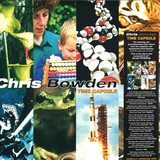
The Stunning And Ground-breaking Album From The Composer And Saxophonist Chris Bowden.
'this Is The Album That Connected It All.' Gilles Peterson 2018
Chris Bowden's Debut Album Time Capsule Was First Released On Soul Jazz Records In 1992 To Universal And Widespread Critical Acclaim. Now 20 Years On A New Wave Of Current Jazz Artists Led By The Likes Of Kamasi Washington In The Usa And A Host Of British Artists - Shabaka Hutchings /sons Of Kemet, The Ezra Collective, Moses Boyd, Nubya Garcia, Fourtet, Yussef Kamaal, Tenderlonious, Binker & Moses - Have Brought This Original Ground-breaking Album Into The Limelight Once More As A Pivotal Starting Point, Sharing Many Of The Aesthetics Of These Current Artists At Work Today.
Musically All Are Inspired By The Spiritual Jazz Of John Coltrane, Alice Coltrane, Pharoah Sanders, Archie Shepp, Don Cherry Et Al Paired With A Modern Electronic Music Sensibility. Chris Bowden's Time Capsule Has Stood The Test Of Time Like Few Other Albums (as The Title Of The Album Suggested), And Remains A Pivotal, Wholly-successful And Original Experimental Musical Collage, A Radical Inspiration And Forebearer To Many Of The Best Progressive Jazz And Electronic Artists Working Today.
The Album Has Been Fully Hi-spec Re-mastered And Is Available As A Limited-edition Heavyweight Double-vinyl Release With Gatefold Sleeve (+ Free Download Code), Slipcase Cd And Digital Album.
Re-mastering by: Ray Staff at Air Mastering, Lyndhurst Hall, London
The remarkable Music, Inc. Big Band remains the apotheosis of trumpeter Charles Tolliver's singular creative vision. Rarely if ever has a big band exhibited so much freedom or finesse, while at the same time never overwhelming the virtuoso soloists on whom the performances pivot. Built around the core of Tolliver, pianist Stanley Cowell, bassist Cecil McBee, and drummer Jimmy Hopps, the music boasts the kind of give-and-take born equally of talent and telepathy -- each player seems to communicate with his colleagues on a higher plane, delivering performances to rival any in their careers. Tolliver in particular plays like a man possessed, summoning an energy and clarity that slice through the big, bold arrangements like the proverbial hot knife through butter.
To be released on World Mental Health Day, part of the album's proceeds will be donated to a UK-based mental health charity. 'I often wonder how sadness moves through people,' Emika says, 'through time, through stories and history, and if it's something that becomes us rather than coming from us.'
% of album sales will be donated to charity Help Musicians UK
emikarecords. com Invites fans to anonymously share their experiences of depression and create a waterfall of comments inspired by the song Wash It All Away
Studio video promoting the album via Soundcloud, Autumn
Live / DJ video, promoting the album with Beatport, Autumn
Live streaming of the album from Emika's studio via FB, Insta, YT, September.
Bookings by Christopher at Melt Bookings. Team chose to give fans time to listen to the album first, shows starting early 2019, special album show with live band and dome visuals planned in the Berlin Planetarium Feb 2019. A few promo shows summer / fall 2018.
Boiler Room live show as part of Open Dance Floor series tbc
* Given its years of manifestation behind the scenes of other projects, Falling In Love With Sadness reflects a renewed understanding of Emika's own genealogy, kindred lineage and its connection to modernity. Marking a drastic departure from the menacing, stripped-down qualities of albums past, Dva and Drei, Emika has surfaced with a new upwelling of sound gracing the bittersweet, melancholic and sanguine.
* With the interplay of myriad genres both rhythmically and melodically intertwining between spacey, dub tinged Promises, lush synth pop hooks on Escape and the title track's soulful electro, a full spectrum of musicology remains primary to the ever-evolving chroma of Emika's umbrous sound.
* Further characterised by the breathy sibilance and sultry tones of Emika's noirish, vocal aesthetic, the album navigates through the morose and trappings of misanthropy by illuminating a narrative of emotional resilience and recovery.
* Co-produced with Robert Witschakowski of The Exaltics, and continuing her collaboration with guitarist Chris Lockington (as heard on Drei and Dva), Falling In Love With Sadness provides a fifth solo album for Emika, but moreover, defines itself as an overture for her future works.
Batida is to release his new album "Dois" via Soundway Records.
Strands of Afro-House, Kuduro, Benga, Semba, samples from old Angolan movies and Afrobeat tracks, African MCs and musicians from all over the world are all deftly mixed together by Pedro Coquenão.
Inspired by the multicultural hotbed of his home city of Lisbon and trips to Nairobi and Luanda, 'Dois' was predominately produced in his own garage-studio over a two-year period.
In 2012 Batida's explosive self-titled debut came out on Soundway Records. Mixing the syncopated rhythms of Kuduro with elements of 1970s Semba and Congolese-influenced guitar licks, Pedro Coquenão won fans for an album that "demanded movement" (The Line of Best Fit) and "gave a view of the old and new, the West and Africa." (The Guardian)
Much of the remix and sampling spirit from the first record remains but 'Dois' also features live instrumentation along with a host of different guests.
English, Portuguese, Quimbundo and Zulu languages all feature on 'Luxo' with Spoek Mathambo (South Africa) & his crew contributing the lyrics together with Angolan MC Sacerdote and a guitar riff by Duncan Lloyd (Maximo Park). On 'Céu' Coquenão pushes things in a deeper direction, dis-assembling and reforming elements of the Francois & The Atlas Mountains studio sessions of the track 'Les Plus Beaux' .
His widely acclaimed live show, featuring dancers, MC's, visuals and live electronics has seen him perform at Africa Express and on the Ten Cities project, live on the Boiler Room and all across Europe at some of the biggest festivals.
Focusing on low-slung IDM, Acid and atmospheric Electro with nods to Krautrock & Ambient sounds, Steve Hyland's ATTRAKTTA project gets an extended outing on the FILM label. Across eight beautifully produced tracks, Hyland - one of the founding members of AI Records and subsequently Concrete Plastic, explores vibrant synthesis and intricate drum programming, with the music arriving at a sweet spot between home listening material & club-ready workouts for more intelligent dance floors.
Eschewing straightforward synth sequences in favour of blissed out - almost disharmonious sonics, Hyland transmits a curious psychedelia on his debut LP. Sounds pitch and warp organically, buoyed up by saturated low end and punchy drum machine percussion. There remains a decidedly accomplished precision to the work, though - with the music bearing all the hallmarks of an artist of some considerable experience - testament to the British producer & label head's 19 years working in the industry.
A colourful, exquisitely composed LP that riffs on a timeless production aesthetic with considerable style, Echo Principle is a fantastic entry into the FILM Records discography.
If you check the credits of The Rolling Stones' Goats Head Soup LP from 1973 you'll find a certain "Pascal" listed on the percussion section. That is none other than Los Angeles based artist Nicolas Pascal Raicevik (1933-1994), aka 107-34-8933, aka Head, aka Nik Pascal, aka Nik Raicevic. Besides his hitting the bongoes on the Stones album, Nik was a great artist on his own, both as a painter and as a musician. As a musician, he was a pioneer in the use of synthesizers, preceeding the Berlin school by some years when his Head LP was released on on Buddah in 1970. Buddah probably saw in Head the opportunity to cash in some money from the remains of the psychedelic scene - the three tracks on the LP are named after drugs used in the late sixties. The sounds, however, are accomplished works that show Raicevic as one of the most interesting pioneers in the use of synths. The album probably didn't do too well, since Buddah didn't renew the contract with Raicevic, who instead took his own way releasing his works on his very own Narco Records and Tapes label. Between 1968 and 1975 Narco would issue 4 LPs credited either to Nik Raicevic (Beyond The End... Eternity) or Nik Pascal (The Sixth Ear, Magnetic Web and Zero Gravity) plus one credited to 107-34-8933 (Numbers, which is in fact the same LP as Buddah's Head, albeit with different cover art). Copies of these LPs came with an ironic sticker over the shrinkwrap that read "Do not listen to this LP if you are stoned".
1972 saw the release of The Sixth Ear (Narco NR666), this time credited to Nik Pascal. A more complex work than Beyond The End..., it adds consistent rhythmic patterns to the mix with the addition of bongoes and also explores some interesting chord progressions.
Besides his musical explorations, Nik was also an interesting painter. His paintings are auctioned from time to time, and are consciousness expanding works influenced by abstract cubism and surrealism, some kind of Salvador Dalí on drugs exploring the outter and inner space. All the artwork on the sleeves of his LPs is done by himself. Spacey landscapes and psychedelic colours that fit perfectly to the music they contain.
"Nik Raicevic's music is at the intersection of radical psycho-electronic weirdness and kraut kosmische music (in particular the scifi-hypno-minimal modules of Conrad Schnitzler in Grun, Rot and Blau). It presents mega epic & tripped out electronic improvisations.
"This is an absolute must for collectors and fans of visceral, neurotic soundscapes." (progarchives)
"As far as late-60s / early-70s American Bedroom' Electronic Music goes, these LPS have to be among the first transmissions from this sector, made all the more attractive when coupled with Raicevic's alien topographIes - the covers are high-color portrayals of Venusian lanes, knotted growths, & future-past architecture in a style you might equate with Vintage' sci-fi pulp-novel covers - & copious Downer' sentiment. This music is imbued with a sort of lonely, anti-social sensibility that's about as far as you can get from the Academic' Early Electronic vector. I will say that if the Steve Birchall, Cellutron & the Invisible, and/or Pythagoron™ seed your garden, this will likely do the same." (twoheadeddog)
Never reissued before on vinyl format, the Wah Wah reissue features original sleeve artwork made of paintings and drawings by Nik himself and reproduction of the famous ironic "Do not listen if you are stoned" sticker. Limited edition, 500 copies only.
If you check the credits of The Rolling Stones' Goats Head Soup LP from 1973 you'll find a certain "Pascal" listed on the percussion section. That is none other than Los Angeles based artist Nicolas Pascal Raicevik (1933-1994), aka 107-34-8933, aka Head, aka Nik Pascal, aka Nik Raicevic. Besides his hitting the bongoes on the Stones album, Nik was a great artist on his own, both as a painter and as a musician. As a musician, he was a pioneer in the use of synthesizers, preceeding the Berlin school by some years when his Head LP was released on on Buddah in 1970. Buddah probably saw in Head the opportunity to cash in some money from the remains of the psychedelic scene - the three tracks on the LP are named after drugs used in the late sixties. The sounds, however, are accomplished works that show Raicevic as one of the most interesting pioneers in the use of synths. The album probably didn't do too well, since Buddah didn't renew the contract with Raicevic, who instead took his own way releasing his works on his very own Narco Records and Tapes label. Between 1968 and 1975 Narco would issue 4 LPs credited either to Nik Raicevic (Beyond The End... Eternity) or Nik Pascal (The Sixth Ear, Magnetic Web and Zero Gravity) plus one credited to 107-34-8933 (Numbers, which is in fact the same LP as Buddah's Head, albeit with different cover art). Copies of these LPs came with an ironic sticker over the shrinkwrap that read "Do not listen to this LP if you are stoned".
Magnetic Web was released in 1973. It appeared under the Nik Pascal monicker and showed a clear evolution in sound, favoured by the addition of an Arp 2600 and some rhythm boxes. It also included percussions and cymbals. The Two Headed Dog site thinks "this is his masterpiece in all of its acid-laced glory."
Besides his musical explorations, Nik was also an interesting painter. His paintings are auctioned from time to time, and are consciousness expanding works influenced by abstract cubism and surrealism, some kind of Salvador Dalí on drugs exploring the outter and inner space. All the artwork on the sleeves of his LPs is done by himself. Spacey landscapes and psychedelic colours that fit perfectly to the music they contain.
"Nik Raicevic's music is at the intersection of radical psycho-electronic weirdness and kraut kosmische music (in particular the scifi-hypno-minimal modules of Conrad Schnitzler in Grun, Rot and Blau). It presents mega epic & tripped out electronic improvisations.
"This is an absolute must for collectors and fans of visceral, neurotic soundscapes."
"As far as late-60s / early-70s American Bedroom' Electronic Music goes, these LPS have to be among the first transmissions from this sector, made all the more attractive when coupled with Raicevic's alien topographIes - the covers are high-color portrayals of Venusian lanes, knotted growths, & future-past architecture in a style you might equate with Vintage' sci-fi pulp-novel covers - & copious Downer' sentiment. This music is imbued with a sort of lonely, anti-social sensibility that's about as far as you can get from the Academic' Early Electronic vector. I will say that if the Steve Birchall, Cellutron & the Invisible, and/or Pythagoron™ seed your garden, this will likely do the same."
Never reissued before on vinyl format, the Wah Wah reissue features original sleeve artwork made of paintings and drawings by Nik himself, and reproduction of the famous ironic "Do not listen if you are stoned" sticker. Limited edition, 500 copies only.
If you check the credits of The Rolling Stones' Goats Head Soup LP from 1973 you'll find a certain "Pascal" listed on the percussion section. That is none other than Los Angeles based artist Nicolas Pascal Raicevik (1933-1994), aka 107-34-8933, aka Head, aka Nik Pascal, aka Nik Raicevic. Besides his hitting the bongoes on the Stones album, Nik was a great artist on his own, both as a painter and as a musician. As a musician, he was a pioneer in the use of synthesizers, preceeding the Berlin school by some years when his Head LP was released on on Buddah in 1970. Buddah probably saw in Head the opportunity to cash in some money from the remains of the psychedelic scene - the three tracks on the LP are named after drugs used in the late sixties. The sounds, however, are accomplished works that show Raicevic as one of the most interesting pioneers in the use of synths. The album probably didn't do too well, since Buddah didn't renew the contract with Raicevic, who instead took his own way releasing his works on his very own Narco Records and Tapes label. Between 1968 and 1975 Narco would issue 4 LPs credited either to Nik Raicevic (Beyond The End... Eternity) or Nik Pascal (The Sixth Ear, Magnetic Web and Zero Gravity) plus one credited to 107-34-8933 (Numbers, which is in fact the same LP as Buddah's Head, albeit with different cover art). Copies of these LPs came with an ironic sticker over the shrinkwrap that read "Do not listen to this LP if you are stoned".
Nik's last album, Zero Gravity (Narco NR123) came under the Nik Pascal name and had a fantastic side long piece on the title track which reminisces of the works of Cluster. B side features four tracks that also bear some Conrad Schnitzler reminiscences. This was to be Nik's last LP before he would sell all his synths to ex car racer and future electronic/ambient music star Steve Roach.
Besides his musical explorations, Nik was also an interesting painter. His paintings are auctioned from time to time, and are consciousness expanding works influenced by abstract cubism and surrealism, some kind of Salvador Dalí on drugs exploring the outter and inner space. All the artwork on the sleeves of his LPs is done by himself. Spacey landscapes and psychedelic colours that fit perfectly to the music they contain.
"Nik Raicevic's music is at the intersection of radical psycho-electronic weirdness and kraut kosmische music (in particular the scifi-hypno-minimal modules of Conrad Schnitzler in Grun, Rot and Blau). It presents mega epic & tripped out electronic improvisations.
"This is an absolute must for collectors and fans of visceral, neurotic soundscapes."
"As far as late-60s / early-70s American Bedroom' Electronic Music goes, these LPS have to be among the first transmissions from this sector, made all the more attractive when coupled with Raicevic's alien topographIes - the covers are high-color portrayals of Venusian lanes, knotted growths, & future-past architecture in a style you might equate with Vintage' sci-fi pulp-novel covers - & copious Downer' sentiment. This music is imbued with a sort of lonely, anti-social sensibility that's about as far as you can get from the Academic' Early Electronic vector. I will say that if the Steve Birchall, Cellutron & the Invisible, and/or Pythagoron™ seed your garden, this will likely do the same."
Never reissued before on vinyl format, the Wah Wah reissue features original sleeve artwork made of paintings and drawings by Nik himself, and reproduction of the famous ironic "Do not listen if you are stoned" sticker. Limited edition, 500 copies only.
Black Truffle is honoured to present the first reissue of a true underground masterpiece, Massimo Toniutti's Il Museo Selvatico (The Wild Museum), originally self-released on LP in 1991. Like his better-known brother Giancarlo (whose classic 1985 Broken Flag LP La Mutazione was reissued by Black Truffle in 2015), Massimo Toniutti was active in the vibrant underground industrial/noise scene of the 1980s, contributing to releases on legendary labels such as Broken Flag and RRR and self-releasing a series of cassettes between 1984 and 1988. Existing in a private world apart from the noise and dark industrial tropes of many of his contemporaries, Toniutti's Il Museo Selvatico is an entirely singular work of domestic electro-acoustic exploration. Made up primarily of what Toniutti calls 'small and rare noises' or sonic 'knick-knacks' recorded between 1987 and 1990, the five pieces that make up the original LP usher us into a crepuscular space populated by mysterious traces of everyday life. Toniutti weaves a loose net of distant clanks, dull thuds, metallic resonance and skittering percussive sounds, allowing the sounds to breathe against a backdrop of near-silent atmosphere. Although the haunted ambience recalls the work of contemporaries like Organum, Toniutti generally steers clear of long tones and drones, preferring to arrange brief, sometimes staccato sonic objects into patters of repeating figures and isolated events whose overall compositional shape remains somehow ungraspable. Although glimpses of recognisable location recordings and instrumental sounds can occasionally be made out, for most of the record the sources of the sounds we hear remain teasingly mysterious, an abstracted memory of everyday actions and atmospheres. l Museo Selvatico is accompanied here by an additional LP of material recorded at the same time, composed especially for this reissue into two side-long suites that inhabit the same haunted space as the original LP while occasionally making use of more maximal compositional strategies. Black Truffle is pleased to return this overlooked masterwork to the world. Essential listening for fans of Organum, Nurse With Wound, Christoph Heemann, and the tradition of outsider musique concrète. Lovingly presented as a double LP in a lavish gatefold with printed inner sleeves featuring archival images and notes. Remastered and cut at D&M, Berlin
Following the release of lo-fi electronic masterpiece I Don't Remember Now / I Don't Want To Talk About It and his brilliant follow-up Plaster Falling, Cincinnati-based artist John Bender began assembling his third and last album, Pop Surgery, in late 1982.
While all of Bender's work draws from intimate home recordings - featuring the artist alone with various keyboards, analogue sequencers and tape delays - Pop Surgery remains the one that perhaps best distills his arrant deconstruction of the "pop" concept. These twelve frenetic tracks, meticulously stitched together with dubbed-out vocals and disjointed drum machines, stretch the boundaries of bedroom electronics.
Bender would forgo the handmade LP sleeves typical of his Record Sluts imprint. The cover depicts an imposing scrapyard crane, ready to pick up discarded objects with its bright red electromagnet, while the center labels détourn Columbia's classic '70s style.
"I pressed a single run of 500 copies," Bender recounts. "The only review I remember railed at the poor production quality. The DIY era had clearly come to an end."
This first-time standalone reissue is recommended for fans of Suicide, TG's 20 Jazz Funk Greats and early Cabaret Voltaire. Liner notes by John Bender.
Composer, filmmaker and photographer Phill Niblock is a true pillar of the New York avant-garde. In the past 50 years, he has curated over 1,000 performances at his Centre Street loft and steadfastly built a massive, multidisciplinary body of work. While his earliest musical compositions date back to 1968, Niblock waited until the early '80s to release any recordings. Nothin To Look At Just A Record, a powerful debut with densely layered trombones, would be the first to unfurl his unique approach to sound.
The second album and perhaps the most rare in Niblock's vast catalogue, 1984's Niblock For Celli / Celli Plays Niblock is a meeting of two great minds. Working with reed player Joseph Celli (a composer in his own right, who has collaborated with John Cage, Pauline Oliveros and Ornette Coleman), Niblock nimbly removes the breathing pauses from Celli's oboe and English horn to create seamless, enchanting drones.
Niblock insists that his music be played loud: only in this way can one experience the visceral ringing of these long instrumental tones through the speakers and their natural overtones generated by the room. Niblock For Celli remains deeply absorbing.
This first-time reissue is recommended for fans of Alvin Lucier, Yoshi Wada and Dome.