Singer-songwriter and cult anti-folk troubadour Stanley Brinks returns with Happy New Year, a 10-song collection of lo-fi gems recorded in Berlin. Happy New Year is a warm and celebratory record. Over simple rhythms and minimalist arrangements, Brinks delivers lyrics that oscillate between surreal humour, earnest wisdom, and playful melancholy. Happy New Year features contributions from longtime collaborator Clemence Freschard, plus appearances from Jyoti Sekhawat, Monica Kremidi, Rachel Lipson, Irma Ignataviciute, and Elisa Aseva, weaving together voices from across Brinks' musical community. Their harmonies lend the songs a communal intimacy. Stanley Brinks is renowned for his unique anti-folk style: both playful and suggestive, insightful and entertaining. Brinks was born in Paris, France, in 1973. He studied a bit of biology and worked as a nurse for a while. Half Swedish, half Moroccan, strongly inclined to travel the world, he soon began spending most of his life on the road and developed a strong relationship with New York. By the late 90s he'd become a full time singer-songwriter - Andre' Herman Düne - as part of three piece indie-rock band, Herman Düne. Several albums and Peel sessions later and after a decade of touring Europe, mostly with American songwriters such as Jeffrey Lewis, Calvin Johnson and early Arcade Fire he settled in Berlin. The early carnival music of Trinidad became a passion, and in the early 21st century he became the unquestioned master of European calypso, changing his name to Stanley Brinks. Under this moniker he has recorded considerably more than 100 albums, collaborated with the New York Antifolk scene on several occasions, recorded and toured with traditional Norwegian musicians, and played a lot with The Wave Pictures. The vinyl is of silvery color.
The song sets the tone of this album. A simple structure, over which a web of rhythm is woven using an instrumentation of old drum machines in dialogue with live drums and percussion. Lots of sax, tenor and baritone! A pumping bass. A frisky pizzicato violin. And some classic keyboards: the Fender Rhodes, the Hohner Clavinette D6, the L-100 Hammond organ. And lots of analogue synthesisers: a rippling Juno-106 marks the path to follow, which is crossed with phrases from other museum pieces: Crumar's Stratus, Farfisa's Synthorchestra, Sequential's Prophet-10. Or still the Casio Club M-100, which is basically a toy, but has been subtly colouring SKC's songs for years!
SKC has often dived deep into the repertoire of artists he holds in high esteem, looking for pearls, forgotten or not, to work on. Likewise on this album with versions of songs by Prince, Dez Mona, Alain Bashung…
The Mystery Lights return with a brand new, MC5-flavoured banger “Before You Realise It”. With its pummeling rhythm section, searing guitars and singer Mike Brandon’s frantic, shout-sing delivery, “Before You Realise It” is a rare example of a band at peak power, capturing the raw, chaotic energy of their live show onto 8-track tape. On the flip you’ll find the lysergic nightmare “Cerebral Crack”. A creeping, psychedelic hell-ride into the nether regions of the human psyche.
LP-Box mit fünf Original-Studioalben von 1965.
(AAA) Remastered und direkt von den originalen analogen Mono-Bändern von Kevin Gray geschnitten.
Fünf Original-Studioalben, aufgenommen in einer Woche im August 1965 in New York City: Boppin', Smokin', Groovin', Comin' On, Cool Burnin' sind zum ersten Mal seit über 50 Jahren wieder auf Vinyl erhältlich. Für diese Aufnahmen, die einen Wendepunkt in seiner Karriere markieren, hat Chet Baker eine Band der Superlative um sich geschart: George Coleman, Kirk Lightsey, Herman Wright und Roy Brooks spielen alle auf diesen aufregenden Sets, die ursprünglich bei Prestige Recordings erschienen sind.
New Land hatte vollen Zugang zu den originalen analogen Monobändern, und Kevin Gray hat sie neu gemastert und geschnitten (AAA), um ihnen eine frische Klangfarbe zu verleihen. Das Herzstück dieser Box ist ein Buch mit einem unglaublich detaillierten Essay von GRAMMY® Nominee James Gavin, der die wahre Geschichte hinter diesen Aufnahmen mit Interviews der Beteiligten verbindet. Illustriert mit seltenen Fotos und Ephemera ist dies der bisher tiefste Einblick in diese Aufnahmen.
Chet Bakers Prestige-Aufnahmen aus dem Jahr 1965 markieren eine Übergangsphase - seine Rückkehr in die USA nach einer Zeit in Europa und einer Auseinandersetzung mit dem Rechtssystem. Diese Sessions zeigen ihn in einem raueren, expressiveren Ton, der aber immer noch von seiner charakteristischen lyrischen Schönheit durchdrungen ist. Die Aufnahmen entstanden auf dem Höhepunkt der Hard-Bop-Renaissance von Prestige Records und zeigen Baker zusammen mit dem Saxophon-Titanen George Coleman, der gerade mit Miles Davis auf Tournee war. Das Ergebnis ist ein rauer, swingender Quintett-Sound, direkt, gefühlvoll und ungeschminkt.
Nach Jahren des Umherziehens in Europa und scheinbar endlosen persönlichen Turbulenzen kehrte Chet in die USA zurück, um diese Sessions aufzunehmen. Ohne die jugendliche Unschuld seiner frühen Tage an der Westküste spielt Baker mit einer dunkleren, introspektiven Note - sein Horn singt immer noch, aber jetzt seufzt es auch.
Zusammen mit einer starken Rhythmusgruppe aus New York verbinden diese Aufnahmen die Eleganz des Cool Jazz mit der rauen Direktheit des Hard Bop der Ostküste. Baker zeigt sich hier von seiner menschlichsten Seite - zerbrechlich, lyrisch, ungefiltert.
Dies sind nicht einfach nur Aufnahmen aus Chets Spätzeit - sie sind ein Dokument seiner Neuerfindung. Für Sammler schließen sie eine wichtige Lücke zwischen seiner ikonischen Cool Jazz Ära der 1950er Jahre und seinen düsteren europäischen Sessions der 1970er Jahre.
Sublunar is pleased to welcome back label manager Sciahri and Hertz Collision for a new chapter in their collaborative journey. Following the success of Axis Mundi, the duo returns with Contatto an EP that reflects their continuous evolution: a modern vision of techno, deeply rooted in its foundational essence.
The record opens with Contatto, a fluid and refined track where aquatic synth textures bounce elegantly over a sleek and captivating groove. Vanta follows with a more driving and hypnotic energy a stripped-down tool designed to shake the floor with precision and style.
Twin State shifts the mood with rolling rhythms and sharp, sophisticated sound design a perfect fusion of past and future aesthetics. Oroboro then explores deeper territory, offering warm textures and a seemingly gentle presence, while concealing a powerful low-end drive that makes it both subtle and impactful.
out of Stock
Last delivered 20 days ago available to reorder, subject to availability
Joviale machen Musik, die sich wie eine Show anfühlt; das Drama liegt in der Spannung zwischen Pop-Impuls und etwas Zerebralem und Sinnlicherem. Die multidisziplinären Künstler aus dem Norden Londons waren als Theaterkind aufgewachsen und machen sich nun ihre prismatische kreative Ausdruckskraft medienübergreifend zunutze, indem sie Komponenten von bildender Kunst, Performance und Musikaufnahmen zu einer einzigartigen Welt zusammenfügen. "Mount Crystal", das von Joviale zusammen mit John Carroll Kirby (Steve Lacey, Frank Ocean, Solange, Kacey Musgraves), Jkarri (PinkPantheress, Nia Archives, Natanya)und Kwaku Konadu produziert wurde, ist ein aufstrebendes, konzeptionelles Album. Die Songs sind elektrisch und gefühlvoll, gespickt mit jazzigen Experimenten, rhythmischem Rock und lebhaftem Sounddesign, alles realisiert mit einer Reihe von Mitwirkenden wie Sam Wilkes, Carter Lang und Will Miller. Im Jahr 2021, nach ihrer EP "Hurricane Belle", die erste Aufmerksamkeit von Pitchfork und Crack Magazine auf sich zog, zogen sie sich still zurück, um zu lernen und sich weiterzuentwickeln. Im Jahr 2025 kommen sie hinter dem Vorhang hervor: ursprünglich als Theaterstück konzipiert, strotzt "Mount Crystal" nur so vor Leben - Gefahr, Humor und dem menschlichen Geist - und beschwört einen metaphysischen Aufstieg, der über das Audioformat hinausgeht. Mit Plänen die Vision als Live-Set und mehr zu manifestieren, stellt Joviale den Kurs vor: "Die Überlieferung von Mount Crystal ist geprägt von der Verkörperung von Sehnsucht, Gefahr und Verzweiflung. Eine gespiegelte Dimension in einer fernen Realität, in der nichts ungesagt bleibt. Diese Kapitel sehnen sich danach, die Illusion des Vergnügens zu zerstören, indem sie den unerbittlichen Schmerz, den ich in meinem Bemühen zu lieben erfahren habe, verleugnen und die süßesten Melodien mit den süßesten Freunden umarmen."
Translate delivers hypnotic precision on Displacement, with Anthony Linell remixing "Timeforms" into a deep, atmospheric burner-out Sept 12 on Edit-Select 240V.
Translate returns to Edit-Select with "Displacement" (Edit-Select 240V), featuring three immersive techno cuts rooted in spatial depth and hypnotic rhythm. The release includes a stunning remix of "Timeforms" by Anthony Linell, who delivers a brooding, minimalist reinterpretation. Out on limited 12" vinyl and digital
out of Stock
Last delivered 7 months ago available to reorder, subject to availability
Barcelona-based producer Ikari debuts on NIX with When It’s Over, a tightly constructed EP that brings together the weight of low-end pressure with crisp percussive detail. Built for the club but with a strong emotional pull, the release folds bass-rooted aesthetics into tightly wound techno frameworks, led by carefully sculpted sound design and a deep sense of mood.
Each track acts as a standalone world, but together they form a cohesive whole, driven by feeling rather than formula. There is a subtle melancholy running through the release, not overbearing, but present in the tonal shifts, textural tension and soft-release moments that flicker throughout. It is a record that sharpens Ikari’s already distinctive voice, pushing his technical process further without losing the raw edge that defines his work.
On When It’s Over EP, the focus isn’t on maximalism. Every choice feels deliberate: harmonic details, spatial effects, rhythmic structure. All of it is aimed at stirring something visceral in the listener. It is the sound of an artist locked into his own narrative, inviting us to step in.
Mitsubishi Fuso is the first single from Ikari’s debut EP for NIX, out on 4th of July. The full EP follows on the 18th of August as a limited stamped white label, mastered and cut by Tim Xavier at Manmade Mastering.
out of Stock
Last delivered 48 days ago available to reorder, subject to availability
In Guadeloupe, many people think that jazz and ka music are like a ring and a finger. To some extent, the same could be said about so called Latin music and the music played in the French West Indies.
Both aesthetics were born in the Caribbean and bear so many connections that they can easily be considered cousins. In constant dialogue, there are lots of examples of their fruitful alliance and have been for a while. The English country dance that used to be practiced in European lounges came to be called kadrille in Martinique and contradanza in Cuba. They both featured additional percussion instruments inherited from the transatlantic deportation. Drawing from shared feelings about the same traumatized identity – later to be creolized – it would be hard not to assume that they were meant to inspire each other. The golden age of the orchestras that graced the Pigalle nights during the interwar period further proves the point. As soon as the 1930s, Havana-born Don Barreto naturally mixed danzón and biguine music in a combo based at Melody's Bar. In the following decade, Félix Valvert, a conductor who was born and raised in Basse-Terre in Guadelupe, also worked wonders in Montparnasse with La Coupole, which was an orchestra made up of eclectic musicians. Afro- Caribbean performers of various origins were often hired on rhythm and brass sections in jazz bands, which used to enliven the typical French balls of the capital. In the 1930s and onwards, Rico’s Creole Band was one of them.
Martinican violinist-clarinettist Ernest Léardée, who would become the king of biguine music as well as the main figure of French Uncle Ben's TV commercials (a dark stigma of post-colonial stereotypes), had musicians from the whole Caribbean sphere play at his Bal Blomet – and they all enchanted "ces Zazous-là" (according the words of Léardée's biguine-calypso piece). In les Antilles (French for French West Indies), music history started to speed up in the 1950s, when trade expanded and radio stations grew bigger. The Guadelupean and Martiniquais youth tuned in their old galena radio sets to South American and Caribbean music. As for the women traders, les pacotilleuses, they bought and sold goods across different islands (the "passing of items through various hands" was thought to be most pleasurable) and brought back countless sounds in their luggage. Such was the case of Madame Balthazar, who once returned from Puerto Rico with the first 45rpm and 33rpm to ever enter Martinique.
Out of this adventure was created the famous Martinican label La Maison des Merengues, a music business she opened and undertook with her husband and which proved to be a major landmark. At the end of the 1950s, in Puerto Rico, Marius Cultier competed in the Piano International Contest playing a version of Monk's Round 'Midnight. He won the first prize and this distinction foreshadowed everything that was to come. Cultier, the heretic Monk of jazz, was quickly praised for writing superb melodies, always tinged with a twist that conferred a unique sound to his music. It didn't take long for the gifted self-taught musician to get to play with Los Cubanos, making a name for himself thanks to his impressive maestria on merengues.
The rest is history. Besides, in the late 1950s, Frantz Charles-Denis, born into the upper middle class in Saint-Pierre and better known by his first name Francisco, went back home after working at La Cabane Cubaine – a club located rue Fontaine where he had caught the Latin fever. Francisco's music was therefore heavily marked by his Cuban cousins' influence, which gave the combos he led a specific style and also led to renewal. Things were swinging hard in La Savane, located in the main square in Fort-de-France. He set up the Shango club close by and tested out the biguine lélé there, a new music formula spiced up with Latin rhythms. Soon afterwards, fate had him fly to Puerto Rico and Venezuela.
As for percussionist Henri Guédon (percussions were only a part of his many talents), he was born in Fort-de-France in May 22nd 1944, the day marking the celebration of the abolition of slavery. As an old man, he could remember that in " his father's Teppaz, a lot of hectic 6/8 music was constantly playing...". In the opening lines of his Lettre à Dizzy, a small illustrated collection of writings published by Del Arco, he highlighted the huge impact that cubop had on him as a teenage boy, around 1960. He eventually turned out to be the lider maximo in La Contesta, a big band steeped in Latin jazz. He was also the one who originated the word zouk to describe music which brought the sound of the New York barrio to Paris. It was the culmination of a journey that started in Sainte-Marie: "a mythical place for bélé, the equivalent of Cuban guaguancó". In the early 1960s, the tertiary economy developed to the detriment of agriculture. Yet rural life was where roots music emerged in Martinique and in Guadeloupe.
Record companies played a major part in the process of Latin versions sweeping across the islands – before reaching everywhere else. Producer Célini, boss of the great Aux Ondes label, and Marcel Mavounzy, both the head of Émeraude records - a firm which was founded in 1953 - as well as the brother of famous saxophonist Robert Mavounzy, were big names to bear in mind. Although there were many of them - all of whom are featured on this record - Henri Debs was definitely the major figure in the recording adventure. He proved to be so influential that he even got compared to Berry Gordy. In the mid 1950s, when he acquired his first Teppaz, he worked on his first compositions: a bolero and a chachacha. Then, he became the one man who made people discover Caribbean music, from calypso to merengue. He was among the first ones to rush out to San Juan, Puerto Rico, to buy records and distribute them through a store run by one of his brothers in Fort-de-France. He had members of the Fania All Star come and perform there, which he was madly proud about. He was also the first one to pay attention to Haitian music, such as compas direct and various other rhythms which would soon flood the market. As a result, many of the combos hitting his legendary studio would end up boosted by widespread "Afro-Latin" rhythms. However, he never denied his identity: gwo ka drums were given a major role, although they were instruments which had long been banned from the "official" music spheres. The present selection bears witness to such a creative swarming. Here are fourteen tracks of untimely yet unprecedented cross-fertilization: all types of music rooted in the Creole archipelago have found their way, whatsoever, to the tracklisting. Whether originating from the city or being more rural, they all go back to what Edouard Glissant, in an interview about the place of West Indian music in the Afro-American scope, called "the trace of singing, the one which got erased by slavery." "It is so in jazz, but also in reggae, calypso, biguine, salsa... This trace also manifests through the drums, whether Guadelupean, Dominican, Jamaican or Cuban... None of them being quite the same. They all point to the idea of a trace, seeking it out and connecting to each other through it. This is the hallmark of the African diaspora: its ability to create something new, in relation to itself, out of a trace. It may be the memory of a rhythm, the crafting of a drum, a means of expression which doesn't resort to an old language but to the modalities of it." The opening track features one of the emblematic orchestras of this aesthetic identity, criscrossing many music types from the archipelago. The 1974 Ray Barretto guajira – Ray Barretto was a major New York drummer influenced by Charlie Parker and Chano Pozzo – is magnificently performed by Malavoi, a legendary Fayolais group (i.e from Fort-de-France). Additionally, the compilation ends on a piece by Los Martiniqueños de Francisco. It symbolically closes the circle as it is a genuine potomitan of Martinique culture which also functions as a tireless campaigner for Afro-Caribbean music. Practicing the danmyé rounds (a kind of capoeiria) to the rhythm of the bèlè drum, it delivers a terrific Caterete, a kind of champeta of Afro- Colombian obedience which was originally composed by Colombian Fabián Ramón Veloz Fernández for the group Wgenda Kenya. The icing on the cake is Brazilian Marku Ribas, who found refuge in Martinique in the early 1970s, bringing his singing to the last trance-inducing track. These two "versions" convey the whole tone of a selection composed of rarities and classics of the tropicalized genre, swarming with tonic accents and convoluted rhythms. It is the sort of cocktail that the West Indians never failed to spice up with their own ingredients. For instance, the Los Caraïbes cover of Dónde, a famous Cuban theme composed by producer Ernesto Duarte Brito, has a typical violin and features renowned Martinique singer Joby Valente and his piquant voice.
The track used to be – or so we think – their only existing 45rpm. The meaningful Amor en chachachá by L'Ensemble Tropicana, a band which included Haitian musicians among whom was composer and leader Michel Desgrotte, also recalls how Latin music was pervasive in the tropics in the mid-1960s. They were the ones keeping people dancing at Le Cocoteraie in Guadelupe and La Bananeraie in Martinique. Around the same time, another "foreign" band, Congolese Freddy Mars N'Kounkou's Ryco Jazz, achieved some success on both islands by covering Latin jazz classics – such as their adaptation of Wachi Wara, a "soul sauce" by Dizzy Gillespie and Chano Pozo whose interweaving of strings and percussions can have anyone hit the dancefloor. How can you resist Dap Pinian indeed, a powerful guaguancó by Eugene Balthazar, performed by the Tropicana Orchestra and published by the Martinique-founded La Maison des Merengues? It also acts as a symbol of the maelstrom at work. Going by the name Paco et L'orchestre Cachunga, Roger Jaffory used to play guaguancó too: his Fania-inspired Oye mi consejo is one example of his style. Baila!!!!! Dancing was also one of the Kings' focus points. Oriza is a Puerto Rican bomba and a "classic" originally composed by Nuevayorquino trumpeter Ernie Agosto, which reserves major space for brasses, giving it a special sheen.
Emerging from the New York barrios crucible was also La Perfecta, a Martinique group originating from Trinidad, whose name directly references the totemic Eddie Palmieri figure as well as his own band, also called La Perfecta. Here they borrow Toumbadora from Colombian producer and composer Efraín Lancheros and interpret it by emphasizing percussions, which set fire to the track even more than the wind instruments. The same goes for Martinique's Super Jaguars, who use Tatalibaba – a composition by Cuban guitarist Florencio "Picolo" Santana which was made famous by Celia Cruz & La Sonora Matencera – as a pretext for sending their cadences into a frenzy. In a more typically salsa vein, the Super Combo, a famous Guadelupean orchestra from Pointe-Noire that was formed around the Desplan family and had Roger Plonquitte and Elie Bianay on board, adapt Serana, a theme by Roberto Angleró Pepín, a Puerto Rican composer, singer and musician also known for his song Soy Boricua. Here again, their vision comes close to surpassing the original. In the 1970s, L'Ensemble Abricot provided a handful of tracks of different syles, hence reaching the pinnacle of the art of achieving variety and giving pleasure. They played boleros, biguines, compas direct, guaguancó and even a good old boogaloo - the type they wanted to keep close to their hearts for ever, "pour toujours", as they sang along together in one of their songs. Léon Bertide's Martinican ensemble excelled at the boogaloo which had been composed by Puerto Rican saxophonist Hector Santos for the legendary El Gran Combo.
Three years later, in 1972, Henri Guédon, with the help of Paul Rosine on the vibraphone, tackled the Bilongo made famous by Eddie Palmieri. Such a classic!!!!! And so were the Aiglons, the band from Guadelupe: choosing to execute Pensando en tí, a composition by Dominican Aniceto Batista, on a cooler tempo than the original, they noticeably used a wonderfully (un)tuned keyboard in place of the accordion. On the high-value collectible single – the first one released by Les Aiglons under the Duli Disc label – there is a sticker classifying the track under the generic name "Afro". Now that is what we call a symbol. Jacques Denis
out of Stock
Last delivered 6 months ago available to reorder, subject to availability
Everything Is Recorded, ist das musikalische Kollaborationsprojekt von XL-Recordings Chef Richard Russell. Auf dem Album "Temporary" sind zu hören u.a. Sampha, Bill Callahan, Noah Cyrus, Florence Welch, Maddy Prior, Berwyn, Alabaster Deplume, Jah Wobble, Yazz Ahmed, Laura Groves, Kamasi Washington, Ricky Washington, Roses Gabor, Jack Penate, Samantha Morton, Clari Freeman-Taylor und Nourished By Time. "Temporary" entstand im Verlauf von vier Jahren in Russells Londoner Copper House Studio und während einiger zusätzlicher Sessions in Tottenham, Cumbria, Dorset, Los Angeles und Las Vegas Es schließt an die vorangegangenen Releases wie das 2018 für den Mercury Prize nominierte Debüt an. Auf dem neuen Album erfährt Russells musikalische DNA allerdings ein Reboot: Sein Cut & Paste Approach reicht in die Zeit vor Sampling-Helden wie The Bomb Squad und Prince Paul zurück bis hin zu Innovatoren wie Steve Reich, Robert Rauschenberg und William S. Burroughs. Während Russells Musik bislang geprägt war von Rhythmus, Worten und Melodie - in ebendieser Reihenfolge - tauschen zwei Aspekte diesmal ihre Rollen. Der Rhythmus tritt zugunsten der Melodie in den Hintergrund. Musikalisch ist "Temporary" vom Gedankenexperiment "what if folk music had "gone digital" in the 80s, just as reggae had?" geleitet, während sich in spiritueller und lyrischer Hinsicht vieles um Trauer und den Verlust von Freunden, Familienmitgliedern und Kollegen dreht. Im Ergebnis stehen leuchtende und gelassene Kompositionen, auch dank der faszinierenden und vielfältigen Gästeliste, die "Temporary" mitbringt. Die fragilen, zärtlichen und stillen Tracks liefern vielleicht eines der sanftesten Alben, die je über den Tod geschrieben wurden. "Das Album zu machen, war erfüllend, eine Art, das Leben zu heiligen", so Russell. "Temporary" ist die erste reguläre Veröffentlichung von Everything Is Recorded nach über vier Jahren. In der Zwischenzeit war Russell allerdings nicht untätig. Via Soundcloud und Bandcamp erschienen zuletzt "Summer Solstice", "Autumn Equinox", "Winter Solstice" und "Spring Equinox", die alle mit einer Reihe von Gastmusikerinnen und -.musikern im Rahmen ausgiebiger Jams an jeweils nur einem Tag entstanden. Mit der Schauspielerin und Regisseurin Samantha Morton tat er sich zum Duo Sam Morton zusammen, welches sein Debüt "Daffodils und Dirt" veröffentlichte. Für Peter Gabriels Comeback-Album "i/o" produzierte Russell den Song "Four Kinds of Horses".
out of Stock
Last delivered 13 months ago available to reorder, subject to availability
Introducing the Evil B-Side Twins — A New Era from Yazzus & DJ TOOL
Two of the most unpredictable forces in the underground are colliding at full velocity: YAZZUS and DJ TOOL are proud to launch Evil Twin Rekords — a label and collaborative project born from the wildest corners of their shared sonic imaginations.
Under the moniker The Evil B-Side Twins, the duo are setting out to warp time and space through a blazing fusion of trance, gnarly breaks, and techno rhythms. Their sound? Think hyper-speed rave transmissions beamed in from another galaxy — distorted basslines, and acidic euphoria intersecting 90’s psychedelic textures as they soundtrack a playful, alien-friendly universe. It’s high-energy, no-rules, evil as hell club music with a space-age edge. And their debut EP Relentless Spirit delivers just that.
Four rave-ready ‘in your face’ anthems, breaking the boundaries of modern electronic music. A collision of catchy grooves, iconic motifs from the old school trance world and mental melodies that you won’t forget easily.
Evil Twin Rekords isn’t just a label. It’s a wormhole into a sound that’s too futuristic, too feral, and too fun to fit into anyone’s algorithm. Expect inter-dimensional anthems, and records that feel like they’ve been smuggled from the B-side of a black hole.
This is rave culture turned inside out — full-throttle, unapologetically weird, and always one step ahead. From the UK to Scandinavia let the band expand your horizon and welcome you to the Evil Era. Listen without prejudice.
The artwork is a specially commissioned portrait of the twins, hand painted by friend and collaborator Ryo Koike, known for his eerie, whimsical fantastical style. Throughout his visual ident, he provides an imaginative window into the twins’ cosmos and beyond.
out of Stock
Last delivered 13 months ago available to reorder, subject to availability
Balearic sounds and Mediterranean warmth are the inspirations for Bruno Belissimo’s Bordello A Parigi debut. Drawing on disco, house and funk, Ottimo! is a four tracker of electronic exuberance with Belissimo’s musical ability and range immediately spilling from the speakers. Guitar strings curve around synthlines in the title piece, percussive textures giving way to the mantra-like refrain of “Ottimo!” Thick bass echoes into beaming keys for “Meduse.” Bright notes cascade, grooves melting with vocoder lyrics as classic disco tones are reimagined in this modern mirrorball medley. Organic rhythms introduce the flip. “Mirage” opens to ripples of bongos and toms as a loose structure takes hold. Hedonistic chants rise to a shimmering chord, kicks and snares funnelling the building energy as bold blasts and samples shriek with delight. “Las Piramides De Ibiza” brings the quartet to a close. Clean drum patterns support joyous notes, a machine dipped voice calling time.
out of Stock
Last delivered 7 months ago available to reorder, subject to availability
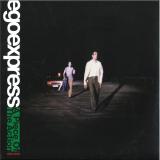
Dies ist deine Einladung zur besten Party überhaupt! Mit A Piece Of The Action erscheint eine längst überfällige Retrospektive des Hamburger Duos Egoexpress - ein wilder, tanzbarer Ritt durch ein Jahrzehnt elektronischer Subkultur. Zwischen 1995 und 2005 erschufen Mense Reents und Berndt "Jimi" Siebels einen Sound, der sich jeder Schublade entzog: roh, verspielt, hypnotisch. Aus dem Punk- und Rock-Umfeld kommend, schmuggelten sie ein störrisches Selbstverständnis und ansteckenden Humor in den Club. Statt verkopfter Coolness setzten sie auf Körperlichkeit und Bauchgefühl - und landeten damit direkte, tanzbare House-Hits mit Eigensinn. Ihre Musik war nie glatt, nie angepasst - sondern ein lebendiger Gegenpol zur Ästhetik ihrer Zeitgenossen. Die 2LP-Compilation versammelt 16 remasterte Tracks - darunter Klassiker wie We Are Here, Knartz IV oder Telefunken - und dokumentiert eindrucksvoll die Entwicklung von minimalistischen Loops hin zu psychedelischen Clubtracks. Egoexpress waren nie Teil eines Trends - sie waren ihr eigener.
out of Stock
Last delivered 12 months ago available to reorder, subject to availability
Following a sold-out UK tour, Factory Floor return to Phantasy with a new single, ‘Tell Me’.
As propulsive and direct as anything the cult UK electronic group has ever released, ‘Tell Me’ continues to perfect the dynamic in the band’s current lineup of Gabe Gurnsey, Nik Colk Void, and Joe Ward, with additional drum tracking by Stephen Morris of New Order. Situated between the sonic promise of enduring indie culture, yet naturally imbued with the band’s relentless forward-thinking ethos. Throughout, Colk Void’s inquisitive vocal guides the listener through an elastic square-wave bass groove that forms the rhythmic backbone to Tell Me, before Gurnsey and Ward's frenetic drumming breakdown rains with pure abandon, exemplifying the band’s personal alchemy between genre, scenes, human, and machine.
‘Tell Me’ arrives digitally and on limited 12” vinyl, housed in a riso-print sleeve, backed with an extended mix for dance floor play. There will also be a limited Rough Trade exclusive vinyl edition featuring an alternate sleeve.
out of Stock
Last delivered 12 months ago available to reorder, subject to availability
Welcome to a kaleidoscopic picnic where you can feast on a music scene that was rich, sparkling, multi-colored, ground-breaking and it'll blow your mind. A prodigious soundscape that blends the Caribbean and the Amazon sophistication and flavors; raw yet delicate textures. "Joropop. Psych Pop & Folk in Venezuela, 1968-1976" features infectious Latin rock rhythms and timeless folk melodies across 15 ultra-rare tracks-most of which have never been reissued until now. Let's set off together to discover the magic of Caracas in the late '60s! DESCRIPTION Welcome to a kaleidoscopic picnic where you can feast on a music scene that was rich, sparkling, multi-colored, ground-breaking and it'll blow your mind. A prodigious soundscape that blends the Caribbean and the Amazon sophistication and flavors; raw yet delicate textures. "Joropop. Psych Pop & Folk in Venezuela, 1968-1976" features infectious Latin rock rhythms and timeless folk melodies across 15 ultra-rare tracks-most of which have never been reissued until now. The golden age of Caracas pop started in 1965. It replaced the wave of cloyingly romantic song writing as fresh talents leant into richer and more complex styles: folk-rock, psychedelia, soul, hard blues, symphonic pop, Latin rock etc. Singer-songwriters, experimental electric guitars and jam sessions all appeared on the scene, creating music that became increasingly refined and free. The industry took a while to catch on to this new trend and leave behind the teen idols and dream lifestyles. By the late 60s, there was a long list of new bands in the capital city. Young people finally found their voice. Let's set off together to discover the magic of Caracas in the late '60s!
Emerging from the shadows of a small apartment in Chicago’s South Side Pilsen neighborhood in 1999, Winterlight was produced and mixed by Daniel Thompson over the course of three years, from 1999 to 2002. It’s an intimate and evocative album that captures a pivotal chapter in Thompson’s life and echoes the spirit of a formative era in the underground music scene.
Thompson’s journey began in the heat of Houston, Texas, where his love for sound quickly became an obsession. By the late ’90s, he was among the first DJs in Houston to champion the sound of Chicago house, often driving long distances from Texas to Chicago in search of records, inspiration, and connection. These trips—equal parts pilgrimage and education—eventually led him to relocate to Chicago, where his artistic vision would fully take shape. Winterlight is the direct result of that move. Crafted over several years, the album embodies a raw, hands-on approach to production, built from analog synths, outboard gear, and hours of meticulous layering. Thompson leaned on tools like the Kurzweil K2000, SE-1, Juno-106, and classic processors such as the DP4 and TC Electronic units, shaping each track with
care and intention.
Blending atmospheric textures with hypnotic rhythm and subtle experimental flourishes, Winterlight captures the sound of an artist deeply engaged with his tools and surroundings. His extensive vinyl collection—over 3,000 records—served as both palette and inspiration, with carefully chosen samples lending further depth and narrative to the music. Now set for release across all digital platforms and as a limited double 12" vinyl edition through Berlin’s Word & Sound, Winterlight invites listeners into a soundscape that is both immersive and personal. More than just an album, it is a sonic document of a moment in time—rich in tone, memory, and intent. For those willing to listen deeply, Winterlight offers a rare window into the underground spirit of the early 2000s and the inner world of a producer finding his voice.
Japan’s SUDO return to Drumcode with ‘We Are Free’, following their landmark 2024 debut ‘Real World’ Last summer brothers Isao and Takashi aka SUDO gifted Drumcode one of the most inspiring releases we’ve heard in recent times with ‘Real World’. Inspired by Underworld’s incendiary ‘Rez’, the EP was the sound of two producers pouring all their passion and shared musical history into a work that’ll be remembered for years to come.
The release peaked at no.1 on Beatport’s Release Charts and saw a follow up collaboration with Bart Skils ‘Nexus’ out later that year on Drumcode. ‘We Are Free’ continues SUDO’s emotion-led and timeless approach to techno, crafting a four-tracker inspired by the concepts of “freedom, divinity, memory and transition”. The title track genre-hops between electro-edged techno, silky ambient textures and breakbeats. Isao says: “We wanted to express in a powerful and explosive way one of our purposes on the dancefloor – a time of celebration, and freedom from restrictions.”
‘Elysium’ is a transcendental slice of techno that juxtaposes tough industrial rhythms with a stunning break that was inspired by a children’s choir Isao heard one day at Berlin Cathedral. “It took a long time to producer with many patterns until we were satisfied,” Isao shares.
“It was a real process of immersing oneself in the hypnotic groove and finding divinity.” Initially inspired by watching Bart Skils play a NYE 2025 set in Argentina, ‘Lost in Paradise’ is led by a delicate Latin vocal and crisp sun-dappled beats, before stepping up the pace in the second half. “As the production progressed, we were led to a wonderful result with the track’s vocal, a tribute to one of our biggest influences – the untouched nature of Ibiza and the vibes of the light and beautiful people that flow there.” The EP winds down with ‘Horizon’, a simultaneously beautiful yet bittersweet hymn that signals the end of the party.
In an ever-expanding musical universe, Azymuth have long existed as a celestial giant, drawing countless artists, musicians and followers into their orbit. Marking fifty years since their 1975 debut album Azimuth, their new album Marca Passo proves that the band’s alchemic brew of Brazilian jazz-funk and cosmic samba soul remains as vital as ever, as the group honours the profound legacy of their departed founders.
Recorded in Rio de Janeiro, Marca Passo is the first full-length release since the passing of founding drummer Ivan "Mamão" Conti in 2023, following the earlier loss of keyboardist José Roberto Bertrami in 2012. Alex Malheiros, the sole remaining original member, sees his stewardship of the band’s musical legacy as his spiritual duty. He is joined by the equally devoted Kiko Continentino (Milton Nascimento, Djavan) on keyboards, who has been with the group since 2016, and new recruit Renato Massa (Marcos Valle, Ed Motta) on drums.
Yet since their earliest recorded music, Azymuth have always been far greater than the sum of their parts. The "three-man orchestra’s" unmistakable sound is rooted in Brazil's MPB studio scene of the 1970s and early 1980s—a time when artists blended traditional Brazilian rhythms with global jazz, rock, and emerging psychedelic and progressive elements. Marca Passo continues this legacy, seamlessly fusing Brazilian musical traditions with global influences while showcasing the exceptional musicianship that powers Azymuth's distinctive, multi-dimensional sound.
The album is produced by studio mastermind Daniel Maunick, responsible for Azymuth’s two previous studio albums, Fênix in 2016 and Aurora in 2011. Daniel’s credits also include albums by Marcos Valle, Sabrina Malheiros and Terry Callier. Azymuth also invited Daniel’s father, British jazz-funk royalty Jean Paul “Bluey” Maunick, of Incognito, to play guitar on a new version of Azymuth’s eighties classic “Last Summer In Rio”, in tribute to the song’s composer, José Roberto Bertrami. Equally, “Samba Pro Mamao” is a new composition dedicated to Azymuth’s beloved original drummer, Ivan “Mamão” Conti.
Produced, Engineered, Mixed & Arranged by Daniel Maunick
Co-Produced & Arranged by Alex Malheiros
Executive Producer: Joe Davis
Recorded by:
Daniel Maunick & Leonardo Vieira @ Estúdio Nos Trilhos, Santa Teresa, Rio, Brazil
Daniel Maunick & Amadeu Signorelli @ Sigstudio, Niterói, Rio, Brazil
Daniel Maunick & Alex Malheiros @ Estúdio Basslab, Piratininga, Rio, Brazil
Mixed by Daniel Maunick @ The Sugar Shack, Carluke, Scotland
Artwork & Design: Tyler Askew
out of Stock
Last delivered 11 months ago available to reorder, subject to availability
Forming in 2014, Fury established themselves quickly, releasing both a demo on Washington, D.C.'s Mosher Delight Records and the "Kingdom Come" EP on Boston's Triple B Records in the same calendar year. They built on the melodic legacy of Orange County by way of heavy, rhythmic, start-stop guitars and Stith's wordy and referential lyrics. Then, in 2016, came their debut LP on Triple B Records, "Paramount," which was met with respect from the hardcore community and praise from outsider critics."Failed Entertainment" documents the work, both personal and creative, undertaken since the release of "Paramount," a period of time marked by as many difficulties as successes. Stith said, "I've asked myself `Why have I done this?' and `Why do I continue to do this?' more times in the last two years than the rest of my life combined." Those eternal, existential questions form the thematic foundation of the new songs, which look past the superficial concerns about status and popularity that preoccupy so many musicians, focusing instead on life's inevitable, inescapable problems and the ways in which they can be compounded by the banal realities of art-making _ the isolation of being on tour, the pressure of being expected to somehow transform that universal angst into nice, catchy songs that provide simple lessons.
12-song PINOT NOIR RED VINYL LP, limited to 500 Copies! Not many people realise that The Damned have produced a fine array of songs with melodic, harmonic and rhythmic sophistication; with a depth of imagination and atmosphere. They spearheaded British punk, and yet diverse musical influences went into the crucible: UK and US psychedelia, Canterbury prog rock, and even classical and filmic musical influences abound. Now, with the return of drummer Rat Scabies the line-up is the same as that which produced many of these songs - with Monty on keys. Monty Oxymoron has played keyboards with The Damned since 1996, has written songs for the band, and played with Captain Sensible and Dr Space Toad before that. He is a retired psychiatric nurse and trained in art psychotherapy. Monty is keen on "free improvisation" and plays in and around Brighton where he lives. Monty has an almost impossibly eclectic collation of his music on Bandcamp, his YouTube channel, and shares ideas on various subjects on his Substack page (under his "real" name: Laurence Burrow.)
Connection is the new ten song LP from Los Angeles powerhouse Orgone featuring collaborations with Cyril Neville, Kelly Finnigan, Pimps of Joytime, and more. The album is the inaugural release on 3 Palm Records, distributed by Colemine Records and Secretly Distribution. A spiritual follow up to fan favorite Bacano, Connection is gritty, lean, and tight soul and funk at its best. It explores the invisible threads that bind us all, spiritually, emotionally, and artistically. Much like the collage that adorns the cover, this hard hitting collection of songs illuminates the essence of Orgone: a musical pastiche of different vocalists, heavy riffs, vintage production, and a core rhythm section that never disappoints. The synergy created in these songs demonstrates that the whole is truly greater than the sum of all the individual parts and players.
After the success of the first volume, “Nihon No Wave 2” continues to unearth the hidden history of Japan’s underground electronic scene from the ’80s. This second installment digs even deeper into the archives, showcasing more rare tracks from obscure artists who operated on the fringes of Japan’s independent music world.
Like its predecessor, “Nihon No Wave 2” captures the raw energy and experimental spirit of the "Nippon-wave" era—where lo-fi synths, minimal rhythms, and post-punk aesthetics converged into a uniquely Japanese take on global sounds. Many of these recordings, originally released on cassette compilations or small-run vinyl with no international reach, have remained virtually unknown outside Japan.
Nestled away in the UKs quiet, picturesque east coast town of Ipswich, the lads in Basement are conflicted between the comfort of the beautiful familiar and the allure of escape. This duality pervades the band's existence. As frontman Andrew Fisher's gravelly yowl skips and stretches over driving rhythms and poignant guitar melodies, its clear Basement expertly walk the line between the contrasts of heartrending pop and gruff post-hardcore. When working through a slow-burning mid-tempo or pounding out driving punk, Basement has a quiet layer of jagged desperation weaving songs together under the smooth melodic surface. Much like a coming of age, the songs are toiling, torn and bursting at the seams.
Established in 2022, Warm Exit is a post-punk quartet hailing from Brussels, Belgium. Their violently frontal music is an explosive blend of sonic intensity that sets them apart as one of the country's most electrifying and raucous acts. Drawing inspiration from Krautrock, Punk, and Noise, their relentless rhythmic prowess is a testament to their diverse influences. Channeling the spirit of iconic 1970s bands like Wire, The Fall, and Public Image Limited, Warm Exit ventures into the shadowy realm of post-punk with their latest EP. Here, they seamlessly oscillate between fast and slow tempos, high and low energy levels, and vocals that span from tense whispers to unbridled screams. This journey takes the listener through a landscape of discordant riffs, haunting groans, evocative spoken word passages, and industrial undertones. Over the past three years, Warm Exit has cultivated a devoted following both locally and internationally, thanks to their electrifying live performances that leave audiences in awe. Carrying the reputation of a striking live band, they are eager to storm the stage at any and every given opportunity.
Born as Diana Reches, Diane Denoir made her debut as a singer in 1966, backed by Eduardo Mateo on guitar. Influenced by Françoise Hardy and Astrud Gilberto, along with her own unique style, she performed a special blend of chanson française, bossa nova (sung in Portuguese, English, and French), and jazz. By then, Mateo was already a well-known guitarist in the Uruguayan music scene and a sought-after arranger. He was also beginning to establish himself as an incredible songwriter, connecting different musical universes in unique ways. The two formed a fruitful artistic partnership that lasted until the early seventies. This album, originally released in 1998 on CD, is a compilation of various unreleased recordings from different sources (concerts, radio and TV recordings, homemade tapes) made between 1966 and 1968. It is a unique document that showcases their incredible musicianship and creativity in their early years. The duo swings from bossa nova classics like "The Girl from Ipanema" to the rhythm and blues of "Fever," including chanson française standards like "Le lendemain" and "La Dernière Valse." The album also features earlier versions of the three best-known Mateo songs performed by Diane: "Y hoy te vi," "Esa tristeza," and "Mejor me voy," all of which were inspired by Diane. Inéditas unveils a new dimension of South American music from an unforgettable era.
Fanzine Records is proud to present its 022nd release: "Heavy Mental", the highly anticipated new work from the master of dark electro, Dark Vektor.
Dark Vektor, known for his powerful sound and immersive atmospheres, has been a key figure in the electro scene since the early 2000s. His discography includes works on influential labels such as Electrix, Fundamental, and, of course, his previous releases on Fanzine Records. With "Heavy Mental," Dark Vektor promises to take his distinctive blend of hypnotic rhythms and unsettling melodies to a new level. Get ready for a sonic journey that fuses the raw intensity of electro with the depth of an introspective mental trip.
out of Stock
Last delivered 6 months ago available to reorder, subject to availability
Nicolás Ibarburu is a prominent figure in Uruguayan music. Renowned for his exceptional guitar skills since his teenage years, he has also established himself as a talented songwriter. In La Ruta de la Seda, he showcases a unique blend of personal songwriting, Latin fusion rhythms, pop sensibility, and deep-rooted Uruguayan musical influences. From his teenage years, Nicolás Ibarburu has become a prominent figure in Uruguayan music. Renowned for his exceptional guitar skills, he quickly gained recognition, performing alongside his brothers, Martín and Andrés, in various projects. Ibarburu's mastery of the guitar has led to collaborations with legendary figures from both Argentina and Uruguay, including the iconic Luis Alberto Spinetta, Jaime Roos, Fito Páez, and Rubén Rada. As his career evolved, Ibarburu expanded his influence beyond performance, establishing himself as a talented songwriter with a captivating solo career. His latest album, La Ruta de la Seda, showcases his unique blend of personal songwriting, Latin fusionrhythms, pop sensibility, and deeprooted Uruguayan musical influences. With his signature guitar sound and lyrics that explore the magic of artistic creation and the poetic depths of the subconscious, Ibarburu continues to push the boundaries of his artistry.
„A Danger to Ourselves“, das neue Album von Lucrecia Dalt, erscheint am 5. September 2025 bei RVNG Intl. und ist eine gewagte und doch intime Reflexion über die ungefilterten Komplexitäten menschlicher Beziehungen. Ohne die fiktiven Erzählungen der letzten Alben der Künstlerin kommt „A Danger to Ourselves“ von einem Ort der emotionalen Aufrichtigkeit. Dalts Stimme steht im Mittelpunkt und wird von einer üppigen akustischen Orchestrierung, perkussiven Instrumenten und einer Reihe hochkarätiger Mitstreiter unterstützt, die sich wie ein tiefes persönliches Gespräch entwickeln.
Die in Pereira, Kolumbien, geborene Dalt wuchs in einer musikbegeisterten Familie auf, die sie im Alter von neun Jahren dazu ermutigte, eine Gitarre in die Hand zu nehmen. Dalt folgte diesem kreativen Impuls, war fasziniert von computergestützter Produktion und verließ eine aufkeimende Karriere als Bauingenieurin, zog von Medellín nach Barcelona und schließlich nach Berlin, wo sie ihren unverwechselbaren, abenteuerlichen Sound entwickelte. Mit „Anticlines“ (2018) und „No era sólida“ (2020) und vor allem mit „¡Ay!“, Dalts bahnbrechendem Sci-Fi-Bolero-Album von 2022, hat sich ihre Arbeit auf immer anspruchsvolleres Terrain begeben. Auf dem Weg dorthin hat Dalt ihre Praxis auf die Vertonung von Filmen wie „On Becoming a Guinea Fowl“ (2024), die HBO-Serie „The Baby“ (2022) und den bevorstehenden psychologischen Horrorfilm „Rabbit Trap“ ausgeweitet, während sie Klanginstallationen und Performances kreiert, die ihre leuchtenden Modulationen und ihren unverwechselbaren, sich entwickelnden stimmlichen Ansatz zur Schau stellen. „A Danger to Ourselves“ entstand aus fragmentarischen Erklärungen, die Dalt aufschrieb, während sie das Leben auf der Tournee von „¡Ay!“ und die prägenden Momente einer neuen Beziehung meisterte. Im Januar 2024 begann sie, diese intimen Fragmente zu musikalischen Kompositionen zu kristallisieren, die allmählich zu einer zielgerichteten Konstellation von Songs wurden. Die Klangarchitektur des Albums basiert auf dynamischen Drum-Loops, die von Alex Lázaro beigesteuert werden, dessen perkussives Rückgrat wie bei „¡Ay!“ zur Leinwand für Dalts vielschichtigen Gesang wurde. Anstatt konventionellen melodischen Strukturen zu folgen, erzeugt das Album Musikalität durch das Zusammenspiel von Basslinien, Rhythmen und kompositorischem Design. „A Danger to Ourselves“ offenbart Dalts kompromissloses Streben nach klanglicher Klarheit, bei dem kühne Produktionsentscheidungen und sorgfältige Aufnahmetechniken Stimme und Instrument mit neuer Tiefe und Strahlkraft harmonieren lassen. „A Danger to Ourselves“ ist eindeutig anti-konzeptionell und ein poetischer Instinkt, mit dem Dalt den Fokus auf die Musik selbst lenkt, indem er Stimmen verwendet, die über die Parameter der Songs hinaus schwingen, und die perlenden Echos der ursprünglichen, romantischen Erregung beobachtet. Dalts klare Aufmerksamkeit für Details ist in jedem Takt spürbar, eine Hingabe, die sich in konzentrischen Kreisen dreht und ein Feld bildet, das das Persönliche und das Ätherische vereint. Das Album basiert auf intuitiven Experimenten und nutzt einfache Gesten und komplexe Kompositionen, um wandernde Linien zu weben, wie in „Divina“, das sich zwischen Spanisch und Englisch durch elastische Klanglandschaften bewegt. Der Titel des Albums geht auf David Sylvians Text „cosa rara“ zurück, der die Zerbrechlichkeit des Lebens, die Schwingungen der Liebe und die treibende Sehnsucht nach dem Wundersamen symbolisiert. „A Danger to Ourselves“ spiegelt diese transzendenten Zustände wider, indem es die Komplexität menschlicher Verstrickungen und den Wunsch nach Befreiung von Dopaminspiralen und gewöhnlichen Pfaden hin zu einer offeneren inneren Welt widerspiegelt. Sylvian selbst hat auf „A Danger to Ourselves“ eine Doppelrolle als Co-Produzent und Musiker gespielt. Es ist eine kollaborative Collage mit Beiträgen zahlreicher gefeierter Künstler. Weitere Kollaborationen ziehen sich durch das gesamte Album: Juana Molina ist Co-Autorin und Interpretin von „The Common Reader“, Camille Mandoki singt bei „Caes“, Cyrus Campbell spielt den grundlegenden Elektro- und Kontrabass, und Eliana Joy steuert bei mehreren Stücken Hintergrundgesang und Streicherarrangements bei. In den leuchtenden Tiefen von „A Danger to Ourselves“ inszeniert Dalt eine tiefgreifende Metamorphose, bei der das Persönliche durch klangliche Alchemie zum Universellen wird. Dieses Album ist sowohl Höhepunkt als auch Aufbruch - ein Portal, an dem ihre früheren experimentellen Reisen zu etwas verblüffend Intimem und doch Expansivem zusammenlaufen. Das Album ist ein Netz emotionaler Offenbarungen, jede Komposition ein präziser Indikator für Verletzlichkeit, in der Dalts Stimme eine Offenbarung in neuen harmonischen Gefilden verkörpert. Dalt hat ein lebendiges Dokument der Intuition jenseits konventioneller Grenzen geschaffen, das den Weg in Bereiche eröffnet, in denen die Musik sowohl Spiegel als auch Fenster ist.
Für Fans von PJ Harvey, Broadcast, St. Vincent, ML Buch, Stereolab, Cate LeBon, Aldous Harding, Mabe Fratti, Dry Cleaning, Juana Molina
out of Stock
Last delivered 11 months ago available to reorder, subject to availability
Spiritual Soul ist das nächste Ziel auf der Reise der Eccentric Soul Serie und bietet einen seltenen Groove mit einem transzendenten, introspektiven Flair. Gespickt mit üppigen Bläserarrangements und verankert durch warme, reflektierende Rhythmen, kanalisiert diese Compilation den meditativen Puls einer spirituellen Seele. Ein solider Begleiter für die stille Kontemplation - ob Sie nun in eine Sonntagslektüre vertieft sind oder durch die stillen Predigten der Natur wandern.
Es dürfte schwierig sein, eine Band zu finden, die selbstbewusster ist als die langjährige Tournee-Band Lucero. Seit ihrer Gründung in Memphis Ende der 90er Jahre sind die musikalischen Grundzüge von Lucero ähnlich geblieben wie der ursprüngliche Sound, den die Band mit ihrem ersten Album ,The Attic Tapes" etabliert hat. Im Laufe ihrer umfangreichen Diskografie hat sich Lucero weiterentwickelt und alles von Southern Rock bis hin zu Stax-inspiriertem Memphis Soul aufgenommen, ohne dabei ihre unverwechselbare Klanggrundlage aufzugeben. Auch Jahre später strömen treue Fans der Gruppe noch immer herbei, um die kraftvollen, treibenden Rhythmen, die punkigen Gitarrenriffs und die Texte zu hören, die an die whiskeygetränkte Sentimentalität amerikanischer Singer-Songwriter erinnern.
Editions Mego presents Bosko, landing exactly 30 years after the initial General Magic flights into the fantastic; the legendary first Mego release, a collaboration with Pita whereby all sounds were harnessed from the buzzing, drinking, humming sounds of fridges MEGO 001 General Magic & Pita and a 12” with Elin called Die Mondlandung (The Moon Landing) MEGO 002 which embarked on a minimal techno template so austere and strange it was one of the historic progenitors of austere and wonky rhythms alongside Sakho and other European explorers.
The initial return of the playful and mystical Austrian outfit General Magic came with the 20th year anniversary vinyl reissue of their classic debut Frantz eMEGO 010. A record so audacious and playful it still baffles as much as it entertains. At some point whilst working on this reissue GM’s Ramon Bauer and Andi Pieper were spurred on to rummage around with ideas and tools once more and after more than two decades of inactivity sonic sorcery was conjured once again. Live shows in honour of Peter Rehberg were performed in Vienna and London. Softbop, a limited risograph collaboration with Tina Frank came with the first new recordings as a digital download came out discreetly online. The first full length album following Rechenkönig in 2000 MEGO 032 “Nein Aber Ja” released in 2023 on Finlay Shakespeare’s GOTO Records on CD and cassette. An ongoing series of mix tapes online further highlights their interests encapsulating a new found angle on electronic mayhem. All of these elements retain the wildly eclectic and ecstatic glow that only they can harness and hand out to an unprepared world.
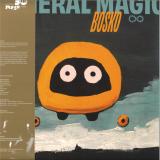
Now, we have General Magic’s second official full length comeback recording, Bosko. The new album is initially notable prior to the needle hitting the wax or the cursor identifying a track due to the artwork. Made by long term collaborator Tina Frank, this is Frank’s first analogue artwork, with a painting of a happy/nervous machine thing hovering in a landscape of no discernible identity. It’s quasi science fiction hovering amongst the potential for fun. Suited to the music? Natürlich.
Bosko sees Bauer and Pieper update and reframe their original investigations with a fresh supply of head scratching, heart racing tunes that hit the inexplicable with a wild mesh of drums, pianos, synthetic voices and all manner of immaterial sonic play. Startling sonics shock the ears on Club Duchamp which sounds like a conversation between synthetic adult ants in an environment still in development. Elfer features vocals supplied by a female-ish voice who, whilst grappling melody, has trouble executing a firm identity. Noorenhalt catapults along a mainframe of syncopation so unwieldy it feels like the voice, which is utterly alien, provides the only comfort. Seite 5 inhabits a fuzzy zone where a synthetic Horn of Jericho type ambience competes with rhythms never quite sure of who they are. Rise of the Ombré raises the spectral dread. Is this Science Fact? Absolutely nothing within Bosko is predictable.
The amount of change in the miasma of existence and the things we touch in order to make things has shifted so exponentially we are at the point where minds are starting to glaze over. All of this makes the return of the always original, always surprising, always fresh and exciting General Magic totally in tune with the artificial intelligent apocalyptic age we currently inhabit. The tools may have changed but the wonderfully warped gaze of Bosko offers a fresh new vision of perplexing funk and robotic punk.
out of Stock
Last delivered 13 months ago available to reorder, subject to availability
Rivet’s new album for Editions Mego is an uplifting and joyous affair coming in the wake of tragedy and disenchantment. It is yet another rebirth from an artist willing to take a step back and reprise the current situation he is in. Mika Hallbäck has a long credible history in the Swedish underground. First recognised for his industrial techno works under the Grovskopa moniker he worked privately on more experimental works that eventually came out as On Feather and Wire, an album released on Editions Mego in 2020. After much acclaim for this bold new direction that blended electronic abstraction, pop and industrial forms into a heavy synthetic trip two tragedies struck. One was the passing of label boss Peter Rehberg and then the passing of his dog Lilo, who was as close as a companion one could have. These events led to the release of the more unsettling follow up L+P-2 (Lilo and Pita minus two) on Midnight Shift Records in 2023. Peck Glamour sees Rivet return to the reawakened Editions Mego with an album of optimism inspired by reconciliation with loss and further explorations of new mental/sonic realms.
Hallbäck defines his approach as not being married to any particular machine, instrument, process or genre. However he holds a particular affinity to sampling, of which, he says, provides the dirt and grit amongst what would otherwise be pristine, generic machine music. The contemporary crate digging method of scouring obscure download music bogs for unique sounds was his preferred research practice.
Peck Glamour is an album full of tracks brimming with the excitement of exploration. It's the results of a mind informed by punk, industrial, techno, dancefloor, disappointment, trauma and rebirth. Here the synthetic and authentic is viewed simply as the same means of human rationale and expression.
The opening, ‘Catch Up to Light’, sets the scene with ecstatic and odd fluorescent vocals sliding amongst crystalline likembe whilst synths swirl amongst the external festivities. ‘Orbiting Empty Cocoon’ is somewhat a homage to the alien sound worlds of The Orb, one which takes the listener deeper into a mind melting array of teased potential as visual elements are executed in a mask of audio wizardry and euphoric staccato rhythms, the later being a nod to Singeli music. ‘Patitur Butcher’ is more dance frontal utilising the Ghatam drum and a YouTube rip of a Chinese language lesson. ‘Plastic Bag Putain’ was made during the beginning of Russia's invasion of Ukraine and should be clear of its intent. ‘All that Heaven Allows’ is a marimba cover of an imaginary Love Parade anthem. 'Kyrie Geire’ potentially briefly fills the void left by the demise of Coil. The entire trip of Peck Glamour is sewn up with ‘We left before we came’ whereby extraneous recordings of double bass player Gregory Vartian-Foss (tuning/strumming/moving the bass) are superimposed with local field recordings to create a gorgeous bed of sounds acting as an exciting exit music to this sharp collection of cinematic ear excursions.
out of Stock
Last delivered 13 months ago available to reorder, subject to availability
Romanian producer and DJ Andrew Red Hand has carved a unique niche in the world of underground electronic music.
His work stands as a tribute to the raw energy of Detroit techno and electro, yet it retains a deeply personal, emotional tone that gives it timeless depth.
Over the years, Andrew has released a steady stream of high-impact records across some of the most respected labels in the scene. His catalog includes standout EPs on Detroit Underground, Matrix Records Detroit, Twilight 76, and others —each showcasing his mastery of analog-driven textures, sharp 808 rhythms, and melodic melancholia. His work with Diffuse Reality, Subsonic Release, and Shipwrec further solidifies his reputation for pushing boundaries while staying true to the roots of electro.
This EP “For My Father EP” marks his second appearance on Time Passages. He first contributed to the label’s V.A. compilation with the track D2 – “In the Cemetery”, remixed by the legendary Hardfloor. Now, he returns with a full four-track EP, offering his most focused and expansive vision yet. Notably, the B1 “Gritty Bass” is a remix from another icon of the scene—DJ Hell— .
out of Stock
Last delivered 20 days ago available to reorder, subject to availability
Back on their own imprint for the first time since 2017, Gauss returns with Latent Space EP--three tracks of smoldering electro and dub-infused techno. The title track opens with a fresh take on the duo's signature sound: weighty low-end, kinetic rhythms, and slowly shifting pads that add both introspection and scale. Subtle yet immersive, it echoes earlier explorations while carving out a more refined and spacious terrain. Backprop shifts gears into floor-focused territory--percussive and punchy, with explosive chord stabs and tight drum programming. It's raw, relentless, and engineered for full-body impact. Closing the EP is Z-1, a tense electro workout driven by syncopated drums and morphing melodic sequences. Its constantly evolving structure gives the sense of forward motion without ever breaking its glide--a hypnotic, high-velocity closer in true Gauss form.
out of Stock
Last delivered 11 months ago available to reorder, subject to availability
Takafumi Noda aka Mystica Tribe and Legowelt with their second Noda & Wolfers album on Nightwind Records
Once more, Japanese digital dub legend Takafumi Noda, aka Mystica Tribe, and Dutch synth wizard Danny Wolfers aka Legowelt reunite for their highly anticipated second album under the Noda & Wolfers project on Nightwind Records. EVIL FADES IN ECHO offers a unique concoction of digital dub, raw lo-fi electro and acid hall influences, creating a deviant captivating sound. Wild untamed synths clash with raw sloppy rhythm boxes. Seductive spring reverbs dissolve into clouds of space echo. Heavy intense bass crumbles on decaying fuzzy tapes while Noda's haunting melodica melodies elevate this LP to new heights!
out of Stock
Last delivered 12 months ago available to reorder, subject to availability
The year is 1989 and it's the peak of the Belgium New Beat craze. Not limited to records and clubs, the New Beat lifestyle was marketed to death with all sorts of fashion items, a plethora of accessories, and at least one erotic movie.
Fast forward a few decades. In the middle of nowhere, Switzerland, tucked inside a long-forgotten video store that closed its doors in 1999 and sat untouched for 20 years, we stumbled upon a strange treasure amongst tons of VHS hidden in the adult section. A mysterious VHS labeled "Erotiques New Beat."
What we found was pure 1989 Belgian erotica-low budget, fog-drenched, and neon-soaked. Minimalist sets. Girls in PVC. Flashing lights. Mirrors. Fog machines. Loud colors. It was erotic, sure-but also oddly sweet, almost innocent in its surreal, lo-fi dreaminess.
And then came the soundtrack.
That's what really floored us. A collection of New Beat gems, raw, simple, irresistible. Somehow, it captured the full spectrum of the genre: 100-110 bpm grooves with shades of EBM, sleazy coldwave rhythms, sensual synths, proto-Goa pulses, monk choirs, oriental melodies, and a healthy dose of movie samples. It felt alive. Timeless. Utterly perfect.
We had to know more. We dug, tracked down the source, and in 2020, reissued the soundtrack on vinyl. It sold out fast. Now, five years later, we thought about pressing one final batch. A special edition on picture disc, featuring the original smileys from the VHS.
out of Stock
Last delivered 5 months ago available to reorder, subject to availability
Bristol-based producer Zobol lands on Brooklyn imprint Melodize with Killing Culture – a bold, four-track statement that fuses electro, breaks, and electronica into something raw, physical, and emotionally charged. Known as one half of the label Distorted Sensory Perception – a platform showcasing honest, forward-thinking electronic music – and as curator of the UK underground event series d3pth_p3rc3pti0n, Zobol brings a fiercely independent, hands-on ethos to his productions.
Built entirely on hardware – including the Korg MS20, Roland JX-3P, Prophet Rev2, Acidlab Drumatix, Behringer TD-3, Elektron Octatrack, Soundcraft Signature MTK12 console, and finished in Ableton Live – the EP captures a live-wire energy that feels both urgent and immersive.
The EP opens with “Uprising”, a track that sets a hopeful tone with flickers of brightness woven through its punchy rhythms – like the first sparks of something much bigger. Extrawelt reshapes the track with warm bass and swirling atmospheres, lending a more introspective, drifting character. Known for their decade-spanning contribution to electronic music – from their iconic debut on Border Community to defining live performances worldwide – the German duo once again deliver with a remix steeped in depth and analog soul.
The B-side turns heavier. “Weapon of Mass Distraction” unfolds from a looping synth fragment, slowly ramping into a tense, bass-driven groove that hits like controlled bursts of energy – Relentless, exacting & distractingly armoured with acidity. Closing track “Oppression” dives deeper into emotional terrain: the weight of distorted low-end channels the presence of authoritarian force, while fragile melodic elements flicker like voices struggling to be heard – eventually weakening, fading, and falling into silence.
“As shattered cultures bleed beneath a technocratic sky, the silenced cries of Palestine, Sudan, Yemen and other forgotten lands echo a world where humanity’s dawn is cruelly denied; a stark testament to faltering global systems, demanding urgent change before the irreversible erosion of our shared future.”
out of Stock
Last delivered 38 days ago available to reorder, subject to availability
Dave Davis, a legendary name in Belgian electronic music, made his mark with classics on Bonzai Records, including the iconic "Transfiguration." Known worldwide for his DJ sets and as a vocalist under the alias JD Davis (Chab’s "Closer to Me," David Guetta’s "The World Is Mine"), he now teams up with ID10-T, a Swiss producer making waves with his raw, no-compromise techno style.
This release features two tracks crafted for peak-time dancefloors:
• "Insane": A dark, powerful underground techno bomb with deep basslines, sharp textures, and relentless energy. Built to shake the walls and ignite the crowd.
• "RDH": A groovy jackin’ techno weapon, combining bouncy bass, funky patterns, and infectious rhythms. A fresh yet respectful nod to classic techno foundations.
With this electrifying collaboration, Vibes Addikt continues to push boundaries, showcasing a cross-generational vision that fuses rave culture heritage with modern sound design.
Français
Vibes Addikt, le label de N.O.B.A reconnu pour sa ligne artistique mêlant techno et trance de manière percutante et novatrice, présente sa nouvelle sortie : un single explosif signé Dave Davis & ID10-T.
Dave Davis, figure incontournable de la scène électronique belge, connu pour ses classiques sur Bonzai Records — notamment l’intemporel "Transfiguration" — et pour ses prestations aux quatre coins du globe, s’associe ici au producteur suisse ID10-T, talent émergent dont le style se distingue par une techno brute, percutante et sans concession. Dave Davis est également connu sous son alias JD Davis, voix emblématique de titres cultes tels que "Closer to Me" de Chab ou "The World Is Mine" de David Guetta.
Ce single comprend deux titres taillés pour les dancefloors les plus exigeants :
• "Insane" : Un banger techno underground, sombre et puissant, construit pour retourner les clubs à coups de basses profondes, de textures métalliques et d'une tension hypnotique. Ce morceau capte l’essence même de la rave moderne : brut, direct, sans artifice.
• "RDH" : Une véritable arme jackin’ techno, groovy et irrésistible, mêlant rythmiques incisives, bassline bondissante et arrangements funky, qui captiveront autant les puristes que les amateurs de sonorités plus organiques. Un hommage contemporain aux racines du genre, avec une touche résolument actuelle.
Cette sortie marque une nouvelle étape dans l'évolution de Vibes Addikt, toujours en quête de projets audacieux et authentiques. Avec cette collaboration intergénérationnelle, le label affirme une fois de plus son engagement envers une techno de caractère, entre héritage rave et innovation sonore.
out of Stock
Last delivered 5 months ago available to reorder, subject to availability
200 Records marks its 50th release with a four-track EP showcasing both fresh faces and long-time contributors to the label. M.R.E. opens with a vibrant house cut, full of energy and warmth. Blauert follows with a deep, dub-tinged house track, subtle but with a steady, driving rhythm that keeps things moving. Havantepe contributes a deep and intricate Detroit-inspired techno track, rich in texture and unmistakably his own. Till Krüger rounds off the release with a timeless B2 track: —subtle, melodic, and unmistakably his in style.
Highly recommended by Paul Nazca, Tim French, Chad jackson, Brett Gould, Johan, Sinca, Spencer Brown, Steve parry, Ruede Hagelstein,
Karotte, Alexander maier, Greg Eversoul, Dibby Dougherty / Island Hill, Adi Shabat, Michel de Hey, Francesco Chiocci, Paul James Nolan,
Yas Cepeda, Urmet K, Satoshi Fumi, Steve Raschke, Siavash, Ranj Kaler, Nhar / Bernhard Siefert, Four Candles, Alex Neri, Dimitri Schnider / Definition,
Yves Eaux, Cerillio, Paco Osuna, Lonya, Richie Hawtin, Just Her, Stefano Lotti, Nick Stoynoff, Joseph Capriati, Luke Garcia, Mihai Popoviciu, Daniel Mehlhart, Joris Voorn, Jamie Jones, Greg Fenton, Audio Jack, Stefan Weise....to name a few!
out of Stock
Last delivered 35 days ago available to reorder, subject to availability
DJ 3000 Redefines the Fusion of Detroit Techno and Albanian Identity on New EP Shotë
With over two decades of pushing boundaries, DJ 3000 returns with Shotë — a striking new EP that reaffirms his place at the crossroads of Detroit techno and global rhythm. Out soon on Motech Records, Shotë is a four-track, limited-edition release pressed onto 12” vinyl with vibrant jacket artwork that reflects both his cultural heritage and sonic evolution.
Named after a traditional Albanian folk dance, the title track Shotë anchors the record in deep, ancestral roots while remaining forward-facing, raw, and emotionally resonant. Shotë balances past, present, and future in equal measure.
“I’ve been making records for over 20 years, but I still approach every release like it’s my first. With Shotë, I wanted to honor where I come from without the music sounding nostalgic or dated. The culture’s in there, but the sound is timeless and alive.” —DJ 3000
Each track on the EP tells its own story:
• Shotë – a reimagining of a traditional Albanian rhythm, layered with tough grooves and hypnotic builds.
• Laya – built on hypnotic motion and rolling percussion, its haunting vocal textures hint at deeper rhythmic traditions.
• Lumni – from the Albanian word for “blessed,” it carries a spiritual weight wrapped in rhythm and resolve.
• Qilim – inspired by handwoven Albanian rugs, its detailed arrangement plays like sonic embroidery.
This EP is a continuation of DJ 3000’s mission: to merge deep roots with futuristic form. Shotë represents raw, focused techno that respects the past while refusing to stand still.
out of Stock
Last delivered 10 months ago available to reorder, subject to availability