Signing with FatCat Records in 2022, and having released four singles to date, Nottingham-based Midnight Rodeo have now delivered their debut album, “Chaos Era”.
Extensive, relentless touring (sold-out hometown shows,The Great Escape, Dot To Dot, and Kendall Calling) created a tight-knit family, their pleasure in playing as an ensemble is instantly evident on the album. When asked about this they’ll explain, “We want people to tap into why we are always smiling on stage.”
The songs are collaborative efforts. Their different musical backgrounds result in a genre criss-crossing and totally unique creative collisions. Bassist Harry says, “What we do is Dada-istic. The drums play hooks, the bass plays parts usually taken by brass, the guitar’s playing West Coast psyche over disco rhythms.”
Written over a prolonged period of time, the songs on the album can be viewed as a kind of coming-of-age “suite”, as the unit of 20-somethings wrestle with subjects such as relationships, shifting social dynamics, changing hopes and dreams. The LP’s title refers to tumultuous personal events they’ve helped each other through. Reinforcing their bonding. With no pointed political agenda, the album is about “escape”. “We want people to dance”, they say.
The band recorded the album with Samana’s Franklin Mockett. Making full use of the acclaimed duo’s residential studio, located deep in the Welsh countryside, during an Indian summer heatwave. The aim was to remove all distractions, and, with Mockett’s assistance, capture the group as live, and as analogue, as possible. For 10 days, in sometimes 16 hour sessions, music, incense, and whiskey flowed, while vintage amp valves glowed.
Just like the band’s live performances, “Chaos Era” is packed with a palpable joy. The exhilaration of creation in each others company. Its punchy production is most definitely meant to be played loud.
Search:the rhythm
Lars Huismann drops fourth essential release on Mutual Rytm with 'Catharsis', following his successful 'Sounds From The Past' trilogy.
German producer Lars Huismann has a percussive and groove-driven take on techno that often comes with scintillating melodies and separates him from others amongst the genre. His releases have come on labels such as Dolly and Soma; however, he has also quickly become an essential member of the Mutual Rytm family, having contributed to the label's 'Federation Of Rytm III' VA as well as serving up a trio of forward-thinking EPs in the form of his 'Sounds From The Past' trilogy. Delivering yet more stellar material on SHDW's thriving imprint, his latest EP delivers the newest evolution in his sound while maintaining his signature sonic essence.
The hunched techno funk of 'Divergence' kicks off with plenty of plenty up energy and tight, bouncy synth vamps, while 'Portal' goes deep into a futuristic landscape with static-laced synths and oversized hi-hat ringlets that ramp up the pressure. The mighty 'Neural' is brilliantly functional and linear techno with a playful synth that rides up and down the mix as the sleek and slamming drums race onwards. 'Riot' brings some extra raved-up madness with serrated synths and raw percussive energy, and 'Technician' then slips into a deeper, more paired back sound with liquid synth lashing about the mix as dubby undercurrents power along the punchy rhythms and freaky vocals bring the menace. Digital bonus cuts 'Incognito', a fizzing, busy, textured techno workout, and the machine soul of 'Submerged' close out this high-grade EP in style.
- 1: The Hard Way
- 2: He Thinks He Ll Keep Her
- 3: Rhythm Of The Blues
- 4: I Feel Lucky
- 5: The Bug
- 6: Not Too Much To Ask (With Joe Diffie)
- 7: Passionate Kisses
- 8: Only A Dream
- 9: I Am A Town
- 10: Walking Through Fire
- 11: I Take My Chances
- 12: Come On Come On
Come On Come On isn’t just Mary Chapin Carpenter’s most popular album, with sales of 3 million copies. It’s also a contemporary country landmark. No less than seven of its songs became country hits: “I Feel Lucky,” “I Take My Chances,” “Not Too Much to Ask,” “The Hard Way,” “He Thinks He’ll Keep Her,” and two inspired covers, of Dire Straits’ “The Bug” and Lucinda Williams’ “Passionate Kisses.” More importantly, though, this 1992 release pointed the way towards what country music would become in the 21st century with its savvy seasoning of pop and soft-rock sounds into a more personal style of country songwriting from a female point of view. If you’re thinking that sounds familiar, you’re not wrong; Come On Come On’s prodigious commercial prowess isn’t the only thing this record has in common with the early work of Taylor Swift. But, it also crossed over into the rock realm in a way that, arguably, Swift’s records have not; the flourishing Americana and alt-country audiences of the early ‘90s ate this album up, and guest stars like Rosanne Cash, The Indigo Girls, and Shawn Colvin just upped its street cred. Somehow, this classic record has never (come on!) made it to vinyl; we’re making up for a whole lot of lost time with a grape vinyl pressing housed inside a color inner sleeve with lyrics. Essential!
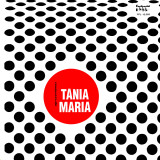
Recorded live in one session at age 18, this album helped launch Tania Maria's career as an acclaimed Brazilian jazz artist, celebrated for her virtuoso combination of piano and vocals. Produced by Romeo Nunes (Meirelles e Os Copa 5, Rio 65 Trio, Elis Regina, Elza Soares), the album features the pioneering Edison Machado, who transformed samba and was instrumental in the development of Bossa Nova through his groundbreaking "samba no prato" (samba on the cymbals) technique. His work helped shape the sounds of Jobim, Getz, and Milton Nascimento. On guitar is the legendary Neco, who played on over 500 albums. Initially self-taught, he later studied under maestros Guerra Peixe and Moacir Santos. He collaborated with icons like Elis Regina and Chico Buarque, and was a member of Os Ipanemas, Os Catedráticos, and Os Gatos. His solo work includes Velvet Bossa Nova (1966), which became an acid jazz favorite. The album features compositions by Caetano Veloso and Marcos Valle,alongside early samba classics.
Blending Brazilian rhythms with elements of samba, bossanova, and jazz fusion,it captures the early development of Tania Maria's signature style. Born in São Luís, Brazil in 1948,Tania Maria began playing piano at age seven. She learned samba, jazz, and chorinho through her father's weekend jam sessions. Leading her own band by age13, she performed across the region while collecting records from influential artists. Though she earned a law degree and started a family,her passion for musicu ltimately won out—she left law to pursue music full-time.
After a five-year hiatus, Times Are Ruff is back, recharged and inspired. This return marks a renewed commitment to the underground, bringing that ruff sound.
The label returns to the wax with the sound they are known for, defined by dusty grooves, ruff rhythms and soulful moods.
This record is for the heads. A proper blend of funk, acid, late-night vibes and early morning moods, that keep the floor moving and the soul intact. Pure, stripped-back house music for those who know.
Times Are Ruff—back in the game, staying true to the craft, and ready to deliver more underground cuts.
Promising label newcomer IGLO returns to Figure with his second EP this year, building on a distinct sonic identity shaped by a background in classical music and live performance. Across five tracks, he further refines his mix of atmospheric depth, precise rhythms, and melodic nuance.
This time, his own voice takes on a more central role, adding a personal and expressive layer to the productions. On opener Computed Love, restrained, longing vocals blend into squelchy synths and minimal grooves - hauntingly beautiful, yet gritty with rumbling machine funk. Determined follows with a more menacing tone, its sharp percussion cutting through a bleak, shadowy atmosphere - perfect for building tension on the floor.
On the flip, IGLO switches up the mood: Enter the State runs on hypnotic loops and chopped-up piano riffs, peppered with cheeky, spoken-word style vocals that nod to ghetto house traditions. It breaks into an irresistible, swinging groove that hits with full force.
Offering a smooth counterpoint, Enlighten drifts into dubby terrain. Soft, ricocheting vocal snippets and warm chords conjure a hopeful, human glow - a bouncy balm for the soul, without losing its forward momentum.
Digital bonus track Find Yourself closes the EP on a spacious, almost sci-fi note - twinkling synths and airy melodies float above crisp textures, like a breath of fresh air at the end of a long night.With X49, IGLO deepens his connection with Figure and sharpens his unique voice - equally grounded in introspection and dancefloor impact, continuing to shape a sound that's thoughtful, bold, and marks him as one to watch.
Fresh from the lab, BLACK PRINT is finally here—a sonic formula meticulously crafted by Detroit’s SCAN 7 to awaken minds and ignite souls. This release delivers five distinct tracks, including a collaboration with acclaimed Detroit DJ/Producer AMX, aka The AM. Each track is a universe unto itself, bound together by rhythm and energy, guiding you toward a singular truth. To truly grasp the message, dive in. Listen deeply, surrender to the sound, and step into BLACK PRINT.
The legendary jazz bassist Isao Suzuki, revered worldwide for his extraordinary talent, recorded this vibrant session in 1981 alongside his longtime collaborator Tsuyoshi Yamamoto. Now, this rare gem returns on analog vinyl!
Infused throughout with the infectious rhythms of Brazilian music, the album captures a festive spirit brought to life by an all-star lineup including Takayuki Kato, Ichiro Doi, and Donald Bailey.
- A1: Os Ancestrais
- A2: Nao Podemos O Amor Parar
- A3: Debaixo Da Ponte
- A4: As Estacoes
- B1: Musica Faz Parte De Mim
- B2: Minha Melanina
- B3: Safira
Red Vinyl[31,05 €]
Dom Salvador, the unassuming godfather of Brazilian soul music, has left an indelible mark through his unique fusion of jazz, soul, funk, samba, and Brazilian rhythms. His legacy continues with Dom Salvador JID024, produced by Adrian Younge and Ali Shaheed Muhammad. The album honors Salvador’s pioneering sound, continuing the vibrant dialogue between Brazilian and American music and inviting listeners to experience his rich, groundbreaking style.
Das Debütalbum von Leroi Conroy, das zu gleichen Teilen von der Sensibilität des goldenen Hip-Hop-Zeitalters und verlorenen Filmszenen aus den 60er und 70er Jahren geprägt ist, wiegt schwer und hat Jahre der Entwicklung hinter sich. Die ersten beiden Tracks des Albums wurden 2017 als 45er veröffentlicht und in den folgenden Jahren von DJ Premier, Raekwon, Ghostface Killah, Macklemore, Phantogram und vielen anderen gesampelt. Aber nach der Veröffentlichung verbrachte Terry Cole alias Leroi Conroy einen Großteil seiner Zeit damit, sein Indie-Soul-Label Colemine Records zu vergrößern und Platten für andere zu produzieren (Okonski, Parlor Greens, Wesley Bright, BlackMarket Brass, Kendra Morris, Rudy De Anda, Delvon Lamarr Organ Trio, Andrew Gabbard), anstatt seine eigenen zu machen. Jetzt, acht Jahre nachdem viele der Rhythmustracks auf dem bewährten Tascam 388 aufgenommen wurden, erscheint Leroi Conroys Debüt-LP, "A Tiger's Tale". Das Album ist als hypothetischer Soundtrack zu einer alternativen Erzählung von Rudyard Kiplings The Jungle Book konzipiert. Die Erzählung ist das Bestreben des Menschen, die Natur zu zähmen und sie seinem Willen zu unterwerfen... und die Antwort der Natur. Das Album ist eine Mischung aus triumphalen Instrumentalpartituren und absolut düsteren, dunklen und manchmal dissonanten Moodytracks. Das zugrundeliegende Element der Hip-Hop-Sample-Kultur ist durchweg offensichtlich, und es besteht kein Zweifel, dass viele dieser Tracks in den kommenden Jahren geflippt werden. Klanglich reiht sich die Platte nahtlos in die Reihe vieler anderer Colemine Instrumentalisten ein: dreckige Lo-Fi-Drums, schmetternde Bläser, Wah-Gitarre, Hammond-Orgel und jede Menge cineastische Einsprengsel wie Flöte, Nylongitarre und Vibraphon. Das Schlagzeug stammt von Coles langjährigem Mitarbeiter Rob Houk und ist das Rückgrat des Albums. Und mit einigen Beiträgen der Colemine-Künstler Kelly Finnigan und Jimmy James ist die Platte wirklich eine Familienangelegenheit. File Under: To Be Sampled.
- A1: The Kick
- A2: Beats Me
- A3: Windowsill
- A4: I Don't Give Any
- B1: Riding On A Smile
- B2: Lament
- B3: Let's Leave Here
- B4: Do What You Want To Do
You're strolling down an alley in New Orleans or Brooklyn late at night and this sound jumps out at you -- rock & roll, classic rhythm & blues, sung and played with verve, personality, and joy. The dance floor is full. You stroll in and hear sounds that wouldn't have sounded out of place on the legendary Specialty Records of the 1950s and '60s.
Indeed one of the eight cuts onWrite It Down, the new album fromJackson& The Janks, comes from the repertoire of rhythm & blues singer Mamie Perry, first recorded in 1959. The rest areJacksonLynch originals, inspired by his time living and playing music in the Crescent City. Theuniquearrangementsof the band itself have deep roots in NOLA, too, with Matt Bell (Esther Rose) on lap steel, Craig Flory (Tuba Skinny) on bass saxophone and Sam Doores (The Deslondes) sharing backing vocals while trading-off on drums and keys.
Jacksonand the Janks have performed at the Brooklyn Folk Fest, Blackpot Festival (Louisiana), and Oldtone Festival (New York) and did a video session for tastemaker series GemsOnVHS and Jackson a solo session for Paste. Its residency on Fridays in Brooklyn (when they're not on tour) packs the house week after week with fans and folks drawn in by the word-of-mouth buzz and the sound.
- 1: Versailles (Porte De Versailles) - The Modern Jazz Quartet (3.27)
- 2: Angel Eyes - The Modern Jazz Quartet (3.53)
- 3: Fontessa - The Modern Jazz Quartet (11.16)
- 4: Over The Rainbow - The Modern Jazz Quartet (3.57)
- 5: Bluesology - The Modern Jazz Quartet (.09)
- 6: Willow Weep For Me - The Modern Jazz Quartet (4.52)
- 7: Woody N You - The Modern Jazz Quartet (4.26)
The Modern Jazz Quartet, known for its sophisticated and elegant approach to jazz, consisted of pianist John Lewis, vibraphonist Milt Jackson, bassist Percy Heath, and drummer Connie Kay
Here are Some key points about the album: "Fontessa" is regarded as one of the Quartet's essential recordings, praised for its elegant performances and refned compositions. The album refects the commitment to creating jazz that is both accessible and artistically ambitious. Critics and jazz enthusiasts often highlight the interplay between Milt Jackson's vibraphone and John Lewis's piano, supported by the solid rhythm section of Percy Heath and Connie Kay. The title track "Fontessa" is a suite in several movements, showcasing the band's ability to merge different musical themes seamlessly; the album includes notable covers such as "Angel Eyes," "Willow Weep for Me," and "Over the Rainbow" all of which are given the Modern Jazz Quartet unique treatment with a mix of lush harmonies and sophisticated improvisation. The album, released in 1956, signifcantly contributed to the evolution of jazz by demonstrating that it could be a serious, artful genre capable of sophisticated expression. The Modern Jazz Quartet infuence extends beyond jazz to classical and popular music, and "Fontessa" remains a testament to their innovative spirit and enduring appeal, a key album in their discography, exemplifying their unique sound and artistic vision.
- A1: I’m On The Wrong Side
- A2: Step In Time
- A3: Drucilla Penny
- A4: Strip Club
- A5: Dominance And Submission
- A. G.h.m
- A7: Someone Wants You Dead
- B1: Lock Yr. Room
- B2: Me And What Army
- B3: Straw Man
- B4: Acupuncture
- B5: Squirm Test
- B6: Stones Of Judgement
- B7: Owl Business
- B8: Blow The Smoke Away
"World of Pooh immensely brightened the dark corners of San Francisco, California during the years 1983-1990, with their most recognized guise being the MMF trio that existed & thrived during the years 1986-1990. This is the lineup you’ll hear documented on this exceptional collection of 45s, compilation tracks and assorted ephemera. The band has ranged from being a footnote for some (“is that the band Barbara Manning was once in?”) to a fondly-regarded memory for others (“the Land of Thirst album is a forgotten classic”) to a turnstile, door-opening band for still others — like me. They arrived in my life as they were slowly exiting theirs, and I eagerly attended a half-dozen shows of theirs circa 1989-90 around San Francisco moments after I moved there. They were instantly my favorite local band, one I was instantly duty-bound to see whenever & wherever they played. Their jagged and discombobulated take on underground pop music was exceptionally fertile, feral and fetching, and it served as a personal gateway drug that flowered my own appreciation for many different kinds of subtle musical tension.
I also spent at least five glorious years watching Jay Paget, who drummed for World of Pooh and later the Thinking Fellers Union Local 282, ply his rhythmic trade with much aplomb. He was always a steady hand behind the musical wheel of innovative bands who often threatened to careen off course. And I’ll admit to an untoward admiration of (and fascination with) World of Pooh founder, guitarist and singer Brandan Kearney from the moment I met the guy. Not only was he exceptionally friendly and welcoming to a carpetbagging interloper quickly trying to horn in on his scene (me), he was at once one of the most quick-witted, self-deprecating, highly intelligent & musically conversant people I’d ever met. Everything he and his band were doing, along with the mind-boggling DIY gunk he was pushing through his record label, Nuf Sed, and via his multiple other bands (among them: Caroliner & Archipelago Brewing Company, with several more to follow), made me extremely curious and not a tiny bit jealous about these wiser, weirder and musically more daring freaks who were making art, love & war in the relatively grittier & non-gentrified San Francisco of the day.
What I’ve learned in the 35 years since the band broke up is just how highly regarded they were (and remain) by not only those who saw them, but by a now-considerably larger group of humans who’ve subsequently heard & loved their records. I know that their place in the late 1980s was a small but special one, and I’ve seen plenty of online clamoring for more, more, more about this ephemeral and poorly-documented band. And rightly, here it is, lovingly assembled: their two hard-to-come-by 45s, a handful of comp tracks, and a quartet of phenomenal songs just coming to light for the first time, including that Half Japanese cover that dimly existed in my memory as a live song they naturally pulled off with sangfroid, from a time and space when we were all a little younger. - Jay Hinman"
Reissue of in-demand Italo title, with accompanying edits by Hysteric. "For the much-requested 12'' reissue of Roaring Mosquitoes, Best Record followed the hint by a die-hard German researcher and esteemed DJ of 'hidden musical treasures' Frinda Di Lanco. Further enriching this reissue - masterfully remastered by Dom Scuteri - with two of his splendid edits is the Australian DJ-producer George Hysteric, one of the world's leading authorities and a leading figure in Italo Disco. The juxtaposition of the two songs performed with grit and physicality by Agostina Casalino and her cousin Antonietta Casalino (aka Roaring Mosquitoes) highlights two aesthetically and rhythmically similar approaches, albeit with different roots and inspirations. "You Aren't With Me" has the merit of not wanting to reinvent the genre, but exploits the familiarity of pop-dance forms, obtaining an immediate catchiness. The piece stands out for its linearity while reworking melodic mechanisms typical of the 80s new wave: short instrumental intro, well-defined verse-chorus, obsessive repetition of melodic hooks that make it an immediate and "dragging" song on the dance floor. The arrangement focuses on a solid electronic drum groove, sinuous basslines, clean guitar riffs, "cutting" keyboards and the use of the chorus typical of the Italo Disco of those years. Some passages recall the melodic line and rhythmic progression of "Tonight... Crazy Night", an intriguing song that the Canadian artist Dorine Hollier created in 1984 at the Titania Studios in Rome with Pierluigi Giombini. Even with "Ah Ah Ah Ah" which features a vibrant and cheerful sound there's a playful use of citation for some idea that Diego Pepe took from a Micky & Joyce track. It evokes the "space disco" spirit of Jean-Pierre Massiera and the influence of the French scene of 1979: polyphonic synthetic strings, echo effects on electronic hi-hats and a vaguely futuristic atmosphere, but with an even more captivating sound revitalized with more scratchy modern touches and compressed basslines. A mix of vintage and contemporary that enhance its charm."
LTD Repress !
LIZZ is back on PlayedBy with Chapter II, a compilation of new and unreleased artifacts and other treasures from his dense catalog. Diverse and expansive, it captures his versatile musicianship and ever-evolving production style.
Broadly speaking, there are two types of tracks produced by LIZZ: on one hand rallying for the right to party, and on the other, nostalgic odysseys, sometimes lustful and sometimes wistful. Chapter II has a bit of everything. Thirteen tracks of club heat varied narrative that is worth listening to carefully.
Opener "Seamless" and its steady snare keep spirits high while the spacey keys provide a trippy, out-there vibe. On the flipside, "Clasic Dewan" uses elements we've heard before - warm pads, a percussive organ, and a looped vocal sample - but still makes for a great dancefloor track. Both tracks are a throwback to LIZZ's tried and true Terrafirma.
"Cynelmoon" unravels a labyrinthine universe twisting in and out of misty existence, with its snake-like rattles winding through a maze of synth bleeps.
Refreshing and zippy, "Dip Si M" stands out as a gritty reinterpretation of a great space and sounds like the most fun he's ever had on record. On the other hand, "Chemical Chords" is ethereal, meditative, with a hushed musicality that is almost stoic.
LIZZ takes the listener on a journey of vertiginous peaks and deep valleys as he leads "Round Around" into spiraling locked down looped club music.
Listening to "Nothing with Nothing" feels like a video-game on its own. It’s a bundle of joy and energy, peaking with a crescendo of color.
On "69" the energy builds with such careful, gradual restraint that even the most active listener might wonder how they ever got to this point. Chopped up shards of melody and vocals combine to create a kaleidoscopic funhouse with a strong Perlon-esque flavour.
"Roaki" is the dreamy track with an irresistible groove, where LIZZ combines smooth synth pads with dubby and distorted electronic drums that add a sense of cyberpunk feel, reconfirming's Playedby's fanaticism for this project.
A bubbling, percussive roller marks the beginning of "Jazzohub" and skyrockets from there. The track hits with an inviting vocal that dissolves into a fluid swirl of layered hand drums.
"No More High" is a a real banger. This one bounces hard with a bass-heavy beat and a military snare, leaving you no choice but to tip-toe with its groove all night long.
Chasing an ever-vivid muse,"Electronic World" hits with its drumming rhythms, labyrinth of synth bleeps and bold vocals reminiscent of tunneling club nights.
Closing track "I Am Cross" brings an unusual kind of dark atmosphere to the fore: it's cavernous and enveloping, almost as if the rhythm was an afterthought.
Chapter II is every bit as ambitious as its predecessor. Across thirteen tracks, LIZZ approaches the dancefloor forms of his earlier work with a fresh and voluptuous groovy attitude. Somehow, individually, we must reclaim our own experience.\5
The German steel pan outfit has amassed a collection of 7s on the label that are all essential pieces in DJ boxes around the world.
The A side "Nautilus" is a cover of the Bob James uber classic that has been sampled by hip hop more times than maybe any other record. It is a DJ staple that has soundtracked many a dance floor and breakdance cypher. Bacao's version is a welcome new take on the tried and true original.
The B side is their cover of the Khruangbin cult classic "Maria También" and Bacao give the original version a run for its money. Steel pans ride over chunky drums to great effect and make this another must have for DJs around the globe
- A1: Blue Rondo A La Turk
- A2: Strange Meadow Lark
- A3: Take Five
- B1: Three To Get Ready
- B2: Kathy's Waltz
- B3: Everybody's Jumpin
- B4: Pick Up Sticks
- B5: Audrey
Part of the Jean-Pierre Leloir 180 gram vinyl Collection, Time Out, released in 1959, was an unusual album from the start. While most tunes in occidental popular music are in 4/4, alternating with the 3/4 waltz form here and there, Time Out was devoted to rhythms that had never been previously heard in jazz.
Most of the songs were composed by Brubeck himself. However, one of the most catchy melodies, “Take Five”, was a Paul Desmond composition, and it would become the quartet’s most celebrated tune. “Dave Brubeck’s defining masterpiece,Time Out is one of the most rhythmically innovative albums in jazz history”, wrote Steve Huey in All Music Guide, giving the album five stars.
Brera Groove returns with its second vinyl release, Brera Groove 002, a various artists collection blending late ’70s disco with the early shimmer of Italodisco. Brera Groove, curated by Tamati and inspired by the artistic soul of Milan’s Brera district, expands here with contributions from Luksek & Lucio Balla, The Rejected, and Lillo Carillo, each bringing their own twist to the sound. Grooves, rhythms, and sparkling synths drive an EP made for the dancefloors, echoing the elegance of clubs, cocktail bars, and the neon charm of 'Milano da Bere'.
- A1: How About You
- A2: Once In A While
- A3: Chekeetah
- A4: Alone Together
- A5: Chet
- B1: Dinah
- B2: Tasty Pudding
- B3: Anticipated Blues
- B4: V Line
- B5: Exitus
This album released in 1957 showcases Chet Baker's trumpet skills alongside Bobby Jaspar on tenorsaxophone. The recordings for the album took place between October 25, 1955, and February 10, 1956, at Studio Pathe-Magellan in Paris and features a mix of cool jazz and bop styles with tracks like "How About You," "Once in a While," and "Alone Together." The ensemble of musicians on this album includes notable names such as Jean-Louis Viale on drums, and Benoit Quersin on bass; the album highlighting Baker's distinctive trumpet tone and his collaboration with talented European musicians: "I Get Chet" is a significant work in his discography and reflect his mastery in the cool jazz and bop genres. The tracks are characterized by its relaxed tempos and lighter tone, and bop, known for its complex rhythms and harmonies, it is praised for its lyrical and cool jazz elements. For this and other reasons and considered a gem from Chet Baker's Paris sessions, showcasing his talent during a pivotal time in his career.
SIDE A. J. Diggns - Saturday Salsa with sizzling brass, deep pocket percussion, and a groove that’s pure motion. Whether you’re rocking the decks or rolling at the rink, this one brings that feel-good energy straight to your soul. It isn't Saturday without the "De La Brilla", Glow in Spanish —
SIDE B. King Most – BALLA EDIT From Radio Havana to West Africa, the spirit of Latin rhythm crossed oceans, bouncing oc antennas and into the soul of a continent. On BALLA EDIT, King Most channels that deep cultural echo—an infectious blend of clave, funk, and highlife sensibilities, flipped with modern finesse and analog warmth. Made to ride at block parties, or sets where borders blur and rhythms rule. Global grooves, rooted deep. Pressed heavy. Played loud