Long-time NuNorthern Soul contributor, B.J. Smith is a man in demand, dividing his time between solo work, playing guitar in Crazy P man James Baron’s popular JIM outfit, collaborating in a variety of well-regarded projects (Smith & Mudd, Bison and White Elephant amongst them) and composing for TV. Due to this impressive list of musical commitments, solo releases have been few and far between of late, with Smith’s most recent NuNorthern Soul release, a stripped back version of his Big Sur single, dropping late 2023.
It's been ever longer since he delivered a volume in his popular and ongoing Dedications To The Greats series, where the singer-songwriter and composer successfully turns his hand to other people’s songs. Since debuting the series on NuNorthern Soul in 2013 via revelatory and inspired covers of tracks by Mos Def and the Pharcyde, Smith has covered cuts by Outkast, Prefab Sprout and Soul II Soul.
On volume four, Smith’s first volume in the series for five years, he delivers a “cover of a cover” – a revolutionary and imaginative interpretation of Billy Swan’s ‘Don’t Be Cruel’, itself a version of a song first made famous by Elvis Presley. It was their mutual love of Swan’s version that brought Smith together with the release’s most prominent guest artist, Joe Harvey-Whyte, whose lilting, bittersweet and deeply emotive pedal steel performances can be heard across the EP.
Smith provides three contrasting takes. The EP is led by the ‘Mother Earth’ version, a slowly unfurling epic in which waves of effects-laden pedal steel and sun-splashed picking acoustic guitars usher in Smith’s eyes-closed vocalisations, settling into a groove reminiscent of his collaborative work with long-time friend and collaborator Paul ‘Mudd’ Murphy that showcases Harvey-Whyte centre stage to joyful effect. As the 14-minute epic progresses, we’re treated to long, languid electric guitar solos, percussion-laden slow-motion builds and hazy, stretched-out organ solos. It’s a breathlessly brilliant concoction that’s a million miles away from either Swan or Presley’s versions.
In contrast, the similarly epic ‘Earth Heart’ version – available in full vocal and instrumental takes – pushes the song front and centre. Following an extended build up, where Tamar Osborn’s gorgeous and fluid flute motifs rub shoulders with languid guitar solos and Harvey-Whyte’s pedal steel, Smith takes to the mic, delivering an emotive performance of the song’s heartfelt lyrics over a hushed, slow-motion groove. The track builds in waves as it progresses, with Smith layering up instrumentation as it rolls towards a fine conclusion.
Completing a superb package is the ‘Root Heart Version’, a Balearic-meets-Americana take built around shuffling drums, toasty bass guitar, extended pedal steel instrumentation, flashes of flute and Smith’s sun-bright acoustic guitar. Loved-up and more than a little saucer-eyed, it’s a bona-fide sunset delight.
Search:the sauce
- A1: Demons In The Dark - Money Man & Key Glock
- A2: Magnum P.i. - Larry June
- A3: Rules - Sauce Walka (Feat. Bossman Dlow)
- B1: Let’s Go - Key Glock
- B2: Ballin - Lil Yee & Lil Pete
- B3: Grab Yo Skates - Babytron
- C1: Wave - Asake & Central Cee
- C2: Legacy - Babyface Ray & Doughboy Clay
- C3: On Point - Lucki
- D1: 2 Million Up - Peezy
- D2: Triangle Offense - Albee Al, Dave East, Millyz
- D3: Nothing Is Forever - Haarper
- D4: Player’s Holiday ‘25 - P-Lo, Larry June, Saweetie, G-Eazy, Larussell, Kamaiyah, Thuy, Ymtk
EMPIRE, the nation’s leading independent record label, recently teamed up with the NBA 2K video game to provide the soundtrack for Season 2 of its series in October 2024. The soundtrack was a natural pairing of the two iconic Bay Area based companies to push culture forward through music, sports, and gaming. The 2 LP Box set, which includes music from the likes of Larry June, Key Glock, Money Man, LUCKI, Asake & Central Cee, and more is housed in a premium box with glossy, hardwood floor print on the outside, and a basketball textured inner box will also include a mini-satin championship banner, a custom basketball keychain, and virtual currency for in-game purchases.
Custom outer box with high gloss print
Custom inner box with basketball texture and debossed print
1 Red Smoke Vinyl in jacket
1 Blue Smoke Vinyl in jacket
16.5” x 10.5” custom satin championship banner
Custom basketball keychain
35,000 Virtual Currency for in-game purchases
Featuring music from Larry June, Key Glock, Money Man, LUCKI, Asake & Central Cee, and more
There's no denying that 3 Chairs sole self-titled album, first released in 2004 and now reissued in a fresh 2025 edition, is a high watermark in Detroit electronic music culture: a decidedly dusty and ultra-deep collective endeavour from Motor City heavyweights Kenny Dixon Jr (AKA Moodymann), Malik Pittman, Rick Wilhite and Theo Parrish that somehow managed to sound even better than their respective solo productions. Highlights include the chugging, Rhodes-laden beatdown sweetness of '3 Chairs Theme' (featuring Norma Jean Bell), the ultra-deep and gently jazzy dustiness of 17-minute epic 'Blackbone Waltz', the organic deep house excellence of 'Dance of Nubia' (which sounds like it could have featured on the St Germain album Boulevard) and the sample-rich, slow-motion shuffle of 'Underwater People'.
Fresh off producing a seminal documentary about the origin story of Portuguese rave culture, Shcuro returns to his mother tongue, music, to give us four slices of fresh yet classic Lisbon underground flavour right as the summer sets in. 'Echo Chamber' EP, Para?so's 17th outing, comes with two equally excellent remixes separated by the atlantic: Brooklyn's MoMA Ready and Berlin's Mareena. Side A starts with two tracks first blueprinted this past year as Shcuro prepared a new live set. 'No Expectations' opens the record with a high-paced sweat-breaker that elegantly evokes early rave culture as stabs, funk and feelings abound. A2 'Persistence' follows suit with the work that exudes proficiency: sound design, dub techno learnings and masterful layering all conspire to create a moment of pure techno draw. Closing side A, 'Deviation' pulls some of the previous track's energy even though it's a rework from the artist's earlier unreleased catalogue: another sign that we're talking realness here. Clever percussion and refreshing washes drive us well into dubby territories. 'Suspension' opens the B side, picking up where it left off with the last original: a beautifully produced piece with fleeting mutating stabs that seem to swim alongside us in an imaginary oceanic dancefloor. Liquid, refreshing sensorial motifs seem to underpin this record and that spirit spills into the remix pack, starting off with MoMA Ready's take on 'Persistence', bringing out the rawness in the original while adding a special sauce with Robert Hood-like funky yet minimalistic bleep work. Tresor's Mareena steps in for a centered, dancefloor-geared - but still mysterious - twist on 'Deviation', perfectly rounding up the record with the expertise of a club resident.
- 1: Go Out And Get 'Em, Boy!
- 1: 2You Should Always Keep In Touch With Your Friends
- 1: 3Everyone Thinks He Looks Daft
- 1: 4A Million Miles
- 1: 5My Favourite Dress
- 1: 6Anyone Can Make A Mistake
- 1: 7Nobody's Twisting Your Arm
- 1: 8Davni Chasy
- 1: 9Give My Love To Kevin
- 1: 0Kennedy
- 1: What Have I Said Now?
- 2: 1Bewitched
- 2: Take Me!
- 2: 3Brassneck
- 2: 4Crawl
- 2: 5Dalliance
- 2: 6Dare
- 2: 7Suck
- 2: 8Blonde
- 2: 9Corduroy
- 3: 1Heather
- 3: 2Blue Eyes
- 3: Come Play With Me
- 3: 4Flying Saucer
- 3: 5Click Click
- 3: 6Spangle
- 3: 7Convertible
- 3: 8Montreal
- 3: 9Kansas
- 3: 10Interstate 5
- 3: 11I'm From Further North Than You
- 4: 1Perfect Blue
- 4: 2Don't Take Me Home Until I'm Drunk
- 4: 3Boo Boo
- 4: Deer Caught In The Headlights
- 4: 5Two Bridges
- 4: 6Rachel
- 4: 7I Am Not Going To Fall In Love With You
- 4: 8Science Fiction
- 4: 9Hot Wheels
Vierfaches Vinyl (Frosted White Vinyl Colour) - oder CD-Box-Set, kuratiert von David Gedge, um vier kompromisslose Jahrzehnte The Wedding Present zu feiern. Nachdem sich die Alternative-Rock-Band The Lost Pandas aus Leeds Anfang der 1980er Jahre aufgelöst hatte, beschlossen Sänger/Gitarrist David Gedge und Bassist Keith Gregory, eine neue Gruppe zu gründen. 1985, inspiriert von Pop-Radio, Punk-Frechheit, The Velvet Underground und Davids ehemaligen Schulkameraden The Chameleons, gründeten sie The Wedding Present. Diese Band war - und ist bis heute - in jeder Hinsicht kompromisslos und unerschütterlich authentisch, und so wurde Gedge, ohne es zu beabsichtigen, zu einer legendären Figur der alternativen Musik. Er ist einer der wichtigsten Architekten und Begründer des alternativen Gitarrenrocks und der Mastermind hinter einem der reichhaltigsten, eingängigsten und beständigsten Kataloge der Popgeschichte. Vier Jahrzehnte später, mit 13 Studioalben, 20 Compilation-Alben und einer ganzen Reihe von Singles, EPs, Live-Alben und Radio-Sessions - und weiteren in Aussicht - ist "The Wedding Presen 40" eine feiernde Reflexion dieser komplexen und faszinierenden Band. Erhältlich als vier Vinyl- oder vier CD-Box-Sets, handelt es sich hierbei nicht um eine gewöhnliche Sammlung der ,beliebtesten" Songs, sondern um eine chronologische, akustische Reise durch Albumtracks, Singles und B-Seiten. Das atemberaubende Artwork wurde von Jonathan Hitchen zusammengestellt, der viele der Original-Plattencover der Band entworfen hat, und es gibt ausführliche Begleittexte von David Gedge selbst sowie dem renommierten Musikjournalisten Mark Beaumont NME, Guardian, Independent. Gedge's Kommentare bieten einen einzigartigen Einblick in die Arbeitsweise der Band und einen spannenden Track-für-Track-Leitfaden zur Jubiläums-Compilation. Inklusive 32-seitigem Hardcover-Buch mit ausführlichen Begleittexten von Mark Beaumont sowie Kommentaren zu jedem einzelnen Titel von David Gedge.
[b] 1.2YOU SHOULD ALWAYS KEEP IN TOUCH WITH YOUR FRIENDS [PEEL SESSION VERSION]
[e] 1.5MY FAVOURITE DRESS [LP VERSION]
[i] 1.9GIVE MY LOVE TO KEVIN [ACOUSTIC VERSION]
[n] 2.3BRASSNECK [SINGLE VERSION]
[t] 2.9CORDUROY [LP VERSION]
[z] 3.6SPANGLE [LP VERSION]
[xd] 3.10INTERSTATE 5 [LP VERSION]
[xj] 4.5TWO BRIDGES [LP VERSION]
[xl] 4.7I AM NOT GOING TO FALL IN LOVE WITH YOU [LP VERSION]
[xm] 4.8SCIENCE FICTION [LP VERSION]
- 1: No I Don't Care About You Yeah
- 2: Worm
- 3: I Wanna Get To Third Base With You
- 4: Sidewalk Sidewalk Yeah Yeah Yeah
- 5: (Do You Wanna) Grilled Cheese
- 6: (She Must Not Suspect) I Dig Her
- 7: Ejector Seat
- 8: Destination Saturn
- 94-: Money
- 10: Screamin' Demon Martians Ridin' Go-Karts In My Head
- 11: I Object
- 12: Superball Eyes
- 13: Weird Tattoo
- 14: Goddamn Rollerbladers
- A1: Hosanna (Meridian)
- A2: First Born (Redeemed)
- A3: When Angels Speak Of Love
- A4: Doubleupptown (Larocque)
- A5: W-I-S (Above Every Other)
- A6: Pistol Poem (Leadbelly)
- A7: Whip Appeal (Pipn8Ez)
- A8: Seven Trumpets
- A9: Giz'aard ($Uckets)
- A10: Helpmeet (Iyadunni)
- B1: Flir2A
- B2: U&Me (Decemberseventeen)
- B3: Illbethere, 4Everandever
- B4: Alàáfía (Cita's World)
ALTERNATE COVER[27,52 €]
Honour's debut album is a ligament stretching from Lagos to London and to New York, curling across the diaspora and brushing the darker hues of blues, hip-hop, free jazz, ambient, gospel with Christian mythology and Yoruba folklore. As cinematic as it is painterly, Alàáfíà is a meditation on themes of life, death and love that pulls inspiration from the unexpected poetic profundity of casual conversations, field recordings, literature, ephemera, or personal archives. The result is an impressionistic vision in Black and Blur that both exhausts and implicates language_substantiating a mythos proposed by Fred Moten that sublimates boundaries between everywhere and nowhere; history and the present; the individual and the universal. Alàáfíà delineates a gothic landscape cut by overdriven beats, swooping orchestral blasts, choral bursts and ear- splitting fuzz, where the fleshly and spiritual realms commune. Dedicated to Honour's late grandmother, the title track began to take form after their last embrace and remains steeped in her influence and spirit_a tape-saturated composition that starts in Lagos and ends in London's smoke-stained cityscape, the song's dream-like quality developed out of the artist's grief and PTSD coping with this loss. Beneath the stretched guitar drones and stuttering loops, their grandmother's shared faith bubbles to the surface. "When Angels Speak of Love," borrows its title from two works by Sun Ra and bell hooks, respectively. Sculpting echoes of praise music into disorienting spirals perforated with syrupy DJ Screw-inspired breaks and sharp splinters of melancholic guitar, "When Angels Speak of Love" engages a conceptual dialogue with the spirits of both late thinkers, folding them into Honour's pantheon of ancestral guides. The album's ninth track, "Giz Aard ($uckets)," is a dirge of regimented drums which anchor this somber melody as it whirls into a blizzard of heartache, uncertain if its consequence will be death or eternal joy. The album's sole lyrical offering, "Pistol Poem (Lead Belly)," begins with a darkly humorous bar, "He went thru hell and back/ came back/ 2 get the strap," that swells into a haunting allegory based on the life of Philip "Hot Sauce" Champion. A modern take on the Blues, Honour's lyrics reify the artist's status as a student of both literature and popular culture, crossbreeding the artist's clever wordplay with additional references to Richard Pryor, Robert Johnson, Kelly Rowland & Bryon Gysin. Setting core principles of hip-hop, R&B, jazz and gospel music to atemporal soundscapes and compositions, Honour crafts a record that marinates in its own knotty contradictions. The ghosts that sit on the artist's shoulders have never been more tangible than with this emotive debut.
JUST. LIFE. is FDC's second endeavour after their 2022 debut 'Some Kind Of Wisdom'. The A-side draws inspiration from everyday life. Things that are often overlooked. Birds whistling. Just being somewhere spending time together. Whereas the first 4 tracks open up a can of playful jazz the B-side explores more heavy conceptualizations. Birth and love for a child & the passing of a friend. Life and death. The cyclicity of it all.
Fruit Distro Collective is a project by long-time friends Boris van der Hoff & Tristan Coco. Raised on boombap beats, schooled through Jazz composition and inspired by Afro & Latin styles. Pour some reel-to-reel tape sauce over it et voilá.
- A1: Malavoi - Te Traigo Guajira
- A2: Los Caraibes - Donde
- A3: Tropicana - Amor En Chachacha
- A4: Ryco Jazz - Wachi Wara
- A5: Eugene Balthazar - Dap Pignan
- A6: Roger Jaffort - Oye Mi Consejo
- A7: Les Kings - Oriza
- B1: Les Supers Jaguars - Tatalibaba
- B2: Super Combo De Pointe A Pitre - Serrana
- B3: L'ensemble Abricot - Se Quedo Boogaloo
- B4: Henri Guedon - Bilonga
- B5: Les Aiglons - Pensando En Ti
- B6: Los Martiniquenos - Caterate
In Guadeloupe, many people think that jazz and ka music are like a ring and a finger. To some extent, the same could be said about so called Latin music and the music played in the French West Indies.
Both aesthetics were born in the Caribbean and bear so many connections that they can easily be considered cousins. In constant dialogue, there are lots of examples of their fruitful alliance and have been for a while. The English country dance that used to be practiced in European lounges came to be called kadrille in Martinique and contradanza in Cuba. They both featured additional percussion instruments inherited from the transatlantic deportation. Drawing from shared feelings about the same traumatized identity – later to be creolized – it would be hard not to assume that they were meant to inspire each other. The golden age of the orchestras that graced the Pigalle nights during the interwar period further proves the point. As soon as the 1930s, Havana-born Don Barreto naturally mixed danzón and biguine music in a combo based at Melody's Bar. In the following decade, Félix Valvert, a conductor who was born and raised in Basse-Terre in Guadelupe, also worked wonders in Montparnasse with La Coupole, which was an orchestra made up of eclectic musicians. Afro- Caribbean performers of various origins were often hired on rhythm and brass sections in jazz bands, which used to enliven the typical French balls of the capital. In the 1930s and onwards, Rico’s Creole Band was one of them.
Martinican violinist-clarinettist Ernest Léardée, who would become the king of biguine music as well as the main figure of French Uncle Ben's TV commercials (a dark stigma of post-colonial stereotypes), had musicians from the whole Caribbean sphere play at his Bal Blomet – and they all enchanted "ces Zazous-là" (according the words of Léardée's biguine-calypso piece). In les Antilles (French for French West Indies), music history started to speed up in the 1950s, when trade expanded and radio stations grew bigger. The Guadelupean and Martiniquais youth tuned in their old galena radio sets to South American and Caribbean music. As for the women traders, les pacotilleuses, they bought and sold goods across different islands (the "passing of items through various hands" was thought to be most pleasurable) and brought back countless sounds in their luggage. Such was the case of Madame Balthazar, who once returned from Puerto Rico with the first 45rpm and 33rpm to ever enter Martinique.
Out of this adventure was created the famous Martinican label La Maison des Merengues, a music business she opened and undertook with her husband and which proved to be a major landmark. At the end of the 1950s, in Puerto Rico, Marius Cultier competed in the Piano International Contest playing a version of Monk's Round 'Midnight. He won the first prize and this distinction foreshadowed everything that was to come. Cultier, the heretic Monk of jazz, was quickly praised for writing superb melodies, always tinged with a twist that conferred a unique sound to his music. It didn't take long for the gifted self-taught musician to get to play with Los Cubanos, making a name for himself thanks to his impressive maestria on merengues.
The rest is history. Besides, in the late 1950s, Frantz Charles-Denis, born into the upper middle class in Saint-Pierre and better known by his first name Francisco, went back home after working at La Cabane Cubaine – a club located rue Fontaine where he had caught the Latin fever. Francisco's music was therefore heavily marked by his Cuban cousins' influence, which gave the combos he led a specific style and also led to renewal. Things were swinging hard in La Savane, located in the main square in Fort-de-France. He set up the Shango club close by and tested out the biguine lélé there, a new music formula spiced up with Latin rhythms. Soon afterwards, fate had him fly to Puerto Rico and Venezuela.
As for percussionist Henri Guédon (percussions were only a part of his many talents), he was born in Fort-de-France in May 22nd 1944, the day marking the celebration of the abolition of slavery. As an old man, he could remember that in " his father's Teppaz, a lot of hectic 6/8 music was constantly playing...". In the opening lines of his Lettre à Dizzy, a small illustrated collection of writings published by Del Arco, he highlighted the huge impact that cubop had on him as a teenage boy, around 1960. He eventually turned out to be the lider maximo in La Contesta, a big band steeped in Latin jazz. He was also the one who originated the word zouk to describe music which brought the sound of the New York barrio to Paris. It was the culmination of a journey that started in Sainte-Marie: "a mythical place for bélé, the equivalent of Cuban guaguancó". In the early 1960s, the tertiary economy developed to the detriment of agriculture. Yet rural life was where roots music emerged in Martinique and in Guadeloupe.
Record companies played a major part in the process of Latin versions sweeping across the islands – before reaching everywhere else. Producer Célini, boss of the great Aux Ondes label, and Marcel Mavounzy, both the head of Émeraude records - a firm which was founded in 1953 - as well as the brother of famous saxophonist Robert Mavounzy, were big names to bear in mind. Although there were many of them - all of whom are featured on this record - Henri Debs was definitely the major figure in the recording adventure. He proved to be so influential that he even got compared to Berry Gordy. In the mid 1950s, when he acquired his first Teppaz, he worked on his first compositions: a bolero and a chachacha. Then, he became the one man who made people discover Caribbean music, from calypso to merengue. He was among the first ones to rush out to San Juan, Puerto Rico, to buy records and distribute them through a store run by one of his brothers in Fort-de-France. He had members of the Fania All Star come and perform there, which he was madly proud about. He was also the first one to pay attention to Haitian music, such as compas direct and various other rhythms which would soon flood the market. As a result, many of the combos hitting his legendary studio would end up boosted by widespread "Afro-Latin" rhythms. However, he never denied his identity: gwo ka drums were given a major role, although they were instruments which had long been banned from the "official" music spheres. The present selection bears witness to such a creative swarming. Here are fourteen tracks of untimely yet unprecedented cross-fertilization: all types of music rooted in the Creole archipelago have found their way, whatsoever, to the tracklisting. Whether originating from the city or being more rural, they all go back to what Edouard Glissant, in an interview about the place of West Indian music in the Afro-American scope, called "the trace of singing, the one which got erased by slavery." "It is so in jazz, but also in reggae, calypso, biguine, salsa... This trace also manifests through the drums, whether Guadelupean, Dominican, Jamaican or Cuban... None of them being quite the same. They all point to the idea of a trace, seeking it out and connecting to each other through it. This is the hallmark of the African diaspora: its ability to create something new, in relation to itself, out of a trace. It may be the memory of a rhythm, the crafting of a drum, a means of expression which doesn't resort to an old language but to the modalities of it." The opening track features one of the emblematic orchestras of this aesthetic identity, criscrossing many music types from the archipelago. The 1974 Ray Barretto guajira – Ray Barretto was a major New York drummer influenced by Charlie Parker and Chano Pozzo – is magnificently performed by Malavoi, a legendary Fayolais group (i.e from Fort-de-France). Additionally, the compilation ends on a piece by Los Martiniqueños de Francisco. It symbolically closes the circle as it is a genuine potomitan of Martinique culture which also functions as a tireless campaigner for Afro-Caribbean music. Practicing the danmyé rounds (a kind of capoeiria) to the rhythm of the bèlè drum, it delivers a terrific Caterete, a kind of champeta of Afro- Colombian obedience which was originally composed by Colombian Fabián Ramón Veloz Fernández for the group Wgenda Kenya. The icing on the cake is Brazilian Marku Ribas, who found refuge in Martinique in the early 1970s, bringing his singing to the last trance-inducing track. These two "versions" convey the whole tone of a selection composed of rarities and classics of the tropicalized genre, swarming with tonic accents and convoluted rhythms. It is the sort of cocktail that the West Indians never failed to spice up with their own ingredients. For instance, the Los Caraïbes cover of Dónde, a famous Cuban theme composed by producer Ernesto Duarte Brito, has a typical violin and features renowned Martinique singer Joby Valente and his piquant voice.
The track used to be – or so we think – their only existing 45rpm. The meaningful Amor en chachachá by L'Ensemble Tropicana, a band which included Haitian musicians among whom was composer and leader Michel Desgrotte, also recalls how Latin music was pervasive in the tropics in the mid-1960s. They were the ones keeping people dancing at Le Cocoteraie in Guadelupe and La Bananeraie in Martinique. Around the same time, another "foreign" band, Congolese Freddy Mars N'Kounkou's Ryco Jazz, achieved some success on both islands by covering Latin jazz classics – such as their adaptation of Wachi Wara, a "soul sauce" by Dizzy Gillespie and Chano Pozo whose interweaving of strings and percussions can have anyone hit the dancefloor. How can you resist Dap Pinian indeed, a powerful guaguancó by Eugene Balthazar, performed by the Tropicana Orchestra and published by the Martinique-founded La Maison des Merengues? It also acts as a symbol of the maelstrom at work. Going by the name Paco et L'orchestre Cachunga, Roger Jaffory used to play guaguancó too: his Fania-inspired Oye mi consejo is one example of his style. Baila!!!!! Dancing was also one of the Kings' focus points. Oriza is a Puerto Rican bomba and a "classic" originally composed by Nuevayorquino trumpeter Ernie Agosto, which reserves major space for brasses, giving it a special sheen.
Emerging from the New York barrios crucible was also La Perfecta, a Martinique group originating from Trinidad, whose name directly references the totemic Eddie Palmieri figure as well as his own band, also called La Perfecta. Here they borrow Toumbadora from Colombian producer and composer Efraín Lancheros and interpret it by emphasizing percussions, which set fire to the track even more than the wind instruments. The same goes for Martinique's Super Jaguars, who use Tatalibaba – a composition by Cuban guitarist Florencio "Picolo" Santana which was made famous by Celia Cruz & La Sonora Matencera – as a pretext for sending their cadences into a frenzy. In a more typically salsa vein, the Super Combo, a famous Guadelupean orchestra from Pointe-Noire that was formed around the Desplan family and had Roger Plonquitte and Elie Bianay on board, adapt Serana, a theme by Roberto Angleró Pepín, a Puerto Rican composer, singer and musician also known for his song Soy Boricua. Here again, their vision comes close to surpassing the original. In the 1970s, L'Ensemble Abricot provided a handful of tracks of different syles, hence reaching the pinnacle of the art of achieving variety and giving pleasure. They played boleros, biguines, compas direct, guaguancó and even a good old boogaloo - the type they wanted to keep close to their hearts for ever, "pour toujours", as they sang along together in one of their songs. Léon Bertide's Martinican ensemble excelled at the boogaloo which had been composed by Puerto Rican saxophonist Hector Santos for the legendary El Gran Combo.
Three years later, in 1972, Henri Guédon, with the help of Paul Rosine on the vibraphone, tackled the Bilongo made famous by Eddie Palmieri. Such a classic!!!!! And so were the Aiglons, the band from Guadelupe: choosing to execute Pensando en tí, a composition by Dominican Aniceto Batista, on a cooler tempo than the original, they noticeably used a wonderfully (un)tuned keyboard in place of the accordion. On the high-value collectible single – the first one released by Les Aiglons under the Duli Disc label – there is a sticker classifying the track under the generic name "Afro". Now that is what we call a symbol. Jacques Denis
Tasmin - Tezeta
The debut album is a journey through layers of influences connected by the band members bringing the sound of Ethio-Jazz, Afrobeat, Percussion, Dub and Tribal Music with an electronica sauce are interwoven, all mixed together in a delicate balance that creates a cinematic soulful and one-of a kind aesthetic blend from the connection of several worlds
The name "Tezeta" is taken from the well-known Ethiopian musical scale, which served as a major inspiration for the writing. This scale symbolizes nostalgia, longing & love songs and serves as a starting point that resonates a quiet pain and longing for a far away place, but still feels like home. In the case of Hadar and Tushiner, this is a tangible longing and the African sounds are woven into them like a second language
The approach to the production of the album reflects loyalty to the tradition of classic studio recordings that include tape reels, field recordings, African percussion, flutes, saxophone and old synthesizers combined with guitars and drums. Every recorded sound went through a filter of precision, listening, and searching for depth that is both technical and emotional
Their music always takes place in the present, it is a living, open moment, connected at the same time to what is heard in the distance from the winds of the Gulf of the African continent and through the streets of Tel Aviv, inviting listeners into a space where emotion and rhythm move together as one
Eran Hadar guitars, synths, percussion, sound
Eylon Tushiner saxophone, flute, keys
Dror Tshuva bass guitar
Omri Gondor drums
- A1: Flying Saucer Attack
- A2: No
- A3: Somebody's Gonna Get Their Head Kicked In Tonight
- A4: Top Of The Pops
- A5 20: 00 A.d
- A6: It Gets Me
- A7: I Can't Stand My Baby
- A8: I Wanna Be Your Man
- B1: Glad All Over
- B2: (My Baby Does) Good Sculptures
- B3: I Like It
- B4: Getting Me Down
- B5: Cold Wars
- B6: Bad Guy Reaction
- B7: Destination Venus
- B8: Mystery Action
- B9: Twist & Shout
Planet Trip Records is pleased to present Aqua Terra, the latest EP release from Friedrich Trede and Stephan Braun, the respected Munich-based DJ and production duo better known as Rhode & Brown. Since 2010, they’ve racked up a slew of quality releases through Permanent Vacation, Public Possession, Shall Not Fade, and their own Slam City Jams imprint, while playing well-received DJ sets across Europe. Along the way, the two longtime friends have spent the last fifteen years incorporating influences from electro, italo, synth-pop, breakbeat trance, rave music, and ambient into their blend of uptempo house and techno productions.
Shifting gearspeed, Aqua Terra sees Rhode & Brown trying something completely new and unexpected from them: a record inspired by UK street soul, digi-dub, and transatlantic R&B and boogie from the 1980s and 1990s. Beginning with the Loose Ends slanted synthesiser chords and shuffling machine beat of ‘Heart Attack’ and the glossy new jack swing bounce of ‘Passion Sauce’ (both featuring sultry Berlin-based New York singer Marlena Dae), Aqua Terra quickly reveals itself as a treasure chest of heavy tunes. Steeped in love and lust, ‘Heart Attack’ and ‘Passion Sauce’ are essential sing-along numbers for the warm-up and the warm-down.
The exemplar of a groove that keeps on giving, ‘Aqua Terra (Acid Frog Mix)’ is a note-perfect example of digi-dub redone for the 2020s. Keeping us guessing, Rhode & Brown flip the script on ‘Longo Doggo’ by borrowing elements from sampledelic ‘90s turntablism and blending them with a post-disco/electro beat and a slinky bassline for the ages. From there, ‘Multiflora’ sees our protagonists back in a bassy digi-dub mode, before closing things out with an acid breakbeat slanted demo mix of the title track.
- Llego La Banda
- Soul Sauce (Feat. Felipe Fournier)
- Taboga
- La Mucura
- Lluvia Con Nieve
- Mujer Divina
- Salsa Na' Mas
- Bemba Colora (Feat. Chico Raro)
- Ay Que Rico (Feat. José Benjamín)
This isn't your abuela's salsa night - this is CHEO Y LOS CONSENTIDOS DE LA CASA. Funk-forward. Rhythm-obsessed. 100% dance floor approved. Cheo y Los Consentidos de la Casa is a dynamic, funk-infused Latin music project led by Cheo Pardo (of Los Amigos Invisibles). Serving as the house band for a bi-weekly dance night at NYC's Nublu, the group blends salsa, boogaloo, cha-cha-cha, and bolero with psychedelic effects and deep grooves. Their debut live album captures this high-energy fusion, reimagining Latin classics with a modern, electrifying twist that honors tradition while pushing boundaries. Born from a love of vintage Latin soul and the raw energy of NYC's dance floors, Cheo assembled an all-star crew of the city's hottest Latin players to cook up a high-octane blend of salsa, boogaloo, cha-cha-cha, and bolero - all filtered through wah-wah pedals, space echoes, fuzzy guitar solos, and a deep, unshakable groove. The result? A psychedelic, percussive party that's equal parts tradition and funked-out future. Their debut album, recorded live at Nublu, captures the heat, sweat, and sabor of their wildest nights - reimagining classics from Joe Cuba, Willie Colón, Eddie Palmieri, Mon Rivera, and more. Each track is a tribute and a reinvention, breathing new life into the old- school with a cosmic twist, and opening the doors for a whole new generation to feel that sabrosura in their bones.
- Deepmind
- Two Monkeys
- Every Word Said
- Another One Making Clouds
- Hollow Surrounds
- Uncertain
- Watch
- So Long
- In Bed
TURQUOISE VINYL[28,53 €]
Friends since the age of six, most of the album was written and recorded by the pair when they were nineteen. The songs possess all the singular magic of a duo writing and playing together while sounding like a full, sonically charged band. Their debut E.P. track 'Two Monkeys', included here, has a level of shoegazey dirt that will leave many distortion freaks reeling. `Every Word Said' is prog-pop perfection. The title track is as moody as anything by Flying Saucer Attack. 'Another One Making Clouds' evolves over 35 minutes and doesn't stop elevating and surprising. A founding notion of our label was to release recordings made as the musicians' first intended. No `notes' and no re-recording with a `proper' producer in a `real' studio. A noble preference we saw labels like Rough Trade pursuing with The Strokes, The Smiths, The Fall et al.This album is a proud example. And captures something you can't fake. A young band finding an epic, emotional, cinematic sound in their bedroom. Using it in that peculiarly British way to express the wonder, confusion and heartache of being nineteen. Of wanting to be seen and not seen. It's a kind of British `soul' music with ancestors like The Cure, Echo & The Bunnymen, The Jesus & Mary Chain and the original shoegaze bands. Progressive guitar music, channeling deep emotion, a desire to hear something that sounds like how you feel inside. The stuff nobody talks about. Everything Else.
- Wide Awake
- Animals
- Annie Marie
- Gone
- Same Old Story
- Wasting Time
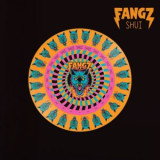
Pressed to limited edition other-worldly Zoetrope picture disc, Shui is the new album from Sydney based punk rock five-piece, Fangz, out via Impressed Recordings.
Since their 2019 inception, the band have released three EP’s For Nothing (2019), But No Thanks (2020), Falling Is Pretty Normal (2022), and a slew of singles, which received strong support from the likes of triple j, triple j Unearthed, Triple M, Spotify, Apple Music, Amazon Music, Metal Hammer (UK), Loudwire (USA), Classic Rock (UK), Metal Injection (USA), Louder Sound (UK), NME, Pilerats, The Guardian, MANIACS and many more.
They’ve traversed the country multiple times selling out headline shows, performing at festivals and sharing stages with the likes of FIDLAR (USA), Pennywise (USA), The Bronx (USA), Cancer Bats (CAN), RedHook, Comeback Kid (CAN) and He Is Legend (USA).
The group have also completed an East Coast in 24 hours, launched their very own line of hot sauce Fang us Some Sauce, an annually curated festival ‘FANGZstock’, and hold the Guinness world record for the most hard-boiled eggs eaten in one sitting by front man Josh Cottreau (143 eggs in three minutes and ten seconds).
Coming into 2025, the quintet have released singles ‘Wasting Time’, ‘Nothing To Lose’, ‘Same Old Story’ and ‘Wide Awake’ from their forthcoming debut album ‘Shui’ (due July 2025), plus have taken FANGZstock on the road, launching the Melbourne and Brisbane contingents.
Following on from the single release of ‘Intentions’, Soul Quest is pleased to present a myriad of remixes alongside a resonating live version of the original cut - and in doing so, serving up a package of lively renditions that add further to the label’s soulful sound.
‘Intentions’ in its original guise was the result of a joint musical adventure from label head Max Sinal, producer and longtime collaborator Kingcrowney, and vocalist Liv East. The track is Soul Quest to its core, with simmering and emotive chords interlaced between a softly spoken yet impactful rhythm section. East provides some inspired vocal work up top, her angelic voice floating through the breeze, shining light on all corners, as the totality of the musical package gives over only the most heartfelt and joyful feels. It seems only fitting that the original track be explored and reconsidered by some of the finest producers currently going, and with this remix album, you see all sides of ‘Intentions’ possible. Up first comes producer extraordinaire Frits Wentink, who takes the atmosphere firmly into the clubbing sphere. Wentink breaks down all the elements with razorsharp precision, drawing focus to the central progression by adding in new, repeating chordal elements that revolve around the kicks. As the track shifts through the gears, lines emerge and grow in stature, with plenty of time for breakdowns to get that full dose of the original’s emotive brilliance.
Dallas based deep house legend, JT Donaldson features next with not one but two remixes, the first of which retains the forward progression of the original but adds in some exciting elements. The addition of the driving bass line gives depth to the undercurrent, with stripped-back sections allowing the flow to meander through some very profound atmospheres. The ‘Dub’ version strips back East’s vocals to draw more focus to the groove and melodic sequences, and as a flip side to the first remix, the duo encapsulates all that could be wished for in a soulful house number.
Flying Moth is up next, with his spin consisting of a more hypnotic approach, with skipping broken drums creating melodic pools and caverns. East’s voice echoes through space and time, enticing further escapism as the track grows and morphs with each passing minute - a beautiful saucerful of sound that is oh so intoxicating.
Finally, to wrap things up, the live version lands to take the energy down to a beautiful canter. The rhythm section takes the form of a full percussive outlay, which speaks gently amidst a sea of exquisite guitar licks, breezy chords, and brass. East is the star of the show here, her voice the anchor within the ever-evolving backing section, which drifts and lulls with a wondrous effortlessness.
‘Intentions’ as a single contained all the sonic qualities which Soul Quest treasure, and with this collection of remixes and live versions, its meaningfulness is only added to. From imaginative takes through to inspired audial environment
- A1: Minor Swing
- A2: Main Titles
- A3: The Story Of Grandmere
- A4: Vianne Sets Up Shop
- A5: Three Women
- A6: Vianne Confronts The Comte
- A7: Other Possibilities
- A8: Guillaume’s Confession
- A9: Passage Of Time
- B1: Boycott Immorality
- B2: Party Preparations
- B3: Chocolate Sauce
- B4: Fire
- B5: Vianne Gazes At The River
- B6: Mayan Bowl Breaks
- B7: Taste Of Chocolate
- B8: Ashes To The Wind/Roux Returns
- B9: Caravan
Chocolat is the 2000 British-American romantic comedy-drama film directed by Lasse Hallström (The Cider House Rules) starring Juliette Binoche, Judi Dench and Johnny Depp. The film’s enchanting atmosphere is brought to life by the original score from Academy Award-winning composer Rachel Portman. The soundtrack features “Minor Swing” by Django Reinhardt and Stéphane Grappelli, and “Caravan”, the 1936 jazz standard by Duke Ellington and Juan Tizol. The soundtrack was nominated for an Academy Award, next to the four other Oscar nominations.
Chocolat is available as a 25th anniversary edition of 750 numbered copies on mint chocolate marbled vinyl and includes an insert.
- A1: Pharoah Jones
- A2: Ghost Gospel
- A3: Ill Feeling
- A4: Capital Punishment
- A5: Do Not Adjust
- A6: Cool Green Trees
- A7: Chill Scratch
- A8: Poisonous Fumes
- A9: Welcome Aboard The Starship
- B1: Keep On Runnin
- B2: Sounds Impossible
- B3: Painted Faces
- B4: The Knew Style
- B5: Chicken Wing Blues Sauce
- B6: Kool Breeze
- B7: Sexx Bullets
- B8: Soul Child
- B9: Take Off Runnin
- B10: Centurian
- B11: Bozack
- B12: Church
- B13: Splash One
- B14: Hank
- B15: 73 Goatee
"Chasing the funky symphonies that filled my head and my dreams..."
December 25th, 2023 - an Instagram post. Stimulator Jones shared half a dozen FIRE tracks from his beat tape archive. We were immediately drawn to the rough hewn boom bap.
"I'd release that", Rob commented.
Hours of material was shared and the result is this: Cool Green Trees (1999-2005). A collection of beats and loops Stimulator Jones created between the ages of 14-20 at home in his basement, bedroom and computer room in Roanoke, Virginia.
You will not believe the profound soulful genius contained within these naive schoolboy melodies.
December 25th, 1998 - 25 years ago to the day and his much-coveted Yamaha SU10 sampler was finally bestowed upon young Stimmy AKA Sam Lunsford: "I immediately hooked up a CD Walkman to the input jack and looped the beginning two bars of Grover Washington Jr.'s "Mercy Mercy Me". I don't know what exactly was so thrilling about hearing two measures of music repeating over and over but it was so infectious and hypnotizing and enthralling to me. I'll never forget that ecstatic rush of making my first loop - an uncontrollable, gleeful smile plastered all over my face." When you hear the pocket breakbeat symphonies featured here on Cool Green Trees, you'll feel the same sense of frisson.
In the wake of his Stones Throw breakthrough - Exotic Worlds & Master Treasures - Stimulator Jones was pegged by many as a 90s throwback artist. However, he literally IS a 90s artist. He's been recording music most of his life and he's now 40. He created the bulk of Cool Green Trees as a teenager. Everything before 2004 was recorded when Sam was still in school. He was in 8th grade when he made the 1999 tracks - he didn't even have his learner's permit. This album is a snapshot of a young man in a simpler time. Things were still mysterious back then and he was flying blind, relying on his ears and having to figure things out for himself: "I had no road map for becoming a beatmaker. I have been collecting music since I was a kid, I am a lifelong digger and seeker of cool and interesting sounds. I was there in the golden age of Hip Hop, and while I may have been a suburban white kid in Roanoke, Virginia, I was tuned in and I bought so many classic albums when they came out. I was attracted to Hip Hop because of the musical and poetic quality. I was hypnotized by the rhythms, partially because I was a drummer. I didn't brag about collecting my breakbeat records or making beats - it was something I did in isolation. It wasn't something I generally wanted to bring attention to and it didn't really score me any cool points. I certainly wasn't flexing on social media about it."
Hell, he can do that now!
Opener "Pharoah Jones" was inspired by Yesterday's New Quintet and Madlib's ability to capture that classic 70s sound whilst playing all the instruments. Sam created this one stoned afternoon by laying down a 2 bar loop and a shaker loop on his Yamaha SU700 sampler. He hung a microphone from the ceiling and played his Yamaha Stage Custom drum kit over the top before adding ender Rhodes and playing his dad's Selmer tenor sax through an Electro Harmonix Memory Man echo pedal. Yes! Up next, "Ghost Gospel" utilises a dope loop from a gospel record and adds some soul-funk drums overtop, whilst working that filter knob. Says Sam: "The loop reminded me of something Ghostface would rap over. The sample was in 3/4 waltz time but I flipped it for a 4/4 groove, a technique I picked up from RZA. "Ill Feeling" uses sped-up pieces from a dusty old funk record and putting them over a classic NOLA drum loop; gain chopping up a slow, bluesy 3/4 time signature and bending it to a 4/4 groove. Classy shit. "Capital Punishment" features drums tapped in live, inspired by MF Doom's Special Herbs series. "Do Not Adjust" consists loops found on a compilation of 70s French music at Happy's Flea Market, a classic Roanoke digging spot.
The sublime, evocative title track, "Cool Green Trees" was created when Sam was still living at home. He dumped samples off his SU10 into the family desktop and arranged them in a demo version of Pro Tools: "This track was sort of my ode to the DJ Shadow style of sample based production. Super spacey, slow, and moody. The heavily filtered drums were inspired by Alec Empire's 'Low on Ice' album. I later added some scratches and sounds from a Spider Man storybook record." "Chill Scratch" snags the final bit of a bossanova record and pairs it with a drum loop before adding experimental scratching run through an Electro Harmonix Memory Man echo pedal. "Poisonous Fumes" was made using a sampler, mixer and a turntable; a kind of mixtape beat collage with added scratches and sounds from various records. Using dialogue from superhero records was a nod to Madlib. "Welcome Aboard The Starship" is dark, downtempo trip-hop with a spooky bent. Sam paired a slow, hard drum loop with a guitar sample grabbed off a psychedelic rock record. To finish, he added various backwards sounds and weird atmospheric effects and a little scratching. Swoon.
Side B opens with "Keep On Runnin", made on a borrowed Roland SP202 sampler. Having always loved the sound of the Lo-Fi filter on those machines, reminiscent of the Emu SP1200, Sam always imagined Del or another of the Hieroglyphics crew rapping over this beat. You can certainly hear why. "Sounds Impossible" sees Sam experimenting with layering multiple kick samples at different volumes to create patterns similar to those heard by Showbiz and Lord Finesse during their God-level 1995 period. "Painted Faces" was made by chopping up a REDACTED record which he had gotten from Happy's Flea Market and paired it with a REDACTED drum loop. By the time Sam recorded "The Knew Style", he had acquired a shitty old 1960s portable turntable off eBay. It didn't function properly when he bought it but his brother opened it up, cleaned it out and got it working: "I remember he told me that there was a bunch of sand inside of it when he opened it up, as if its previous owner had taken it to the beach. I would take that turntable on my Happy's Flea Market digs so I could preview records...that's how I found this loop."
"Chicken Wing Blues Sauce" loops up a classic blues joint and pairs it with some REDACTED drums. A bit of filtering and arranging et voilà! "Kool Breeze", from 1999, is one of Sam's oldest surviving beats, as is "Sexx Bullets". The Roots sampled the same record, leaving Sam frustrated yet vindicated. "Soul Child" was an early SU10 creation, looping a dusty old Soul Children 45 and pairing it with 70s rock drum loops to great effect. "Take Off Runnin" was another loop found digging with a portable turntable. Paired with some boom bap drums it makes for a hypnotic head-nod groove. "Centurian" was intended to be a little beat interlude a la Pete Rock. The sample is from a sun-dappled soft-psych record and it's paired with a Robin Trower drum loop that just happens to fit perfectly. Sometimes you slap things together kind of haphazardly and magic happens. "Bozack" was the first beat Sam made using Pro Tools, his first foray into using chopped sounds instead of loops, an exciting new world. "Church" is beat interlude using a Phil Upchurch loop with the "Long Red" drums - a favourite break of Dilla et al. Sam was really on a tear in late 2004, probably because he was unemployed and phoneless and able to just make beats all day. He made "Splash One" on a borrowed Yamaha SU700 and again was experimenting with tapping the drums in live with his fingers, instead of using a loop or sequenced pattern. Channeling 9th Wonder, Sam used a water splash sound effect from a Batman record as a percussive element, hence the title (also a 13th Floor Elevators reference). The main loop is a backwards portion of one of his favourite Roy Ayers songs.
"Hank" is another fun little beat interlude thing, created on a borrowed Roland SP202 sampler with the fantastic Lo-Fi effect that resembled the Emu SP1200 at a fraction of the price. "73 goatee", from 99, is another of his oldest surviving beats, created in his bedroom with his Yamaha SU10 and his brother's Vestax MR-300 4-track recorder: "This one will always feel special. I can remember having a feeling all the way back then on the night that I created it that this was a solid beat with a catchy loop. There was something in the Fender Rhodes melody that resonated with me emotionally, and I had never heard a producer sample that portion before. I felt like I had found my own unique sound, my own unique loop. It came from an Ahmad Jamal '73. I actually even recorded myself rapping and scratching over this beat way back then, I still have that version in all its imperfect sloppy glory."
Sam explains just how much these tracks mean to him: "They all have immense historical and sentimental value and I'm proud of them. These beats come from an innocent, simple time when I was just figuring out how to craft these sounds. They're something very personal to me. They are the initial part of a journey that I really was taking *alone*. There was no YouTube. I couldn't Google shit. I didn't even know any other beatmakers, producers or DJs in my town that could teach me anything. It was always just me, alone, in a room with some equipment - chasing the funky symphonies that filled my head and my dreams. What I was doing wasn't cool. Most of my peers thought I was a weirdo and couldn't care less. Creating these sounds was an anti-social endeavour. In a sense, I felt like it was me against the world, and all I had to instruct and assist me were the recordings produced by my heroes - RZA, DJ Premier, Erick Sermon, Beatminerz, Showbiz, Diamond D, Beatnuts, Prince Paul, The Bomb Squad, Pete Rock, Q-Tip, E-Swift, Mista Lawnge, DJ Shadow, Cut Chemist, Peanut Butter Wolf, El-P and so many more...I dedicate this collection to them, and to my older brother Joe who has always been a musical and technical guiding light for me.
This was a time before every kid was a self-described producer and beatmaker, before everyone had a DAW, before Kanye and "chipmunk soul", before Red Bull beat battles, before there was any social media beyond chat rooms and AOL Instant Messenger, before Soundcloud, before SP-404 mania, before lo-fi beats to study to, before Splice, before targeted ads for MIDI chord packs, etc. In 99 when I told people that I had a sampler and made beats I was mostly met with bewildered confusion and indifference. Kids and adults alike would wonder why I got this weird machine for Christmas instead of something worthwhile like a Playstation or a mountain bike or even a guitar for that matter because at least that could be used to make "real music". Back then, sampling was still not widely respected as an art form - it was seen as lazy, talentless and unoriginal at best and outright criminal theft at worst. I had gotten respect for playing drums and guitar and things of that nature but this was a step in the wrong direction in the eyes of many."
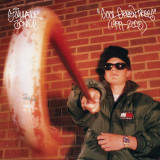
The cover photo is a picture of Sam standing on his back porch in the latter part of 1998, just before he got his first sampler. He was 13 years old, in 8th grade. His dad took the picture with his 35mm film camera: "I actually wanted to be pointing my dad's .22 pistol at the camera lens but he wouldn't let me. He gave me an old walking cane to use instead. The Tommy Hilfiger puffer jacket came from the lost and found at William Fleming High School where my mom worked as a secretary. I was thrilled when she brought it home because we never spent money on expensive name brand clothing like that - we were for the most part strictly a sale rack, bargain bin, thrift store, yard sale, flea market kind of family when it came to clothes. My watch is some cheap off-brand fake gold department store watch." Mastering for this vinyl edition was overseen by Be With regular Simon Francis and it was cut by the esteemed Cicely Balston at Abbey Road Studios to be pressed in the Netherlands by Record Industry.
- A1: Break Ft. Mc Fats - Natural Way (Break Remix)
- A2: Break Ft. Lorna King - Wait For You (The Sauce Remix)
- B1: Break - Headshot (Alibi Remix)
- B2: Break Ft. Liam Bailey - Gunshot Love (L-Side Remix)
- C1: Break Ft. Charli Brix - Lost (Break Remix)
- C2: Break Ft. Sp Mc - Box Clever (Skeptical Remix)
- D1: Break - Don't You Ever Stop (Calyx Remix)
- D2: Break - Another Life (Mefjus Remix)
Break sources some of Symmetry’s favourite producers to remix tracks from the Digital World LP.
With each remix garnering strong club support around the world, they now unite on one release: Digital World Remixes.
The remixes come from some of the best in the scene, including Mefjus, Calyx, Skeptical, The Sauce, Alibi, L-Side, and Break himself, with incredible vocal performances from Liam Bailey, Charli Brix, MC Fats, SP:MC, and Lorna King.
The wait is over: all killer, no filler.