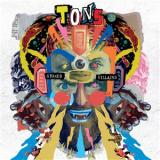
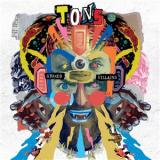
Crave Tapes strikes back with its second vinyl release. Felt Her Knife – an ode to romanticism and betrayal, portrayed by the Greek artist George Core McCall, known as Alpha Sect.
This 6-track EP opens with an invitation to take a step back in time, with a charming introductory descent, like the opening of a post-rock album. A melancholy cry, "Felt Her Knife", follows our journey into the psyche of this EP, driven by Alpha Sect’s sentimental but powerful vocals. "Drowning" merges the boundaries of what is real and what is lost in an ocean of despair. Not all those who wander are lost, and the "Fight in the Light" shows, with its powerful rhythms, that our guidance is within us. The call is stronger than we
sometimes think.
The vinyl is completed with beautiful remixes by the Swedish synthwave legend Tobias Bernstrup and Radondo from Slow Motion Records, adding an extra touch of “dancefloor-oriented” hopelessness and melancholia. Have you felt her knife yet?
Cerca:the sect
The latest in Field Records' run of essential vinyl pressings revisits Stephen Hitchell's 2009 masterpiece under his Variant alias, The Setting Sun. As part of Echospace and also celebrated for his productions as Intrusion and Soultek, Hitchell is considered a leading light in dub techno, with the versatility in his sound to range from rhythmic, physical pulses to purely tonal, abyssal drone. His work as Variant, which debuted with The Setting Sun, capitalises on this scope to deliver a compelling ambient-with-teeth set richly deserving of a proper vinyl pressing.
The Setting Sun first emerged on Echospace as a download-only release. Hitchell was at pains to map out the tools that went into the sound on the album — field recordings of storms in Berlin, Germany and train rides in Narita, Japan, outboard synths and samplers. Crucially, he declared no computers were used, and it shows. When The Setting Sun was recorded, in-the-box production was largely dominating electronic music and the technology had yet to replicate the warmth and character of analogue equipment. Hitchell's looming chords come baked with harmonic overtones, surface noise becomes another essential layer and fragments of distortion add to the narrative of these glacial, monumental pieces.
Hitchell threads his dub techno tendencies in subtle ways, from the kick pattering underneath 'As Time Stood Still' to the quintessential metallic delay ripples that define 'A Silent Storm'. 'Someplace Else' has a defined, albeit delicate, rhythm section guiding its lighter shades of pads and chords. However, drums are never a dominant aspect of the music, simply another layer in an intentionally coagulated whole. At times, flickering tones hint at space where percussion once stood, since muted to leave the wet signal setting a new course for the sound, somewhere far beyond drum duties. The hushed ceremony of tracks like 'Adrift' are the perfect scenario in which to absorb these microfibres of detail, where the genius of Hitchell can truly be savoured.
In line with the limitations of record pressing and Hitchell's proclivity for long-form tracks, 'The Setting Sun' is reserved for the digital edition of this reissue. It's a logical move, as the sound palette widens to encompass tangible, organic instrumentation evolving over the best part of half an hour. The presence of piano keys feels stark in the Variant sound world, but Hitchell ably folds these coded elements into his process bathed in the same curious luminosity that lingers around all his work. Evolving at a painstaking pace, the plaintive humanity in the cascading keys and plucked guitar strings renders one of the most personal expressions in Hitchell's considerable canon — a unique piece that holds its own space comfortably, while also adding to the overall weight of The Setting Sun as a profound benchmark in a stellar discography.
John Andrews has spent the past few years tucked away in Red Hook, Brooklyn - a neighborhood that sits just beyond the natural drift of the city. Once shaped by maritime industry and later a haven for artists in search of vast warehouse space, its history and isolation give it a quiet magnetism. Streetsweeper, the fifth album by John Andrews & The Yawns, reflects that vantage point-tranquil, self-contained, and curious about the movements most people overlook.
Just a few cobblestone blocks from the freight-ship-lined harbor, Andrews wrote dozens of new songs at his electric piano. Nine of them found their way to Los Angeles to be recorded with Luke Temple, who played guitar and some bass. Drummer Noah Bond and bassist Kevin Louis Lareau, both longtime members of The Yawns and Cut Worms, form the rhythm section. Will Henriksen of Florry played fiddle on “Something To Be Said,” while Emily Moales of Star Moles sang harmonies recorded remotely by Kevin Basko at Historic New Jersey.
Red Hook may not be the easiest neighborhood to reach, but that distance gives it a singular glow-one Andrews sneaks into every note of Streetsweeper. The Super 8 video for “Something To Be Said,” shot by Hilla Eden, wanders through its streets like a hazy love letter. The album offers a similar invitation: step off the main road, linger a little, and notice the small, overlooked moments that make a place-and a life-rich. Andrews has swept those margins with care, leaving songs that listen, observe, and stay with you.
John Andrews has spent the past few years tucked away in Red Hook, Brooklyn - a neighborhood that sits just beyond the natural drift of the city. Once shaped by maritime industry and later a haven for artists in search of vast warehouse space, its history and isolation give it a quiet magnetism. Streetsweeper, the fifth album by John Andrews & The Yawns, reflects that vantage point-tranquil, self-contained, and curious about the movements most people overlook.
Just a few cobblestone blocks from the freight-ship-lined harbor, Andrews wrote dozens of new songs at his electric piano. Nine of them found their way to Los Angeles to be recorded with Luke Temple, who played guitar and some bass. Drummer Noah Bond and bassist Kevin Louis Lareau, both longtime members of The Yawns and Cut Worms, form the rhythm section. Will Henriksen of Florry played fiddle on “Something To Be Said,” while Emily Moales of Star Moles sang harmonies recorded remotely by Kevin Basko at Historic New Jersey.
Red Hook may not be the easiest neighborhood to reach, but that distance gives it a singular glow-one Andrews sneaks into every note of Streetsweeper. The Super 8 video for “Something To Be Said,” shot by Hilla Eden, wanders through its streets like a hazy love letter. The album offers a similar invitation: step off the main road, linger a little, and notice the small, overlooked moments that make a place-and a life-rich. Andrews has swept those margins with care, leaving songs that listen, observe, and stay with you.
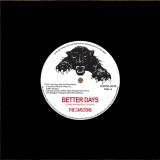
- A1: The Carltons - Better Days
- B1: Lee Perry - Station Underground News
“Better Days” is a strikingly beautiful anthem built around the Carltons’ breathtaking harmonies and a patient, rolling,
minimalist Reggae rhythm made of syncopated drums and a gentle horn section in background, hence serving the
strong vocal delivery even further. Without forgetting the equally beautiful lyrics delivering a powerful message of
resilience, optimism and faith. Beautiful harmonies, minimalist rhythm and uplifting lyrics all together make
“Better Days” one of the Shoes most enduring performances and a Reggae masterpiece that invites to both reflection and musical delight...
“Station Underground News” was in fact the A track on the original 1973 single with Lee Perry credited as “King Koba”.
It is a subterranean journey through Perry’s imagination. Built from a skeletal rhythm track, the piece unfolds as a series of
musical interventions: echoing vocals, fractured percussion, Funky manipulations and more.
This little know tracks capture perfectly Perry’s trademark blend of Jamaican musical textures, off kilter rhythms,
experimentations and unbridled whimsy and creativity…
Enjoy!
Far Out Recordings proudly presents Ladeiras De Santa Teresa, the debut collaboration between Rio-jazz maverick Antonio Neves and carioca percussion master Thiaguinho Silva. In what could well be the first ever Brazilian jazz album centered around two drummers, Ladeiras De Santa Teresa is an uncompromisingly groove-rich recording, steeped in trad-samba roots and brass power.
Since his acclaimed 2021 album A Pegada Agora E Esssa Antonio Neves has remained a mainstay of the international facing Brazilian scene, performing both as a trombonist and drummer. His instrumental contributions to contemporary classics like Ana Frango Eletrico’s Little Electric Chicken Heart, Bruno Berle’s No Reino Dos Afetos 2, and Bala Desejo’s Sim Sim Sim will be marveled upon by future generations. His partner in crime Thiaguinho Silva happens to be the son of percussion icon Robertinho Silva, who has played on more or less every canonical Brazilian record, Arthur Verocai (1972), Clube Da Esquina (Milton Nascimento and Lo Borges, 1972), and India (Gal Costa, 1973) to name barely a few. Thiaguinho himself has worked with Marcelo D2, Gal Costa, Liniker and Alice Caymmi, and upon listening to Ladeiras De Santa Teresa, it’s clear that Thiaguinho is more than a worthy successor to carry the Silva family torch.
Some listeners may already be familiar with “Das Neves,” which appeared on Mr Bongo’s Rio De Janeiro-focused Hidden Waters compilation in 2023. The track showcases the profoundly skilled Neves brothers brass section (Antonio alongside brother Edu, who has performed with Hermeto Pascoal), the fiery elegance of pianist Luiz Otávio (Dora Morelenbaum), and Thiaguinho’s pulsating samba breaks. This synergised combo continues across the album, notably on “Fendas Vocais” with Neves doubling up on drums, exhibiting his inventive and fearless skill as an arranger. The album also features street-artist, musician and rapper Joca, adding vocalised dynamism and swagger to an otherwise entirely instrumental record on “Viagem de Trem”.
The album’s title Ladeiras De Santa Teresa (The hills of Santa Teresa) is named in tribute to Rio De Janeiro’s famed Santa Teresa neighborhood, a bohemian enclave with scenic views of the iconic cityscape. The spirit of Santa Teresa with its expansive city views and bustling energy is embodied in the album which encapsulates the jazz and samba histories felt within the neighborhood’s windy alleyways and cobbled streets.
Ladeiras De Santa Teresa by Neves E Silva is out on vinyl, CD and digital on Friday 20th March 2026.
- 1: Toninho
- 2: Shapeshifter
- 3: Grönbete
- 4: Saga Nomri Ngen
- 5: Monkurt
- 6: Olikheter
- 7: Chime Blues
- 8: Ses Vid Horisonten
April Records proudly presents the new album from Stockholm Stockholm-based bassist and composer Jon Henriksson - a confident and flexible statement that deepens his place within contemporary Scandinavian jazz. Following the success of his 2023 debut Harmonia which placed second in Orkesterjournalen s Golden Album " readers " poll, Henriksson returns with music that foregrounds collective interplay, shifting forms, and a strong compositional voice. Born in Gothenburg and now active across Sweden and Europe, Henriksson has collaborated and toured with artists including Lars Jansson, Hakan Broström, Erik Söderlind, Klas Lindquist, Jonas Kullhammar and Christina von Bülow. Alongside leading his own ensembles, he remains a soughtsought-after bassist in a wide range of projects, balancing a deep connection to the jazz tradition with a modern, exploratory approach. Shapeshifter is built around a core quartet of tenor saxophone, piano, double bass and drums, expanded with guitar on three tracks and trombone on two. The album moves fluidly between contrasting moods, from forceful and driving to reflective and restrained, with each piece shaped by the musicians " intuition and responsiveness. The title reflects Henriksson s compositional philosophy: allowing roles, textures, and forms to evolve as the music unfolds.The ensemble brings together long long-standing musical relationships. Pianist Rasmus Sorensen and Henriksson have collaborated since their studies at Skurups Folkhögskola (Henriksson is a longstanding member of Sorensen s own trio), while drummer Jonas Bäckman forms part of a well well-established rhythm section partnership with the bassist across numerous projects including the Britta Virves Trio. Saxophonist Karl Karl-Martin Almqvist, a member of the Danish Radio Big Band, completes the quartet, with guitarist Pelle von Bülow and trombonist Rasmus Holm joining the session shortly before recording to expand the album s sonic palette where the music called for it. Originally conceived as a quartet album, Shapeshifter took its final shape in the lead lead-up to recording as additional instrumental colours were introduced organically. The piece Toninho , a tribute to Brazilian guitarist and composer Toninho Horta, features acoustic guitar and subtle wordless vocals, reflecting melodic influences that sit naturally within the album s contemporary jazz framework. Across the record, space, pacing, and interaction remain central. Rather than forcing constant motion, the music allows ideas to develop with clarity and intent, resulting in an album that highlights Henriksson s growing assurance as a composer and bandleader, while keeping the collective at its core.
- M.i.a. ( 04:08 )
- Hold Back ( 04:41 )
- Watch It Burn ( 03:05 )
- Master Of A Plan ( 04:47 )
- Torn Again ( 05:31 )
- Can't Withstand ( 05:07 )
- Ruthless Coward ( 04:28 )
- Talking Through Walls - Part 1 ( 03:28 )
- Talking Through Walls - Part 2 ( 04:30 )
- Hope Is Burning ( 04:55 )
Both lyrically & musically, 'VOiD' reflects a disillusionment with a world increasingly defined by division, ideological rigidity & the loss of nuance. The album documents a conscious withdrawal from the noise - a retreat into a personal void. "Metal as well as Rock, from the head as well from the heart" - Classic Rock DE Much of 'VOiD' is driven by frustration with the binary nature of modern discourse, where context & intent are routinely discarded in favour of winning arguments. The record rejects that environment entirely, choosing introspection over confrontation & exploring Darran Charles' (lyricist & vocals) balancing of misanthropy with optimism & isolation with connection.
"Their blend of indie-rock & alternative metal has emotion & depth" - Buzz Magazine The writing process for 'VOiD' was exacting & often punishing, with songs repeatedly reworked in pursuit of emotional impact. Long- standing collaborators Tom Price & Gavin Bushell play a vital role throughout, while the introduction of new bassist Francis George - the band's first line-up change in twelve years - brings a subtle but important shift in the overall feel of the rhythm section.
- Hex's Up
- Hooves And Cloves
- Where Would The Light Go
- Sungate
- Spiderette
- Evil Incarnate
- Wildling
- Treasure Trove
- Raven
- Summon The Sparks
Cassette[15,92 €]
Dread Spectre Council is Kenneth Amundsen"s solo-moniker compiling years of archival demos reimagined and re-recorded. First presented through the debut EP "Dystopia/Eons" (2024) feat. Dale Crover (Melvins/Nirvana/Redd Kross) on drums. Connected to bands like Mindy Misty, Le Corbeau and Izakaya Heartbeat, - He has sneaked around the Norwegian indie scene for the past two decades. On Thetans Kenneth plays all instruments, records and mixes himself in a solitary catharsis. Bringing emotive confessionals, barn-burners and sect nodding psychedelics together in a melancholy-stroked indie rock epos, "unshakably human" as described by Last Day Deaf . A gang of co-conspirators is lurking to join for future releases and tours.
Hidden Spheres is a Rhythm Section mainstay for a reason: having released 3 EPs on the label, he has
developed his sound and fully emerged into a flow state. His residency at Public Records has enabled him to mould an EP perfect for any dancefloor, perfecting a Detroit indebted House style with influences from early Kerri Chandler and Ron Trent perfect for those heads down, hands-up moments.
Delivering 5 tracks that master dancefloor tension, it's difficult to pick a stand out. “Come On, Yeh” harks
back to the New Jersey House sound with dubby organ chord stabs and punchy 909 drums and a sublime bongo loop. “Don’t You Wanna” welcomes the house dancers, with a low-slung, heavily swung groove, resampled pads, and a deep spoken refrain that gives the track its title. Kicking off the B-side “Get Down” hits the subs, with unmistakably phat bass, moody strings and broad use of the iconic M1 organ bass patch “Organ2”. Followed by “I Feel Good” brings police sirens, 808s and swirling pads, to a glorious Deep House tune with a top chime motif that keeps the party moving. The final track of the B side, “You Don’t Know”, takes things down a notch, but maintaining the sublime tension with classic house piano chords and another wicked percussive loop.
Hidden Spheres has returned to his unadulterated House roots, with an EP that stays true to the classic sound. He has shaped an awesome body of work with character from deep spoken word samples, perfect use of dub sirens and grooves that can give any club a reason to invest in bigger
- A1: They Don&Apos;T Know
- B1: They Don&Apos;T Dub (Feat The Poor Man&Apos;S Friend)
PMF006 Has Landed
Poor Man's Friend Recordsproudly welcomes the legendarySylford Walkerto the label with a powerful roots debut single:"They Don't Know."
True to form, this track delivers exactly what you'd expect — and crave — from one of reggae's most iconic and unmistakable Rasta voices. Aheavily saturated drum and bass groovesets the foundation, locked tight with atough, swung Nyahbinghi section. The rhythm is sparse but deeply textured, featuring carefully placedguitars, percussion, and saxophonethat leave room for the message to breathe.
Low in tempo butloaded with low-end weight, "They Don't Know" is a roots statement that resonates. Fans of classic conscious anthems like"Babylonians," "Chant Down Babylon,"and"Africa Homeland"will find themselves right at home.
A heavyweight One Drop. A voice of experience. A message for the times.
Don't sleep on this one.
Out now via Kudos/Poor Man's Friend Records.Catalog number:PMF006.
In a sharp-angled, fiercely inventive reflection on the nature of club culture and digital fatigue, Simo Cell and Abdullah Miniawy reunite to deliver their new album, Dying is the internet, to Dekmantel's UFO series.
French producer Simo Cell has blazed a singular path from his dubstep-influenced origins to become a leading light in contemporary leftfield club music, twisting up adventurous rhythms and flamboyant production in pursuit of a perpetual freshness for the floor. Egyptian singer, poet, producer and composer Abdullah Miniawy has become equally omnipresent in the past 10 years, straddling the arts world and leading with his piercing Arabic lyricism while maintaining an eternally curious spirit that leads into open-ended, experimental music from the abstract to the propulsive.
Following up on their 2020 EP for BFDM, Kill Me Or Negotiate, Miniawy describes their sharply focused new album as "a playful prophecy about the triggers of a new global revolution." Cell considers the title, Dying is the internet, to be a mantra about "how the internet lost its soul," becoming "less about sharing ideas and more about surviving in a digital business ecosystem." Deliberately at odds with the reel-ready two-minute attention span of the average social media surfer (i.e. everyone), the pair set out to make an album that takes its time to reveal nuanced ideas and expressions. Rather than one-note despair for the modern malaise, Cell and Miniawy offer a philosophical reminder that this present moment in the human experience is a temporary phase, no matter how overwhelming it feels.
Dying is the internet finds Miniawy experimenting with auto-tune across the record, while Cell has developed his voice design chops and compositional instincts, moving closer to fully realised song structures without losing the fundamental 'clubbiness' of each track. The result is a cohesive, wildly original kind of heavyweight dance music that slings out hooks left right and centre, from Miniawy's laconic trumpet looming through low-slung 'Reels in 360' and 'Travelling In BCC' to the persistent handclaps that bring 'Living Emojis' to life. Miniawy's poetry explores the power of insistent, repeated phrases in a break from his more typically structured form.
Kenyan powerhouse Lord Spikeheart adds extra snarl to stripped-back, slow-burn opener 'I See The Stadium', but otherwise Dying is the internet is purely the work of Miniawy and Cell casting their considerable chops out into unexplored territory. The results are electric, bound together by a consistent economy of sound that burrows into a shroud of bass-heavy minimalism barely masking Cell's incredibly detailed studio flex. Even the beatless flourish of the Miniawy-produced 'Tear Chime' comes loaded with physicality — a sensory rush at the mid-section of the album bookended by some of the most idiosyncratic club music in recent memory.
Both Simo Cell and Abdullah Miniawy have already proved themselves as fearless innovators across different fields. The strength of their partnership lies in their ability to make space for each other while letting their distinctive sonic identities ring loud and true. Dying is the internet has immediacy and physicality to translate over a soundsystem, but its intricacies are purpose-built for repeat visits and contemplation, unveiling hidden dimensions the deeper you dive into it.
- 01: Bunny&Apos;S Pie (Feat. Bruce Johnson, John Abercrombie &Amp; Chip White)
- 02: Trial N. 5 (Feat. Bruce Johnson, John Abercrombie &Amp; Chip White)
- 03: Dimenticare Stanca (Feat. Bruce Johnson, John Abercrombie &Amp; Chip White)
- 04: Katcharpari (Feat. Bruce Johnson, John Abercrombie &Amp; Chip White)
- 05: Fluid Connection (Feat. Bruce Johnson, John Abercrombie &Amp; Chip White)
- 06: Cheerin&Apos; Cherry (Feat. Bruce Johnson, John Abercrombie &Amp; Chip White)
- 07: Peace (Feat. Bruce Johnson, John Abercrombie &Amp; Chip White)
The breakthrough album. Enrico Rava's second solo record, recorded in Milan in January 1973 and released on the German BASF label, is nothing less than a cornerstone of Italian jazz-rock - the record that caught Manfred Eicher's attention and opened the doors to ECM. Rava himself has called it his breakthrough, and history proved him right.
The lineup is killer: John Abercrombie on guitar, Bruce Johnson on bass, Chip White on drums. Four musicians operating at the absolute peak of early seventies fusion energy - electric, cosmopolitan, burning with that particular fire that only existed in that brief window when jazz met rock and nobody knew the rules yet. Abercrombie, already on his way to becoming one of the most distinctive voices in electric jazz guitar, delivers some of his most ferocious early work here. White's drumming is relentless, pushing the music forward with an intensity that never lets up.
If Miles' Bitches Brew-era speaks to you, if Ian Carr's Nucleus gets you moving, if you know Sun Ra's Lanquidity and Don Cherry's Relativity Suite by heart - this is essential listening. Rava's vision was already fully formed: South American rhythms, Mediterranean warmth, free jazz ferocity, rock power - all flowing together without borders or categories. By the early seventies, Rava had absorbed everything - the New Thing, the European free scene, the electric revolution coming out of Miles' studio - and forged something entirely his own.
The seven tracks cover serious ground. "Bunny's Pie" introduces the music with an almost cosmic atmosphere of suspense, hovering in that liminal space before it trails off into the up-tempo vibrant frenzy of "Trial N. 5" - Abercrombie and Rava trading swirling solos at full intensity, the rhythm section locked in tight. "Dimenticare Stanca" moves from Rava's expressive balladic intro into pure funk, guitar and trumpet steering over the rhythmic drive with absolute confidence. The title track carries the lyrical feel and cadence of an Incan-Peruvian folksong - that cosmopolitan spirit made audible. "Fluid Connection" rides a funky bass riff into fusion heaven, with standout trumpet and guitar solos that build and release with perfect tension. "Cheerin' Cherry" pays homage to the great Don Cherry - Rava's spiritual mentor and fellow traveler in world music - exploring a North African soundscape that points toward the global jazz to come. Johnson's "Peace" closes the album with a minute and a half of serene, blissful calm - a moment of stillness after the storm.
This audiophile reissue - cut from the original masters, pressed by Pallas in Germany on 180gm vinyl, housed in a thick laminated hand-glued gatefold - does full justice to an album that remains a collector's holy grail.
Don't sleep on this one. Limited Edition.
- A1: Welcome To The Mood
- A2: Sundown
- A3: Diamonds
- A4: Missing You
- A5: The Colour Of The Sound
- B1: Dominoes
- B2: Beach House
- B3: Tenderness
- B4: Desert Moon Sky
- B5: One In A Million
They also embraced a more organic, live- recording approach on Welcome to the Mood. The group explains, "Off the back of touring the last album, we had played more shows than ever and wanted to bring more of the live element into the process, so we didn't use drum breaks and loops as much as previous records and tracked live." They continued expanding their sound by bringing in specialist musicians -- string sections, brass, pianos, and backing vocalists -- pushing the sonic possibilities beyond their individual skill sets. Yet at its core, the album remains deeply personal. Written in remote hideaways, the songs carry the tranquility of escape while capturing a newfound confidence in emotional vulnerability.
Thematically, Welcome to the Mood is a rich sonic auditory tapestry woven with threads of authenticity, humanity, and creative celebration. Lyrically, the album explores universal experiences -- love, loss, connection, hope, and purpose -- drawn from the everyday yet rendered in LEISURE's distinct palette of lush tones and laidback groove. Tracks are anchored in realness but elevated by a sonic landscape that feels simultaneously nostalgic and futuristic, mirroring the ethos of Frank Lloyd Wright, whose Taliesin West provided literal and symbolic inspiration during the album's visual journey.
Strut Records highlights a landmark in British jazz-rock with Second Wind, the 1972 album from keyboard visionary Brian Auger and his powerhouse group Oblivion Express. Capturing a fully matured lineup, the record finds Auger expanding his fusion language - bridging jazz sophistication, funk-driven rhythm, and soul-infused songwriting with the clarity and fire that defined his early ’70s work.
Though Auger’s roots lie in the lineage of hard-swinging jazz organ and the improvisational fire of the ’60s British scene, he has never been an artist content with tradition. With Second Wind, he moves further into a hybrid language that fuses rhythm with harmonic depth and groove, without sacrificing sophistication. His playing is expansive yet precise, translating the electricity of live performance into a studio work that breathes with immediacy.
At the heart of this era of Oblivion Express is the telepathic rapport among its members. Vocalist Alex Ligertwood (in one of his earliest major recordings before Santana fame) brings a soulful intensity that feels both grounded and forward- looking. Second Wind contains tracks that have become deeply significant in Auger’s discography - original compositions Second Wind, and Truth to name a few - but it was Auger's high octane revisioning of Eddie Harris' Freedom Jazz Dance, (adding new lyrics to the original instrumental) that genuinely broke barriers. The track became a DJ friendly classic and highlighted the groups deeply original approach.
The rhythm section of Barry Dean and Robbie McIntosh balances weight and fluidity, giving Auger the space to stretch across Hammond organ, Rhodes, and keys with characteristic boldness. Their collective sound is one of seamless motion: jazz-inflected lines swelling into rock-driven crescendos, funk-leaning grooves locking with vocal hooks, moments of quiet clarity emerging between bursts of improvisation.
Second Wind stands as a pivotal moment in Auger’s discography: a record that bridges the exploratory spirit of his earlier projects with the more groove-oriented approach that would soon bring international attention. More than five decades later, it remains a vivid document of a band carving out its own language. Music born of instinct, collaboration, and a restless desire to push beyond the expected.
- A1: Trouble (Instrumental)
- B1: It’ll Get Better (Instrumental)
Emilia Sisco’s single “Trouble” b/w “It’ll Get Better” gets an instrumental treatment by Timmion, crafted by the label’s renowned powerhouse, Cold Diamond & Mink. In the absence of Emilia’s vocals, the instrumental renditions of both tracks offer the listener a fresh perspective to the deep original material.
The shimmering guitar licks of “Trouble” run face to face with the tightly grooving horn section. What starts as a light and melodic stroll in the park grows slowly towards the anthem-like ending.
“It’ll Get Better” drops the tempo down a notch, as the organ glides slowly through the southern-tinged deep soul instrumental.
Cold Diamond & Mink’s seasoned production skills shine through as they infuse these instrumental tracks with their soulful signature touch. If you are looking for a funky background for your day or jukebox, sink your teeth into these analog treats right now.
This is the first release from the label, signed by Lukio (aka Luciano Gentile).
Four tracks built around a constant sense of depth and a clear focus on the dancefloor. The approach is straightforward: solid grooves, controlled saturation, and a sound palette designed for long sets and proper systems.
MPC-driven drums provide a strong backbone, while Blofeld pads and the vintage character of the Yamaha TQ5 add texture without cluttering the mix. The EP moves between minimalist passages and rougher, tech-driven sections, maintaining tension and cohesion throughout.
This record sets the foundation of the project: hardware-driven sound, deep dancefloor functionality, and a long-term vision.
Red Motorbike hits the road in '26 with an original production from Berlin's master of boogie funk LJ Simon!
Givin' Up is a soulful modern funk 7" steeped in warm '80s analogue production and classic groove.
The OG version blends vintage synth textures with a deep, understated rhythm section. Known for his love of fat-sounding vintage gear, LJ Simon begins every song with no blueprint, working purely from sound, instinct, and feel, tuning in to receive what the moment brings. The influences are unmistakable, yet the result feels fresh, intuitive and alive.
Vocals are delivered by Denice Brooks, a formidable singer from Austin, Texas, now based in Berlin. Denice built her solo career while performing with an exceptional list of artists including Tina Turner, Roy Ayers, David Bowie, Nancy Wilson, Natalie Cole, and many others. She is notably the only singer to receive Prince's blessing to record an official cover of 'Purple Rain' - a distinction that speaks volumes about her artistry.
Her career has taken her across Germany, Europe, the Middle East, and South Africa, where she even once performed for Nelson Mandela. Her continued experience across stage, studio, television, and musical theatre shines through in a vocal performance rich in depth and soul.
Label head Eddie C offers up his Disko Mix and reframes the track through a '90s street soul lens; stripped-back, dusty, and perfectly tuned for late-night selectors and heads-down dancefloors.
- A1: Barbour Singers - Don&Apos;T Let Satan Get You
- A2: Selah Jubilee Singers - I Feel Like My Time Ain&Apos;T Long
- A3: Alphabetical Four - Have You Heard About The World Coming To An End?
- A4: Norfolk Jazz &Amp; Jubilee Quartet - This Old World Is In A Bad Condition
- A5: Kentucky Jubilee Four - I&Apos;M Gonna Lay Down My Heavy Load
- A6: Galilee Singers - Singing With The Angels
- A7: Elder Charles Beck - I&Apos;M Going To Walk Right In And Make Myself At Home
- A8: Birmingham Jubilee Singers - Raise A Ruckus Tonight
- B1: Monarch Jazz Quartet Of Norfolk - Somebody&Apos;S Always Talking About Me
- B2: Davis Bible Singers - Do You Want To Be A Lover Of The Lord
- B3: Utica Institute Jubilee Singers - Leaning On The Lord
- B4: Alabama Harmonizers - Holy Unto The Lord
- B5: Birmingham Jubilee Singers - What You Gonna Do When The World&Apos;S On Fire
- B6: New Orleans University Glee Club - The Old Ark&Apos;S A-Movering
- B7: Pilgrim Jubilee Singers - The Lord&Apos;S Prayer
- B8: Royal Harmony Singers - I&Apos;M On My Way To Heaven Anyhow
Tape[16,39 €]
Death Is Not The End present a compilation gathering a cross-section of early gospel choirs and vocal harmony groups recorded between late 1920s and the mid-1950s - a period when spirituals & jubilee traditions merged with blues, jazz and early rhythm and blues, providing the musical routes for the coalescence of the civil rights movement born out of the black church. In the modern world these perennially vital recordings provide a fitting tonic for the near-dystopia we find ourselves living through.
- 1: Private Symphony (Feat. Stuart Murdoch)
- 2: The Cold Collar (Feat. Gruff Rhys)
- 3: Love Is A Life That Lasts Forever (Feat. Molly Linen)
- 4: First Moonbeams Of Adulthood
- 5: Road To The Amber Room
- 6: Hachi No Su (Feat. Saya From Tenniscoats)
- 7: In Portmanteau (Feat. Field Music)
- 8: Irreparable Parables
- 9: Spectators In The Absence Of God (Feat. Kathryn Joseph)
- 10: Soul Enters The Ocean Sun Climbs Out The Sea
White Vinyl[26,26 €]
Very limited numbers, orders will need to be confirmed.
For his new album, Irreparable Parables, Andrew Wasylyk felt a strong desire to write a set of songs featuring an element hitherto rare in his work: the human voice. Equally strong was the conviction that he did not want to sing them himself.
The Scottish multi-instrumentalist and composer set about assembling a group of guest singers, sending out the songs to wherever they were in the world. The vocals were recorded remotely and then, like migrating birds, winged their way back to Scotland. The result is an album of great beauty which, perhaps preeminently in Wasylyk’s work, expresses the vulnerability and resilience of the human spirit.
Six singers appear on the record, represented by six songbirds illustrated on the sleeve by Clay Pipe Music’s Frances Castle. The cuckoo is a nod to Belle and Sebastian’s 2004 single ‘I’m A Cuckoo’, that band’s Stuart Murdoch being the first voice you hear on the new album. When the vocal for ‘Private Symphony #2’ arrived, says Wasylyk, “it was everything that I was looking for and more. But this is Stuart Murdoch. Of course he’s going to make something incredibly beautiful and thoughtful.”
The song lyrics were, for the most part, written by the singers. The music is Wasylyk’s creation. He navigates a sound world that lies somewhere beyond the borders of classical and jazz, ambient and abstract. It is difficult to describe, but easy to understand, which is to say to feel. That is the way Wasylyk’s work is experienced: as a feeling. It takes you back to childhood, perhaps, to feelings of comfort and safety, or to memories of walks at sunrise and sunset, or to the way a shadow falls on a particular field in a particular place at a particular time in your life. This is consoling music. That is why, though pretty, it is not merely pretty. These are songs to shore up the soul.
Wasylyk writes in a room, in his native Dundee, full of “half broken” instruments. He picks these up, plays a little, seeking an idea, a feeling, a door that lies ajar. The musical palette of Irreparable Parables includes brass and woodwind, a six-piece string section, guitar, bass, drums, vibraphone, Mellotron, Fender Rhodes, tape loops, synthesisers and percussion. The strings were arranged by the cellist Pete Harvey, a long-term collaborator.
Among the other guest vocalists are Gruff Rhys of the Super Furry Animals, Saya Ueno from Japan’s Tenniscoats and Peter Brewis from Field Music. Wasylyk himself takes the lead vocal on the title track, though a throat infection and touch of pitch-shifting have altered his singing in a way that even he, having fallen out of love with his own voice, finds acceptable.
The heart of the record can, arguably, be found in two tracks, ‘Love Is A Life That Lasts Forever’ and ‘Spectators In The Absence of God’, sung respectively by Molly Linen and Kathryn Joseph. The former, bright with trumpets, was inspired by the writing of Derek Jarman. “I was feeling deeply upset about the world and wanted to try and write some- thing that was obviously hopeful,” Wasylyk says.
‘Spectators …’ offers an emotional counterpoint. It is an “apocalyptic hymn” that seems to grapple with watching human suffering from afar, too distant to be at physical risk, but experiencing the psychological wounding, and feelings of helplessness, even complicity, that come with constant awareness of other people’s pain. “Kathryn’s a pal, I love her dearly, and she’s a brilliant artist who really feels what she writes,” Wasylyk says. “The cracked tenderness of her voice is spellbinding.”
The album closes with an instrumental piece, ‘Soul Enters The Ocean Sun Climbs Out Of The Sea’, all piano and strings, that offers a sense of resolution and ascension. A good moment, too, for Wasylyk to reflect upon the artistic companionship that he enjoyed while making this record – the songbirds that answered his call: “These humans are incredible at what they do. I’m deeply grateful and feel so lucky. It blows my mind.”
- Phonè
- Turenas
- Stria
- Sabelithe
Dr. John Chowning (b. 1934) is a pioneering computer musician, composer and professor who, in 1967, discovered the FM synthesis algorithm. This breakthrough in electronic music allowed for simple, yet rich timbres described as sounding "real." With this discovery, Chowning composed singular, dramatic electronic music and changed the timbre of music forever.
Chowning utilized the potential of computers to synthesize sounds according to programmed instructions. The composer's use of his own FM algorithms, digital synthesis with computers and the new compositional concepts offered by a programmable musical structure combine to create some of the most original and unique electronic music ever created.
The compositions on this LP were realized between 1966 and 1981 and the music on this LP, with the exception of Stria, was originally released on CD in Germany (Wergo, 1988). The version of Stria included here contains a section not included on the Wergo CD. Thus, this version of Stria is complete. This is the first time these purely digital recordings have been released on an analog medium. The original dynamics of these groundbreaking compositions have been preserved on this LP. As a result, listeners are advised to increase volume with caution.
In 1975, John Chowning founded the CCRMA - Center For Computer Research In Music and Acoustics at Stanford University. Through Stanford, Chowning licensed his groundbreaking algorithms to Yamaha resulting in numerous new instruments including the iconic DX series of keyboards. In 1972, his composition Tureens which is included on this LP, was the first to create the illusion of continuous 360-degree space using four speakers.
Technical Notes:
All pieces on this LP are originally quadrophonic. The illusion of moving sound sources is thus projected from the surrounding environment given by four loud-speakers on the stereo-basis.
STRIA was composed using Chowning’s own program to compile the musical structure into note-lists and MUSIC 10 (by D. Poole/Tovar) to generate the sounds in software-synthesis. The original quadrophonic version utilized 12 bits, two different sampling rates being used to accommodate the enormous amount of data on the magnetic disc-packs available at that time. The original sound-data was processed by sampling-rate conversion and digital mixes to achieve the stereo version presented on this LP.
SABELITH and TURENAS were synthesized originally using Smiths’ SCORE and MUSIC 10. However, their format was changed from direct sound-samples to a command stream for a special purpose computer, the System Concepts Digital Synthesizer, designed by Peter Samson, one of the first large-scale digital synthesizers for real-time sound processing - one was designed for CCRMA in the late seventies. For this recording the sounds were recorded directly from the synthesizer computing the samples in real-time.
PHONÈ was realized with the System Concepts Digital Synthesizer using again Chowning’s own program to create the note list.
The master tape of this LP was made directly from the computer system at CCRMA which generated and stored the sound data in digital format. No analog recording was involved at any stage of the production and editing process.
Julius Hemphill's debut record, 1972's Dogon A.D., was self-produced for his Mbari imprint, and it was issued with a beautiful black-and-white cover. Very DIY. The label's name writ large along the bottom edge, like it was the band's name. It's a quartet record featuring Hemphill on alto and flute, with Baikida Carroll on trumpet, Abdul Wadud on cello, and Phillip Wilson on drums – a classic jazz front line/rhythm section format, but nothing conventional about the way the music sounds.
The long track – from where the LP takes its title – is one of the key epic statements of new jazz in the era. Among its remarkable distinctions, it manages to draw on Wilson's schizoid experience having been a member of the Paul Butterfield Blues Band and the first drummer for the Art Ensemble of Chicago, in making an 11/8 rhythm into a staggeringly funky thing of joy. Over the course of fourteen and a half minutes, Hemphill builds a nearly continuous solo, his spiritual blood brother Wadud sawing the cello with a deep blues soulfulness that is raw and mantra-like in its repetitive incantation. It feels right and wrong in equal measure, the theme carrying its own piquancy with honked barnyard dissonances and some contrary motion between the horns and string. Most of all, it takes its own sweet time, in no hurry to get anywhere in particular, but out for a righteous stroll. – John Corbett (excerpt from the liner notes)
Have Isaac Carter & Callum Asa made the most tasteful tech house EP of recent memory? The short answer is
yes....
Isaac and Callum, known for their respective club nights: OCHI and Planet People have been quietly chipping away at the coalface of underground dance music for quite some time now.
Isaac - perhaps known more widely as a regular at Circoloco & Phonox has shared bills with the likes of Moodyman, DJ Bone, Kai Alce, Laurent Garnier and Marcellus Pittmann whilst being championed by Joy Orbison, Ben UFO, Moxie, Seth Troxler, Raresh and Floating Points to name but a few. With such an impressive CV and wide ranging support, it’s wild to note that the first EP released on his own label, OCHI only came out in 2023. His star is clearly ascending with rapidity - so when we throw long term collaborator Callum Asa into the mix, things start to get really interesting. Calum has been running Planet People for the last couple of years, welcoming incredible names such as Shed, Surgeon, Willow, Ploy, Cooly G, Rroxymore and so many more. Steel sharpens steel and having been surrounded by such esteemed talent, it’s clearly rubbed off on the pair who present 4 polished, meticulously constructed, club ready masterpieces, each with their own distinct feel and an insatiable groove.
‘Feel Me’ sets the scene with a descending baseline that would eek a wiggle out of the most reluctant spectator. The twisted dub eeks out even more groove, locking in a more sinister bounce for the heads. By The time ‘Understand’ get’s into full swing, we’re already under the spell of Carter & Asa, this is the kind of roller that could go on forever and ever. The synth embellishments and washes of analog synth pull us deeper and deeper in, prepping us for the finale , ’Try You’ which simmers with deep, brooding intensity.
The magic of the dup’s appeal is that this EP will find its way into the bags of the deepest diggers and also appeal to a new generation of house fans. Elements of it are accessible , but in the right hands - the EP will open a portal to new worlds.
Welcome to the second instalment of the collaboration between THE REFLEX’ DISCOLIDAYS label and BECAUSE MUSIC in Paris, remixing gems from the ZAGORA catalogue.
Created in 1975 by producer Daniel Vangarde (father of Daft Punk’s Thomas Bangalter), the Zagora label created some of the most exciting disco music in France, ranging from cult underground artists Who’s Who and Starbow, to massive international hits by the Gibson Brothers, la Compagnie Créole and Black Blood.
On this 12’’, we’ve got two first time ever remixes from LA COMPAGNIE CREOLE, one of the most successful acts in France during the 80’s who expertly mixed tropical sounds from the West Indies with pop and disco to staggering record sales.
With tapes thought to be long lost, a chance find of stems from two of their songs not only makes this release possible, but also perfectly showcases two sides of the band with ‘Le Bal Masqué’ which was a huge hit commercially in 1984 and ‘La Nuit Des Requins’ which is probably their least known and most underground track, both masterminded by songwriters DANIEL VANGARDE and JEAN KLUGER.
‘LE BAL MASQUE’, now devoid of its cheesiest sections, puts the focus on that infectious groove adorned with percussions and electronics but with its singalong chorus intact and stronger than ever. A guaranteed tropical disco floor filler at 122bpm, regardless of your knowledge of the French language!
‘LA NUIT DES REQUINS’, an ode to session musicians found regularly in Paris studios back in the day, gets a complete overhaul by putting the exhilarating drums and killer bass line of the original to the fore into a brand new 124bpm version that is destined to rock the most discerning dance floors the world over.
Released on 180g vinyl with custom artwork on card sleeve designed by AL KENT / MILLION DOLLAR DISCO.
- 1: O.c. Life
- 2: 10
- 3: Yur 2 Late
- 4: Everyday
- 5: One Shot
- 6: Falling Out
- 7: Surfside
- 8: It's Doing Something
- 9: Fast
- 10: Section 8
Rikk Agnew's All by Myself is one of those records that feels like a secret you're lucky to stumble upon -- a raw, weird, totally personal snapshot of a restless artist at a pivotal moment. Originally released in 1982 on Frontier Records, the album stands apart from most of what was coming out of Southern California at the time, even though it was born right in the middle of the exploding hardcore punk scene. By 1982, Rikk Agnew was already a big deal underground. As the guitarist for Adolescents, he helped shape the sound of Orange County hardcore with sharp riffs, surf-inflected melodies, and a sense of urgency that became hugely influential. He also played in bands like D.I. and later Christian Death, moving fluidly between hardcore punk, post-punk, and darker, more experimental territory. Agnew wasn't just a fast, aggressive guitarist -- he was a songwriter with range, curiosity, and a strong DIY instinct. All by Myself lives up to its title in the most literal way. Agnew recorded the album largely on his own, playing all the instruments and handling vocals himself. Instead of delivering another straight-up hardcore record, he went inward. The result is a lo-fi, home-recorded collection of songs that blend punk energy with new wave, post-punk, psychedelic touches, and even moments of pop sensitivity. It's rough around the edges, but that's exactly the point -- the album feels intimate, unfiltered, and honest. In the early '80s, Southern California punk was loud, fast, and often confrontational. Bands were pushing against the mainstream and even against each other, racing toward more extreme sounds. While All by Myself shares that DIY spirit, it doesn't fully play by hardcore rules. The tempos shift, the moods wander, and the songs feel more like personal experiments than scene anthems. That made the record a bit of an outlier at the time -- but also what gives it lasting appeal. Frontier Records was the perfect home for a release like this. The label was known for supporting artists who didn't quite fit into neat categories, and All by Myself captured that ethos perfectly. Today, All by Myself is often seen as a cult classic. For fans of early punk, post-punk, or anyone interested in the roots of DIY recording culture, this album is essential listening
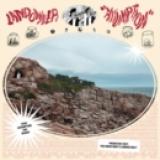
"Western Massachusetts band Landowner play abrasively-clean minimalist punk. Singer Dan Shaw started Landowner in 2016, writing and recording the project's debut Impressive Almanac with a practice amp and a laptop drum machine. Shaw's initial concept was a made-up genre called “weak d-beat”, meant to sound intentionally absurd “as if Antelope were reading the sheet music of Discharge”. When Shaw joined with his current bandmates in 2017, they translated these early experiments in restraint, minimalism, and caricatured hardcore as a live band. This provided Landowner with its own unique set of blueprints: the guitars “slap hard” without using any distortion or effects, the rhythm section is tight, fast, and repetitious, and the song structures make space for lyrics that reflect on the global systems and dark absurdities our lives are tangled in. Comparisons could be made to The Fall, Lungfish, or Uranium Club, but across their five albums, they make it clear: Landowner just sound like Landowner.
Assumption is the band's fifth album. Sonically, it captures the vibrancy and intensity of their live performances. The album title “Assumption” encapsulates the album's multi-layered themes. We make assumptions, taking in information online through an overload of decontextualized snippets and headlines, and then quickly form conclusions, or we allow artificial intelligence to do the thinking for us. Assumption is the sound of a band that established its own musical identity and has reached a place of tightness with an ease gained from years of playing together, sounding mechanically precise and at the same time fully human. It may be the band's most cohesive and fully realized work to date."
raum…musik welcomes Giuliano Lomonte for its 120th release with Moonlight EP — a three-track journey cross-sectioning house and techno with hints of 90’s progressive trance, combining precise rhythmic control, atmospheric depth, and club-focused energy. Tools built for tension, release, and maximum dancefloor impact.
The EP opens with “Drynation”, a ten-minute prog-tech-house roller built on hypnotic grooves, rolling low-end, and evolving percussive patterns and synth textures, locking the floor in with a steady pulse and a masterful play of tension and release. “Moonlight” shifts into deeper, proggy techno territory, weaving subtle percussive motifs over a simple interchanged kick-and-bass foundation. Fluid and restrained, the track unfolds slowly, with minimal drum variations and gently filtered synths, creating an elegant sense of forward motion. Closing the EP, “One Step Ahead” balances stripped-back tribal house energy with rolling grooves, detailed percussion, and warm pads, resulting in a deeper cut that is precise, functional, and full of understated character.
With Moonlight EP, Lomonte confirms his mastery of tension, texture, and subtle movement, delivering a record that reinforces Raum…Musik’s reputation for high-quality, dancefloor-ready music while highlighting his signature blend of rhythm, refinement, and subtle progression.
- 1: Lost Future
- 2: Slow Deep Dive (Intro Version)
- 3: Lonely Choice
- 4: In Motion
- 5: Twisted Plans (Car Park Version)
- 6: Grief Process
- 7: Distorted Idea (Maxi In Prague Version)
- 8: Absent Mind
- 9: Acceptance
- 10: Event Flow
- 11: Slow Deep Dive (Alex Version)
- 12: Deep Dive (Jsk Version)
- 13: Twisted Plans (Red Club Version)
- 14: Strange Love
Political thriller Je Suis Karl, produced by German director Christian Schwochow, has a strong Czech connection. The soundtrack has been created by Czech musician and composer Tomáš Dvořák, a.k.a. Floex, who joined forces with British composer and pianist Tom Hodge. The soundtrack for Je Suis Karl will be released on September 16, 2021.
"In this project, Tom and I built on music that we wrote together three years ago for the album A Portrait Of John Doe. While this was the first feature film for me, Tom has extensive experience with composing music for movies and series," commented Dvořák.
Co-produced by the Czech company Negativ and filmed in part in the Czech Republic, the movie features characters played by Czech actresses Anna Fialová and Elizaveta Maximová. The picture makes use of the story of a young German girl, Maxi, and her family to draw attention to rising extremism among right-wing nationalists. Je Suis Karl was premiered during this year's Berlinale film festival in the Berlinale Special section.
At the director's initiative, music for Je Suis Karl was composed based on the script before the emergence of the COVID-19 pandemic. “Christian Schwochow asked for a demo, but when Tom and I set to work in Prague, we came up with a huge amount of inspired stuff within a short time, and the music became the foundation of the soundtrack. Because of the pandemic, the music itself was created on a long-distance basis. It was a game of ping pong of sorts," Dvořák added.
The soundtrack for Je Suis Karl features a unique timbre, far from the traditional symphonic sound. Instead, the sonic design relies on a fusion of dark, discordant, dirty sounds that present the symphony orchestra in a novel fashion.
Floex and Hodge created a database of loops, sounds, soundscapes, and sonic experiments with no specific compositional context. In composing music for individual scenes, they used this musical database, remixed themes and versions of compositions, and worked with vintage equipment, such as the Yamaha MT4X cassette player. Considering the large quantity of music recorded, the album contains 14 compositions from the movie itself, plus bonus tracks that did not make it into the film.
Tomáš Dvořák, a.k.a. Floex, is a Czech clarinetist, composer, producer, and multimedia artist, the recipient of multiple Anděl Music Awards. His discography includes two long-play records, Pocustone and Zorya, soundtracks for the games Samorost 2, Machinarium, Samorost 3, Pilgrims, and Papetura, remix albums, and extended-play records. In 2018, he joined forces with Tom Hodge to release the album A Portrait Of John Doe.
British composer, pianist, and clarinetist Tom Hodge challenges the boundaries of contemporary experimental music. He composes music for film, series, documentaries, advertising, and ballet. His most recent projects include the soundtrack for Je Suis Karl and music for the movie The Mauritanian filmed by director Kevin Macdonald. He has released several solo albums, including Piano Interrupted and Second Moon of Winter, and has pursued a long-term collaborative partnership with musician Max Cooper.
In February 2025, more than 1,000 musicians came together to release a silent album protesting the UK government’s planned changes to copyright law, which would make it easier to train AI models on copyrighted work without a licence. The album, titled Is This What We Want?, featured recordings of empty studios and performance spaces, representing the impact on artists’ and music professionals’ livelihoods that is expected if the government does not change course.
The digital release in February 2025 reached no. 38 in the UK album charts. Now, it is being released on vinyl, with a bonus track - a recording of an empty studio - from Paul McCartney. The vinyl is being released by state51.
Under the heavily criticised proposals, UK copyright law would be upended to benefit global tech giants. AI companies would be free to use an artist’s work to train their AI models without permission or remuneration. The government’s proposed changes would require artists to proactively ‘opt-out’ from the theft of their work – reversing the very principle of copyright law. ‘Opt-out’ models are near impossible to enforce, have yet to be proven effective anywhere else in the world, and place enormous burdens on artists, particularly emerging talent.
Facing major backlash from the creative sector and beyond, the government has said its previous proposal is no longer its preferred option. However, it has not proposed an alternative, simply recommitting to its plan to “modernise the copyright legislation”. In the meantime, it has sent creatives a worrying signal, five times rejecting House of Lords amendments to the data bill that would have given rights holders visibility over when their work was being used against their wishes by AI companies.
The album’s track listing spells out a simple message: “The British government must not legalise music theft to benefit AI companies.”
Ed Newton-Rex, the organiser of the album, said:
“The government must commit to not handing the life’s work of the country’s musicians to AI companies for free. Doing so would be hugely damaging to our world-leading creative industries, and is totally unnecessary, only benefiting overseas."
Paul Sanders, founder of The state51 Conspiracy, said:
"When tech companies lobby governments to give them songs for free, it’s not so they can cure diseases, feed the hungry, or provide clean water where it is needed. It’s simply so they can make millions of fake songs and keep all the profits for themselves. As a company with a lifelong commitment to musicians The state51 Conspiracy was honoured to be asked to help get this message out on vinyl. All profits go to Help Musicians, which is what our politicians should be doing instead of sucking up to tech bros."
Whilst remaining leftfield in spirit, there is a musical vulnerability to the latest iteration of Legss, and a newfound pop sensibility to their writing, which reflects a move to a more accessible sound. There is a security in inaccessibility, and shedding this cloak opens the band up to an earnestness at once exciting and nerve-wracking. Twinned with their signature world-building aesthetic, the new direction is reflected sonically by drummer Louis Grace, who co-produced the album with Balazs Altsach (Ugly, Katy J Pearson, Broadside Hacks) - set to be distributed by The state51 Conspiracy.
On the announcement of their debut album, Unreal, the band say:
“Unreal feels like the work of a lifetime. We can’t believe we’re still here to see it through, but we are and we couldn’t be prouder. The album is about miscommunication and feelings of unreality/the uncanny in everyday life; the tragic and the comic.”
ABOUT LEGSS
Merging intricate guitars, disquieting monologues and a rhythm section both technical and unruly, London’s Legss create a wholly unique sound.
After meeting and forming in London, Legss released their experimental, darkly satirical debut EP Writhing Comedy in 2019, which received heavy airplay on BBC 6 Music. A year later the band’s much-anticipated, genre-bending sophomore EP Doomswayers was released in the shadow of the pandemic, championed by BBC Radio 1’s Jack Saunders and BBC 6 Music’s Steve Lamacq.
After the release of their single ‘Hollywood’, Legss signed to The state51 Conspiracy and released their third EP Fester in 2023, recorded at The Church, which saw critical acclaim from the likes of the Sunday Times, Quietus, Independent, Line of Best Fit, So Young Magazine, DORK, L&Q, and DIY.
In 2024 the band were included by Simon Reynolds in the afterword to a republished edition of Mark Fisher’s seminal Ghosts of My Life (Zero Books).
Legss are Louis Grace (drums, synth), Ned Green (vocals, guitar), Jake Martin (bass) and Max Oliver (guitar)
- 01: Barbour Singers - Don&Apos;T Let Satan Get You
- 02: Selah Jubilee Singers - I Feel Like My Time Ain&Apos;T Long
- 03: Alphabetical Four - Have You Heard About The World Coming To An End?
- 04: Norfolk Jazz &Amp; Jubilee Quartet - This Old World Is In A Bad Condition
- 05: Kentucky Jubilee Four - I&Apos;M Gonna Lay Down My Heavy Load
- 06: Galilee Singers - Singing With The Angels
- 07: Elder Charles Beck - I&Apos;M Going To Walk Right In And Make Myself At Home
- 08: Birmingham Jubilee Singers - Raise A Ruckus Tonight
- 09: Monarch Jazz Quartet Of Norfolk - Somebody&Apos;S Always Talking About Me
- 10: Davis Bible Singers - Do You Want To Be A Lover Of The Lord
- 11: Utica Institute Jubilee Singers - Leaning On The Lord
- 12: Alabama Harmonizers - Holy Unto The Lord
- 13: Birmingham Jubilee Singers - What You Gonna Do When The World&Apos;S On Fire
- 14: New Orleans University Glee Club - The Old Ark&Apos;S A-Movering
- 15: Pilgrim Jubilee Singers - The Lord&Apos;S Prayer
- 16: Royal Harmony Singers - I&Apos;M On My Way To Heaven Anyhow
Vinyl (LP)[22,48 €]
Death Is Not The End present a compilation gathering a cross-section of early gospel choirs and vocal harmony groups recorded between late 1920s and the mid-1950s - a period when spirituals & jubilee traditions merged with blues, jazz and early rhythm and blues, providing the musical routes for the coalescence of the civil rights movement born out of the black church. In the modern world these perennially vital recordings provide a fitting tonic for the near-dystopia we find ourselves living through.
- 1: Rhizoid
- 2: Space Ray
- 3: Shadow Casting Glass
- 4: Wave Field
- 5: Mayan Bees
If you’ve been following the wanderings of prolific psychedelic magicians Elkhorn, you might be surprised that Elkhorn guitarist Drew Gardner’s solo LP Wave Field is the most out and out “rock” record on VHF in many years. Working here in a small group with excellent players Tom Malach (guitar), Andy Cush (bass), and Ryan Jewel (drums), Gardner cuts loose on a set of propulsive and swinging material that allows him to greatly expand his sound into unexpected areas. “Rhizoid” starts with a sneaky groove riding the nimble bass and drums of Cush and Jewel before a leap into the ripping Sonic Youth/NEU! hybrid of “Space Ray.” “Shadow Casting Grass” brings things back down to end the side with some Elkhorn-adjacent gentle guitar weave backed again by the sly rhythm section. “Wave Field” kicks off side 2 with an extended buzzy guitar raga with Cush’s melodic and fat bass providing jammy counterpoint. The epic “Mayan Bees” closes the LP with an extended workout on another extremely fine drum and bass ostinato, a hypnotic minor key riff that slow builds over 10+ minutes.
Reggae music in many ways reminds us of America’s Motown records. The music comes out of its stable fast and furious we tend to know the songs, the artists, the
studio but who? are the players. The unsung heroes that in many cases, cut most of our favourite tracks One such band this applies to in the Reggae field is the Soul Syndicate Band.
Each Jamaican record producer would have their favourite set of musicians they would use, availability permitting. Although several musicians crossed over into different named bands. For example, a set of players working with Producer Bunny 'Striker' Lee would go under the guise of The Aggrovators. The same group working with Producer Joe Gibbs would work under the name The Professionals. Soul Syndicate were the band of choice for Producer Niney the Observer, who used them for his own recordings and when you put that aside the other artists Niney produced, Dennis Brown, Max Romeo, Michael Rose, I Roy, The Ethiopians, Barry Brown, Gregory Issacs and Freddie McGregor. To name a few and not necessary all, you begin to see the amount of material this set of musicians played on.
Built around the rhythm section of Calton 'Santa' Davis and George 'Fully' Fullwood, drums and bass respectfully. They were usually accompanied by Earl 'Chinna' Smith, Tony Chin on guitars, Keith Sterling, Gladstone 'Gladdy' Anderstone, Bernard 'Touter' Harvey, organ/keyboards and Noel 'Skully' Simms, percussion. Niney's tracks tended to be rhythm heavy and thus Sound System favourites.But when brass was needed/called for ,this was provided by the likes of Tommy McCook, Bobby Ellis, Felix ' Deadley Headley' Bennett. Niney not having a studio of his own at the time used most of Kingston's studios, again availability and money providing. But most of these cuts
selected for this release were cut at Channel 1 and a few exceptions at Randy's Studio 17 and at Joe Gibbs studio at Burns Avenue.
Niney also worked closely with King Tubby on his dub plates, so tracks after the recording sessions were taken to King Tubbys for reconstruction and sometimes
re-voicing over an existing rhythm. These were then used as version sides to the vocal cuts, but most importantly used to nice up the dances, being played out on King Tubbys Hometown Hi-Fi Sound System. We have pulled together a selection of such dub plate specials cut by the Soul Syndicate band for this release. Dub sides that emphasise how well the band worked together, and with Niney at the reigns and the added bonus of some Tubby magic sprinkled on top. Please see our Niney the Observer at King Tubbys 1973-1975 (JRO11) for further examples of this work.
We at Jamaican Recordings hope we are not alone in saluting the musicians, that played such a big part in producing many of our favourite Reggae Sounds. Having released titles by The Revolutionaries (JR003), The Aggrovators (JR005), Sly and Robbie (JR006), we are now pleased to release a selection of rare Dub cuts by another one of Jamaica's finest, the Soul Syndicate band to our catalogue...
Respect Jah Floyd.
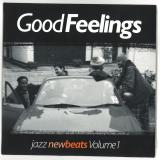
- A1: Dj First Klas – Goodfeelin' 5 35
- A2: Delaney's Rhythm Section – Rebel (Club Mix) 8 02
- B1: A Forest Mighty Black – High Hopes (Instrumental) 4 58
- B2: Outside – Moodswing (Aquasky Remix) 7 40
- C1: Nobukazu Takemura Featuring Dee C Lee – Searching (Roni Size Remix) 7 07
- C2: Smoke City – Underwater Love (Studio Mix) 6 46
- D1: Up, Bustle & Out – The Revolutionary Woman Of The Windmill 9 17
- D2: Red Snapper – Son Of Mook 5 55
- E1: Dj Food – Mella (Drive Faster Mix) 4 49
- E2: Dig! Alliance – Rotorvibe 4 20
- E3: Count Basic – Strange Life (Kruder & Dorfmeister Remix) 4 35
- F1: Aeroplanitaliani – Zitti Zitti (Jazz Instrumental) 4 53
- F2: Reminiscence Quartet – Psychodelico 6 35
Mess Esque are a duo featuring music and instruments by Mick Turner
and words and voice by Helen Franzmann. Their self-titled album is a
beguiling travelogue of restless, somnambulant wanderings.
Perhaps best known as one of the Dirty Three, Mick’s been playing
guitar and making music with many collaborators for forty years. He’s
loved his paintings too but revered especially for his solo music - since
1997, Drag City have released four of his albums, plus an EP and an
album of the Tren Brothers (Mick with percussionist and fellow Dirty
Three-ite, Jim White) and two EPs featuring Mick as the Marquis de Tren
with Bonnie ‘Prince’ Billy.
Mick’s last record was 2013’s ‘Don’t Tell the Driver’, a work that found
him departing from his traditional hermetic instrumental template by
employing a rhythm section and brass charts and even collaborating with
a vocalist. After all the purely instrumental music he’s made with Dirty
Three and solo, a singer is now part of the sound he’s hearing in his
head these days; while demoing new material, he realized that he was
again writing music that needed lyrics - and for that matter, someone
other than himself to sing them. But who? In 2019, he was introduced to
Helen through a mutual friend who’d produced her last album. Under the
name Mckisko, Helen has released three albums over the past 12 years,
working and touring with a range of Australian musicians along the way.
Her music has been described as numinous and transformative. Her
most recent album, ‘Southerly’, saw her moving into a more expansive
sound which led to an openness and excitement around further
collaboration.
Helen’s words are carefully observed, her phrasing responding intuitively
to Mick’s looping guitar figures with vocal repetitions of her own. Starting
with a feeling or a voicing, there are often no words - both players are
searching on their own paths. Then suddenly they have arrived and are
passing the emerging meaning back and forth, the rising intensity
forming a kind of undertow that pulls the listener deeper into their world.
Often, Helen would record her vocals in the middle of the night, seeking
that 2am flow, a moment of greatest isolation through which to trace her
melodie with fragility and strength. This crystallizes Mess Esque’s
intention: riding the sleepy drift through the blurred edges of the day…
time-traveling to that moment beyond stasis where sense and no sense
coincide and share space and time and energy. Viewing from afar the
immense peace of this planet when its ghost world of spirits below - the
madness of crowds, people sliding past each other faraway in the night -
are quieted at last.
'Flowers', the new EP from Elizabeth Davis, finds itself at the cross-section of many factors. In part, it’s the result of Davis’ obsession with a seminal folk song. But it also coincides with her rediscovery of the voice and language as an instrument. It was recorded during an autumn residency at Sternhagen Gut, the cultural refuge run by Gudrun Gut and Thomas Fehlmann, located deep in the Uckermark countryside halfway between Berlin and the Baltic coast.
The six tracks on 'Flowers' all take Pete Seeger’s ‘60s protest-folk song 'Where Have All The Flowers Gone' as their starting point. However, they veer off in different directions, from vocal loops and deconstructed lyrics, to instrumental drones and glitchy, manipulated rhythm tracks. Like many musicians, Davis has learnt composition by a process of disassembly, analyzing musical works piece by piece, and 'Flowers' began as one such forensic exercise. “But sometimes,” says Davis, “a source is so loaded up on meaning that the studies and experiments can become worthwhile and meaningful works in their own right.” 'Flowers' began to take on a life of its own, raising renewed questions about age-old themes such as war, authorship, translation and historical structures.
Davis is no stranger to cover versions. From studying violin to playing in free jazz and punk bands, interpreting other artists’ works has long been a key part of her musical approach. And since her radio show 'Deep Puddle' recently drew to a close after seven years, her experiments with narration and sound collage have found their way into her musical work once again. For 'Flowers', she cut up the source material (with a nod to Gysin and Burroughs), and reassembled the lyrics, the musical notes, and recordings by different performers, to create uncanny new forms.
But perhaps the biggest influence on 'Flowers' was conversations about music, art and pop subcultures with Gut. These dialogues helped Davis find a balance between far-out sound design experiments and catchy melodies, combining a certain avant-garde element and modern day songcraft. And it’s this sense of conversation, this revisiting of topics and renewal of ideas, that will keep us coming back to 'Flowers' long into the future.
- A1: Little Richard - Fabulous Little Richard
- A2: Anthony Newley - Who I Can Turn To
- A3: Ann Peables - I Can’t Stand The Rain
- A4: Ken Nordine & The Fred Katz Group - Word Jazz
- A5: Gerry Mulligan - California Concerts
- A6: Koerner, Ray & Glover - Blues, Rags & Holler
- A7: Stooges - Stooges
- A8: Moondog - Moondog
- A9: Linton Kwesi Johnson Forces Of Victory - Forces Of Victory
- A10: Pixies - Doolittle
- B1: Air - Moon Safari
- B2: Scott Walker - Scott Walker
- B3: Grandaddy - The Sophtware Slump
- B4: Tom Verlaine - Tom Verlaine
- B5: Brian Eno - Another Green World
- B6: Kevin Ayers - Unfairground
- B7: Mother Of Invention - Freak Out
- B8: Roxy Music - Roxy Music
- B9: The Langley Schools Music Project - Innocence & Dispair
- B10: The Polyphonic Spree - Section 8
Which musical artists influenced David Bowie? Which records did he listen to over and over again during his youth and beyond? Who were his favorite songwriters and composers? What were his favorites? And in the case of such an artist, unique in his genre from the beginning to the end of his career, is the term “influences” the right one? As we delved into Bowie’s work, we learned that, even if he was the type to pick and choose from all over the place, he drew most of his inspiration from himself
- A1: Blind Eye
- A2: Lady Whiskey
- A3: Errors Of My Way
- A4: Queen Of Torture
- B1: Handy
- B2: Phoenix
Wishbone Ash's self-titled debut album, released in 1970, introduced a distinctive sound that would become highly influential in British rock. This re-issue faithfully replicates the original UK release in it's gatefold sleeve and is pressed on 180gm vinyl. Blending blues-rock, folk melodies, and emerging progressive elements, the album is defined by the bands signature twin-lead guitar approach, with Andy Powell and Ted Turner weaving melodic, harmonized lines rather than relying on a single dominant lead. Tracks like Blind Eye and Queen Of Torture balance hard-edged riffs with spacious, reflective passages, while acoustic moments add a pastoral, almost medieval atmosphere. The rhythm section, understated yet precise, allows the guitars to breathe and develop organically. Rather than chasing commercial immediacy, the album favours mood, texture, and musical interplay, giving it a thoughtful, exploratory character. As a debut, Wishbone Ash feels confident and forward-looking, laying the groundwork for the bands later classics and helping to shape the twin-guitar sound later adopted by countless rock and metal acts.
- 1: Fire The Choir 0:5
- 2: Twin Scissors 0:0
- 3: Plainclothes Man 02:29
- 4: Career Blonde 02:12
- 5: Pontaria 01:39
- 6: The Gold Standard In Dumpster Diving 01:28
- 7: Caught Again 04:02
- 8: That's Not My Skin You're Eating 01:13
- 9: Husband And Bribe 02:24
- 10: Wire Lashes 02:07
- 11: Buckteeth 01:48
- 12: Community Gun 02:13
- 13: Triple Tracy 04:33
Conjuring a faithful following, quite rare in these days of ADHD, by sheer force of their celebratory and fiery live shows, Montijo's most celebrated outfit reflects these past couple years of camaraderie and life on the road on their debut album, after a self-released EP and a 4 way split on Zegema Beach Records. Sublimating all the inherent potential of post-hardcore at its most sweeping into a forceful and focused delivery, 'Acetate' captures all their urgency through 13 memorable and sharpened tracks. Recorded patiently and mastered by the gifted know how of Jack Shirley - Deafheaven, Joyce Manor or Gouge Away -, the songs on 'Acetate' open sprawling vistas upon the band's recognizable sound between chaos and order, cutting back on everything that might be redundant or overly technical. Alex Domingos' vocals reach new means of expressiveness through harrowing screams and hints of melody, João Pires' sinewy guitar pulling out riffs and skewed lines that echo for posterity and the rhythmic section of Simão Simões - bass - and João Portalegre - drums - driving all this turmoil with kinetic precision and flexibility. Never before did Hetta sound as relentless, chill and melodic, tracking down life at its own pulse.
- A1: Part 1
- B1: Part 2
In celebration of Arrow Films' new 4K restoration of the seminal hip hop film Wild Style, Azorean-Canadian producer and DJ Jorun Bombay steps up with a specially commissioned megamix cut across two sides of a 7”. Featuring recently discovered unreleased material, cut up with sections of the remastered soundtrack, expert turntablism, and added live instrumentation, Jorun shines a new light on this pioneering piece of hip hop history.
Having released music since the mid-‘80s on labels such as Soundweight, Diggers With Gratitude, and JBOR Records, Jorun also produces and scores music for film and television in the USA. He’s been hosting his influential DJ podcast ‘Funkbox Reload’ for over a decade, regularly showcasing his DJ and remixing skills, which have landed him several key production jobs, including for the documentary ‘Mixtape’ directed by Omar Acosta on Paramount Plus.
Following the success of his last RS release, 'Ripples,' the enigmatic Wallace returns to Rhythm Section after a series of stellar releases with a highly anticipated follow-up - ‘Papertrip’ that is destined to once again set the dance music community ablaze.
Wallace's impact on the scene has been nothing short of extraordinary, since Ripples he has gone on to play in the iconic Panorama bar, tour Japan and release a double LP on Mule musiq.Wallace continues to cultivate a dedicated following among discerning listeners and industry tastemakers alike. Now, with the forthcoming release, Wallace is poised to ascend to new heights, continuing the undeniable Wallace-maina.
ATA Records are proud to present the new release by Work Money Death, A Portal to Here. This album continues WMD’s exploration of Spiritual Jazz and the sounds and styles that evolved out of the 60s New Thing, particularly the recordings of
Alice Coltrane and Pharaoh Sanders. The first WMD album released since the tragic death of ATA guitarist Chris Earl Dawkins in early 2025, all four tracks reference the journey that band members and the studio have been on – in many ways this record is a testament and tribute to Chris, his musicality and creativity.
Featuring WMD stalwarts Tony Burkill, Neil Innes, Sam Hobbs, and Sam Bell, the album introduces Sorcererskeyboardist Johnny Richards to the WMD sound. Richards brings a fresh new take to the piano role here, drawing on what is clearly a broad knowledge of jazz history and channelling that through his own unique 21st century musical perspective.
The album also features contributions from Alice Roberts on harp, bringing the spirit of Alice Coltrane, Ben Powling on baritone saxophone, Richard Ormrod on woodwind, and Kev Holbrough & Steve Parry on brass. Those Sun Ra-esque horn sections lift the mood whenever they appear.Standout tracks are the second, Dance of the Spirits, with a strong core of Baptism and The Blues and some lovely playing by Richards, and the third track, Brother Earl, which begins with Tony on flute over rhythms that are directly reminiscent of open-hearted, late-60s spirituality. Tony later moves to tenor and, as on all four tracks here, eventually builds to the peaks of shattering emotional intensity that fans of Work Money Death - and spiritual jazz in general - love.
We Jazz Records kicks off their new series of archival 7" releases with Esa Pethman "In Belgium 1967" released 23 September 2022. The two-tracker is licensed from the Belgian VRT radio archives and both of the pieces are previously unreleased. Finnish jazz legend Pethman, heard here on alto flute and tenor sax, joins forces with European jazz greats such as Heinz Bigler, Uffe Karskov and Jean Fanis. This is a small but valuable piece of unheard European jazz history from the early heyday of modern jazz. The physical release is a quality "inside-out"-styled EP with 3mm spine and small center hole on the 45rpm vinyl.
An excerpt from the liner notes by Mikko Mattlar:
"Esa Pethman (b. 1938) was one of the key figures of modern Finnish jazz in the 1960s. His album The Modern Sound Of Finland was the first Finnish modern jazz album and his composition "The Flame" a true modern Fenno-jazz evergreen.
Pethman was born in Kuusankoski, 135 kilometres from Helsinki in the Kymenlaakso area. The jazz scene was active even though it was an area of rural landscapes and paper mills. Pethman discovered jazz when he heard a Charlie Parker record being played at a local music shop in the late 1940s. Following Parker, bebop became his favourite style of jazz.
Young Pethman played flute and saxophone in local bands who accompanied schlager singers. They played tangos and waltzes for dancers, but usually started a typical dance event with an hour of jazz. In 1959 Pethman moved to Helsinki to study music at the Sibelius Academy. Back then it was a strictly classical music academy, but Pethman later described the studies as crucial for his development and career. He quickly made his way to studio sessions and into the best orchestras in Helsinki.
As a student of composition, Pethman also began writing his own music. "The Flame" was a melody he just got on his mind one night, and he decided to write it down. The catchy composition was released as a 7" single in 1964, a year before Pethman's debut album. Both records stand as benchmarks for modern Finnish jazz. The album consisted entirely of Pethman's compositions, not versions of jazz standards like a lot of the Finnish jazz released until then.
In the mid 1960s, Finnish jazz was also taking its first international steps. Pethman's quintet took part in the first Montreux Jazz Festival in Switzerland in June 1967. At the Montreux jazz band competition, the quintet came in fourth of the twelve contestants. Despite not winning the competition, the band got an honourable mention, and Pethman was now recognized outside Finland.
In December 1967 Pethman travelled to Brussels. His visit was organised by the national Finnish broadcasting company Yleisradio and their jazz program producer Matti Konttinen. Konttinen was supposed to go to Brussels with Pethman, but the musician ended up traveling alone.
In the Decca recording studios Pethman played two songs. He recorded a version of his most famous composition "The Flame", where he played the alto flute and was accompanied by Belgian musicians. On Swiss saxophonist Heinz Bigler's composition "Like Steel", Pethman played the tenor saxophone. The band was now more international, consisting of Bigler, the Italian Francesco Santucci, the Dane Uffe Karskov, a Belgian rhythm section and Pethman. After 55 years, Pethman still remembers Bigler's remarkable skills as a saxophonist.
The two-day visit included the recording session, a dinner and a concert. Pethman and the other non-Belgian musicians came to Brussels mainly to play at a jazz concert organised by the European Broadcasting Union EBU. They played at the studio first, and the concert was held the following day. Pethman and all the other soloists played as members of an international big band. The studio and live session were produced by the Belgian Radio and Television jazz section leader Elias Gistelinck."
Prolific beat pharmacist par excellence Brendon Moeller continues his hot streak with a return to Samurai to serve up the exquisite craftsmanship of Shadow Language. Across 15 fresh productions the seasoned house and techno producer demonstrates yet more variations on his rejuvenated sound since pivoting towards 160 tempo zones. Heavyweight dub techno pulses collide with D&B pressure and dubstep snarl, delivered with devastating restraint and mediative warmth.
Moeller's dub-informed, high-grade production hit a hot streak as he started to experiment with faster tempos and more broken rhythms, reaching into thrilling new sound fields where fast-slow rhythmic intrigue meets with spatial subtlety and constantly evolving synth voices. The past year has seen him release a swathe of albums, from Further on Samurai to outings on Constellation Tatsu, ESP Institute and Quiet Details that all burst with inspiration, each distinct from the last and offering an original perspective on this rich seam of crossover electronics.
Shadow Language shows Moeller burrowing even deeper into this new era of his work, continuing the hypnotic approach set out on Further while edging more forthright ingredients into the mix. From the outset 'Division By Zero' hits with immediacy even as it dips into a dubwise breakdown, with snatches of vocal and even the iconic loom bird making the slightest of appearances. 'Feral Hymn' finds a curious kind of uplift in the synth chord that twists in and out of the mental techno murmurations of the rhythm section. 'Impermanence' has some snarling bass that belongs in the gnarliest tech-step, while the nagging hats ticking through 'Junkyard Syntax' hint at a shockout without resorting to brute force. The majestic dub techno chords of 'Driftform' create a through-line across Moeller's extensive catalogue, but here they dominate the mix above a spongy bed of sub bass throb and framed by the tiniest slithers of percussion.
Throughout the album, it's the implications Moeller suggests with the tools at his disposal that create a powerful energy. Restraint governs the delivery, guiding the listener in deeper until they find a maximal experience from each elegantly understated roller. The weight and presence is abundant across every track, fuelled by the invigorating power of each tone and frequency while avoiding the clutter of overloaded arrangements.
Finding the notes in between and half-hidden rhythms, Moeller himself perfectly summed up his latest opus as he continues to develop his own compelling Shadow Language.
With a career spanning over 50 years, Earl Sixteen is one of the major artists in the history of Jamaican music. He has been produced by some of the biggest names in the business, from Studio One to Jah Shaka, Lee ‘Scratch’ Perry and Mad Professor. Earl Sixteen has always stood out for the accuracy of his performances and the smooth depth of his voice.
Today, in collaboration with Switzerland most active studio group of the last decade, The 18th Parallel, he presents his new single ‘My Son’, written by the genius lyricist Marc Ismail. The lyrics touch on the harsh reality of the younger generations in Jamaica who grow up in precarious conditions and, in some cases, have no choice but to turn to crime. Here, the elder's voice urges young listeners to take a hard look at themselves and weigh the consequences of their decisions.
The message is enhanced by Earl Sixteen's performance and the extraordinarily powerful rhythm section of The 18th Parallel. B side features a scorcher dub by Westfinga: 'Hear My Dub'. A masterpiece of contemporary roots reggae!
Timo Lassy follows up his new album "Trio" on We Jazz Records by sharing two non-album cuts from the same sessions on a new 7" vinyl single / digi release. "Mountain Man Exit" is a stormy number featuring the trio of Lassy (tenor sax), Ville Herrala (bass) and Jaska Lukkarinen (drums) in full flight plus Tuomo Prättälä (of Ilmiliekki Quartet) on synth duties. Album track "Orlo" gets a new treatment, edited for the 7" and taking shape as a tough-as-nails mix breaking new ground here without the string section.
WOLF proudly welcomes the return of Tom Esselle to the label. Fresh from his latest release on Rhythm Section, Tom follows up his 2022 Praise Bes EP on WOLF with a new four-track collection of deep, dancefloor-ready cuts.
Opening track Livewire sets the tone immediately, pulling you in with a heads-down, UK garage influenced groove. A-side follow-up Don’t Have To is a strong contender for standout moment, pairing luscious keys with a sweet vocal for peak-time soulful impact.
On the flip, Small Talk delivers a quirky vocal sample over an undeniable groove, before EP closer Spaced Out dives deeper, unfolding beautiful, emotive chords. Another standout release that oozes quality from a producer hitting their stride and firmly establishing himself as one to watch.
- A1: Dlp 1 1 (Section I) 21 15
- B1: Dlp 1 1 (Section Ii) 21 00
- C1: Dlp 1 1 (Section Iii) 21 20
- D1: Dlp 2 1 10 50
- E1: Dlp 2 2 (Section I) 16 21
- F1: Dlp 2 2 (Section Ii) 16 20
- G1: Dlp 3 (Section I) 21 00
- H1: Dlp 3 (Section Ii) 20 53
- I1: Dlp 4 20 12
- J1: Dlp 5 (Section I) 17 20
- K1: Dlp 5 (Section Ii) 17 20
- L1: Dlp 5 (Section Iii) 17 39
- M1: Dlp 6 (Section I) 20 20
- N1: Dlp 6 (Section Ii) 20 12
- O1: Dlp 1 2 21 41
- P1: Dlp 1 3 12 00
Since the turn of this century, perhaps no other modern composition has had a more resonant healing effect than The Disintegration Loops. Composer William Basinski’s deteriorating analog tape loops evolved from melodic symphonies to melancholic silence over a span of time that uncannily turned passing minutes into pensive lifetimes. In her foreword for the new box set reissue of The Disintegration Loops, the pioneering multimedia storyteller Laurie Anderson describes the impact of this transformation in poetic detail: “These dissolving sounds, this emptying space, has gained my complete confidence. They are taking me somewhere. I am willingly following these sounds, becoming more and more transparent.”
The Disintegration Loops – Arcadia Archive Edition is an expansive new box set that includes the entire 5-hour suite of iconic work. Newly remastered from the original recordings by Josh Bonati, the hefty package includes eight vinyl records (or four CDs for the less analog-inclined) in sturdy full-color jackets featuring the restored original artwork, and a new 1000-word foreword by Laurie Anderson – all housed in a striking heavyweight, case-wrapped box. It is the ideal encapsulation of one of the 21st century’s most truly transcendent works. As Anderson concludes in her foreword, “this music has created another world, a world to be carried away in.”
- Johnny
- World Keeps Turning
- Electravision Mantra
- Dial Om
- Wonderful Life
- El Salvador (Former Cd Only Track)
- Sean O'farrell
- Belfast
- Cycle
- They're Killing Us All (To Make The World Safe)
- O Salvation
- Fish And Trees (Former Cd Only Track)
This remastered vinyl reissue of Blind Ear reintroduces The Celibate Rifles' urgent, socially aware punk-rock energy, cementing its place as a cornerstone of Australian alternative rock. 1989 is where The Celibate Rifles take their punk instincts to the next level-garage muscle, surgical precision, and a rock'n'roll pulse that sounds more urgent than ever today. Formed in Sydney ten years ago, the band appears here in full flight: two guitars in constant dialogue, a rhythm section with newfound dynamic range, and a razor-edged vocal that bites without losing melody. The remaster opens up the stereo image, sharpens the six-string detail, and restores to the turntable the physical punch this record demanded from day one; it's the definitive way to (re)discover a key title from the Australian school. The tracklist is pure traction: "Some Kind of Feeling" hits the ground running with speed and focus; "Wonderful Life '88" nails an instant hook and a clear-eyed critique of yuppie culture; and the closer, "O Salvation," lands as an expansive, cathartic statement of intent. Two tracks unusual in Australian rock for their subject matter-"Sean O'Farrell" and "Belfast"-tackle the Northern Ireland conflict head-on and underscore the band's social gaze, while the rest of the album maintains a no-filler intensity. This edition preserves the original LP sequence (the two bonus tracks existed only on the period CD) and stands as an essential piece for collectors and front racks alike: ideal for in-stores, listening bars, and classic alternative rock playlists. If your audience connects with BORED!, Radio Birdman, The New Christs, or The Saints, Blind Ear is an unequivocal yes.
Beijinho do Brasil announce their second release with the highly anticipated follow-up from LA-based producer and multi-instrumentalist James Matthew Seven, featuring guest vocals on the A-side by Rio de Janeiro's Fabio Santanna.
Recorded in a small studio on the beach in Oaxaca, Mexico, "Feels Good, Do It" brings to mind a lost recording from Marcos Valle's time with Leon Ware. Funky and soulful with warm Fender Rhodes and a horn section reminiscent of Banda Black Rio, the tune is a breezy, mid-tempo ode to embracing life's pleasures. Originally with vocals in English, the track was translated and re-recorded in Rio de Janeiro by Fabio Santanna. Fabio has a long-established reputation in Brazil as a torchbearer of modern funk and boogie, continuing in the lineage of artists like Robson Jorge and Lincoln Olivetti. But with his releases on labels like Onda Boa and Dippin' Records (which sold out nearly instantly), his international reputation is steadily growing. He has a new 7" due out on Dippin' Records on October 10th, pushing his name to the forefront once again, right on time to generate more buzz for our next 45!
About the flip side, "Ilha Racional" (a nod to Tim Maia's Racional era):
I had this dream where I was in a dive bar discotheque somewhere in the Caribbean. A thick cloud of smoke hung in the air as the selector dropped this bass-heavy bop that had the whole crowd vibing. Then, out of nowhere, in walked Tim Maia with a bag of mushrooms. He proceeded to grab the mic and preach about this alien world of rational energy. Shit was bugged out. When I woke up, James Matthew Seven had sent me this track to check out.
ATA Records proudly present the latest release from The Flying Hats, Blender 7” Following the buzz surrounding their debut LP and the soft limited pre-release of Blender, anticipation for this single has been huge - and with good reason.
“I've never heard something so perfectly combine funk and reggae and do it in a way that is dancefloor gold”. - Monkeyboxing.
The Flying Hats - the Leeds quartet responsible for one of the standout albums of the year - return in phenomenal form with two previously unreleased cuts of the highest calibre. Both tracks strike hard somewhere between Kingston and New Orleans, as if The Meters were channelling Jackie Mittoo or Sound Dimension were jamming with Jimmy Smith.
Thick, funky-reggae organ leads the charge with killer breakbeats, bass pressure, and rhythm-section fire designed to light up any dancefloor worth its salt. Both sides are built for selectors, collectors and dance DJs alike.
- A1: Clean Up (Ep Mix)
- A2: Go Get Your Money
- A3: Beretta (Feat. Lucey Way)
- B1: Things
- B2: Rolling
- B:3 Go Get Your Money (B-Sharp Mix)
First Word Records are proud to bring you 'Penny Ballads', a 5-track EP from Royce Wood Junior. Royce Wood Junior is a Grammy & Mercury Award-nominated musician, songwriter and record producer from London, currently based in Brighton. As a multi-instrumentalist, he's collaborated with a litany of brilliant artists over the years, such as Jamie Woon, Nao, Disclosure, Jessie Ware, Olivia Dean, Joy Crookes, Jamie Lidell and Jordan Rakei, additionally to touring with the likes of the legendary Thomas Dolby. He's released two acclaimed solo albums to date ('The Ashen Tang' in 2015, and 'No Two Blue Ticks' in 2021). 'Penny Ballads' demonstrates RWJ's varied talents, with a collection of alternative soul compositions, each one as unique as the next. It includes the first two singles, the Poplife-Prince era flavoured 'Go Get Your Money', and the double-time future funk adrenaline shot, 'Clean Up', along with three previously-unreleased tracks. 'Beretta' is low-slung soul funk, beginning with quirky squelchy synths, before the soulful lead vocal of feature artist Lucey Way breezes in to melt everyone's hearts. 'Things' sweeps in next, an infectiously soulful midtempo heavy soul bop, with an instant earwork of a hook, like a modern-day Steely Dan / Doobie Brothers, complete with a head-nodding string section to end the track. The collection concludes on a more melancholy downtempo tip with 'Rolling'; an almost-folktronic anthem, with a key refrain that wouldn't be out of place on a 70's Stevie piece. RWJ (aka Jim Wood) says of this project… "Back in the 17 and 1800's Troubadours and minstrels would go from Tavern to Tavern selling Penny Ballads, single sheets of music and lyrics written quickly and frivolously to make a quick buck.. It strikes me that we're in a similar phase in the way we value music in 2025. An old Penny Ballad was cheap and dog-eared, ink-smudged, sung aloud by firelight, Now songs live in the digital ether, dissolved in the air, a ghostly breath paid in micro cents. The new era of Penny Balladry is here, and weird. This EP is a snapshot of my writing over a two year period. Focussed on minimal recording styles, one mic on the drums, generally first or second takes on parts and vocals, I wanted the music to feel like small moments with lyrics that talk about the weird nuances of being alive as a latter stage human on the cusp of the Ai revolution. Culturally so evolved, but physiologically still just a bunch of mammals walking about with primitive fears and needs. Just trying to reconcile it all moment to moment…" Previous support for Royce's music has included Radio 1's Future Sounds, BBC 6 Music's New Music Fix, Annie Mac, Clara Amfo, Jo Whiley (BBC Radio 2), Mary Anne Hobbs, Jamz Supernova, Tom Robinson, Huw Stephens (BBC 6 Music), Zane Lowe and MistaJam. There have been sessions previously for the likes of Red Bull and press from Huck, Line of Best Fit, Clash, Aesthetica & DIY magazine. Entirely self-written and self-produced, this EP gives a solid taste of RWJ's talents. A deeply funky diverse set of music from an immensely talented individual. 'Penny Ballads' is due to be released on vinyl & digital, 24th October 2025. The vinyl version also includes an exclusive additional mix of the first single 'Go Get Your Money'. TRACKLIST: 01: Clean Up (EP Mix) 02: Go Get Your Money 03: Beretta (feat. Lucey Way) 04: Things 05: Rolling 06: Go Get Your Money (B-Sharp Mix) Deconstructed Mixes
- Heartsick
- Ordinary People
- The Devil We Know
- In The House Of Denial
- Infinite Sadness
- Payback From God
- Yours To Bury
- Perfect Things
- Letters To Insomnia
- Perfect Blue
- Running The Fear Of It Dry
- Ataraxia
NEW MISERABLE EXPERIENCE are a Philadelphia-rooted collective that reshapes heavy-music rigour into expansive, melody-forward songs through alternative synth-rock. What started as a file-trading collaboration between vocalist/bassist David Grossman (ex- ROSETTA) and multi-instrumentalist Joshua Mahesh Kost expanded into a full band that now includes ROSETTA drummer Bruce "B.J." McMurtrie Jr., technical-metal bassist Brett Bamberger (REVOCATION), and guitarist Brody Uttley (RIVERS OF NIHIL). The group forgoes technical exhibitionism in favour of mood and melody, composing introspective songs designed to reward close listening. Across the twelve tightly arranged tracks of 3rd album "Gild The Lily", the band pares its palette to essential elements: clear melodies, precise dynamics, and richly textured production. The album trades overt bombast for craft, building emotional weight through small gestures and patient arrangements rather than moments of spectacle. "We started saying `infinite sadness' as a bit of a catch phrase with the last album. I think that sums up the vibe of the album and project overall. We are very much in the `sadboi' world with Jeff Buckley, Puma Blue, Radiohead, Deftones, The Black Queen", says Grossman. Sonically, `Gild the Lily' combines alternative synth rock with chorus-tinted guitars, and a rhythm section that alternates between taut propulsion and roomy, reverb-soaked space. The arrangements both electronic and instrumental negotiates smooth and slick danceability alongside sinister edges. The band's aesthetic is one of deliberate economy: textures are chosen to serve mood and narrative rather than technical exhibitionism, and arrangements reveal their depth across repeated listens. Slick, sorrowful and cinematic in atmosphere, `Gild the Lily' is an eclectic collection that can not only groove in vibe and inspire movement, but also pierce to the nerve in ethereal lamentation. RIYL Crosses * Black Queen * Ulver * Vowws * Rosetta * Revocation * Rivers of Nihil
2025 repress.
Rhythm Section International proudly presents it's 8th offering from local boys Chaos in the CBD. Born in New Zealand, but based in Peckham for the last few years (literally just around the corner from Henry Wu and Bradley Zero), these brothers have made a real mark on the scene here in London town and with their latest set of productions are set to take this message further afield.
Having already released internationally on labels such as ClekClekBoom (Paris), Hot Haus (London) and Amadeus (Montreal), the duo's approach to production has matured immeasurably in the last year, as is evident in the restrained potency and poetic subtlety on the 4 tracks across this accomplished EP, Midnight in Peckham.
Taking it's title from the locale the boys have come to know as home, the record channels a delicate late night energy - equally indebted to the hypnotic incantations of Ron Trent as it is to the hazy suburban atmospheres of Burial. These 4 classic cuts pay homage to deep house in it's truest sense - at once sublime, melancholy and meditative . Chaos in the CBD have clearly taken their cue from the mid-west masters of the genre but have not been afraid to let their own influences and environ creep in, and in doing so have created something that is unmistakablely London and infact, timeless.
A student of the Weatherall school of DJing, Asa Tate has showcased an astonishingly mature approach to production over the years that belies his age. You’d be forgiven for thinking these 4 tracks had been discovered from a dusty DAT tape, locked away in the vaults of a northern Italian club and rediscovered after 30 years....Listen more closely and you’ll notice the contemporary production flair and more recent influences that make this EP a perfect reinterpretation of the mid 90s house sound: sitting somewhere between dream house and Morales finest work under the red zone moniker.
The EP wastes no time in setting it’s intentions with the A1 Title Track, “Replica” - after a brief and floaty progressive house intro the refrain “ E-e-e-e-e-e-e-ECSTASY” echoes loudly over sampled vocals, euphorias piano chords, throbbing lead synths and a bouncy tech house bass line.
“89” is a sultry deep house cut featuring rising Spanish star, Dariam Coco on Vocals. It floats like a butterfly, but stings like a bee, as the soft chords are interrupted with huge drum fills deftly transforming an after party jam to a peak time moment.
We continue to “ Unknowns” - a masterclass in building tension and holding it - this track simmers with restrained intensity for almost 6 minutes. It’s trademark Asa Tate production at its most understated and classy. We round of the EP with the fittingly titled “Last Dance” , a wistful composition that brings us back down to earth slowly, safely and gently; always grooving but never pushing - this one is the soundtrack to the end of a long summer day and reaffirms Asa Tate’s claim to be a modern master of Deep House.
Over the past year, No Drama, the label founded by Roy Rosenfeld, has established itself as a space for creative independence and artistic authenticity. Known for his refined fusion of house, techno, and downtempo, Rosenfeld channels the same principles into his imprint, prioritizing artistic freedom, emotional resonance, and sonic exploration.
The label's fourth release, No Drama V.2, delivers a cohesive four-track EP spanning over twenty-six minutes of forward-thinking electronic music.
Opening with Dubi, Rosenfeld crafts a composition built on contrasts and playful percussion set against a wistful melodic backdrop. Over nearly seven minutes, the track unfolds gradually, expanding into a hypnotic crescendo that captures both dance floorintensity and introspective depth.
Next comes Coral by Dulus, a Colombian-born artist, based in Santiago, Dominican Republic. With roots in guitar and vocal performance, his understanding of musical structure permeates the composition. Layers of subtle vocal textures, resonant basslines, and scattered sonic details create a sense of depth and movement. The track's hypnotic progression rewards close listening, revealing intricate nuances beneath its steady groove.
The third track, Pink Hearts, by Sydney-based producer Luka Sambe, draws from his experience in Australia's festival scene. Sambe blends melodic house structures with acid-tinged flourishes and offbeat sonic details. Each element lands with intent, building an infectious energy that feels effortless yet deeply crafted.
Closing the release is Oscar Wave by Darco, a rising artist celebrated for his immersive live performances that blend electronic textureswith organic instrumentation. The track channels early trance influences and Middle Eastern tonalities into an uplifting, psychedelic journey. Its central section bursts into a wave of euphoric release, bringing a fitting conclusion to a compilation that celebrates both diversity and unity in sound.
No Drama V.2 stands as a testament to Rosenfeld's curatorial vision and sincerity. Each track resonates with purpose, offering a glimpse into a global community of artists united by their shared pursuit of creation.
Swan Song
The vinyl LP at the heart of this éthiopiques 31 tracks 2 to 11 was one of the very last vinyl records ever released in Ethiopia. But above all it represents, we felt, the absolute masterpiece of the Ethiopian Groove – the Swan Song of Swinging Addis. The album leaves a clear idea for posterity of the level of sophistication and mastery that modern Ethiopian music had achieved, before being crushed under the Stalino-military heel of the Derg – as the bloody revolution that was unfolding came to be called.
Ethiopia1976.
The Revolution that broke out in February 1974 rolled on in a ruthless march. The whole of Ethiopian society was utterly stunned. The bouquets of flowers handed joyfully to the first tanks of the coup d'état were to wilt very rapidly. From September 1976 to February 1978, 18 months of Red Terror (the name given by the junta itself) spilled blood throughout the country. This fratricidal conflict took its heaviest toll among students and youth. The shift from feudalism to a cruel and primitive Stalinism left the country's citizens deeply traumatised, and snuffed out any pretence of activism, whatever the sector of society. This ice age was to last for seventeen long years.
ሙሉቀን፡መለሰ Mulukèn Mellèssè Muluqän Mälläsä
It was three tracks by Muluken that served as the opener for éthiopiques-1 more than 25 years ago. Seven more tracks appeared on éthiopiques-3 and 13, all accompanied by The Equators, which was soon to become the Dahlak Band.
The first track, Hédètch alu, also the very first piece that Muluken ever recorded, left audiences both unsettled and amazed. Reflecting the singer's extremely young age (he was just 17 at the time), this angelic voice mystified many, who thought they were in fact listening to a feminine voice. He was not yet 22 when he released his last vinyl record in 1976 with Kaifa Records (KF 39LP), one of the very last to be issued in Ethiopia, before the cassette tape became the dominant medium for music distribution – and before the new revolutionary regime put a stop to all independent musical life, via an unspeakable barrage of prohibitions and other persecutions.
Mulu qèn, literally, “A well filled day”. This tender maternal intention wasn't enough to ward off the cruelty of fate. His mother's premature death drove Muluken to leave his native Godjam, in northeast Ethiopia, to live with an uncle in Addis Ababa. Born Muluken Tamer, he took his uncle's last name – Mèllèssè.
The spelling Muluken appeared in his administrative records. Transcription of Amharic to the Latin alphabet, both in Ethiopia and for scholars, gives rise to controversies and quibbles that can never be neatly settled. French allows for a closer approximation of the original pronunciation, thanks to its battery of accent marks, confusing as they may be to anglophones.
Between rather accommodating administrative record-keepers and the various versions that pop up in interviews given by the artist, Muluken's year of birth oscillates between 1953 and 1955…
1954? One thing is certain: the artist's talent made itself known very early indeed, because he got his start in 1966-67, at the age of 13 or 14. Photos from the period attest to his extreme youth. It's a strange sort of initiation for a very young teenager to become a sensation in the heart of Addis's nightlife at the time, Woubé Bèrèha – the Wilds of Woubé. And what's more, in the club of the Queen of the Night, the Godjamé Assègèdètch Alamrèw herself, the very same that was portrayed by Sebhat Guèbrè-Egziabhér in his novel-memoir Les Nuits d’Addis Abeba2… The legendary female club owner who is remembered to this day by the capital's ageing boomers.
Muluken first tried his hand at the drums, before he grabbed the microphone. He emigrated briefly to the Zula Club, across the street from the old Addis Post Office, one of the ground-breaking bars of the burgeoning musical scene, before joining the Second Police Band in 1968, for around three years. He spent a few months with the short-lived Blue Nile Band founded by saxophonist Besrat Tammènè. As the musical scene grew increasingly successful, and pulled slowly but decisively away from its institutional ties, Muluken released his first 45rpm single in February 1972 (Amha Records AE 440). It was included in two LP Ethiopian Hit Parade compilation albums in September of the same year. All in all, Muluken released eight two-track 45s and the same number of original cassette tapes between February 1972 and 1984, the year that he departed for permanent exile in the USA. After converting to Pentecostalism in 1980, Muluken gradually abandoned all secular musical activity. In 1985, at the end of a concert in Philadelphia, he decided to quit concerts and recording for good. Mèlakè Gèbré, the historic bass player from the Walias band who was playing with him that night, recalls that everything appeared so irredeemably diabolical in Muluken's eyes, that it was to be the end of his contribution to Ethiopian Groove.
The end of the story, the beginning of a legend.
Dahlak Band, forgotten by History
Aside from his personal history and vocal talents, it must be remembered that Muluken Mèllèssè was one of the biggest names in the musical innovations that marked the end of the imperial period. These éthiopiques aim to convince those who are just discovering this hidden gem... As for Ethiopians themselves, they are to this day captivated by this singular and atypical figure in the Abyssinian pop landscape – even though he withdrew from public life some 40 years ago. Incorrigible devotees of poetic twists, of more or less hidden meanings, Ethiopians appreciate above all the care Muluken took in choosing his lyrics and the writers who penned them, such as Feqerte Haylou, Alemtsehay Wodajo and, here, Shewalul Mengistu (1944-1977). Love songs, written by women, a far cry from the conventional drivel that pleases sappy sentimentalists.
Muluken is equally acclaimed for his perfectionism when it came to music, the opposite of the overly casual approach that is all too common. He remained a faithful partner of musicians who came from a lineage that borrowed from several inventive and pioneering bands (Venus, Equators, Dahlak). Amongst them were certain artists who began their musical lives with Nersès Nalbandian at the Haile Sellassie Theatre and who come of age in around 1973 – at just the wrong time, you might say. Among them were the pillars Shimèlis Bèyènè (trumpet), Dawit Yifru (keyboards) and Tilayé Gèbrè (sax & flute). Most notably Tilayé Gèbrè, certainly one of the most important musicians, composers and arrangers of his generation, of the end of the imperial era, and of the early years of the Derg.
It was only in 1981 that a miraculous opportunity arose for Tilayé to escape the Stalinist paradise of the dictator Menguistou Haylè-Maryam. Once again it was Amha Eshèté (1946-2021) who provided a solution. The spirited and courageous producer, who had been in exile in Washington since 1975, succeeded, thanks to his incredible perseverence, in bringing the Walias Band to the USA. It was, in fact an extended Walias Band comprising ten musicians3, six of whom chose to slip away after a few concerts and the recording of an LP (The Best of Walias, WRS 100). Tilayé Gèbrè was one of these. He has been living in the USA ever since. There he joined the then-nascent Ethiopian diaspora, which lived largely unto itself, and was making only very modest headway in the American musical market. It seems unfair that Tilayé Gèbrè and the Dahlak Band were not able to benefit earlier from the public recognition that they do deserve.
A similar draining away of the top-rate talents would lead to the reorganization of the major groups of the “Derg Time”. The remaining artists spread themselves around between Ibex Band (renamed Roha Band), Ethio Star Band and a remodeled Walias Band. That spelled the end of the Dahlak Band.
With this record, produced by the essential Ali Abdella Kaifa a.k.a. Ali Tango, we can appreciate everything that the Derg not only destroyed, but also prevented from flourishing. This gem of Ethiopian-style afrobeat came out in 1976 (and, by way of a parenthesis, before the FESTAC 1977 in Lagos, which was attended by an impressive delegation of Ethiopian musicians — although Fela was already personna non grata in his own country). Despite everything that might distinguish this ethio-groove from Fela’s music – no colonial axe to grind, no question of political confrontation with the authorities, no claims to negritude or Africanism for the Ethiopian musicians, and less extrovertion! –, this LP fits beautifully into the saga of intense and electrified soul of the new “African” groove that Fela and Manu Dibango embodied so well from that point onwards.
In restoring this record to its place in the afrobeat epic, it can be seen that, if nothing else, the timeline bestows a legitimate pedigree and a historical primacy to works that had no international impact when they were originally released.
Warning! Masterpiece!
Manny Corchado should be a household name for all boogaloo fans. A true boogaloo gem that blends Manny Corchado's explosive rhythm with the melodic touch of salsa legend Nelson y sus Estrellas. His classic track 'Pow-Wow' is one of the most sought-after singles among collectors and DJs-not just for its A-side, but also for the absolute dance floor bomb hidden on its B-side: 'Chicken and Booze.' This instrumental recording features an irresistible rhythm section that could practically serve as the definition of the boogaloo genre itself. In this case, it plays at a faster tempo than other similar hits, making it even more effective on the dance floor. The horn arrangements create a catchy hook, spiced up with percussion breaks, all while driving its addictive, fast-paced groove. On the B-side of this single, we find another version of the same song-this time re-titled 'Aguardiente y Pollo' in Spanish-performed by Nelson y sus Estrellas. The tropical and salsa orchestra, founded in Venezuela by pianist, composer, and bandleader Nelson González Rojas, keeps the same punch and dance-driven focus as Corchado's version, but adds more melodic and sophisticated arrangements, in the style of the other tracks featured on the band's 1977 album, where this stunning cut was originally included (available here on a 45 for the first time). This Latin vinyl 45er is pure dance floor dynamite!
Lewis Fautzi and The Advent join forces on "Gravity Won't Hold Me", a four-track Sci-Fi techno journey that breaks through the limits of sound and space.
Fusing mechanical energy, futuristic tension, and cosmic textures, the EP unfolds with relentless precision and force, a statement of pure propulsion beyond gravity itself.
A meditative, folk-inflected score rooted in improvisation, ‘Dragon’s return’ echoes the soul of A film long buried behind the Iron Curtain
With Dragon’s Return, Australian composer and multi-instrumentalist Oren Ambarchi and Norwegian guitarist Fredrik Rasten present a new, meditative score to Eduard Grecner’s eponymous 1967 Slovak cult film — a stark, black-and-white parable.
The album captures a unique live performance recorded at the Videodroom Festival during Film Fest Ghent in October 2024, where this new score premiered alongside the film in collaboration with the Slovak Film Institute. What began as a fleeting, improvisational encounter between music and image has since taken on a life of its own — an evocative sound world that retains its power even in the absence of visuals.
The album will be available on vinyl and all digital platforms from September 12 via VIERNULVIER Records. The vinyl edition includes an obi strip, a booklet with film stills, and extensive liner notes on the film.
The label is known for shedding new light on forgotten films through reimagined soundtracks — claire rousay’s acclaimed The Bloody Lady being the most recent example.
“Folklore meets avant-garde in an ancient drama - a ballad about love, hate and finding a way out of loneliness” - Rastislav Steranka (Slovak Film Institute)
Ambarchi and Rasten do not accompany the images so much as speak through them. Their interplay — on guitars, flutes, percussion, and voice — unfolds slowly, without a fixed destination, culminating in subtle, entrancing drones. With few breaks or ruptures, this trippy, folk-inflected continuous composition invites surrender.
Rasten’s 12-string guitar and delicate use of voice create layered textures that shimmer and shift. Ambarchi, known for his electro-acoustic work, here explores a radically softer mode — strumming, bowing and coaxing tones from his instrument as though it were a string section unto itself. He blows into shells, adding breath and texture to the sonic palette, touching on something elemental.
Together, they evoke a sound world that feels both ritualistic and strangely familiar — as if echoing from a forgotten ceremony or dreamed into being after hearing an old folk tale. Rooted in improvisation, the music speaks in tones both intimate and expansive, shaped live in dialogue with the film and with each other, with only minimal overdubs added afterward.
R2 2-CHANNEL ROTARY DJ MIXER
Introducing the Headliner R2, a 2-channel rotary DJ mixer that
is perfect for DJ’s looking for precise control and a warm sound,
without breaking the bank. The R2 is packed with features, like an
analog filter and 3-band isolator EQs on each channel, and uses
only high-quality components, including genuine ALPS potentiometers.
Featuring two stereo channels with selectable Line and Phono
RCA inputs, each channel on the Headliner R2 comes equipped
with gain control with a peak LED, a 3-band isolator EQ, a headphone cue selector, a large channel volume control knob, and a
filter activation switch.
The Master channel boasts an analog filter, headphone monitoring,
and output control section. The analog filter features selectable
High Pass / Low Pass Filter modes with Frequency and Resonance
controls, giving you precise control over your sound. Independent
Master and Booth outputs with volume controls, both with balanced
XLR and unbalanced RCA connectors, give you the flexibility to
connect to any sound system.
The Headliner R2 features genuine ALPS potentiometers, and a
sturdy metal enclosure with stained wood side panels for a classic
look that will complement any DJ setup. The modular internal
construction, coupled with the external power supply connected
via locking Mini XLR ensure superior audio performance.
The Headliner R2 is a reliable, high-quality mixer that will give
your DJ performances that classic vibe. Whether you’re spinning
house, techno, or classic funk/soul/disco jams, this fun little mixer
is the perfect addition to your setup.
• Two stereo channels with selectable Line and Phono RCA inputs
• Each channel features Gain control with Peak LED, 3-Band Isolator EQ, Headphones Cue selector with LED, channel
volume control and filter activation switch with LED
• Master channel features analog filter, headphone monitoring and output control section
• Analog filter features selectable High Pass / Low Pass Filter modes with Frequency and Resonance controls
• Genuine ALPS potentiometers
• Headphone Cue control section features volume control, mix control (Cue/Master), and split monitor switch
• High current headphone amplifier with dual 1/4” and 1/8” jacks
• Independent Master and Booth outputs with volume controls, balanced XLR outputs and unbalanced RCA outputs
• Additional Record output with unbalanced RCA jacks
• Dual LED level meters for the Master output
• Microphone input with level control on front panel
• Sturdy metal enclosure with stained wood side panels
• Modular internal construction for superior audio performance
• External split rail power supply connected via locking Mini XLR connector and push-button power switch
• Measurements: 320 x 219 x 106 mm
• Weight: 2.8 kg
Microphone Input
Nominal Input Level: -50dBu
Frequency Response: 20Hz – 20kHz (+/- 0.1dB)
THD + N: 100dB
Crosstalk: 100dB
Übersprechen: < -65dB
THD + N: < 0,05%
Kopfhörerausgang
Maximaler Ausgangspegel: 70mA/Kanal in 150Ω
Minimale Lastimpedanz: 32 Ohm/Kanal
Stromversorgung
Typ: Extern mit verriegelbarem Mini-XLR-Stecker
Eingangsspannung: 100-240v ~ 50/60Hz
Ausgangsspannung: +/-15V; 500mA
Spannungsbereich: 32 Ohm/Kanal
- Mean Street
- Dirty Movies
- Sinners Swing!
- Hear About It Later
- Unchained
- Push Comes To Shove
- So This Is Love?
- Sunday Afternoon In The Park
- One Foot Out The Door
The song titles on Van Halen's aptly titled Fair Warning don't lie. The likes of "Unchained," "Mean Street," "Push Comes to Shove," "One Foot Out the Door," and more indicate the mood the band channels on its double-platinum 1981 record — the nastiest, darkest, and fiercest album of the group's storied career. For the fourth time in four years, Van Halen throws down the gauntlet to all challengers and emerges victorious.
Sourced from the original analog tapes, pressed on MoFi SuperVinyl at Fidelity Record Pressing, and strictly limited to 5,000 numbered copies, Mobile Fidelity's UltraDisc One-Step 180g 45RPM 2LP set plays with unfettered clarity, dynamics, and immediacy. Benefitting from superb groove definition, an ultra-low noise floor, and dead-quiet surfaces, this vinyl edition captures what went down in the studio with tremendous realism and involving presence.
Taking a more controlled approach in the studio and still completing everything in less than two weeks, Van Halen and producer Ted Templeman relied on studio amplifiers to direct the sound. Further diverging from the live-on-the-floor approach of its earlier albums, the ensemble also employed overdubs to great effect. The result: Dense, stacked architecture that underlines the hard-hitting tenor of the songs — and which comes alive like never before on this reference edition that looks as good as it sounds.
The premium packaging and gorgeous presentation befit the reissue's select status. Housed in a deluxe slipcase, it features special foil-stamped jackets and faithful-to-the-original graphics that illuminate the splendor of the recording. Aurally and visually, it is made for listeners who want to immerse themselves in everything involved with the album, including the iconic cover art adopted from William Kurelek's haunting painting, "The Maze."
Isolated frames from Kurelek's childhood-inspired work — including a man bashing his head into a brick wall, a guy pinning down an adversary as he delivers bare-fist blows to his face and others watch with apparent glee, a boy tied down on a conveyer belt and being sent through the equivalent of a meat saw — adorn the front and back covers. The sunnier visual disposition of Van Halen's prior efforts gives way to something sinister and tortured, traits reflective of the music within. The band members, too, are visually depicted not in glamorous shots but in a serious black-and-white portrait in which the quartet is clad in black leather jackets.
Tough, aggressive, stark: Fair Warning comes on like a series of bare-knuckled punches to the solar plexus and boasts lyrical narratives to match. Though not a concept record, the concise album revolves around themes of roughing it on the streets and struggling to survive amid dim prospects. Singer David Lee Roth reportedly penned many of the initial lyrics after traveling to Haiti and observing extreme poverty. The characters and situations populating Fair Warning reflect hardscrabble existence, last-chance desperation, and underlying danger.
Witness the crazies, poor folks, and hunters of “Mean Street”; the former prom queen turned pornographic actress on “Dirty Movies”; the menace and vice of “Sinners Swing!”; the streetwise hustle of “Unchained”; the isolation and alienation of “Push Comes to Shove”; the desire for escape on “One Foot Out the Door”: A carefree California beach party Fair Warning is not.
Having said he felt angry and frustrated during the sessions, guitarist Eddie Van Halen uses the forceful arrangements as a playground for his seemingly unlimited arsenal. Supported by a crack rhythm section and a hyped-up Roth, he performs with an almost impossible combination of punk-like intensity, technical finesse, lyrical fluidity, and unbridled emotion. The virtuoso was increasingly butting heads with Templeton and seeking a freedom in the studio he believed denied him.
No wonder he plays like a bat out of hell. Listen to the rapid-fire manner in which he slaps the high and low E strings on the 12th fret of his instrument on “Mean Street,” instilling the tune with funk flair and metal-spiked sharpness. For the pouty strut of “Dirty Movies,” Eddie Van Halen contributes slide guitar magic made possible after he sawed off the lower portion of a Gibson SG so he could reach further down the fretboard.
Related intensity, urgency, and daredevil momentum punctuate the surging “Sinner’s Swing!” A heavily flanged, delicately melodic introduction frames the attitudinal “Hear About It Later,” among the most creative arrangements of Van Halen’s career. And do riffs come any bigger or magnetic than those on the high-wire kick of “Unchained”? As for the out-of-left-field “Sunday in the Park,” an instrumental composed on an Electro-Harmonix micro-synthesizer: Who but Eddie Van Halen to supply creep factor in such an ingenious way?
Despite selling fewer quantities than Van Halen’s prior efforts, Fair Warning remains for many diehards the record that epitomizes all of the band’s immense strengths —Roth’s manic energy and tongue-wagging humor, Alex Van Halen’s rhythmic heartbeat-in-your-chest bombast, and Michael Anthony’s lucid bass lines included. Arriving when the New Wave of British Heavy Metal and new-wave movements were taking flight, it signaled a shot across the bow from a band determined to stay a step ahead and provide proof nobody could touch what it delivered.
More than four decades later, Fair Warning still sounds that alarm.
- Kangen, Sandaien Ichigu- I - Hyojo No Choshi
- Kangen, Sandaien Ichigu- Ii - Jo
- Kangen, Sandaien Ichigu- Iii - Ha
- Kangen, Sandaien Ichigu- Iv - Kyu
- Bagaku, Shunnoden Ichigu- I - Ichikotsucho No Choshi
- Bagaku, Shunnoden Ichigu- Ii - Yusei
- Bagaku, Shunnoden Ichigu- Iii - Jo
- Bagaku, Shunnoden Ichigu- Iv - Satto
- Bagaku, Shunnoden Ichigu- V - Juha
- Bagaku, Shunnoden Ichigu- Vi - Tessho
- Bagaku, Shunnoden Ichigu- Vii - Kissho
Gagaku is the oldest of the Japanese performing arts, with a history more than a thousand years old. The term refers to Japanese classical music and dance, traditionally performed by families of musicians linked to the ancient Imperial court, and later passed down in Buddhist temple ceremonies and Shinto shrines. Shiba Sukeyasu, founder and director of the Reigakusha ensemble, descends from the Koma clan, whose origins date back to the end of the 10th century. The recordings partly reflect repertoires borrowed from Chinese music between the 5th and 9th centuries. The incredible variety of timbres of the instruments greatly amplifies our exotic imagination: the eternal breath of the flutes (ryuteki and hichiriki) creates a sort of suspension of time, together with the hypnotic and hallucinatory atmosphere of the mouth organs (shō). The meditative tone of the string instruments (bika and koto) that punctuate the voids and silences is impressive, as is the enigmatic percussion section, with the tolling of the gong (shōko) and the calibrated beats of the drums (taiko and kakko).
- Ben Zanatto
- Stop
- Devil's Dance
- Dead And Gone
- Stranded
- Killing Zone
- 100: Years
- Things To Come
- Blast 'Em
- Endrina
- White Knuckle Ride
- Sick Sick World
- Tattoo
- That's Entertainment
- Clockwork Orange
- The Brothels
- Just A Feeling
- Brixton
- Emperor's Lap Dog
- I Wanna Riot
- Kill The Lights
- Blacklisted
- X-Mas Eve (She Got Up And Left Me)
- Fuck You
Rancid is without question one of the most successful and influential punk bands ever, not to mention being among the most prolific. Their nonstop songwriting and marathon studio sessions often result in far too many songs to fit onto their albums. True Rancid fans know that in addition to their classic long players, many of their finest tracks have been released as single B-sides, bonus tracks, on compilations, or in some cases have remained in the band's vault. That is why B sides and C sides is no mere throwaway record, but an essential part of this classic band's catalog. The songs collected here represent a cross section of everything that has made this band so beloved worldwide, including their creative genre hopping from blazing punk rock to danceable ska, to reggae, rockabilly, and more, all executed with some of the most impressive playing in the history of underground music. The songs range from fan-favorites like "I Wanna Riot" to obscure hidden gems from rare or hard-to-find compilations, and a handful of studio recordings that were completely unreleased before this album, several coming from the fertile recording sessions for the band's sprawling 1998 masterpiece Life Won't Wait. Originally released on CD in 2007, most of the tracks range from the band's early days through their sixth album, Indestructible, although the 2012 track "Fuck You," from the Pirates Press Records compilation Oi! This is Streetpunk! Volume 2 was added to place a definitive final word on the collection when it was pressed on vinyl. With the album being out of print and hard to find in its own right for the past ten years, Pirates Press Records is thrilled to partner with our friends in Rancid to remedy that situation and make this essential piece of punk rock history available to their many fans across the globe - this time as an incredible double 12" with super deluxe coloured vinyl and matching sleeve art!
- A1: Little Old Lady
- A2: Village Blues
- B1: My Shining Hour
- B2: Fifth House
- C1: Harmonique
- C2: Like Sonny
- D1: I'll Wait And Pray
- D2: Some Other Blues
Analogue Productions (Atlantic 75 Series) Celebrating the 75th Anniversary of Atlantic Records! Coltrane playing with his former Miles Davis bandmates Featuring originals "Harmonique" and "Like Sonny" 180-gram 45 RPM double LP Pressed at Quality Record Pressings Tip-on old style gatefold double pocket jacket by Stoughton Printing The first album to hit the shelves after Giant Steps, Coltrane Jazz was recorded in November and December 1959, although one of the eight tracks ("Villiage Blues") was recorded in late 1960.
On everything save the aforementioned "Village Blues," Coltrane used the Miles Davis rhythm section of pianist Wynton Kelly, bassist Paul Chambers, and drummer Jimmy Cobb AllMusic describes Coltrane Jazz as the saxophone legend's preparation for his launch into his peak years of the 1960s. There are three standards aboard, but the group reaches their peak on Coltrane's original material, particularly "Harmonique" with its melodic leaps and upper-register saxophone strains and the winding, slightly Eastern-flavored principal riffs of "Like Sonny," dedicated to Sonny Rollins. The moody "Village Blues" features the lineup of McCoy Tyner on piano, Elvin Jones on drums, and Steve Davis on bass; with the substitution of Jimmy Garrison on bass, that personnel would play on Coltrane's most influential and beloved 1960s albums. Sound excellence can be found on this definitive deluxe 180-gram 45 RPM 2LP Analogue Productions (Atlantic 75 Series) reissue of Coltrane Jazz.
A true double-sider of soulful excellence, Mr. Soul (aka Al Scott) delivers pure magic on Genuine Records with “You’re Too Good” and “What Happened to Yesterday.” On “You’re Too Good,” Scott’s smooth, honeyed vocals glide over a mid-tempo groove, blending elements of sweet soul and crossover with effortless style. The lush instrumentation, crisp rhythm section, and irresistible melody make this a standout for DJs looking to work deeper cuts into a set or collectors seeking that perfect soulful gem for their box.
Flip it over and you’re treated to “What Happened to Yesterday,” a deeply emotive ballad rich with longing and heartache. Scott’s vocal performance is drenched in feeling, perfectly supported by subtle strings and understated arrangements that let the song’s emotional weight shine through. Released on the much-loved Genuine Records imprint, this rare 45 has long been a favourite among serious soul heads, with both sides offering something special—whether for the dance floor or reflective late-night listening. A must-have for any serious soul collector.
- 01: Black Power (Feat. Donna Summer)
- 02: Mao (Feat. Joe Ki Und Die P.t.s.g.)
- 03: Lesbische Nummer
- 04: Tabarin Soul Shake
- 05: I Have No Friends (Feat. Joe Quick)
- 06: The World Has Gone (Feat. Joe Quick)
- 07: Haschkeller
- 08: Jazz-Kater
- 09: Soul Food (Feat. Joe Quick)
- 10: Night Trip
- 11: Moonflower Q 70
- 12: Karthago Ist Grün (Feat. Joe Ki Und Die P.t.s.g)
- 13: Beat-Schuppen Suite (Feat. Joe Quick)
- 14: Pozzolico
- 15: Midnight Love
- 16: Otran Limited Respettivo (Ii)
- 17: Snake Dance
- 18: Foreign Music Limited Alpha 80
- 19: Sphinx
- 20: Bal-Tha-Sar
Vol.1[28,99 €]
The second installment of The Tape Masters series by German film music maestro Peter Thomas. Audiophile pressing in deluxe 2x10" vinyl set, limited to 500 copies.
While volume one of the series compiled Thomas' dopest library music cuts, this album dives deep into the soulful side of the Peter Thomas Sound Orchester, featuring the mystique house band of Afro-American Munich GI club Tabarin Bar, Donna Summer's first solo recordings, stunning cinematic funk instrumentals and a healthy amount of breaks and beats.
Out of the 20 scorching tunes on this compilation, only three were released at the time of their recording and are nearly impossible to find on the 2ndhand market, ten have never been released anywhere before, others celebrate their first outing on vinyl or in stereo.
Peter Thomas is widely acknowledged as Germany's most inventive film music composer of the 1960s and 1970s, best known for his iconic soundtracks. Today, his work is cherished not least for its incredible groove factor. The story of this compilation traces the origins of the Peter Thomas Sound Orchester's rhythm section and its soul music background, shines a light on unsung heroes like singer Joe Quick and unearthes nuggets that have been lying dormant on tape for decades.
All music was carefully transferred from Peter Thomas' private master tapes and cut in full dynamics, housed in a beautiful fold-out cover with liner notes and private pictures. The compilation is released in cooperation with Peter Thomas' son Philip who represents the Peter Thomas Sound Orchester catalogue since his father's passing in 2020.
“Are You Lonely?” by Hipnotic is a smooth and emotive modern soul gem that oozes timeless class and subtle groove. Rich with layered
harmonies, warm keys, and a subtly striding rhythm section, the track sits comfortably among the finest in sophisticated late-night soul. Hipnotic
deliver a heartfelt vocal performance that echoes the vulnerability and depth found in the best 70s and 80s soul cuts, making this a must-have
for collectors of sweet soul and rare groove.
- 1: Santa Monica
- 2: Robert Redford
- 3: Tidal Wave
- 4: A Little Mark
- 5: Laugh At Death
- 6: Kids
- 7: Vampire Weekend
- 8: For The Roses
- 9: Sapphire Days
- 10: Some Boys
- 11: Barbara?S Ocean
Kurt Vile once sang that he had a freeway in mind, but Matt Kivel (Vile’s former Woodsist labelmate) literally has a freeway mind. Kivel grew up in Santa Monica, California, getting shuttled up and down the 10, the 101, PCH, and all the other freeways Angelenos lovingly affix definite articles to. He started out in music as part of the buzzy, Eagle Rock-based indie band Princeton, toured the country relentlessly, burned out, and then resurfaced with a series of bleak, hauntingly spare solo albums that garnered widespread critical acclaim.
Over the ensuing decade, Kivel collaborated closely with a growing set of brilliant, and varied musicians from across the globe, including Bonnie “Prince” Billy, Alasdair Roberts, Madi Diaz, Robin Pecknold of Fleet Foxes, Jana Horn, and Satomimagae. He moved to Austin, Texas then left for New York City for a spell and then returned to Austin where he settled down. In 2017, he started writing the songs for what would become his eighth solo album, Escape From L.A. Escape From L.A. is an autobiographical song cycle that chronicles the first thirty-three years of Kivel’s life in the City of Angels. The material was labored over, rewritten, rearranged, and rerecorded numerous times, between LA, New York, and Austin. Kivel self-effacingly refers to it as his “bootleg as hell Blood On The Tracks” with myriad alternate sequences, tempos and arrangements that will never see the light of day. It involved over twenty collaborators, a string section, pedal steel guitars, and a renewed lyrical and vocal clarity that allows the narrative vignettes to unspool in vivid detail. It’s a beautiful, grounded statement and one of Kivel’s best.
- 1: What Took You So Long
- 2: Sorrow
- 3: Surrender No Resistance
- 4: Eins Zwei Drei Vier
- 5: Never Seen
- 6: Stardust Fever
- 7: Any Second Now
- 8: Shattered Illusion
- 9: Into The Light
- 10: Talking To The Man
- 11: What Took You So Long (The Juggernauts)
- 12: Sorrow (Rue Oberkampf)
- 13: Surrender No Resistance (Potochkine)
- 14: Eins Zwei Drei Vier (Section 25)
- 15: Never Seen (Silicon Avatar)
- 16: Stardust Fever (Portion Control)
- 17: Any Second Now (Twice A Man)
- 18: Shattered Illusion (Mark Lane)
- 19: Into The Light (Emmon)
- 20: Talkin To The Man (Silent Signals)
Freedom, Rhythm and Sound showcases the stunning graphic works of independently published jazz record cover designs in the 1960s, 70s, 80s and beyond, from radical jazz musicians such as Sun Ra, John Coltrane, Pharoah Sanders, The Art Ensemble of Chicago and others. This second Freedom, Rhythm and Sound book is a new ‘chapter’, featuring hundreds more unique, rare and beautiful jazz record cover designs.
This book documents the continued development in jazz as African-American artists set out on new journeys to enlightenment, heading out into Europe at the end of the 1960s. The artwork of these (often self-produced) record cover designs during this era reflected their radical agenda, spiritual awareness and singular search for musical and personal freedoms. From raw, DIY aesthetics to lyrical and poetic illustrations, sometimes containing futuristic worlds and ancient landscapes, the designs are always bold, strikingly graphic, and most importantly capture the spirit of the music, giving them a unique beauty. The book also includes sections on African-American poets and writers, Civil Rights and Black Power Movement leaders (Martin Luther King, Malcolm X) and early musical pioneers (Yusef Lateef, Max Roach, Art Blakey and others), all of which helped influence and shape the world of radical and spiritual jazz from the 1960s and onwards to its rebirth today. Since the 1980s, Gilles Peterson has been a pivotal figure in the club scene, renowned for his genre-defying approach to music with jazz at its core. As one of the UK’s most iconic DJs, he has spent over 40 years shaping music trends as a radio presenter, club DJ, producer, and festival curator.
He hosts a flagship show on BBC Radio 6 Music and, in 2016, launched Worldwide FM. He is founder of the Worldwide Festival in the South of France and We Out Here festival in the UK. He runs the label Brownswood Recordings, dedicated to discovering and promoting new talent and bringing fresh voices to the global stage. Stuart Baker founded Soul Jazz Records in 1992. For more than 30 years the record company has released over 500 records covering a genre-defying array of non-mainstream musical worlds – Jazz, Reggae, Punk, Latin, Brazilian, Disco, African, Gospel, Acid House and more.
In 2017, part of Stuart Baker’s jazz record collection (much of which appears in Freedom, Rhythm and Sound) was featured and displayed as part of the Soul of a Nation: Art in the Age of Black Power exhibition at Tate Modern in London, and subsequently at The Broad in Los Angeles (2019) and Brooklyn Museum (2019). Soul Jazz Books launched in 2007, a similarly diverse and critically acclaimed publishing house with graphic art, culture and photography titles that include ‘Voguing and The House Ballroom Scene of New York’, ‘Dancehall – The Rise of Jamaican Dancehall Culture’, ‘Yo! The Early Days of Hip-Hop’, ‘Freedom, Rhythm and Sound – Revolutionary Jazz Cover Art 1965-83’, ‘Punk 45 – The Singles Cover Art of Punk 1976-80’ and others. Reviews of the first Freedom, Rhythm and Sound: “A remarkable book” The New Yorker “If there can be such a thing as a revolutionary coffee table book, Freedom Rhythm & Sound is it―a chance to wallow in the Afrocentric visual language of the non-mainstream black jazz vinyl of this extraordinary fertile and creative period.” Eye “Like the uncompromising music they represent, all the covers broadcast a sense of bold, brazen ideology” Pitchfork “A definitive account of a complex passage of cultural upheaval.” The Independent “For decades, no one was sure how to refer to this extraordinary music.
Calling it ‘fire music’ does justice to its incandescent spirit, still burning from the pages of a book that preserves the memory of a special time.” The Guardian “These sleeves are the original independent legacy to America’s premier art form – Jazz. In terms of African-American cultural expression they are part of a long line of thought that was charged in the 1960s by John Coltrane, Martin Luther King, Ornette Coleman, Malcolm X and others” The Wire “A hefty compendium of radical jazz cover art” Mojo
Joel Shearer’s Listening Immerses Itself in Ambient Guitar, Restraint, and the Beauty of Repetition
With guitarist and ambient composer Joel Shearer’s new album, Listening, he took the path of repetition, subtle movement, and pure sound rather than conventional songwriting. What began as a disciplined experiment — limiting himself to just electric guitar — soon expanded. At various points, he introduced piano, cello, and trumpet, allowing the record to evolve organically. "I didn’t know I was making another record,” Shearer says. “I was experimenting, wanting to do something beyond just the electric guitar. So, I started these other tracks, and that’s how Listening came about.”
Unlike albums built around hooks or dramatic shifts, Listening unfolds gradually, moving with patience and restraint. There are no choruses, no obvious climaxes — just sound evolving over time. “Instead of a traditional song structure with a verse, chorus, or B section, it’s one continuous movement that grows and dissolves,” Shearer explains. “It’s not about anticipating the next moment—it’s about sitting inside the sound, getting comfortable with patience.” A Topanga-based session musician, composer, and producer, Shearer’s previous solo albums, Morning Loops and Hours, explored the manipulation of only the electric guitar, using texture and repetition to push beyond conventions. Listening continues that journey, offering music that resists distraction and rewards deep attention.
Shearer recorded Listening without a click track, working in long, freeform takes. His shimmering, clean guitar tones—often unrecognizable, processed through looping pedals and effects—became a foundation, with layers of sound building around it. “I love making the guitar sound like anything but a guitar,” he says. “I might play for just a minute, but once the sound enters the effects chain, it takes on a life of its own. The music keeps evolving, stretching time in ways I couldn’t predict.”
The opening piece, “Big Sur,” is an 11-minute meditation that drifts in slow, hypnotic waves, its layered guitar textures sparkling like light over water. The piece moves without urgency, subtly transforming as it pulls the listener deeper into its atmosphere. “Threshold” features a delicate piano melody that gradually unfurls, allowing its essence to fully settle before the next emerges. Subtle layers of ambient guitar weave around the piano, stretching and dissolving into the background, creating a sense of stillness and slow expansion.
At nearly 15-minutes, “The Clear Light of the Void” is a slow-burning study in sustain and resonance. Layers of guitar stretch and dissolve into an open, drifting soundscape, each note lingering and shifting like a breath held in suspension. Subtle tonal variations emerge over time, creating a sense of vastness—an expanse where sound is less about movement and more about presence.
“The world is noisy—so much information, so much distraction,” Shearer says. “I wanted to create something that allows people to just be present with the sound, without expectation.” It’s an album that demands nothing from the listener but offers space — to focus, to drift, to listen without waiting for what comes next.
At the beginning of the 1960s, at the Berklee College of Music, Byard Lancaster met some feisty friends: Sonny Sharrock, Dave Burrell and Ted Daniel. It is easy to see why he rapidly became involved in free jazz. Once he was settled in New York, he appeared on Sunny Murray Quintet, recorded under the leadership of the drum crazy colleague of Albert Ayler.
In 1968, the saxophonist and flutist recorded his first album under his own name: It’s Not Up To Us. The following year he came to Paris in the wake of… Sunny Murray. He would come back to France in 1971 (again with Murray) and in 1973 (without Murray for a change). This is when he met Jef Gilson, the pianist and producer who encouraged him to record under his own name again.
On Palm Records (Gilson’s label), he would release four albums: Us, Mother Africa, Exactement and Funny Funky Rib Crib.
A few months after recording “Us”, Lancaster recorded “Mother Africa” along with Clint Jackson III, a trumpeter, partner of Khan Jamal or Noah Howard on other recordings.
On march 8th, 1974, Lancaster and Jackson headed up a group composed of Jean-François Catoire (electric and double bass), Keno Speller (percussion) and Jonathan Dickinson (drums).
Together, they create an immediate impression. From the first seconds of “We The Blessed”, they develop a free jazz which rapidly abandons any virulence under the effect of blues and soul based interventions.
When Gilson’s composition “Mother Africa” begins, listeners are transported into the studio, listening to the musicians setting up: chatting and joking… Then comes the melody: a dozen or so notes of a repeated theme which is accelerated and deformed according to their whims… The jazz played by the association Byard Lancaster / Clint Jackson III is rare: creative AND recreational. “We the blessed”, is apt listening to this again today!
This CD edition contains a bonus track, the magnificent “Love Always” that was originally released on the fourth (and last) volume of the Jef Gilson Anthology series released in 1975.
Recorded on 8th March 1974, it is a beautiful 15-minute-long modal jazz piece. Four notes from the bass (the relentless Jean-François Catoire, who makes up the rhythm section alongside drummer Jonathan Dickinson and percussionist Keno Speller), and the group is up and running!
On piano, Gilson shows the subtle tact of a sideman, leaving the lions’ share of the place to the horns. This allows us to hear the trumpet of Clint Jackson III and the alto (which sometimes sounds almost flute-like) of Byard Lancaster each staking their claim in a long hallucinatory march which moves from moments of direct exaltation to profoundly sensitive collective playing.
- 1: Signed, Sealed And Delivered
- 2: Along The Coast
- 3: Two Brothers (As One)
- 4: Close Call
- 5: Donkey
- 6: In Good Hands
- 7: Exactly Like You
- 8: Say It Again
- 9: Cruisin
- 10: Leaving Paradise
- 11: On A Roll
- 12: Quite Logical
- 13: All That Matters
- 14: Watching The River Flow
It was in Studio 4 of WDR in January 2022 when Simon Oslender first met Steve Gadd during the recording session for the album 'Centerstage'. Guitarist Bruno Muller was also there. The chemistry between the musicians was right from the very first time they played together. At the end of the session, Steve Gadd said to Simon and Bruno: "We'll do more together." And that's exactly what happened! Simon Oslender's highly successful studio album 'All That Matters' was recorded at the end of 2023.
Will Lee was also there on bass, who together with Steve Gadd has been one of the most famous rhythm sections in pop and jazz history for almost 40 years. At the end of the recording session, it was clear to everyone involved: this band had to go on tour to present this music to fans live. In December 2024, the time had come. The band, joined here and there by guests Jakob Manz on alto saxophone and Nils Landgren on trombone, went on tour. All concerts were sold out; the atmosphere in the respective venues was magnificent; thunderous applause and encores in every club or concert hall. Every concert was recorded. Now the result is here. An album full of joy, musicality, spontaneity, creativity, and incredible grooves! 'On A Roll - Live', a concert to take home with you. It doesn't get any better than this!
Introducing: Temporary Blessings, the new project by stalwart Naarm / Melbourne trumpet player and composer Liam McGorry.
Assembled to realise McGorry's compositions drawing on 1960s Italian & French soundtrack music, Temporary Blessings brings together trusted instrumentalists and fellow travelers from Melbourne's rich enclave of cinematic soul. With Liam at the helm, the group is composed of members of Surprise Chef, Karate Boogaloo, Saskwatch and Let Your Hair Down.
The resulting recordings realise McGorry's sonic visions of film noir, giallo, library music and cinematic soul, captured live in one room with what the maestro describes as "a shared spirit". The recordings, produced by paragon Henry Jenkins, bring together emotive string arrangements, tough horns and a steadfast rhythm section with an acute attention to detail McGorry has developed over years in the saddle.
Liam says: "I find great comfort in collaborating with good friends and playing together in the same room and taking these blessings as they come."
A veteran of Melbourne soul, McGorry's steady hands have touched some of the city's most revered projects over the last 15 years; McGorry-led projects Saskwatch, Dorsal Fins and Ex-Olympian sit aside Sampa The Great, Ella Thompson and Adrian Eagle on Liam's heavy list of credits and collaborators. He has contributed more than his fair share of bricks to the great structure of Melbourne soul, always playing the background, true to his humble nature.
LP available in black or orange and brown splatter vinyl.
Introducing: Temporary Blessings, the new project by stalwart Naarm / Melbourne trumpet player and composer Liam McGorry.
Assembled to realise McGorry's compositions drawing on 1960s Italian & French soundtrack music, Temporary Blessings brings together trusted instrumentalists and fellow travelers from Melbourne's rich enclave of cinematic soul. With Liam at the helm, the group is composed of members of Surprise Chef, Karate Boogaloo, Saskwatch and Let Your Hair Down.
The resulting recordings realise McGorry's sonic visions of film noir, giallo, library music and cinematic soul, captured live in one room with what the maestro describes as "a shared spirit". The recordings, produced by paragon Henry Jenkins, bring together emotive string arrangements, tough horns and a steadfast rhythm section with an acute attention to detail McGorry has developed over years in the saddle.
Liam says: "I find great comfort in collaborating with good friends and playing together in the same room and taking these blessings as they come."
A veteran of Melbourne soul, McGorry's steady hands have touched some of the city's most revered projects over the last 15 years; McGorry-led projects Saskwatch, Dorsal Fins and Ex-Olympian sit aside Sampa The Great, Ella Thompson and Adrian Eagle on Liam's heavy list of credits and collaborators. He has contributed more than his fair share of bricks to the great structure of Melbourne soul, always playing the background, true to his humble nature.
LP available in black or orange and brown splatter vinyl.
The 3rd and final chapter in Cochemea's epic quest to explore and express the spiritual connection between his art and ancestry. For Vol 3: Ancestros Futuros, Cochemea entrusted his vision to a core group of longme collaborators-a powerful octet composed of New York-based percussionists and members of Daptone's famed rhythm section. Gabriel Roth (aka Bosco Mann) reprised his role as producer, recording and mixing the album live to 8-track analog tape. Cochemea continues to push the boundaries of his sound, blending past, present, and future into a ritual offering-an evolving sonic narrative where memory, survival and creativity converge.
- 1: Empty Husk
- 2: All The Reaching Trims
- 3: The Long Mirror Of Time
- 4: Celestial Manis
- 5: Between The Blades Of Grass
- 6: Rhythmic Blood
- 7: Have You Arrival
- 8: Gleaming Sects Of Aniram
- 9: There Is Beauty In The Vibrant Form
- 1: Before It's Too Late
- 2: Here We Go Again
- 3: Watercolor
- 4: Tara
- 5: The Sunrise
- 6: Wants To Break Through
- 7: Stopped At A Green Light
- 8: Alternate Route
With ten original compositions (and one well-chosen cover) to record and a schedule window of just one day in New York City to record them, there was no margin for error. For the frontline Kerry picked a pair of legends - Kurt Rosenwinkel on guitar and Jaleel Shaw on alto and soprano sax. In the rhythm section she selected NYC's busiest bassist Alex Claffy and, keeping it close to home, her partner George Colligan on drums. And in the face of delayed flights and traffic hold- ups, the album Alternate Route was created, hitting the highest standards of performance with the depth and warmth of Kerry's challenging but engaging compositions. It's a set of tough and tender tunes that combine sophisticated harmony with intricate but accessible melodies to inspire some fierce blowing from everyone, all delivered with a concise, timely precision.
The empathy and good feeling flowing between the players are audible from the first notes: "Kurt, Jaleel and Alex all have Philly roots so there's a really strong relationship there. Alex is incredibly gifted, and Jaleel is such a beautiful player with such a huge, recognizable sound. And it was such a thrill to have Kurt on the album - he's one of my favorite composers and I've been a fan for such a long time." Each player has a powerful personality and Kerry allows them free rein, yet such is the strength of her compositions, and her calmly stated but immensely powerful presence on piano, that no one player dominates the music: everyone finds their own alternate route to excellence.
- A1: The Bug – Hooked (Hyams Gym, Leytonstone)
- A2: Ghost Dubs – In The Zone
- A3: The Bug – Believers (Imperial Gardens, Camberwell)
- B1: Ghost Dubs – Hope
- B2: The Bug – Burial Skank (Arches, Vauxhall)
- B3: Ghost Dubs – Dub Remote
- C1: The Bug – Alien Virus (West Indian Centre, Leeds)
- C2: Ghost Dubs – Down
- C3: The Bug – Militants (The Rocket, Holloway)
- D1: Ghost Dubs – Into The Mystic
- D2: The Bug – Dread (Mass Brixton)
- D3: Ghost Dubs – Midnight
When Chuck D proclaimed "Bass, how low can you go?" on Public Enemy's anthemic 'Bring the Noise,' maybe he was pre-empting or inciting the 10,000 fathoms-deep, spine-bending basslines and sub-quake tremors of 'Implosion.'
Implosion is a crushing split album, appropriately released on The Bug's own PRESSURE label. Mapping out a new form of spectral dub, the sound is deliberately immersive, introverted, and yes, definitely implosive. In pursuit of heavy lids, blurred vision, and merciless bass bin punishment, it’s one part meditation, two parts low-end theory, and essentially a confession of devoted sound system addiction.
As expected from a tag team featuring British soundlab explorer and 'London Zoo' composer Kevin Martin, aka The Bug, and Michael Fiedler, aka Jah Schulz—a long-time graduate of Germany's new school of sound system reggae culture—the duo approaches their target differently yet share the goal of keeping their sound "raw" (Fiedler) and "brutally minimal" (Martin). This proves that opposites can attract, even if their tools are different and their methods sometimes diverge.
From such a disparate combo, hailing from different geographical and aesthetic backgrounds, contrasts are certainly on display, even within each artist's own contributions. From the melancholia and transcendence of 'Alien Virus (West Indian Centre, Leeds),' to the duality of ascension and descension on 'Hope,' or the Sunn 0))) in dub, visceral drone of 'Dread (The End, London),' to the tripped-out repetitions of 'Midnight,' which reinvents Chain Reaction for post-millennials, the result is both sacred and narcotic. Each track illuminates the emotional impact and atmospheric pressure being explored across this deceptively sparse album—a mastery of tone and texture.
This collection might be as reduced, minimal, and deep as The Bug has ever gone, perhaps echoing the solemnity of his recent Kevin Richard Martin Black release and invoking the futurist steppas self-pioneered on his previous Pressure album. Alternatively, Fiedler‘s Ghost Dubs project ventures into his most heavyweight direction yet, which is no mean feat considering his previous, the critically acclaimed album Damaged, was a monstrously massive triumph of analogue weight and enviable sound design.
Implosion is ice-cool, a stark contrast to the warmth and sociability of traditional Jamaican roots and the current trends in digi-dub. Instead, the mood is soaked in tension and intense dread, finding an unexpected melting point where classic dub's stark rhythm attack, isolationist ambience's eerie drift, dub techno's floatation strategies, and even the relentless riffs of doom metal collide. As the bass-obsessed pair drop what is arguably the heaviest ambient dub album to emerge from any electronic sector—a moody counterpoint to The Orb's fluffy clouds, etc, Martin has cited The Roots Radics, Black Jade, and On U Sound's Pounding System as heavily influencing his approach to the album, while Fiedler has expressed his admiration for Adrian Sherwood's productions and Rhythm & Sound's enchanting soundscape. Yet, the super heavyweight pulsations, emotive resonances, and bone-rattling vibrations detonated here effortlessly go far beyond these influences.
Shadowy and elusive, there’s a mysteriousness at this record's core. A haunting moodiness oscillating between nostalgia and future shock. Despite the deadly fixation with SLOW and HEAVY, the album maintains a totally hypnotic swing throughout. Implosion and its lead single 'Imploded Versions' are testaments to being enveloped in bass, seduced by bass, submerged in bass, and utterly crushed by bass, as The Bug and Ghost Dubs seek to craft a new form of dub for zonal headz and Babylon seekers.
Mastered by Stefan Betke (a.k.a. POLE) at Scape Mastering studio, this record is heavy as f-ck without resorting to continuous distortion. It’s low-end worship taken to an absolute extreme, yet remains highly listenable and definitely danceable, albeit at the slowest of paces. Sacred and narcotic, this is low-end worship amplified to the max. Dive in if you dare.
First Word Records are proud to bring you 'Penny Ballads', a 5-track EP from Royce Wood Junior.
Royce Wood Junior is a Grammy & Mercury Award-nominated musician, songwriter and record producer from London, currently based in Brighton. As a multi-instrumentalist, he's collaborated with a litany of brilliant artists over the years, such as Jamie Woon, Nao, Disclosure, Jessie Ware, Olivia Dean, Joy Crookes, Jamie Lidell and Jordan Rakei, additionally to touring with the likes of the legendary Thomas Dolby. He's released two acclaimed solo albums to date ('The Ashen Tang' in 2015, and 'No Two Blue Ticks' in 2021).
'Penny Ballads' demonstrates RWJ's varied talents, with a collection of alternative soul compositions, each one as unique as the next. It includes the first two singles, the Poplife-Prince era flavoured 'Go Get Your Money', and the double-time future funk adrenaline shot, 'Clean Up', along with three previously-unreleased tracks. 'Beretta' is low-slung soul funk, beginning with quirky squelchy synths, before the soulful lead vocal of feature artist Lucey Way breezes in to melt everyone's hearts. 'Things' sweeps in next, an infectiously soulful midtempo heavy soul bop, with an instant earwork of a hook, like a modern-day Steely Dan / Doobie Brothers, complete with a head-nodding string section to end the track. The collection concludes on a more melancholy downtempo tip with 'Rolling'; an almost-folktronic anthem, with a key refrain that wouldn't be out of place on a 70's Stevie piece.
RWJ (aka Jim Wood) says of this project… "Back in the 17 and 1800's Troubadours and minstrels would go from Tavern to Tavern selling Penny Ballads, single sheets of music and lyrics written quickly and frivolously to make a quick buck.. It strikes me that we're in a similar phase in the way we value music in 2025. An old Penny Ballad was cheap and dog-eared, ink-smudged, sung aloud by firelight, Now songs live in the digital ether, dissolved in the air, a ghostly breath paid in micro cents. The new era of Penny Balladry is here, and weird.
This EP is a snapshot of my writing over a two year period. Focussed on minimal recording styles, one mic on the drums, generally first or second takes on parts and vocals, I wanted the music to feel like small moments with lyrics that talk about the weird nuances of being alive as a latter stage human on the cusp of the Ai revolution. Culturally so evolved, but physiologically still just a bunch of mammals walking about with primitive fears and needs. Just trying to reconcile it all moment to moment…"
Previous support for Royce's music has included Radio 1's Future Sounds, BBC 6 Music's New Music Fix, Annie Mac, Clara Amfo, Jo Whiley (BBC Radio 2), Mary Anne Hobbs, Jamz Supernova, Tom Robinson, Huw Stephens (BBC 6 Music), Zane Lowe and MistaJam. There have been sessions previously for the likes of Red Bull and press from Huck, Line of Best Fit, Clash, Aesthetica & DIY magazine.
Entirely self-written and self-produced, this EP gives a solid taste of RWJ's talents. A deeply funky diverse set of music from an immensely talented individual.
'Penny Ballads' is due to be released on vinyl & digital, 24th October 2025.
The vinyl version also includes an exclusive additional mix of the first single 'Go Get Your Money'.
- You Better Prey
- Hurt People
- Dear Me
- Blow Out The Candles
- Hold On Me
Werewolf Etiquette sind Geoff Habba und Davo Gould, Gründer und Rhythm Section, der 90er AlternativeRock-Helden Mother Tongue Ihre letzten gemeinsamen Aufnahmen waren das legendäre Debüt-Album »Mother Tongue«.
2025 folgt ein erstes Lebenszeichen neuer Energie mit großer Europatour von Mother Tongue und der Werewolf Etiquette-EP im Post-HC-Heavy Psych Noise-Stil.
- The Kkk Took My Baby Away
- Man-Trap
- Signals Of Love
- The Double Axe
- Modern Terms Of Abuse
- Ecoming Unbecoming Me
- Paint It, Black
- Walking On My Grave
- Jim Bowie
- Sex And Flies
- He's Gonna Kill That Girl
- Fire In The Mountains
- I Can't Find Pleasure
- The Money Will Roll Right In
Wenn Sie das ungute Gefühl hatten, dass 2025 irgendwie das Jahr von Thee Headcoatees werden würde, dann klatschen Sie sich selbst herzlich ab - denn überraschenderweise ist es tatsächlich so! Wir können indirekt den Tod unseres lieben verstorbenen Great Ribbon, Mr. Don Craine, dafür verantwortlich machen, dass Thee Headcoats 2022 ein Comeback feierten. Ursprünglich hatten sie geplant nur eine Tribute-EP als Thee Headcoats Sect aufzunehmen - zusammen mit Dons Downliner Sect-Kollegen Keith Grant Evans - aber dann stellten sie fest, dass sie noch ein paar Stunden Zeit im Studio hatten, und dachten sich, dass sie genauso gut auch ein neues Headcoats-Album aufnehmen könnten. Und warum auch nicht? Das Ergebnis war, ohne viel Aufhebens, das Album "Irregularis (The Great Hiatus)", das 2023 bei Damaged Goods erschien. Ende 2024, noch bevor man ein Deerstalker-Band entwirren konnte, waren die Jungs schon wieder am Werk, und eine weitere neue Headcoats-LP war ,im Kasten", deren Veröffentlichung ursprünglich für Anfang dieses Jahres geplant war. ABER dann kam irgendwo jemand auf die Idee: ,Warum sollten nur die Jungs den ganzen Spaß haben? Wie wäre es, wenn wir auch den Sisters of Suave, Thee Headcoatees, eine Chance geben?" Mit allen ihnen zur Verfügung stehender männlichen List und Tücke schalteten Thee Headcoats und Damaged Goods ihre Charmeoffensive ein. Mit purer Entschlossenheit und Hartnäckigkeit wurden Ludella Black, Kyra LaRubia, Bongo Debbie und Holly Golightly nacheinander aus ihren Verstecken gezerrt, wo sie sich lautstark wehrten (was sie am besten können), um die 14 Killer-Songs aufzunehmen, die auf ihrem neuesten Album mit dem raffinierten Titel ,Man-Trap" zu finden sind. Das war keine Kleinigkeit! Anfang 2025 wurde also eine Aufnahmesession in den renommierten Ranscombe Studios in Rochester gebucht, Gin und Snacks wurden vorbereitet, und im Handumdrehen waren die Backing Tracks im Kasten - Thee Headcoats wieder zurück als die beste Backing-Band und Thee Headcoatees zurück am Gesang. Billy Childish übernahm die Produktion. Unbeeindruckt von einigen geografischen Hindernissen auf dem Weg dorthin war Ende Mai das Ergebnis ein glänzendes neues Headcoatees-Album! UND WAS FÜR EIN ALBUM! Es ist mindestens genauso gut wie alle ihre Alben aus den Neunzigern und vielleicht sogar noch besser... (,Ja-a-a-a!", flüstert der Geist von Don Craine.) Diese Mischung aus großartigen Coverversionen und einigen fantastischen neuen Songs ergeben eine verdammt gute LP. Betreten Sie "Man-Trap" auf eigene Gefahr - Sie wissen, dass Sie es wollen! Und falls Sie sich fragen, wie die Mädchen ihre Zeit seit der Veröffentlichung von ,Here Comes Cessation" im Jahr 1999, also vor nur 26 Jahren (!), verbracht haben, lesen Sie weiter... LUDELLA BLACK hat drei Soloalben sowie Veröffentlichungen mit The Masonics vorzuweisen und gerade erst mit The 5,6,7,8's aufgenommen. Nebenbei sang sie auch mit The Shall-I-Say Quois, zusammen mit ihrer Freundin Kyra. KYRA LaRUBIA war Anfang der 2000er Jahre kurzzeitig bei The A-Lines neben Bongo Debbie & Nurse Julie (von Stuck-Ups / Buffets / CTMF) und arbeitete an einer Neuauflage ihres Albums ,Here I Am, I Always Am". Die Musik trat dann in den Hintergrund, während Kyra sich auf ihre Promotion in Sport- und Bewegungswissenschaften konzentrierte. Seit 2005 ist sie Dozentin an der University of Kent. BONGO DEBBIE hat weiterhin in einigen Bands getrommelt. Sie ist Mitglied von Ye Nuns (The Monks Tribute Band), The A-Lines, Dutronc und hat kürzlich unter anderem für die Sting-Rays ausgeholfen. HOLLY GOLIGHTLY hat seit 1999 neun Soloalben veröffentlicht, sechs davon mit Lawyer Dave in The Brokeoffs, sang ein Duett mit Jack White auf dem Album ,Elephant" von The White Stripes und tourte um die Welt.
- A1: Part 1
- B1: Part 2
Free Jazz: A Collective Improvisation is a studio album by American jazz saxophonist Ornette Coleman, released in September 1961.
The album features what Coleman called a "double quartet," i.e., two self-contained jazz quartets: each with a reed instrument, trumpet, bass, and drums.
The two quartets are heard in separate channels, with Coleman's working quartet at the time in the left channel, and the second quartet, including
the former Coleman rhythm section of Charlie Haden and Ed Blackwell, on the right.
The two quartets play simultaneously. Free Jazz was the first album-length improvisation at thirty-seven minutes, unheard of at the time.
The original LP package incorporated Jackson Pollock's 1954 painting The White Light. The cover is a gatefold with a cutout window in the lower right corner allowing a glimpse of the painting;
opening the cover revealed the full artwork, along with liner notes by critic Martin Williams.
Free Jazz served as the blueprint for later large-ensemble free jazz recordings such as Ascension by John Coltrane and Machine Gun by Peter Brötzmann.
Free Jazz is available as a limited edition of 1000 individually numbered copies on white vinyl.
From the maniacal opening notes and carnival barker howl that launch the album, The Ugly Organ wasted no time searing itself into a listener's ears and quickly established Cursive as a musical force with which to be reckoned. A selfaware examination of artistic constraints (or lack thereof), relationships, sex, and the intersection of all three, The Ugly Organ wowed critics and audiences alike with its cerebral, cathartic blend of songs. Fiercely intelligent and cohesive - the liner notes laid the songs out like a play, complete with stage directions - across its diverse sonic landscape, the album landed Cursive on the Sunday Arts & Leisure section cover of The New York Times (which also called it "a marvelous collection of riddles and left turns, conceived as a single piece of musical theater") and earned accolades from Rolling Stone ("a brilliant leap forward"), Entertainment Weekly, Billboard, Alternative Press, MAGNET ("The best punk record you'll hear all year"), Esquire, and SPIN, among many others, as well as a place on numerous year-end best lists. The Ugly Organ feels as vibrant and vital today as it did upon release more than 20 years ago. A landmark album, it not only catapulted Cursive from the simmering indie underground to the forefront of a genre, but also served to inspire a host of young bands in its wake.
- And The Band Played Johnny B. Goode
- If People Don't Like It (It Must Be Good)
- 100: Yards Of Crash Barrier
- A Common Disease
- Dearest Darling
- The Goddess Tree
- The Friends Of The Buff Medways Fancier's Association
- The Devil And God Entwined
- Sally Sensation
- Got Love If You Want It
- The Baby Who Mutilated Everybody's Heart
- Modern Terms Of Abuse
"Die unangefochtenen Könige des Garage Rock" sind wieder da! Zwei Jahre nach ihrem Album "Irregularis (The Great Hiatus)" aus dem Jahr 2023 melden sich Thee Headcoats mit einer neuen Platte zurück, die sich nahtlos in die Reihe ihrer besten Alben aus den 1990er Jahren einreiht. Wir präsentieren Ihnen stolz "The Sherlock Holmes Rhythm ,n` Beat Vernacular". Mit 12 fantastischen Stücken (oder Liedchen, wenn Sie so wollen), die letztes Jahr in den Ranscombe Studios in Rochester aufgenommen wurden. "The Sherlock Holmes Rhythm 'n' Beat Vernacular" erscheint am selben Tag wie "Man-Trap", das brandneue Album von Thee Headcoatees, auf dem die Jungs als Backing-Band fungieren. Thee Headcoats ist eine der vielen Musikgruppen unter der Leitung von Billy Childish und (soweit wir wissen) seine bislang produktivste. Kein Wunder, wenn man Billys unermüdliche Kreativität und seinen vollen Veröffentlichungsplan bedenkt. Thee Headcoats spielen harten R&B, Rock 'n' Roll und Punk Rock, beeinflusst von den frühen Kinks, Pretty Things und vor allem The Downliners Sect, mit einem zusätzlichen Sinn für Humor, der durch Bruce, die Vorliebe des Schlagzeugers für Deerstalker-Hüte, geprägt ist. Thee Headcoats etablierten ihren Stil auf ihrer ersten LP "Headcoats Down" Hangman, 1988 und setzten ihn mit "The Earls of Suavedom" [Crypt, 1989] und "Heavens to Murgatroyd, Even! It's Thee Headcoats! (Already)" [SubPop, 1990] fort. Auf späteren Alben wie "The Messerschmitt Pilot's Severed Hand" aus dem Jahr 1998 kam ein schlankerer, punkigerer Sound zum Vorschein, doch die Jungs blieben ihrem rauen, von den 60ern inspirierten R'n'B treu und klangen auf ihrem Comeback-Meisterwerk "Irregularis (The Great Hiatus)" aus dem Jahr 2023 im Wesentlichen unverändert. "The Sherlock Holmes Rhythm 'n' Beat Vernacular" setzt da noch einen drauf und ist beeindruckenderweise eines der absolut besten Billy Childish Alben der letzten 25 Jahre. Das glauben Sie nicht? Dann kaufen und hören Sie es und lassen sich eines Besseren belehren_
- Rust
- Vengeance My Brother
- Deceiver
- Sinister Warfare
- He Who Never Sleeps
- Flammenland
- King Of Slaves
- From Ruins I Rise
- When The Abyss Opens
- Our Legion, Our Pride
The new album “Rust and Bones” of the german Death Metal institution MY DARKEST HATE will be released on November 7, 2025. It sounds like a perfect cross-section of the band‘s previous work and contains 10 new songs. The album was produced by the band and Andy Classen (Legion of the Damned, Krisiun, ...), who was also responsible for mixing and mastering! The ingenious cover artwork was created by Remy Cooper from Headsplit Design (Napalm Death, Kreator, ...). There are also guest vocals by Dave Ingram (Benediction, ex-Bolt Thrower) and TZ (Pessimist and Muggeseggel)! With “Flammenland”, a German-language song is also represented for the first time. A video was shot for the song “When the Abyss opens” and there are also lyric videos for the songs “King of Slaves” and “Vengeance my Brother”! The first festival shows have already been played in 2025, including the Skullcrusher Fest in Freiburg. The signs are pointing to a storm!
A musical odyssey between West Africa, Jazz, and Hip-Hop Feat Magic Malik, Blacc El (Dafuniks), Fanta / Fatoma /
Dramane Dembélé, Mr J.Medeiros, Wamian Kaid. After three critically acclaimed albums, Tribeqa returns with SUMU,
a fourth masterful opus that confirms the collective's unique identity: a vibrant dialogue between African roots, the
momentum of jazz, and the power of hip-hop
- A1: Disconnection
- A2: Sentry
- A3: Under The Scar
- A4: Sugarcane
- A5: Gun You Hold
- B1: Passionate Nun
- B2: Halogen
- B3: Violence Of The Star
- B4: Who's Giving You Love
- B5: Even If It's Just A Dream
Noumen returns to Central Processing Unit after a six-year absence with Altum. This bumper record, the Ukrainian artist's fourth release for the Sheffield label and first since 2019 double-LPObscurium, serves to remind us all why Noumen's music has been lauded by the likes of Mixmag and Resident Advisor in the past.Altumis a consummate piece of contemporary electronic production, a technoid exploration of outer-edges electronica that nods to genre greats like Autechre while still maintaining its own unconventional charm.
Across well over an hour of music here we find Noumen repeatedly playing punchy mid-tempo beat work off of some more cerebral tuned synths.Altumkicks off with the epic 'Oion' - beginning in that Autechre/AFX mid-tempo zone, full of deep-sea bangs and whirrs, the track slowly builds to a final stretch of delay-drenched keys which set us free amidst the outer cosmos, almost Sun Ra-style. It's a perfect liminal-space roller and an apt scene-setter forAltum.
'Oion' provides a blueprint for several of the album's other highlights - plenty of the joints here adopt that same approach of hitting hard with the drums and soft with the synths. Second track 'Splitter' takes on the baton from 'Oion' while souping up the kick to warehouse levels; the beats in 'Far Wind' splutter like a needle skipping on a mid-90s Tresor drop; 'Fate Carette', all eerie looped synth leads, is a highlight as the album enters the home straight.
The rhythm production (which, it should be noted, is exemplary throughoutAltum) is ratched up in intensity on a handful of numbers. 'Telemask' displays a delightful breakbeat - if you'd told me this was sampled from golden age A Tribe Called Quest, I'd have believed you. Mid-section anchors 'Awe' and 'Axis' are glitchers in the Mike Paradinas mould, with the latter showing off some pleasing steel pan-esque synth leads for good measure. And whileAltumgenerally maintains a processional pace throughout, there are points where Noumen toughens up the drums for club deployment - 'Unveilness' shows off a real chunkiness in the low end, closer 'Spurling Sign' plays a satisfying rolling groove off of ever-layering synths, and the title-track is an alien machine-funker in keeping with fellow CPU electronauts like Silicon Scally and Cygnus.
Noumen's third album for Central Processing Unit is a pleasingly hefty double-LP which builds on the zany invention of acts like Modeselektor and Autechre to delightful effect.
FFO: Autechre, Aphex Twin, Modeselektor, Bochum Welt, LFO
The perfect accompaniment to that deep fall feeling, Frank Maston's beloved 2025 single finally gets its long overdue vinyl release! As our friends New Commute articulated beautifully, "Foreign Affairs" drifts through London fog and Paris shimmer, its avant-lounge glow wrapping each melody in a wistful ache. On B-side "Liaison," ghostly strings and a solitary piano paint a deserted twilight shoreline, Pacôme Henry's distinct 16mm cinematography hovering nearby." We've pressed just 500 of these gorgeous records so, be quick, Maston always flies.
Originally written for a film Maston was scoring in 2024, he decided to keep it aside for himself. And, well, us all. The song has a vibe Maston has previously flirted with; he wanted to dive in...all the way: "The arrangement is huge, definitely the biggest I've written, and it merited live musicians playing together. Also another experiment, to do it with all live musicians playing my arrangements. I wanted to make something that you'd want to put on when you bring a date back to your place. It's on the edge of sappy but that's sort of the point. I decided to give myself an unlimited budget - just spend whatever was necessary to get the right musicians and record it the best way possible."
It's this dedication to sonic perfection which Maston is rightly lauded for. We couldn't not put this on a cute wee 7" when we heard it.
The A side, "Foreign Affairs", is a brilliant, Bacharach-esque romp with a bit of that unapologetically romantic Morricone angle. Says Frank: "I was trying to synthesize that sort of jazzy/sexy/classy/romantic mature sound, where the edginess is in these surprising chord changes and subtle arrangement cues."
A wonderful complement, the flipside "Liaison", evokes Martin Denny, but Eden's Island was in Frank's head, too. He wanted to take a deep dive into that exotica sound - a genre he'd referenced a bit but never fully committed to - so the piece is lavished with those big sighing strings and a pretty lush arrangement. Happily, it all sounds super rich. Also, "Umiliani is always a reference for this sort of thing (Il Corpo etc.), That almost mechanical arrangement of things moving together and a simple melody over it (something I nicked from Ennio)".
The two songs were recorded in Paris and London in the summer of 2024. Aside from the rhythm section and piano, there's vibraphone, a full string section, trombones and alto and concert flutes. "Liaison" boasts strings, vibraphone, a female choir and tenor sax. Maston played piano and acoustic guitar but that's it (as opposed to playing basically everything on Tulips). His friend Oscar Sholto Robertson played drums and percussion whilst Maston mainstay Elie Ghersinu (formerly of L'Eclair) played bass.
The theme for a lot of Maston's titles is that they have two meanings. So "Foreign Affairs" is both a reference to him living abroad and the idea of constant cultural diplomacy and then there's this sexy/cheeky interpretation of foreign affairs in a literal way - "an affair abroad, ooh la la!". The artwork for this 7" single has Roman campaign flags, referencing the foreign affairs in sort of a sassy way. There's a violence implied. But then if you look from a bit of a distance it looks like a bouquet of flowers. So Frank thought it went with the spirit of the title. Also, he's used a lot of roman motifs now so he kept that theme going, even with the terracotta cover.
This is a vitally important project for our Frank. He explains why, here: "For whatever reason, these songs really resonated with me. I feel like they are either the end of a stylistic era for me or the beginning of a new one. They're sonically the culmination of what I'd been working towards and trying to get better at since I started. If I heard this when I was making Tulips I would have said "YES! *This* is what I want to be doing!". So that's the essence of it. It's a statement and the intended reaction is "This is really good, but why now?". Like the edge to it is the context of someone making this sort of thing in 2025, which I think is a huge strength. The real heads will get it. My music always has like a 2-3 year latency until people really catch onto it, and these ones will have a nice payoff I think."
We couldn't put it better ourselves. So we haven't.
- A1: Day In The Life
- A2: George Bruno Money
- A3: Far Horizon
- A4: John Brown's Body
- B1: Red Beans And Rice
- B2: Bumpin' On Sunset
- B3: If You Live
- B4: Definitely What!
Recorded during that unique period in the late ‘60s when jazz, blues and rock musicians found common ground in London’s vibrant subterranean clubs, 1968s Definitely What! was the second of the run of the four ground-breaking Trinity albums. Showcasing Auger's open-minded approach and his masterful organ & piano skills, the album whips up a rich blend of jazz, R&B, psychedelic touches and soulful grooves, complemented by the tight, dynamic rhythm section of Dave Ambrose (bass) and Clive Thacker (drums).
After the previous year’s Open (1967) with its 'Summer of Love' feel and its melting pot of Mod R&B, cover versions of US soul hits led by Julie Driscoll’s inimitable vocals, Auger considered Definitely What! as his first solo album, and so he travelled deeper into jazz territory, balancing original pieces with audacious covers. Tracks include versions of Mose Allison's 'If You Live' and of Wes Montgomery’s ‘Bumpin’ On Sunset’. “I got a letter from Wes's wife,” recalls Auger, “saying that it was Wes' favourite version. Can you believe that, Wes's wife wrote to me!”
Elsewhere, we find a dramatic re-arrangement of The Beatles’ ‘A Day In The Life’ complete with orchestral strings and a punchy horn section, alongside a supercharged version of Booker T & The MGs’ ‘Red Beans & Rice’ . 'George Bruno Money' was dedicated to Auger's drinking pal of the era, Zoot Money, and 'John Browns Body' both combine prime Hammond jazz with the very British surrealist humour that was in vogue at the time. The title track goes further “out” in a sprawling instrumental piece rooted in experimentation. Brian himself specifically states in his sleeve notes that his concept “lies along a straight line drawn between pop and jazz and aims at the 'fusion' of both elements” - ‘fusion’ at that time was not even a recognised musical term, further reinforcing Auger’s credentials as an innovator.
That forward-thinking approach was developed in Open and Definitely What! would come to fruition a year later with the release of Streetnoise (1969) featuring the Trinity and Julie Driscoll. At the time, the move to bring together jazz, rhythm & blues, folk, gospel and pop into a progressive new sound may have annoyed the purists and confused the less open- minded, but these albums stand today as a testament to Auger’s unique position within British music, foreshadowing his future 1970s explorations with the Oblivion Express and beyond. Definitely What! remains a fascinating snapshot of 1960s musical experimentation - raw, eclectic, and unapologetically Auger!
This new Strut reissue is curated by Impressive Collective’s Greg Boraman in partnership with Brian and Karma Auger. The album is remastered by Cosmic Audio from the original tapes, and is packaged in Brian's favourite version of the 3 different sleeves the album was originally issued in.
"Deeply tied to the composer’s own life, the narrative of Lacrimosa invites reflection in the face of loss. This sonic work draws inspiration from Alice Coltrane’s spiritual Eternity (1976) as well as the traditional structure of the Requiem, a mass for the dead. One of its sections, the Dies Irae, evokes Judgment Day and concludes with the Lacrimosa (literally, “full of tears”), depicting the weeping of souls in search of salvation.
In Lacrimosa, Low Jack transforms autobiographical elements into a messianic, polyglot form, unfolding across eight movements that chart the storms and serenity of grief. The piece unfolds from dawn to dusk, as the eyes open and then close. An initiatory solar cycle, from which one returns like Dante in his Divine Comedy, transcendent yet grief-stricken by the loss of a guiding presence.
Low Jack crafts one of his most intimate compositions, weaving together musical archetypes and universal narrative structures, drawing from both classical lyrical music and pop standards."
An electrified meeting of minds, Candy Girl is a lost 1975 session by jazz pianist Mal Waldron, recorded in Paris with core members of the mighty Lafayette Afro Rock Band, the American funk unit who had made France their home and whose deep grooves would later be mined by generations of hip-hop producers.
By 1975, Waldron was a decade into his self-imposed exile from the United States—a transformed musician who had reassembled his sound in Europe and Japan after a devastating breakdown in the early '60s. His post-1969 output had stripped jazz down to its core elements: modal intensity, locked grooves, and hypnotic repetition. Candy Girl doesn’t interrupt this trajectory—it extends it, wrapping Waldron’s minimalist mantras around the funked-up chassis of the Lafayette rhythm section.
Originally released in microscopic quantities on the Calumet label and long shrouded in obscurity, Candy Girl was recorded spontaneously in the studio of French producer Pierre Jaubert, whose Paris HQ had become the workshop for both avant-garde jazz (Archie Shepp, Art Ensemble of Chicago, Steve Lacy) and psychedelic funk (Lafayette Afro Rock Band AKA Ice). This session finds Waldron jamming freely with bassist Lafayette Hudson, drummer Donny Donable, and keyboardist Frank Abel on clavinet, Moog and more—laying down raw, unfiltered instrumental funk with an experimental edge.
Highlights include the low-slung vamp of “Home Again”, the crisp, break-laden groove of “Red Match Box”, and the mesmeric swirl of the title track “Candy Girl” —a minor-key electric piano waltz with hints of cosmic soul. There's even a deep cut for the crate diggers: the somber yet meditative “Dedication to Brahms”, where Waldron deconstructs the Romantic composer’s third symphony into a sparse jazz reverie.
Unlike his polished sessions for Japanese labels or the avant-garde swing of his earlier Prestige work, Candy Girl feels more spontaneous, even accidental — and that’s part of its power. It’s a document of Waldron as bandleader, collaborator, and explorer, captured in the midst of a vibrant, cross-cultural scene in mid-70s Paris. Never officially issued with a cover and barely released at all, Candy Girl is a rare convergence of two underground traditions: Waldron’s Euro-exile electric jazz and the raw, sampled-future funk of the Lafayette Afro Rock Band. Now finally resurfaced, it deserves its rightful place in both stories.
After returning from Australia, Brian Baker has wasted no time in making an impact on the NZ scene with much heralded and reviewed singles and film clips, and in particular his solo show which has seen him perform at gigs and Festivals across the country. Now he"s joined two local Whanganui Musicians, Stu Duncan and pro drummer Brad MacMillan, both seasoned performers. The act is called BB and The Bullets and has a focus on the blues, doing tracks by Albert King, BB King, Muddy Waters plus some Stevie Ray Vaughan and other blues classics. They also feature some of Brian"s excellent releases and have a few of their own recorded. These tracks make up their debut LP which will soon be released on vinyl, CD and digital through Nixon Street Recordings, Whanganui"s own international record label. Yes, the guitaring that made Brian"s solo show stand out is heavily on display here, now backed by a tight, live rhythm section. Their shows have been very well received wherever they have performed, getting standing ovations at the recent Bay Of Islands Jazz and Blues Festival where they played six standout shows over three days ! They are drawing crowds wherever they appear, have been invited back to the Capital Blues Inc in Wellington after a knock em dead show there, and were a solid crowd pleaser at Snells Beach this summer for Auckland city council"s Music In Parks series. They are delighting audiences with rock solid, emotive performances of classic blues tracks underlined by undoubtedly one of the finest guitarists New Zealand has produced !
Back from ‘96 — Abacus’ legendary The Abacus EP returns, now reissued as Erotic Illusions. Deep, soulful and hypnotic house at its finest, straight from the Guidance era. Pure timeless heat — grab it before it vanishes again.
DJ Feedbacks :
Laurent Garnier : Classic <3 <3
Nick Hoppner : OOOOOH YES
Dan Beaumont (Chapter 10 / NTS) : Decadent dub for me! lovely
Louise Chen (NTS) : Huge fan, this is a wonderfully sexy reissue!
Joel Martin (Quiet Village) : Timeless Classic from one of the masters - Essential!
Kölsch (IPSO / Kompakt) : Still sounds so fresh
Sven von Thuelen (SVT / Work Them) : Sublime!
Josh Wink (Ovum) : Sounds just as great as when it first came out!
Satoshi Tomiie (Abstract Architecture) : Soooo good! Every details tuned precisely
Carista : sickkkk
Crackazat (Freerange / Local Talk) : yes. of course
Anthony Collins (Frank & Tony / Scissor & Thread) : fantastic record
Hunee (Rush Hour) : classic!
Call Super (Houndstooth) : lovely thxxx
Erol Alkan (Phantasy Sound) : Downloading Thanks!
Radio Slave (Rekids) : Such a big fan !!! Full support and congrats on the re-release. Peeps need to know about "Abacus".
Ben Sims : Now downloading... will check asap!
nd_baumecker (Ostgut Ton) : YAAAAAS! Finally I have this in a better quality than my vinyl rip from the original 12". Vinyl is preordered. Thanks!
Jonnie Wilkes (Optimo) : SEMINAL.
Lawrence (Dial) : OMG Fave Classic!
Fouk (House of Disco / Razor N Tape / Room With A View / Heist) : Ooooh yes! <3
Hector Romero (Def Mix) : Love it. H
Aleqs Notal : Lovely repress
Alinka (Twirl / Classic / Crosstown Rebels / Batty Bass) : Beautiful tracks
Terry Farley : fantastic reissue for those that missed the golden era
Ian Pooley (Pooledmusic) : Sooooooooo good !
Marcia Carr : The Dub without a lot less of the sleazy vocal is cool.
Nick Holder : FIRE
DJ Bone (FURTHER) : Poetic Illusions and Decadent Dub both work for me.
Nat Wendell (Depth of My Soul / Courtesy of Balance / Love & Loops) : classy!!
Luke Solomon (Classic / Freaks / Music For Freaks) : absolute classic Kenny Hawkes special xxx
ROD / Benny Rodrigues : !!!!
Domenic Cappello (Subclub) : still sounds fresh
Alexkid (Rawax / FUSE / NG Trax) : Total Dopeness
Jimpster (Freerange) : An absolute classic from the golden era! Got the vinyl but I'm sure these new masters will sound better than my well worn vinyl rip! Will keep on banging this beauty.
Bake (All Caps / Rinse FM) : the best! thank you for reissuing :)
Dj Deep (Deeply Rooted) : Nice to see this beautiful release available again
Kai Alce (Real Soon) : CLASSIK!!
Mr. V (Sole Channel / Strictly Rhythm / Salter / Defected) : Solid work on this classic Thanks
Baby Rollen (Holding Hands / Slump / Futureboogie) : timeless
DJ Gregory (Point G / Faya Combo) : Alwayes loved that classic
Tom Esselle (YAM / Rhythm Section / WOLF Music) : Killer reissue!
Harri (Sub Club) : nice, will play and support
Hifi Sean (Defected / Plastique) : Diggin' this dub big time
Jenifa Mayanja (Bumako Recordings) : This reissue sounds just as good second time around. Straight dance floor magic. Moody and dubby perfect to zone out to in a dark corner somewhere.
Demuja (MUJA / Let's Play House / Madhouse / Freerange) : nice!!
Marcel Dettmann : thx
Kosh (Syncrophone) : doesnt get any better than this
Dj Hutch (Ambers / Rinse FM) : Lovely deep business! Thank you!
Geir Aspenes (G-Ha / Sunkissed) : Kool, thanks
D'Julz (Bass Culture) : classic alert!
Mr Bongo proudly presents, ‘AFIM’, the second solo album by one of Brazil’s most exciting new talents, Zé Ibarra. You may be familiar with the hypnotic, entrancing tones of Ibarra’s vocals through his work with the Latin Grammy award-winning, four-piece, Bala Desejo and the band Dônica. He has also toured with the musical titan, Milton Nascimento, performing guitar and vocals, which is quite the honour and a testament to Ibarra's craft. As a solo artist, he has performed headline solo shows in Japan, Portugal and the US, as well as recently completing a support tour with the great, Seu Jorge.
‘AFIM’ is comprised of eight tracks, featuring Zé’s own compositions as well as cover versions of tracks by contemporaries and friends, Sophia Chablau, Tom Veloso, and Dora Morelenbaum. It combines elements of MPB, jazz, pop and progressive rock in a bold, authoritative style. The album represents the intersection between different facets of the artist, from the stripped-down, intimate, guitar singer-songwriter, to dense arrangements with sweeping strings sections. Writing this album allowed Ibarra "to explore sides of myself that had not yet been organized in an album: a certain darkness, a more cinematic musicality, a desire for new soundscapes.
The album features the single, 'Transe', a song with an instantly comforting tone reminiscent of classic Brazilian songs of the past (think Caetano Veloso). It is built on a rhythmic guitar that supports dynamic sound layers, opening space for Ibarra's intense interpretation. Cinematic atmospheres that lend an air of mystery come courtesy of string arrangements by Jaques Morelenbaum.
His unique cover version of Sophia Chablau's 'Segredo' is equally compelling, taking Sophia's punky-indie original in a different direction and making it feel like his own. 'Essa Confusão', a song celebrating the intensity of love and co-written by Dora Morelenbaum, is steered into epic, 70's AOR, singer-songwriter territory with wind arrangements by Ibarra, Jorge Continentino and strings by Jaques Morelenbaum.
The album is the result of the collaboration of experienced musicians and long-time partners of Ibarra. Fellow Bala Desejo and Dônica member Lucas Nunes co-produced the album. The core band featured on the record consists of Lucas Nunes on organs, Alberto Continentino on bass, Daniel Conceição and Thomas Harres on drums and percussion, Rodrigo Pacato on additional percussion, Chico Lira on Fender Rhodes and Guilherme Lírio on guitar.
The overall feel of the record is archetypically quintessential without slipping into retro mode. It is a stunning album from one of the finest musicians of his generation. A true star of Brazil’s blooming contemporary scene.
"Hasabe" is a thoughtfully curated collection of Ethio-groove recordings from one of the overlooked pioneers of 1970s Addis Ababa's vibrant music scene-Ayalew Mesfin and his Black Lion Band. Expect trap drum kits, jazz big-band styled horn sections, funky guitars played through wah wah and fuzz pedals- all seasoned with a unique Ethiopian touch_ For many, the music created in 1970s Ethiopia will sound both familiar and alien: while the trappings of '70s Ethiopian music carry some aspects that those in the West will easily identify with-trap drum kits, jazz big-band styled horn sections, guitars played through wah wah and fuzz pedals-the Ethiopian style of singing, and the modes in which the musicians move, may confound. Perhaps some who have delved into the instrumental Ethio-Jazz of Mulatu Astatke-a well-known Ethiopian musical export, relatively unknown in his homeland-will have a context in which to engage this great compilation of '70s Ethiopian music by Ayalew Mesfin. The music Mesfin created with his Black Lion Band is amongst the funkiest to arise from Addis Ababa; his recording career, captured in nearly two dozen 7" singles and numerous reel-to-reel tapes, shows the strata of the most fertile decade in Ethiopia's 20th century recording industry, when records were pressed constantly by both independent upstarts and corporate behemoths, even if they were only distributed within the confines of the unconquerable East African nation. Ayalew was forced underground by the Derg regime that took control of the country in 1974. Until recently, only four of Ayalew Mesfin's tracks had been reissued, appearing in the well-known "Éthiopiques" series. "Hasabe", a carefully curated collection of his singles, marks the first comprehensive release of this powerful and long-overlooked body of work by an artist whose originality and resistance defined a genre: Ethio-groove. More than four decades later, this album offers the rare opportunity to rediscover a vital and beautiful chapter in global music history. We are now reissuing "Hasabe" once again thanks to a collaboration with Now Again. Pressed on 180g vinyl.
Local Action is proud to present Daughters, the debut album by Jennifer Walton.
Walton is a beloved figure across various sectors of the alternative music underground. Outside of her own music and soundtrack work, she has been a live drummer for Kero Kero Bonito, collaborates with Sarah Midori Perry on the pair’s Cryalot project, has remixed Metronomy and worked with Iceboy Violet, BABii and more. She also makes music and DJs with close friends aya and 96 Back under the name Microplastics, and recently contributed to London collective caroline’s acclaimed caroline 2 album.
The first seeds of Walton’s debut album were sowed during touring North America in 2018, where whilst ticking off life-long music goals, Walton’s father was dying of cancer. Grief is a constant presence throughout Daughters, and specifically the surreal nature of having to process it amongst a blur of airports, flight connections, hotel rooms and battles for stolen medication with the American healthcare system. Strip malls, drug deals, panic attacks; the artificiality of downtown American city districts dovetailing with reality in its most brutal form. Miss America for a day while life is changed forever.
Weaving between real life diary entries, travelogue-style storytelling, imagery that ranges from mechanical to religious and a scattering of fiction (though we are obliged to mention that ‘Shelly’ is based on a true story), Daughters climaxes with the staggering run of ‘Saints’, ‘Miss America’ and its title track. Sampling unattended machines harmonising bleeps into the void in a London hospital ward, ‘Saints’ narrates Walton taking her father to and from cancer research trials, “sat, hunched and sick in the concourse as minutes became hours”. And to be very real for a moment, Jen is a friend, and first hearing the ‘Miss America’ demo is up there with the most emotional moments we’ve had in 15 years of running this record label.
Finished in London across the second half of 2024, Daughters features musical contributions from some of the closest friends and collaborators that Walton has made in her time as a musician: aya (who also mixed the album), Daniel S. Evans, Joshua Barfood and Nick Granata (all of Shovel Dance), Alex McKenzie (of caroline and Shovel Dance), Aga Ujma and Bob Lockwood.
- A1: Rest Of Her Life (Choir Version)
- A2: Before (Choir Version)
- A3: Via Savona (Choir Version)
- A4: Coda (Choir Version)
- B1: Kiss Her Before The Snow Melts (Asmr)
- B2: Good Morning Sunshine (Asmr)
- B3: Good Night Til Tomorrow (Asmr)
- B4: Oda A Coda
Mit The Shadow of the Guest veröffentlichen Blonde Redhead eine traumwandlerische, leicht entrückte Neuinterpretation ihres gefeierten Albums Sit Down for Dinner (2023). Das Album ist seit dem 27. Juni 2025 digital erhältlich – die limitierte physische Edition erscheint am 24. Oktober 2025 über section1.
In Zusammenarbeit mit dem Brooklyn Youth Chorus entstanden neu arrangierte Versionen von „Before“, „Rest of Her Life“ und „Via Savona“, die das Originalmaterial auf überraschende Weise vertiefen. Hinzu kommen frische Interpretationen des Rick-and-Morty-Klassikers „For The Damaged Coda“, darunter eine ebenso hypnotische wie unerwartete mariachi-inspirierte Variante.
Ein besonderer Bestandteil des Albums sind mehrere ASMR-Tracks, komponiert von Kazu Makino – ursprünglich als Soundtrack für eine Modenschau von Isabel Marant gedacht. Was als akustisches Experiment begann, entwickelte sich zu einem intimen kreativen Projekt mit starker emotionaler Tiefe.
„Diese Veröffentlichung ist für uns etwas Besonderes“, sagt Kazu. „Es sind nicht einfach neue Versionen – sondern die Verwirklichung eines langen Traums.“
Für Fans von Art-Rock, atmosphärischen Klangwelten und mutiger musikalischer Neugier.
Young Gun Silver Fox are the captains of AM Waves, setting sail towards an isle where melodies soak the shoreline and grooves sway like palm trees. Their route traces a natural progression fromWest End Coast, an album that cast Andy Platts (Young Gun) and Shawn Lee (Silver Fox) as musical virtuosos of SoCal-infused pop. AM Waves does more than duplicate the perfection of West End Coast. It improves it.
Recorded at The Shop in London and Roffey Hall in the English countryside, AM Waves burnishes the blend between the duo's modern aesthetic and their sumptuously crafted homage to '70s-styled pop, rock, and soul. "This music hits a certain spot for me personally that nothing else quite does," says Shawn, who produced the album amidst his projects for Saint Etienne, Shawn Lee's Ping Pong Orchestra, and several other acts. "It's real high-caliber music. It's easy and breezy to listen to but it's really hard to make. Every aspect is A game."
The A game behind AM Waves fuels 43 minutes of Young Gun Silver Fox in peak form. "AM Waves is much more instinctive," says Andy, whose penchant for writing irresistible hooks and melodies also shapes his role as lead singer and lyricist/composer for the band Mamas Gun. "It's more vivid. You can see the clarity to the colors of AM Waves whereas West End Coast is slightly more impressionist, as it were."
Originally issued as a single in September 2017, "Midnight in Richmond" is the anchor of AM Waves. "I hit one chord, which I'd never played before, and the song sort of wrote itself," notes Shawn. "It was intuitive. In many ways, the primary function of what I'm doing is trying to find that chord that opens a door and takes you someplace else. Those chords have magic." Andy embellishes the song's appeal by nimbly juxtaposing wistful emotions with a sun-kissed melody, his voice evoking richly drawn memories. The qualities that make "Midnight in Richmond" an instant classic abound throughout the album.
"Lenny" and "Take It or Leave It" spotlight Andy's versatility as a songwriter. The former was inspired by a dream he had where Lenny Kravitz owned a bar. "It was surreal," he says. "He was polishing the glasses and just serving me hit after hit." Like swimming through moonshine, Andy languorously savors every syllable in the song. "Take It or Leave It" is pure pop bliss. "That was one of those songs that fell out in half an hour," he says. "I had everything and it was done." Shawn adds, "It's such a perfect song in itself. When I listen to it, it's like you've created a record that already existed."
Young Gun Silver Fox introduce a five-piece horn section on "Underdog" that literally trumpets the song's protagonist. Shawn affectionately dubbed them the "Seaweed Horns" in honor of the Seawind Horns, an LA-based unit that recorded with powerhouses like Michael Jackson,Rufus & Chaka Khan,and Earth, Wind & Fire during the late-'70s. Andy explains, "The horns grab another hue of the west coast sound, which is the starting point, but it's also maybe the point where we're injecting a little bit more of ourselves and some outside colors into the familiar west coast palette."
A bounty of treasures course through AM Waves' ebb and flow. "Mojo Rising," which the duo penned with Rob Johnson, is a veritable retreat to paradise. "Sky-bound, heaven sent / Way above the clouds watching shootingstars descend," Andy sings, mirroring the music's celestial undertones. Sensuality contours the notes on "Just a Man," a song that basks in the allure of a woman who leaves "footprints on the water" while "Love Guarantee" is festooned with the Seaweed Horns. "I wanted to bring more of that R&B slickness into the mix," Shawn notes about the latter track. "We hadn't done a tune with that sort of groove." Similar to his work on "Underdog," Nichol Thomson's intricate horn arrangement on "LoveGuarantee"exemplifies another distinction between AM Waves and its predecessor.
"Caroline" occupies a special place on AM Waves, beyond spawning the album title. It tells the story of Radio Caroline, a pirate radio station that broadcast from an offshore vessel during the '60s and '70s. "They played the music that kids wanted to hear, whether it was the old stuff or cutting edge stuff," says Andy. "'Caroline' is about Radio Caroline's eventual capture." Complementing Andy Platts' deft wordplay, which draws parallels between radio airwaves and the station's literal home on the ocean, Shawn Lee layers nearly a dozen different parts on "Caroline," showcasing the vastness of his musicality. "I loved that track as soon as I heard it," Andy continues. "It's a beautiful fusion of me and Shawn."
The Seaweed Horns joinYoung Gun Silver Foxas they detour to the dance floor on "Kingston Boogie." Shawn explains the track's genesis, "I was thinking, what have we not done yet We definitely should get an AOR disco thing happening. I quite like disco. The beat is so metronomic that it allows you to be really sophisticated on top. 'Kingston Boogie' just laid itself out. I call it 'midnight disco.'" With a nod to "Lenny," Andy Platts sets "Kingston Boogie" back at Lenny's Bar, this time revealing a detail or two about its mysterious proprietor as he pours sweet wine and moonshine.
In a sense, AM Waves ends with the beginning. Even before there was Young Gun Silver Fox, there was "Lolita," the first song Andy Platts and Shawn Lee wrote together and a crowd-pleasing staple of the duo's live sets. The tale of a femme fatale who harbors a secret was recorded for West End Coast but instead furnished the B-side to "Long Way Back" as well as a bonus track on the North American edition of the album. Despite the song's checkered trajectory, its infectious chorus sparked the brighter, more buoyant orientation of AM Waves.
Like the moon pulling the tide, Young Gun Silver Fox are a magnet for good songs. "We're both so obsessed and constantly interested in music-making," says Andy. "We're both thinking about it all the time. When you know you have an accomplice with you that's the same as you, it's very liberating. Suddenly, worlds of color start to appear." Indeed, AM Waves is elemental in its power to induce pleasure. Dive right in.
Christian John Wikane
(New York City / February 2018)
"The twentieth Altered Circuits entry comes courtesy of Attack & Disperse, the moniker Cooper runs in parallel with his Reflex Blue project. It focuses on darker, deeper moods, with a hardware-based, imperfection-embracing approach--and sits on the axis of electro, Detroit techno, and progressive. DiscoNnect revolves around a murky, slightly unstable bass with strong sub presence and a thickly accented vocal sample. Distorted synth brass interludes enable the bare-bones sections to punch as hard as they do. Higher Places works with the same energy, but channels it in a bolder way thanks to its snappy palette. The tune is indebted to the after hours, yet carries enough crossover appeal to set off any club setting. On Power Of Overthink the current shifts somewhat toward the effervescent. Its flanged square lead is surrounded by fidgetty arps and acid squelches, and feels sturdy enough to carry a dozen tracks' weight. Closer Beat from E is a composition of IDM-inspired drum patterns laced with a brash mixture of samples - pitched-down vocals, vocoders, and scratch salvos all make their way in - and propelled by a fat MS20-type bass. Cooper has been on a steady tear with his sleekly balanced, club-oriented releases, and we are delighted he's now joined our catalog with The Second Contact EP."
STANDFIRST Titanic, the project spearheaded by Mabe Fratti and Hector Tosta (aka I. la Católica), return with a sumptuous and life-affirming new album.
In her sensational 1929 biography Tiger Woman, dancer and socialite Betty May claimed her ‘coster’s eye’ meant she liked to wear as many colours as possible. “Colours to me are like children to a loving mother. Each is my favourite, yet I can never bring myself to deny the others by preferring one.” May’s bold and inclusive strategy is one that manages to transfer itself, almost a century later, to Hagen, the new record by Titanic.
Many will know Titanic as the Mexico City-based brainchild of cellist and singer Mabe Fratti and multiinstrumentalist Hector Tosta who is now operating under the pseudonym, I. la Católica, (taken, rather unusually, from the name of the street the pair live on). With Hagen, and their previous release, Vidrio, (2023), the pair are creating a distinctive signature sound in modern alternative pop music. Nobody else sounds quite like them. Both records have an open hearted nature and simple, winning melodies that play off against a taste for drama, spectacular orchestration and a feeling of otherworldly mystery. Hagen is the more ambitious, sometimes more mystical effort. From the opening handclaps of ‘Lágrima del Sol’, (a wonderfully uptempo playground chant translating as a tear from the sun but, surely, not referencing the brand of pineapple wine?), the record dances its way through various mid-to-late-eighties inspirations, lush and widescreen passages of melancholy and vertiginous contrasts.
Mystery is often found in the simple but slightly odd song titles. English translations of various track titles give, ‘you swallowed the gum’, ‘leak’, ‘a tear from the sun’, ‘raising the trophy’ ‘digging dimensions’, ‘the owner’, ‘the decapitated hen’ and ‘the trap is exposed’. All denote striking images, metaphysical hints and emotional cues or simple, even childlike actions. Though Fratti and Tosta don’t reveal its provenance, the album’s title could even be a crafty play on words: the listener would be forgiven in thinking the moments of brash contrast and eyebrow raising theatricalism in the music constitute a musical nod to German punk chanteuse, Nina Hagen.
On Hagen, singer and cellist Mabe Fratti once again displays her brilliant knack of speaking to us directly. There is never the suspicion of her playing to the gallery, and the directness of many of the lyrics don’t allow it. Parallel to this, Fratti has an almost magical ability to give Hector Tosta’s melodies, and her and Tosta’s lyrics ones imbued with an insight and meaning that feels otherworldly. Tosta admitted it was “pretty wild to hear Mabe take the interpretations to a different place” and the listener can pick up on the delight Fratti takes in (literally) adding a voice to the many narratives.
Two examples can be shown here: ‘Gotera’ (Leak) uses harsh slashes of cello and tough, gunfire-like guitars and drums and multiple vocal lines that could be acting as a Greek chorus. They play off brilliantly against Fratti’s soft, slightly baleful vocal take that delivers lyrics such as: ‘nobody knows where the leak is / but I know where it is / they fight in front of the door and / nobody can go in’. With ‘La Gallina Degollada’ the somewhat blithe melody melody line, sung with what could be sarcastic brio by Fratti, plays against an itchting rhythm and rasping guitar part. The punch comes when you see that the song is about a chicken that has been decapitated and read lyrics such as: ‘I already saw it, it moved, the decapitated chicken’ / ‘could it be that I'm broken’ and ‘Two people hurt each other by thinking that they no longer agree’/ ‘Hours pass and the chicken represents what scares me’.
There may be death and fights to deal with, but there is also a quality of chirpy self-reliance about Hagen that is a key part of its nature. Like Betty May and her colourful outfits, Hagen’s sound often revels in its own sense of richness. Throughout, the record delivers vaulting string sections or glutinous guitar squeals that could, like the powerful, driving ‘Escarbo Dimensiones’ (Digging Dimensions) have come directly from a glossy 1980s TV series. Fratti sees this “glam sound” developed by Tosta on the aforementioned track and ‘Te Tragaste el Chicle’ (You Swallowed The Gum), as moments that were truly “revealing” for the album as a whole during its making.
What else? The thud and thump of ‘La Trampa Sale’ (The Trap is Exposed), and its sudden change of tempo and mood betrays a monstrously ambitious piece of music, the players almost greedily creating the sounds. Other moments are heart wrenching: ‘Libra’ ends on a poppy chord switch that cleverly ramps up the emotion inherent in the music’s notation. You could almost imagine a teenager in a bedroom forty years ago, rewinding the track over and over on a small, cheap cassette player, unable to get enough of that sugarsweet switch. Elsewhere, Oneohtrix Point Never adds stardust and an unearthly sense of space on the changeable, slightly moody meditation, ‘Pájaro de Fuego’ (Firebird). The record ends with ‘Alzando el Trofeo’ (Lifting the Trophy), a track that could soundtrack a state wedding, what with its beautiful cascading piano parts, a sugary vocal and short triumphal guitar riffs that add a rich patina to the overall sound. Fratti: “When I doubled those vocals on ‘Alzando el Trofeo’ I felt there was an epiphany happening, right at that moment.”
Making a good record is a team game. Tosta and Fratti recall seeing Randall from Circular Ruin Studios in NYC “tweak the drums in ‘Libra’ to make that amazing effect of the gated reverb”, or the shaping of ‘Gotera’, “when (recording engineer) Nate Salon added some synths to the track.” Drummer Eli Keszler, “an amazing and versatile player” had the songs down pat in a couple of days” and, according to Tosta, Oneohtrix Point Never “just came to one of the sessions and we hung out, and after all the recordings he and Nate were together in some studio and out of nowhere they sent us some beautiful tracks for ‘Pájaro de Fuego’! Fratti concurs. “He decided that he wanted to record because he was listening to the record (Nate works closely with him) and he really liked it! It was a total honour, indeed!”
Bedazzled by the playing, the skyscraping ambition in the arrangements and the giddy moments of contrast thrown up by Hagen, we could allow ourselves a brief moment of flippancy and state that Titanic’s new record is Yacht Rock meets Aeschylus, full-on. It’s also worth speculating that, in this hyper-sensitive, intemperate age, Titanic’s music has the power, however fleetingly, to heal hurts. Hagen is a brilliant showcase for a fresh and enriching form of pop music: displaying a magpie eye for what glints and plundering what has gone before.
Like Vidrio, Hagen was partially and additionally recorded at Fratti and Tosta’s house, aka Tinho Studios in Mexico City, as well as Golden Girl Studios & Circular Ruin Studios in New York City. Mixing was done by Santiago Parra in Pedro y el Lobo Studios, Mexico City and mastered by Rafael Anton Irisarri at Black Knoll Studios, New York City. The recording engineer was Nate Salon.
Hagen featured Mabe Fratti on cello, vocals & backing vocals, I. la Católica on guitar, keyboards, prepared piano, bass & backing vocals, drums by Eli Keszler and synths in ‘Pájaro de Fuego’ from Daniel Lopatin and Nate Salon.
All compositions on Hagen are written by I. la Católica, except ‘Escarbo Dimensiones’ & ‘Pájaro de Fuego’, which were composed by I. la Católica and Mabe Fratti. The record was produced by I. la Católica and co-produced by Nate Salon & Mabe Fratti. And all lyrics are by I. la Católica except ‘Escarbo Dimensiones’, ‘Gotera’, ‘Gallina degollada’ & ‘Pájaro de Fuego’, which were written by I. la Católica & Mabe Fratti.
STANDFIRST Titanic, the project spearheaded by Mabe Fratti and Hector Tosta (aka I. la Católica), return with a sumptuous and life-affirming new album.
In her sensational 1929 biography Tiger Woman, dancer and socialite Betty May claimed her ‘coster’s eye’ meant she liked to wear as many colours as possible. “Colours to me are like children to a loving mother. Each is my favourite, yet I can never bring myself to deny the others by preferring one.” May’s bold and inclusive strategy is one that manages to transfer itself, almost a century later, to Hagen, the new record by Titanic.
Many will know Titanic as the Mexico City-based brainchild of cellist and singer Mabe Fratti and multiinstrumentalist Hector Tosta who is now operating under the pseudonym, I. la Católica, (taken, rather unusually, from the name of the street the pair live on). With Hagen, and their previous release, Vidrio, (2023), the pair are creating a distinctive signature sound in modern alternative pop music. Nobody else sounds quite like them. Both records have an open hearted nature and simple, winning melodies that play off against a taste for drama, spectacular orchestration and a feeling of otherworldly mystery. Hagen is the more ambitious, sometimes more mystical effort. From the opening handclaps of ‘Lágrima del Sol’, (a wonderfully uptempo playground chant translating as a tear from the sun but, surely, not referencing the brand of pineapple wine?), the record dances its way through various mid-to-late-eighties inspirations, lush and widescreen passages of melancholy and vertiginous contrasts.
Mystery is often found in the simple but slightly odd song titles. English translations of various track titles give, ‘you swallowed the gum’, ‘leak’, ‘a tear from the sun’, ‘raising the trophy’ ‘digging dimensions’, ‘the owner’, ‘the decapitated hen’ and ‘the trap is exposed’. All denote striking images, metaphysical hints and emotional cues or simple, even childlike actions. Though Fratti and Tosta don’t reveal its provenance, the album’s title could even be a crafty play on words: the listener would be forgiven in thinking the moments of brash contrast and eyebrow raising theatricalism in the music constitute a musical nod to German punk chanteuse, Nina Hagen.
On Hagen, singer and cellist Mabe Fratti once again displays her brilliant knack of speaking to us directly. There is never the suspicion of her playing to the gallery, and the directness of many of the lyrics don’t allow it. Parallel to this, Fratti has an almost magical ability to give Hector Tosta’s melodies, and her and Tosta’s lyrics ones imbued with an insight and meaning that feels otherworldly. Tosta admitted it was “pretty wild to hear Mabe take the interpretations to a different place” and the listener can pick up on the delight Fratti takes in (literally) adding a voice to the many narratives.
Two examples can be shown here: ‘Gotera’ (Leak) uses harsh slashes of cello and tough, gunfire-like guitars and drums and multiple vocal lines that could be acting as a Greek chorus. They play off brilliantly against Fratti’s soft, slightly baleful vocal take that delivers lyrics such as: ‘nobody knows where the leak is / but I know where it is / they fight in front of the door and / nobody can go in’. With ‘La Gallina Degollada’ the somewhat blithe melody melody line, sung with what could be sarcastic brio by Fratti, plays against an itchting rhythm and rasping guitar part. The punch comes when you see that the song is about a chicken that has been decapitated and read lyrics such as: ‘I already saw it, it moved, the decapitated chicken’ / ‘could it be that I'm broken’ and ‘Two people hurt each other by thinking that they no longer agree’/ ‘Hours pass and the chicken represents what scares me’.
There may be death and fights to deal with, but there is also a quality of chirpy self-reliance about Hagen that is a key part of its nature. Like Betty May and her colourful outfits, Hagen’s sound often revels in its own sense of richness. Throughout, the record delivers vaulting string sections or glutinous guitar squeals that could, like the powerful, driving ‘Escarbo Dimensiones’ (Digging Dimensions) have come directly from a glossy 1980s TV series. Fratti sees this “glam sound” developed by Tosta on the aforementioned track and ‘Te Tragaste el Chicle’ (You Swallowed The Gum), as moments that were truly “revealing” for the album as a whole during its making.
What else? The thud and thump of ‘La Trampa Sale’ (The Trap is Exposed), and its sudden change of tempo and mood betrays a monstrously ambitious piece of music, the players almost greedily creating the sounds. Other moments are heart wrenching: ‘Libra’ ends on a poppy chord switch that cleverly ramps up the emotion inherent in the music’s notation. You could almost imagine a teenager in a bedroom forty years ago, rewinding the track over and over on a small, cheap cassette player, unable to get enough of that sugarsweet switch. Elsewhere, Oneohtrix Point Never adds stardust and an unearthly sense of space on the changeable, slightly moody meditation, ‘Pájaro de Fuego’ (Firebird). The record ends with ‘Alzando el Trofeo’ (Lifting the Trophy), a track that could soundtrack a state wedding, what with its beautiful cascading piano parts, a sugary vocal and short triumphal guitar riffs that add a rich patina to the overall sound. Fratti: “When I doubled those vocals on ‘Alzando el Trofeo’ I felt there was an epiphany happening, right at that moment.”
Making a good record is a team game. Tosta and Fratti recall seeing Randall from Circular Ruin Studios in NYC “tweak the drums in ‘Libra’ to make that amazing effect of the gated reverb”, or the shaping of ‘Gotera’, “when (recording engineer) Nate Salon added some synths to the track.” Drummer Eli Keszler, “an amazing and versatile player” had the songs down pat in a couple of days” and, according to Tosta, Oneohtrix Point Never “just came to one of the sessions and we hung out, and after all the recordings he and Nate were together in some studio and out of nowhere they sent us some beautiful tracks for ‘Pájaro de Fuego’! Fratti concurs. “He decided that he wanted to record because he was listening to the record (Nate works closely with him) and he really liked it! It was a total honour, indeed!”
Bedazzled by the playing, the skyscraping ambition in the arrangements and the giddy moments of contrast thrown up by Hagen, we could allow ourselves a brief moment of flippancy and state that Titanic’s new record is Yacht Rock meets Aeschylus, full-on. It’s also worth speculating that, in this hyper-sensitive, intemperate age, Titanic’s music has the power, however fleetingly, to heal hurts. Hagen is a brilliant showcase for a fresh and enriching form of pop music: displaying a magpie eye for what glints and plundering what has gone before.
Like Vidrio, Hagen was partially and additionally recorded at Fratti and Tosta’s house, aka Tinho Studios in Mexico City, as well as Golden Girl Studios & Circular Ruin Studios in New York City. Mixing was done by Santiago Parra in Pedro y el Lobo Studios, Mexico City and mastered by Rafael Anton Irisarri at Black Knoll Studios, New York City. The recording engineer was Nate Salon.
Hagen featured Mabe Fratti on cello, vocals & backing vocals, I. la Católica on guitar, keyboards, prepared piano, bass & backing vocals, drums by Eli Keszler and synths in ‘Pájaro de Fuego’ from Daniel Lopatin and Nate Salon.
All compositions on Hagen are written by I. la Católica, except ‘Escarbo Dimensiones’ & ‘Pájaro de Fuego’, which were composed by I. la Católica and Mabe Fratti. The record was produced by I. la Católica and co-produced by Nate Salon & Mabe Fratti. And all lyrics are by I. la Católica except ‘Escarbo Dimensiones’, ‘Gotera’, ‘Gallina degollada’ & ‘Pájaro de Fuego’, which were written by I. la Católica & Mabe Fratti.
At daybreak, as sunlight travels through the atmosphere and begins to reach Earth’s surface, daylight gradually emerges. This marks the transition from night to the beginning of a brand-new day. As the temperature rises—especially after clear, calm nights—relative humidity decreases, and mist, formed of tiny suspended droplets, begins to evaporate. Warm air rises and cool air sinks, creating an interplay of temperature, humidity and sunlight that gives way to a soft, diffuse glow. The sea breeze slowly clears the morning mist, setting life in motion once again as the world wakes up.
‘Daybreak’ is Sven Wunder’s fifth full-length album, seamlessly continuing the progression of his musical oeuvre. It takes the listener on a vivid maritime expedition, beginning the moment the first rays of light break the darkness of the night and embarking on a lush journey through the early hours of the day and far beyond, until the light slowly fades and night falls once again. True to Wunder’s now-distinctive artistry, ‘Daybreak’ is marked by elaborately crafted compositions and elegant pop-jazz arrangements for flute, percussion, brass and strings—supported by a decisive rhythm section, all of which add depth and build on his body of work, continuing to unfold his creative path.
An extremely rare Northern Soul 45 RPM single originally released in 1965 on the Holly label, Billy Arnell And The Sparkles "Tough Girl" was the product of two childhood friends that lived less than a block apart in suburban Fairlawn, New Jersey in the early 1960s - Billy Smith and Lou Hemsey.
Billy played guitar and sang; Lou played guitar and wrote songs, so they decided to form a band. They added friends Eddie Hoffman on organ and Jack Gullone on drums and began playing lots of gigs locally as Little Willie & The Sparkles. They were young, ambitious, and imagined themselves as the next Beatles. By a stroke of fate, they met Joe Martin of Apex-Martin Distributors in Newark, NJ, who caught the band's live show and was duly impressed. That meeting led to the recording session for the "Tough Girl" single. When they recorded the first version of the song, the producer wasn't happy, nor was Joe Martin - so he fired that producer and brought in the young, up and coming producer, George Kerr. Kerr didn't care much for the band, so they redid the entire thing without Hoffman and Guilone - with just Billy singing and Lou playing guitar.
The pair of old friends were buoyed by session aces Eric Gale on guitar, Bernard Purdie on drums, Bobbie Banks on organ, as well as a bass player whose name has been lost to time. In addition to those changes, they used the studio horn section that Hemsey arranged for, plus two trumpets, two saxes and two vibes players. The resulting single was an infectious amalgamation of rock and soul. Billy changed his surname to Arnell for the 45 release (because he thought it sounded more "show-biz") and the rest is pop history. Arnell later started a record company (Fire Sign Records) and purchased a recording studio (112 Greene Street Recording) in the trendy SoHo section of Manhattan with Steve Loeb.
As for the rest of The Sparkles, Hoffman became a teacher somewhere on Long Island, Guilone graduated from the Culinary Institute of America in Massachusetts and ended up living in Northern New Jersey. Hemsey became a well-known recording engineer, composer (Lou was the one who wrote "Tough Girl"), guitarist, arranger, orchestrator, editor, film director and producer for records and commercials.
Fabio Nobile is a drummer and multi-instrumentalist who has been active on the music scene for over 25 years. Today, his musical
exploration draws from the deep roots of Afro traditions and the expressive freedom of jazz—two musical cultures that are an integral
part of his identity.
Sankofa Soul is a musical project born from the encounter between jazz, African traditions, and the search for a profound connection
between past and present. The term “Sankofa” comes from the Akan language (spoken in Ghana) and means “to go back and fetch what
is good” —an invitation to look to the past to better understand the future.
In an era where music is evolving at a rapid pace, Sankofa Soul looks to a rich and multifaceted cultural heritage, while also embracing a
modern voice—a universal call to reconnect with our European origins through the lens of African legacy.
Each track on Sankofa Soul reflects Fabio Nobile’s experiences, studies, and roots, forming a dialogue between past and present, the
sacred and the profane, individuality and community.
Sankofa Soul is a heartfelt tribute to West Africa, with a special focus on Nigeria.
Zuma Rock leads us into the rich and ever-changing soundscape of West Africa—a space where tradition meets innovation, and rhythm
tells stories older than words. Here, the legacy of Fela Kuti’s Afrobeat pulses through every beat, anchoring the music in political fire and
deep ancestral roots. At the same time, the unmistakable horn section weaves a vibrant fusion of Afro-Funk and Jazz. In Zuma Rock, we
enter a dialogue between past and present—a musical return to the source.
And then appears Kalakuta Republic, a heartfelt homage to the self-declared commune that was home to the legendary Fela Kuti—a
reminder not to forget the rebellious spirit of the Kalakuta Republic. This track gives voice to the very essence of Afro-jazz, wrapped in a
hypnotic 12/8 rhythm that echoes ancient African traditions. Its immersive pulse blends seamlessly with jazz’s boundless expressive
freedom, creating a vibrant, compelling dialogue suspended between ancestral roots and modernity.
Landed in Lagos and I Read the Stars naturally embrace the distinctive sound of Manu Dibango, while Say Your Prayer Now reminds us
how the evolution of Jamaican reggae—and its cultural and musical foundations—remains deeply linked to Mother Africa.
This is Sankofa: the soul’s journey back to the past to move forward.
Zygimantas Dzikevicius aka 5ZYL hails from the vibrant urban district of Pasilaiciai in Vilnius, Lithuania. Since embarking on his musical journey in 2007, Zygimantas has been deeply influenced by the raw energy of old-school rave, breakbeat, and techno. His early work focused on crafting dubstep and jungle tracks, earning him spots as a DJ at various underground parties and open-air events, including the renowned broken rhythm sound festival, Satta.
After five years of intense exploration and innovation within the electronic dance music scene, 5ZYL is set to unveil his highly anticipated debut album Reese Dreams. This LP represents a culmination of his creative journey, meticulously crafted to showcase his evolving sound. The album is presented in two distinct sections: the first half delves into the intricate world of broken beats, while the second half transitions into a high-energy powerhouse experience. Reese Dreams is not just a collection of tracks but a testament to 5ZYLs unique artistic vision and his dynamic approach to electronic music.
- The Big
- Changing Tides
- All
- Bendico
- Vice Versa
- Martha's Dance
- Dunkelflaute
Trailblazing outlet for forward-thinking Danish Jazz, April Records proudly presents the debut from trumpeter/composer Rolf Thofte; a vivid and personal record that blends lyrical melodies, inventive rhythms, and subtle harmonic exploration. Written while Thofte adjusted to fatherhood - the album captures moments of joy, reflection, and experimentation, brought to life by a handpicked quintet of Denmark"s most exciting young jazz talents. Martha"s Dance is set for release on September 19th, 2025 via April Records. The title track is a tribute to Thofte"s three-year-old daughter - a playful, clapping, goat-hoof-stomping tune in quirky 5/4 that channels the spirit of childhood joy and spontaneity. "It"s just a fun tune to play, and I feel like it really captures Martha"s spirit," says Thofte. "This band came together at a time when I was trying to get a foothold in a new life situation as a father, so it felt perfect to make this the title track." The album moves between moods and textures with elegance: from the rich harmonic language of "Vice Versa" - inspired by Wayne Shorter"s ability to cast simple melodies in shifting harmonic light - to the understated power of "Changing Tides," a piece about imperceptible gradual changes in our lives, nature, and politics. "Bendico," written in 15 minutes as a conservatory assignment, showcases Thofte"s gift for strong melodic statements, while "Dunkelflaute" evokes melancholic Nordic greyness through sparse, emotive phrasing. From the swaggering second-line feel of "The Big 5" to the hypnotic pulse of "All...", the album explores rhythm as both a driving force and a canvas for creative interplay. Throughout, Thofte"s trumpet and flugelhorn lead the ensemble with warmth and clarity. The quintet features some of Copenhagen"s top next-generation players: Andreas Toftemark (tenor saxophone), a powerhouse improviser and composer who brings NYC-honed energy and detail to the group dynamic. Rasmus Sorensen (piano), a rising star of the European scene, known for his sensitive, exploratory playing and fearless interaction. Jakob Roland (bass) and Henrik Holst (drums) - two of Thofte"s oldest musical collaborators - round out the rhythm section with deep swing, taste, and musical empathy.
Butch’s unmistakable music has always worn the influence of disco proudly on its sleeve. Both his mega-hit No Worries and his first contribution to the Running Back catalogue, Desire, are essentially modern-day disco records. The same goes for his return to the label with Glory Night—perhaps even more so, thanks to its vintage engineering and authentic aural treatment. Equipped with the genre’s signature sounds and arranged like a lost disco edit from the late ’70s, Butch applies the lotions and potions that today’s dancers demand, creating one of those peak-time sensations that make him unique—complete with confetti, a firecracker breakdown on top, and an extra rhythm section bonus tool included. Just Chill and Just Fly continue that narrative. While the first appeals to fans of R&B or funk samples (though no recordings were harmed in the process), it is catchy as hell and creates an inescapable maelstrom. The second, meanwhile, draws on the principles of deep house and exercises itself in contemplation. Be that as it may, here are a couple of tracks that work on almost any floor and at any time. Or, to quote Giorgio Moroder: “Disco is music for dancing, and people will always want to dance.”
"Recorded in 1959, Gerry Mulligan Meets Johnny Hodges is heralded as one of the best of Mulligan’s recorded pairings with fellow instrumentalists. On this date, the two saxophonists are joined by a solid rhythm section of Claude Williamson (piano), Buddy Clark (bass) and Mel Lewis (drums), splitting the repertoire across three originals each from Mulligan and Hodges. The two complement the other throughout with the exception of Mulligan’s ‘What’s the Rush’, where the baritonist sits out altogether in favour of Hodges’ alto taking the spotlight.
Verve’s Acoustic Sounds Series features transfers from analog tapes and remastered 180-gram vinyl in deluxe gatefold packaging."
"Under the guidance of Norman Granz, Stan Getz and Gerry Mulligan collaborate for the first time as the primary horns on Getz Meets Mulligan in Hi-Fi. Recorded in 1957, this record offers the unique opportunity to listen to the two jazz stars trade instruments on the first three tracks (‘Let's Fall in Love’, ‘Anything Goes’, and ‘Too Close for Comfort’) with Getz on baritone sax and Mulligan on tenor. The music gels with the help of a world-class rhythm section featuring Lou Levy on piano, Ray Brown on bass, and Stan Levey on drums. While a massive musical success, the duo never recorded again in this quintet format, making this record a rarity.
Verve’s Acoustic Sounds Series features transfers from analog tapes and remastered 180-gram vinyl in deluxe gatefold packaging."
- Ransu
- Meghan
- Saint Angers
- Old
- W.a.n.e
- Louis Ii
- Kdb
- Heatwave
- François Roses
- Dayy Club
- Nightt Club
FONCEDALLE is a high-volume amplified trio, a warm wave of acid guitars fuelled by addictive bass and electronic beats. In late 2021, they released their Traboule EP and went on a tour that saw them perform 40 gigs between 2022 and 2023, half of which were in Europe. Their debut, self-titled album is set to be released in March 2024 on EXAG’ Records (BE). It's rawer, with tracks meticulously crafted and reworked live. While still exploring the realms of rock fused with machines, electronic trance, and melodic flights, the album also has its share of oppressive sections, unbridled chaos, and ambient, ethereal passages. FONCEDALLE serves as the missing link between the Manchester scene of the 80s, Gilla Band’s noise rock, Soulwax’s electronic rock, and the motoric turbines of Turing Machine. Preferring not to choose between being an open door or an impertinent product, the band chooses to concoct a recipe it envisions coming from the future rather than flipping through a book filled with references
15 Years Of Dame-Music Vol. 3 marks the final chapter in a celebratory trilogy from the label, closing out a decade and a half of fearless sonic exploration.
True to form, Vol. 3 delivers a curated cross-section of techno, electro, and acidic dancefloor pressure, each track a statement, each artist a pillar of the underground.
From outer space techno to basement electro, this record is a testament to the label’s enduring influence and unrelenting spirit, with six standout cuts from across the techno and electro spectrum which inc. artists such as Dr Smoke (aka Oscar Mulero), DJ MELL G, Millimetric, Alienata, Delectro and label head Bloody Mary.
- Transmisio?N Del Son?Ar
- Otros Mundos
- Ancestro Futuro
- Omeyocan
- Pyramid Of The Sun
- The Land Swallowed Them Whole
- Seeing
- Procession Of Spirits
- Chiokoe
Red Vinyl[23,49 €]
The 3rd and final chapter in Cochemea's epic quest to explore and express the spiritual connection between his art and ancestry. For Vol 3: Ancestros Futuros, Cochemea entrusted his vision to a core group of longme collaborators-a powerful octet composed of New York-based percussionists and members of Daptone's famed rhythm section. Gabriel Roth (aka Bosco Mann) reprised his role as producer, recording and mixing the album live to 8-track analog tape. Cochemea continues to push the boundaries of his sound, blending past, present, and future into a ritual offering-an evolving sonic narrative where memory, survival and creativity converge.
Five years on from their iconic debut album, the Red Robin posse return with another epic full length LP - this time featuring the ruffneck deejay styling of their longtime friend Tippa Lee.
With ten hardcore riddims from Naram stretching the full spectrum of 80s roots, rub-a-dub, and digi - and uncompromising street level lyrics from the LA-based Jamaican veteran Tippa Lee - Musically Bad is an absolute must-have for any discerning reggae collector.
The culmination of nearly a decade of collaboration, with multiple trips to LA where they improvised studio set ups at a range of cheap motels. Tippa takes listeners on a journey through his history in reggae, lamenting the rise of slackness and gun culture, firing shots at politicians and oligarchs, and shining a spotlight on the struggles of people of all colours and creeds suffering in the ghetto.
Despite the serious messages conveyed, and the heavyweight militant riddims, the album contains plenty of moments of humour and levity thanks to Tippa's lyrical nous.
With all riddims recorded and mixed to half inch tape in Naram's analogue Whanganui studio, and crisp mastering from Downbeat Studios, the LP is fine tuned to mash up any dancehall or living room.
"Crisis Del Nuevo Siglo" is the first installment of a conceptual EP produced by Impakto 83.
Inspired by the rhythmic harshness of new beat and the mechanical of EBM, this work reflects the industrial impact of a fractured era — the crisis of a future past.
A distorted criticism to the age of mass production.
Here, an endless workday.
- A1: Retrospect - This World Is Not My Home
- A2: Hidden Fire Improvisation
- B1: Hidden Fire Blues
- B2: Hidden Fire Blues
- C1: My Brothers The Wind And Son #9
- C2: My Brothers The Wind And Son #9
- D1: Hidden Fire I
- D2: Hidden Fire Ii
Strut Records proudly presents the official reissue of Hidden Fire Volumes 1 & 2, the final album released by Sun Ra on his El Saturn label in 1988.
Captured live over three nights at the Knitting Factory in New York City, these performances mark the closing chapter of a 33-year odyssey of radical, independent music-making. Originally issued in tiny quantities with minimal packaging and cryptic artwork—often featuring hand-written labels or Ra’s own handmade designs—Hidden Fire was among the most elusive entries in Sun Ra’s vast discography.
Musically, these recordings stand apart from Ra’s other '80s compositions. Here, Hidden Fire plunges into darker, more dissonant territory. Ra performs exclusively on the Yamaha DX7 synthesiser, pushing its digital sound palette into alien dimensions. The Arkestra lineup is uniquely configured, featuring a rare and heavy string section with three violins, including the legendary Billy Bang, and the singular space vocalist Art Jenkins, whose eerie textures and vocalisations had not been heard so prominently since the early 1960s Choreographers Workshop sessions. The music is raw, unsettled, and often overwhelming.
“Retrospect / This World Is Not My Home” opens with a palindromic riff that evokes Ellington before unraveling into a stark sermon from Ra, warning of death’s dominion over Earth-bound minds. “Hidden Fire Improvisation” is a furious explosion of tone science, with Marshall Allen, Billy Bang, and John Gilmore delivering fire-breathing solos over relentless drumming and Ra’s cascading synth clusters. “Hidden Fire Blues” offers a warped, electrified version of Ra’s familiar blues feature, led by Bruce Edwards on guitar and Rollo Radford on electric bass, transformed through the haze of DX7 textures. “My Brothers The Wind And Sun #9” evokes the experimental weight of The Heliocentric Worlds with its crashing percussion, pulsing synth-vocal duets, and string- driven chaos that seems to spiral into oblivion.
Even the quieter moments—such as “Hidden Fire II,” a duet between Ra and Art Jenkins—feel thick with unease and shadowy beauty. These performances represent a Sun Ra less concerned with cosmic joy or outer-space swing, and more focused on conjuring portals to the unknown.
Remastered from original sources and presented with archival photos, new liner notes by Paul Griffiths, and restored artwork inspired by the original Saturn editions, this reissue offers a definitive window into the last creative surge of one of music’s most visionary figures across two Vinyl LP’s.
Here we are with the Earth perched on a thin tenuous wire. The neo-liberal order and its fascist mirror world burning through fossil fuels and the souls of vulnerable peoples the globe over. Conflict, warfare, climate degradation, misinformation. The time is nigh to break the spell with music.
Right on time comes IC007 – Four cuts of progressive elektro roots to shine a light on only four of the multitudinous hot spots of suffering while also inspiring a musical movement forward through the storm. Dedicated to the peoples of the Sudan, Palestine, Ukraine, and Taiwan this tune is another ITAL COUNSELOR sound system scorcher.
The message at its very core is to keep keeping on. Never give up. Forward through the storm like an ITAL WARRIOR! This RHYTHM SHOWER is a guideline toward a better tomorrow.
Delivering this message are some of ITAL COUNSELOR MUSIC’s stalwart players. Inyaki Basque Dub Foundation returns to the fold with yet another top-notch original rhythm – A drum and bass workout that harkens back to the best of Sly & Robbie’s Compass Point era science fiction dubwise and just a little bit of Aswad’s “To The Top” era progressive roots. Both raw and rhythmically complex, Inyaki makes the drum and bass hit hard with the mixing help of top studio man James Zugati. The dubwise cuts on side two are of course custom made to make bass bins rumble and weakheart drop.
Alas, we cannot forget Soothsayer horns – here as always proving that they are the best horn section out there. They feel it. They know it. They execute it in the hardest and sharpest of manors. Heavy heavy hornsman manners…
Progressive. Heavy. Horns. Elektro. Roots. Forward.
One Love and Guidance along the Way,
Andy G, IC
Blue House Rockin’ is the result of a unique collaboration between Soul Sugar and Dub Shepherds — two projects united by a shared love for roots reggae, vintage studio gear, and warm analog sound.
The album was recorded live over two intense days at Blue House Studio by Christophe “French kiss” Adam, using ribbon and tube microphones from the ’50s and ’60s from the ’50s and ’60s, a Hammond organ, upright piano, Fender bass and Gibson guitars, classic amps and preamps, along with drums, syndrums and percussion. The sessions were transferred to a 24-track tape machine, and final mixes were crafted the old-school way by the Dub Shepherds at their own Bat Records Studio, using analog consoles and hardware vintage effects.
The tracklist brings together deep cuts, timeless classics, and original compositions. Curtis Mayfield’s Give Me Your Love and Aaron Frazer’s My God Has a Telephone (Colemine Records) — two soul gems, one vintage, one modern — are reimagined in reggae style, both featuring the great Jolly Joseph on lead vocals, working wonders with his falsetto. He also shines on Hold My Hand, a sweet and mellow original composition with lovers rock flair, written on the spot during the session.
Other standout moments include the soulful fire of UK singer Shniece McMenamin, who lights up Family Affair (Mary J. Blige / Dr. Dre) — flipped into a fiery hip-hop-meets-reggae version packed with energy and attitude.
Instrumentals like Disco Jack, Choice of Music, and Drum Song — all originally composed by Jamaican organ legend Jackie Mittoo — bring Guillaume “Booker G” Metenier’s Hammond work to the front. The playful exchange between organ, guitar, and a rock-solid rhythm section is elevated by swirling spring reverb, dub echoes, and filter sweeps.
The album’s explosive title track — Blue House Rock — was composed and recorded on the spot at the end of the session. A raw, greasy groove that sounds like The Meters jamming at Studio One or a lost instrumental from a Beastie Boys B-side.
Blue House Rockin’ is a vibrant blend of soulful roots reggae and funk, wrapped in the deep, dusty tones of analog tape. A joyful and authentic studio experience, captured live — and played loud.
- A1: Dewol
- A2: Yekermo Saw
- A3: Gubelye
- A4: Asmarina
- A5: Yetatit
- B1: Netsanet
- B2: Tezetaye Anchie Lidge
- B3: Sabye B4.Ene Alanchie Alnorem
"Ethio Jazz" is an album released by the Ethiopian master musician Mulatu Astatke in 1974 on his homeland Ethiopia's Amha Records.
It stands as a milestone not only in his career but also in the history of contemporary Ethiopian music, continuing to shine brightly.
With melancholic melodies played by wind instruments, a polyrhythmic rhythm section creating robust waves, sultry vibes from the vibraphone, and smoky
organ tones, the album is enveloped in the sounds of jazz inherited from the States. This work, where various musical elements are miraculously fused in
perfect balance, undoubtedly reigns at the pinnacle of Ethio Jazz, showcasing Mulatu's ambitious creativity in seeking out new sounds.
Georgette Sayegh & Melhem Barakat – Belghi Kull Mawaidi & Instrumental:
Finally, hopping across from Egypt to Lebanon for this infectious number, Georgette Sayegh delivers what some consider her magnum opus in a captivating duet together with Melhem Barakat, and on the flipside a stripped-down instrumental version that’s equally catchy.
Georgette Sayegh is a legendary Lebanese singer and actress known for her tender and dulcet voice that echoed the grace and beauty of the inimitable Fairuz yet carried its own unique warmth. Her passion for collecting vinyl at an early age formed her eclectic musical palette, and she eventually caught the eyes of the Rahbani brothers and played the lead role in a monthly play written by Fairuz’s son, Ziad. Georgette’s household classic "Yay Yay Ya Nassini” shot her to stardom across the Arab world in the 1970’s, and till this day carries the exact same nostalgia of a Lebanese summertime anthem – flirtatious, jolly, and unfettered. In Belghi Kull Mawaidi (I cancel all my appointments), Sayegh’s voice entwines with compatriot and fellow household staple, Melhem Barakat in an emotional display of longing and depth - her voice delicate yet powerful, effortlessly blending with Barakat's commanding baritone.
The instrumental version on the flipside (surprisingly a stereo mix) reveals a highly catchy arrangement that is lush and emotive, driven by strings that glide smoothly through the melody, while brass instruments add a touch of drama. The rhythm section, punctuated by a steady percussion, anchors the track, allowing the interplay of instruments to build a sense of urgency and longing, accurately reflecting the struggles and emotional resilience that defined Sayegh’s own life.
This reissue, remastered with painstaking care, brings both versions of Belghi Kull Mawaidi back to life, making it an essential addition to any avid listener, DJ or collector’s shelf. It captures the timeless beauty of two of Lebanon's most cherished musical icons, their voices and instruments merging to create a track that resonates through the ages.
Muhammad Al-Najjar
London, April 2025
credits
Audio restoration and vinyl mastering: Colin Young
Lacquer cut: Timmion cutting lab
Sleeve and label artwork: Grotezk Studio
Under License of Voix de L'Orient
Written and performed entirely by ELLiS
D himself (aka Ellis Dickson) at Hackney Road studios with Shuta Shinoda (Hot Chip,
Jenny Beth), 'Spill' is a seven song jetstream ofrocket-fuelled, goth-tinged glam-punk,
infested with 21st century paranoia:
"The Spill EP is a not so subtle expression of conflict between personality and
character", Ellis explains, "An uneasy alliance of nervous apprehension and joyful
abandon. Throwing myself dramatically onto the funeral pyre one moment, only to get up
and frantically twist my limbs about the next."
The brainchild of drummer-turned-solo musician Ellis Dickson, ELLiS.D has garnered a
growing reputation in the past 12 months for a tireless touring schedule and
increasingly electric live shows, recently described as"one of the most exhilarating live
sets I've seen in months."byFar Out Magazine.
Backed by continuously shifting set of Brighton musicians - in addition to playing
drums across the world with Fat Dog andJohnny Borrell's Jealous Nostril project - his
solo show has performed with the likes ofRazorlight (at Brighton Dome and Eventim
Apollo) The Goa Express , Flip Top Head , Melts , Plantoid, Vinyl Williams , Youth
SectorandThe DSM IV.
Back in 2020 we released the original of ‘Oliver Dollar & ADMN feat. Mr. V - Sanctuary’ on Industry Standard.
The original is a sublime track with a nod to a vintage deep house sound. ’Sanctuary’ features Mr. V’s spoken word vocal over a slick rhythm section, lush chords stabs, and ethereal synth pads.
Fast forward to 2025 and we are delivering a vinyl release featuring the original mix, and 2 new remixes from France’s DJ W!ld, and Detroit’s Bendersnatch.
DJ W!ld comes with a deep, rolling take on the track, with a low slung baseline, and trippy breakdown that will wig out the dance floor. Bendersnatch take their version into trackier territory with a heavy kick, stripped back vibe and FX on the vocals that give this version another dimension to the package.
The vinyl release will proceed this come some months before we release these remixes digitally, so get them while they are hot on wax!
Give It Up Or Turnit a Loose (Edit) by James Brown b/w Web (Edit) by Hampton Hughes / Give It Up or Turnit a Loose (Bonus Breaks) by James Brown| Galaxy Sound Company — GSC45-044, test pressing | The long-running @galaxy_sound_company imprint has been responsible for some superb re-edits over the years, most of which are pleasingly purist in tone — meaning they are pro rearrangements with no added effects but & needless new beats or cheap trickery like so many out there— making any of their releases cop-on-site. & as you can hear from the test pressing, the 44th in the stellar series delivers yet again.
Side A is a masterclass in breakbeat editing of a b-boy classic sample source. Yes, there are many killer JB edits out in the universe, but when you see that the legendary Black Cash & Theo AKA Thelonious Beats take a turn, you know you gotta cop this mutha on site. Here the edit master bravely returns to one of the main sources of the dawn of hip-hop — JB’s comp “In The Jungle Groove” which was released in 1986 to capitalize on it’s popularity in the genre at the time. The comp is named for a breakdown section that appears in “Give It Up Or Turnit a Loose” which is the workout we have here. JB quiets the band down to handclaps, footstomps & congas played by Johnny Griggs. After he raps a little, JB cues legendary drummer Clyde Stubblefield back in, followed by bassist Bootsy Collins & the rest of the band. JB wasn’t intentionally trying to create a perfect batch of hip-hop samples in the late 60s & early 70s, but he couldn’t have succeeded any better if he had been. This edit may enter well-worn territory but he uniquely delivers an edit that showcases why it inspired so many & still delivers the goods to help you get your party started off right & quickly.
Next up on the flipside we are treated to an edit of “Web” by Hampton Hughes, from his 1974 David Axelrod produced & arranged album “Northern Windows”. Heads will recall it as the core sample for “Off the Record” by Hieroglyphics, from the 1998 LP “3rd Eye Vision”. This jazz-funk burner features a stellar line-up:
Piano/keyboards = Hawes
Trumpet = Allen DeRienzo, Snooky Young
Trombone = George Bohanon
Sax/flute = Jackie Kelso, Jay Migliori, William Green
Electric Bass = Carol Kaye
Drums = Spider Webb
But wait, GSC ain’t done yet! We get some bonus beats from the A-side. Another reason why doubles are highly recommended when you need assistance in your set.
- A1: Victoria
- A2: Much A Do About Nothing
- A3: Stand Up And Fight
- A4: Out Of The Blue
- A5: No Place To Go
- B1: Give Me A Gun
- B2: Slow Motion
- B3: Desire
- B4: Home Is Where The Heart Is
- B5: Le Cafard
- B6: U And Me
- C1: Victoria (2014 Buscemi Remix)
- C2: Telepatia (12” Version)
- C3: No Place To Go (Live At The Werf)
- C4: Give Me A Gun (Live At The Werf)
- D1: Full Moon
- D2: Social Life
- D3: On The Telephone
- D4: The Sound Of Her Voice
- D5: Suffering
Lavvi Ebbel was without a doubt one of the most talked-about bands of the Belgian new wave scene. In the early eighties, the band achieved considerable success with singles such as “Give Me a Gun” and “Victoria.” This ten-piece band had a solid live reputation thanks to the original sound of the two guitarists (Marc de Wit and Chris Van Ransbeeck), pianist (Bea Van Ransbeeck), and the steady Eric de Wit on drums. Singer Luckas Vander Taelen and backing vocalist Kristien D’Haeger provided a strong stage presence, supported by the swinging horn section with Jan Weuts and Eric Sleichim, who was the driving force behind Maximalist and Bl!ndman some time later.
Lavvi Ebbel played about 200 times in Belgium and the Netherlands, both in small clubs and at prestigious festivals such as Seaside. On the compilation LP “Get Sprouts,” which is a true sample chart of the music of this period, we find Lavvi Ebbel's “No Place To Go,” a high point in their versatile collaboration with producer Jean-Marie Aerts. “Albü Meth” is arguably the best-known mini-LP, featuring the cult song “Le Cafard.” After the release of the album “Kiss Me Kate,” produced by the American producer David Avidor, the band called it a day in 1983. Following a couple of very successful performances in 2013, Lavvi Ebbel, 12 years later, is making a comeback with the original band members.
Continuing the sensational Spring Revisited series - Acid Jazz presents a new 12” release – Fatback Band: ‘Night Fever (Kenny Dope Mix)’ / ‘(Hey) I Feel Real Good (DJ Spinna Refreak). Spring Revisited is an exciting and unique mix project that explores the musical legacy of legendary New York label Spring Records, with a series of new mixes from top mix artists, using the original masters. Fatback Band are a disco/funk group that were at the peak of their success in the ’70s, and they were one of Spring Records’ most iconic artists. This is the second release in the series featuring the band’s classic work. ‘Night Fever’ is an electro-disco track released in 1976.
Keeping the soulful vocal and strings from the original, house legend Kenny Dope beefs up a looped section of the percussion that forms the backbone of his version. He lifts the tempo and creates a DJ friendly version, while keeping the improvised feel of the original. This rough and ready remix has the kind of bumping groove that’s infectious on a dance floor. On the flip, DJ Spinna gives a new take on the Fatback’s ‘(Hey) I Feel Real Good’. Presented in the signature Spring Revisited house-bag, looking as if it were hand delivered to you from a 1970s record pool.
Limited edition…
- A1: Before You Realise It
- B1: Cerebral Crack
The Mystery Lights return with a brand new, MC5-flavoured banger “Before You Realise It”. With its pummeling rhythm section, searing guitars and singer Mike Brandon’s frantic, shout-sing delivery, “Before You Realise It” is a rare example of a band at peak power, capturing the raw, chaotic energy of their live show onto 8-track tape. On the flip you’ll find the lysergic nightmare “Cerebral Crack”. A creeping, psychedelic hell-ride into the nether regions of the human psyche.
Philipp Priebe returns to his own Stólar imprint this August with his ‘Layers Of Longing’ EP, comprising four original compositions. Berlin artist Philipp Priebe’s now extensive back catalogue and his Stólar label has firmly cemented him as a coveted figure in the underground deep house and
techno scene over the past decade, garnering an array of widespread attention from DJ’s and media like through numerous EP’s, debut album on his own imprint and most recently another long player for Freund Der Familie’s new Paradijs Boogie imprint. Here we see Priebe’s sonic story
continue with four fresh cuts for Stólar, leading the way is ‘Need & Desire’, a seven and a half minute excursion through hazy textural elements, hypnotic spoken word and raw reduced drums before ‘A Functional Piece Of Different Nature’ lays down a sturdy, heavily swung and saturated
rhythm section alongside boomy low end swells, delayed vocal chants and spiralling dub echoes. Opening the flip-side is ‘A Sculpture’, diving deeper into dub realms via ever evolving murky atmospherics, dub flutters and resonant synth licks intertwined with stripped down percussion.
‘To Find A Seat’ then concludes the release, employing more classic dub techno tropes as warbled stabs sequences, cavernous reverberations and cinematic stings float atop crisp hats, crunchy claps and a weighty 4/4 kick.
- A1: Kaya (Bass Up Kevin Haskins Remix)
- A2: Sun Is Shining (Silverbeam Remix)
- A3: African Herbsman (Sen Dog/Cypress Hill Remix)
- A4: Fussin’ & Fightin’ (David Harrow Remix)
- A5: Don’t Rock My Boat (Sheep On Drugs Remix)
- A6: Mr. Brown (Electric Sky Church Remix)
- B1: Put It On (Astralasia Remix)
- B2: Brain Washing (Filter Section Remix)
- B3: African Herbsman (Meek Remix)
- B4: Soul Rebel (Pistel Dub Remix)
- B5: Don’t Rock My Boat (In Dub Remix)
- B6: Mr. Brown (Spahn Ranch Remix)
Everybody loves the vocal sound of Bob Marley. But what about the music that supports his songs? This album contains a variety of mostly instrumental remixes of well-known Bob Marley songs. An eclectic mix of names have put their personal stamp on some of Bob’s classic tunes with some Interesting results. Cypress Hill’s Sen Dog has taken on ‘African Herbsman’, while Sheep On Drugs have had a stab at ‘Don’t Rock My Boat’. These and many more versions will keep the head nodding at the very least.
- A1: Malavoi - Te Traigo Guajira
- A2: Los Caraibes - Donde
- A3: Tropicana - Amor En Chachacha
- A4: Ryco Jazz - Wachi Wara
- A5: Eugene Balthazar - Dap Pignan
- A6: Roger Jaffort - Oye Mi Consejo
- A7: Les Kings - Oriza
- B1: Les Supers Jaguars - Tatalibaba
- B2: Super Combo De Pointe A Pitre - Serrana
- B3: L'ensemble Abricot - Se Quedo Boogaloo
- B4: Henri Guedon - Bilonga
- B5: Les Aiglons - Pensando En Ti
- B6: Los Martiniquenos - Caterate
In Guadeloupe, many people think that jazz and ka music are like a ring and a finger. To some extent, the same could be said about so called Latin music and the music played in the French West Indies.
Both aesthetics were born in the Caribbean and bear so many connections that they can easily be considered cousins. In constant dialogue, there are lots of examples of their fruitful alliance and have been for a while. The English country dance that used to be practiced in European lounges came to be called kadrille in Martinique and contradanza in Cuba. They both featured additional percussion instruments inherited from the transatlantic deportation. Drawing from shared feelings about the same traumatized identity – later to be creolized – it would be hard not to assume that they were meant to inspire each other. The golden age of the orchestras that graced the Pigalle nights during the interwar period further proves the point. As soon as the 1930s, Havana-born Don Barreto naturally mixed danzón and biguine music in a combo based at Melody's Bar. In the following decade, Félix Valvert, a conductor who was born and raised in Basse-Terre in Guadelupe, also worked wonders in Montparnasse with La Coupole, which was an orchestra made up of eclectic musicians. Afro- Caribbean performers of various origins were often hired on rhythm and brass sections in jazz bands, which used to enliven the typical French balls of the capital. In the 1930s and onwards, Rico’s Creole Band was one of them.
Martinican violinist-clarinettist Ernest Léardée, who would become the king of biguine music as well as the main figure of French Uncle Ben's TV commercials (a dark stigma of post-colonial stereotypes), had musicians from the whole Caribbean sphere play at his Bal Blomet – and they all enchanted "ces Zazous-là" (according the words of Léardée's biguine-calypso piece). In les Antilles (French for French West Indies), music history started to speed up in the 1950s, when trade expanded and radio stations grew bigger. The Guadelupean and Martiniquais youth tuned in their old galena radio sets to South American and Caribbean music. As for the women traders, les pacotilleuses, they bought and sold goods across different islands (the "passing of items through various hands" was thought to be most pleasurable) and brought back countless sounds in their luggage. Such was the case of Madame Balthazar, who once returned from Puerto Rico with the first 45rpm and 33rpm to ever enter Martinique.
Out of this adventure was created the famous Martinican label La Maison des Merengues, a music business she opened and undertook with her husband and which proved to be a major landmark. At the end of the 1950s, in Puerto Rico, Marius Cultier competed in the Piano International Contest playing a version of Monk's Round 'Midnight. He won the first prize and this distinction foreshadowed everything that was to come. Cultier, the heretic Monk of jazz, was quickly praised for writing superb melodies, always tinged with a twist that conferred a unique sound to his music. It didn't take long for the gifted self-taught musician to get to play with Los Cubanos, making a name for himself thanks to his impressive maestria on merengues.
The rest is history. Besides, in the late 1950s, Frantz Charles-Denis, born into the upper middle class in Saint-Pierre and better known by his first name Francisco, went back home after working at La Cabane Cubaine – a club located rue Fontaine where he had caught the Latin fever. Francisco's music was therefore heavily marked by his Cuban cousins' influence, which gave the combos he led a specific style and also led to renewal. Things were swinging hard in La Savane, located in the main square in Fort-de-France. He set up the Shango club close by and tested out the biguine lélé there, a new music formula spiced up with Latin rhythms. Soon afterwards, fate had him fly to Puerto Rico and Venezuela.
As for percussionist Henri Guédon (percussions were only a part of his many talents), he was born in Fort-de-France in May 22nd 1944, the day marking the celebration of the abolition of slavery. As an old man, he could remember that in " his father's Teppaz, a lot of hectic 6/8 music was constantly playing...". In the opening lines of his Lettre à Dizzy, a small illustrated collection of writings published by Del Arco, he highlighted the huge impact that cubop had on him as a teenage boy, around 1960. He eventually turned out to be the lider maximo in La Contesta, a big band steeped in Latin jazz. He was also the one who originated the word zouk to describe music which brought the sound of the New York barrio to Paris. It was the culmination of a journey that started in Sainte-Marie: "a mythical place for bélé, the equivalent of Cuban guaguancó". In the early 1960s, the tertiary economy developed to the detriment of agriculture. Yet rural life was where roots music emerged in Martinique and in Guadeloupe.
Record companies played a major part in the process of Latin versions sweeping across the islands – before reaching everywhere else. Producer Célini, boss of the great Aux Ondes label, and Marcel Mavounzy, both the head of Émeraude records - a firm which was founded in 1953 - as well as the brother of famous saxophonist Robert Mavounzy, were big names to bear in mind. Although there were many of them - all of whom are featured on this record - Henri Debs was definitely the major figure in the recording adventure. He proved to be so influential that he even got compared to Berry Gordy. In the mid 1950s, when he acquired his first Teppaz, he worked on his first compositions: a bolero and a chachacha. Then, he became the one man who made people discover Caribbean music, from calypso to merengue. He was among the first ones to rush out to San Juan, Puerto Rico, to buy records and distribute them through a store run by one of his brothers in Fort-de-France. He had members of the Fania All Star come and perform there, which he was madly proud about. He was also the first one to pay attention to Haitian music, such as compas direct and various other rhythms which would soon flood the market. As a result, many of the combos hitting his legendary studio would end up boosted by widespread "Afro-Latin" rhythms. However, he never denied his identity: gwo ka drums were given a major role, although they were instruments which had long been banned from the "official" music spheres. The present selection bears witness to such a creative swarming. Here are fourteen tracks of untimely yet unprecedented cross-fertilization: all types of music rooted in the Creole archipelago have found their way, whatsoever, to the tracklisting. Whether originating from the city or being more rural, they all go back to what Edouard Glissant, in an interview about the place of West Indian music in the Afro-American scope, called "the trace of singing, the one which got erased by slavery." "It is so in jazz, but also in reggae, calypso, biguine, salsa... This trace also manifests through the drums, whether Guadelupean, Dominican, Jamaican or Cuban... None of them being quite the same. They all point to the idea of a trace, seeking it out and connecting to each other through it. This is the hallmark of the African diaspora: its ability to create something new, in relation to itself, out of a trace. It may be the memory of a rhythm, the crafting of a drum, a means of expression which doesn't resort to an old language but to the modalities of it." The opening track features one of the emblematic orchestras of this aesthetic identity, criscrossing many music types from the archipelago. The 1974 Ray Barretto guajira – Ray Barretto was a major New York drummer influenced by Charlie Parker and Chano Pozzo – is magnificently performed by Malavoi, a legendary Fayolais group (i.e from Fort-de-France). Additionally, the compilation ends on a piece by Los Martiniqueños de Francisco. It symbolically closes the circle as it is a genuine potomitan of Martinique culture which also functions as a tireless campaigner for Afro-Caribbean music. Practicing the danmyé rounds (a kind of capoeiria) to the rhythm of the bèlè drum, it delivers a terrific Caterete, a kind of champeta of Afro- Colombian obedience which was originally composed by Colombian Fabián Ramón Veloz Fernández for the group Wgenda Kenya. The icing on the cake is Brazilian Marku Ribas, who found refuge in Martinique in the early 1970s, bringing his singing to the last trance-inducing track. These two "versions" convey the whole tone of a selection composed of rarities and classics of the tropicalized genre, swarming with tonic accents and convoluted rhythms. It is the sort of cocktail that the West Indians never failed to spice up with their own ingredients. For instance, the Los Caraïbes cover of Dónde, a famous Cuban theme composed by producer Ernesto Duarte Brito, has a typical violin and features renowned Martinique singer Joby Valente and his piquant voice.
The track used to be – or so we think – their only existing 45rpm. The meaningful Amor en chachachá by L'Ensemble Tropicana, a band which included Haitian musicians among whom was composer and leader Michel Desgrotte, also recalls how Latin music was pervasive in the tropics in the mid-1960s. They were the ones keeping people dancing at Le Cocoteraie in Guadelupe and La Bananeraie in Martinique. Around the same time, another "foreign" band, Congolese Freddy Mars N'Kounkou's Ryco Jazz, achieved some success on both islands by covering Latin jazz classics – such as their adaptation of Wachi Wara, a "soul sauce" by Dizzy Gillespie and Chano Pozo whose interweaving of strings and percussions can have anyone hit the dancefloor. How can you resist Dap Pinian indeed, a powerful guaguancó by Eugene Balthazar, performed by the Tropicana Orchestra and published by the Martinique-founded La Maison des Merengues? It also acts as a symbol of the maelstrom at work. Going by the name Paco et L'orchestre Cachunga, Roger Jaffory used to play guaguancó too: his Fania-inspired Oye mi consejo is one example of his style. Baila!!!!! Dancing was also one of the Kings' focus points. Oriza is a Puerto Rican bomba and a "classic" originally composed by Nuevayorquino trumpeter Ernie Agosto, which reserves major space for brasses, giving it a special sheen.
Emerging from the New York barrios crucible was also La Perfecta, a Martinique group originating from Trinidad, whose name directly references the totemic Eddie Palmieri figure as well as his own band, also called La Perfecta. Here they borrow Toumbadora from Colombian producer and composer Efraín Lancheros and interpret it by emphasizing percussions, which set fire to the track even more than the wind instruments. The same goes for Martinique's Super Jaguars, who use Tatalibaba – a composition by Cuban guitarist Florencio "Picolo" Santana which was made famous by Celia Cruz & La Sonora Matencera – as a pretext for sending their cadences into a frenzy. In a more typically salsa vein, the Super Combo, a famous Guadelupean orchestra from Pointe-Noire that was formed around the Desplan family and had Roger Plonquitte and Elie Bianay on board, adapt Serana, a theme by Roberto Angleró Pepín, a Puerto Rican composer, singer and musician also known for his song Soy Boricua. Here again, their vision comes close to surpassing the original. In the 1970s, L'Ensemble Abricot provided a handful of tracks of different syles, hence reaching the pinnacle of the art of achieving variety and giving pleasure. They played boleros, biguines, compas direct, guaguancó and even a good old boogaloo - the type they wanted to keep close to their hearts for ever, "pour toujours", as they sang along together in one of their songs. Léon Bertide's Martinican ensemble excelled at the boogaloo which had been composed by Puerto Rican saxophonist Hector Santos for the legendary El Gran Combo.
Three years later, in 1972, Henri Guédon, with the help of Paul Rosine on the vibraphone, tackled the Bilongo made famous by Eddie Palmieri. Such a classic!!!!! And so were the Aiglons, the band from Guadelupe: choosing to execute Pensando en tí, a composition by Dominican Aniceto Batista, on a cooler tempo than the original, they noticeably used a wonderfully (un)tuned keyboard in place of the accordion. On the high-value collectible single – the first one released by Les Aiglons under the Duli Disc label – there is a sticker classifying the track under the generic name "Afro". Now that is what we call a symbol. Jacques Denis

- A1: Time Or Tide
- B1: I Loved And I Lost
Occasionally, one experiences serendipitous events in life. On the 13th of July this year, I received a message from Tim Trapnell, who had discovered an unknown 60’s track on YouTube and expressed his admiration for its exceptional quality. Intrigued by the message, I clicked on the link and was immediately captivated by the musical composition. Within minutes, I embarked on a quest to uncover more information about the band and the particular track. On the 16th of July, only three days after, I’ve received a message from Jim Bojorquez (aka JC), the lead vocalist of the Baron of Soul, “Hello Yann, I was delighted to hear that you have discovered and enjoyed my original composition, ‘Time or vs Tide.’ It was written by myself and Clark Baldwin. that the recording was performed live and this song was never released in any format back in the day. I have reached out to Jim Bojorquez the next day and we spent a considerable amount of time conversing via video chat about his illustrious 60-year music career as an artist in San Jose, California.
I proposed to Jim that I could release two songs from The Barons of Soul through Epsilon Record Co. I re-mastered both songs and made a deal with Jimmie that same day. So today, I am so pleased to present these two previously unissued tracks. "Time or Tide" is a powerful uptempo piece featuring an exceptional brass section and a Hammond B3. The vocals are exceptionally punchy and catchy, ensuring an unforgettable listening experience. "I Loved and I Lost” is a remarkable take of the Impressions classic written by Curtis Mayfield’s If you are an enthusiast of 60s uptempo music like Tim and myself, then this new and exceptional 45 is an absolute must-listen and must have!
- No Sabes Que Me Siento Bien
- Mujer
- Dama
- Son Las 5
- En El Campo
- Everybody Is Free Bonus Track
- Ensueño
- El Tren Del Señor Taylor
- Atardecer De Un Verano
- Buscando Un Hogar
- Psiquiatra
- Dirty Girl Bonus Track
"Paloma mensajera" (featuring members of New Juggler Sound / Laghonia) shows the shift that was taking place within Peruvian rock away from psych and hard rock which had predominated during the early 70s. The style adopted by Grupo Amigos (and other bands and artists during this period) highlights the influence of soft rock, UK, US and Latin American folk rock and, above all, the desire to keep the melodic greatness of The Beatles alive. This reissue includes bonus tracks and extensive liner notes. DESCRIPTION "Paloma mensajera" (featuring members of New Juggler Sound / Laghonia) shows the shift that was taking place within Peruvian rock away from psych and hard rock which had predominated during the early 70s. The style adopted by Grupo Amigos (and other bands and artists during this period) highlights the influence of soft rock, UK, US and Latin American folk rock and, above all, the desire to keep the melodic greatness of The Beatles alive. The positive reception albums by artists such as We All Together, Telegraph Avenue and Zulu garnered between 1972 and 1975, marked a change of paradigm and in preferences within the Peruvian rock scene. Eclecticism gained new ground, to the detriment of the sectarian and orthodox, while melody grew more present and visible, moving away from the progressive experimentation that typified underground Peruvian rock up to the beginning of the 70s. For their first single on MAG, included on this reissue, the band adopted a formula in which Beatles harmonies converged symmetrically with folk motifs. 'Dirty Girl' was a hit on the radio. A full album followed but only a fairly small number of copies of the album were pressed, which seems to have been the main reason for omitting it from the historical accounts of Peruvian rock music from the late 90s onwards. In "Paloma mensajera" all compositions were penned by the group, after several years during which cover versions were a staple. Some of the musical resources that the band had at their disposal in terms of composition and arrangements are striking and even surprising, considering that they were a debut band, whose members were under the age of 20. The arrangements included the clever use of a Moog synthesizer which had just arrived at the MAG studio. The success achieved by the Beatles tribute performances played by the members of Grupo Amigos for decades have eclipsed the songs that Edmundo, Andrés Da Ros and Simón Ames composed with youthful enthusiasm and energy between 1972 and 1973 to the point where they have almost been forgotten. This re-release of "Paloma mensajera" should help rectify this major injustice. It includes bonus tracks and extensive liner notes.
- The Vice Yard
- Junk Man Feat. Cyril Neville
- Love Will See Us Through Feat. Pimps Of Joytime
- The Truth Feat. Kelly Finnigan
- This One Time Feat. Jesse Wagner
- Delightful Feat. Masauko Chipembre
- Jawbone
- Party People Feat. Pimps Of Joytime
- This Space Feat. Black Shakespeare
- The Way
Connection is the new ten song LP from Los Angeles powerhouse Orgone featuring collaborations with Cyril Neville, Kelly Finnigan, Pimps of Joytime, and more. The album is the inaugural release on 3 Palm Records, distributed by Colemine Records and Secretly Distribution. A spiritual follow up to fan favorite Bacano, Connection is gritty, lean, and tight soul and funk at its best. It explores the invisible threads that bind us all, spiritually, emotionally, and artistically. Much like the collage that adorns the cover, this hard hitting collection of songs illuminates the essence of Orgone: a musical pastiche of different vocalists, heavy riffs, vintage production, and a core rhythm section that never disappoints. The synergy created in these songs demonstrates that the whole is truly greater than the sum of all the individual parts and players.
- 1: Hold The Road
- 2: Blue Eyes
- 3: Warlock
- 4: Just Carol
- 5: Grand Slam
- 6: Come Next Sunday
- 7: Stax
- 8: Pan Ram
- 9: Sue
- 10: Strike Rich
- 11: Theme For Marilyn
- 12: Mark Twelve
- 13: Rosebud Joe Version 1
- 14: Rosebud Joe Version 2
With influences ranging from Burt Bacharach to Quincy Jones, Tilsley Orchestral No.10 belongs on the shelves of all record collectors. Sweeping strings, pounding drums, leaping flutes, and polished horn sections take the listener on a sonic journey of late 60’s orchestral pop. Composed and arranged by the library legend Reginald Tilsley, this eponymous collection of recordings digs deep into jazz harmonies that adds a level of complexity while maintaining the simplicity of easy listening, highlighting the true genius of the composer.
Tilsley Orchestral No. 10 spans a spectrum of spirits, from the lows of lost love (Sue) to the highs of winning the big game (Grand Slam). This LP features a favorite of hip-hop producers, Warlock, which has been sampled in songs by artists including Cam’ron, KRS-ONE, Soulja Boy, and Jay Electronica.
“Great Doubt” is the third full length LP by Danish composer Astrid Sonne. Throughout her acclaimed discography, Astrid Sonne has been carefully crafting different moods through electronic and acoustic instrumental endeavours. On “Great Doubt” this skill is refined, now with the distinct addition of the composer's own vocal in front. The tone of each track is unmistakably Sonne’s, structured around contrasts through an impeccable sense of timing. Lyrics on the album are sparse, merely highlighting different scenes or emotional states of being, leaving the music to fill in the blanks. Yet they also form a pattern of ambiguity, consolidated through the album title, searching for answers through looking at how and what you are asking, questions for the world, questions of love. The viola, a trusted companion since Astrid Sonne’s youth, appears effortlessly throughout the album, fully integrated into the sonic universe; through a pizzicato driven arrangement in the poignant track “Almost” or along with booms and claps in mutated cinematic stabs during “Give my all”, paraphrasing Mariah Carey's 1997 ballad. Yet the string section also gives way to explorations of woodwinds, counterbalancing the bowed movements with digital brass and airy flutes. Finally, beats and detuned piano are fresh additions to the soundscape, cementing how Sonne’s practice is always evolving into new territories. In fall 2022, Astrid Sonne relocated from Copenhagen with its peers of artists such as ML Buch, Erika de Casier and Smerz, to live in London, where musicians of the South-East London scene like Coby Sey, Lolina, Still House Plants and Mica Levi provide a new inspirational framework. “Great Doubt” bears witness to both of those geographical locations, yet finds itself in its own unique space, in many ways due to the presence of Sonne's voice throughout. A voice that has always been present in her work, but never fully explored as a solo instrument before now. Astrid Sonne elaborates on the wish to work more in depth with the voice: “I come from a tradition of choir singing where I’ve used my voice as a way of creating unity with other voices. I’ve disciplined my voice in a certain way and this album is an exploration of me trying to find my own voice as an instrument, as a communicator, as a new way of being honest.” Questions take up a central role throughout the album. The doubt is both a blessing and a curse, always lying in-between, acting as both what holds back and drives forward. A metamorphosis not going anywhere. The great doubt takes place in a space of courage, chances, love, loss, gifts and surprises. Genre: Electronic / Experimental
LA-based composer/arranger E. Lundquist (aka Eric Borders) returns with ‘Art Between Minds’. Having cut his teeth in the LA hip-hop and beats scene and explored realms of cosmic-funk under previous monikers, E. Lundquist’s music displays a rich tapestry of influences including the cinematic & experimental jazz-infused library music that influenced his previous LP ‘Multiple Images’. Now he is back with another ample helping of his hallucinogenic sonics, utilizing a bevy of vintage gear to replicate that warm glow of ’70s jazz-funk. From the Fender Rhodes MKI to the ARP Odyssey, to the Mellotron, the keys and synths he employs on these tracks display a genuine appreciation for the groove-driven music of The ‘Me” Decade.
The album plays like the score to a cult classic B-movie. The sun-drenched haze of “Soliloquy” could easily be what you hear during the calm before the storm in a Blaxploitation flick and the laidback crawl of “Euphoria” seems ripped right out of a fuzzy ‘70s blue movie. But there is a certain sophistication here, like the way the horn section, slinky guitar, and trippy synths combine on “Escape” to sound like liquid one moment and like a summer breeze the next.
While E. Lundquist’s artistry will eventually take him to new plateaus of sound, where he is right now is undoubtedly a high watermark in his career. He has become a torchbearer for jazz-funk in a new jazz revolution, updating the sub-genre with his delicate balance of digital and analog elements that will easily appeal to fans of Kamaal Williams, Surprise Chef, BADBADNOTGOOD, Khurangbin, Robohands and similar.
ll star cast from 4 different cosmic corners comes the more electronic side of Hamam. T hink of it as the dorian gray of Frankfurt airport , but instead it's at the hamam in istanbul. Fattish - no stranger to electronic versions of loved and cherished turkish songs, Fattish delivers a monster cinematic piece, strings section...the whole lot...check anything he puts his hands on, this one made it to the wax Kozmonotosman - our man on the moon, he visits regularly so if u need any rocks or bits ask him he will bring u, I got loads of rock so u can ask me alternatively.
My man delivers a super dope and groovy number from a not so well known jam from the 70's . Just get down and boogie on this. Kurt Adam - one of the new faves of the Hamam camp, delivers a taverna cut in a housey affair. Don't be fooled by the electronics, I drink raki to this any day at the drinkery. Hold me down if u can m gonna dance in euphoria, hear the wolfman roarrr.
Indonesian duo Kuntari make music that's so distinctive, they had to devise their own genre: primal-core. On Mutu Beton, multiinstrumentalist Tesla Manaf and percussionist Rio Abror dialog with both history and their tropical surroundings in Bandung, West Java's mountainous capital. Using the cornet and hulusi, a free reed instrument made from a bottle gourd and bamboo pipes, Manaf echoes the bellows of local elephants, orangutans and rhinos, grazing Abror's ancestral Indonesian rhythms with potent overdriven riffs and evocative microtonal chimes.
It's music that's profoundly atmospheric and simultaneously raw, recorded live to fully encapsulate the dynamic and deeply human interaction between the two seasoned players. There are elements of sludge metal, noise and post-hardcore, references to traditional folk music and jazz, and gestures towards sound art, 20th century minimalism and dark ambient, but what Kuntari do is completely idiosyncratic -- it's hardly surprising it needed a similarly unique categorization.
Manaf started Kuntari as a solo project, debuting in 2020 with Black Shirt Attracts More Feather and animating his nimble instrumental improvisations with bold electronic processes and booming synthetic drums. And by the time he recorded 2022's acclaimed Last Boy Picked, his approach had evolved significantly; prioritizing organic sounds, he played prepared cornet and piano, bringing in additional percussionists to help devise a ritualistic rhythm section. Abror was one of those performers, and ended up sticking around, playing on 2023's furious LARYNX/STRIDULA, the stylistic precursor for Mutu Beton. At this stage, the duo have racked up a litany of accolades and collaborated with a spectrum of like-minded artists, from noise deity Keiji Haino to fellow Indonesian free-thinker Rully Shabara, who's best known for his work with Senyawa and avant-garde supergroup Osmium. Mutu Beton plays like a lap of honor, showcasing their most kinetic and most feral recordings to date. Kuntari surpass their own high standards, folding history and geography in on itself and suggesting a trailblazing Indonesian cultural movement that's not restricted by highbrow Western conventions. It's not just automation and technology that drives progression, it's interaction and observation. And there's nothing more primal, or revolutionary, than that.
Berlin's vinyl connoisseur Delfonic returns with a fresh disco EP that channels his deep digging sensibilities into four floor-focused cuts, each dripping with character and soul. Love Challenge kicks things off with uplifting strings and a strutting rhythm section, while Lover Man leans into sultry territory with smoky vocals and deep, late-night vibes. On the flip, Doin' It delivers a funk-soaked workout full of punchy horns and tight percussion, before Wear Out wraps things up with raw energy, filtered bass, and a relentless groove. A no-filler vinyl from one of Germany's finest selectors crafted for serious dancefloor heat.
No one can help you build something beautiful quite like those who know you best. Alan Sparhawk knows this well. In his years in Low, he built decades of stirring music with his wife and lifelong creative partner Mimi Parker. In recent years, he has performed around Minnesota with his son Cyrus in DERECHO Rhythm Section, a funk band that also frequently features his daughter Hollis on vocals. There's an irreplaceable naturalism that comes with this kind of dynamic. Those who know you understand you. They love you. They want to help you bring your greatest passions to fruition. So it made sense that Sparhawk would turn to fellow Duluth musicians Trampled by Turtles to realize his latest record. As friends and mentees of Low's, taken under Sparhawk and Parker's wing from their earliest days as a bar band, Trampled by Turtles have performed with Sparhawk countless times over the years. The Duluth ties run deep: "There's a certain vibe that has to do with underdog syndrome, coming from a small town," Sparhawk muses. "Some of it is the weird grind and slackness that being at the mercy of Mother Nature puts in you. It humbles you." The two artists hold the kind of ironclad bond. Following Parker's passing in 2022, Trampled by Turtles invited Sparhawk to join them on tour to give him a space to be surrounded by friends. Occasionally, he would join them onstage. The outpouring of love was palpable every time they played together, a surge of warmth. When playing together is that powerful, why stop there? In winter, 2024, Sparhawk and Trampled by Turtles created With Trampled by Turtles, a record exactly as its name implies: Collective. Communal. Fraternal. Empathetic. A vessel for comfort, a reminder of the harmony that can exist when surrounded by those closest to you. Where White Roses, My God, Sparhawk's last album, plunged headfirst into electronica and radical vocal modulation, With Trampled by Turtles leans into the folk and bluegrass stylings of its backing band, Sparhawk's voice now completely unvarnished. With Trampled by Turtles is far more than just Alan Sparhawk and Trampled by Turtles. It's an affirmation of all the people who have been vital in Sparhawk's life and music, and an opportunity to hold each of their gifts into the light. It's producer Nat Harvie, who has been collaborating and performing with him for years. It's Sparhawk's daughter Hollis, who duets with her father on "Not Broken." And it's Mimi Parker, too: "Too High," "Princess Road Surgery," and "Not Broken" were all tracks she and Sparhawk had been working on in the last few years. These songs finally found a setting that stirringly commemorates them, bolstered by a full ensemble to make every note sing. Their presence is a kind of eternal connection to Parker, a way her musical grace will keep flourishing.
Soundtrack work suits Thomas Dolby, who here turns in a variety of musical settings for a
computer animation video that include everything from moody electronic instrumentals and dance tracks to a ‘30s pop pastiche complete with horn section. Five of the nine tracks have vocals, two of which are contributed by Dr. Fiorella Terenzi. Dolby himself sings, raps. The Gate to the Mind’s Eye demonstrates Dolby’s continuing inventiveness.
Not quite as quirky as the Wireless album, not as moody as Flat Earth, not as wacky as Aliens Ate My Buick, but it has Dolby written all over it.
The Gate To The Mind’s Eye is for the first time available on vinyl as a limited edition of 750 individually numbered copies on silver coloured vinyl and contains an insert.
- I'm A Streaker Baby
- Bowlegged Woman
- No Better Time Than Now
- The Same One
- This Is My Prayer
- You Made Me Suffer
- Gimmie Some Of Yours
- Women's Lib
- Bring It Down Front
- I Sayed That
- It's A Dream
- Is It Because I'm Black (Instrumental)
- Baby Watcha' Doing
- Detroit Blues
- Goose Walk
- Young Blood
- I Learned My Lesson
- California Lady
2xLP+Book. Black & White Splatter vinyl. Between 1975-77, Chicago's southside nightclubs were experiencing dark times. The after-hours routine may have been on the up, but the sound of urban blues was on its way down, getting funkier, heavier, picking up a Zeppelin echo from the British rock scene that had raided its larder. Thankfully, lightening came by way of a lanky white guy skulking from club to club with a camera and strobe light. Chicago photographer Michael Abramson hit Perv's House, Pepper's Hideout, The High Chaparral, The Patio Lounge, and The Showcase Lounge nightly, not to capture the artists on stage but instead popping off a half-dozen rolls every night exclusively on the seldom photographed crowd. Light: On The South Side gathers more than 100 beautiful black and white Abramson images, as Numero shines its own light on yet another dark corner of the musical past. The 132-page hardback book features not just these photos, but an extended and wildly colorful ephemera section, plus an essay by British novelist and Numero fan Nick Hornby. Housed in a gorgeous slipcase with the 12X12 monograph is the 2LP set Pepper's Jukebox, a 17-track compilation of Chicago blues in transition, as heard from both the stage and the Wurlitzer.
2025 Repress
Loose Grooves & Bastard Blues is Tommy Guerrero's sublime debut. Of this beloved masterpiece, the legendary skater himself says: "my 1st album. It was never meant to be released. I was just recording for the fun of it.. still my fave. Oh so naive..." And you know what? It's definitely Be With's fave too. An astonishingly great record. A chill, blissful, deeply moving album, it was rightly garlanded as an instant classic.
A laidback, fusionistic ride replete with loopy drum tracks underpinning Tommy's trademark reflective guitar stylings, Loose Grooves & Bastard Blues remains powerfully evergreen. Originally released in 1997, there's elements of jazz, trip hop, rock and downtempo groove. All shot through with a heavy dose of soul. Thirteen tracks of lo-fi (mostly) instrumental freshness fused with Cuban, Latin and blues, it's a must for fans of Money Mark, J Dilla, RJD2, DJ Shadow and Pete Rock. As ever with Tommy's records, the title sums up the music contained within most aptly. And writing about his songs, his vibes, is one of the trickier things to do, it has to be said. It's just all gorgeous!
A total vibe throughout, to blast Loose Grooves & Bastard Blues is a majestic experience, one that suits a start-to-finish listen and renders the picking out of highlights totally redundant. Featuring nagging, deeply melodic guitar lines - both electric and acoustic - over simple rhythms with such sumptuous elegance, the hypnotic playing against unrushed percussion releases a crystal clear stream of healing frequencies. It's ust divine. This album laid the blueprint from which Tommy Guerrero would subsequently explore further on A Little Bit of Somethin' and Soul Food Taquiera.
Meticulously remastered and cut by both Simon Francis and Cicely Balston respectively, it has been pressed to the highest possibly quality at Record Industry in Holland. The original and iconic sleeve, designed by Natas Kaupas, has been restored here at Be With HQ as the finishing touch to this long overdue re-issue.
Tal Fussman’s first EP for Rekids, ‘Definition’, kicks off with ‘Freedom Defines House’ - a contemporary reimagining of the classic NY house cut. Big, drummy and complete with a House-focused spoken vocal, the track channels classic Tenaglia and Vasquez sounds, just with added mix-down punch and flair.
On ’The Royal’, Survival Tactics label-boss Fussman runs with the expansive sound design and power percussion that feature across the whole ‘Definition’ EP but delves into Techno-influences with a soaring set of staccato strings and stabs. ‘Pace’ builds on ’The Royal’s Techno references but contrasts the captivating leads with a tunnelling, heads-down vibe created by rhythmic filtered hits. The closing track, ‘Even Rome Wasn’t Built in a Day’, wraps up the Definition’ EP neatly with a light but driving tone punctuated with yet more anthemic string sections.
Having released on Laurent Garnier’s COD3QR, Innvervisions, Drumpoet, and Dyinamic, Tal Fussman has already established himself as an artist to watch, but this memorable love letter to Detroit and debut for Radio Slave’s evergreen Rekids label sees him take things to the next level.
- Slow Karma
- Ready To Take Flight
- Mystery Girl
- Communicating
- Why Am I Like This?
- Madeline
- Just Like Magic
- Back To Zero
- What's Best For You
- Postcard
- Wait In The Car
- Do The Twist Of Fate
For a decade now, BAD SUNS have thrived in the sweet spot between indie rock polish and modern alt-pop energy, crafting a sound that feels both urgent and timeless. Accelerator, their fifth studio album, doesn"t just refine that identity-it pushes it into new territory. Stratocasters shimmer through overdriven Vox amps, synths surge like late-night city lights, and the rhythm section pulses with a restless, undeniable energy. It"s a record that doesn"t just move; it commands attention. The band"s evolution has been constant. Since their early days cutting their teeth on tours with Halsey and The 1975, Bad Suns have spent the past two years stretching their reach across genre lines, proving their versatility at major festivals and iconic venues. Whether electrifying Red Rocks alongside All Time Low, opening for Angels & Airwaves, or winning over Finneas" pop-leaning crowd on their 2025 U.S. run, they"ve made a case for themselves as a band without borders. Helmed once again by longtime collaborator Eric Palmquist (MUTEMATH, Thrice) at Palmquist Studios, Accelerator feels like the band"s most conceptually realized work to date. Its 12 tracks unfold with cinematic ambition, balancing airtight hooks with an emotional resonance that shifts depending on how you approach them. It"s an album that doesn"t just sit in the background-it begs to be experienced.
I envision this music as emanating from a moon inhabited by otherworldly life forms and ecosystems; these sounds as evoking the moon’s topographies, beings, lunar rivers, and strands of light — as if this moon’s essence were itself sonic, vibrational matter.
Musically and acoustically, Strands Of Lunar Light departs from a set of tones corresponding to a confined harmonic series segment of a very low fundamental frequency: 5.15 hertz. Through twelve continuous sections, each employing various methods of activating openly tuned guitar strings, the music is sculpted from the twenty-four pitches corresponding to harmonics 24 through 47 of this fundamental frequency.
At times, the natural second (octave) harmonics of the open strings are activated and introduce a secondary, octave transposed version of the original harmonic series segment, doubling the fundamental frequency to 10.30 hertz, and thereby revealing a brighter vibrational realm.
As a consequence of the rational pitch relationships integral to harmonic series of tones, these two sub-audio fundamental frequencies (pitch wise existing two and three octaves below the E-string of a double bass, respectively) can be heard in the music as the frequencies of the interference patterns produced by the simultaneous sounding of any pair of adjacent tones in the respective sets of tones.
These interference patterns, of 5.15 or 10.30 hertz (depending on the octave of the tones produced), are perceived as even pulsations occurring with varying degrees of clarity over the course of the piece.
I imagine these fundamental frequencies and their related harmonic tones as the elemental components of a moon, and this music as offering a glimpse into its vast lunar-sonic existence.
Fredrik Rasten, August 2024
- Do Ya Dub
- Dubbed Days
- Make Me Dub Ft. Ranking Joe
- Dub And Reckless
- Dub Him Away
- Dub More Crying
- Soldier Dub
- Dub Must Be Good
- Dub This
- Tin Tin Dub
- Dub Love
Over the course of The Slackers' nearly 35-year career, the NYC legends have paid respect to numerous interconnected genres of Jamaican music, including ska, reggae, and rocksteady. Dub mixing - a process of creating new "versions" of songs that emphasize the rhythm section and heavy utilization of atmospheric effects such as delay and reverb - looms so large as a driving force in that world, it is no wonder that the band would approach it with the same mix of reverence and creativity. "Dub is the other side of The Slackers," says the band's guitarist, Agent Jay. "A contrast to the uptempo danceable wit of our ska." The Dub Classics LP - originally released (and sold out) in 2021 and now available from Pirates Press Records - represents a collection of some of the greatest fruits of that labour. More than just a "re-mix" album, it is an essential part of the band's catalog that reinvents their sound and reveals all new perspectives on their many talents.
If anyone knows how to roll with the punches, it’s Travis Roberts. At 24, the Texas songwriter has already battled addiction, buried friends, and been so broke he couldn’t put a roof over his head. Hell, he even joined an underground fight club just to pay for studio time.
“Whoever won the fights took home the lion’s share of the money,” he explains, “but even if you lost, you made something. I lost a lot, but I got what I needed out of it.”
It should be no surprise, then, that Roberts comes out swinging on his blistering debut, Rebel Rose. Recorded with Roberts’ longtime live band, The Willing Few, the album fuses earnest country storytelling with rowdy rock and roll energy as it blurs the lines between roots, punk, folk, and power pop. The writing is raw and visceral here, built on gritty portraits of working-class underdogs just trying to get by, and the performances are nothing short of explosive, propelled by a relentless rhythm section, searing guitars, and infectious melodic hooks. The result is an exhilarating album that defies easy categorization, an alternately bruising and triumphant reflection on growing up, getting clean, and giving it your all from an artist who’s taken more than his fair share of hits.
Every fighter knows, it doesn’t matter how many times you get knocked down. All that matters is how many times you get back up
- Tricked And Abused
- April Acid Rain Showers
- Cry Freedom
- Suicide Investigatino Team
- One Way Ticket
- Intolerator / Intolerhater
- Run Don't Walk
- Mass Insanity
- Situation Desperate
- Central Nervous System
- We, Your Murdered Sisters
INSTIGATORS are back, with their first shows in over 30 years, and to tie in Boss Tuneage is making their classic second and third albums "Phoenix" and "Shockgun" available again on vinyl, as limited edition colour vinyl pressings as part of the highly acclaimed Boss Tuneage Retro Series. "Shockgun" was originally released in 1988, hot on the heels of extensively touring the US and Europe, and was the second album from the classic second phase of the band, which feature original guitarist Simon Mooney teamed up with Andy "Tez" Turner (ex XPOZEZ) on vocals and the rhythm section of Bob Gorlik on bass and Steve "Cuzzy" Curran on Drums. Restored and remastered by Andy Pearce, it has never sounded better! The first time this album has been available on vinyl for over three decades!! This is a must own purchase for anyone in an interest in 1980's UK punk.
*JAPANESE PRESSING* ** Limited Edition** *** Unique hand silk-screened cover details*
Note: the colours delivered are random - examples shows above**
Enchanting and highly focussed material on a self released LP ** BIG TIP!!
TORSO's 2nd vinyl release.
TORSO (トルソ) is a unit formed by Kenji (flute, sax, etc.) & Orie (cello, voice, etc.), a married couple based in Tokyo, JP.
Technical:
Mastering and cutting were carried out by Graeme Durham of THE EXCHANGE mastering studio, established by the former "Sound Clinic" mastering and cutting section of Island Records UK. This ensures deep grooves and exceptional dynamics.
Kenji: Flute, Sax
Orie: Cello, Voice, Piano
Mixed by: Naoyuki Uchida
Mastering & Cutting by: Graeme Durham (The Exchange)
Press: Toyokasei Japan
The album cover features new artwork by Masaya Nakahara aka HAIR STYLISTICS, with the album title hand-printed using a silk-screen method in 7 colours, individually finished for each of the 500 copies.
Tech-Droppers fronts a coil of six acidic, harmonizing, well programmed, whizzing and straight to the bone dance punchers. The string of snappy snares, rainy cymbals, steps of cuts & drops, as well as the sequenced balance of high flying chords, rolling rhythms and solidly sectioned stabs keeps all tracks absolutely straight to the point.
- A1: Crossfire
- A2: And My Old Rocking Horse
- A3: Down And Out
- A4: She’s Innocent
- A5: Road To Glory
- B1: Stealing My Thunder
- B2: Beauty Queen
- B3: Mister Westwood
- B4: Rag A Bone Joe
- B5: Bare Lady
Pluto, although not necessarily one of those bands who spring immediately to mind as having been a seminal influence on the weaving of rock music’s tapestry, remain an excellent, if little-known and much underrated band.
The band’s only album Pluto (originally released on the Dawn label back in November 1971) has, during the latter half of the ‘90s, become a much sought-after item in the ever-expanding underground/progressive sector of the record collectors’ market. Conceived
initially by guitarist Paul Gardner and taking their name from the Disney cartoon character, they were formed in North London in 1970. The key members were Gardner and Alan Warner, two highly experienced campaigners from widely disparate musical backgrounds.
The album is a nice mix of hard rock, progressive rock and blues rock elements. The song writing is pretty solid and there are no fillers included. This lone Pluto LP is easy to recommend for those who like the early 70’s hard rock bands.
Pluto is available as a limited numbered edition of 750 copies on translucent magenta coloured vinyl
- Red Eyes
- Saw Too Much
- On The Run
- Superficial Truth
- Fly Away
- Lost And Found
- King Zen
- Surface
- Nine Lives
- Regrets
Following on from 2018's "Wires" LP, their first studio album in over 25 years, and following up with "Humbucker" in 2020, and "in the Dust" in 2023, "Red Eyes" is the latest highly anticipated instalment in the reborn band that even a global pandemic couldn't stop , MOVING TARGETS! MT in the 21st century is a powerhouse, having toured US, Europe and Japan extensively since their reformation, and their latest album couples the next-level songwriting craft of Kenny Chambers with the cast-iron rhythm section of Yves and Emilien in arguably their most complete offering since reforming, "RED EYES" manages to sound reassuringly familiar and new and dynamic at the same time , and is everything you would want and expect from a MOVING TARGETS record, and more. Recorded with J ROBBINS (JAWBOX) at the helm (who also adds some percussion and backing vocals) "RED EYES" continues the MOVING TARGETS rebirth!
- Answer To My Prayers
- Fire In Your Eyes
- We Remember You
- Strangers
- What Are We Looking For
- Take Me As I Am
- Brand New Start
- Dont Be Sorry
- She Cant Hide
- Better Walk Away
Blue Black Splatter Vinyl[23,95 €]
oulette - GO! (2025) | Melodic Rock at Its Finest!
Roulette is back, delivering another AOR/Melodic Rock milestone with their highly anticipated full-length album, "GO!" Featuring 10 brand-new
songs, this release follows the critically acclaimed "Now!" (2019) and continues the band's remarkable musical evolution.
Their recent EP "From Now Until Today" (2024) showcased their ability to develop their songwriting while staying true to their roots. Now, "GO!"
takes that journey even further.
"We have connected to our roots of Thin Lizzy, Def Leppard, Bryan Adams, and Van Halen," says bass player Hansi Fellbrink.
Expect powerful melodies, soaring vocals, electrifying guitar riffs, and a pounding rhythm section-everything that defines Roulette's signature
sound.
Following the massive success of their latest single, "Love's The Drug"-which has dominated the Swedish charts for over 7 months-"GO!" is set to
raise the bar even higher.
And with their reputation for extraordinary live performances, Roulette will bring their energy to the stage with several live shows, including an
exciting tour in Spain this October (2025).
Sounds like: Def Leppard, Journey, Europe oder Foreigner!