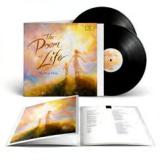
Mit ”The Poem of Life” veröffentlicht Yu-Peng Chen sein neues Album bei Deutsche Grammophon. Der
vielfach ausgezeichnete Komponist, dessen Musik durch seine Arbeit an Genshin Impact weltweit über zwei
Milliarden Mal gestreamt wurde, präsentiert eine symphonische Suite in zwölf Sätzen, die den Stationen
eines menschlichen Lebens gewidmet ist. Die Musik erzählt vom ersten Atemzug, vom Aufbruch, der
ersten Liebe, Rückschlägen und Abschieden. Dabei verbindet der Komponist lyrische Melodien, kraftvolle
Orchesterpassagen und sein chinesisches Erbe in einem persönlichen Werk.
Gemeinsam mit dem Shanghai Philharmonic Orchestra unter der Leitung von Zhang Liang verbindet Chen
große orchestrale Klangwelten mit traditionellen chinesischen Instrumenten wie Erhu, Pipa, Guzheng und
Sheng. Als Gastmusiker bereichern der Geiger Daniel Hope und der Mandolinist Avi Avital das Album. Mit
seiner unverwechselbaren Handschrift, die bereits ein weltweites Publikum begeistert hat, schlägt Chen dabei
erneut die Brücke zwischen sinfonischer Musik und dem erzählerischen Charakter moderner Soundtracks.
Mit ”The Poem of Life” veröffentlicht Yu-Peng Chen sein neues Album bei Deutsche Grammophon. Der
vielfach ausgezeichnete Komponist, dessen Musik durch seine Arbeit an Genshin Impact weltweit über zwei
Milliarden Mal gestreamt wurde, präsentiert eine symphonische Suite in zwölf Sätzen, die den Stationen
eines menschlichen Lebens gewidmet ist. Die Musik erzählt vom ersten Atemzug, vom Aufbruch, der
ersten Liebe, Rückschlägen und Abschieden. Dabei verbindet der Komponist lyrische Melodien, kraftvolle
Orchesterpassagen und sein chinesisches Erbe in einem persönlichen Werk.
Gemeinsam mit dem Shanghai Philharmonic Orchestra unter der Leitung von Zhang Liang verbindet Chen
große orchestrale Klangwelten mit traditionellen chinesischen Instrumenten wie Erhu, Pipa, Guzheng und
Sheng. Als Gastmusiker bereichern der Geiger Daniel Hope und der Mandolinist Avi Avital das Album. Mit
seiner unverwechselbaren Handschrift, die bereits ein weltweites Publikum begeistert hat, schlägt Chen dabei
erneut die Brücke zwischen sinfonischer Musik und dem erzählerischen Charakter moderner Soundtracks.
Der Soundtrack enthält die rekordbrechende Nummer-1-Hit-Single „I Knew It, I Knew You“ – gesungen von
Taylor Swift und geschrieben sowie produziert von Swift und Jack Antonoff – sowie eine Original-Filmmusik
des Oscar®-Preisträgers Randy Newman.
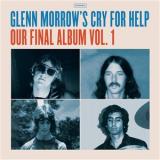
,Our Final Album - Vol. 1" ist das vierte Album von Glenn Morrow's Cry For Help und zeigt die Band aus Hoboken, New Jersey, auf dem Höhepunkt ihrer Kreativität. Obwohl der Titel einen Abschied suggeriert, präsentiert das Album eine lebendige und vielseitige Sammlung von elf neuen Songs, die von klassischem Gitarrenrock über gefühlvolle Balladen bis hin zu Bossa-Nova- und Soul-Einflüssen reichen. Angeführt wird die Band von Glenn Morrow, einer Schlüsselfigur der unabhängigen US-Musikszene, der als Musiker, Journalist und langjähriger Betreiber des Indie-Labels Bar/None Records bekannt wurde. Gemeinsam mit Bassist Mike Rosenberg, Gitarrist Ric Sherman und Schlagzeuger Ron Metz greift Morrow auf jahrzehntelange Erfahrung in der traditionsreichen Hoboken-Musikszene zurück. Aufgenommen wurde das Album erneut im Magic Door Studio von Produzent Ray Ketchem, der besonders das Gespür der Band für eingängige Melodien und starkes Songwriting hervorhebt. Unterstützung erhält die Band diesmal vom renommierten Keyboarder Andrew Burton, dessen Beiträge den Songs zusätzliche Tiefe und Klangfarben verleihen. Musikalisch verbindet ,Our Final Album - Vol. 1" kraftvolle Rocksongs wie ,That's That", ,Beatle Bones" und ,Into Something New" mit nachdenklicheren Momenten wie ,Stop Your Crying", dem Bossa-Stück ,Boom Boom" oder dem souligen ,Let's Stay In Bed". Dabei ziehen sich Glenn Morrows persönliche Geschichten, Lebenserfahrungen und eine leichte Melancholie durch das gesamte Album. Das Ergebnis ist ein abwechslungsreiches, warmes und zeitloses Rockalbum, das die Stärke einer Band zeigt, die auch nach vielen Jahren nichts von ihrer Leidenschaft verloren hat.
Some recordings herald the future in ways that are impossible to see in real time. Teodros Makonnen With His Organ (ቴዎድሮስ መኮንን ከኦርጋኑ ጋር), by the artist Teodros Makonnen, also known as Teddy Mak, is one of those. Today, electronic sounds, synthesizers, and digital production are taken for granted in Ethiopian music, but in the early 1980s, they were novelties that polarized opinion. Even to this day, the story of Teodros Makonnen’s legacy has never been properly told. He played a decisive role in defining the sound of the digital era of Ethiopian music that emerged in the 1980s and beyond, both as a keyboard player and as a producer, songwriter, performer, and sound designer.
Ethiopian music was at a crossroads in the early 1980s. Much like music in the rest of the world, technology and automation heralded either a quantum leap in musical development or the annihilation of musicianship, depending on who you’d ask. The changes were incremental nonetheless, but with the benefit of hindsight one can clearly see that the changes meant different things in different contexts. Drum machines and electric organs came to replace many hotel bands because, all of a sudden, one musician could control drums, melody, and accompaniment. Teodros was one of the first musicians in Ethiopia to explore the possibilities this opened up.
Teodros’ father, Captain Makonnen Beri, was a chief pilot at Ethiopian Airlines and a music enthusiast at that. This would prove important to his development, as Makonnen brought back a piano from Germany, which would lead to the first steps in Teodros’ long musical career. Captain Makonnen’s work as Head of Flight Operations and as a pilot exposed him to the wider world that was far from commonplace for most Ethiopians. In a house where music captivated the whole family, the piano gave Teodros’ talent an outlet. Not only was a piano at home rare in Ethiopian households, his father also brought an Indian teacher to their home to teach Teodros and his brother, Captain Samuel Makonnen, music theory (solfeggio or ear training) and piano. Teodros and his youngest brother, the late great Dereje, a member of both the legendary Ibex Band and the Ethiopian reggae group Dallol, took up music from that point onward, with Teodros beginning to develop his proficiency at the age of eight. His father encouraged him to practice tirelessly at home, and Teodros later received musical schooling at the German School in Addis Ababa. His obvious talent led to studies and formal education at the Yared School of Music, followed by continued studies in American jazz at Northern Virginia Community College in Virginia. Teodros cut his teeth professionally in his mid-teens, not only as a keyboardist, but also as an arranger for the Wabi Shebelle and Dahlak bands in the 1970s. He mastered electronic sequencing early, rising to prominence through the midnight recording sessions held during the military curfew. The pressures imposed by the curfew required precise and disciplined recordings, and Teodros delivered just that. This, in turn, led to collaborations with iconic artists such as Mulatu Astatke, Aster Aweke, Menelik Wossenachew, Tilahun Gessesse, Mahmoud Ahmed, and Alemayehu Eshete. In those days, he sat in as a keyboardist with the Dahlak Band when Dawit Yifru took a hiatus to study in Russia, and also with the Ethiostar Band. He secured a residency at the Wabi Shebelle Hotel with the Shebele Band, together with Zelalem Tadese (drums), later succeeded by Elias Bekele, Mulugeta Hailu (bass), Teferi ‘Bibisha’ Mengesha (guitar), Kumelachew G/Selassie (trumpet), and Teshome Deneke (saxophone). A friendly competition developed between the bands associated with the Ras Hotel (the Ibex Band), Ghion Hotel (the Dahlak Band), and Wabi Shebelle Hotel (the Shebele Band). The music scene at Wabi Shebelle saw teenagers commanding the spotlight in an industry otherwise dominated by musicians of an older generation. At the Wabi Shebelle Hotel, Teodros met a diplomat from Saudi Arabia and later visited him at his home in Addis Ababa, a meeting that had unexpected musical consequences. The man owned a Yamaha double-deck keyboard. That evening, they recorded Teodros Makonnen With His Organ (ቴዎድሮስ መኮንን ከኦርጋኑ ጋር) in one take. This recording, a cornerstone in the early digital sound of Ethiopian music, came about almost by chance, simply because Teodros got the opportunity. Traditional Ethiopian songs were cast in a wholly electronic style. Once freed from backing duties, Teodros’ keyboards could explore dreamlike soundscapes that took Ethiopian music in new directions. Even though the cassette contained well-known Ethiopian songs, they were given highly original arrangements, performed on an electric organ with drum machine backing and rhythm patterns that left the listener with suggestive, lingering sounds. “Libesh Kabashen” (also known as “Anchi Bale Game”) and “Odu Gol Golesa” wrap you in the very stuff that dreams are made of. Originally released on cassette only, this recording exudes a mystique that surpasses even some of the most obscure Ethiopian recordings of the day. It remained more or less unknown outside of Ethiopia until now. Some of the tracks, like “Addis Fikir,” are permeated with an almost naive buoyancy, free-floating sounds that lost contact with the ground the moment they were conceived. Others, like “Meche New Hageren Yemayew” and “Lelitu Alnega Alegn,” carry a moodier, quirkier timbre, with pulsating rhythms in the background. Yet even the darker pieces contain an unmistakable wave, something essentially Ethiopian. If most recordings of Teodros’s contemporaries at the time were teeming with atmosphere, his songs seem instead at home in the stratosphere, almost ethereal. Some of the music here could be filed under “lullabies,” were it not for the recurring, almost brooding feeling that engulfs the listener on the aforementioned tracks. You could easily be forgiven for drifting into a blissful haze as the music washes over you.
Up to the advent of electronic music production, Ethiopia was totally dominated by big bands on the one hand, and small groups on the other. The former were tied to large institutions such as the military, the latter emerged from the entertainment industry, in hotel bars and nightclubs. These groups were commercially driven, and bands ultimately had to foster a mercenary approach to employment, albeit not to the passion for music. In the light of this, Teodros’ musical legacy can be seen in two ways. On the one hand, he is a key player in Ethiopian music from the 1970s onwards, leaving an indelible mark through hundreds of compositions and arrangements, including soundtracks for numerous documentary films and advertisements for different companies. On the other hand, the way he and others employed electronics brought Ethiopian music onto a fork in the road.
The replacement of traditional instruments with electronic equipment was seen as impending doom by some. Others, like Teodros, saw new avenues for performance, production, and creativity. Just as later producers like Abegasu Shiota of Admas, Teodros was a trailblazer who opened paths that it took Ethiopian music as a whole more than a decade to rush into. The hotel scene had already been pushed toward electronic music by financial necessity and cost-cutting. Today’s revived global interest in Ethiopian music from the seventies and eighties, alongside a broader resurgence, has changed the reasons for using digital means of music production. They have become tools for musical dreaming. This is where the dreaming began.
out of Stock
Last delivered 11 days ago available to reorder, subject to availability
For her new and most radical album »Electroacoustic Works for Halldorophone«, Martina Bertoni used the electronic instrument at EMS Stockholm to create four pieces that are massive in scale and incredibly intimate, sonically restrained and emotionally overwhelming—almost ambient and always demanding your full attention.
Martina Bertoni returns to Karlrecords with »Electroacoustic Works for Halldorophone,« her most radical album yet. The foundation for the four electroacoustic pieces was laid during a residency at Stockholm’s legendary Elektronmusikstudion (EMS) that the Berlin-based cellist and composer used to explore the curious instrument, originally designed by Halldór Úlfarsson in 2008, as an algorithmic system in order to examine tunings and the mathematical relationships between Aiming to analyse and understand their interaction beyond the composer’s control, Bertoni sought to engage more deeply with the concepts of time, tuning, and, most importantly, control. Accordingly, her four »Electroacoustic Works for Halldorophone« seem both massive in scale and incredibly intimate, sonically restrained and emotionally overwhelming— almost ambient and always demanding your full attention.
While the halldorophone—famously used by Hildur Guðnadóttir for her »Joker« score—roughly resembles a cello and can be played like one, it is an electronic instrument. The vibration of its strings is being picked up, amplified, and then routed through a speaker. This creates a feedback loop that becomes increasingly complex depending on how much gain is added to individual strings. Úlfarsson gave Bertoni a carte blanche for how to handle the instrument, but she stresses that she relied on »minimal interventions—some string strumming and plucking« that set the interactions of different sounds and frequencies into motion. »I decided to not approach it like a cellist would,« she explains. »Instead I used it as a kind of generative organ by turning it into a feedback machine, with tuned feedback triggering more feedback depending on the tuning, which was based on tetraphonic scales that I could apply on the four main strings as well as the sympathetic group of strings.«
Bertoni recorded the material in the EMS studio, later composing and arranging the four complex pieces in her home in Berlin, after which they were mixed and mastered by Ciaran O’Shea. While this can be considered a compositional abstraction process, traces of her concrete work as a performer are firmly ingrained in the music. »The halldorophone doesn’t have a line output, just a double set of speakers, which is why I recorded all sounds with two microphones in the EMS studio,« she explains. »That’s why there’s plenty of breathing sounds here and there—label owner Thomas Herbst and I jokingly refer to the album as my ›chamber music record‹.« And indeed, there is a striking sense of intimacy to these four pieces throughout which individual sounds, harmonic frequencies, and even subtle rhythmic figures seem to move both on their own accord but also according to a underlying vision that steers their interplay.
Indeed, »Electroacoustic Works for Halldorophone« is an album built on and marked by contrasts. The soothing polylogue of single sounds in the higher register on opener »Omen in G« is counterpointed by massive bass drones, while the second piece, »Nominal in D,« plays a cunning game of repetition and difference by combining thick textures with all kinds of rhythmic elements. »Fades in C«—the longest of the four pieces, clocking in at 17 minutes—unlocks the emotional potentials of the sonic qualities of the halldorophone, sounding at once serene and anthemic, and »Organon in D« closes the album by underscoring how Bertoni’s unconventional approach allows her to seamlessly transform simple, quiet tones into complex, towering walls of sound.
Cello player and electronic artist Martina Bertoni returns with her 2nd album for Karl: Hypnagogia delivers six new, masterfully crafted tracks between experimental ambient, drone and modern composition.
Cellist and composer Martina Bertoni started playing the cello at a very young age. Classically trained, her career further developed around experimental and film music, for which her cello has been featured in numerous records, works and soundtracks for films and series. After two EPs and her debut full length All The Ghosts Are Gone (2020), Bertoni joined the Karl roster where she released Music For Empty Flats in January 2021 to critical acclaim (a.o. one of the Top Ten drone albums of 2021).
On her new album Hypnagogia she continues to explore the sonic possibilities of her cello which she uses as primary source for composition and sound processing through reverbs, feedbacks and sub-bass frequencies, thus crafting sonic sculptures, rich of atmospheres and frictions, fed by ambient as much as drone and modern composition.
In the words of Martina Bertoni:
"The six tracks that constitute Hypnagogia have been written during 2021 and partially inspired by the reading of Stanislaw Lem's book Solaris. The title refers to a transitional state of consciousness from wakefulness to sleep, during which one might experience sensorial hallucinations and lucid dreaming, and can tap into the pristine structures of the subconscious. Hypnagogia portraits an imaginary cosmic journey of the Self that crash ends into a blinding sun."
In the ever-evolving landscape of the underground music scene, few bands have made an impact quite like Selofan, an immensely talented duo of Joanna Pavlidou and Dimitris Pavlidis, has carved a niche for themselves within the international pantheon of darkwave, post-punk, and '80s synthpop, blending these influences to create a sound uniquely their own. Their journey, marked by a commitment to artistic integrity and evolution, has taken them from the cozy confines of local venues to the grand stages of international festivals, earning them a dedicated following and critical acclaim along the way. Their sixth album, Partners in Hell, released in October 2020, navigated the band through unprecedented times, testing their adaptability and resilience. Despite the hurdles to performing live and the global pandemic's challenges, Selofan emerged stronger, embarking on international tours with a newfound appreciation and connection with their global audience, during this period of introspection and isolation, Joanna Pavlidou embarked on a new venture, GIOVANNA, released under Selofan’s house label, Fabrika Records. GIOVANNA, which places Pavlidou at the helm of vocal and lyrical composition, represents a full on foray into synth-pop. showcasing a different facet of her artistic identity, with lyrics entirely in Greek. In 2023, Selofan hit the circuit hard, lighting up revered festivals with their presence. They stood shoulder to shoulder with heavy hitters like Molchat Doma and Lebanon Hanover at Grey Scale and performed with with the likes of The Sisters of Mercy, VNV Nation, and She Past Away at the Death Disco fest in their hometown of Athens. With each album they have released Selofan made significant strides in their evolution, deepening their engagement with their art. And their forthcoming seventh full length studio release, Animal Mentality, is poised to be their most compelling work yet. Animal Mentality unfolds as a labyrinthine journey through the elemental aspects of human emotion and experience, set against the backdrop of Selofan's signature darkwave sound. Each track on the album delves into different facets of the human condition, from the depths of desire to the pangs of isolation, encapsulating the duo's profound understanding of the intricate spectrum of human emotion and subjective experiences. The album kicks off with "Sticky Fingers," a track that melds cinematic scope with a haunting storyline, reminiscent of Jean-Michel Jarre's icy synths and a lyrical nod to Joy Division. This opening salvo revisits the tragic allure of classic car accident songs, weaving a tale of joy turned to sorrow amidst the snowy Alps. "Love's Secret Game" delves into the depths of forbidden desire, with vocals that echo the melancholy timbre of Xmal Deutschland, Lebanon Hanover, and Nico. It's a tale of passion and ephemeral connection, promising an enduring presence despite the inevitable fracture of time and distance. In "Lucille," sung by Dimitris Pavlidis, the plot is ensnared in the machinations of a tempestuous affair, with gothic undertones evoking the dramatic soundscapes of Ultravox and Clan of Xymox. The lyrics are steeped in danger and desire - a dance with the shadows. "Sacrifice Me" plunges into the abyss of despair, driven by a Bauhaus-esque bassline. It's a plea for release from the chains of alienation, a yearning for a final gesture of solace in the face of overwhelming darkness. "Bluebirds" offers a poignant reflection on solitude, with the fleeting imagery of bluebirds symbolizing the elusive quest for happiness. The song serves as a meditation on the internal struggle to maintain hope in a world shaded by sorrow. The narrative shifts with "Glassplitter," where German lyrics paint a portrait of deceptive allure and toxic entanglement. We are confronted with irresistible danger, masked by a veneer of beauty. "Ignoranz" continues the exploration in German, pondering the universality of misunderstanding. It's a reflection on the subjective nature of truth and the shared human experience of ignorance. "Behind My Eyelids" closes the odyssey, a contemplation on melancholy and metamorphosis. The phoenix rises from the ashes of betrayal to the brighter realm of renewal - a beautiful homage to the resilience of the human spirit amidst the often harrowing cycles of life. More than just an album, Animal Mentality is a milestone in Selofan's career, marking a decade of musical innovation and growth. It's a testament to their enduring spirit and a bold step into new realms of artistic expression. As Selofan continues to evolve, they remain at the forefront of their genre, pushing boundaries and exploring the depths of the human psyche through their haunting melodies and poignant lyrics.
For over 11 years, Nowadays Records has been shaping the French electronic music scene with boundless energy and total artistic freedom. Much more than a label, Nowadays is a big musical family where every release, meeting and event becomes a real celebration. With over a hundred albums and nearly a thousand titles to its credit, Nowadays Records embodies musical diversity across a variety of genres: abstract hip-hop, house, electronica and alternative pop.
It's in this festive spirit that the Club Nowadays project is born, a true embodiment of the collective's vision. Through its club compilations and evenings featuring label artists and outside guests.
Today, the label continues to chart its course with the release of Club Nowadays Vol. 6, a new opus in its series of compilations, which fully embodies its vision of club music. This sixth volume brings together emblematic figures of the label and emerging artists around the following dance tracks.
Don't Lie, the first single from the compilation, is a heartfelt track born of a broken heart, but turned towards the light. Mira Ló composed this track as an act of resilience, following a break-up in love. She transforms her pain into positive energy, hoping that everyone can recognize themselves in it and find a little sweetness to soothe their own grief.
R1D1 brings together his groovy house and garage influences to create the track Marsupilami around a hand-crafted synth, sharp drums and deep bass. Influenced by hip-hop beatmaking, he incorporates vocals from radio and interviews, transformed into rhythmic elements. The name, a nod to the famous character, comes naturally through the sampled “houba houba”. Between offbeat textures and assertive groove, the track embodies R1D1's singular, hybrid universe.
OOGO & Blanka, two pioneers of the label, offer us Phô Real, a hybrid track between soulful deep house and hip-hop groove, mixing organic and digital textures. A track to get the dancefloor moving, with a delicious nod to La Fine Équipe's culinary universe.
With Tracksuit & Loafers, Yambow creates a bridge between groovy French Touch elegance and the effervescent energy of UK house, in the tradition of producers like Salute and Oppidan. The track is conceived like an acid cocktail: funky, euphoric and dancefloor-friendly. The title is a nod to cultural contrasts - between English tracksuits and French loafers - which translate into a musical interplay between sophistication and fervor.
Finally, Laaanky, the Parisian producer, breaks codes and gives free rein to his passion for raw sound, efficiency and groove on the track Bloom. Between textured house, dub echoes and Afro-tinged post-dubstep rhythms, he explores a danceable, minimalist and percussive electronica. Less is more.
out of Stock
Last delivered 25 days ago available to reorder, subject to availability
je prie pour que la goutte ne tombe pas
(I pray that the drop does not fall) is the first international release by Japanese trio Chi To Shizuku. While they have released five albums and a 7” in Japan, their spectral, haunted rock songs haven’t yet reached a much wider audience overseas. With this album, then, a live recording taken at Koenji HIGH, Suginami, Tokyo on 23rd November 2021, the unique, quartz-like character of Chi To Shizuku’s music is writ large, the bleak bliss of their songs carved onto twelve-inch vinyl.
Perhaps the best-known member of Chi To Shizuku, at least for audiences with an ear turned to Japanese psychedelia, is drummer Takahashi Ikuro, known for his membership of almost every group worth a damn from that scene – Fushitsusha, Nagisa Ni Te, Ché-SHIZU, Kousokuya, High Rise, Maher Shalal Hash Baz, LSD March, the list goes on. But the core of Chi To Shizuku’s music is the collaboration between vocalist, bassist and lyricist Morikawa Seiichirou, and guitarist and arranger Yamagiwa Hideki. Morikawa is a member of long-running punk/goth group Z.O.A., and has also played with YBO , Zzzoo, and as collaborator with Takeshi and Atsuo of Boris in A/N; he’s also recently been performing with Mitsuru Tabata. Yamagiwa’s history takes in stints with Katsurei and Cock C’ Nell, and he also recently guested with la scene 裸身.
All this contextual information does relatively little, though, to prepare you for the unique vibration of Chi To Shizuku’s lustrous songs. They shimmer in the same half-light, perhaps, as Shizuka and the quieter moments of LSD March, sharing a similar poise and classicism, and there’s a tenderness and wracked poetry to Morikawa’s voice that reminds of the emotional intensities both of traditional Japanese folk, and of British folk music: on “Musuu No Nemuri No Naka De Kumo Wo Tukamu”, the combination of his singing, backed with gorgeously plangent guitar, reminds of no-one so much as it does The Pentangle or Spriguns Of Tolgus. Chi To Shizuku’s love for the ballad as form gifts their music an archaic, sometimes arcane resonance, and from what you can hear on this album, it’s clear they’re in love with graceful melancholy.
But this is not a folk album, by any means; it just shivers with the same eternal spirit. There are also hints of prog rock, and you can catch some passages of scratchy, distended free rock, on the extended spirit invocation of “Nanhito Hanhito”. je prie pour que la goutte ne tombe pas is an extraordinary album, a melancholy surprise, that reminds dedicated listeners of the seemingly bottomless well of great music to be found via the Japanese underground in its many forms. Perhaps Michel Henritzi says it best, though, in his liner notes, when he writes, “Chi To Shizuku’s music reminds us that our life is a dream that lasts only a season, and that oblivion will follow.”
Recorded at Koenji High Suginami, Tokyo, 23 November 2021
Mix & Mastering: Taku Unami, photography : Noriko Akiyama
Liner notes by Jon Dale Printed by Alan Sherry
»Cosmogonical Ears« is Amosphère's first album for Hallow Ground. Following her contribution to the Swiss label’s »Epiphanies« compilation and her 2021 full-length debut »More Die of Heartbreak« on 33-33, it features three expansive pieces. The Paris-based composer and multidisciplinary artist delves deeper into themes of time, space, cosmology, human perception, and psycho-physical effects, crafting profound sonic meditations. Drawing on a minimalist approach while blending electronic and acoustic elements, Amosphère’s long-form compositions are living, breathing entities whose sonic richness and evocative power unfold gradually over time, putting »Cosmogonical Ears« in direct kinship with previous Hallow Ground releases by artists such as Kali Malone and FUJI|||||||||||TA.
The album opens with its longest piece, »Land of eternal delight,« composed for the Buddha10 exhibition at the Museo d'Arte Orientale in Turin. Written during three years of isolation—a period in which Amosphère explored meditation practices and diverse belief systems—it merges mythology with personal transcendental experiences, reflecting on a challenging time for humanity. »By blending Buddhist philosophy and sculpture with my own meditation practices, I sought to explore a way for people to transcend the boundaries of space and time—not as a believer, but as an observer,« she explains. Featuring handmade ceramic instruments and recorded by Thomas Lefevre, the piece combines Amosphère’s electronic organ with Marc Lochner’s flute contributions, creating a sound that is simultaneously minimalist and expansive.
The concept of teleportation and how it challenges traditional notions of time and space serves as the foundation for the second piece. »Recent advances in quantum physics suggest that teleportation might be possible through quantum entanglement,« Amosphère notes. »What if science fiction is becoming reality—or has already existed in ancient times?« Drawing inspiration from theories proposed by physicists such as Roger Penrose, Amosphère again worked together with flutist Lochner, this time using her VCS 3 synthesizer. »Teleportation« weaves single notes into intricate, non-linear patterns that defy conventional logic, creating a complex auditory tapestry. The last piece »Black hole in, white hole out« was recorded on Corsica and features Miao Zhao’s bass clarinet drones alongside Amosphère’s church organ. It imagines the possible sound of crossing a black hole while also suggesting the study of its theoretical exit and its potential applications for large-scale time and space travel.
The questions posed by »Cosmogonical Ears« do not yield straightforward answers. Instead, Amosphère’s restrained yet intricately layered compositions require full immersion and concentration from the listener. As expressed by the album’s title—which envisions the birth of a new universe through listening—»Cosmogonical Ears« offers an experimental approach to auditory perception as a tool for seeking truth, freedom, and harmony between the outer world and the inner self.
Shaped in the shadows and sounds of the legendary Topanga Canyon, California. The debut album from Biita Houdei is buoyed by a magic that feels wildly and beautifully untamed; wild-hearted sentiments that are shaped by the world around it, fascinated by the enchantment of it all, and delivered via a collective (harmony layered) voice that understands the complex nature of what it means to be alive in the here and now.
Produced by Haley Heynderickx, 'This Bed Was Made For Me' is a striking collection of stirring, signature folk songs animated by subtle instrumentation and orchestral flourishes. It feels lived in: vocals weave together in a beautiful harmonic dance, seasons shift, sunshine appears and bold psychedelic colours warm the horizon.
In the early stages of making her debut album, Biita Houdei knew two things: that she wanted the recordings to feel distinctly and palpably warm, and that she would sew a unique patch for every song on the album. The first of those things is subjective, though brightness pours in from all corners of This Bed Was Made For Me. The second became a laborious task she undertook throughout the process, the completion of which is testament to the slow process of it all, to the physical commitment and patience required to make a full work of art.
The patches she crafted during the making of This Bed Was Made For Me became a full quilt, one that now adorns the album’s front cover. Beneath it sits a striking collection of Houdei’s stirring, signature folk songs, brought into fruition with the help of fellow songwriter Haley Heynderickx, in her first lead production role, and the album’s producer/engineer Sahil Ansari. It’s also the first release Biita (pronounced “bee-tah”) is releasing under her newly-taken name, one that was gifted to her by her auntie and means "unique" in the Farsi language. “I proudly take this name,” Biita says of the change. “It makes me feel that much closer to my Persian heritage.”
Recorded across ten back-to-back and full days, the album touches on themes of love and heritage, of taking chances, the preciousness of time and the impact we all have on the world around us. A number of the songs were written in Topanga, California, while Biita settled into a new home as wild fires raged, and as she adjusted to a life which no longer held distinct seasonal changes, far from the Ozark Mountain home she felt so attached to. Such themes reveal themselves in a variety of ways across the album’s fourteen songs, that key sense of warmth retained in the bones of the album whether they are stepping into darkness or seeking out light.
The album feels lived in and alive; dust swirls, seasons shift, sunshine appears and is held. Biita calls it ‘psychedelic’ and there is indeed a sense of that in the world building, in the way the bold colours are always shifting. Formed of fourteen songs, and filling nearly forty-five minutes, This Bed Was Made For Me not only builds a whole world for listeners to inhabit but also implores you to stay a while. This was deliberate, indeed it’s Biita’s wish that listeners give the album dedicated time; to learn its shape, to explore it fully, away from the instant grab of playlists and skewed algorithms.
“Many of my favourite albums didn’t reveal themselves instantly to me,” Biita, now based in the Catskill Mountains of New York, explains. “Some did, of course, but I had to work to understand the full scope of the piece as a whole. I encourage people to dive deeper into everything that they choose to consume. It is not my intention to sound pretentious, but instead, I am trying harder to explain the gratitude I have for being able to craft every part of this album— using my hands, my brain, my voice, my visions. To me, it is an all encompassing work of art,” she continues. “Making the quilt was laborious. Taking the cover photo was laborious. No shortcuts, but rather a manual and tangible approach. I am thankful for the time it took.”
Pioneering Ghanaian musician King Ayisobareturns September 4, 2026 with his forthcoming seventh album Pure Confusion, recorded and produced by On-U-Sound’s Adrian Sherwood.
Ayisoba is one of Ghana’s most distinctive musical voices. The world’s foremost player of the kologo - a homemade two-string lute fashioned from a calabash and covered in goatskin - he delivers fiercely political and socially observant songs using three different voices, including the voice of his grandfather that possessed him as a child. Sherwood meanwhile is the pioneering British producer and founder of On-U Sound whose hugely influential career has connected dub, post-punk, industrial, hip hop and experimental music through collaborations with artists including Lee “Scratch” Perry, Mark Stewart, Horace Andy, Sinéad O’Connor, Nine Inch Nails and Depeche Mode.
Ayisoba and Sherwood first collaborated during a BBC Radio 3 Late Junction session at Maida Vale in 2017, organised by Ayisoba’s long-time collaborator Arnold de Boer/Zea of The Ex. The pair immediately connected, and during the pandemic, when Adrian’s long-time African Head Charge collaborator Bonjo Iyabinghi Noah was in Ghana looking for musicians to collaborate with Sherwood suggested Ayisoba, who eventually featured on two tracks on African Head Charge’s 2023 album A Trip To Bolgatanga (Bolgantanga is the region Ayisoba is from). Ayisoba then returned to the UK in late 2024 and travelled to Sherwood’s Ramsgate studio where the pair laid down the songs that would become Pure Confusion: “All the songs were already in my head,” says Ayisoba. “This album is all recorded live, over one afternoon. Adrian only plays live, and I like that. And he works hard - he doesn’t sleep. I woke up in the night and he was still working.”
“In my role producing it, I just let it roll to make a good vibe,” says Sherwood. “We recorded it completely live, did some programming and processing on some tracks, using dub techniques live on the mixing desk and adding some slick touches. We wanted the colours on the album to swing off what Ayisoba was doing, so we invited some friends to participate. Doug Wimbish (Sugar Hill Gang) arrived from America and lent his services playing bass on a couple of tracks; the wonderful Ivan Hussey (Celloman) played bass, keyboards and cello - cello is not really featured on African recordings so we thought it would be really cool to try it. I'd been working with Alex White (Fat White Family/Primal Scream) on my album (The Collapse of Everything) and so he added sax to a few tracks and I brought Alan Glenn down especially - Alan was in Little Axe but also Nine Below Zero and played in the Yardbirds – to add some mouth organ; Mark Bandola added a bit of flavour with his Juno, Ayisoba’s long-time Ghanian collaborator Ayuune Sule added some percussion and vocals and Matt Smith did some programming.”
“King Ayisoba is quite amazing, so unique,” Sherwood continues. “He’s got his own handmade instrument and three different voices - when you’re listening you think it’s three different people. He’s a breath of fresh air, full of love for the music which he wants to share with everybody. Some tracks we kept very straight and others we experimented with - adding dubby psychedelic little touches to trip you out a bit. The added production we did at On-U has given it a shine while still keeping it vibrant, live and spontaneous. I’m really proud of this record”.
On Pure Confusion, Ayisoba documents the anxieties, contradictions and changing social realities of contemporary Ghana. “Land is a problem for everyone,” says Ayisoba of the opening track “Property”. “If you don’t build on your land they will take it away. Plenty corruption in Ghana, plenty confusion. They sell the land to two, three, four people and then everybody fights.”
Elsewhere Ayisoba explores illness, spirituality and social stigma on “Bemba”, warning against hiding sickness out of shame or fear of “bad juju”: “People hide their sickness and the sickness kills them.” “Tewigiloge” reflects on cultural difference and open-mindedness encountered through world travel: “We will tour the whole world and we will see many things we may not like or understand… your eyes will see, but don’t talk - you have to be open-minded.”
Spirituality runs deeply throughout the album. Ayisoba’s grandfather was a respected spiritual healer whose presence the musician says still guides him today. “The grandparents’ spirits are the ones you can contact,” he explains of the spiritual chant “Nkaase”. “This song talks about the forefathers.” The closing track “Leeda-Mampanga (It’s Not My Strength)” acts as a statement of humility and gratitude: “You have to be humble, even if you have talent. God gives you the power.”
For more than two decades, King Ayisoba has been one of Africa’s most distinctive musical innovators, transforming northern Ghanaian kologo traditions into a bold contemporary sound rooted in hypnotic rhythms, social commentary and spiritual intensity. Since the breakthrough success of 2006’s Modern Ghanaians, Ayisoba has built an international following through acclaimed albums, relentless touring and collaborations with artists including Lee “Scratch” Perry, Orlando Julius and African Head Charge. Performances at Roskilde, WOMAD, Le Guess Who? and the Barbican have further cemented his reputation as a singular live performer and cultural force.
The follow up to her UK number 1 album This Is How Tomorrow Moves, the stark and striking fourth album by beabadoobee is named for the electricity towers that dot every major artery in the world—the strong, spindly structures that reminded Beatrice Laus of her connection to friends and family at home while she was staring down extreme disconnection and isolation on tour over the past few years.
The title can also be read as an allusion to Laus’ spiky, forceful new sound—the waves of distortion that crash and shatter across this record’s 14 songs mirroring the intense crackle you hear when walking under power lines. The pylon is also a fitting symbol for an album that reckons with the repetitive anxieties of your mid-twenties: What if I’m always going to be this way? What if life is just pylon after pylon on the road?
The album’s first single is available to stream and buy from today: “Sun Has Set” introduces Pylon as, in essence, a set of songs that began as diary entries, words that Laus thought she’d never be able to say out loud. “A lot of the songs on this record are things I wish I could have said to someone,” she says. “This song has this petty tunnel vision—it’s like, I hate you. You’re gonna stay here and listen to how much I hate you. Because I never got to say that.” The single comes accompanied by a striking first person video directed by Bea’s partner and longtime visual collaborator Jake Erland.
Ever a devotee of pure rock music—both as something to be cherished and something to be played with—Laus casts these feelings in songs that touch on classic grunge, midwest emo and ‘90s radio rock, zeroing in on a sound that is both harsher and more direct than any of her previous records. She says the music she’s loved has “always been an influence” on her music, and so for B4 she went straight to the source. A fair few of Beabadoobee’s composite influences contributed to Pylon, a fact that speaks to the goodwill and respect Laus has amassed over the course of her relatively brief career.
Hayley Williams sings on “Nothing to Prove,” a deeply anthemic indie-rock song about getting your power back from fairweather friends who just want a bit of your success. The moody “Powerlines” features a verse from Turnstile singer Brendan Yates, a master of matching vocal force with emotional nuance. Elsewhere, you’ll find contributions from Pinegrove’s Evan Stephens Hall, Deftones’ Chino Moreno, and Title Fight’s Shane Moran, as well as, on “Write Me A Letter”, production work from Laus’ longtime friends and collaborators Matty Healy and George Daniel of The 1975.
Beabadoobee will debut songs from the record on the Powerlines Tour, her first ever arena shows and biggest tour to date, taking in shows across North America, the UK and Europe this autumn-winter. The Powerlines Tour kicks off 1 October and includes stops at Madison Square Garden, The Kia Forum, The O2 and more (full routing below). Support comes from Wisp in the US, Canada and UK and Violet Grohl in France, The Netherlands, Belgium and Germany.
Born in the Philippines and raised in London, Beatrice Laus emerged as a British alternative music icon across three acclaimed albums and five EPs. She has garnered multiple BRIT Award and BBC Sound Of nominations, and won NME’s Radar award, whilst amassing over 10 billion streams worldwide and more than 12 million followers across her social channels.
This Is How Tomorrow Moves became her first record to reach number 1 on the UK Official Album Chart in 2024, following her Top 10 albums Fake It Flowers (which reached number 8) in 2020 and 2022’s Beatopia (#4). Earlier this year, beabadoobee released the one-off single ‘‘All I Did Was Dream Of You,” teaming up with Grammy-nominated best New Artist The Marías, the result of a longtime mutual creative admiration between María Zardoya and Bea.
out of Stock
Last delivered 32 days ago available to reorder, subject to availability
I’dgained some notoriety as a music producer and DJ but I hit a horrible case of writers block around 2018.
The problem I was finding was that I was trying to shoe horn every smart arsed clever dick musical reference I had into the music I was making, but the function of dance music is to make people dance, not to show people who broad your musical references are, so I was making pretty shitty music that landed in the middle and didn’t achieve either aim.
To tackle this I ended up committing to just trying to make the most expressive and wanky experimental stuff I could. I was immersed in club culture at the time so the whole enterprise started as a joke, hence the name “Bed Wetter”. However when I fully submitted to just naked exploration the really unexpected thing that happened was that I found myself unavoidably having to deal with a lot of my own bullshit. That bullshit turned into the “Billy Mill is Dead” album, which was essentially the sound of me excavating my own life and looking at how I felt about where I was from, where I was headed, my family, my history, my region and all of the things i have conflicting feelings about.
It was partially catharsis and also a bit of deprogramming around being able to call myself an artist after being raised to believe that wasn’t an option for me.
I self released Billy Mill is Dead in the months before the pandemic and it found it’s fair share of love in the places I hoped would connect with it, and just the right amount of being ignored by people who I’m pleased didn’t feel it. This all lead to me being emboldened enough to apply for an artist in residence position at a big regional opera house months later in the middle of lockdown.
My feeling was that if my DJ career was potentially over for the remainder of my lifetime then there was no harm in exploring this alternative method of expression to see where it could take me.
I submitted a ridiculously ambitious plan for what I would like to do as a project, and to my absolute shock I was selected for the position.
I was 40 years old and from a scarcity background so I had a potentially unique response to that kind of validation for the first time and what followed next was a process of me just coming back with bigger and more ridiculous ideas just to find out at whatstage they’d tell me to stop.
The thing is, nobody did. I got as far as suggesting writing a full symphony to be performed by an orchestra before my own nerve gave out and I decided that was probably as far as I should push things.
The problem with people giving you permission to do things is that you then need to go out and figure out how to do those things.
The biggest issue for me, beyond raising the money to pay for everything, was how does a person actually write a symphony?
I was introduced to Fiona Brice, a multi instrumentalist and orchestral arranger. She’s also a recording artist who releases on Bella Union. On top of that she’s a violinist who used to be part of the band Placebo and who used to appear regularly playing for other bands on things like Top of the Pops.
Not only was Fiona uniquely placed to not look down on the strange provenance of someone from an Acid House background wanting to write a symphony, but more to the point we really hit it off from day one.
Fiona coached me in the essentials of writing for an Orchestra, and then I went off and wrote the 8 movements.
I’d love to say I laboured for years over this bit, but it took about 2 weeks in total. I’d also love to say what I wrote was a complete symphony, but the version of this which is solely me feels like looking at something without your glasses on. The shape,feel and borders were all there, but the definition was absent. Fiona taught me the broad language of a symphony, but without her it would have lacked all intonation, nuance and detail. Where I had shaped ideas with a hammer, she brought out my meaning with precision using a scalpel.
I think the prodigiously quick turnaround for the music is as much proof of how conceptually and musically aligned Fiona and I are. I know we’re both incredibly proud of what we’ve created.
It took nearly 2 more years to stage the debut performance in what was potentially the most traumatic period of my life which saw me embroiled in an international crisis with my own family and the death of my father, all with the backdrop of COVID.
The work itself is inspired by the working class experience, but it’s also a comment on how we get to decide what we are and how we’re defined, and we get to choose what we do to prove these things.
The original recording was contractually impossible to ever share again, so we re-recorded it in a working men’s club with jobbing (albeit world class) players. In many ways it’s a record that feels like it shouldn’t exist, which is why we’re all so happy that it does.
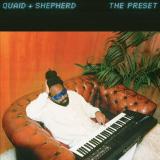
Quaid + Shepherd’s “The Preset” 12” is a multi-mix single/release pushing and evolving the confines of the present funk sound. This London duo, which is composed of producer Quaid and vocalist Shepherd (who have been long-time collaborators), dives especially deep with these four banging club mixes of “The Preset”, channeled through the lens of 80s boogie-funk. Quaid explains that “early 80's boogie funk has always been a massive inspiration and a huge part of my day-to-day listening experience”, and these 4 mixes of “The Preset” serve to honor a “drum machine soul” tradition, while keeping the production and feel fresh for the dance-floor and the context of today. This release is stacked full of epic alternate mixes for listeners and DJs to experience: Most notably, there is a “Sysex” Mix from Atlanta’s elusive abstract boogie-funk producer Moon B (his first new production to release after a multi-year hiatus), which delves into his intangibly unique slanky-funk sound. Also included on the B side are the hypnotic and more uptempo “Wet Dreems” Mix and a “Dirty Dub” Mix from Quaid that truly leans into the quirky synth leads, crispy drum programming and heavy rolling bass.
Tiffany Day has quickly emerged as one of the most compelling voices in hyper-digital pop, blending emotional chaos, internet-born edge, and forward-thinking production into a sound entirely her own. Born in Toronto and raised in Kansas, Tiffany first broke through with a viral cover of “Hallelujah,” building a YouTube audience of over 500,000 subscribers before graduating high school. She began releasing original music in college, quickly developing a devoted fanbase drawn to her wit, vulnerability, and genre-fluid instincts.
A self-directed creative force, Tiffany has made her live show a defining pillar of her artistry, fusing choreography, visuals, and electronic-driven transitions that push her beyond traditional pop performance. In 2024, she independently funded and sold out several headline shows across a North American tour. She later expanded into the DJ scene, launching BASSFLUFF, a series of standalone events that generated viral moments DJing everywhere from gyms to nail salons.
Her 2025 releases marked a sharp sonic evolution, leaning into electroclash and hyperpop textures. Singles like “BREAKUP,” “TELL ME WHAT I DID,” and “START OVER” generated millions of views across platforms and earned coverage from NME, Ones to Watch, On The Radar, and beyond, positioning her at the forefront of a new wave of digital-native pop artists.
That momentum culminates in her album HALO, released April 3, 2026 via Broke Records. The project debuted at #1 on the Apple Music Electronic chart and #25 on the Billboard Electronic/Dance Albums Chart, drawing early co-signs from artists like Laufey and Yunjin (LE SSERAFIM) alongside coverage from Pitchfork, The FADER, NYLON, LA Times, and more. To mark the release, Tiffany staged three headline shows—each of which sold out in under five minutes. With her production across nearly every track, HALO marks Tiffany's most cohesive and ambitious work to date, solidifying her not just as an artist to watch, but as a defining voice in the next era of hyperpop.
Tiffany Day has quickly emerged as one of the most compelling voices in hyper-digital pop, blending emotional chaos, internet-born edge, and forward-thinking production into a sound entirely her own. Born in Toronto and raised in Kansas, Tiffany first broke through with a viral cover of “Hallelujah,” building a YouTube audience of over 500,000 subscribers before graduating high school. She began releasing original music in college, quickly developing a devoted fanbase drawn to her wit, vulnerability, and genre-fluid instincts.
A self-directed creative force, Tiffany has made her live show a defining pillar of her artistry, fusing choreography, visuals, and electronic-driven transitions that push her beyond traditional pop performance. In 2024, she independently funded and sold out several headline shows across a North American tour. She later expanded into the DJ scene, launching BASSFLUFF, a series of standalone events that generated viral moments DJing everywhere from gyms to nail salons.
Her 2025 releases marked a sharp sonic evolution, leaning into electroclash and hyperpop textures. Singles like “BREAKUP,” “TELL ME WHAT I DID,” and “START OVER” generated millions of views across platforms and earned coverage from NME, Ones to Watch, On The Radar, and beyond, positioning her at the forefront of a new wave of digital-native pop artists.
That momentum culminates in her album HALO, released April 3, 2026 via Broke Records. The project debuted at #1 on the Apple Music Electronic chart and #25 on the Billboard Electronic/Dance Albums Chart, drawing early co-signs from artists like Laufey and Yunjin (LE SSERAFIM) alongside coverage from Pitchfork, The FADER, NYLON, LA Times, and more. To mark the release, Tiffany staged three headline shows—each of which sold out in under five minutes. With her production across nearly every track, HALO marks Tiffany's most cohesive and ambitious work to date, solidifying her not just as an artist to watch, but as a defining voice in the next era of hyperpop.
Continuing in its series of Yoko Ono reissues, Secretly Canadian has announced that Ono’s seminal 1982 album It’s Alright (I See Rainbows) will be released August 28, 2026, in expanded CD and digital versions, and on vinyl for the first time in more than forty years, with expanded and enhanced artwork. Influenced equally by 1960s girl group vocals and 1980s synthesizer experimentation, It's Alright (I See Rainbows) is an album of “adventurous… lush… committed and convincing avant-gardism” (Rolling Stone). As Ono said in her 1992 Onobox liner notes, “It was ’82 and it seemed as though I was finally in sync with the world.” Vacillating from a widow’s never-truly-over grief, to the necessary uplift for an artist and mother to continue her life’s missions, tracks like “Loneliness” and “Spec of Dust” make way for poptimism via “Let the Tears Dry,” and title track “It’s Alright.” As Ono said of the album in 1983, “It’s like my diary that I went through… and I’m just saying, hey, I’ve got the same kind of emotions that you’ve probably got too, and here I am saying hello… Around December 8th or whatever, I was feeling really heavy and feeling sort of down, you know… and then, side two, it’s all right… It was Sean Lennon who says, ‘Wake up, wake up, mommy.’ Like an angel that came and said, ‘Wake up!’… Wake up and dream love, and let the tears dry and I see rainbows. And sort of I’m saying all that. In result of Sean waking me up, see?” Lennon, speaking of his mother in a more recent interview with NPR in 2025, “She would say that energy is just energy, so you can turn it into anything you like. And she always said that she would take that negative energy and turn it into something productive and creative… It never stopped her from creating and putting herself out there, and I really think that it paid off… You never know how long it'll take for people to appreciate you if you just kind of hang on and don't give up.”
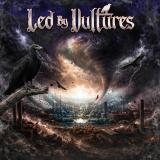
Led By Vultures, the new Los Angeles based heavy rock band fronted by Brian Tichy (Ozzy Osbourne, Whitesnake, Foreigner, Billy Idol, Gene Simmons, etc...)
has come together over the past year to record its powerful, uncompromising, undeniable brand of heavy music, and released their highly anticipated first single “Get It Right” in late-March. With that comes 12 songs dominated by loud guitar, massive drums, big riffs, killer grooves, aggressive vocals, and a feeling of flying through a tornado! With a pro home studio, Tichy started the recording
process and instead of trying to find the right players, engineers and producers, he chose to see it through on his own, and aim to make it feel and sound like a band that’s been together for years. Long time buddy/keyboard virtuoso Derek Sherinian (Alice Cooper, Dream Theater) lent a hand on a few tunes, including some co-writing and it was Sherinian who has been one of Tichy’s main friends, supporting him and telling him to stop talking and to get writing and recording!!
Led By Vultures is all about serving the song, the groove and the power it possesses. The recording process began as an organic, exciting, challenge for Tichy but soon became an all-consuming obsession to serve the songs and sounds with all of his being and abilities. This includes a rule of no samples or
auto tune! Led By Vultures; not just a band but a pure musical obsession!
1984 als VHS erschienen, ist dies das allererste Mal, dass die Tonaufnahme dieses Konzerts veröffentlicht wird. Enthält Live-Versionen der Hit-Singles »New Song«, »What Is Love?«, »Hide And Seek«, »Pearl In The Shell« und »Like To Get To Know You Well« sowie Howards bisher unveröffentlichte Version des Weihnachtsklassikers »Ding Dong Merrily On High«, gesungen zum Backbeat seiner Hit-Single »New Song«.
Her sound remains vast and yearning, with gut-punch drums pushing through explosions of colored powder; her voice is a chrome-plated sigh, and her agile melodies soar effortlessly. - Pitchfork *BEST NEW MUSIC*
she achieves some serious cinematic grandeur. - Stereogum
Simply too sublimely crafted to ignore. - Consequence of Sound
A catchy ethereal piece of pop - Brooklyn Vegan
Rose's layered, reverb-laden vocals hit like waves of sunlight, warming her lines almost to the point of wordlessness. - Paste Magazine
"Hila. A record about loss. What persists beyond the range of ordinary perception? The place mourning keeps returning to - not quite transcendence, not quite doubt. The edge of what we can see."
Frankie Rose has spent fifteen years building one of the most quietly distinctive bodies of work in American independent music. Bursting out of the shackles of her legacy on 2024's Love As Projection, 2026's Hila builds on the muscular, dance-ready songwriting and transcendent melodies to result on Rose's most exploratory and affecting record of her career. Imbued with yearning melodies and brooding post-punk dynamics, Hila is Frankie Rose at her most impressionistic and expansive.
Self-produced at her home studio featuring collaborations with drummer Justin Welch (Elastica/Lush), Hila was recorded following extensive touring with The Jesus & Mary Chain and Swervedriver. The result is the most confident, searching music Rose has produced; muscular in its production yet emotionally vulnerable in its diffracted neon glow. A record informed by loss and the way grief mutates our senses, it's fitting that Rose channels the nuanced darkness of later Coil, at times the pounding EBM-production of Skinny Puppy and the near-spiritual alien-ness of Cocteau Twins. On Hila, the doors of perception are constantly melting, revealing the porous nature of the seen and unseen. The result is a synesthesia that flips the senses.
If Love As Projection was an outward-looking record looking to embrace the world, Hila brings the dark cosmos into inner space. Rose's love for 80s production and soaring melodies remain, they're cornerstones to her craft after all, but there's something more assured and gothic underneath the massive waves of sound. Opener Olo shimmers into a pulsating, cinematic brooder, Rose's vocal transcending and swan diving between registers in the chorus breakdowns. First single Cant Be Wrong serves as a transition from the optimistic pop of Rose's previous album, introducing a thumping 80s funk rhythm track under the soaring vocal performance. The ebullient Shadow Twin is that song's sibling, recalling major label-era Strawberry Switchblade melancholy mixed with Robin Guthrie's twinkling guitar work.
Hila blossoms darkly from here on in, blowing out into a glacial wide-screen sonic dynamic. On Rainman and the title track the listener is transported to a rain-soaked, nocturnal cityscape ridden with desire, moonlight cutting through blinds, intoxicating chasms without bounds. Rose's use of saxophone and digital synthesis recalls the nightmusic of Hats-era Blue Nile or the more ambient end of Emeralds' catalog. Indeed, in the towering synthetic cello sounds that climb into the mind on Hila, there's a distinct flavour of the instrumentals on Bowie's Low. This is musick to play in the dark, to light the way a little, just enough to trick the senses.
Leading into the strobe-filled haze, single Manifest pounds forward with a massive Industrial 4/4 beat and post-punk/goth musicality, an exercise in unlit ecstasy. For Best Of Times, the liberal saxophone passages feel like a suppressed, 80s Michael Mann soundtrack with Frankie Rose's effortless, melodic vocal performance probing, searching for connection. Navigating through the dry, iced landscape into a rising sun, closer Velvet Refrain flips the melancholy of the preceding passages. With a massive sound dripping with harmony, the clanging guitar and vocal duet feels they're sound-tracking an unexpected happy ending after bouts of darkness."
For any collaborative project to succeed, the artists involved need a creative unifier – a meeting point, if you will, of their disparate interests and experiences. In the case of Mondo Love & Betrayal, the joint project of Nottingham musical mainstays Neil ‘Nail’ Tolliday and Henry Claude Scott, there were two creative unifiers: a mutual love of classic 1980s synth-pop, as well as shared admiration for each other’s work.
Even so, such shared interests and respect for prior mutual endeavours is no guarantee of success. Yet as their eponymous debut album emphatically proves, the duo’s disparate experiences, characteristics and musical strengths have not only dovetailed beautifully, but also resulted in serious sonic gold. Put simply, Mondo Love & Betrayal is a stunning debut album rich in emotive songs, colourful melodies, atmospheric chord progressions and infectious grooves. Throw in the sun-splashed warmth and saucer-eyed, loved-up tactility of late 80s dance beats, and you have a breakthrough album whose timelessness is evident from start to finish.
The project’s roots lie in Tolliday’s desire to work with Scott, a virtuoso guitarist, talented producer and secret songwriter best-known for his work alongside Huw Costin as Torn Sail, and John ‘Ming’ Thompson as Brown Fang – both projects known for prioritising organic instrumentation and sunset-ready soundscapes over dancefloor-rooted beats.
Tolliday, of course, is one of British electronic music’s true polymaths – a long-serving house producer best-known for his long-running Bent project alongside fellow Nottingham resident Simon Mills. He initially approached Scott with the idea of providing vocals on a house track he was working on, but quickly suggested something else: an exploration of a classic synth-pop sound inspired by his love of Pet Shop Boys, New Order, Depeche Mode and the producers who worked with them – the likes of Martin Hannett, Arthur Baker, Stephen Hague and John Robie.
Scott accepted the invitation, seeing it as an opportunity to explore a different side of his musical personality. Their first recording session resulted in the ear-catching and memorable brilliance of ‘Correspondence’ – a tongue-in-cheek breakup song inspired by the death of landlines and the rise of mobile communications – and soon they were working on their debut album.
The resultant 10-track set is simply sublime, with Scott’s expressive delivery of his own lyrics on life, love, heartache and rejection working in perfect union with Tolliday’s kaleidoscopic and pleasingly authentic backing tracks – gorgeous and beautifully rendered instrumentals rich in memorable melodies, bittersweet chords, and subtle nods to ‘80s and early ‘90s dance-pop culture, from Shep Pettibone style remixes and Bernard Sumner guitar licks, to Beloved-esque piano parts and Chris Lowe chord progressions. Some listeners may also draw favourable comparisons with 21st century synth-pop practitioners, particularly Parcels, Private Agenda and the deeply emotive songs showcased by Junior Boys.
For proof, wrap your ears around such album highlights as opener ‘Boo Boo’, where Scott warns that “love and betrayal will haunt you” atop sparkling synths and Vince Clarke style grooves, the Behaviour-era PSB melancholy of recent single ‘Your Latest’, the mid-tempo dreaminess of ‘Beyond The Rainy City’, the early Depeche Mode chug of ‘Whatever Happened To Me’ and the tactile warmth of ‘Across The Plane’.
We could go on. In truth, the whole album is – in Scott’s words – “magical musical alchemy”. Wherever they choose to go next, Mondo Love & Betrayal is a seriously good sonic statement of intent.
out of Stock
Last delivered 31 days ago available to reorder, subject to availability
When we go searching for a Black avant-garde, we have to be prepared to look in unexpected places. The route to a Black avant-garde involves walking down – what some might consider – peculiar highways. Where they see strangeness, a road leading them nowhere, we see nothing but beauty. The paths Darren Cunningham went down, the highways he took to make Actress, are a chapter in the story of the Black avant-garde. Cunningham the footballer. Cunningham the Wulfrunian. Cunningham the ex-footballer. Cunningham the DJ. Cunningham the Londoner. Cunningham the producer. Cunningham the painter. Cunningham the writer. Cunningham the composer. This is where the Black avant-garde in Britain is made. This is where you have to go to find it.
Across an expansive discography of more than ten LPs, Actress has created his own arcane language of hermetic references and inter-dimensional electronic composition.
Radical Frame arrives 18 years since debut album Hazyville, and it feels like an apotheosis. The image realised. We get the full gamut of Actress signatures. Short bursts of broken down music. Tiny sketches of zoomed-in sound. Refracted dance floor heat. And we get more.
Perhaps Radical Frame is a container for everything that Cunningham has built so far. A frame he is handing over to the next in line. The next artist to make their own way in the Black British avant-garde.
Wenn wir nach einer schwarzen Avantgarde suchen, müssen wir bereit sein, an unerwarteten Orten zu suchen. Der Weg zu einer schwarzen Avantgarde führt - wie manche finden mögen - über ungewöhnliche Pfade: wo sie Fremdheit sehen, einem Weg, der nirgendwohin führt, sehen wir nichts als Schönheit. Die Wege, die Darren Cunningham beschritt, die Highways, die er befuhr, um Actress zu erschaffen, sind ein Kapitel in der Geschichte der schwarzen Avantgarde. Cunningham, der Fußballer. Cunningham, der Wulfrunianer (Anm.: Einwohner von Wolverhampton). Cunningham, der Ex-Fußballer. Cunningham, der DJ. Cunningham, der Londoner. Cunningham, der Produzent. Cunningham, der Maler. Cunningham, der Schriftsteller. Cunningham, der Komponist. Hier entsteht die schwarze Avantgarde in Großbritannien. Hier muss man hingehen, um sie zu finden.
In einer umfangreichen Diskografie von mehr als zehn Alben hat Actress seine eigene, geheimnisvolle Sprache aus hermetischen Referenzen und interdimensionalen elektronischen Kompositionen geschaffen.
„Radical Frame” erscheint 18 Jahre nach seinem Debütalbum, „Hazyville”, und fühlt sich wie eine Apotheose an: das Bild ist vollendet. Wir bekommen die ganze Bandbreite von Actress' Markenzeichen zu hören: Kurze Ausbrüche reduzierter Musik, winzige Skizzen von vergrößertem Klang.
Vielleicht ist „Radical Frame“ ein Gefäß für all das, was Cunningham bisher geschaffen hat. Ein Rahmen, den er an den Nächsten weitergibt. An die nächsten Künstler:innen, die seinen eigenen Weg in der britischen Avantgarde der Schwarz.
out of Stock
Last delivered 4 days ago available to reorder, subject to availability
When we go searching for a Black avant-garde, we have to be prepared to look in unexpected places. The route to a Black avant-garde involves walking down – what some might consider – peculiar highways. Where they see strangeness, a road leading them nowhere, we see nothing but beauty. The paths Darren Cunningham went down, the highways he took to make Actress, are a chapter in the story of the Black avant-garde. Cunningham the footballer. Cunningham the Wulfrunian. Cunningham the ex-footballer. Cunningham the DJ. Cunningham the Londoner. Cunningham the producer. Cunningham the painter. Cunningham the writer. Cunningham the composer. This is where the Black avant-garde in Britain is made. This is where you have to go to find it.
Across an expansive discography of more than ten LPs, Actress has created his own arcane language of hermetic references and inter-dimensional electronic composition.
Radical Frame arrives 18 years since debut album Hazyville, and it feels like an apotheosis. The image realised. We get the full gamut of Actress signatures. Short bursts of broken down music. Tiny sketches of zoomed-in sound. Refracted dance floor heat. And we get more.
Perhaps Radical Frame is a container for everything that Cunningham has built so far. A frame he is handing over to the next in line. The next artist to make their own way in the Black British avant-garde.
Wenn wir nach einer schwarzen Avantgarde suchen, müssen wir bereit sein, an unerwarteten Orten zu suchen. Der Weg zu einer schwarzen Avantgarde führt - wie manche finden mögen - über ungewöhnliche Pfade: wo sie Fremdheit sehen, einem Weg, der nirgendwohin führt, sehen wir nichts als Schönheit. Die Wege, die Darren Cunningham beschritt, die Highways, die er befuhr, um Actress zu erschaffen, sind ein Kapitel in der Geschichte der schwarzen Avantgarde. Cunningham, der Fußballer. Cunningham, der Wulfrunianer (Anm.: Einwohner von Wolverhampton). Cunningham, der Ex-Fußballer. Cunningham, der DJ. Cunningham, der Londoner. Cunningham, der Produzent. Cunningham, der Maler. Cunningham, der Schriftsteller. Cunningham, der Komponist. Hier entsteht die schwarze Avantgarde in Großbritannien. Hier muss man hingehen, um sie zu finden.
In einer umfangreichen Diskografie von mehr als zehn Alben hat Actress seine eigene, geheimnisvolle Sprache aus hermetischen Referenzen und interdimensionalen elektronischen Kompositionen geschaffen.
„Radical Frame” erscheint 18 Jahre nach seinem Debütalbum, „Hazyville”, und fühlt sich wie eine Apotheose an: das Bild ist vollendet. Wir bekommen die ganze Bandbreite von Actress' Markenzeichen zu hören: Kurze Ausbrüche reduzierter Musik, winzige Skizzen von vergrößertem Klang.
Vielleicht ist „Radical Frame“ ein Gefäß für all das, was Cunningham bisher geschaffen hat. Ein Rahmen, den er an den Nächsten weitergibt. An die nächsten Künstler:innen, die seinen eigenen Weg in der britischen Avantgarde der Schwarz.
out of Stock
Last delivered 32 days ago available to reorder, subject to availability
The record is largely sung in Scots language, one of Scotland’s three official languages along with Gaelic and English. “Scots gives me a way of expressing myself which is connected directly with the landscapes I love. It brings the songs alive and it is a fascinating language. The name of the record is in Scots - Forefowk means the people who came before, or ancestors. When we say ‘mind me,’ we can mean a few things- remind, remember, watch over or care for me. The record explores how tradition needs to be constantly reconnected with, built upon, looked after, and shared.”
Quinie sings with a style inspired by Scottish Traveller singers. “I began singing unaccompanied Scots Song in 2015 after hearing Scots Traveller singer Sheila Stewart on the radio. Initially I felt like I shouldn't sing these songs because I'm not a Traveller, and I saw people around me doing that in a way that made me uncomfortable. But on the other hand this music made sense to me and I felt driven to learn. Over the years I have met Traveller friends who taught me that settled people sharing these songs could contribute to raising awareness. Scottish Travellers are marginalised and discriminated against in modern Scotland, despite being custodians of so many of our important traditions. So I started to perform them and tell this story. From there I built on my repertoire and started writing my own songs”.
To develop this record, Quinie travelled across Argyll with her horse. They went on a pilgrimage of sorts through the ancient landscapes of the West of Scotland to explore the interconnected relationships between people, ancestors, animals, and place. The album’s vinyl release is accompanied by a book and film, documenting this unusual research process.
Forefowk, Mind Me was recorded in August 2024 at The Big Shed in Highland Perthshire with support from Creative Scotland. Quinie is accompanied by an ensemble of musicians: Ailbhe Nic Oireachtaigh (viola), Oliver Pitt (duduk, bouzouki, percussion), Harry Górski-Brown (small pipes, violin), and Stevie Jones (double bass, recording, and mixing). Each of these artists brings their own distinctive voice, bridging contemporary experimental practice with worlds of traditional and early music.
With only two albums out, Slow Pulp are one of the defining bands of the generation that grew up on "90s alt rock radio and came of age with the 2000s indie wave. Their new album, Melodie, out on September 18 was produced by Elliott Kozel (whose credits include SZA, Lizzo, Jean Dawson, and Rosalia) and was co-written by Emily Massey and Henry Stoehr in the band. Melodie sees the band exploring beyond their shoegaze roots into new sonic territory with pop-tinged hooks and melodies. Melodie is the follow-up to their acclaimed sophomore album Yard. With resounding praise from the likes of Rolling Stone, The New Yorker, Pitchfork, Billboard, The FADER and Stereogum, with Variety declaring it "one of 2023"s best rock records" Following tours supporting Lucy Dacus, Death Cab for Cutie, and The Postal Service, the band will play their biggest hometown show to date at the Salt Shed, plus dates in New York City, Philadelphia, Boston, Los Angeles, and San Diego this fall.
With only two albums out, Slow Pulp are one of the defining bands of the generation that grew up on "90s alt rock radio and came of age with the 2000s indie wave. Their new album, Melodie, out on September 18 was produced by Elliott Kozel (whose credits include SZA, Lizzo, Jean Dawson, and Rosalia) and was co-written by Emily Massey and Henry Stoehr in the band. Melodie sees the band exploring beyond their shoegaze roots into new sonic territory with pop-tinged hooks and melodies. Melodie is the follow-up to their acclaimed sophomore album Yard. With resounding praise from the likes of Rolling Stone, The New Yorker, Pitchfork, Billboard, The FADER and Stereogum, with Variety declaring it "one of 2023"s best rock records" Following tours supporting Lucy Dacus, Death Cab for Cutie, and The Postal Service, the band will play their biggest hometown show to date at the Salt Shed, plus dates in New York City, Philadelphia, Boston, Los Angeles, and San Diego this fall.
A recent signee to Chess Club Records, Jo Geller aka jo from school, finds herself among the independent label’s pedigree of homegrown artists who have gone on to attain major success. Alumni such as Billie Marten, an artist long admired by Jo, as well as Wolf Alice, are just a couple of names who found their initial support through Chess Club.
At 22-years-old, jo from school’s graceful, carefully crafted but devastatingly delivered songs hit with an air of maturity that lands far beyond her years. An embrace for spontaneity and imperfection gives her material its character; primarily as an artist focussed on doing things her own way.
Writing on the piano since the tender age of nine, Jo self-taught herself guitar as a teenager during lockdown, joining the illustrious Brit School: “I was the only musician in my world until I went to Brit School, then I was the worst musician there,” she says. “It gave me a kick. I went from thinking that it was cooler to not care about anything, to realising the more you cared, the cooler and more individual it made you.”
Largely produced by Rich Cooper (CMAT, Billie Marten), so far both singles from the EP have been supported by BBC Radio 1, Radio 2 & 6Music. Huw Stephen's has invited Jo to feature in his Huw You Are segment airing on 6Music on 29th July, and Jess Iszatt has already had Jo as her Introducing featured artist on BBC Radio London. Rolling Stone UK featured jo as their Play Next artist last month, along with CLASH who just confirmed a Next Wave feature to run on EP release. Outlets like Line of Best Fit, DORK, DIY and Wonderland have all came to the table to champion jo too. We've also seen impressive audience growth in just 2 months – with jo adding more than 3k new followers across platforms since her debut single 'Chicken' was released on 6th May.
On the live front, jo was invited by Dirty Hit's Skullcrusher to support on her UK + European headline tour in June, with past supports also including TTSSFU, Daffo, Esme Emerson. Jo has been booked for Night Currents festival in Portsmouth and invited to support 1000 Rabbits, both in October, and will be Playing Estrella Soundhood Festival in London in September too.
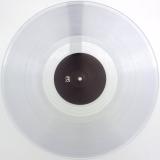
Issued on Crystal Clear vinyl is Max Richter’s emotive and minimal score to Damon Lindelof’s TV series about a post-apocalyptic global event where 2%
of the world’s population disappears without explanation. Richter’s approach explores the feelings of the protagonist’s family, the Garveys, through intimate,
small scale music. He tackles this psychological landscape by bringing a ritual quality to the score, while themes of departure and loss are represented by
a sense of sonic decay, relying on the instrumentation of a few sustained tones on pianos, harps and celesta.
Max Richter is a classically trained composer that defies boundaries. Trained at the Royal Academy of Music and finishing his studies under the tutelage
of avant-garde composer Luciano Berio in Florence, Richter’s career has followed many paths. His musical output ranges from ballets
(Wayne MacGregor’s Infra), reinventions of classical works (Vivaldi’s Four Seasons), collaborations with The Future Sound Of London, Roni Size and
Vashti Bunyan to writing scores for film and TV (Waltz With Bashir, Lost and Found, Last Days on Mars) and solo work.
Ein Gespräch mit Thee Sinseers kurz vor der Veröffentlichung ihres neuen Albums ,Love Stories" bei Colemine Records macht eines ganz deutlich: Dies ist kein Album, das eine glatte und ordentliche Liebesgeschichte erzählt. Es geht hier nicht um das Happy End. Es geht um alles, was davor, danach und trotz allem passiert. Auf dieser LP hat sich die Band auf eine erdigere Instrumentierung konzentriert - Kontrabass, Gitarren, die durch Verstärker laufen, um einen wärmeren, an die Sechziger angelehnten Klang zu erzielen - und sich von allem inspirieren lassen, wo es sich bot, selbst an den unwahrscheinlichsten Orten. Es ist dieses genreübergreifende Denken, das Sänger Joey Quiñones als das bestimmende Merkmal der Platte ansieht. "Es fühlte sich zu keinem Zeitpunkt so an, als würden wir Soul-Musik machen", sagt er. ,Es fühlte sich an, als würden wir einfach unsere Musik machen." Die Band wollte etwas Ehrlicheres einfangen als nur die Höhepunkte - sie wollte die Höhen und Tiefen romantischer Beziehungen zeigen und gleichzeitig den Rahmen erweitern, um auch das Familiäre, das Komplizierte und das Ungelöste einzubeziehen. Die Eltern der Bandmitglieder sind auf dem Albumcover zu sehen, ihre eigenen Liebesgeschichten sind in die visuelle Identität der Platte eingewoben, manche dieser Geschichten bestehen noch, andere nicht. ,Jeder einzelne Songtitel führt dich auf einen anderen Weg der Liebe - egal, ob du gewinnst oder verlierst." Quiñones wollte, dass die Zuhörer sich auf diese Mehrdeutigkeit einlassen. ,Liebe ist unendlich", sagt er. ,Sie reicht über ein Leben hinaus. Ich möchte, dass die Leute immer noch verwirrt sind - ich möchte, dass es wie ein offenes Buch bleibt." Doch eines bleibt durchgehend konstant: das Bekenntnis von Thee Sinseers zu ihrer Herkunft. Diese East-LA-Identität stellt sich nicht zur Schau - sie existiert einfach, eingewoben in das Gewebe der Musik, ohne als Abzeichen getragen zu werden. Hier wird kein Liebeskummer vorgetäuscht, sondern es ist das Echte.
Ein Gespräch mit Thee Sinseers kurz vor der Veröffentlichung ihres neuen Albums ,Love Stories" bei Colemine Records macht eines ganz deutlich: Dies ist kein Album, das eine glatte und ordentliche Liebesgeschichte erzählt. Es geht hier nicht um das Happy End. Es geht um alles, was davor, danach und trotz allem passiert. Auf dieser LP hat sich die Band auf eine erdigere Instrumentierung konzentriert - Kontrabass, Gitarren, die durch Verstärker laufen, um einen wärmeren, an die Sechziger angelehnten Klang zu erzielen - und sich von allem inspirieren lassen, wo es sich bot, selbst an den unwahrscheinlichsten Orten. Es ist dieses genreübergreifende Denken, das Sänger Joey Quiñones als das bestimmende Merkmal der Platte ansieht. "Es fühlte sich zu keinem Zeitpunkt so an, als würden wir Soul-Musik machen", sagt er. ,Es fühlte sich an, als würden wir einfach unsere Musik machen." Die Band wollte etwas Ehrlicheres einfangen als nur die Höhepunkte - sie wollte die Höhen und Tiefen romantischer Beziehungen zeigen und gleichzeitig den Rahmen erweitern, um auch das Familiäre, das Komplizierte und das Ungelöste einzubeziehen. Die Eltern der Bandmitglieder sind auf dem Albumcover zu sehen, ihre eigenen Liebesgeschichten sind in die visuelle Identität der Platte eingewoben, manche dieser Geschichten bestehen noch, andere nicht. ,Jeder einzelne Songtitel führt dich auf einen anderen Weg der Liebe - egal, ob du gewinnst oder verlierst." Quiñones wollte, dass die Zuhörer sich auf diese Mehrdeutigkeit einlassen. ,Liebe ist unendlich", sagt er. ,Sie reicht über ein Leben hinaus. Ich möchte, dass die Leute immer noch verwirrt sind - ich möchte, dass es wie ein offenes Buch bleibt." Doch eines bleibt durchgehend konstant: das Bekenntnis von Thee Sinseers zu ihrer Herkunft. Diese East-LA-Identität stellt sich nicht zur Schau - sie existiert einfach, eingewoben in das Gewebe der Musik, ohne als Abzeichen getragen zu werden. Hier wird kein Liebeskummer vorgetäuscht, sondern es ist das Echte.
In 2026 viert Eva De Roovere het 20-jarig bestaan van “De Jager”. Ze trekt er op uit en speelt haar succesalbum integraal. Met klassiekers als “Fantastig Toch” (35 miljoen streams !), “Laat Me Je Lied Zijn” en “De Jager” wordt deze concertreeks vanaf het najaar een groot feest van herkenning en vernieuwing, met als kern: liefde voor muziek én publiek.
Want wat is er mooier dan de 20ste verjaardag van een album vieren met… een nieuw album? ‘Sluit De Nacht’ (productie Koen Gisen) wordt een eigentijdse mix van levenslied en liefdeslied: een ode aan poëzie, melodie en ritme. Een zoektocht naar verbinding en troost in deze woelige tijden. Eigen werk en ook straffe songs geleverd door of samen geschreven met Gert Bettens, Rick De Leeuw, Dirk Blanchart, Sabine Tiels, Wouter Berlaen, Lennaert Maes, Vincent Pierins… Ingespeeld door Eva zelf en Ward Dhoore: gitaren, Eva Hautekiet: akoestische en electrische piano, Philippe Thuriot: accordeon & bandoneon, Lara Rosseel: contrabas en Kobe Proesmans: percussie & drums.
ENG
In 2026, Eva De Roovere will celebrate the 20th anniversary of “De Jager.” She’s hitting the road to perform her hit album in its entirety. Featuring classics like “Fantastig Toch” (35 million streams!), “Laat Me Je Lied Z?n,” and “De Jager,” this concert series starting this fall will be a grand celebration of familiarity and renewal, centered on a love for music and the audience.
After all, what could be better than celebrating an album’s 20th anniversary with… a new album? “Sluit De Nacht” (produced by Koen Gisen) is a contemporary blend of life songs and love songs: an ode to poetry, melody, and rhythm. A search for connection and comfort in these turbulent times. Original material as well as powerful songs written by or in collaboration with Gert Bettens, Rick De Leeuw, Dirk Blanchart, Sabine Tiels, Wouter Berlaen, Lennaert Maes, Vincent Pierins… performed by Eva herself and Ward Dhoore: guitars; Eva Hautekiet: acoustic and electric piano; Philippe Thuriot: accordion & bandoneon; Lara Rosseel: double bass; and Kobe Proesmans: percussion & drums.
Ein Gespräch mit Thee Sinseers kurz vor der Veröffentlichung ihres neuen Albums ,Love Stories" bei Colemine Records macht eines ganz deutlich: Dies ist kein Album, das eine glatte und ordentliche Liebesgeschichte erzählt. Es geht hier nicht um das Happy End. Es geht um alles, was davor, danach und trotz allem passiert. Auf dieser LP hat sich die Band auf eine erdigere Instrumentierung konzentriert - Kontrabass, Gitarren, die durch Verstärker laufen, um einen wärmeren, an die Sechziger angelehnten Klang zu erzielen - und sich von allem inspirieren lassen, wo es sich bot, selbst an den unwahrscheinlichsten Orten. Es ist dieses genreübergreifende Denken, das Sänger Joey Quiñones als das bestimmende Merkmal der Platte ansieht. "Es fühlte sich zu keinem Zeitpunkt so an, als würden wir Soul-Musik machen", sagt er. ,Es fühlte sich an, als würden wir einfach unsere Musik machen." Die Band wollte etwas Ehrlicheres einfangen als nur die Höhepunkte - sie wollte die Höhen und Tiefen romantischer Beziehungen zeigen und gleichzeitig den Rahmen erweitern, um auch das Familiäre, das Komplizierte und das Ungelöste einzubeziehen. Die Eltern der Bandmitglieder sind auf dem Albumcover zu sehen, ihre eigenen Liebesgeschichten sind in die visuelle Identität der Platte eingewoben, manche dieser Geschichten bestehen noch, andere nicht. ,Jeder einzelne Songtitel führt dich auf einen anderen Weg der Liebe - egal, ob du gewinnst oder verlierst." Quiñones wollte, dass die Zuhörer sich auf diese Mehrdeutigkeit einlassen. ,Liebe ist unendlich", sagt er. ,Sie reicht über ein Leben hinaus. Ich möchte, dass die Leute immer noch verwirrt sind - ich möchte, dass es wie ein offenes Buch bleibt." Doch eines bleibt durchgehend konstant: das Bekenntnis von Thee Sinseers zu ihrer Herkunft. Diese East-LA-Identität stellt sich nicht zur Schau - sie existiert einfach, eingewoben in das Gewebe der Musik, ohne als Abzeichen getragen zu werden. Hier wird kein Liebeskummer vorgetäuscht, sondern es ist das Echte.
out of Stock
Last delivered 29 days ago available to reorder, subject to availability
The first new material from Krash Slaughta since last autumn finds our man dropping a tuff 45 featuring two dope ATCQ remixes. And what else to call that but ATCK a.k.a. ‘A Tribe Called Krash’! First up is Scenario which gets a gritty guitar-led new beat making it sound closer to something by Gravediggaz at their noisiest (or even DMX) than the Afro-centric jazz-hope vibes of Native Tongues. Over on the flip, a co-production with, and tribute to, the now sadly departed Del the Soul Condor, takes Low End Theory’s Buggin’ Out and sticks with the jazzy vibes but swaps Buggin’s minimal double-bass dominated shenanigans for something rather more Latinate and Bonita Applebum-esque. Naturally these are as cheeky as they come so it’s a strickly limited affair. Don’t sleep…
out of Stock
Last delivered 30 days ago available to reorder, subject to availability
“I like to work with a variety of instruments and set ups,” says Mark Van Hoen, sometimes known as Locust or Autocreation but here working under his own name on the excellent Plan For A Miracle, his first physical release of solo music since 2018’s Invisible Threads. ”Sometimes it’s literally in my studio, with all the hardware electronics available. Sometimes the laptop, using software instruments. Some of the tracks on this record were recorded in the desert (Joshua Tree) using a 4-track tape machine and small modular synthesiser set up. Each track was recorded in different location using different instruments, which accounts for the distinction between each piece. It’s also about my own reaction to my environment, and what’s going on in my life at the time.”
The Croydon-born Van Hoen started musical life in the early 1990s, signing for R&S records in 1993 but developing his own, myriad and distinctive style across a range of releases on Touch, Editions Mego and other labels, using a battery of instruments, including analogue synthesizers and taking a number of different approaches to recording, rather than ploughing a single sonic furrow. He has worked on a number of collaborations, including with Nick Holton and Neil Halstead of Slowdive, under the moniker of Black Hearted Brother - their Stars Are Our Home was released in 2013. “I have known Neil Halstead since 1992,” says Van Hoen. “He shared a house with me for a couple of years, and the music I was making and listening to along with clubs I was attending had an influence particularly on Pygmalion, the final Slowdive album on Creation.”
Each track on Plan For A Miracle does indeed sound like a world unto itself, a mini-environment, a weather condition, an ecosystem created for the moment. It’s a collection of tracks recorded over the past few years, released on Bandcamp - despite his apparent absence, Van Hoen works constantly. Opener “Climates”, in its exquisite limpidity, feels like a homage to Brian Eno, one of his most formative influences in his teen years, commencing with Music For Films, which he bought in 1979. “This Is For Them”, feels like a ghostlike throwback to early drum & bass or electronica, reminiscent of his own, earliest outings. “There have been a number of requests from labels to make some more music like my very early releases on R&S,” says Van Hoen. “This is part of ‘letting go’ and realising that there’s nothing less creative about going back to those styles again.”
“Pencil Of Spheres” is something else again, a magnificent, imaginary glass structure, shimmering, refracting, without visible means of suspension, a thing of impossible beauty. “Electric Lights” evokes an abandoned fairground, its lights still pulsating, its music lingering. “The Underpass”, meanwhile, insofar as it reminds of anything at all, is faintly reminiscent of Cluster or Neu’s! West German ambience, the urban mundane rendered magical, the sodium lights, the whitewashed walls. The reverberant, faintly oriental chimes of “Insight” transport us yet again, burgeoning and intensifying.
The landscapes, the skyscapes rendered on Plan For A Miracle feel unpopulated as a rule - but when he does introduce vocal elements, Van Hoen has a history of doing so to spectacular effect - think of “Real Love” from 1998’s Playing With Time, the seductive intonation of its title recurring throughout like a series of massive holograms, echoing, stuttering, breaking up, surging. Here, there are just the faintest of vocals, barely distinct, disquieting. “There’s been a bit of a game changer in recent times,” explains Van Hoen. “AI software that enables you to extract vocals and instrument parts from virtually any recording. That means sampling individual parts from existing sources is no longer limited to the original mix exposing certain parts soloed. The vocal parts I use are from multiple sources and often pitch shifted altered rhythmically and melodically.“ There’s further vocal chatter on “I Really Do”, proceeding at a faster pace as if giving chase, or being pursued - distant, enigmatic. “The Music”, meanwhile, its beat tolling, lost in its own fog of static, features a curious intonation, like the ghost of a lost Walker Brother.
Sadly, the album’s title is in reference to a personal tragedy on Van Hoen’s part - the loss of his wife. Titles such as “I Won’t Give Up”, which faintly reminds of another Eno masterpiece, Another Green World, in its nautical hurly-bury, or the pastoral strains of “Mrs Who”, heavily clouded with sadness, seem to allude to this. “In fact the record was recorded entirely before she passed away,” says Van Hoen, “most of it before she even became very ill. The title was given to the album when it started to look like she wasn’t going to make it beyond a few months. It was something Osho said - “plan for a miracle” - so it was a statement of hope. Unfortunately it was not to be.” Although the album is non-thematic, non-specific in its atmospheres, sound paintings, elegant structures it most certainly stands as a magnificent monument to Osho’s memory.
-David Stubbs.
out of Stock
Last delivered 32 days ago available to reorder, subject to availability
Originally released in 1995 Methodrone was the first Brian Jonestown Massacre album. Redolent with the spirit of such high priests of effects and delay as Loop, Spaceman 3, and My Bloody Valentine, not to mention a fair dollop of the Jesus and Mary Chain ,over 70 minutes long Methodrone clearly is the sum of its influences..
Frazer Ray lands on Time Is Now with Masha EP. Four tracks of killer, stripped back FWD facing proto/future garage effortlessly pushing the sound into a new direction.
FACTS:
1. Frazer Ray knows how to make a dance. IYKYK…. Recently he’s been shelling Live UKG cooked right in front of you on a custom modular rig. Mad energy. 100% party business.
2. Frazer Ray knows a thing or two about making UK soundsystem music. The artist FKA Soundbwoy Killah is now a decade deep in his discography. And first as ‘Soundbwoy Killah’ and now as ‘Frazer Ray’ he is 2 for 2 with aliases that never miss.
3. New Frazer Ray is always something to get excited about. For 10+ years he’s kept it super tight. Quality over quantity. Always holding dubplates. When releases have landed they drop on only the best labels; including both Rinse and Rinse’s new INGRAM imprint, Ninja Tune’s Technicolour imprint, Sneaker Social Club, Interplanetary Criminal’s Locked On and IPC & Main Phase’s ATW Records. (side note - his Soundbowy Killah - ‘Halcyon Daze’ LP on Sneaker is IMO an all time classic - do not sleep on that one). Aaaannd… if the dubplates got too heavy he’s also occasionally dropped weight on his own U-Phorix label.
Also…..what has always struck me about Frazer’s music is that it’s simultaneously integral in the hardcode continuum while also pushing it forward. It’s always complete. Fully formed. You never bristle. There’s no failed experiments. Just a firm nod to the future for anyone looking.
OK… Run the tracks.
Masha’s vocal licks tell it straight, this one is “Fire”. Proper club business to test the stacks. The drums roll steady in front of a wall of sub bass. A killer mix of post dubstep era goodness, techno sound design and the shuffle & swing of proto dubstep.
Settle Down There’s something 90’s tek step about this one. Dark and moody with a wall of bass. It bristles with texture and atmosphere before – a moment of reprieve in this absolute weapon – Frazer opens up into a dubwise oasis before skittering back into the darkness.
Syren Song is exactly what it says on the tin, alluring Dancehall vocals chatter and roll. Who knew auto-tune and Garage paired so well… Frazer did that’s who.
No Reasons Left is an ethereal closer for the end of the night / start of the morning after. Gliding warm & introspective dubwise breaks with a Reese bassline that hangs in the space between garage and hardcore.
Frazer says…
“This EP feels like I've finally nailed integrating my modular setup (and VCV rack for all you nerds out there) into my productions. I wanted to create deeper production while still ensuring the tracks translate well in the club.”
If this is only the beginning then strap in.
out of Stock
Last delivered 32 days ago available to reorder, subject to availability