For more than twenty years, Duquette Johnston has been amongst the vanguard of Alabama music. From the founding of the seminal indie-rock band Verbena, his work in Cutgrass and the Gum Creek Killers, to his acclaimed solo releases "Etowah" and "Rabbit Runs a Destiny", Johnston has consistently pushed the boundaries of what Southern American music can sound and feel like. On his latest, "The Social Animals", Johnston partnered with producer John Agnello and an all-star cast of players including Sonic Youth's Steve Shelley to create his boldest and most powerful music to date. In a career that's taken him from stages with Pavement, Foo Fighters and The Strokes, to the Etowah County Correctional Facility, and then into the world of fashion with his Birmingham based company Club Duquette, Johnston has gone to the edge and survived. On "The Social Animals", he opens the door into that experience with eleven songs that present a lush, loud, and eloquent meditation on the human experience. Producd by John Agnello (Dinosaur, Jr, Waxahatchee). Features Steve Shelley (Sonic Youth) on drums. Former member of influential 90’s indie rock group Verbena. Press from Shorefire Media, AAA radio campaign planned. Partnerships planned with Levi’s and Topo Designs. Full tour planned for 2022. Last records have received accolades from Rolling Stone, Paste, The Bitter Southerner, MOJO, Uncut and NPR.
Cerca:the south shore
Multi award-winning composer Shepherd’s seventh album and first on vinyl, with sleeve notes from Percy Mabandu.
Compositions explored on this long-awaited release include new articulations of well-liked familiar melodies like ‘For Keith’, ‘Desert Monk’, ‘Sweet Zim Suite’ and ‘Cry of the Lonely’, along with improvised pieces ‘Zikr’, and ‘Desert Monk’.
Mastered and cut for vinyl by Frank Merritt at The Carvery with heavyweight 180g vinyl pressed at Pallas in Germany.
Shepherd embodies much of South Africa’s piano tradition with visionary clarity. More than his own ingenuity, he holds up an appreciation of the richness of a shared musical inheritance. This must be underscored by an understanding that all pianists, in fact all artists of real commitment, have a wish to be distinctive, along with a real rootedness. The selection of tunes treated here, shores this up about Shepherd. It also points to a deeper, loftier revelation: jazz, and creativity as the ultimate articulations of human hope.
Percy Mabandu, from sleeve notes
"More than any other artist to emerge from the fertile black metal scene of the early ‘90s, Ihsahn has firmly established himself as an unpredictable maverick. Frontman and chief composer with the legendary Emperor, he re-wrote the rulebook on epic extreme music across a series of albums that are still widely regarded as classics. From the genre-defining majesty of In The Nightside Eclipse in 1994 to 2001’s wildly progressive tour-de-force Prometheus: The Discipline Of Fire & Demise, Ihsahn’s unique approach and liberated musical ethos ensured that when he embarked on a solo career with 2006’s The Adversary, fans were primed to expect the unexpected. Box includes seven double LP’s, two single LP’s, all on 140g ultra-clear vinyl. Bringing Ihsahn’s core-works in one unique box, including a 36-page booklet. Limited to 1,000 copies – a true collector’s item.
Artwork lovingly restored by Dan Capp design. Vinyl mastered by Jens Borgren (Opeth, Katatonia, Soilwork)."
- 1: Half A Hundred Years
- 2: It's The Same Old South
- 3: I Do What I Must
- 4: There You Go Again (Feat. Lyle Lovett)
- 5: My Little Baby
- 6: Paycheck To Paycheck
- 7: Word To The Wise (Feat. Bill Kirchen)
- 8: That's How I Remember It
- 9: The Photo
- 10: I Love You Most Of All (When You're Not Here)
- 11: The Wheel Boogie
- 12: Take Me Back To Tulsa (Feat. George Strait And Willie Nelson)
- 13: The Letter That Johnny Walker Read (Feat. Lee Ann Womack)
- 14: Bump Bounce Boogie (Feat. Chris O'connell, Katie Shore, And Elizabeth Mcqueen)
- 15: Miles And Miles Of Texas
- 16: (Get Your Kicks On) Route 66 (Feat. Leroy Preston, Johnny Nicholas, And Ray Benson)
- 17: Marie (Feat. Willie Nelson)
- 18: Spanish Two Step (Feat. Johnny Gimble And Jesse Ashlock)
- 19: The Road Will Hold Me Tonight (Feat. Emmylou Harris And Willie Nelson)
Asleep At The Wheel is celebrating their 50th Anniversary with the release of Half A Hundred Years. The nineteen tracks feature original band members, current band members and guest artists. The special guest artists are Lyle Lovett, George Strait, Lee Ann Womack, Willie Nelson, and Emmylou Harris.
Tracks 1 - 11 are new songs featuring the original band members. Tracks 12 -16 are old songs featuring the current band members and Asleep At The Wheel alumni. Tracks 17 - 19 are songs from the vaults that have never been released and track 14 features the current and the two previous female band members.
Indie Retail Exclusive Water Spirits color vinyl LP More Energy Fields, Current is a definitive new peak in the recorded continuum of prolific producer/percussionist Carlos Niño. Featuring contributions from more than a dozen exciting voices in the creative music constellation of Los Angeles (of which Niño's has been a central force for over 2 decades), including Sam Gendel, Nate Mercereau, Jamael Dean, and Jamire Williams, the album collects 10 pristine gems of collaborative communication helmed by the Southern Californian sage, elegantly presented in his unique "Spiritual, Improvisational, Space Collage" style. The album is ripe with "ambient" passages that function like open portals between moments of consonance and clarity, and epic post-hip hop opuses like the heavy/heady "Thanking the Earth." But even in the occasional absence of drums, there is a powerful pulse implicit in the program's frequency of consciousness. It's a testament to Niño's foundations as a DJ. His distinct ability to craft a kinetic, cinematic sonic experience from dozens of independent, often rhythmically-ambiguous improvisational memories is more fluently displayed on More Energy Fields, Current than anything we've heard from him to date. It resonates, lucidly, with the way Niño's mentor Iasos - who is known to the world as an original founder of New Age music - has described his work: "Real Time Interactive Imagination, Flow Texturization." On More Energy Fields, Current, Niño immerses us in the watery depths of his world, spiriting us like a submarine through exotic nether-leagues of untouched sound. And when we arrive at the final, bookending piece "Please, Wake Up." (an extended version of the opening theme, featuring saxophonist Shabaka Hutchings), it's like a return, safely to shore.
With his seventh studio album, Shapes of the Fall, Piers Faccini, pursues his passion for the kind of cross-cultural dialogues that have long been heard on Mediterranean shores throughout the centuries, bridging southern Europe with the Near East and Africa. Although the songs are written and sung in English, the musical influences in Shapes of the Fall draw heavily on Faccini's own Mediterranean ancestry, creating a musical voyage whose geography varies from song to song, crossing multiple frontiers with his voice over the course of the journey, from the snow tipped anglo-american Folk registers of songs like Paradise Fell or Together Forever Everywhere to the eerie desert blown notes of Middle Eastern or north African modes in tracks like Firefly or Dunya. Ruin or repair and hope or despair are the album's parallel narratives and if shapes of the fall are the myriad endangered forms that make up the mosaic of our environmental collapse, the descent, Faccini sings, is of our doing or undoing. ''Bring me my home back'' the chorus of the album's emblamatic opening song They Will Gather No Seed is not then, the singer's personal cry for a home but the animal lament of innumerable species on the brink of extinction. Faccini who has previously collaborated with cellist Vincent Segal for their 2014 duo album Songs of Time Lost has collaborated over the years with musicians far and wide in search of musical dialogue such as Ballake Sissoko, Ibrahim Maalouf or Jasser Haj Youssef. Two exceptional voices feature on the album; Californian singer-songwriter Ben Harper, a collaborator from his 2005 album, Tearing Sky and Moroccan singer and master of the trance traditions known as Gnawa, Abdelkebir Merchane. The album was co-produced by Piers Faccini and Fred Soulard.
Two hot property New Zealanders under the guise Manuel Darquart take the WOLF reigns for their debut on the label. Drawing influence from classic Italian house labels such as Irma, Antima and Palmares (alongside having that South Pacific sea breeze ingrained in their souls), the duo let loose on a three track EP that could have easily been plucked straight out of a ‘90s Key Tronics Ensemble stash. WOLF mainstay Medlar completes the package with a percussive workout remix of ‘Parkour!’, dubbed, rerubbed and full of that timbale goodness.
With a string of releases on the likes of Coastal Haze, Childsplay and Infinite Pleasure, Manuel Darquart transport you to a distant island life where corona’s claws have yet to cause chaos. Opener ‘Keep It DXy’, sees sweeping pads caress the shores as bumping basslines mix with punchy stabs and dreamy toplines.
From the beach to the jungle, ‘Miranda’ is a stomp through the undergrowth, the tropical landscape calling out at every turn, as synth melodies dance around steamy bass arps and streams of percussive hits.
Flip it to the B for ‘Parkour’, a proto-house gem that captures that ‘80s feel with gated snares, thumping kicks and synths galore, before Medlar closes out the EP with a ripping whirlwind of percussion for his remix of ‘Parkour’.
When acclaimed South African musician Guy Buttery first sought out Dr. Kanada Narahari in late 2016, it was as his patient.
“It was a dark time.” Buttery recalls, “I had been bedridden for months and had been suffering from debilitating bouts of fatigue which no diagnosis or medication could help me get to the bottom of. When I first met Kanada, I was at the stage where even picking up my guitar to make music had become a joyless and taxing exercise.”
As Buttery’s searched for a cure, a family member recommended he see Kanada an Ayurvedic doctor who had relocated to South Africa from India and set up a practice in Durban. It was during this consultation, that the musician first experienced how Narahari infused the healing properties of Indian Classical music into his practice. Rather than treating him with a smorgasbord of pharmaceuticals, Narahari played his sitar and set Buttery on a strict daily diet of Raga’s to fast track his recovery.
Buttery was not only struck by his doctor’s musical talents but by the powerful healing properties inherent in his sitar compositions. When he left Narahari’s doctors room that afternoon, he asserts he was feeling decidedly clearer, lighter and stronger.
“Diving into Kanada’s music was definitely one of the reasons I'm still here today.” he admits. “The consistent tonal centre at the heart of Indian Classical Music, literally became my support pillar over this period. A central core of sorts in which to fall back on, strengthen and discover.”
Narahari as it turned out, was not only a prominent music therapist (and one of the only Ayurvedic doctors practicing in South Africa) but like Buttery, a highly accomplished musician with a devoted following back in his homeland.
Born in a small village along the Western Ghats in Karnataka, India, Narahari, at the age of nine, had enrolled to study Carnatic classical vocal and developed an interest in Hindustani Classical music with a particular passion for the sitar. While Buttery had secured his reputation as one of South Africa’s musical treasures, a multi-instrumentalist who commands sold-out performances both locally and internationally and more recently had been awarded the prestigious 2018 Standard Bank Young Artist for Music.
From this consultation, a friendship developed between the two musicians with Buttery soon inviting Narahari to join him in his studio. But it wasn’t all plain sailing in the beginning. While Buttery and Narahari’s sensibilities were very much aligned, there were a range of cultural and musical influences, nuances and inflections that first needed to be navigated and understood.
“I suppose we had to find a common ground.” Buttery says, before adding, “Which in the end turned out to be pretty "uncommon ground" for the both of us.”
It was after a few intensive sessions together that something exhilarating began to emerge. What began as a few idle improvisations soon evolved into feverish and lengthier jams. Whenever time permitted, the musicians would meet, descending deeper into the emerging sounds, while reimagining the realms that existed between their African and Indian heritages.
Over the next few months, the duo would rack up over fifteen hours of recordings in studio, and it was up to Buttery to shape the material into an album which they collectively titled Nāḍī, which Narahari translates from the Sanskrit as "The Channel" or "An Internal River".
During this period, Narahari bestowed upon Buttery, the moniker Guruji while Guy would refer to him, in affectionate return, as Panditji. Each time the musicians would meet, the studio space would be cleared by an impromptu ritual, with Guruji burning African Imphepho while Panditji would chant a Sanskrit mantra dusting Indian Agarbatti clouds over their instruments.
Once the room had been made hazy with this aromatic alchemy (with the ancestors welcomed in) the musicians would pick up their instruments and plunge into shimmering tides of sound. Reflecting on these sessions, Narahari recalls the immense creative freedom he felt throughout: “Guy and I tried to wander as much as possible, without any speculative, preoccupied ideologies or limitations. Love remained at the forefront of our journey together.”
“Those evenings we spent together in the studio” adds Buttery, “felt incredibly rich with purpose and a profound sense of freedom. While improvising, anything could happen and mostly did.”
On a first listen, the tracks on Nāḍī emerge as salty, humid invocations to the inscrutable depths and misty myths of the Indian ocean-- that vast body of water that stretches between, and laps the shorelines, of the artists’ respective homelands.
When asked to describe the sound him and Narahari refined, Buttery prefers to relay a series of evocative images.
“For me” he explains, “Nāḍī is a lighthouse, a beacon that resides at the bottom of the ocean.” As Buttery envisions it, “what once offered light to guide ships to safety, has been submerged and re-purposed by marine life as a coral-reef temple. Similarly, this sunken lighthouse exists as a concealed cenotaph, memorializing the ancient sea-routes and passages that once connected the two distant lands.”
On paper this may sound obscure but listening to the songs, it serves as an apt metaphor.
Across each meditative movement, listeners are able to relive the journey, immersing themselves in a series of incantations, replete with high dynamics, delicate African-Indian inflections and virtuoso string playing of an entirely new order. Further complimenting the fusion of musical dialects are a range of guest artists including Shane Cooper on bass, Thandi Ntuli on vocals, Chris Letcher on organ, Ronan Skillen on tabla and percussion and Julian Redpath on guitar, synth and backing vocals.
Now like the submerged lighthouse, the recordings stand as a monument, a marker and snapshot of this fortuitous meeting, a tribute to the healing gifts of Guruji and Panditji in performance. It’s a process that already, both musicians look back on with reverence and nostalgia.
Buttery ruminates in closing, that when he first met Kanada his illness correlated with the biggest drought South Africa had experienced in many years “…for whatever reason, whenever we would connect and make music together, the sky would tend to open. Even if it was just a few drops. This went on for months, until finally the drought dissipated and my health had been restored.”
By the time the heavens did open across the East Coast, a deep friendship had been forged and with it abundant musical offerings poured down. A treasured sample of which we able to share in every time we press play and immerse ourselves in the sacrosanct musical universe that is Nāḍī.
Sonido Gallo Negro has been a mainstay of the current revival of tropical and psychedelic music throughout Central and South America since the first of their three albums was released in 2011. Hailing from Mexico City, a hub of cumbia, chicha, surf and garage music for over five decades, it's no wonder that SGN has such a wonderful and integrated blend of traditional styles that have travelled from the Caribbean, up the Andes, through the Amazon, around the shores of coastal Peru and back through Central America. SGN is part of a long line of artists in Mexico to make these cosmic connections found in the music's terrestrial path, yet are completely unique in their own mystical approach, both visually and sonically. As a hefty 9-piece orchestra, the band is quite capable of summoning a rich tapestry of sounds from an array of instruments of the psychedelic persuasion: farfisa, electric guitar, flute, theremin and, in the case of B-side Niño Perdido, accordion from master Colombian artist and NYCT alumnus, Carmelo Torres. It's the making of a swirling kaleidoscope of sounds and squiggles, all of which ride effortlessly over the fluid percussion and pace of those beloved Afro-Latin rhythms. In anticipation of their next full length release,Unknown Future, Names You Can Trust presents the first 7-inch 45 single to ever be released from SGN, a double-sided dose ofsonido psicodélico, spectacularly swirled into a perfect concoction of old meets new.
This summer fortunea head Klaus Benedek returns with a 2 track single!
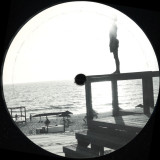
The A-side features the title track „At The Shore“ and is not only a fitting piece for sunset and afterhour sessions. It brings back nostalgic memories of a simpler, laid-back and peaceful time on the beach. A smoove guitar is the key element in this track. It builds up to a break that dives into the waves of the ocean. Almost siren sounding vocal cut ups splash threw this journey and a beautiful haunting pad is giving it the icing on the cake.
The B-side -- although in a similar vibe as the title track -- has a more somber feeling to it. „South Bronx Depression“ reflects the mood of the troubled New York neighbourhood during the 70s and 80s. A pompous jazz fanfare has been sampled, filtered, chopped and transformed as the track’s hookline. Eerie synthesizer stings make their entrance, while the narrator tells his story.
Limited to 300 copies. Mastering by Patrick Pulsinger.
Support by Tensnake, Iron Curtis, Loz Goddard, Alkalino, Roman Rauch, Peletronic
Point B Biog 2018
Starting out on legendary Electro label SCSI AV and Orson Records in the mid noughties, Point B began to earn himself a reputation through his intense dance floor-focussed EPs and pensive, experimental long players. By sewing together influences ranging from 70s sci-fi films to traditional middle eastern music, he wove a unique sonic fabric. Later that decade and after absorbing the waves of dubstep and post-garage that washed up on the shores of South London, his sound matured into something that can deliver club euphoria and introspective melancholy.
With his last commercial release back in 2014, a four year hiatus passed whilst he worked on other music projects. During that time he built up a collection of handcrafted synth patches, some of them employing modular synthesis techniques. The ensuing sketches formed the basis of his latest work: Smash Hits. This is arguably Point B's most direct and focussed record to date. Opting for a techno template, he consciously kept the sound palette narrow, concentrating his efforts on the groove, energy and production fidelity. This is a statement record that demonstrates his creative control and programming playfulness.
German producer, DJ and label-owner Phonk D, who has risen fast to stardom in 2018, is back once again on NDYD Records with his sequel-release Disco Goodies Pt.2, an outstanding four-tracker that should instantly do the trick to boost his career even further.
From Talking Vintage, an quite energetic floor-filler with a feel-good sound thanks to the percussions that will last in your memory for some time, to Gettin Down, a homage to the French 70s on the southern shores of the Cote dAzur, the charismatic producer keeps the level at the very top of the game. The b-side complements the funky ride with the pumping disco-sensation Can Do It while Disco Africana, with its lovely afro disco-touch rounds up the picture of the 30th release on the emerging German label from the city of Frankfurt.