Thaniil Alexandros can’t imagine a life without producing. Under the name of RBCHMBRS, Thaniil has been tinkering with sample based productions for 17 years. In one form or another, RBCHMBRS has mashed inspirations of hip hop instrumentals with the funky, snappy bounce of UKG.
Being half Greek and half Dominican means that Thaniil’s first memories of music were of classic Greek music and his mother’s love of dance and disco. Growing up on the Bronx meant that he was exposed to a mix of genres his entire life. From boomboxes on the street or from the windows of his neighbors home, gave Alexandros exposure to sounds he hadn't heard.
Toe the Line EP was intended to return to stripped down elements of older releases, but something “a little less outer space, a return to earth.” Armed with an SP-404, RBCHMBRS wants to be playful without being reminiscent, always trying to move forward. He believes that nostalgic pain can propel an artist to make their best work.
While noting history teachers as salient inspirations that opened his eyes to cultures unknown to him, as well as a father who is a history buff of his own, Thaniil has inherited some of their reverence for the classics and the importance of learning from the past. Alexandros’ fundamentals are influenced by Madlib, Timbaland (“the early stuff,” he interjects), Q Tip, Havoc, Alchemist, UKG, as well as the culture that surrounded the NBA in the 90s, during his most formative years.
Keeping it in the family, RBCHMBRS works closely with critically acclaimed emcee/producer THERAVADA, who co-produced Sick by Earl Sweatshirt with him, and who is his cousin. Currently, RBCHMBRS is working on a self-proclaimed “sprawling dance album” with Tesh Curry. His audience has a lot to look forward to.
With his Estrella EP, his intention was expressed through the imagined feeling of a time warp, a portal, and maybe coming out the other end of it. He wanted Toe The Line EP to feel more grounded, a down to earth project that he leaned towards as he searched for his life to settle. This EP reminds him that many things in his life have changed for the better, and a lot of that has to do with the structure hes begun to install.
Buscar:the sprawl
Electronic music legend and head of Editions Mego, Peter Rehberg, teams up with zeitkratzer mastermind Reinhold Friedl. 3 side-long pieces melting electronic / contemporary avantgarde. Uncompromising.
When Peter "Pita" Rehberg and Reinhold Friedl first met each other, they did not like each other "at all," as Friedl emphasises with a hearty laugh. The two would however eventually bond over the years thanks to a mutual respect for each other's music. In the summer of 2021, they entered the studio together for the first time. Their joint album for Berlin's Karlrecords is a faithful document—no editing, no overdubs—of their improvisations during two recording sessions shortly before Rehberg's sudden and untimely passing on July 22nd of that year. The three pieces see Rehberg working with electronics and Friedl with his inside piano, proving that they had indeed managed to find a common ground—up to a point where it at times becomes hard to tell who plays what on this record.
Friedl ran into Rehberg in Zbigniew Karkowski's tiny Tokyo apartment in 1999 while organising the first edition of the Off-ICMC that was set to take place in the following year. "I came uninvited and slept a night at Zbigeniew's before Peter arrived and I had to move out," remembers Friedl, who ended up inviting the Mego founder to perform at the Off-ICMC even though he found it hard to relate to his music. "We had very different backgrounds: he came from industrial and I had roots in classical music and improv, a high-brow prick!" After having met several times at different concerts without ever really speaking to each other in the following years, a concert in Vienna in the late 2010s marked a turning point in their relationship (or lack thereof). Playing their sets back to back and loving every second of what the other was doing, the two finally clicked on musical level. "We met for dinner on each of the three following nights!," remembers Friedl.
The two would go on to become good friends, meeting regularly to discuss music and everything else while both were living in Vienna just a few minutes away from each other. Rehberg put out Friedl's collaboration with Eryck Abecassis, "Animal Électrique" on his Editions Mego label in 2020 and eventually they entered the studio twice for sessions that were completely improvised with no prior preparation. "Caciara," "Chiasso," and "Clamore"—named retrospectively after three Italian words for "noise"—capture the spontaneity of two artists who had always been outliers in their respective fields finding a common ground in sprawling dynamics and sonic intensity as well as enabling each other to expand their individual sound palettes. "Peter gave me cover," explains Friedl. "I had the feeling that I was able to do things I otherwise wouldn't play."
Green Marbled Vinyl
Following up to his maiden transmission for the label, "Cosmic Silence", issued a year ago, Italian producer Alessandro Cozzolino AKA Cioz resurfaces on Stil vor Talent with his longed-for debut album "Supermassive Whole" - a ten-track cosmic odyssey in sound percolating staple elements of Cioz's palette of choice, from otherworldly techno to Latin-inflected house, via the obvious injection of kosmische and electronica soundscaping.
The lead single "Wachaka" - recorded in collaboration with Cape Town producer Ryan Murgatroyd, exemplifies Cozzolino's electrifying approach to a T. An inch-perfectly balanced mix of Afro-infused polyrhythmic bravura and seesawing synth moves, the track swells with a blazing fire at heart that keeps on sprawling infectiously with each and every bar. Trading the linear buildup for most sensuous levels of syncopation, "Me Monkey" serves up a warmer kind of funk, perfect for getting snug and cozy before an avalanche of seesawing chords up the ante towards space-opera-esque amplitude. All in elusive sinuosity and processed machine talk, "Harakat" dwells the confines of wonky house templates and polyamorous EBM, while "I Always Wanted To..." goes the slo-burning, counterclockwise route, primed for languid moments in the alcove.
"B1" is perhaps the most spitting avatar of the Italian whiz's hybrid rolling-and-pounding rhythmic style, nicely embodying both its quirky, hip-swaying and fanfare-like percussive aspects. The ecstatically bouncy "Do It The Way You Feel" showcases Cioz's more rousing, floor-friendly facet with a killer combo of hi-octane electro dynamics, pop-rock motif'd hooks and slashing breaks taking the controls. The mood also happens to be melancholic at times, such as on the beautifully understated "Is This Real", which bridges the gap betwixt piano-house déjà-vu - here tweaked to distinctively soul-wrenching effect, and a prog buildup glossed under a thick sauce of FX, similar to that of "Sudpol Birgit"'s inflating saturation in the post-prod treatment. Somewhat brushed with balearic shades in mind, "Pace e Amore" follows a more classic curve, slowly veering off onto ambient-laced territories, while "Lost in Space" evokes a certain idea of gravity-defying plenitude through that ever intuitive and subtly arranged collage of tender wistfulness and endless attraction towards the groove, which defines Cozzolino's phraseology so fittingly.
Following on from their well received albums ‘Primitve Fuck (2018) and ‘The Wholly Other’ (2020), London based psych rockers Black Helium release their third album ‘Um’ via Riot Season Records on March 3rd, and take things even further…
Here we find psychedelic defiance at its most incendiary and joyous!
Returning to record at Bear Bites Horse studios with Wayne Adams, Beck Harvey, Diogo Gomes and Stuart Gray deep dive into lysergic rock primitivism sparking sprawling stream-of-thought explorations to bring about an album that is as fried as it is alive.
Black Helium are a psychedelic power trio, based in London. Never afraid to stray from the beaten path, they traverse aural hallucinatory soundscapes; from detuned Neanderthal rock to deep oceans of introspective blissed out psychedelia.
BLACK HELIUM are
Stuart Gray (vocals, guitar) Beck Harvey (bass, vocals) Diogo Gomes (drums)
- 1: Adolescents - I Hate Children
- 2: Middle Class - Out Of Vogue
- 3: Agent Orange - Bloodstains
- 4: Dead Kennedys - Chemical Warfare
- 5: Simpletones - I Like Drugs
- 6: Suicidal Tendencies - Fascist Pig
- 7: T.s.o.l.- Abolish Government/Silent Majority
- 8: Circle Jerks- Beverly Hills
- 9: Wasted Youth - Fuck Authority
- 10: The Gun Club - She’s Like Heroin To Me
- 11: Redd Kross - Burn Out
- 12: China White - Live In Your Eyes
- 13: Circle Jerks- Live Fast Die Young
- 14: Negative Trend - How Ya Feeling?
- 15: Eddie And The Subtitles - American Society
- 16: Channel 3 - Manzanar
- 17: Flipper - Ha Haha
- 18: Rikk Agnew O.c. - Life
- 19: Social Distortion - Playpen
- 20: Dead Kennedys - California Überalles
- 21: Shattered Faith - I Love America
- 22: The Weirdos - Helium Bar
- 23: Middle Class - Insurgence
- 24: Germs - Communist Eyes
- 25: Adolescents - Kids Of The Black Hole
Futurismo present their new anthology series: Altered Vision, beginning with SUBURBAN ANNIHILATION The California Hardcore Explosion / From The City To The Beach: 1978-1983.
This aggressive collection draws from California’s rich history of punk, more specifically hardcore: a new sound that eschewed melody for intensity, a sound that took punk harder and faster, a sound intrinsically American. Whilst hardcore was also burning over on the East Coast, it was in California that it had ignited and sprawled, a sonic punch in the face that raged socio-political disdain and total abandonment for commercialism, fuelled by a crumbling American Dream and the collapse of family values.
Suburban Annihilation takes you from the major cities, to the coastal towns, to the SoCal suburbs, showcasing some the most important bands of the West Coast. Blasting off with the Adolescents ‘I Hate Children’, it heads from the year zero of Middle Class’s ‘Out Of Vogue’ to the surf punk of Agent Orange’s ‘Bloodstains’, from the blues tinged outlaw of The Gun Club’s ‘She’s Like Heroin to Me’ to the classic anti-anthems: ‘Live Fast Die Young’ by the Circle Jerks, lifted from their seminal Group Sex album, and the hardcore staple ‘California ÜberAlles’ by the Dead Kennedys. Also present are so many other bands integral to the era: T.S.O.L, Wasted Youth, Germs, Social Distortion, Suicidal Tendencies, Negative Trend, Flipper and many more.
Though the music was designed to repel, this historical document has been lovingly designed to remind us that this genre created some of the most immediate and acutely-realised music ever produced. Making this collection of choice cuts essential for long-time fans of hardcore and punk, just as those new and inquisitive about one of the most angry and pissed off genres to have given birth in America.
This 2xLP comes in a choice of limited edition coloured vinyl, it has a tracklist co-curated by Henry Rollins, it contains liner notes by Lisa Fancher of Frontier, a bio by award winning author Benjamin Myers, and contains a booklet featuring an array of images by the legendary punk photographer Edward Colver.
Pink Vinyl
Canadian producer Dylan Khotin-Foote has kept his Khotin alias going for the better part of a decade; the impressionistic electronic project shifts with the movements in his life. Sometimes it leads, like when the club-friendly grooves of 2014's Hello World immersed him in the heart of Vancouver's underground dance scene, and sometimes it follows, like 2018's Beautiful You, a downtempo salve for DJ fatigue His melodic sensibility and playful ear for atmosphere remain the rippling core of the project's fingerprint; whether beat-driven or ambient, a foggy smear or a dusted and pristine print, a Khotin track has a distinct and instantly recognizable swirl. During and after the 2020 release of Finds You Well, his second LP on Ghostly International, Khotin-Foote settled back into a slower vibe in his hometown of Ed- monton. Even before the pandemic, his pivots to softer production, and away from DJing, left him with fewer opportunities in Vancouver and club bookings overall, and as a self-identifying introvert, he was fine with that. But the change of pace did open space for Khotin-Foote to grapple with concepts of adulthood and career. At his lowest, he almost walked off this musical path altogether; instead, he doubled down on the craft _ the tone, pacing, and dynamism of new material _ arriving at a definitive full-length. With Release Spirit, Khotin releases himself from the pressure of expectation, fusing and refining everything we know about his music. The warmth and familiarity of Khotin's dreamy, dulcet style meet new ideas and frameworks, a natural progression, a modest revelation; Khotin confirms it is okay to move slowly and he's never sounded better doing it. The album title borrows from the "release spirit" mechanic in the video game World of Warcraft. When players die, they are prompted to release their spirit and return as ghosts to find their corpses and come back to life. Khotin sees it as a worthy metaphor for the impending change his return home presented and the resulting process of purging artistic expectations to find his creative self again. On this go- around, he is freer, more playful, and more intentional within his palette of warped synth, breakbeats, and piano sounds _ including the classic Casio SK-1 presets he's used since the start _ mingling with wistful samples, field recordings, and other abstract snippets. For the first time, he enlisted Nik Kozub to do the mix and assist with sequencing. Khotin-Foote has long worked with the Edmonton-based musician and engineer in the mastering phase, as well as their days co-running the label Normals Welcome, and this time was able to involve his ears earlier given their newfound proximity. "I think it's my best sounding record to date." We begin on "HV Road" or Happy Valley Road, where Khotin-Foote spent time during a family vacation in British Columbia's Okanagan Lake. His plans to record crickets at night are quickly foiled by his younger siblings; the cute exchange orients the listener to a core memory of sorts, setting the tone of universally understood warmth and wonder that has defined some of Khotin's most transportive tracks. Hazy percussion takes hold, and we are swept further into the wisp of "Lovely," a grooving, melodic standout built on the interplay between the beat and human voice-like hums. Khotin knows this zone well; equally suited for a reverie or a club warm-up. The bubbling atmosphere and absurdity of "3 pz" offer a cosmic/comic interlude and also speak to reflections on his family's move to Canada two generations ago, and the audio tutorials they used to learn English. "I can only imagine my grandpar- ents repeating some of the bizarre phrases." "Fountain, Growth" finds Khotin in collaboration with Montreal's Tess Roby (Dawn to Dawn) for the project's first-ever vocal track. Roby's soft cadence echoes atop spiraling air pockets of rhythmic production, lending a breezy, almost shoegaze pop feel. Throughout the single and the album, wind gusts between the compositional layers, akin to the roaming spirits of its namesake, curving around the birdsong of "Life Mask" and seamlessly reaching "Unlimited <3." The latter bumps in slow motion; disembodied whirrs from his Casio collide with 808 drums and sub-bass for a vibe that teeters on trap and instrumental hip-hop. Release Spirit rests in a dream sequence. Oscillating synth lines dance around the heartbeat of "Techno Creep," a hyperactive REM state before the digitized ambient sprawl of "My Same Size." In the final pass, Khotin imagines transcontinental travel from the glow of his screen. He recorded "Sound Gathering Trip" to soundtrack a genre of YouTube videos he's taken to that follows train routes through Europe and Japan. The scene is serene and moving; piano keys warble as static-filled sound design shimmers off the rails, from cityscapes to the countryside, an introspective ride through a world beyond his bedroom. It doubles as an apt parting image for Khotin's project as a whole: dreaming big but happiest when riffing on the details, shaping environments from the inside out. Over the last decade, he has stretched from his core in Edmonton, leaving a trace in Vancouver and beyond; but when all signs point home, he loops back to see it all from a different vantage, revitalized, refined, and free.
Canadian producer Dylan Khotin-Foote has kept his Khotin alias going for the better part of a decade; the impressionistic electronic project shifts with the movements in his life. Sometimes it leads, like when the club-friendly grooves of 2014's Hello World immersed him in the heart of Vancouver's underground dance scene, and sometimes it follows, like 2018's Beautiful You, a downtempo salve for DJ fatigue. His melodic sensibility and playful ear for atmosphere remain the rippling core of the project's fingerprint; whether beat-driven or ambient, a foggy smear or a dusted and pristine print, a Khotin track has a distinct and instantly recognizable swirl. During and after the 2020 release of Finds You Well, his second LP on Ghostly International, Khotin-Foote settled back into a slower vibe in his hometown of Ed- monton. Even before the pandemic, his pivots to softer production, and away from DJing, left him with fewer opportunities in Vancouver and club bookings overall, and as a self-identifying introvert, he was fine with that. But the change of pace did open space for Khotin-Foote to grapple with concepts of adulthood and career. At his lowest, he almost walked off this musical path altogether; instead, he doubled down on the craft _ the tone, pacing, and dynamism of new material _ arriving at a definitive full-length. With Release Spirit, Khotin releases himself from the pressure of expectation, fusing and refining everything we know about his music. The warmth and familiarity of Khotin's dreamy, dulcet style meet new ideas and frameworks, a natural progression, a modest revelation; Khotin confirms it is okay to move slowly and he's never sounded better doing it. The album title borrows from the "release spirit" mechanic in the video game World of Warcraft. When players die, they are prompted to release their spirit and return as ghosts to find their corpses and come back to life. Khotin sees it as a worthy metaphor for the impending change his return home presented and the resulting process of purging artistic expectations to find his creative self again. On this go- around, he is freer, more playful, and more intentional within his palette of warped synth, breakbeats, and piano sounds _ including the classic Casio SK-1 presets he's used since the start _ mingling with wistful samples, field recordings, and other abstract snippets. For the first time, he enlisted Nik Kozub to do the mix and assist with sequencing. Khotin-Foote has long worked with the Edmonton-based musician and engineer in the mastering phase, as well as their days co-running the label Normals Welcome, and this time was able to involve his ears earlier given their newfound proximity. "I think it's my best sounding record to date." We begin on "HV Road" or Happy Valley Road, where Khotin-Foote spent time during a family vacation in British Columbia's Okanagan Lake. His plans to record crickets at night are quickly foiled by his younger siblings; the cute exchange orients the listener to a core memory of sorts, setting the tone of universally understood warmth and wonder that has defined some of Khotin's most transportive tracks. Hazy percussion takes hold, and we are swept further into the wisp of "Lovely," a grooving, melodic standout built on the interplay between the beat and human voice-like hums. Khotin knows this zone well; equally suited for a reverie or a club warm-up. The bubbling atmosphere and absurdity of "3 pz" offer a cosmic/comic interlude and also speak to reflections on his family's move to Canada two generations ago, and the audio tutorials they used to learn English. "I can only imagine my grandpar- ents repeating some of the bizarre phrases." "Fountain, Growth" finds Khotin in collaboration with Montreal's Tess Roby (Dawn to Dawn) for the project's first-ever vocal track. Roby's soft cadence echoes atop spiraling air pockets of rhythmic production, lending a breezy, almost shoegaze pop feel. Throughout the single and the album, wind gusts between the compositional layers, akin to the roaming spirits of its namesake, curving around the birdsong of "Life Mask" and seamlessly reaching "Unlimited <3." The latter bumps in slow motion; disembodied whirrs from his Casio collide with 808 drums and sub-bass for a vibe that teeters on trap and instrumental hip-hop. Release Spirit rests in a dream sequence. Oscillating synth lines dance around the heartbeat of "Techno Creep," a hyperactive REM state before the digitized ambient sprawl of "My Same Size." In the final pass, Khotin imagines transcontinental travel from the glow of his screen. He recorded "Sound Gathering Trip" to soundtrack a genre of YouTube videos he's taken to that follows train routes through Europe and Japan. The scene is serene and moving; piano keys warble as static-filled sound design shimmers off the rails, from cityscapes to the countryside, an introspective ride through a world beyond his bedroom. It doubles as an apt parting image for Khotin's project as a whole: dreaming big but happiest when riffing on the details, shaping environments from the inside out. Over the last decade, he has stretched from his core in Edmonton, leaving a trace in Vancouver and beyond; but when all signs point home, he loops back to see it all from a different vantage, revitalized, refined, and free.
160-gram heavyweight Vinyl LP with gatefold jacket displaying the painting series that inspired the music, and the story of Newtok. Newtok is a remote Alaska Native village situated on the Ningliq River, near the west coast of Alaska. Although a very remote and quiet place, Newtok has come face-to-face with climate change. Due to a combination of thawing permafrost, low levels of sea ice, and strong storms, the coastal land of Newtok is eroding dramatically. In 2016, Chicago visual artist Jennifer Cronin embarked on a trip to Newtok to document this changing environment. Upon returning, she spent the next several years developing a series of paintings and screen prints titled Seen and Unseen that captured this eroding landscape. In 2019, Cronin and musical Artist Patrick Mitchell (a/k/a Dusty Patches) began discussing the project after Cronin asked him to perform at the Gallery opening for the series. As a result, Mitchell created this album, Newtok - inspired by Cronin's Seen and Unseen series and the story of Newtok, Alaska. Mitchell is a multi-instrumentalist songwriter and producer from Chicago who has led numerous past projects in the Chicago DIY community including De Triomphe, New Color, and Whiskey Wise. He dove headfirst into synths in 2017 and adopted the electronic alias Dusty Patches. Dusty Patches released his debut project Filthy Four Track Machine: Volumes I & II (2018, Sooper Records), largely made with the Teenage Engineering Pocket Operators and OP-1. In 2020, he released Nocturnal Emissions from the Dablatory, his first project fully realized with modular synthesis. In approaching Newtok, Mitchell composed all of the constituent musical elements of the work and then recorded and live mixed the album during a single live performance on modular synthesizer. The album draws heavily on sprawling ambient synths, electric and acoustic post-punk guitar motifs, cryptic vocal sampling, vintage drum machines, and modular patches that often sound like birds or the sea. The subject matter of the album, the complexity of its arrangement, and its execution as a single live recorded performance makes Newtok a unique musical experience. About Newtok, Mitchell says: This record was an exploration of themes. When faced with the immense canvases Jen Cronin produced upon her return from the village of Newtok, one can't help but feel awe. With the sheer size of the works towering above you, you are compelled. There is overwhelming beauty, desolation, a sense of urgency, and a sense that it is, in fact, far too late. These visual themes, and the emotions they evoke, were connected to the sounds and compositions of this record. There is a coldness to the digital soundscape, but organic sounds of nature and humans tether and steer the album through a journey of musical storytelling. Newtok is a journey of musical storytelling about the tragedy of the Anthropocene in the age of climate change. FOR FANS OF: Mother Earth's Plantasia, Black Moth Super Rainbow, Boards of Canada, Bibio
- A1: Bright & Shiny Things
- A2: Ulidhani Minajali Manze
- A3: Blink Twice For Yes
- A4: Mama Cuishe
- B1: Cherry Red Paint Job
- B2: Go On
- B3: Every Pool Of Stagnant Water
- B4: Stand Back Little Timmy
- C1: All Sprawled Out In The City
- C2: Flickers On The Fourth Floor
- C3: The Infamous Gatwick Meltdown Of 2016
- C4: I Belong Elsewhere
- D1: Sundown Sundown
- D2: Fetch The Poison
- D3: Blood Red Cheese Wire
Alt-rap dissident Jam Baxter announces his newest solo venture, Fetch the Poison. Conceived during a state-wide alcohol ban in Mexico, the album is Baxter’s first to be composed in complete sobriety — though his hallucinatory style of storytelling and cast of monstrous characters make a welcome return. Lyrics on Fetch the Poison meld Baxter’s Latin American experience with visions of a grisly alternate dimension: sun, sea and glittering vistas are sullied by hollow-eyed addicts, shady bar tenders and duplicitous lovers. Amongst deft bars, the rapper includes a number of spoken word pieces that echo the prose in his now sold out book Off-Piste. The album also features Blah Records' Nah Eeto & Black Josh, as well as DJ Sammy B-Side and Jehst, alongside Brazil’s NOG, Black Alien and Xamã. Baxter reunites with frequent collaborator Chemo on production — now under the moniker Forest DLG — for much of the album, with appearances from Jack Danz, Dr Zygote, Wundrop (CMPMD) and Midlands' electronic stalwart Lenkemz. Despite its diverse credits, tracks are connected by icy, spaced-out electronics with beats twisted through tape distortion and anchored by chest- rattling bass. Baxter began writing the album in Mexico just before the pandemic began while holed up in the city of San Cristobal De Las Casas, Chiapas, as the world shut down. “All the streets were eerily empty and it was amazing. I had the city to myself,” he says. “Then suddenly there was a state- wide alcohol ban and I could no longer casually sip tequila as I went about my business. I didn’t really have a choice but to write” With no alcohol to fuel him, and San Cristobal largely silent, the rapper says he was surprised to find himself in a deeply creative — and prolific – state. “I took to it amazingly well, and I wrote this whole album in three months of clear-headed bliss in the same apartment. I would sit and write all day, and occasionally walk up a mountain when I got stuck ... or go and feed the stray dogs at the church on top of the hill. It was weirdly the most fun I’d had in years.” Fetch the Poison is Baxter’s seventh solo album.
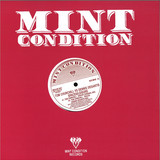
Mint Condition - A record label focused on excavating the outer fringes of classic House and Techno. Unreleased mixes, classics and overlooked gems mined from the last 20+ of contemporary dance music are the order of the day. From Chicago, Detroit and New York to London and beyond, Mint Condition have got their expert digging hats on to bring you exclusive heat and those rarer than rare jams that have been on your wants list for years! Dig in....
Back to 2002, the beginning of the new millennium. Tom Churchill's Headspace Recordings label had already been making an impact on the deeper strains of techno emanating from within the UK. With releases from detroit's Sean Deason, CiM, Hanna, Vince Watson and many more, Headspace was already a 'must check' label within record buying and DJ circles. This stellar split EP with NYC's Dennis DeSantis saw the pair remix each others tracks, both turning in very different, but equally complimentary sonic excursions. Churchill's 'Spaces' is surefire deep-space techno boogie of the highest order, swinging and funky and melodic in equal measure. The DeSantis remix of 'Spaces' is also a total winner, a stripped back exercise in expert minimalism, full of feeling and a perfect partner to the original mix. On the flip is Dennis DeSantis' 'Leisure', a sprawling and laconic broken house jam. Brilliant and teasing melodic synth motifs sit atop nagging acidic basslines and space. Again, the remix follows the original and Tom Churchill dials the track down into chasm deep shuffling drums and basslines and dubbed out FX. It's hard to think of an EP where two artists can remix each others music in such a compelling way, and for it to work so well. This is truly an excellent release and it's a real pleasure to see these tracks back on the streets. Sublime, and essential.
'Spaces / Leisure' has been legitimately re-released with the full involvement of Headspace Recordings for 2020 and remastered by London's Curve Pusher from the original sources especially for Mint Condition. 100% legit, licensed and released. Dug, remastered, repackaged and brought to you by the caring folks at your favourite reissue label - Mint Condition!
Not much is really known about the production process behind the sprawling works of Japanese composer Yosuke Tokunaga, nor about the artist himself.
Whatever the process may be, its outcome yields unique soundscapes that lunge and retreat in near mechanical movement, while warm volleys of low flung claps and thumps disperse over a bed of textural hums and lingering chords.
At times, Yosuke’s work manages to somehow form an atmosphere that can both feel airy and yet dense simultaneously; it is this juxtaposed mélange of sonic fabric that is at the core of his unique creations, and once again it is beautifully displayed on Yosuke’s latest outing, »8 Quadrants«, where he continues his unique practice of figuratively interpreting language through a sequence of delicate sonic sculptures.
»8 Quadrants« follows 2021’s »9 Mezzotints« and will be available digitally, as well as on vinyl, via the Berlin based Vaagner label, and its offshoot Vaknar.
An official reissue, with the original gatefold jacket and the original large booklet reproduced. Pressed on 180 gram vinyl, with side D etched. Sweden's Tribulation have been one of the most innovative bands working in metal in the new millennium. Their third album The Children Of The Night (2015) saw the band leap even further from their death, black and thrash metal origins and add hints of psych rock, prog and classic rock into the mix. Pitchfork called it "a sprawling, compulsory tale that doesn't turn dull. ... There is no way to arrive at a consensus artist who will satisfy everyone, but The Children Of The Night comes close." Svart Records presents, in conspiracy with Century Media, an official reproduction of the original 2015 double LP, that has already become a rarity.
It seems fitting that a trilogy of albums celebrating nature should conclude some eight years after its second chapter. Manchester-via-Todmorden based instrumental trio Plank’s first two LPs – 2012’s kosmiche-inspired Animalism and 2014’s more expansive and structurally disruptive follow-up Hivemind – enjoyed relatively quick gestation periods. However, Plank are firm believers in letting nature run its course, and so it is that their third LP Future of the Sea arrives early in 2023. “I always knew I wanted to make three albums inspired by nature” says Plank main-man David Rowe (synths / guitar). “Future of the Sea is another exploration into odd time signatures and traditional rock instruments alongside synths and electronics.”
“Future of the Sea is a celebration of the power and majesty of our oceans and how humankind has been destroying them through industrial scale fishing and global warming” says Rowe. “Rachel Carson put it more eloquently in her book The Sea Around Us: ‘It is a curious situation that the sea, from which life first arose should now be threatened by the activities of one form of that life. But the sea, though changed in a sinister way, will continue to exist; the threat is rather to life itself.’” A post apocalyptic underwater city scape adorns the cover in an illustration by Jake Blanchard, whose work you'll also see on Richard Dawson's latest album 'The Ruby Cord'.
The synthetic nature of Plank’s sprawling rock odysseys feel at their most pronounced on Future of the Sea which leans to the band’s love of Pink Floyd era Meddle, Camel, film score composers like John Carpenter and Vangelis, 70s experimentalists Harmonia, 1980s King Crimson and 90s post-rock adjacent group Tortoise. In polyrhythmic dexterity if not heaviness, Plank also take some influence from Meshuggah, and it’s in their movement between the 16 minute final album track’s sections that it feels most prominent. They swerve from crunching stoner rock jams to more ambient spatial explorations, crescendoing progressive peaks, 80s synth pop and finally a crushing riff-laden finale.
The WAEVE - composed of Graham Coxon and
Rose Elinor Dougall – release their eponymous
debut album on Transgressive Records.
Produced by The WAEVE and James Ford (Arctic
Monkeys, Florence & The Machine, Foals, HAIM)
and recorded in London earlier this year, ‘The
WAEVE’ is a collection of 10 new tracks from
songwriters Graham Coxon and Rose Elinor
Dougall.
Joining creative forces in The WAEVE gave the
duo the opportunity to push past their instrumental
comfort zones. Many tracks feature Graham on
saxophone, one of the first instruments he played
as a young musician back in the 80s.
First single, ‘Can I Call You’, starts as a ballad then
morphs into a Krautrock-style motorik number with
a sprawling Coxon guitar solo. ‘All Along’ features
Graham on cittern, a medieval folk lute. Rose plays
piano and an ARP 2000 modular synth.
The heavy weather all over ‘The WAEVE’ recalls
the blustery folk rock of Sandy Denny or John &
Beverly Martyn, while tracks such as ‘Kill Me
Again‘ and ‘Over and Over’ recall the 70s rock of
Kevin Ayers or Van der Graaf Generator, almost
industrial in places.
“A lemma is a generally minor, proven proposition which is used as a stepping stone to a larger result” - Wikipedia
We are proud to present Lemma2!
As a true lemma it both stands on its own and supports the larger theorem: to explore bass heavy music across a span of tempos and time signatures. Lemma2 goes deeper into the ideas presented in Lemma1, this time drawing inspiration from DnB, Dubstep, and Footwork. The result being a collection of sprawling 160BPM polyrhythmic rollers.
Side A ventures into sound design, mangling field recordings collected on travels far and beyond into almost unrecognizable shapes.
Side B takes on a more percussive tip, driving for the dance floor with some stepping d&b-not-d&b business and footwork interpretations.
The Zephyrs release their brand new album “For Sapphire Needle” on January 27th 2023 alongside Spanish comrades Acuarela, their first since 2010. With only 2018’s double A-side single “The Witches” and “The Crown Prince of Lies” in between, this represents their first collection of new songs in 13 years: from short and tightly constructed country-folk introspections to sprawling, spaced-out psychedelia, including a couple of extremely sharp pop glimmers and a killer Morricone-like instrumental. Originally conceived of as a series of 4 track EPs based on the seasons in which they were created, the recordings spanned into a patchwork of sessions with long-time collaborator and producer Michael Brennan at his Substation studio, neighboring a naval port in Rosyth. The ongoing recording sessions were made possible with the kind support of Robert Dillam, drummer for The Zephyrs and ex-guitarist for Creation band Adorable. With songs ranging from short and tightly constructed country-folk introspections to sprawling, spaced-out psychedelia, what resulted was an album near to double length. The collection presented as “For Sapphire Needle” is a cut-down selection of these songs. The record opens with “Leatherback”, a Crazy Horse inspired wall of distorted guitars drawing on lyrics from The Zephyr’s first album and pre-history, followed by the four songs earmarked for the first of the seasonal EPs – Winter – whose artwork was photographed in the alley behind Traceyann Campbell’s (Camera Obscura) house in Glasgow. Elsewhere on the album, “I tell you what” had much of its writing and recording initiated in a wooden shack near Aviemore and “Bolder” tells the story of overheard bar-side conversations and delayed flights in Denver airport, where lizard people live underground and some say the new world order lays dormant. The domestic depression of “How have you been today” precedes closing opus “Aliens”, inspired in equal measures by the maturation as social control science fiction of The Tripods and the schlock b-movie imagery of Rocky Erickson’s The Evil One. The album is the work of older and more consistent The Zephyrs. Stuart, David and Robert joined by collaborators: guitarist John Brennan and keyboardist Will Bates. The songs and sounds are sculpted out of slabs of time with friends at the Substation, a de facto weekly youth club for musicians who refuse to grow old. The triple bridges of Queensferry, the shipbuilding cranes of Rosyth docks and Babcock's shop - one of the few places in Scotland you can buy a real periscope over the counter - are just some of the backdrops as the Zephyrs rehearse for nobody but themselves. Yet, ever since Jean-Luc Picard himself told us that "this is not a holiday", it has become a unique and unbeatable way of peering up above the waterline, reinventing themselves and returning to the scene. Indeed with 10 songs in 46 minutes which wade across Gram Parsons and Big Star, Slowdive and spaghetti Western: folk, rock and shoegaze… as if they were trying to shorten the path to the California sky passing through Scotland and then Almería in Spain.
- A1: I Love, Love, Love, Love It 03 22
- A2: Postcard Dimension 03 52
- A3: The Science (Behind Shoes) 04 18
- A4: It's Not Just Country Birds That Are Attracted (To This Blue Glass Bird Bath) 04 02
- A5: Incredibly Comfortable Slippers 04 13
- B6: Not Your Ordinary Blanket 07 44
- B7: Music For A Plank Press 04 38
- B8: Something Is Going To Happen (Bolt, Bonk, Bound, Bowl) 03 02
- B9: Memory Foam 03 57
Faitiche presents Groupshow’s Greatest Hits: The ten tracks on this first vinyl album by Groupshow (Hanno Leichtmann, Andrew Pekler, Jan Jelinek), recorded between 2005 and 2018, document concert recordings and studio improvisations by the trio.
In improvisation there are no mistakes, only missed opportunities. Groupshow found their first opportunity in the routines of live performance and they used this opportunity to break with these routines. The trio consisting of Jan Jelinek, Hanno Leichtmann and Andrew Pekler came together in the context of Kosmischer Pitch, playing live versions of the music from Jelinek’s 2005 studio album of that name. During this project, the musical interaction between the three participants quickly emancipated itself from the original programme, departing from fixed roles and finding a distinct form in constant change.
Groupshow sessions – rehearsal, concert or recording – are always improvised. The interplay of the various sound sources, converging from the directions of “electronics”, “percussion” and “guitar”, does not follow the Krautrock wave logic of crescendo and morendo. Jelinek, Leichtmann and Pekler have established a method of transparent density in which links and breaks are not concealed but remain audible. The music works through attraction and repulsion, with a loosely organized structure that always leaves enough room for the next intervention.
The principle here, repeated even in the smallest units, is that of duration. Groupshow think of their music in terms of an installation: no starting point, no dramaturgy, and ideally no end. Concerts take place not raised up on a podium, but in the middle of the room on a level with the audience, who only enter the space with the musicians and instruments once their interaction is already underway. In 2008, Groupshow used this approach to create a live soundtrack for Andy Warhol’s film Empire, over the full length of eight hours and five minutes.
Recordings in general and the “Greatest Hits” format in particular are another key aspect of this ongoing work on a collectively modulated continuum. The ten tracks on this first vinyl album by Groupshow, recorded between 2005 and 2018, document the ephemeral capturing of opportunities that were not missed. Extracts and essences of an endless movement of searching. The sprawling form of the whole, suspended in succinct, separate units.
To paraphrase Lao Tzu and Roland Barthes, one might say: Once their work is done, they are no longer attached to it. And because they’re not attached to it, it will remain.
Arno Raffeiner, 2022
- A1: Introvert
- A2: Woman (Feat Cleo Sol)
- A3: Two Worlds Apart
- A4: I Love You I Hate You
- B1: Little Q (Part 1 - Interlude)
- B2: Little Q (Part 2)
- B3: Gems (Interlude)
- B4: Speed
- B5: Standing Ovation
- C1: I See You
- C2: The Rapper That Came To Tea (Interlude)
- C3: Rollin Stone
- C4: Protect My Energy
- C5: Never Make Promises (Interlude)
- D1: Point & Kill (Feat Obongjayar)
- D2: Fear No Man
- D3: The Garden (Interlude)
- D4: How Did You Get Here
- D5: Miss Understood
Back in stock soon !
Over the course of her lush, expansive, defiantly sprawling new album, “Sometimes I Might Be Introvert”, released on Age 101, the
Ivor Novelloaward-winning, Mercury nominated Little Simzdelivers an
undeniable modern classic, effortlessly condensing any number of
disparate styles and genres into music which thrillingly broaches the gap between urgent modern treatise and hip hop.
A bold, quantum leap forward from the critically beloved “Grey Area”, this is hardly music aiming simply for the pop charts; rather, it is turbo charged with the kind of fury and potency, confusion and anxiety that make up the modern experience of being Black, British and female at this particular point in time.
This is no mere philosophical exercise, however - the result is her most ambitious and soaring body of work to date, one which operates at the very heights of what rap can be.
- A1: Noonday Yellows
- A2: Rain
- A3: Dusk
- A4: The Jantzen Rag (Raccoons)
- A5: Pleasant, This Garden
- B1: Bedroom Of The Absent Child Lost Creek Suite
- B2: Bedroom Of The Absent Child Lost Creek Suite Into The Groves
- B3: Bedroom Of The Absent Child Lost Creek Suite Warm Pathways
- B4: Bedroom Of The Absent Child Lost Creek Suite Sunny Banks
- B5: Bedroom Of The Absent Child Lost Creek Suite Fragrant Duff
- B6: Bedroom Of The Absent Child Lost Creek Suite Beaver's Pond
- B7: Track 12
Black Vinyl[22,48 €]
Written and recorded between 1972 and 1982 in Western Oregon, Back to the Woodlands is a previously unreleased, and nearly lost, album made by Ernest Hood during the same era as his near mythical album Neighborhoods . A visionary combination of field recordings, zithers, and synthesizers, Back to the Woodlands offers an unprecedented depth of access to this singular artistic mind. Born into a musical family, Ernest Hood began a promising career as a jazz guitarist during the 1940s, touring internationally with his brother Bill Hood and the saxophonist Charlie Barnet , before contracting polio in his late twenties. The disease left Ernest unable to play the guitar and confined him to a wheelchair for the rest of his life. It also forced him to adapt and innovate around his musical practices in the face of adversity; Hood's value of sound matured with a remarkably democratic and nonhierarchical approach and application. Taking up the zither, a less physically-demanding stringed instrument to the guitar, embarking upon the unprecedented process of incorporating field recordings into his work as early as 1956, and eventually discovering the synthesizer, Hood's music became imbued with optimism and subtle cultural critique. This ethos and technique - refined over the coming decades - would lay the groundwork for a sprawling body of radio work, mail order recordings for homebound listeners, and Neighborhoods , self- issued as a small vinyl edition in 1975. Where Neighborhoods , a nostalgic opus, drawing from a well of collective memory of the 1950s, is defined by traces of human activity, Back to the Woodlands leaves the modern world behind, delving into Hood's love for nature. Only recently discovered in his archives, the album dramatically expands his concept of "musical cinematography," imagistically triggering states of sensory memory from within its zither and synthesizer melodies, intertwined with field recordings made during Hood's extensive travels throughout Oregon. If Neighborhoods is a retreat into the gauzy joys of a romanticized past, Back to the Woodlands is an immersion in the timeless sanctuary of the natural world. A fascinating counterpoint to its predecessor, Back to the Woodlands brings us even closer to Hood's belief in the transportive qualities of sound; that field recordings could serve as a vehicle for the imagination and liberation, particularly for those with similar mobile disabilities as his own. Across the album's twelve compositions, the rippling instrumental harmonics - shifting between abstraction and playful melody - fold so seamlessly into the birdsong, bubbling brooks, and other environmental ambiences, that they often give the impression of having been recording within the landscapes toward which they whisper. Falling somewhere between the immersive calm of healing music and New Age, the creative field recording practices of sound ecologists world building for Folkways, and the jazz infected ambiences during Obscure / Editions EG's highest heights, Back to the Woodlands sculpts an singular proximity of music for its moment; a form of ambient sonic realism that draws the consciousness toward its surroundings as much as within. Working closely with his estate to maintain his original vision, Freedom to Spend has restored and remastered this never before released, lost masterpiece by Ernest Hood from the original tapes. Ernest Hood's Back to the Woodlands will be issued on vinyl, as well as on CD in combination with its contemporary Where the Woods Begin , with new liner notes by Michael Klausman . On behalf of Ernest Hood and Freedom To Spend, a portion of the proceeds from this release will benefit Oregon Wild, an organization dedicated to protecting and restoring Oregon's wildlands, wildlife, and waters as an enduring legacy for future generations.
To those who embraced 2000’s Nixon—Lambchop’s fifth album, whose luscious country soul grooves provided the sprawling Nashville collective with a significant British breakthrough that even found them selling out London’s 2,500-capacity Royal Festival Hall—the deceptively gentle Is a Woman, delivered two years later, administered a quiet but compelling shock. Gone almost entirely was frontman Kurt Wagner’s euphoric, Curtis Mayfield-esque falsetto, replaced by a tranquil, contemplative vocal style; and instead of the joyfully warm brass arrangements that had encouraged Zero 7 to remix “Up With People,” one of Nixon’s standouts, pianist Tony Crow now took center stage, teasing out gentle, ingenious melodies. The contrast was acute.
To discover the true spirit of Is a Woman, however, one need only listen to the remarkable “My Blue Wave,” one of the band’s finest recordings to date. Here, Wagner depicts a world of helpless tragedy in which comfort can nonetheless be found in the smallest of gestures, as he journeys from the contented sight of his pets—“You lay around the house… Just bones and squirrels inside your head”—to recollections of a devastating phone call from friend and bandmate William Tyler: “And William called and tried to tell me /
That his sister’s boyfriend has just died / He’s not sure what to do / And I’m not sure what to tell him he should do / Sometimes William, we’re just screwed / In my blue wave.”
Experimental once-sludge metal duo branch out further with an album influenced by Middle East / North African / Asian pop and traditional music. Nazm sees Jucifer deploy their familiar studio tactic: writing, arranging, producing, engineering, and playing all instruments themselves to create a sprawling concept album. This time, it’s to celebrate their shared love for the Middle East and North Africa (MENA) and central / south / west Asian traditional and pop music cultures with fourteen highly textured, intensely personal and passionately delivered original songs. Fans of the band likely know they can expect surprises with each album, as well as recordings which differ drastically at times from their live sound. In this tradition, Nazm strays far from the brutal excess of a Jucifer show (and of their recent releases Futility and District Of Dystopia) but, as with all Jucifer’s recordings, the point is not to imply any static trait of the band but instead to bring to life a story they’re telling. Track Listing: 1. Return 2. Mood 3. Un Occupied 4. Welcome 5. Sahel 6. Endure 7. Pulverization (Becoming) 8. Displaced 9. Jucifer – Divided 10. Notice (Warning) 11. Water Woman 12. Mitochondria 13. The World Is A Sword 14. To The Lost
Das Debütalbum der selbstbetitelten Retrofuturisten zeigt eine dynamische Gruppe sehr talentierter, positiver und ehrgeiziger Musiker, die mit perfekten Indie-Pop-Hooks neue Wege beschreiten und sich auf gewagte Experimente einlassen. Der norwegische Indie Sound für Fans von Two Door Cinema Club, Everything Everything oder The Flaming Lips.
Clear Vinyl
Originally released in 2020 on cassette and digitally. more eaze is the nom de plume of Austin, TX mainstay m.maurice, a roving experimentalist who’s explored an astoundingly diverse range of sounds, from drone and computer music to avant-pop and beyond. claire rousay is a San Antonio, TX-based percussionist/composer/sound artist who uses physical objects and their potential sounds as a way to explore queerness, human physicality, and self perception. Together—through a suite of deeply personal aural collages—two of Texas’ most vital and vibrant sonic searchers beg the eternal question: If I Don't Let Myself Be Happy Now Then When?
Although only their debut album together, If I Don’t Let Myself… reveals a profound and fruitful relationship between m and claire. But the symphonic symbiosis goes even deeper still. Outside of musical breakthroughs, the pair helped each other conquer intensely personal changes, with m and claire transitioning and coming out as non-binary and trans, respectively.
As m explains, “to me this record is very much about this process of becoming—trying to reach something and getting there but sometimes not being quite where you want to be but at least getting closer. It’s about feeling alternately empowered and insecure socially as you transition and trying to cope with these conflicting emotions.”
Musically, the album showcases startlingly sincere sets of serrated but sedative situational music. A-side epic Drunk is a sprawling but taut rove of aural duality. Passages of exquisite elegance subtly clash with shimmering shards of sound. Pre-op is a poised and pensive piece of solemn reflection, harrowingly honest and delivered with clarity and composure, while Post-op closes out the set in a wholly uplifting and optimistic flair.
If I Don't Let Myself Be Happy Now Then When? is ultimately about coping during the respective transitioning phase in both of their lives, obliquely blissful and fraught with freedom.
For its fourth release, Zen 2000 scales up from the 45 format and releases its first 12-inch, which, coming in at seven tracks (eight with the digital-only bonus) is either a double-wide EP or an LP in everything but name.
The artist behind it is Mogwaa, a South Korean producer who's built a reputation on meticulous and clean-lined melodies and sharp, glistening drums. Sometimes we find him in the club, slinking through dubby bass wobbles, flittering across breaks, and sometimes we find him in a grassy park, sprawled atop a soft ambient bed. No matter where he is, the trademark voicing is always present.
Here, on A Garden Within, we get equal helpings of both: the A-side is the chill-out room, spacey drifters that pulse through the cosmos and wiggle through underwater currents.
The flip is clubbier fare, with “Rejas” being a nod to electro sounds and “Tranquilizer” being a trippy bit of trance. Bookending the journey is “Melting,” an iceberg slowly cracking and falling into the ocean. “Con Fe” is an encore of sorts; it feels like a reconstituting of “Melting,” the reforming of that track's languid dissolution.
Ernest Hood’s Neighborhoods was released some two decades after the Portland, Oregon born and raised musician’s first forays into field recordings. These very recordings, and those captured over intervening years, define the universal sound and aural images of childhood, a theme memorialized by Hood’s privatelypressed opus of 1975.
Sprawling through a haze of zither, synthesizer melodies, and foraged pedestrian sound, Neighborhoods is both a score and documentary composed and directed by Hood to offer, in his words, joy in reminiscence. Hood’s nostalgic impulse ran parallel to the developments of other artists, writers, and filmmakers of the 1970s who were looking back to the 1950s to convey a collective memory of childhood. Unlike some of the widely embraced work of this nature, the music of Neighborhoods eschews irony or detachment for lucidity, striving above all for a dream-like return to the details of sensory memory.
Born into a musical lineage, Hood’s early, promising career as a guitarist in a globetrotting jazz outfit was cut short when he contracted polio in his late twenties. Moving from guitar to less physically-demanding stringed instruments in the late 1940s, Hood first began implementing field recordings in his jazz ensemble collaborations as early as 1956. In 1961, Hood and trumpeter Jim Smith collaborated on a local Portland television program, with their large, tight ensemble providing breakneck contemporary jazz for an action painting by famed West Coast modernist painter Louis Bunce. Hood incorporated his own field-recorded sounds of birds in the performance – an element that would resurface in Neighborhoods with great abundance among other found sounds.
LP is black vinyl + LP3 insert for full album Download. Check out the first 18 or so seconds of “Can I Ride”, the title track on the first release by Polvo, the two-guitar juggernaut that represented the other side of Chapel Hill indie rock (more on that in a moment). That two-note riff, and the guitar twang that follows, recalls the opening notes on another monster song: “The Sprawl”, a key track on Sonic Youth's epochal Daydream Nation, an album released in October 1988, less than two years before Polvo formed. This compilation's nine tunes—the first seven from the Can I Ride double 7” EP (1990), the last two from the “Vibracobra” b/w “The Drill” 7” (1991) are not quite the sound of a torch being passed, but they were a sign that Sonic Youth's weird tunings, the hardcore punk and proto-indie rock on SST Records, and R.E.M.'s hazy rock (three big influences on this era of Polvo) were changing lives. Even back then, the impossibly catchy roar from Merge’s flagship act Superchunk was known to outsiders as the sound of Chapel Hill. But Polvo was something different from the same region. While the band never cottoned to the “math rock” tag (and it’s hard to disagree with them), there is no question that there was a distinct “how can we make guitar rock sound different from all the other guitar rock” vibe going on in the mid-Atlantic, from Richmond (math rock’s true home, don’t @ me) to the North Carolina Triangle over to Louisville and down almost to Atlanta. (If the Mastodon dudes aren’t down with Polvo, I’ll eat your shoe.) No, Polvo were their own brand of squall, not afraid of big hooks (“Leaf ”), odd tempos and textures (“Lull”) and rolling thunder (“Totemic”), and answers to the musical question, “What if the Feelies grew up on Dinosaur Jr.?” (“Tread on Me”). Indie rock? Not the 2022 kind. Math rock? Eh, not really. This was the sound of a new Southern rock, of a pre-internet guitar storm that looked at what came before and said, “What's next?” Track listing: Side A 1. Can I Ride 2. Leaf 3. Lull 4. Totemic 5. Tread on Me. Side B. 6. Teen Dream 7. Snake Fist Fighter 8. Vibracobra 9. The Drill
Formed approximately three years ago, before the world changed (temporarily?), Odd Men Out are something of a garage-psych international super-group, with members originally hailing from Italy, Spain and the UK, brought together in the sprawling megalopolis of London in the sticky heat of summer 2019. Lois (drums) and Alessandro (guitar, organ, vocals) had already been playing together in legendary freakbeat trio The Embrooks since '96 (with a 10-year hiatus between 2005 and '15), while bassman Bruno had served time with moody-psych-turned-spiky-British-Beat exponents The Liquorice Experiment and Looking Glass Alice. The untried 'x' factor in this equation is frontman, guitarist, songwriter Nicolino whose love of moody 12-string folk rock and florid psychedelia shapes the overall sound of the band. Late in 2019, the quartet gathered at North Down Sound Studios in south east Kent to record the material presented here. Engineer and State Records mogul Mole was at the controls, manipulating the analogue 8-track recorder to capture the best and most exciting vibes they could offer, in a swirling sea of reverb and audio compression. Tracked predominantly live with a bare minimum of overdubs, this is classic 60s-inspired garage-psych, with elements of The Lemon Drops, Basement Wall and The Baroques to name but a few, yet the four never let their influences get in the way of producing quality original material. The pandemic caused many cancellations and postponements, but Dirty Water Records and Odd Men Out are finally ready to unleash this almighty beast!
Track list:
1. Summer 2. Magic Fudge 3. Mary B 4. Can’t Get Over 5. Big Worries (Big Troubles) 6. Look At Her 7. No 8. Knock On My Door
JEFF COTTON OF CAPTAIN BEEFHEART & HIS MAGIC BAND FAME
RELEASES HIS FIRST EVER SOLO ALBUM -'THE FANTASY OF REALITY'
After playing guitar, lap steel & vocals with the legendary Captain Beefheart & his
Magic Band, appearing on the ground-breaking album 'Trout Mask Replica' (under
the pseudonym Antennae Jimmy Semens), as well as playing on 'Strictly
Personal' & 'Mirror Man', Cotton withdrew from the commercial music business
for nearly 50 years. Using the island state of Hawaii as a home base, he emerges
from his seclusion in 2022 with his first ever solo album; 'The Fantasy Of Reality'.
Whimsical, playful & tongue-in-cheek - Cotton delivers a psychedelic journey that
will delight Beefheart devotees while bringing plenty of new ideas to the table
across the sprawling 22 track, 66- minute runtime. 'Trout Mask Replica' cover
designer Cal Schenkel collaborates once again as he returns to contribute to the
internal artwork of the album to continue the Captain Beefheart canon into the
2020's.
Across the decades, the Magic Band's power & influence has only grown in might
& the cult following of 1969's 'Trout Mask Replica' still excites fans to this day, in
part due to the mystery & enigma of members such as Antennae Jimmy Semens
(aka Jeff Cotton). In 1967, Cotton was scoped by Don Van Vliet - Captain
Beefheart himself, replacing Ry Cooder on guitar. He then went one to help craft
some of Captain Beefheart & the Magic Band's most vibrant recordings & later
contributed to the cult band MU.
Now blending together musical strands such as jazz, delta blues, Hawaiian & the
avant- garde to create a melting pot of ideas, Cotton astonishes fans with his
comeback.
The magic will continue on 'The Fantasy Of Reality', available via Madfish.
Fleeting configurations of piano, wind, strings, synthetics, and field recordings, inspired by the Greek isles.
Previous albums adored by the likes of The Quietus, Exclaim, Drowned In Sound, etc.
For fans of Angelo Badalamenti & David Lynch soundtracks, Bohren & Der Club Of Gore, and Global Communication.
While on the island of Syros in the Aegean Sea for a film festival performance, Christina Vantzou experienced what she characterized as “a moment of focus”—a specific vision for the sprawl of raw recordings she’d been amassing for her fifth album. Upon relocating to the Cycladic island of Ano Koufonisi, she situated herself outside at a patio table with a laptop and headphones, taking brief breaks to swim, and began the “reductive process” of shaving and shaping the source material into uneasy but lyrical movements, alternately austere and adorned with strange inflections: glottal groaning, cavernous water, glittering eddies of modular synth, languorous silences. Mixing the pieces herself without outsourcing to an engineer compounded the intimacy and autobiographical dimension of the music; she refers to No5 as “almost like a first album.”
Drawing on sessions staged in February 2020, Vantzou’s editing instincts emphasize process and isolation, spotlighting resonance and restraint, liquidity and long tails. Fleeting configurations of piano, wind, strings, synthetics, and field recordings, these are spaces as much as compositions, surreal grottos of shifting light, suffused with a sense of invisible divinity. Although seventeen musicians appear on the record, the proceedings feel minimalist and malleable, sculpted from interstitial moments and oblique synchronicities. The definition of a composer as “one who joins things” is here both plumbed and proven; Vantzou describes No5 as “a letting go,” a place of “soft borders,” unfixed and undefinable.
Originally from Normandy now residing in the country's capital, French DJ and producer Adam Boufeldja (aka Adam BFD) has been making a serious name for himself, having put out a string of self-released singles and curating his own self-titled Youtube channel.
Adam’s tracks have always been vivid, detailed portraits; drawing from memories and influences from around the world, and his latest EP is no exception; using his eclectic tastes to produce a record truly unique, and brimming with personality.
‘I’ll be walking’ meanders through an always evolving city, creating space and a sense of an otherwise chaotic and fleeting world. The track’s softly spoken synths hold the torch, while the effortless drums walk us home. ‘Call A Taxi’ follows suit, a fruitful marriage between shuffling drum patterns and hypnotic tones, while the track's subtle low-end provides the glue; closing off an A side that feels more like a story being told than another dance-floor memento.
Title track ‘No Advice’ launches the B side on a slightly more ominous tone, in a microcosmic portrait of opposing forces; before ‘An Ode To La Condesa’ glides through like a letter from an old friend, the smell of fresh ink still prevalent on the page as we’re whisked away through the wide-tree lined avenues of La Condesa. The EP comes to a close with ‘For The Good Times’ combining nostalgic tinged leads, forward-marching drums and sprawling pads that act as a backdrop to another highly impressive EP from one of France’s best emerging artists.
In what's been a stand out year for the Berlin based, London born, DJ & producer, Amy Dabbs has dropped releases on Lobster Theremin, launched her own label 'Dabbs Traxx' and collaborated with junglist Coco Bryce on new label project 'LT CODA'. With a distinguished sound and undeniable flair, both behind the booth and in the studio, Amy's brand of classic house and radiant jungle now comes to Low Battery with her 'Baddest Gal' EP.
'Don't Go' opens the EP with shimmering synths and lighter than air percussion. The mood is light and understated, conjuring warm and affectionate emotions without the need for amplified design. 'No You' then welcomes us with mid-summer melodies and sprawling pads; vocal loops adding to that feeling of fuzziness and warmth.
The B side opens with title track 'Baddest Gal' an emotional percussive workout that combines thoughtful arrangement with euphoric and dreamy notes. It's one of those tracks that could work just as well in a DJ set or cloud watching as the world slowly drifts by. 'Your Move', The record's finale shows a different side to Amy's dynamic productions; the track ebbs and flows and could be likened to the mixed emotions of meeting an old friend: Excited but nervous, happy but always with a heartheavy goodbye.
With I was born by the sea, Richie Culver brings to a close a period of intense introspection and emotional reckoning with a debut album that serves as both an optimistic statement of intent and a final glance back at the painful places it explores. Following recent work with Blackhaine and Pavel Milyakov, I was born by the sea picks up where Culver’s EP for Italian label Superpang, Post Traumatic Fantasy, leaves off, painting an unabashed portrait of contemporary malaise, detailing a life lived behind closed doors, pinned under the crushing weight of austerity, sapped of the strength to do anything other than gaze out to sea and all the grey possibilities it represents. Where Post Traumatic Fantasy saw Culver returning to his hometown of Hull after a period spent entangled in London’s relentless sprawl, his first full length project reaches further back to his formative years working in a caravan factory and going to raves in and among Hull’s outskirts. Unspooling like a fever dream, I was born by the sea is the anxious clutter of a racing mind spoken clearly, a stark reflection on how it feels to have too many ideas and too much time to act on them.
Though unquestionably a snapshot of a time of significant difficulty, Culver reflects on this period with tender empathy and pitch-black humour, stitching together unflinching observations from England’s neglected corners, ‘there’s more mobility scooter repair shops and bookies than there are bookshops,’ and devastating vignettes of everyday struggle, ‘tears on the tin foil’, with surreal depictions of industrial grit, ‘skimming stones in a small pond by the slaughterhouse’. His DIY approach to production stretches the rough sinew that connects these fragments of memory, a process he describes as using a paired back collection of synths and drum machines to the best of his ability, ‘but to the least of their capabilities,’ wringing out visceral sound with self-taught urgency. During the album’s most impressionistic passages it’s as though Culver has transposed past internal turmoil into powerfully resonant noise, the Sisyphean sonics of ‘Create A Lifestyle Around Your Problems’, which evokes in its concrète clatter and MRI machine barrage the sound of making the same mistake again and again, or the stuttered jumble of ‘Its Hard To Get To Know You,’ its garbled vocal modulation and frayed edges of distortion channeling the paranoia of somebody listening to muffled voices through thin plaster, climbing the walls of their bedroom with the curtains closed, a nervous breakdown in stereo.
In counterpoint to this glides the ever-present spirit of the dance floor, which haunts the record from the moment it is invoked in its first few seconds. Opening onto a sea wall of bright synthesis, the stuttering vocals and bass tone chops of ‘Nervous Energy’ dump us directly into post rave ecstasy, the echoing cry of a voice amplified by loudspeaker carrying the loose energy and surge of crowds moving in darkness. The incessant, dead phone line beep of ‘Pigeon Flesh’ builds to a pulse that suddenly swells into an anxious technoid surge, shapeshifting at lysergic speed into head shrinking audio hallucinations, a descent into the void of the present via machine music hypnosis. Even ‘Its Hard To Get To Know You’ summons the ego death drive of hardcore techno within its scorched textures, flickering indiscernibly between attritional noise and frazzled hardware stomp. Paying homage to both the parties of his youth and a countless succession of Sundays spent offering himself up within Berghain’s hallowed architecture, Culver’s experiments in addressing his formative relationship with rave provide an energetic glimpse at where he might take his sound next.
Between spikes of propulsive energy and grim mood pieces Culver returns to suspended passages of aching, glacial drift, the cold swell of the North Sea, accompanied by some of his heaviest testimonials. The gauzy ebb of ‘Daytime TV,’ its tumbling loops reminiscent of boats bobbing off a distant shore, sees the artist at his most checked out, slumped in front of his television, seven days a week. ‘I used to dream of doing something,’ he admits, ‘anything to get out of this town.’ ‘Love Like An Abscess’ pairs swirling currents of ambient shimmer with violent images of baseball bats lying next to beds and blood-stained mattresses, next to which Culver pleads in a desperate mumble, ‘let our love grow, like a broken abscess.’ Yet it’s with the album’s final word and title track that Culver reveals a glimmer of cautious optimism, a parting gesture of exposition and closure. ‘I knew I had to get away,’ he asserts, ‘so I did and I never looked back.’ What follows builds from a low throb, the flutter of a tiny heartbeat, to a resonant glow, embellished with unfurling synthetic burbles, oil rigs sparkling in the distance, golden light spilling across the sea. In reckoning with the place he had to escape, Richie Culver is now free to look towards the promise of something new, something hopeful.
In 2003, Pisco Crane assembled a six-piece band from motivated and talented like minds in the Kinshasa slums where he grew up. Pisco had been involved with a handful of local rap acts when he was younger, but after meeting legendary instrument builder Bebson De La Rue, he was inspired to follow a new path. He set about building instruments from the discarded trash that surrounded his city: bits of old computers or oil cans were fashioned into bass guitars and drums, and keyboards were bashed together using springs, metal pipes, and offcuts of tubing. If there was a core philosophy that guided Pisco at this stage in his journey, it was that everyone should have access to instruments, no matter where they come from or what their budget might be. And following in the footsteps of Bebson, Pisco locked into a Congolese tradition that touches on the eccentric genius of globally lauded artists like Konono Nº1 and Staff Benda Bilili. Over the years, Fulu Miziki's notoriety grew in the Kinshasa underground - their utopian vision of the future was infectious. Eventually, they were joined by performance artist, sculptor and fashion designer Lady Aisha, who offered the band unique colour and a soulful central focus. Influenced by Kinshasa's street performance scene, Aisha helped the band devise vivid masks and costumes that were as electric and singular as the instruments they played, and the scene was set. In 2020, as the world was plunged into lockdown, footage of Fulu Miziki went viral and their star began to grow exponentially, with a video of the band preforming the track 'Tikanga' racking up millions of views on Facebook. The band used this opportunity to work on documenting their sound, and shored up at the Nyege Nyege studios in Kampala for a year to assemble a definitive album. Recorded by HHY & The Macumbas' Jonathan Saldanha, this record captures the band's furiously innovative mixture of industrial sonics, spiritual jazz, punk, and Congolese soukous pressure. At their best, Fulu Miziki sound almost completely out of time, curving pounding rhythms around microtonal clanks, rousing chants and spiky sonics. On 'Mutangila', there's a hint of disco in the 4/4 stomp, but it's been shifted into a post-punk ritual, adorned with complex bell percussion and overlapping vocals. 'Congo' is even harder to define; electrified buzzes form a bassline, but it's the mindboggling rhythms that shuttle the track into psychedelic realms, led confidently by Lady Aisha's limber rhymes. Fulu positively slither on the sultry, industrial-influenced 'Sebe', while 'Tikanga' reminds of Congo's rumba-derived soukous traditions, materializing the sounds into the future with tight, pounding percussion and head-melting fx. The story of Fulu Miziki is sprawling and complex and constantly evolving, with various offshoots and band iterations. Two members left the band in 2016 to form KOKOKO! with French producer Débruit. Not long after they recorded this magnum opus album, several other original members left to form a similarly named outfit currently based in Europe. This other incarnation recently released an EP of electronic productions without the band founder Pisko Crane and lead vocalist Lady Aicha, on the UK based Moshi Moshi records. Pisco and Lady Aicha currently lead a different outfit in Kinshasa made up of completely new musicians. This full-length is the remaining proof of Fulu Mziki at their most vital and most complete - it won't be repeated - and can never be recreated. It's an essential portrait of one of the Democratic Republic of Congo's most innovative contemporary outfits, and some of the most surprising hybrid music you're likely to hear.
Written and recorded between 1972 and 1982 in Western Oregon, Back to the Woodlands is a previously unreleased, and nearly lost, album made by Ernest Hood during the same era as his near mythical album Neighborhoods . A visionary combination of field recordings, zithers, and synthesizers, Back to the Woodlands offers an unprecedented depth of access to this singular artistic mind. Born into a musical family, Ernest Hood began a promising career as a jazz guitarist during the 1940s, touring internationally with his brother Bill Hood and the saxophonist Charlie Barnet , before contracting polio in his late twenties. The disease left Ernest unable to play the guitar and confined him to a wheelchair for the rest of his life. It also forced him to adapt and innovate around his musical practices in the face of adversity; Hood's value of sound matured with a remarkably democratic and nonhierarchical approach and application. Taking up the zither, a less physically-demanding stringed instrument to the guitar, embarking upon the unprecedented process of incorporating field recordings into his work as early as 1956, and eventually discovering the synthesizer, Hood's music became imbued with optimism and subtle cultural critique. This ethos and technique - refined over the coming decades - would lay the groundwork for a sprawling body of radio work, mail order recordings for homebound listeners, and Neighborhoods , self- issued as a small vinyl edition in 1975. Where Neighborhoods , a nostalgic opus, drawing from a well of collective memory of the 1950s, is defined by traces of human activity, Back to the Woodlands leaves the modern world behind, delving into Hood's love for nature. Only recently discovered in his archives, the album dramatically expands his concept of "musical cinematography," imagistically triggering states of sensory memory from within its zither and synthesizer melodies, intertwined with field recordings made during Hood's extensive travels throughout Oregon. If Neighborhoods is a retreat into the gauzy joys of a romanticized past, Back to the Woodlands is an immersion in the timeless sanctuary of the natural world. A fascinating counterpoint to its predecessor, Back to the Woodlands brings us even closer to Hood's belief in the transportive qualities of sound; that field recordings could serve as a vehicle for the imagination and liberation, particularly for those with similar mobile disabilities as his own. Across the album's twelve compositions, the rippling instrumental harmonics - shifting between abstraction and playful melody - fold so seamlessly into the birdsong, bubbling brooks, and other environmental ambiences, that they often give the impression of having been recording within the landscapes toward which they whisper. Falling somewhere between the immersive calm of healing music and New Age, the creative field recording practices of sound ecologists world building for Folkways, and the jazz infected ambiences during Obscure / Editions EG's highest heights, Back to the Woodlands sculpts an singular proximity of music for its moment; a form of ambient sonic realism that draws the consciousness toward its surroundings as much as within. Working closely with his estate to maintain his original vision, Freedom to Spend has restored and remastered this never before released, lost masterpiece by Ernest Hood from the original tapes. Ernest Hood's Back to the Woodlands will be issued on vinyl, as well as on CD in combination with its contemporary Where the Woods Begin , with new liner notes by Michael Klausman . On behalf of Ernest Hood and Freedom To Spend, a portion of the proceeds from this release will benefit Oregon Wild, an organization dedicated to protecting and restoring Oregon's wildlands, wildlife, and waters as an enduring legacy for future generations.
Written and recorded between 1972 and 1982 in Western Oregon, Back to the Woodlands is a previously unreleased, and nearly lost, album made by Ernest Hood during the same era as his near mythical album Neighborhoods. A visionary combination of field recordings, zithers, and synthesizers, Back to the Woodlands offers an unprecedented depth of access to this singular artistic mind.
Born into a musical family, Ernest Hood began a promising career as a jazz guitarist during the 1940s, touring internationally with his brother Bill Hood and the saxophonist Charlie Barnet, before contracting polio in his late twenties. The disease left Ernest unable to play the guitar and confined him to a wheelchair for the rest of his life. It also forced him to adapt and innovate around his musical practices in the face of adversity; Hood’s value of sound matured with a remarkably democratic and nonhierarchical approach and application.
Taking up the zither, a less physically-demanding stringed instrument to the guitar, embarking upon the unprecedented process of incorporating field recordings into his work as early as 1956, and eventually discovering the synthesizer, Hood’s music became imbued with optimism and subtle cultural critique. This ethos and technique - refined over the coming decades - would lay the groundwork for a sprawling body of radio work, mail order recordings for homebound listeners, and Neighborhoods, self-issued as a small vinyl edition in 1975.
Where Neighborhoods, a nostalgic opus, drawing from a well of collective memory of the 1950s, is defined by traces of human activity, Back to the Woodlands leaves the modern world behind, delving into Hood’s love for nature. Only recently discovered in his archives, the album dramatically expands his concept of “musical cinematography,” imagistically triggering states of sensory memory from within its zither and synthesizer melodies, intertwined with field recordings made during Hood’s extensive travels throughout Oregon. If Neighborhoods is a retreat into the gauzy joys of a romanticized past, Back to the Woodlands is an immersion in the timeless sanctuary of the natural world.
Chile-born and now Germany-based scourging black metal plague Vel'Har joins Sentient Ruin for a much awaited and long anticipated vinyl release of its 2020 light-consuming debut MLP "Letanía I". On the wretched offering cryptic mastermind H.S.V.H. unfolds two monstrous black metal blades adorned by three interludes to invoke an unholy sonic siege upon the ridicule of life and the purity of christendom. Baptized under the pentagram and spewn from the unholy jaws of oblivion, these five tracks sprawl and hiss like a horrifying morass of snakes, consuming reality and devouring everything in the wake of a monstrous tide of venom. The rawness and violence of these riffs is evident, but so is the ritualistic and esoteric majesty emanating from its death-scarred aura; an infernal force summoned as a liturgy or rite of passage toward a higher meaning and other form of existence. And that form is Satan's triumph, the zenith toward which every moving part of this wretched crucible converges. His glory as beacon and conduit of pestilent krafts conceived with the malefic design of insulting life and transporting the listener deep inside twisted and inverted dimensions of infinite dissolution and complete insanity.
Over the last ten years, The Lone Bellow have cast an indelible spell with their finespun songs of hard truth and redemptive beauty, faithfully delivered in hypnotic three-part harmony In a departure from their past work with elite producers like Aaron Dessner of The
National and eight- time Grammy- winner Dave Cobb, the Nashville- based trio
struck out on their own for their new album 'Love Songs for Losers', dreaming up
a singular sound encompassing everything from arena-ready rock anthems to the
gorgeously sprawling Americana tunes the band refers to as “little redneck
symphonies.” Recorded at the possibly haunted former home of the legendary
Roy Orbison, the result is an intimate meditation on the pain and joy and ineffable
wonder of being human, at turns profoundly heartbreaking and sublimely
transcendent.
A muffled cry into the technological darkness, Contemporary Movement slid into the world right as the MP3 was seeping out of college dorms. A 39-minute drift into the void, drenched in Cold War-era reverb and then submerged in four track hiss for good measure. Duster constructed a Brutalist masterpiece on the outskirts of a suburban mall, as if to say, “We were here.”
“Music for dark spaces and closed eyelids, deeply psychedelic but without sprawl, ambient music with a serrated edge of punk.”—The Ringer
“Warm, fuzzed-out sounds that hit home like a tight, melancholic embrace from your favorite person.”—Vice
A muffled cry into the technological darkness, Contemporary Movement slid into the world right as the MP3 was seeping out of college dorms. A 39-minute drift into the void, drenched in Cold War-era reverb and then submerged in four track hiss for good measure. Duster constructed a Brutalist masterpiece on the outskirts of a suburban mall, as if to say, “We were here.”
“Music for dark spaces and closed eyelids, deeply psychedelic but without sprawl, ambient music with a serrated edge of punk.”—The Ringer
“Warm, fuzzed-out sounds that hit home like a tight, melancholic embrace from your favorite person.”—Vice
Best listened to from inside the womb, Duster’s 1998’s debut Stratosphere simultaneously capped off and reinvented the slow core’s first wave. A four track dreamscape that will wake the neighbors and then lull them back to sleep. Hazy, arpeggiated guitars layer over a deliberate drummer with no real place to be, as semi-inaudible vocals warn of millennial malaise and subtly encourage the listener to “rock out, rock out, rock out, rock out.
“Music for dark spaces and closed eyelids, deeply psychedelic but without sprawl, ambient music with a serrated edge of punk.”—The Ringer
“Warm, fuzzed-out sounds that hit home like a tight, melancholic embrace from your favorite person.”—Vice
Horse Lords return with Comradely Objects, an alloy of erudite influences and approaches given frenetic gravity in pursuit of a united musical and political vision. The band's fifth album doesn't document a new utopia, so much as limn a thrilling portrait of revolution underway. Comradely Objects adheres to the essential instrumental sound documented on the previous four albums and four mixtapes by the quartet of Andrew Bernstein (saxophone, percussion, electronics), Max Eilbacher (bass, electronics), Owen Gardner (guitar, electronics), and Sam Haberman (drums). But the album refocuses that sound, pulling the disparate strands of the band's restless musical purview tightly around propulsive, rhythmic grids. Comradely Objects ripples, drones, chugs, and soars with a new abandon and steely control. This transformation came, in part, due to circumstance. Sidelined from touring their early 2020 album The Common Task in a world turned upside down, Horse Lords promptly returned to their Baltimore practice space and began piecing together the music that became Comradely Objects (Bernstein, Eilbacher, and Gardner have since relocated to Germany). Removed from their tried and true method of refining new music on the road, the quartet invested less energy ensuring live playability and more rehearsing and recording. The deliberate writing and tracking process, a rarity since the band's earliest days, led to a collection of pieces that signal a new peak of creativity and musical heft without devolving into studio sprawl or frippery. Comradely Objects reflects familiar elements of Horse Lords' established palette_the mantra-like repetition of minimalism and global traditional musics, complex counterpoint, the subtleties of microtonality, a breadth of timbres and textures drawn from all across the avant-garde_with some standout stylistic innovations. At different moments, the album veers closer to free jazz than anything else in the band's catalog, channels spectral electroacoustic tones, and throbs with unexpected yet felicitous synth. While these new elements are evidence of additional studio time and care, Comradely Objects retains the dizzying obsessive rhythmic energy that galvanizes the best moments of the band. Music for people who like Mdou Moctar, This Heat!, Battles, Ndagga Rhythm Force, Can, Captain Beefheart, Art Ensemble of Chicago, LaMonte Young.
Black Vinyl[23,49 €]
Faye Webster announces ‘Car Therapy Sessions’, an
EP of new and re-imagined songs by Webster
recorded at Spacebomb Studios with a 24 piece
orchestra. The orchestra was headed by Trey Pollard,
who was responsible for both conducting and
arranging, and Drew Vandenburg produced and mixed
the EP.
‘Car Therapy Sessions’ is available on Walnut Brown
vinyl.
“I have a vivid memory of walking around London in
2018 listening to a mix of ‘Jonny’, which I had just
written. I remember thinking ‘I want to perform this
song with an orchestra’. I truly have had my heart set
on it since then, always talking about it and figuring out
how or when to make it happen,” says Webster.
On the EP, Webster reimagines three songs from her
critically acclaimed 2021 release, ‘I Know I’m Funny
haha’, and 2019’s ‘Atlanta Millionaire’s Club’. The
songs ‘Kind Of’, ‘Sometimes’ and ‘Cheers’ take on a
cinematic and glimmering new sheen.
In addition to the title track, she also shares a
sprawling and emotional work - ‘Suite: Jonny’ - which
combines fan-favourites ‘Jonny’ and ‘Jonny (Reprise)’.
The two songs originally appeared on the ‘Atlanta
Millionaire’s Club’ tracklist, two different views on the
same narrative. Here they are presented together.
It’s remarkable how beautifully Webster’s work can
take on this orchestral treatment. Like Cole Porter, or
Judy Garland, her delicate and emotional delivery
packs a gut punch when dramatized by the EP’s
robust arrangements.
The 'Privacy Angels' dwell in a liminal zone, a folk magical world sprawling within some remote nodes of the digital universe. An a-chronic plane of contradictions in which the spiritual and the machinic exist in a contrast that, instead of leading to mutual annihilation or subjugation, produces weird forms of life and uncanny forms of beauty. Like flowers sprouting from glitching fluxes of data transmissions, in the corrupted memory of a heavenly landscape. It is the vision of Italian (though London-based) musician and multidisciplinary artist Nicola Tirabasso, channeled through his usual musical avatar VISIO, a dimension he came in contact with while retreating in his native Sibillini Mountains in Marche, central Italy. A type of forced hermitage dictated by the global pandemic and whose idyllic premises were constantly unbalanced and contaminated by the constant presence of the digital world. But again, it is by means of this contrast that art is born. While channeling the magic, the fables and even the superstitions the locals have imbued the region with, Tirabasso developed them into audial spirits of electronic abstraction. A juxtaposition of mystic retreat and information-age alienation that, for some brief, ineffable and baffling moments, seemed to make him able to hear the angels. The album itself is a collection of digitally broken folk songs and logarithmic chants of praise. Acoustic instruments are broken down, replicated and re-materialization, while computer-generated ghosts and synthetic tones are allowed to exist and resonate in ancient spaces. Most of the actual recordings have been in fact made at desecrated XVI church in a town near Montappone, not far from the birth place of XX century painter Osvaldo Licini, whose influence echoes all throughout the region. Licini’s idiosyncratic mix of primitivism, futurism and orphic realism similarly echoes all throughout the record, with VISIO even paying tribute to his painting ‘Angelo Ribelle’ in titling one of the tracks. Collaborations made in person and through file-swaps have traversed the album’s conception and enrich its palette by presenting different versions of reality. Haunter co-founder Daniele Guerrini (Heith) co-produced every track with Tirabasso and gave a fundamental contribution to the album’s final form. Elsewhere, City and Kenichi Iwasa evoke their own privacy angels and let them dance with VISIO’s. Be it, in the depths of the earth or in the dissolution of a digital cloud, it is just as possible to (un)know the divine. Genre: Electronic / Experimental Listen: Track list: 1. Moonchild 2. Extasi Exile 3. Youth Grows Forever 4. Untitled X 5. Blessed Mystery 6. Years Of Silence 7. angelo ribelle
Unavailable on vinyl for over 20 years, ‘Sings Reign
Rebuilder’ was the stunning 2001 debut LP from Set Fire To
Flames - a sprawling, adventurous 13-piece Montreal
collective, including seven members of Godspeed you black
emperor! plus others from bands like A Silver Mt Zion, Fly
Pan Am, etc.
The sole reason FatCat’s 130701 imprint was founded, the
LP remains an incredible and unique document. Recorded
over a five-day period in a rickety old house in a communal
atmosphere of long-duration improvised creative activity,
operating on no sleep / confinement / intoxication, it was
brilliantly edited to mix post-rock guitar-scapes; extended
passages of scratchy, freeform improv and concrete
clatterings; atmospheric location recordings; stirring,
chamber string arrangements; deep/sparse drones; and
Kraut-like, heavily rhythmic workouts.
Described on its release by TimeOut as “one of the most
broodingly beautiful, dramatically emotional, hauntingly
evocative albums likely to ever scrape at your soul… This
record will kill you”; and by Pitchfork as “a gripping testament
to the power of emotional expression in music... a
marvelously inventive and powerful album.”
Perhaps the most dynamic and adventurous record to come
out of the early 2000s Montreal scene around Godspeed you
black emperor!.
Long-awaited first ever reissue of a classic album, which sold
out of its original (only) pressing within weeks of its release
on 15th October 2001 and has been unavailable since.
Remastered at Dubplates & Mastering and issued in a
heavyweight black vinyl double LP edition, including lavish
gatefold packaging, 20th Anniversary-branded OBI strip and
original 24-page 7” x 7” booklet with full colour print and eight
tracing-paper pages plus full digital download coupon.
Emeralds _ musicians John Elliott, Steve Hauschildt, and Mark McGuire _ emerged from the rust-pocked, post-millennial Midwest drone/noise scene seemingly unable or uninterested in keeping up with themselves. Their proliferation of material was intimidating; mountains of improvised, home-recorded music were released on limited-edition tapes, CD-Rs, and split LPs. There is and was a sense that the Ohio trio was after something beyond physical mediums. By 2008, their sprawling live sets were a known can't-miss at any underground experimental event. Tiny Mix Tapes reviewed that year's appearance at No Fun Fest: "No one's sawtooths, sines, and other various waveforms were so beautifully sculpted and beamed out into the Plejades as Emeralds'." These basement dwellers were shaping meditative, psychedelic, arpeggiated electronic music in the veins of German kosmische forebears like Ash Ra Tempel, Klaus Schulze, and Tangerine Dream. Made primarily with synthesizers and guitar, Emeralds' music possessed the same astral psyche with a home-crafted punk edge, a distant descendant of that pioneering era, and a bridge to someplace new, someplace scorched. Released on Aaron Dilloway's (Wolf Eyes, etc.) Hanson imprint, Solar Bridge was the first Emeralds album to receive any kind of proper distribution and represents the first attempt to archivally preserve their fluid craft. The first of an inimitable five-LP run before the band dissolved in 2013, Solar Bridge is a moment of glistening primacy that boots up a catalog and legacy that the heads still grapple with. Emeralds begin to make sense of it in the fall of 2022 with a remas- tered Solar Bridge LP release on Ghostly International. Emeralds materialized as a fully formed entity radiating cosmic potential. Their discography evolved and incorporated different qualities and vocabularies, but hearing where it started will always feel different. The density, the patience, and the sheer refinement presented on Solar Bridge legibly demonstrates how and why Emeralds has become a legendary part of the contemporary electronic music canon.
- A1: Bongo Man
- A2: Narration
- B1: Narration (Continued)
- B2: Mabrat
- B3: Poem 1
- B4: Four Hundred Years
- C1: Poem 2
- C2: Song
- C3: Lumba
- C4: Way Back Home
- D1: Ethiopian Serenade
- D2: Oh Carolina
- D3: So Long
- E1: Grounation
- F1: Grounation (Continued)
- G1: Blacker Black (Traditional) (Traditional)
- H1: Grounation (Excerpt) (Traditional)
LTD DELUXE BOXSET[66,18 €]
Like Sun Ra's Arkestra and John Coltrane are to jazz, the Mystic Revelation of Rastafari are to reggae – the ultimate expression of roots music and Rastafarian ideology in reggae music, music functioning at a high level of spiritual consciousness combined with an equally avant-garde and forward-looking approach to sound.
The group's stunning, unique and groundbreaking 1973 album ‘Grounation’, a mighty conceptual triplealbum (the first ever reggae triple!) is, similar to Marvin Gaye's 'What's Goin' On', a definitive allencompassing cultural statement of its time and place. A sprawling album of raw and unique cultural expression that combined Rastafari consciousness with deep spiritual jazz music – an absolute and essential classic of Reggae music.
The Mystic Revelation of Rastafari group came into existence at the start of 1970s, the union of two artists (and groups) of equal repute – Count Ossie and his African Drums and saxophonist Cedric ‘Im’ Brooks’ and his group,
The Mystics. Both Ossie and Brooks were alumni from the great Studio One Records. Master drummer Count Ossie and his collective of Rastafarian drummers performed for Haile Selassie on his
momentous visit to Jamaica in 1966. Cedric Brooks came out of the Alpha Boys School – the fertile breeding ground of musicians who dominated the Jamaican music scene from the 1960s onwards; Tommy McCook,
Don Drummond, Johnny Moore, Headley Bennett, Johnny Osbourne, Yellowman, Leroy Smart, Bobby Ellis, Joe Harriott, Eddie Thornton, Vin Gordon, Rico Rodriguez, Owen Gray, Leroy ‘Horsemouth’ Wallace and more.
The Mystic Revelation of Rastafari’s ‘Grounation’ is a massive opus, a work of profound musical genius that tells the story of Jamaica through music and words. The album is a cornerstone in the history of reggae, a unique and other-worldly album the like of which has never been made since.
Soul Jazz Records are releasing this long-revered album release in two unique vinyl formats: a one-off pressing limited-edition deluxe box set triple-vinyl edition complete with a free 45 single + art print + an exact-replica reproduction Mystic Revelation 1977 mag/zine + download code; And secondly as a triple album + download
code. There is also a deluxe 2 CD version
complete with large format booklet encased in
double-walled slipcase. All editions come with
extensive new sleevenotes, photography, exact
reproductions of the original text and artwork
Kuedo wird sein neues Album, „Infinite Window“, am 29. Juli 2022 auf Brainfeeder veröffentlichen. Das Ende Juli erscheinende neue Album ist das erste seit „Slow Knife“, das 2016 bei unseren Freund*innen von Planet Mu erschien.
Mit einer Mischung aus Synthesizer-geladenen Avantgarde-Kompositionen und donnerndem Drum-Programming, verdankt das Album modernen R&B-Ikonen wie Frank Ocean und The Weeknd ebenso viel wie legendären Komponist*innen wie David Axelrod, Tangerine Dream und dem jüngst verstorbenen Vangelis oder zeitgenössischen Breakbeat-Aficionados wie Sully und Jlin.
Kuedo (englisch ausgesprochen: Q-dough) ist bekannt für seine Kompositions- und Sounddesign-Arbeiten für Unternehmen wie u.a. Fendi, Bvlgari, Iris Van Herpen oder Nike. Die Veröffentlichung seines kommenden Albums folgt auf eine Zusammenarbeit mit Brainfeeder-Chef Flying Lotus im Jahr 2017 für den Soundtrack von „Blade Runner: Black Out 2022“ (unter der Regie von „Cowboy Bepbop“-Regisseur Shinichiro Watanabe), wobei Kuedo auch die Filme „Eurasia (Questions On Happiness)“ und „The Sprawl (Propaganda About Propaganda)“ von Metahaven vertonte. Die Vorstellung von „Zeit“ - der Blick nach vorn und zurück - zieht sich wie ein roter Faden durch das Album und den Aufnahmeprozess. Die Entstehung von „Infinite Window“ begann Anfang 2021, als Kuedo sich hinsetzte, um ein komplettes Album für Brainfeeder zu komponieren. Die fertige Platte ber ist eine akribisch zusammengestellte Collage aus neuen Kompositionen und verschiedenen Demos und Tonaufnahmen, von denen einige fast zehn Jahre zurückliegen.
Die limitierte Auflage der gelben Vinyl-LP enthält Artwork von den aufstrebenden visuellen Künstler*innen Monja & Vincent und ein Cover-Design von Raf Rennie (Acronym, Prada, Nike).
- 1: バイババビンバ / Baibaba Bimba (2022 Remaster) 04:37
- 2: 鳴咽と歓喜の名乗り歌 / Oetsu To Kanki No Nanoriuta (Given Song By Sob And Joy) (0 Remaster) 07
- 3: まあるいひと / Marui Hito / Everyone (2022 Remaster) 04:17
- 4: ワン・スワン・スイム / One Swan Swim (2022 Remaster) 06:02
- 5: ウンバレパ! / Umbarepa! (2022 Remaster) 04:03
- 6: アビ、トラベルと / Abi And Travel (2022 Remaster) 03:14
- 7: ローリン・トレイン / Rolling Train (2022 Remaster) 04:44
- 8: うたがないのに / Uta Ga Nainoni / Like No Songs (2022 Remaster) 04:51
- 9: グッド.B / Good. B (2022 Remaster) 03:24
Just over a decade ago, Japanese indie-pop duo Tenniscoats recorded »Papa's Ear« (2012) and »Tan-Tan Therapy« (2007), two albums made with musical and production help from Swedish post-rock/folk trio Tape. Originally released on Häpna, they are beautiful documents of the exploratory music made by a close-knit collective of musicians, fully at ease with each other, playing songs written by Tenniscoats and arranging them in gentle and generous ways. Released during a prolific phase of collaboration for Tenniscoats – during the late ‘00s and early ‘10s, they would also collaborate with Jad Fair, The Pastels, Secai and Pastacas – they have, however, never been available on vinyl. In collaboration with Alien Transistor, Morr Music is now reissuing these albums with bonus material.
Filled with graceful pop songs, autumnal folk tunes, and gentle yet risk-taking improvisations, »Tan-Tan Therapy« was the first Tenniscoats album to be released in Europe, after a run of albums on Japanese labels, and the excellent »Live Wanderus« (2005) on Australian imprint Chapter Music. It was also the first recorded evidence of their collaboration with the three members of Tape and that group’s extended musical family. It opens with one of Tenniscoats’ signature songs, the pop fantasia of »Baibaba Bimba«, with Tenniscoats singer Saya repeating a light-headed incantation over joyous brass. The essence of Tenniscoats is contained in »Baibaba Bimba«: uplifting melody and playful musicianship, tinged with distant echoes of winsome melancholy.
From there, »Tan-Tan Therapy« explores many hues of lustrous blue. »Oetu to kanki no Namoriuta (Given Song of Sob and Joy)« is an aquatic arbour, the musicians’ gentle performances growing together like vines and seaweed as Saya’s voice swims through the waterway. »Umbarepa!« is full of play and pleasure, sparkling with glockenspiel as snare drum tattoos push the song ever-forward. »Abi and Travel« floats past, a lovely instrumental built from shifting layers of synthesizer and pianet; »Good B.«, an extra track originally only available on the Japanese edition of »Tan-Tan Therapy«, is added to this reissue, and follows a similar thread, its humming pump and Hammond organs swirling under beautiful vocals from Saya and guest performer Kazumi Nikaido.
Throughout, you can sense the deep empathy the members of Tenniscoats and Tape have for one another. It’s a conversational, tender and, at times, fragile music that can only be created out of mutual trust and kindness, with each of the players contributing to the community of sound they’re building. There’s an element here, too, of feeling out the possibilities of what this creative meeting can achieve, something reflected in the loose-limbs sprawl of »Marui Hifo (Everyone)«, which echoes the seaside drift of Bristol post-rock group Crescent, and the following »One Swan Swim«, a dreamsong redolent of the sleepy sensorium of Robert Wyatt’s »Rock Bottom«.
The freedom and liberty at the heart of Tenniscoats is something Tape and their friends have picked up on, beautifully so, and run with during the entirety of »Tan-Tan Therapy«. This is music with its wings outstretched, wanting to take to the air, ready to fly.
LP comes with a Side D etching in triple gatefold jacket + full album download. The Will to Live was produced by Titus Andronicus singer-songwriter Patrick Stickles and Canadian icon Howard Bilerman (Arcade Fire, Leonard Cohen, The Whole Nine Yards) at the latter’s Hotel 2 Tango recording studio in Montreal. Drawing on maximalist rock epics from Who’s Next to Hysteria, Bilerman and Stickles have crafted the richest, densest, and hardest hitting sound for Titus Andronicus yet. All at once, the record matches the sprawl and scope of the band’s most celebrated work, while also honing their ambitious attack to greater effect than ever before. “It may strike some as ironic we had to go to Canada to record our equivalent to Born in the USA,” quips Stickles, “but the pursuit of Ultimate Rock knows no borders. ”For his recent stretch of personal stability, he credits a newfound domestic bliss and steadfast mental health regimen (“Lamictal is a hell of a drug”) as well as the endurance of what has become the longest-running consistent lineup of Titus Andronicus—Liam Betson on guitar, R.J. Gordon on bass, and Chris Wilson on drums. On the crueler side of the coin, however, The Will to Live was created in large part as an attempt to process the untimely 2021 death of Matt “Money” Miller, the founding keyboardist of the band and Stickles’ closest cousin. Stickles explains: “The passing of my dearest friend forced me to recognize not only the precious and fragile nature of life, but also the interconnectivity of all life. Loved ones we have lost are really not lost at all, as they, and we still living, are all component pieces of a far larger continuous organism, which both precedes and succeeds our illusory individual selves, united through time by (you guessed it) the will to live.” “Naturally, though, our long-suffering narrator can only arrive at this conclusion through a painful and arduous odyssey through Hell itself,” he qualifies. “This is a Titus Andronicus record, after all.” When Titus Andronicus made their long-awaited return to the stage in 2021, it was to celebrate the anniversary of their landmark breakthrough The Monitor, and the act of playing that material before an ecstatic audience left the band determined to deliver an album that would reach for those same lofty heights, relying this time less on the reckless fire of youth and more on the experience and perspective at which a band only arrives with a thousand shows under their belt. Through this golden ratio, Titus Andronicus have arrived at the peak of their creative powers. From its adrenalizing opening instrumental “My Mother Is Going to Kill Me” to its wistful closing benediction “69 Stones,” The Will to Live conjures a vast landscape and sends the listener on a rocket ride from peak to vertiginous peak. Rock fans will find themselves a feast, whether they crave barn-burning rock anthems such as “(I’m) Screwed” and “All Through the Night,” rapid-fire lyrical gymnastics (“Baby Crazy”), symphonic punk throwdowns (“Dead Meat”), or an adventurous excursion into the darkness that delivers thrills as it breezes boldly past the 7 minute mark, “An Anomaly.” As if that wasn’t enough gas for the tank, The Will to Live features sterling contributions from members of the Hold Steady, Arcade Fire, and the E Street Band, as well as duets with the aforementioned Betson, former Titus Andronicus drummer Eric Harm, and Josée Caron of the Canadian rock band Partner. The album comes packaged with gorgeous triple-gatefold artwork by illustrious illustrator Nicole Rifkin, a Hieronymus Bosch–inspired triptych which mirrors the three-part structure of the narrator’s perilous voyage across the corresponding three sides of vinyl. All together, this esteemed ensemble, with Stickles and Bilerman determined and defiant at the helm, have found The Will to Live—now, the question is… will you?
SIDE A 1. My Mother is Going to Kill Me 2. (I’m) Screwed 3. I Can Not Be Satisfied 4. Bridge and Tunnel SIDE B 5. Grey Goo 6. Dead Meat 7. An Anomaly SIDE C 8. Give Me Grief 9. Baby Crazy 10. All Through the Night 11. We’re Coming Back 12. 69 Stones SIDE D Etching
Emeralds _ musicians John Elliott, Steve Hauschildt, and Mark McGuire _ emerged from the rust-pocked, post-millennial Midwest drone/noise scene seemingly unable or uninterested in keeping up with themselves. Their proliferation of material was intimidating; mountains of improvised, home-recorded music were released on limited-edition tapes, CD-Rs, and split LPs. There is and was a sense that the Ohio trio was after something beyond physical mediums. By 2008, their sprawling live sets were a known can't-miss at any underground experimental event. Tiny Mix Tapes reviewed that year's appearance at No Fun Fest: "No one's sawtooths, sines, and other various waveforms were so beautifully sculpted and beamed out into the Plejades as Emeralds'." These basement dwellers were shaping meditative, psychedelic, arpeggiated electronic music in the veins of German kosmische forebears like Ash Ra Tempel, Klaus Schulze, and Tangerine Dream. Made primarily with synthesizers and guitar, Emeralds' music possessed the same astral psyche with a home-crafted punk edge, a distant descendant of that pioneering era, and a bridge to someplace new, someplace scorched. Released on Aaron Dilloway's (Wolf Eyes, etc.) Hanson imprint, Solar Bridge was the first Emeralds album to receive any kind of proper distribution and represents the first attempt to archivally preserve their fluid craft. The first of an inimitable five-LP run before the band dissolved in 2013, Solar Bridge is a moment of glistening primacy that boots up a catalog and legacy that the heads still grapple with. Emeralds begin to make sense of it in the fall of 2022 with a remas- tered Solar Bridge LP release on Ghostly International. Emeralds materialized as a fully formed entity radiating cosmic potential. Their discography evolved and incorporated different qualities and vocabularies, but hearing where it started will always feel different. The density, the patience, and the sheer refinement presented on Solar Bridge legibly demonstrates how and why Emeralds has become a legendary part of the contemporary electronic music canon.
Criminal, The Soft Moon's fourth studio album, is a confessional work. Through the stark lens of shame and guilt that has followed Luis Vasquez since a violent childhood growing up within the humming ambient sprawl of '80s Mojave Desert, here he documents the gut-wrenching sound of going to war with himself. Criminal marks a striking and important chapter in his self-exploration, both artistically and emotionally. As a young musician living in Oakland, Vasquez began to try and process the narrative of his difficult upbringing veiled through musical exploration. Working with producer Maurizio Baggio at La Distilleria in Bassano Del Grappa, Italy, Criminal sees Vasquez further explore putting his lyrics at the forefront and letting his raw emotions flow. Sacred Bones is now repressing this favourably received record in a bunch of new colors in celebration of the label's 15th year anniversary.
After a long silence New Zealand bestial death metal horde Exaltation finally unveil their first proper full-length offering, "Under Blind Reasoning", after a demo tape had surfaced back in 2017 amongst generalized obscurity. Indeed what we find on this debut offering is something distant from the lo-fi quality of the promising but under-produced demo, and sees the band tap instead into a realm of vehemence and aural destruction of unseen magnitude and terror. Feral, enveloping, monumental and sprawling in its unrelenting wrath, "Under Blind Reasoning" sees the obscure New Zealand death-bringers whip the sum of their influences (Immolation, Morbid Angel, Incantation, Deicide, Blasphemy) into a coercive realm of shell shocking torment and rise from the depths of obscurity like a cataclysmic weapon of mass-destruction. The album's dense and multidimensional recording quality (courtesy of engineers Raj Singarajah and Cam Sinclair along by mastering from Luke Finlay of Primal Mastering) has yielded a death metal beast of truly unsettling proportions. Every instrument and the utter violence with which it is wielded appears on full display, as the listener is helplessly left annihilated, blow after to blow, to witness the band's tight, savage and merciless performance and technical proficiency literally maul down the fabric of reality piece by piece. These are death metal songs from a realm of perpetual darkness that bare a load of death and ruin of unprecedented traits. Songs of boundless terror and oblivion that evoke eons of darkness and an immanent and oppressive presage of complete inevitability as the music roars out of the speakers with ominous grimness and near-weaponized violence. All hail the realm of darkness and death conceived by Exaltation, one where the death metal craft is reborn as a feral ungovernable force to inflict merciless ruin unto this mortal plane and all that dares to attempt to exist within it. Tracklisting: 1. Iron Rebellion 2. Impending Deceased 3. Exaltation 4. Ascension 5. Fate Revolt 6. Impious Massacre 7. Blaspheme Mortality 8. Divider of Redemption
Marisa Anderson is one of the most eminent guitarists working today. Her lucid, eloquent approach to guitar music and composition has established her as an unparalleled artist and an insightful, coveted collaborator. Anderson"s work draws on a mosaic of folk musics and lives in conversation with myriad musical traditions. Her music is inviting and candid, beckoning the listener into sprawling ecosystems and intimate corners alike, from barren landscapes to verdant thickets, impassioned communal experiences to pensive reclusions. As a master of her instrument, Anderson translates abstractions into undeniably moving music, tracing through traditional folk tunes, imagined Sci-Fi films, and foggy sanctuaries of sound. Still, Here is Anderson at her most direct, laying bare her practice of processing and understanding the world through music and distilling that practice into pieces as expressive as they are transfixing. The pieces of Still, Here center around Anderson"s present. The album is a compendium of living moments captured by her preternatural ability to mold human realities into enduring, lyrical compositions. Away from the road for the longest stretch of her career, the making of Still, Here affirmed for Anderson the role of the guitar as an essential tool in processing external and internal realities. "I don"t get ideas and then turn to the guitar, rather I turn to the guitar to find out what my ideas are. I turn towards it for meaning." The discordance of protest and upheaval emanates from a propulsive acoustic ostinato and mournful dueling pedal steel guitars on "The Fire This Time," pausing only to allow space for the blare of sirens on the Portland street near Anderson"s studio. "The Crack Where the Light Gets In" rapturously revels in the glimmers of hope that peek through a pall of darkness. Across Still, Here, Anderson"s playing transmutes the tributaries of fluctuating emotions into a unified flow, stirring and sublime.
- A1: Cook Strummer - For Berlin
- A2: Los Cabra & Manuel Sahagun - Italian Groove (Vinyl Edit)
- A3: Freudenthal Feat Nowhere People - Cipher (Vinyl Edit)
- A4: Marvin Jam & Le Mythe - Bad Karma (Vinyl Edit)
- B1: Daniel Jaeger & Valenti - Quarantine Cowboys (Vinyl Edit)
- B2: Air Horse One - Out Of The Blue (Vinyl Edit)
- B3: Dramasquad - Ziggy (Vinyl Edit)
- B4: Abayomi – Juba
- C1: Keene - Ecoute (Vinyl Edit)
- C2: Dan Buri - Zion (Vinyl Edit)
- C3: Max Joni & Mukkimiau - Everafter (Vinyl Edit)
- C4: Red Pig Flower & Lulla - Radioactive (Vinyl Edit)
- D1: Mike Book - Ready To Go (Vinyl Edit)
- D2: Freedomb - State Of Shock (Vinyl Edit)
- D3: Electronic Elephant - Ask Yourself (Vinyl Edit)
Three years after Reno Wurzbacher’s entry into the series, Cook Strummer now offers up his own Berlin Gets Physical, a collection of all-new and exclusive tracks.
Berlin-based, Belgium-born Strummer has been a Get Physical associate for several years. He has dropped various singles including the standout 'Rising' which also featured on the Words Don't Come Easy series, and always crafts the perfect mix of rhythm and melody with plenty of hints of his homeland's famous cold wave sound. He often uses his own voice, drum machines, synths and guitars in his music, and since his debut album in 2018 on LOK Recordings, he has had high profile support from the likes of Laurent Garnier, Adam Port and Ame. This summer, he dropped 'Atmosphere' on Obsolet Records which proved another successful outing and now Berlin Gets Physical finds him digging deep into the famous city's freshest and most essential house sounds across 15 well-sequenced tracks.
His own new offering 'For Berlin' kicks off with a dark and edgy vibe, gothic vocals and tense drums. Glitchy hits and blurting synths add to the prickly atmosphere and immediately lock you in while Los Cabra & Manuel Sahagun's 'Italian Groove' then takes off on waves of serrated dark disco synths and Freudenthal feat. Nowhere People continue that macho disco vibe with the rugged chug and cosmic rays of 'Cipher.'
The twinkling 'Bad Karma' by Marvin Jam & Le Mythe then allows you to catch your breath with a slower, more spacious dub disco sound and the twanging bass riffs and exotic effects of Daniel Jaeger & Valenti's 'Quarantine Cowboys' rebuilds the atmosphere with some innovative house blues. The mid-section brings brain-frying synth work on 'Out Of The Blue', bubbling dub house and disco courtesy of dramasquad's sprawling 'ziggy' and percussive deep house looseness from 'Abayomi.'
After KEENE's rubbery and rolling Afro sounds comes more cosmic house richness from Dan Buri and Max Joni & MUKKIMIAU, the driving tech of Red Pig Flower & Lulla and heady sounds of Mike Book. There is a raw house heaviness to FreedomB's 'State of Shock' and things shut down with Electronic Elephant's tightly coiled minimal drum funk on 'Ask Yourself'.
This on point collection is an authentic snapshot of the contemporary underground sound of the Berlin.
3xLP + 7" SINGLE, DOWNLOADCODE, ART PRINT, MAG/ZINE Like Sun Ra's Arkestra and John Coltrane are to jazz, the Mystic Revelation of Rastafari are to reggae - the ultimate expression of roots music and Rastafarian ideology in reggae music, music functioning at a high level of spiritual consciousness combined with an equally avant-garde and forward-looking approach to sound. The group's stunning, unique and groundbreaking 1973 album 'Grounation', a mighty conceptual triplealbum (the first ever reggae triple!) is, similar to Marvin Gaye's 'What's Goin' On', a definitive allencompassing cultural statement of its time and place. A sprawling album of raw and unique cultural expression that combined Rastafari consciousness with deep spiritual jazz music - an absolute and essential classic of Reggae music. The Mystic Revelation of Rastafari group came into existence at the start of 1970s, the union of two artists (and groups) of equal repute - Count Ossie and his African Drums and saxophonist Cedric 'Im' Brooks' and his group, The Mystics. Both Ossie and Brooks were alumni from the great Studio One Records.
Cristi Cons lands with his debut on Adam's Bite, serving up two pristine cuts of electronic wizardry. The label has previously meddled in strong 90ies aesthetics, delivering starry-eyed homages to days long gone. With the eternal wunderkind at the controls, things get kicked up another notch: following efforts from his peers, he's unearthing, deconstructing, and reassembling some of Frankfurt's halcyon days' most essential sonics.
Drop the needle on the A side to access „Black Swan”, a contemporary house burner perfectly imagining the early trance experiments heard in the dark womb of dance music history. Sprawling across the flipside, „Ahead of the Curve” finds Cristi Cons exploring the psychedelic side of this sound, revealing delicate details to lose your mind in – and a playful bassline keeping bodies earthbound and flowing. Zipping and zapping from Goa to Mainlandia via Bucharest, there's plenty to fall in love with here. Over and over again.
Compilation of singles recorded for Glass Records. Pressed on Yellow vinyl with orange & black splatter. Includes printed inner sleeve with posters and postcards
Religious Overdose formed in 1979 and alongside the likes of PIL, Joy Division and Bauhaus helped forge the sound that became to be known as post-punk. In just 2 years their experimental songs were pushing boundaries. From the hypnotizing drum machine led debut “25 minutes” and the krautrock influenced “I said go” to the synth infused new wave of “Blow The Back Off” and their final single. The sprawling 7 minute “The Girl With The Disappearing Head” This is a celebration of the much underrated and important Religious Overdose.
Formed in Barby (near Rugby) in 1979, original vocalist left, ALEX NOVAK joined in 1980, producing three singles for GLASS RECORDS. Initially used a rhythm generator then replaced by drummer PETE BROWNJOHN. Played with WHERES LISSE / FALL / EYELESS IN GAZA / TRANCE / MYSTERY GUESTS / BAUHAUS / DANCE CHAPTER / SKI PATROL /ENGLISH SUBTITLES / ATTRITION / THEATRE OF HATE... the last gig was in Northampton 1982, recorded and released as a tape by ADVENTURES IN REALITY label and fanzine from Coventry.
The Cast
ALEX NOVAK Vox before ISAWS after TEMPEST / ATTRITION now VENUS FLY TRAP , RICHARD FORMBY Guitar after JAZZ BUTCHER / IN EMBRACE / SPECTRUM, DAVE HYNES Keyboards, ADY TILLEY Bass before WHERES LISSE, PETE BROWNJOHN Drums before ISAWS , ALARIC NEVILLE Guitar, FILIPE FIGUERA Bass
The Body has been an iconic force in heavy music for over 2 de- cades with a long history of collaborations. Recent collaborators include BUMMER, Full of Hell, Thou, Uniform. Lee Buford from The Body is also in Manslaughter 777 and Sightless Pit. BIG| BRAVE have a singular voice in heavy music, honed over 5 albums The Body and BIG|BRAVE are both bands possessed with an unequaled ability to convey overwhelming weight with simplicity, repetition, and detailed sonic atmospheres; artists who continue to alter the definition of what it means to be a heavy band. The Body are consistently prolific while increasingly ambitious as untethered producers and collaborators. BIG|BRAVE shape sound with dense waves of guitar and feedback, minimalist and hypnotic crashes, and emotionally exacting vocal melodies. In collaboration, The Body and BIG|BRAVE shift the gravity of their compositions to woven layers of percussion and unspooling guitars that sprawl through stark frameworks of earthy folk. Their debut collaborative album Leaving None But Small Birds distills the two ensembles" pioneering approach to heavy music into psalms for the forgotten, threnodies of lost love, and odes to vengeance. Typical to The Body"s creative process, Leaving None But Small Birds was composed almost entirely in the studio at Machine With Magnets with engineer/producer Seth Manchester. The Body and BIG|BRAVE aimed to challenge themselves to craft a fully realized and cohesive work that strayed outside the boundaries of the music they make individually. The Body"s Lee Buford set up the initial challenge: collaborating to make an album that evoked the country and folk roots of The Band. BIG|BRAVE"s Robin Wattie compiled lyrics and melodic lines from across Appalachian, Canadian, and English hymns and folk songs. Select phrases were then reworked and precisely arranged to center the experiences of marginalized characters, victims of hardship, and those yearning for love within each story. The despair and empowerment of these traditional tunes draw remarkable parallels with each group"s focus on championing people often cast aside in history. The Body and BIG|BRAVE, following a folk tradition, make each song their own through shifts in perspective and a synthesis of passages from kindred tales. BIG|BRAVE"s roots as a minimalist folk band and The Body"s love of old-time, country blues, and folk music enable the quintet to strike a formidable balance between sorrowful lamentation and uplifting resolve to weighty effect. Leaving None But Small Birds thatches together two monumental innovative forces that render the emotionally profound with lucid, devastating vitality
- A1: We Belong (Squarepusher Remix)
- A2: Happy (Little Snake Dying In The Club Edition)
- A3: Happy
- A4: Sorry (Kid606 Remix)
- A5: We Belong (Rafiq Bhatia Remix)
- B1: Kick Me (Zach Hill Remix)
- B2: Insects (Machine Girl Insecticidal Tendencies Remix)
- B3: Serious Ground (Xiu Xiu Remix)
- B4: Cruel Compensation (The Locust Remix)
- B5: Everybody Loves You (Boris Remix)
- C1: True (Feat Trent Reznor)
- C2: In Time (Feat Blixa Bargeld)
- C3: In Time (Kaitlyn Aurelia Smith Remix)
- C4: Native Intelligence (Feat Trent Reznor)
- C5: Kick Me (Feat Iggy Pop)
- C6: Kick Me (Feat Fever333)
- D1: In Time (Health Remix)
- D2: Happy (Boy Harsher Remix)
- D3: Native Intelligence (Feat Trent Reznor - Ghostemane Natural Selection Remix)
- D4: True (Feat Trent Reznor - Stu Brooks Remix)
- D5: Happy (Little Snake Lunar Climax Edition)
Following his triumphant performances at the 2022 Coachella Music and Arts Festival, Danny Elfman delivers Bigger.Messier., an ambitious double -album collection of remixed and reimagined tracks from his highly acclaimed Big Mess album. This sprawling, 23 track collection (available on 2 LP or 2 CD) features tracks reworked by some of the most groundbreaking and subversive artists around today. Bigger.Messier. views the Grammy and Emmy Award-winning composers songs through the lens of luminaries from diverse sides of the music business, including Trent Reznor, Iggy Pop, Squarepusher and Ghostemane. Elfman once again has achieved a kind of artistic liberation on the record that had been eluding him for decades, and connecting him to brand new audience. Born and raised in southern California, Elfman began his career as part of a surrealist, avant-garde musical theater troupe known as The Mystic Knights of Oingo Boingo. The group would eventually morph into the critically acclaimed rock band Oingo Boingo, whose high-energy performances and genre-bending sound garnered them a fanatically devoted cult following in the 1980s and '90s. Among the group's early fans was fledgling director Tim Burton and Paul Reubens (aka Pee-wee Herman), who enlisted Elfman to score their first feature film, Pee-wee's Big Adventure. The collaboration would prove to be the start of a long and fruitful partnership for Elfman and Burton, with Elfman going on to score a string of iconic Burton features like Batman, Beetlejuice, Big Fish, Edward Scissorhands, and The Nightmare Before Christmas. To date, Elfman has scored more than 100 films
Quiet Signs is the journey of an artist stepping out of the darkened wings, growing comfortable as a solitary figure on a sprawling stage.
Jessica Pratt is not a loud performer. She does not have to be. In a club of a few hundred, even the bar staff are known to go quiet while she's on stage. Her third album, Quiet Signs, feels like a distillation of this power. The album leads off with 'Opening Night', a nod to Gena Rowlands' harrowing, brilliant performance in the John Cassavetes film of the same name, as well as to where this spare, beautiful collection of songs falls within the course of the California artist's career. Quiet Signs is also Pratt's first album fully recorded in a professional studio setting, her songs and guitar arrangements have been pared back to include only what is essential, while the home recorded haze of previous efforts parts to reveal the full scope of her vision. On the first single, 'This Time Around', Pratt hits on a profound, late-night clarity over just a couple of deep chords, evoking Caetano Veloso's casual coastal brilliance.
The album was written in Los Angeles and recorded at Gary's Electric in Brooklyn, NY over 2017/2018.
- A1: Giacobinid Meteor Shower Attack (The Man From Giacobinid Meteor Comet)
- A2: Viva Astro Django
- A3: Sailing On Giacobini's Orbital
- B1: The Golden Apple And 400 Wives (Five Dimensional Nightmare)
- B2: Magic Fingers Of The Undesired Fiend
- B3: Or A Spell For Sargasso Of Space
- C1: Love Electrique
- D1: Pink Lady Lemonade (May I Drink You Once Again?) (May I Drink You Once Again?)
Continuing the ‘first time on vinyl’ purge of the AMT archives. Here’s the band's classic 2006 album finally available on double vinyl for the first time. Housed in full colour gatefold sleeve.
‘Myth of the Love Electrique’ is another scorcher from these ridiculously prolific psych masters. This album is notable for being the debut of their newest band member: Kitagawa Hao. Kitagawa's presence doesn't dominate the recording by any means, but her contributions nicely complement the swirling chaos the group generates. Acid Mothers Temple always manages to find a breath of fresh air at the most opportune times, and this is no exception. While remaining a tight unit, bringing Kitagawa into the fold adds another dimension to their chaotic sprawl without having to sacrifice any of their strengths on this incendiary album.
“Comprised of four lengthy tracks, the album explodes with a start: "The Man from Giacobinid Meteor Comet." Kawabata Makoto's guitar quickly becomes a tangle of screams, a frenzied surge that drags the band along with it. The rhythm section is ferocious. Bassist Tsuyama Atsushi frequently ventures out to the stratosphere, but he also knows when to hold back or to provide a vaguely melodic foundation. Likewise, the amount of energy drummer Shimura Koji dedicates to his performance is a lesson in endurance. Divided into three movements, this track eventually cools down and then glides to a drone landing, alighting the listener breathlessly upon calmer ground.
Kitagawa's voice makes its first appearance on "Five Dimensional Nightmare," floating over a bouzouki arrangement that sounds like singing glass. This one is divided into three sections like the previous track, but starts airy and then goes into a drone as Tsuyama briefly takes over the vocals. From here, strings are tortured like fingernails on a blackboard before a guitar and Higashi Hiroshi’s water drop electronics restore balance.
As much as I loved the two previous tracks, the band forges ahead into something different on "Love Electrique." Kitagawa's presence is most felt on this track. Her voice streaks across the mix as blistering guitars and freaky electronics blast all over the place. Over the course of 20 minutes, it hits several different moods and textures on a truly transcendent journey.
Of the four tracks, only the live staple "Pink Lady Lemonade (May I Drink You Once Again?)" may seem a little redundant. Kitagawa, however, breathes new life into this standard by bringing her vocals to the fore over the entire track, as if restoring an element that previously had been missing. It's hard to call it a definitive version because so many other excellent versions already exist, but it is a great one in its own right. For fans who may be weary of this song after all of its appearances over the years, it is easy enough to stop the disc after gorging on the first hour of music, and it is still a welcome dessert if the mood should strike”
Very limited vinyl pressing, 500 copies in a full colour single outer sleeve and full colour printed lyric inner sleeve, housing black and white smoke effect vinyl. Two albums in and London’s Grave Lines, purveyors of ‘heavy gloom’ have already carved a unique niche in the myriad spheres of heavy music. Their first album ‘Welcome To Nothing’ set the tone for their distinct take on doom metal, which was broadened even further with album two ‘Fed Into The Nihilist Engine’. An epic feast of hard ‘n’ heavy riffs coupled with brooding sadness interspersed with thoughtful transcendent moments of introspection. Never a band to rely solely on trotting out those ‘doom metal’ tropes, the band began to weave in gothic and experimental elements into their music, to delve deeper into the dark shadows of the psyche. Now with their third album ‘Communion’ Grave Lines continue their exploration into the ugliness of the human condition, at the same time becoming a band that truly defies any pigeonhole. Continuing to hone and evolve their collective vision and aided by the masterful production of Andy Hawkins at The Nave Studios, 'Communion' sees Grave Lines creep further into the various corners of their sound. In a nutshell ‘Communion’ is a violent descent of bile-soaked intensity spiralling between filth laden swagger, and fragile mournful lament. The album delves into the internal aloneness of existence and the failings of the human connection. Owing as much to Bauhaus and Killing Joke as it does to Black Sabbath or Neurosis, there are moments of gut wrenching doomed up heaviness and bellowing noise rock, contrasting with ambient gothic passages and a thoughtful melancholy, to a create a powerful new chapter in their ceaseless journey through the gloom. The seven tracks act as distinctly separate representations of the album, each individually mirroring the remoteness of human consciousness. Opening track 'Gordian' doesn't waste any time, a burst of feedback kicks you straight into a filthy low slung punked up stomp before the band switch mood to drop off into a doom abyss, singer Jake raging at the void. 'Argyraphaga' continues the pummelling groove, gradually descending into nihilistic sludge. In direct contrast the sprawling atmosphere of 'Lyceanid' travels through the darkness. Jake’s vocals harnessing the spirits of Scott Walker and Mark Lanegan in equal measure. The rest of the band (on top form throughout) focus the dynamics over eleven enthralling minutes, as the song builds and builds to a towering crescendo before finishing with a plaintive acoustic coda. This is pure Grave Lines’. An immersive blend of darkness and light. 'Tachinid' is a violent palette cleanser, harsh industrial synths astride a hateful droning spoken word sermon. 'Carcini' is soaring melancholic doom, with the band at their most melodic whilst still able to crush the listener. Broodsac, with its circular riffs, is all gothic post punk noise rock meets fuzz fat riffs, and album closer ‘Sinensis’ offers a final delicate, melancholy moment of calm before launching into an industrial charged grind into oblivion. Grave Lines’ fusion of elements makes them one of the most powerful and mesmerising bands inhabiting the heavy music world at the moment, and with ‘Communion’ they have crafted an album that encapsulates their distinctive dynamic perfectly. ‘COMMUNION’ will be released in deluxe black and white smoke effect vinyl, housed in a full colour single sleeve with download included, CD and all digital platforms
sferic cruise the best coast with Jake Muir's solo debut, arriving in pursuit of the immersive ambient-architextural themes which also influenced Space Afrika's warmly received 'Somewhere Decent To Live' LP and Echium's lush 'Synthetic Space' side.
Jake Muir is a sound designer and artist from Los Angeles, California, where he's previously recorded and released albums under the Monadh moniker for Further Recordsand Dragon's Eye Recordings, the latter of which recently lead to his inclusion on the Touch compilation 'Live At Human Resources', where he took part in a beautiful group tribute to Jóhann Jóhannsson along with a number of solo contributions.
On 'Lady's Mantle' Muir unfurls a poignant sound image crafted from samples of a well loved American pop group and later smudged with field recordings made everywhere from Iceland to California. In nine succinct scenes, the results loosely limn a wide sense of space and place with its fading harmonic auroras and glinting, half-heard surf rock melodies rendered in an abstract impressionist manner that suggests a fine tracing of in-between-spaces, perhaps describing metropolitan sprawl giving way to vast mountain ranges and oceanic scales.
In effect the album recalls the intoxicated airs of Pinkcourtesyphone (a.k.a L.A. resident Richard Chartier) as much as Andrew Pekler's sensorial soundscapes and even the
plangent production techniques of Phil Spector. But for all its implied sense of space, ultimately there's a paradoxically close intimacy to proceedings which feels like you're the passenger in Muir's ride, and he patently knows the scenic route.
Even in its moodiest, most downbeat moments there's a spark of energy
that bursts out of A Face In Your Life, the new album from Pet Fox.Where
past efforts played around with after-the-fact layering of instrumentation,
the band's third full-length comes alive in the moment
Tracked live in one room, without the use of a metronome, the ten songs that
unravel across the album capture Theo Hartlett (Guitar/ Vocals), Morgan Luzzi
(Bass), and Jesse Weiss (Drums) in their rawest, most immediate form. Touching
upon notions of anxiety and self-doubt, A Face In Your Life travails the depths of
these themes while also offering little snippets of hope and guidance along the
way. Indeed, the album's sprawling opening track 'Settle Even' is billed as a selfhelp pamphlet, a reminder to the band themselves and those listening that there
will always be people in the world looking out for us, even when that feels like an
impossible feat. An inspired collection of riffs that twists and turns into varying
shapes throughout, Pet Fox never outstay their welcome in the half-an-hour or of
A Face In Your Life but do more than enough to make the kind of impression that
leaves you wanting to journey back through the shadows, to unpick the little knots
of the ideas they're exploring here. It was brought to life by just three people in
one room but it lends itself to something way beyond that; the never- ending
search for coping mechanisms in the messiest of worlds.
Clear Vinyl
"Flux" is the 1981 debut solo outing of Robert Turman, an American multi-instrumentalist and avant-garde composer. Until recently, Turman was perhaps best known for his contributions to the ballistic NON project with Boyd Rice, as well as other obscured U.S. industrial acts such as Z.O. Voider.
In the summer of 1981 Turman decided he would take a drastic turn from the noisy/electronic/industrial work of his compatriots, and began work on what is now the classic "Flux" cassette. "Flux" was originally self-released in extremely limited numbers. Weary of the noisescapes of old, he set out to create long-form minimalism utilizing kalimba, piano, "Mini-Pops Jr." drum machine, and tape loops to create a complex bed of interweaving micro-stasis'. The results of these new experiments were as beautiful as they were perplexing.
A curious dusty fidelity carries these classic tracks across four sides of vinyl, including all of the original "Flux" content. These compositions glow with a sprawling, slow motion haze that's light years ahead of its time. "Flux" reveals wide spectrums of sound from melancholic kalimba and percussion patterns to slowed down, syrupy Exotica. Turman had complex ideas in his mind yet only the simple technologies of the day were at hand. Hear the click of the stopping and starting Tascam 3340 open-reel tape machine as one hand presses the "record" and "play" buttons and the other plays piano phrases. While there are similarities in style to Classical Minimalism, Turman's sound and vision is his own and is exclusive to his limited discography.
Released in a limited edition 2xLP set. Lovingly remastered and cut by Rashad Becker at Dubplates & Mastering from the original C-60 cassette master. Original cassette artwork and scans provided by Aaron Dilloway.
Spectrum Spools released in association with Editions Mego
Clear Vinyl
sferic venture a new set of plasmic ambient entertainment systems by Jonas Wiese’s TIBSLC, mining that slender but heady sweetspot between the earliest Vladislav Delay productions for Chain Reaction, Japanese environmental x architectural recordings and the sort of gear you’d hear from Move D & Jonas Grossmann at the late 90’s Source Recordings heyday.
sferic pick up the mantle of late ‘90s-into-‘00s ambient with a new variant primed for the times. Following the themes of their ‘Decisive Tongue Shifts - Situation Based Compositions’ album of 2021, TIBSLC (The International Billionaire’s Secret Love Child) distills their sferic debut into a crystal clear, hypersensitive set of eight tracks that slip seamlessly into each other’s space, recalling the amorphous end of Jan Jelinek’s ambient shimmers.
Where TIBSLC’s first album sprawled over two discs, this one relates to the same recording sessions, but glimpsed via more succinct windows of opportunity. In effect they’re like Hitchcockian, voyeurist snapshots of other lives in the urban complex woven into a melting emulation of the city at dusk, replete with infrasonic bass from streets below, and streaked with the wistful dream energy and fizzy optimism of a certain city life. In fleeting rounds of ephemeral shrapnel and synth pad washes, the eight parts evoke a sense of mental discombobulation, lending itself to ruminating on the unbearable lightness of being.
Limited to 50 copies
Andrea Benedetti mixes the 90's Italian electronic continuum.
LYL's radio Vanishing Points show goes physical with two exclusive tapes.
The first tape, Intervallo, selected and mixed by Andrea Benedetti (New Acid Generation) pays homage to the 90's Italian electronic spectrum. Covering from 1993 till the turn of the millennium, the mix covers IDM and electro, exploring obscurities and rarely heard tracks from a sprawling, unique scene.
A key player as a producer, DJ and label owner, Andrea Benedetti was at the helm of Final Frontier, actively involved in the creation of a mass of classic material.
Following on from the success of 2018’s epic triple album The Saving Of Cadan, Cornwall’s space/psych/folk-rock/post-punk cross-pollinators HANTERHIR are back with a new studio album. After more than a decade, …Cadan finally found the band breaking out of their Redruth bolthole, playing a major headline show at London’s Kernow In The City festival in March 2020, just before lockdown. As with many others, this enforced break from gigging encouraged the band to get creative and the new album was soon progressing…Its Cornish title Nyns Eus Denvydth Bys Trest roughly translates as ‘There is no-one to trust’ – “Writing and recording the album was done over the backdrop of Brexit, a falling apart relationship and then Covid lockdowns,” explains singer, guitarist, and songwriter Ben Harris. “With all the wacky things that have come out of people’s mouths over the past few years I think the title pretty much sums everything up.” A massive labour of love for Ben, …Cadan was a sprawling concept based on Cornish legend, which required him to write within a theme. The creation of this album has therefore been a breath of fresh air, a more organic experience allowing him to write from a more personal and immediate perspective. Displaying elements of Hawkwind’s sturm und drang spacerock and Psychedelic Furs’ sax-driven post-punk squall, opener ‘Always On’ finds the septet celebrating themselves: “We play so many gigs with so many other bands and one thing that strikes me about us is that we're always ready, we don't spend hours soundchecking, just point us in the direction of a stage and we'll play there. “‘Honeybees’ is us singing to the people that it's possibly time to stop voting for the same political parties and following the same failed systems,” he continues. “As far as I can see nothing's got better over the past year, or ten years or whatever, things just get slowly worse and people accept it. ”The song ‘Yeah’, which fuses Steeleye Span folk-rock melody and Sonic Youth chaos with spiralling psych guitar, has backing vocals which translate as “I am the same as you”, which Ben thinks is very important: “We're all the same and no-one is more important that anyone else”. Recorded at MHRCC, The Chapel and VIP Lounge by Peasy and Dare Mason; produced by Peasy and mastered by Anders Petersen at Ghost Sounds, Stockholm.
In 2018, artists Haroon Mirza and Jack Jelfs spent two months in residency at CERN, the European Centre for Nuclear Research, and home of the Large Hadron Collider. From this collaboration the artists created the fictional reality of 'The Wave Epoch', a sprawling multimedia artwork drawing influence from science, mysticism and the nature of belief. ‘The Wave Epoch’ project spans live performance, film, art installations and their critically acclaimed 2020 album of the same title.
'one1one' is the latest transmission from this same universe, a magical incantation spoken by Jessica Barter, with words filtered through Google Translate to produce what the artists describe as “algorithmic mysticism”. This release presents remixes by Fracture and Jack Jelfs, alongside the original album track by Mirza and Jelfs, here on vinyl for the first time.
Experimental drum n' bass artist Fracture has transformed Mirza and Jelfs’ raw materials into a heavy 160 BPM workout that harkens back to the Blue Note-era Metalheadz sound of the mid-nineties, a crunching minimalist construction of metallic breaks and analogue sub bass. Accompanying his track is an AR (augmented reality) work by Scott Utting and Mirza.
- A1: The Perfect Idiot
- A2: Bring Me To Silence
- A3: Decoy
- A4: Hit Me Now
- A5: Simple Affairs
- A6: Sweet Tooth
- A7: We're Lost
- A8: The Dream Team
- A9: The Ancient Cause
- A10: Stormy Weather
- B1: No Writing
- B2: Rain Down
- B3: Unfinding
- B4: About Face
- B5: Go Down Softly
- B6: Goodbye
- B7: Crooks Like Children
- B8: Past Life
- B9: Mr Nice
- B10: No Title
Belgian / New York supergroup Fievel Is Glauque comprises of jazz keyboard auteur Zach Phillips, angel-voiced singer / rapper Ma Clément, and whichever other virtuosic noodlers happen to be slumped about the place.
Their cult tape "God's Trashmen Sent to Right the Mess" is a sprawling epic of pop, hip-hop and country inspired jazz arrangements. 20 tracks that form a jenga tower of expertly placed jazz chords, interlocking, sliding and collapsing with a short and sharp punk sensibility - all recorded live to tape.
Recommended if you like Arthur Russell's heart-on-sleeve wonky horn arrangements, or the infectious home-made jazz-hop of Louis Cole. We've pressed 300 copies of "Trashmen" to vinyl, and we don't expect them to stick around for long.
"The dazzling symphonic album he always threatened to produce" UNCUT 5/5
"A soulful symphonic masterpiece" ROLLING STONE
Originally released in Japan only on CD in 2002, Plush's Fed lives up to the cult-like adulation it has garnered ever since. A stunning symphony of Bacharach-inspired pop, Toussaint-swing andMelody Nelson-era-Gainsbourg, it's an album bound together by Liam Hayes' maverick genius, an uncompromising Brian Wilson-esque quest for sonic perfection. Positively indulgent in every way, this sumptuous record has long deserved to be treated to a deluxe vinyl edition. Lovingly overseen by Hayes and recent collaborator Pat Sansone (Wilco/The Autumn Defense), it will finally be available on the format it should've always been, this Record Store Day 2018. Remastered and presented as a double LP - cut specially at 45rpm - it comes housed in a beautiful gatefold jacket with expanded artwork throughout.
Its expansive, singular vision infamously took years to realise, involving Earth Wind & Fire's horn arranger (the legendary Tom Tom MMLXXXIV) amongst other elite personnel. Recorded with five different engineers (including Steve Albini and John McEntire), Hayes meticulously extracted every ounce of pop from each note. A long list of renowned studio ringers (including soul drummer Morris Jennings) and Chicago regulars (McEntire, Rizzo, Parker) among many others provide playing of demonstrably professional precision. As such, Hayes' complex, meandering melodies are rendered far more coherent and satisfying than they otherwise might have appeared, bringing his epic, anguished pop to a rarely seen level of perfection and depth. This unstinting dedication to the overarching vision was rewarded handsomely - artistically, at least.
However, as might have been expected, his deluxe approach resulted in a bill too steep for any American or European label to ultimately support. It has since seemed unlikely that it would see the light of day on either side of the Atlantic. Yet we were determined not to allow Hayes' lifetime achievement to go unnoticed or let music fans across the world miss out on one of the finest albums of this century.
A wide-eyed opus of stunning intensity, Fed oozes Hayes' impeccable influences without ever becoming overwhelmed by them. Incredibly, it touches upon Blaxploitation soul, Boz Scaggs-soft-rock, hints of jazz and blues, timeless baroque and skewed pop. In one long minute, the stabbing, soulful "So Blind" moves through five different melodic segments, horns shift easily from haunting backdrop to explosive forefront, smoothly giving way to strings as Hayes' voice casts its bewitching spell. The ambitious soul of "Having It All" has been described as the diffident cousin of Marvin Gaye's "Save The Children" whilst the breezy "Greyhound Bus Station" is pure 70s AM Gold, evoking the easy warmth of Jimmy Webb's beloved Land's End period. The sublime resignation of "No Education", a beautifully slow number that begins, "Never read a book in my life/ But I feel just fine" is post-rock ballad heaven. Arriving towards the end, the title track arrives as a majestic suite, moving from a horn-and-guitar-led instrumental via shifting melodies to Hayes' compelling vocal bursts.
An album of such brilliance, Fed can comfortably sit alongside such staggering statement pieces as David Bowie's Young Americans, Randy Newman's 12 Songs or Harry Nilsson's Nilsson Schmilsson. Indeed, for all the sprawling elements that went in - lengthy guitar builds, exploding horn sections, solemn strings, female backup chorus - it is a deeply personal and original record. Employing a distinct "more is more" aesthetic, he demonstrates remarkable restraint in producing an album of such intimacy. "My creation has drowned me," he memorably sings on languid opener "Whose Blues", yet he navigates the shifting styles and ideas with enviable ease.
On their first official collaboration, Japanese noise pioneer Masami Akita aka Merzbow and Australian sound sculptor Lawrence English present a harrowing, surrealist portrait of nocturnal industrial activity, spawned by field recordings made in a sprawling factory complex seven hours north of English's home in Brisbane. He characterizes the area as "uneasy and unsettling," awash in the sickly glow of smelters and refinement machinery, somehow not of this world - a liminal quality vividly captured in Andrei Tarkovsky's sprawling purgatorial opus, Stalker, to which the title alludes. Akita, too, described early drafts of Eternal Stalker as feeling "like the soundtrack to a dystopian science fiction opera." A mood of mechanical dread and ruined futures permeates each of the album's seven potent compositions. Opener "The Long Dream" sets the stage with steady rain on sheet metal, punctured by thunder and metallic echoes, reverberating to the rafters in a collapsing warehouse. Quickly the tempest rises. "A Gate Of Light" and "Magnetic Traps" both convulse in churning furies of electric demolition and rattling chains, roaring and relentless. "The Visit" and "Black Thicket" operate more at a distance, surveying the topography of steam, rust, and liquid metal from above, their flickers of violence swallowed by blankets of darkness. This is noise at its most elemental and unknowable: brooding, bristling, and opaque, stalking forbidden peripheries of chaos and creation. Discussing Akita's music, English refers to its "intense substrata that is purely psychedelic; it consumes and confounds." The seasick swells of friction and fracture subsume the listener, forcing an auditory surrender: "this saturation of the senses can be a euphoria." Proof comes halfway through "The Golden Sphere," when the howling mayhem subtly recedes, revealing an eerie siren drone hovering in the void, like the resonance of a dead star galaxies away. Slowly a seething, venomous wall of volume returns, shredding the signal until its frequencies fray, whipping away into the eye of the storm. The combined effect merges obliteration and liberation, rapture and ravagement; it's the sound of dissolution as resolution, uprooted and unmoored, finally freed from form.
- A1: Mentiras Con Carino (Feat Ile)
- A2: El Paraguas (Feat Gabriel Garzon-Montano)
- A3: Idolo (Feat Angelica Garcia)
- A4: Hielo Seco (Feat Marc Ribot & Money Mark)
- A5: El Payaso (Feat Girl Ultra)
- A6: Tus Tormentas (Feat Mireya Ramos)
- B1: Puedes Decir De Mi (Feat Gaby Moreno)
- B2: Eso No Lo He Dicho Yo (Feat College Of Knowledge)
- B3: Esclavo Y Amo (Feat Natalia Clavier)
- B4: Ya No Me Quieres (Feat Jaron Marshall)
- B5: El Leon (Feat Rudy De Anda)
- B6: El Muchacho De Los Ojos Tristes (Feat Tita)
Adrian Quesada announces the release of ‘Boleros Psicodélicos’,
a sprawling and singular tribute to the golden era of balada music.
The brand-new album from the GRAMMY-nominated guitarist,
producer and Black Pumas co-founder serves as a celebration of
the super funky, slightly delirious and deeply soulful sounds that
transcended the cultural boundaries of Latin America throughout
the late 1960s and early 1970s.
Featuring vocals from Puerto Rican icon, GRAMMY-winner and
former Calle 13 member iLe, Colombian-American visionary
Gabriel Garzón-Montano, Mexican R&B star Girl Ultra, as well as
Angelica Garcia, Gaby Moreno, contributions from living legends
such as Marc Ribot and Beastie Boys musician Money Mark, and
many more, ‘Boleros Psicodélicos’ consists primarily of original
Adrian Quesada compositions, as well as covers of La Lupe’s
‘Puedes Decir De Mí’, Jeanette’s ‘El Muchacho De Los Ojos
Tristes’ and other balada classics.
All twelve tracks were produced, engineered, mixed and largely
performed by Adrian Quesada, honouring and extending the
influence of a personal obsession that he has cultivated over the
past 20 years.
Similar to his acclaimed 2018 album ‘Look At My Soul’, which
traced the deep roots and relationship between Latin and Texas
music, Adrian Quesada sees every song on ‘Boleros Psicodelicos’
as both a history lesson and a step towards a newly imagined,
more united future: “I always wanted to pay tribute to that sound
that I was already hearing in my head without realizing that people
had already done it. Balada changed the face of Latin music
forever. If something like that happened today, it would be normal
because everyone’s connected on Instagram. Think how powerful
this sound had to be for everyone to be connected through the
songs. As someone who grew up speaking two languages and
living on both sides of the border, I love how much music can
transcend barriers and boundaries. It really is a universal
language, especially back then.”
With a signature sound signified by lockstep rhythms & a deep grasp of soul and funk, Orgone has built a reputation over the past 2 decades as being one of the tightest, fieriest live bands in the country & a top notch crew in the studio. On their new album Lost Knights, Orgone offer up a collection of heavy-duty psychedelic funk-rock anthems created to be played loud and raucously. The release features lead vocal contributions from Orgone's ever expanding extended family of some the finest soulful singers on the West Coast - Terin Ector, Jamie Allensworth, Phil Diamond, with special appearances from Jesse Wagner (The Aggrolites) and Kelly Finnigan (Monophonics). A first of sorts, for the band, in featuring an all male fronted lineup on an album.The tough, punchy, & hard hitting production highlights a body of work both "head banging"-ly satisfying and eminently groovy. Opener "Working for Love" rolls out the gate with a crunchy drum break and slams into a heavy guitar and bass riff behind Ector's call to loving arms & irresistible singalong chorus. The rest of the album thunders on with Funkadelic-style guitar and gloriously gritty hammond organ percolating through timely songs of protest, brotherhood, unity, reverence & loss. Instrumentals "Samson" and "Crusader" round out the record, highlighting the trademark Orgone sound; instantly classic & dusty, at times chunky, at times sprawling; always on point. Lost Knights is ultimately a fun record- an expansion of a profound part of the band's DNA, their exploration of the cosmic haze between early Westbound catalog, 70s garage rock, skateboards, & the muscular power of a metallic crimson `68 Chevy Camaro. With racing stripes...
Single includes download. “Virginia Wing are not from the sedate school of dream-pop escapism…a hazy subversion of the traditional monochrome evocations of post-punk, a photo negative of an established form.” - The Quietus // “South London three-piece ally buzz and drone with sweetness and light” Guardian – New Band Of The Week // "A piece of noir-pop majesty that consistently pushes its own boundaries and frequently shatters the listeners’ sense of expectation" Loud and Quiet // "They possess a rare ability to dive deep beneath the skin.. a ghostly mix that flirts hard and fast with the avant garde while retaining a sly pop lustre" Mojo 4* // Following the 2015 release of their acclaimed debut album ‘Measures Of Joy’ on Fire Records, Camberwell based outfit Virginia Wing return with a striking new single. ‘Rhonda’, released for Record Store Day on 12” vinyl with a disco cut sleeve featuring artwork from longtime collaborator Florian Brooks. Recorded at Hackney-based Holy Mountain Studios with Misha Hering, ‘Rhonda’ sees the band expand the deep and varied sonic palette displayed on their debut ‘Measures Of Joy’. Featuring guest musician Koichi Yamanoha of Grimm Grimm, the single unfolds slowly as meditative incantations give way to a sprawling piece of experimental pop for the dance floor. The ambitious A-side flirts with disco beats and draws influence from a variety of schools of contemporary dance music whilst still remaining, at heart, a pop song. This is pop music with texture, depth and nuance; a daring and progressive piece. The B-side includes two new tracks: ‘Sisterly Love’ and ‘Daughter Of The Mind’ which further hint at the deviations we can expect on their second LP. Field recordings, ambient mediations and rhythmic experimentation abound; the new material sees Virginia Wing refining and reworking the sound conjured on their debut, a masterful workout.
7" Black Vinyl in Kraft Board Company Sleeve (300 made). Broadside Hacks release their brand new single “Barbry Allen”, a fresh take on the traditional folk ballad which has its earliest recorded reference in a 17th century diary entry. Broadside Hacks means many different things. It is a sprawling collective of young musicians who meet regularly for casual, open-to-all jam sessions at a South London pub. It is their live iteration, a more fixed – but nevertheless still flexible group of players who have been performing acclaimed shows across Britain for the last year, bringing in local musicians as they go. There is also the Broadside Hacks record label, which put out the compilation ‘Songs Without Authors Vol. 1’ last September: a diverse array of left field artists injecting fresh life into songs whose original authors have been lost in time. Beyond even that, there is the film ‘The Broadside Hack’, exploring a wider network of London musicians employing traditional folk influences in vastly different ways, from caroline’s multi-genre experimentalism to Shovel Dance Collective’s forthright politics, of which Broadside Hacks are just one crucial part.
Piezo returns to Facta and K-LONE’s Wisdom Teeth imprint with a 5 track EP of experimental, warping, majestic club music. Since his last outing on the label, the Milanese producer has refined and consolidated his aesthetic considerably: through a spree of crucial releases on his own label, Ansia, and then with the release of his essential debut LP, Perdu (released in 2020 on experimental powerhouse Hundebiss). LSD Superhero sees him bring together the goofy, club-ready aspects of his output on Ansia with the meticulously crafted cybernetic sonics of his debut LP, but with the addition of something new: melody. The title track opens the record with house lights up: glitching percs build around gasseous pads and trembling subs in a drawn out climax that finally collapses into a rolling technoiddembow beat at its midpoint. Next, ‘Unto’ squeezes the producer’s wonky, sub-heavy sonics into a 4x4 template - one of those special 5 am tracks that will appeal equally to dubsteppers and minimal heads. (Remember that time Shackleton appeared on Perlon?). ‘TB2’ - a collaboration with label head K-LONE - balances nectar sweet melodies with bust-up drums and glitching FX hits, while ‘Dijitz’ sees him flex his full melodic knack for an eyes down, half-stepping synth workout. To close, ambient wobbler ‘Xxx^_^x’ refracts bass music sonics into something sprawling and shadowy - like an old Benga track exploded and
This sprawling collection by Belgian loner blues savant Bram Devens aka Ignatz encapsulates the mystery, murk, and melancholy of his uncanny craft at its most windswept and wayward. Originally issued via Goaty Tapes in September of 2015, this long-anticipated vinyl edition expands the saga with an additional 17 minutes of archival material. Deven’s palette remains constant throughout: feathery fingerpicking, modal loops, and intuitive six-string navigations interspersed with candlelit passages of mournful voice, alternately whispered, mumbled, moaned. His is an aesthetic of embers and resin, cracked masks and distant lights, of what’s left behind and what lingers on.
I Live In A Utopia was recorded following a relocation from his longtime base of Brussels to Landen, with a second child due soon: “I remember the weather being nice and having just bought a hammock.” The change of scenery seeded a promise of slower days and lighter times – no utopia perhaps, but a sense of faint hope glowing on the horizon. The songs slide between loose acoustic spirituals and smoky basement ragas, late afternoon haze and midnight moons, a seesawing restlessness reflected in the titles (“I Have Found True Love,” “Time Does Not Bring Relief,” “We Used To Smoke Inside”). The fidelity is grainy but vivid, refracted by tape warp and Flemish dust.
As always, Deven’s playing is deceptively elegant, raw but precise, attuned to resonance, radiance, and negative space. Echoes of Fahey and Jandek reverberate in certain moments but ultimately the world Ignatz maps is one incomparably his own. A landscape both doomed and dawning, weary but undefeated, tracing outlines of lengthening shadows. “I walk in the sunshine,” he sings, uneasily. This is music of a rare inner wilderness, poised at cryptic crossroads, devoted to its ghosts. I Live In A Utopia stands as an apex work by one of the underground’s most veiled and visionary talents.
Double album in gatefold sleeve with artwork by Zully Adler. In co-production with House Rules & released in an edition of 500.
Tsampikos Fronas aka June takes a departure from his dance orientated earlier work. Recorded between 2018 and 2020, Window of Time sees the Berlin-based producer explore sparser arrangements than his previous releases.
The record unravels like a dystopian cyberpunk novel, something akin to William Gibson’s Neuromancer. Both the title track and ‘Stratagem / Predator’ create an increasing tension that builds through repetitive sequences. The arpeggiated synths on ‘Year 2092’ evoke images of sprawling metropolitan city scapes, while the claustrophobic mood of ‘The Master of Electricity’, the first track written for the album, wouldn’t go amiss on a soundtrack to a sci-fi thriller like Blade Runner.
Created using modular synthesizers, analog sequencers and analog polyphonic synths, Window of Time eschews melody in favour of cold, pulsating rhythms. Combined with haunting choral toplines and minimalistic flourishes, such as those on album closer ‘Elegy’, June invites the listener on a free dive into their subconscious; to navigate boundless, unexplored territories.
Ode to the Mode is the new EP from Naarm/Melbourne DJ & producer Kayroy. His first for the Velodrome Recordings imprint, this record sees the producer blend his love for synth-laden italo-style house and rave-ready techno, resulting in a record that is equally suited for cloud gazing and peak club moments.
The record opens with ‘Behind the Clouds’, a dense and sprawling track that pairs vibrant synth leads with crystal clear percussive work - a modern flip on a warm italo-house sound. With the EP’s title track, Kayroy takes a more club-focused approach, delivering a high-energy groove packed with buzzing 303s and an ear-worm percussive hook.
The flipside sees the producer journey into hard-hitting electro territory on ‘Ping Pong Funk’, before closing out the record with the slow-burning breakbeat bomb ‘Better Late’.
- A1: Change
- A2: Time Escaping
- A3: Spud Infinity
- A4: Certainty
- A5: Dragon New Warm Mountain I Believe In You
- B1: Sparrow
- B2: Little Things
- B3: Heavy Bend
- B4: Flower Of Blood
- B5: Blurred View
- C1: Red Moon
- C2: Dried Roses
- C3: No Reason
- C4: Wake Me Up To Drive
- C5: Promise Is A Pendulum
- D1: 12,000 Lines
- D2: Simulation Swarm
- D3: Love Love Love
- D4: The Only Place
- D5: Blue Lightning
‘Dragon New Warm Mountain I Believe In You’ is a sprawling album exploring the deepest elements and possibilities of Big Thief. To truly dig into all that the music of Adrianne Lenker, Max Oleartchik, Buck Meek and James Krivchenia desired in 2020, the band decided to write and record a rambling account of growth as individuals, musicians and chosen family over four distinct recording sessions.
In Upstate New York, Topanga Canyon, The Rocky Mountains, and Tucson, Arizona, Big Thief spent five months in creation and came out with 45 completed songs. The most resonant of this material was edited down into the 20 tracks that make up ‘Dragon New Warm Mountain I Believe In You’, a fluid and adventurous listen.
The album was produced by drummer James Krivchenia, who initially pitched the recording concept for ‘Dragon New Warm Mountain I Believe In You’ back in late 2019 with the goal of encapsulating the many different aspects of Adrianne’s songwriting and the band onto a single record.
The attempt to capture something deeper, wider and full of mystery points to the inherent spirit of Big Thief. Traces of this open-hearted, non-dogmatic faith can be felt through previous albums but here on ‘Dragon New Warm Mountain I Believe In You’ lives the strongest testament to its existence.
Growing up in the Californian sprawl and the vast suburbs of Phoenix, Arizona, Caleb Dailey largely dismissed the country and western music that surrounded him. Instead, he was drawn to independent rock, experimental zones, and other genre-defying forms, which led him to create skewed rock music with Bear State and establish the “minimal art label” Moone Records with his brother Micah Dailey in 2013. But in the early half of the 2010s, Dailey began to hear things differently. Drawn into the left-of-center works of artists like Gram Parsons and Blaze Foley, a more idiosyncratic take on country, folk, and roots music began to swirl in his imagination.
Wandering into the form’s cowboy chords and lonesome scenes, Dailey found himself wondering what his own country album might sound like. The result is his debut solo album, a collection of covers called Warm Evenings, Pale Mornings; Beside You Then. Produced by John Dieterich of Deerhoof, Keiko Beers, and Dailey himself, it’s a melancholy charmer, rooted in traditional ideas but free roaming in its scope. Laced with synths, pedal steel, acoustic guitars, and commanded by Dailey’s full and woozy voice, it owes as much to the busted waltzes of Lambchop and the homespun lo-fi folk of Little Wings (whose Kyle Field appears on the album via a spoken intermission) as it does to the songwriters and performers who provide its source material, which include Parsons, Foley, Elvis Presley associate Chips Moman, steel guitarist Buddy Emmons, and others.
“The subversive nature of country music isn’t as much at the surface as some other genres,” Dailey says. “But the deeper down the ‘country hole’ I went, the more I wanted to be part of it. It is truly a strange world.”
The hands of Dailey and his collaborators, which includes a wide roster of DIY experimentalists like James Fella of art punks Soft Shoulder, Jay Hufman (Gene Tripp), Lonna Kelley of Giant Sand, Japanese DIY hero’s Koji Shibuya and Tori Kudo, Nicholas Krgovich, Markus Acher of The Notwist, and more, that strangeness is accentuated. Dailey doesn't aspire to retro Nashville fetishism or sanctioned notions of “realness” so much as a genuine outsider authenticity. Take his version of Gordon Lightfoot’s “If You Could Read My Mind” for example: a highlight of the record, it pairs familiar genre signifiers like pedal steel and guitar strums with warbled synths. Then there’s his read of “Dreaming My Dreams,” originally made famous by Waylon Jennings (who also did time in the Arizona desert), which morphs from a mournful ballad into a wash of far-off sonic noise.
The attention here is on the songcraft itself, with Dailey inhabiting these songs and turning them inside out to reveal unexpected tenderness and playfulness.
Recorded at home with an acoustic guitar and 4-track, Dailey began open correspondences with his collaborators, who fleshed out ideas and added touches, often working with skeletal frames before Dieterich and Dailey shaped it into a cohesive whole. “John is the reason this album exists,” Dailey says. “He sculpted all these parts together in such an otherworldly way. He is truly a magician.” Deeply allergic to insincerity, Dailey avoids any trace of irony. He’s created a cohesive gem out of disparate parts, uniting Americana songcraft with experimental disassemblage. From this bric-à-brac, he’s made something touching and beautifully strange.
- A1: A Gente Acaba (Vento Em Rosa) (Vento Em Rosa)
- A2: Don't Forget You're Precious
- A3: Fucking Let Them
- A4: The World Is Mine
- A5: The Sound Of My Feet On This Earth Is A Song To Your Spirit
- B1: I'm Gonna Say Seven
- B2: Do You Know A Human Being When You See One?
- B3: Visitors Yt15B - Jerusalem, Palestine
- B4: I'm Good At Not Crying
- B5: Now (Stars Are Lit) (Stars Are Lit)
- B6: Again (Feat Falle Nioke)
- C1: Mrs Calamari
- C2: People What's The Difference?
- C3: Visitors Xt8B - Oak
- C4: Who Is A Fool
- C5: I Will Not Be Safe
- D1: Visitors Yt15 - Krupp Steel Condition Pivot
- D2: Broken Like
- D3: Now (Pink Triangle, Blue Valley) (Pink Triangle, Blue Valley)
LA FAMILIA AUFLAGE!!!
GOLD, the follow-up to Alabaster DePlume's widely-acclaimed, 2020-
released cinematic instrumental LP To Cy & Lee: Instrumentals Vol. 1,
introduces the world to the artist’s truest self.
That is... though DePlume’s now known across the globe as the saxophonist who created that collection of wonderful, wordless music, he’s most known to fervent fans in his home zone of London, UK, as an outspoken poet and orator, beloved for his inspiring words of encouragement and sing-a-long-able songs about vulnerability, humanity, and courage. GOLD is a sprawling double album that finds DePlume expressing both sides of his artistic character beautifully: (1) an articulate singer and songwriter who invokes the melodious crooning of Donovan as much as Devendra Banhart or Syd Barrett, whose tunes are almost like mini-sermons, full of existential comedy and spiritual enlightenment; and (2) a brilliant composer of simple, soothing, and viscerally nourishing instrumental melodies, with a gift for expanding them into intrepid collective improvisations, led by a delicate and distinguished saxophone tone that conjures the fluttery sweetness of the great Ethiopique Getatchew Mekurya.
Packaging specs: Black & 'Eye of the Sun' coloured Vinyl 2xLP in Heavyweight Gatefold Jacket with Gold-Foil Stamp over Reverse-Board print, with Insert Sheet, IA OBI Strip and Dome-Pattern Inner Sleeves
'Doroth follow on from a 2019 self-released digi EP with this fresh 7" for Research. The duo of Loretta Wilde and Maria Moles from Melbourne have established a song writing craft that's equal parts This Heat and Throwing Muses; all disjointed rhythms and dry vocal delivery that seems to come with an intentional feeling of malaise. Where their self-titled EP allowed for the sprawling Still House Plants-esque sound of 'On The Lamb', both 'Take It Easier' and 'Picture' condense the live sound into two sub 4 minute slices of indie pop / art rock goodness. We've got no clue what photograph Wilde is singing about but the combination of bass and drums bouncing off one another underneath her prolonged strainings will be sure to stick in your brain.'
Brooklyn-based musician, producer, and DJ Peter Matson returns to Bastard Jazz with a dance-floor ready 12" and digital EP, "The Right Way." The EP builds on Peter's 2019 release for the label - "Short Trips" - as well as his work as the bandleader for Underground System, and a slew of other solo and collaborative projects over the last two years.
Working from the ground up to produce a batch of 3 original tracks, Matson takes his sensibility as a DJ and musician and blends them into an unique whole, crafting sprawling arrangements into club-ready productions. With overall recording quality and ear for detail taking center stage, "The Right Way" boasts an impressive list of musical collaborators including a standout A-side feature from Ibibio Sound Machine's vocalist Eno Williams on the Afro-Disco workout "Call and Answer." Two beautifully conceived instrumentals on the flip-side dip into slow burning Italo ("The Right Way") and Balearic ("PB (Ça Va)") territories, while the UK duo Faze Action helm remix duty, pushing "Call and Answer" toward their signature Afro-meets-ProtoHouse & Disco vibe.
The EP weaves Matson's affinity for club music with the African influences for which he is known, culminating in a release that is both genre-bending and timelessly danceable. "The Right Way" is out digitally on Bastard Jazz Recordings February 25th, 2022, with the 12" to follow shortly after.
Following two stunning singles, prodigiously talented producer and composer Frederic Robinson is set to drop his debut album,
'Mixed Signals', on Blu Mar Ten Music on 14th October. The album is the culmination of over a year's work and a lifetime of musical
obsession for Robinson, comprising of a series of intricately crafted and delicately emotive tracks exploring a forward-thinking
electronic vision, which he describes as "music for the listener with a broad horizon and a short attention span'.
Over its eleven tracks, 'Mixed Signals' gives Robinson the canvas to showcase the full breadth of his talents like never before.
Amalgamating the many influences that inform his productions, from drum & bass and electronica to contemporary classical
composers, 'Mixed Signals' is a brilliantly crafted and coherent artistic statement that draws upon his talents as a classically trained
multi-instrumentalist as well as an electronic producer. Filled with light and shade, impact and intricacy, 'Mixed Signals' is much more
than a drum & bass record or a collection of club tracks; this is an album in the truest sense of the word.
"So far, this album is my biggest musical project and my greatest achievement. I worked on it for about a year and went through many
different creative phases in that time, all of which are represented somewhere on the LP. It is a summary of my current talents, skills
and interests. It marks the end for some ideas and concepts and the beginning for many others." - Frederic Robinson.
Built from a collage of acoustic and electronic elements, Robinson's music is a dense patchwork of skittering rhythms, found sound
and lush instrumentation, which harnesses a compelling emotional draw as much as it does an undeniable dance floor energy. Both
immediate and nuanced, 'Mixed Signals' is a brilliant balance of contrasts.
The sweeping drama of previous single 'Theme Park' opens the album, remaining as fresh and brilliantly unique as ever, while 'Off
Topic' and 'Bloom' featuring Stray both also provide familiar touchstones, exploring esoteric manifestations of 170 bpm's outer
possibilities. Three vocal tracks are scattered throughout the tracklist, with the soft, otherworldly tones of Melanie Robinson providing
an entry point to Robinson's world of broken percussion and wandering melodies.
Elsewhere, 'Vamp Till Ready' balances rich string orchestration against a wave of skittering percussion and 'Shut' offers an expansive
beauty in its naïve, dreamlike melodies. 'Particles' showcases an innate understanding of drum & bass constructs, warping tight
breaks and deep bass against bold blasts of colour while the eponymous track explores a playfully off-kilter and delicately nuanced
downtempo vision, before the album is played out on wave of hazy melodies and light-footed rhythms with closer 'Static Float'.
'Mixed Signals' provides the broad canvas that Robinson thrives in painting with his sprawling musical influences and complex
arrangements, and the results are phenomenal. The album is a masterpiece in dance floor escapism from a talent whose career is
undoubtedly in the ascendant.
A transcendental journey that takes in meditative musical mantras, sprawling tenor sax improvisation and mesmeric percussion, the new album byWork Money Death(the group that backed ATA artist Tony Burkill on his 2017 debut record of the same name) seeks to reinterpret the sound of artists such as Pharoah Sanders & Alice Coltrane over two tracks: the brooding tension of A-Side"Dusk"and the sanguine & uplifting"Dawn"on the B-Side.Titled "The Space In Which The Uncontrollable Unknown Resides Can Be The Place From Which Creation Arises", this new LP was conceived and recorded by Tony Burkill and Bassist Neil Innes during the spring/summer of 2020.
A stalwart of the Leeds music scene for the best part of 3 decades, Tony Burkill had maintained a low profile nationally, choosing to favour continued study and development on the instrument over attainment of success or recognition within the music industry. With his debut release on ATA in 2017 he impressed audiences with his powerful and gutsy approach to improvisation. Also featuring on the record are Drummer Sam Hobbs (The Electric Doctor M and Producer of Matthew Bourne's Moogmemory), Bassist Neil Innes (The Sorcerers, The Lewis Express), Pianist Adam Fairhall (Nat Birchall) and Percussionist Pete Williams (The Sorcerers, The Lewis Express).
Originally conceived as a large scale group performance of a single extended piece "The space in which the uncontrollable unknown resides, can be the place from which creation arises"was written by Tony and Neil through a series of extended improvisations similar to the extended meditation sessions that both musicians practice. These sessions enabled a state of flow through which Tony's compositional approach to improvisation yielded meaningful melodic fragments that would be returned to and developed in a way similar to someone returning to the mantra.
"This is the kind of songwriting I've always been drawn to," says Jeremy Ivey. "The perpetual motion, the intricate melodies, the sprawling arrangements. This album is the real me." Juxtaposing raw, unflinching personal reckonings with jaunty, buoyant melodies and rich, kaleidoscopic production, Invisible Pictures, Ivey's third album for ANTI- Records, is indeed a revelation. Though the songs are rooted in a 21st century swirl of chaos and uncertainty, the record is, at its core, an undeniably feel-good collection, one that refuses to surrender to the existential ache it so artfully captures. Instead, Ivey embraces the sheer, unmitigated joy of creative freedom and sonic exploration here, drawing on everything from flamenco and classical music to vintage indie rock and British Invasion tunes to craft a passionate, transcendent album more reminiscent of John Lennon or Elliott Smith than anything coming out of Nashville these days. "I try to put a little bit of hope into everything I do," Ivey reflects. "No matter how heavy, no matter how dark things may get, there's always a little bit of light shining through."
“I like it when music builds itself up in an organic fashion,” says Duncan Marquiss. “When it just seems to emerge and almost writes itself.”
This natural, intuitive and free flowing approach is evident all across the debut solo album from the multi-disciplinary artist. From tender yet sweeping acoustic moments to experimental electronic guitar manipulations, the album feels like a ceaselessly sprawling exploration of texture and tone. Despite veering into what sounds like electronic ambient soundscapes, the entire album is rooted in the guitars. “I enjoy trying to stretch the guitar as an instrument,” says Marquiss. “That reflects my playing style, always trying to make the guitar sound different, or create non-guitar like sounds.”
Marrying earthy, textural acoustic instrumentals that feel rooted in open landscapes, with those that capture the pulse and hum of a populated metropolis (Marquiss resides in Glasgow). The album was recorded in Aberdeenshire in Marquiss’ parents' garage. “Apart from the wind and the swallows nesting in the eaves there’s not many distractions around,” he says. This is a solo record that goes right to the very essence of Marquiss as an artist. The expansive yet intimate sounds he’s created here stem from the same peaceful isolation of where it all began.
There’s a cosmic touch tracing back to 1970s Germany (Michael Rother solo, Cluster, Harmonia, Popul Vuh soundtracks) that infiltrates much of the album, alongside some of its more pastoral textures, with Marquiss citing a wide range of listening habits. These include Bruce Langhorne's The Hired Hand, Jim O Rouke's Bad Timing, Arthur Russell and Laurie Spiegel.
Despite containing no lyrics, the album feels rooted in narrative and development. As the album unfolds the acoustic guitar becomes more prominent over the electric, almost as if nature is slowly taking back and growing over abandoned human-made structures. A record that, despite being experimental in tone and essence, retains a very human and natural touch throughout.
Kapingbdi came together in Liberia, West Africa, during the late 1970’s and had their own unique style. This six to seven-piece band played original compositions in a vibrant mix of African Rhythms, Soul, Spiritual Jazz, Funk and Rock. Led by Kojo Samuels on sax, flute and vocals “Born in The Night” presents the essential tracks from their rare studio LPs produced between 1978-1981. The work has been carefully edited and remastered in 2019 for vinyl LP and a 6-Page Digipack CD, which includes two additional recordings. Kapingbdi toured through Europe and the U.S. and were the only Afro funk band to ever come out of Liberia.
Kapingbdi hail from Liberia, West Africa and have their own imitable style. They effortlessly combine traditional African music in a modern mix of Jazz, Funk, Soul and Rock. The band is a fusion of the old and the new.
The word "Kapingbdi" is taken from the Sierra Leone language Mende and means "born in the night". Kojo Samuels was given the name by his Latin teacher whilst attending high school in Freetown, They often meet and debate at night in the city and soon after Kojo is called Kapingbdi. The name serves as a description of his origin. Born In Lagos, Nigeria in 1943. The son of slave children. His mother from Nigeria and father from Sierra Leone who moved the family to Liberia, during the 1950’s.
Kojo has played music for as long as he can remember. He starts with the harmonica and later becomes a drummer and percussionist in his first band at school. During his art studies 1965-1972, he tours Germany and works as an art teacher in the USA. His band Kapingbdi is reorganized five times and consists of up to seven musicians. In a VW-Bulli he drives the group from concert to concert and if the drummer fails, he jumps in himself. Between 1978 and 1981 three Kapingbdi LPs are produced for the independent label Trikont, recorded in Hamburg and Munich. During this creative period, the band plays at festivals in Africa and Europe. In 1984, the band tours the United States and shortly after, they came to an end.
At their best, Kapingbdi would rouse the audience with original compositions like "Human Rights", justice for all, especially for South Africans, and "You Go Go You Go Come". The officials and employees in the government departments have no time for the common man, for any questions such as job search, scholarship or similar, he receives the answer "go, come back tomorrow" and the same thing the following day. Or "Now Is The Time For Cry For Love." Now it is time to scream for love and finally, time for humanity and justice. Despite immense difficulties, the musicians consciously live and work in Africa and are at home in Liberia.
On April 12, 1980, ordinary soldiers and non-commissioned officers organize a coup against the government. This is an attempt to put an end to a policy of exploitation of the Liberian people. Whilst efforts to eradicate poverty, lawlessness and illiteracy are obvious throughout the country, Liberia is still Americanized to a high degree. This is evident, as the radio programs of that time almost exclusively played American disco music. Under these conditions, the people seek a reconnection to their folk music, and Kapingbdi were aware of this. Kojo tried many times to come together with traditional Liberian musicians. This passion takes him north of the country. Meeting and playing with the old hornblowers and playing music on traditional instruments, such as the elephant tusk.
Kapingbdi make high quality tape copies of their own vinyl LPs and patiently try to displace all unauthorized tapes from the domestic "market". Nevertheless, it is hard to make a living through music in Liberia. Kapingbdi, is now celebrated. The radio plays are in abundance, but royalties are not forthcoming. Their musical link is the feeling of Afrobeat and Highlife, which is found in each of the many Kapingbdi pieces. They embody Jazz, which is understood to be the most refined example of black music outside of Africa. In Liberia, Jazz is virtually impossible to hear. Bright shining names such as John Coltrane, Charlie Parker or Miles Davis were widely unknown. Thus, the Black Jazz, including its Back-To-Africa movement of the 60’s and 70‘s, passes by without leaving a trace in Africa itself.
Kojo's claim at the time, was to make African music with the depth, sensitivity and the freedom of the technical level of Jazz. This makes Kapingbdi the torchbeares. The underpaid prophets in small Liberia. It is the passion with which the founder of the band continues to work on their music for years. Tirelessly, stimulating and encouraging his fellow musicians. This is ultimately responsible for the success of Kapingbdi in Liberia itself. The local audience seems to listen to the band in fascinated astonishment. One wonders about the ability to develop as demonstrated by Kapingbdi on the basis of their music. It is African and unusually jazzy, danceable and better than the American disco music heard on the radio.
Rather than chase the money and the job opportunities in Europe, Kapingbdi are firmly rooted in Africa. The musicians live in Monrovia, the capital of Liberia, at the Kabingbdi workshop, located in the Congotown area on the eastern edge of the sprawling city. Kojo works here as a sculptor, painter, batik artist and musician. The sales revenue that his activities generate, gives him the opportunity to support the development of African Jazz music. The highest percentage of funds are from Germany and Kojo’s work ethic is “to work on your own thing“. The stance taken aims to support the welfare of Liberians and Africans. The other musicians of the group live in a second house that is nearby.
For the sake of consistency, Kapingbdi is a full-time band. However, the revenue, from all of the sources, could not keep them afloat. Equally, as important to the group are Kojos's knowledge of traditional African music and his sculpting skills. His knowledge is shared with others at the afternoon workshops. It is here that they discuss new lyrics, engage in political debate and the self-imposed task of improving conditions in Africa. At times the debate became heated, especially during rehearsals. This was regarded as good and integrative, sowing the seeds of innitiative to keep the band together.
From 1980 to 1985 Kojo also opened and ran the club "Panjebota", located on the grounds of the U.S. Consulate in Monrovia. Almost every evening Kapingbdi perform the song "Wrong Curfew Walk", whose lyrics lament the killing of citizens during the curfew imposed by the Liberian government. When the head of state Samuel Doe hears the song, he behaves agressively and forces Kojo to close the "Panjebota". Kojo had already moved on. Soonafter he meets Fela Kuti at the Africa-Festival and plays concerts in Germany with Cecil Taylor's workshop band.
Kapingbdi is for thinking, dreaming, dancing. What they sing about is what they have experienced. Kojo Samuels is 76 years old today and still follows his vocation as a critical musician, artist and activist.
Ekkehart Fleischhammer / Sonorama 2019 (with the help of original press sheets and the memories of Kojo Samuels)
The new album from Cambridge's pop-surrealist Pete Um, a world unto
himself, but also a standard-bearer for the kind of heroic DIY
befuddlement and unfinching self-analysis that Deep Freeze Mice, Mick
Hobbs, Robert Storey and the Homosexuals minted
Pete Um is a lyrical troubadour and lo-f electronic maverick. Um has supported
Thom Yorke, received critical acclaim from The Wire and released more music
than most artists have written.Um's sprawling catalogue is a beast that can't be
tamed or reasoned with, but it's endlessly rewarding: time and time again he nails
that going-mad-in-the-potting-shed-ness that is the historic, and perhaps eternal,
English condition. Even at its most demented and disorderly your man sounds
like he's wrenching everything he possibly can out of his primitive keyboard-andmic set-up.
While the infuence of 80s UK squat-whimsy looms large, we're reminded too of
the synth-fuelled early-noughts of the The Soft Pink Truth and Safety Scissors,
and, more than anything or one, R. Stevie Moore – unexpectedly powerful and
unforgettable songs emerging unexpectedly out of awkward, enervating loops
and the more obviously pranky vignettes.
"It takes a while to enter Pete Um's world: his songs are brief, dense and
ramshackle; he revels in a reviewer's dismissal of his live act as "grindingly
awkward shithop", and wears his self-doubt on his sleeve - Can't Get Started is an
ironic title, for Um is prolifc across videos, blogs and music. A Remarkable,
coherent document, an excellent introduction to Um's misft creativity." The Wire
- A1: Jessy Lanza - Guess What
- A2: Jessy Lanza - Seven 55 (Feat Loraine James)
- A3: Jessy Lanza - Wet X3 (Feat Taraval)
- A4: Oyubi - 140Yaku
- B1: Jim C Nedd - Maleka
- B2: Jessy Lanza - Heaving (Feat Taraval)
- B3: Dee Jay Nehpets - Na Na Na
- B4: Dj Swisha - If The Shoe Fits
- C1: Cn - Anubis
- C2: Lolina - A Path Of Weeds & Flowers
- C3: Mafia Boyz - Teaspoon La Qoh
- C4: The Raining Heart - Raining Heart
- D1: Michael J Blood - Lip Biter
- D2: Markus Mann - I'm Losing
- D3: Mr Ho - Bail-E
- D4: Golden Donna - Foaming
Jessy Lanza has always made music that perfectly suits the mood - whether it's the heads-down trance of the dancefloor or that hazy, post-club bliss. It's no surprise for an artist that takes electronic music's most intoxicating sensibilities and effortlessly reimagines them as experimental pop and R&B. The Canadian singer, producer and DJ from Hamilton, Ontario, has trodden an inspiring path which led to 2013's boldly minimalist debut Pull My Hair Back, released on revered UK label Hyperdub. Gorgeously complex follow-ups Oh No - shortlisted for Canada's prestigious Polaris Prize - and 2020's All the Time crowned her as a singular talent in the left-of-pop sphere. It's with this genre-bending approach that Jessy Lanza presents her entry for the DJ-Kicks series - a sprawling, club-indebted odyssey that draws you in closer and closer with each listen. Recorded this summer, the mix is an incisive snapshot of her emotional landscape during the past 18 months. In 2020, with nothing but a van, a few personal belongings and her musical gear, Lanza and her partner relocated from New York City to the Bay Area to ride out the pandemic. A change of scenery, buoyed by the slower pace of their new home, gave her a fresh perspective during a worldwide screeching halt. Jessy Lanza's DJ-Kicks mix also arrives as a divine stroke of timing. As the world slowly starts to re-open, it's a portal into the ecstatic energy of the dancefloor; an emblem of genuine healing - both personal and communal - that transports listeners to a state of pure euphoria.
- A1: Part 1 - Welcome To Coral Island
- A2: Lover Undiscovered
- A3: Change Your Mind
- A4: Mist On The River
- A5: Pavillions Of The Mind
- A6: Vacancy
- B1: My Best Friend
- B2: Arcade Hallucinations
- B3: The Game She Plays
- B4: Autumn Has Come
- B5: End Of The Pier
- C1: The Ghost Of Coral Island
- C2: Golden Age
- C3: Faceless Angel
- C4: The Great Lafayette
- C5: Strange Illusions
- C6: Take Me Back To The Summertime
- D1: Telepathic Waltz
- D2: Old Photographs
- D3: Watch You Disappear
- D4: Late Night At The Borders
- D5: Land Of The Lost
- D6: The Calico Girl
- D7: The Last Entertainer
The wheels rattle into the thrilling unknown on The Coral’s first new music since 2018, finding the unsurpassed, metamorphic gonzo-pop five-piece in the company of crooks, sell-by-date candyfloss and plastic skeletons as they release Faceless Angel. Of misplaced memories from a place and time that might never have been, the track precedes a new and vividly evocative body of work from the legendary Merseyside band in the form of their TENTH and first, ever double-album: Coral Island.
Squinting into the neon-lit penny arcades and draining an after hours glass with the displaced and dispossessed once the power is pulled, The Coral’s latest caper concerns listeners with the light, shade, thrills and profound melancholy of coastal palaces packed with fun and fright. Both now and then, or perhaps never as fiction encroaches on reality, the feverous anticipation of a night amongst the screams, fights and romance of the fair become part of life on the newly-built Coral Island.
Welcoming travellers one trepidous step at a time, Faceless Angel sits amongst a series of promised audio visual portraits of and inspired by the Island’s inhabitants. Conceived and created by artist, Edwin Burdis, the single’s video was filmed ‘on’ Coral Island itself, a sprawling diorama purpose-built inside a deserted Chinese restaurant in Cardiff. It’s the band and fans’ first venture onto the surreal land mass, populated by surreal sculptural forms, charity shop-finds, looming mountains and gathering storm clouds. Filmed in debt to the traditional model-based filmmaking methods of greats like George Lucas or Ray Harryhausen, Burdis navigated Coral Island at waist-height and via camera-friendly pathways to gather 360 degree footage from inside and outside his and The Coral’s fascinating, fabricated world. The expansive and ambitious installation also provides the album artwork for Coral Island as well as designs for Faceless Angel and future singles.
Indebted in part to the classic pre-Beatles rock and roll era of Duane Eddy and Chuck Berry alongside the clattering of a weary ghost train’s rusted wheels on worn steel, Faceless Angel’s title evokes DC Comics ominous occult detective series, Hellblazer and the broken character of the strip’s protagonist, John Constantine.
- A1: Part 1 - Welcome To Coral Island
- A2: Lover Undiscovered
- A3: Change Your Mind
- A4: Mist On The River
- A5: Pavillions Of The Mind
- A6: Vacancy
- B1: My Best Friend
- B2: Arcade Hallucinations
- B3: The Game She Plays
- B4: Autumn Has Come
- B5: End Of The Pier
- C1: The Ghost Of Coral Island
- C2: Golden Age
- C3: Faceless Angel
- C4: The Great Lafayette
- C5: Strange Illusions
- C6: Take Me Back To The Summertime
- D1: Telepathic Waltz
- D2: Old Photographs
- D3: Watch You Disappear
- D4: Late Night At The Borders
- D5: Land Of The Lost
- D6: The Calico Girl
- D7: The Last Entertainer
The wheels rattle into the thrilling unknown on The Coral’s first new music since 2018, finding the unsurpassed, metamorphic gonzo-pop five-piece in the company of crooks, sell-by-date candyfloss and plastic skeletons as they release Faceless Angel. Of misplaced memories from a place and time that might never have been, the track precedes a new and vividly evocative body of work from the legendary Merseyside band in the form of their TENTH and first, ever double-album: Coral Island.
Squinting into the neon-lit penny arcades and draining an after hours glass with the displaced and dispossessed once the power is pulled, The Coral’s latest caper concerns listeners with the light, shade, thrills and profound melancholy of coastal palaces packed with fun and fright. Both now and then, or perhaps never as fiction encroaches on reality, the feverous anticipation of a night amongst the screams, fights and romance of the fair become part of life on the newly-built Coral Island.
Welcoming travellers one trepidous step at a time, Faceless Angel sits amongst a series of promised audio visual portraits of and inspired by the Island’s inhabitants. Conceived and created by artist, Edwin Burdis, the single’s video was filmed ‘on’ Coral Island itself, a sprawling diorama purpose-built inside a deserted Chinese restaurant in Cardiff. It’s the band and fans’ first venture onto the surreal land mass, populated by surreal sculptural forms, charity shop-finds, looming mountains and gathering storm clouds. Filmed in debt to the traditional model-based filmmaking methods of greats like George Lucas or Ray Harryhausen, Burdis navigated Coral Island at waist-height and via camera-friendly pathways to gather 360 degree footage from inside and outside his and The Coral’s fascinating, fabricated world. The expansive and ambitious installation also provides the album artwork for Coral Island as well as designs for Faceless Angel and future singles.
Indebted in part to the classic pre-Beatles rock and roll era of Duane Eddy and Chuck Berry alongside the clattering of a weary ghost train’s rusted wheels on worn steel, Faceless Angel’s title evokes DC Comics ominous occult detective series, Hellblazer and the broken character of the strip’s protagonist, John Constantine.
Solid olive green vinyl in a regular sleeve with an etched B-side
On their EP entitled perfect, MANNEQUIN PUSSY's new songs burst forth from
the sprawling months of social isolation & internet-fueled anxiety. The band rages
about the practice of condensing your daily life into a manicured stream of
images for social media. What happens to the social impulse when everyone you
love or even like is leveled into a set of pixels. "It was a really weird psychological
experience, being bombarded by images of other people constantly when you are
not around a lot of other people," vocalist Missy Dabice says.
After spending most of the year 2020 apart from each other and everyone else,
the members of MANNEQUIN PUSSY decided to book studio time and work
together in person again. What came out of that compressed session time were
some of MANNEQUIN PUSSY's most furious, incandescent songs yet. The
Philadelphia based band teams up yet again with producer Will Yip to satiate fans
with perfect, the EP follow-up to their critically acclaimed 2019 Epitaph debut
Patience (Pitchfork Best New Music, sold out US tour, and "one of the best rock
releases of 2019" according to Paste Magazine). "We just fgured if we forced
ourselves into this situation where someone could hit 'record,' something might
come out," Dabice says. "We'd never written that way before."
Los Angeles-based duo SANA SHENAI began in 2009 when their Dublab radio-affiliated ambient quintet Golden Hits went on hiatus. Jimmy Tamborello (Dntel, The Postal Service) and Mitchell Brown (LAFMS, Sun Araw, Sissy Spacek) have since amassed a mountain of material culled from 10 years of home recording. In late 2018 the 5-song digital EP "Forewarm" was released by Leaving Records, which now joins seven other pieces on this physical debut double LP for Les Albums Claus, "WARM FORMER".
Brown reveals: "We initially set out to make oddball minimal techno using 50's-80's musique concrete studio techniques and modular synthesizers. This almost happened, perhaps best exemplified by the cut "Humid Beings", but even by the first session's end we'd given in to the open-endedness of our gear, jamming entirely different stuff." Warm Former's sound palette is vast with plenty of almosts and could be's, hosting shape-shifting polyglot sound-field games to investigate, decipher and redecipher. Tracks "Frozen Host" and "Laqua" might be considered uncanny and reminiscent of memories not quite your own. "No One There to Confirm" is the moody melodic sprawler that heavily features both Serge and Buchla synths. Wonky, splicey 1/4" analog tape loops are hiding all over this album but are definitely the stars on "Wizard A Baby". "Worm Farmer" might be the most accessible tune, falling near the crossroads of motorik 70's krautrock and the sprightlier side of Tamborello's own Dntel catalog.
Six months on from the release of their critically-acclaimed fourth album, ENTERTAINMENT, DEATH, Philadelphia trio SPIRIT OF THE BEEHIVE closeout 2021 with brand new 7” THE DOOR, comprising two previously-heard but never physically released songs in “THE DOOR IS OPEN” and “THE DOOR IS CLOSING”.
A special and limited release, 500 copies of the single have been pressed on cloudy teal vinyl. The 7” is led by “THE DOOR IS OPEN”, a 2020 single that marked a new chapter for the band ahead of the release of ENTERTAINMENT, DEATH. The song “continues to defy definition”, Stereogum said upon its initial release, before adding: “It’s amazing that they made such a short track feel like such a dreamy journey.”
It’s backed by “THE DOOR IS CLOSING”, a bright and skewed gem of a track that was originally released earlier this year via Through The Soil, a charity compilation that benefited the NAMI COVID-19 Mental Health Support Fund.
Whether opened or closed, THE DOOR is a bold reminder of SPIRIT OF THE BEEHIVE’S many layered and colourful ideas. It also ribbon-ties a brilliant 2021 for the band, one which saw ENTERTAINMENT, DEATH labelled as “an intensely beautiful, intensely difficult record” by Pitchfork, a “sprawling odyssey of haunting dissonance and blissful euphoria” by Flood Magazine, and a "storm of sound with a deep humanity coming through” by Fader.
SPIRIT OF THE BEEHIVE is Zack Schwartz, Rivka Ravede and Corey Wichlin.
Old-school industrial live improvisation with overdubs on 4 track portastudio.
Recorded at Black Prince Studio, Coventry, England. 1982.
Influenced by classic zombie films, “Death House” lends truth to that rumor by delivering forty-six minutes of blackened paranoia-inducing ambiance. Split into two sprawling pieces, “Death House” conjures the grim, unsettling atmospheres of such films like “The Last Man On Earth” and the original “Night of the Living Dead” and portrays them
into musical form. Step inside this nightmare Remastered by Martin Bowes at the Cage, Coventry, England. 2020.
These soundtrack recordings were originally issued on cassette on Adventures in Reality, September 1982.
From its earliest utterances, experimental music has been particularly disposed to transnational and cross-cultural collaboration. Seeking the answer for a fundamental problem - how to transcend the boundaries of difference, distance, and time - it presents a means to find common ground and communicate through the elemental form of sound. Over the last 5 years, this precisely what the duo of Félicia Atkinson & Jefre Cantu-Ledesma has achieved, intertwining sublime sonorities across the geographic expanses between their respective homes in France and the United States. Their third album for Shelter Press, ‘Un hiver en plein été’ (‘A winter in the middle of summer’) - the first to have been largely recorded by Atkinson and Cantu-Ledesma together in the same space - distills a mesmerizing pallet of acoustic and electronic sources into an open discourse of radically poetic forms, offering glimpses of warmth and intimacy waiting in the post-covid world to come.
Both veteran experimentalists with celebrated bodies of solo work behind them - each traversing the challenges of electroacoustic practice in their own singular ways - prior to their first recorded outing in 2016, Félicia Atkinson and Jefre Cantu-Ledesma had only crossed paths in person once, initially meeting in San Fransisco during 2009. The mutual bond formed during that brief encounter flowered into their first LP, ‘Comme Un Seul Narcisse’, followed two years later by 2018’s ‘Limpid As The Solitudes’. Both recorded remotely - sending files back and forth, fortified by conversations on a vast range of subjects - these two albums were guided by impassioned conceptual nods to Guy Debord, Baudelaire, Brion Gysin and Sylvia Plath, while seeking resolutions for the challenges and unique possibilities that working at a distance provoked.
Where the triumphs of its predecessors rose from the bridging of disparate moments and divergent spaces, ‘Un hiver en plein été’ culminates as a celebration of closeness, a result of Atkinson and Cantu-Ledesma working together in the studio, responsively in real time, for the first time. Recorded in Brooklyn during August of 2019 - a handful of months before the pandemic would impose chasmic distances across the globe - its six discrete works, carefully crafted and finalized over the ensuing year, evolve seamlessly across the album’s two sides, weaving a sprawling tapestry of sonority, within which both artists retaining their own voices and visions, while drawing each other towards uncharted ground.
Atkinson likens the recording of ‘Un hiver en plein été’ to have been akin to “a playground”, each artist “hungry for each sound, a bit like the rush in the Louvre in Godard’s Bande à part”, to which Cantu-Ledesma adds that the process seemed to have had “a mind of its own”, with both “along for the ride”. This organic sense of entropy and enthusiasm - a joyous exploration of the unknown - guides the momentum of the album’s evolving arc, as unfolding chasms of ambient space ripple with humanity, life, and fleeting glimpses of the actions that led to its material core.
Crafted from deconstructed melodic elements and drifting long-tones - laden with subtle nods to Indian classical ragas and free jazz - searching patterns of speech, textural elements captured within the studio and the outside world, and searching tonal and percussive interventions, ‘Un hiver en plein été’ coheres as a multi-faceted series of electroacoustic dialogues; nesting conversations between two artists working at the juncture of abstraction and narration, field recording and harmony, and the philosophical and phenomenological, in search for the meaning of friendship, and its manifestation in pure sound.
London-based record label Wisdom Teeth kicks off 2021 with something close to home: Blush - the playful, dynamic debut LP by label co-founder, Facta. Recorded unusually quickly over a short stint in early 2020, the record is the product of a period of refreshed and unfussy creativity. It’s an innovative and distinctly contemporary album that moves a good few steps beyond the artist’s work to date - loosely rooted in UK dance music but taking added influence from ambient, modern classical, dreampop, Balearic, folk music and beyond. The result is a lush, ornate record populated by aqueous pads, bleeping arps, wandering melodies and sparse broken rhythms; acoustic instruments that play out alongside FM synths, all processed with a pristine UV sheen inherited from modern pop music. The record opens with ‘Sistine (Plucks)’ - a crystalline synth piece with a stumbling, shifting metre revolving around an odd-ended MIDI harp loop, coloured through with washed-out pads and snatches of found sound. This breezy mood follows through to ‘On Deck’, where an FM vibraphone rings out on top of woozy, warping chords and a subby soca groove. Moving forward the record moves cohesively through a range of shifting moods and hues. The machine jazz of ‘Brushes’ is tense and coiled, with nods towards Burnt Friedman, Photek and Eli Keszler. ‘Iso Stream’ sees a rich, colourful sprawl of arpeggiated synths and dissociated vocal chops unspool slowly to form pooling, lowlit melodies. Title track ‘Blush’ is a forlorn Autonomic love song built from clicks-n-cuts - like dBridge & Instra:mental reduced and reinterpreted by SND. Throughout, bold, broad melodies take centre stage, and the tracks build like compositions rather than loops or club tools. There are echoes of the dancefloor - particularly in the slo-mo bruk of ‘Verge’ and the glacial subs underpinning ‘Diving Birds’ (a collaboration with friend and Trilogy Tapes regular Parris) - however the end results find us somewhere far off. ‘Blush’ is the second long-form release to come from Wisdom Teeth following K-LONE’s 2020 debut album, ‘Cape Cira’, which was widely ranked as one the best LPs of 2020.
“Mekons fght off the darkness with stout hearts and great songs on
Exquisite…Recorded remotely during the pandemic, the eternally enduring
post-punk crew’s latest is a fne addition to their enormous catalog…
We’re living through history; it’s a blessing to have Mekons along for the
ride
”– Rolling Stone
Hunkered down and unable to record together, in 2020 the MEKONS created a
glorious digital chain letter of an album. Exquisite is a sprawling manifesto of
connection and defance that deftly slides through fddle tunes, digi-dub, freside
ballads and urgent rock & roll. And that’s just side A.
The original recording plan was to have been the whole-band-in-a-room session in
Valencia, Spain. When the pandemic rendered that impossible the process took a
sharp swerve. The album credits describe it this way: "Exquisite was recorded in
lockdown on mobile phones, broken cassette recorders, clay tablets & other
ancient technologies in Aptos, Chicago, London, Los Angeles, New York & Devon.
"
This legendary group from Leeds, have written contemporary music history for
the last 40 years as radical innovators of both frst generation punk and insurgent
roots music, and Exquisite is another powerful vector of that legacy.
Transparent Red Single Colour Vinyl Edition! YEAR OF NO LIGHT`s lengthy, sprawling compositions of towering walls of guitars and sombre synths irradiate a sense of dire solemnity and spiritual gravity, and couldn't be a more fitting soundtrack for such grim medieval scenarios. But there is also the element of absolution, regeneration, elevation, transcendence in the face of death. Consolamentum is dense, rich and lush and yet somehow feels starved and deprived. With debut album Nord (2006) and sophomore release Ausserwelt (2010), the band made themselves a name in the European avant-metal scene. Extensive tours of Europe, North America and Russia in 2013 and 2014, including two appearances at Roadburn festival, Hellfest and a spectacular performance in a 17th Century fortress in the Carpathian mountains introduced them to a broader and quickly growing international audience. The cinematic scope of their music implies that YEAR OF NO LIGHT are a group of artists that pay a great deal of attention to their visual representation, from the classy album artworks and merch designs to the carefully designed lighting design of their live show. With their seminal 3rd album Tocsin, released in 2013, YEAR OF NO LIGHT reached the peak of their career thus far - a logical decision that Consolamentum was made with the same team again: recorded and mixed by Cyrille Gachet at Cryogene in Begles / Bordeaux, mastered by Alan Douches at West West Side. "We wanted this album to sound as organic and analog as possible", comments the band. "All tracks were recorded live. The goal was to have the most natural, warm and clean takes possible, to give volume to the dynamics of the songs. We aimed to have a production with a singular personality." Consolamentum is huge, poignant, frightening, sublime, smothering and cathartic - and, much like its predecessor, "audacious, memorable and supremely confident." (Decibel magazine).
Nicfit are a four-piece punk band from Nagoya, Japan. Comprising Hiromi on vocals, Charley on guitar, KenKen on bass and Kuwayama on drums the group are by turns melodic and menacing. Nicfit are a nervous itch, incessant and impossible to predict. They flip between head-down tumbles of hardcore bounce and freaked feedback clamber with glee, sounding as casual as a slap in the face.
Formed in 2009 after Charley relocated from San Diego to explore the Japanese punk underbelly, Nicfit bonded through a mutual appreciation of Essential Logic, Magazine, Black Flag and Wire. They quickly recorded a demo and started opening for groups like DMBQ, Thee Oh Sees, Total Control and Wimps. To date the band have released a debut 7” EP, a split cassette with Pinprick Punishment and most recently shared a 7” with their comrades M.A.Z.E. too. Now they’ve gathered a spiky new batch of hyperactive songs together into their enthralling debut LP entitled ‘Fuse’, which Upset The Rhythm will release this December.
‘Fuse’ is a flexing treat of a debut album, packed with browbeaten stomp, taut breakouts, guitars that sound more akin to warning sirens and an astute railing vocal delivery. ‘Fuse’ was recorded, mixed and mastered at the Geru Studio in Toyota City with the help of Shigeru Matsui at the board. These ten original blasts of song, and one cover of the Urinals (‘Ack, ack, ack’) are as pummelsome as they are keen to race against the clock. Total life-affirming trample, with pointed metallic moments and glammy undercurrents that forever soar out of the sprawl.
- A1: Sagittarius A (Right Ascension) 05 15
- A2: Pleasure Discipline 05 57
- A3: Ertrinken 05 38
- B1: Growth Cycle (Featuring Robert Owens) 05 52
- B2: Zahlensender 08 04
- B3: The Approach 03 27
- C1: Nylon Mood 06 26
- C2: Alphabet City 05 43
- C3: Don't Ask, Don't Tell 06 10
- D1: No Entiendes 06 56
- D2: Kurzstrecke 06 43
- D3: Golden Dawn (Featuring Stefanie Parnow) 07 14
- E1: Interdimensional Interferenc 05 58
- E2: Distant Paradise 08 05
- F1: Be (Featuring Robert Owens) 04 50
- F2: Vampir 06 29
- G1: Downtown | 161 11 38
H- side is etched
The American cable-television industry exploded in the 1980s, pushing broadcasts of diverse programming and emissions of low-laying cultures into homes. Community stations piggybacked on the digital developments of the time, extending their existence through telephony and broadcast a iliates. For those growing up in this time, in locations such as New York City, the localized communications beamed into their homes exposed them to an impressionable array of disparate sounds and visions.
Move into the 1990s and New York was filled to the brim of emergent cultures drawing from this ebullition of communication. From Rammellzee’s shapeshifting to the late Judy Russell and Frank and Karen Mendez’s Nu Groove imprint fusing reggae, poetry and house, nascent ideas emanated from the city walls, from within stores such as Sonic Groove store and on VHS releases such as Stakker’s The Evil Acid Baron Show, a legendary technicolor psychedelic trip along the wildest frontiers of acid house. As scenes expanded and identities developed, such individuals weather the events of the visceral now, expressing themselves right into an unpredictable future.
Function’s long career has seen him uncover a vast range of sonic identities, a mainstay through house, techno and industrial with collaborations with the likes of Regis, Damon Wild alongside his highly influential Infrastructure imprint. With influences deeply tied to pop art, rave and gay scenes, and early memories of block-parties emitting Kraftwerk and Strafe, he found himself seeking out the undercover illegal nights of the 90s on a quest of sexual unearthing, mixing the ever-yearning escapology mission of disco with the influential DJ sets of Jeff Mills.
For his new album Existenz, he marks a clear step away from the corporeal techno of his recent releases. Pivoting around themes of religion, sexuality, trauma and healing, it is a work expansive and celebratory, a clear liberation from a deeply internalized past. Formed from a collection of recordings made in a period from late 2016 to mid 2019, Existenz takes the form of a creative outburst in reaction to a number of traumas - recent, childhood and throughout Function’s life. Life partner Stefanie Parnow assisted the production process in its entirety, providing inspiration, spiritual healing and featuring vocal contributions.
Cosmic synths soar and swoop in ‘Pleasure Discipline’ through towering stacks of rhythm that stutter and creak to a halt before rebooting, a firm robotic response to human intervention. ‘Zahlensender’ reflects a spatial tetris of urban life, as digitalization set within an XYZ matrix confronts the sprawling city. Constant arpeggiated meditations echo synaptic transmissions, e ecting a dissolution of boundaries. ’The Approach’ recalls the unification of the self, a state of delirium non-subjective and smooth, as all connections and functions give way to simple intensities of feeling, crossing the threshold into spirituality. ’Golden Dawn’, featuring Stefanie Parnow, marks a further elevation of dubbed-out euphoria, as once more positive rays emerge. His ode to the effortless short-trip urban navigation 'Kurzstrecke' finds Function in motion, upfront and bold, snapshots of conversation and flickers of light. 'Ertrinken' finds metallic bass jabs swamping snipped synthetic voices, with hidden stores of emotion set as a nod to the history of vocoders as a tool for encrypted military communication. House icon Robert Owens features on 'Growth Cycle' and 'Be', entrenching a celebratory atmosphere over Function's clubwise leanings. Closing track 'Downtown 161' reflects the unmistakeable filtered and squashed interjections of television, and sampled dance vocals - a sound for the curious, dreamers and dancers.
With Existenz, Function reveals an essential body of work, spread over 4LP - thought experiments on the role of identity and spirituality after a lifetime of upheaval and trauma. Leading up until the release date, Function will undertake an album promo tour with select dates - A/V shows at Berlin Atonal and Rural festival in Japan, and three dates as part of his Bassiani residency.
Triumph breeds confidence, and with confidence comes an expansion of ambition, a focus of ability, an emboldening of audacity. De-Loused In The Comatorium had risked everything Omar and Cedric possessed on the wildest of gambits, the most impossible of dreams: making sense of the riot of influences ricocheting about Omar’s head, and memorialising their departed friend Julio Venegas through Cedric’s magical realist roman-a-clef. It Clouds Hill shouldn’t have worked. But it did, and with that fiendish tightrope act successfully accomplished, the duo stretched the wire even further and higher, over a figurative fiery pit peopled with lions, crocodiles, piranha and other sharp-toothed beasts not yet known to man. Because how do you make great art without taking great risks? Frances The Mute was no De-Loused Part Two. For one thing, the band’s configuration had changed, in the most painful way. Shortly before the release of De- Loused, sound manipulator and founder member Jeremy Michael Ward passed away, a wound Omar says the group never recovered from. But even though his inspired fucking- with-the-sonic-parameters is absent from Frances The Mute, his spirit and influence can still be determined, the album’s concept derived from a diary Ward had encountered in his day-job in repossession. “Jeremy picked up lots of interesting stuff when he was a repo man,” remembers Cedric. “Weird things, including this diary, He let us read it a bunch of times. It was by a guy who’d been adopted and was searching to find his real parents. It was very surreal, it didn’t make much sense – the guy might’ve been schizophrenic – but it was very inspiring. It felt like how certain music helps you escape your boring every-day life. The names and scenes in the diary directly inspired these songs.” Some of the tracks pre-dated De-Loused, having their origins in early demos Omar recorded at the duo’s Long Beach home Anikulapo, songs such as The Widow and Miranda The Ghost Just Isn’t Holy Anymore. Cedric had heard these jams in their embryonic state and began working in his mind on what he could bring to them. “I was attracted to The Widow like you would be to a lover, right?” Cedric remembers. “I sang over it with Omar while we were touring De-Loused in Australia on the Big Day Out, like, ‘Okay, I’ve got something for this.’” A potent ballad, laden with emotional crescendos and evoking the epic drama of Ennio Morricone – an effect aided by an elegiac trumpet part performed by Flea – The Widow would become The Mars Volta’s first song to chart on the Billboard Top 100, capturing the album’s potent sorrow and widescreen sprawl in miniature. Indeed, the lush sound of the album, the depth of detail and breadth of instrumentation, belies its grungy roots. Having tasted the luxury of Rick Rubin’s mansion, Omar veered in the opposite direction when recording Frances, cutting the album in what he describes as “a shithole... Basically a warehouse with one little air conditioner on its last legs, awful wiring and a console you couldn’t rely on. We were there night and day – I would literally lock engineer Jon DeBaun in there. He slept on a mattress in the vocal booth.” A considerably more complex and ambitious album than its predecessor – four of its five tracks lasted over ten minutes in length, with its closing epic Cassandra Gemini spanning over half an hour – Frances The Mute wasn’t recorded “live” by an ensemble, but with the individual musicians coming into the “shithole” and recording the parts Omar had scripted for them separately. “They had to have absolute trust in me,” Omar remembers, “Like actors trust their director.” In addition to the core band – now fleshed out with incoming bassist Juan Alderete, and Omar’s brother Marcel on keyboards and percussion – the album featured guitar solos from John Frusciante, saxophone and flute by future member Adrian Terrazas-Gonzales, a full string section, and piano played by Omar’s hero, salsa legend Larry Harlow. “It was a childhood dream come true,” Omar says. “We recorded with him in my hometown in Puerto Rico, and my father flew in to watch the session. Larry was a perfect gentleman, and a very lively spirit.” The album’s fevered intensity infected even the staid string section, Cedric remembers. “When they performed the part on Cassandra Gemini, ’25 wives in the lake tonight’, one of the guys in the orchestra played so hard he broke his bow, this real old, antique bow. And you could see his ‘classical’ side come out – like, ‘I broke this playing a fuckin’ rock song??’ He was pissed off. But I was like, ‘Fuck yeah, man, that’s on the record! You’ve got to realise things like that are cool.’” The album also features field recordings of “the coqui of Puerto Rico” during the opening minutes of Miranda That Ghost Just Isn’t Holy Anymore. “We took a page out of the Grateful Dead’s book there,” laughs Cedric. “They recorded air. We recorded fuckin’ frogs in Puerto Rico.”
- A1: Begin
- A2: Betweemus
- A3: Soaky In The Pooper
- A4: Because You Are The Very Air He Breathes
- B1: Under The Same Moon
- B2: I Will Drive Slowly
- B3: Oh, What A Disappointment
- B4: Hellmouth
- C1: Bon Soir, Bon Soir
- C2: Hickey
- C3: Breathe Deep
- C4: So I Hear You're Moving
- D1: Let's Go Bowling
- D2: What Was He Wearing?
- D3: Cowboy On The Moon
- D4: Or Thousands Of Prices
- D5: The Pack-Up Song
Back in 1994, when Lambchop first lurched lackadaisically into public view, they seemed to many people freakish, outlandish, destined at best for the pages of photocopied fanzines and the graveyard hours of specialist radio stations. A sprawling collective of Nashville musicians —eleven were credited on the sleeve of I Hope You’re Sitting Down / Jack’s Tulips, one of them apparently responsible for “open-end wrenches” —they’d named themselves after a sock puppet, inexplicably given their album two titles, and stuck a painting on the cover of a small, barefooted child holding a dog whose cock and balls are on proud display. Perhaps to counteract this bold depiction of canine masculinity, the inner sleeve offered a black-and-white shot of what the more refined sometimes call a “lady garden.” The back cover offered a painting detail of a wedding dress. So far, so weird.
Where Lambchop brought us was somewhere so singular and bewilderingly gripping that — to perhaps no one’s greater surprise than
the band themselves, whose homeland remained baffled for quite some years to come — the album ended up in British music paper NME’s Top 50 Albums of the Year. In case anyone were to consider this an anomaly, France’s similarly influential Les Inrockuptibles placed it at number 25 on their own list. Not bad for a band who had gathered since the mid-1980s, once a week, purely for pleasure, in that smoky, dimly lit basement. Not bad, either, for a record whose sessions were initially only expected to produce enough material for a handful of 7 -inch singles. Disheveled yet tender, anarchic yet intricate, I Hope You’re Sitting Down / Jack’s Tulips instead provided the springboard for a career — still ongoing, despite repeated reinventions, and still compelled by stubbornly freakish, outlandish intentions — during which Lambchop’s ever-changing line-up has continued to confound expectations. Wagner, meanwhile, remains one of our most cryptic but crucial voices, an authentic poet of the magical banal. Sure, it was weird here, but it was wonderful, too. Over a quarter century later, it still is.
Some people say it’s the hope that kills you, but statistically dreams are responsible for a lot more casualties. The second album from the Icelandic supergroup, not only acknowledges this but celebrates it. To dream is to slowly digest oneself from the inside.
In January 2021 the team was reunited and have since then been writing, recording and releasing a new song every last friday of each month, much like they did in 2018. Dream is Murder is the result a collection of all 12 songs on one album.
Sin Fang, Sóley and Örvar are all established performers, composers and producers in there own right, but their Team Dreams project is so much more than a sum of it’s parts. Even though each of their individual fingerprints can be found all over the album, the result has a distinctive sound of it’s own.
The first three songs on the album display the diverse nature of the project, Imaginary Love is a catchy pop tune, Calling for Your Touch a sprawling cinematic ballad with hints of both Top Gun and Twin Peaks, then there is Shame a gut wrenching tragedy of being born into decay. Where the Maps Run was specially recorded for Amnesty Inter-national in Iceland and given as a part of Amnesty’s 60 year anniversary.
Artwork for each of the songs was conjured up by the one and only Ingibjörg Birgisdóttir and is as much a part of the whole as the music. Each song was accompanied by a res-in sculpture with leftovers from dreams and daily life cast and preserved in with in it. The music takes up three sides of the 2xLP and the fourth and final side holds an exquisite etching by Ingibjörg, depicting the artifacts within.
Following their recent solo releases Soniscope (Dauw) and Cells #5 (Important Records), Berlin-based multi-instrumentalist Midori Hirano and Tokyo based string experimentalist Atsuko Hatano have teamed up for their first collaborative full-length: Water Ladder. An intense, multilayered continuation of earlier collaborations (Atsuko was featured on Midori’s debut LP back in 2006), the foundation for this new collaborative album was laid when they shared stages in Berlin (Ausland) and Japan in 2019. Working remotely at first, they later recorded parts of the album in Nara’s snoihouse (using omnidirectional polyhedral speakers).
“As we rallied back and forth with our recordings in the process of creating this album, unanticipated fluctuations and irregularities emerged, coming together into a kind of music with a unique resilience and buoyancy that cannot be confined to existing molds. It was as though we had built a Water Ladder to bridge the gap between us,” explains prolific composer and viola player Atsuko Hatano, who’s been busy recording solo and with colleagues such as Jim O’Rourke, Eiko Ishibashi, Mocky, Tatsuhisa Yamamoto, Takeo Toyama, and Anzu Suhara (Asa-chang & Junrei).
Kyoto-born, Berlin-based Midori Hirano, who’s also been releasing music under her MimiCof moniker, adds multiple instruments to the ever-changing sonic landscapes of Water Ladder – an album defined by suspenseful and seemingly suspended compositions that often feel like floating in midair, a sensation the musicians compare to “that distinctive feeling you get from riding a high-speed elevator, where you can no longer tell whether you’re going up or down.”
Devoid of birdsong, the late summer air is nevertheless full of buzzing, whirring, hissing sounds on foreboding album opener “Summer Noise,” a cinematic intro with slow-moving piano chords and an ominous build-up over the course of its sprawling eight minutes. Elsewhere, sudden bursts of viola cut through nighttime peace (“Nocturnal Awakening”), followed by “Cotton Sphere” – which makes the sensation of floating in midair complete: harmonies and melodies rise and form to fall apart again, leaving only trails of previously defined space shimmering in their wake…
Whereas the title track truly explodes half-way in, the final “Cascade” brings closure to the electro-acoustic six-track collection: the floating continues, but the interlocking musical planes are no longer ruffled or rippling, no longer torn in many directions at once. Instead, the sonic streams merge and eventually disappear like ephemeral water falls after heavy rain or sudden snowmelt.
“Water cannot retain its form on its own, and can take any shape as effected by external forces. Its movements cannot be captured by eyesight alone: A body of water that appears to be crashing down into a deep, bottomless waterfall could actually be rising up very slowly into midair,” says Atsuko. “This is an invitation for you to cross the ever-transforming Water Ladder built between Midori and myself.”
- A1: The Mebusas Good Bye Friends
- A2: Georges Happi Hello Friends
- A3: Black Reggae Darling I'm So Proud Of You
- A4: Christy Essien I'll Be Your Man
- A5: The Lijadu Sisters Bobby
- B1: Tala Andre Marie Hop Sy Trong
- B2: Essama Bikoula I'll Cry
- B3: Carlos And Miki All This Nonsense
- B4: Pasteur Lappe Babette D'o (Rastawoman)
On 18th April, 1980, after decades of anti colonial struggle, the Zimbabweian flag was finally raised at midnight at the Rufaro Stadium in Harare. Not long after, the words "Ladies and Gentlemen, Bob Marley and The Wailers!" rang out, and Zimbabwe's independent future began.
In the years that followed, Africa was to produce it's own reggae superstars, as the likes of Alpha Blondy, Majek Fashek and Lucky Dube swept across the continent and beyond, and there's no doubting Bob Marley's explosive impact on this particular narrative.
Marley's unswerving commitment to liberation and unity ranged from the sweeping spiritual sentiments of iconic hits such One Love and Redemption Song to the galvanising, focused tone of 1979's 'Zimbabwe', and his status as global superstar ensured that his (self funded) part in the countries' epochal celebrations meant that the history of reggae in Africa would always be viewed through the prism of his influence ( Wiki/African Reggae : "In 1980, world-famous Jamaican reggae musician Bob Marley performed in Harare, Zimbabwe, and that concert is often credited as marking the beginning of reggae in Africa")
But in fact, the recorded history of reggae produced in Africa stretches back over a decade before Marley's arrival on the continent, and showcases broad pan - diasporic interflows between the Carribean and Africa, with the UK and the US communities playing influential supporting roles, all helping shape the evolution and development of the genre in Africa from late 60's inception to Marley's arrival in 1980, and then well beyond.
Reggae Africa : Roots and Culture, 1972 - 1981 tries to capture a sense of that evolution, starting in 1972 as Mebussa's ultra rare 'Good Bye Friends' effortlessly captures triangular, transatlantic cultural interflows, with the short lived Nigerian group's bitter sweet chords echoing classic US soul, but laid over a gritty, skanking Jimmy Cliff - esque proto reggae rhythm.
Trying to work out the precise provenance of Black Reggae's 'Darling I'm So Proud of You' (1975) isn't easy, but involves Paris based / African focused label Fiesta, some proper OG co-branding exercise with Bols Brandy ( "Bols Brandy presents Black Reggae") - and deeply infectious, lilting Rocksteady.
By 1976, glorious Nigerian sister duo Lijadu Sisters are echoing the chunky roots of a Dennis Brown or U Roy on 'Bobby', and in 1977, bespoke Nigerian drummer Georges Happi is introing 'Hello Friends' with the soon to be universal signature reggae tom roll intro, before veering leftfield with snatches of spoken Afro - English vocal in between the hooky choruses.
Nigerian giant Chrissy Essien's 'I'll Be You Man' (1979) combines floaty Lovers vibes with catchy ska shuffle, and in the same year, Cameroonian afro-funk/disco heavyweight Pasteur Lappe' drifts seamlessly into skanking, Lovers infected reggae on 'Babbette D.O. ( Rastawoman )' (before a sprawling electric guitar solo reminds us how unselfconsiously eclectic so much African music of the era was.)
And finally bookending the compilation, in chronological terms, fellow Cameroonian Tala AM also swaps his funk and soul for the rootsy and infectious 'Hop Sy Trong' (1981), again highlighting the diverse and eclectic approach to this timeless Carribean musical genre taken by African musicians in the years before that Bob Marley year zero event in Zimbabwe.
Robert Sotelo is a mercurial melodist building a resplendent world of pristine DIY pop from the ground up. The Glasgow-based artist’s songs are meticulously crafted, patchworked together with eclectic arrangements and ardent vocal performances. Each of his albums to date has been accompanied by a growth-spurt, 2017’s debut ‘Cusp’ was packed with miniature psych overtures, whilst 2018’s 'Botanical' was more keyboard-minded and playful with a near-absurdist palette of sound. ‘Infinite Sprawling’ came out towards the end of 2019 and surprised with songs pulled together like a wakeful stretch, brisk with a lightness of touch. This was neatly followed by ‘Leap & Bounce’ melding a sparse synth-pop minimalism to an emotional undertow.
This November Upset The Rhythm will release Robert Sotelo’s vivid new album ‘Celebrant’. ‘Celebrant’ was intended to be and still is to some extent a joyous wedding album (Sotelo is recently married), but in his own words “the pandemic and the death of my aunt Carmen intersected with the original concept so the album is darker than intended in places.” More cinematic and measured than prior albums, Sotelo expounds that “it is purposefully a bigger sounding attempt at my keyboard songs and I felt more ambitious about it in general.” That’s certainly reflected in these twelve sophisticated loops of song, all curiously affecting and catchy, sprinkled with Sotelo’s offbeat musings and keenly accurate observations. Guitars are rarely employed on this record with Sotelo recruiting Iain Mccall, Ross Blake, Celia Morgan and David Maxwell to contribute brass, woodwind, spoken word and acoustic drums respectively. All of these additions blend well with the album’s synthetic core, softening and subtly shaping its pop-first nature into something more nuanced, vulnerable and human.
‘Celebrant’ is a plucky synth-centric collection of unbridled songs at times surefooted at others threatened by disconnect, skilfully steered by Sotelo with typical classy touch. ‘Dear Resident’ is divinely metronomic, ‘Behaviour’ luxuriates in pitching a silken saxophone into a frenzied drum-off. ‘The Currency Is Love’ swaggers with 80s vibes aplenty: “all the globe is listening as a system of concern” sings Sotelo in clipped manner, enjoying the placement of each word in each song precisely, however seemingly stumbled upon and surreal their selection might seem. Other highlights include title track ‘The Celebrant’ with its lush environ of droning keys, swooning woodwind and baroque reverie, and ‘This Is My House’ a woozy, maze-like triumph of melody. ‘Influencer’ is similarly masterful with melancholic strains of synth, sax and voice: “extract the data from the fruit straight off the tree, conducive testing proves it’s not reality, create a substitute to simulate the tide, with rich efficiency the differences can hide.” The song itself a cipher for an ill-imagined future we might be living in already.
With ‘Celebrant’ Robert Sotelo has made an album that sounds as big as its heart and imagination, true depth of feeling, true depth of connection. It’s an ornate album, complex and thoughtful, a fitting tribute to a wedding in unsettled times. What a treat that we’ve all been invited to the reception.
Over the past decade or so, Chris Forsyth has produced a series of perennially year-end list haunting studio albums of expansive art-rock, from 2013’s Solar Motel to 2019’s All TimePresent , in the process becoming one of the leading lights of the so-called “indie jam” scene, musicians combining omnivorous influences with post-Dead sprawl.
These critically lauded albums have established Forsyth as one of today’s most unique and acclaimed guitar player/composers - a forward thinking classicist synthesizing cinematic expansiveness with a pithy lyricism and rhythmic directness that makes even his 20-minute workouts feel as clear, direct, and memorable as a 4-minute song.
Pitchfork has called his music “a near-perfect balance between 70s rock tradition and present day experimentation,” NPR Music named Forsyth “one of rock’s most lyrical guitar improvisors,” and the New York Times calls him “a scrappy and mystical historian… His music humanizes the element of control in rock classicism (and) turns it into a woolly but disciplined ritual.”
But the studio records are just the tip of the iceberg.
You see, in a live setting Forsyth’s music is never really finished.
He hasn’t had a fixed band in years and plays with a rotating cast of characters. Regulars in Forsyth’s bands have included bassists Doug McCombs (Tortoise) and Peter Kerlin (Sunwatchers), and drummer Ryan Jewell (Ryley Walker, too many others to mention), among others - basically, whoever is available for the given gig or tour.
These are not groups that rehearse, exactly. Operating more like a jazz band, Forsyth and his players treat the songs as frameworks that remain identifieable but morph based on who’s playing them, like weather to a landscape.
Embracing this flux has become a cornerstone of Forsyth’s live sets, rendering every performance special and thereby catching the attention of tapers from his home base in Philly to New York City, Chicago, and Minneapolis. In fact, most of his live performances over the last few years are recorded and posted on the Live Music Archive site.
But the taper recordings, though many are high quality and full of character, are not professionally recorded and mixed multi-tracks.
Which brings us to Peoples Motel Band , the new live LP culled from a set that Forsyth played with NY-based group Garcia Peoples as his band, and is self-releasing on his own Algorithm Free label in a limited pressing of 500 copies.
Recorded September 14, 2019 before a packed and enthusiastic hometown crowd at Johnny Brenda’s in Philadelphia, Peoples Motel Band catches Forsyth and Garcia Peoples (plus ubiquitous drummer Ryan Jewell) re-imagining songs from Forsyth’s last couple studio albums with improvisatory flair.
Forsyth and Garcia Peoples played a number of 2019 shows together, beginning with a semi-legendary jam set at Nublu in NYC in March, through a couple dates on Forsyth’s month-long weekly residency at Nublu in September and concluding with a five-date tour of the Northeast in December. The chemistry between the players is tangible.
As is often the case with Forsyth shows, the gloves come off quickly and the players attack the material - much of it so well-manicured and cleanly produced in the studio - like a bunch of racoons let loose in a Philadelphia pretzel factory.
Recorded and mixed with clarity by Forsyth’s longtime studio collaborator, engineer/producer Jeff Zeigler, the record puts the listener right in the sweaty club, highlighted by an incredible side-long take of the chooglin’ title track from 2017’s Dreaming in The Non-Dream LP (note multiple climaxes eliciting wild shouts and ecstatic screams from the assembled).
This is not the new Chris Forsyth album, exactly, but then again, it kinda is because whenever he sits down to play, something new comes out.
Love Wash opens with “Across the Flats” and closes with its title track, both upbeat ballads that build from scorched drones into momentous sprawling pop songs that help ease in and out of the album, which features contributions from co-PC Worship collaborators (LEYA’s Adam Markiewicz on violin and NYC drum shredder Greg Fox).
The second and third tracks “Drive” and “Saints” carry the subtle intensity that opens the album, with unpredictable instrumentation, chord changes and arrangements. This vibe is revisited later in the album on “Dune House” and “Hidden Away”, all of which are sonically rich, unraveling, dark, introspective and powerfully optimistic.
The rest of Love Wash is comprised of catchy, borderline alt-country hits with a twisted Nashville tele vibe (“December Sun”, “New Thing” & “East Side Walk”), featuring pedal steel and vocal contributions from fellow Dougie Poole band members Tristan Shepherd and Francesca Caruso. Love Wash has a natural flow throughout, however the one real outlier is the well placed and hyper paced middle child of the album “Dredging Up Old Blues,” a schitzo-synth-pop Mountain Dew Rock jam that feels like buying trucker speed at a digital gas station in Middle-America.
Love Wash has echoes of a post-Beatles solo record, recorded in the Northwest in the mid-90s; transient in its influences yet tied together with the aesthetic of its approach. Sequenced like the best, most damaged early K / Kill Rock Stars records and driven by fingerpicked acoustic guitar, sweeping drones, euphoric synths, lush vocals and soaring Dead Man leads, Love Wash is a beautifully rich pop record at its core and an ambitious journey of an album that started as bedroom demos and evolved into a layered studio exploration.
-- Justin Frye (PC Worship
"Pianist Nate Morgan (1964-2013) was a central figure on the Los Angeles jazz undergound. A core member of the circle around the legendary bandleader, pianist and community organiser Horace Tapscott, Morgan had been part of Tapscott’s U.G.M.A.A. (Union Of God’s Musicians and Artists Ascension) since he was just a teenager, and was a key member of the Pan Afrikan People’s Arkestra, known as ‘The Ark’. Through the 1980s and 1990s he kept the PAPA flame alive, organising the Ark’s sprawling songbook, running legendary jam sessions, and keeping LA’s deep jazz roots well watered. By the early 2000s he was bringing hard won knowledge to a new generation as part of the Build The Ark collective. He was a musician’s musician, at the beating heart of the radical, community-minded Los Angeles jazz network that Tapscott and his associates had first put together in the early 1960s.
Retribution, Reparation was the second of the two LPs Morgan recorded for Tom Albach’s storied Nimbus West imprint. His first, Journey Into Nigritia had been a declaration of arrival laced with energies drawn from Cecil Taylor and Coltrane. One year later, with nods to Herbie Hancock (‘One Finger Snap’) and Ellington (‘Come Sunday’), Retribution, Reparation was a confident statement of purpose. Politically charged with pan-Africanist and Black nationalist sentiments inspired by Marcus Garvey, and titled with uncompromising directness, the album focusses the sound world of the Ark into a surging, restless masterpiece of spiritualised modal jazz. With Danny Cortez on trumpet and Ark stalwart Jesse Sharps on saxophones the frontline is explosive (this set is also one of the few places the extraordinary Sharps can be heard in a small group setting), while Fritz Wise and Ark regular Joel Ector hold down the rhythm section. Morgan’s forceful, Tyner-like chords and virtuosic solos and bind the music together. From the poised drama of the opening dedication to Tapscott’s U.G.M.A.A. (‘U.G.M.A.A.GER’) to the propulsive militancy of the title track, Retribution, Reparation spreads the word: ‘Advance to Victory, Let Nigritia Be Free!’"
ayne/Wayne County's most audacious album is also possibly among the most important albums of its age. Released in 1979 just as the new wave was teetering on the brink of some kind of bold step forward, Things Your Mother Never Told You was one of the sudden shoves which sent it sprawling into its destiny. Electro-punk starts here. Producer David Cunningham takes only a portion of the credit; in years to come he would lead the Flying Lizards into the realm of heavily stylized electronica. But County's songs match his ambitions all the way, from the harsh, grating soundscapes behind "C3"'s muttered imprecations to the soft-spoken paranoia of "Waiting for the Marines," and onto "Berlin," the song that put into words everything David Bowie (among others) tried to convey about that city via image and insinuation. It's not all electro-art smarts, of course. "Boy With the Stolen Face" and the pouting, punishing "Wonder Woman" are archetypal Electric Chairs - a reminder of how, at the band's very best, they could run the Rolling Stones close in the swaggering rock & roller stakes - and the murder mystery "Wall City Girl" could have fallen off a forgotten volume of Nuggets or Pebbles. The title track, meanwhile, doesn't simply seethe with all the promise -- sexual, social, and societal -- which made County the superstar (s)he so very nearly was, it also lets listeners know why no one has ever truly snatched that crown away.
The Body and BIG|BRAVE are both bands possessed with an
unequalled ability to convey overwhelming weight with
simplicity, repetition and detailed sonic atmospheres; artists who
continue to alter the definition of what it means to be a heavy
band.
The Body are consistently prolific while increasingly ambitious
as untethered producers and collaborators. BIG|BRAVE shape
sound with dense waves of guitar and feedback, minimalist and
hypnotic crashes and emotionally exacting vocal melodies. In
collaboration, The Body and BIG|BRAVE shift the gravity of
their compositions to woven layers of percussion and
unspooling guitars that sprawl through stark frameworks of
earthy folk.
Their debut collaborative album, ‘Leaving None But Small Birds’
distils the two ensembles’ pioneering approach to heavy music
into psalms for the forgotten, threnodies of lost love and odes to
vengeance.
Recorded, mixed and produced by Seth Manchester at
Machines With Magnets (Liturgy, Battles, Mdou Moctar) and
mastered by Heba Kadry (Björk, David Bowie).
“Emotionally coherent but tricky to categorize. BIG|BRAVE are
the sound of the raw unconscious, turned up loud.” - Pitchfork
“The Body have become one of the most interesting and difficult
to pin down groups in extreme music.” - Rolling Stone
CD in gatefold packaging with lyrics.
LP packaged with digital download card and inner sleeve with
lyrics.
Available to independent retailers on ‘LEVON’ (greenish clear)
coloured vinyl.
Cover features artwork by Bo Orr (also created artwork and
videos for Full of Hell and The Body).
Songs Of Loss and Separation, the sprawling second album from TIMES OF GRACE is insistent in its bluesiness, bleeding distortion and emotion, weaving effortlessly between pensive, heavy, midtempo rock riffs and atmosphere. The band's sophomore effort and first since 2011 channels a haunting romanticism and deep spiritual yearning that collide in beautiful melancholy. The vocal interplay of Adam Dutkiewicz and Jesse Leach makes for a rich, dense, and enthralling concoction, powering through various trips through dark nights of the soul and mind-expanding excursions into the wild.
The Great Alternative Boom of the early ’90s had begun to wither on corporate FM barely halfway through the decade, but the ever-changing underground had almost entirely regenerated after two major-label thrifting trips. In the ever-in-flux city of Boston, Karate positioned themselves as a crucial tendril in a sprawling nationwide community. They did so largely by refusing to stick to any single formula from the myriad of styles at their root—slowcore, post-hardcore, and jazz. As if to make a point, Karate’s lineup went through its own shift too. In the lead up to 1997’s In Place of Real Insight, Eamonn Vitt took up the guitar, and Karate compatriot Jeff Goddard entered the fold to become the band’s bassist. Armed with two guitarists, the band got significantly louder, and they smeared punk fury all over their second LP.
While the world continues to be in a bizarre mixture of feelings and circumstances, we can thankfully still hark back to last fall when the sophomore LP from the elusive and innovative KAMM band, Cookie Policies gave us an opportunity to reflect on the past while fully looking toward the future.
The album presented a beautifully unique blend of listening-oriented music styles, combining the early roots of the four producers and their pre-DJ formative musical travels. It is now our great pleasure to introduce an EP set of specifically dance floor-focussed remixes that take the diverse textural arrangements and expansive sonic bliss of the LP and stretch it around some solid percussive membranes, sure to excite many DJs and dancers out there in the wild as things begin to reopen.
KAMM band members Dave Aju, Alland Byallo, Kenneth Scott, each chose one original album track to rework with a more propulsive feel and from Aju's psychedelic West Coast breaks rendition of the noir-esque "CCBPGC", to Byallo's high vibe leveled-up flight of "Bird Call", or Scott's bold section-by-section recreation of the sprawling "The Soft Glow Of Electric Sex" laser-designed for heads-down late night club sessions, the boys came through to say the least. The real A1 treat of this reinterpretation package however comes from unanimous artist choice and label favorite I:Cube, whose majestic take on "Shleem" sees the veteran producer and master remixer move the bubbling ambient piece into bumping and rich space-age deep house territory, equal parts angelically uplifting and pure 5am club-belter/mind-melter.
The Byson Family started 2021 in style, when their self-released, limited
edition debut album ‘Kick The Traces’ made a big impact from its soft
release.
It debuted at #1 on Independent Breakers; #3 on Scottish Albums; #5 on Americana Albums; and #9 on Independent Albums. Now ‘Kick The Traces’ is set for
a much wider discovery, with the release of its Expanded Edition on September
10th via their own Seshlehem Records label.
Press play on ‘Kick The Traces’ and you’ll discover rootsy heartland rock that’s
as evocative of sprawling road trips through America’s open highways as it is
soundtracking an escape into the Scottish Highlands. It’s a sound that echoes
the great bands whose music never ages: the strut of The Stones, the beatific
beauty of The Byrds, the riffs and reflection of Neil Young. But they’re also kindred spirits to the artists who extend that lineage in new ways: the joyous rush
of The War on Drugs and the alt-country adventures of Wilco, with a touch of
Calexico’s desert noir.
The Byson Family will make their long awaited return to live shows in September. They’re set to headline a homecoming show at Glasgow’s historic St. Luke’s
on September 25th. They’re also confirmed to support the resurgent Del Amitri
on a tour that includes the London Palladium and two nights at Glasgow’s Barrowlands.
In the most literal sense, globally renowned whistler Molly Lewis makes her gorgeous
and curious compositions out of thin air.
New entrees into the Exotica canon; sprawling, would-be Spaghetti Western scores;
and a dash of Old Hollywood glamour - the whistle-led songs on her debut EP ‘The
Forgotten Edge’ are as complex, delicate and indelible as anything performed with
viola or piano.
“Whistling is like a human theremin,” said Lewis, an Australian native who’s spent the
last several years in LA and whose performances there and around the world are
changing any preconceived notions of whistling by the room-full.
That’s not to say Lewis is all serious and snooty about the craft. Quite the contrary.
Her sense of humour is witty, self-deprecating and zany. She’s as likely to reference
the slapstick Leslie Nielsen film series ‘Naked Gun’ for music video concepts as she
is a classic piece of noir cinema.
Look no further than the equatorial and breezy opening cut ‘Oceanic Feeling’, a
lovely walk across the flotsam-sprinkled sands in the rum-pumping vein of Les
Baxter. Meanwhile, the title track - and really, the entire collection here - is a loving,
albeit rather haunting, salute to one of Lewis’s heroes, the Italian composer and
musician Alessandro Alessandroni, whose whistle and guitar you hear on the title
theme of Ennio Morricone’s ‘A Fistful of Dollars’. Lewis and her ensemble create
classic cinema for your mind.
Her own love for the artform began when, around the age of twelve she was given
the CD ‘Steve ‘The Whistler’ Herbst Whistles Broadway’. Something contained in it
clicked. “It wasn’t that I was immediately obsessed, but I knew it was something I
could do well,” Lewis said.
The daughter of a musician mother and a documentary filmmaker father who often
focused his films on niche communities and topics, Lewis recalls watching a
television documentary with her parents about The International Whistlers
Convention in Louisburg, North Carolina. “My dad said, ‘If you ever make it into the
competition, I’ll take you there’,” Lewis said. Turns out, there was no bar to entry, just
a small fee. And so, several years later, she and her father travelled to the
convention. New to the form, Lewis didn’t take home one of the bigger prizes but they
were awarded the prize for Whistler Who Traveled The Greatest Distance. “We really
just used the trip to drive around the United States,” she said.
After studying film in Australia, Lewis moved to Los Angeles to be close to the film
industry. There, her circle of artist friends grew naturally and with providence - her
unique talent drawing more and more recognition. And over the last few years,
Lewis’s Café Molly events at LA spots like Zebulon, Non Plus Ultra and The Natural
History Museum have become fabled, elegant happenings with appearances from
guests like John C. Reilly, Karen O and Mac DeMarco.
Recorded with a crack team of friends and musicians during 2020’s quarantine, ‘The
Forgotten Edge’ is rife with incredible performances from Thomas Brenneck (Sharon
Jones & The Dap-Kings / Budos Band), Joe Harrison (Charles Bradley, Lee Fields),
Eric Hagstrom (Brainstory), Abe Rounds (Meshell Ndegeocello, Andrew Bird, Blake
Mills), Leon Michels (El Michels Affair), Gabriel Rowland and Dave Guy.
In the Company of Serpents traffic in sonic catharsis. Their music inhabits the strange fringes between sludge metal and sprawling spaghetti western scores, constantly striving for visceral power and raw intensity, contrasted with eerie, spare instrumental passages. Founded in Denver, Colorado in 2011 the band quickly managed to establish a name for themselves. Several releases followed in the years to come and In the Company of Serpents managed to impress the masses on stage as well. Late 2019/early 2020 the band started to work on their album ‘Lux’. It turned out to be one of the most impressive Doom/Sludge Metal albums ever recorded. The band self-released the album in limited edition during 2020 but soon afterwards Petrichor noticed their supreme musical qualities and decided to offer the band a chance to release the album worldwide. A deal was made, hands were shaken and you now all have to face the impending doom before you. The music of In the Company of Serpents is so intense it mimics the gravitational pull of a black hole.
DEEWEE ‘s new releases now worked with Because Music. Formed in 2012, Asa Moto purvey non-standard body music from their Ghent outpost, Studio Martino. Closely affiliated with famed Soulwax imprint, DEEWEE, the Belgian duo’s recorded offerings carefully juxtapose expert synth-work with aesthetic imperfection. Charming melodies and throbbing rhythms come courtesy of archaic tone generators and acoustic instrumentation alike, landing Asa Moto in a zone of confident sonic idiosyncrasy. Their studio prowess has hardly gone unnoticed and during their breakout year of 2018, Resident Advisor, Redbull and the BBC were quick to take note of the group’s steady ascent. Via their ever-changing live performances, Asa Moto have become regular fixtures on the European touring circuit, touching down for club nights and festival appearances across the continent. As astute selectors, they operate a bi-monthly radio show in Brussels, digging into their sprawling collection, ranging from obscure jazz records to contemporary electronic cuts. Asa Moto have re-adapted their unmistakable strain of body music into a live show, which premiered on the Mainstage of the Lokerse Feesten 2019 and at the 40th anniversary of Ancienne Belgique in Brussels. In 2020, they co-produced and mixed the Turkish band, Altin Gün album 'Yol' marking the first time that the band has collaborated with outsiders.
NMB are releasing their much-anticipated fourth album, “Innocence & Danger”, on 27th August 2021. The band comprise Neal Morse, Mike Portnoy, Randy George, Bill Hubauer & Eric Gillette. With NMB’s previous two releases being concept albums, it’s perhaps remarkable that “Innocence & Danger” is a series of unrelated songs, but drummer Mike Portnoy says “After two sprawling back to back double concept albums in a row, it was refreshing to get back to writing a collection of unrelated individual songs in the vein of our first album.” Six years on from “The Grand Experiment”, Morse is more enthusiastic than ever about the talents and contribution of his fellow band members on “Innocence & Danger”: “The band is really so extraordinary – and is such an amazing team: Mike’s drums are huge, Randy’s bass playing is an ever-solid foundation and Eric’s vocals are becoming crazy good now: often I’ll sing the verse, Eric sings the chorus, Bill sings the bridge and Eric will bring it home. It seems to work really, really well. And both Bill and Eric’s soloing is amazing: they have really hit it out of the park on this record.” Available on Ltd 2CD+DVD Digipak (feat. ‘Making Of’ Documentay), Standard 2CD Jewelcase, 3LP+2CD Boxset & as Digital Album.
At the end of a crooked, narrow alley, tucked away behind a cluster of spindly palm trees that protect it from the intense, direct Southern California sun and shield it from the persistent dusty haze is the lair of Zen 2000, a new project from a Los Angeles native who's been intimately involved in the city's latest wave of electronic music and Nik Mercer, creative lead behind Let's Play House.
The imprint has set out to, through a tight and concise series of 7-inches, explore spacey textures and ambient colors from an amorphous cast of friends and family members, all either also from L.A. or with a deep spiritual connection to the city.
House of Ho, the name behind this debut single, is a little bit of both, stuck somewhere between the island of Hong Kong and the City of Angels; the pair of tracks included here were written, recorded, and produced between the two cities. Perhaps as a result of claiming both Western and Eastern Hemispheres as their place of origin, the songs sound fundamentally “in between”: in between sprawled-out, wandering ambient and sharply scored instrumental exercises; in between late-night trumpet figurations that twinkle around the Canyons and neon-lit karaoke-bar backing tracks that hit with a particular, sugary snap.
“an aggressively modern merger of Rush’s arena art rock, U.K. prog
classicism especially Pink Floyd and King Crimson and the post-grunge
vengeance of Tool” Rolling Stone
Having recently announced that Snapper Music will be representing Porcupine
Tree’s Transmission label worldwide, new CD and LP reissues of the band’s extensive catalogue will roll out throughout 2021.
Originally released in 2007, ‘Fear Of A Blank Planet’ was Porcupine Tree’s ninth
studio album. It was the band’s biggest selling album at the time, was their first
album to break into the Billboard top 100 in the USA as well as charting across
Europe, earned the band a Grammy nomination and has been featured in Rolling Stone Magazine’s Greatest Prog Albums Of All Time.
‘Fear Of A Blank Planet’ was an ambitious 50-minute piece of music made of
6 tracks that flow together to create a cohesive whole, the British art-rockers
Porcupine Tree created a concept album based on the Bret Easton Ellis novel
‘Lunar Park’, with lyrics that addressed how the adolescent protagonist battled
his bipolar and attention-deficit disorders with a regimen of prescription drugs
and Internet overstimulation.
The music used sprawling vocal melodies, atmospheric guitars and drums that
tumbled through chaotic passages to echo the main character’s manic-depressive states. ‘Fear Of A Blank Planet’ features guest appearances from Robert
Fripp (King Crimson) & Rush guitarist Alex Lifeson.
Porcupine Tree released their last album, ‘The Incident’, in 2009, marking another step forward in the incredible journey of the band that began as a solo
studio project created by Steven Wilson in the late eighties to a multi grammy
nominated act and one of the world’s most revered live bands, selling out arenas across the globe and wowing fans with their incredible performances.
This new Transmission version of ‘Fear Of A Blank Planet’ will be released as a
2LP gatefold 140gm edition.
“a dramatic, wide-screen, expertly executed, genuinely thrilling rock record” Q
Magazine
’Angelo lost his shit over it. Aaliyah’s 3rd favourite track of all time is on it. David Bowie rocked up with it to a TV interview, declaring it “the most exciting sound of contemporary soul music”.
In 1996, Lewis Taylor released his self-titled masterpiece. A true modern classic, it’s an album that was years ahead of its time. Forget 25 years ago, it could easily have been made in 2021. An effortless blend of neo-soul, sophisticated pop, smart grooves and laid-back white funk, it enjoyed rapturous reviews from critics and music legends alike. But the album never managed to make an impact and given what was likely a token vinyl release at the time, the original records have long since been near-impossible to find. Lewis Taylor’s Lewis Taylor remains a holy relic for some and criminally unknown to most.
Lewis Taylor’s impeccable influences created a dazzling sonic palette: the LP as a whole suggests the visionary brilliance of Prince; the vocal stylings evoke the yearning power of Marvin Gaye; the effortless guitar playing shares the virtuosity of Jimi Hendrix; the haunting tones conjure Tricky; the innovative production and engineering invite comparisons to studio mavericks like Todd Rundgren and Brian Eno; the multi-layered, complex harmonies flash on Pet Sounds-era Brian Wilson; the dark, drama is reminiscent of both Scott Walker and Stevie Wonder; the complex arrangements create textures and moods with the feel of Shuggie Otis on Inspiration Information; the bold experimentation is akin to progressive artists like Faust and Tangerine Dream; the atmosphere is in conversation with Jeff Buckley’s Grace… and we could go on. That might all sound like marketing hyperbole, but not as far as Be With is concerned. It is a genuine wonder how an album this good could’ve passed so many people by.
But despite all the reference points, the similarities are really only skin-deep because the album sounds truly original. It occupies its own distinct, strange universe that feels dark and brooding one moment, bright and joyous the next. Ultimately, Taylor sounds like Taylor.
Although you wouldn’t know it from the credits, the album wasn’t the work of Lewis alone. Sabina Smyth gets an executive producer credit on the original sleeve, but in fact she worked with Lewis on the production and arrangements, did a lot of the backing vocals and she co-wrote Track, Song, Lucky and Damn with Lewis.
Lewis clarified all this in a Soul Jones interview with Dan Dodds in 2016. He explains how not giving Sabina the credit she was due at the time was an unfortunate consequence of where his head was at and he’s now trying to set the record straight.
Together they created an exquisite and sensually-charged record, with a freshness to the writing that makes the songs catchy, melodic-yet-deep and sometimes even funky. The music is predominantly guitar-led and a mixture of organs and synths, live drum loops and electronic percussion make for a sort of modern soul backing orchestra.
On the surface the album is gorgeously laidback, but beneath the lush, sometimes slick, production there’s a murkiness in the seriously gritty funk/hip-hop instrumentation. Lewis Taylor can be a claustrophobic listen. Even its one-word, often seemingly throw-away track titles add to the sense of unease. In its most positive moments, there’s still a sense that things aren’t quite right. The magic comes from this compelling tension.
The languid, strutting “Lucky” is a sensational opening statement. Sinuous electric guitar winds around the shaking percussion with a killer bass line rattling your bones, and Lewis’s voice is sublime. Its six-and-a-half unhurried minutes manage to distill the work of Marvin, Al Green and Bobby Womack because yes, it’s *that* good. Up next is the tough, dusty drum and jazzy, unsettling psych-guitar workout of “Bittersweet”. Aaliyah described it the “perfect song”, which says it all. By turns loping and soaring, tightly coiled and blasting free, 25 years on its discordant, swaggering majesty still sounds like future R&B.
The swinging, blue-eyed funk of “Whoever” oozes sophisticated sunshine soul for hazy days before “Track” sweeps in. The music tries to lift us up, beyond the reach of the vocals trying to drag us back down as Taylor sings “my mood is black as the darkest cloud”. The spare, dubby electro-soul of “Song” closes out the first half of the album with barely contained dread as it creeps towards the lush, synth-heavy coda.
The smouldering “Betterlove” eases us into the second half, coming on like a languorous response to the call of “Brown Sugar”, before sliding into the shuffling, softly-rocking “How”. Somehow the remarkable “Right” manages to both warm things up and smooth things out even more. Taut yet luxurious, it’s definitely not wrong.
“Damn” was to have been the album’s title track and you might also be able to hear its influence on D’Angelo’s Voodoo, maybe most obviously in the chaotic closing moments of “Untitled (How Does It Feel)”. Building to a screeching wall of noise that suddenly cuts dead, “Damn” sounds like the natural end to the album, with the celestial a cappella “Spirit” serving as a heavenly reprise.
When it came to the sleeve, art director Cally Callomon heard Taylor’s music as “sideways off-camera glances at a plethora of influences he had” and wanted to interpret that visually: “I went off into night-time London to see if I could find his song titles in off-beam low-fidelity photographs. I even found a shop called Lewis Taylor”. With a slide for each of the album’s ten tracks, nine of them are on the inner sleeve and the slide for “Damn” makes the front cover. It should’ve been the album’s title, but concerns over distribution in the US scuppered this.
One of UK soul’s most fascinating artists, Andrew Lewis Taylor is an enigmatic figure and a hugely under-appreciated talent. A prodigious multi-instrumentalist who got his start touring with heavy blues/psych outfit the Edgar Broughton Band, he released two albums of psychedelic-rock as Sheriff Jack before Island signed him on the strength of a demo alone. But Taylor was destined to be one of those artists unable (or unwilling) to be pigeonholed and despite the best efforts of Island’s publicity department the music never sold in the quantities it needed to or deserved to. Island eventually let him go in the early 2000s and in June 2006, Lewis Taylor retired from music.
Typical for the mid-90s, this CD-length album was squeezed onto a single LP for its original vinyl release. Simon Francis’s fresh vinyl mastering now spreads out the ten tracks over a double LP so nothing is compromised. And as usual, the records have been cut by Pete Norman and pressed at Record Industry. The original artwork has been restored at Be With HQ and subtly re-worked to work as a double.
This sprawling psychedelic soul opus really is a forgotten should-be-classic. We know that there are those of you who know, and as for the rest of you, we’re a bit jealous that you’re getting to hear Lewis Taylor for the first time.
If your brain has a shortlist of bands that instantly evoke New Wave, Suburban Lawns deserve a slot right next to the likes of Devo, Talking Heads and the B-52's. After putting out two singles on their own Suburban Industrial imprint, the Lawns signed to I.R.S. Records and released their debut LP in 1981. While the band gained cult status thanks in part to a Jonathan Demme-produced music video which aired on Saturday Night Live, their self-titled album would sadly be the five-piece's only full-length statement.
Suburban Lawns' asymmetrical aesthetic is personified by co-vocalist Su Tissue, whose mesmerizing stage persona was at once childlike and terrifying. Her unique style embodies the awkward/arty female singer of the Reagan era, while the group's male vocals – courtesy of Frankie Ennui, Vex Billingsgate and John McBurney – maintain the satirical themes of Southern California's postwar mirage of limitless sprawl.
Suburban Lawns' catchiness can be attributed to their drum-tight performance and taut songwriting. Listen to the vocal trade-offs on "Anything," which could have easily come out on any purely Punk label from LA at the time, while Tissue's deadpan delivery on "Janitor" glides into the best art-warble this side of Lene Lovich, broaching the possibility of nuclear annihilation with a murmured "Boom, Boom, Boom, Boom."
From a West Coast scene dominated by 7-inch singles and EPs, the Suburban Lawns' lone LP remains in a class with precious few. It's not surprising that they found acceptance in the Hollywood punk scene, despite their Long Beach roots, and would influence other bands such as Minutemen. This is not a disc that will get parked in your collection hoping to get pulled once in a while; this is a record you will play.
In celebration of the 20th anniversary of the release legendary singer/ guitarist Thalia Zedek's Been Here and Gone, Thrill Jockey is proud to present the album unlike it has ever been heard before: on vinyl, re-mastered by Sarah Register. Thalia Zedek has been one of the most enduring rock musicians of the past four decades. From her auspicious beginnings in bands Uzi, Live Skull, and Dangerous Birds to her wider recognition in Come, Zedek established herself as a singular voice accruing accolades from critics and contemporaries including J. Mascis, Kurt Cobain, and Bob Mould. Been Here and Gone, her debut solo release originally released on Matador in 2001 on CD, marked a turning point in Zedek's music. As Come was coming to a close, Zedek began exploring writing and performing as a solo artist, eventually backed by violist David Curry, pianist Mel Lederman (both of which went on to perform with Zedek for two decades), as well as former Come bandmates Chris Brokaw and Daniel Coughlin. The idiosyncrasies of her voice were laid bare for the first time, revealing an even greater depth to her unique songwriting. The more spacious and rich arrangements sprawl and whisper with powerful vulnerability. "There was definitely something magical about the making of Been Here and Gone," says Zedek. "I'm not sure if it was because it was made at a studio called Higher Power in a recently desanctified church in Stuyvesant, NY, or if it was because it was the end of a century, not to mention a millennium, the end of a decade of being in Come, the longest running band I'd had up to that point, and the end of 5 years of unhappy breakups and tumultuous relationships in my personal life." The eleven tracks that comprise Been Here and Gone embody that tension of uncertainty with a hopeful edge of renewal. Zedek's indelible resilience lifts even the somberest laments into triumphs. Even on the album's three cover tunes, including a haunting rendition of Leonard Cohen's "Dance Me to the End of Love," Zedek's voice and guitar color every note with raw emotion, making each passing gesture personal. Been Here and Gone channels the thunder and roar of Zedek's past into a fragile magnificence.
In celebration of the 20th Anniversary of the release of
legendary singer / guitarist Thalia Zedek’s ‘Been Here
and Gone’, Thrill Jockey are proud to present the
album on vinyl for the very first time, remastered by
Sarah Register.
Thalia Zedek has been one of the most enduring rock
musicians of the past four decades. From her
auspicious beginnings in bands Uzi, Live Skull and
Dangerous Birds to her wider recognition in Come,
Zedek established herself as a singular voice accruing
accolades from critics and contemporaries including J.
Mascis, Kurt Cobain and Bob Mould.
‘Been Here and Gone’, her debut solo release,
originally released on Matador in 2001 on CD, marked
a turning point in Zedek’s music. As Come were
coming to a close, Zedek began exploring writing and
performing as a solo artist, eventually backed by violist
David Curry, pianist Mel Lederman (both went on to
perform with Zedek for two decades), as well as former
Come bandmates Chris Brokaw and Daniel Coughlin.
The idiosyncrasies of her voice were laid bare for the
first time, revealing an even greater depth to her
unique songwriting. The more spacious and rich
arrangements sprawl and whisper with powerful
vulnerability.
Deluxe packaging featuring photos of the recording
session on the inner sleeve. Includes digital download
card.
We're extremely proud to present HAPPENSTANCE, a sprawling jazz-concrète project produced by Johannesburg composer and double bass player Shane Cooper. Approached in 2020 by interdisciplinary arts space The Centre For The Less Good Idea to create audio work, Cooper drew on his network in the thriving South African jazz scene, bringing in Bokani Dyer (piano), Cara Stacey (bows), Daliwonga Tshangela (cello), Gontse Makhene (percussion), Jonno Sweetman (percussion) and Micca Manganye (percussion).
Two days of free-flowing composition, improvisation and investigative recording followed, with the results captured on a vintage reel-to-reel tape machine. This tape was fractured and reassembled by Cooper, bringing into surreal focus tiny ecosystems of sound, like curls of static clasped from the air and brought under the magnifying glass. The results - two long, standalone pieces - are dizzying, weightless; musique concrète melding with jazz-schooled virtuosity in a dubbed out bricolage of interludes and u-turns.
Recommended for fans of Abdullah Ibrahim, Tony Allen, Floating Points and Daphne Oram.
- 1: Road To Avalon
- 2: Click Click Domino (Feat. Marcus King)
- 3: Line On The Page
- 4: Raining For You
- 5: Little Liars
- 6: Deep River (Feat. Marcus King)
- 7: Heartworn Traders
- 8: Calico Coming Down
- 9: Learn To Love You Better
- 10: Long Gone & Heartworn (Feat. Jake Kiszka)
- 11: Mountain Lion Blues
- 12: Sing A Hallelujah
- 13: Has My Midnight Begun
For nearly two straight years following the release of their critically acclaimed debut, Chasing Lights, Ida Mae lived on the road, crisscrossing the US from coast to coast as they performed hundreds of dates with everyone from Willie Nelson and Alison Krauss to Marcus King and Greta Van Fleet. And while those shows were certainly formative for the electrifying British duo, it was what happened in between — the countless hours spent driving through small towns and big cities, past sprawling suburbs and forgotten ghost towns, across rolling plains and snow-capped mountains — that truly laid the groundwork for the band’s transportive new album, Click Click Domino. Written primarily in the backseat of a moving car, the record embodies all the momentum and possibility of the great American unknown, offering up a series of cinematic vignettes full of hope and disappointment, promise and regret, connection and loneliness. The songs on Click Click Domino are raw and direct, fueled by an innovative mix of vintage instruments and modern electronics, and the performances are loose and exhilarating to match, drawing on early rock and roll, classic country, British folk, and 50’s soul to forge a sound that’s equal parts Alan Lomax field recording and 21st century garage band. Turpin and Jean produced the album themselves, recording primarily on their own in their adopted hometown of Nashville during the COVID-19 pandemic, and while the collection is certainly bolstered by appearances from high profile guests like Marcus King, Greta Van Fleet’s Jake Kiszka, and Ethan Johns, the heart and soul of the record remains Ida Mae’s intoxicating chemistry, which has never felt more vibrant, ambitious, or self-assured. Now married, Turpin and Jean first met a little over a decade ago while attending university in Bath. The pair bonded immediately over their love for the sounds of bygone eras, and they quickly earned rave reviews everywhere from the BBC to the NME with their raucous first group, Kill It Kid. Starting over fresh as a duo named for Sonny Terry and Brownie McGhee’s “Ida Mae,” the first song they ever harmonized on, Turpin and Jean relocated to Nashville in 2019 and released Chasing Lights to similarly widespread critical acclaim. Rolling Stone hailed the album’s “stomping swirl of blues and guitar-heavy Americana,” while The Independent lauded its “retro lustre” and “impressive experimentation,” and NPR’s Heavy Rotation called it “tightly drawn, harmonic and hypnotic.” The music helped the earn the duo a slew of support dates with the likes of Greta Van Fleet, The Marcus King Band, Blackberry Smoke, Josh Ritter, Rodrigo y Gabriela, and The Lone Bellow, as well as performances at Bonnaroo, the Telluride Blues & Brews Festival, the Philadelphia Folk Festival, Germany’s Reeperbahn Festival, and Switzerland’s Zermatt Unplugged.
Binding a deep social and political conscious with rigorous musical experimentation, the Brussels based, Italian pianist, performer, composer, Giovanni Di Domenico, delivers Downtown Ethnic Music, the 4th instalment of Die Schachtel’s Decay Music series, focused on inspired contemporary experimental efforts in the ambient, ethereal, and emotively abstract music.
Over the last decade or so, Giovanni Di Domenico has carved a deep path through a diverse number of discrete fields within experimental music, working in various ensembles - Abschattungen, AufHeben, Bonjintan, Cement Shoes, Delivery Health, Going, etc. - as well as producing a discography of critically heralded solo efforts, and intimate collaborations with Jim O'Rourke, Tatsuhisa Yamamoto, Akira Sakata, Arve Henriksen, Tatsuhisa Yamamoto, Alexandra Grimal, Nate Wooley, Chris Corsano, and others.
Downtown Ethnic Music encounters Di Domenico reimagining the future of urban music, pluming the mysterious and emotive depths of self, to arrive at vision of sonorous utopia, radically divergent from those of the past. Hybridizing numerous forms of musical practice, while making a conceptual nod to Jon Hassell’s notion of the "fourth world”, as well as the cross-temporal transnationalism of Roberto Musci, Aktuala, Futuro Antico, and the Third Ear Band, Di Domenico’s vision of democracy - rendered through the creative metaphors of sound - is a true to life, bristling conflict, as open-ended as it is ordered, and as dramatic and tense as it is beautiful, playful, and refined.
A colorful tapestry of ideas, experiences, histories, and reference points, woven from a pallet of electronics, synthesis, and various acoustic sources - the intervening rhythms of drummer João Lobo, vocals by Pak Yan Lau and Patshiva CIE women choir, the horns of Ananta Roosens and Jordi Grognard etc. - across the length of Downtown Ethnic Music, the boundaries between idiom, expressive concept, collective, and individual blur, giving way to a visionary, forward-thinking rendering of electroacoustic music, that subtly reminds us of the social and political potential of art.
Seamlessly incorporating bubbling electronic abstraction, sprawling ambience and long tones, throbbing kosmische, acoustic free improvisation, and the human voice, Giovanni Di Domenico’s Downtown Ethnic Music represents a high-water mark in an already astounding career. Issued by Die Schachtel in a one-time edition of 250 copies, pressed to 180g marble vinyl and housed in a pro-printed inner sleeve and jacket, contained in a silk-screen PVC sleeve.
Akron, Ohio's If These Trees Could Talk blend metal with sprawling post-rock to create their own brand of contemplative and kinetic instrumental rock. "Red Forest is a lush, epic tongue bath of an album, the aural equivalent of a long mediation session in which new levels of consciousness are attained. We love it — and we’re confident you will, too. " - Metal Sucks
Clear Vinyl
DDS catch enduringly absorbing sonic alchemist Jim O’Rourke at his knottiest and most ingenious in a wormholing suite of amorphous rhythm and psychedelic electronics - a massive RIYL Autechre, Roland Kayn, Bernard Parmegiani, NYZ, Keith Fullerton Whitman.
Playing up to and into DDS’ freeform aesthetics, O’Rourke renders 40 minutes shearing hyaline synth tones and ruptured rhythm generated at his Steamroom facilities in Tokyo, a modular outzone trawling that harks back to his iconic Mego releases and some of the more recent Steamroom experiments. It’s an ideal addition to the ever expanding DDS cosmos, following Demdike’s recent ‘Drum Machine’ expo with a slice of purist and screwed modular magick that transcends early
electronics and modern styles in pursuit of musical sensations that defy stylistic brackets.
‘Too Compliment’ was assembled using a bespoke Hordijk modular system, a rare West Coast-style setup hand made by Dutch engineer Rob Hordijk. O’Rourke focuses on the frequency shifter here, using it to coax out fluxing tone thickets, haphazard frequencies and elongated drone corridors.
It’s transportive stuff, harking back to the early days of private press academic synth music but also sitting on edge alongside Autechre’s recent long-form work, as well as O’Rourke’s classic “I’m Happy, And I’m Singing, And A 1, 2, 3, 4” In O’Rourke’s hands, the mass of electronics takes on throbbing, organic dimensions, congealing
grey matter and purplish veins of fluid in viscous transitions that glisten and spark with invention as they form new tissue. What comes out is as unearthly as the earliest electronic music, but also
blessed with a psychedelc spirit in a way that’s long kept O’Rourke right out on his own, teetering between paradigms yet never settling into any single style. If you’ve always been keen on finding a way into that sprawling soundworld, ‘Too Compliment’ is a perfect entry point into a highly rewarding creative macrocosm.
The New Studio Album Of Epic Black Heavy Metal From The
Norwegian Legends
“Five heavy dinosaurs looking in wonder and bewilderment at the stars” Fenriz
With the highly revered Norwegians remaining ever-dedicated to the art of the
riff after 35 years of existence, Darkthrone return for album number nineteen
and a new dose of metallic godliness. On the back of 2019’s triumphant ‘Old
Star’ opus, the duo of Nocturno Culto & Fenriz present a 41-minute maelstrom
of Epic Black Heavy Metal across five sprawling compositions.
Organic and dynamic, the album is an exploration of the very finest vintage
metal and the best of doom, all delivered in the unmistakable Darkthrone style,
whilst also incorporating instruments such as the Moog to further expand upon
these soundscapes.
Eschewing the process of using their own Necrohell II studios - which has
served the band so well over the last 15 years - & welcoming a change of environment and the opportunity to experiment with new ideas, ‘Eternal Hails......’
was recorded at Chaka Khan Studio in Oslo, & engineered by Ole Ovstedal &
Silje H gevold, breathing new life into the sound while retaining the essence of
Darkthrone’s natural, raw feeling.
The cover artwork features the piece “Pluto and Charon” (1972), from renowned science fiction artist David A. Hardy; a hugely inspirational image for
both Fenriz & Nocturno Culto spanning several decades, and this also stands
as a symbolic link between the genre-bending styles apparent on Darkthrone’s
earliest works, to those same traits evident on ‘Eternal Hails......’.
Roy Montgomery, a pioneer of the NZ underground, believes there is
always new sonic terrain to investigate. His latest series of albums for
Grapefruit marks forty years of rigorous exploration in which he’s
managed to navigate disparate genres, scenes, and atmospheres, always
at the forefront of experimental independent music. To commemorate,
Grapefruit will be releasing four new Montgomery albums in 2021.
The first installment, Island Of Lost Souls, arrived to great acclaim
in January. The second and latest album, His Best Forgotten Work,
features Montgomery’s rare, brooding vocals across nine gorgeous
tracks recorded from his home in Christchurch, New Zealand.
His Best Forgotten Work follows the intense, all-instrumental Island
Of Lost Souls. It departs in spirit with darkly buoyant variations on
popular songs, including two highly anticipated covers of legendary
songs by The Carpenters (“Superstar”) and Tim Buckley (“Song To
The Siren”). Montgomery shows the listener that these influences
aren’t such strange bedfellows after all; one need only listen closely.
Where some might be inclined to relax and lean into their legacy
at this stage in a sprawling career, Montgomery’s new music
continues to seek and challenge. His compositions are beautiful as
well as disconcerting, and often speak to precarity and dread. His Best
Forgotten Work is a title with tongue planted firmly in cheek, alluding
to the artist’s position of enjoying a peculiar bit of fame in relative
obscurity. But listening to his dry wit and rich voice, one will find it
isn’t easily forgotten.
Five years after the release of ‘Pressure Loss’ the modern master of electronic minimalism Nicola Ratti returns to Where To Now? in collaboration with Japanese MC ‘MA’, for a suite of submerged, outsider Trip-Hop.
‘Shinkai’ meets at the crossroads of the gloomy sonic snapshot world of Tricky, the South London DIY avant pop bloom of Curl/Mica Levi, the outer fringes of Hip-Hop heralded by the Anticon crew, and the deep textured minimalism of Machinfabriek.
‘Shinkai’ heralds the first time Nicola Ratti has worked with a vocalist, and MA’s unique brand of ritualistic vocal methods and experimental approaches to intonation and inflexion only enhances Ratti’s otherworldly soundscapes. The depth of meaning behind MA’s lyrics further expands this sprawling sound world, revealing a twisted beauty, a deep insight into the melancholic world MA reflects upon within his abstract wordplay – on ‘Suiso’ MA laments above Ratti’s mourning electronics….
“A ship with the wind in the sails erased a path to the skies.
Gone forever,
In sandy finality,
A scene never to be repeated,
Never to be understood.
Never to hatch,
Dreams of never continuing beyond the crossroads
A painting dissipates as the allure runs dry
Without consulting the dusk, dawn never arrives.
Agonising over the silence brought on by a stumble,
Attacked from all angles until I find my ground once more.
What comes next does not matter - just as long as it comes.
A not-so-distant-future, born from certain uncertainty.
Let me face it with wavering reservations,
Bury me in it
My sins left unanswered
Cover the snow on which it falls.
An unthawing aquarium.
An unanswering aquarium.
Hiding, evolving, recollecting, transferring,
A precarious contradiction befalls.
Timeframes cut, edited and replaced with resentment
The ritual aesthetics of a secret ceremony.
The thoughts of once again,
Fills me with dread and rage.
Painted in blood.
Alas, it was fun...”
On the surface this is an unlikely (yet inspired) collaboration – MA has been a part of the Tokyo Hip-Hop underground for many years, over which time he has stylistically leapt into noisier, more experimental territories. We have Rabih Beaini to thank for shining a light on MA’s talents, with the 2019 LP ‘AMA’ being released on Morphine records, and Beaini opening new doors for experimentation and collaboration.
‘Shinkai’ was composed and recorded between January and April 2020. The pair had met a couple of times in Japan first and then in Europe, undertaking a live collaborative experiment combining sounds and words that had not been designed to be performed together, ‘Shinkai’ reflects the fluidity of this encounter and is in essence a consequence of it.
Ratti assigns the following poetic grounding to the intentions and thematic form of the album – “Shinkai means deep sea, a place most of us will never see except on the surface. The sea depths do not belong to us, they are not places for us, we do not know them and they disturb us, they are a material that we can look at without seeing. I have always thought that height, verticality in general, was not a familiar dimension except in relation to our physicality. The horizon reassures us, the depth disturbs us. The Italian language is written and read horizontally, from left to right, the Japanese language can be written vertically and read from right to left. Does the horizon still reassure us?”
Locked in a 486 glow, lightblink machines nightlight, being enters lighttime limelight. The long nineties already distending, the Major midbloats, crowds throng superclubs- strobelit honeys on a podium in Ibiza already blasted a stratosphere away from mildewed badflats, emphysemic parlours, the fug of week old washing drying slowly on the rad. Ach we’ll hang it out in the morning fire another joint of badhash and turn that tape over. We are being Here. beings disconnected, shut ins, psychick worriers, long walks to and from clubs, mostly dark, always raining, or mizzling anyway, lug bigbrick machines into cabs and Venue, setup and playing live and right now from the lounge lobby at Sativa, down the stairs from the caustic, twitching thrashpit being sits, being works. Dole sludge, shirking class zeroes, scoff pizza rolls w salad cream, that headchef gaffer never reckoned you’d graft at the potwash, a slick fur of rotfood dish slop residue right to the elbow, absolutely bowfin. Rumours of other places, people, scenes, tapes sent and emissaries return, invites to get trains, overnightbus south to London. being brought water to the ‘wells in South London and monthly emissions snaked out into the world, into badflats elsewhere where gowched couch tatties sprawl and the being burrowed deep into memories.. Tea is toast and sandwich spread and endless crisps as the binbags pile high in the backyard, the being blinks, it’s a twilit morning and it’s time to go to bed.
‘Voyager’, the seventh album from Current Joys, rattles with the
live-wire feeling that’s thrummed through all of Rattigan’s previous
releases: quavering, scream-itself-hoarse vocals and selfinterrogation via song. But here, that bristling, sentimental rock ‘n’
roll cacophony is overlaid with a soundtrack orchestra guiding it
along. It’s an odyssey, a grand-sounding journey of self-discovery
spread across sixteen tracks.
Part ekphrasis, part personal, it’s Rattigan learning new ways to
understand his own feelings and identity while inspired by the
highly-stylized, striking storytelling of filmmakers like Alfred
Hitchcock, Terrence Malick, Agnès Varda and Andrei Tarkovsky.
‘Voyager’ is unlike anything Current Joys has released before.
On his new album, Rattigan eschews lo-fi home recordings for a
full band and recording sessions at Stinson Beach Studios. As a
vocalist/drummer in his other band Surf Curse, Rattigan had finally
opened up to the possibility of working in a professional studio.
It’s all held together by the fervour of Rattigan’s creative process.
He believes in the premonitory power of music and he latches onto
the song ideas that strike him in the moment, propelled by an
abstract existentialism or burst of feeling more than anything else.
It imbues ‘Voyager’ with an intensity and intimacy - with the sense
that you’re getting to hear, all at once, the disparate parts that
make a project - or person - into a sprawling, cinematic whole.
Similar to Tame Impala or Mac Demarco in their early days,
Current Joys is singular and with a fanbase that extends far
outside of traditional indie fans. The band managed to establish an
indie and mainstream audience while flying under the radar of
DSPs and nearly all other industry levers. They are one of the first
indie bands to have their place fully created and cemented by
TikTok.
Double LP packaged in a gatefold sleeve
As if the ever evolving style and sprawling narratives of Creeper didn’t already keep him busy enough, Will Gould reacted to last year’s initial lockdown by delving into the archives to complete the debut EP from his side project SALEM. Working alongside his friend and collaborator Matt Reynolds, SALEM quickly sold-out the first vinyl pressing of their self-titled debut EP while also earning fresh acclaim and streaming an In The K! Pit show for Kerrang!.
Now the second chapter in the SALEM story emerges from the underworld with the news that they’ll release their new EP ‘SALEM II’ on May 7TH and now share the first taste of the EP in the shape of the new single ‘DRACULADS’.
‘DRACULADS’ opens with the kind of larger-than-life b-movie horror love letter that can only come from Gould’s poison pen: “Maybe the blood of Jesus Christ is laced upon your lips / I get a little closer to God and too drunk each time we kiss.” It sets the tone for a blitzkrieg rush of melodic punk and raucous rock ‘n’ roll that only stops for breath for the song’s cabaret croon breakdown.
Elsewhere, the EP builds upon the style that SALEM established with their debut. From the tongue-in-cheek reference to The Smiths on the opening track ‘William, It Was Really Something’ to the closing ‘Heaven Help Me’, SALEM play it fast, frenetic and fun. As with the best old school punk EPs, ‘SALEM II’ is an escapist rush of attention that commands your attention for 15 minutes before it’s time to drop the needle back to the start.
Distorted classical choral recordings, synths, processed guitar… The exquisitely complex human-machine interface experiments conducted by Stefano Pilia are kept in a delicate balance by John Duncan‘s lyrics and the soulful quality of his vocals, for an album of electroacoustic songs that are a unique blend for both artists. Seeds and memories from the past are re-actualized in the present through a machine electroacoustic compositional process creating a dark, gloomy and terrifying image of the future. Duncan’s lyrics offer a counterpointing liberation to the machine processes in action here, poetically revealing the dark and intimate struggle between the human soul and its rapport with the machine.
These recordings are a point of departure for Matilde Piazzi‘s inspired liner notes and photos, that take this release to another level entirely, becoming a metaphor for contemporary efforts to reach the limits of knowledge and discovery, their heroic nature and their inevitable failure.
Both artists worked on their respective sections in isolation, Pilia in an industrial area of central Bologna, Duncan in the wilderness several kilometers south of the urban sprawl. Together, their recordings developed an almost magnetic attraction that seemed to meld effortlessly.
The experience of listening quickly takes on a cinematic quality, exquisitely moving from an oceanic uplifting (Try Again) to the depths of apocalyptic, unsettling vocals (Fare Forward), constantly maintaining a lush, richly complex tapestry. The linear understanding of time is suddenly gone, dominated by a crushing machine-defined present, with Duncan’s lyrics and vocals becoming a shamanic portal to a possible future.
‘Try Again’ is released on digital/LP and was written, recorded and mixed by Stefano Pilia and John Duncan. Mastered by Ivan Pjevcevic. LP edition comes with insert, lyrics obi and text/photography by Matilde Piazzi.
Red Vinyl
The unmissable, head-twisting debut LP by Cairo’s 1127 returns on red vinyl pressing for those who missed its shockwaves for the first time back in summer 2019, Huge recommendation if you’re into Autechre, Arca, Croww w, Rabit...
Getting right under the skin with its hugely variegated palette of brutalist, rhythmic power electronics and evocative location recordings, ‘Tqaseem Mqamat El Haram 2016-2019’ resembles something like a soundtrack to a Neil Blomkamp flick set it Cario, Egypt, 2050 where stifling heat and pollution means everyone wears
breathing apparatus and hover cars sputter about its dusty sprawl. It’s surely one of the most shocking and transfixing sides from North Africa this side of the debut LPs by 1127’s peers, Myslma and Zuli, and should be prized by anyone with an ear for futurist rhythms and microtonal synths of a modern, Afro-futurist order.
Comprising collaged chunks from 1127’s archive arranged in a seamless, diffracted flow that recalls Autechre as well as the mutant adjuncts in Arca’s &&&& or Croww’s ‘Prosthetics MechaMix’, the results feel as though scraped from the insides of 1127’s skull, capturing and rendering the sounds of Cairo street raves ricocheting
with spasms of gristly noise, strafing into pockets of cutthroat flashcore and dropping out into smoky,
intimate scenes of Arabic dialogue, all threaded together with a distinctive taste for metallic microtonal synthlines and coruscating noise.
Los Angeles-based harpist Mary Lattimore returns with Silver Ladders, the full-length follow-up to acclaimed album Hundreds of Days. Since 2018, Lattimore has toured internationally, released collaborative albums with artists such as Meg Baird and Mac McCaughan, and shared a friends-based remix album featuring artists such as Jónsi and Julianna Barwick. At one of her festival appearances, Lattimore met Slowdive’s Neil Halstead: “A friend introduced us because she knew how big of a fan I was and Neil and I had a little chat... The next day, I just thought maybe he’d be into producing my next record.” He was. Lattimore traditionally records her albums holed up by herself, so the addition of Halstead’s touches as a producer and collaborator leave a profound trace. “I flew on a little plane to Newquay in Cornwall where he lives with his lovely partner Ingrid and their baby. I didn’t know what his studio was like, he’d never recorded a harp, but somehow it really worked
Recorded over nine days at Halstead’s studio stationed on an old airfield, Silver Ladders finds Lattimore exercising command and restraint. Her signature style is refined, the sprawling layers of harp reigned in and accented by flourishes of low end synth and Halstead’s guitar. The music can feel ominous but not by compromising vivid wonder, like oceanic overtones that shift with the tides. This material is colored by specific memories for Lattimore; “Neil has this poster of a surfer in his studio and I’d look at it each day, looking at the sunlight glinting on the dark wave. In these songs I like the contrast between the dark lows and the glittering highs. The gloom and the glimmer, the opposites, a lively surfing town in the winter turned kinda rainy and empty and quiet.”
Lattimore and Halstead reformed three existing demos and improvised the remaining four songs. Among the batch she brought with her, the title track recalls a trip she took to Stari Grad, Croatia on the island of Hvar. “I spent some days there just swimming in the bay, silver ladders right into the sea.” The image stuck with her when she found herself performing at a cliffside wedding overlooking the Pacific. “Before anyone showed up, I had time to set up and play and this song came to me, ‘Silver Ladders (to the sea)’, so I made a little recording on my phone to remember it.” This sketch expanded; a delicately glittering harp melody comes over the horizon, swelling and rolling towards the shore on ebbs of synth and refractory delay.
The Besnard Lakes have passed through death and they’r e here to tell the tale. Nearly five years after their last lightning-tinted volley, the magisterial Montreal psych-rock band have sworn off compromise, split with their long-standing label, and completed a searing, 72-minute suite about the darkness of dying and the light on the other side. The Besnard Lakes Are The Last of the Great Thunderstorm Warnings is the group's sixth album and the first in more than 15 years to be released away from a certain midwestern American indie record company. After 2016's A Coliseum Complex Museum - which saw Jace Lasek and Olga Goreas attempting shorter, less sprawling songs - the Besnards and their label decided it was time to go their separate ways; with that decision came a question of whether to even continue the project at all. What use is a band with an instinct for long, tectonic tunes - rock songs with chthonic heft and ethereal grace, five or 10 or 18 minutes long? How do you sell that in an age of bite-sized streaming? How do you make it relevant? "Who gives a shit!" the Besnard Lakes realized. Ignited by their love for each other, for playing music together, the sextet found themselves unspooling the most uncompromising recording of their career. Despite all its grandeur, ...The Last of the Great Thunderstorm Warnings honours the very essence of punk rock: the notion that a band need only be relevant to itself. At last the Besnard Lakes have crafted a continuous long-form suite: nine tracks that could be listened together as one, like Spiritualized's Lazer Guided Melodies or even Dark Side of the Moon, overflowing with melody and harmony, drone and dazzle, the group's own unique weather. Here now, the Besnard Lakes finally dispensed with the two/three-year album cycle, taking all the time they needed to conceive, compose, record and mix their opus. Some of its songs were old, resurrected from demos cast aside years ago. Others were literally woodshedded in the cabanon behind Lasek and Goreas's "Rigaud Ranch" - invented and reinvented, relishing this rougher sound.
London-based record label Wisdom Teeth kicks off 2021 with something close to home: Blush - the playful, dynamic debut LP by label co-founder, Facta. Recorded unusually quickly over a short stint in early 2020, the record is the product of a period of refreshed and unfussy creativity. It’s an innovative and distinctly contemporary album that moves a good few steps beyond the artist’s work to date - loosely rooted in UK dance music but taking added influence from ambient, modern classical, dreampop, Balearic, folk music and beyond. The result is a lush, ornate record populated by aqueous pads, bleeping arps, wandering melodies and sparse broken rhythms; acoustic instruments that play out alongside FM synths, all processed with a pristine UV sheen inherited from modern pop music. The record opens with ‘Sistine (Plucks)’ - a crystalline synth piece with a stumbling, shifting metre revolving around an odd-ended MIDI harp loop, coloured through with washed-out pads and snatches of found sound. This breezy mood follows through to ‘On Deck’, where an FM vibraphone rings out on top of woozy, warping chords and a subby soca groove. Moving forward the record moves cohesively through a range of shifting moods and hues. The machine jazz of ‘Brushes’ is tense and coiled, with nods towards Burnt Friedman, Photek and Eli Keszler. ‘Iso Stream’ sees a rich, colourful sprawl of arpeggiated synths and dissociated vocal chops unspool slowly to form pooling, lowlit melodies. Title track ‘Blush’ is a forlorn Autonomic love song built from clicks-n-cuts - like dBridge & Instra:mental reduced and reinterpreted by SND. Throughout, bold, broad melodies take centre stage, and the tracks build like compositions rather than loops or club tools. There are echoes of the dancefloor - particularly in the slo-mo bruk of ‘Verge’ and the glacial subs underpinning ‘Diving Birds’ (a collaboration with friend and Trilogy Tapes regular Parris) - however the end results find us somewhere far off. ‘Blush’ is the second long-form release to come from Wisdom Teeth following K-LONE’s 2020 debut album, ‘Cape Cira’, which was widely ranked as one the best LPs of 2020.
The American rock/metal band Alter Bridge released their third album AB III in 2009. It was a new venture in which they combined progressive metal and hard rock. The album received acclaim from many music critics. Rob Laing from MusicRadar called it “one of the guitar albums of the year” and Rick Florino from Artistdirect gave the record a perfect 5 out of 5 score and said “it’s a sprawling masterpiece that illuminates just how brilliant this band truly is”. “Isolation”, the band’s most successful single to date, is one of the many highlights the band recorded for this album. It doesn’t matter if you like to call it a metal or a hard rock album, because it’s the music that speaks for itself.
Alter Bridge was formed by Creed bandmembers Mark Tremonti, Scott Phillips and Brian Marshall. They recruited vocalist Myles Kennedy, and have since released five albums, all of which charted in both the UK as well as the US charts.
Having previously released on RNT as part of duo Balako, Diogo Strausz now makes his solo debut on the label with an absolutely stunning offering of electronic Brazilian jazz. A São Paulista now living in Paris, Strausz made international waves earlier this year with his piece ‘Pausa,’ a grand and sprawling orchestral work written and recorded by musicians around the world in isolation.
The two songs on Strausz’ new Emancipação EP showcase his gift for instrumental composition that feels at once both fresh and timeless, informed heavily by the classic Bossa Nova and Samba repertoires of his native Brazil, yet translated through a modern production lens, and executed with exceptional musicianship. The end result is an undeniably unique sound that will fit equally well in the collections of jazz and MPB aficionados, as in the crates of modern DJs and listeners alike.
Driving anywhere in Texas can cost you half a day, easy. For example, it’ll take you over four hours just to get from R&B singer Leon Bridges’ hometown of Fort Worth down to Houston, where the psychedelic wanderers in Khruangbin hail from. The state is vast, crisscrossed with rugged expanses of road flanked by limestone cliffs and granite mountains, forests of pine and mesquite, miles of desert or acres of sprawling grassland, all depending on what part you’re in. And it’s all baking under the Texas Sun that lends its name to Bridges and Khruangbin’s new collaborative release. “Big sky country, that’s what they call Texas,” Khruangbin bassist Laura Lee says. “The horizon line goes all the way from one side to another without interruption. There’s something really comforting about that.” On ‘Texas Sun’, these two members of the state’s musical vanguard meet up somewhere in the middle of that scene, in the mythical nexus of Texas’ past, present, and future - a dreamy badlands where genres blur as seamlessly as the terrain. It calls equally to the cowboys bootscooting at Billy Bob’s in Fort Worth, the chopped-andscrewed hip hop fans rattling slabs on the southside of Houston, the art-school kids dropping acid in Austin, the cross-cultural progeny who grew up on listening to both mariachi and post-hardcore out on the Mexican borders of El Paso. All of these things, overlapping in a multi-coloured melange, purple hues as vivid and unpredictable as one of the state’s rightfully celebrated sunsets. A journey through homesick reminiscences, backseat romances and late night contemplations, the kind of record made for listening with the windows down and the road humming softly beneath you. Like the highways that inspired it, ‘Texas Sun’ is guaranteed to get you where you’re going - especially if you’re in no particular hurry to get there. Khruangbin and Leon Bridges are critically acclaimed artists with extensive coverage in print and online, including the New York Times, NPR, FADER, four Grammy nominations (Leon Bridges), The New Yorker, Washington Post and Pitchfork, among many others.
It is the simple thing that is so hard to do. This is the paradox that musician Lael
Neale has lived within throughout her development as an artist. It is the reason she
became enthralled with poetry. Poems are a distillation. Lael says, “this challenge to
winnow away what is unessential is the most maddening and, ultimately, rewarding
part of writing a song.”
Lael’s new album ‘Acquainted With Night’ is a testament to this poetic devotion.
Stripped of any extraneous word or sound, the songs are lit by Lael’s crystalline
voice which lays on a lush bed of Omnichord. The collection touches on themes that
have been thread into her work for years: isolation, mortality, yearning and reaching
ever toward the transcendent experience.
Lael grew up on a farm in rural Virginia but for nearly 10 years called Los Angeles
home. Those years were spent developing her songwriting and performing in venues
across the city but the right way to record the songs proved more elusive. She says,
“Every time I reached the end of recording, I felt the songs had been stripped of
their vitality in the process of layering drums, bass, guitar, violin, and organ over
them. They felt weighed down.”
In a moment of illumination, the solution presented itself: do the simple thing. In
early 2019, in the midst of major transition, she acquired a new instrument - the
Omnichord - and began recording a deluge of songs. Guy Blakeslee, who had been
an advocate for years, set up a cassette recorder in her bedroom and provided
empathic guidance, subtle yet affecting accompaniment and engineering prowess.
Limited to only 4-tracks and first takes, Lael had to surrender some of her
perfectionism to deliver the songs in their essence.
The first song she recorded was ‘For No One For Now’, which calls to mind the
agitated beat of driving fast on the freeway against the backdrop of the San
Fernando Valley’s bent palms. The song contrasts romantic idealizations with the
banality of folding sheets and toasting bread. It highlights her oft-thwarted attempts
to enjoy the day to day while her mind wanders off toward the dream, the ideal.
While Lael returned to her family farm in April 2020, Los Angeles is a player on this
album and ‘Every Star Shivers in the Dark’ is an ode to the sprawling city, the
outskirts of Eden. One can envision her walking from Dodgers Stadium to downtown,
observing strangers and her own strangeness but determined to find communion
with others. ‘Blue Vein’ is her personal anthem, a Paul Revere piece that gallops
through the town as a strident declamation. It is an amalgam of thoughts, concerns
and lessons as she nearly speaks the words, unmasked by flourishes, ensuring the
meaning cuts through.
Normally a morning person, Lael recorded most of these songs in the darkening of
the early evening, and so became ‘Acquainted With Night’.
CD in gatefold altpack.
LP first pressing on white vinyl.
Cassette with three-panel J-card in clear case.
It is the simple thing that is so hard to do. This is the paradox that musician Lael
Neale has lived within throughout her development as an artist. It is the reason she
became enthralled with poetry. Poems are a distillation. Lael says, “this challenge to
winnow away what is unessential is the most maddening and, ultimately, rewarding
part of writing a song.”
Lael’s new album ‘Acquainted With Night’ is a testament to this poetic devotion.
Stripped of any extraneous word or sound, the songs are lit by Lael’s crystalline
voice which lays on a lush bed of Omnichord. The collection touches on themes that
have been thread into her work for years: isolation, mortality, yearning and reaching
ever toward the transcendent experience.
Lael grew up on a farm in rural Virginia but for nearly 10 years called Los Angeles
home. Those years were spent developing her songwriting and performing in venues
across the city but the right way to record the songs proved more elusive. She says,
“Every time I reached the end of recording, I felt the songs had been stripped of
their vitality in the process of layering drums, bass, guitar, violin, and organ over
them. They felt weighed down.”
In a moment of illumination, the solution presented itself: do the simple thing. In
early 2019, in the midst of major transition, she acquired a new instrument - the
Omnichord - and began recording a deluge of songs. Guy Blakeslee, who had been
an advocate for years, set up a cassette recorder in her bedroom and provided
empathic guidance, subtle yet affecting accompaniment and engineering prowess.
Limited to only 4-tracks and first takes, Lael had to surrender some of her
perfectionism to deliver the songs in their essence.
The first song she recorded was ‘For No One For Now’, which calls to mind the
agitated beat of driving fast on the freeway against the backdrop of the San
Fernando Valley’s bent palms. The song contrasts romantic idealizations with the
banality of folding sheets and toasting bread. It highlights her oft-thwarted attempts
to enjoy the day to day while her mind wanders off toward the dream, the ideal.
While Lael returned to her family farm in April 2020, Los Angeles is a player on this
album and ‘Every Star Shivers in the Dark’ is an ode to the sprawling city, the
outskirts of Eden. One can envision her walking from Dodgers Stadium to downtown,
observing strangers and her own strangeness but determined to find communion
with others. ‘Blue Vein’ is her personal anthem, a Paul Revere piece that gallops
through the town as a strident declamation. It is an amalgam of thoughts, concerns
and lessons as she nearly speaks the words, unmasked by flourishes, ensuring the
meaning cuts through.
Normally a morning person, Lael recorded most of these songs in the darkening of
the early evening, and so became ‘Acquainted With Night’.
CD in gatefold altpack.
LP first pressing on white vinyl.
Cassette with three-panel J-card in clear case.
Chicago-area native Josh Johnson’s vital presence in the vanguard of new jazz music is evident by his features on countless critically-acclaimed
projects like Jeff Parker’s Suite for Max Brown and Makaya McCraven’s Universal Beings.
When he moved to L.A. eight years ago, he thought his stay would be temporary. The saxophonist and keyboardist would spend enough time there to learn from his heroes Herbie Hancock and Wayne Shorter, but not a complete geographic pivot. But eight years later, Johnson is still in L.A., where he recorded his debut album Freedom Exercise with three ‘musically omnivorous’ friends (the very quality that inspired him to stay on the West Coast).
The songs on Freedom Exercise reflect this idea of genreless exploration ‘ a fluid combination of jazz, post-rock and electronic music. Ultimately, Johnson’s compositions are concise yet expansive, like an intimate gathering in a sprawling city.
The five members of Sun June spent their early years spread out across the United States, from the boonies of the Hudson Valley to the sprawling outskirts of LA. Having spent their college years within the gloomy, cold winters of the North East, Laura Colwell and Stephen Salisbury found themselves in the vibrant melting-pot of inspiration that is Austin, Texas. Meeting each other while working on Terrence Malick's 'Song to Song', the pair were immediately taken by the city's bustling small clubs and honky-tonk scene, and the fact that there was always an instrument within reach, always someone to play alongside. Coming alive in this newly discovered landscape, Colwell and Salisbury formed Sun June alongside Michael Bain on lead guitar, Sarah Schultz on drums, and Justin Harris on bass and recorded their debut album live to tape, releasing it via the city's esteemed Keeled Scales label in 2018. The band coined the term 'regret pop' to describe the music they made on the 'Years' LP. Though somewhat tongue in cheek, it made perfect sense ~ the gentle sway of their country leaning pop songs seeped in melancholy, as if each subtle turn of phrase was always grasping for something just out of reach. Sun June returns with Somewhere, a brand new album, out February 2021. It's a record that feels distinctly more present than its predecessor. In the time since, Colwell and Salisbury have become a couple, and it's had a profound effect on their work; if Years was about how loss evolves, Somewhere is about how love evolves. "We explore a lot of the same themes across it," Colwell says, "but I think there's a lot more love here." Somewhere is Sun June at their most decadent, a richly diverse album which sees them exploring bright new corners with full hearts and wide eyes. Embracing a more pop-oriented sound the album consists of eleven beautiful new songs and is deliberately more collaborative and fully arranged: Laura played guitar for the first time; band members swapped instruments, and producer Danny Reisch helped flesh out layers of synth and percussion that provides a sweeping undercurrent to the whole thing. Throughout Somewhere you can hear Sun June blossom into a living-and-breathing five-piece, the album formed from an exploratory track building process which results in a more formidable version of the band we once knew. 'Real Thing' is most indicative of this, a fully collaborative effort which encompasses all of the nuances that come to define the album. "Are you the real thing?" Laura Colwell questions in the song's repeated refrain. "Honey I'm the real thing," she answers back. They've called this one their 'prom' record; a sincere, alive-in-the-moment snapshot of the heady rush of love. "The prom idea started as a mood for us to arrange and shape the music to, which we hadn't done before," the band explains. " Prom isn't all rosy and perfect. The songs show you the crying in the bathroom,, the fear of dancing, the joy of a kiss - all the highs and all the lows." It's in both those highs and lows where Somewhere comes alive. Laura Colwell's voice is mesmerising throughout, and while the record is a document of falling in love, there's still room for her to wilt and linger, the vibrancy of the production creating beautiful contrasts for her voice to pull us through. Opening track 'Bad With Time' sets this tone from the outset, both dark and mysterious, sad and sultry as it fascinatingly unrolls. "I didn't mean what I said," Colwell sings. "But I wanted you to think I did." Somewhere showcases a gentle but eminently pronounced maturation of Sun June's sound, a second record full of quiet revelation, eleven songs that bristle with love and longing. It finds a band at the height of their collective potency, a marked stride forward from the band that created that debut record, but also one that once again is able to transport the listener into a fascinating new landscape, one that lies somewhere between the town and the city, between the head and the heart; neither here nor there, but certainly somewhere.
- A1: The 1975
- A2: Love Me
- A3: Ugh!
- A4: A Change Of Heart
- A5: She's American
- B1: If I Believe You
- B2: Please Be Naked
- B3: Lostmyhead
- B4: The Ballad Of Me & My Brain
- C1: Somebody Else
- C2: Loving Someone
- C3: I Like It When You Sleep, For You Are So Beautiful Yet So Unaware Of It
- C4: The Sound
- D1: This Must Be My Dream
- D2: Paris
- D3: Nana
- D4: She Lays Down
The 1975 will release their highly-anticipated second album 'I like it when you sleep, for you are so beautiful yet so unaware of it' The follow-up to the quartet's million-selling self-titled debut. It is a bold and brilliant record made up of infectious pop hooks and sprawling electro sonics, an ambitious stride forward for one of the UK's most exciting young bands. The album will be released on standard CD and double, heavyweight LP in gatefold sleeve. Both contain 28pg, full colour booklets and the LP comes with a download card. The CD is packaged in a standard jewel case. 4* Q album review and Q cover confirmed. The ban will emabark on a SOLD OUT UK tour in March.There will be outdoor advertisng and the band will be performing on Saturday Night Live and also in the Radio1 Live Lounge