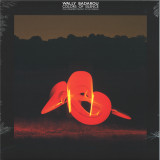
Axis of Time is the stunning debut album from Philadelphia mallet percussionist and poet Angelo Outlaw. Featuring Eraserhood Sound's signature synth & soul production, Axis of Time is a dazzling blend of jazz, rare groove, funk, soul and r&b. According to Outlaw, the album is meant to transport the listener to a dream-like state, where space and time slowly fade away and reality is merely a distant memory. Each song sets a unique scene, as the pace of the music swells and sways_from the euphoric highs of lead single "Free My Mind" and uninhibited groove of "Speed of Light" to the trance-like meditation of "Dreams" and mournful melodies of "Invisible Clock," Angelo and the Eraserhood Sound house band truly go to the cosmos and back. The record is an extraordinary debut from Outlaw, a young gay Black man who hopes to serve as an inspiration to others who might be perceived as different or other. His work transcends race, creed, religion, and politics, and has the power to speak to the universality of time, space, and human connection.
Axis of Time is the stunning debut album from Philadelphia mallet percussionist and poet Angelo Outlaw. Featuring Eraserhood Sound's signature synth & soul production, Axis of Time is a dazzling blend of jazz, rare groove, funk, soul and r&b. According to Outlaw, the album is meant to transport the listener to a dream-like state, where space and time slowly fade away and reality is merely a distant memory. Each song sets a unique scene, as the pace of the music swells and sways_from the euphoric highs of lead single "Free My Mind" and uninhibited groove of "Speed of Light" to the trance-like meditation of "Dreams" and mournful melodies of "Invisible Clock," Angelo and the Eraserhood Sound house band truly go to the cosmos and back. The record is an extraordinary debut from Outlaw, a young gay Black man who hopes to serve as an inspiration to others who might be perceived as different or other. His work transcends race, creed, religion, and politics, and has the power to speak to the universality of time, space, and human connection.
Idriss D officially launches the brand new label Nedjma with his own 2-vinyl, 8-track album as first release. The imprint will serve as a platform for up and coming talents from the Arabic world who are not represented in the current musical landscape. A very bold statement from Idriss himself, this record sees the Franco-Algerian dj and producer infuse his personal history into what he loves the most and share it with the rest of the world.
First track Tsakhbira works as the perfect opener for the album with a melodic ambient-like mood and Arabic chants, with second track Beld el fen following in the same vein with raditional instruments interspersed with synth stabs and eerie atmos.
Chazil’s upbeat rhythm spices up the vibe, a mix of ethereal
singalongs and bouncy percussions. Mohamed is the first foray into Electronic territory, a downtempo piece featuring French vocals and plenty of analog industrial clanks that lead into subsequent Hey Galbi, an exquisite melodic house number with acid synth melodies and piano keys.
Electro (Leila Moon Remix) delves into more experimental landscapes, with darker tones, blurred vocals and pulsating beats, while Elf Leila is quintessential Electroclash Arabic music, blending these two genres together, with a syncopated super catchy bassline. Closing track Harramt is a whirlwind of snare rolls, 303 arpeggios and nods to North African heritage sounds.
out of Stock
Last delivered 2 years ago available to reorder, subject to availability
Despite being one of the best kept secrets in house music, K4B Records is one of the most influential labels of the 90’s. Now the impressive discography is available digitally for the first time, with each record written and produced by Kingsley O. An Englishman of West-African heritage, Kingsley had moved to the states to pursue his musical aspirations of working with the finest soul vocalists, and his productions went on to inspire dancefloors both sides of the pond. Kingsley wrote some of the most loved songs of the 90’s underground, and by bringing emotive vocals to the dancefloor he defined the K4B sound. The sharp and rugged drums, rolling bass and melodic keys paired with the dynamite punchy vocals of amazing vocalists, such as Maydie Myles and Dawn Tallman, found success on the US Garage scene as well as being hugely influential as UKG began to explode, cementing K4B’s musical legacy in the house music hall of fame.
This special 2 x 12” vinyl package offers a consolidated dose of some of the standout records released by K4B from two of their most prominent artists, Maydie Myles and K London Posse. Whether this is a revisit to K4B’s catalogue or an introduction to new listeners, this first edition of a series of vinyl releases is the perfect way to dip your toes into the illustrious back-catalogue of this legendary label.
out of Stock
Last delivered 6 years ago available to reorder, subject to availability
“But into my miserable brain, always concerned with looking for noon at two o’clock" - Charles Baudelaire (1869)
The Foreign Department is the second album by Astrel K, the solo project helmed by Stockholm-based British ex-pat, Rhys Edwards. Those already familiar with Edwards’ work will likely know him for fronting the cultishly great Ulrika Spacek, and given he operates as the principal songwriter in both projects, much of the same hallmarks of his cathartic, elliptical songwriting are present in Astrel K. Nonetheless, The Foreign Department feels like a rubicon moment of sorts, and the album that Edwards has unconsciously been working towards his entire creative life.
As a title, The Foreign Department offers an instructive guide for the listener, framing a life-in-transition/artist-in-exile document that maps two impromptu moves in twelve months for its songwriter: the first from London in pursuit of a relationship, the second between homes in Stockholm as that decade long relationship then suddenly dissolved. Indeed, diffusion, dissolution and reconstitution feel like appropriate touchstones for its recurring themes. Written amidst the flux of two states, at once isolated from home and then any established emotional anchor, the resulting eleven tracks came to represent a precognitive search for shifting identity and with it forming an unwittingly biographical record. It's commendable and somewhat telling that during this shake up, Edwards somehow landed upon his most realised and original work.
With a former life stripped away, there emerged an opportunity to reinvent a sense of self through art, now not just as a writer, but a composer also. Developing the confidence to arrange songs in ways he'd previously considered off-limits, while also taking cues from the opulent string and brass arrangements of records like Mercury Rev's Deserters' Songs and Death of A Ladies Man by Leonard Cohen, Edwards enlisted a range of performers to bring to life the mini-symphonies forming in his head. Perhaps it's inevitable that an album written while facing the consequences of being alone would eventually ossify around the process of bringing people together.
For all its troubled origins, The Foreign Department is a remarkably warm sounding collection. Edwards' lyrics are typically knotty and neurotic, dancing around the poetry of quarter-life anxiety, but the music itself is often joyous and even uplifting, the combination expressing that neat duality of melancholic euphoria. Edwards sings variously of crises, "torrid pieces of art", of "houses on fire" and not "having the guts for it", yet these troubling sentiments are framed by seemingly incongruous swelling strings, chirping horns or motorik percussion, creating that sense of pushing forward or floating above, of wrapping your troubles in dreams, a salve for the moments when you get a bit too much for yourself.
Lead single, 'Darkness At Noon', likely captures this all best. Named for the French idiom "midi a quatorze heures", the maddening idea of attempting the impossible for the sake of some greater possibly pointless cause, it directly grapples with the opposing notions of wanting and not wanting, of being here and being there at the same time. The conflicting and impossible self. It’s something Edwards addresses in the song at perhaps his most open, opining, “I know I want to be seen, but I hate most of what comes out of me”. And yet here is, putting it all out in the open and on the line, the dialectics of his enlightenment up on show.
More Than Ten Years Since He First Emerged On Skull Disco, Appleblim Presents His Debut Album. The Label He Co-founded With Shackleton Was The First The World Heard Of His Productions, But Laurie Osborne's Innate Relationship With Electronic Music Culture Reaches Back Much Further Than Those Groundbreaking Early Days Of Dubstep. Early Days Spent Soaking Up Hardcore, Jungle, Techno And Plenty More Besides Were Fundamental Foundations From Which To Spring Into The Then-unknown Realms Of Sub-low Half-step Club Music. At That Time Fwd>> And Dmz Were The Church For This Ritualistic Sound, And Appleblim Was A Regular Fixture At Both.
As Dubstep Matured, Magnified, Mutated And Meandered, So Appleblim Moved Beyond Skull Disco To Explore Different Avenues Of Expression In The New Many- Layered Club Music Landscape. His Own Apple Pips Imprint Was A Natural Vessel On Which To Explore The Emergent Fusions Of Hardcore-derived Sounds And The Us-born House, Techno And Electro, While Labels Such As Aus Music Equally Provided A Home For His Work (often Alongside Komonazmuk). Meanwhile Long-standing Collaborations With Alec Storey (al Tourettes / Second Storey) Finally Manifested In The Hyper-modern Mind-twist Of Also, Captured As An Album On Legendary Rave Label R&s.
More Recently It's Been Possible To Hear Appleblim Delve Into Electro-acoustic And Ambient Production Alongside Bassweight Sounds On Tempa, One Of The Original Bastions Of Dubstep Culture. As The Existing Boundaries Between Genres, Cultures, Eras And Scenes Continue To Dissolve, On His Debut Album Appleblim Offers Up A Fresh Approach That Brings Some Of The Foundational Sound Ethics Of Rave Culture Into A Modern Framework.
Hardcore Breaks Are Still A Regular Sound Source In Contemporary Club Tracks, But On Life In A Laser It's Instantly Apparent That Appleblim Has Moved Beyond Choosing Popular Drum Samples To Truly Tap Into The Elusive Feeling Engendered By The Music Of The Era. It's A Tricky Feat To Manage, But In The Pie-eyed Chords Of ignite', The Subby 808 Tom Basslines On nci' Or The Mr. Fingers Synth Flex On manta Key' The Sonic Finish Sports The Same Understated Grit And Grime That Made Those Early Records So Timeless. There's Still Space For Modernism, Not Least On Snaking 2-step Killer i Think We'll Let The Gas Sort This One Out', But It's Offset By A Layer Of Dust, Not To Mention An Inherent Moodiness That Can't Be Faked.
This Fine Balance Of Rave Romanticism And Future-minded Approaches Binds Together In A Cohesive Conceptual Statement. First And Foremost It's Appleblim's Personal Reflection On The Music That Has Moved Him On Countless Dancefloors Since His First Flirtations With Soundsystem Culture. At The Same Time The Canny Influx Of Modern Ideas Into The Soundworld Of The 90s Genuinely Results In A New Proposition, Making For A Perfect Fit On The Modern-day 'ardcore Fetishists Label Of Choice, Sneaker Social Club. Many May Claim To Draw On Old-skool Influences In Their Modern Trax, But Take One Listen To flows From Within' And You'll Feel The Same Time-slipping Surge Of Future-shock As The Ravers At Lost, Dreamscape, The Dungeons, Clink Street, Blue Note And All Those Other Iconic Spots.
Felix Machtelinckx is a singer, composer, producer and lyricist from Belgium. Featuring an array of film scores, dance soundtracks, pop, folk and electronic music, Felix's music resonates with a familiar, almost nostalgic patina, applied with a distinctly crooked touch. Through artistic collaboration, coaching and production, Felix has cut a dash in the pop and indie cult scenes of Belgium, especially with his band Tin Fingers, who are feted as one of the most promising indie acts of the moment. Night Scenes, Felix’s solo debut is, in contrast to his other work, more humble and less traditional, roughly hewn from a series of ambient soundscapes, earthy textures and playful structures. Felix’s voice, normally the flagship of his music, becomes more of a distant memory, an indistinct emotion feathered throughout the music. Many lyrics are improvised, sometimes unintelligible, conjuring haunted, uncertain undertones. Similarly, the album is innately peripatetic to the core, being created, written and recorded in Lithuania, Belgium, France, mastered in the US, and finally released in the UK. In the first instance, some of the tracks were created for the contemporary dance piece Doggy Rugburn by Brandon Lagaert of Kaiho and Peeping Tom; others were created enigmatically for a film that never surfaced; while the remainder are the product of more personal work and research. As Felix began to collect and review these disparate parts, the concept of a unified album began to evolve. With 'night' featuring as a suitably dark leitmotif, or backdrop to a series of emotionally fraught 'scenes', each track depicts a form of trauma, locked within the confines of the mind. Felix observes: "Imagine yourself in a dusty old room unable to sleep. Emotions, fears and other demons haunt your mind. This in-between state makes your mind reach for other worlds. This is Night Scenes." For the most part, Night Scenes was created using a variety of old, and rare, analogue equipment. With almost no digital editing, the record was primarily mixed through a vintage cassette desk, giving it a nostalgic character with a noisy undertone. Felix fully embraced the synergy of his emotional themes and retrograde gear, enthusing: "A lot of textures were created on an old Soviet synthesizer that causes a blackout when you hit the lowest note on the keyboard. The dysfunctionality of the synths was often used to create rhythm and texture." This unnerving ability Night Scenes has to comfort and confound the listener is summed up by Jordan Hudson, House Of Media producer, and music podcaster, when he concludes: "Some songs on the album have this sort of fleeting comfort and tonality, which dissolves into a subtle rhythmic/structural or modulated disarray the moment I settle into them - this really fits with my experience of the night .. This record is a winner, and will be something I'll listen to a lot from here on
London soul star Jordan Mackampa returns with a new album titled Welcome Home, Kid! out 16 February 2024 via AWAL. This new music sees Jordan come back to his love of R&B, soul, funk and gospel with references to Dru Hill and Blackstreet, producing a new sound that nods to his earlier soundcloud works and the nostalgia of his childhood. It's brazen and bold and presents an incredibly assured artist that is no longer afraid to show off their Blackness, queerness, or sexual expression in all their forms. Getting to this place has taken Jordan decades of growth, patience & gruelling lessons to reach this state and now he can stand in his Blackness proudly. This album tells the story of how he got to this place of self-worth and the stories of the varying complex but beautiful perspectives about the Black experience. He is open and honest about sex, intimacy, imposter syndrome and how he navigates healthy love, toxic heartbreak, friendships and forgiveness. The core theme of this record is introspection with Jordan explaining, “This was a big theme for me in writing a lot of these songs because no one else has lived life in my shoes, I really had to take other peoples’ opinions & stories out of the writing and put myself at the forefront of everything. Which in turn, made me put the guitar down more and stand centre stage naked in a way. This new album for me feels even more personal now - I use more self language of “I” over “we” because all of these stories are about me and my life in even more depth than the first record touched upon, whilst covering more bases either through my own first person story telling of something current I’m dealing with or a past situation I’m using music to heal through. The debut was me figuring out shit, this album is me putting the last puzzle piece on the board.”
It was winter. Six Parts Seven had returned to Ohio after touring out to Washington State, to record Casually Smashed to Pieces. There was down time between the recording and the actual release of that album in January 2007, and we were rehearsing, playing local shows, and collaborating, with most of us involved in other projects to keep the momentum going (Mike w/ Talons, Al w/ Beaten Awake), but the one we all came together over was recording an album with Joey Beltram, the songwriter behind Goodmorning Valentine, a local band we shared players with, a band we deeply admired. The music on Kissing Distance came together over two weekend days. There were a lot of people around; 6P7 and GMV players coming and going from the Saint Ledger House. There were handles of whiskey, there was weed, stacks of Marlboro Reds for the ones still dragging butts. We all went 'dancing' at Thursday's, in Akron, Ohio, on Saturday night. Not sure how we were productive the following day. Chalk that one up to relative youth. Over those two days, songs were cut without any prior rehearsal time. None of us remember how the idea came up. In hindsight, it seems inevitable. The first song on the album, "Mediation in D," had been written a couple of years before, and was the decided spark that set the fire blazing: for both bands, this song was the starting point, an invitation to take things further, to expand, combining players from both bands, our 'toolbox' had increased in size from a single hammer to a toolbox. Everything came easily at this point. "Drunk from the Bottle," is the first of the one-take/one mic songs: an SM58 used for both vocal and guitar, making it impossible to over-think anything: You got the version, or you did not, that simple. "Instrumental #2," is the last full/core band recording by Six Parts Seven. The first piece in our catalog written/arranged by Tim Gerak. This song would have been developed on our follow-up to Casually Smashed to Pieces. Alas, an album never came to be. The ache in this is real. It's there in the bass guitar, tuned high and open, played with a slide, and utilizing one of Jamie Stillman's pre- Earthquaker Devices fuzz pedals. "Lonely Daughter," is another one-take/one-mic song, notable for the lead-guitar, played by James Matthew Haas, who overdubbed his part, months later, standing alone on the deck at Joey's folks place, playing to the moonlight, making magic...
For their first album, Seth Troxler and Phil Moffa joined forces and became multidimensional creative dissidents Lost Souls Of Saturn. This time, even further into the vortex, they’ve metamorphosed into sci-fi AR comic characters John and Frank who’ve explored the galaxy and returned with this perception-melting new LP.
Although ‘Reality’ still possesses the wigged-out conceptual brilliance which garnered installations and performances at Saatchi Gallery (London), Fondation Beyeler (Basel), The Metropolitan Museum of Art (NYC), and Museum of Contemporary Art Detroit, plus live sets at Field Day, Glastonbury and Kappa Futur, as its title might suggest, there’s vividness amidst the mind-bending. Where its predecessor was a murky exploration of weird and dark cerebral passageways, this album – though still fathoms deep – has a dazzling clarity of sound, as if listeners are beginning to crack the arcane codes, and reach for enlightenment.
A prime example of these newfound beams of light guiding participants through the maze is their recent single; the chugging cosmic techno synth pop of ‘Mirage’, featuring the voice of Adam Ohr. Also guesting on the album is Lvv Gvn, whose honeyed Billie-Holiday-meets-Rickie-Lee-Jones tones adorn the tranquil pixelated broken beat of ‘Click’, Greg Paulus’s trumpet sessions on ‘Zorg Arrival’ and ‘Scram City’, and Protomartyr’s vocalist Joe Casey and guitarist Greg Ahee, who grace the liminal drifting celestial plane of ‘Lilac Chasers’. Sitarist Rishab Sharma, the last disciple of guru Ravi Shankar, also shreds on ‘Scram City’.
Elsewhere, across the LP’s immensely inventive instrumental passages techno, dub, house, jazz, psych and ambient are vapourised into an expansive yet pleasingly concise series of morphing dream states. Fans of Air Liquide, Ravi Shankar, Ray Manzarek, Carl Craig, Pole, The Orb and ‘Son Of A Lung’ era FSOL should find much to like.
out of Stock
Last delivered 2 years ago available to reorder, subject to availability
A lot of water has flown under the bridge since Błoto released their last album. Sadly, in Polish rivers it wasn't just water flowing, but also all sorts of sewage of unknown origin, which destroyed the condition of these once vibrant bodies of water; it eventually led to a real catastrophe on the Odra River, which, after all, surrounds the entire city of Wroclaw, the band's birthplace. It is time for a decisive response. Błoto is making a comeback with a seven-inch vinyl and their first singles in over two years - "Szlam" and "Ścieki".
Climate change had already led to a permanent hydrological drought, which was echoed on Erozje LP. Today, as many as 91.5 percent of Poland's rivers are in very poor condition. It is not only drought that threatens rivers, but also excessive salinity. This is precisely the kind of disaster that happened on the Odra river. It resulted in 360 tonnes of dead fish and death of the river along a stretch of almost 500 km, and the reason for that was short-sighted human activity that could have been avoided. Still, the decision was made to turn the river into a cesspool.
Two years of hiatus is far too long. During this time, reality has not let up for a moment, providing new inspiration. Szlam (eng. sludge) is the sediment that forms on the river bed and sometimes the river banks. The Polish word derives from German (Schlamm), which means swamp - or mud. Szlam is therefore a sticky and unsettling remorse that rests somewhere at the bottom of the human consciousness.
In "Szlam" and "Ścieki" tracks, you will not only hear references to Erozje, but also to Kwasy i Zasady LP. For it is also a metaphor for everything that pours out of the media, smartphones, and then flows into one's head. The constant bickering, conflicts and dirty play in political campaigns, scandals to which we are already numb. On top of this, hate speech, low-quality stupefying influencer content, resulting in an ever-decreasing cultural capital of a society that breeds conformists, individualistically-minded egoists and mindless consumers. This state of affairs spawns a society of egoists, incapable of critical reflection, questioning and rebelling against reality.
The sound and genres explored by the band are, as usual, difficult to pigeonhole. These two musical miniatures contain a lot of anxious and neurotic sounds, as well as synth glitches evoking emotions such as fear, anger, sadness and guilt. The quartet consisting of Wuja HZG, OlafSaxx, Cancer G and Latarnik managed to distill this mental state by encapsulating it in shades of breakbeat ("Szlam"), and broadly defined house music ("Ścieki").
The 7" vinyl will be released on January 08th 2024 by Astigmatic Records.
out of Stock
Last delivered 2 years ago available to reorder, subject to availability
Very limited vinyl pressing, 500 copies, housed in a full colour sleeve & printed inner sleeve & download. CD in a 4 panel digipack with a 4 page lyric booklet. New Heavy Sounds are always on the lookout for new bands that are looking to push the boundaries of what is considered as inhabiting the ‘heavy’ or ‘metal’ spectrum’. Stuff that pricks up the ears, a bold new voice within a maelstrom of genres and sub-genres. We believe we have found such a band. New York-based GUHTS (pronounced ‘guts’) declare themselves to be an ‘avant-garde post-metal project, delivering larger than life sounds through, deeply emotional music’. We are thrilled to be able to deliver that statement in the form of their debut album ‘Regeneration’. By their own admission, GUHTS' musical style is influenced not only by iconic metal bands like Gojira, Cult of Luna, YOB and Deftones, but more unconventional acts like Bjork, Subrosa, Isis, Julie Christmas, and even PJ Harvey. It’s undoubtedly heavy, with a strong feminist streak, it’s cathartic and weighty, a formidable debut for such a new band. Founded in 2020 as a passion project by Scott Prater (Witchkiss), and Amber Burns (Witchkiss) and then Dan Shaneyfelt (Black Mountain Hunger), GUHTS became its members’ main focus following the release of their first EP 'Blood Feather' which itself received rave reviews from the likes of Decibel Magazine, Invisible Oranges, The Obelisk, Cvlt Nation, and more. Brian Clemens Sleaping Dreaming) & Daniel Martinez (Nefariant) joined GUHTS in 2022 and the band swiftly started booking tours and making plans to record 'Regeneration'. Since then GUHTS have been steadily making a name for themselves with their powerful live performances., sharing stages with the likes of Yob, Cave in, Marissa Nadler, plus appearances at the Maryland Doom Fest, Crucial Fest and Ohio Doomed and Stoned Fest. ‘Regeneration’ is set to cement their status as one of the coolest and most interesting bands on the scene. Of the album, vocalist Amber says. "Regeneration" symbolizes the power of self-renewal, often overlooked. Embracing it means shedding old layers and welcoming new beginnings. Without this, life stagnates and is “sustaining”. Through regeneration, change becomes empowering, allowing new facets to emerge. It's a courageous, transformative process, inspiring others to overcome fear and embrace change. The album embodies the human spirit's resilience and capacity for growth. Musically ‘Regeneration’ is a powerful and intense series of songs, topped off by some seriously powerhouse and expressive vocal performances. It’s slow-moving chords, moving like sheets through sludge. High guitar lines above, ranging from piercing and shimmering to nasty. Drums pound but not without groove. There are strings, pianos and synths widening the palette. Atmospheric sludge, Metalgaze, maybe, but there’s also that link to the New York Noise lineage from The Velvets and Sonic Youth, becoming a type of post-hardcore in the process, while gaining a connection to metal partly due to the sheer heaviness. A raft of creative experimentation that pushes beyond the realm of post-metal. And then of course, the very first thing that hits you is Amber Gardner's unbelievable, hypnotising vocals - as scary as a banshee while also intimate and persuasive. Amber means it for sure and almost dominates the proceedings. Her lyrics are eclectic, thoughtful. Immersed in women's narratives frombooks like "Women Who Run With the Wolves" or works like "On Our Best Behavior" by Elise Loehnen. Amber advocates stepping beyond comfort zones, believing it's transformative for individuals and vital for Earth's future. Hokey occult rock it is not. In short ‘Regeneration’ is a bold and startling debut, that will reward and enthral listeners the deeper they delve into its many layers.
ESP Institute artist Bartellow, one third of the project Tambien and otherwise known in the Contemporary Classical sphere as Beni Brachtel, returns to the label with his second full-length release, Noosphere. While currently heading the SVS label and residency series out of Munich, Beni’s resume expands well beyond electronic music to include immersive sound installations such as The Adven- ture Of The Empty House (solo live performance across seven floors of Walter Henn’s Deckelbau building), a slew of compositions for the Bavarian State Opera (for which he doubled as conductor), and a prolific career of over twenty-five theater scores for institutions such as the Münchner Kammerspiele, Schauspiel Basel, Maxim Gorki Theater Berlin, Berliner Ensemble, Schauspiel Köln, Schaus- piel Graz and with directors Ersan Mondtag, Alexander Eisenach, Jessica Glause and Tobias Staab among others.
Noosphere is a compendium excerpting from theatrical scores WUT (Elfriede Jelinek, at Schauspielhaus Köln, directed by Ersan Mondtag, 2020), Ödipus and Antigone (Maxim Gorki Theatre Berlin, directed by Ersan Mondtag, 2017), Der Zauberberg (Thomas Mann, Schauspiel Graz, directed by Alexander Eisenach, 2017), Hass Tryptichon (Sybille Berg, Wiener Festwochen / Maxim Gorki Theatre, directed by Ersan Mondtag, 2019), Wonderland Ave. (Sibylle Berg, Schauspielhaus Köln, directed by Ersan Mondtag, 2018), Die Verdammten (after Visconti ́s film, Schauspielhaus Köln, directed by Ersan Mondtag, 2019) and Roi Ubu (Alfred Jarry, Theater Neumarkt, Zurich, directed by Alexander Eisenach, 2018).
The work traverses homages, infusing everything from Baroque to Impressionism, and while these types of references are certainly built into the canon of Theatre as a discipline, here we gather histor- ic layers in an even wider net. Under the self-referential thumb of Contemporary Classical music, this sort of "hindsight" approach has been largely avoided, however, in today’s all-access arena, the constant stream of historic causal-chained events has opened a delta where anything is possible. This defines Bartellow’s stance among his colleagues as well as his cultural position as a composer.
Beni considers beauty a fleeting objective in the arts, that expression is often expected to follow notions of Destructivism or the unfulfilled. Art will pore over wounds, collective angst, mourn- ing a loss of natural habitat or a fear of technological invasion, yet there is a bitter irreverence for the friction or salvation in beauty itself. Acknowledging this subjectivity — what one audience considers superficial pleasure may be deeply profound to another — he leans into musical instinct as if composing via divine conduit.
Noosphere conjures a array of suspense, ecstasy, melancholy, and dread, but in isolating the work from its theatrical component, Brachtel directs our focus toward formal qualities, clearing unim- peded space to conceive fresh narratives and examine dynamism and interconnectivity. In sympathy with often difficult theatre pieces, the passages can be dark and transgressive, but more importantly they remain relative to Brachtel’s circumstances at their time of creation. The title Noosphere speaks to the evolution of human thought and knowledge, opening a door to subjective points-of-view. For example, Nexus II On The Beach refers to both Roberto Musci’s Water Messages On Desert Sand as well as the film Bladerunner, invoking the image of an android enjoying the sunset, but whether or not this abstraction may be considered beautiful depends the listener’s cumulative life experience and perspective.
This is hybrid chamber music, augmented by electro-acoustic layers, juxtaposing various periods and successively processing their residual themes into a trans-generational rendering of “now.”
out of Stock
Last delivered 9 months ago available to reorder, subject to availability
The most political music is often the most explicit, battering its audience with its beliefs. But that isn't always the case; sometimes it embeds its ideas in subtler, more successful ways. Take The Hotelier (previously The Hotel Year), whose second full-length Home, Like Noplace Is There is comprised of what can only be described as anthemic, cathartic rock songs, sent occasionally to delicate and destructive extremes. Singer Christian Holden pushes his clean voice until it crumbles, on "The Scope of All of This Rebuilding" against a strutting pace, and on the furious "Life in Drag", but most powerfully during the chorus of "Your Deep Rest" where his words are heart-wrenching and haunting. As drummer Sam Frederick stamps out an enormous beat and chords - strummed by Cody Millet, Scott Ayotte, and Chris Hoffman - clamor around him, Holden sings, "I called in sick from your funeral / tradition of closure made it feel impossible... / I should have never kept my word to you / Not a cry not a sound / Might've learned how to swim but never taught how to drown /You said remember me for me, I need to set my spirit free." By making political statements through personal explorations, The Hotelier has not only make a uniquely political record, but also a subtler, more successful one.
For PACKS, making a record isn’t a means to an end; the making of the record is a communal experience, bottled up for the public to hear. On third album Melt the Honey PACKS explores a state of contentment, even bliss, long elided. The self-produced record honors the unpretentious disaffection of the grunge movement and the inventive arrangements of Guided By Voices, whose prolific output has inspired PACKS since their inception.
To make Melt the Honey, PACKS traveled to Mexico City, where Madeline Link had spent significant time as an artist-in-residence at Casa Lü. Over the course of 11 days, PACKS practiced new songs in a rented studio space. From there, they took a bus to Xalapa where they worked as artists-in-residence at a house known as Casa pulpo, an architectural feat removed from the bustle of city life. “The house has no straight lines, it puts you in a creative mindset,” Link says. Melt the Honey, is an outward-facing testament to the wonderfully strange details of daily life, vividly rendered by a songwriter who knows they’re worthy of reverence. Out January 19th on Fire Talk.
For PACKS, making a record isn’t a means to an end; the making of the record is a communal experience, bottled up for the public to hear. On third album Melt the Honey PACKS explores a state of contentment, even bliss, long elided. The self-produced record honors the unpretentious disaffection of the grunge movement and the inventive arrangements of Guided By Voices, whose prolific output has inspired PACKS since their inception.
To make Melt the Honey, PACKS traveled to Mexico City, where Madeline Link had spent significant time as an artist-in-residence at Casa Lü. Over the course of 11 days, PACKS practiced new songs in a rented studio space. From there, they took a bus to Xalapa where they worked as artists-in-residence at a house known as Casa pulpo, an architectural feat removed from the bustle of city life. “The house has no straight lines, it puts you in a creative mindset,” Link says. Melt the Honey, is an outward-facing testament to the wonderfully strange details of daily life, vividly rendered by a songwriter who knows they’re worthy of reverence. Out January 19th on Fire Talk.
Story Of Collapsed Dimention unfold in 4 tracks multi-genres musical accompaniment and 12 frame comics, as artwork. The EP symbolizes a journey of personal transformation, the courage to confront the unknown and fight against circumstances and suffering. In order to become something new, we need to give up what we are now.
The tracks span across various styles, including funky house with a live-band feel, featuring infectious rhythms and vibrant instrumentation. There is a breakbeat track infused with a groovy bassline seized from NBA Live 95 on Sega Genesis, accompanied by turntablism hard drops and scratchy sounds that add an edgy and gritty vibe.
B-side explores psychedelic frequency modulations of polyharmonic intertwined with jungle-oriented breaks, creating a mesmerizing fusion of intricate melodies and rhythmic complexity. Finally, the EP concludes with an electro banger that has been accidentally reinvented with its captivating energy and a profound message.
Overall, the EP showcases a diverse and dynamic musical journey through these genres, offering a rich and immersive listening experience or valuable universal DJ-tool.
The artwork features hand-drawn comics by the talented artist Larisa Shalyapina, script and production by CDA.
The unique texture, blurriness, and overall quality of the illustration are meticulously preserved through a process of manual assembly and duplication, resulting in a visually captivating and tactile experience.
Used gear: Roland MC-808, Roland MC-505, Moog Subphatty, Waldorf Wave XT, MAM33, Volca FM, Volca Bass, Tascam Midistudio 644, Jomox t-resonator II, Boss Digital Delay, Teletron SAQ-206B Amp, KME Sound GBA 80 Bassbox, Culture vulture distortion, Distress compressors. DAW Ableton.
conceptualization:
Tracks are written during frequent relocations, capturing experienced moments and raw emotions. As the physical changes in our living environment are comparable to the collisions and evolving paths within the domain of knowledge reflected in the trials of spiritual awakening.
In Berlin, a city of expats, it has a special relevance to people who came here to find themselves. It also resonates with those who have been brought here by circumstances.
Record id released with all Ukrainian brothers and sisters in heart.
While we find comfort in our safe spaces, it is inevitable that some stress will eventually provoke us to take action. We may long for that period of comfort and feel a sense of anger or sadness for what once was. Once the truth is revealed, much like the unveiling of light, there is no turning back — a path to enlightenment shall be accepted.
Within the EP, each track serves as a chapter for this path.
A1
First track encapsulates escapism by chasing a feel-good sense in the run from responsibilities into fantasy-land. In the moment of careless life in careless time, where the future is sacrificed in the name of immediate pleasure.
A2
Robotboy incorporates a superficial state of mind with a reactive personality rooted in a narcissistic ego, dishonestly denying the righteous path. Subconscious struggle from hedonistic lifestyle with no relief.
B1
A deeply intimate and personal, embodied introspective sentiment kept hidden from the world, revealing when we’re alone and usually stifled with distraction and entertainment. Nostalgic feeling of loss follows us during the abandonment of a beloved place. Overwhelming weight of regret in presents.
B2
Taking action of the first step makes us unstoppable and disclosure of knowledge leads to destruction of the illusory world. Finding out the truth, same as seeing the light, excludes the retreat into darkness. As comprehension is the way to enlightenment.
out of Stock
Last delivered 2 years ago available to reorder, subject to availability
EP compilation of essential UK house cuts recorded between 1987 - 1990. TIP!
Before British house and techno found its’ distinctive groove at the turn of the 1990s, one act led the way: Bang The Party, a trio who emerged from London’s vibrant underground party scene in the mid 1980s and proved, beyond any doubt, that UK producers could make music every bit as magical as the pioneering productions put forward by their counterparts in Chicago, Detroit and New York.
By the time long-running DJs and party promoters Kid Batchelor and Leslie Lawrence joined forces with trained engineer Keith Franklin at legendary North-West London reggae studio Addis Ababa in 1987, they’d spent years as DIY dance music activists in Britain’s capital city. They channelled these experiences and their love of imported house and techno sounds into a new project, Bang The Party, in the process becoming the first British act to appear on Transmat, a reflection of the quality and authenticity of their music.
The latest Rush Hour Reissue Series release offers a snapshot of some of the numerous gems nestled in the Bang The Party catalogue, delivering a much-deserved celebration of one of Britain’s most significant early acid house collectives. It features four fully remastered cuts recorded and released between 1987 and 1990 – on-point and far-sighted club workouts that sound as fresh and timeless now as they did when Britain was sweltering under its infamous ‘second summer of love’.
Fittingly, the EP begins with ‘I Feel Good All Over’, the group’s ground-breaking debut single. Dedicated to their home city and one of the earliest UK interpretations of house music, the track exists in the grey area between Chicago house and New York ‘garage house’ – all jaunty organ stabs, jacking Windy City beats, restless bass and soulful vocalizations. ‘Jacques Theme’, which follows, originally nestled on the B-side of that single release. An early, acid-flecked expression of hip-house with a British twist, breakdance-friendly bongo patterns and a dose of Larry Heard-inspired deep house dreaminess, the track remains an under-appreciated classic whose rap verses reflect the popularity of hip-hop in London at the time.
1988’s ‘Release Your Body’, Bang The Party’s most celebrated early release, was reissued in the United States by Transmat, reflecting the strong working relationship between Derrick May and Kool Kat Records’ Neil Rushton. A hypnotising affair propelled forwards by sweat-soaked drum machine beats, jacking fills and an addictive bassline, the track offers another near perfect distillation of the band’s Black American musical influences while delivering something genuinely new and fresh.
Rounding off the EP is a choice cut from Bang The Party’s sought after 1990 album Back To Prison. Doused in the star-lit synth sounds of the Motor City with jaunty organ stabs inspired by the kind of New Jersey jams championed at East Orange institution Club Zanzibar, ‘Let It Rip’ is a superb slice of deep house soul featuring a lead vocal every bit as emotive as anything laid down by Robert Owens. Like the rest of Bang The Party’s output, it has stood the time better than anything laid down by their London contemporaries.
out of Stock
Last delivered 83 days ago available to reorder, subject to availability
Saint Abdullah & Eomac is a long distance, ongoing collaboration between New York based Iranian-Canadian brothers Mohammad and Mehdi Mehrabani (Saint Abdullah) and Ian McDonnell a.k.a. Eomac, based in Wicklow in Ireland. They tested the waters with their first album on Nicolas Jaar's Other People label last year, but 'Chasing Stateless' is their fullest expression so far.
The creative mindset behind the album starts with bravery and eschews escapism. Says Saint Abdullah's Mohammad, "As a collective, we exist to test the revolutionary possibilities within sound and sonic storytelling. As a means to finding a vision of the future and for building cultural dialogue today. Our belief is that the expressiveness of this vision should be pushed to its utmost limits to reveal anew. I always felt that the intensity of the middle eastern soul needs to be revealed more potently. Ian and the Irish have it too. I suspect most historically oppressed cultures do."
The music on 'Chasing Stateless' avoids easy middle eastern tropes — "I think what we're proposing here is that you don't need to water down our culture, you don't need to take only the bits that fit your idea of who we are, what we are. You ought to take it in its entirety."
Musically, the album approaches established genres and re-orientates them towards middle eastern rhythm and melody with an iron soul. Songs are rough and intense. Rusty polyrhythms, daf drums wrapped in a thick coating of distortion or punchy kicks with micro-edited samples of middle eastern life spiralling across them. Mournful melodies are squeezed out until the music teeters on the edge of rhythmic collapse. 'Chasing Stateless' is rough and energetic but also tender and reflective too. It's a human sound, utilising technology but not about technology. Sample heavy with expressions of anger, sadness and hope present and deeply felt.
The album's title speaks to a loss of collective societal imagination; of 'chasing status'. As Moh says "This generation, man, we're really good at putting up walls, despite all our openness. But where does this all lead to? What exactly are we chasing? This is where I especially love the name 'Chasing Stateless,' because if all this continues, we indeed will end up stateless, society-less, community-less, neighbor-less. Just a bunch of same-sies, living in an imaginary bubble, where we all look / think / say / CHASE the same things."
out of Stock
Last delivered 12 months ago available to reorder, subject to availability
#40 ON ROLLING STONE'S 500 GREATEST ALBUMS OF ALL TIME: ANTICIPATES LATE 1960S TURBULENCE VIA PROPHETIC SONGS AND DARK THEMES
1/4" / 15 IPS analogue master to DSD 256 to analogue console to lathe
Any discussion about the finest psychedelic rock record ever recorded is incomplete if it doesn't grant consideration to Love's Forever Changes. Ranked by Rolling Stone as the 40th greatest album ever made, and named by Mojo the second-greatest psychedelic set in history, the effort is an internationally recognized seminal work of art. Transcending language and convention, its magnitude and magnificence need to be heard again and again. For here is an effort whose mind-boggling acoustic complexities and kaleidoscopic nuances are tailored for high-fidelity playback.
Nearly unlimited headroom, vast instrumental separation, transparent clarity, artifact-free atmospherics, and faithful balances appear out of jet-black backgrounds. Turn it up as loud as you want; the sole limitation will be your system's potential.
Commercially ignored upon release in November 1967, Forever Changes confronts the alienation, paranoia, violence, and strife that would soon plague the countercultural movement and send the Summer of Love into a tailspin. Apart from its lyrical themes and prescient malaise, the record's enduring nature equally owes to intertwined arrangements sewn together with Latin guitar-picked lines, finessed folk harmonies, mariachi-inspired horn charts, and subdued strings.
The seemingly opposing combination – ominous, dark reflections situated amidst lush, light melodic beds – affords Forever Changes a distinguished tension of claustrophobia and openness, dourness and ecstasy, ugliness and elegance enjoyed by no other record in the rock canon. Much of the contrast owes to leader Arthur Lee's mental state and pertinent observations. Lee, whose suppressed romanticism often surfaces even amidst the blackest shadows and most cynical moments, believed he would soon die, and hence channeled everything from lasting hopes to acid-addled decay to the chilling testimony of a Vietnam veteran in his narratives.
Alternatively sad and beautiful, the album-opening and flamenco-inspired "Alone Again Or" establishes the mood for what follows. Vocals overlap and soar; tempos rise and fall; surrealism trades places with reality.Forever Changes thrives both because of and in spite of a surfeit of labyrinthine chords and difficult notes that never repeat. Its ambitious construction almost forced the already fractured band to cede responsibilities to session musicians, which appear on two tracks. The quintet's resolve to not only complete the album, but to do so with such poignancy and curiosity, further enhances Forever Changes' standing.
No wonder that, in the twilight of his troubled career, Lee performed the record in its entirely during concerts met with overwhelming critical acclaim. It was, and will always be, a personal manifesto of timeless relevance and appeal.
Foreigner's debut spawned massive FM hits "Feels Like the First Time," and "Cold as Ice"
180-gram 45 RPM double LP
Mastered directly from the original master tape by Ryan K. Smith at Sterling Sound
Pressed at Quality Record Pressings and RTI
Tip-on old style gatefold double pocket jackets with film lamination by Stoughton Printing
Arena rock heroes Foreigner crushed with their 1977 self-titled album debut, spawning some of the biggest FM hits of that year, including the anthemic "Feels Like the First Time" and "Cold as Ice," both of which were anchored — like most of Foreigner's songs — by the muscular but traditional riffing of guitarist Mick Jones, the soaring vocals of Lou Gramm, and the state-of-the-art rock production values of the day, which AllMusic reviewer Andy Hinds says allowed the band to sound hard but polished.
The architect behind Foreigner's extraordinary catalog, Mick Jones has crafted some of rock music's most enduring songs. Grammy and Golden Globe-nominated songwriter, performer and producer and winner of the prestigious Ivor Novello songwriter award in 1998, Jones first began playing guitar in his early teens.
After starting his own rock band and opening for the Rolling Stones in pubs across South London, Mick's first big break came in 1964 when he moved to Paris and was hired to play with French singer Sylvie Vartan.
After a brief stint in England to reform the band Spooky Tooth, Jones moved to New York City and formed Foreigner with Ian McDonald and Dennis Elliott and Americans Lou Gram, Alan Greenwood and Ed Gagliardi.
Foreigner defined a generation of rock music to people across the globe. From its iconic debut album, the band moved on to record-breaking hits including "I Want To Know What Love Is," "Waiting for a Girl Like You," "Double Vision," "Hot Blooded," "Juke Box Hero" and many more.
Now on 180-gram 45 RPM double LP you'll hear Foreigner in all its phenomenal glory. Mastered from the original tape by Ryan K. Smith at Sterling Sound, this reissue rocks. Double LP cut at 45 RPM, pressed at Quality Record Pressings and RTI, and housed in a Stoughton Printing tip-on old style gatefold jacket. That's how you upgrade a classic.
A real soul gem from 1970 on the James Brown affiliated Deluxe label, the first and only album by this mysterious singer: Marie Queenie Lyons.
It is perhaps apropos that Queenie Marie Lyons’s best known song is titled ‘See And Don’t See.’ For all the acclaim that song has accrued, and all the times it has been compiled, reissued and, yes, bootlegged — for all the times it has been seen — Queenie herself has somehow remained unseen. How did a singer from Ashtabula, Ohio record one of the great female-led soul albums and then simply fall off the map, never to record or perform again? Queenie was a natural performer and a gifted singer. At the age of fifteen, she was doing three shows a week at a local venue. In early 1962, Queenie moved to Queens and was soon playing gigs across the city — an early engagement was with Gene Krupa at the famous Metropole Café in Times Square — as well as touring with established acts like Fats Domino and Ray Charles. The following year, Queenie made her debut recording, for a subsidiary of RCA called Groove, credited to an entirely fictitious “Shelley Shoop and the Shakers.” It remained Queenie’s only presence on wax until early 1968, when a Nashville-based label called Sims gave her her first accurately attributed single, “A Minute Of His Goodtime / Good Soul Lovin’.” Although the 45 is now a highly collectible part of the Northern Soul and Lowrider Oldies pantheons, it made no impact at the time, as Sims was focused on more typical Nashville sounds. A few months later Queenie was back in New York City, performing R&B and pop covers with her band when a man passed her his business card at a performance. The card read James Brown Enterprises. James Brown “was my idol,” she says, and someone whose business acumen and stage presence she strove to emulate. Although Queenie ended up on tour with James Brown for only a month or so, when the group reached Cincinnati in mid-’68 she entered the King Records studio there to record what would become the
album you hold in your hands. The songs were a combination of covers, some of which she’d been doing in her live shows, like ‘Fever’ and ‘Try Me,’ and originals written by producer Henry Glover and pianist Don Pullen, who was the bandleader on the session. The album opener, ‘See And Don’t See,’ was also recorded by the veteran R&B singer Maxine Brown, but Queenie’s version blows hers away. “Soul Fever” is a supremely funky and soulful affair, with Queenie’s powerful and captivating voice magnetically attractive, with an urgency that is impossible to ignore. ‘Your Thing Ain’t No Good Without My Thing,’ ‘Your Key Don’t Fit It Anymore,’ and ‘I Don’t Want Nobody To Have It But You’ are as funky and soulful as the best of Tina Turner and Aretha — a statement not to be made lightly!
The album was critically acclaimed — the October 10, 1970, issue of Billboard listed it as their sole “four star” pick in the Soul category — but perhaps due to the tumult at Starday-King, whose stewardship had turned over several times in only a few years, it never seemed to be able to break through to a larger audience.
Van Halen did more than announce to the world the earthshaking arrival of a revolutionary guitarist. Performed by an enterprising California quartet that took its name from two of its principal members, the 1978 debut ripped headlines away from punk, injected fresh energy into a then-moribund rock 'n' roll scene, reimagined how heavy music and throwback pop could coexist, and invited everyone to experience the top-down pleasures of a beach-front Saturday night every day of the week no matter where they lived. Painstakingly restored by Mobile Fidelity Sound Lab, and the first of a multi-album series in an exciting partnership between the famous reissue label and Van Halen, Van Halen delivers feel-good thrills and hormonally charged desires like never before.
Limited to 12,000 numbered copies, pressed on dead-quiet MoFi SuperVinyl at RTI, and mastered from the original analogue master tapes, Mobile Fidelity's ultra-hi-fi UltraDisc One-Step 180g 45RPM 2LP collector's edition pays tribute to the record's merit and allows fans to experience Van Halen's original blend of raw power, Hollywood flair, and vaudeville fun for generations to come. Playing with reference-setting sonics that elevate a 10-times-platinum landmark whose importance cannot be quantitatively measured, this definitive version provides a clear, clean, transparent, balanced, and turn-the-volume-up-to-11 view of an album that birthed entirely new styles. Since MoFi's unique SuperVinyl compound allows you to crank the decibels to your wildest desires without risking noise-floor interference, prepare to not only hear but feel Van Halen in your chest, no fifth-row concert seat necessary.
The premium packaging and gorgeous presentation of the UD1S Van Halen pressing befit its extremely select status. Housed in a deluxe box, it features special foil-stamped jackets and faithful-to-the-original graphics that illuminate the splendor of the recording. No expense has been spared. Aurally and visually, this UD1S reissue exists as a curatorial artefact meant to be preserved, touched, and examined. It is made for discerning listeners that prize sound quality and production, and who desire to fully immerse themselves in the art – and everything involved with the album, from the iconic cover art to the meticulous finishes and, yes, of course, Eddie Van Halen's pioneering fretwork and his brother Alex's double-bass percussion.
Indeed, could a piece of music that transformed how countless guitarists approached their instrument be more fittingly named than "Eruption"? Likely not, and in just 102 seconds, Eddie Van Halen rewrote, reimagined, and reconfigured a vocabulary last significantly updated a decade earlier by fellow six-string wizard Jimi Hendrix. Akin to the Washington State legend, Eddie Van Halen developed his own techniques and tones all the while making his seismic accomplishments seem effortless. Devoid of the pretence, ego, and showiness that infected many of his imitators, the Dutch native sticks to a straightforward approach that underlines the authority, prowess, and visionary scope of his playing and then-unheard-of finger-tapping skills. Throughout Van Halen, he establishes himself as an instant idol – a savant whose otherworldly combination of breadth, poise, feel, speed, force, and melody seems beamed in from another galaxy.
As does nearly every song on the record, whose cohesiveness and dynamic put into perspective the advanced chemistry and one-for-all spirit the youthful band had out of the gates. Having paid its dues for years in bars and clubs – going as far as recording a 24-track demo for Kiss bassist Gene Simmons at Village Recorders only to be spurned by management companies that felt its music wouldn't go anywhere – Van Halen finally got a deserved break when Warner Bros. executives signed the group in 1977. The subsequent recording sessions further testify on behalf of the band's synergy and alignment. Completed in just a few weeks with producer Ted Templeman, Van Halen was primarily cut live in the studio with minimal overdubs and edits. The explosiveness, energy, and electricity remain definitive, and as heard on this UD1S set, put the group on a private stage – humming amplifiers, Frankenstrat guitar, bright spotlights, sweaty headbands, and then some.
Van Halen yielded just one hit in the form of a Top 40 single (a breathless cover of the Kinks' "You Really Got Me") but practically every song on the revered LP has become a staple. Named the 202nd Greatest Album of All Time by Rolling Stone and considered by countless experts as one of the best debuts in history, the record displays what can happen with four distinct talents gel and strive for the same purposes. In Van Halen's case, the latter almost always involved partying, freedom, sex, and, in the immortal words of singer David Lee Roth, living "life like there's no tomorrow." The celebration manifests from the opening notes of the strutting "Runnin' with the Devil" – announced with the blare of droning car horns, Michael Anthony's robust bass line, and Alex Van Halen's thumping drumming – and continues through the conclusion of the white-hot "On Fire," goosed by Eddie Van Halen's race-track-ready lines, Roth's flamboyant deliveries, and the rhythm section's cat-like pounce.
Picking out individual highlights on Van Halen is akin to trying to count all the stars in a clear nighttime desert sky: There are far too many to identify, once you see one you notice another dozen you didn't spot before, and the cluster is best enjoyed as a whole. What's evident over repeat listens is the sheer diversity, a fact that's often overlooked: The high harmonies and background funk of "Jamie's Cryin'"; the insistent cane-and-a-tophat shuffle and doo-wop shoo-bop vocal break on "I'm the One"; the throwback acoustic blues that spreads into fast-paced, single-entendre wildfire on the Roth-led standout interpretation of John Brim's "Ice Cream Man." Like the man says, on Van Halen, all the flavours are guaranteed to satisfy.
More About Mobile Fidelity UltraDisc One-Step and Why It Is Superior
Instead of utilizing the industry-standard three-step lacquer process, Mobile Fidelity Sound Lab's new UltraDisc One-Step (UD1S) uses only one step, bypassing two processes of generational loss. While three-step processing is designed for optimum yield and efficiency, UD1S is created for the ultimate in sound quality. Just as Mobile Fidelity pioneered the UHQR (Ultra High-Quality Record) with JVC in the 1980s, UD1S again represents another state-of-the-art advance in the record-manufacturing process. MFSL engineers begin with the original master recordings, painstakingly transfer them to DSD 256, and meticulously cut a set of lacquers. These lacquers are used to create a very fragile, pristine UD1S stamper called a "convert." Delicate "converts" are then formed into the actual record stampers, producing a final product that literally and figuratively brings you closer to the music. By skipping the additional steps of pulling another positive and an additional negative, as done in the three-step process used in standard pressings, UD1S produces a final LP with the lowest noise floor possible today. The removal of the additional two steps of generational loss in the plating process reveals tremendous amounts of extra musical detail and dynamics, which are otherwise lost due to the standard copying process. Every conceivable aspect of vinyl production is optimized to produce the most perfect record album available today.
MoFi SuperVinyl
Developed by NEOTECH and RTI, MoFi SuperVinyl is the most exacting-to-specification vinyl compound ever devised. Analogue lovers have never seen (or heard) anything like it. Extraordinarily expensive and extremely painstaking to produce, the special proprietary compound addresses two specific areas of improvement: noise floor reduction and enhanced groove definition. The vinyl composition features a new carbonless dye (hold the disc up to the light and see) and produces the world's quietest surfaces. This high-definition formula also allows for the creation of cleaner grooves that are indistinguishable from the original lacquer. MoFi SuperVinyl provides the closest approximation of what the label's engineers hear in the mastering lab.
On 22nd October, the Nottingham-raised and highly-praised musician/DJ/producer Matt Cutler, AKA Lone, presents his 8th album – and first in 5 years – ‘Always Inside Your Head’. It marks two major changes, with both a new label and new approach – featuring vocalists for the first time.
This deeply textural and ethereal artwork is situated high above the clouds, amidst the heavens, occupying a stratospheric state where swathes of synthesized vapour and azure rays sound like a literal breath of fresh air.
A varied selection of music influenced the record, but two main influences were Cocteau Twins and My Bloody Valentine. “I wanted to approach a range of different styles, but attack them from their angle in a way, so for example on 'Inlove2' I tried to imagine what a Balearic / acid house tune might sound like if it were produced by Kevin Shields”, comments Lone.
Another key example of Cutler’s strange but successful combination of elements is the halcyon bliss of ‘Echo Paths’, where his trademark fat drums and love for hip hop meet double-time pan pipes, dub effects and dream pop, mixed into a wonderfully lysergic concoction.
This rarefied auditory stratus was previously evident in tracks like ‘Alpha Wheel 4 (Ambient Mix)’ from ‘DJ Kicks’, ‘Under Cherry Blossoms (Minds Eye Reprise)’ from ‘Ambivert Tools, Vol. 2’, ‘Pulsar’ (from ‘Ambivert 4’), and ‘How Can You Tell’ (from ‘Abraxas’), but is now more fully-fledged, broader in scope and even more celestial.
In addition to the above, the LP exists somewhere between trip hop on Mo' Wax, 90s Warp, intelligent drum & bass and ambient house. There are heavier forays too, like ‘Mouth Of God’, where darker clouds emerge, but are pierced like acid lightning with fierce, tearing tech-step bass.
Although still firmly rooted in club culture – here Lone shows a definite leaning towards a song-based sound, with several tracks edging towards the same crossover space as the nineties hits which also inspired him – particularly William Orbit’s production on Madonna's 'Frozen', and Olive's 'You're Not Alone'. This is especially evident on the bright, spacious brilliance of 'Hidden By Horizons', where vocals and synths swirl around one another, with crisp breakbeats and reggae rolls pushing purposefully through the ether.
Despite initially seeming almost entirely sunny of disposition, upon deeper immersion there’s lot more beneath the album’s surface, both in its deep pools of immiscible layered elements, and also thematically. When recording Cutler kept in mind a loose narrative based on birth, death, and our existence in-between.
He then extended this idea to reach what may happen after death, which is reflected in the sequencing: By penultimate track ‘Undaunted’ the life reflected in this longplayer has come to an end, which is then followed by 'Coming In To Being And Passing Away' – an afterlife epilogue, which evokes a transition from this world to the next.
out of Stock
Last delivered 5 months ago available to reorder, subject to availability
Legendary US garage band best known for their evergreen classics ‘Pushin’ Too Hard’ and ‘Can’t Seem To Make You Mine’ that detonated in the US charts in late 1966 and early 1967. Whilst ‘Pushin’ Too Hard’ was their only top 40 hit, this song has been discovered by every new generation that hear it from punk rockers of the 70s to those who are glued to their mobile phones today.
Their debut LP “The Seeds” released in 1966 contains both these tracks and is rightly feted as a garage classic. It is an essential album. As our very own Alec Palao stated, “Like the first Ramones long-player, it is one of rock’s great debuts; an album where, in spite of some obvious influences, a signature sign was sharply defined.”
Ace are delighted to serve up the deluxe edition of “The Seeds” that was lovingly curated by Palao and released by GNP Crescendo some years back. Not only do you get “The Seeds” with 12 pulsating tracks but also a bonus LP of alternate versions and a couple of unheard tracks like ‘The Other Place’ and ‘Out Of The Question’. The extended version of ‘Evil Hoodoo’ is a stone cold treat.
Both albums are housed in a gatefold sleeve with an 8-page full colour booklet with Palao’s brilliant liner notes and sensational photos and memorabilia.
There is no ‘Excuse Excuse’ not to pick up or stock this one.
- A special 7 inch single presentation of the classic Donovan tracks (The Tinker and the Crab / Wear Your Love Like Heaven) taken from his seminal double album A Gift from a Flower to a Garden.
- This presentation, showcasing tracks from both album discs, is housed in a 'King's Road purple' coloured sleeve with gold foiling.
- Pressed on black vinyl and limited to 500 copies only.
Ross Mc Millan Aka Carlos Nilmmns Started His Career Over 10 Years Ago With Skylax Records. From His 1st Ep "Red" It Is a Statement. a Subtle Mix of House, Techno All Embellished With Striking Cinematographic Landscapes. There Followed a Multitude of Releases on Skylax (Blue Ep) but Also Ornaments, 4lux or Even Circus Company. He Has Just Recently Released 2 Fabulous Remixes for the Soul of the Makossa Man Project (Warehouse Classic 5 & 6). and It Is Logically in View of the Incredible Level He Has Reached in the Development of His Remixes That We Offered Him to Make a New Ep. There Is in This New 12 Inch His Very Personal Touch to the Deep and Sensual but Also Latin House Influences That Surely Would Not Have Denied the Maw but Also the Great David Mancuso (The Loft) Who if He Were Still Alive, We Think Would Have Loved This Ep (Rip). Indeed, Ross Also Manages to Integrate Into His Songs Cinematic Landscapes Worthy of Lalo Schifrin of the 1970s While Maintaining a Club Aspect. Latin Tapes Is One of the Most Beautiful House Bangers We've Heard in a Long Time, a Real Ode to Party and Life. No Love Lost Is Eyeing Moodymann, Mcde and the Brilliant and Forgotten Trus'me. Hootenanny Looks Nothing More or Less Than Isaac Hayes From His Blaxploitation Period. Everything Else Is on the Same Level: City of Love, Sunset Over Antoni De Portmany (Balearic Nights) & Life in the Loire. the Real Question Would Be to Know How He Manages to Obtain This Sound So Classy, the Impression That He Is Accompanied Throughout the Ep by the Philadelphia International Rhythm Section (Gamble & Huff) an Orchestra of Seasoned Musicians. Probably One of the Finest House Records (Or Even Just Music) to Be Released This Year by a Talent as Singular as It Is Elusive. This 12 Inch Is a Masterpiece of Elegance and Refinement....
out of Stock
Last delivered 15 months ago available to reorder, subject to availability
Renowned Berlin-based music discovery platform COLORSxSTUDIOS will release their new vinyl compilation album, ‘MOVE:FEEL1’, just in time for the holidays.
The limited-edition double disc gatefold vinyl will feature 16 beloved A COLORS SHOW tracks, both recent and from the archive, including London-based rapper Kwengface’s ‘Freedom’ that was released earlier this year, critically-acclaimed Malian artist Fatoumata Diawara’s ‘Nterini’ from 2019, and Dominican-Italian star YEИDRY’s breakout 2020 hit ‘Nena’.
The album is truly international—it will feature songs sung in six different languages (including English, Swedish, German, Bambara, French, Vietnamese, and Spanish) and represent artists from 15 different countries across the world.
‘MOVE:FEEL1’ reflects and celebrates the launch of COLORS’ new ‘MOVE’ and ‘FEEL’ playlists that are now available across all DSPs. Updated monthly, these playlists will curate COLORS’ genre fluid output into cohesive listening experiences that cater for varying emotional states.
The songs on the ‘MOVE’ playlist—and hence on the ‘MOVE’ sides of the vinyl—are uptempo, bold, sexy and energetic, and aim to set the tone for daring and unapologetic enjoyment. In contrast, the tracks on the ‘FEEL’ playlist and discs are downtempo and emotive. They are for relaxation, and to help listeners contemplate their internal and external environments
Designed by COLORS’ in-house creative team, the vinyl cover is mirrored, meaning its appearance adapts depending on the light and colors it reflects. This was an important decision to ensure the cover represents all of the featured artists, who all performed their A COLORS SHOWS against different colored backdrops. The mirrored material also enables the audience to literally (and hopefully metaphorically) see themselves in the album.
Each side of the mirrored cover is adorned differently: while the “MOVE” side features embossed lines, stripes and slashes indicative of motion, the more introverted “FEEL” side is debossed with goosebump-like grooves. Even with their eyes closed, people will be able to feel which side of the album is which, adding an extra sensory layer to the listening experience.
MOVE:FEEL1’s design also prioritizes sustainability, using no single-use plastics for its packaging.
RNT welcomes Cody Currie back to the catalog with an extended EP of soulful and jazzy original sounds. A project that’s been in the works since his label debut back in 2017, the “Cody Currie EP” is a refined statement of the rising star producer’s UK-jazz and club roots, both danceable and introspective. Enlisting a talented roster of collaborators, such as vocalists Stee Downes, RNT mainstay Cor.ece, and newcomer Marlena Dae as well as instrumentalists Mikeal and Ally McMahon, each track is like a little world of its own in the universe of Cody’s vast musical aesthetic. To round out the EP we have a stellar remix from European deep house royalty Vincenzo, who shows that his production tools are still sharp as ever.
out of Stock
Last delivered 11 months ago available to reorder, subject to availability
Anything Can’t Happen is the long-awaited debut album from Dorothea Paas, one of Canada’s most beloved singer-songwriters. For over a decade, Paas has played her unique, prismatic style of folk songcraft for audiences across North America, and lent her talents as a guitarist and vocalist to artists like Jennifer Castle, U.S. Girls and Badge Epoque Ensemble. The songs on this album have been through a near-infinite number of forms – Paas has played them solo and with a full band, electric and acoustic, at house shows and in sold-out venues. they manage to fit inside each context, like water taking the shape of its container.
All of this makes Anything Can’t Happen feel far more mature and complex than a debut album. It’s a statement of purpose, a next step in a decade-long process of artistic growth and evolution, and a bridge between the DIY style of Paas’s previous cassette releases and a more refined studio sensibility. Recorded in studios in Hamilton and Toronto, and mixed by Max Turnbull of Badge Epoque and U.S. Girls and Steve Chahley, these songs bring a diverse range of musical influences into conversation: inflected with the layered reverberations of Grouper, shot through with the piercing harmonies of the Roches, electrified with the searing energy of Sonic Youth. You can hear Neil Young in the grittiness of the title track’s guitar; Joni Mitchell’s Hejira in the album’s lyrics, Fairport Convention in Paas’s voice. The influence of Stevie Wonder - one of Paas’s greatest musical role models - is present too, in the album’s conceptual foundations.
Parallel Minds’ fifth label release is a major landmark for the Toronto-based label. Not only is it their first full length LP, it is also the debut album from co-founder Ciel, who is also making her first solo appearance on the label since its inception.
In 2021, spurred on by a productive creative streak and the economic austerity of pandemic lockdowns, the Xi’an-born and Toronto-based DJ Ciel (real name Cindy Li) applied for grant funding from the government of Canada to write her debut album. Self-proclaimed “DJ first, producer second”, Ciel never thought she would have the self-confidence and desire to write an album. It wasn’t until after spending prolonged time away from clubs & festivals whilst dedicating herself to daily sessions in her studio that she gained the motivation and aspiration to make a musical statement that only an album could express.
Since the start of the covid19 outbreak, Ciel, like many other Chinese diaspora people in the West, had felt a great deal of anxiety and pain at the rise of anti-Chinese sentiment and racism in the media — even in her corner of the dance music industry. Tired of expressing her frustrations fruitlessly online, she felt inspired to channel that into her music, to turn something that was filled with hate into a thing of joy and beauty. It was within this context that Homesick began to take shape.
After researching the rich history of Chinese instruments, a concept began to form around the album in which she could marry her love of sampling and analogue instruments. Using the eight types of traditional Chinese instruments (silk, bamboo, wood, stone, metal, clay, gourd, and hide) as a guideline, Li began writing each track with a focus on one of the eight. She hired traditional Chinese instrumentalists to play the guzheng and the xiao, whilst purchasing and teaching herself the smaller hand drum instruments like the kuaiban (bamboo clappers), and muyu (temple blocks). With the news that she had successfully been granted funding from Canada Arts Council, she wrote, recorded, arranged, and mixed all nine tracks of her album over the first three months of 2022. More than just highlighting Chinese instruments, the music on this album encapsulates so many musical influences from Ciel’s childhood when she began her lifelong love affair with music. True to her style as a DJ, the LP incorporates a diversity of genres she loves, from drum & bass to house, electro to breaks - even downtempo.
What has come out of these sessions is a deeply personal dancefloor record, a true expression of love for Cindy’s culture that came out of a time of relentless chaos, negativity, and uncertainty. Ciel sees her compositions as a distillation of herself — her life experiences, her wide interests and passions, and her often-turbulent emotions. Immersing oneself in the LP feels like listening to the musical confessions of an artist heading towards the peak of their career, who is finally starting to make sense of her artistic identity. What a joy to witness it.
credits
out of Stock
Last delivered 2 years ago available to reorder, subject to availability
Featuring exclusive performances by Donnie Emerson and Noah Jupe, score selections by Leopold Ross, plus vintage classics from Donnie & Joe Emerson -Includes the original version of the cult-classic hit, "Baby" -LP release housed in a gatefold jacket -Mastered by John Baldwin at Infrasonic Sound -Directed by Bill Pohlad, Dreamin' Wild, stars Casey Affleck, Zooey Deschanel, Beau Bridges, Noah Jupe, Walton Goggins, and Chris Messina // Acclaimed label Light in the Attic proudly partners with River Road, Zurich Avenue, and Roadside Attractions to release Dreamin' Wild Original Motion Picture Soundtrack. The film follows the real-life story of brothers Donnie & Joe Emerson, whose teenage dreams of rock stardom suddenly came true 30 years later. The soundtrack blends vintage recordings by Donnie & Joe (including the cult favorite "Baby") with exclusive new performances by Donnie Emerson, Nancy Sophia Emerson, and actor Noah Jupe, plus original score selections by composer Leopold Ross (Black Mirror, A Million Little Pieces). Jupe, who portrays a young Donnie Emerson, re-recorded several of the duo's classic songs for the film, including their debut single, "Thoughts in My Mind." The wistful ballad, which was written and recorded while the brothers were still in high school, was originally released in 1977 on their own Enterprise & Co. label. The soundtrack also includes "When A Dream Is Beautiful," a new song by husband-and-wife duo Donnie Emerson and Nancy Sophia Emerson, and recorded in Nashville by the film's music producer and multi-GRAMMYr winner Dave Cobb. Also available are Donnie & Joe's 1979 album, Dreamin' Wild, as well as the acclaimed 2014 collection Still Dreamin' Wild: The Lost Recordings 1979-81, which culls highlights from the brothers' prolific collection of songs. Additionally, fans can find exclusive Donnie & Joe merch at DonnieAndJoe . Adapted from a profile by journalist Steven Kurutz and written, directed, and produced by Oscarr and Emmyr-nominee Bill Pohlad (whose extensive credits include Brokeback Mountain, 12 Years a Slave, and the Brian Wilson biopic Love & Mercy), Dreamin' Wild stars Academy Awardr winner Casey Affleck, Emmyr-nominee Zooey Deschanel, Emmyr-nominee Walton Goggins, Chris Messina, Noah Jupe, Jack Dylan Grazer, plus Emmyr and Grammy Awardr-winner Beau Bridges. A true story of love and redemption, Dreamin' Wild centers around Donnie Emerson (Affleck/Jupe), a middle-aged singer-songwriter who learns that a record label is interested in reissuing the album that he and his brother recorded as teens in rural Washington State. Suddenly, the Emerson brothers find themselves thrust into the spotlight, as their 30-year-old album is hailed as a lost masterpiece. While the album's rediscovery brings hopes of second chances, it also unearths long-buried emotions as Donnie, his wife Nancy (Deschanel), brother Joe (Goggins/Grazer), and father Don Sr. (Bridges) come to terms with the past and their newly found fame. Named for the brothers' 1979 debut album, Dreamin' Wild is a River Road - Innisfree Production, produced by Academy Awardr-winner Jim Burke, Academyr and Emmyr-nominee Pohlad, Kim Roth, Viviana Vezzani, and Karl Spoerri. Casey Affleck served as executive producer, alongside Emmyr-nominee Christa Workman, Dan Clifton, Steven Snyder, and Tobias Gutzwiller. More about Donnie & Joe Emerson: Brothers Donnie and Joe Emerson grew up on a 1600-acre farm in Fruitland, WA with dreams of musical stardom. Far removed from the punk and disco scenes of the late '70s, the boys' inspiration primarily came from a tractor radio, which they listened to for hours on end while working the fields. In between farm duties and high school, the brothers spent their remaining time on music, with Donnie serving as the primary songwriter, vocalist, guitarist, and keyboardist, and Joe holding down the beat on drums. Donnie & Joe's parents encouraged their sons' talents - so much so that they leveraged the family farm in order to build a state-of-the-art recording studio, where the brothers self-produced their debut album, Dreamin' Wild. Released in 1979 on their own Enterprise & Co. label, the album offered a lo-fi blend of FM rock, pop, soul, and funk - evoking such contemporaries as Marvin Gaye, Hall & Oates, and the Brothers Johnson in songs like "Good Time," "Dream Full of Dreams," and "Baby." Despite the Emersons' passions, however, Dreamin' Wild wasn't the bestseller that they envisioned. In fact, it tanked, nearly bankrupting the family in the process. Donnie and Joe's dreams did actually come true though. It just took three decades and a heavy dose of kismet. Around 2008, record collector, actor, and Out of the Bubbling Desk blogger Jack Fleischer discovered a copy of the LP at a Spokane antique shop. Initially intrigued by the jacket image (which features the boys in flashy, Elvis-style jumpsuits), Fleischer was blown away by what he heard. Before long, word began to spread about the Emerson brothers, while their soulful ballad "Baby" became a viral hit, eliciting multiple cover versions (most popularly by Ariel Pink & Dâm-Funk). Since its digital release, the track has been streamed over 30 million times on Spotify. In 2012, Light in the Attic brought Dreamin' Wild to the masses, giving the Emerson brothers a second chance at stardom and an outpouring of long-overdue accolades, including features in the New York Times, Los Angeles Times, and The Guardian, a shout-out from Jimmy Fallon, and praise from the likes of Pitchfork, which called the 1979 album "A godlike symphony to teen-hood." The Emersons' inspiring story caught the ears of writer, director, and producer Bill Pohlad, who recently told PEOPLE, "Being able to go deep to explore this amazing family was the real reason that I was drawn to this material. Dreamin' Wild ultimately became a story about family, faith and forgiveness for me."
Synth pioneer and musical polymath, Wally Badarou is a genius. But you know that already. A vinyl version of his majestic Colors Of Silence has been craved by the Balearic cognoscenti ever since its low-key 2001 release. Indeed, when we first started work on Be With, we asked some pals with exquisite taste what their dream release would be. We asked Balearic legend Moonboots and, without hesitation, he said Colors Of Silence by Wally Badarou. We didn't know Wally had made this album. And most still don't. But that's about to change.
Colors Of Silence is ostensibly a new age album. As ever though, Wally's sophisticated synth textures and expressive keyboard runs are so full of character, so full of life, that this work of art transcends any easy genre categorisation. It's simply stunning, throughout. It sounds like A.r.t. Wilson or Suzanne Kraft, with traces of CFCF and Jonny Nash. But it was made a good decade earlier than the work of these modern giants. Sometimes, it doesn't seem far from some Larry Heard albums.
Island Records founder Chris Blackwell's friend Nathalie Delon asked Wally to provide music for the yoga DVD she was to release. Lack of time on both sides made them agree on using "quality demos" Wally had in his ideas bank. It's understandable why Colors Of Silence remains somewhat of a lost gem. As Wally explains: "Total lack of promotion made it an 'intimate' release, which was exactly what I was looking for: just a buzz-maker and time-buyer that would allow me to concentrate on the real thing as soon as I'd have time, which could also turn into a rare collecting item later, once the final versions made their way to success. You never know."
Over the years, Colors Of Silence has become a true cult record for the ambient/Balearic heads.
The beguiling but brief "Dance In The Dust" is the shuffling, hyper-percussive, hypnotic opener. It gives way to the deep serenity of "Amber Whispers". It's a gliding, divine, mini melodic masterpiece. It'll make you swoon in its extreme beauty. The bright and breezy "Where Were We" follows, a tropical, reggae-tinged bounce through the islands.
The uptempo groove is maintained on the keys-drizzled soca-funk of "The Lights Of Kinshasa" before Side A is rounded out with "Pictures Of You". It starts with stately, melancholic, unadorned piano and this alone would make for a beautiful song. But Wally always gives us that bit extra and he effortlessly introduces warm, dreamy pads and minimal, slo-mo percussion to augment a frankly stunning piece of work.
Ushering in Side B, Wally's mesmeric piano playing is to the fore again, in the intro to uber-chilled "Serendipity For Two". The playing becomes more mellifluous as the track progresses and adds warmth through exotic percussion, woodwind, sweeping synths and digi-drums. It has echoes of, er, Echoes. It segues seamlessly into the more propulsive, wavy "Smiles By The Millions". If you're not nodding and grinning along widely to the gently throbbing bassline underpinning this, we can't help you. The meditative "Higher Still" follows, cinematic in feel and ever so slightly sinister with the strings. It sounds particularly Badalamenti-esque, if you ask us.
That unmistakable, almost peculiar Badarou funk - so lyrical, so texturally rich and so rhythmically spacious - is all over "Oriental". Next up, "Days To Wonder" brings the serenity back, insistent yet melodic keys, as if played in a place of worship, coupled with birdsong, conjure a kind of instant nostalgia for halcyon days of youth. The contemplative "Dawn Of Europa" is a sombre, beatless, ambient journey whilst the glorious, too-brief "Crystal Falls" features soft percussion and sparkle before fully glistening with some gentle head-nod beats. Wally brings this incredible collection to a mellow, tender close with the graceful "Purple Lines".
There can be few artists more under-appreciated given their vast influence than Wally Badarou. His solo work practically defined the sound of the Balearic DJs of the 1980s, and thus the more sophisticated sound of dance culture thereafter. A synth specialist, Badarou was the long-time associate of Level 42. He was one of the Compass Point All Stars (with Sly and Robbie, Barry Reynolds, Mikey Chung and Uziah "Sticky" Thompson), the in-house recording team of Compass Point Studios responsible for a series of albums in the 1980s recorded by Grace Jones, Tom Tom Club, Mick Jagger, Black Uhuru, Gwen Guthrie, Jimmy Cliff and Gregory Isaacs. Badarou's keyboard playing could also be heard on albums by Robert Palmer, Marianne Faithfull, Herbie Hancock, M (Pop Muzik), Talking Heads, Manu Dibango and Miriam Makeba. He also produced Fela Kuti. Phew!
Meticulously remastered and cut by both Simon Francis and Cicely Balston respectively, it has been pressed to the highest possibly quality at Record Industry in Holland. Special thanks must go to Apiento from Test Pressing who first introduced us to Wally and facilitated all those early zoom meetings. It couldn't have happened without his help. Not least on pulling the art together, too, which features striking original photography by Mads Perch. Benji Roebuck of Roebuck Press did his thing brilliantly in art working the whole package to completion. All in all: essential.
out of Stock
Last delivered 22 months ago available to reorder, subject to availability
After two years, Carl and Andreas present their second album, and once again, it opens up a wide associative space for us. What strikes us initially is the uncommon instrumentation: a church organ, harpsichord, glass tubes, and more. Like their first album (The Aporias of Futurism), it is mysterious and dark. But it also carries a strong touch of rebellion and adrenaline, sometimes quite pointedly. The pieces are now shorter and feature intricate yet irresistible rhythms. The impact is immediate, yet it maintains a sense of solemnity and ceremony. The Apollonian complexity of the rhythms and subtle melodic interweavings is transformed into a Dionysian, ecstatic, hypnotic, and at times tribal context. "Music for Unknown Rituals" oscillates between primitive instincts and avant-garde intrigues.
The process began in Döblitz, a small village on the Saale river in Germany, inside an old church that houses an organ built in 1886 by Johann Adolph Ibach. Carl and Andreas gained access and secluded themselves there for a few days, accompanied by the organ, an instrument made of glass tubes, and a set of modular synthesizers. After recording the basic tracks in Döblitz, the work continued in Munich and Berlin. Carl played electric guitars, harpsichord, bass, metallophone, xylophone, Indian harmonium, and various percussive instruments. Andreas added layers of electronic sounds, noises, and atmospheric drones. He also created percussive structures extracted and derived from recorded material of technical and industrial noises, which contrasted with the acoustic drums played by Carl. The antithetical approach continues with the dichotomous arrangement of the instruments, often panned hard left and right in the stereo field, creating an antiphonic communication. Some parts, especially the use of the electric guitar, evoke memories of the psychedelic sixties. However, this is anything but a nostalgic album—these musical references are merely remnants, set pieces, and fragments used from a contemporary, post-modern, post-youth-cultural, and post-romantic perspective.
Although Andreas and Carl continue on their chosen path of composing music with an almost literary narrative structure, this album is conceptually and formally completely different from their first effort. If “The Aporias of Futurism” was a revolutionary manifesto (in a pataphysical sense), "Music for Unknown Rituals" is more like the implementation in action; it is the practical application of the previous statement. To put it another way, if "The Aporias of Futurism” was the conceptual manifesto of a dark utopia of modernity, "Music for Unknown Rituals" is the staging of free will surrendering to the myths and catharsis of a Greek tragedy. And in response to this, the artwork features a leitmotif of histrionics with hands, the hands being the first and intuitive part of the body to express something: a ritual, a prayer, a defeat...
— Andreas Gerth is one half of Driftmachine, and Carl Osterhelt is part of F.S.K and collaborates with Hans-Joachim Irmler of Faust. Both became connected through their participation in the Tied & Tickled Trio.
Originally released in 2003 on CD via Post-Parlo Records, and two years later on vinyl via Morr Music, the »Home EP« sees Benjamin Gibbard (Death Cab for Cutie, The Postal Service) and Andrew Kenny (The American Analog Set) each contributing three original tracks and playing one of the other's songs. This 2023 vinyl edition is released via Morr Music (EU+UK) and Barsuk Records (US). It features the artwork by Jan Kruse, that was originally made for the 2005 Morr Music version.
The EP was released as the fifth and final volume of the early-’00s series of split albums on Austin, TX indie Post-Parlo, the Gibbard/Kenny pairing followed short contributions in the series from such varied notable early-aughts indie artists as Kind of Like Spitting, Britt Daniel (Spoon), Bright Eyes, Pavo and Super XX Man.
Gibbard and Kenny’s installment came out during a prolific era for both writers: The American Analog Set had released the classic »Know By Heart« album in 2001 and followed it in 2003 with the acclaimed »Promise of Love«, while Gibbard’s profile was rising significantly via the critical and commercial success of The Postal Service’s »Give Up« and Death Cab’s »Transatlanticism«. Unlike the more lush arrangements of their main projects, both Kenny and Gibbard took a simple approach for their entry into the Home series, recording on cassette four-track machines in their respective living rooms in New York and Seattle and each performing four exclusive stripped-down tracks (including a cover of one of the other’s songs – Kenny choosing a rendition of Death Cab’s »Line of Best Fit« and Gibbard delivering his version of AmAnSet’s »Choir Vandals«).
»Home EP« showcases two brilliant songwriters whose legacies continue to shine twenty years later. The American Analog Set recently announced »For Forever«, their seventh album and first new music in 18 years, which was released last week and followed the band’s announcement earlier this year that The Numero Group will reissue their first three albums »The Fun of Watching Fireworks« (1996), »From Our Living Room to Yours «(1997), and »The Golden Band« (1999) as a vinyl boxset in early 2024.
Benjamin Gibbard has recently finished fronting both bands on the sold out Death Cab for Cutie / The Postal Service co-headline tour of arenas and amphitheaters in the United States celebrating the 20th anniversary of »Give Up« and »Transatlanticism«.
Australia post-punk duo The Native Cats - bassist Julian Teakle and singer and electronics operator Chloe Alison Escott (who released solo album Stars Under Contract via Chapter in 2020). Spiritual forebears to the current wave of speak-singing post-punk a la Dry Cleaning and Sleaford Mods, The Native Cats have grown a sizable cult following from their home in Tasmania (Australia's remote and chilly island state) since the late 2000s. Their minimal bass and drums rumble is offset by Chloe's lyrics which twist, confound and linger. The band have toured the US and played Memphis' legendary Goner Fest, been written up by the likes of Stereogum, NPR and Brooklyn Vegan, and performed at the Sydney Opera House. In 2020, they were riding a growing wave of recognition and admiration following their best run of records to date, culminating in killer double A-side single Two Creation Myths. But the pandemic and Australia's extended lockdowns brought with them a period of intense loneliness, isolation and despair. Chloe's confidence as a lyricist, singer and performer was at an all-time low. Even in those low times, the apparition of Native Cats LP #5 just kept on calling out. Julian never stopped recording instrumental demos and emailing them to Chloe. Chloe never stopped writing, and even began revisiting lyrics that had previously felt too raw or revealing to include.. Small moments of inspiration grew into more substantial ones. The band committed to weekly songwriting sessions, started to accept invitations to perform again, and had crowds fall instantly in love with their new songs. Recorded with producer Ben von Fürstenberg, The Way On is the Way Off takes a meticulous, painterly approach to the band's heavy, scorching songs. Every element is chosen for its thematic resonance and emotional impact. Chloe's lyrics arise from deep-rooted trauma and identity issues she is finally facing head-on, as well as reflections on post-punk history and lineage - the title of the album is drawn from the rules and principles David Thomas wrote for his band Pere Ubu. With the setbacks and self-doubt now a distant memory, The Way On is the Way Off is everything The Native Cats believed it could be when its completion seemed impossible, and everything they have been working towards since the day they began.
About time ! As you can imagine, we’ve been fans of Hodge since… forever ?
A true force of nature and Bristol legend, we’ve fondly witnessed him display the kind of range we love here at Timedance, covering everything from bouncy House to mind-warping peak time Techno via kaleidoscopic declinations of the future facing Bristol bass sound.
This long overdue debut on the label displays three jaw dropping numbers. Harvested for maximum stroboscopic efficiency, this EP is packed with Hodge’s anthemic signature hooks, bass weight for days and a truly singular approach to a forward rave sound.
Summoning sirens from space, laser guided Grime-Tech and intoxicating explorations into peak time tempos, « Voice Crash » stands as the perfect sonic portrayal of a producer we have revered for years and Timedance’s very own mission statement.
out of Stock
Last delivered 15 months ago available to reorder, subject to availability
Reggie Soul real name Reginald Stone is just one of many illusive recording artists who had a very limited recording career for a handful of small independent Chicago labels then disappeared into obscurity, Reggie reputedly left Chicago in the mid 1970’s for the lone star state of Texas never to be seen or heard from again!
Reggie’s recording legacy is the sum total of 3, 45 singles two of which he recorded under the supervision of respected Chicago songwriter and producer Clarence Johnson., firstly the funk outing “I Got Jody” backed with the soulful “I Feel So Bad” for Red Balloon Records, “I Feel So Bad” was composed by Lee Sain who recorded his own version under the title of “Baby Don’t Leave Me” for the Broach label. Reggie Soul’s “I Got Jody” also came out as a B-side on Nation Time Records, the A-side was a version of the James Brown song “Soul Walkin’ but this side was credited under the mis-credited artist name of Reggie Smith?
Finally, Reggie’s third release “My World Of Ecstasy/Mighty Good Loving” was released on the Scott Brothers own Capri Records label in 1968. Both sides of the 45 were written by Reggie with Charles and Walter Scott, arrangements were provided by John Jackson and Bill McFarland who provided the horn section to many of the Scott’s future productions. The Scott Brothers of which there were several (all musicians) had begun their own careers during the late 1950’s recording under the group name of The Masquerades on the Formal label. Often referred to as The Scott Brothers Orchestra with Howard Sephus Scott at the head of their growing musical dynasty they formed their own company Capri Productions circa 1968, their initial recording productions were Fred Johnson (Shi-Lush Records) and the aforementioned Reggie Soul & The Soul Swingers. The Scott’s were also the house band in one of Chicago’s Southside’s most popular night clubs ‘The Bonanza Lounge on 7641, South Halsted. The Scott’s often used the Bonanza as a source of finding future artists for their labels, such as The Soul Majestics, Judson Moore, Bobby Jones & Duke Turner amongst others, they even recorded a live performance on The Bonanza Lounges’ resident comedian Randolph Browner which gained a release on the Shi-Lush label.
“My World Of Ecstasy” like several Capri 45 releases were heavily imported into the UK, often sold in soul packs before finding favour with aficionados of the Crossover Scene in the late 1980’s with it’s popularity still remaining high to the present day.
Soul Junction through their licensing deal with Scot-Tees Publishing would like to present the first release of their Capri Records series.
In the decade or so that hard-working New York quartet Sunwatchers have operated, the group has steadily & subtly refined their sound - a brain-blasting mixture of jazz, psychedelia, krautrock, punk, noise, & Saharan blues - into something that is avant-leaning enough to appeal to the discerning jazz & experimental music fan & weird & wooly enough to get the true heads' toes tapping. "Music Is Victory Over Time" is the band's 5th album, and fourth for Chicago-based Trouble In Mind Records, seeing the long-running lineup of Peter Kerlin (bass guitar), Jim McHugh (guitars), Jason Robira (drums), and Jeff Tobias (alto saxophone and keyboards) in prime form. Album opener "World People" is a classic Sunwatchers number whose title expresses their Anarcho-Internationalist ideology (and the atypically multi-culti make up of their crowds), with an underlying melodic resonance to New Orleans funeral marches à la Albert Ayler _ a triumphant call to arms to all peoples. Live fave "Too Gary"'s gang vocal shout punctuates a motorik rager named for a phrase often uttered by a badass eight year old skateboarder McHugh knew with a speech impediment (it means "that's too scary"). "T.A.S.C." (or "Theme For Anarchist Sports Center") is inspired by Sonny Sharrock's maligned 80's output & sounds exactly like a wrathful, mutant version of a prime-time athletic show theme, replete with the requisite "sitcom ending." The sun- scorched "Foams" - a longform piece intended to depict natural stuff like tides, nightfall, and time slowly passing, ancient, peaceful and slightly gross all at once - practically jumps out of the speakers, its palpable intensity crackling in your eardrums. The title of "Tumulus" might reference an ancient burial mound, but the music itself might be the group's most high-tech song to date, complimented by an arpeggiating sequencer, three different forms of tape delay and an electric saxophone; ecstatic, fiery & deeply spiritual. "There Goes Ol' Ooze" is a smoky creeper that lets Tobias & Kerlin take a walk for a while, with respectful nods to the Stones and Steve Reich. "Song For The Gone" closes out the album, showcasing a sincerely tender moment for the gang, as an expression of love and resolve for dear friends who had recently, tragically died. Its cascading, bluesy melody attuning itself to our own collective unconscious grief. Having the distinct pleasure of being the first band to record in John Dwyer 's new LA-based recording studio Discount Mirrors, "Music Is Victory Over Time" boasts a beefed up sound. The band worked closely with in-house engineer Eric Bauer - facilitator, troubleshooter, sonic obsessive, a legendary freak and a DIY lifer. The band also had full access to the studio's epic armory of gear: amps, axes (it's Dwyer's Eddie Harris model electric sax), synths, a bass guitar once belonging to Klaus Flouride of the Dead Kennedys. Crucial for the sounds and the vibe. The album art was created by Josh MacPhee, the activist artist, author, archivist and founding member of both the radical artist collective Just Seeds and Interference Archive, a public collection of materials from social movements based in Brooklyn. MacPhee's participation in the project works as a statement of Sunwatchers' progressive utopian intentionality, and organically underscores their involvement in revolutionary projects within and without of their hometown. Listening to "Music Is Victory Over Time", Sunwatcher's rebellious spirit & unbridled enthusiasm remain fully intact, but the secret sauce is their infectious irreverence in the face of the horrors of this world. Much of our best cultural commentary is Trojan-horsed to the general public via humor & satire & the band has a knack for lacing the ridiculous with the radical. It's good to have them back. "Music Is Victory Over Time" is released worldwide digitally via most DSPs, on CD, black vinyl & a limited "Sunflare" blue/red splatter vinyl while supplies last.
In the decade or so that hard-working New York quartet Sunwatchers have operated, the group has steadily & subtly refined their sound - a brain-blasting mixture of jazz, psychedelia, krautrock, punk, noise, & Saharan blues - into something that is avant-leaning enough to appeal to the discerning jazz & experimental music fan & weird & wooly enough to get the true heads' toes tapping. "Music Is Victory Over Time" is the band's 5th album, and fourth for Chicago-based Trouble In Mind Records, seeing the long-running lineup of Peter Kerlin (bass guitar), Jim McHugh (guitars), Jason Robira (drums), and Jeff Tobias (alto saxophone and keyboards) in prime form. Album opener "World People" is a classic Sunwatchers number whose title expresses their Anarcho-Internationalist ideology (and the atypically multi-culti make up of their crowds), with an underlying melodic resonance to New Orleans funeral marches à la Albert Ayler _ a triumphant call to arms to all peoples. Live fave "Too Gary"'s gang vocal shout punctuates a motorik rager named for a phrase often uttered by a badass eight year old skateboarder McHugh knew with a speech impediment (it means "that's too scary"). "T.A.S.C." (or "Theme For Anarchist Sports Center") is inspired by Sonny Sharrock's maligned 80's output & sounds exactly like a wrathful, mutant version of a prime-time athletic show theme, replete with the requisite "sitcom ending." The sun- scorched "Foams" - a longform piece intended to depict natural stuff like tides, nightfall, and time slowly passing, ancient, peaceful and slightly gross all at once - practically jumps out of the speakers, its palpable intensity crackling in your eardrums. The title of "Tumulus" might reference an ancient burial mound, but the music itself might be the group's most high-tech song to date, complimented by an arpeggiating sequencer, three different forms of tape delay and an electric saxophone; ecstatic, fiery & deeply spiritual. "There Goes Ol' Ooze" is a smoky creeper that lets Tobias & Kerlin take a walk for a while, with respectful nods to the Stones and Steve Reich. "Song For The Gone" closes out the album, showcasing a sincerely tender moment for the gang, as an expression of love and resolve for dear friends who had recently, tragically died. Its cascading, bluesy melody attuning itself to our own collective unconscious grief. Having the distinct pleasure of being the first band to record in John Dwyer 's new LA-based recording studio Discount Mirrors, "Music Is Victory Over Time" boasts a beefed up sound. The band worked closely with in-house engineer Eric Bauer - facilitator, troubleshooter, sonic obsessive, a legendary freak and a DIY lifer. The band also had full access to the studio's epic armory of gear: amps, axes (it's Dwyer's Eddie Harris model electric sax), synths, a bass guitar once belonging to Klaus Flouride of the Dead Kennedys. Crucial for the sounds and the vibe. The album art was created by Josh MacPhee, the activist artist, author, archivist and founding member of both the radical artist collective Just Seeds and Interference Archive, a public collection of materials from social movements based in Brooklyn. MacPhee's participation in the project works as a statement of Sunwatchers' progressive utopian intentionality, and organically underscores their involvement in revolutionary projects within and without of their hometown. Listening to "Music Is Victory Over Time", Sunwatcher's rebellious spirit & unbridled enthusiasm remain fully intact, but the secret sauce is their infectious irreverence in the face of the horrors of this world. Much of our best cultural commentary is Trojan-horsed to the general public via humor & satire & the band has a knack for lacing the ridiculous with the radical. It's good to have them back. "Music Is Victory Over Time" is released worldwide digitally via most DSPs, on CD, black vinyl & a limited "Sunflare" blue/red splatter vinyl while supplies last.