- A1: Mickey & The Soul Generation - Chocolate
- A2: Harlem River Drive - Idle Hands (Pt 1)
- A3: Attitudes - If We Want To
- A4: Melvin Bliss - Synthetic Substitution
- A5: Soul Toranadoes - Go For Yourself
- A6: Magog - Lock
- B1: Frieda Nichols & Homer Brown - Sweet Peter (Pt 2)
- B2: The Whole Darn Family - Seven Minutes Of Funk
- B3: Johnny Otis - Don't It Make You Feel Good
- B4: Larry Willis - Consola Coa
- B5: The Touch - Pick & Shovel
Suche:the sweet generation
- 1
- A1: Uppers International - Dankasa
- A2: Apagya Show Band - Ma Nserew Me
- A3: K Frimpong & His Cubano Fiestas - Me Yee Owu Den
- A4: Marijata - Break Through
- B1: Ebo Taylor & The Sweet Beans - Odofo Nyi Akyiri Biara
- B2: Orchestre Abass - Awula Bo Fee Ene
- B3: Itadi - Live In Other World
- B4: Apagya Show Band - Mumunde
- C1: Cos-Ber-Zam - Ne Noya
- C2: 3Rd Generation Band - Obiye Saa Wui (Bonus Vinyl Track)
- C3: Orchestre Abass - Operation Bye Bye (Bonus Vinyl Track)
- C4: Pagadeja - Okpe See (Bonus Vinyl Track)
- D1: De Frank Professionals - Afe Ato Yen Bio
- D2: African Brothers Band - Ngyegye No So
- D3: Uppers International - Neriba Lanchina
- D4: Ebo Taylor & The Pelicans - Come Along
- A1: Preacher - Black Moses
- A2: Chosen Few - People Makes The World Go Round
- A3: Derrick Harriott - Psychedelic Train
- A4: Crystalites - Stranger In Town
- A5: Karl Bryan & Crystalites - Slippery
- B1: Derrick Harriott - Message From A Black Man
- B2: Chosen Few - Am I Black Enough
- B3: Bongo Herman & Les - Home Sweet Home
- B4: Bongo Herman & Les - Hail I
- B5: Pat Satchmo - A Handful Of Friends
- C1: I Roy - Tougher Than Tough
- C2: Derrick Harriott - Brown Baby
- C3: Crystal Generation - Hell Below
- C4: Ramon & Crystalites - Golden Chickens
- C5: Chosen Few - Going Back Home
- D1: Noel Brown - Phoenix
- D2: Kingstonians - Right From Wrong
- D3: Chosen Few - I'm Sorry
- D4: Kim Harriott - Just Want To Be Your Joy
- D5: Junior Murvin - Rescue The Children
20 track Album from Various Artists released by Dub Store Records
- 1: Timz N Hood Chek
- 2: Wrektime
- 3: Wontime
- 4: Wrekonize
- 5: Sound Bwoy Burreill
- 6: K.i.m
- 7: Bucktown
- 8: Stand Strong
- 9: Next Shit
- 10: Cession At Da Doghillee
- 11: Hellucination
- 12: Home Sweet Home
- 13: Wipe Ya Mouf
- 14: Let’s Git It On
- 15: P.n.c. Intro
- 16: P.n.c
- 17: Nuttin' Move But Da Money
- 18: Wrekonize Remix
- 19: Sound Bwoy Burreill Remix
Released in the winter of 1995, Dah Shinin’ introduced Smif-N-Wessun as torchbearers of the gritty, sample-driven East Coast sound that defined a generation. Backed by Da Beatminerz’ haunting, jazz-laced production and supported by their Boot Camp Clik brethren, Tek and Steele delivered a debut that was as raw as it was revolutionary — capturing the essence of mid-90s Brooklyn.
Now, 30 years later, Dah Shinin’ returns in its most complete form. The 30th Anniversary Definitive Deluxe Edition brings together for the first time in one place, the full original album, two essential remixes "Wrekonize" and "Sound Bwoy Bureill" and rare material, including the long-unreleased “Nuttin’ Move But Da Money,” finally available officially after years on white label.
Pressed across three LPs and housed in a premium tri-fold jacket featuring original artwork, newly commissioned liner notes, period photography, and archival content, this expanded edition stands as a tribute to the album’s creation and legacy. From the underground anthem “Bucktown” to the crew showcase “Cession At Da Doghillee,” every track celebrates the timeless sound that made Dah Shinin’ a classic.
- A1: Micah Shemaiah, The 18Th Parallel - To Be Free
- A2: Micah Shemaiah, The 18Th Parallel - Freedom Dub
- A3: Rod Taylor, The 18Th Parallel - Guiding Star
- A4: Rod Taylor, The 18Th Parallel - Shooting Dub
- A5: Var, The 18Th Parallel - Let Thy Kingdom Come
- A6: Var, The 18Th Parallel - Kingdom Dub
- B1: Keith Rowe, The 18Th Parallel - Love Gets Sweeter
- B2: Keith Rowe, The 18Th Parallel - Dub Gets Harder
- B3: Itral Ites, The 18Th Parallel - No More Will I Roam
- B4: Itral Ites, The 18Th Parallel - Roaming Dub
- B5: Hezron, The 18Th Parallel - Keep On Keeping On (Extended Mix)
Swiss powerhouse The 18th Parallel presents another slice of fine modern roots reggae! All Fruits Ripe is a heavyweight showcase album rooted in the foundations of reggae while firmly anchored in the present. Recorded between 2015 and 2025, the project brings together a powerful lineup of Jamaican vocalists — Micah Shemaiah, Keith Rowe (from rocksteady duet Keith & Tex), Rod Taylor, Var (Inna De Yard, Pentateuch), Hezron, and Itral Ites — each representing a different generation of conscious reggae music.
The album features six vocal cuts and five dub versions, highlighting both lyrical strength and sound system culture. Carefully mixed by master engineer Roberto Sánchez, All Fruits Ripe stands as a transnational reggae statement: Jamaican voices carried by a European band deeply connected to the roots with a profound respect for the culture that gave birth to reggae and dub. It features legendary guest Jamaican musicians Leroy ‘Horsemouth’ Wallace, Scully Simms, Dalton Browne, or Errol ‘Blacksteel’ Nicholson.
A mature and carefully crafted release where every track feels essential — like fruit finally ready to be harvested.
- A1: Kind Hearted Woman Blues
- A2: I Believe I'll Dust My Broom
- A3: Sweet Home Chicago
- A4: Rambling On My Mind
- A5: Phonograph Blues
- A6: They're Red Hot
- A7: Dead Shrimp Blues
- A8: Preachin' Blues
- B1: I'm A Steady Rollin' Man
- B2: From Four Till Late
- B3: Little Queen Of Spades
- B4: Malted Milk
- B5: Drunken Hearted Man
- B6: Stop Breakin' Down Blues
- B7: Honeymoon Blues
- B8: Love In Vain
Robert Johnson was an American blues musician whose 1936 and 1937 recordings heavily influenced many, many future generations of artists. Despite the fact his recording career spanned a mere seven months, he is universally recognized as a master of the Delta blues style, one of the earliest-known styles of blues emerging from the Mississippi delta in the early twentieth century.
This second compilation of the King of the Delta Blues collects sixteen recordings previously available on the 78 rpm format and includes recordings of two Johnson songs that have since become blues standards: "Sweet Home Chicago" and "I Believe I'll Dust My Broom." In contrast to the deeply emotive songs released on the 1961 album, many of the tracks on this volume display Johnson's lighter side. In 2003 the record was ranked #424 on Rolling Stone's list of 500 Greatest Albums of All Time.
Whether he really needed to sell his soul to the devil at the crossroads to reach these great heights, we'll never know...
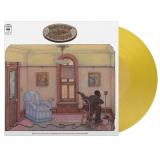
King Of The Delta Blues Singers, Vol.2 is available as a limited edition of 1000 individually numbered copies on yellow vinyl and includes an insert with liner notes by Pete Welding.
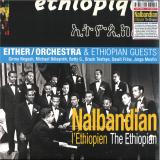
The Éthiopiques series returns! Essential archive recordings from an extremely fruitful period in Ethiopian music.
Before “Swinging Addis” took over the world, there was Moussié Nerses Nalbandian — the Armenian-born composer who shaped modern Ethiopian music. Mentor, arranger, and pioneer, he laid the foundations of Ethio-jazz.
This Éthiopiques volume revives his forgotten legacy, recorded live by Either/ Orchestra First issue ever with new exclusive photos and in depth liner 8-page insert.
“Ethiopian jazzmen are the best musicians that we have seen so far in Africa.
They really are promising handlers of jazz instruments.”
Wilbur De Paris
(1959, after a concert in Addis Ababa)
አዲስ፡ዘመን። *Addis zèmèn* **A new era.**
The time is the mid-1950s and early 1960s, just before "Swinging Addis" bloomed – or rather boomed – onto the scene. Brass instruments are still dominant, but the advent of the electric guitar, and the very first electronic organs, are just around the corner. Rock’n'Roll, R’n’B, Soul and the Twist have not yet barged their way in. Addis Ababa is steeped in the big band atmosphere of the post-war era, with Glenn Miller's *In the* *Mood* as its world-wide theme song, neck and neck with the Latin craze that was in vogue at the same period. Life has become enjoyable once again, with the return of peace after the terrible Italian Fascist invasion of Ethiopia (1935-1941). The redeployment of modern music is part and parcel of the postwar reconstruction. *Addis zèmèn* – a new era – is the watchword of the postwar period, just as it was all across war-torn Europe.
The generation who were the young parents of baby boomers** were the first to enjoy this musical renaissance, before the baby boomers themselves took over and forever super-charged the soundtrack of the final days of imperial reign. Music is Ethiopia's most popular art form, and very often serves as the best barometer for the upsurge of energy that is critical for reconstruction. Whether it be jazz in Saint-Germain-des-Prés or the *zazous* who revolutionised both jazz and French *chanson* after the *Libération*, be it Madrid's post-Franco Movida, or Dada, the Surrealists and *les années folles* that followed World War I, the periods just after mourning and hardship always give rise to brighter and more tuneful tomorrows. Addis Ababa, as the country's capital, and the epicentre of change, was no exception to this vital rule.
**Two generations of Nalbandian musicians**
Nersès Nalbandian belonged to a family of Armenian exiles, who had moved to Ethiopia in the mid-1920s. The uncle Kevork arrived along with the fabled "*Arba Lidjotch*", the** "*40 Kids*", young Armenian orphans and musicians that the Ras Tafari had recruited when he visited Jerusalem in 1924, intending to turn their brass band into the official imperial band. If Kevork Nalbandian was the one who first opened the way of modernism, pushing innovation so far as to invent musical theatre, it was his nephew Nersès who would go on to become, from the 1940s and until his death in 1977, a pivotal figure of modern Ethiopian music and of the heights it. Going all the way back to the 1950s. Nothing less. And it is Nersès who is largely to thank for the brassy colours that so greatly contributed to the international renown of Ethiopian groove. While the younger generations today venture timidly into the genealogy of their country's modern music, often losing their way amidst a distinctly xenophobic historiographical complacency, many survivors of the imperial period are still around to bear witness and pay tribute to the essential role that "Moussié Nersès" played in the rise of Abyssinia's musical modernity.
Given the year of his birth (15 March 1915), no one knows for sure if Nersès Nalbandian was born in Aintab, today Gaziantep (Turkiye/former Ottoman Empire) or on the other side of the border in Alep, Syria... What is certain is that his family, like the entire Armenian community, was amongst the victims of the genocide perpetrated by the Turks. Alep, the place of safety – today in ruins.
Before Nersès then, there was uncle Kevork (1887-1963). For a quarter of a century, he was a whirlwind of activity in music teaching and theatrical innovation. *Guèbrè Mariam le Gondaré* (የጎንደሬ ገብረ ማርያም አጥቶ ማግኘት, 1926 EC=1934) is his most famous creation. This play included "ten Ethiopian songs" — a totally innovative approach. According to his autobiographical notes, preserved by the Nalbandian family, Kevork indicates that he composed some 50 such pieces over the course of his career. This shows just how much he understood, very early on, the critical importance of song as Ethiopia's crowning artistic form. Indeed, for Ethiopian listeners, the most important thing is the lyrics, with all their multifarious mischief, far more than a strong melody, sophisticated arrangements or even an exceptional voice. (This is also why Ethiopians by and large, and beginning with the artists and producers themselves, believed for a long time — and wrongly — that their music could not possibly be exported, and could never win over audiences abroad, who did not speak the country's languages).
Last but not least, one of Kevork's major contributions remains composing Ethiopia's first national anthem – with lyrics by Yoftahé Negussié.
Nersès Nalbandian moved to Ethiopia at the end of the 1930s, at the behest of his ground-breaking uncle. Proficient in many instruments (pretty much everything but the drums), conductor, choir director, composer, arranger, adapter, creator, piano tuner, purveyor of rented pianos,... he was above all an energetic and influential teacher. From 1946 onwards, thanks to Kevork's connexion, Nersès was appointed musical director of the Addis Ababa Municipality Band. In just a few years, Nersès transformed it into the first truly modern ensemble, thanks to the quality of his teaching, his choice of repertoire, and the sophistication of his arrangements. It was this group that would go on to become the orchestra of the Haile Selassie Theatre shortly after its inauguration in 1955, which was a major celebration of the Emperor's jubilee, marking the 25th anniversary of his on-again-off-again reign.
At some point or other in his long career, Nersès Nalbandian had a hand in the creation of just about every institutional band (Municipality Band, Police Orchestra, Imperial Bodyguard Band, Army Band, Yared Music School…), but it was with the Haile Selassie Theatre – today the National Theatre – that his abilities were most on display, up until his death in 1977. To this must be added the development of choral singing in Ethiopia, hitherto unknown, and a sort of secret garden dedicated to the memory of Armenian sacred music, and brought together in two thick, unpublished volumes. Shortly before his death (November 13, 1977), he was appointed to lead the impressive Ethiopian delegation at Festac in Lagos, Nigeria (January-February 1977).
His status as a stateless foreigner regularly excluded him from the most senior positions, in spite of the respect he commanded (and commands to this day) from the musicians of his era. Naturally gifted and largely self-taught, Nerses was tirelessly curious about new musical developments, drawing inspiration from the very first imported records, and especially from listening intensely to the musical programmes broadcast over short-wave radio – BBC *First*. A prolific composer and arranger, he was constantly mindful of formalising and integrating Ethiopian parameters (specific “musical modes”, pentatonic scale, and the dominance of ternary rhythms) into his “modernisation” of the musical culture, rather than trying to over-westernise it. It even seems very probable that *Moussié* Nerses made a decisive contribution to the development of tighter music-teaching methods, in order to revitalise musical education during this period of prodigious cultural ferment. Flying in the face of all the historiographical and musicological evidence, it is taken as sacrosanct dogma that the four musical modes or chords officially recognised today, the *qǝñǝt* or *qiñit* (ቅኝት), are every bit as millennial as Ethiopia itself. It would appear however that some streamlining of these chords actually took place in around 1960. It was only from this time onward that music teaching was structured around these four fundamental musical modes and chords: *Ambassel*, *Bati*, *Tezeta* and *Antchi Hoyé*. A historical and musical “details” that is, apparently, difficult to swallow, especially if that should honour a *foreigner*. Modern Ethiopian music has Nersès to thank for many of its standards and, to this day, it is not unusual for the National Radio to broadcast thunderous oldies that bear unmistakable traces of his outrageously groovy touch.
- A1: Connie Francis - Schöner Fremder Mann
- A2: Peter Alexander - Bist Du Einsam Heut‘ Nacht
- A3: Lolita - Seemann ..(Deine Heimat Ist Das Meer)
- A4: Peter Beil - Corinna, Corinna
- A5: Bill Ramsey - Zuckerpuppe (Aus Der Bauchtanz-Truppe)
- A6: Old Merry Tale Jazzband - Am Sonntag Will Mein Süsser Mit Mir Segeln Gehen
- A7: Peter Kraus - Jedes Mädchen Auf Erden
- A8: Blue Diamonds - Wie Damals In Paris
- A9: Lou Van Burg - Freunde Für‘s Leben
- B1: Bob Moore - Mexico
- B2: Willy Hagara - Pepe
- B3: Ted Herold - Oh So Sweet
- B4: Trude Herr - Ich Will Keine Schokolade
- B5: Peggy Brown - Spiel Nicht Mit Der Liebe
- B6: Petula Clark - Monsieur
- B7: Jan & Kjeld - Hello, Mary Lou
- B8: Lys Assia - Sucu Sucu
- B9: Caterina Valente & Silvio Francesco - Quando, Quando, Quando
Immerse yourself in the golden age of German pop music! 60s Jukebox Hits Vol. 3 brings together unforgettable classics and catchy tunes that shaped an entire generation. This highquality vinyl edition brings the authentic spirit of the 1960s right into your home – nostalgic, danceable and full of good
vibes.
It features some of the most popular stars of the Schlager era: Ted Herold – the German ‘Elvis’ with rousing rock “n” roll hits Connie Francis – with her charming German-language hits Peter Kraus – the epitome of the teen idol of the 60s Peter Alexander – with his unmistakable charm and humour
A must for collectors, nostalgics and music lovers – perfect for cosy evenings or lively parties.
180 G. BLACK VINYL WITH LINER NOTES IN CREOLE, FRENCH, ENGLISH
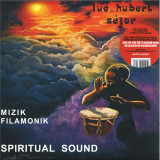
Originally released in 1979, "Spiritual Sound" lives up to its name, a soaring, triumphant album, six tracks of spirit magic from Guadeloupe.
Telluric, intense, terribly alive, the gwoka drums of Guadeloupe carry the identity of a painful and fervent island. Marked forever by the crime of slavery, Guadeloupe's créolité cherishes the ka drums and their natural environment: the low-pitched boula drum with male goatskin, the high-pitched soloist makè drum with female goatskin, the chacha, ti bwa, triangle, calabash and other percussion instruments that surround them, and the voices - the fiery, proud, timbred, urgent voices of the gwoka.
This album is also a legend for its voices: in his then dazzling youth, singer Lukuber Séjor was one of the first gwoka artists to largely feminize the chorus of répondè, who converse with his text delivered in a straight and powerful voice.
And everything here sets new standards. In 1979, Mizik Filamonik - Spiritual Sound proclaimed a spiritual patriotism of ferocious intensity. The album by Lukuber Séjor - whose spelling alone is a battle - sets out to give Guadeloupe the intangible weapons of self-respect and self-knowledge, through a singular practice of traditional music.
The genesis of gwoka music is less straightforward than one might imagine... The drums performed the servile task of accompanying the work of slaves in the fields and during the “corvées” imposed by the administration, before being freely practiced by the common people after the abolition of 1848. At the heart of the conviviality of the Guadeloupeans furthest from the cities - geographically and socially - the gwoka drums come out for carnival, funeral wakes and neighborhood celebrations, but also during strikes, fits of anger and armed vigils of the riots and revolts that have punctuated the island's history. For generations, governors of the colony and then the prefects of the overseas department of Guadeloupe have been viewing the gwoka as a potential for turbulence and a threat to public order.
But as the Beatlesmania, “chanson engagée” and rock revolutions unfolded in Europe, young people turned to the drums of mizik a vié nèg (“bad negro music”, in Creole), which Guadeloupeans had learned to despise by following the “assimilation” process advocated by the school system and most of the political class. At the end of the sixties, in a Guadeloupe mourning the deadly repression of the May 1967 social movement, they played traditional music, refusing to wrap it up in tourist prettiness and madras folk costumes. Instinctively, they played a rough and contemporary gwoka, led by the incendiary Guy Konkèt. This was the era of decisive 45 rpm records such as Robert Loyson's Kann a la richès, which brought to light the fieriest words of union rallies.
At his home in Sainte-Anne, Lukuber Séjor played with flautist Olivier Vamur and his brother Claude Vamur, who cobbled together a drum kit from tin crockery and became, a few years later, the most influential drummer in Kassav'.
These were the years of the Bumidom program, when young Guadeloupeans were encouraged to emigrate to mainland France. At the age of twenty, Lukuber Séjor embarked on the liner Irpinia, disembarking at Le Havre and taking the train to the Gare Saint-Lazare - the route taken by thousands of young West Indians who went on to study or looked for work, all the while trying to maintain a link with their homeland. In this case, it's at the Antony university residence, where Lukuber played the drum and participated in a thousand gwoka updates and aggiornamentos, while exile reinforced the need for a spiritual link with the native land.
In 1978, Guy Konkèt played at the Salle Wagram, a historic event for West Indian music. After serving as répondè - i.e. backing vocalist - on one of his home-recorded albums, Lukuber joined his live band. Little by little, he became one of the key artists on a circuit parallel to French show business. At a student party in Caen, he met a young woman from Martinique who, at the time, was more motivated by her ambitions as a visual artist than by her vocation as a musician. Her name was Jocelyne Béroard and, a few years before she plunged into the Kassav' adventure and became the greatest West Indian singer of her generation, she designed the cover of Lukuber Séjor's LP.
This ambition was obvious and imposed its will. A more or less regular band was formed, with Roger Raspail, Rudy Mompière and Éric Danquin on ka drums, Claude Vamur on ti bwa, Olivier Vamur and Françoise Lancréot on flutes and Annick Noël on keyboards. Lukuber Séjor is set on wanting to extend the gwoka palette to other instruments, as the jazz-rock revolution opens a thousand new doors. Annick Noël will play a wide range of timbres and textures on electric piano and synthesizer. Another novelty: the répondè are two men and two women, Roger Raspail, Olivier Vamur, Françoise Lancréot and Maryann Mathéus ...
Mizik Filamonik - Spiritual Sound is a self-production in which the singer and leader sank all his savings, allowing him no more than a single day in the studio. The first side is more of a musical manifesto, with the first two tracks, Éritage and Penn é plézi, being instrumentals. The third, Son, forcefully celebrates the need for Guadeloupeans to connect with the gwoka. In fact, Jocelyne Béroard's cover shows a tambouyé in the shadow of a cloudy sky, against which a radiant sun is rising and whose light will soon flood the entire landscape. The silhouette and face of this man strongly evoke the immense Vélo, master of the ka, rejected at the time on the fringes of society.
The second side of the LP is surprising. Formally, three tracks are explicitly linked like the three parts of a triptych. Primyé voyaj evokes the appalling tribulation of Africans deported as slaves to Guadeloupe; dézyèm voyaj speaks of the Bumidom program and the economic, political and social forces driving young Guadeloupeans towards the mirage of prosperity in France; twazyèm voyaj closes the cycle with the emigrants' return from Europe after years away from their island...
This gwoka, obsessed with the need to save Guadeloupe spiritually, appeals far beyond the politicized audience. Mizik Filamonik - Spiritual Sound instantly became a classic, although Lukuber Séjor never really made a career for himself as a musician.
After all, the album was released in 1980, with no promotional resources in France or Guadeloupe - and therefore no concerts. The thirty-two-year-old author, composer and performer made his own third trip back to Guadeloupe. He set up a small woodworking business, which he lost in Hurricane Hugo in 1989. His other activity, teaching in a medical-educational institute, became the core of his professional life. He continued to be an active campaigner - a campaigner for the Creole language, a campaigner for the reawakening of identity, a campaigner for special education, a campaigner for a thousand causes that he ignited with his generous and perceptive enthusiasm, such as the defense of breadfruit fries...
The echoes of his 1979 album have not died down. Of course, the use of Penn é plézi as the theme tune for Radio Guadeloupe's funeral notices from 1980 to 1992 kept him in the collective memory, but he continues to sing and compose sporadically, as with his all-female
vocal group Vwapoulouéka... Still convinced that music is a means of liberating the spirit, he continues the journey of a young man eager to deploy the power of Creole music and language.
Bertrand Dicale
- A1: Invaders - Story Of Love
- A2: Invaders - Holy Mountain
- A3: Invaders - A Way Home (I Got To Go Back Home)
- A4: Motherless Child (Aim In View)
- A5: Splenders - African Safari
- A6: Invaders - Conquering Lion
- B1: Invaders - Heaven & Earth
- B2: Invaders - Heaven & Earth Version
- B3: Paddy And Peps - Give Jah The Glory
- B4: Stepping Stones - Paddy's Version
- B5: Bongo Pat - Young Generation
- B6: Bongo Pat - You Got To Have Love
- B7: Bongo Pat - Live Good
We are overjoyed to present this album, another one from our bucket list and another one to set the record straight and illuminate the history of another much loved, but until now mysterious group. The Invaders made some of our all time favorite records - back in 2013 we issued five 45’s of their brilliant, sometimes plaintive, sometimes hopeful and sweet early roots music. Their sound touches folk and gospel in lovely subtle ways that elevate them above the many harmony groups of the early roots reggae era. Since the start of DKR we were striving to learn more about the group - and despite being able to license a portion of their output for reissue, and get anecdotes about them here and there, we were never able to connect with the group themselves. But we never gave up asking about them, and finally in 2024 we were able to link with Delroy “Bongo Pat” Forde, the surviving member of the group. Unfortunately other Invader, Lloyd “Paddy” Campbell passed on several years back. To hear and learn their full story, you need to check out this album and read the liner notes. This 13 song LP corrals much of their output - some of the tracks we previously issued but have been long out of press, some more never before reissued, and some great related solo works by the duo. And to cap it all off we’ve added two new voicings on a couple of our favorite vintage rhythms, by Invader Bongo Pat himself, live in 2024, singing two Invaders songs written way back in the early 1970s but never recorded back then. All together this is a long overdue document of one of the 1970’s finest groups and one dear to our heart.
DJ support: Tim Sweeney, Make A Dance, Parris, Pleasure Voyage, Camillo Miranda
Back yard - Back yard is the first single from the new Teen Daze album, Elegant rhythms, and features singer-songwriter Andy Shauf on drums, and LA jazz staple, Sam Wilkes, on bass. This is a stark change in sound for Teen Daze, who’s last album Interior was an exploration of neon-lit House music. Back yard is a mellow groover, conjuring up images of Laurel Canyon in the 70s, yet still with its flourishes of contemporary sounds.
We’re out of phase again - We’re out of phase again is another vulnerable glimpse into the inner world of Teen Daze, and marks the release of his most personal album to date, Elegant rhythms. In contrast to the synthesized, digital world of his prior album, Interior, here we’ve been brought into a lush, organic arrangement, brought to you in large part to the stunning bass playing by Sam Wilkes. While the verses pulse forward, the chorus slows things down, and evokes the sophisti-pop sounds of The Blue Nile. This track is a stunning showcase of the world of Elegant rhythms.
Nothing’s gonna change my love - Teen Daze returns with his second single of the year, Nothing’s gonna change my love. The stark change in sound, as heard on previous single Back yard, is on display here again: a smouldering, 2 and a half minutes of slow jazz-pop, indebted to the great Sade, or perhaps the feeling of leaving downtown LA at 2 AM. Lyrically, we hear a story of a love, challenged by the unpredictable nature of our lives. This may be Teen Daze’s smoothest song to date.
Neighbourhood - Neighbourhood is the third single from the recently announced LP from Teen Daze, Elegant Rhythms. Along with Andy Shauf on the drums, and Sam Wilkes on the bass, Teen Daze gives us a languid tour of his quiet neighbourhood. The sun has set on the pleasant, tree-lined streets, and a stranger, more surreal environment presents itself. The song plods forward at an extremely comfortable pace, held down by the paradoxically loose-yet-tight rhythm section. Lyrically, we walk around the Neighbourhood at night, and while the chorus reveals a type of sobriety, the vibe of the song makes it easy to feel a little…effected.
Fade away - Fade away sets the tone for Elegant Rhythm’s side B: a deeply personal, though somewhat veiled, confession of loss. How does it feel to grieve something that was never really here? A smouldering, slowly progressing first half erupts in synthetic noise, and then fades into the ether with it’s repeating refrain, “I can feel you / feel you fade away / when there’s nothing / nothing left to say”.
Fall ahead - A sweet piano tune which serves as a quiet break in the record, intended to help the listener reflect and take a moment of pause before we reach the final two songs on the album.
HST underwater - The penultimate track on the record tells a story where the narrator finds themself in an alien, yet oddly familiar place. Arpeggios soaked in crystal blue water flow through the stereo field, while the narrator, vocoded and drenched in autotune, searches for meaning and purpose in a confusing world. This is one of Teen Daze’s most cinematic, emotional songs yet.
In the rain - It’s never really made explicitly clear on this record, but a lot of these songs find Teen Daze wrestling with life as a new father, and this song, the final on the album, expresses the fears of generational trauma. A touching, tender ode to his children, we hear Teen Daze at his most personal and vulnerable. The falling rain surrounds some absolutely breathtaking bass playing from Sam Wilkes, and Teen Daze’s signature ambient keyboard sounds.
Radio Support: Ruf Dug (Soup To Nuts on NTS)
Die britische, in Nashville beheimatete Bluesrockerin Joanne Shaw Taylor stellt nach dem allseits gelobten Vorgänger "Nobody's Fool" aus dem Jahr 2022 erneut mühelos ihr Blues-Rock-Können und ihre sich ständig weiterentwickelnden Fähigkeiten als Singer-Songwriterin unter Beweis. Ihr neuntes Studioalbum "Heavy Soul" unterstreicht Joannes Gitarrenskills und ihre sofort erkennbaren, rauchigen, aber dennoch sinnlichen Vocals in sieben brandneuen Originaltiteln und drei fesselnden Coverversionen von Van Morrison, Joan Armatrading und Joe Simon. Joanne Shaw Taylor bekräftigt mit "Heavy Soul" erneut ihren Ruf als kraftvolle moderne Bluesrock-Musikerin und Ikone ihrer Generation.
UILTY RAZORS, BONA FIDE PUNKS.
Writings on the topic that go off in all directions, mind-numbing lectures given by academics, and testimonies, most of them heavily doctored, from those who “lived through that era”: so many people today fantasize about the early days of punk in our country… This blessed moment when no one had yet thought of flaunting a ridiculous green mohawk, taking Sid Vicious as a hero, or – even worse – making the so-called alternative scene both festive and boorish. There was no such thing in 1976 or 1977, when it wasn’t easy to get hold of the first 45s by the Pistols or the Clash. Few people were aware of what was happening on the fringes of the fringes at the time. Malcolm McLaren was virtually unknown, and having short hair made you seem strange. Who knew then that rock music, which had taken a very bad turn since the early 1970s, would once again become an essential element of liberation? That, thanks to short and fast songs, it would once again rediscover that primitive, social side that was so hated by older generations? Who knew that, besides a few loners who read the music press (it was even better if they read it in English) and frequented the right record stores? Many of these formed bands, because it was impossible to do otherwise. We quickly went from listening to the Velvet Underground to trying to play the Stooges’ intros. It’s a somewhat collective story, even though there weren’t many people to start it.
The Guilty Razors were among those who took part in this initial upheaval in Paris. They were far from being the worst. They had something special and even released a single that was well above the national average. They also had enough songs to fill an album, the one you’re holding. In everyone’s opinion, they were definitely not among the punk impostors that followed in their wake. They were, at least, genuine and credible.
Guilty Razors, Parisian punk band (1975-1978). To understand something about their somewhat linear but very energetic sound, we might need to talk about the context in which it was born and, more broadly, recall the boredom (a theme that would become capital in punk songs) coupled with the desire to blow everything off, which were the basis for the formation of bands playing a rejuvenated rock music ; about the passion for a few records by the Kinks or the early Who, by the Stooges, by the Velvet mostly, which set you apart from the crowd.
And of course, we should remember this new wave, which was promoted by a few articles in the specialized press and some cutting-edge record stores, coming from New York or London, whose small but powerful influence could be felt in Paris and in a handful of isolated places in the provinces, lulled to sleep by so many appalling things, from Tangerine Dream to President Giscard d’Estaing...
In 1975-76, French music was, as almost always, in a sorry state ; it was still dominated by Johnny Hallyday and Sylvie Vartan. Local rock music was also rather bleak, apart from Bijou and Little Bob who tried to revive this small scene with poorly sound-engineered gigs played to almost no one.
In the working class suburbs at the time, it was mainly hard rock music played to 11 that helped people forget about their gruelling shifts at the factory. Here and there, on the outskirts of major cities, you still could find a few rockers with sideburns wearing black armbands since the death of Gene Vincent, but it wasn’t a proper mass movement, just a source of real danger to anyone they came across who wasn't like them. In August 1976, a festival unlike any other took place in Mont-de-Marsan – the First European Punk Festival as the poster said – with almost as many people on stage as in the audience. Yet, on that day, a quasi historical event happened, when, under the blazing afternoon sun, a band of unknowns called The Damned made an unprecedented noise in the arena, reminiscent of the chaotic Stooges in their early adolescence. They were the first genuine punk band to perform in our country: from then on, anything was possible, almost anything seemed permissible.
It makes sense that the four+1 members of Guilty Razors, who initially amplified acoustic guitars with crappy tape recorder microphones, would adopt punk music (pronounced paink in French) naturally and instinctively, since it combines liberating noise with speed of execution and – crucially – a very healthy sense of rebellion (the protesters of May 1968 proclaimed, and it was even a slogan, that they weren’t against old people, but against what had made them grow old. In the mid-1970s, it seemed normal and obvious that old people should now ALSO be targeted!!!).
At the time, the desire to fight back, and break down authority and apathy, was either red or black, often taking the form of leafleting, tumultuous general assemblies in the schoolyard, and massive or shabby demonstrations, most of the time overflowing with an exciting vitality that sometimes turned into fights with the riot police. Indeed, soon after the end of the Vietnam War and following Pinochet’s coup in Chile, all over France, Trotskyist and anarcho-libertarian fervour was firmly entrenched among parts of the educated youth population, who were equally rebellious and troublemakers whenever they had the chance. It should also be noted that when the single "Anarchy in the UK" was first heard, even though not many of us had access to it, both the title and its explosive sound immediately resonated with some of those troublemakers crying out for ANARCHY!!! Meanwhile, the left-wing majority still equated punks with reckless young neo-Nazis. Of course, the widely circulated photos in the mainstream press of Siouxsie Sioux with her swastikas didn’t necessarily help to win over the theorists of the Great Revolution. It took Joe Strummer to introduce The Clash as an anti-racist, anti-fascist and anti-ignorance band for the rejection of old-school revolutionaries to fade a little.
The Lycée Jean-Baptiste Say at Porte d’Auteuil, despite being located in the very posh and very exclusive 16th arrondissement of Paris, didn’t escape these "committed" upheavals, which doubled as the perfect outlet for the less timid members of this generation.
“Back then, politics were fun,” says Tristam Nada, who studied there and went on to become Guilty Razors’ frontman. “Jean-Baptiste was the leftist high-school in the neighbourhood. When the far right guys from the GUD came down there, the Communist League guys from elsewhere helped us fight them off.”
Anything that could challenge authority was fair game and of course, strikes for just about any reason would lead to increasingly frequent truancy (with a definitive farewell to education that would soon follow). Tristam Nada spent his 10th and 11th unfinished grades with José Perez, who had come from Spain, where his father, a janitor, had been sentenced to death by Franco. “José steered my tastes towards solid acts such as The Who. Like most teenagers, I had previously absorbed just about everything that came my way, from Yes to Led Zeppelin to Genesis. I was exploring… And then one day, he told me that he and his brother Carlos wanted to start a rock band.” The Perez brothers already played guitar. “Of course, they were Spanish!”, jokes their singer. “Then, somewhat reluctantly, José took up the bass and we were soon joined by Jano – who called himself Jano Homicid – who took up the rhythm guitar.” Several drummers would later join this core of not easily intimidated young guys who didn’t let adversity get the better of them.
The first rehearsals of the newly named Guilty Razors took place in the bedroom of a Perez aunt. There, the three rookies tried to cover a few standards, songs that often were an integral part of their lives. During a first, short gig, in front of a bewildered audience of tough old-school rockers, they launched into a clunky version of the Velvet Underground's “Heroin”. Challenge or recklessness? A bit of both, probably… And then, step by step, their limited repertoire expanded as they decided to write their own songs, sung in a not always very accurate or academic English, but who cared about proper grammar or the right vocabulary, since what truly mattered was to make the words sound as good as possible while playing very, very fast music? And spitting out those words in a language that left no doubt as to what it conveyed mattered as well.
Trying their hand a the kind of rock music disliked by most of the neighbourhood, making noise, being fiercely provocative: they still belonged to a tiny clique who, at this very moment, had chosen to impose this difference. And there were very few places in France or elsewhere, where one could witness the first stirrings of something that wasn’t a trend yet, let alone a movement.
In the provinces, in late 1976 or early 1977, there couldn’t be more than thirty record stores that were a bit more discerning than average, where you could hear this new kind of short-haired rock music called “punk”. The old clientele, who previously had no problem coming in to buy the latest McCartney or Aerosmith LP, now felt a little less comfortable there…
In Paris, these enlightened places were quite rare and often located nex to what would become the Forum des Halles, a big shopping mall. Between three aging sex workers, a couple of second-hand clothes shops, sellers of hippie paraphernalia and small fashion designers, the good word was loudly spread in two pioneering places – propagators of what was still only a new underground movement. Historically, the first one was the Open Market, a kind of poorly, but tastefully stocked cave. Speakers blasted out the sound of sixties garage bands from the Nuggets compilation (a crucial reference for José Perez) or the badly dressed English kids of Eddie and the Hot Rods. This black-painted den was opened a few years earlier by Marc Zermati, a character who wasn’t always in a sunny disposition, but always quite radical in his (good) choices and his opinions. He founded the independent label Skydog and was one of the promoters of the Mont-de-Marsan punk festivals. Not far from there was Harry Cover, another store more in tune with the new New York scene, which was amply covered in the house fanzine, Rock News (even though it was in it that the photos of the Sex Pistols were first published in France).
It was a favorite hang-out of the Perez brothers and Tristam Nada, as the latter explained. “It’s at Harry Cover’s that we first heard the Pistols and Clash’s 45s, and after that, we decided to start writing our first songs. If they could do it, so could we!”
The sonic shocks that were “Anarchy in the UK”, “White Riot” or the Buzzcocks’s EP, “Spiral Scratch” – which Guilty Razors' sound is reminiscent of – were soon to be amplified by an unparalleled visual shock. In April 1977, right after the release of their first LP, The Clash performed at the Palais des Glaces in Paris, during a punk night organised by Marc Zermati. For many who were there, it was the gig of a lifetime…
Of course, Guilty Razors and Tristam were in the audience: “That concert was fabulous… We Parisian punks were almost all dressed in black and white, with white shirts, skinny leather ties, bikers jackets or light jackets, etc. The Clash, on the other hand, wore colourful clothes. Well, the next day, at the Gibus, you’d spot everyone who had been at this concert, but they weren’t wearing anything black, they were all wearing colours.”
It makes sense to mention the Gibus club, as Guilty Razors often played there (sometimes in front of a hostile audience). It was also the only place in Paris that regularly scheduled new Parisian or Anglo-Saxon acts, such as Generation X, Siouxsie and the Banshees, the Slits, and Johnny Thunders who would become a kind of messed-up mascot for the venue. A little later, in 1978, the Rose Bonbon – formerly the Nashville – also attracted nightly owls in search of electric thrills… In 1977, the iconic but not necessarily excellent Asphalt Jungle often played at the Gibus, sometimes sharing the bill with Metal Urbain, the only band whose aura would later transcend the French borders (“I saw them as the French Sex Pistols,” said Geoff Travis, head of their British label Rough Trade). Already established in this small scene, Metal Urbain helped the young and restless Guilty Razors who had just arrived. Guitarist for Metal Urbain Hermann Schwartz remembers it: “They were younger than us, we were a bit like their mentors even if it’s too strong a word… At least they were credible. We thought they were good, and they had good songs which reminded of the Buzzcocks that I liked a lot. But at some point, they started hanging out with the Hells Angels. That’s when we stopped following them.”
The break-up was mutual, since, Guilty Razors, for their part, were shocked when they saw a fringe element of the audience at Metal Urbain concerts who repeatedly shouted “Sieg Heil” and gave Nazi salutes. These provocations, even still minor (the bulk of the skinhead crowd would later make their presence felt during concerts), weren’t really to the liking of the Perez brothers, whose anti-fascist convictions were firmly rooted. Some things are non-negotiable.
A few months earlier (in July 1978), Guilty Razors had nevertheless opened very successfully for Metal Urbain at the Bus Palladium, a more traditonally old-school rock night-club. But, as was sometimes the case back then, the night turned into a mass brawl when suburban rockers came to “beat up punks”.
Back then, Parisian nights weren’t always sweet and serene.
So, after opening as best as they could for The Jam (their sound having been ruined by the PA system), our local heroes were – once again – met outside by a horde of greasers out to get them. “Thankfully,” says Tristam, “we were with our roadies, motorless bikers who acted as a protective barrier. We were chased in the neighbouring streets and the whole thing ended in front of a bar, with the owner coming out with a rifle…”
Although Tristam and the Perez brothers narrowly escaped various, potentially bloody, incidents, they weren’t completely innocent of wrongdoing either. They still find amusing their mugging of two strangers in the street for example (“We were broke and we simply wanted to buy tickets for the Heartbreakers concert that night,” says Tristam). It so happened that their victims were two key figures in the rock business at the time: radio presenter Alain Manneval and music publisher Philippe Constantin. They filed a complaint and sought monetary compensation, but somehow the band’s manager, the skilful but very controversial Alexis, managed to get the complaint withdrawn and Guilty Razors ended up signing with Constantin with a substantial advance.
They also signed with Polydor and the label released in 1978 their only three-track 45, featuring “I Don't Wanna be A Rich”, “Hurts and Noises” and “Provocate” (songs that exuded perpetual rebellion and an unquenchable desire for “class” confrontation). It was a very good record, but due to a lack of promotion (radio stations didn’t play French artists singing in English), it didn’t sell very well. Only 800 copies were allegedly sold and the rest of the stock was pulped… Initially, the three tracks were to be included on a LP that never came to be, since they were dropped by Polydor (“Let’s say we sometimes caused a ruckus in their offices!” laughs Tristam.) In order to perfect the long-awaited LP, the band recorded demos of other tracks. There was a cover of Pink Floyd's “Lucifer Sam” from the Syd Barrett era – proof of an enduring love for the sixties’ greats –, “Wake Up” a hangover tale and “Bad Heart” about the Baader-Meinhof gang, whose actions had a profound impact on the era and on a generation seeking extreme dissent... On the album you’re now discovering, you can also hear five previously unreleased tracks recorded a bit later during an extended and freezing stay in Madrid, in a makeshift studio with the invaluable help of a drummer also acting as sound engineer. He was both an enthusiastic old hippie and a proper whizz at sound engineering. Here too, certain influences from the fifties and sixties (Link Wray, the Troggs) are more than obvious in the band’s music.
Shortly after a final stormy and rather barbaric (on the audience’s side) “Punk night” at the Olympia in June 1978, Tristam left the band ; his bandmates continued without him for a short while.
But like most pioneering punk bands of the era, Guilty Razors eventually split up for good after three years (besides once in Spain, they’d only played in Paris). The reason for ceasing business activities were more or less the same for everyone: there were no venues outside one’s small circuit to play this kind of rock music, which was still frightening, unknown, or of little interest to most people. The chances of recording an LP were virtually null, since major labels were only signing unoriginal but reassuring sub-Téléphone clones, and the smaller ones were only interested in progressive rock or French chanson for youth clubs. And what about self-production? No one in our small safety-pinned world had thought about it yet. There wasn’t enough money to embark on that sort of venture anyway.
So yes, the early days of punk in France were truly No Future!
Delivering the second sermon in their Disco Gospel series, Chicago’s Sadar Bahar & Marc Davis hand-pick and re-edit two more under-the-radar disco/gospel fusion tracks for the modern dancefloor.
Both revered selectors and producers, Marc and Sadar are integral parts of Chicago's underground music scene, sharing the city’s spirit with the world. Through his own label, Black Pegasus, and the Chi Talo series, Marc has become an in-demand DJ known for his raw and eclectic sets. He joins forces with good friend, DJ’s DJ and Soul In The Hole head Sadar Bahar, whose name regularly tops the bill at some of the finest clubs and festivals around the globe.
Digging deep once again, the pair serve up two certified secret weapons from their renowned collections. Finding that sweet spot that drew out the most uplifting, powerful, and danceable elements of both gospel and disco, they shine a light on two beauties from Myrna Summers and also The Yancy Family. Tweaked and re-edited with style and consideration, they re-work the tracks with DJs and dancers in mind.
As Robert M. Marovich of Journal of Gospel Music puts it, “The rise of contemporary gospel music in the 1970s and 1980s changed the style, if not the substance, of Black sacred music. Artists, including the Yancy Family and Myrna Summers, worked within the groovy new sound to attract the attention of a generation growing up on rock, jazz, pop, and soul. Bring them into the church through the music, the maxim goes, and they’ll stay for the sermon. Likewise, these two re-edited album tracks by Sadar Bahar and Marc Davis keep the gospel music heritage alive while encouraging a brand-new generation to dance through the church doors.”
Up first, Myrna Summers ‘So Much to Live For’ channels that straight from the heart passion and collective joy that gospel embodies. Bursting with uplifting lyrics, scintillating organ melodies, and an infectious sing-along spirit, Marc and Sadar give it a club-ready DJ edit, extending it for maximum dancefloor deliverance.
The B side sees the duo work their magic on, ‘Lifted Me Higher’. Written by Kevin Yancy and taken from the Yancy Family’s 1989 album From One Christian Family to Another, it features vocals from siblings Kevin, Judy, and Rev. Darryl Yancy, along with Lois Scott. The all-star team of Chicago musicians includes Sherwin (Butch) Yancy on organ, Michael Wade on piano and synthesizer, and Richard Gibbs (longtime accompanist for Aretha Franklin) on piano and bass. With a soulful boogie flavour, dripping in slap bass and ‘80s synthlines, Marc and Sadar rework the intro so it rides out on a section of delectable instrumental grooves, before letting the glorious vocals hit home.
- Lotus Bridge
- Diaphanous
- The Abominations Of Hubert
- Jenny Greenlocks
- Arcadia
- Athanatoi
- Leander
- Map Of The Night Sky
- Polaris Aa
- Our Sweet Souls
COLORED VINYL[24,79 €]
Mit Lotus Bridge präsentieren The Monochrome Set ein weiteres Kapitel ihres unverwechselbaren Post-Punk-Kosmos - elegant, lakonisch und voller literarischer Tiefe. Seit über fünf Jahrzehnten kultivieren Bid und seine Mitstreiter einen Sound, der gleichermaßen klassisch wie idiosynkratisch wirkt: scharf gezeichnete Melodien, schwarzhumorige Texte und eine Songkunst, die sich cineastisch und zugleich unmittelbar anfühlt. Die Band, einst bei Rough Trade, Dindisc und Cherry Red zuhause, hat mit ihrem Stil Generationen von Musiker*innen inspiriert und bleibt dennoch ein eigenes Universum. Lotus Bridge öffnet nun ein neues, psychedelisch schimmerndes Kapitel. Das Album basiert auf einem wiederkehrenden Traum, den Bid in eine atmosphärische Reise voller Figuren, Orte und innerer Landschaften verwandelt. E-Piano, Akustikgitarre und weit gefächerte E-Gitarren verleihen dem Werk einen eleganten, beinahe orchestralen Charakter, während Ambient-Sounds die Stücke zu einem geschlossenen Ganzen verweben. Tiefgründig, erzählerisch und voller verborgenem Witz - ein Album, das wächst und fesselt.
- A1: Busy Girl / Prod. A.g.o
- A2: Dreamin' (Feat. Sumin (韓国),☆Taku Takahashi(M-Flo)) / Prod.☆Taku Takahashi(M-Flo)
- A3: Memories / Prod. 80Kidz
- A4: Old Friends (Feat. Sirup, Shin Sakiura) / Prod. Shin Sakiura
- A5: Moonlight Cruising (Feat. Kirinji) / Prod. Slom (韓国)
- A6: Sweet Vacation / Prod. Sam Is Ohm
- A7: Life Is Beautiful (Feat. Ariwa (Asound)) / Prod. Chaki Zulu
- B1: Life Is Beautiful (Feat. Ariwa) - Remix
- B2: U - Remix
- B3: Moonlight Cruising (Feat. Kirinji) - Grooveman Spot Remix
- B4: Busy Girl - Remix
- B5: Orange (Feat. Peavis) - Remix
- B6: Memories - Osamu Fukuzawa Remix
YonYon's commemorative 1st album ‘Grace’ shines with new brilliance through analog sound-the long-awaited LP release!
This album features 14 tracks in total, including 7 popular songs from the album “Grace”, plus 7 remixes.
Guest artists include KIRINJI, SIRUP, South Korea's leading R&B singer-songwriter/producer SUMIN, PEAVIS, and other artists resonating across generations
and styles. Sound production features top-tier creators active globally, including ☆Taku Takahashi (m-flo), Chaki Zulu, grooveman Spot, and South Korea's
rising producer Slom. The album effortlessly crosses genre and language boundaries, weaving diverse musical elements into a rich soundscape.
Heavenly return! As fiercely independent as any punk band, but as sweetly melodic as any chart-topping act, Heavenly combine sharp-edged lyrics with shamelessly joyful pop music. The band comprises original members Amelia Fletcher, Peter Momtchiloff, Cathy Rogers and Rob Pursey, who are now joined on drums by Ian Button. An important element of the Heavenly story was the loss of Mathew Fletcher, who took his own life just before the fourth album was released. It took Amelia, Peter, Cathy and Rob a long time to get over the loss; maybe it took even longer to find a drummer as good as Ian. 'Highway To Heavenly' shares its musical recipe with the band's first four albums, all of which were released in the 1990s at a time when sensitive indie types in the UK were sheltering from the prevailing macho-rock storm under the Sarah Records umbrella, and when women in the US were starting to find their Riot Grrrl voices in the small town of Olympia, where labels like K and Kill Rock Stars were designing a new creative space. The new songs are full of anger, of grief, of empathy, of love, and set themselves in opposition to the resurgence of the cold 'masculine energy' that is making the world a miserable, aggressive place today. It's all pop here, but Highway To Heavenly has a huge range of tones and moods. Heavenly have recently enjoyed a huge resurgence of interest from a younger generation of fans, who have cottoned on to Heavenly's music, but also embraced the band's inclusive version of feminism. The new Heavenly have played a number of sell-out shows in the past couple of years, where older fans have mingled with new devotees. Still our love is Heavenly!
- A1: The Gramophone Allstars Big Band - United Soul
- A2: I· - Sunday’s Disco Down
- B1: The Changes - Sweet Movimiento
- B2: The Changes - Slip Life 04:13
Slip My Soul Where A Sweet Sunday brings together four versions by Fundación Tony Manero in charge of three projects from the Catalan jazz scene: The Gramophone All Stars Big Band, The Changes and ·I·. At the hands of these interpreters, the songs by Manero (all taken from “Sweet Movimiento”, their second studio LP) wander through different spectrums of jazz. From the Jamaican-tinged ska of the Gramophone to the dragging, hip-hop groove of ·I· through the swing -more classical or more avant-garde depending on the subject- of The Changes, these four pieces prove that jazz and disco music are family. Or what is the same: that jazz has always been dance music. Slip My Soul Where A Sweet Sunday celebrates the legacy on the one hand, the Fundación Tony Manero, which is retiring from the stage after more than 25 years paving the way for new generations and new projects. Among others, those who now take the baton in this EP.
- Side A. Stay By My Side
- Side B. Strawberry Girl
●STAY BY MY SIDE (Youth Of Roots)
This is the title track from Young Israelites' 2021 debut EP, which made them a household name.
Its catchy, pop melody has captured the hearts of reggae fans worldwide, and Youth Of Roots' KON RYU has covered it in Japanese.
It blends seamlessly with the song like a long-time favorite, bringing out the original's charm with a new brilliance.
●STRAWBERRY GIRL (Young Israelites)
A popular song that shines with sweetness in Youth Of Roots' repertoire, which is filled with roots-conscious, message-driven songs.
Young Israelites' English cover, with its melancholic vocals, further enhances the quality of the original.
YOUTH OF ROOTS
A roots rock reggae band formed in Kanagawa in 2016. Their multi-generational sound and spiritual musicality, rooted in their experiences in Jamaica,
define their sound. They've released numerous singles, including their latest album, "LOVE IS THE ANSWER."
They connect with their audiences at live shows, conveying the spirit of "One Family." Their overwhelming sense of unity and sincere message transcends
borders, earning them praise from international fans as "the best reggae band."
[YOUNG ISRAELITES]
A rocksteady/roots reggae band consisting of three members from Israel. Building on a vintage Jamaican sound, their familiar melodies and soulful,
passionate performances have garnered attention from reggae fans worldwide. Since their debut, they've released a string of EPs and full-length albums,
and have expanded their global reach, including airing on the BBC and performing at the world's largest reggae festival, ROTOTOM SUSPLASH.
This new-generation band vividly revives the spirit of rocksteady and roots reggae for the modern era.
Nick Holder’s Iconic ‘Dance, Dance, Dance’ Finally Arrives Digitally with New Remixes from Jason Hodges and Trackheadz.
Definitive Recordings proudly presents a long-awaited milestone: the first-ever digital release of ‘Dance, Dance, Dance’ by Nick Holder’s Fruit
Loops project, originally released in 1995 and repressed countless times on vinyl since. This timeless house anthem, a pure expression of discodriven groove, now returns remastered and refreshed — accompanied by two brand-new remixes from fellow Toronto house legends Jason
Hodges and Trackheadz.
The original version of ‘Dance, Dance, Dance’ captures the raw magic of mid-90s house — a stripped yet irresistible jam that fuses classic 70s
disco sampling with a deep, rolling bassline and a straight house groove. It’s simple, it’s soulful, and it’s pure disco-house sexiness.
Jason Hodges delivers a playful rework that modernizes the cut while keeping its soul intact. His remix adds shuffled percussion, chopped vocals,
and a subtly reworked bassline — injecting a fresh rhythmic twist that stays true to the track’s roots while enhancing its dancefloor punch.
Trackheadz then takes the track into deeper territory, layering lush synth chords, organ lines, and sweeping strings over a steady, hypnotic build
— a masterclass in musicality and atmosphere for the late-night crowd.
A true veteran of Toronto’s house scene, Nick Holder rose to international acclaim in the late ’90s and early 2000s with releases on Definitive,
NRK, Stickmen, and Studio K7, shaping the sound of deep and soulful house. As the founder of DNH Records, he’s been a driving force behind
countless underground classics, including ‘Da Sambafrique’, ‘Trying to Find Myself’, and ‘Summer Daze’.
Jason Hodges, another staple of the Toronto underground, is known for his tough yet groovy sound that bridges New York swing and Chicago
grit. Having remixed the likes of DJ Sneak, Derrick Carter, DJ Heather, and Kaskade, Hodges continues to be a name synonymous with timeless,
floor-filling house. Trackheadz, helmed by Kaje Trackheadz, brings decades of experience in blending sweet strings, soulful brass, and deep club
energy. Responsible for underground staples like ‘Our Music’ and ‘Feel’, he has remixed everyone from Todd Terry to The Sunburst Band, and
continues to expand his vision through Trackheadz Records.
Nearly three decades on, ‘Dance, Dance, Dance’ still grooves as hard as ever — now revitalized for the next generation of house lovers.
Don Cherry, armed with a voracious musical appetite and boundless imagination, first made a name for himself - though not always fully understood - alongside Ornette Coleman, playing trumpet or cornet. In Los Angeles and then New York, he stood at the heart of a revolutionary approach to improvisation based on melody rather than harmony, later baptized "Free Jazz," the final structural development of American jazz. Over time, he became a champion of improbable fusions - gradually integrating into his style a whole array of "exotic" instruments, and more importantly, the cultures from which they originated. Among them: India, Brazil, Africa, Indonesia, and even China. The time had come for the emergence of "world music": in hindsight, a patchwork rich in imagination and seduction, but once the novelty wore off, often lacking in substance.
In Don Cherry's case, however, the commitment ran deep - tied to his personal engagement with a global vision of art and the human condition. Ustad Ahmed Latif Khan, from the Delhi gharana (a musical lineage), was part of a new generation of accompanists - percussionists, sarangi players, flutists, etc. - who had extended both the technical and conceptual possibilities of their predecessors to gain recognition as soloists and soon to venture onto the international scene. Among them, Latif stood out for his taste for irregular, highly syncopated rhythmic patterns - rich in variety and originality. Don and Latif had never met before the recording session, but the two quickly recognised one another as kindred spirits - calm, focused... and full of laughter. Don clearly knew what he wanted to create, and nothing seemed to pose a challenge for Latif, who grasped the American's intentions immediately, warmed up his fingers at astonishing speed, and with his perfect pitch, naturally took on the role of tuning Don's diverse instrument collection to match whatever was found in the studio - from concert piano and Hammond B3 organ to chromatic orchestral timpani.
Swan Song
The vinyl LP at the heart of this éthiopiques 31 tracks 2 to 11 was one of the very last vinyl records ever released in Ethiopia. But above all it represents, we felt, the absolute masterpiece of the Ethiopian Groove – the Swan Song of Swinging Addis. The album leaves a clear idea for posterity of the level of sophistication and mastery that modern Ethiopian music had achieved, before being crushed under the Stalino-military heel of the Derg – as the bloody revolution that was unfolding came to be called.
Ethiopia1976.
The Revolution that broke out in February 1974 rolled on in a ruthless march. The whole of Ethiopian society was utterly stunned. The bouquets of flowers handed joyfully to the first tanks of the coup d'état were to wilt very rapidly. From September 1976 to February 1978, 18 months of Red Terror (the name given by the junta itself) spilled blood throughout the country. This fratricidal conflict took its heaviest toll among students and youth. The shift from feudalism to a cruel and primitive Stalinism left the country's citizens deeply traumatised, and snuffed out any pretence of activism, whatever the sector of society. This ice age was to last for seventeen long years.
ሙሉቀን፡መለሰ Mulukèn Mellèssè Muluqän Mälläsä
It was three tracks by Muluken that served as the opener for éthiopiques-1 more than 25 years ago. Seven more tracks appeared on éthiopiques-3 and 13, all accompanied by The Equators, which was soon to become the Dahlak Band.
The first track, Hédètch alu, also the very first piece that Muluken ever recorded, left audiences both unsettled and amazed. Reflecting the singer's extremely young age (he was just 17 at the time), this angelic voice mystified many, who thought they were in fact listening to a feminine voice. He was not yet 22 when he released his last vinyl record in 1976 with Kaifa Records (KF 39LP), one of the very last to be issued in Ethiopia, before the cassette tape became the dominant medium for music distribution – and before the new revolutionary regime put a stop to all independent musical life, via an unspeakable barrage of prohibitions and other persecutions.
Mulu qèn, literally, “A well filled day”. This tender maternal intention wasn't enough to ward off the cruelty of fate. His mother's premature death drove Muluken to leave his native Godjam, in northeast Ethiopia, to live with an uncle in Addis Ababa. Born Muluken Tamer, he took his uncle's last name – Mèllèssè.
The spelling Muluken appeared in his administrative records. Transcription of Amharic to the Latin alphabet, both in Ethiopia and for scholars, gives rise to controversies and quibbles that can never be neatly settled. French allows for a closer approximation of the original pronunciation, thanks to its battery of accent marks, confusing as they may be to anglophones.
Between rather accommodating administrative record-keepers and the various versions that pop up in interviews given by the artist, Muluken's year of birth oscillates between 1953 and 1955…
1954? One thing is certain: the artist's talent made itself known very early indeed, because he got his start in 1966-67, at the age of 13 or 14. Photos from the period attest to his extreme youth. It's a strange sort of initiation for a very young teenager to become a sensation in the heart of Addis's nightlife at the time, Woubé Bèrèha – the Wilds of Woubé. And what's more, in the club of the Queen of the Night, the Godjamé Assègèdètch Alamrèw herself, the very same that was portrayed by Sebhat Guèbrè-Egziabhér in his novel-memoir Les Nuits d’Addis Abeba2… The legendary female club owner who is remembered to this day by the capital's ageing boomers.
Muluken first tried his hand at the drums, before he grabbed the microphone. He emigrated briefly to the Zula Club, across the street from the old Addis Post Office, one of the ground-breaking bars of the burgeoning musical scene, before joining the Second Police Band in 1968, for around three years. He spent a few months with the short-lived Blue Nile Band founded by saxophonist Besrat Tammènè. As the musical scene grew increasingly successful, and pulled slowly but decisively away from its institutional ties, Muluken released his first 45rpm single in February 1972 (Amha Records AE 440). It was included in two LP Ethiopian Hit Parade compilation albums in September of the same year. All in all, Muluken released eight two-track 45s and the same number of original cassette tapes between February 1972 and 1984, the year that he departed for permanent exile in the USA. After converting to Pentecostalism in 1980, Muluken gradually abandoned all secular musical activity. In 1985, at the end of a concert in Philadelphia, he decided to quit concerts and recording for good. Mèlakè Gèbré, the historic bass player from the Walias band who was playing with him that night, recalls that everything appeared so irredeemably diabolical in Muluken's eyes, that it was to be the end of his contribution to Ethiopian Groove.
The end of the story, the beginning of a legend.
Dahlak Band, forgotten by History
Aside from his personal history and vocal talents, it must be remembered that Muluken Mèllèssè was one of the biggest names in the musical innovations that marked the end of the imperial period. These éthiopiques aim to convince those who are just discovering this hidden gem... As for Ethiopians themselves, they are to this day captivated by this singular and atypical figure in the Abyssinian pop landscape – even though he withdrew from public life some 40 years ago. Incorrigible devotees of poetic twists, of more or less hidden meanings, Ethiopians appreciate above all the care Muluken took in choosing his lyrics and the writers who penned them, such as Feqerte Haylou, Alemtsehay Wodajo and, here, Shewalul Mengistu (1944-1977). Love songs, written by women, a far cry from the conventional drivel that pleases sappy sentimentalists.
Muluken is equally acclaimed for his perfectionism when it came to music, the opposite of the overly casual approach that is all too common. He remained a faithful partner of musicians who came from a lineage that borrowed from several inventive and pioneering bands (Venus, Equators, Dahlak). Amongst them were certain artists who began their musical lives with Nersès Nalbandian at the Haile Sellassie Theatre and who come of age in around 1973 – at just the wrong time, you might say. Among them were the pillars Shimèlis Bèyènè (trumpet), Dawit Yifru (keyboards) and Tilayé Gèbrè (sax & flute). Most notably Tilayé Gèbrè, certainly one of the most important musicians, composers and arrangers of his generation, of the end of the imperial era, and of the early years of the Derg.
It was only in 1981 that a miraculous opportunity arose for Tilayé to escape the Stalinist paradise of the dictator Menguistou Haylè-Maryam. Once again it was Amha Eshèté (1946-2021) who provided a solution. The spirited and courageous producer, who had been in exile in Washington since 1975, succeeded, thanks to his incredible perseverence, in bringing the Walias Band to the USA. It was, in fact an extended Walias Band comprising ten musicians3, six of whom chose to slip away after a few concerts and the recording of an LP (The Best of Walias, WRS 100). Tilayé Gèbrè was one of these. He has been living in the USA ever since. There he joined the then-nascent Ethiopian diaspora, which lived largely unto itself, and was making only very modest headway in the American musical market. It seems unfair that Tilayé Gèbrè and the Dahlak Band were not able to benefit earlier from the public recognition that they do deserve.
A similar draining away of the top-rate talents would lead to the reorganization of the major groups of the “Derg Time”. The remaining artists spread themselves around between Ibex Band (renamed Roha Band), Ethio Star Band and a remodeled Walias Band. That spelled the end of the Dahlak Band.
With this record, produced by the essential Ali Abdella Kaifa a.k.a. Ali Tango, we can appreciate everything that the Derg not only destroyed, but also prevented from flourishing. This gem of Ethiopian-style afrobeat came out in 1976 (and, by way of a parenthesis, before the FESTAC 1977 in Lagos, which was attended by an impressive delegation of Ethiopian musicians — although Fela was already personna non grata in his own country). Despite everything that might distinguish this ethio-groove from Fela’s music – no colonial axe to grind, no question of political confrontation with the authorities, no claims to negritude or Africanism for the Ethiopian musicians, and less extrovertion! –, this LP fits beautifully into the saga of intense and electrified soul of the new “African” groove that Fela and Manu Dibango embodied so well from that point onwards.
In restoring this record to its place in the afrobeat epic, it can be seen that, if nothing else, the timeline bestows a legitimate pedigree and a historical primacy to works that had no international impact when they were originally released.
Warning! Masterpiece!
- Fabulist
- Just Don't Know (How To Be You)
- October
- Vera
- Doubt It's Gonna Change
- You
- Bo's New Haircut
- I'm Not Sad
- Yes It's True
- Weird Feeling
- Done With You
- Rather Not Stay
- When You Said Goodbye
Comprising of sisters Eva and Grace Tedeschi, The Cords are the brightest new indiepop band from Scotland and this is theri debut. They started playing drums when they were little kids and later found that they liked 80s and 90s indie music more than their peers did, and so formed a band, just the two of them, with Grace on drums and Eva on guitar - and the songs started to flow. With only a cassette and a flexi single released so far (both of which sold out in a matter of hours), Eva and Grace honed their skills by playing a whole series of gigs with some of the biggest names in Scottish pop. Their first show was with The Vaselines, and since then they have played with Camera Obscura, Belle and Sebastian, BMX Bandits and others, while also sharing stages with the new generation of indiepop stars: the Umbrellas, Chime School, Lightheaded. Like all great pop bands, The Cords have taken familiar ingredients and created something utterly fresh. Older indie fans will hear echoes of The Shop Assistants, The Primitives, Tiger Trap and Talulah Gosh, but they will hear something else too: a yearning, dreamy melodic power that takes the songs into darker, stranger places. Younger pop fans won't care about these old reference points: what they will hear is the sound of two young women doing something utterly exciting: playing loud guitar and loud drums, taking analogue instruments and hitting them hard in the service of immediate and infectious pop tunes, and not giving a second thought about the digital world that wants to own everything we do. The Cords sound free: they remind us that pop music, played right, is expressive, liberating, joyful and deeply personal. First single `Fabulist' is a sweet and catchy pop song that races along, so headlong and hooky that, on first listen, you could miss the fact that it's a wholehearted take-down of people who lie for a living. And the album is a fun rollercoaster ride from that point onwards, with the real stars of this record being Eva's sinuous guitar and silky vocals, and Grace's clattering, expressive sing-song drums. It's the sound of two sisters having an intense musical conversation with each other, pushing each other on to greater heights, exhilarated by the set of perfect pop songs they have magicked up. DIGIPAK CD, LP on BABY BLUE VINYL.
- A1: Jimmy Reed Highway Feat Lou Ann Barton
- A2: Baby What You Want Me To Do
- A3: Bright Lights Big City Feat Kim Wilson
- A4: Big Boss Man Feat Kim Wilson
- A5: Good Lover Feat Lou Ann Barton
- A6: Caress Me Baby Feat Lou Ann Barton & James Cotton
- B1: Aw Shucks, Hush Your Mouth
- B2: You Upset My Mind Feat Lou Ann Barton & Kim Wilson
- B3: I'll Change My Style
- B4: Bad Boy
- B5: Baby, What's Wrong Feat Gary Clark Jr
- B6: Hush Hush Feat Delbert Mcclinton
- B7: You Made Me Laugh
It runs through the minds of men and women of a certain age, complexion, and place who grew up during the era of segregation and who defied their parents, the law, and all genteel propriety and custom by answering one bluesman's invitation to cross the color line and join him getting lowdown and dirty as he serenaded a generation from the bandstand, on jukeboxes, and through the radio.
To them, the slurred guttural sound of a wise man singing "Hush, Hush," putting down the "Big Boss Man" or advising the listener to "Take Out Some Insurance" before they behold the "Bright Lights, Big City" was a siren's call they had no choice but to answer. Even if they tried, they couldn't resist the steady, dirty rhythm punctuated by the twanging sting of an electric guitar note and the sweet wail of a harmonica. And when they leaned in close, they could even hear the barely perceptible sound of a woman's voice whispering forgotten lyrics into an ear.
Ain't nobody can do Jimmy Reed like Jimmy Reed could. But this drive down Jimmy Reed Highway with fellow Mississippian Kent "Omar" Dykes at the wheel with Jimmie Vaughan (older brother of the legendary Stevie Ray Vaughan) riding shotgun and folks like, Kim Wilson, Miss Lou Ann Barton, James Cotton, Delbert McClinton, and Gary Clark, Jr., joining the duo, comes mighty close. As Omar guns the engine and peels rubber on the two- lane blacktop lined with no- good women, empty whiskey bottles, too many cigarette butts and bad intentions, he leaves John Law trailing behind eating his dust. Hop in for a ride and turn up the volume. The electric bluesman who shaped the minds and moves of a musical generation is alive and well. (by Joe Nick Patoski)
- Close To You + Karen Is The Drummer
- I Like It When You're Happy
- I'm Sorry I'm Mentally Ill
- Mud
- This Place
- About That
- I'm Not Myself
- Tiny Specks
- The Ceiling
- Fat Pig
- I'm Sorry (Derwood Mix)
- You Keep Saying + Close To You
Punk pioneer/Eater main-man, Andy Blade's 7th solo album and follow up to 2024's critically acclaimed & heavily rotated, Sparks bros endorsed "Being Alive Is Fun". It is imbued with the usual left-of-centre Blade-ism's & themes: star maps, UFO's & a slightly twisted nod to tragic 70's heroine Karen Carpenter. You get what you deserve with Blade, and with Tiny Specks you are rewarded with a rich code to decipher at your leisure. Most of all, however, it is all about the quality of his songwriting. Opening track 'Karen Is The Drummer' (featuring Blade's regular singing collaborator - PseudoPomp's Katerina Sharkova) seems unsettlingly self-explanatory, but all does not seem well in the Carpenter M.O.R world - 'It's just her & her brother & her folks indifference to that girl'. Occasional Dinosaur Jr vocalist Tiffany Anders gives 'I'm Not Myself' a poppy but eerie nuance. PollyPikPocketz's Myura Amara pops up on the short but very sweet 'About That'. Matilda Scotland, Quick Romance's uber-cool punky-chanteuse - adds her Gen Z aura to the summery 'I Like It When You're Happy'. Former Generation X guitarist Bob 'Derwood' Andrews, with whom Blade has worked with consistently of late, once again features heavily on 'Tiny Specks'_ Like with Katerina Sharkova's voice, Derwood guitar lines interweave with Blade's honeyed vocal as though they made for each other. 'This Place' is another key track, capturing the claustrophobic-genocidal mood of what has been taking place in Gaza/Palestine for over two years now, and counting. 'This is not so much a protest song as it is the noise in my head'. If John Lydon is the Widow Twanky of Punk, and Billy Idol, its Elvis, then Andy Blade must surely be the Sinatra of Punk.
Der international gefeierte Schlagzeuger und Produzent Makaya McCraven meldet sich mit einem besonderen Projekt zurück: Vier neue EPs - Techno Logic, The People"s Mixtape, Hidden Out! und PopUp Shop, die gebündelt als Doppel-LP und Doppel-CD unter dem Titel Off the Record (via XL Recordings) veröffentlicht wird. Es sind McCravens erste Studioarbeiten seit In These Times (2022), mit denen er zu seiner charakteristischen Mischung aus Live-Improvisation und Studio-Nachbearbeitung zurückkehrt. Schon jetzt geben die Singles "Imafan", "Away", "Technology" und "Choo Choo" einen Vorgeschmack auf das Projekt. Die vier EPs greifen auf verschiedene Live-Momente der letzten zehn Jahre zurück: Aufnahmen aus London, Berlin und New York (Techno Logic), ein Jubiläumskonzert in Brooklyn (The People"s Mixtape), eine Residenz im Chicagoer Hideout (Hidden Out!) sowie McCravens Los-Angeles-Debüt 2015 (PopUp Shop). "In einer Zeit, in der vieles virtuell und ungreifbar ist, bleibt es etwas Besonderes, wenn Menschen in einem Raum zusammenkommen und Musik teilen", sagt McCraven. "Diese Energie möchte ich festhalten - roh, menschlich, spontan." Mit Off the Record beweist der als "kultureller Synthesizer" und "Beat Scientist" bezeichnete Musiker erneut, warum er zu den prägenden Stimmen einer neuen Generation zählt, die den Jazz ins 21. Jahrhundert führt.
- 1: A Believable Boy
- 2: Sugar
- 3: You're No Man
- 4: Don't Hurt Me, I'm Trying
- 5: Dad Made Toast!
- 6: My Fault My Fault
- 7: Who Made You This Sweet?
- 8: But You Want Him
- 9: Nara
- 10: Let It Die
When Are You Leaving? is the second full-length album from LA-based Korean-American artist NoSo (Baek Hwong), and it marks a bold evolution in both sound and storytelling. Where their 2022 debut Stay Proud of Me introduced a deeply earnest voice navigating identity and belonging - earning praise from NPR's All Songs Considered, Paste, The Guardian, and a stunning performance at Tiny Desk - this follow-up turns the lens inward with even greater clarity and confidence.
Across a vibrant palette of disco grooves, jagged guitars, and atmospheric ballads, NoSo captures the quiet power of letting go - of fractured relationships, old narratives, and the need to be understood by others. The album is rich with emotional contrast: thorny truths wrapped in dreamy production, vulnerability delivered with the assuredness of an artist coming fully into their own.
Self-produced and sonically fearless, When Are You Leaving? is a coming-of-age record for anyone still in the process of becoming, and a testament to NoSo's place among the most compelling songwriters of their generation.
- A1: A Believable Boy
- A2: Sugar
- A3: You're No Man
- A4: Don't Hurt Me, I'm Trying
- A5: Dad Made Toast!
- B1: My Fault My Fault
- B2: Who Made You This Sweet?
- B3: But You Want Him
- B4: Nara
- B5: Let It Die
"When Are You Leaving?" ist das zweite Album des in Los Angeles lebenden koreanisch-amerikanischen Künstlers NoSo (Baek Hwong) und markiert eine kühne Entwicklung sowohl im Sound als auch in der Erzählweise. Während sein Debütalbum "Stay Proud of Me" aus dem Jahr 2022 eine zutiefst ernste Stimme vorstellte, die sich mit Identität und Zugehörigkeit auseinandersetzt und dafür Lob von NPR's "All Songs Considered", Paste, The Guardian sowie einen umwerfenden Auftritt bei "Tiny Desk" erntete, wendet sich der Nachfolger mit noch größerer Klarheit und Zuversicht nach innen.
Mit einer lebendigen Palette aus Disco-Grooves, zackigen Gitarren und atmosphärischen Balladen fängt NoSo die stille Kraft des Loslassens ein - von zerbrochenen Beziehungen, alten Narrativen und dem Bedürfnis, von anderen verstanden zu werden. Das Album ist reich an emotionalen Kontrasten: schwierige Wahrheiten, verpackt in eine verträumte Produktion, Verletzlichkeit, gepaart mit der Selbstsicherheit eines Künstlers, der ganz zu sich selbst findet.
Das selbst produzierte und klanglich furchtlose "When Are You Leaving?" ist eine Coming-of-Age-Platte für alle, die noch dabei sind, erwachsen zu werden, und ein Beweis dafür, dass NoSo zu den überzeugendsten Songwritern seiner Generation gehört.
- A1: It Must Be Love
- A2: Bless The Telephone
- A3: Crying Laughing Loving Lying
- A4: A Little More Line
- A5: Make My Day
- A6: When I'm On My Own You Are On My Mind
- A7: Cannock Chase
- B1: My Song
- B2: Watch Me
- B3: Gimme Some More
- B4: Till Forever
- B5: Prayer
- B6: Entertainment Value
- B7: Remember My Song
- C1: I Got The
- C2: The Vulture
- C3: When You’re Lonely
- C4: I’m Alright
- C5: Listen To The Voices
- D1: (Something Inside) So Strong
- D2: Sensible Betrayal In The City
- D3: Most People Sleep Alone
- D4: Samaritans
- D5: This Is It
Singer, songwriter, humanitarian, activist, poet, philosopher, artist… ever since music lovers first became aware of Labi Siffre in the early 1970s subsequent generations have continued to discover and be beguiled by his timeless artistry. To this day, his music has endured – seemingly as relevant and contemporary as when first released. It was these qualities that led Madness to cover his 1972 UK hit ‘It Must Be Love’ in the early 1980s, and Eminem and Dr. Dre to sample a substantial chunk of ‘I Got The…’ for the former’s debut hit ‘My Name Is…’ in 1999.
His 1988 classic ’Something Inside) So Strong’ became an anthem twice over when it both soundtracked the struggles of Apartheid South Africa and became a beacon of strength and solace for gay men during the AIDS crisis. More recently, the streaming / TikTok / Insta generation have responded in their hundreds of thousands to ‘Crying Laughing Loving Lying’, as featured in the 2023 cult film ‘The Holdovers’ and to ‘Watch Me’ as included in the ever-iconic ‘Dr Who’. Also, this decade, they might have been drawn into Labi’s world via another film, ‘Companion, or the TV shows ‘Better Call Saul’, ‘Sweetpea’, and ‘The Man Who Fell To Earth’. To bring things bang up to date, they may have been among the legions who liked, shared, and saved ‘Bless The Telephone’ after its unforgettable soundtracking the season 4 finale of bitter-sweet comedy phenomenon ‘Hacks’. ‘The Best Of’ is the definitive Labi Siffre collection for the ages. Released on 2LP and 2CD formats, it was personally sanctioned by Labi himself who also provided art direction for the package.
„From The Beginning“ umfasst vier Jahrzehnte Crüe-Hymnen, angefangen mit ihrer ersten globalen Single
und dem MTV-Video „Live Wire“ bis hin zum Top-5-Rock-Hit „Dogs Of War“ aus dem Jahr 2024. Dazwischen liegen die Hits und Fan-Favoriten, die das Rock-Genre und eine ganze Generation geprägt haben,
darunter „Kickstart My Heart“, „Dr. Feelgood“, „Girls, Girls, Girls“, „Shout at the Devil“, „Smokin’ In
The Boys Room“, „Wild Side“ und viele mehr. Enthält eine atemberaubende Neufassung des beliebten
Klassikers „Home Sweet Home“, neu interpretiert als gefühlvolles Duett mit niemand Geringerem als dem
weltweit beliebten Superstar Dolly Parton.
- A1: Damn, Sam (I Love A Woman That Rains)
- A2: My Winding Wheel
- A3: To Be Young (Is To Be Sad, Is To Be High)
- A4: Why Do They Leave?
- A5: Oh My Sweet Carolina
- A6: Amy
- B1: Bartering Lines
- B2: Shakedown On 9Th Street
- B3: In My Time Of Need
- B4: Come Pick Me Up
- B5: Call Me On Your Way Back Home
Celebrating a quarter-century of Ryan Adams’ 2000 debut solo album release Heartbreaker. This release features 11 re-imagined tracks from the critically acclaimed record that helped define a generation of alt-country and Americana.
Newly re-worked with fresh emotion and stripped-back intensity, these new versions offer a deeper take on the originals with a sprinkling of strings.The heartbreak never ended.
Ghetto Cycle is the soundtrack of Charlie P’s life, set to music by O.B.F.
Meeting up with Charlie P and Rico from O.B.F in a studio is like diving into a particle accelerator operating at full speed. Lively, hyperactive, hardworking, Southend’s MC and the greatest warrior of French sound systems just can’t stay put.
Their creativity works continuously: riddims, melodies, lyrics, clip concepts and other fantasies spurt out at top speed. These common traits allow them to produce explosive collaborations, both on stage and in the studio.
After the success of the singles “Dub Controler” and “Sixteen Tons of Pressure”, the launch of an album became self-evident. Coming from a modest background in a remote London suburb, Charlie P has been through a lot before understanding that his passion for music could be a vehicle for emancipation. It is this life trajectory, punctuated by difficulties, pitfalls, hard work, encounters and challenges that he tells through the tracks of “Ghetto Cycle”.
Conceived as a concentrate of joint influences, this album gathers tracks in the purest digital dub vein, but also reggae, dance or downright grime. A new stage in the development of their collaboration.
- A1: Dear Psilocybin
- A2: World Blew
- A3: In The Wind (Feat. The Alchemist)
- A4: Sweet Celine
- A5: Explains It Scientifically
- A6: Lost All Control
- B1: Accidental Killer
- B2: Hansel & Gretel" (Feat. Boldy James)
- B3: Trenchblade
- B4: Past Life (Feat. Mavi)
- B5: Buggin
- B6: Kingdom Come (Hyping Me Up)
- B7: Arîba! Arîba!
LA-based producer Real Bad Man and Detroit artist ZelooperZ release their joint album Dear Psilocybin via the pro-ducer’s own Real Bad Man Records. The album marks the duo’s first collaboration, culminating in a full-length project that also features guest appearances from Boldy James, MAVI and a verse from The Alchemist. On Dear Psilocybin, ZelooperZ invokes unconventional production out of Real Bad Man to match his own unpredictable and outlandish delivery, working outside of traditional song structures and existing in a lane of his own. The Detroit multihyphenate, who is an integral part of Danny Brown’s Bruiser Brigadecollective and also an accomplished visual artist, painted the album’s corresponding cover artwork as well.
“I definitely haven’t made anything like this before, it’s a very subtle version of my music as far as tone, ” ZelooperZ explained in a conversation with Real Bad Man for his RBM Radio show. He elaborates on the off-kilter approach to the way he recorded to say, “the album feels like a movie soundtrack for a film about a man losing his mind and getting spurts of memories along the way. ”
Speaking about how the project differs from the rest of his collaborative catalog, RBM says, “It’s trippy and it’s a little different – but the main goal was for it to be authentic to Z and his process. ” That dedication to authenticity rings true across his catalog, drawing back to the foundations of his beginnings as a producer, learning the fundamentals of sampling, experimenting with chords and learning to piece songs together by ear. RBM builds a cohesive production arc around each artist he works with, catered to their strengths as artists, working with a variety of lyrical stylists includ-ing Memphis rapper Lukah, Pink Siifu, Blu, Kool Keith, Elcamino & more.
Real Bad Man is the production moniker of visual artist and designer Adam Jay Weissman. A designer and visual artist first, he made his foray into music through his On High Alert series of imaginative, multi-generational compilations, which have featured the likes of Roc Marciano, ROME STREETZ, Pink Siifu, Maxo and more. In the years since, he’s partnered with some of hip-hop’s most talented and adventurous artists on full-length projects, refining and shaping the trajectory of some of rap’s most exciting independent artists.
Was vor mehr als zwei Jahrzehnten begann, bekommt nun eine neue Dimension: My Chemical Romance veröffentlichen eine Deluxe-Edition ihres zweiten Albums – mit zusätzlichen Tracks und neuen Facetten des Klassikers. Three Cheers For Sweet Revenge (Deluxe Edition) erscheint am 6. Juni 2025 – exakt 21 Jahre nach Erstveröffentlichung des Albums, das allein in den USA dreifach mit Platin ausgezeichnet wurde. Die Neuauflage kommt frisch abgemischt und neu gemastert daher – als CD, digital und in mehreren farbigen Vinyl-Varianten. Darunter auch ein großartiges 2LP-Set mit Zoetrop-Effekt. Die Vinyl-Versionen sind 3-seitig, Seite 4 ist mit einer kunstvollen Ätzung veredelt – ein echtes Sammlerstück für die MCRmy. Zum Jubiläum des heißgeliebten 2004er-Albums hat Grammy-Gewinner Rich Costey höchstpersönlich die Deluxe Edition neu abgemischt. Obendrein bekommt das Ganze ein brandneues Artwork verpasst. Und dann sind da noch die vier Bonustracks – Live-Aufnahmen aus dem Jahr 2005, seinerzeit exklusiv für die BBC eingespielt: Bislang unveröffentlichte Versionen von „I’m Not Okay (I Promise)“, „Helena“ und „The Ghost Of You“ sowie ein Live-Take von „You Know What They Do to Guys Like Us in Prison“, der ursprünglich nur als B-Seite der limitierten UK-CD-Single von „I’m Not Okay (I Promise)“ erhältlich war. Angetrieben von Hymnen für eine ganze Generation wie „Helena“ (4-fach US-Platin), „I’m Not Okay (I Promise)” (3-fach Platin), „The Ghost Of You“ (US-Platin), „Thank You For The Venom“ (US-Gold) und „You Know What They Do to Guys Like Us in Prison“ (US-Gold), wurde Three Cheers For Sweet Revenge zum Meilenstein – kommerziell wie künstlerisch. Keine zwölf Monate nach Release war die Platte bereits Platin-zertifiziert. Sie definierte Rock im 21. Jahrhundert neu – und katapultierte MCR endgültig in den globalen Musikolymp
- Main Theme Of Chained Echoes
- Prologue: Rising
- Prologue: Interlude
- Prologue: Into The Storm
- Prologue: Against All Odds
- Prologue: The Grand Grimoire
- Down The Corridor Of Rustling Swords
- The Dancing City Of Farnsport
- Rohlan Fields
- Calling Upon Bravery
- Forgotten By Light
- Behind Flickering Shadows
- Fractured Echoes
- Victory
- Dreaming A Dream Of Red
- The Banquet
- Hurry!
- The Road To Redemption
- Never Forget Our Promise
- Echoes
- The Peaceful Place
- A Day In The Village
- Standing Tall The Mountains Of Kortara
- Whispering Labyrinth
- Finding Your Way
- Reigns Of History
- The Mystic Forest
- Blood Dripping From The Tip Of Your Blade
- The Rainy City Of Tormund
- The Weight Of Destiny
- Flower Fields Of Perpetua
- Death Approaches
- Champions Of The Sky
- A Sweet Dream Of Valandis
- A Promise Made Long, Long Ago
- Winter Winds
- Himmelskaiser
- Dancing Vegetables
- The Arkant Archipelago
- Iron Scraps For Breakfast Can You Hear The Beat Of My Hammer?
- The Wind Blows Through Empty Streets
- There Is Mud On My Shoes
- Filthy Humans!
- A Tale Carried By The Wind
- The Empyrean Ruins
- Fons Sapientiae
- A Funeral For The Living
- The Sunken City Of Nhysa
- Those Who Resist Destiny
- Crimson Wings Spreading Through The Blue Sky
Three LPs packed in a trifold jacket. Pressed on Deep Ocean Pearl, Gold & Dark Green Vinyl. Take up your sword, channel your magic or board your Mech. Chained Echoes is a 16-bit style RPG set in a fantasy world where dragons are as common as piloted mechanical suits. The game is set on the continent of Valandis during the time of a multi-generational war between three kingdoms, Taryn, Gravos and Escanya. After a great catastrophe caused by Grand Grimoire shakes the continent, the kingdoms agree to sign a peace treaty. One year later, an unknown force strives to begin a new war. A group of unlikely heroes joins forces and eventually becomes the clan of Crimson Wings in order to stop it. The outstanding soundtrack for Chained Echoes was passionately composed, arranged and recorded over four years by Eddie Marianukroh as well as many other musicians who worked under his direction. It includes 50 tracks at two hours in length. Even the game has been out for a while, Marianukroh's admiration and enthusiasm for the game and his addition to it remain undiminished: "It has been over two years now since the release of Chained Echoes, which is rather difficult for me to believe. Time really flies, and it's honestly a bit frightening when I think about it. But, despite that, when I listen to the music I've written for this game, I still very much remain proud of what I composed. I really did give my all for this soundtrack. I will forever be grateful to Matthias for trusting me with the music for his game. I can vividly remember how I felt when I first came across his project, and how I nervously reached out to him about the composer position. I truly, truly cannot thank him enough for giving me this memorable experience that I will always hold dear. Thank you, my friend."
- A1: Dancing With Myself (With Generation X)
- A2: Hot In The City
- A3: White Wedding (Part 1)
- A4: Rebel Yell
- B1: Eyes Without A Face
- B2: Flesh For Fantasy
- B3: Catch My Fall
- B4: To Be A Lover
- B5: Don't Need A Gun
- C1: Sweet Sixteen
- C2: Mony, Mony
- C3: Cradle Of Love
- C4: La Woman
- D1: Shock To The System
- D2: Speed
- D3: World Comin' Down
- D4: John Wayne (Bonus Track)
- D5: New Future Weapon (Bonus Track)
- A1: My Little Girl - Bobby Garrett
- A2: Baby, Without You - Danny Monday
- A3: Lighten Up Baby - Ty Karim
- A4: You Hit Me (Right Where It Hurt Me) –Alice Clark
- A5: Cigarette Ashes - Jimmy Conwell
- A6: (Just A Little) Faith And Understanding - The Magicians
- A7: I Can Feel Your Love - Felice Taylor
- B1: Gone With The Wind Is My Love – Rita & The Tiaras
- B2: You Turned My Bitter Into Sweet - Mary Love
- B3: Would You Believe - Jackie Lee
- B4: Try My Love - Toni & The Showmen
- B5: The Same Old Thing - The Olympics
- B6: What Good Am I Without You - Darrow Fletcher
- B7: What Should I Do - Little Ann
Northern soul is in the news again, as once more this most resilient of dance floor cults is discovered by a new generation. For four decades now Ace Records has been a natural home for the music and using that experience we are bringing you our first ever all classics collection of some of the scene's greatest hits. All on one LP.
The recordings featured on this release are tried and tested, often in the hot forge of the scene's earliest day, when new discoveries were coming thick and fast, and only the strong survived. These did.
So we have 14 tracks which filled floors in Wigan, Blackpool, Cleethorpes, London's 100 Club and many other legendary venues. From West Coast Mirwood and Kent/ Modern label classics by Jackie Lee, Bobby Garrett, Mary Love and Danny Monday, to the big City Chicago soul of Darrow Fletcher via the super rare recordings by Rita & The Tiaras and Little Ann, which are now accepted standards of the scene.
This is an album for the beginner, those who want to know what all the fuss is about, or those older hands who just want to relive some exceptional memories.
- By The Way
- 4: 000 Days Plus The Ones I Don't Remember
- Who's Laughing Now
- This Personied
- Who We Are
- Natural
- Towards You
- Pretty Good To Feel Something
As they celebrate a remarkable 20 years as a band in 2025, Mayday Parade are set to release perhaps their most aspirational sort yet: SWEET, SAD, SUGAR, a three-part album showcasing their prolific, emotionally resonant songwriting. The first entry, SWEET, arrives April 18, 2025. Across its eight songs, SWEET succinctly showcases just how far Mayday Parade has come in those years: The trademark sound that’s transformed them from genre newcomers to torchbearers for a new generation is still there, but fans will also nd the band continuing to nudge the edges of their sound outward, whether they’re stomping through reactive alt-rock, crafting wryly sardonic pop-punk, standing up shimmering arena rock, or melding muscular, grungy guitars with electro-pop sweetness. Recorded with longtime producers Zack Odom and Kenneth Mount, SWEET, SAD, SUGAR marks Mayday Parade’s first album since 2021’s What It Means To Fall Apart as well as the band’s first self-released collection.
An imperial phase Actress commits a lushly amorphous installation piece made for the Berliner Festspiele to vinyl, rendering a post-industrial symphony full of iridescent shifts in gyring, OOBE-like spatial coordinates landing somewhere between nutopian ambient, kankyō ongaku and sawn-off bass science.
‘Grey Interiors’ was made in collaboration with Actual Objects and is an absorbing animation and navigation of those post-human ideals that have prompted Darren J. Cunningham to his best work across the preceding two decades. In its hypnagogic symphony of the elements, he short-circuits distinctions of classical music’s metric freedoms and the hyperspatial sensuality of concrète/electro-acoustic and ambient musics with an artistic license that has come to distinguish his work in the contemporary field, and arguably identified him as this generation’s most vital electronic abstractionist.
The first half of the album is bewitchingly airless, materialised in a twinkling vacuum. Naturalistic environmental recordings and a half-heard piano swirl around nauseous airlock whooshes and eerie bass drones. It's all pulverised to a powdery, shimmering residue; if Actress's music is defined by its character and texture - that sweet spot between the bedroom and the soundsystem - then this one advances the narrative without losing its backbone. And like a lot of his best work, it comes into its own on the back of zonked eyelids, conjuring a play of shifting geometric patterns within its imaginary physics and nuanced narration of ephemeral melodic phrasing and vaporous textures.
At about the halfway point, that dissociated piano finds its groove, coalescing into a jerky drum machine rhythm popping like bubbles in the stifling atmosphere. We can draw some intersecting lines here thru electronic music lore - traces of vintage AE, Push Button Objects, UR - but Actress always leaves an indelible fingerprint on anything he touches. Even when he's rubbing against the gallery-industrial complex, he manages to fill a stagnant space with electricity and wit; look at the title itself: is it a reference to the "landscape beyond man" as the installation's press release might have us believe, or the institutions themselves?
- A1: I'm Easy
- A2: I'll Be Long Gone
- A3: Another Day (Another Letter)
- B1: Now You're Gone
- B2: Finding Her
- B3: Look What I Got
- C1: Waiting For A Train
- C2: Sweet Release
- D1: Loan Me A Dime
180-gram 45 RPM double LP. Pressed at Quality Record Pressings. Tip-on old style gatefold double pocket jacket with textured stock by Stoughton Printing
Boz Scaggs' self-titled album, released in 1969, is an iconic and pivotal record in his career, marking a shift in his musical direction to incorporate elements of soul, R&B, and showcasing his musical versatility.
Departing from the Steve Miller Band after a two-album stint, Boz Scaggs found himself on his own but not without support. Rolling Stone publisher Jann Wenner, his friend, helped him sign with Atlantic Records and the label had him set up shop in Muscle Shoals, recording his debut album with that legendary set of studio musicians, known for their down-and-dirty backing work for Aretha Franklin and Wilson Pickett, among many other Southern soul legends.
AllMusic writes: "The Muscle Shoals rhythm section, occasionally augmented by guitarist Duane Allman, gives this music genuine grit, but this isn't necessarily a straight-up blue-eyed soul record, even if the opening 'I'm Easy' and 'I'll Be Long Gone' are certainly as deeply soulful as anything cut at Muscle Shoals." Scaggs dabbled in country and blues along with the soul and R&B that grounds this record.
The extended 11-minute blues workout "Loan Me a Dime," functions as much as a showcase for a blazing Duane Allman as it does for Boz. But even with that show-stealing turn, and even with the Muscle Shoals musicians giving this album its muscle and part of its soul, this album is still thoroughly a showcase for Boz Scaggs' musical vision. "Loan Me a Dime" is blues-rock classic. It showcased Scaggs' soulful vocals and Allman's remarkable guitar skills.
Boz Scaggs' songs garnered significant radio airplay and helped introduce Boz Scaggs to a wider audience. The impact of Boz Scaggs extended beyond its initial release. It has continued to influence and inspire subsequent generations of musicians, particularly those interested in blending blues, rock, and soul.
This definitive deluxe 180-gram 45 RPM 2LP Analogue Productions (Atlantic 75 Series) reissue of Boz Scaggs, housed in a tip-on old style gatefold double pocket jacket with textured stock by Stoughton Printing, will be a highlight in your most-listened-to album rotation.
- Il Cielo In Una Stanza
- Tu Sei Mio
- Un Disco E Tu
- Perdoniamoci
- Mi Vuoi Lasciar
- Io Amo, Tu Mi Ami
- Side B
- La Fine Del Mondo
- SenMentale
- Tu Senza Di Me
- La No1E
- Le Tue Mani
- Quando C'incontrammo
The essence of Mina in a timeless vinyl. With "Sentimentale", Italy's most iconic artist enchants once again with a remastered collection that celebrates love in all its forms. This refined selection takes us on an emotional journey through unforgettable tracks that marked the early successes of her extraordinary career. Among the gems of this collection are "Il cielo in una stanza", the absolute symbol of Italian music, "Un Tale", rich with mystery and intensity, "Le Tue Mani", a tribute to the sweetness of touch, and of course, the beautiful title track "Sentimentale", which captures the soul with its profound poetry. This collection is more than just music: it is a journey through Mina's history, an invitation to rediscover the unique talent that defined an era and continues to inspire generations. "Sentimentale" is not just a vinyl; it is a piece of history to cherish, a timeless celebration of a voice that has touched the hearts of millions.
The Gentle Spring are a new group, formed by Michael Hiscock, Emilie Guillaumot and Jérémie Orsel. Michael has an illustrious pop history, having been a founder member of The Field Mice, possibly the most beloved band on Sarah Records in the 1990s. And with The Gentle Spring, it seems that history is repeating itself…
When Michael and his friend Bobby Wratten formed The Field Mice, the two of them very quickly created a set of songs whose emotional honesty, raw guitars and perfect pop melodies pierced the hearts of a generation of indiepop fans, kids who were unmoved by the posturing of mainstream indie, and who didn’t want to spend time in fields dancing at 24-hour raves. The Field Mice were the band who defined the meaning and the spirit of Sarah Records. Defiantly in love with pop, defiantly un-macho, defiantly…sensitive. And now, remarkably, Michael has done it again. With his new musical partner Emilie, The Gentle Spring have created a fresh new iteration of indiepop music. Once again, the songs are unafraid of raw emotions, brutally honest and is still in love with big pop melodies.
They are still….sensitive. But life is seen through a different lens now. There is wisdom, there is experience, and there is the ability to look back at the world with a mixture of regret and joy. These are very adult songs, and the arrangements reflect this. Rich acoustic guitars and Emilie’s haunting keyboard have replaced hectic drum machines and urgent distortion. And there is a third element to this music. Jérémie Orsel’s sophisticated guitar adds textures and melodies that give these songs a real depth, while maintaining an enigmatic distance, never quite overwhelming the vocal line. So things are clearer now.
But feelings are just as strong. The pain of unrequited love that made Field Mice songs so poignant hasn’t gone away. In some ways, the thought of roads not taken is more profound when experienced in retrospect. I Can’t Have You As A Friend entertains this notion, still moved by the allure of a different life, but shuddering with fear at what might have happened. Also still haunted by the past, The Girl Who Ran Away conjures up the ghost of a previous failed relationship, which threatens to undermine happiness in the present. In Severed Hearts, sung by Emilie, there is the stark recognition that some endings really are final: sometimes there can be no reconciliations. But the song cleverly moves on from this: it acknowledges that, even after the worst emotional loss, you have to pick yourself, you will move on. It’s sophisticated and it’s mature – but it will still break your heart. Sugartown is another song that plays this trick on you. It insists that there will always be lightness and shade. It warns you against complacency, but does it so kindly that you feel like you’ve been embraced. When Michael’s and Emilie’s vocals combine in the final chorus, telling us that we don’t live in Sugartown, you know they are right – and yet the sweetness of the singing makes you feel that – just for a moment – you do.the band perform as a trio and have already found a keen audience in France, where they are based. During a short tour of the UK in January, to coincide with this release, British audiences will get their first opportunities to see The Gentle Spring play these new songs live
- Liberation Movements
- Teardrop
- A Dance More Sweetly Played
- For Oumou Sangaré
- Shozi
- Neo Marabi
- Amada Part 1
- Amada Part 2
"Join the Kyle Shepherd Trio on 'A Song More Sweetly Played' as they explore, collaborate and improvise on the ‘songs we like to play’. The album’s title is a dedication to the celebrated South African artist William Kentridge, with whom Shepherd collaborated on a joint-work “Waiting for Sybil” that has toured world-wide. In addition to ten Shepherd originals, perhaps most unexpected is the inclusion of an exquisite reading of Massive Attack’s ‘Teardrop’ and a deconstructed take of Journey’s ‘Don’t Stop Believing’, a favourite rock anthem that Shepherd describes as a ‘guilty pleasure’.
‘The inclusion of the Massive Attack and Journey tunes – that’s something out of character to me,’
observes Shepherd. The selection rests well within the grand jazz tradition of repurposing popular songs as vehicles for improvisation, thought, and pleasure. ‘It just came down to playing some tunes that we like and we can flow with, so that we can be inspired and express ourselves in a very natural organic way,’ he says. ‘We walked away from the from the studio feeling like – you know, we actually really enjoyed playing this record! I felt less attached to any sort of predetermined concepts except that we would play some music that I wrote that we like – a selection of things that we like to play. It felt like a bit of a tonic – every musician gets a chance to breathe through the music, and the music just flows and moves as organically as we could make it.’
To hear one of South Africa’s foremost pianists play with intention, freedom and enjoyment, in the tradition and beyond it, is above all a gift to the listener, and Matsuli Music is proud to be able to share the Trio’s first album in a decade, A Dance More Sweetly Played.
Kyle Shepherd is one of South Africa’s leading jazz, film and theatre music composers and pianists of his generation, internationally recognised for his distinctive compositional style and performances. He was the Standard Bank Young Artist of the Year for Jazz in 2014 and the UNISA piano competition winner in 2019, and has performed in 28 countries around the world, including 11 concert tours to Japan."
The Kyle Shepherd Trio: Kyle Shepherd (Piano), Shane Cooper (Double Bass) and Jonno Sweetman (Drums).
All Compositions by Kyle Shepherd except “Teardrop” by Massive Attack and “Don’t Stop Believing” by Journey.
Recorded May 2024 at Sunset Studios, Cape Town
Recording Engineer - Jürgen von Wechmar
Mixed by Martin Ruch.
Mastering by Frank Merritt.
Artwork and Design by English Designed and produced with support from the Baxter Theatre, Cape Town.
Katie Gavin's debut What A Relief taps into the unguarded self-possession and homespun pop sensibility of singers like Alanis Morissette, Fiona Apple and Ani DiFranco, and uses their tenacity as a north star for Gavin's own trek towards self-discovery. "This record spans a lot of my life - it's about having a really deep desire for connection, but also encountering all the obstacles that stood in my way to be able to achieve that, patterns of isolation or even boredom with the real work of love" they say. Written over the course of seven years, What A Relief comprises a set of songs that Gavin always loved but which "had something in them" that she and her bandmates felt didn't quite fit within the universe they were trying to cultivate with MUNA. Many of them were written on acoustic guitar, and are rooted in "a style of music that's very much in my blood, and natural for me," as typified by the Women & Songs CDs that Gavin loves, which compiled music by artists like Tracy Chapman, Tori Amos and Sarah McLachlan. That openness of spirit is the overwhelming character of What A Relief, an album that's refreshing in its willingness to accept people as they come, even as it remains in dogged pursuit of a life that's kinder, wiser and more loving. Gavin's explorations of desire and intimacy feel time-worn and necessary - songs that might teach a generation if not how to live, exactly, then at least how to look within oneself for guidance about how to move forward.
After the Spanish escapade 'Teatro Lucido' and the sweet journey 'Paris Hawai', the group created by Marlon Magnée and Sacha Got continues their world tour with 'Rock Machine,' their first album entirely written in English. Composed over the past few years during various tours around the world, this new LP has been strongly inspired by the succession of dates in the USA, Canada, South America, Australia, and the encounters that ensued. The band returns to its New Wave and Synthwave roots from their acclaimed first LP 'Psycho Tropical Berlin' (Machine), which they mix with an Anglo-Saxon rock sound from the 80s/90s (Rock). This album is an ode to rock'n'roll, its effectiveness, and timelessness, but also an ode to love and despair. La Femme continues to develop with Rock Machine a universe beyond trends with their own sound and aesthetics. In addition to rock and synthwave sounds (of which 'Clover Paradise' is the perfect example), there's still electro (Sweet Babe), surf music (Ciao Paris), disco with a UK punk twist (My Generation), and even elements of western. The list is long but always unique and coherent
Debut album from Los Angeles duo Los Yesterdays, Sweet Soul music meets Mexican Folklorico "Sweet soul music also known as lowrider oldies on the West Coast, rolas and souldies are typically early 60s-style tunes that emphasize vocal harmonies. Most songs are slow-to-midtempo, many are ballads, and the sub-genre is generally stripped down compared to the highly produced Motown hits of the time....there is a generations-long appreciation for sweet soul music among California’s Latino communities. Eastern Los Angeles teens.... helped foster a love of sweet soul in the early 60s by covering soulful ballads by artists like James Brown... Those sounds... were kept alive by record collectors and people who spent evenings cruising along East Los boulevards." BILLBOARD // Los Yesterdays are a Chicano soul band from Los Angeles based around the creative collaboration between Gabriel Rowland and Victor Benavides. They began working together when Rowland a drummer by trade, then creaky and exhausted from waking up at dawn to work construction decided to channel those struggles into song. He contacted Benavides, a former bandmate of Rowland’s deceased brother, to record the soul ballads that Southland Chicanos call “oldies.” Los Yesterdays filter love-struck R&B crooning through guitar-strumming Mexican balladeering; the result is something that sounds like the Los Angeles of yesterday and today the indelible, immovable Los Angeles of cruising Whittier Boulevard, of cold drinks on the porch on blazing summer nights, of watching a blue-orange toxic sunset and wondering if they are thinking about you. Los Angeles changes; Los Angeles stays the same. Los Yesterdays have changed, outgrown their childhood barrios and the bands of their early 20s and their private garage hermitude; Los Yesterdays are Frozen In Time. Tracks: A1. Nobody’s Clown A2. Frozen In Time A3. Something Happened A4. I Can’t Feel A5. Brown Boy B1. Last Request B2. I Want You To Stay B3. But You Did B4. Name On Me B5. Love Is A Game For Fools
As the 21st century was born, so Kreator underwent what was nothing less than a seismic creative rebirth. By this time, the iconic German band had released nine studio albums in the 1980s and '90s, which had established them as one of the most important metal names of these decades.In the first period, they had helped to shape and pioneer the thrash scene through such releases as 'Pleasure To Kill' (1986), 'Terrible Certainty' ('87) and 'Extreme Aggression' ('89). During the following decade, the band had opened up exciting horizons of experimentation on albums like 'Coma Of Souls' (1990), 'Renewal' ('92) and 'Endorama' ('99).
Now, though, it was time to move into a fresh era, as vocalist/guitarist Mille Petrozza explains.
“During the 1990s, we were definitely experimenting with what the band were doing. But (drummer) Ventor and I decided that for this album – our first of the new millennium – we wanted to go back to the sort of sound that we had at the start of Kreator. In other words, to get back to the reason why we began the band in the first place.”
There was also new guitarist introduced, as Sami Yli-Sirniö (who had made his reputation with Finnish band Waltari) took over from Tommy Vetterli. The latter (also known as Tommy T. Baron) had joined in 1996 and played on the 'Oucast' (1997) and 'Endorama' albums.
The producer for this album was Andy Sneap, who was now making a name for himself as one of the pre-eminent masters of this art in the modern metal world.“I had known and liked Andy since the days he had been the guitarist in Sabbat, as they were signed to Noise Records as Kreator were on that label. He was our first choice to work on this new project. I liked what he'd done for Testament on their album 'The Gathering' (released in 1999). He had given them a sound they'd never had before, and that really was what we were after. It was natural and organic, and also very modern. I remember phoning him at his Backstage Studios in England (Ripley in Derbyshire). And Warrel Dane, the vocalist in Nevermore, answered. Andy was producing their new album at the time ('Dead Heart In A Dead World', 2000). And when I heard this, again I was very impressed. So, I was delighted when he agreed to produce the new Kreator album.”
The album title came from something Petrozza had read. “In a book I came across a comment that John F. Kennedy said (in 1962). This was: "Those who make peaceful revolution impossible will make violent revolution inevitable”. I thought 'Violent Revolution' would make a good title for an album. So, I kept it in my mind for this record. I think 'Violent Revolution' is a title that makes a real impact.”
One interesting aspect of the track listing was that the 52 second instrumental 'The Patriarch' actually came after the opening song 'Reconquering The Throne'. Fans might have been expected that it would have opened the album. But for Petrozza, there was a logical reason for this not to happen. “We really wanted to lead off with a thrashing track, to show everyone what we were now doing musically. After 'Endorama', it was important that everyone should recognise this was a new era for Kreator.”
'Violent Revolution' is without question an excellent album. While in some ways it does hark back to the glories of the band's earlier days, nonetheless it does not sound at all nostalgic. The performances and production values are very much part of the contemporary era, and the strength of the compositions themselves are of the highest values. Rising to the challenge offered by a new generation of ambitious metal bands, Kreator proved they were far from being a spent force. Unlike so many of their peers, here was a band who still had so much creativity to offer, and were also clearly excited themselves by what they were doing. And when you hear the band themselves enjoying the entire process, then you know this is a bona fide revitalisation.
Debut album from Los Angeles duo Los Yesterdays - Sweet Soul music meets Mexican Folklorico
"Sweet soul music - also known as lowrider oldies on the West Coast, rolas and souldies - are typically early 60s-style tunes that emphasize vocal harmonies. Most songs are slow-to-midtempo, many are ballads, and the sub-genre is generally stripped down compared to the highly produced Motown hits of the time....there is a generations-long appreciation for sweet soul music among California’s Latino communities. Eastern Los Angeles teens.... helped foster a love of sweet soul in the early 60s by covering soulful ballads by artists like James Brown... Those sounds....were kept alive by record collectors and people who spent evenings cruising along East Los boulevards." - Los Yesterdays are a Chicano soul band from Los Angeles based around the creative collaboration between Gabriel Rowland and Victor Benavides. They began working together when Rowland - a drummer by trade, then creaky and exhausted from waking up at dawn to work construction - decided to channel those struggles into song. He contacted Benavides, a former bandmate of Rowland’s deceased brother, to record the soul ballads that Southland Chicanos call “oldies.” Los Yesterdays filter love-struck R&B crooning through guitar-strumming Mexican balladeering; the result is something that sounds like the Los Angeles of yesterday and today - the indelible, immovable Los Angeles of cruising Whittier Boulevard, of cold drinks on the porch on blazing summer nights, of watching a blue-orange toxic sunset and wondering if they are thinking about you. Los Angeles changes; Los Angeles stays the same. Los Yesterdays have changed, outgrown their childhood barrios and the bands of their early 20s and their private garage hermitude; Los Yesterdays are Frozen In Time.
- A1: Getachew Kassa - Tezeta Slow
- A1: Getachew Kassa - Tezeta Fast
- A2: Mulatu Astatke - Munaye
- A3-: Teshome Meteku - Yezemed Yebaed
- A4: Abayneh Degene - Balendjere
- A5: Alemayehu Eshete - Temhert Bete
- B1: Menelik Wossenachew - Belew Bedubaye
- B2: Alemayehu Eshete - Alteleyeshegnem
- B3: Teshome Meteku - Mot Adeladlogn
- B4: Essatu T. And Seyfu Y. - Feqer Bequmena
- B5: Muluken Melesse - Enbayen Teregiw
2024 Repress
The follow up to the highly acclaimed reissue of the first volume Ethiopian Hit Parade. This 2nd volume features 'Ethiopian Hits' from 1972 to 1975. The track layout is Identical reissue to the original vinyl
"After releasing around fifty 45 rpm singles and his first 33 rpm album (Ethiopian Modern Instrumental Hits AELP 10, re-released by Heavenly Sweetness HS092VL), Amha Esthèté set about compiling his best 45s on a series of now legendary albums (the originals are impossible to find) in 1972. The first four volumes of Ethiopian Hit Parade were released in September and October 1972, with the fifth volume appearing in January 1973. You are the proud owner of Volume 2.
It is worth reminding ourselves that when Amha Esthèté set up his Amha Records label in 1968-69, it was in defiance of a state monopoly designed to regulate the imports and production of records by an imperial decree of July 1948. This extravagant state privilege had produced only 78s of traditional music , which though thrilling, excluded anything at all modern. To the best of our knowledge, only sixty-seven of these prehistoric discs were pressed in Great Britain between 1955 and 1961 and released by His Master’s Voice. They were supposed to be part of celebrations of Emperor Haile Selassie’s silver jubilee . . . even though 33s and 45s had existed since 1948 and 1949 respectively! Such incompetence and servility, combined with a rejection of an effervescent contemporary music scene, were symptomatic of the decadence surrounding the end of an era.
An audacious, funky outlaw, a music lover and an entrepreneur in tune with the baby-boomer generation, young Amha Esthèté (he was only twenty-four when he launched his label) will be remembered as the instigator of a peaceful revolution thick with soul and rock’n’roll.
After the acclaimed reissue of the first volume Ethiopian Hit Parade. Here is the second volume that include all the greatest Ethiopian Hits from 1972 to 1975. Identical reissue to the original vinyl which is extremely rare and expensive.
The opening track of the compilation is the song Tezeta Slow and Fast by GETACHEW KASSA were featured on the album Ethiopiques, Vol. 10: Ethiopian Blues & Ballads. and originally released on 1972. The other tracks on this second volume celebrate such pioneers of modern Ethiopian groove as Abayneh Degene, Tèshomè Meteku, Menelik Wossenachew Mulatu Astatqe and Muluken Melesse, alongside “tradi-modern” singers representing Amhara and Oromo culture, so rich and so long marginalized."
Previously Unreleased Recording. Limited to 1200 copies on transparent cherry vinyl. Tip-on jacket, Download code. Insert featuring LP sized original art by Grungie O'Muck. Includes the original recording of Richard Tucker's "Are You Leaving For The Country", later covered by Karen Dalton, and the only song co-written by Karen & Richard, "Sleeping In The Garden". "Richard, Cam & Bert seem to have grasped The Great Harmony. That is, ensemble singing that is at once sweet, precise, funky and a bit sardonic..." -Mike Jahn / New York Times (1970) "For a few years in the late sixties and early seventies Richard Cam & Bert ruled MacDougal St. walking a fine line between the increasingly commercialized demands created by groups like Crosby Stills and Nash and the fierce integrity of earlier folk performers, the generation to which Richard belonged. They managed this with great aplomb, producing original tunes of great integrity and obvious folkloric origins, as well as those which expressed the anarchic omnipresent psychedelia of the moment. They also never abandoned the idea of including some traditional material in their performances. But for the usual random application of luck they could have been very big." - Grungie O'Muck / Artist, Bluesman, Cover artist for their first album and contributor to this one. Richard Tucker, Campbell Bruce, and Bert Lee coalesced as a trio in the spring of 1968, and by the end of that year had become regular performers at fabled Greenwich Village nightspots - The Gaslight, The Bag I'm In, Cafe Feenjon, among others. But mostly they were street singers, busking regularly in Central Park. Their only LP, Limited Edition, was released in 1970, and sold mainly at gigs and on the street. Somewhere in The Stars compiles earlier, previously unreleased recordings, when all three members were signed with Peer-Southern Music publishers as writers and began using their studio to make demos and experiment musically. Beautifully recorded by house engineer Charlie Mack (supervised by Jimmy Ienner), the demos capture a back room casualness and rustic, homespun quality. For me, listening to their songs and harmonies is like entering a world you always hoped existed but had never experienced. Some of the songs were re-recorded the following year for Limited Edition, but many are heard here for the first time. Among them is the original demo for Richard Tucker's song, "Are You Leaving For The Country", which Karen Dalton covered on her seminal 1971 release, In My Own Time. Richard and Karen were husband and wife for much of the 1960s, performing as a duo (initially as a trio with Tim Hardin), and navigating their time on the Village scene while alternating living in a small mining town outside Boulder, Co. before splitting up in 1967. Also making its debut, is the only song Richard and Karen ever wrote together, the haunting "Sleeping In The Garden". Also contains two epic songs by Cam "One Of These First Nights", and "Stockholm") not on their LP, but staples of their live performances, and noted in a gig review by The New York Times, and in a column by future A&R hero, Karin Berg, who was an early champion. Another rarity is the only cover of "Sweet Mama" by Fred Neil we've ever heard. Campell Bruce came to New York in 1967 as lead singer with a band from Washington, DC, The Natty Bumpo. They'd recently signed a record deal with Phillips, but were falling apart. Cam landed in the Village with an acoustic guitar and first started playing and singing in the basket houses, and shortly thereafter at The Gaslight, as the "Cam Bruce Trio" (which included Collin Walcott). After opening for Mose Allison, Cam's hero, the trio went their separate ways, and Cam returned to regular solo gigs at The Flamenco, and the basket houses on Bleecker. Richard and Cam met up on that scene and quickly found a musical kinship as well as becoming best pals. Bert Lee arrived in New York as a runaway the following winter, and began playing and sleeping wherever he could. His sometime accompanist, Ron Price, introduced Bert to Richard and Cam just as Bert's own songs were garnering attention from publishers. According to Bert, "I arrived on the New York scene during a time of great change, and it was the notion of change that influenced me. All around me I saw there were two sorts of songwriters, on the one hand dedicated to the traditions that had inspired them, folk, jazz, the American songbook. On the other hand were songwriters influenced by the wave of experimentation that The Beatles were the perfect example of. Mixing genres, writing lyrics that weren't just about ordinary love and loss. Richard Tucker was a country blues player, with a relaxed and melodic approach to the craft. Cam wrote something more akin to soul songs, with a hint of jazz in the changes. I was writing tunes that sometimes drew on classical structures with a tendency toward what I suppose would be known as prog-rock. But I was rather adamant about not being pinned down stylistically, and so I would write, for example, a song based on some complex classical chord structure, and then go right ahead and write a simple folk song, like Evelyn. Our band was popular locally, and it was this variety that made it distinct." Delmore is excited to present this unearthed treasure, fifteen years in the making. In the words of Richard Tucker, "Tap on your knee, roll on the floor; if you aint free, what's it all for?" "The trio's singing, playing, and writing have all withstood the test of time. Believe me, because I was there. In 1969 R,C&B, myself, Charles John Quarto, David Bromberg, Ron Price, and Keith Sykes were just a few of that year's crop of song-slingers. We were young turks back then, out on the prowl in New York's Greenwich Village for record deals, gigs, and beautiful young women to sleep with and maybe even write a song about. I've lost the names and numbers of those lovelies and I'm not sure what happened to Ron Price, but Richard, Cam, and Bert are back! - Loudon Wainwright lll
Das Album "Songwriter" entstand im Jahr 1993 als Cash ein Album mit selbst geschriebenen Songs aufnahm. Jedoch vergaß er dieses Album prompt wieder, als er bei American Recordings unterschrieb und sich daraufhin nochmal einer komplett neuen Generation von Fans als einer der besten Songwriter der Welt präsentierte. Diese (fast) vergessenen 11 Songs des Songwriters wurden nun von seinem Sohn John Carter und dem langjährigen Produzenten von Cash, David Ferguson, überarbeitet.
Repress.
British-Trinidadian poet/musician/author Anthony Joseph’s latest album was inspired by and echoes the fertile London scene. Anthony has surrounded himself with some of the best musicians on the local scene, including Jason Yarde, Shabaka Hutchings (Sons Of Kemet, The Comet Is Coming), Crispin Robinson (founder of the iconic acid jazz band Galliano,) and Rod Youngs (Gil Scott Heron’s drummer). Operating as a dedication to poetic ancestors and a coming together of musical generations, ‘The Rich are Only Defeated When Running for their Lives’ is also an almighty jam. Recorded live in August 2020, it shows off the prowess of a team of master musicians from Paris and London. Jason Yarde, who also produced Joseph’s 2018 album ‘People of the Sun’ is credited as producer/ composer/arranger - to startling, albeit intimate, effect. Running throughout the release are inter-connected themes: memory, place, belonging and acts of homage. Anthony Joseph has released seven previous albums - six on Heavenly Sweetness - and collaborated with Archie Shepp, Keziah Jones and Meshell Ndgeocello who produced his album, ‘Time’ in 2014. He is the author of four poetry collections and three novels. His 2018 novel Kitch: A Fictional Biography of a Calypso Icon was shortlisted for the Republic of Consciousness Prize, the Royal Society of Literature’s Encore Award, and long listed for the OCM Bocas Prize for Caribbean Literature.
2024 Repress
180 Gram, Tip On Sleeve RSD version of this classic. One of the rarer records of the mythical Strata East albums is finally reissued for the first time on Heavenly Sweetness!
The recording of Earth Blossom, the John Betsch Societys one and only album, seems something of an enigma nowadays. For even though Nashville is clearly one of the towns in the US with the highest number of recording studios, who would have thought that the capital of country music would give birth to one of the forgotten masterpieces of 1970s spiritual jazz. The path leading to the album starts in 1963 when John Betsch, originally from Jacksonville in Florida, arrives in Nashville to study at Frisk University. He is a young drummer and joins Bob Holmes trio. Holmes is one of the towns major jazz organists and pianists; he becomes Betschs mentor and, over the space of two years, John will play alternately with him and with the trumpeter Louis Smiths group. However, in 1965, John leaves town to go to the prestigious Berkeley University in Boston and do a two-year course along with his fellow debutants with names like John Abercrombie, Ernie Watts and Alan Broadbent. Two years later, he is invited by a pianist friend, Billy Chilf, to join the legendary singer/songwriter Tim Hardins group. Just after Woodstock, John Betsch and Tim record a psychedelic album Columbia will never release together with the members of the future group Oregon: Colin Walcott, Glen Moore, Paul McCandles and his friend Billy Chilf. But he soon leaves this group to return to Nashville where he hooks up again with his friend Bob Holmes. Two years later, he is accepted on Archie Shepp and Max Roachs famous course at the University of Massachusetts Amherst (UMASS) and for the next four years he participates in this collective of intellectuals and musicians under the aegis of the two masters.
During this period he returns to Nashville to form his Society whose music is obviously influenced by the Afrocentric ideas of the UMASS student and political movement. However, the album, recorded in one day and in one take, also bears the hallmark of their generations psychedelic experiences, and in the themes and playing of the musicians we can hear a less violent form of music than the radical free jazz of New York or Chicago. Nature and environmental themes are the inspiration behind tracks touched by the spirit of Coltrane but also of Flower Power.
After Amherst, John Betsch joins Marion Browns group in 1976, leaves Tennessee for good and makes his home in New York over the next ten years or so. He plays and records with Dollar Brand, Kalaparusha Maurice McIntyre and many others, before heading off to France. He has lived in Paris for the last twenty years and played in Steve Lacy, Mal Waldron and Archie Shepp bands, as well as forming groups of his own. He now lives in Paris and plays with many musicians/bands.
Sweet soul and sentimental music has never really gone out of style, and in the particular cases of the innovative wave of 1950's filin era Cuban boleros, or 1960's Nuyorican street soul, they both remain a thriving beacon of timelessness and universality, capturing a particular style of breezy Caribbean romantic music that has stubbornly thrived in the tough concrete landscape of New York City.
Perhaps there is some love in the heart of the city, as the new ensemble La Triunfadora has managed to tap into something of significant substance on their debut recording, Clasicos Sentimentales Para Una Nueva Generación. Co-produced by band leader Benjamin R. Juliá and renowned talent William Holland aka Quantic (recorded and mixed at the latter's Selva Recording studio in Brooklyn), the group has managed to capture the essence of this reemerging style of classic music, while further injecting their own inspired vision of experimental and psychedelic arrangements.
On A-side display for this debut 7-inch release on Names You Can Trust are two canonized Cuban boleros from maestro composer and guitarist Cesar Portillo De La Luz, stacked together in an old school continuous medley, and transformed with lush orchestration that has the talented musicians sparkling behind the duet of lead vocalists Candace Camacho and bandleader Juliá.
The B-side jumps from 1950's filin into Ralfi Pagan's iconic 1969 latin soul masterpiece "Hijo De Mama." Once again La Triunfadora peppers in just enough exquisite arrangements and musicianship to transform the original into something fresh, yet still guided from an analog sensibility, and ultimately performed with a familiar romanticism that these classic lovers' songs have managed to express over the decades to different generations.
- 1: Aretha Franklin - Respect
- 2: Stevie Wonder - For Once In My Life
- 3: Marvin Gaye - I Heard It Through The Grapevine
- 4: The Supremes - Baby Love
- 5: The Drifters - Save The Last Dance For Me
- 6: Booker T. & The Mgs - Green Onions
- 7: Arthur Conley - Sweet Soul Music
- 8: Wilson Pickett - In The Midnight Hour
- 9: Sam & Dave - Soul Man
- 10: Carla Thomas - B-A-B-Y
- 1: Dionne Warwick - Walk On By
- 2: Ben E. King - Stand By Me
- 3: Percy Sledge - When A Man Loves A Woman
- 4: Otis Redding - (Sittin On The) Dock Of The Bay
- 5: Jimmy Ruffin - What Becomes Of The Brokenhearted
- 6: The Temptations - My Girl
- 7: Mary Wells - My Guy
- 8: Robert Knight – Everlasting Love
- 9: Smokey Robinson & The Miracles - The Tracks Of My Tears
- 10: Erma Franklin - Piece Of My Heart
- 1: Ike & Tina Turner - River Deep Mountain High
- 2: Dusty Springfield - Son Of A Preacher Man
- 3: Marlena Shaw - California Soul
- 4: Nina Simone - To Love Somebody
- 7: Marvin Gaye & Kim Weston - It Takes Two
- 8: The Crystals - Da Doo Ron Ron
- 9: The Ronettes - Be My Baby
- 10: The Chiffons - He's So Fine
- 1: The Supremes - Where Did Our Love Go
- 2: Martha Reeves & The Vandellas - Dancing In The Street
- 3: Four Tops - I Can't Help Myself (Sugar Pie Honey Bunch)
- 4: Bob & Earl - Harlem Shuffle
- 5: Reparata & The Delrons - Captain Of Your Ship
- 6: The Toys - A Lovers Concerto
- 7: Aretha Franklin - I Say A Little Prayer
- 8: Dionne Warwick - Don't Make Me Over
- 9: Stevie Wonder - My Cherie Amour
- 10: Otis Redding - Try A Little Tenderness
- 5: James Brown - It's A Man's Man's Man's World
- 6: Sly & The Family Stone - Dance To The Music
Continuing from the release of Northern Soul Classics, this excellent value 2LP compilation brings together 40 essential tracks from a generation of artists inspired by gospel and rhythm and blues. Immerse yourself in the sweet soulful voices of Aretha Franklin, Marvin Gaye, Stevie Wonder, Nina Simone, The Supremes, Ike and Tina Turner and many more!
- A1: Samba 00 04:58
- A2: Panorama 00 04:39
- A3: Golfo Mistico 00 04:34
- A4: Open Sky With Tears Of Blue 00 04:56
- A5: Contemporary Lullaby 00 03:05
- A6: Requiem 00 02:55
- B1: Whispers 00 04:19
- B2: Modular Clouds In Rome 00 03:21
- B3: Piano Bells 00 03:30
- B4: Space Call From Mars 00 03:01
- B5: Tuning The Orchestra With Tears Of Blue 00 03:22
With Lucifer, Kompakt presents an album of rare beauty from two masters of modern music. A family affair, it’s a collaboration between the Italian father-and-son duo of Luciano Michelini and Lorenzo Dada, whose combined histories bring to Lucifer a depth of experience alongside clarity of vision and a finely tuned, neatly developed combined compositional voice. A lovely, beguiling suite of music that combines the electronic and the acoustic, the urban and the pastoral, its gorgeous night-eye vision and tender melancholy sits neatly within the Kompakt universe, while offering the curious listener some rich new perspectives.
There is already plenty to know both artists by. Lorenzo Dada creates across multiple fields – a techno producer and DJ who has already worked with the likes of Jay Haze, Fete, Leo Benassi, and Der, he’s released a small clutch of stylish, smartly designed EPs, and a solo album, Second Life (2018). His complementary background in classical music and composition informs his ensemble project, Tears Of Blue (who appear on Lucifer), where Dada paints with neo-classical tones for a quartet of violin, viola, cello and grand piano, supplemented by electronics for live performance.
Luciano Michelini’s history is yet richer. He may be best known, to many, for his piece “Frolic”, the theme to Larry David’s Curb Your Enthusiasm series; it was also sampled by Snoop Dogg for 2022’s “Crip Ya Enthusiasm”. But there’s much more to Michelini’s story. A successful soundtrack composer, Michelini both studied and taught at the Conservatoro di Santa Cecilia, and worked for RCA from the sixties to the eighties; his soundtracks from this period are gorgeous examples of the form, particularly his work for Il Decamerone Nero (1972), L’Isola Degli Uomini Pesce (1979), and the devastatingly gorgeous Dimensione Donna (1977).
In the eighties, Michelini and his wife Anna Gutling founded the Electronic Music Division studio and academy in Rome, which is where the majority of Lucifer was recorded. Dada reflects on the experience: “We never worked together before, so it was all new for both of us,” with Michelini adding, “I truly love this experience with my son. He’s a talented pianist and composer. I am not very familiar with electronic music nowadays, but we did it fluently.” There’s certainly a familial energy at play through Lucifer, and you can hear how Dada and Michelini, through exploration and experiment, find a shared language, balancing Dada’s tendency toward minimalism, and Michelini’s composerly voice.
Lucifer flows as a suite that interweaves electronic music with acoustic instruments: the lonely sigh of saxophone; Michelini’s lush, verdant piano; the weeping strings of Tears Of Blue (recorded at the studio of Michelini’s friend, the late Maestro, Ennio Morricone). These multiple voices are located within the electronic sighs and swarms from Dada’s kit; there are moments of propulsion, and passages of lambent drift, where the album revels in its tonal sweetness. If it flows so effortlessly, that’s because Lucifer was designed that way, as a suite or a sonata of sorts.
And the title? Dada reflects, “Lucifer was an angel who decided not to be one anymore. The miracle of life is that we can decide what we want to be, even if we are born as angels or vice versa.” This feels somehow apposite: there’s certainly something of the transformative, and the transportive, in Lucifer, a unique family collaboration of rare poetry and sensitivity, where two generations meet in the modern crucible that is the electronic music studio.
- 1: Freda Payne - Band Of Gold (Single Mix)
- 2: Chairmen Of The Board - Give Me Just A Little More Time
- 3: Flaming Ember - Westbound #9
- 4: Silent Majority - Frightened Girl
- 5: Chairmen Of The Board - You've Got Me Dangling On A String
- 6: Honey Cone - Girls It Ain't Easy
- 7: Chairmen Of The Board - Pay To The Piper
- 1: Chairmen Of The Board - Everything's Tuesday
- 2: Freda Payne - Unhooked Generation
- 3: Glass House - Crumbs Off The Table
- 4: Chairmen Of The Board - All We Need Is Understanding
- 5: Freda Payne - Deeper And Deeper
- 6: 100 Proof Aged In Soul - Somebody's Been Sleeping
- 7: Honey Cone - Want Ads
- 1: Freda Payne - Bring The Boys Home
- 2: Barrino Brothers - I Shall Not Be Moved
- 3: 8Th Day - You've Got To Crawl (Before You Walk)
- 4: Lucifer - Don't You (Think The Times A-Comin')
- 5: Honey Cone - Sunday Morning People
- 6: Glass House – I Surrendered
- 1: Freda Payne - You Brought The Joy
- 2: General Johnson - I'm In Love Darling
- 3: Chairmen Of The Board - Working On A Building Of Love
- 4: Honey Cone - Stick Up
- 7: 8Th Day – Eeny-Meeny-Miny Mo
- 1: Holland-Dozier Featuring Lamont Dozier - Why Can't We Be Lovers
- 2: Chairmen Of The Board - Elmo James
- 3: Silent Majority - Something New About You
- 4: Barrino Brothers - Try It, You'll Like It
- 5: Danny Woods - Let Me Ride
- 6: Glass House - Thanks I Needed That
- 7: Laura Lee - Crumbs Off The Table
- 1: Warlock - You've Been My Rock
- 2: Laura Lee - Woman's Love Rights
- 3: Holland-Dozier Ft Brain Holland - Don't Leave Me Starvin’ For Your Love
- 4: The Politicians - Free Your Mind
- 5: Harrison Kennedy - Sunday Morning People
- 6: Satisfaction Unlimited - Let's Change The Subject
- 7: 100 Proof Aged In Soul - Nothing Sweeter Than Love
- 1: Eloise Laws - Love Factory
- 2: Freda Payne - We've Got To Find A Way Back To Love
- 3: Brian Holland - I'm So Glad Pt.1
- 4: Honey Cone - If I Can’t Fly
- 5: Tyrone Edwards - Can't Get Enough Of You
- 6: Chairmen Of The Board - Skin I'm In
- 7: New York Port Authority - I Got It Pt. 1
- 1: Chairmen Of The Board - Finders Keepers
- 2: Hi-Lites - That’s Love
- 3: Freda Payne - Two Wrongs Don't Make A Right
- 4: Holland-Dozier Featuring Lamont Dozier - New Breed Kinda Woman
- 5: 8Th Day - She's Not Just Another Woman (Single Mix)
- 5: Eloise Laws - Put A Little Love Into It (When You Do It)
- 6: Melvin Davis - You Made Me Over
- 7: Honey Cone Featuring Sharon Cash – Somebody Is Always Messing Up A Good Thing
- 6: Flaming Ember - Gotta Get Away
Holland, Dozier and Holland are arguably the greatest songwriters ever. More prolific than Lennon and McCartney, they shaped “the Sound of Young America” and propelled the Motown sound in the mid-1960s into a creative stratosphere unmatched by any other independent music label. Their trademark catchy teenage love songs were delivered energetically by previously unknown Detroit groups like The Supremes, the Four Tops, Martha & the Vandellas & Marvin Gaye. Although synonymous with Berry Gordy’s Motown, it was their departure from Motown after a stand-off strike in 1967 and a brutal legal battle that led them to run their own group of labels, Invictus, Hot Wax and Music Merchant. This compilation is a definitive look at this period in history, exploring how H-D-H, under a new guise ‘The Creative Corporation’, drove the next generation of soul music in a myriad of different ways, towards funk, underground disco and jazz. Featuring 55 tracks, this collection documents HDH’s creativity and growth over this seminal 8 year period. During this time the trio developed new artists to rival Motown’s success such as Chairman Of The Board, Freda Payne, Honey Cone, Glass House, Flaming Ember, 8th Day, Laura Lee & Eloise Laws. The collection is complete with a detailed depiction of this period in history by award winning author Stuart Cosgrove who wrote the Soul Trilogy, a series of books on soul music and social change - Detroit 67: the Year That Changed Soul, Memphis 68: The Tragedy of Southern Soul which won the Penderyn Prize, as Music Book of the Year in 2018, and Harlem 69: the Future of Soul. Stuart’s notes detail the relationship with Motown in the final days, the immediate fall out after the trio left Motown and the creation of the new labels Hot Wax, Invictus & Music Merchant
Who is Leon Dinero? From whence did he come? The soulful singer dropped his first single this past June, tearing up a ska version of Lee Fields & Sugarman 3's classic "Lover Like Me". Backed by The Frightnrs, and with Victor Axelrod in the producer's chair Leon returns with "If You Ask Me", a gorgeous piece of wax that draws inspiration from the deep vaults of Jamaican Rocksteady.
Originally penned for The Frightnrs' debut long player but never tracked as such, this version showcases Dinero's timeless vocal delivery - his voice etched with honey-dipped imperfections that call to mind the classic vocals of Alton Ellis and Hopeton Lewis. Gracing the flip-side is"Bandits", a lyrical takedown of the continuing gentrification of New York City that rides the A-Side's instrumental in pure Jamaican DJ style. Vocal duties for this stellar side are brought to you by Screechy Dan, who's often described as the glue that holds the NYC reggae community together.
Beyond his classic tunes like"Pose Off" and "Big Bills", Screechy has nurtured generations of young artists, sound systems and selectors, forging deep ties that bind Jamaica to New York and veteran artists to the new school. Victor Axelrod expertly handles the production by employing the rhythmic powerhouse that is The Frightnrs to help mine the sweetness of rock steady for the A-side whilst tempering it with the drum and bass toughness of classic rub-a-dub for the flip. We're looking forward to much more to come from this extraordinary group of musicians!
1961, Port Richmond, Staten Island, NYC: Five kids stumble into a community center, sent by their parents to keep them off the streets and out of trouble. A lifelong friendship is formed over their shared love of doo-wop. The kids start learning harmony and the next thing they know they're cutting records. The group begins to gain steam as they take their act to the packed clubs around New York City. But history has other plans for the boys. First, The Beatles invade America, making doo-wop yesterday's news. Then, the United States invades Vietnam and two of the five boys are sent off to the jungle. Reintroducing: The Splendids. 61 years after their initial formation, the group has reconvened to cut two truly breathtaking records. With three of the five surviving original members weaving together heartfelt harmonies, the group has regenerated themselves and enlisted the help of multi-platinum soul singer Eamon to sing lead. Eamon is no stranger to doo-wop, as he got his start in the music business touring the Northeast as a young boy with a group his father Walter formed in the 90's. With this father and son reunion on these two tracks, the listener is taken back to a time when walking down the street you might come across a gang of youth singing their hearts out on a street corner, serenading the city with their souls. The Splendids hired Los Angeles based producer and multi-instrumentalist Dan Ubick to produce the records and conjure up the retro rhythm and blues sounds of the 1960's. Frequent Eamon collaborator the Oklahoman Benj Heard was then brought on to mix and produce the vocals. Both Ubick and Heard's sonic fingerprints add texture and groove to the groups legacy on 'Cry Baby Cry' and 'Blame My Heart'. Generations have come together from coast-to-coast to take back what history took from them. Enjoy the sweet, sweet sounds of true soul. Enjoy The Splendids.
For more than 30 years, singer-songwriter and guitar hero Mary Timony has cut a distinctive path through the world of independent music, most recently as vocalist and guitarist of acclaimed garage-pop power trio Ex Hex (Merge) but also as a member of seminal postpunk band Autoclave (Dischord), celebrated leader of the deeply influential Helium (Matador), multifaceted solo artist (Matador, Lookout!, Kill Rock Stars), and a co-founder of supergroup Wild Flag (Merge). Described by Sleater-Kinney's Carrie Brownstein as "Mary Shelley with a guitar" and dubbed "a trailblazer and an innovator" by Lindsey Jordan a.k.a. Snail Mail, Timony has distinguished herself as one of her generation's most influential. Although she has remained a cult hero and critical favorite since the early '90s, Timony's many triumphs have long been counterbalanced by crippling doubt and self-nullification. Her fifth solo album, Untame the Tiger, approaches these emotions head on. Her first solo release in 15 years is a startling document of an artist fully coming into her own power during the fourth decade of her career. It is the product of lessons learned during life-altering struggle. The mystical, acoustic-driven Untame the Tiger emerged after the dissolution of a long-term relationship and was bookended by the deaths of Timony's father and mother. The album was recorded during a two-year period during which she was the primary caregiver for her ailing parents. The tectonic psychic shift Mary experienced due to this loss informs many of her lyrics. Standout track "No Thirds" "is a song about losing everything and having to keep on going," says Timony. "I wanted the verses to sound like a wide-open barren space, like driving across a desert, because that is what the song is about - losing people and the feeling that your future is a giant, wide-open blank space." The stripped-back acoustic instrumentation of "The Guest" conjures Sweetheart-era Byrds. Timony describes it as a song sung directly to loneliness: "I was imagining loneliness as a house guest who keeps knocking on your door. I thought it would be funny to say loneliness is the only one who always comes back." Untame the Tiger does not eschew Timony's guitar hero reputation; in fact, "Summer" relishes in it, a straight-up banger that you'd be half tempted to call "no frills" until its initial garage rock stomp breaks into the unexpected bliss of a twin guitar solo conclusion. "I wanted the recording to have the energy of the Kinks, early Dio and Elf, or Rory Gallagher," she explains. "I was also listening to a lot of Gerry Rafferty's first solo album and was inspired to have two simultaneous guitar solos." Untame the Tiger picks up the thread woven through Timony's freak-folk-anticipating solo albums of the early '00s. Basic tracks were recorded at Studio 606 in Los Angeles, with Timony backed by Dave Mattacks, drummer of legendary British folk-rock band Fairport Convention. "Mattacks is a hero of mine and one of my favorite musicians of all time. He is a true legend. I never in a million years thought he'd agree to play on my record," says Timony. "Before the session, I had a panic attack and had to go sit alone in the parking lot_ Once we started playing together, it felt so great that the fear subsided and turned into excitement. His playing felt instantly familiar, which makes sense because it's the foundation of many of my favorite records." Untame the Tiger was produced by Mary Timony, Joe Wong, and Dennis Kane. The album was recorded over the course of two years at Studio 606, Magpie Cage, 38North, and in Mary's basement Additional engineering by J. Robbins (Jawbox, Burning Airlines). Musicians include Chad Molter (Faraquet, Medications), David Christian (Karen O, Hospitality), and Brian Betancourt (Cass McCombs, Devendra Banhart, Hospitality). The album was mixed by Dave Fridmann (MGMT, The Flaming Lips, Mercury Rev), Dennis Kane, and John Agnello (Dinosaur Jr., Kurt Vile, Waxahatchee).
This freakbeat jelly belly delight showcases the Bandits’ vaudeville humor, garage rock & catchy psychedelic pop! Considered a cult classic, this mixed bag of candy-coated fuzz is sure to satisfy your sweet tooth! Our favored stereo mix, pressed on yellow vinyl! Newburgh, New York psych-punks the Jelly Bean Bandits formed in 1966. Originally known as “The Mirror,” the band regularly packed area nightspots like the local Trade Winds, Poughkeepsie's Buccaneer Nightclub, and Burlington, Vermont's Red Dog.
In due time, they recorded a three-song demo reel that resulted in a three-album recording contract with Mainstream Records – however, unknown to Mainstream, these three songs represented the sum total of the Jelly Bean Bandits' repertoire, forcing the band to write enough additional material to flesh out a full-length LP in the course of a week. Amazingly, their eponymous 1967 debut is excellent, a freakbeat cult classic distinguished by emotive guitar and some innovative production techniques – all the more impressive, the album was recorded in a single 12-hour stretch. Mainstream hated the end result, however, and dropped the Jelly Bean Bandits just as they were commencing work on the follow-up – only one song was completed before the sessions were aborted, leaving just one ‘60s studio album from these confectionary con-artists. – Jason Ankeny
"The Jelly Bean Bandits" includes the following tracks: "Poor Precious Dreams", "Going Nowhere", "Goodtime Feeling", "Neon River" and more.
This version of the album comes as a 1xLP pressed on yellow vinyl.
Pressed to vinyl for the first time it's Wombo's shapeshifting and genre defying "Slab" and "Keesh Mountain" EPs. In a generation where pop has come to be defined as anything but, Wombo have spearheaded their own definitive sound that avoids genre classification but is impossible not to tap your foot along to. “Usually if the babies like it, we like it”, admits singer Sydney Chadwick, and it speaks to the band’s bass-driven song structures that pivot through a whirlwind of instrumentation at rapid speeds that they are still able to land on a winning formula that strikes the sweet spot between effervescent overload and razor sharp intention. In a careful balance where no one instrument overwhelms, Chadwick’s vocals are the cherry on top of a decadent dessert that explodes with personality and ingenuity.
"Slab / Keesh Mountain" by Wombo includes the following tracks: "Thread", "Ida Mae", "Dreamsickle" and more.
This version of the Album comes as a 1xLP in an Printed Inner Sleeve packaging.
The vinyl is pressed as a cloudy, clear disc.
The Rock & Roll classic Whole Lotta Shakin’ Goin’ On, originally appeared as the Bside of Jerry Lee’s second Sun single, It’ll Be Me, but Disc Jockeys and audiences went crazy for it. It would always be associated with the swaggering Jerry Lee Lewis, as would the follow-up… In early 1958, Great Balls Of Fire reached No.1 in the U.K. charts.
For these two songs alone, Jerry Lee was cemented into music history. And for all his appreciation of other styles of music, it is as a pure, first-generation, Rock & Roll legend that Jerry Lee will be remembered. You can hear why on this collection as he pounds out Good Golly Miss Molly… Breathless… and Sweet Little Sixteen. Not forgetting his love of Country music and the songwriting genius of Hank Williams, Jerry Lee covered Hank’s You Win Again and Cold Cold Heart.
KID FRANCESCOLI, leader of the French Riviera Touch is back with the stellar album SUNSET BLUE out Sept 22nd 2023.
After a first sold-out world tour (over 200 concerts in Europe, USA, Asia...), and successful hits such as Nopalitos, Blow Up or Moon (now certified diamond, with more than 200 millions streams), the Marseille-based producer, crooner and multi-instrumentalist, Mathieu Hocine, is eager to share his most accomplished LP ever. This fine collection of soulful songs honor his Mediterranean roots, with elegant and pop melodies. His most recent success and the creation of his first original soundtrack with AZURO, installed him as one of the best French songwriters of his generation, with a unique signature sound.
"I live in Marseille, I spent my childhood in Corsica, I have Algerian origins, my first vacations with friends were in Barcelona, vacations with my first girlfriend in Roma,... Then, I had the chance to perform in Morocco, Greece, Turkey and Egypt: each time I spent time in the Mediterranean region, the people I met there made me feel like I was part of the same country. This shared multiculturalism is really comforting, it has its own poetry and strength, bringing uniqueness and empathy to the people. It is essential for me. I love my city: it’s the perfect place to feel good with sun, sea, family, friendships, love... It gets me emotional, bringing tears with a smile".
With his new musical gem, Mathieu Hocine unveils 11 elegant tunes of his finest craft: sunbathed French Touch (Run Run, 1986), romantic chillwave (Corsica), uplifting synthpop (You Are Everywhere, Like Magic), electronic-soul (Casino Soul), cinematic disco (Solaris), cosmic R&B (Sweet and Sour, Take Time), … Everything is in this record.
For the first time ever, Kid Francescoli paid tribute to his mixed origins with his collaboration with world-renowned lute and mandolin player Hakim Hamadouche (Rachid Taha, Patti Smith, Brian Eno, Tricky...), whom added Algerian patterns to the introspectives songs Drift in Blue and The Morning After.
"My ambition is to create pictures in people's heads with music, to transport them instantly into a movie"
SUNSET BLUE is an instant-crush album: crystal-clear, strong, personal but universal at the same time.
It's an ecstatic soundtrack for this moment when time is suspended, the golden hour when everything seems possible. It feels like Love is in the air, you're living your best life and you're at the right place at the right time. This album embodies this magic moment where we would like to last forever… Like an epiphany, Kid Francescoli's new album is a moment of pure pleasure, a soothing way to escape reality.
"I see myself as a melodist.I would like my music to feel like velvet. There's something cinematic, classy about it, and yet comforting. It's very simple, popular and synonym of love and passion"
His friend French 79 co-produced the album, while the american rapper Bamby H2O brought his NYC swag (on Sweet & Sour), Stan Neff (Polo & Pan, Kungs, Christine and the Queens...) took care of the mix and Alex Gopher (Daft Punk, The Blaze, Bon Entendeur...) added a final touch of magic when mastering. Nicolas Despis (known for his work with Etienne Daho, Hoshi, Juliette Armanet... and many famous French rappers) later joined this dream-team to craft custom-made artworks. SUNSET BLUE is a deeply personal quest, a human adventure for Mathieu Hocine (whom explores his maghrebian origins, his feminine side, his subconscious space, ...). It's a male's work, but don't get it wrong, this LP would be nothing without women’s touch : Julietta (on Run Run and Take Time), Sarah Gaugler from Turbo Goth (on You Are Everywhere and Like Magic), and iOni (on Drift in Blue).
“Music has this magical power to broaden your vision of the world. It's fascinating because, like dreams, it's the kind of irrational things science can't explain and that makes life exciting."
Planets aligned perfectly on this project and thanks to this five-star cast of collaborators, Kid Francescoli achieved his personal holy grail : he orchestrated a great 21st century pop-music album.SUNSET BLUE is a new turning point between organic and electronic, both a mediterranean travel and a Californian dream, a bridge between Ennio Morriconne and modern electronic music.
Also, while it might be called SUNSET BLUE in honor of the sea and the Portuguese / Brazilian concept called “saudade”, but it is a really optimistic album, whose true colors would rather be "yellow-orange-red" in nod to the sun.
Created in the midst of the world tour, SUNSET BLUE is a direct result of the lives’ energy and fans’ joyful vibes: going back in the studio after smiling, singing and dancing with people all around the world inevitably gave Kid Francescoli the desire to retranscribe this ecstatic feeling in music. This album is a sensitive experience, from sunrise to sunset, from first track to last one. It’s an exploration of an everlasting summer, reaching its climax in the very final seconds of the track Corsica, making us want to press play and dive into this jewel all over again.
A beautiful cosmic trip, whether you like to stay in bed cocooning, to travel far, far away or to dance ‘till dawn, to catch the first rays of light.
Make sure to catch Kid Francescoli on his next world tour to have a good time.
Limited Edition of 3,000 on Opaque Blue vinyl. - Includes 4 Bonus Tracks from the "Commitment" sessions. - Includes 12 Page Booklet with Liner Notes by Critically Acclaimed Writer, Michael Krugman. // Bobby Darin was, by any definition, a superstar - a chart-topping, multimillion-selling, Grammy Award-winning singer-songwriter, a Golden Globe-winning actor, visionary entrepreneur, and committed political activist. Restless and daring, his refusal to be constrained by genre, resulting in an endless string of top 10 hits, including "Splish Splash," "Queen of the Hop," "Dream Lover," "Beyond the Sea," and "If I Were a Carpenter." While his public persona was all bright lights and glamour, Darin was driven and inspired by the generational shifts and social upheaval of the 1960s. Despite his weakened health, Darin devoted nearly all of his free time towards multiple causes, tirelessly campaigning for his friend Robert F. Kennedy until his assassination in June 1968, after which Darin withdrew from the spotlight and embarked on an unlikely personal journey. He swapped his crooner's tuxedo for folk singer denim, his toupee for an outlaw mustache, a Beverly Hills mansion for a secluded trailer at Pfeiffer Beach in Big Sur. Commitment is grittier and more audacious than Darin's previous work. From the counterculture anthem "Me and My Hohner" (with its ironic reference to "The Star-Spangled Banner") and the soul-searching "Sausalito" to the wryly autobiographical "Distractions (Part 1)" and the tense funk of "Light Blue," the album's experimentation and free-wheeling songcraft affirm Darin as a generational talent uniquely capable of crossing the borders of age and politics.
The A side of this new 45 from Colemine records can be described as sophisticated lounge-pop for dinnertime at a hip debutante ball in 1962. Featuring a track off of Durand Jones & The Indications third LP, Too Many Tears depicts a story of heartbreak, with Aaron Frazers silky falsetto mournfully painting a scene of betrayal. The B-side has become a theme for a whole new generation of sweet soul lovers. Featuring Y La Bomba, a latin indie alternative/experimental band led by singer-songwriter and guitarist Luz Elena Mendoza, this track is a homage to lowriders everywhere. So we are proud to present this heater of a 45. Let's cruise..
Sea Glass Blue Vinyl. The A side of this new 45 from Colemine records can be described as sophisticated lounge-pop for dinnertime at a hip debutante ball in 1962. Featuring a track off of Durand Jones & The Indications third LP, Too Many Tears depicts a story of heartbreak, with Aaron Frazers silky falsetto mournfully painting a scene of betrayal. The B-side has become a theme for a whole new generation of sweet soul lovers. Featuring Y La Bomba, a latin indie alternative/experimental band led by singer-songwriter and guitarist Luz Elena Mendoza, this track is a homage to lowriders everywhere. So we are proud to present this heater of a 45. Let's cruise..
Reissue
''Early" brought together a series of formative recordings from the late 70s and early 80s, for an America-only vinyl release in 2005. The collection, accompanied by sleeve notes from Green Gartside, included the band"s debut single "Skank Bloc Bologna", along with seminal tracks including The "Sweetest Girl", "27/8/78" and "Lions After Slumber", and offered a stunning chance to enjoy the long-overlooked musical foundations of Scritti Politti again. Emerging from the scene around Leeds Art School, with fellow travellers The Mekons and The Gang Of Four, and recorded while the band were residing in a Camden squat organised along Marxist principles, these post-punk rallying cries which prefigured Green and co"s pop-leaning rebirth several years later, were the songs that grabbed the attention of John Peel, Rough Trade founder Geoff Travis and a generation of music fans who helped bring the indie music scene - and the labels that accompanied it - into existence. A musical community in which Scritti Politti played an influential and formative role.
- The Great Big No
- Into Your Arms
- It's About Time
- Down About It
- Paid To Smile
- Big Gay Heart
- Style
- Rest Assured
- Dawn Can't Decide
- I'll Do It Anyway
- Rick James Style
- Being Around
- Favorite T
- You Can Take It With You
- The Jello Fund ( + Lenny - Hidden Track)
- Big Gay Heart (Demo)
- Being Around (Alternative)
- Into Your Arms (Acoustic)
- Down About It (Acoustic)
- Deep Bottom Cove
- Acoustic Rick James Style
- It's About Time (Acoustic)
- Miss Otis Regrets
- Learning The Game
- Little Black Egg
- Streets Of Baltimore (Acoustic)
- Frying Pan
- He's On The Beach
- Favorite T (Live In Session)
Zum 30-jährigem Jubiläum erweiterte Neuauflage des nächsten Klassikers der Lemonheads aus dem Jahr 1993, inklusive neuem Cover-Artwork. Die bahnbrechende Platte, die auf It's A Shame About Ray und "Mrs. Robinson" folgte, den amerikanischen Alt-Rock weltweit bekannt machte und Evan Dando in die Herzen einer ganzen Generation katapultierte. Mit einer Fülle von unveröffentlichten Demos, alternativen Versionen und Raritäten - darunter Coverversionen von Victoria Williams, Buddy Holly und den Flying Burrito Brothers sowie The Lemonheads' Interpretation des Cole Porter-Standards "Miss Otis Regrets". In den 90er Jahren produzierten Evan's Lemonheads einen Alternative-Hit nach dem anderen, eine Reihe von wirklich guten Singles: 'Big Gay Heart', 'Into Your Arms', 'It's About Time' und 'The Great Big NO'. Pures Genie, das über's Radio ging und die Indie-Herzen eroberte. Heute ist Evan immer noch ein Meister des Songwritings und 'Come On Feel The Lemonheads' klingt nebenbei noch so frisch wie eh und je. Inmitten der Hits der Originalplatte findet sich aber für noch mehr magische Musik, und diese Deluxe-Edition fügt nun eine zweite Disc mit Demos und Akustikversionen hinzu, sowie eine Vielzahl von Tracks aus Sessions und von Compilations, die dem Mythos und seiner Entstehung weitere Farbe verleihen. So covert die Band liebevoll Victoria Williams' "Frying Pan" von ihrem "Sweet Relief"-Album. Dazu gesellen sich eine Reihe von Flipsides und Out-Takes, wie ihre Version des Garagen-Punk-Knüllers "Little Black Egg" von The Nightcrawlers, Evans Hommage an Gram Parsons "Streets Of Baltimore" und Buddy Hollys melancholisches "Learning The Game". Evan erkennt einen guten Song, wenn er ihn hört, und wie 'Come On Feel The Lemonheads' beweist, kann er auch selbst gar keine schlechten schreiben. Unabhängig davon, dass der Vorgänger ,It's A Shame About Ray" als der Klassiker der LEMONHEADS dargestellt wird, hat der Nachfolger ... seine ganz eigene Geschichte. Erneut gab Juliana Hatfield mit den Ton an, ... auch wenn auf diesem Album Nic Dalton hauptsächlich den Bass einspielte. Es geht insgesamt ruhiger zur Sache, orientiert man sich nur an den Singleauskopplungen ,Into your arms", ,The great big no", ,It's about time" oder ,Big gay heart"." - OX 2015 "Dabei hat Evan Dando seine musikalische Palette wieder erweitert: Neben reinen Country-Songs mit Slide-Gitarre und den poppigen Parts, blitzen plötzlich doch wieder nach vorne treibende punkige Tracks auf. Und diese Mischung passt so gut, dass selbst Pop-Göttin Belinda Carlisle (!) mal singen und auch Punk-Ikone Rick James seinen Part beisteuern darf." - Visions 1993
"Heavy music for nerdy people", so beschrieb mal jemand die Musik von Mint Mind. "For" oder "from"? Beides naturlich. Nach den ersten "VG+"-Songs hat man ein Gefuhl, wie die Welt von Mint Mind aussieht: Instrumente und Verstarker aus mehreren Dekaden und in unterschiedlichen Aggregatzustanden, teils gestapelt an den Wanden. Davor, daneben und dazwischen Synthesizer und Effektgerate, teilweise groß wie Gullideckel. Im windschiefen Plattenregal zwei Hande voll Comics, Alben von New Order, Devo, den B52s, fast der gesamte SST-Katalog, sowie Krautrock-Klassiker von Can und Faust. "VG+", das dritte Album von Mint Mind, ist ein großes, generationenubergreifendes Indie-Rock-Album geworden.
There’s a connection between the musical history of the Mediterranean that can’t be explained through academia alone. It’s an expression of simultaneous grief and celebration that trespasses cultures and generations; and demands to be felt, or even better, danced, to be understood. The same spirit weaves Rebetiko from the ashes of the Ottoman empire to the heavy Hafla soundtracks on the Koliphone label in ‘70s Jaffa, or rebellious Turkish psychedelic music to the first generation of surf guitarist migrants in America. It's an infectious feeling that travelled and evolved wherever it was called, and that passion is embodied in “Back to the Taverna”, the new album by Berlin based bouzouki quintet, Cherry Bandora.
On the milestone of their third release, original members Liad Vanounou (Bouzouki) and Lorena Atrakci (Vocals) have bolstered their sound with longtime friends and collaborators Moshe ‘Moosh’ Lahav on Keyboards and flute, Tamir ‘Hassan’ Chen on Bass and Nimrod Lieberman on Drums to create an album celebrating the ecstasy of being able to drink and perform together again, freed from the anathema of the last years. The band has evolved considerably since their beginnings ten years ago as an Agean-influenced part of the local Balkan Swing scene; the most significant addition being the deployment of “The Hardest Working Man in Tropical Music” Alex Figueira as musical director for this album. His scorched fingerprints are unmissable throughout the extended psychedelic breakdowns and percussive overdubs that make “Back to the Taverna” such a dynamic offering.
Cherry Bandora have always been a very personal band; collecting songs from nearby cultures and history and blending them into their own experience by developing new arrangements or lyrics, just as musicians from those times would have. Lorena delights in expressing herself away from her mother tongue or providing modern lyrics for an updated feeling, as she does to the beloved Turkish standard, “Rampi Rampi”. In this interpretation she uses her native Hebrew in a saucy lockdown-delivery-guy romance... This track also features Baris Öner from local Turkish rock band Kara Delik on his signature flanging Saz.
Singing in Greek, English, Turkish and Hebrew was also a natural choice on the album, representing the “multikulti” area of Berlin that the band lives and records in. These languages would all be heard on the street as they walked to record in the analog Studio Wong in Kreuzberg.
“As descendants of Mizrahi Jews (Jewish migrants from non-European countries), growing up listening both to Beatles and Umm Kulthum, playing in jazz music departments in high school, and now living in Kruezkölln, we basically pay tribute and revive this shared heritage in the context of the global music scene of today” says Lorena.
The opening track, The Sound Of Baglama, is an interpretation of the anthemic Tsitsanis homage to the tavernas and sweethearts of Thessaloniki. It lays the ground for what to expect from Cherry Bandora’s exceptional live performances, featuring effortless switch-ups between surf rock choruses and laid-back verses dipping into Persian disco funk. This song will be accompanied by a tour-collage “found footage” style film clip in production at this
time.
Cherry Bandoras show their dedication to the bit with a rousing English version of the canonical rembetiko tune Dimitroula Mou. This amour song, popular with generations of female singers, is accompanied by real studio plate smashing, a ritual which sealed their final session for the album. 2 bonus tracks are included on the digital release, both a little more raw from the band’s home studio: the reeling dervish Rubi Rubi (which will be released as a second single with a video clip) and the emotionally dense and hypnotic slow burner Esý.
The album will be released digitally and on vinyl as a collaboration between Rebel Up Records (Belgium) and Rumi Sounds (Berlin) on Friday 3 november 2023 and is a prime example of what a raunchy, open minded and tireless bouzouki band can do as they hit their prime.
An extensive highlighted review will appear in Songlines magazine #135 December issue and the track ‘Benimde Canim Var’ will be featured on their free compilation. Also radioplay on Radio Campus France playlist (allover) during November and December.
KID FRANCESCOLI, leader of the French Riviera Touch is back with the stellar album SUNSET BLUE out Sept 22nd 2023.
After a first sold-out world tour (over 200 concerts in Europe, USA, Asia...), and successful hits such as Nopalitos, Blow Up or Moon (now certified diamond, with more than 200 millions streams), the Marseille-based producer, crooner and multi-instrumentalist, Mathieu Hocine, is eager to share his most accomplished LP ever. This fine collection of soulful songs honor his Mediterranean roots, with elegant and pop melodies. His most recent success and the creation of his first original soundtrack with AZURO, installed him as one of the best French songwriters of his generation, with a unique signature sound.
"I live in Marseille, I spent my childhood in Corsica, I have Algerian origins, my first vacations with friends were in Barcelona, vacations with my first girlfriend in Roma,... Then, I had the chance to perform in Morocco, Greece, Turkey and Egypt: each time I spent time in the Mediterranean region, the people I met there made me feel like I was part of the same country. This shared multiculturalism is really comforting, it has its own poetry and strength, bringing uniqueness and empathy to the people. It is essential for me. I love my city: it’s the perfect place to feel good with sun, sea, family, friendships, love... It gets me emotional, bringing tears with a smile".
With his new musical gem, Mathieu Hocine unveils 11 elegant tunes of his finest craft: sunbathed French Touch (Run Run, 1986), romantic chillwave (Corsica), uplifting synthpop (You Are Everywhere, Like Magic), electronic-soul (Casino Soul), cinematic disco (Solaris), cosmic R&B (Sweet and Sour, Take Time), … Everything is in this record.
For the first time ever, Kid Francescoli paid tribute to his mixed origins with his collaboration with world-renowned lute and mandolin player Hakim Hamadouche (Rachid Taha, Patti Smith, Brian Eno, Tricky...), whom added Algerian patterns to the introspectives songs Drift in Blue and The Morning After.
"My ambition is to create pictures in people's heads with music, to transport them instantly into a movie"
SUNSET BLUE is an instant-crush album: crystal-clear, strong, personal but universal at the same time.
It's an ecstatic soundtrack for this moment when time is suspended, the golden hour when everything seems possible. It feels like Love is in the air, you're living your best life and you're at the right place at the right time. This album embodies this magic moment where we would like to last forever… Like an epiphany, Kid Francescoli's new album is a moment of pure pleasure, a soothing way to escape reality.
"I see myself as a melodist.I would like my music to feel like velvet. There's something cinematic, classy about it, and yet comforting. It's very simple, popular and synonym of love and passion"
His friend French 79 co-produced the album, while the american rapper Bamby H2O brought his NYC swag (on Sweet & Sour), Stan Neff (Polo & Pan, Kungs, Christine and the Queens...) took care of the mix and Alex Gopher (Daft Punk, The Blaze, Bon Entendeur...) added a final touch of magic when mastering. Nicolas Despis (known for his work with Etienne Daho, Hoshi, Juliette Armanet... and many famous French rappers) later joined this dream-team to craft custom-made artworks. SUNSET BLUE is a deeply personal quest, a human adventure for Mathieu Hocine (whom explores his maghrebian origins, his feminine side, his subconscious space, ...). It's a male's work, but don't get it wrong, this LP would be nothing without women’s touch : Julietta (on Run Run and Take Time), Sarah Gaugler from Turbo Goth (on You Are Everywhere and Like Magic), and iOni (on Drift in Blue).
“Music has this magical power to broaden your vision of the world. It's fascinating because, like dreams, it's the kind of irrational things science can't explain and that makes life exciting."
Planets aligned perfectly on this project and thanks to this five-star cast of collaborators, Kid Francescoli achieved his personal holy grail : he orchestrated a great 21st century pop-music album.SUNSET BLUE is a new turning point between organic and electronic, both a mediterranean travel and a Californian dream, a bridge between Ennio Morriconne and modern electronic music.
Also, while it might be called SUNSET BLUE in honor of the sea and the Portuguese / Brazilian concept called “saudade”, but it is a really optimistic album, whose true colors would rather be "yellow-orange-red" in nod to the sun.
Created in the midst of the world tour, SUNSET BLUE is a direct result of the lives’ energy and fans’ joyful vibes: going back in the studio after smiling, singing and dancing with people all around the world inevitably gave Kid Francescoli the desire to retranscribe this ecstatic feeling in music. This album is a sensitive experience, from sunrise to sunset, from first track to last one. It’s an exploration of an everlasting summer, reaching its climax in the very final seconds of the track Corsica, making us want to press play and dive into this jewel all over again.
A beautiful cosmic trip, whether you like to stay in bed cocooning, to travel far, far away or to dance ‘till dawn, to catch the first rays of light.
Make sure to catch Kid Francescoli on his next world tour to have a good time.
- 1: Hello
- 2: A Love From Outer Space
- 3: Crack Up
- 4: Timewind
- 5: What's All This Then?
- 6: Snow Joke
- 7: Off Into Space
- 8: And I Say
- 9: Yeti
- 10: Conundrum
- 11: Honeysuckleswallow
- 12: Long Body
- 13: In A Circle
- 14: Fast Ka
- 15: Miles Apart
- 16: Pop
- 17: Mars
- 18: Spook
- 19: Sugarwings
- 20: Back Home
- 21: Down
- 22: Supervixens
- 23: Insect Love
- 24: Sorry
- 25: Catch My Drift
- 26: Challenge
A.R. Kive collates the three most astonishing works from that most miraculous of duos - A.R. Kane - comprising the ‘Up Home’ EP from 1988 that signified the band’s dawning realisation of their own powers and possibilities, their legendary debut LP ‘sixty nine’ (1988) and its kaleidoscopic, prophetic double-LP follow up ‘i’ (1989).
In founder-member Rudy Tambala’s new remastering, the music on these pivotal transmissions from the birth of dream pop, have been reinvigorated and re-infused with a new power, a new depth and intimacy, a new height and immensity. Vivid, timeless and yet always timely whenever they’re recalled, these records still force any listener to realise that despite the habits of retrospective myth-making and the
safe neutering effects of ‘genre’, thirty years have in no way dimmed how resistant and dissident to critical habits of categorisation A.R. Kane always were. Never quite ‘avant-pop’ or ‘shoegaze’ or ‘post-rock’ or any of those sobriquets designed to file and categorise, A.R. Kive is a reminder that those genres had to be coined, had to be invented precisely to contain the astonishing sound of A.R. Kane, because
previous formulations couldn’t come close to their sui generis sound and suggestiveness. This is music that pointed towards futures which a whole generation of artists and sonic explorers would map out. Now beautifully repackaged, remastered and fleshed out with extensive sleeve notes and accompanying materials, ‘A.R. Kive’ reveals that 35 years on it’s still a struggle to defuse the revolutionary and inspirational possibility of A.R. Kane’s music.
A.R. Kane were formed in 1986 by Rudy Tambala and Alex Ayuli, two second-generation immigrants who grew up together in Stratford, East London. From the off the pair were outsiders in the culturally mixed (cockney/Irish/West Indian/Asian) milieu of the East End, with Alex and Rudy’s folks first generation immigrants from Nigeria and Malawi, respectively. The two of them quickly developed and fostered an innate and near-telepathic mutual understanding forged in musical, literary and artistic exploration. Like a lot of second-generation immigrants, they were ferocious autodidacts in all kinds of areas, especially around music and literature. Diving deep into the music of afro-futurist luminaries such as Sun Ra, Miles Davis, Lee Perry and
Hendrix, as well as devouring the explorations of lysergic noise and feedback from contemporaries like Sonic Youth and Butthole Surfers, they also thoroughly immersed themselves in the alternate literary realities of sci-fi and ancient history (the fascination with the arcane that gave the band their name), all to feed their voracious cultural thirsts and intellectual curiosity.
It was seeing the Cocteau Twins performing on Channel 4 show the Tube that spurred A.R. Kane into being - “They had no drummer. They used tapes and technology and Liz Fraser looked completely otherworldly with those big eyes. And the noise coming out of Robin’s guitar! That was the ‘Fuck! We could do that! We could express ourselves like that!’ moment”, recalls Tambala - and through a mix of
confidence, chutzpah, ad hoc almost-mythical live shows and sheer innocent will the duo debuted with the astonishing ‘When You’re Sad’ single for One Little Indian in 1986. Immediately dubbed a ‘black Jesus & Mary Chain’ by a press unsure of WHERE to put a black band clearly immersed in feedback and noise, what was immediately apparent for listeners was just how much more was going on here - a
tapping of dub’s stealth and guile, a resonant umbilicus back to fusion and jazz, the music less a conjuration of past highs than a re-summoning of lost spirits.
The run of singles and EPs that followed picked up increasingly rapt reviews in the press, but it was the ‘Up Home EP’ released in 1988 on their new home, Rough Trade that really suggested something immense was about to break. Simon Reynolds noted the EP was: Their most concentrated slab of iridescent awesomeness and a true pinnacle of an era that abounded with astounding landmarks of guitar-reinvention, A.R. Kane at their most elixir-like.
If anything, the remastered ‘Up Home’ that forms the first part of ‘A.R. Kive’ is even more dazzling, even more startling than it was when it first emerged, and listening now you again wonder not just about how many bands christened ‘shoegaze’ tried to emulate it, but how all of them fell so far short of its lambent, pellucid wonder. This remains intrinsically experimental music but with none of the frowning orthodoxy those words imply. A.R. Kane, thanks to that second generation auto-didacticism were always supremely aware about the interstices of music and magic, but at the same time gloriously free in the way they explored that connection within their own sound, fascinated always with the creation of ‘perfect mistakes’ and the possibilities inherent in informed play.
‘sixty nine’ the group’s debut LP that emerged in 1988 had
critics and listeners struggling to fit language around A.R. Kane’s sound. As a title it was telling - the year of ‘Bitches Brew’, the year of ‘In A Silent Way’, the erotic möbius between two lovers - and as originally coined by the band themselves, ‘dream pop’ (before it became a free-floating signifier of vague import) was entirely apposite for the music A.R. Kane were making. Crafted in a dark small basement studio in which Tambala recalls the duo had “complete freedom - We wanted to go as far out as we could, and in doing so we discovered the point where it stops being music”. There was an irresistibly dreamy, somnambulant, sensual and almost surreal flow to ‘sixty nine’s sound, but also real darkness/dankness, the ruptures of the primordial and the reverberations of the subconscious, within the grooves of remarkable songs like ‘Dizzy’ and ‘Crazy Blue’. Alex’s plangent vocals floated and surged amidst exquisite peals of refracted feedback but crucially there was BASS here, lugubrious and funky and full of dread, sonic pleasure and sonic disturbance crushed together to make music with a center so deep it felt subcutaneous, music constructed from both the accidental and the deliberate, generous enough to dance with both serendipity and chaos. ‘sixty nine’ remains - especially in this remastered iteration - ravishing, revolutionary.
The final part of this ‘A.R. Kive’ contains 1989’s astonishing double-LP ‘i’ which followed up on ‘sixty nine’s promise and saw the duo fully unleash their experimental pop sensibilities over 26 tracks, plunging the A.R. Kane sound into a dazzlingly kaleidoscopic vision of pop experiment and play. Suffused with new digital technologies and combining searingly sweet and danceable pop with perhaps the duo’s strangest and boundary-pushing compositions, the album did exactly what a great double-set should do - indulge the artists sprawling pursuit of their own imaginations but always with a concision and an ear for those moments where pop both transcends and toys with the listeners expectations. Jason Ankeny has noted that “In retrospect, ‘i’ now seems like a crystal ball prophesying virtually every major musical development of the 1990s; from the shimmering techno of ‘A Love from Outer Space’ to the liquid dub of ‘What’s All This Then?’, from the alien drone-pop of ‘Conundrum’ to the sinister shoegazer miasma of ‘Supervixens’ — it’s all here, an underground road map for countless bands to follow.” Perhaps the most overwhelmingly all-encompassing transmission from A.R. Kane, ‘i’ bookended a three year period in which the duo had made some of the most prophetic and revelatory music of the entire decade.
After ‘i’ the duo’s output became more sporadic with Tambala and Ayuli moving in different directions both geographically and musically, with only 1994’s ‘New Clear Child’ a crystalline re-fraction of future and past echoes of jazz, folk and soul, before the duo went their separate ways. Since then, A.R. Kane’s music has endured, not thanks to the usual sepia’d false memories that seem to maintain interest in so much of the musical past, but because those who hear A.R. Kane music and are changed irrevocably, have to share that universe which A.R. Kane opened up, with anyone else who will listen. Far more than other lauded documents of the late 80s it still sounds astonishingly fresh, astonishingly livid and vivid and necessary and NOW.
Die zweifache GRAMMY®-Preisträgerin und Entertainment-Legende Tanya Tucker, die gerade in die Country Music Hall of Fame aufgenommen wurde, wird am 2. Juni 2023 ihr mit Spannung erwartetes neues Album ”Sweet Western Sound” bei Fantasy Records veröffentlichen.
”Sweet Western Sound” wurde erneut von Brandi Carlile und Shooter Jennings produziert und bringt das preisgekrönte Trio nach der Veröffentlichung von Tanyas bahnbrechendem Album ”While I’m Livin’” (2019) wieder zusammen.
Ihr erstes neues Album seit 17 Jahren, ”While I’m Livin’”, machte Tucker einer neuen Generation bekannt und gewann den GRAMMY für das beste Country-Album sowie den besten Country-Song für die ergreifende Single ”Bring My Flowers Now”.
”Sweet Western Sound” basiert auf Tuckers exquisitem & warmem Gesang und einer spektakulären Sammlung von Songs mit Tiefgang - ein selbstbewusstes Bekenntnis zur Vitalität und Zielstrebigkeit einer unbändigen und unersetzlichen Countrymusik-Ikone.
Mike Viola is a producer, musician, songwriter and singer. Viola may be best known for his work with Panic! at the Disco, Andrew Bird, Ryan Adams, Jenny Lewis and Mandy Moore, but his solo career stands on its own starting with a number of acclaimed records as the leader of New York based cult favourite Candy Butchers and 7 critically adored Mike Viola records. His original music has been featured on soundtracks for movies such as That Thing You Do!, Walk Hard: The Dewey Cox Story and Get Him to the Greek. Decades into his career his music continues to resonate with and inspire new generations of musicians and music lovers. Viola is cranking out more music than ever including the fan favorites; “The American Egypt” from 2019 and “Godmuffin” from 2021. Paul McCarthy was recorded over the summer of 2022 on 1/2” tape at “Barebones”, Viola’s home studio in Los Angeles. Joined by his friends Jake Sinclair on bass and Brendon Urie on drums. Viola says, “I set out to make a sonic monster using the legs of James Gang Rides Again, the heart of Black Sabbath Paranoid, with my kid brain inside my greying middle aged head on top. I’ve hit a point in my life where instinct has taken the reins fully, logic now waits in the wings to sweep up the stage and pay the taxi fare home. This album is the result of committing to this path fully and laughing all the way.” Viola will support the album release with his first tour in over a decade with dates in Europe and the US in Winter/Spring 2023, and more dates to follow later in 2023.
- A1: The Great Big No
- A2: Into Your Arms
- A3: It's About Time
- A4: Down About It
- A5: Paid To Smile
- A6: Big Gay Heart
- A7: Style
- A8: Rest Assured
- B1: Dawn Can't Decide
- B2: I'll Do It Anyway
- B3: Rick James Style
- B4: Being Around
- B5: Favorite T
- B6: You Can Take It With You
- B7: The Jello Fund ( + Lenny - Hidden Track)
- C1: Big Gay Heart (Demo)
- C2: Being Around (Alternative)
- C3: Into Your Arms (Acoustic)
- C4: Down About It (Acoustic)
- C5: Deep Bottom Cove
- C6: Acoustic Rick James Style
- C7: It's About Time (Acoustic)
- D1: Miss Otis Regrets
- D2: Learning The Game
- D3: Little Black Egg
- D4: Streets Of Baltimore (Acoustic)
- D5: Frying Pan
- D6: He's On The Beach
- D7: Favorite T (Live In Session)
Zum 30-jährigem Jubiläum erweiterte Neuauflage des nächsten Klassikers der Lemonheads aus dem Jahr 1993, inklusive neuem Cover-Artwork. Die bahnbrechende Platte, die auf It's A Shame About Ray und "Mrs. Robinson" folgte, den amerikanischen Alt-Rock weltweit bekannt machte und Evan Dando in die Herzen einer ganzen Generation katapultierte. Mit einer Fülle von unveröffentlichten Demos, alternativen Versionen und Raritäten - darunter Coverversionen von Victoria Williams, Buddy Holly und den Flying Burrito Brothers sowie The Lemonheads' Interpretation des Cole Porter-Standards "Miss Otis Regrets". In den 90er Jahren produzierten Evan's Lemonheads einen Alternative-Hit nach dem anderen, eine Reihe von wirklich guten Singles: 'Big Gay Heart', 'Into Your Arms', 'It's About Time' und 'The Great Big NO'. Pures Genie, das über's Radio ging und die Indie-Herzen eroberte. Heute ist Evan immer noch ein Meister des Songwritings und 'Come On Feel The Lemonheads' klingt nebenbei noch so frisch wie eh und je. Inmitten der Hits der Originalplatte findet sich aber für noch mehr magische Musik, und diese Deluxe-Edition fügt nun eine zweite Disc mit Demos und Akustikversionen hinzu, sowie eine Vielzahl von Tracks aus Sessions und von Compilations, die dem Mythos und seiner Entstehung weitere Farbe verleihen. So covert die Band liebevoll Victoria Williams' "Frying Pan" von ihrem "Sweet Relief"-Album. Dazu gesellen sich eine Reihe von Flipsides und Out-Takes, wie ihre Version des Garagen-Punk-Knüllers "Little Black Egg" von The Nightcrawlers, Evans Hommage an Gram Parsons "Streets Of Baltimore" und Buddy Hollys melancholisches "Learning The Game". Evan erkennt einen guten Song, wenn er ihn hört, und wie 'Come On Feel The Lemonheads' beweist, kann er auch selbst gar keine schlechten schreiben. Unabhängig davon, dass der Vorgänger ,It's A Shame About Ray" als der Klassiker der LEMONHEADS dargestellt wird, hat der Nachfolger ... seine ganz eigene Geschichte. Erneut gab Juliana Hatfield [mit] den Ton an, [...] auch wenn auf diesem Album Nic Dalton hauptsächlich den Bass einspielte. Es geht insgesamt ruhiger zur Sache, orientiert man sich nur an den Singleauskopplungen ,Into your arms", ,The great big no", ,It's about time" oder ,Big gay heart"." - OX 2015 "Dabei hat Evan Dando seine musikalische Palette wieder erweitert: Neben reinen Country-Songs mit Slide-Gitarre und den poppigen Parts, blitzen plötzlich doch wieder nach vorne treibende punkige Tracks auf. Und diese Mischung passt so gut, dass selbst Pop-Göttin Belinda Carlisle (!) mal singen und auch Punk-Ikone Rick James seinen Part beisteuern darf." - Visions 1993
- A1: The Great Big No
- A2: Into Your Arms
- A3: It's About Time
- A4: Down About It
- A5: Paid To Smile
- A6: Big Gay Heart
- A7: Style
- A8: Rest Assured
- B1: Dawn Can't Decide
- B2: I'll Do It Anyway
- B3: Rick James Style
- B4: Being Around
- B5: Favorite T
- B6: You Can Take It With You
- B7: The Jello Fund ( + Lenny - Hidden Track)
- C1: Big Gay Heart (Demo)
- C2: Being Around (Alternative)
- C3: Into Your Arms (Acoustic)
- C4: Down About It (Acoustic)
- C5: Deep Bottom Cove
- C6: Acoustic Rick James Style
- C7: It's About Time (Acoustic)
- D1: Miss Otis Regrets
- D2: Learning The Game
- D5: Frying Pan
- D6: He's On The Beach
- D7: Favorite T (Live In Session)
- D3: Little Black Egg
- D4: Streets Of Baltimore (Acoustic)
Zum 30-jährigem Jubiläum erweiterte Neuauflage des nächsten Klassikers der Lemonheads aus dem Jahr 1993, inklusive neuem Cover-Artwork. Die bahnbrechende Platte, die auf It's A Shame About Ray und "Mrs. Robinson" folgte, den amerikanischen Alt-Rock weltweit bekannt machte und Evan Dando in die Herzen einer ganzen Generation katapultierte. Mit einer Fülle von unveröffentlichten Demos, alternativen Versionen und Raritäten - darunter Coverversionen von Victoria Williams, Buddy Holly und den Flying Burrito Brothers sowie The Lemonheads' Interpretation des Cole Porter-Standards "Miss Otis Regrets". In den 90er Jahren produzierten Evan's Lemonheads einen Alternative-Hit nach dem anderen, eine Reihe von wirklich guten Singles: 'Big Gay Heart', 'Into Your Arms', 'It's About Time' und 'The Great Big NO'. Pures Genie, das über's Radio ging und die Indie-Herzen eroberte. Heute ist Evan immer noch ein Meister des Songwritings und 'Come On Feel The Lemonheads' klingt nebenbei noch so frisch wie eh und je. Inmitten der Hits der Originalplatte findet sich aber für noch mehr magische Musik, und diese Deluxe-Edition fügt nun eine zweite Disc mit Demos und Akustikversionen hinzu, sowie eine Vielzahl von Tracks aus Sessions und von Compilations, die dem Mythos und seiner Entstehung weitere Farbe verleihen. So covert die Band liebevoll Victoria Williams' "Frying Pan" von ihrem "Sweet Relief"-Album. Dazu gesellen sich eine Reihe von Flipsides und Out-Takes, wie ihre Version des Garagen-Punk-Knüllers "Little Black Egg" von The Nightcrawlers, Evans Hommage an Gram Parsons "Streets Of Baltimore" und Buddy Hollys melancholisches "Learning The Game". Evan erkennt einen guten Song, wenn er ihn hört, und wie 'Come On Feel The Lemonheads' beweist, kann er auch selbst gar keine schlechten schreiben. Unabhängig davon, dass der Vorgänger ,It's A Shame About Ray" als der Klassiker der LEMONHEADS dargestellt wird, hat der Nachfolger ... seine ganz eigene Geschichte. Erneut gab Juliana Hatfield mit den Ton an, ... auch wenn auf diesem Album Nic Dalton hauptsächlich den Bass einspielte. Es geht insgesamt ruhiger zur Sache, orientiert man sich nur an den Singleauskopplungen ,Into your arms", ,The great big no", ,It's about time" oder ,Big gay heart"." - OX 2015 "Dabei hat Evan Dando seine musikalische Palette wieder erweitert: Neben reinen Country-Songs mit Slide-Gitarre und den poppigen Parts, blitzen plötzlich doch wieder nach vorne treibende punkige Tracks auf. Und diese Mischung passt so gut, dass selbst Pop-Göttin Belinda Carlisle (!) mal singen und auch Punk-Ikone Rick James seinen Part beisteuern darf." - Visions 1993
In a career laden with highlights and hallmarks in the annals of soul history, 'Just As I Am' is rather overlooked as one of the best soul debuts ever issued. Beautifully remastered, 'Just as I Am' is presented to a new generation of listeners who may have missed out the first time. With this remastering comes an intimacy, warmth, and immediacy to the recordings that was only hinted at with previous versions; it's almost as if Withers is in a living room singing to a small group of people, rather than making a record. Of course, the instantly recognizable anthem "Ain't No Sunshine" gets all of the acclaim it so richly deserves, but also in tracks like "Harlem", 'Grandma's Hands' and "Better Off Dead" you can hear the intensity and maturity of Bill's performances. Even when he's doing covers, Withers makes them sound as if they are his own compositions.
Give this classic record a spin, and get ready to be submersed in the Soul of one of the true masters of the genre!
Light in the Attic Records is proud to present the next installment of the Nancy Sinatra Archival Series with the first ever reissue of the classic 1972 album Nancy & Lee Again. Recorded during a 1972 reunion between Nancy and the enigmatic Hazlewood, the album contains some of the pair's most enduring and ambitious duets including the epic "Arkansas Coal (Suite)," the sensual "Paris Summer" and the incredibly powerful Dolly Parton-penned "Down From Dover." Equal parts daring, psychedelic, cinematic, and sweet, Nancy & Lee Again reveals with each track a timeless, natural chemistry between two artists who would remain influential for generations to come. Nancy & Lee Again is available in a variety of formats, including vinyl and CD. The vinyl LP is presented in an expanded gatefold jacket and is accompanied by a 20-page booklet, featuring an array of photos from the legendary singer, actress, and activist's personal collection, as well as in-depth Q&A with Nancy Sinatra, conducted by the reissue's GRAMMYr-nominated co-producer, Hunter Lea (also available in the CD package). All formats have been beautifully designed by Darryl Norsen of D. Norsen Design, and include two bonus tracks, "Machine Gun Kelly" (first time on vinyl) and the previously unreleased "Think I'm Coming Down." Nancy, the eldest daughter of Frank Sinatra, had been working with the Oklahoma-born songwriter since 1965, when she topped the pop charts with "These Boots Are Made For Walkin'." Over the next five years, the two artists forged a prolific relationship in the studio, with Hazlewood writing and producing many of Nancy's solo hits. Soon, the duo found success with a series of duets, including "Sand," "Summer Wine," and "Some Velvet Morning" - all of which appeared on their highly-influential 1968 debut. Not long after the critical acclaim and chart success of Nancy & Lee died down, however, Hazlewood unexpectedly relocated to Sweden, leaving his musical partner in the proverbial dust. America, meanwhile, was in the midst of a cultural shift, as the Vietnam War waged on. By the turn of the decade, the musical landscape had changed significantly. "Trivial music and not profound music became unimportant," recalls Nancy, speaking to Hunter Lea. "It was a tough time." And yet, despite the circumstances, the stars somehow aligned for the duo to record some of their most magnificent music together. Returning to Los Angeles for the project, Hazlewood - who reprised his role as producer - chose to take a new direction with the duo's sophomore album. Nancy recalls, "It was more dramatic; it was more fun to do, more challenging to do_. It was more grandiose." Nancy & Lee Again remains a creative high point in the careers of Sinatra and Hazlewood and, upon its release, garnered rave reviews from Billboard, Record World, and Cash Box, among others. Yet, Nancy & Lee Again never received the spotlight it so utterly deserved. "We didn't have label support at all in those days," recalls Nancy. "Without the strength of a label, records die. We were old. We were old-fashioned. We were just not what was happening. It's a very ageist kind of business." Nevertheless, she adds, "I think it's a very good album. I think it's timeless." Now, after years of being a sought-after rarity, this gem in the Sinatra-Hazlewood canon can finally get its due.
Introducing a brand new artist on Skep Wax Records, MARLODY releases debut album I’m Not Sure At All. Limited edition white vinyl LP plus digital DL and signed postcard. Marlody’s first album I’m Not Sure At All takes anxiety, weakness, fear - and turns them into strength: powerful melodies, the sweetest harmonies you ever heard, and lyrics that insist on the possibility of hope, without losing sight of the possibility of despair.
Dominated by her extraordinary keyboard playing, Marlody’s songs are illuminated - and sometimes made sinister by occasional bursts of programmed percussion, submarine bass and distant, chiming digital bells. These are deep, darkly beautiful pop songs. When she was a girl, Marlody was one of the higher-achieving classical pianists of her generation, winning competitions and destined for greatness.
She hated it, and threw it all away. In the intervening years, putting more and more distance between herself and her classical origins, she listened to Yo La Tengo and Shellac and a hundred other things that took music to new, untutored extremes. I’m Not Sure At All is the outcome. Marlody’s painful personal journey is not glossed over in the lyrics: Words is about the debilitating effect of psychiatric medication; Malevolence is about the horrible urge to commit inexcusable violence;
Friends in Low Places is a remarkable hymn of solidarity with all those people who’ve contemplated taking their own lives. But the songs are strangely uplifting: they offer up their truths so calmly and are so generously wrapped in harmonies that they feel like gifts. There are great stories here too: Summer takes a child’s point of view, describing the beginnings of new life after the loss of a parent.
Wrong relates the history of an adulterous affair, with a piercing sympathy for the emotional state of the adulterer. There are musical echoes: the infectiousness and daring of some of the vocal melodies might remind you of Kate Bush, the intimacy might remind you of Cate Le Bon, the stabs of anger and pain might remind you of Liz Phair. The keyboard is sometimes as smooth as Fleetwood Mac; other times it’s as raucous and distorted as Quasi. The harmonies are from another place again – you could imagine hearing them in an Unthanks recording. I’m Not Sure At All will be released by Skep Wax on limited edition white vinyl and all digital services.
Standard Black Vinyl LP w/ Foil stamped jacket, printed inner sleeves + DL card. Legendary Tacoma, Washington mathcore/hardcore/metal band Botch's debut full-length American Nervoso was originally recorded in 1998, eventually becoming one of the most ground-breaking records during a pivotal shift in heavy music. Now, the band's debut album is set to be re-issued on Sargent House 25 years after its original release. The album features white-hot guitar action, scathing vocals, sweet bass moves, and torrential drums, smashing existing precepts of hardcore and redefining both the word and the music for a generation of kids and grizzled vets alike. Bassist Brian Cook, guitarist David Knudson, drummer Tim Latona, and vocalist Dave Verellen formed Botch in 1993, eventually becoming one of the most significant bands of their time. Their final show was June 15, 2002, the same day as the release of their final EP, An Anthology of Dead Ends. The members would go on to play in These Arms Are Snakes, Minus the Bear, and Russian Circles, among others, with acclaim for the band coming mostly post-breakup. Over 20 years since they played their final show, Botch are reuniting for select dates in the Pacific Northwest in February 2023. 25th anniversary re-issue of Botch's critically lauded debut album. Botch have their first live performances in over 20 years for early 2023. Botch have been included on "Most Influential lists" by outlets like Decibel, Rock Sound, Alternative Press, A.V. club + more
- A1: Arkansas Coal (Suite)
- A2: Big Red Balloon
- A3: Friendship Train
- A4: Paris Summer
- A5: Congratulations
- A6: Down From Dover
- B1: Did You Ever?
- B2: Tippy Toes
- B3: Back On The Road
- B4: Got It Together
- B5: Machine Gun Kelly (Bonus Track, First Time On Vinyl)
- B6: Think I'm Coming Down (Bonus Track, Previously Unreleased)
Big Red Balloon Swirl Edition! Light in the Attic Records is proud to present the next installment of the Nancy Sinatra Archival Series with the first ever reissue of the classic 1972 album Nancy & Lee Again. Recorded during a 1972 reunion between Nancy and the enigmatic Hazlewood, the album contains some of the pair's most enduring and ambitious duets including the epic "Arkansas Coal (Suite)," the sensual "Paris Summer" and the incredibly powerful Dolly Parton-penned "Down From Dover." Equal parts daring, psychedelic, cinematic, and sweet, Nancy & Lee Again reveals with each track a timeless, natural chemistry between two artists who would remain influential for generations to come. Nancy & Lee Again is available in a variety of formats, including vinyl and CD. The vinyl LP is presented in an expanded gatefold jacket and is accompanied by a 20-page booklet, featuring an array of photos from the legendary singer, actress, and activist's personal collection, as well as in-depth Q&A with Nancy Sinatra, conducted by the reissue's GRAMMYr-nominated co-producer, Hunter Lea (also available in the CD package). All formats have been beautifully designed by Darryl Norsen of D. Norsen Design, and include two bonus tracks, "Machine Gun Kelly" (first time on vinyl) and the previously unreleased "Think I'm Coming Down." Nancy, the eldest daughter of Frank Sinatra, had been working with the Oklahoma-born songwriter since 1965, when she topped the pop charts with "These Boots Are Made For Walkin'." Over the next five years, the two artists forged a prolific relationship in the studio, with Hazlewood writing and producing many of Nancy's solo hits. Soon, the duo found success with a series of duets, including "Sand," "Summer Wine," and "Some Velvet Morning" - all of which appeared on their highly-influential 1968 debut. Not long after the critical acclaim and chart success of Nancy & Lee died down, however, Hazlewood unexpectedly relocated to Sweden, leaving his musical partner in the proverbial dust. America, meanwhile, was in the midst of a cultural shift, as the Vietnam War waged on. By the turn of the decade, the musical landscape had changed significantly. "Trivial music and not profound music became unimportant," recalls Nancy, speaking to Hunter Lea. "It was a tough time." And yet, despite the circumstances, the stars somehow aligned for the duo to record some of their most magnificent music together. Returning to Los Angeles for the project, Hazlewood - who reprised his role as producer - chose to take a new direction with the duo's sophomore album. Nancy recalls, "It was more dramatic; it was more fun to do, more challenging to do_. It was more grandiose." Nancy & Lee Again remains a creative high point in the careers of Sinatra and Hazlewood and, upon its release, garnered rave reviews from Billboard, Record World, and Cash Box, among others. Yet, Nancy & Lee Again never received the spotlight it so utterly deserved. "We didn't have label support at all in those days," recalls Nancy. "Without the strength of a label, records die. We were old. We were old-fashioned. We were just not what was happening. It's a very ageist kind of business." Nevertheless, she adds, "I think it's a very good album. I think it's timeless." Now, after years of being a sought-after rarity, this gem in the Sinatra-Hazlewood canon can finally get its due.
YUNGBLUD ist zurück und vielfältiger denn je, so ließ der Upcoming-Superstar sich zur Ankündigung seines neuen Albums „YUNGBLUD“ sein Manifesto auf die Rippen tätowieren. Selbst-betitelt, nahezu
schmerzhaft, voller Ehrlichkeit und heiß erwartet: „YUNGBLUD“ erscheint endlich am 2. September!
Mit seinen gerade ein mal 25 Jahren ist der talentierte Brite bereits unbestreitbar zum Rock’n’RollAushängeschild der Generation Z geworden ist. Auch seine gänzlich ausverkaufte LIFE ON MARS Tournee durch gesamt Europa und weltweit über 500 Millionen Streams auf seinen Songs sprechen wortlos für ihn und seinen Erfolg. YUNGBLUD hat inzwischen eine treue Fangemeinde auf der ganzen Welt, die zu seinen imposanten Shows strömen und jedes Wort seiner Songs mitschreien, als hinge ihr Leben davon ab.
Über sein neues Album sagt YUNGBLUD: “I have thought and felt this record so deeply. I went to a part of myself that I didn’t know was there.”. Er widmete seinem neusten Werk vollste Aufmerksamkeit und begab sich auf die Suche nach seinen tiefsten Emotionen: “ I studied it, I bathed in the emotion, tried to solve the equation and come up with an answer (at least for now) from love to pain, adoration to abandonment, laughter to betrayal.”
Das Album erschein als Standard CD und 12” Vinyl.
Exclusive and limited 7” with two new recordings by The Phenomenal Handclap Band and Buscabulla, recorded for the new RELATIN project (the reimagining of Latin musical roots from another time for our generations).
The Phenomenal Handclap Band is a dance music trio from NYC, a heady mix of raw soul, vocal harmonies, African percussion, fuzzy guitars and analog synthesizers. They take the first single from the colombian sisters, from 1971… imagine the mix: Sweet sixties soft pop meets funk & club culture.
Buscabulla is the music project of Puerto Rican duo and Brooklyn resident.
Their diverse influences make up a hybrid that combines a mellow Caribbean sensibility. Their particular taste for tropical and unique
chilled sounds now added to Elia y Elizabeth. This version is exclusive to this 7”.
- A1: Mamadou Tangoudia - Kori
- A2: Halima Kissima Touré - Koolo Fune
- A3: Lassana Hawa Cissokho - Ñogome
- B1: Hadja Soumano - Nteri Diaba
- B2: Naïny Diabaté - Sankoy Djeli
- B3: Mah Kouyaté - Soso
- C1: Halima Kissima Touré - Alla Da Fo Ña
- C2: Ami Traoré - Tenedo
- C3: Babani Koné - Soyeba
- C4: Kaniba Oulé Kouyaté - Songne Bela
- D1: Diaby Doua - Boliñaame
- D2: Diobo Fode - Yexu
- D3: Halima Kissima Touré - Duna
- D4: Hadja Soumano - Ayebo
The Soninke collective consciousness finds its origins in a founding myth, a blood pact: the legend of Biida and the decadence of the empire of Ghana or Wagadu (evoked by Léopold Sédar Senghor as a land of plenty in his poem Le Kaya Magan). From the 3rd century AD, gathered in the region of Sahel, on the edge of the Sahara desert, the Soninko ruled over their kingdom and its capital Kumbi Saleh. According to folklore, they were blessed with abundant rain and nuggets of gold could be picked directly from the ground.
They owed this prosperity to a providential but cruel protector: the Wagadu Biida, a seven-headed serpent who lived at the bottom of the Kumbi well. Every year, as a reward for his favours, the Biida demanded an offering: the life of the most beautiful virgin woman in the community. Sacrifices took place for generations, until the 13th century AD, when fate chose Siya Yatabéré, Maamadi Sehedunxote's sweetheart...
Centuries later in 1977, Gaye Mody Camara, a young Soninke raised in Mali's Kayes region, settled in France to found his own empire. Initially selling wax, kola nuts and other goods in his Parisian outlets, he rapidly started distributing cassette tapes and eventually producing a multitude of recordings for his own label: Camara Production.
Crossing paths and collaborating over the next four decades with legendary artists, griots and industry moguls like Boncana Maïga, Jean-Philippe Rykiel, Ganda Fadiga, Diaby Doua or Ibrahima Sylla, Camara became one of the great independent music producers of his generation, and a pilar of the Parisian Soninke diaspora.
Released in close collaboration with Gaye Camara and with the assistance of Daouda N'diaye, one of A.P.S' (Association pour la Promotion de la langue et de la culture Soninké) historical members, this selection of songs and accompanying notes aim to shed a light on an intricate culture and its modern music, injustifiably unknown outside of West Africa and the various Soninko diasporas around the world.
From Malian Zouk to Mauritanian Reggae and other psychedelic groovers originally released on cassettes or digitally, we have given the utmost attention to bringing this music to a new format. It has been carefully remastered and pressed on a couple of 180g vinyls, with riso printed liner notes.
Originally released in 1986, Animal Magic is the second album from The Blow Monkeys, which gave the band their commercial breakthrough after 1984’s critically acclaimed debut Limping For A Generation.
Animal Magic features the hit single ‘Forbidden Fruit’ and the classic ‘Digging Your Scene’, which was a top 20 hit in the UK, the US and worldwide. The album, a triumph of intelligent, soul influenced sophisti-pop, is a treasure trove of superbly crafted gems including ‘I Backed A Winner (In You)’, which sees singer Dr Robert backed by the acapella singers The Demon Barbers, and ‘Sweet Murder’, featuring Jamaican reggae musician Eek-A-Mouse.
This reissue is pressed on limited edition solid white vinyl and features exclusive liner notes by journalist Barry McIlheney, who was editor of Smash Hits at the time of Animal Magic’s original release. Barry interviewed lead singer Dr Robert exclusively for this reissue and Robert talks about the band’s success at the time upon the release of ‘Digging Your Scene’, and the album which propelled them into the limelight.
- 1: Joan Baez - Donna Donna
- 1: 2 Barclay James Harvest - Brother Thrush
- 1: 3 The Seeds - Can't Seem To Make You Mine
- 1: 4 The Winstons - Color Him Father
- 1: 5 The Alan Bown - All Along The Watchtower (Stereo Mix)
- 1: 6 The Move - I Can Hear The Grass Grow (Full Length Mono
- 1: 7 The Moody Blues - Go Now
- 1: 8 Joe Tex - The Love You Save (May Be Your Own)
- 1: 9 The Critters - Mr. Dieingly Sad
- 1: 0 Paul Jones - Love Me
- 1: The Zombies - Time Of The Season
- 1: 2 Flower Pot Men - Let's Go To San Francisco, Pt I
- 1: 3 Consortium - All The Love In The World
- 1: 4 Bob Dylan - Song To Woodylp
- 2: 1 Donovan - Catch The Wind
- 2: The Turtles - Happy Together
- 2: 3 The Foundations - Build Me Up Buttercup
- 2: 4 The Archies - Sugar, Sugar
- 2: 5 Status Quo - Pictures Of Matchstick Men
- 2: 6 Genesis - Where The Sour Turns To Sweet
- 2: 7 Procol Harum - A Whiter Shade Of Pale
- 2: 8 The Beatles - Love Me Do
- 2: 9 The Searchers - Needles And Pins
- 2: 10 Sun Dragon - Green Tambourine
- 2: 13 The Pretty Things - Don't Bring Me Down
- 2: 14 Colosseum - The Kettle
- 2: 11 The Tremeloes - Here Comes My Baby
- 2: 1 Ravi Shankar - Dhun (Folk Airs)
ENG Immerse yourself in the psychedelic and rock universe of Woodstock with this event double vinyl! Find the icons of the counter-culture of the end of the 60"s who marked their generation: Joan Baez, Bob Dylan, The Beatles, Donovan, The Turtles, The Zombies, Status Quo, The Pretty Things, The Foundations, Ravi Shankar
Unavailable on vinyl for decades, 'Who's That Knocking?', Hazel and
Alice's debut, initially released in 1965, was remastered in 2021 by its
original producer Peter K Siegel, and has been reissued with its original
artwork and liner notes
With this trailblazing record, Hazel and Alice shattered the glass ceiling of maledominated bluegrass, which had typically relegated women to minor musical
roles at best. Hazel and Alice's hard-edged, soulful harmonies were firmly rooted
in the older music traditions of the rural South. Their steadfast devotion to their
powerful, driving style inspired generations of women in bluegrass, country
music, and even punk. They are accompanied on this album by Chubby Wise,
arguably the architect of bluegrass fiddling; David Grisman, whose mandolin
improvisations changed the landscape of acoustic music; and Lamar Grier, who
played banjo as a member of Bill Monroe's Blue Grass Boys in the 1960s.
Tracks: Walkin' In My Sleep / Can't You Hear Me Calling / Darling Nellie Across
the Sea / Difficult Run / Coal Miner's Blues / Gabriel's Call / Just Another Broken
Heart / Take Me Back to Tulsa / Who's That Knocking? / Cowboy Jim / Long
Black Veil / Lee Highway Blues / Lover's Return / Gonna Lay Down My Old Guitar /
I Hear a Sweet Voice Calling
It’s taken a long time for me to feel good about myself,” says Andreya Triana of the journey to her third album. “As a musician, as a woman, it’s difficult getting to that space. It’s really wonderful where you reach that time of having more good days than bad.” That sense of celebration is what drives ‘Life In Colour’, Andreya’s most confident, instinctive and heartfelt work to date; a record that celebrates love, freedom, independence and womanhood. “‘Life In Colour’ is about stepping into my womanhood and being like ‘OK, I know this space. Let me try some s**t. I know it’s going to be hard but I know it’s going to be OK’. I just wanted to put some good energy out there.” The first taster of that sweet release was teased with lead single ‘Woman’ - a soulful pop anthem of self-love, tracking Andreya’s life from awkward teen to mighty queen, from memories of heartache and trauma to triumph. “You know when you’re feeling so uncomfortable in yourself and you just want to be swallowed up into a hole in the ground?,” Andreya recalls of her youth. “This is about moving on from being a victim to a place of strength, to feeling like a superhero. “Anyone who has gone through difficult times like I have, should know that it’s absolutely possible to get to a good place. It doesn’t define who you are or your future. You have to fight like hell every day to move forward but anything is possible. We’re all full of so much goodness. Don’t lose sight of that.” The lyric video is a tribute to Andreya’s mother, grandmother, the strong females of her life and the many sacrifices that women make day-to-day, generation after generation.
The third album 'Life In Colour' by the MOBO nominated British soul/jazz singer Andreya Triana who's collaborated with Bonobo, Flying Lotus been endorsed by the likes of Gilles Peterson & Jamie Cullum.
Ever since jazz took its bop and free turn, each generation solved this eternal equation: how do you reconcile serious music and simple pleasure? On each of these occasions opinion was divided between orthodoxy and hedonism.
Trained in the theoretical rigours of classical music and jazz, experts on their instruments, and brought up on hip-hop culture, techno and house club scenes, Matthieu Llodra and Arthur Donnot - composers of KUMA – go against the conventional rules because they like to challenge their musical boundaries.
"Honey & Groat" is just like a bear (KUMA in Japanese, emblem of the band): behind the sweetness and apparent placidity, plenty of power. The resulting urban groove is reminiscent of 70's soul jazz with a contemporary sound: where instrumental talent meets pop simplicity.
God Alone are a 5 piece math/noise rock band hailing from Cork, Ireland comprised of students of the CIT Cork School Of Music. They combine the dense atmosphere of post metal with elements of indie, hardcore, jazz and dance music. They self released their debut EP "INTIVIM" in late 2016 to critical acclaim and subsequently released their first full length release: titled "Poll na mBrón”, an album based on events and stories from Our Lady's "Hospital" of Cork. Shortly after the release of their debut full length, they returned to the studio to create their most eclectic mix of sounds yet: their sophomore self titled EP, released in November 2019 which enabled them to embark on their first Ireland and UK headline tour. They have played numerous Irish festivals including Townlands Carnival, Monolith Festival and the Siege of Limerick and were recently crowned winners of the "Mammothfest Best Band Competition" of Mammothfest in Brighton, beating 200 bands across Ireland and the UK who battled through the heats. They are also currently booked to appear at ArcTanGent 2022 in the UK. Their self described "sad metal with some dancey bits" heard on their first single release "Dagda" has been described by Overblown as "a blast of visceral fury and dance floor filling interludes". They have been featured and interviewed on numerous media platforms including Hot Press, Totally Cork, Kerrang and Metal Hammer. Their latest release will see them push the boundaries of metal even further, until it cracks. "The band’s new self-titled EP hits that sweet spot in a way that makes God Alone memorable from the get-go." - KERRANG. “God Alone that you realize what makes the next generation of metal bands so special." - METAL HAMMER.
- A1: Mad Town
- A2: Ultima Caccia
- A3: Amboseli
- A4: Space And Freedom
- B1: Zoo Folle
- B2: Chains
- B3: Red Old Skies
- B4: Slaves
- B5: Roma Londra Parigi
- C1: Amboseli (Versione Completa)
- D1: Zoo Folle (Titoli)
- D2: Red Old Skies (Versione Chitarra)
- D3: Roma Londra Parigi (Seconda Versione)
- D4: Chains (Versione Archi)
- D5: Space And Freedom (Versione Piano)
(Extended Reissue)
Double vinyl LP | Extended reissue
All tracks remastered from the original master tapes.
And here it is! For the first time ever, Zoo Folle in its full, extended glory.
This double LP contains both the soundtrack as released in 1974 (sides A and B) and previously unreleased gems (sides C and D).
Back in 2016 we put out the first official reissue of Zoo Folle. It sold out in a matter of months, leaving many vinyl collectors hungry for more. Quite serendipitously, the following year we found ourselves digging through Giuliano Sorgini's personal archives to prepare what would become Africa Oscura and stumbled upon a few mysterious reels that could be traced back to Zoo Folle. Imagine our joy when we realized that they contained the complete recording sessions of the original soundtrack, including unreleased material and never-before heard alternate versions! It was a no-brainer to start planning this extended reissue.
Already a phenomenon among collectors and experts, not only does Zoo Folle it keep winning more and more recognition, but, together with The Living Dead at Manchester Morgue and Under Pompelmo, it has established Sorgini as one of the great Italian composers of his generation.
And this is no coincidence. Zoo Folle is Sorgini's most committed and personal work. It reflects at once his beliefs as an animal rightist and his deep friendship with TV director and long-time collaborator Riccardo Fellini (brother of La Dolce Vita director Federico). It was Fellini himself who asked Sorgini to score his documentary on the living conditions of animals in zoos in Western metropolises (Rome, London and Paris in particular).
Originally broadcast by RAI in three primetime episodes, Fellini's exposé sharply contrasts the lives of caged animals with the freedom they experience in nature and wildlife reserves such as the Amboseli National Park in Kenya, Africa.
For his part, Sorgini offers perhaps his grandest score ever – a magnificent, multifaceted soundtrack that brings together a variety of instruments and the best musicians available at the time, from the lavish string orchestra recorded at the Fono Roma studios (a dream come true for someone who had not penetrated the inner circle of A-list composers like Morricone), to the angelic voice of Edda Dell'Orso, who conveys the sweetness and melancholy of the African sunset in Red, Old Skies.
Also performing on the soundtrack are exquisite soloists – all long-time friends of the composer. Nino Rapicavoli, for instance, whose flute adds a magical touch to the psycho-funk of Mad Town and the groove of Slaves, as well as Enzo Restuccia, whose afro-tribal percussions have made Ultima caccia a legendary track especially among lovers of Balearic grooves, and Enrico Ciacci, whose classical guitar soars beautifully over the nostalgic and poignant Chains. Not to mention the fact that Sorgini himself laid down the foundation tracks for the album in the small studio he had in the Prati neighbourhood in Rome, playing the piano, drums and several synthesizers.
So, what are you waiting for? Get your turntables ready for the full version of Amboseli (14 minutes of sheer bliss versus less than 6 in the original record) and for stunning, previously unreleased alternate versions of many other themes composed by Sorgini to celebrate the beauty of the savannah.
"Diré a mi gente" is a 1969 Colombian pop classic with one foot in protest song and the other in acid rock, harsh sounding but also current and sincere. The rawness of the lyrics, the simple and dynamic electrified instrumentation and the contrast with the sweetness and innocence of the adolescent vocals make it reminiscent of Nadaism via Pablus Gallinazo, the bittersweet tenderness of Elia y Elizabeth and the post Los Yetis duet of Norman y Darío. First time vinyl reissue. Liner notes by Mexican DJ and collector Carlos Icaza aka Tropicaza (Dublab / Worldwide FM). "Diré a mi gente" is an essential Colombian album that connects the new generations that grew up after the fall of the socialist block. It's a classic with one foot in protest song and the other in acid rock, harsh sounding but also current, raw and sincere. It's reminiscent of Nadaism via Pablus Gallinazo, the bittersweet tenderness of Elia y Elizabeth and the post Yetis duet of Norman y Darío. It was recorded by the brothers Ana y Jaime Valencia and originally released in 1969 on the local label Discos 15. The messages it conveys are still fresh and the blend of superb songs, arrangements and the candor of the duo's performance proves the relevance and importance of re-listening to this album in an increasingly nihilistic and depoliticized world. The teenage voices enhance the truthfulness and power of conviction of the classic songs of Alí Primera and Daniel Viglietti. The endearing song 'Cuántos momentos', originally recorded by Iván Darío López from Los Yetis-Norman y Darío, stands out on the album. 'Es largo el camino', with more stark lyrics by Nelson Osorio backed by Astudillo's screeching guitar, sends shivers down your spine. "Diré a mi gente" reaffirms that the transformative power of music is still there, latent, waiting to be unleashed. Even though the road traveled to get there is sometimes long.
Linz, a city that is not only heavily thriving from their huge steel industry. It was also a very important hotspot for electronic and alternative music back in the 90s.
While the big raves and cult venues disappeared during the last 2 decades, its impact is still noticeable when you take a look on the next generation of musicians.
Markus Quittner is one of these individuals. On the ‚Cloudy Flow‘ EP he shows us a comprehensive spectrum of his sound. Ranging from experimental dark broken beats to deep house and emotional
soulful harmonies.
On remix duty, Fortunea's very own Peletronic delivers some gloomy closure with his take on ‚Gamechanger‘. An eerie lo-fi acid monster that you can’t escape on the dancefloor.
_________
Mastering by Patrick Pulsinger. Limited to 300 copies! There will be no repress!
"The letter X marks the spot, crosses over, literally with a cross. It’s the former, the ex-. The ex-lover known simply as “an ex”. Ex- is the latin prefix meaning “out”. Exterior, an exit. Extraordinary. Excellent. It’s exciting. Generation X. X-files. X is the unknown. X is Extreme“
Extreme is Molly Nilsson’s tenth studio album. Recorded in 2019 and throughout the 2020 global pandemic at home in Berlin, Extreme is a departure for Nilsson, an explosion of angry love. It’s an album of anthems for the jilted generation, soaked with joy and offering solace, bristling with distorted, Metal guitars and planet-sized choruses that bring light to the dark centre of the galaxy. It’s an album of the times, by the times and for the people. It’s a record about power. About how to fight it, how to take it and how to share it.
Absolute Power explodes with massive guitars, double kick beats and the instantly iconic line “It’s me versus the black hole at the centre of the galaxy.” Nilsson’s performance itself portrays absolute power in its confidence but the song is a call-to-arms, an entreaty to grasp the here and now, to take the power back. It’s Nilsson pacing the ring and we’re instantly in her corner. Earth Girls takes familiar Molly Nilsson themes - female empowerment and subverting the patriarchy - but casually throws in one of the choruses of her career. “Women have no place in this world” she sings, but it’s the world that isn’t good enough. Stadium-sized but still warmly hazy, Earth Girls has its fists in the air, glorifying in harmony, almost ecstatic in its feeling good. Nilsson’s Springsteen-level conviction and righteousness bleeds through the speaker cones, the cognitive dissonance between the song’s cadences and angry lyrics redolent of Bruce in his prime. Female empowerment isn’t always an angry energy on Extreme, however. On Fearless Like A Child, Nilsson’s anthem to the female body and women’s sovereignty of it, she croons over a mid-80s blue-eyed Soul groove. It sets a nocturnal scene as the narrator surveys her past and her surroundings. Before we’re fully submerged in a dreamlike, Steve McQueen-era Prefab Sprout poem to learning from your mistakes the song erupts into one of those lines only Molly Nilsson can get away with: “I love my womb, come inside I feel so alive” she fervently sings. Against the backdrop of ever-encroaching, conservative rulings on women’s reproductive rights in places like Texas, it’s simultaneously angry and full of love.
Every song on Extreme is a gleaming gem in a pouch of jewels. On Kids Today, Nilsson is the voice of wisdom, archly commenting on the eternal struggle between youth and authority. Wisdom infuses Sweet Smell Of Success with a transcendent love that forgives the narrator’s shortcomings and celebrates the moment, it’s a letter to the author from the author that asks “what is success” and concludes that this is it, this song, this moment. It’s a rare moment of simple reflection that is generous in its insight to Nilsson’s inner life. “Success” is a tool of power and we don’t need it… We need power tools and there are moments on Extreme where it feels like Nilsson is showing us how to find them. It's an open conversation through out Extreme. She’s a warm, comforting presence through out the album and specially on these songs of encouragement, songs perhaps sang to a younger Molly Nilsson or, really, to whomever needs to hear them. “They’ll praise your efforts, they’ll call you slurs a rebel, a master, an amateur / Merely with your own existence, you already offer your resistance.” On Avoid Heaven she’s even more direct, pleading with us to avoid concepts of purity and to embrace the glorious, ebullient, emotional mess we’re often in as a method of upending the power structures who need things to be perfect.
They Will Pay brings back the big, distorted power chords in the form of a agit-punk, pop slammer. Of course, when Molly Nilsson does punk pop we get the catchiest chorus this side of The Bangles or The Nerves. It’s rendered in an off the cuff, throwaway manner that is just perfect in its roughness. However, it’s on Pompeii that Nilsson delivers the album’s epic, emotional heartbreaker. Like 1995 on Nilsson’s album Zenith, or Days Of Dust on Twenty Twenty, the lyrics of Pompeii are heavy with a transcendent sadness, an aching poetry that cuts to the truth of the heart like the best Leonard Cohen lines, though here delivered with an uplifting, life-affirming love. It contains the most personal moments of Extreme, a song lit by the dying embers of romance. Yet it’s here where the alchemy at the base of all Nilsson’s best work is found. Turning small nuggets of personal truth into big, generous universal moments that invite everyone to cry, to love and to fight the power. In an album of jewels, it might be the shining star.
Molly Nilsson’s biggest, boldest and most vital album to date, Extreme is about power. Against the love of power and for the power of love.
- A1: Signe" (Eric Clapton) - 3:13
- A2: Before You Accuse Me" (Ellas Mcdaniel) - 3:36
- A3: Hey Hey" (Big Bill Broonzy) - 3:24
- A4: Tears In Heaven" (Clapton, Will Jennings) - 4:34
- B1: Lonely Stranger" (Clapton) - 5:28
- B2: Nobody Knows You When You're Down And Out" (Jimmy Cox)
- B3: Layla" (Clapton, Jim Gordon) - 4:46
- B4: Running On Faith" (Jerry Lynn Williams) - 6:35
- C1: Walkin' Blues" (Robert Johnson) - 3:37
- C2: Alberta" (Traditional) - 3:42
- C3: San Francisco Bay Blues" (Jesse Fuller) - 3:23
- D1: Malted Milk" (Robert Johnson) - 3:36
- D2: Old Love" (Clapton, Robert Cray) - 7:53
- D3: Rollin' & Tumblin'" (Muddy Waters) - 4:10
Strictly limited to 10,000 numbered copies, pressed on MoFi SuperVinyl at RTI, and mastered from the original master tapes, Mobile Fidelity's ultra-hi-fi UltraDisc One-Step 180g 45RPM 2LP collector's edition enhances the blockbuster work for today – and the ages to come. Surpassing the sonics of any prior version, it peels away any remaining limitations to provide a transparent, lively, ultra-nuanced presentation of a record that won six Grammy Awards – including prizes for Album of the Year, Best Male Rock Vocal Performance, and Best Rock Song. The expanse and depth of the soundstage, fullness of tones, natural snap and extension of the guitar strings, realistic rise and decay of individual notes, and roll of Clapton's vocals all attain demonstration-grade levels.
Housed in a deluxe box, the UD1S Unplugged pressing features special foil-stamped jackets and faithful-to-the-original graphics that illuminate the splendor of the recording and the reissue's premium quality. No expense has been spared. Aurally and visually, this UD1S reissue exists as a curatorial artifact meant to be preserved, touched, and examined. It is made for discerning listeners that prize sound quality and production, and who desire to fully immerse themselves in the art – and everything involved with the album, from the images to the finishes.
Truly, everything about Unplugged matters. Having sold more than 10 million copies in the U.S. and more than 26 million copies worldwide, the 1992 work resonates with listeners of all generations and speaks a universal language. Recorded for MTV before a very small audience on January 16, 1992, the 14-track set became the signpost for future acoustic-based endeavours that witnessed artists of all stripes re-examining their catalogues and, in many instances, as Clapton does here, placing familiar originals in fresh contexts and unveiling spirited versions of cover material. Needless to say, Clapton's session turned MTV's series into can't-miss programming for which the likes of Rod Stewart, Tony Bennett, Nirvana, Pearl Jam, and more would soon participate.
Kicking off his performance with a spirited instrumental to establish the mood, Clapton immediately wades into the style that originally caught his attention as a British teenager in the early 1960s: American blues. Backed by a superb band that includes guitarist Andy Fairweather Low, pianist Chuck Leavell, bassist Nathan East, and drummer Steve Ferrone, Slowhand delivers a rhythmic, toe-tapping rendition of Bo Diddley's "Before You Accuse Me" that announces he's come to reconnect with his muse. What follows over the course of nearly the next hour stirs the heart, shakes the soul, moves the mind, and invigorates the senses.
Of course, there's no talking about Unplugged without keying in on "Tears in Heaven," the striking ballad Clapton penned about the death of his four-year-old son. More emotional, direct, spare, and healing than the studio version released a year prior, it crackles with an intimacy, maturity, poignancy, honesty, sweetness, and integrity that inform the entire concert. Indeed, how Clapton frames other favorites here – transforming "Layla" into a relaxed, comfortable stroll and ruminating on the seasoned ripples flowing throughout "Old Love," for example – indicate both a creative rebirth and gleeful acceptance of the next phase of his career.
And that very direction (two of Clapton's next three albums would be all-blues projects) is what really makes Unplugged so indispensable. Equivalent in mastery if not in volume to the output that earned him his "God" nickname, interpretations of Jesse Fuller's "San Francisco Bay Blues" (complete with kazoo!), Big Bill Broonzy's "Hey Hey," Robert Johnson's "Walkin' Blues" and "Malted Milk," and Muddy Waters' "Rollin' & Tumblin'" showcase a learned professor in his element and all the wheels turning.
In every regard, Clapton's Unplugged session was appointment listening when it came out in August 1992. With the arrival of MoFi's UD1S pressing, that sensation is more urgent than before.
More About Mobile Fidelity UltraDisc One-Step and Why It Is Superior
Instead of utilizing the industry-standard three-step lacquer process, Mobile Fidelity Sound Lab's new UltraDisc One-Step (UD1S) uses only one step, bypassing two processes of generational loss. While three-step processing is designed for optimum yield and efficiency, UD1S is created for the ultimate in sound quality. Just as Mobile Fidelity pioneered the UHQR (Ultra High-Quality Record) with JVC in the 1980s, UD1S again represents another state-of-the-art advance in the record-manufacturing process. MFSL engineers begin with the original master tapes and meticulously cut a set of lacquers. These lacquers are used to create a very fragile, pristine UD1S stamper called a "convert." Delicate "converts" are then formed into the actual record stampers, producing a final product that literally and figuratively brings you closer to the music. By skipping the additional steps of pulling another positive and an additional negative, as done in the three-step process used in standard pressings, UD1S produces a final LP with the lowest noise floor possible today. The removal of the additional two steps of generational loss in the plating process reveals tremendous amounts of extra musical detail and dynamics, which are otherwise lost due to the standard copying process. The exclusive nature of these very limited pressings guarantees that every UD1S pressing serves as an immaculate replica of the lacquer sourced directly from the original master tape. Every conceivable aspect of vinyl production is optimized to produce the most perfect record album available today.
MoFi SuperVinyl
Developed by NEOTECH and RTI, MoFi SuperVinyl is the most exacting-to-specification vinyl compound ever devised. Analog lovers have never seen (or heard) anything like it. Extraordinarily expensive and extremely painstaking to produce, the special proprietary compound addresses two specific areas of improvement: noise floor reduction and enhanced groove definition. The vinyl composition features a new carbonless dye (hold the disc up to the light and see) and produces the world's quietest surfaces. This high-definition formula also allows for the creation of cleaner grooves that are indistinguishable from the original lacquer. MoFi SuperVinyl provides the closest approximation of what the label's engineers hear in the mastering lab.
SACD
Mastered from the original master tapes, Mobile Fidelity's numbered hybrid SACD enhances the blockbuster work for today – and the ages to come. Peeling away remaining sonic limitations to provide a transparent, lively, ultra-nuanced presentation of a record that won six Grammy Awards (including prizes for Album of the Year, Best Male Rock Vocal Performance, and Best Rock Song), it places Clapton and company in your room. The expanse and depth of the soundstage, fullness of tones, natural snap and extension of the guitar strings, realistic rise and decay of individual notes, and roll of Clapton's vocals all attain demonstration-grade levels. A perennial audiophile favourite, Unplugged now tosses its hat into the ring as a demonstration disc.
First Word Records is extremely delighted to present 'Torn : Tonic' — the sophomore album from singer, performer, poet and producer, Allysha Joy.
Delivered unfiltered, straight from the soul, ´Torn : Tonic' pulls us into a 10 track journey that weaves through the multiplicity of letting go, standing tall, and creating space all at once. The album's expansive and vivid exploration of healing examines the power that comes with accepting the complexity of change. Allysha walks listeners through the remedy she finds in sound and emerges empowered to share this healing with others. Deeply moving and lyrically compelling, 'Torn : Tonic' hosts a stellar line-up of artists, creating a world of collective power, growth, and hope.
Allysha Joy is an integral member of the vibrant Melbourne soul & jazz scene, well known for both her solo work and as lead vocalist for 30/70. A uniquely-talented soul, her husky voice, and formidable Fender Rhodes prowess have garnered attentive audiences around the world.
Her 2018 debut album 'Acadie : Raw' was named 'Best Soul Album' at the Music Victoria Awards, featured in Bandcamp's 'Top Soul Albums' of the year and received a nomination for 'Best Jazz Album' at the Worldwide Awards. An incredibly prolific artist, Allysha has released on labels; Rhythm Section, Gondwana, Future Classic, Total Refreshment Centre and now another drop for First Word, after her acclaimed 2020 EP, 'Light It Again'.
Allysha's production on 'Torn : Tonic' effortlessly arches across a sonic palette, comprised of shuffling broken grooves and exquisite celestial melodies. There are healthy swathes of skippy neo-soul boom bap sensibilities, entwined with stark swing-laden electronic percussion, Detroit-esque sun-saturated synths, and Antipodean bruk backbeats. And whilst this project was produced entirely by Joy herself, she is far from alone, inviting in an array of female and non-binary artists to bless assorted tracks with their own unique gifts. Ego Ella May, BINA, Rara Zulu, Belle Bangard and Dancing Water all appear, expanding upon the formulaic roles of featured artists to share the creative space as equal collaborators.
'Torn : Tonic' exudes vibes, from the opening whiplash snare of 'Peace, to the rolling jazz-bruk of lead single 'Let It!', to the sweet soulful sonics of 'Still Dreaming', to the closing triumphant shout of "All Joy!!" on 'G.N.D.', this is a 40-minute opus that will definitely require repeat listening.
Allysha's poetic introspection reveals the album's intention to demand space, purpose, and pleasure. Her words are deliberate and direct to the alarm bells and messages her artistic vision carries. Fluid, cross-genre, and spirited with generational stories embodied, 'Torn : Tonic' sits at the intersection of a feminist manifesto of Joy's momentous leap as an artist, and her exploration of what it means to be human in today's capitalist-driven world.
In Allysha's words, 'Torn : Tonic' is exactly as the name describes. "It is looking directly into the shadow of pain and overcoming it with joy. No love songs! Just social, political, emotional anthems for change! It is the first record I have produced entirely on my own and it feels like that perseverance that I have consistently had to conjure up is embedded in this music, overcoming my own conditioning in a society and industry that constantly tells me I can't, so I must!"
We’ve come to expect big things from Liam Gallagher, but today he reveals plans for 2022 that are biblical even by his colossal standards. He is set to release his new album ‘C’MON YOU KNOW’ on May 27th as he looks to score a fourth consecutive #1 UK record. He also celebrates the 25th anniversary of Oasis’ era-defining gigs at Knebworth Park with the news that he’ll return there to play the biggest show of his solo career to date on June 4th.
‘C’MON YOU KNOW’ follows the huge success of Liam’s previous studio albums ‘As You Were’ (2017) and ‘Why Me? Why Not.’ (2019), which established his iconic status for a whole new generation. His ‘MTV Unplugged’ also went straight to #1 on the Official Album Chart. Between his triumphs as a solo artist and his phenomenal success with Oasis, Liam has spent a combined total of almost six months at #1 across eleven chart-topping albums. More details regarding ‘C’MON YOU KNOW’ will follow.
The Knebworth Park show will see Liam return to the site where Oasis famously played two unforgettable nights there in 1996. The 25th anniversary of the shows was marked with the release of the feature-length documentary ‘Oasis Knebworth 1996’, which NME described as “an era-defining gig that will live forever.” The Knebworth Park gig will be the biggest show of Liam’s solo career to date. It follows his triumphant return to touring this summer with headline sets at Reading, Leeds and TRNSMT alongside a free gig for NHS staff at The O2.
Liam says, "I'm absolutely buzzing to announce that on 4th June 2022 I'll be playing Knebworth Park. It's gonna be biblical. C'mon You Know. LG x"
Das 3. Studioalbum „In The Meantime“ der Ausnahmekünstlerin Alessia Cara ist jetzt auch auf Vinyl erhältlich und beinhaltet 18 fulminante Tracks darunter die introspektiven Singles ”Best Days” und ”Sweet Dream”. Fans weltweit können sich wieder auf ein musikalisches und lyrisches Meisterwerk freuen!
Seit Alessia 2015 mit der Hymne ”Here” zum Star wurde, ist die Singer/Songwriterin mit ihrem Publikum gereift und hat die Höhen und Tiefen der Jugend und des jungen Erwachsenseins mit erstaunlicher
Klarheit eingefangen. Die Debütsingle der Grammy-Gewinnerin, ”Here”, erreichte Platz 5 der Billboard
Hot 100 und verkaufte sich drei Millionen Mal. Ihr mit Platin ausgezeichnetes Debütalbum „Know-ItAll“ lieferte mit „Scars to Your Beautiful” einen weiteren Hit, und mit ”Stay”, einer schwindelerregenden
Club-Kollaboration mit Zedd und einem unvergesslichen Beitrag zu Logics ”1-800-273-8255” fügte sie ihrer
Sammlung weitere Platin-Plaketten hinzu. Die aus Brampton, Ontario, stammende Top-Künstlerin kehrte
2018 mit ”The Pains of Growing” zurück, das einen Juno Award für das beste Album und den Songwriter
des Jahres gewann und Cara als eine der führenden Singer/Songwriterinnen ihrer Generation zementierte.
Back in May 2019, Vancouver trio Corner Boys released their sole album… and promptly split a few months later. In retrospect, they couldn’t have known that the album’s title (‘Waiting For 2020’) would soon seem grimly ironic - and we all know why, right? No reason to go over all that shit again. But while the past two years have at least seen drummer/songwriter Patrick McEachnie staying active across two essential records with hardcore heroes Chain Whip, lockdown saw him switching roles. Basically, he bought a guitar and made an excellent record all on his lonesome, and as followers of his other projects will have come to expect, it’s fucking excellent. ‘Glad To Be Forgotten’ is the debut album by Pack Rat - in some ways you can see some level of crossover with Corner Boys in its manic energy and dedication to hooks (cuts like ‘Next Time Hit Me’ and ‘My Own Reality’ are so damn catchy, you could be forgiven for thinking you’ve already been listening to ‘em on repeat for the past 20 years). Familiar reference points show up (the melodies of the Pointed Sticks; the garage-slanted rifferama of Rudi or The Undertones) while a tinny budget synth keeps things ticking along nicely, just to remind you that this is a homespun DIY project. But honestly, this has the feel of a fully fleshed-out project and leaves you desperate for another fix of its sweet’n’sour tang. For anyone who loves the collision point between ‘New Rose’, powerpop sunshine and sheer rock’n’roll exuberance, this is essential. For everyone else, this is surely the gateway to all of that good stuff. You want to hear the tunes that’ll star on future generations’ equivalents to the Killed By Death comps? That’ll set your pulse soaring and your pogo muscles into overdrive? That’ll remind you of why this punk rock business still feels worth dedicating your life to, even after all this time? Hey, Pack Rat’s got ‘em. Now do your part
- A1: Be-Bop-A-Lula
- A2: Race With The Devil
- A3: Cat Man
- A4: Lotta Lovin
- A5: Ain't She Sweet
- A6: Pink Thunderbird
- A7: I Flipped
- A8: Jump Back, Honey, Jump Back
- B1: Bluejean Bop
- B2: Crazy Legs
- B3: Jezebel
- B4: Gonna Back Up Baby
- B5: Woman Love
- B6: Jumps, Giggles And Shouts
- B7: Wedding Bells (Are Breaking Up That Old Gang Of Mine)
- B8: Dance To The Bop
Born in Norfolk, Virginia on 11 February 1935. At the age of 12 Vincent
was given his first guitar by a schoolfriend. There was no generosity
involved in the gift because it wasn’t his friend’s guitar. It belonged to his sister, who was learning how to play. He couldn’t stand the racket she was making so he gave her guitar away. But unwittingly, this cruel act was a crucial moment in Gene’s life as he soon began to entertain with the blues, gospel and country from his porch. ‘Be-Bop-A-Lula’ was to be the first single by Gene Vincent & the Blue Caps. Selling 3 million copies, it opened the door to national fame and untold riches. Followed by the release of the album ‘Bluejean Bop‘ on Capitol Records. He was the ultimate greaser, the genuine article and the authentic voice of his generation.
- A1: Deux Ans Plus Tôt (02:24)
- A2: Trilogie I (Tâm) (04:04)
- A3: Trilogie Ii (Belles Larmes) (01:33)
- A4: Trilogie Iii (Phoenix Rouge) (02:24)
- A5: Les Rivières Vont À La Mère (04:32)
- A6: Pour Marthe (04:08)
- B1: Mon Âme Vers La Tienne (02:19)
- B2: Sur L’embarcadère / Ðêm Tàn Be^´n Ngu?? (04:14)
- B3: Maman (02:31)
- B4: Le Rêve Noir (02:11)
- B5: Je Revive (01:57)
- B6: Regarde Maintenant (03:43)
- B7: La Floraison Du Bambou (02:52)
We finally made it: BEWITH100LP! And what better way for a re-issue label to celebrate such a landmark catalogue number than to give it to a record of new music. We couldn’t resist when the artist is Official Be With Family Member Kenny Dickenson and when the music is his lovely, lovely score to French-Vietnamese artist Mai Hua's 2020 documentary film “Les Rivières”. If you enjoy the more minimal, intimate piano of the likes of Nils Frahm or John Carroll Kirby’s solo work, you’re certain to fall for this beautiful album.
Taking six years to make, Mai’s film explores what happened when she brought her dying grandmother to France, pulling together four generations of women from the same family. Kenny’s score accompanies all the pretty things, sad things, dirty, beautiful, happy, broken and reborn moments of these women’s experiences.
The whole score is built around delicate, sparkling piano motifs. At times they’re joined by cello and complemented with ambient chords and other flourishes. It’s a very particular palette that Kenny and Mai established early on, as Kenny explains: “We had agreed on a particular sonic aesthetic early on in the process - to use specific and relatively minimal instrumentation, reflecting the intimacy of the picture. So piano and cello were quite prominent in instructing a sense of space and immediacy. Until I had to get the junkyard percussion out… ”
When it comes to describing the end results, Kenny’s happy to wear his influences on his sleeve:
“When the director and I sat down for the creative meetings early in the process, we watched ‘Wolf Children’, a Japanese animation film by Mamoru Hosoda. The amazing soundtrack by Masakatsu Takagi was a launching point for me and thereafter I leaned into more modern classical composers - Reich, Sakamoto, Glass as well as Jon Hassell’s Fourth World output. Richard Reed Parry’s ‘Music for Heart and Breath’ was a good early touchstone for me and Mark Hollis’ sparse, considered and deliberate approach was a constant presence. Also labels like Ghostly, ASIP and the ubiquitous Erased Tapes should probably get a nod here too…”
We’d even suggest there’s the occasional Yann Tiersen moment in there too.
Out of sheer necessity the collaboration between Kenny and Mai continued beyond this initial creative direction. With Kenny speaking neither French nor Vietnamese, Mai acted as translator, a process that naturally lead to discussing the film beyond just what was being said in the footage. Mai herself explains just how successful this relationship felt to her: “Music plays a very important role in all my work, particularly in Les Rivières. I cried every time Kenny sent me a new composition. I felt understood in a way that words cannot describe. It was absolutely magical and I am so happy if this music can make your soul vibrate too.”
Kenny composed much of the music in London, at the same time that Mai was shooting and editing. As the film took shape and the music also evolved, another challenge presented itself when Kenny relocated to Los Angeles part way through, resulting in Arnulf Lindners beautiful cello taking on new shapes- multi sampled, played and manipulated by Kenny into new compositions.
What Kenny has put together for the film score release is definitely a “soundtrack LP”, with the music arranged to work as a proper album in its own right that should be listened to from start to finish. Indeed the album also includes a new piece “Pour Marthe” that Kenny composed in memory of Mai’s grandmother who died after the film was finished.
Kenny’s personal highlight is also ours: “When I listen back to the album as a whole now, I never want part II of the Trilogy (Belles Larmes) to end. I have fond memories of recording it and I love how the dynamic of the piece gradually evolves from falling on the ‘1 and the 3’ to the ‘1 and the 2’. It’s so short and sweet, I keep wanting it to last for longer. But it’s kind of perfect as it is.”
Pretty much our sentiment for the album as a whole.
Running a record label means we often get asked advice about pressing a record. In this case the music was too good not to offer to release it ourselves. To Kenny, having the Les Rivières score on vinyl also feels like the final part of the project.
“It’s a beautiful thing to have it on vinyl. It’s quite an intimate soundtrack so there’s something really perfect about being able to listen to it on that format. When I was a kid, my Uncle Pat who used to work at Woolworths would visit and bring random records from their record department over to us. I can remember listening to “Theme From Exodus” by Ernest Gold. I had no idea what it was about but the imagery it conjured up when listening to that record was just mind blowing to me at that age. Soundtracks can have their own life on vinyl I think, and removed from their original context is this unique format for reinvention. So I’m excited that people who haven’t (and have for that matter) seen the film can have that experience.”
This might not be a re-issue, but the Les Rivières film score album has still been given the full Be With treatment. The vinyl has been mastered by Simon Francis (under Kenny’s ever-watchful eye/ear, of course), cut by Pete Norman and pressed at Record Industry. The sleeve follows the film’s poster and other promotional material, including Lucile Gomez’s almost magical illustration.
We’re under no illusions that many people reading this will have seen “Les Rivières”, but that doesn’t really matter when it comes to listening to the score. Just on its own, Kenny’s music still captures the robustness and the delicacy of lives lived.
- A1: Mackjunt - Mira D'ouro 222
- A2: Mackjunt - Sea Walk
- A3: Mackjunt - Pacific Breeze
- A4: Mackjunt - Everlasting Fade
- A5: Mackjunt - Playa Principle
- A6: Tracisgrey - Only U (Interlude)
- A7: Tracisgrey - Enamorado
- A8: Tracisgrey - Pink & Tight
- A9: Tracisgrey - Sweet Thing
- A10: Tracisgrey - Wonderful
- A11: Tracisgrey - You Don't Have To Leave
- B1: Dom - Alphabetical Alchemy
- B2: Dom - Not Like 'Them
- B3: Dom - Strive 2 Survive
- B4: Dom - Sundaynight
- B5: Dom - People Of Da Night
- B6: Lil Creepshow - Eccowax
- B7: Lil Creepshow - Headline Hustler
- B8: Lil Creepshow - Cup Of Earth
- B9: Lil Creepshow - Hustler's Commandments
- B10: Lil Creepshow - Astral2.0
- B11: Lil Creepshow - Styles (Skit)
This 1959 album doesn’t just include
the greatest doo wop single of all time, “I
Only Have Eyes for You;” it also stakes a
fair claim to being the greatest doo wop
ALBUM of all time. Flamingo Serenade
brought End label producer George
Goldner’s concept of having an R&B
vocal group sing pop standards to its true
apotheosis, as The Flamingos’ rich and
intricate vocal harmonies lent ethereal
textures to such chestnuts as “Begin the
Beguine” and “Love Walked In.” And, of course, there’s “I Only
Have Eyes for You,” one of the most mysterious and existential recordings
ever committed to wax! The Flamingos recorded Flamingo Serenade in true
stereo, and that’s the version we are bringing you in powder blue vinyl to
match the tuxedos the group is wearing on the front cover. One of those
rare albums that appeals to every generation.
As the 21st century was born, so Kreator underwent what was nothing less than a seismic creative rebirth. By this time, the iconic German band had released nine studio albums in the 1980s and '90s, which had established them as one of the most important metal names of these decades.In the first period, they had helped to shape and pioneer the thrash scene through such releases as 'Pleasure To Kill' (1986), 'Terrible Certainty' ('87) and 'Extreme Aggression' ('89). During the following decade, the band had opened up exciting horizons of experimentation on albums like 'Coma Of Souls' (1990), 'Renewal' ('92) and 'Endorama' ('99).
Now, though, it was time to move into a fresh era, as vocalist/guitarist Mille Petrozza explains.
“During the 1990s, we were definitely experimenting with what the band were doing. But (drummer) Ventor and I decided that for this album – our first of the new millennium – we wanted to go back to the sort of sound that we had at the start of Kreator. In other words, to get back to the reason why we began the band in the first place.”
There was also new guitarist introduced, as Sami Yli-Sirniö (who had made his reputation with Finnish band Waltari) took over from Tommy Vetterli. The latter (also known as Tommy T. Baron) had joined in 1996 and played on the 'Oucast' (1997) and 'Endorama' albums.
The producer for this album was Andy Sneap, who was now making a name for himself as one of the pre-eminent masters of this art in the modern metal world.“I had known and liked Andy since the days he had been the guitarist in Sabbat, as they were signed to Noise Records as Kreator were on that label. He was our first choice to work on this new project. I liked what he'd done for Testament on their album 'The Gathering' (released in 1999). He had given them a sound they'd never had before, and that really was what we were after. It was natural and organic, and also very modern. I remember phoning him at his Backstage Studios in England (Ripley in Derbyshire). And Warrel Dane, the vocalist in Nevermore, answered. Andy was producing their new album at the time ('Dead Heart In A Dead World', 2000). And when I heard this, again I was very impressed. So, I was delighted when he agreed to produce the new Kreator album.”
The album title came from something Petrozza had read. “In a book I came across a comment that John F. Kennedy said (in 1962). This was: "Those who make peaceful revolution impossible will make violent revolution inevitable”. I thought 'Violent Revolution' would make a good title for an album. So, I kept it in my mind for this record. I think 'Violent Revolution' is a title that makes a real impact.”
One interesting aspect of the track listing was that the 52 second instrumental 'The Patriarch' actually came after the opening song 'Reconquering The Throne'. Fans might have been expected that it would have opened the album. But for Petrozza, there was a logical reason for this not to happen. “We really wanted to lead off with a thrashing track, to show everyone what we were now doing musically. After 'Endorama', it was important that everyone should recognise this was a new era for Kreator.”
'Violent Revolution' is without question an excellent album. While in some ways it does hark back to the glories of the band's earlier days, nonetheless it does not sound at all nostalgic. The performances and production values are very much part of the contemporary era, and the strength of the compositions themselves are of the highest values. Rising to the challenge offered by a new generation of ambitious metal bands, Kreator proved they were far from being a spent force. Unlike so many of their peers, here was a band who still had so much creativity to offer, and were also clearly excited themselves by what they were doing. And when you hear the band themselves enjoying the entire process, then you know this is a bona fide revitalisation.
- A1: Consequences
- A2: Starstruck
- A3: Night Call
- A4: Intimacy
- A5: Crave
- B1: Sweet Talker
- B2: Sooner Or Later
- B3: 20 Minutes
- B4: Strange And Unusual
- B5: Make It Out Alive
- B6: See You Again
Years & Years has today announced details of brand new album, ‘Night Call’, which will see a release on Polydor Records on January 7th. Olly further introduces the record today with a brand new track, the pulsating ‘Crave’, and its incredible video featuring some of the cast of ‘It’s A Sin’ (Omari Douglas, Nathaniel Hall, David Carlisle) plus the likes of Munroe Bergdof. The record-breaking show won Best New Drama at the National Television Awards earlier this month, continuing a phenomenal year for Olly (which has also seen the release of first single ‘Starstruck’, its rework with Kylie, and a show-stopping performance of ‘It’s A Sin’ alongside Elton John at the BRIT Awards).
A daring dance track about leaning into submission to the point of embracing it, ‘Crave’ – says Olly – “is a playful way of inhabiting the deranged sexual energy I’ve always wanted. In the past I felt like I’ve been dominated by toxic relationships, and I felt like it would be fun to turn it on its head.” Consider this a risqué cut of kinked-up, club-ready pop, and Olly Alexander using his platform to push the boundaries of mainstream superstardom.
From its iconic artwork to its euphoric, rejuvenated sound, ‘Night Call’ is a thrilling new chapter for Years & Years. Inspired as much by pioneering figures like Sylvester as it is French House, at the centre of the record is that mermaid of a muse: a beautiful icon luring men to their death, on an album partly about those searching for love (or a lover) but ultimately finding power in themselves. Embodying the new perspective of a character – like Ritchie in ‘It’s A Sin’ - also deeply influenced Olly’s songwriting, with songs that blur the line between fantasy and reality but are bound together by their explorations of queer life. Hedonistic and escapist, ‘Night Call’ captures that joy and anticipation of going out precisely because, says Olly, “I was writing from a fantastical space, stuck in the same four walls. I wanted to have as much pleasure as possible in the music.”
As Years & Years, Olly Alexander has become one of the world’s most trailblazing modern pop stars. Across two hugely successful albums to date, the singer, actor, fashion icon and cultural vanguard has earned 5 Brit Award nominations, surpassed 4.4 billion global streams, and played triumphant homecoming shows at London’s O2 and Wembley Arenas. Along the way, Olly has also become a fearless, once-in-a-generation voice on important discussions around mental health, and issues affecting the LGBTQ+ community - all of which, in its own way, has taken him to ‘Night Call’, and the most essential Years & Years album to date.
Record Kicks drops "Solid Ground", the explosive debut album by US band The Grease Traps, recorded at Kelly Finnigan' Transistor Sounds and mixed by Orgone's Sergio Rios.
Recorded between Kelly Finningn's Transistor Sound in San Francisco and Fifty Filth Studio in Oakland and mixed by Orgone' producer Sergio Rios and Kevin O' Dea, Record Kicks is proud to finally present Solid Ground, the long-awaited debut album by US very finest deep funk & soul outfit The Grease Traps. The album is set for worldwide release on November 5 on vinyl, CD and digital format. The band, based in Oakland, CA, is the latest addition to Milan-based Record Kicks roster. Active since 2002, with a 45 released on well-respected funk/soul label, Colemine Records, now, after six years spent working on the album's recording and mixing, they are ready to present their first full-length release Solid Ground on Record Kicks. The album is anticipated by the two killer funk singles "Bird of Paradise" and "More and More" on limited edition 45 vinyl.
As avid record collectors and fans of that old school analog sound, Solid Ground was recorded straight to 8-track tape on a Tascam 388, which also graces the cover art. Half of the tracks were recorded live at Transistor Sound Studio by soul crooner, Kelly Finnigan, and Ian McDonald where both Kelly and their band, Monophonics, have recorded their last few albums. The other half of the tunes were recorded by Kevin and Aaron at Fifty Filth Studio in Oakland, CA where the band also rehearses and mixed by analog-obsessive Orgone producer Sergio Rios. The album's original tunes draw from the Traps' various soul influences ranging from gritty funk ("Bird of Paradise" and "Hungry") to fuzzed-out psychedelic ("Residue") to sweet lowrider soul ("More and More"). The lyrics by lead singer The Gata also don't shy away from pressing issues of the day such as racism in America ("Roots") and finding hope in a world that seems pitted against you (the JB's style "Solid Ground"). The rare funk covers from the album provide a taste of the raw energy one would experience at a Grease Traps live show. The Traps also supplemented their sound with special guests including the Monophonics horns, background vocals from seasoned Bay Area vocalists, Sally Green and Bryan Dyer, as well as strings organized by Kansas City master viola player, Alyssa Bell.
The seed of The Grease Traps formed back in 2000 when keyboardist, Aaron Julin, answered an ad put out by guitarist, Kevin O'Dea, searching for players who were hip to the rare grooves laid down by Blue Note artists such as Grant Green and Lou Donaldson. They quickly formed Groovement, covering those same artists along with other jazz-funk staples. When their sax player and frontman moved away, they switched gears to form the band, Brown Baggin, getting into the harder funk of the JB's, the Meters, Kool & the Gang, and lesser known acts such as Mickey & the Soul Generation. They also started digging into the rare funk compilations put out by Keb Darge, Jazzman Gerald,and labels like Harmless, Ubiquity, Soul Jazz, and Now-Again. Modern day soul and funk outfits such as Breakestra, the Whitefield Brothers, and the Daptone/Soul Fire crews provided additional inspiration.
In 2005, while still playing with Brown Baggin yet fed up with juggling the schedules of seven band members, Aaron and Kevin put out an ad to find a bassist and drummer to jam with as a quartet. The first two cats to show up were bassist, Goopy Rossi, and drummer, Dave Brick. It was clear from the get-go that this rhythm section had great chemistry. Originally intended as a fun side project, the Traps quickly took priority as Brown Baggin dissolved. Performing as an instrumental quartet for a number of years, they eventually expanded their repertoire to include horns as well as that sharp-dressing soul brother, The Gata, on lead vocals. Over the years, they've shared the stage with acts such as Shuggie Otis, Robert Walter, Durand Jones, Monophonics, Neal Francis, and Jungle Fire.
Rising UK pop-rock/alternative five-piece Tigress return with their debut
album Pura Vida, following a series of EP releases with UK tastemaker UK
rock label Lab Records.
Bringing to mind the punky, scuzzy, low-frequency rock n roll of Royal Blood
and Slaves, singer Katy Jackson is the UK’s next superstar alt-rock frontwoman
in waiting, following in the footsteps of both YONAKA and VUKOVI.
Tigress’ primary coloured aesthetic and uniquely British sounding rock continues to set the band apart from their contemporaries, and a relentless work
ethic has seen the band set the UK and European touring scene alight, with
plans to perform at SXSW in 2022.
Tigress have already had press and radio coverage from the likes of Kerrang!,
Rock Sound, Alternative Press, Upset Magazine, Total Guitar, The Metro, BBC
Radio 1, BBC Radio 2, BBC Introducing, Radio X, Kerrang! FM, RTE 2XM, Triple
J and Planet Rock.
KEY MARKETING POINTS:
Late Summer/Autumn UK festivals + UK/EU headline tour in October 2021
Previous single ‘Paranoid’ used in marketing promo by Rock and Roll Hall of
Fame
Previous support slots include Green Day @ British Summer Time, Bring Me
The Horizon in mainland EU, and Billy Talent
Other festivals: Download, The Great Escape, Vans Warped Tour UK
- 1: Global Eyes (Live At The Royal Albert Hall)
- 2: Sweet Bird Of Truth (Live At The Royal Albert Hall)
- 3: Flesh & Bones (Live At The Royal Albert Hall)
- 4: Heartland (Live At The Royal Albert Hall)
- 5: The Beat(En) Generation (Live At The Royal Albert Hall)
- 6: Armageddon Days (Are Here Again) (Live At The Royal Albert Hall)
- 7: A Long Hard Lazy Apprenticeship (Live At The Royal Albert Hall)
- 8: We Can't Stop What's Coming (Live At The Royal Albert Hall)
- 9: Phantom Walls (Live At The Royal Albert Hall)
- 1: Love Is Stronger Than Death (Live At The Royal Albert Hall)
- 2: Dogs Of Lust (Live At The Royal Albert Hall)
- 3: Helpline Operator (Live At The Royal Albert Hall)
- 4: This Is The Night (Live At The Royal Albert Hall)
- 5: This Is The Day (Live At The Royal Albert Hall)
- 6: Soul Catcher (Live At The Royal Albert Hall)
- 7: Bugle Boy (Live At The Royal Albert Hall)
- 8: Beyond Love (Live At The Royal Albert Hall)
- 9: Slow Emotion Replay (Live At The Royal Albert Hall)
- 1: (Like A) Sun Rising Thru My Garden (Live At The Royal Albert Hall)
- 2: Infected (Live At The Royal Albert Hall)
- 3: I've Been Waiting For Tomorrow (All Of My Life) (Live At The Royal Albert Hall)
- 4: True Happiness (This Way Lies) (Live At The Royal Albert Hall)
- 5: Uncertain Smile (Live At The Royal Albert Hall)
- 6: Lonely Planet (Live At The Royal Albert Hall)
'After 20 years of absence THE THE celebrated their comeback with a glorious UK and US Tour in 2018, topped by a sold-out performance at the Royal Albert Hall in London, the so called “Comeback Special”. What started as an unforgettable live experience now turns into something even bigger as THE THE announce their new live album and make the whole comeback experience available to fans worldwide. Available as 2CD Digipak, 2CD Mediabook, 3LP Black Vinyl, Limited 3LP Crystal Clear Vinyl, Blu-ray, and DVD formats.LIMITED NUMBERS. ALLOCATION SHARED OUT WHEN ALL ORDERS IN AT 12PM DEADLINE.
- A1: The Syd Dale Orchestra - The Hell Raisers
- A2: Perez Prado - Mamma A Go-Go
- A3: Rocky Roberts & The Airedales -The Bird Is The Word
- A4: Whit Boyd - Hot Blooded Woman
- A5: Lee Dowell - Don't Make Me Mad
- A6: The Penny Arcade - The Wild Scene
- A7: The E-Types - Put The Clock Back On The Wall
- A8: Bit 'A Sweet - Is It On - Is It Off
- A9: The Jaybirds - The Right Kind
- B1: Joe Bisko / Attila Galamb - Beware Of The 4-D Witch
- B2: Alan Hawkshaw - The Action Scene
- B3: Raul And The Revelations - A Sweet Sickness
- B4: Mandarin Gate With Chris Martell - It's A Revolution Mother
- B5: Jim Hughes - Soorangi
- B6: The Group - Bummer
- B7: Various - Musical Mutiny Trailer
- B8: The Love Generation - Different Now
- C1: John Barry & His Orchestra - Swinging City (Mood Three)
- C2: Robert Farnon - Johnny's Dive
- C3: Bob Freedman And His Orchestra - Strip Blues
- C4: Johnny Hawksworth - Jane Bond Theme
- C5: John Barry & His Orchestra - Mood One
- C6: Various - A Taste Of Flesh Opening Credit Theme
- C7: The Tony Harrison Trio - Hot Blooded Woman Incidental Music
- C10: Various - Hot Thrills Warm Chills Opening Credit Theme
- D1: Betty Dickson - Shanty Tramp
- D2: The Huntington Astronauts - Yipes Stripes
- D3: Billy Lee Riley - Speed Lovers
- D4: Lee Dowell - (Be A) Black Belt
- D5: The Ladybirds - At The Blue Bunny
- D6: Tony & Et Cetra - I Want A Woman
- D7: John Gabriel - Love Cool
- D8: Neil Patrick - Love Goddess
- D9: Meg Myles - The Female Of The Species
- C8: Various - My Brother's Wife Opening Credit Theme
- C9: Armando Sciascia - Easy Macumba
New pressing, with a front punch of color! It’s the yellow belt edition!
(yellow vinyl)Take an auditory trip through a wacky world of oddball and obscure ‘classick’ exploitation cinema soundtracks from the 1960s and early 1970s, presented by one of the most beloved genre film video companies of all time’ Something Weird! Two LPs chock-full of oddities and earworms with great sets of liners and track by track factoids!
Greetings to the new generation of ‘Hip-Hop’ and ‘Shake Your Butt’ music. The man behind ‘Timeless Funk’ ain’t exactly no ‘Spring Funky Chicken’, yet he is still the ‘Funkiest Soul’ to rock this here nation.
Rufus Thomas is the Soul King and Grand Daddy of Funk; as his generation knew him then, as we know him today.
In the beginning, the ‘Power of the Most High’ said: ‘Let it be funky’. Then there was Rufus.
Rufus Thomas was born in 1917 in a small town outside of Memphis, Tennessee. At the age of ten he became a tap dancer. In the 1930s, Rufus worked professionally at the infamous Palace Theatre, Memphis, TN, as M.C., performing comedy and dance routines.
During the early 1940s, Rufus began his singing career. He also continued his M.C. acts at various notable nightclubs and theatres, for amateur nights. He was then considered to be a triple threat: dancer, comedian and singer! The notables he crossed hands with in those days were B.B. King, Bobby Bland and Johnny Ace. In the 1950s Rufus became one of the ‘Hip-pest’ DJs in Memphis TN W.I.D.A. radio station and is affiliated with the company to this day. He was quoted as saying ‘I’m young and loose and full of juice’. At those times he recorded ‘Bear-Cat’ for Sun Records, their first R&B hit for the label.
All-right ‘Kiddies,’ now I take you into the light of Rufus in the 1960s. When most of us were on our way to our happy existence, Rufus was already 30 years in the entertainment circuit. He was affiliated with STAX Records. With daughter Carla Thomas, he gave STAX their first hit, the duet, ‘Cause I Love You.’ Rufus’ world famous hits continued under this label, pouring songs out such as ‘Memphis Train,’ ‘Can Your Monkey Do The Dog,’…
The foregoing is merely a scratch on the surface of a remarkable man, who has dedicated most of his life to the entertainment business. It’s kept short and sweet so you know what you are dealing with.
Rufus was quoted as saying, ‘I ain’t a star, I don’t want to be a star. Stars have a habit of falling. I’m like the moon. Clouds may come and cover it occasionally, but it’s always there, and always shining. It’s just sometimes you don’t see it for a while but it’ll be back.’
If it wasn’t for Rufus, Soul Music would be missing one of its loudest sons. If he didn’t exist, somebody
Continued over…
would have to get up and invent him. And Funk? The man practically invented the stuff with James Brown.
Now at the age of 75 ‘The Oldest Teenager Alive’ check him out on this recording of ‘Timeless Funk’. We’ll agree and leave you with this note: Rufus is the ‘Moon’ that brought us what was ‘Funky’ then to what is ‘Funky’ now. So let us get ‘Buck Wild’ on the Funky side of things
- A1: Alton Ellis - It's True
- A2: The Heptones - You Turned Away
- A3: The Gladiators - Mr Sweet
- A4: The Jail Breakers - Work It Up
- A5: Lee Perry & The Gaylads - Run Rudie Run
- B1: The Heptones - Young Generation
- B2: Jackie Mittoo - Good Feeling
- B3: Calvin Marshall - I Need Your Loving
- B4: Alton Ellis - I'll Be Waiting
- C1: The Clarendonians - The Tables Gonna Turn
- C2: Ken Parker - When You're Gone
- C3: Sound Dimension - Traveling Home
- C4: Errol Dunkley - Get Up Now
- D1: John Holt - My Heart Is Gone
- D2: Freedom Singers & Larry Marshall - Monkey Man
- D3: The Ethiopians - Let The Light Shine
- D4: Im & David - Money Maker
- D5: The Viceroys - Lose & Gain
Soul Jazz Records' new Studio One release Rocksteady Got Soul is a collection of uplifting and superb rocksteady and soulful reggae from the late 1960s and early 1970s. Studio One is the number one label in the history of reggae and he album features - as ever with Studio One - an impeccable and unbeatable line-up of reggae superstars, all soaring at the height of their creative powers. Alton Ellis, John Holt, The Heptones, Jackie Mittoo, The Ethiopians, Lee Perry and more. The album is a mix of classic tunes and rhythms alongside super-rarities that were released in a dazzlingly complex web of Studio One labels and issues, deftly navigated with new sleevenotes from author and Studio One authority Rob Chapman. But enough with the chatter, just spin the platter - these tunes rule the town, hands down! This Soul Jazz/Studio One album is released as deluxe gatefold double-vinyl + house inners + download code. Also as jewel case CD housed in card slipcase. Both formats come with full sleeve notes/discography and exclusive photography.
CROWDED HOUSE released their first new music in more than a decade, recorded in Valentine and United Studios in LA and then remotely across the first half of 2020, CROWDED HOUSE’s seventh studio album is titled ‘Dreamers Are Waiting’. With in excess of 12 Million albums sold across six studio albums, two acclaimed Best of collections, over 1.2 Billion streams to date and following Neil Finn’s surprise star turn and an extremely successful world tour with Fleetwood Mac, Neil and Nick Seymour are inspired to begin a new chapter in the CROWDED HOUSE story. A new generation has grown up and connected with their songs and will now get to experience fresh new music alongside legendary anthems from the band’s 35-year career. Released on CD a Blue LP
Joviale is a multidisciplinary artist from North London making otherworldly, immersive music that plays with “minimal textures, killer interjections and vocals that are equal parts restraint and rage.” (The Times) Looping these high vocals with heady, emotional chords, they weave a screen around the listener, pulling them into chaptered, strangely sweet variations of the artist, divided out across albums, and designed to generate a performative atmosphere, both on stage and through the recording.
For their forthcoming EP Hurricane Belle NEVER SEVEN, spring 2021, Joviale combines warm sensual exposure with a flash of teeth, as the fictional Hurricane Belle whirls onto the scene, an embodiment of the “sense of electric and spiralised chaos” erupting from the artist’s centre. Hurricane Belle is a Champion that was inspired by Peter Shenai’s “Hurricane Bell” experiment, in which he cast brass bells modelled on the five stages of Hurricane Katrina. Industrial, insatiable and metallic, Hurricane Belle is embedded in the album not only through sound, but also through sight; the first single of the project, Blow, will be accompanied by a self-directed video, reflecting Joviale’s increased interest in the visual arts, and in building multisensory experiences. As written in the accompanying prose for the album, “Let yourselves into my breath, my rhythm and my core. Take pleasure in the whiplash of this collection.”
2019 saw the release of the artist’s debut EP Crisis, in which Joviale wielded narrative and storytelling to build a dreamy, silk-wrapped universe across songs such as Dreamboat, and Taste of the Heavens. As with Hurricane Belle, Crisis was created in collaboration with the producer Bullion, and it has been widely supported by press, including interviews in The Face and Coeval, and features in Dazed, Line of Best Fit, Guardian, The Times, Fader, Crack and Clash, among others. The EP also merited radio support from Huw Stephens on BBC Radio 1, Jamz Supernova on BBC 1xtra, Selector FM, Matt Wilkinson on Beats 1, Tom Ravenscroft, Tom Robinson on BBC 6 Music, Dan Alani on Reprezent, and Worldwide FM, among others.
Joviale belongs to a generation of artists with a strong sense of collaborative, interdisciplinary practice. The artist leans into this skill-sharing, research-led community, valuing project-based work that allows for the development of concepts related to visual and sound culture. This is reflected in them having recently directed a video for Laura Groves, as well as running a bi-monthly radio show on NTS over a period of twelve months. They carry a deep interest in the connection between the arts, ecological sciences, and semi-fictive encounters, as well as the wider London scene. In 2019, The Face described Joviale’s sound and aesthetic as “building the London artist a loyal fan base”, an effect that encompasses their involvement in the city’s music circuit; Joviale built a reputation for their live shows before releasing any official music. They have played support shows for artists that include Celeste, Zsela, Kate Tempest, Nilufer Yanya, Babeheaven, Kindness, and Westerman, and, in 2019, Joviale sold out their first headline show at Folklore, Hackney.
- A1: Esther Phillips – That’s All Right With Me
- A2: Al Green – I Wish You Were Here
- A3: Eddie Kendricks – Intimate Friends
- A4: Sylvia – Sweet Stuff
- A5: Betty Wright – Girls Can’t Do What The Guys Do
- A6: The Ambassadors – Ain’t Got The Love Of One Girl (On My Mind)
- B1: The Dynamics – Get Myself High
- B2: Carolyn Sullivan – Dead ! / B3. Brenton Wood – Trouble
- B4: The Floaters – Float On / B5. Faze-O – Riding High
- C1: Ernie Hines – Our Generation
- C2: Jerry Butler – I’m Your Mechanical Man
- C3: J.j. Johnson – Keep On Movin’ (Vocals By Martha Reeves & The Sweet Things)
- C4: Monk Higgins & Alex Brown – A Good Man Is Gone (Vocals By Barbara Mason)
- C5: The East St. Louis Gospelettes – Have Mercy On Me
- D1: Jean Plum – Here I Go Again
- D2: The Staple Singers – Let’s Do It Again
- D3: The Sylvers – Only One Can Win
- D4: Della Humphrey – Don’t Make The Good Girls Go Bad
- D5: Freda Payne – I Get High (On Your Memory)
- D6: Carla Thomas – What The World Needs Now
Duke Ellington once said that there are 2 kinds of music: the good one and the bad one. With the compilation series “Shaolin Soul” we are always certain to be on the right side of the line since its 1st episode released in 1998 and which compiled two dozens of tracks sampled by RZA and the Wu-Tang Clan. Following a second episode in 2001 and a third one in 2014, the famous curator Uncle O is back to celebrate the 20th anniversary of the Shaolin Soul series with a fourth episode compiling 22 tracks among the rarest and finest treats of soul music, because “everybody’s talking about the good ol’ days !”.
- A1: Shocking You
- A2: Velvet Heaven
- A3: Love Sweet Love
- A4: I Saw Your Face
- A5: Simon Lee And The Gang (Instrumental)
- A6: Serenade
- A7: Never Marry A Railroad Man
- A8: Roll Engine Roll
- A9: Waterloo
- B1: Don’t You See
- B2: The Bird Of Paradise
- B3: Moonlight Night
- B4: Sleepless At Midnight
- B5: I’ll Follow The Sun
- B6: Blossom Lady *
- B7: Is This A Dream*
- B8: Poor Boy (Long Version) *
Shocking Blue was a Dutch rockband from The Hague that was at their peak in the sixties and seventies and gained major cross-Atlantic success. The band was founded in 1967 and after recruiting vocalist Mariska Veres, they soon became huge. With their single “Venus” they became the first Dutch band ever to reach the first spot on the American Billboard Hot 100. The band had a series of subsequent hits but decided to call it a day in 1975. Their influence reached well beyond their generation: even bands like Nirvana and The Prodigy used Shocking Blue’s ‘Love Buzz’.
3rd Album is, strangely enough, not their third full-length album but their fourth. It was originally released in 1971. This reissue comes with six bonus tracks consisting of singles and b-sides.
This release is available as a limited edition of 1500 individually numbered copies on turquoise coloured vinyl.
- A1: Impulsion (03 02)
- A2: Tension Build (00 30)
- A3: Fast Action (02 28)
- A4: The Chaser (01 57)
- A5: Heat On (01 03)
- A6: Runaway (02 04)
- A7: Power Source (00 30)
- A8: Percussion Power (02 51)
- A9: Shivers (03 08)
- A10: Gathering Storm (02 21)
- A11: Drums On Parade (02 16)
- B1: Samba Street (A) (03 00)
- B2: Samba Street (B) (03 00)
- B3: Child’s Theme (A) (01 14)
- B4: Child’s Theme (B) (00 40)
- B5: Child’s Theme (C) (01 04)
- B6: Child’s Theme (D) (01 26)
- B7: Child’s Theme (E) (01 25)
- B8: Spanner In The Works (02 17)
- B9: Tropical Peace (01 45)
- B10: Clippity Clop (01 15)
- B11: Red Indian Drums (00 35)
- B12: Fairy Wand (A) (00 08)
- B13: Fairy Wand (B) (00 09)
- B18: Timpani (B) (00 05)
- B19: Timpani (C) (00 05)
- B20: Vibraphone (A) (00 15)
- B21: Vibraphone (B) (00 15)
- B22: Bell Chimes (00 27)
- B23: Clock Chimes (00 37)
- B14: Fairy Wand (C) (00 12)
- B15: Snare Drum Roll (A) (00 12)
- B16: Snare Drum Roll (B) (00 07)
- B17: Timpani (A) (00 25)
They Say: “Exploring the wide range of moods and sounds produced by percussion”.
We say: MPCs at the ready because this does exactly what it says on the tin, to devastating effect. Oh, and the sleeve is stunning.
Originally released in 1979, Percussion Spectrum was produced by the legendary percussionists Barry Morgan and Ray Cooper. With dope beats taking in diverse styles, from funk and soul and jazz through to Latin, Brazilian, samba and Afro-Cuban, this is an amazing sample source filled with killer drum-breaks and percussion flares. Unsurprisingly it’s one of the most sought-after records from the Themes catalogue.
This library LP is a library in itself, with its mix of short themes of single beats, short breaks and some longer, more fully-formed DJ-friendly tracks. Trust us when we say that this is a box full of percussion firework ready to be thrown onto the dancefloor at the just right moment. We don’t have anywhere near enough space to describe all 34 tracks (there isn’t even enough room on the labels to list them all!) so we’ll pick out some favourites.
Favourites like opener “Impulsion”, a percussive masterclass with drum upon drum upon drum making it feel like a neat prototype to the percussive underscores of Peter Lüdemann and Pit Troja’s eternal The Now Generation LP. And the dramatic “Fast Action” is exactly that, racing along on a rapid roll of congas, cymbal crashes and throbbing kicks. “The Chaser” is classic library cop-funk with dilapidated drum figures, and the outrageously funky “Heat On” is the perfect accompaniment to your wild action sequences.
A real highlight is “Runaway”, and not just because it sounds like nothing else on the record. Here are drums and percussion in that tight funk style that just cries out to be sampled. “Percussion Power” is an extended, near-three minute suite of funky drum solo after funky drum solo that just aches to be looped: open drums to die for people! “Shivers” is a tense, apprehensive underscore with shock stabs that builds to a climax whilst “Drums On Parade” is a showcase of head-nod drums and cymbals in march time. Did someone say “funky”?
Side B starts with a stroll down “Samba Street”. With the noise of the crowd in the background, this is riotous, authentically drawn samba that sounds like it’s been beamed straight in from Rio in full flow. Drop this at midnight and watch the cobwebs fly off any dancefloor. Prefer it without the fake crowd? “Samba Street (b)” has you covered.
The simple, innocent “Child’s Themes” (all five of them) provide a nice, sweet respite from all the funk. Nursery sounds tinged with only a touch of melancholy. The gentle marimba solo of “Tropical Peace” only adds to the sense of serenity we get from the relatively calm second side. The album closes out with a veritable toolkit of tom toms, snare drum rolls, timpani, vibraphones and chiming bells.
Percussion Spectrum is a joyous collection of sounds, as bright, beaming and downright funky as the vibrant cover. The Themes series is known for each record having its own particularly striking sleeve, which was unusual for library records at the time, and Percussion Spectrums’s multi-coloured drumsticks make for one of the most eye-catching.
As with all of our other Themes re-issues, the audio for Percussion Spectrum comes from the original analogue tapes and has been remastered for vinyl by Be With regular Simon Francis. As usual Richard Robinson has taken the same care with restoring the original sleeve from archive scans. This is another one ticked off the list of library records that should be out there for anyone who wants a copy.
- 01: The Cosmic Range Palms To Heaven
- 02: Vibration Black Finger Empty Streets
- 03: Abeeku Slow Sweet Burn
- 04: Wildflower Flute Song
- 05: The Pyramids Memory Ritual
- 06: Steve Reid Ensemble For Coltrane
- 07: Trane's Groove Carla Marciano
- 08: Angel Bat Dawid What Do I Tell My Children Who Are Black (Dr Margaret Burroughs)
- 09: Menagerie Nova
- 10: Teemu Akerblom Avo's Tune
- 11: Vessels The Jamie Saft Quartet
- 12: Jonas Kullhammar Paris
Modern sounds for the 21st century featuring modal, progressive and esoteric contemporary jazz from the UK, Spain, Netherlands, Finland, USA, Belgium, Canada, South Africa, Sweden, Germany & Italy.
The first 12 volumes of our hugely popular Spiritual Jazz series have unearthed a wealth of historic recordings in the genre, collating a variety of works from the '50s to the '80s by artists from all around the world.
And so, with Volume 13, we turn our attention to what's happening NOW.
Over the course of 24 tracks and spanning 2 x 2LPs, we present an overview of the contemporary exponents of Spiritual Jazz; musicians who are intent on bringing something personal to the table, as much as they recognize the importance of those who have paved the way for them. We feature music recorded within the past 20 years and from 15 different countries, including modern classics from veterans Steve Reid and Idris Ackamoor, providing a vital link between the past masters and the enlightened new generation.
It's pioneers such as John Coltrane, Sun Ra, Pharoah Sanders et al, with their innovations in reaching another plane of consciousness that was and remains uppermost in the minds of exponents of Spiritual Jazz. Fittingly, several of the artists featured on this compilation, such as Cat Toren and David Boykin, are practitioners of the art of music therapy and sound healing, and have absolute conviction in the role of song as solace. The pioneers may no longer be with us, but their saintly selves loom large, shining a light in the darkness, inspiring many a brave new disciple today, as this album will testify: the new wave of jazz is gathering pace and still sounds fresh, vibrant and as relevant as ever.
- A1: Your Love Is A Miracle 6.04
- A2: Same Feeling, Different Song 5.16
- A3: Daddy's All Gone 4.38
- A4: Big City Lights 4.52
- B1: She's A Dream 5.36
- B2: Warmer Communications 4.07
- B3: The Price Of The Dream 3.59
- B4: Sweet & Sour 4.50
- B5: One Look Over My Shoulder (Is This Really Goodbye?) 3.55
Widely and rightly regarded as one of the best ever soul and funk bands, the now legendary Average White Band tore-up the rule book and conquered the US, UK & International charts with a series of soul and disco hits between 1974 and 1980. AWB’s repertoire has been a source of inspiration and influence for many R&B acts and they are one of the most sampled bands in history, remaining relevant today, continuing to reach new generations of younger audiences. Snoop Dogg, Fatboy Slim, Ice Cube, Puff Daddy, TLC, Rick Ross, will.i.am and Mark Ronson amongst countless others, have all borrowed sections of their grooves. ‘Warmer Communications’ is the 7th album by AWB, originally released in 1978. The album reached #28 in the
USA. ‘Warmer Communications’ includes the single ‘Your Love Is A Miracle’, which reached #33 in the USA. It was produced by Atlantic’s legendary producer, Arif Mardin.
- A1: Opening Skit
- A2: Float
- A3: Before The World Ends
- A4: Na Na Drift
- A5: When The Saints (Interlude)
- A6: Sad Slutty Baby Wants More For The World
- A7: Ropeburn
- A8: W/Me (Interlude)
- A9: W/Me
- A10: No Freedom
- A11: Breaker Of Chains
- B1: Sanaa Lathan
- B2: Honey, Sweetie, Baby
- B3: Bbygurl
- B4: Brand Nu
- B5: Believe (Interlude)
- B6: No Weapon Formed Against You Shall Prosper
- B7: When The Saints (Reprise)
Mhysa, the newest addition to the Hyperdub roster, is ‘a popstar for the cyber resistance’ hailing from Maryland via New York. ‘Nevaeh’ is lo-fi R&B with a bedroom feel and challenging lyricism focussed on identity and black experience for the online generation.
She started ‘Nevaeh’ in late 2017, shortly after the release of debut album ‘Fantasii’, recording at home with some input from Lawd Knows, a frequent collaborator on her Scraaatch project. It is Mhysa’s intimate reflection on the black femme experience from multiple vantage points : sex and sexuality, self-love and self-discovery, black empowerment and lineage, and pleasure or the lack of it.
She describes the album as “a prayer for Black women and femmes to be taken to or find a new and better world away from the apocalypse ... a safe space, a sort of negro heaven.” ‘Nevaeh’ is deeply personal but easily relatable, its intimacy heightened by scattered acapella moments and interludes referencing black pop culture, where Mhysa’s delicate voice is laid bare, while other tracks reprise the melancholic R&B her mother raised her on, updated through a queer lens.
Conversely, several of the album’s tunes have found space in Kode9’s club sets over the last year, like the mischievous ‘Sanaa Lathan’ and skeletal ‘w_me’. Of this record’s progression from the last, Mhysa sought “to be more vulnerable and experiment with vocal range … to write more complicated vocal melodies that would be harder to do”, with her production now experimenting with new techniques, and (often self-taught) live instrumentation, as is her family tradition.
From the cosmic creative musical mind of Swiss/Catalan studio whizz, Zeleste Nightclub engineer, video nasty film composer, occasional Jaume Sisa (Muìsica Dispersa) collaborator and future electronic music therapy pioneer J. M. Pagaìn comes the synth-ridden, vocoder-loaded 1984 sci-funk soundtrack to Barcelona’s daytime TV response to the universal E.T. phenomena. Get ready to meet your new alieniìgena amic and the unidentified flying object of thousands of Catalonian kids’ affections through the 1980's as Finders Keepers present Pagaìn’s lost lunar modular synth score to ‘Kiu I Els Seus Amics’ (Kiu And Friends aka Kiu Is Your Friend).
From the same intergalactic phenomenon that brought such delights as Turkey’s exploito cash-in ‘Badi’ or South Africa’s lo-rent homage ‘Nukie’ to our unregulated small screens and the same craze which filled international airwaves with the likes of Extra T’S electro smash single ‘E.T. Boogie’ or the million selling Columbian ‘Cumbia De E.T. El Extraterrestre’ smash hit... not to mention a wide range of unofficial theme-tune cover versions from Holland, Austria, France and Germany (lest we forget an inspired late period Lee Scratch Perry Album).
In 1982 the diaspora from Steven Spielberg’s small fictional mid-American neighbourhood that played host to everyone’s favourite torch fingered, three toed, Skittle-scoffing space goblin touched virtually every family home in every major city resulting in one of the biggest cinematic merchandise phenomenas of the 21 st Century, resulting in an unexpected high-demand / short-supply play-off in which bootleggers, copyists and counterfeiters rose to the challenge like never before.
When Spielberg regrettably told interviewers that he had no intention of making a sequel to ‘E.T. The Extra Terrestria’ it instantly became open-season for the imitators... but way before somebody squeezed-out ‘Mac & Me’, ‘ALF’ and ‘The Purple People Eater’, a team of kid’s TV executives in Catalunya were ready to fill the widening gap in the market without haste. Created in 1983 by Luna Films and Televisioì de Catalunya (TV3) and screened exclusively in Catalunya, ‘Kiu I Els Seus Amics’ was one of the first E.T. ‘tributes’ to make it out of the gate and with a crew of five individual directors and writers to ensure that the five episode, one-off series hit the wave of phone-home-fever, Kiu has since remained a short but sweet micro- memory in the hearts of an entire generation of Catalonian cosmonauts.
This special Finders Keepers edition comes complete with all of Pagaìn’s cosmic synthesiser soundscapes fully intact (barring striking comparisons with the likes of Tangerine Dream, John Carpenter, Vangelis and the soundtrack music of Suzanne Ciani), as well as some rare, unreleased, incidental TV edits. The bulk of this LP is made up of tracks taken from the rare full-length album, which was released after the TV programme had already been aired and coincided with sales of jigsaws and rubberised play figures in an attempt to catch-up with the unexpected mega-success of the show, needless to say, with a short promotional window, the LP (and cassette edition) did not benefit a re-press and with most copies sold to children, few vinyl pressings have escaped repeat needle scratches and decorated sleeves.
Ism opens audaciously with the spiritual mic-check “You Are Free To Choose,” a track that features bassist Junius Paul alongside Vincent Davis (drums), Justin Dillard (piano), and Corey Wilkes (horns). This is by no accident. In many ways, “You Are Free To Choose” captures the spirit of Junius Paul’s artistic roots. Corey, Justin, and Vincent were among the multigenerational cadre of Chicago musicians present when Junius chose to follow his own path of creative discovery at the storied Velvet Lounge on the South Side of the city in 2002.
Though he began learning his craft playing in church, Junius’s creative voice really developed during jam sessions at clubs like The Velvet alongside members of the AACM. It was iron sharpening iron, the most natural form of knowledge transfer. He explained The Velvet’s vibe in 2018: “It’s like in Africa.... If you had this society of diviners or medicine people, or you know, sages… The Velvet stuff is not secret; but there are certain aspects of it… if you weren’t there, you weren’t there.” The Velvet Lounge closed in 2010. But, of course, the spirit of the Velvet Lounge is not dead. “Tune No. 6,” recorded live at the Co-Prosperity Sphere in Chicago, is a sweet interlude here to remind us that jazz is alive, bristling with what’s yet to come.
As Junius pushes forward as a creative musician, he is careful to carry with him the spirit and the knowledge he’s gathered from those who have come before him. He is very literally a bridge between generations of the Chicago vanguard, currently playing in a handful of combos with Makaya McCraven (who produced several of the tracks on Ism) as well as a few of Roscoe Mitchell’s working groups – most notably the Art Ensemble of Chicago – in addition to fronting his own band.
- A1: To Save Us All From Satan's Power
- A2: Blood Is Sweeter Than Honey
- A3: Generation Exit
- A4: Violence Of The Lambs
- A5: Prodigal Son
- B1: Test Dream
- B2: An Angel For Everyone
- B3: Getting Reacquainted With Myself
- C1: Popular Culture
- C2: Rendezvous In The Hotel Lobby
- C3: The Liminal Zone
- D1: This Too, Shall Pass
- D2: Elegy
Rites Of Passage' traditionally refer to rituals distinguishing movements from one period of life to the next. Solitary Dancer's debut LP evokes a retrospective of these experiences, organized into four acts: coming into being, detachment, liminality, and re-incorporation of the self. This narrative calls for a self-exploration of moral corruption, loss of innocence, social rebellion, and societal disillusionment.
50 years ago, a young Panamanian singer by the name of Ralph Weeks, who a few years prior had cut his teeth in the US music landscape with the group Johnny & The Expressions, self-produced and independently released a record with an absolute monster of a soul ballad called "Something Deep Inside." It was a song that Weeks had come up with on the spot during one of many gigs in the heart of Brooklyn's Prospect Heights, at the time a cultural hub and community for many Panamanians living in the borough. Along with his group, The Telecasters, Weeks often played at a Panamanian-owned club in the neighborhood called 4 Star's (STA4R's) which would independently sponsor the release of the tune on a 7-inch single.
Fast forward to 2019, where a serendipitous meeting between Ralph Weeks and Names You Can Trust turned into a solid formation of musical synchronicity, bonded over a shared belief in musical fusion, a weaving of musical threads that was similarly the foundation of that earlier era in Panama. It's a fusion that has become a constant theme throughout the Names You Can Trust catalog in the last 10 years, connecting the dots from NY, the Caribbean and Latin America. An immediate plan was put into motion: return Weeks to a studio atmosphere that had eluded him in the preceding decades, a vibe and live musical presence that would be reminiscent of his time recording with The Telecasters and The Exciters in Panama.
In the ultimate tribute to Weeks and that foundation, NYCT label mates Combo Lulo unpacked the 50-year old original tune and refashioned it into a timeless rocksteady ballad. It was an opportunity for Weeks to acquaint himself with a new band and a new generation of musical talent. Ultimately, it was an unexpected chance for Weeks to reconnect to the music he wrote one fateful evening in a Brooklyn club. For Combo Lulo, Names You Can Trust, and now the rest of his musical admirers, it's a chance to hear how gracefully Weeks' voice has aged, still silky smooth with those beloved falsetto runs, sweet and rounded like a barrel-aged añejo rum. It's a testament to the timelessness of Weeks' original music, and certainly another reminder of how far and wide even the smallest of musical blips can spread.
Presented as a double-sided bilingual 45 single, both versions of Weeks' classic tune, "Algo Muy Profundo" and "Something Deep Inside," have been formatted in the traditional Jamaican style, skillfully cut live and mixed under the guidance of NYCT and Combo Lulo's talented musicians. It's a tribute to a brilliant record and an unsung architect of Latin American sweet soul, but also a love letter to a very particular NY-Caribbean fusion that theoretically could have happened 50 years ago, depending on the borough you resided in. After all, there was always something deep inside. Comes with NYCT / STA4R'S Company Sleeve & Liner Notes.
• Featuring the distinctive voice of Lowrell Simon, the Lost Generation scored a big hit in 1970 with the single
‘Sly, Slick & Wicked’
• But it is this second LP released in 1972 which is now sought after by collectors
• Vocal soul at its very best, mixed with emerging funk sounds and sweet harmonies
• Reissued on 180gm heavyweight classic black vinyl with printed inner sleeve
- 1: The Van Mccoy Strings - Sweet And Easy
- 2: The Van Mccoy Strings - If I Could Make You Mine
- 3: Van Mccoy & Friends - The Generation Gap
- 4: Van Mccoy & Friends - Help Is On The Way
- 5: Van Mccoy & Friends - What Kind Of Man
- 6: Van Mccoy & Friends - The Woman Who Made Me A Man
- 7: Van Mccoy & Friends - Just Another Dress Rehearsal
- 8: Van Mccoy & Friends - With All My Heart
- 9: Van Mccoy & Friends - Ain’t Got No Love
- 10: Van Mccoy & Friends - Back Trackin’
- 11: Van Mccoy & Friends - Ain’t Got No Love (Instrumental Version)
Club Soul are proud to present the first ever reissue of this cult album, now complete with the, previously unreleased, instrumental. It is presented on
180gm heavyweight audiophile vinyl in a single sleeve featuring a Club Soul insert with new sleeve notes.
Dancin’ joins a growing catalogue of premium music on the Club Soul imprint - including crossover hits compilation ‘Shades of Soul’, the ‘All-Dayer’ LP, and
newly compiled albums that celebrate the clubs of the original Northern Soul Scene - ‘The Scene Club’, ‘The Twisted Wheel’, ‘Wigan Casino Soul Club’,
‘Catacombs’ and the forthcoming ‘The Golden Torch’. To the pop buying public Van McCoy is known for his 1975 Grammy Award
chart-topper “The Hustle”, after which he sadly died of a heart attack in 1979 at the age of only 39. To rare soul fans Van McCoy is a hero: THE most prolific
writer and producer of Northern Soul of all time, working with a host of legendary artists including Kendra Spotswood (aka Sandi Sheldon) with whom he had
a five-year relationship. ‘Dancin’ ‘ was originally released by Shelby Singleton in 1976 on his SSS International label, although all the ten original songs were recorded much earlier,
circa 1968-69. With its kitsch cover and out-of-kilter track list, copies soon filtered through to the UK and into the hands of club DJ’s at Wigan Casino with
perhaps “Help Is On The Way” becoming the stand-out track. Richard Searling played the mid-tempo “Just Another Dress Rehearsal” in the latter days of
the club while an unreleased instrumental version of “Ain’t Got No Love” was played post-Wigan from a studio acetate.
- A1: Noel Kelehan Quintet - Spon Song
- A2: John Wadham - Floatin
- A3: Louis Stewart - Araby
- B1: Joe O'donnell - Caravan
- B2: Taste - On The Boards
- B3: Granny's Intentions - Nutmeg, Bitter-Sweet
- B4: Mellow Candle - Lonely Man
- C1: Sonny Condell - Red Sail
- C2: Supply, Demand & Curve - When You're By Yourself
- C3: Rosemarie Taylor - Mister Sleep
- C4: Apartment - Weekend
- D1: The Plattermen - Africah Wah Wah
- D2: Jonathan Kelly's Outside - Misery
- D3: Dr. Strangely Strange - Mary Malone Of Moscow
- D4: Stacc - Holy Smoke
- D5: Zebra - Silent Partners
'Buntús Rince' translates from Irish as 'basic rhythms', and this new compilation explores how Irish musicians were influenced by strands of different genres of music from around the world, merging them to create their own unique sounds. The compilation features some of the most innovative and talented figures in the history of Irish music and includes rare Irish jazz, fusion and folk outliers from the 1970s and early 1980s from musicians relatively unknown outside of Ireland.
Often regarded as a musical backwater, the 1970s finally saw Ireland begin to make its mark on international music. The nature of this feat is all the more commendable, considering how isolated and conservative the country still was in the middle of the last century. The emergence of acts like Skid Row, Thin Lizzy and Van Morrison instilled in budding young Irish musicians the belief to dream big.
Unlike many other European countries, Ireland had not benefited from the cultural impact of immigration. Pioneering Irish musicians did not have access to the type of vibrant music scenes ubiquitous to most European cities at that time. With no talented players or even in some cases recordings of the music, they had to cultivate and invent their own small scenes.
A jazz scene had begun to blossom in Dublin in the late 1950s. Self-taught players like Noel Kelehan and Louis Stewart emerged as the Irish standard-bearers. Their level of musicianship saw them play with some of the world's most renowned artists. The 1960s would see the emergence of the 'beat' scene in Ireland, with groups like Granny's Intentions, Taste and Eire Apparent finally challenging the hegemony of Irish Showbands. Change was in the air.
The late 1960s also saw many Irish emigrants returning home, bringing with them inspiration from the new styles and sounds of London and further afield. The arrival in the late 1960s of pirate radio stations like Radio Caroline, new music magazines and the availability of music on vinyl meant that different genres were now becoming more accessible. The musical landscape of the country began to transform and evolve, influencing a new generation of musicians in the process.
The 1970s saw advancements in studio technology. 8-track studios began appearing in Dublin, offering more opportunities for groups to record singles and albums. Synthesizers and other instruments were also becoming easier to acquire as the younger generation turned to electric jazz and fusion music.
While the level of musicianship was high, the levels of opportunities in Ireland were still very limited. Many groups and solo musicians had to emigrate to try and succeed.
Thankfully for those who remained, this new emerging scene didn't go totally unnoticed and local labels began to take a chance on more obscure Irish groups. Labels like Mulligan and also producers like John D'Ardis and Terri Hooley championed and documented music from the Irish underground of the 1970s.
Their valuable work is a common thread which connects many of the tracks on this compilation. From the soaring flute playing of Brian Dunning, to the swinging piano of Noel Kelehan and the sonic force of Jolyon Jackson's synthesizers; 'Buntús Rince' lifts the lid on a vastly underappreciated period of Irish music history.
One for the collectors.
After The First Wave Of Artists That Have Broken The Ice With Their Way Of Combining Contemporary Symphonic Music With Electronica And Jazz On The European Side (olafur Arnalds, Nils Frahm, Max Richter) - Now There Is A New Generation Of Young Musician Breaking Boundaries On A New Level. Especially In Germany There Is A New Wave Of Artists That Bring The Thing On A Whole New Level. These 20 - 25 Year Old People Don't Just Imitate What The Bigger Names In The Scene (the Fathers) Have Done But Develop The Style To A Totally Different Level And Add New Ideas Instead Of Just Copying What The Older Guys Did. This New Wave Of Artists Have A Huge Musical Knowledge, Have Studied At The Best Music Academies, Learned To Play "classical" Instruments And Know How To Improvise On A Very High Level. They Have Been Raised In 2 Different World: Studied The History Of (contemporary) Classical Music And Also Been Influenced By What's Happening In Electronica Evolution Of The Last 25 Years. Ralph Heidel Is One Of These New Kids In The German Scene. Coming From Munich, The 25 Year Old Extremely Talented Musician Studied Saxophone And Composition At The Munich Academy Of Music (known For Being The Best Music School In Germany. Think Julliard Or Berklee). He Graduated In 2018.leering Everything About The Music Of 20th Century Composers (charles Ives, Alfred Schnittke, Giöyrgi Ligeti Etc). At The Same Time He Grow Up With The Music Of Electronic Producers Like Alvo Noto, Boards Of Canada, Jon Hopkins, Jan Jelinek, Four Tet Since Early Days. And: He Comes From A Jazz Musicians Family And Has Grown Up By Listening To The Jazz Collection Of His Father. Studied Saxophone Since Age Of 12 With A Big Passion For The More Advanced Jazz. In His Own Music All This Comes Together. "moments Of Resonance" Are Seven Compositions Full Of Brilliant Little Ideas, Harmonic Complexity, Unheard Music Surprises, Clever Citations, Dramatic Evolutions, Big Explosive Moments, Meditative Moments And Euphoric High Points. This Album Is An Extremely Emotional Work Of Art For Strings, Saxophone, Drums, Bass And Electronics. Ralph Heidel And His 7 Piece Ensemble Homo Ludens Connect Contemporary Chamber Music With Electronica, Ambient, Post Rock And Avant-garde Jazz. On A Highest Possible Musical Level - Without Getting Too Abstract And Incomprehensible. Everything Is Composed And Improvised. Nothing Is Sampled. You Find Wild Punk-jazz Parts That Recall John Zorn Or Mahavishnu Orchestra And Romantic Passages That Make You Think About European Impressionistic Composers Like Ravel Or Debussy. But Nothing Is Imitated, Everything Gets Broken Up Through An Expressive New Way Of Using Harmonization And Melodic Composing. Sometimes The Band Flies Through An Ambient And Drone Universe But One Moment Later The Music Evolves Into An Explosive, Impossible To Describe Musical Moment. One Of Heidel's Biggest Ability Is To Melt Electronic And Organic Elements Into A New Unheard Sound.
Emotional Rescue is delighted to present the first of two EPs from British '80s band Furniture, starting with their much sought-after, six-song "mini-album" - as they were known then - which has recently been rediscovered by a new generation of DJs and collectors. "Transatlantic Cable" compares the cliches of a certain type of American romance - Bogart, Sinatra, Dean - to the reality of life in West London. "They're On Me" is probably one of very few pop songs to feature double bass and the word "newsagent", while "Robert Nightman's Story" is powered by a riff on marimba and abrasive rhythm guitar.
"I Miss You", a torch song so good you'd think Julie London might have cut it. A highlight for many is "Why Are We In Love". This track is a key reason for the revival of interest in the band, with pattering rhythm part and the sweet clarinet melody, creating an atmosphere that has attracted a following among discerning DJs. "A Letter To Myself" introduced the band's new, expanded line-up adding Sally Still (bass, vocals) and Maya Gilder (keyboards), which would endure until the band stopped in 1990.
Soundway Records present a special summer tribute double a-side 12" with two tracks from African musicians that both passed away within a couple of months of each other at the end of 2013 / start of 2014. Both tracks are perfect smooth summer tropical DJ fodder for the dancefloor.
On the first side South African singer Shaluza Max's massive Mashkandi / house anthem from 2002 gets a first release on vinyl. This track was a huge hit in South Africa and around the world on its release. With a soaring Zulu vocal and big sound it's a fitting reminder of a very talented musician who worked as a very well respected producer, composer and arranger who died tragically young at the age of 47 in January of 2014.
On the flip we drop a fairly unknown track from the mid 1980s from one of the biggest names in African music, Tabu Ley Rochereau. With a kind of almost balearic proto-house congolese pop cut with drum machines, and trademark sweet congo horn section, Hafi Deo is a beautiful track that fell into obscurity by perhaps being too smooth for the world music crowd in the mid 80s. Tabu Ley passed away in November 2013 in his late 70s with over 250 albums and 3000 songs to his name. A true pioneer of the congolese soukous sound, he was also one of the most influential African musicians of his generation.
The Moments' On Top is a perfect example of symphonic soul. Amongst true heads, this is considered the most valuable of all their albums; an original copy of this LP, if you can find one, starts at around $75. Alongside contemporaneous acts from the early 70s - The Chi-lites, The Stylistics, The Delfonics, The Futures, Blue Magic and The Main Ingredient - The Moments exuded all that was compelling about deep, harmony-drenched, string-laden soul. The standout here is undoubtedly 'To You with Love", a floating, tender ballad sung by Harry Ray that features the group's patented handclap-tambourine combo, sweetly repetitive strings, serene guitar and gentle piano. It was famously sampled by J Dilla for 'Last Donut Of The Night' - the gut-wrenching finale to his seminal Donuts. Concentrating solely on its sampled history would do The Moments a huge disservice, but its crucial appearance at the climax of Donuts directed fresh generations of pre-disposed soul fans to the absolute canon. Judged entirely on its merit, it's one of the most heart-breaking songs of any decade and worth the price of admission alone. It's the sweetest, most goose-bump inducing 3 minutes of aural bliss you're ever likely to be exposed to. If that wasn't enough, On Top spawned two minor R&B hits: 'All I Have' and 'Lucky Me", each featuring Billy Brown's ice-melting falsetto. Opener 'All I Have' is a sumptuous introduction to the album. With melancholic, understated guitar licks, twinkling keys and heartbeat drums, it's a gem.
The music contained in this album invokes the vibes and spirit that were so crucial to much of the music recorded during the 1960's & 70's in Jamaica. If you talk to the musicians and singers of this era, they will tell you that the driving force behind the songs they created was the sheer love of music. This is one of the reasons these recordings are so powerful and move listeners to this day. Music like this can only be made by those who were schooled in the studios and yards around Kingston and is not something that can be easily reproduced outside Jamaica. The Kingston All Stars represent some of the most legendary musicians to ever grace the little island & it is thanks to their passion and dedication that we have a lifetime of music to enjoy.
The members of KAS have been working & recording with each other in some of Jamaica's most legendary studios for over 50 years. The vibes and music that are created when they get together is nothing short of magic. This is the 3rd KAS LP showcasing the talents of Jamaica's top session musicians from the golden era of Jamaican music. These are the artists who laid the foundation for Rocksteady, Reggae, Roots and beyond in countless recording sessions around Jamaica & without them the music we love would not exist.
The album's intro piece 'Boo Rock', is a tribute to the legendary drummer Mikey 'Boo' Richards. Mikey has recorded with many of the Kingston All Stars in some of Jamaica's most fabled studios. It is obvious that Mikey is revered by all of the Kingston All Stars and it is fitting that this is the 1st track on the album.
Singer Allen Jahsana who is known for his work with Mikey Chung in the early 70's brings two amazing songs to the project. The first 'Jungle Justice' is a commentary on the lack of justice in the tough streets of Kingston, one which Alan knows firsthand as a longtime Kingstonian. The second vocal 'Rising from the Ghetto' is a call to the youth to rise up out of sufferation with some seriously heavy basslines courtesy Jackie Jackson.
New to the KAS family Carol Brown's 'Only Jah Knows' on a sweet dubbed out Rocksteady riddim shines that much brighter with the help of her daughter, Krystal Mittoo. Carl was married to Jackie Mittoo before his untimely passing.
Greenwich Farm rasta and legendary roots vocalist Prince Alla adds a real classic vibe to a new he wrote titled 'My Vision". The deep and powerful style Alla is known for was voiced on a riddim built by keyboard legend Ansel "Stagalag" Collins.
'Guns & Pulpit', the companion vocal for 'Clappers Dub' which saw release on the KAS Dub LP, finally sees the light of day. A proper roots anthem from singer RZee Jackson with conscious lyrics and RZee's unique vocal style.
The Kingston All Stars include Sly Dunbar, Hux Brown, Mikey 'Mao' Chung, Ansel Collins, Jackie Jackson, Robbie Lyn, Everton & Everald Gayle with the guidance of musician, writer & engineer Moss ' Mossman ' Raxlen. Members of the Kingston All Stars have been part of / or recorded with The Revolutionaries, Lynn Taitt & The Jets, Studio One's Sound Dimension and Soul Vendors Band, Lee 'Scratch' Perry's Upsetters, Peter Tosh's Word Sound and Power Band, Toots and the Maytals, Now Generation, In Crowd, Wailers Band and countless others.
The music contained in this album invokes the vibes and spirit that were so crucial to much of the music recorded during the 1960's & 70's in Jamaica. If you talk to the musicians and singers of this era, they will tell you that the driving force behind the songs they created was the sheer love of music. This is one of the reasons these recordings are so powerful and move listeners to this day. Music like this can only be made by those who were schooled in the studios and yards around Kingston and is not something that can be easily reproduced outside Jamaica. The Kingston All Stars represent some of the most legendary musicians to ever grace the little island & it is thanks to their passion and dedication that we have a lifetime of music to enjoy.
The members of KAS have been working & recording with each other in some of Jamaica's most legendary studios for over 50 years. The vibes and music that are created when they get together is nothing short of magic. This is the 3rd KAS LP showcasing the talents of Jamaica's top session musicians from the golden era of Jamaican music. These are the artists who laid the foundation for Rocksteady, Reggae, Roots and beyond in countless recording sessions around Jamaica & without them the music we love would not exist.
The album's intro piece 'Boo Rock', is a tribute to the legendary drummer Mikey 'Boo' Richards. Mikey has recorded with many of the Kingston All Stars in some of Jamaica's most fabled studios. It is obvious that Mikey is revered by all of the Kingston All Stars and it is fitting that this is the 1st track on the album.
Singer Allen Jahsana who is known for his work with Mikey Chung in the early 70's brings two amazing songs to the project. The first 'Jungle Justice' is a commentary on the lack of justice in the tough streets of Kingston, one which Alan knows firsthand as a longtime Kingstonian. The second vocal 'Rising from the Ghetto' is a call to the youth to rise up out of sufferation with some seriously heavy basslines courtesy Jackie Jackson.
New to the KAS family Carol Brown's 'Only Jah Knows' on a sweet dubbed out Rocksteady riddim shines that much brighter with the help of her daughter, Krystal Mittoo. Carl was married to Jackie Mittoo before his untimely passing.
Greenwich Farm rasta and legendary roots vocalist Prince Alla adds a real classic vibe to a new he wrote titled 'My Vision". The deep and powerful style Alla is known for was voiced on a riddim built by keyboard legend Ansel "Stagalag" Collins.
'Guns & Pulpit', the companion vocal for 'Clappers Dub' which saw release on the KAS Dub LP, finally sees the light of day. A proper roots anthem from singer RZee Jackson with conscious lyrics and RZee's unique vocal style.
The Kingston All Stars include Sly Dunbar, Hux Brown, Mikey 'Mao' Chung, Ansel Collins, Jackie Jackson, Robbie Lyn, Everton & Everald Gayle with the guidance of musician, writer & engineer Moss ' Mossman ' Raxlen. Members of the Kingston All Stars have been part of / or recorded with The Revolutionaries, Lynn Taitt & The Jets, Studio One's Sound Dimension and Soul Vendors Band, Lee 'Scratch' Perry's Upsetters, Peter Tosh's Word Sound and Power Band, Toots and the Maytals, Now Generation, In Crowd, Wailers Band and countless others
- A1: Twenty-Flight Rock
- A2: Dark Lonely Street
- A3: Long Tall Sally
- A4: Blue Suede Shoes
- A5: Skinny Jim
- A6: Cotton Picker
- A7: Sittin' In The Balcony
- A8: One Kiss
- B1: Mean When I'm Mad
- B2: Drive-In Show
- B3: Am I Blue
- B4: Undying Love
- B5: Proud Of You
- B6: Tell Me Why
- B7: Have I Told You Lately That I Love You
- B8: Twenty-Flight Rock
- C1: Cradle Baby
- C2: Never
- C3: Sweetie Pie
- C4: Jeannie, Jeannie, Jeannie
- C5: Pretty Girl
- C6: Summertime Blues
- C7: Don't Ever Let Me Go
- C8: Let's Get Together
- D1: C'mon Everybody
- D2: Teenage Heaven
- D3: I Remember
- D4: Somethin' Else
- D5: Boll Weevil Song
- D6: Hallelujah! I Love Her So
- D7: Three Steps To Heaven
- D8: Cut Accross Shorty
180g double vinyl with digital download insert.
The definitive rock 'n' roll album by the mighty Eddie Cochran, the wildest in a wild generation of rockers.
Prematurely dead at the age of 21, it took Eddie only three years and 32 titles to dynamite the universe of rock 'n' roll.
It was chance that brought about the release of One/Three, Dabrye's debut album. Early demos were tucked on the B side of a cassette Tadd Mullinix passed to Sam Valenti in 2000 while working at the Dubplate Pressure record shop in Ann Arbor. Mullinix had spent the late '90s producing jungle, techno, house, hip-hop and more using the All Sound Tracker software as a primary instrument. Each style pulled from a similar sound palette as Mullinix used limitations to define the contours of di-erent musical personalities. Dabrye was his hip-hop wildstyle, a captivating collage of sparse instrumentals inspired by the laid back vibes of midwestern hip-hop and east coast boom bap, the futuristic funk of Umma-era Jay Dee, and the calculated subtlety of Detroit dance music. Released in 2001 as the first in an intended trilogy, One/Three announced Dabrye's arrival with an unavoidable contribution to Detroit hip-hop. Ghostly International is reissuing the album in 2017 for the first time, including a long overdue vinyl edition.
On its release One/Three was the rare album that appealed to both fans of Slum Village's smooth yet rugged hip-hop and enthusiasts of the distinct American IDM released by labels like Schematic. Over the following decade, the inadvertent demo submission turned into a body of work that placed Dabrye alongside innovators such as Prefuse 73 amid the cannon of a new generation of producers. Today, One/Three remains a concise and intriguing study in instrumental hip-hop that helps join the dots between J Dilla and Flying Lotus.
One/Three is a record that says much with little. There are no obvious hip-hop tropes. Instead Mullinix captures the ingenious minimalism of '90s hip-hop instrumentals to build tracks both supple and hard, joyous and melancholy, full of sharply angled rhythms and warm rubbery basslines: 'The Lish' throws a sickly sweet saxophone against digitally fragmented melodies, 'How Many Times (with this)' draws you in with an irresistible, clipped guitar groove, the rhythmic stutter of 'Smoking The Edge' makes your head spin with pleasure. Playing with his inspirations, Mullinix injects omitted downbeats for imagined rhymes and repurposes the intricacy of ragga jungle for breakdowns.
But what really defines One/Three is the rhythmic sensibility and metric modulation of Detroit's school of hip-hop production, which Mullinix was a fervent student of. The beats feel like they're constantly escaping a rigid tempo grid even though they are, in fact, pretty tight. A lot of it is nuance,' Mullinix explains. I've been known to say that I'm not impressed by spectacle. I think that nuance is what really captivates people.'
If you like your beats with a dash of class, do not miss this. An essential purchase of the highest order.' -BBC
- First time all tracks from the original 2001 release appear on vinyl.
- Remastered by Daddy Kev
- Standard weight black vinyl is inserted in to 3.5mm matte finish vinyl jacket.
- Download card includes free download of the Payback EP
Ghanaian music legend Ebo Taylor returns with perhaps his finest album to date.
But don't take our word for it. That's coming straight from the man himself.
And he should know after more than 60 years in the business.
The 81-year-old composer, arranger, guitarist and vocalist has been a key figure in the evolving afro-funk sound since the Seventies, working with the likes of Apagya Show Band, CK Mann and Pat Thomas.
Famously, he rubbed shoulders with Fela Kuti while studying in London in the Sixties, before going on to lead the Ghana Black Star Band (featuring Osei and Sol Amarfio from Osibisa) and later the Uhuru Dance Band back in Ghana. Like Fela, he is always pushing forward, constantly reconceptualising his sound and
attuning it for a new generation. Part teacher, part messenger.
Listen to Yen Ara and you will not only hear the high-energy afrobeat, sweet highlife, jazz and konkoma influences that he's famous for. There is also a disco pulse and hard-hitting percussive edge to the tracks, which were produced by Justin Adams (Tinariwen, Rachid Taha, Robert Plant) and recorded in the live room at Electric Monkey Studio in Amsterdam. An Ebo Taylor for these times, you might say.
His group, the Saltpond City Band, are all handpicked local musicians featuring two of his sons. An appropriate line-up on an album whose titles means we'.
And they are on fine form, ripping through tracks such as 'Krumandey' (a surefire party starter) and 'Mind Your Own Business' (a simple message delivered over a frenetic drum rhythm).
Elsewhere, 'Aboa Kyirbin' will please fans of tough afrobeat grooves, while Taylor could well be inciting a riot at his next gig with 'Mumudey Mumudey', We hear him calling for 'preshaaah' and leading us into a call and response as the trumpet takes us higher. And the lift of those horns on 'Ankoma'm' evokes some
of his finest work such as 'Love & Death' and 'Come Along', the latter recorded with the Pelikans and featured on a recent Mr Bongo reissue.
Grammy-winning singing sensation Gregory Porter - one of the most successful jazz artists of his generation - is back with a new album, 'Nat King Cole & Me', to be released on Decca/Blue Note on 27th October. It is a deeply personal tribute to Nat King Cole - the legendary crooner who ignited Gregory's love of music. It's only natural that I go to the root of my inspiration and where I come from. And that root would be my mother and gospel music and Nat King Cole,' he says.
Recorded at London's AIR Studios, the 12-track album features some of Gregory's favourite Nat King Cole tunes including 'Smile', 'L-O-V-E' and 'Nature Boy'. There is also a Nat-inspired arrangement of Gregory's own song 'When Love Was King', originally released on his million-selling hit album, 'Liquid Spirit'.
For Gregory Porter, the influence of Nat King Cole on his life and music runs deep, a through-line that reaches back into some of his earliest childhood memories, and culminates in the release of his new album 'Nat King Cole & Me'. Gregory explains, At five or six years old, Nat's music filled a void in me. My father wasn't in my life and wasn't showing interest in me or raising me and Nat's words were the life lessons, words of wisdom and fatherly advice I needed.'
Gregory's love for Nat's music blossomed so much that he wrote a semi-autobiographical musical, also called 'Nat King Cole & Me', which premiered in 2004. After the play, I felt a lighter feeling about my father and a deeper appreciation for both my mother and the great music of Nat King Cole,' says Gregory. He also found his voice through his own songwriting - It wasn't until I wrote the musical that I was fit to call myself a songwriter. Before that, I would write different poems but they had no music.'
'Nat King Cole & Me' is the follow-up to his Grammy-winning albums 'Liquid Spirit' (2013) and 'Take Me to the Alley' (2016). 'Liquid Spirit' took Gregory from being the biggest name on the jazz scene to being one of the most sought-after singers around today, performing sell-out shows across the UK and being invited to perform on high profile TV programmes including The Graham Norton Show, Strictly Come Dancing and the BBC Music Awards. He has become an adopted national treasure in the UK, having sung for the Queen multiple times, as well as major music festivals including Glastonbury, where he performed on the Pyramid Stage alongside the likes of Muse, Adele and Coldplay. Gregory's ability to transcend genres even extends to his surprise dance hit 'Liquid Spirit Claptone Remix' which became one of the most popular tracks in Ibiza.
After winning over audiences with his rich and soulful voice, there can be no better time for Gregory to return to the music which first inspired him to become a singer. On Nat's legacy and influence Gregory affirms, He was one of a kind. He left such great music - such beautiful things to listen to that you can't help but be influenced by that extraordinary timbre, style, and ultimate cool.'
Outta the shadows and into the strobe-light, Alex Lewis aka Turinn debuts on Modern Love with a highly rinsable debut double-pack of sawn-off brukbeats and anxious, nerve-riding grooves brewed in the ravines of North Manchester. Turinn emerges from a new generation of producers in the city that include longtime spar Willow, and upcoming producer Croww, soon to offer up his own debut recordings.
Crooked and rugged AF, but tempered by an acute emotive sensitivity, 18 1/2 Minute Gaps renders a bleedin' cross-section of mongrel, hybrid style 'n pattern in a breathless, deceptively freehand fashion that comes riddled with an electric blue energy all of its own.
Committing ten trax of fractious, mutant funk and sore feels, 18 1/2 minute Gaps serves to cap Turinn's formative phase of production like a lead lid on a nuclear rave implosion; trapping original 'ardcore 'nuum, Detroit booty and dank post-punk elements in a perpetual flux of in-the-pocket grooves which ravenously attempt to split at the seams, alternately pushing into Muslimgauze-like buffer zones of distortion or resoundingly wide ambient dimensions, and often both at once.
On the first plate, this ambiguous dichotomy is epitomised between the rare surge of quick/slow torque in Ovum, which almost sounds like Chris Carter sparring with Burial Hex, and then in his nod to the Italian new wave with Elba, which seems to find the square root between Lorenzo Senni and some skudgy as heck Kassem Mosse grind, whereas the bittersweet soul of 1625 finds compatible links with his close peer, Workshop's Willow as well as Japan's Shinichi Atobe and scene enabler Move D, while Parratactico swaggers into quantum dancehall meters.
The second disc is no less deadly: the album title track runs at a nexx level Detroit momentum like DJ Stingray flipping Derrick May and Carl Craig's Kaotic Harmonies, before ESO cuts in like a super cranky El-B wearing itchy Primark underwear, and the bone-rattling hardcore jungle of Spawn soon enough gives way to the sweetlad couplet of Petrichor and Ondine, where his elusive, distressed melodic touch really shines thru.
- 1: Diary
- 2: Used To Be
- 3: Be Free
- 4: Do You Need My Love
- 5: Generation Why
- 6: Can't Go Home
- 7: Seven Words
- 8: Away Above
- 9: Front Row Seat
**LP + Download - Bonus track 'Three Tears' on download***Natalie Mering, the being behind Weyes Blood, embeds her sublime song in a harmonic gauze of arpeggiated piano, acoustic guitar, druggy horns, & outer space electronics. Propulsive, spare drums carry us across the album's course. There is a faded California beauty to Front Row. A gentle honesty that recalls the finest folk music made on the West Coast of the '70s. The hue hangs in the sweet-spooky harmonies, the pulsing sway of the vibrato & the ecstatic chord resolves. But this beauty is scratched with shadow, with dark foreboding, alienation, & acceptance of change. Love & loss balance together in suspended alchemy, as the earthiness of the singer-songwriter tradition wears digital sounds like feathers in its hair. Mering, together with co-producer Chris Cohen contrasts live band intimacy with the post-modern electric sheen of A.M. radio atmospherics. The experimental flourishes sparkle amid the succinct, thoughtful arrangements.The closeness of this record - how personal, alone, & frank it feels - conceals its aspirations to the outside, to the "Earth" of its title. Weyes Blood harbors devastating weight while also universalizing the strange ways of identity & relationships. These are not typical love songs or protest songs -- they are painful, poignant riddles that celebrate the ambiguity of love & affirm the conflict of harmonious life within a disharmonic world.
Let's focus on Ricardo Tobar: Born in Chile and now residing in France, Tobar picked the "creative border crossing" as the common thread for his album "Collection". Musical experimentation and crossing musical borders - Tobar refers here directly to the style and sound of the great new-wave-bands of the 80s and 90s. With the help and influence of their new electronic instruments (that often met classic rock guitars) the post-punk-electronic-movement turned almost everything upside down. No matter if the result was moody and mysterious or romantic and hedonistic, all sounded new and different back then and paved the musical path for a whole generation - the reverberations of that episode are noticeable until today.
Tobar plays with the musical approach of the post-punk-era, he mixes, merges and experiments fearless with styles and moods. He creates a wide range of "own styles" and even dives into abstract sound fields - listening electronic in best form! Ricardo Tobar breathes the air of his own musical universe and is not refering to the typical styles of this genre - you won't find any Detroit, Berlin or Sheffield reference here. Although produced in France, Tobar's album doesn't have anything of the sweet and lovely french listening touch. It also won't beam you into the north of England and the grey and cold Sheffield winter like so many other electronic albums try to do.
"Collection" contains full compositions, sound collages, experimental sounds and even proper beat based tunes. Tobar rather creates than produces and is presenting a bigger picture with his collection. Many electronic music artists are trying to do this however Tobar delivers a collection with an impressive range and it seems he did all this in an almost nonchalant way. He plays and combines his instruments and sounds at the same time very sensitive and harmonic but also brave and dissonant without risking to be inaudible at any point. He creates atmospheres by using electronic sounds and layers. Listening to the sound of "collection" almost appears like reading an acoustic book. This album is full of interesting sounds and ideas and is far from being boring or even too demanding.
- 1