Building on a foundation of atmospheric metal, samples of wilderness and sea weave a sonic tapestry that blends seamlessly with meticulously crafted acoustic melodies. An unforgettable musical odyssey where the untamed majesty of nature meets the raw power of black metal.
Cerca:the tape
RIYL: The Fall, Royal Trux, The Dead C, Shirley Collins, ’70s British progressive rock, Dean Blunt.
Throughout their legendary, decade-long run, the Shadow Ring were an enigmatic force on the international musical sub-underground. Before their disbandment in 2002, this shambolic rock outfit, formed by a group of rowdy teenagers in southeast England, left behind a mighty run of eight LPs, a handful of 7"s, and a spate of raucous live shows and cryptic zine appearances on both sides of the Atlantic, all which have bolstered their enduring word-of-mouth mystique. Beginning this year with the first-ever vinyl pressing of the self-released pre-Shadow Ring tape The Cat & Bells Club (1992), Blank Forms Editions is conducting a systematic retrospective of the storied group, including a multi-year LP reissue effort and a forthcoming comprehensive CD box set and an over five hundred page book. Recorded in summer of 1994 at S.H.P studios (frontman Graham Lambkin’s parents’ home), the group’s sophomore record Put the Music In Its Coffin is a more sinister, saturnine affair than their debut City Lights. Coffin was many listeners’ introduction to the Shadow Ring, who had hitherto self-released their music, courting a steady stable of international fans through the magazine and mail-order catalog Forced Exposure. For their follow-up, the duo reached out to the ascending Philadelphia label Siltbreeze, whose eclectic roster of sneering, low-fidelity rock and noise connected disparate subterranean scenes from rust-belt America to the English Midlands, Dunedin, and beyond. As luck would have it, Siltbreeze proprietor Tom Lax was already a fan of the band’s first record and arranged to release both a 7” and their “difficult second album.” The connection proved to run deeper than vinyl within six months, Lax would pick up the pair from the airport for their spring 1995 US tour. This episode marked not only their first trip to the States but their first live performances at all, formally introducing the Shadow Ring to the American underground and solidifying the allure of the Folkestone pair. From the get-go, the record has a menacing, vile ambience. Its opening track “Horse-Meat Cakes,” inspired by an anecdote by pulp author Philip K. Dick about how he and his wife subsisted off low-grade pet food when he first arrived in San Francisco, sets the tone lyrically and sonically. Subsequent tracks are filled with Rabelaisian body horror and sinewy, haptic diction. “I try to pass out vital organs, convinced that they are waste,” intones Lambkin in “Heart, Liver & Lungs,” before a chorus of detuned guitars kicks in, nearly drowning out the speaker’s account of consuming chevaline intestines. Later songs similarly detail vernacular cooking (“Caribbean Porridge,” about a cornmeal hangover cure), bodily processes (“Nocturnal Middle Rumbles,” about nighttime defecation), and creaturely conflict (“Crystal Tears” and “Spin The Animal Dial”). The album’s makeshift percussion and teenaged rawness resembles the verve of City Lights, while its screeching strings and gnarly distorted vocals give it a sparse, miasmic atmosphere that look towards the uncompromising, otherworldly experimentation of the band’s Hold Onto I.D. (1996) and Lighthouse (1997), making this one of the Shadow Ring’s most distilled musical statements
2023 Repress
A fully remastered reissue from the original tapes of The Fresh Band's highly sought-after 1984 classic 'Come Back Lover'. Produced by The Strikers' Darryl Gibbs and mixed to maximum effect by the one and only Tony Humphries, this super cool disco boogie floor-burner made it big in the Underground dance clubs of Chicago & New York, receiving heavy rotation from legendary DJs like David Mancuso, Larry Levan and Ron Hardy. This special edition from Best Italy contains for the first time all the four versions mixed by the legendary Tony Humphries: including the astounding Humphries Vocal, Dub, Remix and the rarest Dub Remix which moves towards a deeper, headier groove, with atmospheric echoing vocals and mind-blowing piano breaks.
Rejoice Indie poppers, punks and pop kids - Sealed Records in conjunction with the band and BBC release all 14 tracks Dolly Mixture recorded for the BBC. You no longer have to listen to bad YouTube uploads… here are all the tracks remastered from original sources, and as an added treat featuring John Peel introducing them and three jingles the band recorded for Kid Jensen. The first session was recorded for John Peel in August 1979 and features the unreleased 'Dolly Mixture Theme Song’ which the band used to start gigs with and a super strong cover of Goffin and King’s ‘The Locomotion’. Four already Dolly Mixture classics from the time were also recorded including 'Dream Come True’, 'He’s So Frisky’, 'New Look Baby’ and 'Ernie Ball’. You can hear the excitement and joy and the sounds are so well recorded at it was Maida Vale Studios with top notch studio equipment and production. The next session from September 82 was recorded for Kid Jensen and shows a slighty more mature band, but the tracks are just as instant and lovable. These tracks have a more 60’s girl group sound but with more energy. Most people will know the tracks from the Demonstration Tapes album but these versions are better recorded and show the band moving forward. The last session from October 1983 was for Kid Jensen and again shows a band evolving but still with tunes that over forty years later are still loved and adored. All in all 14 perfectly rounded pop nuggets wrapped in a beautiful designed sleeve and poster by Paul Kelly
All Analogue Audiophile 180g Vinyl LP!
Remastered & Cut to Lacquer by Kevin Gray from the Original 1961 Analog Master Tape!
Mastered with the Original Analogue Master Tapes by Kevin Gray at Cohearent Audio!
Impex Records is pleased to announce a new, audiophile HQ-180 LP release of Bud Shank's pivotal 1961 classic, Barefoot Adventure.
Featuring original compositions arranged by Shank for Bruce Brown's surf film of the same name, this is a swinging, hard-driving jazz session by six top-flight musicians at the height of their careers: Bud Shank (alto and baritone), Bob Cooper (tenor), Carmell Jones (trumpet), Dennis Budimir (guitar), Gary Peacock (bass), Shelly Manne (drums).
The original Pacific Jazz recording features excellent sonics and showcases Shank at his most adventurous, playing with an advanced confidence and sophistication.
Remastered and cut to lacquer by Kevin Gray from the original 1961 analogue master tape, this ultimate vinyl edition of Barefoot Adventure will satiate the most demanding audiophile and jazz enthusiast alike!
Nu Groove spotlights the artists that made the legendary NYC label a firm favourite of crate diggers then and now with a series of their vital tracks re-edited by leading industry figures and choice selectors of today.
The label was born in 1988 by Frank and Karen Mendez as an outlet for some of Rheji and Ronald ‘Rhano’ Burrell’s more experimental music, and ‘Nu Groove Edits, Vol. 2’ continues to celebrate the Burrell twin’s genre defining output.
First up, Dutch duo Dam Swindle edit ‘I’ll Say A Prayer 4 U’ from Rhano’s Equation project, paying homage to the American house music that greatly inspired them. Next up, Rheji’s Houz’ Neegroz classic ‘Keep Dance’n’ gets reworked by house purist Phil Weeks. Another moniker from Rhano, K.A.T.O.’s five-track Disco-Tech EP harked back to the heady disco hustle of the 70s, with the lead single edited for this collection by one of Germany’s most influential house producers, the late Soulphiction.
Closing out this celebration of the Burrell brothers is the unstoppable production duo Honey Dijon & Luke Solomon as they take on Rhano’s ‘When Can I Call You’ featuring Lisa Lee.
Kraut synth funk explosion from the sci-fi, library & soundtrack specialists.
DIY funksters break into museum, steal modular moog and record proto-electro-punk with dusty live drums, wild percussion and out-of-control analog synth sequencing onto Tascam 8-track tape.
Following their debut 'Space Voyage' for Warner Chappell's music library and the outernational soundtrack LP 'Occhio Occhio', the U.K. based trio return with a darker, heavier edge on their new full-length 'Synchronization'.
The soundtrack to a strange and mysterious dystopian future Immersed in the sounds of arpeggiated vintage synths, full fat drum breaks and fuzz guitars. At times the album is reminiscent of post punk with hints of boom bap hip hop and as the album progresses the listener is transported to the dance floors of Berlin's underground raves. In an age that sees AI increasingly omnipresent, Eleven76 take control of the technology, creating a hybrid, genre spanning, production style that could only come from their hive mind.
The trio surrounded themselves with an enviable array of vintage synths and modern classic studio toys, with Paul Elliott and Anthony Donje at the helm of patching, connecting and bringing these analog beasts to life, while Timmy Rickard continued to lay down the grooves as the heart of the rhythm section. The result is SYNCHRONIZATION, of synth and drums, pictures and sounds, man and machine – and of your heart and brain if you're ready to get synchronized.
- A1: フェイド・アウト = Fade Out
- A2: つるつるの壺 = Lift The Lid
- A3: おっさんとおばはん = Old Man, Old Woman
- A4: ダムダム弾 = Dumdum Bullet
- A5: 夢の中へ = Into Dreams
- A6: メシ喰うな!= Don't Eat Food!
- B1: ライト・サイダーB (スカッと地獄) = Light Cider/Right Sider B (The Refreshing Road To Hell)
- B2: インロウタキン = Inrotakin
- B3: 305
- B4: メリーゴーラウンド = Merry-Go-Round
- B5: 気い狂て = Gonna Crack
High-octane tour-de-force by legendary post-punk group, INU. Widely considered in Japan to be one of the all-time greatest punk records, 1981's Don’t Eat Food! remains shockingly unknown to the rest of the world. Led by literate but unhinged Machida Machizo, a magnetic stage presence who sang in a thick Osaka dialect that sounded like nothing else at the time, INU took Japan by storm in the late '70s with their powerful and often belligerent live show. Their membership changed frequently but INU's final lineup -- the group that recorded Don't Eat Food! -- was sharp as a knife, and the band's airtight debut still wows forty years later.
It's hard to describe INU's unique sound in comparison to other bands, but maybe imagine a more fidgety Richard Hell & The Voidoids jamming with PiL? Better yet, just listen for yourself.
This first-ever fully-licensed edition has been remastered from the original tapes and cut by Kevin Gray and includes an 8-page booklet with never-before-seen photos, lyrics in English and Japanese, and liner notes by Syojiro Ishibashi in English and Japanese.
It’s 6am on Sunday the 24th of January and I’m driving vaguely towards the beach.
Suitcase in the water is a tapestry of musical vignettes, field recordings and fragmented anecdotes that blur diary and fiction. On Monday 23rd of March 2020, police in England dyed the ‘Buxton Blue Lagoon’ black to deter visitors from swimming in the former limestone quarry. Things now float in that water.
Created during the pandemic by Jacob Dwyer and Sam Purcell, Suitcase in the water is a personal snapshot in time, and an insight into the private worlds of two remote collaborators.
- A1: Tower Of Meaning I
- A2: Tower Of Meaning Ii
- A3: Tower Of Meaning Iii
- A4: Tower Of Meaning Iv
- A5: Corky I / White Jet Set Smoke Trail I
- A6: Consideration
- B1: Tower Of Meaning V
- B2: Tower Of Meaning Vi
- B3: Tower Of Meaning Vii
- B4: Tower Of Meaning Viii
- B5: Tower Of Meaning Ix / Corky Ii
- C1: Tower Of Meaning X
- C2: Give It To The Sky
- D1: Tower Of Meaning Xi
- D2: Tower Of Meaning Xii
- D3: Corky Iii / Tower Of Meaning Xiii
- D4: White Jet Set Smoke Trail Ii
Black vinyl[26,01 €]
Im Herbst 2023 erscheint bei Erased Tapes das Album Give It to
the Sky: Arthur Russell"s Tower of Meaning Expanded. Bei der
vom Komponisten und Producer Peter Broderick und dem 12-
köpfigen Ensemble 0 aus Frankreich aufgenommenen Version,
handelt es sich um eine erweiterte Neuinterpretation von Arthur
Russells minimalistischer Orchesterkomposition "Tower of
Meaning", die erstmals im Jahr 1983 veröffentlicht wurde. "Give
It to the Sky.." vereint zudem auch unveröffentlichte Stücke von
Russell, die überarbeitet und neu aufgenommen wurden. Mit
ihrer umwerfenden, insgesamt 80 Minuten langen Hommage
hauchen Broderick und Ensemble 0 dem "Tower of Meaning"
neues Leben ein und verknüpfen diesen minimalistischen
Meilenstein mit etlichen verlorenen Songideen aus Russells
Nachlass. Das komplette Album, das so gut wie ohne Overdubs
auskommt, wurde live in einem kleinen Theater im Südwesten
Frankreichs eingespielt. Gewiss war Russell nie ein Freund
endgültiger Versionen. Er dachte kontinuierlich über die
Möglichkeiten eines Stücks nach und fragte sich, was es sonst
noch alles sein oder werden könnte. "Give it to the Sky" knüpft
ganz klar an diese Herangehensweise an, indem es "Tower of
Meaning" als grobes Framework nutzt, um darauf aufzubauen,
diesen atmenden Kern nach oben und nach außen zu erweitern
- und insgesamt etwas entstehen zu lassen, das man ganz klar
in Russells wundersam-paradoxer Welt verorten kann. Auch
"Give it to the Sky" kann somit keineswegs als letztes Wort oder
ultimative Interpretation gedacht sein. Broderick und Ensemble
0 sind längst darüber im Austausch, welche Formen es auf der
Bühne annehmen oder wohin es sonst führen könnte.
- 1: Tower Of Meaning I
- 1: 2Tower Of Meaning Ii
- 1: 3Tower Of Meaning Iii
- 1: 4Tower Of Meaning Iv
- 1: 5Corky I / White Jet Set Smoke Trail I
- 1: 6Consideration
- 1: 7Tower Of Meaning V
- 1: 8Tower Of Meaning Vi
- 1: 9Tower Of Meaning Vii
- 1: 0Tower Of Meaning Viii
- 1: Tower Of Meaning Ix / Corky Ii
- 2: 1Tower Of Meaning X
- 2: Give It To The Sky
- 2: 3Tower Of Meaning Xi
Clear vinyl[25,17 €]
Im Herbst 2023 erscheint bei Erased Tapes das Album Give It to
the Sky: Arthur Russell"s Tower of Meaning Expanded. Bei der
vom Komponisten und Producer Peter Broderick und dem 12-
köpfigen Ensemble 0 aus Frankreich aufgenommenen Version,
handelt es sich um eine erweiterte Neuinterpretation von Arthur
Russells minimalistischer Orchesterkomposition "Tower of
Meaning", die erstmals im Jahr 1983 veröffentlicht wurde. "Give
It to the Sky.." vereint zudem auch unveröffentlichte Stücke von
Russell, die überarbeitet und neu aufgenommen wurden. Mit
ihrer umwerfenden, insgesamt 80 Minuten langen Hommage
hauchen Broderick und Ensemble 0 dem "Tower of Meaning"
neues Leben ein und verknüpfen diesen minimalistischen
Meilenstein mit etlichen verlorenen Songideen aus Russells
Nachlass. Das komplette Album, das so gut wie ohne Overdubs
auskommt, wurde live in einem kleinen Theater im Südwesten
Frankreichs eingespielt. Gewiss war Russell nie ein Freund
endgültiger Versionen. Er dachte kontinuierlich über die
Möglichkeiten eines Stücks nach und fragte sich, was es sonst
noch alles sein oder werden könnte. "Give it to the Sky" knüpft
ganz klar an diese Herangehensweise an, indem es "Tower of
Meaning" als grobes Framework nutzt, um darauf aufzubauen,
diesen atmenden Kern nach oben und nach außen zu erweitern
- und insgesamt etwas entstehen zu lassen, das man ganz klar
in Russells wundersam-paradoxer Welt verorten kann. Auch
"Give it to the Sky" kann somit keineswegs als letztes Wort oder
ultimative Interpretation gedacht sein. Broderick und Ensemble
0 sind längst darüber im Austausch, welche Formen es auf der
Bühne annehmen oder wohin es sonst führen könnte.
If you were to ask for a defining Habibi Funk track, there are a few that come to mind: from Fadoul’s “Sid Redad,” Dalton’s “Soul Brother” to Ahmed Malek’s “Omar Gatlato.” However, none are as widely connected with us at this point as Hamid Al Shaeri’s “Ayonha.” We heard the track for the first time when we were working on selecting tracks for your first compilation and we instantly loved it. We obviously had heard of Hamid El Shaeri’s music before, but only material from his Al Jeel phase when he was already the full-blown
superstar he is now.
Listening to his releases from the early 1980’s opened a whole new door for us. At the time, Hamid had just left Libya to pursue his career in Egypt via a detour in London, where he recorded his
first album. Hamid’s distinct sound of the sound is quintessentially reliant on heavy synths and so it was particularly important to purchase these synths in a timely manner. “Whenever a new one synthesizer would come out, we would have to buy it immediately, otherwise someone else would get their hands on that sound.” London also played an important role for Hamid as a musical epicenter.
He fondly reminisces about the many live shows he attended there, including some of the biggest international musicians like Freddie Mercury and Michael Jackson. After returning to Cairo where he also recorded his following albums, he connected with SLAM! for the
release of his debut, laying the foundation of a collaboration that lasted for 5 albums. Luckily, we were able to connect with Hamid through our friend Youssra El Hawary, whose extensive network has opened many doors for us within the Egyptian music scene. We met Hamid for the first time probably in 2016 at his office / rehearsal studio in the outskirts Cairo. We were expecting a larger-than-life
character in-line with his status as a certified superstar, yet the actual person turned out to be very approachable and super easy to connect with. He liked the idea of an effort to amplify his early works again,
which, when originally released, were far from an economic success.
While he was down to assist with an interview and his blessing for the project he also told us that for any license we needed to speak with the original label SLAM! who released these songs, still held the rights and also remained in business over the decades though they didn’t actively release any new music. Hany Sabet had started SLAM! records in the early 1980s and focused on cassette tape releases, the
format that expedited the success of a new generation of record labels in Egypt. By the mid 1980’s, SLAM! had become one of the most successful and economically dominant record labels in Egypt, with Hamid El Shaeri being just one of their key artists, alongside Mohamed Mounir, Hanan, Hakim, Mustafa Amar and many more. Luckily, Hany Sabet turned out to be a friend of our colleague Malak Makar’s father, which probably helped to warm him to the idea of licen- sing “Ayonha” to this - in the scale of his world - tiny label
from Germany. Eventually “Ayonha” ended up becoming a widely successful release and either Hany or we brought up the idea of a full album dedicated to Hamid El Shaeri’s work on SLAM!.
"Maktoub Aleina” is the first single and will be released January 14th. Following the massive success of "Ayonha,” “Maktoub Aleina” is another mid-tempo groover with a beautiful, synth-forward melody, that brings together a lovely combination of soul, disco and Arabic pop music of the highest order, giving a taste of full album. The second single, “Yekfini Nesma Sotak” will be released January 28th and combines Hamid’s unique formula of soul and pop, held together by a catchy synth melody. “Yekfini Nesma Sotak” picks up the
pace a bit, making the uplifting mood of the track even more powerful. Third single, arriving February 11th, is “Dari Demou’ek,” one of the stand out tracks of Hamid’s early recordings done for SLAM! in the early 1980s. Dominated by a disco infused bassline, the track offers a lot of space of the funky production to shine while Hamid inserts his vocals at all the right moments. A masterpiece of disco touched by Arabic pop music.
Full album arrives February 25th. This release is dedicated to Hany Sabet, the founder of SLAM! and his wife Rosemary Jane Sabet (who
took the photos we used for the cover and the booklet), who sadly passed away during the time it took us to prepare the release.
Vinyl comes with an extensive booklet with an interview with Hamid as well as unseen photos
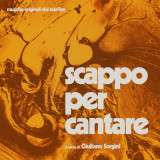
Another dream coming true! One of Giuliano Sorgini's finest and most sought-after titles is finally available as an official LP reissue – the first ever – remastered from the original tapes.
Originally released in 1971on the small library music imprint FAMA, which operated as a sub-label of RCA Italy, the record contains the original music written for Scappo per cantare, a small, pseudo-psychedelic 'musicarello' (musical comedy film) broadcast on RAI television and starring, among others, Italian singers Gianni Morandi and Mauro Lusini.
The only credited album artist is Sorgini, but it's impossible not to perceive, in this record, the hand of his close friend and colleague Alessandro Alessandroni.
This should not come as a surprise. In the early 70s, the two composers and multi-instrumentalists had a fruitful collaboration that saw them, under the monikers Braen (Alessandroni) and Raskovich (Sorgini), produce an abundance of works together, most of which have now gained the recognition they deserve. These include, among others, two 7" singles from their band The Pawnshop, three records in the series Alle sorgenti delle civiltà (Folkmusic), the crime/noir library albums Quarta pagina (Usignolo) and Inchiesta giudiziaria (Octopus Records), as well as the LP Tempo Libero (Panda Records), which was released shortly after the record presented here and in some ways drew rhythmic inspiration from it.
While their collaboration remained unacknowledged on the original release of Scappo per cantare (this was not uncommon at the time, especially in the field of library music), the record sounds perfectly in line with other works composed by Alessandroni in the early 70s, such as Complesso Gisteri's Mostra Collettiva (co-written with Oronzo De Filippi), or even a landmark album like Spontaneous, where Sorgini contributed to a handful of tracks.
So, yes, the sheer beauty of Scappo per cantare is the result of an incredible synergy between two heavyweights of Italian library music! Airy and sweeping melodies à la Zoo Folle, psychedelia à la Under Pompelmo, and various percussion instruments played by Sorgini seamlessly blend and fuse with elements and touches provided by Alessandroni.
More specifically, we find Alessandroni's signature, melancholy whistle in "Desolazione"; the peaceful and dreamy sound of his 12-string guitar in "Scogliere" and "Con Amore"; the trademark harmonies of his vocal ensemble Cantori Moderni in the last two tracks mentioned and in "Per cantare"; and his ingenious use of distortion on his Fender Stratocaster in the suspenseful transitions "Concentrazione" and "Fantocci", as well as in the frantic/hypnotic hippie numbers "Mordente" and "Fendente" (as a side note, it is worth remembering that Alessandroni experimented extensively with distortion in the rock-infused album Underground, co-written with De Filippi and released in 1971 under the moniker Braen's Machine, probably a reference to British psychedelic band Soft Machine).
The creative relationship between Sorgini and Alessandroni was so symbiotic that it would be useless to try to identify in more detail their respective contributions to the sound of Scappo per cantare. The alchemy between these two musical geniuses is the key to the album's exquisitely Italian mixture of cheerful lounge, sweet psychedelia and smooth easy listening.
To do justice to the quality of the music, this remastered reissue is enriched by a new artwork by Eric Adrian Lee, who drew inspiration from the psychedelic visual culture of the period in which the album was written and recorded.
The Mapendo album of the Mighty Cavaliers, up to today, has been shrouded in mystery. If you look at the original cover of this very rare Kenyan funk-infused album all you will find are the names of the engineer and the producer, as EMI Kenya omitted the names of the musicians and the songwriters. Digging deeper a rather sinister story of deceit develops whereby Mapendo becomes symbolic for all what was wrong about the Kenyan record industry in the 1970s, and the music industry in Africa as a whole. As this maltreatment of artists proved endemic throughout the continent, although little talked about.
One of the three surviving members of the Mighty Cavaliers, bass player Bonnie Wanda - who started his career in 1971 with Gloria Africana - vividly remembers participating in the recording of the two albums the band made in 1976 and 1977 - Fisherman and Mapendo - and how they, especially on the last album, got short-changed by shrewd record label executives. In the 1960s it was mostly Indian and European record bosses that called the shots and usually gave musicians the chance of a one-off payment for their session time and recorded songs or wait for - hopefully - a generous royalty check. In most cases records didn't sell more than a thousand copies with an occasional hit selling in the tens of thousands, so musicians were reluctant to register themselves with the Music Copyright Society of Kenya. Although without doing so one couldn't receive royalties.
'For two years the Mighty Cavaliers performed five nights a week at the Starlight Club for five hour sets.
The re-release of Mapendo, the first of the German Want Some Records label, is another exciting puzzle piece in the tapestry of groovy Kenyan music. It proves that there are still great gems out there to be re-discovered for audiences worldwide.
Text written by Michiel van Oosterhout
This Album is dedicated to the musicians
Bonnie Wanda, Rashid Salim, Vuli Yeni, Juma Waweru Njuguna and Athmani 'guitar boy'."
Throughout their legendary, decade-long run, the Shadow Ring were an enigmatic force on the international musical sub-underground. Before their disbandment in 2002, this shambolic rock outfit, formed by a group of rowdy teenagers in southeast England, left behind a mighty run of eight LPs, a handful of 7"s, and a spate of raucous live shows and cryptic zine appearances on both sides of the Atlantic, all which have bolstered their enduring word-of-mouth mystique. Beginning this year with the first-ever vinyl pressing of the self-released pre-Shadow Ring tape The Cat & Bells Club (1992), Blank Forms Editions is conducting a systematic retrospective of the storied group, including a multi-year LP reissue effort and a forthcoming comprehensive CD box set and an over five hundred page book. Recorded and self-released by the group's own Dry Leaf Discs in 1993, City Lights is the debut record of the then duo Graham Lambkin and Darren Harris_an assured arrival statement teeming with stripling angst and ambition. Lifelong chums Lambkin and Harris were barely nineteen and living at home in the seaside town of Folkestone, Kent, with few overhead expenses. The two were freshly employed as a forklift operator at a hardware store and an aide at a home for children with disabilities, respectively, affording them the time and funds to commit to a proper full-length release. Frontman Lambkin describes the album as a "microscopic examination of leisure activities, this time centered around a nightclub," a conceit surging through its lyrics, song titles, cover art (depicting an audience of cats and mice at the Leas Club, a Folkestone fixture), and flip side (replete with fictional bandmates and pseudonymous liner notes). On a recently-acquired secondhand guitar, Lambkin plays repetitive, brooding licks that form the record's backbone, weaving in and out of sync with Harris's free-form percussion and the pair's sing-song poetry. Tracks range from unraveling nursery-rhyme ditties to extended jams awash with Casiotone and toy piano noodling. The duo's musical hobby-horses work themselves in: the influence of Mark E. Smith's breathless deadpan, the headless outer-edges of ESP-Disk's back catalog, the eerie atmospherics of Hirsche Nicht Aufs Sofa, and the deconstructed rock tunes of the Dunedin scene are all detectable, although there is a sui generis quality to the Shadow Ring's artless temerity. "I've got to see and taste those city lights," intones Lambkin on the album's title track_indeed, this is a record of naked drive and pent-up desperation, and a shimmering glimpse of what's to come. For Fans of The Fall, Royal Trux, The Dead C, Shirley Collins, '70s British progressive rock, Dean Blunt.
- Theme From "The Warriors" - Barry Devorzon
- Nowhere To Run - Arnold Mcculler
- In Havana - Kenny Vance With Ismael Miranda
- Echos In My Mind - Mandrill
- The Fight - Barry Devorzon
- In The City - Joe Walsh
- Love Is A Fire - Genya Ravan
- Baseball Furies Chase - Barry Devorzon
- Re Movin' Too Slow - Johnny Vastano
- Last Of An Ancient Breed - Desmond Child
- Wonder Wheel (Main Title)
- Graveyard
- Night Run
- The Orphans/Turnbull A.c.'s Pt. 1/Riff Boss
- Turnbull A.c.'s Pt. 2/Molotov Cocktail
- March To Station
- Luther Shoots Cyrus/Train Walking
- Baseball Furies Chase/The Fight
- Into The Tunnel
- Skater/Men's Room/The Fight (Alternate)
- 11: Riff's Learn Truth/Platform/Warriors & Rogues
- 12: Platform (Alternate)/Warriors & Rogue (Alternate)
The long-awaited repressing of THE WARRIORS. This deluxe double LP features the re-mastered 1979 original soundtrack, in addition to, the vinyl debut of the complete film score by Barry DeVorzon.
Directed by Walter Hill and based off the 1965 novel by Sol Yurick of the same name, THE WARRIORS is the absolute definition of an influential cult-classic film. THE WARRIORS has permeated the landscape of pop culture, music, film, fashion, comics, and video games.
Waxwork worked directly from the original master tapes of both the original 1979 soundtrack and film score to bring audiences a brand-new transfer of every musical cue heard in the movie, for the very first time on vinyl.
Features artwork by Marvel Comics artist Dave Rapoza, Double LP 180 gram “Warriors” red and rust vinyl, printed insert, and deluxe packaging.
Too Pure are excited to get Moonshake’s debut album, ‘Eva Luna’, back in
print, releasing a deluxe edition, re-mastered from analogue 1Ú2” tape, on
blue double vinyl.
The reissue contains 19 tracks - the album’s original 10, the non-LP threesong single ‘Secondhand Clothes’, the two B-sides from the ‘Beautiful
Pigeon’ single and four tracks from a November 1992 John Peel session.
The release also includes an 8-page full-colour booklet.
Moonshake were formed in 1991 by David Callahan (vocals, guitars,
samplers), formerly of The Wolfhounds, and New York musician Margaret
Fiedler (vocals, guitars, samplers). Callahan and Fiedler recorded a demo for
Creation Records, and were joined by John Frenett (bass) and Miguel
Morland (‘Mig’, drums) to record and release the ‘First EP’ for Creation in
1991.
They took their name from a 1973 single by Can. Both Fiedler and Callahan
wrote songs, and they would (generally) sing on the songs that they wrote.
Their output of shared inspiration produced wildly different results - Can, PIL,
Kraftwerk, MBV and Erik B & Rakim were a melting pot that made
Moonshake somewhat uncategorizable, and as Margaret noted in an
interview, “Moonshake was a collision - it was supposed to be a collision.”
Their debut album, ‘Eva Luna’, took its name from a novel by Chilean author
Isabel Allende, and the tracks on it are split evenly between the two
songwriters. Callahan’s songs are somewhat angry, dissonant, post-punk
affairs, while Fiedler’s are just as angular, but her quieter sometimes near
whispered vocals compliment her writing partner’s equally. Producer /
engineer Guy Fixsen, fresh from his work on My Bloody Valentine’s
‘Loveless’, was instrumental in making the album cohesive.
This album has been critically revisited often since its original release, with
Tiny Mix Tapes describing their sound as “an updated take on Can and
Public Image Limited’s rhythmic propulsion with noisier guitar work and a
predilection for sampling influenced by The Young Gods.” Last year, in a
wonderfully long piece to celebrate the album’s 30th anniversary, Louder
Than War wrote that they were blown away by the album’s “utterly
spellbinding, dizzyingly genre-defying approach at articulating explicitly the
sound of a city in the throes of urban psychosis and derangement... ‘Eva
Luna’ really is one hell of a ground-breaking record, and it stands resolutely
alone among all of the albums released in 1992 as no other band has
managed to create anything remotely similar before or since. It really is a
unique album with few equals.”
In 1993, the original incarnation of the band split up, and Margaret Fiedler
and John Frenett went on to form Laika with Guy Fixsen. Callahan and
Morland continued on with guest musicians, with Callahan ultimately
remaining the band’s sole original member. Moonshake ended in 1997 but
their legacy is indisputable.